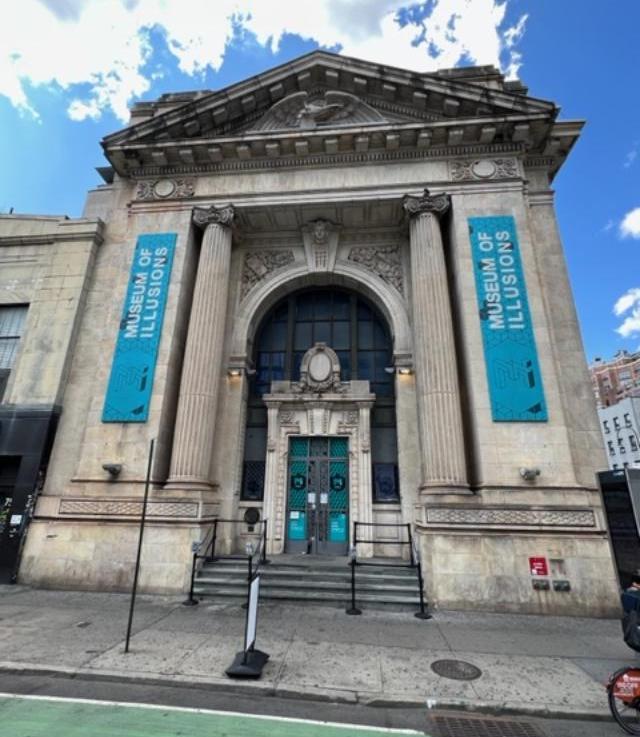
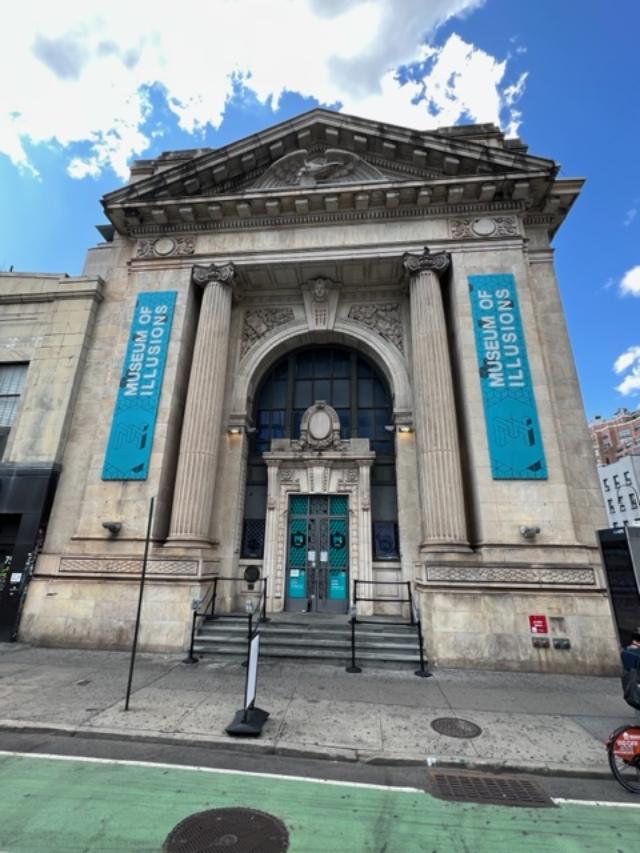
The Museum of Illusions is a interesting museum in that it is a small museum packed with various exhibitions and hands on displays that are interactive for the visitor. Each one is an experience in itself. The visitor participates in what the display has to offer and it plays with both your mind and with your personality and how you react to it.
The main gallery at the Museum of Illusions
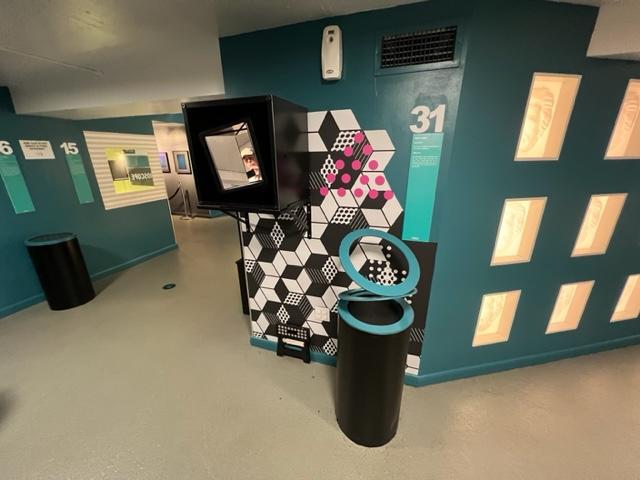
There are a lot of brain teasers and mirrors to throw you off or add to the display to entertain you. The optical illusions will test your mind and your senses. There are titled rooms to test your balance and your sense of sight, mirrored rooms to show location and reaction and small displays to show size and distance.
Admittingly it is a very small museum of the steep price of admission ($24.00 for an adult) and you will only be in the museum for about an hour. The problem with this museum is that once you experience it and if they do not change the displays, there is no reason to go back. The small displays can be experienced on two floors.
The Tilted Room display
The afternoon I was here, the museum was packed with summer campers and school aged kids who dominated the place and it is so small that it was hard to maneuver around the museum. Still it was a very interesting museum to experience once as it will test the power of and exercise your brain.
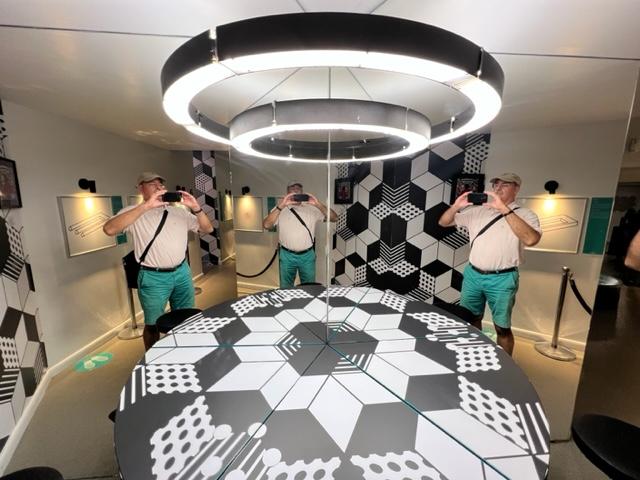
The Clone Table
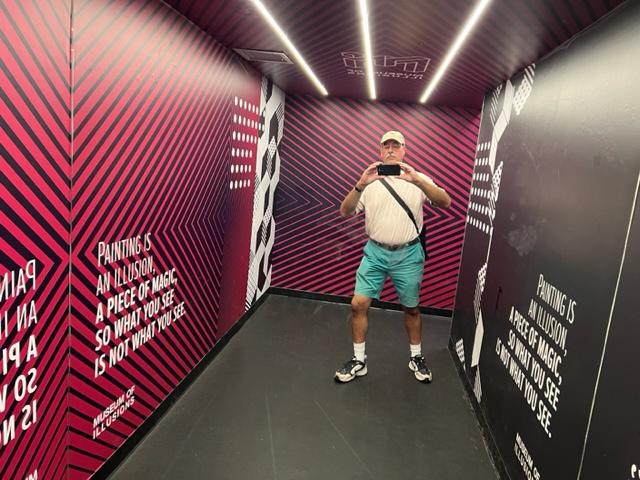
Me in the Vertical Room
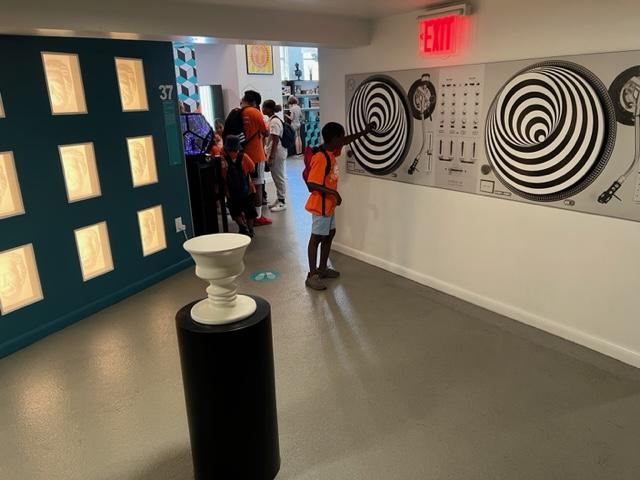
The Illusions Gallery
History of the Museum of Illusions:
(From the Museum Website)
Enter the fascinating world of illusions which will test your confidence in your senses yet amaze you by doing it. It is world that will confuse you completely, educating you in the process. Visit us and you will be thrilled because nothing is what it seems-especially in the Museum of Illusions!
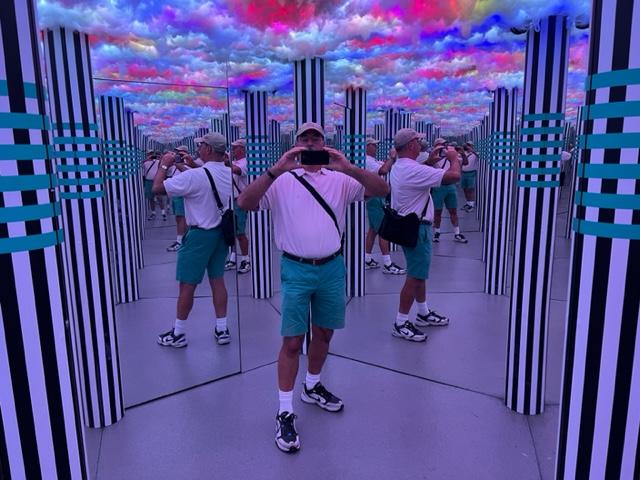
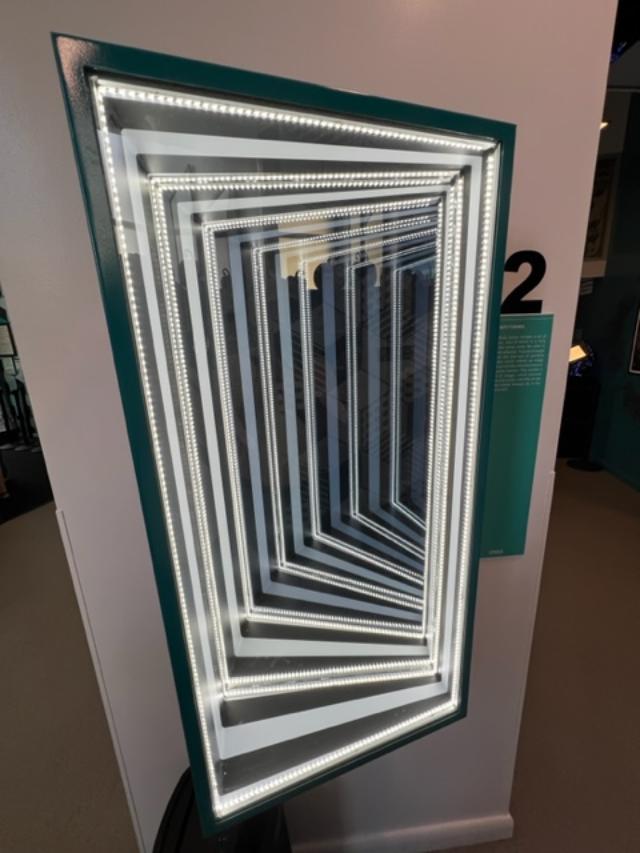
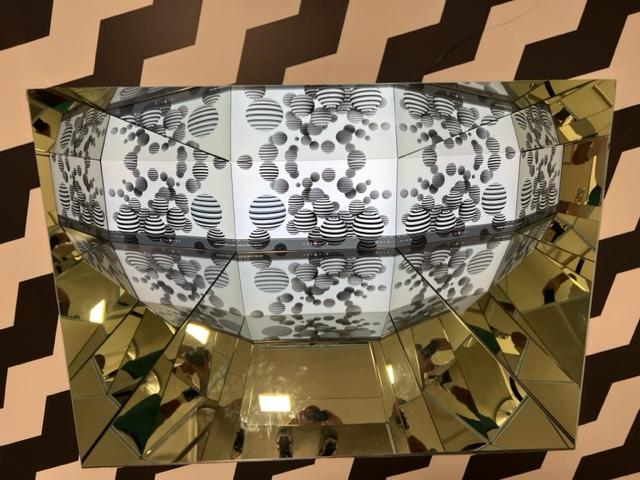
The Infinity Tunnel
Are you ready for a fascinating adventure? We offer an intriguing visual, sensory and educational experience with a handful of new, unexplored illusions.
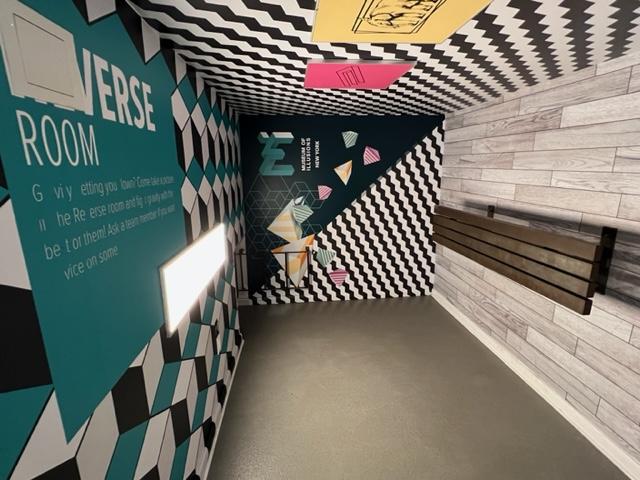
The Reverse Room
New York, place to experience illusions!
The Museum of Illusions in New York brings you a space that offers wonderous and entertaining insights into the world of illusions which will delight all generations. The museum is a unique place for new experiences and fun with family and friends. Not only is it an exciting place for children, who adore coming, but it’s also a great place for parents, couples and grandparents!
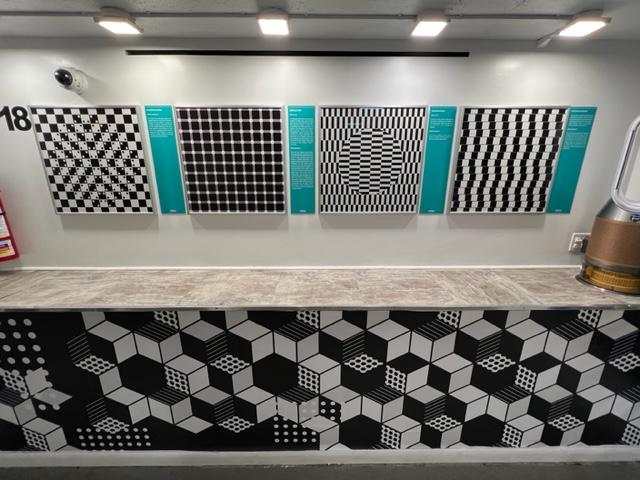
The Optical Illusions of the museum
Enjoy our collection of holograms, look closely at every optical illusion and observe each installation thoroughly. Our exhibits are a brilliant, playful reminder that our assumptions about the world we perceive are often nothing but a shadow of illusions. Our genuine collection of showpieces will most certainly make your jaw drop!
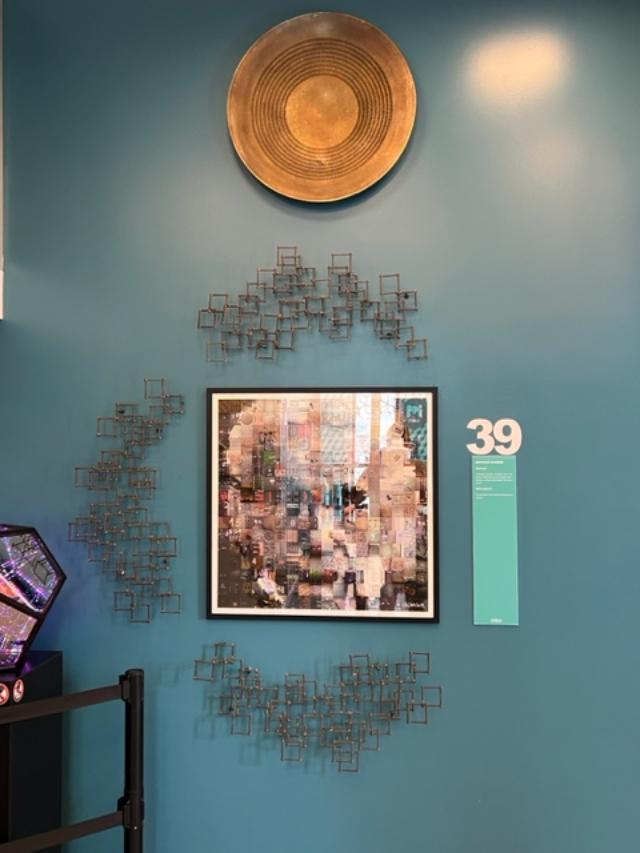
The Museum of Illusions Master of Numbers
The Museum of Illusions amusing, and awesome features will teach you about how the human brain perceives reality. You will come to understand why your eyes see things which your mind cannot initially comprehend. Make sure you visit our playroom with its intriguing and educational games and puzzles. These brain mashers are great fun but also delightfully tricky!
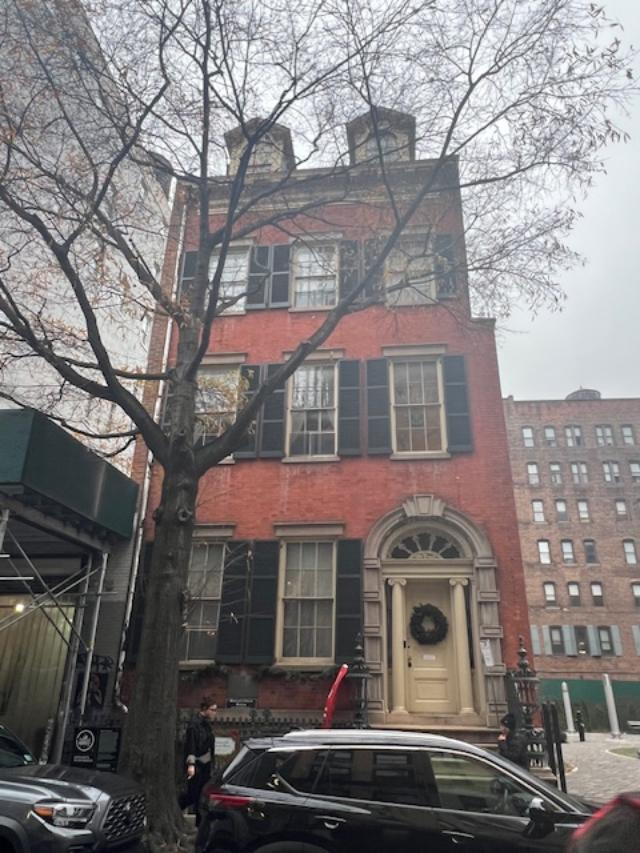
The Merchant House Museum, the former home to four generations of the Treadwell family, was built in 1832 and is designed in the late Federal style of brick and marble. When the house was built, elegant Greek Revival style rowhouses of red brick and white marble flanked the tree lined streets of this fashionable residential enclave, known then as the Bond Street Area.
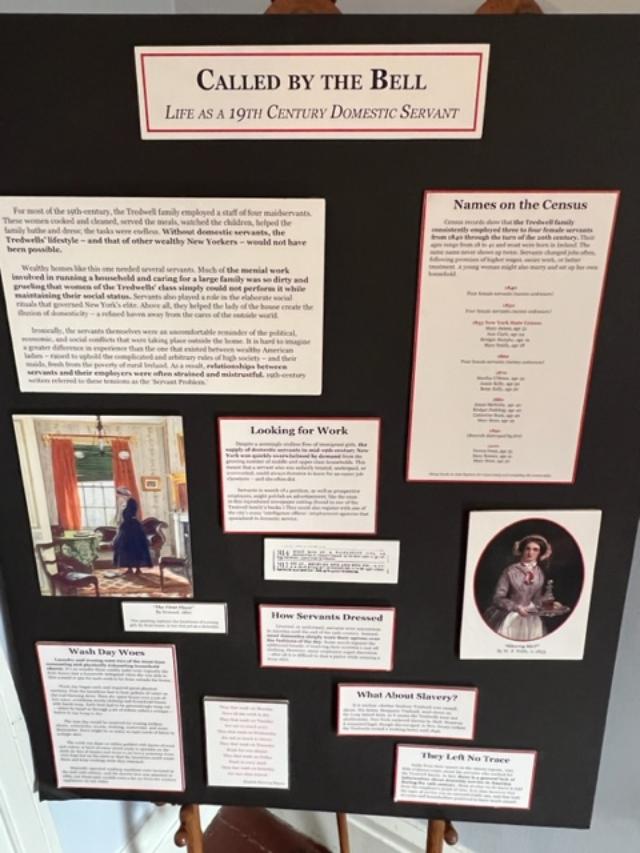
The house was the home of wealthy merchant, Seabury Tredwell, his family and their four servants. Over the next 98 years, the family lived there and saw the neighborhood and the city grow, change and prosper. In 1936, after the death of the last living relative, the house opened as a museum, complete with Tredwell family’s original furnishings and personal possessions.
At the Midcentury, cast iron made its first appearance and commercial buildings and factories came to dominate the area. By the century’s end, it would be a commercial district with the Tredwell’s being the last holdouts of the area. The house was saved by the last relative’s grand nephew who bought the home to preserve it as a museum.
The home is now part of the NoHo Historic District that includes about 160 buildings, 11 of which are distinguished as individual NYC landmarks
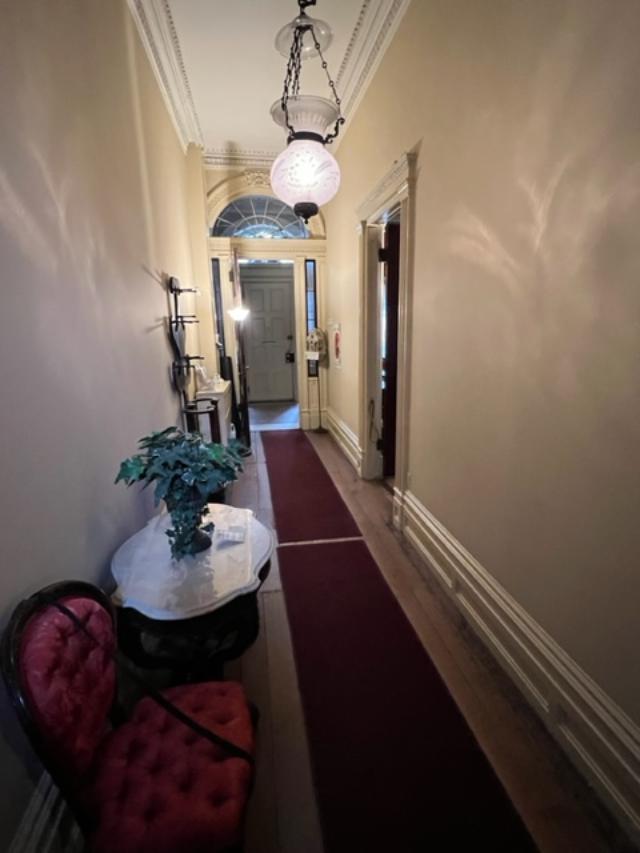
The Entrance Hallway where you would be greeted when you enter the house
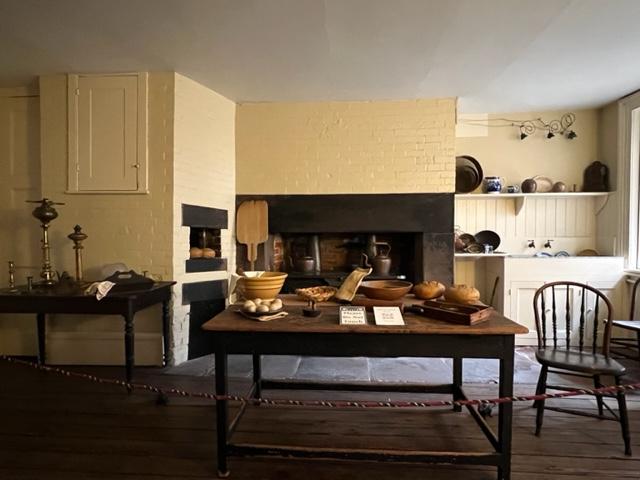
The Merchant House Kitchen ready for dinner to be prepared
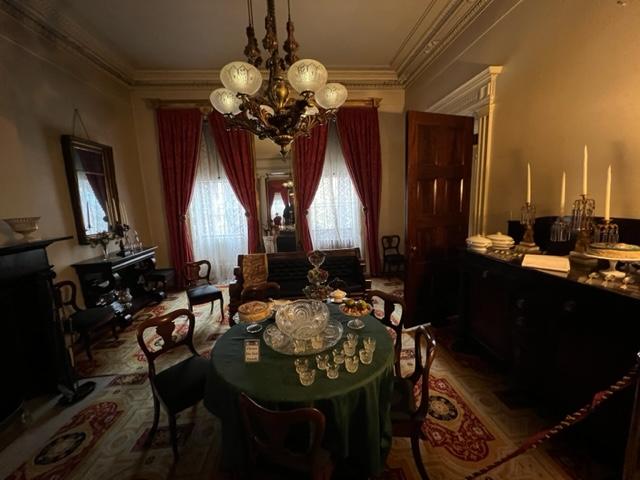
the Dining Room was set for the Dutch New Year gathering
The Christmas holidays were not a big tradition in the early 1830’s when the house was built. The Dutch tradition of visiting on New Year’s Day and making calls to your friends was what many fashionable families would do to socialize with their neighbors. Tea, Coffee and punch would be served along with cakes, sweets and savories. These calls would only last about ten to fifteen minutes before you would move onto the next house. This tradition continued until Victorian times when homes were spread further apart and the family Christmas celebrations with gift giving and a Christmas tree came into fashion due to Queen Victoria and the spread of English and German traditions.
The punchbowl ready for guests on New Year’s Day
Refreshments ready for the New Year’s Day gathering
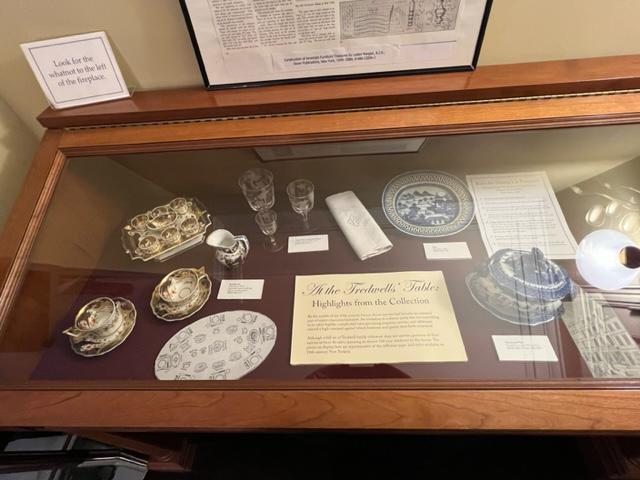
The broken pieces of the china collection of the Treadwell family. There is not a full collection of china that the family had to entertain with for formal affairs. They also did not have any china or silver of the family’s. I think that this might have been passed down to the heirs.
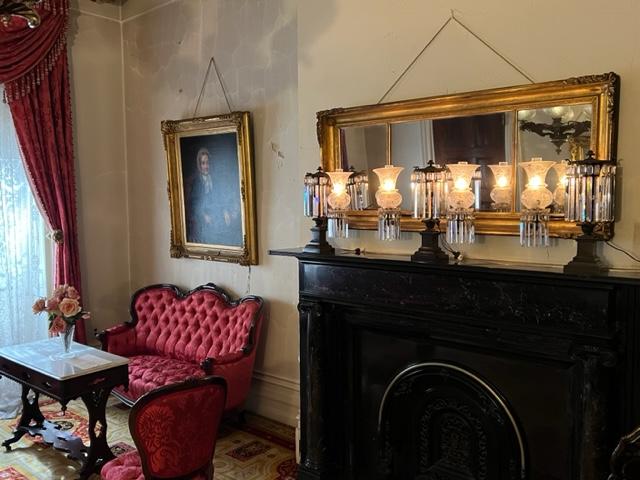
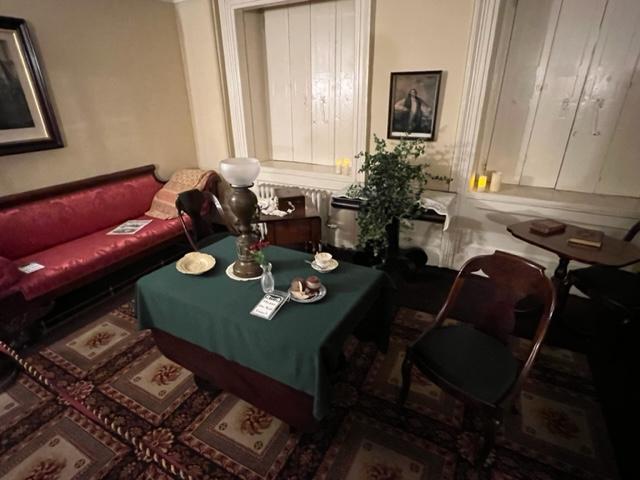
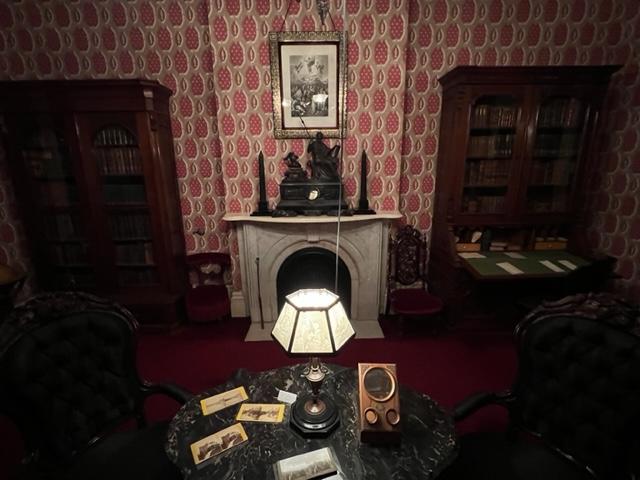
The Parlor of the Merchant House Museum
The piano in the Parlor of the home
The fireplace in the Parlor
The Parlor is where the family would gather after meals for entertainment and to converse with guests. This would be the main part of the house for socializing as the formal dining room and living rooms would be used for more formal affairs.
The Living Room in the Merchant House
The stairs are rather narrow and steep when you are heading upstairs to the bedrooms so you have to hold on to the rails. The bedrooms are normal size by today’s standards but back then they were pretty big plus people had their own rooms. They were nicely furnished with family heirlooms and antiques.
Mr. Treadwell’s bedroom
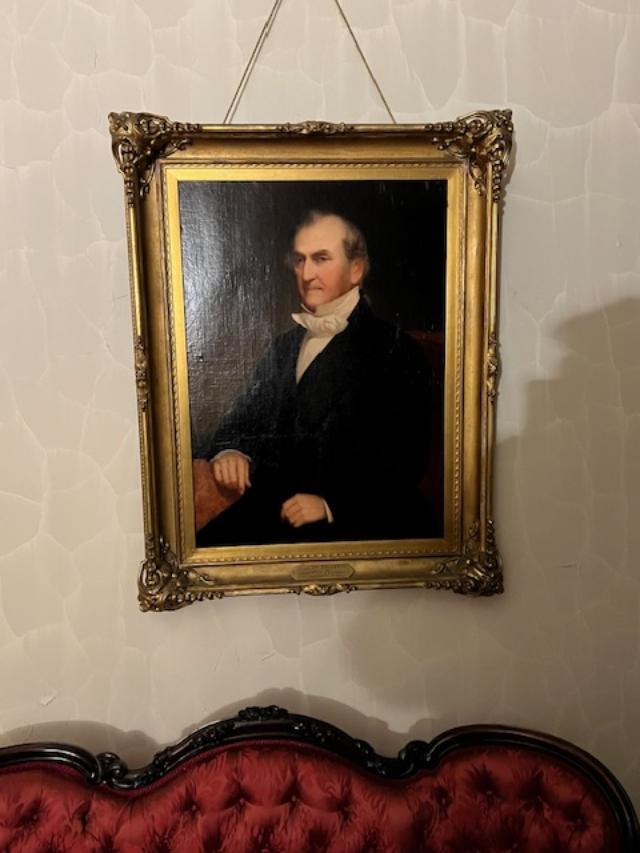
The portrait of Mr. Treadwell in his bedroom
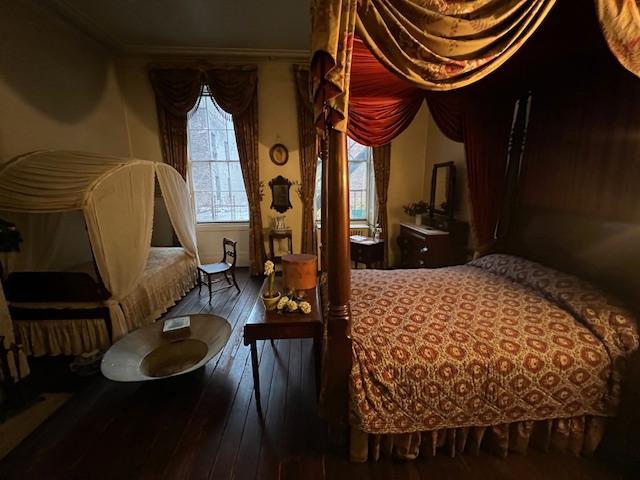
Mrs. Treadwell’s bedroom
In Victorian times, the wealthy would have separate bedrooms for the husband and wife. Bedrooms would not just be a place to sleep but they were also a place of business where the family members would do their paperwork, write correspondence and arrange social events. Also, in the case of birthing, the child would be in the bedroom with their mother.
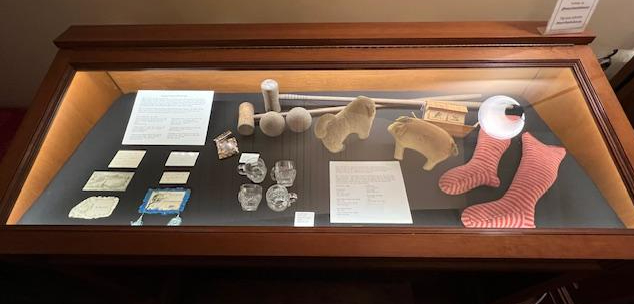
The “Valentine’s Day Card” exhibition “19th Century Valentines: Confections of Affection” on the second floor is part of the house’s extensive collection. ‘Delicate and lacy, these expressions of love celebrate the whimsy and romance of the Golden Age of Valentines’ (from the pamphlet).
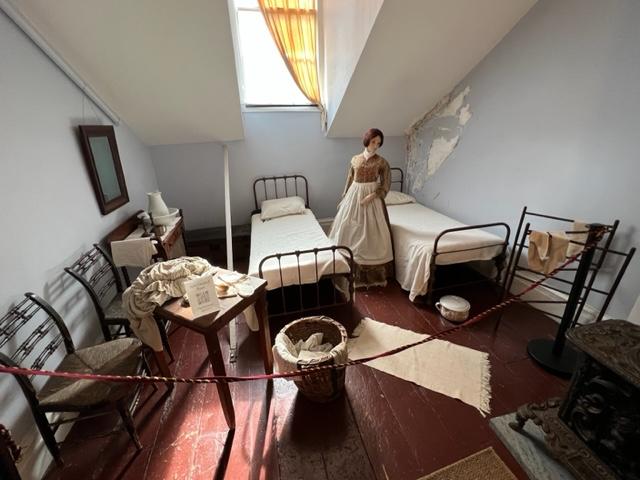
The Children’s bedrooms on the third floor were closed off and used as offices for the staff so I made my way up to the Servant’s Quarters on the top floor. These people really got their exercise climbing those stairs up and down every day. The stairs seemed to get more narrow as you headed higher and God forbid there ever be a fire. You would be trapped up there with no way out.
The Servants Room on the fourth floor
The Servants Room on the fourth floor was pretty spare
Looking for the paranormal
Looking for a ghost on the fourth floor
During October, the museum hosts “Gaslight Ghost Tours”, where you tour the home by candlelight. There have been strange noises in the house ever since Gertrude Tredwell passed in 1934. She had been born in the house in 1840 and lived here until she was 93. She had never married and now it is said that her spirit is still part of the home (museum pamphlet).
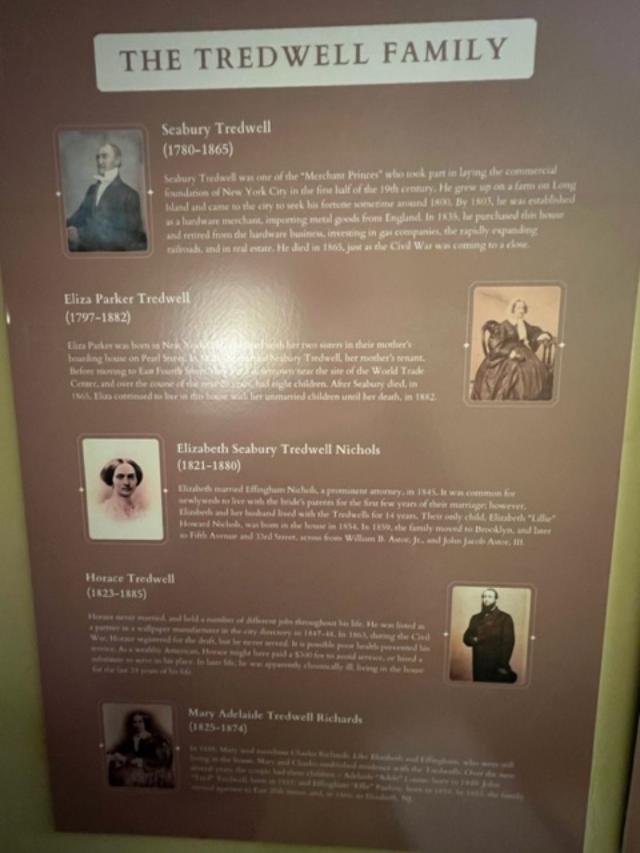
After viewing the Servants Quarters and not finding any ghosts, I headed back downstairs to the main hallway leading into the house. There I saw the timeline of the family and all the family members that had lived in the house. It seemed that the last living relative, Gertrude, died in the house in 1934 and her grand-nephew bought the house and all its debts at the height of the Depression to preserve the home as a museum. Talk about insight! The nephew knew how important this home would be one day.
The Treadwell family tree in the hallway downstairs
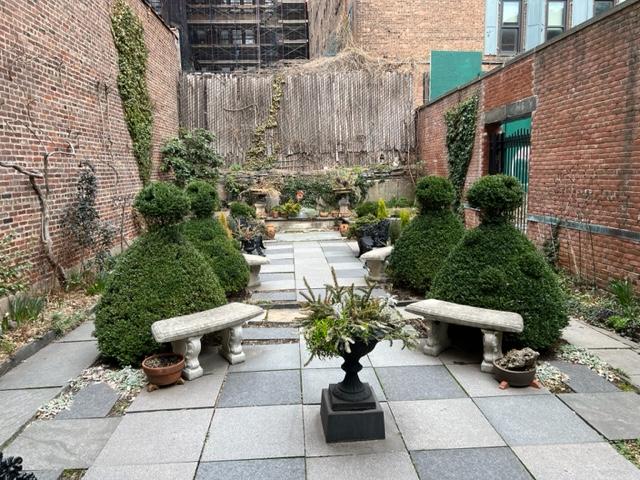
The last part of the tour was the gardens in the back of the home. It was not a formal yard but a well landscaped walled in garden with a small fountain in the back of the gardens. The flowers were just starting to come up and there were crocuses and daffodils One of the curators was the Master Gardener for the property and did a nice job landscaping the property.
The back of the Merchant House Museum in the late Winter in the Gardens
The Gardens of the Treadwell house in the late Winter
The fountain at the gardens was off but now means to come back in the late Spring
There is a more formal tour a couple of times a day of the home but that is by reservation only and there is a separate fee. The holidays offer more themed tours on Halloween and Christmas. The Candlelight tour of the hour for Halloween is really intriguing.
The Merchant House Museum at night before Halloween
I recently went on the Haunted House tour at the Merchants House for Halloween in 2023 and that was interesting. We walked the first two floors of the house in the dark by candlelight hearing stories about the family.
Costumed characters greeted us in every room but none of us saw a ghost. Still the house had a creepy feeling to it as we walked room by room discussing the lives and deaths of the Treadwell family. We started off in the Parlor on the first floor with displays of seances and ghost pictures dotting the displays.
The display of seances and ghost pictures.
It can be a bit spooky walking through a house by flashlight, but the docents made the conversation interesting and fun. We got to hear about all the haunted tales of the house. A highly suggestive tour around Halloween.
The Parlor at night on the Candlelight tour of the house on Halloween.
The home is very engaging at Christmas time as well as you are welcomed into the Treadwell Home for the Christmas holidays with their annual Christmas Eve Reception and preparations for Christmas lunch. The house was decked out in garland and bows with several Christmas trees in the room. The house was very festive for the holidays and you were welcomed into the world of 19th century New York City at the holidays.
The Merchant House at the Christmas Holidays.
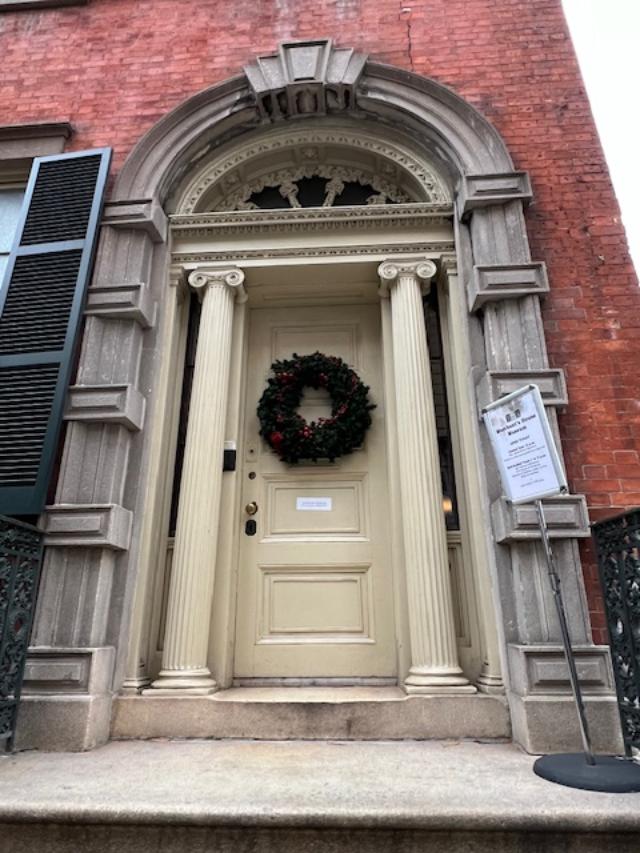
The outside of the house decked out for the holidays.
You are welcomed to the home at Christmas time.
We started our tour in the gardens which had gone dormant for the season but still you could see the greens in the bushes and the pine trees. It had been a warm morning in the low 50’s with a treat of rain but later that afternoon. For now, it had just been gloomy. We had a nice conversation about the house and its history even though we could barely hear the tour guide as he talked so softly.
We next toured the kitchen where the cooks were busy cooking and baking for the Christmas holidays. The 19th Century was all about manners, traditions mostly Dutch and entertaining. The Treadwell’s were people who both entertained the neighbors and their family as well. So there would be teas, receptions, open houses and then the formal Christmas Eve festivities and then Christmas lunch after church service the next day.
The holiday meal being cooked in the downstairs kitchen.
Christmas dinner with the Treadwell’s must have been special.
We moved next to the upstairs parlor that was set for receiving guests from the neighborhood. The Treadwell’s like most families at that time received guests for New Year’s Day punch and refreshments as the men of the neighborhood made their social calls during the holiday season. This tradition stopped around the time of the Civil War when families during the Industrial Revolution acquired money and people did not want to ‘entertain just anyone’.
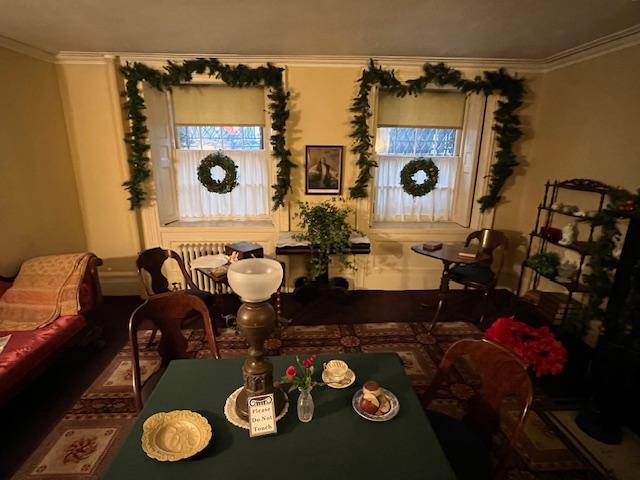
The Parlor by the front door ready to received guests for the holiday season.
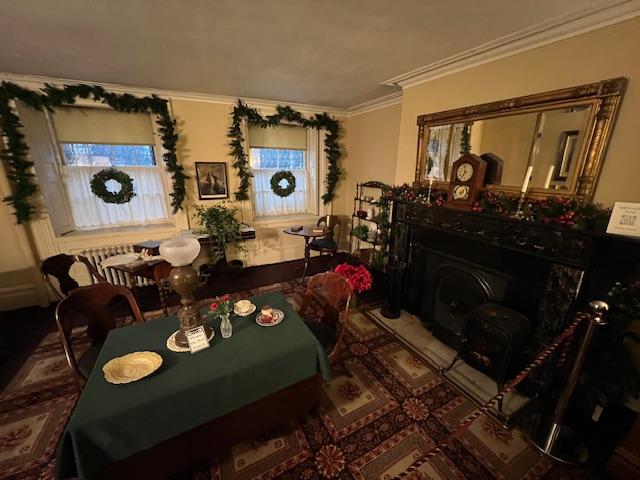
The Parlor on the first floor receiving guests for New Year’s Day.
The mantle was beautifully decorated for the holidays.
We next toured the formal Dining Room and Living Room on the second level where the family entertained relatives and friends for the holidays. It must have been some celebration as the Dutch traditions disappeared and the Victorian rules and elaborate traditions started some still practiced today. Now we call it the “Norman Rockwell” and “Martha Stewart” standards.
The formal Living Room with the Table Tree decorated for the holidays. The Table Tree was the precursor for the modern Christmas tree.
The tree is the focal part of the room.
The fireplace was decked out for the holidays as well.
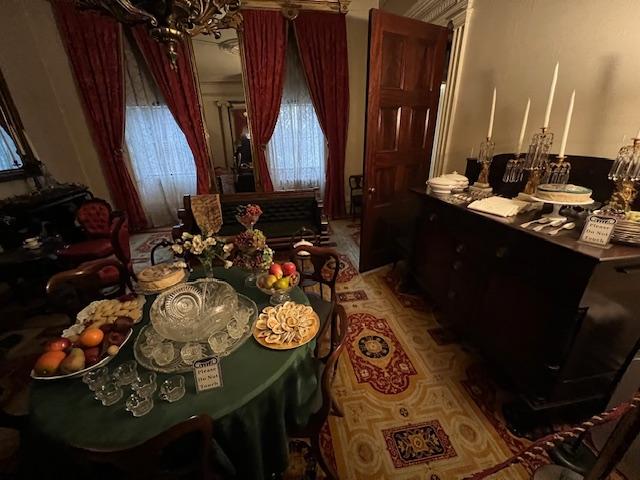
The Dining Room was set for the Christmas Eve Open House and in preparation for receiving guests in the formal room. The finest silver, china and crystal would have been used to show off the family position in the neighborhood and was meant to impress.
The Dining Room was set for receiving guests for the Open House.
The Dining Room set for a feast.
The family would receive guests all day, replenishing foods so that there was plenty for everyone who visited. Women would be busy all day entertaining neighborhood men who would be calling all day long.
The bannisters were beautifully decorated with garland.
During the Victorian Age gift giving during the holidays became very important.
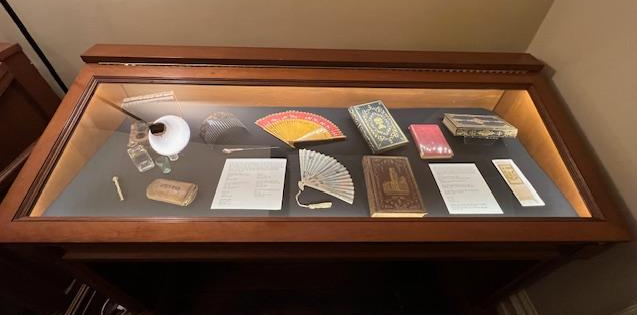
Christmas presents of the Victorian Age.
Gifts of the Victorian Age.
We then toured the upstairs bedrooms and saw how they decorated. The rooms were nicely decorated for Christmas. I have never seen rooms decorated like this for the holidays.
Mrs. Treadwell’s bedroom
Mrs. Treadwell’s Bedroom
Mr. Treadwell’s bedroom
Mr. Treadwell’s portrait in the bedroom standing guard.
It was an interesting look at both Edwardian and Victorian times in New York City.
The New Year video on celebrations on the “New Year’s Day Visiting” day
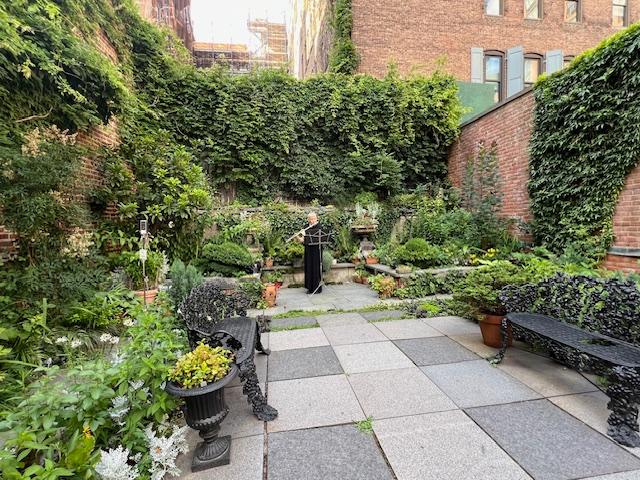
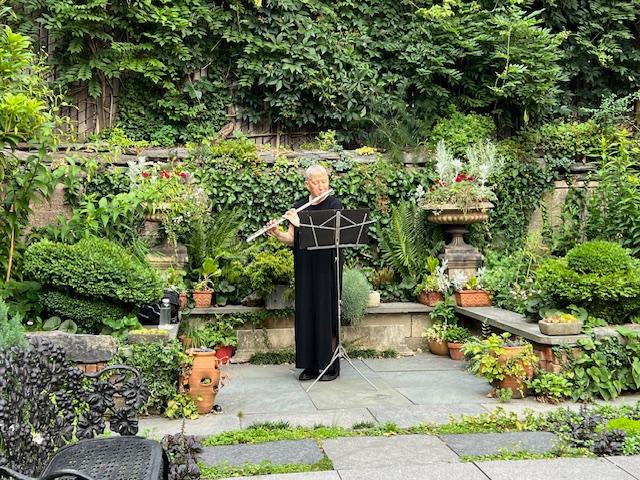
During the Summer months, the Merchant House Museum is hosting a series of “Music in the Garden” concerts. The first one I attended was in June 2024 with Flutist Cheryl Pyle. What a nice relaxing evening in the gardens that were all in bloom.
The gardens were in full bloom that June evening
Flutist Cheryl Pyle performing in the gardens that evening
The Concert that evening for everyone to enjoy too!
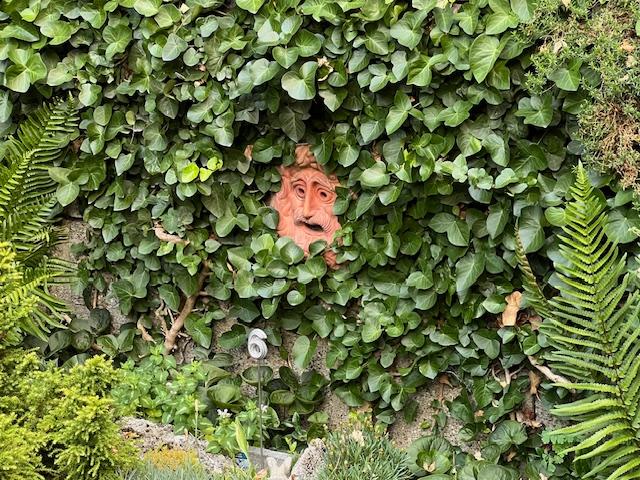
The gardens are this hidden gem in the neighborhood. The volunteers have done such a beautiful job taking care of this marvelous historic site.
The gardens looking at the back of the house with the wine and snacks and information table
The gardens closer to the back entrance of the house
The left side of the back garden
The right side of the gardens
The entrance to the gardens from the park next door
The fountain staring back at us in the gardens
This little bird even joined us in the garden for the concert and stayed and listened contently
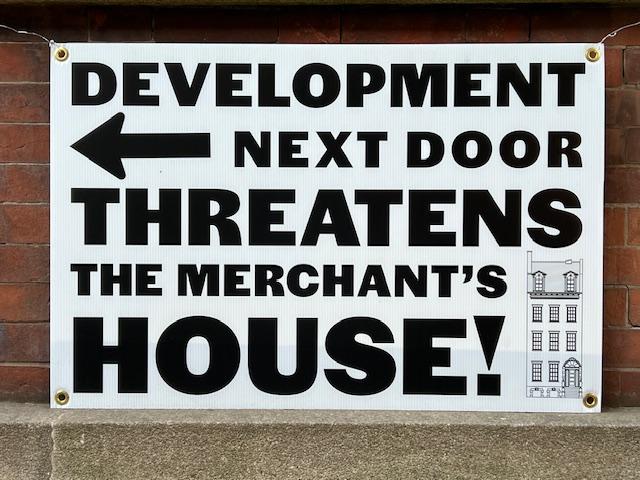
The museum is currently having a fight to keep construction away from the home. The ten-year battle to keep a hotel from being built has been a problem for the museum. The foundation and structure of the home are in danger due to the fragile state of the building. The Landmark Preservation Commission of New York is researching and looking over the proposal.
The museum now has to defend itself from building next door
The museum is a perfect way to see how residents of a Upper Middle Class family lived in Pre-Victorian times and show the last vestiges of the neighborhood when it was a fashionable section of the City.
The Theodore Roosevelt Birthplace National Historic Site at 28 East 20th Street
History of the Theodore Roosevelt Birthplace National Historic Site:
From Wiki/National Park Service Pamphlet):
The house is a replica of the birthplace and childhood home of the 26th President of the United States. The house originally stood on the site was built in 1848 and was bought by the Roosevelts in 1854. Theodore Roosevelt was born there on October 27th, 1858 and lived in the house with his family until 1872, when the neighborhood began to become more commercial, and the family moved uptown to 57th Street.
The plaque of the original house
The original home was demolished in 1916 to make way for retail space but upon the death of the President in 1919, the lot was purchased, and the house rebuilt by the Women’s Roosevelt Memorial Association, which eventually merged with the Roosevelt Memorial Association in 1953 to form the Theodore Roosevelt Association. Noted female American architect Theodate Pope Riddle was given the task of reconstructing a replica of the house, as well as designing the museum, situated next door, that serves to complete the site.
Theodore Roosevelt Sr.
Mrs.Alice Roosevelt, Theodore’s mother
The row house next door at number 26, which was the twin to the Roosevelts, was used as a model and some architectural elements from it were incorporated into the replica. The twin house was demolished to make space for the museum. The restoration recreated the house as it was in 1865.
The house is furnished in a mixture of period pieces that would have decorated the house at that time period along with Roosevelt family heirlooms. The was decorated as best as the family at that time could remember. This includes the Living Room, Dining Room, Parlor, the two bedrooms along with the children’s wing. The house had changed over the years so things are not exactly the way they would have been.
The recreation of the Roosevelt Living Room
The Roosevelt Parlor Room
The Roosevelt Dining Room
The Roosevelt Bedroom
The Roosevelt Library/Office in the bedroom area
The Roosevelt Bedroom
The house was rededicated in 1923 and was subsequently refurbished with many furnishings from the original house by the President’s widow, Edith and his two sisters. The widow and sisters also supplied information about the interior’s appearance during Roosevelt’s residency. The Theodore Roosevelt Association donated the birthplace to the National Park Service in 1963.
The lower level of the house is where the gift shop is located and the gallery room with pictures of President Roosevelt and his family and in government events. They also have the original “Teddy Bear” created for the President and the shirt that the President wore when there was an attempt on his life. There is also a series of family portraits as well.
The “Teddy Bear” is located in the display gallery in the first floor
The shirt the President was wearing when there was an attempt on his life
Try to get to the site during one of the tours and the rangers will give you a detailed talk both on the house and on the family. It is also self-guided so you can take your time to walk the house before it closes for the evening.
Admission: Adults $7.00/Seniors-Students with ID-Children 9-17 $4.00/Children 0-8 Free
My review on TripAdvisor:
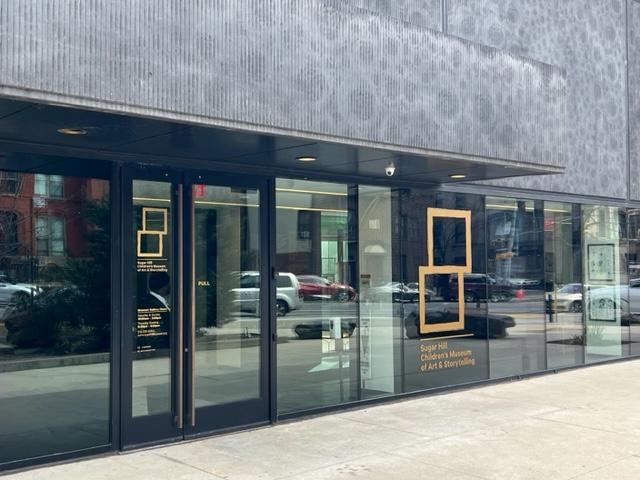
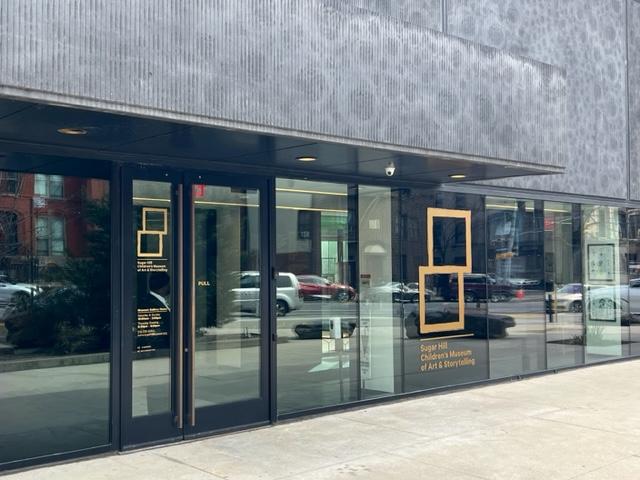
The entrance of the Sugar Hill Children’s Museum
Sugar Hill Children’s Museum of Art & Storytelling building
The Sugar Hill Children’s Museum of Art and Storytelling is located on the first floor and basement level of 880 St. Nichols Avenue. This unique little museum caters to small children and their families with lots of interactive programs for the children.
The Children’s Gallery in the First Floor of the Museum with the gift shop.
Children’s Room Exhibition on the first floor
Children’s Room Exhibition on the first floor
My favorite piece in the Children’s Room exhibition
Children’s Room Exhibition
The Galleries:
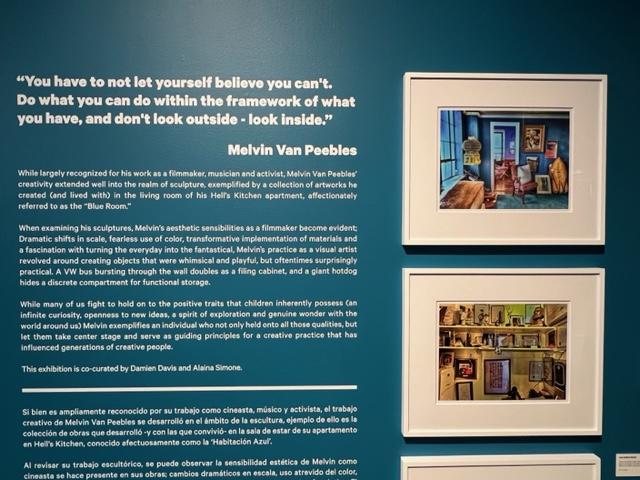
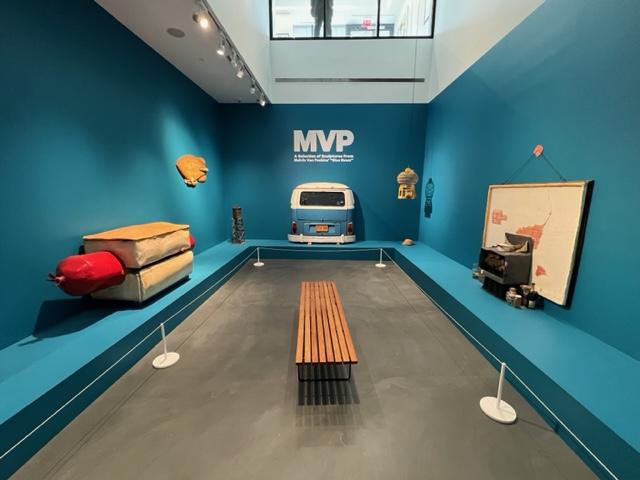
There were two exhibitions going on at the museum was I visited in March of 2023, Melvin Van Peebles “Blue Room” exhibition which was narrated by his son, Mario. This featured a lot of his artwork in his East Village apartment. I never realized that he was an artist on top of a filmmaker.
The works were quirky and unique I have to say that and they did stand out.
Melvin Van Peebles “Blue Room” exhibition
The artist/filmmaker Melvin Van Peebles “Blue Room” exhibition
The Melvin Van Peebles “Blue Room” exhibition
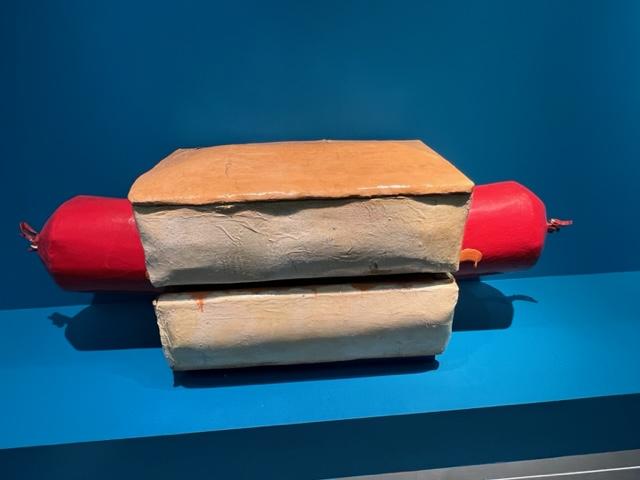
The “Hot Dog” sculpture in the “Blue Room” exhibition
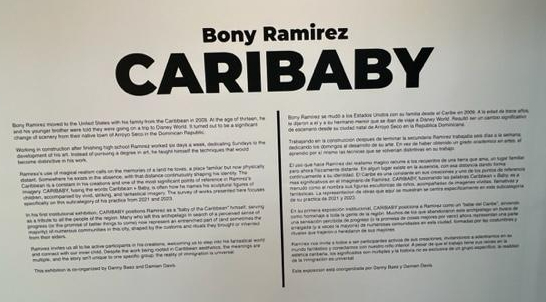
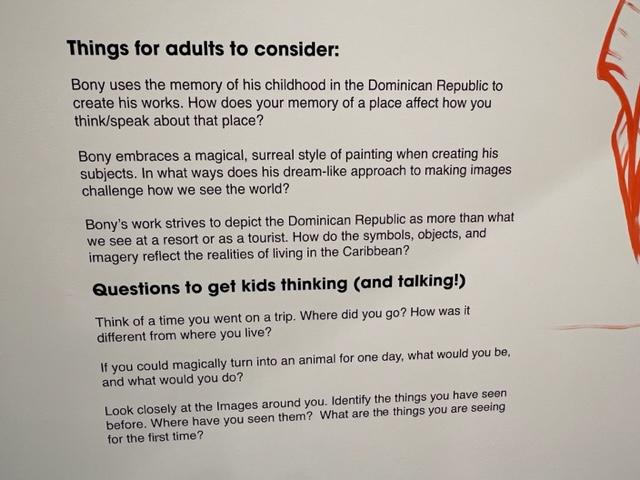
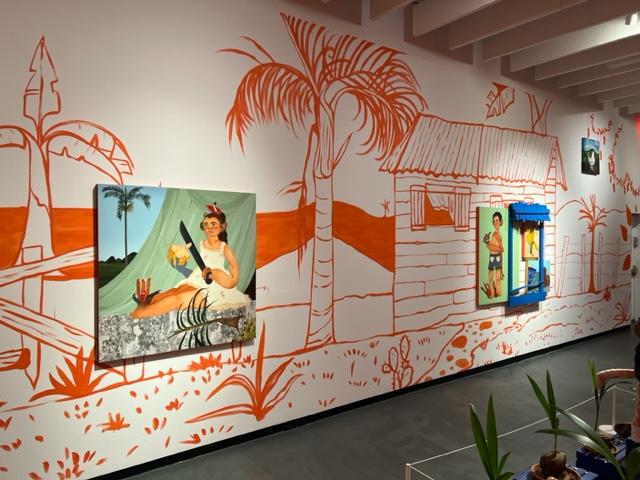
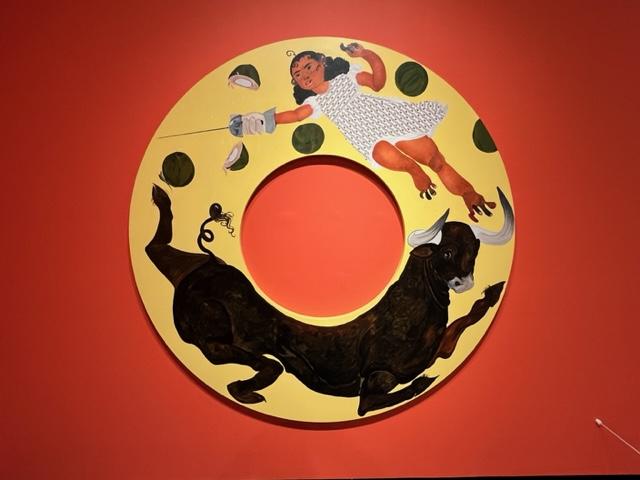
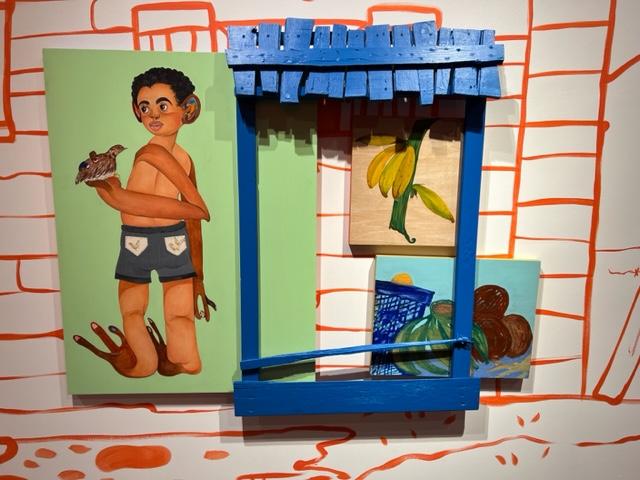
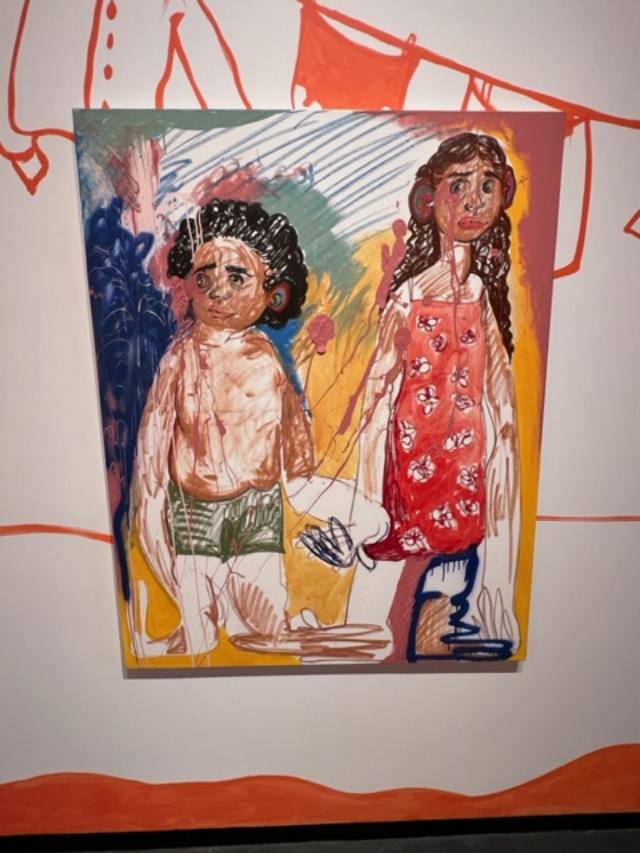
The other exhibition that was on display was the “Caribaby” exhibition by artist Bony Ramírez. The artist is a Dominican born American artist who is self taught. His works are large, childlike and offer a look at life in the Caribbean with a twist of the influence of European Colonialism in his work. The works had unusual contours and had a distinct island feel to them.
I could see by the artworks featured by both artists that the museum show pieces that were colorful and somewhat interactive which would be perfect for a child to relate to. The two galleries were small so that the works did not overwhelm children whose attention spans were not long but make it interesting for adults as well to have such unique works by contemporary artists.
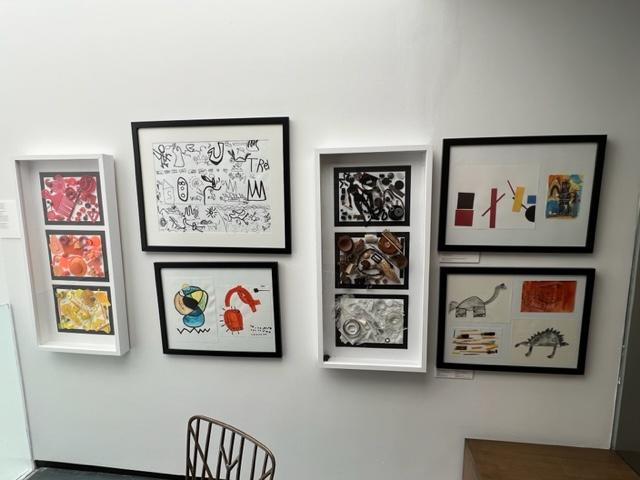
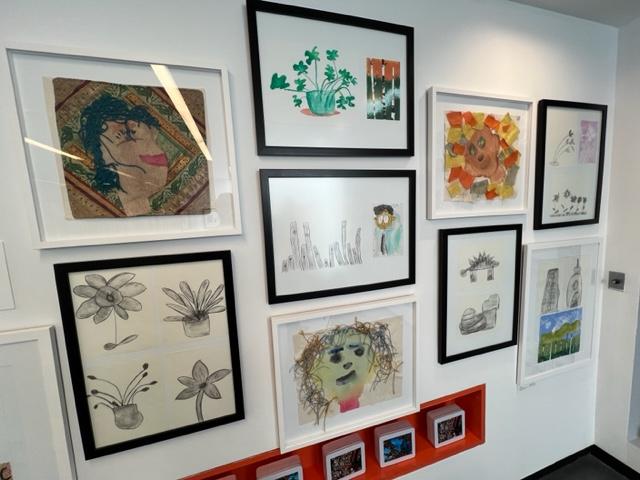
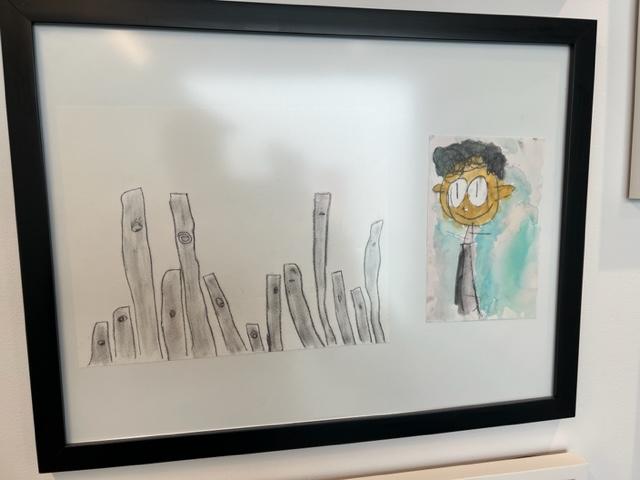
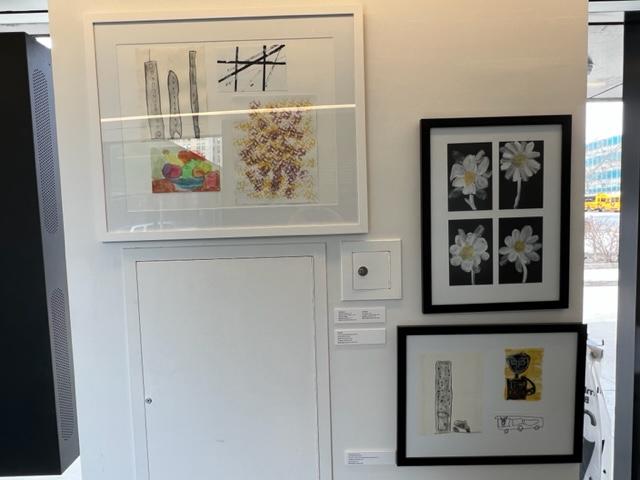
At the top of the stairs near the entrance, they had the Children’s Gallery where art students from the museum showcased their works. In some cases, the works looked pretty sophisticated. The museum is perfect for small children and their families to get involved with the interactive art and projects that the kids were doing together in the ‘Living Room’ area of the museum.
The museum galleries were broken up into the Legacy Gallery where the Melvin Van Peebles exhibition was located and the Salon where the Bony Ramirez exhibition was shown.
Mission of the Sugar Hill Children’s Museum of Art & Storytelling:
(From the museum’s website)
The Sugar Hill Children’s Museum of Art & Storytelling provides our culturally rich neighborhood with a space where children and their families grow and learn about Sugar Hill and about the world at large, through intergenerational dialogue with artists, art and storytelling.
A spider sculpture at the Sugar Hill Children’s Museum
Designed to nurture the curiosity and creative spirit of three- to eight-year-old children, Sugar Hill Children’s Museum of Art & Storytelling provides opportunities to grow as both author and audience as children engage with the work of accomplished artists and storytellers and create and share their own.
Another interesting work at the museum
Another work in the main hall
The History of the Sugar Hill Children’s Museum of Art & Storytelling:
(From the museum’s website)
Developed by the Broadway Housing Community, The Sugar Hill Children’s Museum of Art & Storytelling is the cultural heart of the Sugar Hill project.
Led by founder and executive director Ellen Baxter for over 30 years, BHC has pioneered high impact solutions to the challenges of deep generational poverty and homelessness in the underserved communities of Upper Manhattan with an innovative model leveraging the synergies of housing, education and the arts to creating lasting change for underserved children, families and communities.
Together with a devoted group of community members and advisers led by Steve Seidel, Director of Harvard University’s Arts in Education Program, BHC conceived of Sugar Hill Children’s Museum of Art & Storytelling not only as a stimulating space for neighborhood families to gather and share in cultural programs but as a setting to actively address the educational needs of the community’s youngest children, many from families challenged by poverty, little formal education and a lack of proficiency in the English language.
This painting looked like girl’s earrings
Recognizing that young children are natural artists and embracing their love of stories, the Museum planning team envisioned a place that tapped into children’s intrepid curiosity and wide-ranging imaginations; where they would not only see art and talk current research on the impact of early childhood education in the arts, 3 to 8 year old’s were identified as Sugar Hill Children’s Museum of Art & Storytelling primary audience the age cohort identified as most open to learning through the arts. Through transformational experiences in art and storytelling. Sugar Hill Children’s Museum of Art & Storytelling would foster the creative intelligence and cognitive skills that prepare children for social and academic success, positively impacting the outlook for their future and the future of their community.
The Sugar Hill Project marks the geographic center of the legendary Sugar Hill historic district, home to the Harlem Renaissance. Celebrating the important history of this landmark neighborhood and signaling BHC’s commitment to the community, internationally acclaimed architect David Adjay was selected to design Sugar Hill as a beacon of opportunity. David’s architectural practice-grounded in the philosophy that social purpose and design are intertwined and mutually reinforcing was a great fit for the vision for the Museum as a vibrant arts space that reverberates with the social and cultural milieu in which it is located.
A place that celebrates learning, creativity and culture, the story of Sugar Hill Children’s Museum of Art & Storytelling is now part of the Sugar Hill neighborhood too.


































 Visiting a Museum: The Unique, Unusual, Obscure and Historical