Tag: Exploring Historic Ulster County

Ulster County Historical Society                        2682 Route 209                                           Kingston, NY 12401

Ulster County Historical Society 2682 Route 209 Kingston, NY 12401

Ulster County Historical Society

2682 Route 209

Kingston, NY 12401

(845) 377-1040

Open: Sunday 10:00am-4:00pm/Monday-Thursday Closed/Friday-Saturday 10:00am-4:00pm

Admission: Adults $15.00/Seniors and Students $10.00/Members Free

My review on TripAdvisor:

https://www.tripadvisor.com/ShowUserReviews-g48003-d26612748-r915068372-Ulster_County_Historical_Society-Kingston_Catskill_Region_New_York.html?m=19905

The Ulster County Historical Society at 2683 Route 209

I visited the Ulster County Historical Society in Kingston, New York recently and found it to be a very interesting packed with information on both county and New York State history. The historical Bevier House was set up into different galleries.

In the main gallery which must have served as the family’s living room and parlor room was the “Leaving Bishop Falls” exhibit by artist Kate McGloughlin, who shared the story of how her family either sold out or were forced off their land when New York State used the area as a reservoir for drinking water for New York City. Her art told the story of her family’s love/hate relationship with the situation and how some of the family still deal with the incident. I thought it was interesting that she was a 12th Generation New Yorker.

The Main Gallery

What was once the Dining Room is now the Portrait Room, with many family portraits and of local citizens from the Museum’s collection. This room is also used for lectures.

The Portrait Gallery and lecture space

The Portrait Gallery

The Portrait Gallery has period pieces to them with various tables, armours and pottery and china pieces of the time period. The portraits reflect that time period as well.

The back part of the house is the period Dutch Kitchen which was remodeled from the more modern kitchen it had become over time as the family moved into modern times back to the original kitchen. The fireplace is filled with tea kettles, pots and pans that would have been used for cooking, a bedwarmer and various items that cooks and housewives would have used to make the family meals. There is even a bed in the kitchen which I took as something that was needed in the colder months.

The Dutch Kitchen

The pewter and pottery in the Dutch Kitchen.

A folding bed in the kitchen.

The room to the back displayed farm equipment and materials needed in the Blacksmithing and Blue Stoning industries that were once part of Ulster County. The farm equipment reflects the rural past of the farm land that used to surround the house. This is where the family made their money.

The farm tools display

The Farm tool display

The Blacksmithing Display

The Blue Stoning tools for mine blue stone for homes.

Then to the back of the house are the stone gardens loaded with all sorts of wild flowers and colorful flowering plants. This path leads to the old family barn that is now on private property. The gardens are a nice place to relax and unwind on a sunny afternoon.

The Stone Gardens in the summer months.

The side of the house with the stone gardens.

The gardens on the side of the house.

The home is an example of life on a farm at that time period and the family who put a lot of care in their home for generations. The care that the historical society has brought to this house is reflected in the displays and exhibits. The volunteers do a good job telling this story.

The Special Exhibition at the museum:

LEAVING BISHOP FALLS — AN ASHOKAN STORY
MAY 13 – OCT 29, 2023

The entrance of the exhibition “Leaving Bishop Falls”

Construction of the Ashokan Reservoir, part of New York City’s water system, flooded communities long established in the Esopus Valley. That action reverberates in our community today. 

Artist Kate McGloughlin shares her family’s history in the area.

https://www.katemcgloughlin.com/

The newspaper coverage of the event.

The work of artist Kate McGloughlin, a 12th– generation county resident, captures the sense
of loss her family still carries from the seizure of Bishop Falls. Her kin, and many like them, were forcibly removed from their land at Bishop Falls.

The artist’s descendants

Kate’s painting and printmaking tell the story of her people, acknowledging their loss and finding solace in the beauty of the Ashokan landscape.

The main gallery with her works.

The exhibition asks us to reflect on our own family stories and how they resonate in our lives today.

The works of Kate McGloughlin

Map of the location of the family land and community lands taken away.

The History of the Ulster County Historical Society:

(from the museum’s website)

The Ulster County Historical Society is the oldest historical society in New York State. It was established in 1859, largely through the efforts of State Senator George C. Pratt, Commanding Colonel of the 20th Regiment, New York State Militia (80th NYSV). Col. Pratt was mortally wounded 1862 at the Second Battle of Bull Run. With his death, the Society became dormant until 1898, when an enthusiastic group led by Judge G.V.D. Hasbrouck revived it.

The Bevier House plaque

Throughout the history of the UCHS, the mission has been twofold. The society’s primary responsibility has been to act as curator and collector of significant Hudson Valley artifacts, documents, and cultural items. The donation of the Bevier House as museum space helped the UCHS to achieve this goal, and we currently house several fine collections of artwork, furniture, and culturally significant documents. Additionally, our library within the museum allows for researchers to access documents, land records, maps, town histories, letters, and diaries of interest to this area of the Hudson Valley. Please contact info@ulstercountyhs.org with any research queries.

The Bevier Family tree and patent

The second goal of the UCHS is to educate our community and the public on the very important role that the Hudson Valley, and particularly Ulster County, has played in the formation of our great nation. Through a variety of programs centered around our current exhibits, we encourage participants to engage with and explore their local and personal histories.

A copy of the permit to maintain and run the local highway.

The rate of the tolls on the road that the family collected.

The History of the Van Leuven/Bevier Homestead:

(from the museum website)

The sign that welcomes you.

The Ulster County Historical Society is proud to have the Bevier House as its headquarters. The Bevier Family donated the building in 1935 to serve as a meeting space and to house the collections of local historical artifacts stewarded by the UCHS.

The Bevier House in the summer of 2023.

The home site was first settled in the 1680s and began as a one room structure, constructed by Andries Van Leuven. It may have reflected the Dutch tradition of positioning the gable end toward the street. In 1715, Louis Bevier of the New Paltz Patent purchased the property for his third son Louis and wife Maria Hasbrouck.

The family barn (which is not part of the Historical Society property)

The site remained in the Bevier Family for the next 223 years and provided a successful income from farming. The home grew and was improved with most changes occurring between 1840 and 1890, when much of the U.S. was experiencing rebuilding and reconstruction after many years of turmoil.

The stone garden on the side of the house.

The house gardens and well in the summer of 2023.

The final major change that occurred in the house was the Dutch kitchen remodel in the 1970s, in conjunction with the Bicentennial.

The Dutch kitchen brought back to its original form.

The Ulster County Historical Society is a perfect way to understanding Dutch farming life at that time period in Ulster County, NY.

Kripplebush Schoolhouse Museum       Kripplebush Road                                             Stone Ridge, NY 12484

Kripplebush Schoolhouse Museum Kripplebush Road Stone Ridge, NY 12484

Kripplebush Schoolhouse Museum

Kripplebush Road

Stone Ridge, NY 12484

(845) 687-9229

http://kripplebushschoolhousemuseum.weebly.com/

Open: Sunday 2:00pm-4:00pm/Monday-Saturday Closed-Seasonal

Admission: Free but donations are accepted.

My review on TripAdvisor:

https://www.tripadvisor.com/ShowUserReviews-g48691-d26613640-r915247283-Kripplebush_Schoolhouse_Museum-Stone_Ridge_Catskill_Region_New_York.html?m=19905

The grounds of the Kripplebush Schoolhouse Museum

I went to visit the Kripplebush Schoolhouse Museum over the holiday weekend to take a glimpse at school life at the turn of the last century. I discovered that not much has changed since the 1800’s. The teacher still sits in the front of the classroom with the students contently listening (with no cell phone use).

The sides of the classroom have all the things that a teach would need with books, maps and a potbelly stove to keep the children warm. What I thought was unusual about this school house is that it was in use until 1951 when the new school system was built. It still has a piano and art supplies showing that it was used for all classes at all ages.

It is not so different from elementary school classes of today which are handled in one room. It was at a time when things were much slower in life and getting an education was a privilege that was not taken for granted. It is a very unique museum.

Downtown Kripplebush

When you are finished, take time to explore the small downtown just up the road. It has many historical homes and beautiful gardens and a few small antique shops. The Methodist church sits in the middle of the town as a symbols of its religious past. The church is still active but sits on a country lane looking majestic.

https://www.facebook.com/p/Kripplebush-United-Methodist-Church-100064891801502/

It is an interesting museum but it is rarely open. It is open for two hours on a Sunday and only until the end of October. Then you will have to wait until May. Still it is worth the trip with the town’s beautiful little downtown and its picturesque fields of wildflowers and fields as you enter and leave town.

The beautiful wildflowers as you enter town.

The beautiful fields of flowering weeds and wildflowers

The History of the Museum:

(from the museum website)

The Kripplebush Schoolhouse, an original one room schoolhouse, and the Lodge Hall located behind it are proud examples of a community’s success in preserving its historical assets.  This challenging restoration has required generous public support, in dollars as well as in labor.  Our organization has been assisted in its efforts by membership contributions and by volunteer activities.

The museum property

The schoolhouse has been set up the way it was in the early 1900s.  We have worked with local people concerned with preservation of local history, as well as with former students.  Even a professional movie set designer has helped us pay careful attention to historical details.

The original school house

The Lodge Hall displays authentic furniture and articles common to the way that daily life was then lived.  Our museum offers the possibility of taking a step back in time.  Visitors find it a wonderful opportunity to see and understand subtle and significant ways in which our local culture has changed and how our society has progressed.

The school room classroom

The Back of the classroom

The history of Kripplebush is a rich story that shows us how a proud past can inspire the future of an ever changing community.  We would greatly appreciate any help that you could provide for us in meeting our future goals for this lovely community resource.

D & H Canal Historical Society and Museum       23 Mohonk Road                                                 High Falls, NY 12440

D & H Canal Historical Society and Museum 23 Mohonk Road High Falls, NY 12440

D & H Canal Historical Society and Museum

23 Mohonk Road

High Falls, NY 12440

(845) 687-9311

https://www.canalmuseum.org/museum-and-visitor-center

https://www.facebook.com/DHCanalMuseum/

Open: Summer Hours (May 1st-September 30th) Sunday-Saturday 10:00am-5:00pm

Admission: Suggested donation $12.00/Pay as you wish.

My review on TripAdvisor:

https://www.tripadvisor.com/Attraction_Review-g47891-d3535614-Reviews-The_D_H_Canal_Historical_Society_and_Museum-High_Falls_Catskill_Region_New_York.html

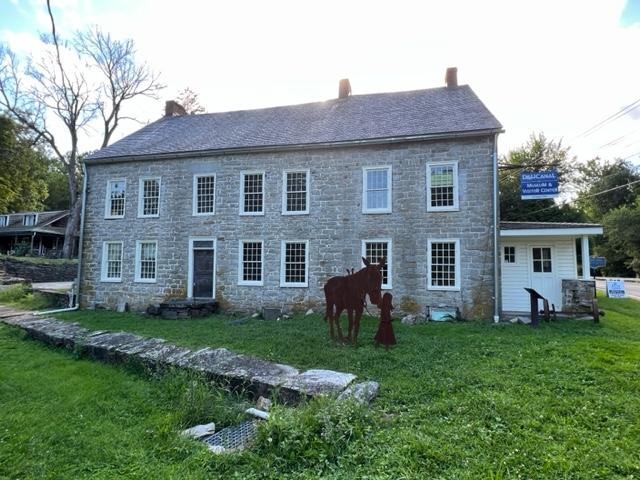
The D & H Canal Museum at 23 Mohonk Road

The D & H Canal Museum is an interesting mix of history of transportation, commerce and growth in this part of New York State. The museum is housed in the old DePuy Canal House at Lock 16 on the canal route (which is located just outside with weeds and over-growth hiding it), which was built in 1797 and was enlarged in 1820 to serve workers and travelers on the D & H Canal. The museum itself had gone through many transitions from tavern to canal offices to a high-end restaurant and then to the current status as a museum.

Lock 16 on the canal route sits just outside of the museum.

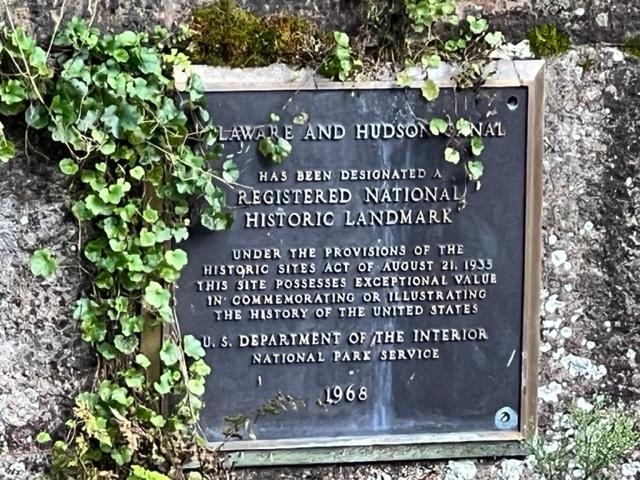
The canal historical marker.

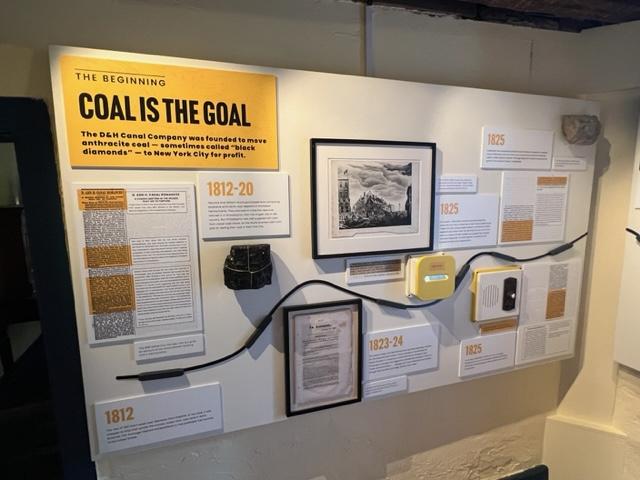
The museum is interesting in that it shows the progress of how the canal was built and how the area opened up to commerce of both people and merchandise. It also shows the importance in shipping coal from its source to its end destination in New York City and how it helped grow that city as well.

The front gallery as you enter.

The entrance of the museum gives a romanced view of the canal and transportation along the route. Artist William Rickarby’s painting “High Falls on the Rondout” is the theme of the room with the painting blown up to show life on the canal. It gives a view of how the canal’s played a part in everyday life.

The original watercolor painting “High Falls on the Rondout Creek” by artist William Rickarby.

The painting’s description

The museum is broken down into four separate galleries explaining the canal development, Transporation and shipping, the types of products being shipped along the route. Coal being mined in Pennsylvania could now be shipped to New York City more quickly than before and the connections to other lines of the canal brought in other produce.

The main gallery tells the story of the development of the cabling system that helped develop the bridges of the canal route.

The D & H Canal route for shipping.

The movement of coal from Pennsylvania to New York City.

The new Robling cable system changes everything.

Coal mining and its role in the growth and use in cities.

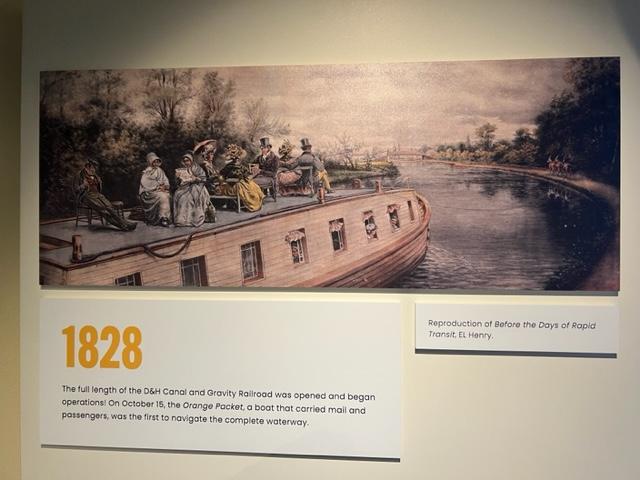
Before the railroads, the canals also began a source of leisure travel.

The second gallery explains coal mining manufacturing. The finding of the ore and its use in a modern society. This shows its importance at that time in our history.

The shipping of coal.

The second gallery on the development of the canal.

John Augustus Roebling and his creation of the wire rope cable.

Items for the use of mules that were used along the canal route.

Items used for canal safety while in transport.

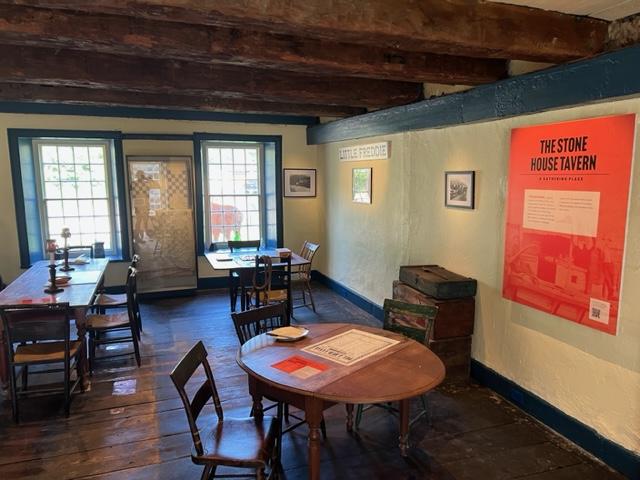
The last gallery was the part of the building that the family had used for a tavern for travelers along the canal route. This room still has that feel of a restaurant and along the tables you can see the old menus and a description of entertainment at the time.

The use of the building as a pub for travelers along the canal route.

The pub description of the DePuy family. They used this building to entertain visitors who worked and traveled along the canal route. The building was later used as a four-star restaurant until 2017 when the building was turned into the museum.

The outside of the old restaurant extension.

The old Lock 16 that is now covered with weeds, but you can still hear the water underneath.

There are still traces of the glory days of the canal covered by weeds, trees and bush. The canal is long gone but its development, growth and final demise and rebirths as an attraction are shown in different stages of the galleries. For those who have interest in the growth of New York State in both mining and farming and transport to New York City, the museum tells that story not just in story boards but by experiencing it with props and pictures.

The History of the D & H Canal (The Delaware & Hudson Canal):

(from the D & H Canal Museum pamphlet)

This 108 mile, 108 lock waterway carried anthracite coal from Pennsylvania mines to the Hudson River at Kingston, NY between 1828 and 1898. Conceived by the Wurts brothers, it served as a means to market their coal in New York City. Associated with feats of civil engineering, the D & H Canal transformed the mid-Hudson River Valley in size and economic development.

The D & H Canal Company was privately financed by investors after seeing a Wall Street demonstration of the hot burning anthracite coal in January 1825. Benjamin Wright and John B. Jervis were hired to survey the route and engineer this canal, which started in Honesdale, followed the Lackawaxen and Delaware Rivers to what is currently Port Jervis. It then headed northeastern through the valley between the Shawangunk Ridge and the Catskill Mountains and ran alongside the Roundout Creek to the Hudson River.

The canal was constructed in less than three years by an estimated 10,000 workers, using only picks, shovels, draft animals and blasting powder. Industries developed along the canal route to exploit local resources such as lumber, agricultural products and bluestone. Natural cement, which hardened well under water was discovered near High Falls in 1825 and would later be used to construct structures such as the Brooklyn Bridge, the Statue of Liberty and the Washington Monument.

Another innovation was the wire suspension bridge designed by John Roebling (of Brooklyn Bridge fame). He built four suspension aqueducts for the D & H Canal during the 1840’s.

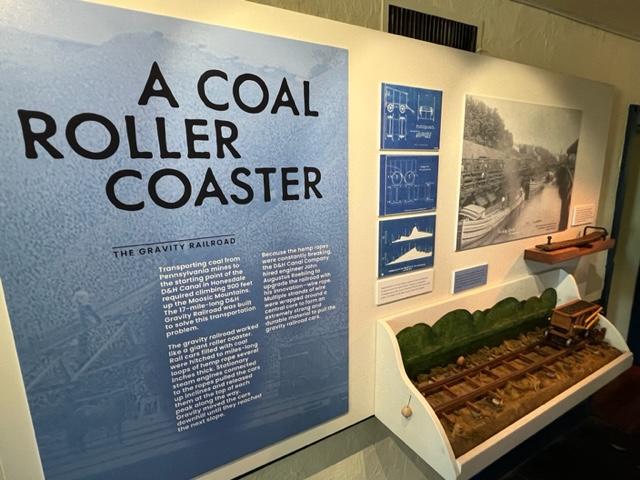
The gravity railroad was devised to transport coal from the fields near Carbondale to the canal terminals at Honesdale and Hawley. Railcars were pulled up the mountains using mules and ropes and descended by gravity. Although attempts to use steam locomotives proved unsuccessful, the trial run of the Stourbridge Lion is considered the first commercial use of a locomotive in the US.

One of the largest firms of its era, the Delaware & Hudson Canal Corporation pioneered corporate management practices and built one of the first US railroads. Railroads led to the end of the canal era and most of the D & H Canal was drained after the 1898 season.

The remnants of the D & H Canal.

The Reher Center                                                        99-101 Broadway                                               Kingston, NY 12401

The Reher Center 99-101 Broadway Kingston, NY 12401

The Reher Center

99-101 Broadway

Kingston, NY 12401

(845) 481-3738

Reher Center for Immigrant Culture and History | Kingston NY | Ulster County

Open: Sunday 1:00pm-6:00pm/Monday-Thursday Closed/Friday-Saturday 1:00pm-6:00pm

Admission:

$12.50 Seniors/Students/Children/$17.50 for Adults and Combination tickets

The History of the Reher Center:

(From the museum website)

I recently went to the Roundout section of Kingston to tour the Reher Center and what an interesting tour not just of the exhibit, I recently went to the Roundout section of Kingston to tour the Reher Center and what an interesting tour not just of the exhibit, “Taking Root: Immigrant stories of the Hudson River Valley” but also the historic baking tour. The tour guides really explained how the Reher Bakery, which closed its doors in 1980 was not just a bakery. It was a staple in the community where people got to together not just over bread but community affairs and interaction with other immigrant groups of people.

‘Taking Root: Immigrant stories from the Hudson River Valley’

Our first part of the tour started in the bakery on the first floor of the museum. when Hymie Reher closed the doors of the bakery for good in 1980, he shut the door and created a time capsule that would become the museum. It seemed that the family did not want another business in the space so it just stayed empty all those years. This led to the creation of the museum dedicated to a family whose roots were in Kingston for several generations (it seemed that family members still lived upstairs until the early 2000’s).

The start of the Bakery tour

The tour starts in the front of the bakery where the family would have standing orders ready for customers and this is where the community would come together. Over their orders. Some of the shelves are still stocked with supplies that would have been on the shelves in the 1950’s. The tour guide said that it was not just a bakery but a small grocer as well.

The Grocery display

The Grocery display

The bakery display section

The tour continued in the bakery section where the oven was located and where all the magic took place to produce all the breads, rolls and challah was made. The oven, which is still functional today but can not be used, takes up most of the room. It was a coal and wood burning oven that was used from the turn of the last century until the bakery closed in 1980. The oven was impressive not just for the amount of bread items that needed to be produced each week but the fact that people would come with their food for the sader to cook in the cooling oven.

The oven in the kitchen where the breads and rolls were made

On the other side of the kitchen is the flour bins and the dough mixer where the dough was produced and all the product was portion sized. The storage areas where supplies came in and were held each week to produce what needed to be made for the customers were off to the side. On the tour, you will hear talks from former employees and customers about what life was like in the bakery.

The shared oven where meals were cooked in the cooling oven

The tour would end with a few more conversations with former customers and a quick wrap up in the grocery area. Then each of us got a fresh roll in a bag that was baked by a restaurant in the neighborhood. That was really good. The roll was chewy on the outside and soft on the inside.

The dough mixing machine is to the right and the supply area to the left.

The dough machine

The kitchen storage area

Baking sheets from years and years of making rolls

The last part of the tour was in the new upstairs gallery where the “Taking Root: Immigrant stories of the Hudson River Valley” is on view. This is where immigrants from the United States from the World Wars until today tell their stories in video recording and you can hear how they came to this country. Their lives before they arrived and after they settled in the region. Some of the stories I heard were fascinating.

The timeline of the stories told

The pictures of the immigrant stories told

Pictures and stories from the exhibition

Brief History of the Reher Center:

2002-2007: The idea for the Reher Center was hatched in 2002 when Geoffrey Miller peered into the window of 101 Broadway and observed a time capsule: the space was left untouched since Hymie Reher closed his family’s bakery in the early 1980’s. Geoff describes it as “Falling down a rabbit hole,” as he envisioned preserving and opening the site as a museum. Through a conversation with his friend, Barbara Blas in 2004. Geoff learned that the Rehers and the Blases were long time members of Kingston’s Orthodox synagogue. Agudas Achim and old family friends. Hymie was pleased with Geoff’s vision (Barbara remembers him singing “Happy Days are Here”) and arranged to deed the Reher’s property at 99-101 Broadway to the Jewish Federation of Ulster County.

The front of the bakery

A core committee quickly formed to develop plans to preserve the buildings and expand on Geoff’s initial vision for the site as a museum and cultural center that would honor the Reher family’s legacy and the broader immigrant history of Rondout neighborhood. Its tagline became “Building community by celebrating multiculturalism and our immigrant past.”

2008-2016: Geoff led the all-volunteer Reher Center Committee to restore the storefront and raise $750,000 in funding to stabilize the property under the guidance of preservation architect Marilyn Kaplan. Working with a variety of local organizations and partners, the Reher Center also spearheaded a series of popular programs including an annual Kingston Multicultural Festival, Deli Dinner and Immigrant Gifts to America series.

2016-2018: The Reher Center Committee expanded its Steering Committee and hired its first professional staff to leverage a range of new expertise and develop an interpretive plan for the site. In 2017, Sarah Litvin, Interpretive Planner, and Samantha Gomez-Ferrer, archivist, were hired to inventory, catalog, preserve, research, and digitize the Reher Center’s collection and expand it through conducting oral histories.

The outside displays of the Reher Center

In 2018, thanks to a generous matching donation from the Norman I. Krug family and our committed funders, the Reher Center was able to hire our first Director, Sarah Litvin, to open the site for public programming during summer, 2018. From May to August, the Reher Center was abuzz of activity as we created a new window display featuring historic photos from our collection; created a gallery and mounted our first exhibit, “The Story Continues” and shared the site and our vision for its future on Preview Tours of our historic bakery. Our July 7th “Open House” marked the first time the Reher Center was open for regular on-site programs.

The “Big Night” event in 2025:

In February 2025, I was invited to a very successful special event sponsored by both the Kingston Film Foundation and the Reher Center, a screening of the film, ‘Big Night’ and a sampling of Italian food. Needless to say the event far exceeded what the planners thought and they were completely full and sold out by 6:00pm. The organizer said they were turning people away. They had never seen anything like this. When you mix free Italian food, free wine and an excellent movie, you have a recipe for an excellent event. It was so much fun.

The organizer from the Kingston Film Foundation was explaining the success of the evening to the crowd

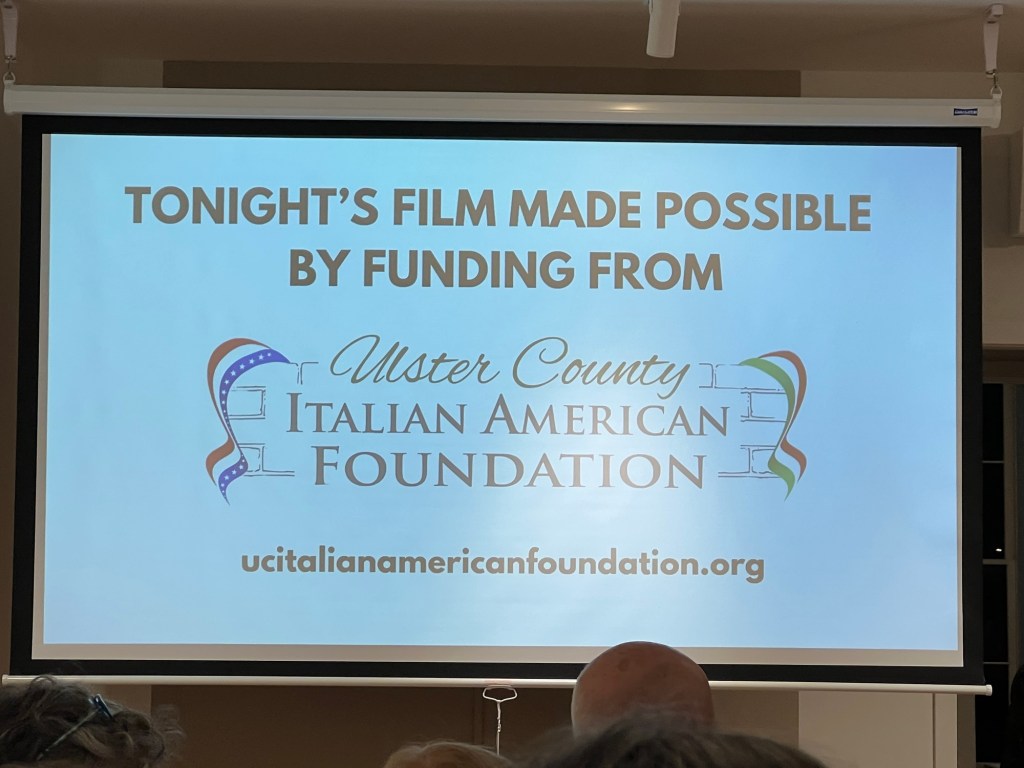
The event was funded by the Ulster County Italian American Foundation

I am convinced that it was the food that brought the people in coupled with a very popular film. The caterer who was there that night from Mass Midtown made two versions of the Tripoli, the noodle and meat dish in the film. Trust me when I say, the lines never stopped for that.

The two versions of the Timpano, the Vegetarian and the Meat versions, which were delicious was donated by Masa Midtown in Kingston, NY and the wines were donated by Kingston Wine Company.

Masa Midtown

https://www.masamidtown.com/

My review on TripAdvisor:

https://www.tripadvisor.com/Profile/R4960NKjustinw/mediabatch/13365543?m=19905

Trust me they were very generous with the slices of Timpano

God, it was delicious

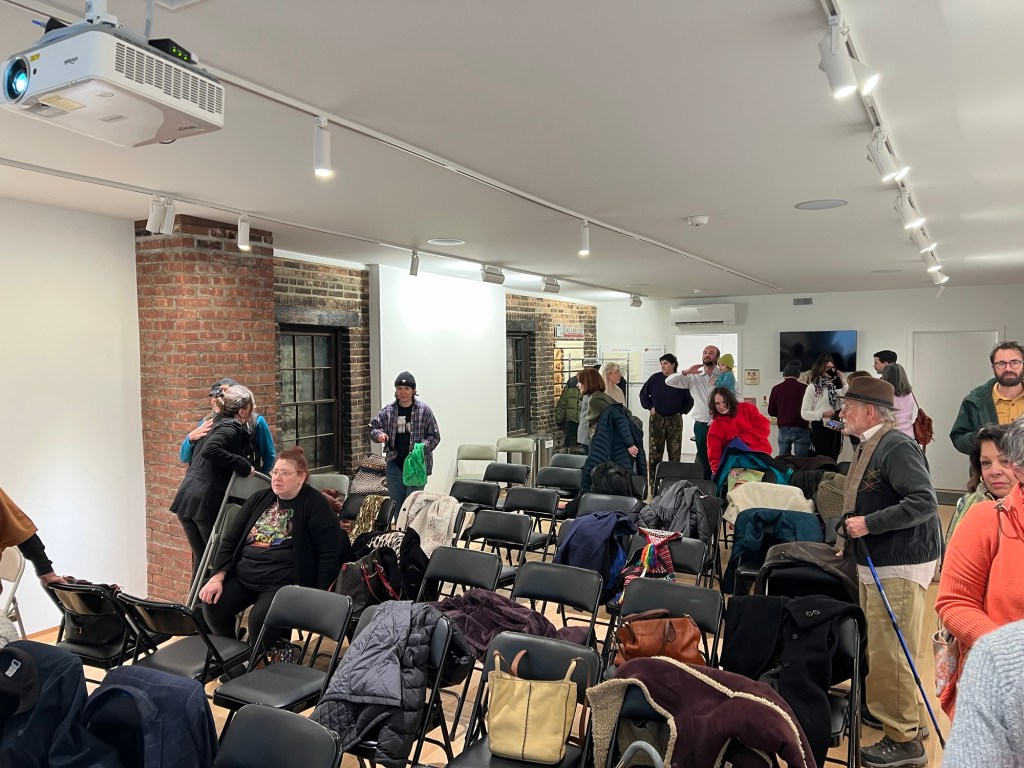
The screening room was beyond packed that evening. Put free Italian food and a popular film in front of people and you will get a crowd

This very popular event people in the area will be talking about for a long time. This is what gets you a lot of attention. It really was an excellent event and I had a lot of fun that night. I love the movie ‘Big Night’.

The Timpano in the “Big Night”

The Trailer for the “Big Night”:

The evening was night of good food, wonderful conversation and an excellent movie.