What also is difficult is when two major museums have their Members Night on the same night. I had to do a lot of coordinating to go to both museums. What made it work is that both museums closed at different times with The Met closing at 10:00pm. I timed it perfectly.
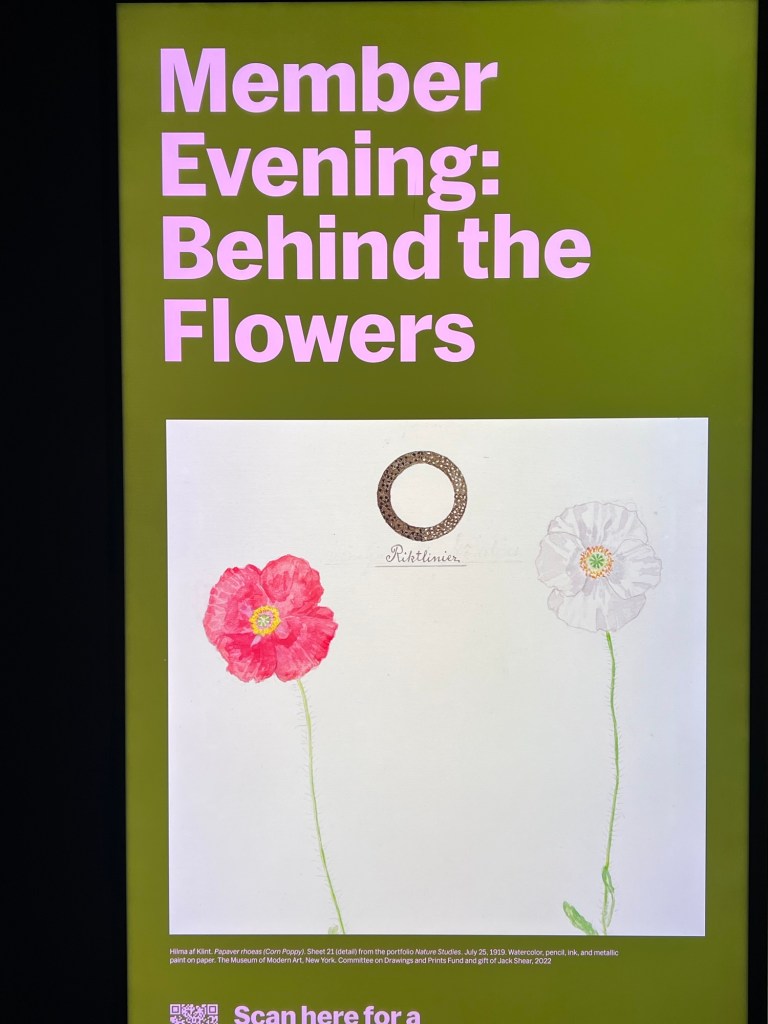
Members Night at the MoMA ‘Behind the Flowers’ for the Hilma af Klint exhibition
The theme that evening was based on the Hilma af Klint exhibition
Going this evening took a lot of planning as I had to teach in the morning and cut the lawn on the afternoon. I was already exhausted by the time I left for the City at 4:00pm. Even on this gloomy afternoon, the weather held and it was a nice evening.
The area around the museum was in full bloom that early evening
The event opened early at the MoMA with their event from 6:00pm-9:00pm and the Met went from 7:00pm-10:00pm so I was able to enjoy both with a lot of walking in between. It was worth it as I was able to see several exhibitions on my bucket list before they closed. With work and finals, it had been tough to visit both of them.
People were enjoying conversation and cocktails when I arrived at the MoMA that evening.
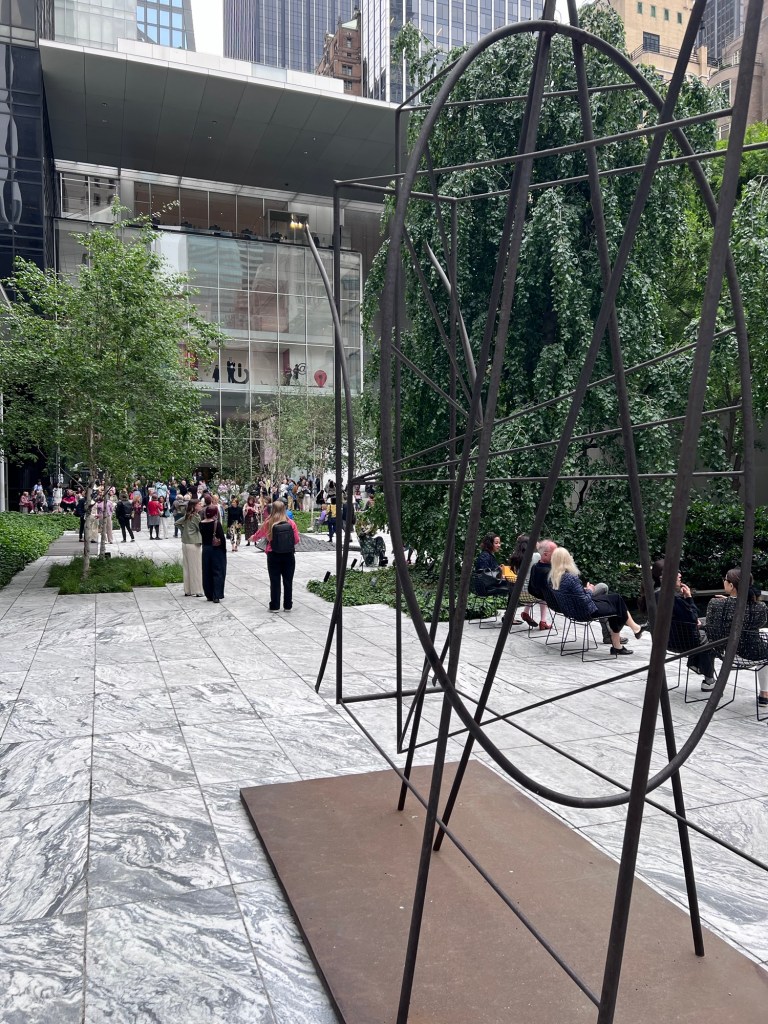
I decided to start my evening at the Sculpture Garden on the first floor. The weather was cloudy but still it was a warm evening. People were conversing near the fountains and listening to music. The lines for the cash bar never let up and they were about thirty deep the whole time.
The Sculpture Garden at the MoMA
While I walked around the gardens and fountains I noticed a lot of the art that they were featuring was really unique, some of which I had not seen before.
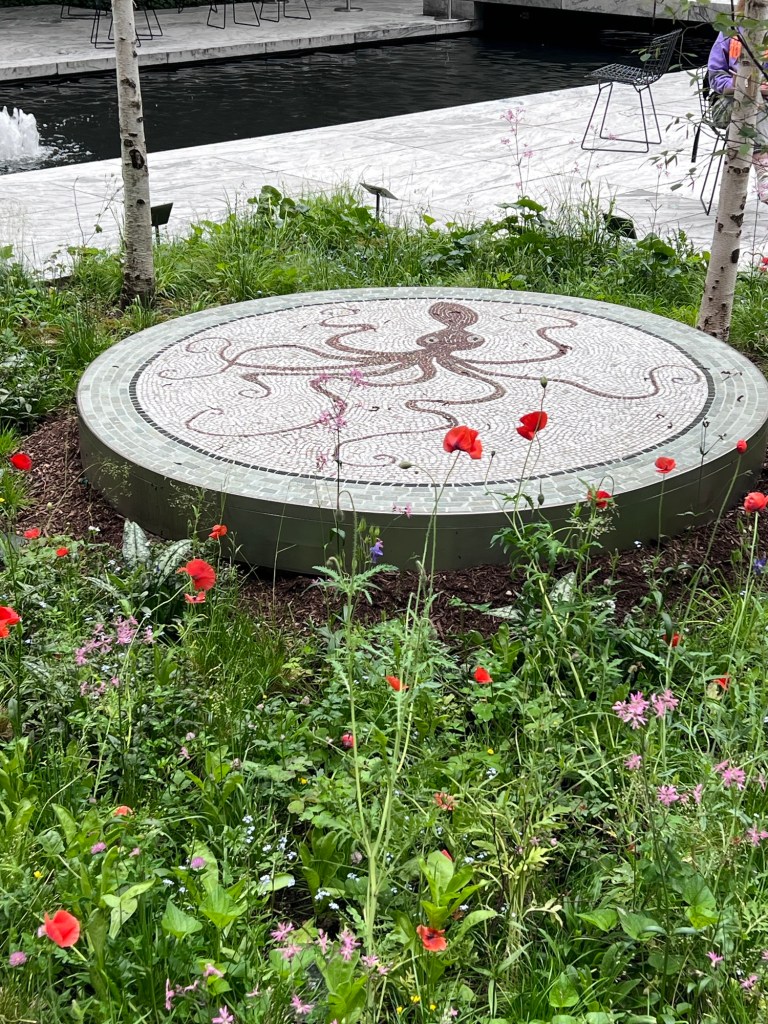
The gardens with the poppies in bloom
This beautiful mosaic of a octopus did not have a name
This metal artwork was towards the back of the sculpture garden
The Met at night is quite dazzling
The entrance to The Met in the evening
Looking down Fifth Avenue at night
The entrance in the Rotunda was filled with fresh flowers and members chatting away. I even saw some of the members I had seen at the MoMA earlier.
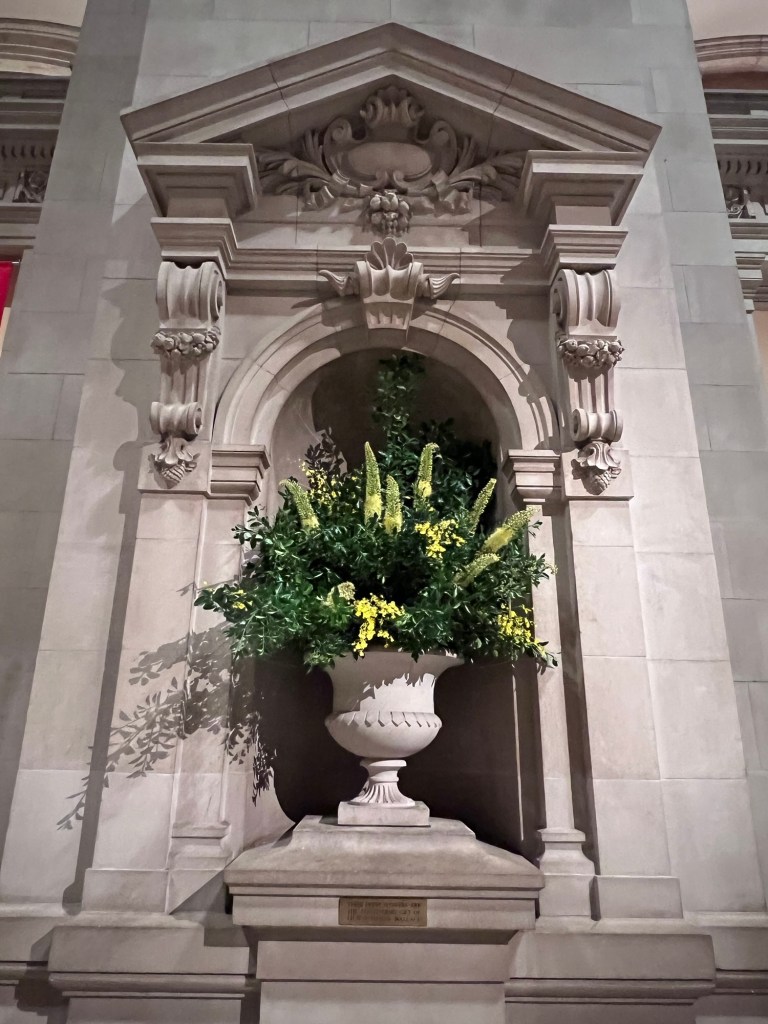
The floral arrangements were spectacular
The beauty of the Rotunda in the evening
Maybe because these Members Nights were on a Tuesday evening, they both did not seem as crowded as they had been in the past. The museum was crowded but not as crowded as the past two Member’s Nights. I think that I arrived at 8:00pm most people were starting to leave. What was nice was that the MoMA night went until 9:00pm and The Met Night went until 10:00pm so it gave me the time to run through both museums.
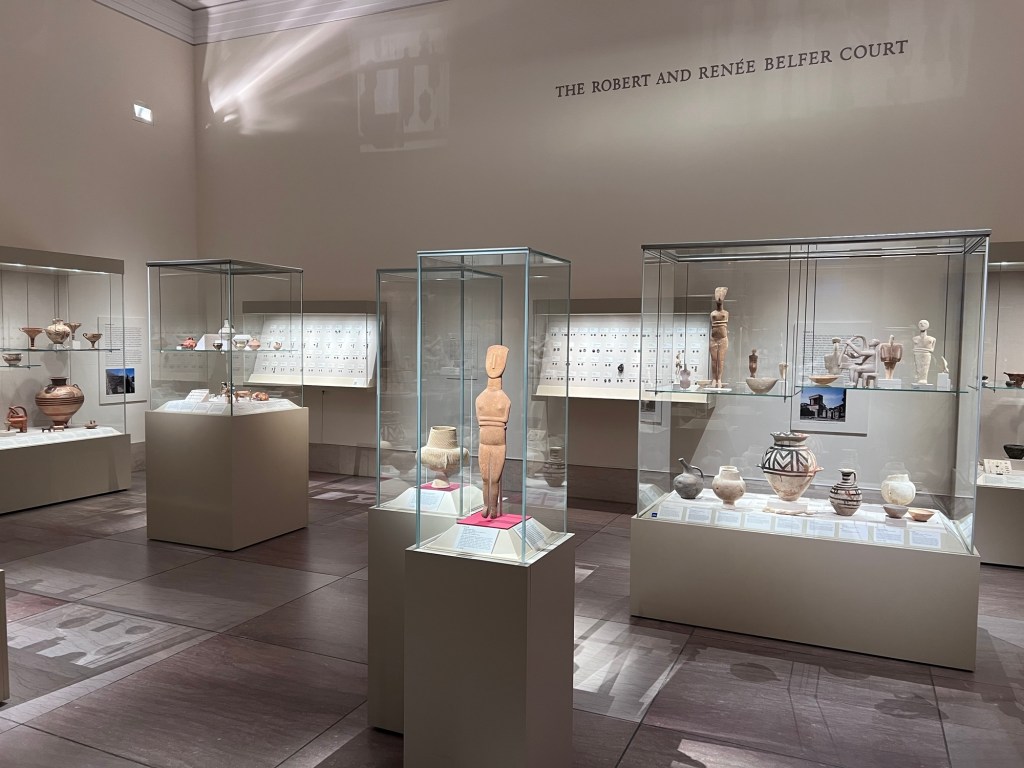
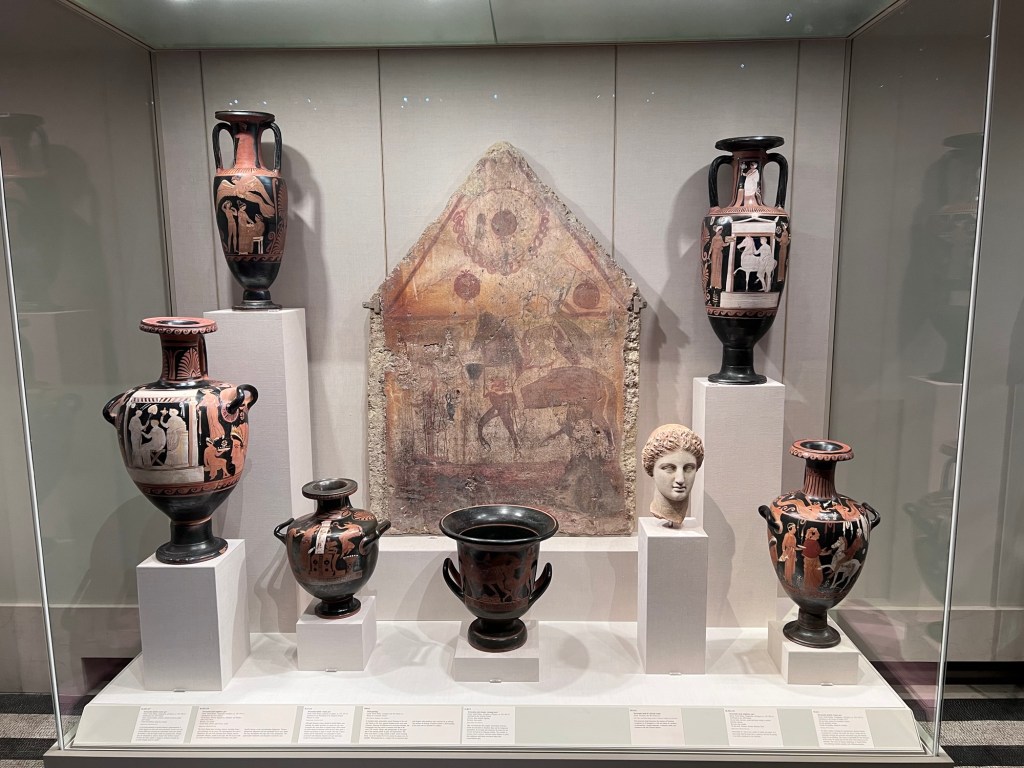
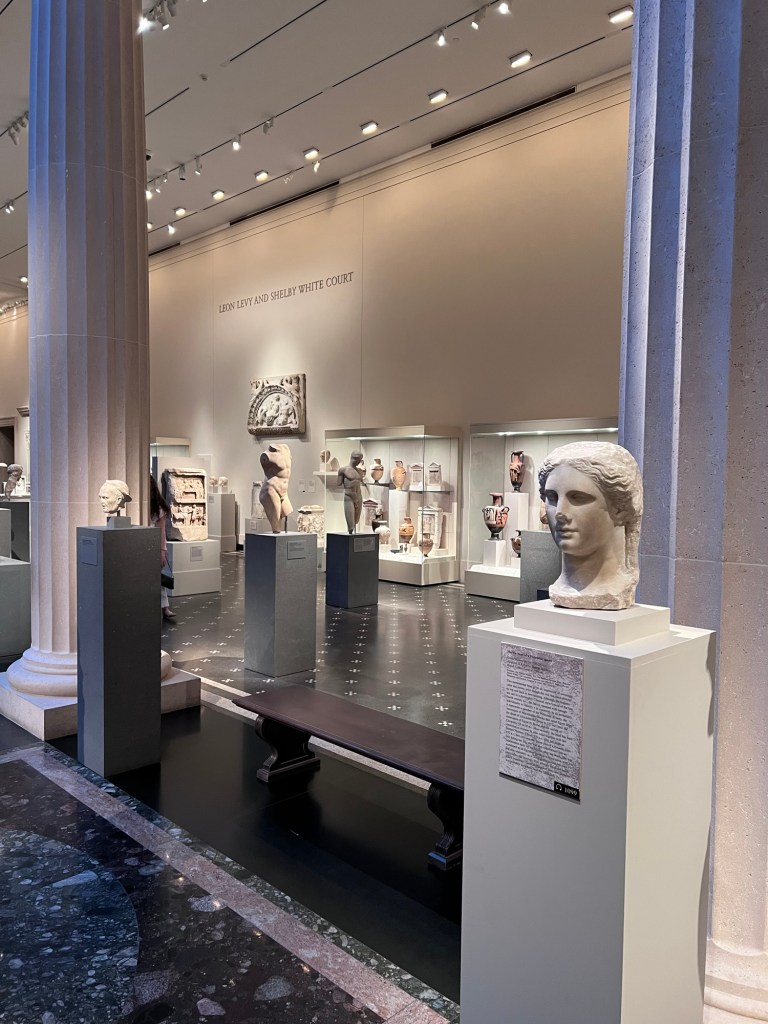
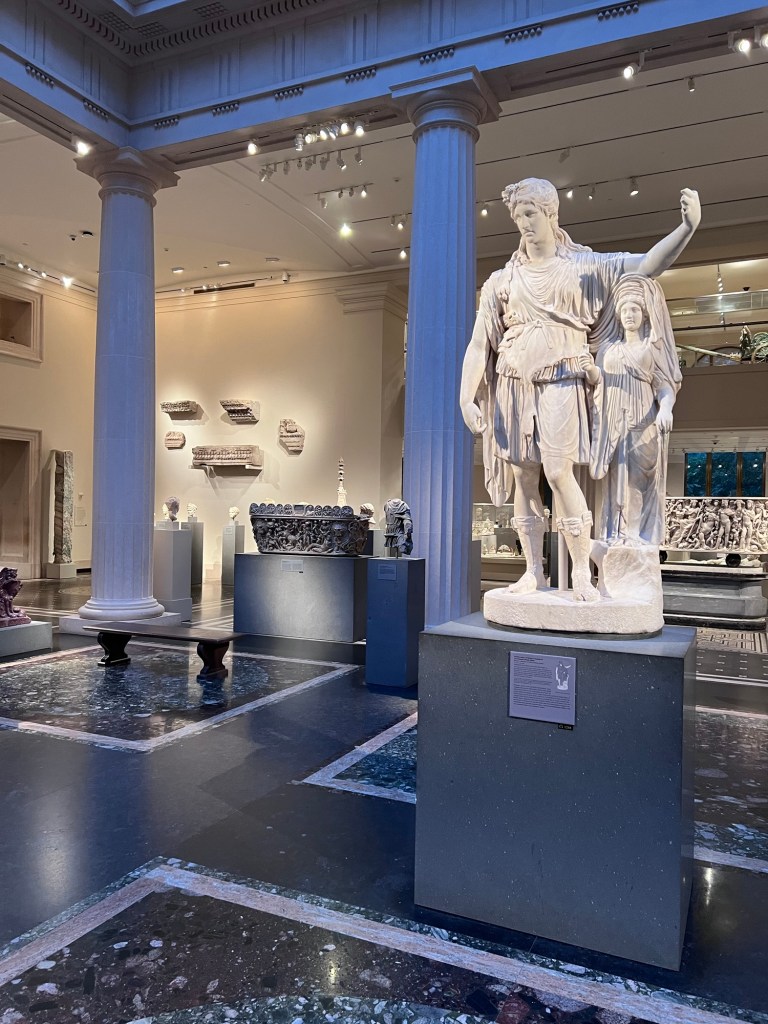
I started my tour of The Met in the Greek Galleries looking at the Cycladic Art. I always loved the looks of these works.
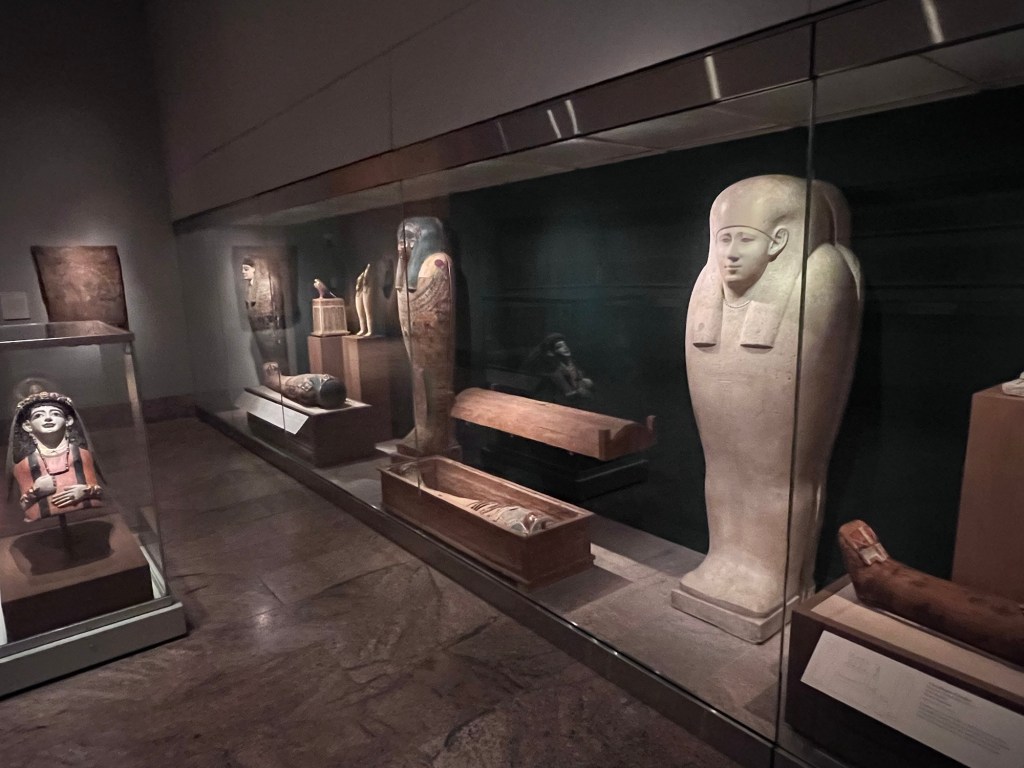
I love the Egyptian Galleries. I have been coming here since 1973 and have loved them ever since.
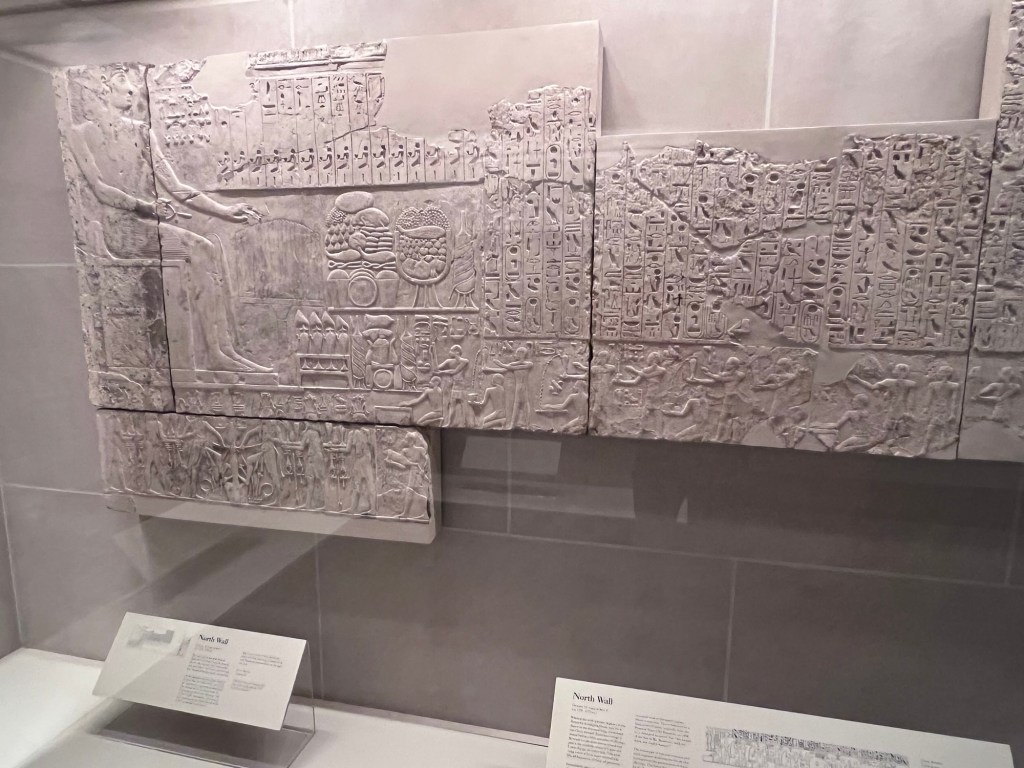
I love the ancient hieroglyphics
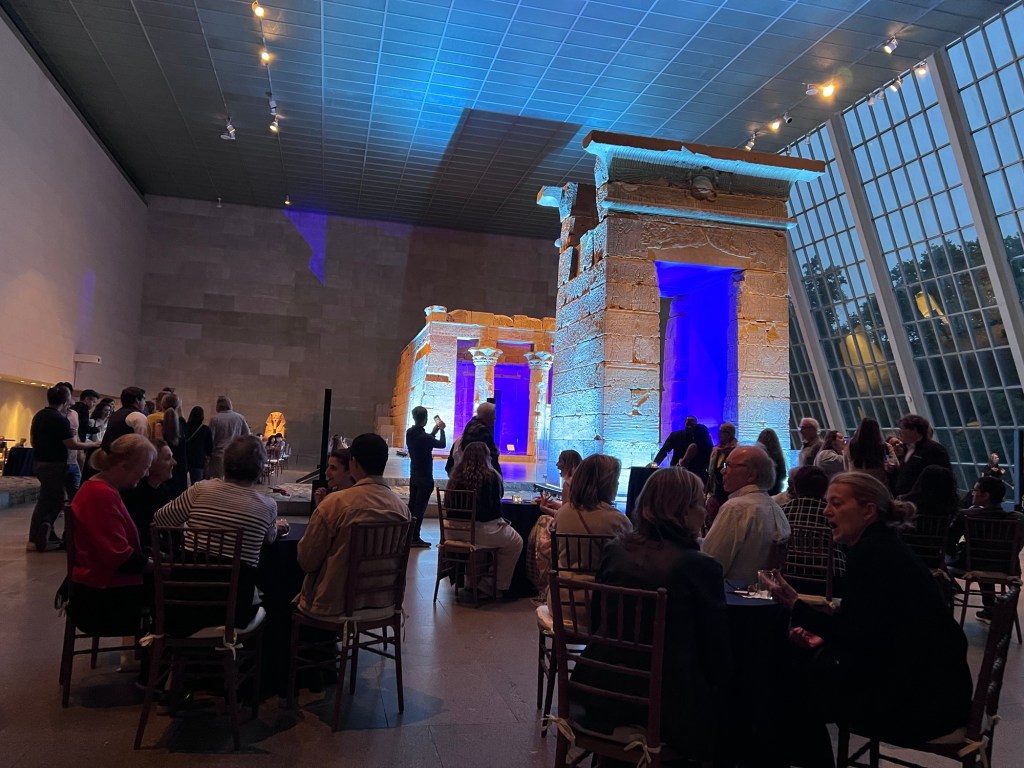
For the last two Members Nights, the Members Bar was in the Temple of Dendur. It is always so well lit and the music was wonderful. It is a nice way to end the evening.
The Temple of Dendur lit for the evening
The Temple of Dendur was the perfect place to relax and have a cocktail
The crowds were rather large at the bar that evening
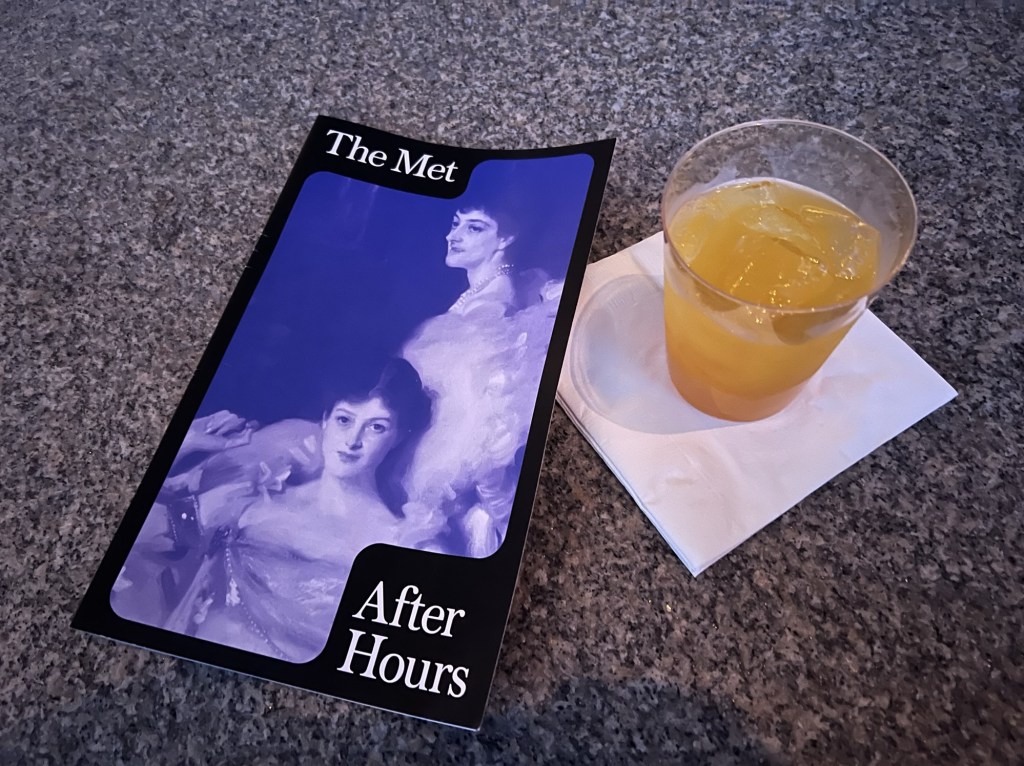
The Passion fruit cocktail was the specialty drink of the evening
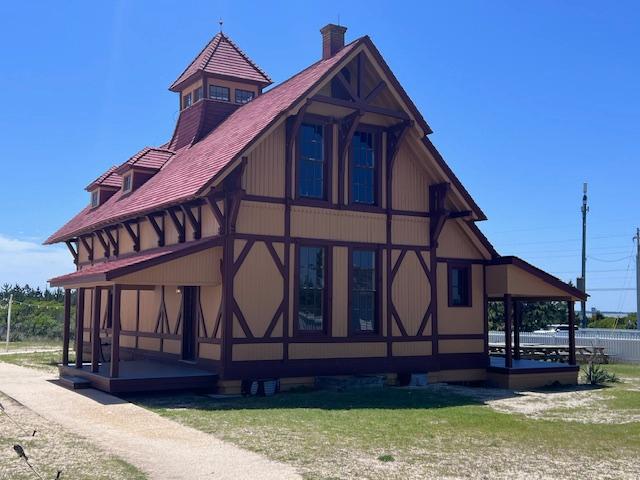
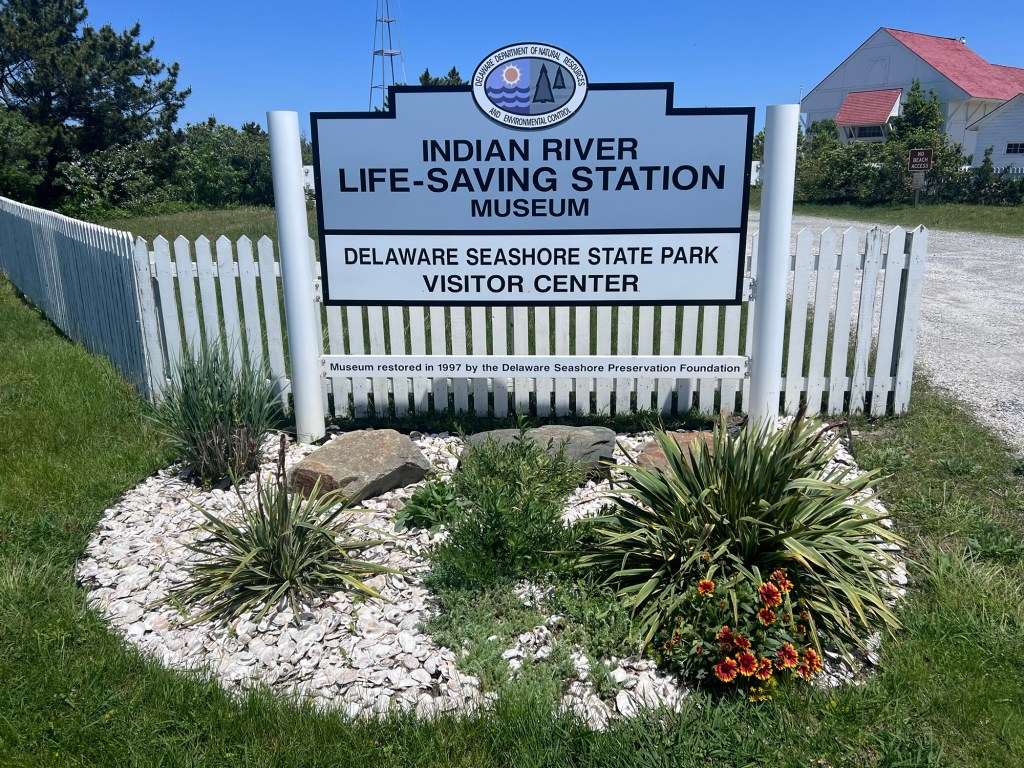
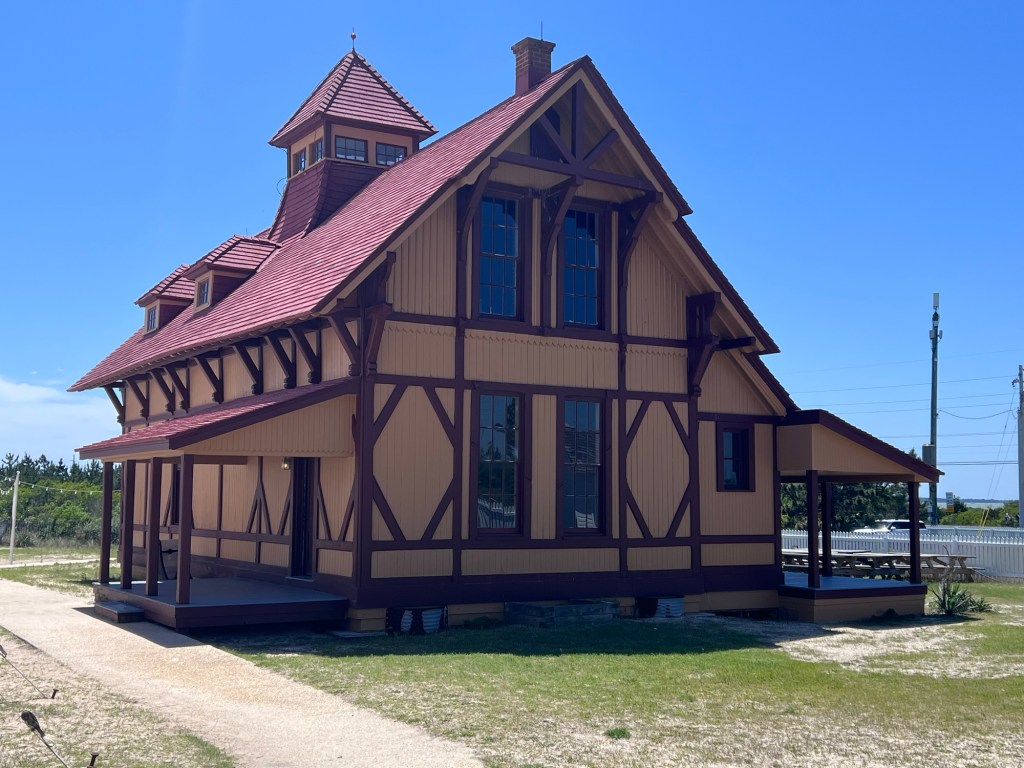
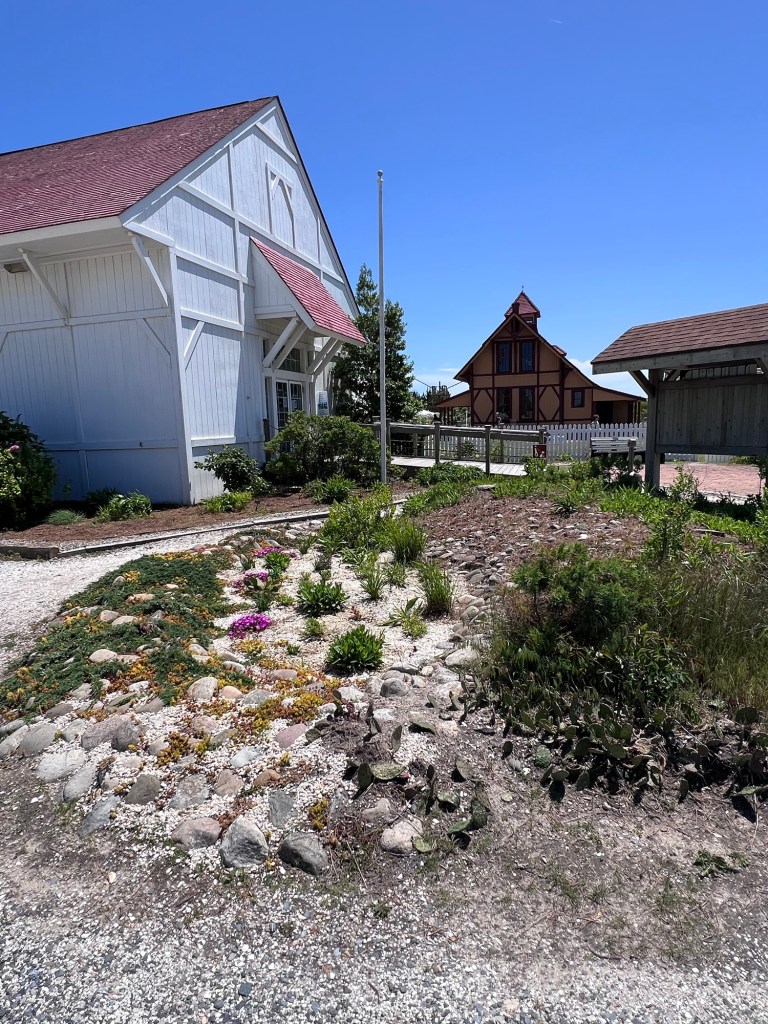
The front of the Indian River Life Saving Museum at 25039 Coastal Highway
History of the Indian River Life Saving Station:
(From the Delaware State Park website)
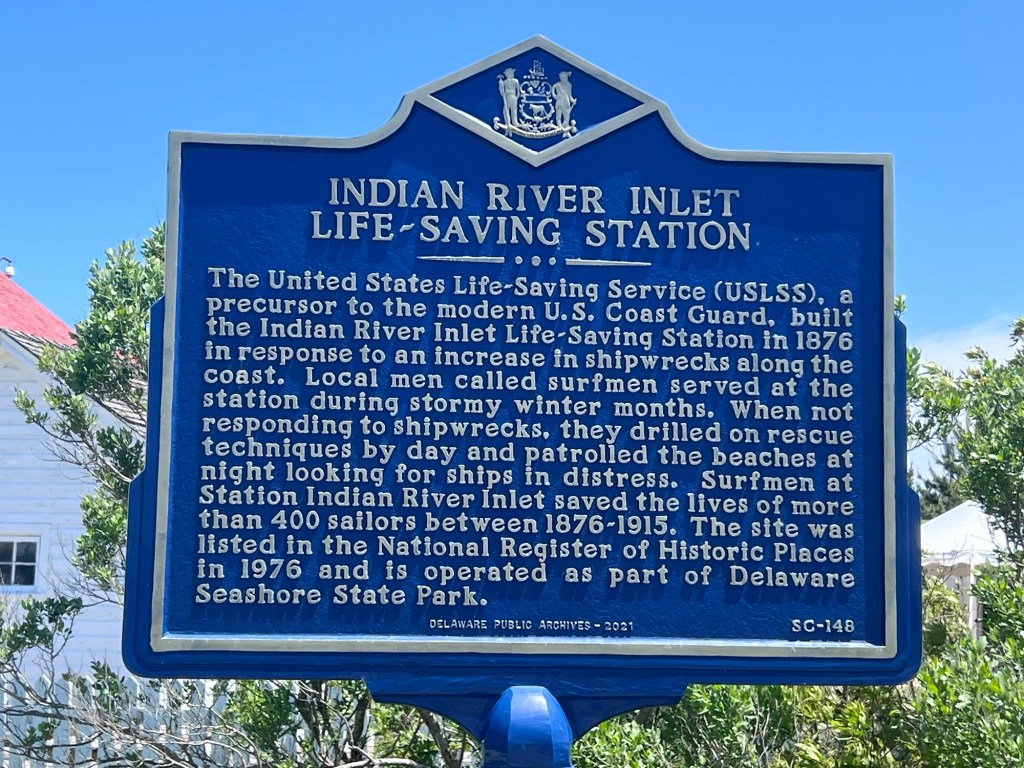
The original Indian River Life-Saving Station was built in 1876 for use by the United States Lifesaving Service, a government organization created to respond to the alarming number of shipwrecks along the coastlines of the United States and the precursor to today’s U. S. Coast Guard. The Life Saving Station today is a maritime museum that honors these courageous sailors and the rich history of their deeds. Listed on the National Registry of Historic Places, it is a must visit piece of Delaware history.
The front of the historical sign describing the park
The recent History of the Museum:
(From the Delaware State Park website)
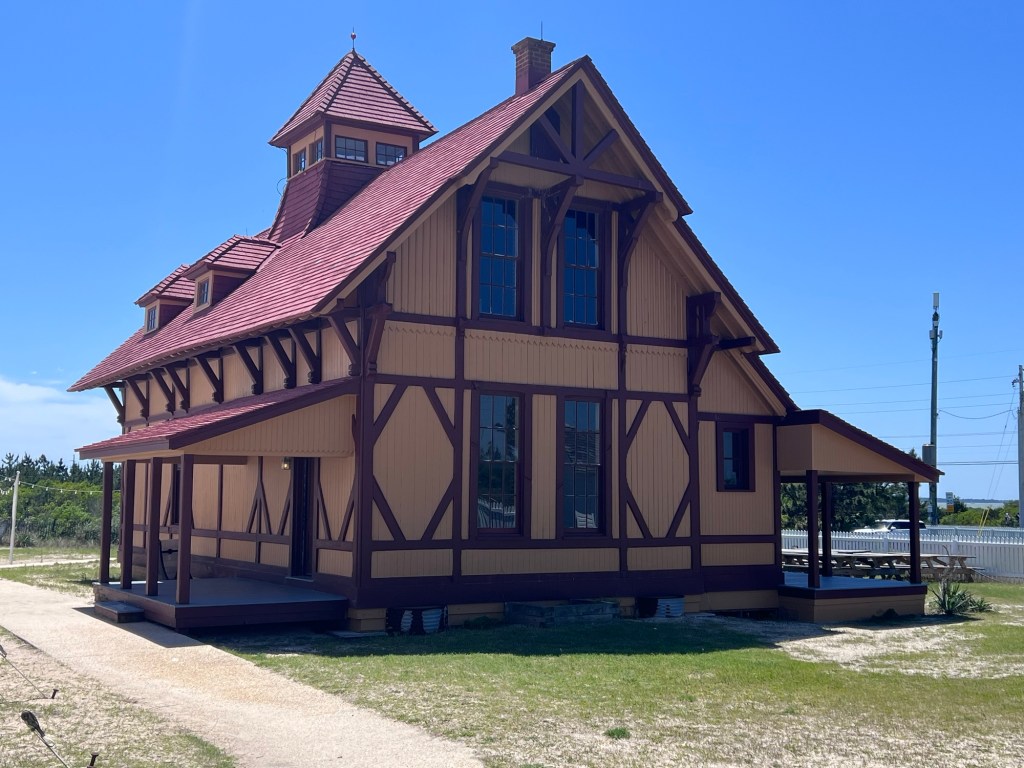
The building was first located 400 feet closer to the shore, but a sand dune began to form around it almost as soon as it was finished. It was moved to its present location in 1877, and today has been meticulously restored to its 1905 appearance, complete with diamond-shaped trim. The museum is listed in the National Register of Historic Places.
The entrance of the museum
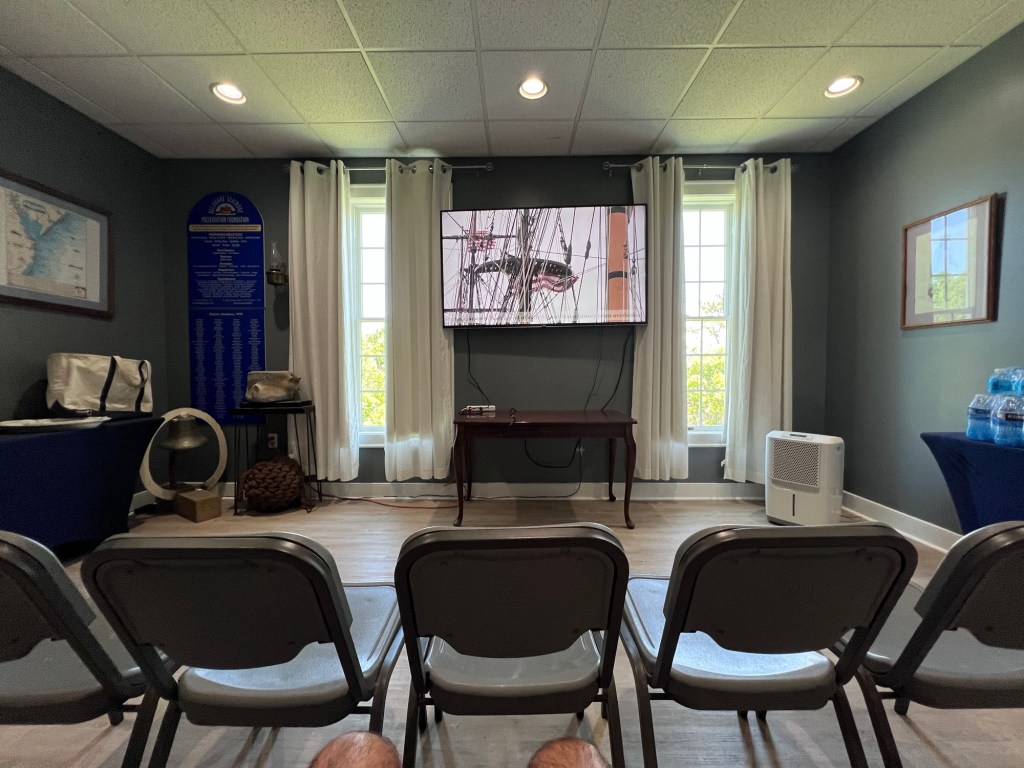
The Screening Room in the Visitors Center where you learn about the Life Saving Center
I started my tour of the Indian River Life Saving Museum at the Visitors Center with a quick video of the history of the building and the men who lived and worked here. The organization was the precursor to the modern Coast Guard. What I thought was interesting is that the way of rescuing people has not changed that much since the 1800’s. It has modernized with equipment and knowledge but the process is still similar to what it was then.
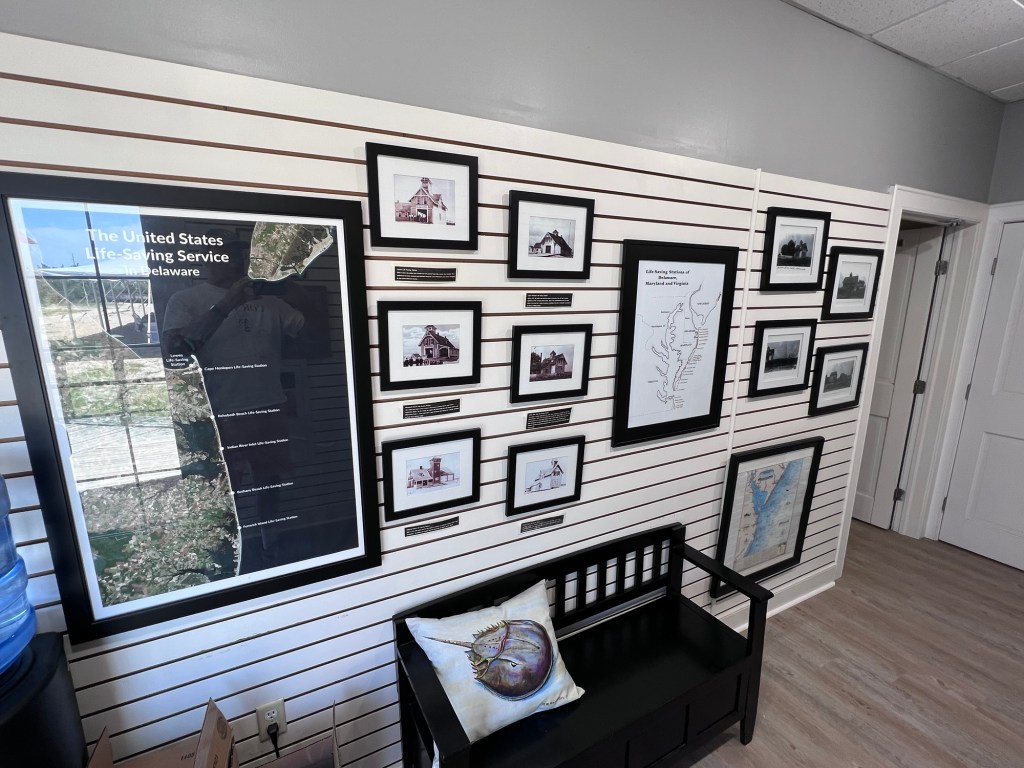
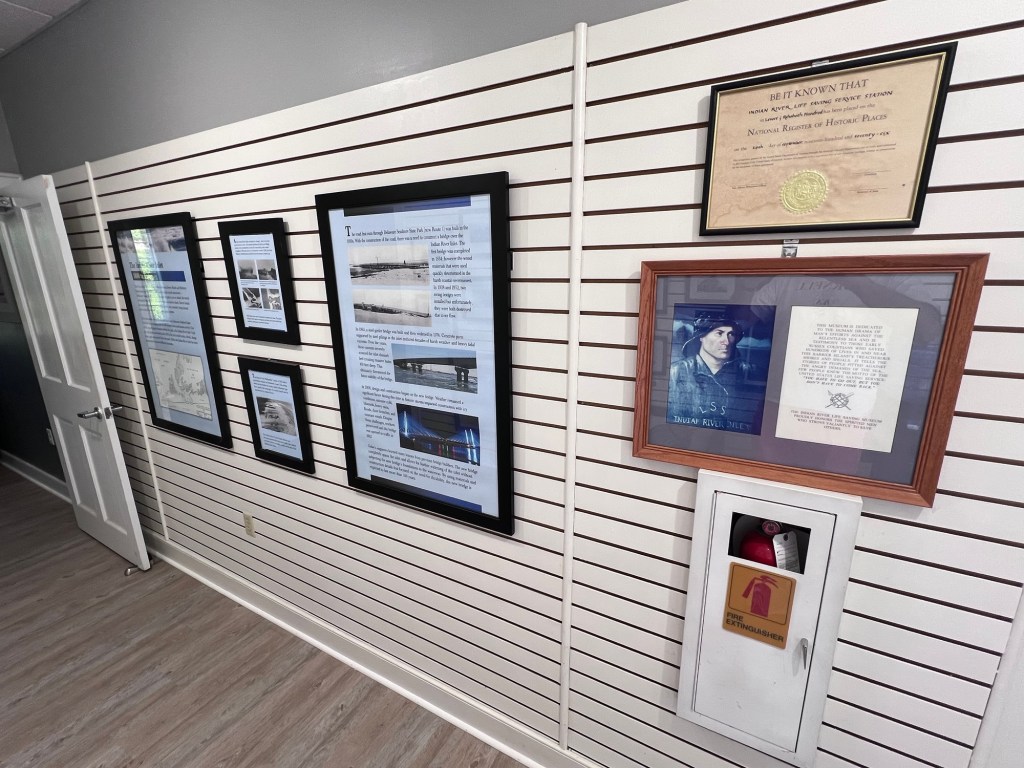
The Screening Room lined with historical pictures
The Screening Room lined with pictures of the history of the area
You can take two audio tours as you start to tour the station building just by calling into your phone, one of the exterior and one of the interior, room by room. Each room and many objects have a number assigned to them and you can listen to a description of the subject matter.
The Rescue Saving Station from the exterior. The building has a Queen Ann design.
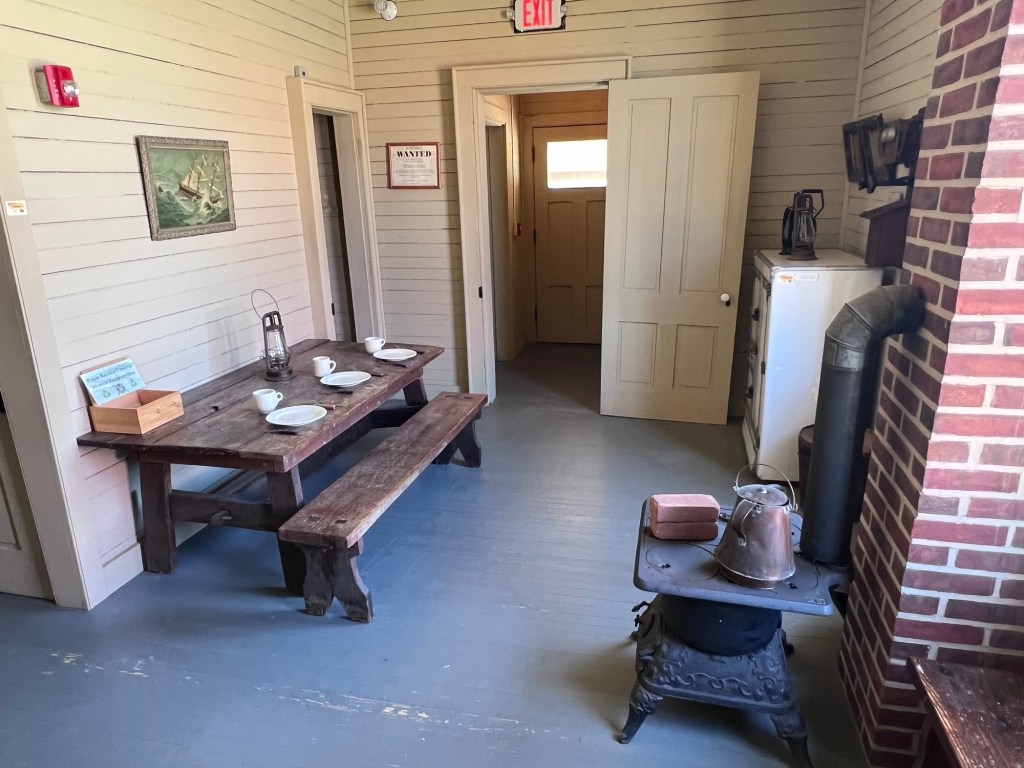
The first room you enter is the kitchen area where all meals were prepared and the men ate their meals. These men could not leave the facility because of the hours and type of work required, supplies were brought in and stored in this area.
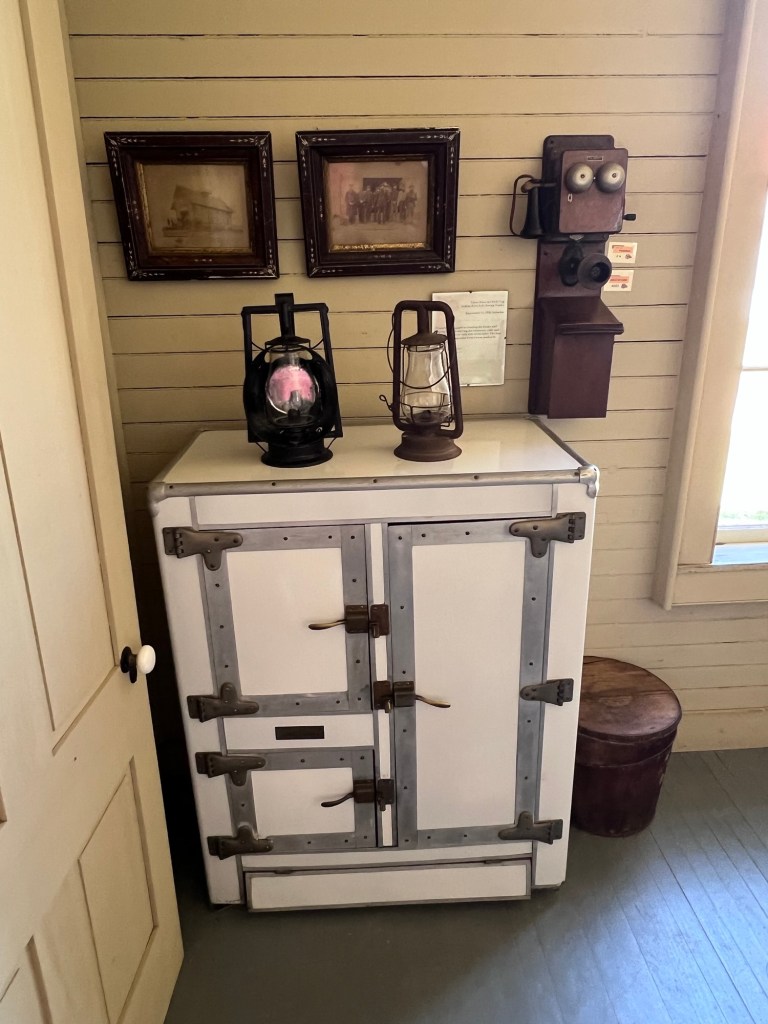
The old ice box where foods were stored
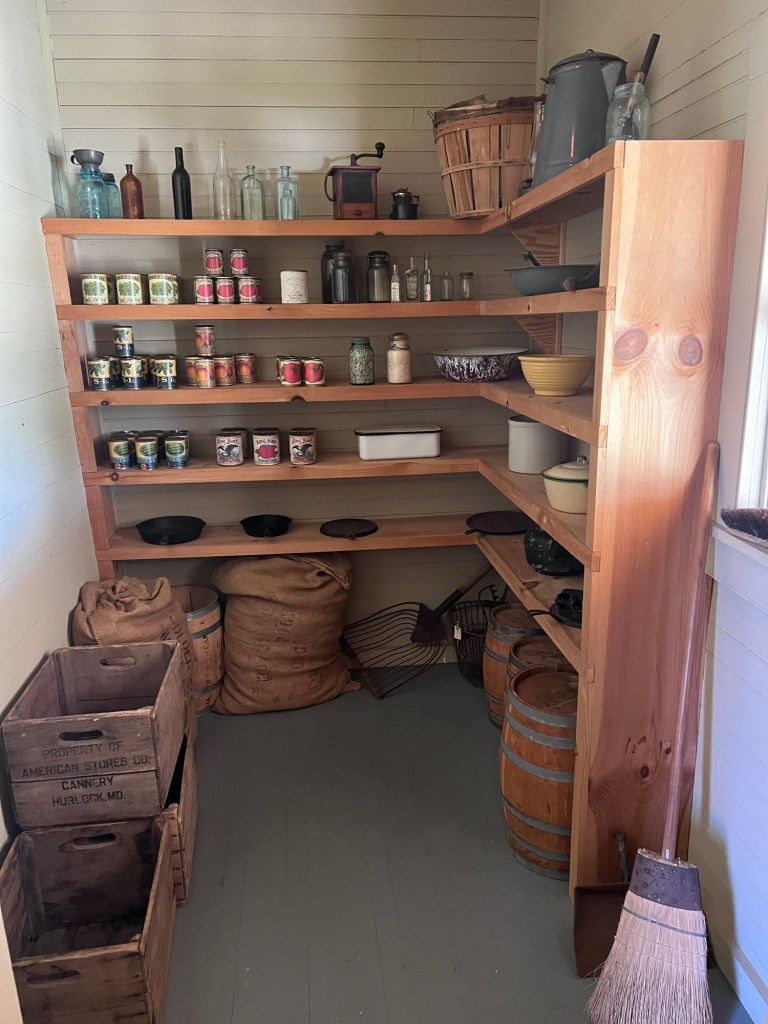
The pantry area where all the dry goods were stored
For recreation, the men read, entertained themselves with music and conversation. This room was used for recreation purposes and some down time for the staff.
The first floor downstairs room was used for entertainment and recreation during the downtimes
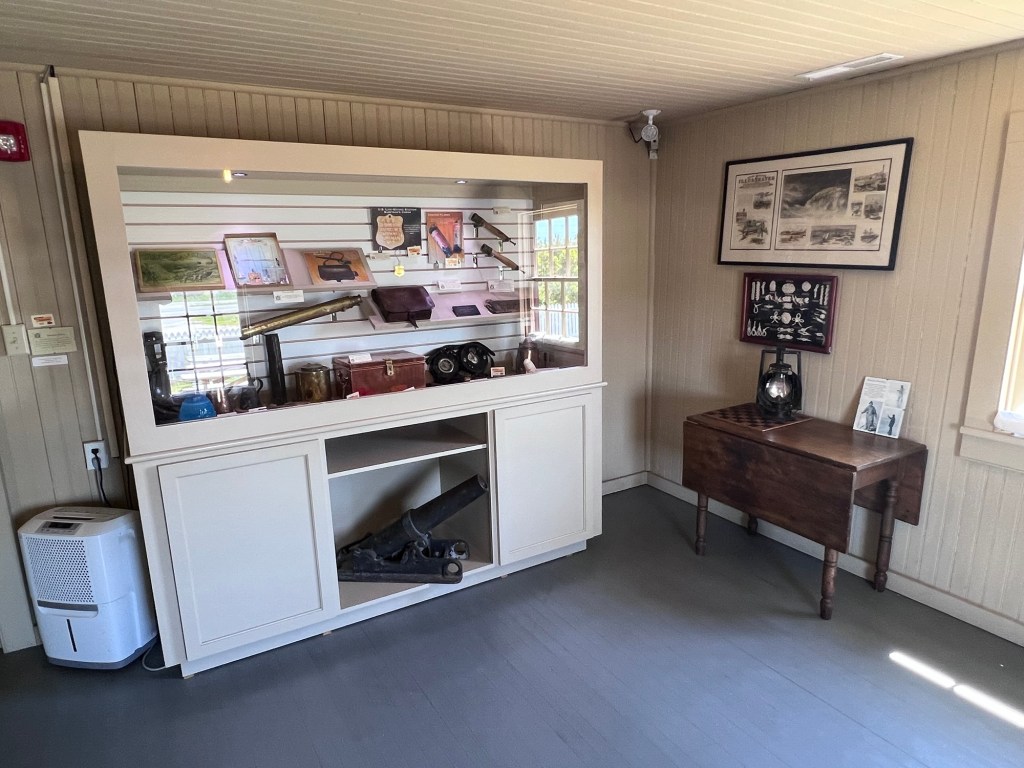
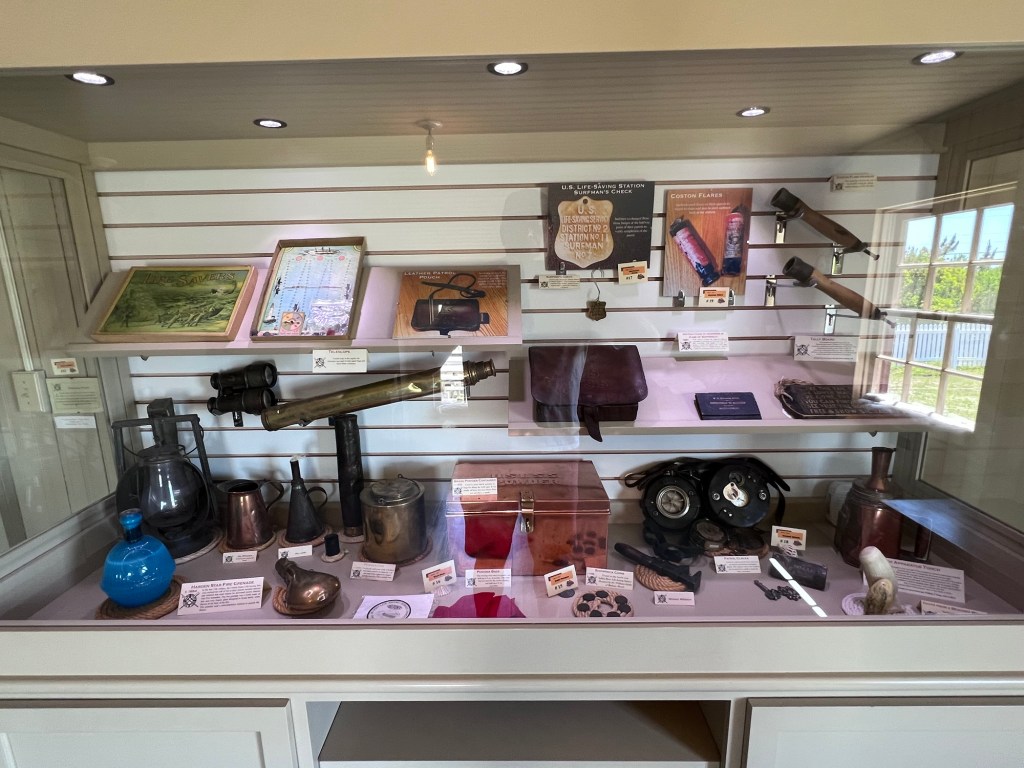
Old equipment and relics on display in the main room
Old equipment used at the station house
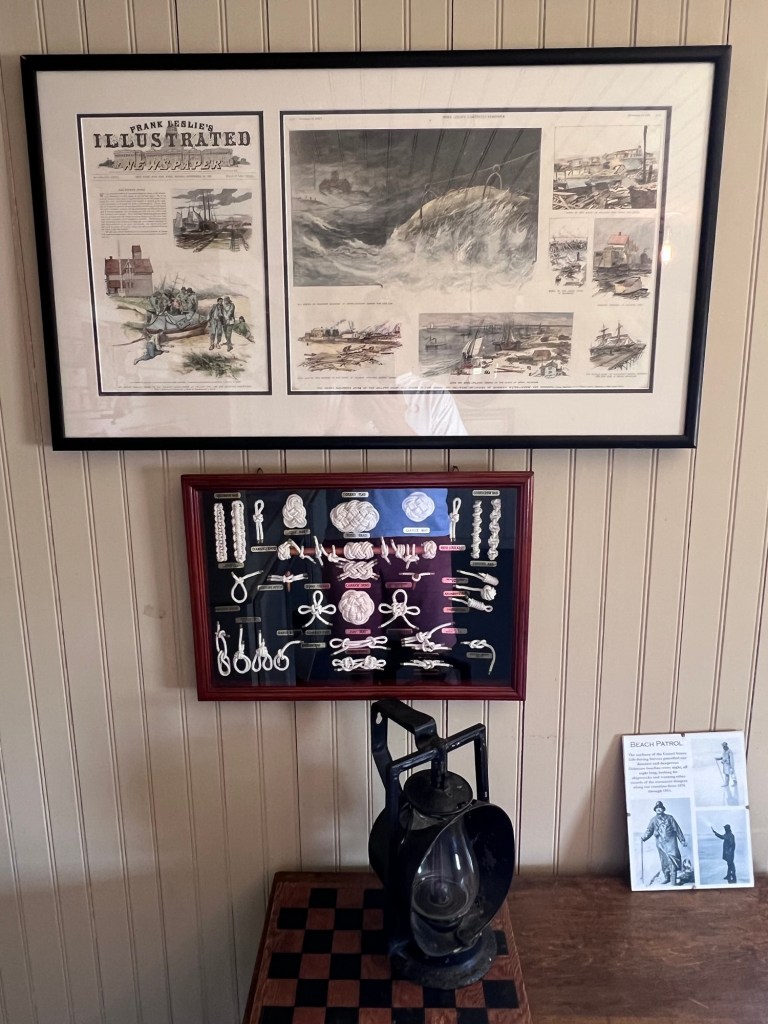
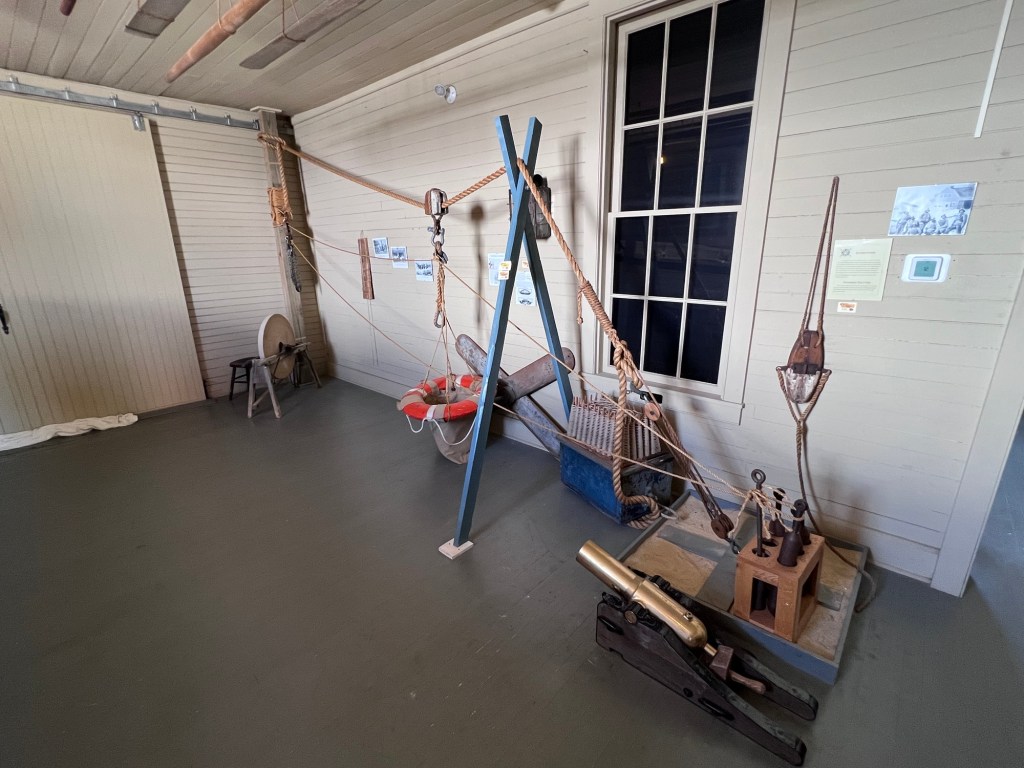
Methods of tying ropes and nautical rescues illustrated
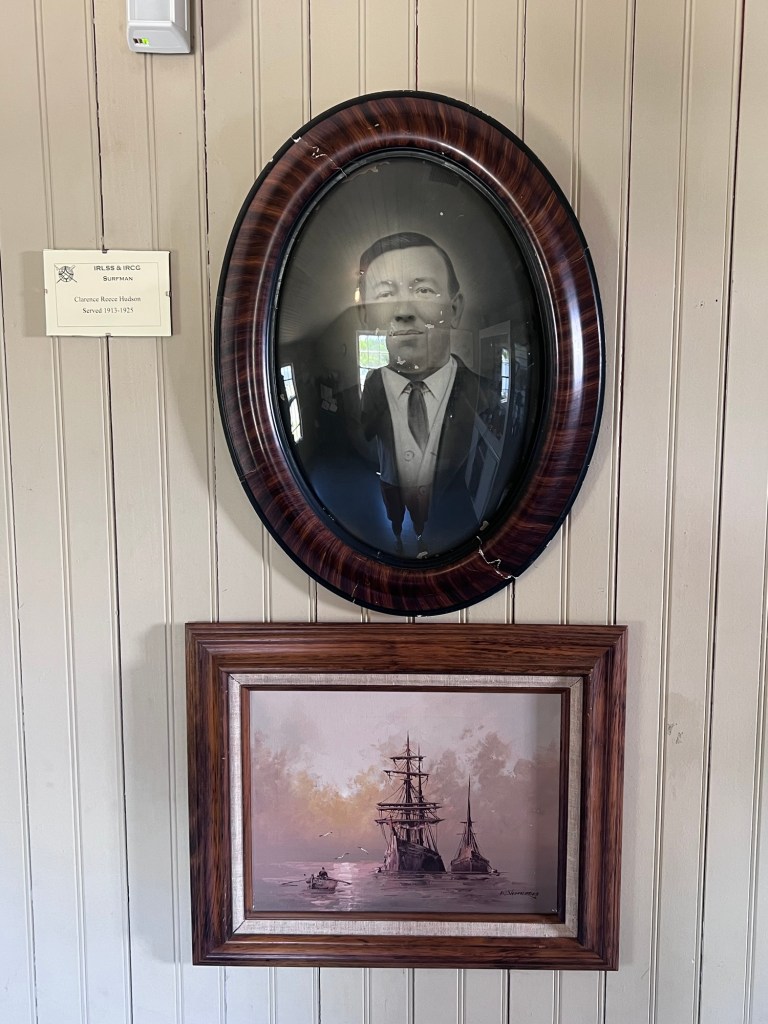
Portrait of one of the old station masters
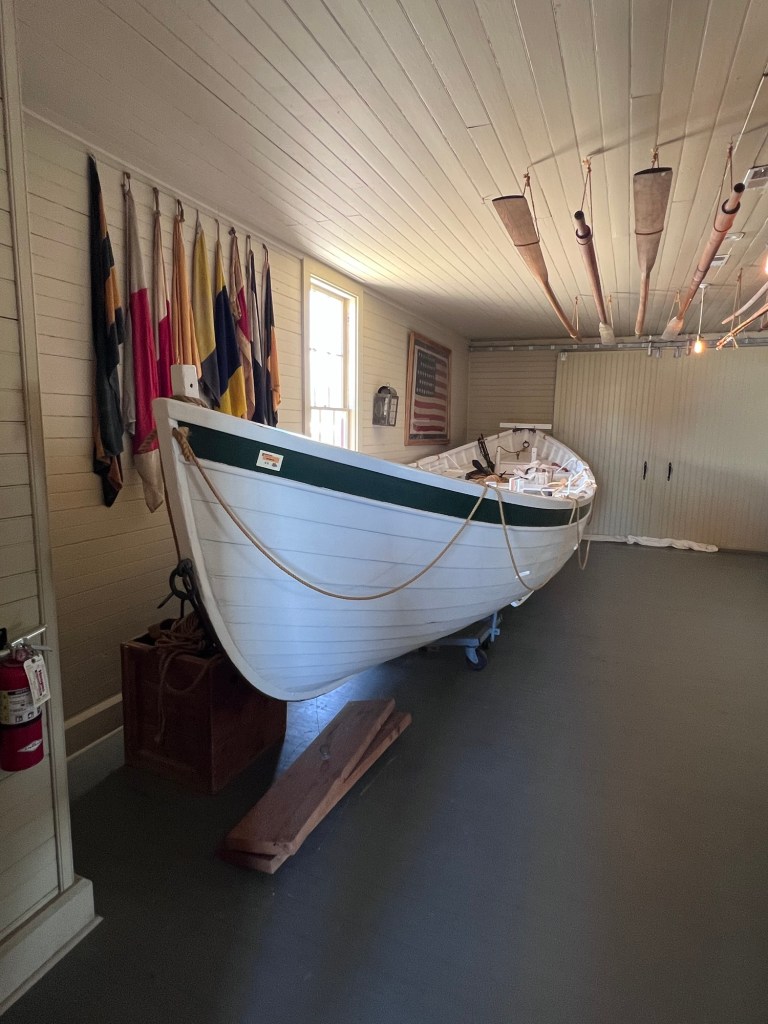
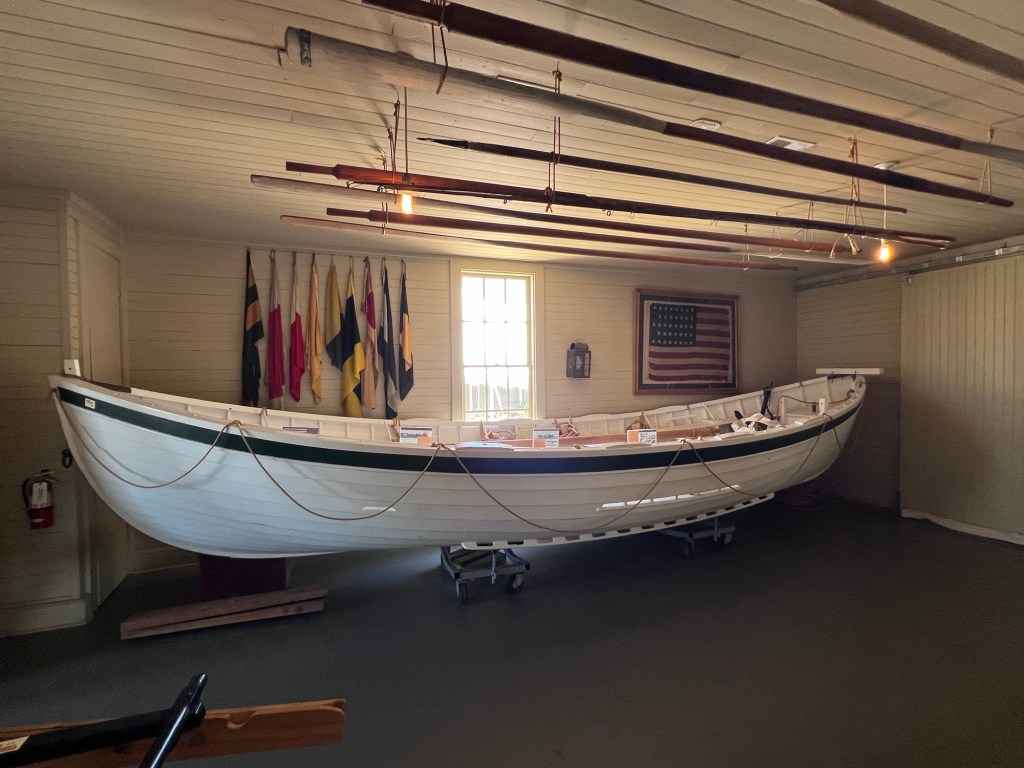
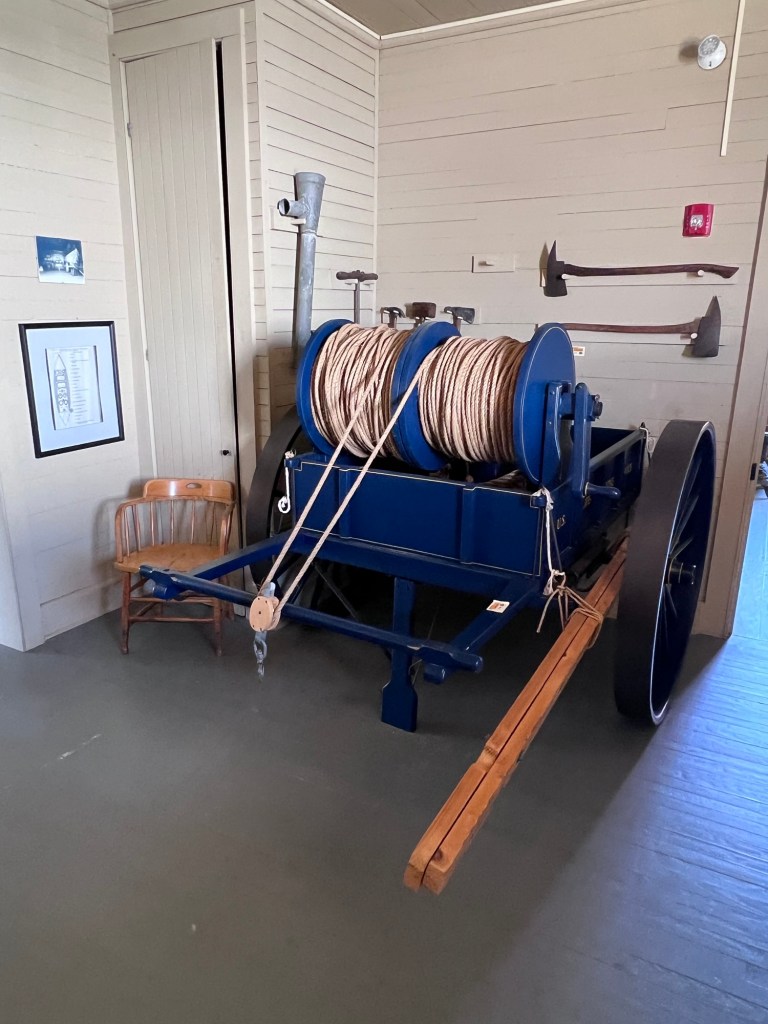
The main room held all the rescue equipment used to save both people and property. This included all the boats, ropes, pulleys and buckets for rescue.
The main rescue boat and paddles
The rescue boat used by the station to save people and cargo
Ropes and wenches to save and pull in damaged vessels
The bucket rescue method
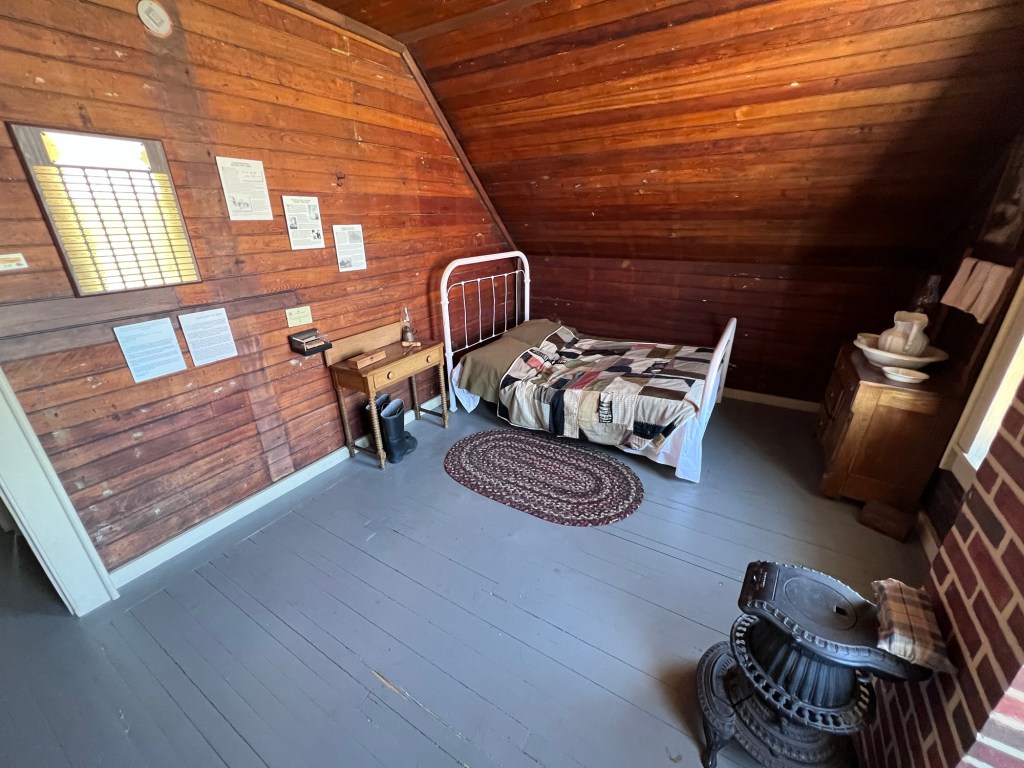
The second floor contained the living quarters. Since the Team worked in shifts, pretty much no one left the building except for small breaks. The men slept in shifts with one man working night duty in four hour intervals to watch the shore for wrecks.
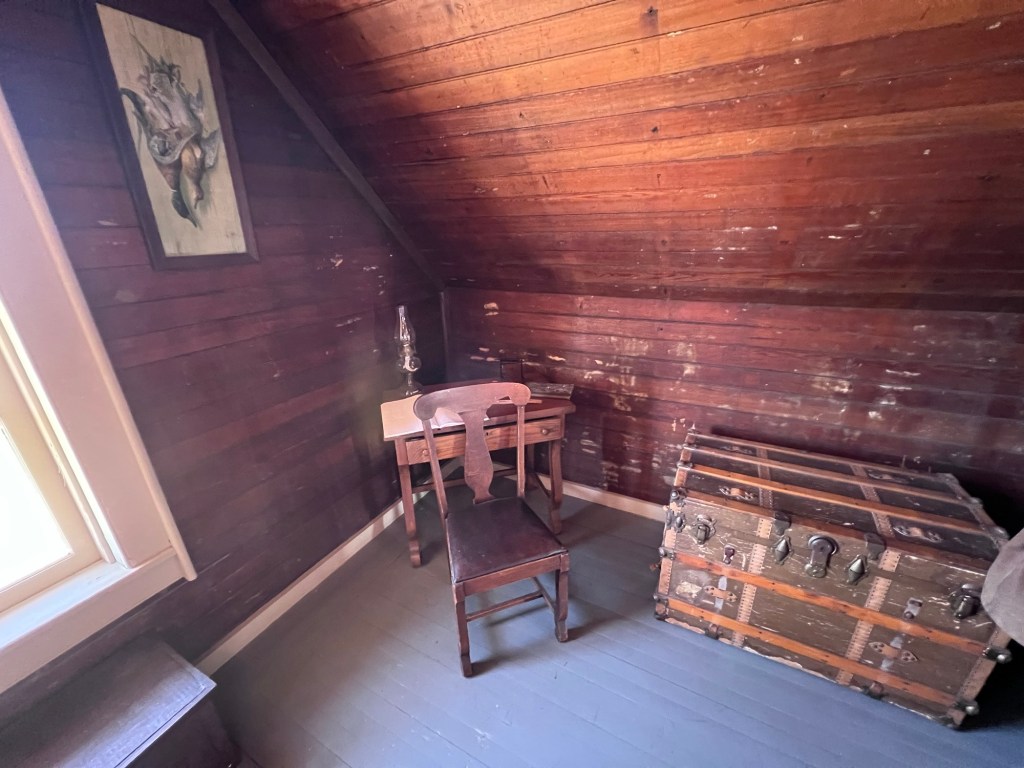
The living quarters for the station master
The small office in the room
The men slept on one room with the window facing the sea in a dorm like setting. The room was equipped with natural light and a view of the sea to watch over the coastline.
The bedroom of the men on duty
The bedroom
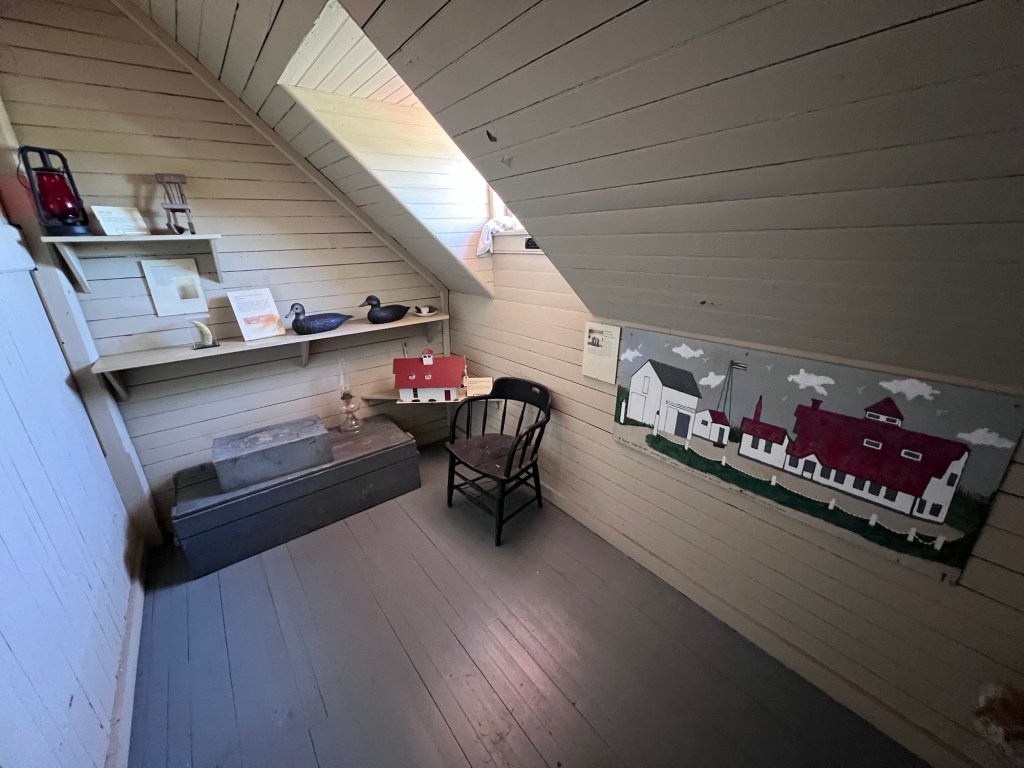
Separate room for private time
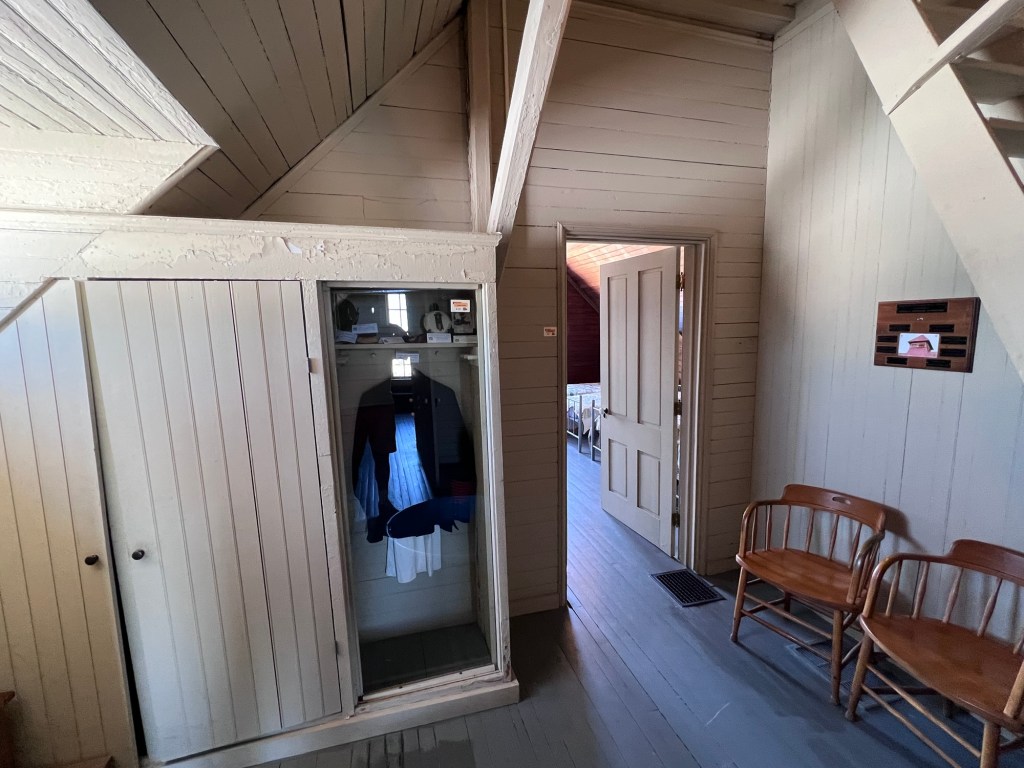
The locker storage area where each man’s personal items
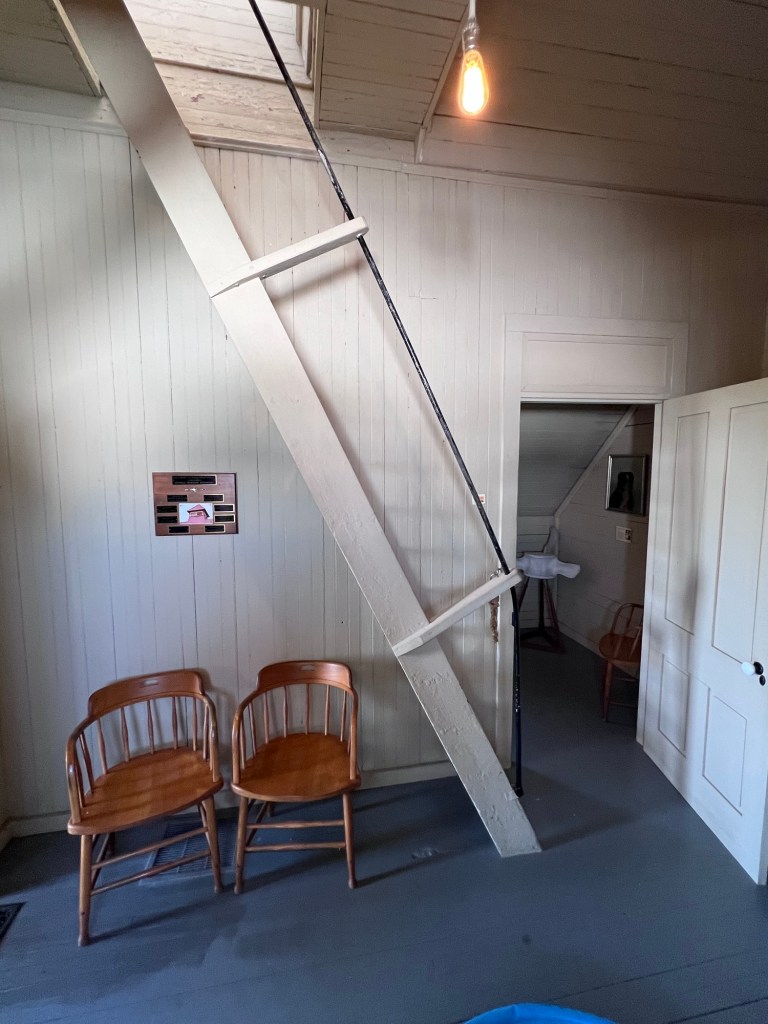
The stairs leading to the portico for lookout duties
The grounds of the Rescue Saving complex and its location near the beach.
The tour was a lot of fun and gives you a glance of the heroism and isolated life of these men must have been back then. Today there are things like rotations and vacations, opinions that some of the men back then did not seem to have. Still these brave, well trained men kept the beaches and the oceans safe for many seafarers.
The porch sitting area as you wait for your hosts to greet you
We were warmly greeted by our hosts and owners of the home. I had not realized that this is a private home and less of a museum. The only way to see the inside of the mansions by private arranged tour or when the owners have an open house either at Halloween or Christmas.
The History of the family and their fortunes:
(from WordPress.com article by Kubek: Project)
By the turn of the century, John Žinčak Smith had become the most accomplished Carpatho-Rusyn businessman and community leader in Mahanoy City, and in 1908, Smith moved his family from their modest West Centre Street home to this monumental mansion at the corner of South Main and East Spruce Street. Built at a cost of $40,000, the mansion included fourteen rooms, four chandeliers, wooden cabinets, and a number of stained glass windows (Mahanoy Area 2004, 15).
Just as he changed his name from Ioann Žinčak to John Smith nearly 30 years earlier, his move from the predominantly Slavic, Catholic West End to the Anglo-Saxon, Protestant East End symbolized his meteoric rise from his humble origins to the economic elite of the region.
However, not all Carpathian-Rusyn Americans viewed Smith’s prosperity favorably. One parishioner penned an anonymous letter to the Carpathian-Rusyn newspaper Postup (The Progress) that sharply criticizes Smith as “a former nobody who wants to stand on the brow of the Rusyn people in America.” The author implies that Smith is embarrassed by being Carpathian-Rusyn, for “he doesn’t speak Rusyn with his children at home” and “is ashamed of his father’s last name” (“From Mahanoy City, PA: Our Chairman” 1908: 3).
We started our tour of the house in the main Living Room and foyer. This is one of the most welcoming houses and you can tell it was designed for entertaining and for a large family to live and enjoy.
The foyer of the house as you enter the home
On the first floor of the home was the formal Living Room and Dining Room of the home. The very energetic small dogs of the owners welcomed us as well.
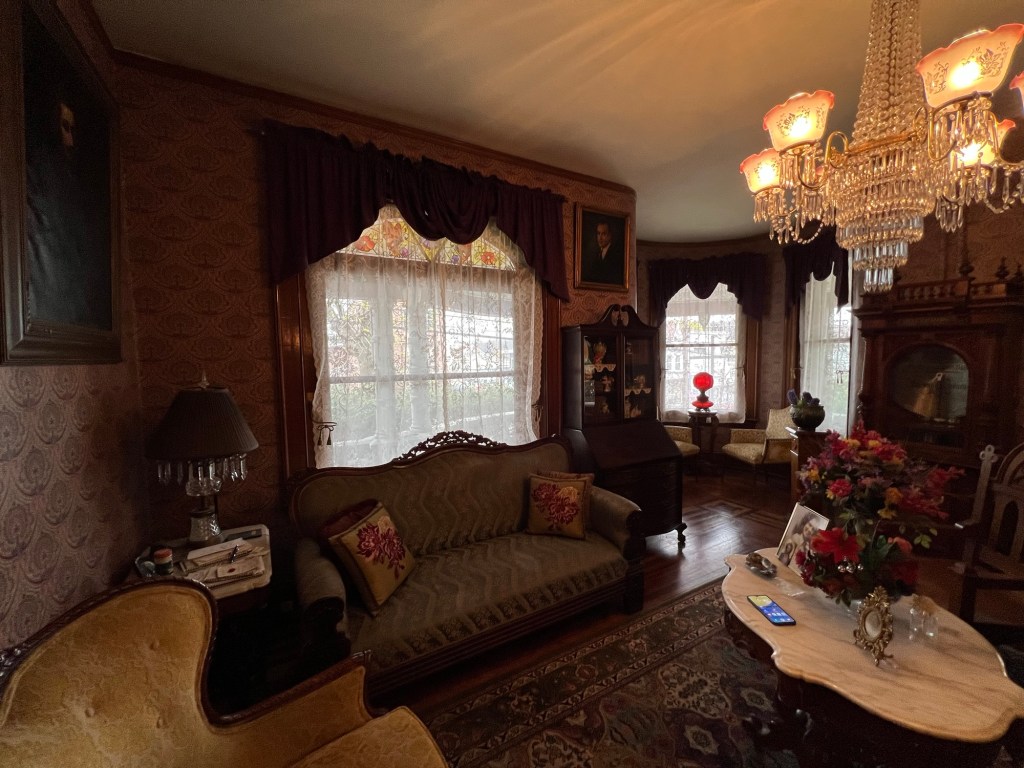
The formal Living Room
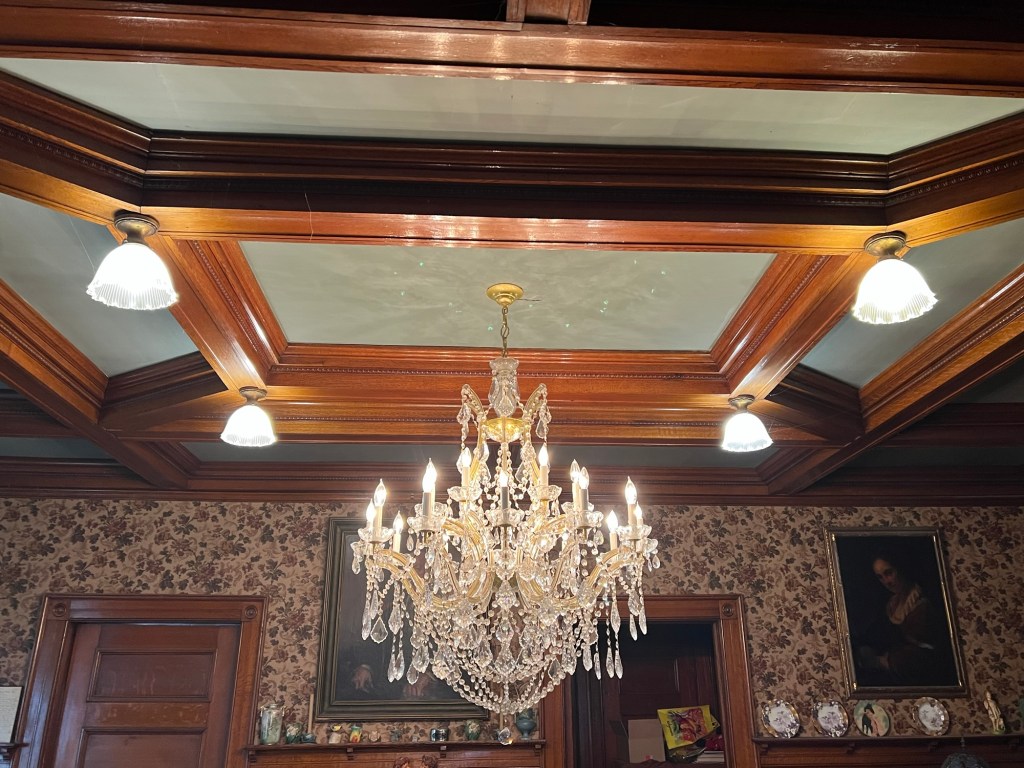
The house still has all its beautiful and ornate moldings and fixtures. The owners told us when the family moved out, robbers had come in and stole the mansions elaborate fixtures and chandeliers so they had to replace them.
The green couch is the only thing outside some family portraits and pictures still original to the house
The portrait of Mr. Smith in the Living Room
The portrait of Mrs. Smith in the Living Room
The owners had collected the most beautiful antique and period furniture over the years which decorates all the rooms. Every piece of furniture and decoration fits each room perfectly. From the elaborate window treatments to the beautifully maintained fireplace, the room may be formal but it is still very comfortable and cosy. The house from the time you walk in has a very welcoming feel to it.
The formal Dining Room
The formal Dining Room is set for formal tour and at the holidays. For today, the owners tiny dog greeted us and wanted to play. The details on these chairs were just spectacular. What a design.
All the moldings are original to the house and all the furniture is beautifully carved and elaborate. The owners told us said the chandelier they picked fit perfectly in the room.
The Dining Room chandelier and the original wood moldings
The window seat of the Dining Room lets in lots of light
The Dining Room may be formal but with all the windows the room lets in lots of natural light and with seating around the room it still feels welcoming and less formal.
We moved from the first floor to the second floor where the library and some of the bedrooms were located.
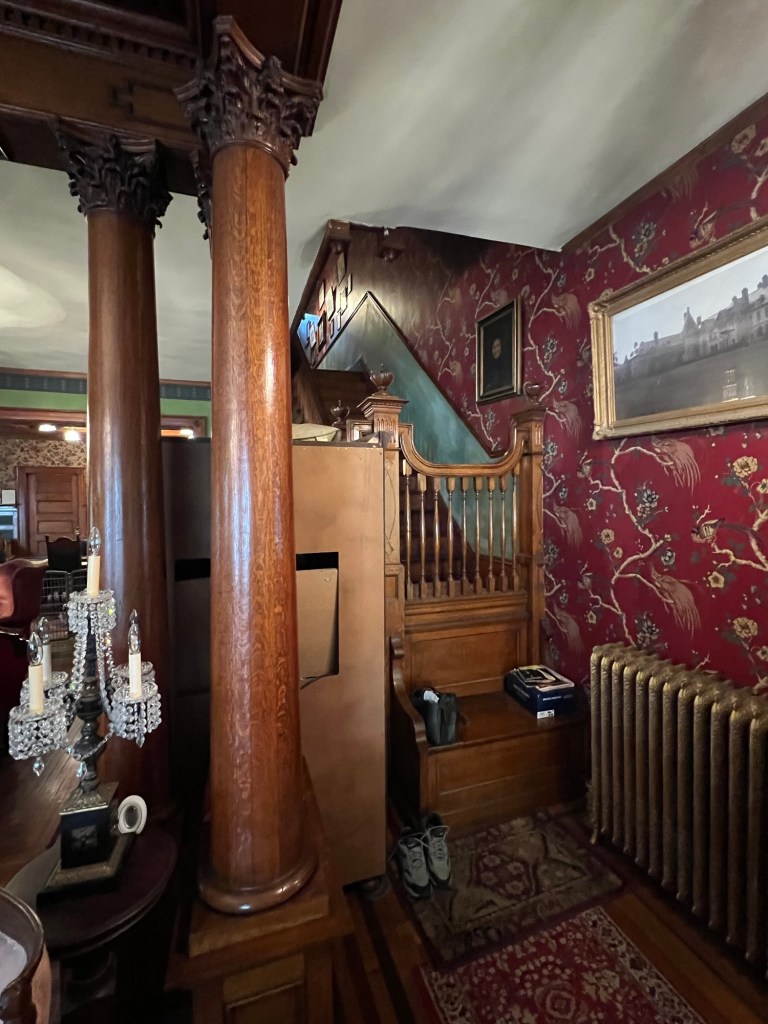
The staircase to the second floor with the elegant carved staircase
The family portrait of Mr. Smith’s mother greets you up the stairs
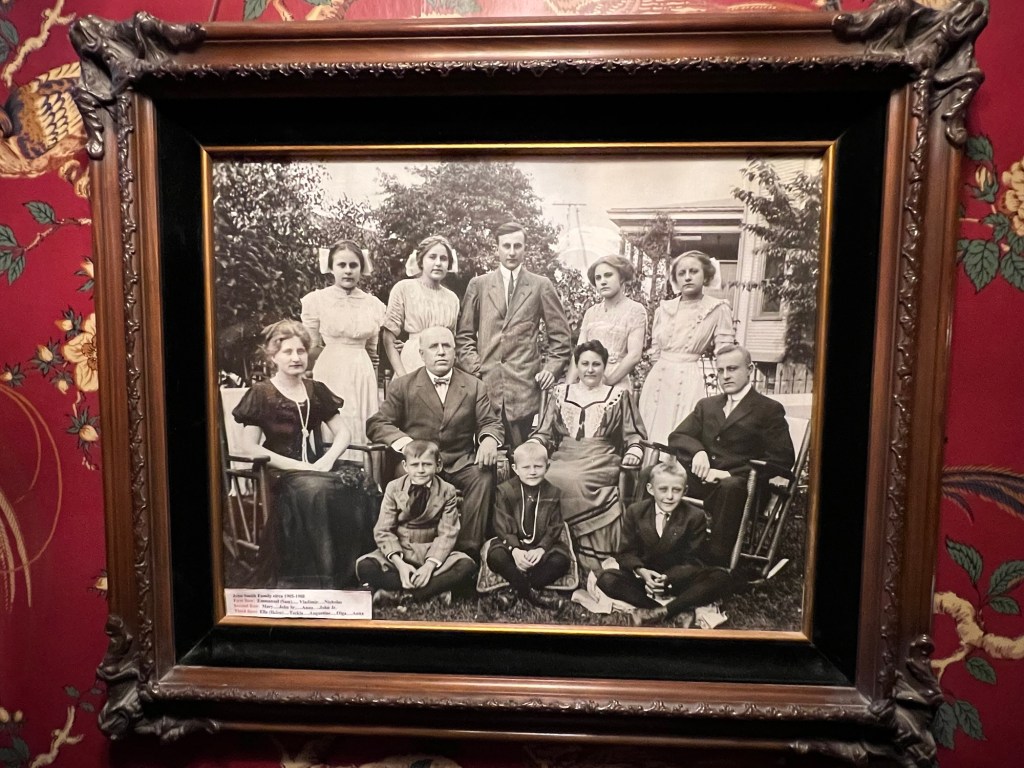
In the hallway of the second floor were photos and portraits of the family members which the third generation of the family did not want and sold to the current owners. It is amazing what family will not want of their own past.
Photos of the third generation of Smith’s who moved out of the area. These are of the children and grandchildren of the Smith’s
The Smith family photo in the late 1890’s
The Smith family again in the 1930’s
Our next room of the tour was the library where the owners books, paperwork and more art was located.
The second floor library
The work space, book shelves and the alcoves give the room that homey touch
The Alcove in the library looks over the City
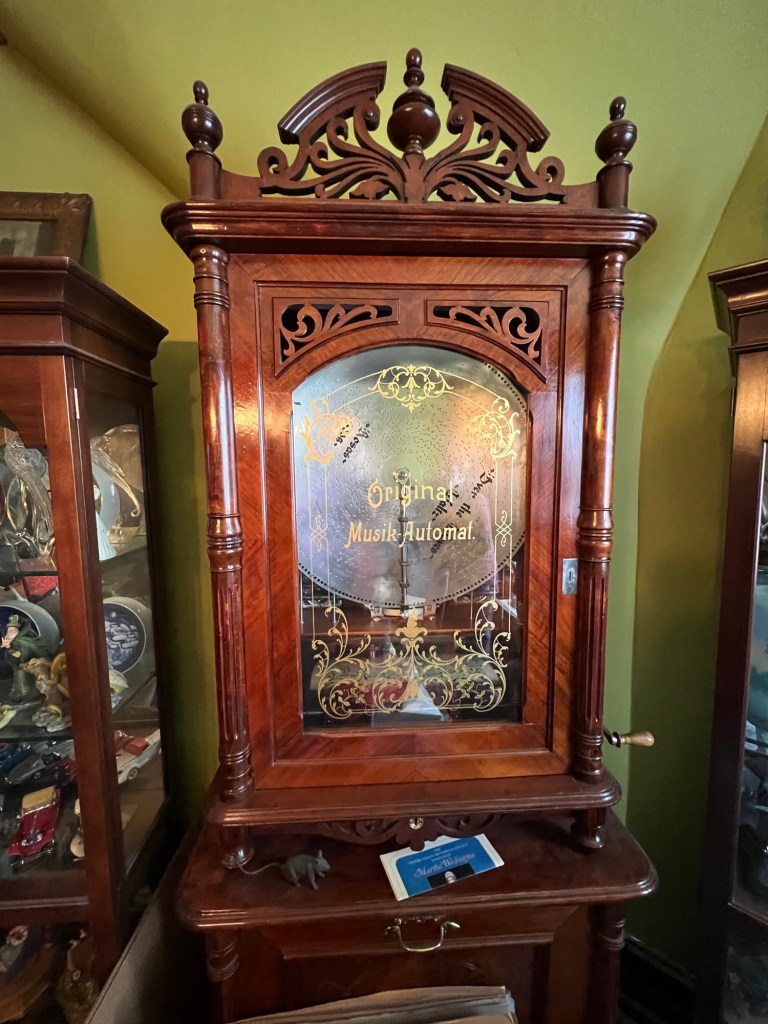
The Library with the music boxes
The owners opened this music box and played for us
The video of the music:
The Library is such a great room just to sit and read, think and relax. I could see why they love it so much.
We then walked to the third floor and we toured the Tower Room, which really has an amazing view of the city. You could see all over town from here. The inside garden in the Tower Room is so beautiful and receives so much sun.
The Tower Room is one of the sunniest rooms of the house.
This room on the third floor of the mansion has the best views of Mahanoy City and looked like Mr. Smith’s message to the town that he had arrived. You could see all over town from this window. Now the room is used as a type of greenhouse for beautiful potted plants and flowers perfect with all the sunlight. This is one of the nicest room in the house.
The Curio Room where the owners keep their collections of knick-knacks and decorative items that line the shelves and tables of the house, there was another music box. One of the owners collected these treasures over the years and the house has lots of examples of these beautiful antiques that were created before radio and records.
The Music box playing:
The music box was once in a hotel lobby
The owners explained that part of the third floor is used for storage and for their collections. There were all sorts of small sculptures and assorted Knick-knacks that decorate rooms lining the shelves. The owners had done and amazing job on the upkeep of this beautiful home.
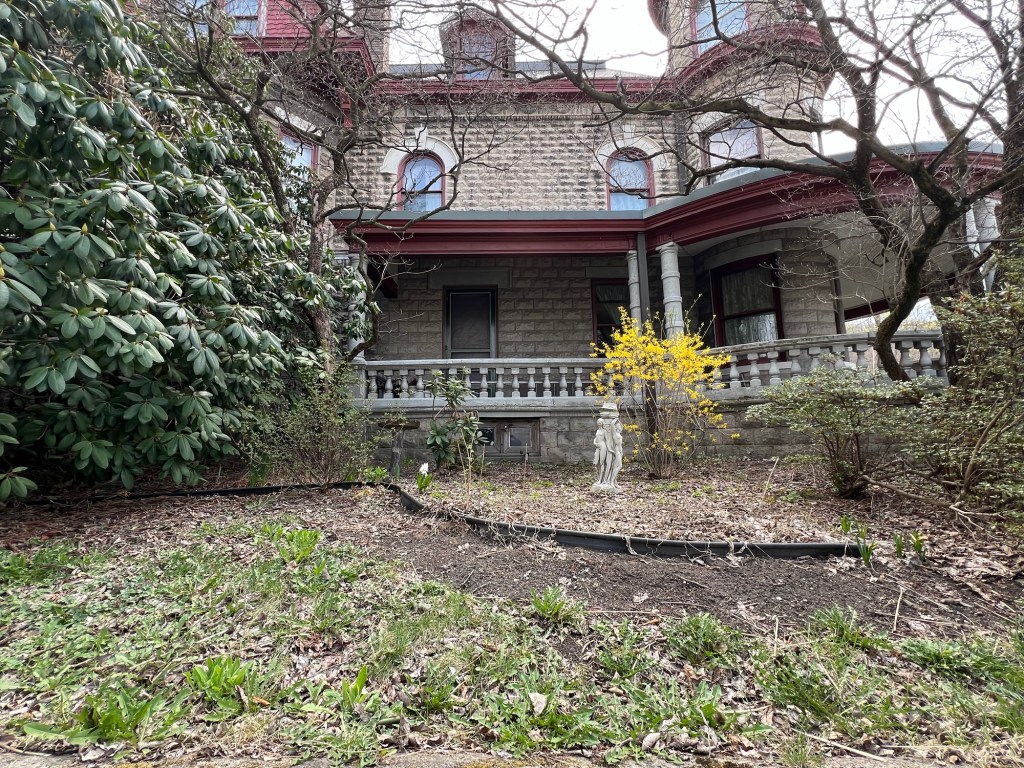
The last part of the tour was we went outside on this sunny morning to see the outside gardens. They were impressive for such a small space. The flowers were just starting to bloom and the trees were starting to bud over this cold patch of the early Spring. This weekend was the first weekend where the weather had been nice and started to warm up.
The garden in front of the house just as Spring was starting
The back walled garden and fish pound
The owners own the two homes next door to the mansion and have combined the back gardens. So they had this small fish pond stacked with Japanese fish and walls covered with vines. There is a small gazebo so that you can sit and relax outside in the warmer months.
The other side of the backyard garden just as Spring started
Faces pop up between the vines of the walked garden
The views of the downtown from the house
The tour concluded in the gardens. The owners were explaining how much more beautiful the gardens are in the late Spring and Fall.
The tour was wonderful and the owners could have not been more gracious with their time. They also explained how they will be opening their home again to the public during the holidays during Christmas and hopefully Halloween and how I should come back to visit.
The formal tour of the Smith Mansion again is by private tour only except at holiday Open Houses and can be arranged through the owners of the home. It really is an interesting look at areas industrial past and what life in local society must have been like at that time. It also shows how things change over time and fortunes are made and lost and business and families move on.
It was a wonderful afternoon of stepping back into the past.
The Museum presents an eclectic view of local and regional history through permanent and changing exhibits of artifacts, documents, photographs, books, and videos. The West Milford Museum is the result of over 35 years of collaboration between local volunteers, donors, businesses, and municipal government. Formerly a M.E. Church, circa1860, this local historic landmark has been renovated extensively in the interior to accommodate the museum exhibits.
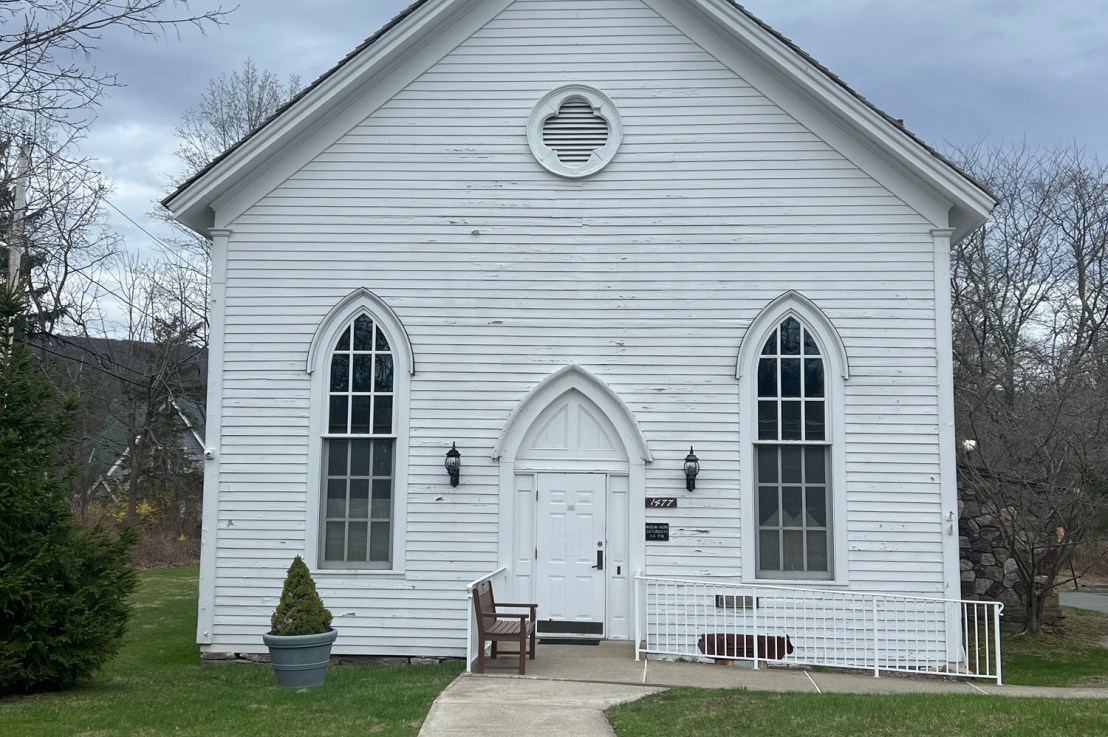
The entrance to the museum
The museum is located in the former Methodist Episcopalian church built during the Civil War. It was designed in the Gothic Revival style with a cedar shingled roof over hand hewn beams and a dried laid foundation. The congregation moved to a new location in 1906 and the building was deeded to the town in 1910 (museum pamphlet).
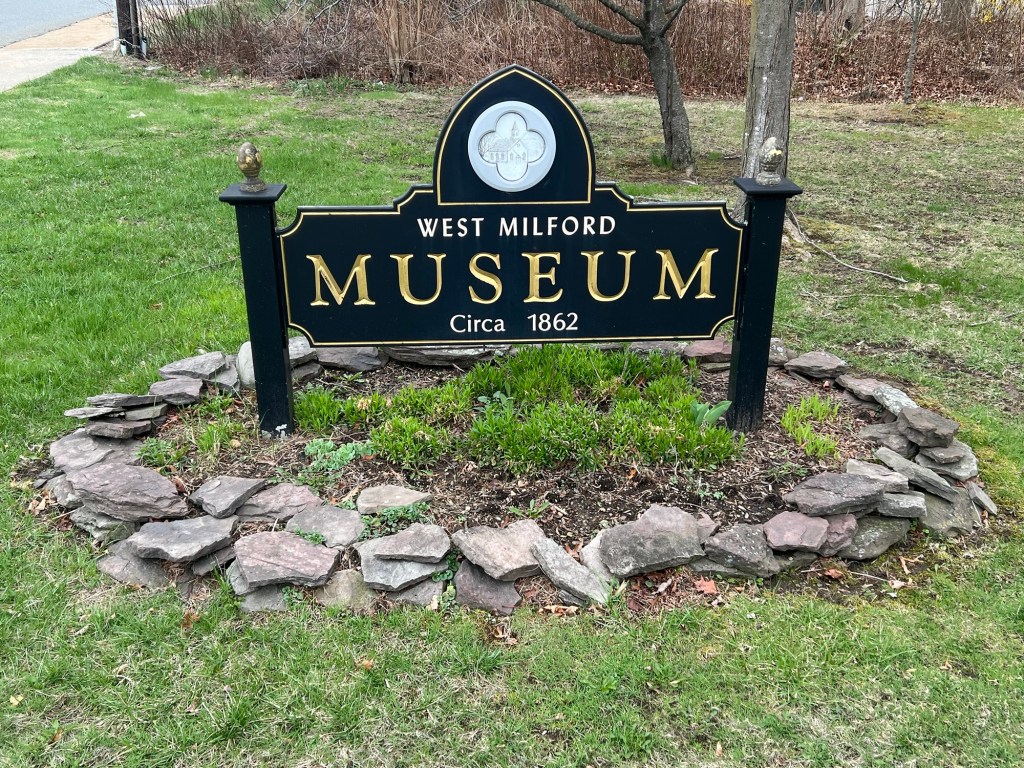
The museum sign
The inside of the West Milford Museum
History of the museum:
(From the museum pamphlet)
Following the 1976 Bicentennial, with a renewed interest in American history, the Town of West Milford, NJ decided to establish a museum in the old Town Hall Annex. Passing a resolution in 1985, the museum started the collection and archiving it and renovating the building. The museum opened in 2000 to patrons.
Maps of the early history and colonization of the town
The Farming Community display of the Dutch and English settlers
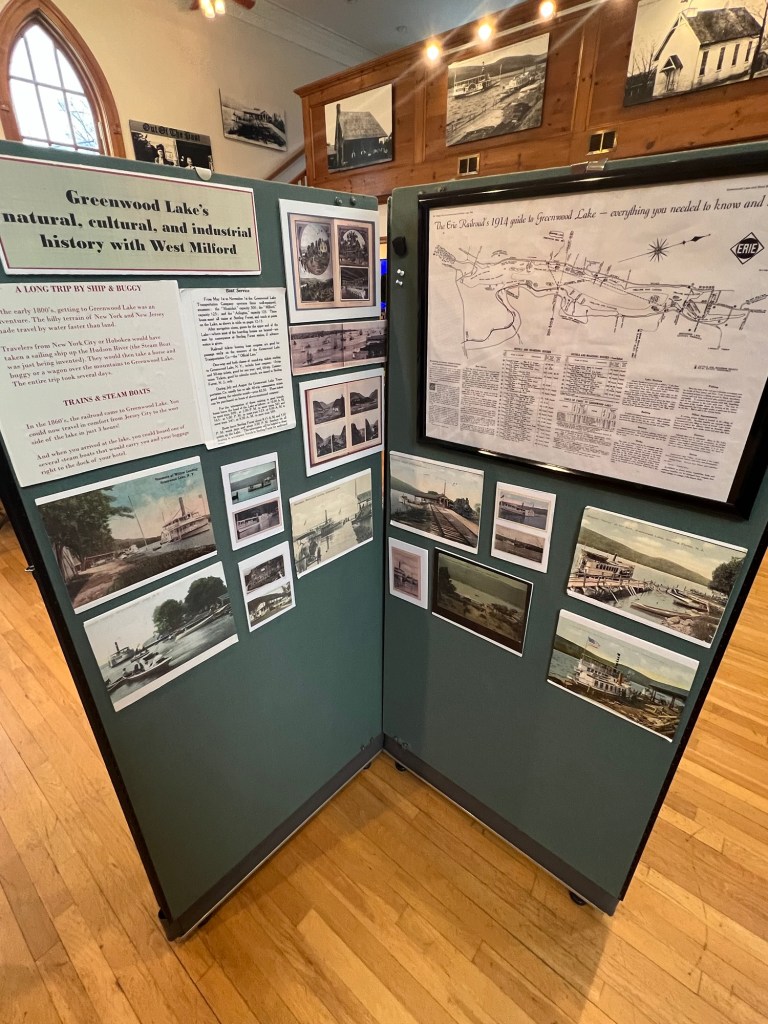
The development and population growth around Greenwood Lake
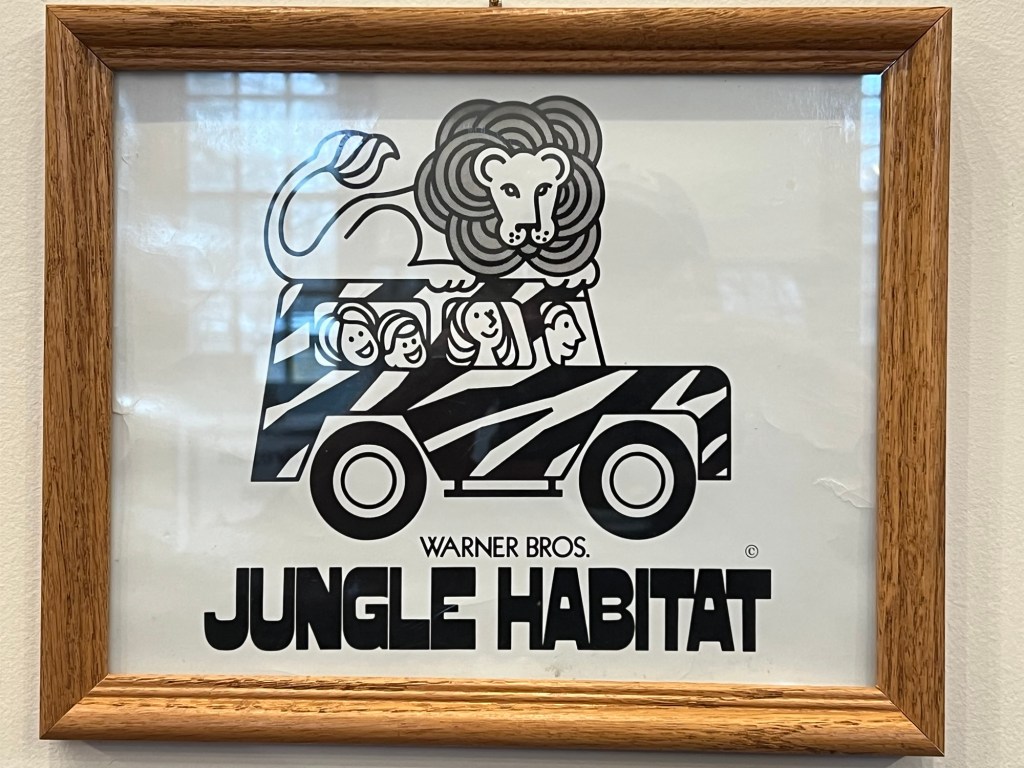
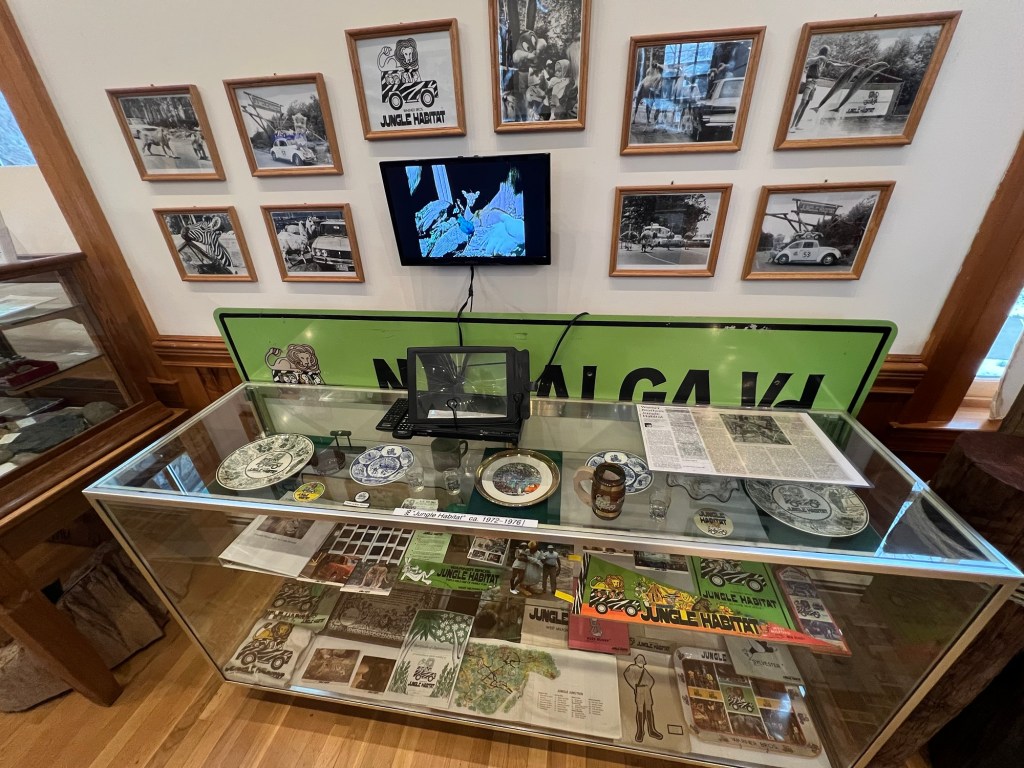
The Warner Brothers ‘Jungle Habitat’ Park of the early 1970’s that was located in the area. This drive through park was very popular in that time. The park was once filled with exotic animals. Warner Brothers moved the operation out of the area when they built Six Flags Great Adventure Park in Jackson, NJ.
The display of the old park with promotional videos
Some of the promotional items and mementos from the park
The Long Pond Ironworks display
The display on the growth of the railroad in the area
The Long Pond Ironworks display at the museum. This was a big business between the World Wars
The Long Pond Ironworks
The History of the Ironworks:
The ironworks got its name from ‘Long Pond’, the Native American translation for Greenwood Lake. The ironworks were an important business in the area serving both the Revolutionary and Civil War armies with much needed iron for equipment and munitions. Because of cheaper options in the Midwest and more abundant ore, the ironworks closed in 1882 (museum pamphlet).
The Native American exhibition
The extensive collection of Lenape artifacts in the collection
The museum has a large collection of arrowheads and other hunting and fishing artifacts
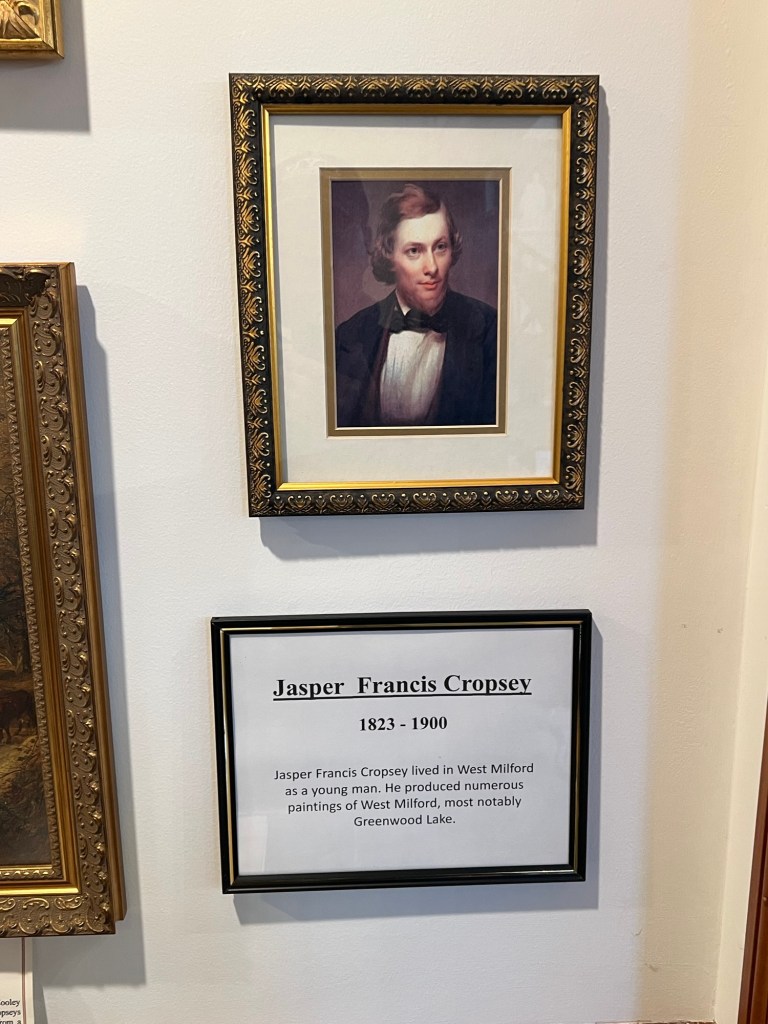
The museum has an extensive collection of reproductions of the Hudson River School painter Jasper Francis Cropsey
The reproduction works of the artist in the collection
Many of the books and notes from the artist and the locations where the works were made
They even had a resident bear as a artist
The museum has an extensive collection of textiles both clothing and quilts
This display quilt has many of the town’s historical sites that are of significance in the town
One of the sites was the Cross Castle that was knocked down years ago from neglect
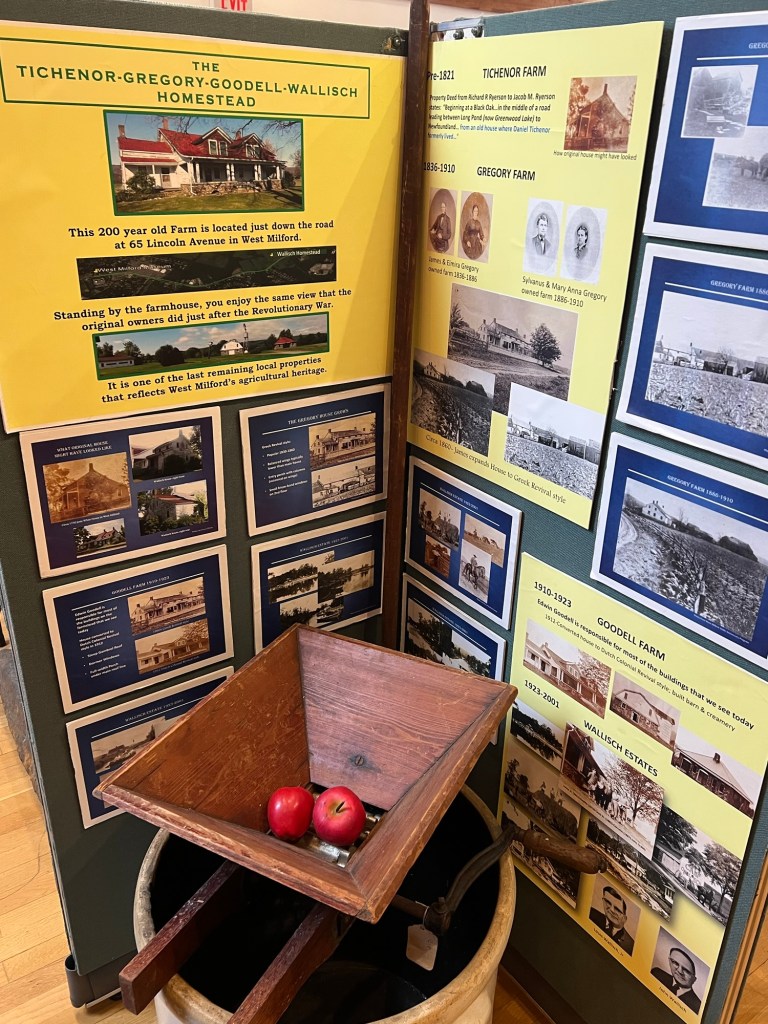
Pictures of one of the local homesteads that has passed through many families hands
The Ice Industry which was a big business on the lake and the Rocket Mail business which was a failure
The resort business and the Greenwood Lake hotels were a big business until the advancement of the automobile made other areas desirable.
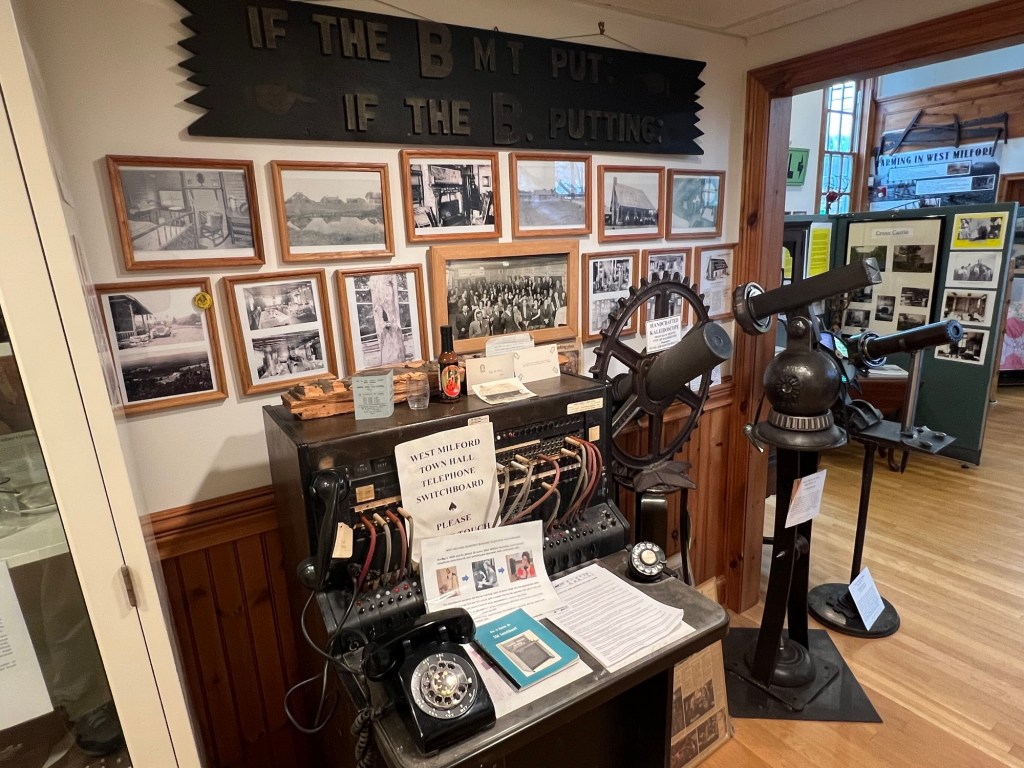
Local businesses had an interesting display along with community organizations
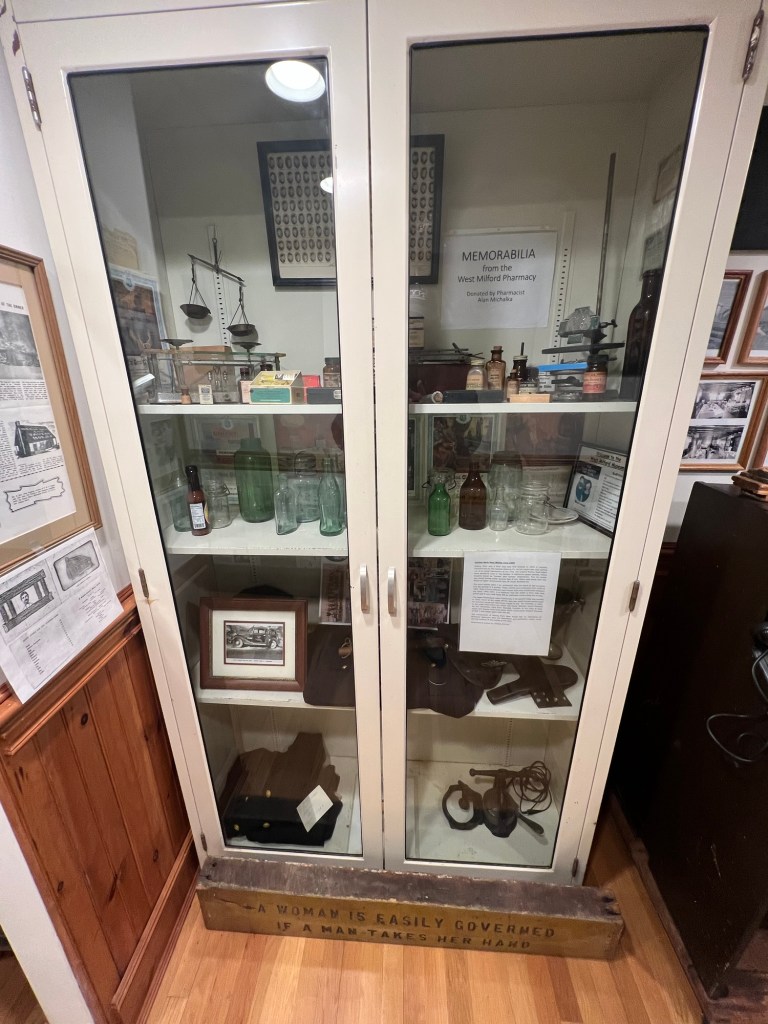
There was an interesting display on the West Milford Pharmacy
Some of the old medical equipment that you would have seen in the past
The museum is also dedicated to the West Milford school system. Their first display is a replication of an old schoolhouse, which has not changed too much in form. Desks still face the chalk board and the teacher still leads the class.
The old classroom
The old fashioned classroom has not changed much in the last 100 years
The museum gives children a glimpse of the past and a better understanding of how it relates to the future. There are all sorts of artifacts in which children can relate to and compare to today’s counterparts. It is a good place to use your imagination and think back to life in the past.
The new exhibition on the West Milford Marching Band will be opening soon
The back of the museum is filled with interesting artifacts
The gallery of Paintings and Native American artifacts






































 Visiting a Museum: The Unique, Unusual, Obscure and Historical