Visiting the Van Wyck Homestead is like stepping back into the past to see a part of our nation’s history. The homestead sits at a once pivotal point location in the Hudson River Valley and during the Revolutionary War, George Washington established his main northern supply depot here in October of 1776. After the war was over, the Van Wyck family returned to the home and lived here for five generations until the late 1800’s. The last member of the family, Sidney Van Wyck hung himself in the barn on the property (Van Wyck Homestead pamphlet).
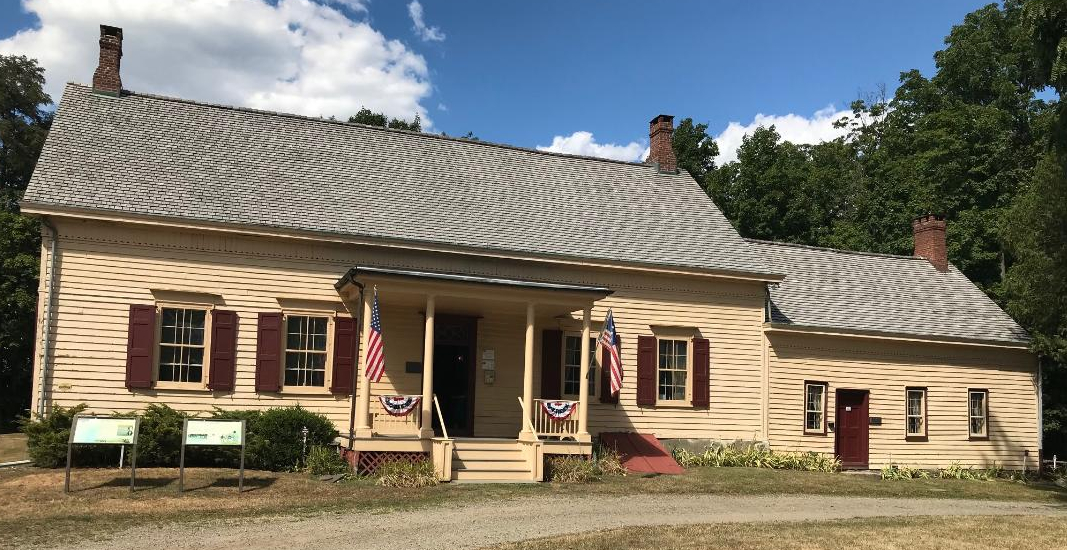
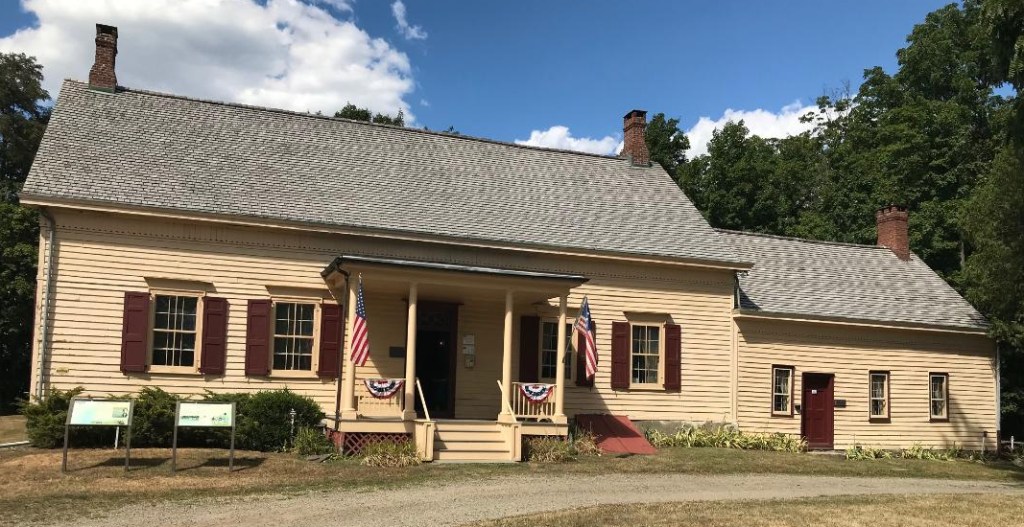
The house was built in two sections. The original section of the house off to the right of the building is the original section of the home that was built in 1732 and the larger section of the home was finished in the 1750’s.
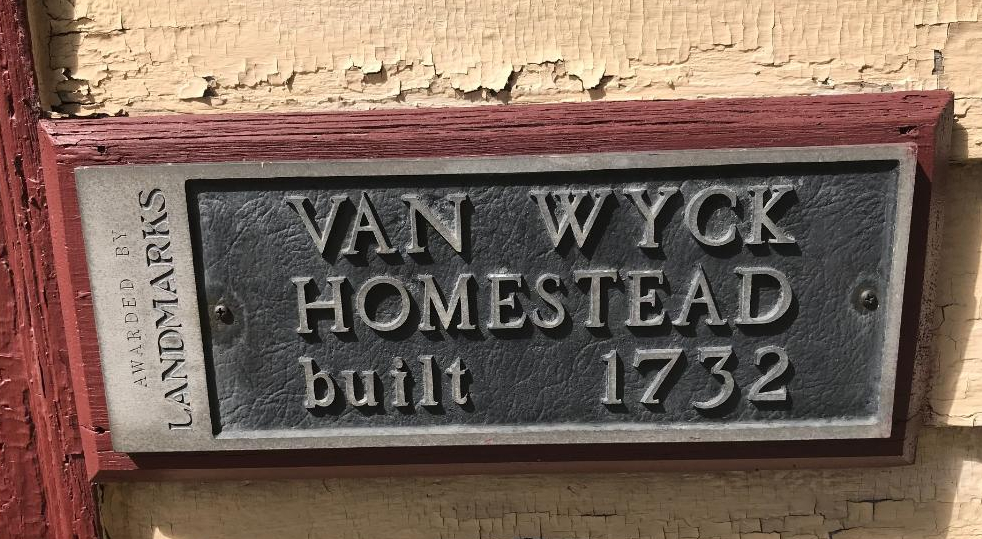
The marker of the original home
When you enter the homestead, you are greeted in the hallway that runs the length of the main part of the home. To the right of the hallway is old living room and to the right of the hallway is the combination kitchen and dining room. The stairs leading to the upstairs, now serving as offices, are at the end of the hallway.
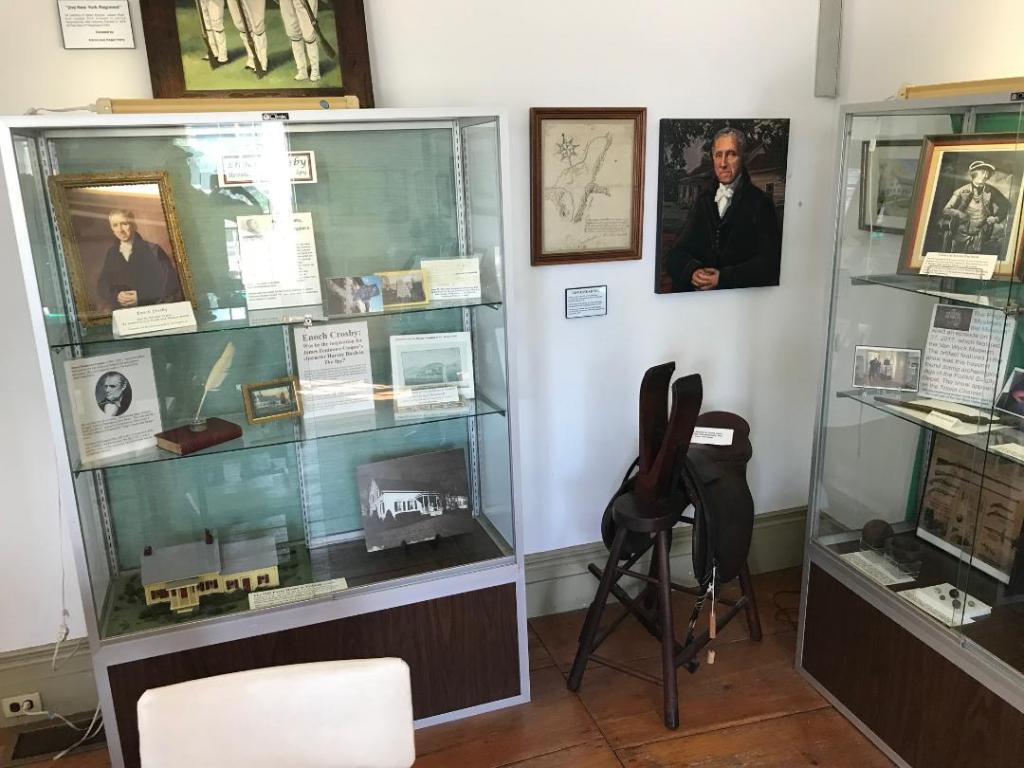
Another piece of Van Wyck furniture in the old Dining Room with the display case holding family heirlooms that have been donated over the years.
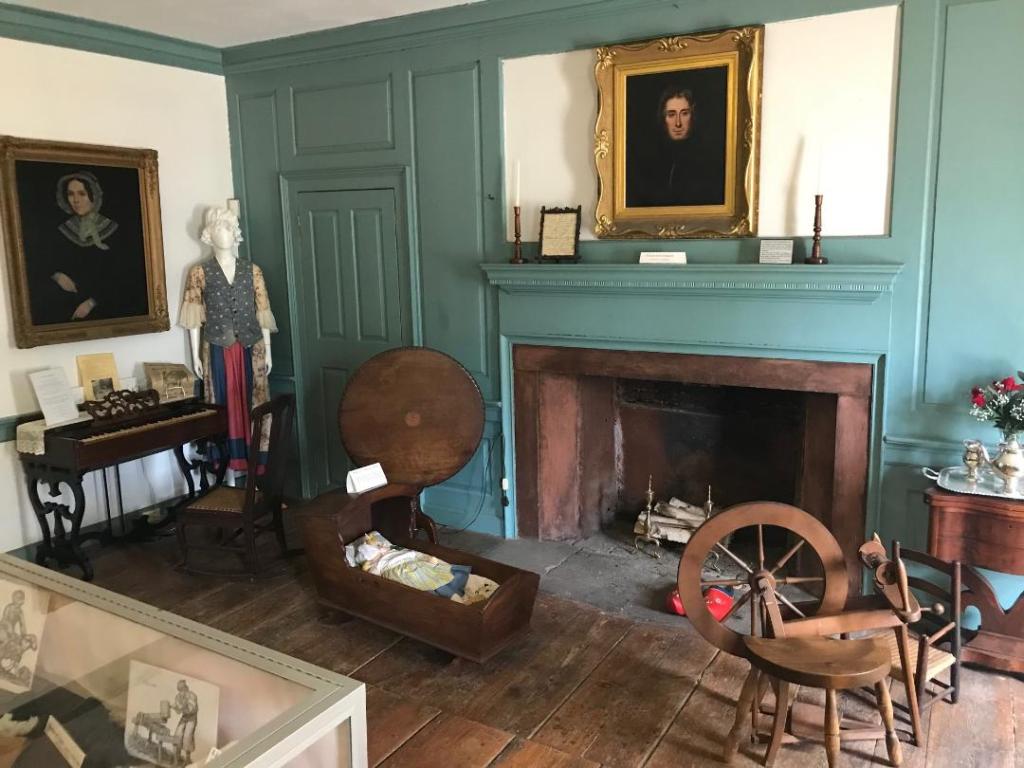
The former Dining Room of the Van Wyck home with the fireplace of the addition of the house. The crib in front of the fireplace is a recent donation from the Van Wyck family and had been used by the family for generations.
The family portrait above the fireplace was recently returned to the home and fit perfectly above the fireplace. The Spinning Wheel is another family heirloom donated to the house.
An original piece of Van Wyck furniture returned to its home
When you step down the stairs into the smaller part of the original part of the house, you will be greeted in by the original kitchen and living space. This was used by the family for all functions of work and social aspects of the farm.
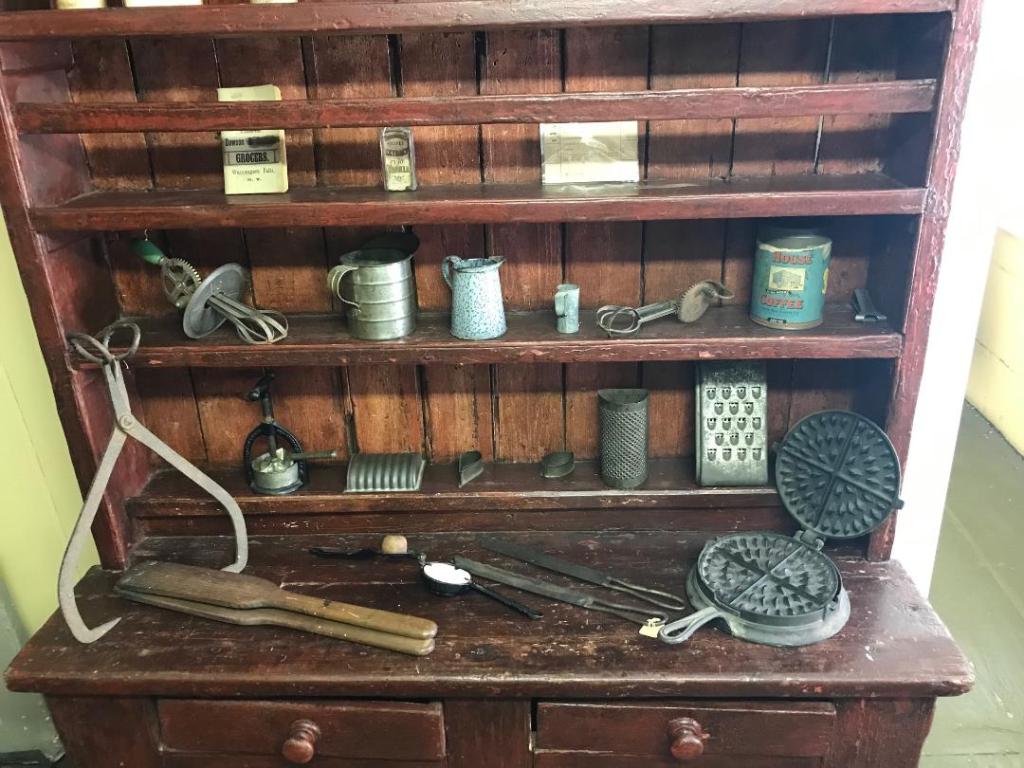
Items used in Colonial and Victorian kitchens
Items in the Colonial kitchen display which have not changed much over the years.
The Colonial Kitchen at the Van Wyck Homestead
To the right of the hallway is the old Living Room that is now used as a lecture hall and where meetings are held. The room was dedicated to George Washington for the service that he did for the area during the war.
The old Dining Room and lecture room
The Revolutionary War displays in the old Living Room
The room is lined with displays that are dedicated to the family and the war years. All sorts of artifacts and pictures are displayed here.
The display case in the old Dining Room
In the back of the home is the old Library that is now used a Research Library on the history of the area and of the Van Wyck family. Here you can research your roots in the community.
The Research Library at the Van Wyck Homestead
The Research Library at the Van Wyck Homestead
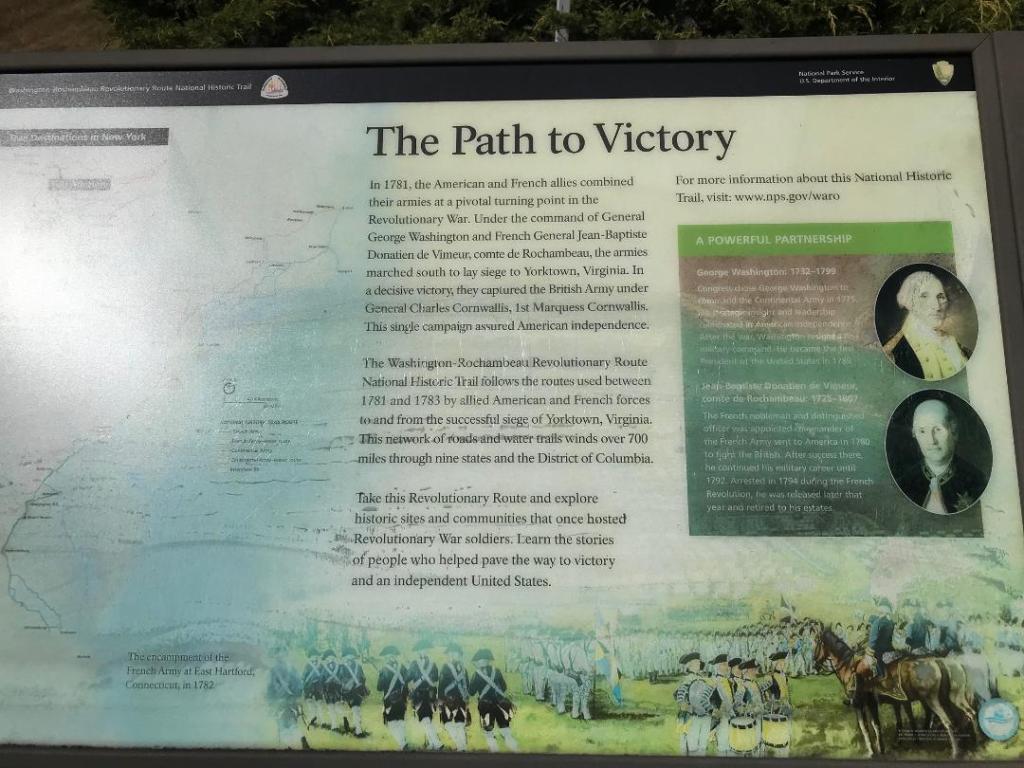
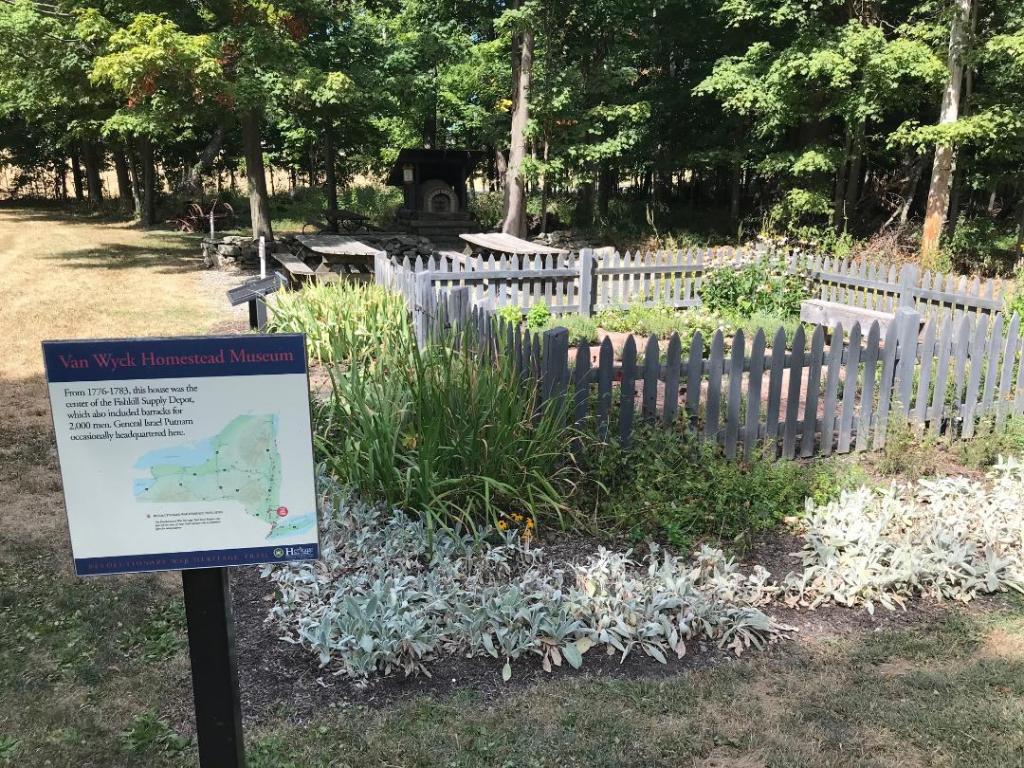
When you walk the grounds, the story boards tell the story of the home as it played a role in the history of the region and its place in the war years.
The Path to Victory
On the grounds of the home is also a working garden and the working beehive oven that is a recreation of the original that once stood on the property.
The Van Wyck Garden and outdoor over towards the back
History of the Van Wyck Homestead:
(From the Museum pamphlet)
In 1732, Cornelius Van Wyck from Hempstead, Long Island, acquired 959 acres from Madame Brett. He built the small east wing of the Van Wyck Homestead. By 1757, the larger west wing of the home had been added. During the Revolutionary War, George Washington established his main northern supply depot here in October of 1776. The Van Wyck house was requisitioned by the Continental Army to serve as the depot’s headquarters.
At the end of the Revolutionary War, the house reverted back to the owner, Issac Van Wyck. The old barracks and huts used for the war were torn down and the land went back to farming. The Van Wyck descendants lived in the house until the late 1800’s.
The original part of the house was built in 1732
By the mid-twentieth century, the house stood empty and was slated to be torn down for the new Interstate 84. The Fishkill Historical Society was formed in 1962 and after going to Albany, members were successful in getting the historical building saved and I-84’s plan changed. The Fishkill Historical Society was able to purchase the property and begin the restoration. This work is ongoing as we maintain this historical structure and grounds.
The Homestead is listed on the National Register and is part of the Hudson River Valley National Heritage Area. It is also part of the Rochambeau Trail which celebrates the French Alliance with the new United States.
The historic marker outside the house donated by the Daughters of the American Revolution. A cemetery for soldiers of the American Revolution were buried somewhere near the estate. When graves were discovered south of the museum, this could have been one of the resting places for them (Van Wyck pamphlet).
The City Island Nautical Museum at 190 Fordham Street
The City Island Nautical Museum
I recently took a trip to City Island, a small community just off the coast off the mainland of The Bronx (which is part of The Bronx) to visit the City Island Nautical Museum. This tiny museum located in the heart of the island is noted for its collection of ship building artifacts and items that are native to a community that once built the vessels for the America’s Cup.
The main hallway at the City Island Nautical Museum dedicated to the America’s Cup
City Island has a rich history in ship building, sail making and fishing it is reflected in the collection of materials in the museum and its archives. The museum really details the growth and history of the boating industry on the island and its importance in the local economy. What I found interesting was the rich history of the creation of the sailing ships for the America’s Cup tournament and how all the winning boats up until the 1980’s were built on the island and the one that lost the cup for us against Australia was the first one not built on the island.
The Nautical Room Gallery
Even Ted Turner’s boat “Courageous” was built on the island. There was a picture of the reunion of the boat winning twice at the museum with the crew’s signatures (The tour guide even said how he ‘freaked out’ members of the New York Yacht Club who did not consider him one of their own). All the sailing vessels lined the walls of the hallway of the museum.
The America’s Cup Race winners
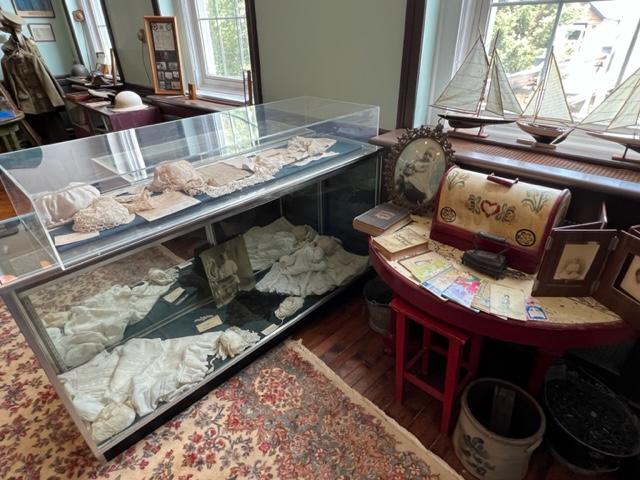
Each room of the museum was dedicated to a different theme. When I toured the Community Room in the back of the museum, it held the records of a lot of old businesses of City Island with pictures and items that were once part of the businesses. There was a small FDNY display, a small WWII display about local residents who fought in the war, wedding garments, maps of the island and a small display of arrowheads.
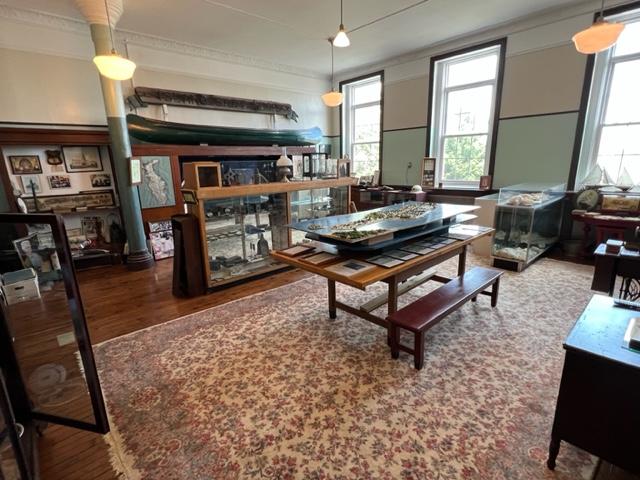
The Community Room Gallery
The Community Room-Map of City Island
The Community Rom-Items from businesses and homes.
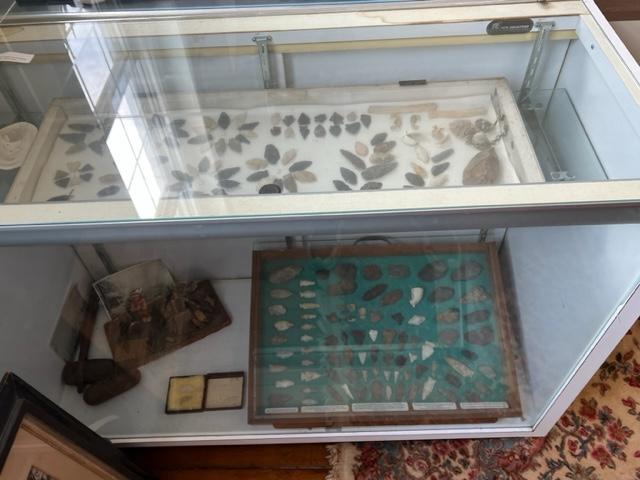
The Community Room-Arrowheads and Native American objects
Baby clothes and household items
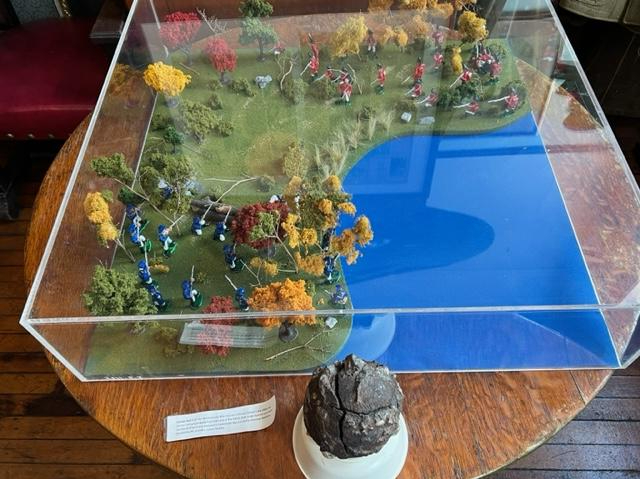
A cannonball from the Revolutionary War battle
Church Chairs in the Community Room
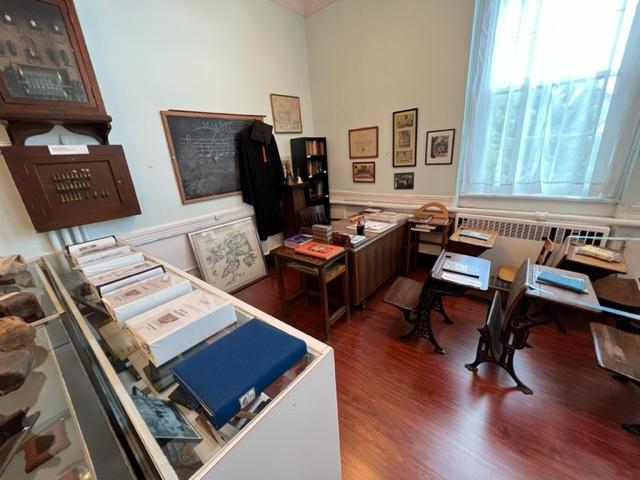
In the School Room, the concentration was on PS 17, which the museum is now housed in and its history with all the classroom group shot pictures, graduation pictures and a small classroom set up. There were more records and event items of the current PS 175, which is the K-8 school that the residents attend. There were also records and pictures of St. Mary, Star of the Sea School, the former Catholic school that used to be on the island as well.
The Schoolroom Gallery
The Schoolroom Gallery
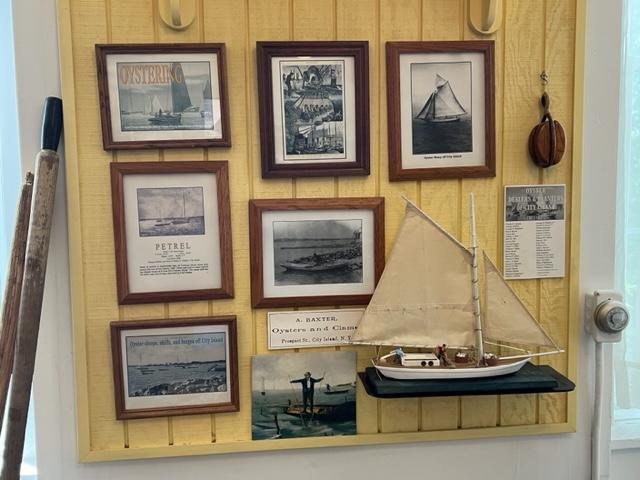
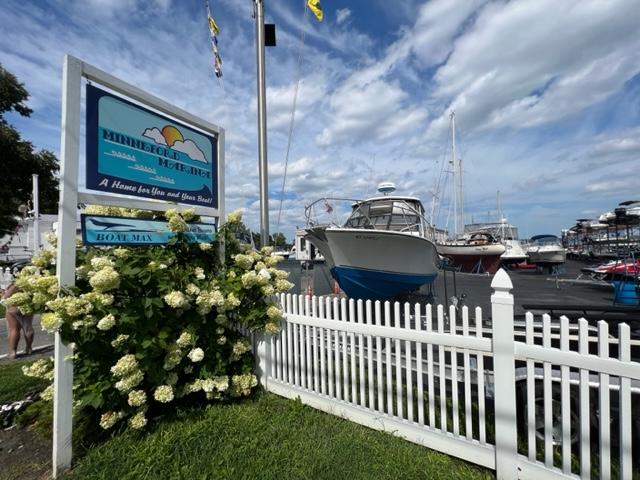
The Nautical Room needed an overall as there was too much going on in the room with pictures all over the walls, equipment for navigation and for fishing and records of the ship building companies that used to dot the island. There were boats in various shapes and sizes on display and the companies that built them like Wood Yacht, Nevins Yacht and Minneford Yacht. There was also the history of shipbuilding and sail making on the island. The tour guide told me there were no more ship builders on the island, but one sail maker left.
The Shipping making equipment
Locally made boats on City Island
The Library where all the research is done on the island and on the families and businesses that were once here was dominated by yachting pictures and nautical photography. It held all the City Island records and even the ship building plans.
The Minneford Boatyard down the road from the museum is still operation today.
The City Island Nautical Museum Library
The museum has a lot to see but it needs to be a bit more organized to really showcase the collections properly. Still, it is one of the best museums I have seen with a nautical history theme. The best part is that you can see the whole museum in about an hour and this leaves you time to tour the island and see how the museum better explains why the island is the way it is right now.
The Ship display in the City Island Nautical Museum Library.
The History and set up of the City Island Nautical Museum:
(From the Museum pamphlet)
History of the Museum:
(From the Museum Pamphlet)
The City Island Nautical Museum is located in one of the island’s most picturesque and historic buildings, the former Public School 17, built in 1897 on one of the highest points on the island. When the residents of City Island voted in 1895 to separate from the town of Pelham in Westchester County and to become part of New York City, the City administration built the school, which continued in use until 1975. When the building was sold in 1986, the City reserved space for use by the City Island Historical Society and the Community Center and several old classrooms now serve as galleries for the museum.
The front main gallery is reserved for revolving exhibits. This exhibit that was being featured in the summer of 2023 was by local artist Liz Alderman.
The Liz Alderman Exhibit in the Front Gallery:
Local City Island Artist Liz Alderman at the City Island Nautical Museum in 2023.
The Liz Alderman Exhibit in 2023 at the museum
The Liz Alderman Exhibit of the local artist’s work.
The Liz Alderman Exhibit at the museum
The Main Hall and Gallery:
The Main Hall is lined with photographic essays featuring maps, the America’s Cup, City Island’s most beautiful boats, the City Island Bridges and historic buildings as well as a history timeline, models of a minesweeper and several rum runners, built during Prohibition and a handsome wooden kayak built in the 1930’s. The foyer contains the museum’s gift shop, featuring articles for sale such as books, t-shirts, photographs, postcards and nautical gifts and the desk where the docents greet visitors.
The Gallery features display cases with antique shipbuilding and sailmaking tools and the walls are covered with photographs of yachts built or serviced here and portraits of legendary City Islanders who contributed so much to the life and work on the island.
The Main hallway at the City Island Nautical Museum
The Walsh Library:
The recently refurbished library features a collection of books devoted to maritime history and many binders and scrapbooks featuring newspaper clippings, postcards and articles about City Island, Pelham Bay Park and Hart Island. There is an extensive selection of nautical magazines, including Yachting, Rudder, Wooden Boat and Classic Yacht, a data base of all boats built on City Island since 1848 and an impressive display of ship models. Special exhibitions regularly mounted in the library feature the work of local artists and photographs documenting aspects of City Island history.
The Library at the City Island Nautical Museum
The Nautical Room:
Shipyards, sail lofts, yachts and the people behind them are all honored here. Historical photographs, memorabilia and artifacts fill the room and tell the story of City Island’s rich nautical past. Also on display are tools used by sailmakers and shipbuilders, several ship models and some vintage outboard motors. Of particular interest in the room are several skiffs, a partially completed boat and a Buchman sailing canoe from the early 1930’s (all built on City Island).
Ship building display on City Island
The Community Room:
Celebrating City Island from its earliest days, the Community Room displays photographs, maps and memorabilia, including Native American arrowheads found in the area. The walls are covered with images of street scenes, stores, restaurants, private houses, and the waterfront then and now. Displays include a large relief map of City Island in about 1867, a diorama of the Battle of Pell’s Point that took place in October 1776, a niche devoted to City Island’s religious institutions and many antique home furnishings, including sewing machines, an ice box, and a 100-year-old typewriter. A large counter from Gilbert’s Pharmacy serves as a display case in the center of the room.
The Community Room at the City Island Nautical Museum
The Native American Collection in the Community Room
The School Room:
Student registers, graduation pictures, autograph books, report cards, the old school bell, and the other artifacts tell the story of City Island’s schools from the first schoolhouse built in 1838 to the present school, P.S. 175, built in 1975 and St. Mary, Star of the Sea RC School, which served the island for over 75 years. A section of the room is set up like a traditional school room, and a unique map of the naval training station that was located in Pelham Bay Park from 1917 to 1918 hangs on the wall.
I visited the Bergenfield Museum recently, a museum that I have to admit I never knew existed and I know almost all the museum in Bergen County and was surprised what an informative museum it was not just showcasing the history of Bergenfield but of Bergen County. Room by room the museum is filled with displays on the history of the town, and it has progressed through the last two hundred years.
The Bergenfield Museum at 100 Cooper Street
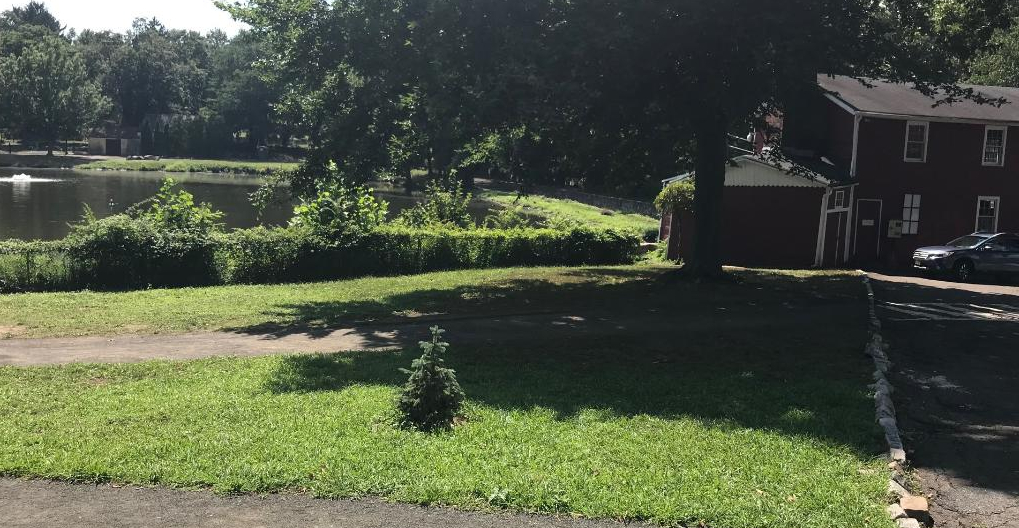
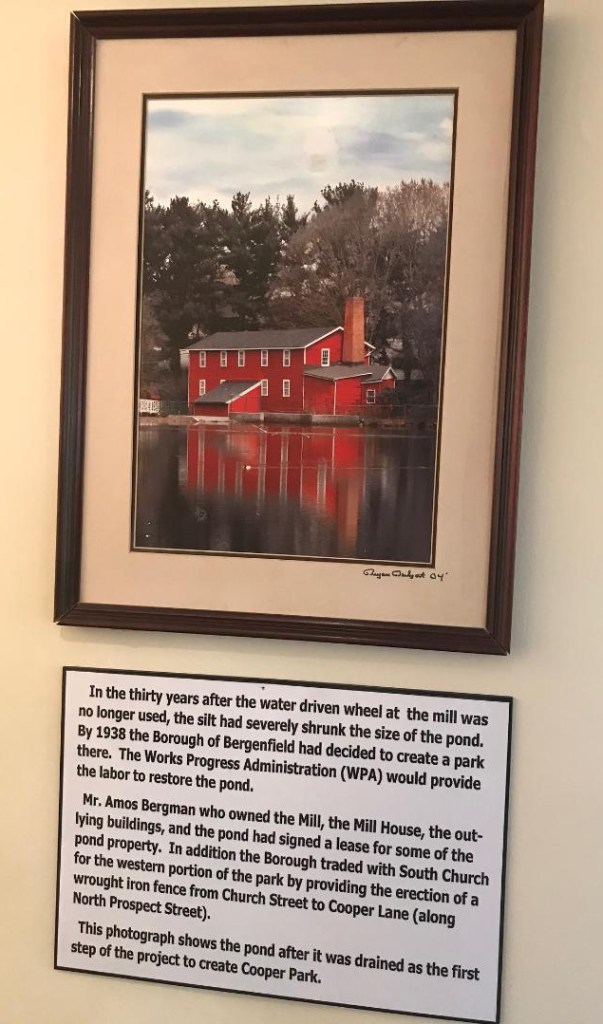
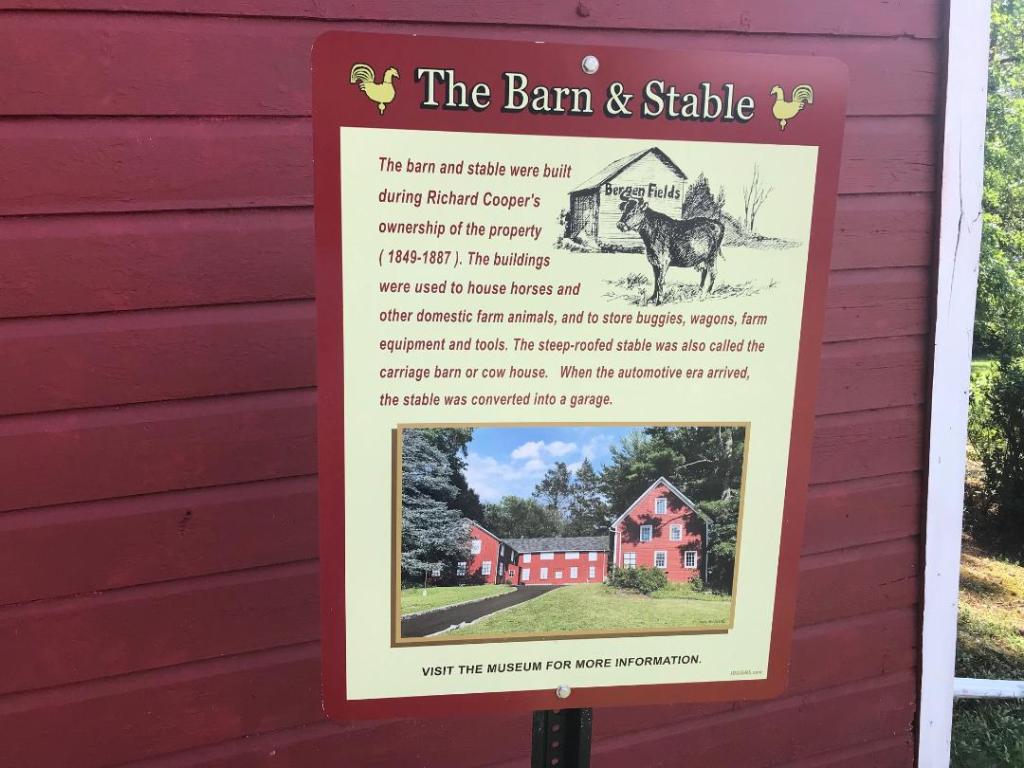
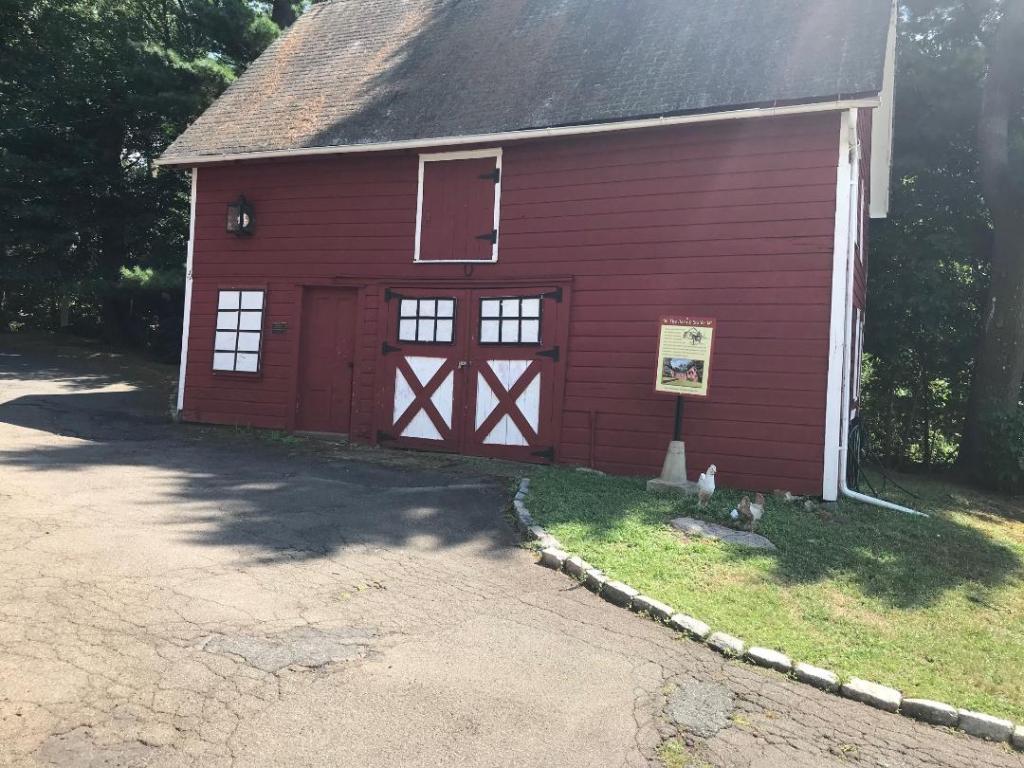
The museum is located in the back of Cooper Park towards the back of the pond. The museum is part of a complex of barns that were once small manufacturing companies owned by the families that owned the house. The grounds have the three barns that are not in use now and the home that overlooks the pond. This beautiful park was created during the Great Depression and is a wonderful place to just walk around in and relax from everyday life.
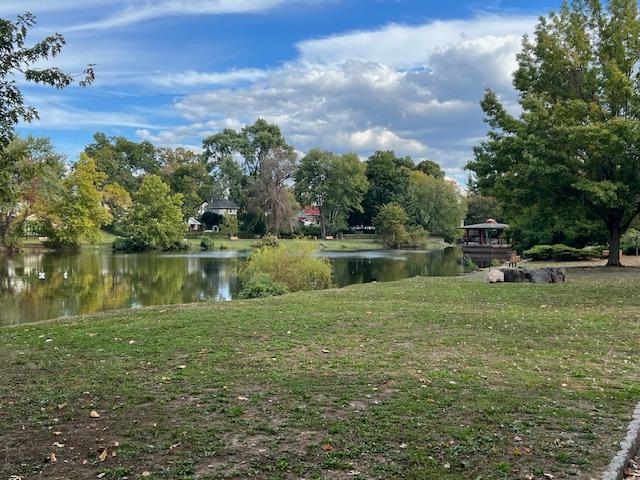
The view of Coopers Park and Pond from the museum front porch
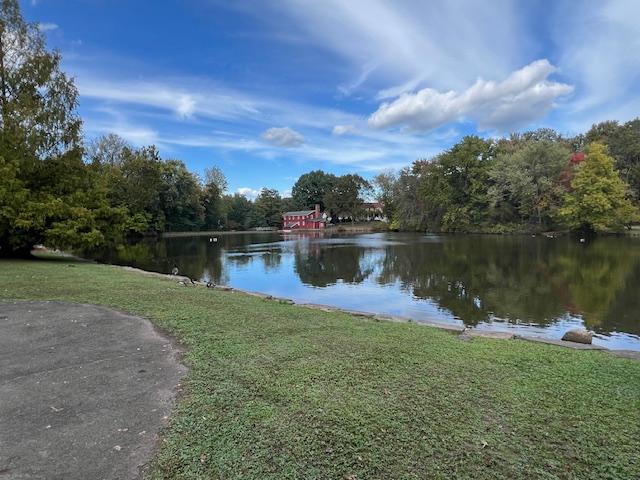
Coopers Pond Park and the museum from the other side of the park
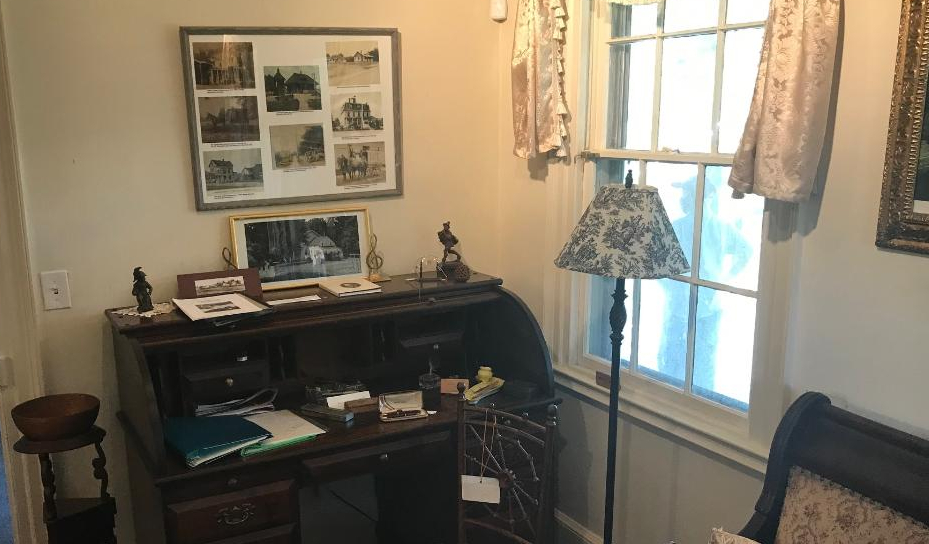
The history of the house and grounds of the Bergenfield Museum
Please note getting to the museum can be confusing as Google Maps and the museum diagram to get there are wrong. You will need to go down Ralph Road and then park before entering the complex. It is hard with the turnaround in the site to drive out with your car.
The entrance to the Bergenfield Museum at 100 Cooper Street
The entrance to the museum off Ralph Street. Please follow the signs.
I was met with a very enthusiastic group of volunteers who are so proud of the house and the way it is presented to the public. When you enter the house, you are met in the foyer of the home which is filled with pictures and small displays and then led to what was the parlor room where the family would have all their entertainment and socializing. Inside the room there is a very interesting portrait of a mysterious woman, who even the museum docents do not who she is, located above the fireplace.
The woman of mystery who holds a prominent place over the fireplace mantle
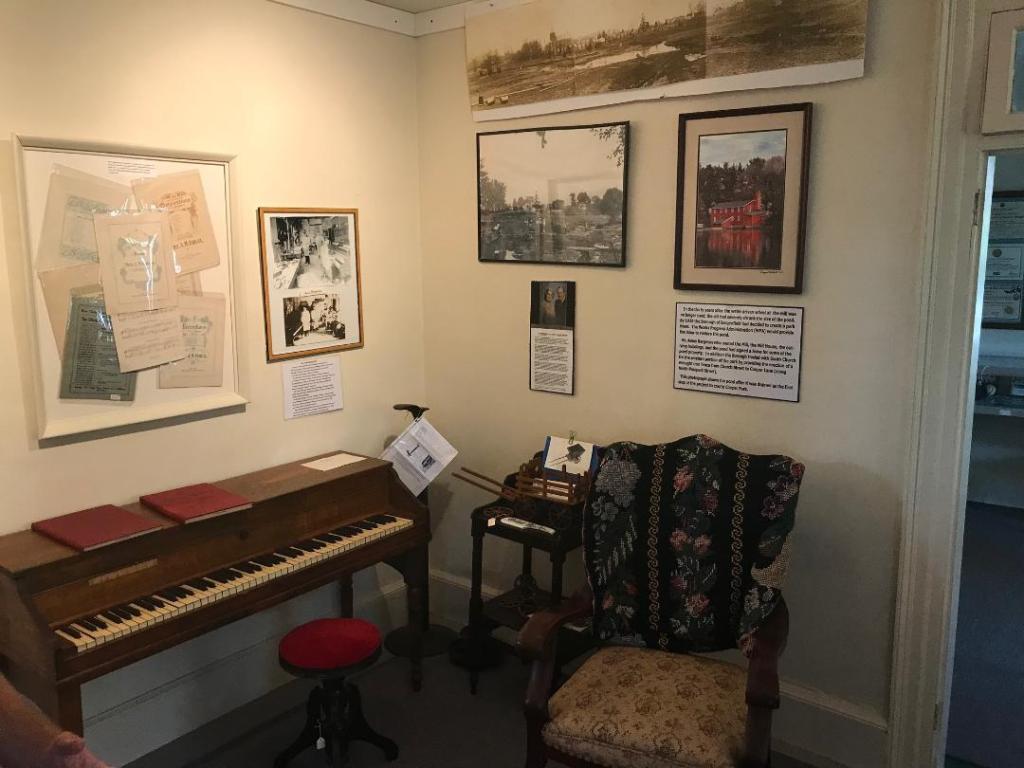
The room is decorated in period furnishings and even has one of the original phonographs. My docent, David, showed me how it worked and how you were able to get the volume up on the record player by opening one of the small doors in the cabinet.
The ‘starter’ organ in the Living Room
The home was once a working farm/business
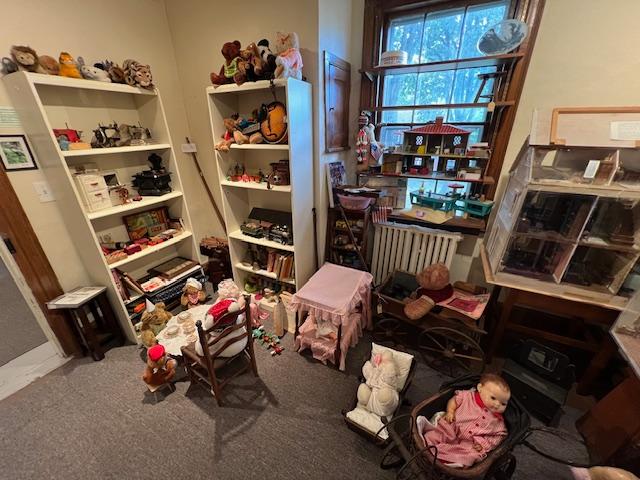
The room towards the back has an extensive collection of toys from the last one hundred years. There were several toys such a china dolls and metal ovens that were popular in the late 1800’s and early 1900’s to modern Fisher Price toys of the 1970’s that I remember growing up with as a kid. The site had once been a toy factory before the turn of the last century and these displays honor that history.
The Toy Room at the Bergenfield Museum is quite extensive
The museum is very much dedicated to the history of the Borough of Bergenfield, NJ. There are nice displays of the town’s school district and its history. The old school system pictures feature items from elementary school to high school and items that students would have used at the school. The elementary school featured in many of the pictures is still used by the town today according to my tour guide, David that afternoon. He told me he had attended the school growing up.
There was a small display of both the Bergenfield Fire and Police Departments and their progression through the years in the town. It is funny how much has changed cosmetically about the look of the job but the job itself is still the same. Helping people and keeping the town safe.
The Fire and Police Department display at the Bergenfield Museum
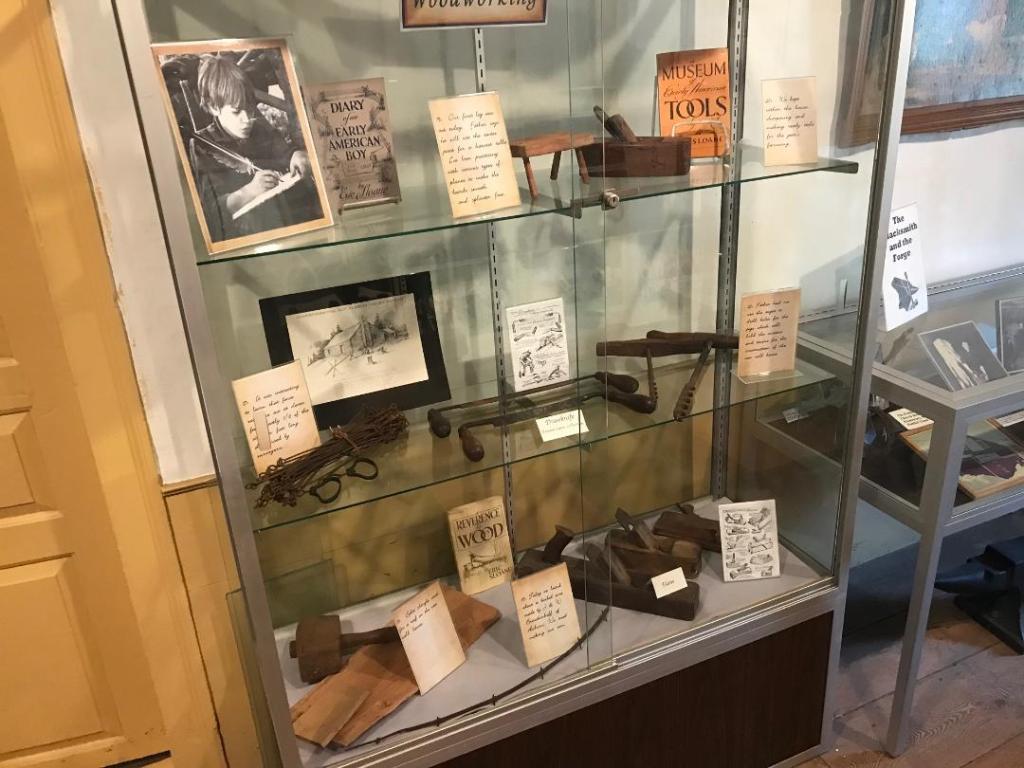
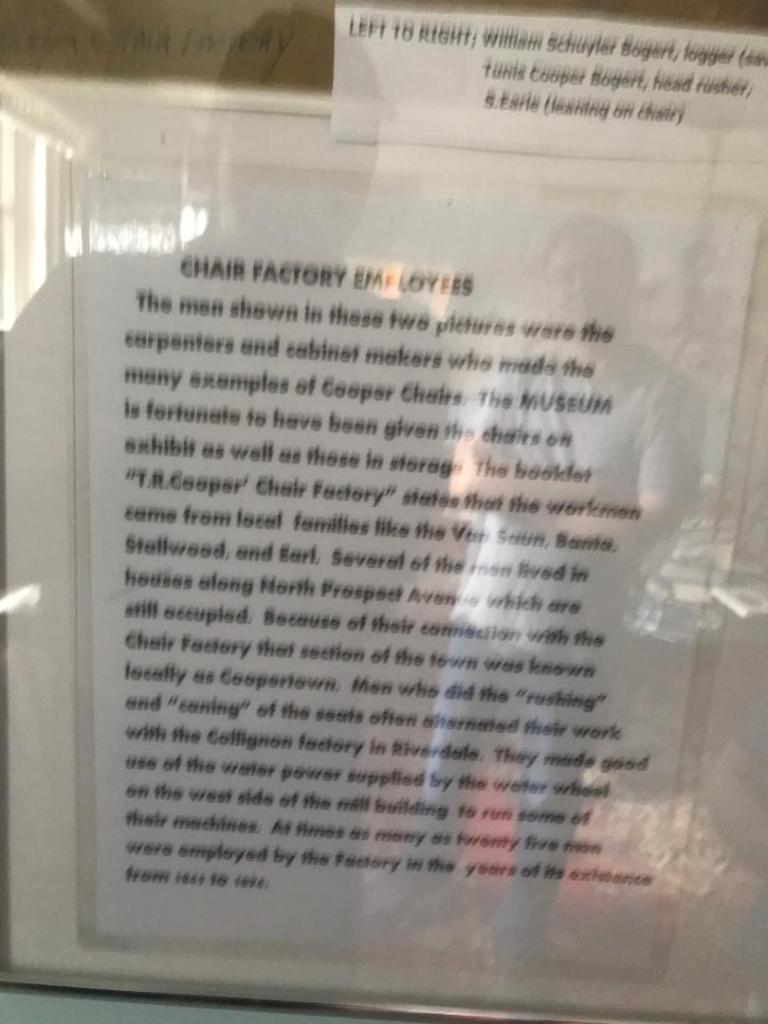
When you enter what was once the dining room, is the Chair Collection of Tunis Richard Cooper, whose factory was one of the barns on the property.
The Chair Factory rules
Some of the samples of the chairs manufactured at the barn factory
There were all sorts of makes and kinds of chairs throughout the room as well as many decorative pieces. The museum has an extensive collection of all the decorative furnishings that were made on the property including what the factory looked like and the rules and conduct of the employees working there.
The working mill building on the property
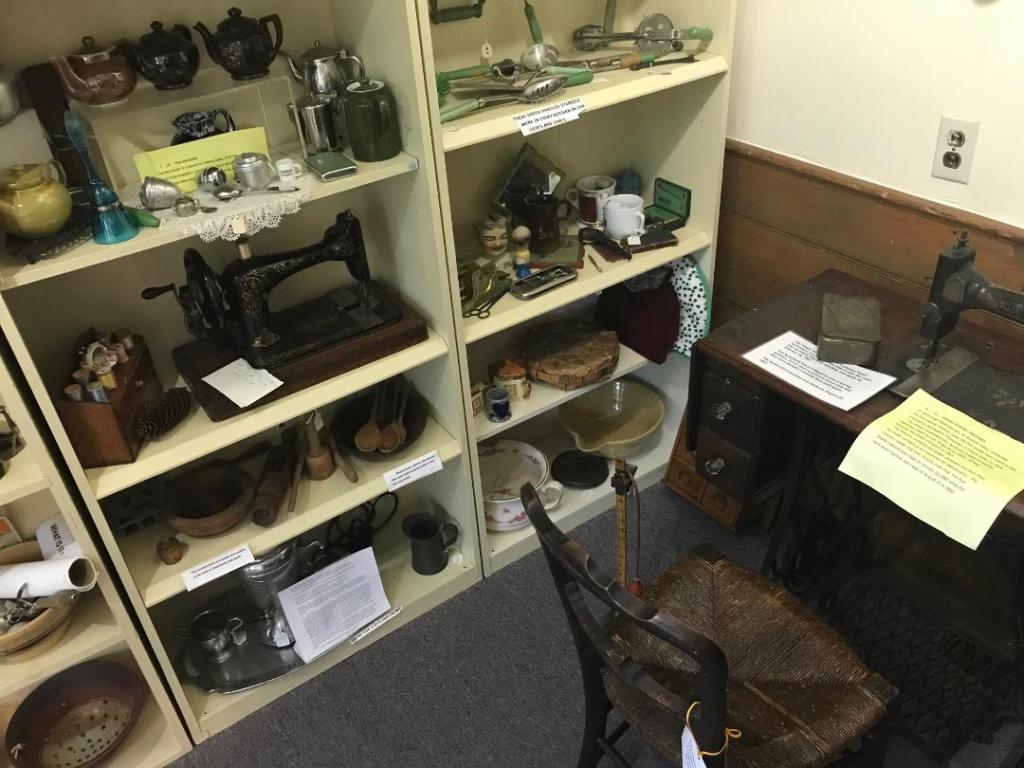
The next room is the working kitchen of the original house with all sorts of kitchen equipment through the ages including a collection of toasters. There is also a working heart where the volunteers do some cooking.
Everything to keep a kitchen running
The hearth of the kitchen is where all the action was in the kitchen
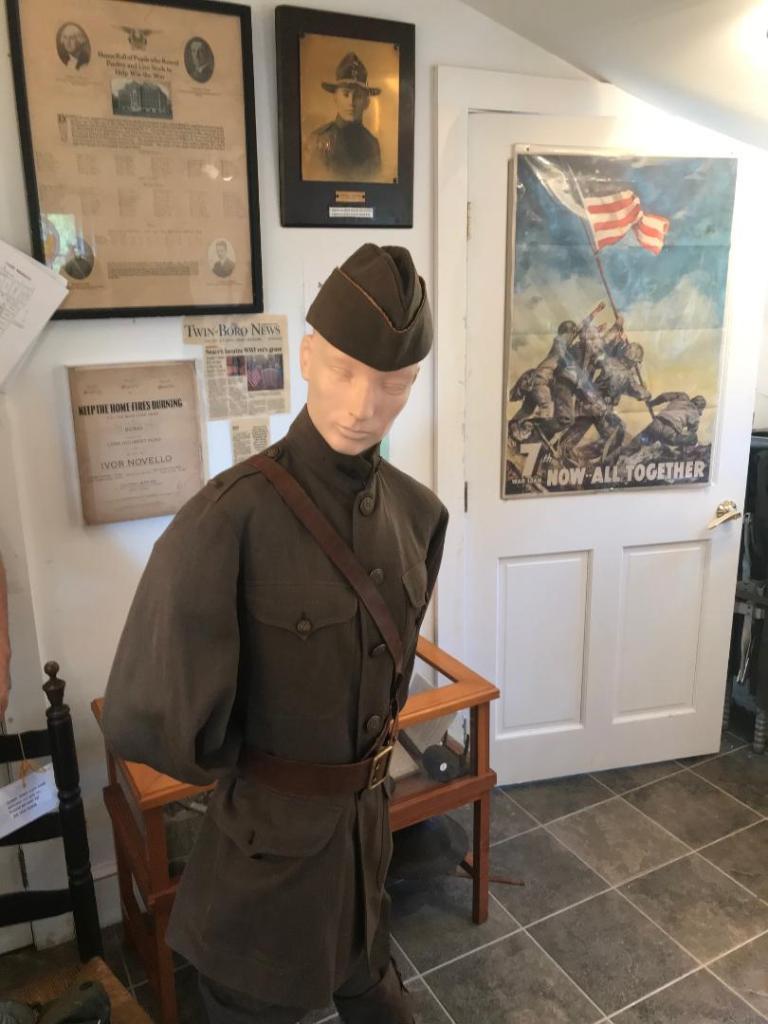
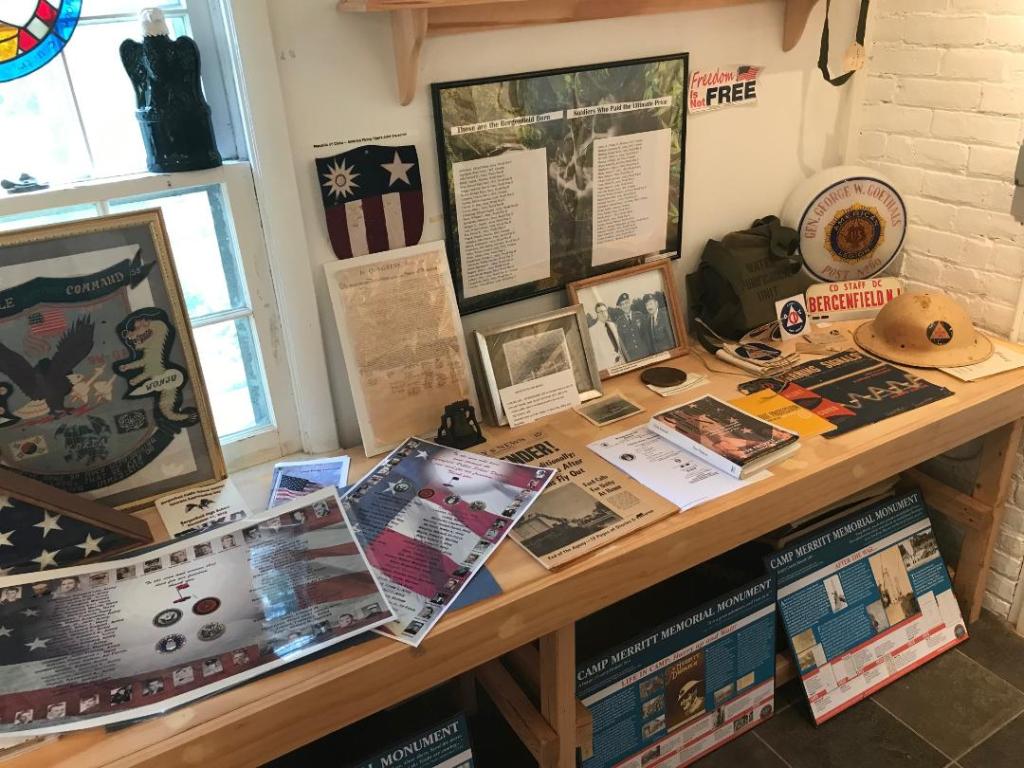
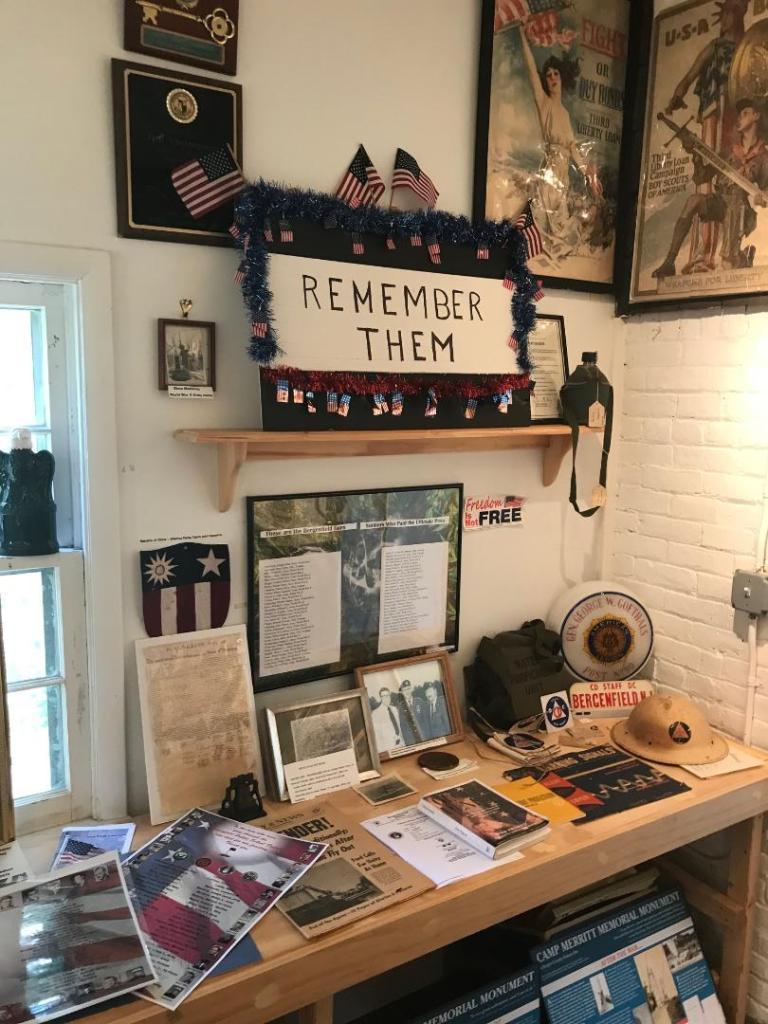
The back room of the house has a large military display that includes local heroes of the Revolutionary War, Civil War, WWI and the Vietnam War. There are all sorts of memorabilia from the soldiers and their families.
The Military display describes Bergenfield’s contribution to military battle from the Revolutionary War to Vietnam
The Military Room showcases our contributions on freedom
The patriotic duties of the town of Bergenfield, NJ
The museum has a 9/11 Memorial to the town and its contributions to that horrible day
Take time to walk the grounds and admire the park. This beautiful green space was built by the WPA during the Depression and the landscaped park includes Cooper’s pond, extensive gardens and paths of green lawn.
The grounds of the museum were once a farm and a working factory environment
The factory/barn on the Bergenfield Museum property
The grounds of the Bergenfield Museum in Cooper’s Pond Park
The park from the museum site in the early fall months of 2024
Cooper’s Pond Park is a quiet and very green oasis from the distractions of today. It is a nice patch of nature to just walk around in and relax and enjoy the beautiful sunny weather.
The History of the Bergenfield Museum:
(from the museum website)
Two Hundred years after the founding of the United States, local historian, Betty Schmelz began collecting artifacts that were essential for telling Bergenfield’s story. By 1988, her small collection had blossomed into full museum displays comprised of a century’s worth of wedding dresses, Camp Merritt and WWI memorabilia and testaments to the Bergenfield Music Department.
The Bergenfield Music Department display
From 2002 to 2014, the museum closed, and the collection was moved to storage until negotiations were settled with the Borough of Bergenfield. In July of 2013, volunteers reassembled the items for public viewing and began rehabilitation efforts.
The Museum House Timeline:
(From the museum’s pamphlet)
The tools to create those wonderful and decorative chairs
The Tunis R. Cooper property was originally owned by French Huguenot immigrants, the Demarest family. After years of changed ownership and purpose, the legacy of the property is now protected by the Bergenfield Museum Society:
The timeline of the town and its development:
*1677-1693: The Demarest family negotiates a deed for the Cooper Property with local Native Americans and settles throughout Schraalenburgh (now known as Bergen County).
*1840: Richard Tunis Cooper purchases the property and begins hiring local farmers to manufacture chairs.
*1849-1890’s: Richard’s son, Tunis Richard Cooper, purchases the property and establishes a successful chair factory. A major warehouse is opened in New York City.
*1897-1997: Ownership of the estate changes several more times:
-1897: Toymaker Oskar Martin, purchased the property.
-1908: Amos Bergman holds ownership until his death.
-1949: Bergman housekeeper, Daisy Coringrato, sells the property to wool importers, Alec and Catherine Marchbank.
*1997: Marchbank family initiates efforts to preserve the remaining Cooper Chair Factory and surrounding land.
*2004: The Borough of Bergenfield purchases the property with the four remaining buildings and solidifies preservation efforts.
*2013: The Bergenfield Museum successfully opens with a collection of authentic Bergen County artifacts.
My Team Project with my Marketing students at Bergen Community College promoting the Bergenfield Museum for Destination Tourism in November 2024:
This is when I got the idea of doing the same project in a larger form. I saw the Bergenfield Museum, a small gem on the other side of Coopers Pond Park, that did not much traffic considering the museum is open both during the week and the weekend. The building was an original Demarest homestead and the family had their family plot in the South Church which is located right next to the park. So I approached both the museum and the church to partner with me in creating a project to promote this corner of Bergenfield, NJ for tourism.
Cooper’s Pond Park during the Summer months
So I set up the next series of tours for my students that encompassed the Bergenfield Museum, Coopers Pond Park and the historical South Church graveyard where the Demarest family plot was located. The Bergenfield Museum building is the original Demarest family homestead so it tied in nicely to the project.
Walking through Coopers Pond Park inspired this fascinating project
Two weeks after the Behnke Museum project, I introduced this project and the next week we took a walking tour of all three sites starting with walking through Cooper Pond Park, a WPA project and one of the most beautiful and underrated parks in Bergen County.
We met with the Bergenfield Volunteer Board at the museum to start the tour
The Bergenfield Museum at 100 Cooper Street in Bergenfield, NJ
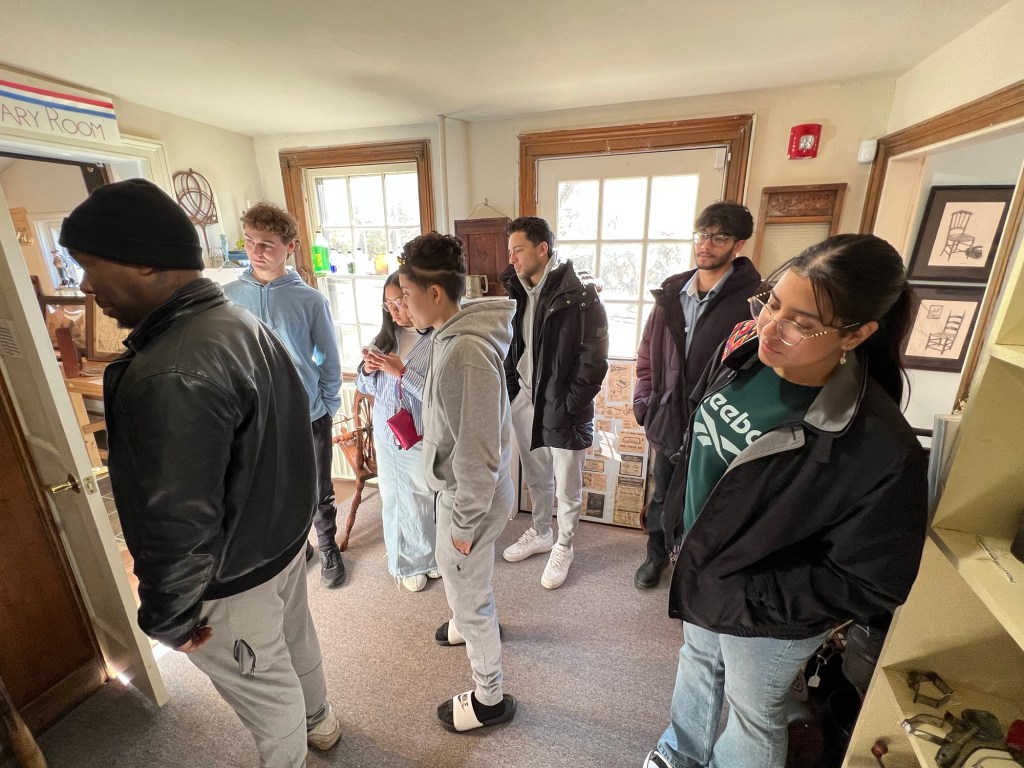
The President of the Bergenfield Museum Board, Joanne, helped me organize the Team Field Trip of the museum. She had four other docents from the Board helping in four different rooms so each Team would follow each other through the rooms. Each Team had about ten minutes in each room for the docent to explain the collection to them. The Student Consultants got to visit the museum on their own time as well.
Our class being greeted by the President of the Bergenfield Museum, Joanne
Touring the Living Room of the old Demarest Homestead
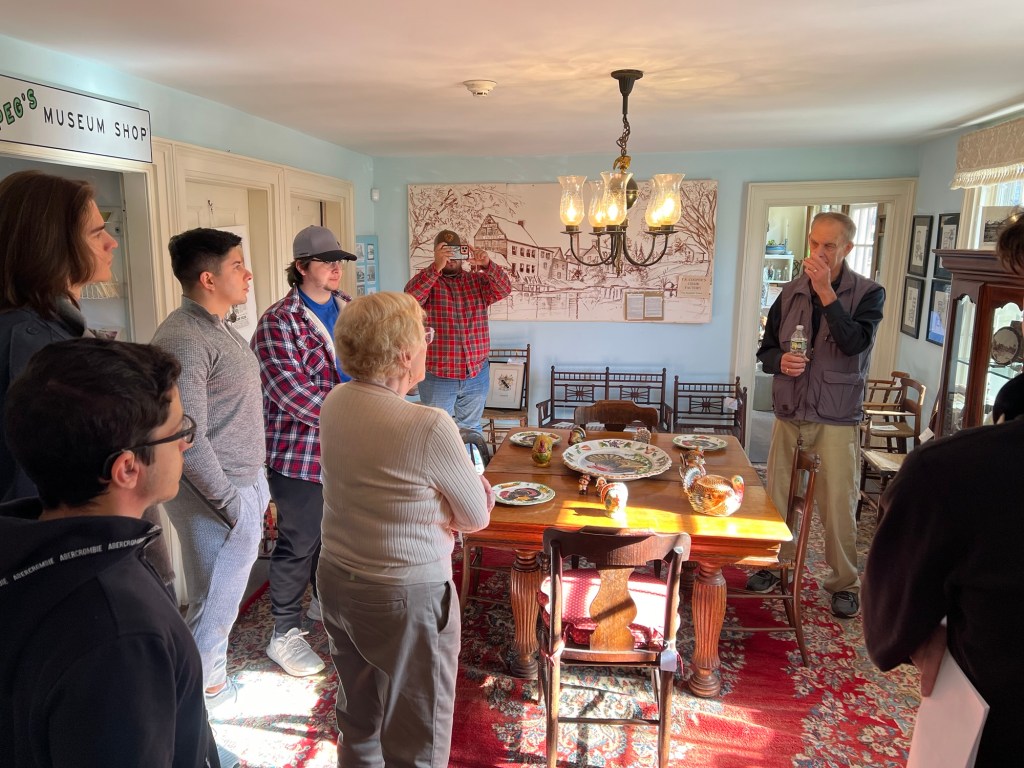
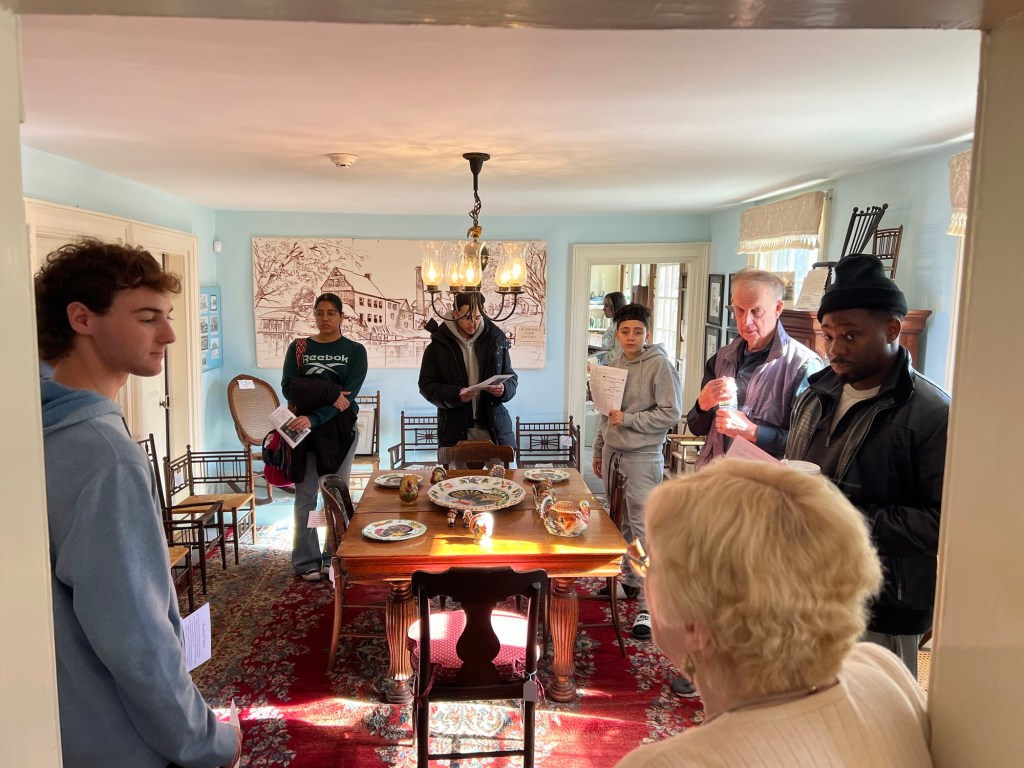
Touring the old Dining Room and the Chair Factory display in the museum
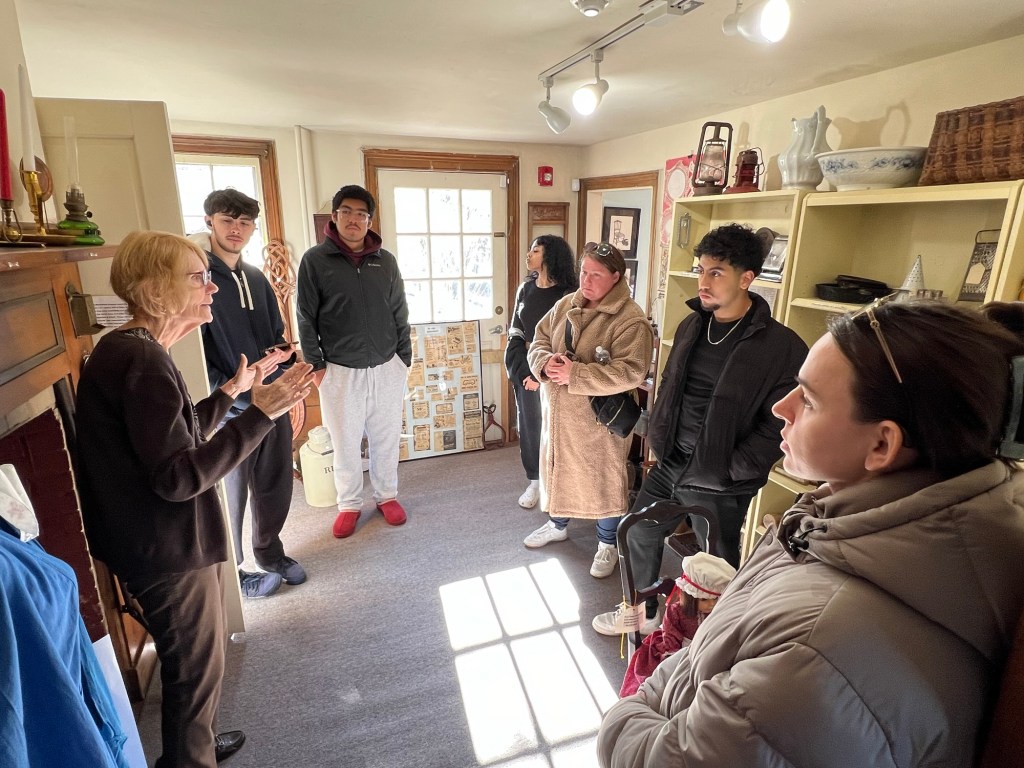
Touring the Kitchen area of the old homestead
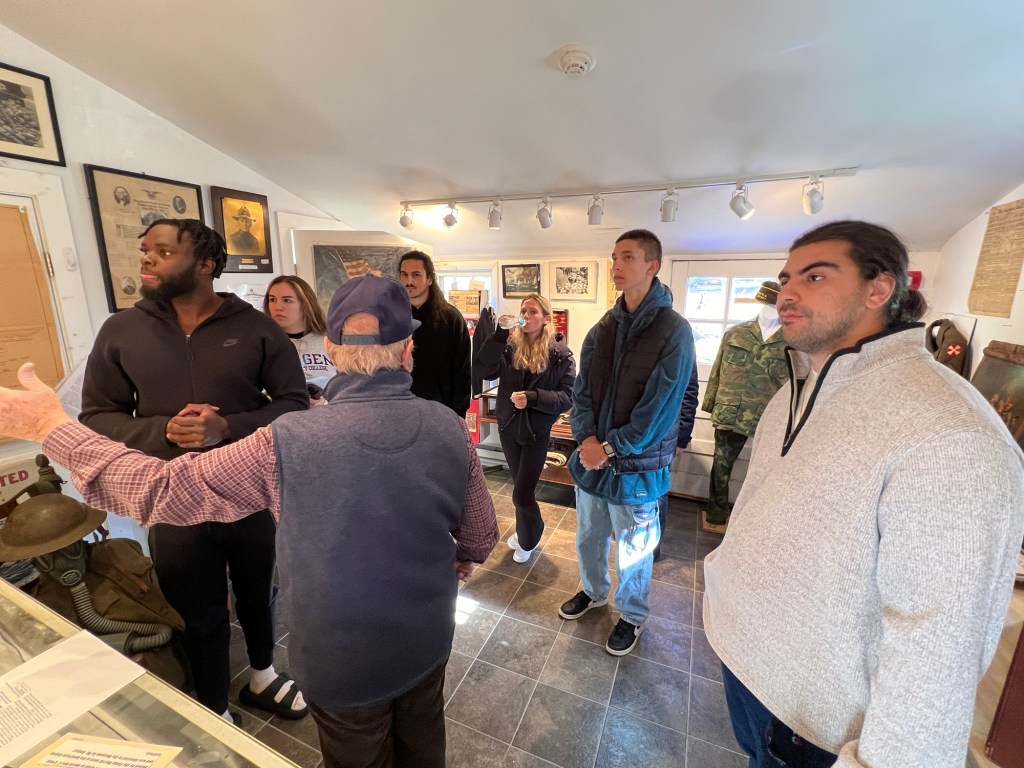
Touring the Military Room of the museum
Discussions of the function of the kitchen on the farm
Discussing the Chair manufacturing in Bergenfield, NJ
The Student Consultants touring the Living Room
The Teams taking notes during the tour
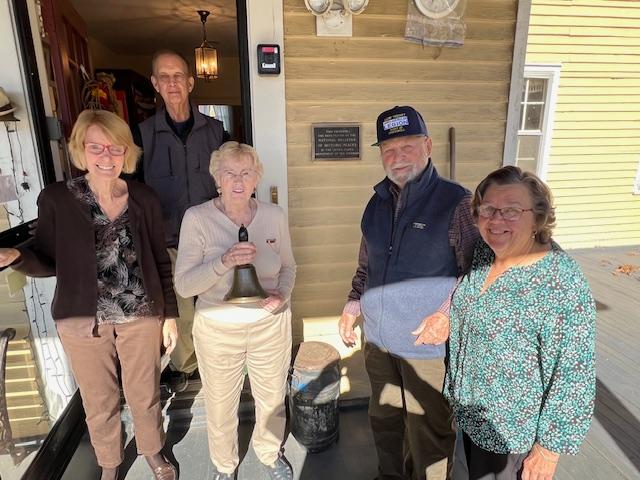
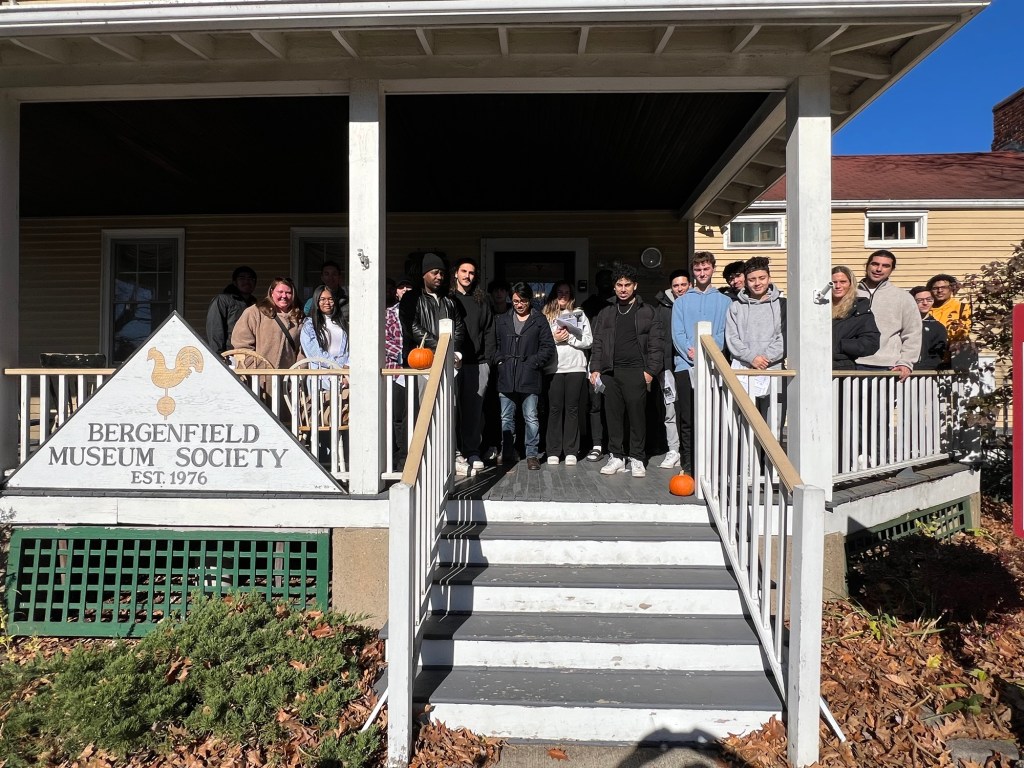
After our tour of the museum was over, we took a group picture outside of the museum with the Board of the museum.
The Student Consultants from Bergecco-Parc Consultants Inc. visiting the Bergenfield museum
Here is the Presentation and Commercials:
The whole idea of the Bergenfield Project was not just to promote the museums, parks and historic churches but to create Destination Marketing Project to promote the Town of Bergenfield as a place to visit for both domestic and foreign tourism. This is the project that promotes that vision:
The Bergenfield Team website for Bergecco-Parc Consulting Inc:
The day of the presentation the students had to be in professional dress with men expected to be in Jacket and tie or a suit and the ladies in blouses, slacks, suits and dresses. We presented this project to the Board and members of the Bergenfield Museum and to the Communications director of Bergenfield, NJ, which really gave the students a stamp of approval.
I thought the commercials the students came up with were very clever.
The Commercials of the Bergenfield Museum:
Team One:
Team Two:
Team Three:
Team Four:
The Children’s Walking Tour of the Bergenfield Museum:
Team One:
Team Two:
Team Three:
Team Four:
It was a great Marketing project and the students did an excellent job helping the museum with their Digital Marketing. They also created pamphlets in English and Spanish, a new webpage and a Instagram account for them.
It was a very successful project and the students did an excellent job on it.
The one thing I refuse to do on Father’s Day is to spend the day at the cemetery. I know that is some people’s idea of honoring one’s family members but it is not mine. I went on Friday and paid my respects to my father (whom this blog is dedicated to) and spent time remembering some of the good times we had in past. I dropped some cut flowers from our gardens (some of which he planted) and said a small prayer. Then I left.
My idea of honoring my father and spending Father’s Day with him is to do something that we would have shared together. We were always running around somewhere and exploring something new and doing something fun. That is how I wanted to honor him. By being active and giving him a toast at Sunday dinner.





































 Visiting a Museum: The Unique, Unusual, Obscure and Historical