Tag: BergencountyCaregiver.com

Lower Alloways Creek Historical Society                              736 Smick Road                                                                     Salem, NJ 08079

Lower Alloways Creek Historical Society 736 Smick Road Salem, NJ 08079

Lower Alloways Creek Historical Society

736 Smick Road

Hancocks Bridge, NJ. 08079

(856) 935-3666

https://www.facebook.com/LacHistoricalMuseum/

https://www.lowerallowayscreek-nj.gov/about/pages/historic-log-cabin

Open: Sunday 1:00pm-4:00pm (Third Sunday of the Month)/Monday-Saturday Closed-Open Six times a year for special events

Admission: Free but donations are accepted

My review on TripAdvisor:

https://www.tripadvisor.com/Profile/R4960NKjustinw/mediabatch/12228970?m=19905

The Historical Society:

Situated in a beautiful rural setting, the Log Cabin is restored in the same manner as the local Quakers lived in the 1700’s. The site houses a barn full of antique farm implements as well as many items used in the local industries of Lower Alloways Creek.

Salem’s County’s maritime history is documented in a unique floating cabin which is complimented with a collection of fishing and trapping memorabilia. The site also features an outhouse, carriage shed and the last canning house that was left in the Township.

The buildings on the grounds and the outhouse

History of the house:

The main house is very unique. The addition to the house was built in the mid 1800’s and is furnished from that time period. This was added to the log cabin that has been reconstructed on the site. The early parts of the log cabin date back to before the Revolutionary War.

The first-floor parlor

The Kitchen in the main house
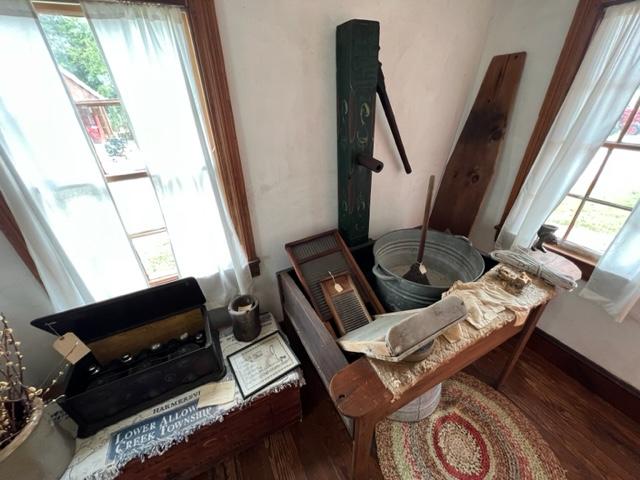
Washing clothes in the house

How to wash clothes until WWII

The second-floor bedroom

The Bonnet collection

The second floor bedroom

The Attic Room

The toys and playthings of the Attic Room

The house has an extensive collection of antique toys and dolls and furniture.

The dolls
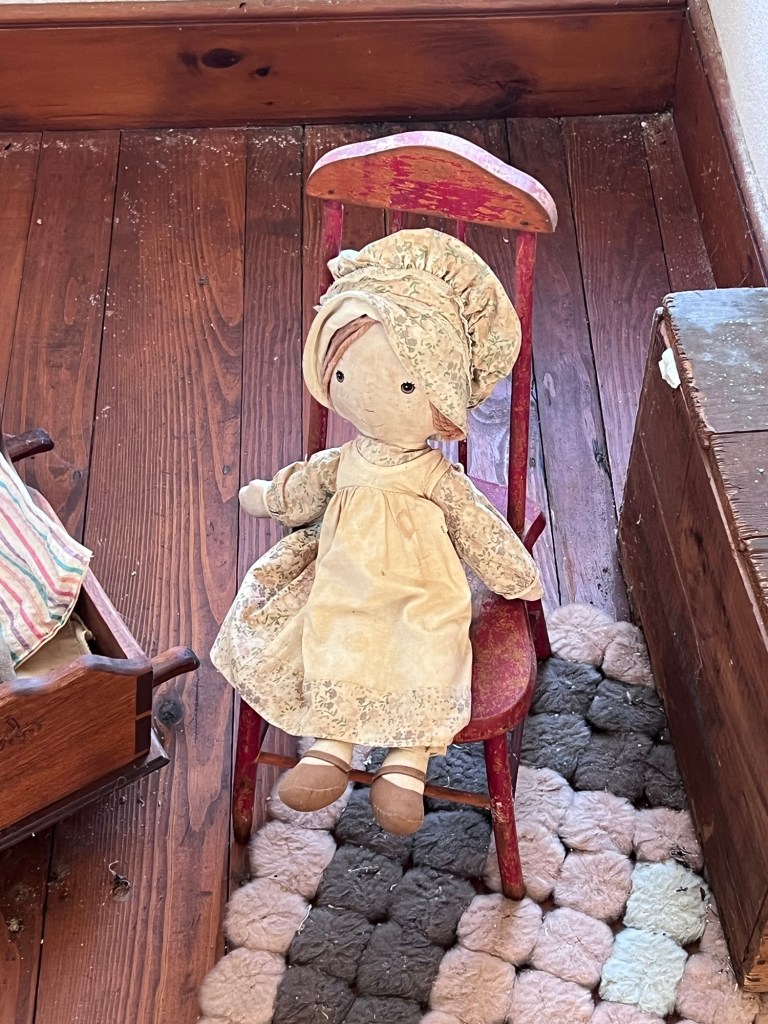
The dolls

The Hat collection at the home.

(Information from the museum website):

Part of the house is an old log cabin with an addition added on later. Although the date of the original construction is unknown, the cabin has been restored and reconstructed in much the same manner as local Quakers would have lived in the 1700’s. Because the air had deteriorated so many of the logs, it was impossible to save the entire original structure.
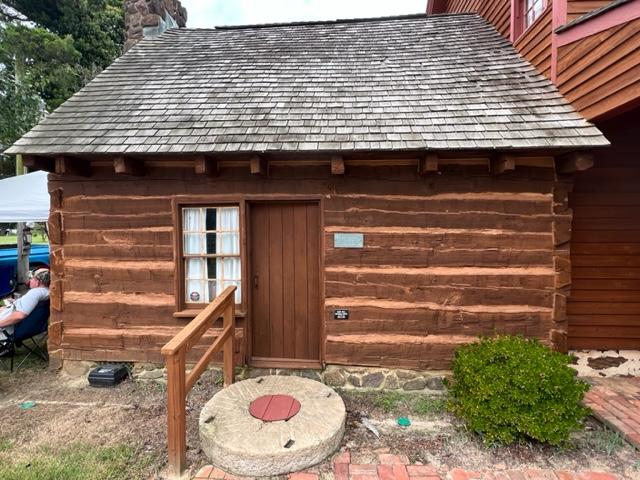
The log cabin section of the house.

The log cabin and the later addition.

All the wood used in the reconstruction of this cabin came from the woods in Lower Alloways Creek that are owned by the Township. The hand-hewn logs are white oak. The wide floorboards are pine The fireplace and foundation were built from Jersey sandstone that had been donated by John Hassler.
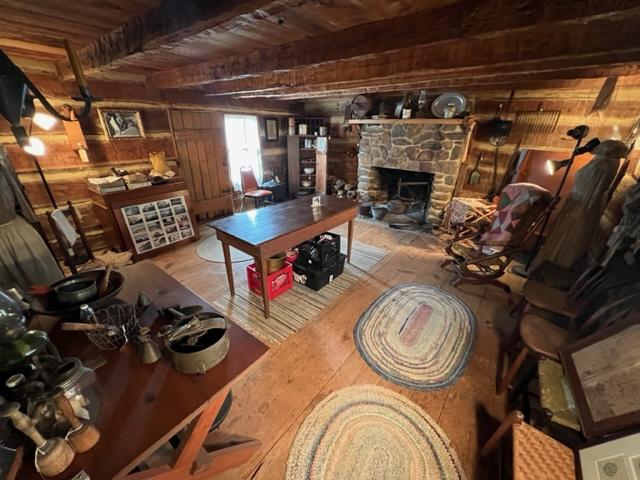
The inside of the log cabin and hearth.

The Hearth during the event

The Historical site also features a log cabin, carriage shed and barn, many antique farm implements, a two-seater “outhouse” and an old fashion hand water pump.

The Outhouse

The hearth of the log cabin
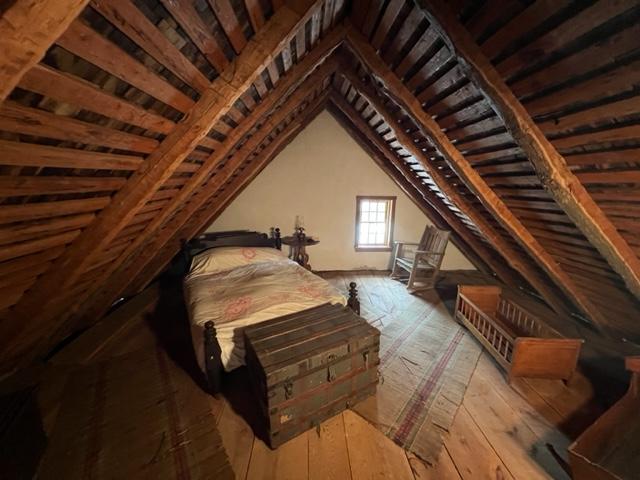
The loft section of the log cabin on the second floor of the home.

There is also an original Can House, with a working line shaft, a floating cabin, both of which were originally built in Lower Alloways Creek.

The historic Can House.
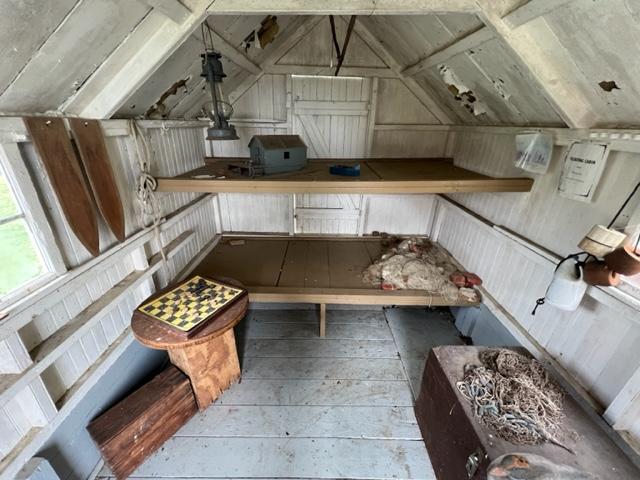
The historic Can House

Some of the interesting programs that the society hosts:

Line Shaft: the historic line shaft in action as it powers a variety of machines.

Outdoor sportsmen: view displays of fishing and trapping, hunting gear, decoys, floating cabins and turkey call demonstrations.

Model Trains: all aboard an exciting display of model trains.

Old time engines: South Jersey Gas Engine Club proudly presents their collection of “Hit or Miss” engines.
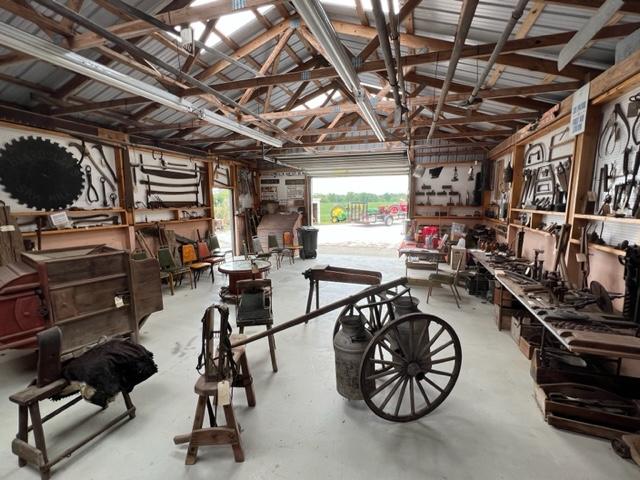
The Farm equipment and working engines at the “Old Time Engine Day” in September 2023 was an interesting mix of old farm equipment, household equipment and everyday items run by an engine in the early 1900’s. It was a very interesting display on how we have come in manufacturing and the museum did a nice job on the displays.

The working farm equipment at the Lower Alloways Creek Historical Society
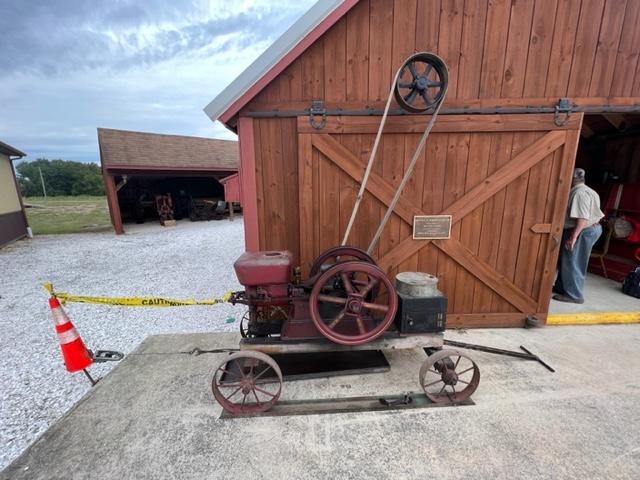
The Farm Engine equipment
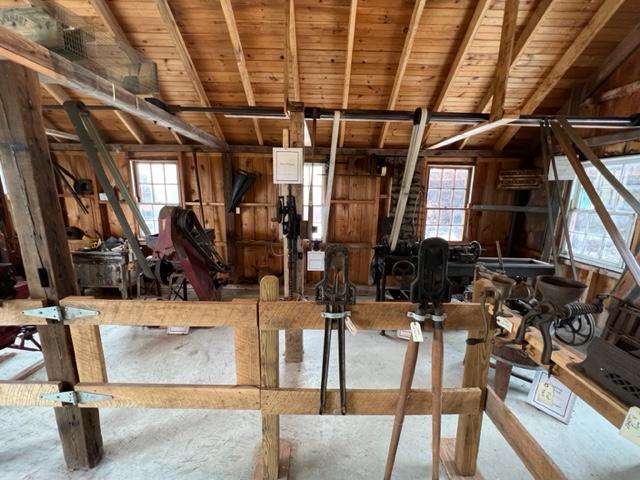
The Farm Engine equipment

The Farm Engine equipment

The Farm Engine equipment

Video on the display:
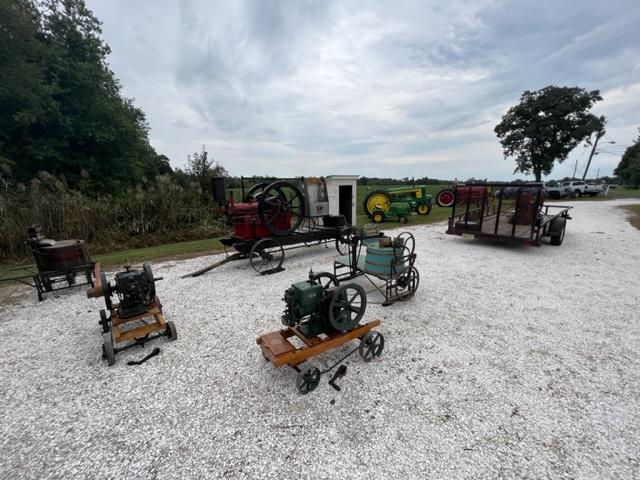
The Farm Engine equipment

Farm Day: Come and see antique tractors and a variety of farm equipment. See the progression of farm equipment throughout the centuries.

Retired farm equipment in the barn
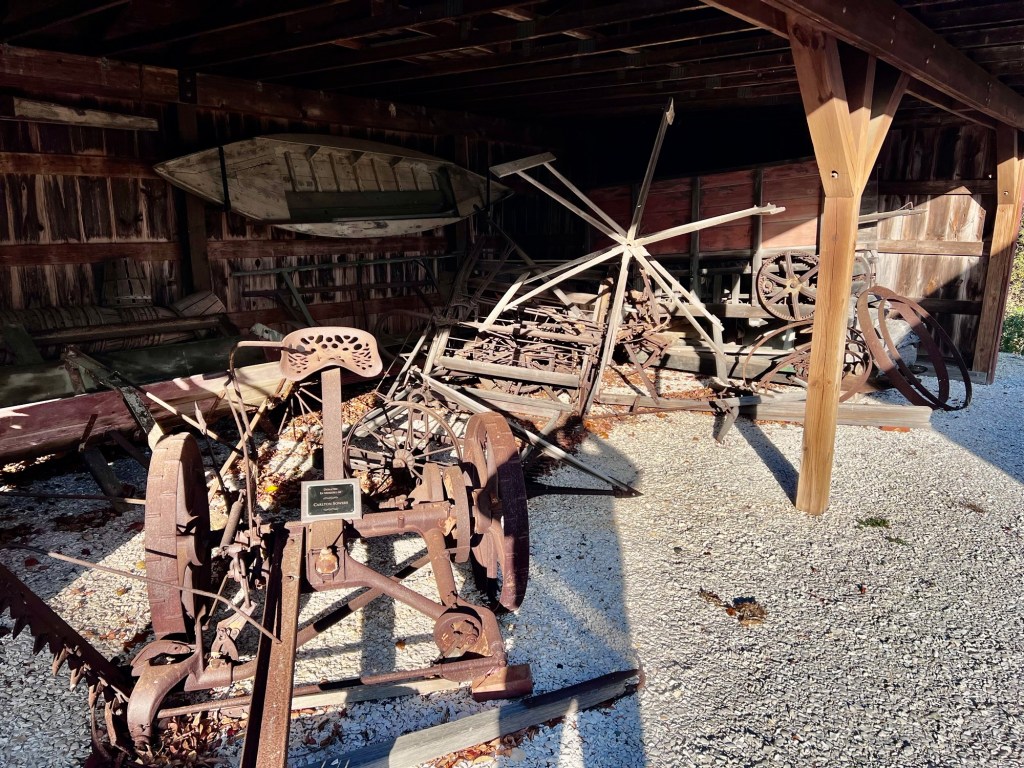
The barn

Farm Equipment in the barn.
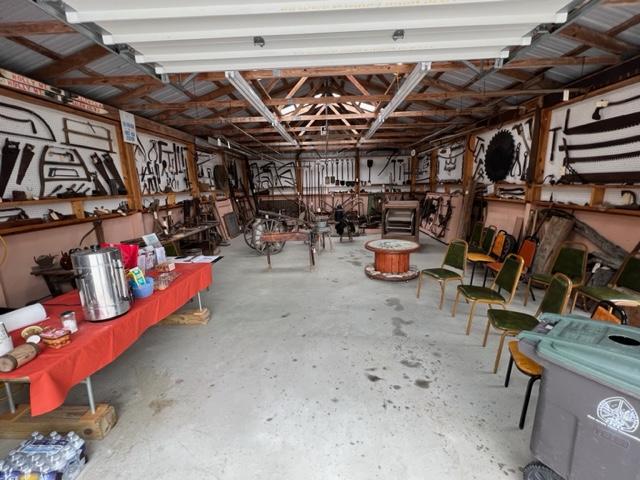
Some of the equipment and refreshments in the barn.
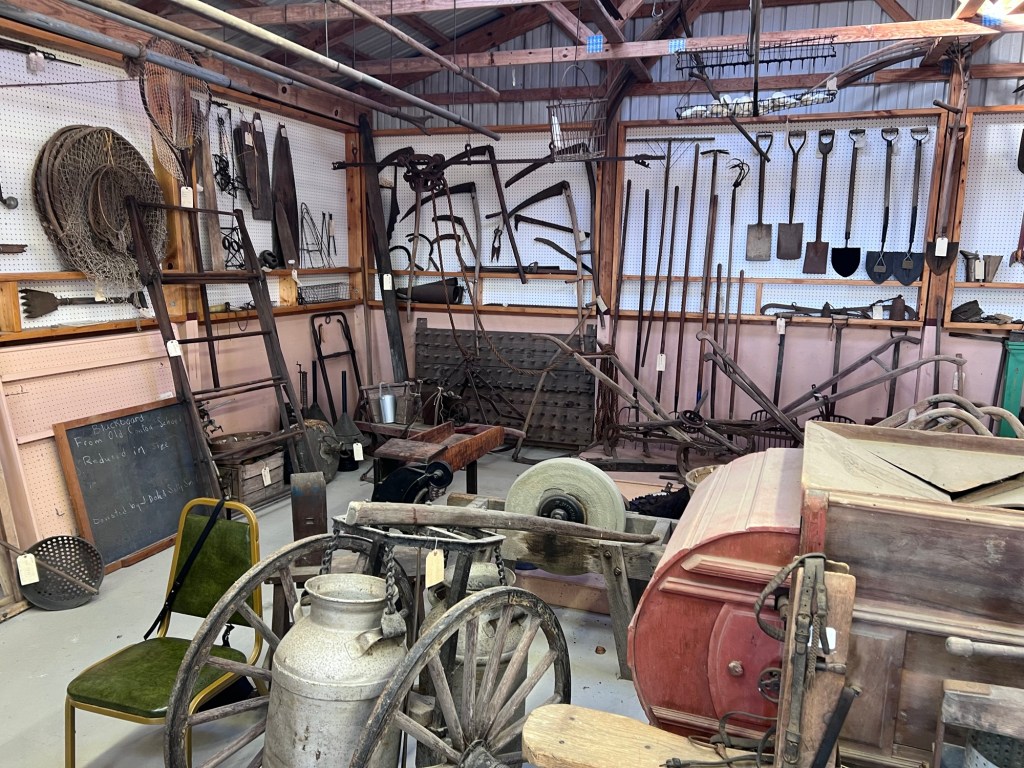
The barn equipment during my visit in 2025
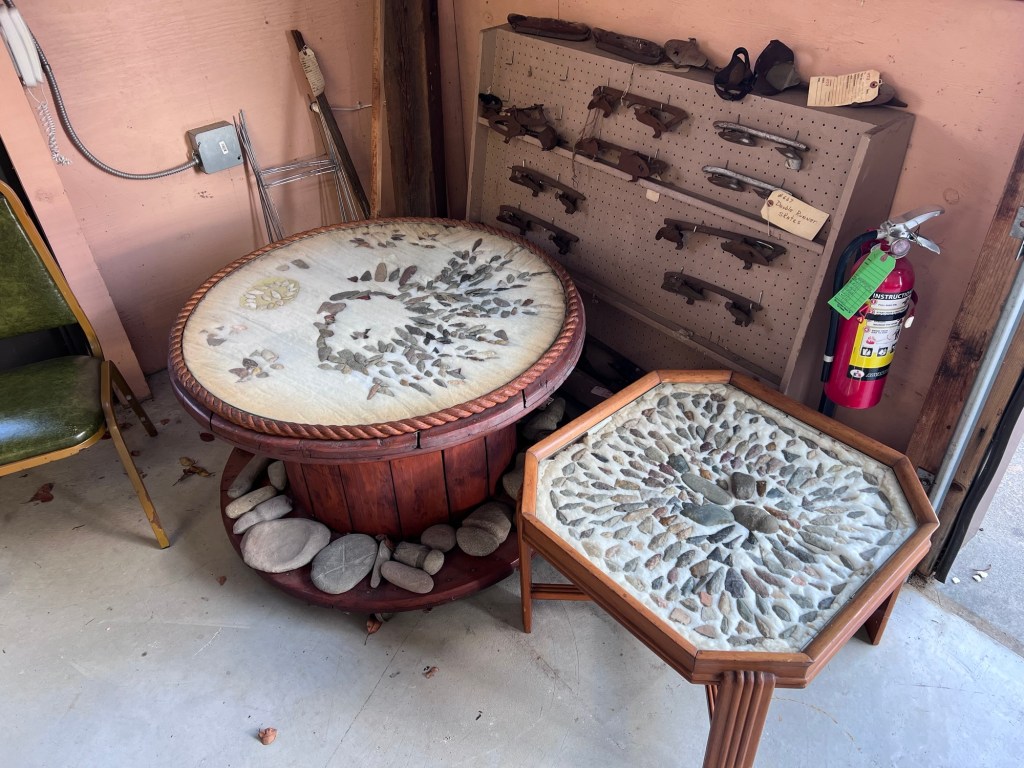
Indian Arrowheads on display in the barn

Cabin Cooked Pie Day:

There is nothing better than a freshly baked pie in a fireplace. In November 2025, I returned to the museum for ‘Pie Day’. There were various pies, chestnuts and soup being cooked in the log cabin fire place that afternoon. It was interesting to see cooking procedures from a hundred years ago.

I visited the museum and got to watch the volunteers cook all sorts of goodies in the fire. It is interesting how foods were cooked and tested for doness over a wooden fire. The coordination of cooking times and temperatures.
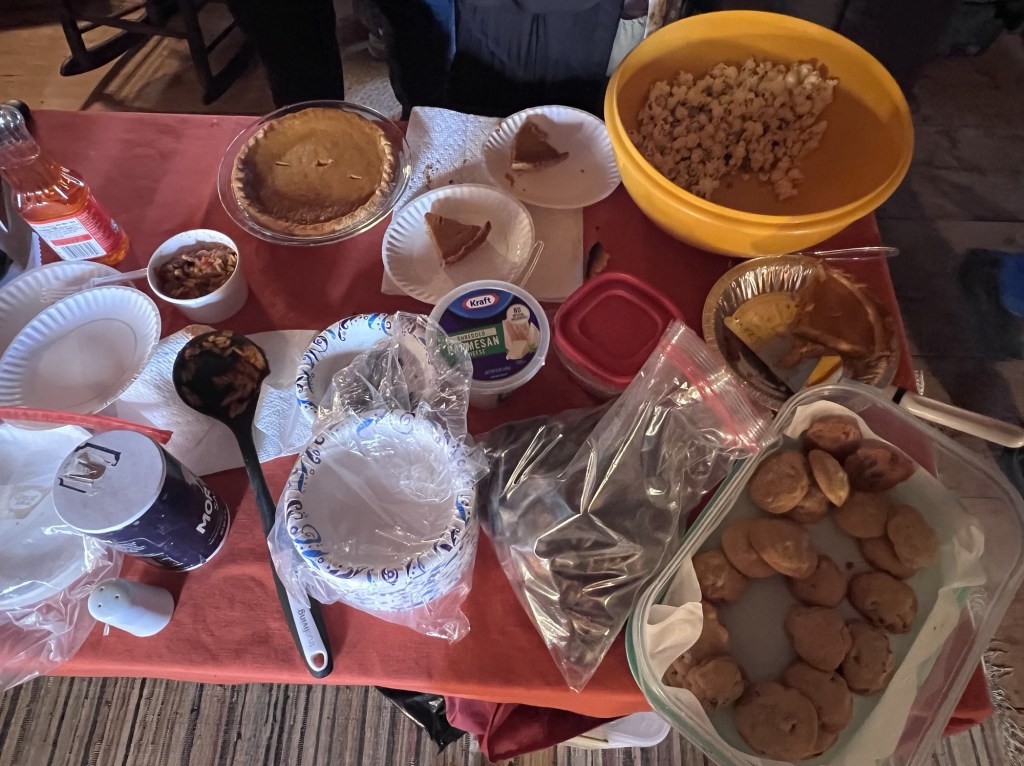
The Log Cabin goodies that afternoon

Visitors choose from Apple or Pumpkin pies, Roasted Chestnuts, Buttery Popcorn, Chocolate Chip cookies or Stuffed Cabbage Soup, all cooked fresh in the pots on the open fire hearth which also warmed the house on a cool afternoon. The museum was even selling a cookbook, Down Jersey Cookbook on some of the recipes being used in this part of New Jersey.
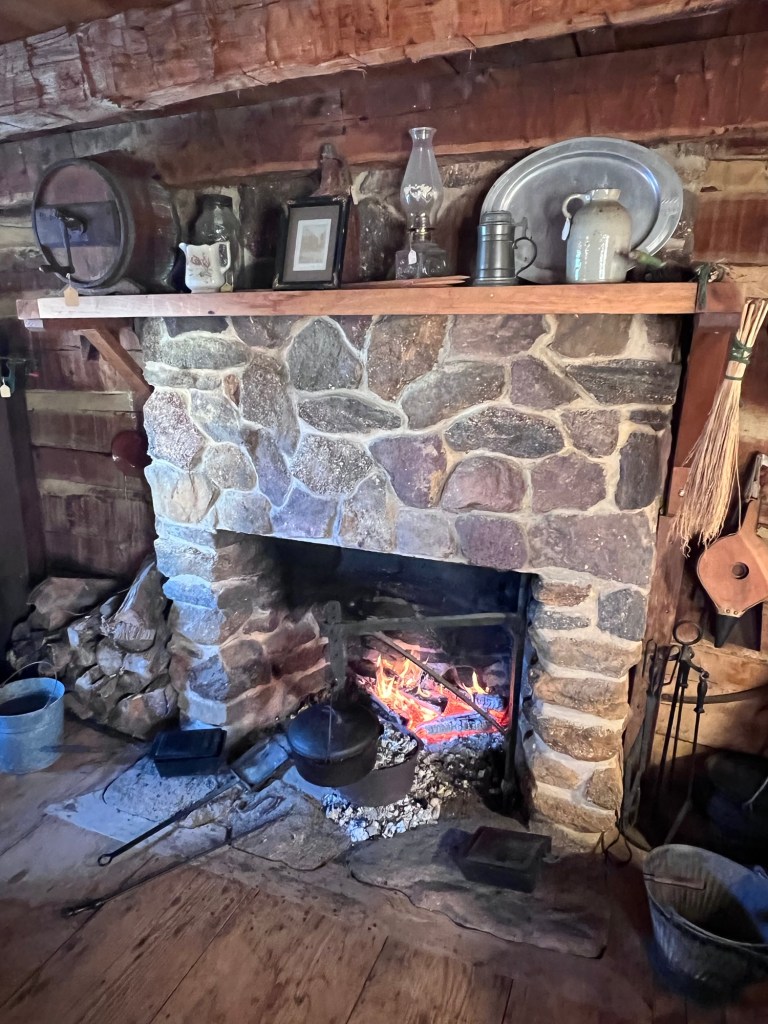
Cooking pies, soup, chestnuts and popcorn in the fireplace
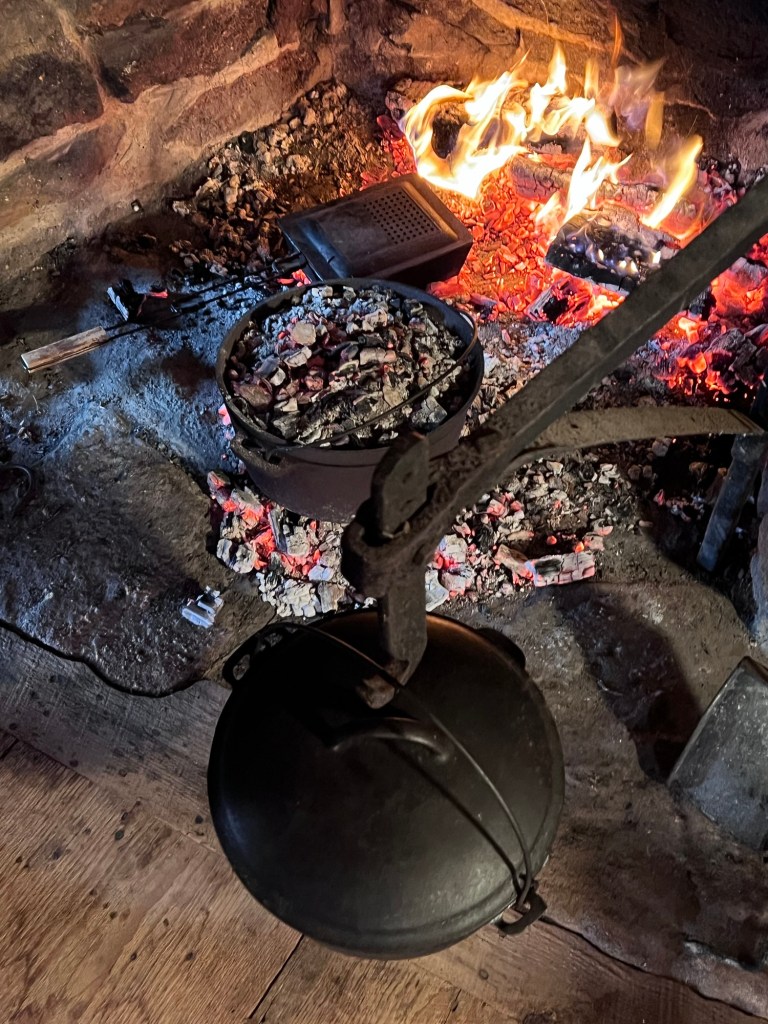
The pies, Chestnuts and soups being cooked in the Open Hearth

It was interesting how the pies were cooked in the cast iron equipment and then laid out to cool. They came out of the oven steaming hot and sat to cool before being sliced.
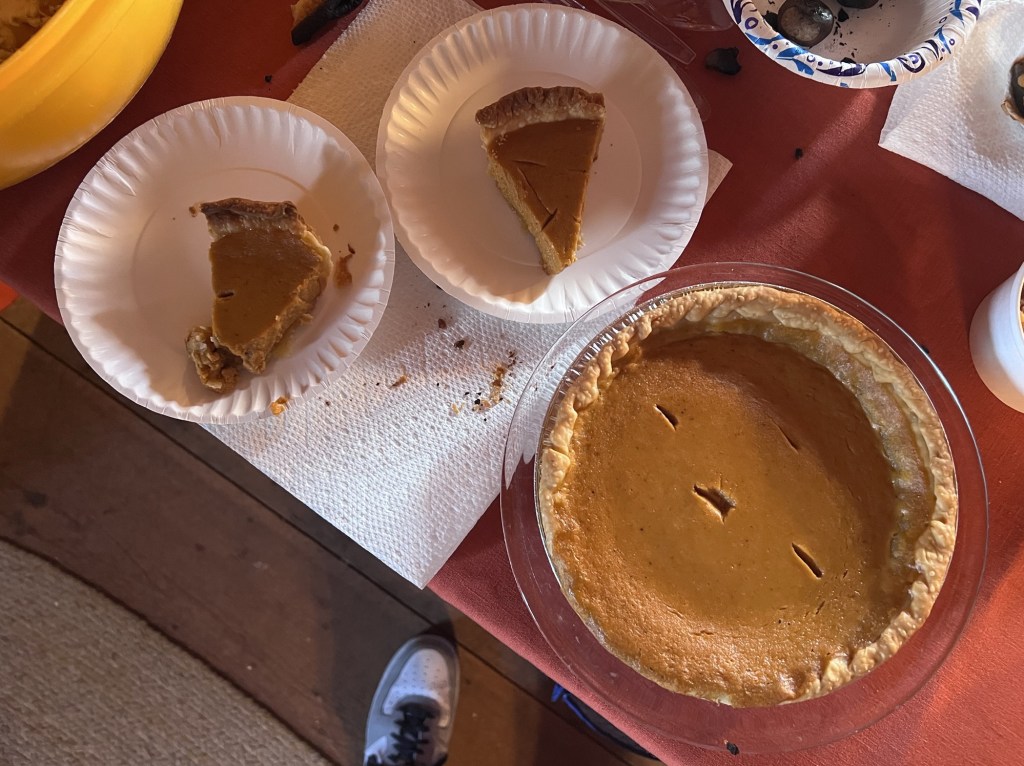
The freshly baked Pumpkin pie
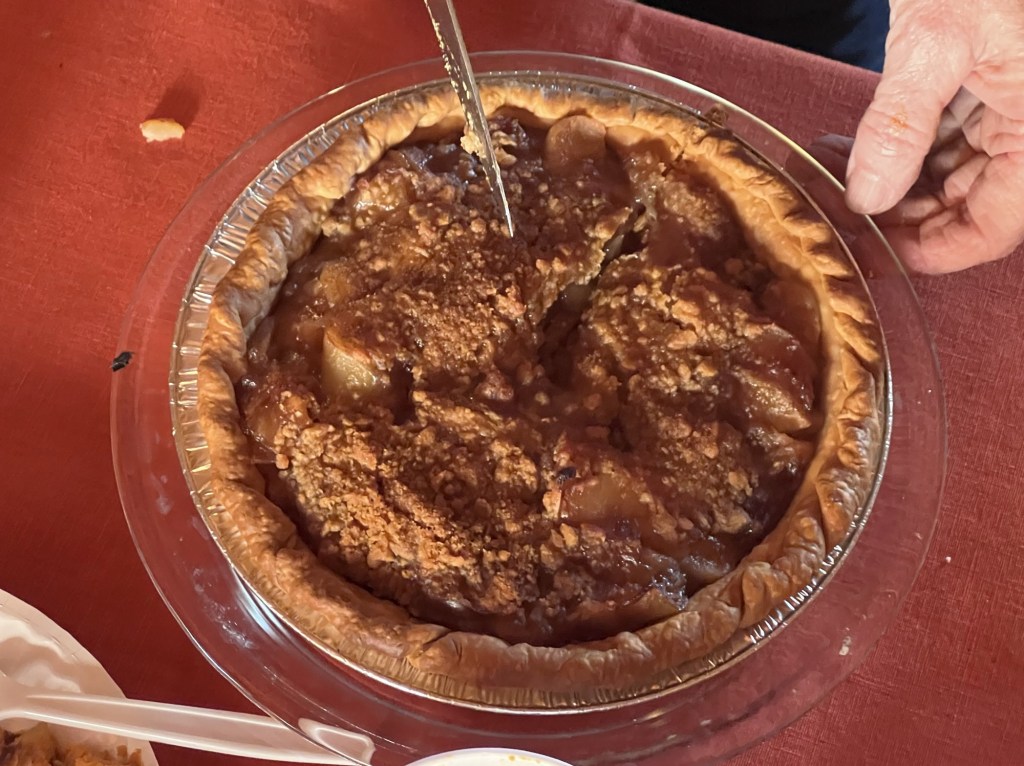
Freshly baked Apple pie
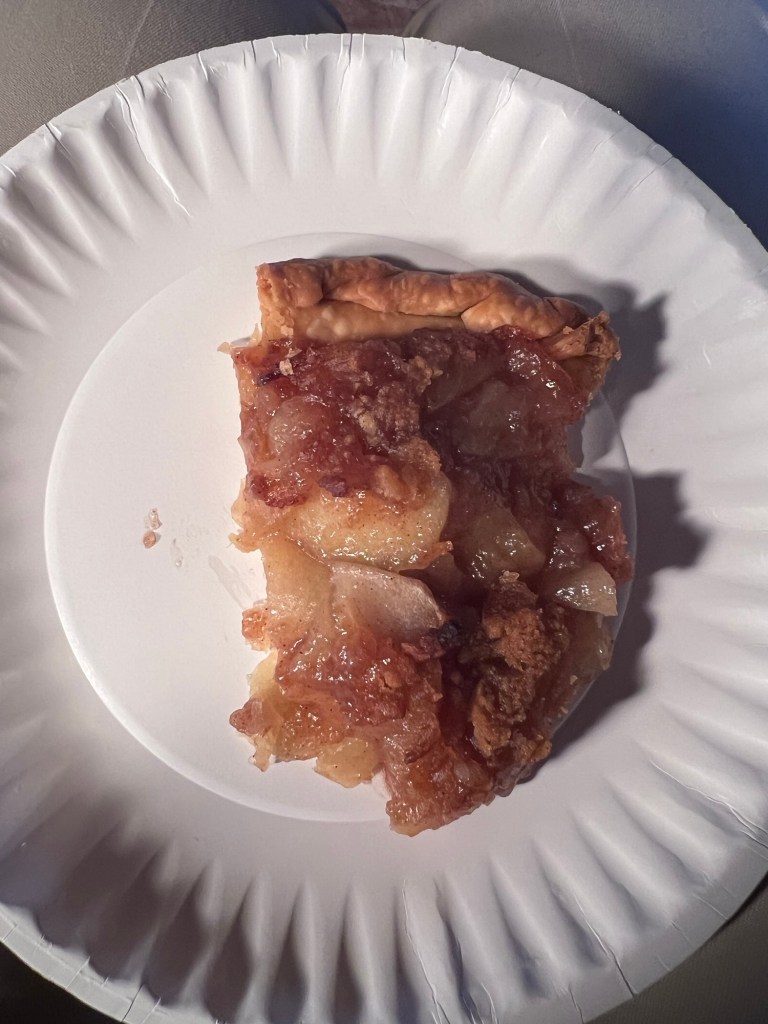
Freshly baked Apple pie. Yum!
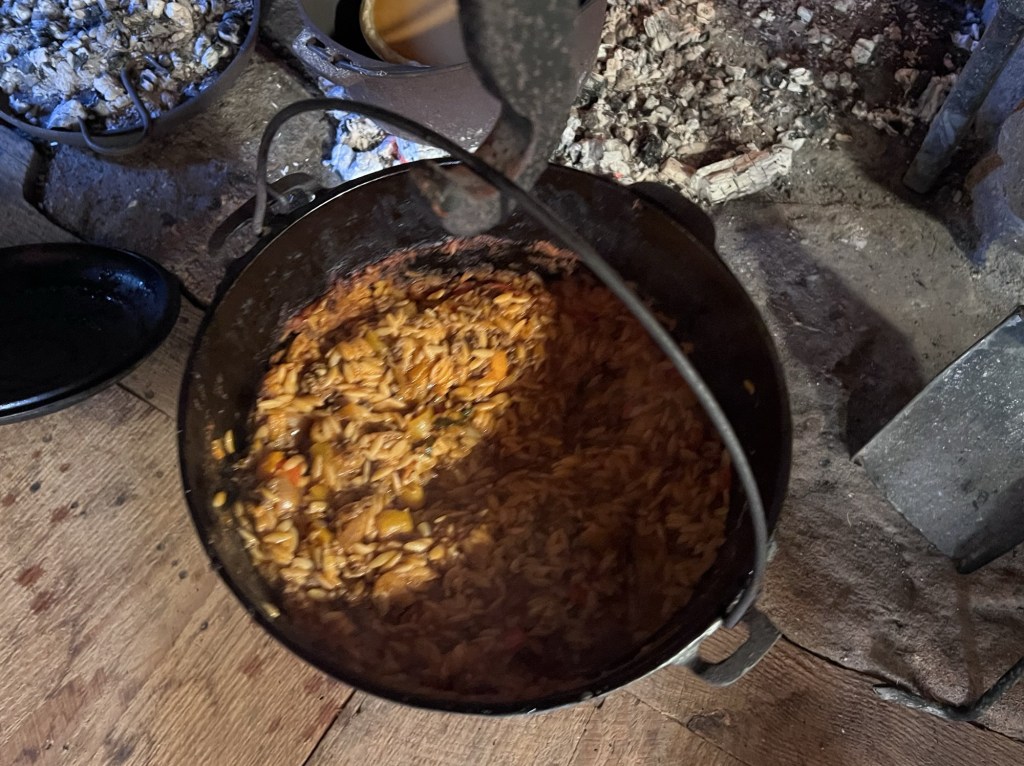
Stuffed Cabbage Soup in a cast iron pot

The thick Stuffed Pepper Soup

Freshly Roasted Chestnuts from the fireplace
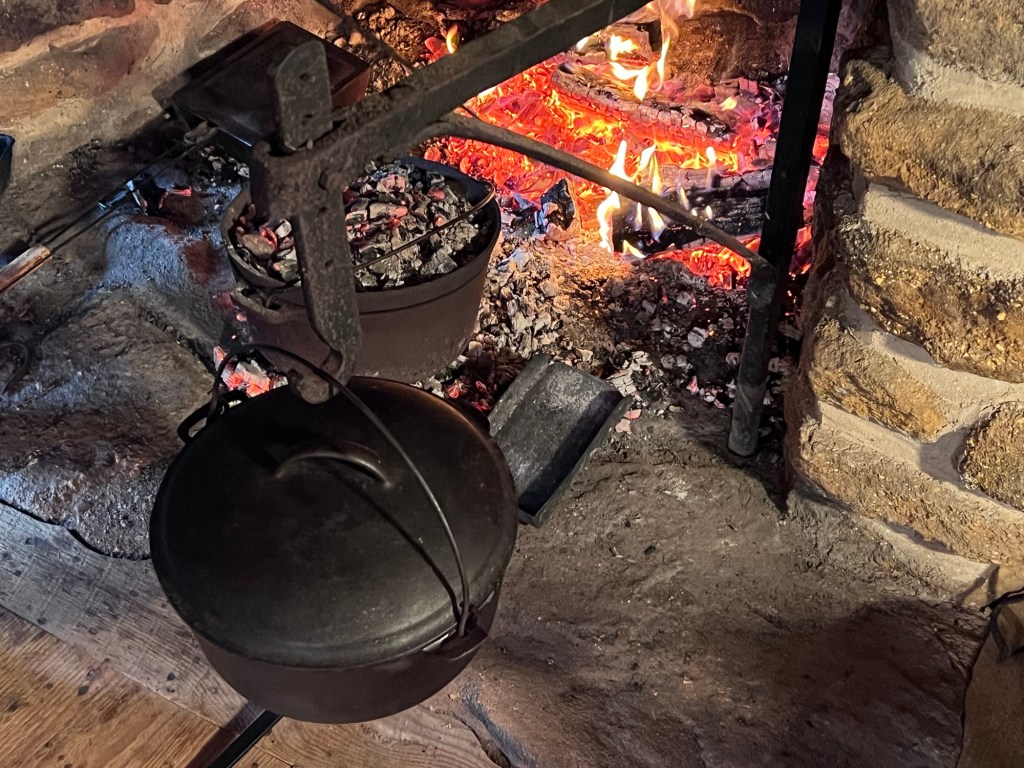
The pots and pans in the fire

It was fun watching the foods being cooked right on the spot they way they would have over a hundred years ago. It was even more fun to eat them. I learned a thing or two about the culinary arts this afternoon and it was so nice to sit in a warm kitchen by the fire on a cool November afternoon.
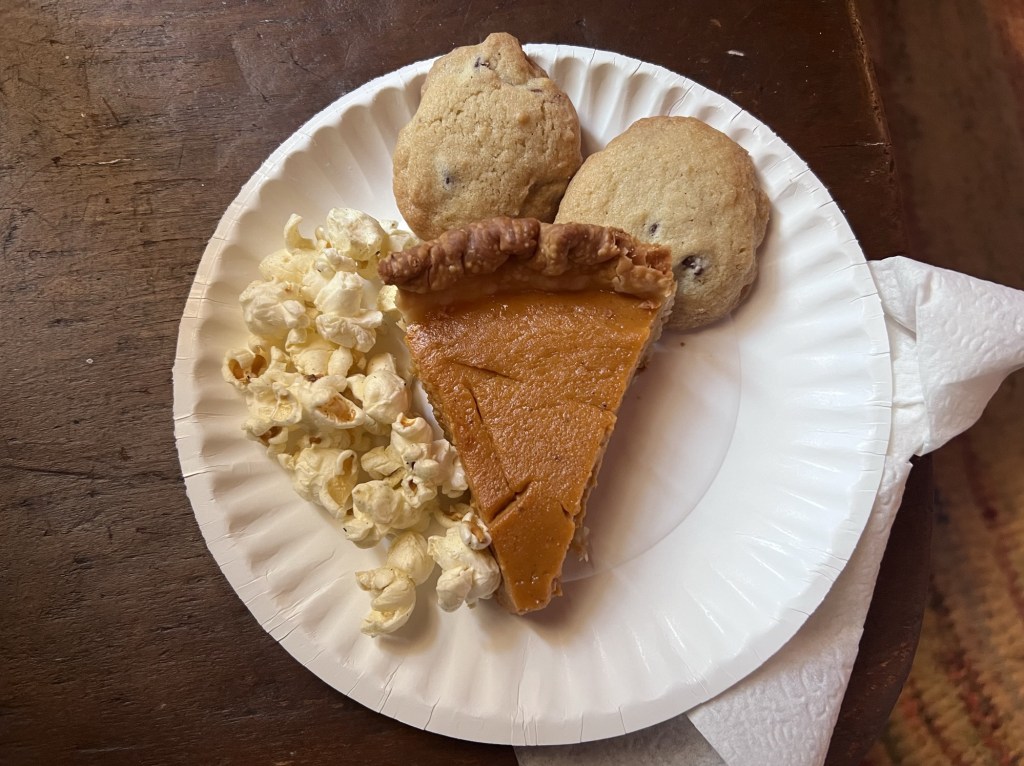
The delicious Fall goodies cooked in the hearth
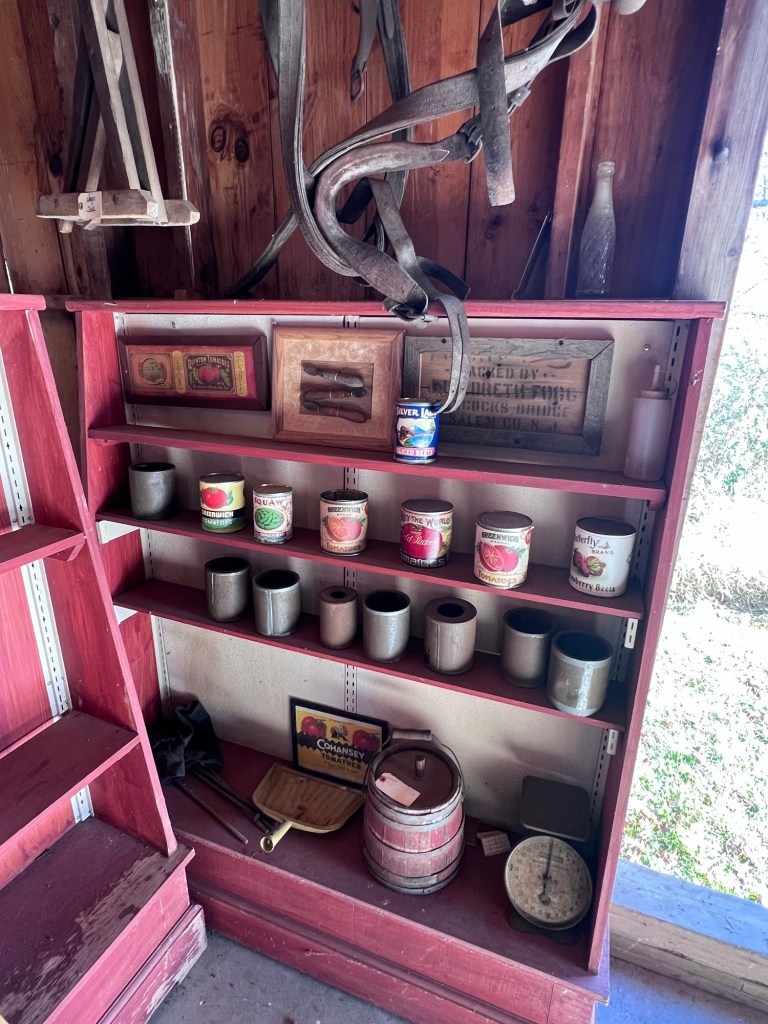
Farm supplies kept cool in the barn

It was really a homey event at the museum, with good food and wonderful conversation with residents of the community. All in a room warmed by a fire in a working fireplace. I love it when museums do such great events and using the historical cooking instruments was very unique.

The Museum is in a rural location so the farmland that surrounds the house is really beautiful. The views in the fall were just gorgeous when the leaves were turning colors.

The beautiful farmland that surrounds the historical society.
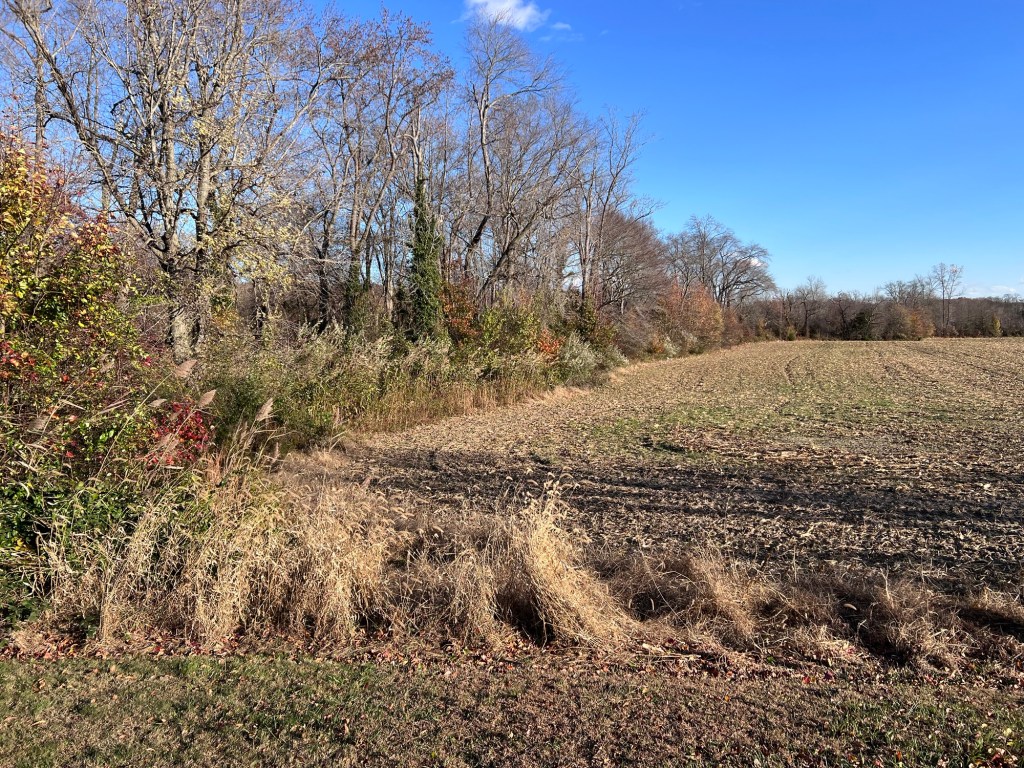
The view on a late Fall day
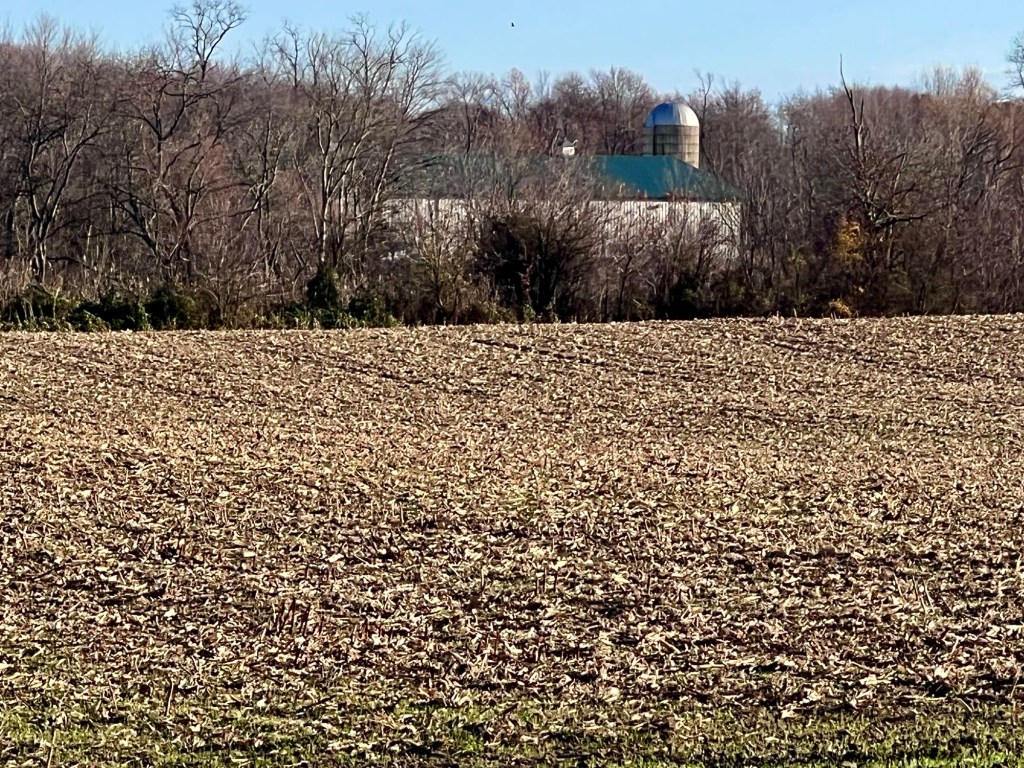
The view of the local farm

The fields
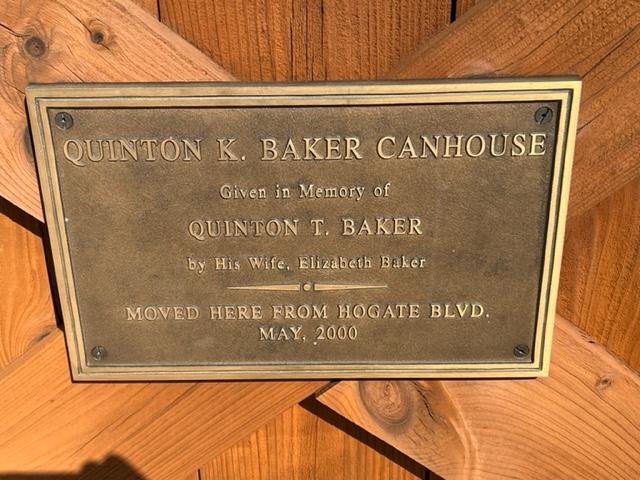
The plaque of the “Quinton K. Baker Canhouse, the last one left.

The historic cars and fire trucks on display at the museum that day:
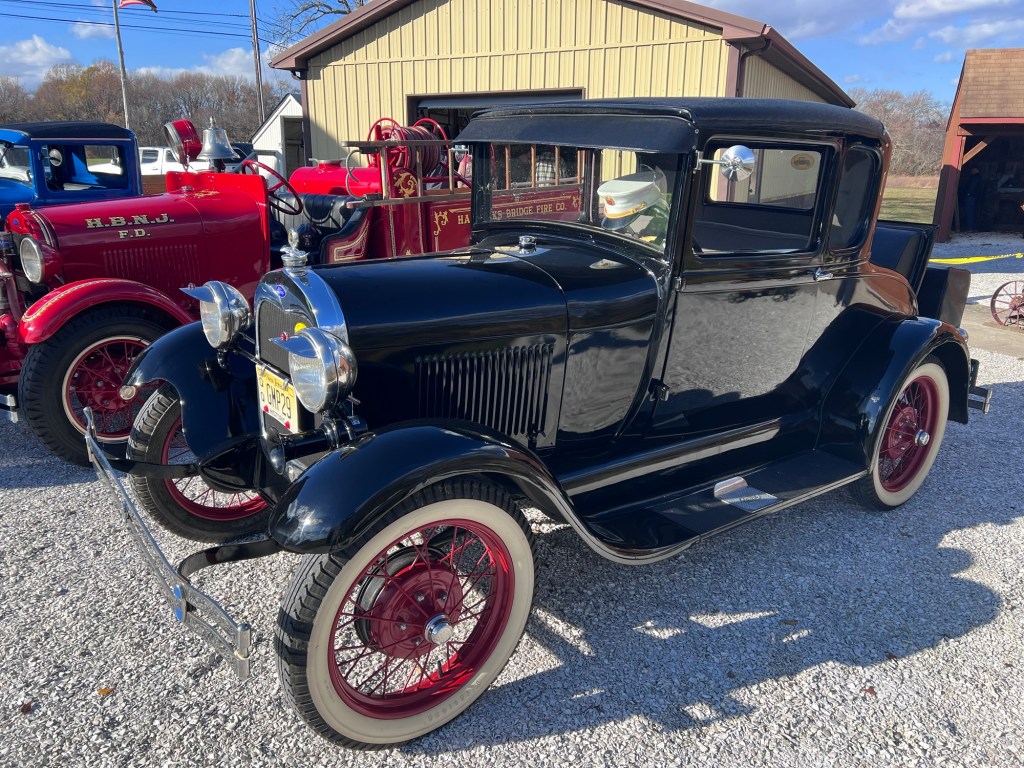
The Model T
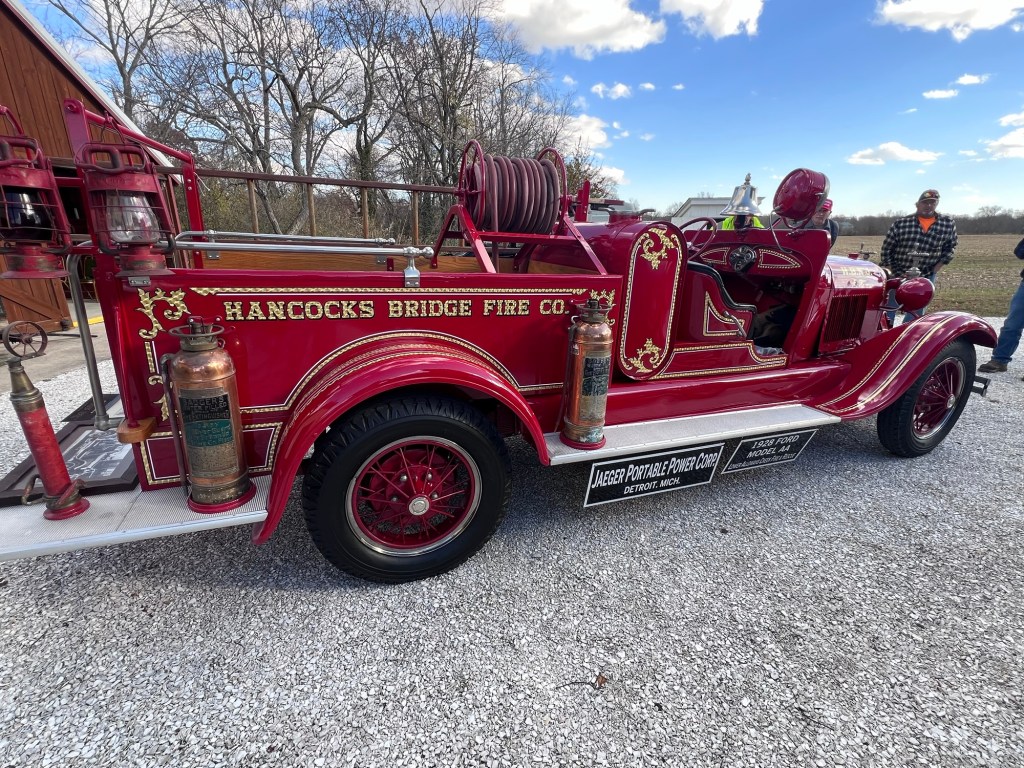
The Hancock Bridge’s 1928 Hose truck
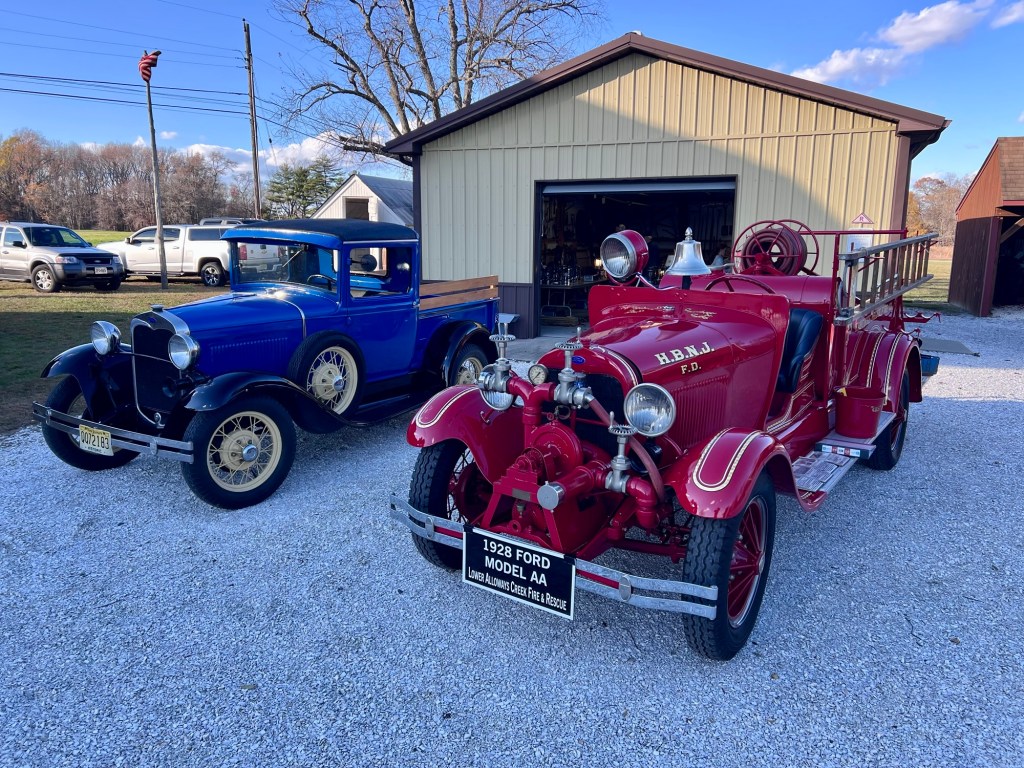
The cars on display that day

The front of the museum on my visit in November 2025

The back of museum during my visit in November 2025

The museum is open six times a year for special events. Please check out their website and their Facebook page for details. The Pie event was the last event for the season until the Spring.

Day Two Hundred and Forty-Six Exploring City Island in the Bronx-A Local Journey                                   August 13th, 2022

Day Two Hundred and Forty-Six Exploring City Island in the Bronx-A Local Journey August 13th, 2022

Don’t miss all the historical sites including the City Island Museum when visiting the island. It also has wonderful restaurants.

Don’t miss the amazing sites and a visit to the City Island Nautical Museum when on the island (City Island Nautical Museum)

https://www.nycgo.com/boroughs-neighborhoods/the-bronx/city-island/

The City Island Nautical Museum at 190 Fordham Street

https://www.cityislandmuseum.org/

jwatrel's avatarmywalkinmanhattan

I went to City Island in search of a witch.

City Island in New York City

https://en.wikipedia.org/wiki/City_Island,_Bronx

https://www.nycgo.com/boroughs-neighborhoods/the-bronx/city-island/

This was the first time I had been to City Island since 2008 when I visited the island for research for my third book “Dinner at Midnight” in which one of the main characters is a witch that moves to City Island. I had walked every street on the island trying to get a feel for what it might be like to live on the island and what the character may experience. There is a very important scene in the book where her boss comes to the island to search for her and notes to close proximity to Hart Island, New York City’s ‘Potters Field’.

He comes searching for the truth about his unusual employee and finds out too much. I will just leave this as a spoiler as I have not…

View original post 2,536 more words

Blackwell House                                                    500 Main Street                                                  New York, NY 10044

Blackwell House 500 Main Street New York, NY 10044

Blackwell House

500 Main Street

New York, NY 10044

(212) 832-4540

https://rioc.ny.gov/176/Blackwell-House

Open: Sunday 11:00am-2:00pm/3:00pm-5:00pm/Monday-Tuesday Closed/Wednesday-Saturday 11:00am-2:00pm/3:00pm-5:00pm

Free: Free

My review on TripAdvisor:

https://en.wikipedia.org/wiki/Blackwell_House

The Blackwell House on Roosevelt Island finally opened for tours after a major renovation of the house. When I had visited Roosevelt Island the last time in 2017, the house was corded off and was not open for touring. It had looked like it was falling apart from the inside out.

Historical Landmark sign

The home has now gone through a major renovation. The grounds outside were beautifully landscaped and gave the house a very warm and welcoming entrance to the property. In the middle of the summer, the flowers and trees were all in bloom and it was a nice view from the street. The house is conveniently located in the middle of the island, so it is not far from the tram and the subway.

The historical plaque in front of the house

I have to say that I was a little disappointed with the tour of the house what there was of it. The house had gone through a renovation but not a historic restoration, so the house is not a period piece with historic displays of furniture and art objects. It was like touring a modern home. I felt like I was walking through a 1980’s McMansion.

The new Living Room at the Blackwell House is not very historical.

When you enter the front hall, there is a reproduction of a portrait of Captain Blackwell, who was a Captain in the Revolutionary War. The house was built in 1796 for James Blackwell and added to in 1804, when the family fortunes had improved after the war.

The portrait of General Blackwell

The island had been ‘patented’ to Captain John Manning by British Governor Nicolls in 1668. Before the Dutch had arrived, the island had been used by the Native Americans for hunting and fishing. The island had been inherited by the captain’s stepdaughter, Mary Manningham Blackwell and her husband, Jacob Blackwell, thus named Blackwell’s Island, upon his death. The island passed to her children, James and Jacob. The island was sold to the City of New York in 1823 (Roosevelt Island history).

The historical pictures in the hallway of Roosevelt Island

All around the first floor, which is the only floor you can visit, there are all sorts of reproductions of historical maps and pictures of the island. The tour guide who had lived on the island his whole life, told me that the house had always been in disrepair and the local kids had thought it was haunted.

Now you can walk the grounds around the house and admire the beauty of the home from the outside. The only thing historical that I saw inside is when the tour guide opened the door to the cellar and showed me the stones that made up the foundation of the home. They had been quarried locally and still had the look of that time period.

The grounds of the Blackwell House

The home is nice for a quick tour but do not expect much from the history side of the house.

First Reformed Dutch Church of Fishkill                             1153 Main Street                                                                Fishkill, NY 12524

First Reformed Dutch Church of Fishkill 1153 Main Street Fishkill, NY 12524

First Reformed Dutch Church of Fishkill

1153 Main Street

Fishkill, NY 12524

(845) 896-4546

Open: Church Services are on Sundays at 10:00am

https://www.facebook.com/FirstReformedChurchofFishkill/

Home Page

My review on TripAdvisor:

https://www.tripadvisor.com/Attraction_Review-g47724-d263921-Reviews-First_Reformed_Church_of_Fishkill-Fishkill_New_York.html

After visiting three historical homes in the Fishkill area covering the towns of Hopewell Junction and Wappingers Falls, my last stop of the day was the First Dutch Reformed Church of Fishkill, NY. The church was closed at this point with services being on Sunday’s only starting at 10:00am. I was able to tour around the church admiring its architecture, looking over the DuBois House which is also owned by the church and exploring the cemetery.

The cemetery was the most interesting being the final resting place of many of the ‘first families’ of the area, including family plots of the Van Wyck and Brinckerhoff families, who also intermarried with each other. There were sections dedicated just to the families and then to the blended ones.

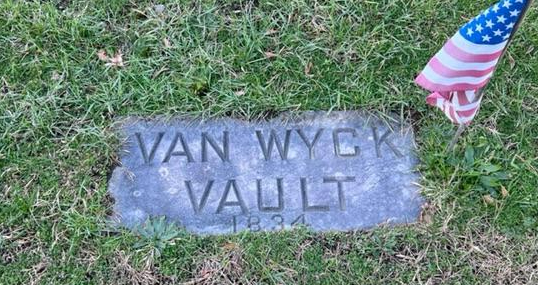
There were also members of the DuBois Family among others. What was interesting was toward the back of the cemetery near the new playground was the Van Wyck Family Vault. This large mound is noted with the stone maker in the front of the vault.

The Van Wyck family vault at the Fishkill Reformed Church Cemetery

The Church played an important role in worshipping in the community as it does today.

The Founding of the Church:

(From the Church records)

On October 10th, 1715, the Revered Petrus Vas of Kingston, NY under the direction of the Classis of Amsterdam, started two Dutch Reformed Churches, one in Poughkeepsie and the other in Fishkill. This occurred when the population of the are increased and they did not want to keep travelling to New Paltz for worship.

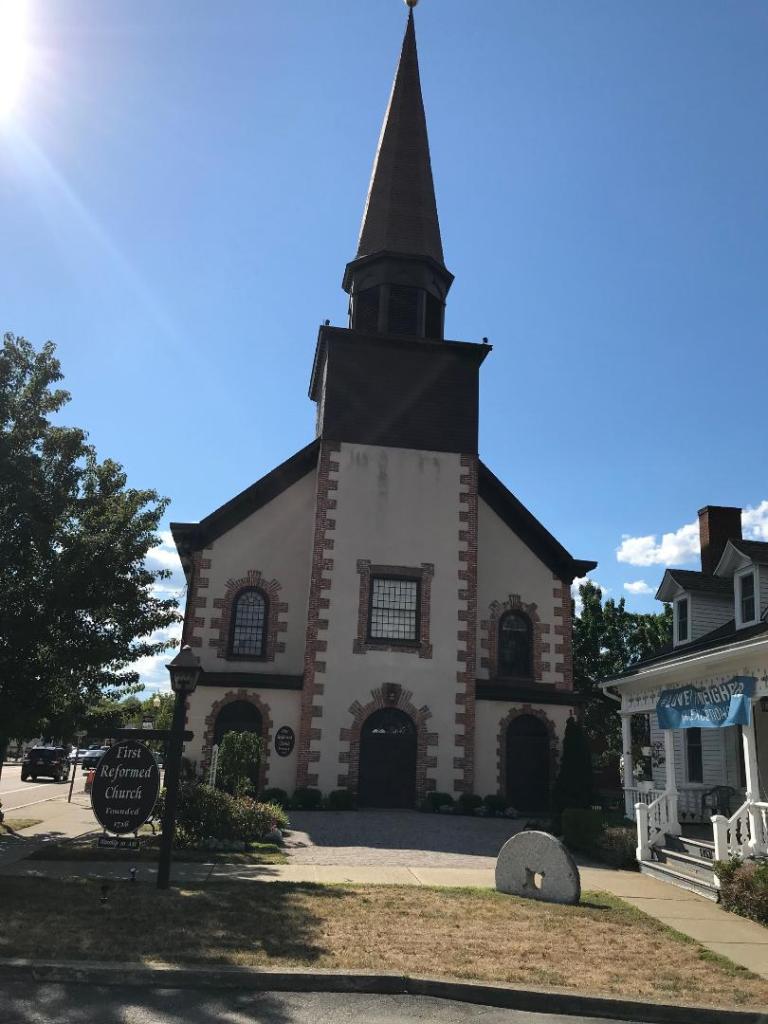
The First Reformed Dutch Church of Fishkill, NY at 1153 Main Street

The Church today:

(From the Church website)

The 20th Century brought additional changed to the property. Some gravestones were moved to make space for the Christian Education Building, which was constructed in 1964. The old chapel, a 19th century addition to the property was torn down. The playground is now located where the chapel was once. A Memorial Garden was added to the cemetery in 1980 and includes a columbarium for cremains. The sanctuary’s exterior was refurbished in 1975, the steeple reshingled and the rooster regilded in 1984.

In 1992, a condition survey was done (the church is the centerpiece of the Fishkill Village National Historic District). This report concluded that the sanctuary is one of the most significant nonresidential 18th Century buildings in New York, if not the country. The framing is a perfect example of an upside-down boat. While it was urged to pursue National Landmark Status for the church itself, it has not yet been done.

The Cemetery:

In 1995, a report on the preservation of cemetery gravestones was done. A Boy Scout Eagle Project, in 2002, recorded pictures and inscriptions of each stone in the cemetery and created a finder’s map of the cemetery.

The Enoch Crosby marker for a spy for the American forces during the Revolutionary War

The trial was performed here, and Enoch Crosby was allowed to escape. This marker is dedicated to that event.

The cemetery behind the church with the DuBois House and Church to the right:

The DuBois House:

(From the Church website)

The property was expanded in 1991 with the purchase of the DuBois House (named for the founding elder of the church). There is no record of when it was built but with structural similarities to the Van Wyck House made it believed to be built in the mid 1700’s. Abraham Brinckerhoff Rapalje purchased the house with fifty-four acres of land from his uncle, Abraham Brinckerhoff in 1790. Rapalje was the man hired by the consistory to do finish work after the church was enlarged following the Revolution. The house served as the hearing room for the court proceedings of the Committee of Safety over which John Jay, who would later become our nation’s first Supreme Court Justice presided.

The Committee of Safety played an important role in the story of Enoch Crosby, the Revolutionary Spy. The house was originally located east of its present location and was moved in 1929 to make way for the expansion of the Albany Post Road, now Route 9. The building is used for service to the community and church. It contains the church parlor and offices for the Minister and Secretary on the first floor and the office of the Music Director.

The Brinckerhoff/Van Wyck family plots

The Van Wyck family plot

The full Dutch Reformed Church of Fishkill cemetery and church

The Van Wyck Family Vault:

The History of the Dutch Reformed Church of Fishkill, NY:

By 1716, the population of the area had grown enough (though the whole county had only 440 people) that the settlers wanted their own church instead of having to cross the river to New Paltz or Kingston where the two closest Reformed Churches were located. Therefore, on October 10th, 1716, the Reverend Petrus Vas from Kingston under the direction of the Classis of Amsterdam started two Dutch Reformed Churches, one in Poughkeepsie and one in Fishkill.

While Poughkeepsie began building immediately, Fishkill did not begin building until 1725. Tradition and most published sources have it that Madame Brett by now a widow and the wealthiest landowner in the area gave the land for a churchyard while the land the church occupied was given by Johannes Ter Boss.

However, two deeds registered at the County Courthouse tell a different story. The first parcel of land, “it being that certain piece of land on which the Dutch Church so called now stands” was given by Madame Brett, through Jacob DuBois, it being the intent of him that the Reformed Nether Dutch Congregation of Rumbouth precinct “always be kept and preserved as a church or public edifice for the particular sole and only use and benefit of the aforementioned church to worship the Almighty God, in and to and for no other ends purposes use or uses whatsoever.” The second deed states that Obidiah Cooper and Esther, his wife, gave another small parcel of land to the church. These records were written thirty years after the fact and were not filed in Poughkeepsie until 1915.

There is also a deed from 1747 in which Johannes Ter Boss sells a parcel of land north of the Fishkill’s, reserving one acre for a meeting house. Every published history has this acre for the Rombout Presbyterian Church, which was built in 1747 about three miles from First Reformed. So, it would appear that there was confused between DuBois and Ter Boss, probably due to the old handwriting and a Frenchman, born in Leyden, Holland and a Dutchman. Another supporting piece of information is that there is no Ter Boss listed in the church records of The First Reformed Church, while the DuBois family is prominent, starting with Peter DuBois, the first elder.

It took seven years to build the original sanctuary. Field stone was brought by ox teams and the local inhabitants, and their slaves did the building. Work proceeded slowly because the men had fields to attend and families to support. The sanctuary was a small, square building with a hip roof and a cupola in the center, which supported a bell. The central door opened onto the street as the side door does today.

In 1785 the congregation decided to enlarge the original building. The east and west walls were taken down and the building was lengthened. A second story was added, and balconies suspended by iron rods were put into seat slaves. The tower and the steeple made with beams 18″ square and 80″ long rose 120 feet above the ground. The west end had four small windows.

In the midst of the reconstruction, John Stickland, an English traveler wrote “Here is a large Dutch Church, rapidly going to decay, probably never to be repaired.” However, construction continued, and the consistory hired Abraham Brinckerhoff Rapalje, who lived next door to build the new pulpit, new pews and to enclose the square lower section of the tower.

Five years later, in 1795, they hired him again to shingle the spire. With construction finished, the spire was topped with a gilded cock, symbolic of Peter’s denial of Jesus. It is actually about three feet high. It is one of the few left in the country.

The expanded sanctuary was remodeled in 1806. Columns were added to support the balconies and the pulpit and side pews were lowered to the level of the rest of the sanctuary. More alterations were made in 1854, when the balconies were narrowed and lowered. An alcove was made in the west end for the pulpit and the four small windows were replaced by the stained glass and painted windows. The alcoves and doors on each side of the tower were added.

The church decorated for Christmas in 2022

The chandeliers were imported from Holland and can be lowered by chains to the level of the pews for service. Gas replaced candles in the chandeliers in 1858. In 1908, they were electrified. In the late 1800’s, most of the ‘extra’ original property was sold for building lots at $100.00 each no one foreseeing the need for parking lots of the future.

(Disclaimer: I changed a few things around from the church history to make it flow better. More details are on the above link to the church’s history).

The entrance to the First Reformed Church of Fishkill in December 2022 decorated for the holidays.