Tag: Author Justin Watral

Assateague Island National Seashore                 7307 Stephen Decatur Highway                    Berlin, MD 21811

Assateague Island National Seashore 7307 Stephen Decatur Highway Berlin, MD 21811

Assateague Island National Seashore

7307 Stephen Decatur Highway

Berlin, MD 21811

(410) 641-2120

http://www.dnr.state.md.us/public-lands/eastern/assateague.asp

https://www.nps.gov/asis/index.htm

TripAdvisor Review:

https://www.tripadvisor.com/Attraction_Review-g57603-d106596-Reviews-Assateague_Island_National_Seashore-Assateague_Island_Maryland.html?m=19905

Bloggers Note: Over the holidays we visited this national park in Delaware when we were visiting my mother. We went to see the wild horses. The horses were so used to seeing humans that they just ignored us. On a beautiful day, it is nice to visit the island and just look at the ocean.

Barrier Islands are among the most dynamic land forms on earth. From ocean to bay, Assateague Island is defined by change.

The rhythms of tides and seasons shape the island. The smallest gust of wind or gentlest of waves moves sand in a ceaseless rearrangements of island terrain. While summer waves and long-shore currents may build a wide beach, most of the year sand is scoured from the shore and moved southward leaving a narrow, steep shoreline. Storms can create inlets or fill them in. They can cut away dunes and wash sand across the island. The retreating dunes mark the islands’s westward movement. New habitats are created-old ones are reinvented. Plants and animals shift and adapt in counterpoint to these changes. On Assateague Island, nature’s rhythmic processes are a brilliant display.
Assateague Island III

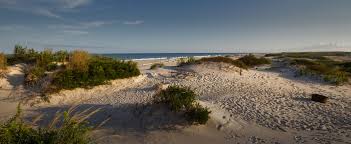
Natural zones shaped and reshaped by wind, wave and current characterize Assateague Island. Distinct plant and animal communities have adapted to each zone. This north-facing view depicts these habitats, left to right from bay to ocean.

Coastal Bays:

Chincoteague Bay and two smaller bays separate Assateague from the mainland. They provide an environment rich in aquatic life and vital to ocean ecosystems. The warm, shallow waters create a productive nursery for mussels, crabs, clams, terrapin and fish. Twice a day, tides rejuvenate these areas and ferry aquatic animals out to the ocean or into the relative safety of the bays.

Just beneath the bays’ surface, in the shadowy world of the seagrass meadows, diverse marine life thrives. Blue carbs molt, hidden in the grasses. Young fish find refuge from predators. Seahorses and pipefish, vulnerable in open water, depend on grasses for anchorage and safe haven. Mud-loving creature cluster around roots. These are the secret gardens of the coastal bays.

Assateague Island II

Salt Marsh:

Once considered worthless, salt marshes are incredibly valuable areas. They are complex ecosystems defined by the constant ebb and flow of salt water. Tides transport nutrients into the marsh and detritus (decaying plants and animals) out into the bay. Scavengers, like snails, amphipods and fiddler crabs, feed on detritus. They in turn are food for high tide visitors to the salt marsh like fish and crabs. When the tide is out, a banquet is exposed in the mudflats where birds feast on the small creatures that inhabit this transitional area. Few plants can thrive in a salt marsh. Cordgrass, salt meadow hay and saltwort are among those that can. These plants create shelter for willet and rail and hunting grounds for Northern harrier and raccoon. Horses can often be seen grazing on marsh grasses.

Maritime Forest:

The forest edge is bordered by a shrub thicket on both bay and ocean sides. This is another transition area between distinct communities. Greenbrier, highbrush blueberry and bayberry thrive here. Trees, stunted and sculptured by salt-laden winds, mingle with shrubs and vines. Guarded by this thicket, the maritime forest is sheltered from much of the wind and provides habitat for some of Assteague’s other residents. While lobolly pine is the dominant tree, southern wax myrtle, American holly and red cedar survive in the shaded understory. The forest is home to white-tailed and sika deer, raccoons and birds like the yellow-rumped warbler and Eastern towhee. Predators like great horned owls and red fox hunt small mammals, birds and reptiles in the woodland.

Dunes and Upper Beach:

The dunes and upper beach are always in motion. Windblown sand and salt dictate the plant and animal life of this stark environment. Less salt-tolerate plants like beach heather and seaside goldenrod hide on the leeward side of dunes, sheltering the small but fierce dune wolf spider as it hunts its insect prey. Plants trap sand, elevate dunes and form a malleable barrier against the assault of wind and water. Where overwash does occur, piping plovers and other birds find prized nestling habitat. The primary beach front dunes are dominated by American beach grass, with its extensive root system and ability to tolerate relentless exposure to the elements. Many creatures visit the beach but ghost crabs enjoy a great view from oceanfront burrows.

Asseategue Island

The wild horses on the island are a main attraction

Ocean:

So visually compelling are the surf and ocean that it is easy to forget how much happens beneath the surface. Mole crabs, coquina clams and small invertebrates thrive in the inter-tidal zone where crashing waves deliver food and render all homes temporary.  Shore-birds dance away from the surf while attempting to dine on creatures concealed in the sand.

The ocean food web starts with phytoplankton. Most other marine life is dependent upon these tiny plant for survival. The oceans support more than half the species on earth, yet 95% of these waters remains unexplored, offering endless possibilities for discovery.

Surf and Seashore Safety:

National Park Service lifeguards cover North Ocean Beach (Maryland) and Tome Cover Beach (Virginia, in the National Wildlife Refuge) in Summer only Assateague State Park also had lifeguards in the summer.

Mats and floats except U.S. Coast Guard-approved personal flotation devices are prohibited at all life-guarded beaches. Surf conditions are posted in multiple locations near the beach. Learn about rip currents (seaward currents) and their danger at http://www.ripcurrents.noaa.gov. Never swim alone.

Prevent overexposure to sunlight with sunscreen or protective clothing. Biting insects are abundant spring through autumn. Insect repellent and/or protective clothing are recommended.

About your visit:

Assateague Island National Seashore is open year-round. Camping is allowed in designated areas only. Campers may not bring firewood from out of state. Firewood must be purchased locally. Assateague Island Visitor Center is open from 9:00am-5:00pm year round except Thanksgiving Day and December 25th. Here you can get information and see aquariums, a touch tank, exhibits, maps and a film about the island’s wild horses. You can register for camping and get permits for the Over Sand Vehicle (OSV) zone at the campground office on the island. Dates and hours vary for Toms Cove Visitor Center. Contact the park for information; phone and website at right.

Chincoteague National Wildlife Refuge, managed by the U.S. Fish and Wildlife Service is open year-round. The Herbert H. Bateman Educational and Administrative Center is open year-round except December 25th and January 1st. Hours vary seasonally. Contact the refuge for information; phone and website at right.

Assateague State Park’s beach and parking lot are open year-round, 9:00am to sunset. Contact the park for camping information; phone and website at right.

Accessibility: Visitor centers, restrooms, bookstores and some trails are wheelchair-accessible. Service animals are welcome. Call each area for more specifics.

Regulations: Call or visit each area’s website for regulations on firearms, pets, personal watercraft and more.

Assateague Island National Seashore is one of over 390 parks in the National Park System. To learn more about national parks, visit http://www.nps.gov.

The Parks:

Assateague State Park: Maryland’s only oceanfront state park has two miles of beach for swimming, surfing and fishing. Lifeguarded areas are available Memorial Day through Labor Day. The campground is open late April through October Campsites include fire rings, picnic tables and bathhouses with warm showers. A small number of electric hookups are available. Reservations are recommended. Alcohol is prohibited in all areas of the state park. A park store is open seasonally, offering food and souvenirs. Pets are permitted with restrictions in designated areas. The marina/boat launch; located on the mainland side of the Verrazano Bridge, is a popular fishing and crabbing spot and features seasonal kayak rentals. Visit the Nature Center in the campground for live animal exhibits, arts and crafts and family fun. Entrance fees apply. Assateague State Park offers something for everyone.

Assateague State Park

7307 Stephen Decatur Highway

Berlin, MD  21811

(410) 641-2120

http://www.dnr.state.md.us/public-lands/eastern/assateague.asp

Assateague Island National Seashore:

Explore the national seashore and discover the mysteries of a barrier island. Before traveling across the Verrazano Bridge to the Maryland end of the island begin your visit at the Assateague Island Visitor Center. Watch a film about the wild horses. The visitor center also includes restrooms, a gift shop, exhibits, aquariums and staff to provide information and orientation. Touch a sea snail or horseshoe crab. Ask at the information desk for a Junior Ranger booklet and have some family fun.

Enjoy the park roads by bike. Observe wild horses feeding in the salt marsh. During summer, visit the Beach Hut for supplies and beverages and swim at the lifeguarded North Ocean Beach. Camping is available a year-round and reservations are encouraged April 15th through October 15th. Expect rustic conditions, vault toilets and coldwater showers. Electric hookups are not provided. Pets are permitted in designated  areas. Avid paddlers and hikers should not miss the countryman camping experience. The Over Sand Vehicle (OSV) zone provides an adventurous getaway (permit required). Nature trails, beach-combing and ranger-led programs will bring back childhood memories, while guided kayak tours and campfire programs will make new ones. Entrance fees apply.

Assateague National Seashore

7206 National Seashore Lane

Berline, MD  21811

(410) 641-1441

http://www.nps.gov.asis

Chincoteague National Wildlife Refuge:

Originally established to protect migratory birds, the refuge today is a destination for birders, beachcombers, anglers and outdoor enthusiasts. Careful management of freshwater pools and marshes provides ideal habitat and feeding areas for migratory waterfowl, shorebirds and other wetland-dependent species. The refuge is a paradise for birders and photographers. Walk or bike the trails to catch a glimpse of the rare Delmarva Peninsula fox squirrel or the Chincoteague ‘ponies’. Drive the Wildlife loop around Snow Goose Pool between 3:00pm and dusk. Expect Toms Cover Hook to be closed during the nesting season of the threatened piping plover. Visit the Refuge-operated Herbert H. Bateman Educational and Administrative Center and the National Seashore-operated Toms Cove Visitor Center for exhibits, programs and assistance. There is no camping in the refuge, so check in the nearby community of Chincoteague. A lifeguarded beach is available Memorial Day to Labor Day. Pets are prohibited Entrance fees apply.

Chincoteague National Wildlife Refuge

8231 Beach Road

Chincoteague, VA  23336

(757) 336-6122

chinco.fws.gov

Disclaimer: This information is taken directly from the National Park Service pamphlet on Assateague Island National Seashore State Park. It is really a fascinating place. It covers both Delaware and Maryland. Please check out the website and call for more information.  Don’t miss this interesting ‘gem’.
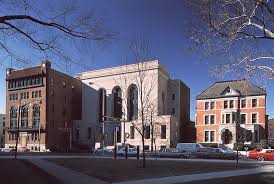


Newark Museum                                                                         49 Washington Place                                                               Newark, NJ 07102

Newark Museum 49 Washington Place Newark, NJ 07102

Newark Museum

49 Washington Place

Newark, NJ  07102-3176

https://www.newarkmuseumart.org/

https://www.facebook.com/Newark.Museum/

Telephone: (973) 596-6550/Fax: (973) 642-0459

Volunteer Office: (973) 596-6337/Member Travel Office: (973) 596-6643/Group Tours: (973) 596-6613

Open: Wednesday-Sunday 12:00pm-5:00pm

Closed: Mondays (except for Dr. Martin Luther King Jr. Day and President’s Day), Tuesdays, January 1st, July 4th, Thanksgiving Day and December 25th.

Admission: Adult $15.00/Seniors-Children 5 and UP/Veterans/Children 5 and under Free

Amenities: Museum Shop, Junior Shop, Museum Cafe and onsite parking.

TripAdvisor Review:

https://www.tripadvisor.com/Attraction_Review-g46671-d217958-Reviews-Newark_Museum-Newark_New_Jersey.html?m=19905

The Newark Museum at 49 Washington Place in Newark, NJ.

I have been a member of the Newark Museum for 29 years and have enjoyed the experience. There is a lot of things to do at all times of the year.

During the Summer months, I enjoy “Jazz in the Garden” where local and international jazz musicians perform in the beauty of the back garden of the museum under the trees. These almost hour and a half performance can be enjoyed on sunny, clear days in the gardens and in the auditorium on a rainy afternoon. It is something I look forward to every summer.

Jazz in the Garden at the Newark Museum. The gardens are amazing in the summer months.

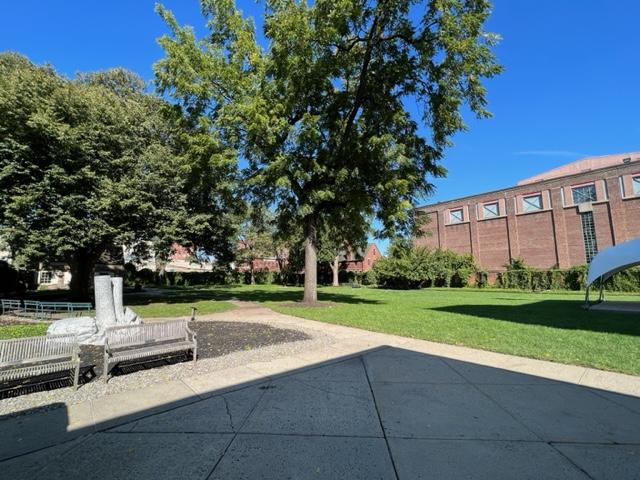
The Newark Garden in the back of the museum.

Jazz in the Garden was a big event before the pandemic. It is on hiatus for now. It had resumed after COVID with a fee and did not happen in the Summer of 2023. Still, I had enjoyed these concerts for years.

I heard Vanessa Rubin perform at the last ‘Jazz in the Garden’. She is amazing.

The New entrance opened where the original once was:

Newark Museum III

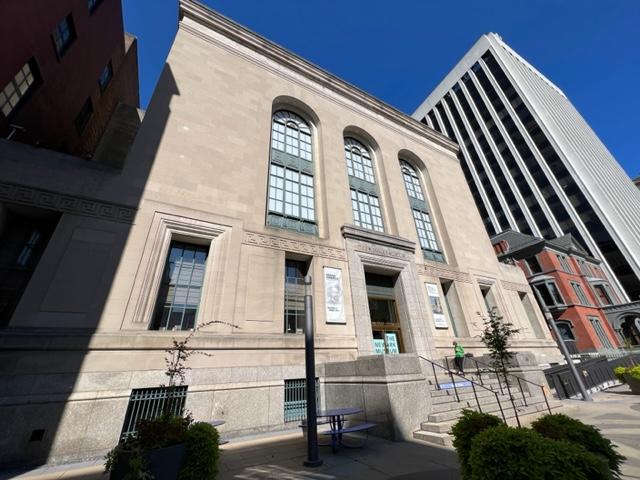
The new entrance to the Newark Museum

The video celebration of the new entrance reopening

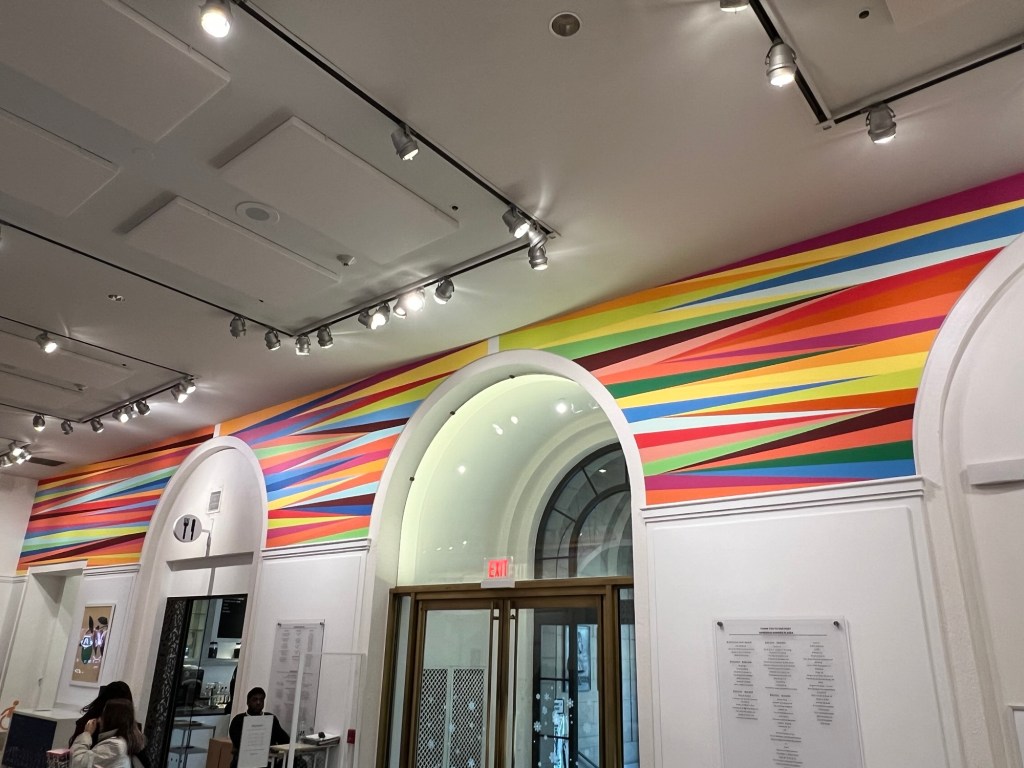
Entering the foyer of the museum

During December of 2019 I attended a holiday afternoon tea at the Ballantine House, the historic home attached to the museum. The Ballantine’s were one of the oldest families in Newark, NJ and were once major brewers in the city. They were considered High Society in Newark and the home, and its renovation reflect that.

Ballentine House

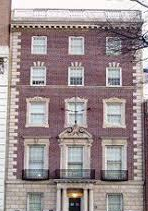
The outside of the Ballantine House in 2019.

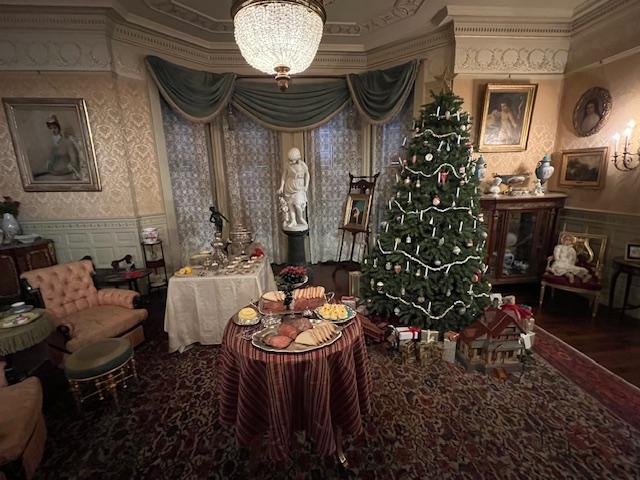
A new tradition was started this year with a Holiday Afternoon Tea and tour of the mansion. The caterer did a nice job with the food and their was plenty of it. We had finger sandwiches, various scones and pastries and different varieties of teas.

After the tea, we had a tour of the house and a talk about how the Ballantine’s and their crowd celebrated the holidays. They would be an open house for the neighbors during the holidays and then on Christmas day were church services in the morning and then a lunch afterwards with the family.

Ballantine House set for the neighborhood open house

Entering the newly renovated Ballantine House.

Another nice event is the Members Mornings of specialty tours of the galleries on a Sunday morning and a light breakfast afterwards. These are really nice, and you get a more in-depth view of the galleries with the docents. This is where I highly recommend membership.

The Ballantine House model

The Ballantine House reopened after a two year renovation of the property and I toured it in January of 2024 to see the redesign of the home. The home had been cleaned and new signage and carpeting had been added to the site. They were new signs with interpretations of the house with some major design changes.

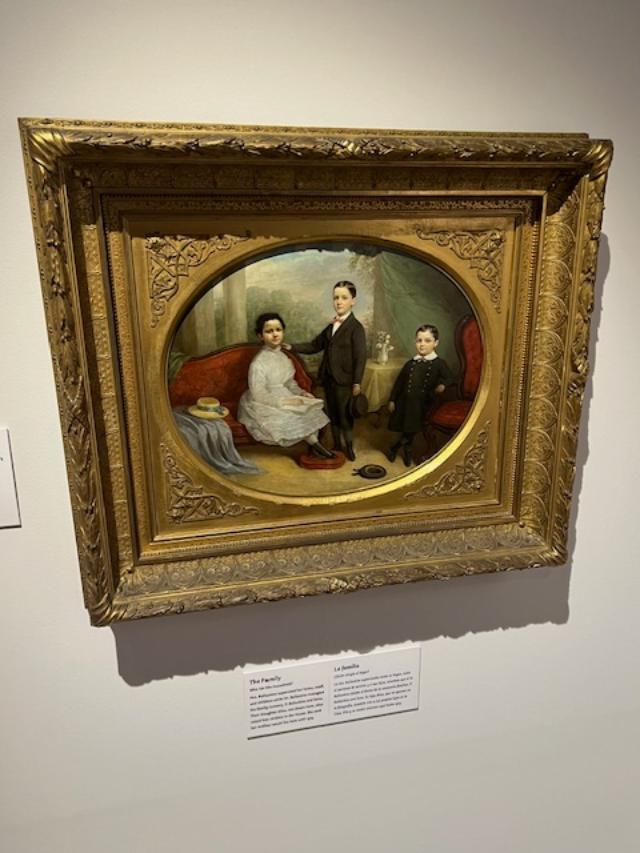
The Ballantine children in portrait.

The house had gotten some much needed renovation work and cleaning and the house looked sparkling and looked like someone had just moved in. In 2024, the house continued its tradition of being decorated for the Christmas holidays but with a twist to it

The Foyer of the Ballantine House

The fireplace in the Foyer of the home at the holidays

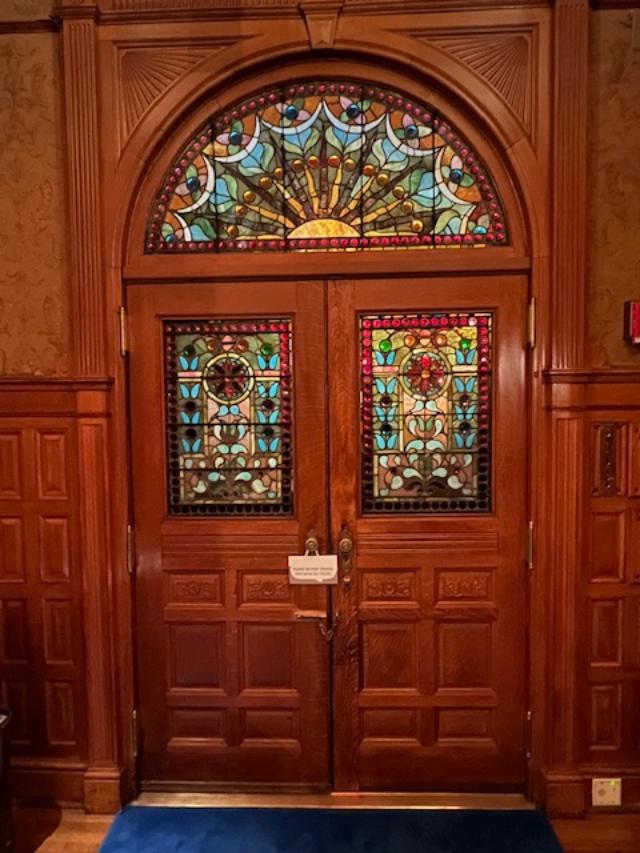
The front door ablaze with colors

The Reception/Receiving Room for guests.

The Receiving Room at the Ballantine House.

The Reception Room decorated for the holidays

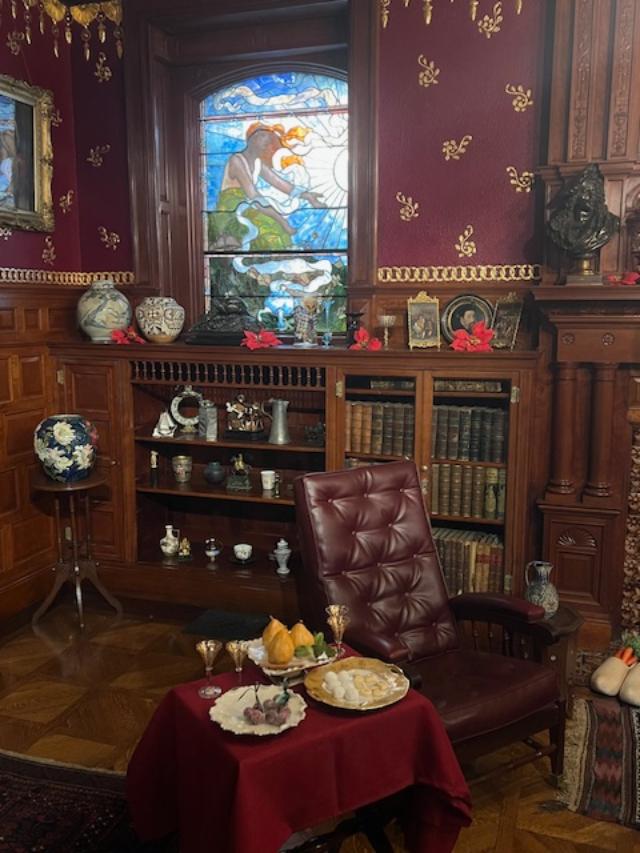
We started the tour clock wise through all the rooms on the first floor starting with the Reception Room where guests would be received for a visit and would wait until the Ballantine’s were ready to greet you. We then moved onto the Library where the whole family would gather in the evenings to read and converse with one another in a more casual setting.

The Library

The Library at the Ballantine House

Mr. Ballantine’s chair and desk in the Library of the Ballantine House.

The Library decorated for the Christmas holidays:

The Library decorated for the Christmas holidays:

The Library decorated for the Christmas holidays:

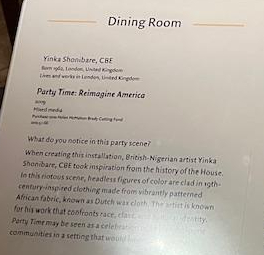
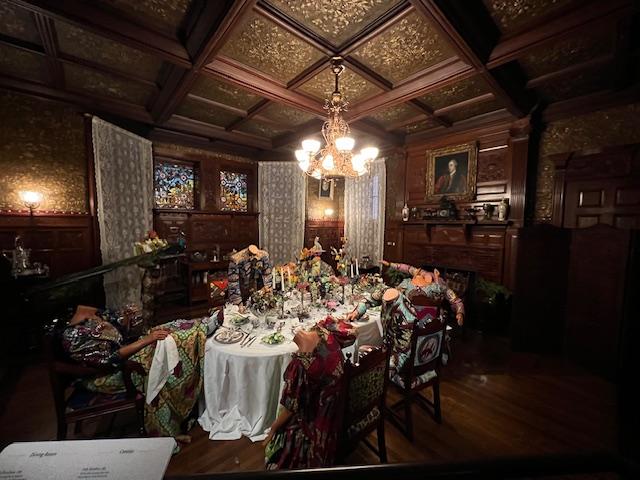
The Dining Room

The Dining Room set for dinner.

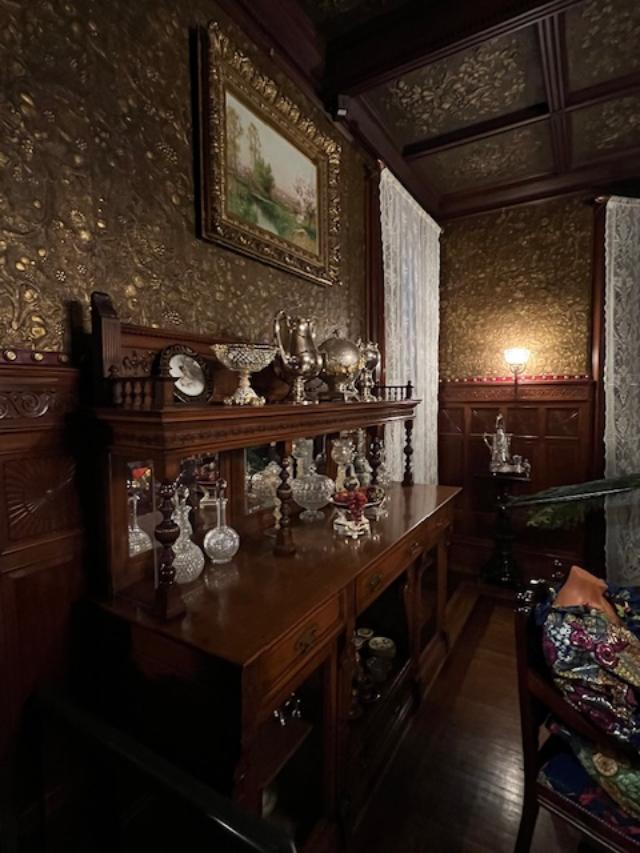
The Dining Room sideboard.

The Dining Room decorated for the Christmas holidays:

The Dining Room decorated for the Christmas holidays:

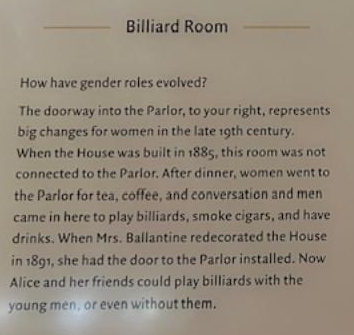
The Billiard Room across the hall from the Dining Room.

The Billiard Room at the Ballantine House.

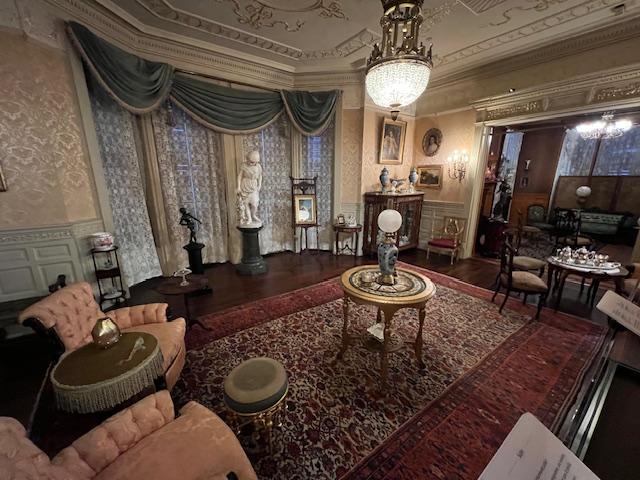
The Parlor at the Ballantine House.

The Parlor for receiving guests for afternoon tea

The other side of the parlor.

The Parlor set for tea.

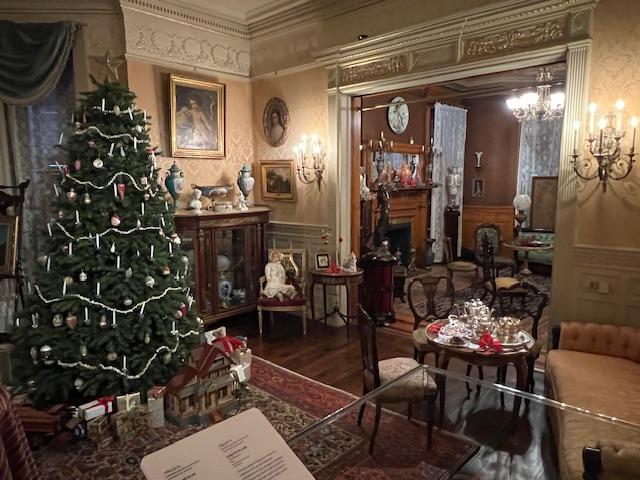
The Parlor set up for the Christmas Eve Tea:

The Parlor set for the Christmas Eve Tea service of the neighbors:

The Parlor would have been set for a light reception on Christmas Eve for the neighbors in the immediate neighborhood to stop in and join the family for a casual conversation and have a light snack. No one would stay more than an hour and it was in bad manners to stay longer than that.

The reception foods would be replenished as they ran out and this would take place for about two to three hours on Christmas Eve night as people would be leaving for church services or on their way to other celebrations.

The tour took us next upstairs to see the renovated bedrooms on the second floor and the galleries where some of the jewelry and art objects were on display.

The Staircase decorated for the Christmas holidays

The beautiful stained glass window on the landing to the second floor.

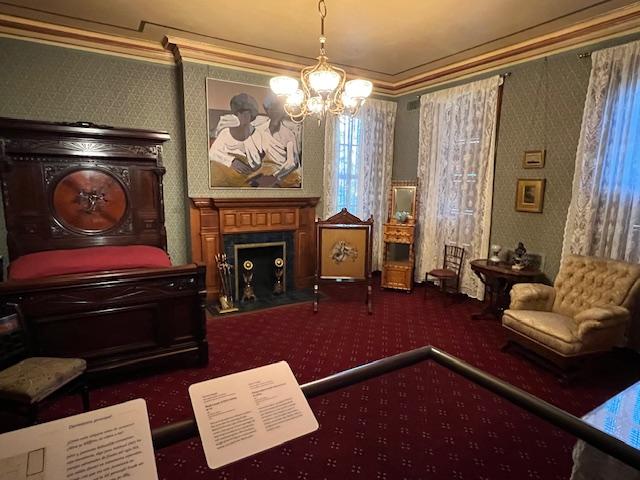
Mr. & Mrs. Ballantine’s Bedroom

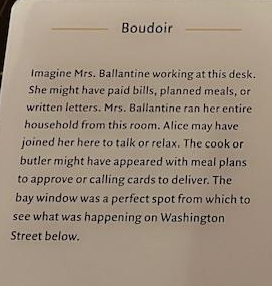
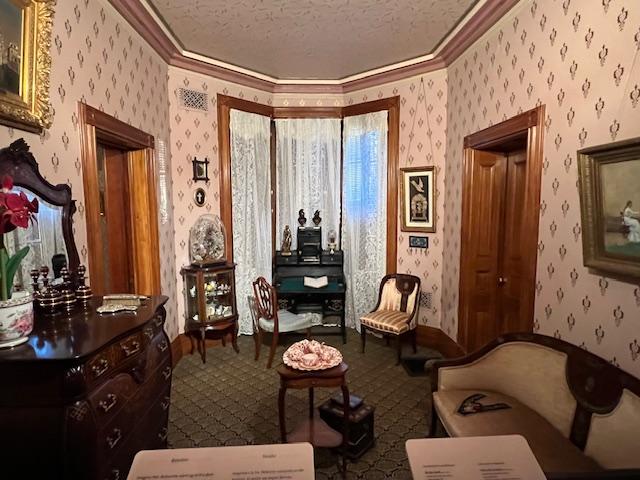
The Boudoir where Mrs. Ballantine did her work.

The Boudoir where Mrs. Ballantine worked.

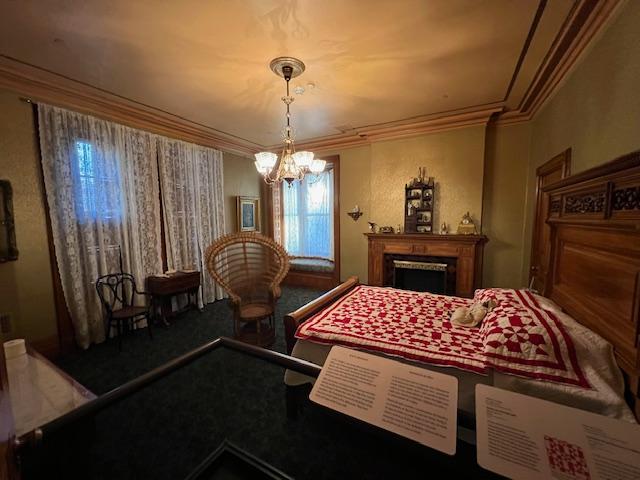
Alice’s bedroom on the second floor that was adjoined to her parents room by the way of the Boudoir.

Alice’s bedroom on the second floor looking over Washington Park.

The staircase to the Third Floor to Alice’s family apartment.

This was the main room of the apartment that was used by the family for entertaining friends and family. Alice, her husband and their four children lived in this apartment until 1919 at the time of Mrs. Ballantine’s death. Then her daughter moved to another part of Newark and then onto Morris County.

The Third floor apartment for Alice and her family that Mrs. Ballantine build for Alice and her family.

The beautiful skylight in Alice’s apartment on the Third floor of the Ballantine house.

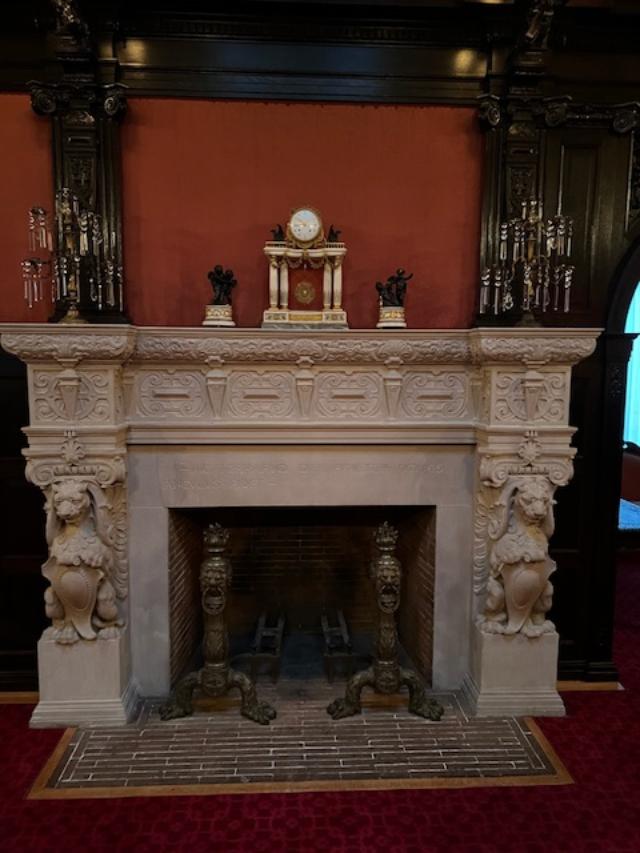
The decorative fireplace that worked in Alice’s family apartment on the third floor of the house

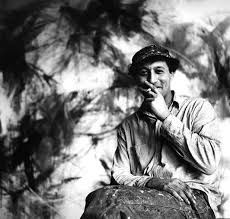
On my most recent trip to the museum, I attended the opening of the new ‘Norman Bluhm Metamorphosis’ exhibition on February 11th, 2020.

Norman Bluhm

Artist Norman Bluhm

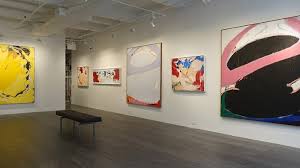
Norman Bluhm: Metamorphosis celebrates six decades of painting by post-war American artist Norman Bluhm (1920-1999), who combined action painting with a lavish sense of color and formal experimentation on a grand scale.

Norman Bluhm Newark Museum II

Paintings and works on paper dating from 1947 to 1998 are on view in the Museum’s Special Exhibition Gallery and the Traphagen promenade galleries surrounding the Charles W. Engelhard Court (Newark Museum publication press release).

Norman Bluhm Newark Museum

These large works showcase the artist’s work over a fifty year period.

Norman Bluhm Newark Museum III

Norman Bluhm’s work is quite dramatic

In 2022, I went on the first Members Morning that we had in almost two years. We toured the “Carlos Villa: Worlds in Collusion” exhibition featuring the works by American San Franciso born artist of Philippine decent Carlos Villa.

Carlos Villa I

Artist Carlos Villa in the exhibition “Worlds in Collison”

Video on the Exhibition “Carlos Villa: Worlds in Collison”

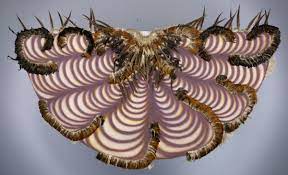
What made this exhibition interesting was the feather work that he used in his art. He was trying to capture the ethnic history of identity not just of the Asian but the Pan-Pacific cultures of Hawaii. He used robes and other costumes to show the dynamic of the background of these cultures. Not just that but what describes Americans who are not of white decadency and where their role plays in society. The impression I got from his work and from the tour was feeling like an outsider in the country he was born in.

Carlos Villa

One of the feathered cloches that are in the exhibition

I also visited the interactive exhibition “Endangered”, showing video screenings of nature on the walls of the Natural Science Galleries. The exhibition highlights how human behavior is affection the natural environment and what we can do to stop it.

In the Summer of 2022, we had a member’s tour of one of the ongoing exhibitions at the museum and the docent described the works of local Brooklyn based artist Saya Woolfalk.

Artist Saya Woolfalk

http://www.sayawoolfalk.com/

The “Endangered” exhibition:

I joined the membership one morning to tour the exhibition on artist Saya Woolfalk who is based out of Brooklyn. Her current exhibition “Tumbling into Landscape” is being featured on a long-term exhibition. The works are a communication with nature and our relationship with nature and with one another. When you walk through it you are so relaxed between the music and the lighting. The artist ‘uses science fiction and fantasy to reimagine the world in multiple dimensions’ (Newark Museum).

The videos in the Saya Woolfalk exhibition

Her look at nature is very interesting. She looks at our relationship with the natural world and to each other and where we belong. Here works have a calming effect on the visitor and our interaction with the art.

‘The Four Virtues’ (Justice, Prudence, Temperance and Fortitude)

She even did a study of the Hudson River School and how her art worked into that perspective of nature. She included between six paintings from the School of Art with a self-portrait of herself.

It was interesting how she used her own self to compare to the stylized view of nature taken on by these past artists.

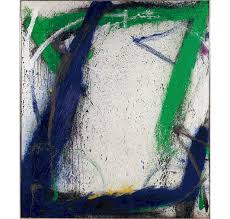
Recently, I joined other members for a special “Members Morning” that happen every third Thursday entitled “The Art of Collecting Abstracts”. It was a look at the contemporary works that have been collected by the Newark Museum over the years. We got a look at works from the early part of the last century to today. Each of the pieces chose were a way for us to think about the artist and what they were trying to convey. Some used bold strokes and colors to tell their story. I thought they were quite colorful.

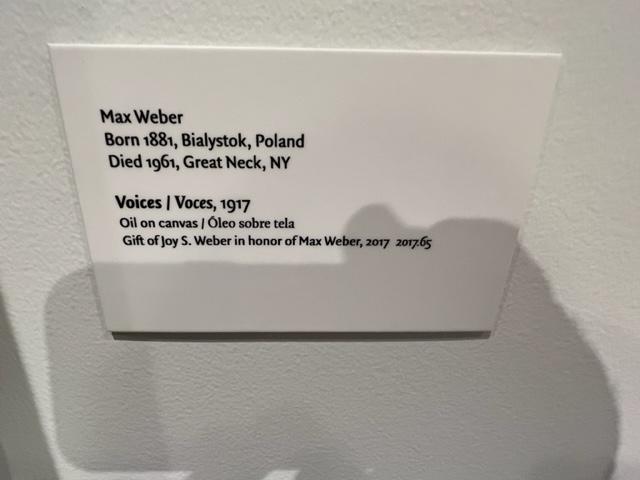
Work by artist Max Webber “Voices”

https://en.wikipedia.org/wiki/Max_Weber_(artist)

The Max Webber sign for ‘Voices’.
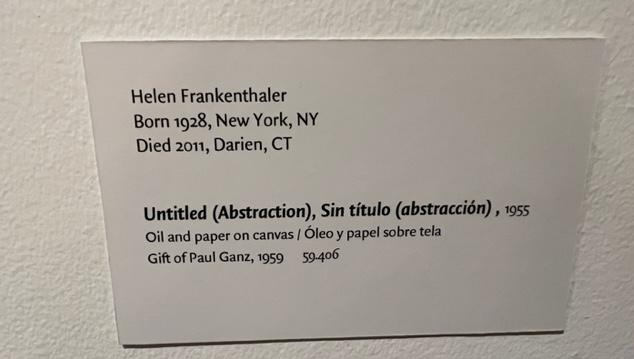
Helen Frankenthaler “Untitled”

https://www.frankenthalerfoundation.org/artworks/paintings

https://en.wikipedia.org/wiki/Helen_Frankenthaler

The sign for Helen Frankenthaler’s “Untitled”

The group of us on the tour walked through various galleries, admiring and learning about the contemporary collections of abstract work from artists from various periods. Each docent took their take on pieces they admired in the collection.
Abstract by Ilya Bolotwosky “Study for Mural for Hall of Medicine, Public Health Building, New York World’s Fair.

https://en.wikipedia.org/wiki/Ilya_Bolotowsky

Sign for Ilya Bolotwosky’s work

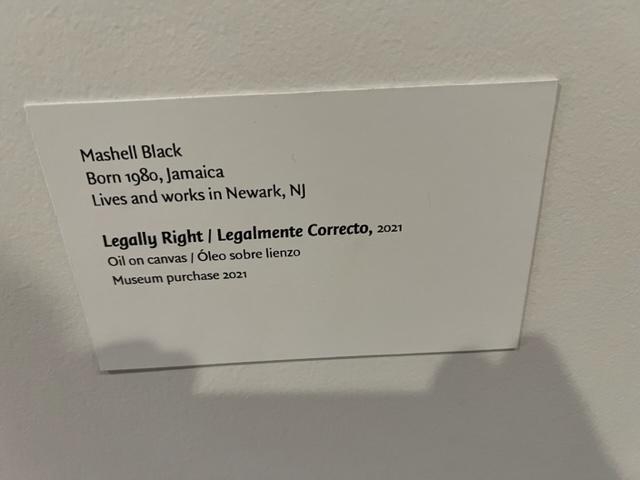
Mashell Black’s “Legally Right”

https://www.mashellblack.com/

Mashell Black sign for ‘Legally Right’

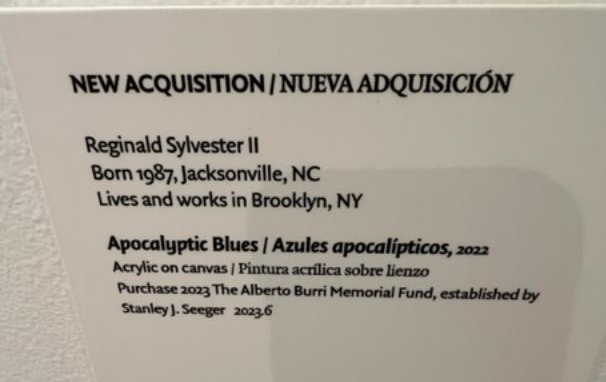
Artist Reg Sylvester’s work “Apocalyptic Blues’

https://maximillianwilliam.com/artist/reginald-sylvester-ii/

The sign for Reginald Sylvester’s “Apocalyptic Blues”

The tour was an interesting view of the some of the newest works as well. These members mornings are a great way to learn abou the collection.

I recently in April 2024 I went to the Members Open House to see the exhibition of artist Bony Ramirez :

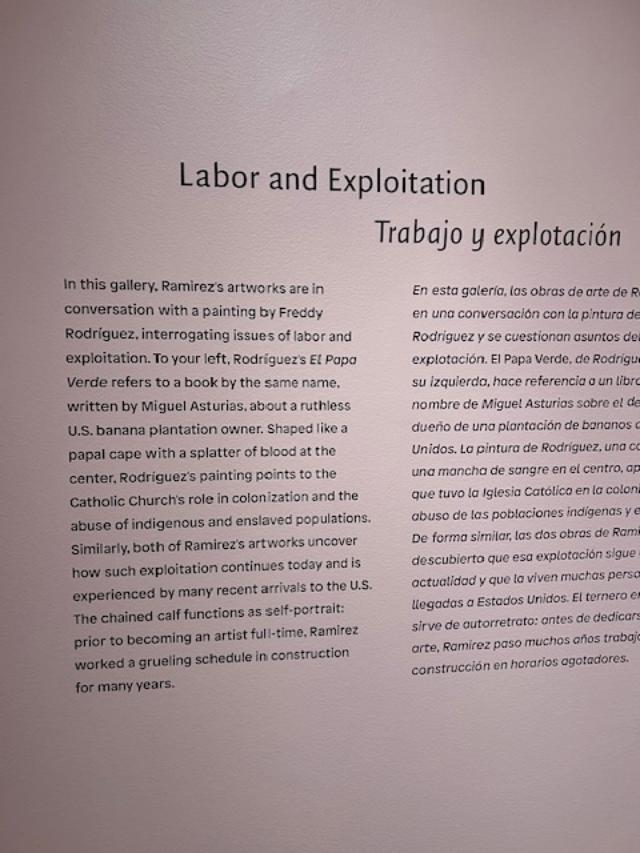
The description sign for the exhibition.

Artist Bony Ramirez

https://bonyramirez.com

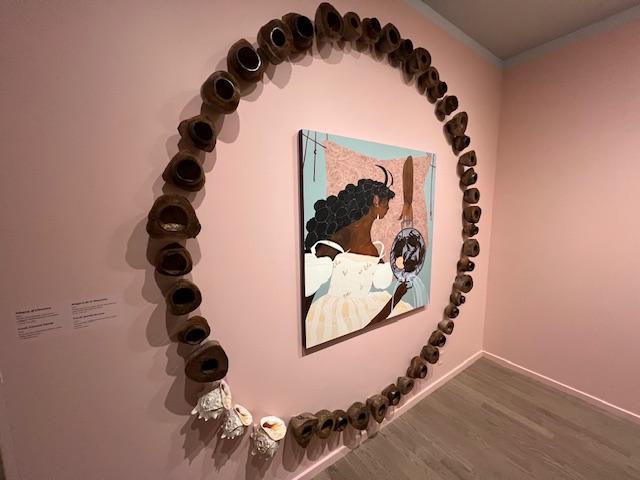
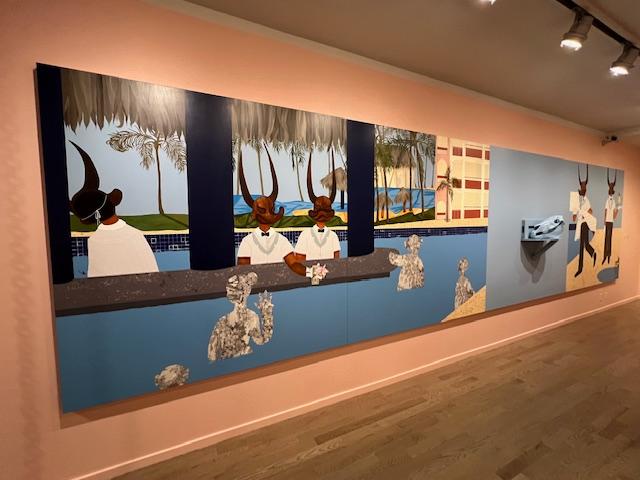
Artist Bony Ramirez is a Dominican artist born in the Dominican Republic and works in New Jersey. He is known for his island influences in his works and reflects life in the Caribbean nation. He uses all sorts of materials to achieve his works of art (Artist’s bio).

The gallery opening of the artist’s work on the second floor of the museum.

The write up on his work.

Cow sculpture

Painting and sculpture

One of the artist’s paintings on Colonialization.

One of the artist’s recent sculptures.

The exhibition was small and it was one of the first shows that the artist mounted at a major museum. I thought the work was okay but nothing dramatic. Still it was a nice opening and a reception. The artist seemed thrilled by it all.

Newark Museum History and Highlights tour:

Welcome to the Newark Museum. Our unique approach to exhibiting our extraordinary art and science collections provides unforgettable experiences for people of all ages. It is a place where people of different generations, cultures and communications encounter a robust science collection and world-class act including the arts of Africa, Ancient arts, Arts of Asia, Decorative arts and American art.

The American Wing galleries at the Newark Museum. The Max Webber piece is to the right.

Take an inspirational journey through our many galleries. Marvel at shooting stars in our popular planetarium. Travel to another era in the Victorian Ballantine House, a National Historic Landmark. Pause at a Tibetan Buddhist altar consecrated by His Holiness, the 14th Dalai Lama. Stroll through our beautiful sculpture garden, visit our Museum Shops and enjoy delicious light fare or snacks at our Cafe (will be reopening soon).

For the Lunar New Year in 2025, the Newark Museum had a wonderful family celebration for Chinese New Year. The museum had all sorts of games and crafts for the kids and tours for the families.

A Chinese musical group started the festivities for Chinese New Year at the Newark Museum. This was the folk band from JTL Band. They sang traditional songs in Chinese.

The group entertained the crowd with a wide applause

After the performance, we were treated to a Ribbon Dance. Dancer Lina Liu

The traditional Ribbon Dance by the Lina Liu Artist Group

The beauty of the dance

The end of the performance

The museum did a wonderful job with all the entertainment. The Planetarium also had a interesting show in the Moon and the phases that show in the evening sky. It was a very interesting show. Even though it was geared towards children, they made it so easy to understand in fun and engaging way.

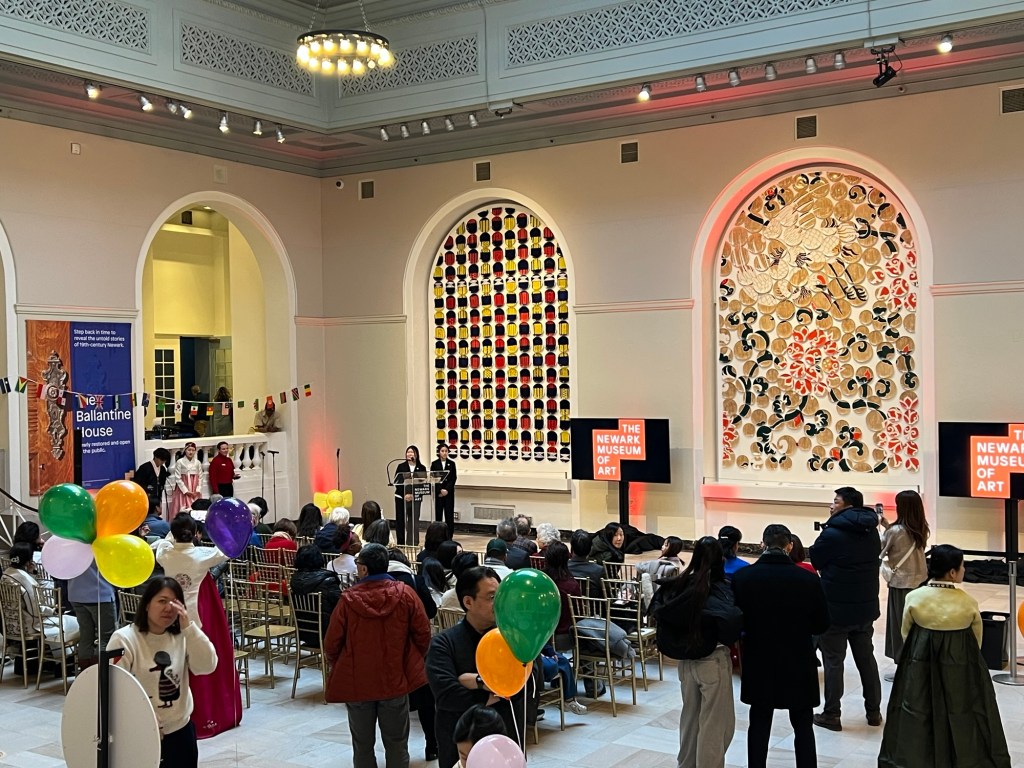
The museum did a nice job for the Lunar holidays. In 2026, they had another interesting festival of Korean music and dance.

Entertainment from the Korean Cultural Society

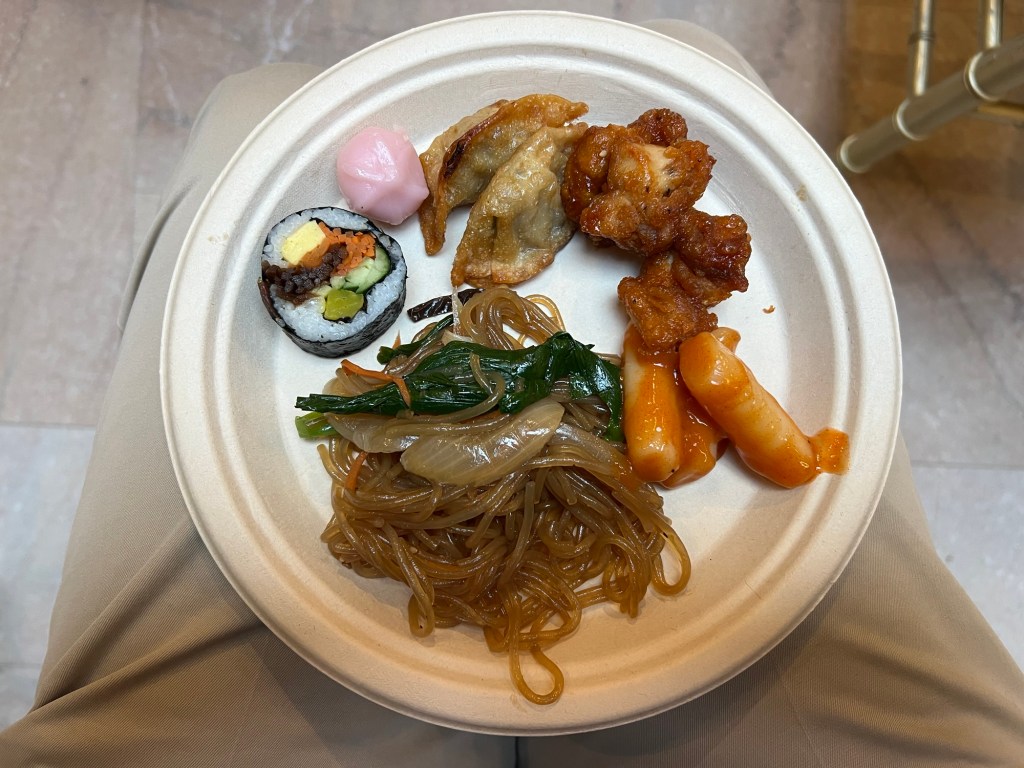
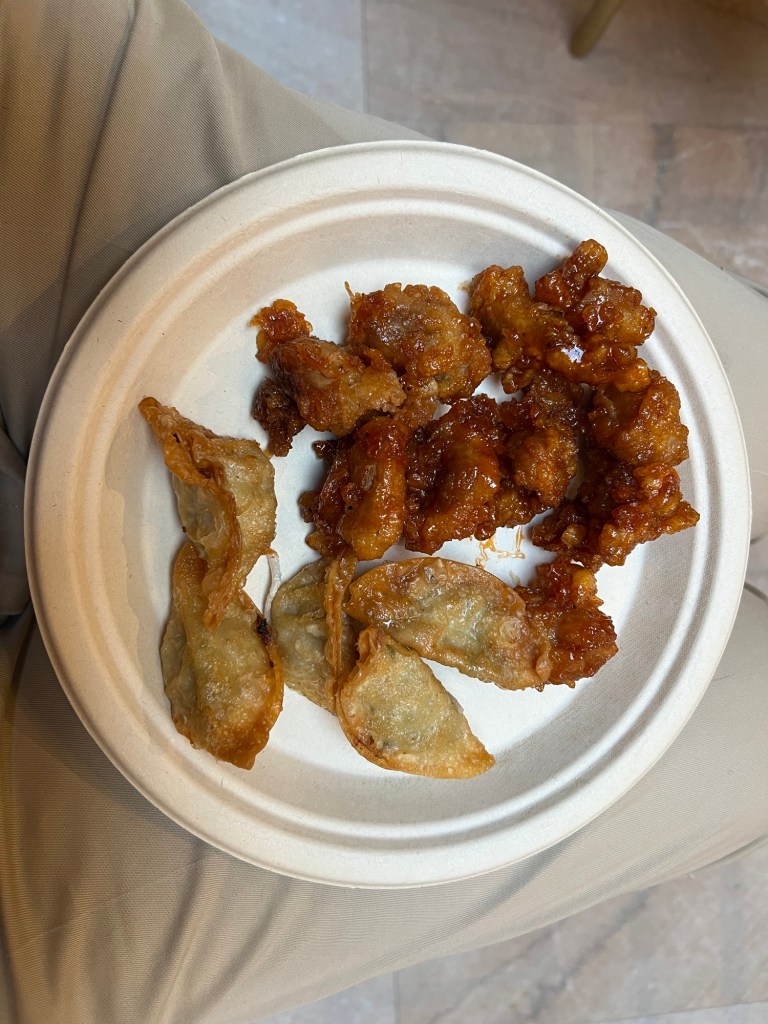
The best was the resfreshments at the end of the program. They had the most delicious Korean Chicken and Dumplings along with other dishes.

The Korean dishes I enjoyed that afternoon. I had to go back for seconds of the chicken and dumplings.

Coming back for seconds

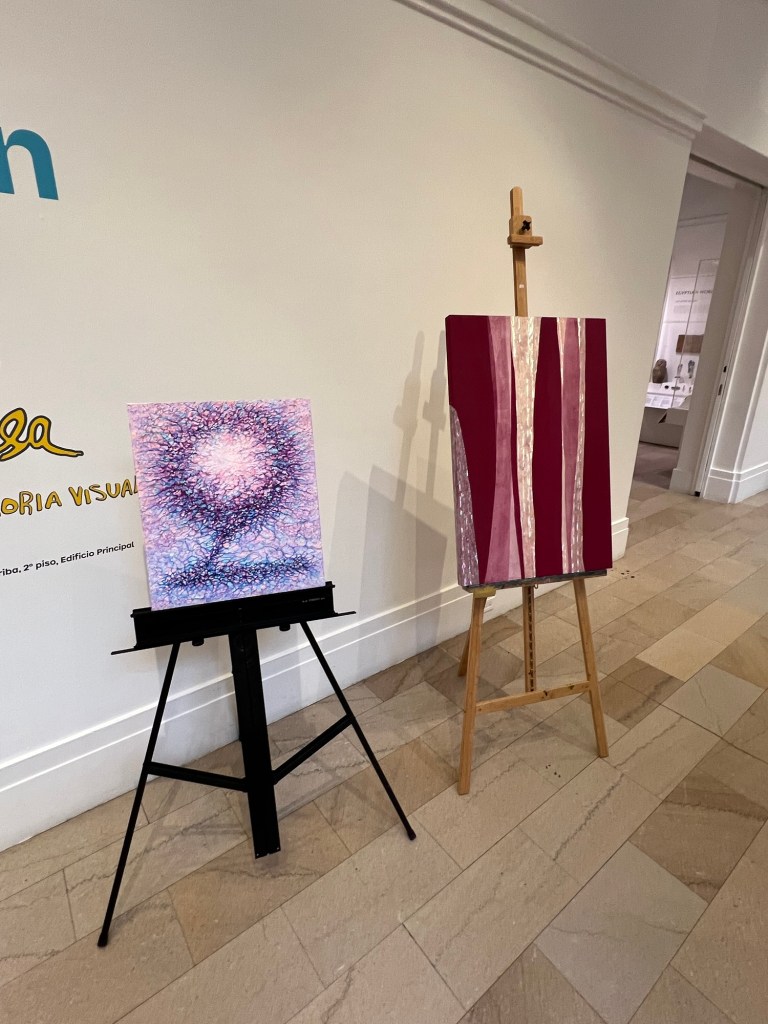
I then walked around the main hall to enjoy the works of local Korean-American artists. I have to admit it was a quick afternoon

The works of local artists

Come visit us. You’ll wonder why you waited:

(from the website and from the museum pamphlet)

The Newark Museum exhibits world-class art and science in a unique way. Visitors feel enriched by what they had planned to see and excited about the unexpected discoveries that they made along the way.

Newark Museum II

The new entrance of the museum

American Art:

With more than 12,000 paintings, sculptures, works on paper and multimedia art, the American art collection at the Newark Museum, many on view in the Picturing America galleries, is one of the finest in the country. Surveying four centuries, the Museum’s American holdings range from the Colonial to the Contemporary and are particularly strong in works from the 19th and early 20th centuries.

Ancient Art:

The Museum’s art of the ancient Mediterranean cultures, Egypt, the Near East, Greece and Rome, includes a remarkable array of classical antiques, as well as an Egyptian collection featuring the coffin lid of Henet-Mer. The Eugene Schaefer Collection of ancient glass offers a visual history of the evolution of glass technology in Egypt, Greece, Rome and the Islamic worlds and dates from 1500 B.C. to 1400 A.D.

Arts of Africa:

With works ranging from Moroccan textiles in South African beadwork to contemporary fine art, the Museum’s African art collection is as diverse as the continent itself. The collection is among the most comprehensive in the United States with more than 4,000 art works dating from the 17th century to the present day. Its holdings are also distinguished for their breadth of artistic representation, including masks and figural statuary, dress and adornment, photography and paintings.

Arts of Native North America:

The Native North American art collection spans the continental United States, as well as Alaska and Canada. Most of the works date from the 19th to the late 20th centuries. The collection represents the diversity and richness of indigenous arts with a range of object types including tools, household items, personal effects, clothing, ritual and ceremonial objects, paintings and drawings.

Arts of Asia:

The most extraordinary historical collection of Tibetan art in the Western Hemisphere is on permanent view. Additional galleries dedicated to the arts of Japan, Korea, China as well as South and Southeast Asia feature superior examples of sculptures, paintings, ceramics and decorative arts from the past 2,000 years.

Decorative Arts:

Furniture, silver, ceramics, glass, jewelry, costumes and textiles comprise the vast Decorative Arts holdings, which range from the 16th century to the present. A wide variety of American and European household furnishings create an international context for New Jersey-made and owned objects displayed in rotating gallery installations.

Ballantine House:

Built in 1885 for Jeanette and John Holme Ballantine of the celebrated Newark beer-brewing family, this brick and limestone mansion was designated a National Historic Landmark in 1985. Wander through history in House & Home, a suite of eight Victorian period rooms and accompanying thematic galleries depicting how people have decorated their homes in America, from the 1650’s to the present day.

Ballentine House

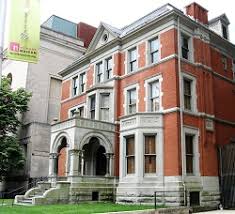
The Ballantine House

Science:

You will also find New Jersey’s first planetarium here and an 83,000-specimen natural Science Collection, which is the basis of the exhibit Dynamic Earth: Revealing Nature’s Secrets, located in the Victoria Hall of Science. This engaging exhibit features interactive and multimedia displays that make the natural sciences come alive and help adults and children better understand the natural world.

Newark Fire Museum:

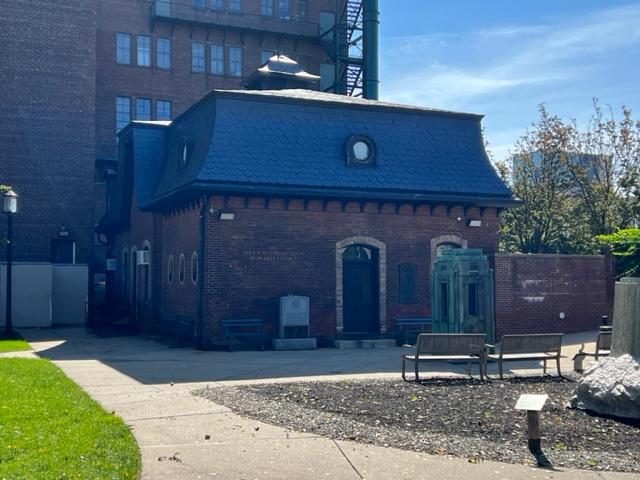
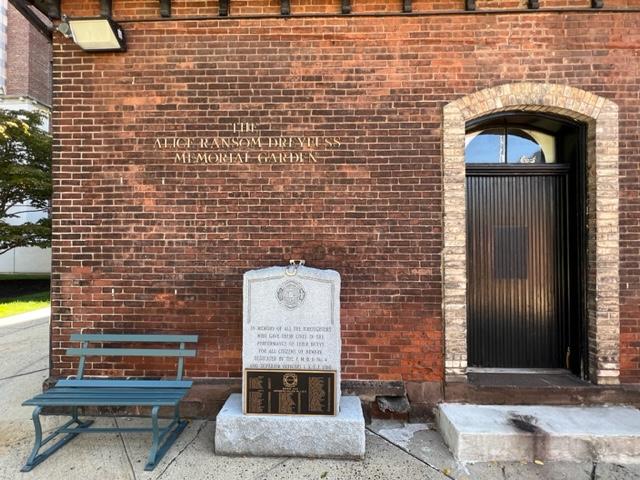
Housed in the circa 1860 Ward Carriage House in the Alice Ransom Dreyfuss Memorial Garden, the newly refurbished Newark Fire Museum tells the story of the challenges faced by firefighters in the 19th century and includes historic fire apparatus and equipment. An exciting new exhibit adds a potentially life-saving element to our mission with a high-tech interactive Fire Safety Center designed to teach fire safety and prevention to children and families.

The Newark Fire Museum in the gardens.

1784 Old Stone School House:

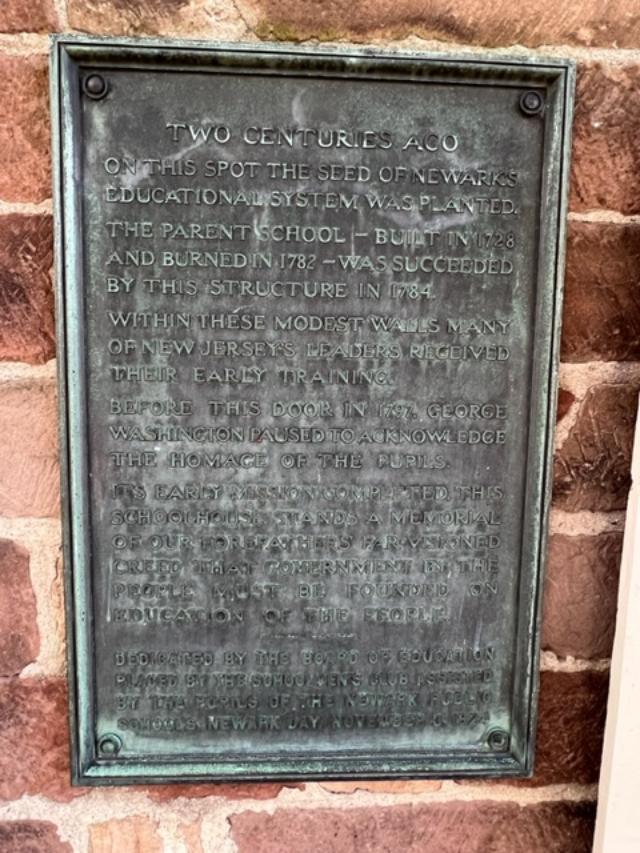
The oldest standing school building in Newark, this one-room school hosted generations of students between 1784 and the early 20th century. Recently restored, its detailed bring the past to life: the foundation built with sandstone from a local Newark quarry, the floorboards sawed by hand from trees cut from a local forest and the old cast iron stove used to heat the school with wood provided by the students.

The Old Stone Schoolhouse in the gardens.

The historic plaque at the Old Stone Schoolhouse

Planetarium:

The Alice and Leonard Dreyfuss Planetarium provides an immersive, out-of-this-world experience through which adults and children can learn about astronomy, planetary science and space travel. Featured is a state-of-the-art, full dome digital video system, a 5.1 surround-sound system and a Zeiss ZKP3B star projector.

Disclaimer: This information was taken directly from the Newark Museum pamphlet. The museum is the pride and joy of the State of New Jersey. It has great programming and wonderful events. Please call or email the museum for more details.

The New Jersey Historical Society                                       52 Park Place                                                 Newark, NJ 07102

The New Jersey Historical Society 52 Park Place Newark, NJ 07102

The New Jersey Historical Society

52 Park Place

Newark, NJ  07102

Phone: (973) 596-8500

Fax: (973) 596-6957

http://www.jerseyhistory.org

New Jersey Historical Society

Fee: Adults $3.00/Research Library $5.00

Open: Sunday-Monday Closed/Tuesday-Saturday 10:00am-5:00pm

Library: Sunday-Monday Closed/Tuesday-Saturday 12:00pm-5:00pm


TripAdvisor Review:

https://www.tripadvisor.com/Attraction_Review-g46671-d217958-Reviews-Newark_Museum-Newark_New_Jersey.html?m=19905

I was able to visit the New Jersey Historical Society (See TripAdvisor review) after a morning at the Newark Museum. It has some interesting exhibitions right now on the Newark riots of the 60’s , the New Jersey Watershed and Louis Bamberger, the founder of Bamberger’s. It was an interesting history of a former grand department store.

The New Jersey Historical Society has changing exhibitions and lectures, talks and walking tours. It is an interesting museum dealing with the history of New Jersey.


The New Jersey Historical Society

Founded 1845

New Jersey Historical Society

The New Jersey Historical Society is the oldest private, non-profit cultural institution in the state. It was founded in 1845 as an archive, which later evolved into a research library and museum. Award-winning exhibits, education programs, publications, lectures and events for all communities in New Jersey have been our legacy over the past century.

Mission:

The New Jersey Historical Society collects, preserves, teaches and interprets New Jersey history through our archives, research library and educational programs. We do so in the belief that an understanding and appreciation of historical issues, decisions and actions can inform and inspire the people of New Jersey.

Vision:

To be a state of the art center for the study of New Jersey history with convenient access to all archival collections and educational programs for all ages.

New Jersey Historical Society II

New Jersey Historical Society

Current Museum Exhibitions: (January 2018)

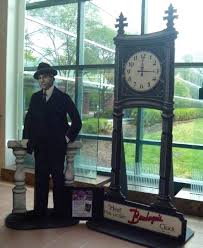
*”Meet Me under the Bamberger’s Clock”: a celebration of the life and contribution of Louis Bamberger.

New Jersey Historical Society III

The Bamberger Exhibition

*Ebb and Flow: New Jersey and its Rivers

*Send the Word: NJ during the Great War

*Newark: Revolution to Revival

New Jersey Historical Society IV

Newark Industry

*Military Park Tours: available every Friday and Saturday at 12:00pm, May-November

Education Programs:

Our affordable educator-led programs include hands-on activities tailored to the age and development level of your students, challenging and inspiring them to grow as learners and thinkers.

Discover:

Students will discover the state’s unique past through handling objects, exploring exhibits and engaging in fun, stimulating activities. Teaches will discover all the interdisciplinary connections to the Common Core State Standards for English Language Arts & Literary in History/Social Studies.

Learn:

Educators and students will learn together how to analyze photographs, paintings and historical objects and interact with history in a variety of ways, including role play, observation and group participation.

Research:

Students will learn to research history and present their ideas and findings through oral presentations, writing and art.

Building and Exhibition Tours are available upon request. Call (973) 596-8500 to schedule!

Research Library:

The New Jersey Historical Society contains manuscripts, rare books, photographs, maps, broadsides, pamphlets and other materials that document the cultural and historical heritage of New Jersey from the colonial era through the 21st century. The collections form the most comprehensive privately-funded library on New Jersey’s past. The research library is open to the public by appointment and serves a diverse clientele including scholars, students, historians and genealogists.

Membership:

Why become a member? In addition to individual benefits such as free admission to the research library and museum exhibits, you are helping to sustain 350 years of New Jersey history, a history we’ve been collecting and preserving since 1845. NJHS has a commitment to the people of our state to treasure our shared history; your membership helps us keep that commitment.


Contact:

For research library appointment, email: library@jerseyhistory.org

For all other questions, email: contactnjhs@jerseyhistory.org

Membership Email information: doug@jerseyhistory.org (973) 596-8500 ext. 224

Disclaimer: This information was taken directly from the New Jersey Historical Society (NJHS) pamphlet. Please call the society for any information of hours and admissions in case they change. It really is a very interesting museum.

The Blauvelt Art Museum                                   705 Kinderkamack Road                               Oradell, NJ 07649

The Blauvelt Art Museum 705 Kinderkamack Road Oradell, NJ 07649

The Blauvelt Art Museum

705 Kinderkamack Road

Oradell, NJ  07649

Phone: (201) 261-0012

(w) blauveltartmuseum.com

(e) info@blauveltartmuseum.com

https://www.blauveltartmuseum.com/current.html

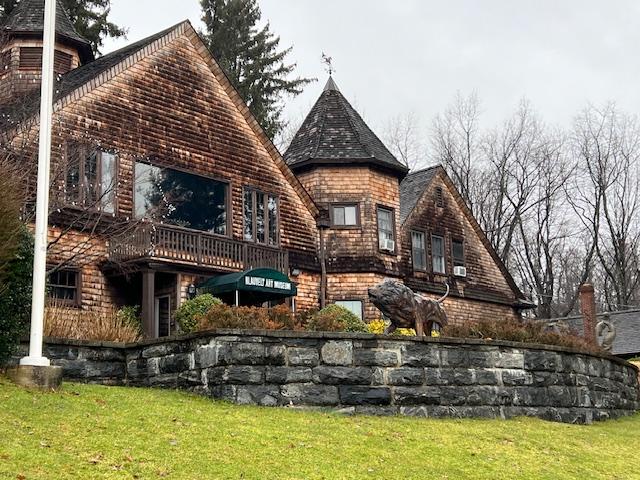
This interesting little ‘gem’ is located up on the hill next to Blauvelt Mansion and is easy to miss. You will see the signs as you drive past it.

Open: Wednesday, Thursday and Friday: 10:00am-4:00pm/Saturday and Sunday: 2:00pm-5:00pm

Fee: Free donations accepted

The Blauvelt Art Museum is funded by the Blauvelt-Demarest Foundation and is a member of the New Jersey Association of Museums, the Mid-Atlantic Association of Museums and the American Association of Museums.

TripAdvisor Review:

https://www.tripadvisor.com/Attraction_Review-g46706-d10628647-Reviews-Hiram_Blauvelt_Art_Museum-Oradell_New_Jersey.html?m=19905

The Blauvelt Art Museum was established in 1957 by the Blauvelt-Demarest Foundation, a legacy of the late Hiram Blauvelt, philanthropist, conservationist and collector. Through the contribution of his private wildlife art and big game collections, he hoped to promote the cultural value of wildlife art and the need for conservation of its subject and their habitats.

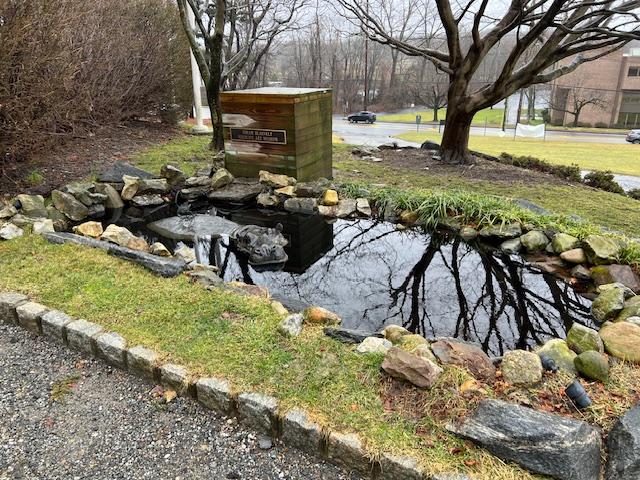
The fountain outside the museum

The entrance to the museum.

During the early part of the 20th Century, wildlife was believe to be abundant. Many dedicated conservationists, notable Theodore Roosevelt, gathered animals from their natural habitats for museums. The beauty of the animals could then be viewed by many.

The entrance to the museum.

Like Roosevelt, Hiram Blauvelt realized the value of his collection and wanted to share it with the public. It was his interest and desire to share his far ranging adventures, his stories of explorations and his collection of these animals. Hiram hoped to educate the coming generations to the diversity and beauty of the wildlife kingdom. He especially wanted to enlighten the public to the challenges we face to preserve the marvels of wildlife and their natural environments.

The interesting artwork by the carriage house of pelicans.

The Pelican art outside the museum.

Founded in 1957 as a natural history museum, it introduced students, scouts and youth groups to the need to support wildlife and habitats conservation. Visiting artists created drawings and paintings from close observations of the specimens.

Embracing Penguins outside the museum dedicated to Wildlife Art.

Twenty-five years later, the Board of Directors of the Blauvelt-Demarest Foundation decided that the original objectives would be best achieved by redesigning the museum to feature the works of contemporary wildlife artists, built on the artistic foundation of the Blauvelt’s early collection of works by Charles Livingston Bull (notably a resident of Oradell at one time), Carl Rungius and a complete Audubon Folio of birds of America.

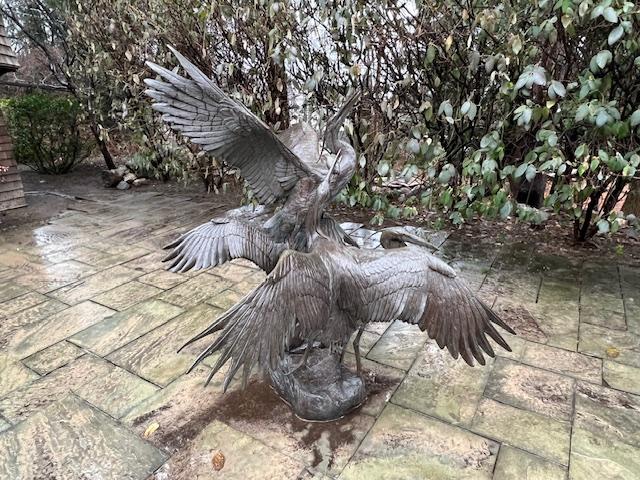
The interesting wildlife artwork just outside the museum.

The Blauvelt Museum, located in an 1893 cedar shingle and turret carriage house, underwent extensive renovations to accommodate its new and expanded mission. The original carriage house was re-designed to include a large reception area, 4 mini galleries and museum offices, all with original materials from the historic building and preserving its aura.

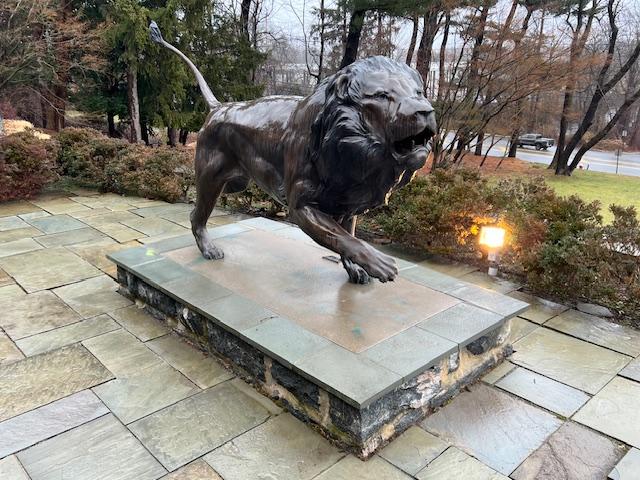
The Blauvelt Art Museum lion statue “Fides et Virtus” by artist Aaron Yount outside the museum.

Four new galleries were added, providing wall space for mounting museum quality flatwork and generous room for pedestals to hold creative sculpture. Substantial artificial lighting is augmented by natural light from the north.

High on a hill overlooking the Hackensack River, the Oradell Reservoir and parklands to the east, the entrance to the museum is through a curving stone and slate terrace, framed by large oak trees and other indigenous foliage, which serves as a natural sculpture garden.

The open air museum just outside the museum itself dedicated to wildlife art.

Many of  its visitors today, accompanied by their children, are revisiting the museum which they first visited with their parents in past decades. The Blauvelt treasures their comments remarking on the greater beauties of its collections, while preserving the ambiance of their memories.

Blauvelt Museum II

The inside galleries of the museum (from their Facebook page).

Artist in Residence:

The Blauvelt Art Museum established an Artist-in-Residence program in 1985. Artists were selected on the basis of their artistic ability and promise and on their commitment to the museum’s mission for the need for conservation to protect wildlife and their habitats. The museum provides a furnished home for the artist on the museum property, including a studio, painting supplies, etc. Artist-in-Residence have given lectures, led round table discussions, visited schools and demonstrated painting and drawing techniques.

The Carriage House from the outside.

The Current Exhibition (2018):

Artist Brian Jarvi’s African Menagerie is showing right now and the collection has some very interesting and detailed pieces on Mr. Jarvi’s visits to Africa. Don’t miss this exhibition!

The Blauvelt Museum is on the Blauvelt-Demarest Estate.

Disclaimer: This information was take directly from the pamphlet provided by the Blauvelt Art Museum. Please call the museum for any changes to their time schedule and don’t miss the current exhibition.