Tag: Author Justin Watral

Betsy Ross House                                                    239 Arch Street                                      Philadelphia, PA 19106

Betsy Ross House 239 Arch Street Philadelphia, PA 19106

Betsy Ross House

239 Arch Street

Philadelphia, PA 19106

(215) 619-4026

Betsy Ross House

Admission: Adults $7.00/Children-Seniors-Military $6.00/Audio Tour Add $2.00-Please check Website

My review on TripAdvisor:

https://www.tripadvisor.com/ShowUserReviews-g60795-d144052-r793537657-Betsy_Ross_House-Philadelphia_Pennsylvania.html?m=19905

The Betsy Ross House Museum at 239 Arch Street

I visited the Betsy Ross House Museum when touring the small museums of Old Town Philadelphia. What an interesting historical site. You felt like you were invited into Betsy Ross’s house by Betsy Ross herself.

Betsy Ross was an upholsterer and ran her business dealings from the front of the house where her small showroom and workroom were located to the street level. Many people in Philadelphia had this work arrangement where the business was in the front of the home and then living quarters were in the back or up above.

In the showroom area, an actress playing Betsy Ross, was there answering all our questions and she was very interesting. When she had been approached to design and create the flag, she had never made a flag before. The actress explained that she had to keep making flags ‘under the wraps’ so that Loyalist would not shut the business down during the war. Her business pretty much was shut down during the War years as people did not have the money or time for her work. I really felt like I was talking to the real person in that time.

The tour will only take about an hour but you will learn so much about business and living arrangements in homes at that time and of the family who lived there. I never knew much about Betsy Ross herself and her husbands and children from different marriages. So you will learn a lot about the family themselves and the lives that she lived with each of them.

It is an interesting tour if you have interest in the American Flag origins and the Revolutionary War.

The History of the Betsy Ross House Museum:

The building at 239 Arch Street, now known as the Betsy Ross House, was built over 250 years ago. The front portion of the house was built around 1740 with the stair hall (or piazza) and the rear section added 10 to 20 years later. The structure is a variation of a ‘bandbox’ or ‘trinity’ style home, with one room on each floor and a winding staircase stretching from the cellar to the upper floors.

The building’s front façade, with a large window on the first floor to display merchandise and it proximity to the Delaware River, made it an ideal location for a business. The house served as both a business and a residence for many different shopkeepers and artisans for more than 150 years. The first floor front room was used as the workshop and showroom. The business owner and his or her family lived in the rest of the home.
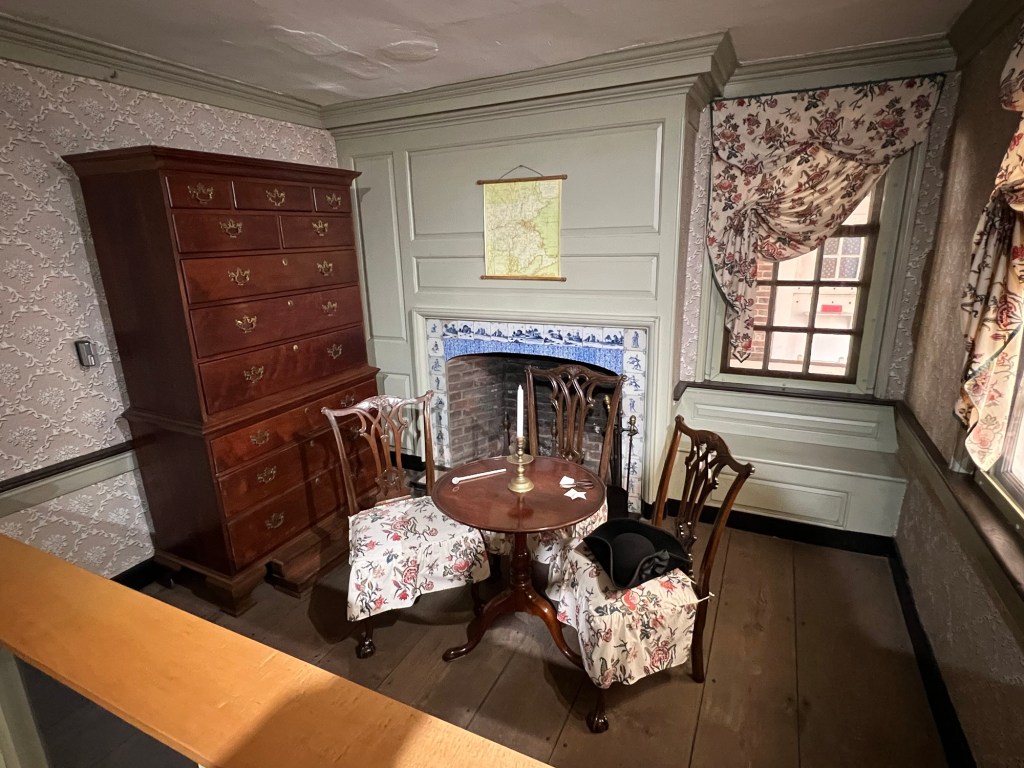
The sitting room recreation

When you enter the house, you will be able to visit all the rooms of the house and the kitchen area on the lower level. The interesting part of this self guided tour is that you learn that the house was not owned by Betsy Ross or any of her three husbands. They rented the rooms out from a widow who owned the house at the time and that there had been other people living at the home at the time. Each of the rooms were rented and lived in by other family members.

In each of the upstairs rooms, there are recreations of what the family living arrangements were and how they were decorated. The bedrooms were furnished with vintage furniture of the time and items used in every day life.

A period bedroom in the house

The house and museum is broken up into different sections. When you walk into the museum complex, you will get to visit a very patriotic gift shop stocked with Revolutionary War memorabilia. Out side the gift shop is the formal gardens and the courtyard which is a nice place to relax and enjoy the weather.
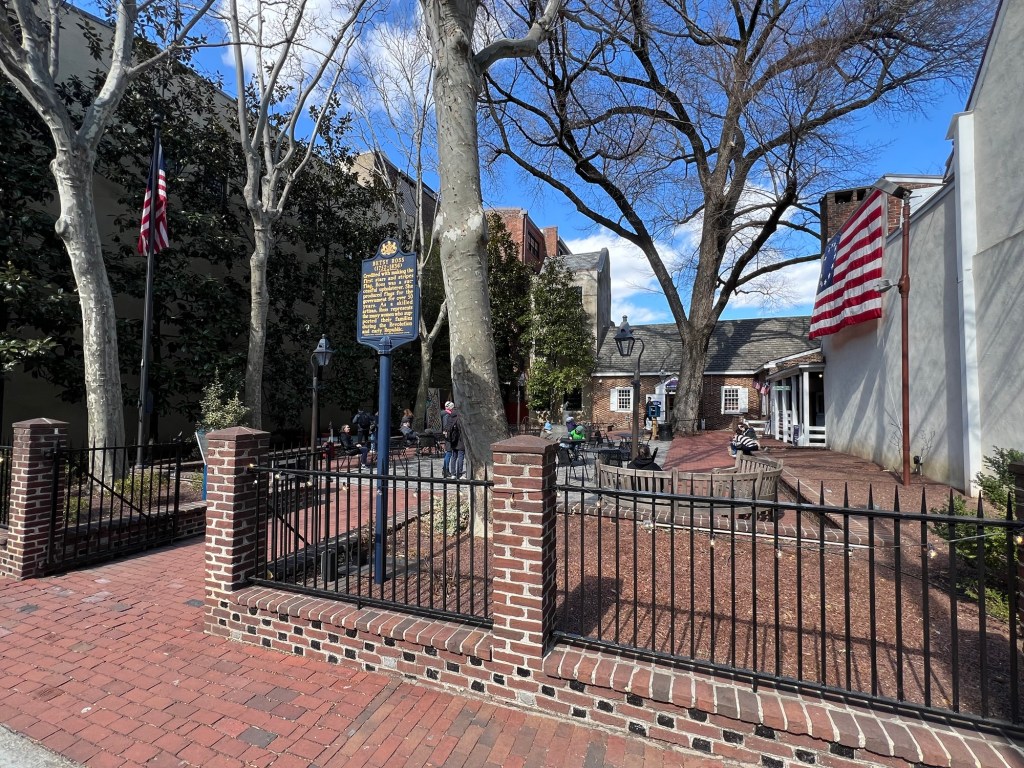
The courtyard of the house
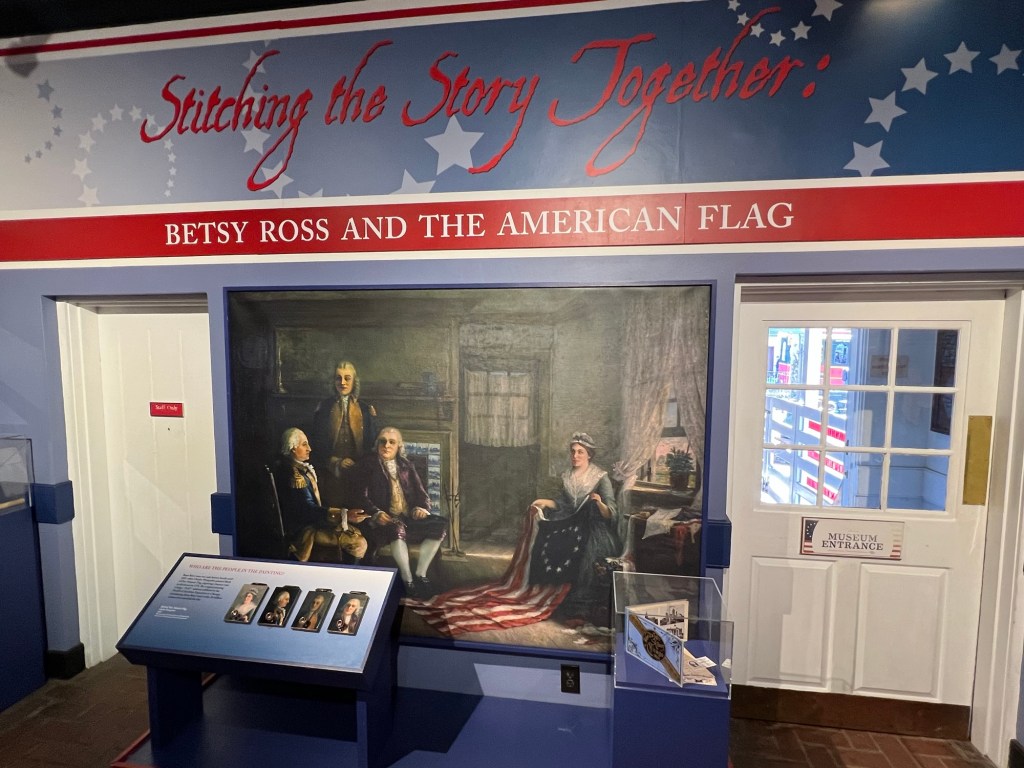
The role of Betsy Ross during the Revolutionary War
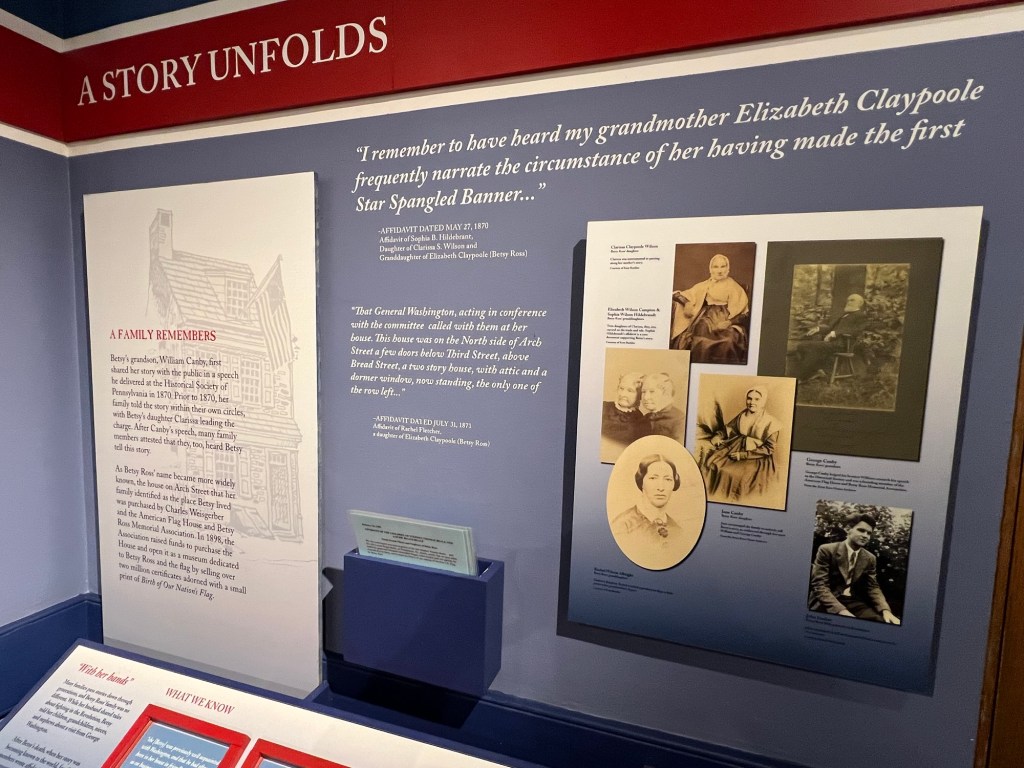
The story of the flags creation
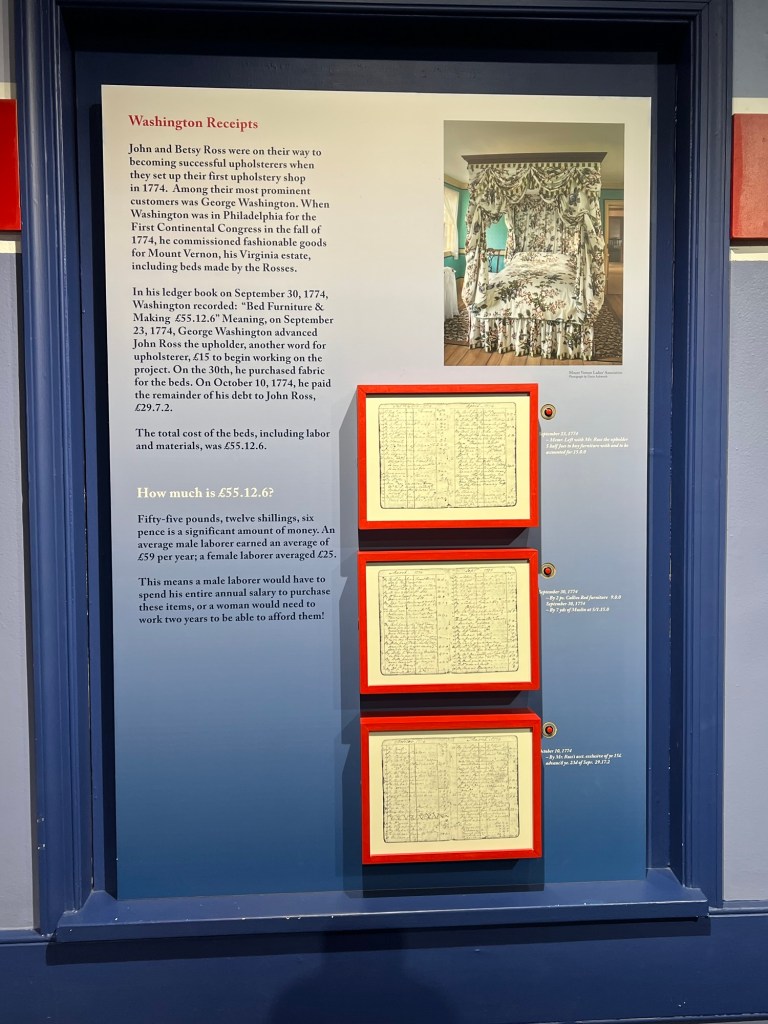
George Washington had done personal work with the Ross’s before the war
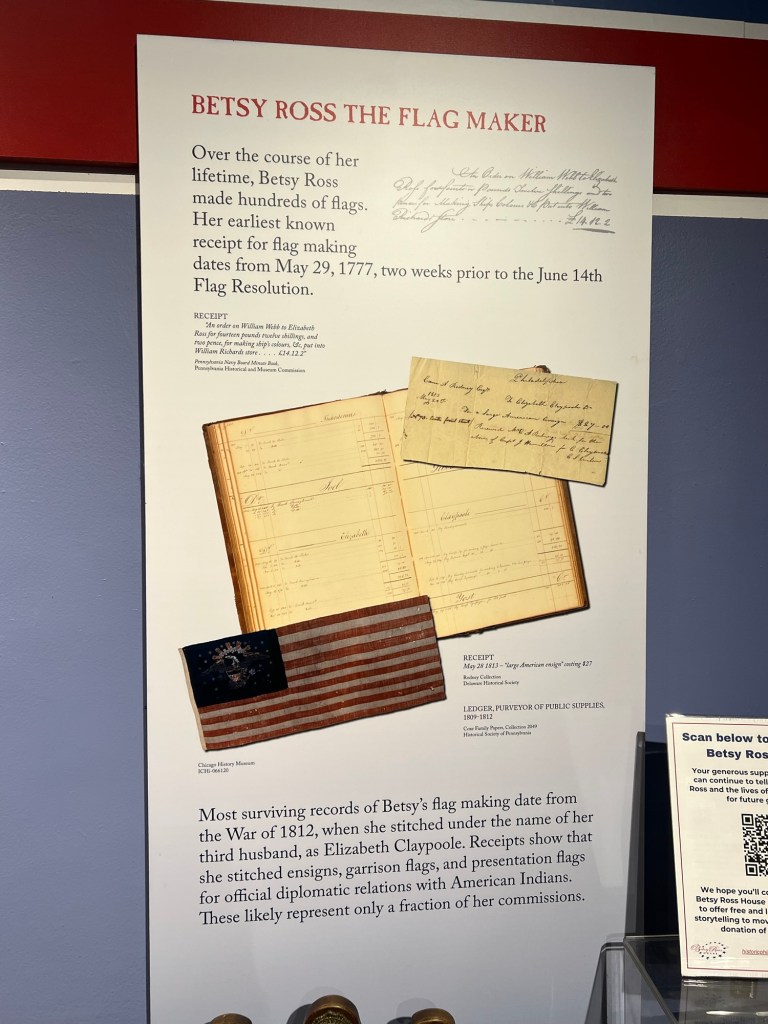
When she became a flag maker

The historic marker on the house

The courtyard of the home
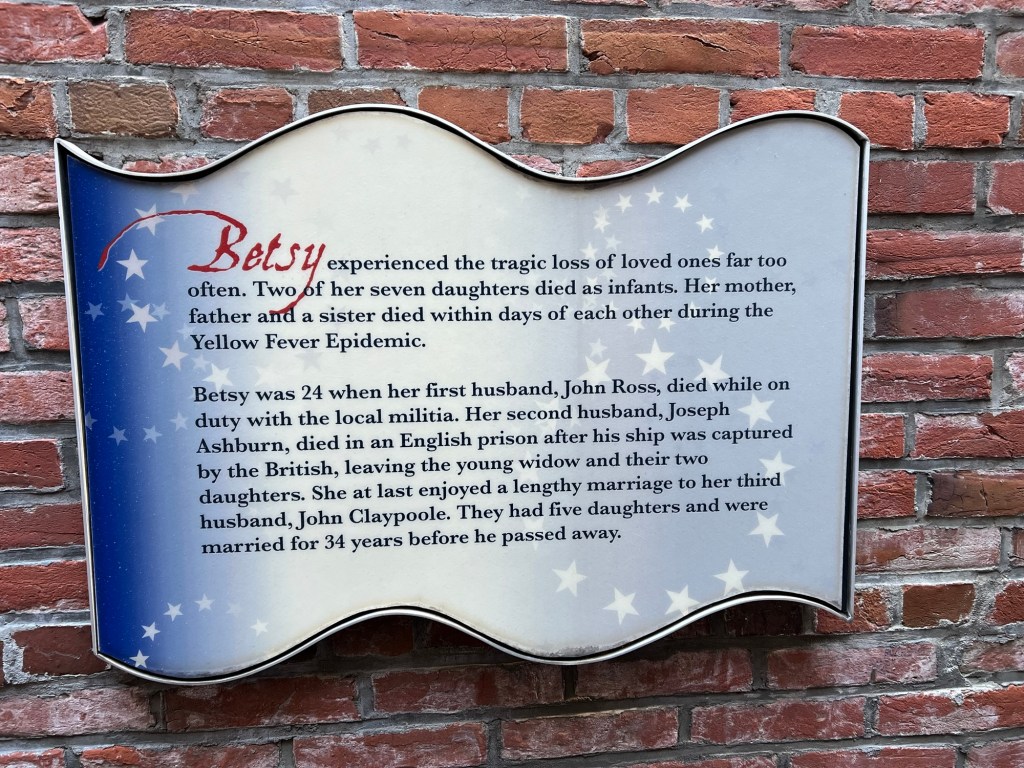
Historic Marker One
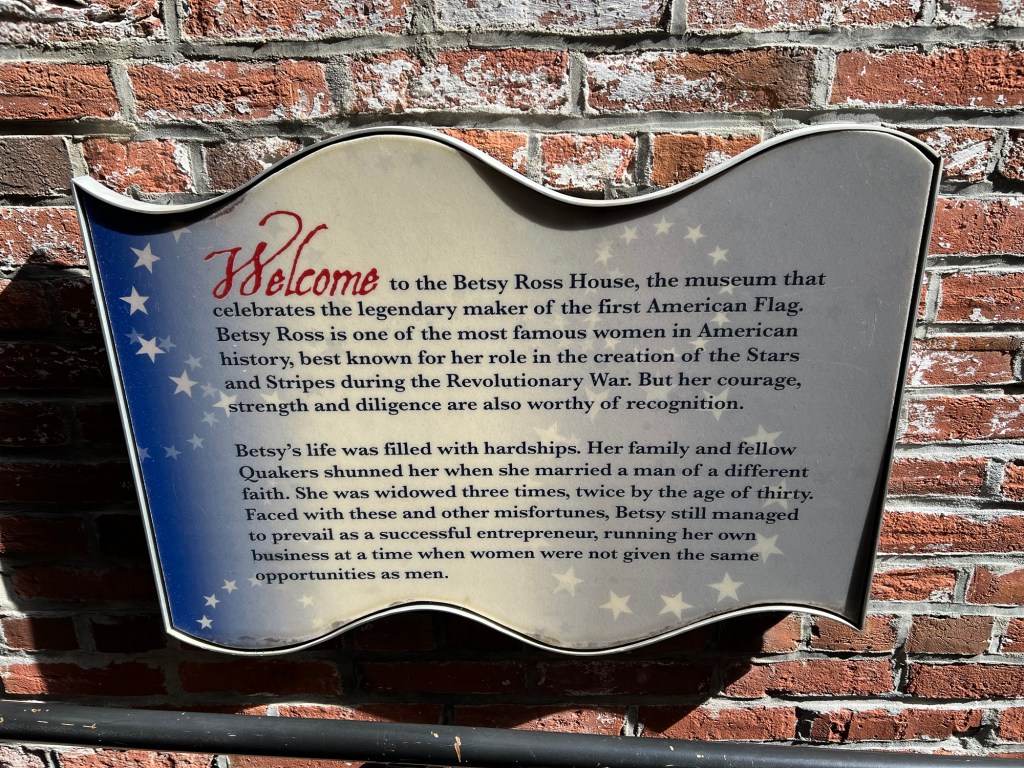
Historic Marker Two

Historic Marker Three

The Parlor area where Betsy Ross would have met her clients
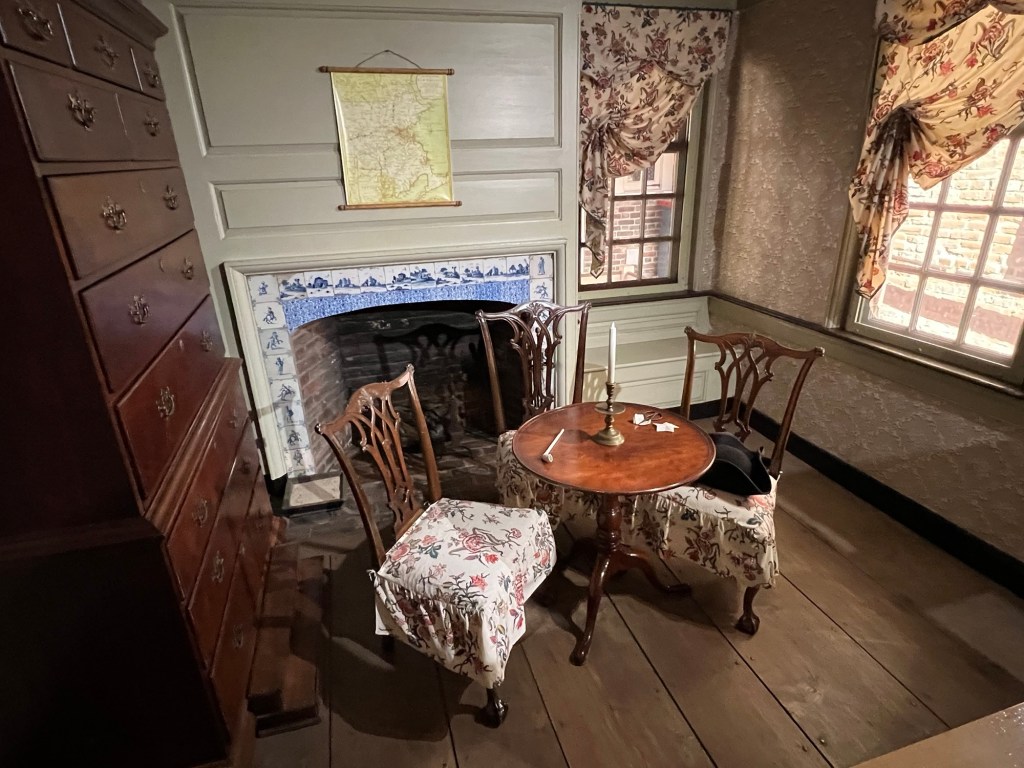
The recreation of the parlor area
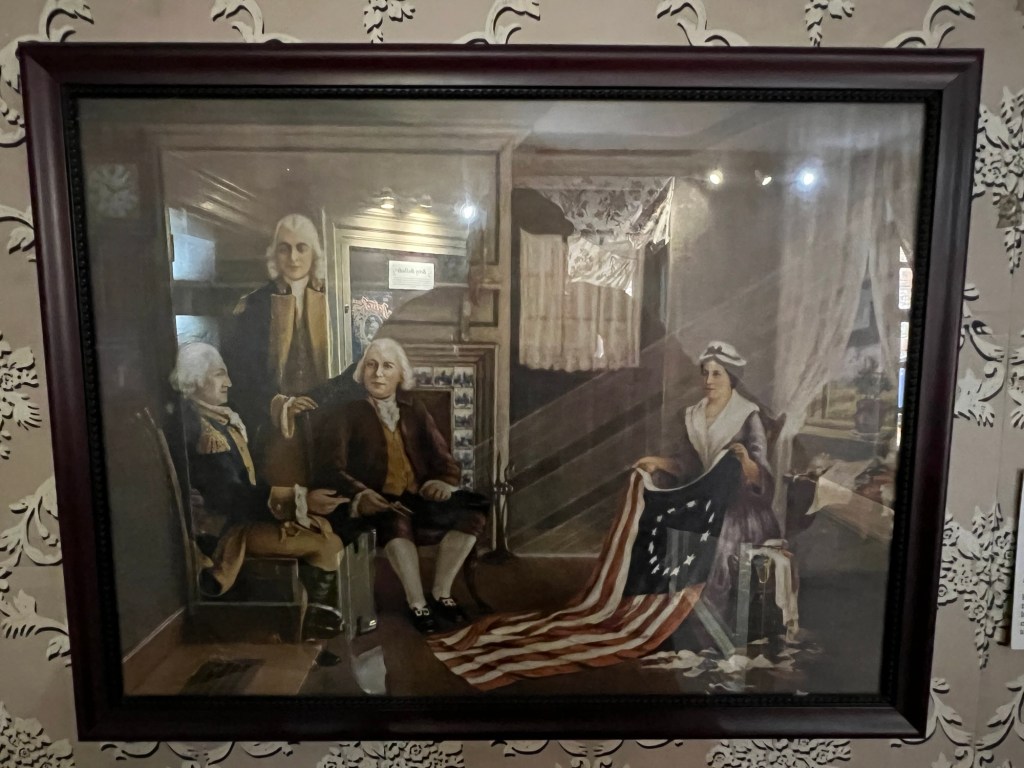
What the meeting would have looked like

Another look at the parlor

The story of the creation of the flag
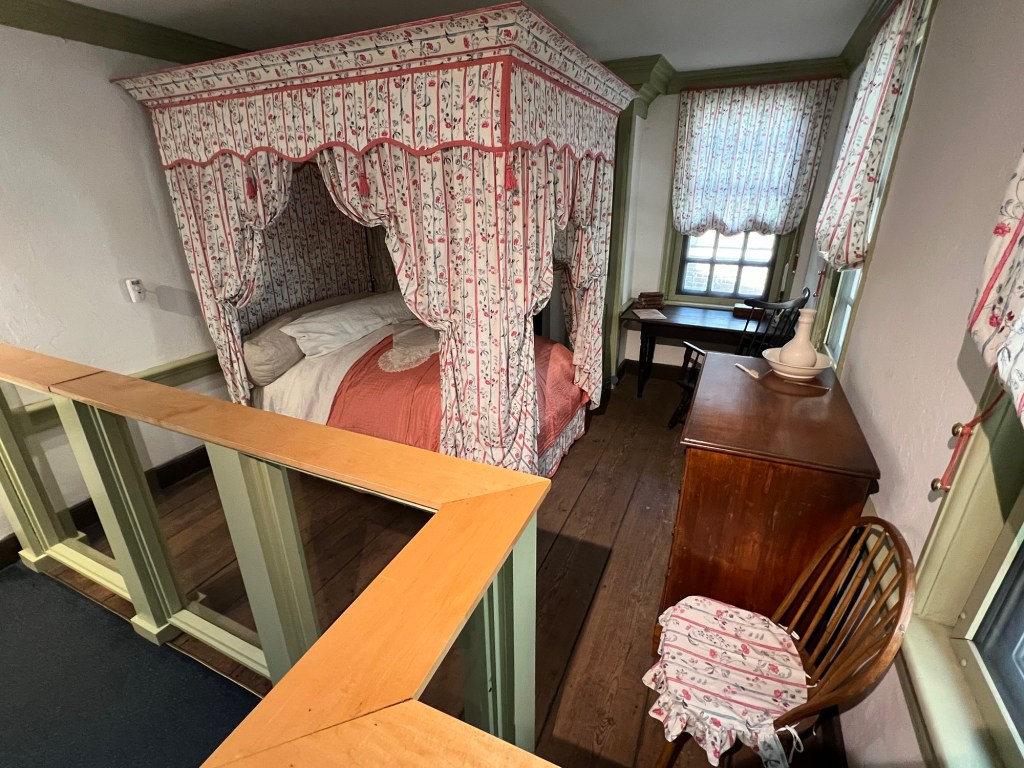
A view of the upstairs bedrooms
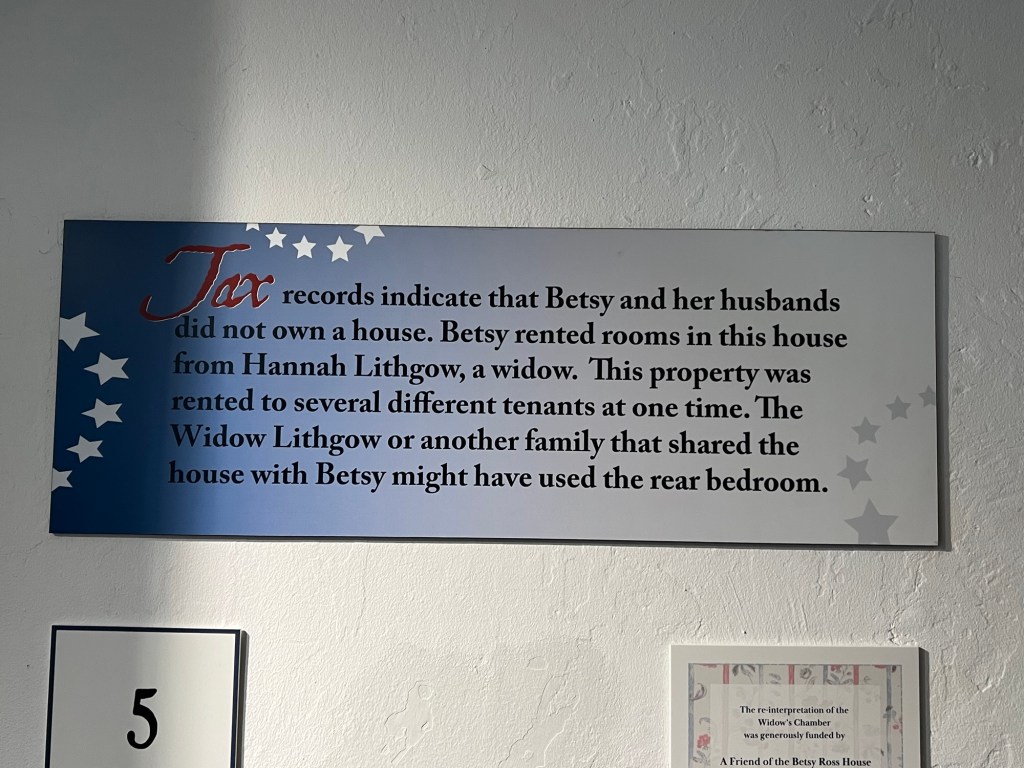
The house was a rented space for the Ross family

A better view of the upstairs bedroom
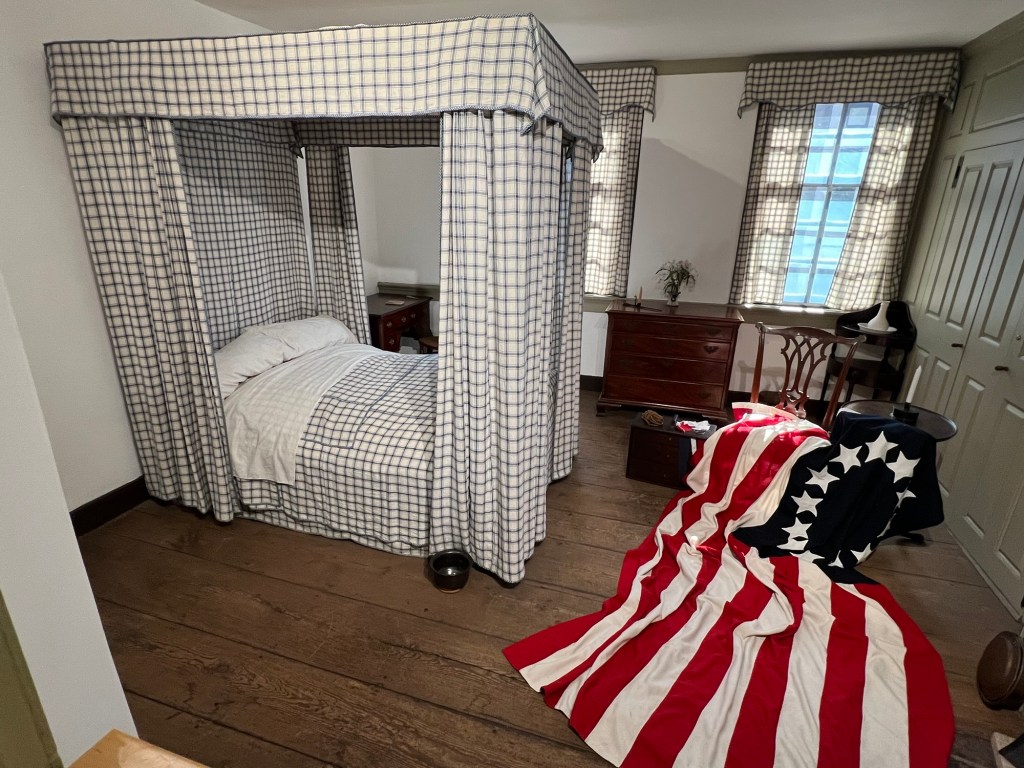
The Betsy Ross bedroom with a recreation of the flag

The bedroom where the flag was created

At the end of the tour we could talk to Betsy Ross herself and ask her questions about her life and her business. The actress who played Betsy asked all our questions in historic terms and to contemporary living. She was able to talk to us on her career and family and her visit from General Washington. She continued working until she was 76 years old.
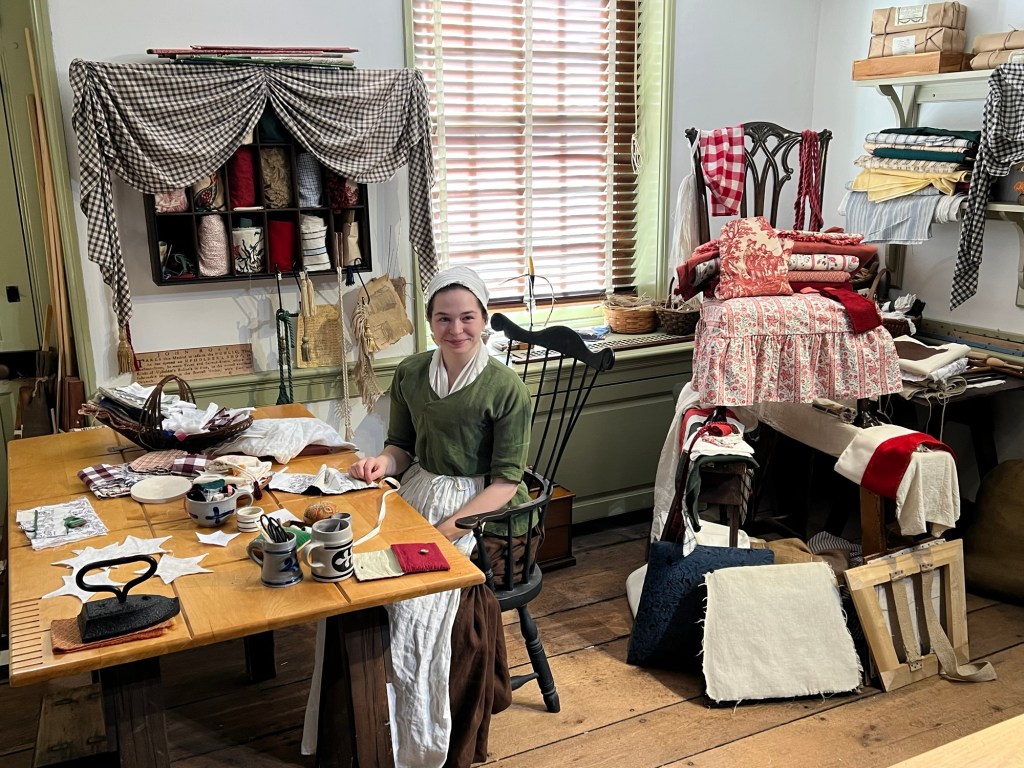
Meeting Betsy herself while she talked about her life

The Kitchen and Laundry area of the house:

The kitchen area was for family cooking and was stocked with items that would have been in day to day process of preparing meals.
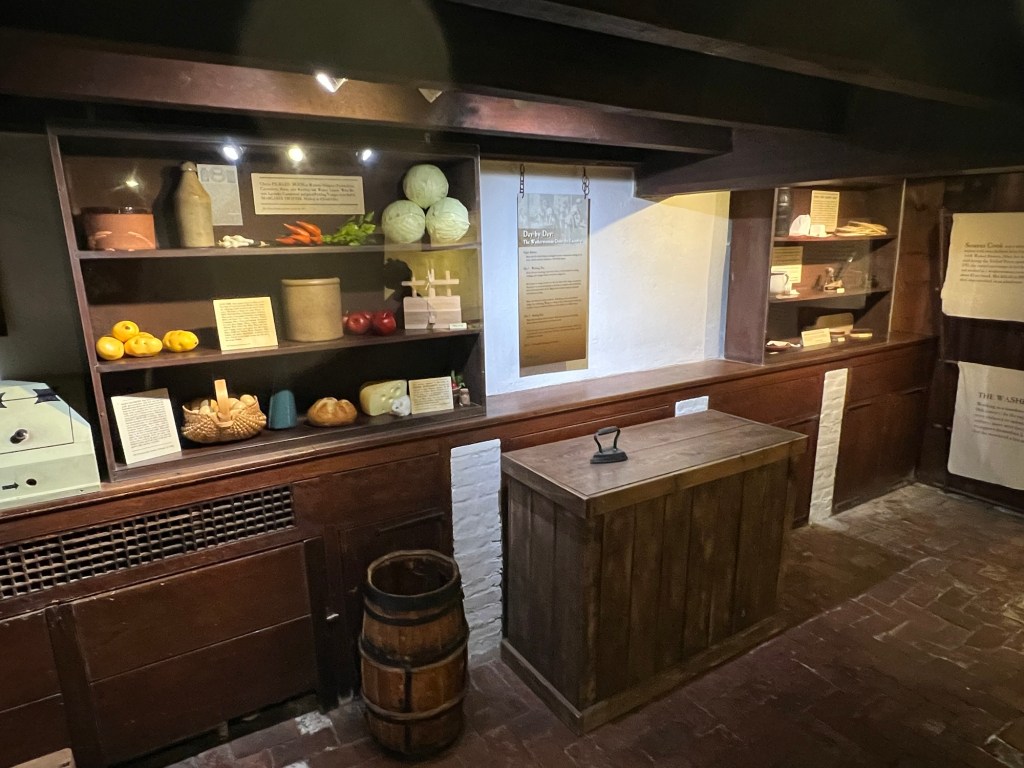
The Kitchen tour
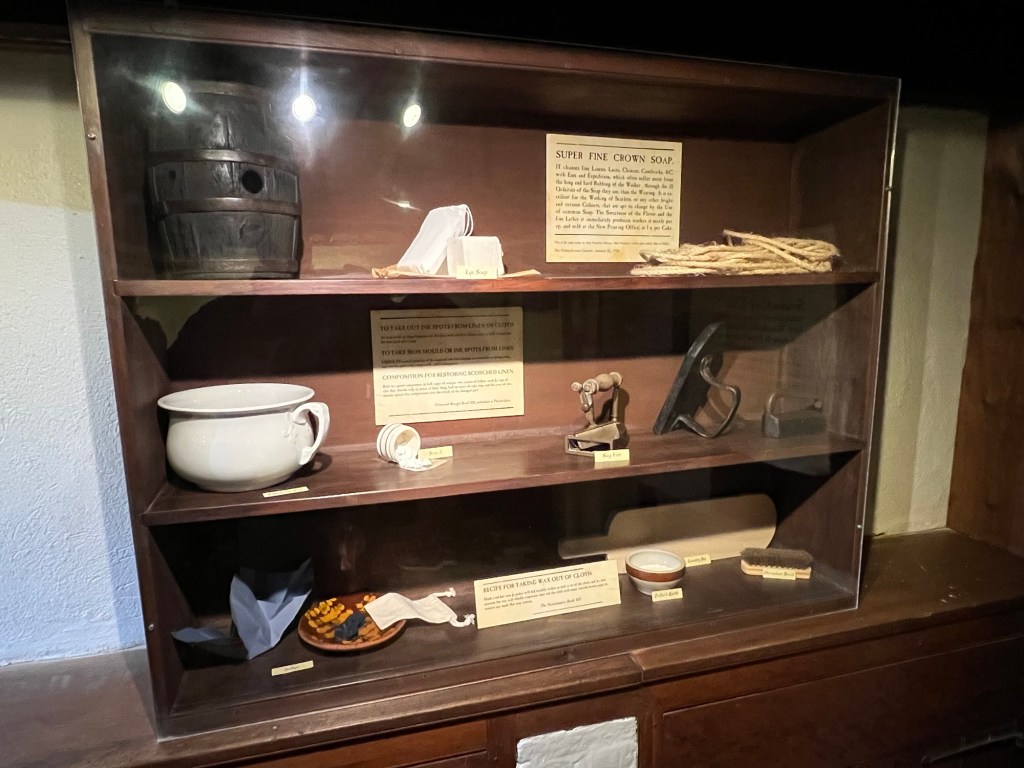
Kitchen and bath equipment

The job of a Laundress
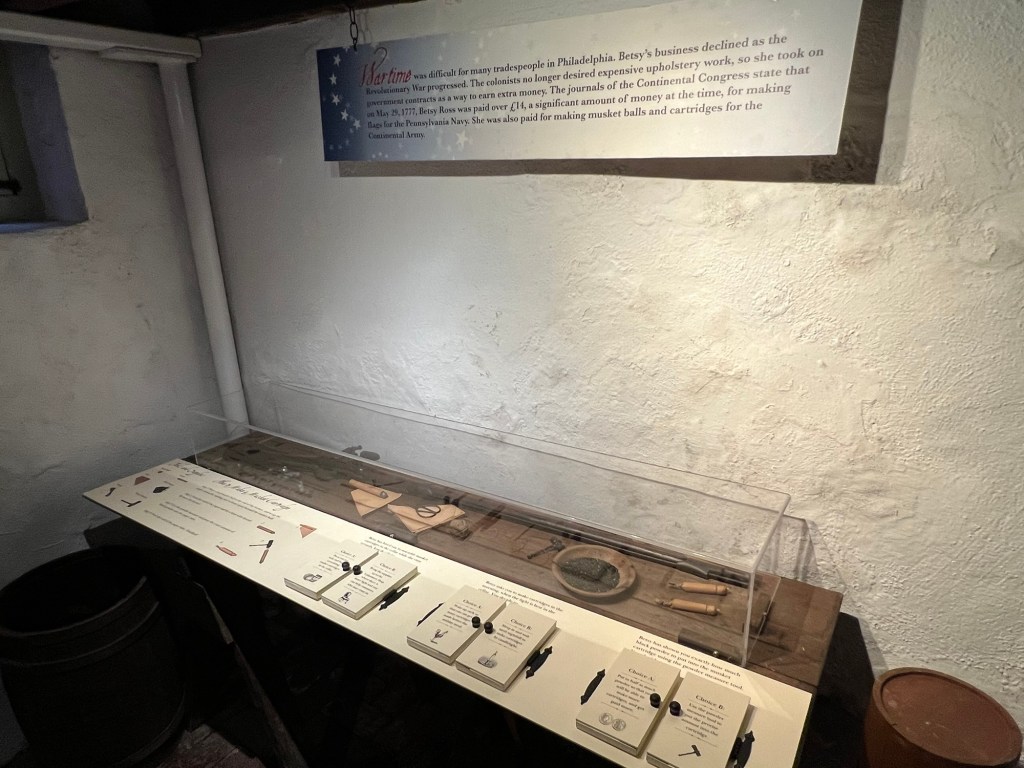
The role of the household
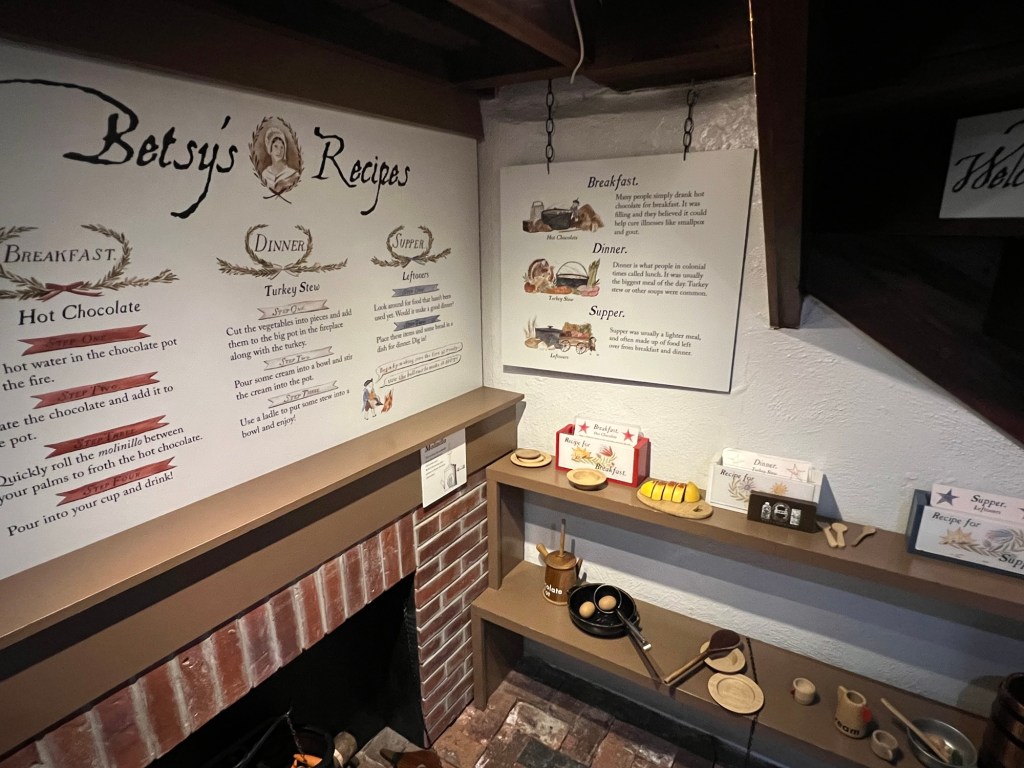
Cooking in the household

Betsy Ross’s life in business
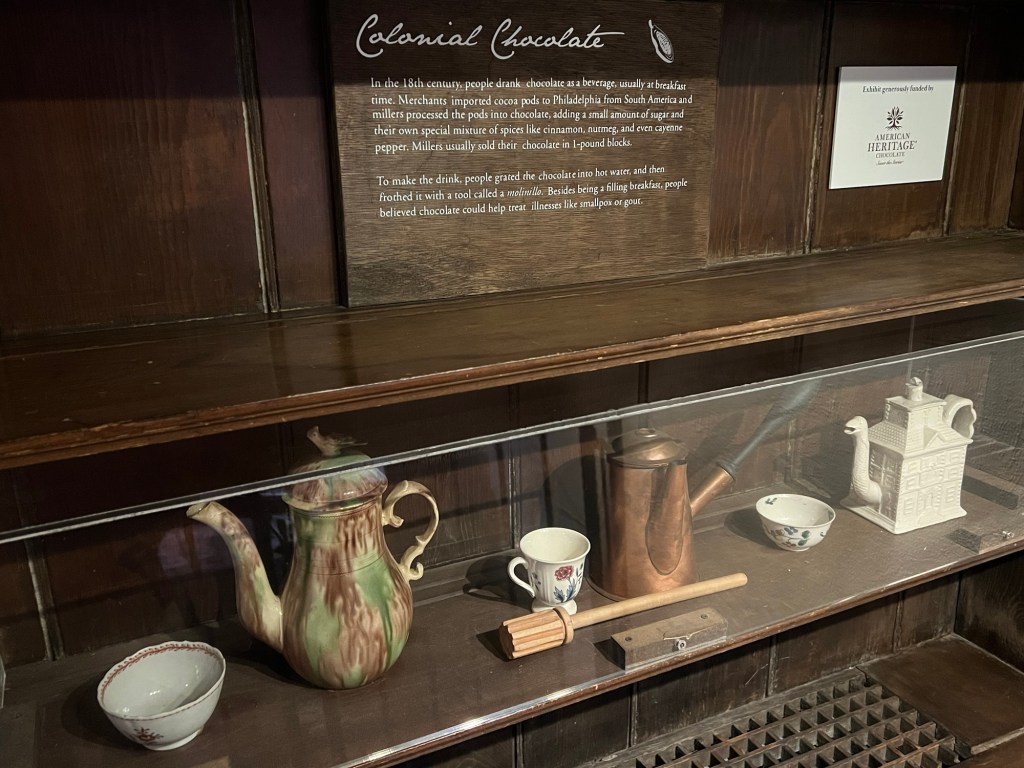
The kitchen equipment

The kitchen area of the house

By the late 19th century, most of the other colonial era buildings that once stood on this block of Arch Street, had been torn down and replaced with large industrial buildings and warehouses. Many people feared that Betsy’s home would meet the same fate.

In 1898, a group of concerned citizens established the American Flag House and Betsy Ross Memorial Association to raise money to purchase the house from the Munds, the people who resided there, to restore it and open it as a public museum in honor of Betsy Ross and the first American Flag.

Charles Weisgerber was one of the founding members of the Memorial Association. In 1892, he painted Birth of Out Nation’s Flag, a 9′ x 12′ painting that depicts Betsy Ross presenting the first American flog to George Washington, Robert Morris and George Ross.

To raise money to purchase the house, members of the American Flag House and Betsy Ross Memorial Association sold lifetime memberships to the organization for 10 cents. Each donor received a membership certification imprinted with an image of Birth of Our Nation’s Flag. Individuals were encouraged to form ‘clubs’ of thirty members. The person who formed the club would receive a ten-color chromolithograph of the Weisgerber painting, suitable for framing, in addition to certificates for each club member.

Weisgerber moved his family into the upstairs floor of the home in 1898 and immediately opened two rooms to the public. The first floor front room was a souvenir shop and the room in the back of the house where the meeting between Betsy Ross and the Flag Committee was said to have occurred, was open for visitors to view.

The courtyard of the home when you leave the house

The grave of Betsy Ross
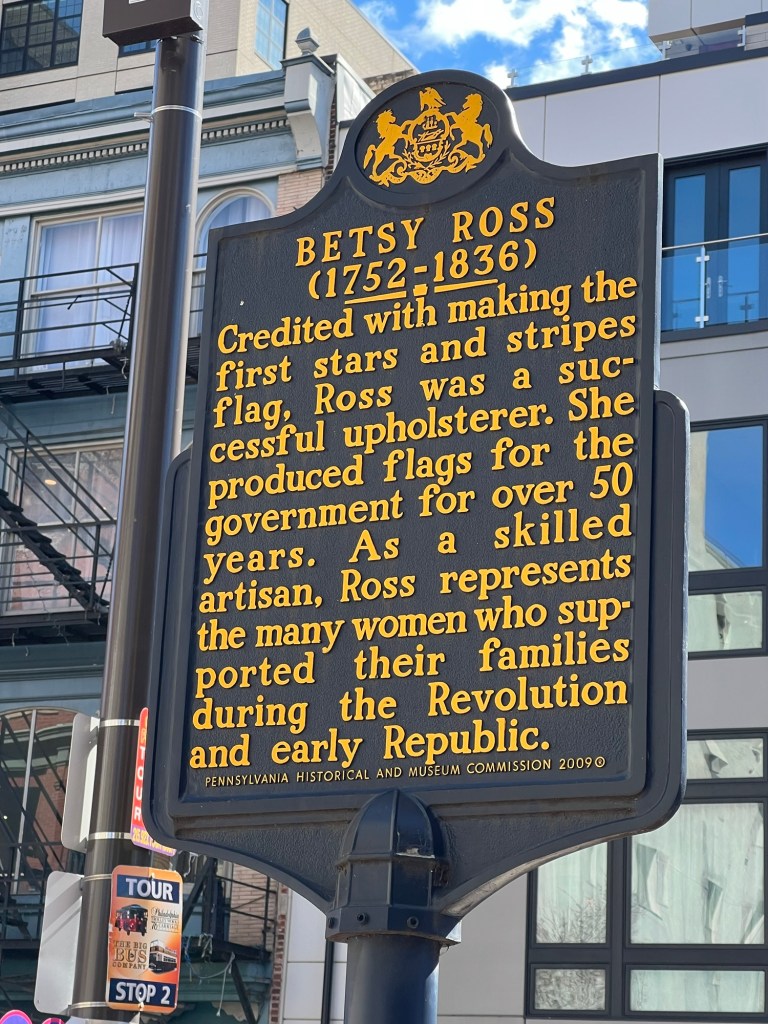
The historic marker outside the home

The Restoration of the Betsy Ross House:

The American Flag Hose and the Betsy Ross Memorial Association wanted to protect the house from fire and other dangers. They purchased the two properties on the west side of the house in 1929, in hopes of creating a civil garden. When the Great Depression hit, tourism and donations to the house slowed and much of the work on house and courtyard were delayed.

In 1937, structural changes and general wear and tear on the house led to the dire need for restoration work. A. Atwater Kent, a Philadelphia radio mogul, offered to pay up to $25,000 for the restoration of the house. Historical architect, Richardson Brognard Okie was commissioned to do the work.

Under Okie, the house’s original architectural elements were spared wherever possible. When the original components could not be reused, materials were obtained from demolished homes from the same period. A small structure containing a boiler room and a restroom was constructed in back of the original house with Revolutionary War era bricks.

In the historic house, three hidden fireplaces were uncovered, the front stairway and dormer were replaced and the door leading from the kitchen to the back of the house was restored. The most notable change, however, was to the front of the house. The doorway in the front of the building was moved from the western to the eastern corner and a new window was installed. Construction was completed and all eight rooms of the house were open to the public on Flag Day, June 14th, 1937.

By the 1940’s, the Betsy Ross House began to look like the place we recognize today but the Association’s work was not complete. A. Atwater Kent worked with the Association to pay off its final debts on the property. The entire property, including the historic house and courtyard was given to the City of Philadelphia in 1941.

In 1965, an annex building was added to the property and in 1974, the courtyard was renovated and the fountain was added. Two years later, the remains of Betsy Ross and her third husband, John Claypoole were moved from Mount Moriah Cemetery in Yeadon, PA to the garden on the west side of the Betsy Ross House courtyard.

In 1965, a private non-profit organization, Historic Philadelphia Inc. began leasing the property from the City of Philadelphia and continues to manage the site. The Betsy Ross House remains dedicated to its mission of preserving the historic site and interpreting the life of Betsy Ross, a working class, 18th Century tradeswoman. Visitors can view six period rooms, including the only interpretation of an 18th century upholstery shop in the country. The rooms are furnished with period antiques, 18th century reproductions and objects that belonged to Betsy Ross and her family. Highlights of the collection include Betsy Ross’s walnut chest on chest, her Chippendale chair, her eyeglasses and her bible.

(Betsy Ross House Museum website/Wiki/Pamphlet)

The historic district of ‘Old Town’

Elfreth’s Alley Museum                                                            126 Elfreth’s Alley                                                         Philadelphia, PA 19106

Elfreth’s Alley Museum 126 Elfreth’s Alley Philadelphia, PA 19106

Elfreth’s Alley Museum

126 Elfreth’s Alley

Philadelphia, PA 19106

(215) 574-0560

Open: Sunday-Wednesday Closed/Thursday-Saturday 12:00pm-4:00pm

Admission: Adults $3.00/Children 7-12 $2.00/Children under 7 Free

http://www.elfrethsalley.org/

https://www.facebook.com/elfrethsalleymuseum/

My review on TripAdvisor:

https://www.tripadvisor.com/ShowUserReviews-g60795-d138249-r793534882-Elfreth_s_Alley-Philadelphia_Pennsylvania.html?m=19905

The Elfreth’s Alley Museum at 126 Elfreth’s Alley

I came across this interesting little historical museum when I was touring Elfreth’s Alley in Old Town, Philadelphia. What an interesting look back at the merchant trade class of the 18th century. It really showed how the average worker used both their home as a business and as a home.

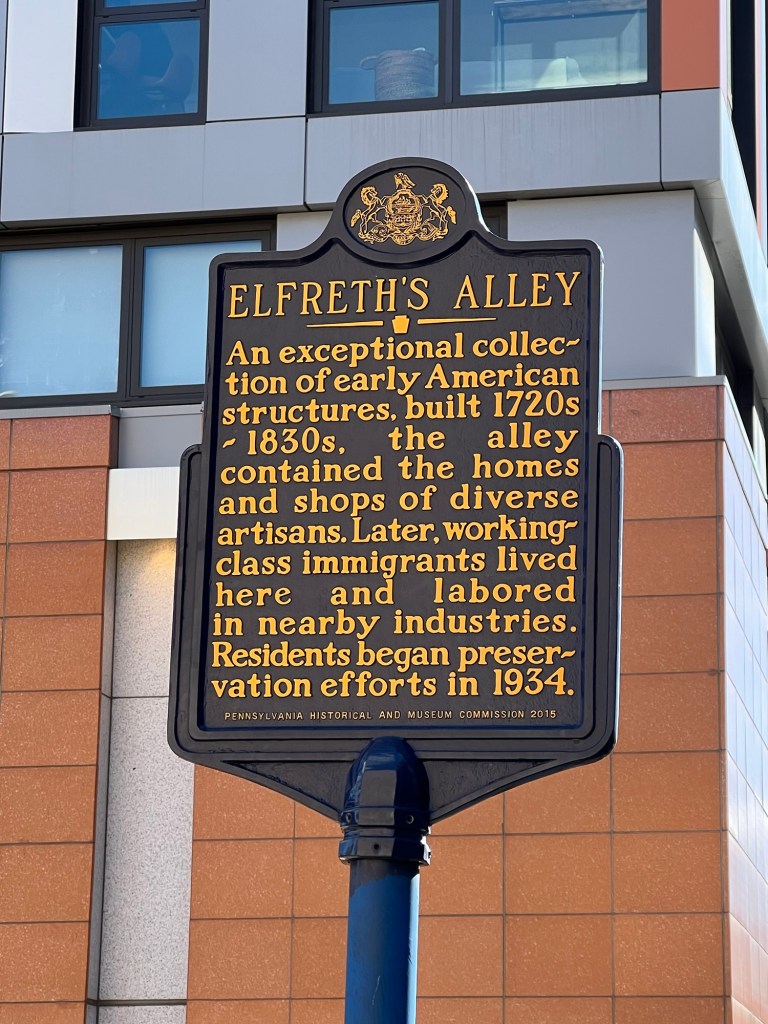
The historic sign for Elfreth’s Alley

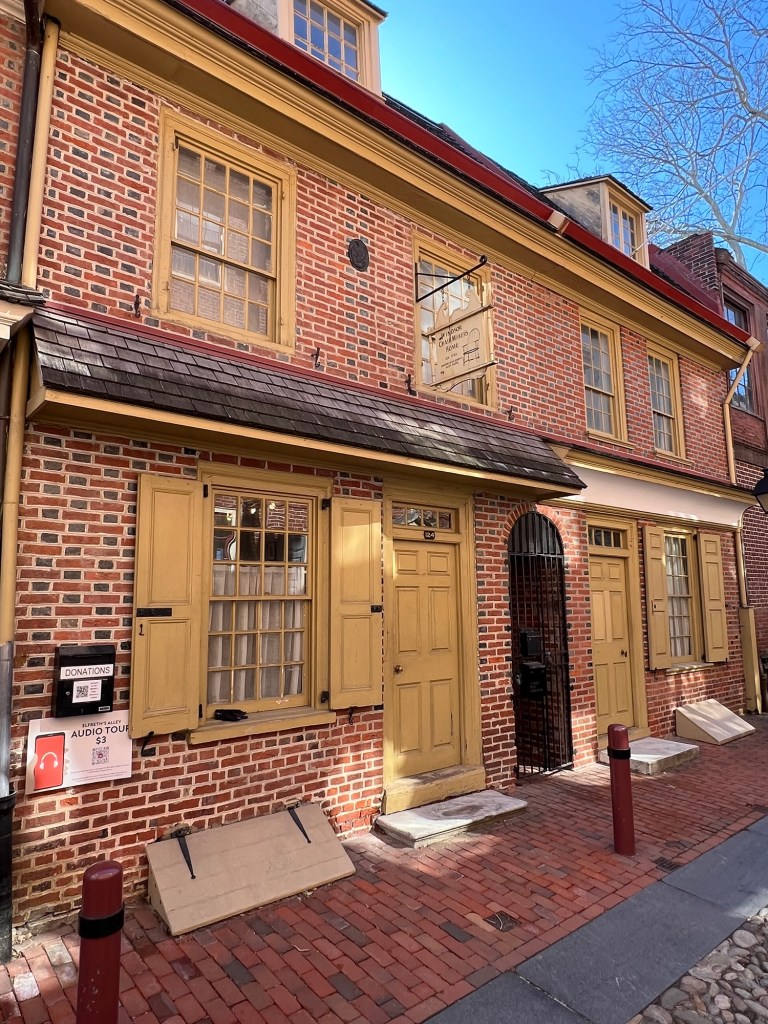
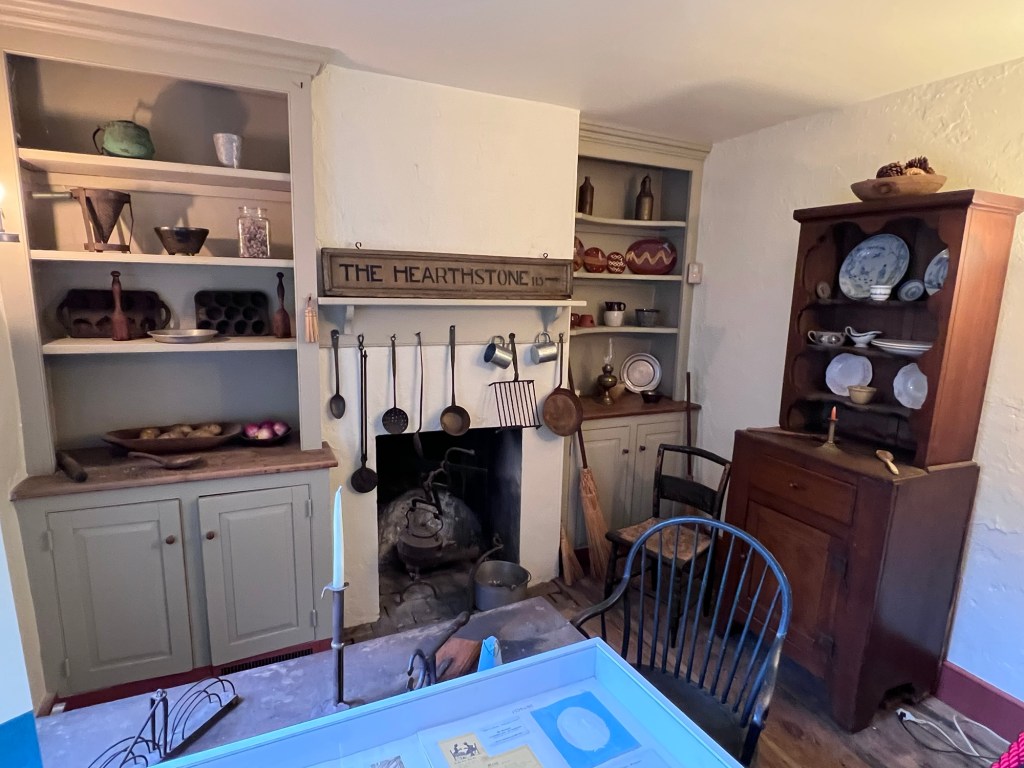
The home had been former business of a pair of dressmakers who used the front parlor as their store and showroom, the side room used as the kitchen, the upstairs room was the living quarters for a very large family (I believe that the family had eight children according to the tour guide) and a nice sized garden in the back of the home.

The front work and show room

The inside display of the museum shows the dress making profession of the first two owners of the house and their work with the Philadelphia clients they catered to in the Upper Middle and Upper Classes.

The story of the dress business

The type of commissions the ladies would get from the Upper Middle Class to Wealthy women from the City

The front rooms were used as the workplace showroom where the merchants would greet their customers, decide on the patterns and make and then conduct their business. When they were done for the day, they just closed up shop. What I thought was interesting about the two business owners is that they took most of their meals out at the local pub. Time as dressmakers left them little time to cook so meals had to be eaten out.

Later on in the home’s history, a kitchen would be added on later by a German businessman who owned the house

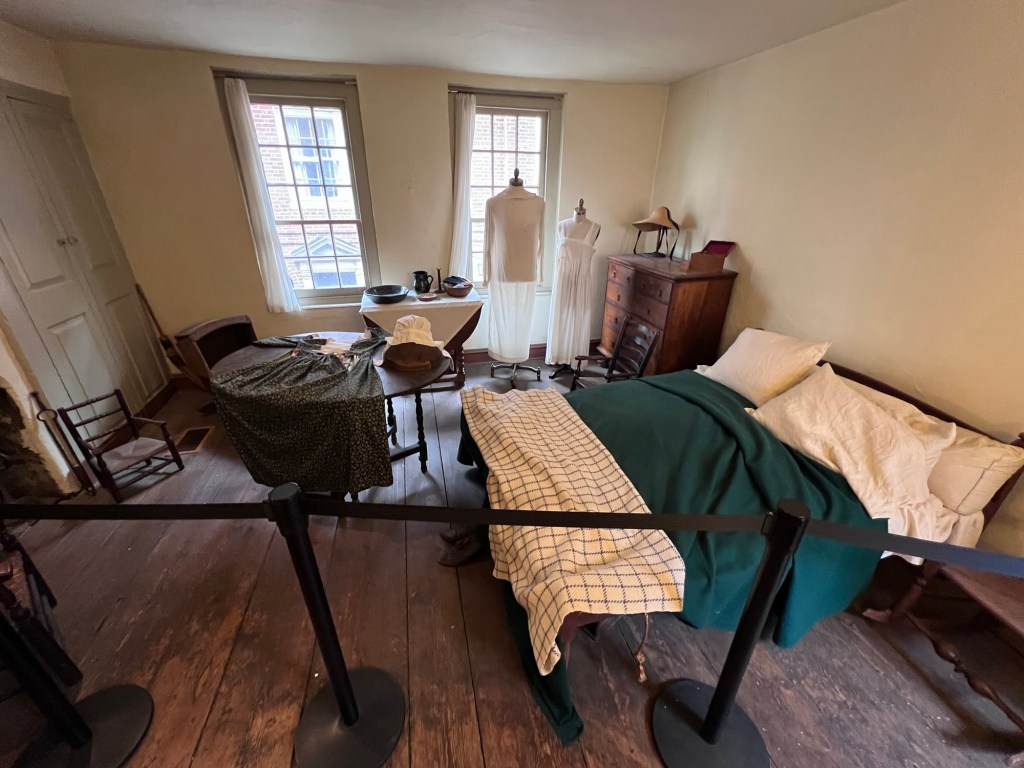
The upstairs bedrooms

When you climb the narrow stairs to the second floor, it leads to the loft living space. When I heard how many people lived at the house, I could not imagine that today. Children today pretty much have their own rooms but these people lived on top of one another.

It was such a small space for a family of ten. Then you had to walk down another narrow staircase to come back to the first floor.

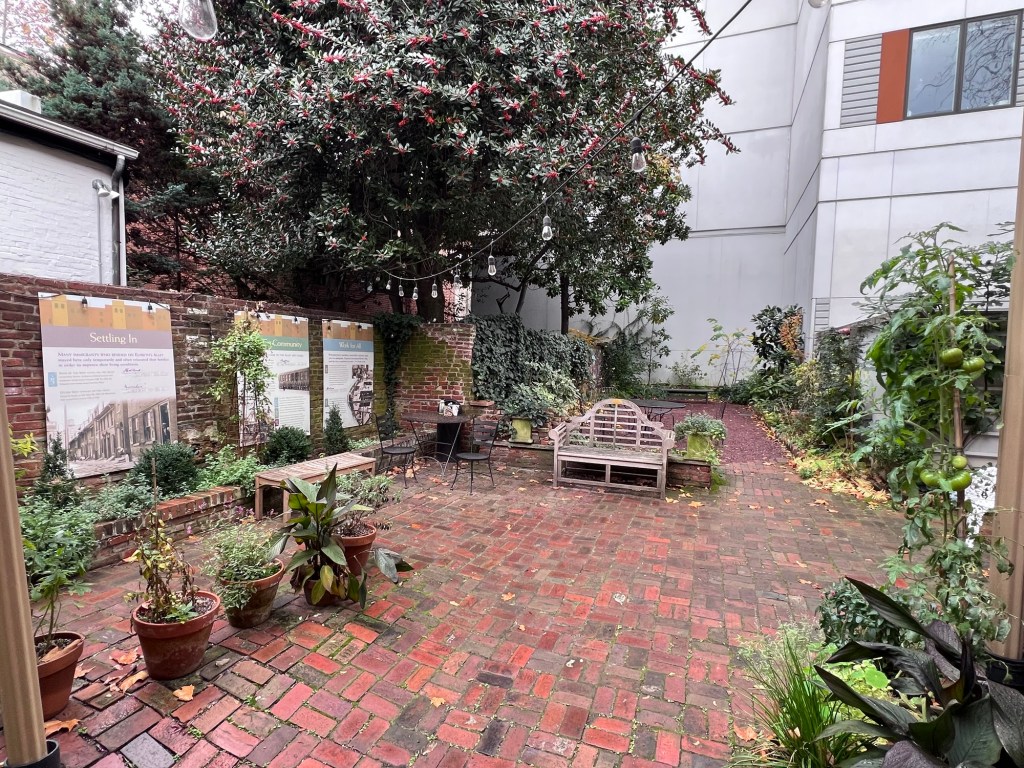
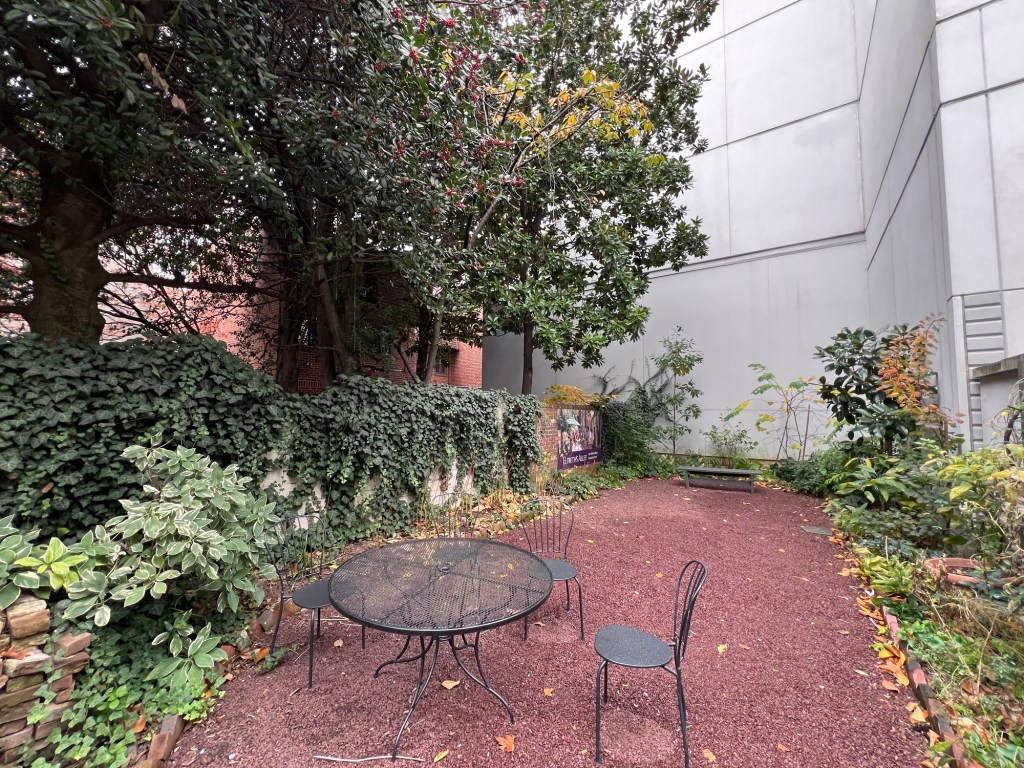
The backyard garden was really nice with interesting plantings, a nice sized garden of flowers and benches to cool under on a hot day. Much of the backyard was still in bloom when I visited in November of 2025.

The backyard plantings

The seating area in the courtyard

The gardens behind the home

The plants in bloom in the fall

I am not sure if the gardens were historically accurate but it was a nice place to relax on a hot day. It is worth it to visit this small home to see how another generation worked and lived under very different conditions (Elfreth’s Alley Museum self-guided tour).

The back gardens

Don’t miss the Gift Shop on the way out

The History of Elfreth’s Alley Museum:

Elfreth’s Alley Museum is located at 124-126 Elfreth’s Alley, preserves the 18th Century home of a pair of dressmakers. Restored to its appearance in the Colonial era, exhibits the house and tour guides interpret the life of the house and alley’s residents in that era. There are 32 houses on the street that were built between 1703 to 1836 (Wiki/Museum site).

The History of Elfreth’s Alley:

Elfreth’s Alley is named after Jeremiah Elfreth, an 18th century blacksmith and property owner. Among the alley’s residents were tradesmen and their families. Their trades included shipwrights, silver and pewter smiths, glassblowers and furniture builders. In the 1770’s, one third of the households were headed by women (Wiki).

The Georgian and Federal style houses and cobblestone pavement of the alley were common in Philadelphia during this time. The houses are typically small and many are uniquely Philadelphian Trinity houses. In the late 19th and early 20th centuries, industry began to change the street with a stove factory being built in 1868. Soon it was followed by more factories that surrounded the area (Wiki).

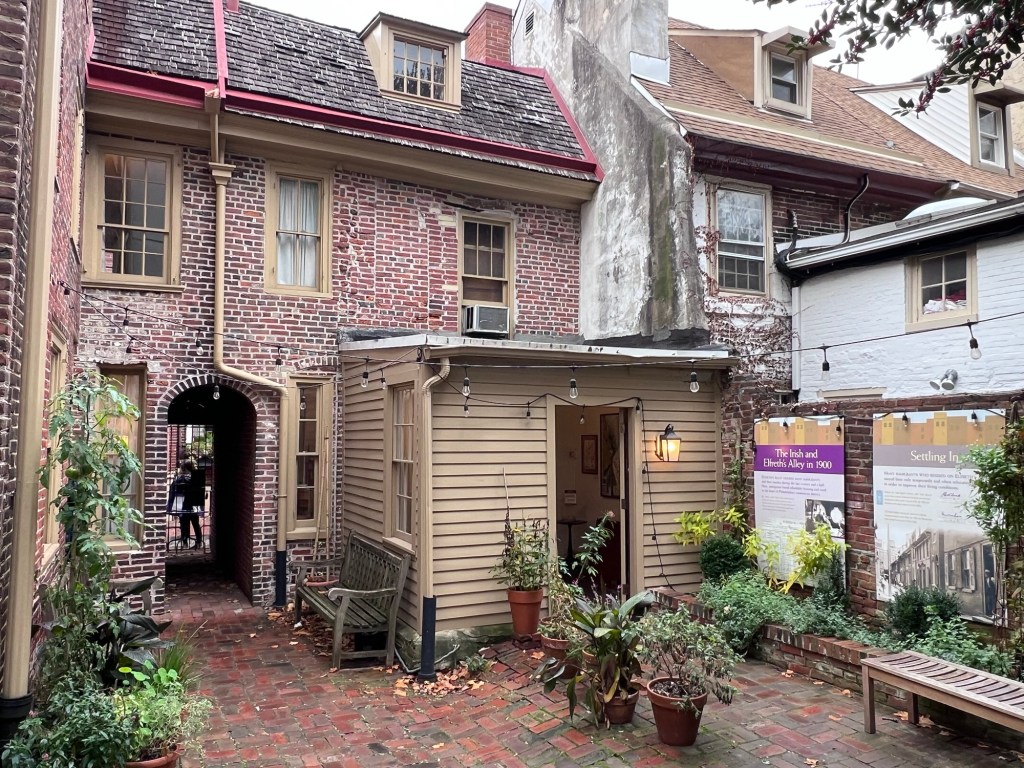
Elfreth’s Alley Museum site and homes

In 1934, the Elfreth’s Ally Association (EAA) was founded to preserve the alley’s historic structures while interpreting the streets history. The EAA helped save the street from demolition and also lobbied the City to restore the alley’s name to Elfreth’s Alley. The area is an example of urban 18th and 19th century architecture and is part of the “Old Town” neighborhood of Philadelphia (Wiki).

The neighborhood hosts many events so please check their website for the dates and events.

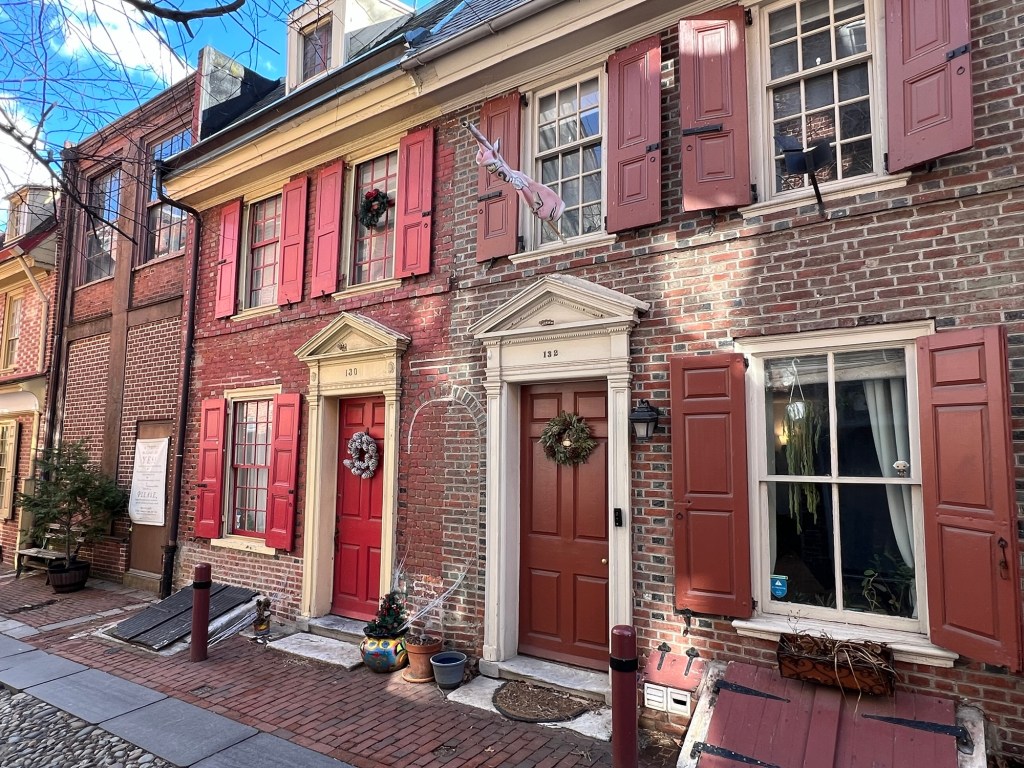
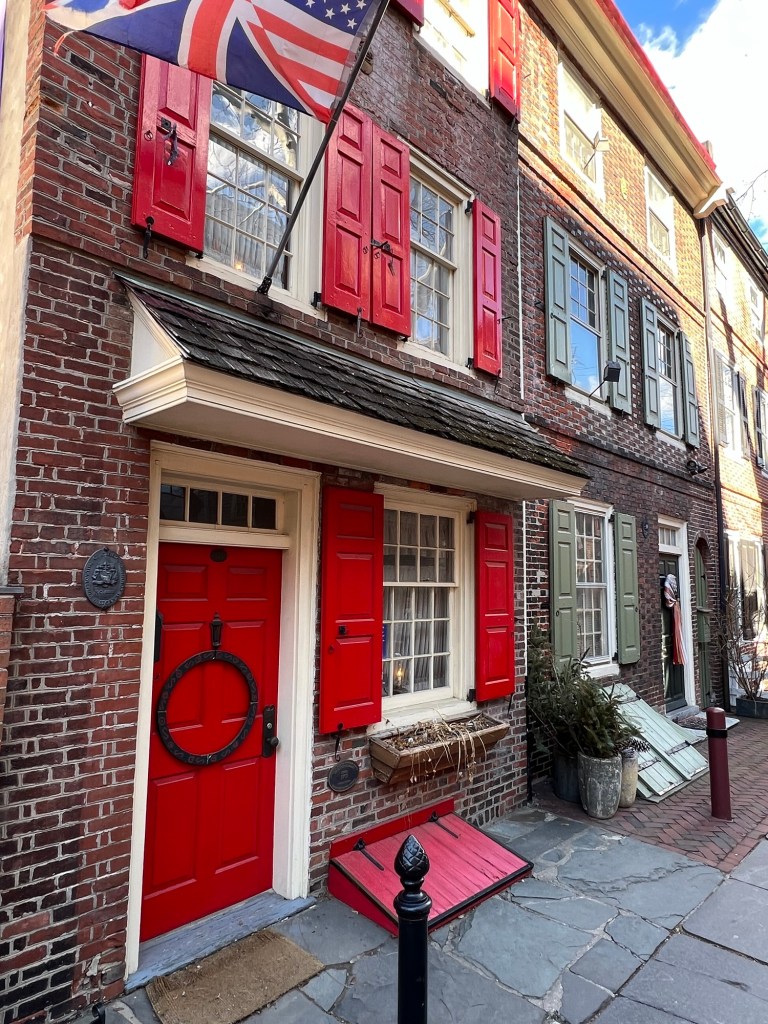
Homes in Elfreth’s Alley

Homes in Elfreth’s Alley

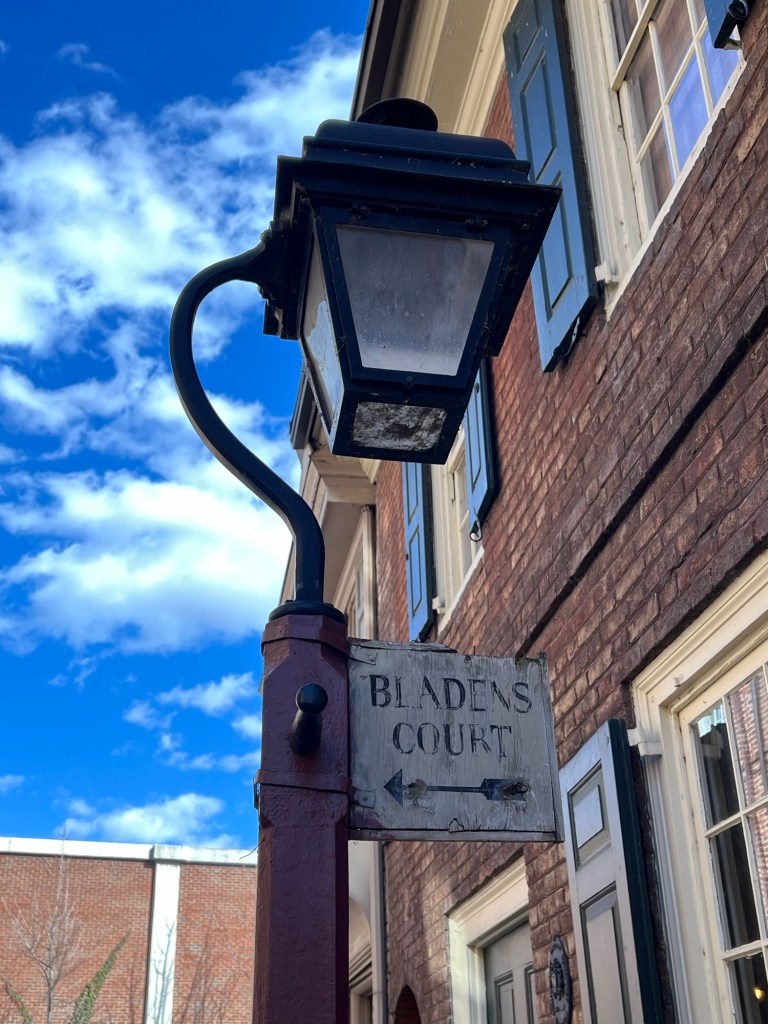
The sign for Bladen’s Court

The entrance to Bladens Court

Bladen’s Court

The historic sign for Bladen’s Court

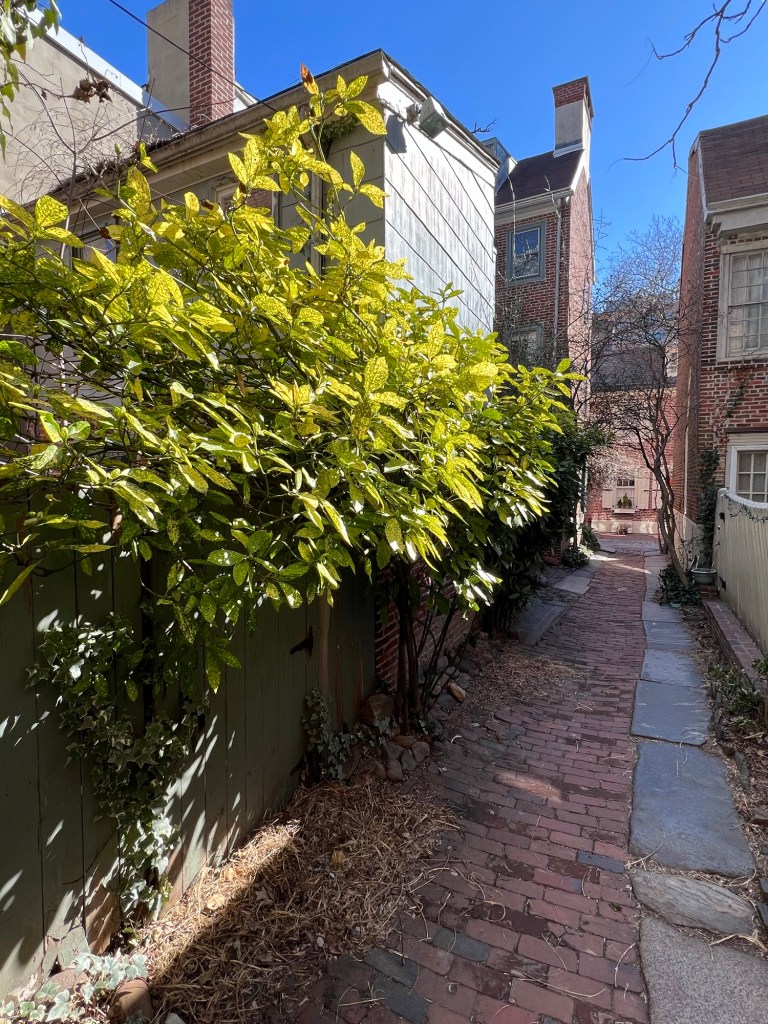
The back part of Bladen’s Court

The back part of Bladen’s Court

Philipsburg Manor House                                                        381 North Broadway                                                            Sleepy Hollow, NY 10591

Philipsburg Manor House 381 North Broadway Sleepy Hollow, NY 10591

Philipsburg Manor House

381 North Broadway

Sleepy Hollow, NY 10591

(914) 336-6900

Open: Please check the website for COVID updates

Fee: Please check the website for the COVID updates

My review on TripAdvisor:

https://www.tripadvisor.com/Attraction_Review-g48622-d299069-Reviews-Philipsburg_Manor-Sleepy_Hollow_New_York.html

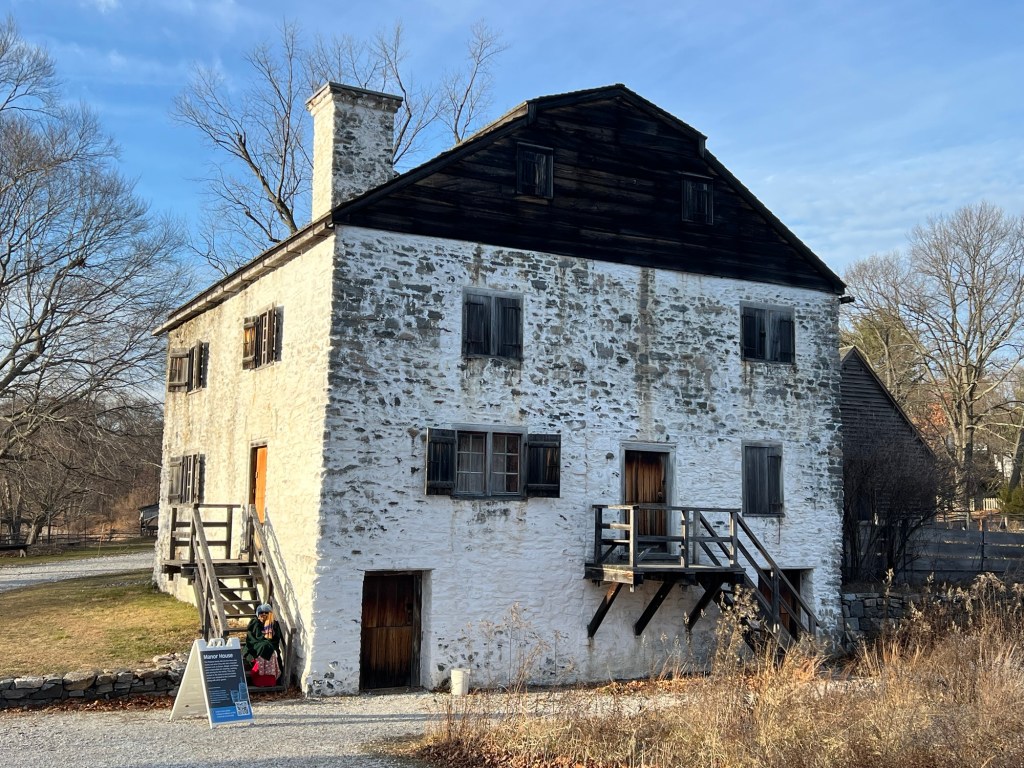
The Philipsburg Manor House from the back

I have visited the Philipsburg Manor House and Estate many times over the years. During the “Headless Horseman” Halloween activities, the house is open for tours. You are able to tour the rooms and see the home in a spooky environment. The house was lit by candles and the tour guides lead you through the house.

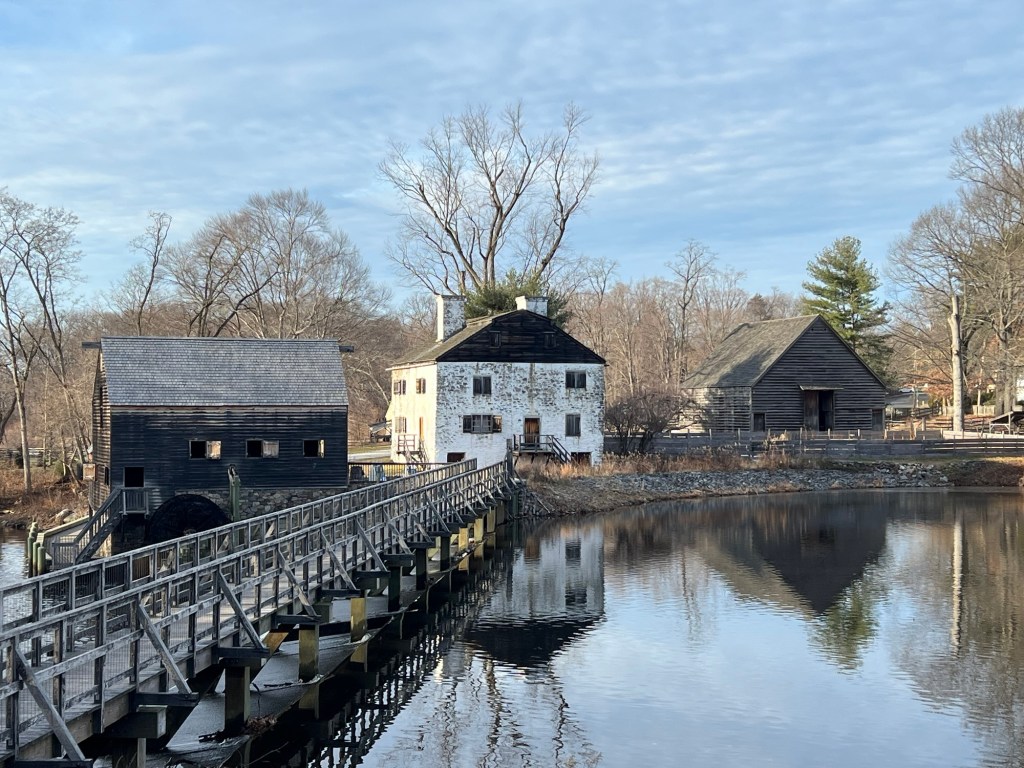
The Manor House from the bridge over the creek

During a special event at the holidays, the house had seasonal decorations, lit by a combination candles and open hearth fires in the fireplace and tour guides explained a Colonial holiday season.

The estate during the day

The Manor House as it was explained to me was a place where the Philipse family stayed when they were away from the main family mansion and was doing business on the estate. So the home was comfortable and workable and functional but not luxurious as the main manor house where the family lived.

The back gardens are used during the Spring and Summer to grow fruits and vegetables

The kitchen, common room and bedrooms were nicely furnished at the time for the owners visits but was not elegant in the form of the main manor house.

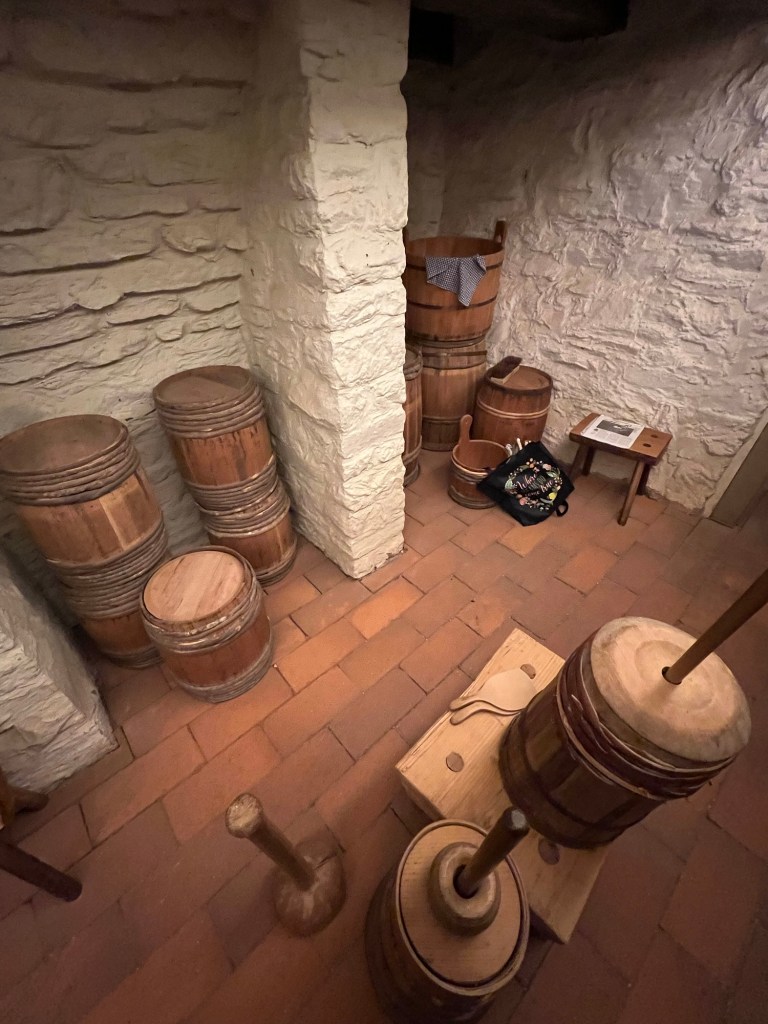
The butter-churning work area

This was full working estate at all times. The Mill is located near the manor house and their are walking paths around the house.

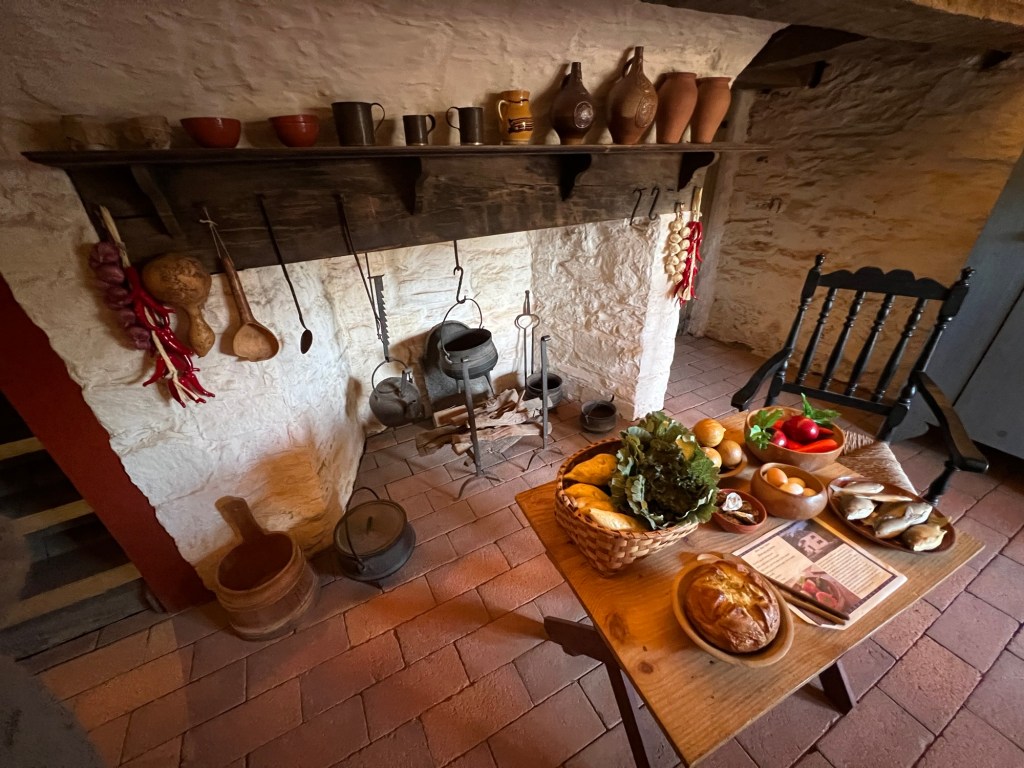
The downstairs kitchen at the manor house was functional but not elaborate

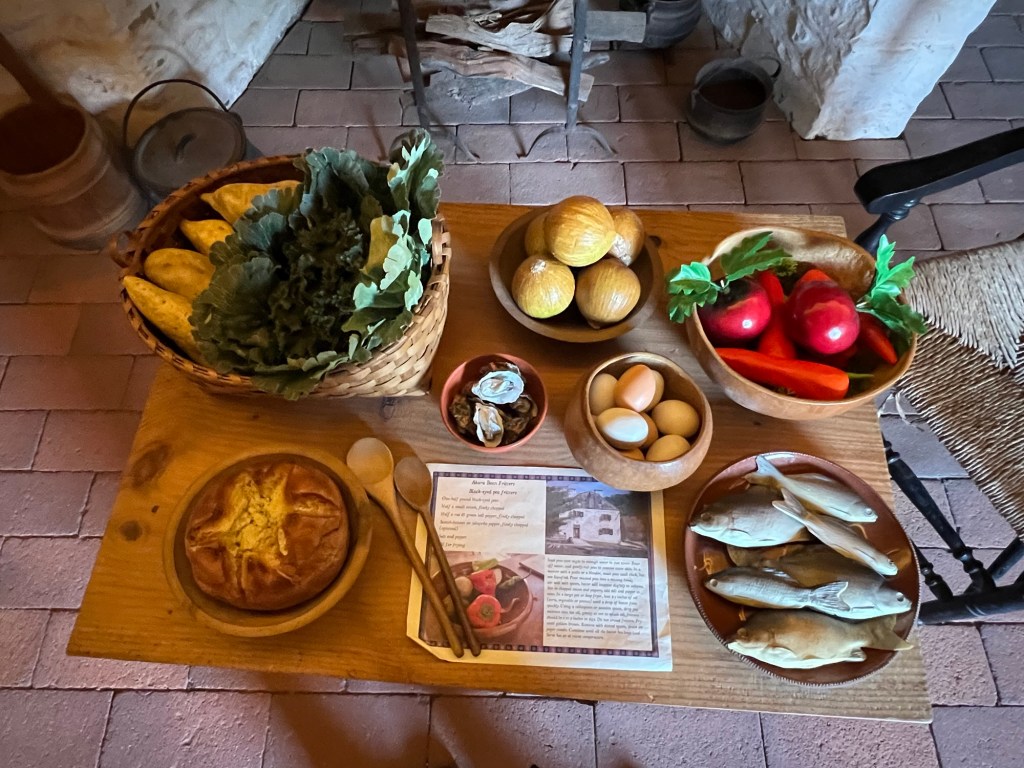
The farm bounty was plentiful during the seasons

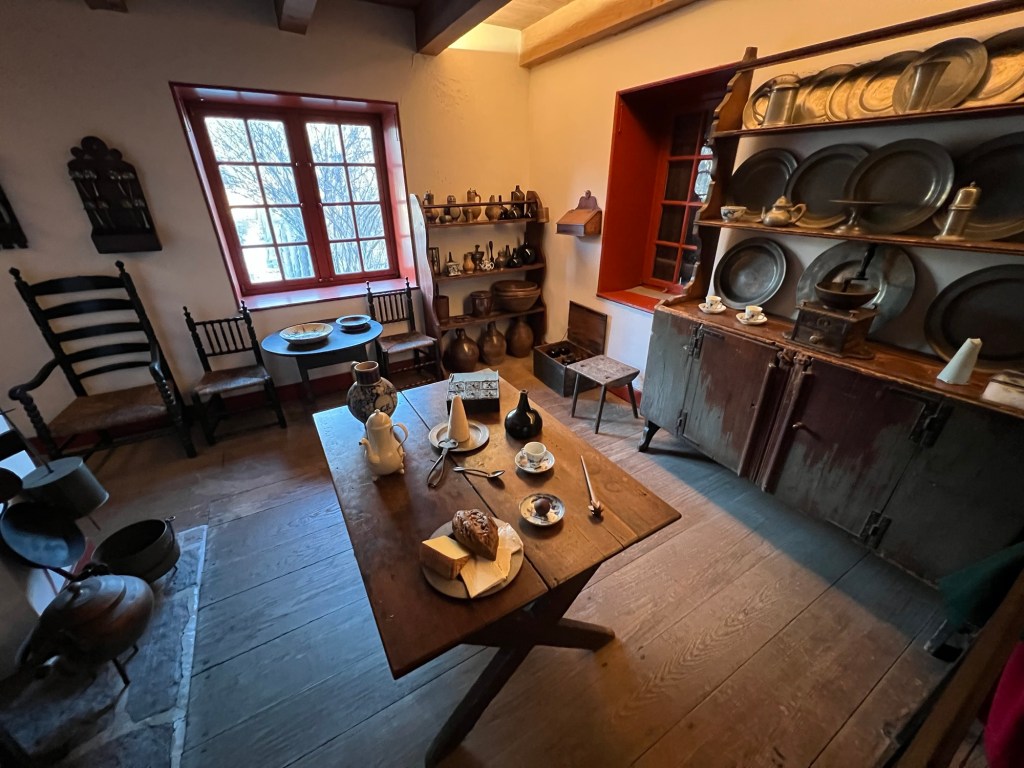
The upstairs kitchen is where all the owners meals were prepared along with all the dish ware and crockery.

The upstairs kitchen

The items of a wealthy Dutch kitchen

During the Halloween season, both Tarrytown and Sleepy Hollow are busy with activities with readings, cemetery tours, ‘haunted events’ and other activities. Please check out the Historic Hudson Valley website for the roster of events. Things have changed since the era of COVID.
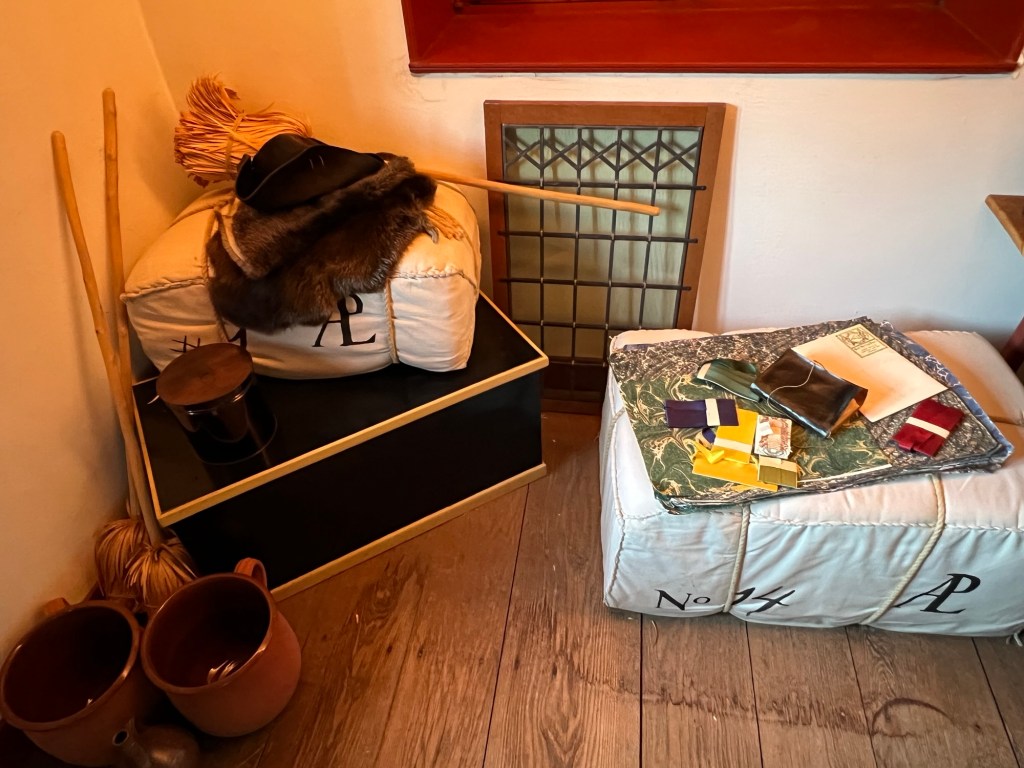
A recreation of the owners bedroom at the Philipsburg Manor

During the Christmas holidays, the house in the past was decorated for Christmas but in the post-COVID time, the house was just open for tours. In December 2022, I got to visit the house the week before Christmas before it closed for the season. Like most older historical homes and sites will be closed until the Spring so this was the last opportunity to see the house and grounds. Unlike the past, the house was kept in regular touring state.

The guest bed chamber

When I revisited the estate in 2025, it was the last weekend it was open for touring and the house had no decorations for the holidays as again this was not their primary residence.

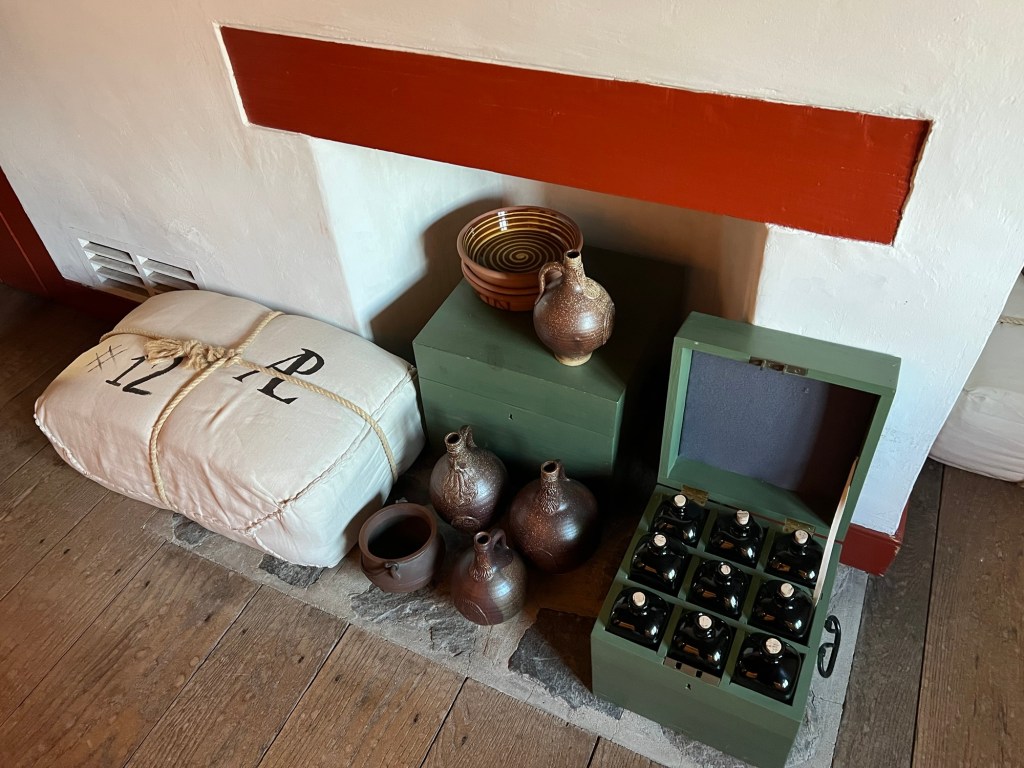
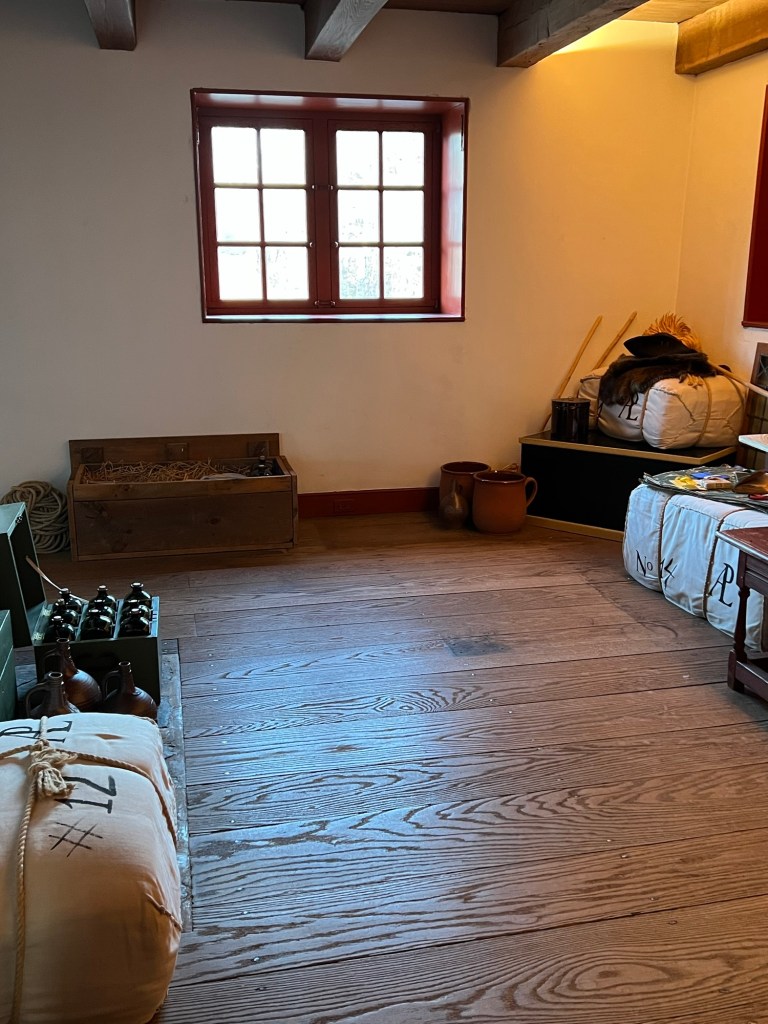
We got to tour the kitchens and bedrooms of the home and heard a talk on how the how was run when Mr. Philispe was not in residence. There was also a market within the house where tenant farmers could buy their wares for their homes.

The tenant farmer shop

The tenant farmer shop

This was strictly a working farm and mill for the family with the main residence being closer to the City.

The difference in 2025, we were finally able to take pictures indoors and that helped give mug readers a clear view of what to expect they come to visit.

The estate at the close of winter

Most of the action was outdoors with tours of the mill, the outside ovens used for the family’s bakery business and outdoor gardens that were cleared out for the winter months.

The wheat processing area

The processing area

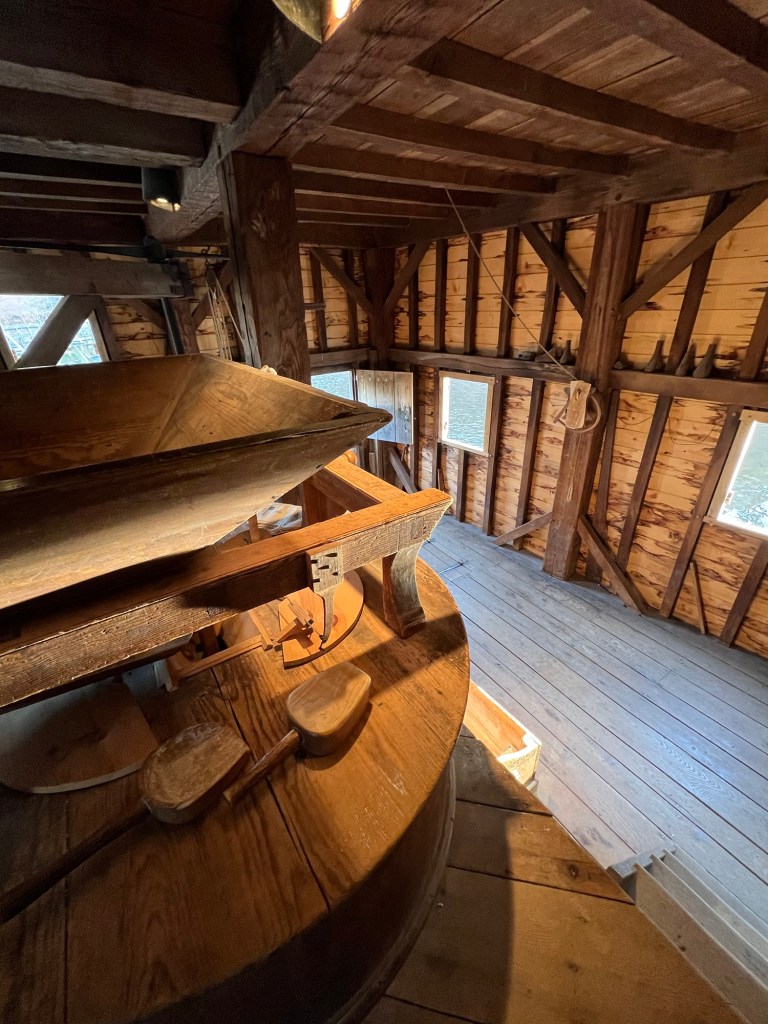
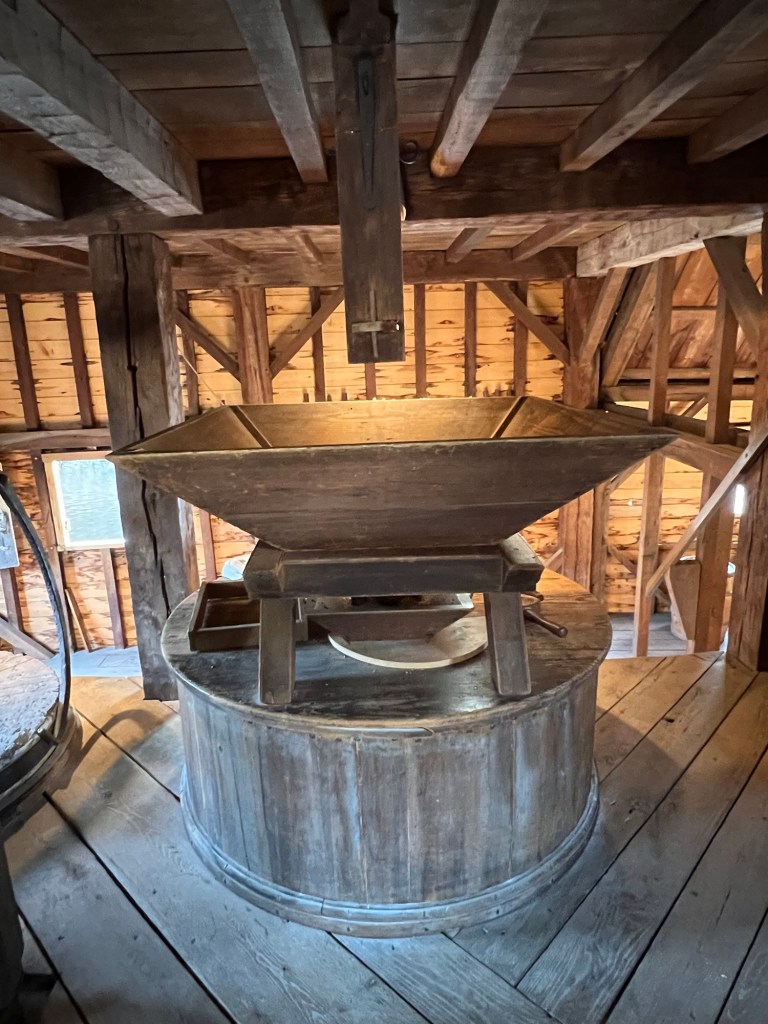
The Mill is where the process of converting wheat grown on the estate was made into flour for the New York market.

The Milling wheel to process wheat to flour

The system of wheat processing

The History of the Philipsburg Manor House:

(WIKI/Historic Hudson River Valley Society)

The manor house in the Fall of 2024

The grounds around the park

The sunset over the estate in the Fall of 2025

The Philipsburg Manor House is an historic house in the Upper Mills Section of the former sprawling Colonial-era estate known as Philipsburg Manor. Together with the water mill and the trading site the house is operated bas a non-profit museum by the Historical Hudson River Valley. It is located on US 9 in the Village of Sleepy Hollow, NY. (Wiki)

The Philipsburg Manor House and Mill area of the estate

The Manor House dates from 1693 when wealthy Province of New York merchant Frederick Philipse was granted a charter for 52,00 acres along the Hudson River by the British Crown. He built this facility at the meeting of the Pocantico and Hudson Rivers as a provisioning depot for the family Atlantic sea trade and as headquarters for a worldwide shipping operation.

For more than thirty years, Frederick and his wife, Margaret and later his son Adolph shipped hundreds of African men, women and children as slaves across the Atlantic. The manor was tenanted by farmers of various European backgrounds and operated by enslaved Africans (Wiki).

Recreation of the baking operations on the estate

The baking oven

Baking hardtack at the ovens. This would have been used for shipping voyages.

(From the museum website)

At the outbreak of the American Revolutionary War, the Philipses supported the British Crown and their landholdings were seized and auctioned off. The manor house was used during the war, most notably by British General Sir Henry Clinton during the militaries in 1779.

It was there that he wrote what is known as the Philipsburg Proclamation, which declared all Patriot-owned slaves to be freed and that blacks taken prisoner while serving in Patriot forces would be sold in slavery (Wiki/Hudson River Valley History).

Touring the Dutch barns for wheat seed processing

The processing of wheat and straw

A National Historic Landmark in 1961, the farm features a stone manor house filled with a collection of 17th and 18th Century period furnishings, a working water-powered grist mill and millpond, an 18 century barn, a slave garden and reconstructed tenant farm house (Wiki/Hudson River Valley History).

Philipsburg Manor in the Fall of 2024

During the season when the estate is open for visitors, there are costumed interpreters who reenact life in pre-Revolutionary War times doing various chores around the estate. During the Halloween season, the home is open for haunted tours of the manor during the “Headless Horseman” event. During the Christmas holiday season, the home is open for seasonal activities. Please check the website during COVID for activities (Historic Hudson River Valley).

The Philipsburg Manor and grounds in the Fall of 2024

The manor house in the Fall of 2025

Saugerties Lighthouse                                         168 Lighthouse Drive                               Saugerties, NY 12477

Saugerties Lighthouse 168 Lighthouse Drive Saugerties, NY 12477

Saugerties Lighthouse

168 Lighthouse Drive

Saugerties, NY 12477

(845) 247-0656

https://www.facebook.com/SaugertiesLighthouse/

Open: Please check the website for hours/Seasonal

Admission: Free for the Grounds/Check the website for the B & B availability

https://www.saugertieslighthouse.com/

https://www.lighthousefriends.com/light.asp?ID=678

My review on TripAdvisor:

https://www.tripadvisor.com/Attraction_Review-g48564-d4214114-Reviews-Lighthouse-Saugerties_Catskill_Region_New_York.html

I was recently travelling through Saugerties, New York recently and saw the small sign for the historical Saugerties Lighthouse and decided to take the road path down to the river. This interesting little site is hidden behind a wetlands area and neighborhood of homes and a Coast Guard station.

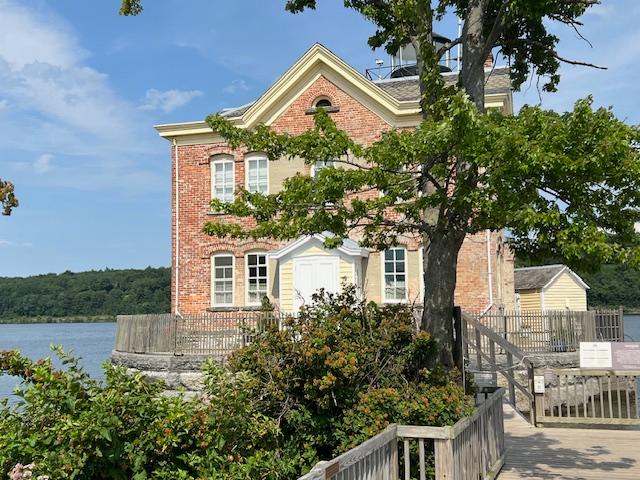
The Historical Saugerties Lighthouse in Saugerties, NY

I walked through the wetlands park through a pathway of bridges and paths and suggest by the walk do not go after it has just rained. Also do not go after dark as the path is not lite. Still it is fascinating walk through the wetlands passing streams and patches of beautiful flowers and trees.

In the summer the path is full of wildflowers, birds, dragonfly’s and the sounds of the Hudson River swaying across the shore. The views are just beautiful.

Take your time to admire the flowers and plants along the paths and look at the views of the river as you exit the paths.

The pathway to the lighthouse

The lighthouse itself needs some work but it is elegant old building that sits stately against the mountain views. In the middle of the summer, all the colors are bright and vibrant. You can walk around most of the building but the walkway in the front offers a nice view of the whole structure.

Pathway to the lighthouse

The pathway to the lighthouse

The only way to go inside is to book a room at the B & B so check the website out.

https://www.saugertieslighthouse.com/availability

The wildflowers on the pathway to the lighthouse

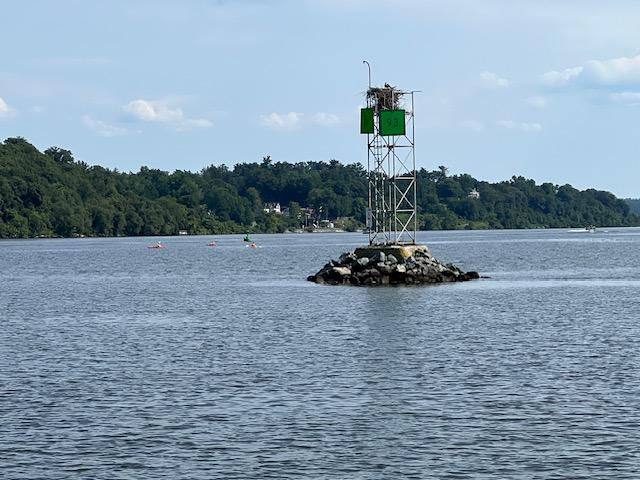
The views of the Hudson River from the pathway

The beautiful views of the Hudson River along the pathway and the tiny beaches

The History of the Saugerties Lighthouse:

(From the Friends of the Saugerties Lighthouse)

The Saugerties Lighthouse on a sunny afternoon in July

Looking down the Hudson River

The lighthouse was practically a pile of crumbling bricks poised to tumble into the Hudson River, the Saugerties Lighthouse barely escaped the demolition ball in the 1960’s. Today, completely renovated and delighting B & B guests, it stands as a testament to the perseverance and hard work of many dedicated individuals.

The historic sign for the 1896 Lighthouse

The name Saugerties is derived from the Dutch “Zager’s Killetje”, meaning a sawmill on a creek and in fact, there was a mill built on Esopus Creek to harness the creek’s waterpower. The mill formed the cornerstone of a thriving paper industry, which produced as much as eight tons of paper daily, making it one of the leading producers of paper in the 1800’s.

The walkway to the lighthouse from the road near the Hudson River

On June 30, 1834, Congress appropriated $5000 for the construction of a lighthouse at the mouth of the creek to guide mariners past the nearby shallows and into Esopus Creek and the busy port of Saugerties. Charles Hooster built the lighthouse on a forty by fifty foot timber-framed pier and its light, produced by five whale oil lamps set in parabolic reflectors, commenced operation in 1835 with Abraham Persons as its first keeper.

The historic sign at the lighthouse

A fire in 1848 destroyed the original lighthouse but it was rebuilt on the old site by 1850 at which time four lamps were being displayed from atop the two-story structure. Light lists described the second lighthouse as a “light on keeper’s house.” A sixth-order Fresnel lens replaced the array of lamps and reflectors in the lantern room in 1854.

Ice floes and tidal currents took their toll on the foundation pier and on March 2, 1867, Congress appropriated $25,000 to build a replacement lighthouse just a few yards closer to the shore. This structure, still standing today, was built on a circular granite crib, with a depth of twelve foot and a diameter of sixty feet that rests on fifty-six pilings sunk into the riverbed and topped with three layers of six-inch timbers. The two story lighthouse has twenty-inch thick natural colored brick cavity walls and a sixth-order Fresnel lens cast its beacon from the lantern room. No longer needed, the old wooden lighthouse was sold.

Saugerties Lighthouse was considered a plum assignment due to its proximity to town. In 1888, Saugtegies Harbor was enlarged through the construction of jetties and the keeper’s jaunt to town was made easier when a small road was built along the north jetty to the lighthouse.

The lightkeepers were friendly with their neighbors and even enlisted their help. A neighbor downriver would hand a bed sheet out their window whenever they saw the lighthouse tender coming upriver, giving the lightkeeper about a half-hour notice before the inspector arrived.

Daniel Crowley was serving as keeper of the light when the current brick lighthouse was built. He had been placed in charge of the light in 1865, replacing his father Dennis, who was removed from service after just three months. Daniel’s sister, Katie, grew up at the lighthouse and seemed to be amphibious. She would often venture out into the river along in a skiff and when her little craft was upset, there were no worries as she could swim like a duck. Katie was made the official keeper of the light in 1873 and her lack of fear of the water lead to some remarkable rescues.

Around the turn of the century, the boathouse, located atop the foundation of the first lighthouse, a small island east of the current lighthouse was moved to the circular lighthouse pier. In 1910, a wooden platform was extended from the top of the tower to support a fog bell and an enclosed shaft was mounted below the platform to protect the suspended weights that powered the bell striking mechanism.

Conrad Hawk’s twenty-six year stint as keeper, lasting from 1914 to 1940 was far longer than that of any other keeper of Saugerties Lighthouse. In 1916, his son Earl and daughter Ilal were playing with a small battery and brought it into contact with the large battery used for the station’s fog bell. The resulting short-circuit caused an explosion that blew the battery to pieces, cutting Ilal’s face and produced a current that burned Earl’s arms. Earl nearly lost a big toe in 1922 when his foot came into contact with a boat’s propeller as he tried to climb aboard while swimming near the lighthouse.

Through they both had a few scars, Earl and Ilah survived at Saugerties Lighthouse. Earl Hawk graduated from the Navy’s school at Annapolis and entered the submarine service, while Ilal attended Cortland State teacher’s College and became a physical education instructor. Just before Christmas in 1939, Keeper Hawk’s went to the hospital to receive treatment for stomach ulcers but the treatments failed and he passed away on January 8th, 1940.

When electricity was extended to the lighthouse in the 1940’s, the dwelling was “modernized” with steam heat, plumbing and a telephone. In February 1954, Keeper Ed Pastorini was informed his light would be automated come spring. Wanting to leave the station in tip-top shape, he lovingly painted the three large upstairs bedrooms. Tears flooded his eyes when he closed the door and left the lighthouse for the last time.

The Historic Saugerties Lighthouse in all its beauty

The lighthouse tender soon arrived and its crew tore out the plumbing, furnace and fixtures. In stark contrast to Keeper Pastorini’s care, gallons of water were drained out on the floors and left to soak through the floorboards. The building was sealed up and left to deteriorate which it did quickly.

A decade later, the Coast Guard planned to demolish the vandalized and dilapidated lighthouse, when it stepped Ruth Reynolds Glunt, wife of Chester B. Glunt, a former Coast Guard light attendant stationed at Turkey Point near Saugerties. Mrs. Glunt a longtime friend of many lighthouse keepers along the Hudson River, carried a passion for saving lighthouse and mounted a campaign to halt the demolition. Through her efforts and those of architect Elise Barry, the structure was placed on the National Register of Historic Places in 1978.

The Saugerties Lighthouse Conservancy was established in 1985 with the mission to restore and maintain the lighthouse and the following year the conservancy was able to purchase the lighthouse and surrounding wetlands for $1.00. The conservancy received a building on the verge of tumbling down but managed in just a few years to turn it into a beautifully restored lighthouse.

Roughly 10,000 old bricks, which had crumbling after being penetrated by moisture, were replaced. The lantern room was removed and refurbished. Stairs, handrails, floors and walls were completely reconstructed. To top of the transformation, a solar powered light installed in the lantern room by the Coast Guard was activated on August 4th, 1990.

Saugerties Lighthouse furnished in 1920’s decor is now open to the public and welcomes overnight guests as a bed and breakfast. Visitors can walk to the lighthouse along a one half mile long through the Ruth Reynolds Glunt Nature Preserve, where they will be greeted by a modern day resident keeper who runs the bed and breakfast and maintains the lighthouse.

The pathway to the lighthouse

A big thank you to the Friends of the Saugerties Lighthouse for their dedication in this important site

*This is just a portion of the blog from the Friends of Saugerties Lighthouse. Please see the attached website for more information.