Category: Walking Downtown Hyde Park, NY

The Donald & Barbara Tober Exhibit Room/Conrad N. Hilton Library-The Culinary Institute of America Campus 1946 Campus Drive                                                               Hyde Park, NY 12538

The Donald & Barbara Tober Exhibit Room/Conrad N. Hilton Library-The Culinary Institute of America Campus 1946 Campus Drive Hyde Park, NY 12538

The Donald & Barbara Tober Exhibition Room/Conrad N. Hilton Library-The Culinary Institute of America Campus

1946 Campus Drive

Hyde Park, NY 12538

(845) 452-9600

https://library.culinary.edu/ciaexhibits

Open: When the library is open. Please check the website.

Admission: Free
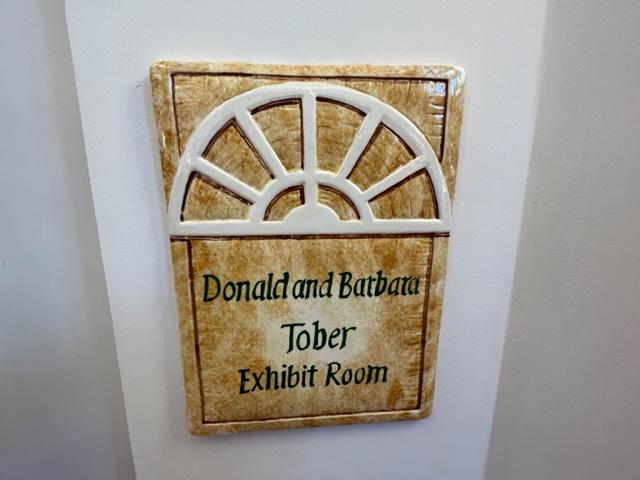
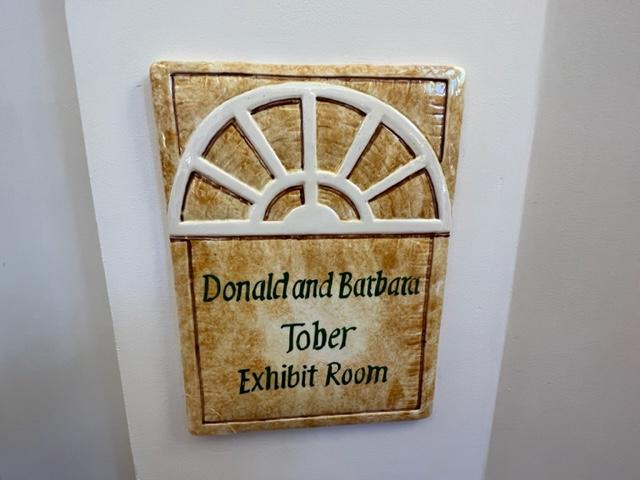
The Donald & Barbara Tober Exhibit Room plaque inside the Conrad N. Hilton Library hallway

The Donald and Barbara Tober Exhibit Room is on the main floor of the Conrad N. Hilton Library. The exhibit room is open to the CIA community and to the public. The exhibition room has ongoing displays of culinary themed exhibits that cover topics involving the culinary world and food service. This is run by both the college and by students. It is not quite a museum but more of a display room of artifacts that are held by the Conrad N. Hilton Library and its archives.
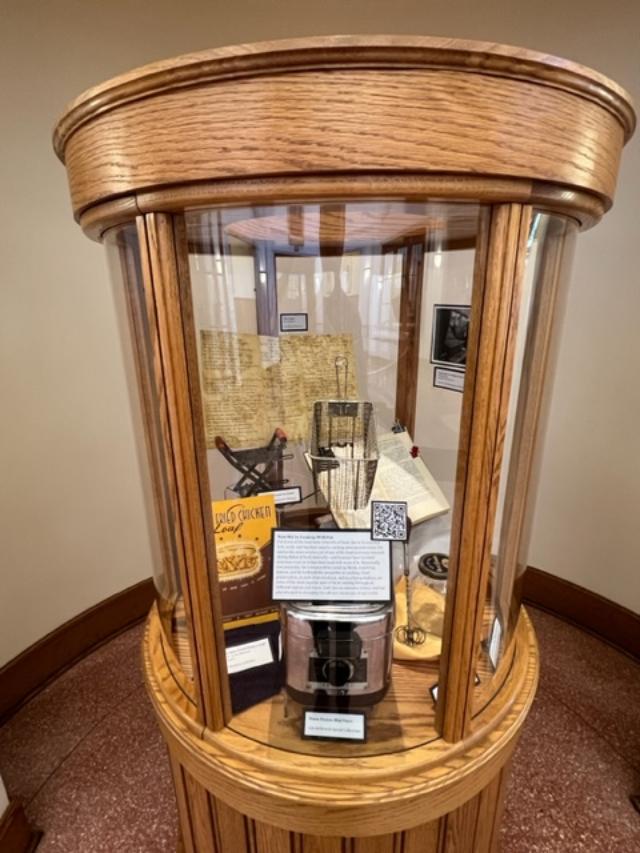
The Hallway exhibition
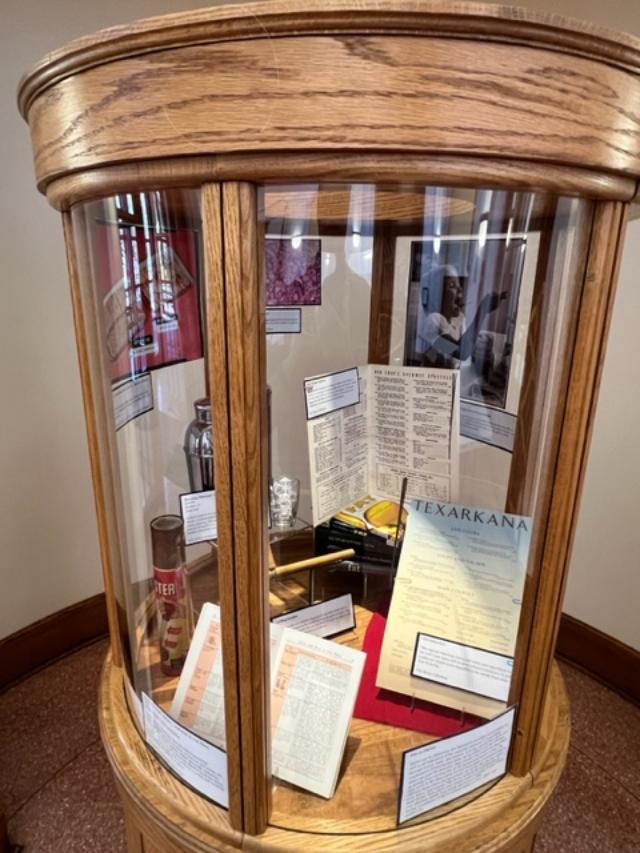
The Hallway exhibition

The two display cases are in the main entrance of the Conrad N. Hilton Library and hold more of the exhibition. These are displays of industry pamphlets and flyers plus menus and equipment.
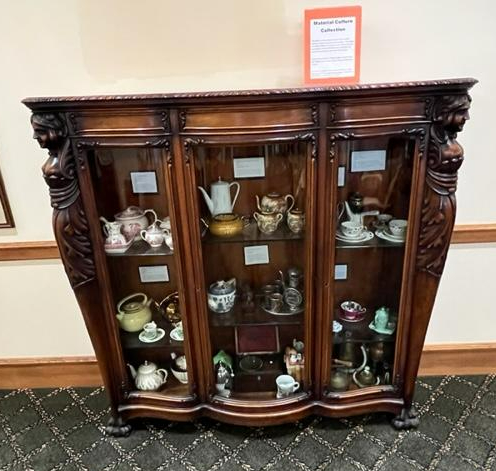
The library exhibition of China pieces

The Menu Collection:
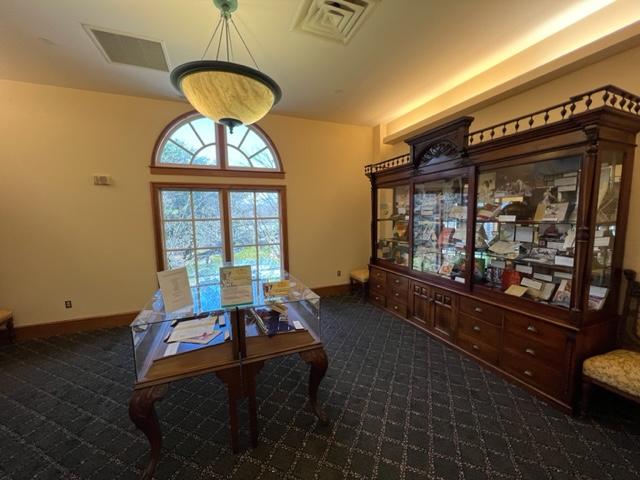
The Tober Room Exhibition space

The CIA’s menu collection began in the small library at the New Haven campus and was used as a reference tool by the culinary students.  By 1978, then in Hyde Park, the library had amassed a file of over 3,000 menus which were openly available to students and used regularly in their studies.  These menus still remain in the collection and are known as the “Original CIA Menu Collection.” They provided the foundation for the growing menu collection that was later added to by many prominent menu collectors and friends of the CIA.

Seth Bradford and Edward S. Dewey Menu Collection

Roland Chenus Menu Collection

Craig Claiborne Menu Collection

Roy Andries de Groot Menu Collection

This collection of nearly 800 menus, acquired by the CIA in 1984, were collected by the culinary writer and critic, Baron Roy Andries de Groot (1910-1983), during the course of editing his column, “A Moveable Feast,” for Esquire Magazine. The menus date primarily from the 1960s and 1970s and are from major U.S. cities (many from New York City), as well as Canada, France, Belgium, Spain, Puerto Rico, Hong Kong, and Thailand. Some menus include supplemental materials, as well as annotations by de Groot or his staff noting the date of visit, names of other guests, the chef’s name, and his evaluations and/or ratings.

Herbert Ernest Menu Collection

In 1987, Herbert Ernest donated to the CIA over 300 menus collected by his father, Semy Ernest. The menus date from 1889-1977 and include menus from restaurants and clubs in New York City, Boston, Indianapolis, Los Angeles, and San Francisco; international menus from France and Germany; and several menus from on board the Santa Magdalena ocean liner. This collection is rich in pre-1920 menus.

Greenebaum Menu Collection

The Greenebaum Menu Collection was donated to the CIA by Henry Greenebaum in 1989.  Greenebaum’s father, Michael H. Greenebaum, started the collection and it was continued by his two sons, Henry and Richard. It includes menus from 1905-1988, many international and many from railroads and ships.  Several menus are signed by the chef or proprietor.

Auguste Guyet Menu Collection

Donated to the CIA in 1989, this personal menu collection from Chef Auguste Guyet includes over 200 menus, mostly from France. The earliest are a Restaurant Julien special event menu and a Waldorf-Astoria wine list for the 27th annual banquet of the Hotel Association of New York City, both from 1906.

Bruce P. Jeffer Menu Collection

Bruce P. Jeffer donated his collection of 2,500 menus to the CIA in 2013. Jeffer, a California lawyer and wine connoisseur, began collecting menus during his travels as a child. The menus date from 1950s-1990s. Much of the collection is international menus from over 70 countries on 6 continents. A selection of these were featured in an exhibit in the Conrad N. Hilton Library in August 2013.

George Lang Menu Collection

George Lang, restaurateur and author, donated his personal collection of over 3,000 menus to the CIA in 1989. Many of these menus are international, including often under-represented countries such as Australia, Cuba, Hong Kong, Hungary and the Philippines. Although most menus date from 1950s-1970s, the earliest two menus are from Hotel Knickerbocker in New York City, 1907.

Vinnie Oakes Menu Collection

In 2000, Vinne Oakes donated his collection of over 200 menus to the CIA. The collection is strong in menus from restaurants in Nevada, as well as ship menus from the 1960s.

John Edward Oxley Menu Collection

Chapman S. Root Menu Collection

The Chapman S. Root Menu Collection of nearly 10,000 menus was donated by The Root Company in 2000. The largest collection recieved so far, it includes menus from almost every state (strongest in California, Florida and Nevada), and several foreign countries. The bulk of the menus date from 1960s-1980s, although the earliest are from 1878. Over 3,000 U.S. Railroad menus are an important highlight of the collection.

Chapman S. Root’s grandfather, Chapman J. Root, designed the classic green, ridged Coca-Cola bottle in 1915. At his grandfather’s death in 1945, Chapman S. Root inherited Associated Coca-Cola Bottling Plants, Inc. He traveled a great deal, mostly by car or train, and amassed an enormous menu collection. Friends, knowing of his interest, also contributed to his collection.

Jacob Rosenthal Menu Collection

Jacob Rosenthal, former president of the Culinary Institute of America, donated nearly 500 menus to the CIA menu collection. The bulk of these menus are from food and wine societies in the 1960s-1970s, including Confrerie des Chevaliers du Tastevin, Confrerie de la Chaine des Rotisseurs, and the International Food & Wine Society.  Also of note are several international menus from the 1930s-1950s.

Smiley Family Menu Collection

The Smiley Family Menu Collection was donated to the CIA in 1982 and 1993, a gift of Mohonk Mountain House. (The Smiley family are the founders and proprieters of the Mohonk Mountain House in upstate New York.) Three generations of Smileys traveled the world, by land and by sea, and collected menus along the way. This collection is rich in pre-1920 menus; menus from historically world-renowned resorts including Laurel-in-the-Pines (Lakewood, N.J.), Haverford Court (Pennsylvania) and Hotel Colonial and Royal Vicotoria Hotel (Nassau, Bahamas); beautifully-illustrated ship menus; and a selection of early menus from Mohonk Mountain House.

Lois Westfall Menu Collection

The display case in the main library showcases the collection of China and Silverware and decorative objects that are in the collection.
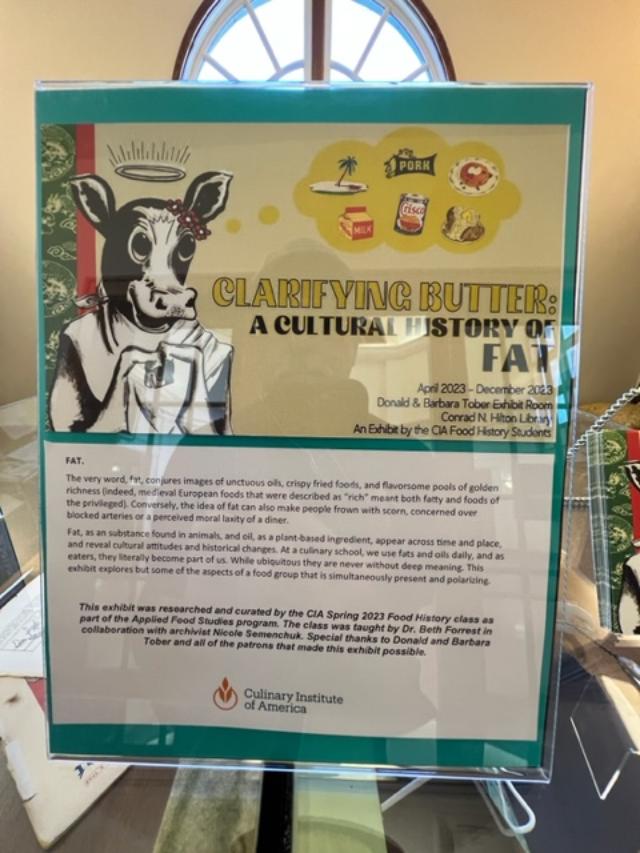
The Tober Room exhibition on “Fat” at the Conrad N. Hilton Library on the CIA campus

The exhibition that they were showing when I came up to visit was “Clarifying Butter: A Cultural History of Fat”. There were a lot of recipes, objects and equipment to make butter, understand the use of fats in cooking, recipes, menus and corporate information.

The description of the exhibition:

FAT. The very word, fat, conjures images of unctuous oils, crispy fried foods and flavorsome pools of golden richness (indeed, medieval European foods that were described as “rich” meant both fatty and foods of the privileged). Conversely, the idea of fat can also make people frown with scorn, concerned over blocked arteries or a perceived moral laxity of a diner.

Fat. as an substance found in animals and oil, as a plant based ingredient, appear across time and place and reveal cultural attitudes and historical changes. At a culinary school, we use fats and oils daily and as eaters, they literally become part of us. While ubiquitous they are never without deep meaning. This exhibit explores but some of the aspects of a food group that is simultaneously present and polarizing.

Both the two display cases and the middle display case were set with all sorts of information through the ages of the subject of fat, fried foods and items used to produce and make them.
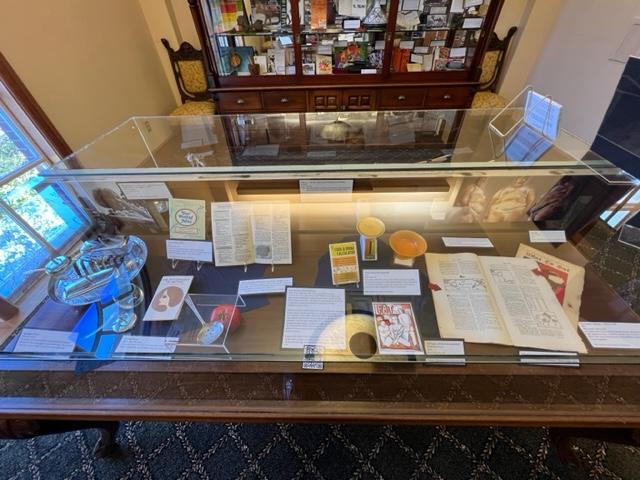
The Display Cases in the Tober Room
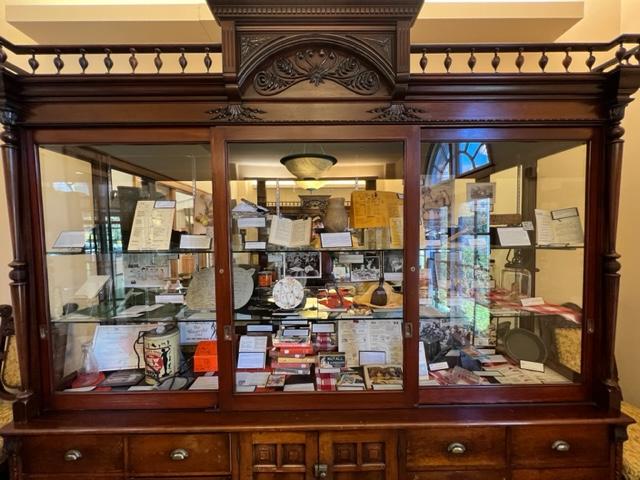
The Display Cases in the Tober Room
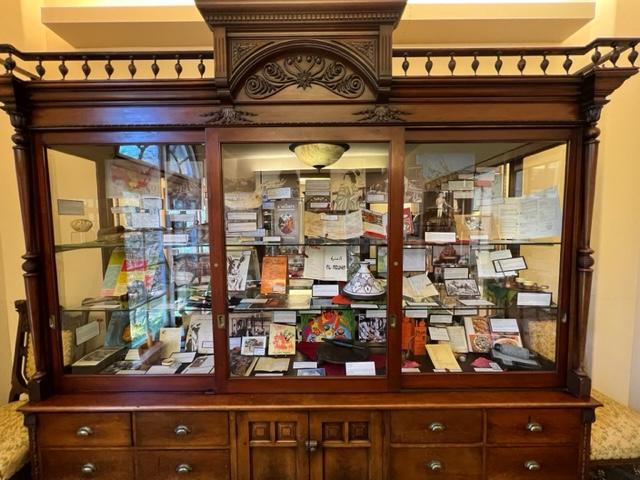
The exhibitions here are very detailed and display over a hundred years of culinary arts research. The displays are revolving every quarter. The room is off to the right of the entrance to the library and is open for free to the public. It is a wonderful way to learn the aspects of food than in one of the best culinary libraries in the world.
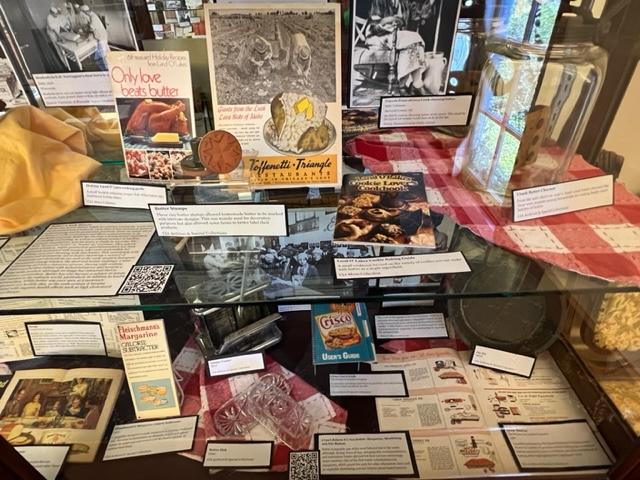
A close up shot of the display case.
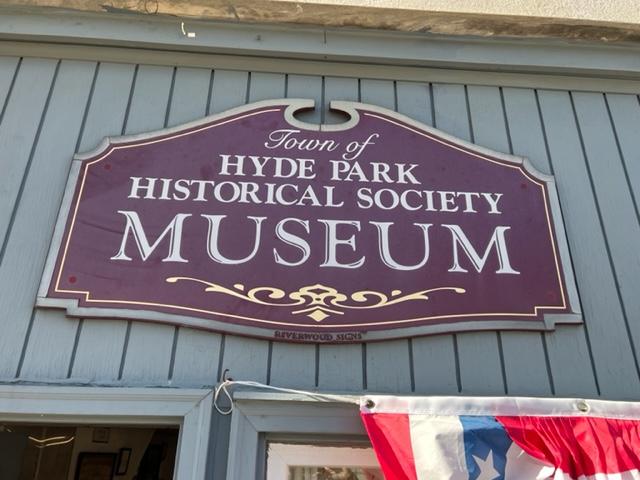
Hyde Park Historical Society                                                 4389 Albany Post Road                                                         Hyde Park, NY 12538

Hyde Park Historical Society 4389 Albany Post Road Hyde Park, NY 12538

Hyde Park Historical Society

4389 Albany Post Road

Hyde Park, NY 12538

(845) 229-2559

https://hydeparkhistoricalsociety1821.org/

https://www.hydeparkny.us/669/Hyde-Park-Historical-Society

Open: Sunday 11:00am-3:00pm/Monday-Friday Closed/Saturday 10:00am-3:00pm

Fee: Free

My review on TripAdvisor:

https://www.tripadvisor.com/Attraction_Review-g60801-d3426818-Reviews-Hyde_Park_Historical_Society_Museum-Hyde_Park_New_York.html

The Hyde Park Historical Society at 4389 Albany Post Road

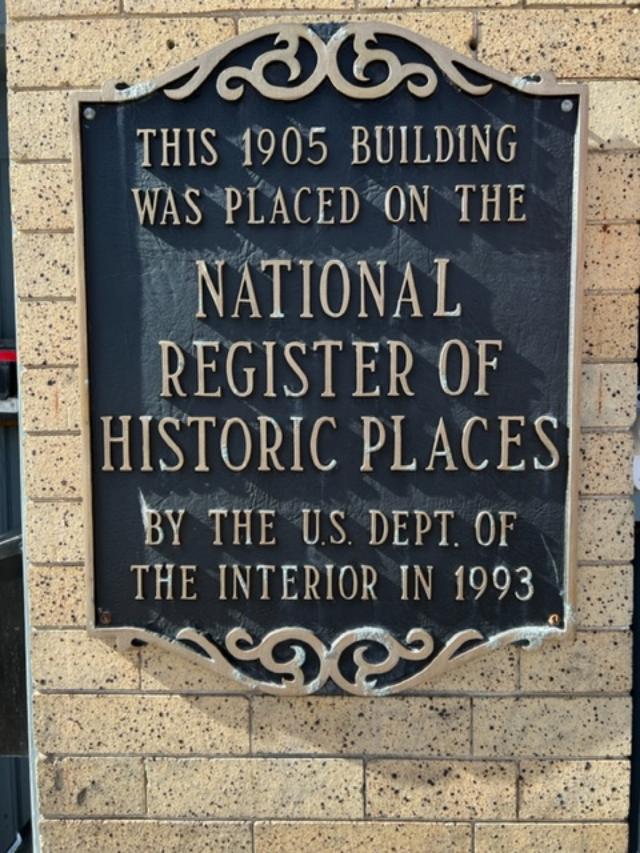
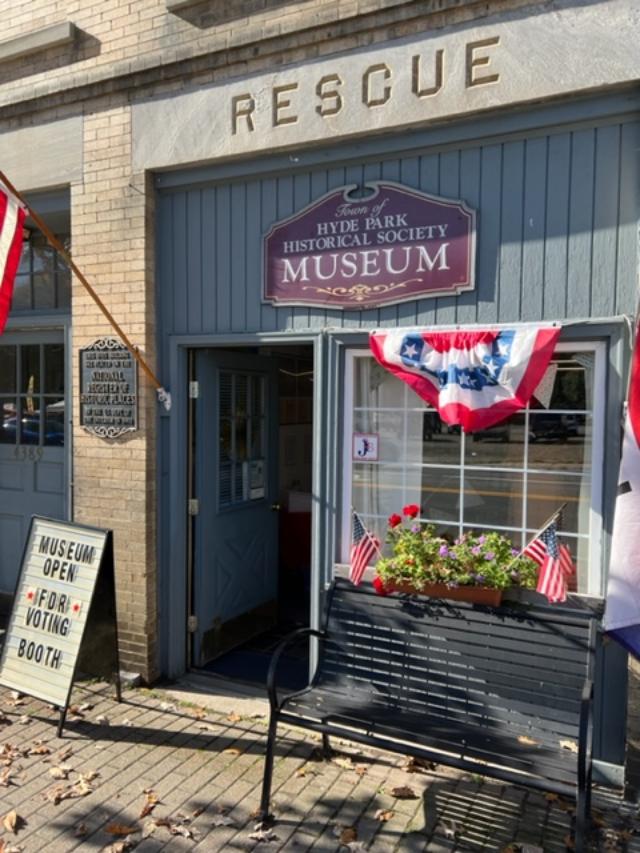
The Hyde Park Historical Society is going through a type of rebirth as it has reopened with a fresh approach towards not just the history of Hyde Park, NY but the area in general and life here over the last two hundred years. The society is taking a new direction and revamping their efforts on the displays and on the history and activities of the museum. The museum is housed in what was once the Hyde Park, NY Fire Department building.

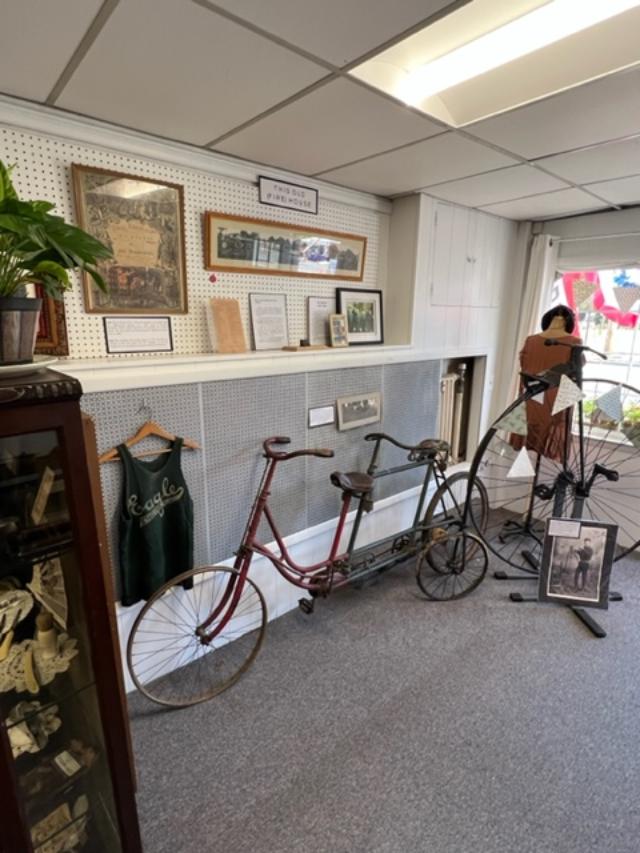
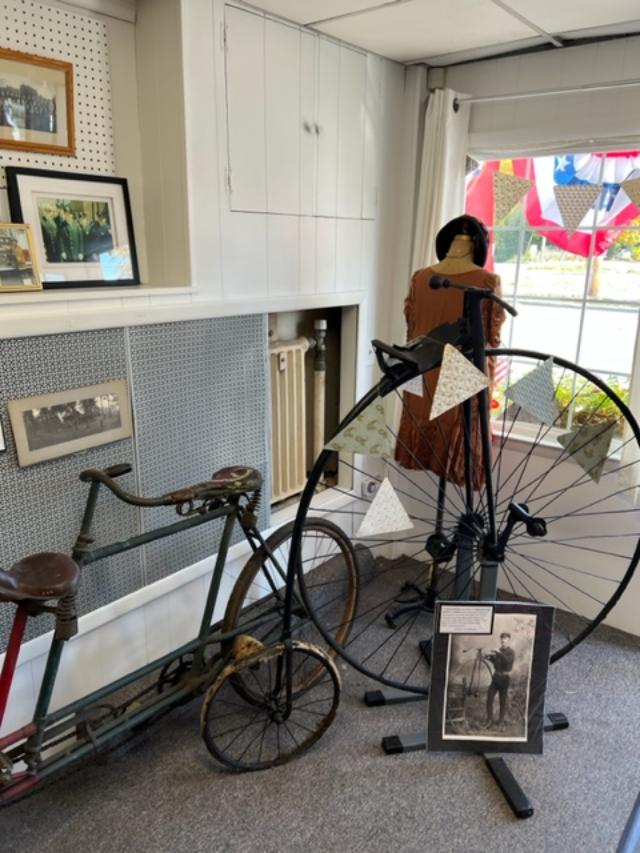
The museum is broken down into sections by displays. When you enter the museum there is an display of bicycles and recreation items that would have been used over the years. This activity changed the social life of both men and women of that era.

Bicycle display:

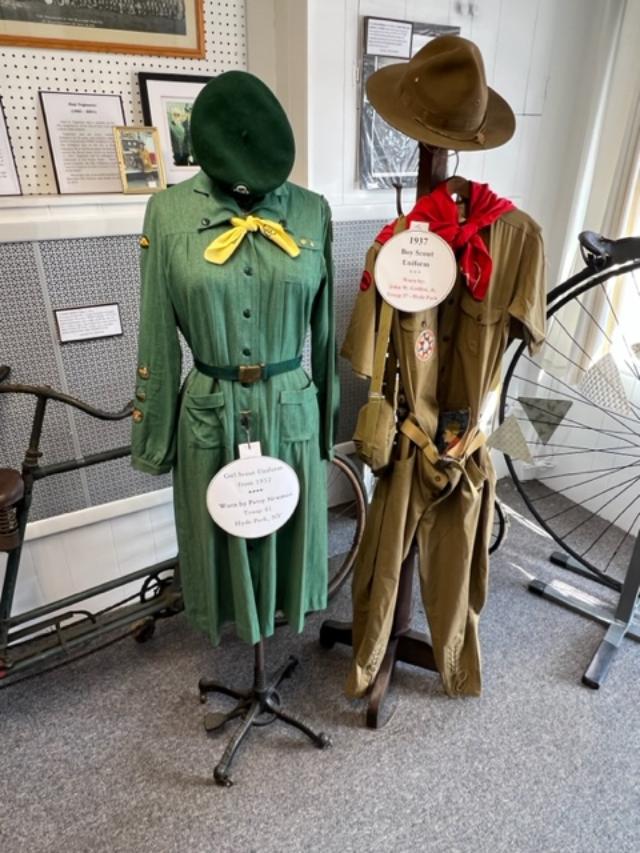
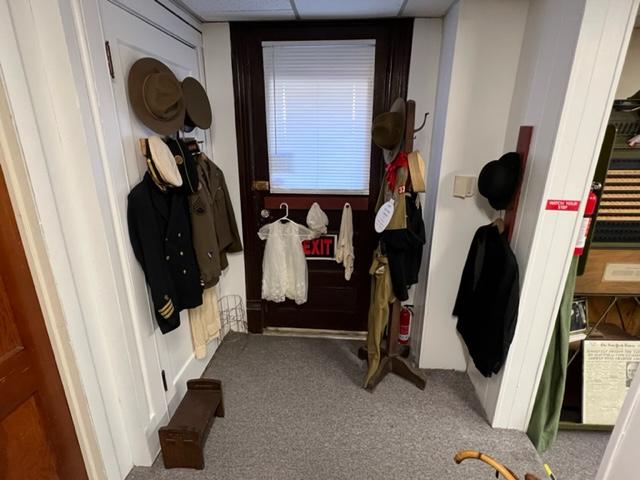
Some of the newest donations are from members of the organization who have recently passed away. They donationed their Boy Scout and Girl Scout uniforms to the museum which were from the past century. This shows how the unforms have progressed over the years.

Uniforms from the early Twentieth Century

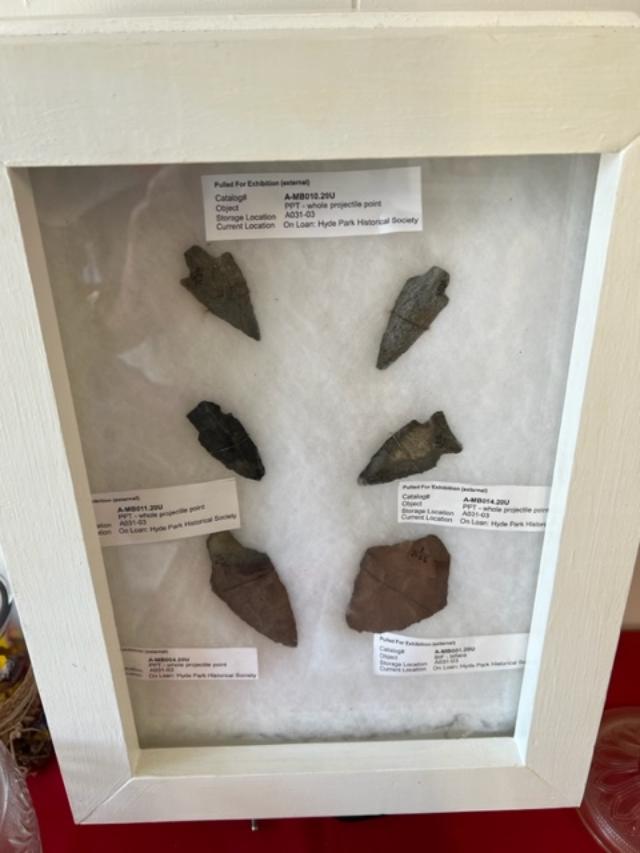
Another donation that was added to the collection from the State Museum is a collection of Native American arrowheads that were found locally. These show that the area was once the hunting and gathering grounds for the Lenape Indians before colonialization.

The donation of Native American Arrowheads.

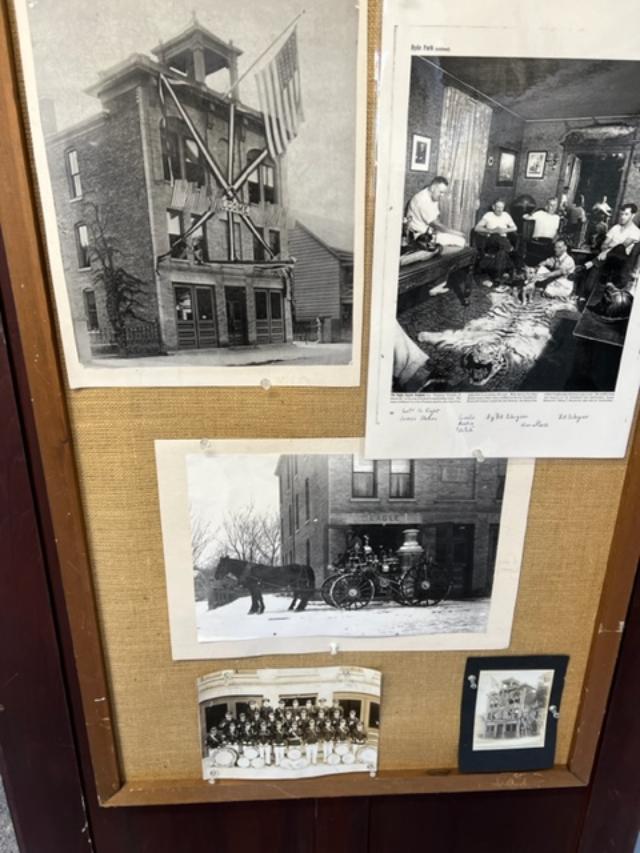
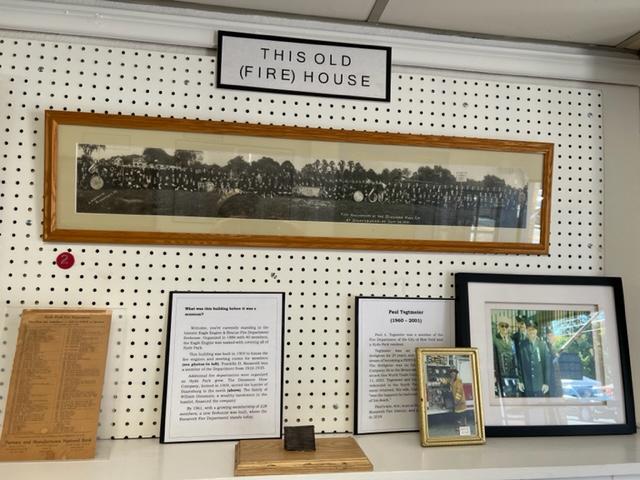
Next to it was the history of the Hyde Park Fire Department with pictures of companies of fire fighters and all sorts of memorabilia. There are pictures of former fire companies including the ones that were once housed in the museum building.

The Hyde Park Fire Department:

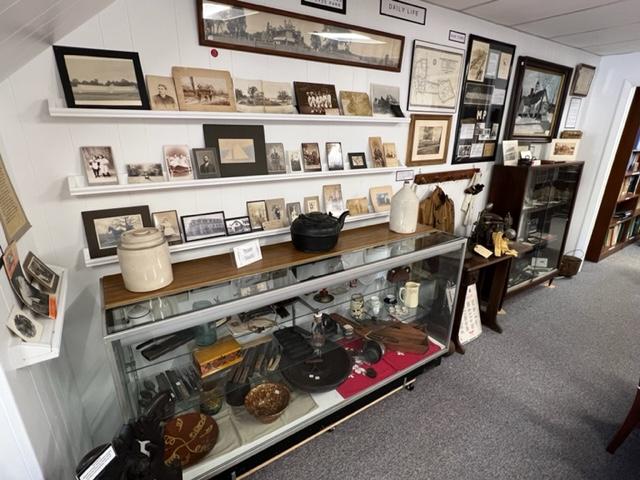
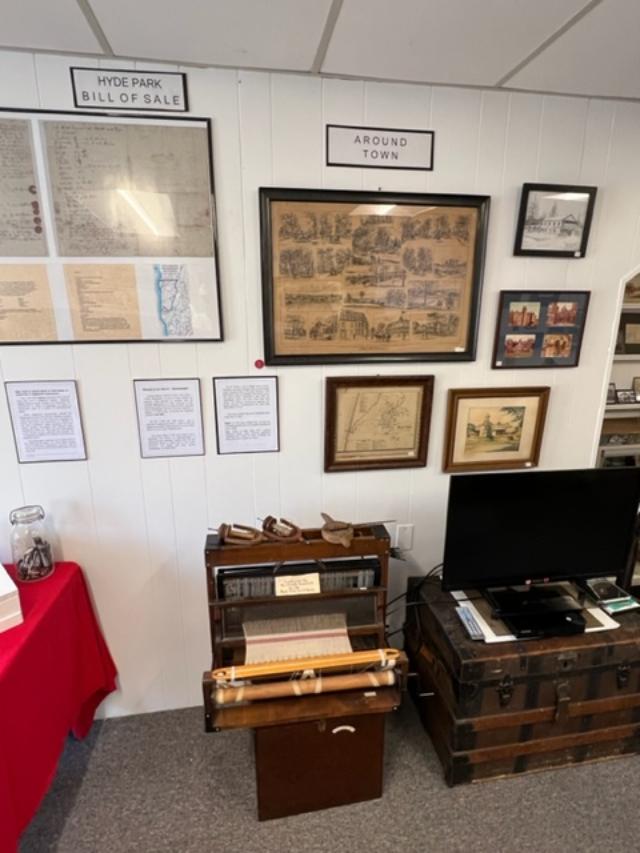
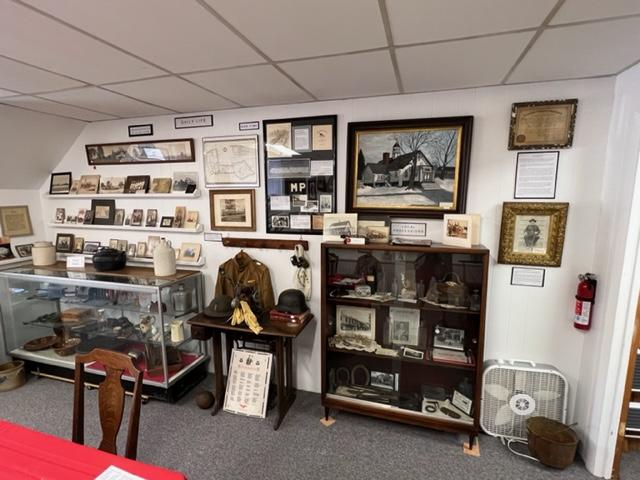
Across from that, there is a display called “Daily Life” which was the history of the town with homes and businesses in the area at that time. There were all sorts of pictures of prominent families and their day to day activities.

Daily life in Hyde Park, NY for the Middle class members of the community

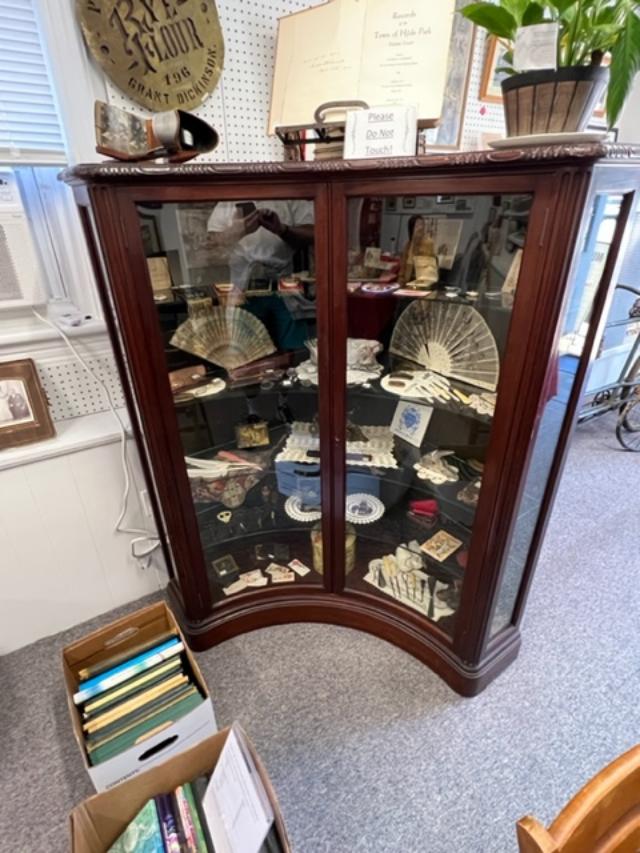
Luxury items of the Gilded Age

There was all sorts of objects from the bills of sale of homes, household items and there is an wonderful display of accessories from the Victorian era.

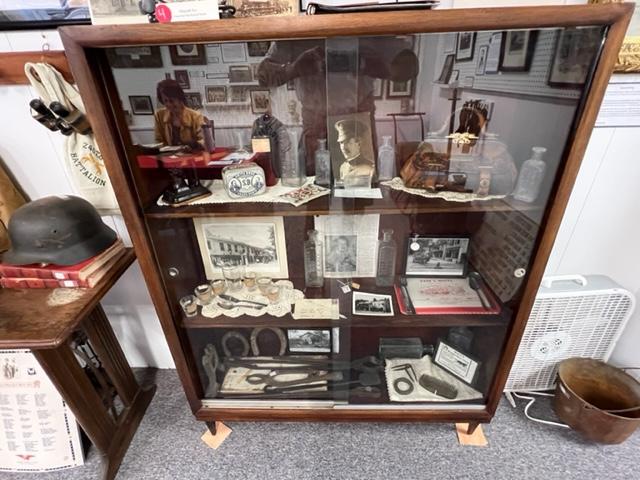
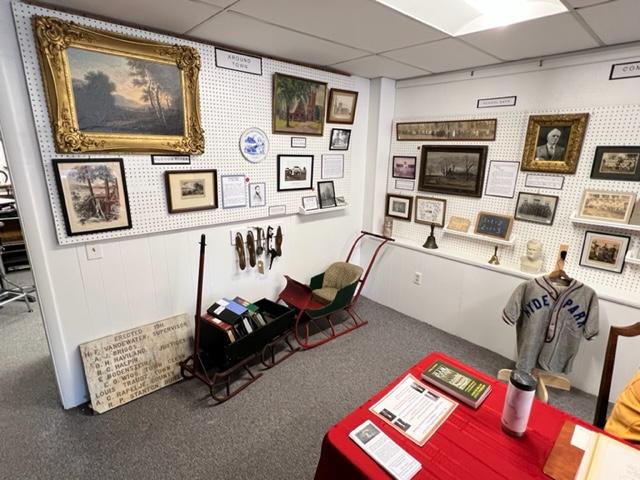
The front room of the museum is dedicated to life of the middle to upper-middle class of Hyde Park around the turn of the last century. There is all sorts of clothing, pictures and artifacts from schools, the boy scouts, area schools and there are even sleds and skates from winter recreation sports played on the Hudson River. There are all sorts of athletic equipment, clothing based on sporting or activity event and accessories that were used and worn when participating in all seasonal activities.

Life in Hyde Park, NY

Every day life in Hyde Park, NY

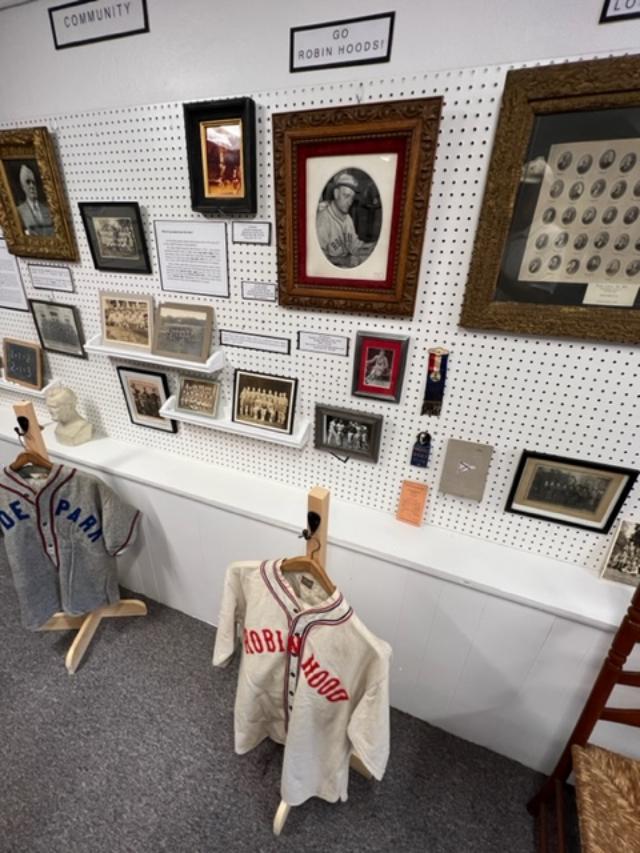
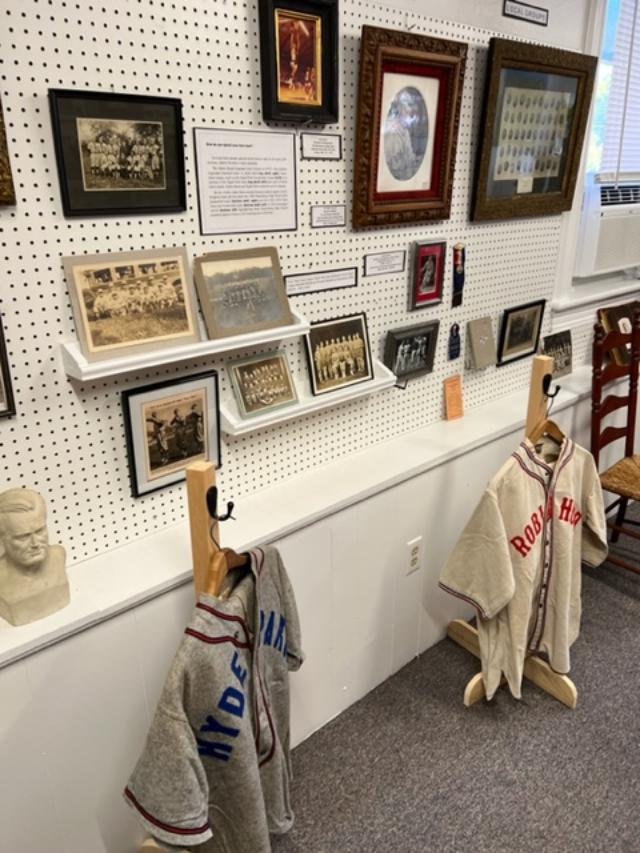
There is a small display from the semi-professional baseball team that used to be located in Hyde Park with pictures, equipment and uniforms. It seemed that semi-professional baseball was a big entertainment and community event in years past in Hyde Park, NY.

The Hyde Park baseball team

There are also items in a small war display that is circa WWI. Many artifacts were donated by families whose members fought in the war.

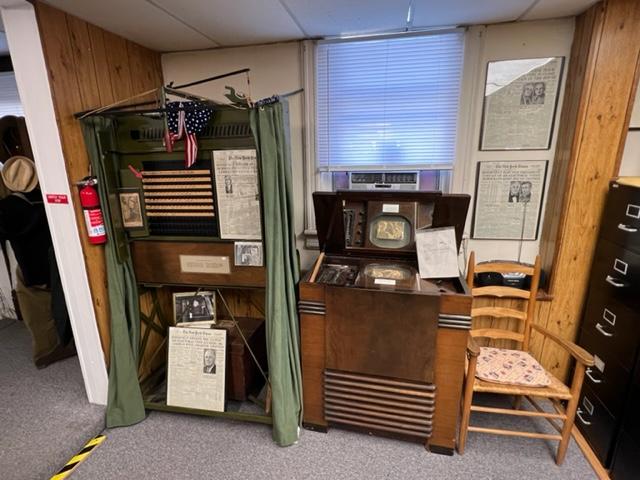
The second small room in the back is dedicated to communication equipment from WWII and pictures of Franklin Delano Roosevelt who was the President at the time as well as a prominent member of the community. The Roosevelts had lived in the Hudson River Valley for generations.

There are several important pieces of war time equipment located here.

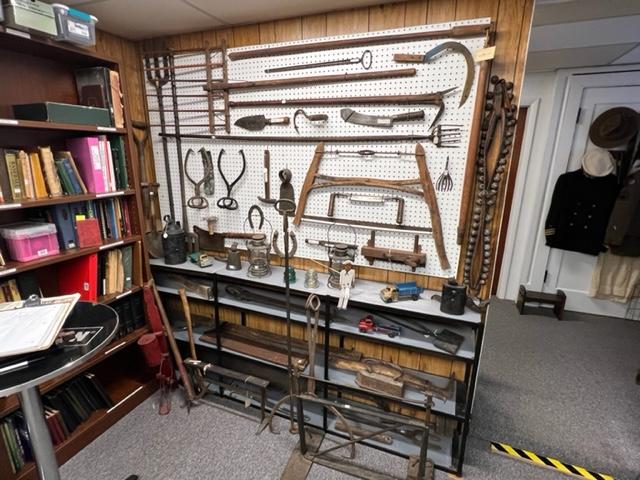
There is also a display of farm equipment showing off the areas agricultural past and present. This is still a major farming area as you head north of Rhinebeck, NY.

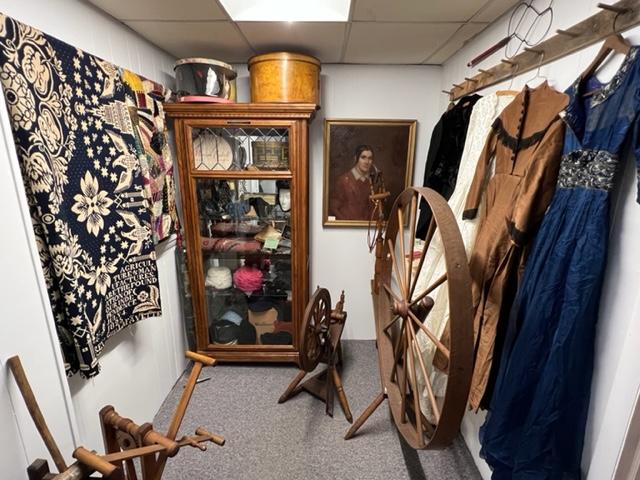
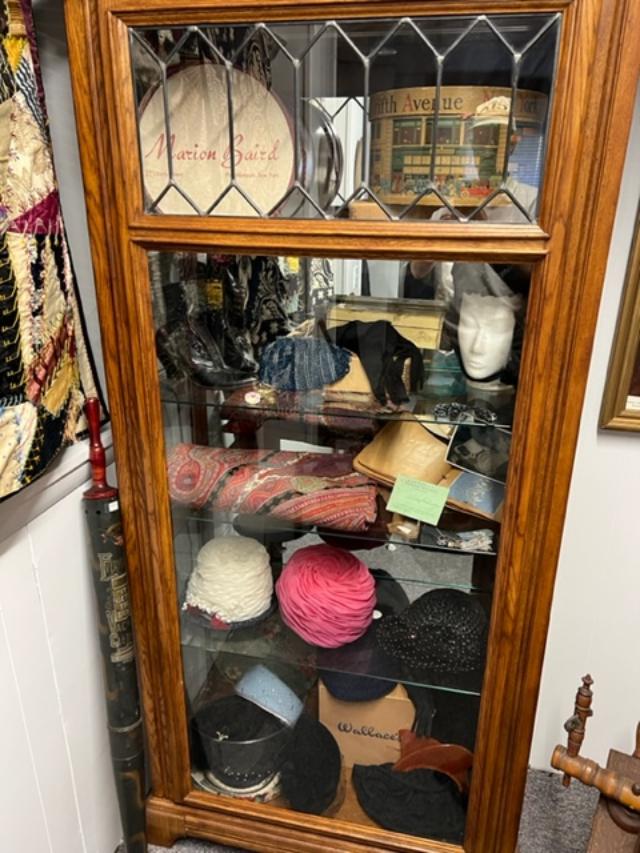
The back room is dedicated to clothing and wardrobe items like dresses, hats and spinning items.

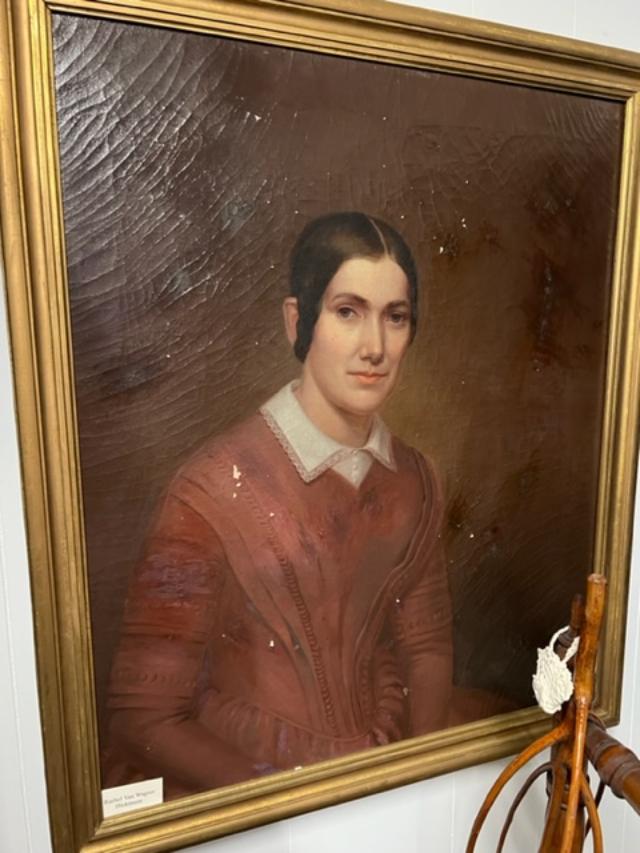
There are a few portraits of local residents as well.

This shows the change of clothing from when Dutch women would spin their wool for clothing to buying ready to wear items in the local department and specialty stores that dotted towns like Rhinebeck and Poughkeepsie.

The display also shows the manner of dress went from the Victorian era to the Jazz Age and the changes in just ten years.

Hats from various ages

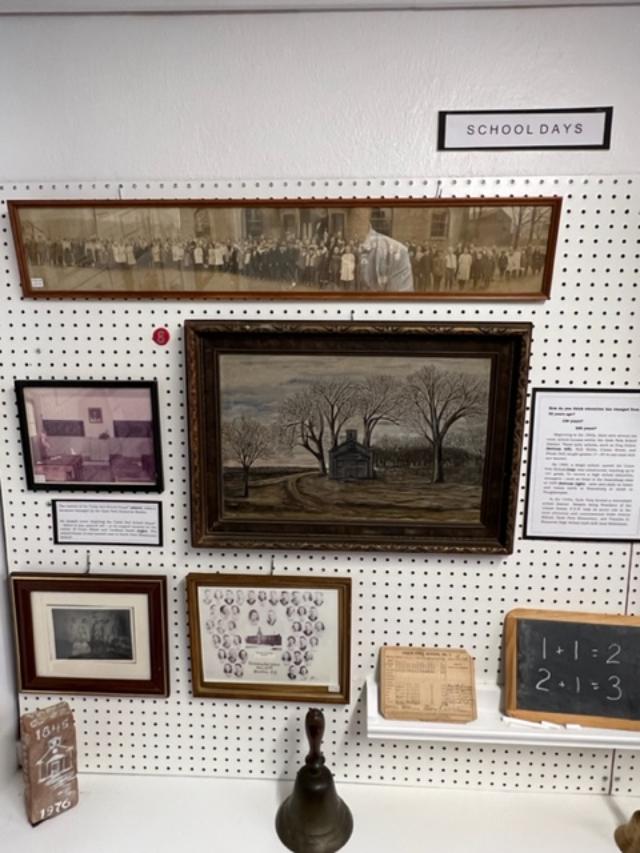
Here and there are other items that relate to daily living and a prosperous life in Hyde Park, NY. The museum is well lit and very well organized and signed so it makes viewing the displays a pleasure. It is a treasure trove of artifacts and information and insights to the life of Rhinebeck NY at that time. This display was on the Hype Park School System.

Everyday life in the schools in Hyde Park and Rhinebeck, NY

The History of the Hyde Park Historical Society:

(From the museum’s pamphlet):

The Hyde Park Firehouse:

As indicated by the engraved stone lintels over the engine bays, the firehouse that the museum is housed in was built in 1905 for the Eagle Engine Company founded in 1845 and the Rescue Hook & Ladder Company (1866), separate companies whose volunteer members included Franklin D. Roosevelt.

The old Hyde Park Firehouse serves as the museum

Designed by Poughkeepsie architect William Beardsley, the Renaissance Revival style brick building features a cast iron cornice and a bas relief decoration above the third story windows.

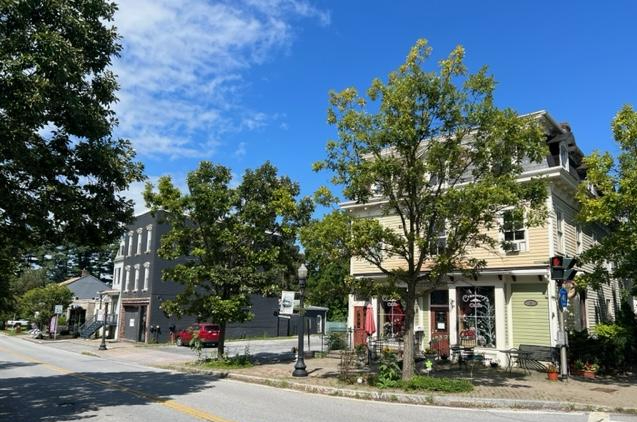
Downtown Hyde Park in the summer of 2023.

You can find all sorts of items at the museum. It contains lots of local pictures and artifacts. In the Textile Room, you can find a hat box labeled Mrs. James Roosevelt, a spinning wheel and period apparel.

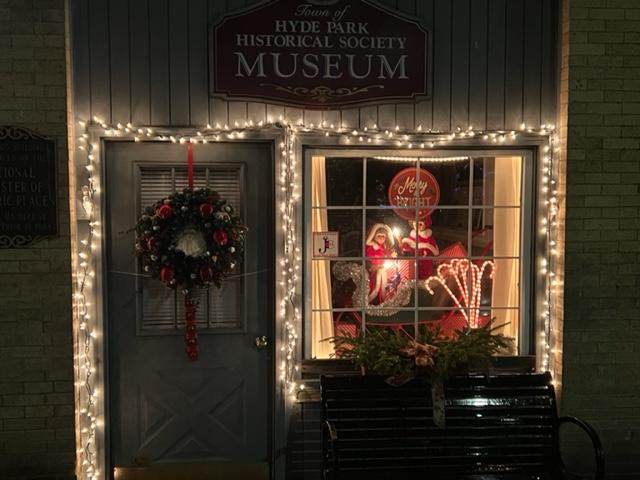
The Hyde Park Historical Society at Christmas 2022

In the Research Room, you can search your family and friends’ history, look at local tools of trade and maps of Dutchess County in the 1700’s.

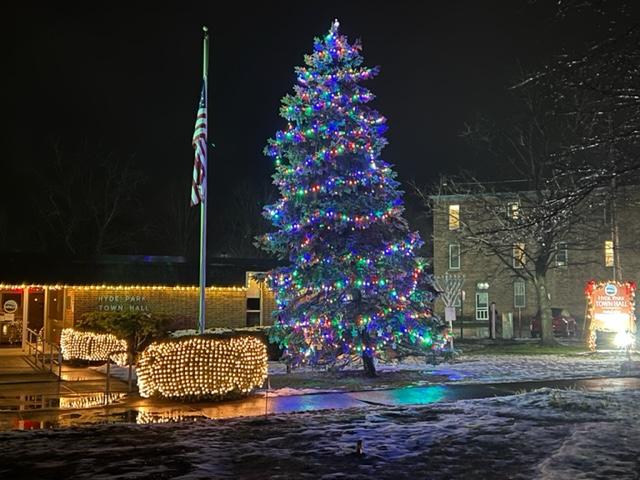
The beautiful Hyde Park Christmas tree December 2022

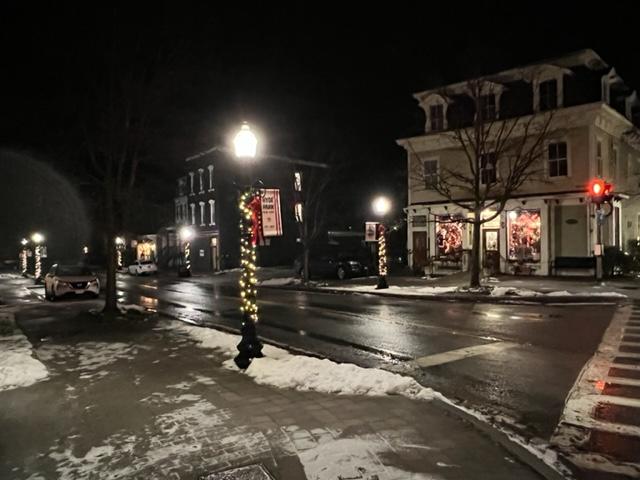
Downtown Hyde Park at Christmas time

The Vanderbilt Mansion & Estate National Historic Site                                                        4097 Albany Post Road                                                          Hyde Park, NY 12538

The Vanderbilt Mansion & Estate National Historic Site 4097 Albany Post Road Hyde Park, NY 12538

The Vanderbilt Mansion & Estate

National Historic Site

4097 Albany Post Road

Hyde Park, NY  12538

(845) 229-7770

http://www.nps.gov/vama

https://www.nationalparks.org/explore-parks/vanderbilt-mansion-national-historic-site

TripAdvisor Review:

https://www.tripadvisor.com/Attraction_Review-g60801-d105845-Reviews-Vanderbilt_Mansion_National_Historic_Site-Hyde_Park_New_York.html?m=19905

I have visited the Vanderbilt Estate many times over the years and every time I visit I learn something new about the family and about the property. It takes many visits to truly see the beauty of the house and grounds.

The Vanderbilt Mansion foyer on the first floor decorated for the holidays

I found the best time to visit is in the late Spring as the buds are coming in and Christmas time when the house is decorated for the holidays. It is quite spectacular. The holiday tour is amazing and after Thanksgiving, make a special trip to the Hudson River Valley and go mansion hopping as all the houses are decorated for the holidays.

The Christmas tree in the library of the Vanderbilt Mansion

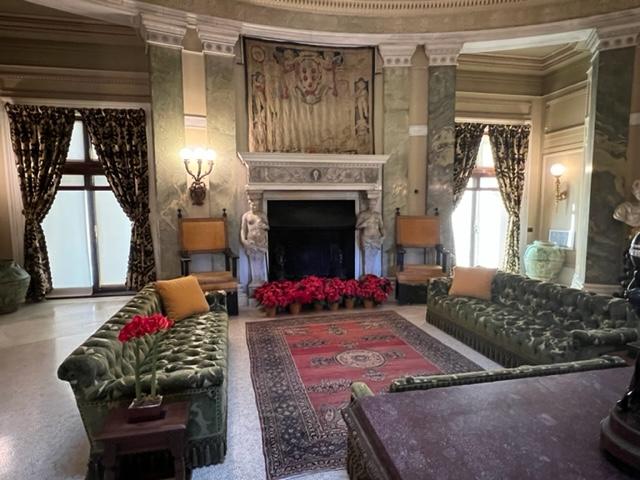
The tour will take you to three floors of the house: the first floor with the living room, dining room, parlors, and studies. Then there is the second floor with Fredrick, Louise and the guest family and single women rooms. The last floor you will visit is the basement workrooms, servant quarters and kitchen.

On the first floor is the formal dining room and the library, the offices of both Fredrick and Louise for their social and business obligations and the formal receiving foyer of the home. Things were decorated for the Christmas holiday season and it gave a very festive appearance.

The Library was set up for the Christmas holidays

The other side of the Library for the Christmas holidays

The house was only used about four months out of the year, being used in the Spring and then again in the Fall from the end of September to right after Thanksgiving and then the family would go to New York City for the social season. After Louise’s death, Fredrick sold his other houses and moved here permanently. The house was used full time and Fredrick must have enjoyed his time here.

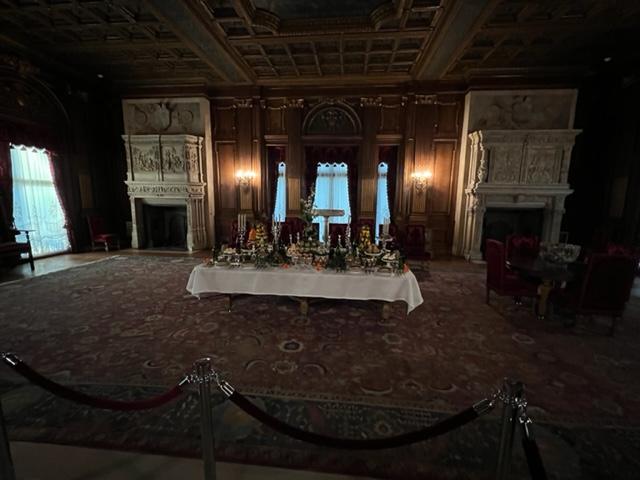
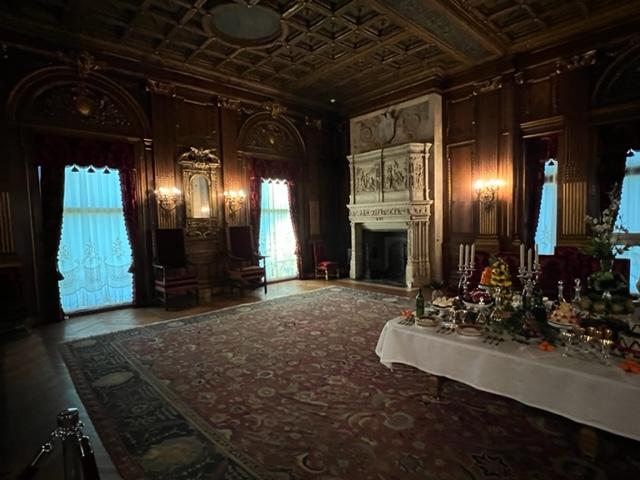
When she was alive, they used to have a very active social life and were active in local affairs. The formal dining room was used for parties and get togethers. For the holiday season, the room was decorated for a formal Christmas dinner.

The Dining Room set for holiday dinner

The beautiful fireplaces and paneling of the Dining Room

The Dining Room table set for the Christmas holidays

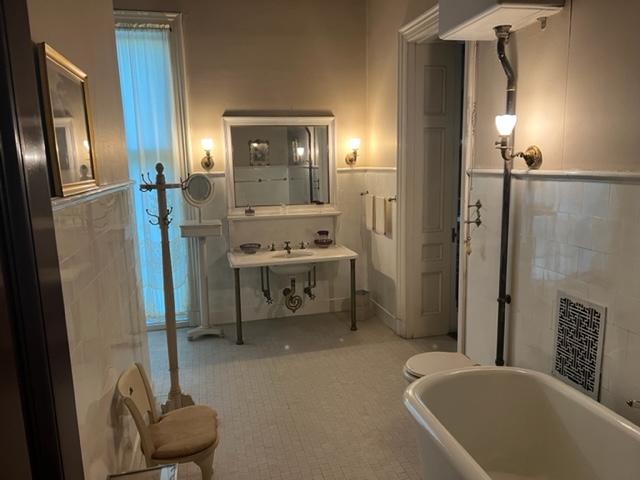
The formal staircase takes you up the to the bedrooms and the formal baths. The house was one of the first in the community to have electricity and hot and cold running water with all modern plumbing.

The stairs were wide and long due to the ladies dresses of the time

The artwork on the walls and landings was just breathtaking

The artwork on the landings and hallways is magnificent

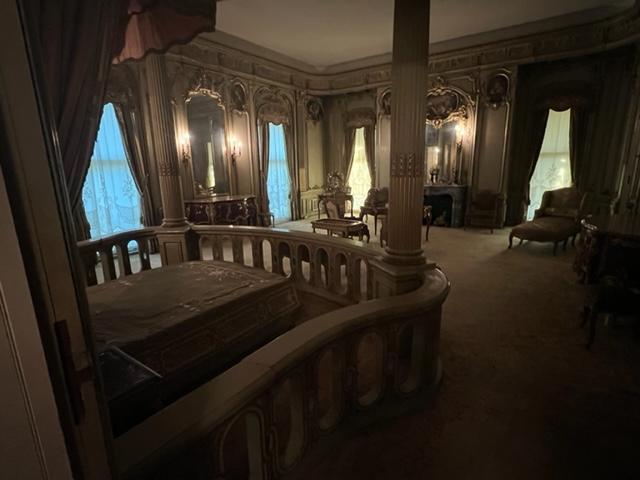
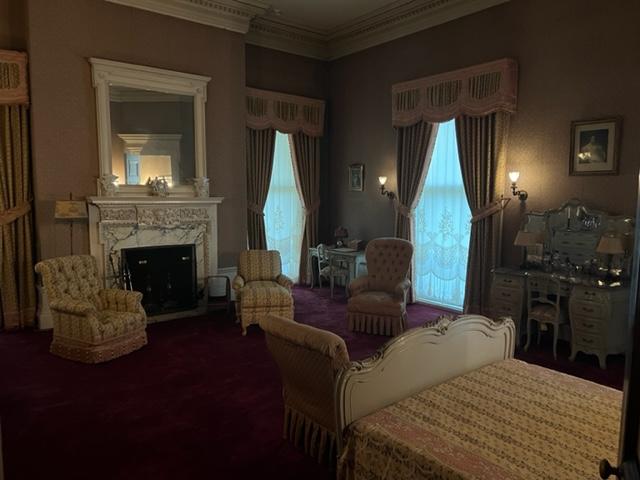
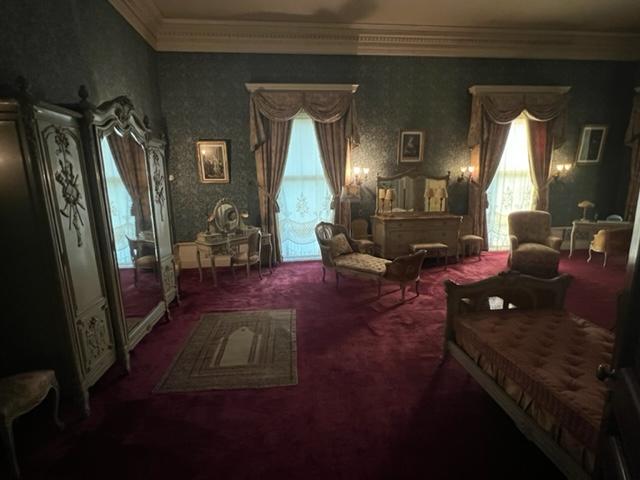
The bedrooms on the second floor are as elaborate as the rest of the house. While Fredrick’s bedroom was very plain in comparison to Louise’s who designed her bedroom after Marie Antoinette’s that she saw at Versailles. The room has a railing around it.

Louise’s Bedroom was based on what she saw in Europe.
Fredrick’s bedroom is less formal

The Bathroom with its modern plumbing and lighting

The elaborate rooms of the Vanderbilt Mansion

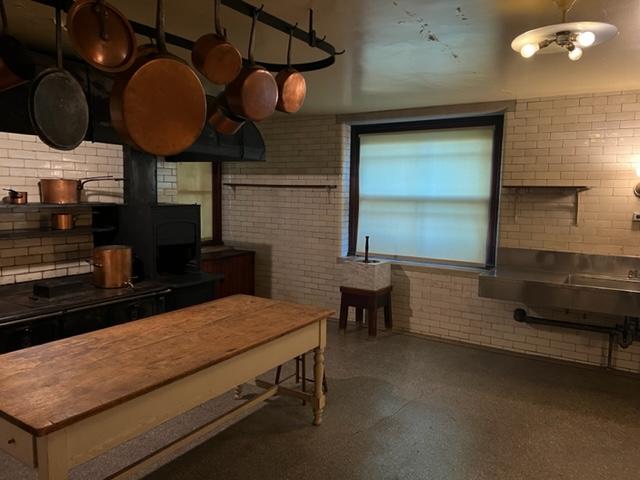
The household had a staff of over thirty people to attend to the household and grounds with their formal gardens. The kitchen staff had a well attended kitchen to work with and according to the tour guide, the staff was well treated at the Vanderbilt mansion. Fredrick was a good boss and provided well for his loyal staff.
The basement kitchen of the Vanderbilt Mansion

Touring the Vanderbilt Mansion at the Christmas holidays is always a treat but if you miss it, you can go during the year and still the elaborate rooms and beautiful grounds during the summer months. Take time to walk around the extensive lawns and gardens.

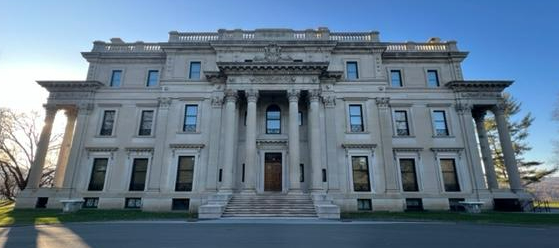
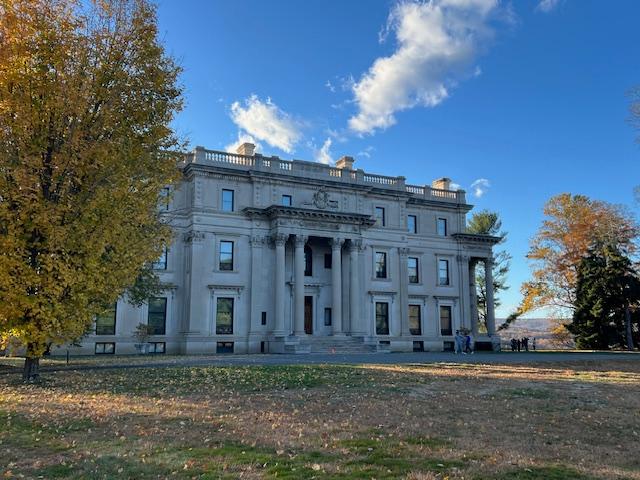
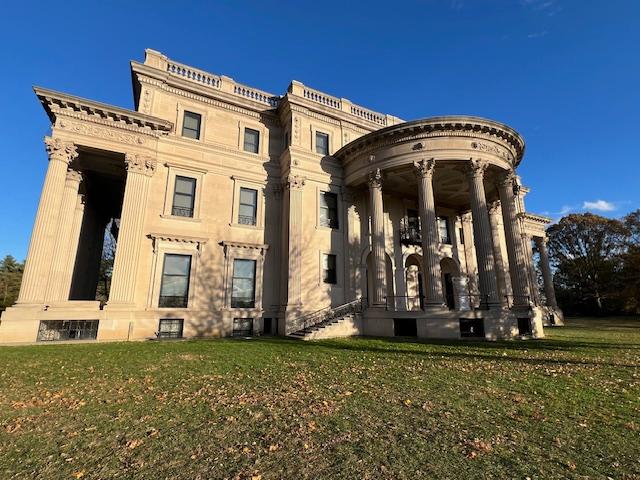
The Vanderbilt Mansion in the Fall of 2024

The Vanderbilt Estate in the Fall of 2024

The back of the mansion facing the Hudson River

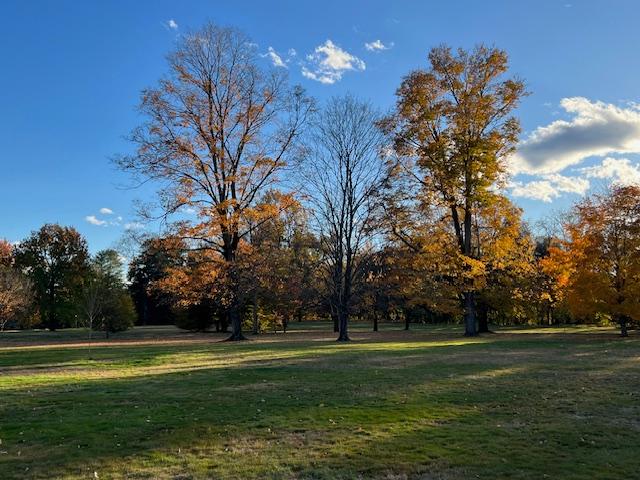
The estate grounds in the Fall of 2024

The estate in the Fall of 2024

History of the Vanderbilt Mansion:

The Gilded Age, the period following the Civil War to the turn of the century, was a time of unparalleled growth in industry, technology and immigration. Captains of industry, men like Cornelius Vanderbilt, Andrew Carnegie, J.P. Morgan, John D. Rockefeller and others who amassed unimaginable wealth, while the average annual income in the US was around $380, well below the poverty line.

The term “Gilded Age” was coined by Mark Twain and Charles Dudley Warner in their 1873 book, The Gilded Age: A Tale of Today. The term refers to the process of gilding an object with a superficial layer of gold to improve its appearance. Established millionaires viewed nouveau riche families like the Vanderbilt’s, who flaunted their wealth by building ostentatious  homes, throwing extravagant balls and using their money to buy social prominence, as gilded-all show, no substance.

Cornelius “Commodore” Vanderbilt (1794-1877) rose from poverty to become a shipping and railroad tycoon. He turned a 100 dollar loan from his parents into a multi-million dollar fortune and left the bulk of his money to his eldest son William.

William expanded the railroad operations doubling the Vanderbilt fortune in just eight years but his eight children lived lives of excess, extravagance and self-indulgence. They built 40 opulent mansions and country estates and entertained lavishly, largely depleting the family money.

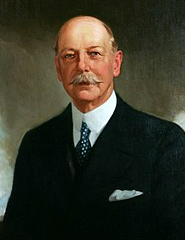
Fredrick William Vanderbilt later in life

In 1895, William’s son, Fredrick (1856-1938) and his wife, Louise (1854-1926) bought Hyde Park to use its their spring and fall country estate. McKim, Mead & White, America’s top architecture firm, designated the mansion in the neoclassical style with Beaux-Arts ornamentation and incorporated the latest innovations: electricity, central heating and indoor plumbing.

They added the Pavilion, a coach house, power station, gate houses, two new bridges over Crum Elbow Creek, boat docks, a railroad station and extensive landscaping. Many of the mansion’s contents were bought in Europe from wealthy families who had fallen on hard times. Furnishings and construction coast totaled around $2,250,000.

Louise Vanderbilt

Hyde Park was in many ways self-sustaining, providing food and flowers for the family’s needs here and at their other homes. When the Vanderbilt’s were in residence, as many as 60 staff worked here. Staff lived on or near the property and attended to the grounds and extensive farm. Personal staff traveled with the Vanderbilt’s and lived in the mansion with the family. Seasonal laborers were hired from the community and lived in the servants’ quarters.

The Vanderbilt Mansion in Hyde Park, NY in Fall 2024

The Vanderbilt Estate in Fall 2024

Fredrick, a quiet man, preferred to avoid social occasions but Louise loved to entertain, throwing lavish weekend parties with horseback riding, golf , tennis and swimming followed by formal dinners and dancing.

When Louise died in 1926, Fredrick sold his other houses and returned to this estate for the last 12 years of his life. He was active in business, directing 22 railroads until his death in 1938. His estate totaled $76 million, over 1.2 billion today. Gilded Age estates like this flourished in the 1890’s until the income tax (1913), World War I (1914) and Great Depression (1930’s) made their upkeep all but impossible.

The couple had no children and left the Hyde Park mansion to Louise’s niece, Margaret Louise Van Alen, who tried to sell the estate but there were no buyers. Her neighbor, Franklin D. Roosevelt, suggested she donate the estate to the National Park Service as a monument to the Gilded Age. She agreed and the Vanderbilt Mansion National Historic Site opened to the public in 1940.

The farmlands were not part of the donation and remain in private hands. The lavish mansion and its contents remain virtually unchanged from the time the Vanderbilt’s lived here.

(The National Park Foundation pamphlet)

The Vanderbilt Family History:

1650: Jan Aertsen Van Der Bilt is the first Vanderbilt ancestor known to reside in American.

1794: Cornelius “Commodore” Vanderbilt born on Staten Island, New York City, to Cornelius and Phoebe Hand Vanderbilt.

1810: Cornelius borrows $100 from parents and buys first two-masted sailing barge to start a ferry service from Staten Island to Manhattan.

1817: Cornelius captains a steamship for Thomas Gibbons and assists in legal battle against steamship monopolies, opening the way for his own shipping business.

1821: William Henry Vanderbilt, one of 13 children and first son, born Cornelius and first wife Sophia.

1830’s-1840’s: Cornelius expands shipping empire, begins railroad management.

1841: William marries Maria Kissam. They have eight children.

1851: Cornelius’ Accessory Transit Company provides shorter, cheaper transportation from New York to San Francisco. He gains national prominence.

1856: Fredrick, sixth child, is born to William and Maria

1861-65: During the Civil War, Cornelius donates steamship to the Union Navy. Receives Congressional Gold Medal. Acquires and consolidates rail lines in the Northeast and Midwest.

1870’s: Cornelius consolidates two core companies, creating New York Central & Hudson Railroad. William slashes cost, increases efficiency, turning it into one of the most profitable large enterprises in America.

1871: Cornelius opens Grand Central Depot on 42nd Street, New York City, the largest train station in North America

1877: Cornelius dies. William inherits most of his father’s fortune, nearly $100 million, to great displeasure of his siblings.

1878: Fredrick graduates from Sheffield Scientific School (Yale). Marries Louise Anthony.

1885: William dies, leaving an estate of $195 million to his eight children.

1895: Fredrick and Louise purchase the Hyde Park estate.

1899: Grand Central Depot is enlarged and becomes Grand Central Station.

1904-13: The new Grand  Central Terminal (GCT) is built in sections on Depot site.  Design insures trains are not delayed.

1926: Louise dies.

1938: Fredrick dies, leave the Hyde Park estate to niece Margaret Louise Van Alen.

1940: Vanderbilt Mansion National Historic Site established.

1949: 65 million passengers pass through GCT, equivalent 40% of the American population.

1950: Glory days of rail travel end.

1967: GCT designated New York City landmark, saving it from demolition.

1968: New York Central merges with Pennsylvania Railroad to form Penn Central.

1970: Penn Central files for bankruptcy and is dissolved by the courts.

1994: Metro-North takes over the GCT operation and restores it to 1913 splendor.

(The National Park Foundation pamphlet)

A legacy of landscape design:

The estate’s landscape was first developed by Dr. Samuel Bard, who died here in 1821. In the European picturesque style, he planted exotic plants and probably the gingko tree, one of the continent’s oldest dating back to 1799. Bard’s son, William sold the to his father’s medical partner, Dr. David Hosack, who built the first formal gardens and greenhouses. After his death, the estate was broken up. Later Walter Langdon Jr. reunited the estate, laid out the formal garden’s and hired Boston architects to design a gardener’s cottage, tool houses and garden walls. These structures, the only ones to pre-date Vanderbilt ownership, still exists. Vanderbilt redesigned the formal gardens and planted hundreds of trees and shrubs. On weekends, Fredrick and Louise liked to walk through the gardens twice a day. Today the landscape, restored to its 1930’s appearance, encompassing five acres of tiered gardens, gravel paths, shady arbors, ornate statues and bubbling fountains.

(The National Park Foundation pamphlet)

Disclaimer: This information comes directly from the National Park Service pamphlet of the Vanderbilt Estate and I give the author full credit on the information. Please refer to the National Park System website for any further information on the site as the hours vary during the different times of the year.