Category: VisitingaMuseum.com

Bannerman Island Castle                                     POB 843                                                       Glenham, NY 12527

Bannerman Island Castle POB 843 Glenham, NY 12527

Bannerman Island Castle

POB 843

Glenham, NY 12527

(845) 831-1001

https://en.wikipedia.org/wiki/Pollepel_Island

Open: Please check the website as this is a seasonal location

Admission: Adults and Children 11 and Up $45.00/Children 11 and under $35.00

My review on TripAdvisor:
https://www.tripadvisor.com/ShowUserReviews-g47508-d2252346-r967185184-Bannerman_Castle-Cold_Spring_New_York.html?m=19905

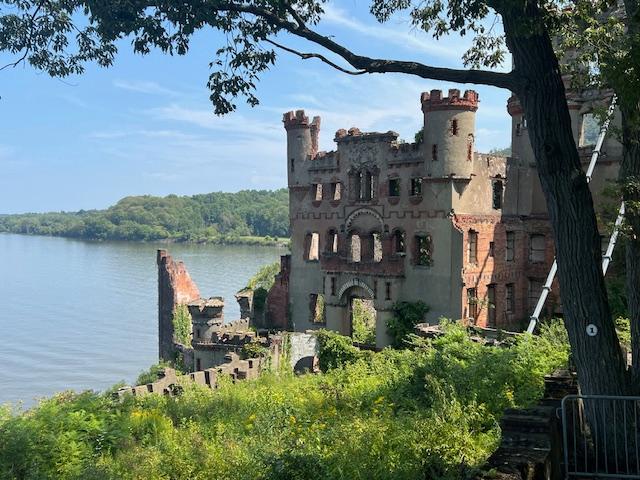
The mysterious Bannerman Castle sits on an island in the middle of the Hudson River
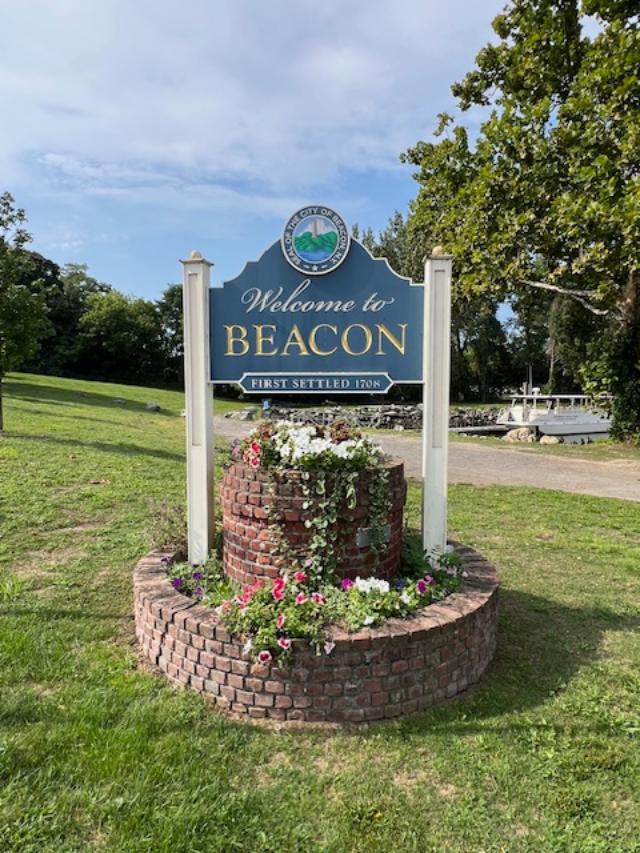
The welcoming sign by the riverfront

I recently visited Bannerman Island (Pollepel Island) just outside of Beacon, New York on a cool cloudy day and I highly recommend the twenty minute boat trip to this mysterious and scenic island. The only way to visit the island is by boat or kayak and the ride is very quick depending on the weather and the waves on the Hudson River.

The dock at the Beacon Railroad station at the beginning of the tour

The dockside and park at the Beacon park

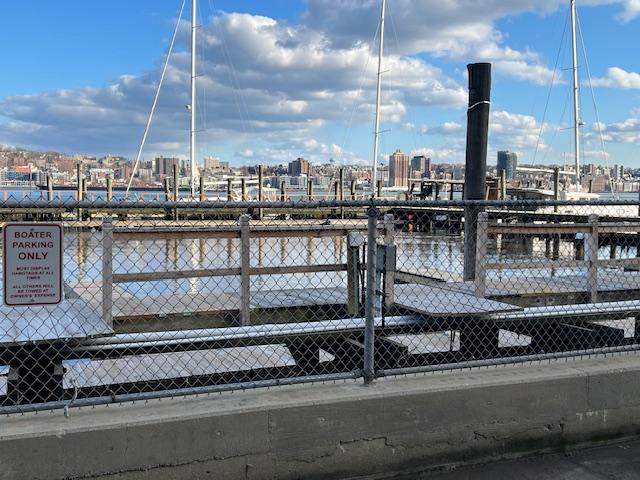
The view of the docks before the tour

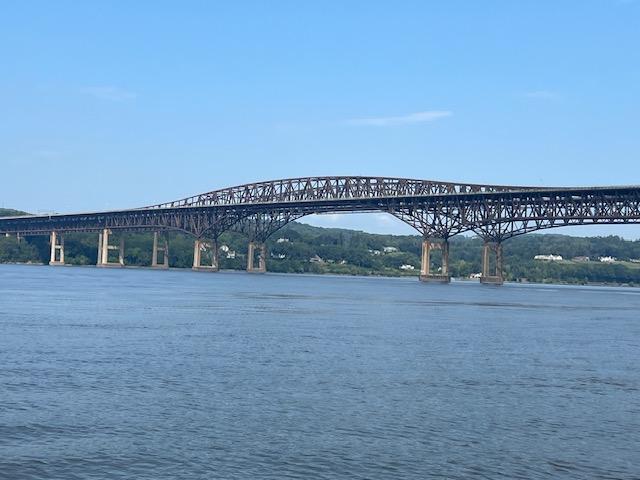
The view of the bridge near the park and part of the boat tour

Video of the boat ride out to the island:

Video of the boat ride out to the island:

Video of the boat ride out to the island:
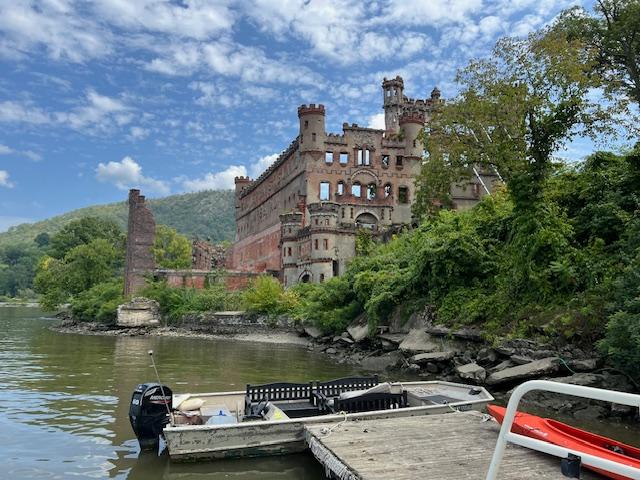
Video of the boat ride out to the island:

Video of the boat ride out to the island:

Arriving at the dock on Bannerman Island after your boat ride

The historic sign of General Lafayette’s landing at this site in 1824

Once you get to the island, you are greeted by the tour guide and then have to walk up 74 steps from the harbor to the ridge of the island so this is NOT ADA compliant.  At the top of the stairs starts the path around the island. Our tour guide that lead the tour had been there since the tours started in 2004 and gave us many insights on the history of the island and its purpose to the Bannerman family.

The gardens at the hillside as you walk up the stairs at Bannerman Island in the Summer of 2024
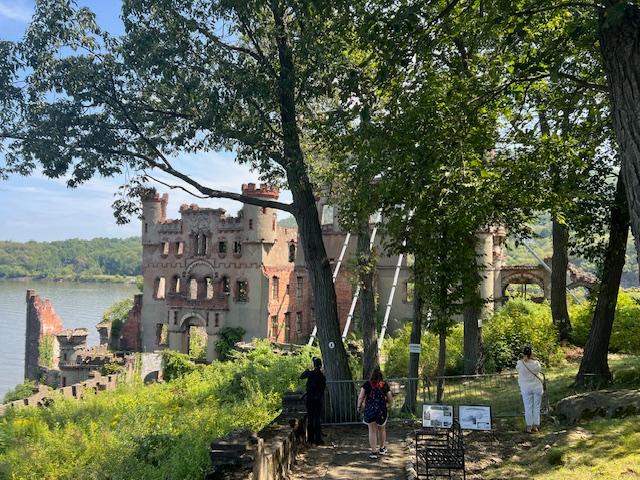
The first stop on the tour is the view of the ruins of the old Munitions Storage building

Our first stop was the Bannerman Munitions Storage facilities that were in the form of a castle that can be seen from the rail system up to Poughkeepsie, NY. For years I thought (as most people do) that this was a home but it was the Bannerman Munitions Warehouse for all the Army surplus items that Mr. Bannerman had brought up here from New York City. All the Military items were stored up here and the orders were fulfilled from this island.

Walking by the ruins of the old castle

Walking by the castle on the pathway
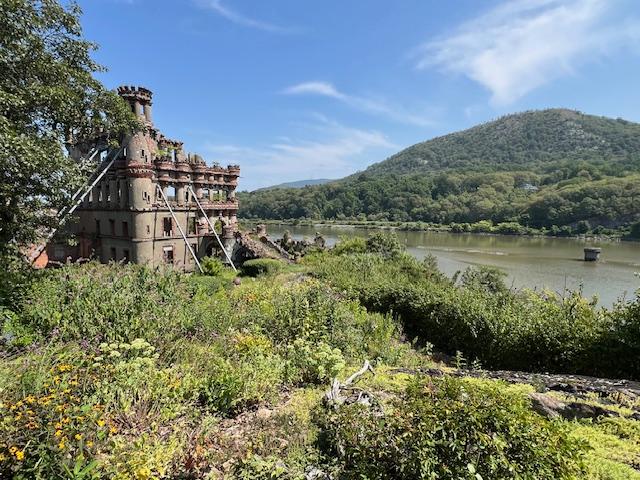
The pathway by the river

Walking the pathway by the river

The company has not been in business since the early 60’s and when the children of the founder closed the company after the laws in the Federal Government changed to where private citizens could not sell explosive, it put a damper into operations. In 1967, the storage buildings were destroyed by fire and the compound was a shell of the former factory. The home was also abandoned at the top of the ridge when the family sold the island.
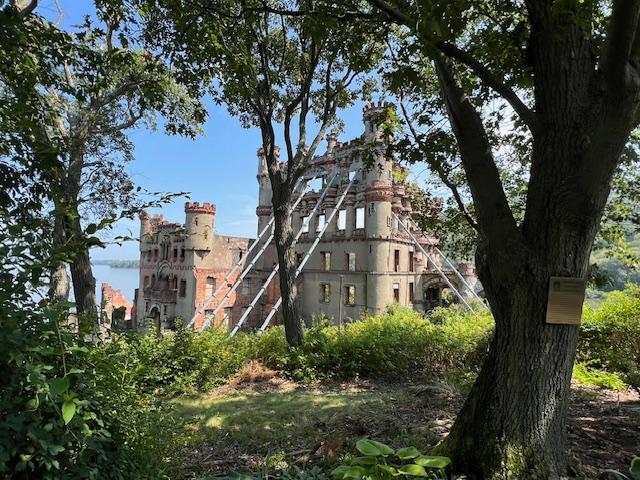
The Bannerman Island Munitions Storage Facility

Once you leave the former storage facility which is now being held up by stilts because the structure is so weak, you will proceed up the path past the formal gardens that are planted along the trail. The local garden clubs now come to the island to replant Mrs. Bannerman’s formal gardens and beautify the island.

The gardens on the pathway to the house
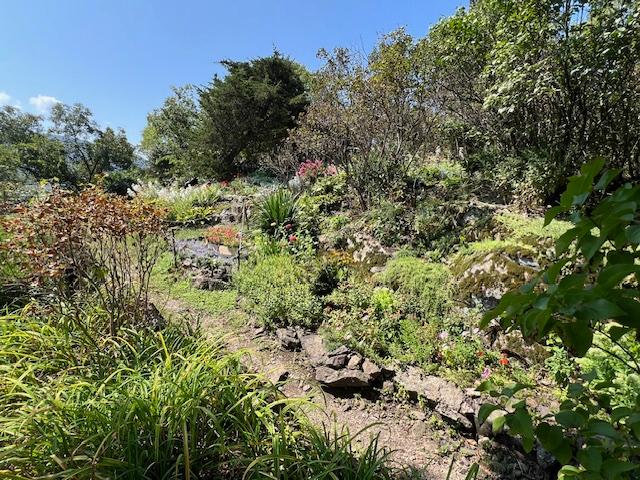
The gardens along the pathway

The gardens
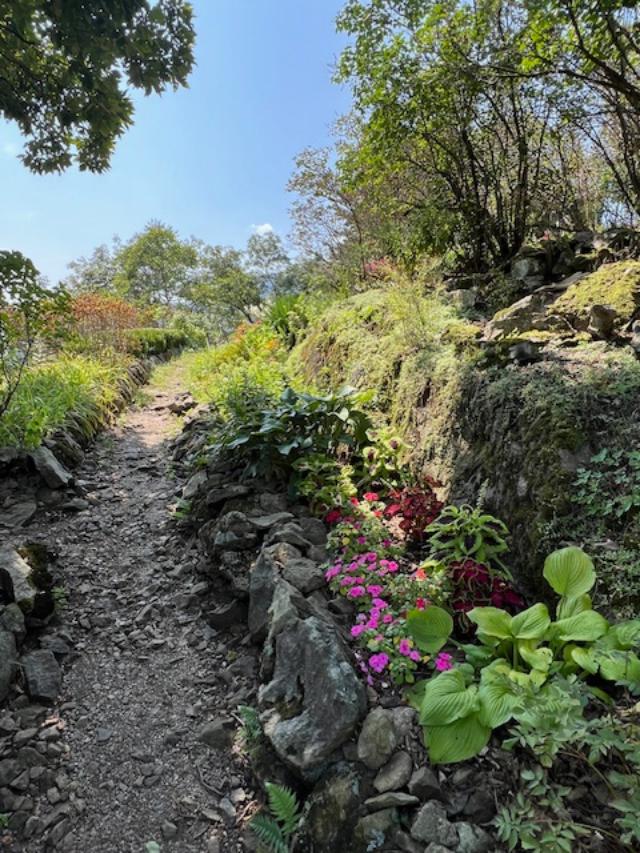
The gardens along the pathway to the house

The gardens by the front of the house
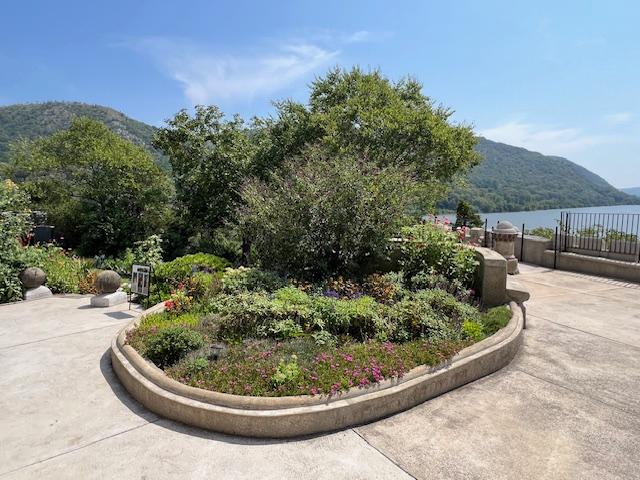
The gardens by the front door of the Bannerman Mansion

At the top of the point, there is the former home of the Bannerman family that is currently under renovation. It houses a quick tour of the family and there is a small gift shop inside. The porch area has the most amazing views of the Hudson River and the surrounding mountains. Here the Friends of Bannerman Island show movies in the warmer months and hold plays just outside the home. The last movie had been “Abbott and Costello Meet the Frankenstein”, which had been sold out according to the tour guide.
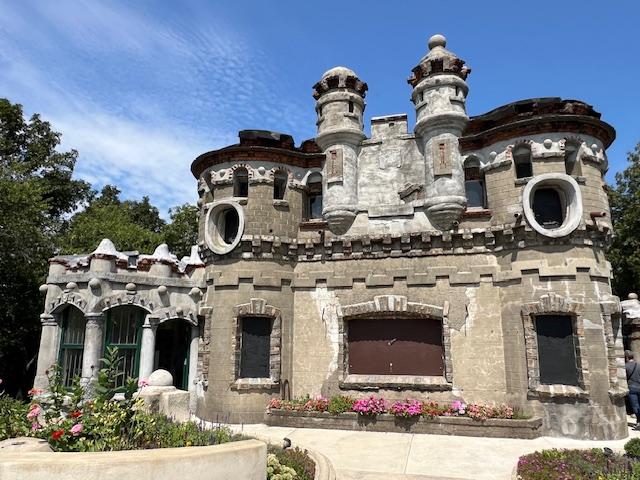
The Bannerman House and Gardens

The main room in the house
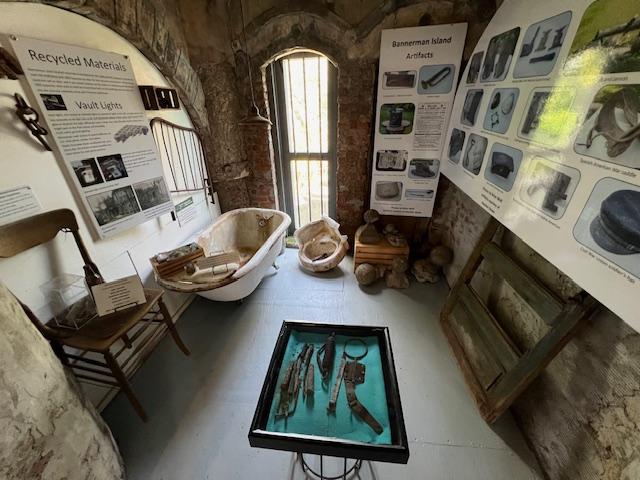
The old kitchen in the Bannerman home
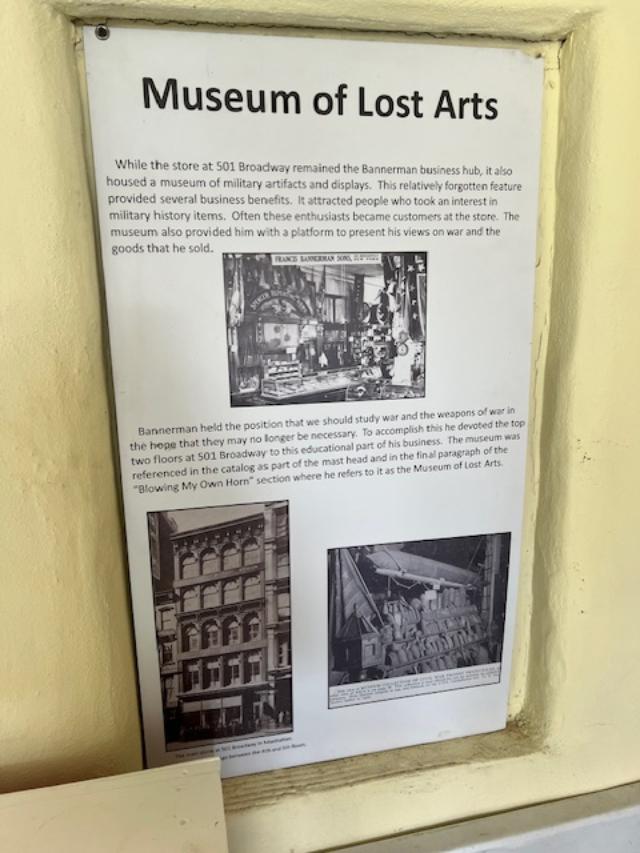
The restoration of the house

The house restoration

When you leave the house, there are two paths that you can follow around, one to Wee Bay at the bottom of the hill where you can see the beach and some of the river buildings. The other is the Red Trail around the hill of the island that takes you to the top of the hill to see spectacular views and back to the dock where you will pick up the boat. I suggest good walking shoes and patience. The Wee Bay trail is past the gardens. You take the trail down to the beach.

The pathway to the beach

The Bannerman sign before you head down the hill

The signs to Wee Bay Beach

The Wee Bay path tour

The Wee Bay path tour

The Wee Bay path tour
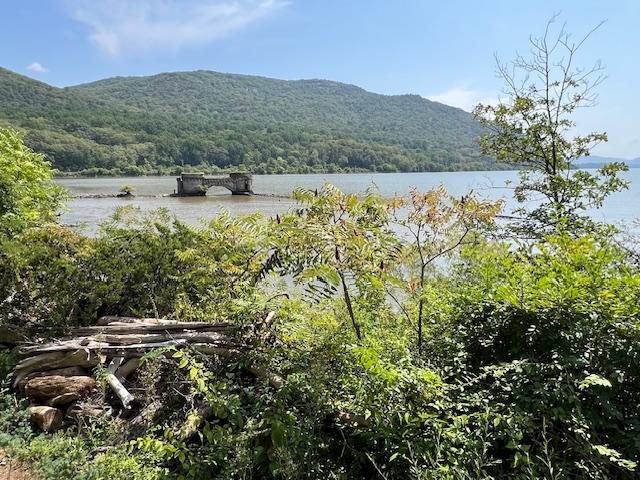
The views of the river from the Wee Path tour

The Wee Bay beach at the bottom of the trail
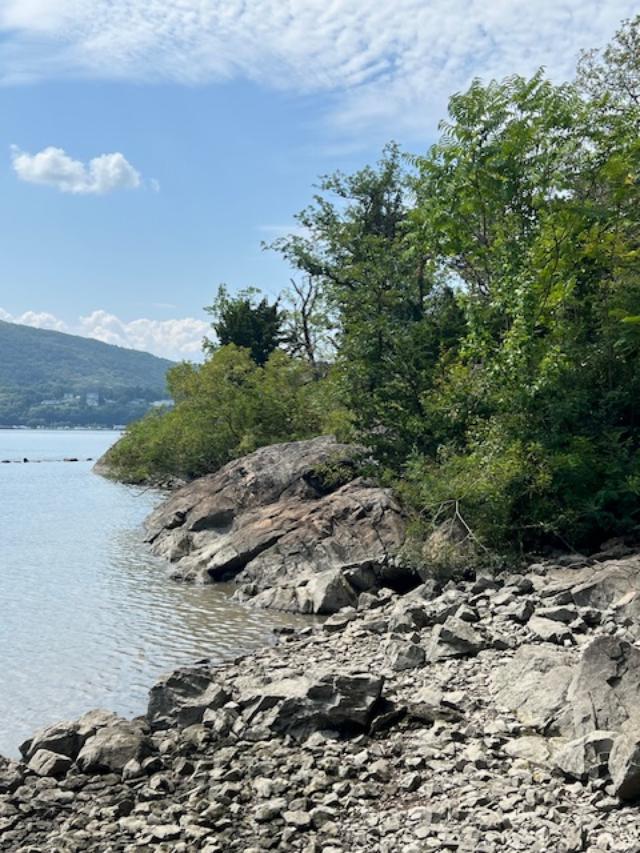
The beauty of the beach at the bottom of the hill

The docking buildings by the beach

Wee Bay Beach
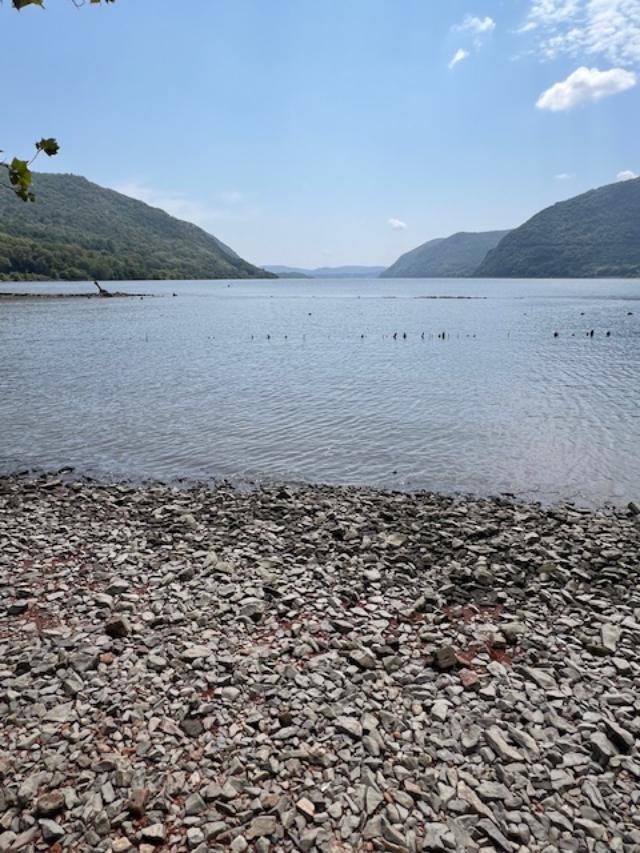
The view from the beach

The view of the River buildings

I headed back to the top of the trail by the house and continued the walk around the house to walk the Red Trail on the other side of the house. I have to admit this is not for the faint hearted and you had better like hiking because it is not easy.
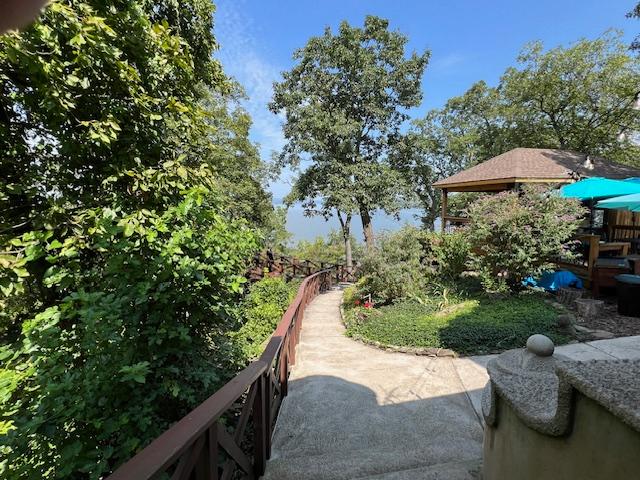
The beginning of the trails by the main house

The Red Trail gardens

The Red Trail by the house

The trail at the highest point on the Red Trail

The end of the Red Trail

The end of the trail by the castle

As you exit the tour, you will be heading down another flight of stairs to go back to the harbor. Please watch out for poison ivy! It is all over the place. Then it is back on the boat to the Beacon harbor. The tour guide gives you plenty of time to take pictures.

The view of Mount Beacon on the Hudson River

Finishing the tour and back to the boat

The tours are finished at the end of October and will reopen again in the Spring. You must book on line for the tours through the State website and the boats only hold 44 people so be sure to book in advance of when you want to go.

In 2019, I had lucked out in that three people did not show up for the 2:00pm tour and I was able to pay cash for the trip. In 2024 I booked online which is what I suggest.
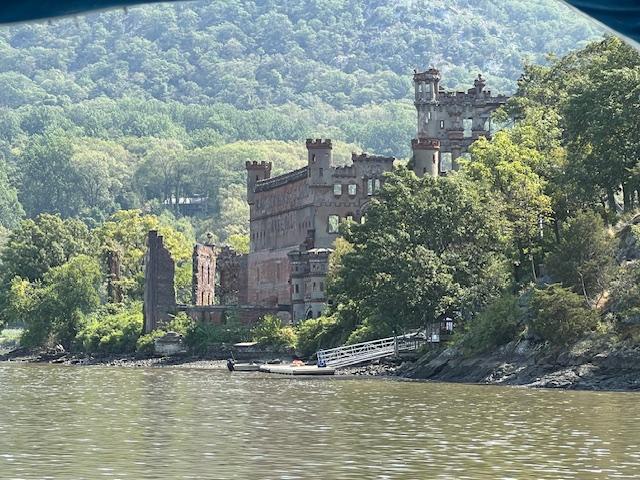
For the views alone it is well worth the trip

 The view of Downtown Beacon when you return to the dock

The boat awaited the next group who were at the dock when we returned

The view of the parks when you return

History of Bannerman Castle on Pollepel Island:

Bannerman Castle was built from 1901-1918 by Frank Bannerman IV as a warehouse to store his collection of antique military equipment from the Spanish American and Civil Wars. Bannerman was the father of the Army Navy Store. His  world famous catalogue of military equipment became the “go to” source for collectors.

The ruins of the Bannerman Castle

The island housed seven structures that formed the Scottish baronial castle, including workers apartments, a summer residence and beautiful trails and gardens. A great fire in 1969 destroyed the interiors and left the shells you see today. Bannerman island opened for tours in 2004.


History of Francis Bannerman VI:

(from the parks website)

Francis Bannerman VI was born on March 24th, 1851 in Northern Ireland and emigrated to the United States in 1854. The family moved to Brooklyn, NY and began a military surplus business by the Brooklyn Navy Yard purchasing army surplus after the Civil War. The family continued to grow the business by buying weapons directly from the Spanish Government before it evacuated Cuba and then purchased 90% of the munitions auctioned off by the Federal Government that had been capture by American forces at the close of the Spanish-American War.

The family bought the island in 1900 to store the surplus items to their growing business. The warehouse in New York was too small and too dangerous to keep in the City anymore and they could keep their inventory isolated on the island.
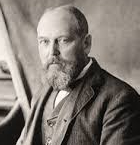
Frank Bannerman IV

https://www.electricscotland.com/history/descendants/chap36.htm

https://www.findagrave.com/memorial/8048322/francis-bannerman

The castle was visible from the water and had a giant advertisement sign right on the arsenal “Bannerman’s Island Arsenal” created into the wall of the building. With the change in federal and state laws on selling military weapons and the sinking of the ferryboat that served the island by 1950, the island was abandoned. The island and its buildings were bought by New York State in 1967 and is now run by the New York State Office of Parks, Recreation and Historic Preservation.

(This information is a combination from Wiki and the island pamphlet)

I visited Downtown Beacon, NY when I was finished with the tour. I highly recommend the town to shop and eat lunch or dinner. Maybe just a drink by the river. It is really a nice town.

 Downtown Beacon in Summer 2024

Downtown Beacon, NY in the Summer of 2024

Downtown Beacon by the falls in the Summer of 2024

Kearney House (Blackledge-Kearney House) Alpine Landing                                                Alpine, NJ 07624

Kearney House (Blackledge-Kearney House) Alpine Landing Alpine, NJ 07624

Kearney House (Blackledge-Kearney House)

Alpine Landing

Alpine, NJ  07624

(201) 768-1360 ext. 108

https://www.njpalisades.org/kearney.html

Open: Most weekends & holiday afternoons from May to October

Fee: Free

My review on TripAdvisor:

https://www.tripadvisor.com/Attraction_Review-g29743-d19332567-Reviews-Kearny_House-Alpine_New_Jersey.html

The Kearny House in the Fall of 2024

I took my first trip down to the Kearney House in Alpine, NJ and was able to walk the grounds, visit the Alpine Landing and see the amazing views of New York and of the Hudson River. This spot gives you breathtaking views upstream of the surrounding Hudson River. The house was closed but the vegetable gardens were full of late Fall produce and the gardens could have used some weeding. I will have to wait until the house opens up again.

The Vegetable Garden in the Fall of 2024 at the Kearny House

I recently visited the Kearny House of their Fall event “Punch & Pie at Mrs. Kearny’s Tavern”. That was an interesting night. First let me say that it is pitch black in that park. The Alpine Basin has no lights in the park and you will be in the dark the whole trip down the hill. I had a minor incident travelling down the hill so take it slow.

The Kearny House at dusk in the Fall of 2024

The Historic sign for the Kearny House at the Alpine Landing

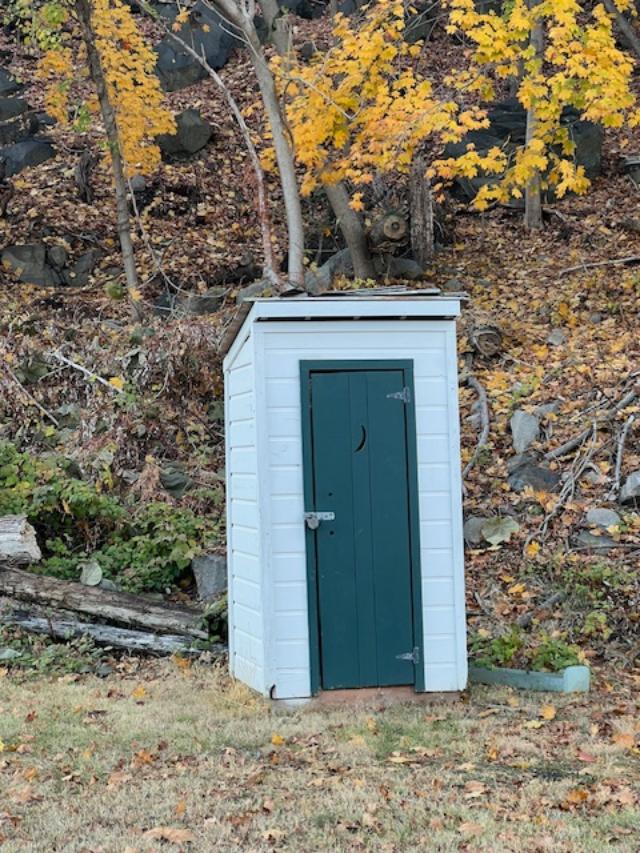
The outhouse on the grounds

Once I was down for the event, it was interesting and fun night. Tavern musician, Thaddeus MacGregor, entertained us with all sorts of songs for the evening and there was storytelling by the gentleman who runs the historical site.

Tavern musician, Thaddeus MacGregor, performing at the Kearny House for the “Thanksgiving Music and Hot Cider” event

There was a candlelight tour of the house, so we got to see the second level with the upstairs bedroom, the attic area which really was drafty and the room above the new addition that is used for storage. The area was once heated by fireplaces and since the downstairs had a fire lit, the whole house was nice and warm. They had once of the original rope beds that had been tied and antique toys.

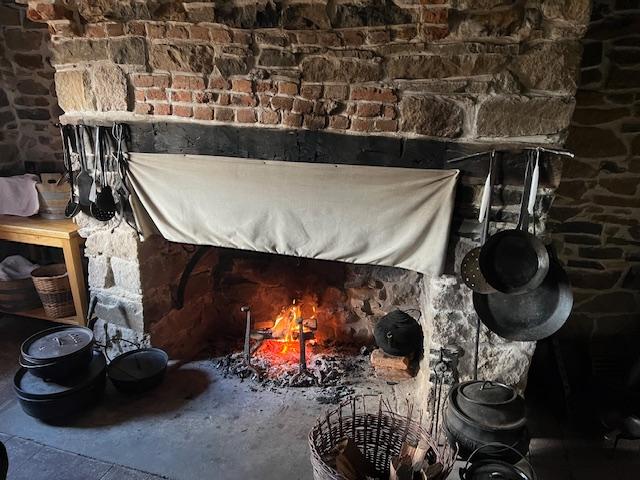
The hearth of the kitchen keeps everyone warm as the stones warm the house

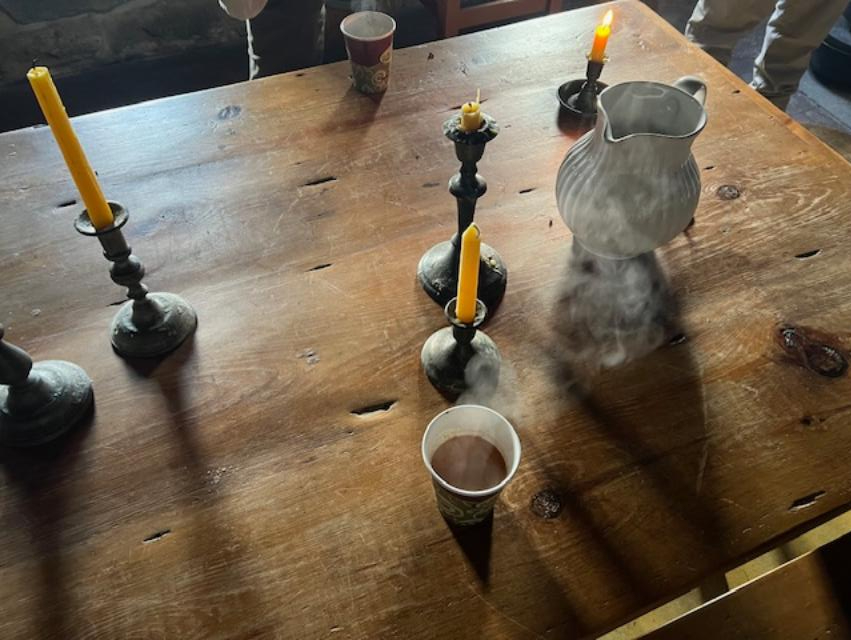
The Dining Room table in the during the “Hot Cider” party

The first floor had the fireplace lit and the whole room was illuminated by candles which made the room very warm and cosy. It was interesting to see one of these homes that has no electricity and how it operates. It must have been very interesting to live at time.

The Dining Room during the day

The delicious hot cider at the Thanksgiving event at the house

The Dining Room at the Kearny House

What calmed me down after a long night was the delicious homemade pies that they served at the event. They had a strawberry rhubarb and apple that were just delicious. So flaky and filled the freshest fruit. It really cheered me up. They also had cheeses, roasted peanuts and a hot spiced cider to drink. I could have used something stiffer but it was still nice to drink and had the most wonderful flavor. Overall it was a nice night of desserts and snacks and good storytelling and the view of New York City was incredible.

The house illuminated by candlelight during the afternoon in the Fall

Do not venture into this park at night! Please take it slow down the hill to the landing. My suggestion is to do a dry run when it is light out so you know where you are going.

The History of the Kearney House:

(I credit this to the Kearney House pamphlet and Wiki)

The Kearney House was built in the 1760’s by the Blackledge family and was the home of Maria Blackledge, who was the daughter of Benjamin Blackledge, who lived in the home with her husband, Daniel Van Sciver.

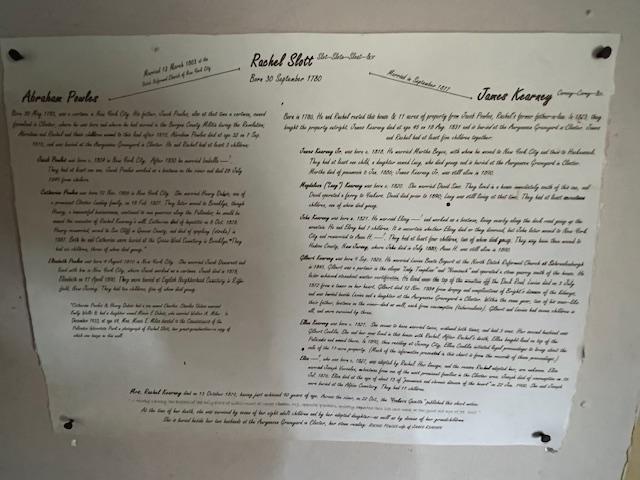
The Kearny Family tree

Maria Blackledge father, Benjamin Blackledge, was an educator and public official, who taught Dutch citizens the “Kings English”. He was the first clerk of Harrington Township, NJ and served as Justice of the Peace and Judge of the County Court of Common Pleas and elected to the assembly of Bergen County, NJ. Mr. Blackledge’s wife, Caroline Tallman (Cathalyntie Tallema), was the daughter of Dowe Hermanszen Tallema and Maritie Haring, of the prominent Haring family of which Harrington, NJ was named after (Wiki).

Mrs. Kearny’s portrait inside the house

The house was built in this location when the farmers of Closter, NJ built the Closter Dock Road through a pass in the cliffs to the Hudson River so they could deliver their goods to New York City. The house was most likely built to be a dockmaster’s house to supervise the busy river landing.

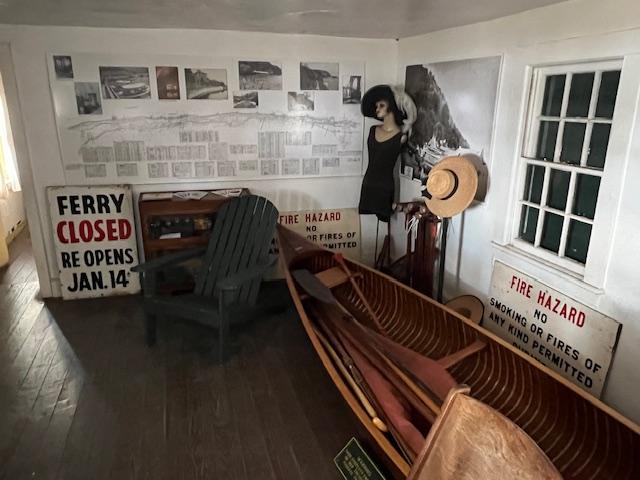
The Blackledge-Kearney House when it was on the waterfront

The house was purchased in  1817 by James and Rachel Kearney. With them were their three children from Rachel’s first husband, Abraham Powles, who died two years earlier. James and Rachel then had five children of their own. Rachel also adopted a daughter.

They had thought that General Cornwallis had used the home as his headquarters but they found this was not true

Mr. Kearney died in 1831 and Mrs. Kearney used the home as a tavern. The northern part of the house was expanded in 1840 to house the tavern part of the building. Besides offering food and spirits, Mrs. Kearney’s tavern served as a meeting place for the captains and crews of the sailing vessels that arrived and departed daily from the docks here and for the local workforce of quarrymen, dock workers and tradesmen. 

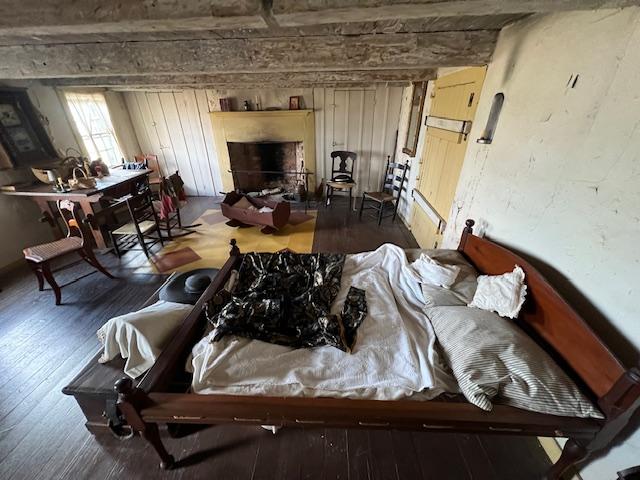
The Upstairs bedroom gallery

The upstairs bedroom gallery

The upstairs room in the new addition may have been for lodgers staying at the tavern.

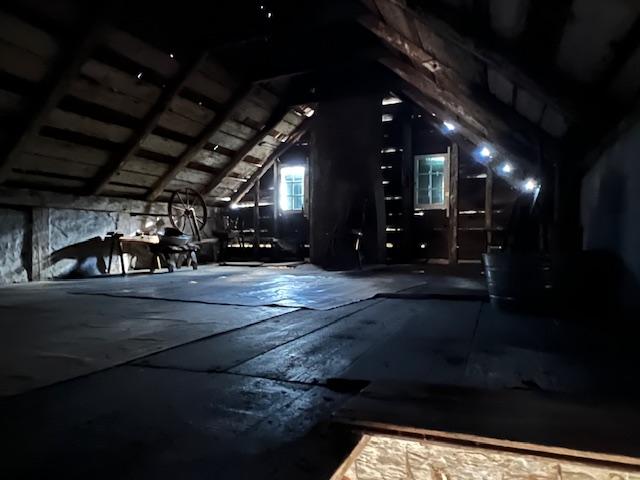
The Kearney House Attic room that was used for her children

The Palisades Interstate Park Commission bought the house in 1907 after Rachel’s death in 1897 and in 1909 had the big porch built as a grandstand for a dedication ceremony for the new park. Through the 1920’s, the Commission used the house as a police station. The house is now open to the public on select weekends and holidays for touring and special events.

The upstairs bedroom gallery with artifacts from the park

The property offers beautiful views of Yonkers, NY and the Bronx and from the Alpine Landing especially in the coming Fall, amazing views of the foliage and of the cliffs surrounding the Hudson River.

Alpine Boat Basin by the Kearney House

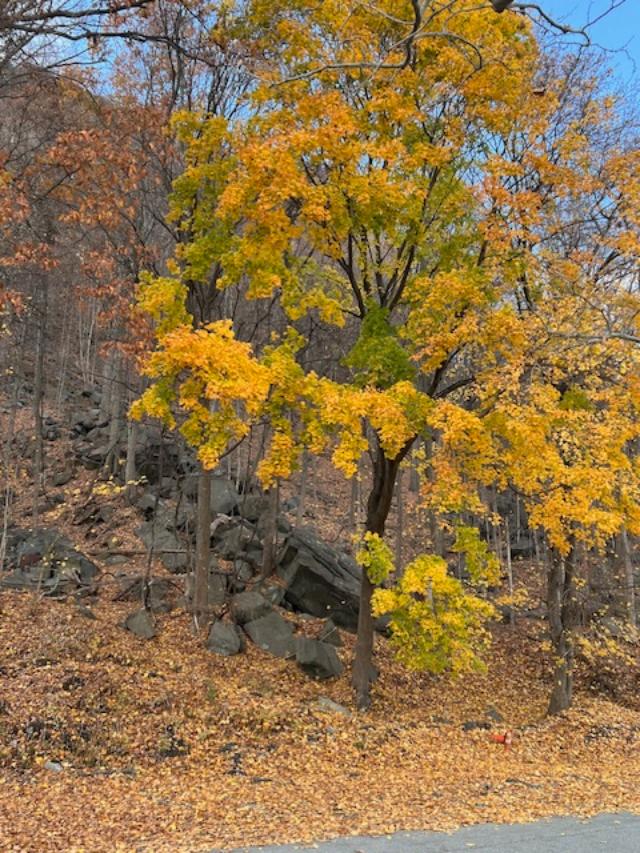
The Alpine Park in the Fall of 2024

The Summer of 2025:

In the summer months, the house was open on Thursday nights for music, games, and summer refreshments. The event ‘Behind the Times at Mrs. Kearney’s Tavern’, was an evening of touring the house and grounds, musically entertainment on the lawn and story telling to end the evening.

Entering the Palisades Interstate Park

The Hudson Riverside and beach area

The park on the Hudson River

The park is breathtaking in the summer months, and everything was lush and in bloom. The views of New York clear as day and the boat basin was busy with people entertaining on their boats and coming in and out of the small harbor.

The park during the Summer of 2025

The park in full bloom that evening

The history of the Kearney House history

The Kearney House and lawn area

The Kearney House was open this evening for one of their many Summer special events. All the windows were open to take advantage of the cool breeze and air the house out on this hot July evening.

The Kearney House from the front lawn

The house getting ready to arriving guests

The tiny barn shed off to the side of house

The waterfall in the back of the house

The tiny shed and hilly woods behind the house

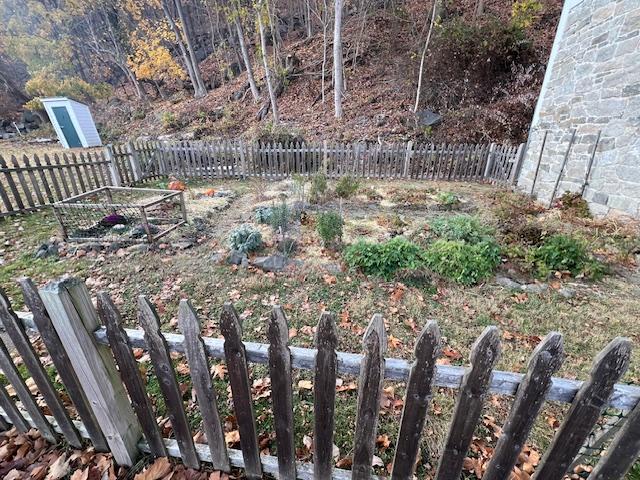
The side of the house and the vegetable garden

The garden with vegetables and herbs

The Vegetable Garden was growing all sorts of vegetables and herbs of the time period and some flowers as well.

The outhouse on the property

The river view of the house

The front of the house with the windows open for river breezes

The inside of the house was cool and welcoming. The hosts of the event had both icy water and Lemonade for guests and slices of sweet watermelon. We were welcomed and offered our choice of beverages and then just relaxed and enjoyed our refreshments that cooled us down for the evening.

Our hostess graciously greeted us and welcomed us to the house

The kitchen set for guests to the tavern

Enjoying summer refreshments

Talking with other guests

It was so nice to just sit back and relax and enjoy the cool breezes coming off the Hudson River. The lemonade really hit the spot.

The cool breezes from the back window

After my snack in the tavern, I toured the upstairs. The two upstairs bedrooms are Mrs. Kearney’s bedroom and the guest room on the other side of the hall.

Mrs. Kearney’s bedroom

The guest room was once used for visitors now holds all their artifacts

This bathing beauty greets you on the second floor

The attic area was far too hot to tour but I had visited it last winter after I had attended visited for a post holiday tour. I did get to tour the upstairs patio and enjoy the breezes outside.

The patio on the second floor

What a view of the river!

The view as the entertainment was about to start

Outside, Thaddeus McGregory started his concert on the front lawn

Thaddeus McGregory singing ‘ Beautiful Dreamer’

Then the Revolutionary War era games took place out on the lawn outside the lawn.

The lawn outside the Kearney house

The beautiful flowers in the lawn

The actors playing ‘ Toss Across’

A video of the games

It was a very nice evening outside with cool breezes and the seeing the concert.

The outside gardens in front of the home

The outside of home

The views from the home of the Hudson River at twilight

Doo Wop Preservation League Museum          4500 Ocean Avenue                                 Wildwood, NJ 08260

Doo Wop Preservation League Museum 4500 Ocean Avenue Wildwood, NJ 08260

Doo Wop Preservation League Museum

4500 Ocean Avenue

Wildwood, NJ  08260

(609) 523-1975

https://www.facebook.com/Doo-Wop-Preservation-League-The-Wildwoods-NJ-128130849267/

Open: Friday-Saturday 10:00am-2:00pm/ Closed Sunday-Thursday

Fee: Free but they ask for a donation

My review on TripAdvisor:

https://www.tripadvisor.com/Attraction_Review-g46931-d283304-Reviews-The_Doo_Wop_Preservation_League_Museum-Wildwood_Cape_May_County_New_Jersey.html?m=19905

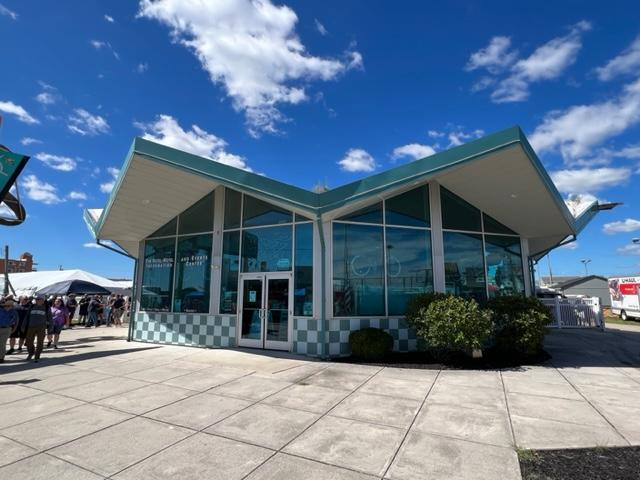
The Doo Wop Preservation League Museum at 4500 Ocean Avenue.

I visited the Doo Wop Preservation League Museum when I was visiting Wildwood, NJ for the Firemen’s Convention. They were sponsoring the DJ on the stage behind the museum. It was easy to miss the museum with all the fire equipment around it and hundreds of firemen milling around.

The neon signs in front of the Doo Wop Museum.

The old neon hotel signs outside the museum

Once inside, this small museum is a treasure trove of history of the resort motels that once lined the beaches of Wildwood, Wildwood Crest and North Wildwood. As time rolls on, many of these old motels, hotels and restaurants are giving way to condos, newer homes and new chain hotels changing the landscape of Wildwood. It is bringing it into modern times with newer looks.

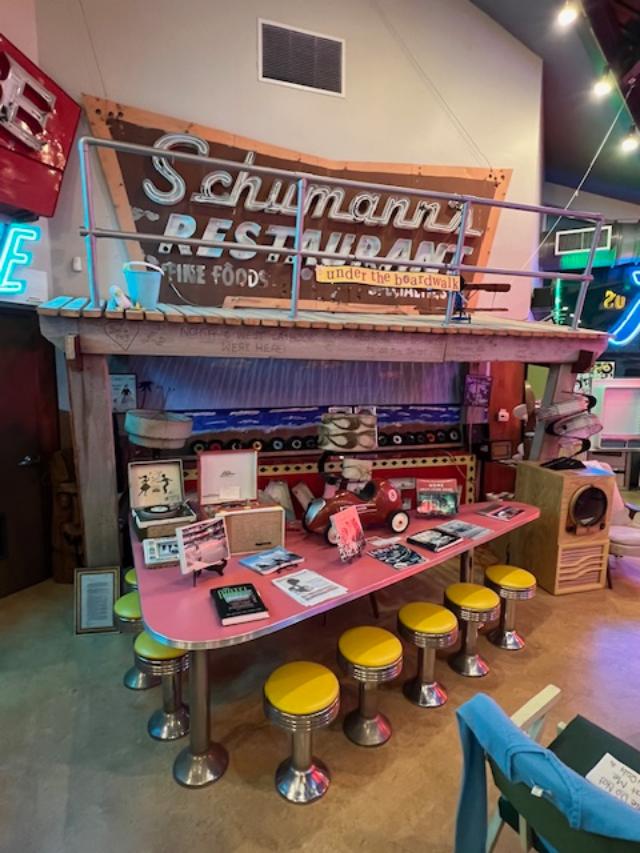
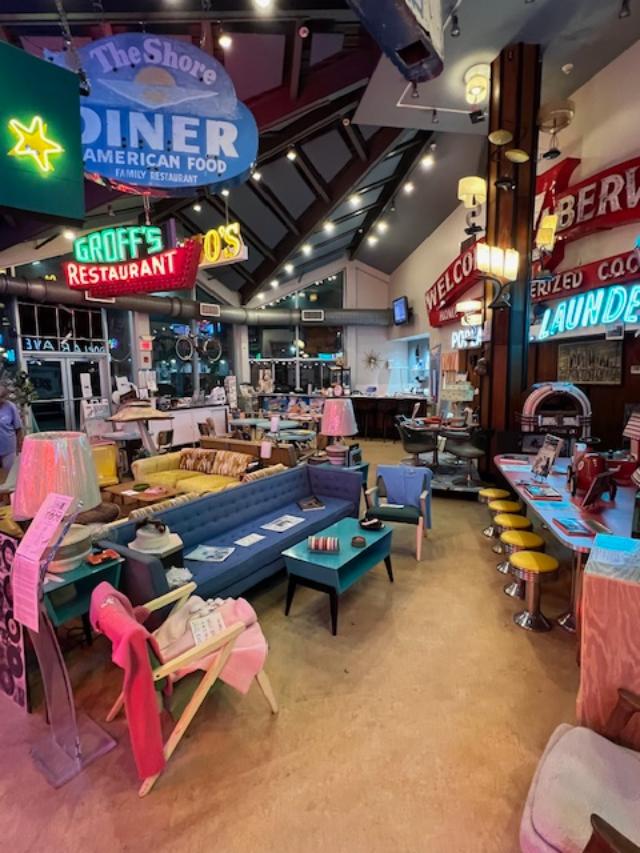
The restaurant section of the Doo Wop Museum

When many of these motels are torn down, the establishments donate old furnishes, decorative objects and signs from the outside to the museum. The outside of the museum is decorated with signs of businesses that are now closed, there neon lights still shining but for a different purpose. These somewhat gaudy and over-grandised signs and looks were of a time of great optimism and travel. Since the middle and working class families did not have the money to travel to these exotic places, something similar was created for them in the Wildwoods bringing that look to the Jersey shore.

The restaurant section of the Doo Wop Museum

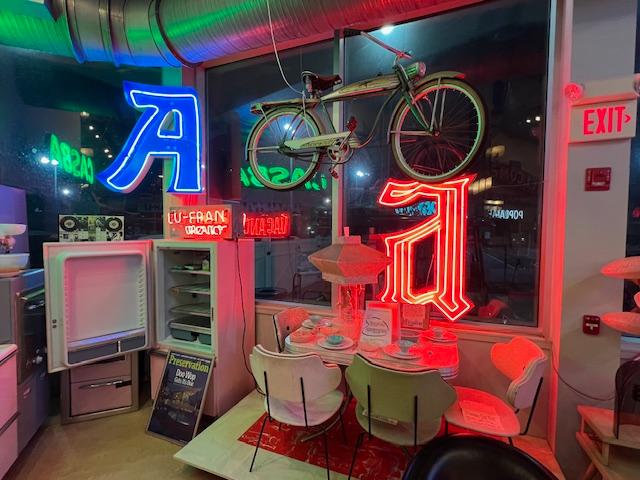
The neon room of the 1950’s

When talking to the curators , a couple that ran the museum said that the museum represents the change in décor used after WWII when they used the neon lights and steel from the war into the signs and lighting of the new resorts. It was a unique style of the late 1950’s and 60’s, when these materials were plentiful and motel owners were getting creative to bring in the rising middle class tourists that could not afford the trips to Hawaii and Miami Beach. These owners brought these themes to Wildwood with a creative twist. Check out the signing and furniture that lines the walls and dining set ups of the museum.

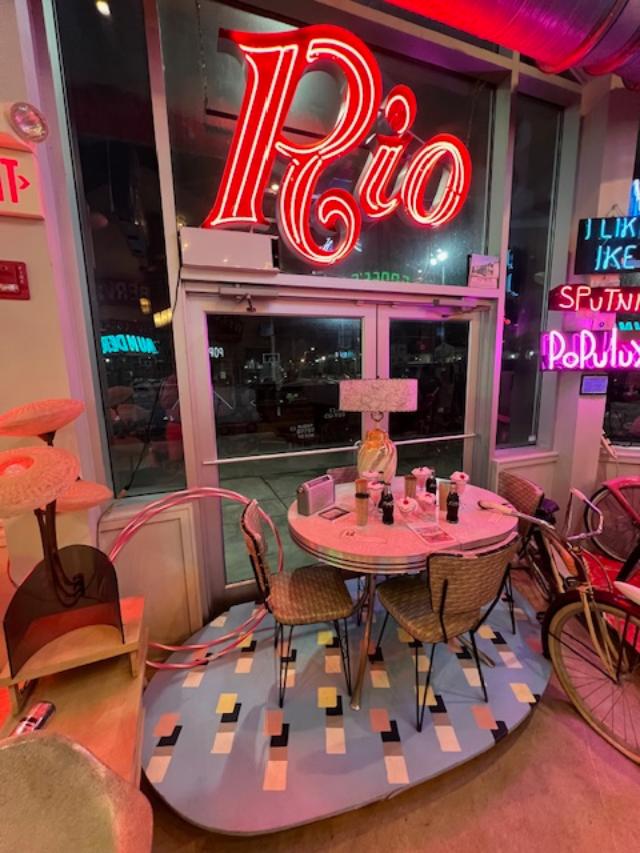
The old neon signs of the hotels in Wildwood, NJ.

The museum is small and takes only about an hour to walk through. Each of the vignettes are designed as its own room with furnishings from old hotels and motels like tables, chairs, lamps and ashtrays in one corner, in another are stools, a jukebox and menus from a 50’s or 60’s style restaurant or items used at the time like bicycles or scooters.

The interesting preservation by the museum shows all over

The History of the Doo Wop Museum:

The Doo Wop Preservation League was founded in 1997 as a 501C3 to preserve  the 1950’s and 60’s architectural styles of the Wildwood’s. Doo Wop style is a combination of Space Age dreams of the late 60’s and the exotic seaside tropics of recently opened South Seas Islands  like Hawaii which became out 50th State in 1959.  The Polynesian look was very ‘in’ at this time as most people could not afford to go but wanted to replicated for them.

The signs of the museum beacon visitors.

The museum is housed in the 1960’s ‘Space Age’ restaurant “The Surfside” that was saved from the wrecking ball and moved to this spot right across the Convention Center and the Boardwalk. On Tuesdays and Thursdays when in season (i.e. Warmer Months), there are bus tours offered by the museum. The museum’s goal is catalogue the remaining businesses in town that still keep their look of the era (Museum website and The Wildwooder Newspaper).

Don’t miss the museum tours:

The best part is that the museum is free (donation suggested) and you can take your time for a self-guided tour of the museum.

YouTube videos on the museum

What a great little museum!

Morris Museum                                                         6 Normandy Heights Road                   Morristown, NJ 07960

Morris Museum 6 Normandy Heights Road Morristown, NJ 07960

Morris Museum

6 Normandy Heights Road

Morristown, NJ  07960

(973) 971-3700

https://morrismuseum.org/

Open: Sunday 12:00pm-5:00pm/Monday Closed/Tuesday-Saturday 11:00am-5:00pm

Fee:  Adults $10.00/Children (3-18)  & Seniors $7.00/Children under 3 & Active Military & Members Free

My review on TripAdvisor:

https://www.tripadvisor.com/Attraction_Review-g60906-d3179939-Reviews-Morris_Museum-Morristown_Morris_County_New_Jersey.html?m=19905

 The front of the Morris Museum

The old Mansion part of the museum

This was the second time I visited the Morris Museum and on every trip I learn something new. The first time I had visited the museum it was right after the movie ‘Hugo’ had opened which was a story that involved the automata (moveable animals and people mechanical objects) so my dad and I toured the permanent exhibit and then toured the rest of the museum.

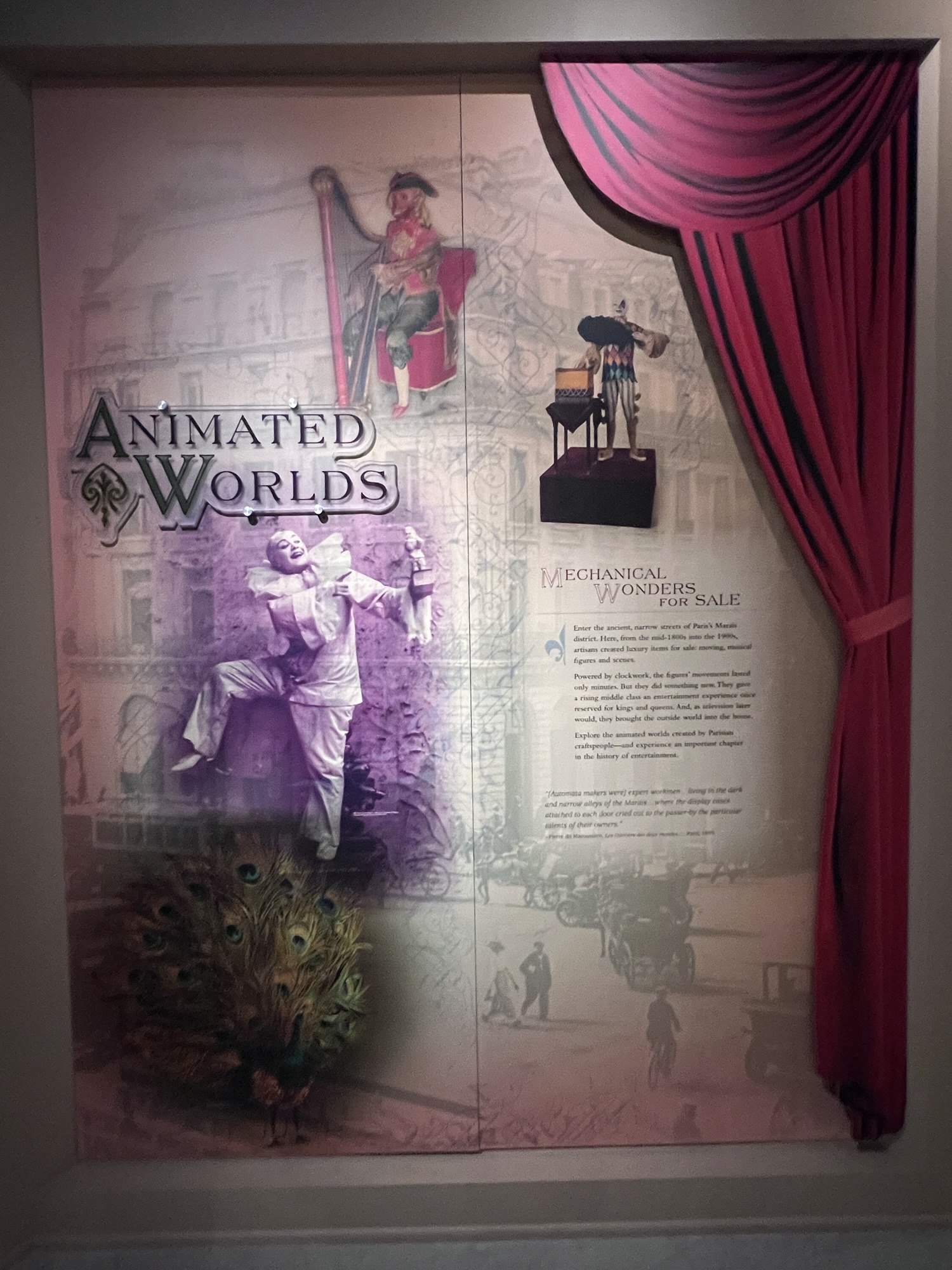
The Guinness Galleries of Automata

The gallery of Automata

When I arrived at the museum at 2:00pm recently, the museum was having a talk and a demonstration on the automata and musical boxes and that was very interesting. These mechanical wonders have been around since the 1300’s being perfected in the Arabic countries by clockmakers and craftsmen at the time.

The exhibition galleries

The movie “Hugo”

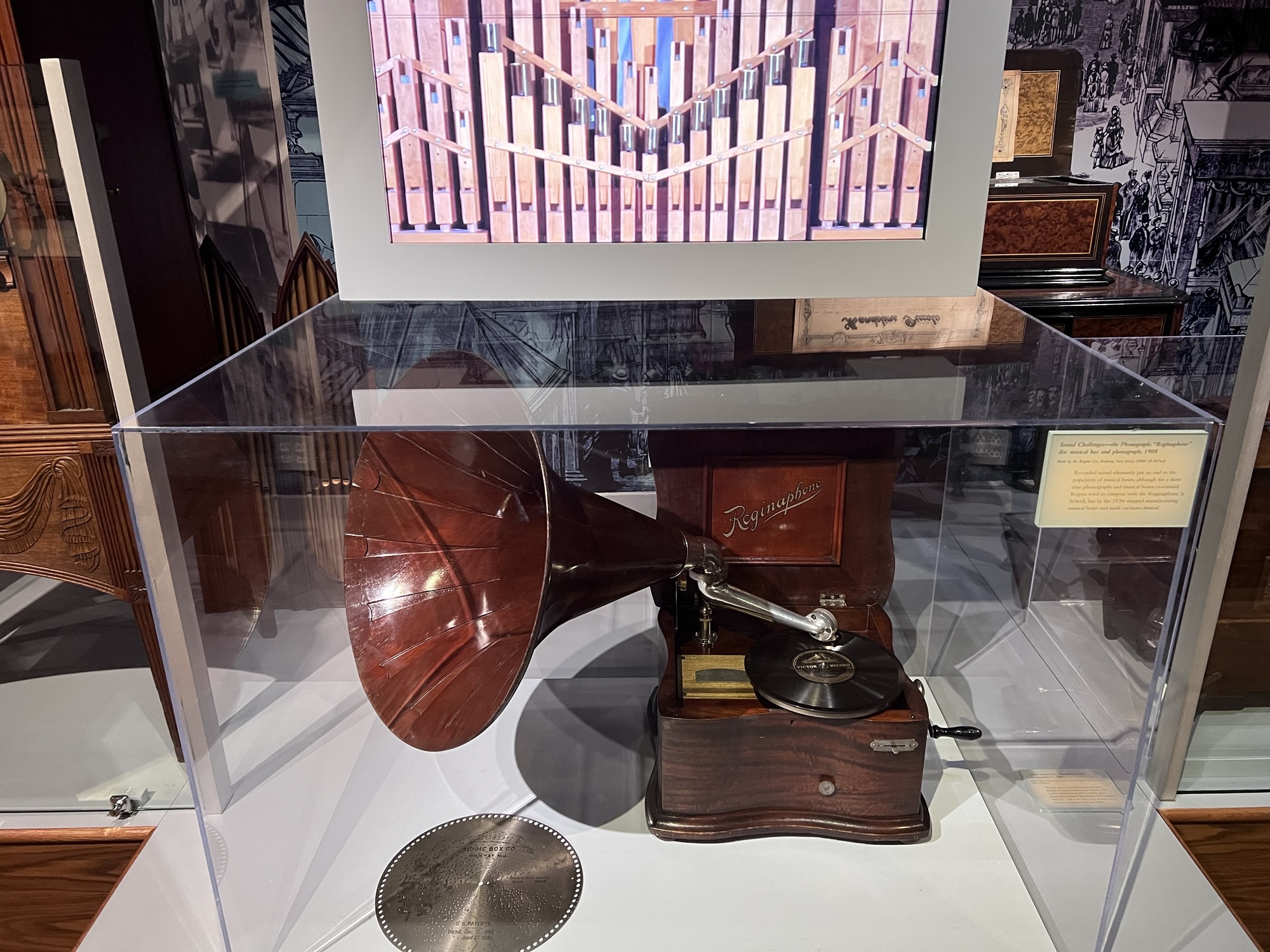
The lecture was on how they were constructed and perfected over time to make them more reasonable to a growing market and how they were replaced when phonographs, radios, record players and tapes gradually progressed to change the market and make them obsolete. 

A old Victrola record player

We got to hear an example of each of the objects and it was fascinating that during the Industrial Revolution how paper rolls changed the cost of these objects making them available to all classes. Today’s talking dolls and music boxes are descended from these innovative items.

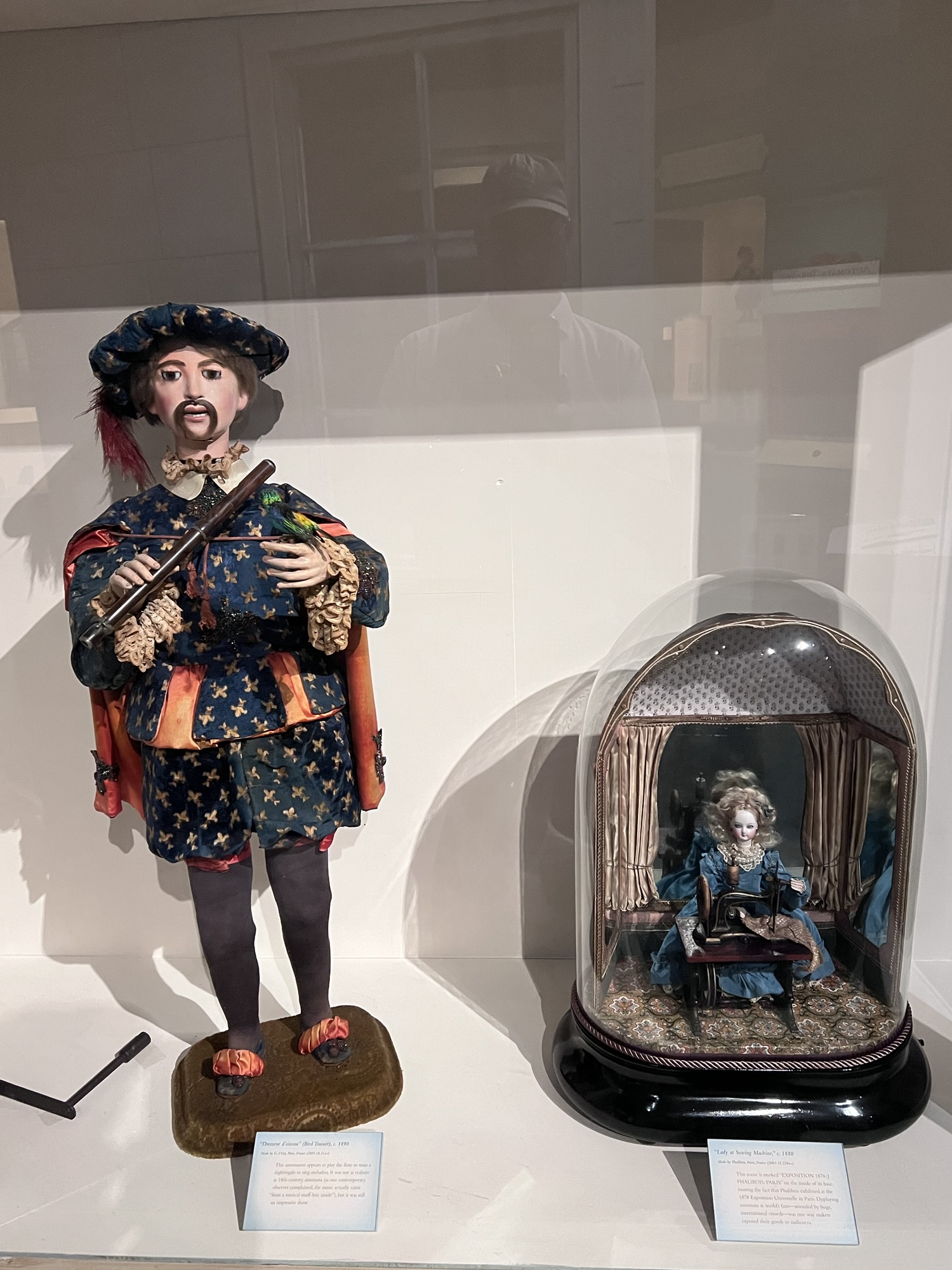
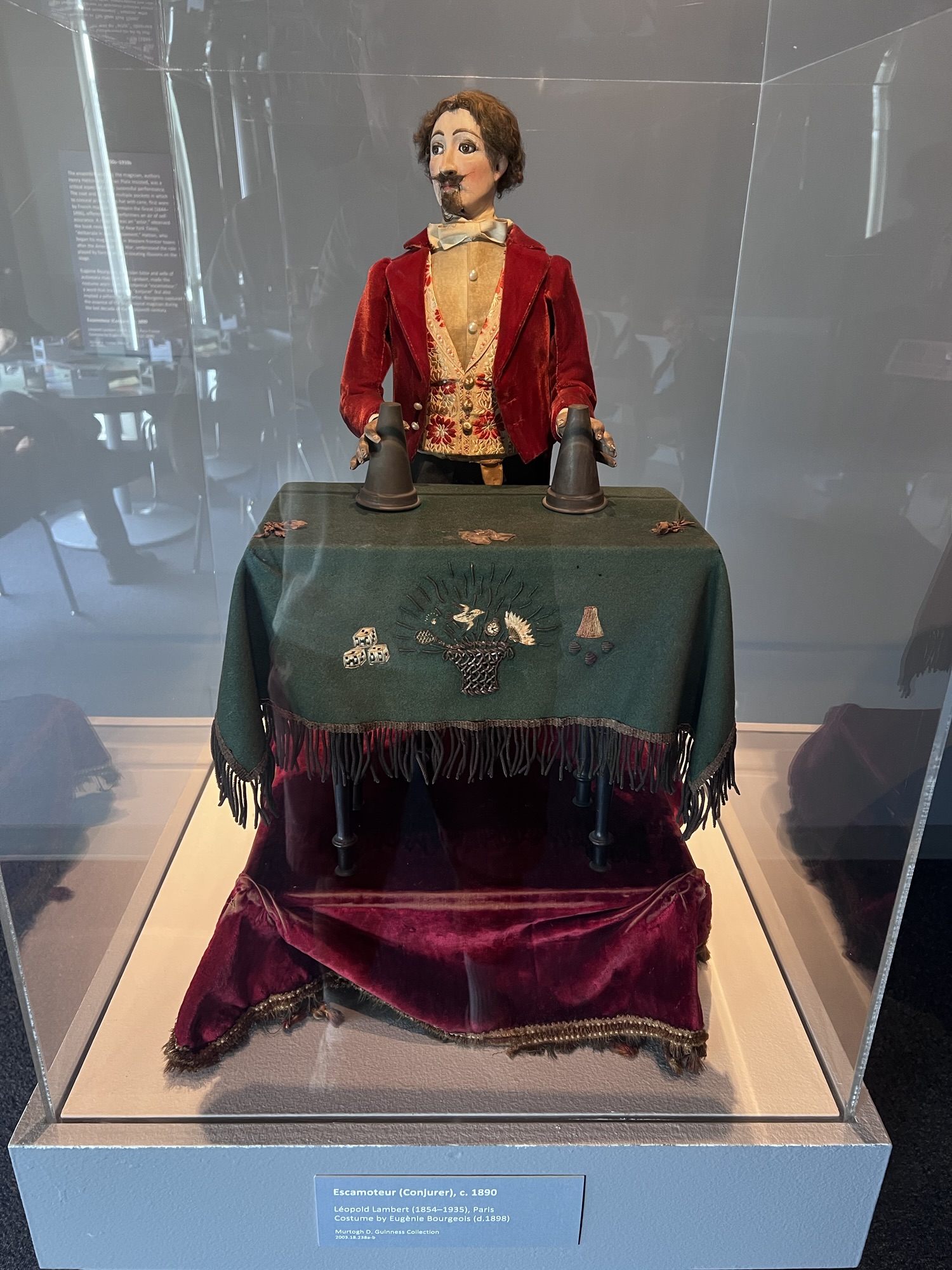
The Automata at the Morris Museum

The fancy music boxes

Amusing children’s toys

The beautiful French workmanship

The beautiful pieces from the 1800’s

After the talk, I walked around the Museum to see parts of it that I had not visited on my last trip. For a small suburban museum, the museum is packed with all sorts of artifacts from Native American art to dinosaur relics and fossils found in the State of New Jersey.

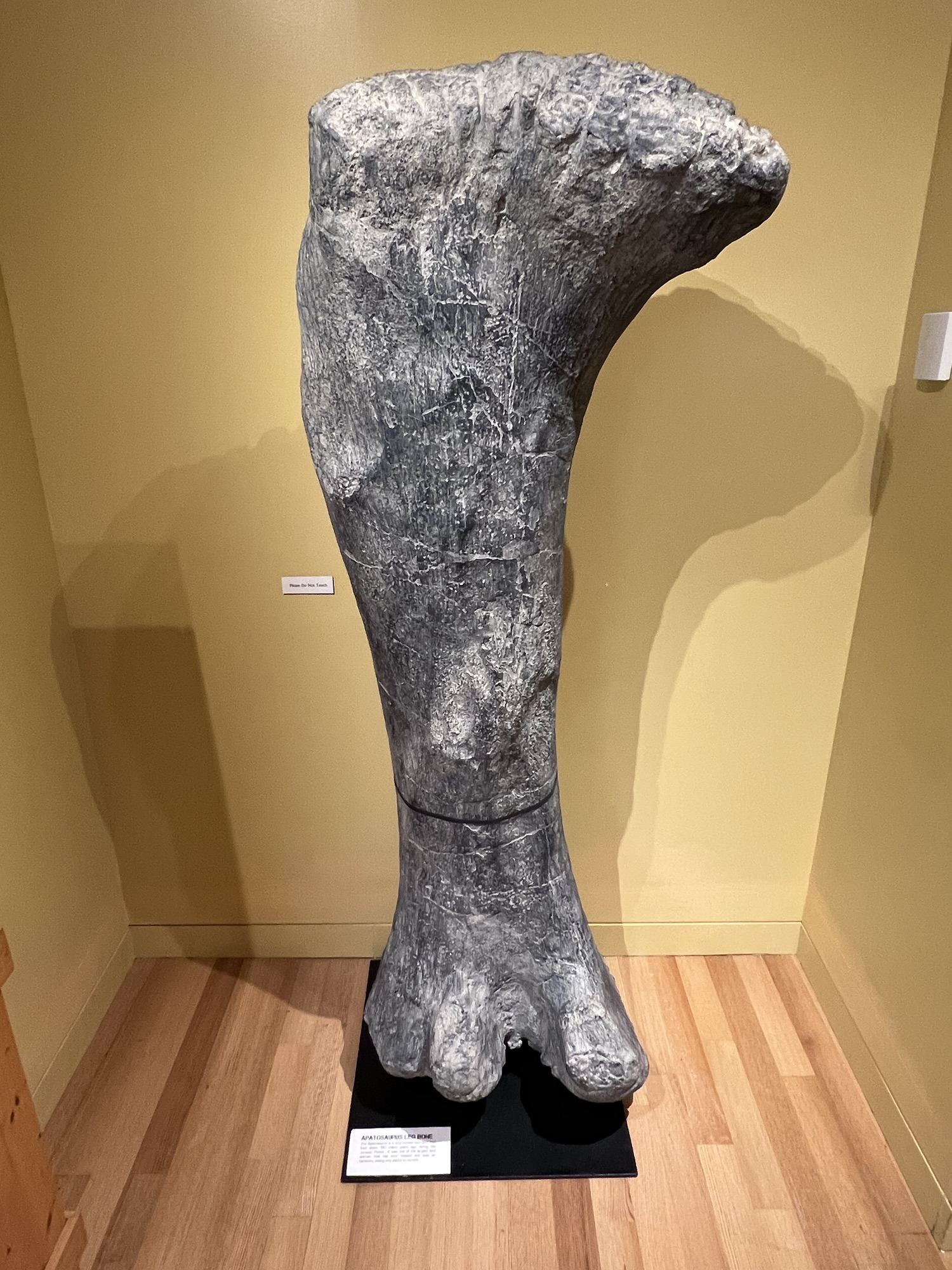
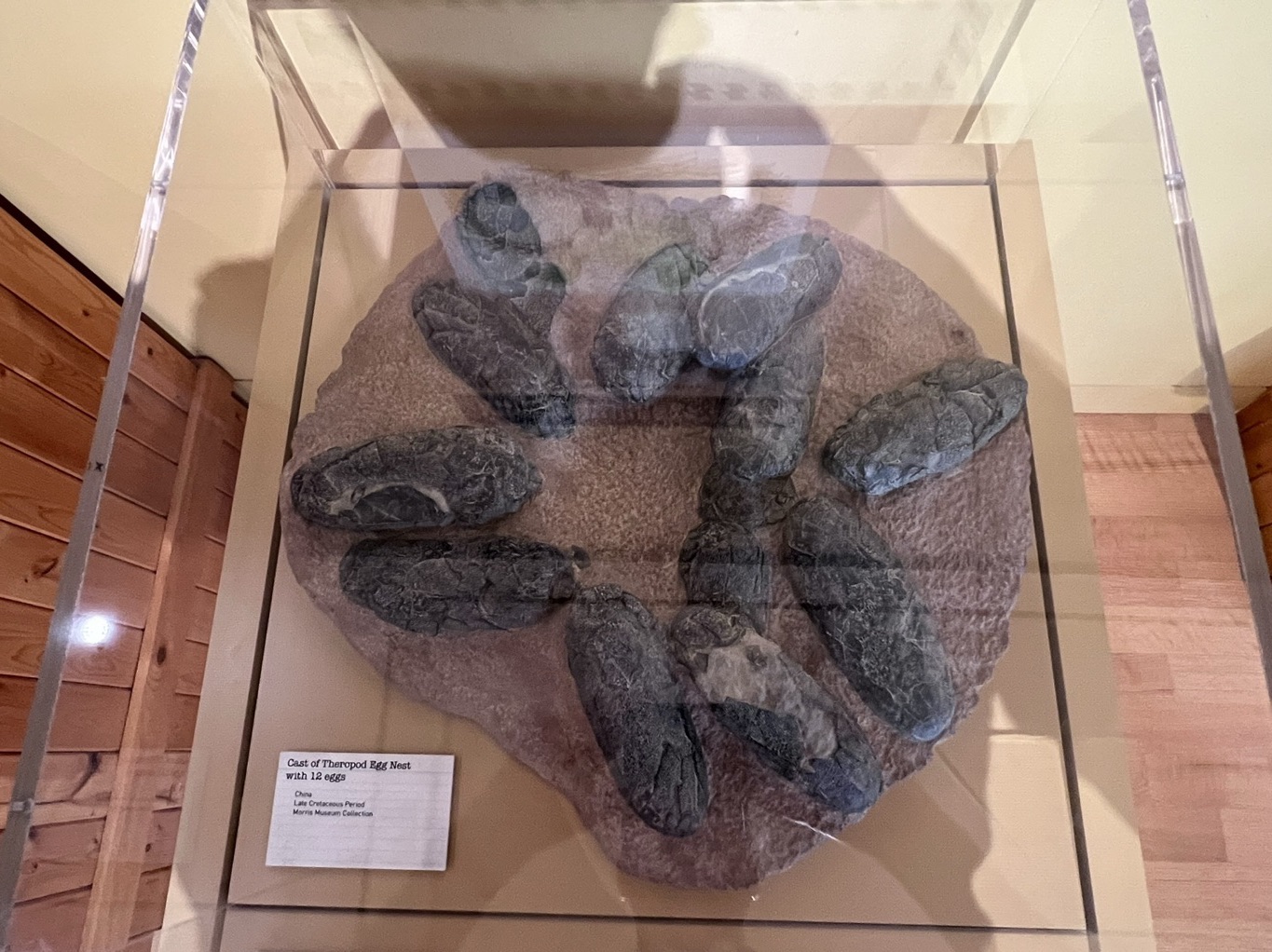
The Dinosaur Room

Dinosaur femur

Dinosaur eggs

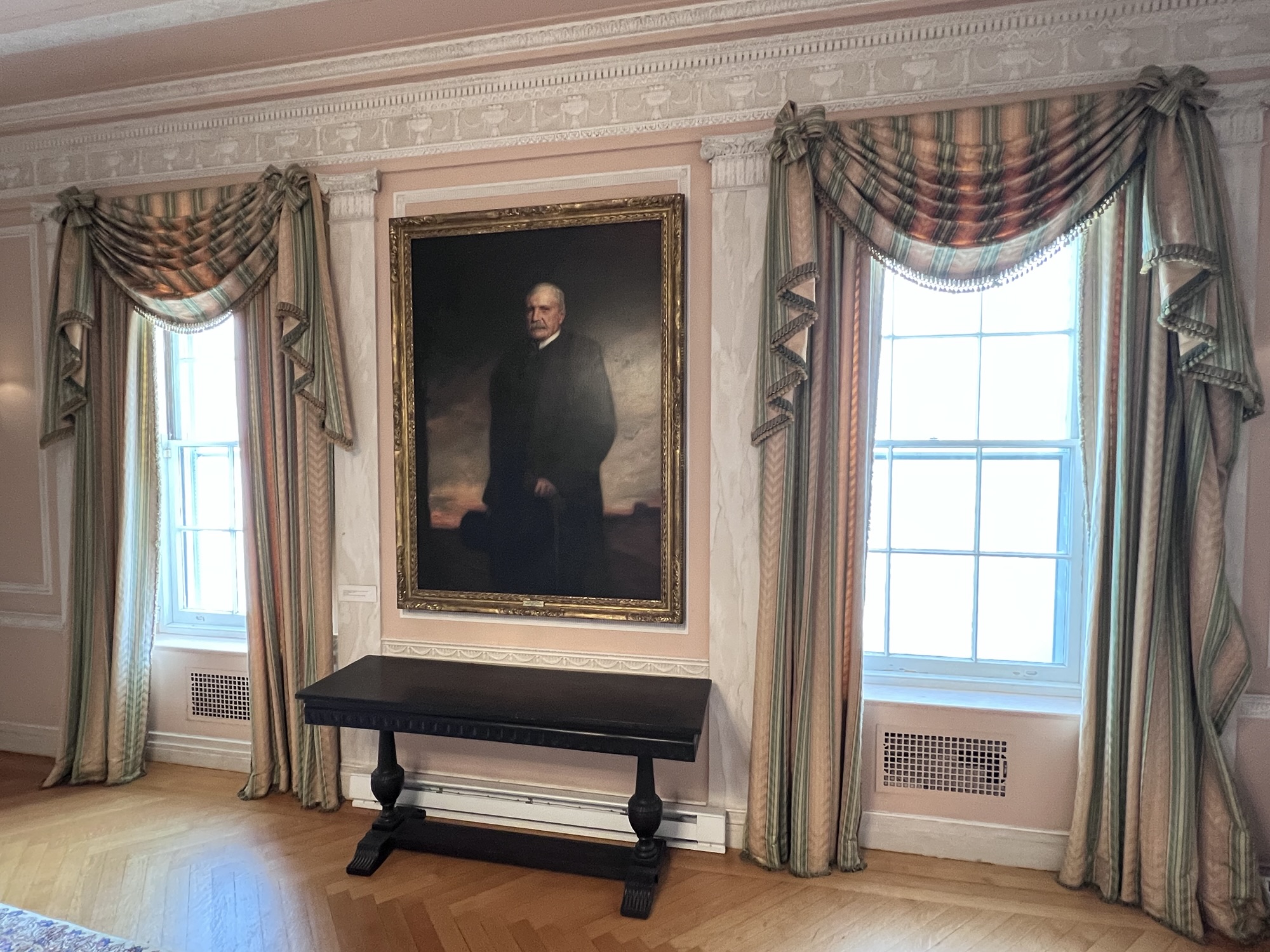
In the original Frelinghuysen Mansion section of the museum, you can visit the Dodge Room which was dedicated to Geraldine Rockefeller Dodge, a great patron of the Arts. The room contains vintage furniture and paintings and shows what the room may have looked like when the Frelinghuysen’s lived here.

The Dodge Room at the Morris Museum

The portrait of William Rockefeller

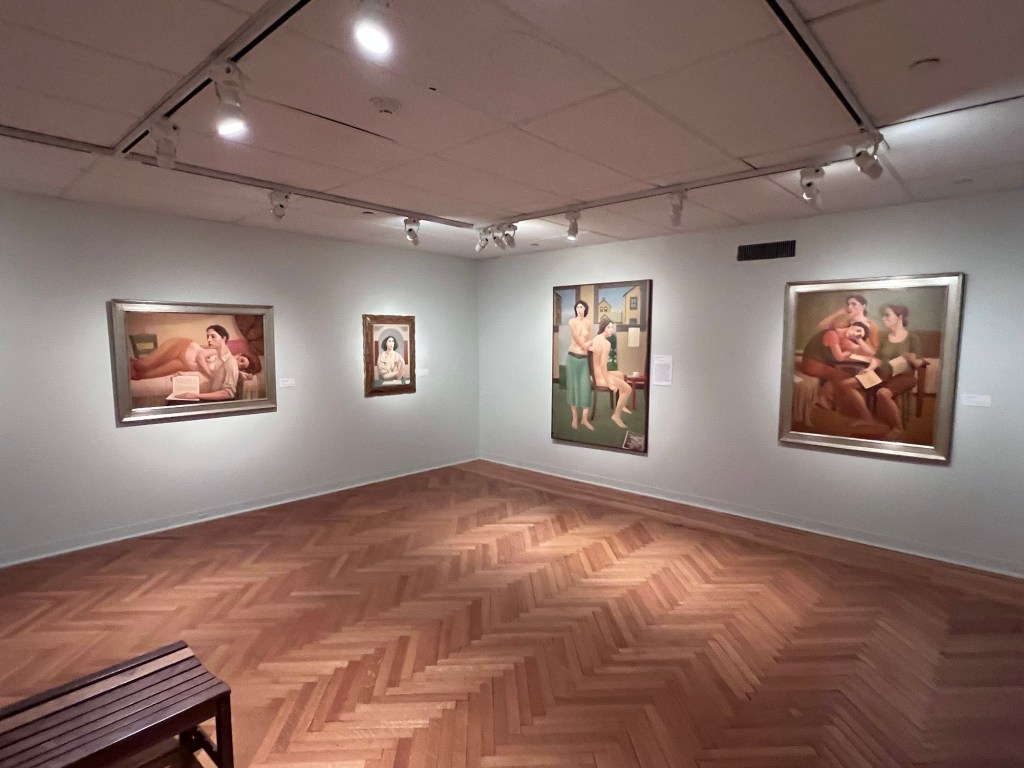
The museum also had really interesting exhibits from travelling shows including the Artist Alan Feltus exhibition of paintings

The Artist Alan Feltus exhibition

https://morrismuseum.org/on-view/current/alan-feltus-a-painters-painter

Artist Alan Feltus is an American figurative painter whose paintings present a series of contrived interior vignettes that simultaneously use a casual familiarity of contemporary life while arranging the figures and their surroundings with a precision and order from a bygone artistic tradition (Morris Museum website).

The Feltus exhibition in May 2025

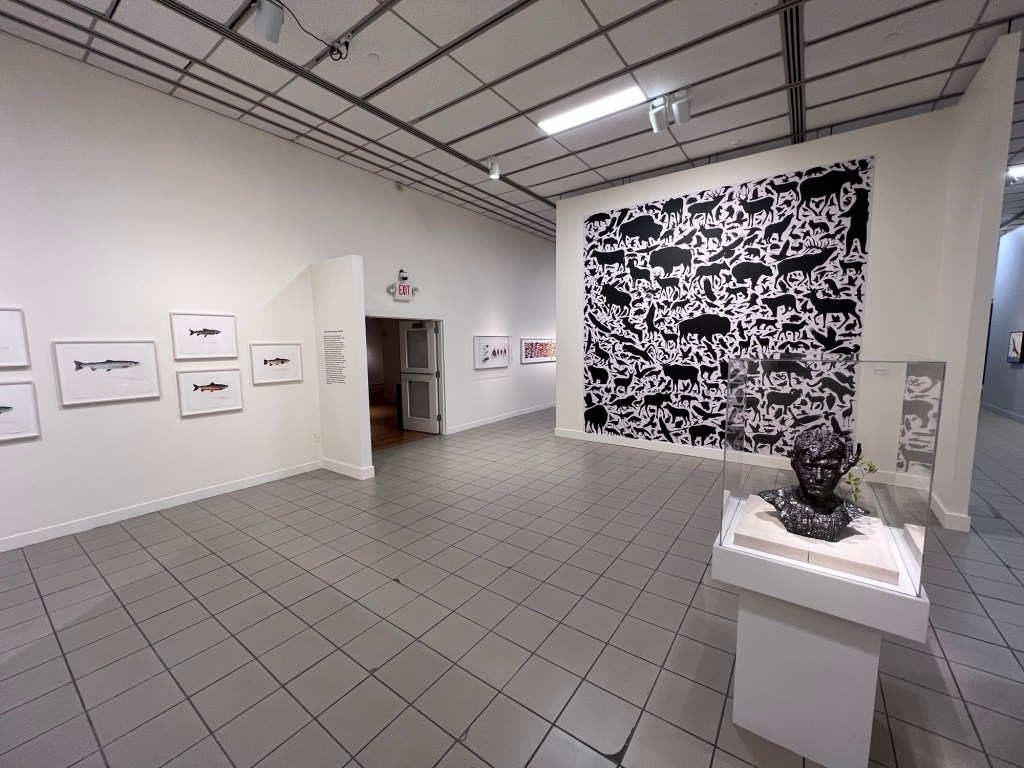
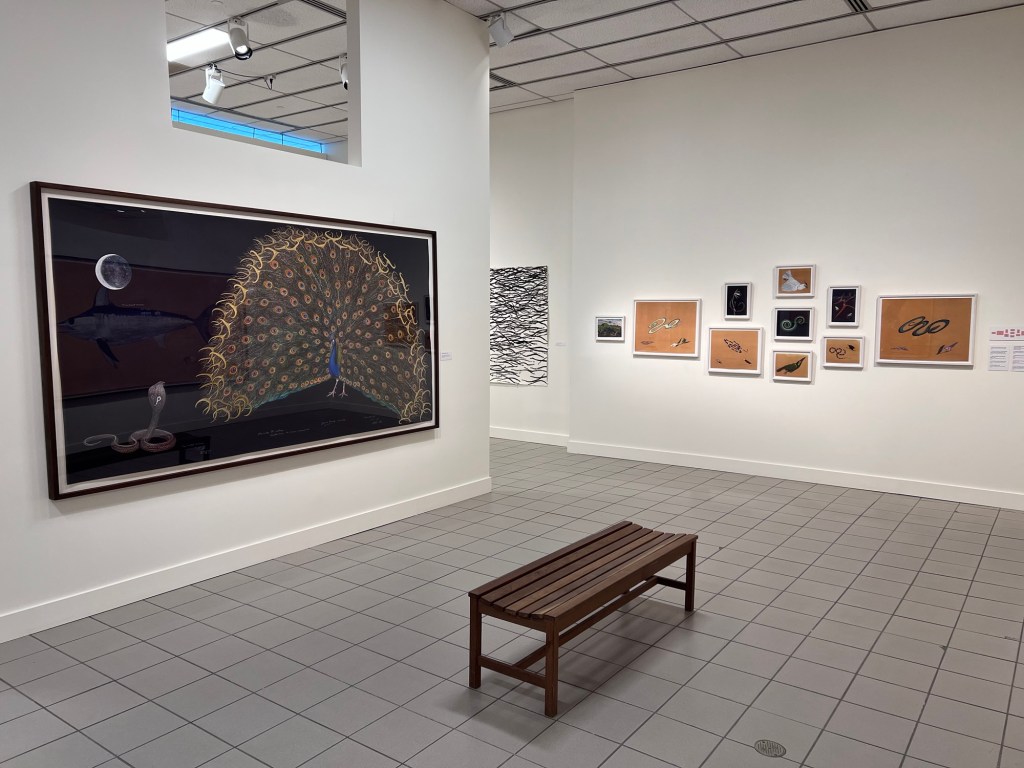
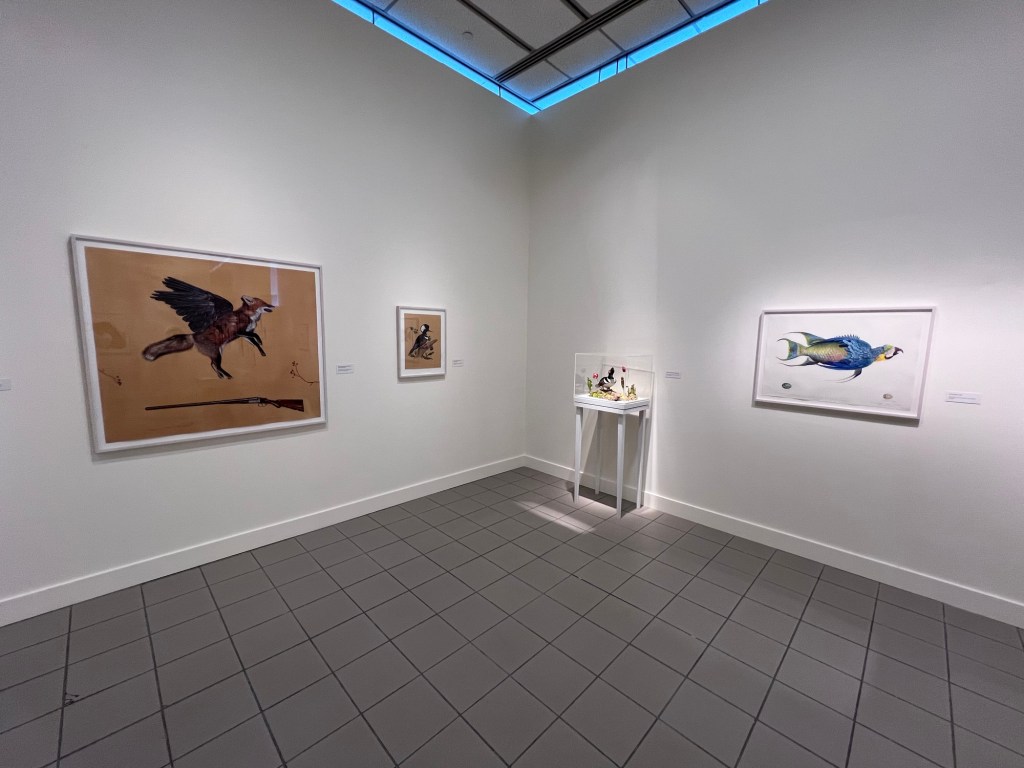
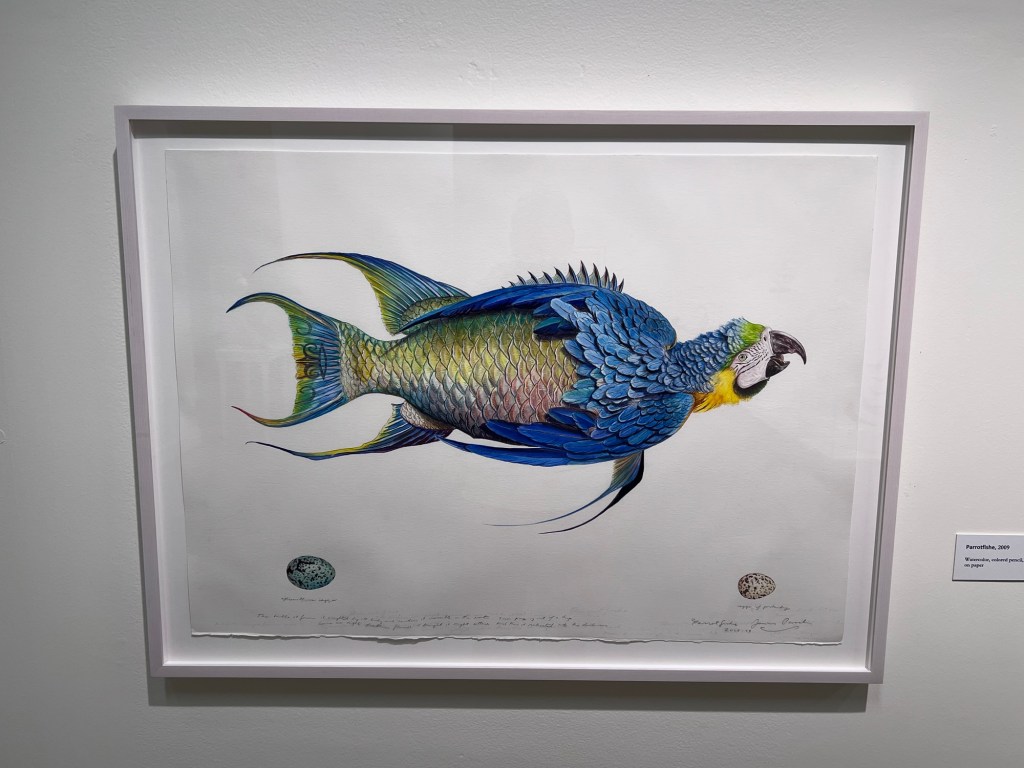
There was another exhibition that I visited that afternoon by the Artist James Prosek “At Work”.

https://morrismuseum.org/on-view/current/james-prosek

Some of the works by James Prosek

Works from the Prosek exhibition

Works from the Prosek exhibition

One of my favorite pieces from the collection

Some of the sculpture pieces from the Prosek exhibition

There is a lot to see and do at the museum for all ages and if none of these appeal to you there is also the theater. The Morris Museum has a lot to offer everyone.

The Museum Mission:

The Morris Museum celebrates art, science, history and the performing arts by providing engaging exhibitions and programs, all of which are designed to excite the mind and promote cultural interests. The Museum strives to educate, entertain and inspire diverse audiences of all ages, abilities and backgrounds (Museum site)

History of the Museum:

(from the Museum website)

In 1913, objects collected for display in a curio cabinet at the Morristown Neighborhood House formed the beginning of the Morris Museum Collection. Originally known as the Morristown Children’s Museum, education has been an intrinsic part of the Museum’s mission from the start. Mrs. Aldus Pierson, the Museum’s first head worker, introduced children to world cultures through the exploration of cultural artifacts. Generous donors began giving Mrs. Pierson interesting objects that they had acquired in their travels around the world. By 1927, the collection had expanded to seven rooms encompassing the first floor of the Neighborhood House’s annex. Displays included the world and children’s toys.

In 1938, the Museum moved to the Maple Avenue School building and shared space with the Morristown Board of Education and the Morris Junior Colleges until 1956. This enabled the Museum to enhance its programs for children and establish a link between its offerings and the curricula of area schools. This strong educational focus developed and continues to the present. The museum was incorporated in 1946, and its collections and services continued to expand. During this time, the Museum was at the forefront of presenting new trends in museum education through the modern use of dioramas, panels and niches. The outreach education program began in 1950 with in-school presentations to eight Morris County school including talks about American Indian culture.

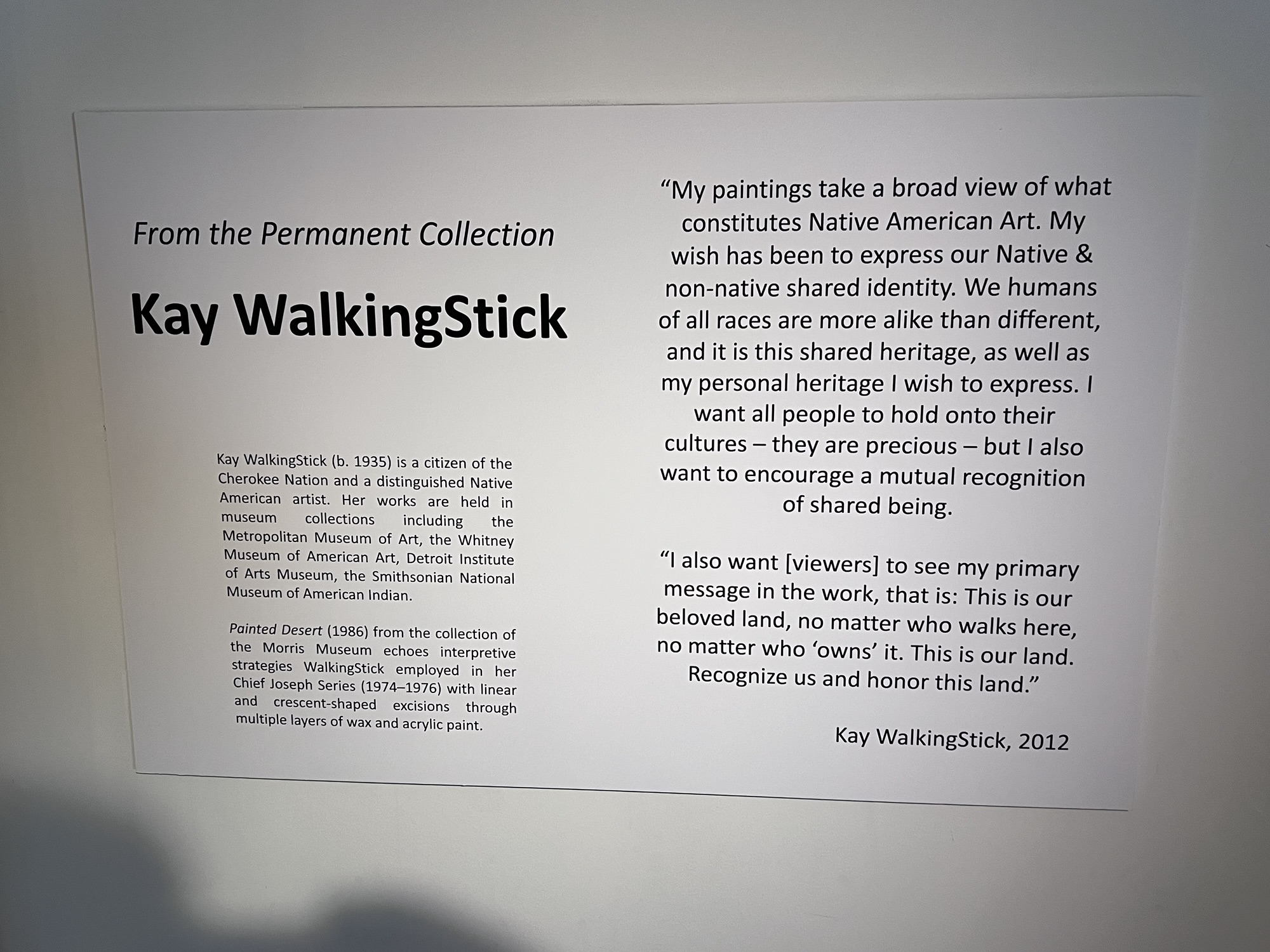
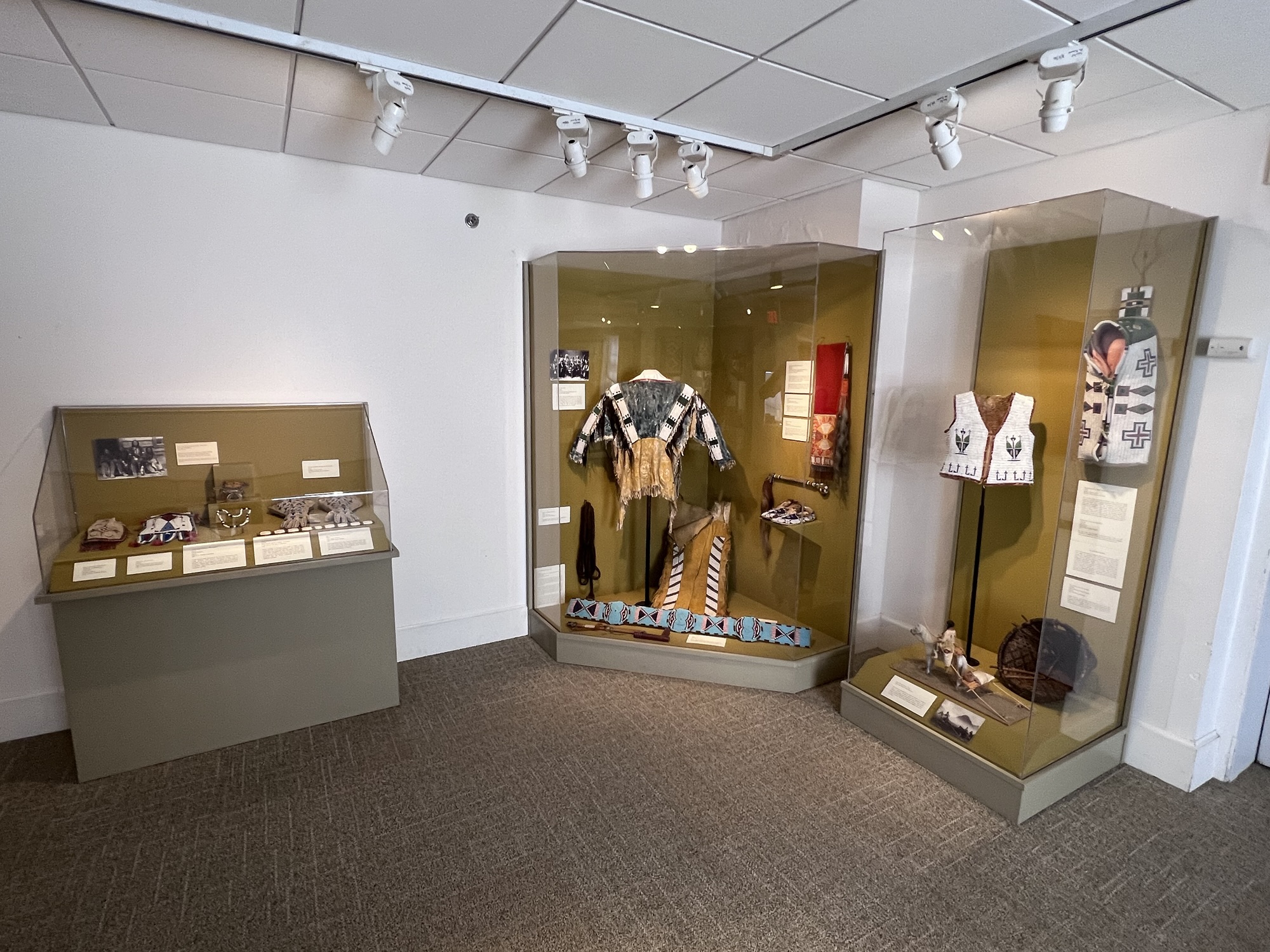
The Kay WalkingStick Collection

The Museum’s first Director, Mr. Chester H. Newkirk made a significant impact on the development of the Museum’s programs, collections and services. During his 25 years of leadership (1956-1981), the collections of fine and decorative arts, toys and American Indian artifacts were greatly enhanced. In 1964, having outgrown its fourth location, the Museum purchased Twin Oaks, the former Frelinghuysen estate.

The Kay WalkingStick Collection

The Kay WalkingStick Collection

The Kay WalkingStick Collection

The Kay WalkingStick Collection

Today, the Georgian-style mansion functions as the heart of the Morris Museum’s operations. In 1969, the institution was renamed the Morris Museum of Arts and Sciences, reflecting it growing emphasis on visual art and the expansion of its offerings for all ages. In response to the Museum’s increasing activities, successful capital campaigns enabled additions to the facility to be built.

Art of the Sublime in the lower level of the mansion

In 1970, gallery space was expanded and a 312 seat theater was added, which was later named the Bickford Theater. In 1973, the Morris Museum became the first museum in New Jersey to be accredited by the American Association of Museums. In 1985, its name was changed to the Morris Museum. In 1990, the Museum complex was further expanded to 75,524 sq. ft.

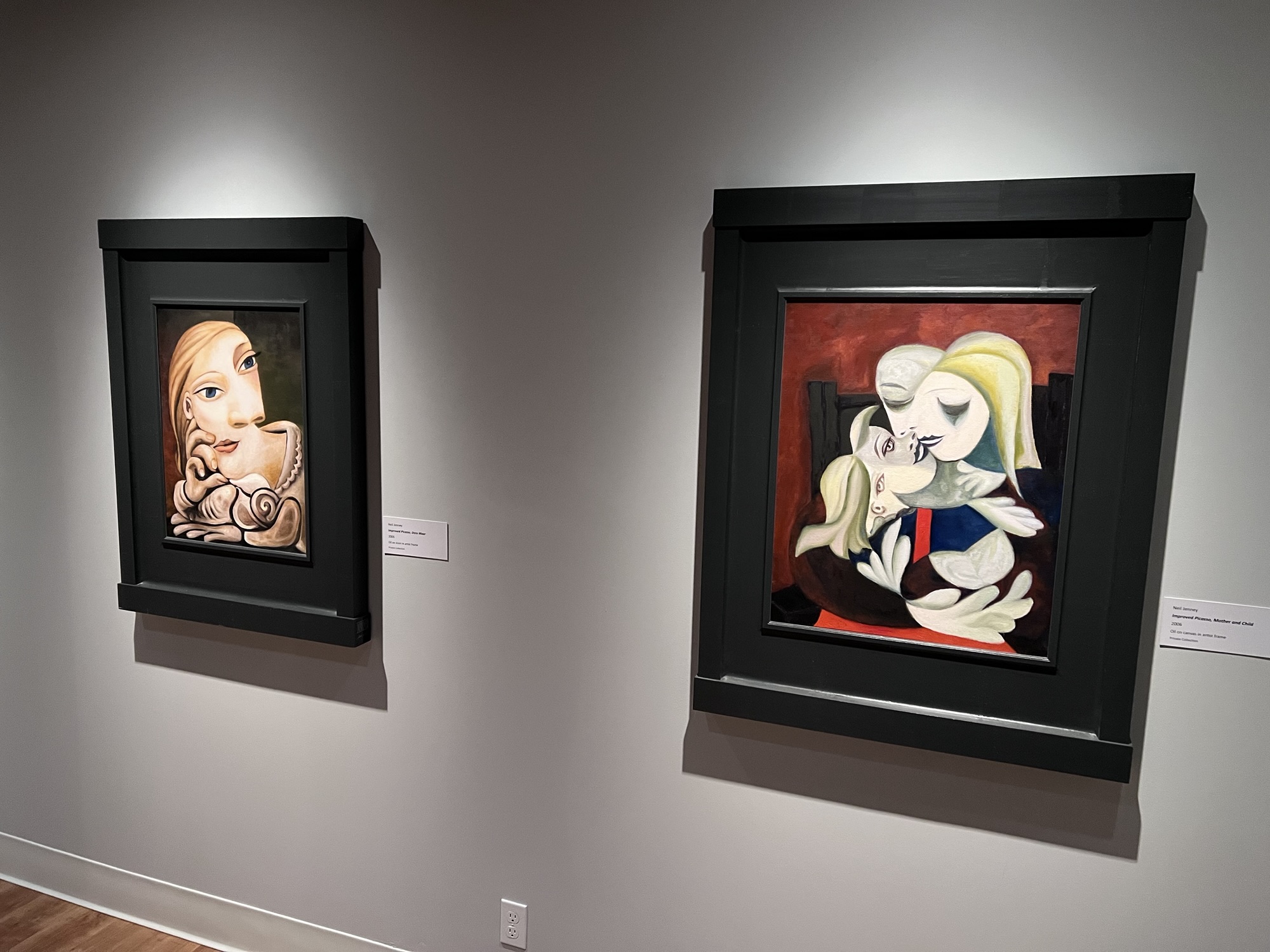
Artist Neil Jenner works “Improved Picasso”

https://morrismuseum.org/on-view/current/neil-jenney-pablo-picasso

Artist Neil Jenney pursues realism as a style and a philosophy. Mostly self-taught, he attended the Massachusetts College of Art in 1964 and moved to New York in 1966, where he has lived and worked since (Morris Museum website).

The Morris Museum’s Bickford Theater is a cultural hub for the very best of the performing arts in Morristown and beyond. Approaching its 50th anniversary, it will shine with even more dynamic, multifaceted and relevant programming, including a partnership with London-based National Theater Live; two film series and unique film festivals; traveling professional productions, a new lecture series, story-telling workshops, jazz, classical and community concerts children’s theater and more.

In 2003, the Museum was awarded the Murtough D. Guinness Collection, one of the world’s most important collections of mechanical musical instruments and automata (robotic figures of animals and people).

The beautiful pieces in the automata collection

This collection further enhances the Morris Museum’s role as a major cultural center and travel destination for the arts, sciences and humanities. This 750 object collection reflects innovative technology, exquisite craftsmanship, compelling sound and important cultural heritage.

This is one of the extensive collections in the country

In recognition of what is the Museum’s most renowned collection, the Museum launched a major capital expansion project that resulted in a 5000 square foot gallery devoted to showcasing the history of mechanical music and automata, a grand Entrance Pavilion and a sky-lighted Court and expanded upper galleries.

Today, the Morris Museum is the only accredited museum in the United States with a theater and one of New Jersey’s most dynamic cultural institutions, serving more than 300,000 persons each year, two thirds of whom are children. Audiences are drawn from all twenty-one counties throughout the state and reflect the social-economic and ethnic spectrum that define northern and central New Jersey.

In 2008, the Museum was named Outstanding Arts Organization by the Arts Council of Morris area, in recognition of its exceptional accomplishments and commitment to improving the quality of life in the community through the arts. The Morris Museum has been recognized as a Major Arts  institution by the New Jersey Council on the Arts/Department of State (2006-2017 eleven consecutive years) in recognition of the Museum’s solid history of artistic excellence, substantial programming and board public service. The New Jersey State Council on the Arts further distinguished the Morris Museum by bestowing the Council’s Citation of Excellence (2007-2013 seven consecutive years). The Morris Museum is a leading cultural institution in the state, upholding the highest standards of artistic excellence, educational innovation, fiscal responsibility, community engagement, audience impact and leadership in the arts community (Museum website).

(This information comes from the Morris Museum website on their history and I give them full credit for the information)

Automata Gallery

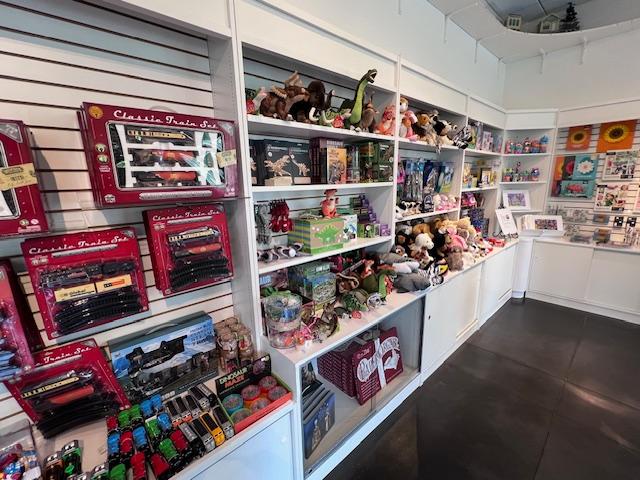
Don’t forget to visit the Gift Shop on the way out. There are all sorts of interesting items to choose from including stuffed animals and books.

The Morris Museum Gift Shop