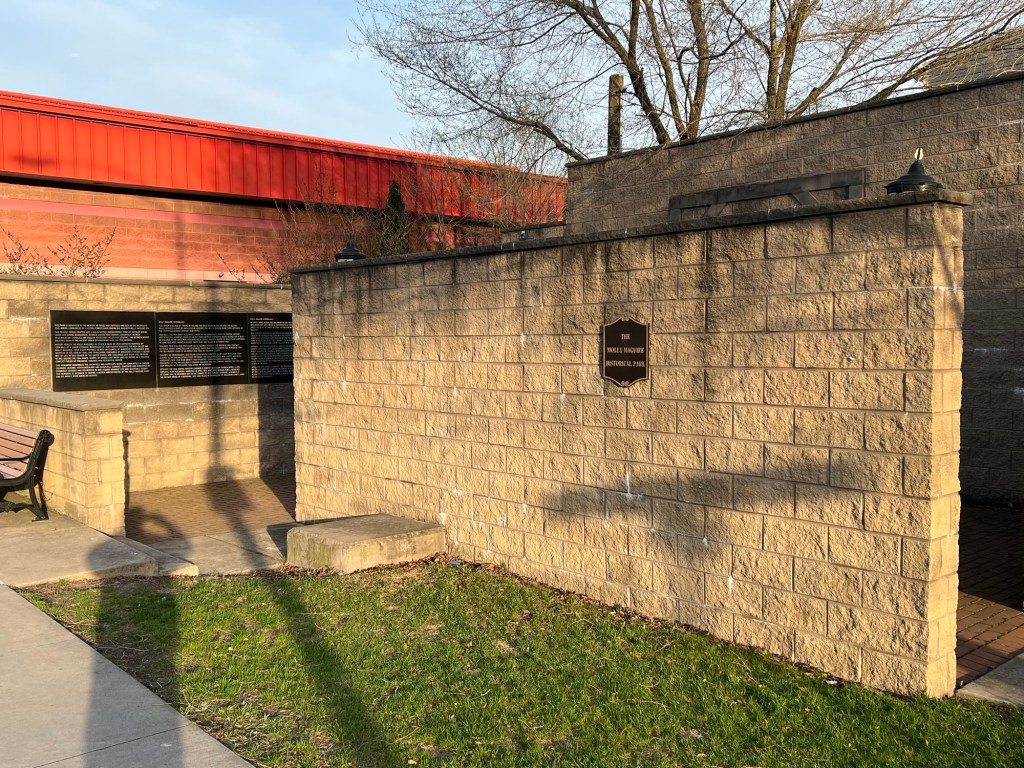
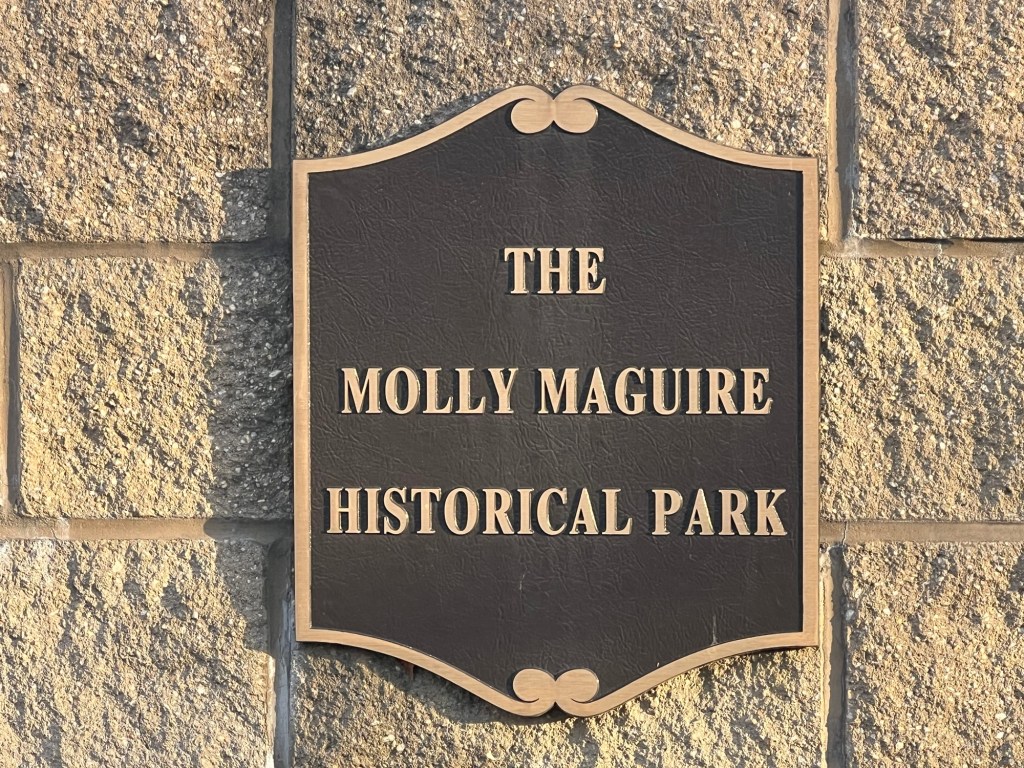
The Molly Maguire Historical Park at West Centre Street
The historical sign
The inside of the park
The History of the Molly Maguires in Mahanoy City:
(from the Mahanoy Area Historical Society website: (Terry Rang/Paul Coombe):
The Mahanoy City area’s first anthracite mine opened in 1861. As mining flourished in the area, so did the population, as many Irish families and other immigrants came to find work. Mahanoy City was incorporated as a borough in 1863, and by 1870, its population had grown to 5,500. The borough’s population hit its peak of about 16,000 in 1910. While the burgeoning anthracite industry made the coal barons rich, the workers toiled for low wages and in dangerous conditions. In the 1870s, tensions mounted between mine bosses and the labor force. Violence erupted between the Irish Catholics and the Protestant English. Mahanoy City became one of Schuylkill County’s sites of alleged Molly Maguire activity.
The Molly Maguires were considered an off-shoot of violent Irish secret societies, such as the Ribbonmen, who rebelled against landlords who treated them harshly and kept them in poverty. In Schuylkill County, Irish miners faced similar hardships. They eventually joined the Workingmen’s Benevolent Association, which had some success in winning better wages and working conditions.
But Franklin B. Gowen, president of Philadelphia & Reading Railroad and its coal land subsidiary, feared the power the union held and believed the Irish controlled it through the secret Molly Maguire society. Determined to break the union, he began accusing Irish miners, who he claimed were Molly Maguires, of murdering mine bosses and other violence.
In 1873, Gowen, a former Schuylkill County district attorney, hired Pinkerton undercover detective James McParlan, using the alias James McKenna, to destroy the Ancient Order of Hibernians. Gowen claimed the AOH was a cover for the Molly Maguires. In 1875, Gowen cut county miners’ wages by 20 percent, triggering “The Long Strike” that lasted five months, devastating the miners and their families. Gowen won that battle as he did his war against the AOH. Gowen and McParlan’s efforts sent 20 men accused of murder as Mollies to the gallows in Schuylkill and Carbon counties. Many of the convictions came on little evidence and McParlan’s testimony.
Alleged Molly events in Mahanoy City included the assassination of Chief Burgess George Major, a St. Patrick’s Day parade led by Kehoe against the Catholic Church’s orders, and the alleged plotting to kill “Bully Bill” Thomas and the Major brothers at Mickey Clarke’s saloon. A monument memorializing the tragic era stands at Centre and Catawissa streets. More than 150 years later, the debate continues whether the men considered Mollies were murderers or martyred heroes. While an incomplete history of the Molly Maguire era in Schuylkill County, this presentation highlights the people, places and events in the Mahanoy City area. We extend a special thank you to Mark T. Major, who granted the Mahanoy Area Historical Society permission to use content from “A Guide to the Molly Maguires,” which he co-wrote with H.T. Crown.
The inside of this quiet park tells the timeline of happenings in Mahanoy City at the time.
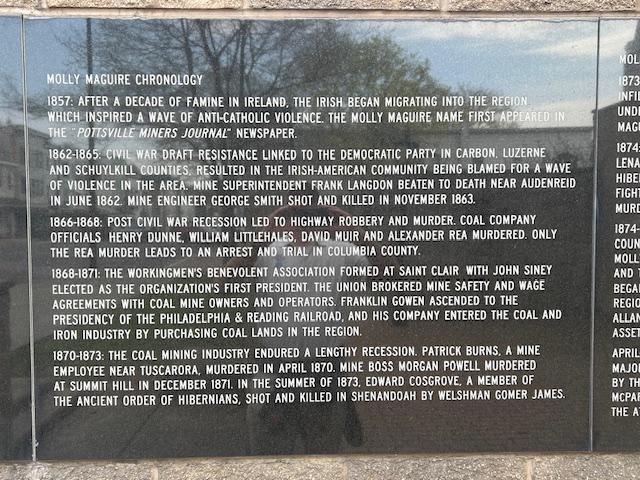
The historic plaques tell the story of who the Molly Maguire were and their lasting effects on the changing of mining conditions.
The park story
Who they were
The story and time line
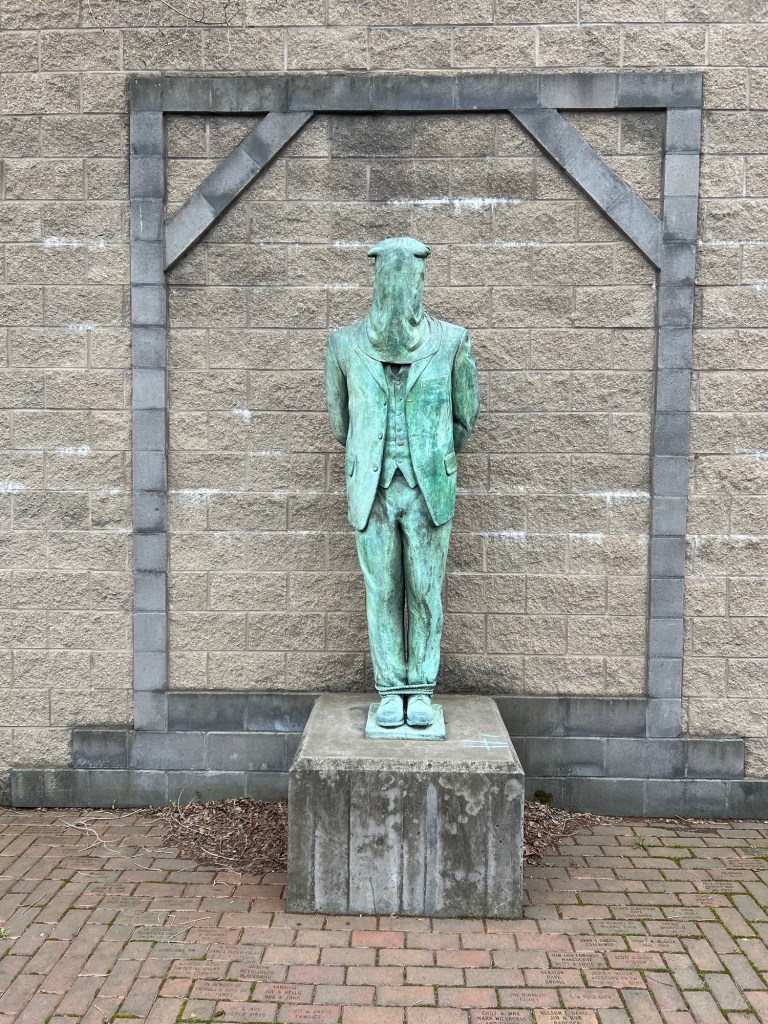
The fate of these men in the end
The park is a reminder for the freedoms that were fought to make things better for future generations and for the stop of oppression in society. There will be different ways to interpret the story in the future but this is a reminder of a better way of life that we now enjoy.
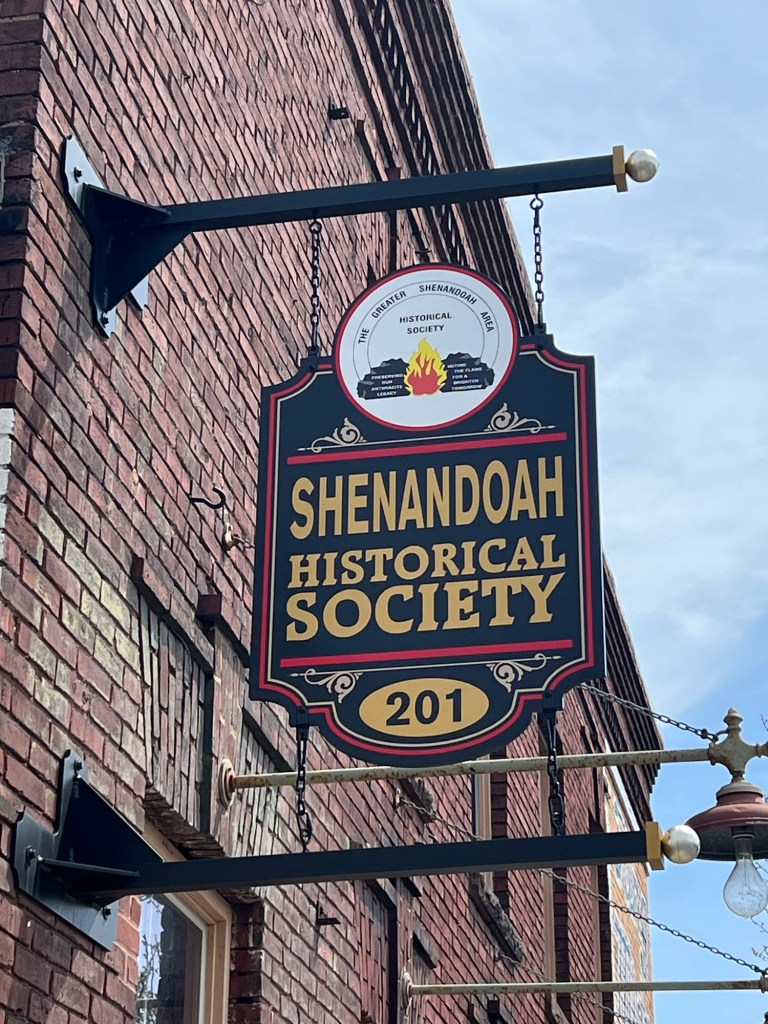
The entrance to the museum at 201 south Main Street
The sign in the front of the old museum
The Mission Statement of the Museum:
(from the museum website)
The mission of the Greater Shenandoah Area Historical Society is to recognize and preserve the unique history of Shenandoah; the heritage of its people, its coal mining history, the architectural design of downtown buildings, and other aspects of what makes this community a unique, valuable and thriving part of Schuylkill County.
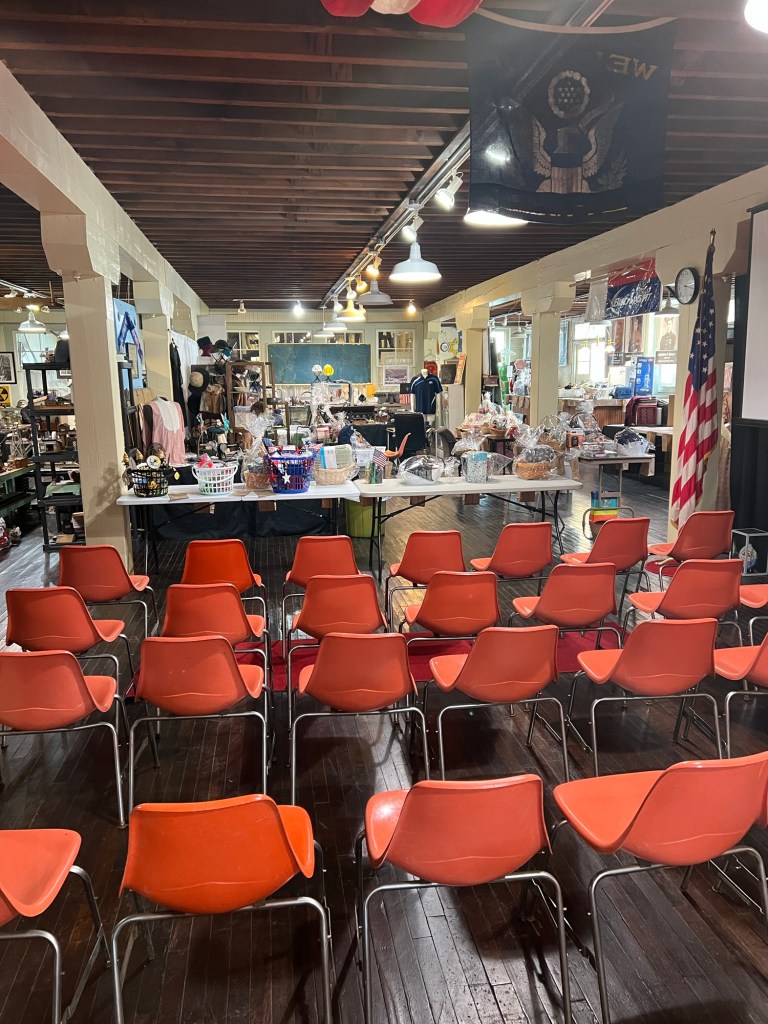
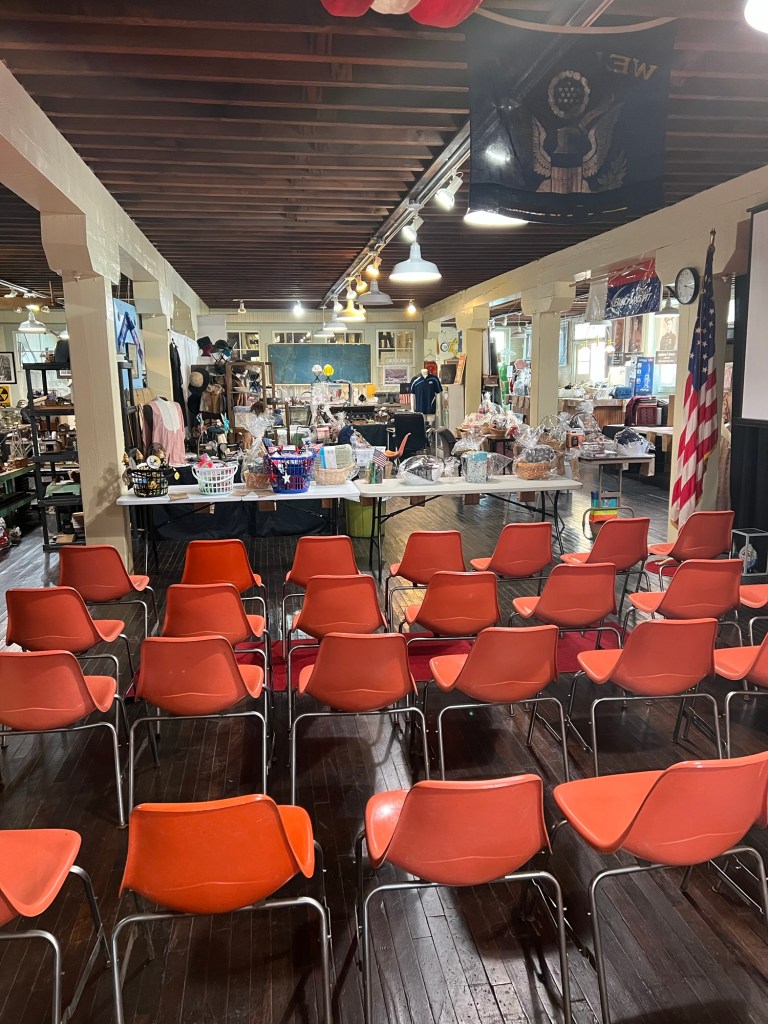
The main gallery of the museum and upcoming Tricky-tray fundraiser
The back part of the museum was set up for a lecture
The Greater Shenandoah Area Historical SocietyHistory:
We promote the history and culture of Shenandoah, Pennsylvania through the preservation, presentation, and interpretation of historic objects, documents, and photographs. By focusing on the values, customs, and traditions of our diverse community, we hope to bring an understanding of the past and strengthen the connection for future generations
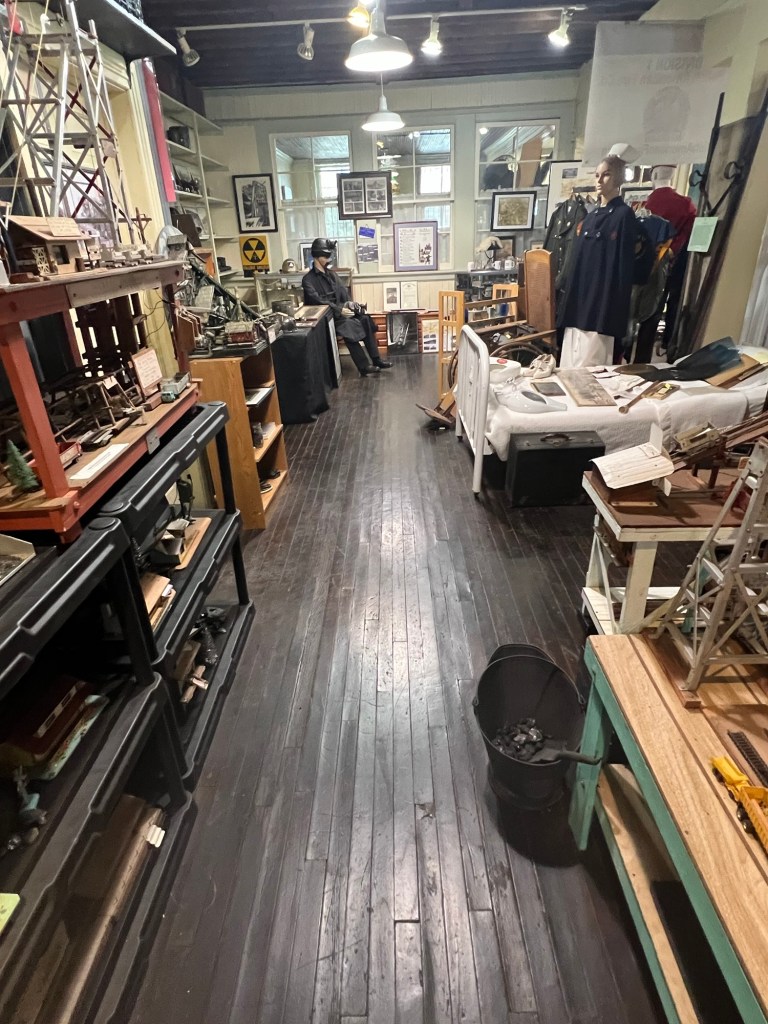
Then back part of the museum with the local hospital and miners displays
The Greater Shenandoah Area Historical SocietyDescription:
We preserve the robust history of Shenandoah, as well as the surrounding vicinity in Schuylkill County. Almost all artifacts on display throughout the museum were personal property, donated by members of our community and their descendants in order to help others remember and honor our past. Through these photographs, documents, and heirlooms, the history of the town inspires us.
Explore the exhibit of our town’s coal mining industry, observe the richness of our cultural heritage, scan thousands of images, recognize the heroism and sacrifices of our armed forces, reminisce over school spirit, immerse yourself into the character of a small town, search family genealogy, and discover how history influences us today. Whether touring the museum or attending a presentation from one of our guest speakers, enjoy learning of the character of our people as they braved the challenges of the past.
The front gallery when you walk in
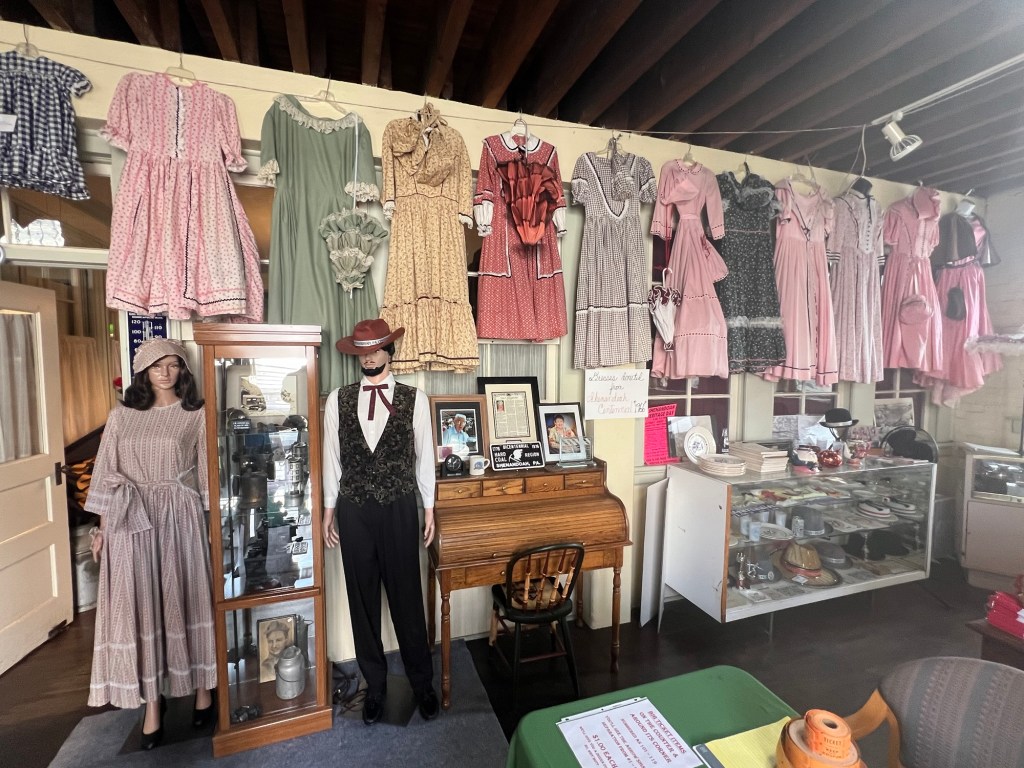
The costume dress collection
The ‘Shenandoah Centennial 1966’ event sign
Dresses from the Centennial event and the Town VIP
The display of dresses from the Centennial event
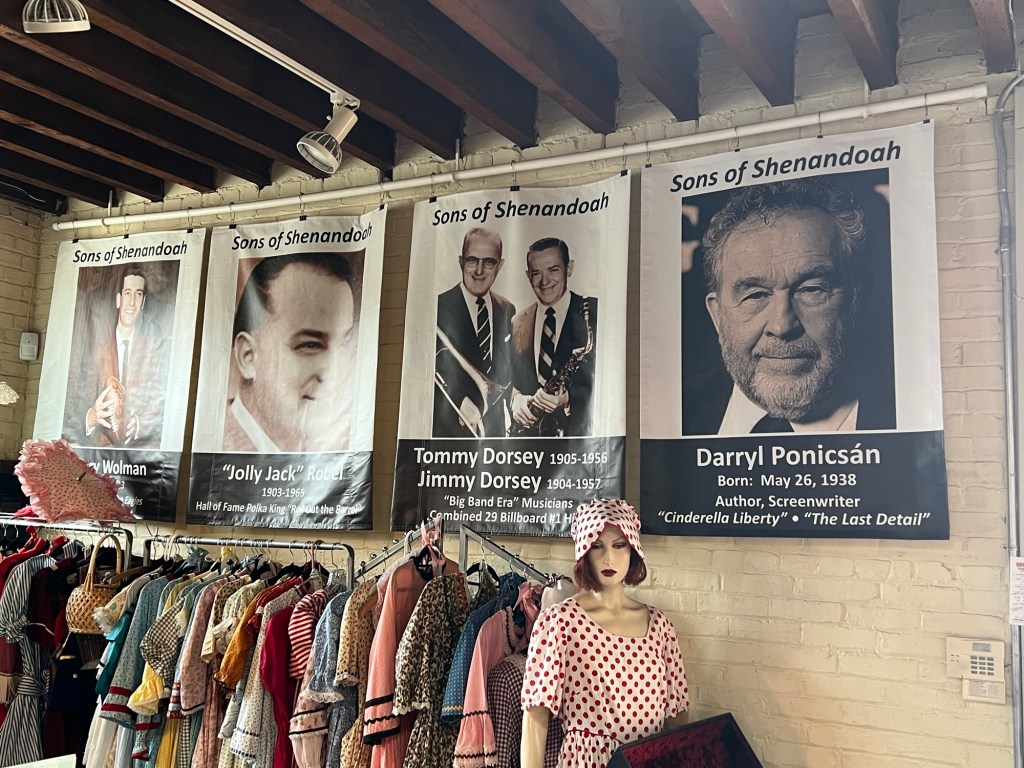
Local resident Darryl Ponicsan, a famous writer and screen writer had an interesting exhibition of books, scripts and posters in a separate room in the museum dedicated to his work.
The collection of scripts and posters in the museum
Literature and pictures in the collection
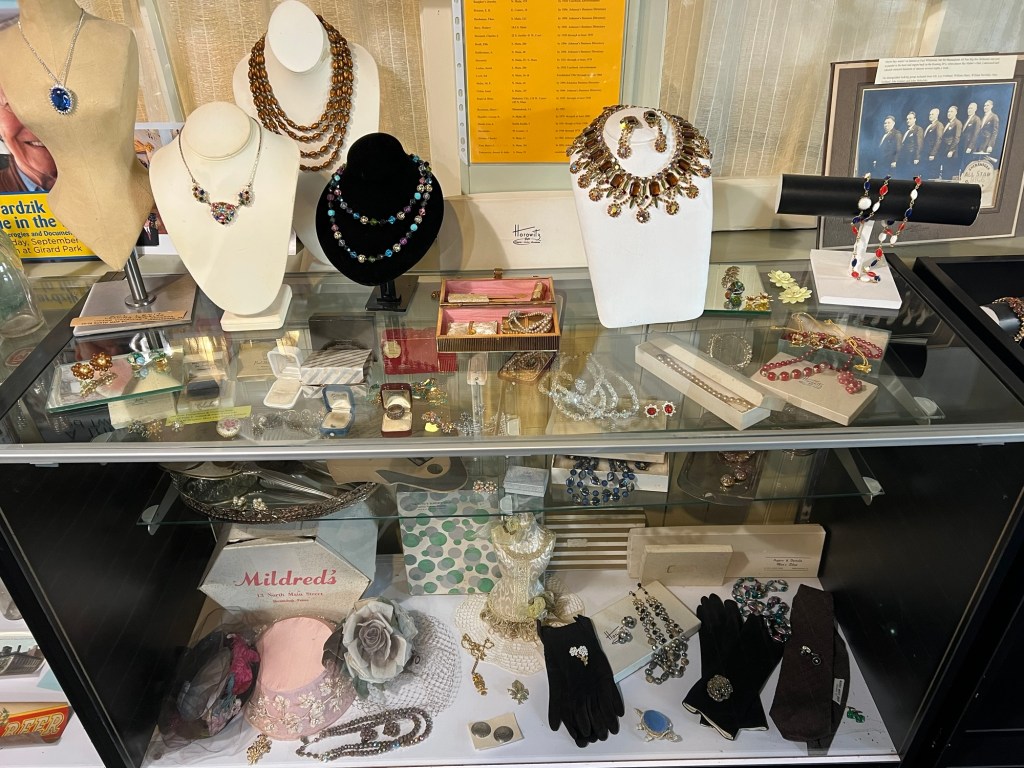
The town was much different in the boom years of the mines. There were blocks of stores, groceries, clothing and jewelry stores catering to a population that was more than double the current population. Items from these retail establishments were on display in and on the case lines.
Displays of business once located in Shenandoah’s downtown
Jewelry display from some of the twenty or more jewelry stores that lined the Main Street at one time
Items from merchants that once lined the downtown
Items from downtown merchants
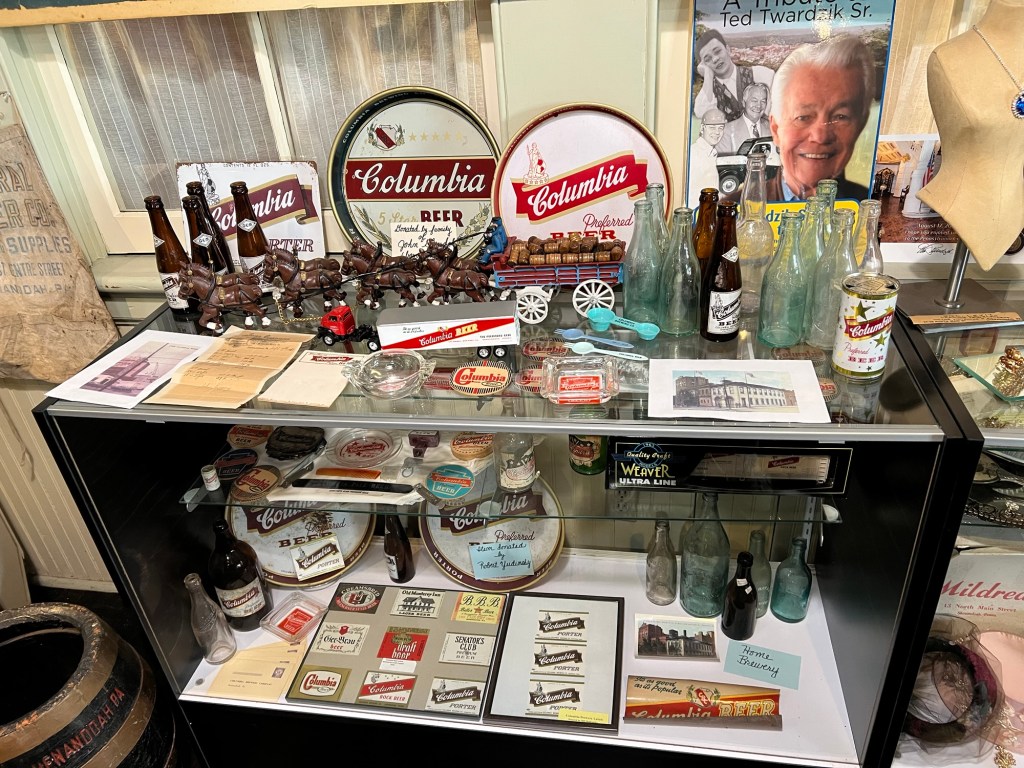
Some of the local breweries in the area
What Shenandoah looked like at the time of the height of Mining success
The Mining exhibit and display of items used
The artifacts from the Shenandoah mines
The artifacts used in the mines
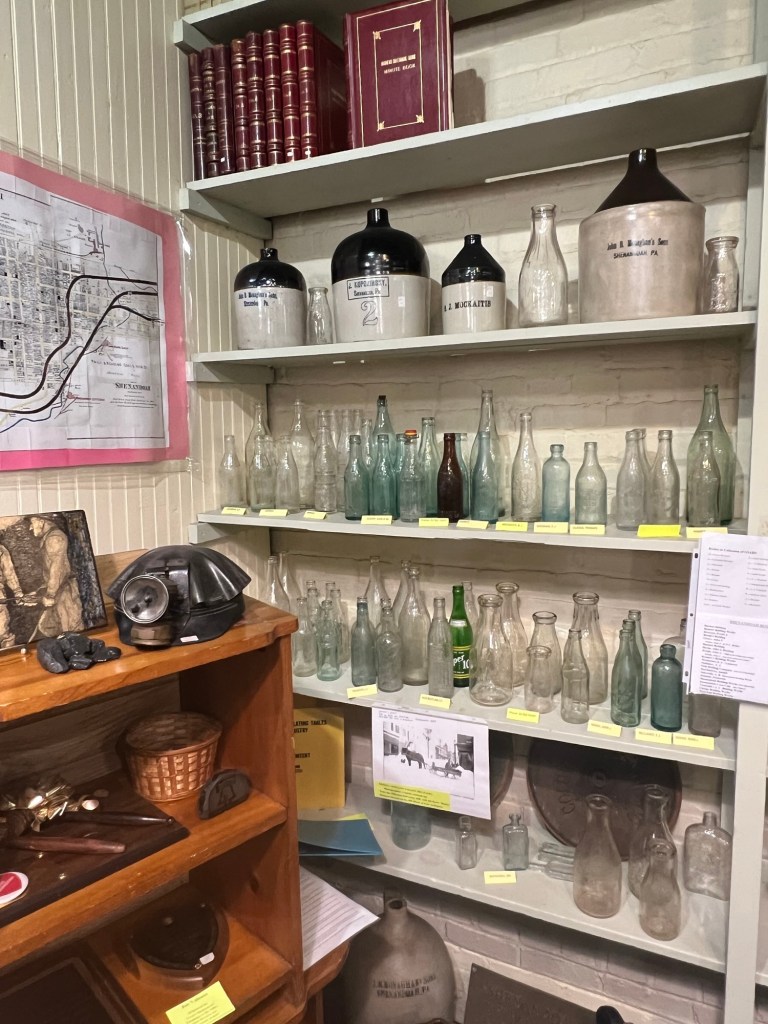
The bottling industry was a big part of the local economy
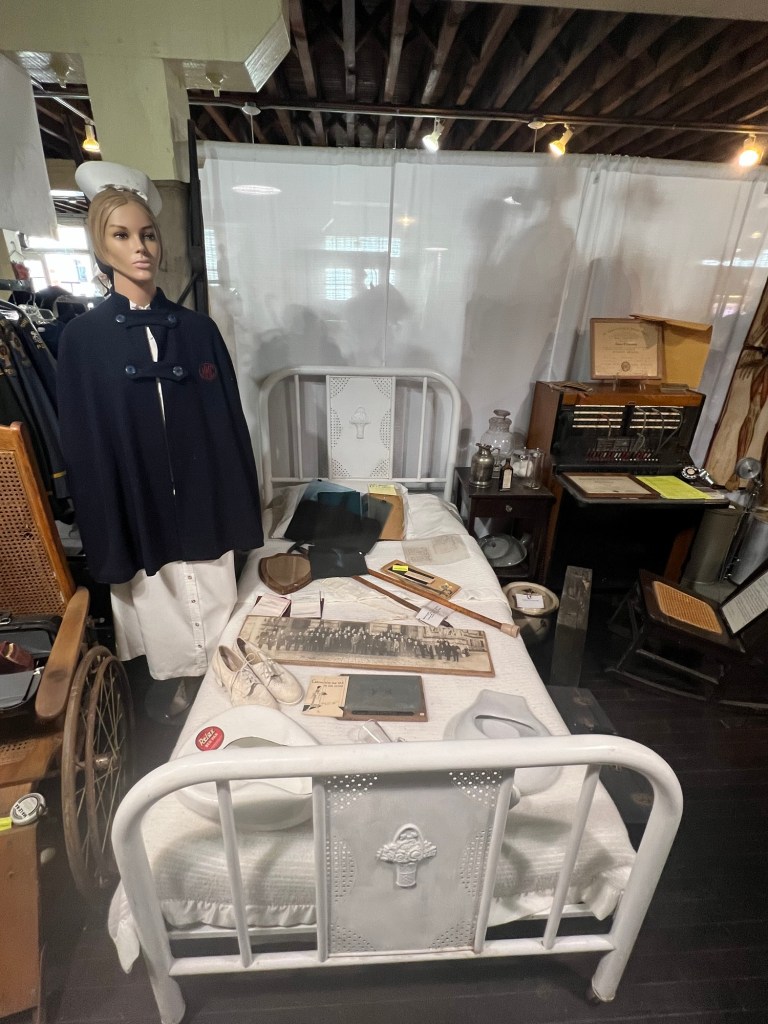
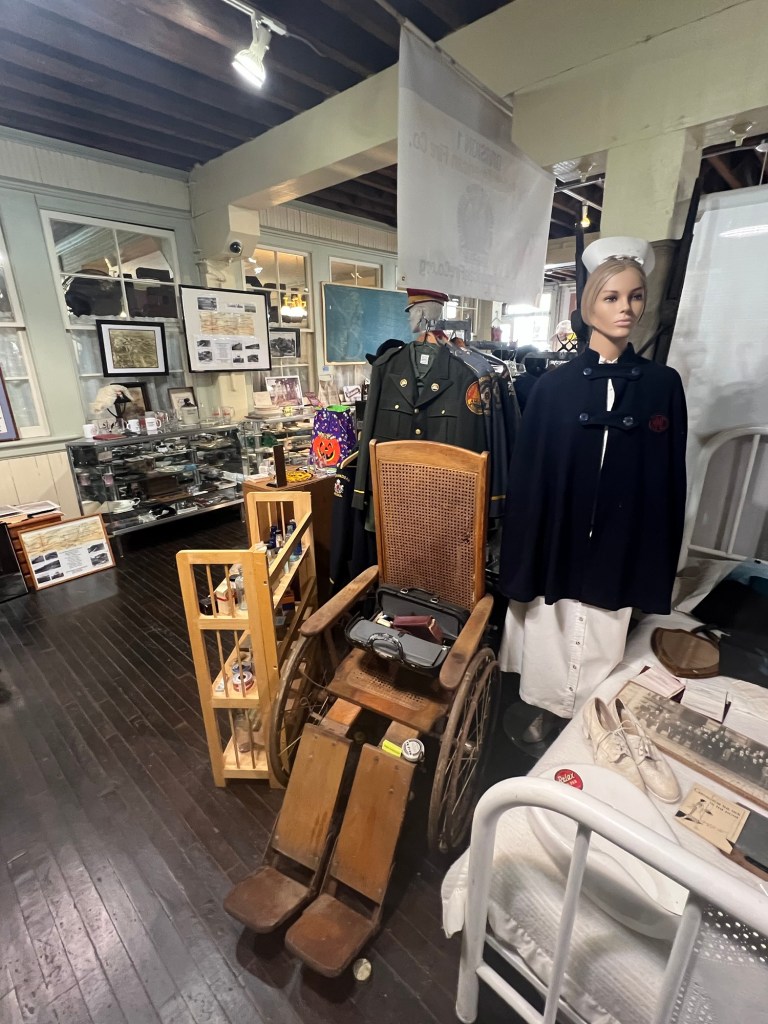
The next display was on the local hospital and its importance in the community.
Display on the hospital on the local economy
The items used in the hospitals
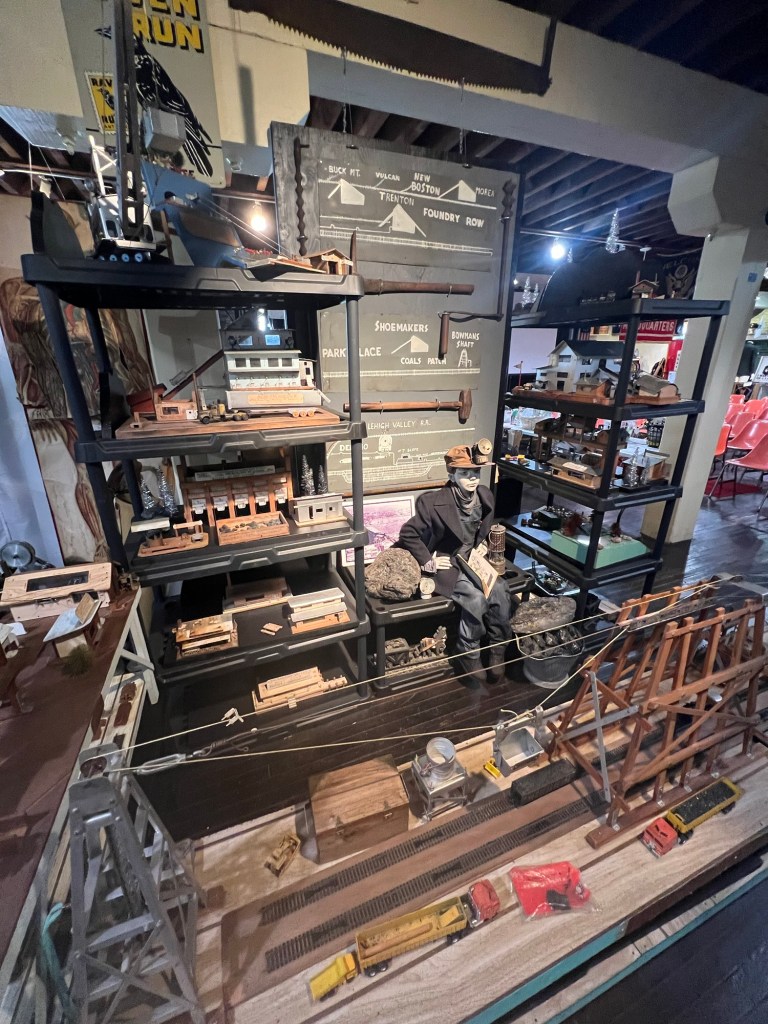
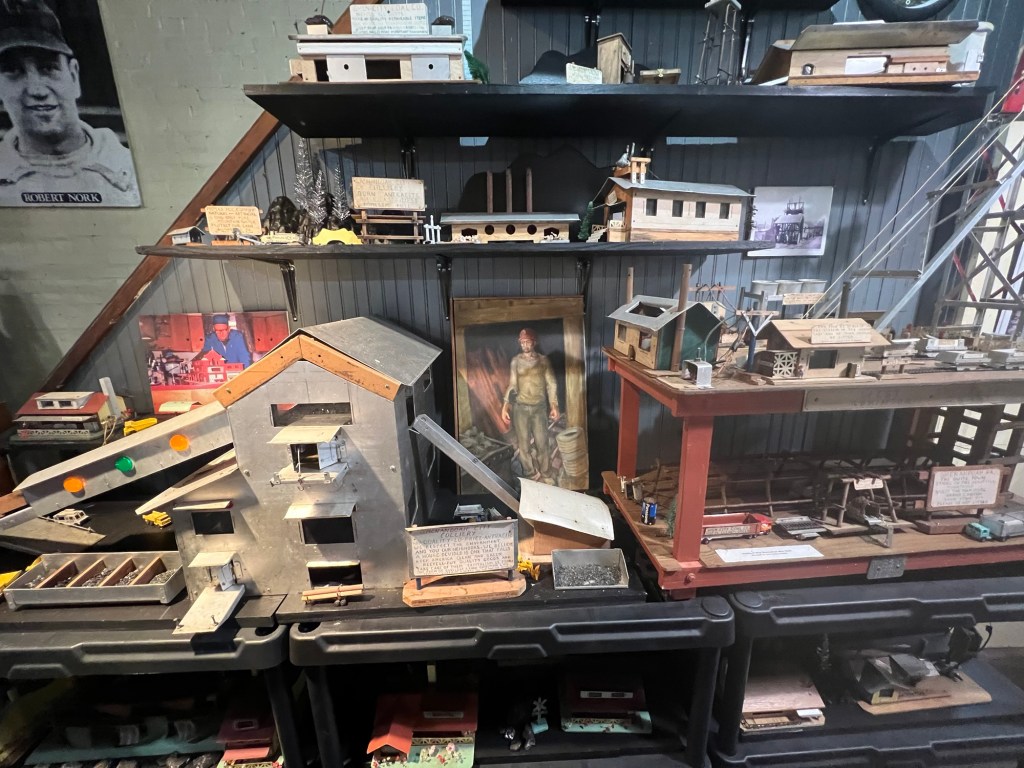
The models of the railroads, the mining industry and the working environment.
The models of the local industry
Models of the Mining Industry
Models of the Mining industry
The back part of the gallery shows how the engine of the economy of Shenandoah grew and prospered during the time when the mines were in full operation and the population grew.
The industrial economy of the past
The artifacts in the front part of the gallery
The local high school, Shenandoah High School Alumni donated a lot of memorabilia from both the past and the present, showing the changes in clothing and manner of dress.
The series of uniforms and spirit wear plus old school yearbooks and awards
Old school uniform and clothing
Shenandoah awards and pictures display from Alumni
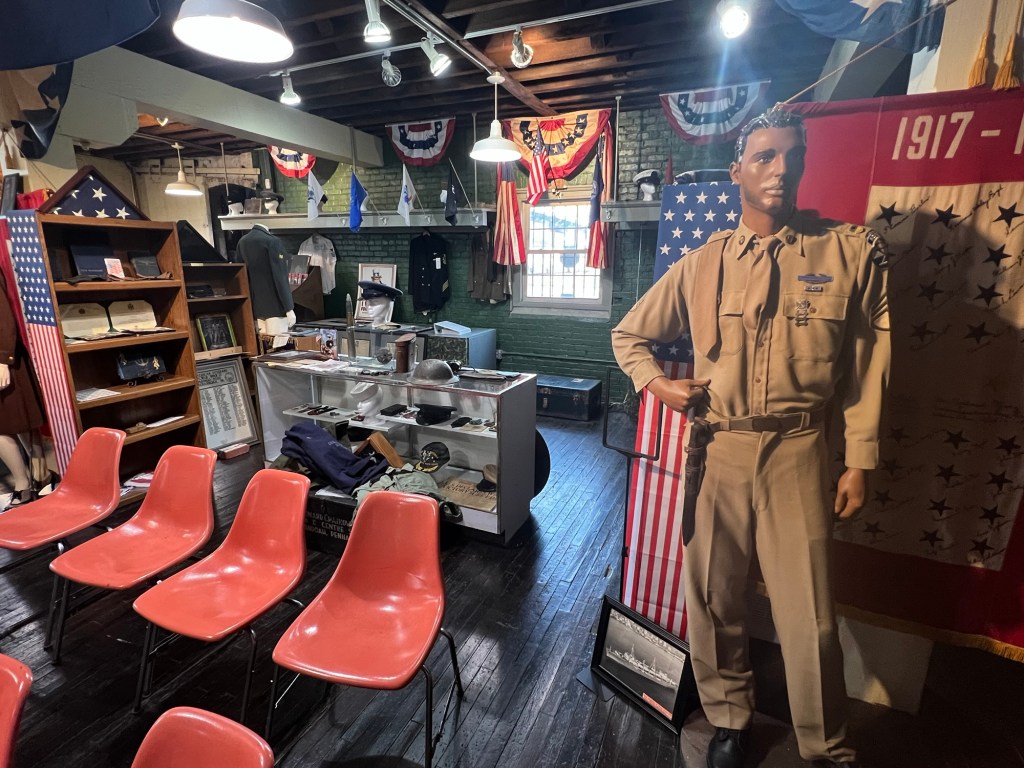
The museum had an extensive collection of Military items both from members families and from the community. The display shows the pride in the armed forces in this community.
The Military exhibition
The main gallery set up for a lecture
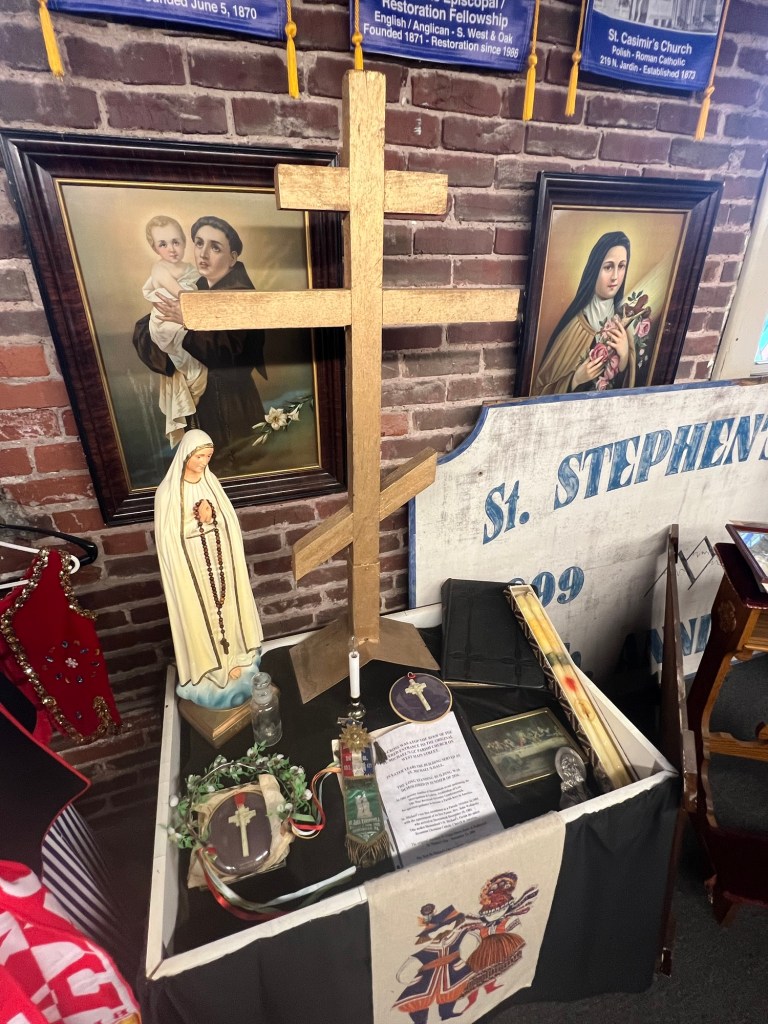
One of the most impressive rooms in the museum was the Religious Room dedicated to the many churches that used to cater to the growing immigrant population in Shenandoah.
With its population once being double to the current population and groups not wanting to worship together, each ethnic group had their own church. Assimilation and time have since closed these churches and today only a handful still exist. As this trend continues, these artifacts have been donated to the museum and the collection has been beautifully been preserved and presented by the museum.
The Religion exhibition is extensive and very detailed
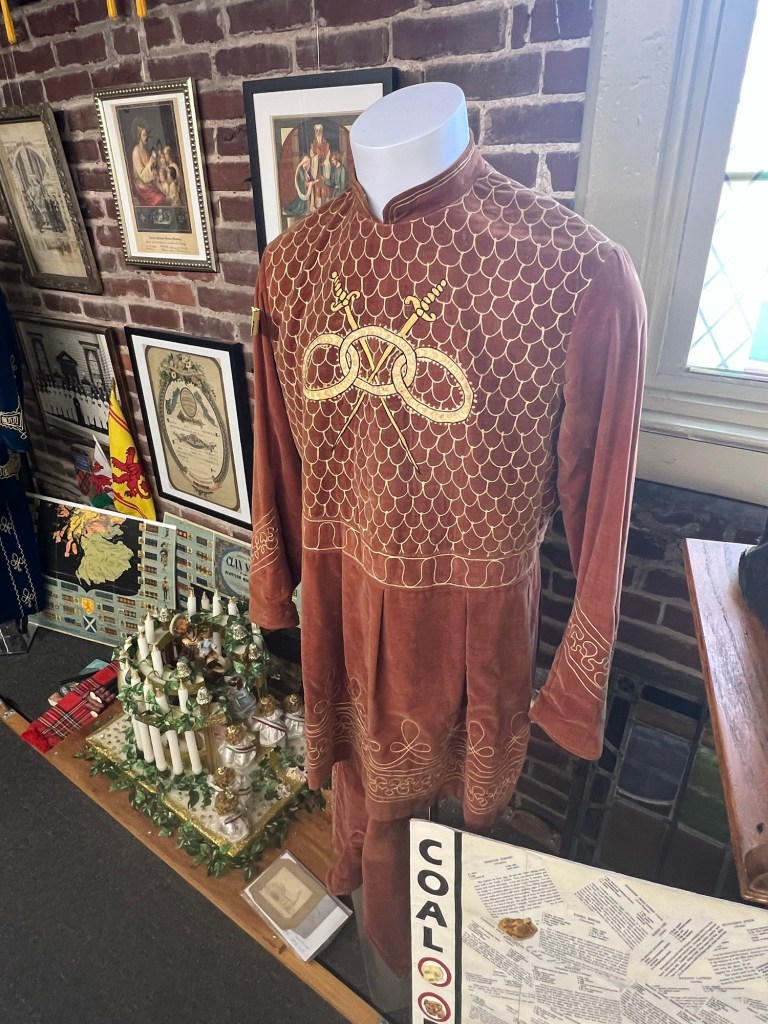
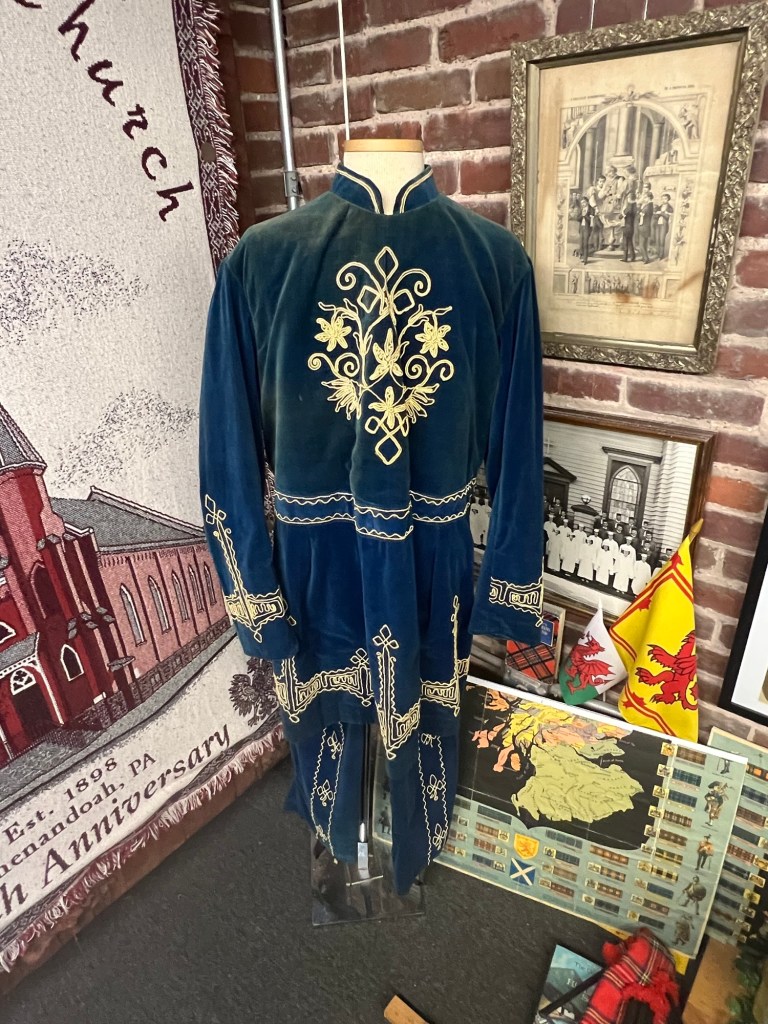
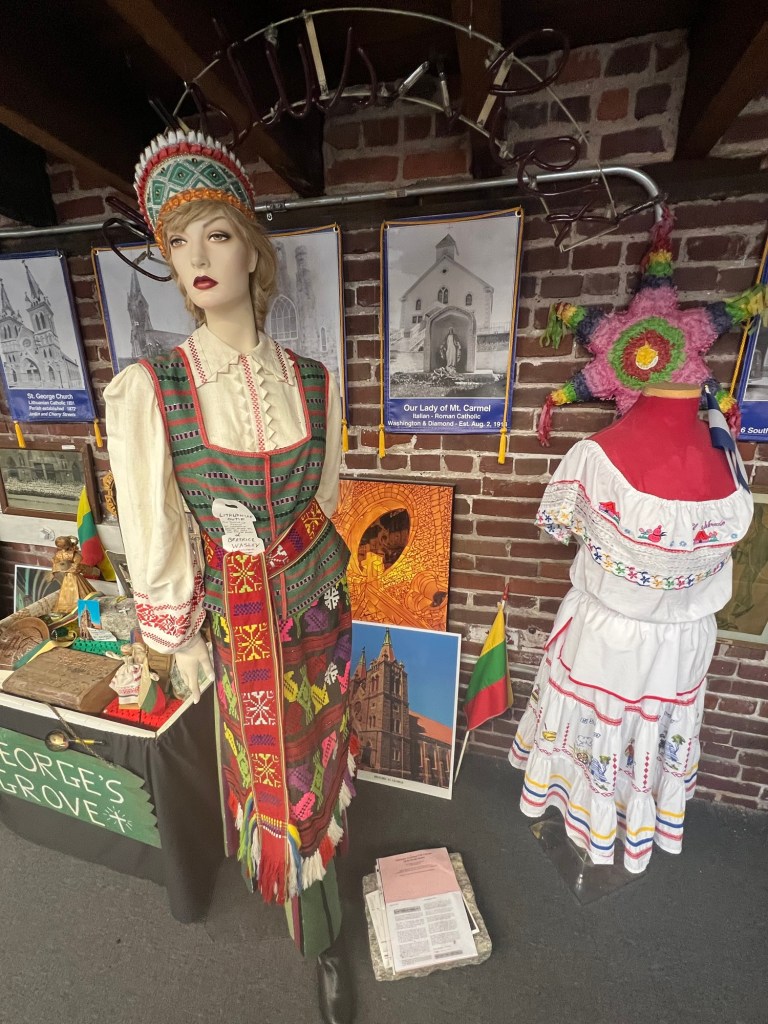
Pageantry costumes are a big part of the exhibition as old world traditions were brought to this country before WWI
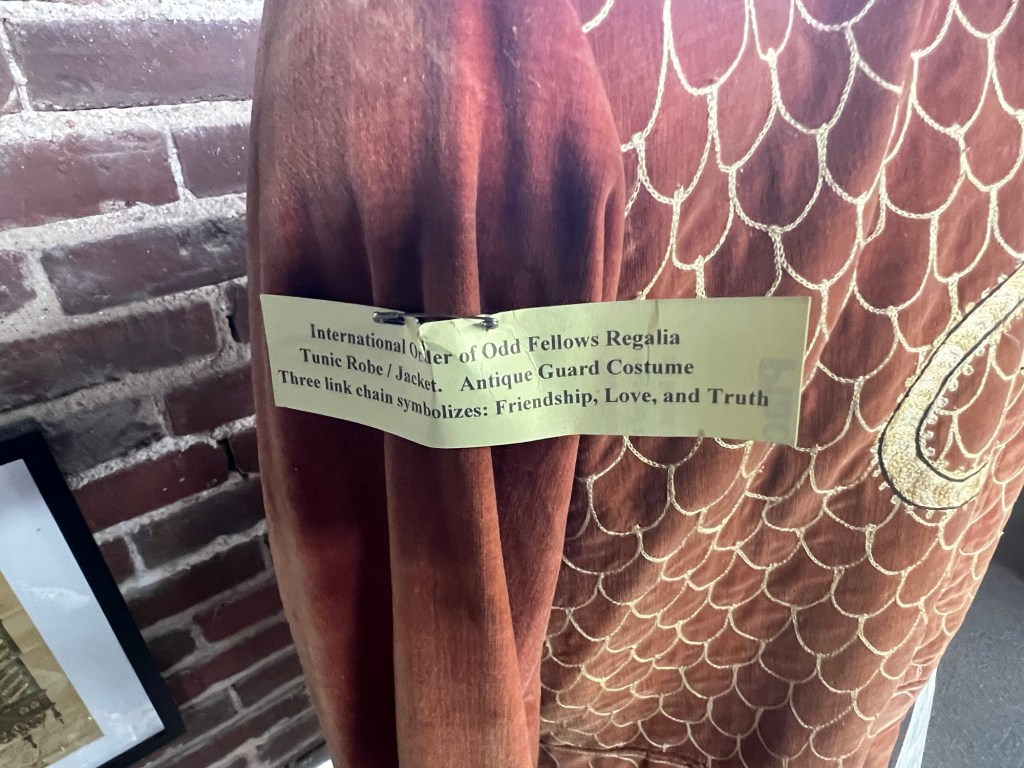
Each piece is labeled so that it can be researched and admired
The costumes used in church services
The detailed outfits and religious items from church services
Items from St. Stephen’s Polish Catholic Church
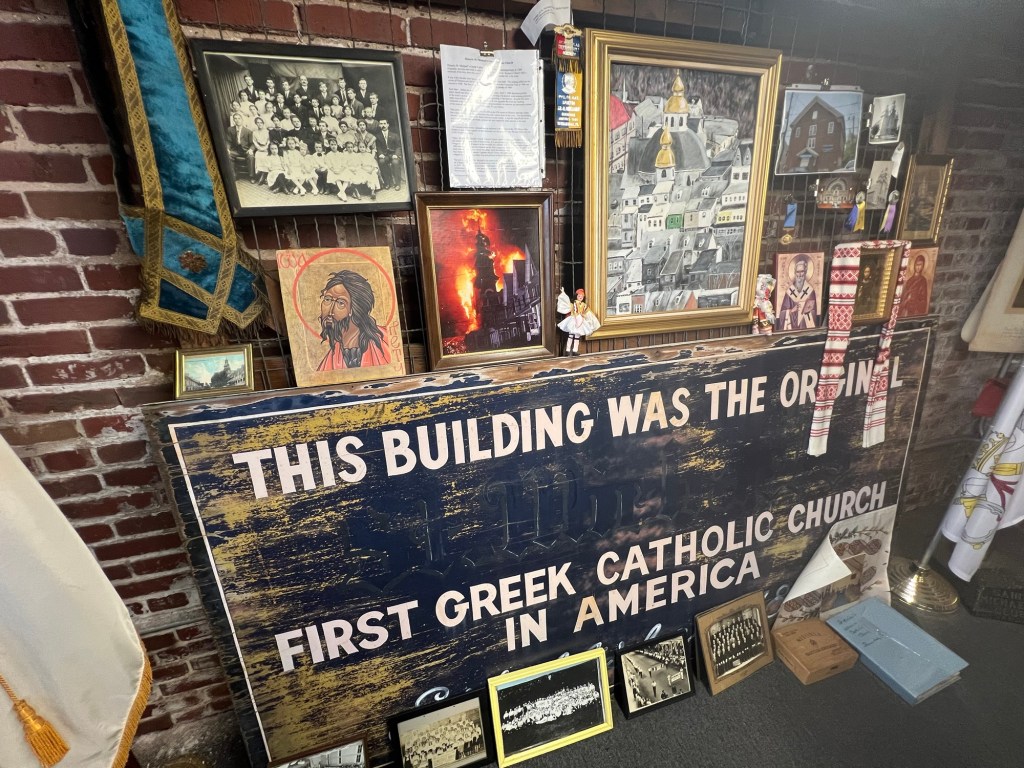
Artifacts from the First Greek Catholic Church
Items from the former Greek Catholic Church
Costumes from the Greek Catholic Church
The display from the former Our Lady of Carmel church
The Religious/Church exhibition room is one of the most impressive displays of religious items outside some of the major city museums and really does tell an interesting story story of not just the religious faith of these residents of this community but of their traditions and pride they brought to this country.
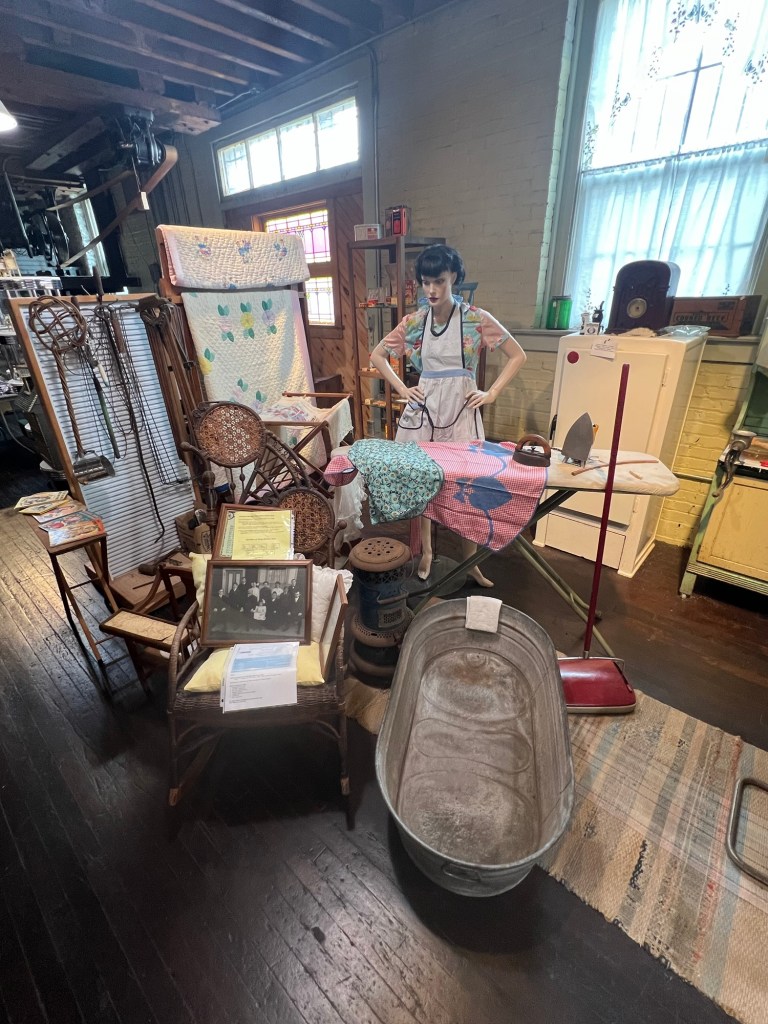
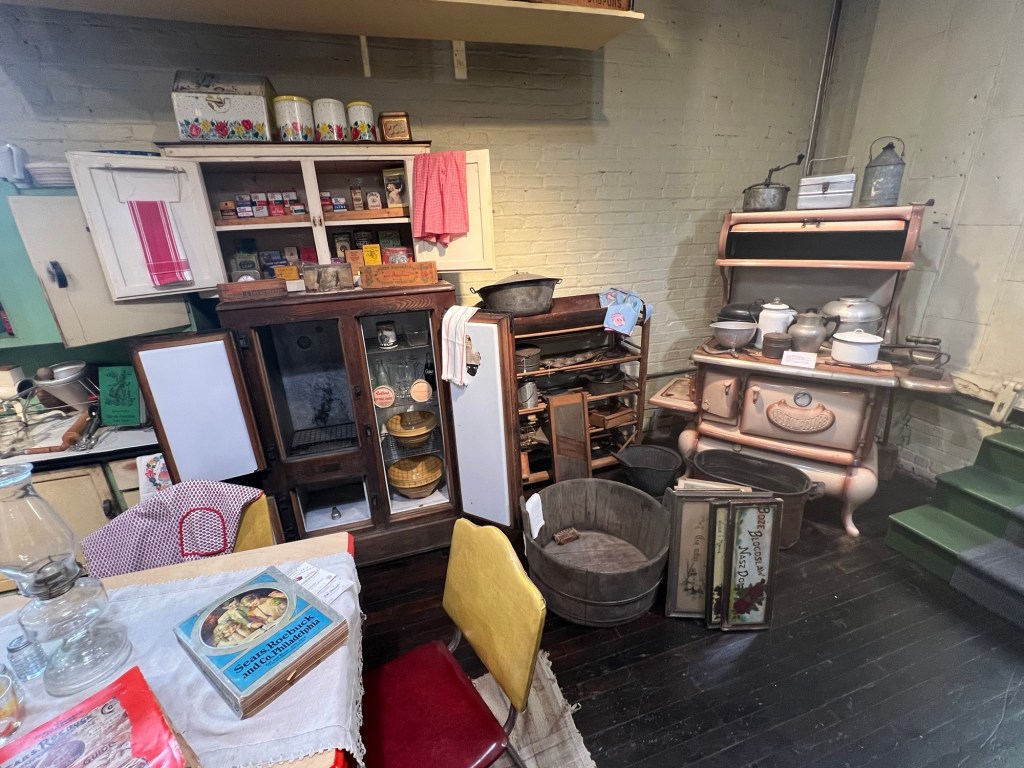
Another look into the past is the museum’s display of life in the Mining community from the perspective of the Mining household and that of the Miners wives and daughters who ran the operation at home while the men worked in the mines. It was a rough life for everyone in these communities. As one of the curators explained to me is that “they may not have had a lot of money but there was an immense pride on how their houses looked and how they maintained their lifestyle. These women worked hard to make sure they had what they needed.”
The life of a housewife before indoor plumbing and electrical appliances made housework tedious in those years before WWII
The house included wash bastions, bathing items and all the kitchen supplies to keep the home running
As it was explained to me, these woman did not have that much money but these was still a lot of pride in their households and keeping things cleaned and well organized. They made a lot out of a little.
The wash basin men had to clean up in after coming out of the mines and before they entered the house to get the dust off
The handmade dollhouse shows the craftsmenship of the residents when catalog toys were out of reach for most people. This beautiful dollhouse was crafted by a local resident as well as all the furniture and accessories.
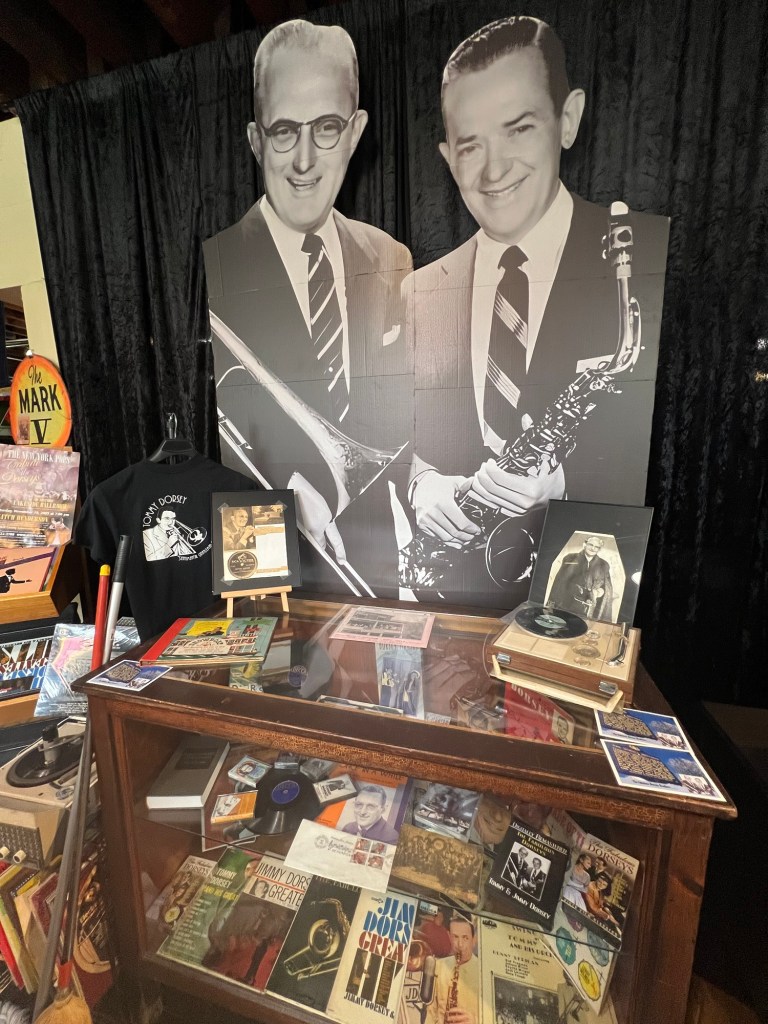
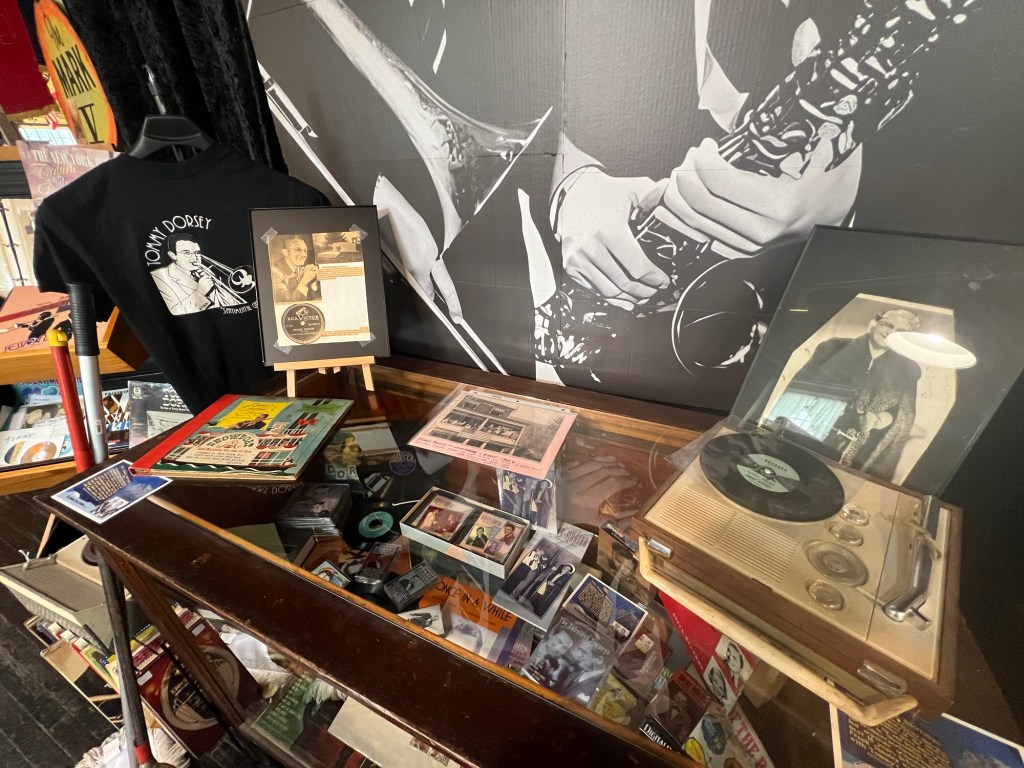
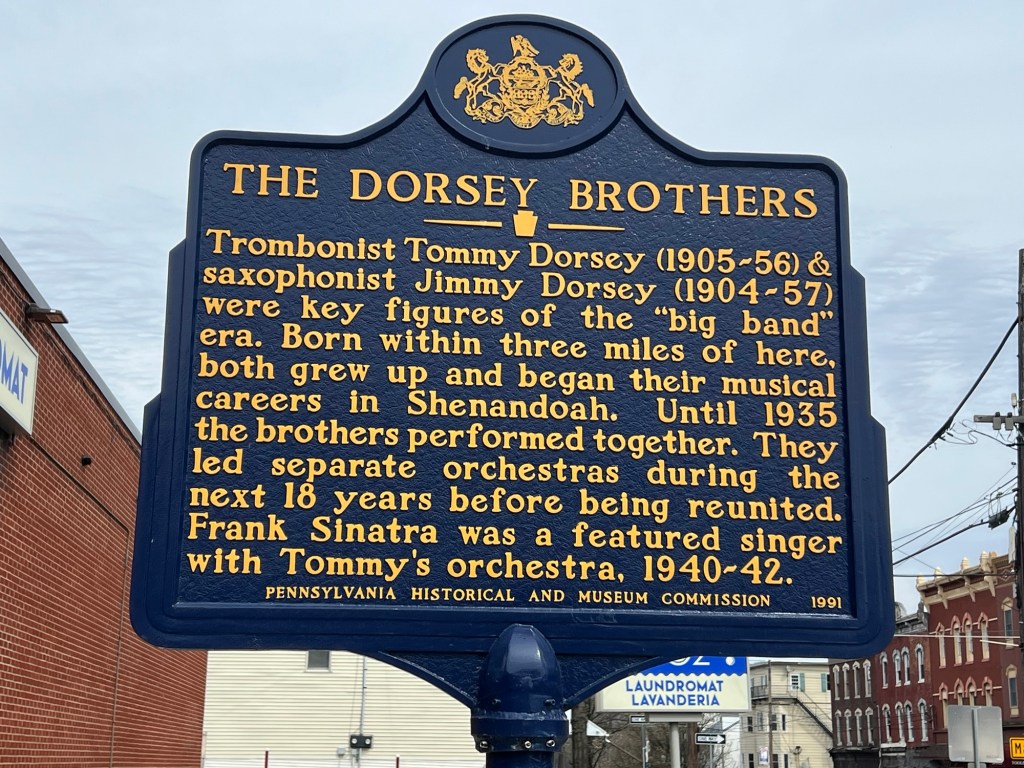
Tommy and Jimmy Dorsey were some of the famous residents to come out of Shenandoah and are the pride of the immigrant success of this community.
The Dorsey Brothers were born in this community and the exhibition shows the success of the brothers in the music industry
All the recordings, pamphlets and printed publicity over the years
The Dorsey Brothers historic marker in Downtown Shenandoah
As the mines closed or were downsized, women went to work in the clothing factories that were once a big part of manufacturing. The Union label and workforce meant something in this community.
The Ladies Garment Union and factories in the area
When local leaders went out and residents dressed for church and evenings out, there was a pride in appearance that seems to be lost today. When people went to dinner or to dinner or out with friends or for the holidays there was a formality to looking your best.
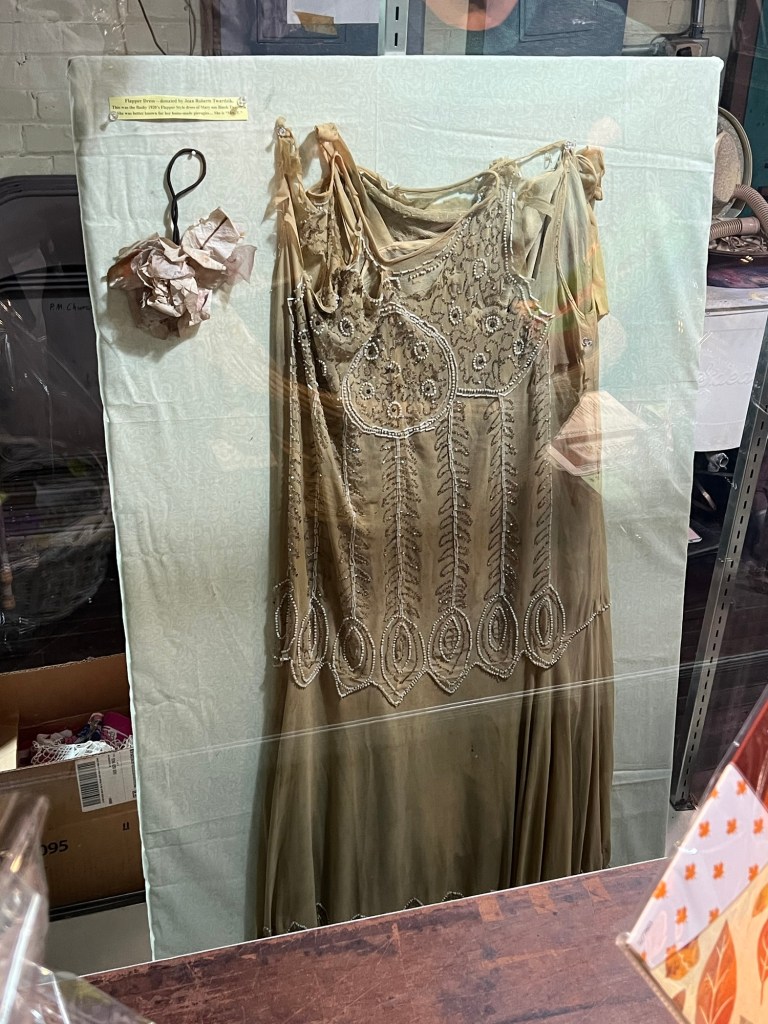
The ‘Flapper’ silk dress from the 1920’s
The furs, dresses and hats for a night on the town
The collection of formal wear and furs was very impressive for a small museum. The collection was so beautifully displayed.
For a small museum, it holds many treasures as the collection here is extensive and deep. The artifacts are so nicely displayed and beautifully curated.
The museum galleries
The museum galleries
Each section of the museum shows the pride of the past and the glimpse of the future of this community with innovation and creativity at its core. It is a museum that tells a fascinating story of the past.
When you leave the museum, you can see traces of a community in flux as buildings are finding new life and traces of that innovative past are returning. The town is in another state of transition.
The gentrifying downtown district that surrounds the museum
The welcoming sign of the town
The potential once again for a flourishing downtown
There is much potential in the downtown
After our visit to the museum, I took the gentleman who arranged all the tours of the cultural sites of the area for lunch at Francesca’s Ristorante and Gourmet Pizzeria at 10 North Main Street. He highly recommended it and the pizza and fried pierogis were excellent (see review on TripAdvisor).
The front of Francesco’s at 10 North Main Street in Downtown Shenandoah, PA
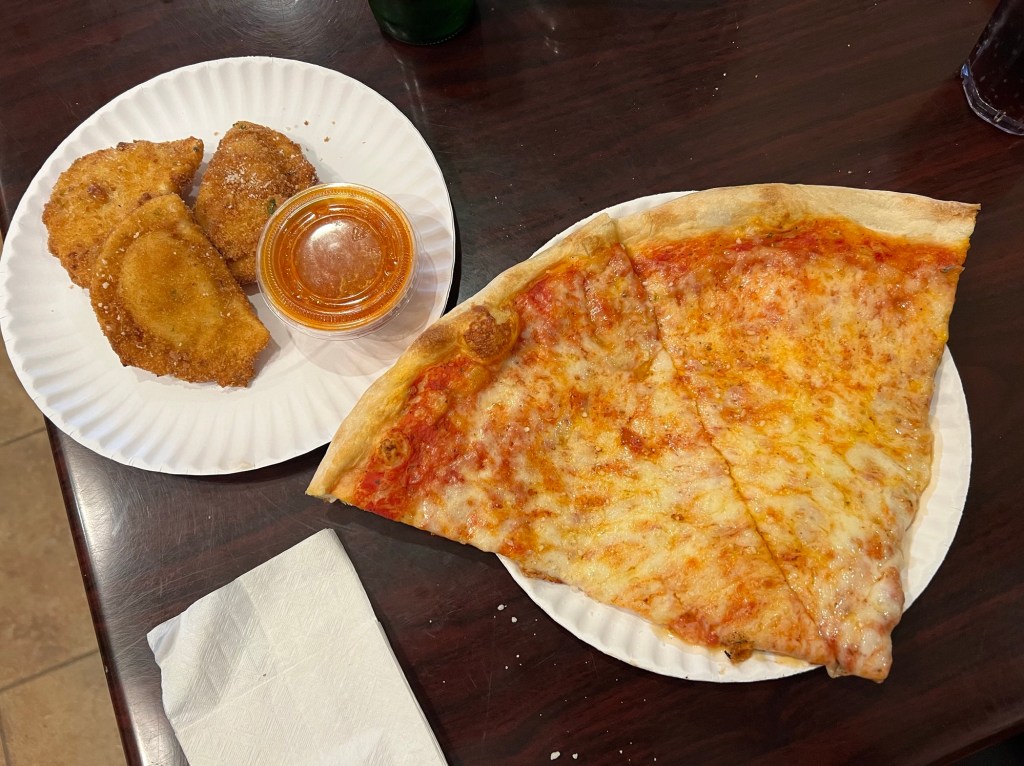
We had slices of their wonderful Cheese pizza for lunch and shared the Fried Pierogi that was from the Mrs. T’s company down the road. Their red sauce is amazing and spiced so well. I highly recommend lunch here after your visit to the museum.
The Cheese pizza and Fried Pierogi
The excellent Cheese pizza
The Fried Pierogi with red sauce were outstanding
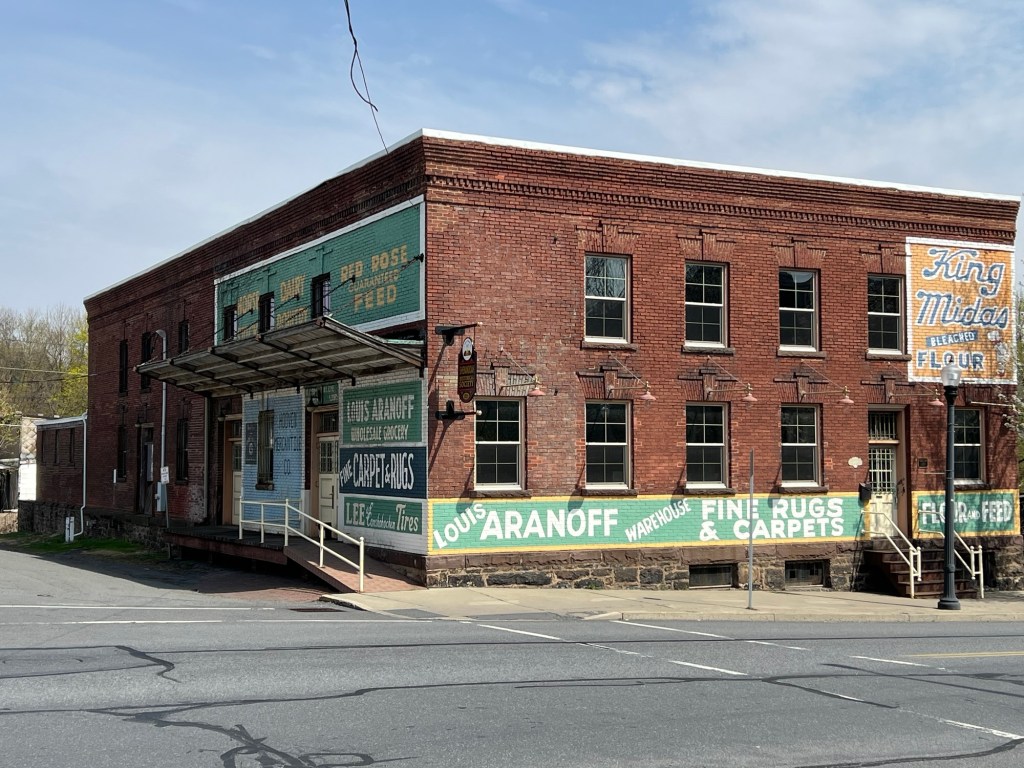
After lunch, we headed back to Mahanoy City to visit the Mahanoy Area Historical Society museum. I took one last drive around and admired the museum building one more time. There is so much potential for an Arts District in this town.
The Shenandoah Area Historical Society Museum from across the street
The porch sitting area as you wait for your hosts to greet you
We were warmly greeted by our hosts and owners of the home. I had not realized that this is a private home and less of a museum. The only way to see the inside of the mansions by private arranged tour or when the owners have an open house either at Halloween or Christmas.
The History of the family and their fortunes:
(from WordPress.com article by Kubek: Project)
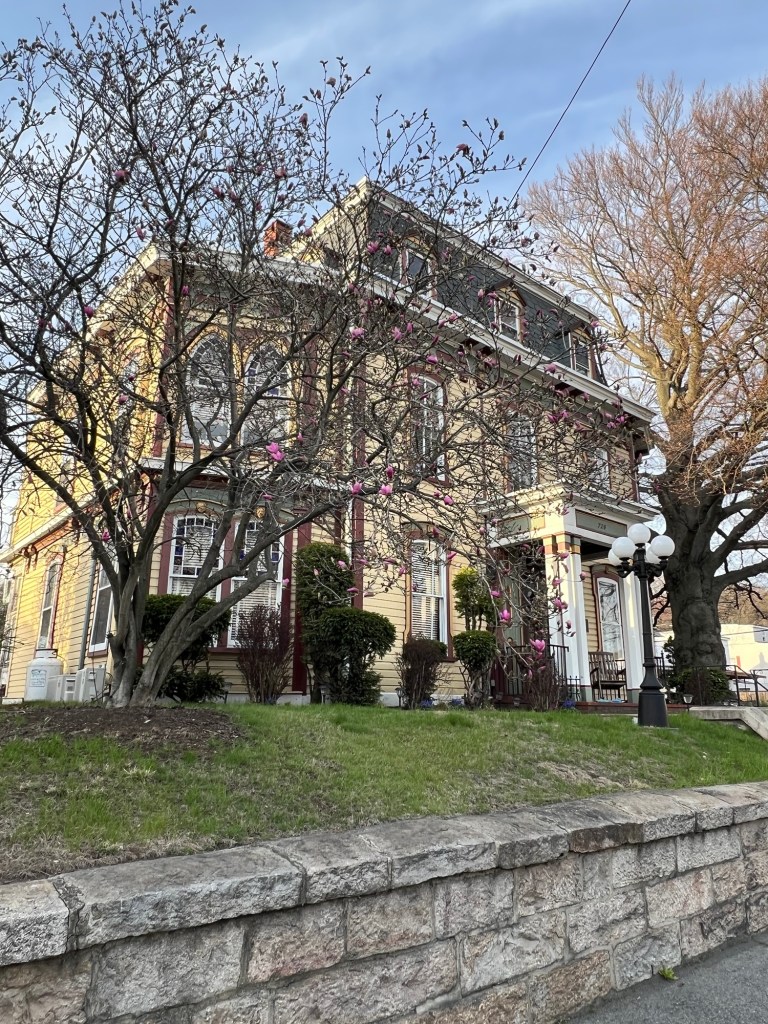
By the turn of the century, John Žinčak Smith had become the most accomplished Carpatho-Rusyn businessman and community leader in Mahanoy City, and in 1908, Smith moved his family from their modest West Centre Street home to this monumental mansion at the corner of South Main and East Spruce Street. Built at a cost of $40,000, the mansion included fourteen rooms, four chandeliers, wooden cabinets, and a number of stained glass windows (Mahanoy Area 2004, 15).
Just as he changed his name from Ioann Žinčak to John Smith nearly 30 years earlier, his move from the predominantly Slavic, Catholic West End to the Anglo-Saxon, Protestant East End symbolized his meteoric rise from his humble origins to the economic elite of the region.
However, not all Carpathian-Rusyn Americans viewed Smith’s prosperity favorably. One parishioner penned an anonymous letter to the Carpathian-Rusyn newspaper Postup (The Progress) that sharply criticizes Smith as “a former nobody who wants to stand on the brow of the Rusyn people in America.” The author implies that Smith is embarrassed by being Carpathian-Rusyn, for “he doesn’t speak Rusyn with his children at home” and “is ashamed of his father’s last name” (“From Mahanoy City, PA: Our Chairman” 1908: 3).
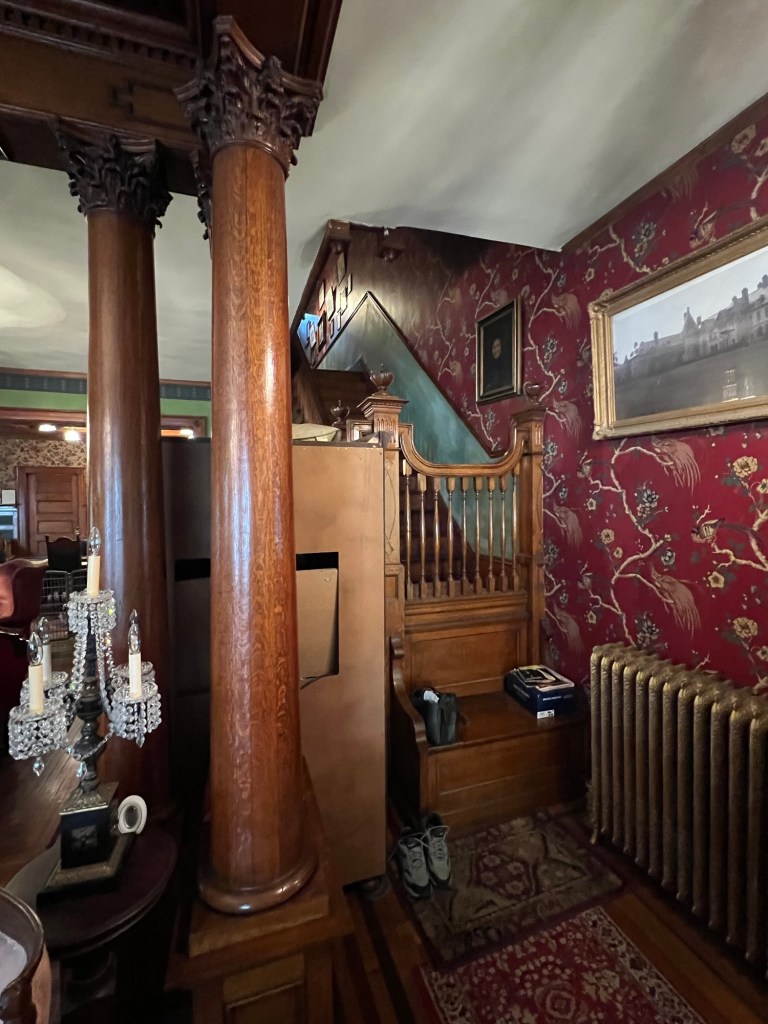
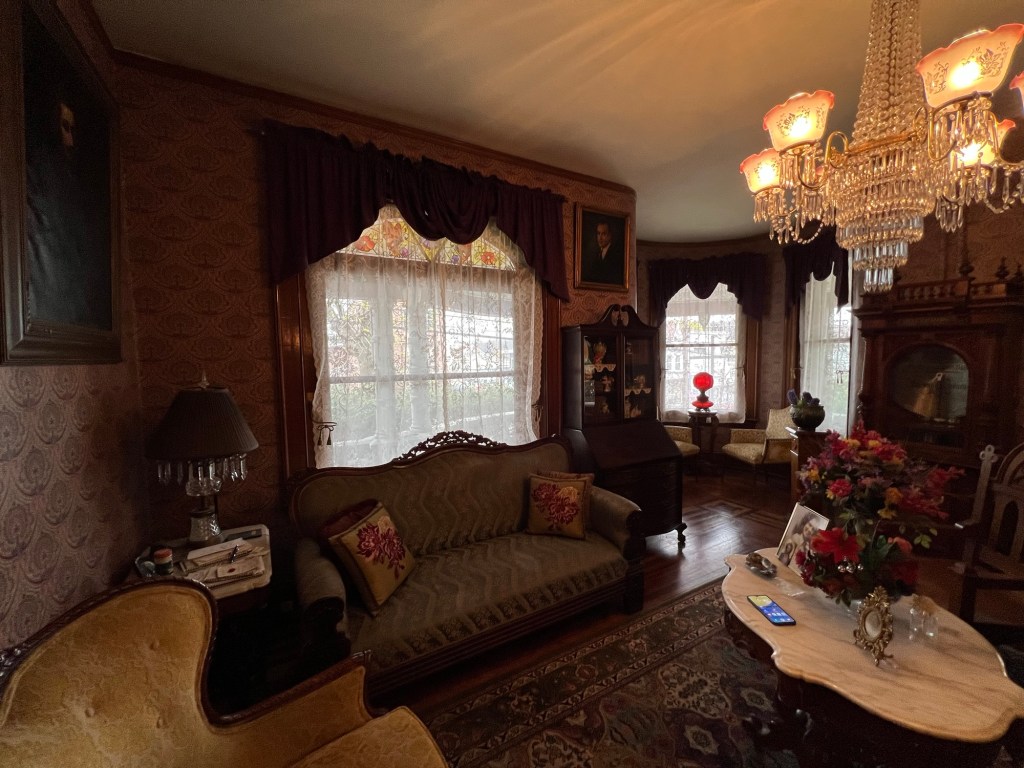
We started our tour of the house in the main Living Room and foyer. This is one of the most welcoming houses and you can tell it was designed for entertaining and for a large family to live and enjoy.
The foyer of the house as you enter the home
On the first floor of the home was the formal Living Room and Dining Room of the home. The very energetic small dogs of the owners welcomed us as well.
The formal Living Room
The house still has all its beautiful and ornate moldings and fixtures. The owners told us when the family moved out, robbers had come in and stole the mansions elaborate fixtures and chandeliers so they had to replace them.
The green couch is the only thing outside some family portraits and pictures still original to the house
The portrait of Mr. Smith in the Living Room
The portrait of Mrs. Smith in the Living Room
The owners had collected the most beautiful antique and period furniture over the years which decorates all the rooms. Every piece of furniture and decoration fits each room perfectly. From the elaborate window treatments to the beautifully maintained fireplace, the room may be formal but it is still very comfortable and cosy. The house from the time you walk in has a very welcoming feel to it.
The formal Dining Room
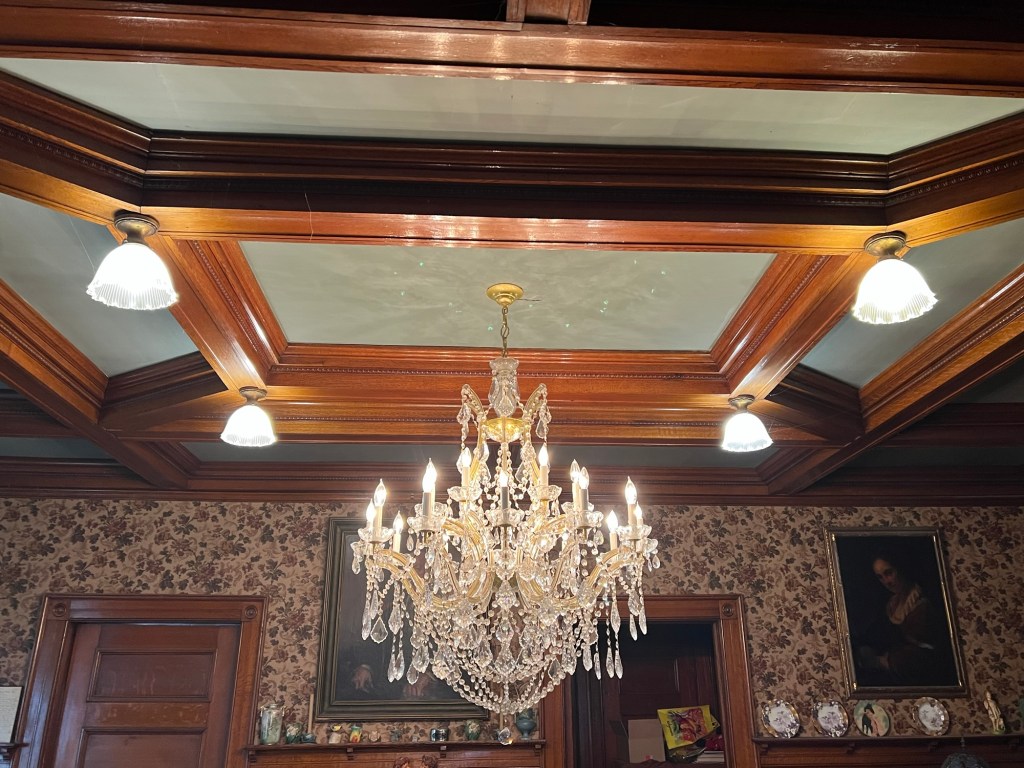
The formal Dining Room is set for formal tour and at the holidays. For today, the owners tiny dog greeted us and wanted to play. The details on these chairs were just spectacular. What a design.
All the moldings are original to the house and all the furniture is beautifully carved and elaborate. The owners told us said the chandelier they picked fit perfectly in the room.
The Dining Room chandelier and the original wood moldings
The window seat of the Dining Room lets in lots of light
The Dining Room may be formal but with all the windows the room lets in lots of natural light and with seating around the room it still feels welcoming and less formal.
We moved from the first floor to the second floor where the library and some of the bedrooms were located.
The staircase to the second floor with the elegant carved staircase
The family portrait of Mr. Smith’s mother greets you up the stairs
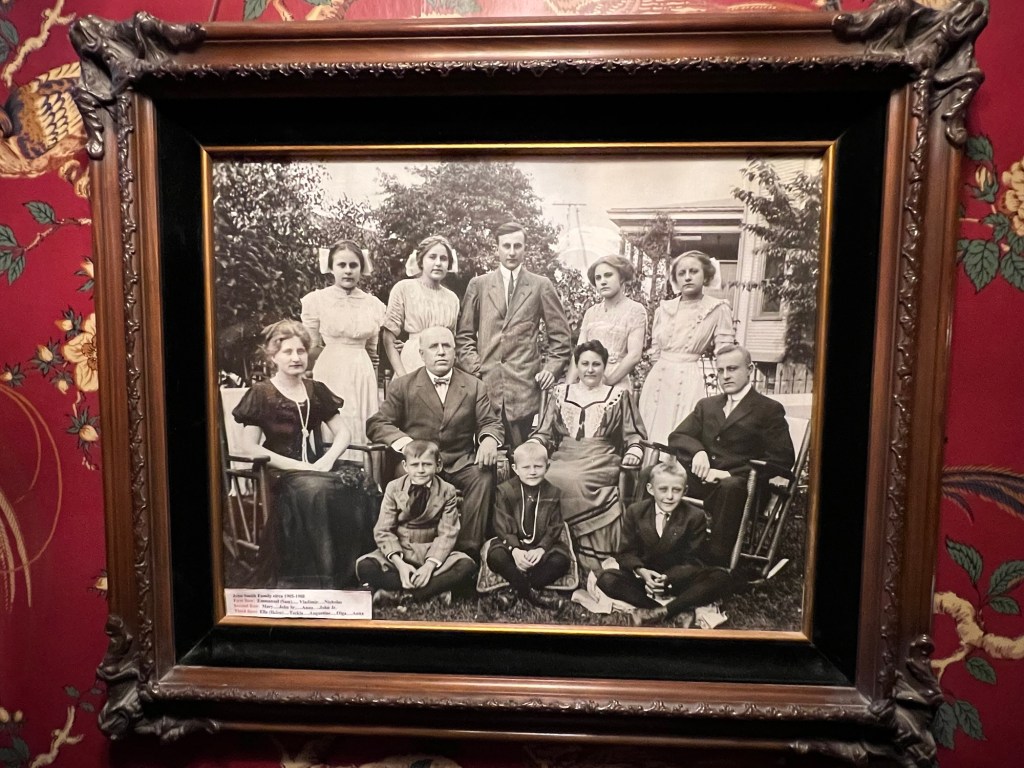
In the hallway of the second floor were photos and portraits of the family members which the third generation of the family did not want and sold to the current owners. It is amazing what family will not want of their own past.
Photos of the third generation of Smith’s who moved out of the area. These are of the children and grandchildren of the Smith’s
The Smith family photo in the late 1890’s
The Smith family again in the 1930’s
Our next room of the tour was the library where the owners books, paperwork and more art was located.
The second floor library
The work space, book shelves and the alcoves give the room that homey touch
The Alcove in the library looks over the City
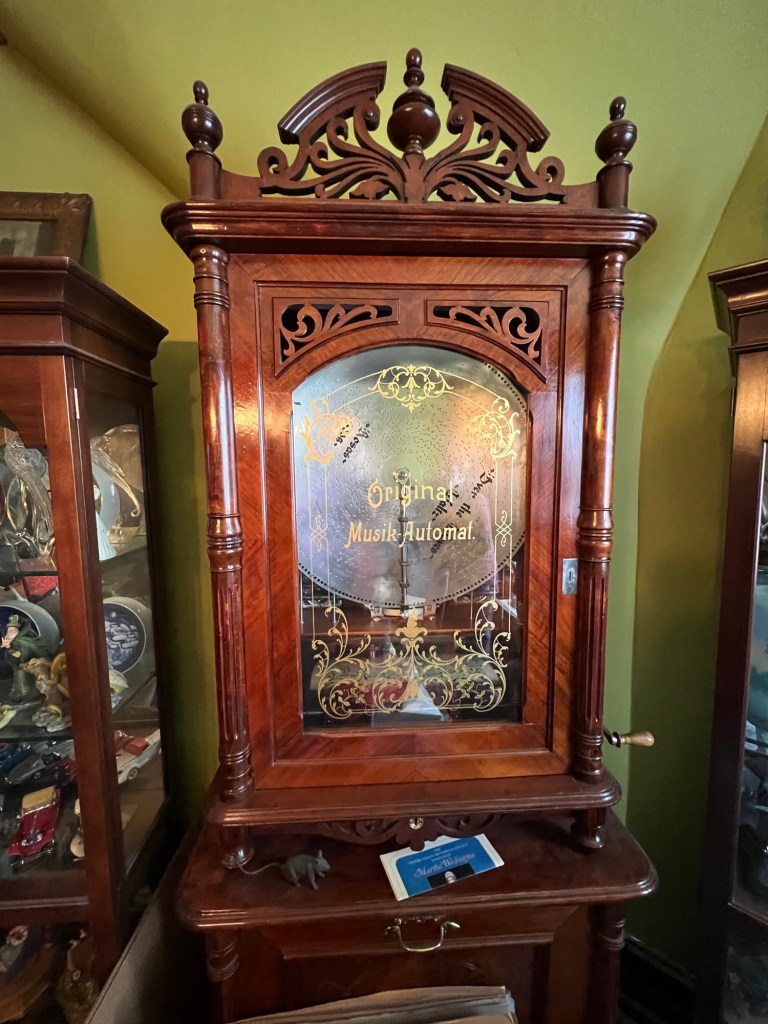
The Library with the music boxes
The owners opened this music box and played for us
The video of the music:
The Library is such a great room just to sit and read, think and relax. I could see why they love it so much.
We then walked to the third floor and we toured the Tower Room, which really has an amazing view of the city. You could see all over town from here. The inside garden in the Tower Room is so beautiful and receives so much sun.
The Tower Room is one of the sunniest rooms of the house.
This room on the third floor of the mansion has the best views of Mahanoy City and looked like Mr. Smith’s message to the town that he had arrived. You could see all over town from this window. Now the room is used as a type of greenhouse for beautiful potted plants and flowers perfect with all the sunlight. This is one of the nicest room in the house.
The Curio Room where the owners keep their collections of knick-knacks and decorative items that line the shelves and tables of the house, there was another music box. One of the owners collected these treasures over the years and the house has lots of examples of these beautiful antiques that were created before radio and records.
The Music box playing:
The music box was once in a hotel lobby
The owners explained that part of the third floor is used for storage and for their collections. There were all sorts of small sculptures and assorted Knick-knacks that decorate rooms lining the shelves. The owners had done and amazing job on the upkeep of this beautiful home.
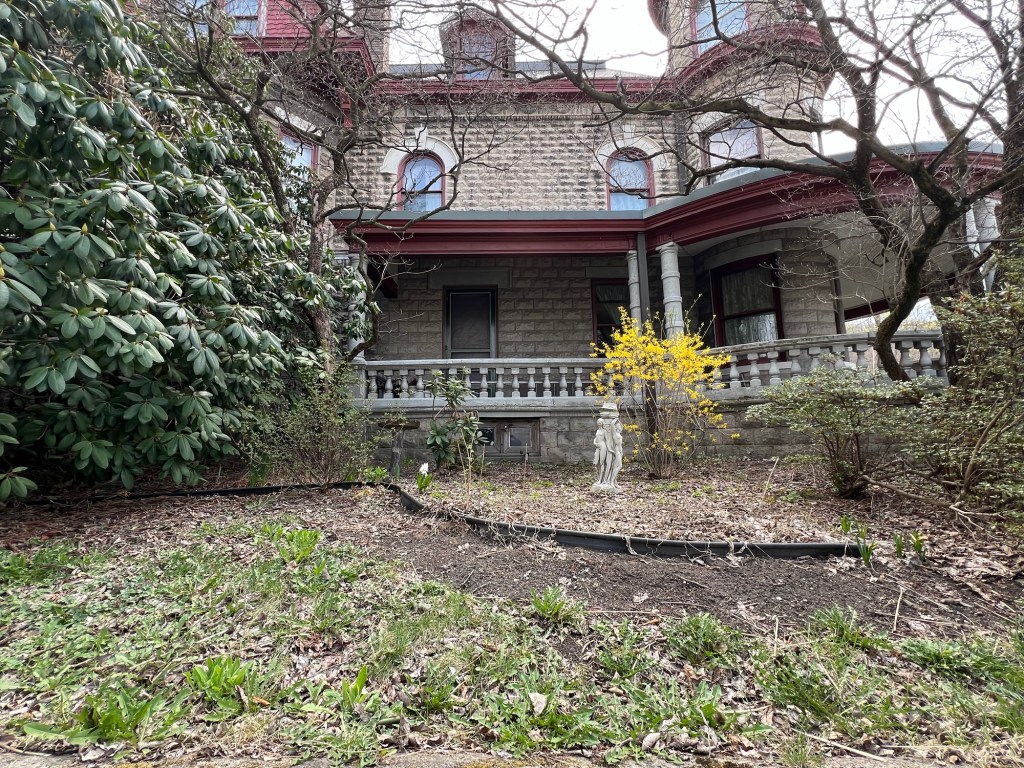
The last part of the tour was we went outside on this sunny morning to see the outside gardens. They were impressive for such a small space. The flowers were just starting to bloom and the trees were starting to bud over this cold patch of the early Spring. This weekend was the first weekend where the weather had been nice and started to warm up.
The garden in front of the house just as Spring was starting
The back walled garden and fish pound
The owners own the two homes next door to the mansion and have combined the back gardens. So they had this small fish pond stacked with Japanese fish and walls covered with vines. There is a small gazebo so that you can sit and relax outside in the warmer months.
The other side of the backyard garden just as Spring started
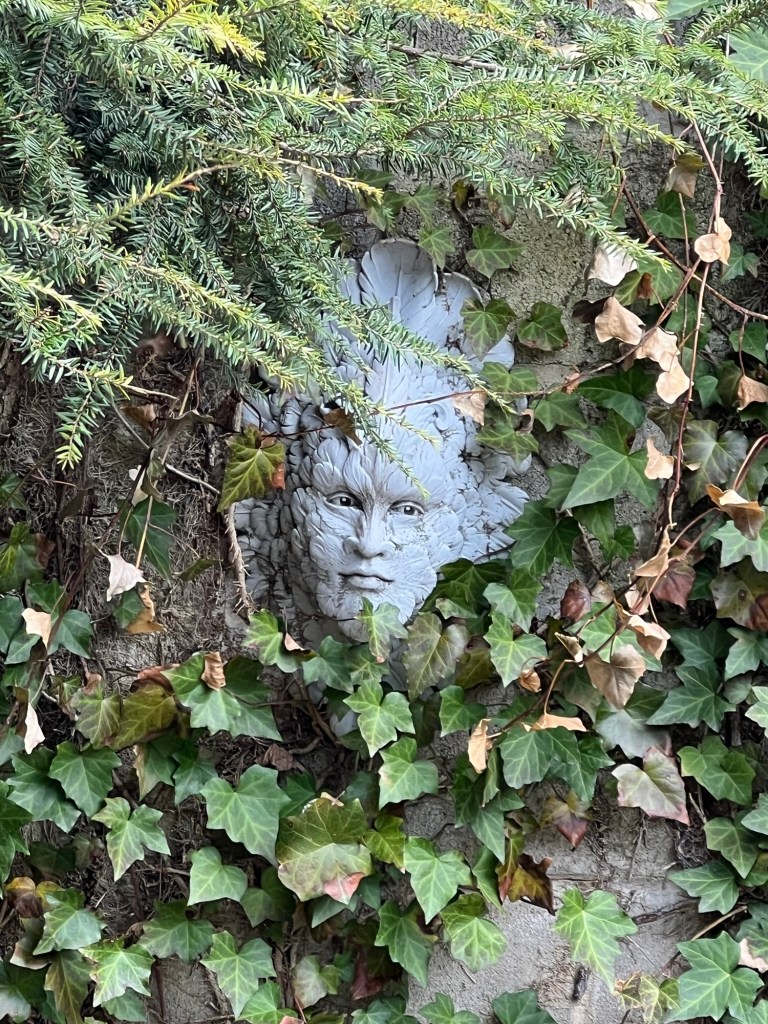
Faces pop up between the vines of the walked garden
The views of the downtown from the house
The tour concluded in the gardens. The owners were explaining how much more beautiful the gardens are in the late Spring and Fall.
The tour was wonderful and the owners could have not been more gracious with their time. They also explained how they will be opening their home again to the public during the holidays during Christmas and hopefully Halloween and how I should come back to visit.
The formal tour of the Smith Mansion again is by private tour only except at holiday Open Houses and can be arranged through the owners of the home. It really is an interesting look at areas industrial past and what life in local society must have been like at that time. It also shows how things change over time and fortunes are made and lost and business and families move on.
It was a wonderful afternoon of stepping back into the past.
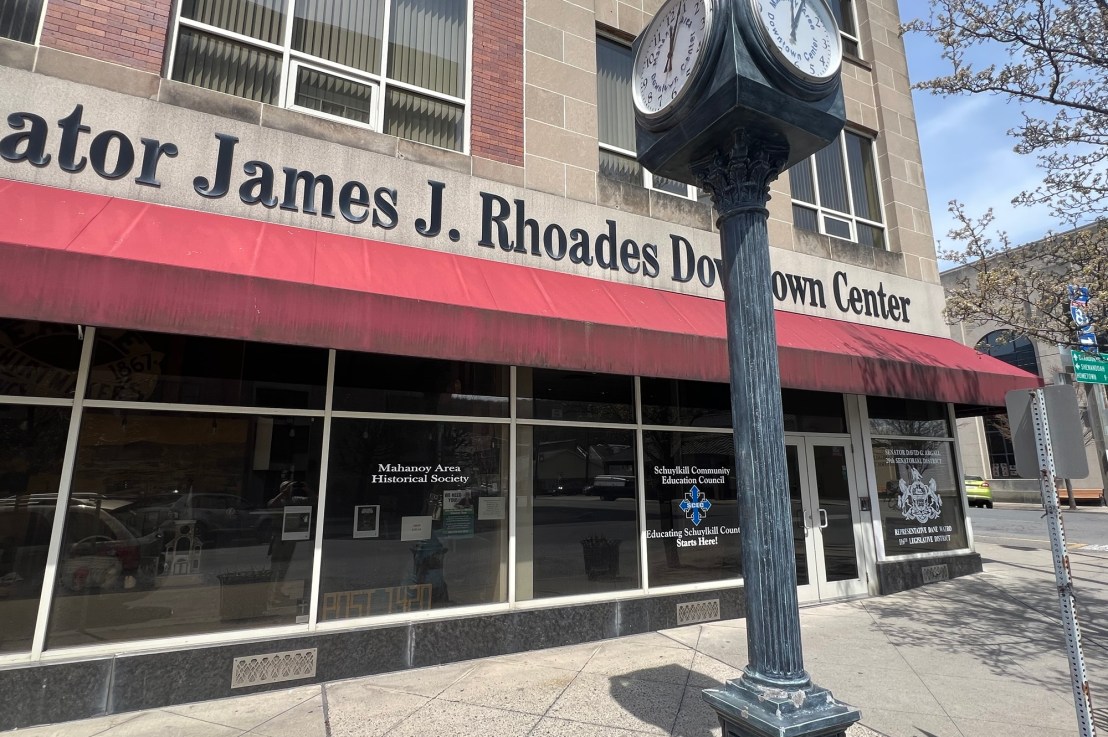
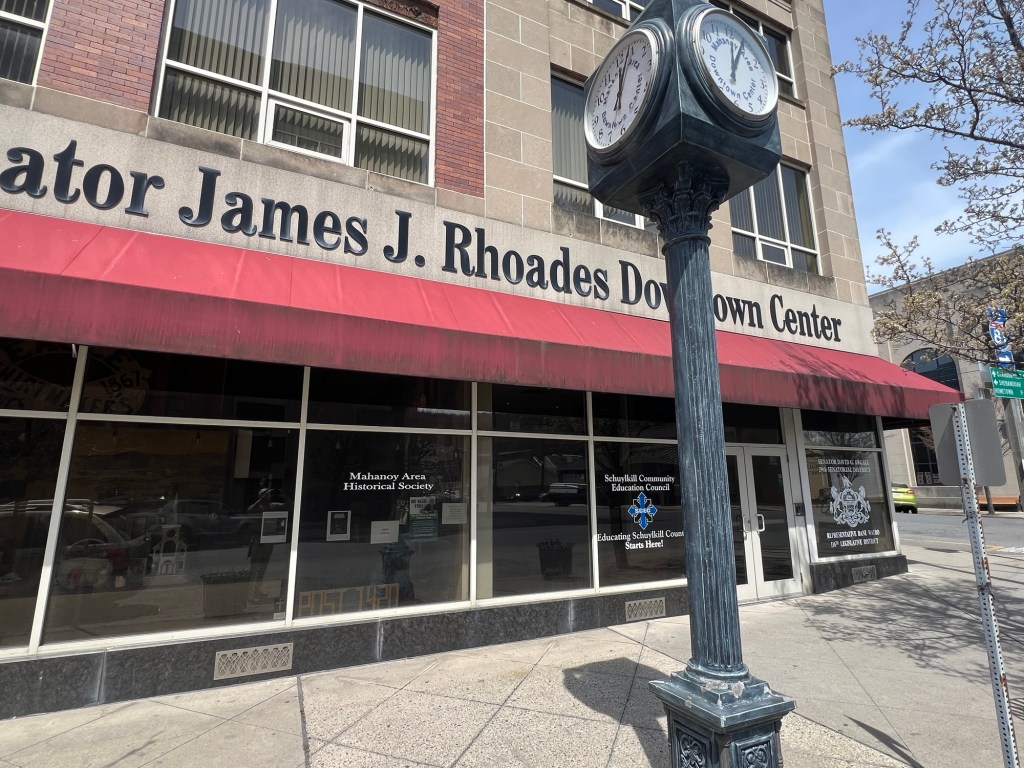
The front of the Mahanoy Area Historical Society at 1 West Centre Street#5 in Mahanoy City, PA
(from the museum website)
The museum is located on the first floor of the James J. Rhoades Downtown Center at the corner of Main and Centre Streets in Mahanoy City.
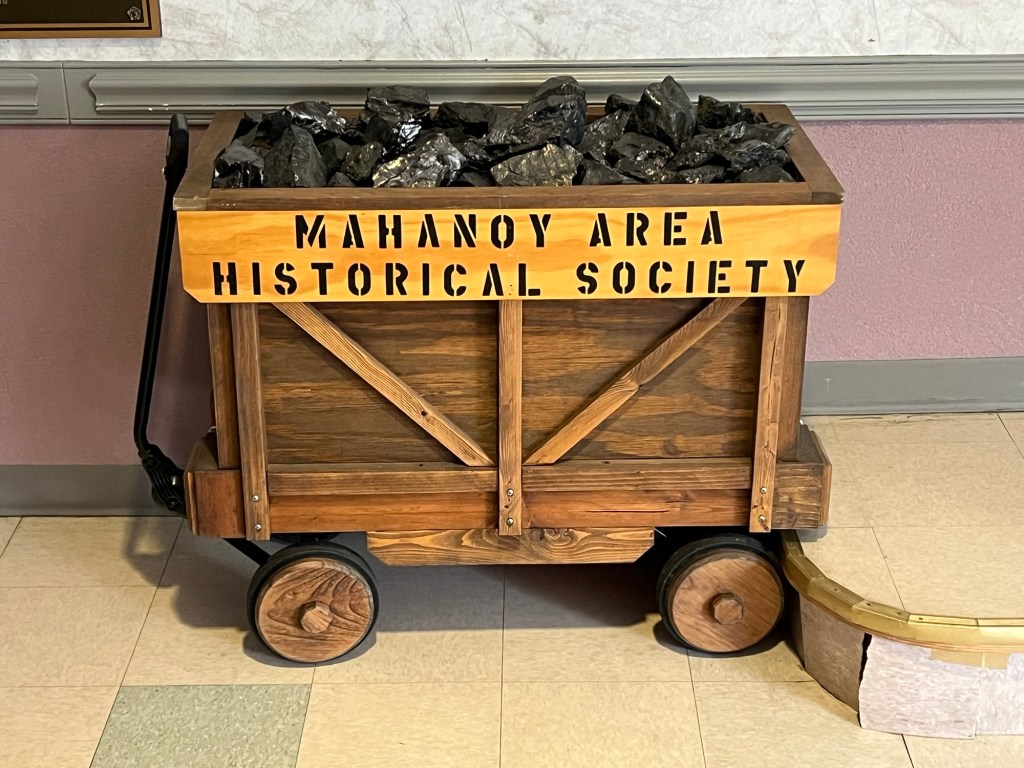
A representation of the Coal Mining Industry in Mahanoy City
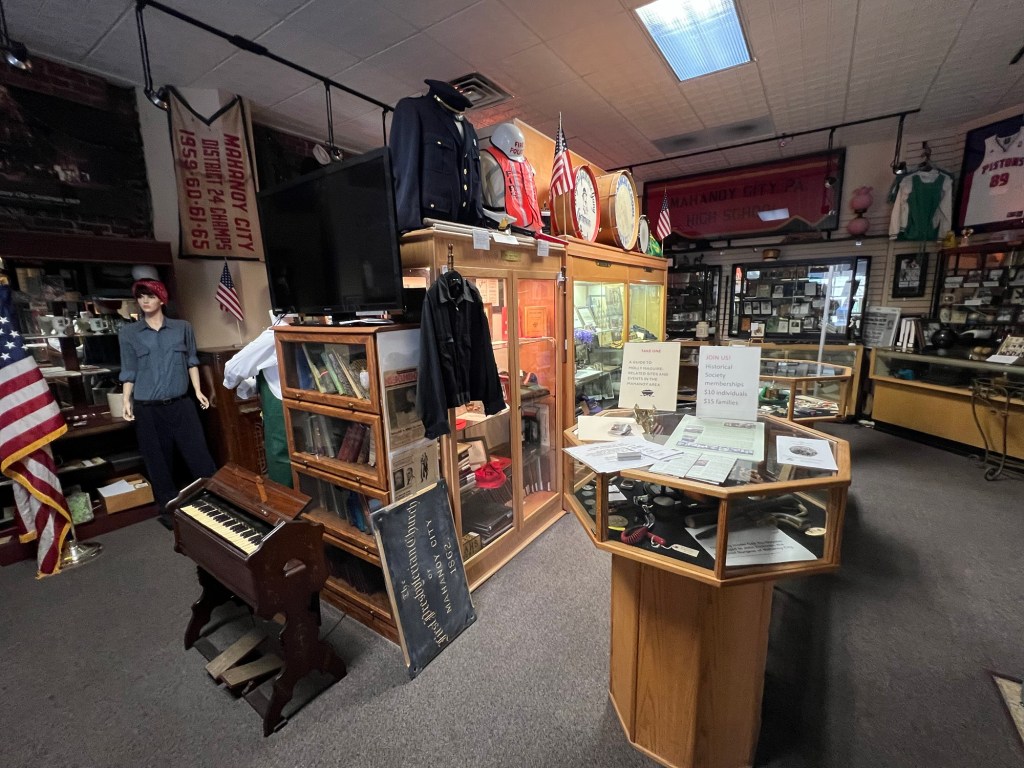
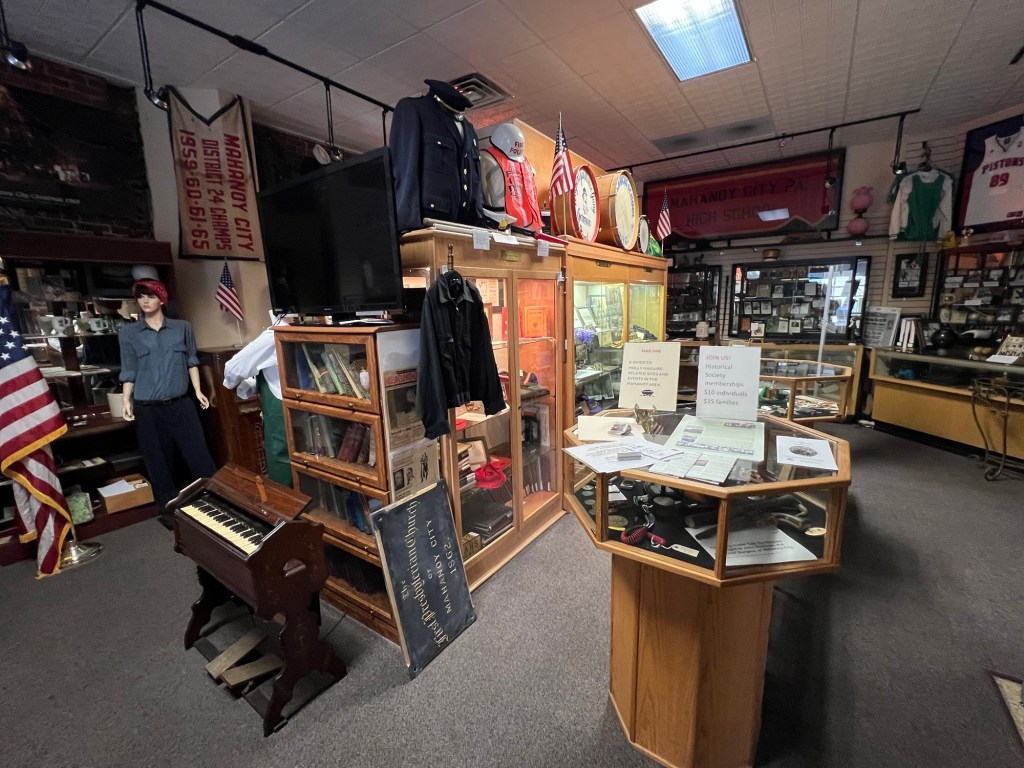
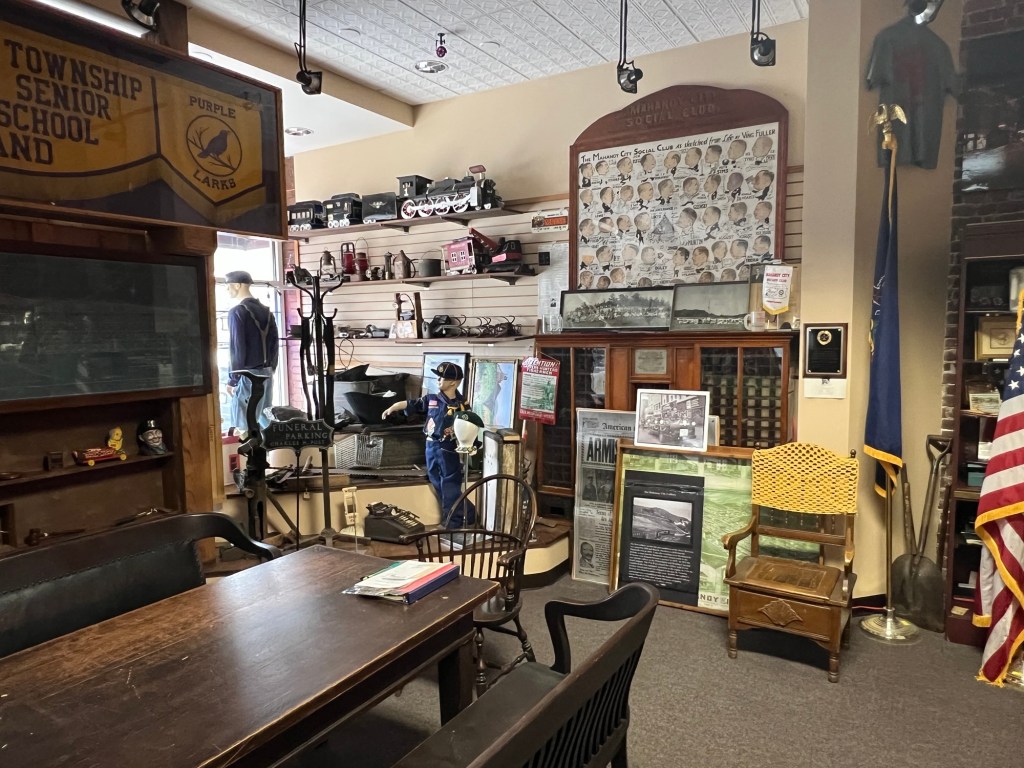
The inside of this interesting museum
The Mission of the Museum:
(From the museum pamphlet):
To preserve and protect the history of the Mahanoy Area and to work toward the restoration, revitalization and future of the community.
A glimpse into the areas contributions to the Mining industry
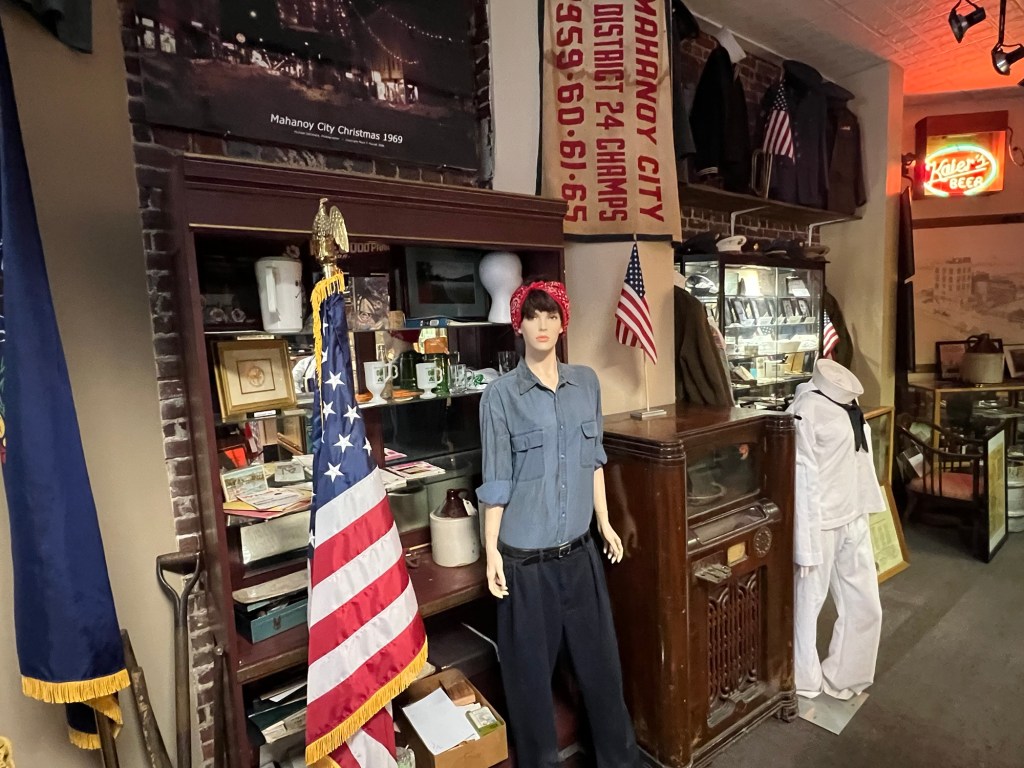
I took time on my visit to Mahanoy City, PA to visit the Mahanoy Area Historical Society and discovered an interesting little museum that tells the story of this small city, whose roots and founding are around the local mines. The displays show a tight knit and proud community even in the changes in the economy and the status of the mines.
There is a lot of memorabilia on the contributions of local residents to our armed forces
The pride of the community to our country
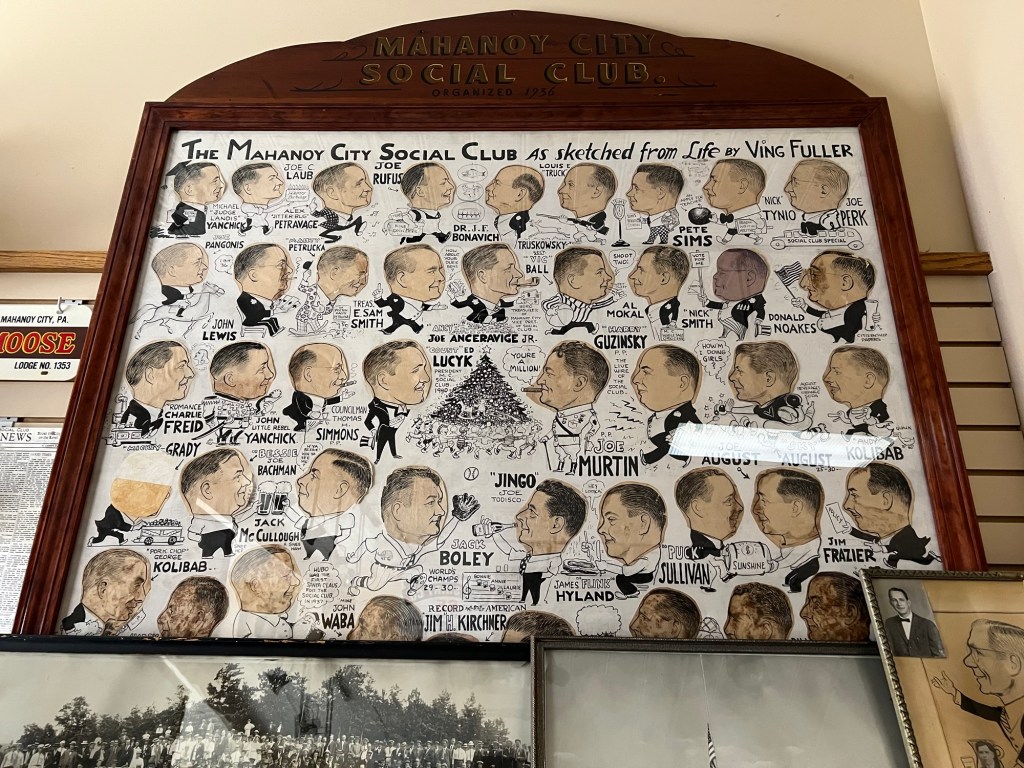
The characters of the movers and shakers of the community in The Mahanoy City Social Club, who once dominated the business scene in town.
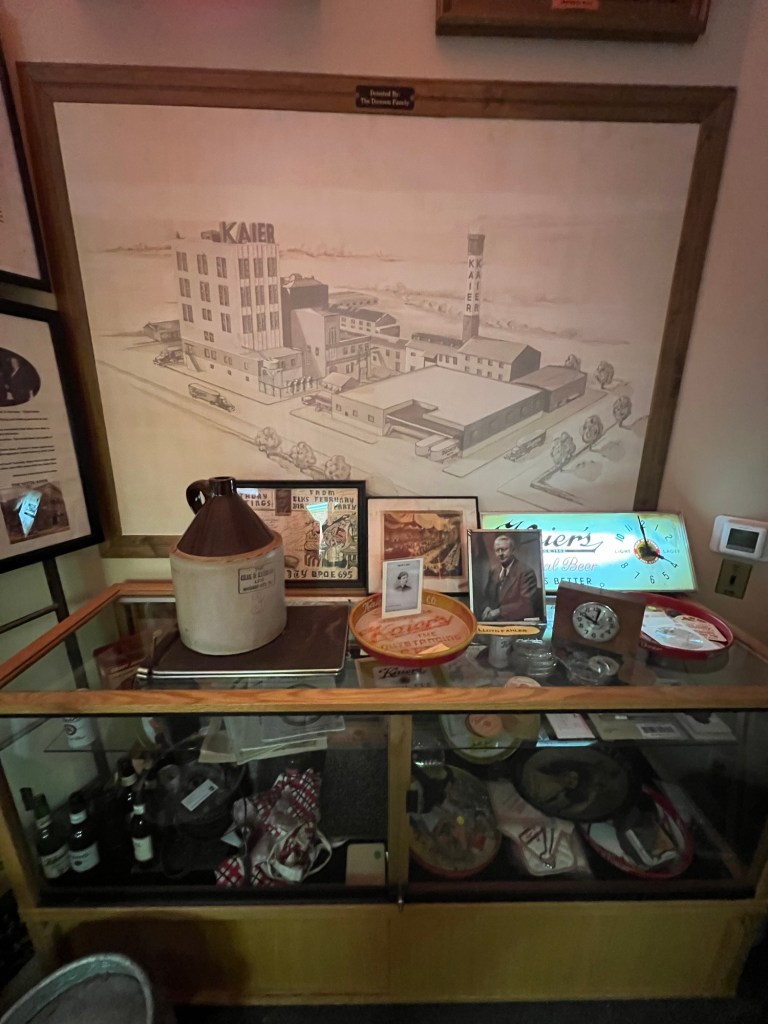
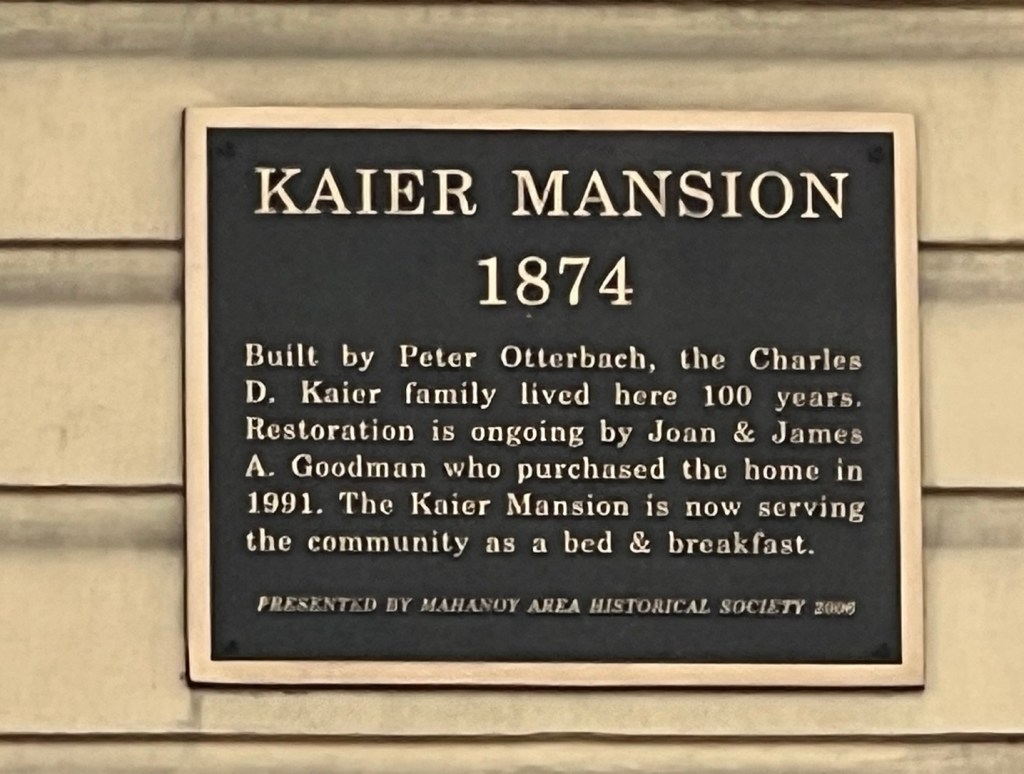
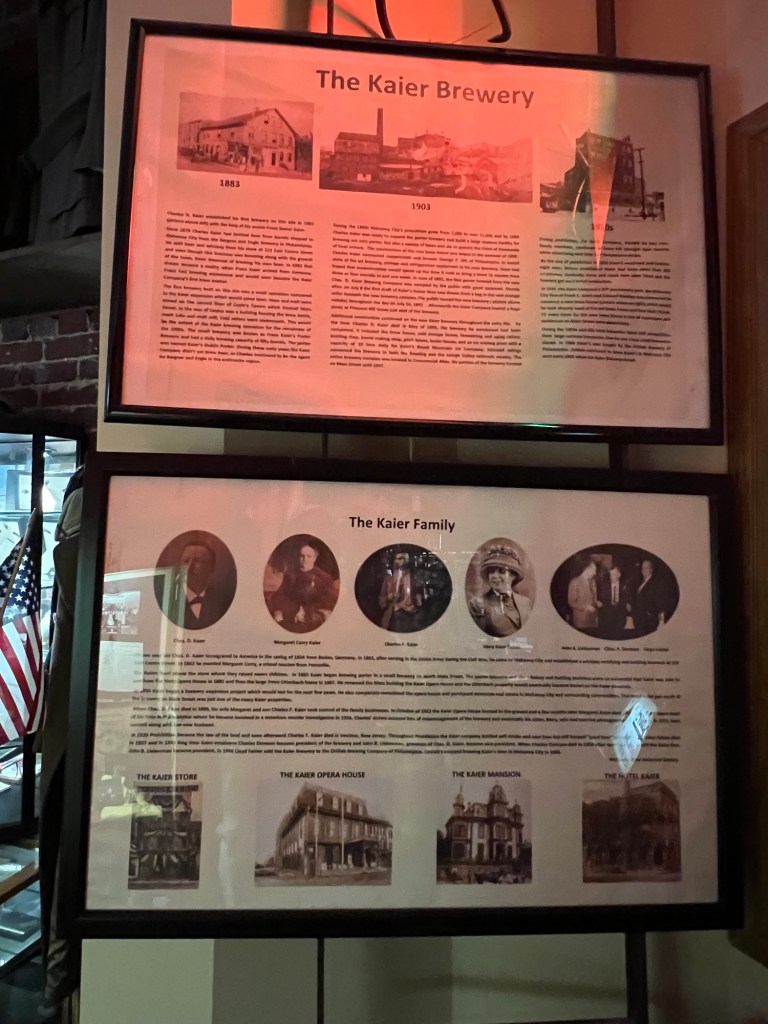
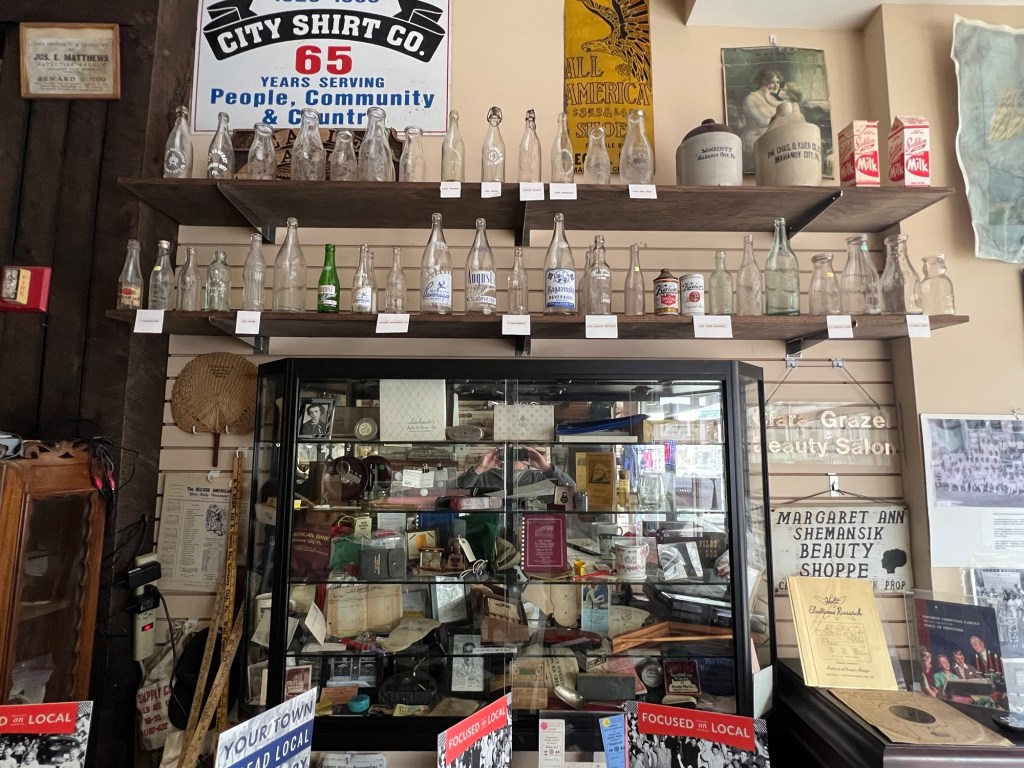
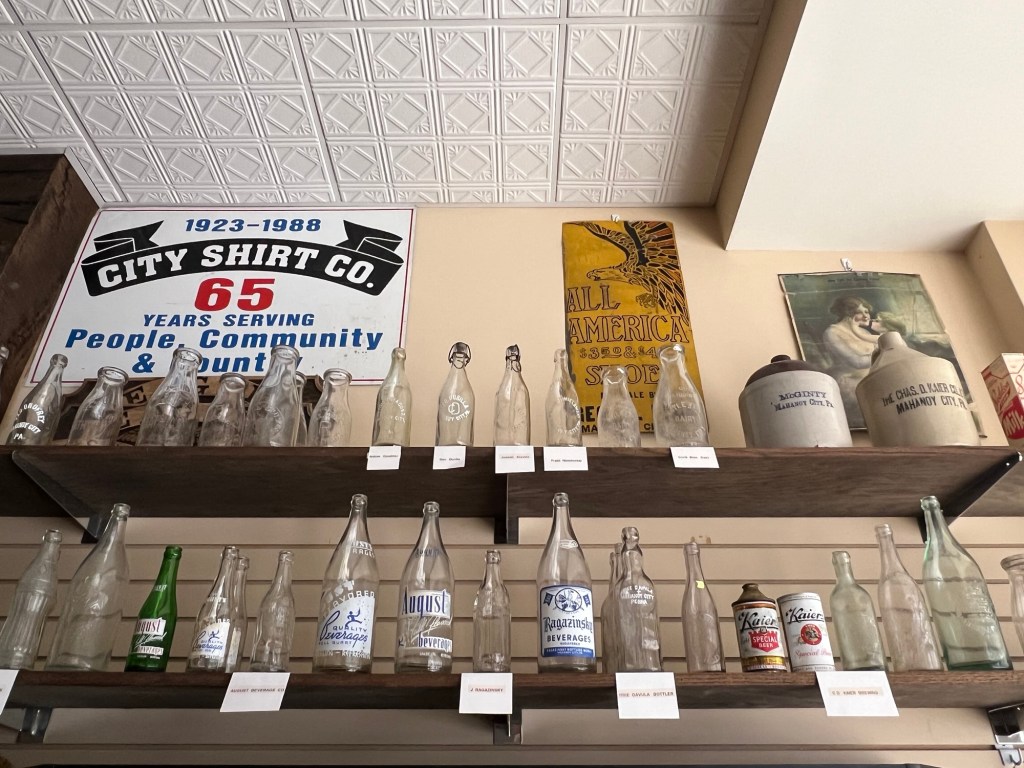
The display of the Kaier Brewery, once a dominate business in town until the late 1960’s
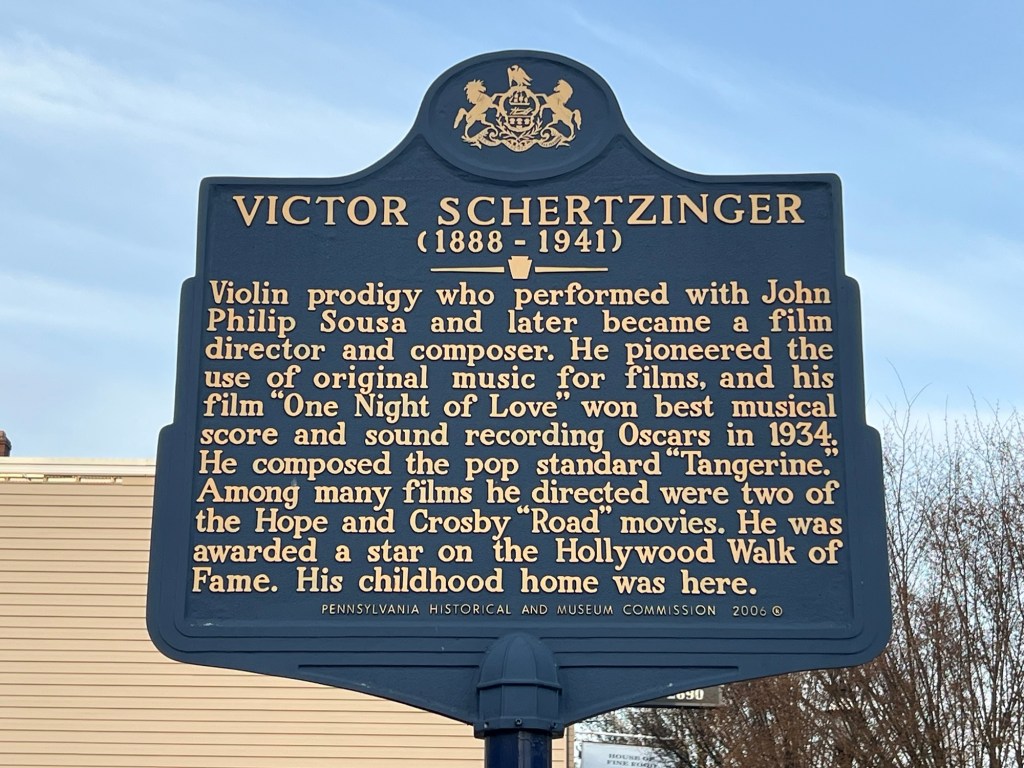
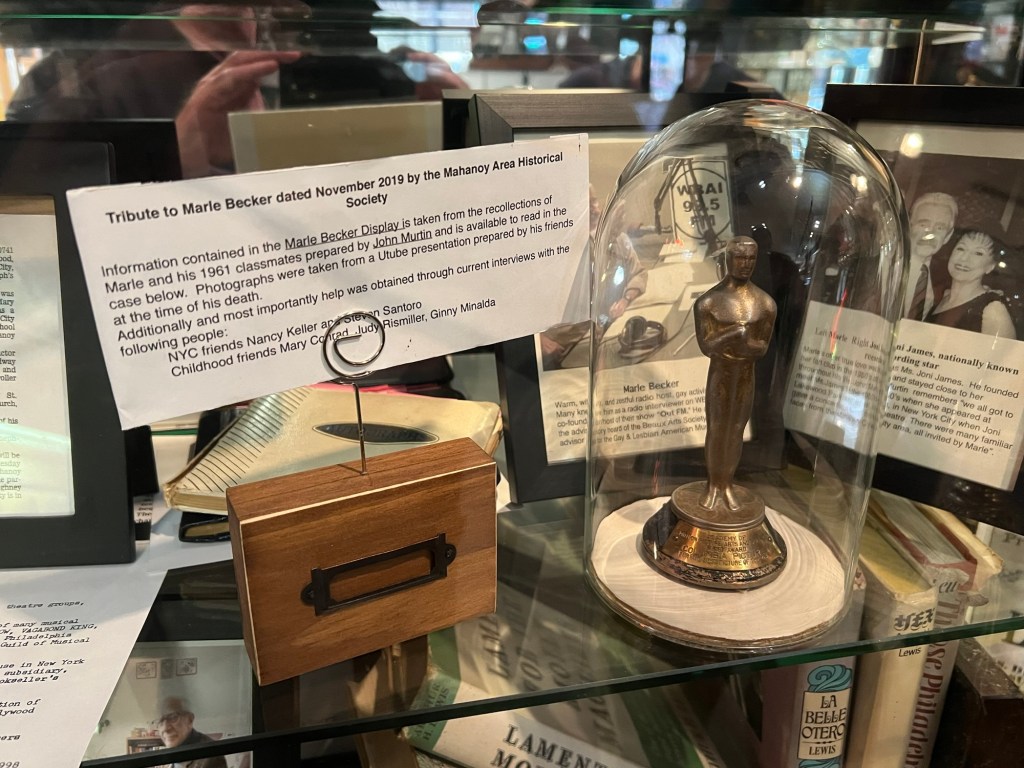
The other being Victor Schertzinger, who was a director and composer, who won the Academy Award for best original music for the film ‘One Night of Love’.
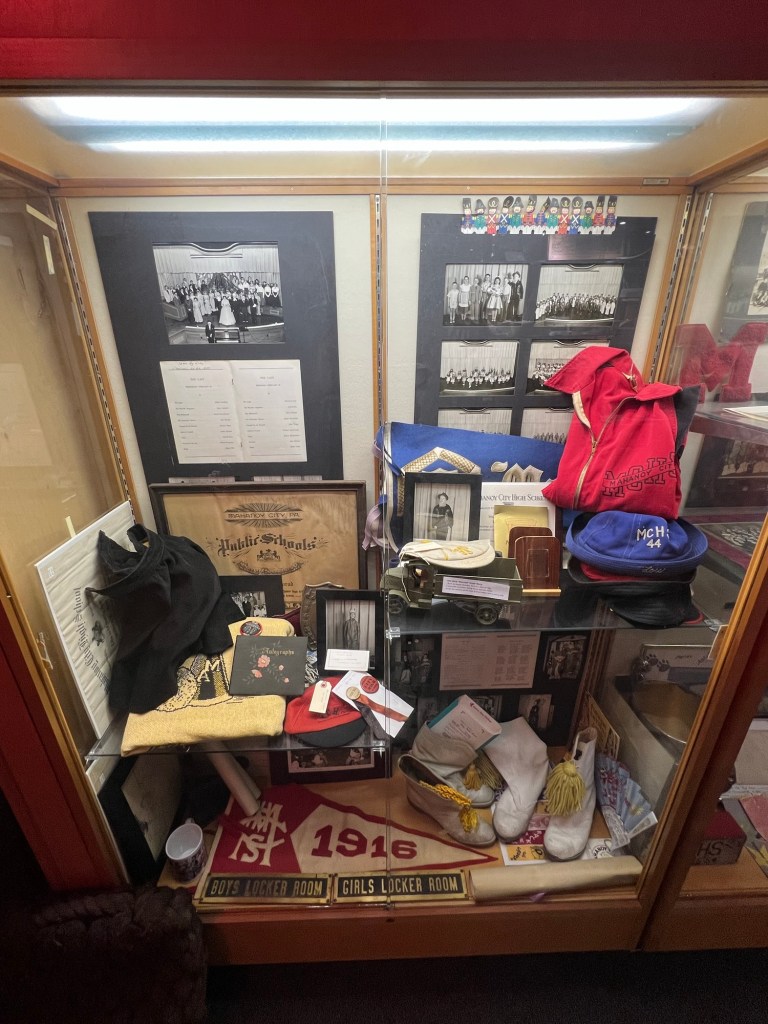
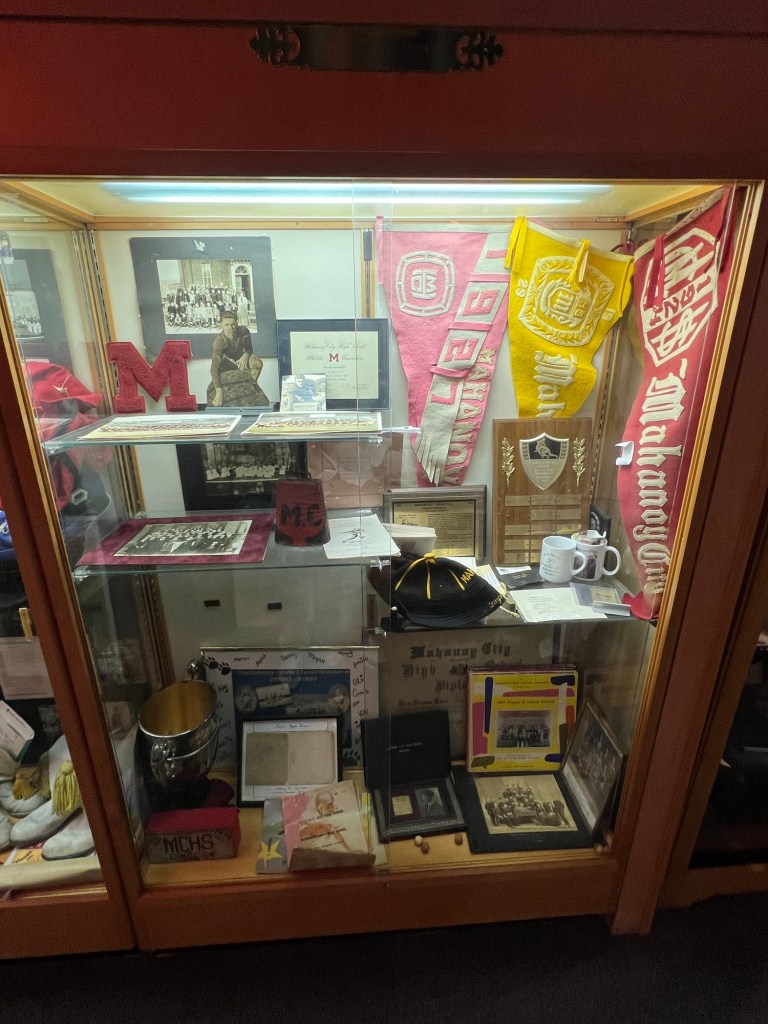
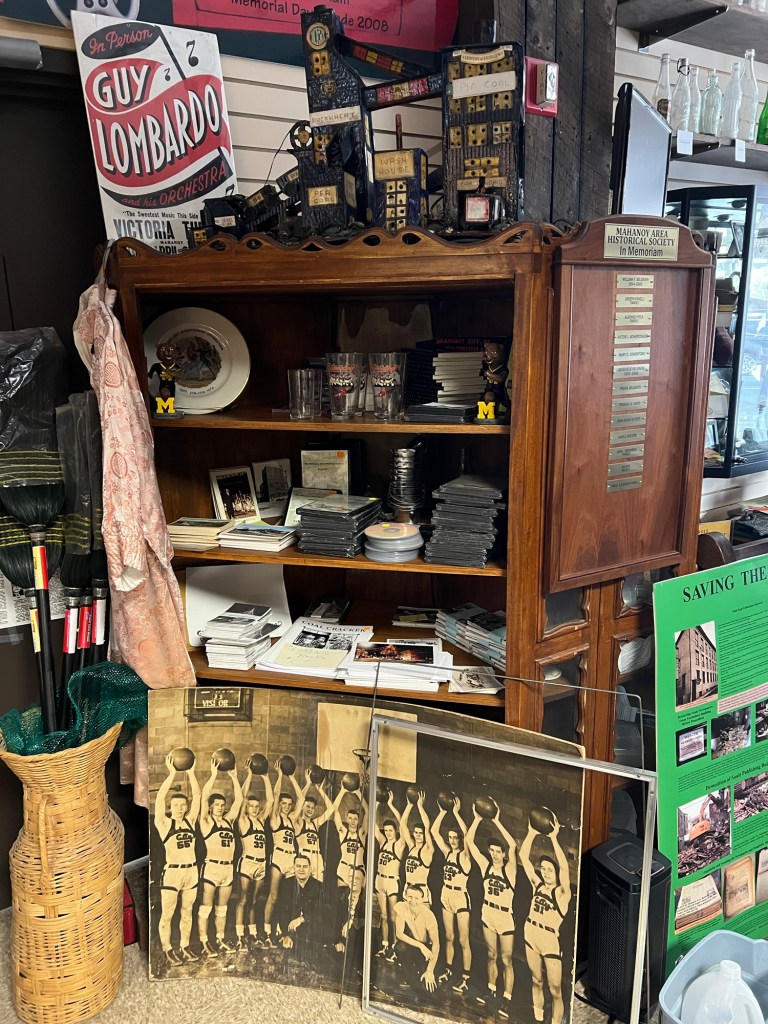
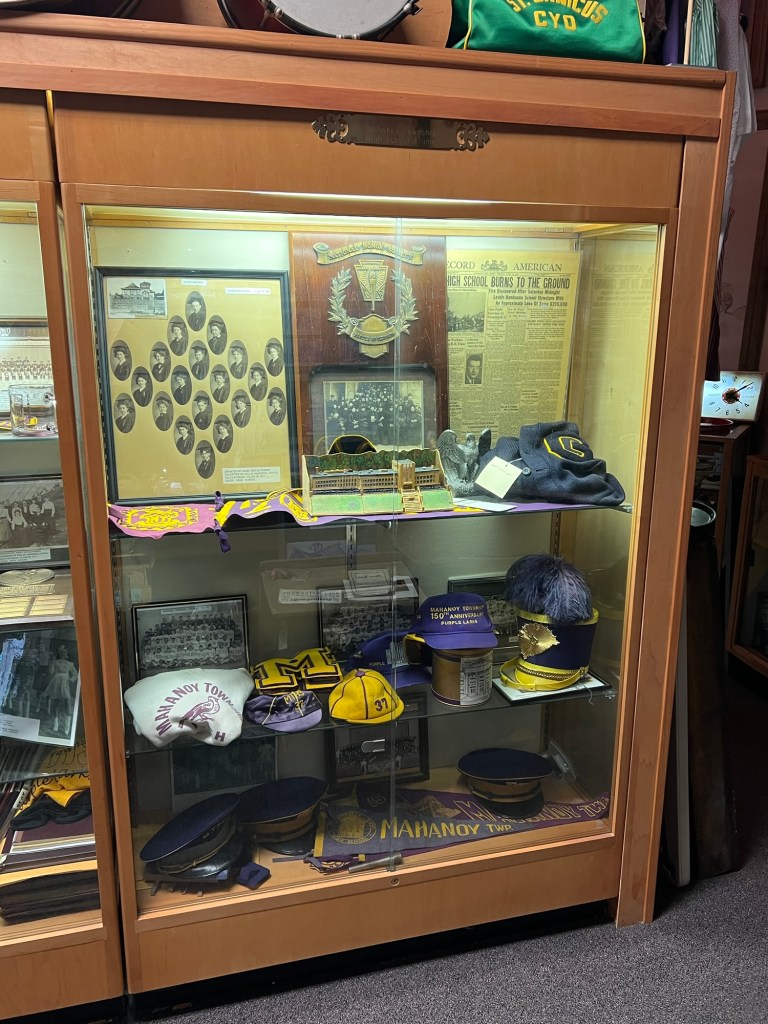
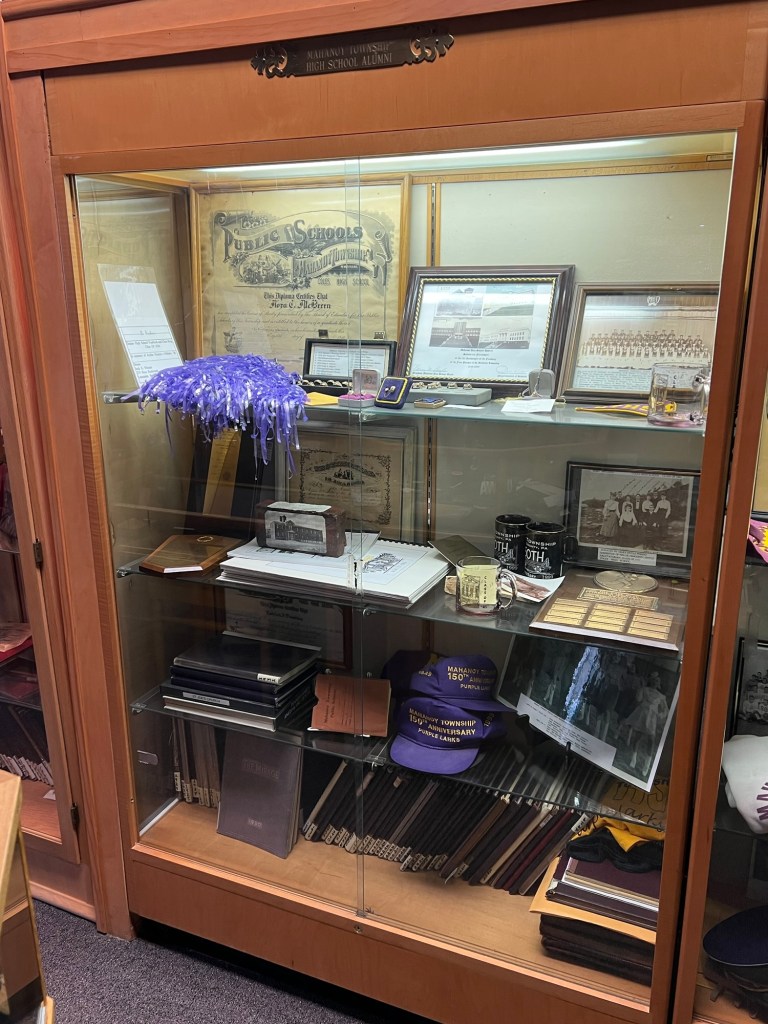
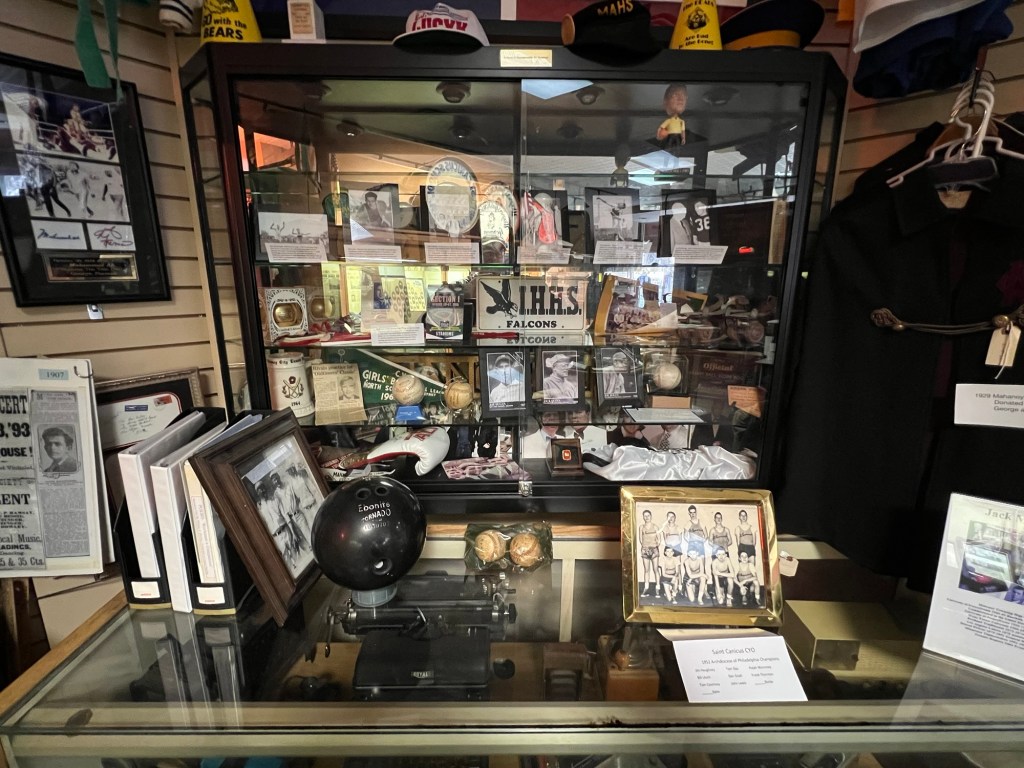
A big part of the museum is the collection from the Mahanoy City and the Mahanoy Township school systems. There is a big history of sports and with school pride in this area.
The display of school memorabilia at the museum
The high school memorabilia from Mahanoy City schools
High School memoribilia
High school pride
School uniforms and clothing
Awards, plaques and yearbooks
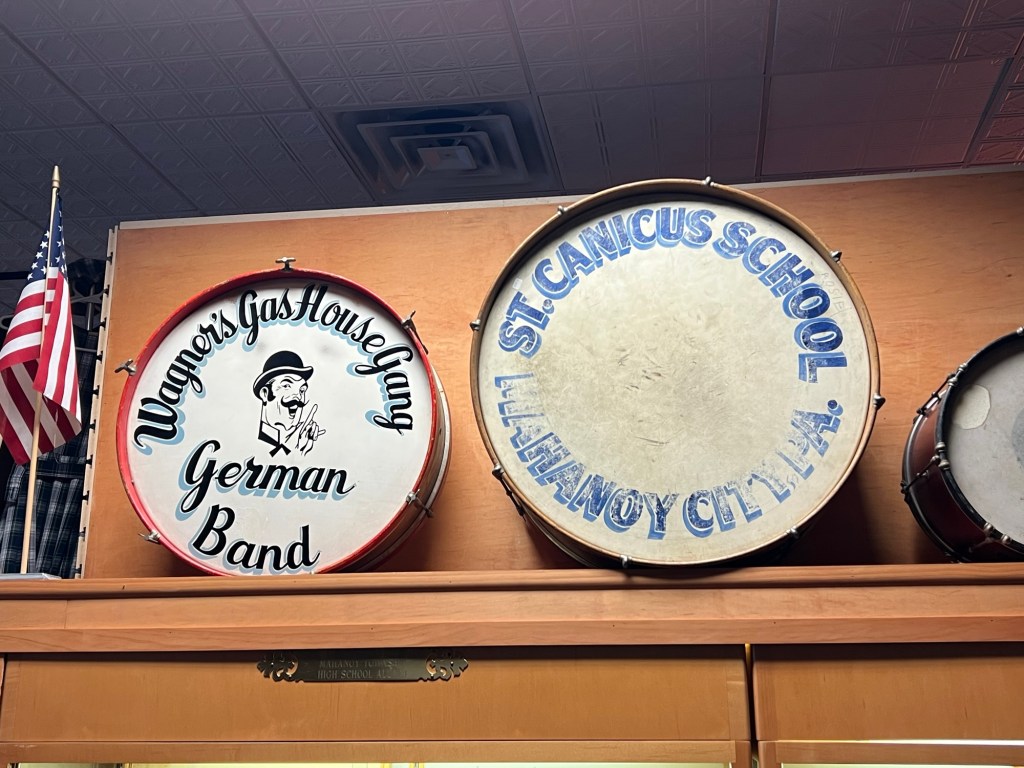
The school and local band equipment
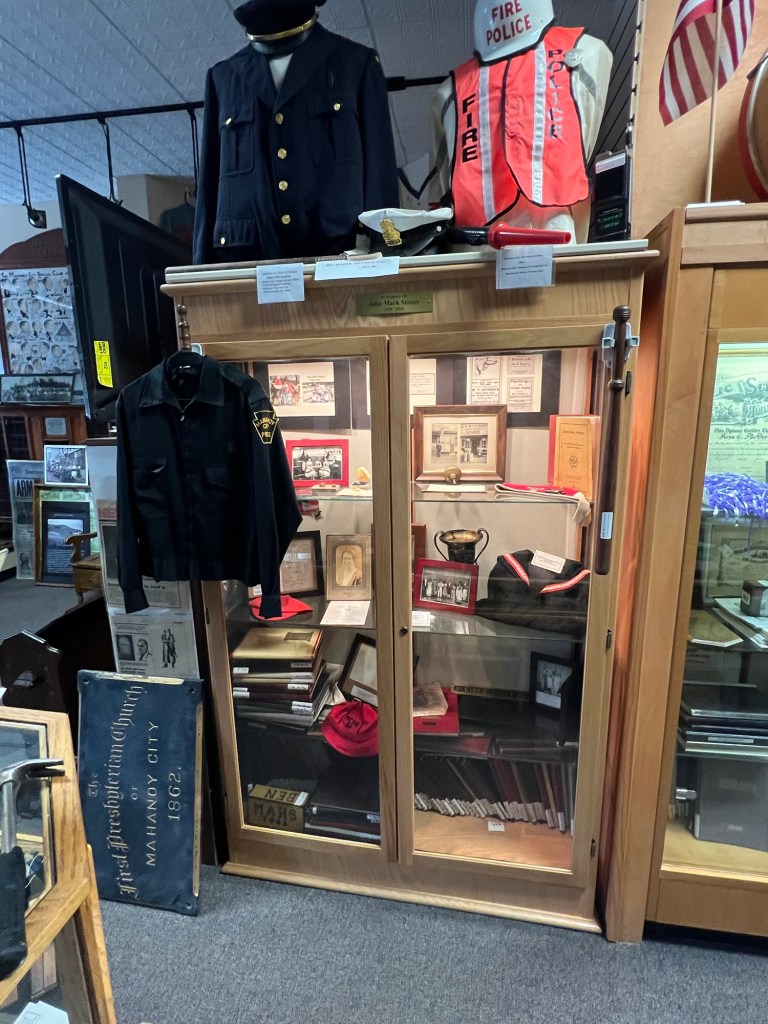
The para-Military is prominent in the collection with many families donating their family items. Items from the Police and Fire departments are prominently on display.
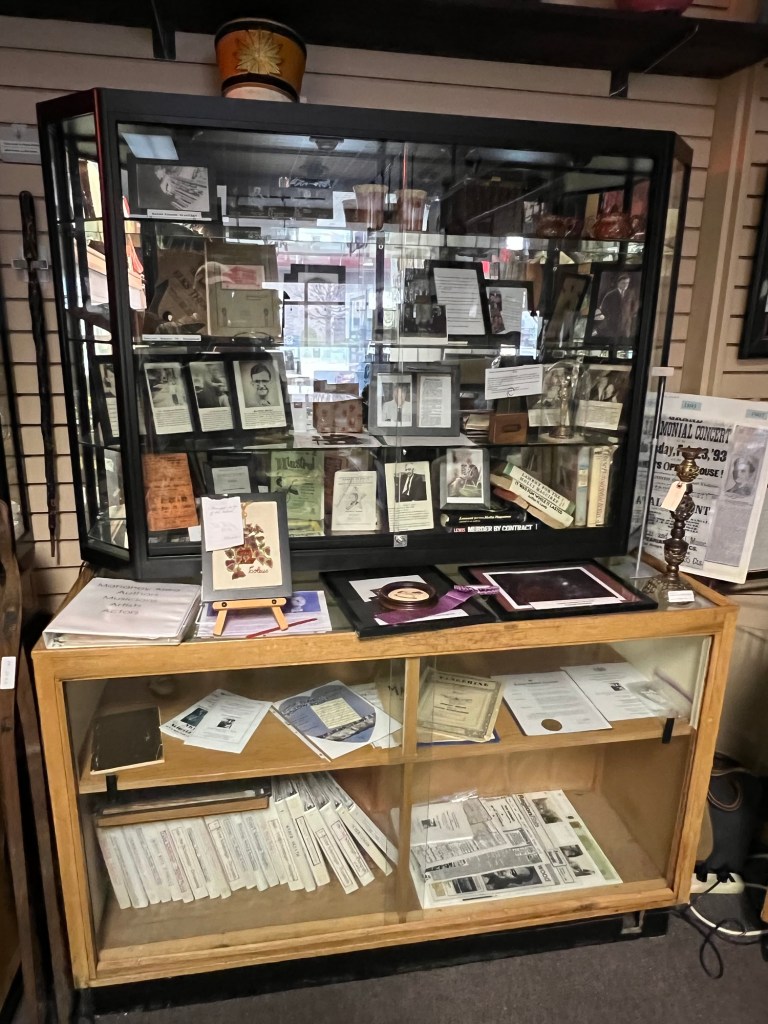
Display cases of local items
Civic items in the collection
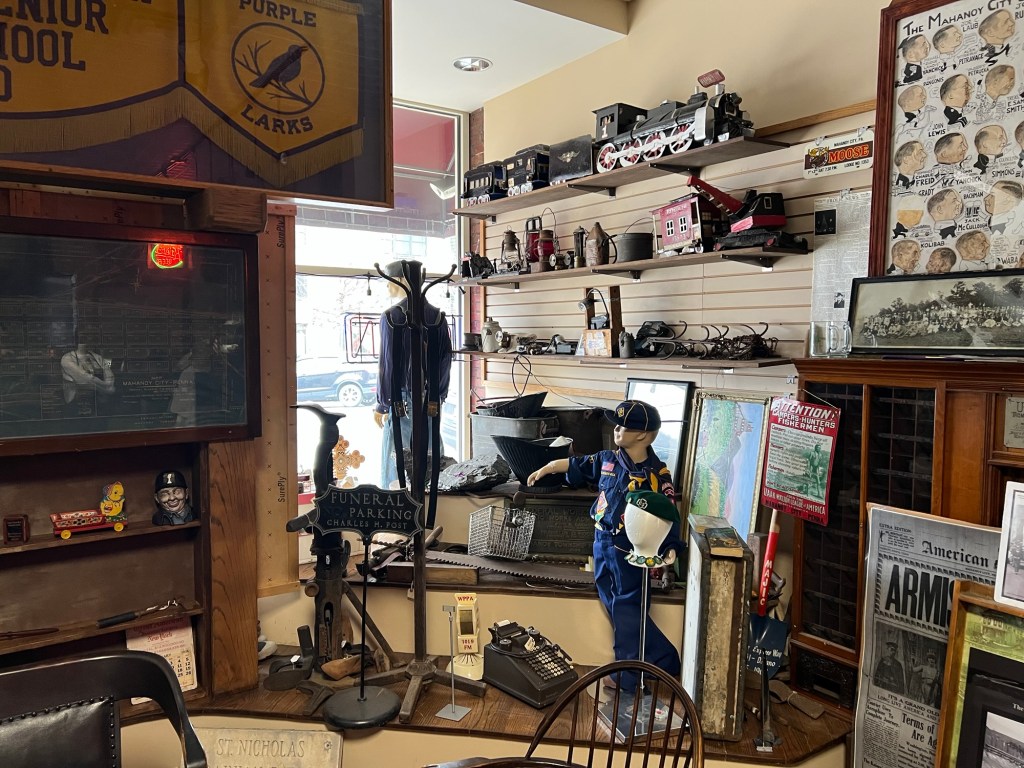
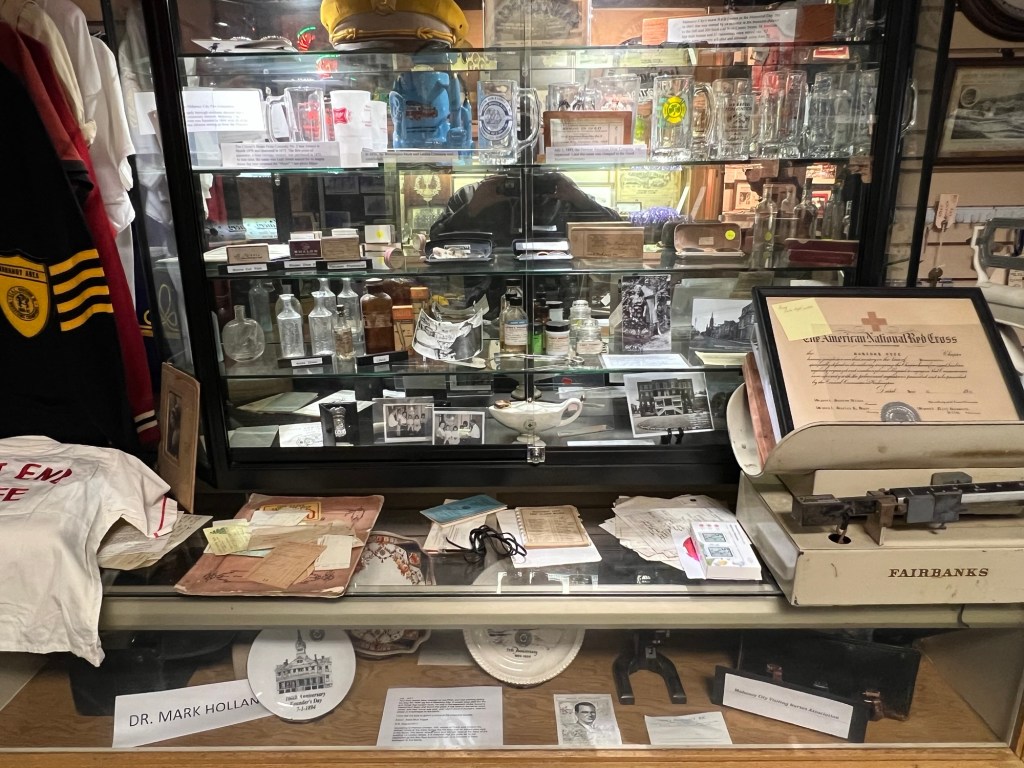
More historical items from around the community
Local artifacts from the community
There were many businesses that were created in the area when innovation and technology were changing between the wars.
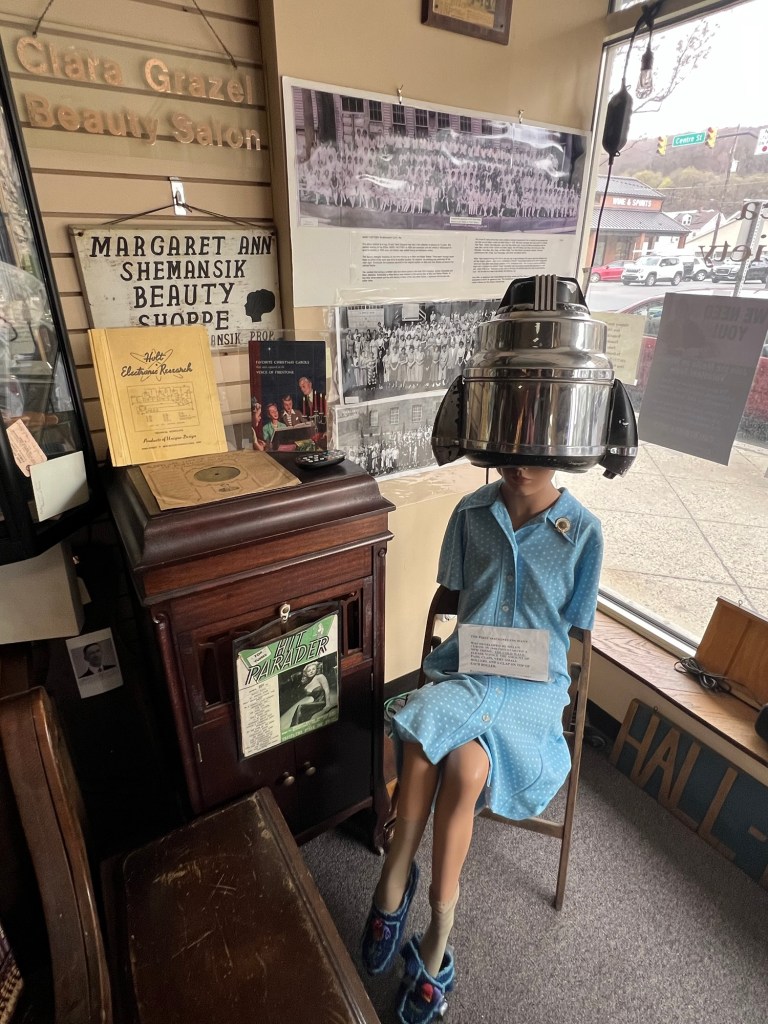
The clothing and beauty industries were founded and thriving businesses in the community.
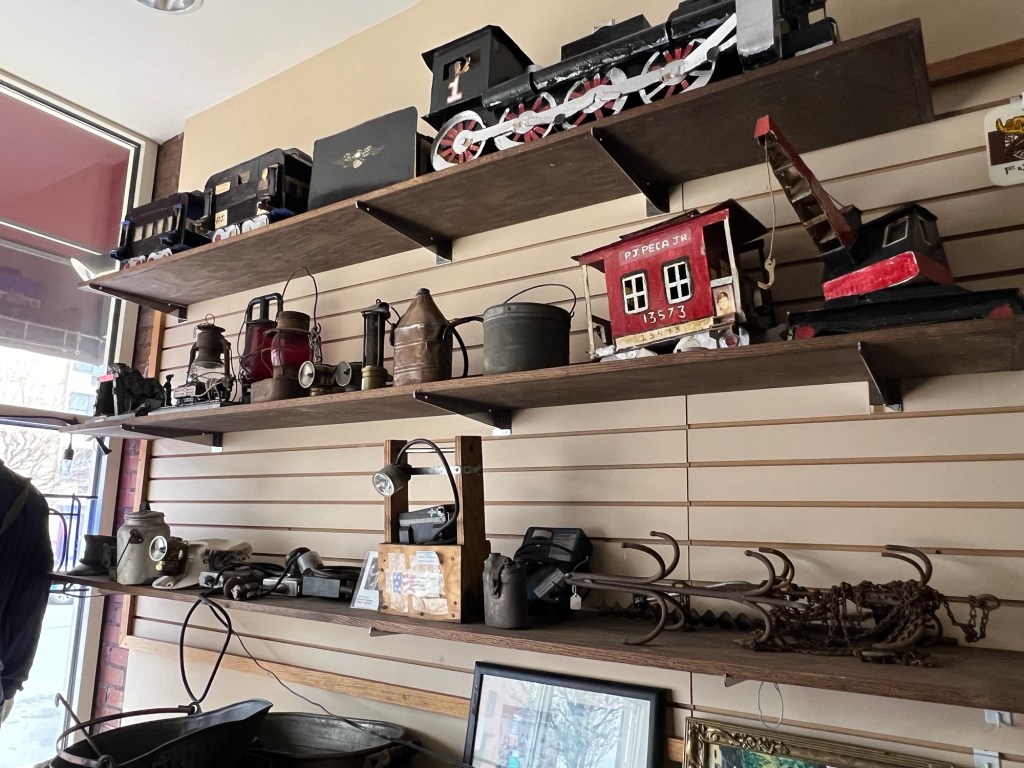
Items from the mining industry are prominently displayed in the front of the museum.
The front of the museum
The museum shows the creation, growth and pride in this and the surrounding communities. Innovation and creation were once prominent in Mahanoy City now waiting for another generation to discover it and keep this tradition alive.
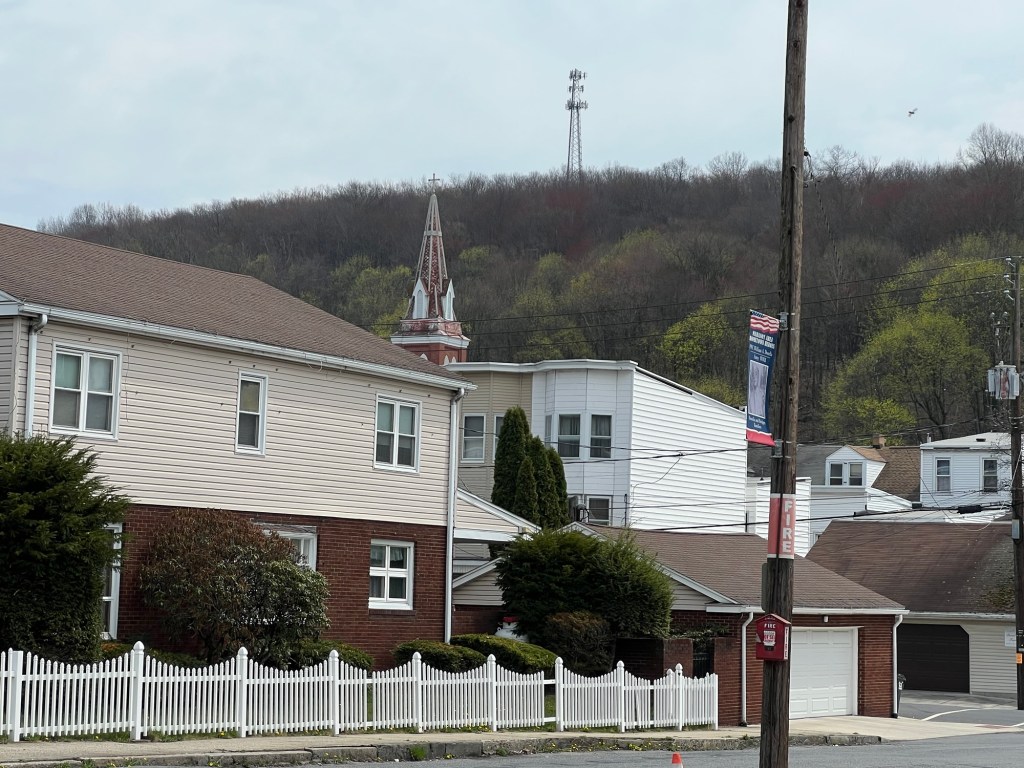
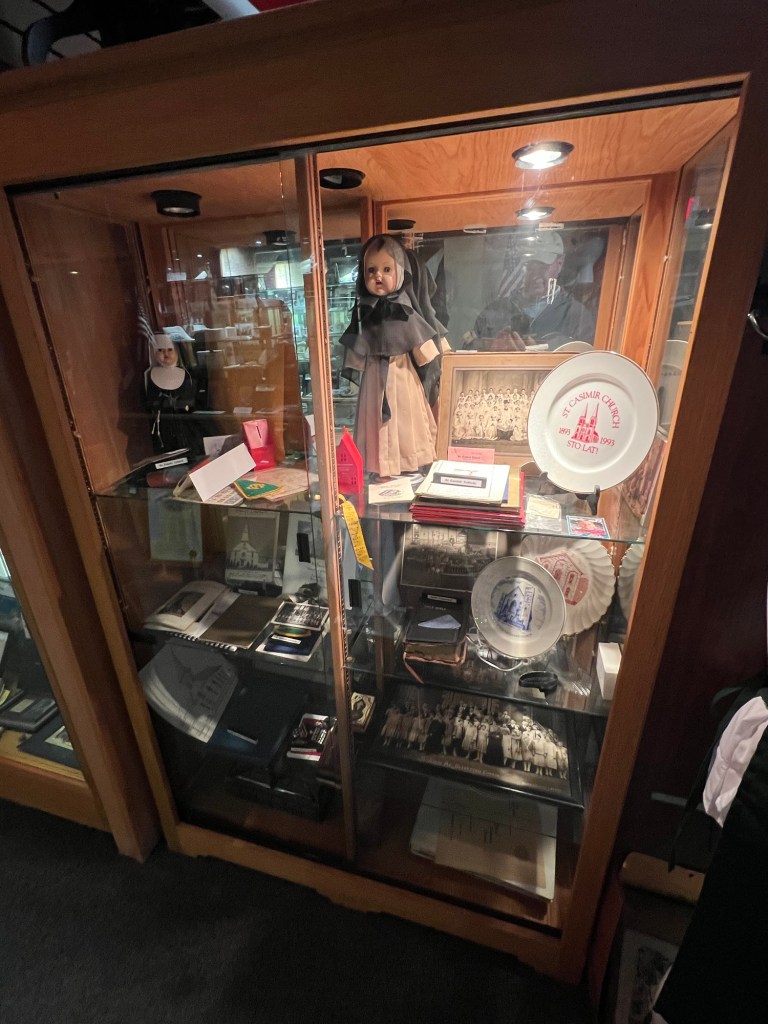
The Church community
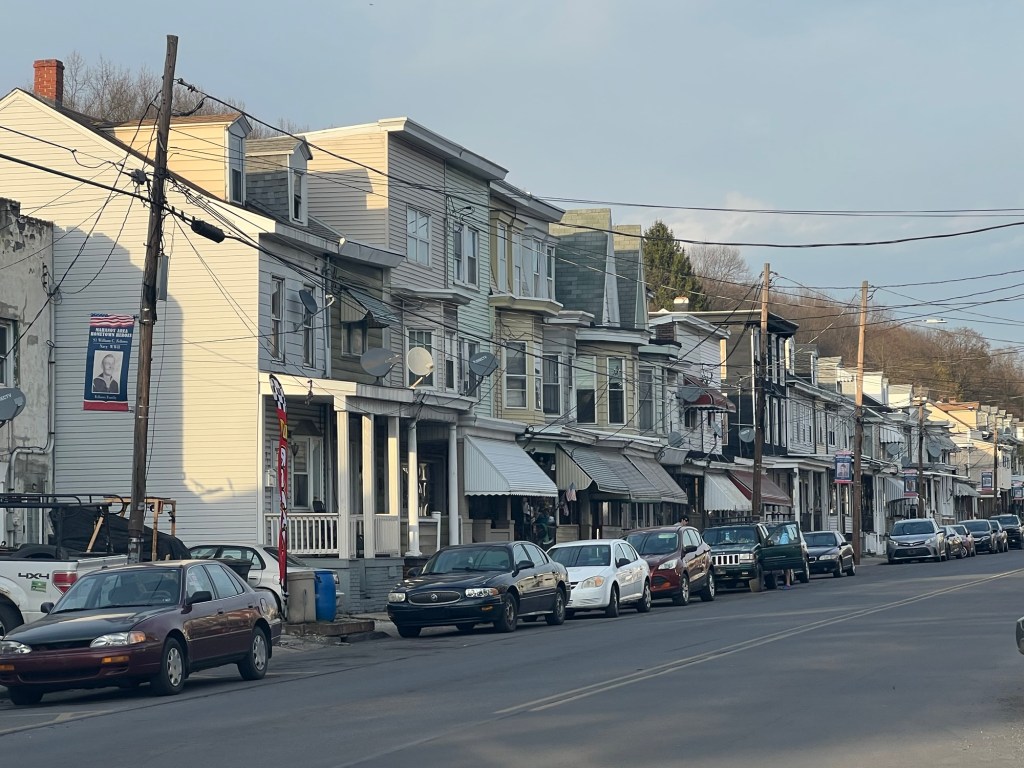
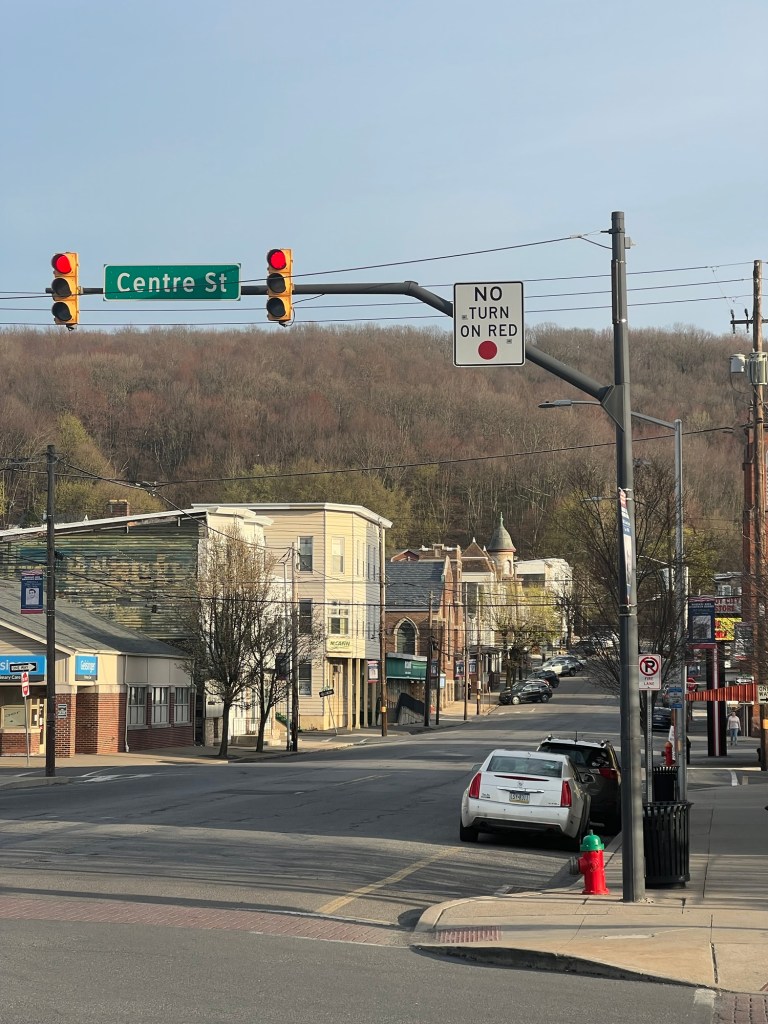
After the visit to the museum, I walked around the downtown to see the before and after effects of the mines and the industries that have closed down over the years.
While it does look depressed in some ways, you can still the spark of a community that needs to be discovered again. Somewhere buried in this community is the next new business or innovative idea that will once again showcase it again. There is a lot of pride still here and it shows in the history in this museum.











































 Visiting a Museum: The Unique, Unusual, Obscure and Historical