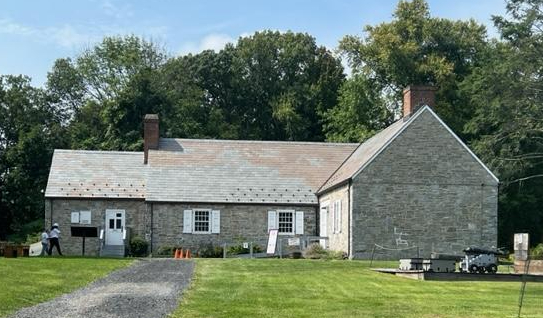
Category: Small Museums and Galleries in New York State

Stony Point Battlefield State Historic Park            44 Battlefield Road                                           Stony Point, NY 10980

Stony Point Battlefield State Historic Park 44 Battlefield Road Stony Point, NY 10980

Stony Point Battlefield State Historic Park

44 Battlefield Road

Stony Point, NY 10980

(845) 786-2521

https://parks.ny.gov/historic-sites/stonypointbattlefield/maps.aspx

https://en.wikipedia.org/wiki/Stony_Point_Battlefield

Open: Sunday (Grounds) 12:00pm-5:00pm (Museum) 12:00pm-4:30pm /Monday-Tuesday Closed/Wednesday-Saturday (Grounds) 9:00am-5:00pm/(Museum) 10:00am-4:30pm

Admission: Free but donations are accepted. Groups, Scouts and Organizations are $5.00 individuals per person and $7.00 for special events per person. Please call to make arrangements on this.

My review on TripAdvisor:

https://www.tripadvisor.com/Attraction_Review-g48694-d263715-Reviews-The_Stony_Point_Battlefield_Lighthouse-Stony_Point_New_York.html

The Stony Point Battlefield Museum

The General’s tent on the battlefield.

We visited the Stony Point Battlefield one afternoon and it is a very interesting and historical fort in the Hudson River Valley. We were able to tour the battle site and explore the grounds of this historical site. Then we toured the museum which gave us a view of the battle and what happened that night through a series of displays of the artifacts.

The Gallery

The Gallery

The gallery was filled with all sorts of weaponry and items needed by the troops for battle.

The battlefield site.

The museum has displays of the weapons used, the structure of the fort, utensils used the time that the troops were defending this area and what life was like on a day-to-day basis. The museum also offers a glimpse of artifacts of both the fort and of the battle with docents assisting you in telling the story of what happened at that time and after the battle and the war were over.

The Stoney Point Battlefield tent set up.

Outside the fort, there was a set-up of tents to show what the troops life was like in battle as well as General Wallace’s tent that he lived in and used during the battle. At the end of the day, the park does a demonstration of lighting the cannon that would have been used in battle. That was interesting. It was a lot more work than people think.

The cannon set up.

There is lot to do and see along the pathways of the fort and its grounds with amazing views of the Hudson River.

The story of the battle.

The History of the park and battlegrounds:

(from the NYS Parks Division website)

Visit the site of the Battle of Stony Point, one of the last Revolutionary War battles in the northeastern colonies. This is where Brigadier General Anthony Wayne led his corps of Continental Light Infantry in a daring midnight attack on the British, seizing the site’s fortifications and taking the soldiers and camp followers at the British garrison as prisoners on July 16, 1779.

The map of the fort at Stony Point, NY.

By May 1779 the war had been raging for four years and both sides were eager for a conclusion. Sir Henry Clinton, Commander-In-Chief of the British forces in America, attempted to coerce General George Washington into one decisive battle to control the Hudson River. As part of his strategy, Clinton fortified Stony Point. Washington devised a plan for Wayne to lead an attack on the garrison. Armed with bayonets only, the infantry captured the fort in short order, ending British control of the river.

The weapons of battle on display at the museum.

The Stony Point Lighthouse, built in 1826, is the oldest lighthouse on the Hudson River. De-commissioned in 1925, it now stands as a historical reminder of the importance of lighthouses to commerce on the Hudson River. The opening of the Erie Canal in 1825 unleashed a surge of commercial navigation along the Hudson River, by linking New York city to America’s heartland.

Within a year, the first of the Hudson’s fourteen lights shone at Stony Point and others soon followed, designed to safely guide maritime travel along the river. Many light keepers, including several remarkable women such as Nancy and Melinda Rose at Stony Point, made their homes in the lighthouse complexes, and ensured that these important navigational signals never failed to shine.
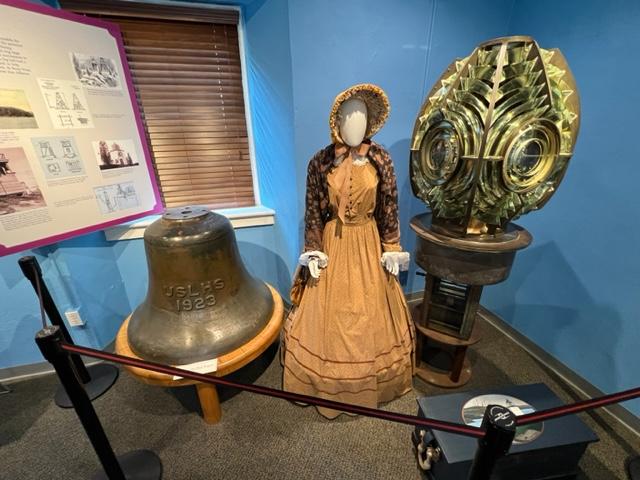
The lighthouse light on display at the museum.

The site features a museum, which offers exhibits on the battle and the Stony Point Lighthouse, as well as interpretive programs, such as reenactments highlighting 18th century military life, cannon and musket firings, cooking demonstrations, and children’s activities and blacksmith demonstrations.

The cannon demonstration that we saw at the end of our visit to the battlefields.

Wawarsing Historical Society and Knife Museum  3 Irish Cape Road                                      Napanoch, NY 12458

Wawarsing Historical Society and Knife Museum 3 Irish Cape Road Napanoch, NY 12458

Wawarsing Historical Society and Knife Museum

3 Irish Cape Road

Napanoch, NY 12458

(845) 626-5028

https://www.facebook.com/theknifemuseum/

Open: Sunday 12:00pm-4:00pm/Monday-Friday Closed/Saturday 10:00am-4:00pm (Seasonal)

Admission: Free but donations are accepted

My review on TripAdvisor

I visited the Wawarsing Historical Society and Knife Museum on a whim the other week when I was visiting museums in the region. What I found was a very interesting local museum dedicated to history and marketing of the former Knife industry of the region. I had never realized that this was the major industry of the region.

The Mission Statement of the Museum:

Our mission is to develop a museum to serve as both a repository of artifacts and informational conservatory as well as a place where memorabilia and examples may be accessed so that this rich heritage and a viable segment of American History will not be lost.

The front of the museum.

The History of the Museum

The Founder of the museum

The Borscht Belt Museum                                     90 Canal Street                                                 Ellenville, NY 12428

The Borscht Belt Museum 90 Canal Street Ellenville, NY 12428

The Borscht Belt Museum

90 Canal Street

Ellenville, NY 12428

https://www.borschtbeltmuseum.org/history

https://www.facebook.com/borschtbeltmuseum/

Open: Sunday 12:00pm-5:00pm/Monday-Wednesday Closed/Thursday-Saturday 12:00pm-5:00pm

Admission: Free but donations are being accepted

My review on TripAdvisor:

https://www.tripadvisor.com/ShowUserReviews-g47676-d26587886-r914784651-Catskills_Borscht_Belt_Museum-Ellenville_Catskill_Region_New_York.html?m=19905

The Catskill Borscht Belt Museum at 90 Canal Street.

The museum sign

This museum will be the talk of the Hospitality Industry. The Catskill Borscht Belt Museum is in its beginning stages with the building bought and the renovations going on. The museum has not opened fully to the public yet as it is still in development and will not open until 2025.

The temporary main gallery

The museum is opened now with a pop-up exhibition on the resorts of the Catskill region “Vacationland: Catskill Resort Culture 1900-1980” with the rise of these resorts that catered to the thriving Jewish, Italian, Irish and Black middle classes who were barred from the resorts of the WASP elite. These were all inclusive hotels that catered to families who would spend summers together until a new generation of travelers developed with air travel, air conditioning developed and assimilation of the population by the 1980’s.

The main gallery of the pop up exhibition.

The exhibition shows how the Depression era generation spent their hard earned dollars and created an enclave where they thrived and enjoyed themselves. It was the type of vacation that we only see today at all inclusive resorts like Sandals and Club Med and on cruise ships.

The Main Gallery pop up exhibition “Vacationland”

The era of travel with the family ended in the 1980’s with women going to work, different educational standards and more people going to college and the change in the work schedule. This on top of the blatant discrimination of that era being ‘smoothed over’ time. People had more options and it was obvious from the timeline that the younger generation wanted different vacations from their parents.

The food service at the hotels

This will be a very interesting museum when it is completed and opened. For now, we get a teaser of what is to come. I am looking forward to it.

History of the Borscht Belt and of the Museum:

(from the museum website)

Curatorial Mission

The Borscht Belt Museum will not solely focus on entertainment, glamour and design. Its curatorial mission will include weightier themes and narratives embodied by the era; the antisemitism that spurred the creation of a Jewish vacationland, the refuge the Catskills provided to African-Americans, Irish-Americans, L.G.B.T.Q. and other communities, and the forces of assimilation and tolerance that eventually helped fuel the grand resort era’s decline.

The Hotel Exhibit on the places of that era.

In addition to its permanent core exhibition, the museum will have space for temporary and visiting shows, ensuring the institution delivers fresh interest to audiences and remains culturally relevant over time. The Catskills continues to serve as a refuge for all  – an ethos that will find voice in the museum’s curatorial mission.

A Home with History

Beginning with a pop-up exhibit in July 2023, the Borscht Belt Museum will make its home at 90 Canal Street, in Ellenville, N.Y. The museum building is a glorious Neo-Georgian gem built in 1928 for the Home National Bank. For more than a half century the bank helped nurture hundreds of local hoteliers and bungalow colony owners whose ambitions, grit and self-sacrifice defined the resort era.

The Borscht Belt Museum will illuminate and celebrate the golden age of the Catskills resort era, when millions of urban dwellers sought refuge in the mountains of upstate New York, leaving deep imprints on mainstream American culture, from stand-up comedy and comfort food to mid-century modern design and popular concepts of leisure. 

The permanent museum will open in 2025. A pop-up exhibit, Vacationland! Catskills Resort Culture 1900-1980, will welcome visitors beginning in early July 2023 through the end of the summer.

The hotels of the “Vacationland” exhibition.

History of the Borscht Belt:

(from the museum website)

No Hebrews Entertained”

The Borscht Belt was born out of bigotry. At the turn of the 20th century, hotel advertisements in the region often used phrases like “No Hebrews Allowed” and “Gentiles Only” to keep out Jewish patrons. This 1902 advertisement from the Brooklyn Daily Eagle features The Nichols in Liberty, N.Y.

In a delicious twist of history, a Jewish family by the name of Grossinger would later purchase the hotel and absorb it into the sprawling and iconic resort complex that bore their name.

The Borscht Belt

The region came to be called the Jewish Alps, Solomon County or more often, simply The Mountains. But another expression, the Borscht Belt, so-named for the hearty beet soup born in Eastern Europe, has had more staying power. What began as a patchwork of Jewish-owned farms whose proprietors took in summertime boarders to make ends meet grew into a sprawling constellation of all-inclusive resorts, hotels and more modest bungalow colonies and kuchalayns – establishments with shared kitchens.

The larger, more successful establishments like Kutsher’s, The Concord and The Nevele had thousands of rooms, nightclubs, indoor pools and ski slopes – and in the case of Grossinger’s, its own airstrip and post office.

The Dress Code and pool standards of the era at the hotels.

End of the Resort Era

Then, seemingly out of nowhere, many of the hotels began to falter, and by the 1980s, all but a handful were gone. It’s hard to pinpoint a single factor in the resort era’s demise, but cheap airfares, air conditioning and an easing of the antisemitism that spurred the Borscht Belt’s creation all conspired against establishments that were barely profitable in the best of times. Assimilation also played a role. Younger Jews simply craved more “modern” forms of leisure that did not remind them of their immigrant parents and grandparents. As the flow of guests began to ebb, the cost of drawing top-notch entertainment, keeping lobbies up to date and guest rooms looking fresh became prohibitive.  

Changing tastes

Today, most of the big hotels have been demolished or swallowed by nature. A few have found new life among the expanding communities of Hasidic Jews. But the legacy of the Borscht Belt era lives on in the all-you-can eat buffet of a Carnival Cruise, the barbed quip of a stand-up comic and the very notion of the American vacation. 

The Catskills Borscht Belt Museum will preserve and honor that legacy so sit back, savor that plate of chopped liver and stay tuned for more about this quintessential American story.

The final scene from the movie “Dirty Dancing” based on that era.

Ulster County Historical Society                        2682 Route 209                                           Kingston, NY 12401

Ulster County Historical Society 2682 Route 209 Kingston, NY 12401

Ulster County Historical Society

2682 Route 209

Kingston, NY 12401

(845) 377-1040

Open: Sunday 10:00am-4:00pm/Monday-Thursday Closed/Friday-Saturday 10:00am-4:00pm

Admission: Adults $15.00/Seniors and Students $10.00/Members Free

My review on TripAdvisor:

https://www.tripadvisor.com/ShowUserReviews-g48003-d26612748-r915068372-Ulster_County_Historical_Society-Kingston_Catskill_Region_New_York.html?m=19905

The Ulster County Historical Society at 2683 Route 209

I visited the Ulster County Historical Society in Kingston, New York recently and found it to be a very interesting packed with information on both county and New York State history. The historical Bevier House was set up into different galleries.

In the main gallery which must have served as the family’s living room and parlor room was the “Leaving Bishop Falls” exhibit by artist Kate McGloughlin, who shared the story of how her family either sold out or were forced off their land when New York State used the area as a reservoir for drinking water for New York City. Her art told the story of her family’s love/hate relationship with the situation and how some of the family still deal with the incident. I thought it was interesting that she was a 12th Generation New Yorker.

The Main Gallery

What was once the Dining Room is now the Portrait Room, with many family portraits and of local citizens from the Museum’s collection. This room is also used for lectures.

The Portrait Gallery and lecture space

The Portrait Gallery

The Portrait Gallery has period pieces to them with various tables, armours and pottery and china pieces of the time period. The portraits reflect that time period as well.

The back part of the house is the period Dutch Kitchen which was remodeled from the more modern kitchen it had become over time as the family moved into modern times back to the original kitchen. The fireplace is filled with tea kettles, pots and pans that would have been used for cooking, a bedwarmer and various items that cooks and housewives would have used to make the family meals. There is even a bed in the kitchen which I took as something that was needed in the colder months.

The Dutch Kitchen

The pewter and pottery in the Dutch Kitchen.

A folding bed in the kitchen.

The room to the back displayed farm equipment and materials needed in the Blacksmithing and Blue Stoning industries that were once part of Ulster County. The farm equipment reflects the rural past of the farm land that used to surround the house. This is where the family made their money.

The farm tools display

The Farm tool display

The Blacksmithing Display

The Blue Stoning tools for mine blue stone for homes.

Then to the back of the house are the stone gardens loaded with all sorts of wild flowers and colorful flowering plants. This path leads to the old family barn that is now on private property. The gardens are a nice place to relax and unwind on a sunny afternoon.

The Stone Gardens in the summer months.

The side of the house with the stone gardens.

The gardens on the side of the house.

The home is an example of life on a farm at that time period and the family who put a lot of care in their home for generations. The care that the historical society has brought to this house is reflected in the displays and exhibits. The volunteers do a good job telling this story.

The Special Exhibition at the museum:

LEAVING BISHOP FALLS — AN ASHOKAN STORY
MAY 13 – OCT 29, 2023

The entrance of the exhibition “Leaving Bishop Falls”

Construction of the Ashokan Reservoir, part of New York City’s water system, flooded communities long established in the Esopus Valley. That action reverberates in our community today. 

Artist Kate McGloughlin shares her family’s history in the area.

https://www.katemcgloughlin.com/

The newspaper coverage of the event.

The work of artist Kate McGloughlin, a 12th– generation county resident, captures the sense
of loss her family still carries from the seizure of Bishop Falls. Her kin, and many like them, were forcibly removed from their land at Bishop Falls.

The artist’s descendants

Kate’s painting and printmaking tell the story of her people, acknowledging their loss and finding solace in the beauty of the Ashokan landscape.

The main gallery with her works.

The exhibition asks us to reflect on our own family stories and how they resonate in our lives today.

The works of Kate McGloughlin

Map of the location of the family land and community lands taken away.

The History of the Ulster County Historical Society:

(from the museum’s website)

The Ulster County Historical Society is the oldest historical society in New York State. It was established in 1859, largely through the efforts of State Senator George C. Pratt, Commanding Colonel of the 20th Regiment, New York State Militia (80th NYSV). Col. Pratt was mortally wounded 1862 at the Second Battle of Bull Run. With his death, the Society became dormant until 1898, when an enthusiastic group led by Judge G.V.D. Hasbrouck revived it.

The Bevier House plaque

Throughout the history of the UCHS, the mission has been twofold. The society’s primary responsibility has been to act as curator and collector of significant Hudson Valley artifacts, documents, and cultural items. The donation of the Bevier House as museum space helped the UCHS to achieve this goal, and we currently house several fine collections of artwork, furniture, and culturally significant documents. Additionally, our library within the museum allows for researchers to access documents, land records, maps, town histories, letters, and diaries of interest to this area of the Hudson Valley. Please contact info@ulstercountyhs.org with any research queries.

The Bevier Family tree and patent

The second goal of the UCHS is to educate our community and the public on the very important role that the Hudson Valley, and particularly Ulster County, has played in the formation of our great nation. Through a variety of programs centered around our current exhibits, we encourage participants to engage with and explore their local and personal histories.

A copy of the permit to maintain and run the local highway.

The rate of the tolls on the road that the family collected.

The History of the Van Leuven/Bevier Homestead:

(from the museum website)

The sign that welcomes you.

The Ulster County Historical Society is proud to have the Bevier House as its headquarters. The Bevier Family donated the building in 1935 to serve as a meeting space and to house the collections of local historical artifacts stewarded by the UCHS.

The Bevier House in the summer of 2023.

The home site was first settled in the 1680s and began as a one room structure, constructed by Andries Van Leuven. It may have reflected the Dutch tradition of positioning the gable end toward the street. In 1715, Louis Bevier of the New Paltz Patent purchased the property for his third son Louis and wife Maria Hasbrouck.

The family barn (which is not part of the Historical Society property)

The site remained in the Bevier Family for the next 223 years and provided a successful income from farming. The home grew and was improved with most changes occurring between 1840 and 1890, when much of the U.S. was experiencing rebuilding and reconstruction after many years of turmoil.

The stone garden on the side of the house.

The house gardens and well in the summer of 2023.

The final major change that occurred in the house was the Dutch kitchen remodel in the 1970s, in conjunction with the Bicentennial.

The Dutch kitchen brought back to its original form.

The Ulster County Historical Society is a perfect way to understanding Dutch farming life at that time period in Ulster County, NY.