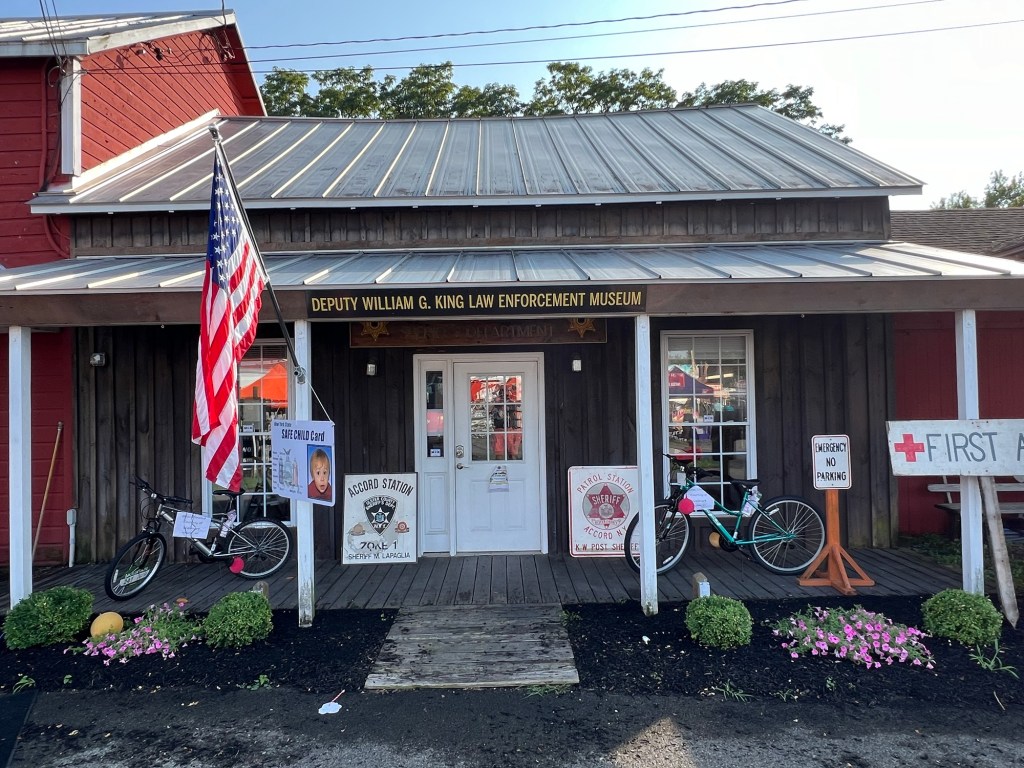
The Deputy William G. King Law Enforcement Museum is a small museum on the fairgrounds of Ulster County and is only open when the fairgrounds are open. The museum is manned by officers of the Sheriff’s Department. The museum houses the collection of retired Deputy William G. King law enforcement memorabilia.
The entrance to the museum
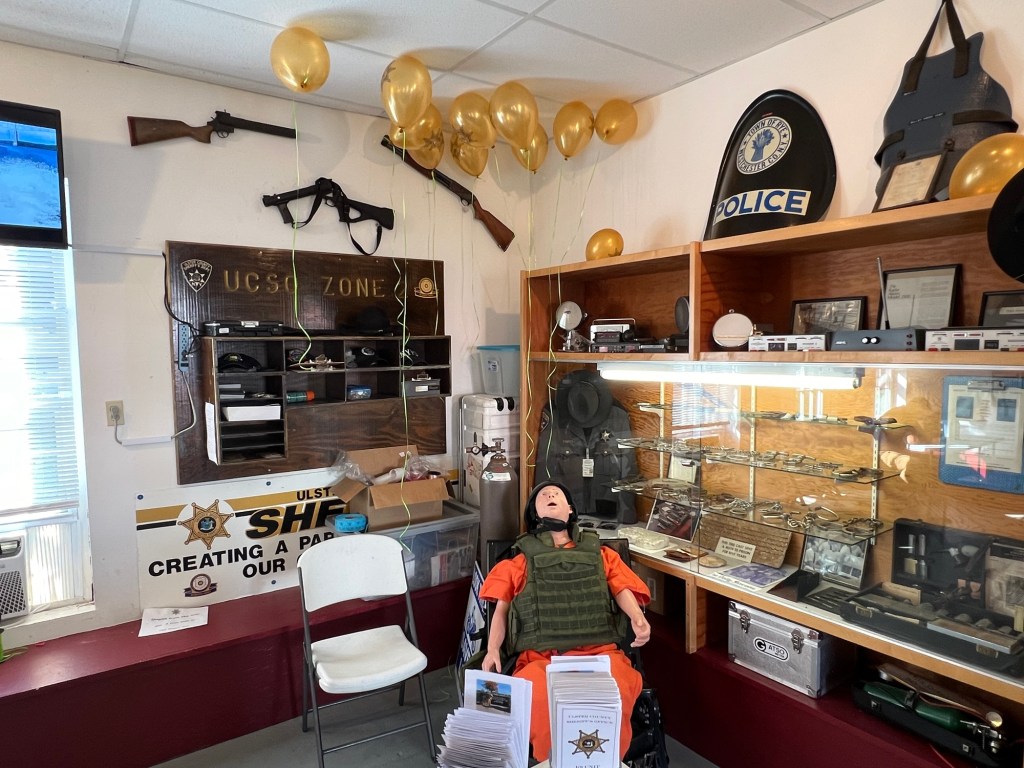
The collection includes a wide variety of guns, ammunition, equipment used on the job and riot gear.
The main gallery of the one room museum
The display cases house police department patches, pins for uniform, pictures of policemen and incidents. There is a collection of badges from various departments around the country.
A collection of awards and night sticks
What I found impressive was the collection of riot gear and equipment used on emergency calls. People do not understand the life of a police officer when duty calls and their perspective might be during a riot to protect people.
Riot gear, the gun collection and police equipment collections
The officer who manned the museum from the sheriff’s office was explaining how the equipment was used and how it has progressed in time.
Items from the Ulster County Sheriff’s Department
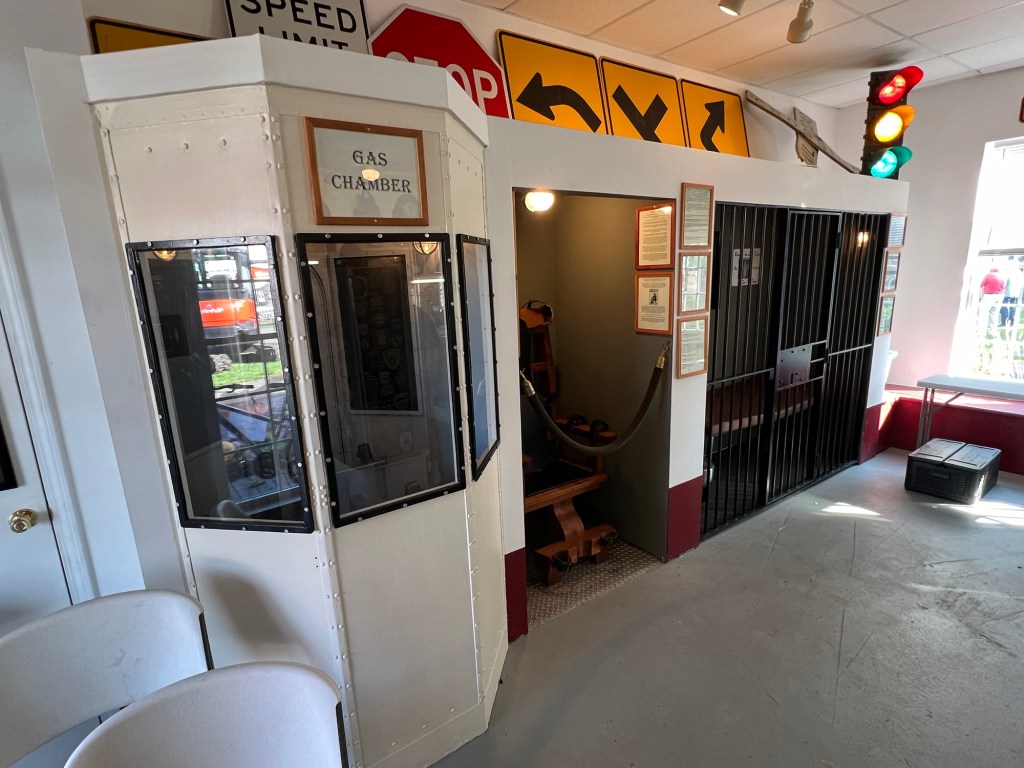
The museum also has a simulation of the New York State Gas Chamber, Electric Chair and the jails. I thought this was pretty interesting in that Capital punishment is still legal in New York State.
The display on Capital Punishment in New York State
A better view of the display
The Sheriff’s Department of Ulster County does a nice job maintaining and explaining all the items in the museum. They also make it less intimidating for children to approach a police officer when they need help. The museum is packed with information and the officers manning it could not have been nicer. Its just too bad that it is only open during the times the fairgrounds are open.
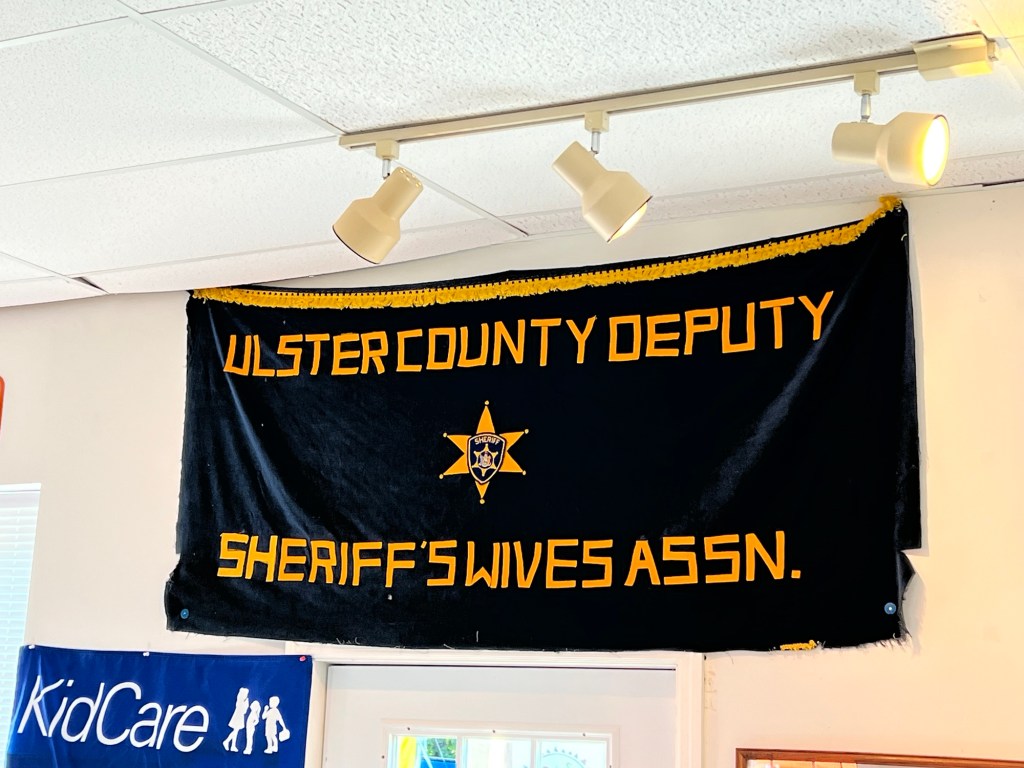
The banner from the Ulster County Deputy Sheriff’s Wives Association
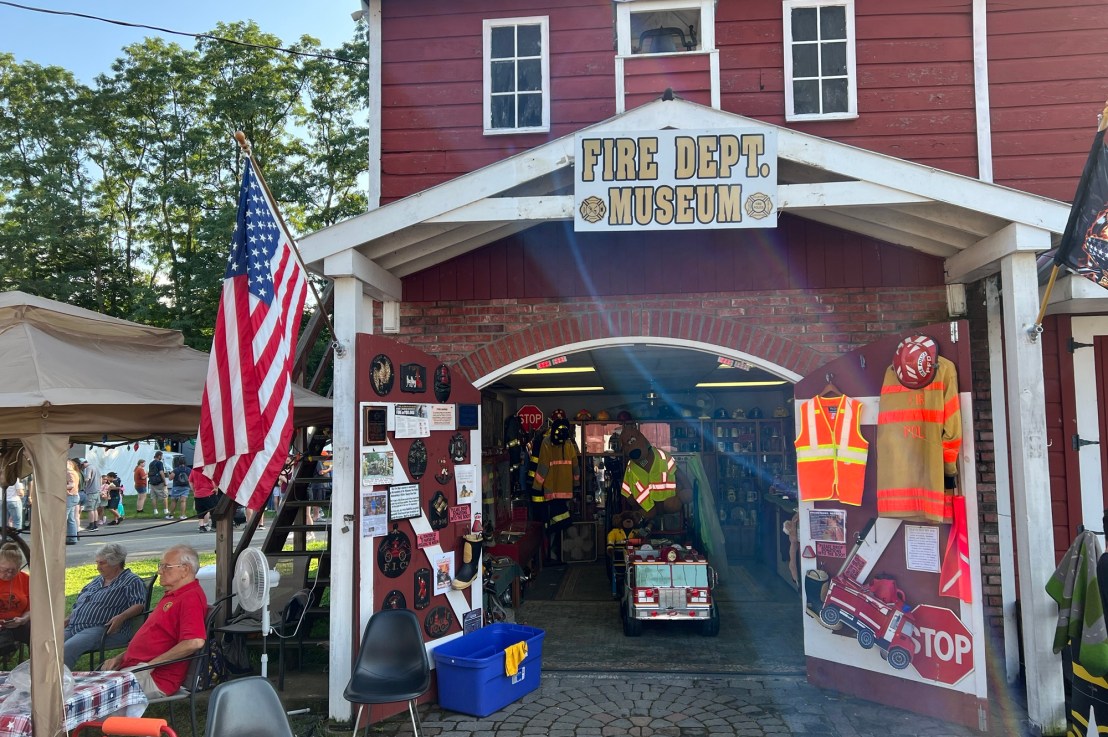
The Ulster County Fire Department Museum at the Ulster County Fairgrounds
The Ulster County Fire Department Museum is a unique little museum in that it is only open when the fairgrounds are open. It staffed by volunteers from Ulster County’s Volunteer Fire Departments. From the age of most of the volunteers, I could tell as a retired fireman, were all the guys whose firemen days at behind them. Still they are committed firefighters and have some good stories to tell.
The inside of the museum
The museum is more of an exhibition than a museum but for a small museum it packed with all sorts of artifacts, fire fighting equipment and memorabilia on the early days of fire fighting.
The old fire department medallions that showed what fire department would come to your home because of the company fire insurance you paid to them.
Some of the older artifacts they had were these fire department medallions from the various fire companies that existed that people paid into to protect their homes. Those were the days when the companies used to compete to be the best.
The collection of patches and awards
The museum contained a large collection of awards, ribbons and patches from fire departments from all over the local area and beyond. The collection included ribbons from various competitions and conventions, company emblems and events over the years.
Fire fighter mugs from various departments and events
The museum has an extensive collection of commemorative mugs. These are sold or given by fire department and companies to mark anniversaries and special events. These mugs mark the special occasions in a fire fighters career. As a fireman I have also found that these pile up quickly in your cupboards.
Department mugs from various department events and from companies
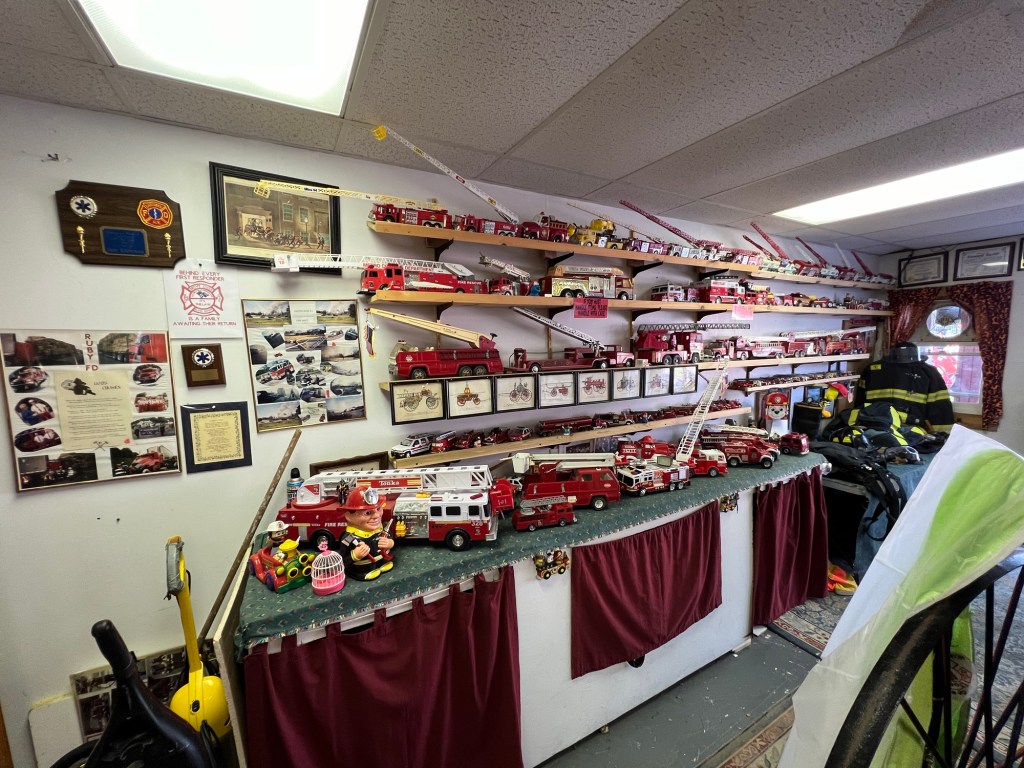
The museum had an extensive collection of toy fire trucks and games on display. There were samples of these out in front of the museum for the kids to play with that day.
The collection of fire trucks on display
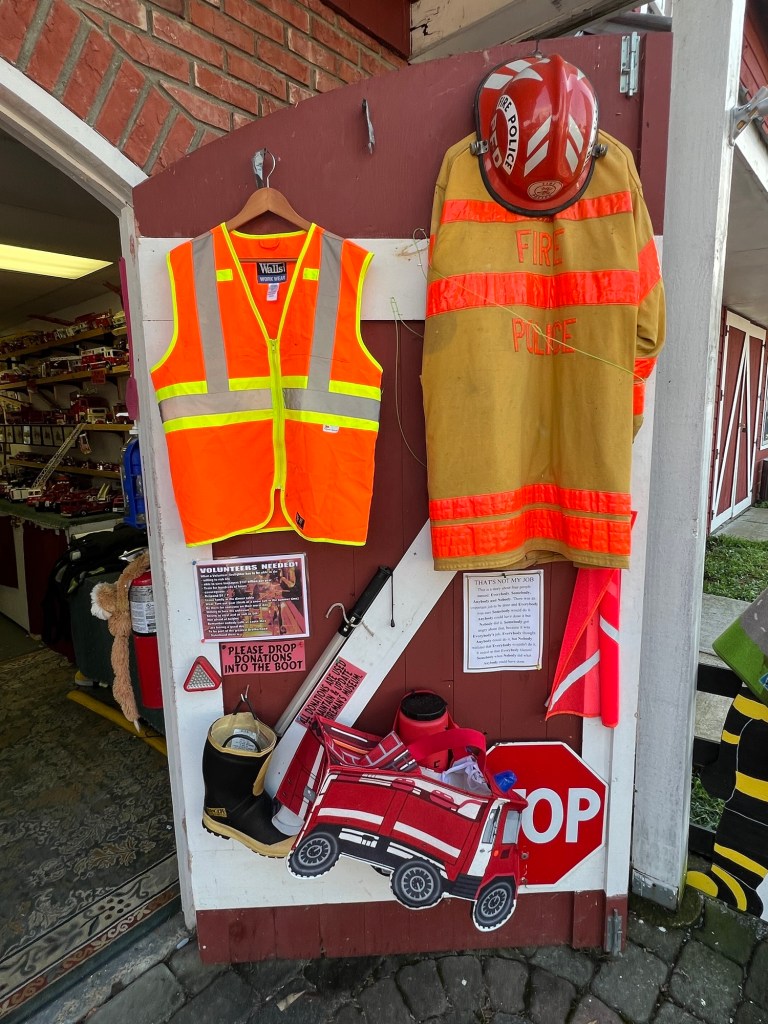
The museum put the bunker gear we firefighters use on calls. This protects us in the weather conditions as well.
The fire fighter bunker gear used on calls
The emergency gear we use on calls on roadways and incidents
I got to talking with the volunteer firemen from Ulster County and like most departments around the country, they are having problems finding volunteers to man the departments. It is a tough field and people don’t want to do it for free anymore. I figure like a lot of towns around us, the departments will be paid soon. That is the wave of the future.
Firefighter Scooby Doo protecting the museum
Still the firefighters from Ulster County do a nice job maintaining this museum. For a one room museum, it is packed by information and manned by firefighters who care about the profession.
I finally got a chance to visit the Saugerties Historical Society and see the inside of this historical home. The Society has done a nice job displaying their historical artifacts and carefully decorating the house to reflex the period.
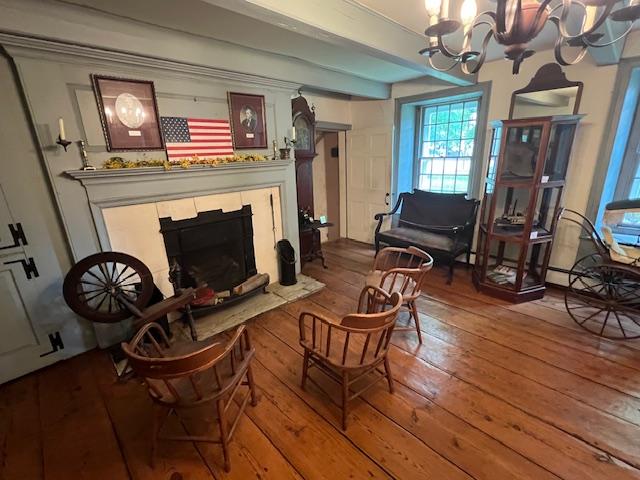
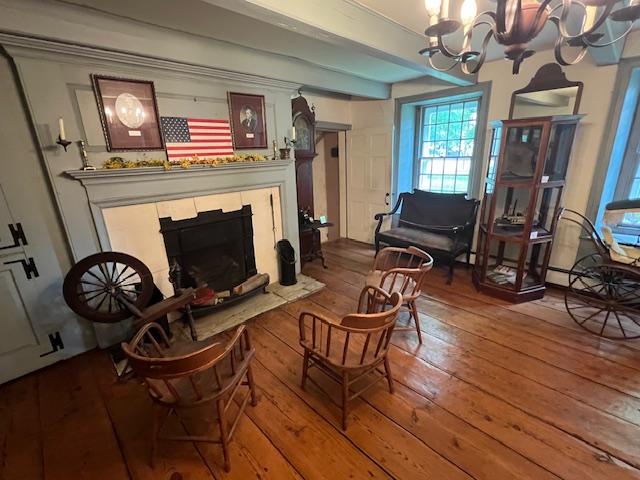
The Living Room of the Kierstad Homestead
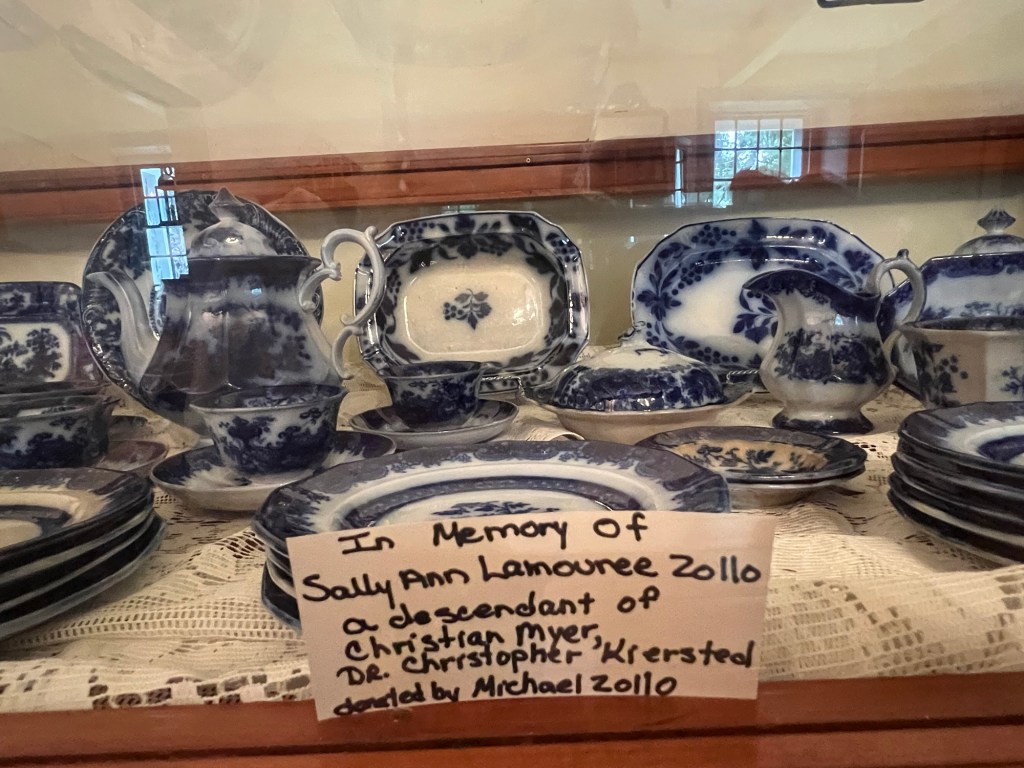
In the first room in the main part of the house, there is a display of family China from descendants of the original family who owned the house, local business artifacts and family heirlooms. In the original sections of the house, summer kitchen had has been displayed. This is a depiction of how a Dutch farming family may live in the 1700’s.
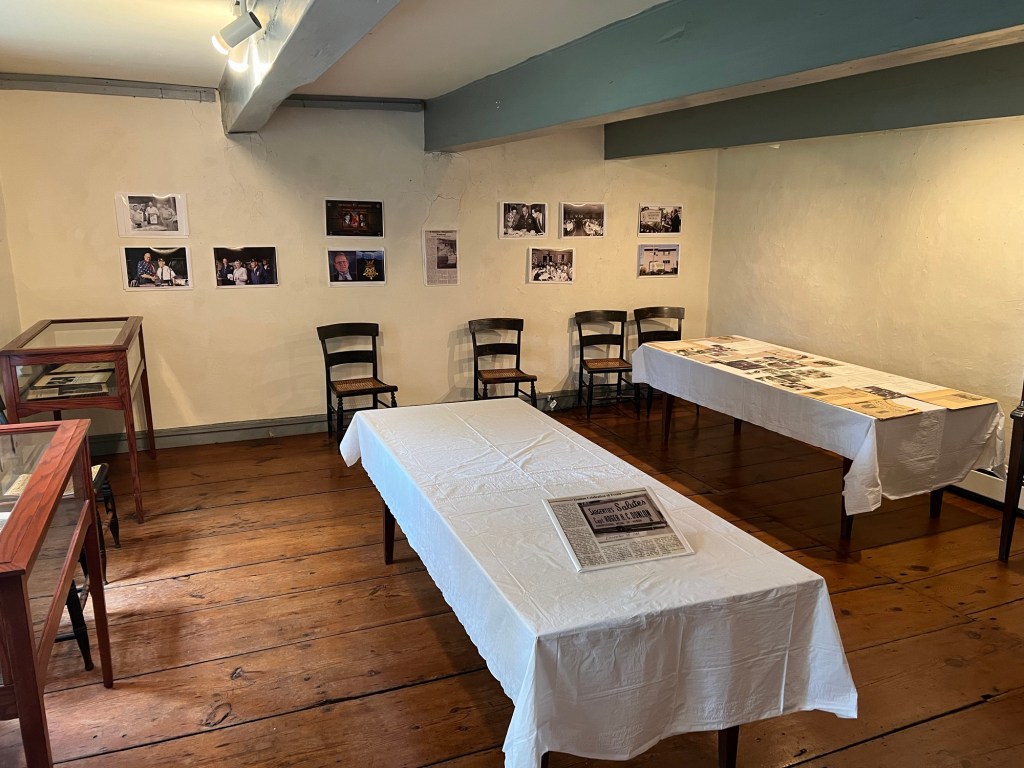
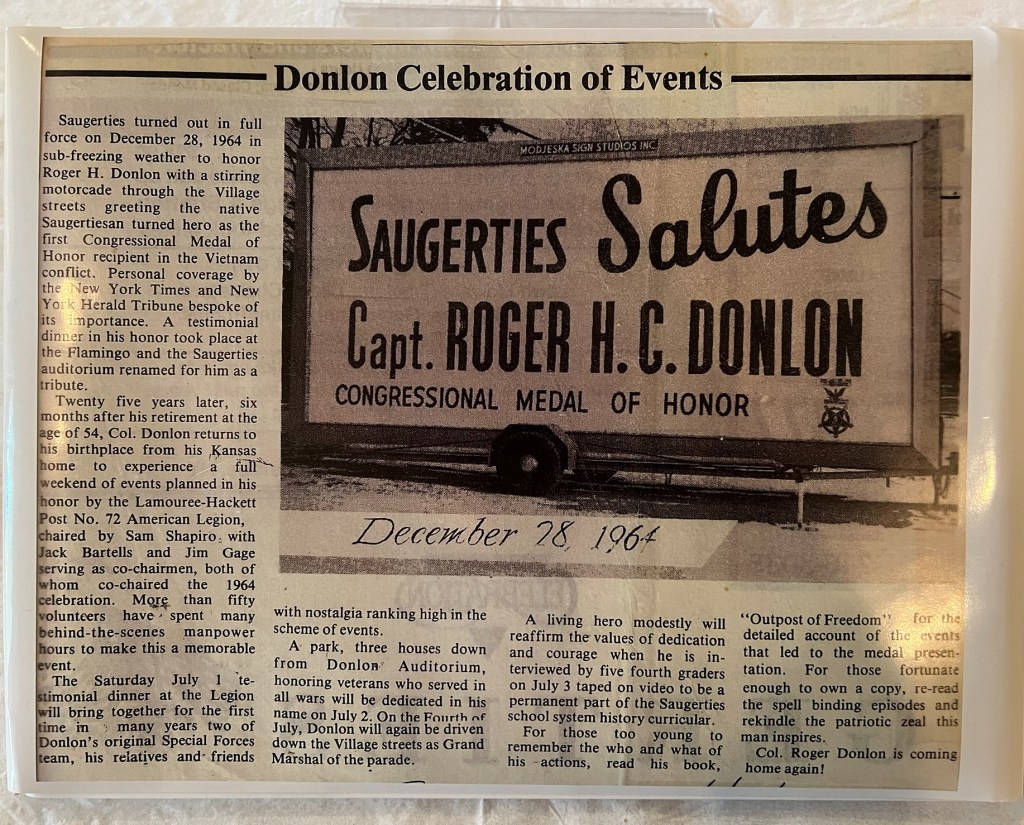
In the other room in the main part of the house was an exhibition of local hero, Captain Roger Donlon, who was a decorated officer in the Vietnam War. The exhibition had all the news clipping from the award ceremony and his hometown welcome. One of the volunteers told me that this exhibition will be taken down soon so that they can mount the thirtieth anniversary of Woodstock.
The rest of the house is used for archives space. The house is in two sections, the original section which contains the Summer Kitchen and loft space above (that is closed to the public) and the addition to the house in the late 1700’s. Descendants of the home lived in the house until the 1950’s. The grounds are nice to walk around on and take in the cool shade on a hot day.
The museum is an interesting look at early life in Saugerties, NY.
The Mission Statement:
The mission of the Saugerties Historical Society shall be to provide coordination of all things historical in Saugerties; to be involved in the research, collection, preservation, dissemination of information about, and productive re-use of the historical archives and material culture of the community; to make the historical resources of the community available to the public through education, exhibition and interpretation; and to secure the safe management and protection of such resources that may come under its jurisdiction.
The welcome sign in front of the house.
History of the Society:
(from the Historical Society website/pamphlet)
The Saugerties Historical Society is a source of local information, art, and memorabilia. Exhibitions of colonial and recent history include Saugerties themes as well as those of regional interest such as History Day each October and authentic Hudson Valley colonial militia reenactment.
The Saugerties Historical Society partners with local schools in the education of American and local history. Hands-on activities such as scrubbing clothes on a washboard, spinning wool and writing with a quill pen encourage students to experience colonial life. The Saugerties Historical Society aims to bring pride and knowledge of community through education and preservation.
The earliest recorded owner of the stone house was Hiskia Dubois (c 1727) and Dr. Kiersted purchased the house from Hiskia’s son, Daniel. The Kiersted House was saved from demolition in 1955 by Charles and Inez Steele. Through the generous efforts of volunteers in cooperation with the Town and Village of Saugerties the Saugerties Historical Society acquired the house in 1998.
The Kiersted House is a community center. Each summer, concerts, such as those with the Saugerties Community Band are presented on the beautiful lawn and gardens of the house. The Saugerties Historical Society regularly hosts various community clubs and organizations. The Kiersted House and grounds are available to suitable organizations for special events. The Saugerties Historical Society welcomes all to experience history while visiting the Kiersted House. The Kiersted-DuBois House is listed on the National and New York State Register of Historic Places.
The inside of the Historical Society
History of the Building:
(from the Historical Society website)
The Kiersted House was saved from demolition in 1955 by Charles and Inez Steele. Through the generous efforts of volunteers in cooperation with the Town and Village of Saugerties, the Saugerties Historical Society acquired the house in 1998.
The Historical Marker
The earliest recorded owner of the stone house was Hiskia DuBois, c. 1727. The home which was originally located on approximately 40 acres was sold upon his death by his son David DuBois to Dr. Christopher Kiersted who was married to Leah DuBois.
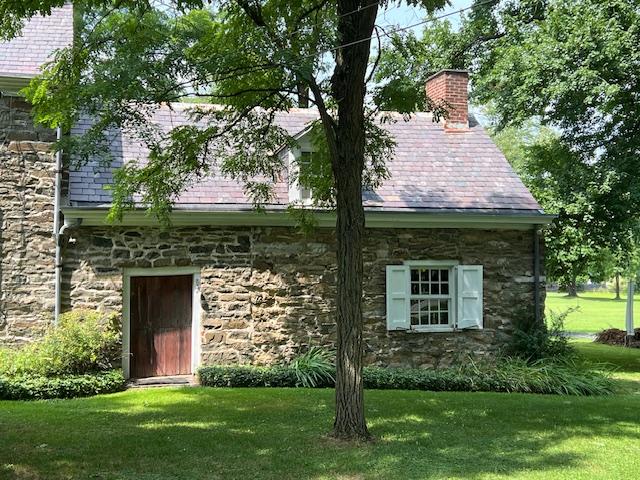
The stone house was built in sections with the east wing being the earliest, c. 1727. Subsequent additions to the west end included the parlor and the joining of a stone outbuilding to the main house in 1800. Preservation of the interior of the Kiersted House is evident in the original wide plank floors, 18th century glass-paned windows (some bearing family inscriptions), much original iron hardware and century old concrete floors with inlaid design.
The original section of the home from the early 1700’s with the Summer kitchen
The later addition to the house
In early 2003, during a planned restoration the house was spruced up with great care to respect the historic elements. The wooden doors and frames were carefully cleaned to expose their original grain and features. The floor planks were also cleaned and patched aesthetically. The stone work in the fireplace required additional care and some of the original stones had to be replaced. An antique pro carpet cleaning NYC service was enlisted to clean and restore the rugs and carpets, many of which were the originals and some of the more worn items were moved away from highly trafficked areas. The drapery and linen items were also restored or replaced with replicas.
The Saugerties Historical Society in the summer of 2023.
The Society has given visitors a chance to see what life was like for early Dutch and English settlers from a prestigious family from the area. It shows that life was understated and productive. It was not an idle existence but one from hard work and determination to build on something. The house is a window for us to look at the families who lived here and how their families grew and progressed.
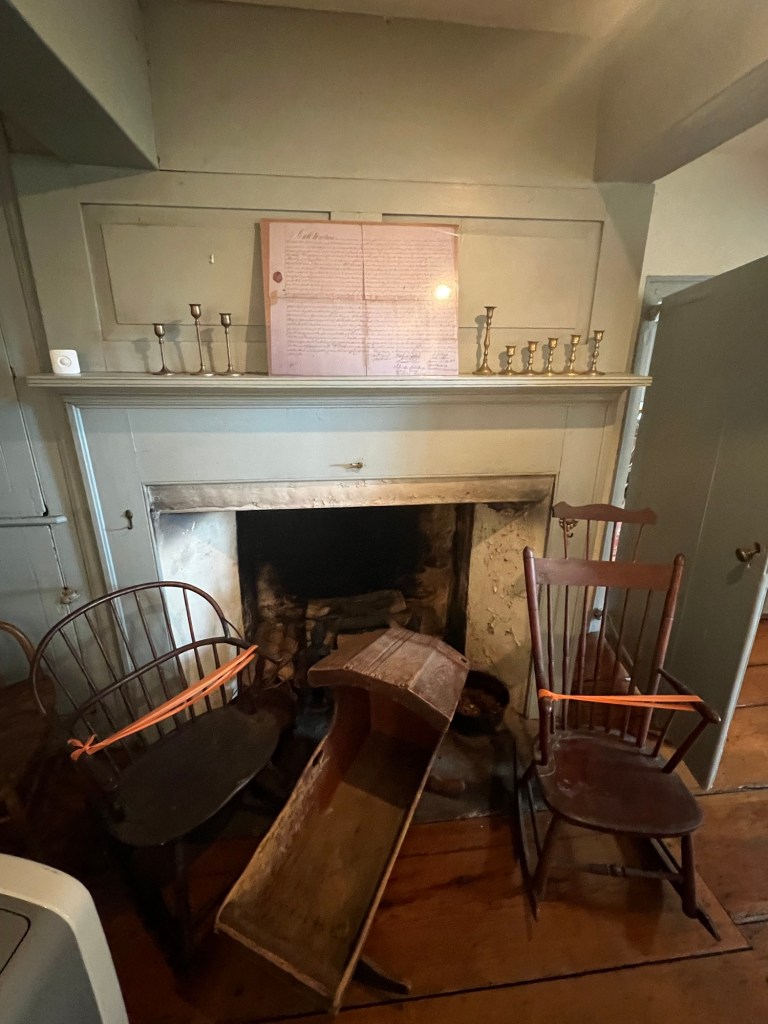
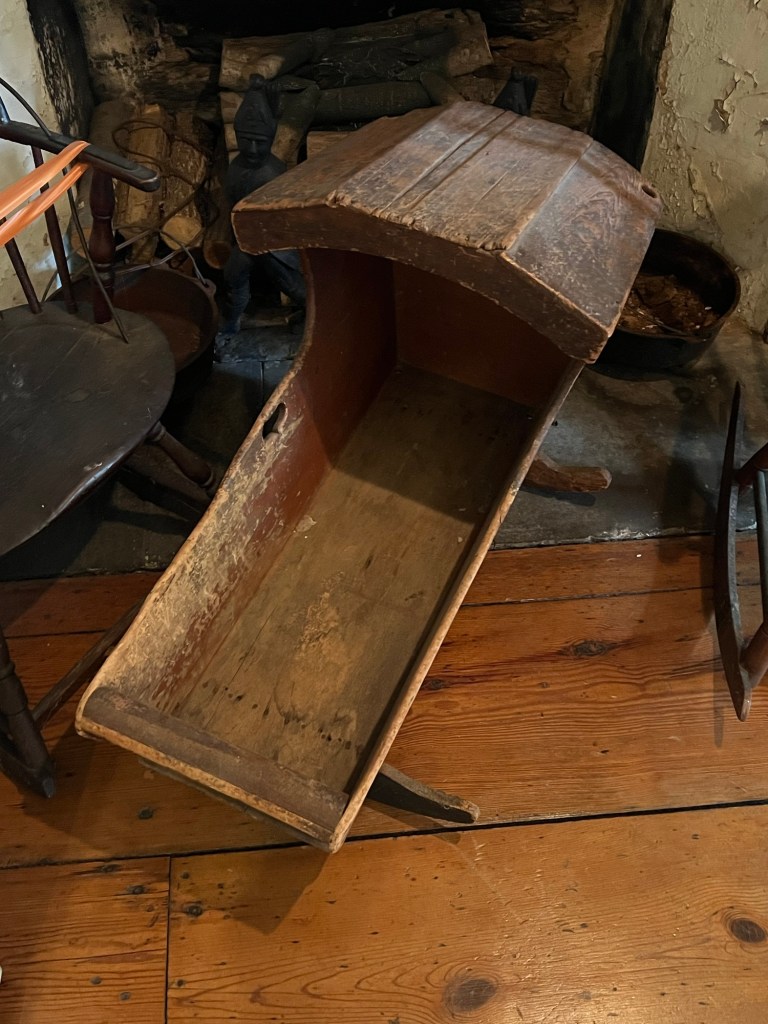
The fireplace and family crib of the Kiersten’s family
The Kierstad family crib from Dutch times
The Living Room set up
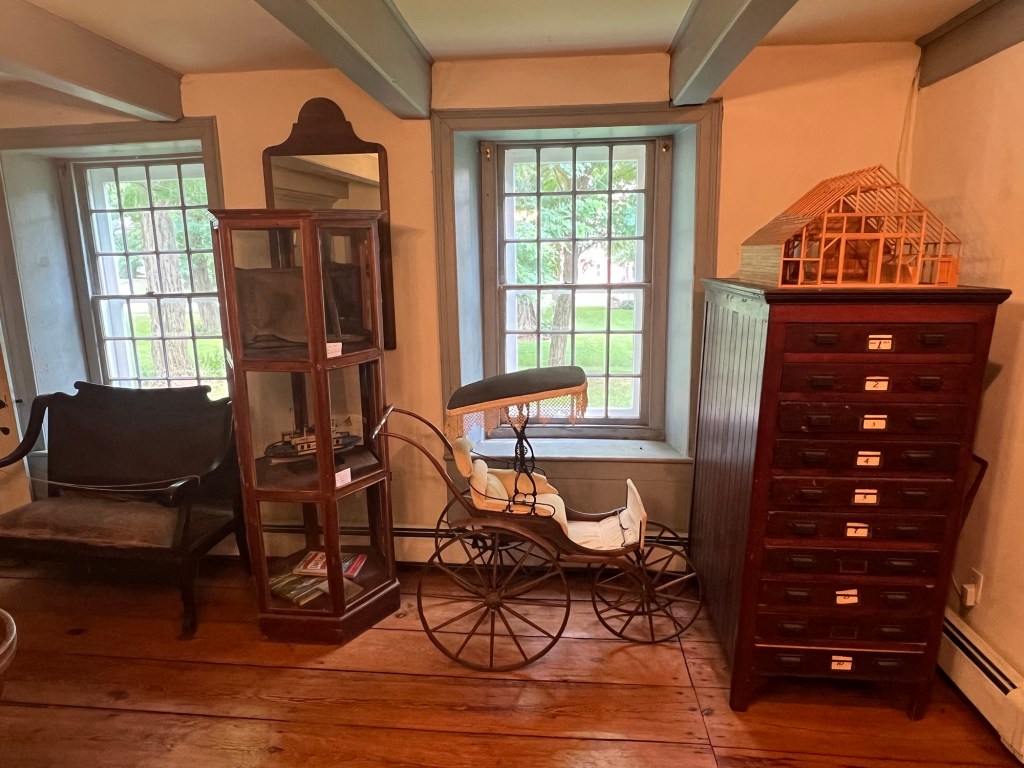
Artifacts in the Living Room including antique furniture and a stroller from the Civil War
The ‘Old Summer Kitchen’
The Summer Kitchen was the original part of the house
The table lined with items from harvest and for cooking the main meal
The kitchen being the focal point of the house was always warm so children and babies could be watched
In the main room were many of the artifacts in the collection:
The family China of Sally Ann Lamouree Zillow, a descendent of the Kierstad family
From the Town of Saugerties, the award of a commode
The Captain Roger Dobson exhibition:
In the other part of the house was exhibit of Captain Roger Dobson, a local hero of the Vietnam War. The decorated Captain’s store was a local boy makes good. The exhibition contains all sorts of clippings and articles from the event and of the Captain’s accomplishments.
The entrance to the Roger Donlon exhibition
The Roger Donlon exhibition on his career in the armed forces during the Vietnam War
The display of Captain Donlon’s accomplishment
The last artifact I saw at the museum was a replica of the original map of Saugerties. This map shows the farms and estates of the original families of the Town of Saugerties.
The replica of the map of Saugerties, NY
The Outside Gardens:
After my tour of the museum, I walked around the grounds of the property and enjoyed the sunny day.
The gardens outside the entrance to the Kierstad Homestead and Gardens
The Putnam History Museum at 63 Chestnut Street in Cold Spring, NY.
Don’t underestimate the size of the this museum packed with interesting exhibitions and information. It is really a terrific local museum that tells the story of the local community. I was very impressed.
The Putnam History Museum sign on Route 9.
The Mission of the Museum:
(From the Museum website)
The mission of the Putnam History Museum is to collect, preserve, interpret, and present the history of Putnam County, Philipstown, the West Point Foundry, and the Hudson Highlands. Through exhibitions, programs, and events, the museum uses its collections to engage the community with the vibrant history of our region, and to foster greater understanding of the role it has played in the growth of our nation.
The Current Exhibitions:
December 2023:
Indigenous Peoples in Putnam County
This exhibition explores Lenape and Wappinger culture in Putnam County, with a special focus on the Woodland period when these cultures flourished in the Hudson Valley. In addition to sharing Lenape stories—past and present—the exhibition features important artifacts and replicas including stone tools, stone points, pottery sherds, and a dugout canoe.
The Indigenous Peoples Exhibition:
(Funded in part by the Community Foundations of the Hudson Valley, American Historical Association, and the Cold Spring Lions Club. Image courtesy of the Staten Island Museum).
This exhibition was interesting in that it explained the local tribe of Lenape Indians who lived in the area before the Dutch and the contribution that they made to the community and their history in the area. The day to day lives of the tribes was shown in the various displays from the way they fished and hunted in the community. The dug out canoe the museum found out recently was a reproduction of the original. For years the curator explained to me the museum thought it was the real thing. Very detailed and very interesting exhibition.
Locally found Arrowhead Collection
The history of Indigenous people in the Hudson River Valley.
History of the Lenape Indians
The reproduction of the Lenape Canoe on display.
West Point Foundry
There is a permanent Foundry exhibition on display at PHM. It includes photographs, artifacts, paintings, maps, and videos highlighting the Foundry related objects within the PHM collection, including a fully restored 10-pounder Parrott Rifle.
The Foundry Exhibition is a permanent exhibition in the museum.
The map of the former foundry’s in the area.
I never realized that the Town of Cold Springs, NY was such a productive foundry area between all the wars. Many ironworks dotted the community which is now an upscale community just outside New York City. The foundry’s created many items that helped the ‘war machine’ such as train parts and cannon balls along with many modes of transportation.
The Foundry exhibition.
The objects of the Foundry.
The various sizes of cannon balls created by the local foundry’s.
The Foundry Painting “Foundry”
The “Foundry” painting sign.
The West Point Foundry part of the exhibit.
The West Foundry sign of the exhibition.
The West Point Foundry during the war.
A Brief History of Julia Butterfield
Born in 1823, at age 18 Julia Lorillard Safford married Frederick James, a broker and banker in New York City. They lived on Fifth Avenue and in 1852 built a magnificent stone village house in Cold Spring that was named Cragside because it had been constructed on a hillside strewn with rocks. It was surrounded by elaborate gardens, lawns, orchards and fields, according to Trudie Grace, author of “Around Cold Spring”. Haldane High School now occupies the site of Cragside, and a gatehouse built in 1866 still stands at the foot of Cragside Drive as a private residence.
The Julia Butterfield Exhibition
Frederick James died in 1884. Two years later, Julia married Daniel Butterfield, a Civil War general who is credited with composing “Taps” and whose father co-founded American Express. He lived until 1901. When Julia died in 1913, her estate (was) estimated to be worth $3 million, or about $75 million today.
This permanent exhibition of a local woman who supported her community and deserves much respect and admiration for the contributions to Cold Springs showed her immense generosity. I wish there was more people like her in every community.
Bequests by Julia Butterfield in her 1913 will, with current values:
YMCA – $2.32 million ($62M) Julia L. Butterfield Memorial Hospital – $150K ($4.6M) Union College, Schenectady – $100K ($3M) Julia L. Butterfield Memorial Library – $60K ($1.85M) Home for the Relief of Respectable Aged Indigent Females – $20K ($616K) Association for the Aid of Crippled Children – $10K ($308K) St. Mary’s Episcopal Church (for parsonage) – $10K ($308K) Association of New York Day Nurseries – $5K ($154K)
The library, a Georgian Revival building, was constructed on the foundation of the old Dutch Reformed Church and dedicated in 1925. The hospital, finished the same year, was built, many believed, because one of Julia’s sons had died after a fall from a horse and she felt he might have survived if a hospital had been closer.






















 Visiting a Museum: The Unique, Unusual, Obscure and Historical