The entrance to the Art & Design Gallery at FIT at 227 West 27th Street
The exhibition space showcases the work of students, faculty, and distinguished alumni, as well as invited guest artists. This new gallery space is located at the entrance of the Pomerantz main building and the back room exhibition space. This features smallers theme shows and showcases the talents of the FIT professors, professionals and Alumni. The shows are constantly rotating offering a fresh approach to contemporary art.
The Current Exhibition:
Creative Industry: The Alumni Journey Lobby and Gallery
Diverse in medium, this exhibition spotlights the career trajectories of several illustrious FIT alumni, highlighting their innovations and interesting journeys through the creative industries. Co-curated by Troy Richards, dean for the School of Art and Design, and Alumni Relations’ Kseniya Baranova, the work on display features photography, fashion, video, weaving, wallpaper, graphic design, and painting.
“Unconventional Minds at Work: 15 Years of HUE, The FIT Alumni Magazine
The showcased art designs
Artwork “Matter 2008” by artist Susanne Tick
The sign of artist Susanne Tick’s work
Artwork from “Unconventional Minds at Work”
Artwork from “Unconventional Minds at Work”
Artwork from “Unconventional Minds at Work”
Resurgence: The Ingenuity of Artisan Work and Hand-crafted Objects Lobby and Gallery
‘Resurgence’ showcases the ingenuity of artisan work and hand-crafted objects from textiles, jewelry, and decorative accessories. Contributors to this show include FIT alumni, faculty, and students, as well as finalists from the 2022 Global Eco Artisan Awards, a recognition given by the AGAATI Foundation.
Artwork of “Resurgence”
The Gallery at FIT during one of the current exhibitions
The latest exhibition is on the A. Beller & Company clothing line. The designs on display are from 1900-1930 and many of the designs are from the ‘flapper’ era.
The A. Beller & Company exhibition
The A. Beller & Company designs.
The Bio on the manufacturer
The A. Beller & Company designs from 1910-1930.
The A. Beller & Company designs from 1910-1930.
The A. Beller & Company designs from 1910-1930.
The A. Beller & Company designs from 1910-1930.
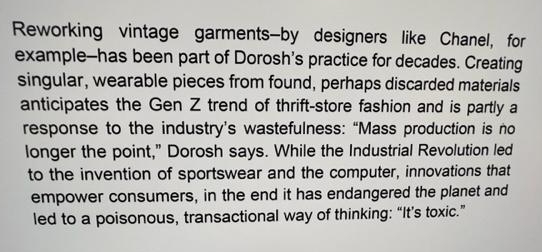
The museum also did a piece on how Generation Z is reworking vintage clothing designs and reworking them into modern clothing.
The Generation Z gallery of designs.
The write up on reworking of vintage clothing.
Some of the clothing designs.
The new exhibition in September 2023 was “The Unwearable Art” exhibition:
With the tag line “A fashion line no one would dare wear.”
The fashions were very unusual to say the least but unique in every way.
The entrance to the gallery.
“Today-I’m Wearing Uncertainty”
the “Today-I’m Wearing Uncertainty” design sign.
“Today-I’m Wearing Flare Intensity”
The “Today-I’m Wearing Flare Intensity” sign.
“Today-I’m Wearing Something Life Threatening.”
The sign “Today-I’m Wearing Something Life Threatening”
“Today-I’m Wearing Physical Pain”
The sign for “Today-I’m Wearing Physical Pain”
The “Wearing Uncertainty” exhibition offers a different look at fashion, and it’s influences on costumes.
The new “Squishables” exhibition at the Gallery at FIT focuses on therapeutic stuffed animals with themes that the students created as teams. Each one has several colorful soft animals and figures with it. It is a colorful and whimsical display. The exhibition shows how plush toys become an essential tool in coping with anxiety, stress, grief and isolation a person might feel at a time of their lives. This exhibition opened in May of 2024.
The sign on the new exhibition “Squishable”.
The “Unicorn Cafe” display.
The “Under the Sea” display.
The “Graveyard” Halloween display.
The “Alchemy Lab” display.
The “Farm” display.
The “Squishables” Gallery exhibition.
The new exhibition “Squishables” is based on a therapeutic stuffed animal that is created by the students.
The “Denim Devine” exhibition is the Senior Project of the graduates.
The “Denim Devine” exhibition in 2024. This exhibition was created by graduating students to design a wardrobe that was made of entirely of denim. These are their original designs and creations.
The “Denim Devine” entrance.
The winners of the “Denim Devine” exhibition.
The “Denim Devine” display.
The back gallery of “Denim Devine”.
I loved this Disney inspired dress in the exhibition.
One of my favorite dresses from the exhibition.
Another very original design in the exhibition.
Another original design that I liked in the exhibition.
The picture boards for the exhibition and other exhibitions.
Admission: Adults $12.00/Children Over 18/People with Disabilities/Students & Educators/Veterans $8.00. Children under 18 and Members are free (please check website for changes)
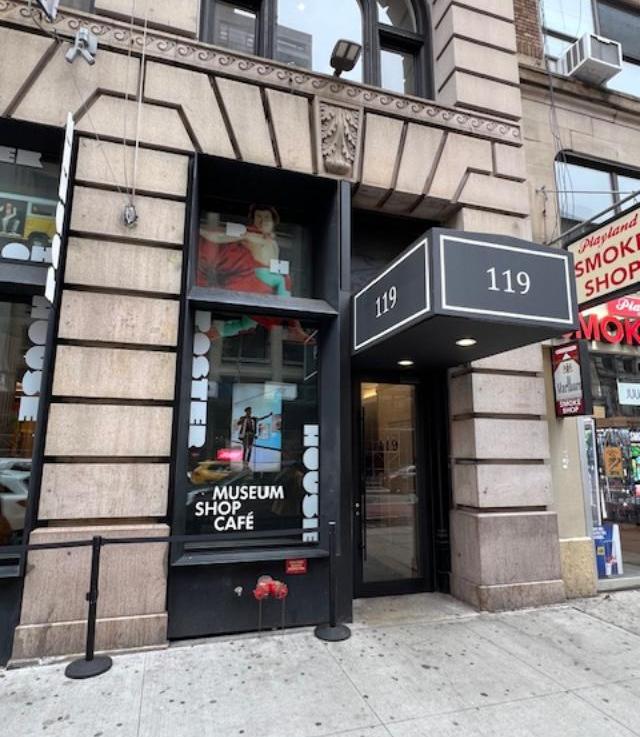
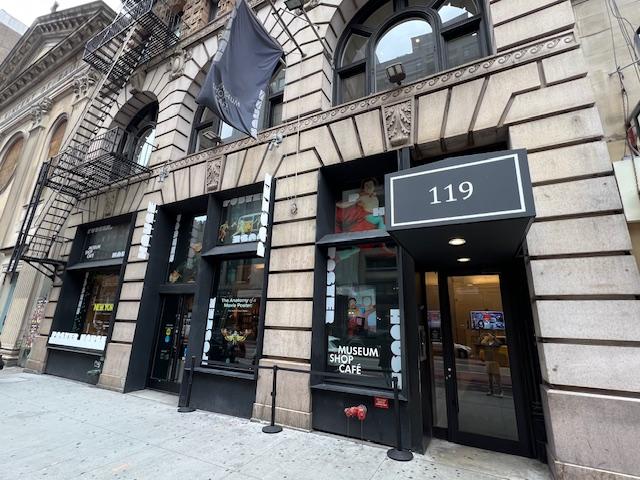
The Poster House is a little gem of a museum that I must have passed many times and never knew it was a museum. I had never heard of this museum before. The Poster House is dedicated to the history and art of posters and how they impact our lives as a way of communication. I got a chance to see the whole museum in about two hours.
The first exhibition on the first floor of the museum was “Utopian Avant-Guard: Soviet Film Posters of the 1920’s”, a retrospect on the film industry during the Silent Era. It was a time with the fall of the Czar and the coming of Communism where artists tried to shape the new face of Communism before the rigidity of the party controlled the whole film industry from the end of Silents until the Fall of Communism in the early 1990’s.
“The Utopian Avant-Guard: Soviet Film Posters of the 1920’s” exhibition
During the early years of the Communism, the country was going through radical changes that were not facing the rigid standards of the future Communist Party. Artists and film makers were getting their creativity from the West from countries in Europe and the United States. The creative class got to experiment with film and adapted what they saw to their own markets. This did not last long as Communism took hold and then started to control the content that was shown in the country. This continued from the Silent Era until the mid 1990’s when Communism fell.
Movie Poster from the 1920’s: ‘Six Girls Seeking Shelter’ from 1928
There were two interesting exhibitions on the lower level on artist and poster maker Ethel Reed. The exhibition was a collection of her work for magazines, books and film. She handled all sorts of mediums and was prominent for many years in the industry until her work fell out of fashion and her behavior became erratic with addiction.
“Ethel Reed: I am my own Woman”
The last exhibition that I toured was “Experimental Marriage: Women in Early Hollywood”, women whose role in in the film industry included writers, directors and producers. It showed how the influential women were in the industry before it became corporate. It also showed how actors had a lot of say in their films and the themes of the films were more female based. As things got concentrated in California and became more unionized, it became more of ‘Good Old Boys’ network as the industry became more streamlined.
“Experimental Marriage: Women in Early Hollywood” exhibition
What I liked about the museum is that it showed the politics from all angles and explained its progression and future in these industries.
The museum also has a nice gift shop and bookstore and a small restaurant, Café des Affiches.
History & Mission of the Poster House:
(From the Museum website)
The Poster House is dedicated to presenting the impact, culture and design of posters, both as historical documents and contemporary visual communication.
Through temporary exhibitions, a growing permanent collection and educational events, Poster House explores the enormous impact of posters on society and culture and how they have been adapted to contemporary use. As the first poster museum in the United States, The Poster House provides a space for inquiry for all those interested in design, advertising and public interventions with an aim to improve design literacy among the general public.
Posters explore:
*Mass communication and persuasion
*the intersection of art and commerce
*control of the public domain
Poster House was founded in 2015 with an eye towards filling a long-acknowledged gap in the New York cultural landscape for accessible art and design. After several years of planning and construction, Poster House opened its doors on June 20th, 2019.
Poster House is proud to receive support from the New York State Council of the Arts. Poster House is an affiliate member of the International Vintage Poster Dealers Association.
The Museum of the City of New York at 1220 Fifth Avenue
I have been a member of the Museum of the City of New York for almost twenty years and what I love about the museum is that its concentration is to be everything about New York City and what makes the City so great. Its development from a Dutch Colony to the Modern Metropolis that it is today. It covers the history so well that they created a permanent display entitled “New York at its Core”, an extensive history of the City from its start as being colonized by the Lenape Indians as a fishing and hunting set of villages on the island.
The “New York at its Core” exhibition (MCNY)
Each display takes you through a different point in the history of the development of the City and how each era brought dramatic changes to the fabric of the City from immigration over the years to the fires that leveled the original City and the raise of Wall Street and the Arts to make New York City the Capital of the World. The almost bankruptcy of the City in 1975 to the attacks on 9/11 have really shaped the direction and change in the City to the COVID-19 pandemic reshaping it again. We see how New York City continues to survive. The exhibition is now updated to add the COVID pandemic to the fabric of what is happening in New York City now. This exhibition will continue to evolve over the coming years.
The entrance to “Timescapes”
The film “Timescapes” in the basement theater again tackles the issues of a changing City since its development and the City continues to morph over time. The movie narrated by Stanley Tucci tells the story of New York from the time of the Dutch settlement to the attacks of 9/11 and like “New York at its Core” the issues that come about after every event. The film is shown five times a day and do take the time to see it when visiting the museum.
A tiny clip of “Timescapes” from the Museum of the City of New York
Just recently I attended a special event at the Museum to honor the Founding Members of the “Talking Heads” Chris Frantz and Tina Weymouth and their groundbreaking film “Stop Making Sense”. I was lucky to get tickets because the second I saw this on the museum listing I bought the tickets immediately. The event sold out quickly.
‘Talking Heads’ founders Chris Frantz and Tina Weymouth
The event was discussion with the creators of the group and how the Talking Heads emerged as a popular group through the 1980’s and 90’s. I have to admit that the two of them have not changed much but looking a bit older. They enchanted the audience with their time with the group and some new things they have in the works. After a quick Q & A, we watched their popular concert film “Stop Making Sense”.
We had such a good time at the event, the I wrote about it for my blog, “MywalkinManhattan.com”:
Day Two Hundred and Eight: Private Members nights at the New York Museums:
On another recent trip, I visited the exhibition “New York New Music 1980-1986” which was an exhibition on the development of the music scene after the Disco era was over and the rise of MTV. You had a combination of Club Music, Hip Hop, New Wave and the English Wave from Australia and New Zealand coming into the United States plus a resurgence of Rock and Roll after years of the “Disco Duck”. The exhibition highlighted the music of Debbie Harry and Blondie, Run DMC, Cyndi Lauper and Madonna and the rise of music videos. The exhibition brought me back to my last years of high school and my college years as I remembered all these groups.
The “New York-New Music 1980-1986” exhibition
Over the years I have seen exhibitions on everything from the Bankruptcy exhibition of New York City and the rise of crime, the Gilded Era with Alice Claypoole Vanderbilt’s “Electric Light” dress that she wore to Alva Vanderbilt’s famous ball and the wonderful toy exhibitions of early playthings. I have also been to many lectures at the museum with guests such as former Brooklyn President Marky Markowitz.
In 2023, I visited the museum for the first time in months and was able to see the “Gingerbread House Bakeoff” exhibition of well-known and amateur bakers in New York City. The exhibition was a hold over from Christmas and it was interesting to see the detailed gingerbread houses that were on display.
There two that I really liked. One was of Madison Square Park at Christmas time and looked like the pictures I had just taken of the park.
Bryant Park at Christmas time in gingerbread
Christmas scene in New York City
The next exhibition I wanted to see before it closed was the “Food in New York” exhibition. It could have been a little more detailed than what I saw. I thought it was going to have more of the development and history of food in New York and how it pertains to today. It was more artwork related to modern food industry trends. It was interesting but not what I thought it was going to be.
‘Food in New York’ exhibition
Some of the artwork really stood out on the display. I like the Hispanic Ice Carts which you see all over Washington Heights and East Harlem during the warmer months.
Ice Cart “Pimp My Piragua” byt artist Miguel Luciano
Artist Miguel Luciano
“Twilight” by artist Suzanne Anker
The effects of pollination of crops and the loss of bees shown here.
Artist Suzanne Anker
The latest exhibition that I visited on a Members walking tour was the “New York Now: Home” exhibition that opened in the Spring of 2023. The exhibition is based on what the photographers perspective of what a ‘home’ is and how you live through it. There were photos of family events, life outside the home, what a family is, is it your birth family or friends that have become family? There were also some great shots of people taken during the COVID lockdown and how the home became the center point of their lives and sanity. Each photographer gave a different way of looking at these points.
‘New York Now: Home: A Photography Triennial’
The exhibition write up
There were many terrific artists displayed in the exhibition but these are the five that I thought stood out the most:
Photographer and Artist Anders Jones work on the loss of bodegas in his neighborhood due to gentrification.
Artist Anders Jones work at the Museum of the City of New York
I think the museum was looking for a more political and environmental view of food in New York City as opposed to the history and development. It still was an important issue. It also showed all the urban, community and roof gardens that are becoming part of the urban landscape. It is interesting how people are using space to grow food for the benefit of everyone. It was an interesting perspective.
The museum is really all things New York.
The museum also has a series of talks in movies shot around or about New York City. On a recent trip to the museum I attended the retrospect of director Walt Stillman and his 1998 film “The Last Days of Disco”, which had been a huge hit when it came out. The director talked about the change in times from the 1970’s to the 1980’s and the shift in behavior of the population. There was a moment of time when “Disco was King” and going out was all the rage after years of Vietnam era. Studio 54 led this charge and when it closed in 1980, the party was over.
In conversation with director Walt Stillman the night of the retrospect.
The original trailer for the film.
The Q & A at Lincoln Center for the 20th anniversary of the film.
The series of films deal with the subject matter of New York City and what makes it a special place.
I recently went to see the new Art Deco City-New York exhibition on a private tour. The curator for the show toured us through the era after WWI and during the Depression. Things got more simplistic and cleaner.
You had a youth revolution that wanted to get away from Victorian values and with the lack of resources and money during the Depression, everything became more clean lines, less embellishment and more modern looking.
The exhibit ‘Art Deco City New York’
The bulk of the exhibition came from the collection of Cosmetic owner, Ronald Lauder, who contributed his Art Deco post card collection. Years of collecting showed all of us the changes not just in architecture but attitudes in travel and living. Gone were the bulky and elaborate in was simplistic and clean designs with a fresh approach.
The main gallery with Art Deco post cards
This perspective was shown in the 1939 World’s Fair, where a look to the future showed optimism and a look at new possibilities.
The 1939 World’s Fair
The outfits of that era also represented women and their freedoms from the Victorian era and the excesses. Gone were the days of corsets and bustles and in was the freedom of movement to the modern working woman who have to work to support her family. This reflected in the social life too.
Dresses from the 1930’s
Rockefeller Center and the Empire State Building were the big projects of that era. It showed the optimism and show of the possibilities of the modern era during the Depression and kept people working.
Models of Rockefeller Center
The exhibition was very interesting and informative and shows up in the modern era today.
The latest exhibition I attended was “Songs of New York”, a tribute to the rich music scene of the five boroughs through the ages.
The Exhibition sign for “Songs of New York”
The exhibition delves into the rich history of everything from New Wave to Hip Hop to Rock and Jazz. The interactive exhibition has you stepping on a Borough symbol and you hear its rich history of music.
The interactive display on the third floor
The opening remarks from the curator at the opening night
The reception with drinks and snacks for members
Pictures from ‘Look Magazine’ from the collection
Photographs from Allan Tannenbaum
The career of Allan Tannenbaum
The photos of Janette Beckmann of the ‘Hip Hop’ scene with the start of the careers of LL Cool J and Run DMC
The exhibition packs a lot of information into a small space where the members were able to enjoy the music of New York City.
I went to an Educator’s Night for the new ‘Above Ground’ exhibition on the street art collection of Artist Matin Wong. The artist collected the street art of the 1980’s after the Crash of 1987 slowed the demand for this art.
The ‘Above Ground’ exhibition
The sign from the exhibition
The works in the exhibition
The work ‘Futura’
The sign for ‘Futura’
The works by artist Keith Haring
The works in the galleries were creative and colorful. These artists sending a message with their works.
The art of the exhibition
The art of the exhibition
The gallery displaying the works
The work by artist Quik
The artist’s write up
The exhibition works were from the period of the mid to late 1980’s and these works Martin Wong bought after the Crash of 1987 to help sustain his artist friends whose sales dried for street art. The collection was donated to the museum after the artist’s passing in 1994 (Museum pamphlet).
I recently returned to the museum for a special evening event for photographer Ebet Roberts
The special event for music photographer Ebet Roberts
The evening was a discussion of the artist’s works from the 1970’s and 80’s. What I thought was interesting is how she seemed to fall into it as an artist with newspapers interested in seeing her photographs.
The photographer, Ebet Roberts with the museum curator
The photographer discussing her work
One of her well known works of a musician couple from the 1970’s
The talk was very interesting as she fell into the profession of just taking pictures of bands while attending the events as reporting. Then the papers wanted to see what pictures she had taken. Liking how she captured the groups in a more human fashion, she continued to take more pictures. This led to private sessions and behind the scenes works, capturing the events before and after a concert. It was a very interesting talk.
These are the types of events that make the museum unique and special.
The History of the Museum of the City of New York:
(From the Museum of the City of New York website/Wiki):
The Museum of the City of New York is a history and art museum that was founded in 1923 by Henry Collins Brown. The red brick building with marble trim was built between 1929-30 and was designed by architect Joseph H. Freedlander in the neo-Georgian style with statues of Alexander Hamilton and DeWitt Clinton by sculptor Adolph Alexander Weinman, which face Central Park from niches in the facade (Wiki).
The museum was originally located in Gracie Mansion, where available space was limited. One of the first exhibitions was “Old New York” in 1926. This took place in the Fine Arts Building on West 57th Street. The success of the project led to a search for a new, permanent headquarters for the museum (Wiki).
A design competition was held between five invited architects and the Colonial Revival design by Joseph H. Freelander was chosen. The City donated the site on Fifth Avenue and the funds for the construction of the museum was raised by public subscription. The original plans for the museum’s building were scaled back as a result of the Wall Street Crash of 1929. The building was finished and dedicated in 1932.
In 2000, there was talk by then Mayor Rudy Giuliani to move the museum to the historic Tweed Courthouse near City Hall but that was over-turned by the incoming Mayor, Michael Bloomberg. In protect the museum director, Robert R. McDonald resigned.
In coming new museum director, Susan Henshaw Jones, planned an extension to the museum and it was completed in 2008. The extension including renovating the existing gallery spaces and adding a new pavilion. New displays and a remounting of valuable artifacts were done to give the museum a refreshed look. In 2011, the Museum of the City of New York temporarily took over operation of the South Street Seaport Museum which itself reopened in 2012 (Wiki).
The museum has a collection of over 1.5 million objects including many items from the 19th and early 20th centuries including paintings, prints, costumes, decorative objects, furniture and an extensive collection of toys. There are also extensive collections of police and fire items as well as shop models, rare books and manuscripts (Wiki).
The Museum of the City of New York in the early Spring
The entrance to the Society of Illustrators at 128 East 63rd Street
It is always nice when you discover a new museum. In all my years of walking around the Upper East Side, I had never noticed the Society of Illustrators, nor had I heard of it, but I am glad I have now. The museum is home in a stylish brownstone on a residential block away from the traditional “Museum Row” on Fifth Avenue.
The exhibits were on the main and lower floors of the main building with the special exhibitions on the third and fourth floors. The museum also had a very nice restaurant with an open terrace when it got warmer on the fourth floor. The restaurant has been closed since COVID closed the museum, but the bar is open for a drink.
The front door of the museum
On the first floor and lower level, the exhibition “Illustrators 64: Advertising, Institutional, Uncommissioned, Surface/Product Design categories”. The exhibition is a presentation of outstanding works of the year by leading contemporary illustrators worldwide. This exhibit had all sorts of interesting pieces ranging from advertising art to pastels and drawings of all sorts of subject matter. There was everything from animals skateboarding to commercial portraits. There were also unique works based on national brand companies and New York City themed works.
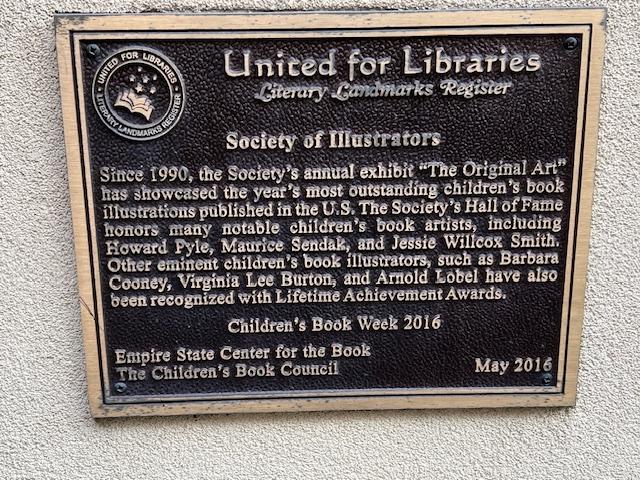
Society of Illustrators plaque
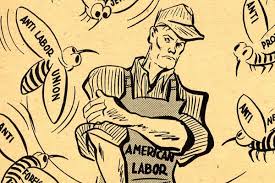
The second floor was the “Eric Godal: A Cartoonist’s Fight for Human Rights” exhibition that had cartoons that are still prevalent to today. As I read and admired the works by the illustrator, I can safely say that his works are just as contemporary now as they were then dealing with antisemitism during WWII in Europe. His works ridiculed the party and the Third Reich’s power over people who they deem “unsatisfactory”. He also showed the rise of the labor movement and big businesses reaction to it.
Artist Eric Godal’s works on social justice
In the fourth-floor restaurant, was the “Kent State: 4 Dead in Ohio” exhibition on the May 4th, 1970, incident on the Kent State campus. The college students there like college students all over the country were protesting the war and there had been many incidents over the months leading to the shooting.
The illustrated story boards tell the whole story of the four people who had been killed and how the whole incident had happened. It was fascinating to see how each of the people involved how their lives came about during that time and how it led them to that horrible day.
The book and exhibition by Derf Backderf’s book “Kent State”
The “128 Bar & Bistro” is currently only open at certain hours and the bistro part of the restaurant is currently closed and according to the bartender being revamped. It has not been that busy before the pandemic, so they have the bar section open only.
The outdoor terrace with its breathtaking views and planted edges will make for a nice place for a cocktail in the warmer months. The space is a nice place to relax after a long afternoon of touring the museum.
This is one of those rare museums in New York City that is fun to find and explore.
The Dining Room/Lounge that is a bar area for now
The History of the Society of Illustrators:
(From the Museum Website)
The Society of Illustrators’ mission is to promote the art of illustration, to appreciate its history and evolving nature through exhibitions, lectures and education and to contribute the service of its members to the welfare of the community at large.
The Society of Illustrators is the oldest nonprofit organization dedicated to the art of illustration in America. Notable Society members have been N.C. Wyeth, Rube Goldberg and Norman Rockwell among many others.
On February 1st, 1901, nine artists and one businessman founded the Society of Illustrators with the following credo: “The object of the Society shall be to promote generally the art of illustration and to hold exhibitions from time to time.” This simple dictum has held true for over a century.
At the time when illustration was in what has been called its Golden Age, the first monthly dinners were attended by prominent artists including Howard Pyle, Maxfield Parish, N.C. Wyeth, Charles Dana Gibson, Frederic Remington, James Montgomery Flagg, Howard Chandler Christy and special guests such as Mark Twain and Andrew Carnegie.
Our museum of Illustration was established in 1981 under the stewardship of them president John Witt. We offer year round themed exhibitions, art education programs and annual juried competitions. Our Permanent Collection houses 2,500 pieces that are cataloged for scholarly use and displayed periodically. In 2012, we created the MoCCA Gallery with a focus on curated exhibitions of comic and cartoon art.
The Society of Illustrators is an organization of many layers, one which provides illustrators a center to discuss, demonstrate and exhibit their work, contributes to future artists and to the community at large, honors its preeminent practitioners, takes a stand on legal and ethical issues affecting the profession-and has a great dining room to boot!
As it faces the challenges of a swiftly changing future, the Society will continue to “promote generally the art of illustration,” as its founders dictated.








 Visiting a Museum: The Unique, Unusual, Obscure and Historical