Category: Exploring Hyde Park, NY

The Donald & Barbara Tober Exhibit Room/Conrad N. Hilton Library-The Culinary Institute of America Campus 1946 Campus Drive                                                               Hyde Park, NY 12538

The Donald & Barbara Tober Exhibit Room/Conrad N. Hilton Library-The Culinary Institute of America Campus 1946 Campus Drive Hyde Park, NY 12538

The Donald & Barbara Tober Exhibition Room/Conrad N. Hilton Library-The Culinary Institute of America Campus

1946 Campus Drive

Hyde Park, NY 12538

(845) 452-9600

https://library.culinary.edu/ciaexhibits

Open: When the library is open. Please check the website.

Admission: Free
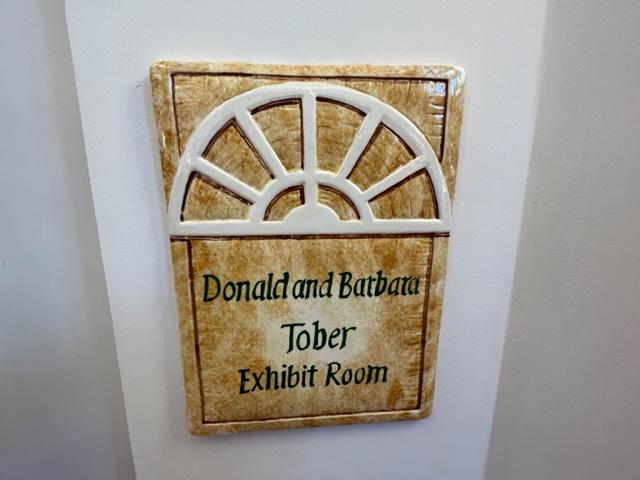
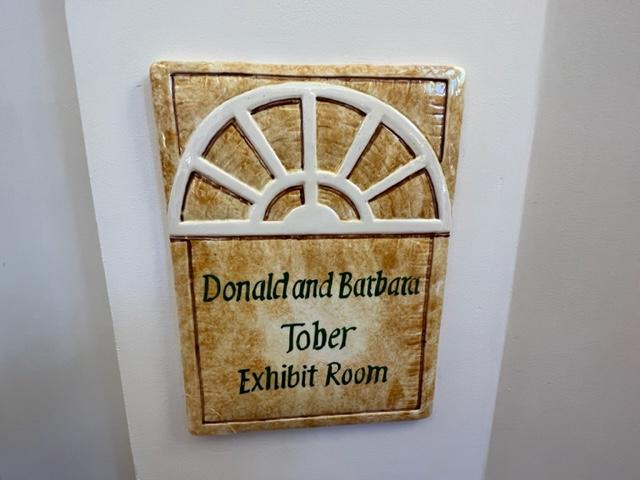
The Donald & Barbara Tober Exhibit Room plaque inside the Conrad N. Hilton Library hallway

The Donald and Barbara Tober Exhibit Room is on the main floor of the Conrad N. Hilton Library. The exhibit room is open to the CIA community and to the public. The exhibition room has ongoing displays of culinary themed exhibits that cover topics involving the culinary world and food service. This is run by both the college and by students. It is not quite a museum but more of a display room of artifacts that are held by the Conrad N. Hilton Library and its archives.
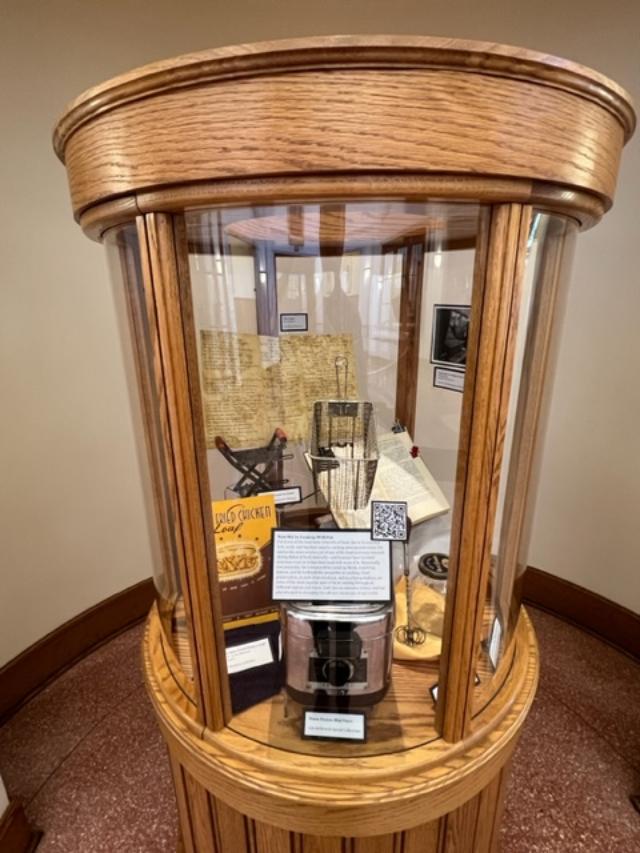
The Hallway exhibition
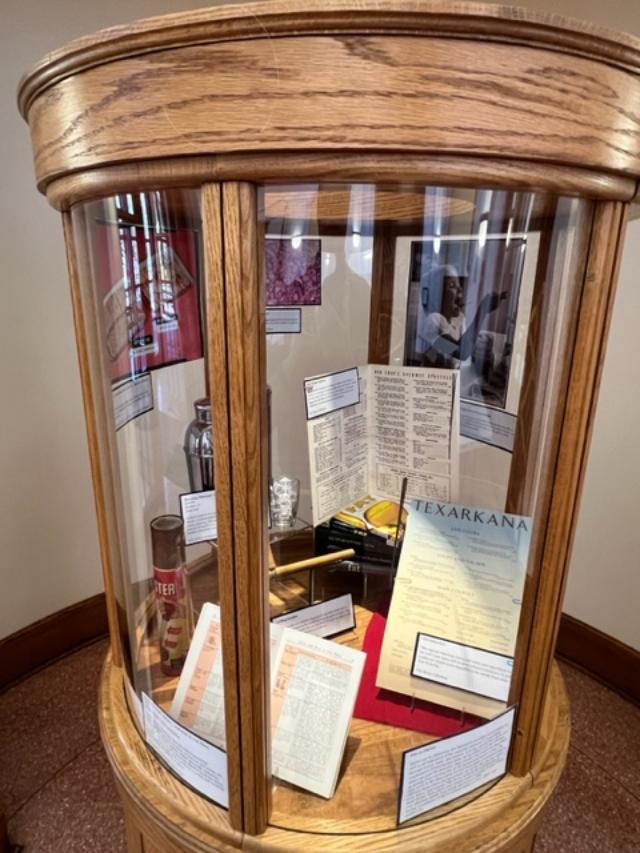
The Hallway exhibition

The two display cases are in the main entrance of the Conrad N. Hilton Library and hold more of the exhibition. These are displays of industry pamphlets and flyers plus menus and equipment.
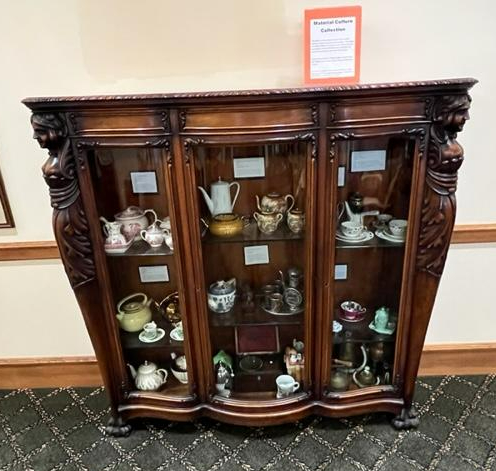
The library exhibition of China pieces

The Menu Collection:
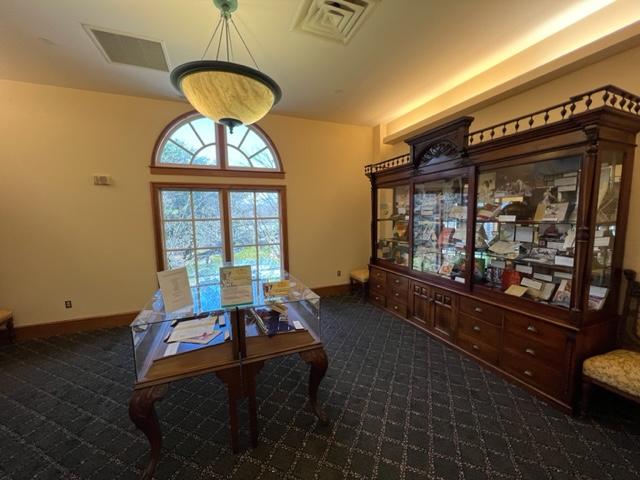
The Tober Room Exhibition space

The CIA’s menu collection began in the small library at the New Haven campus and was used as a reference tool by the culinary students.  By 1978, then in Hyde Park, the library had amassed a file of over 3,000 menus which were openly available to students and used regularly in their studies.  These menus still remain in the collection and are known as the “Original CIA Menu Collection.” They provided the foundation for the growing menu collection that was later added to by many prominent menu collectors and friends of the CIA.

Seth Bradford and Edward S. Dewey Menu Collection

Roland Chenus Menu Collection

Craig Claiborne Menu Collection

Roy Andries de Groot Menu Collection

This collection of nearly 800 menus, acquired by the CIA in 1984, were collected by the culinary writer and critic, Baron Roy Andries de Groot (1910-1983), during the course of editing his column, “A Moveable Feast,” for Esquire Magazine. The menus date primarily from the 1960s and 1970s and are from major U.S. cities (many from New York City), as well as Canada, France, Belgium, Spain, Puerto Rico, Hong Kong, and Thailand. Some menus include supplemental materials, as well as annotations by de Groot or his staff noting the date of visit, names of other guests, the chef’s name, and his evaluations and/or ratings.

Herbert Ernest Menu Collection

In 1987, Herbert Ernest donated to the CIA over 300 menus collected by his father, Semy Ernest. The menus date from 1889-1977 and include menus from restaurants and clubs in New York City, Boston, Indianapolis, Los Angeles, and San Francisco; international menus from France and Germany; and several menus from on board the Santa Magdalena ocean liner. This collection is rich in pre-1920 menus.

Greenebaum Menu Collection

The Greenebaum Menu Collection was donated to the CIA by Henry Greenebaum in 1989.  Greenebaum’s father, Michael H. Greenebaum, started the collection and it was continued by his two sons, Henry and Richard. It includes menus from 1905-1988, many international and many from railroads and ships.  Several menus are signed by the chef or proprietor.

Auguste Guyet Menu Collection

Donated to the CIA in 1989, this personal menu collection from Chef Auguste Guyet includes over 200 menus, mostly from France. The earliest are a Restaurant Julien special event menu and a Waldorf-Astoria wine list for the 27th annual banquet of the Hotel Association of New York City, both from 1906.

Bruce P. Jeffer Menu Collection

Bruce P. Jeffer donated his collection of 2,500 menus to the CIA in 2013. Jeffer, a California lawyer and wine connoisseur, began collecting menus during his travels as a child. The menus date from 1950s-1990s. Much of the collection is international menus from over 70 countries on 6 continents. A selection of these were featured in an exhibit in the Conrad N. Hilton Library in August 2013.

George Lang Menu Collection

George Lang, restaurateur and author, donated his personal collection of over 3,000 menus to the CIA in 1989. Many of these menus are international, including often under-represented countries such as Australia, Cuba, Hong Kong, Hungary and the Philippines. Although most menus date from 1950s-1970s, the earliest two menus are from Hotel Knickerbocker in New York City, 1907.

Vinnie Oakes Menu Collection

In 2000, Vinne Oakes donated his collection of over 200 menus to the CIA. The collection is strong in menus from restaurants in Nevada, as well as ship menus from the 1960s.

John Edward Oxley Menu Collection

Chapman S. Root Menu Collection

The Chapman S. Root Menu Collection of nearly 10,000 menus was donated by The Root Company in 2000. The largest collection recieved so far, it includes menus from almost every state (strongest in California, Florida and Nevada), and several foreign countries. The bulk of the menus date from 1960s-1980s, although the earliest are from 1878. Over 3,000 U.S. Railroad menus are an important highlight of the collection.

Chapman S. Root’s grandfather, Chapman J. Root, designed the classic green, ridged Coca-Cola bottle in 1915. At his grandfather’s death in 1945, Chapman S. Root inherited Associated Coca-Cola Bottling Plants, Inc. He traveled a great deal, mostly by car or train, and amassed an enormous menu collection. Friends, knowing of his interest, also contributed to his collection.

Jacob Rosenthal Menu Collection

Jacob Rosenthal, former president of the Culinary Institute of America, donated nearly 500 menus to the CIA menu collection. The bulk of these menus are from food and wine societies in the 1960s-1970s, including Confrerie des Chevaliers du Tastevin, Confrerie de la Chaine des Rotisseurs, and the International Food & Wine Society.  Also of note are several international menus from the 1930s-1950s.

Smiley Family Menu Collection

The Smiley Family Menu Collection was donated to the CIA in 1982 and 1993, a gift of Mohonk Mountain House. (The Smiley family are the founders and proprieters of the Mohonk Mountain House in upstate New York.) Three generations of Smileys traveled the world, by land and by sea, and collected menus along the way. This collection is rich in pre-1920 menus; menus from historically world-renowned resorts including Laurel-in-the-Pines (Lakewood, N.J.), Haverford Court (Pennsylvania) and Hotel Colonial and Royal Vicotoria Hotel (Nassau, Bahamas); beautifully-illustrated ship menus; and a selection of early menus from Mohonk Mountain House.

Lois Westfall Menu Collection

The display case in the main library showcases the collection of China and Silverware and decorative objects that are in the collection.
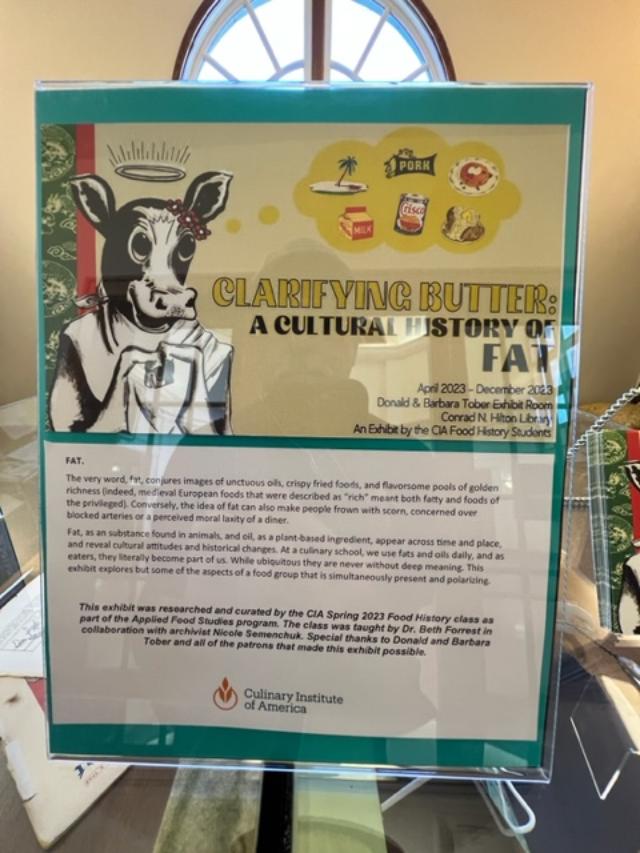
The Tober Room exhibition on “Fat” at the Conrad N. Hilton Library on the CIA campus

The exhibition that they were showing when I came up to visit was “Clarifying Butter: A Cultural History of Fat”. There were a lot of recipes, objects and equipment to make butter, understand the use of fats in cooking, recipes, menus and corporate information.

The description of the exhibition:

FAT. The very word, fat, conjures images of unctuous oils, crispy fried foods and flavorsome pools of golden richness (indeed, medieval European foods that were described as “rich” meant both fatty and foods of the privileged). Conversely, the idea of fat can also make people frown with scorn, concerned over blocked arteries or a perceived moral laxity of a diner.

Fat. as an substance found in animals and oil, as a plant based ingredient, appear across time and place and reveal cultural attitudes and historical changes. At a culinary school, we use fats and oils daily and as eaters, they literally become part of us. While ubiquitous they are never without deep meaning. This exhibit explores but some of the aspects of a food group that is simultaneously present and polarizing.

Both the two display cases and the middle display case were set with all sorts of information through the ages of the subject of fat, fried foods and items used to produce and make them.
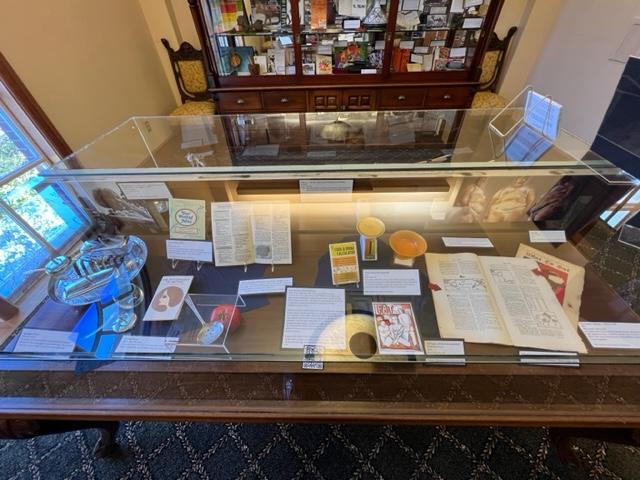
The Display Cases in the Tober Room
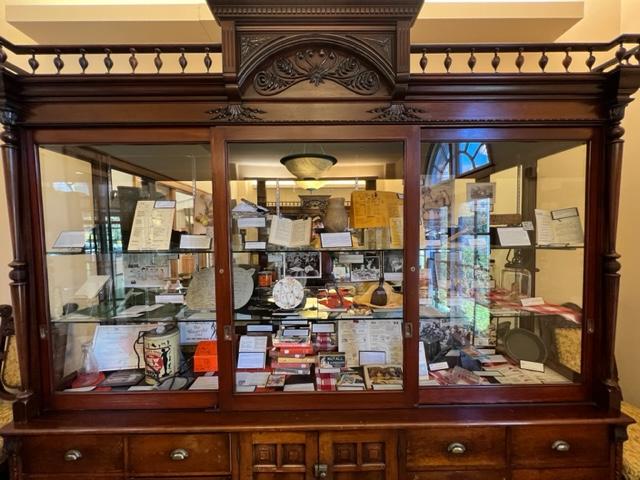
The Display Cases in the Tober Room
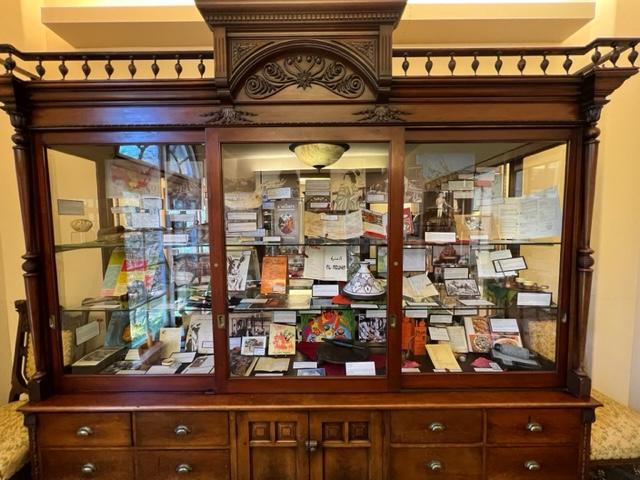
The exhibitions here are very detailed and display over a hundred years of culinary arts research. The displays are revolving every quarter. The room is off to the right of the entrance to the library and is open for free to the public. It is a wonderful way to learn the aspects of food than in one of the best culinary libraries in the world.
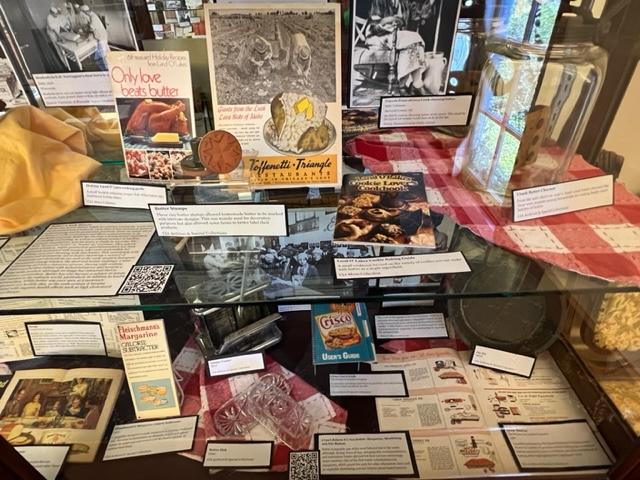
A close up shot of the display case.
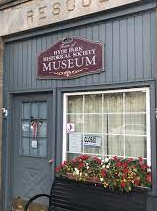
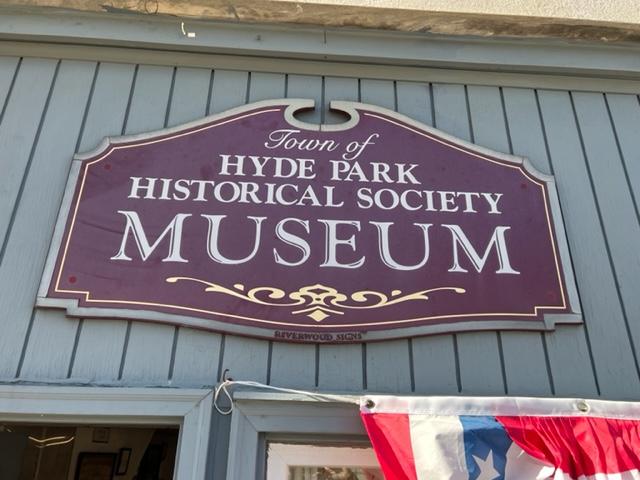
Hyde Park Historical Society                                                 4389 Albany Post Road                                                         Hyde Park, NY 12538

Hyde Park Historical Society 4389 Albany Post Road Hyde Park, NY 12538

Hyde Park Historical Society

4389 Albany Post Road

Hyde Park, NY 12538

(845) 229-2559

https://hydeparkhistoricalsociety1821.org/

https://www.hydeparkny.us/669/Hyde-Park-Historical-Society

Open: Sunday 11:00am-3:00pm/Monday-Friday Closed/Saturday 10:00am-3:00pm

Fee: Free

My review on TripAdvisor:

https://www.tripadvisor.com/Attraction_Review-g60801-d3426818-Reviews-Hyde_Park_Historical_Society_Museum-Hyde_Park_New_York.html

The Hyde Park Historical Society at 4389 Albany Post Road

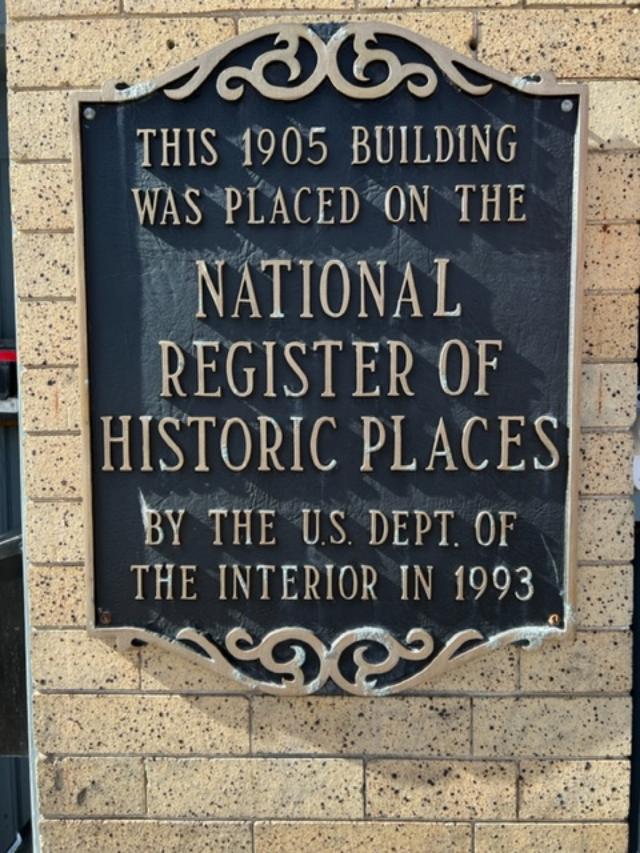
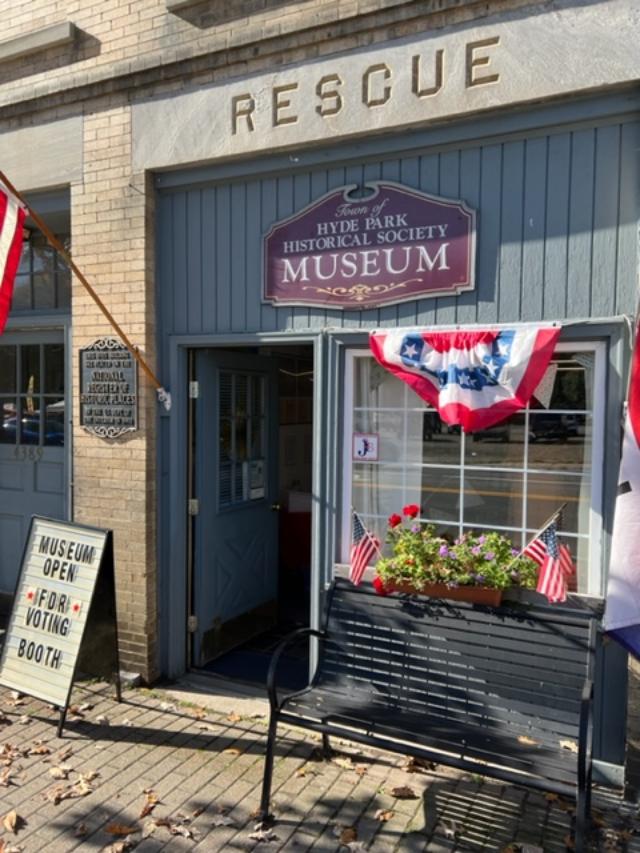
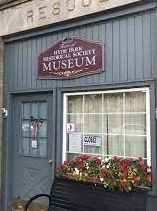
The Hyde Park Historical Society is going through a type of rebirth as it has reopened with a fresh approach towards not just the history of Hyde Park, NY but the area in general and life here over the last two hundred years. The society is taking a new direction and revamping their efforts on the displays and on the history and activities of the museum. The museum is housed in what was once the Hyde Park, NY Fire Department building.

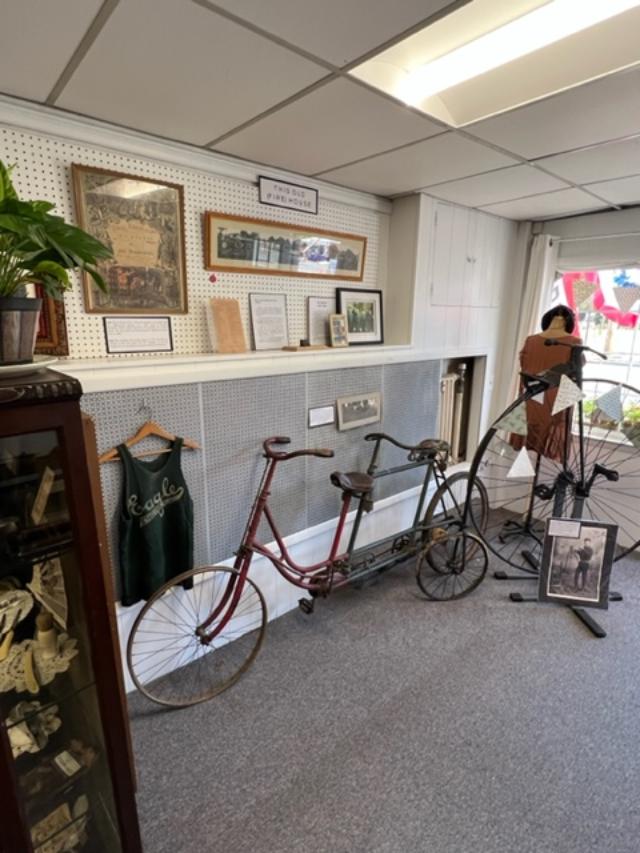
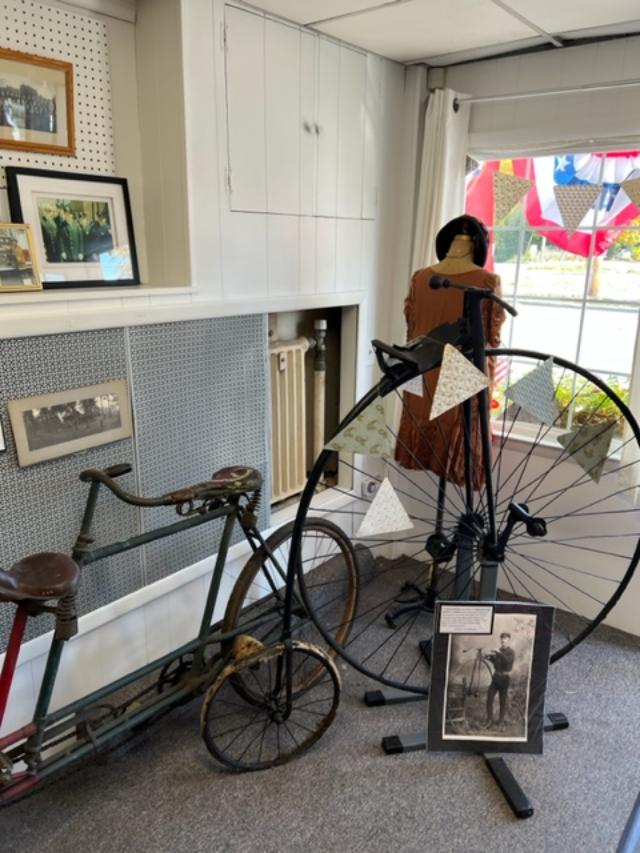
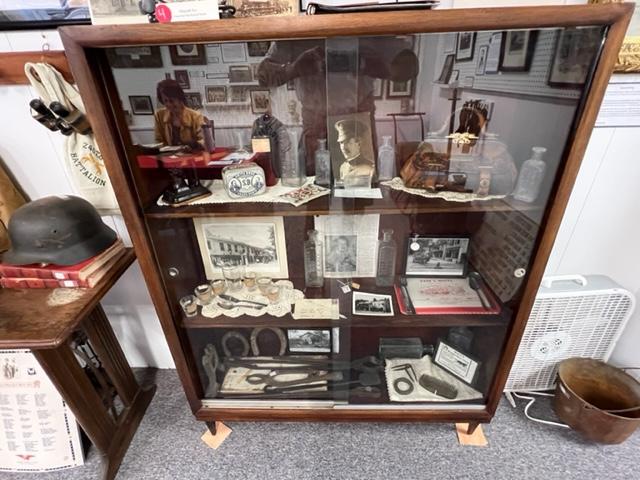
The museum is broken down into sections by displays. When you enter the museum there is an display of bicycles and recreation items that would have been used over the years. This activity changed the social life of both men and women of that era.

Bicycle display:

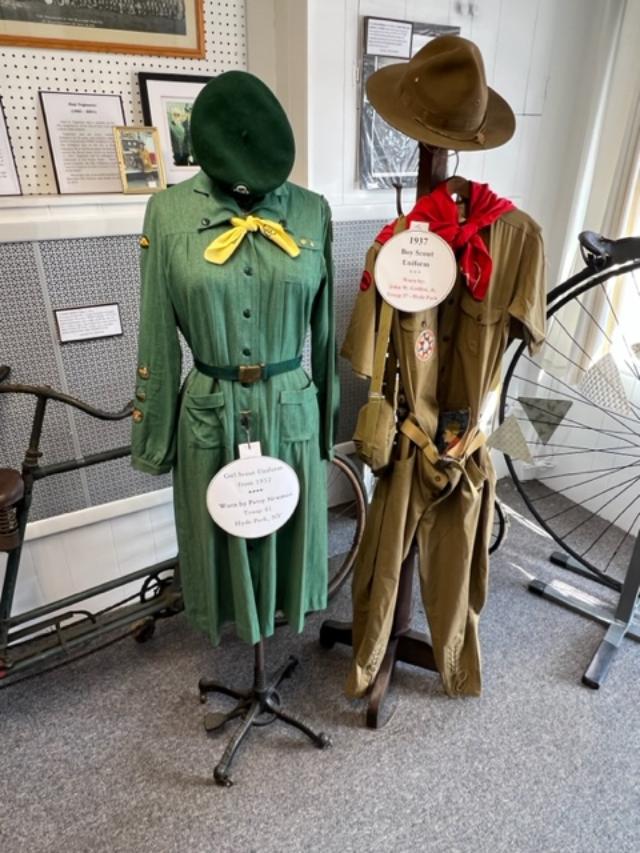
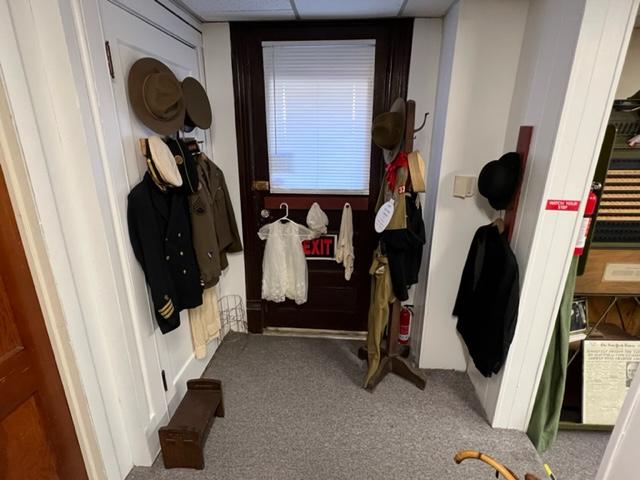
Some of the newest donations are from members of the organization who have recently passed away. They donationed their Boy Scout and Girl Scout uniforms to the museum which were from the past century. This shows how the unforms have progressed over the years.

Uniforms from the early Twentieth Century

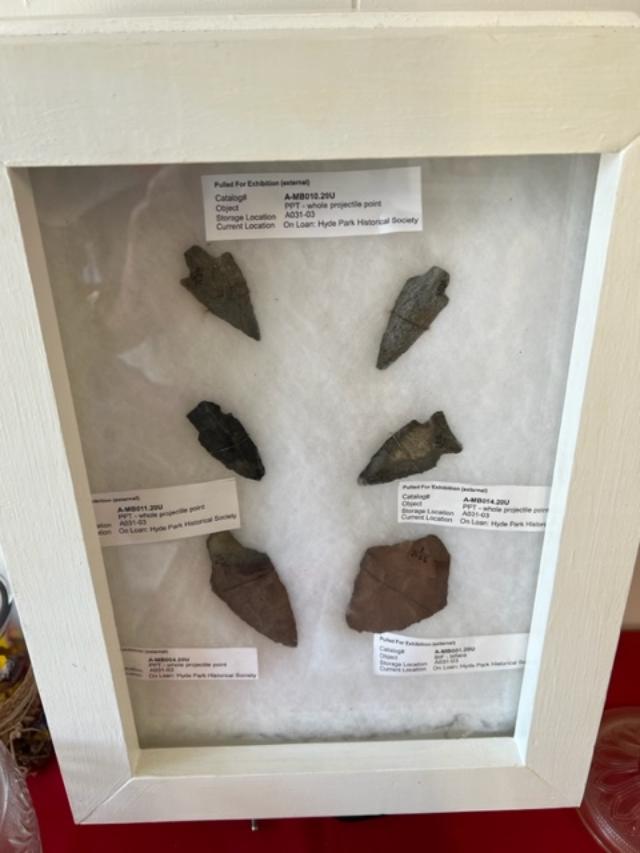
Another donation that was added to the collection from the State Museum is a collection of Native American arrowheads that were found locally. These show that the area was once the hunting and gathering grounds for the Lenape Indians before colonialization.

The donation of Native American Arrowheads.

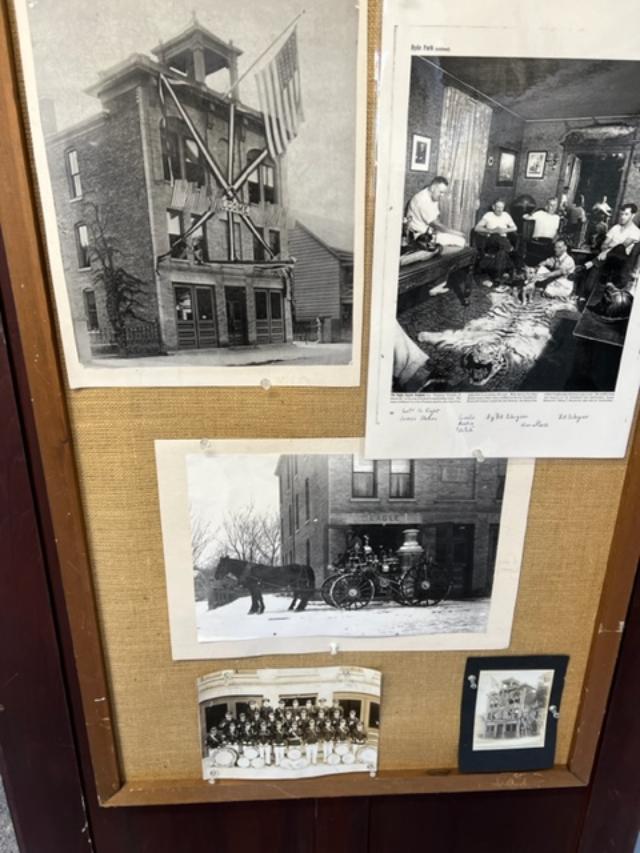
Next to it was the history of the Hyde Park Fire Department with pictures of companies of fire fighters and all sorts of memorabilia. There are pictures of former fire companies including the ones that were once housed in the museum building.

The Hyde Park Fire Department:

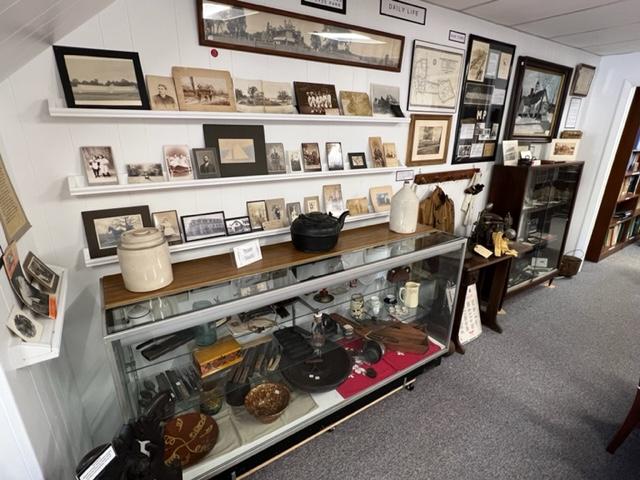
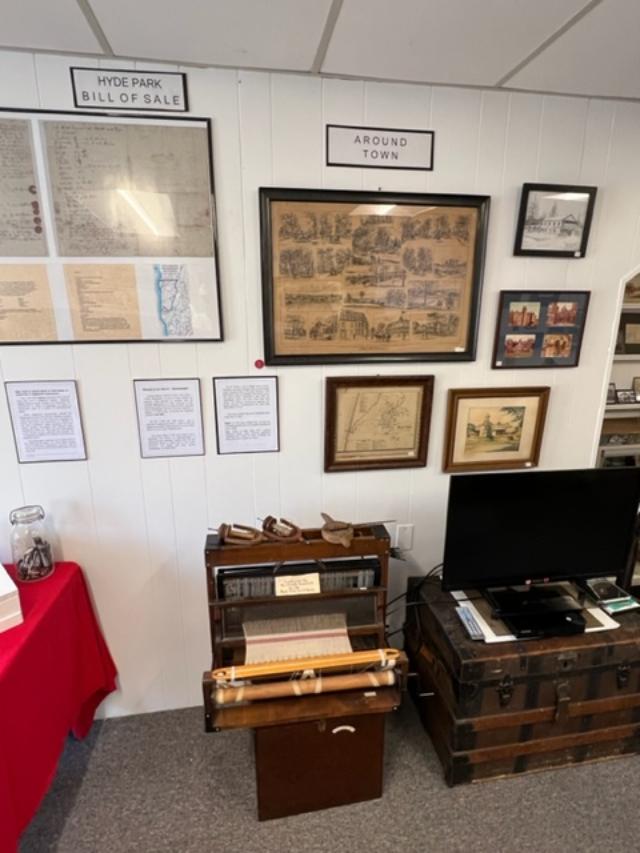
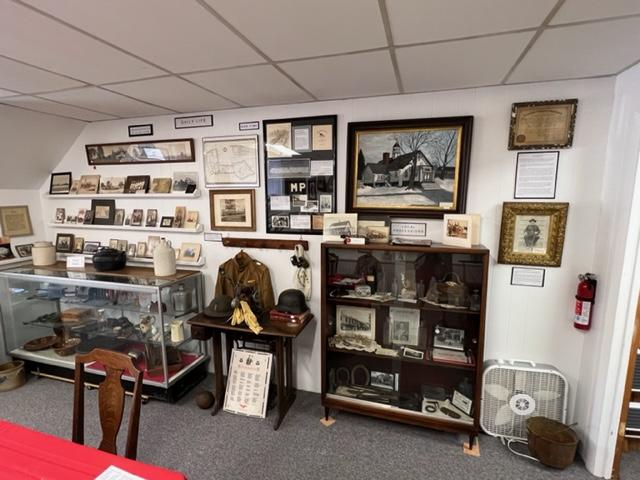
Across from that, there is a display called “Daily Life” which was the history of the town with homes and businesses in the area at that time. There were all sorts of pictures of prominent families and their day to day activities.

Daily life in Hyde Park, NY for the Middle class members of the community

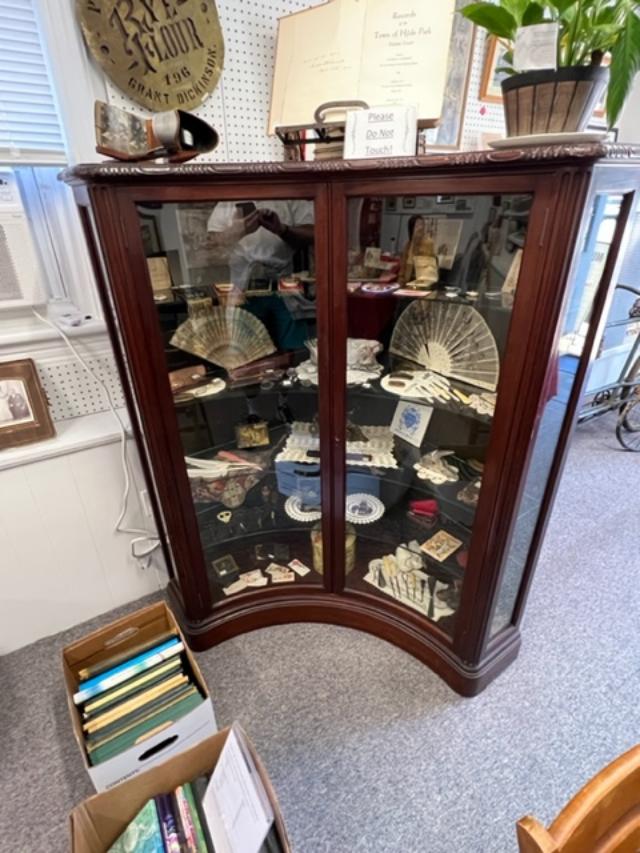
Luxury items of the Gilded Age

There was all sorts of objects from the bills of sale of homes, household items and there is an wonderful display of accessories from the Victorian era.

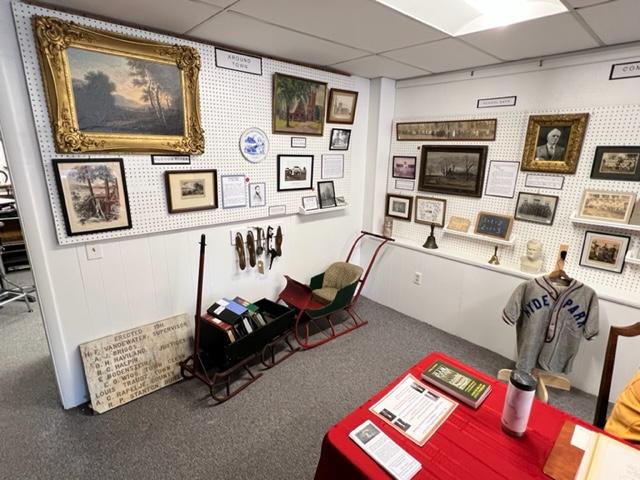
The front room of the museum is dedicated to life of the middle to upper-middle class of Hyde Park around the turn of the last century. There is all sorts of clothing, pictures and artifacts from schools, the boy scouts, area schools and there are even sleds and skates from winter recreation sports played on the Hudson River. There are all sorts of athletic equipment, clothing based on sporting or activity event and accessories that were used and worn when participating in all seasonal activities.

Life in Hyde Park, NY

Every day life in Hyde Park, NY

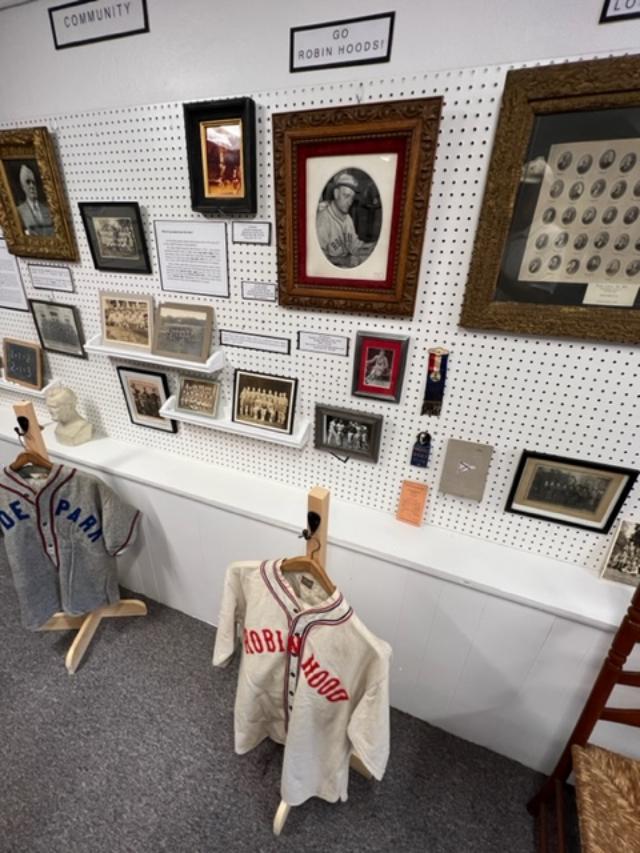
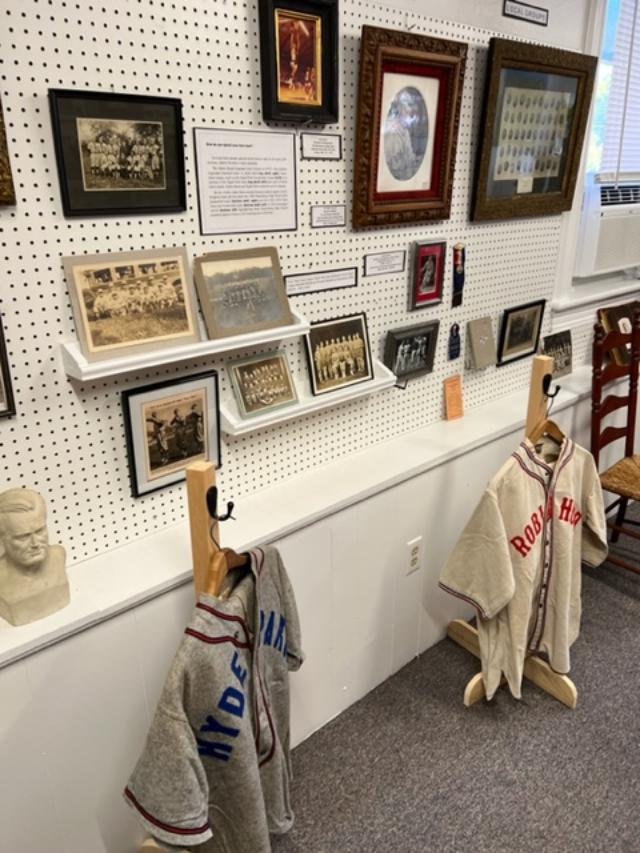
There is a small display from the semi-professional baseball team that used to be located in Hyde Park with pictures, equipment and uniforms. It seemed that semi-professional baseball was a big entertainment and community event in years past in Hyde Park, NY.

The Hyde Park baseball team

There are also items in a small war display that is circa WWI. Many artifacts were donated by families whose members fought in the war.

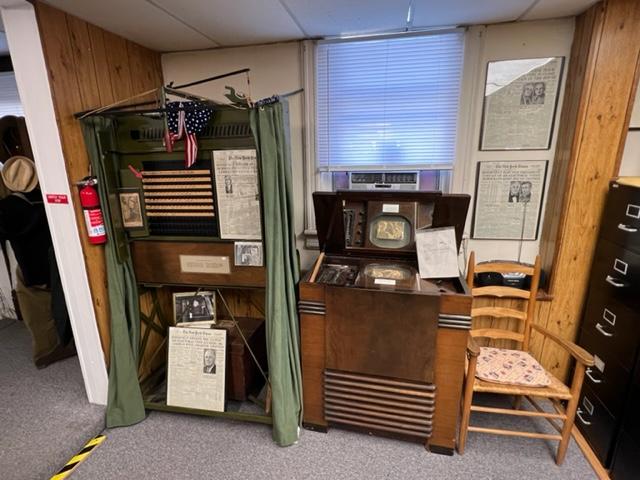
The second small room in the back is dedicated to communication equipment from WWII and pictures of Franklin Delano Roosevelt who was the President at the time as well as a prominent member of the community. The Roosevelts had lived in the Hudson River Valley for generations.

There are several important pieces of war time equipment located here.

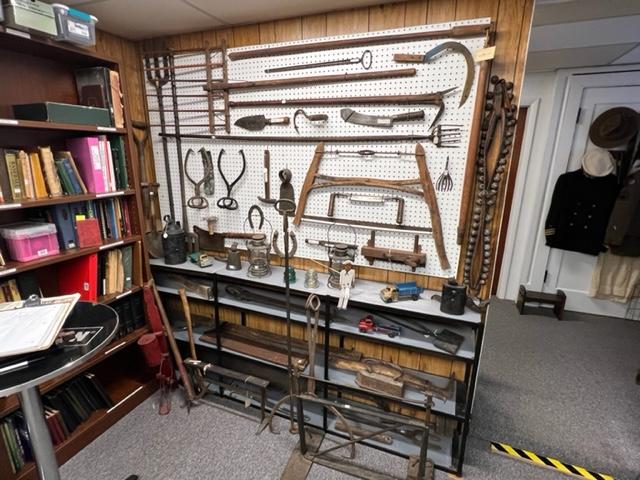
There is also a display of farm equipment showing off the areas agricultural past and present. This is still a major farming area as you head north of Rhinebeck, NY.

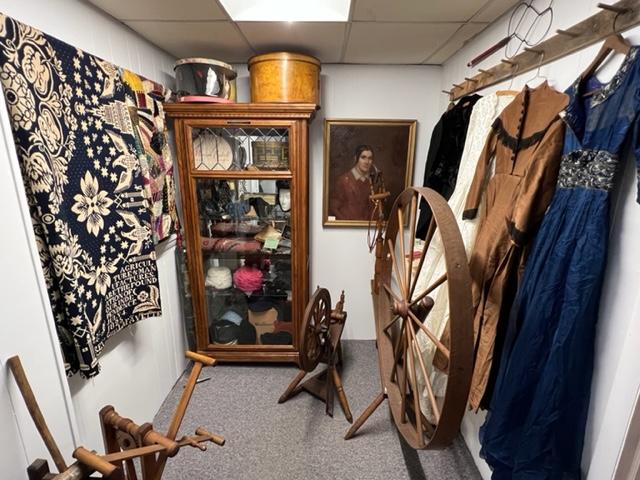
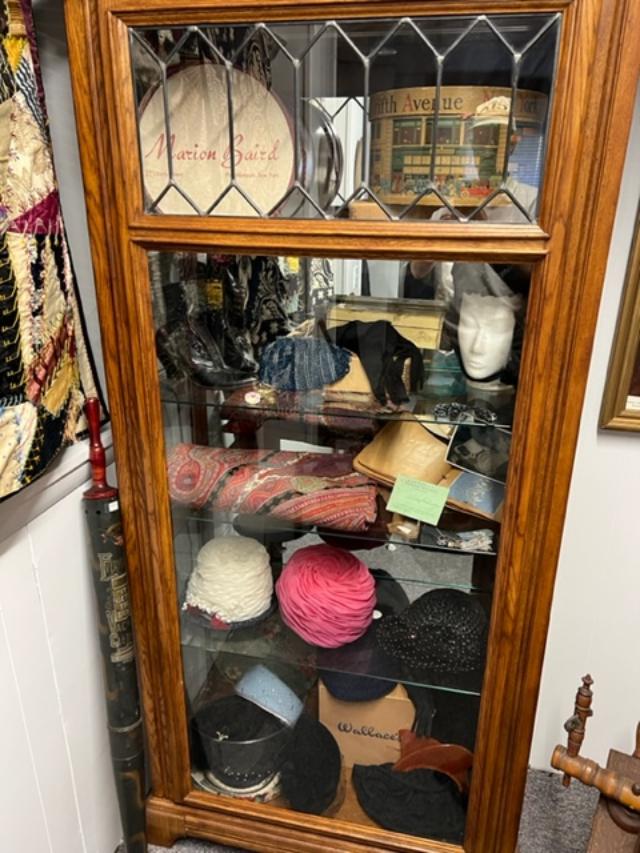
The back room is dedicated to clothing and wardrobe items like dresses, hats and spinning items.

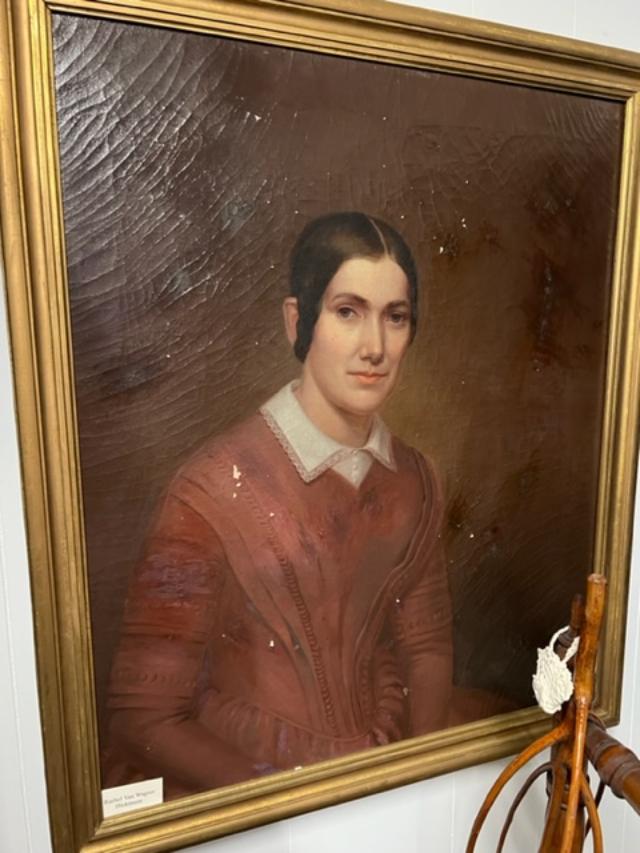
There are a few portraits of local residents as well.

This shows the change of clothing from when Dutch women would spin their wool for clothing to buying ready to wear items in the local department and specialty stores that dotted towns like Rhinebeck and Poughkeepsie.

The display also shows the manner of dress went from the Victorian era to the Jazz Age and the changes in just ten years.

Hats from various ages

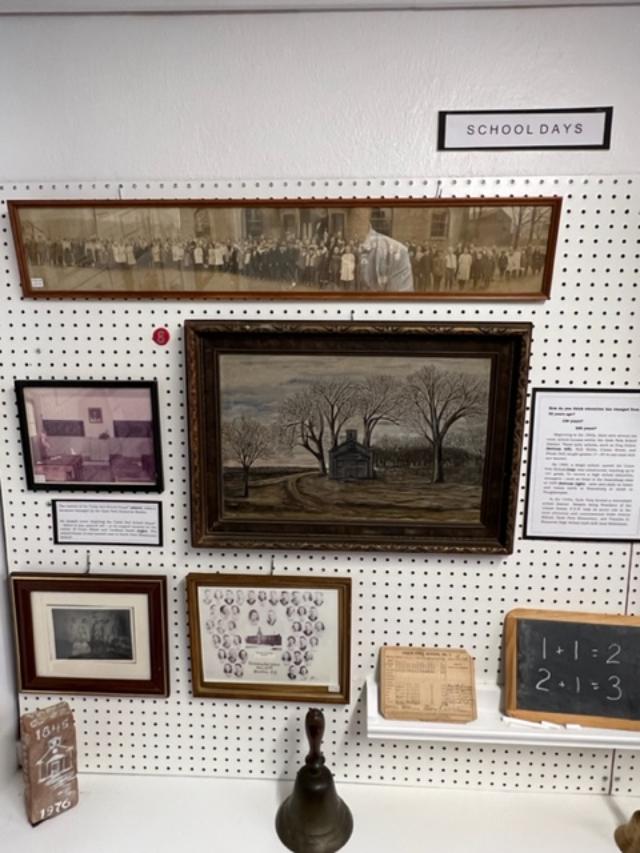
Here and there are other items that relate to daily living and a prosperous life in Hyde Park, NY. The museum is well lit and very well organized and signed so it makes viewing the displays a pleasure. It is a treasure trove of artifacts and information and insights to the life of Rhinebeck NY at that time. This display was on the Hype Park School System.

Everyday life in the schools in Hyde Park and Rhinebeck, NY

The History of the Hyde Park Historical Society:

(From the museum’s pamphlet):

The Hyde Park Firehouse:

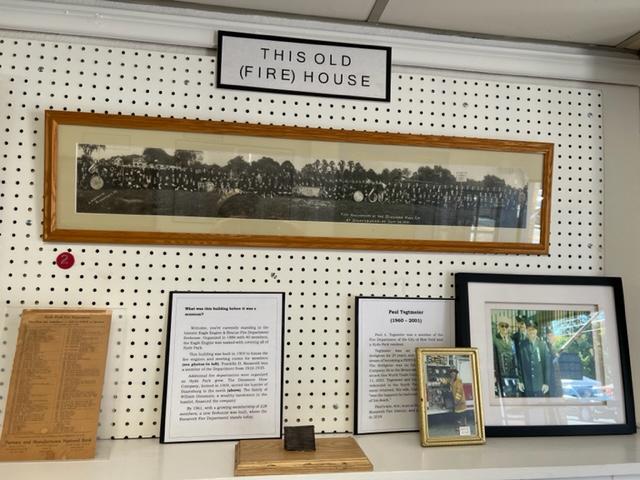
As indicated by the engraved stone lintels over the engine bays, the firehouse that the museum is housed in was built in 1905 for the Eagle Engine Company founded in 1845 and the Rescue Hook & Ladder Company (1866), separate companies whose volunteer members included Franklin D. Roosevelt.

The old Hyde Park Firehouse serves as the museum

Designed by Poughkeepsie architect William Beardsley, the Renaissance Revival style brick building features a cast iron cornice and a bas relief decoration above the third story windows.

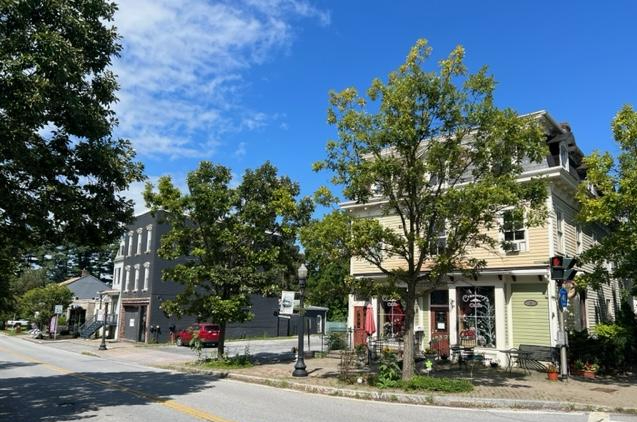
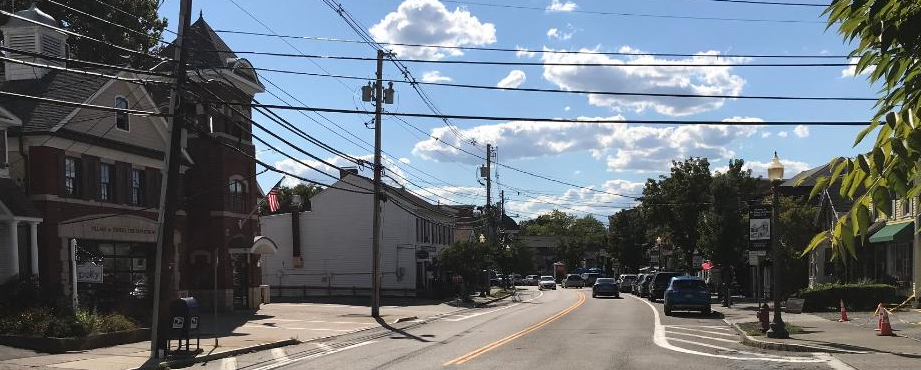
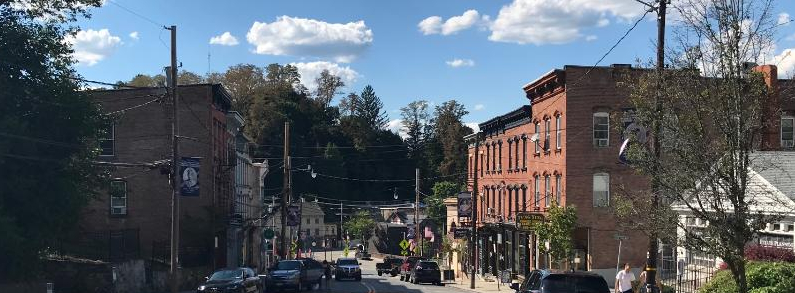
Downtown Hyde Park in the summer of 2023.

You can find all sorts of items at the museum. It contains lots of local pictures and artifacts. In the Textile Room, you can find a hat box labeled Mrs. James Roosevelt, a spinning wheel and period apparel.

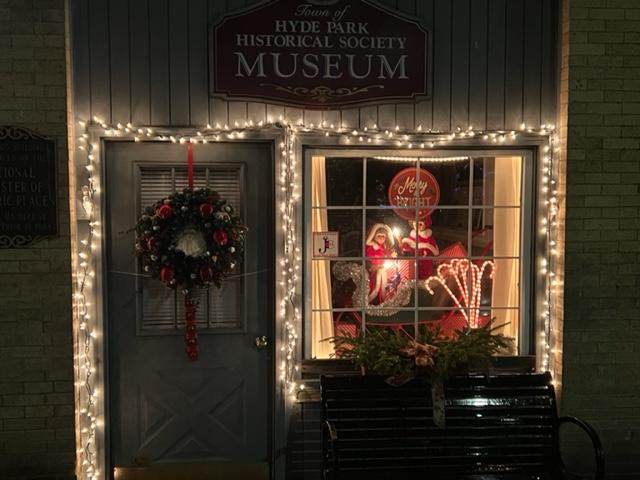
The Hyde Park Historical Society at Christmas 2022

In the Research Room, you can search your family and friends’ history, look at local tools of trade and maps of Dutchess County in the 1700’s.

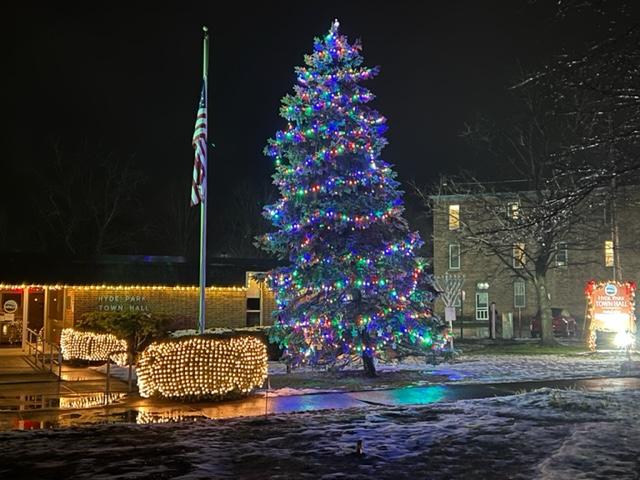
The beautiful Hyde Park Christmas tree December 2022

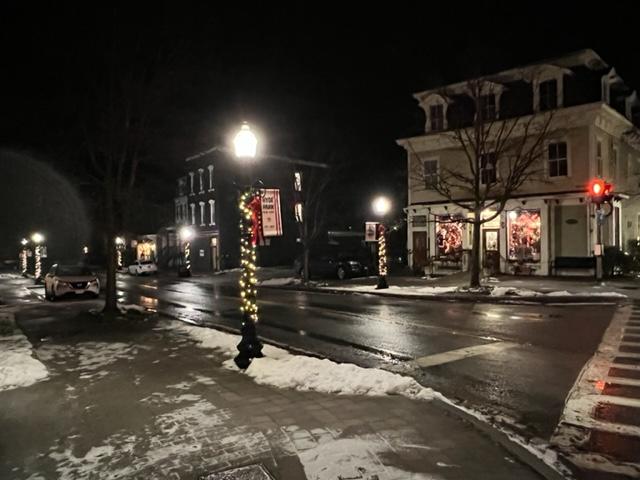
Downtown Hyde Park at Christmas time

Day Two Hundred and Forty-Five Exploring the Historical sites of Fishkill, NY- A Local Journey                                             August 7th and 14th, and December 10th, 2022

Day Two Hundred and Forty-Five Exploring the Historical sites of Fishkill, NY- A Local Journey August 7th and 14th, and December 10th, 2022

Don’t miss touring the historical sites of the Fishkill, NY area and then touring the local downtowns for something to eat.

There is lots to do and see in Fishkill, NY

There’s lots to do and see in Wappinger Falls, NY as well

Don’t miss these two wonderful downtowns and all the historical sites, parks, farms and wonderful eating establishments in the surrounding area. It makes a wonderful afternoon.

Christmas at the Brinkerhoff House

The Brinckerhoff House decorated for Christmas tea fundraiser

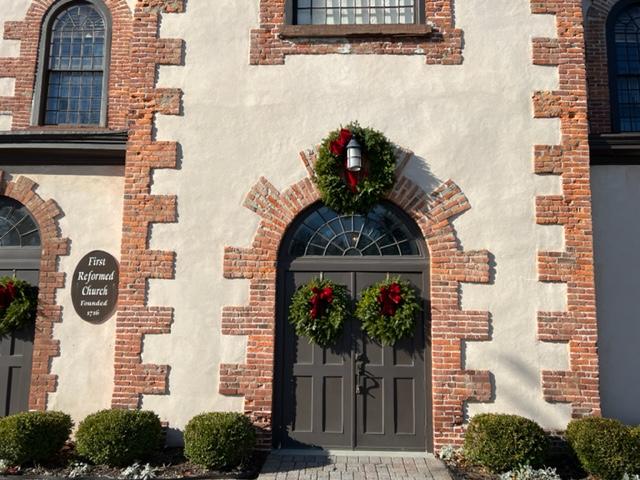
The First Reformed Church of Fishkill decorated for the Christmas holidays

jwatrel's avatarmywalkinmanhattan

I love visiting the Hudson River Valley so any event or tour that I can go on is an excuse to come up here. I had visited all the sites that I wanted to see on a trip two weeks earlier but wanted to see them in more detail plus I wanted to take some pictures. The weather finally broke, and it was a much more pleasant 83 degrees as opposed to the 96 degrees the trip before. That makes the trip much nicer.

I asked my aunt along so that we could share in the experience, and I could use her phone to take pictures of the all the sites. It is a much nicer trip when you have someone along who enjoys these things. The one nice thing about traveling to the Fishkill, New York area is that it is only an hour away and a straight run…

View original post 3,354 more words

First Reformed Dutch Church of Fishkill                             1153 Main Street                                                                Fishkill, NY 12524

First Reformed Dutch Church of Fishkill 1153 Main Street Fishkill, NY 12524

First Reformed Dutch Church of Fishkill

1153 Main Street

Fishkill, NY 12524

(845) 896-4546

Open: Church Services are on Sundays at 10:00am

https://www.facebook.com/FirstReformedChurchofFishkill/

Home Page

My review on TripAdvisor:

https://www.tripadvisor.com/Attraction_Review-g47724-d263921-Reviews-First_Reformed_Church_of_Fishkill-Fishkill_New_York.html

After visiting three historical homes in the Fishkill area covering the towns of Hopewell Junction and Wappingers Falls, my last stop of the day was the First Dutch Reformed Church of Fishkill, NY. The church was closed at this point with services being on Sunday’s only starting at 10:00am. I was able to tour around the church admiring its architecture, looking over the DuBois House which is also owned by the church and exploring the cemetery.

The cemetery was the most interesting being the final resting place of many of the ‘first families’ of the area, including family plots of the Van Wyck and Brinckerhoff families, who also intermarried with each other. There were sections dedicated just to the families and then to the blended ones.

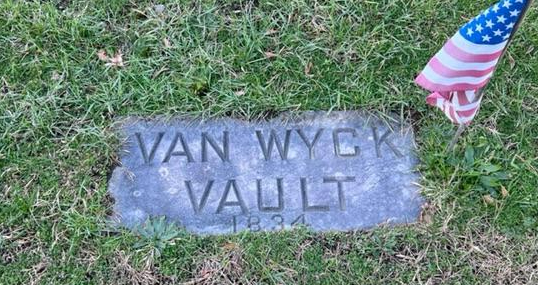
There were also members of the DuBois Family among others. What was interesting was toward the back of the cemetery near the new playground was the Van Wyck Family Vault. This large mound is noted with the stone maker in the front of the vault.

The Van Wyck family vault at the Fishkill Reformed Church Cemetery

The Church played an important role in worshipping in the community as it does today.

The Founding of the Church:

(From the Church records)

On October 10th, 1715, the Revered Petrus Vas of Kingston, NY under the direction of the Classis of Amsterdam, started two Dutch Reformed Churches, one in Poughkeepsie and the other in Fishkill. This occurred when the population of the are increased and they did not want to keep travelling to New Paltz for worship.

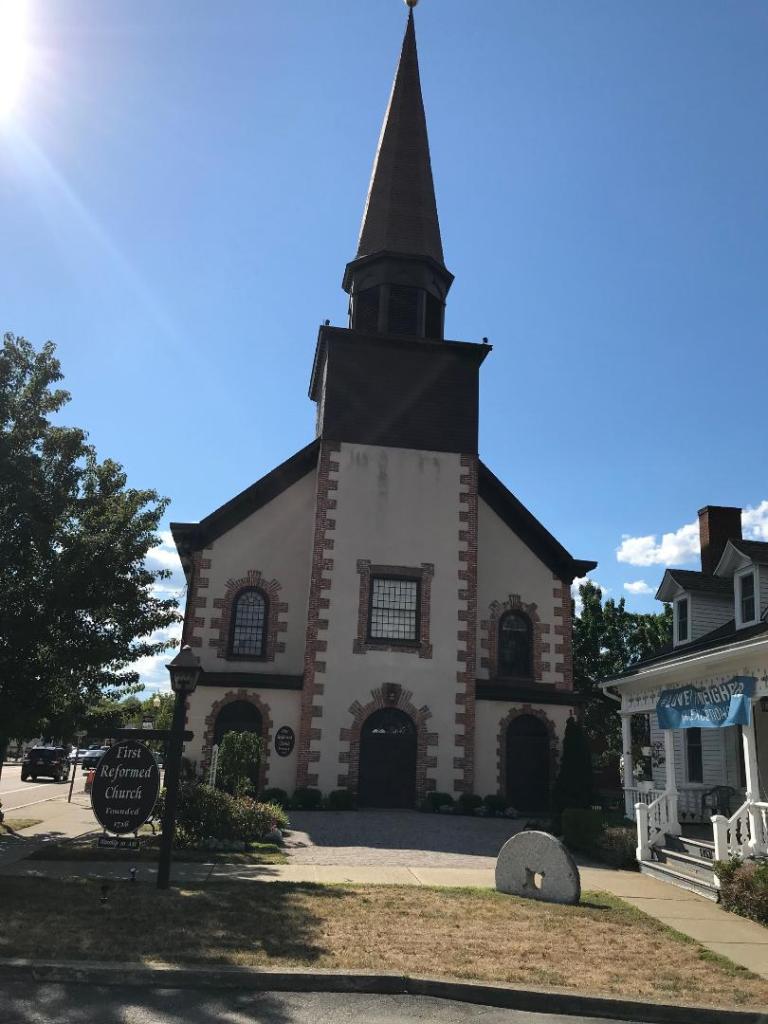
The First Reformed Dutch Church of Fishkill, NY at 1153 Main Street

The Church today:

(From the Church website)

The 20th Century brought additional changed to the property. Some gravestones were moved to make space for the Christian Education Building, which was constructed in 1964. The old chapel, a 19th century addition to the property was torn down. The playground is now located where the chapel was once. A Memorial Garden was added to the cemetery in 1980 and includes a columbarium for cremains. The sanctuary’s exterior was refurbished in 1975, the steeple reshingled and the rooster regilded in 1984.

In 1992, a condition survey was done (the church is the centerpiece of the Fishkill Village National Historic District). This report concluded that the sanctuary is one of the most significant nonresidential 18th Century buildings in New York, if not the country. The framing is a perfect example of an upside-down boat. While it was urged to pursue National Landmark Status for the church itself, it has not yet been done.

The Cemetery:

In 1995, a report on the preservation of cemetery gravestones was done. A Boy Scout Eagle Project, in 2002, recorded pictures and inscriptions of each stone in the cemetery and created a finder’s map of the cemetery.

The Enoch Crosby marker for a spy for the American forces during the Revolutionary War

The trial was performed here, and Enoch Crosby was allowed to escape. This marker is dedicated to that event.

The cemetery behind the church with the DuBois House and Church to the right:

The DuBois House:

(From the Church website)

The property was expanded in 1991 with the purchase of the DuBois House (named for the founding elder of the church). There is no record of when it was built but with structural similarities to the Van Wyck House made it believed to be built in the mid 1700’s. Abraham Brinckerhoff Rapalje purchased the house with fifty-four acres of land from his uncle, Abraham Brinckerhoff in 1790. Rapalje was the man hired by the consistory to do finish work after the church was enlarged following the Revolution. The house served as the hearing room for the court proceedings of the Committee of Safety over which John Jay, who would later become our nation’s first Supreme Court Justice presided.

The Committee of Safety played an important role in the story of Enoch Crosby, the Revolutionary Spy. The house was originally located east of its present location and was moved in 1929 to make way for the expansion of the Albany Post Road, now Route 9. The building is used for service to the community and church. It contains the church parlor and offices for the Minister and Secretary on the first floor and the office of the Music Director.

The Brinckerhoff/Van Wyck family plots

The Van Wyck family plot

The full Dutch Reformed Church of Fishkill cemetery and church

The Van Wyck Family Vault:

The History of the Dutch Reformed Church of Fishkill, NY:

By 1716, the population of the area had grown enough (though the whole county had only 440 people) that the settlers wanted their own church instead of having to cross the river to New Paltz or Kingston where the two closest Reformed Churches were located. Therefore, on October 10th, 1716, the Reverend Petrus Vas from Kingston under the direction of the Classis of Amsterdam started two Dutch Reformed Churches, one in Poughkeepsie and one in Fishkill.

While Poughkeepsie began building immediately, Fishkill did not begin building until 1725. Tradition and most published sources have it that Madame Brett by now a widow and the wealthiest landowner in the area gave the land for a churchyard while the land the church occupied was given by Johannes Ter Boss.

However, two deeds registered at the County Courthouse tell a different story. The first parcel of land, “it being that certain piece of land on which the Dutch Church so called now stands” was given by Madame Brett, through Jacob DuBois, it being the intent of him that the Reformed Nether Dutch Congregation of Rumbouth precinct “always be kept and preserved as a church or public edifice for the particular sole and only use and benefit of the aforementioned church to worship the Almighty God, in and to and for no other ends purposes use or uses whatsoever.” The second deed states that Obidiah Cooper and Esther, his wife, gave another small parcel of land to the church. These records were written thirty years after the fact and were not filed in Poughkeepsie until 1915.

There is also a deed from 1747 in which Johannes Ter Boss sells a parcel of land north of the Fishkill’s, reserving one acre for a meeting house. Every published history has this acre for the Rombout Presbyterian Church, which was built in 1747 about three miles from First Reformed. So, it would appear that there was confused between DuBois and Ter Boss, probably due to the old handwriting and a Frenchman, born in Leyden, Holland and a Dutchman. Another supporting piece of information is that there is no Ter Boss listed in the church records of The First Reformed Church, while the DuBois family is prominent, starting with Peter DuBois, the first elder.
It took seven years to build the original sanctuary. Field stone was brought by ox teams and the local inhabitants, and their slaves did the building. Work proceeded slowly because the men had fields to attend and families to support. The sanctuary was a small, square building with a hip roof and a cupola in the center, which supported a bell. The central door opened onto the street as the side door does today.

In 1785 the congregation decided to enlarge the original building. The east and west walls were taken down and the building was lengthened. A second story was added, and balconies suspended by iron rods were put into seat slaves. The tower and the steeple made with beams 18″ square and 80″ long rose 120 feet above the ground. The west end had four small windows.

In the midst of the reconstruction, John Stickland, an English traveler wrote “Here is a large Dutch Church, rapidly going to decay, probably never to be repaired.” However, construction continued, and the consistory hired Abraham Brinckerhoff Rapalje, who lived next door to build the new pulpit, new pews and to enclose the square lower section of the tower.

Five years later, in 1795, they hired him again to shingle the spire. With construction finished, the spire was topped with a gilded cock, symbolic of Peter’s denial of Jesus. It is actually about three feet high. It is one of the few left in the country.

The expanded sanctuary was remodeled in 1806. Columns were added to support the balconies and the pulpit and side pews were lowered to the level of the rest of the sanctuary. More alterations were made in 1854, when the balconies were narrowed and lowered. An alcove was made in the west end for the pulpit and the four small windows were replaced by the stained glass and painted windows. The alcoves and doors on each side of the tower were added.

The church decorated for Christmas in 2022

The chandeliers were imported from Holland and can be lowered by chains to the level of the pews for service. Gas replaced candles in the chandeliers in 1858. In 1908, they were electrified. In the late 1800’s, most of the ‘extra’ original property was sold for building lots at $100.00 each no one foreseeing the need for parking lots of the future.

(Disclaimer: I changed a few things around from the church history to make it flow better. More details are on the above link to the church’s history).

The entrance to the First Reformed Church of Fishkill in December 2022 decorated for the holidays.