I visited the Hopewell Depot one weekend and found it to be a very interesting look at the rail service during its development in the Hudson River Valley. The rail service changed the way business was done in the valley for farmers and opened the whole area up for development.
The rival commuter lines than merged together to make a better lines of transportation and bring people not just through the area but to help build the communities and their businesses that they are today. Each section of this small museum tells the story of that development.
The front gallery of the museum
The potbelly stove that warmed riders before their rides.
The community gallery
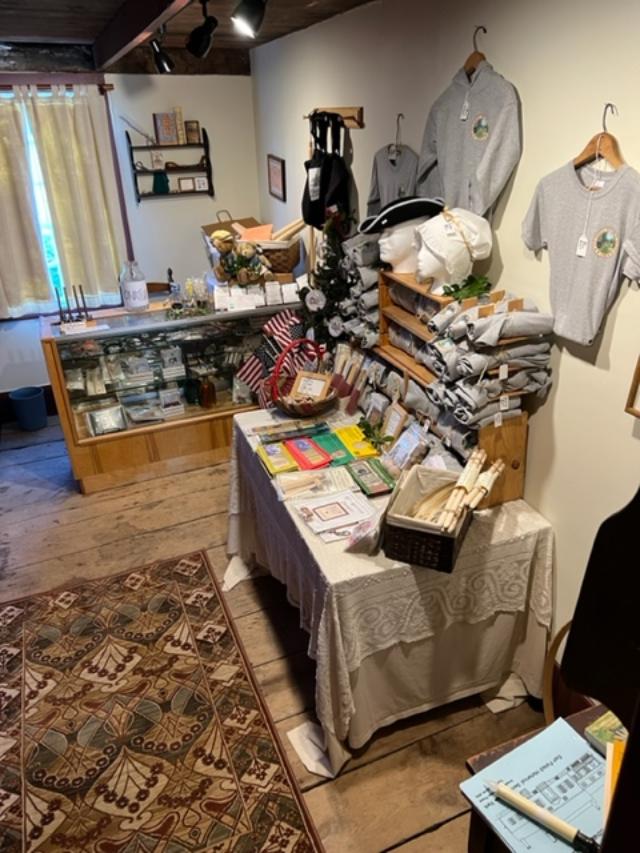
The front section of the museum which houses the gift shop and welcome area once served as the waiting room for the train station. This had been a smaller line once serving between Poughkeepsie and Connecticut and then later on to the rest of New York State and as a line to transport agricultural products between the Valley and the growing market in New York City.
The tops of telephone poles
The middle section of the museum houses the Train Manager’s office and an office for communication to outside communities. Here the train depot manager would run the day in day out services of the trains and their functions with the bigger lines and the Western Union communications area would service the community with messages and services to the outside.
The Train Station Manager’s office
The Western Union/Communications office
The back section is where you could buy your tickets and converse with other people taking the railroad. Here are displays on the railroad lines, the products that were serviced through the rails like the big Borden Foods display, whose factory was located right next to the train station and had serviced all the dairy farmers in the community bringing fresh milk to New York City and beyond.
The back gallery of the museum
The back gallery
The Train Lamp display
The Borden Milk display in honor of the dairy industry locally owned Borden plant.
The museum also has displays on the workings of the railroads and how they functioned, how the community was formed and grew around the railroads and all sorts of equipment and items that made the operation work. The museum volunteers have done an excellent job telling the story of how Hopewell Junction and the surrounding towns developed and grew.
The Community Development display
The “Working” display of the growth of trains
Outside the building, the museum volunteers are working on renovating a donated caboose that was once used on another line. Here I saw the Train conductors operation area, the sleeping quarters and a small kitchen. I thought that was fascinating because I never knew what this car contained and never knew it was living quarters for the conductor. I can see the potential of kids wanted to climb all over this and want to know what life was like on the trains.
The Caboose on the back of the property
The inside sleeping quarters of the caboose
The overall sleeping area
The kitchen area
History of the Hopewell Depot:
The Hopewell Depot was built in 1873 by a Millbrook-led rail investment group that changed names several times between 1869 and 1873. Originally, the Dutchess & Columbia RR established a north-south short-haul coal route to Connecticut also serving the communities in the center of the country. The Hopewell community grew up around the Depot.
The grounds of the museum
In 1888, after Poughkeepsie’s great railroad bridge (now the “Walkway Over the Hudson) was built, the Dutchess County RR pushed southeastward and arrived in Hopewell Junction in 1892, creating a 4 way hub. In the next decade, the lines through Hopewell became part of the Central New England Railway system. In 1927, they came under full control of the New Haven RR until it failed in 1968. The Poughkeepsie RR Bridge burned in 1974 and the local rail service ended here in 1982.
The Hopewell Depot Mission:
Privately owned and operated since 1996, Hopewell Depot has progressed entirely through the work of volunteers from all walks of life.
The old baggage cart
The Visitor Center offers a variety of information on the local area and items for sale. The interior museum rooms present a host of interactive displays and artifacts about the region and the great era of railroads in general. The grounds contain the Interlocking Signal Tower with a special exhibit loft and public restrooms and the Rudberg Pavilion is open to visitor as a rest area.
Hopewell Depot Museum is on the National Register of Historic Places and is a fully chartered NYS museum. Its mission is to present the complex as a historical and educational experience for the regional community and provide an informative, recreational venue the public can enjoy with pride.
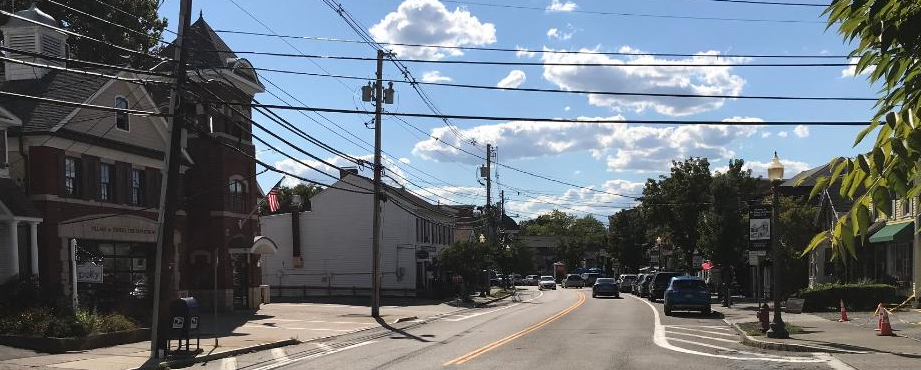
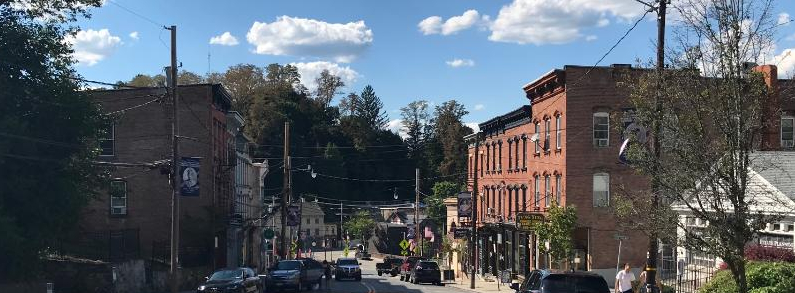
Don’t miss touring the historical sites of the Fishkill, NY area and then touring the local downtowns for something to eat.
There is lots to do and see in Fishkill, NY
There’s lots to do and see in Wappinger Falls, NY as well
Don’t miss these two wonderful downtowns and all the historical sites, parks, farms and wonderful eating establishments in the surrounding area. It makes a wonderful afternoon.
Christmas at the Brinkerhoff House
The Brinckerhoff House decorated for Christmas tea fundraiser
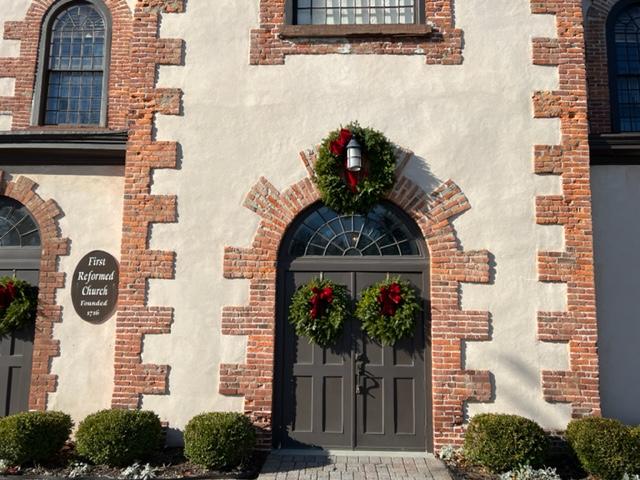
The First Reformed Church of Fishkill decorated for the Christmas holidays
I love visiting the Hudson River Valley so any event or tour that I can go on is an excuse to come up here. I had visited all the sites that I wanted to see on a trip two weeks earlier but wanted to see them in more detail plus I wanted to take some pictures. The weather finally broke, and it was a much more pleasant 83 degrees as opposed to the 96 degrees the trip before. That makes the trip much nicer.
I asked my aunt along so that we could share in the experience, and I could use her phone to take pictures of the all the sites. It is a much nicer trip when you have someone along who enjoys these things. The one nice thing about traveling to the Fishkill, New York area is that it is only an hour away and a straight run…
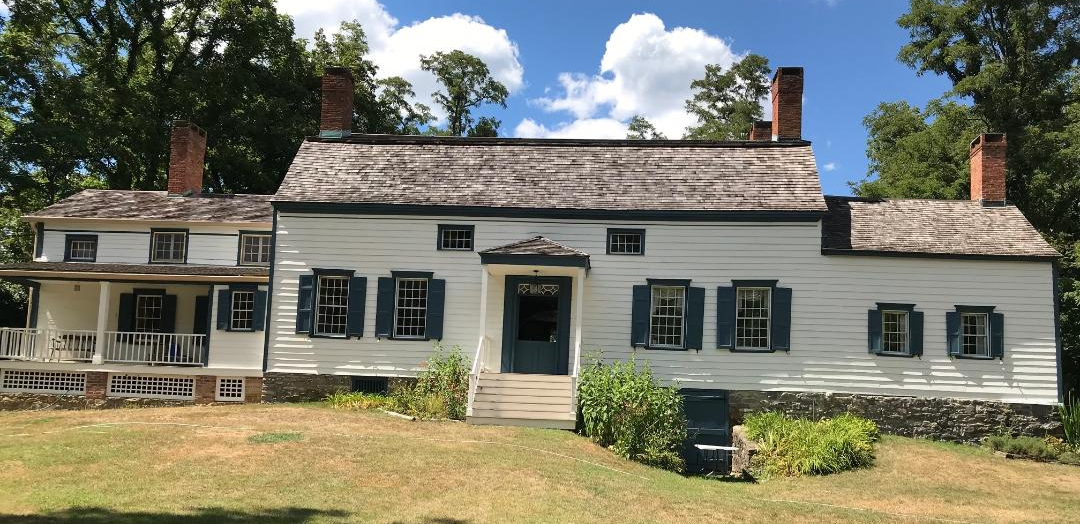
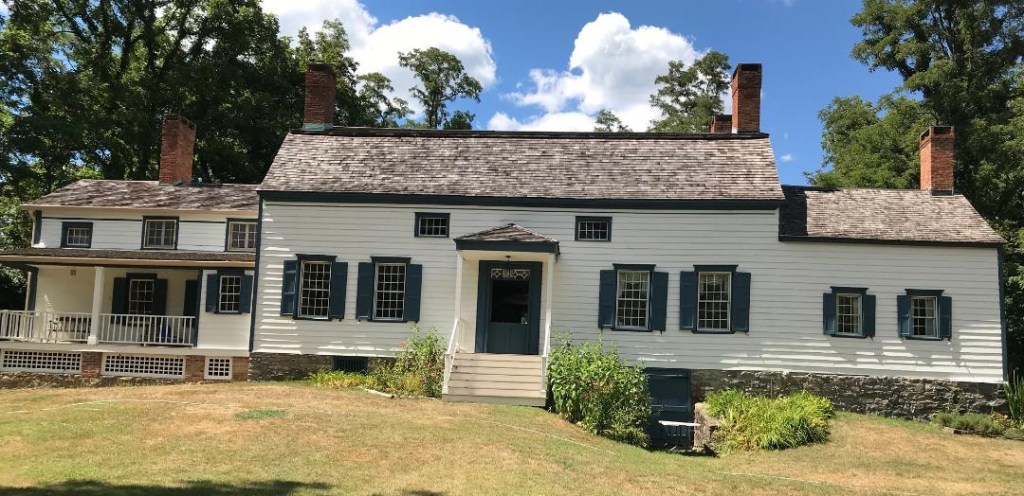
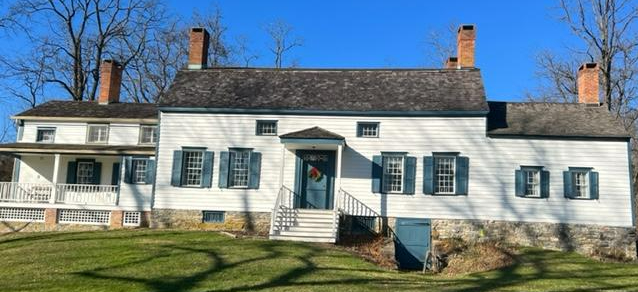
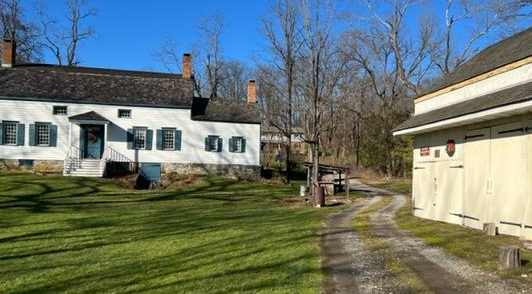
The Brinckerhoff House Historical Site was built in three different time periods with the oldest part of the house to the right, the main part of the house was built second and the Sun Room and porch to the left was built last. The house opens up in all parts but you can see the distinct different in the style of the design.
The entrance of the original homestead
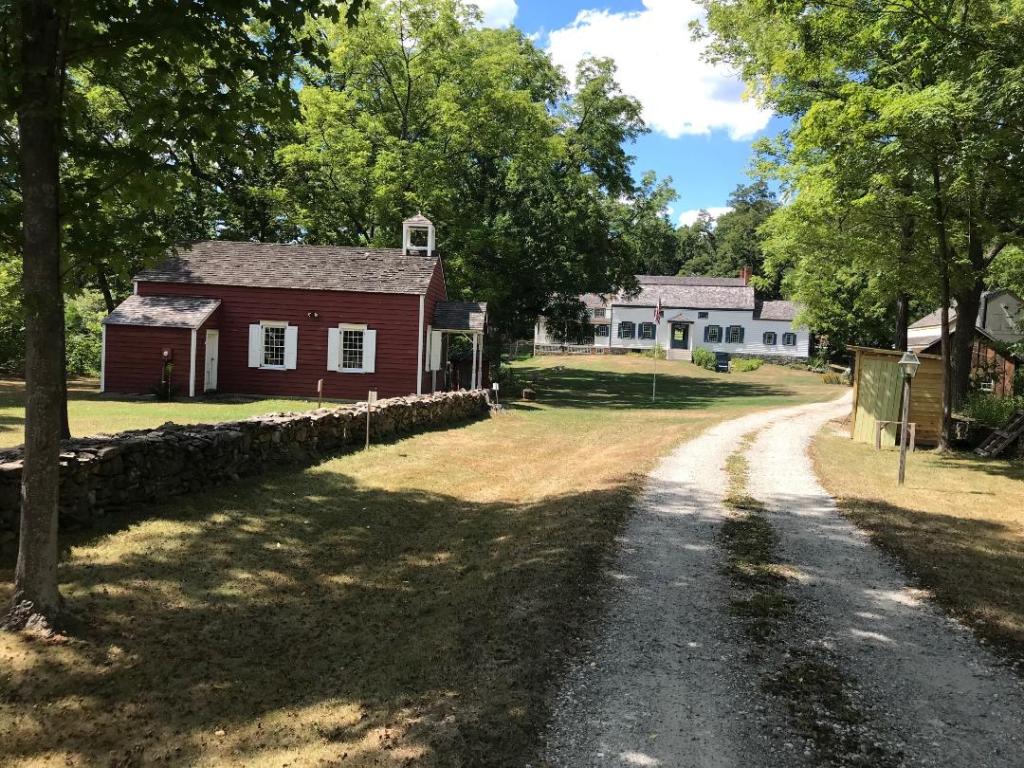
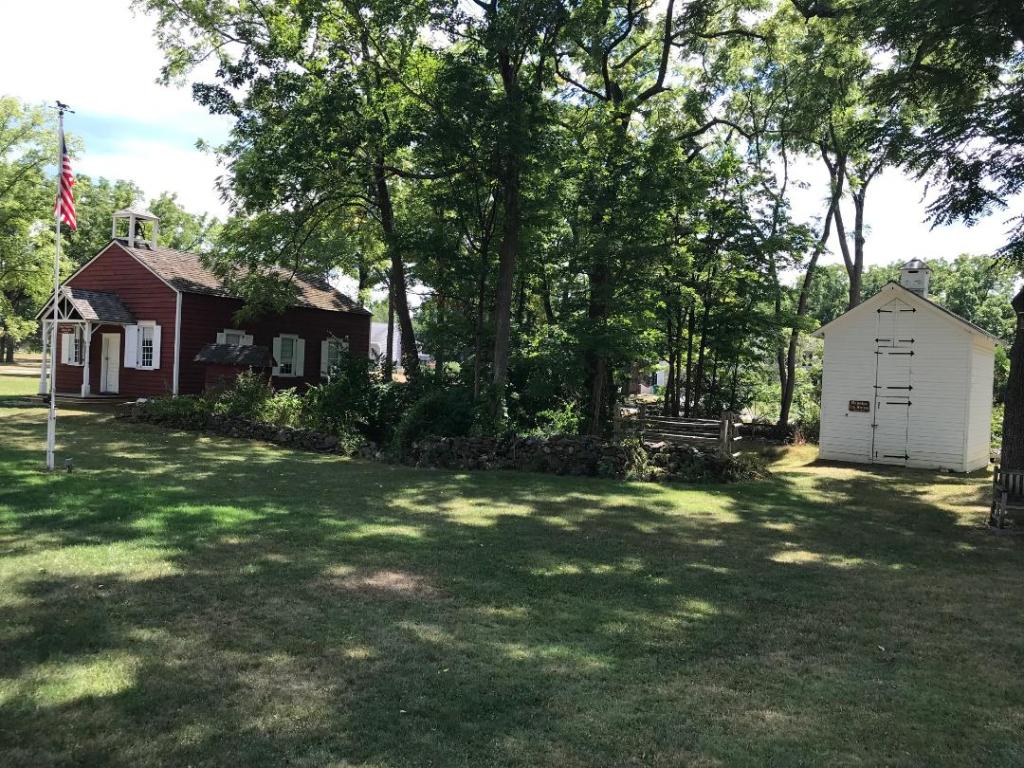
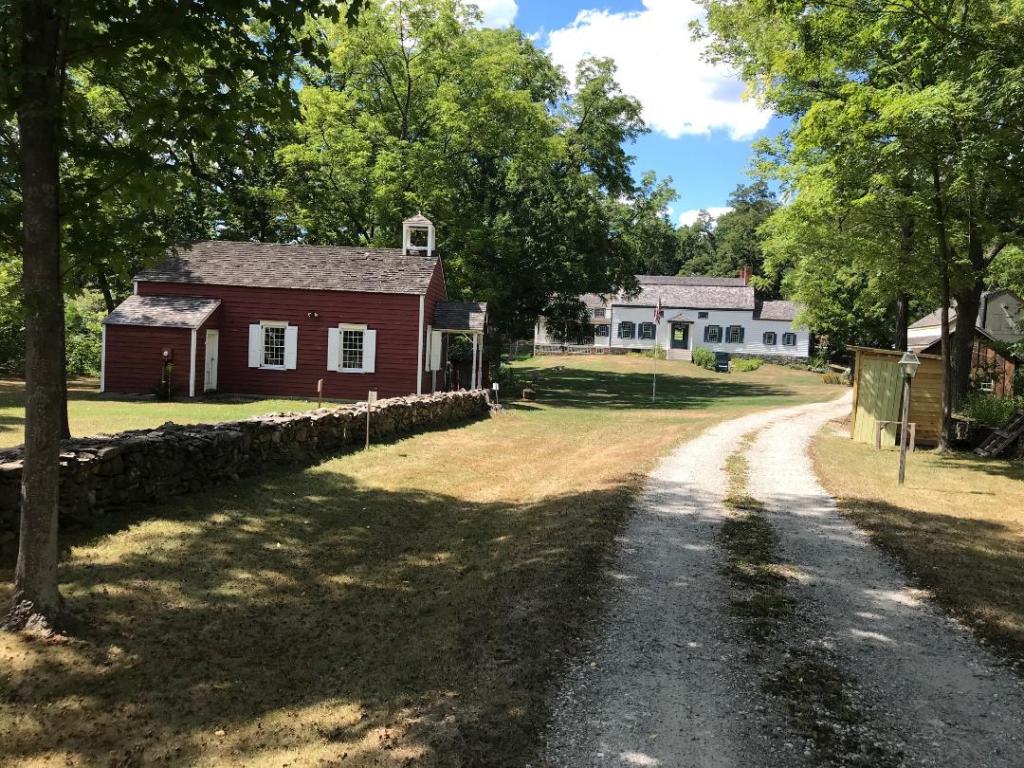
The entrance of the Homestead has the schoolhouse and icehouse to the left of the entrance and the blacksmith shop and the carriage house to the right. The Blacksmith shop has a real blacksmith on duty working when the house is open for tours.
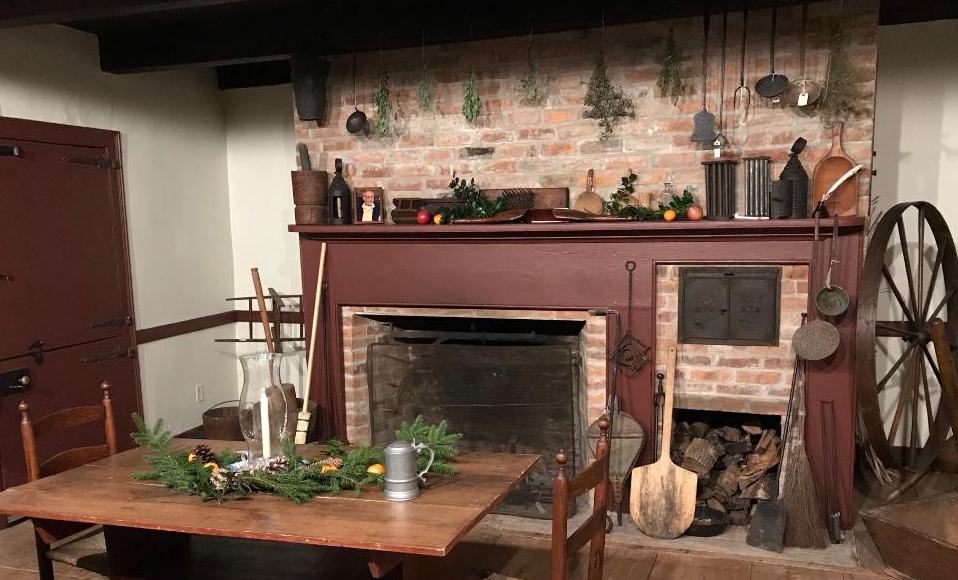
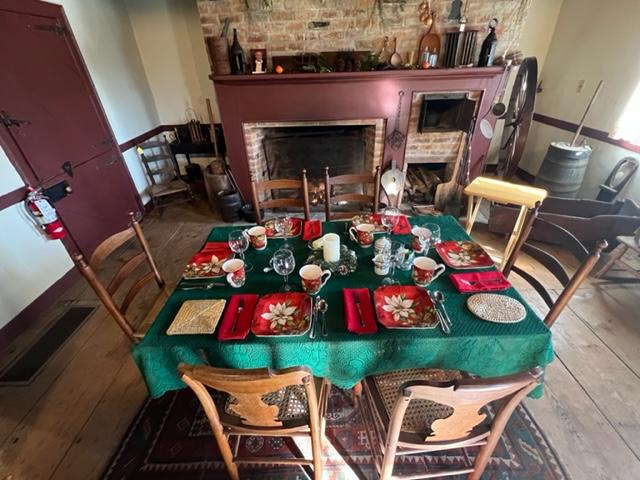
The original section of the house in the “Everything Room” where cooking, dining and socializing took place for the first generation of the family. This is the original part of the home that was built around 1755 by John G. Brinckerhoff and his bride, Marie Terboss for their family. There was a single upper room for the family as well. The main room is where all the cooking, eating, socializing and work was done by the family.
The original Brinckerhoff Kitchen in the first section of the home
When their family grew, the moved out and John’s brother, George G. and his wife, Elizabeth Wilcox moved into the house. After the Revolutionary War was over (both brothers were captains in the local militia), George G. added the main addition to the house with four additional rooms in the eastern wing of the house.
The addition showed the affluence of the family in that they could have separate rooms for socializing and higher ceilings meaning that they could heat the house properly.
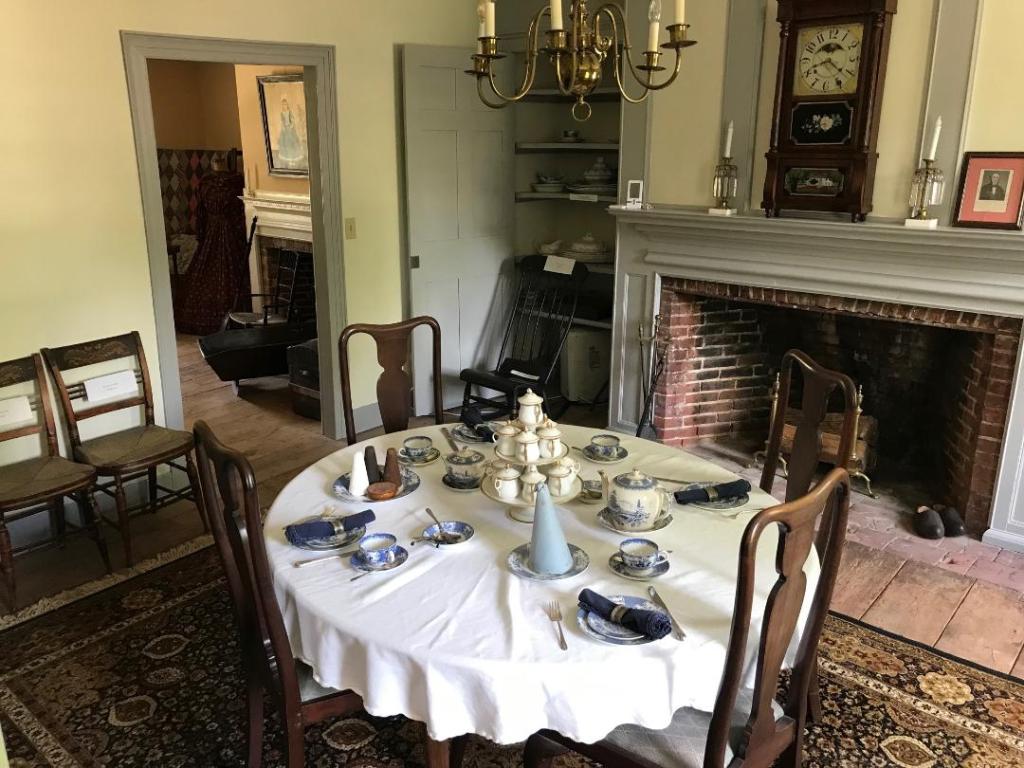
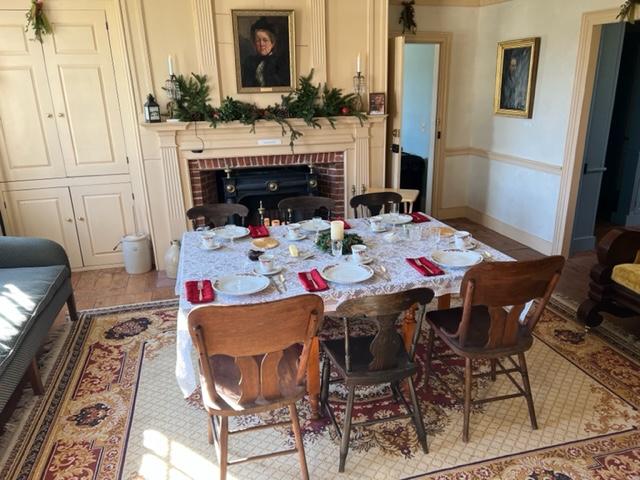
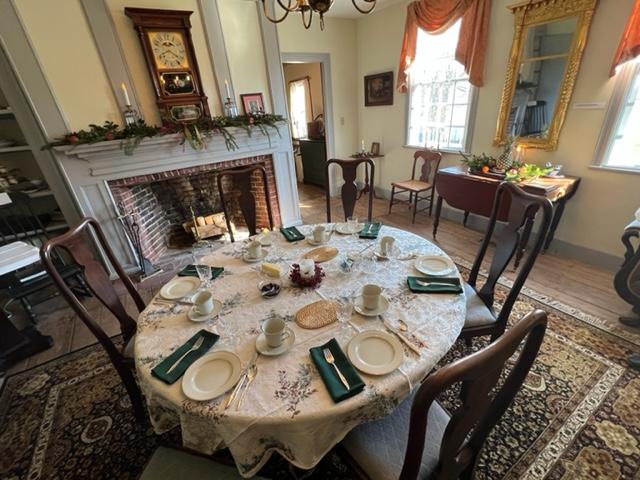
The formal Dining Room in the Victorian times set for entertaining. A hot chocolate service is on the table which was a luxury at the time.
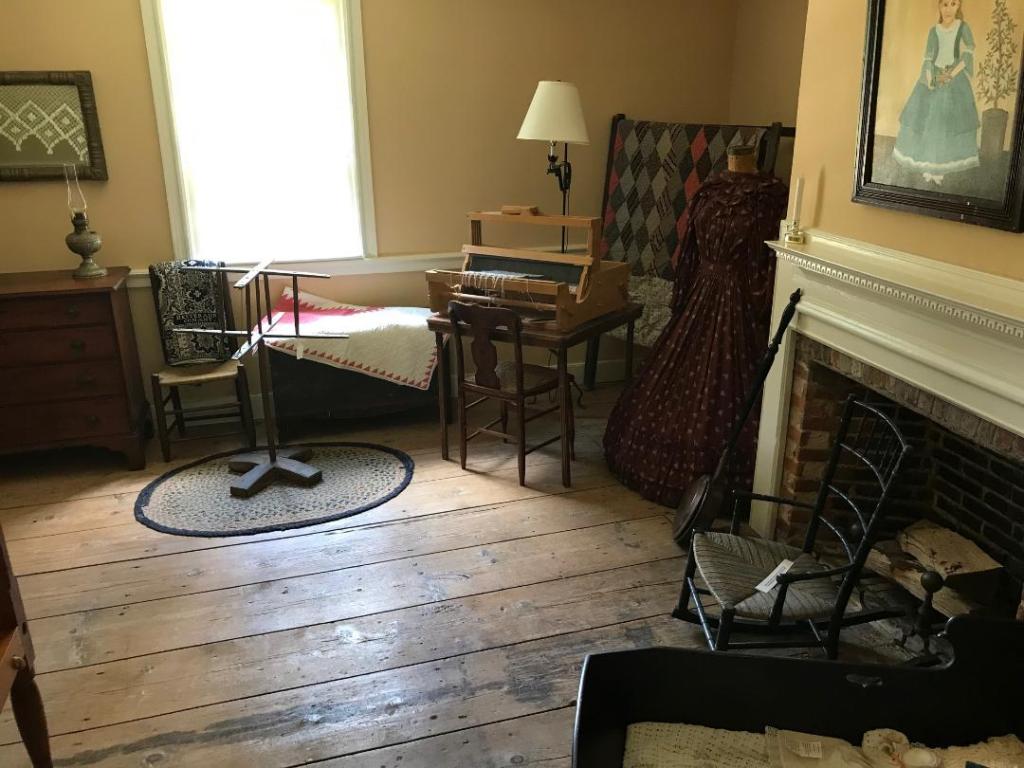
The formal Living Room is where socializing and work was done. Spinning and needlepoint as well as dressmaking where done by the ladies here.
The Living Room at the Brinckerhoff House
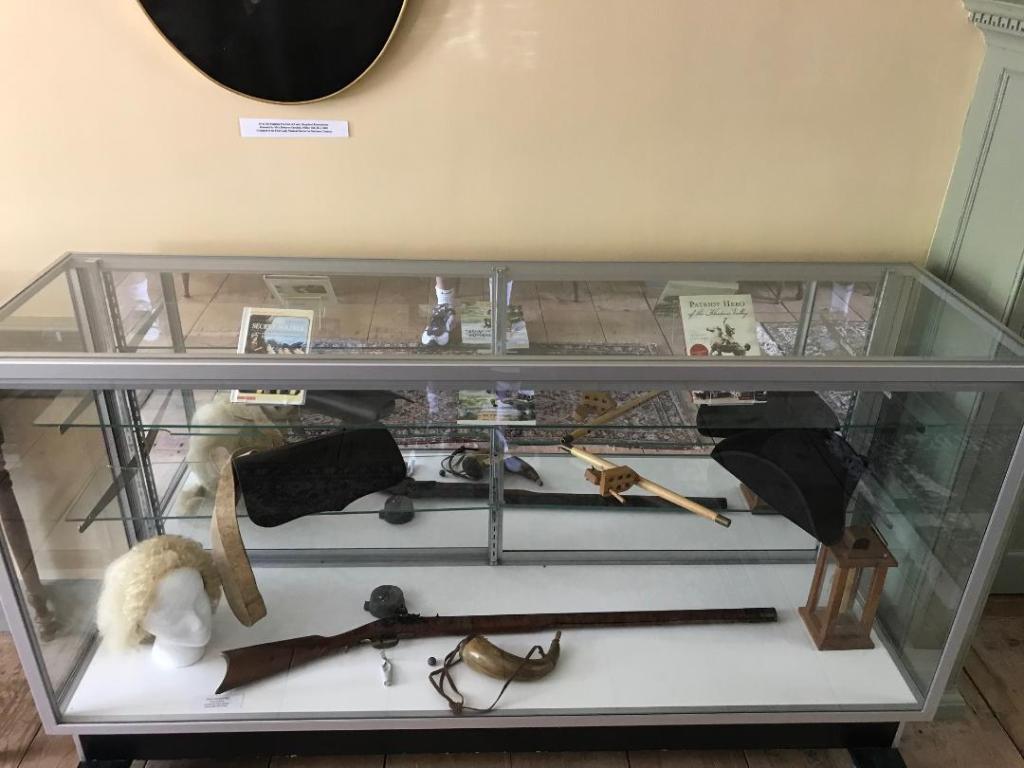
In the main hallway of the addition to the home services as a display area for all sorts of artifacts that deal with the different time periods of the home. These items are from the Revolutionary War.
Display cases in the main hall
Visiting the Historical Society at Christmas time and for the their Afternoon Tea:
Arriving at the Brinckerhoff House for the holidays on a beautiful sunny day
During a recent Christmas event held at the house in December of 2022, the house was decked out for the holidays. The Brinckerhoff house held its annual Holiday Tea, which it not held since 2019 due to COVID. This popular fundraising event was sold out that day.
The Brinckerhoff House ready for the holidays in December 2022
Approaching the house on the estate. The Van Wyck Barn is to the right.
Santa’s Sleigh for when Santa comes to visit the Brinkerhoff House
This sold out event really showcased the beauty of the house during a Revolutionary Christmas. Homes would be decorated in natural garlands and fruits of the season and the house would be decorated with candles. There was a Christmas tree in the home but that would not be seen until the Victorian era.
The Keeping Room decked out for the Afternoon Tea at the Brinkerhoff House
The Family Room at the Brinkerhoff House for the holiday in 2022
The Living Room decorated for the Afternoon Tea
The Living Room decorated for the Afternoon Tea at Christmas 2022
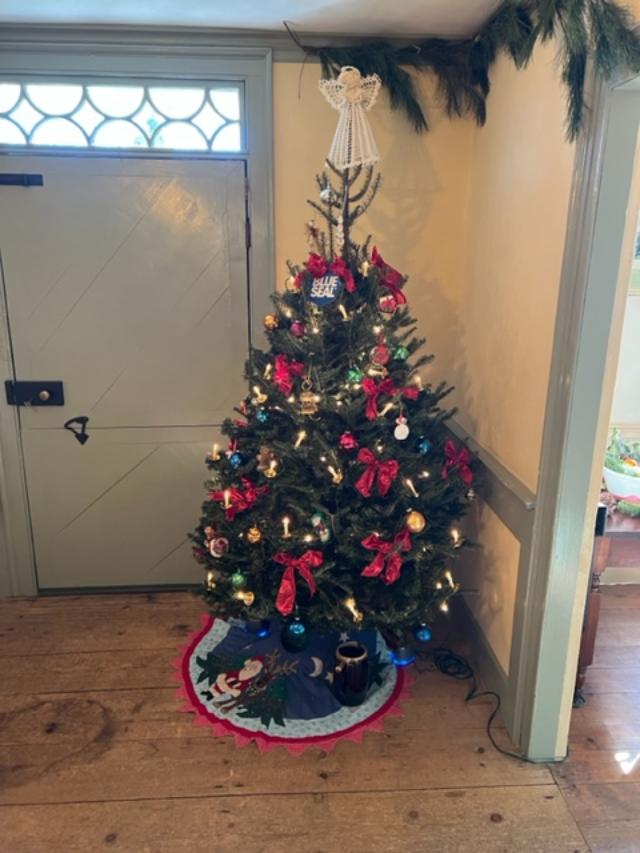
The family Christmas tree would not have been part of a Revolutionary Christmas but a Victorian era decoration in the late 1800’s
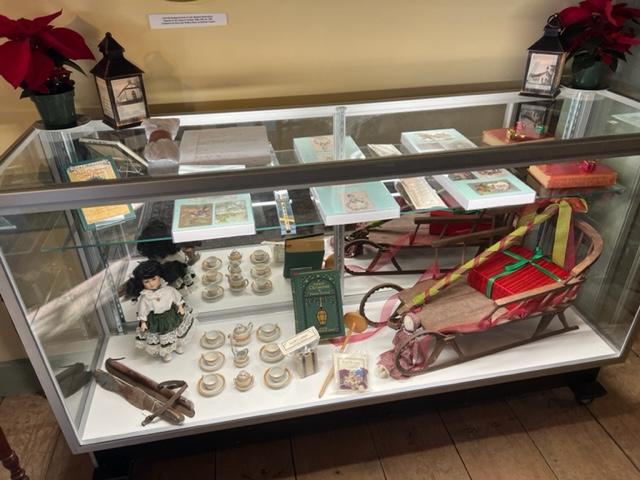
A Children’s wish list for Santa during the Victorian era with all sorts of playthings; dolls, sleighs, tea sets and books
The Strawberry Festival in Spring 2025:
Please read my entire blog on “Attending the Strawberry Festival at the Brinckerhoff House”:
When the festival began and before the Strawberry Shortcakes came out that afternoon, there were all sorts of activities and docent led tours. The first one that I went to was the 1820 Schoolhouse.
The historic sign for the 1820 One Room Schoolhouse of Upper Hopewell
The entrance to the schoolhouse
Even though the schoolhouse is from the early part of the 1800’s, it is amazing how it still relates to classrooms of today. I am still convinced it is the connection that students have with their teachers establishes the fundamentals of a good education and learning.
The schoolhouse from the back of the building
The inside of the classroom has not changed in two hundred years
The schoolhouse classroom is similar to today
I will be quite honest in saying that outside the potbelly stove, the classroom here is pretty much the same as the lecture halls that I see at our college campus.
Games and books of the past are similar to those of today
The items of the classroom of the 1800’s. I am not too sure the use of the Apple press but the children may have had chores to do outside the classroom.
A discipline system that should be brought back
After the tour and talk at the schoolhouse and a talk with other educators on the status of the modern classroom (we all had a lot to say on this), I went over to tour the barn.
The Van Wyck Barn
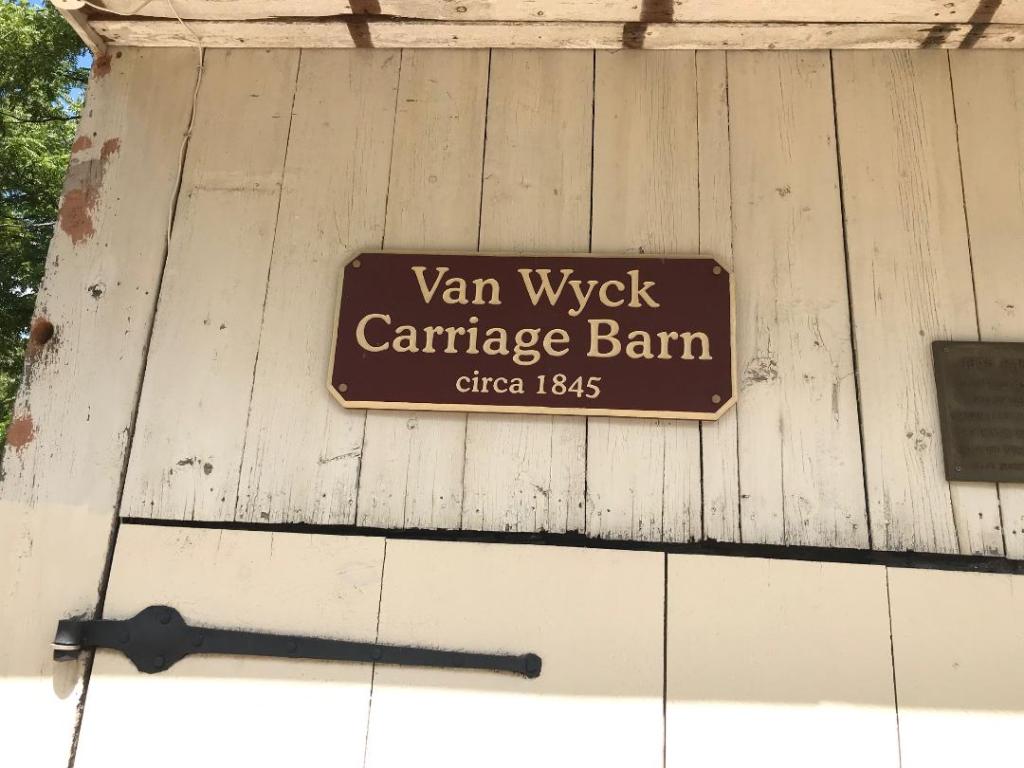
The historic sign of the mid-1800’s barn
The historic marker of the 1845 barn
The actor who was working at the barn told us about wood making and about saws and how to maintain them for work on the farm.
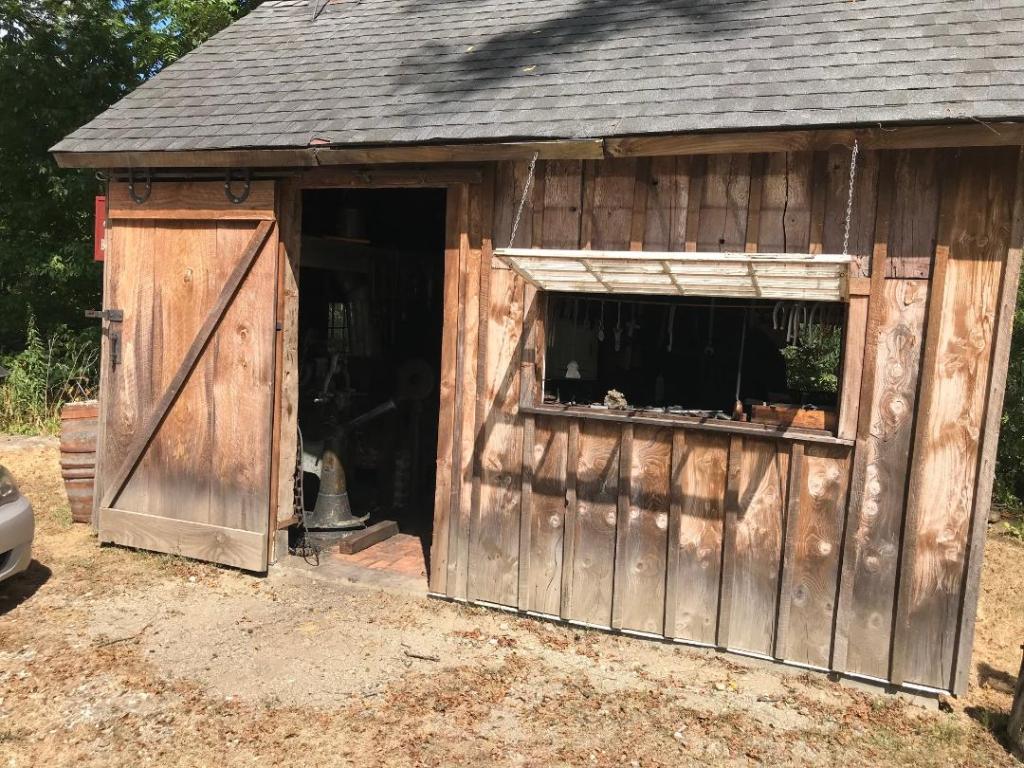
Next to the barn, there was a small blacksmith building where the volunteer was demonstrating items that would have to been made or maintained to keep work on the farm going. Never a dull moment on the farm.
Keeping the fires going and a certain amount of heat is needed to fix these items and create the objects needed on the farm.
The objects and items made at the blacksmith
I know that these tours may seem hokey to some but the volunteers who were at both the barn and the blacksmith were really interesting in their demonstrations. There was a lot of time, talent and creativity needed to keep these aspects of the farm in working conditions.
The rains had really made the grounds lush and all the flowers and trees were in full bloom. The gardens were really well maintained and it was really pretty to walk arounds the grounds of the house.
The gardens by the schoolhouse
In the little pen by the Ice House, they set up a small petting zoo with little goats who looked terrified of us. If we had something to feed them, trust me they would have been less shy.
These little lambs were so cute
I was trying to wave them down but they huddled together
Walking around the grounds
The Icehouse was closed that day
The crowds were starting to get bigger around 1:30pm because that was when the Strawberry Shortcakes were being served.
Since they were a little behind as the high school students were inside preparing the Strawberry Shortcakes, I decided to tour the Brinckerhoff House again. They had a Butter Making class going on in the old kitchen section of the home and there were early American displays in all the cases. All the first floor rooms were open and I got a chance to see some of the new artifact donations.
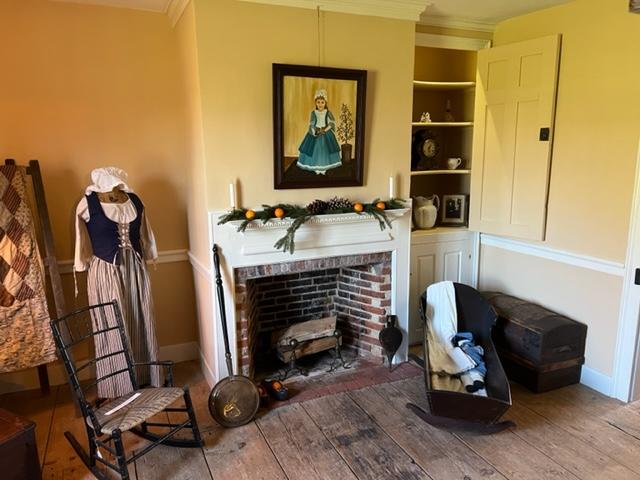
There were all sorts of displays of clothing, furnishings and assorted dish ware on display in the Living Room and Dining Room.
Early American display of women’s clothing
Early American display of Men’s clothing
The Dining Room on the first floor was all set for tea
The Dining Room led to the bedrooms and the old kitchen
The old Main Bedroom on the first floor
Some the artifacts in the second floor bedroom
Some of the paperwork and artifacts in the main foyer
As I exited the house, I passed the door to the roof cellar. I did not think they would put this on the tour. Only the first floor of the house is open to the public.
The door to the root cellar
I took a tour around the grounds and passed the old outhouse
As soon as I finished the tour of the house and grounds the first trays of Strawberry Shortcakes started to come out and I never saw such a mad dash to get something.
The tent set up to sit and relax and eat
As I went to reach for a Strawberry Shortcakes on one of trays. I swear this woman grabbed two off the tray and practically barreled into me. I know they looked good but I could not believe the way some people behave. These were plenty of trays coming outside.
After I avoided the collusion, I was able to get one of the shortcakes off the tray and sit down. The Historical Society had plenty of seating under the tent and what was nice was they had ice cold lemonade as well. It made the perfect afternoon snack and the reason why everyone was here. When I had taken the initial tour of the property three years earlier, the tour guide told me that they went through 600 of these. I could believe it.
The Strawberry Shortcake with homemade whipped cream
I hate to say this but I waited almost four years to finally try this shortcake and admittingly it was well worth the wait.
The strawberries were so juicy and fresh. I was not sure if they were from a local farm but by the sweetness and juiciness these were not imported.
Yum!
The family remained in the house until the death of George G. in 1812 when his brother moved back in and then it was sold to Thorn Purdy in 1814. The Purdy family added the west wing of the house in 1830 that houses a small summer kitchen with a fireplace, crane and small brick oven.
The house was donated to the East Fishkill Historical Society by developer Gustav Fink in 1974 along with three acres when he could not sell it for redevelopment.
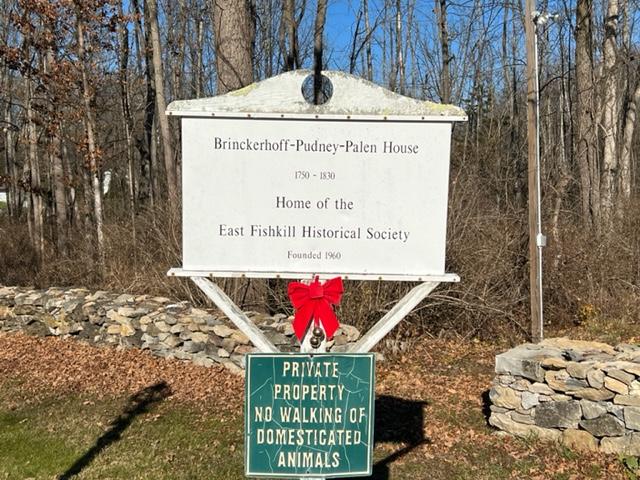
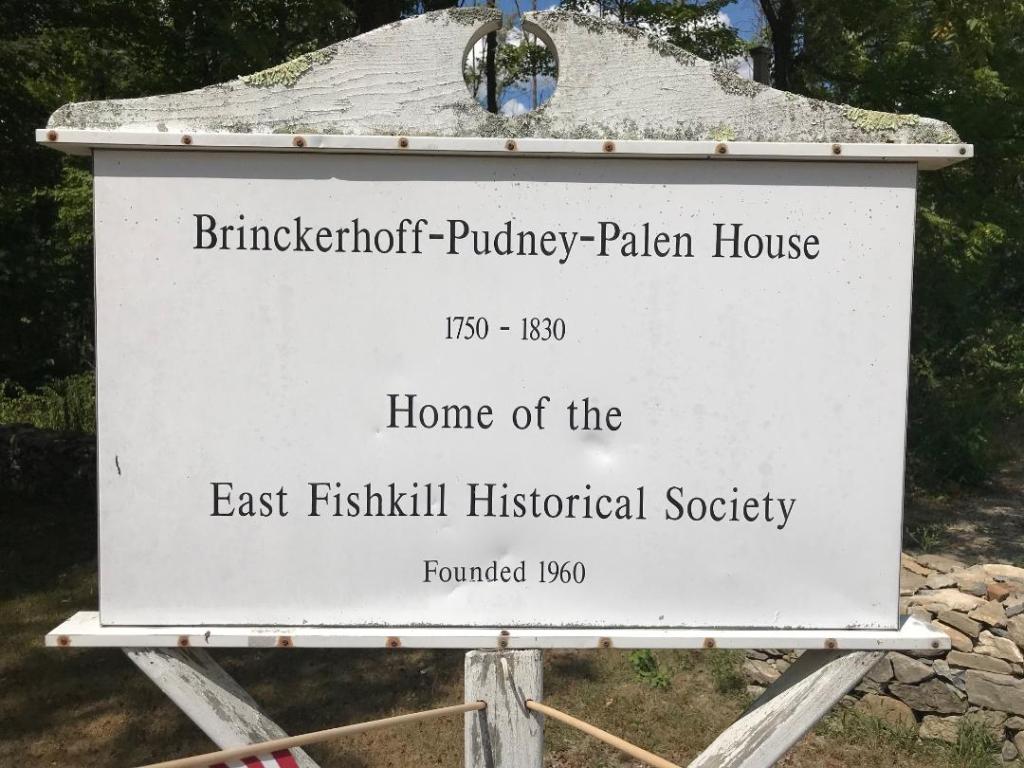
History of the Brinckerhoff-Pudney-Palen House:
(From Museum Pamphlet)
Around 1755, John G. Brinckerhoff and his bride, Marie Terboss purchased the land that the home sits on today. The original structure consisted of one room that included a kitchen with a large fireplace and beehive oven and a single upper room.
When their family their family grew, the house and farmed were conveyed to John. G.’s brother, George G. Brinckerhoff and his wife, Elizabeth Wilcox. In 1755, John G. and George G. were given commissions as Lieutenants in the Dutchess County Militia. Both men were promoted to Captain and were active with the Committee of Safety of the Rombout Precinct.
After the war in 1785, George G. built a four-room addition to the original east wing of the house. This is the largest section of the house and contains a spacious center hall, graced by elegant architectural features. The small paned windows, enclosed staircases, Dutch doors and wrought iron “HI” hinges were characteristics of the 18th century. A small shed was added around the same time.
When Captain George G. Brinckerhoff died in 1812, Captain John G. Brinckerhoff took possession of the farm again and in 1814 sold it to Thorn Pudney who christened it “ARCADIA”. The Pudney family would remain at “ARCADIA” for the next 60 years. In 1830, the family added the western wing of the house featuring a small summer kitchen complete with a fireplace, crane and a brick oven with an iron door cast at Fishkill Landing. It also contains an indoor stone cistern in the basement to collect rainwater for cooking, washing and drinking.
In 1875, Edward Palen purchased “ARCADIA” from Thorn Pudney’s son Jacob and changed the character of the farm by focusing on dairy production. It was very convenient to ship their milk to marker in New York City via the rail line two miles away at Hopewell Junction.
Edward Palen’s son, James H. would eventually take over the farm. The Palen farm produced their own lumber from the trees grown on the farm. As James Palen’s health began to fail, the farm was sold to Banton Moore in 1926, who rented it to Gene Satterlee. Gene continued dairy farming for many years until a fire burned the cow barn in 1970.
The house and the farm were sold one last time in 1974 to local developer Gustav Fink, who after many unsuccessful attempts to sell the house to be restored gave the house and three acres to the East Fishkill Historical Society. At this time, the old farmhouse was in a poor state of repair.
The Brinckerhoff Historical Sites Schoolhouse and Icehouse on the estate
Through the continuing efforts of the East Fishkill Historical Society’s members and many years of fundraising and restoration, the Brinckerhoff-Pudney-Palen House has once again been resurrected to its original condition and stands as a fine example of an original Hudson River Valley Dutch farmhouse.
On the grounds are also the 1870 Icehouse, the 1826 Schoolhouse, the 1880 John Hyatt Blacksmith Shop and the 1845 Carriage Barn from the Van Wyck family.
The 1880 John Hyatt Blacksmith Shop
The Van Wyck Carriage Barn from 1845
The entrance to the Brinckerhoff home with the Schoolhouse from 1826 to the left and the Blacksmith Shop to the right and the main homestead of the estate.
Don’t forget to visit the Brinckerhoff House gift shop at the end of your tour! This helps with the fundraising efforts to support this wonderful home.








 Visiting a Museum: The Unique, Unusual, Obscure and Historical