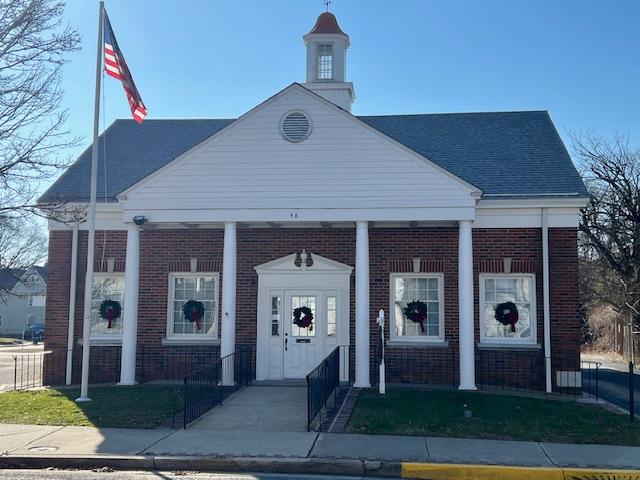
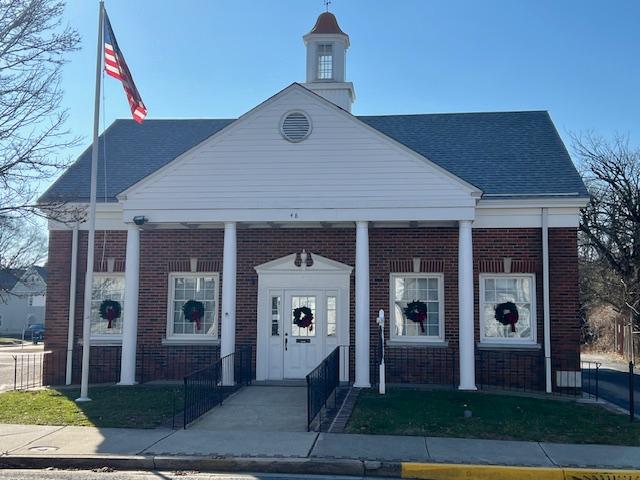
The Penns Grove Historical Society at 48 West Main Street
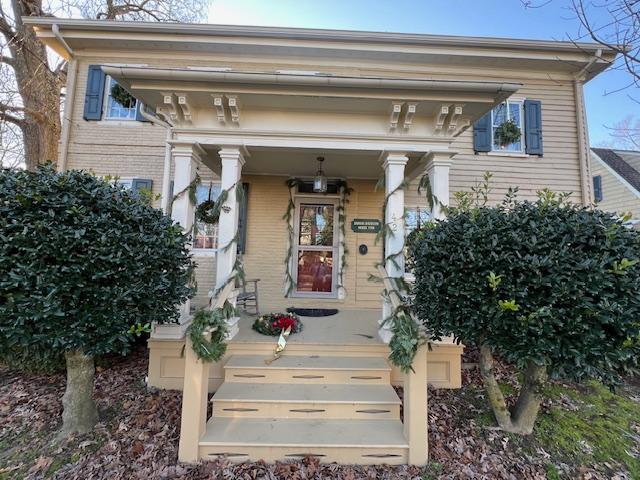
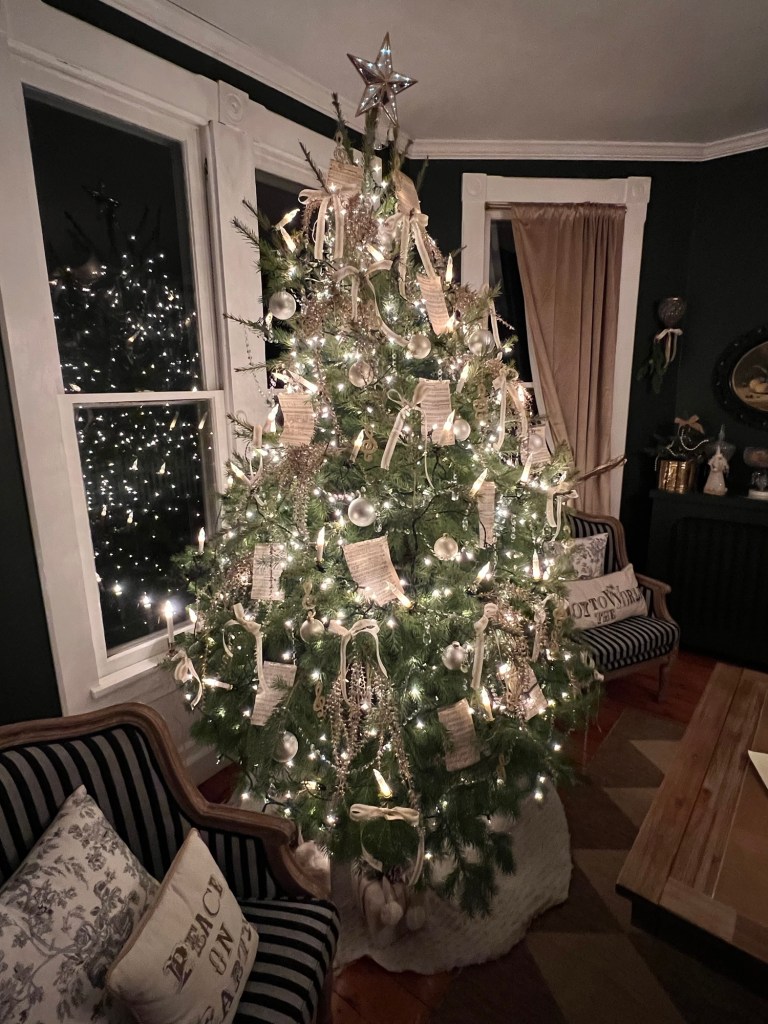
This was when the museum was decorated for Christmas in 2023
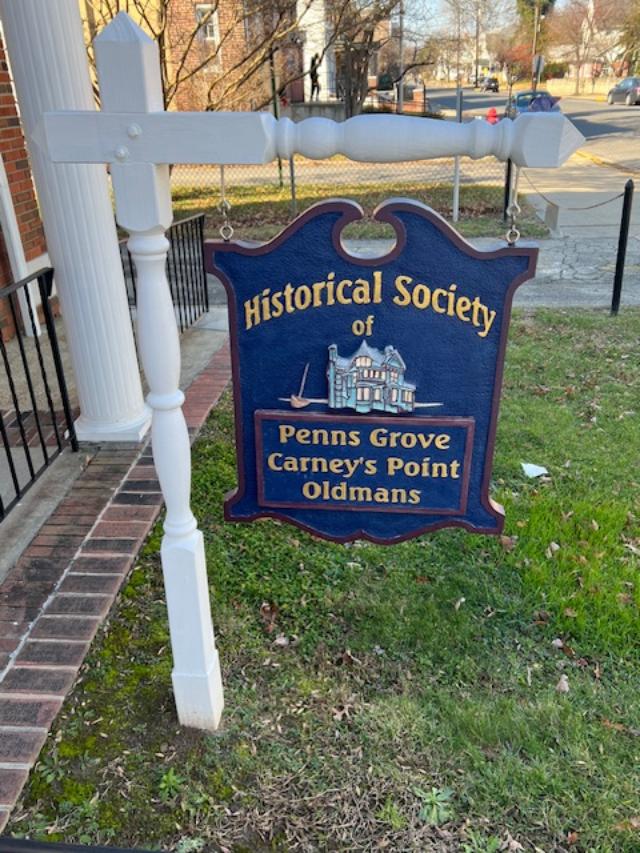
The Penns Grove Historical Society sign that welcomes you to the museum
The Mission Statement for the Historical Society of Penns Grove, Carneys Point and Oldmans:
The mission of the Society is to collect, study and conserve such historical materials as they relate to the towns and their inhabitants, especially of the early settlement. It shall preserve relics and property of the past, both real and personal as may be given, bequeathed, purchased, loaned or otherwise acquired by the Society. It shall be the Society’s responsibility to use the collection for the education, enjoyment and benefit of the general public.
After almost two years of trying to visit this small historical society, the trips aligned and J was able to visit the Penns Grove Historical Society and delightful and very engaging exhibitions. What was sad was that people missed this wonderful well thought out museum when visiting the area. The museum has so much charm and such interesting exhibitions to walk through.
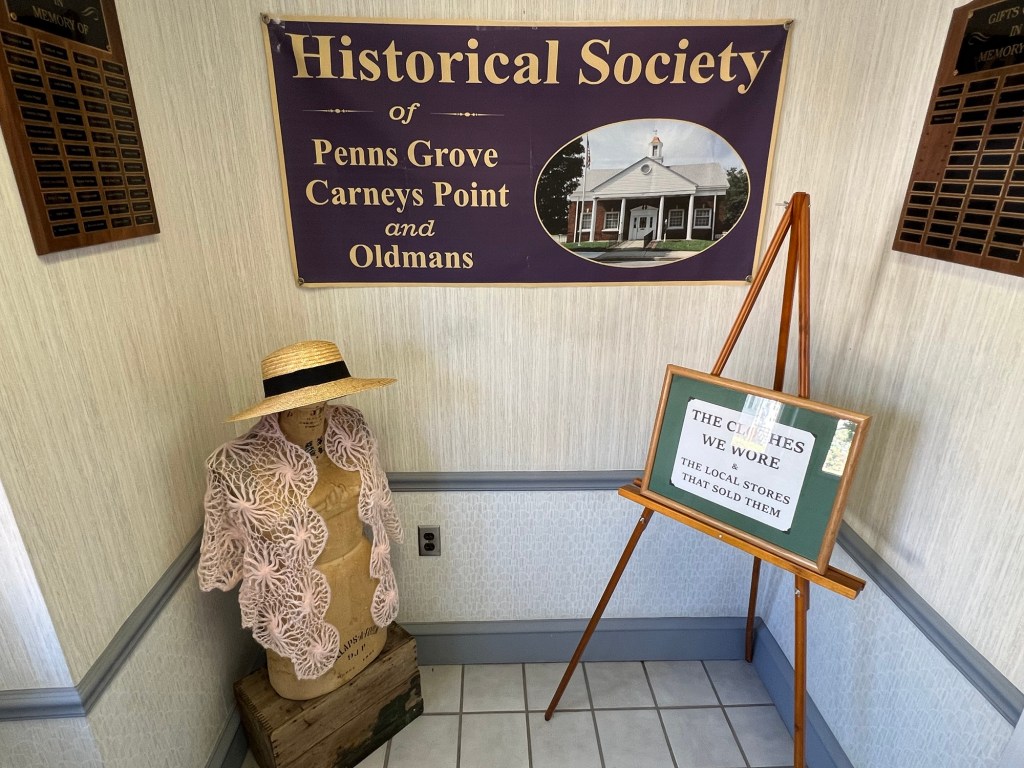
Entering the museum and the sign for the main exhibition ‘The Clothes we Wore’
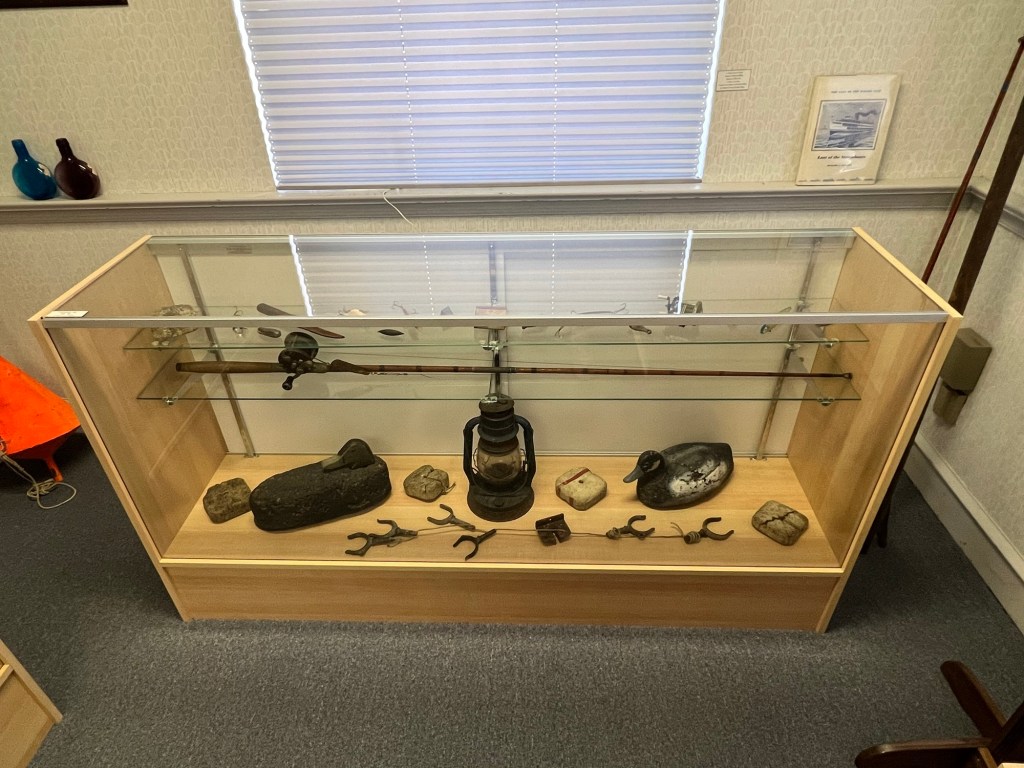
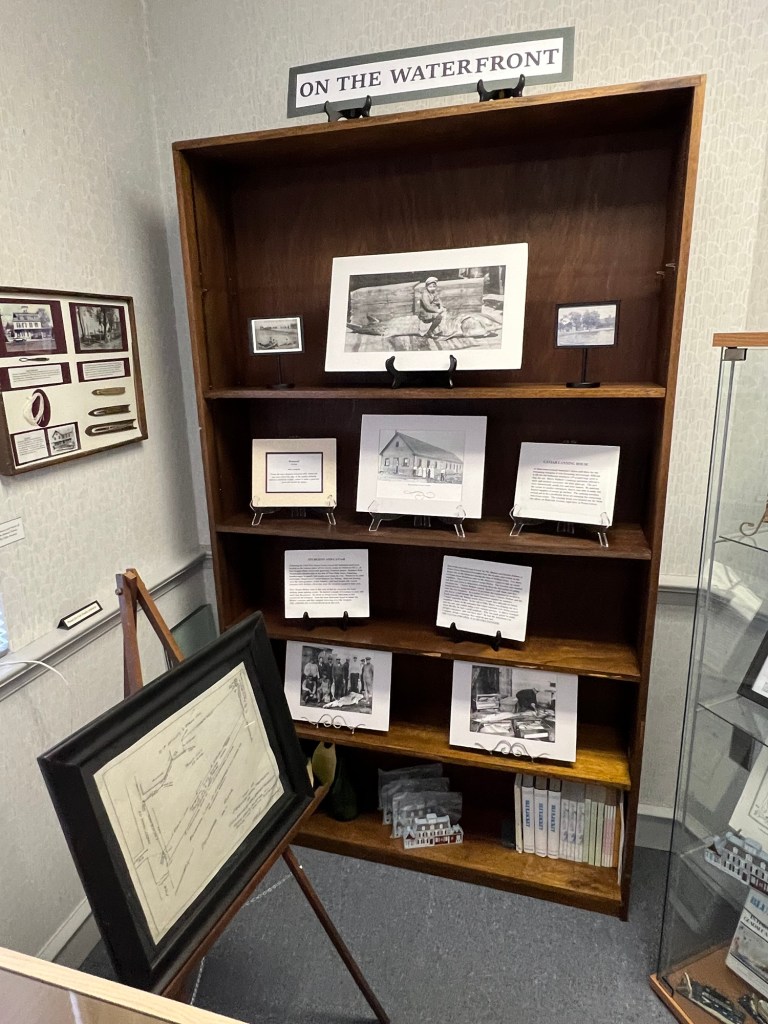
There were three exhibitions showing when I came to visit. One was “On the Waterfront” on the Penns Grove waterfront. This describes the shipping and fishing industry that the town had before the building of the factories and the Delaware Memorial Bridge. Each display case has different aspects of the industries.
The seafarer and shipping artifacts
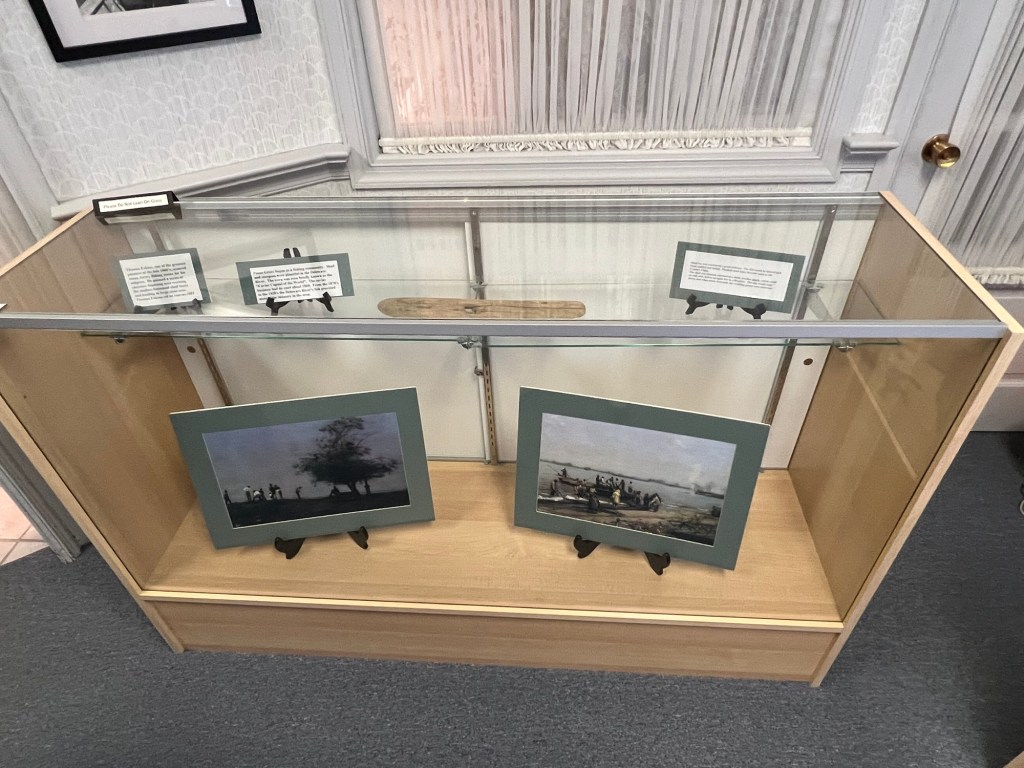
This exhibit shows how much the Delaware Bay has changed over the last 100 years.
The pictures and description of the native coastline around the Delaware River
Pictures of the Fishing Industry that was once part of the fabric of the town
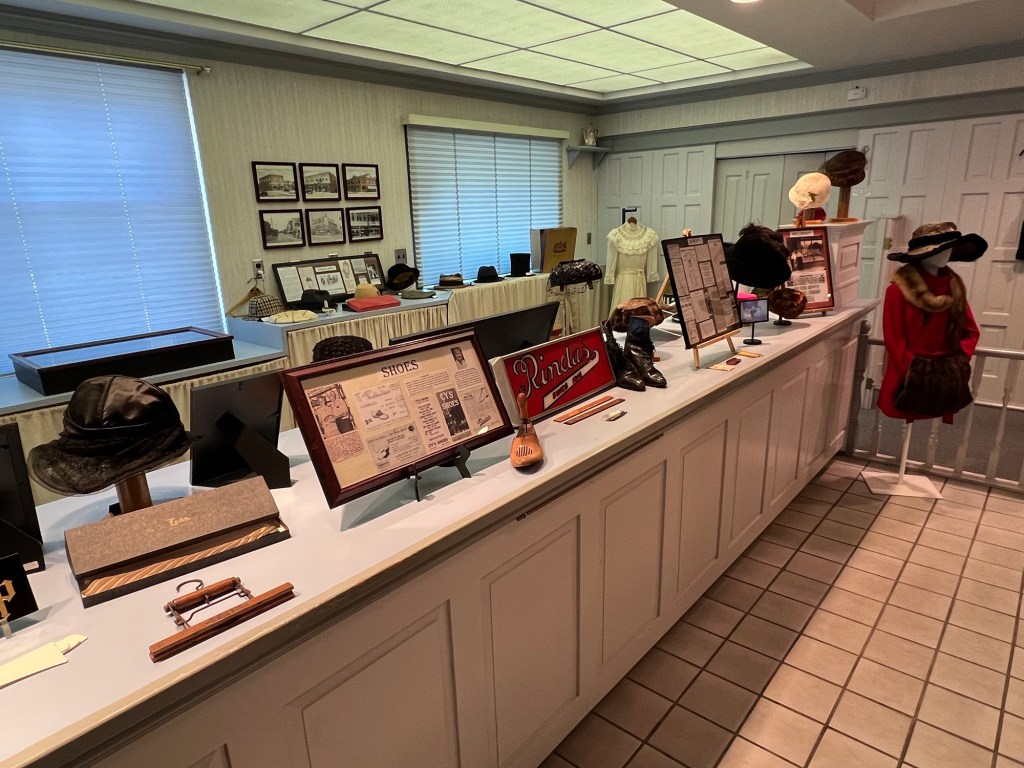
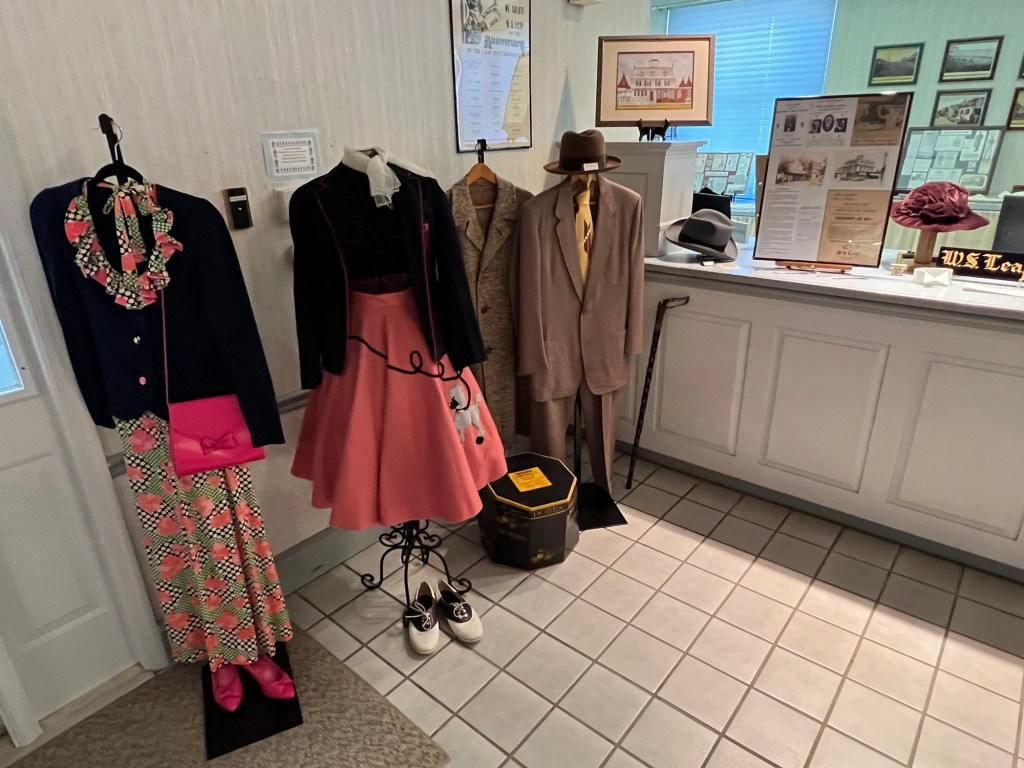
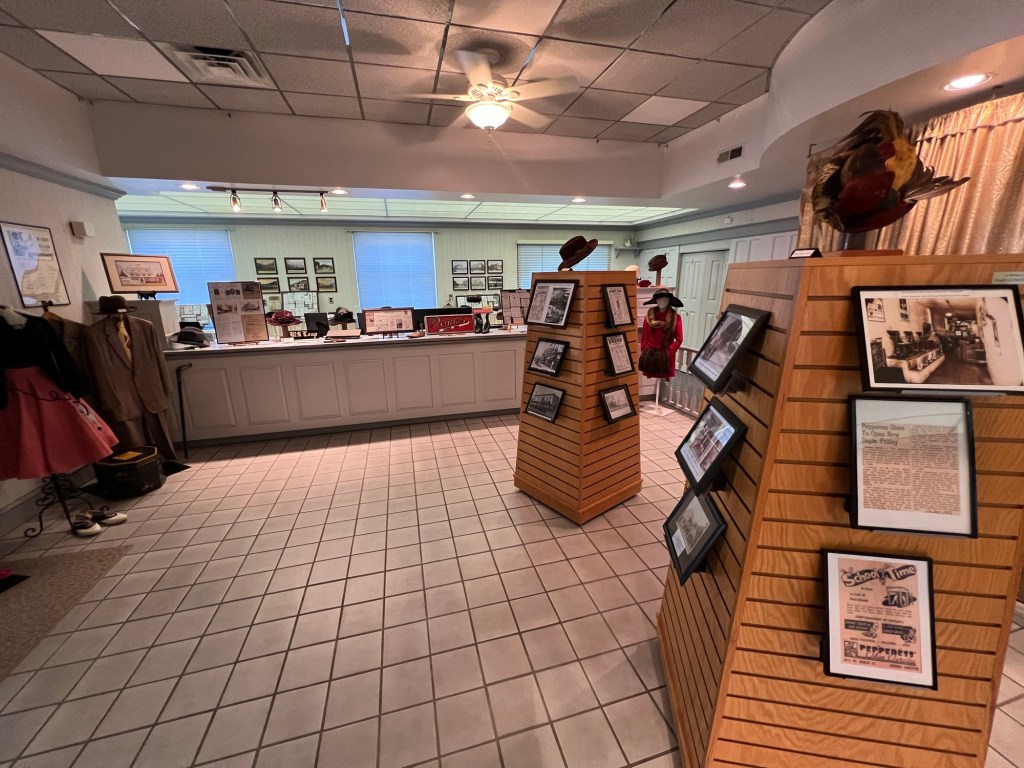
The next was the exhibition, “The Clothes We Wore” was an extensive look at the retail community of Downtown Penns Grove, NJ before the coming of the malls and changes of traffic patterns into town. It is also a look at the changes in the way we dress not just to go out but how we dress every day.
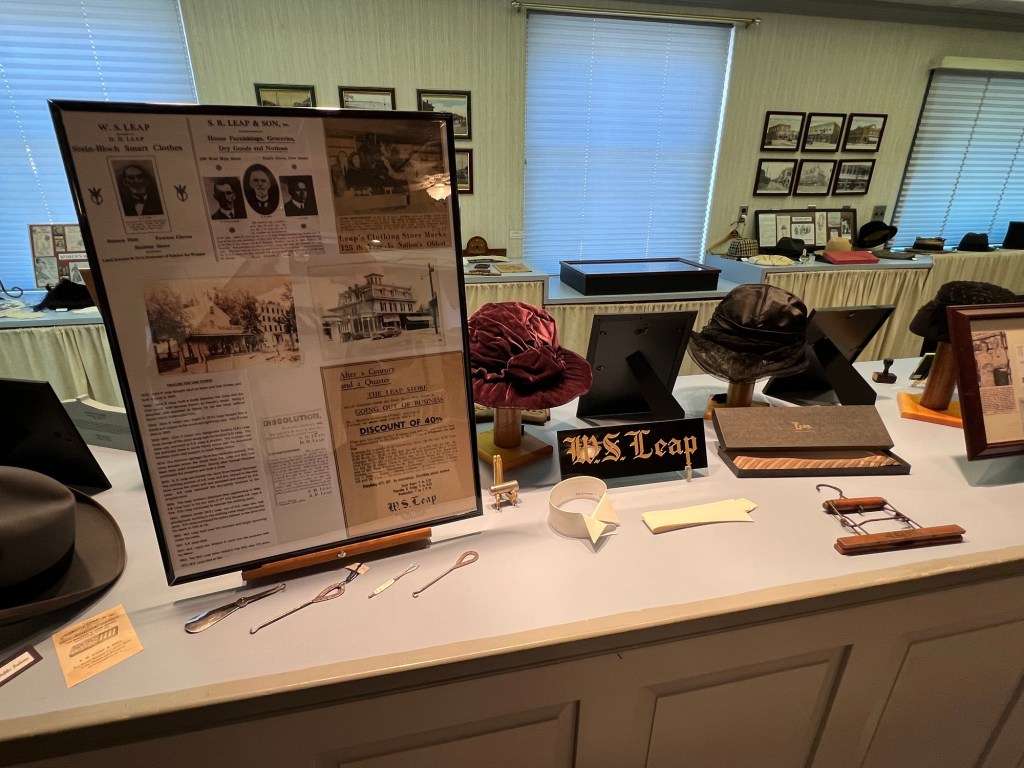
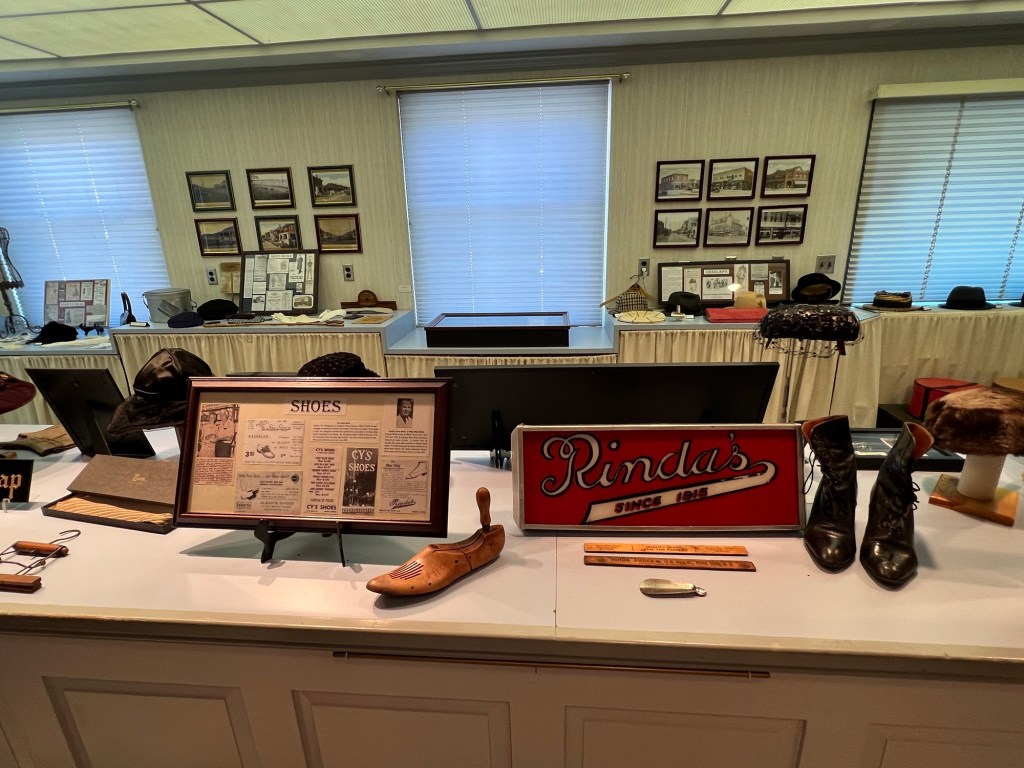
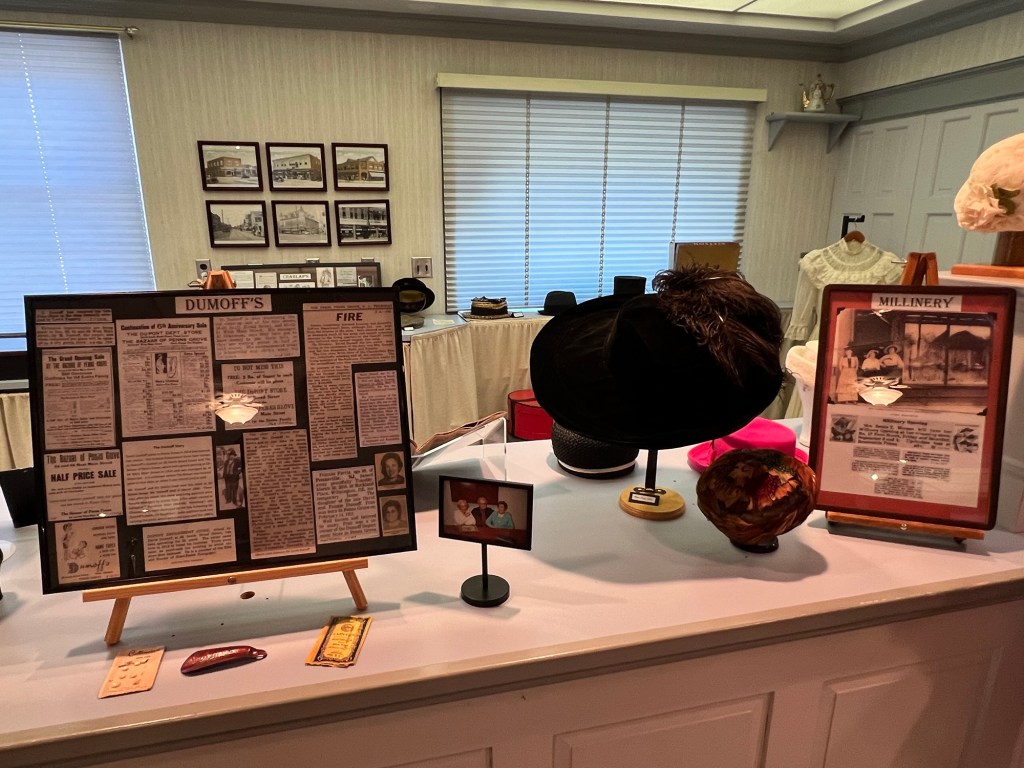
When you walk the exhibition you can see the array of stores from shoe stores to hats that people used to don until the mid 1960’s and the coming of ‘Flower Power’. Each store had its specialty and catered to a specific client. It is interesting how each stores had it own display of wares and its use in our wardrobes. It also shows a very vibrant downtown that is now part of its past.
Each store had its own display along with the advertising in a time when shopping was leisurely and we took time out to try things on. Pride in appearance was a big part of who we are as people.
Dresses and suits were once part of our everyday wardrobe
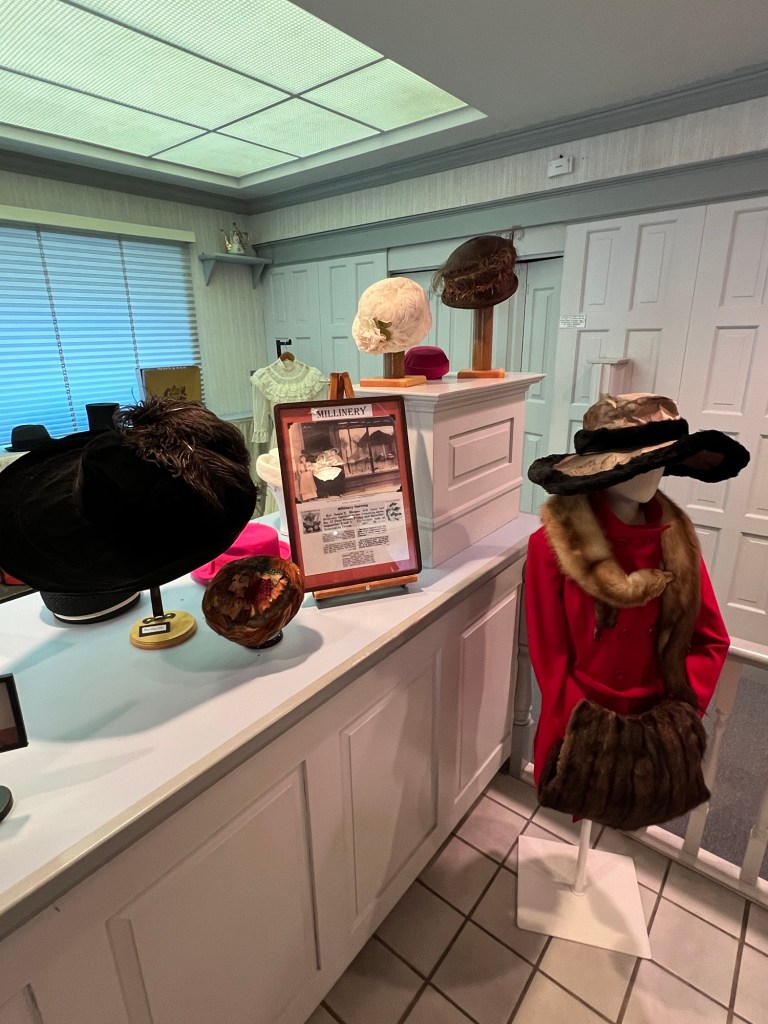
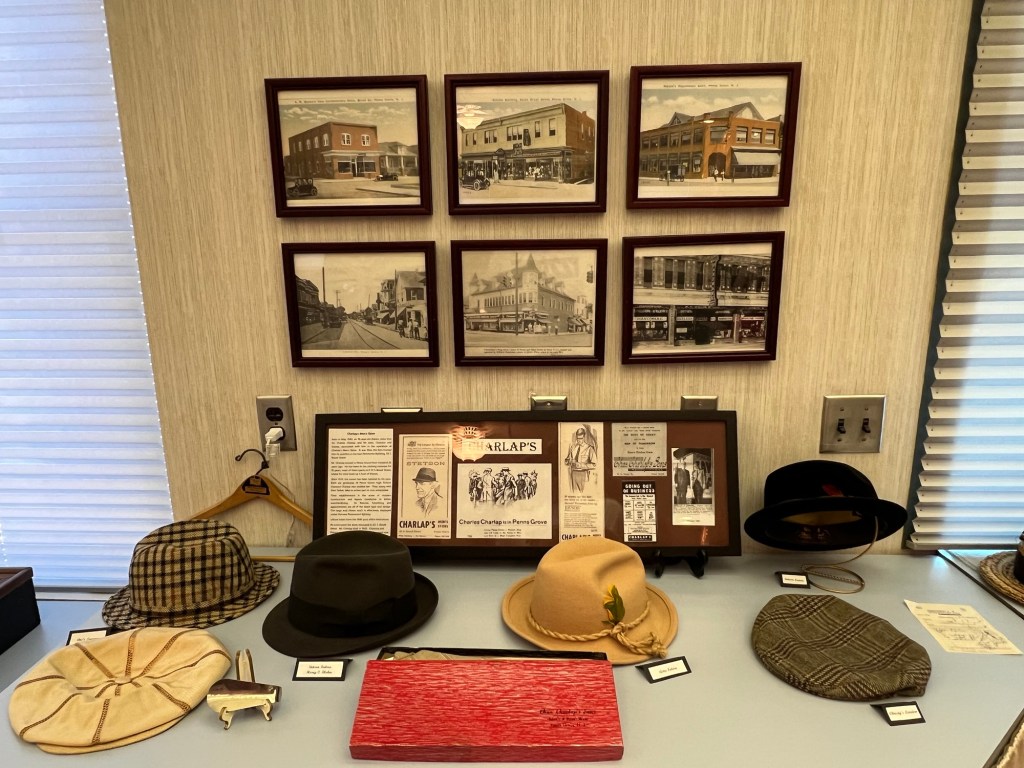
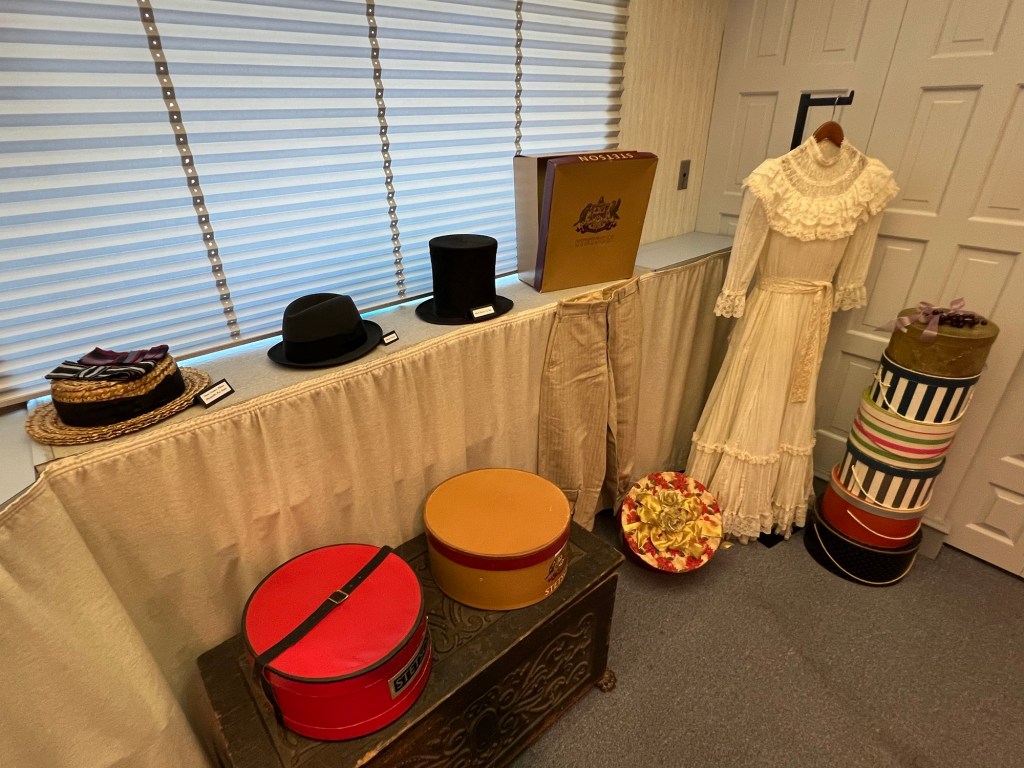
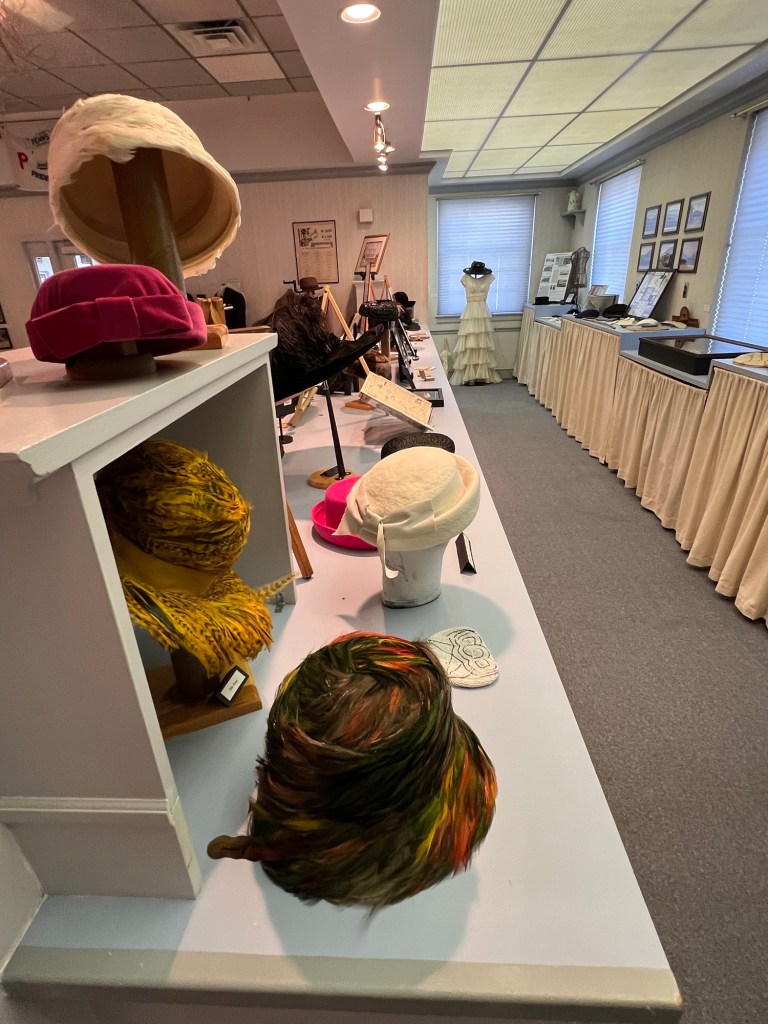
The Millinery shop where hats and gloves were part of the wardrobe
Shoes shined for work every day were part of the uniform
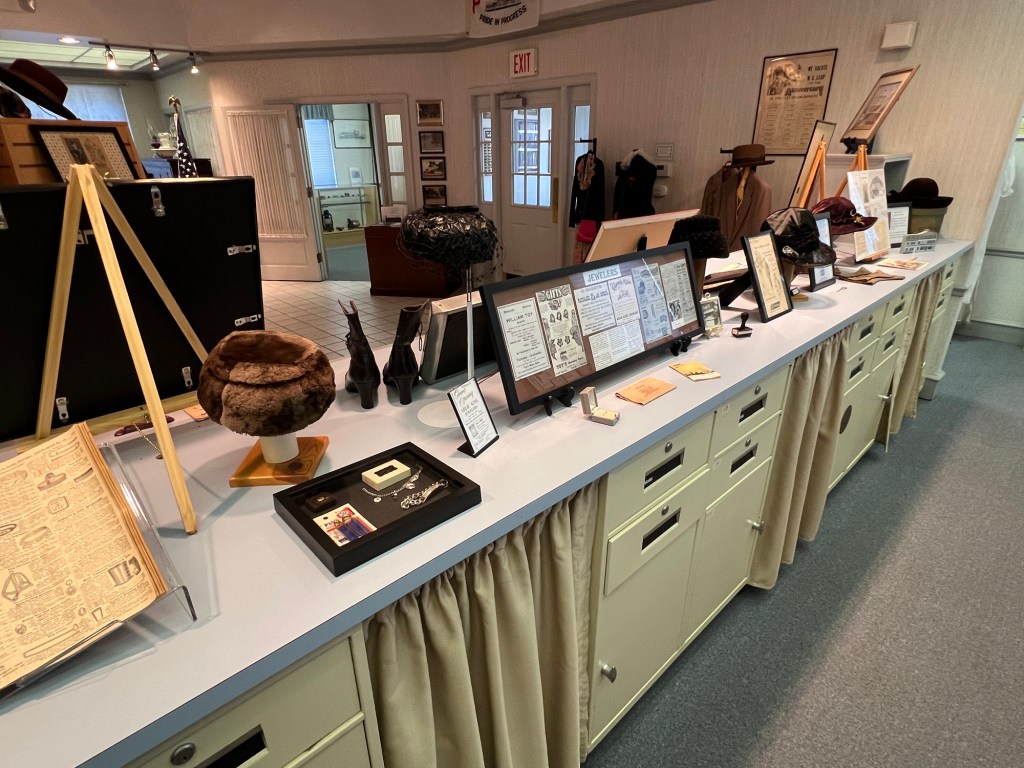
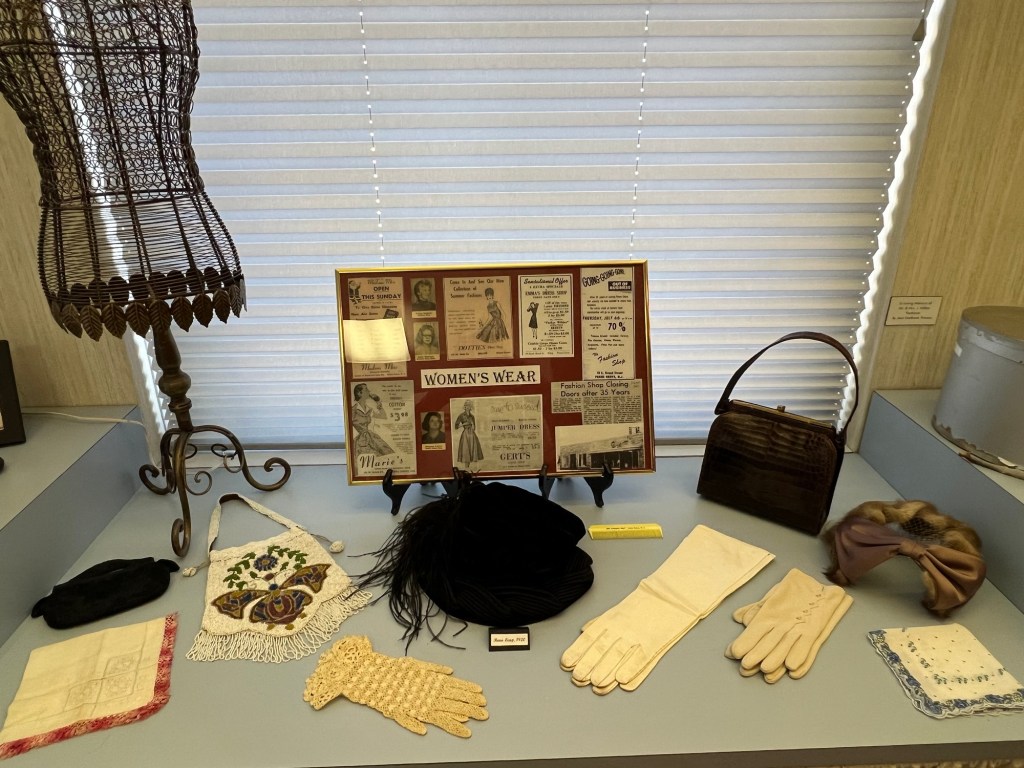
Accessories built the character of our wardrobe
More hats that showed the personality of the wearer
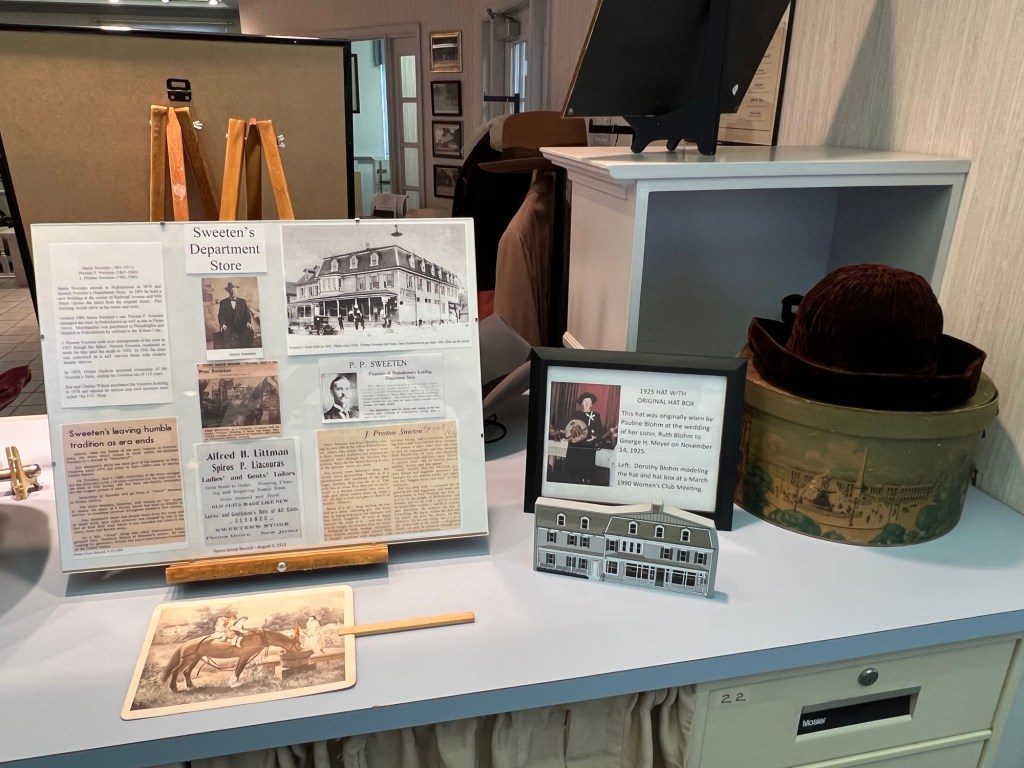
The different advertising for the various merchants that made up the downtown
A glimpse of the downtown in its heyday
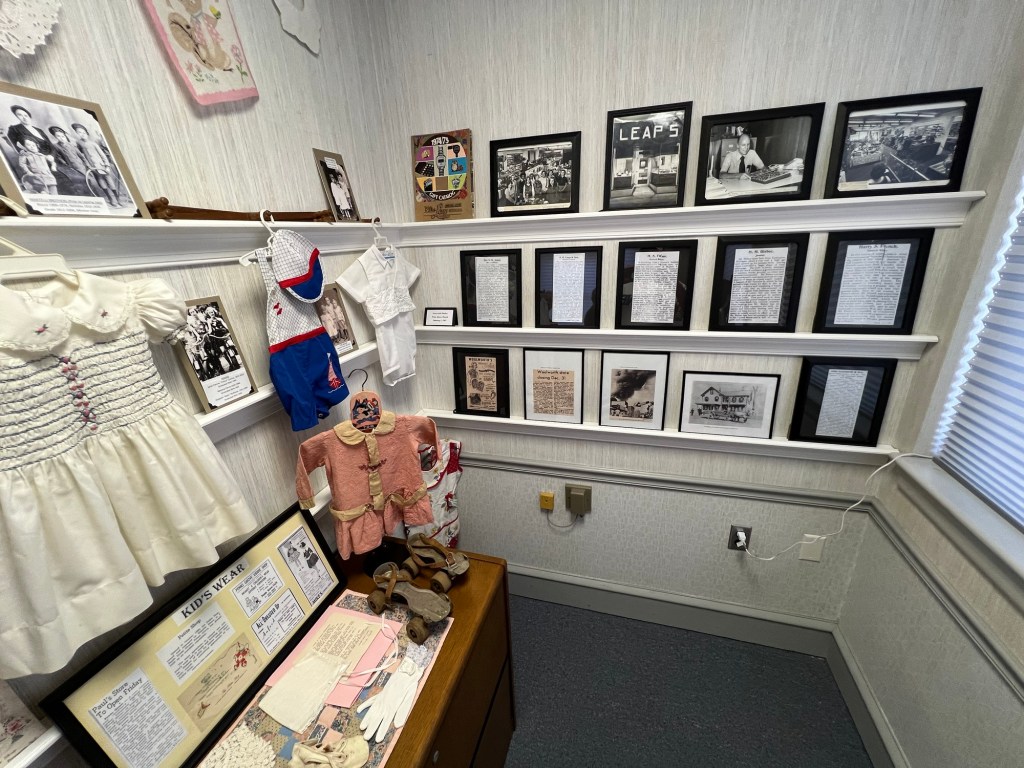
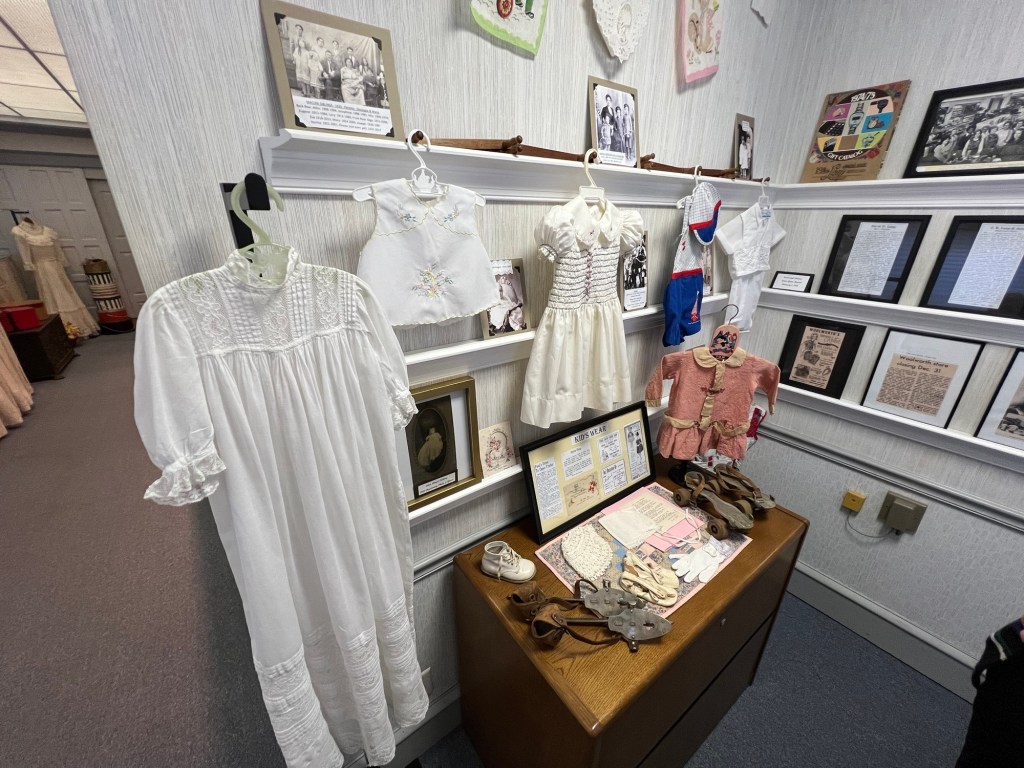
The infant and children’s clothing was a bit more formal even at public school
We pampered babies even back then. Their wardrobes were always special
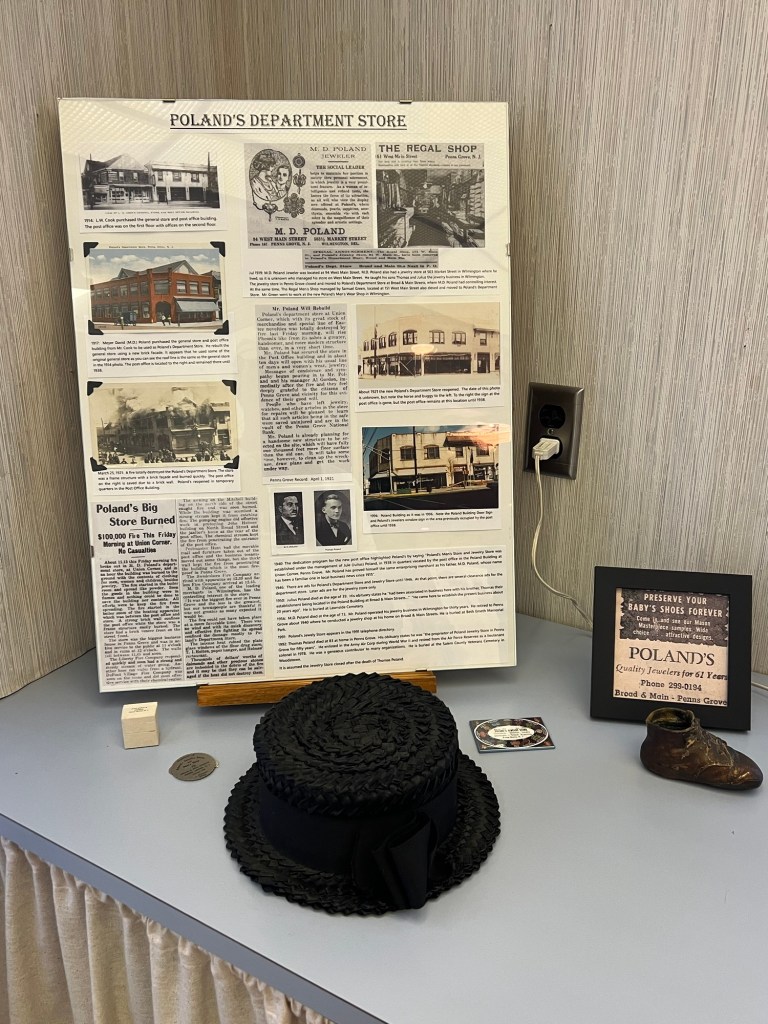
Poland’s Department Store downtown was the place to shops before malls took over
Gloves, hats and corsets were once part of a woman’s wardrobe
The stores that once catered to the well heeled and the every day customers when service was not a chore
Preparing for a formal occasion or for long distance travel
The back part of the exhibition with all the beautifully made clothing
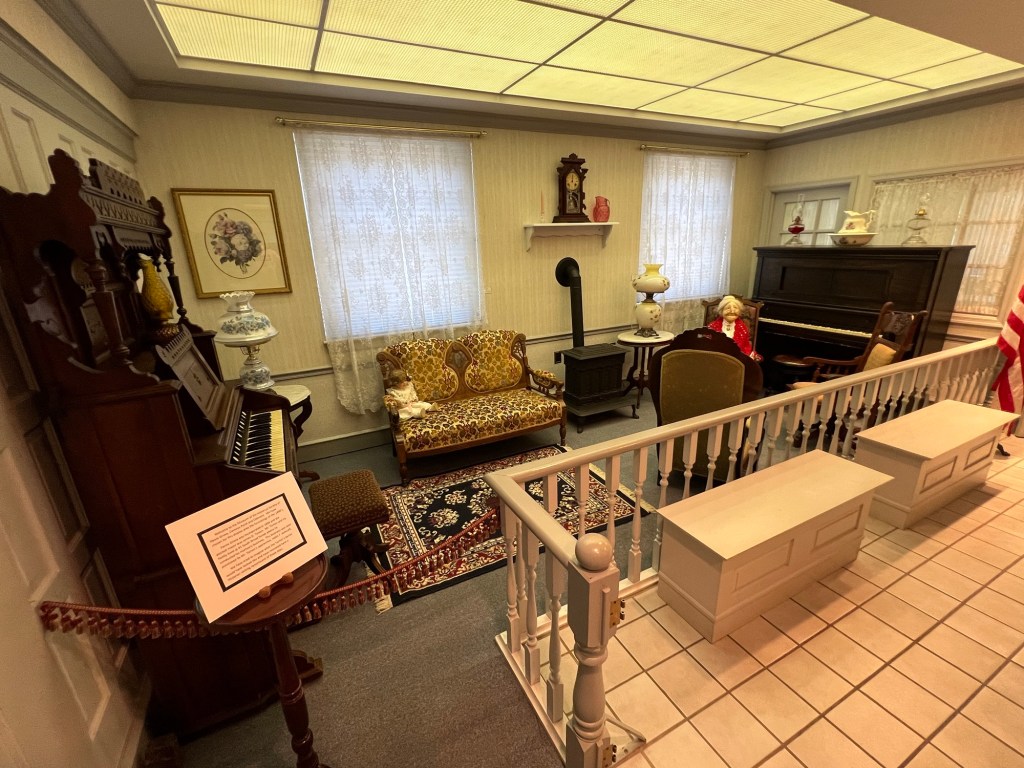
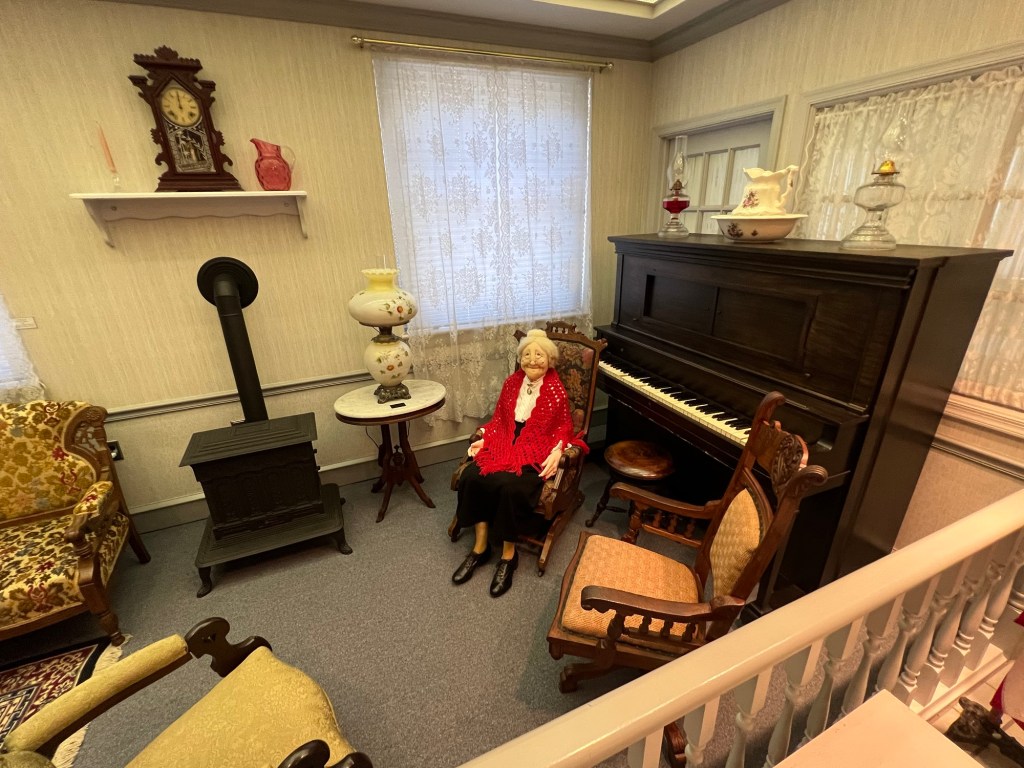
The formal parlor display when entertaining guests was a ritual in good manners and social etiquette. This is where the mannequin of ‘Grandma’ stands guard over her guests. Things were more formal back then.
Grandma stands guard watching and engaging her guests
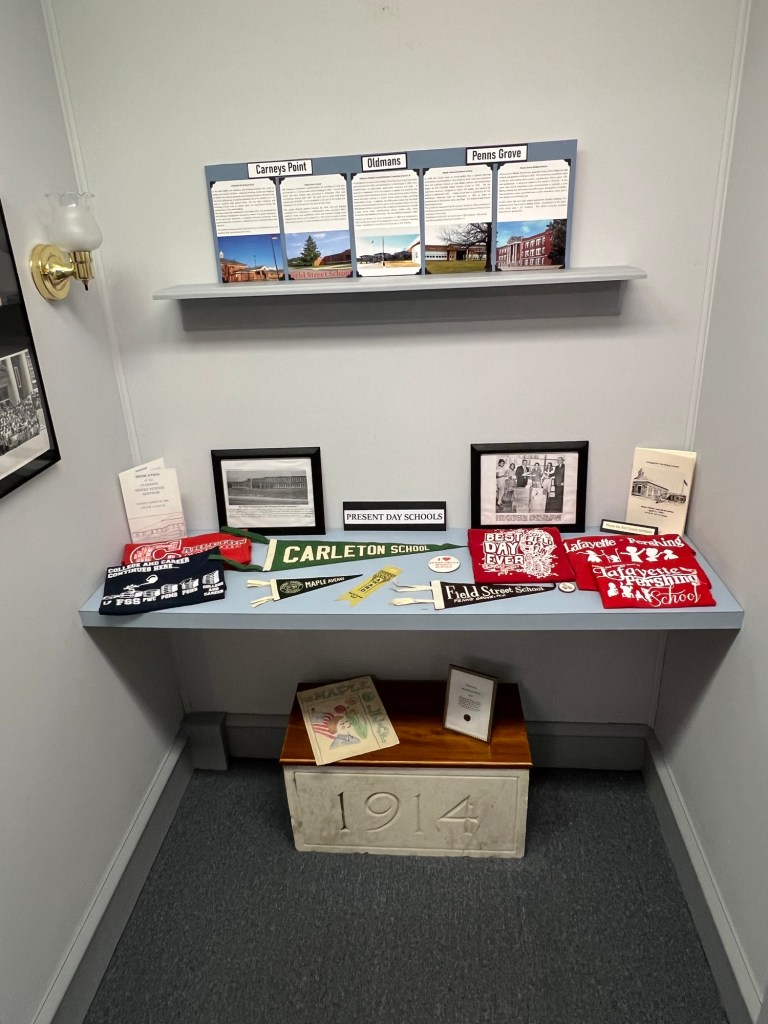
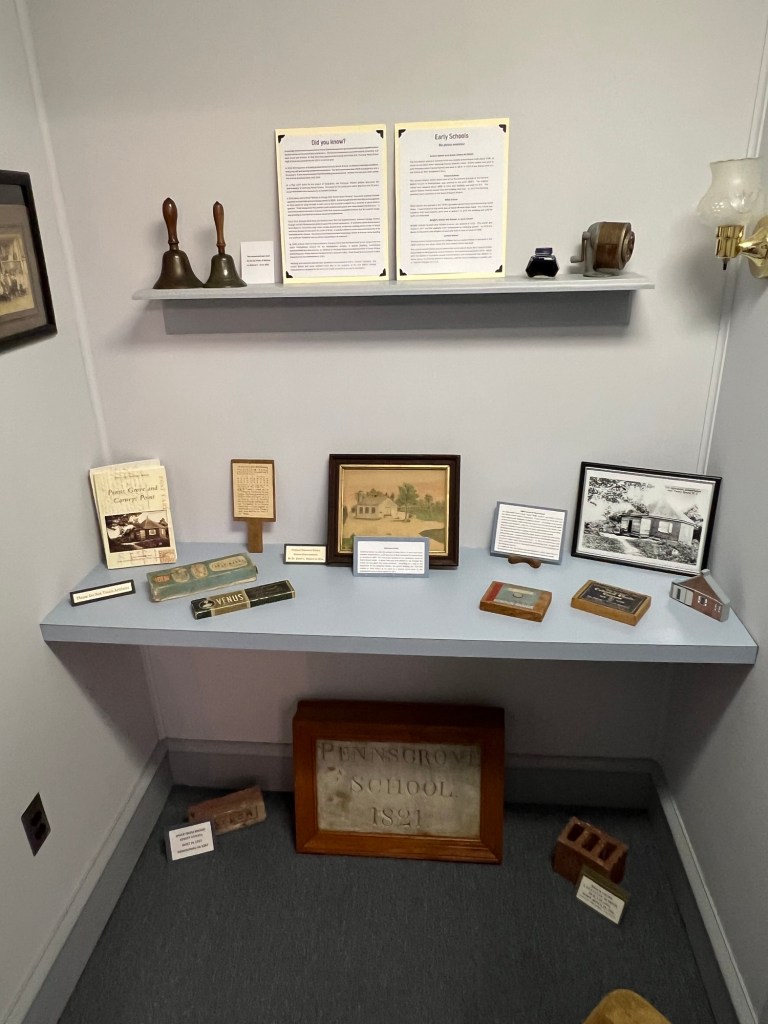
The last exhibition was entitled “It’s Elementary” on the town’s school system. The displays in the back of the museum discuss the modes of transportation before cars and highways became part of the fabric. The progression of the schools in Penns Grove were on display as well with class pictures, school trips, awards and pictures of the schools themselves before regionalization and building of new schools.
The history of the Penns Grove School system in the exhibition “It’s Elementary”
The history of early schools in Penns Grove
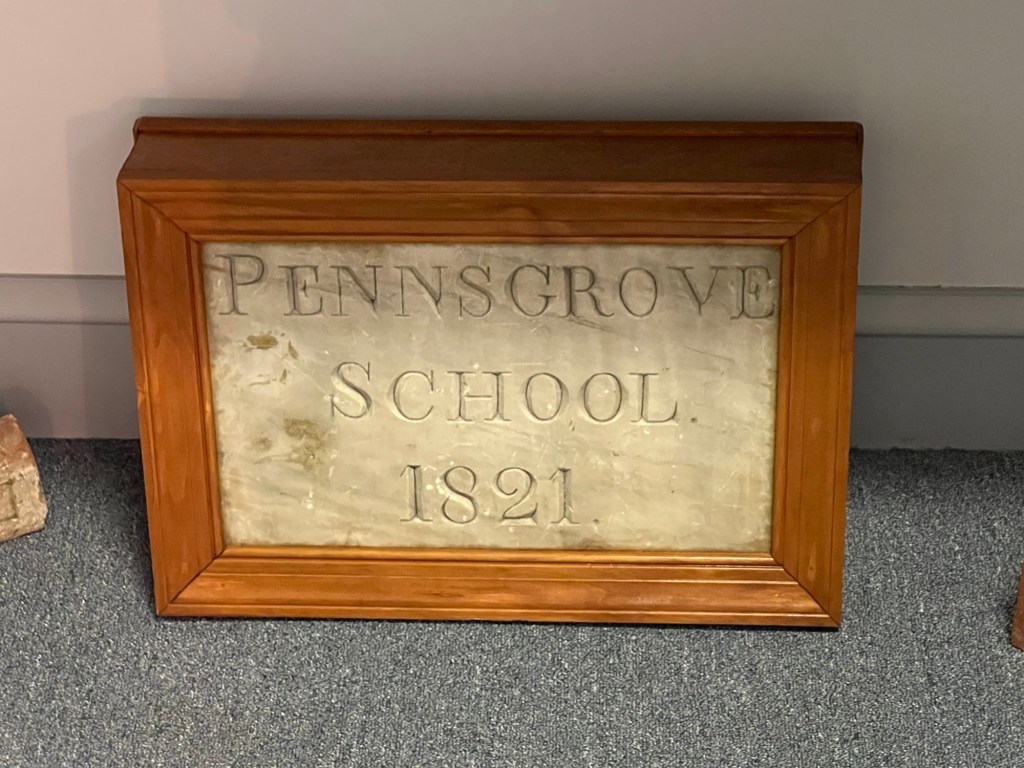
The corner stone of the Penns Grove School
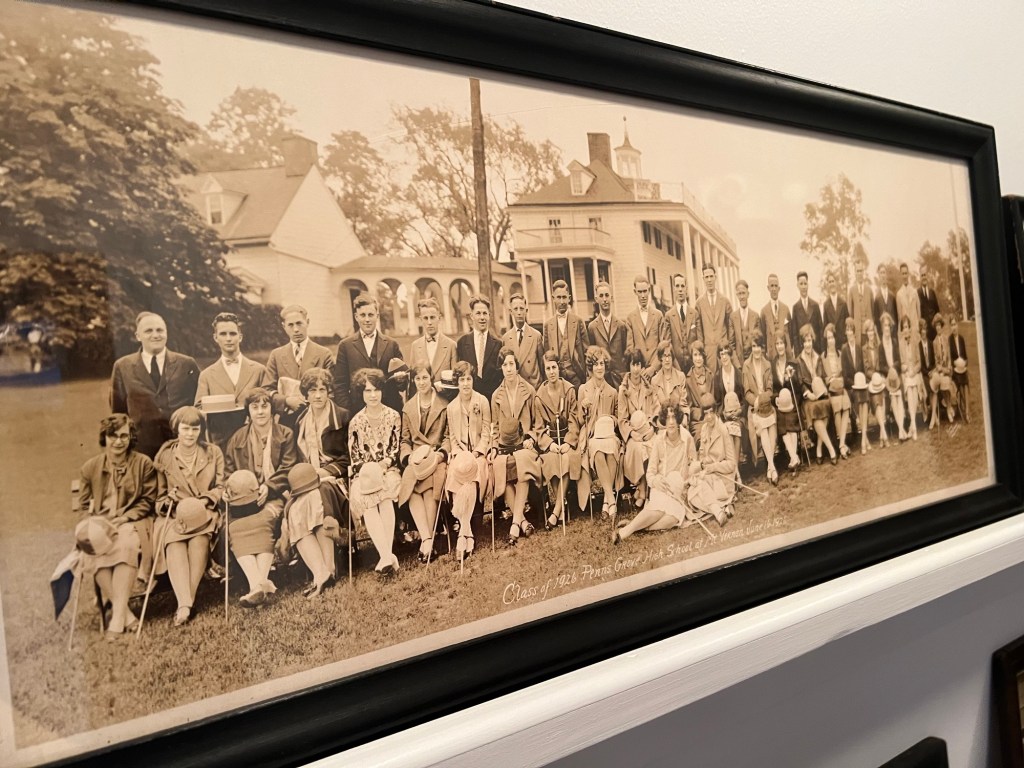
A classic trip to Washington DC and Mount Vernon were part of the school traditions even in the 1920’s
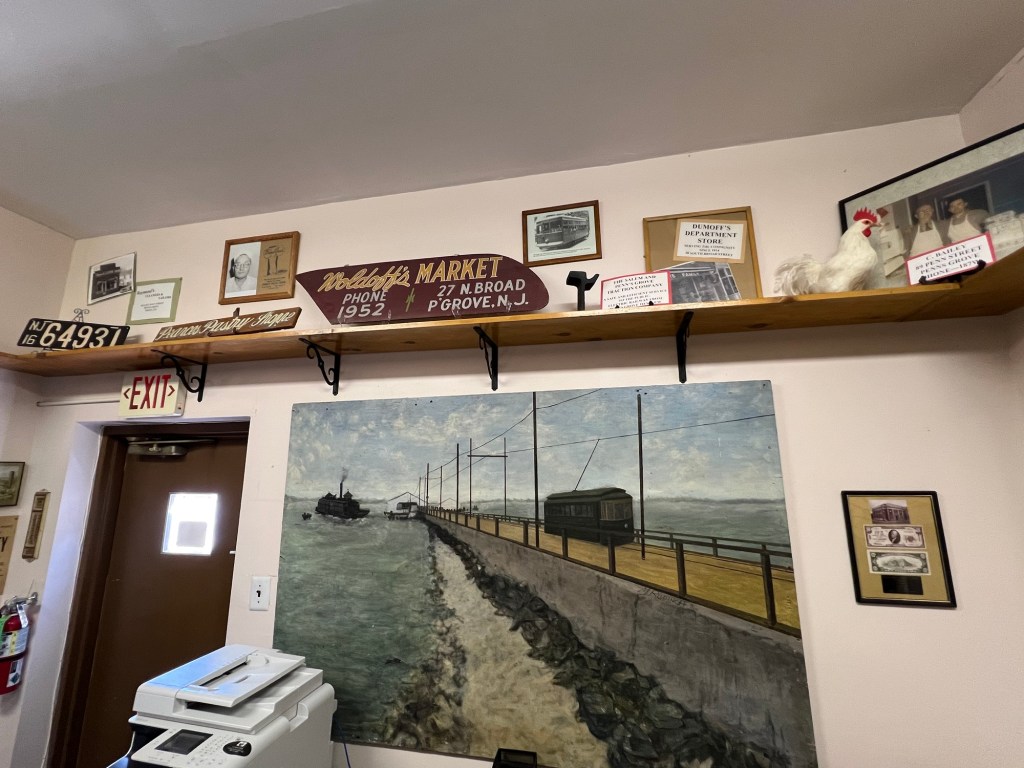
The trolley system between Penns Grove and Pennsville all the way out to Salem, the County Seat were part of the way people travelled before cars became part of the fabric of our society.
The old trolley system
The main gallery of the museum
The museum has a lot to offer in such a small space . It packed with interesting information on a community that no longer exists but is part of its not so distant past. It shows how a community keeps progressing and writes its own future.
The museum is open once a week for touring on Sunday’s through Thanksgiving and then closes for the season reopening in March and April for visitors. I told them they could market the current exhibition as “Christmas Shopping in Penns Grove” and keep it open through December with a visit from a department store Santa. A nice twist to three excellent exhibitions.
The Greater Elmer Historical Society at 117 Broad Street
The History of The Greater Elmer Area Historical Society:
(from the museum website)
The Greater Elmer Area Historical Society was formed as a committee in 2008. It officially organized as a non-profit Historical Society in 2010.
Our Vision:
(from the museum website)
Serving the Elmer Borough, Pittsgrove Township and Upper Pittsgrove Township, The Greater Elmer Area Historical Society brings together the historical connection of he Borough and two Townships. Our vision is to use that connection to contribute to the understanding and appreciation of the history we share and to promote the cultural growth of our communities.
The entrance of The Great Emler Area Historical Society
Museum & Archives:
The GEAHS Museum & Archives opened in 2018 in the former St. Ann’s Church in Elmer, NJ. It is open to the public on the second Saturday of each month from 10:00am-2:00pm. Stop by and browse our collection of local history including books, photographs, signage, artifacts and much more. The Society meets on the third Thursday of each month at 6:30pm for guest speaker presentations, show and tell and society updates. The public is welcome to attend.
Some the events that the Society runs each year:
Historical Tours: The Curiosity House Tour is usually held in late November featuring houses and churches in the Elmer area. The homes are decorated seasonally and most have a rich historic background. The Historical Cemetery Tour is a guided tour held in late October highlighting the life stories of people buried in local cemeteries.
Elmer Harvest Day: Elmer Harvest Day is a community event that includes live music, crafters, antique car show, children’s activities, fire truck rides, petting zoo, food vendors, special offer from local businesses and lots of fun activities for visitors of all ages. Elmer Harvest Day is held on the first Saturday of October.
Elmer Harvest Day 2024: (I attended the event)
The tractors on display on Elmer Harvest Day October 5th, 2024
The streets were mobbed with residents and visitors on Elmer Harvest Day
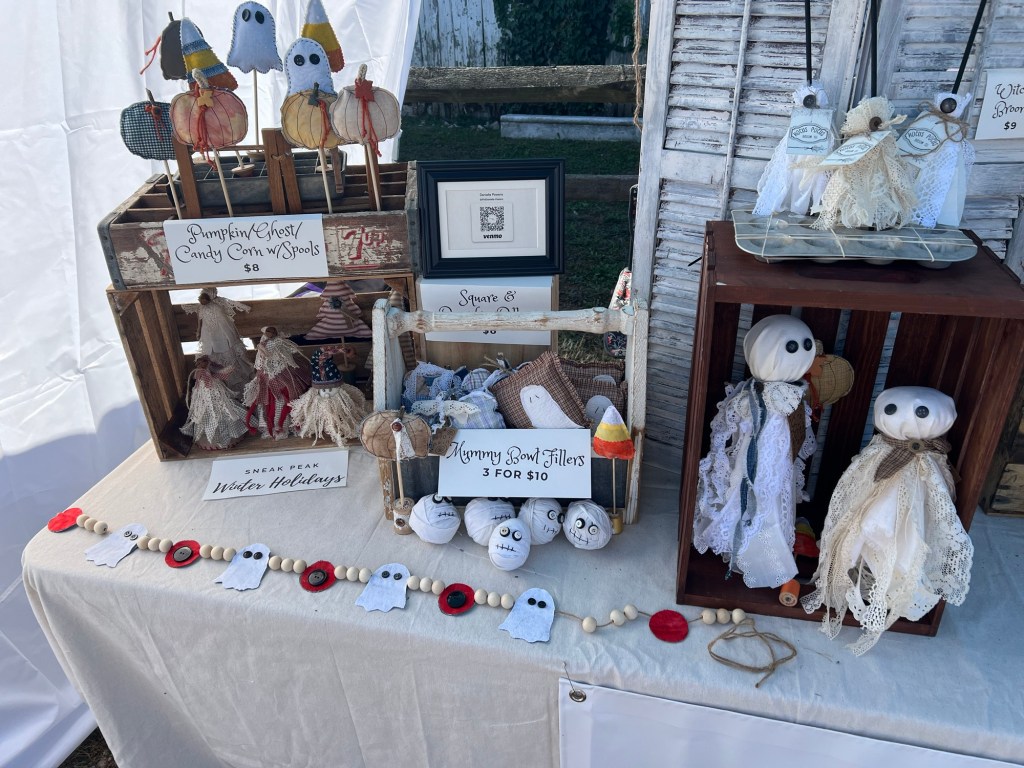
The creativity of the crafts vendors
It was not even Halloween yet and here comes Christmas
These were some of the most unusual crafts at the festival. I loved the Mummy Bowl Fillers. Very clever!
I took a chance on a recent visit to Elmer, New Jersey to see if there Historical Society was open and I lucked out. On a beautiful early October day, they were sponsoring their annual Harvest Festival and the museum was open. What an interesting little museum. The collection reflects life in a small rural community and how it has grown in the modern time.
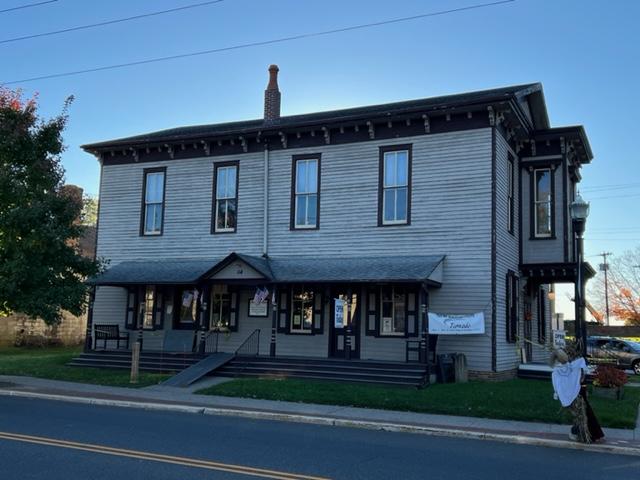
The outside of the museum on the day of the Harvest Festival
The museum is housed in an old Catholic Church
The building was built in 1894 as St. Ann’s Catholic Church that was organized in 1892. The church was built Adam Kandle at the cost of $1800. The cornerstone was donated by marble cutter Joseph Gibson. In November 2017, the former church building was donated to the Greater Elmer Area Historical Society to be used as their headquarters (Society pamphlet).
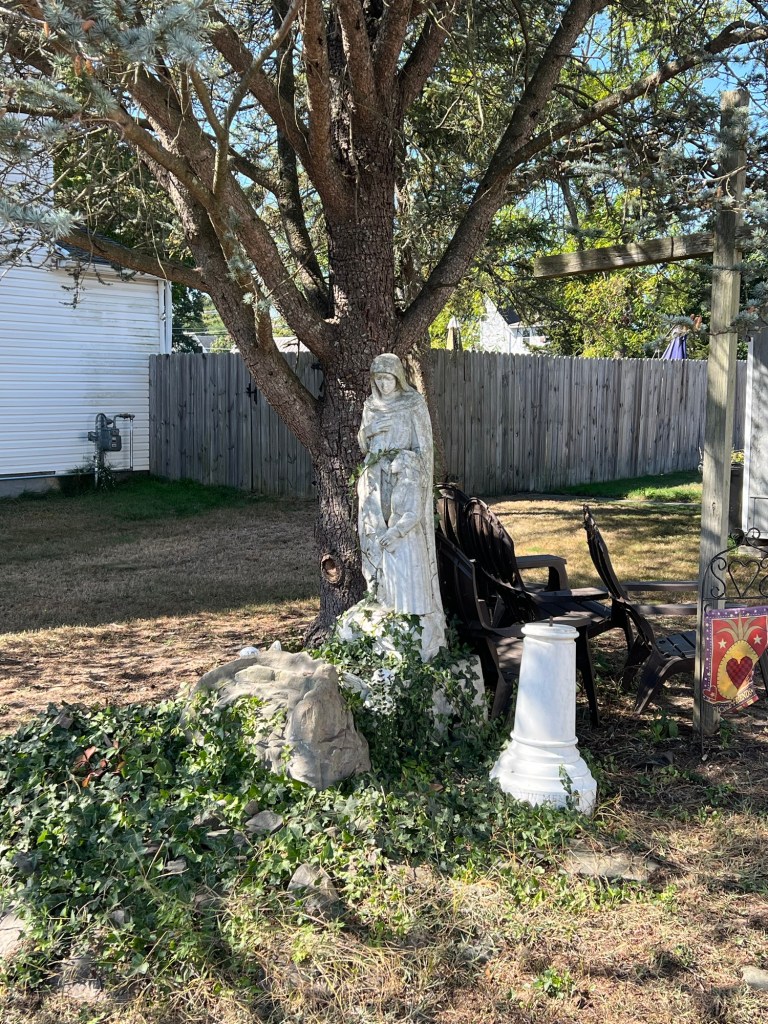
The shine to Saint Ann just outside the door
The inside gallery of the museum still has a feel of the church mixed with the modern era
The town progressed from a sleeping community of hunting and fishing for the Lenape to the coming of the Dutch, French, English and various waves of new immigration to the area.
The Early Settlement sign
The museum may be small but it packed with information on the history of Elmer, the local industries and farms, the Native American population and local population. Each section of the museum has a different theme to it.
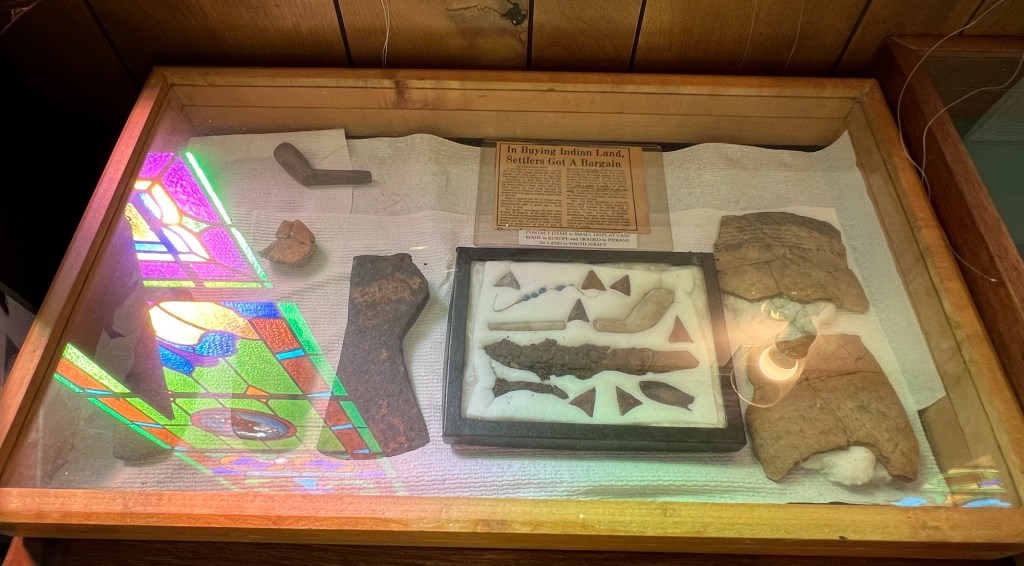
The Native American artifacts
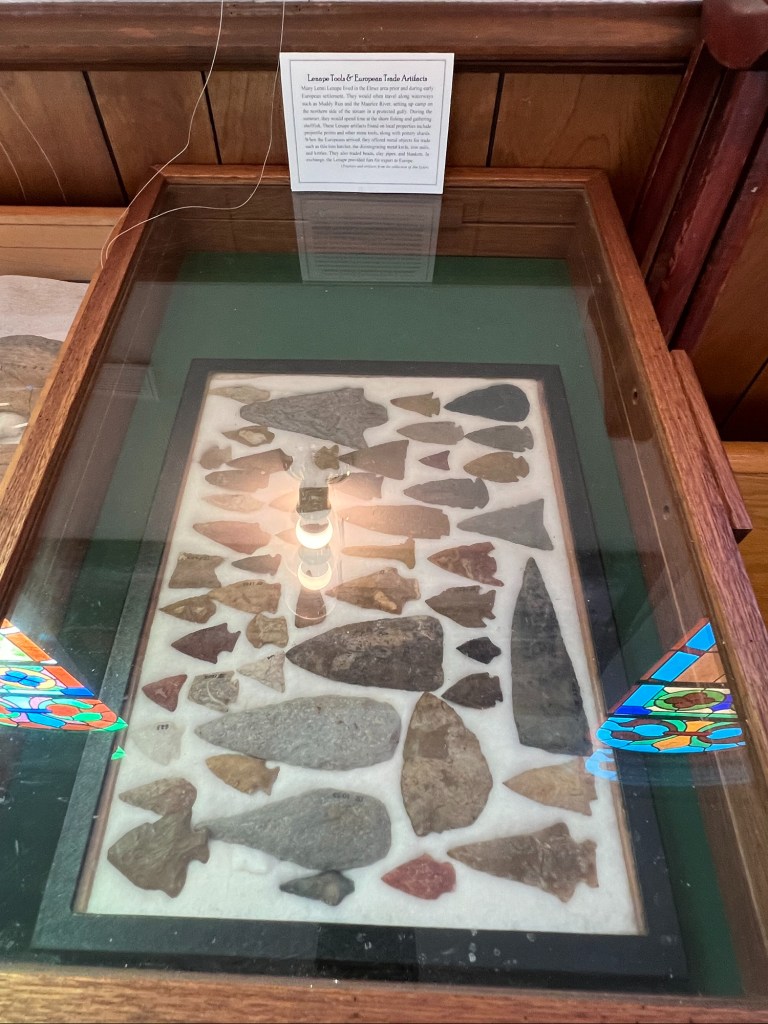
The Arrowhead collection at the museum
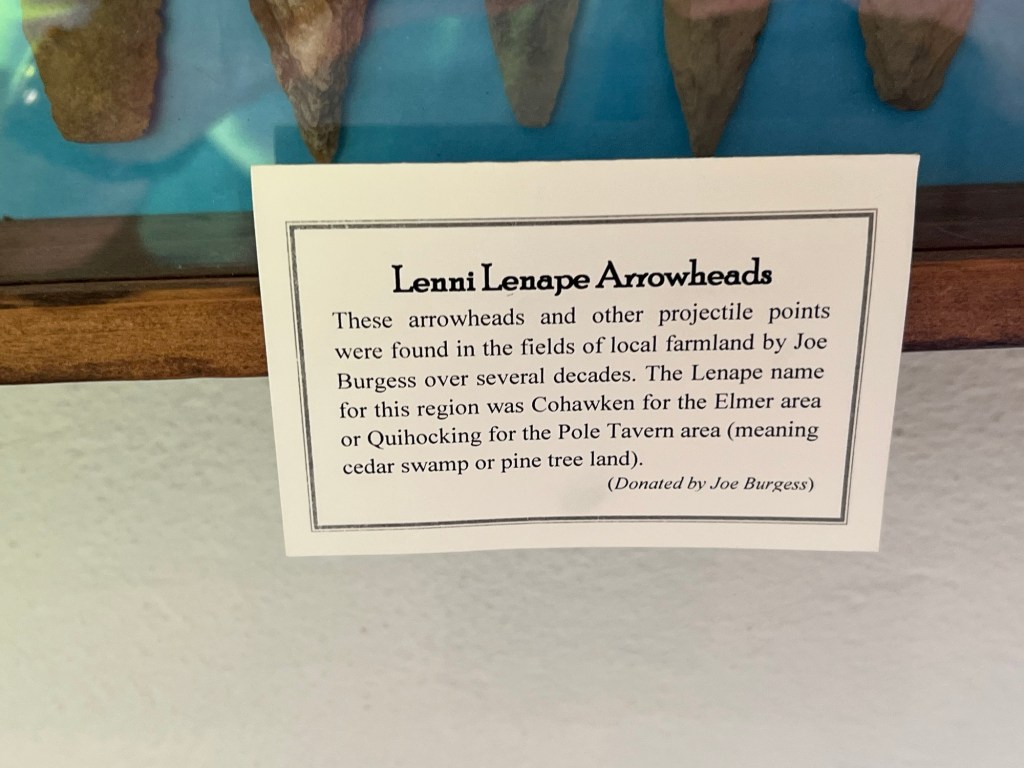
It seems that many of these artifacts were found in the local farm fields. The area had been a big settlement for the Lenape tribes, who probably found the same benefits as the settlers.
The Arrowhead Collection
The museum had an interesting collection of artifacts from local businesses from the area.
Artifacts from the Native Americans
With colonization, and the growth of agriculture ( which is still strong today), the business and manufacturing communities grew in the area and prospered even before the railroads came.
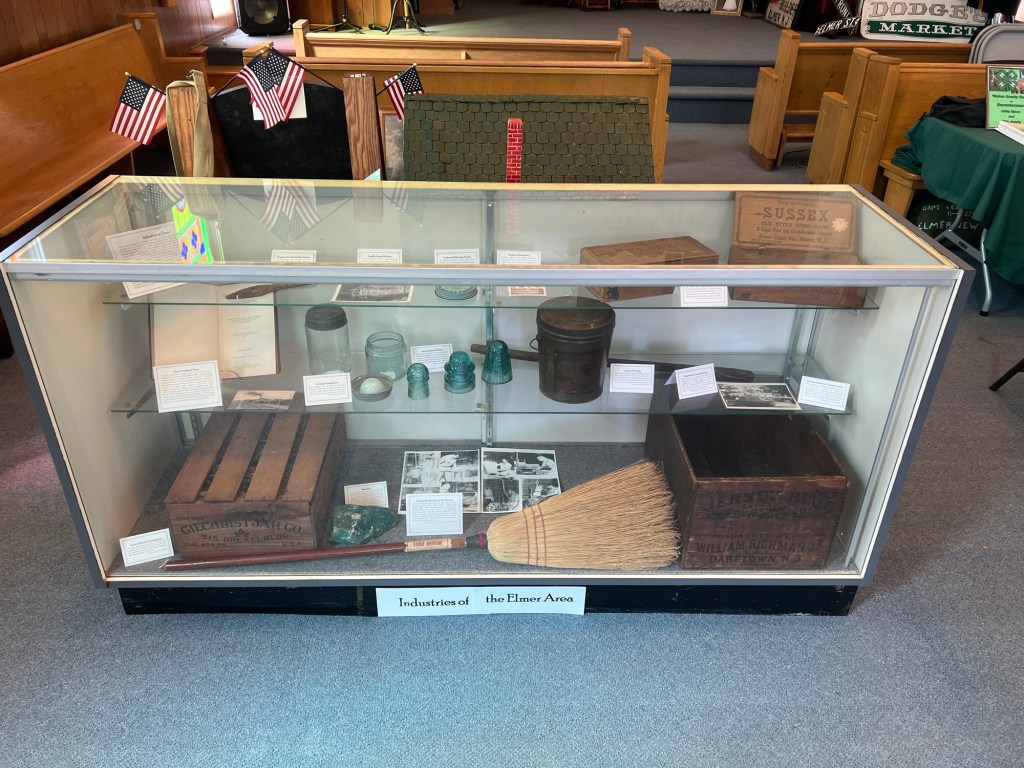
Early Industries of Elmer, NJ:
The growth of the area and the progress of a small town
The businesses of early Elmer included glass making, broom manufacturing and agriculture
The artifacts of the past of Elmer, NJ
The Registration Book of the Elmer Lake Hotel shows how the area changed to add leisure as work changed
Roles in the Home and Community:
The museum displays show a woman’s role in both the household and the community.
The roles of women were standardized
The roles of women in rural New Jersey were set in helping on the farm, tending to the house and raising young children until they were ready to work on the farm, cooking, cleaning and dong the domestic chores. With no electricity, what we deem as simple today was much work to the farm house wife. Domestic life and its attributes were noted in the display case,
Domestic items of the home
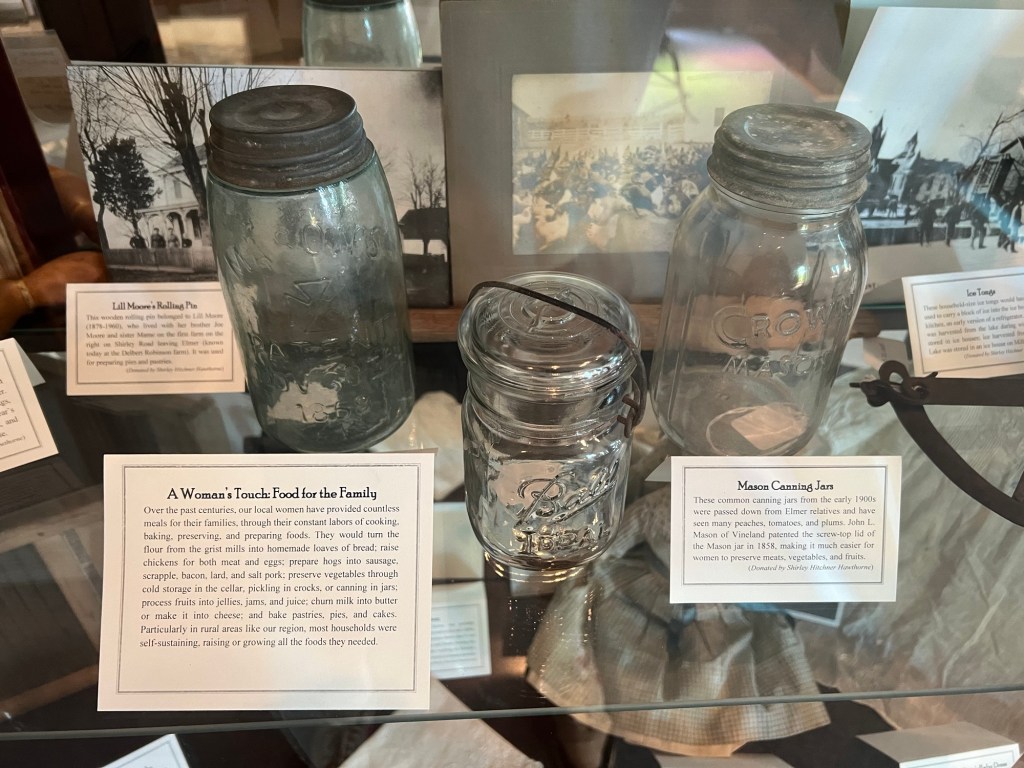
What needed to be done in the kitchen to feed the family
Canning and preserving foods for the winter
Ironing and taking care of clothing
Creating your own playthings, the Mercy Reeve doll. Store bought items were just too expensive for the average person or not available
The Wedding dress
The Hartz wedding dress
The was a nice display of items from the Elmer Fire and EMS departments on display as well. This shows the rich history of both departments.
The Elmer Fire and EMS department display
The museum also covered daily life in Elmer whether it be business or just general living. A rural community things continue to happen. Transportation continually changes from horses and buggies to railroads and then to cars. This has changed the landscape of the town.
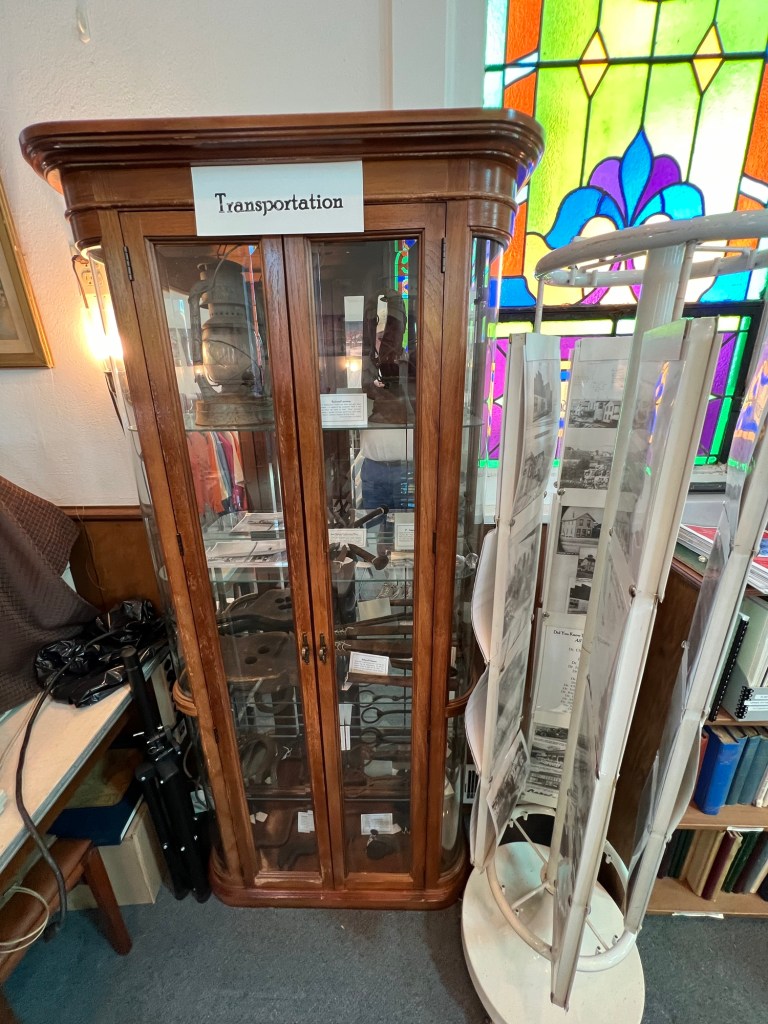
Transportation into Elmer changed life forever
First by horse and buggies
Then by railroad
The daily life included trips into town to buy things for the homestead and visiting merchants and visiting with the doctor.
The Medical life in a rural community
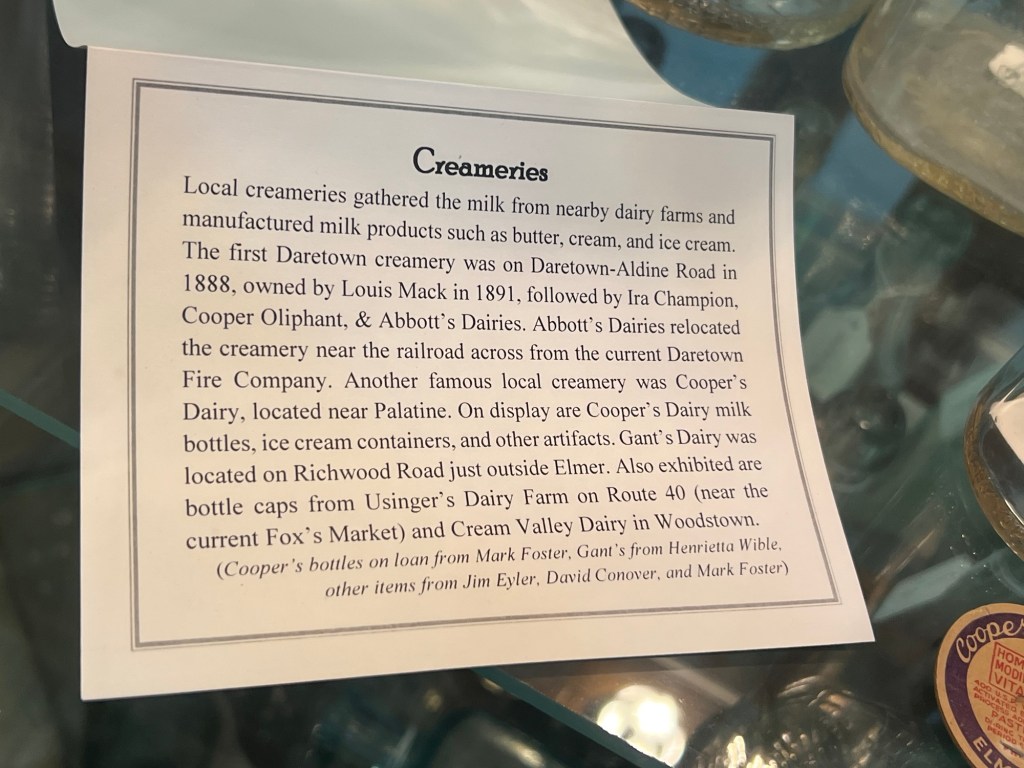
The local dairy business was a big part of the economy
Visiting the creamery and how the dairy business was a big part of the community for work
The glassworks of the various businesses
Daily life in the town and the surrounding area in the beginning was a never ending wave of duties and chores. The household, farms and businesses had to run and everyone knew what needed to be done during the productive warmer months to survive the colder and hasher realities of the Winter. With time and progress each generation progressed to the modern era and this is still changing.
All parts of the everyday lives of people
Bonnet for picking potatoes
Not everything was all work and no play. There were dances, gatherings and socials and later on musical performances then the coming of radio and the movies. Children still had their games and to prepare children for domesticity of the future, there were toys related to the genders with girls playing with dolls and keeping dollhouses and boys with construction games and ready for life on the farm and factories.
The Cain family dollhouse was a cherished family item
The dollhouse with the historical marker
The museum shows the rich history of Elmer and the surrounding community and the spirit of a small town. There are many different displays in the museum to see and experience. Though the town has changed over the years, its progress continues.
Don’t miss their special events as well. I had a wonderful time walking around the downtown for the Harvest Festival. There are all sorts of special events and talks that the museum sponsors so please check out the website above.
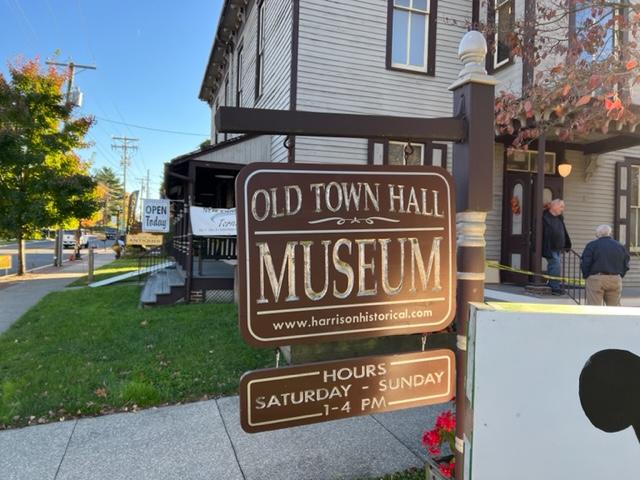
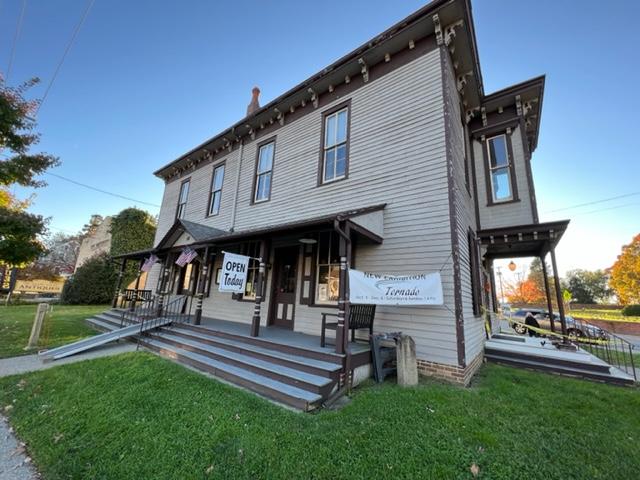
The Old Town Hall Museum/Harrison County Historical Society
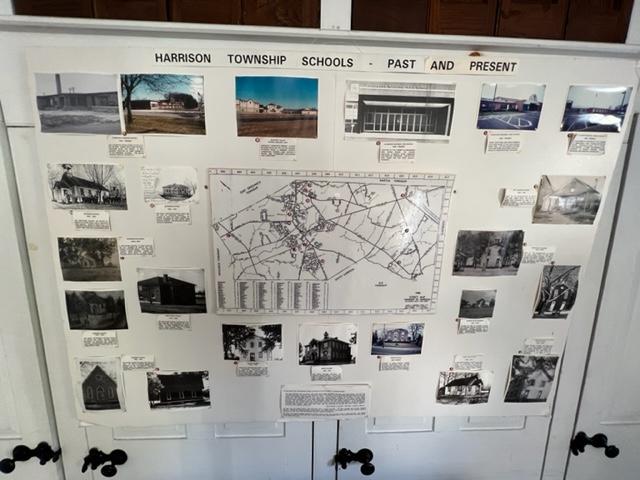
The Harrison Township Historical Society/Old Town Hall Museum
Former Exhibition in 2023:
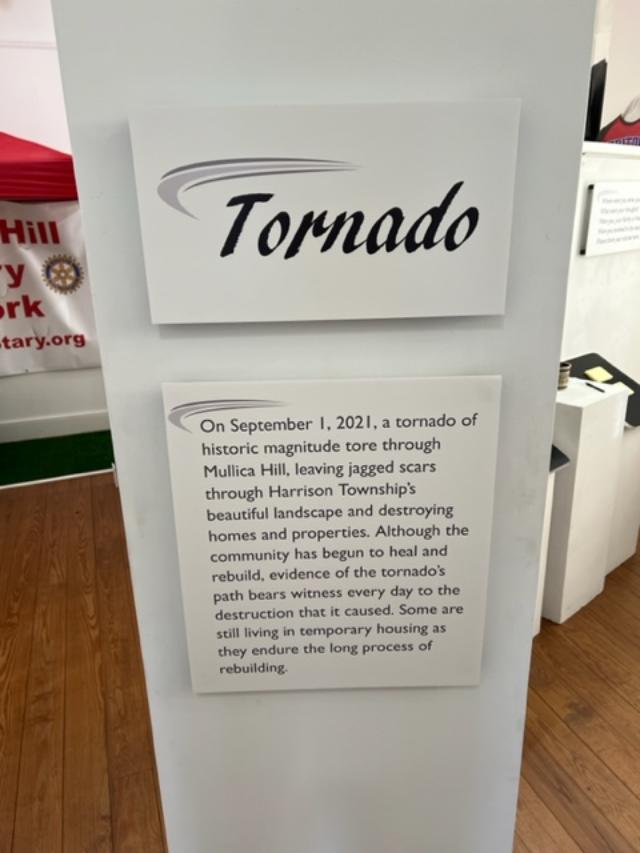
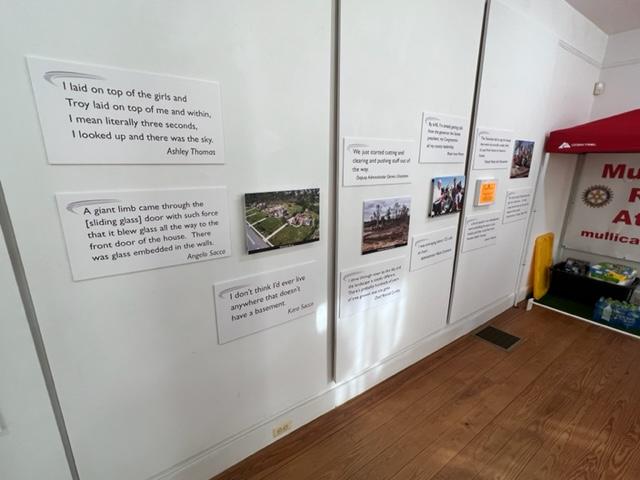
TORNADO
This new exhibition commemorates the 2021 Hurricane Ida Tornado through first-person narratives, artifacts, video and photography.
The Mission of the Old Town Hall Museum/Harrison Township Historical Society Inc.:
(from the Museum pamphlet)
Since its founding in 1971, the Harrison Township Historical Society has presented exhibitions, events, programs and publications focusing on the heritage of South Jersey in Mullica Hill’s Old Town Hall that was built in 1871.
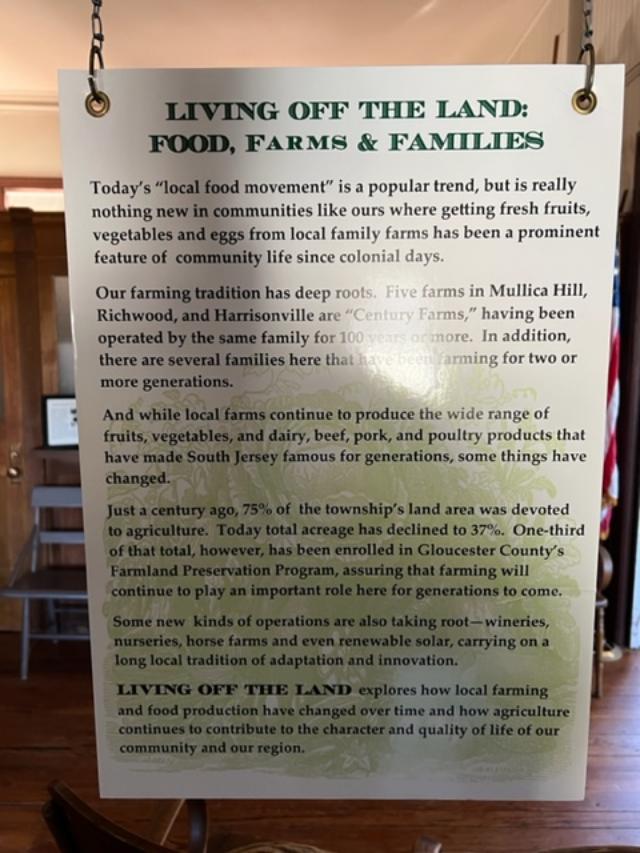
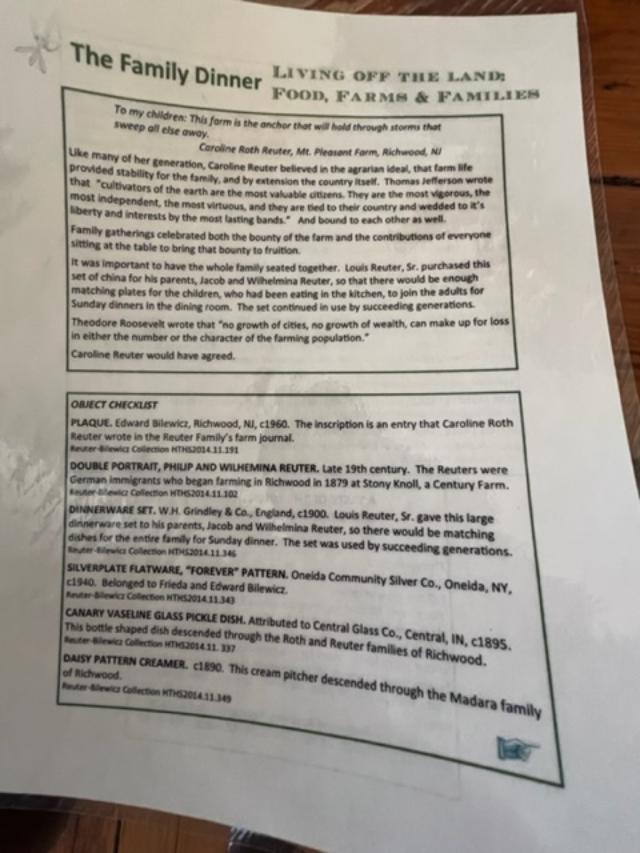
The Stone Age in Harrison Township and Living Off the Land: Food, Farms and Families, explore the region’s Paleo-Indian heritage and our local foodway and farming traditions. The Raccoon Valley General Store and the Harrison Academy Schoolroom recreate two rural institutions.
We also present seasonally changing special exhibitions, student programs and unique special events like the annual Groundhog Dinner (featuring local sausage-“ground” hog!) and the popular Mullica Hill Ghost Walk in October. Visit https://www.harrisonhistorical.com/ for news and information.
Come and experience our Heritage!
Our History:
(from the Museum website)
In 1971 the Township Committee of Harrison Township under the leadership of Mayor Philip J. Reuter, appointed a committee whose purpose was to form a historical society that would lead a community effort to preserve and provide a new purpose for Mullica Hill’s historic Old Town Hall.
Since that time the Harrison Township Historical Society has successfully met this initial charge, not only preserving the building (a key contributing structure in the Mullica Hill National Register Historic District), but also establishing a museum that has won state and national awards for its exhibitions, programs and publications.
The “Living off the Land” exhibition shows life on the farm in Southern New Jersey. This exhibition shows life on a South Jersey farm from the late 1600’s to today with some of the equipment, commercial items and furniture showing the lifestyle on the farm. This first floor exhibition gives us a peek at what life is like in the day of a farming family.
The main room on the first floor of the museum is broken down into sections. In the special gallery space is the exhibition “Tornado” about the tornado that hit the surrounding area during Hurricane Ida in 2021. The exhibition gives first hand accounts of what happened and people’s experiences and the clean up.
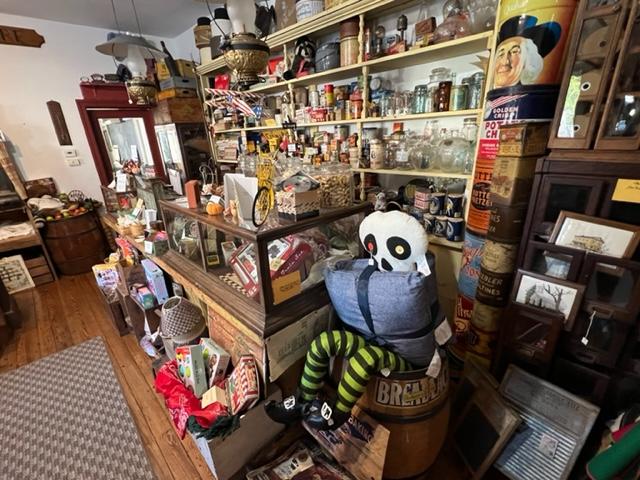
In the Main Room when you enter is the Raccoon General Store and the Harrison Academy schoolroom showing what life was like in rural Southern New Jersey.
Raccoon General Store:
All sorts of everyday items were sold in the General Store which was also a gathering place for the town’s citizens. This is where you would catch up with your neighbors at a time before telephones.
Everyday items would be found in the General Store
Everything could be bought at the General Store for the house with special trips into the City during the holidays or for special occasions
Household items at the General Store
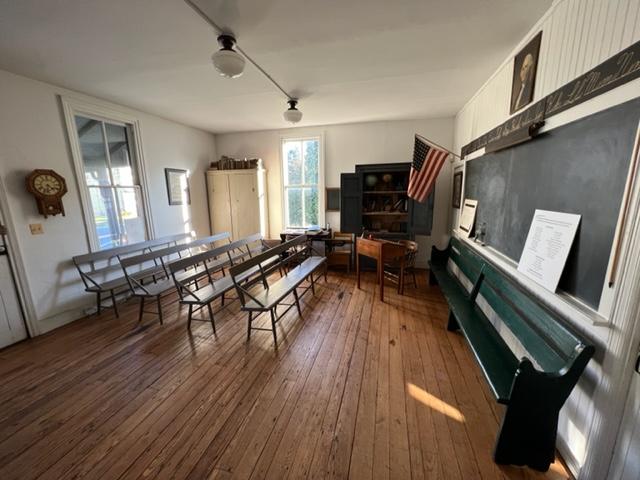
In the back of the General Store is the exhibition of the Harrison Academy Schoolhouse showing teaching in rural New Jersey up until about 60 years ago. These rural communities had the one room school in some cases up until WWII. As the areas developed, the regionalized school system came into play and these small schools became of thing of the past.
The schoolroom set up has not changed much over the last 100 years
The room was still heated by the potbelly stove
The Teacher’s Desk, the globe and picture of the President still exists in the classroom today
In the center room is the old Post Office, another fixture of the town’s social life. This was located in Mullica Hill up until fifty years ago.
The Mullica Hill Post Office
The entrance to the hall with the Post Office and Farm Equipment
The facade of the old Post Office
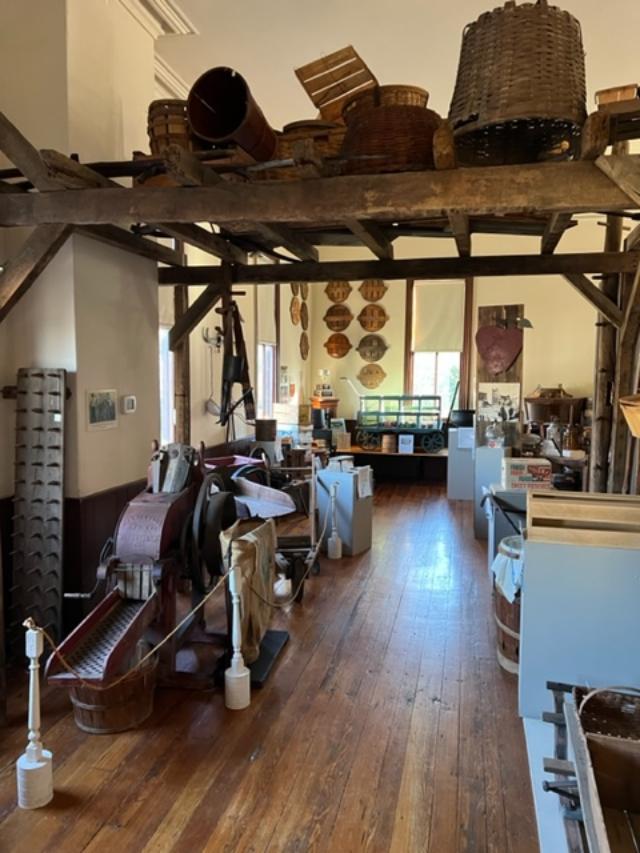
The back part of the exhibition is the farm equipment that would be used in commercial farming. The processing and packaging of fruits and vegetables would have been done when the harvest was being picked and getting ready for markets in New York, Philadelphia and Newark. Fruits and vegetables were packaged on the farm and readied for market.
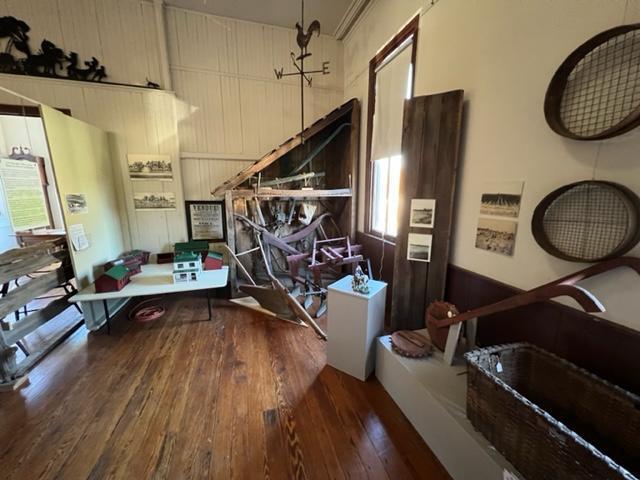
Life on the farm was not always easy
All sorts of equipment for processing fruits and vegetables is on display
All the bailing and shifting equipment needed on a farm
Business advertising
Packaging fruits and vegetables for the market
Life on the Farm
The second floor also provides not just a look into the life of the farming family but at the Native American’s life in the area before the colonist settlement.
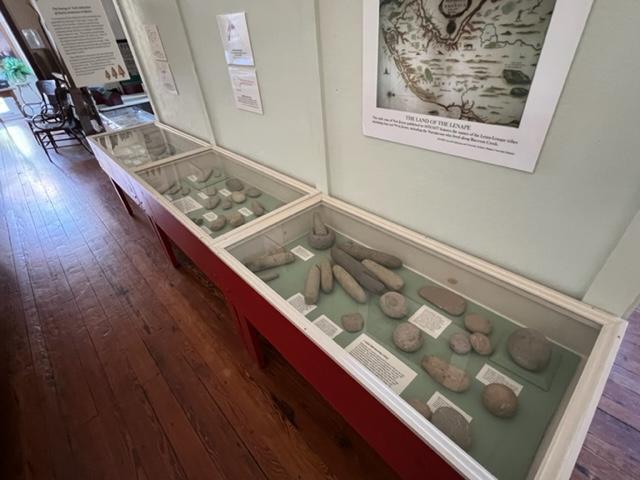
The artifacts of the Native American Lenape Indians
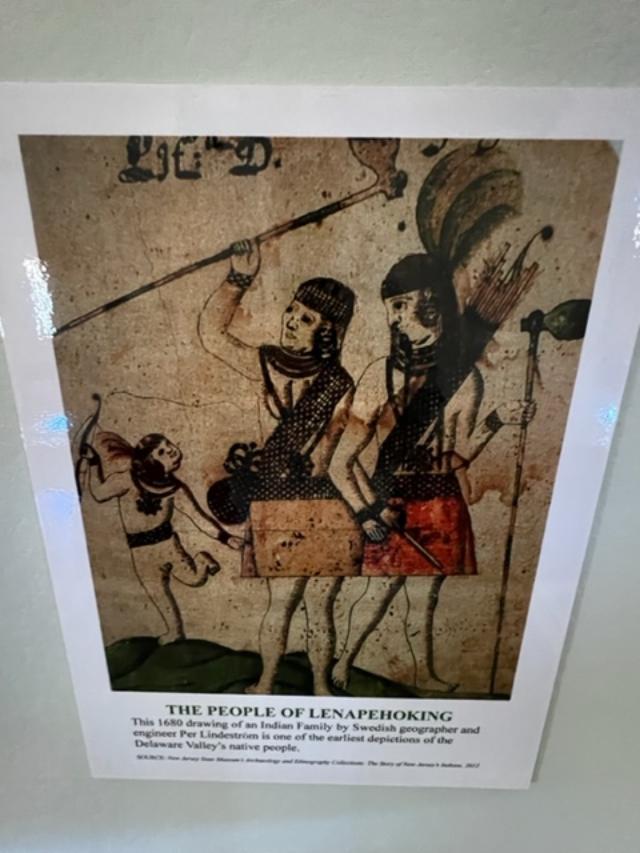
The local Native Americans the Lenapehoking
Day to day equipment and home products of the Native Americans
Arrowheads from New Jersey and beyond
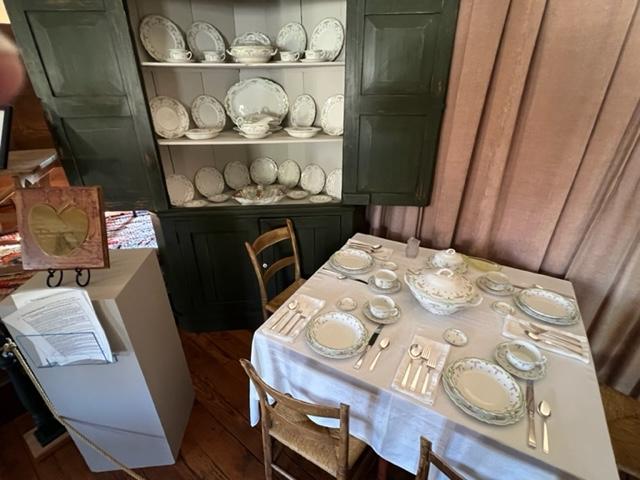
Family life on the farm included the family dinner
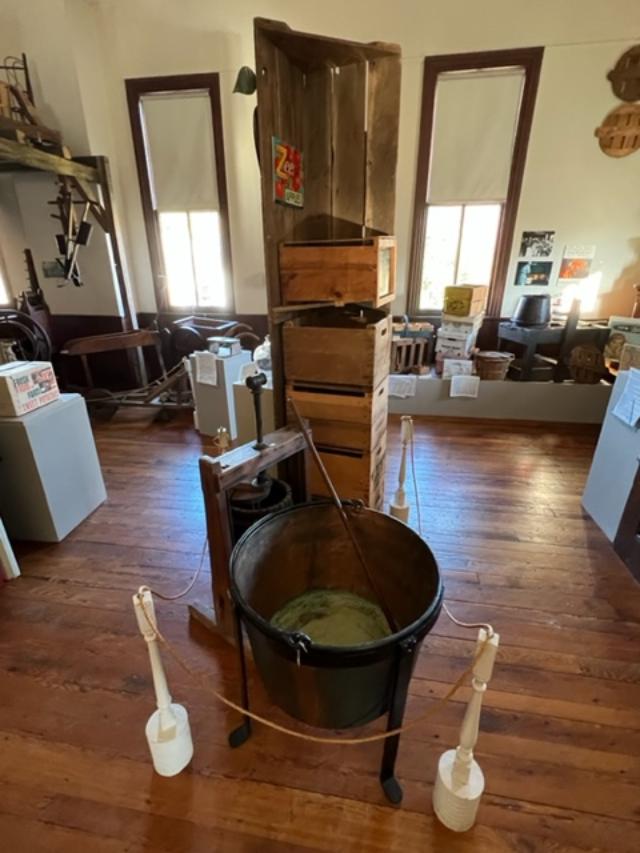
Meals would have included churning butter, gathering eggs, milking cows, processing apples for cider, baking and pickling.
Preparing for a meal would have meant the best linens and china would come out of storage and placed on the table.
Families sat down together on Sundays to eat and enjoy each others company.
More processing of household items
The museum shows that not much has changed over the years but with the advent of modern technology with cars, the telephone and electricity, life on the farm changed but not by much. Traditions and processing crops still had to be done just differently. Life in America was going to change by the beginning of the Twentieth Century and this way of life would be part of the ‘myth’ of small town living. This still does exist in some parts of the rural country.
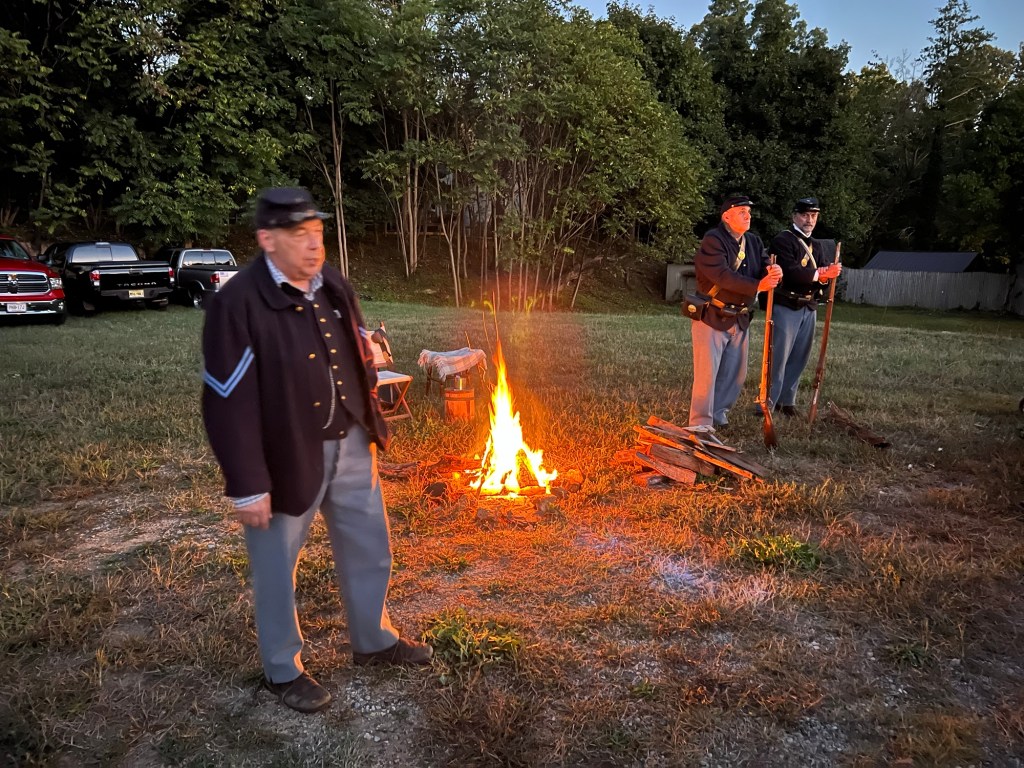
In early October of 2024, I came across the sign for the Ghost Haunted Walk that the Historical Society was sponsoring in Mullica Hill and decided to take an early holiday break and drive down to South Jersey for this event. I made the day of it visiting other sites around the area. Then I drove into Mullica Hill and joined everyone on a very interesting look back on the community’s past. It seems there’s a lot of haunted spots in town.
Downtown Mullica Hill the night of the walk
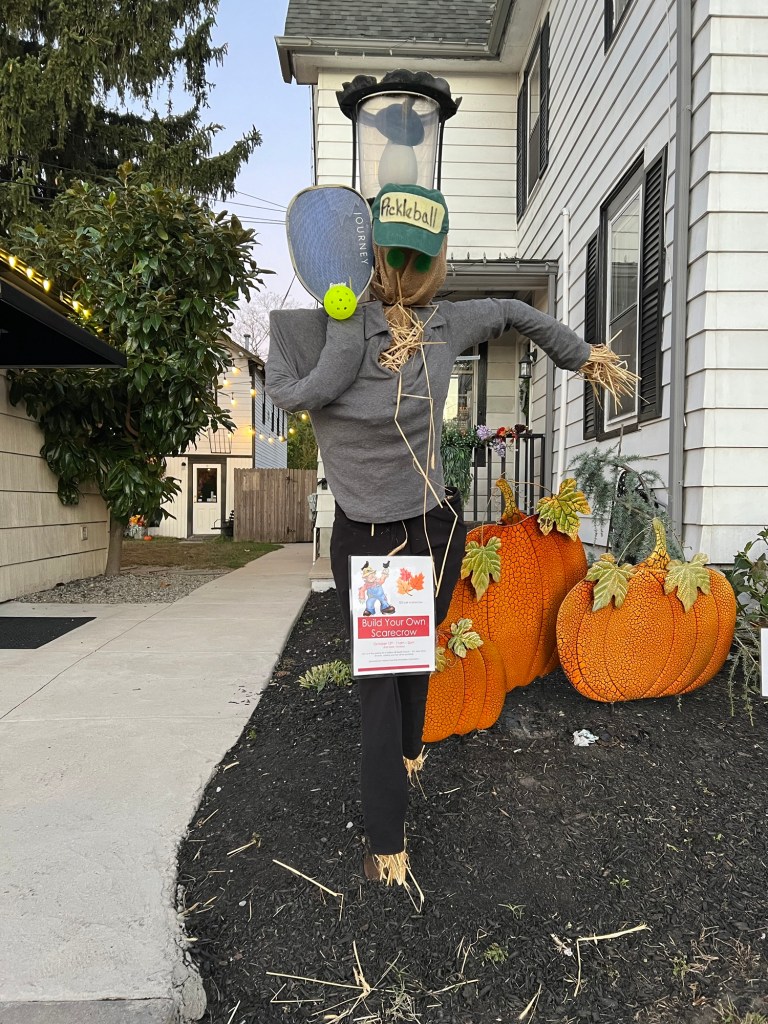
The downtown was dotted with scarecrows
The foliage was just starting to change but like Octobers in the past five years it has been warmer and greener further into the month.
The tee shirts of the event being sold at the start of the tour
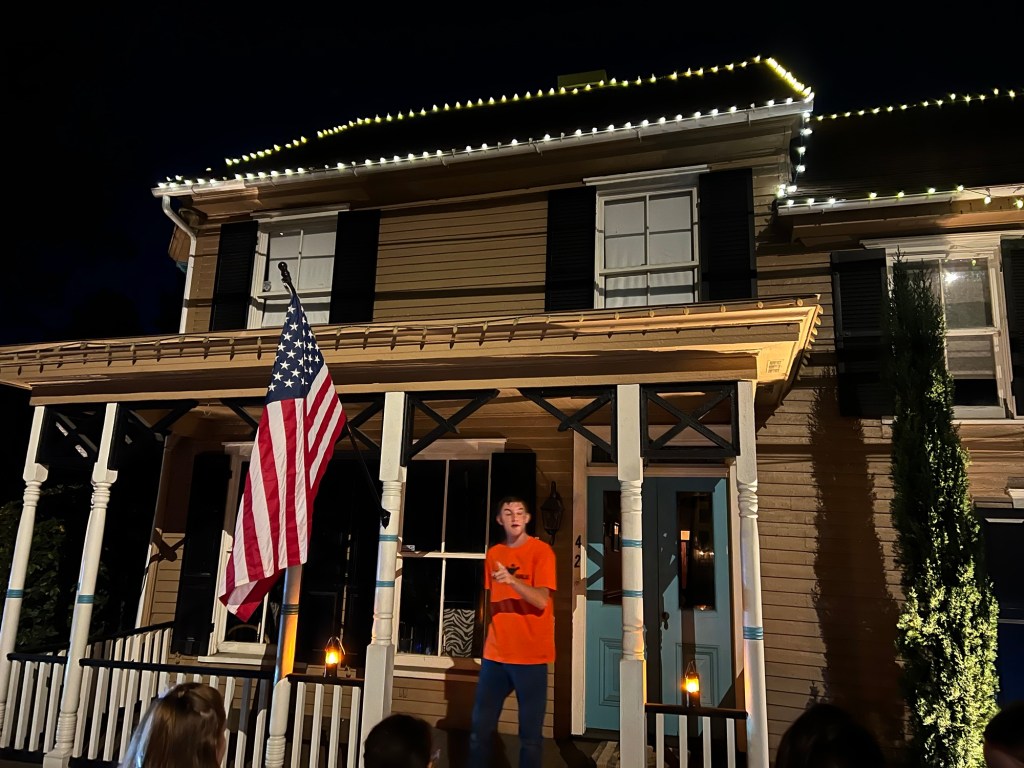
Our tour guide at the start of the tour
The scarecrows on the tour
We walked many stops in the downtown that was steeped in history even before the Revolutionary War.
The Hanging Barn where a worker hung himself
The history of the 12th Infantry some buried in the town
The Haunted St. Stephen’s Church downtown
The inside of the church where angels were seen
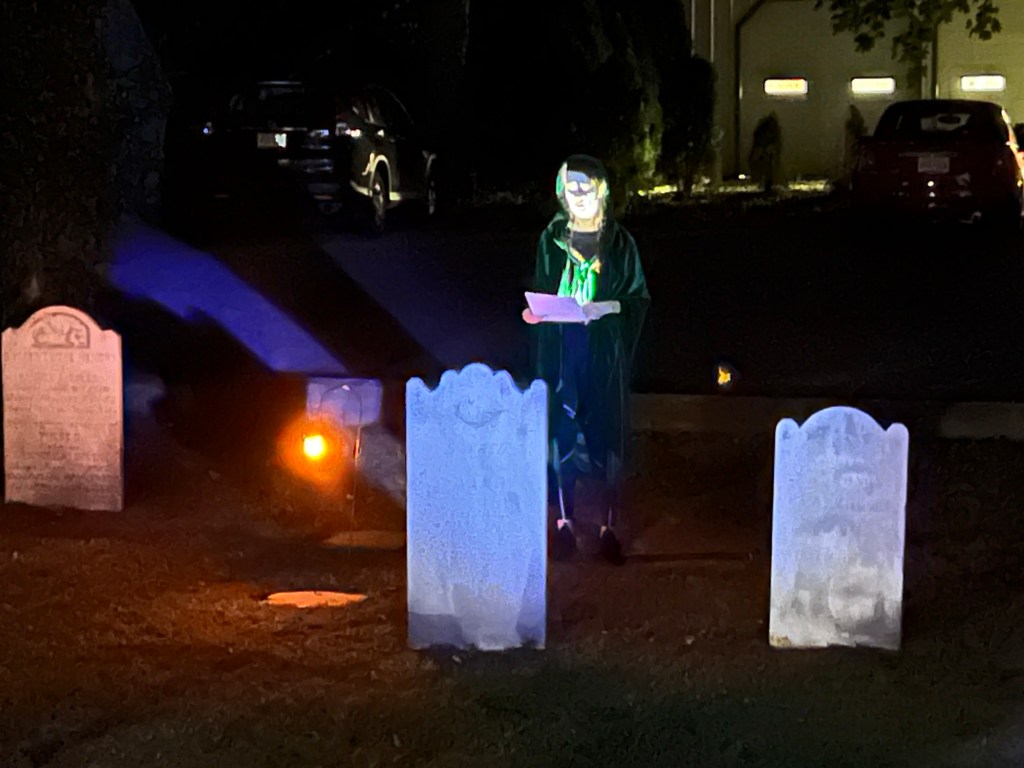
The graveyard talk in the back of the church
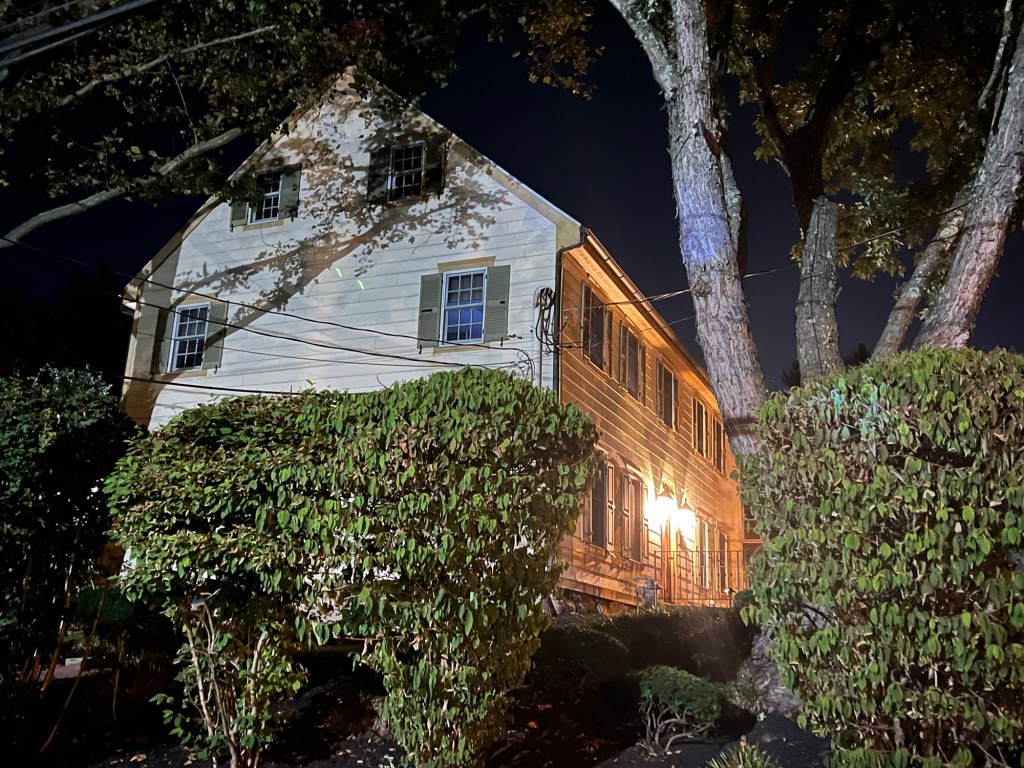
The Haunted House where multiple ghosts have been seen
Another haunted house
The Mullica family home is haunted
Another haunted house in town
After the tour was over, I toured the Mullica Hill Historical Society after the tour to see the new ‘Taverns and Temperance’ exhibition in 2024 on the local watering holes of the 18th and 19th centuries of which only two exist.
The Last Call exhibition
The history of taverns and their purpose
The interesting artifacts from the exhibit
The ‘Last Call’ exhibition was a look on how taverns were such an important part of socialization at a time when there were no movies, internet, phones and newspapers were limited. Still there was a strong resistance to people drinking which still reflects to our Puritan past.
There was nothing wrong with having a drink but there was a sense of taking it too far. Still this attitude is reflected today. It is still interesting though how one or two of these taverns have carried over into the Twenty First century. They are still welcoming guests today and that proves the socialization of these establishments and how important they are in our lives.
After the Haunted Tour:
After the tour was over and I had a nice visit with the museum, it was almost 9:00pm and I wanted to eat something. Two small tacos and two doughnuts are hardly a proper lunch for someone. By 9:00pm though, the whole town had rolled up its sleeves. Even the restaurant where the tour started was closing at 9:00pm. I was shocked as there were people inside still ordering. The host said the kitchen was closing and if I knew what I wanted I could sit down.
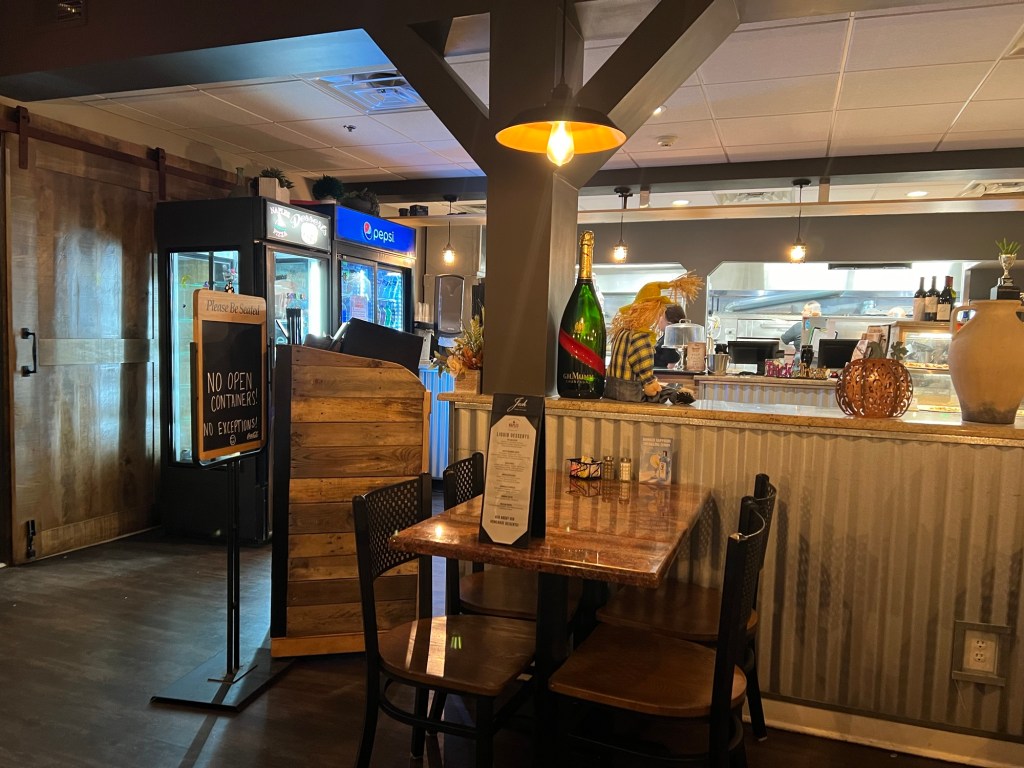
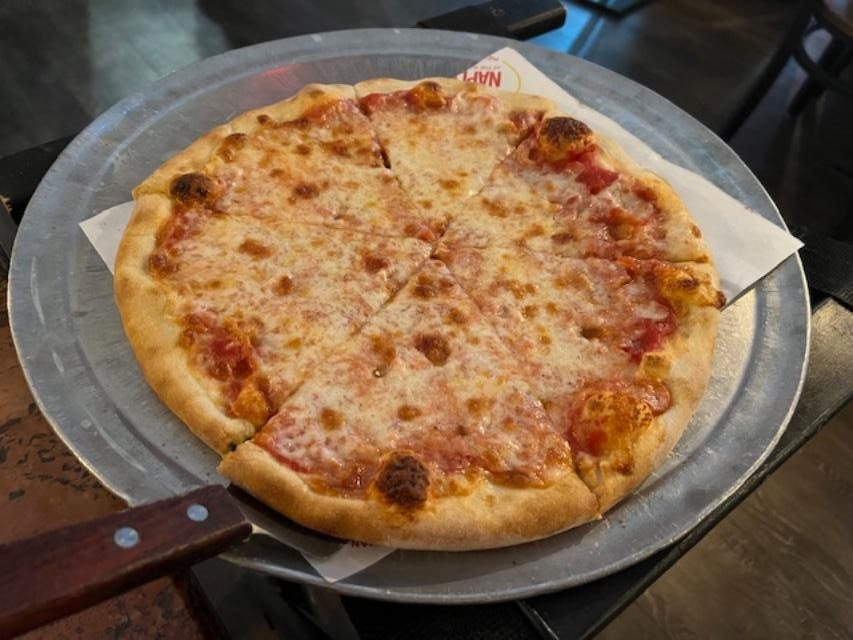
That was not much of an offer especially at their prices and I made my way down to Naples, the pizzeria and Italian restaurant where I had parked. They were open until a normal 11:00pm on a Friday night (I still do not understand restaurants that close at 9:00pm on a Friday or Saturday night. This part of the COVID scare is over and things are pretty much back to normal).
I went to the host stand and they seated me quickly. Tours were still going on and as I ate my dinner, the place really filled up when I finished because there was no place left to eat in town. (Not a good business decision). I really enjoyed Naples. Not only was it a lively environment with the games going on and a very active bar scene but the food was really good as well and very reasonable.
Naples at the Warehouse at 1 South Main Street in Mullica Hill, NJ
Between the Haunted Walk through town and the interesting discussions at each stop to the trip to the museum after the tour, the Haunted Walking Tour of Mullica Hill, NJ was well worth the trip down to South Jersey. It was such an interesting look at the town I would not have known from the many times I have visited the town. The Volunteers did a great job with this event.
It is a great little museum with a lot to see on two floors.
History of the Museum:
Fun Facts:
*People have been living in present day Harrison Township for over 10,000 years.
*Harrison Township originally included South Harrison and the western edge of Elk.
*The Township was named after President William Henry Harrison.
*There is a village called Mullica Hill in Finland.
*The first air shipment of fresh produce in the US took off from here.
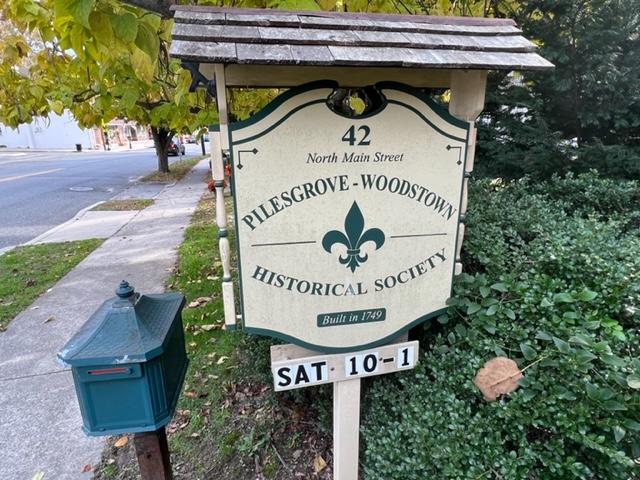
The Mission of the Pilesgrove-Woodstown Historical Society:
To preserve and advance interest in and awareness of the history and heritage of the Borough of Woodstown and Pilesgrove Township by properly procuring, preserving and maintaining the art, artifacts and documents that relate to the cultural, archaeological, civil, literary, genealogical and ecclesiastical history of the local community. We welcome researchers and provide them with any available material.
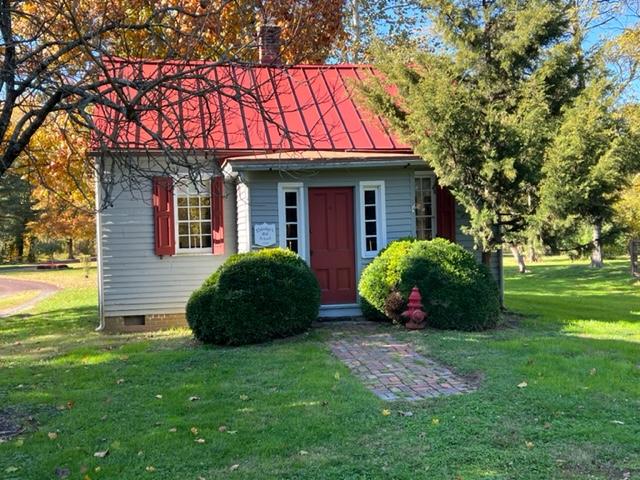
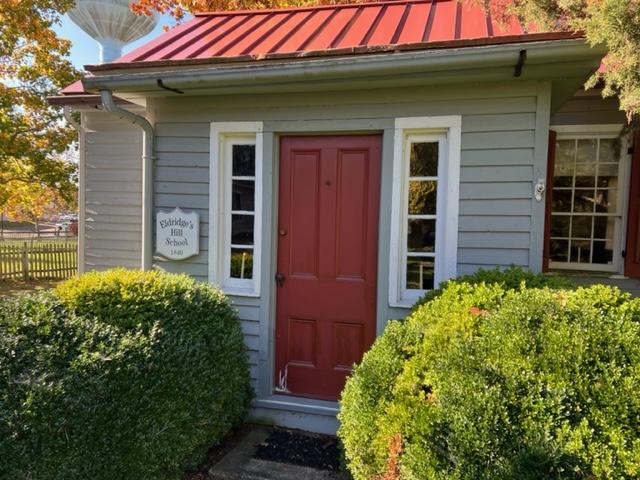
On the site is the 1840’s one room schoolhouse that was moved from Eldridge’s Hill in the 1970’s and is open for touring during museum hours. The organization hosts quarterly presentations and participates with the Candlelight Tour on the first Friday of December.
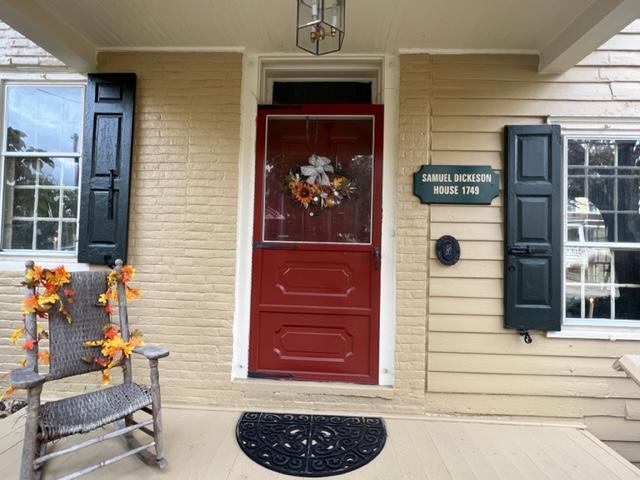
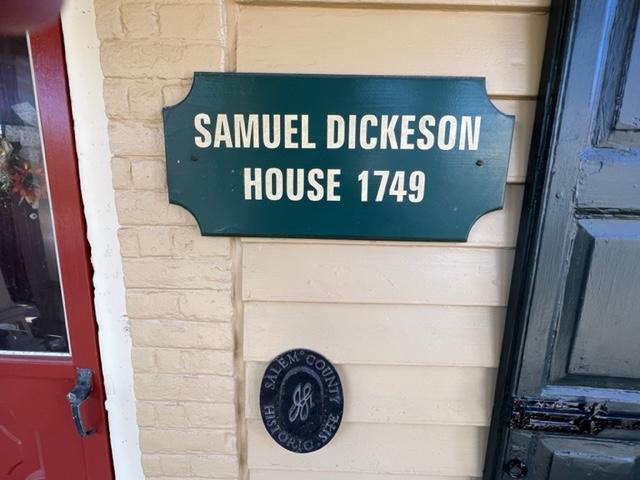
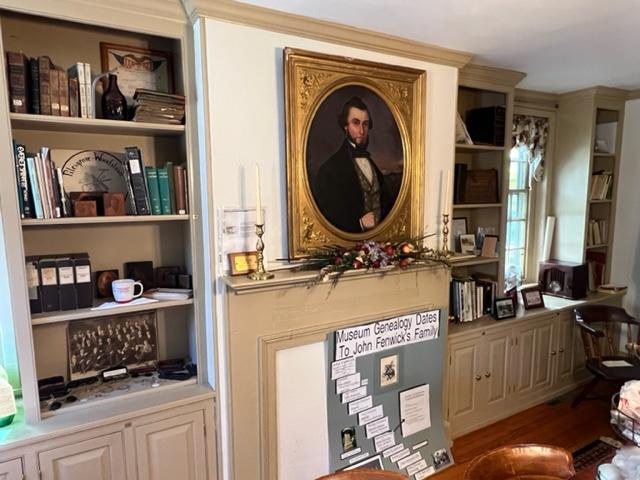
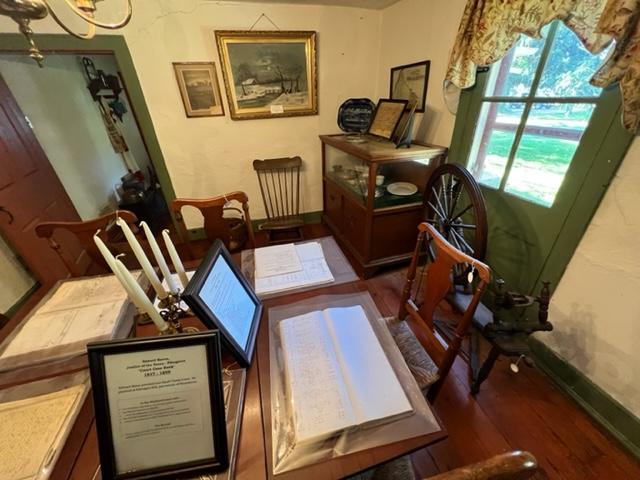
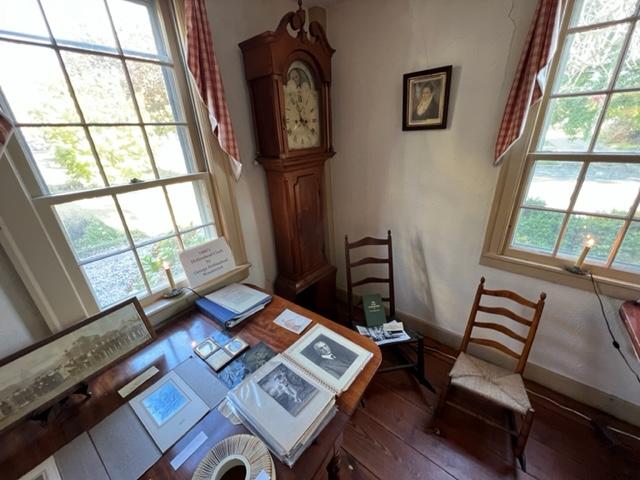
Touring the house is a wonderful experience and I got an excellent tour from a member of the Board of Directors who took me on a full tour of the house and grounds. She explained that the volunteers take a lot of pride in the home, the displays and the artifacts and antiques that make up the décor of the house. The tour starts in the Library which is to the right of the entrance. This is where people can research their families and the towns’ histories. The house was originally owned by the Dickerson family and had changed hands many times over the years.
The Library:
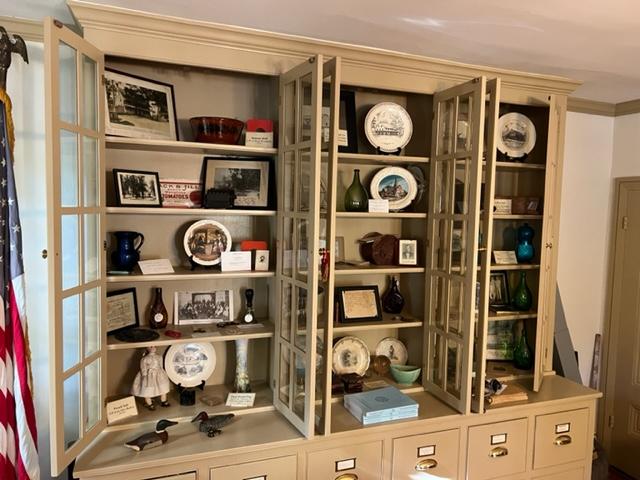
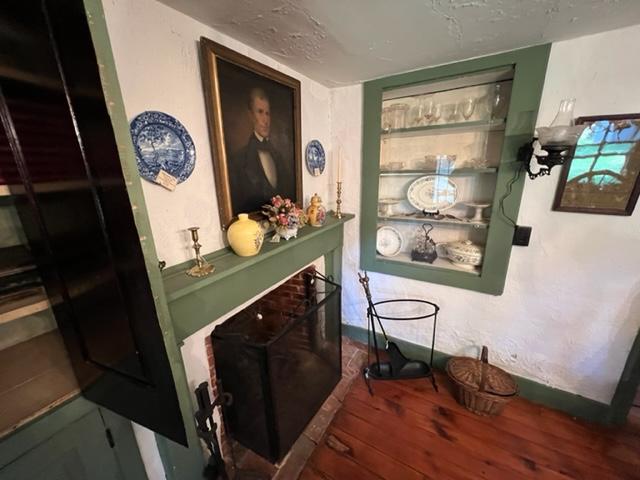
This display has the portrait of John Fenwick and the family tree
The Library:
The Library:
The collection of books and manuscripts is held in the library of the home. Patrons can do their research on their family trees and on the local towns here.
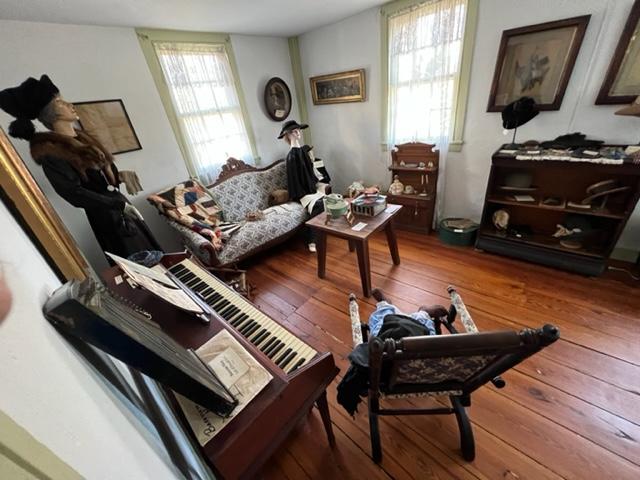
The Living Room:
The Living Room:
The Living Room:
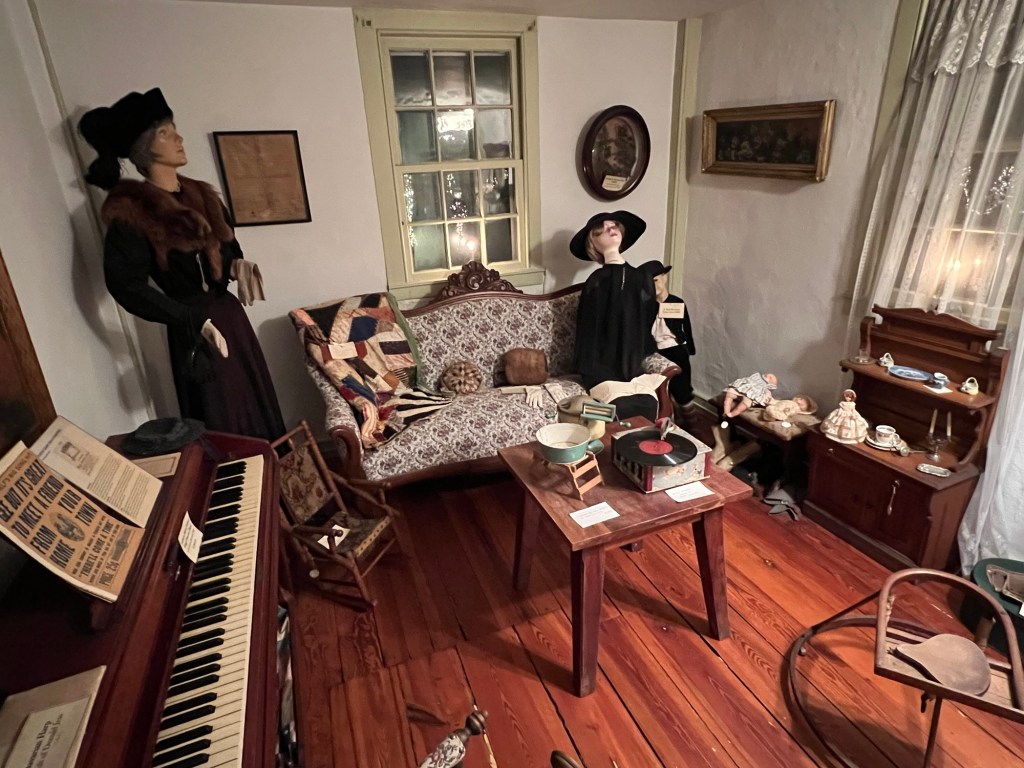
The Living Room:
The Living Room:
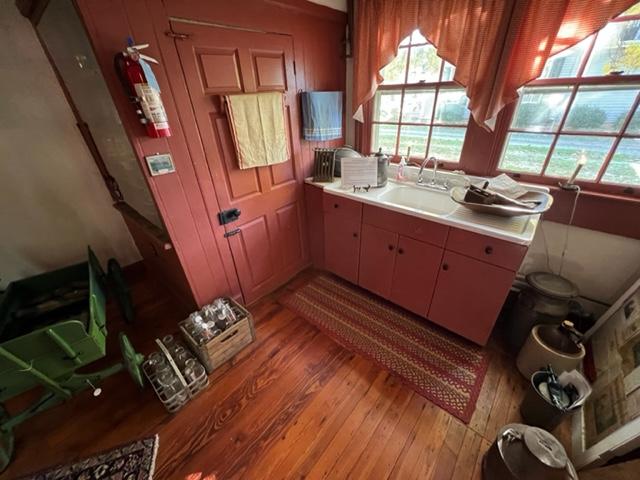
The Kitchen:
The kitchen had been modernized over the years but still retains its historic look to it.
The Kitchen:
The Kitchen:
The Kitchen:
The kitchen:
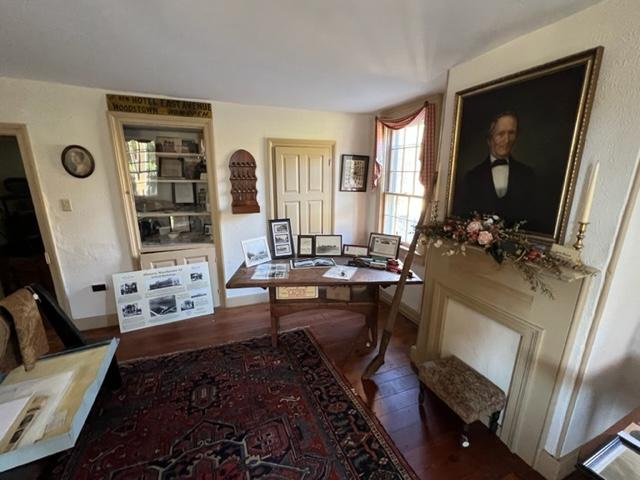
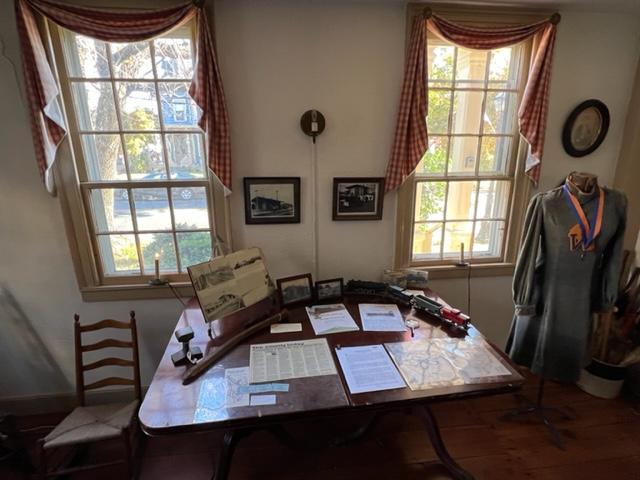
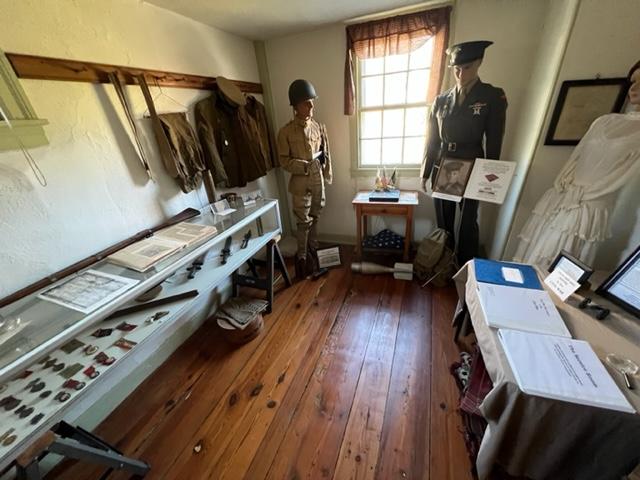
The Military Room:
Memorabilia from the Veterans of Foreign Wars
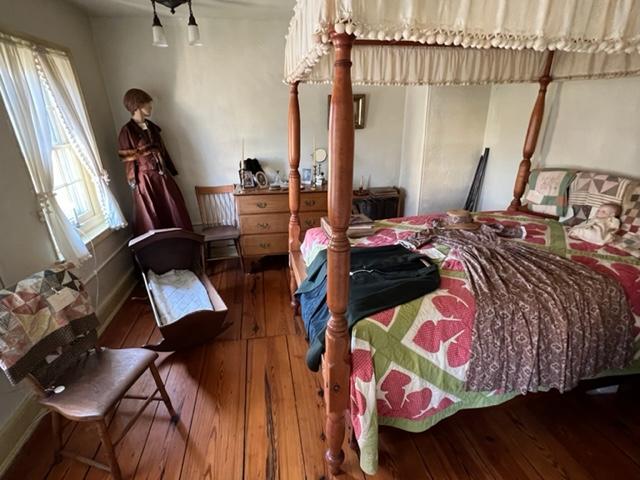
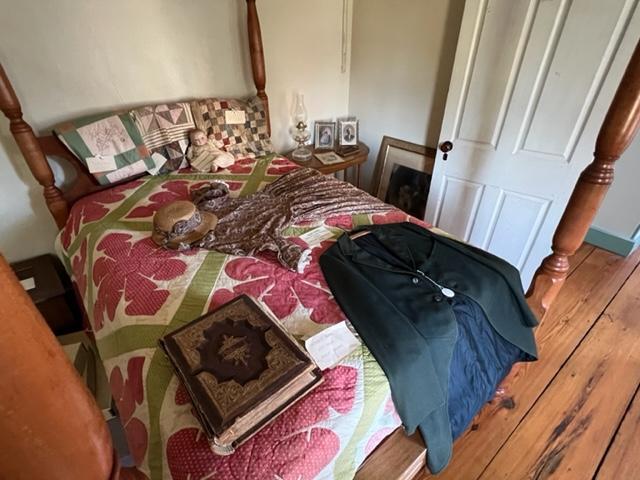
The Upstairs Bedrooms:
The Upstairs bedroom:
The Upstairs bedroom:
The Upstairs bedroom:
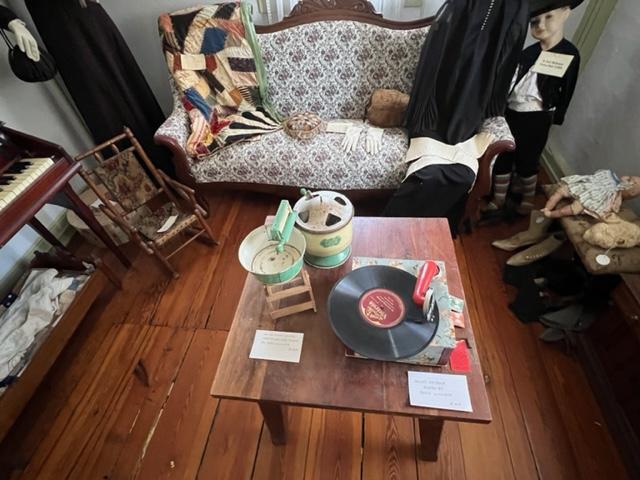
The upstairs bedroom has lots of children’s toys, clothes and musical instruments.
The Upstairs bedroom:
The Upstairs bedroom:
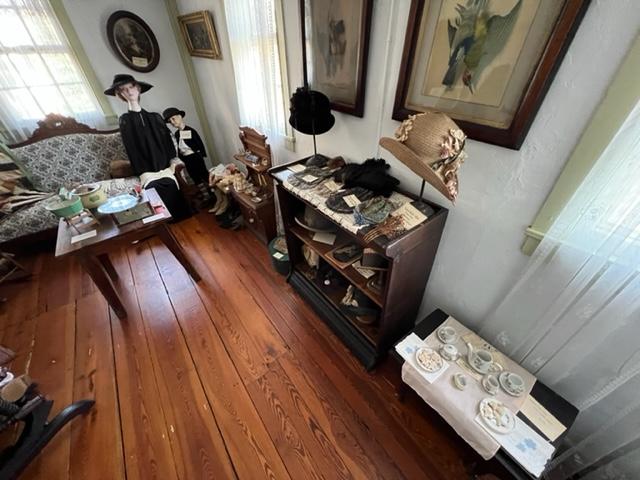
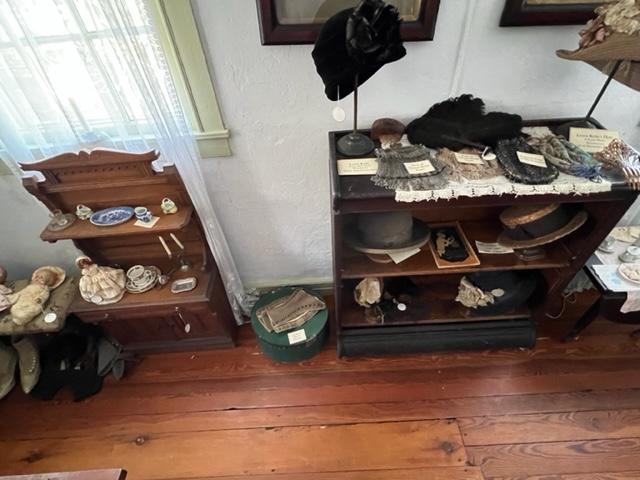
The hats and toy collections in the home.
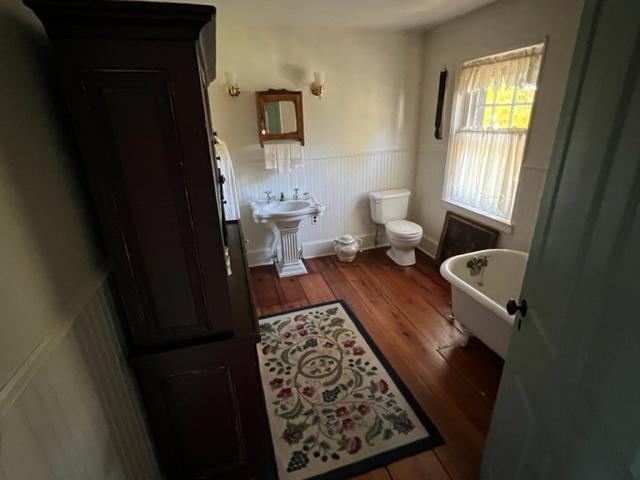
The Bathroom:
The Commercial section of the home:
The outside grounds have a wonderful lawn area where the foliage was in full hilt when I was visiting and in the back of the home is the schoolhouse from the 1840’s. This was locked for the day, but I could see the classroom set up of an old-fashioned school room that has not changed all that much since that period.
The Schoolhouse on the society’s property
The Schoolhouse
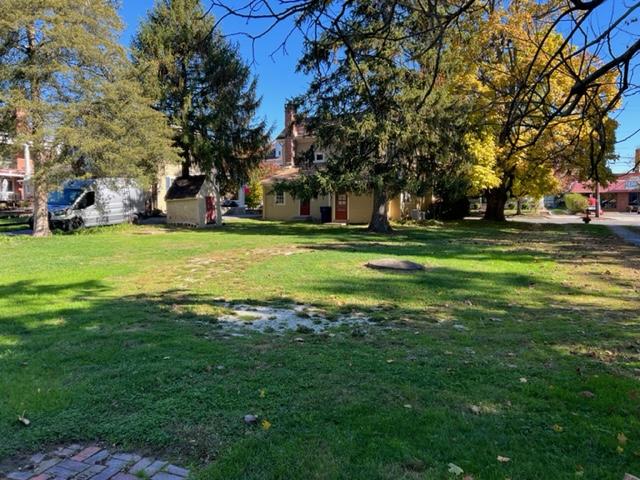
The property behind the house was beautiful and well-kept with colorful foliage.
The house is well maintained, beautifully displayed with artifacts and there is a lot to see and do here. I just wish this wonderful site was open more often so that people could enjoy these wonderful artifacts and displays.
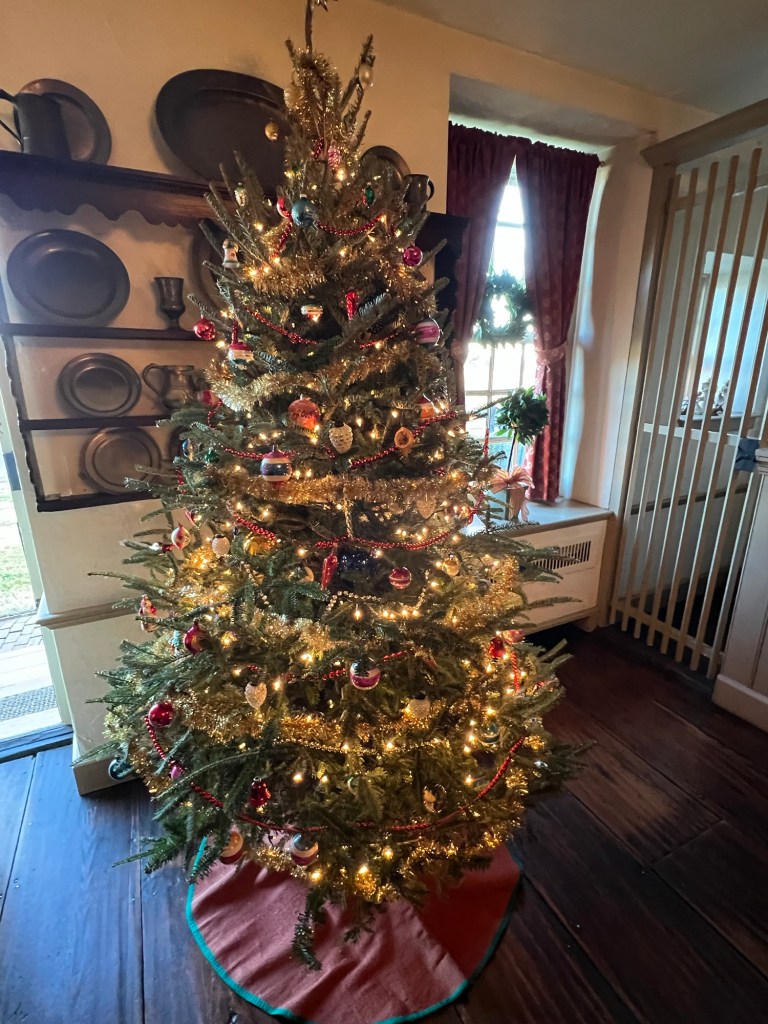
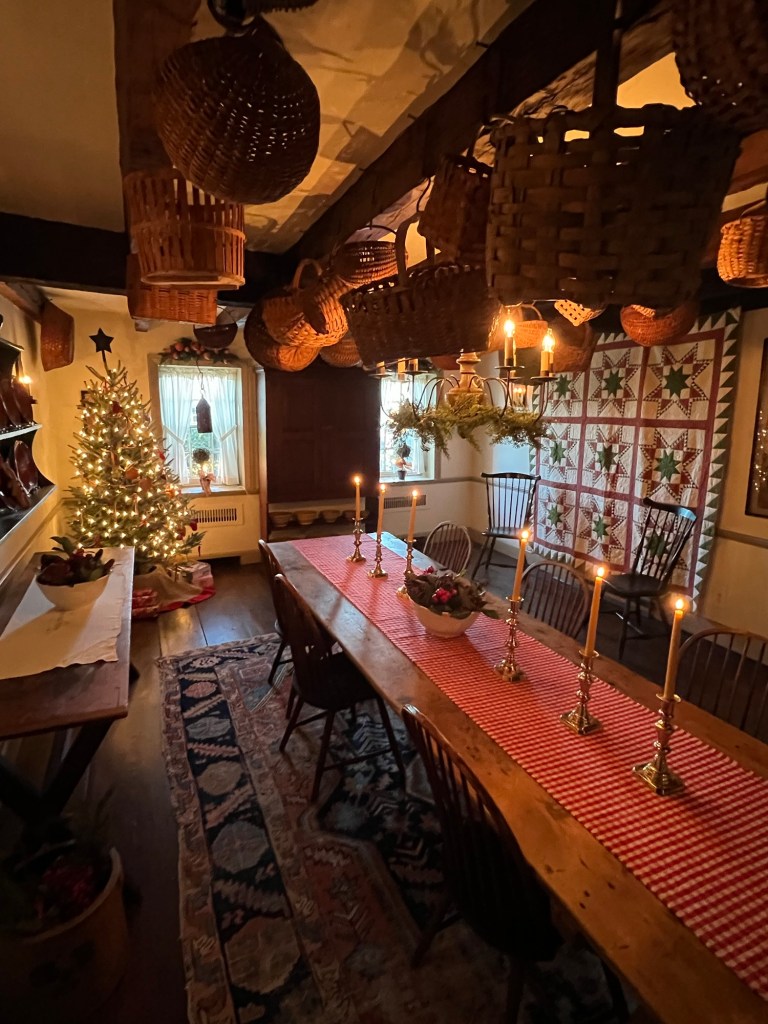
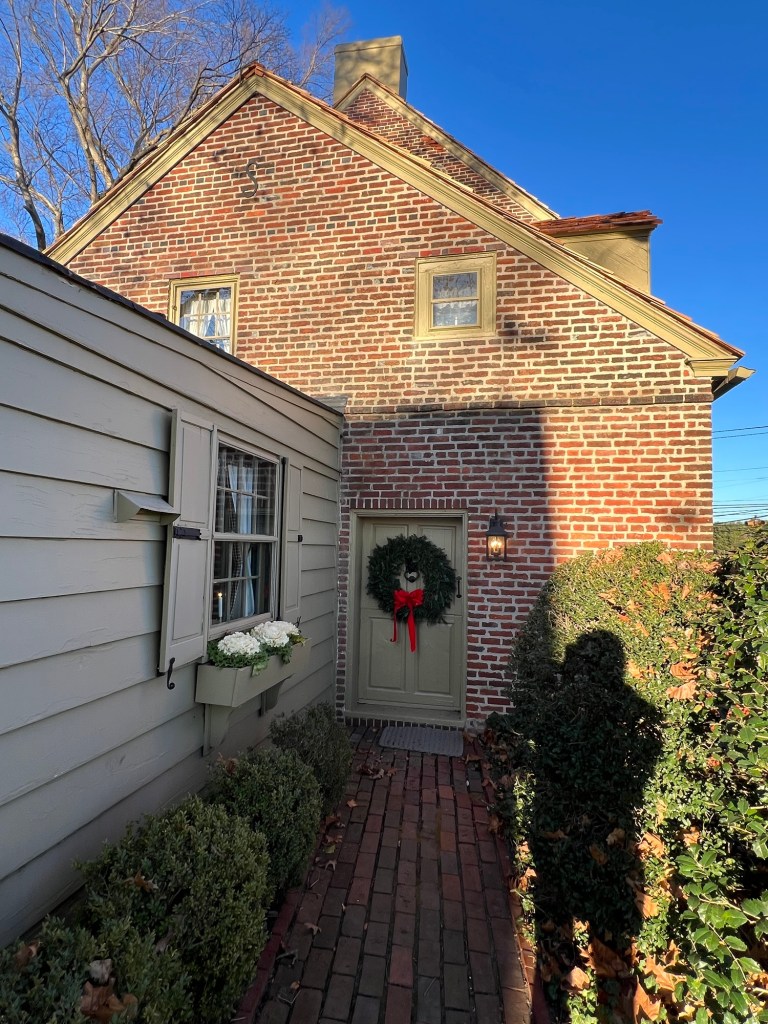
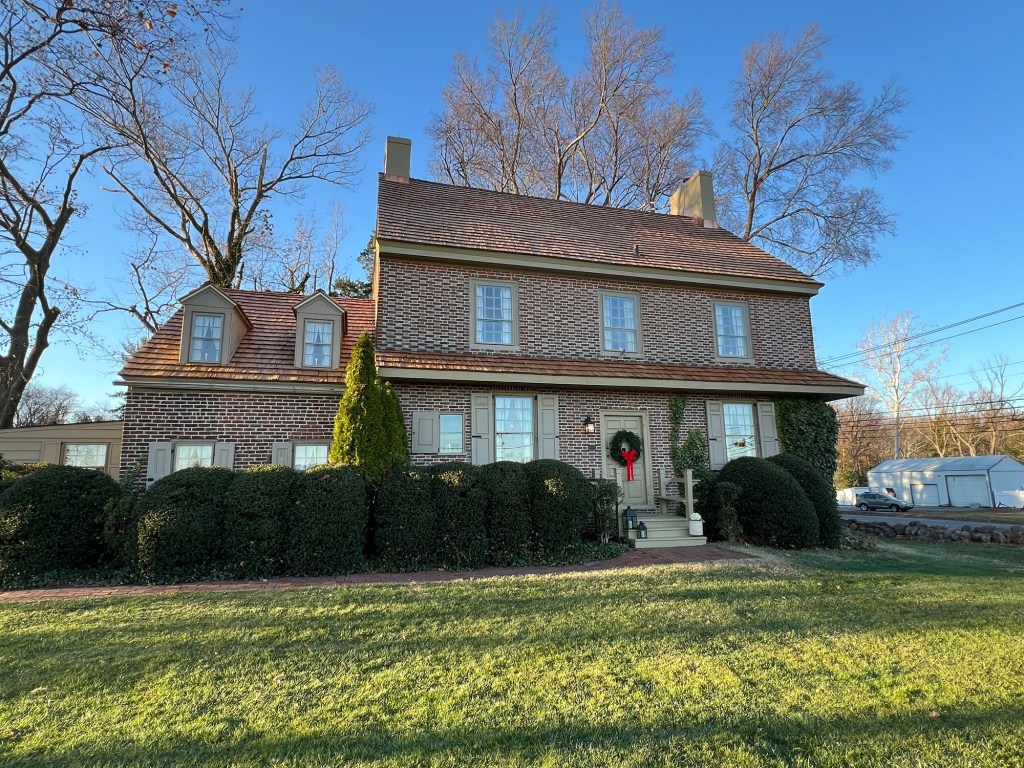
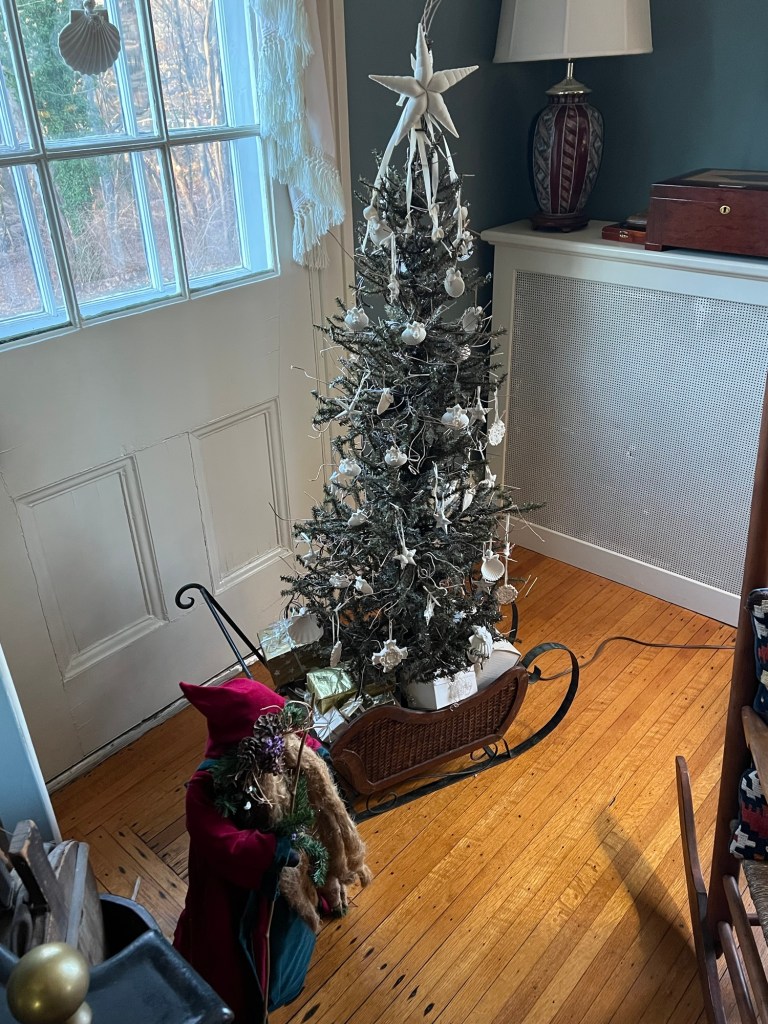
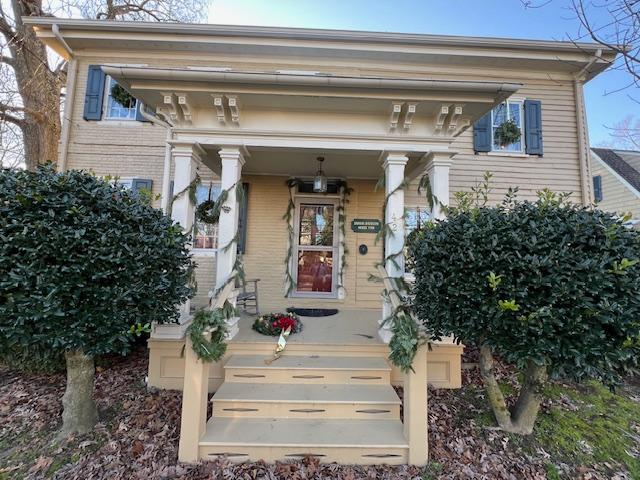
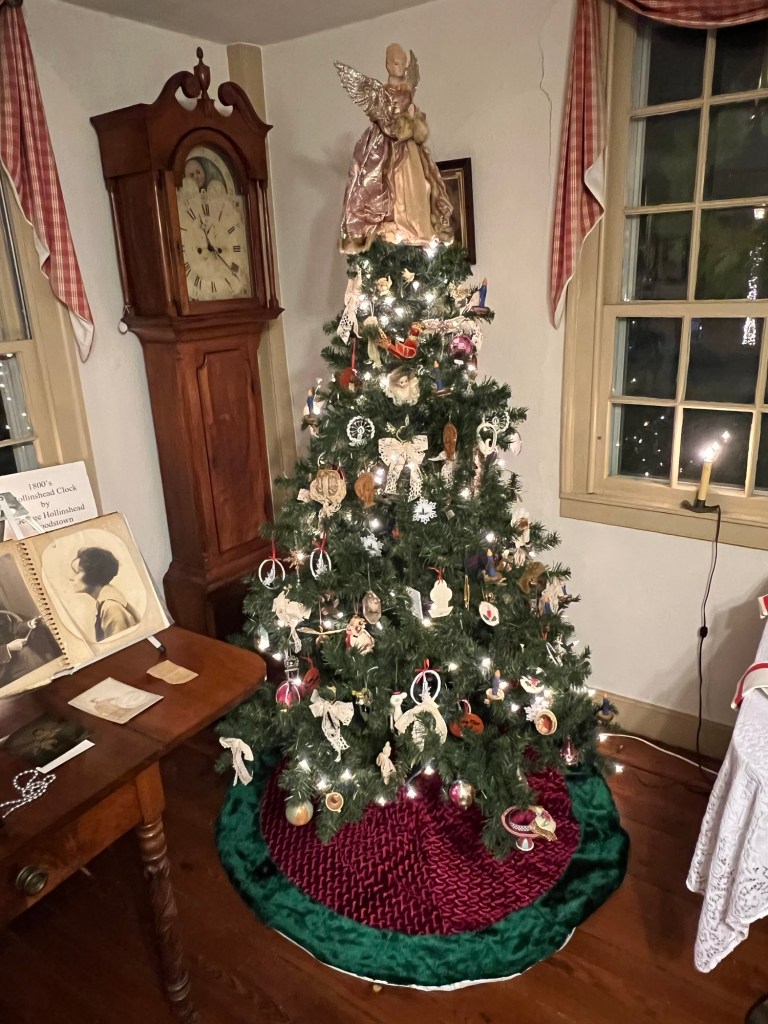
The Society when decorated for Christmas 2023
Some of the special programs that the society has run:
“David Crockett, Scout and Adventurer” on March 26th, 2023:
The Pilesgrove-Woodstown Historical Society is presenting a free program for the community titled ” David Crockett, Scout and Adventurer.” There are many stories about “Davy” Crockett. Our speaker, Mr. Douglas Jones, in period clothing, will be sharing many and will have time for questions. The date is Sunday, March 26th, 2023 at 2:00 pm in the Woodstown Friends Meeting House, 105 North Main Street, Woodstown, N.J. 08098 (this is down the road from the Historical Society). The meeting house is handicap accessible with a sound system and onsite parking. All are welcome. For more information or questions, call 609-313-7534.
Special Event on May 21st, 2023
The Pilesgrove-Woodstown Historical Society Quarterly Program, on Sunday, 2:00 pm, May 21st, 2023 is titled “Liberty, Loyalty, Libations, Love and Remembrance.” The hosts, Jan and John Haigis, from “PastTimePresent” will be setting stories to music and song from Memorial Day Celebrations of our United States History.
This free program will be held in the Woodstown Friends Meeting House, 104, North Main Street, Woodstown, N.J. 08098 is suitable for all ages, all are invited. The Meeting House is handicap accessible with on site parking available. For any questions or information call 609-313-7534.
‘The Woodstown by Candlelight’ Christmas Holiday House Tour:
I returned to Woodstown this December for the Annual Pilesgrove-Woodstown Christmas Holiday House Tour and it was a really amazing event. I had a wonderful time. I did not realized it until the tour was over that this was the first time they had extended the tour through Pilesgrove and used the buses to go out to four of the additional homes.
That lead to some challenges like people being left at homes and not being picked up. It also led to other folks missing parts of tours of the homes because they stopped the transportation too early to get people around. So there are some hiccups that will have to be worked out for next year.
We had gotten left on our last house on the tour by forty-five minutes and did not leave until someone called the woman running the event and we got the bus back to pick us up. That made us an hour late for the regular tour in Woodstown but I was still able to see most of the homes on the listing. It all worked out in the end and I had a ball.
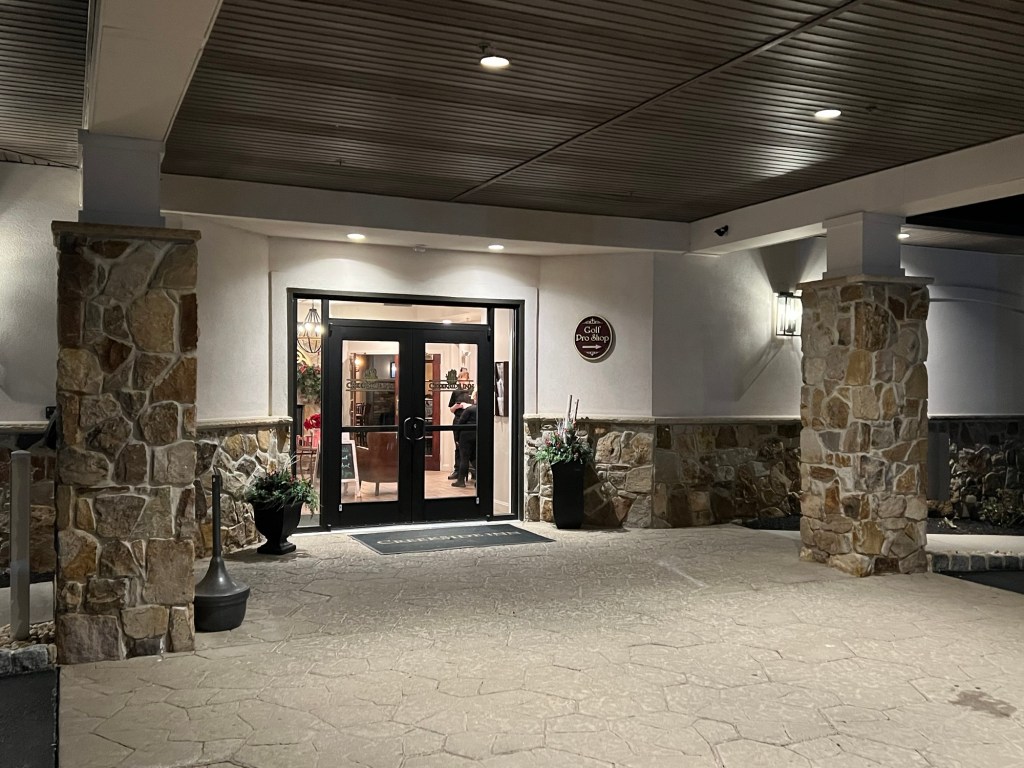
The Creekside Inn at 197 East Avenue in Woodstown, NJ
I started my tour at the Creekside Inn in Downtown Woodstown, where the tour would start and I would be taking the bus with the group of people I would be touring with that afternoon. I checked in and there was over an hour before my tour began, so I stopped for lunch at the restaurant in the Creekside Inn and what a nice choice it was for lunch.
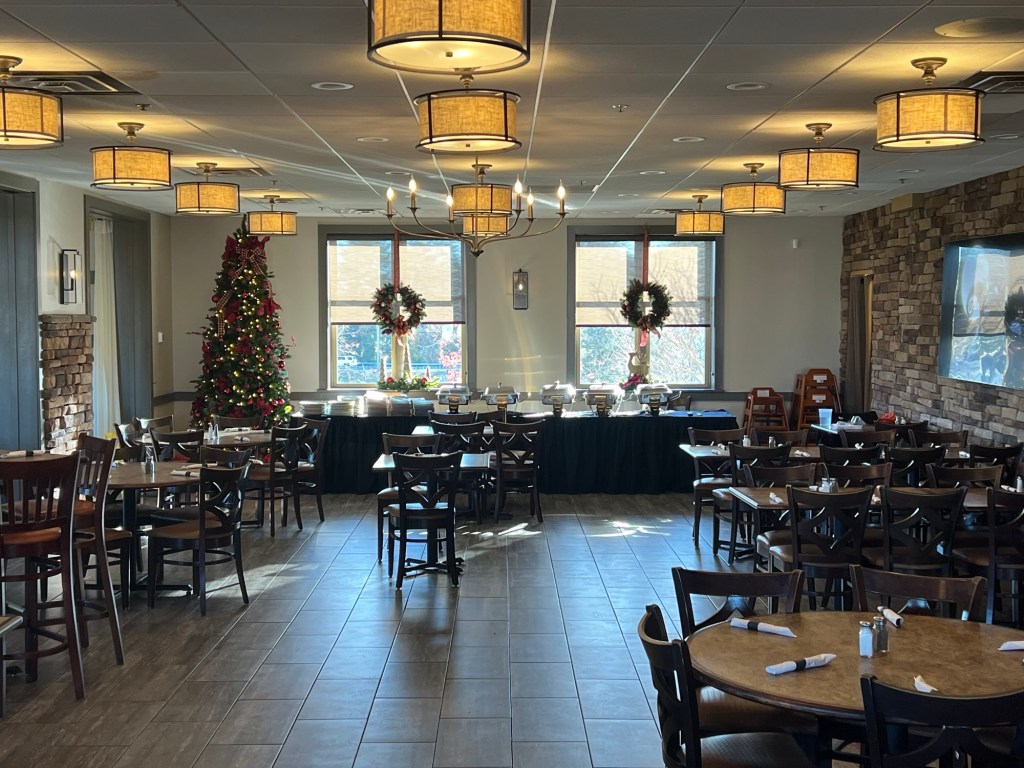
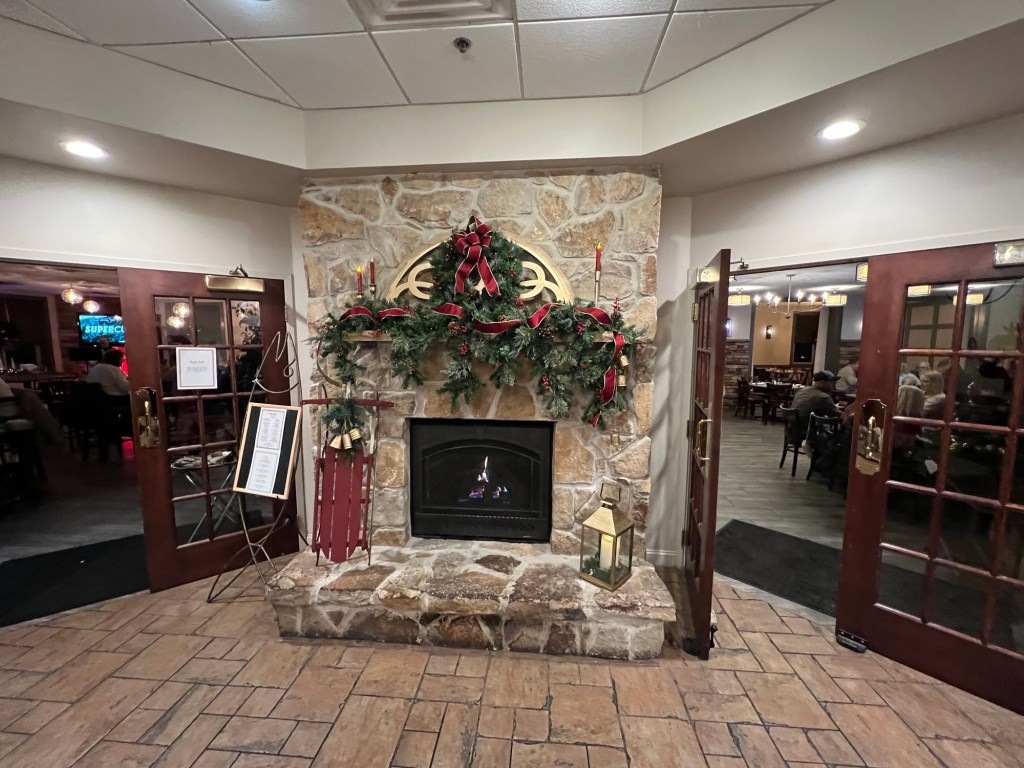
The restaurant was so nicely decorated for the holidays
They had a nice holiday buffet set up for dinner
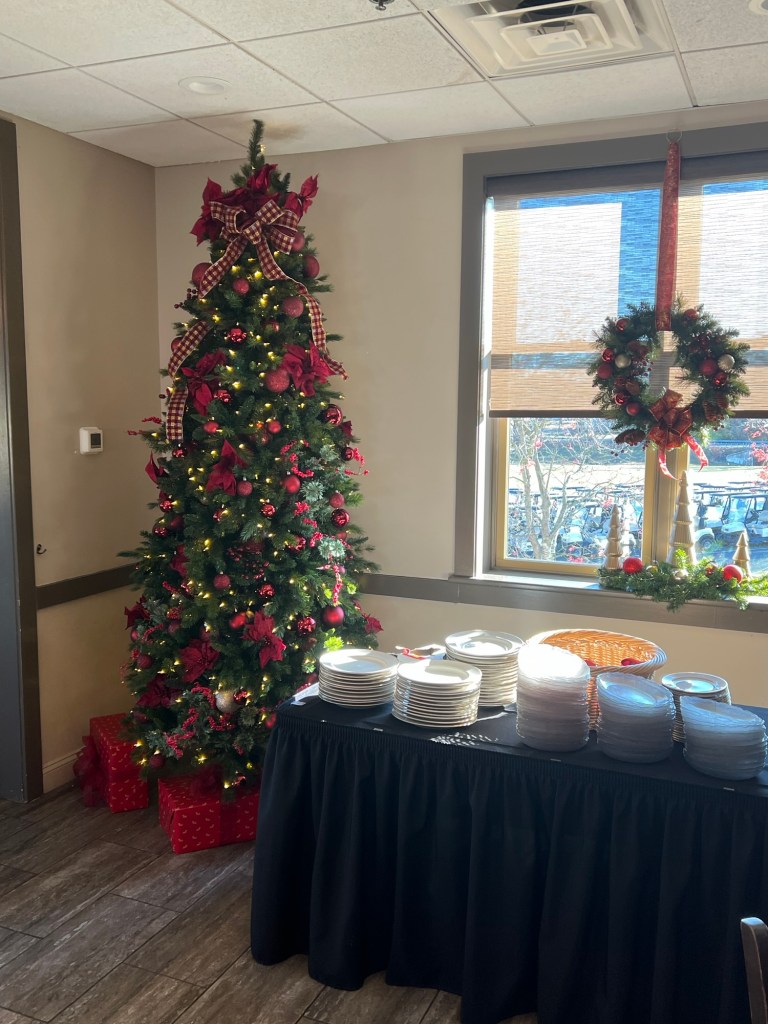
The restaurant was so beautifully decorated for the Christmas holidays with garland and lights and two Christmas trees. It really put me in the holiday spirit and I started to relax. I had the most wonderful lunch.
The Grilled Cheese with Tomato and Bacon with a side salad
I ordered on the recommendation of the waitress the Grilled Cheese Sandwich on sourdough bread with bacon and beefsteak tomato with a side salad. It was the best lunch for a long day of touring. The sandwich was homey and crisp and I loved the combination of flavors. It would get me through the rest of the afternoon of touring.
I highly recommend the Grilled Cheese with Bacon and Tomato here
The lobby of the Creekside Inn
I was just finishing my lunch when the woman from the Historical Society came in and announced that the tour was going to start and we had better finish. I would stop in later after the tour.
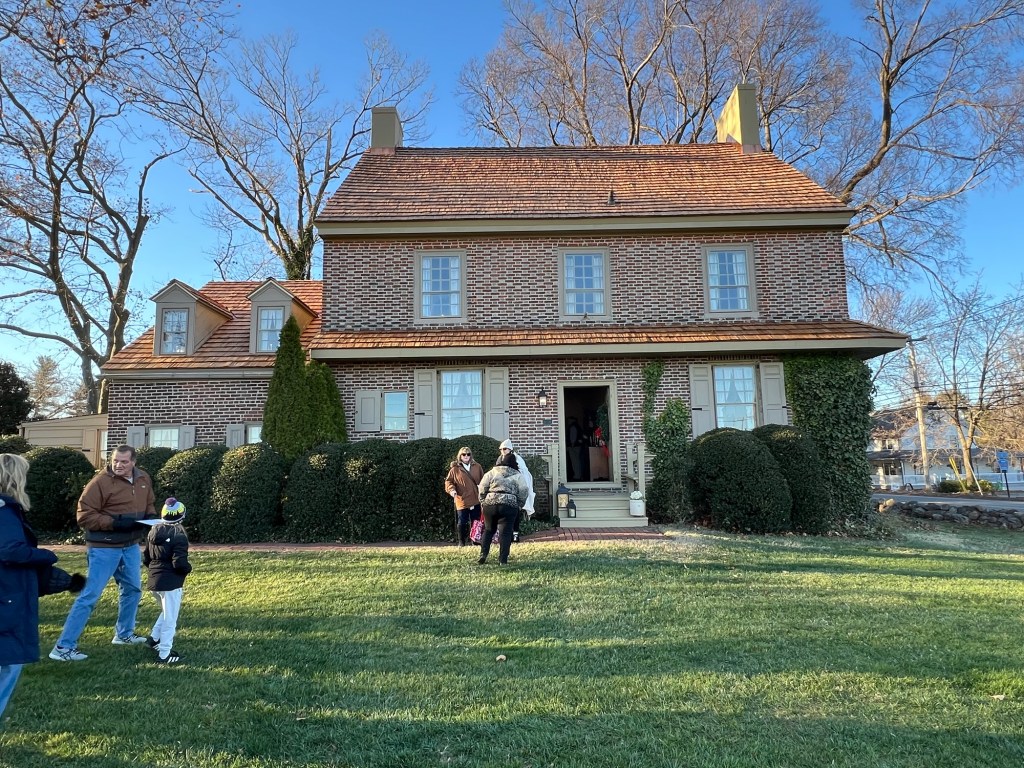
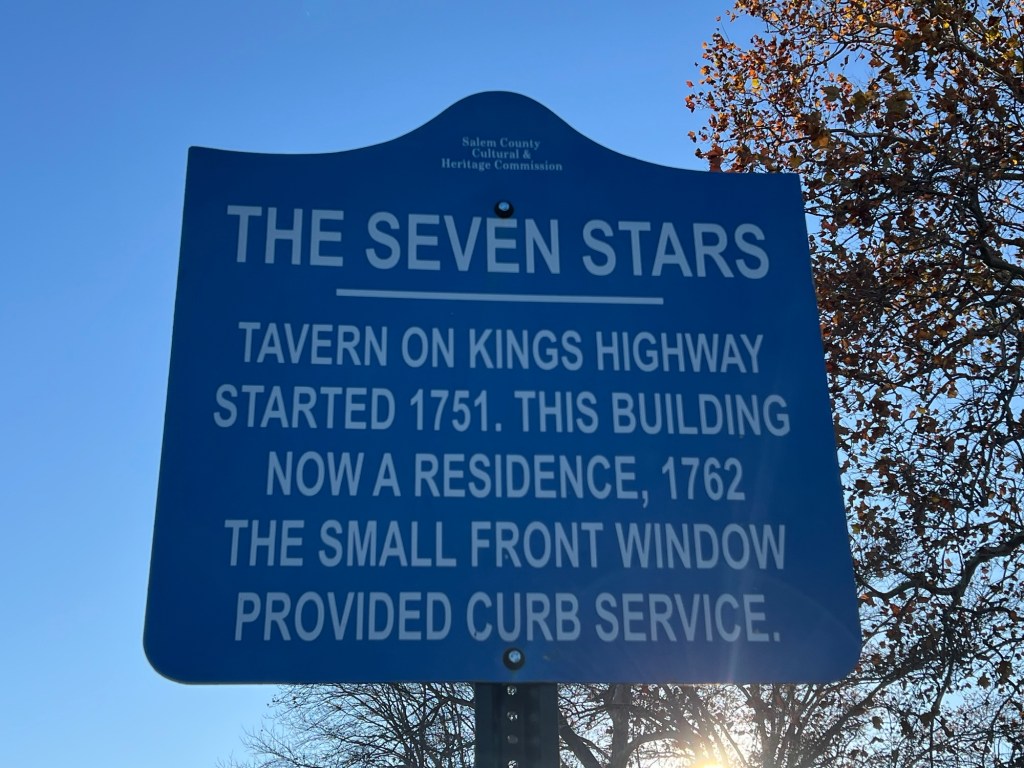
I got on the bus with everyone on my tour to get to the first stop which was The Seven Star Tavern in Pilesgrove, NJ. The main portion of the home was built as a tavern in 1762. In 1805, with the changes in transportation and the community for farming, it became a farmhouse. It has served as a private home since 1941 (Tour handbook).
The Seven Star Tavern at 1349 Kings Highway in Pilesgrove, NJ
The decorations in the old tavern which is now the Living Room
Our group at the Seven Stars Tavern with the owner who was in Revolutionary War costume
The Living Room at the Seven Stars
The second room with a fire going
The Christmas in the Living Room
The Kitchen at the Seven Stars Tavern
The back of the home’s decorations
The Seven Stars Tavern house before we left
The Seven Stars Tavern was interesting in that you can see that it is a home but you can see that when you are inside how it was a tavern at one time.
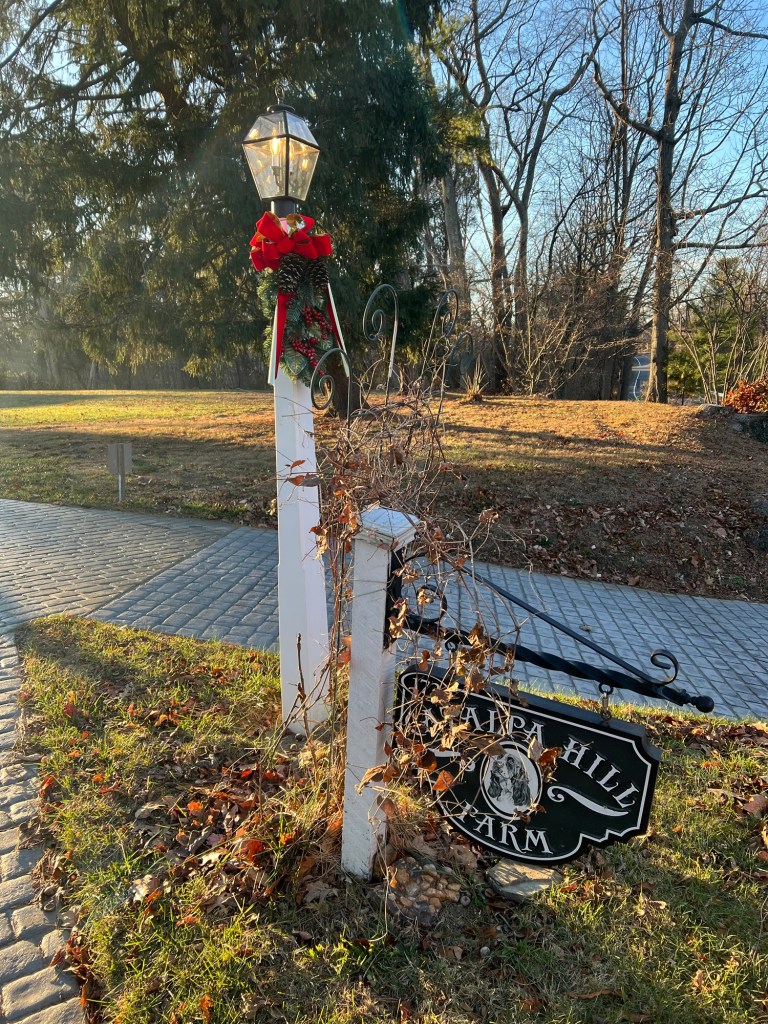
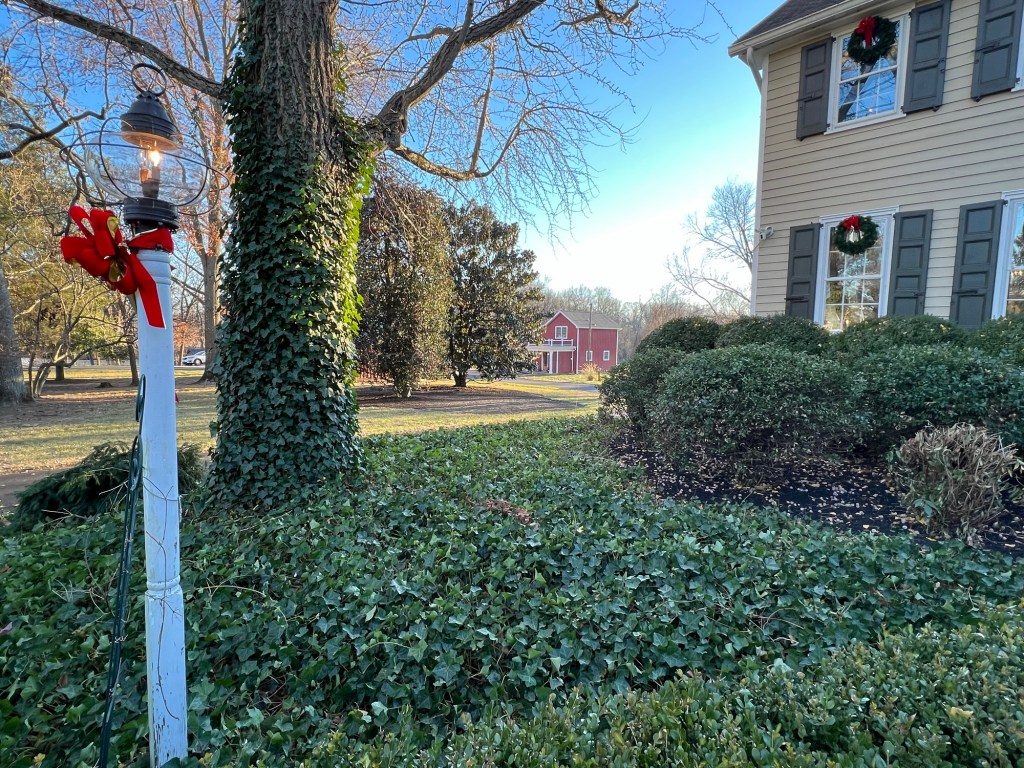
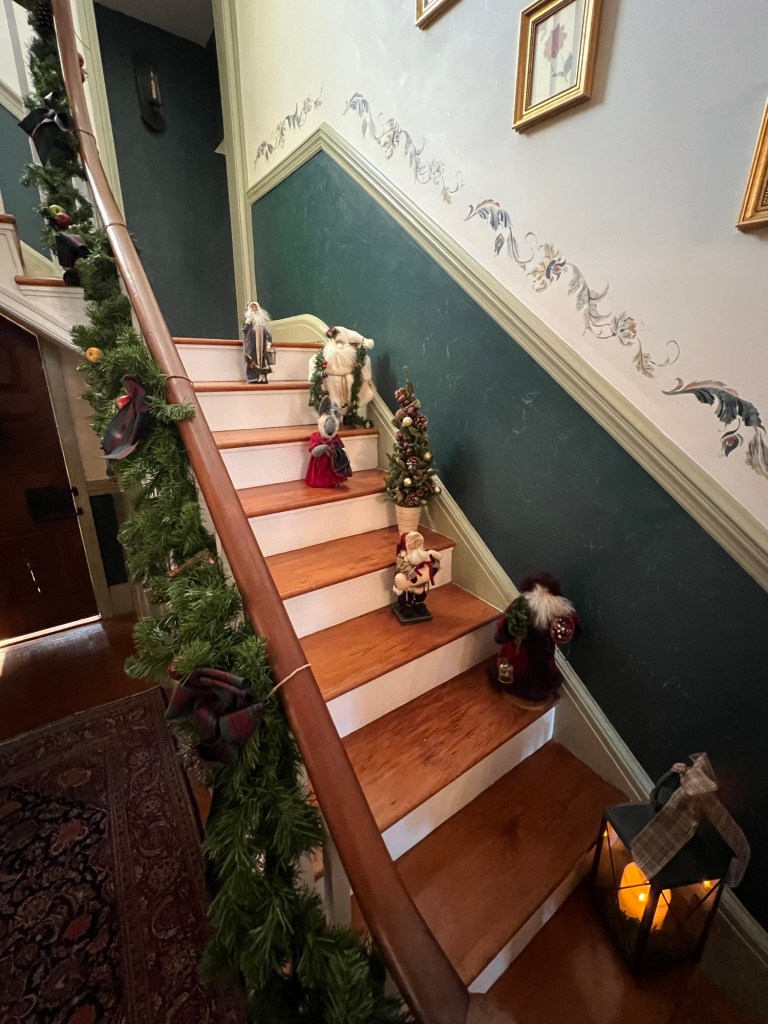
Our next stop was the Catalpa Hill Farm, which had been in the same family for almost two hundred years. The property was beautifully decorated for the holidays. The farm was owned by the Lippincott family for almost 200 years until it was sold in 1999 to the current owners, the Valentes (Tour handbook).
The entrance sign to the farm
Our group starting the tour of the farm
The property was beautifully landscaped
The entrance to the home
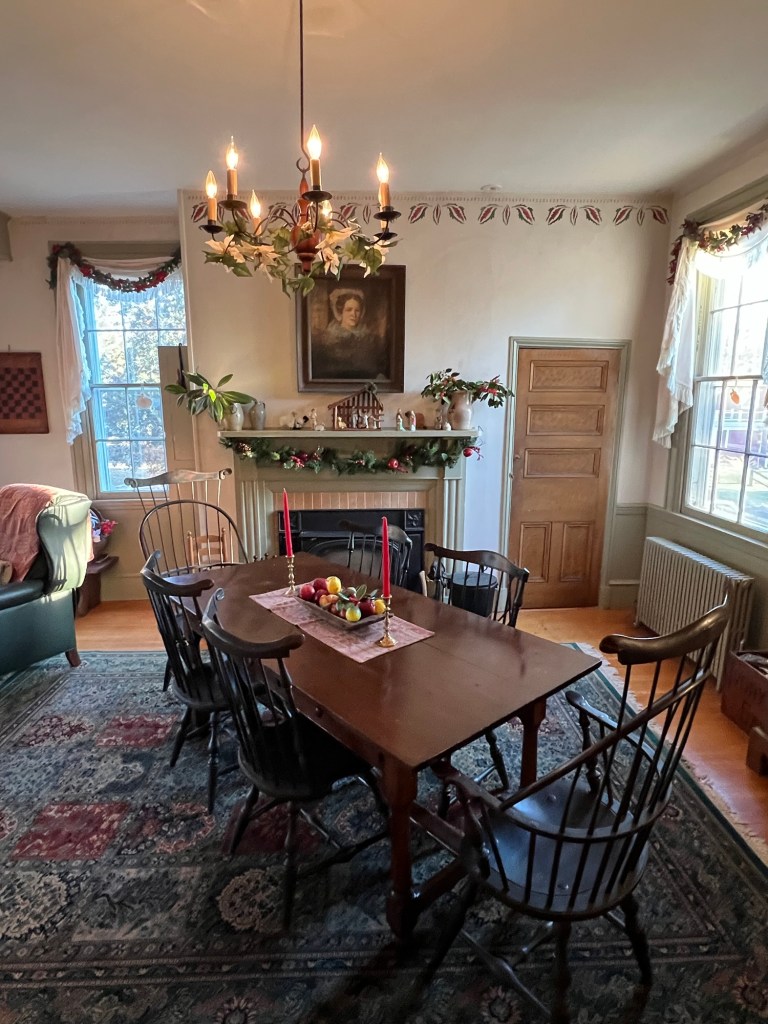
The Dining Room of the home
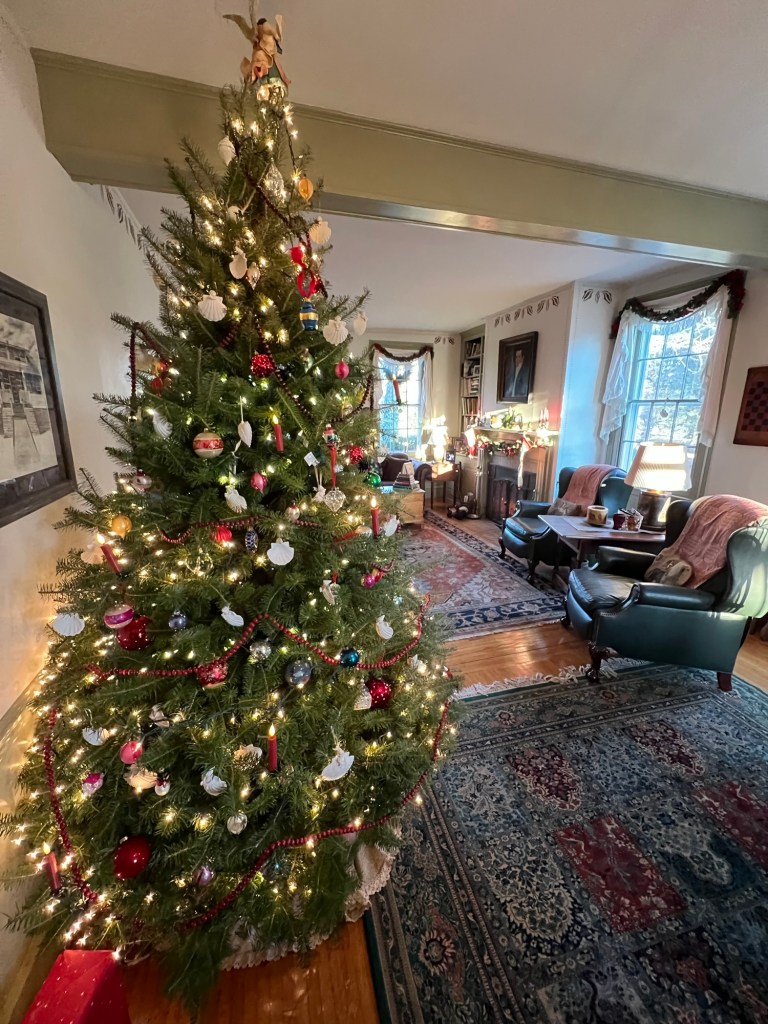
The Christmas tree in the Living room
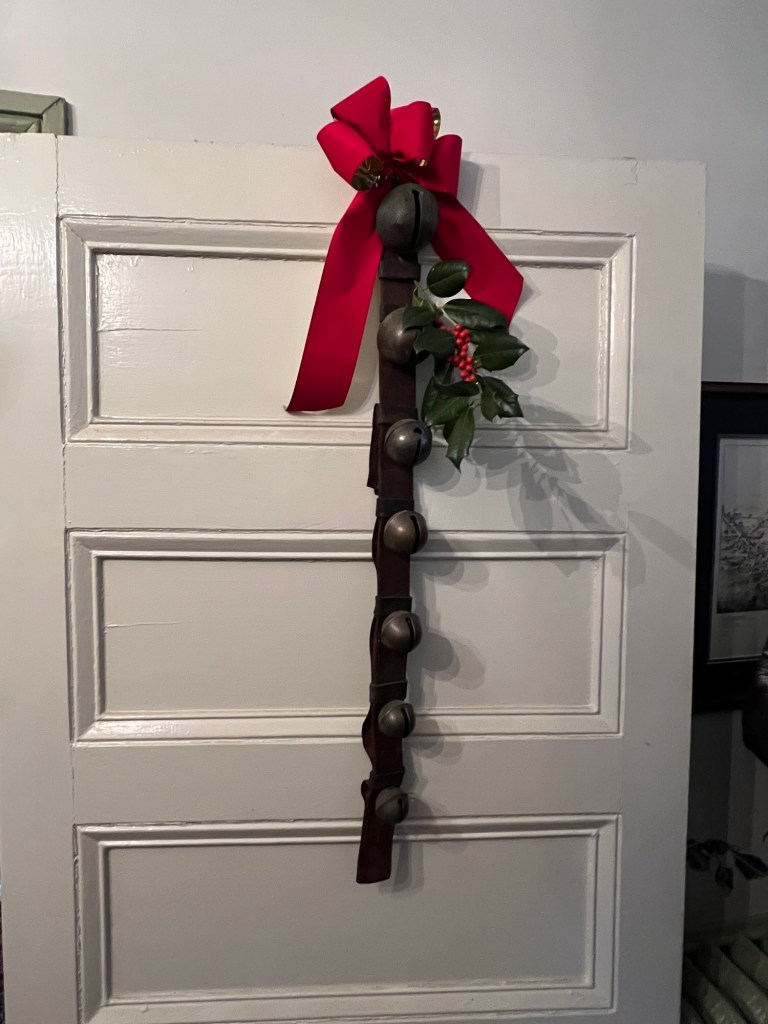
Sleigh bells on the door
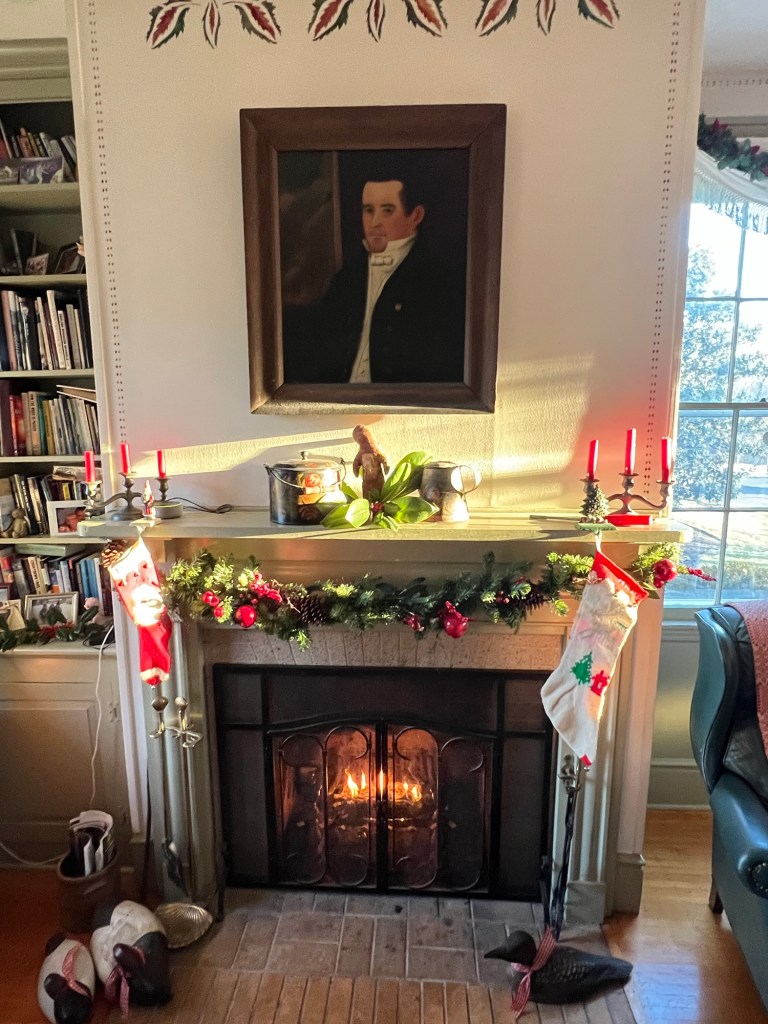
A family portrait above the working fireplace
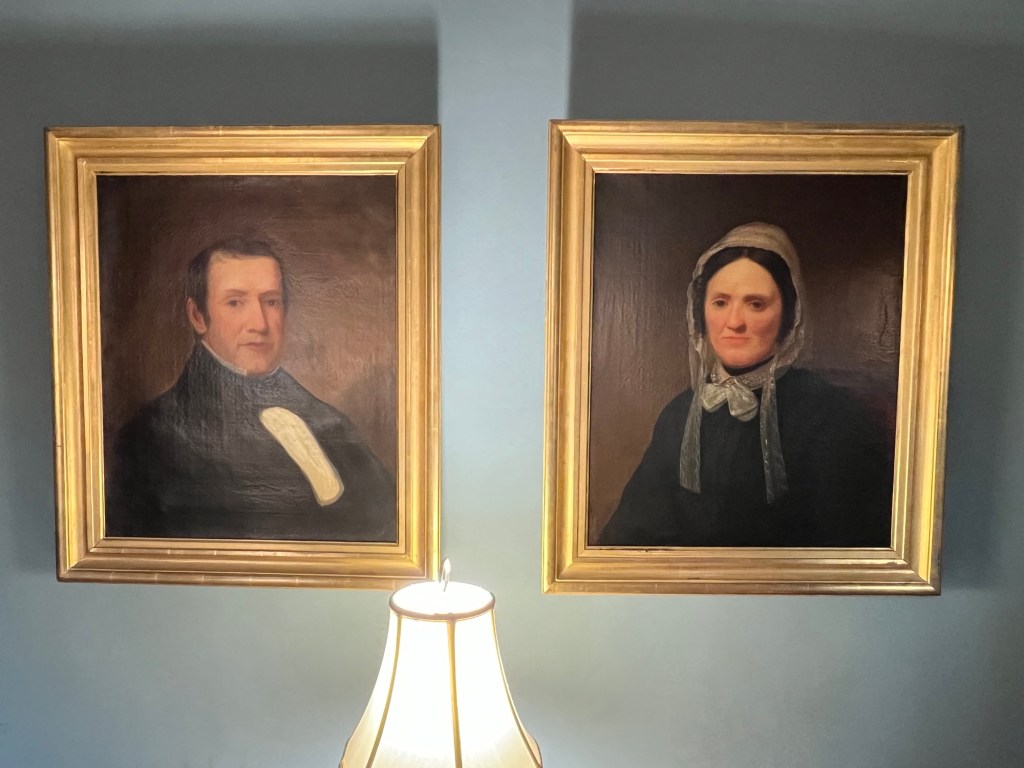
More family portraits
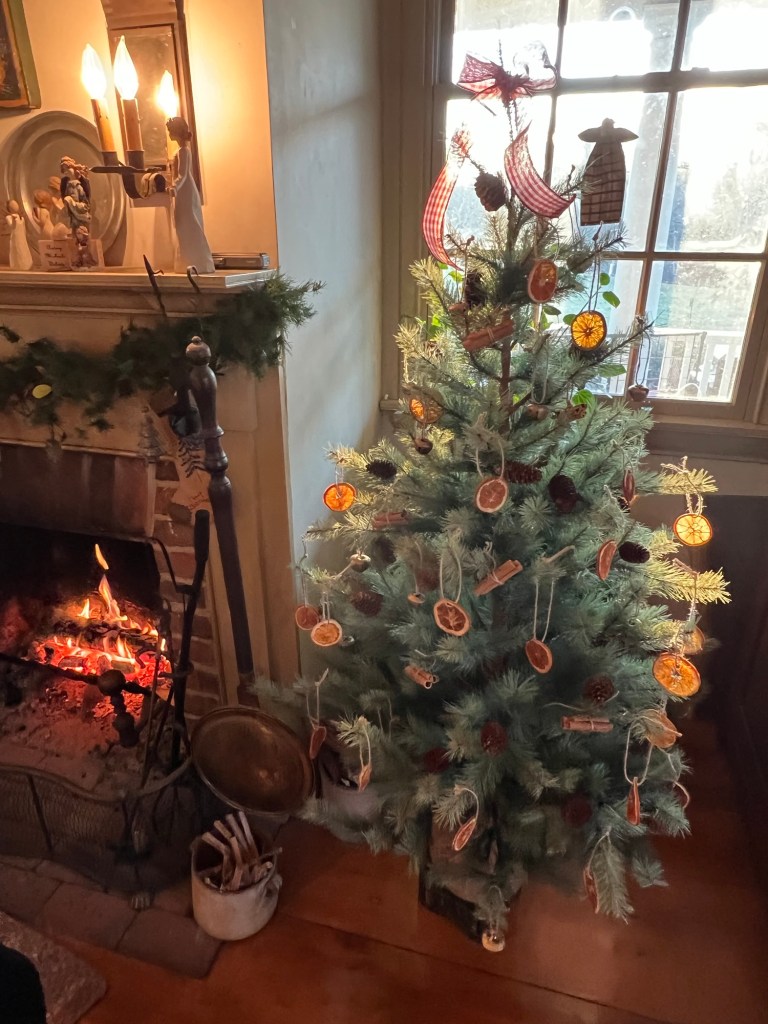
The Christmas tree in the kitchen
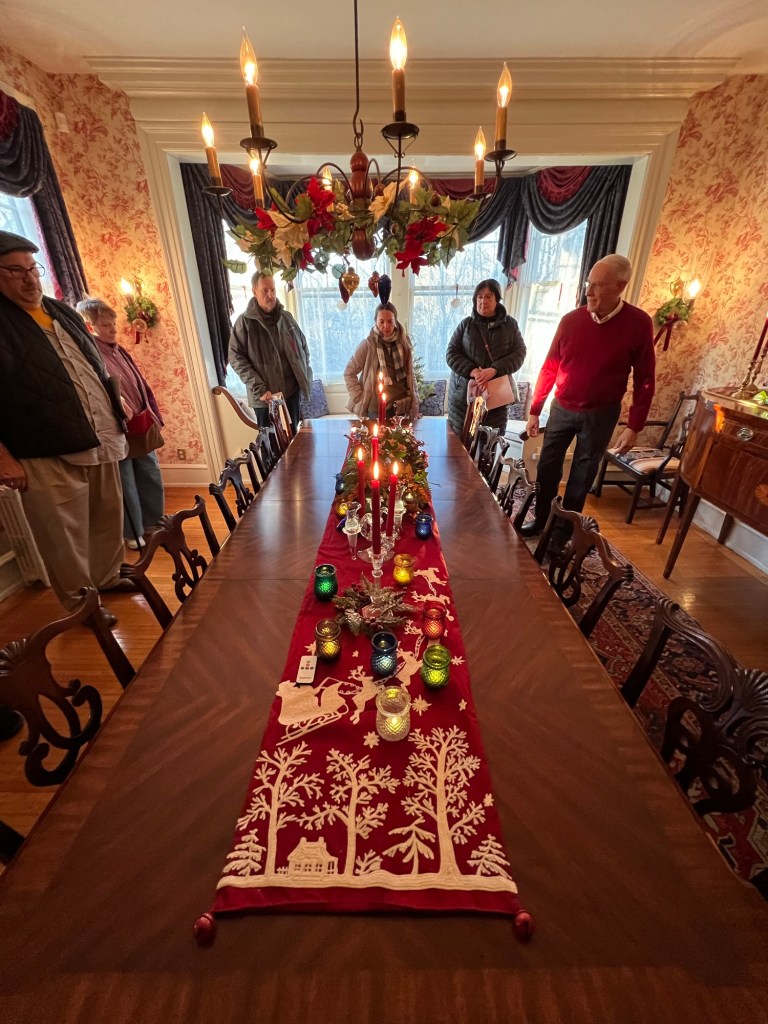
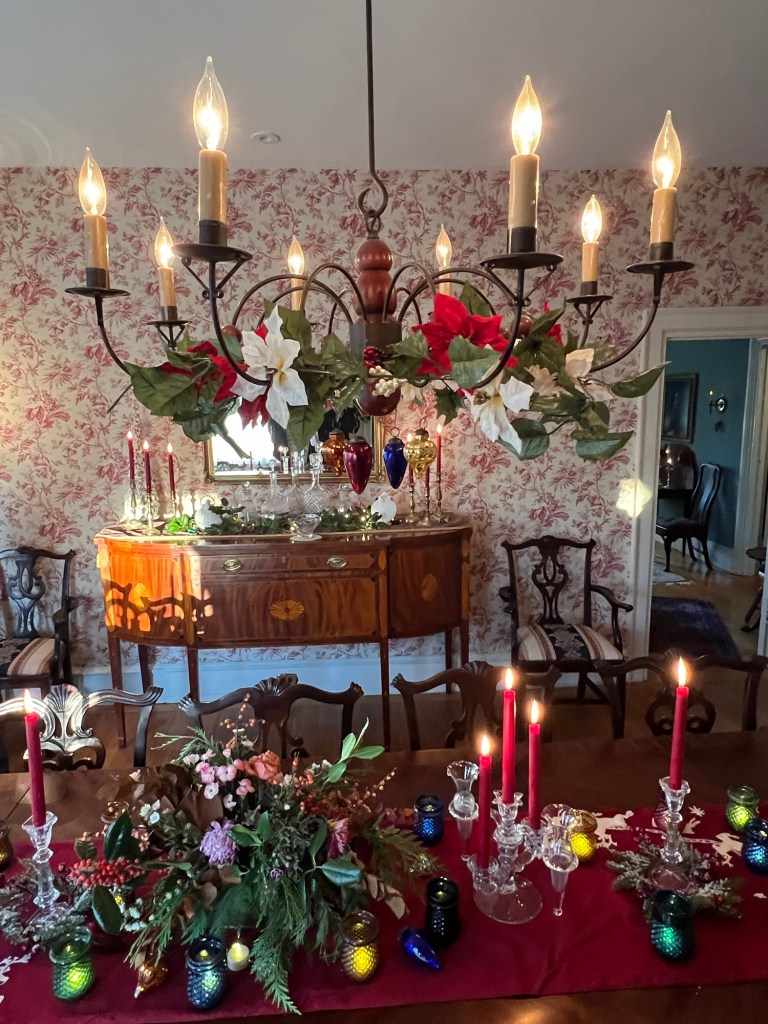
The formal Dining Room table in the Dining Room set for Christmas
The middle part of the Dining Room
The second Christmas tree in the Dining Room
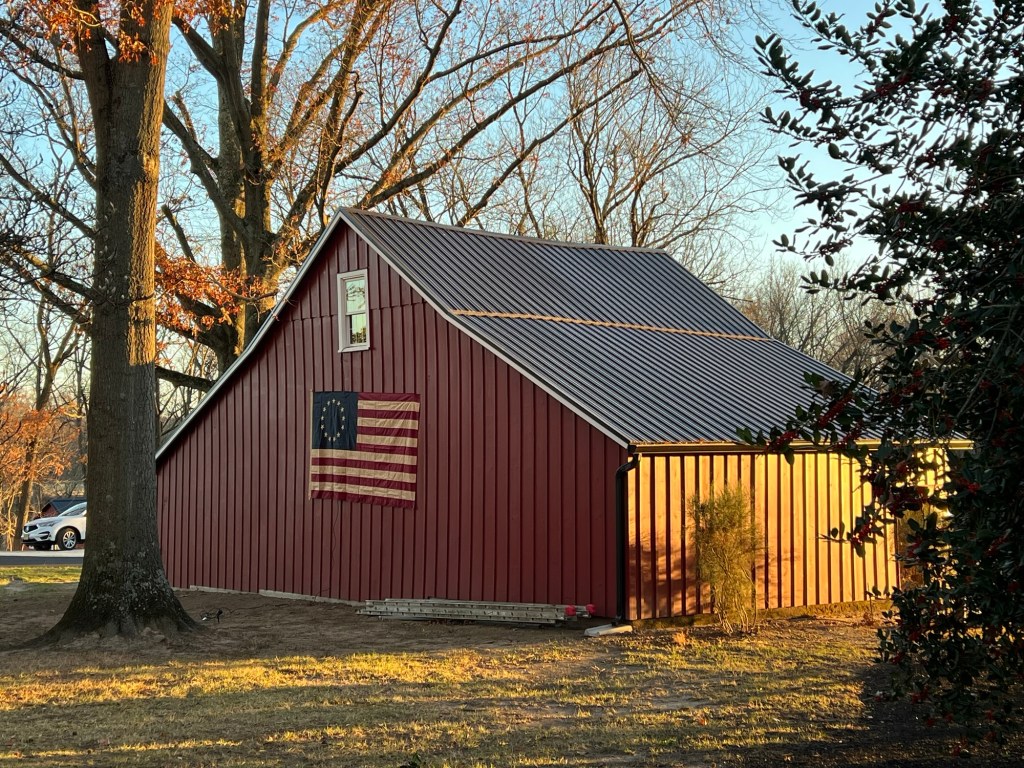
The barn in the back yard
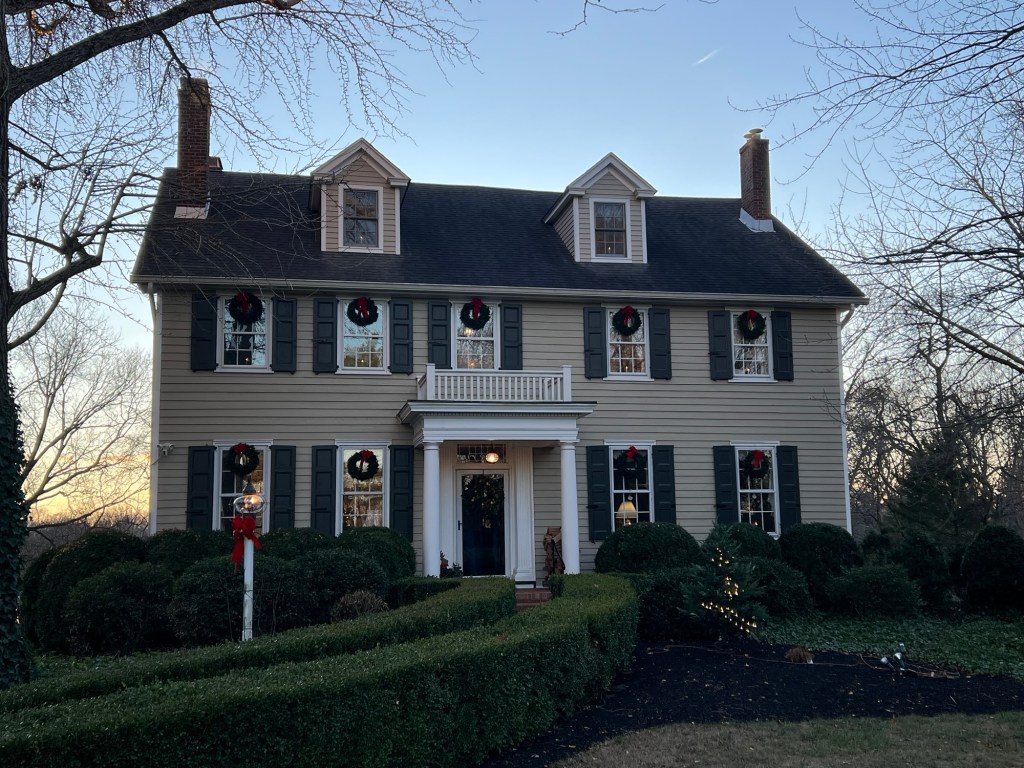
The front of the house at sunset when we left for the next house
Our next stop on the tour was The Zigo Farm which was built in the 1860’s. This ‘gentleman’s farm’ is based around the Colonial Home which was fully renovated and expanded in the 1950’s by the Costello family. The current family bought it in 2013 and added the stables in the back for their rescue horses.
The entrance to the Zigo Farm
The front of the Zigo Farm
The Christmas tree in the entrance was of the home
The kitchen dining area
While we in the kitchen, our host’s mother was helping prepare homemade cookies for all of us and I thought this was a very nice touch. While the tour went on, I stayed in the kitchen and talked with the ladies as I enjoyed some of the cookies. These freshly baked treats were really popular on the tour.
The homemade cookies in the kitchen
We then toured the rest of the house which was very tastefully decorated for the holidays. We toured both the Living Room and the Dining Room. I stopped and talked to our hosts parents while everyone took a hay ride through the grounds.
The Dining Room of the Zigo Farm
The Living Room of the house
I then caught up with the rest of the group at the stables, which were also nicely decorated for the holidays. The grounds were also decorated for the upcoming holidays. The lighting and the sunset made the property glow.
The Walled Gardens
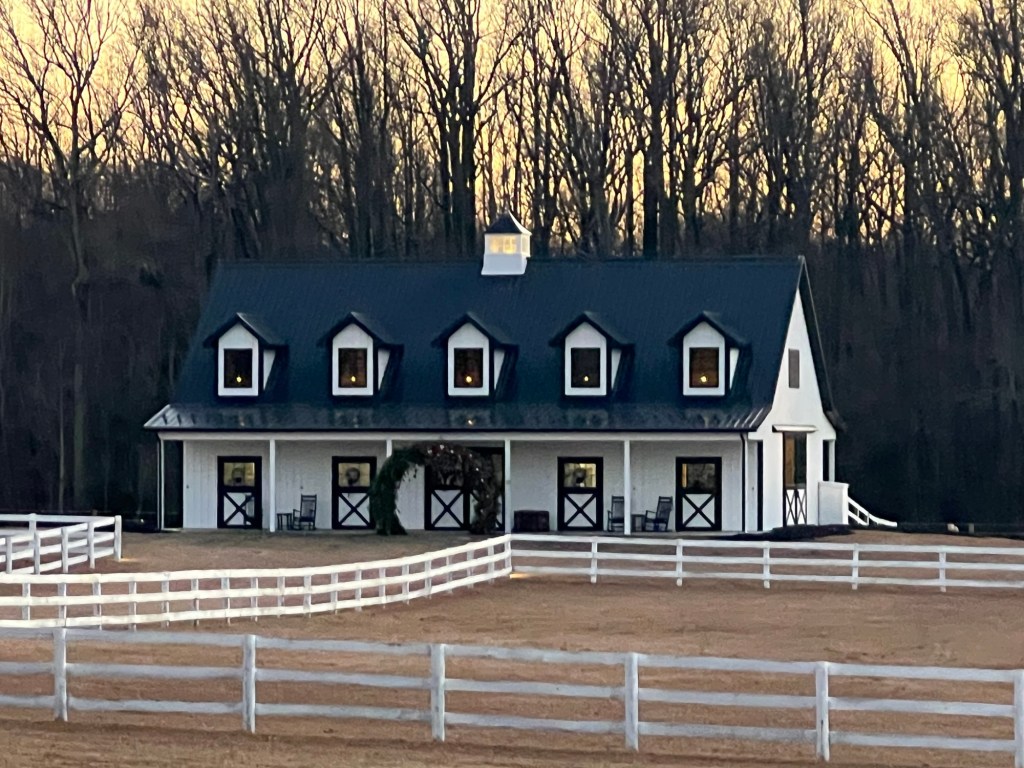
The Stables on the property
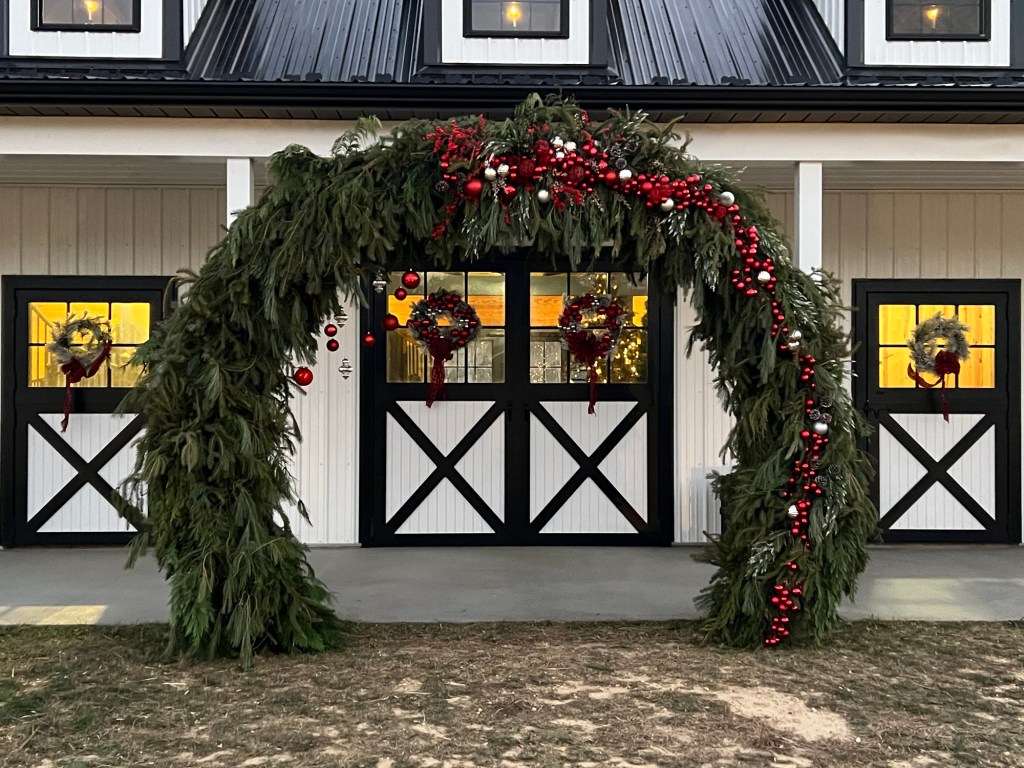
The Christmas decorations at the stables
The beautiful Christmas tree at the stables
The tour of the farm and its stables were really impressive and the farm was decorated from top to bottom with impressive decorations.
The last stop on the bus tour before we went back to town was at the ‘Morgan’s Folly House’ at 2 Layton Avenue, which was built in 1804 by Samuel Morgan in the Federal Colonial style. It was considered a very large home at its time and somewhat pretentious which earned it its nickname “Morgan’s Folly” for being so out of place. The home today has been fully renovated by the current family.
The beautiful sunset on the fields
The front of the Morgan’s Folly House decorated for the holidays
The Dining Room at the Morgan’s Folly House.
The Living Room at Morgan’s Folly
The Christmas in their Living Room
The historical beauty of the renovated upstairs
One of the upstairs bedrooms decorated for the holidays
It was funny because we were at Morgan’s Folly house for about forty-five minutes when we all started wondering where our bus was and finally someone in our group called the woman in charge to send a bus for us. The owners kidded with us that we could spend the night if we wanted.
It ended up that one of the bus drivers had been released for the evening and they forgot we were still touring. The poor bus driver was beside himself. I thought they really needed to work on this for next year. One group missed the second half of the tour and the second group was left at the last house. Not a good thing.
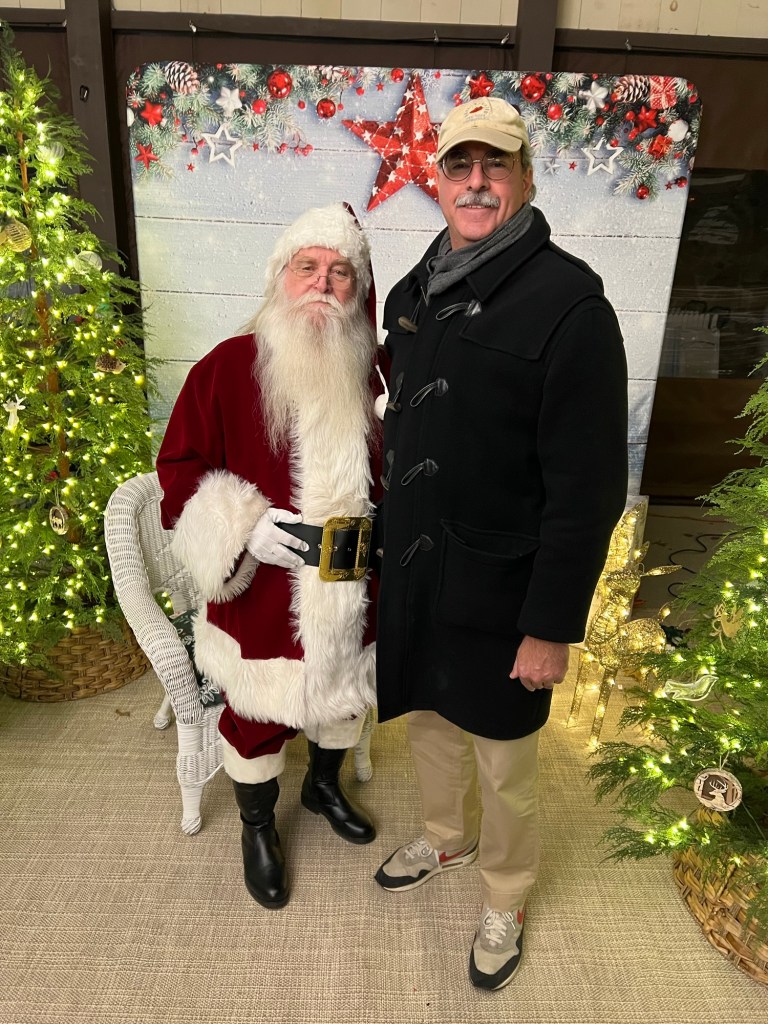
When we finally got back to Woodstown, we arrived back at the Creekside Inn for dinner. I was still stuffed from lunch and walked around the Crafts Fair that they set up. There in the middle of the Fair was Santa sitting there looking bored. I walked up to him and asked him honestly why people were getting so rude.
He did not miss a beat and told me honestly that it was the way they were raised and how it starts at home. This guy was so earnest and honest about what he said that I listened to rest of the conversation with such interest. We talked for a bit more and when I left I said to him, “ I just wanted to let you know that I still believe in you.” That seemed to make him very happy.
Me with Santa-I swear he made me believe again
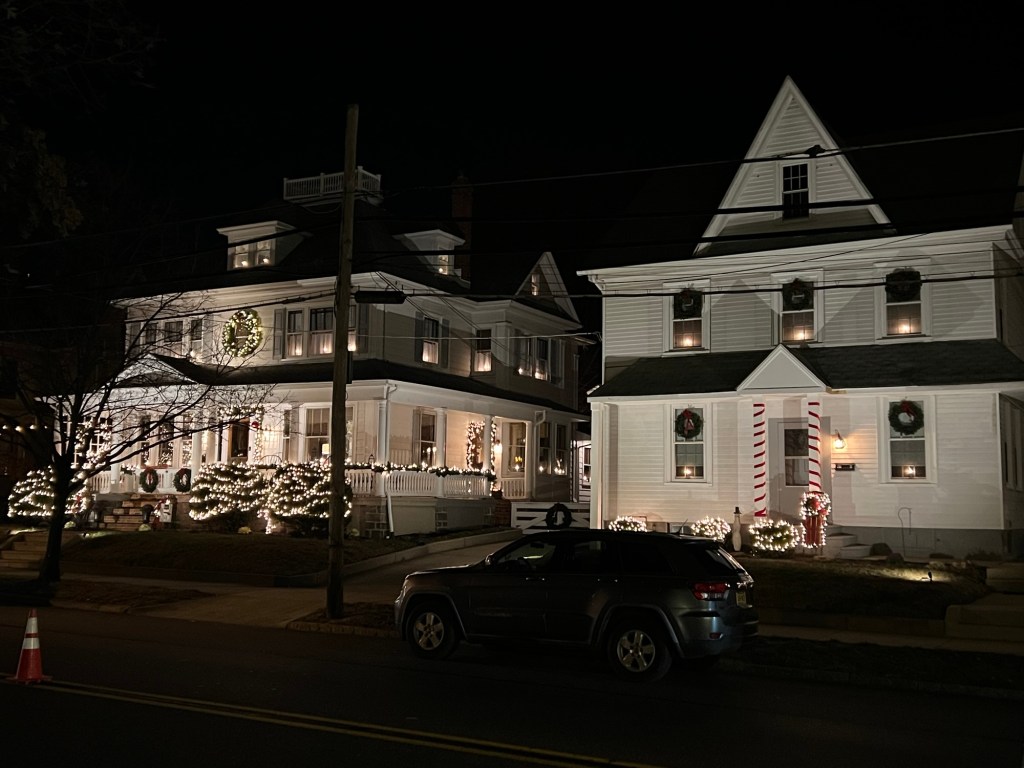
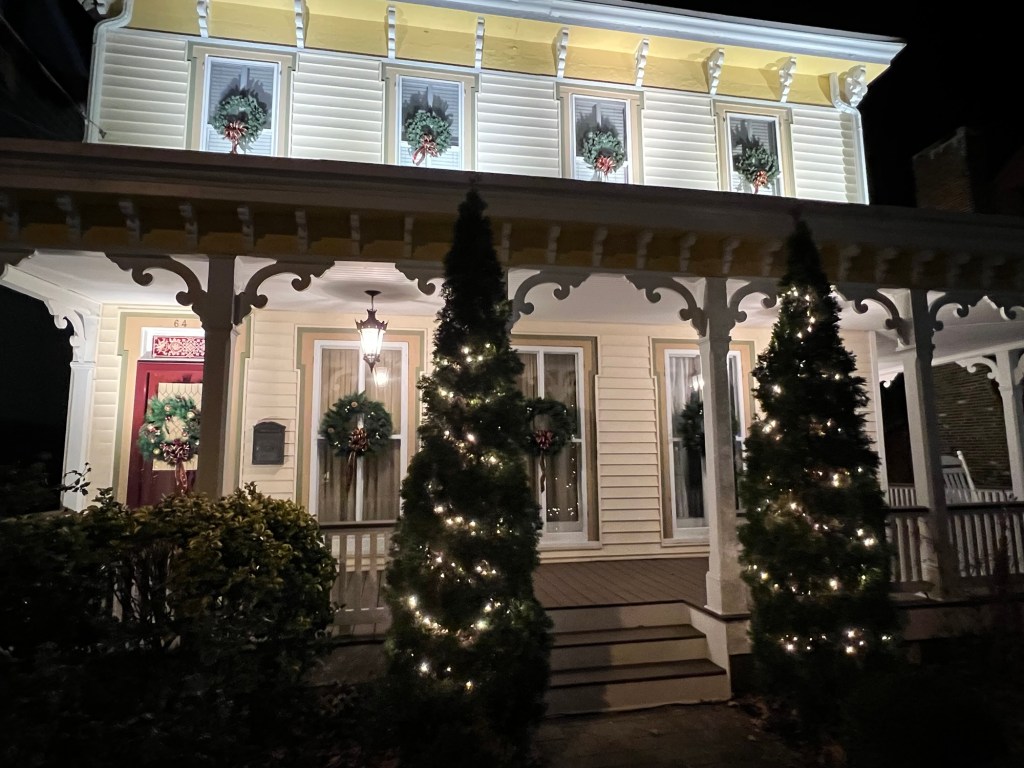
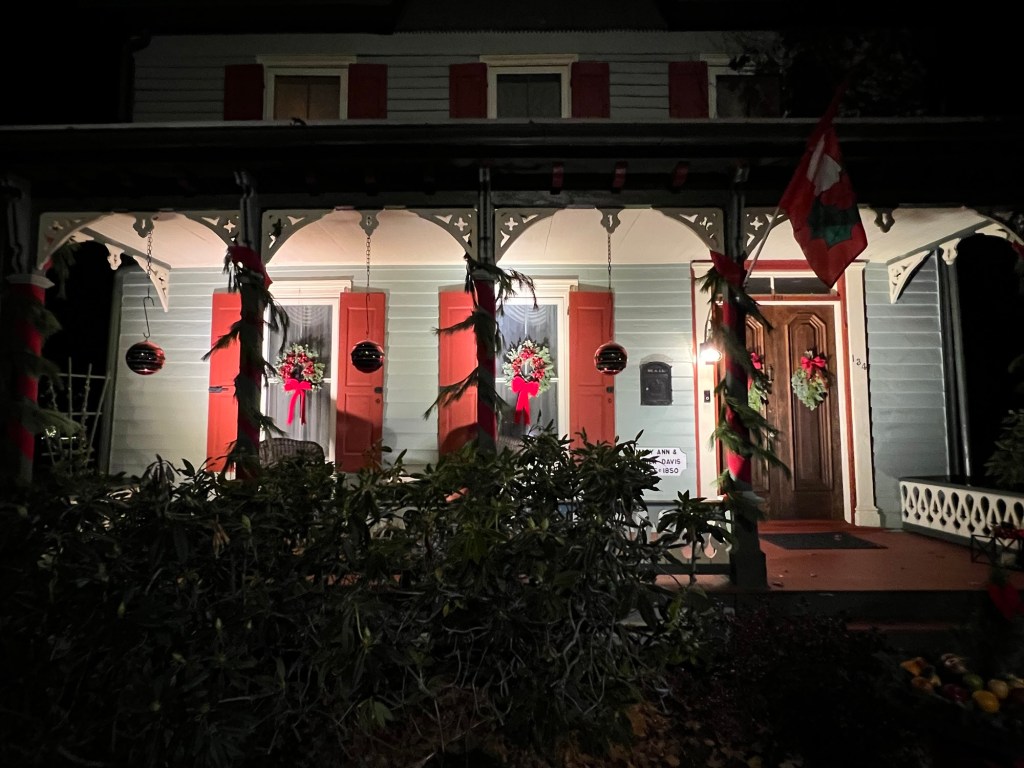
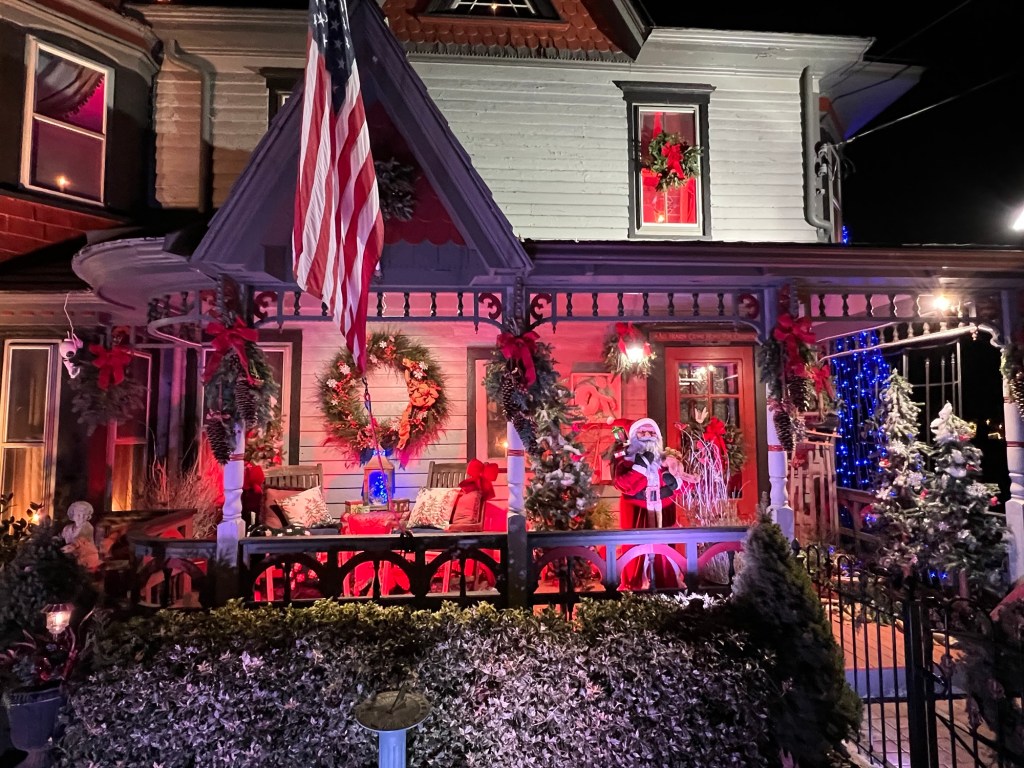
I then moved on to touring Downtown Woodstown’s decorated homes. The whole downtown was so beautifully decorated for the holiday.
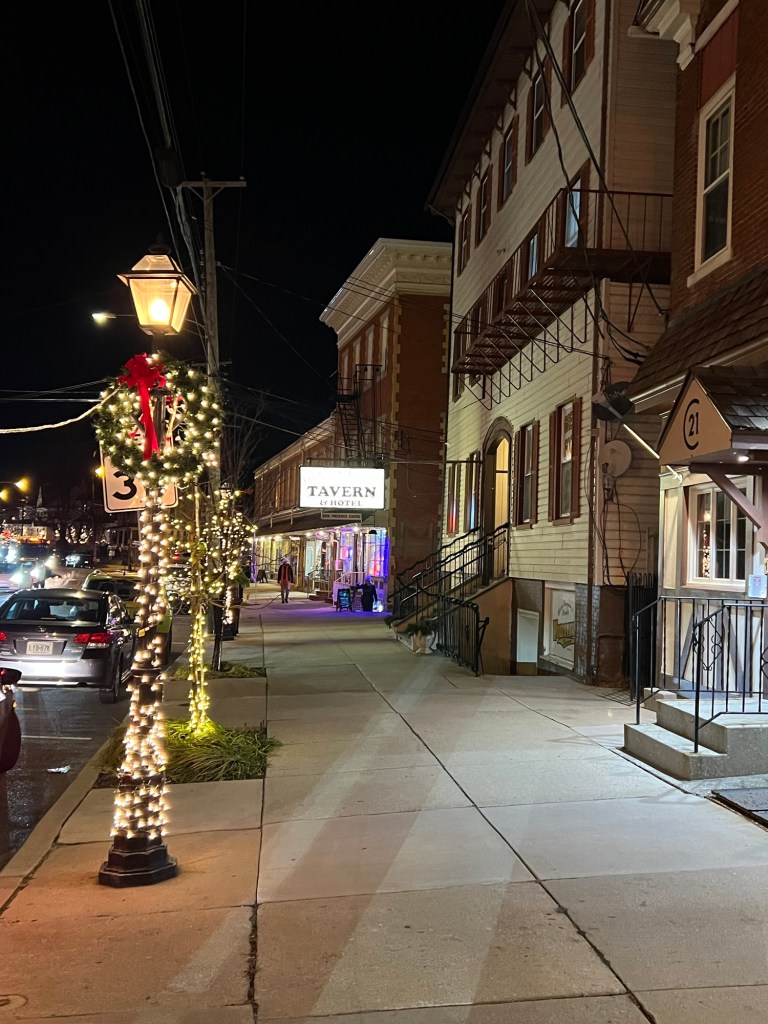
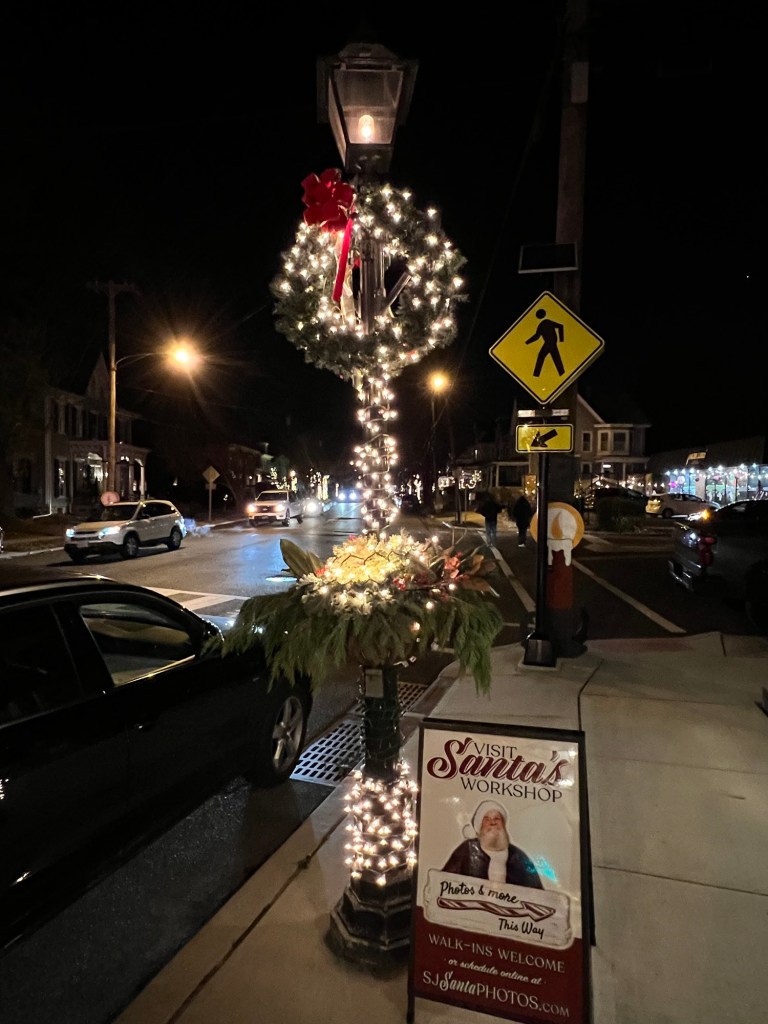
Downtown Woodstown, NJ decorated for Christmas
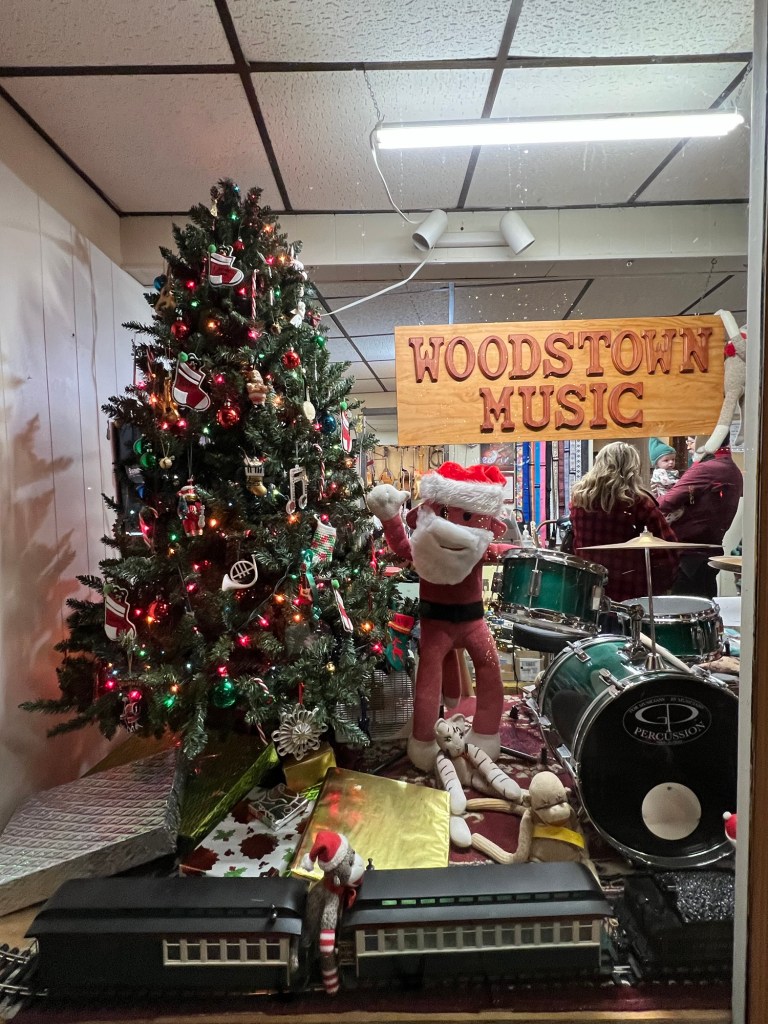
Downtown windows decorated for the holidays
Downtown Woodstown, NJ decorated for the holidays
The downtown homes decorated for the holidays
Decorated houses downtown
Decorated house in Woodstown
Decorated house in Downtown Woodstown
On the side of this house, they had the most interesting light show with a blue Christmas tree:
The first house on the tour was the Bobbitt House, which seemed to be a very popular house on the tour. I could see why, with its turn of the century style rooms and gorgeous decorations.
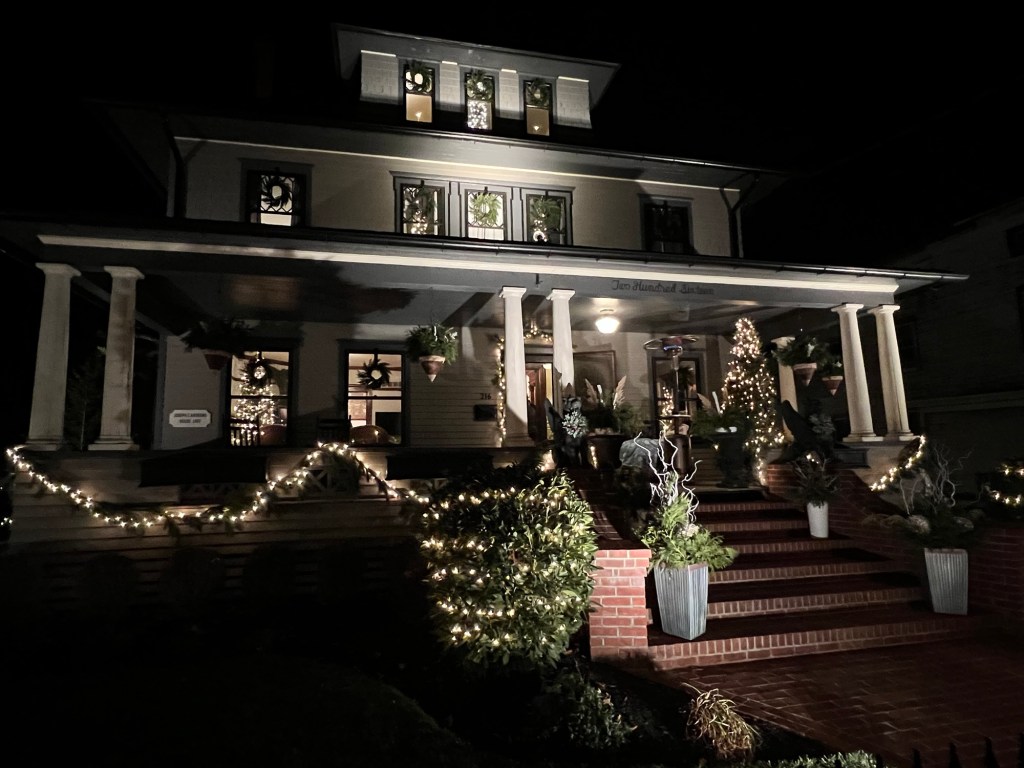
The Bobbitt House at 216 North Main Street in Woodstown, NJ, the home of Bruce and Lori Bobbitt. The home has some of its original cherry, chestnut and oak woodwork and the original stained-glass windows. The home was beautifully decorated for the holidays.
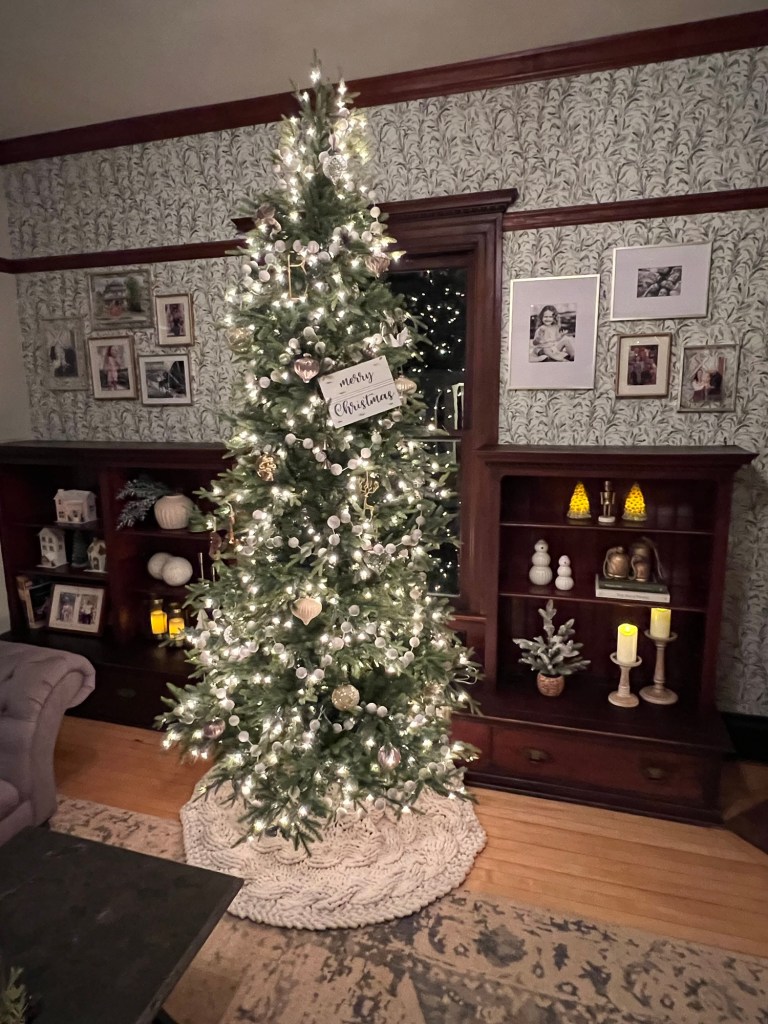
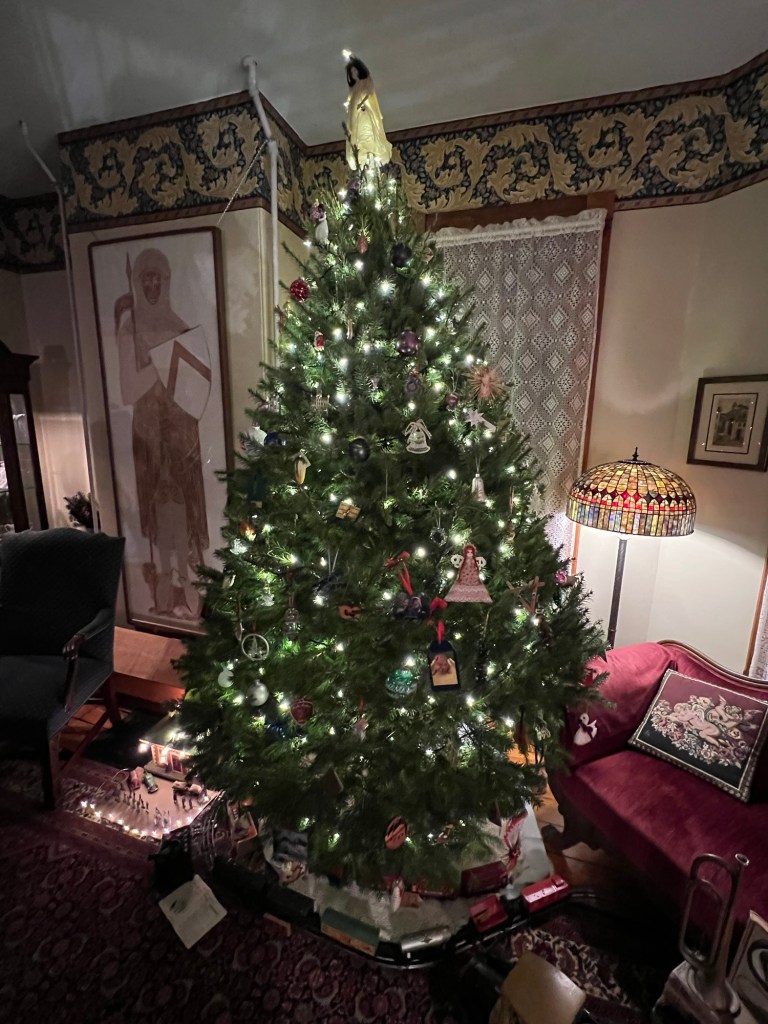
The Christmas tree in the Bobbitt House Parlor
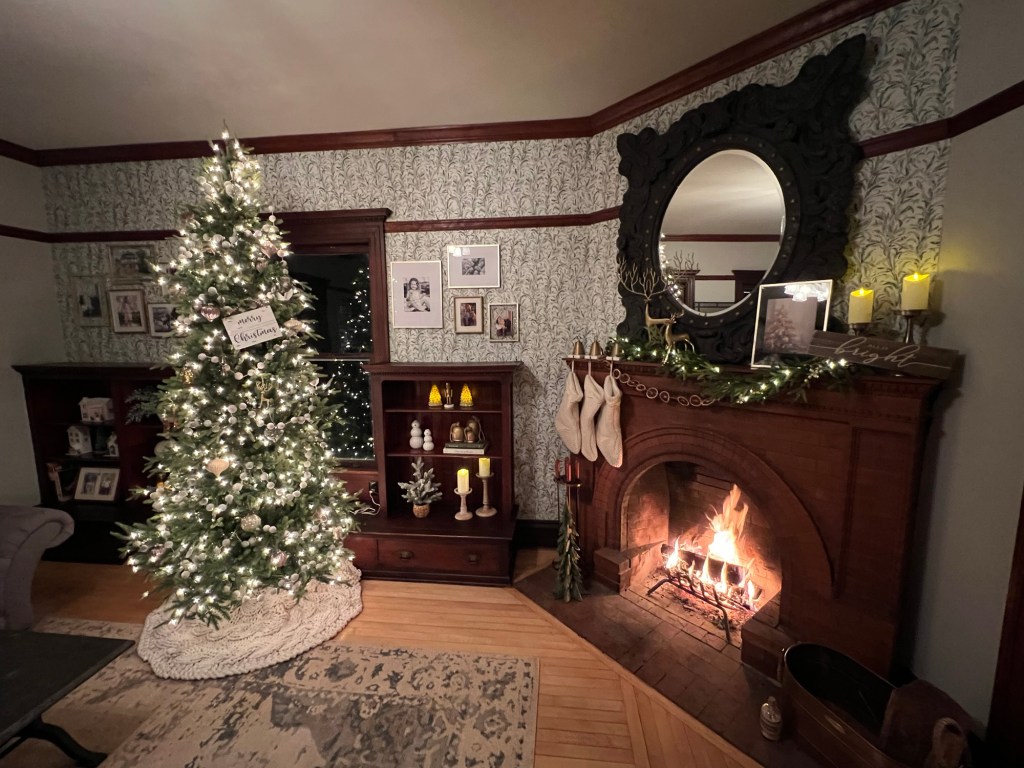
The Parlor of the Bobbitt House
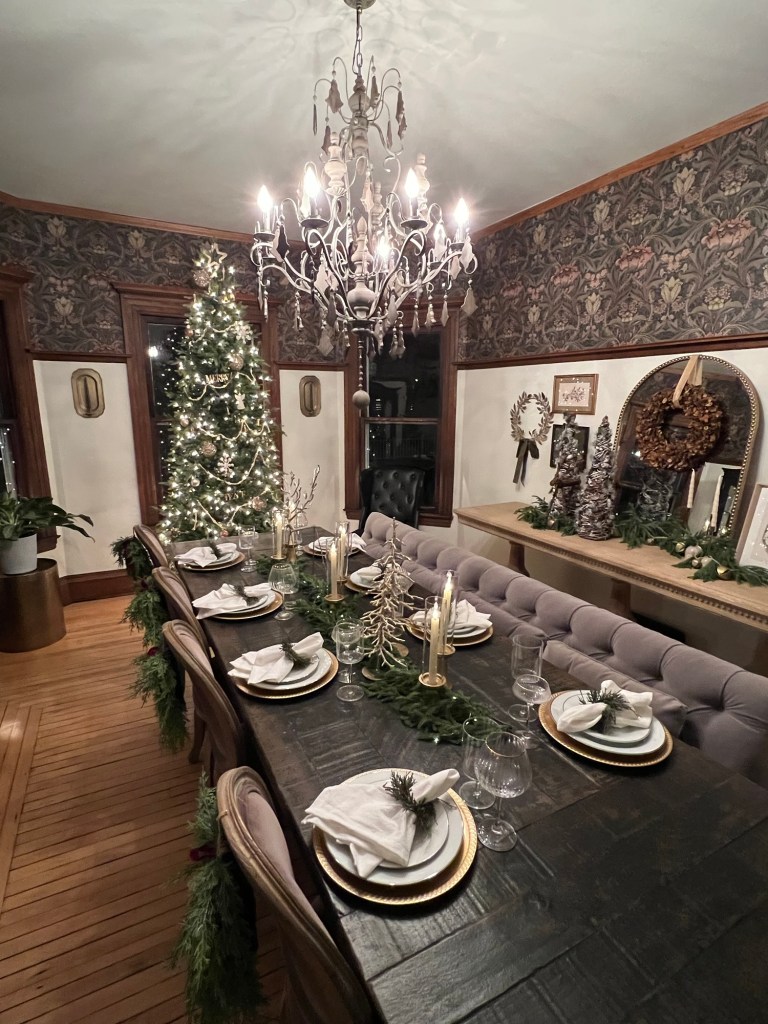
The Dining Room at the Bobbitt House
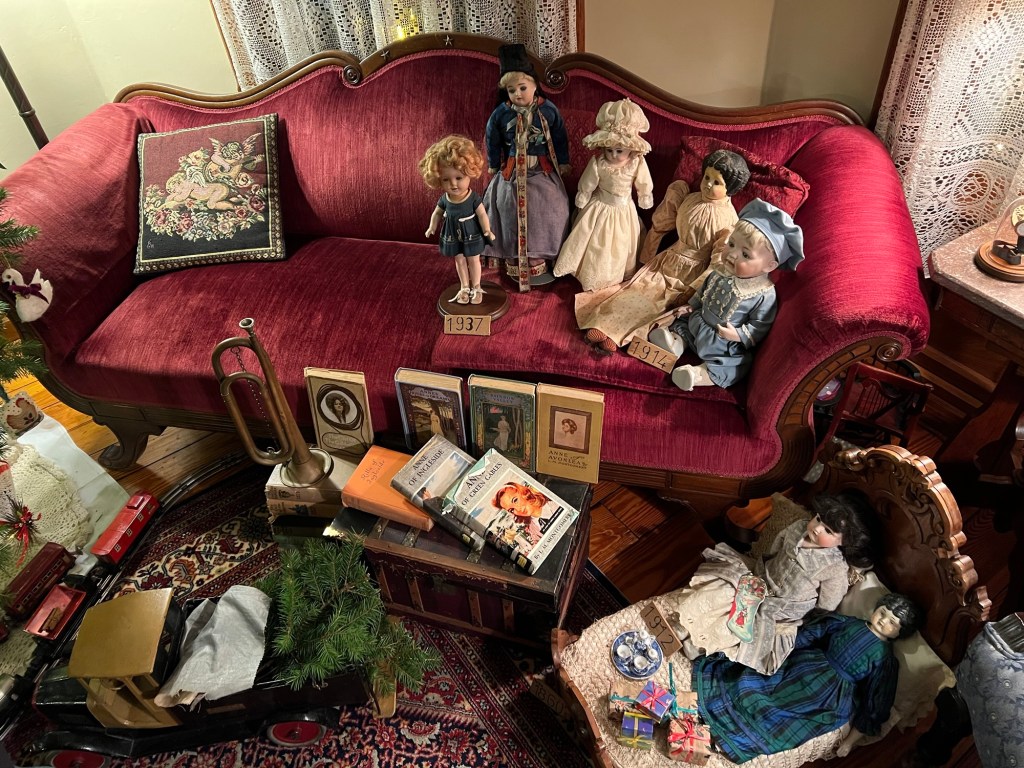
The doll collection at the Bobbitt House
The Christmas tree in the Living Room
After the tour of the Bobbitt House, I walked to the next home across the street. We toured through the home quickly as it was so crowded, and it was tough to get around. I stopped at the Ellwood Davis House, which is a Colonial Revival home built in 1906.
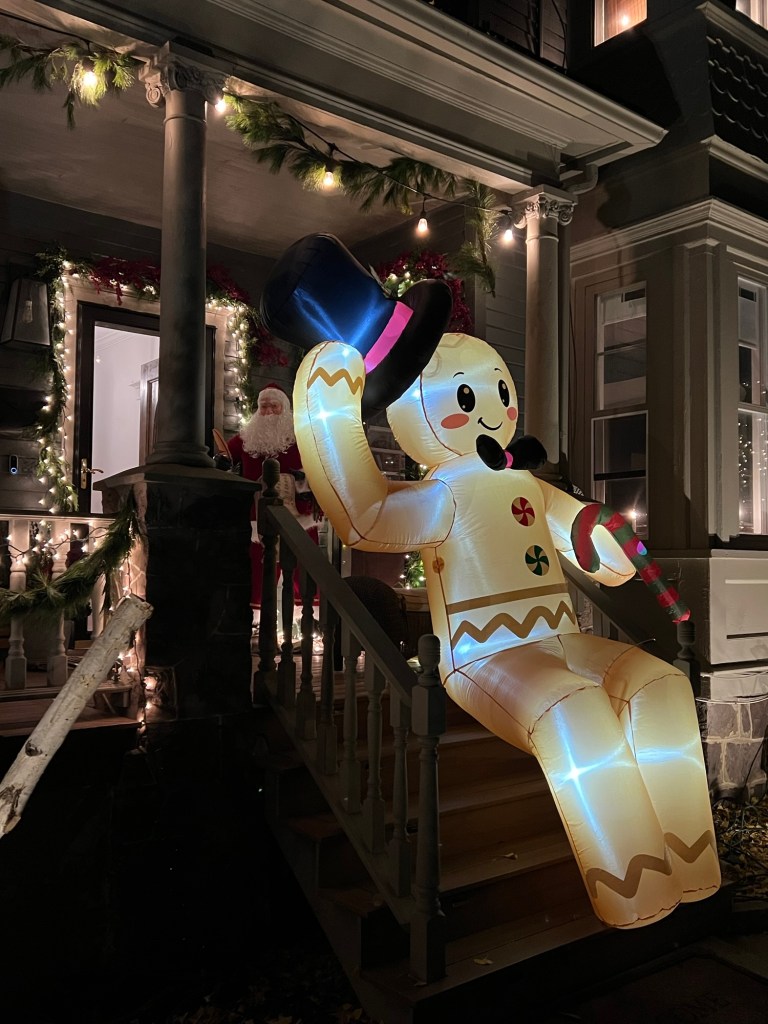
The decorations and the giant gingerbread man welcomed us to the home
What I thought was really nice was that that the young girl who lived here performed Christmas songs for the people that stopped by and even in the cold, it was so entertaining and really put me in to the holiday spirit.
Video of the girl playing Christmas songs on here piano:
I stopped by the Pilesgrove-Woodstown Historical Society for a quick tour of the museum. The docents wanted to fill our minds with all sorts of facts and all I wanted to do is look at the decorations around the old home. The first floor was nicely decorated for the Christmas holidays.
The Pilesgrove-Woodstown Historical Society at Christmas time
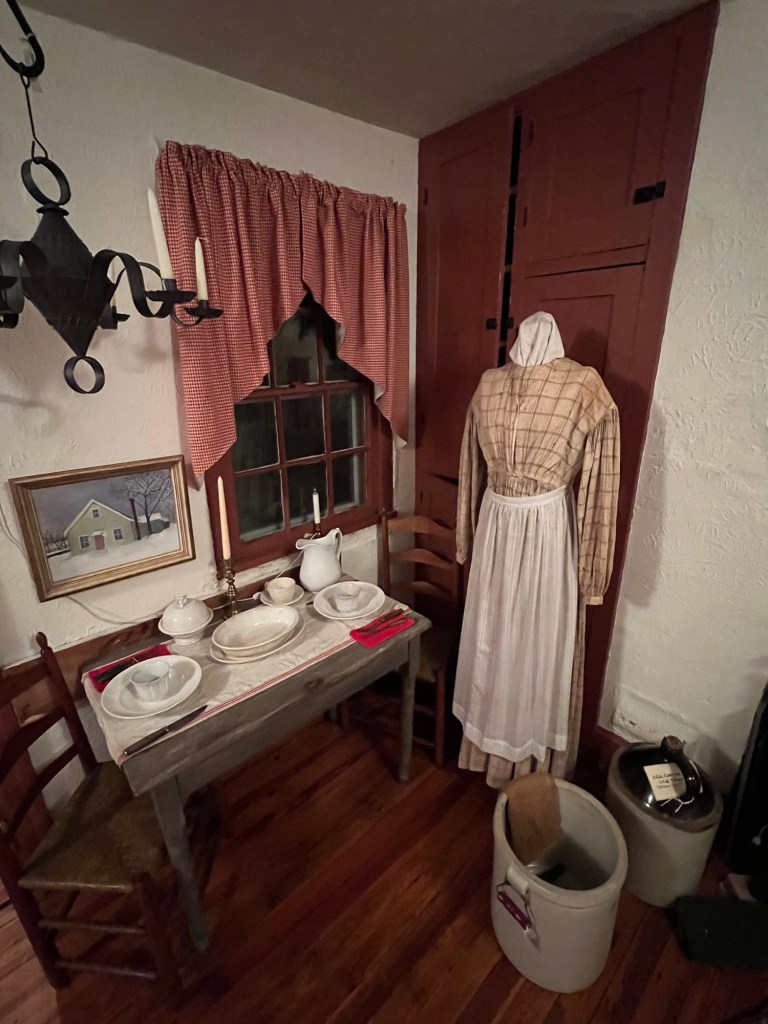
The old fashioned kitchen in the Historical Society
The upstairs bedroom at the Historical Society
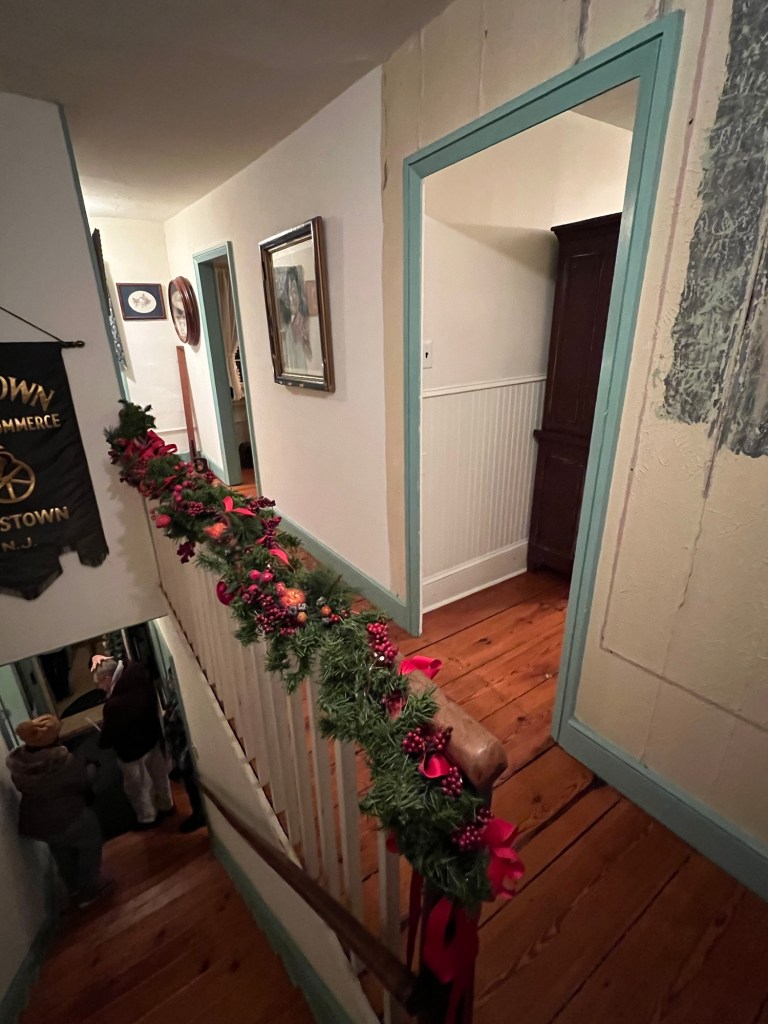
The upstairs decorated for the holidays
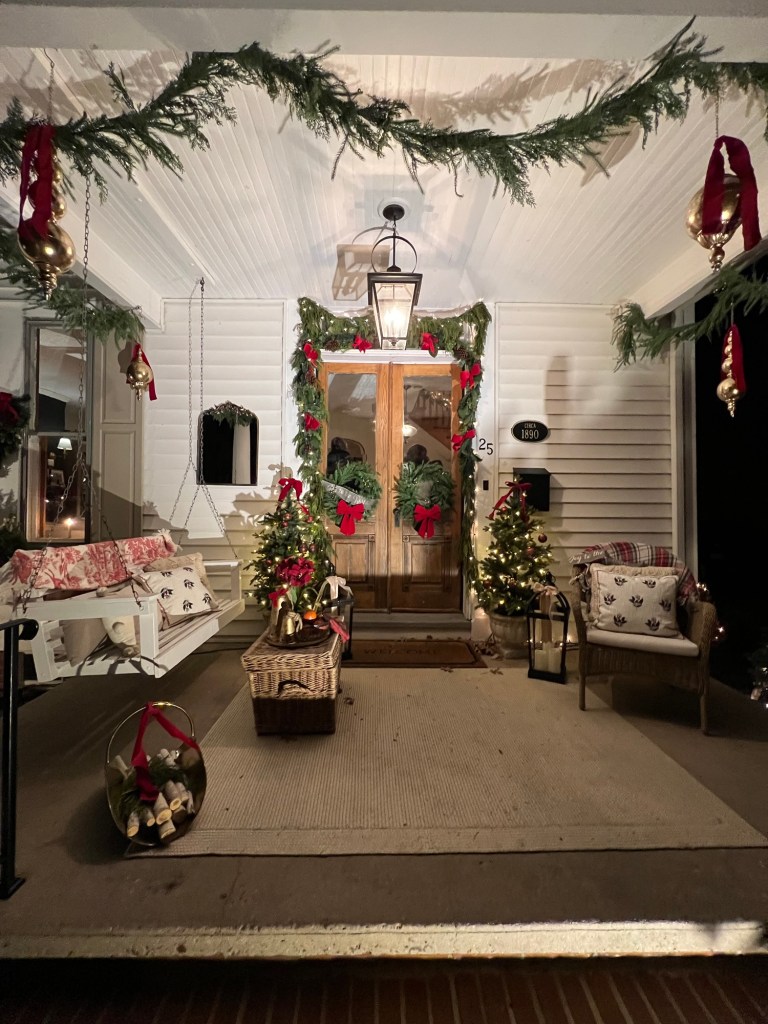
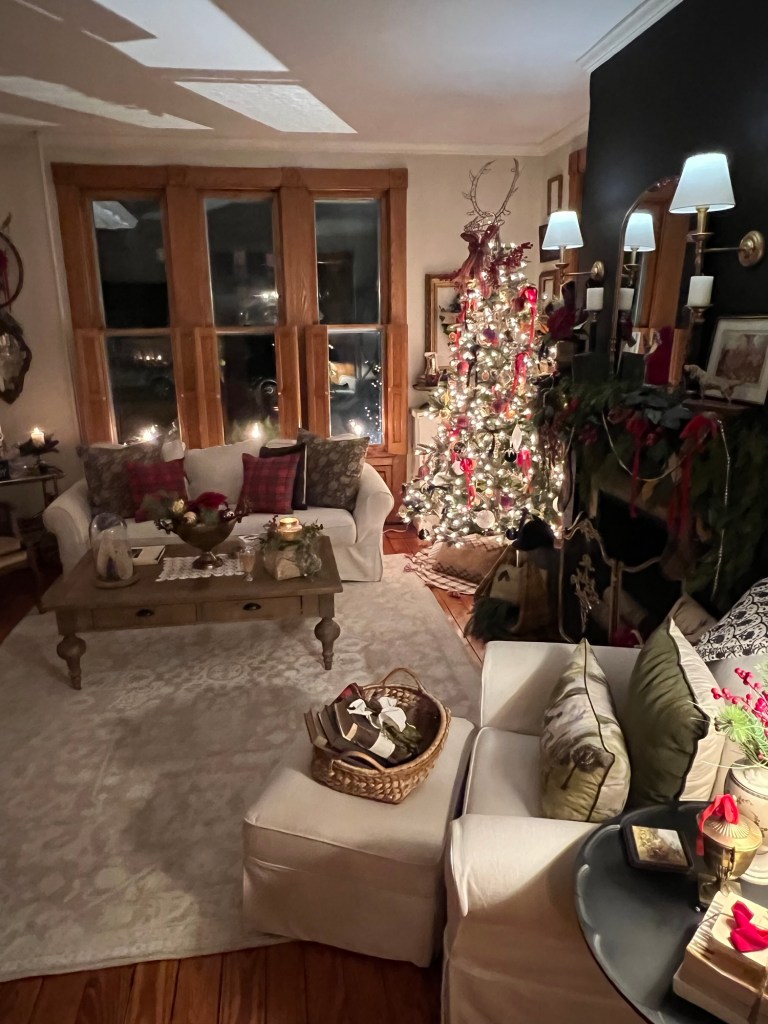
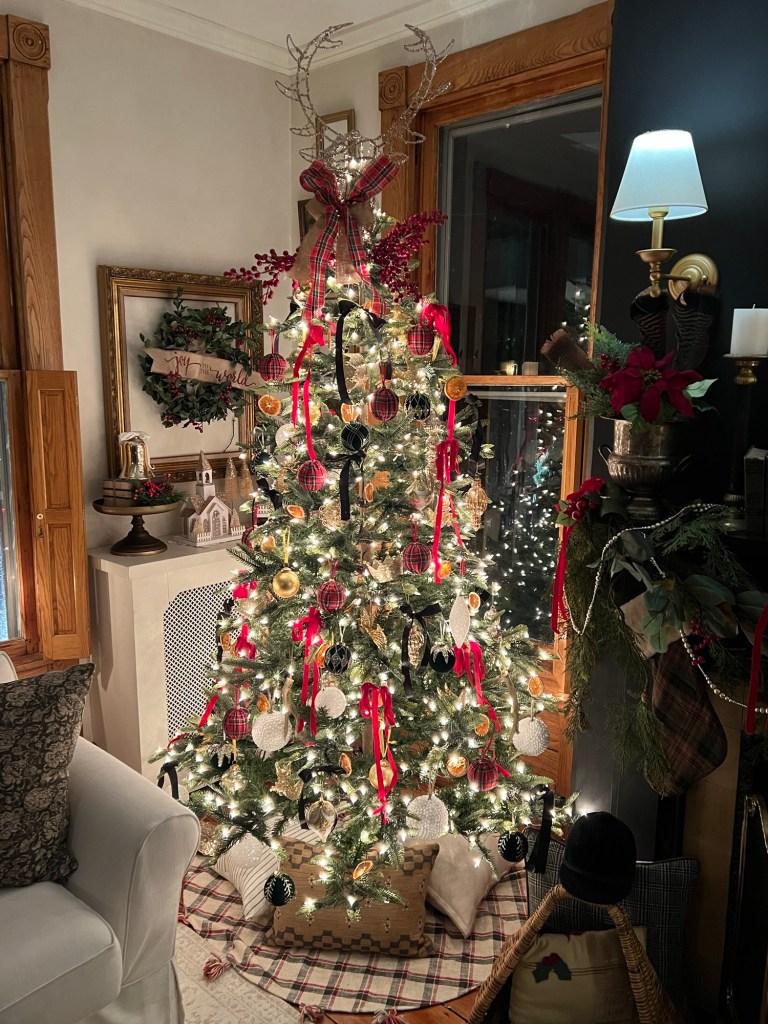
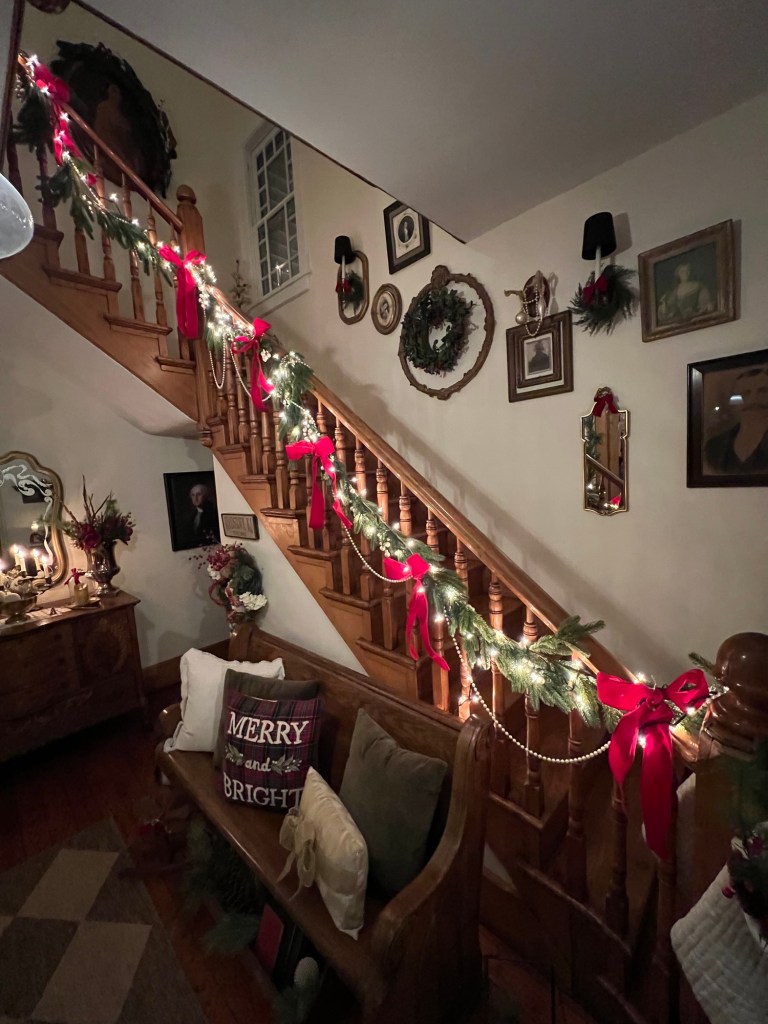
After I left the historical society, I had time for one more house before the evening ended and I made my way down to the Melissa Dolan House. The home was originally owned by the Presbyterian Church and had been the minister’s home with his wife. The house was built around 1890 and had some the original floors, fireplaces and pocket doors.
The front of the Dolan House at 25 Bowen Avenue
The beautiful Living Room during Christmas
The Christmas tree in the Living Room
The banister decorated for the holidays
The Christmas tree in the back room of the home
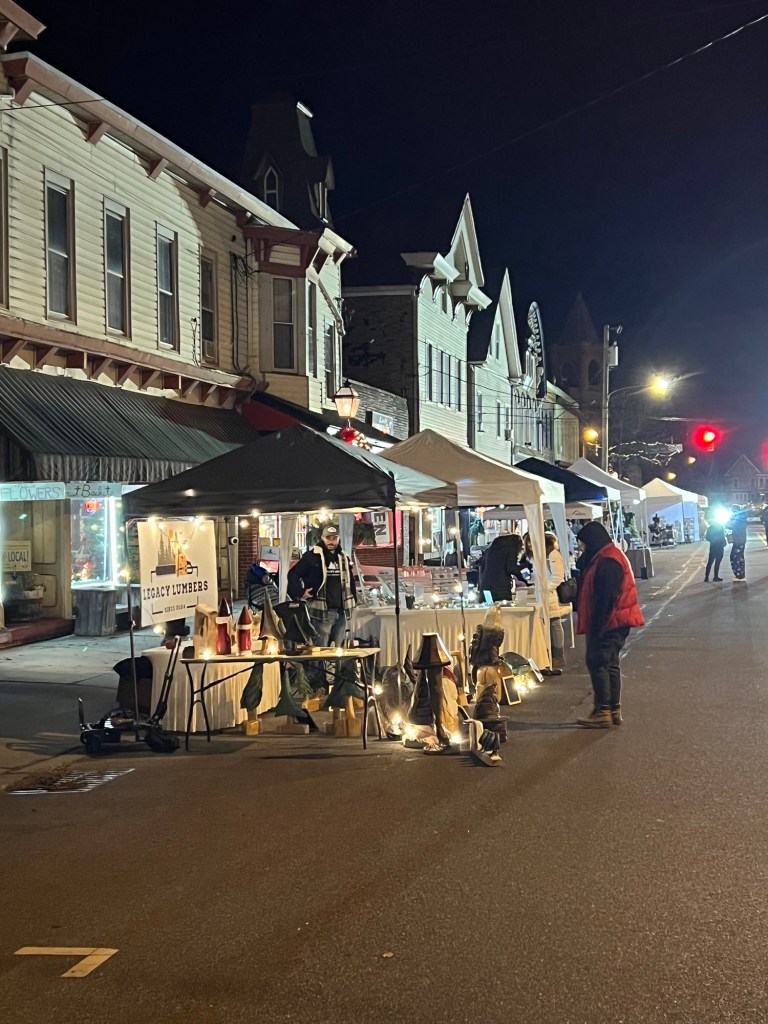
After the house tours were finishing up for the evening, I made my way back downtown and walked through the last of the vendors who were still open. At the Craft Market they had set up, there were vendors selling all sorts of gourmet foods like chocolate, ice cream and jellies plus all sorts of crafts. They stayed open to the last of the crowds still milling around until about 9:30pm.
I made my way back by one of the last busses back to the Creekside Inn and drove back to Salem for the evening. It was freezing by this point and I just wanted to relax.
The Craft Market in Downtown Woodstown, NJ
The Salem River Inn was really quiet when I returned around 10:00pm. I got a wonderful night’s rest and prepared for breakfast the next morning and the second house tour that would take place in Salem, NJ the next day.
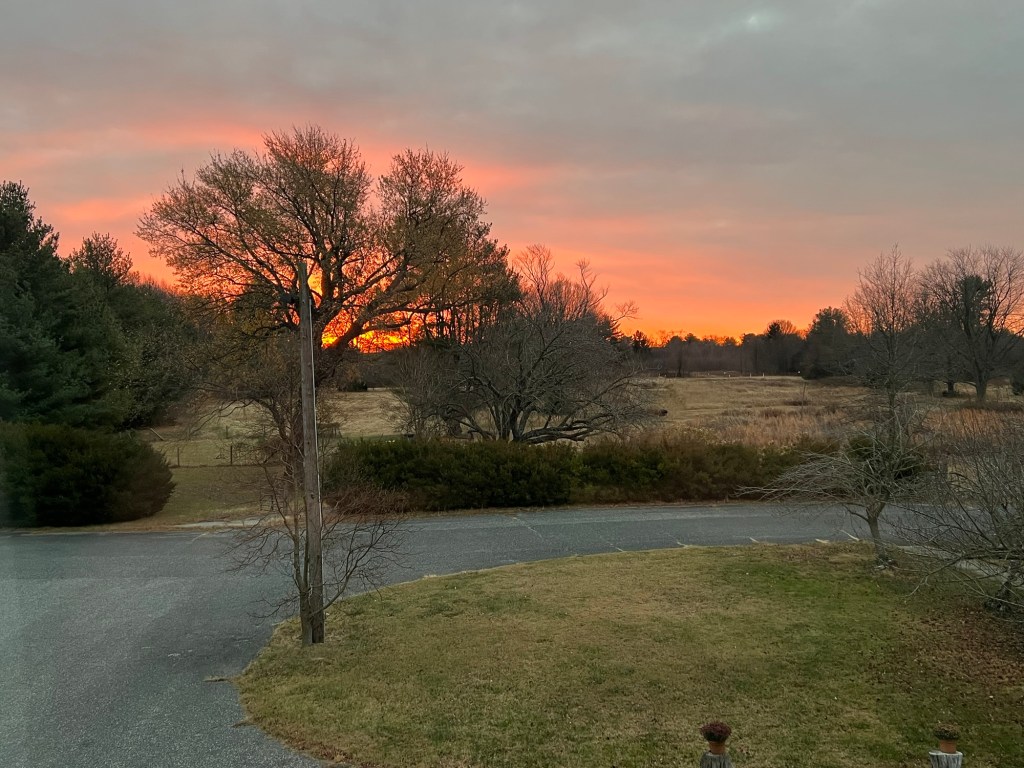
The sunrise view from the Meadow Room at the Salem River Inn
The decorations being prepared for a wedding the next day
Breakfast overlooking the Delaware Bay
Breakfast overlooking the patio
It was a nice way to end the event with a wonderful breakfast and a lot of good memories from the night before. Don’t miss visiting Woodstown and Pilesgrove at the Christmas holidays. It is a very special place to relax and enjoy the coming of Christmas.










































 Visiting a Museum: The Unique, Unusual, Obscure and Historical