As part of the Morris County “Pathways to History” tour I visited the small Lincoln Park History Museum just off the downtown. This colorful and well lit little museum is packed with information on the development of the town. The transformation took place with the form of transportation that changed the area starting with the Morris Canal running through then the railroad system and then the advent of the automobile. This area is still quite sleepy even though its located just an hour outside of New York City.
Lincoln Park History Museum, located at the original 1922 Library building. Lincoln Park, or as once known, Beavertown, is small in geographic nature but has a rich and diverse history. The museum’s goal is to rediscover the town’s past and celebrate / preserve the history, which sadly, at times, is lost and forgotten.
The history of the town’s police and fire departments
Join us and discover our past which includes: dinosaurs, native American artifacts, revolutionary roads /houses, civil war hometown hero, part of the Morris Canal path, part of the Boonton Line Railroad branch, airport, major flood events, some Hollywood film locations and of course our townsfolks who sacrificed in war, volunteers (fire department, police, first aid, pal, scouting etc.), all who made Lincoln Park a wonderful town to grow up in and formed pride and sense of community (Pathways Tour website).
The history of the Morris Canal that ran through the town before the railroads.
The Morris Canal was an important part of the town’s development.
Learn how the town transformed from a small crossroad in the American revolution to a canal stopping point with incline plane, lock and hotel. Learn how it progressed from farming to resort area to commuting town and transform to what it is today. The town keeps growing.
The day the Railroad came to town and it changed everything! On December 14, 1870 the first passenger train stopped at Beavertown. School was closed that day so the students could witness this momentous occasion. The following year Beavertown’s name was changed to Lincoln Park. This event, started a large and long transformation of the town. Prior to this, the town was all farmland and the few businesses in town centered on support of the Morris Canal. Once the railroad came, the transformation started (Pathways Tour website).
Small industries were created which used the train system for shipping freight and the population started to grow. In the earlier 1900s advertisements were placed in New York /Brooklyn newspapers advocating the benefits of country living. City folks would come by train for the summer and enjoy river activities and many of these folks became permanent residents. During this time the Morris canal was slowly fading away, not able to compete against the railroad. Soon, it was feasible to commute daily from Lincoln Park to New York by train and the population continued to grow along with more business to support the population (Pathways of History Tour of Morris County website).
Lincoln Park’s Farming past and Business District.
Lincoln Park’s town history of schools, fire and police departments.
The museum only takes about an hour to visit but take the time to see all the displays and talk to the docents. The town really has an interesting history.
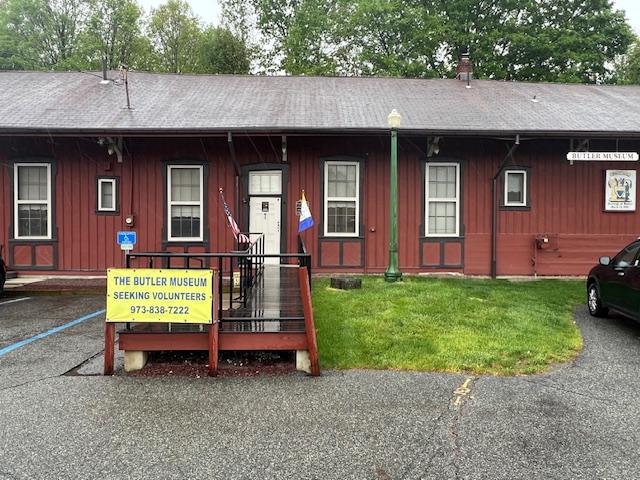
The Butler Museum is housed in the former New York Susquehanna and Western Railroad station. Constructed in 1888, it was remodeled in the 1890’s and in 1907, when a freight room was added to the northwestern end of the building. A major restoration took place from 2011 to 2015. Purchased by the Borough of Butler for a museum just in time for the Bicentennial Celebration in 1976, the museum houses a large collection of artifacts of local and regional significance.
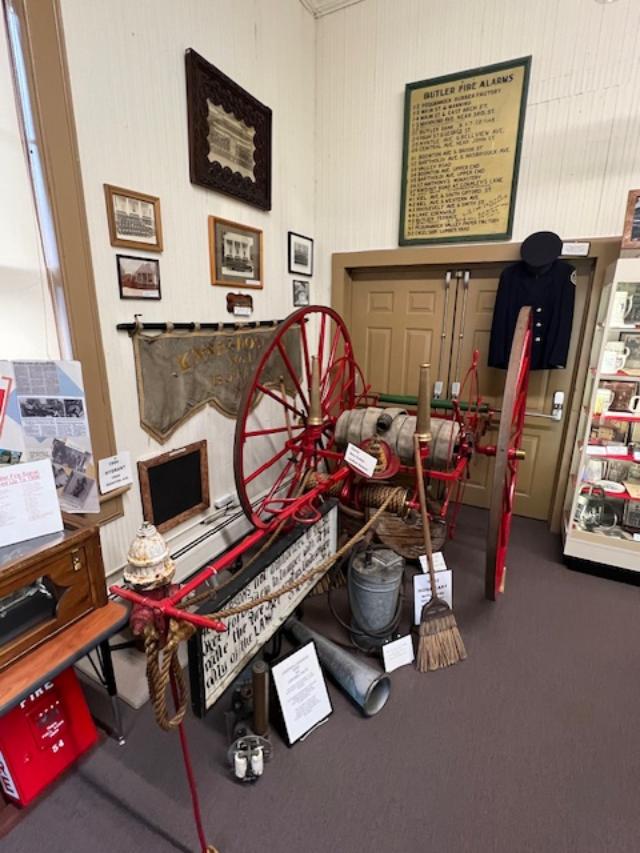
The Butler Fire and Police Department artifacts.
Exhibits highlight the social, educational, fraternal, political, and business life of the community. Unique to the Butler Museum are artifacts pertaining to the Statue of Liberty, statue designer Frederic Bartholdi, and his friend Richard Butler, for whom the town is named. Mr. Butler was an important member of the committee that raised the funds to construct the statue’s pedestal (Pathways to History of Morris County website).
The Statue of Liberty exhibition.
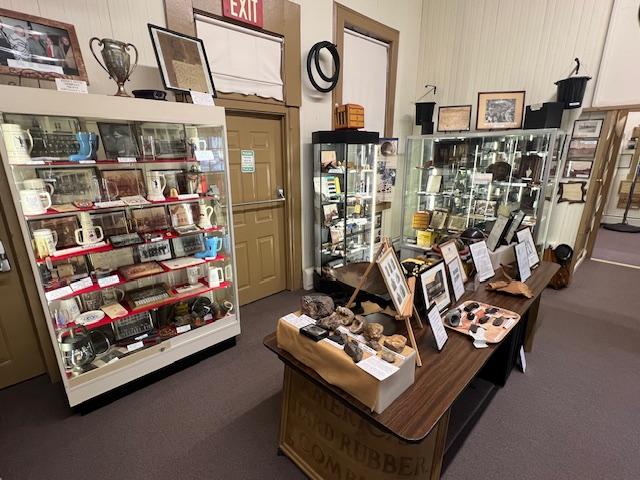
Displays also include products manufactured by the American Hard Rubber Company, the area’s largest employer from the 1880’s to the late 1950’s. Development of items such as Ace Bowling Balls and Ace Combs can be traced from blueprints and salesman samples to the finished products.
The Ace Company exhibit
The resource center presents the opportunity to view past copies of local newspapers, almost a century of Butler High School yearbooks, and a pictorial history of Main Street, Butler.
The Butler Museum main gallery with the Ace Rubber exhibition as well as the Butler Fire and Police departments. The displays represent years of tradition in the town.
The Butler Museum main gallery. The Ace Company exhibition.
The Butler Museum’s local town history display.
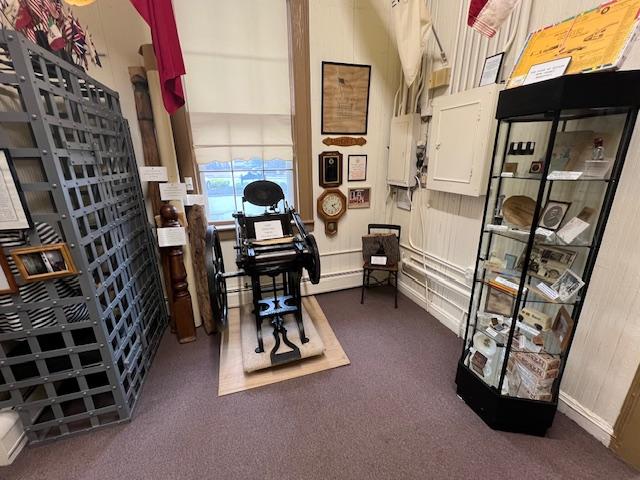
The Printing industry of the town of Butler, NJ.
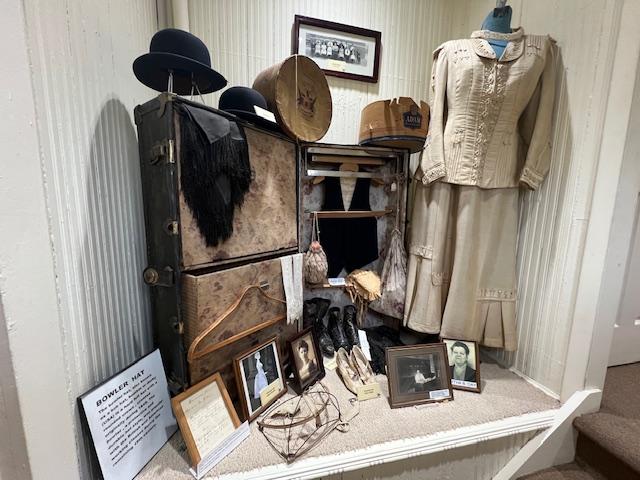
The display of vintage clothing.
The museum has a wonderful display of artifacts that tell the story of the town and show the progression of the town’s growth. The docents do a nice job of telling that story of the town they love so much. It is a very fascinating museum when you tour all the interesting things that the museum has in its collections.
Don’t miss this two-day event in the first weekend in May when Morris County, NJ showcases all the ‘hidden gems’ that it has to offer. It was a great weekend!
I had been sent the notice that the County of Morris, New Jersey was having a two-day Open House of many of their historical sites for touring and for special events for a program entitled “The Pathways of History: Museum and Site Tours of Morris County, NJ”.
The “Pathways to History” event takes place every May
The weekend event spread to small museums, historical homes and cemeteries all over the County with walking tours and lectures at various sites. Having never been or even heard of many of these sites, I was interested in visiting as many as I could for my blog, “VisitingaMuseum.com” which is here on WordPress.com as well.
I plotted my two days of the event and tried to organize the trip so that we could see as many sites as we could. The event asked the sites to open one of the two days as…
On my last stop of touring Historic Morris County for the “Pathways for History ” event, I visited the Whippany Burial Yard at 325 Route 10 in Whippany.
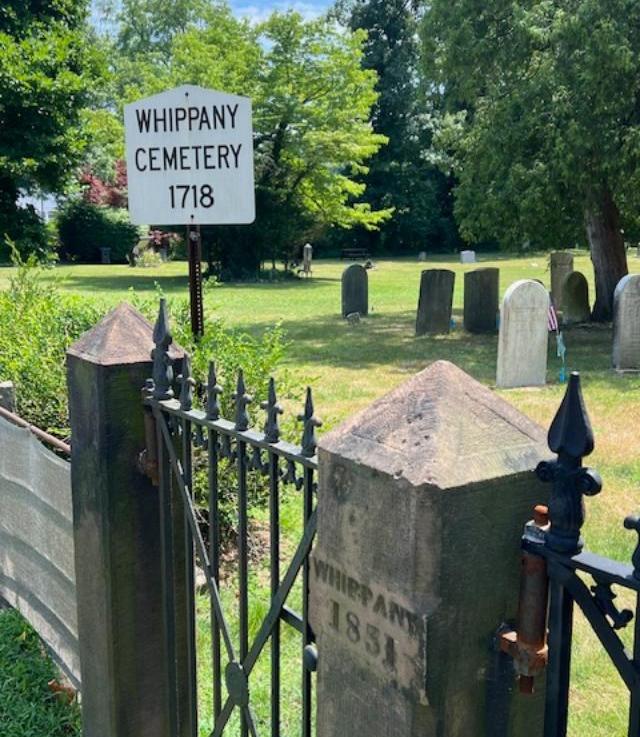
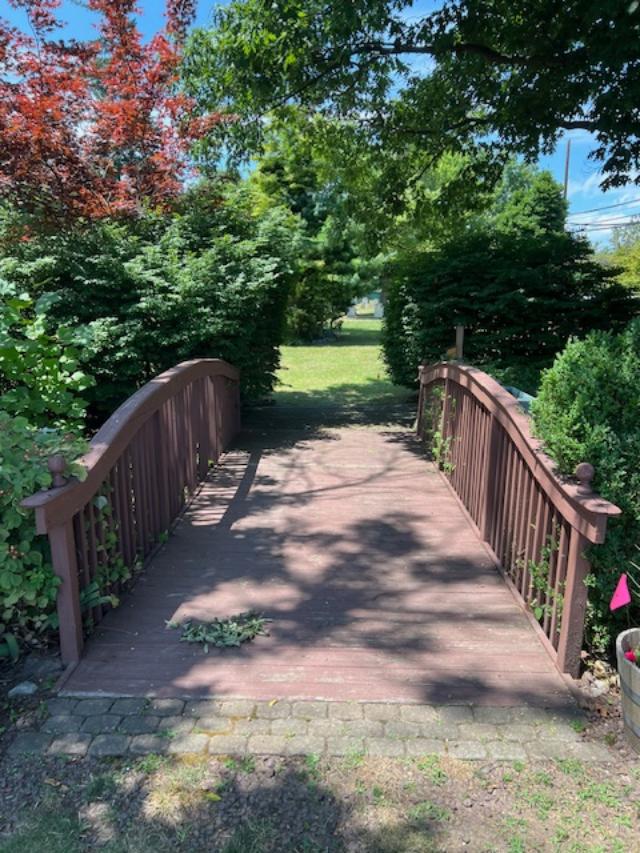
The entrance to the burial grounds
The old cemetery is steeped in history as one of the oldest cemeteries in New Jersey and home to many Revolutionary and Civil War veterans. As we learned on the tour later on, the only people that can be buried there now are former Mayors of the Town of Whippany who have died.
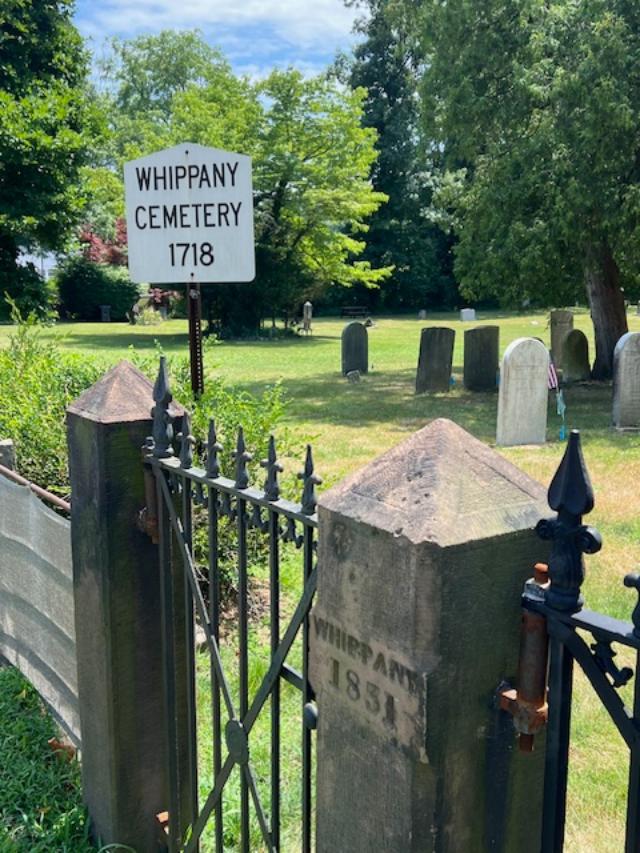
The sign of the historical burials
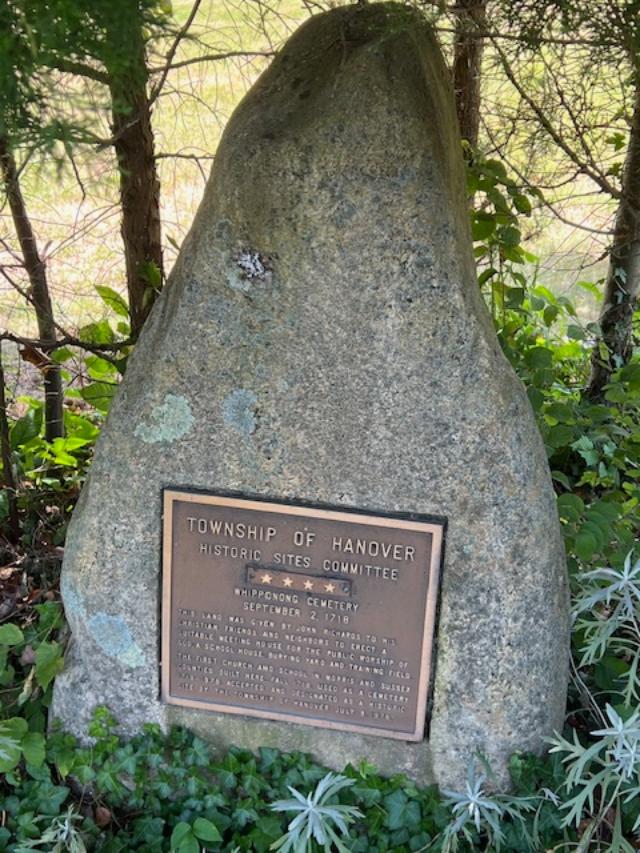
The historical marker
The town historical plaque
Two of the founding families of the town have many family members buried here, the Tuttle’s who still have relatives living in the area and the Kitchel’s. The guide for the afternoon took us on an hour tour of the cemetery, pointing out prominent members of the war years including Timothy Tuttle (died 1754), a founding judge of Morris County, Keturah Tuttle Platt (died 1850), who was a Charter member of the First Presbyterian Church, Captain Timothy Tuttle (II of III-died in 1816), who was a member of George Washington’s First Regiment in the Continental Army, Samuel Tuttle (died in 1762) and Colonel Joseph Tuttle, a blacksmith and Deacon at the Presbyterian Church who served in the French & Indian War.
Joseph Tuttle’s gravesite
Joseph Tuttle’s grave
The historic marker
Joseph Tuttle Jr.’s gravesite
The Tuttle family plot from before and after the Revolutionary War
The Tuttle family plot after the Revolutionary War
The Kitchel family was prominently represented as well with Abraham Kitchel (died in 1741), who was one of the six original judges of Morris County and his wife Sarah, whose family was claimed to date back to Charlemagne, Emperor of France, Abigal Kitchel (died in 1768), Uzal Kitchel (died in 1813), a Militiaman in the American Revolution and his wife, Anna (died in 1815). Many of these people as well as their ancestors made major contributions to the growth of the surrounding community.
The graves by the old entrance
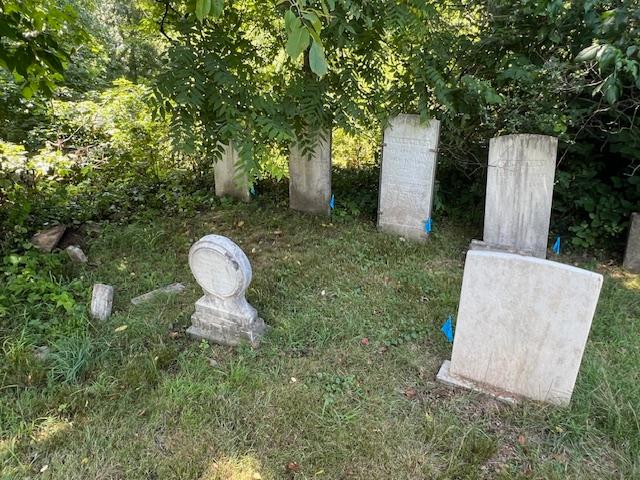
We were also given a lesson in the construction and care of the old tombstones, some of which were beyond repair. Some of the original grave sites were made from sandstone, marble and granite with granite becoming the popular choice later on. Here and there some of the tombstones were decorated with winged skulls or cherubs. These show morality images of the dead (Whippany Burial Yard pamphlet).
The Post family plot
We were also walking by the river that the graveyard sits on and were told that current erosion is affecting some of the grave sites. These might have to be moved in the future and the tour guide was not sure if any have been lost over the years. The old Presbyterian Church that sat on the site (built in 1718 and removed in 1755) has since disappeared and there is no trace of it now.
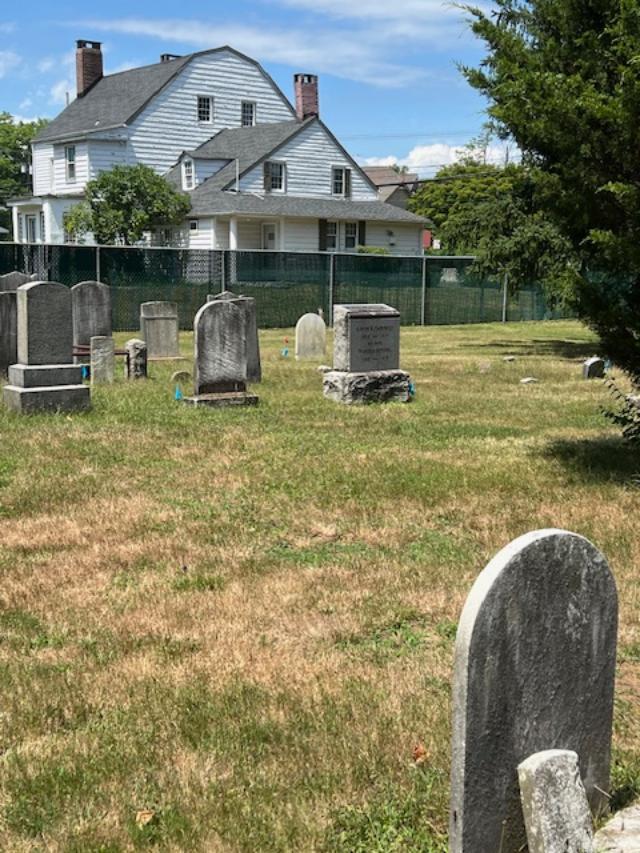
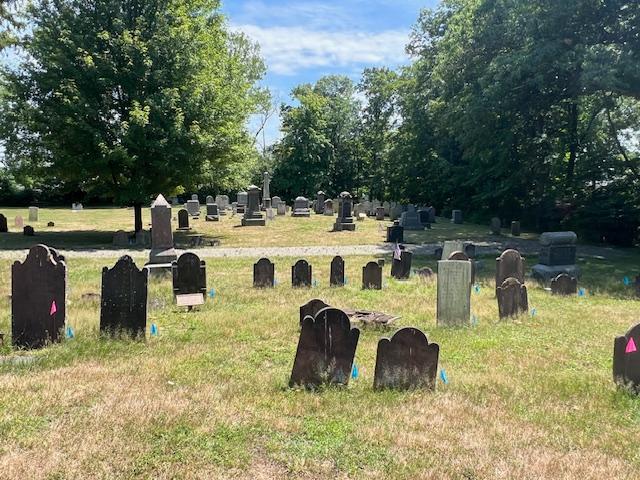
The Whippany Burial Yard has many different types of tombstones. This part of the cemetery faces the old Tuttle homestead
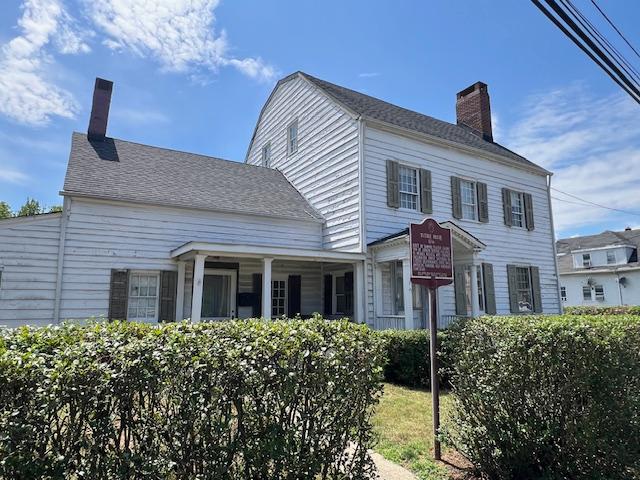
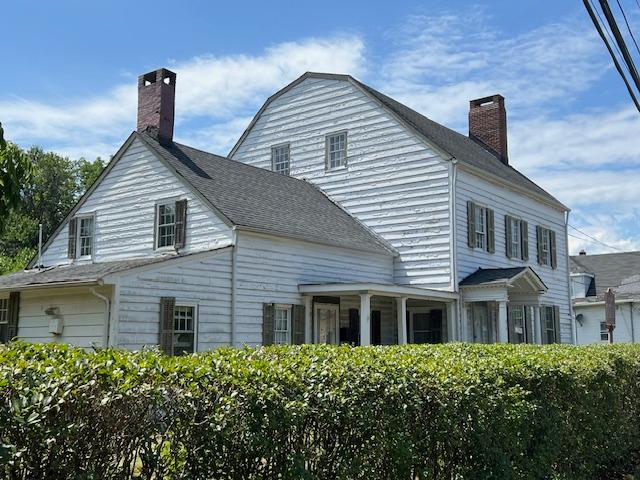
At the end of the tour, the guide explained to us that the old Tuttle House, dating back from the late 18th Century was just left to the town by its last owner to be preserved as a museum for the community. The Tuttle house will need a lot of work in the future.
The back of the cemetery facing the Tuttle Homestead
I ended my tour of the cemetery here as the graveyard was closing for the evening but planned on coming back in the future. There are more interesting things to see amongst the tombstones.
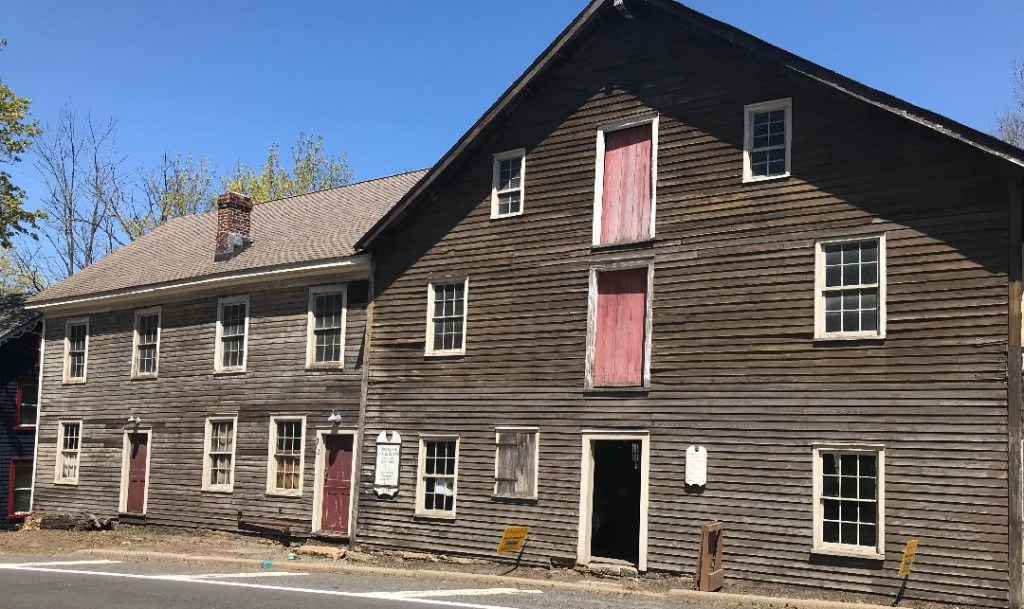
The Tuttle Homestead on Route 10 will be a museum in the future
The Tuttle House historical marker
History of the Whippany Burying Yard:
(From the Township of Whippany website/The Township of Hanover Landmark Commission):
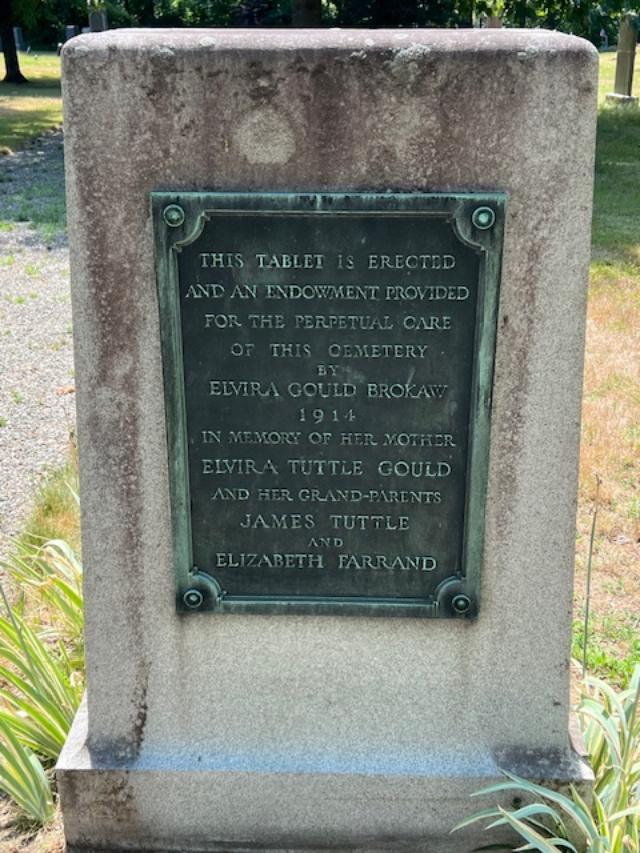
The Brokaw Family tablet for care to this cemetery
The Whippany Burying Yard is the oldest graveyard in North Central New Jersey. It contains the oldest dated colonial artifacts in Morris County. It was established in 1718 before the United States was conceived before New Jersey was a state and before Morris County was founded. Two of Morris County’s first governing judges and many Revolutionary War soldiers are buried here.
The Tuttle family homestead
The three and a half acres of land was donated by John Richards for a “meeting house, schoolhouse, burying ground, training field and for public use. Mr. Richards was the first one buried here when he died in 1718. His grave is the oldest in Morris County, NJ.
The Mary Sheldron historical burial site
For the next 200 years, the burying yard was maintained by the members of the Presbyterian Church with which it was closely associated. In 1914, the Presbyterian Church elected trustees for a group that would be known as The Whippany Cemetery Association. They maintained the yard for the next sixty-one years.
The burial ground marker in the cemetery
The graveyard is legally, publicly owned but no particular entity or institution in named in the deed. The grantee is interpreted to be the “Christian friends and neighbors in Whippanong”. It was formally maintained and administered by the Whippany Cemetery Association until its maintenance and administration was transferred to the Township of Hanover in 1976 as an historical site. The Township gave the responsibility for the Burying Yard to its Landmark Commission, where it remains.
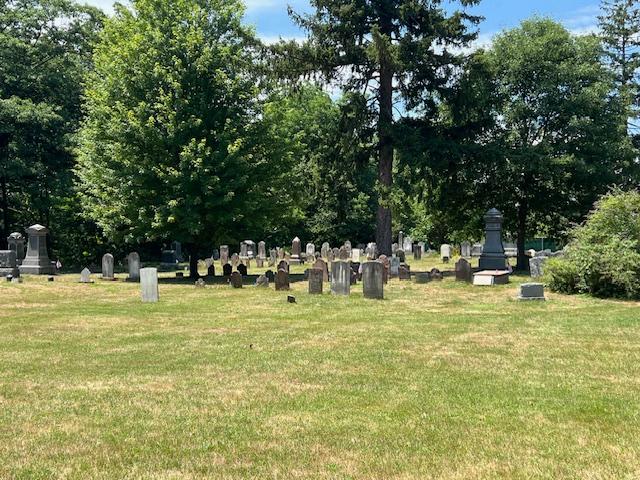
The back part of the Whippany Cemetery
The Burying Yard holds about 450 graves that include 11 veterans of the American Revolution, nine Civil War veterans. In 2011, the Burying Yard was listed on both the State and the National Register of Historic Places. When visiting the Yard, you can see that the gravestones are made out of three different materials: sandstone, marble and granite. Visitors can see a 300-year time span of various commemorative styles. The Burying Yard is also home to two prominent families in the area: The Tuttle’s and the Kitchel’s.
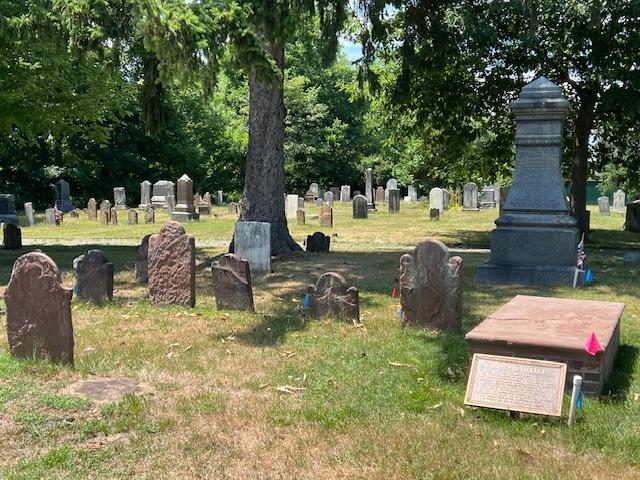
The family plots at the Whippany Cemetery
Some of the prominent members buried here are John Richards who was the schoolmaster who donated this land for public use, Abraham Kitchel who was an early settler from Newark, NJ and one of the six original judges of Morris County. Joseph Tuttle Sr., who was a blacksmith, had served as a Colonel of Morris County militia in the French and Indian War and Timothy Tuttle who was a Sergeant of the First Company under Captain Joseph Morris in Lord Sterling’s First Battalion of New Jersey’s First Regiment in Washington’s Continental Army.
The Tuttle House will be the future museum for Whippany, NJ
This 1796 National Register site is the house of Samuel Tuttle, the grandson of Joseph Tuttle, a Colonel in the Morris Militia. The Tuttle’s were among the first to setting in Hanover and they played an important role in its development.



















 Visiting a Museum: The Unique, Unusual, Obscure and Historical