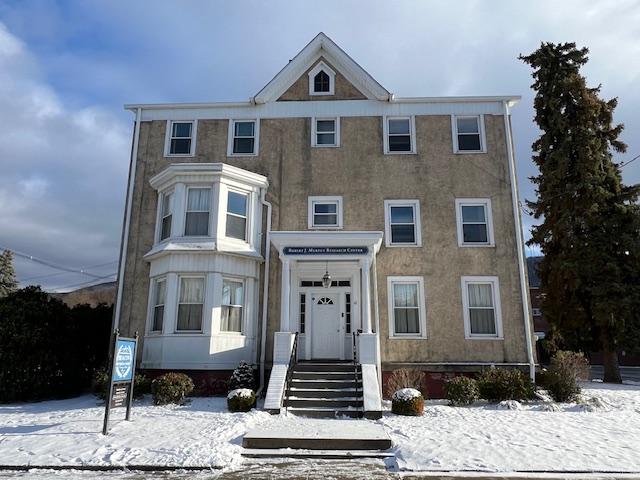
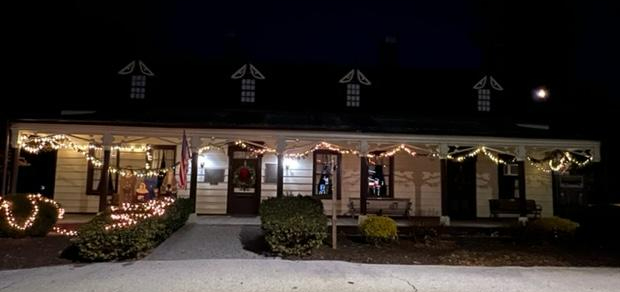
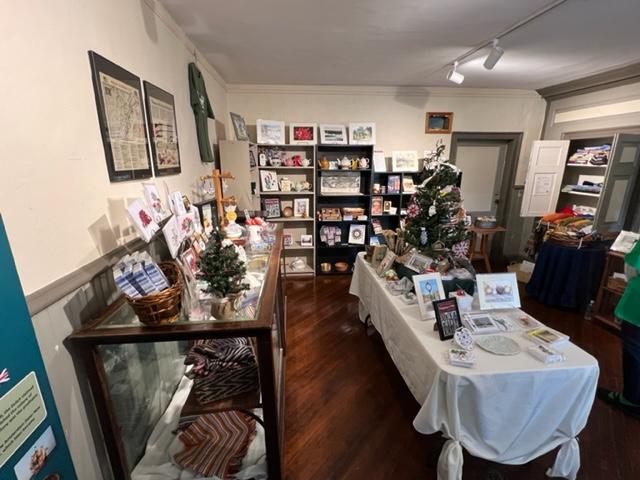
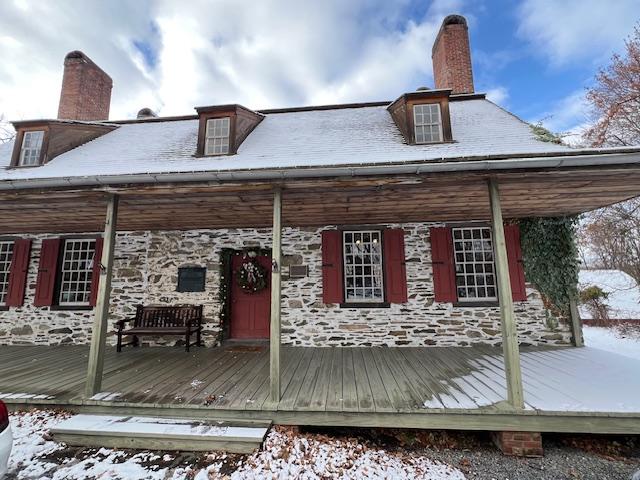
The Beacon Historical Society at 61 Leonard Street at Christmas time
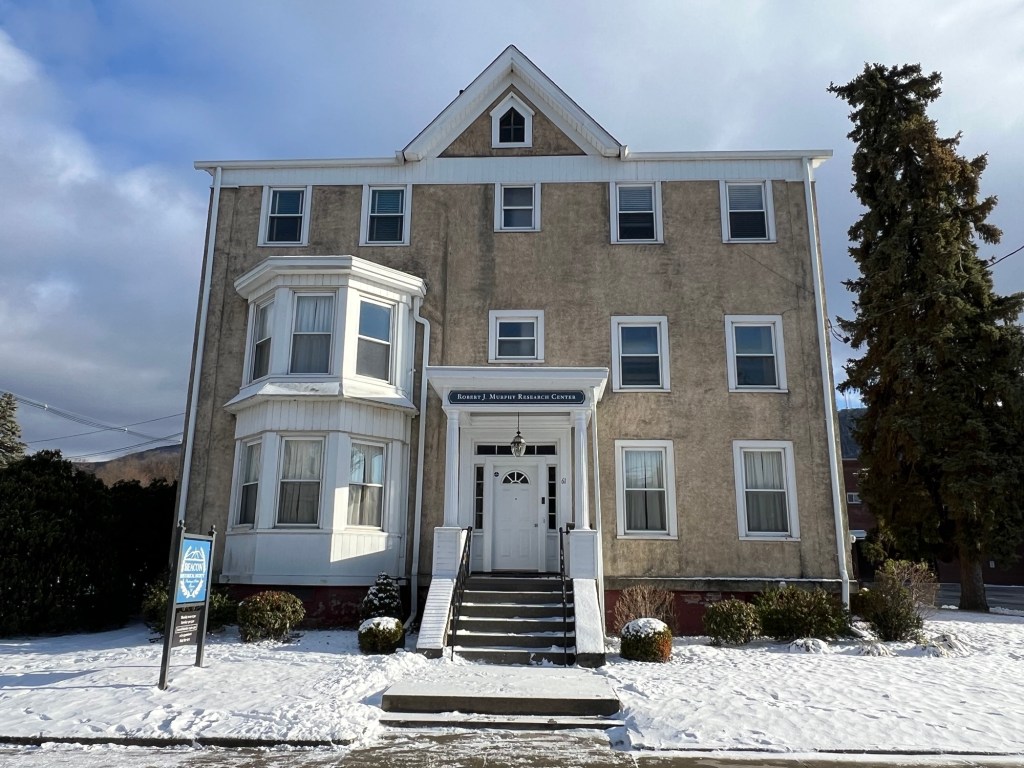
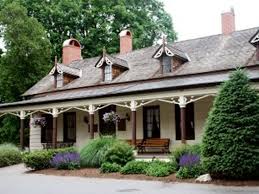
The outside of the building in the Summer
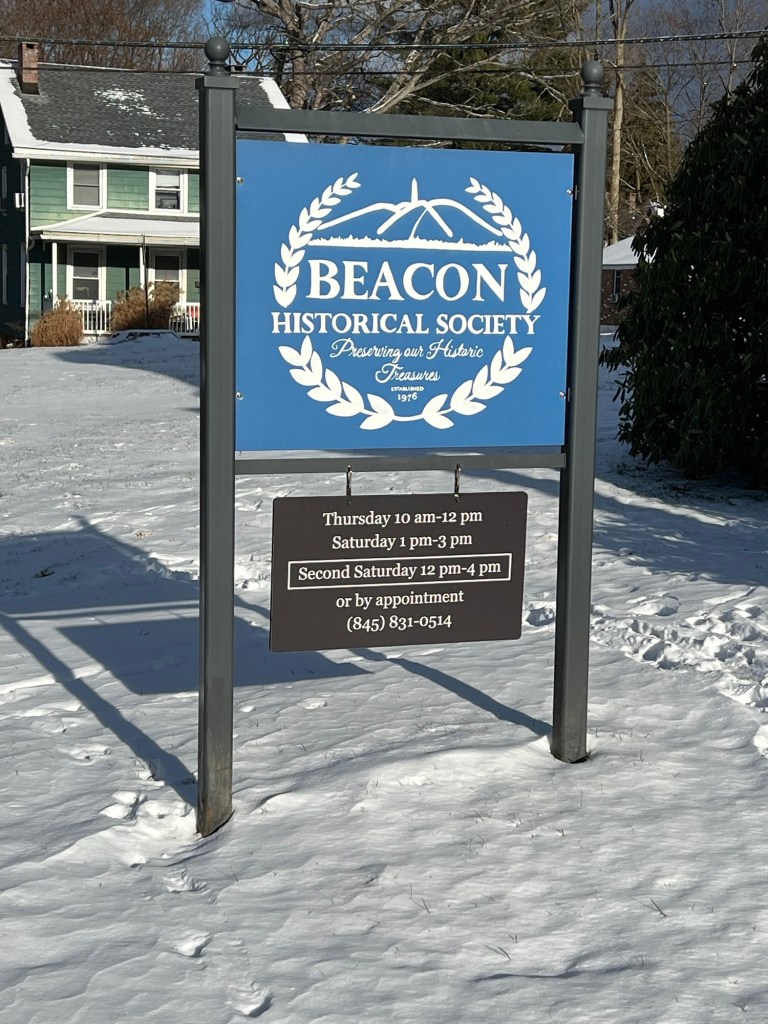
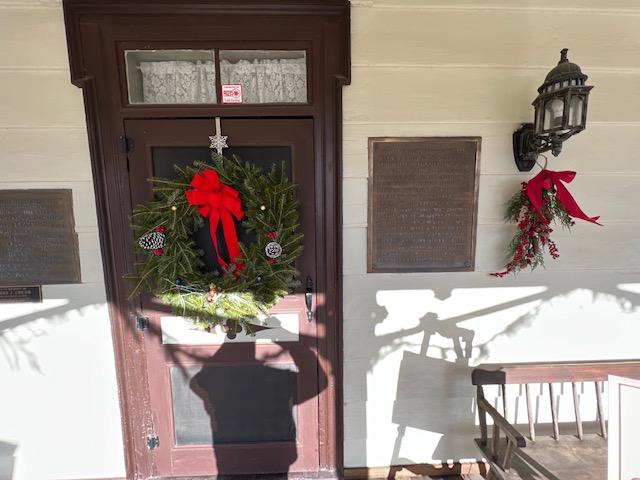
The sign for the Beacon Historical Society at Christmas time
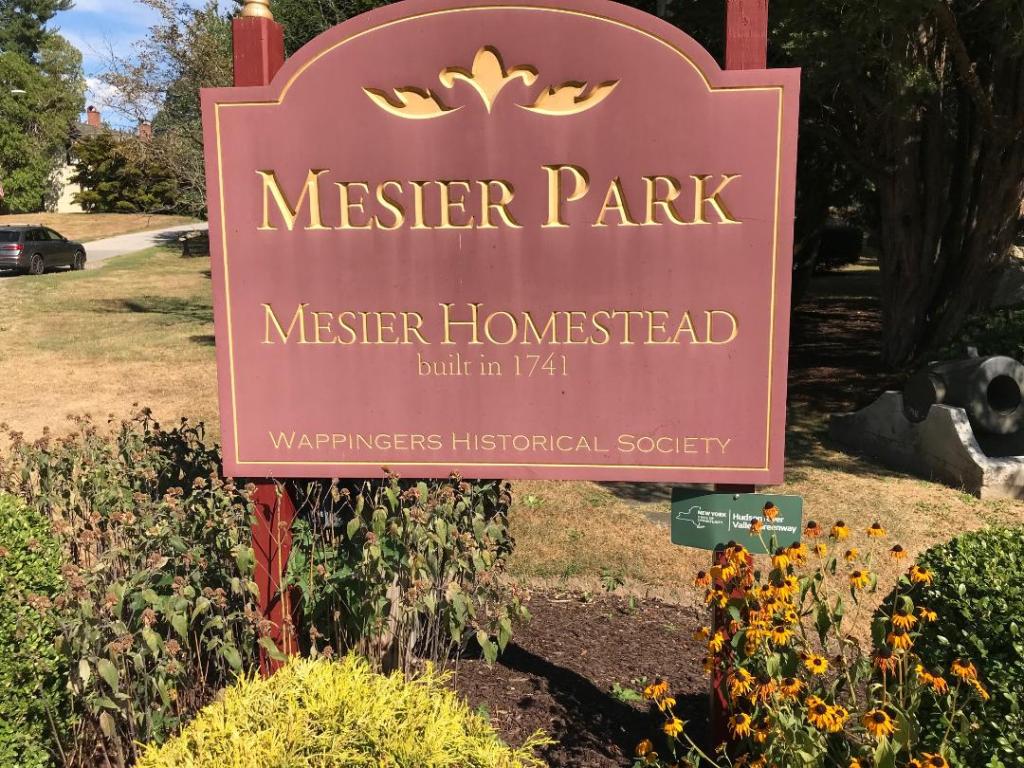
The outside sign in the Summer
The Mission of the Society:
(From the Society pamphlet
The Beacon Historical Society was founded in 1976 to preserve, collect and interpret the rich history of the City of Beacon and its predecessor Villages of Fishkill Landing and Matteawan.
History of the Society:
(From the Museum website)
Established in 1976, the Beacon Historical Society showcases Beacon’s history through exhibitions, collections, programs, books and an informative monthly newsletter. The Beacon Historical Society is proud to serve as Beacon’s repository of rare photographs, paintings and prints, Hudson River ship models, objects and ephemera from local factories and Main Street businesses, records of local cemeteries and Civil War veterans, maps of Beacon, Fishkill Landing and Matteawan.
I recently did a walking tour of Downtown Beacon, NY and was impressed by the numbers of restaurants, bars and stores in the downtown area. It is an impressive downtown with very few empty stores and impressive and lively street life. On my first trip to the Beacon Historical Society I learned this was not always the case.
I recently visited this small historical society packed with information on the history not just of the City of Beacon but the surrounding Hudson River area. The museum gives an in depth view of the industrial history of the area and the highs and lows of many of the river communities. These small communities have seen a renaissance over the last decade especially during COVID and many of the older towns have seen new life being breathed into them.
The first exhibition I looked at was the Photographer Patrick Prosser exhibition (being shared with the Howland Cultural Center) ‘Work in Decay: The City of Beacon NY’.
Photographer Patrick Prossner was born and raised in Beacon and a graduate of Beacon High School and SUNY New Paltz with BFA. His work on this project started in 1982 photographing the decay of his home town (Author’s Bio on BHS website).
The photographer moved to the area in the early 1980’s during a time when Beacon’s mills and factories were closing and the downtown was boarded up. It shows what the downtown business district looked like and the changes that were made to shape it today.
The sign for the exhibition
Pictures of the former industrial zone
The pictures showed a once vibrant industrial community and the changes once these factories closed.
The changes in the surrounding area
The exhibition really shows the transformation of these towns from the once industrial hubs to the artsy communities filled with galleries and bars that many of them have become.
Downtown Beacon today filled with art galleries, shops and small restaurants
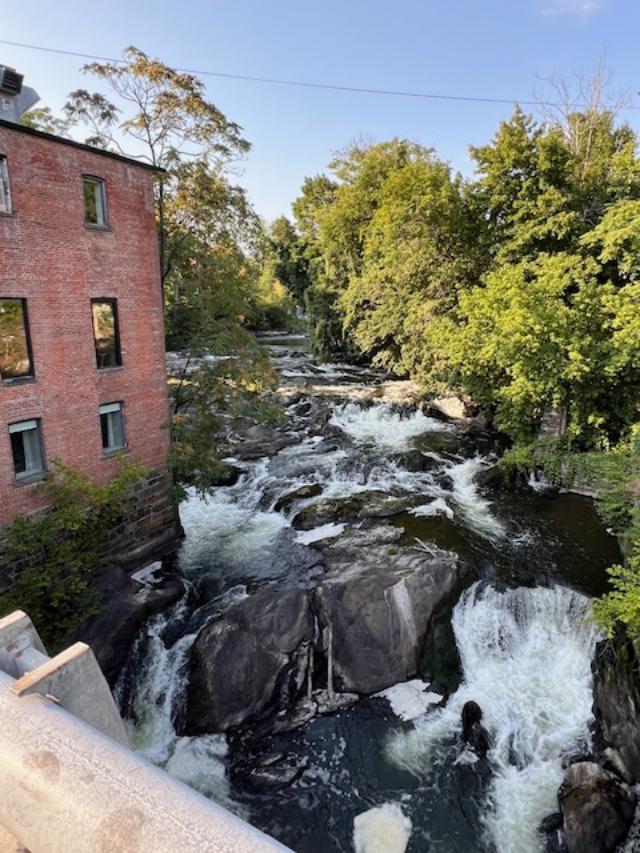
The former mill is now a luxury hotel and restaurant overlooking the same waterfall that used to power the mill
These small communities factories have now become hotels, lofts and in some cases new cottage industries have moved in. Time transforms areas and what is old becomes new again.
The first floor gallery
The second exhibition that I walked through was the ‘From Haverstraw to Beacon: Inside the Brickyards the built New York City’, an extensive look at the brickyards and the clay deposits that once lined the Hudson River that build most buildings in the City in the end of the Eighteenth, Nineteenth and early Twentieth centuries.
The exhibition sign
The map of the location of the brickyards along the Hudson River. This depended on the location of the clay deposits.
Transportation of freight and people for both recreation and business was described in this display of different boats down the Hudson River.
The display of understanding the brick business
Display of the different companies and processes of making bricks
The display of people that make up the industry
The process of mining, making, drying and creating the bricks that would end up in New York City
Some of the bricks and the companies from the New York market that were created in the region
Another display on the companies
More of the companies and processes to making bricks
The exhibition was a very interesting look at what was once a dominant industry in the area but like any industry as the clay ran out and building materials changed, the industry diminished in the area and that way of life changed. With it as well was the transformation of the area.
The former brick factories
The Brockway Brick Company that built Macy’s original building in Manhattan
There were smaller exhibitions as well all over the two floors of displays. First there was a handmade dollhouse on the first floor that is a favorite of the elementary school students.
The handmade dollhouse on the first floor
On the seconded floor is a display is the socially prominent Van Nydeck family. The family donated their family tree and many family heirlooms and portraits.
Part of the Schenck Van Nydeck family tree
The Van Nydeck family heirlooms
There was also artwork and artifacts from the surrounding community on display all over the museum.
The painting is by a local artist and the pottery is locally made
The window is a Tiffany window from a local church that the Historical Society saved for the museum
The first floor gallery
The docent told me after I toured the exhibition that there are more exhibitions being planned for the future.
Touring Downtown Beacon, NY:
After the trip through the Historical Society, I ventured and walked Downtown Beacon. The neighborhood has certainly changed since the early eighties.
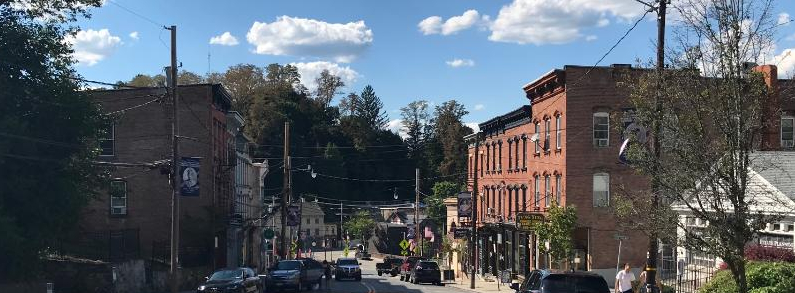
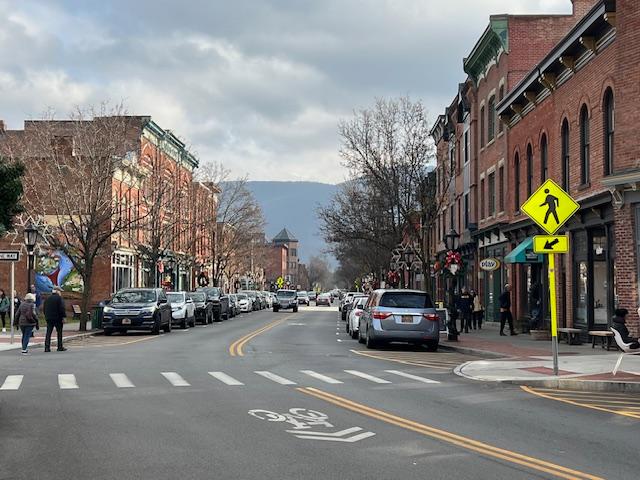
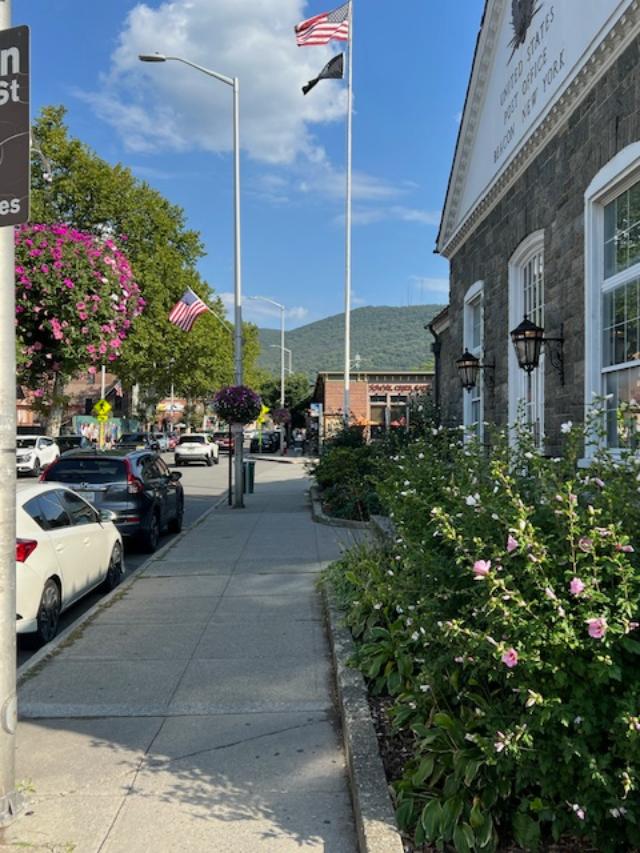
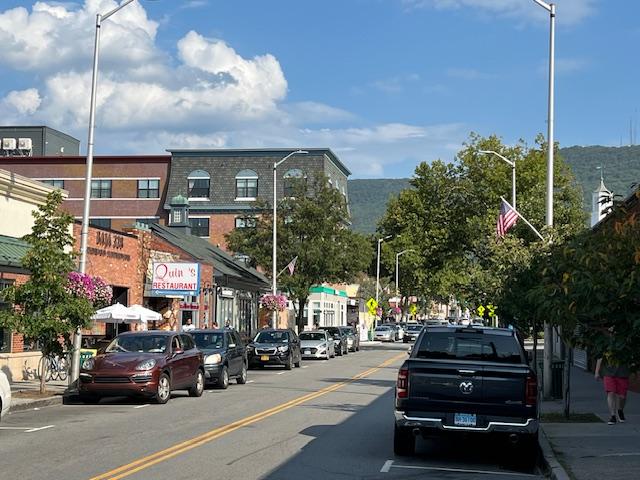
Downtown Beacon today
Downtown Beacon today with Mount Beacon in the distance
The beautiful floral arrangements in the downtown today
The Madam Brett Homestead at 50 Van Nydeck Avenue in Beacon, NY.
The Brett Homestead marker
The sign that welcomes visitors
I recently visited the Madam Brett Homestead on a walking tour and discovered that the family had a lot to do with the growth of not just Dutchess County but New York State as well. The house was the homestead for five generations of family members each who added to the home.
The homestead’s historic plaque
Since the family practiced thrift in the home and decor, we get to see the house with period furniture that has been donated back to the house from the family. Also, period pieces have been donated by other members of the community to show the home at different periods of time. It gave us a look into the home life of a prosperous farming and milling family.
The entrance of the Brett Homestead
The tour starts with a short video on the family and how Madam Brett got her inheritance from her father and built on the wealth that he had created. She leased out land with water and mineral rights thus adding to her wealth and had a grist mill that was the only one on the patent, so everyone had to go through her for grain processing.
The china cabinet with family related items.
The homestead was built by Roger Brett and Catherine Rombout Brett on land inherited by her father, which was part of the Rombout Patent (which covered much of lower Dutchess County). The couple had been married in 1703 and had originally moved in with her mother in the family’s manor home in Manhattan. Upon the death of her mother, Catherine inherited the land and the manor house in Manhattan. Land rich and cash poor, she and her husband mortgaged the manor house in Manhattan and built a small home and gristmill. They moved into their Dutch style home on Christmas Day 1709. The house was expanded in 1715. The home was later added on again in the 1800’s to the present house (Brett Homestead Pamphlet).
In the hallway on display is the original Rombout Patent, which everyone on our tour thought was very impressive. It had been found and was given back to the house. It shows the land deal that the settlers made with the Native Americans.
A copy of the Rombout Patent
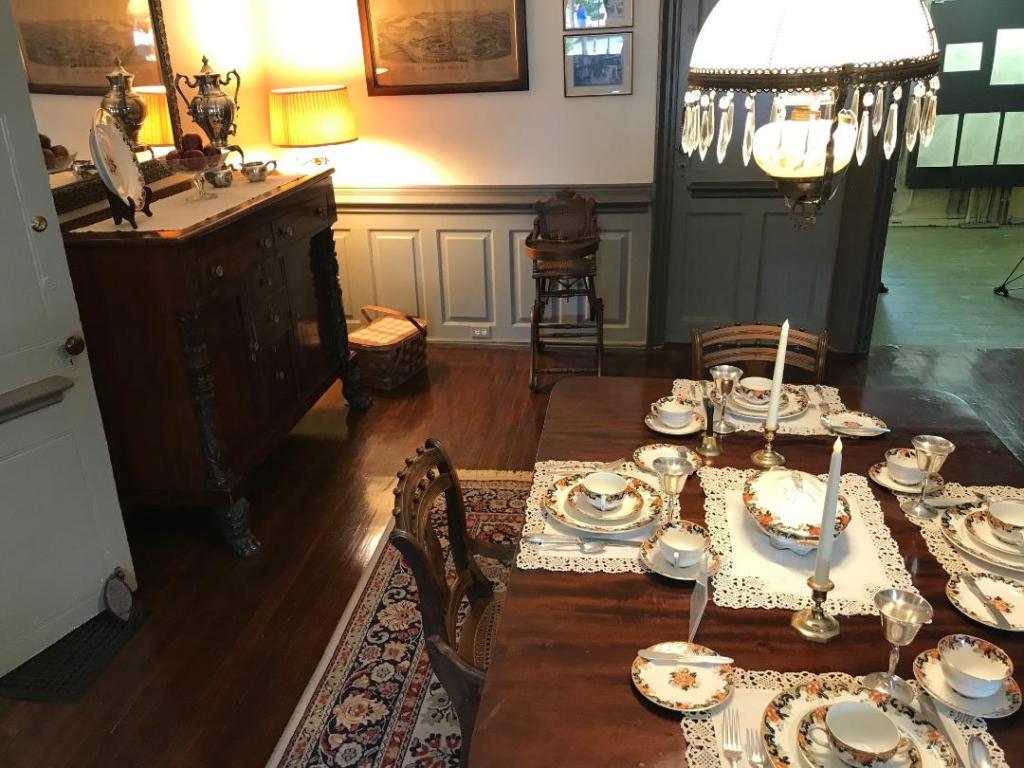
We next headed to the Dining Room, where the family entertained guests. The room is full of period furniture and silver both family owned and donated to the homestead. The formality of entertaining is shown in the room set up.
The Dining Room at the Brett Homestead
Hannah Brett’s (Madam Brett’s granddaughter) bridesmaid dress was on display as well. This had been worn when she danced the Minuet with Marquis de Lafayette. I thought this was interesting in that she had this altered for the occasion and that it had lasted all these years. She had worn this for the wedding of Cornelia DePeyster, whose wedding dress in the New York Historical Society (Brett Homestead pamphlet). It was donated back to the house by the family descendants for display.
Hannah Brett-Schenck’s bridesmaid dress
Period furniture and decorations adorn the Brett Homestead
The decorative pieces in the Dining Room
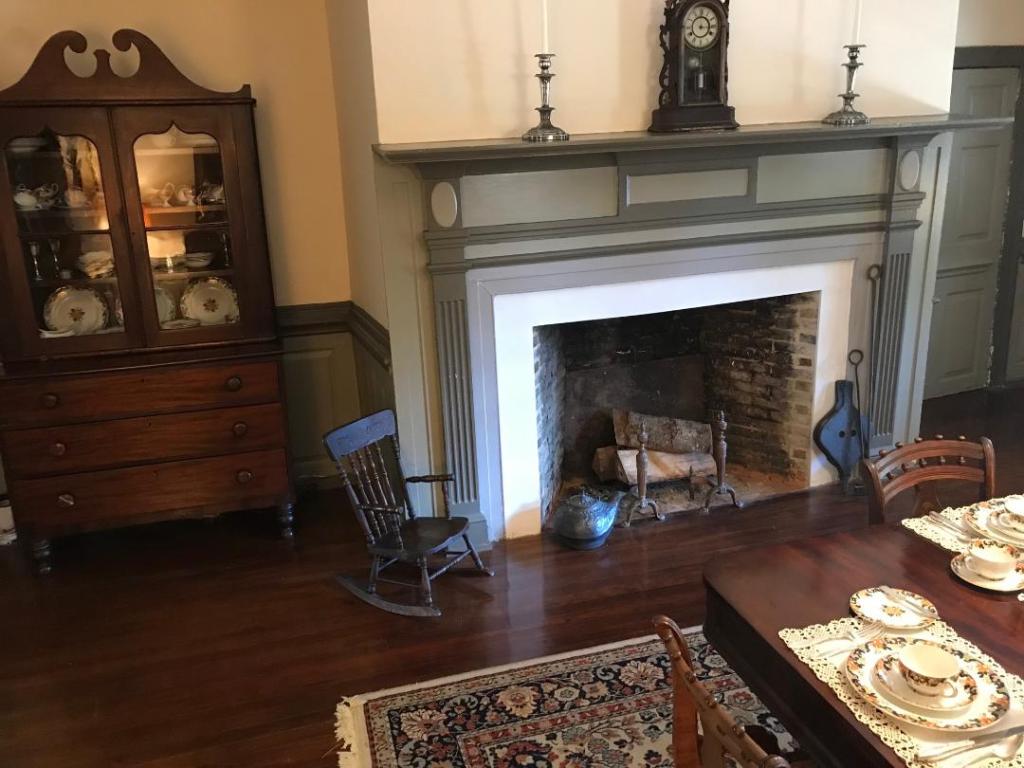
The Dining Room fireplace
The kitchen was very interesting because when you walk through it you will see the modern kitchen in the front of the room that was put in around the late 1950’s and early 1960’s compared to the other side of the room which has the original fireplace and kitchen equipment. It shows the contrast in cooking and entertaining over the last two centuries.
The old versus the new in the Brett Homestead kitchen.
The house was constructed in three sections. The original section of the house from 1709, the addition in 1715 and then the grander addition in the 1800’s that gives the house the look it has now. You can see how the house evolved from a small residence to a grand showplace and you can see this in the way it was designed.
The upstairs hallway shows the contrast between the old home and the additions.
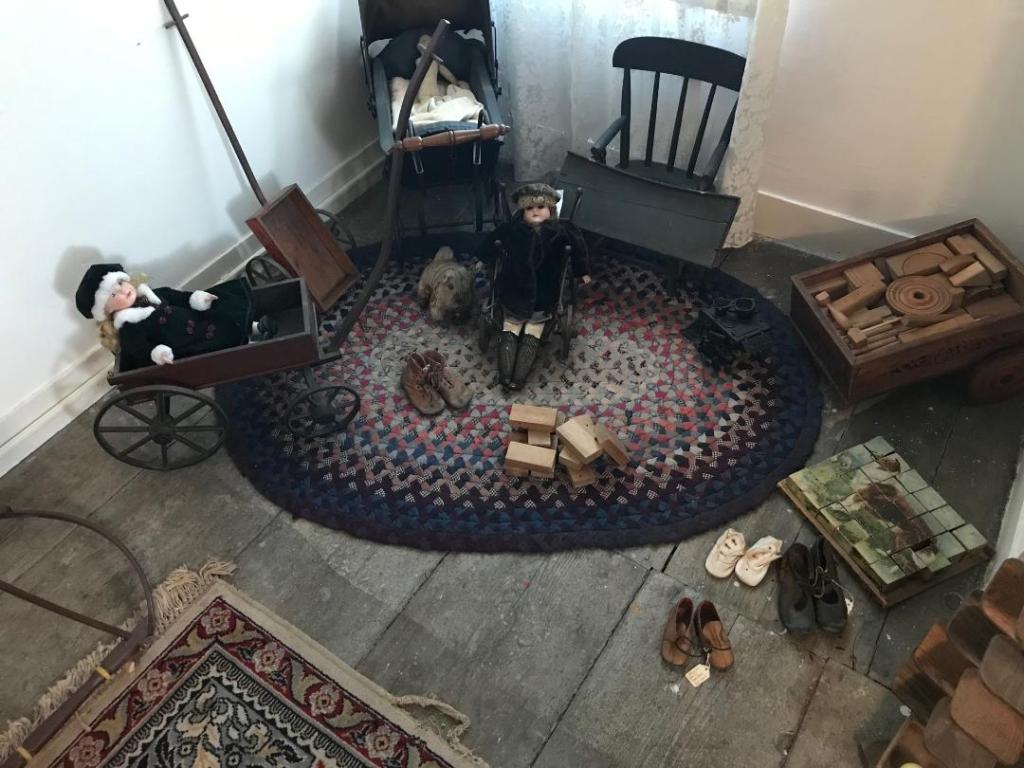
Each of the rooms were decorated with period pieces and some of the rooms has themes to them such as one was a Children’s Room, another was the family office and one contained farm equipment. All the items represented a different time in the home’s history.
The Children’s Room with a collection of dolls that creeped visitors out.
The upstairs bedrooms
The period farm equipment display.
The other bedrooms showed guest rooms for visitors to the area, the office where the Brett’s would have conducted business and rooms would have housed many family members.
The Master Bedroom with canopy bed and bedwarmer
The Guest Bedroom
The home office of the family.
The house stayed in the family until the death of Alice Sutcliffe Crary at 85 in 1953. The Melzingah Chapter of the Daughters of the American Revolution purchase the homestead to save it from becoming a supermarket. They have been lovingly restoring and holding events at the homestead as well as contributing to the community at large and promoting Historic Preservation, Education and Patriotism (Madam Brett Homestead pamphlet).
I recently visited the house with a group of people on a tour and we visited the house for Christmas and the local garden club had decorated part of the house for holidays with garland on the bannisters and on some of the mantels. The outside of the house was quite festive.
The house during the holiday season.
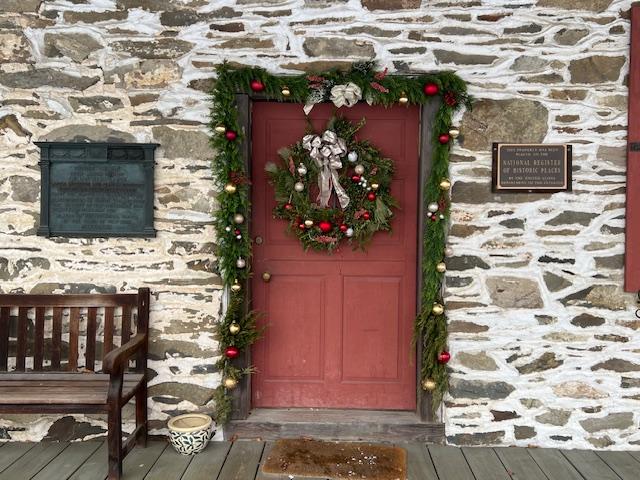
The house adorned with wreaths and garland on the holiday tour.
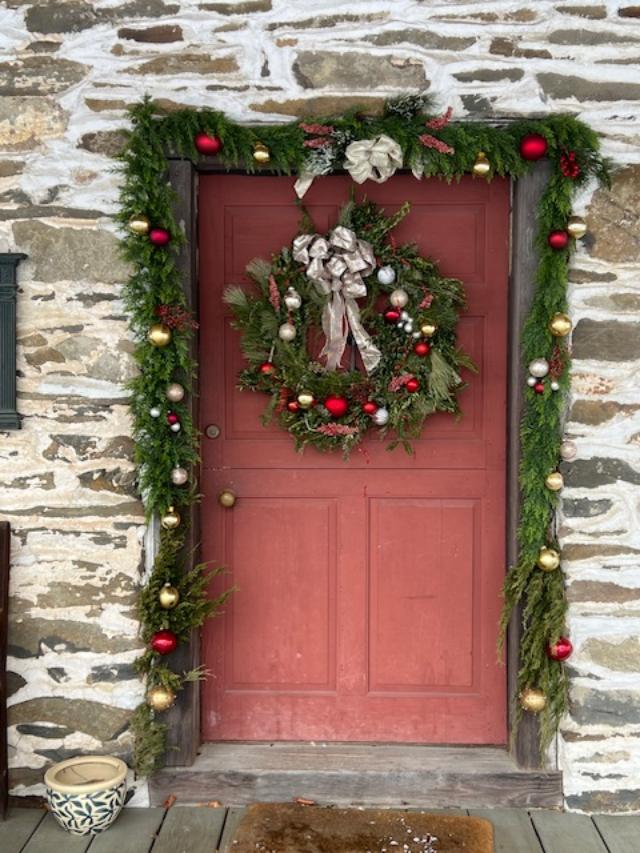
The welcoming entrance to the house during the holiday season.
The docent tours are very interesting and really give you a view of what life was like in the house for the families that lived here. They only take place on the second Saturday of the month so you need to plan ahead.
The entrance to Mesier Park where the Homestead is located
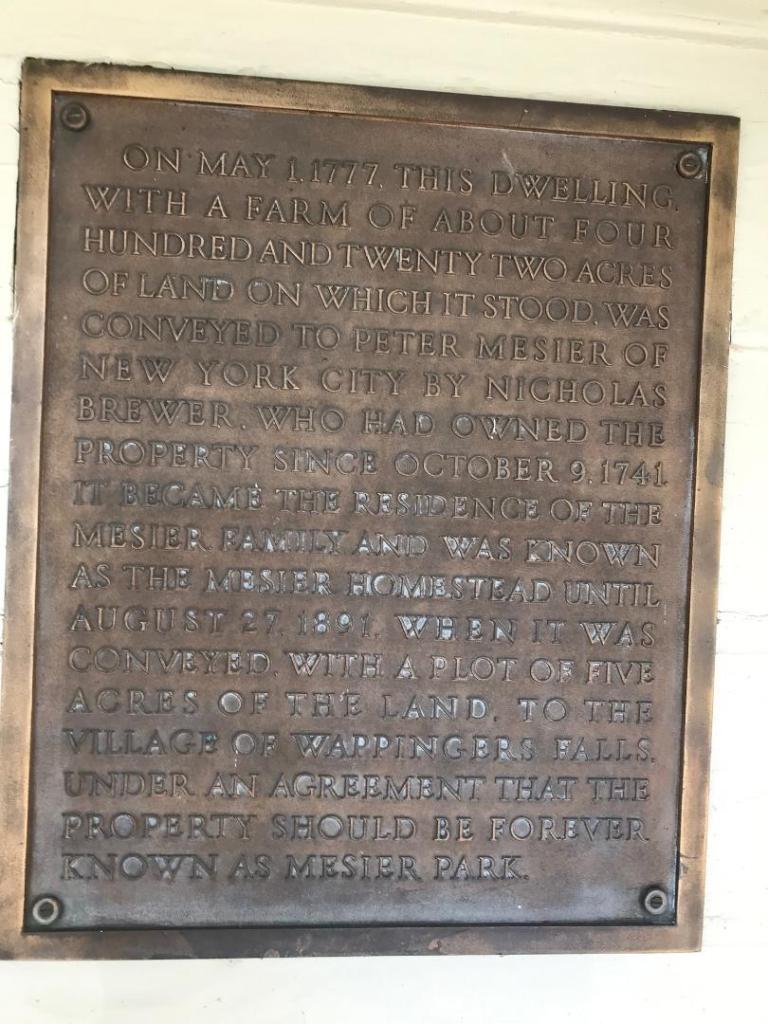
The plaque outside the home
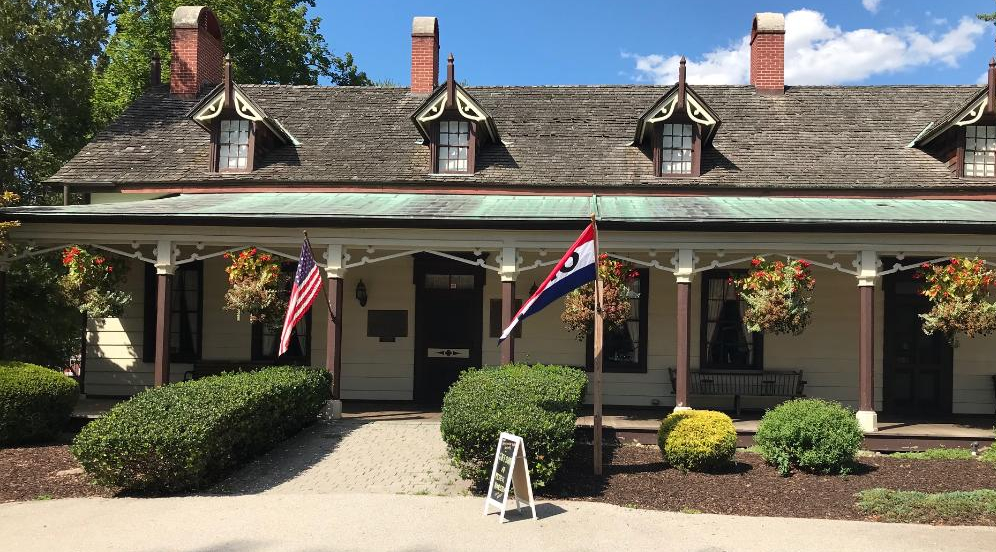
I visited the Mesier Homestead recently and toured the home with a local docent. Home to four generations of the Mesier family, the house has been added onto since it was built in the mid-1700’s. The rooms are decorated with furnishings from the Victorian era and shows life as it may have been in the late 1880’s at the height of the Victorian era.
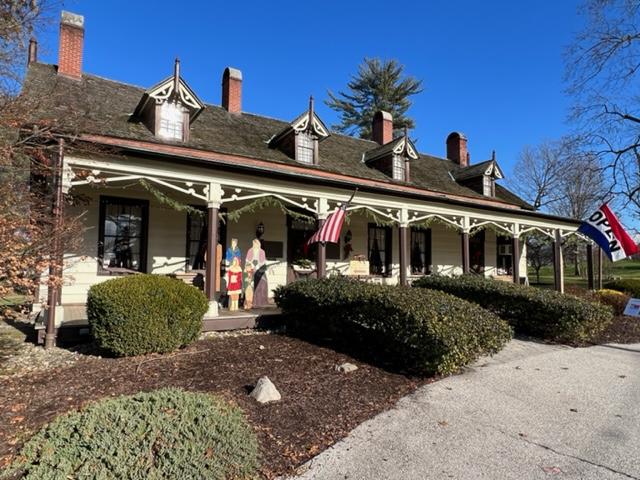
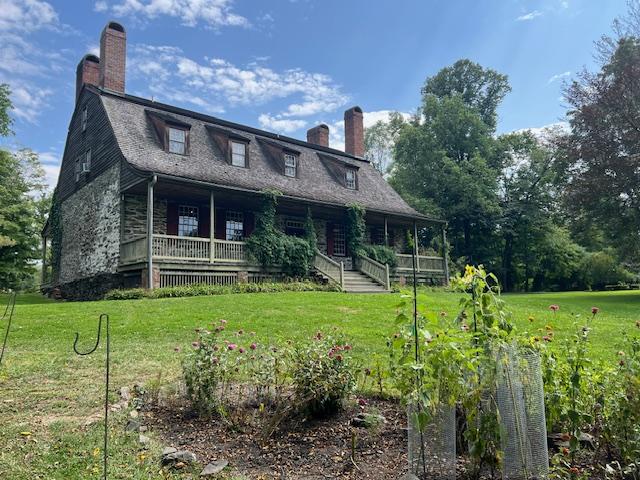
The Mesier Homestead in the summer months
The tour of the rooms shows how the home was added onto to meet the increased demands of a growing family and one of increasing affluence. The original home was added onto from the back to add service areas and work areas for the household.
The entrance to the Mesier Homestead
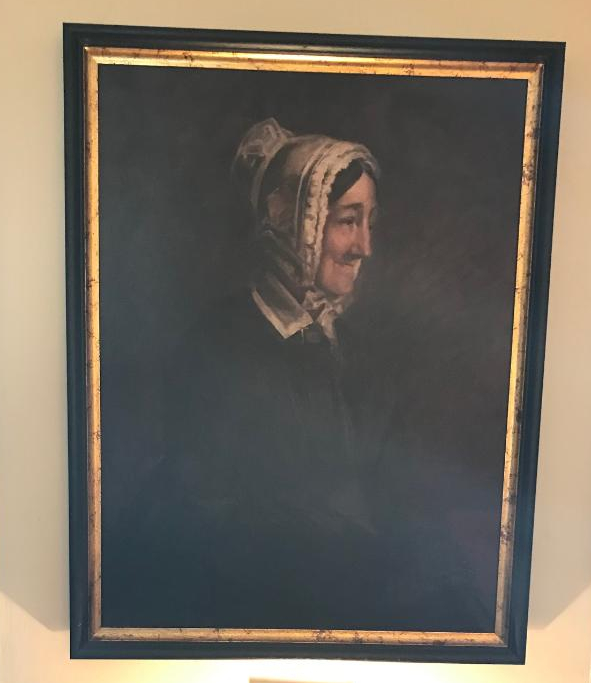
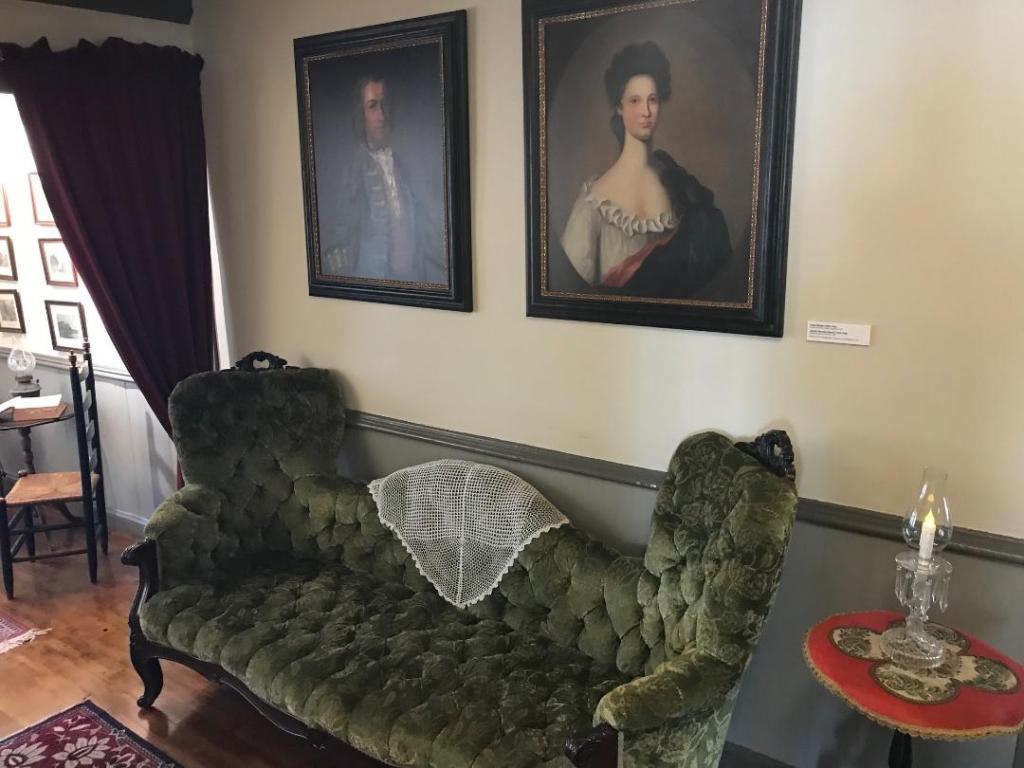
A portrait of Mrs. Mesier in the hallway
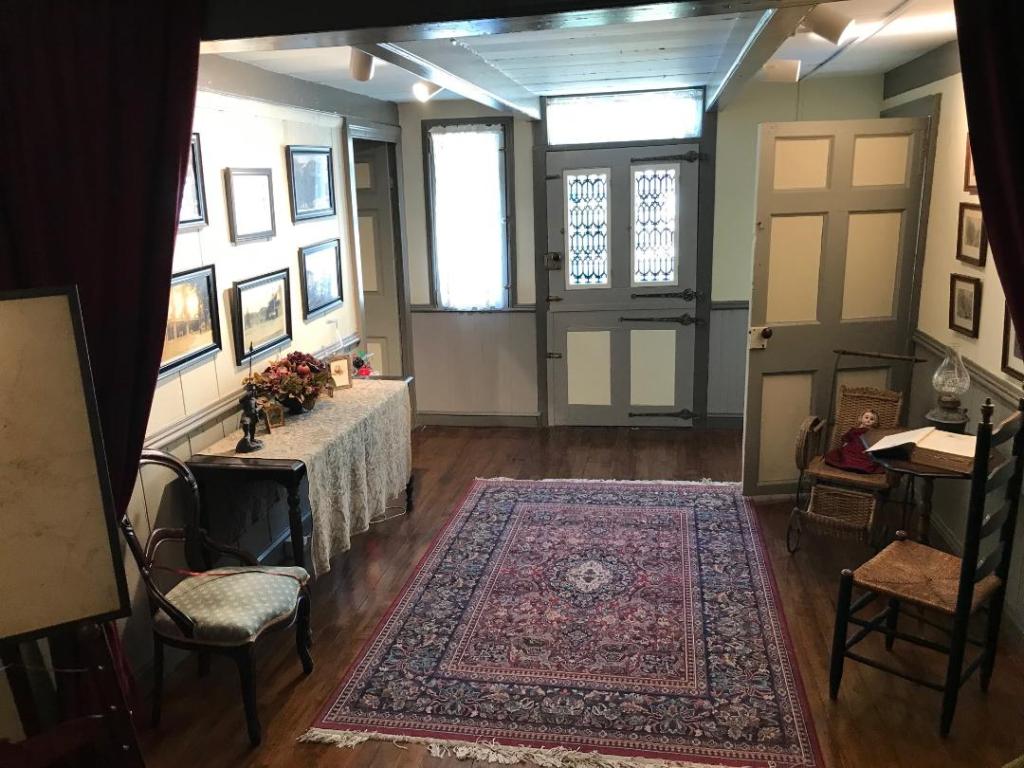
When you enter the foyer from the front door, there are reproductions of family portraits hallway that had served as the parlor of the original house. As the house expanded, this area became the formal entrance to the home. To the right of the foyer, there is the Living Room, where the Historical Society has uncovered one of the two fireplaces from the original home that once heated the rooms.
The reproductions of Mr. and Mrs. Mesier in the Living Room
During the late 1800’s, the son of the owner heightened the ceilings to get rid of the railroad ties that once decorated the ceiling. This gave the room a more modern look and showed the affluence of the family that could heat a home with heigh ceilings.
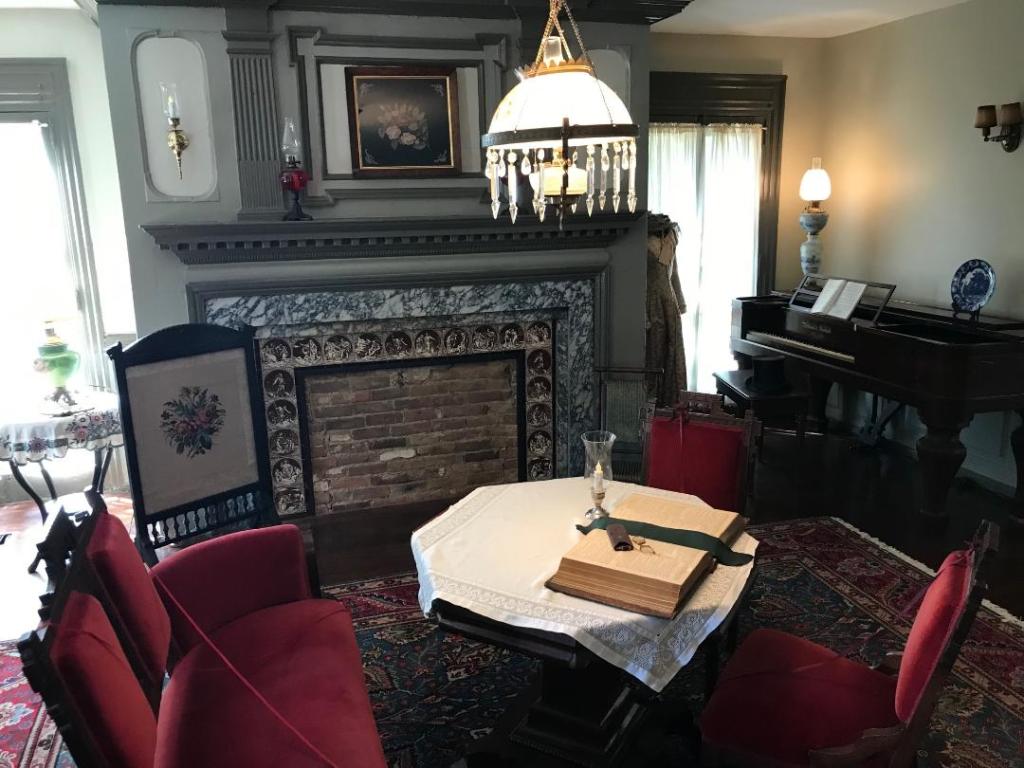
The Mesier Homestead Living Room
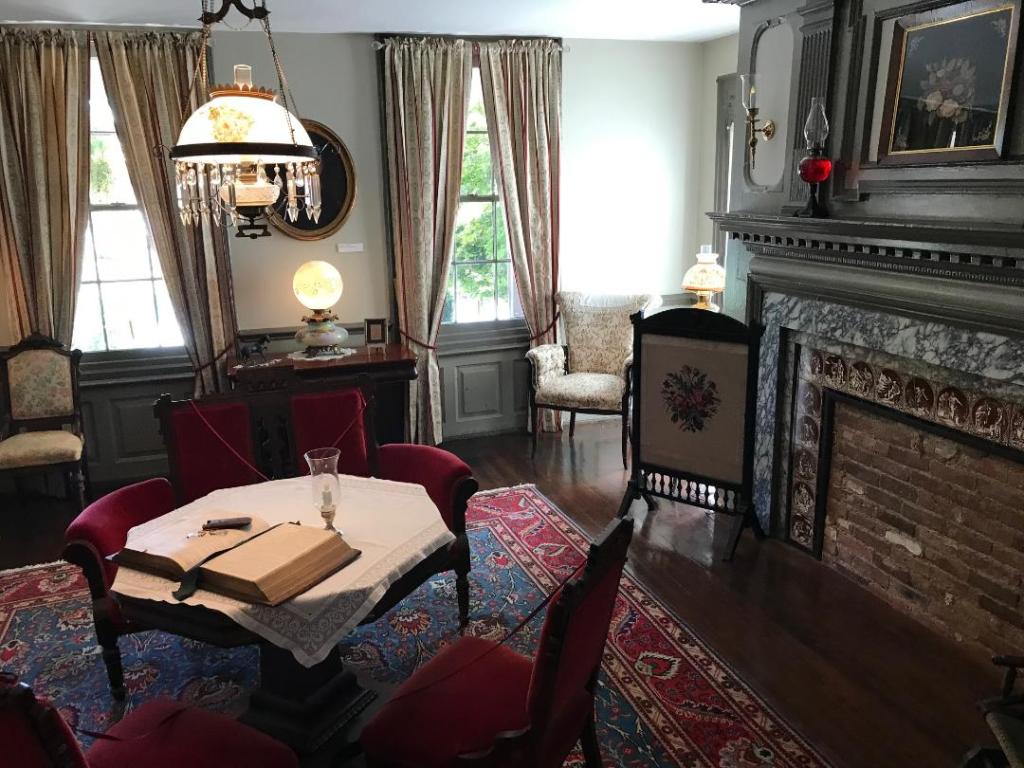
Another view of the Living Room
The room furnishings included family paintings, a then modern Victrola, ornated furniture and diagram of the family tree. The small steps led to a small office off the Living Room that was added onto with more family objects.
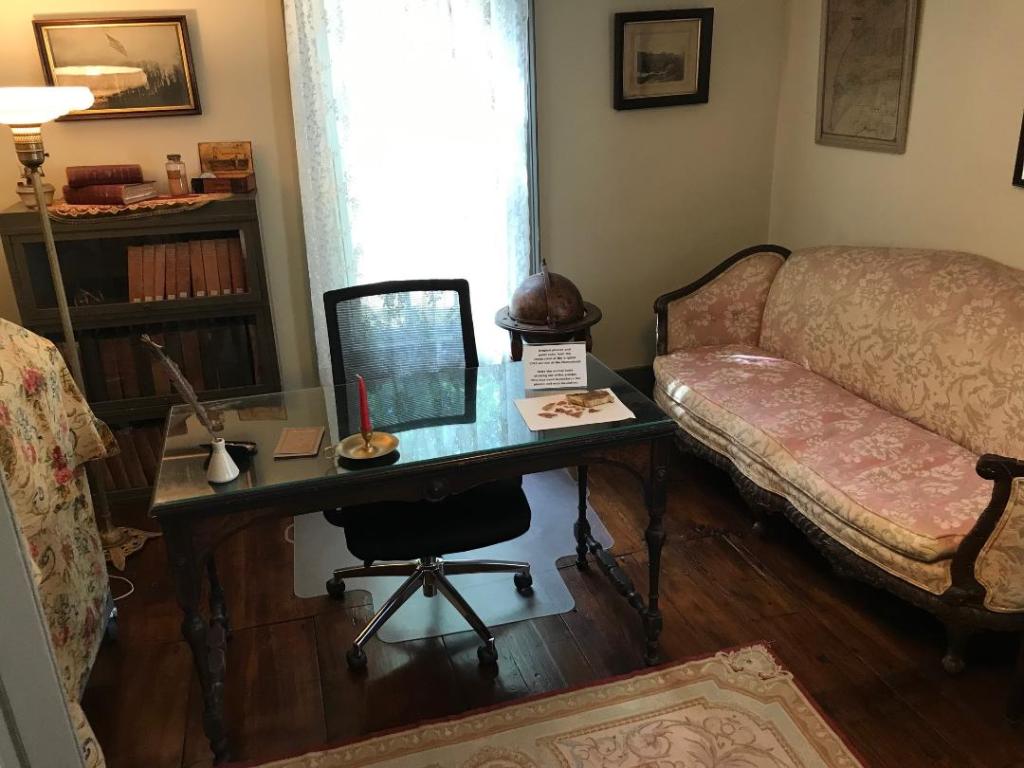
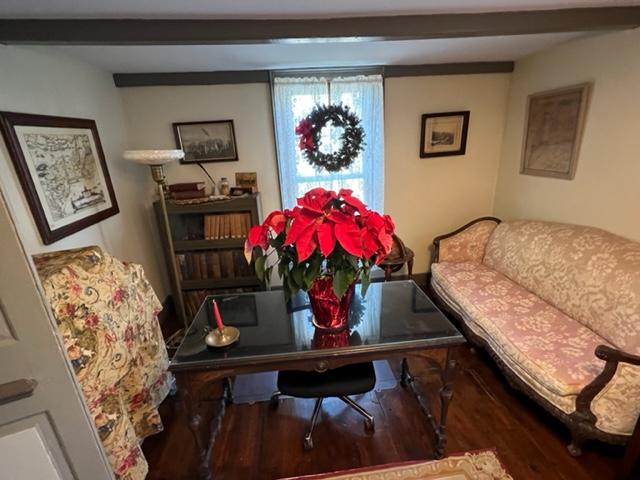
The Library and Office off the Living Room at the Mesier Homestead
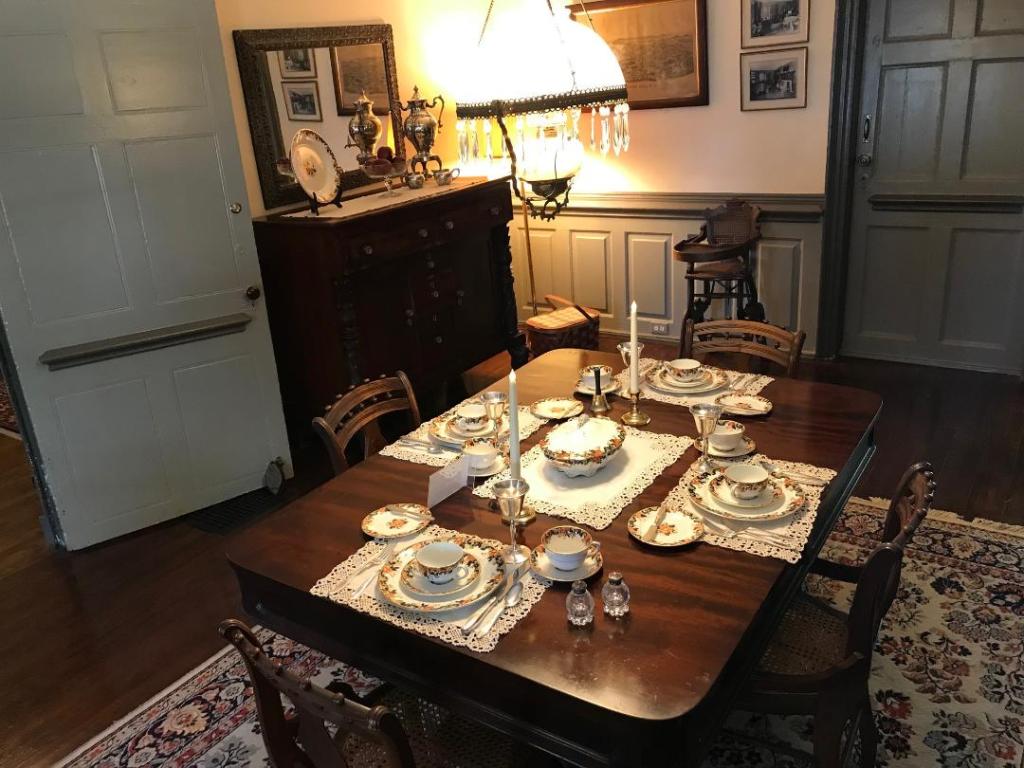
When you entered the room from the kitchen and the Butler’s Pantry where food was finished and readied to be served, a formally set Dining Room for dinner showed the family’s status in the community.
The Dining Room at the Mesier Homestead
The sideboard and the Dining Room table
An ornate china set from England enhanced the table with fine linens that the family would have owned. A newly opened fireplace that had once heated the dining room was shown by a heating unit that would have been used in the Victorian age. All sorts of fine decorative objects lined the tables and shelves.
The Dining Room table is set for a fine dinner at the Mesier home
By the amount of space available for living and entertaining with the separate rooms for use in the home it showed how times were changing with the affluence of that time. The family would show off their fine things to show their status in the community.
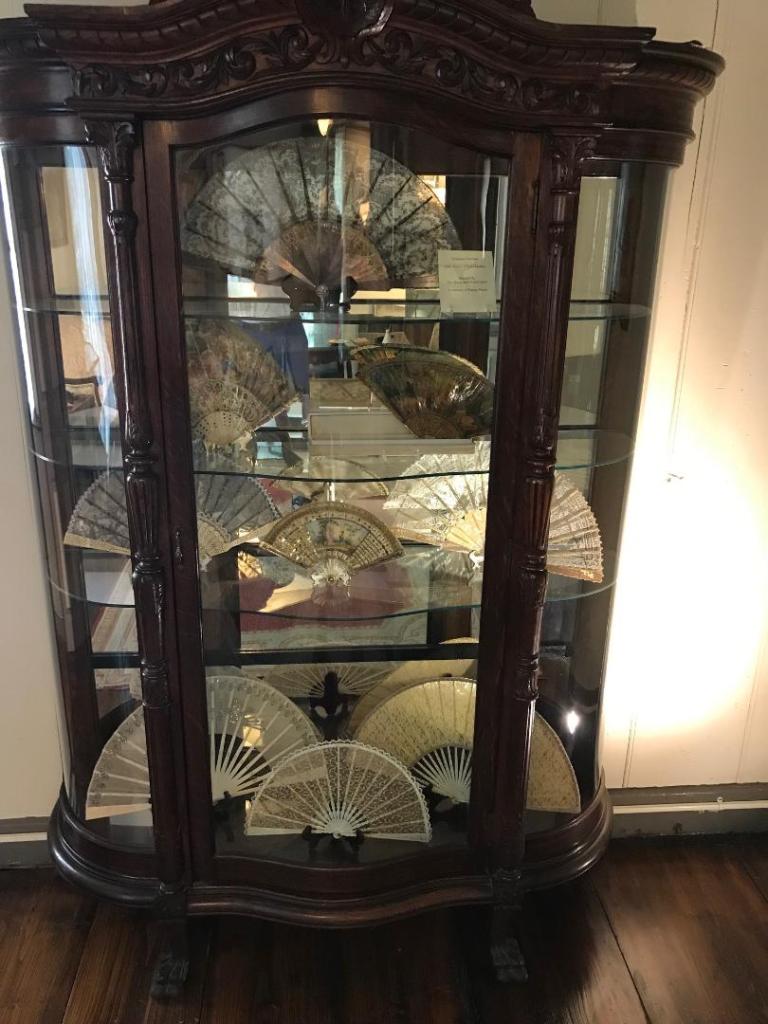
The Fan Collection from Victorian times
The second-floor tour is a view of the slave/then servants’ quarters and the two-family bedrooms. What I thought was interesting on the tour is how the family had to co-mingle in the bedrooms because of the number of children in the family and how mom and dad were not always alone. The rooms had to be expanded so that there was plenty of room for the growing family.
The Children’s bedroom on the second floor
The Adult’s bedroom on the second floor
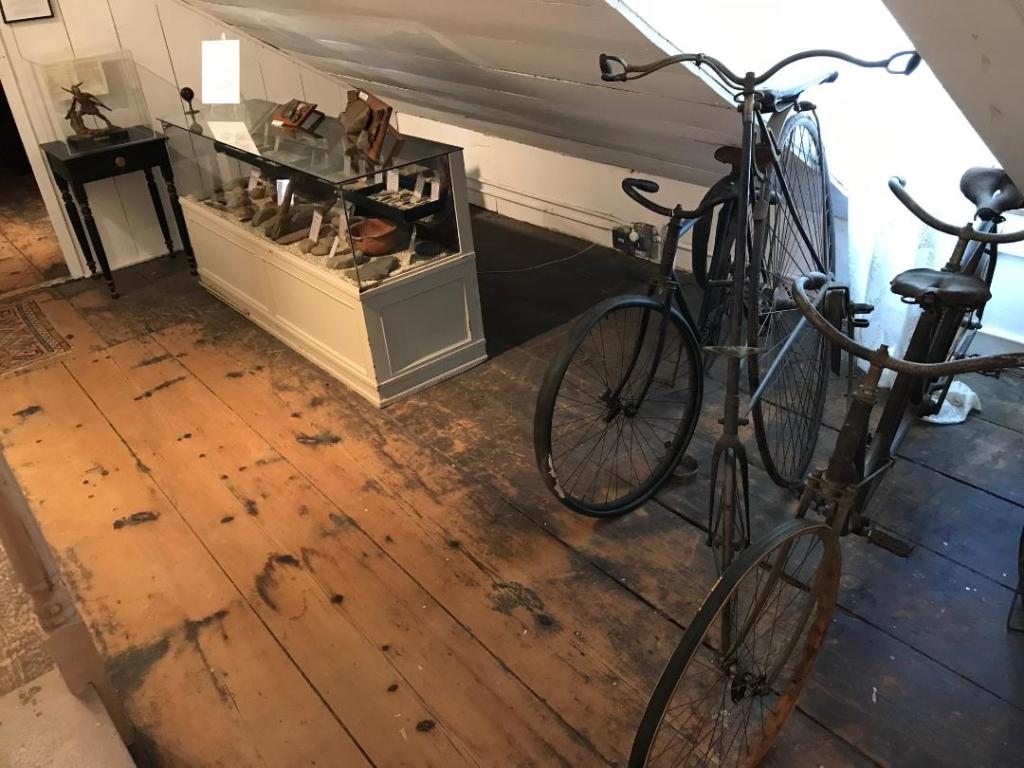
There were many family items in the house like clothing, children’s toys and playthings and items for recreation like bikes, ice skates and musical instruments of a time before TV, movies and radio. There were also items for spinning and making clothes.
Children’s toys during the Victorian Age reflected imagination and preparation for adulthood with blocks, dolls, kitchen items and other playthings to stimulate the mind.
Bicycles and Native American art on the second floor
During Victorian times, the way people shopped and carried themselves changed after the Civil War with the rise of department stores and the merchant class. Instead of making your clothes, you bought them at the store and there was protocol on how Victorians behaved and handled themselves in society regardless of class.
The care of grooming a Victorian woman had in her bedroom
Clothes in a Victorian bedroomClothing and accessories for the Victorian woman for dressing for the day
One of the rooms was also set up like a small school with original children’s desks and blackboards. There is even a Civil War era flag that was found in one of the local homes hanging in the room.
The tour guide also noted the drafts in the house before insulation was put in and the conditions of the time with weather effecting living conditions inside with drafts in the winter and heat in the summer through the roof plyboards. This was modern living at the time. The heat would radiate from the lower level of the house and the Dutch doors would let fresh air in the warmer months. These were modern in comparison to our modern homes. This was the interesting part of the home.
When I asked why the back rooms had not been renovated like the front of the house, our tour guide explained that the Meiser’s were a very devout family and even though they were affluent for the times, they were restrained and not showy like you would see in places like the Vanderbilt mansion. They would not have entertained like that on a grand scale. It was an interesting perspective that those things did not mean that much to these older families.
The original section of the homestead from 1742 is currently being renovated. This is the original hearth and oven of the kitchen.
The tour takes about an hour and is a fascinating step back in history of the way these families lived.
Recently the house was decorated for the Christmas holidays with garland, holly and fragrant oranges that once masked the household smells. They also gave the house a festive fragrance. These popular tours last through the holiday season.
Please check their website for a list of their activities.
The History of the Mesier Homestead:
The Mesier Homestead and surrounding property was sold to the Village of Wappinger’s Falls in 1891 with the understanding that it forever be known as Mesier Homestead and Mesier Park. The Wappinger’s Historical Society acquired full custodianship of the Homestead in 2007 and through ongoing fundraising efforts has been able to restore the Homestead to its present appearance.
The Mesier Homestead at Christmastime:
Christmas time at the Mesier Homestead is a festive and elegant affair of decorations and the home being set for a Christmas in the Revolutionary War era. The only difference is the the home has a Christmas tree which did not come into existence until the Victorian era.
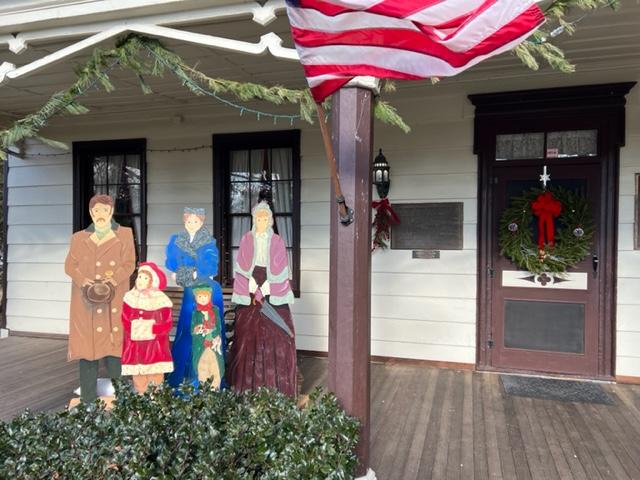
the outside of the home decorated with wreaths and garland
The Front Porch
The front door with wreaths and garland
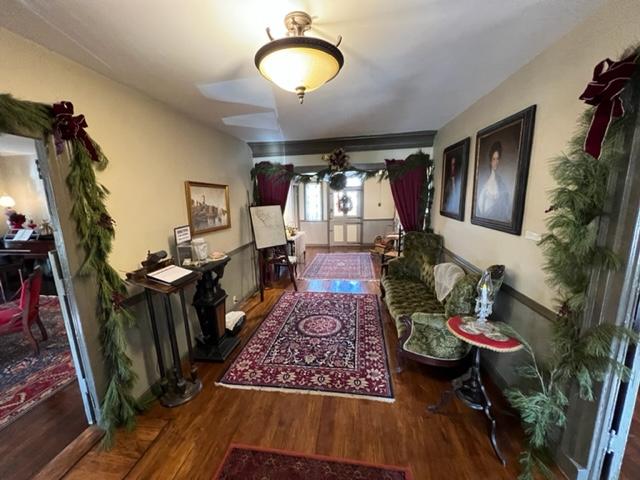
Entering the main hallway of the Mesier Home
The other end of the Hallway
Even the doors were festive with wreaths
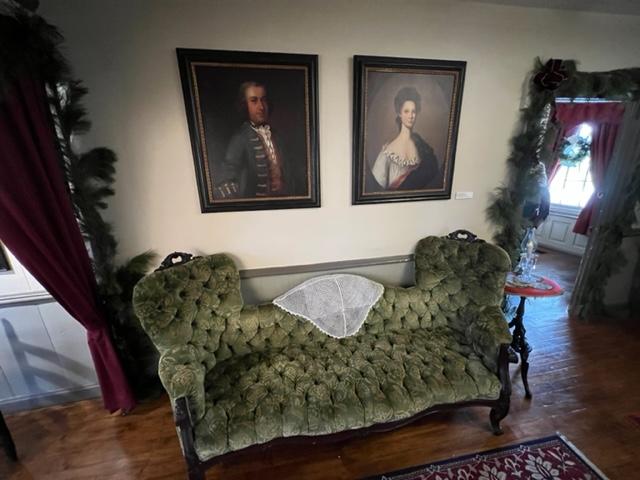
The family portraits in the hallway were adorned with garland
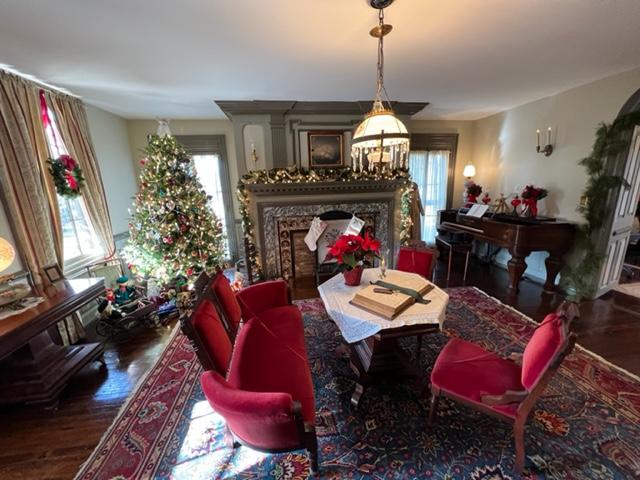
The Living Room was the centerpoint of the house on Christmas morning with children coming downstairs to see what Santa had left them in the later part of the 1890’s into the early 1900’s. The tree would have been the centerpiece of the room sparkling in Christmas morning and a place for the family to gather for the day. Nothing has changed in this tradition except electronics.
The Living Room was decorated for both a Victorian and Revolutionary Christmas
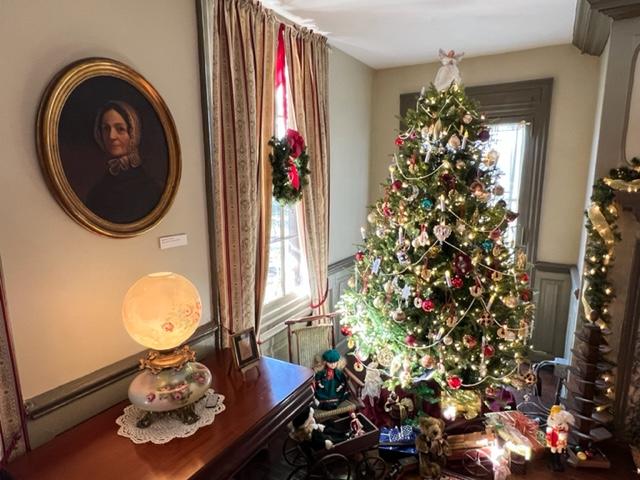
The Victorian Christmas tree was lit brightly for the holidays and added a festive touch to the room
The rest of the Living Room was set with flowers and garland
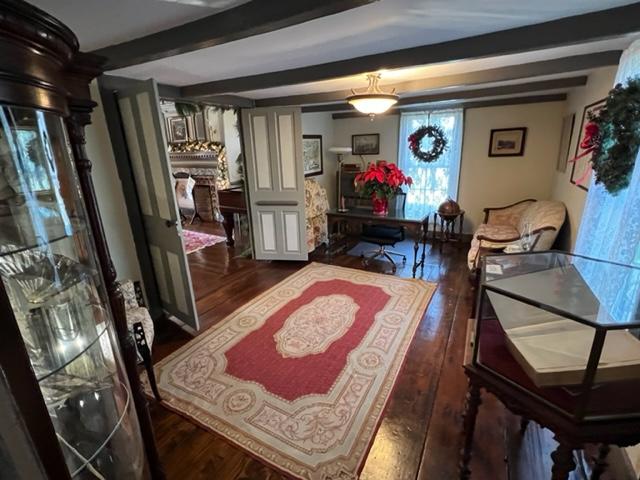
The Library was set with flowers and wreaths and made for a very welcoming environment. This would have been a quiet place on Christmas morning for the family with festivities all through the house.
The Library was simple decorated and elegant
The comfortable Library
Even so, the house was beautifully set with garland all over the mantels and doorways and the Dining Room was set for a formal Christmas lunch which would have been eaten after church. The concept of gift giving on the holidays also did not come about until the Victorian era as well. Still Christmas lunch had been part of the holiday tradition for years.
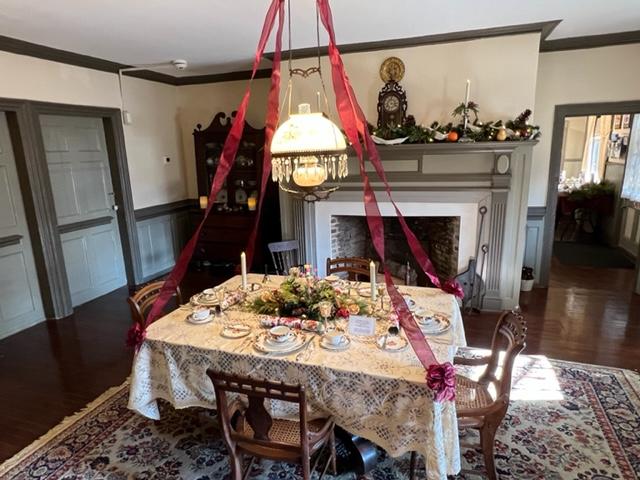
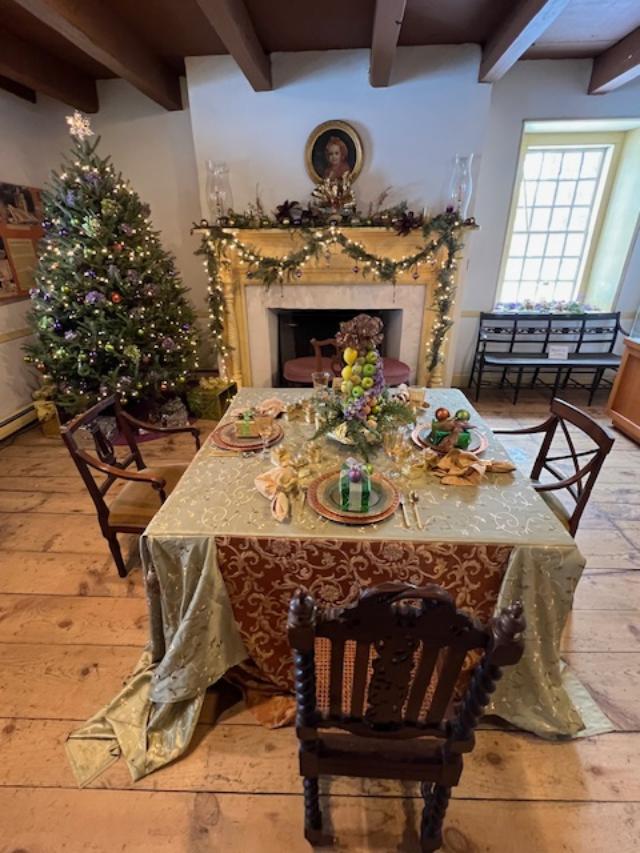
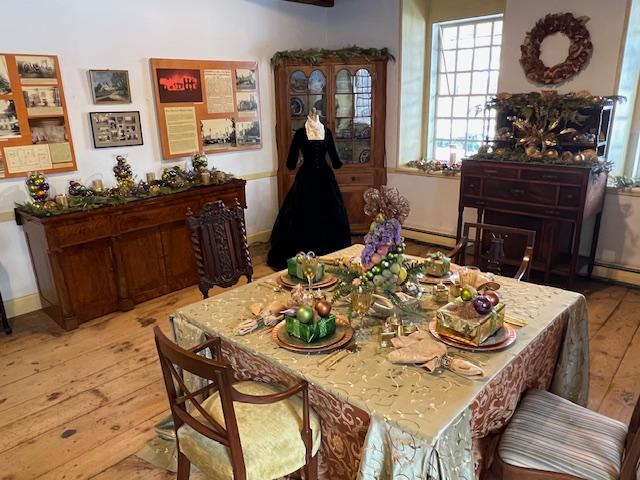
The Dining Room was set for an elegant Victorian Christmas lunch
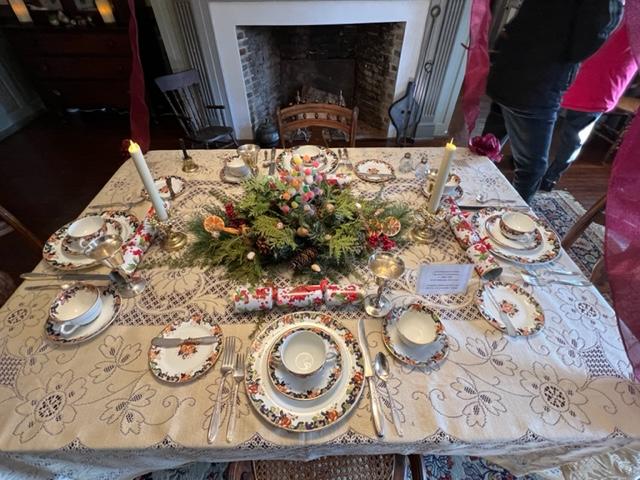
Victorian china adorns the festive Christmas dinner table
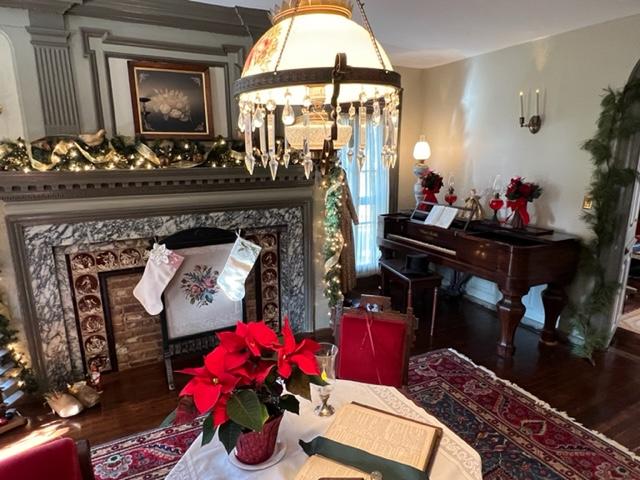
The mantel in the Dining Room was adorned with garland and oranges which gave the room a wonderful fragrance of pine and citrus
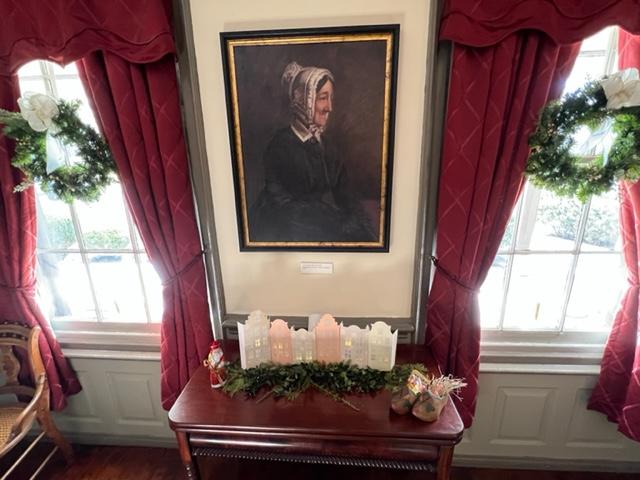
The family portrait in the Dining Room got special attention
Mesier Homestead decorated for the Christmas holiday season
The Wappinger’s Falls Christmas tree is just outside the house
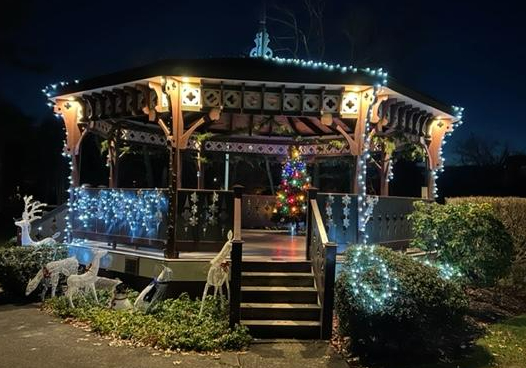
The bandstand outside the house was decorated to the hilt.
The History of the house:
The house itself is part of the ‘Rombout Patent’ of land that had been bought by the Dutch from the local Indian tribes by three prominent Dutch families. This section of the property was bought by Nicholas and Adolphus Brewer and contained 750 acres of land around the Falls area, and they built the first stone house in the village near present Mill Street. In 1742, the Brewers built a mill on the east side of Wappinger Creek.
Nicholas Brewer built the Mesier Homestead in 1741, which he sold in 1777 to Matthew Van Benschoten who in turn sold it to Peter Mesier, a merchant from New York City. In May 1777, soldiers and local residents attacked Peter Meiser’s house in Wappinger’s Falls, disputing the price of tea for sale in a small store inside the home. Mesier was a merchant from New York City and a Loyalist. The angry mob struck Mesier, beat his slaves and drank wine stored in the cellar. They also took the tea and left a small amount of money behind. The house was in the possession of the family for the next four generations (Wiki).
The organization’s goal for 2020 and beyond is to restore the original 1741 building so it can be a showcase of our Colonial history. Your membership, gifts and in-kind donations will help us maintain and restore this jewel of Wappinger’s Falls.
The Wappingers Historical Society Native American Collection:
The Wappingers Historical Society is the curator of an extensive collection of Native American artifacts, many of which stem from the Stoneco/Clinton Point and Bowdoin Park area in the vicinity of the Town of Wappinger. This collection of artifacts was once considered to be the largest private collection in New York State.
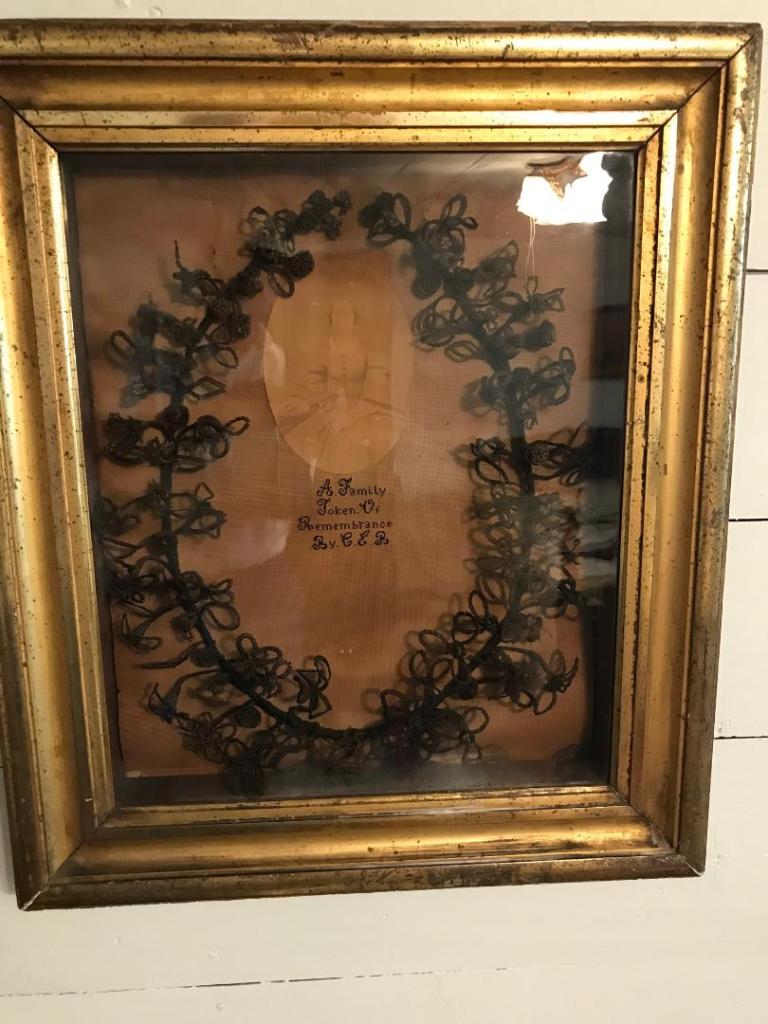
Victorian Hair art of the dead
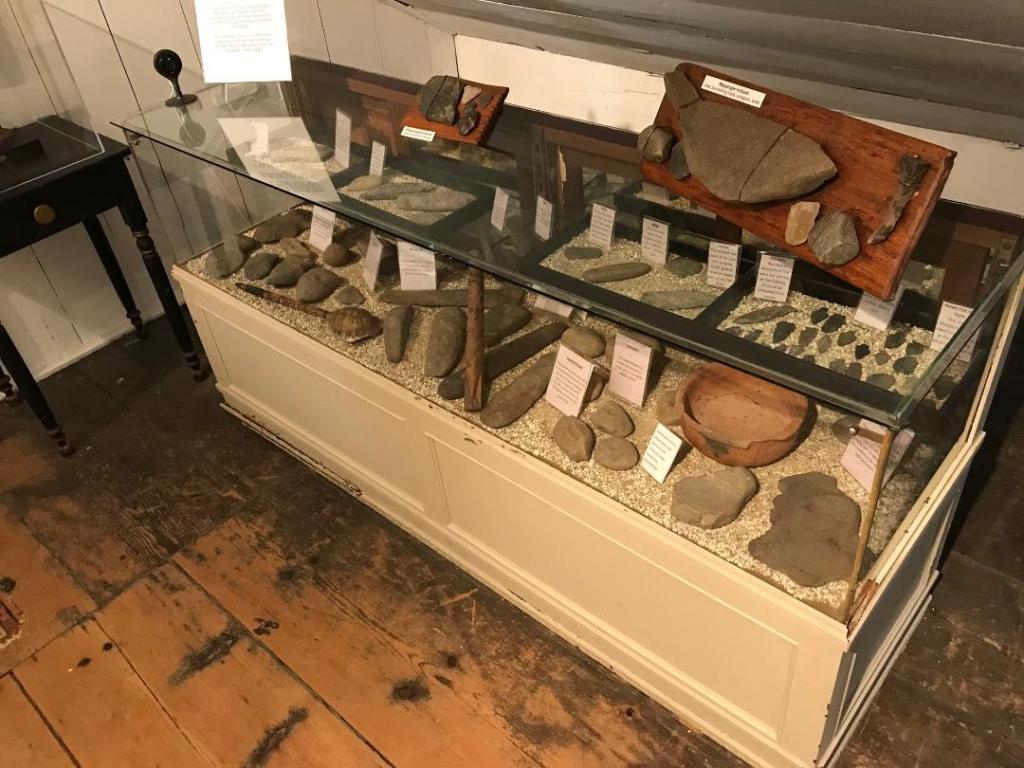
It consists of over 2000 objects, many of which are projectile points (arrowheads and spear points). Some of these have been found to date back 8,500 years. Also included are tools such as scrapers, knives, axes and hatchets. A small portion of approximately 100 pieces of the collection is on display at the Mesier Homestead and can be seen as part of our guided tours.
The Native American collection is extensive at the Meiser House
The Mission of the Wappinger’s Falls Historical Society:
The Wappinger’s Historical is dedicated to preserving and promoting the history of the Town of Wappinger, the Village of Wappinger’s Falls and neighboring communities and to maintain the custodianship of the Mesier Homestead.
The beauty of Downtown Wappinger’s Falls, NY
When you are a member of the Wappinger’s Historical Society, you help:
Storage area of the house
*Preserve and expand our archives, collections and library to actively chronicle the life of our hamlets, village and town for future generations.
*Develop and implement programs and exhibits so that people of all ages can better understand their connection to history.
*Safeguard our architectural heritage of the 1741 Mesier Homestead.
(This information was taken from the Wappinger’s Falls pamphlet, and I give them full credit for it)
The Mesier Homestead in the summer months
Their wonderful gift shop that should not be missed
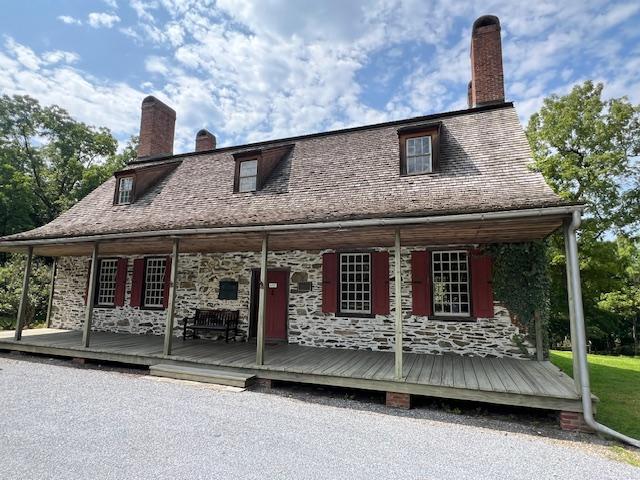
The outside of the Mount Gulian Homestead at 145 Sterling Street in the Summer of 2024
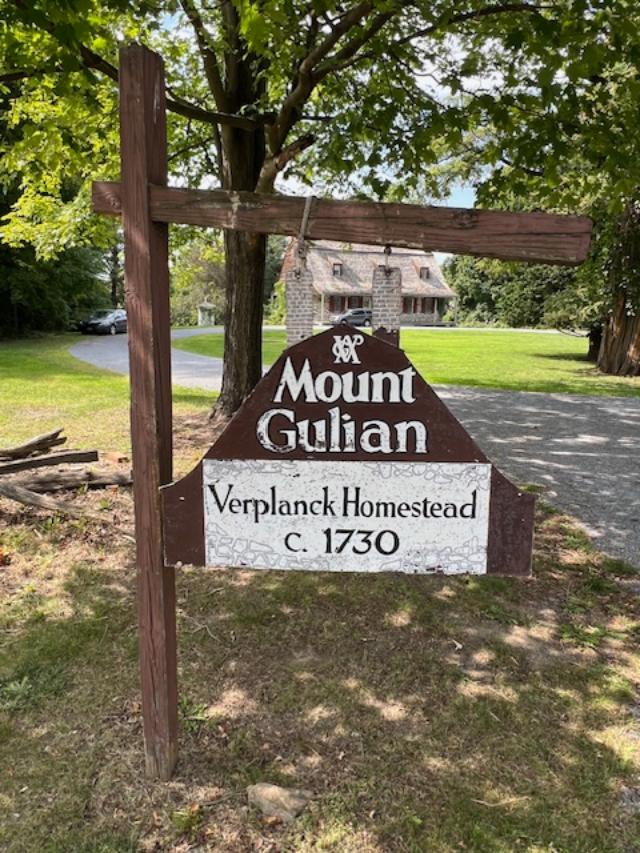
The sign that welcomes you
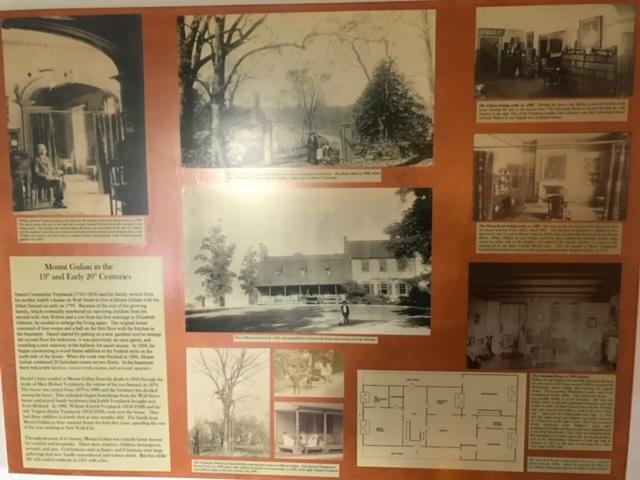
On my last trip to the Hudson River Valley to visit the great houses of the Hudson, I came across Mount Gulian, a Dutch manor that I never heard of in all my visits. This smaller Dutch manor house is actually a reconstruction of an 18th century home that burned to the ground by arson in 1931. The original house had been built between 1730 and 1740 and added onto over the next two centuries.
Christmas Time at Mount Gulian in the three weekends in December:
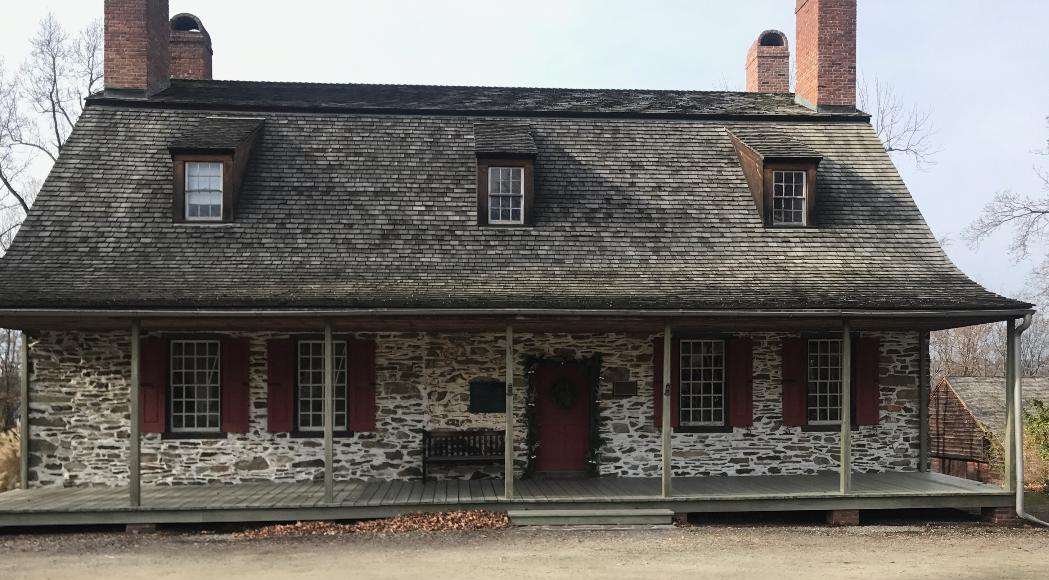
Mount Gulian at Christmas in December of 2021
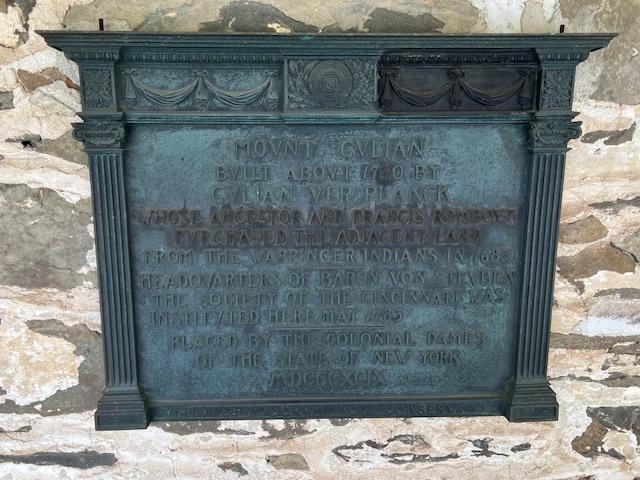
The historic plaque in front of the house
The house officially had closed for the season at the end of October and was decorated for the holidays for the weekend between December 14-16th to represent the Dutch celebrations. There had been a Children’s tea the Monday before the New Year, so the house was closing down for the season. I came back to revisit the site in December of 2024 and took another full tour of the house so I could see it fully decorated before all the seasonal events started through December.
The beautiful garland and lights adorn the house at Christmas time
The front door is very welcoming for the holidays
The front door was beautifully decorated for the Christmas season
The house as you enter through the front door
The house is very unique. You would have never known it was a reconstruction. The house really looked its age. The funny part of the house is that is at the very back of an old estate that had been developed with townhouses from the main road to almost the border of the house’s property, so it was strange to drive through to find the house. Once in the semicircular driveway, you plunge back into time.
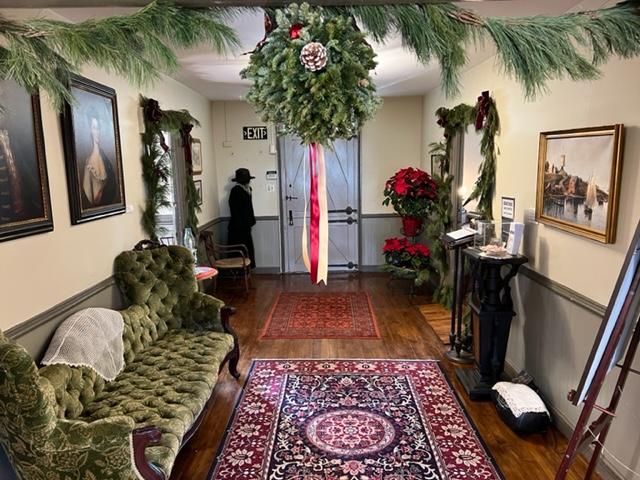
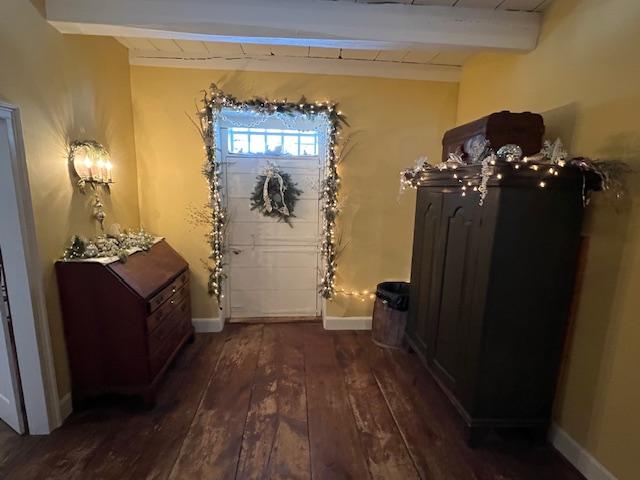
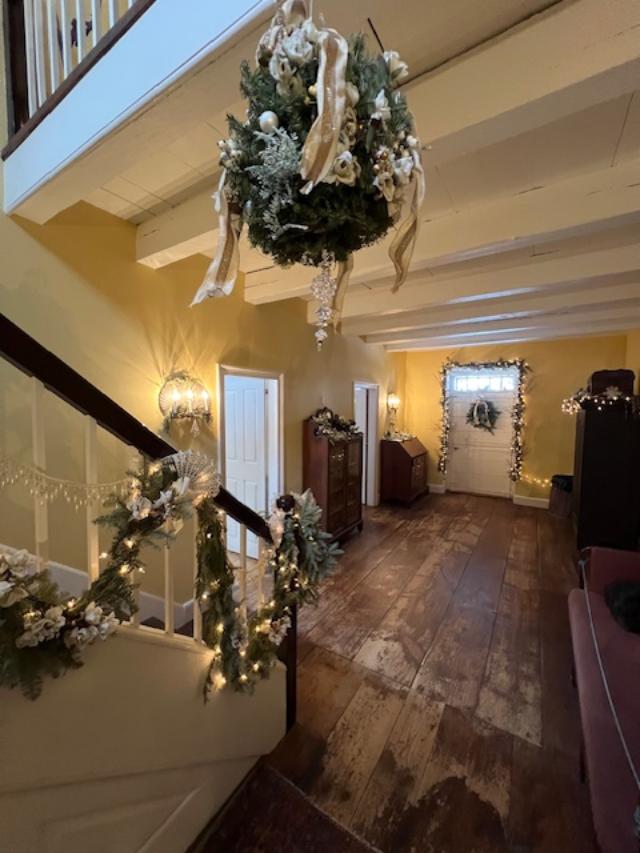
The Hallway decorated for Christmas
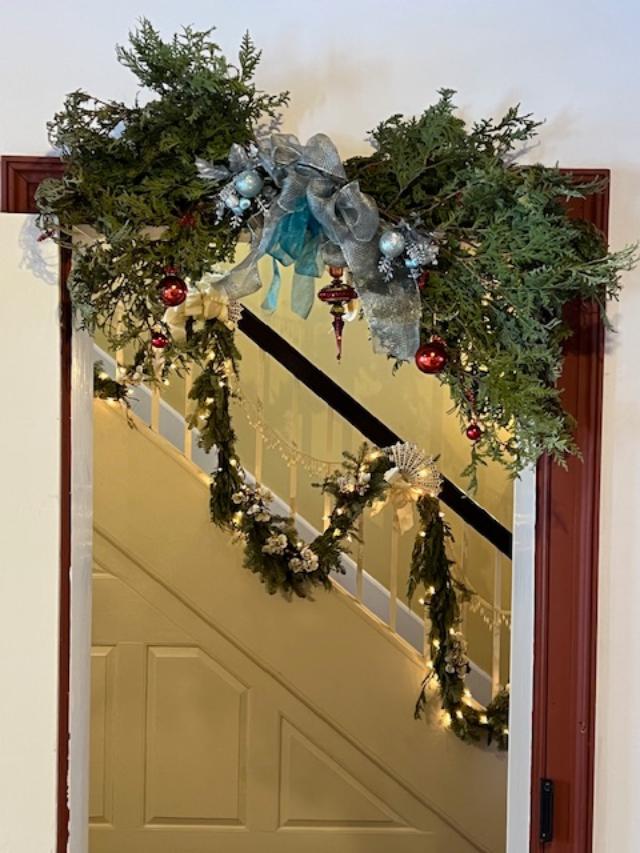
The Hallway decorations in more detail
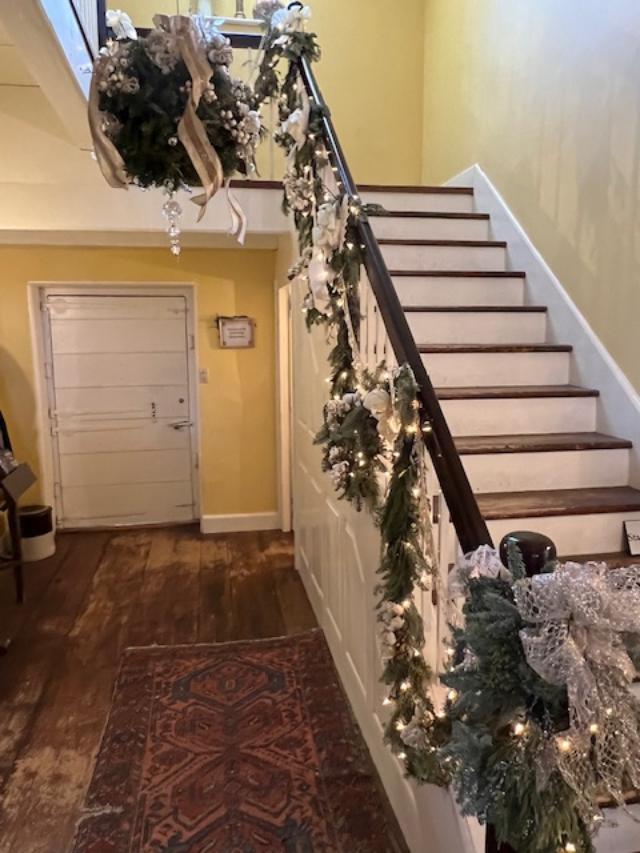
The Staircase to the Second Floor (Closed) was beautifully decorated for the holidays
The large porch in the front of the house looks over what’s left of the lawn and the housing developments. Once inside you enter the foyer and long hallway with rooms on each side. Each room was or had been decorated for the holidays with garland, mistletoe, fruits and a Christmas tree in one room, a kind of mixture of old Dutch meets Victorian Christmas. Still the effects were nice and it was very festive.
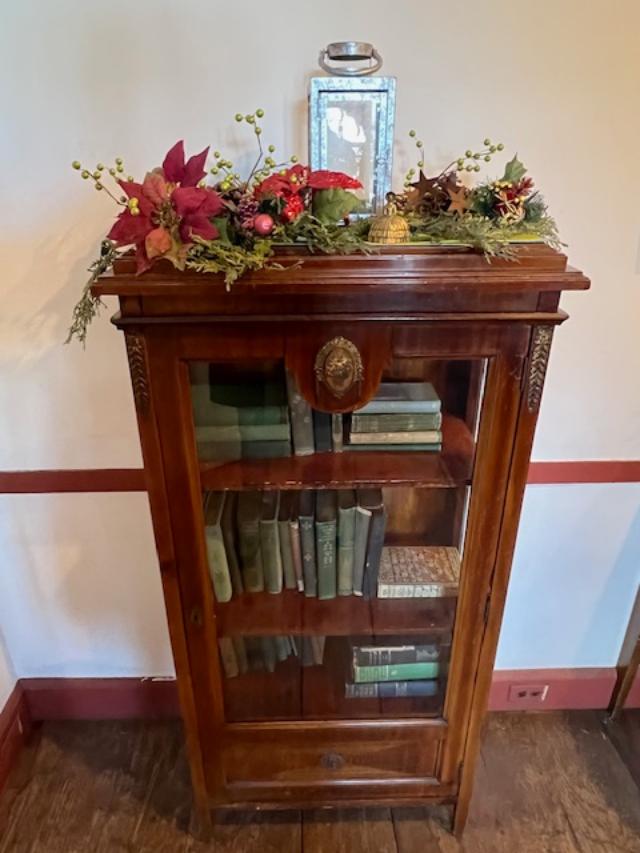
The furniture in the hallway decorated for Christmas in 2024
The furniture in the Hallway was nicely decorated for the holidays
What I enjoyed is that in each room, there were stories of the Verplanck family and the role that they played in the formation of the community and in the nation as well. In real life though, this much decorating would not have been done. This is a more elaborate look on how the Victorians would have decorated the house. The Dining Room would have been one of the most elaborate for entertaining during the holiday season for dining and entertaining.
Until the Victorian Age, things had been kept very simple. You would have decorated the house before Christmas Eve and then on Christmas Day, there would have been an afternoon church service and a nice lunch. Gift giving did not come into play until after the Civil War.
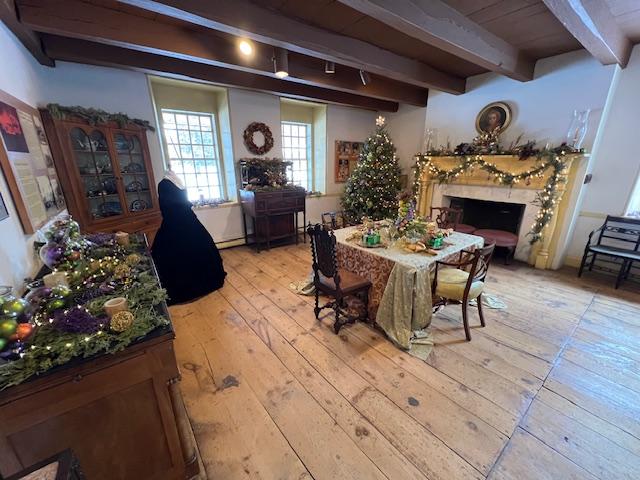
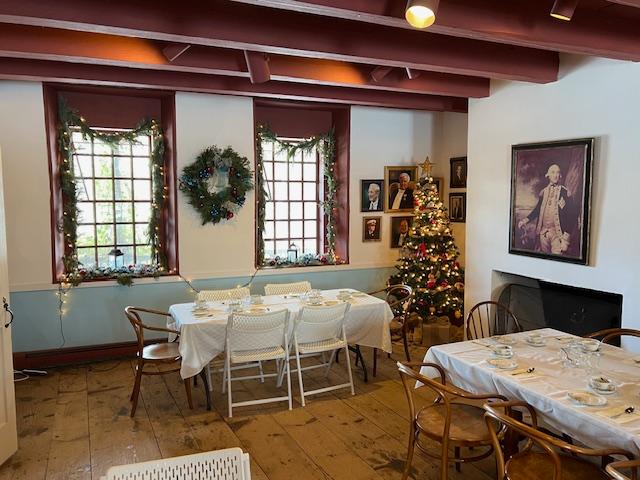
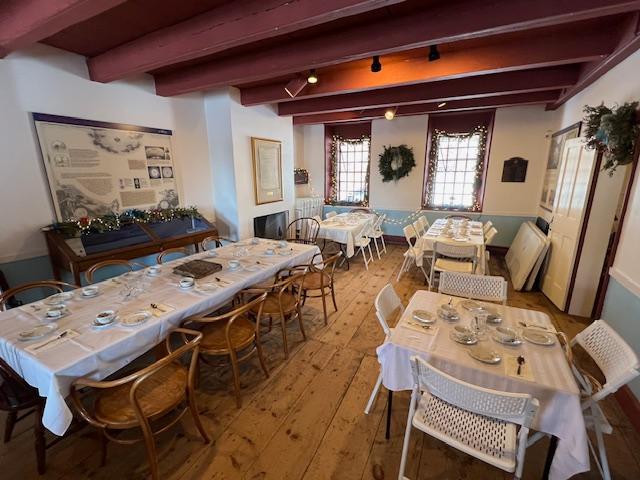
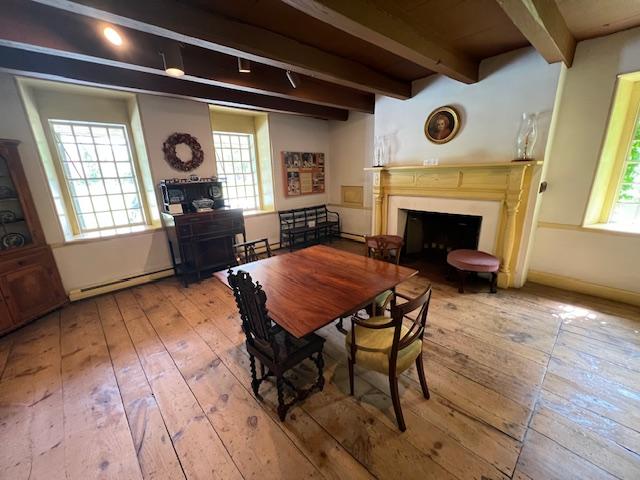
The Dining Room set for Christmas dinner in 2024
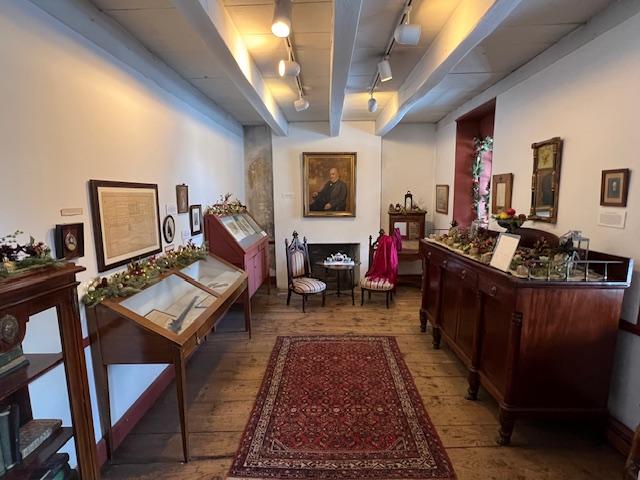
The full view of the Dining Room
The Dining Room Table and the fireplace mantle
The back part of the Dining Room
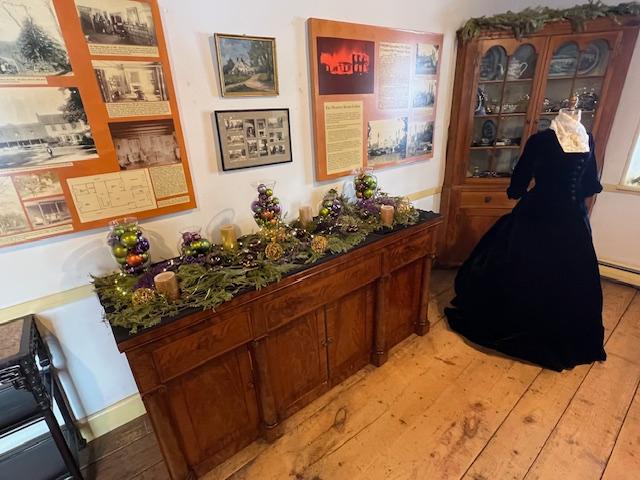
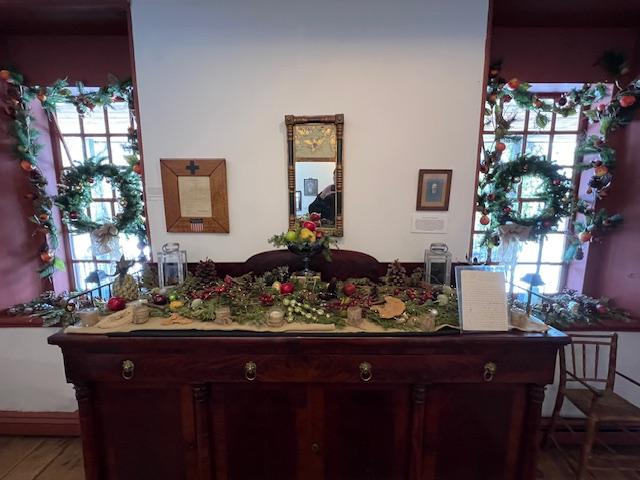
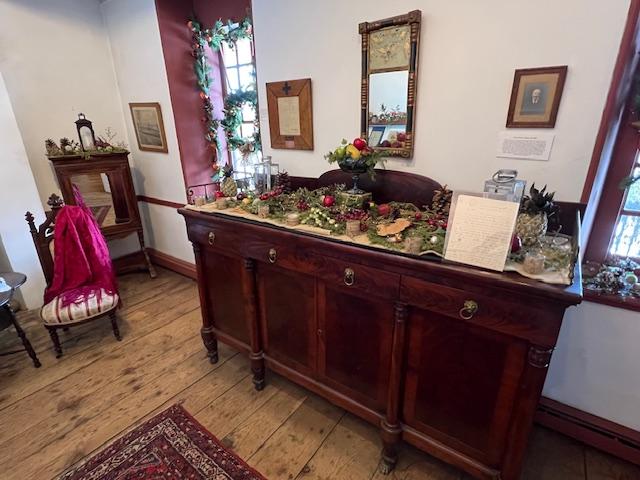
The Dining Room sideboard decorated for the holidays
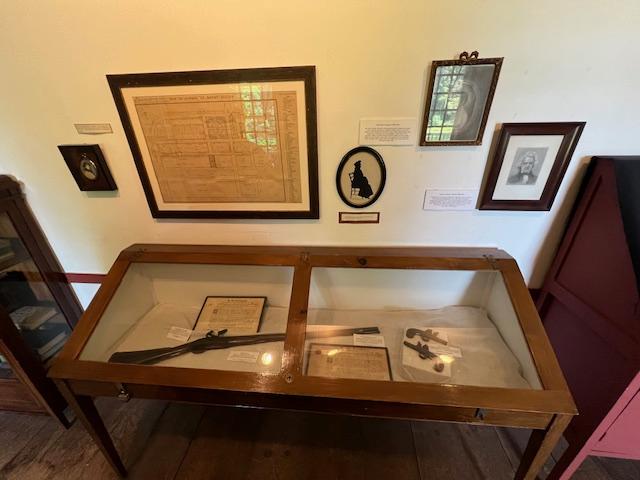
The Historic Documents in the Dining Room with a funeral dress (why this was here I was not too sure)
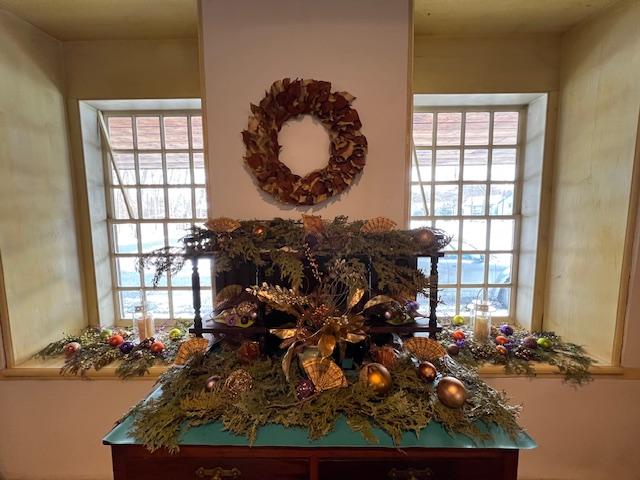
The elaborate decorations between the windows in the Dining Room
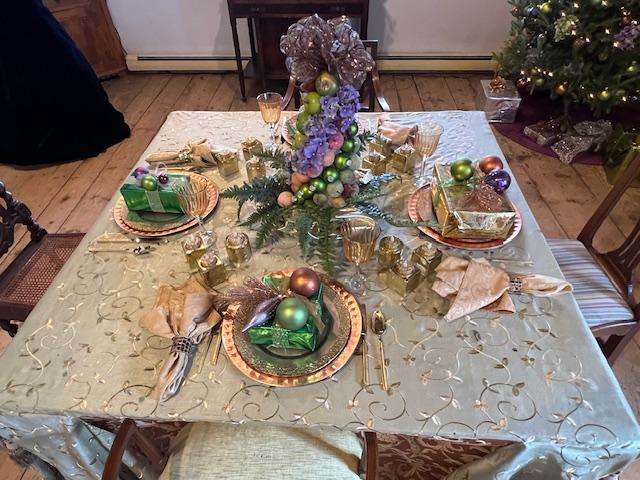
The detailed decorations on the Dining Room table ready for a wonderful Christmas dinner
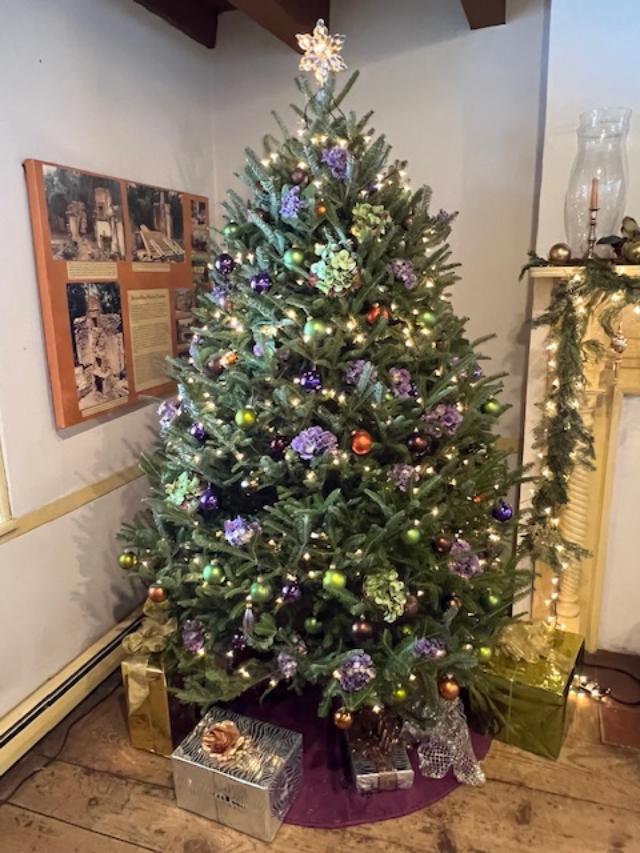
The beautiful fresh Christmas tree in the corner of the Dining Room in 2024
All of the rooms had artifacts that the family keeps donating the house as most of the original furnishings were destroyed in the 1931 fire. Still the furnishings are vintage to the time period. Here and there are stories of the house, the people that lived here and about the family in their daily lives. There were also stories of the Revolutionary War and its headquarters of Major General Friedrich Wilhelm von Steuben. There was also a display on the founding of the Society of the Cincinnati, a Veterans group.
The Order of Cincinnati at Mount Gulian
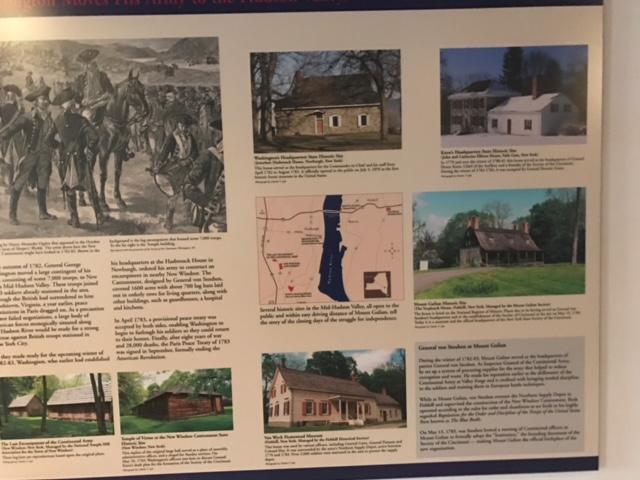
The history of Mount Gulian and the surrounding area
The history of Mount Gulian and the surrounding area
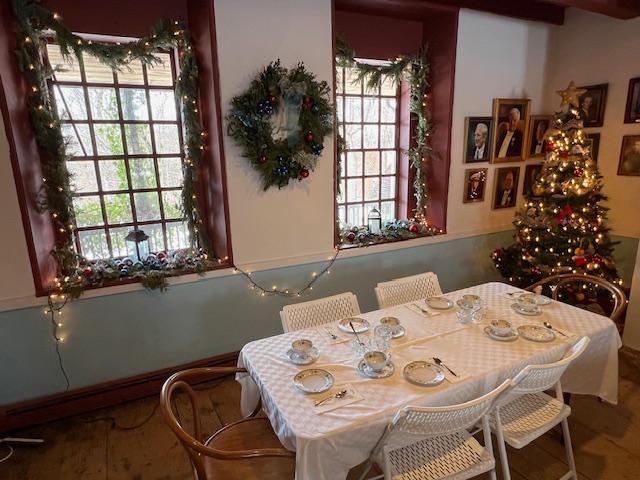
The main room decorated for the Children’s Tea in the room of the Order of Cincinatti information
The Main Room set up for the tea
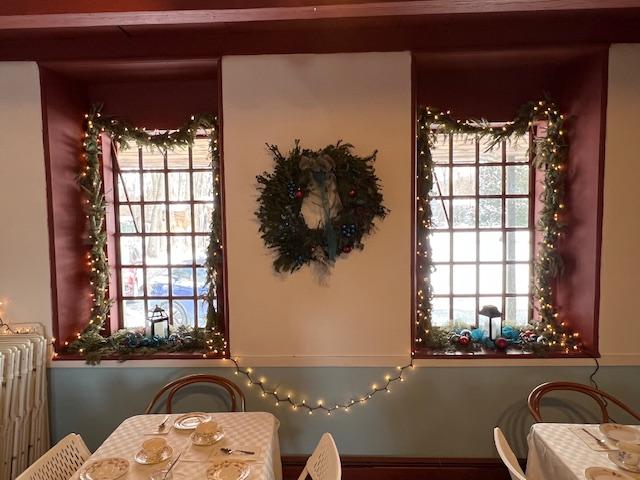
The back part of the room with its elaborate details
The beautiful window decorations in the main room
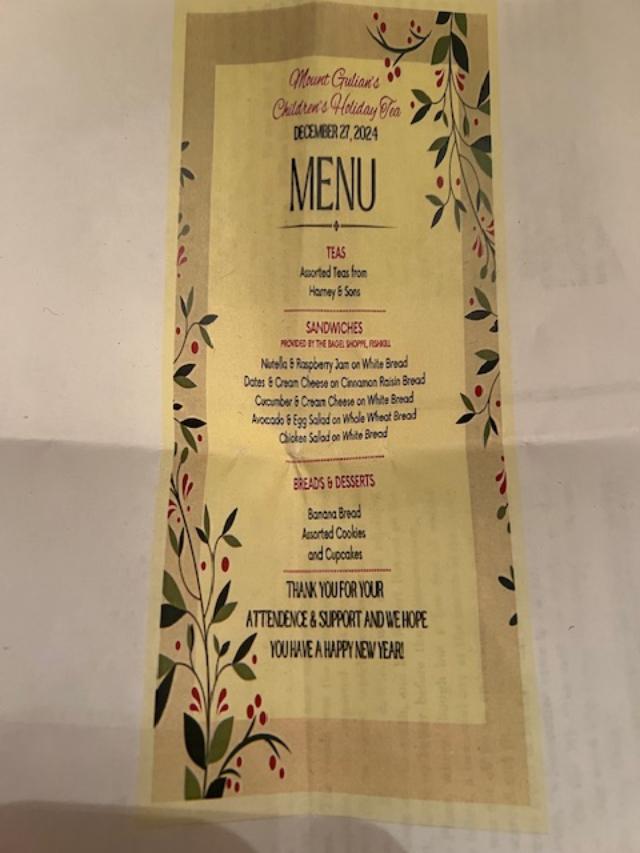
The Children’s Christmas Tea menu at Mount Gulian for the late December event
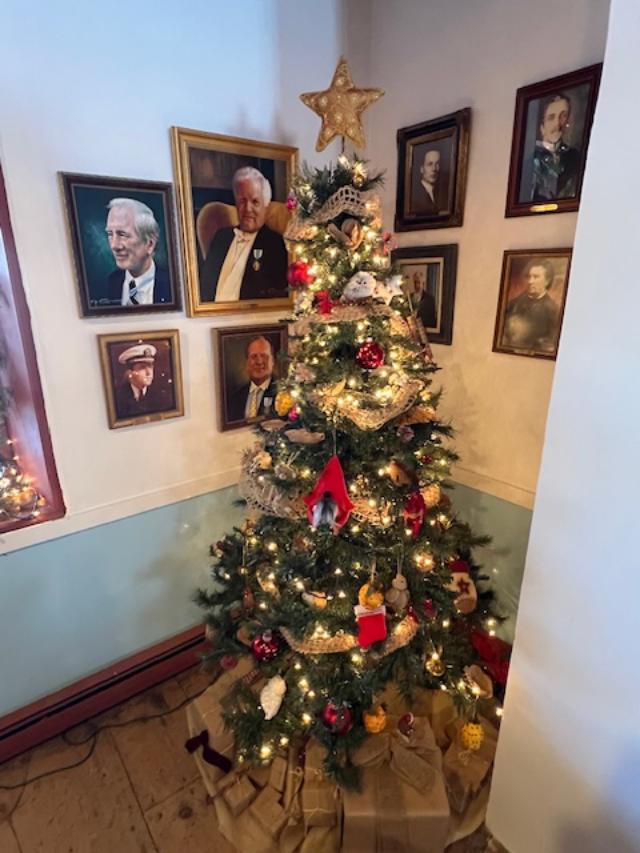
The Christmas tree in the corner of the room by all the portraits and photos of the members
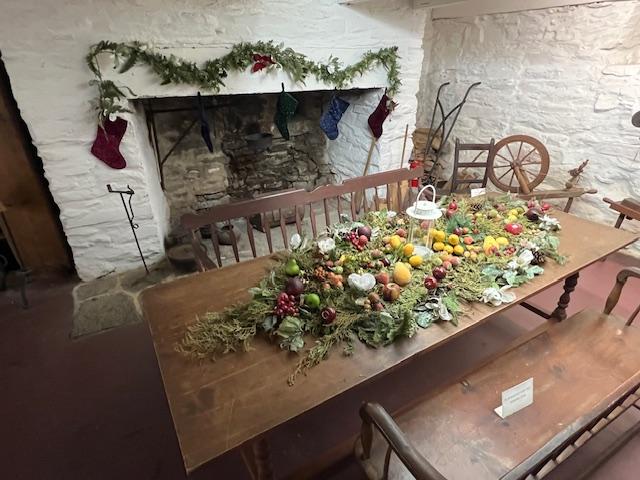
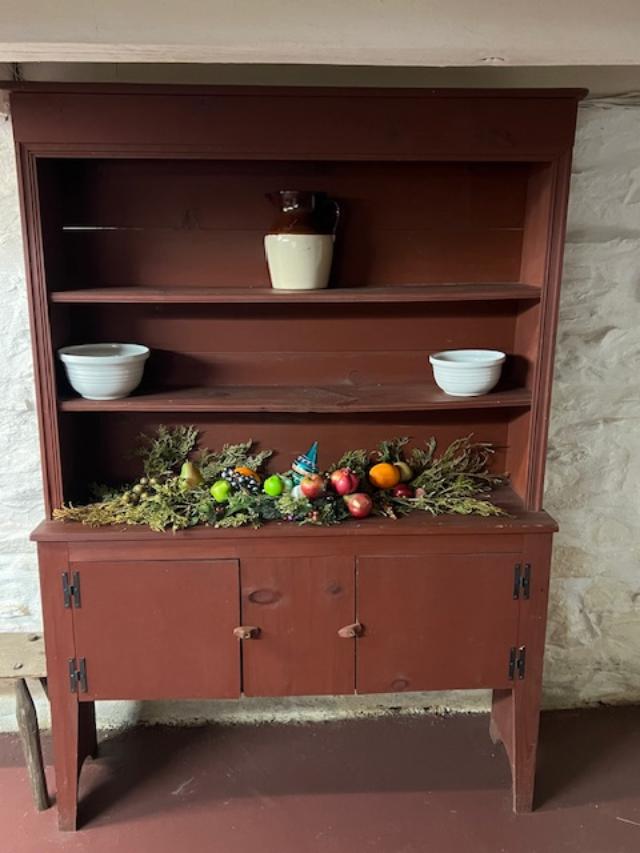
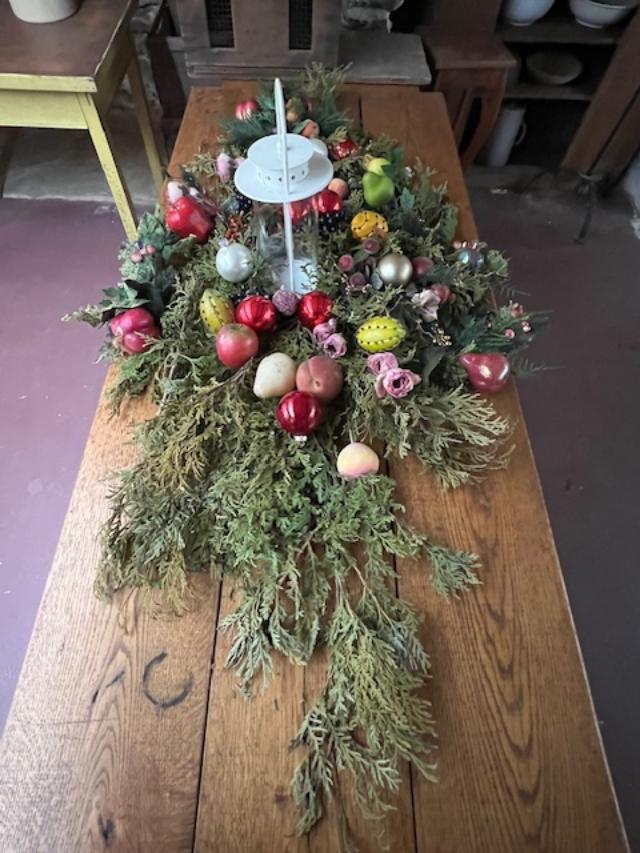
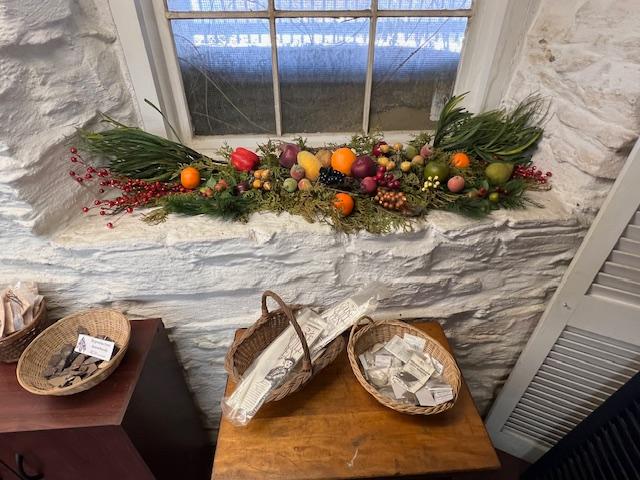
The Kitchen in the basement area is one of the areas of the home that survived the 1932 fire when the house burnt to the ground. It would not have been used in modern times as a more modern kitchen was built in the newer area of the house. Still, this was decorated for the holidays to show the bounty of the Fall harvest and the items that would have been served for the Christmas holidays.
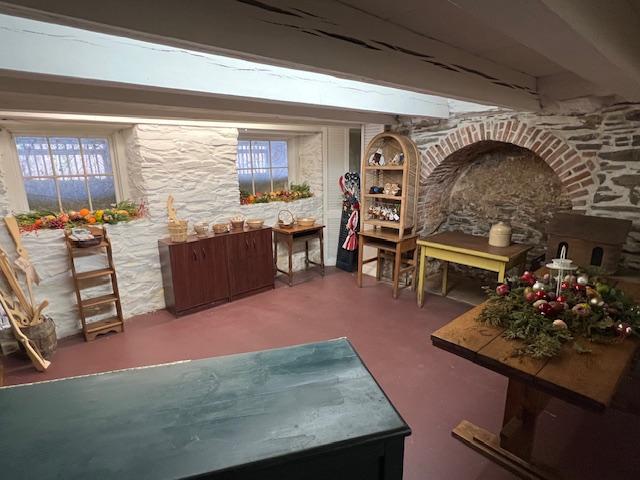
The kitchen decorated for Christmas in 2024
More detail on the Kitchen decorations
The Kitchen cabinets decorated for the holidays
The decorations on the Kitchen table in the basement area
The windows in the basement were decorated as well in the Gift Shop
The Gift Shop in the Basement area just off the Kitchen area
When I went back upstairs, we toured the Library and the Sitting Room just off the hallway and the Dining Room.
The Library decorated for the holidays
The Library decorations
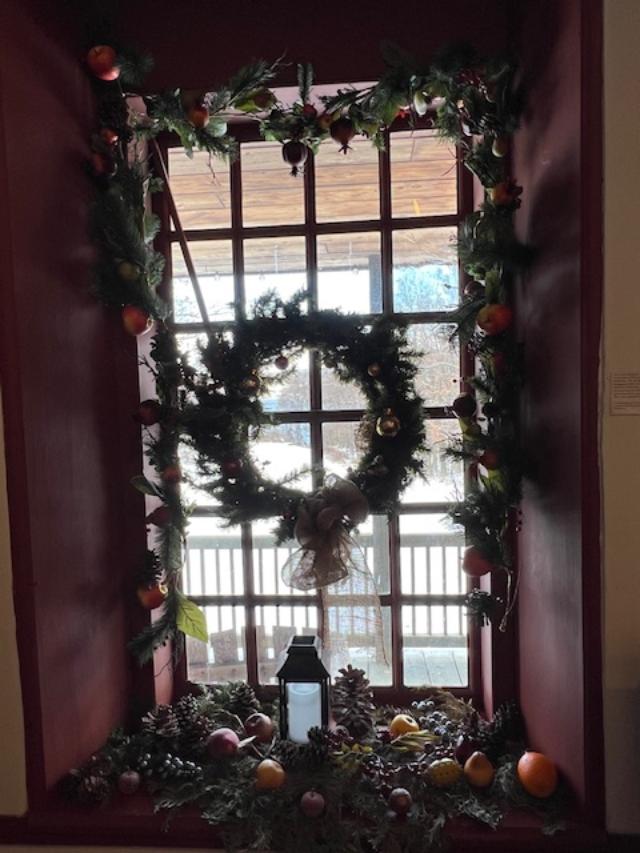
The beautiful details of the window decorations
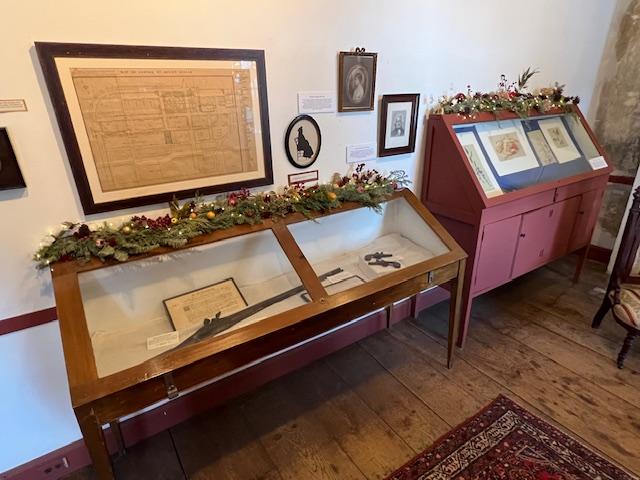
The cases of artifacts with the Christmas garlands decorating the top of the furniture
The other side of the Library cases and displays
According to family records, Christmas was a big holiday in the house with many members of the Ver Planck family enjoying the holidays together. The Drawing Room (where the Tea was taking place) was ‘decorated with pine over the doors and windows with wreaths of laurel and the berries of the bittersweet in various places and the room was aglow with a bright wood fire and candlelight and it was all adorned for Christmas. When the Drawing Room door was opened Christmas morning, the Christmas tree burst on our sight. It was lighted with little wax candles as the modern trees were but there were none of the stereotyped ornaments of tinsel and glitter. There were Lady Apples on the tree and oranges, cornucopias and toys and the sugar plums. The tree was always of laurel, reaching nearly to the ceiling and yet it looked small in that great room’ (William Samuel ‘Ver Planck Family History’). The current curators have done a nice job keeping this tradition alive in the decorations.
When I left the house, I visited the grounds over-looking the Hudson River. On the property behind the house was a ‘A frame’ Dutch barn. The barn was closed for the season but fit very well into the landscape of the estate. The view of the Hudson River was beautiful.
The Dutch Barn at Mount Gulian set up for a party
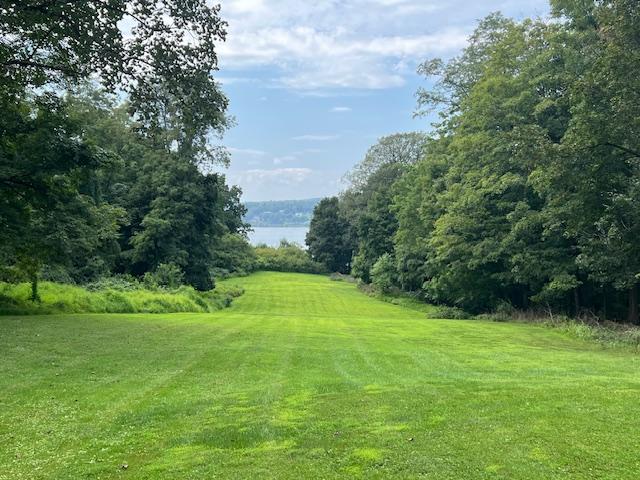
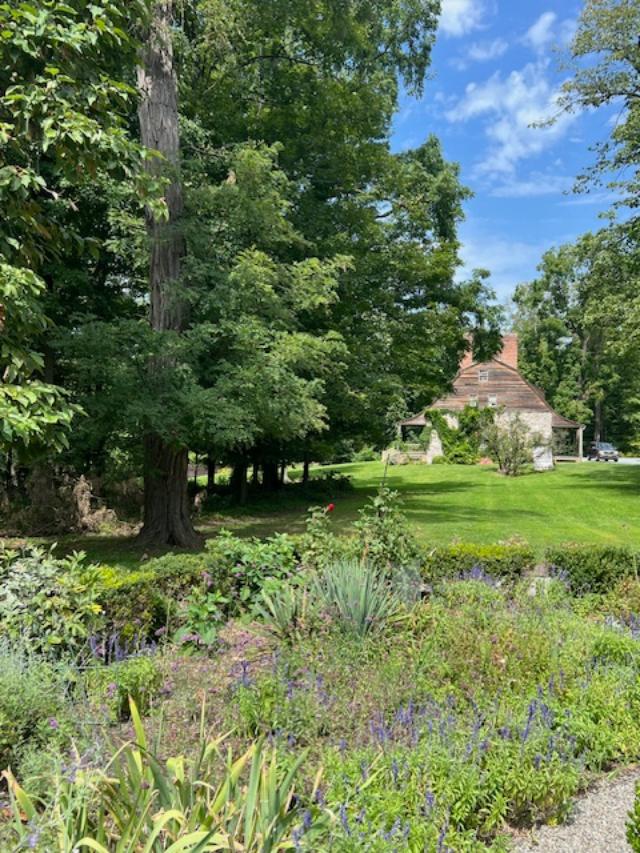
The view to the Hudson River from the house in the Summer
Don’t miss visiting the downtowns of Beacon and Wappinger Falls while visiting the area. Taking Route 9D is an interesting and scenic way to tour the area.
Downtown Beacon, NY at Christmas in 2021
Downtown Beacon, NY at Christmas time
Downtown Beacon at Christmas time
Mount Gulian in the Summer:
In the Summer of 2024, I returned to Mount Gulian to take a full tour of the estate in the summer when everything was in bloom. The same house but a different feeling than the Christmas holiday season. On the Summer tour, you are able to walk the gardens, the barn and the grounds around the house. Plus the gardens were in bloom so it was a more complete tour.
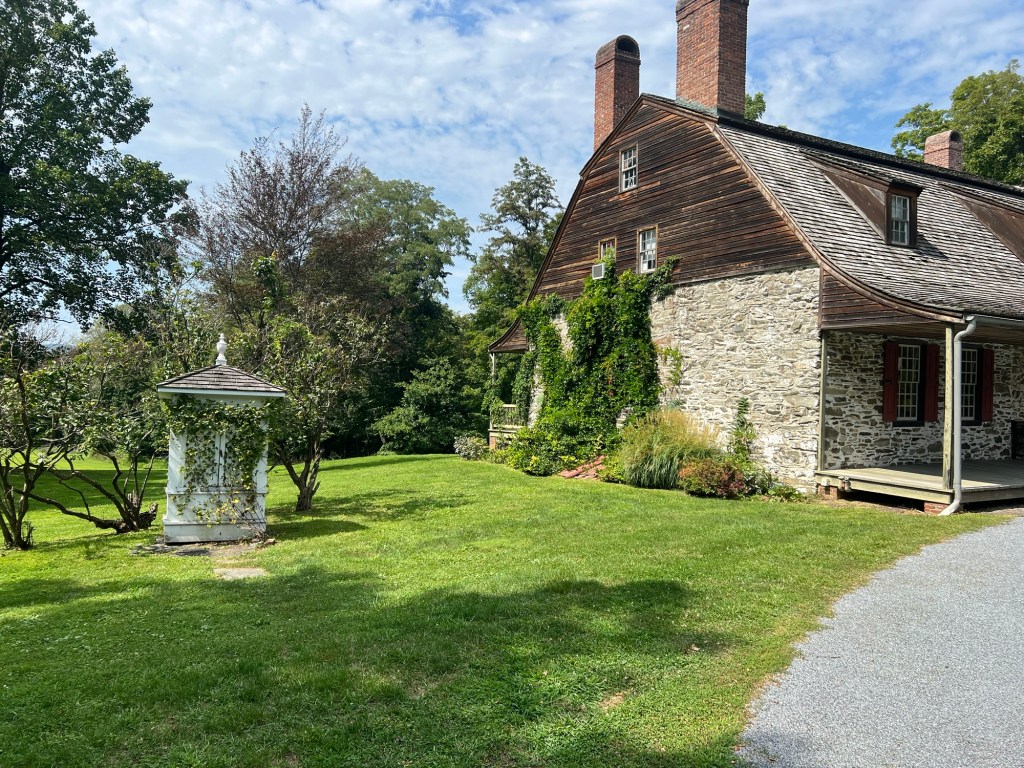
The back of Mount Gulian in the Summer of 2024
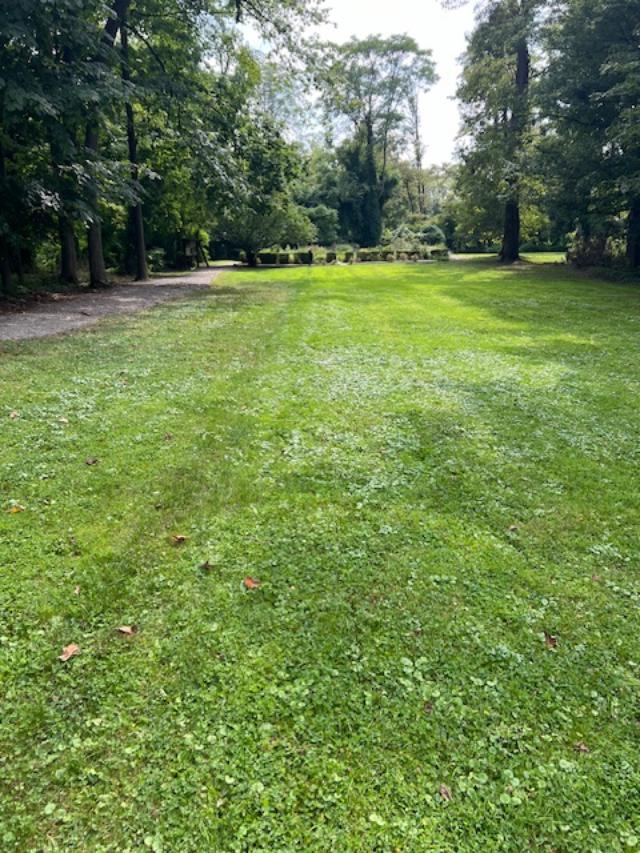
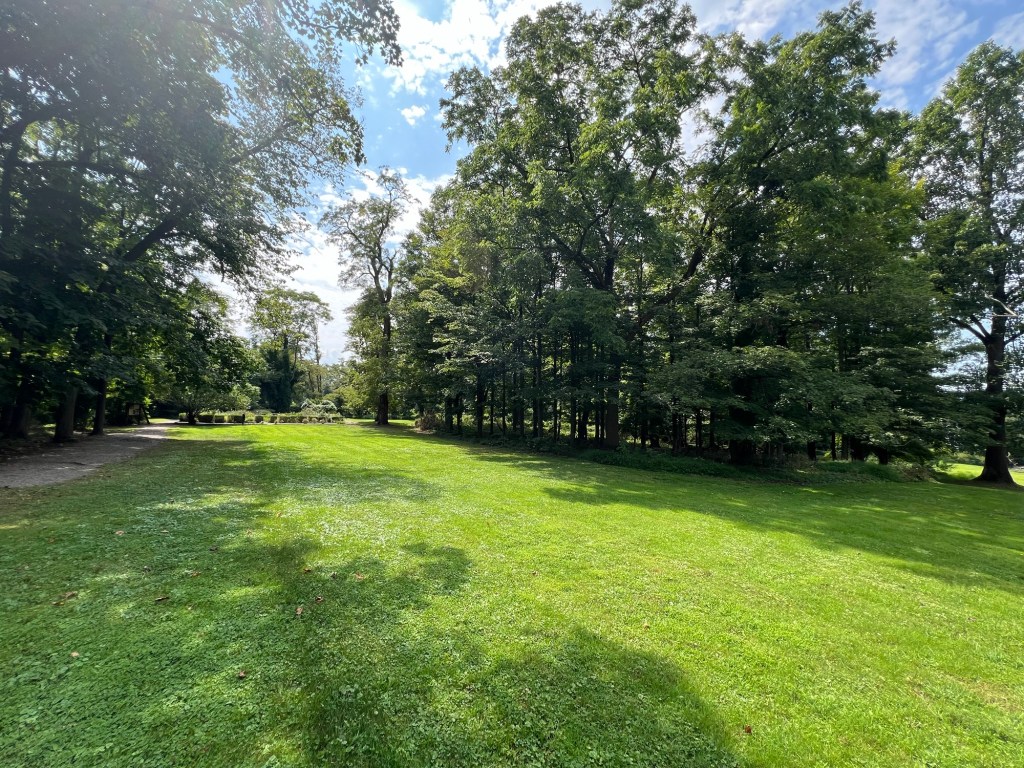
The back lawn on the Mount Gulian Homestead estate
The lawn to the gardens from the house
I started the tour of the property while I waited for my tour at 2:00pm. I walked the lawns and walked around the gardens. The property looked so much nicer than in the winter months. You can see the vibrance of the gardens and the beauty of the lawn and woods against the house. The gardens were well maintained and the flowers were still in bloom in the late summer months.
The gardens with the house in the distance
When I started the tour of the house in the Summer of 2024, it was similar to the December tour in the description of the house but the tour guide discussed the house from the perspective of the family living here full time when they moved from their New York City home to the Hudson River Valley permanently.
The Living Room with original furniture from the Verplanck family
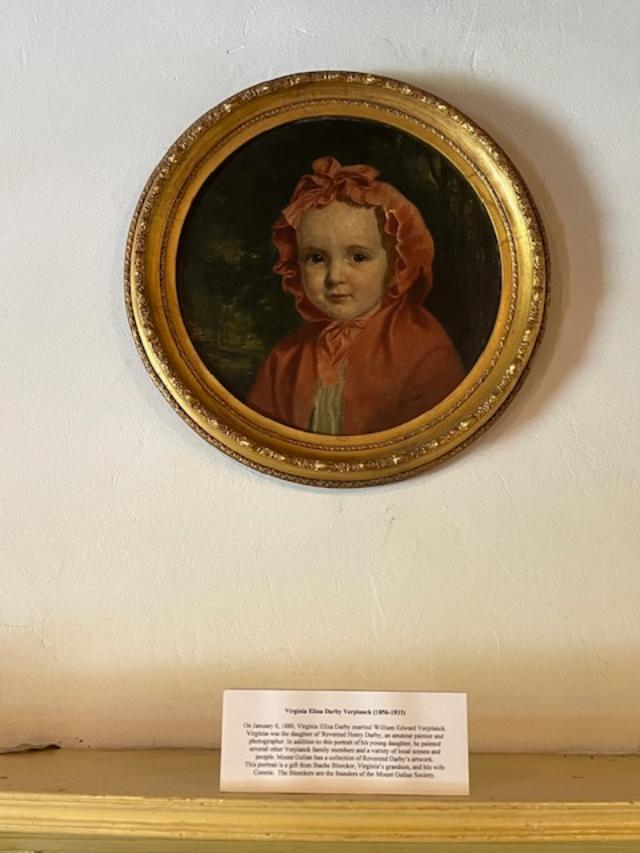
Our first stop was in the Living Room where original family furnishings decorate the room. The family would gather in this room for specials occasions and holidays. The tour guide explained that the room contained some items that used to be in the original house including the portrait of the last resident of the house, Virginia Verplanck before the house burned down in the 1930’s.
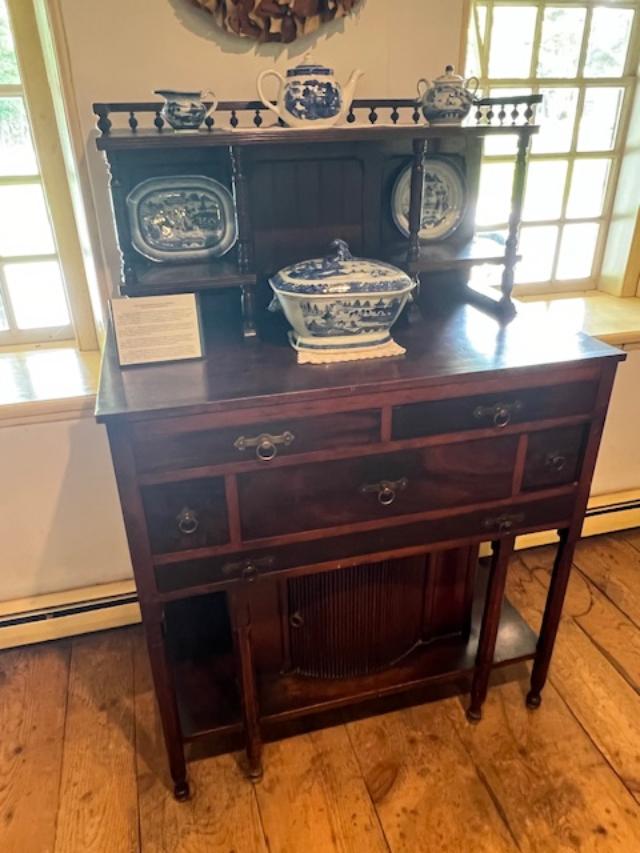
The Verplanck Family china
Portrait of Virginia Verplanck as a child. She was the last Verplanck to live in the house
The Library
Revolutionary War artifacts in the house
The house was used by General Washington and his troops during the Revolutionary War and Baron von Steuben used the house during the war as well. The proximity both Washington’s Headquarters and the City made it an ideal location.
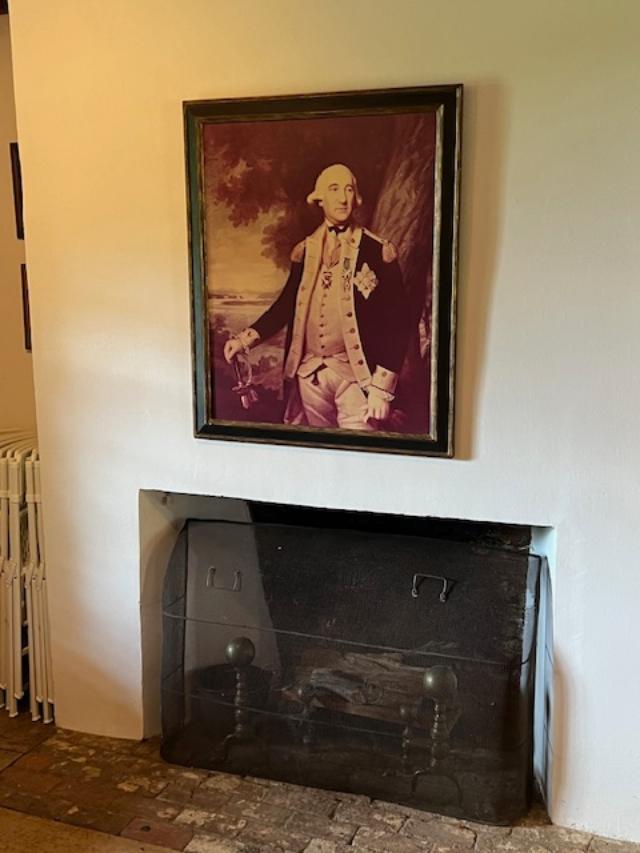
The portrait of the Baron Van Steuben
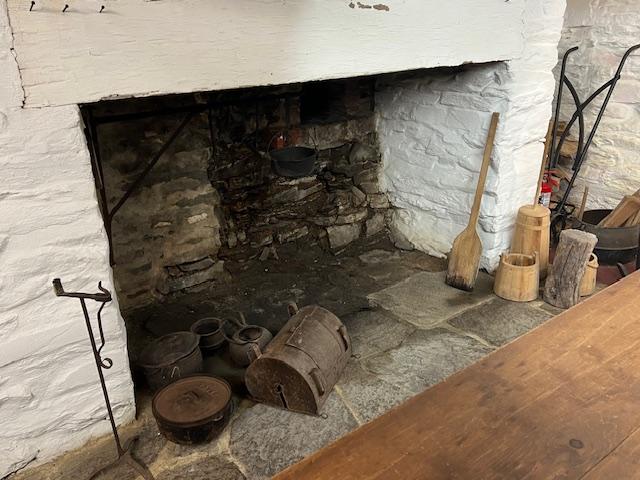
We next toured the kitchen, which had been decorated for a Dutch Christmas the last time I had visited. The hearth was from the original house and you could see how things were cooked in the open fire and then in the beehive oven where breads and cakes were cooked.
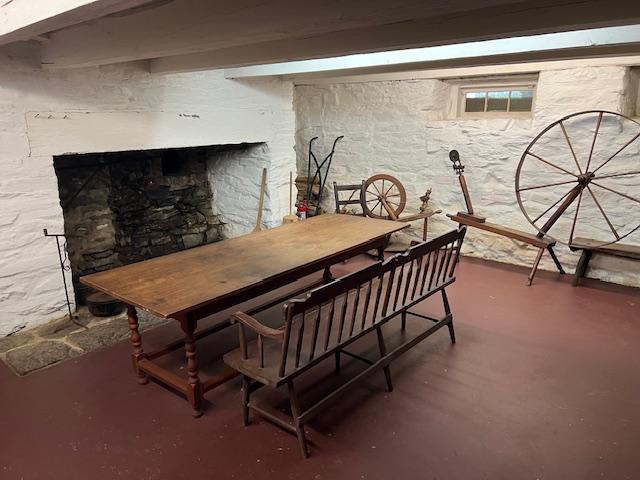
The kitchen in the basement
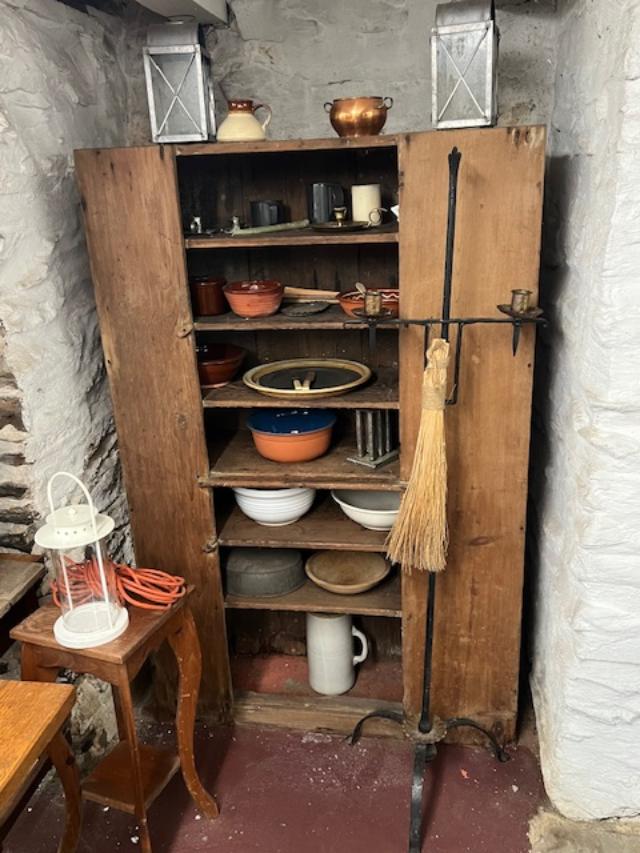
The cooking hearth and heat of the house
Cooking and Kitchen equipment
The items a cook would need to prepare meals in a Dutch kitchen.
The Grounds part of the tour:
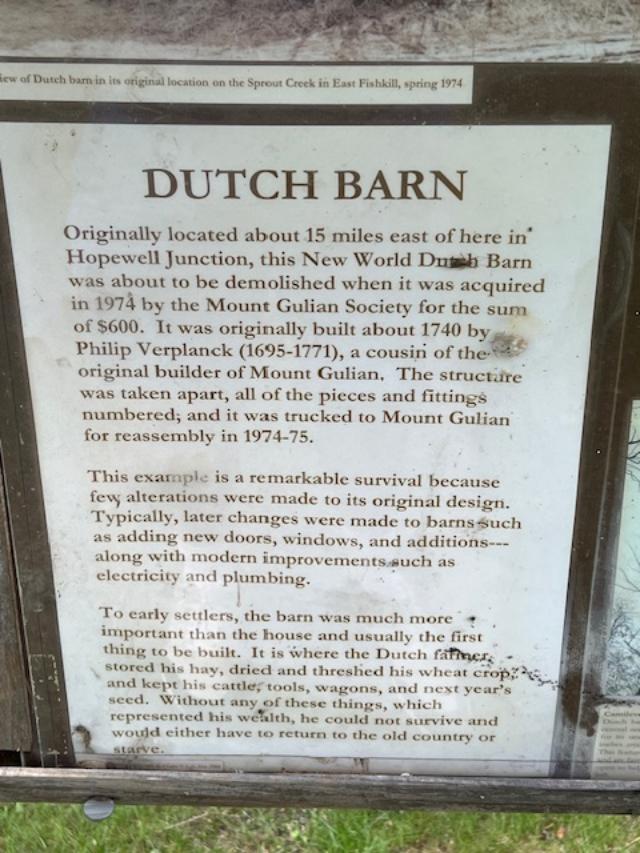
After the full house tour, we went out to the grounds to see the barn and the gardens. The barn was the American Dutch style barn which was specific to this area. It was large and airy, enough to hold the crops and the animals in case of bad weather.
The Dutch Barn sign
The outside of the Dutch Barn
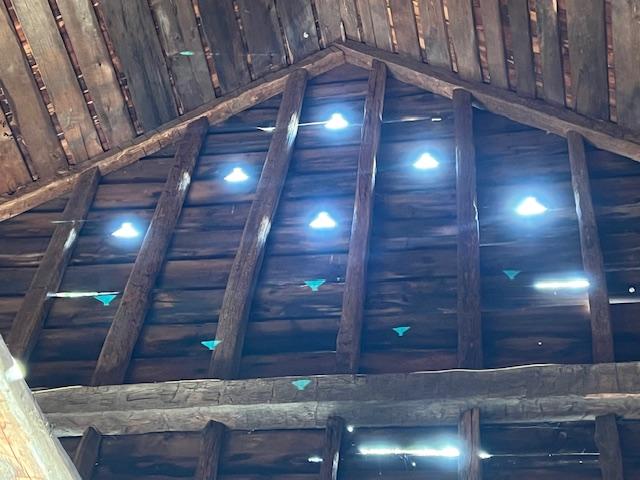
The Maitland bird holes in the barn to eat bugs on the hay and vegetables
My tour guide told me the unusual holes were that of the Maitland bird the could enter the barn to eat the bugs and insects on the crops and hay.
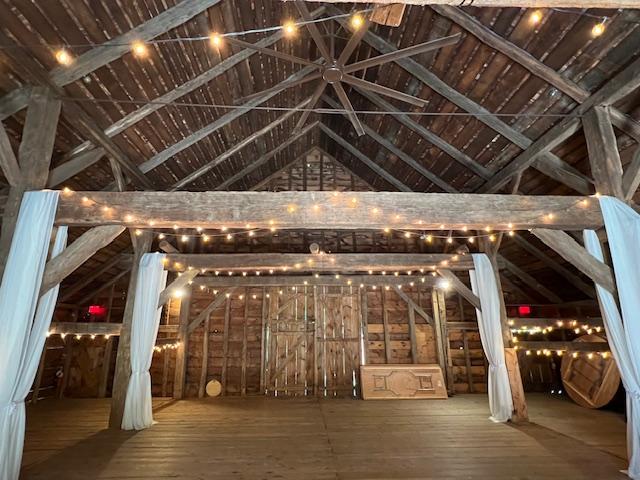
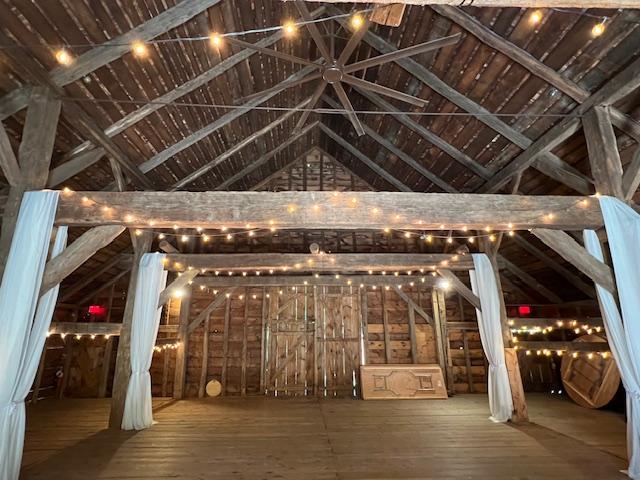
The inside of the barn set up for a future wedding
We next toured the gardens, which have been partly restored to their original design. They were in bloom with late summer flowers and decorative bushes and the layout was taken from early designs from the house.
The formal Gardens and Lawns tour:
The side of the house leading to the gardens
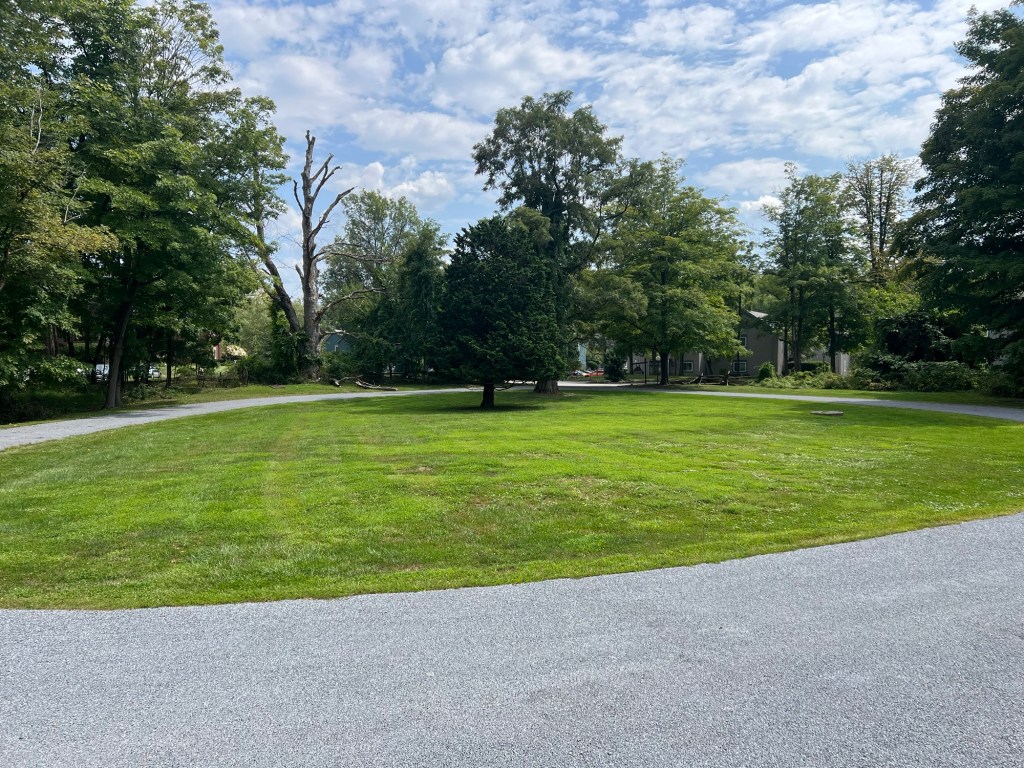
The semi circle in front of the house
The lawn between the house and the formal gardens used to be vegetable and fruit garden
The sign for the formal gardens
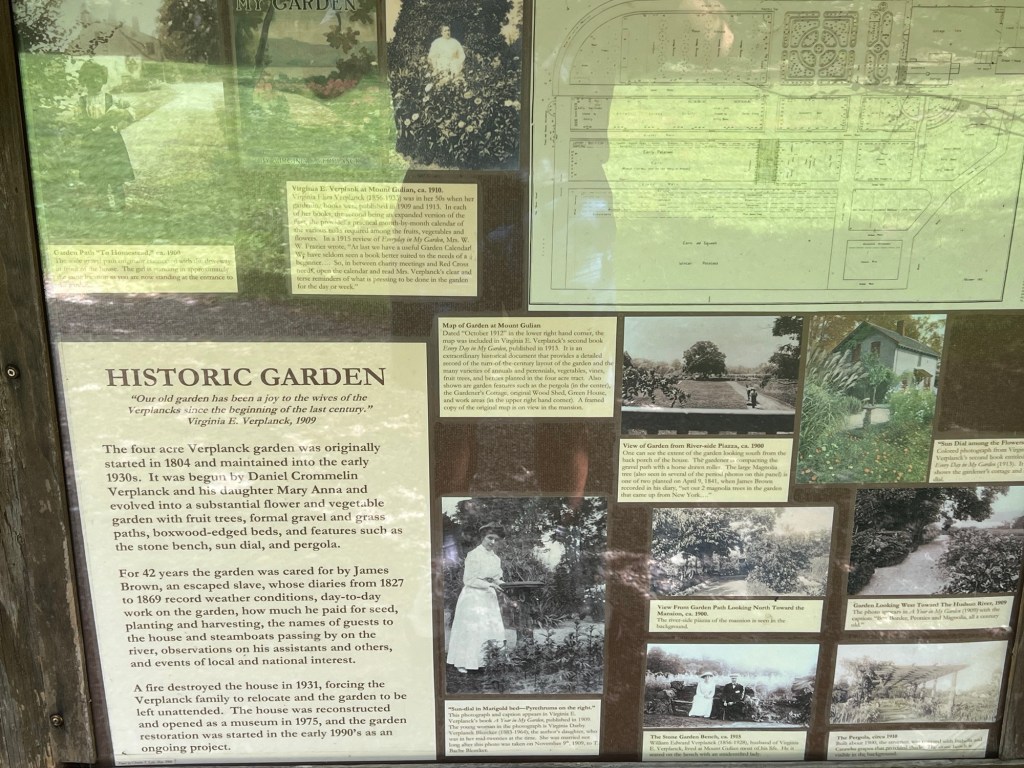
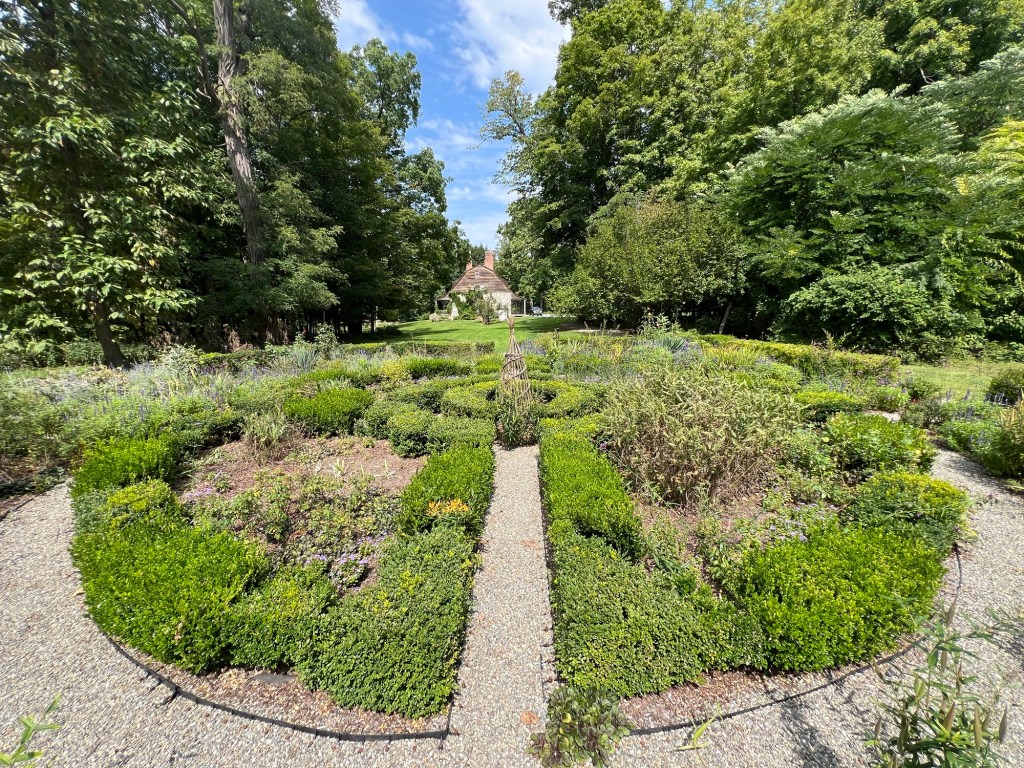
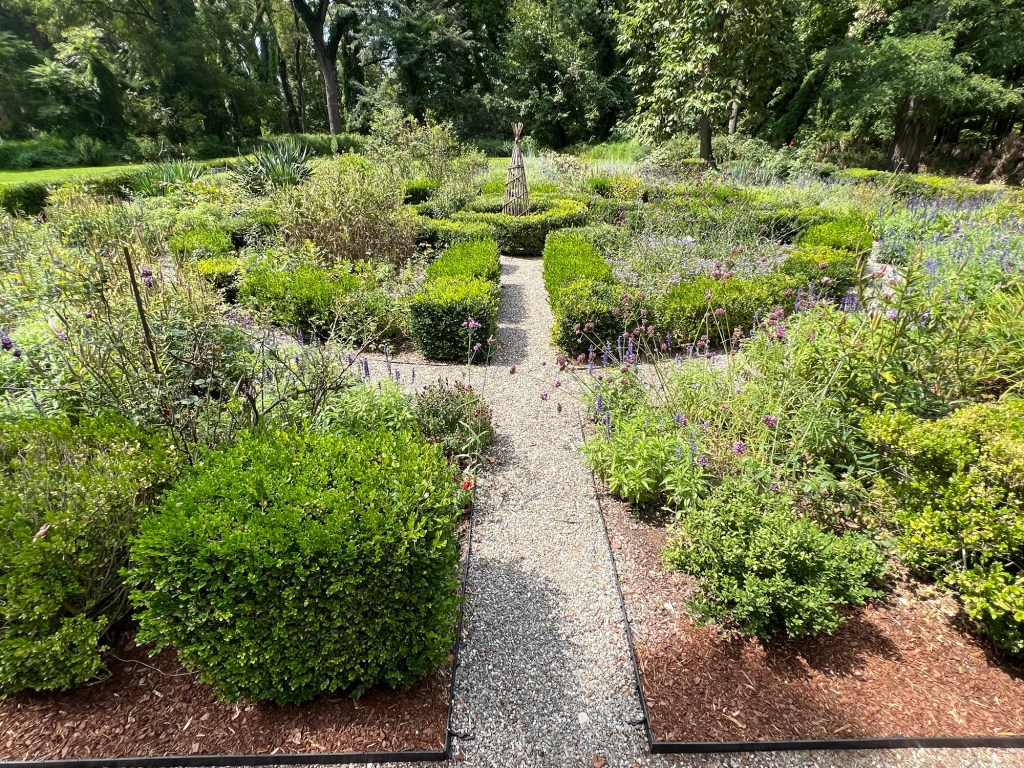
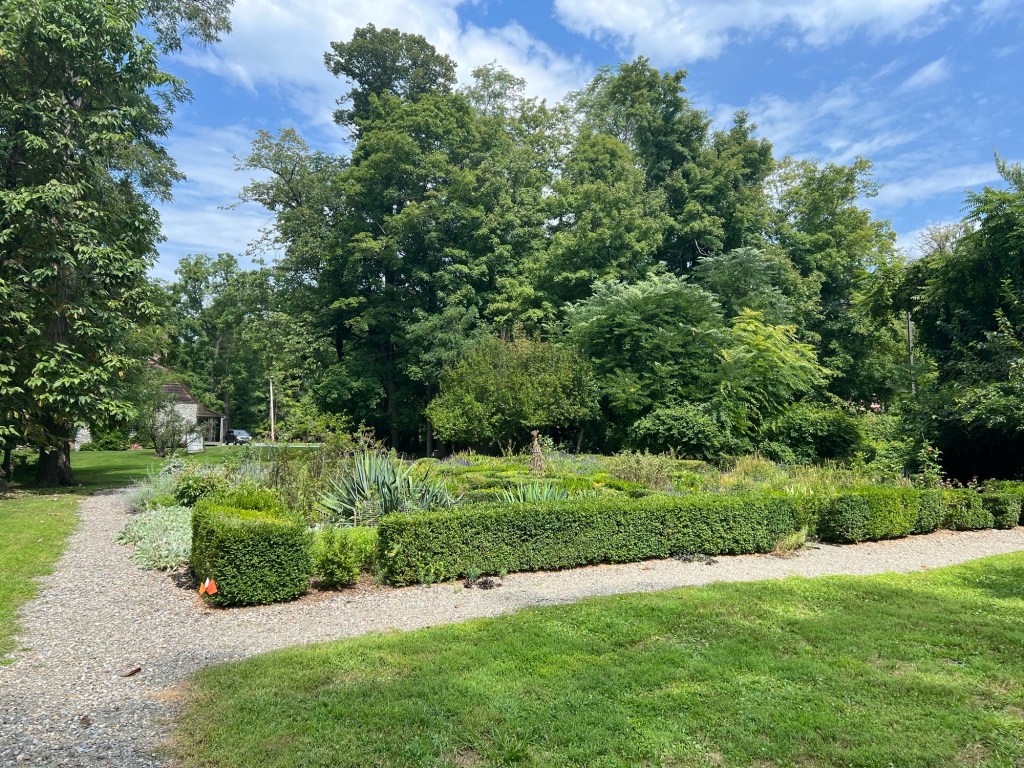
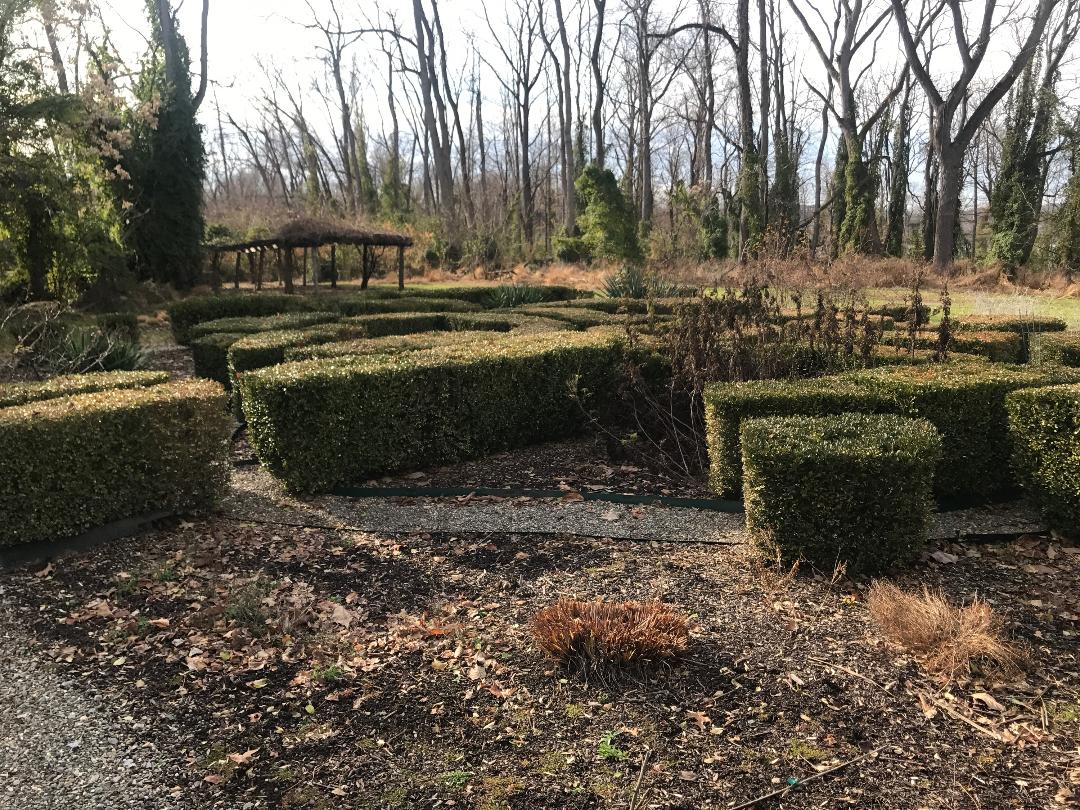
The formal flower gardens followed the original design the Virginia Venplanck had when she lived here
The beautiful gardens had been over grown in the years since the house burned down so volunteers and landscape architects had to cut down the woods and flow pictures and diagrams of the gardens to recreate them.
Entering the formal gardens
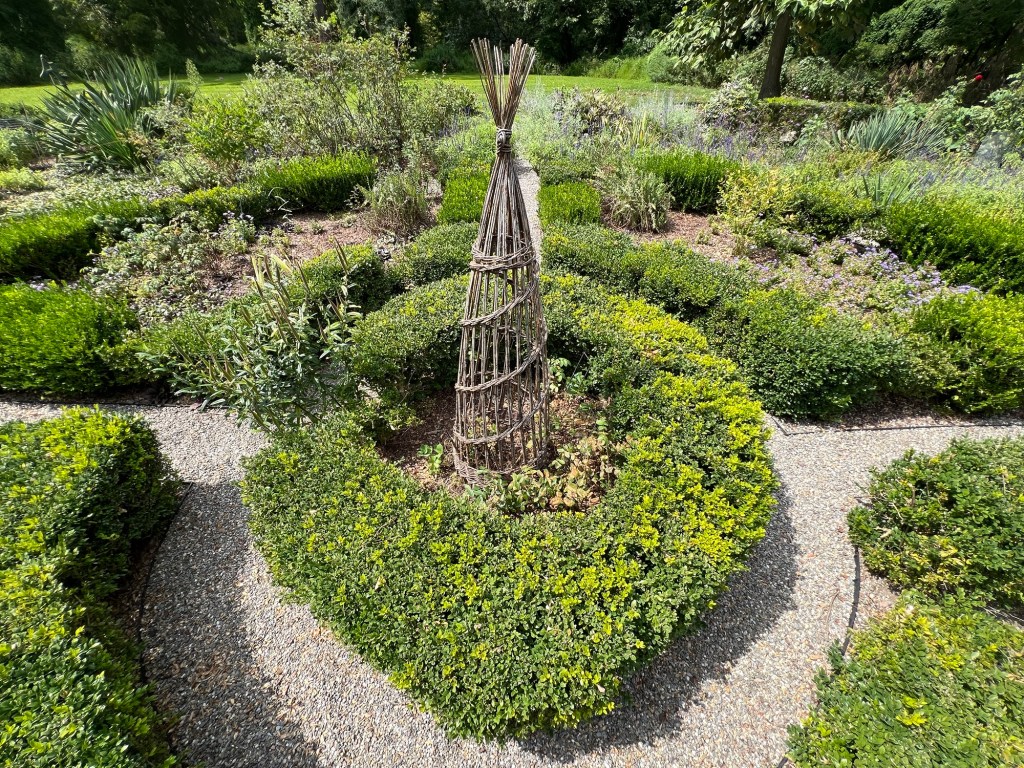
The middle of the gardens
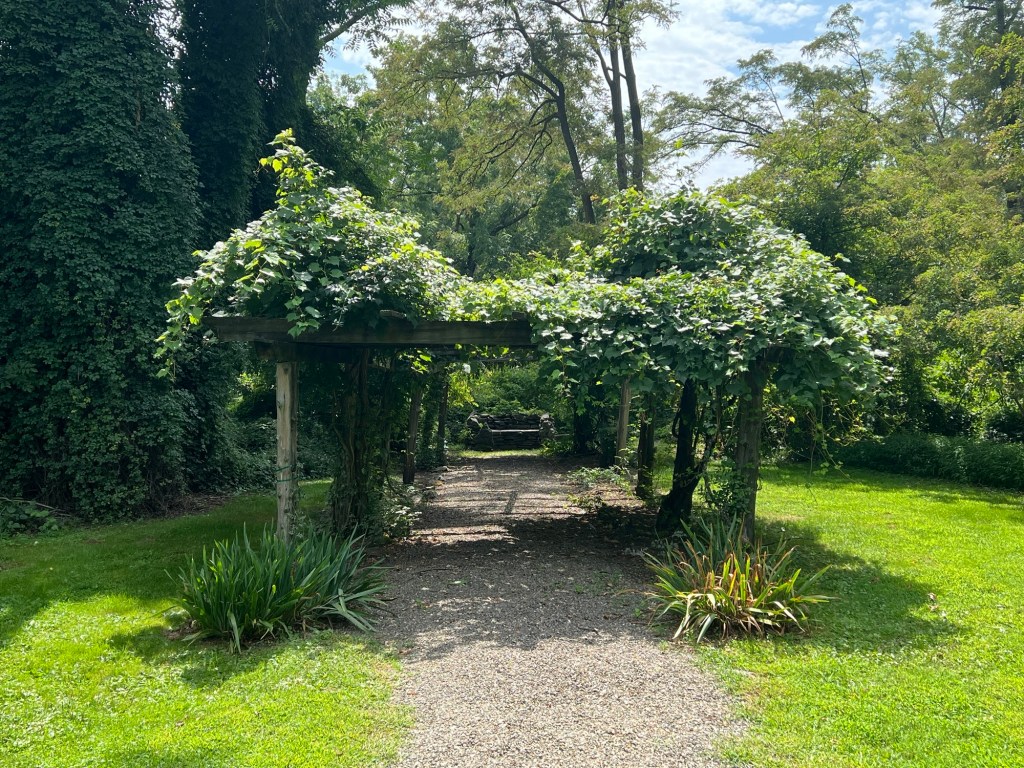
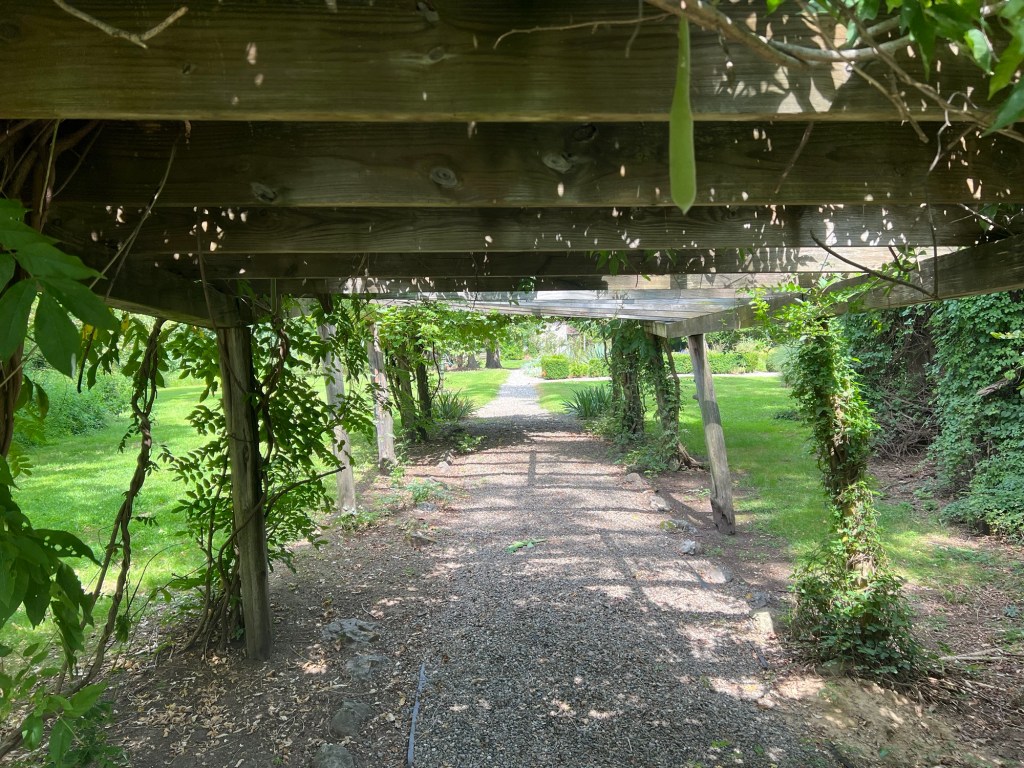
The original trellis was still standing in the woods and it was rebuilt on its original spot
Walking through the trellis
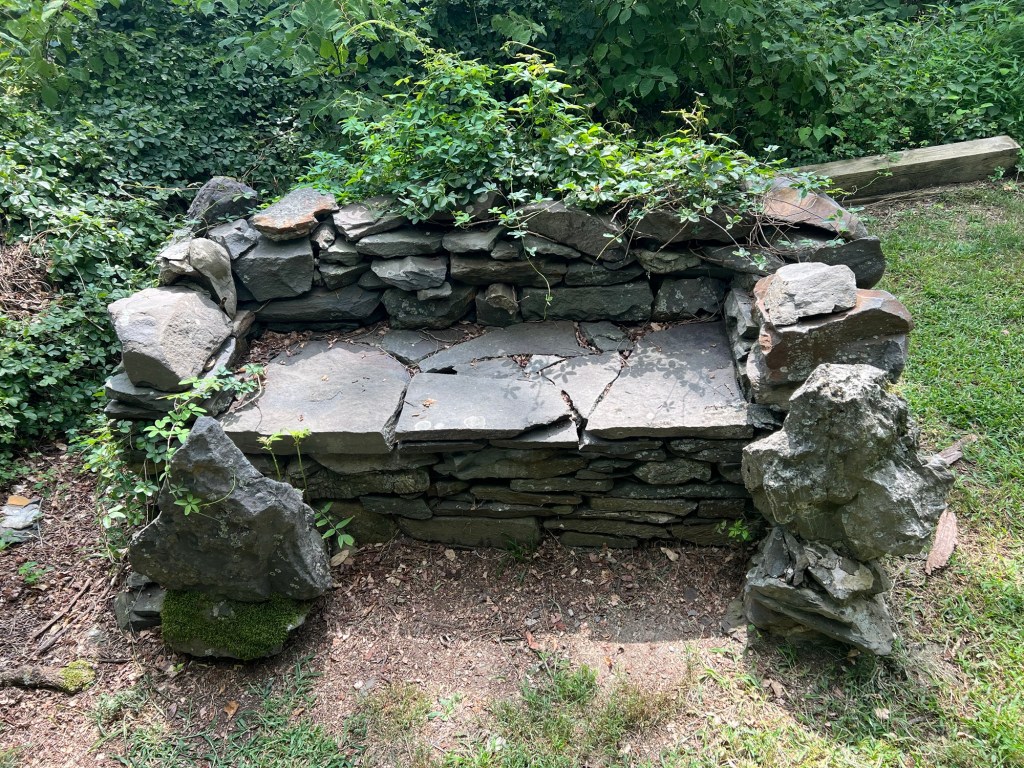
The stone bench at the edge of the gardens
The back of the formal gardens
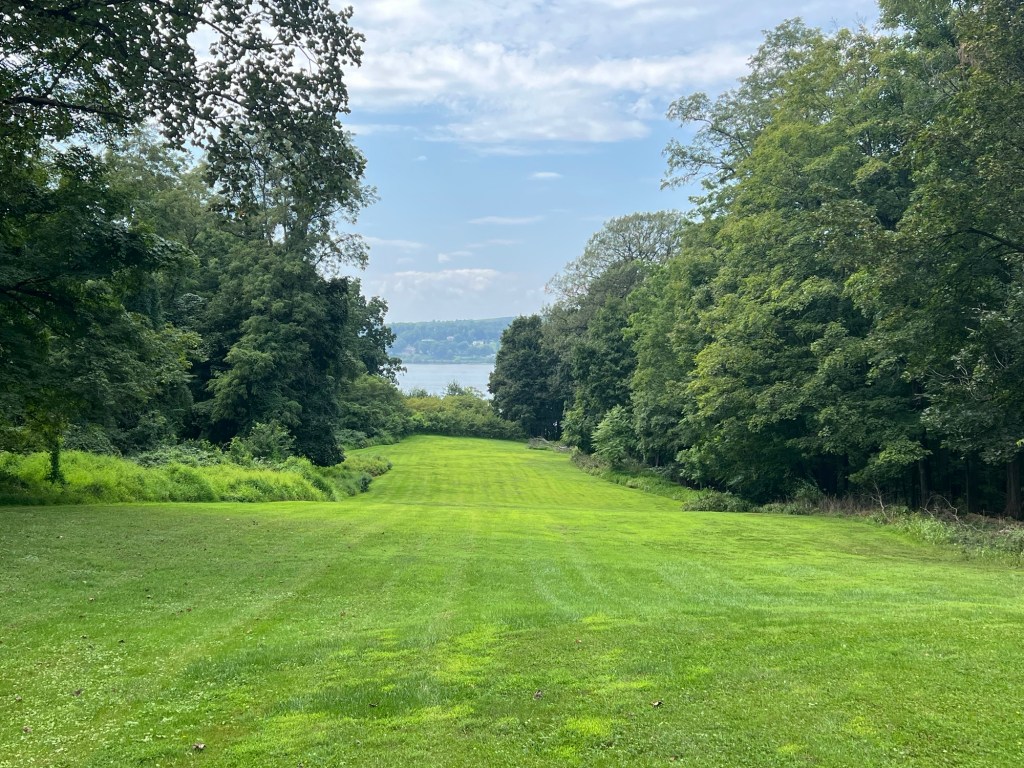
We ended the tour on the back lawn facing the Hudson River. The tour guide explained that the are thinking of trimming back the the woods near the river to better open up the view. This was probably true of the time of the house to pick up boats when moving around the river.
The views are spectacular now
The tour of the house and garden gives it a different perspective than at the holidays. It shows a working farm and an estate of a very prominent Hudson River family.
History of Mount Gulian:
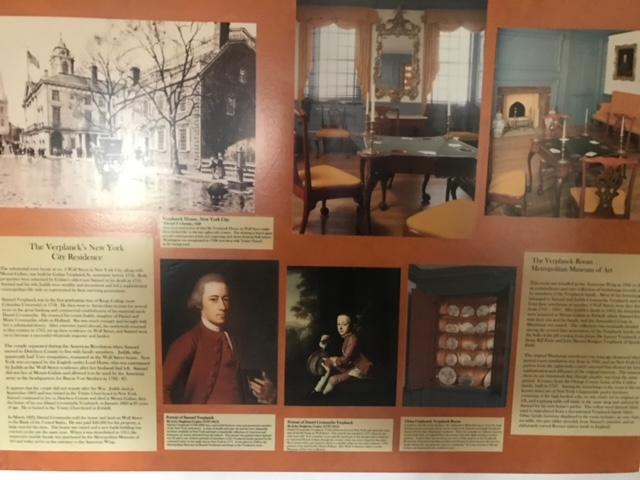
The land where the house stands was purchased by two fur traders Francis Rombout and Gulian Verplanck on August 8, 1683. In exchange for 85,000 acres of land, they paid about $1,250 in goods. The Rombout Patent which formally granted the land to Francis Rombout and Gulian Verplanck was issued by King James II of England on October 17, 1685. After Gulian Verplanck’s death, his estate was eventually divided among divided among his heirs. Julian Verplanck II, a merchant from New York City, received 2880 acres, 400 of which were on a slope overlooking the Hudson River.
He named his estate Mount Gulian, in honor of his grandfather and had the first house on the site built between 1730 and 1740. The building was a small structure with an a-roof. Archaeological evidence suggests it was probably enlarged around 1767 and the characteristic gambrel roof as well as two porches were added between this year and the American Revolutionary War.
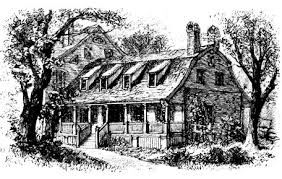
Mount Gulian in an early picture
The Revolutionary War years:
During the war, Gulian Verplanck’s son Samuel stayed at the house, while his wife, Judith Commerlin remained at the family mansion at 3 Wall Street in Manhattan. In early 1783, Major General Friedrich Wilhelm von Steuben made Mount Gulian his headquarters. At the same time, George Washington had his headquarters in Hasbrouck House, Newburgh on the opposite side of the Hudson River.
On the morning of May 13, 1783, a group of officers of the Continental Army met at Mount Gulian to found the Society of the Cincinnati. Mount Gulian is headquarters of the Society’s New York State branch. The building was extended by in 1804 by Daniel Crommelin Verplanck, the grandson of Gulian Verplanck II, who also laid out the garden. When Marquis de Lafayette visited the house on his return to America in 1824, he stayed in the new addition.
The Gardens of Mount Gulian at Christmas in 2021
In 1803, upon the death of Judith Commerlin Verplanck, the family mansion at 3 Wall Street was closed and much of its furnishings moved to Mount Gulian. In 1849, construction of the Hudson River Railroad cut off access to the Verplanck boat and bathhouse at the end of the property at the shoreline.
The view to Hudson River from Mount Gulian
The Restoration of the House:
The original mansion was destroyed in a fire laid by an arsonist in 1931. After this, the house laid in ruin and was left unattended until 1966, when Bache Bleecker, a descendant of the Verplanck family and his wife, Connie, founded the Mount Gulian Society, as a nonprofit private organization. The goal reconstructed the house to the state it was when it served as von Steuben’s headquarters. The interior contains artifacts related to the Verplanck family. The 18 century Dutch barn was moved here as well.
(This information came from Wiki and I give them full credit for the information)
History of the Verplanck Family:
Mount Gulian is the Hudson Valley colonial homestead of the Verplanck family. Between 1633 and 1638, a Dutch entrepreneur named Abraham Isaac Verplanck arrived in New Netherlands Colony (now New York and New Jersey) from Holland. He originally came to purchase land for a farming settlement and trading post.
The trading post would enable him to trade Dutch goods with the local Native Americans in exchange for beaver and other furs, Indian tobacco and trade goods that were rare in Europe. New Amsterdam was a thriving port and frontier town, filled with Dutch settlers, Indians and traders from all over Europe, Africans, both freemen and slaves, as well as French Huguenots seeking to escape from religious persecution in Europe and Jews fleeing the Inquisition in South American came to a relatively tolerant and busy New Amsterdam.
Abraham Issac Verplanck settled in the growing city and became a prosperous businessman. he married Maria Vigne Roos by 1635, they had Abigail and Gulian (Gulyn is Old Dutch for William), Catalyna, Isaak, Sussanna, Jacomyntje, Ariaentje, Hillegond and Isaak II moved to Albany and established the Verplanck line in that city, which exists today.
In 1664, an English nave appeared off the coast of New Amsterdam and demanded the city’s surrender. The Dutch surrendered their colony, swore loyalty to the British Crown and saw the city renamed New York. The Verplanck’s spoke Dutch but were now English citizens. By the 1680’s, Gulian Verplanck was sailing up the Hudson River looking for land to increase his wealth.
In 1683, with partners Francis Rombout and Stephanus Van Cortlandt, Gulian Verplanck bought 85,000 acres of land from the local Wappinger Indians for approximately $1200 worth of goods. About 75 miles north of Manhattan, overlooking the Hudson River for miles and going inland into rich meadows and forests, encompassing nearly one-seventh of modern Dutchess County, NY in today’s Fishkill-Beacon area, the purchase was quite a bargain. In 1685, the Deed of Sale was approved by King James II of England and is known as the Rombout Patent.
For the next forty-five years, Verplanck, Rombout and various partners and heirs sub-divided, sold off and rented portions of this huge tract of land, while logging, hunting and planting crops on the land.
During the English colonial period, the Verplanck’s became quite prosperous and built a fine home on Wall Street in Manhattan. The Verplanck’s were civic minded and participated in the development of the business and banking industry in New York City and were among the Trustees of Kings College, now known as Columbia University. Around 1730, a colonial-style fieldstone house was built in Fishkill Landing on the Rombout Patent land.
This rough frontier home was gradually surrounded by a working plantation, a dock on the Hudson that facilitated the New York-Kingston-Albany trade and many service buildings for servants and crop production. This homestead was called “Mount Gulian”, and it was used as a summer retreat for the family and a working plantation, but it is not believed that any family member lived at the site year-round until the early 1800’s. Other Verplancks at this time lived in Albany and Verplanck Point in Westchester County, NY.
The Verplancks were prominent citizens in colonial New York while maintaining correspondence with their Dutch relatives in Holland. Young Samuel Verplanck was fortunate enough to take “the grande tour” of Europe in 1761. As businessmen of that era, it must be noted that the Verplancks of Manhattan and Mount Gulian owned slaves during the mid-1700’s and into the early 1800’s, most likely house servants and skilled laborers.
Before the Revolutionary War, Samuel Verplanck became involved with anti-British groups and joined “the Committee of Safety of One -Hundred” in Manhattan. This patriot group was poised to take over the city in the event of rebellion, which occurred on April 19, 1775 at Lexington & Concord.
Later during the War for Independence, Verplanck turned over Mount Gulian to the Continental Army because of its strategic location on the Hudson near the Fishkill Barracks and across from Washington’s Headquarters at Newburgh. In late 1782, through the summer of 1783, Mount Gulian was the Continental Army headquarters of patriot General Fredrich Von Steuben. After the American victory at Yorktown, upon learning of the Treaty of Paris, General Von Steuben and other Chief American officers created at Mount Gulian on May 13, 1783, the Society of the Cincinnati, America’s first veterans’ fraternal organization.
In 1804, Daniel Crommelin Verplanck, a member of Congress moved from Manhattan to permanently occupy the home at Mount Gulian, which underwent extensive expansion with the addition of a large frame house attached to the original homestead. An ornamental “English Garden”, all the rage in Europe at the time, was laid out by him and his daughter, Mary Anna to supplement the 6 acres “kitchen garden” and the fields filled with salable crops. More permanent structures were built on the property, still thousands of acres, including barns, smokehouses, storage buildings and structures to facilitate brick making from clay taken from the Hudson.
The Verplanck family grew and eventually married into many prominent families in New York such as the Schuyler’s, the Johnsons, the Delancey’s and the Bleecker’s. Daniel’s son, Gulian C. Verplanck, also a member of Congress, ran for Mayor of New York in 1834, losing what many believe was a fixed election. Other Verplancks were judges, businessmen and wealthy farmers.
With slavery abolished in New York in 1827, the conservative Verplancks, along with many upper-class Northerners, gradually sided with the abolitionists, even hiring and assisting James Brown, an escaped slave who worked for the family for forty years. Brown’s diaries, written at Mount Gulian, provide a detailed record of daily life there.
During the Civil War, Robert Newlin Verplanck volunteered in the Union Army’s United States Colored Troops, training and fighting alongside black troops until the victory at Appomattox. His battlefield letters to his mother and sister have been preserved by Mount Gulian.
The Victorian era at Mount Gulian was a grand time, as the family associated with the local Livingstons, Roosevelts and Vanderbilts. Many Verplancks achieved fame in the professions, in arts and letters and as sportsmen. Verplanck Colvin was a topographical engineer who extensively surveyed the Adirondacks. Virginia E. Verplanck was a celebrated gardener and hostess. John Bayard Verplanck was an early seaplane flyer, racing World War I era veteran and banker.
The history of the area around Mount Gulian
Mount Gulian was occupied by the Verplancks until 1931, when the house was destroyed by fire. Many of the furnishings and valuable were saved by family members, neighbors and firemen who cleared the house before it was fully engulfed.
Prior to the American Bicentennial of 1976, Mount Gulian was beautifully restored with the assistance of Verplanck descendants, local history lovers and members of the Society of the Cincinnati. In 1998, Mount Gulian sponsored a well-attended family reunion, which included an updated version of the family genealogy book originally from 1892. Today Ms. Charlotte Verplanck Willman is one of the Mount Gulian Historic Site’s Board of Trustees.
The Order of Cincinnati
(This information was taken from the Mount Gulian Society website and I give them full credit for the information.)
After the tour, it was a long walk in Downtown Beacon, NY to picture taking and window shopping.
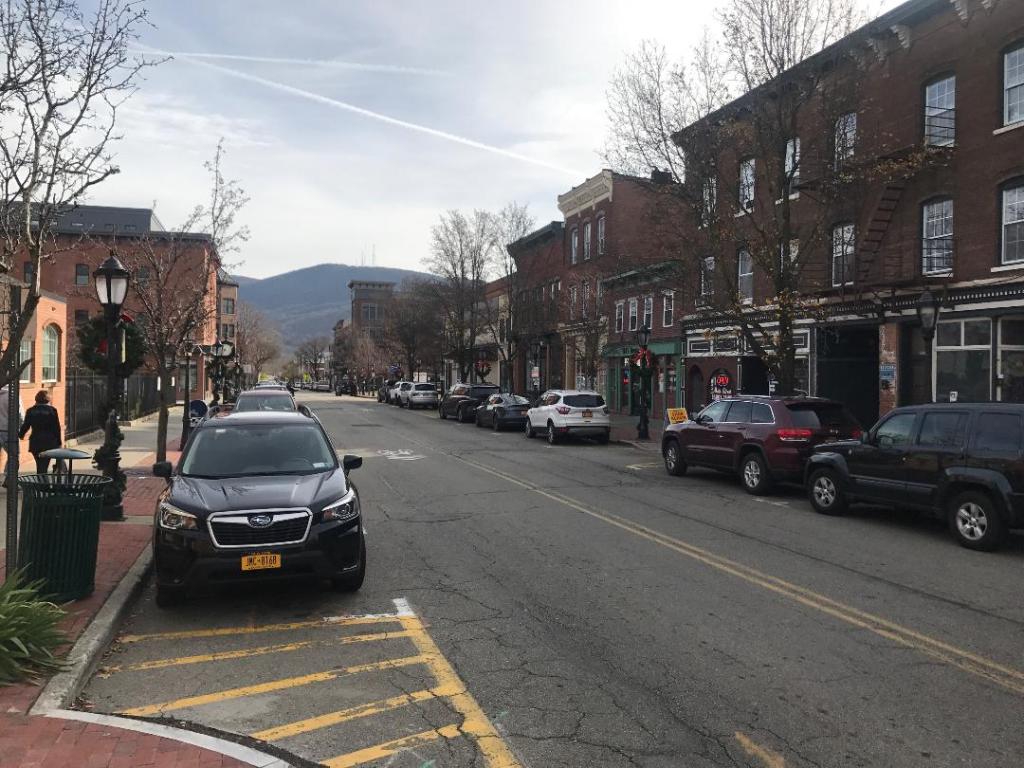
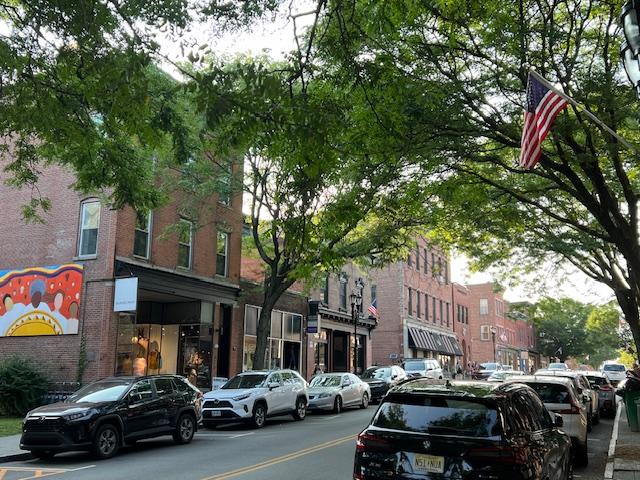
Downtown Beacon, NY in the summer of 2024
Downtown Beacon, NY in the summer of 2024
Downtown Beacon, NY in the summer of 2024
Downtown Beacon, NY falls in the summer of 2024
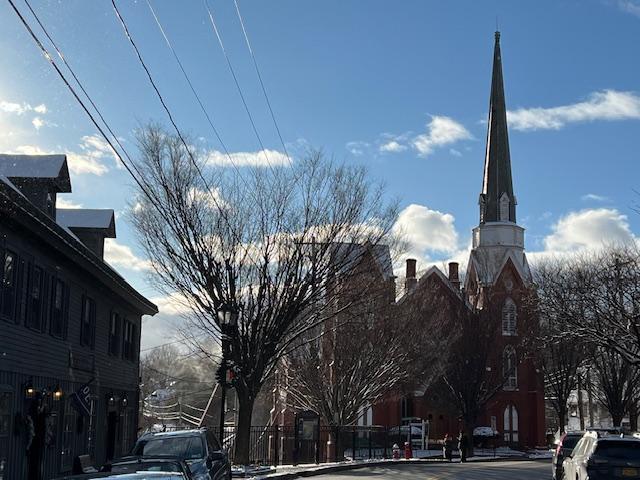
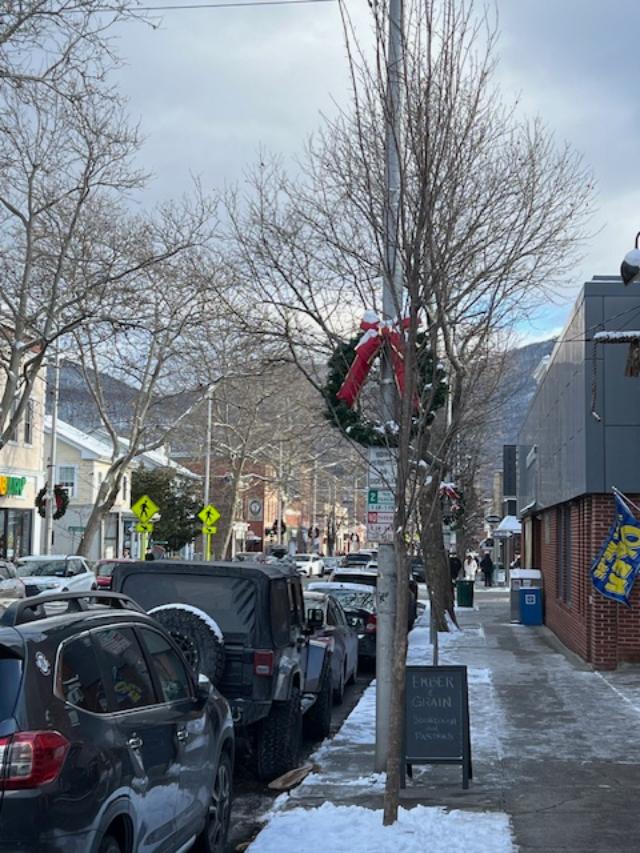
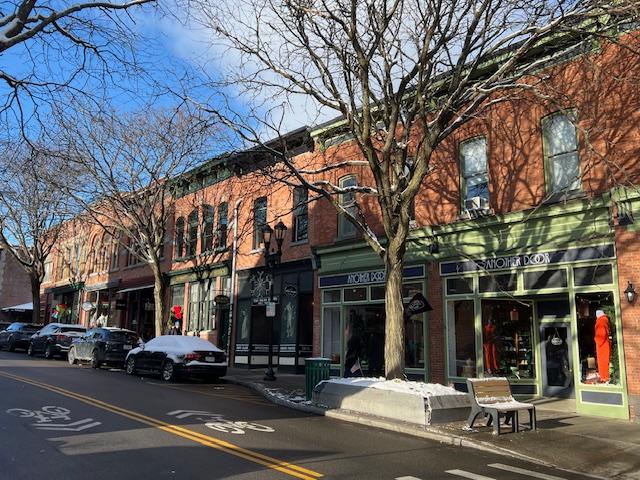
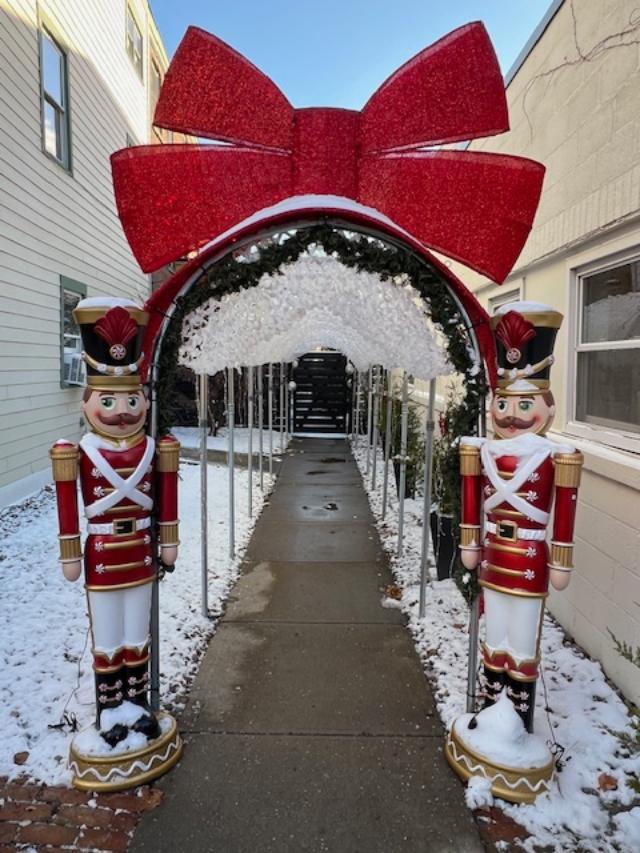
I also visited Downtown Beacon in December of 2024 for the pre-Christmas holiday season and the whole downtown was decked out for the holidays.
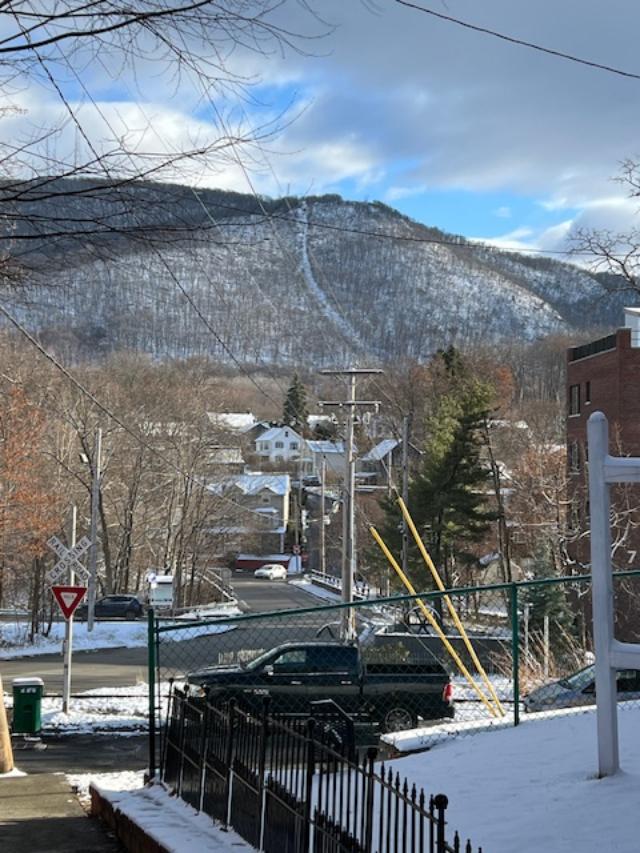
The Mountains behind the downtown glitter with the recent snowfall
The edge of Downtown where the church is located
The downtown was decorated with wreaths and garland topped with fresh snow
The store fronts during Christmas time in Downtown Beacon, NY
The Falls at Christmas time
The Downtown Beacon decorations for the holidays
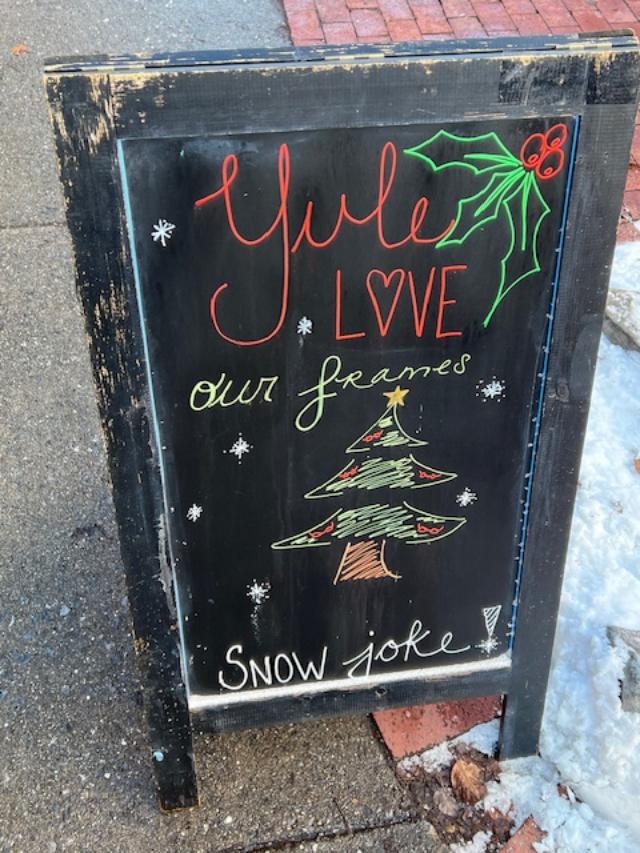
The festive and very creative signs of the merchants in the downtown area
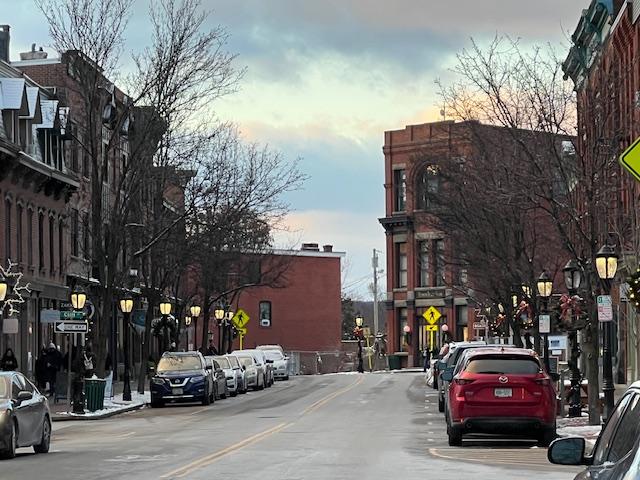
Downtown Beacon decorated for the holidays at dusk as the lights came on
More merchant signs downtown
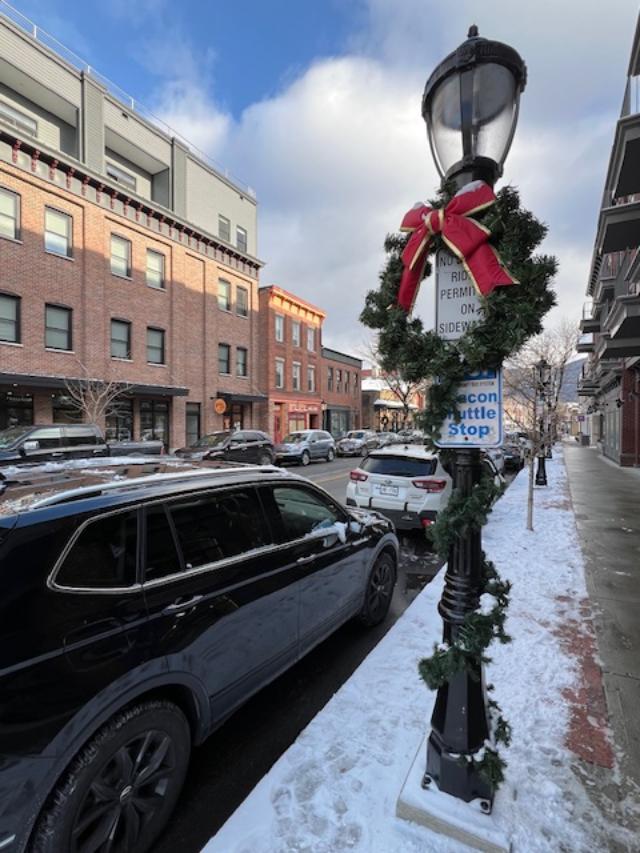
Each lamppost was festive and nicely decorated for the holidays




















 Visiting a Museum: The Unique, Unusual, Obscure and Historical