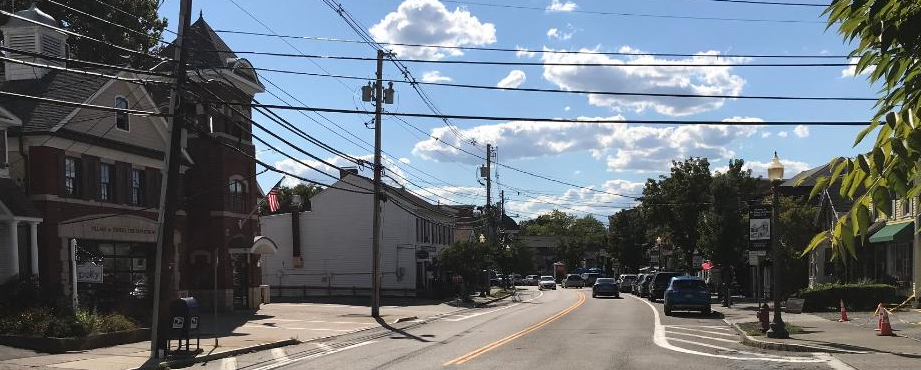
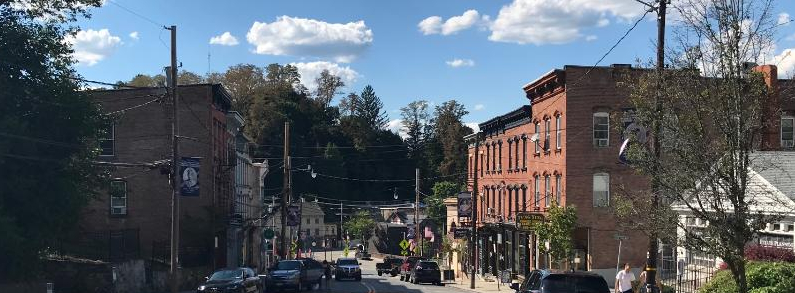
Don’t miss touring the historical sites of the Fishkill, NY area and then touring the local downtowns for something to eat.
There is lots to do and see in Fishkill, NYThere’s lots to do and see in Wappinger Falls, NY as well
Don’t miss these two wonderful downtowns and all the historical sites, parks, farms and wonderful eating establishments in the surrounding area. It makes a wonderful afternoon.
Christmas at the Brinkerhoff House
The Brinckerhoff House decorated for Christmas tea fundraiser
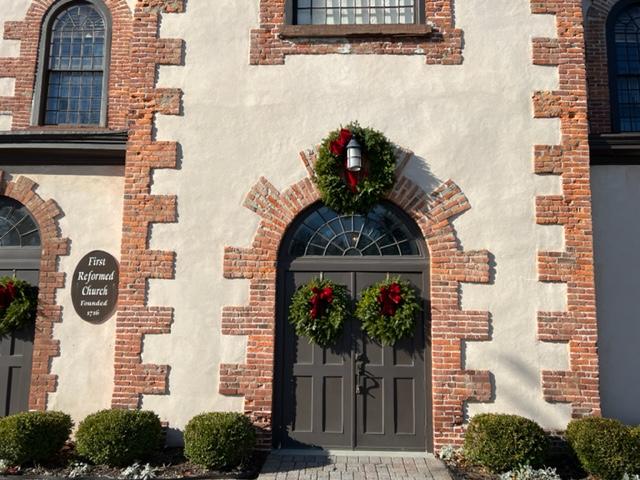
The First Reformed Church of Fishkill decorated for the Christmas holidays
I love visiting the Hudson River Valley so any event or tour that I can go on is an excuse to come up here. I had visited all the sites that I wanted to see on a trip two weeks earlier but wanted to see them in more detail plus I wanted to take some pictures. The weather finally broke, and it was a much more pleasant 83 degrees as opposed to the 96 degrees the trip before. That makes the trip much nicer.
I asked my aunt along so that we could share in the experience, and I could use her phone to take pictures of the all the sites. It is a much nicer trip when you have someone along who enjoys these things. The one nice thing about traveling to the Fishkill, New York area is that it is only an hour away and a straight run…
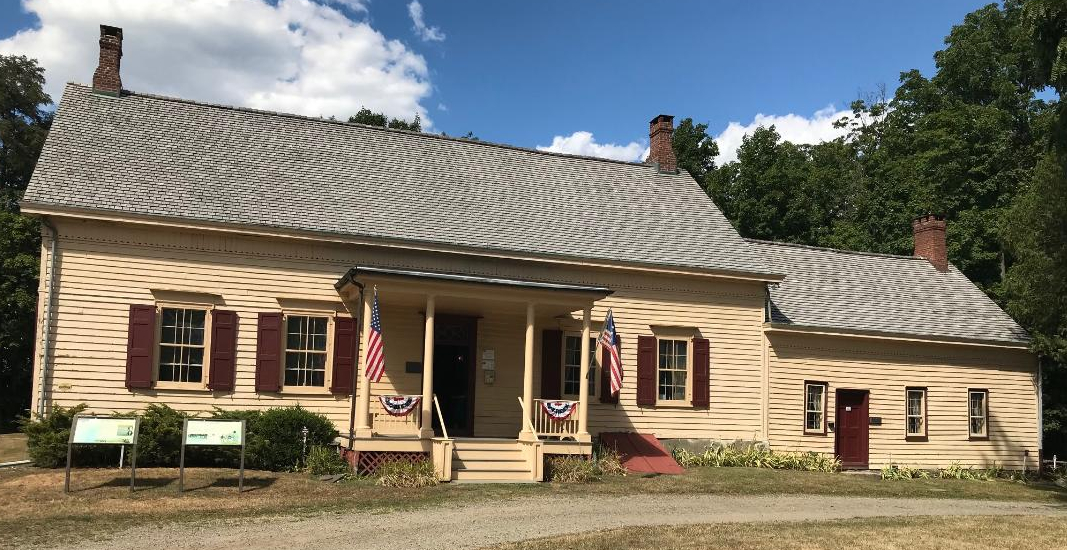
Visiting the Van Wyck Homestead is like stepping back into the past to see a part of our nation’s history. The homestead sits at a once pivotal point location in the Hudson River Valley and during the Revolutionary War, George Washington established his main northern supply depot here in October of 1776. After the war was over, the Van Wyck family returned to the home and lived here for five generations until the late 1800’s. The last member of the family, Sidney Van Wyck hung himself in the barn on the property (Van Wyck Homestead pamphlet).
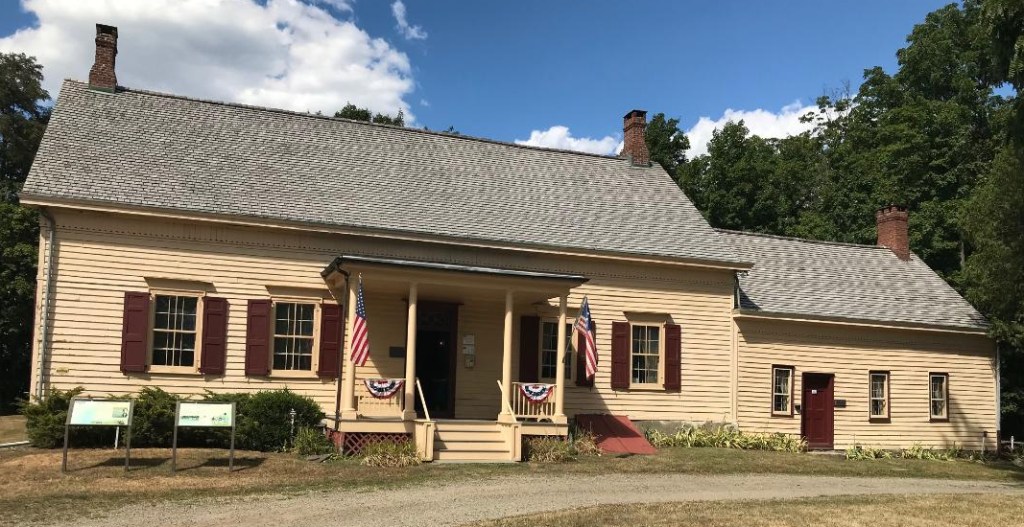
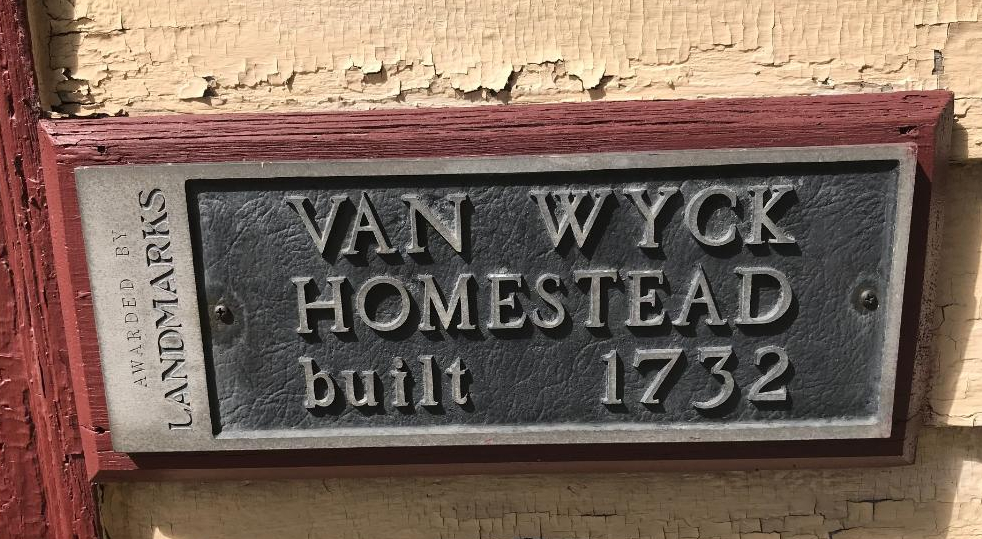
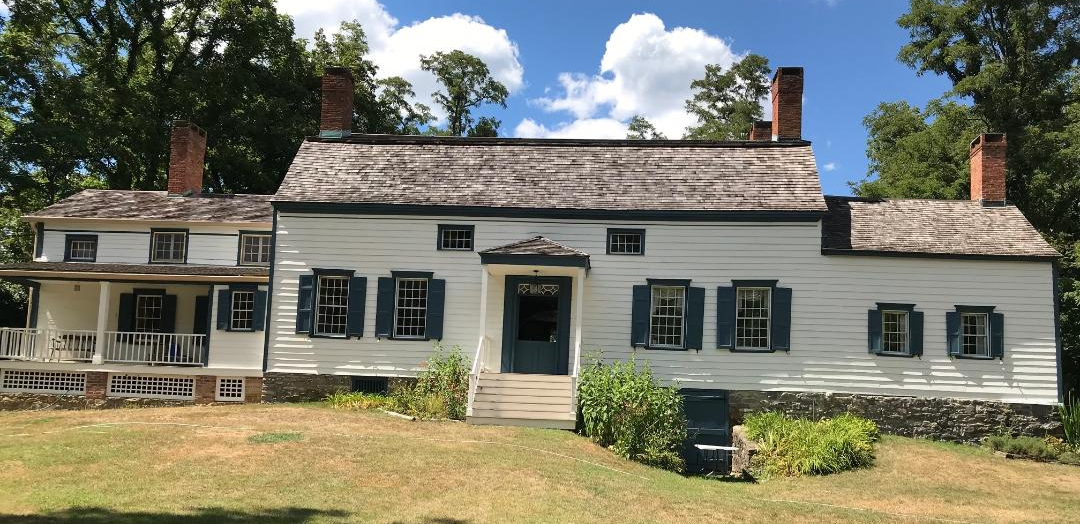
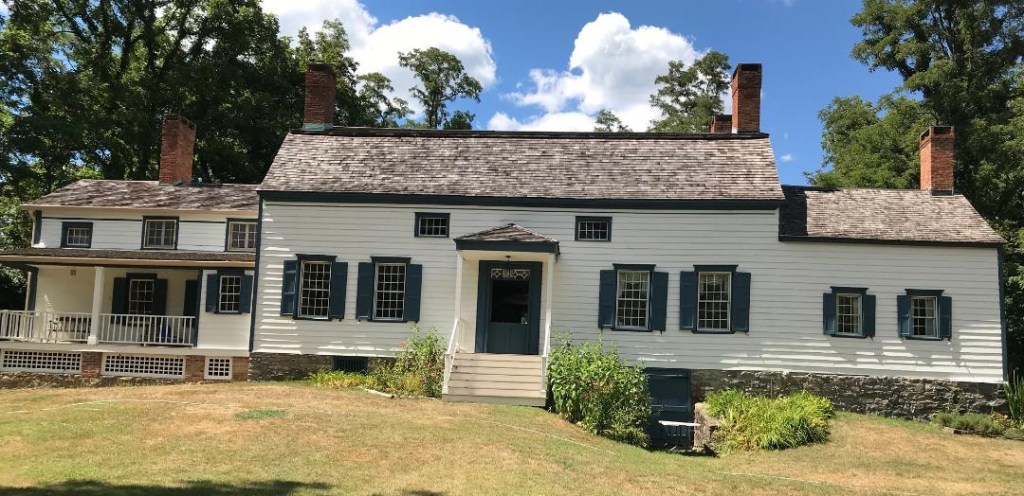
The house was built in two sections. The original section of the house off to the right of the building is the original section of the home that was built in 1732 and the larger section of the home was finished in the 1750’s.
The marker of the original home
When you enter the homestead, you are greeted in the hallway that runs the length of the main part of the home. To the right of the hallway is old living room and to the right of the hallway is the combination kitchen and dining room. The stairs leading to the upstairs, now serving as offices, are at the end of the hallway.
Another piece of Van Wyck furniture in the old Dining Room with the display case holding family heirlooms that have been donated over the years.
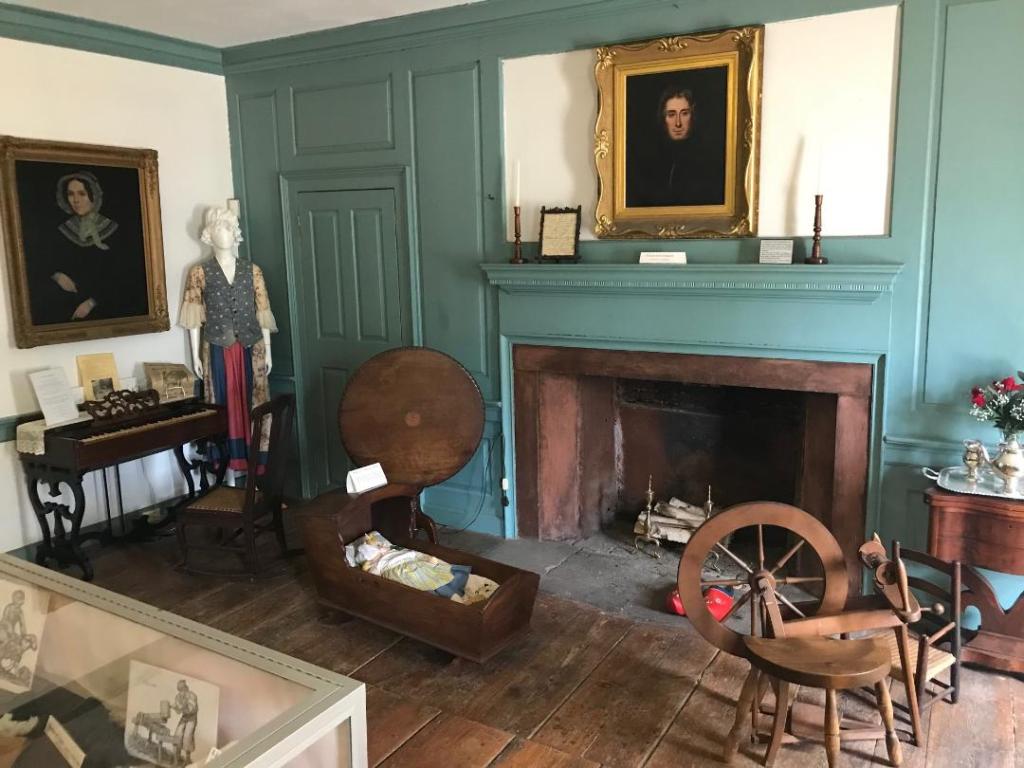
The former Dining Room of the Van Wyck home with the fireplace of the addition of the house. The crib in front of the fireplace is a recent donation from the Van Wyck family and had been used by the family for generations.
The family portrait above the fireplace was recently returned to the home and fit perfectly above the fireplace. The Spinning Wheel is another family heirloom donated to the house.
An original piece of Van Wyck furniture returned to its home
When you step down the stairs into the smaller part of the original part of the house, you will be greeted in by the original kitchen and living space. This was used by the family for all functions of work and social aspects of the farm.
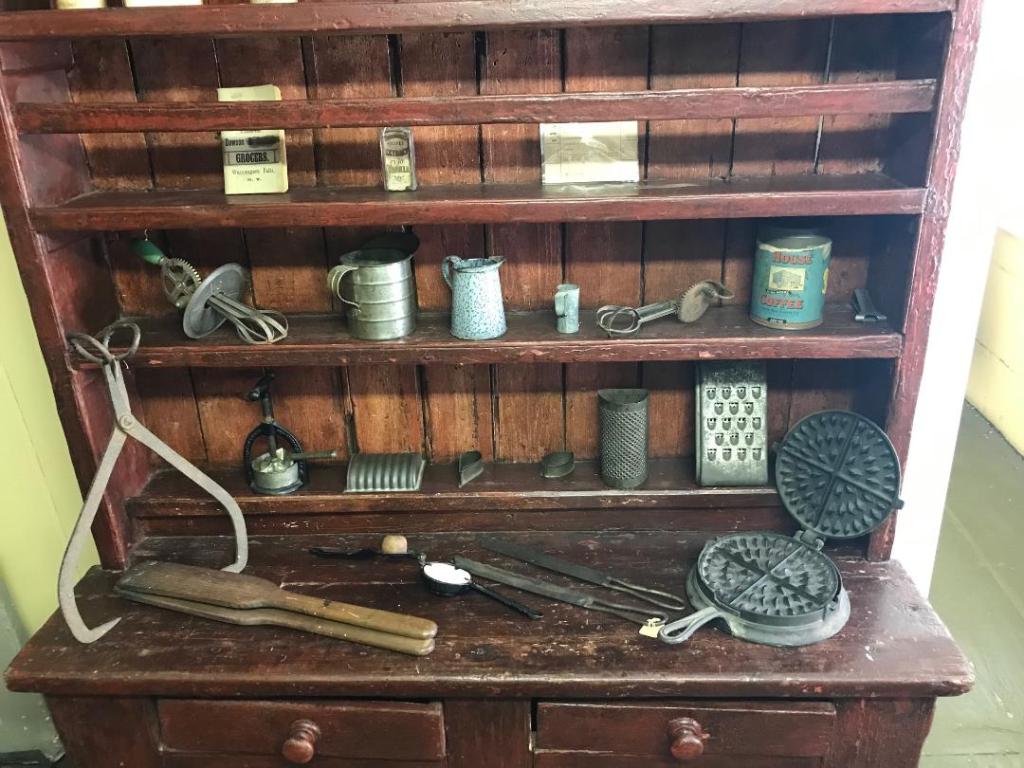
Items used in Colonial and Victorian kitchens
Items in the Colonial kitchen display which have not changed much over the years.
The Colonial Kitchen at the Van Wyck Homestead
To the right of the hallway is the old Living Room that is now used as a lecture hall and where meetings are held. The room was dedicated to George Washington for the service that he did for the area during the war.
The old Dining Room and lecture room
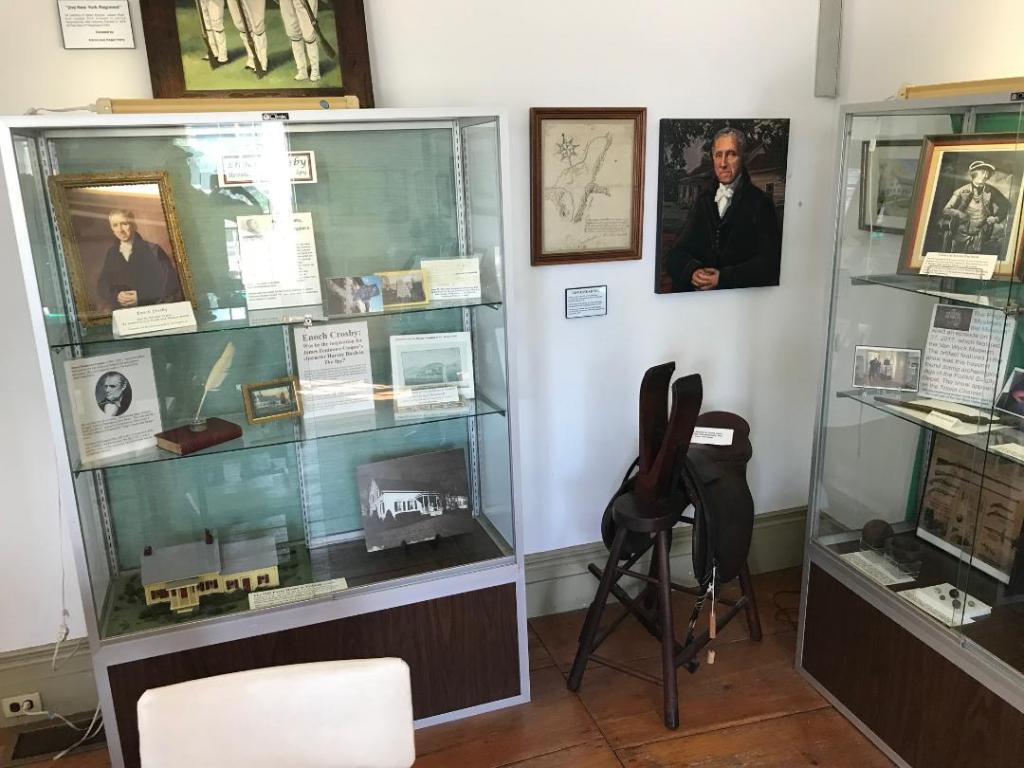
The Revolutionary War displays in the old Living Room
The room is lined with displays that are dedicated to the family and the war years. All sorts of artifacts and pictures are displayed here.
The display case in the old Dining Room
In the back of the home is the old Library that is now used a Research Library on the history of the area and of the Van Wyck family. Here you can research your roots in the community.
The Research Library at the Van Wyck Homestead
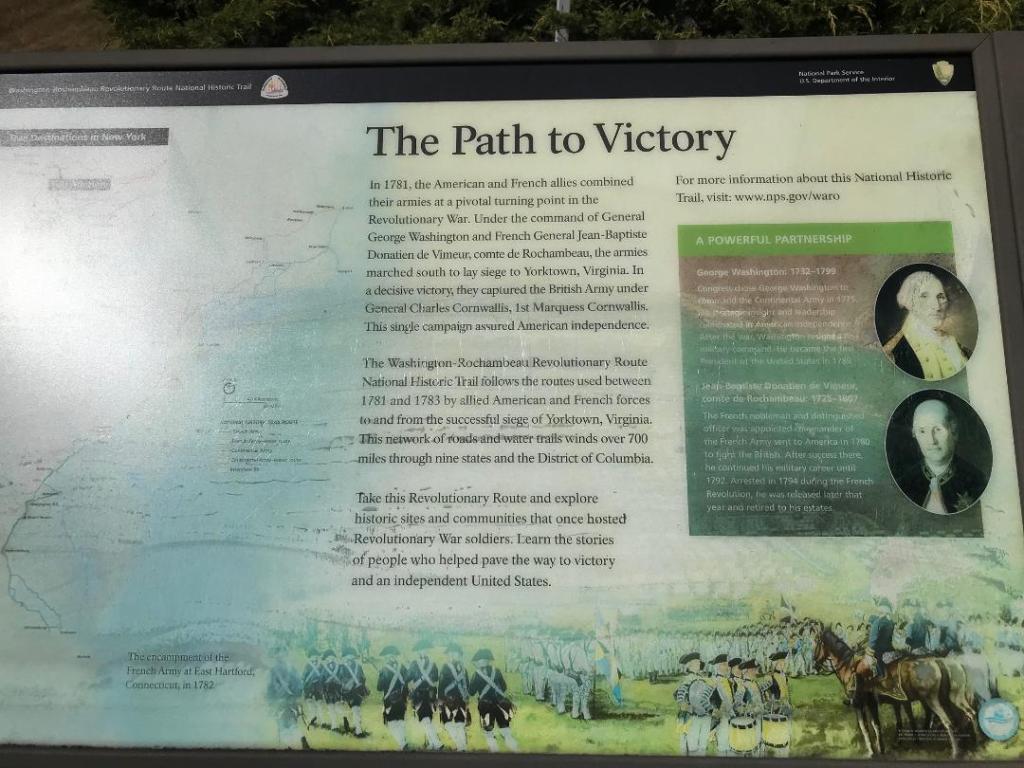
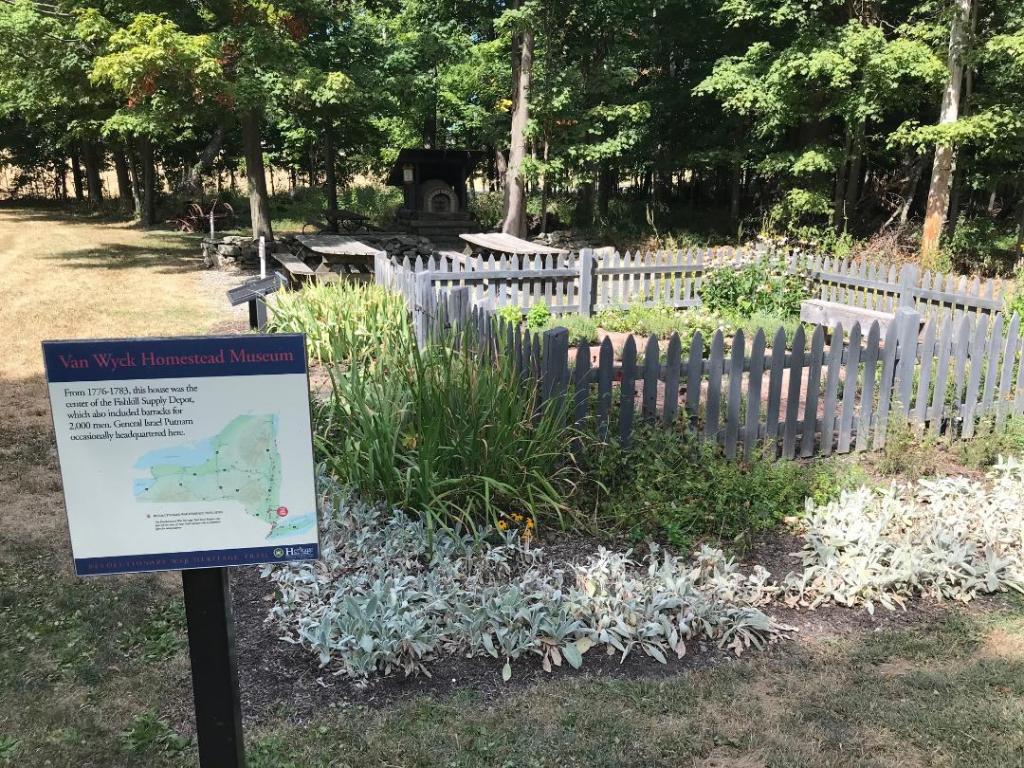
When you walk the grounds, the story boards tell the story of the home as it played a role in the history of the region and its place in the war years.
The Path to Victory
On the grounds of the home is also a working garden and the working beehive oven that is a recreation of the original that once stood on the property.
The Van Wyck Garden and outdoor over towards the back
History of the Van Wyck Homestead:
(From the Museum pamphlet)
In 1732, Cornelius Van Wyck from Hempstead, Long Island, acquired 959 acres from Madame Brett. He built the small east wing of the Van Wyck Homestead. By 1757, the larger west wing of the home had been added. During the Revolutionary War, George Washington established his main northern supply depot here in October of 1776. The Van Wyck house was requisitioned by the Continental Army to serve as the depot’s headquarters.
At the end of the Revolutionary War, the house reverted back to the owner, Issac Van Wyck. The old barracks and huts used for the war were torn down and the land went back to farming. The Van Wyck descendants lived in the house until the late 1800’s.
The original part of the house was built in 1732
By the mid-twentieth century, the house stood empty and was slated to be torn down for the new Interstate 84. The Fishkill Historical Society was formed in 1962 and after going to Albany, members were successful in getting the historical building saved and I-84’s plan changed. The Fishkill Historical Society was able to purchase the property and begin the restoration. This work is ongoing as we maintain this historical structure and grounds.
The Homestead is listed on the National Register and is part of the Hudson River Valley National Heritage Area. It is also part of the Rochambeau Trail which celebrates the French Alliance with the new United States.
The historic marker outside the house donated by the Daughters of the American Revolution. A cemetery for soldiers of the American Revolution were buried somewhere near the estate. When graves were discovered south of the museum, this could have been one of the resting places for them (Van Wyck pamphlet).
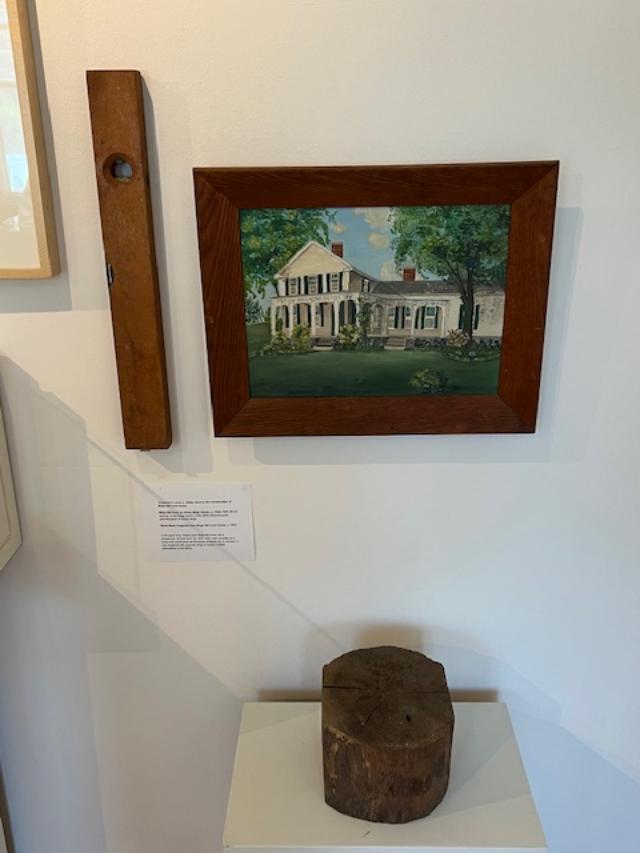
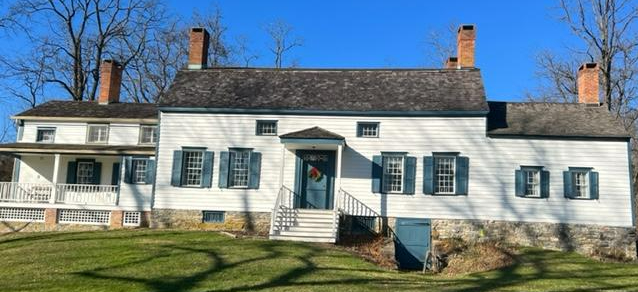
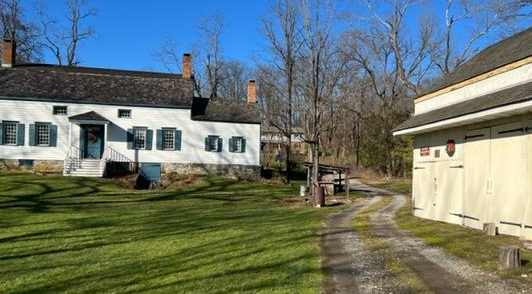
The Brinckerhoff House Historical Site was built in three different time periods with the oldest part of the house to the right, the main part of the house was built second and the Sun Room and porch to the left was built last. The house opens up in all parts but you can see the distinct different in the style of the design.
The entrance of the original homestead
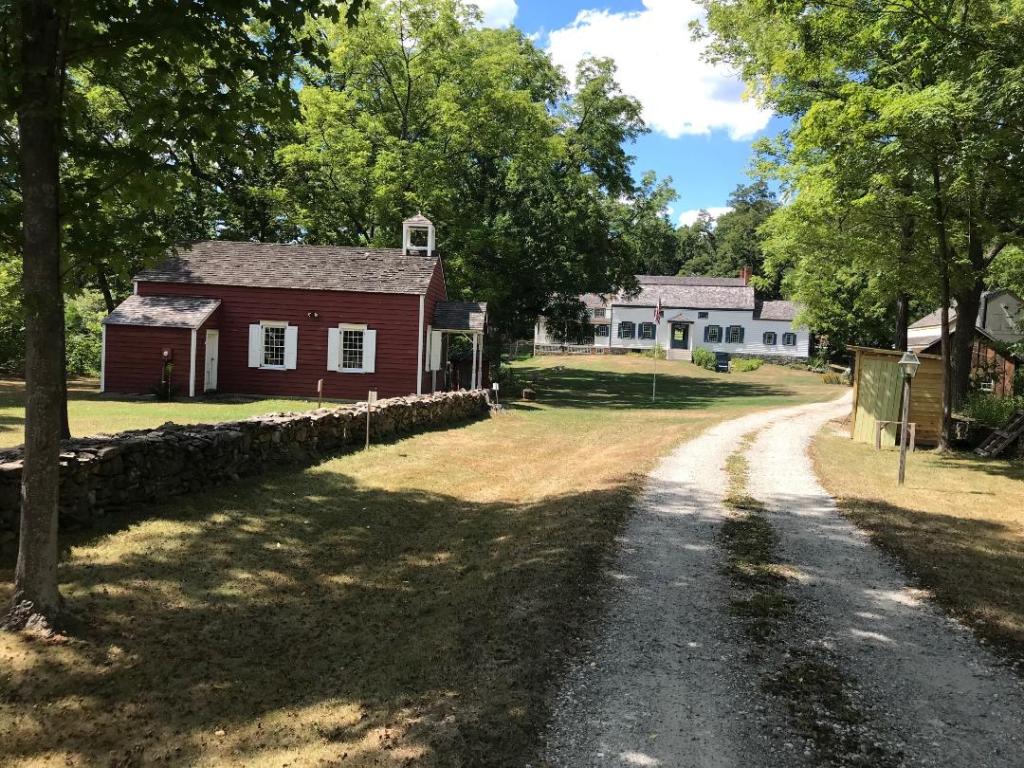
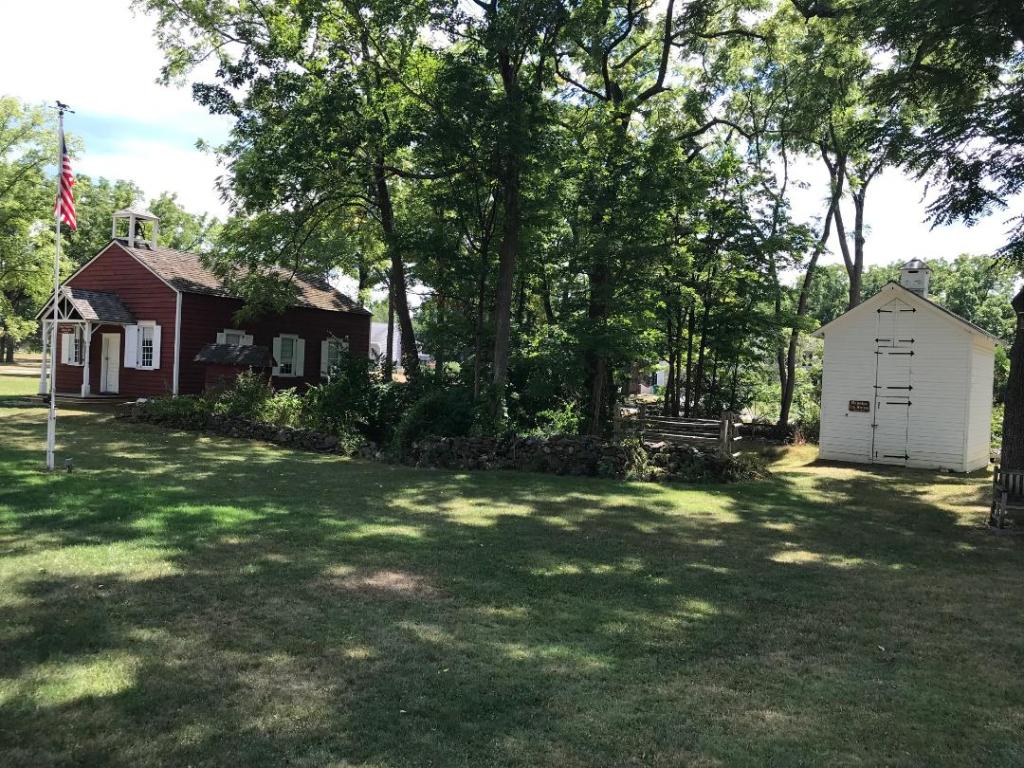
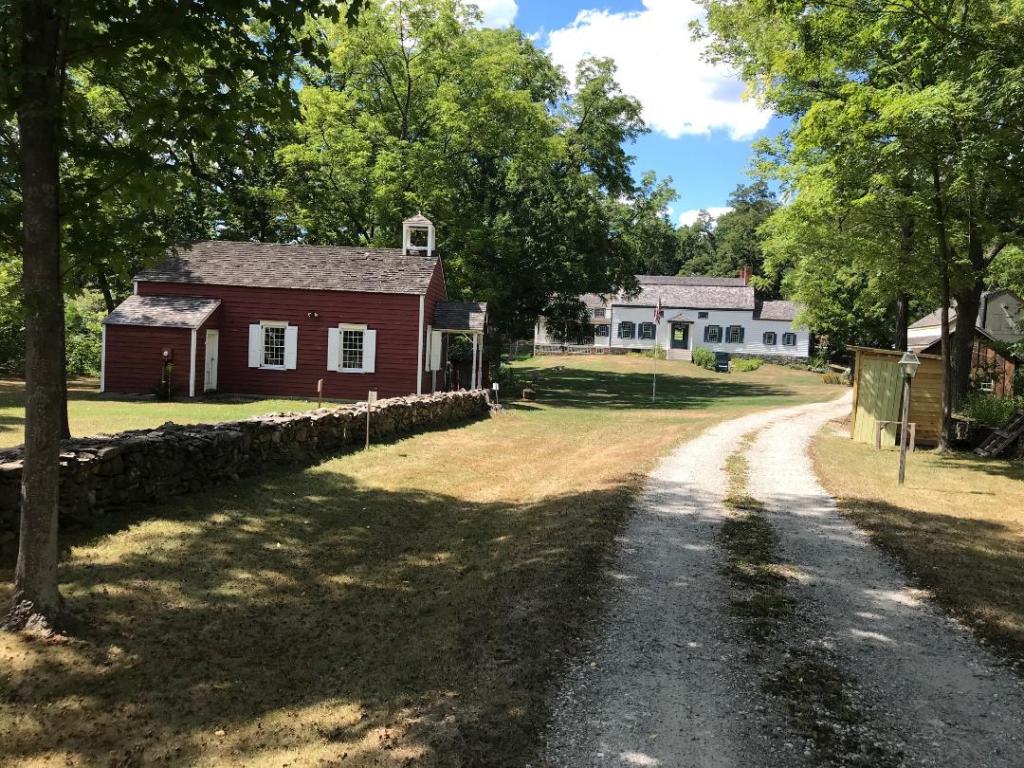
The entrance of the Homestead has the schoolhouse and icehouse to the left of the entrance and the blacksmith shop and the carriage house to the right. The Blacksmith shop has a real blacksmith on duty working when the house is open for tours.
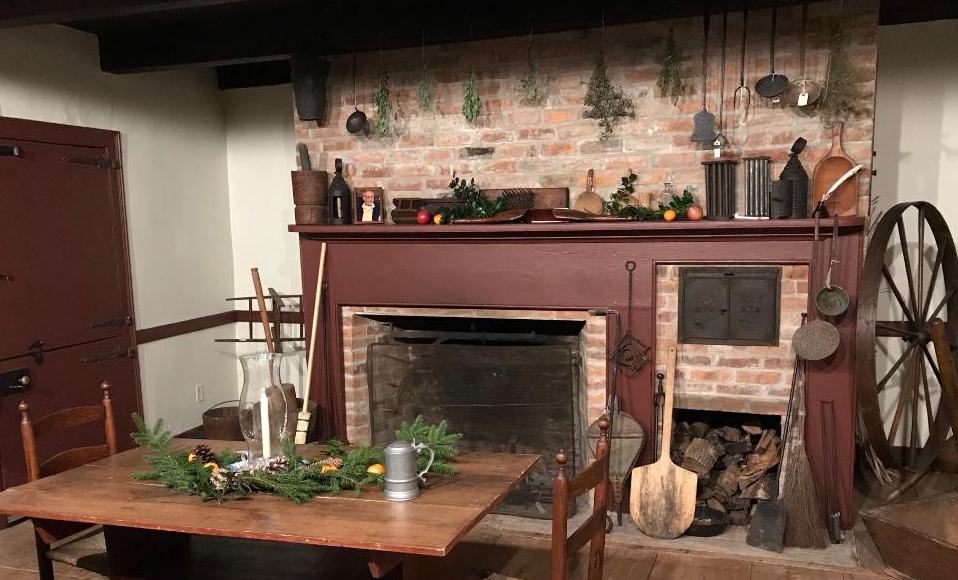
The original section of the house in the “Everything Room” where cooking, dining and socializing took place for the first generation of the family. This is the original part of the home that was built around 1755 by John G. Brinckerhoff and his bride, Marie Terboss for their family. There was a single upper room for the family as well. The main room is where all the cooking, eating, socializing and work was done by the family.
The original Brinckerhoff Kitchen in the first section of the home
When their family grew, the moved out and John’s brother, George G. and his wife, Elizabeth Wilcox moved into the house. After the Revolutionary War was over (both brothers were captains in the local militia), George G. added the main addition to the house with four additional rooms in the eastern wing of the house.
The addition showed the affluence of the family in that they could have separate rooms for socializing and higher ceilings meaning that they could heat the house properly.
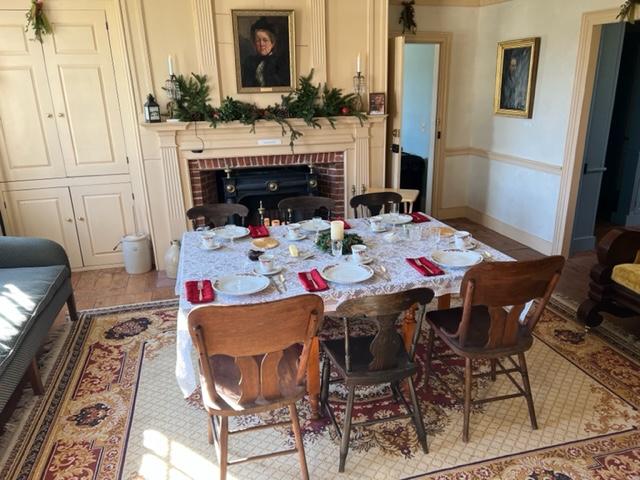
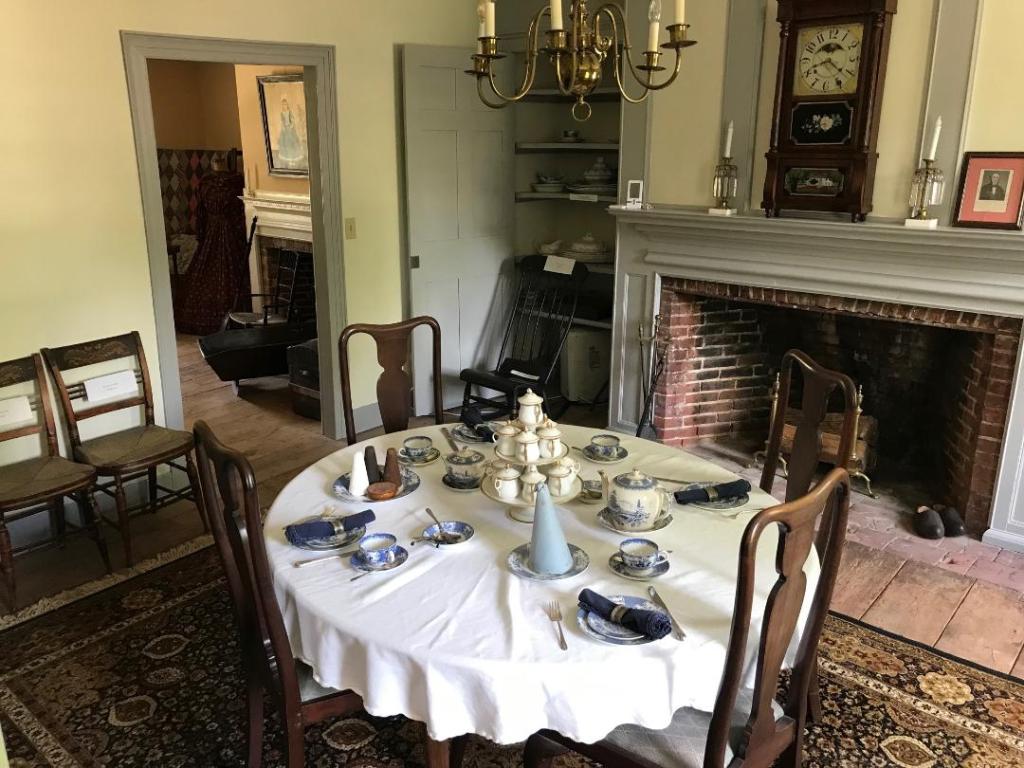
The formal Dining Room in the Victorian times set for entertaining. A hot chocolate service is on the table which was a luxury at the time.
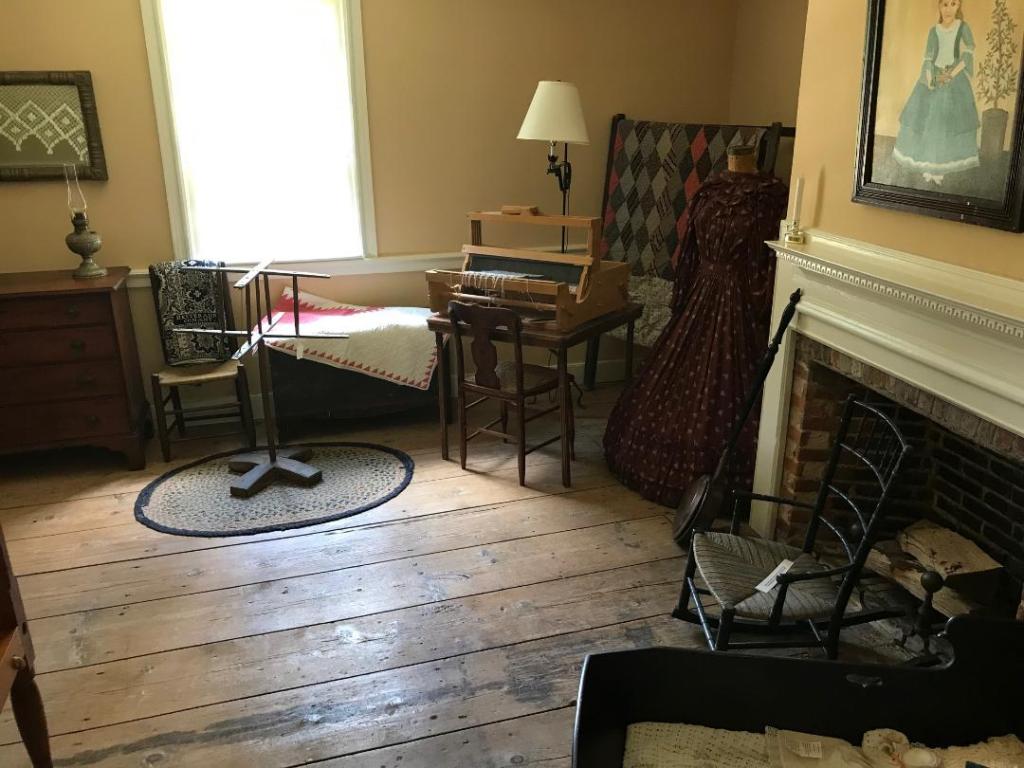
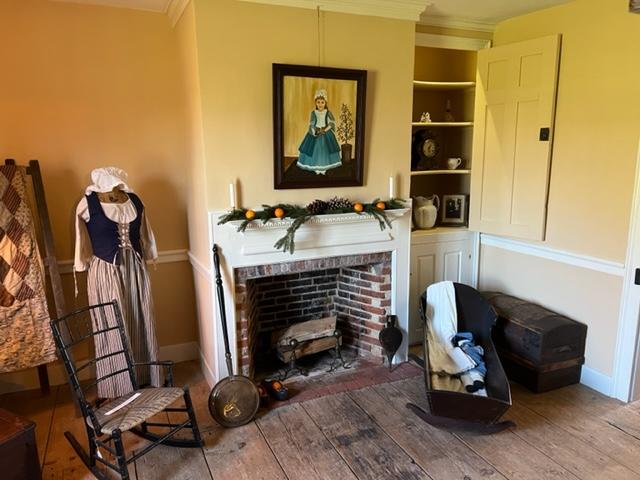
The formal Living Room is where socializing and work was done. Spinning and needlepoint as well as dressmaking where done by the ladies here.
The Living Room at the Brinckerhoff House
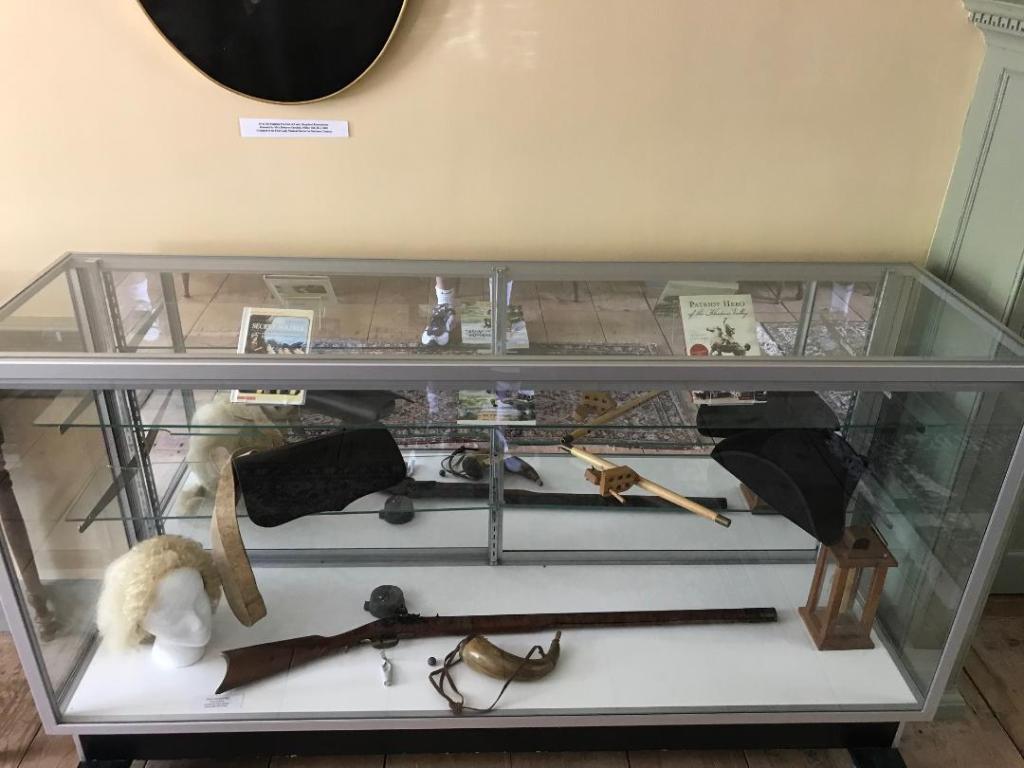
In the main hallway of the addition to the home services as a display area for all sorts of artifacts that deal with the different time periods of the home. These items are from the Revolutionary War.
Display cases in the main hall
Visiting the Historical Society at Christmas time and for the their Afternoon Tea:
Arriving at the Brinckerhoff House for the holidays on a beautiful sunny day
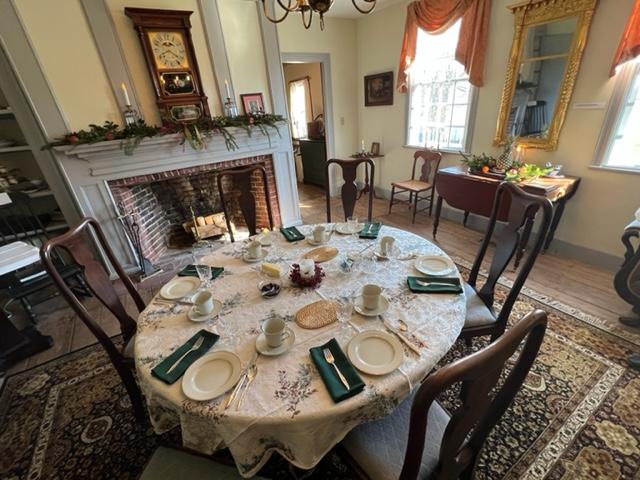
During a recent Christmas event held at the house in December of 2022, the house was decked out for the holidays. The Brinckerhoff house held its annual Holiday Tea, which it not held since 2019 due to COVID. This popular fundraising event was sold out that day.
The Brinckerhoff House ready for the holidays in December 2022
Approaching the house on the estate. The Van Wyck Barn is to the right.
Santa’s Sleigh for when Santa comes to visit the Brinkerhoff House
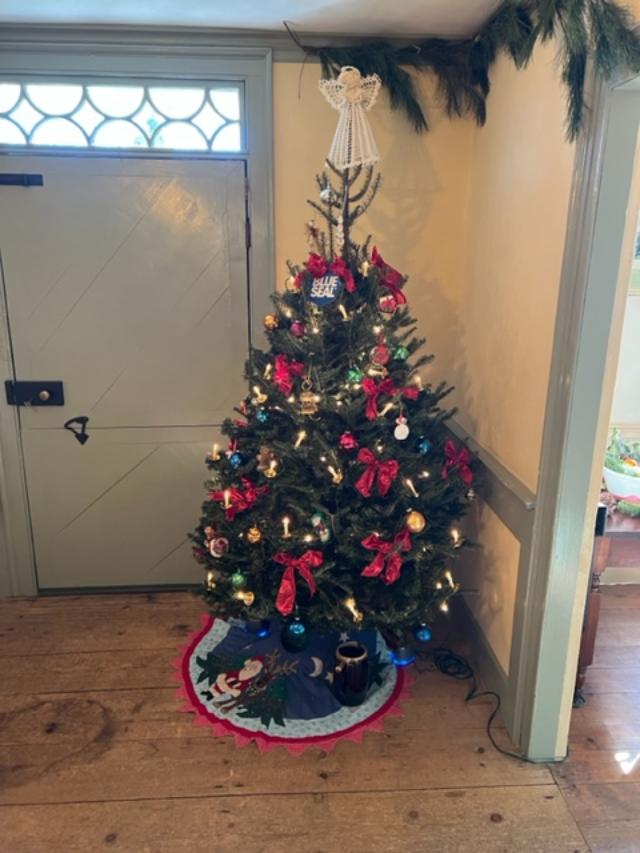
This sold out event really showcased the beauty of the house during a Revolutionary Christmas. Homes would be decorated in natural garlands and fruits of the season and the house would be decorated with candles. There was a Christmas tree in the home but that would not be seen until the Victorian era.
The Keeping Room decked out for the Afternoon Tea at the Brinkerhoff House
The Family Room at the Brinkerhoff House for the holiday in 2022
The Living Room decorated for the Afternoon Tea
The Living Room decorated for the Afternoon Tea at Christmas 2022
The family Christmas tree would not have been part of a Revolutionary Christmas but a Victorian era decoration in the late 1800’s
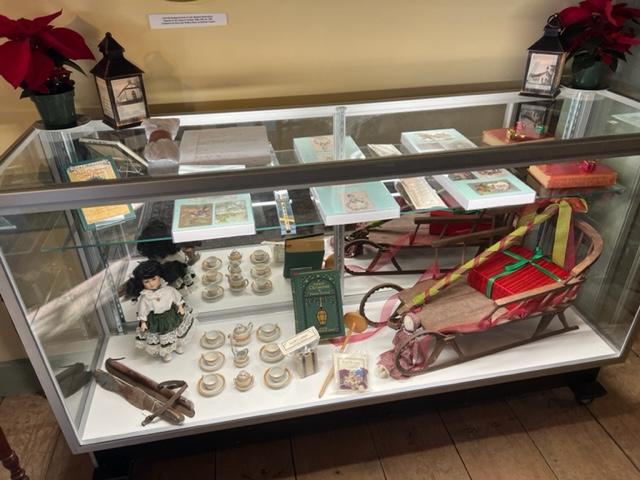
A Children’s wish list for Santa during the Victorian era with all sorts of playthings; dolls, sleighs, tea sets and books
The Strawberry Festival in Spring 2025:
Please read my entire blog on “Attending the Strawberry Festival at the Brinckerhoff House”:
When the festival began and before the Strawberry Shortcakes came out that afternoon, there were all sorts of activities and docent led tours. The first one that I went to was the 1820 Schoolhouse.
The historic sign for the 1820 One Room Schoolhouse of Upper Hopewell
The entrance to the schoolhouse
Even though the schoolhouse is from the early part of the 1800’s, it is amazing how it still relates to classrooms of today. I am still convinced it is the connection that students have with their teachers establishes the fundamentals of a good education and learning.
The schoolhouse from the back of the building
The inside of the classroom has not changed in two hundred years
The schoolhouse classroom is similar to today
I will be quite honest in saying that outside the potbelly stove, the classroom here is pretty much the same as the lecture halls that I see at our college campus.
Games and books of the past are similar to those of today
The items of the classroom of the 1800’s. I am not too sure the use of the Apple press but the children may have had chores to do outside the classroom.
A discipline system that should be brought back
After the tour and talk at the schoolhouse and a talk with other educators on the status of the modern classroom (we all had a lot to say on this), I went over to tour the barn.
The Van Wyck Barn
The historic sign of the mid-1800’s barn
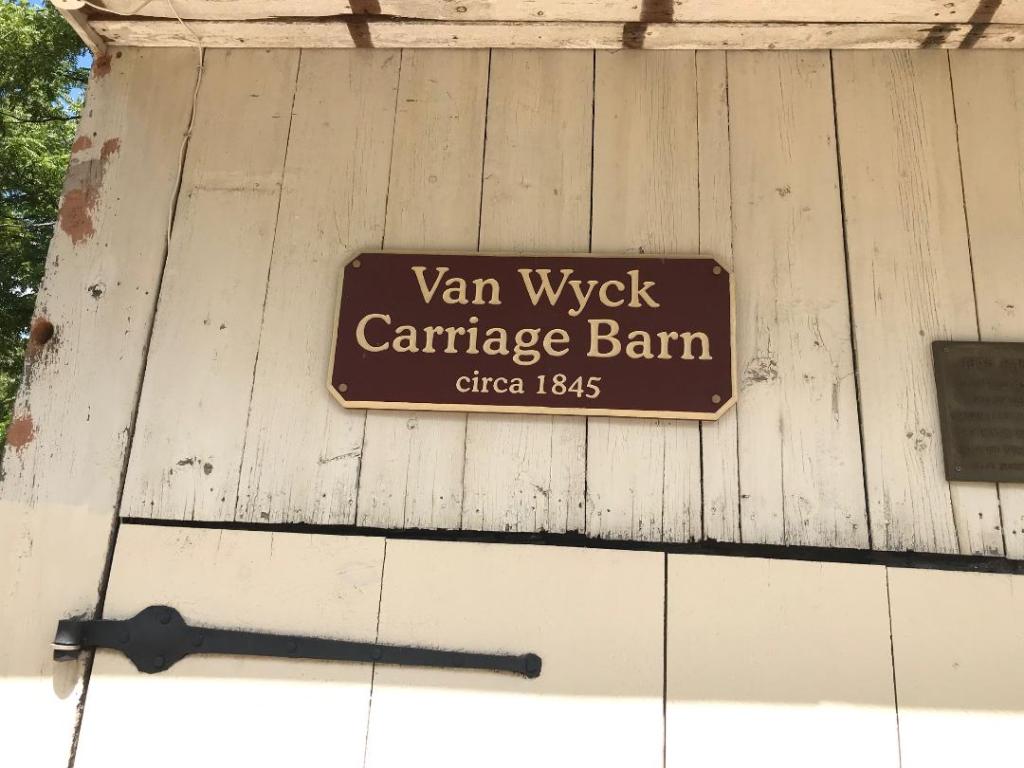
The historic marker of the 1845 barn
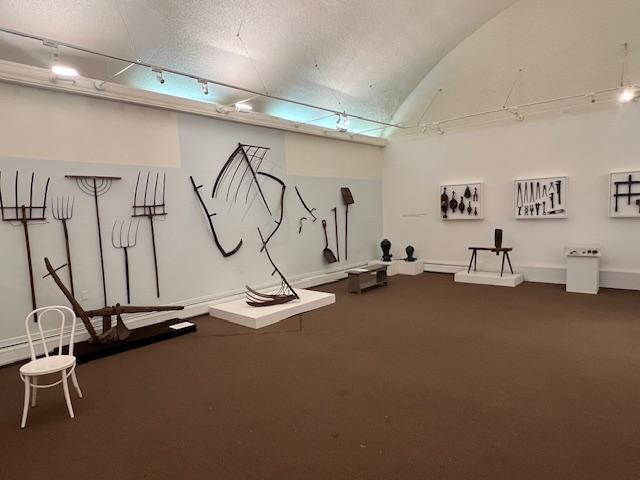
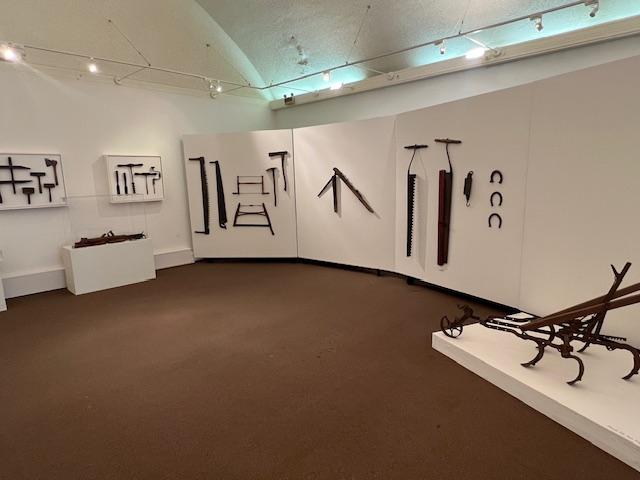
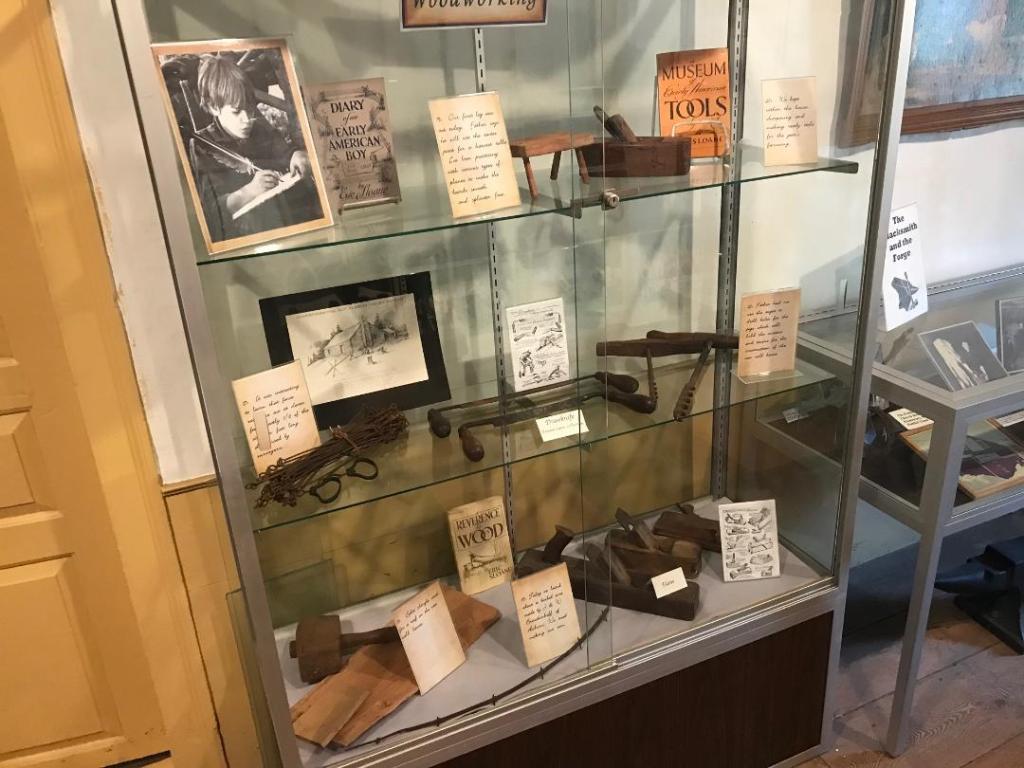
The actor who was working at the barn told us about wood making and about saws and how to maintain them for work on the farm.
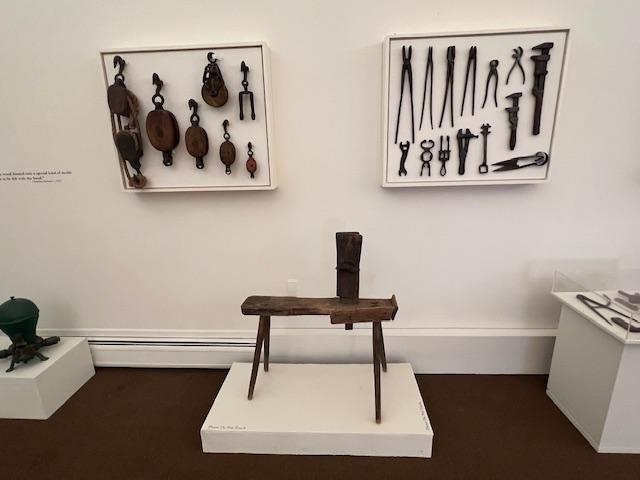
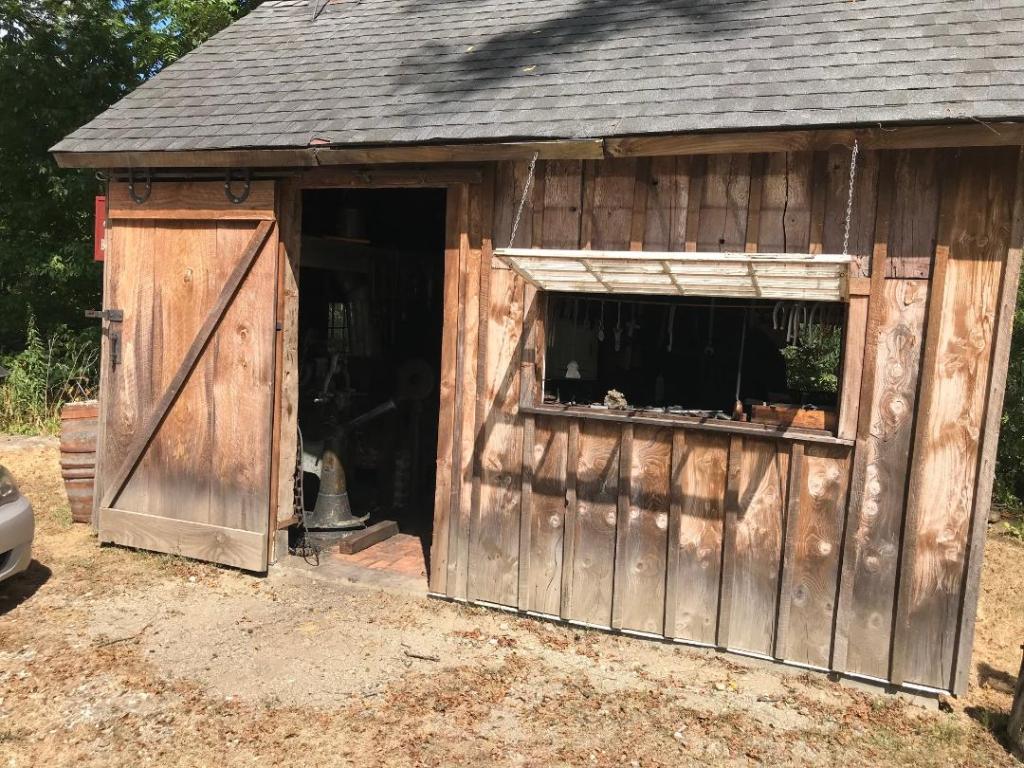
Next to the barn, there was a small blacksmith building where the volunteer was demonstrating items that would have to been made or maintained to keep work on the farm going. Never a dull moment on the farm.
Keeping the fires going and a certain amount of heat is needed to fix these items and create the objects needed on the farm.
The objects and items made at the blacksmith
I know that these tours may seem hokey to some but the volunteers who were at both the barn and the blacksmith were really interesting in their demonstrations. There was a lot of time, talent and creativity needed to keep these aspects of the farm in working conditions.
The rains had really made the grounds lush and all the flowers and trees were in full bloom. The gardens were really well maintained and it was really pretty to walk arounds the grounds of the house.
The gardens by the schoolhouse
In the little pen by the Ice House, they set up a small petting zoo with little goats who looked terrified of us. If we had something to feed them, trust me they would have been less shy.
These little lambs were so cute
I was trying to wave them down but they huddled together
Walking around the grounds
The Icehouse was closed that day
The crowds were starting to get bigger around 1:30pm because that was when the Strawberry Shortcakes were being served.
Since they were a little behind as the high school students were inside preparing the Strawberry Shortcakes, I decided to tour the Brinckerhoff House again. They had a Butter Making class going on in the old kitchen section of the home and there were early American displays in all the cases. All the first floor rooms were open and I got a chance to see some of the new artifact donations.
There were all sorts of displays of clothing, furnishings and assorted dish ware on display in the Living Room and Dining Room.
Early American display of women’s clothing
Early American display of Men’s clothing
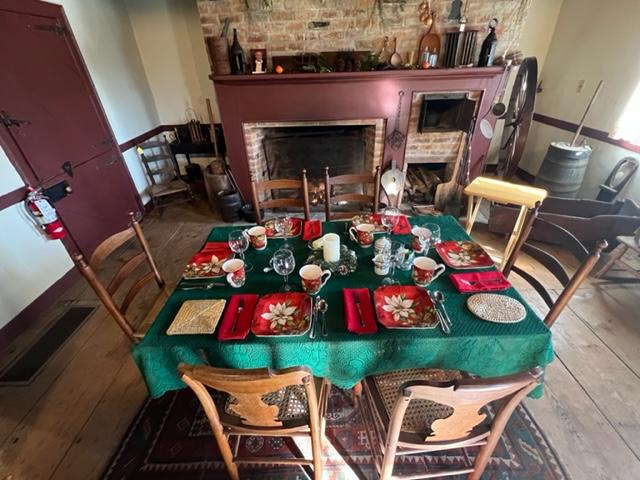
The Dining Room on the first floor was all set for tea
The Dining Room led to the bedrooms and the old kitchen
The old Main Bedroom on the first floor
Some the artifacts in the second floor bedroom
Some of the paperwork and artifacts in the main foyer
As I exited the house, I passed the door to the roof cellar. I did not think they would put this on the tour. Only the first floor of the house is open to the public.
The door to the root cellar
I took a tour around the grounds and passed the old outhouse
As soon as I finished the tour of the house and grounds the first trays of Strawberry Shortcakes started to come out and I never saw such a mad dash to get something.
The tent set up to sit and relax and eat
As I went to reach for a Strawberry Shortcakes on one of trays. I swear this woman grabbed two off the tray and practically barreled into me. I know they looked good but I could not believe the way some people behave. These were plenty of trays coming outside.
After I avoided the collusion, I was able to get one of the shortcakes off the tray and sit down. The Historical Society had plenty of seating under the tent and what was nice was they had ice cold lemonade as well. It made the perfect afternoon snack and the reason why everyone was here. When I had taken the initial tour of the property three years earlier, the tour guide told me that they went through 600 of these. I could believe it.
The Strawberry Shortcake with homemade whipped cream
I hate to say this but I waited almost four years to finally try this shortcake and admittingly it was well worth the wait.
The strawberries were so juicy and fresh. I was not sure if they were from a local farm but by the sweetness and juiciness these were not imported.
Yum!
The family remained in the house until the death of George G. in 1812 when his brother moved back in and then it was sold to Thorn Purdy in 1814. The Purdy family added the west wing of the house in 1830 that houses a small summer kitchen with a fireplace, crane and small brick oven.
The house was donated to the East Fishkill Historical Society by developer Gustav Fink in 1974 along with three acres when he could not sell it for redevelopment.
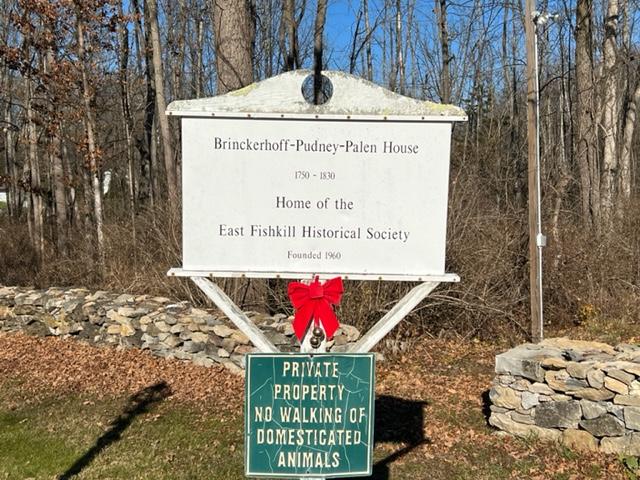
History of the Brinckerhoff-Pudney-Palen House:
(From Museum Pamphlet)
Around 1755, John G. Brinckerhoff and his bride, Marie Terboss purchased the land that the home sits on today. The original structure consisted of one room that included a kitchen with a large fireplace and beehive oven and a single upper room.
When their family their family grew, the house and farmed were conveyed to John. G.’s brother, George G. Brinckerhoff and his wife, Elizabeth Wilcox. In 1755, John G. and George G. were given commissions as Lieutenants in the Dutchess County Militia. Both men were promoted to Captain and were active with the Committee of Safety of the Rombout Precinct.
After the war in 1785, George G. built a four-room addition to the original east wing of the house. This is the largest section of the house and contains a spacious center hall, graced by elegant architectural features. The small paned windows, enclosed staircases, Dutch doors and wrought iron “HI” hinges were characteristics of the 18th century. A small shed was added around the same time.
When Captain George G. Brinckerhoff died in 1812, Captain John G. Brinckerhoff took possession of the farm again and in 1814 sold it to Thorn Pudney who christened it “ARCADIA”. The Pudney family would remain at “ARCADIA” for the next 60 years. In 1830, the family added the western wing of the house featuring a small summer kitchen complete with a fireplace, crane and a brick oven with an iron door cast at Fishkill Landing. It also contains an indoor stone cistern in the basement to collect rainwater for cooking, washing and drinking.
In 1875, Edward Palen purchased “ARCADIA” from Thorn Pudney’s son Jacob and changed the character of the farm by focusing on dairy production. It was very convenient to ship their milk to marker in New York City via the rail line two miles away at Hopewell Junction.
Edward Palen’s son, James H. would eventually take over the farm. The Palen farm produced their own lumber from the trees grown on the farm. As James Palen’s health began to fail, the farm was sold to Banton Moore in 1926, who rented it to Gene Satterlee. Gene continued dairy farming for many years until a fire burned the cow barn in 1970.
The house and the farm were sold one last time in 1974 to local developer Gustav Fink, who after many unsuccessful attempts to sell the house to be restored gave the house and three acres to the East Fishkill Historical Society. At this time, the old farmhouse was in a poor state of repair.
The Brinckerhoff Historical Sites Schoolhouse and Icehouse on the estate
Through the continuing efforts of the East Fishkill Historical Society’s members and many years of fundraising and restoration, the Brinckerhoff-Pudney-Palen House has once again been resurrected to its original condition and stands as a fine example of an original Hudson River Valley Dutch farmhouse.
On the grounds are also the 1870 Icehouse, the 1826 Schoolhouse, the 1880 John Hyatt Blacksmith Shop and the 1845 Carriage Barn from the Van Wyck family.
The 1880 John Hyatt Blacksmith Shop
The Van Wyck Carriage Barn from 1845
The entrance to the Brinckerhoff home with the Schoolhouse from 1826 to the left and the Blacksmith Shop to the right and the main homestead of the estate.
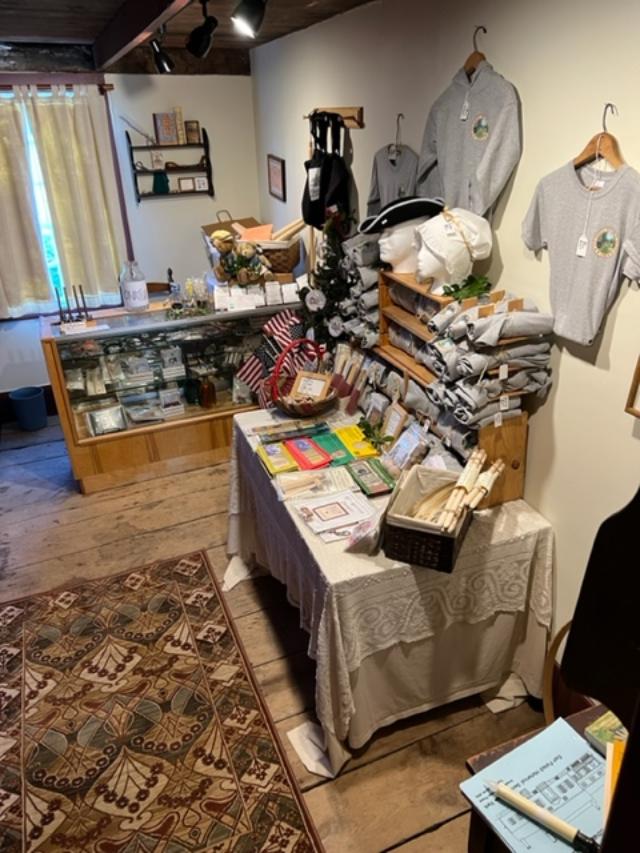
Don’t forget to visit the Brinckerhoff House gift shop at the end of your tour! This helps with the fundraising efforts to support this wonderful home.
The front of Montgomery Place in the summer of 2023
On a recent trip to the Hudson River Valley for Fall events I took a tour of Bard Campus to visit their campus and tour Montgomery Place which the college bought from the Hudson River Historical Society in 2016. It is now part of the campus and you can tour the grounds but not the inside of the house.
The back of Montgomery Place
Montgomery Place on the Bard College Campus
Before 2016 when the house was owned by the Historic Hudson Valley Society, who used to have tours of the mansion. When the family sold the mansion and all its contents to the Society, they left the house untouched when they moved out you got to see how the Livingston family lived not just in current times but with all the historical furniture that came with the house.
The view from the house to the Hudson River
The gardens from the back of the house
The former tour used to take you through each room that had antique furniture and decorations but much of the house had been modernized over the years. Older furnishings had either been conserved or slipcovered because of age. Since the house has been sold to Bard College, you can only tour the house by appointment only through the college.
The mansion’s portico overlooking the Hudson River
The grounds are still impressive. During the Spring, the formal gardens next to the house are in full bloom and the last time I had taken a tour there, the gardens were being maintained by a local garden club.
The entrance to the Montgomery Place gardens
There were flower beds, herb gardens and cutting gardens on top of the flowing lawns from the house to the river. The gardens are broken into three different sections: the Eclipse Gardens, the Wilderness Gardens and the Walled Gardens. Each of them connects to the other and some have returned to their natural state over time and care of them.
The Montgomery Place Gardens are changing from Summer to Fall
Pathways through the gardens
The gardens were developed over time from Louise Livingston’s day to her daughter, Clara Livingston Barton and her husband building on them the to Delafield family, who were the last owners of the house maintaining and adding to them.
The formal gardens
The Garden Sign of the Ellipse and Rough Gardens
The Rough Garden
The Rough Garden was in full bloom with lotus and frogs all over the pond
The Ecllipse Garden has gone back to nature in comparison to the garden’s original plans
In the Fall on a recent visit, most of the gardens had been cut back with a few seasonal flowering bushes still showing color. The trees surrounding the house were turning a gold hue while the lawn that had been freshly cut was still emerald green. The house while a little worn from the outside still looked like it was ready to receive guests for the Fall season in the Hudson River Valley. The views from the back of the house are breathtaking from the window views of the Hudson River and the paths leading to it.
The Garden sign
In the Summer of 2023, the mansion grounds are open until dusk for people to walk around the estate and visit the gardens. The gardens were in bloom with summer flowers and plantings. The Rough Garden with it ponds were full of frogs who were making all sorts of noise. I had not seen a frog in the wild in many years and you just don’t see those and turtles anymore in the woods. The mansion is still not open except by appointment through the college.
The formal gardens in the summer of 2023
The grounds are well maintained but there is more detail in the maintenance of the gardens that are needed. They could use some weeding with all the crabgrass coming into the beds. Still the gardens are breathtaking on a warm sunny day and make quite an impression. They must have been something when the family maintained them with their gardeners.
the beauty of the formal gardens
There are all sorts of hiking trails to the Sawkill River and through the forests, a trail down to the Hudson River and tours of the property. The grounds are open from dawn to dusk and there is plenty of parking by the Visitor’s Center along with a history of the estate.
The property had been home Native Americans for at least 5,000 years as a seasonal hunting ground. The Dutch settled in the area in the late 18th century using the Saw Kill River for various mills.
In the late 1770’s, Janet Livingston Montgomery purchased from Abraham Van Benthuysen 242 acres of land on the Hudson River after the death of her husband General Richard Montgomery at the Battle of Quebec. She moved into the home they built after the Revolutionary War. She later had plans made for a Federal style mansion on the riverfront property she bought and moved into her new home, Chateau de Montgomery, in 1805. She established a working farm with the help of friends who gave her tree samples (Wiki).
The Sun Dial in the Walled Garden during the summer of 2023.
Upon her death in 1828, the mansion was inherited by her brother, Edward Livingston. He had spent his summers vacationing here with his wife, Louise. They renamed the estate ‘Montgomery Place’. He died the next year and his wife, Louise hired Alexander Jackson Davis to convert the mansion into a more ornate villa. Two wings and exterior decoration were added at this time of the renovation. With the help of Andrew Jackson Downing, a friend of Louise’s and mentor to Davis, she developing the landscapes. Her daughter, Cora Barton worked with the architect on designing garden and conservatory (Wiki).
The front of the mansion
The back of the mansion from the grassy gardens facing the Hudson River
Upon Louise’s death in 1860, Cora and her husband hired Davis again to build some the earlier outbuildings including Coach House, Swiss Cottage and farmhouse and then extended the landscaping to turn the estate into more ‘pleasure grounds’ and have a separation from the farming operations.
The Coach House for Carriages and then cars
The house then passed on to another relative in 1921, John Ross Delafield who added heating and modern plumbing to the house. He and his wife also extended the gardens on the estate as well (Wiki). The gardens had more ornate features to them.
The “Walled Gardens” to the right of the mansion
Upon his death, his son John White Delafield inherited the house and they opened two corporations to own and operate the property.
The expansion of the gardens
In 1981, the estate was sold to the Historic Hudson Valley, the historical society. After an extensive renovation, the house was designated a National Historic Landmark in 1992 and it was bought by Bard College in 2016 who is its current owner (Wiki).
The Montgomery Place Mansion sign and the evolution of the home.