Category: A Local Journey out of Manhattan

The Penn Museum, The University of Pennsylvania Museum of Archaeology & Anthropology                                                      3260 South Street                                  Philadelphia, PA 19104

The Penn Museum, The University of Pennsylvania Museum of Archaeology & Anthropology 3260 South Street Philadelphia, PA 19104

The Penn Museum, The University of Pennsylvania of Archaeology & Anthropology

3260 South Street

Philadelphia, PA  19104

(215) 898-4000

https://www.penn.museum/

Phone: General Information: (215) 898-4000/Membership & Membership Events: (215) 898-5093/Public Programs: (215) 898-2680/Group Sales (adult, senior and college admission): (215) 746-6774/Education/K-12 Tours: (215) 746-6774/Museum Shop: (215) 898-4046.Facility Rentals: (215) 898-3024

Open: Sunday 10:00am-5:00pm/Monday Closed/Tuesday 10:00am-5:00pm/Wednesday 10:00am-8:00pm (first Wednesday of the month otherwise 5:00pm)/Thursday-Saturday 10:00am-5:00pm

Museum Library Hours:

Tuesday, Wednesday, Thursday: 9:00am-9:00pm/Monday, Friday, Saturday: 9:00am-5:00pm/Sunday: 1:00pm-5:00pm/Closed holidays

Pepper Mill Café Hours:

Monday: 10:00am-1:00pm/Tuesday through Friday: 8:30am-4:30pm/Saturday and Sunday: 10:00am-4:30p

Fee: Adults $18.00/Seniors $16.00 (over 65)/Children 17-5 $13.00/Military and Children under 5 and Members Free/Penn Museum Members/Penn Card Holders/HUP/CHOP Employees: Free

TripAdvisor Review:

https://www.tripadvisor.com/Attraction_Review-g60795-d138271-Reviews-Penn_Museum-Philadelphia_Pennsylvania.html?m=19905

The entrance to the Penn Museum at 2360 South Street

Looking for a tranquil place to study or relax? Try the Museum’s garden’s and galleries or the Museum Library. For a bite to eat, stop by the Pepper Mill Café. Come by during Reading Days and Exams for free coffee and tea and extra study space on campus (from the Penn website).
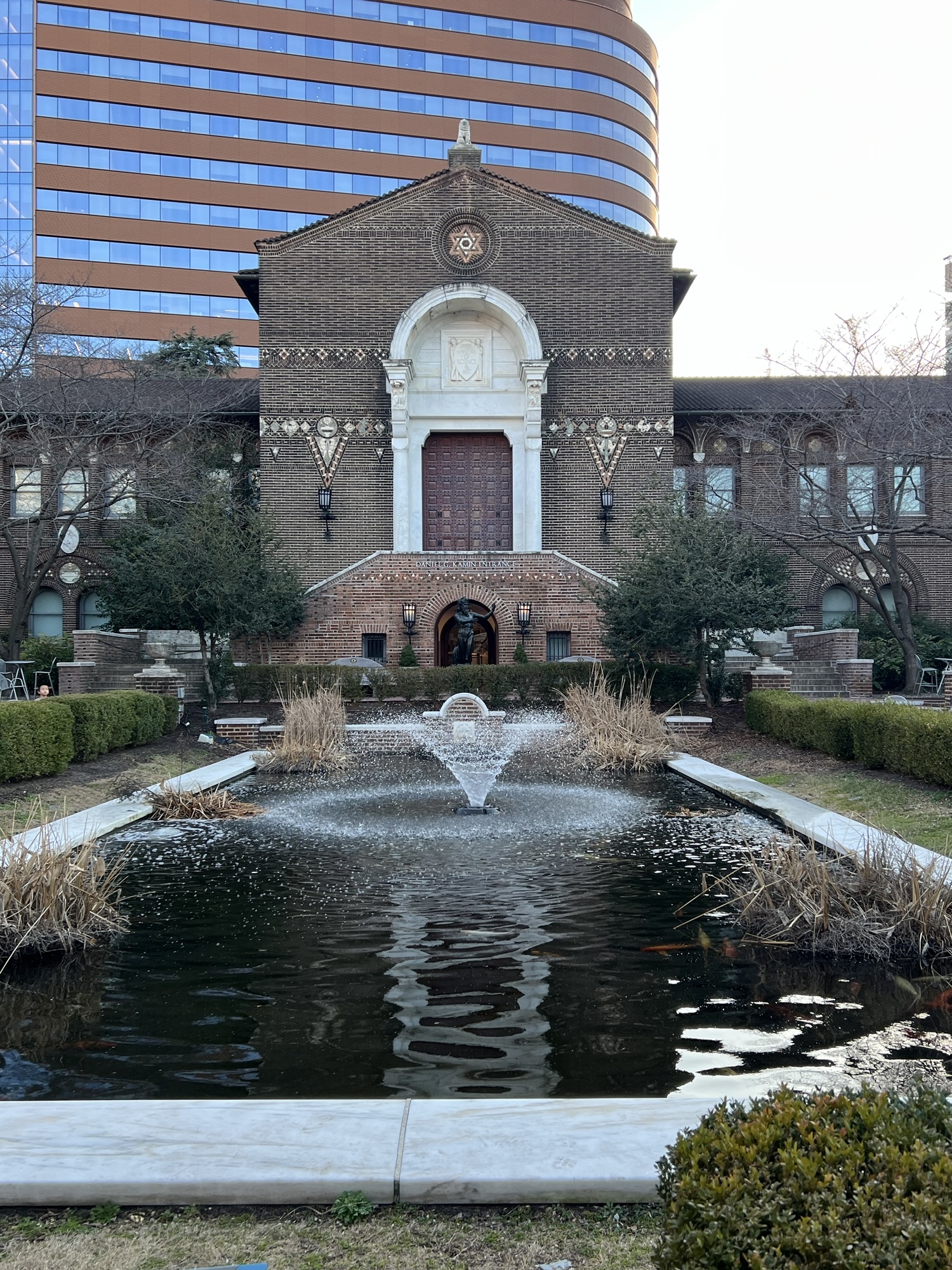
The University of Pennsylvania Museum and Gardens

Museum Shop: A wide selection of books, games, fine jewelry and crafts from around the world can be purchased at the Museum Shop. Open during Museum hours.
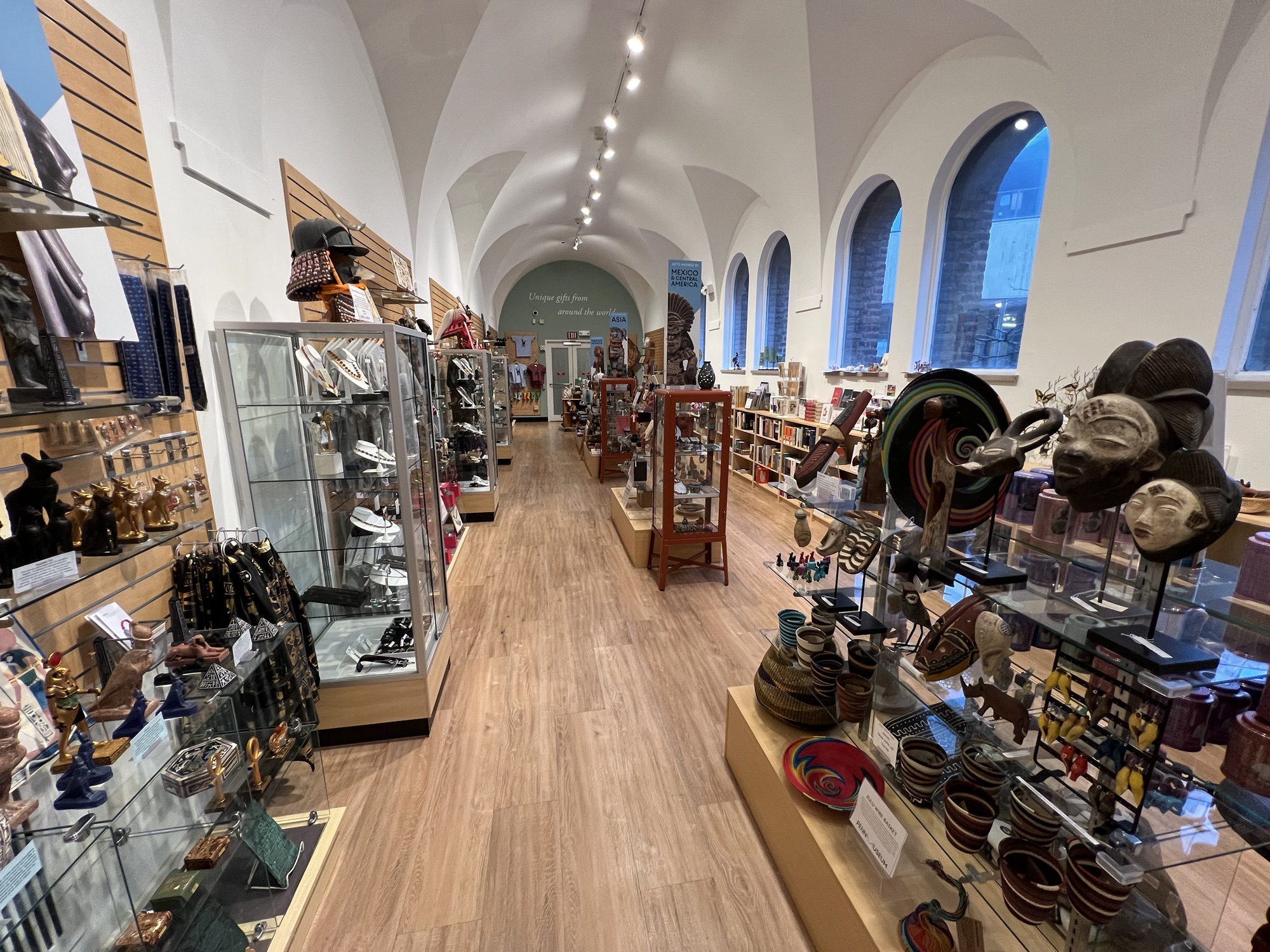
The museum gift shop

I visited the Penn Museum on days I have come to Philly for the Penn versus Cornell games and for the Christmas holidays (the museum is across the street from the football stadium.

When I visited Philadelphia recently, I was able to visit the museum at more length rather before and after a football game. I really got a chance to see all the displays and look at all the artwork. It is a fascinating museum with many artifacts found on digs conducted by the university. It takes a lot of time to explore each culture.

The museum has three floors of exhibition space which is broken into different centuries. The museum has a lot of artifacts from their digs over the last two hundred years. Many of the artifacts are on display have the background of where the artifacts were found and how they researched. Each room has a different area of the world they are coming from.

On the Upper floors is the Asian, Egyptian and Roman exhibitions on artifacts, the Mid-level is the Middle Eastern, African, Egyptian, Mexican and North American/Native American Galleries.

The History of the University of Pennsylvania Museum:

(from the College website)

The Penn Museum is one of the premier international museums of archaeology and anthropology right here on the University of Pennsylvania campus. An active research and teaching center, the Penn Museum has teams engaged in more than 50 expeditions and research projects worldwide. Three floors of public galleries feature art, artifacts and remarkable stories from every inhabited continent on earth.Here is a selection of the interesting artifacts and art that I saw at the museum:

The Eastern Mediterranean Gallery:

The Eastern Mediterranean Galleries of Roman and Greek art

Transforming understanding of the human experience. Home to over a million extraordinary artifacts and archaeological finds from Africa, Asia, the Americas and the Mediterranean, the Penn Museum has been uncovering our shared humanity across continents and millennia since 1887.

The Greek Galleries

The Roman/Italian Galleries:
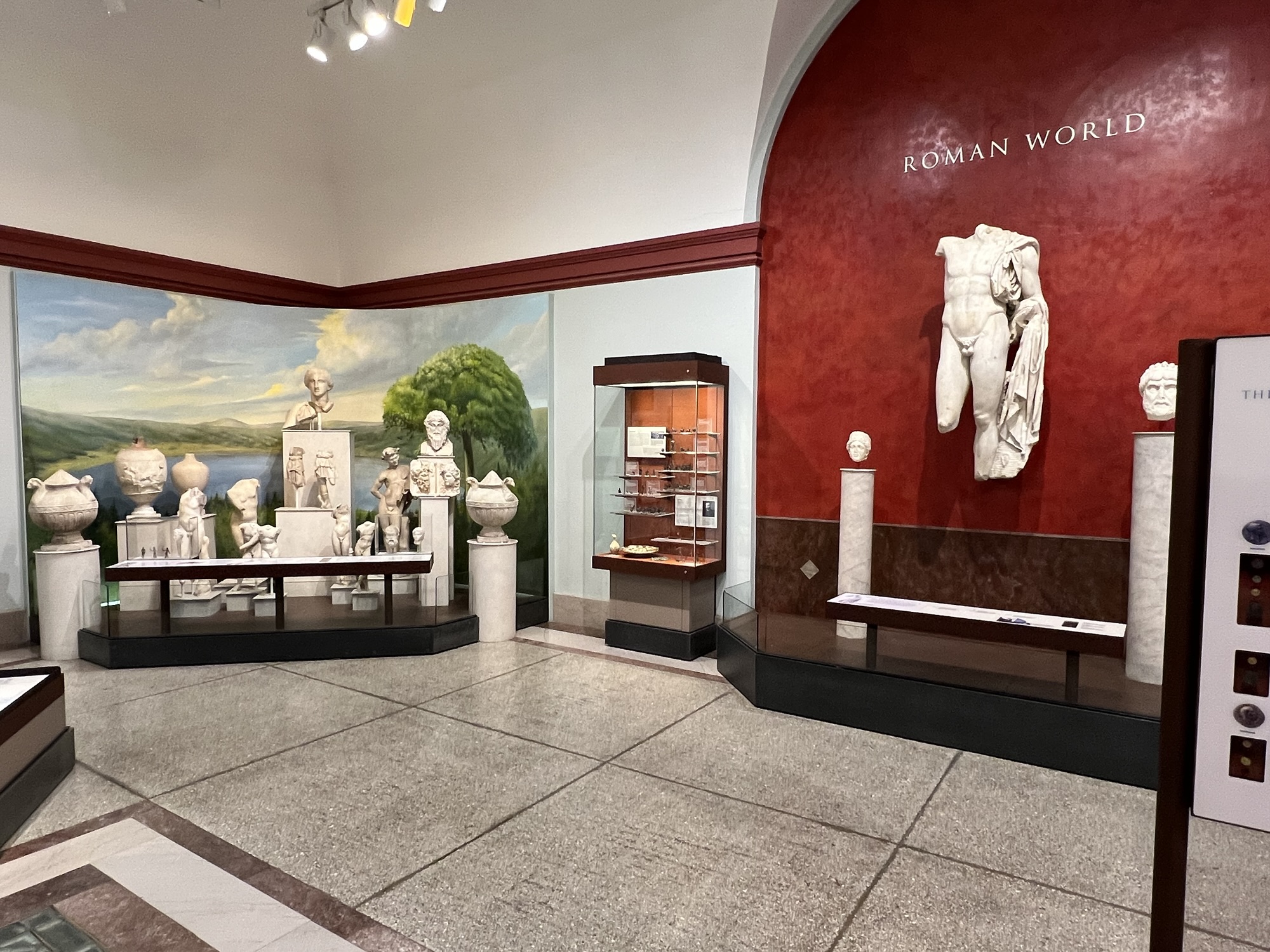
The entrance to The Roman Galleries

The Roman Galleries
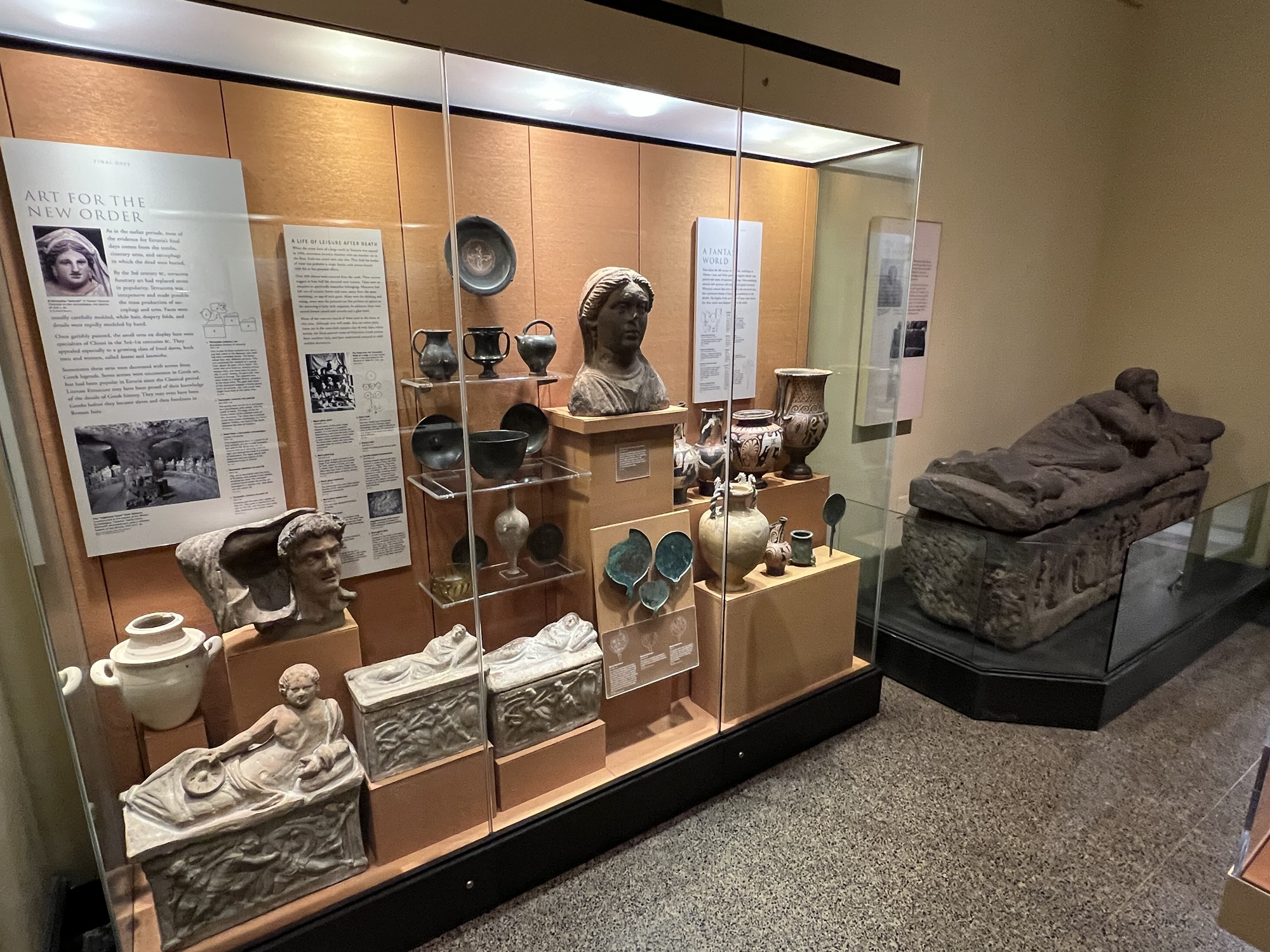
The Roman Galleries

The Roman Galleries tell the story of the influence of Ancient Roman on the Mediterranean Sea. trade routes to the the Middle East and Asia and the influence of the Roman Empire on the world at the time.

The Pre-Columbian Gallery:

The Pre-Columbian exhibition is based on artifacts from the Mayan, Aztec and Incan civilizations. The artifacts show very advanced societies in both education, science and art.
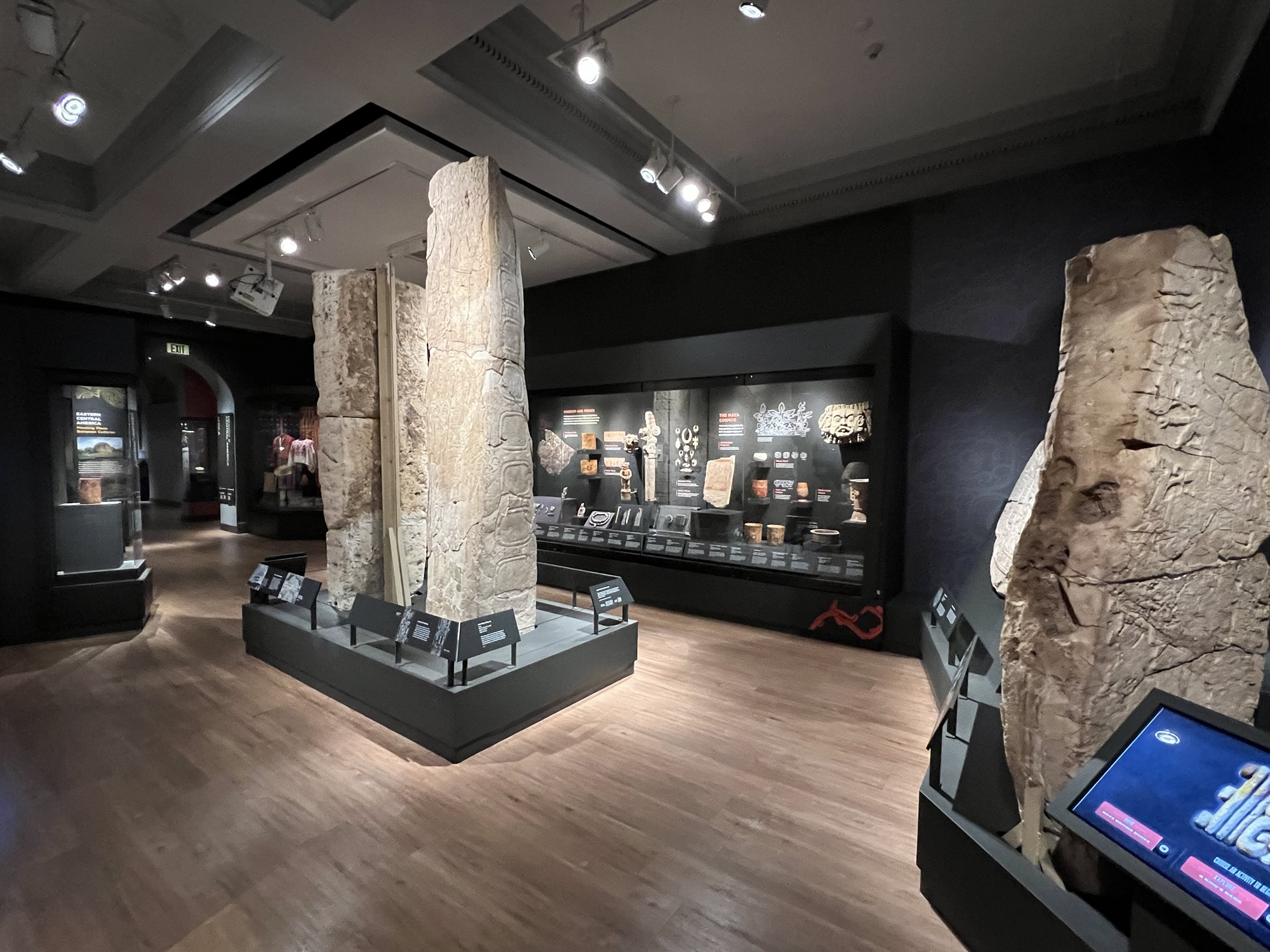
The entrance to the Pre-Columbian galleries
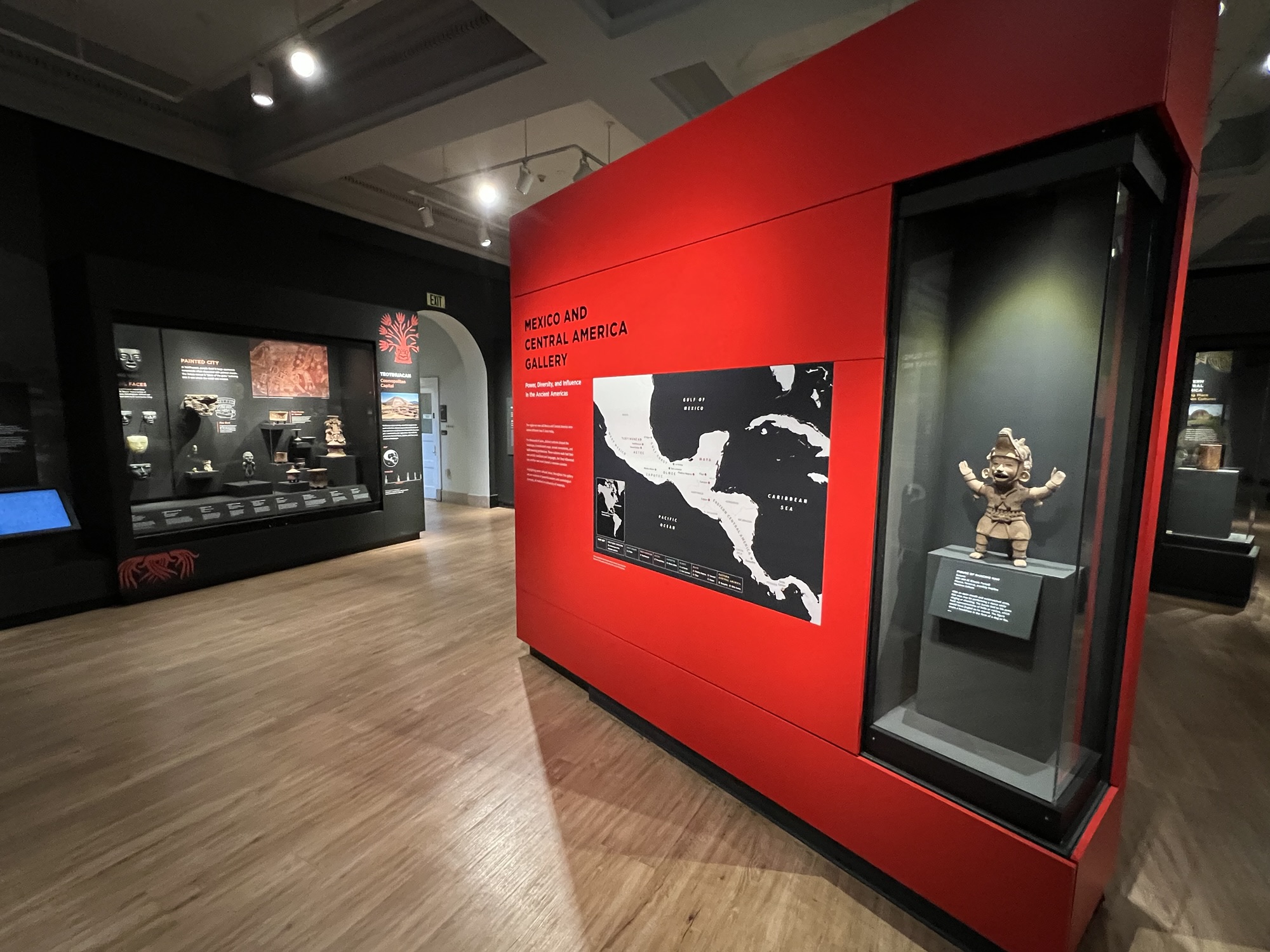
The Pre-Columbia room

The Pre-Columbian galleries

The ‘Margarita’ panel

The ‘Margarita’ panel

I also got a quick tour of the  Sphinx Gallery on my way out. On my most recent trip to the museum, I only had about an hour so I concentrated on the Egyptian Galleries and the special exhibition “The Stories We Wear”.

The Egyptian Galleries:

For a small museum, the Egyptian Galleries were pretty extensive. Much of the artifacts had come from Penn digs in Egypt back in the last century when museums used to sponsor and then fill their museums with artifacts. 

There is a selection of small statuary, jewelry and decorative objects. Some of the collection highlights are the Sphinx of Ramesses the Great from Memphis, Egypt 1293-1185 BC located in the Egypt (Sphinx) Gallery.
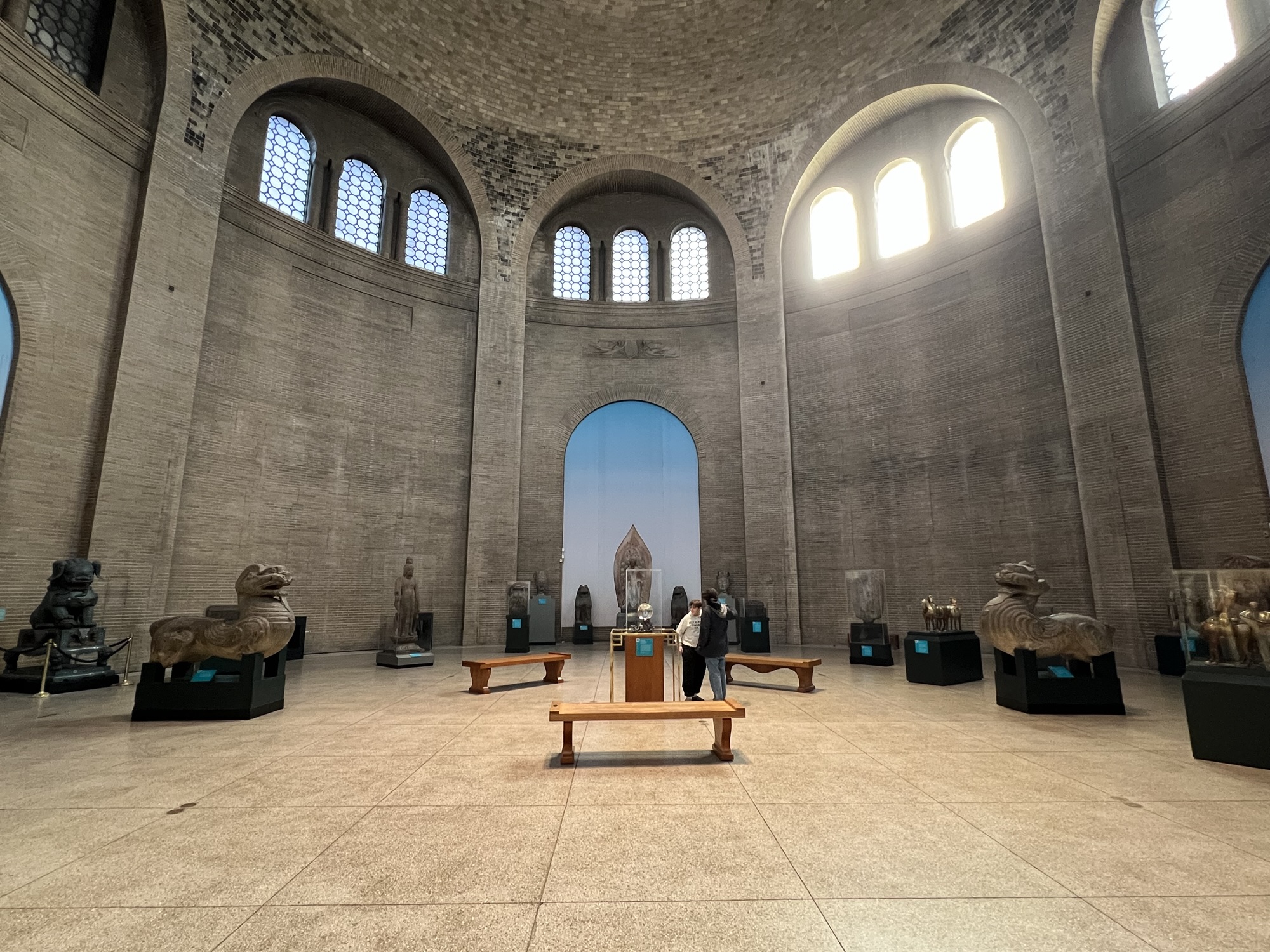
The Sphinx Gallery is very interesting
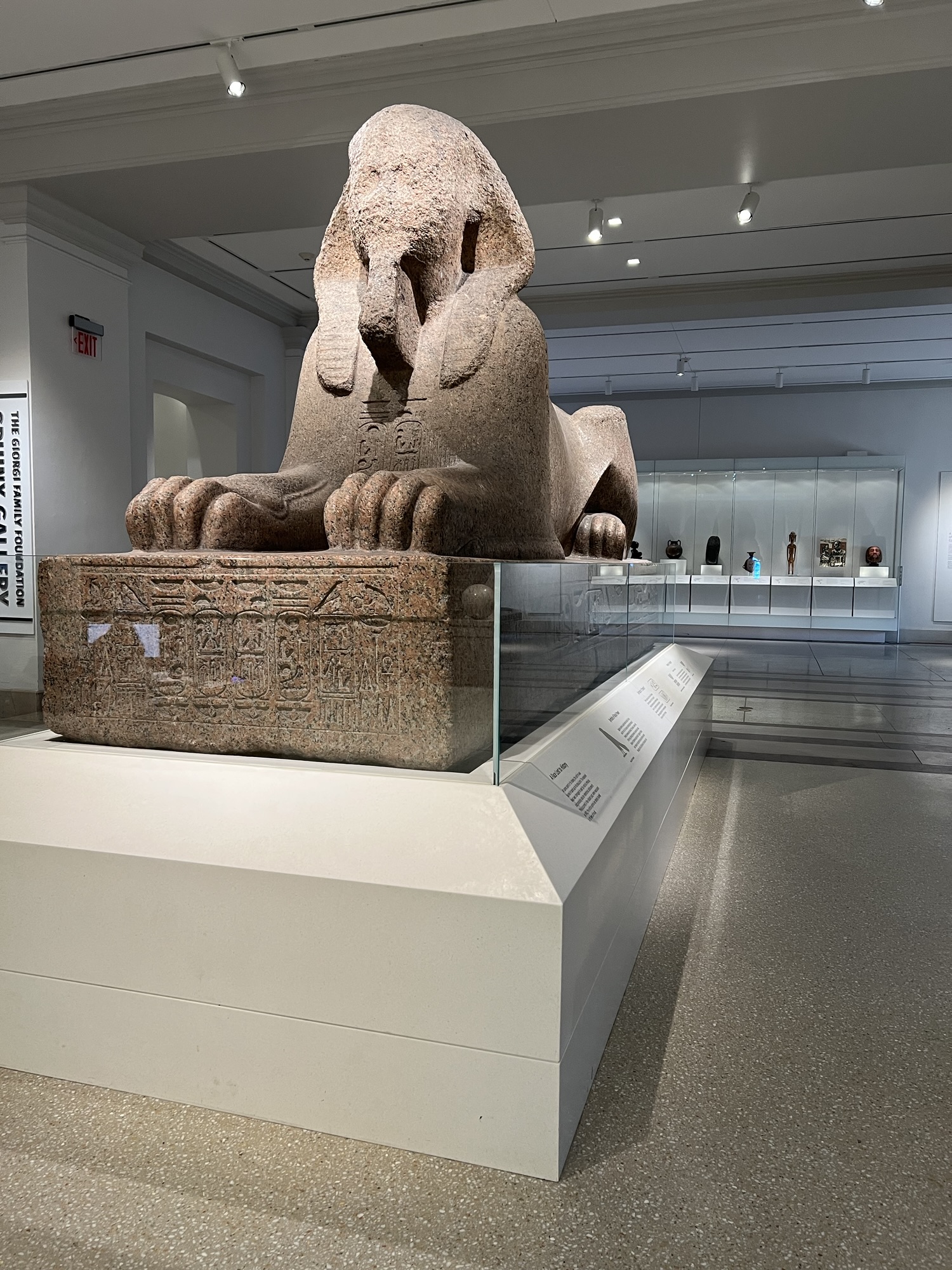
The Sphinx guards the Gallery

Egyptian Gallery artifacts

The main Egyptian Gallery

On my first trip to the museum as well as my most recent, I was able to quickly tour the Mexican Galleries with the statues of the Sun and Water gods and the stone calendars. The Standing Figure located in the Mexico and Central America Gallery from Veracruz, Mexico from 500-700 CE. The Gallery has one of the largest collections of Mayan Stone statues in the world.

In the Special Exhibition Gallery, “The Stories We Wear”:

The exhibition was based on how what we wear and change into transforms us into someone new. The exhibition featured sports uniforms, Chinese Opera gowns, Princess Grace Kelly’s formal dress, drag performers costume as well as an array of accessories that adorn people.

“The Stories We Wear” exhibition

https://www.penn.museum/on-view/galleries-exhibitions/the-stories-we-wear

More of the interesting galleries that I visited:
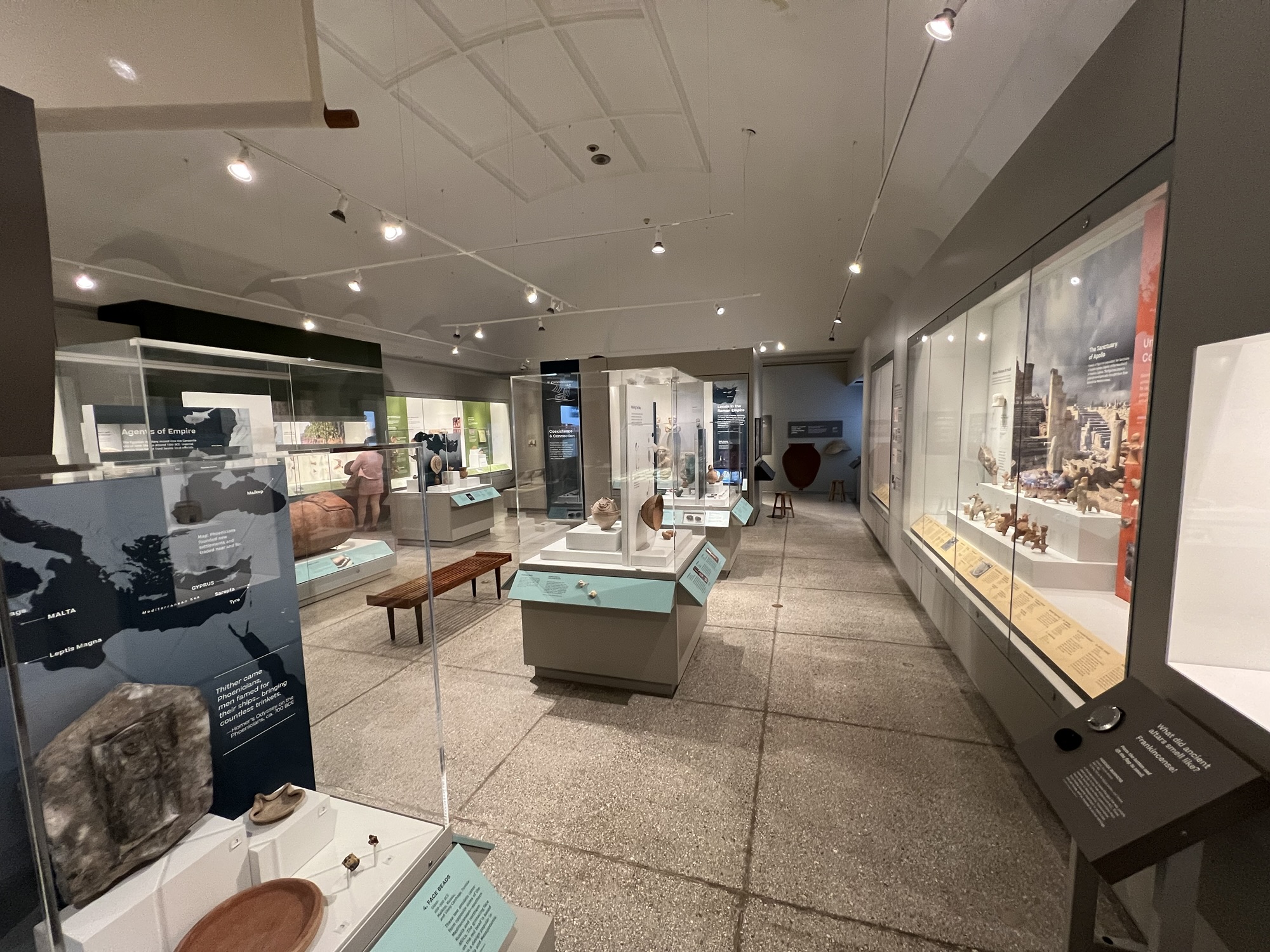
The galleries at the Penn Museum

The Middle Eastern Galleries

From Groundbreaking excavations to ongoing innovation. Our journey as an institution began with an excavation of the ancient Mesopotamian city of Nippur, the first American excavation in the Middle East and a groundbreaking undertaking in the history of archaeological research.

Ancient works of art

Since that time, over 300 field excavations and anthropological research projects around the world have set us apart as an active research and educational institution. Today, our mission is fulfilled by 22 curators, 5 teaching specialists and over 150 affiliated consulting scholars.

The Mesopotamians Galleries

We are stewards of our remarkable history and humanity. Out vast and varied collection of archaeological finds and ethnographic objects is organized in eleven curatorial sections documenting the peoples of Africa, Asia, Oceania and the Americas.

The art from Ur

Harp from the City of Ur
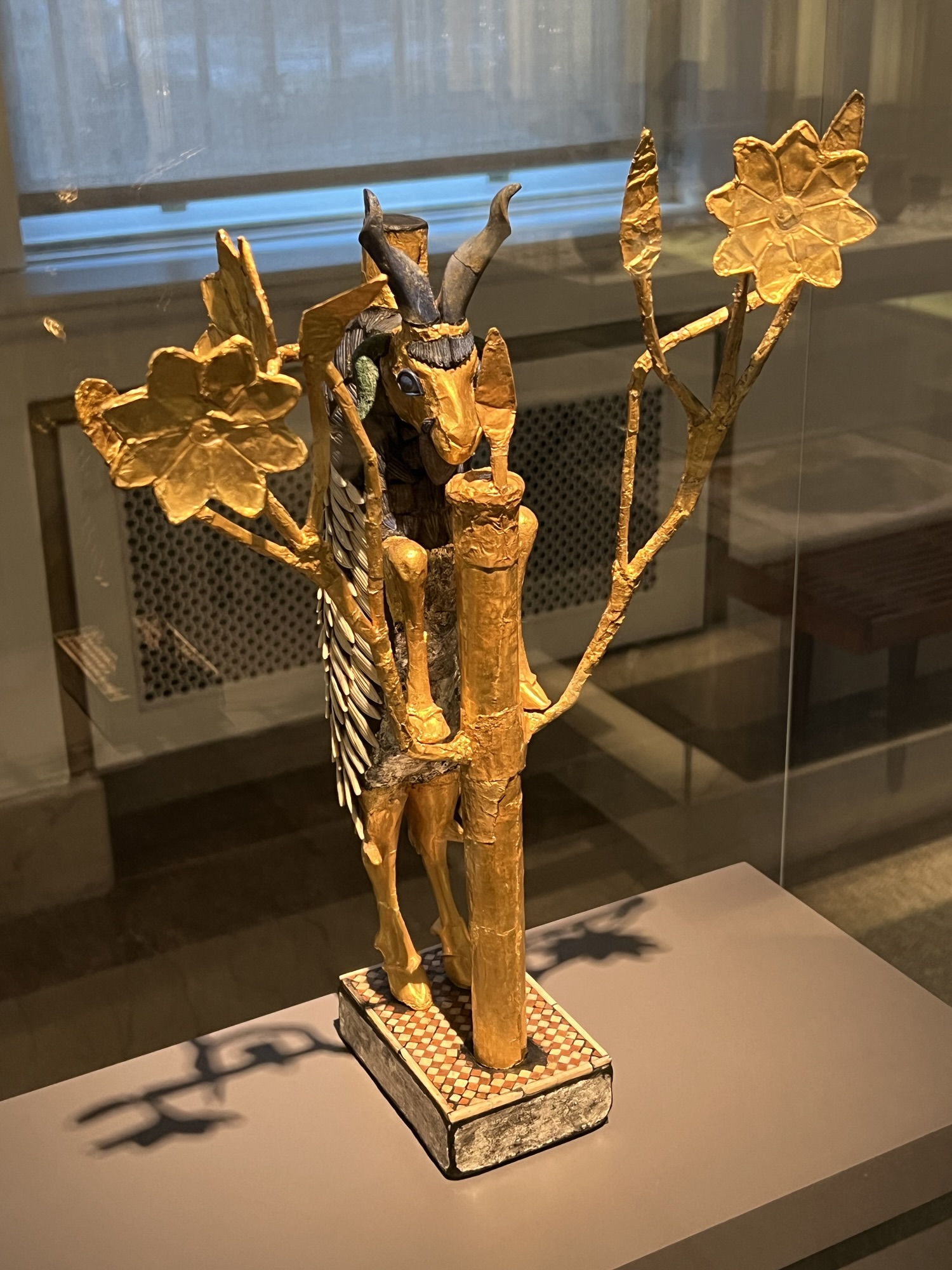
Ram hiding in the thicket from the City of Ur

The Queen Puabi display

These holdings as well as the Museum Archives of excavation and research projects, are used by researchers and borrowing institutions worldwide. And our curators and interpretive planners draw on these rich resources to provide compelling context to our galleries, where visitors can travel the globe in a day.
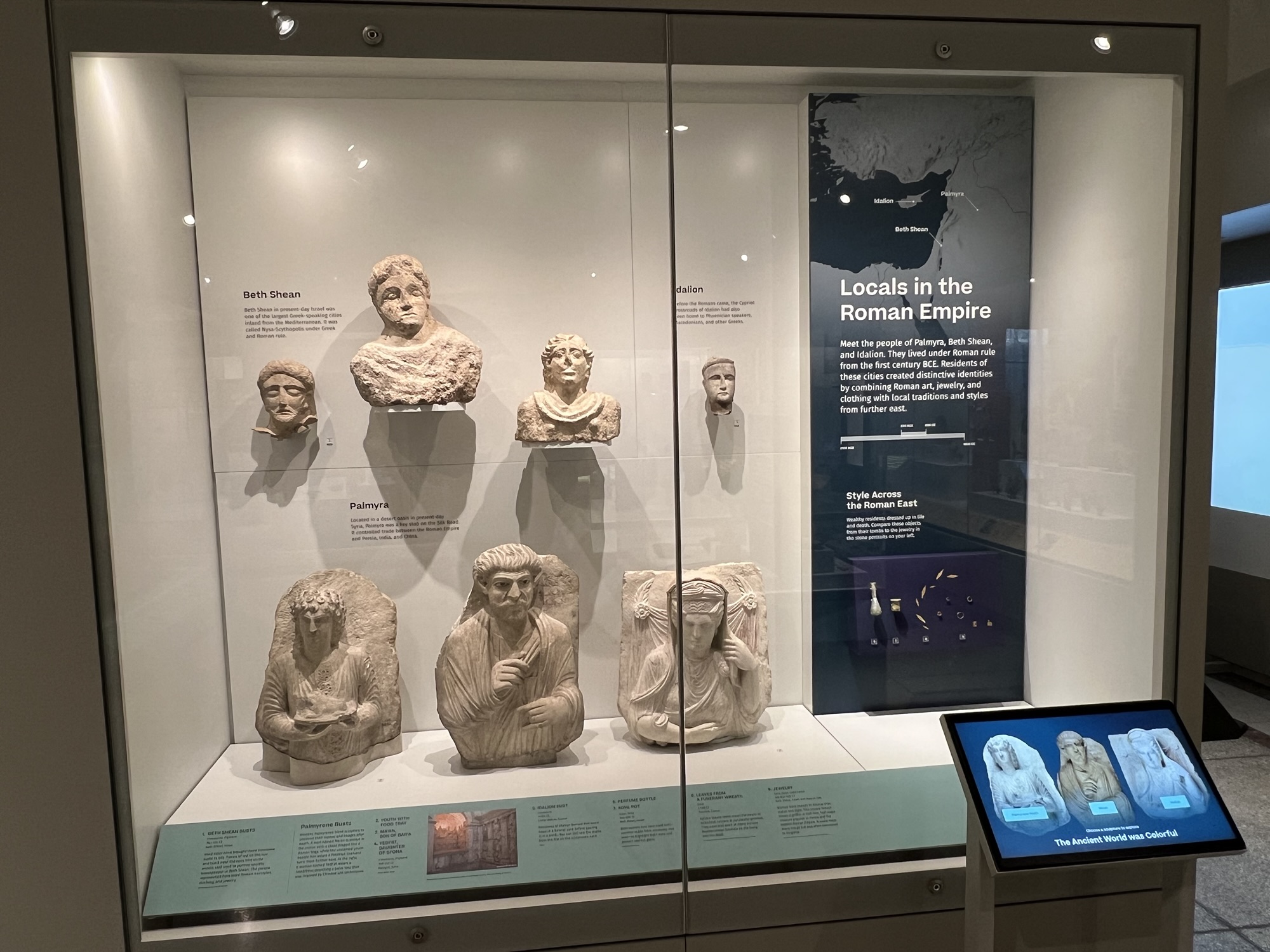
Middle Eastern works with a Roman influences

The Penn Museum Mission:

In bridging archaeology, the study of objects made by humans, with anthropology, the science of humanity, we chart a course for finding one’s own place in the arc of human history.

We are dedicated to telling powerful stories that emerge from excavations and research across the world. And nowhere else in the Western hemisphere will you be greeted by a 3000 year old, 15 ton Egyptian sphinx!

If there is one thing that 10,000 years of human history have taught us, it is that we have more in common than we think. In the canon of human existence, our past, present and future paths are inextricably intertwined.

What does the Code of Hammurabi have to do with the U.S. constitution? How can archaeology help to predict climate change? And what radical social changes accelerated by ancient plagues could be replicated in a post-COVID world?

Information about the museum:

Group Tours: Discounts are available for groups of 10 or more. Private tours and lectures are offered. Call (215) 746-8183 or email grouptickets@pennmuseum.org for information and reservations.

Public Gallery Tours: Penn Museum docents offer tours most Saturdays and Sundays at 1:30pm and Wednesdays at 6:30pm. Please check our website, http://www.penn.museum, for topics (Tour topics are subject to change; cancellation of tours may occur).

Accessibility: The Museum is wheelchair accessible and provides other accommodations. http://www.penn.museum/visit/accessibility.

Parking & Transit: Visit http://www.penn.museum/directions-and-parking for parking information. Parking meters and lots are nearby. The Museum is near SEPTA bus routes 21, 30, 40 and 42 and the SEPTA University City Station (Regional Rail trains).

Rent the Penn Museum: Hold your next special event in our beautiful historic building. http://www.penn.museum/rentals.

The Penn Museum sparks curiosity, wonder and endless exploration. We invite everyone to join our incredible journey of discovery and dig deeper. The museum is also a nice place to relax at after the games were over and walking all over the Penn Campus. The front of the museum has nice gardens and seating area right near the museum’s fountains and pool. There is a lot more I want to explore at the museum but that is for my next trip to Philadelphia.

The front of the Penn Museum on the Penn Campus
Historic Old Dutch Church                                                      272 Wall Street                                                               Kingston, New York 12401

Historic Old Dutch Church 272 Wall Street Kingston, New York 12401

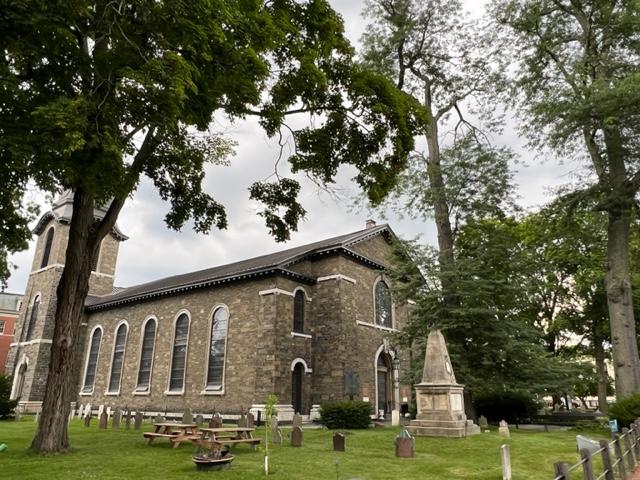
The Historic Old Dutch Church

272 Wall Street

Kingston, New York  12401

(845) 338-6759

Church office Hours 10:00am-3:00pm weekdays (845) 338-6759

http://www.olddutchchurch.org

info@olddutchchurch.org

*Note from the Blogger: this church is where every year the ‘Sinterklaas Committee’ has there annual fundraiser. The inside is beautifully decorated for the holidays and the food is wonderful. Check out the Sinterklaas Rhinebeck, NY website for more special events.

TripAdvisor Review:

https://www.tripadvisor.com/Attraction_Review-g48003-d7232701-Reviews-Old_Dutch_Church-Kingston_New_York.html?m=19905

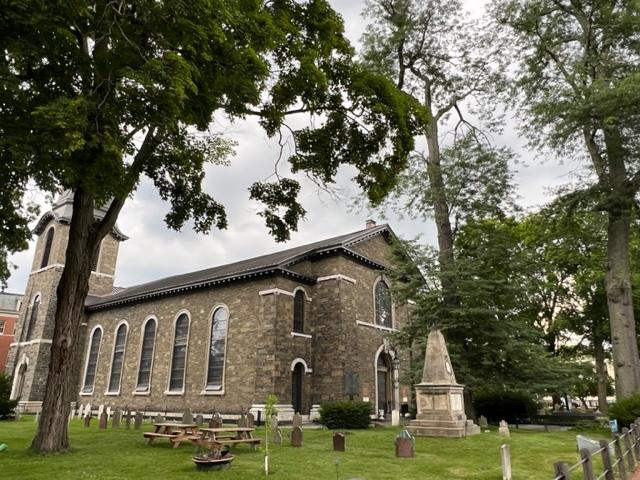
The Church during the Summer months

The Old Dutch Church cemetery during the day.

I recently attended the Annual “Cemetery Walk” of the Old Dutch Church in Kingston, NY, where they have actors playing famous people who are buried at the church.

The cemetery during the day

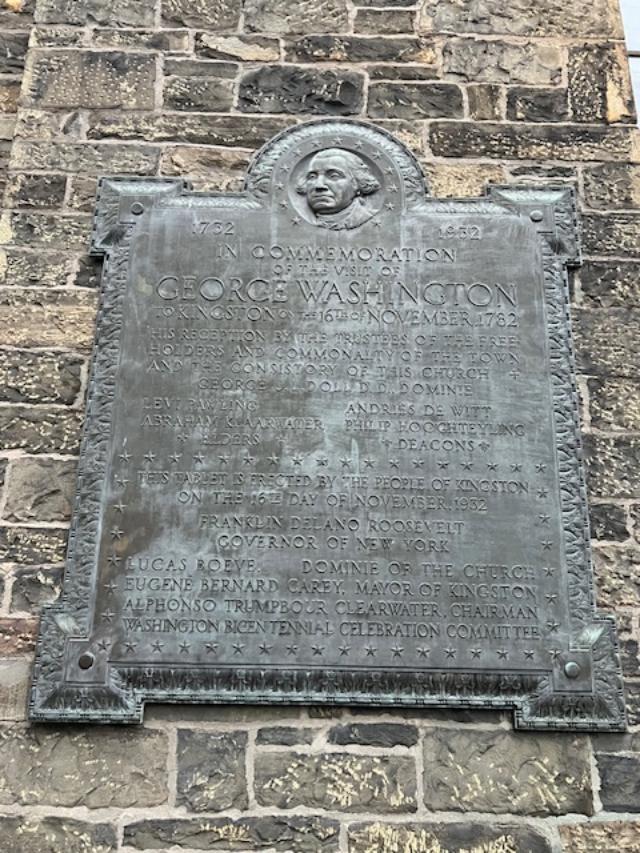
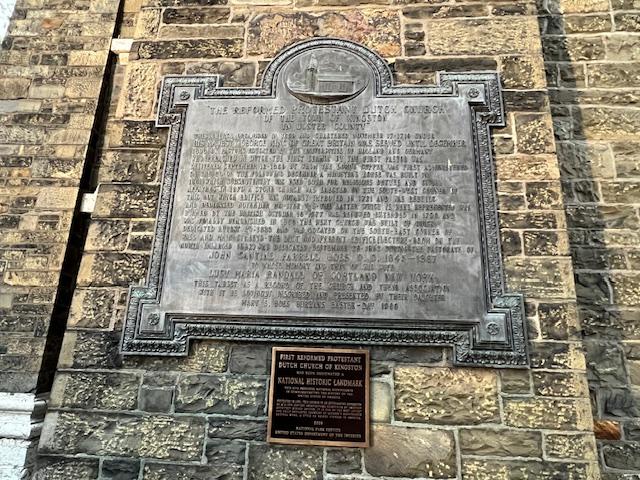
The historic plaques outside the entrance to the church
The historic plaque outside the entrance of the church

The Cemetery Walks during Halloween:

We went through the cemetery and one by one we met actors who played the roles of Sadie and Elsie Reher, whose family owned the bakery in the Kingston Roundout, Jenny, slave who was living in Upstate New York at the time of slavery in New York, Calvert Vaux, the famous landscape artist of Central and Prospect Park fame, who also designed many homes and buildings, Emily Chadbourne, the art collector, philanthropist and socialite. To round off the cast there was Rachel Hasbrouck, the landowners and Father Devine, a spiritual leader of the 1930’s.

The Cemetery Walk at the Old Dutch Church in Kingston, NY

We spent about fifteen minutes with each character and than would hear the cow bell and move onto the next character. It is a lot of walking around a cemetery in the dark and a few people could not handle it.

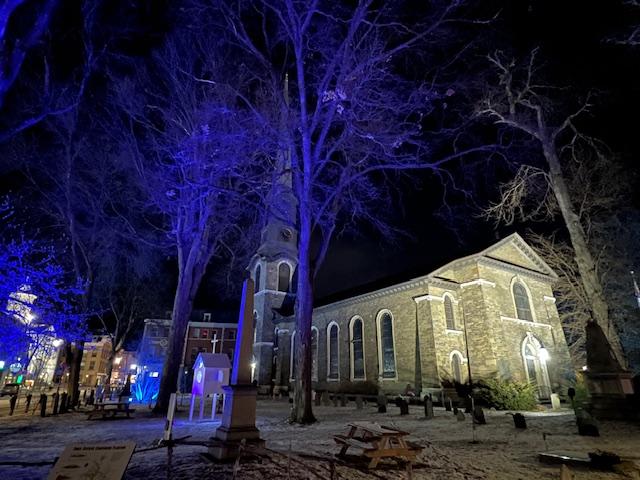
The graveyard is scary but inviting at night

The only problem with the event was that the actors took it upon themselves to relate their characters to modern times and what is going on in the world today and I did not take a tour to hear their political views. That put a damper on the evening. They are supposed to stay in the era their character was born into. The tour covered three centuries of residents of Kingston, NY.

The graveyard at night

Sinterklaas Fundraisers:

Take some time to come to the church during daylight hours and see the cemetery on your own time. It is very interesting and gives you a perspective on the role of the church from colonial to modern times.

I also had been up to the church many times for Sinterklaas fundraisers, where we were treated to Dutch “Sweets & Treats” along with a visit from Sinterklaas (Santa Claus). It was always a nice night of music and entertainment.

The Sinterklaas fundraiser “Sweets & Treats” used to be held at the Old Dutch Church in Kingston, NY.

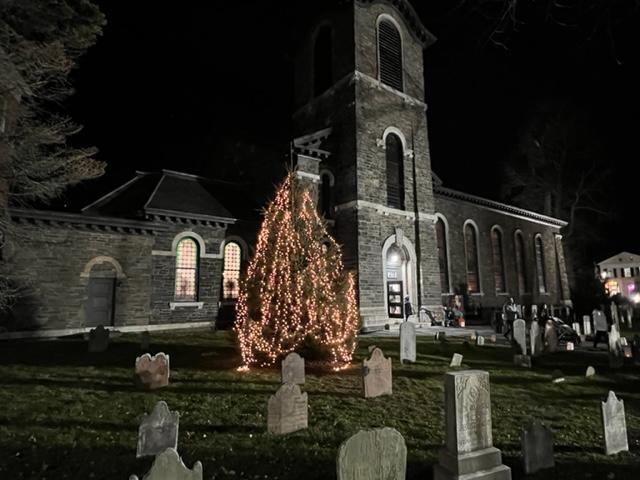
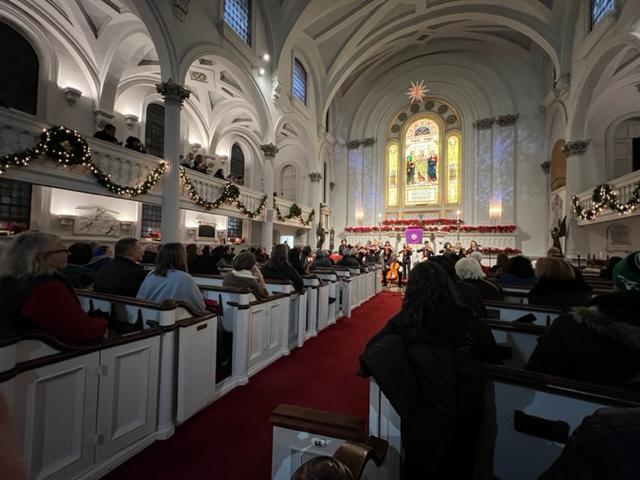
During the recent “Snowflake Festival” in 2022, the church was the host to many groups of fiddlers. The whole church was decked out for the Christmas holidays. Both inside and outside the church was decorated for the Christmas holiday season. It was just gorgeous.

The front of the church during the Kingston Snowflake Festival in 2022

The Dutch Reformed Church’s Christmas tree was very traditional at the Snowflake Festival.

The fiddlers packed the church for the concert. It was nice to see the church during the Christmas holiday season which was decked out with traditional holiday decorations. The concerts were a lot of fun and the groups were excellent.

The fiddler groups entertained us that night

The History of the Old Dutch Church of Kingston, NY:

(from the church website)

The Front of the Old Dutch Church

Founded in 1659, the Old Dutch Church is often referred to as “Kingston’s Cathedral”. The present structure was designed by Minard LeFever and built in 1852. Architect Calvert Vaux said of this design, “I cannot change a thing without impairing the exquisite unity. It’s ideally perfect.”

The church and the cemetery

Organized in 1659:

*Sixth Oldest Reformed Church in North America.

The Old Dutch Church from the front

*Archives containing Baptism and Marriage Records dating back from 1660 to present.

*The Land on which the church stands was a gift from Peter Stuyvesant.

*Fifty Reformed Churches in the Hudson Valley, New Jersey and Pennsylvania trace their roots to Old Dutch Church, Kingston.

The War Memorial at the Old Dutch Church

*The ancient churchyard is the resting place of 1400 early settlers, including 77 Revolutionary War veterans and first New York Governor and two-time Vice-President, George Clinton.

The churchyard and the George Clinton grave

*Inside in the church: the magnificent Tiffany Window above the pulpit; bronze angels and the spectacular Moeller Organ.

*Visitation site of both Queen Juliana and Queen Beatrix of the Netherlands.

Tours and information talks given by Old Dutch Church guides are available by appointment.

Sunday Morning Worship: 10:30am

Old Dutch Church Kingston NY II

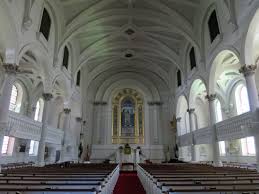
The inside of the church

The church during the recent ‘Kingston Snowflake Festival”

The Church during Christmas in 2024:

The church on a quiet evening during December 2024

The church decorated at Christmas time

The front of the church at night

*Disclaimer: this information was taken from the Old Dutch Church pamphlet. The church is the site of the annual fundraiser for the Sinterklaas festival every November. Please check out the Sinterklaas festival calendar every year for updates. The church cemetery is worth the visit alone with all the unique and historical people buried here.

Locust Grove Estate                                                                 2683 South Road (Route 9)                                    Poughkeepsie, NY 12601

Locust Grove Estate 2683 South Road (Route 9) Poughkeepsie, NY 12601

Locust Grove: A National Historic Landmark

2683 South Road (Route 9)

Poughkeepsie, NY  12601

(845) 454-4500

http://www.lgny.org

https://www.lgny.org/

Open: Seasonal-See Below

Visitor Information: The gardens and grounds are open year round from 8:00am to dusk, weather permitting.

House Tours: Offered May through November, daily from 10:00am-5:00pm and weekends in April & December. Groups tours by appointment.

Visitor Center: Open January through March, weekdays from 10:00am-5:00pm. April through December daily from 10:00am-5:00pm.

Fee: Adults $12.00/Children (6-18) $6.00

TripAdvisor Review:

https://www.tripadvisor.com/Attraction_Review-g48443-d263920-Reviews-Locust_Grove_Estate-Poughkeepsie_New_York.html?m=19905

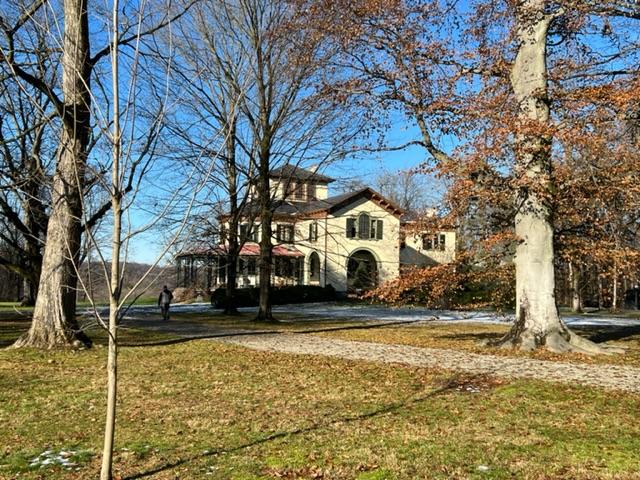
The Locus Grove Estate

Overlooking the Hudson River, the 180 acre Locust Grove Estate includes an Italianate villa designed in 1851 by architect Alexander Jackson Davis for artist and inventor Samuel F. B. Morse.

The Locus Grove additions of the tower and back rooms

The estate, with miles of carriage roads, landscaped grounds, historic gardens and Hudson River views, was preserved as a museum and nature preserve by the Young family, whose collection of art and antiques is exhibited in the mansion’s 25 rooms.

Entering Locus Grove for the Christmas holidays

I have visited the house twice for Christmas with the mansions elaborate but tasteful displays and once in the last fall when the foliage was in full peak. The house is an interesting example of turn of the century architecture and innovation of both the Morse and Young family’s love of Locust Grove. Each added their own touch to the house.

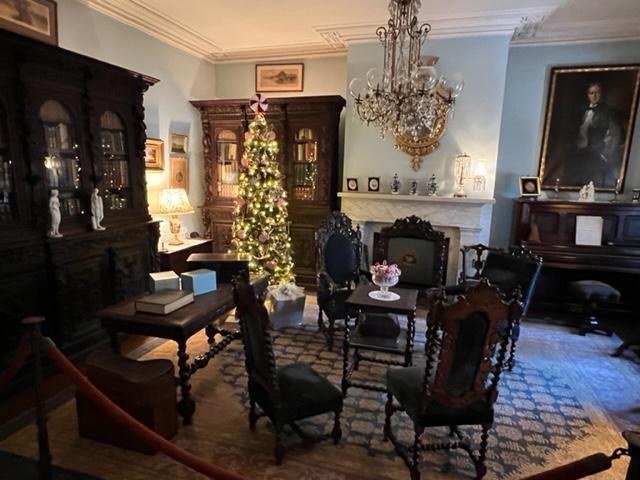
The Library right off the main hallway entrance used to be the original Dining Room when the Morse’s owned the house

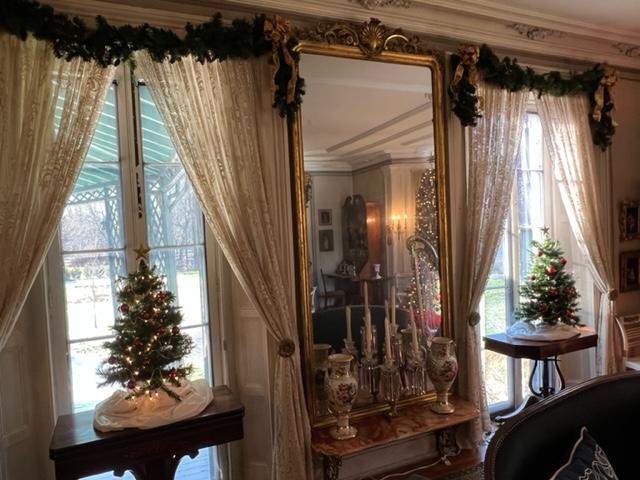
The Christmas tree in the Library

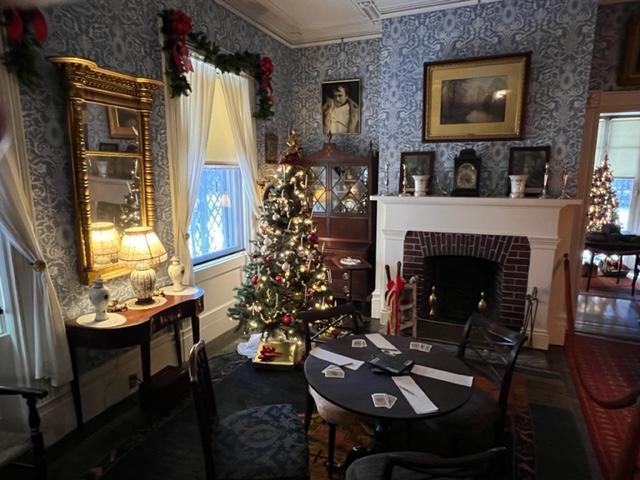
The Parlor across the hall from the Library

A closer look at the Christmas tree

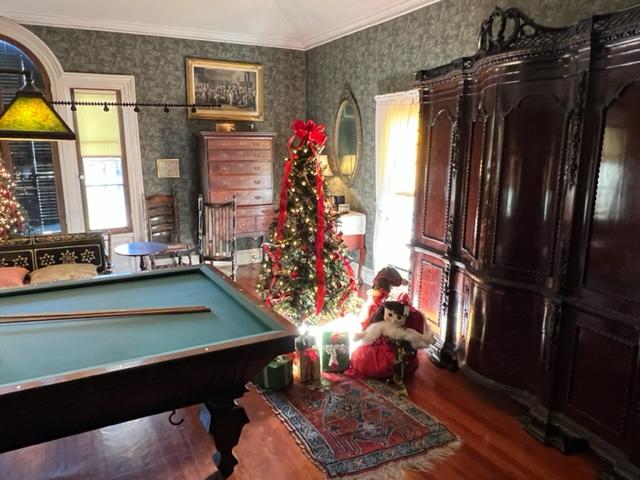
During the Christmas holiday season, the house is beautifully decorated both inside and out for the holidays, with a formal tree in the back Living room, smaller trees and garland around the house on the first floor and smaller trees with presents in the bedrooms and in the Billiards room.

The Library at Locust Grove for the holidays

One of the rooms set for Afternoon Tea

One of the back offices

When the Young’s moved into the house, they needed more room for entertaining so they added the larger dining room (The Morse’s added the Tower to the home). So the old Dining Room became one of the reception rooms and a library. Some of the smaller rooms were used for social occasions so the first floor was reconfigured.

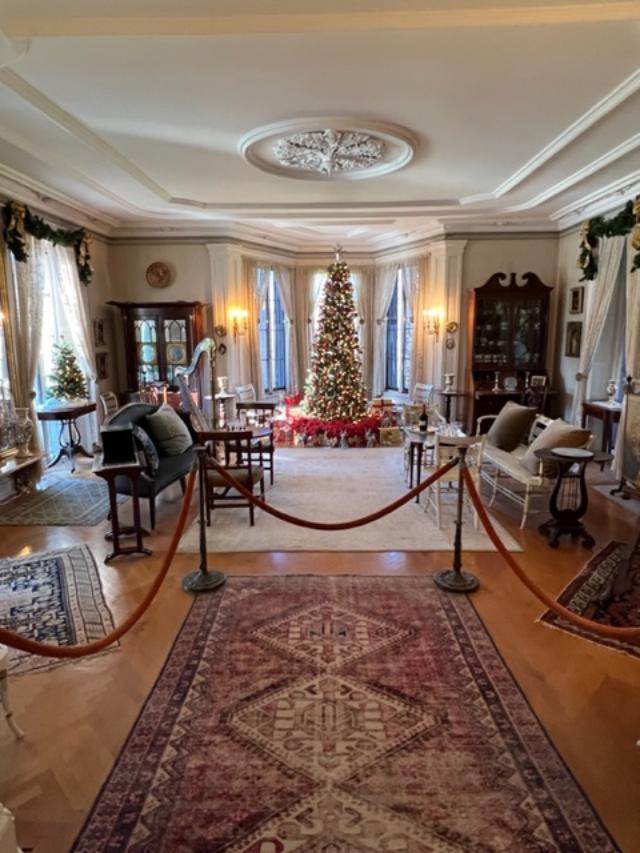
The Living Room in the Tower addition of the home

The mirror in the Living Room was the last thing left by the Morses

The larger Living Room held the most beautiful Christmas tree with a gorgeous view of the Hudson River from the back window. The room is elaborately decorated for the holidays and the volunteers created a very festive decor for the room. I do not know if the family would have decorated this much but still the halls were decked perfectly.

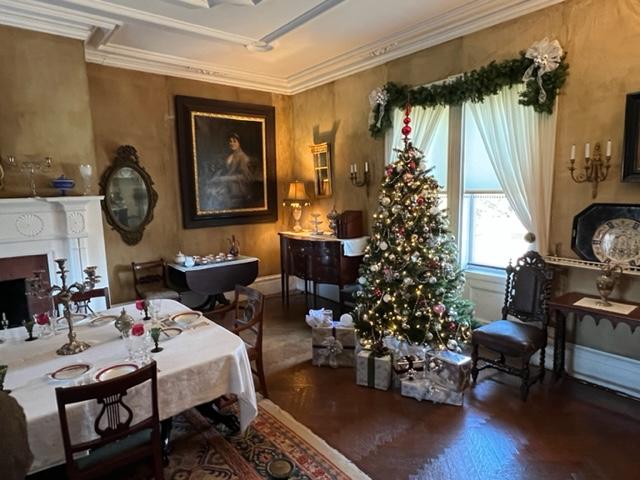
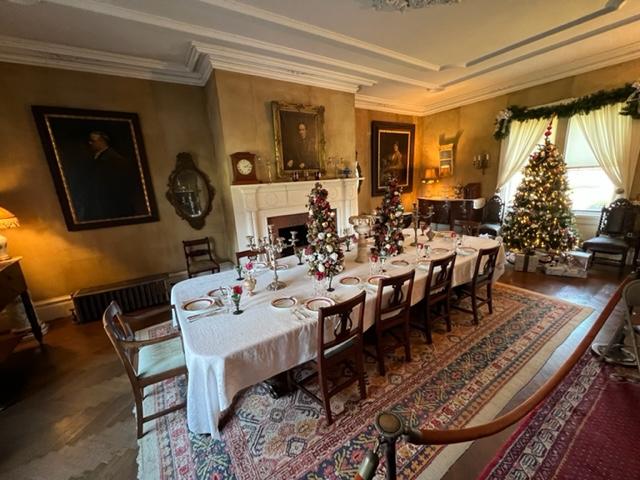
The Dining Room was set for an formal Christmas lunch with the family’s best china, crystal and silver and had displays of fruits and desserts that would have been served during the holidays. The Morse family spent their holidays in New York City so it would have been the Young’s who spent their holidays here.

The Dining Room set for Christmas lunch

The Christmas tree in the Dining Room

The Butler’s Pantry for the Dining Room

The upstairs to the bedrooms

The house had been added onto twice from the small cottage that had been built by the second owners, the Montgomery family. The back tower and wings were built by the Morse family and the formal dining room by the Young’s for their growing family.

The bedrooms were nicely decorated and the rooms had lots of Christmas decorations that you would not ordinarily see in a bedroom. Each room had its own Christmas tree.

The Master Bedroom with a breakfast nook overlooking the Hudson River

The paintings above the bed are of the Young family

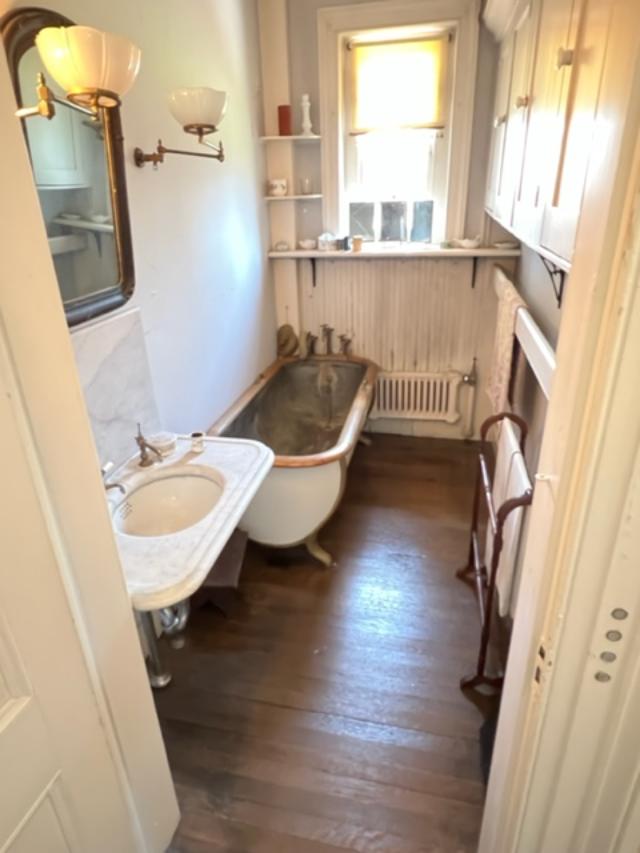
The modern bathroom with hot and cold running water

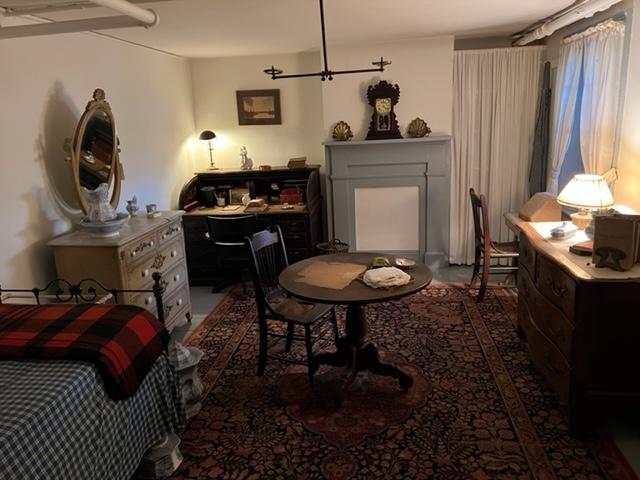
The Young’s son lived in this room until he died

The Young’s daughter lived in this room until her death

The guest rooms were also nicely decorated

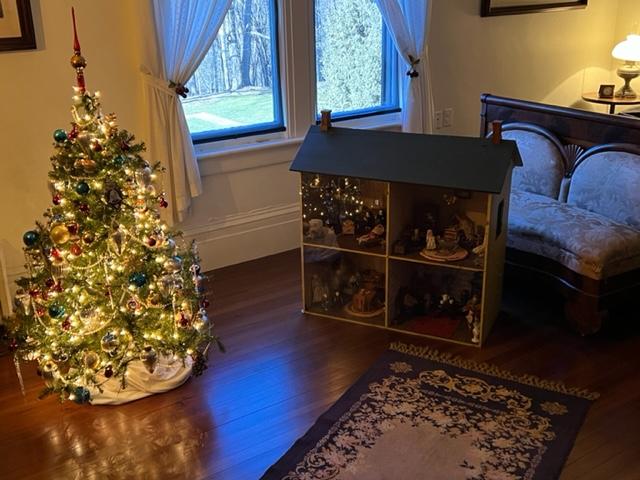
The dollhouse in the guest bedroom

Another guestroom

Guest room

The tour guide told us that the second floor Billiards Room was once a very popular and engaging room in the house for everyone visiting. There was always a lot of action going on in this room.

The Second Floor Billiards Room

The Christmas decorations in the Billiards Room

Our last stop on the second floor was the modern bathroom which was considered extremely innovative for its day. This was the most modern approach to plumbing.

The upstairs bathroom

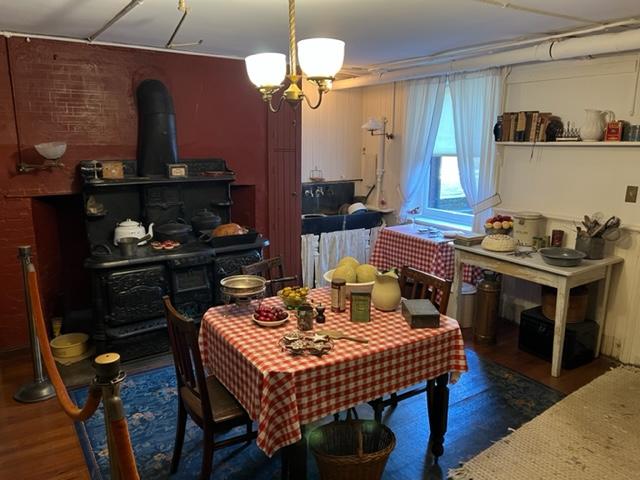
The last stop on the tour was the downstairs Servants Quarters which were also decorated for the holidays. It showed what the Servants of the household would have been doing on a daily basis to help keep the house running.

The Servants kitchen

The kitchen table in the Servants Quarters

The Servants Dining Room

Our tour guide, Ethel, did a nice job interpreting how each family would have used the house and for what occasions. The Young’s lived here full time until the last owner, Annette, died in 1975 and the Morse family used it as a summer retreat until Samuel Morse died in 1872.

locust-grove-ii.jpg

The view from the back of Locust Grove to the Hudson River during the early fall

The view to the Hudson River from the back of the house during Christmas 2022

The house is tastefully furnished both in turn of the last century decor and some more modern pieces. The grounds in the spring and summer months are in full bloom and in the fall awash with colors from the trees.

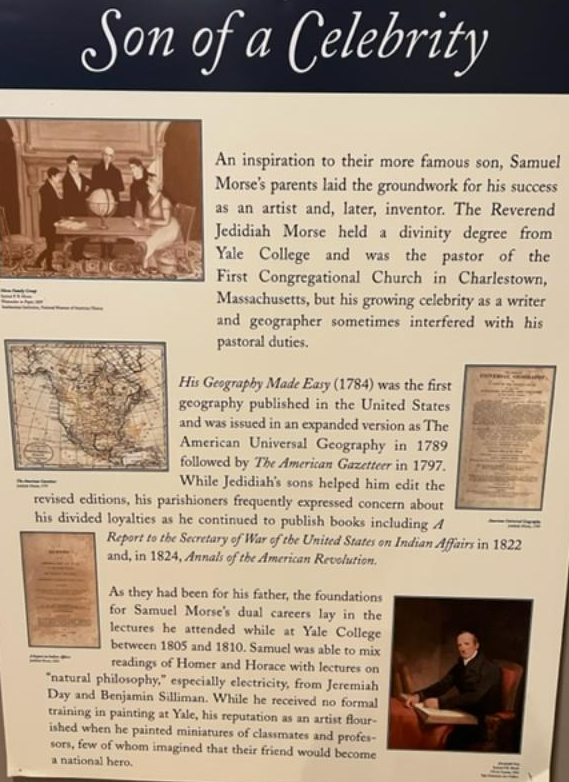
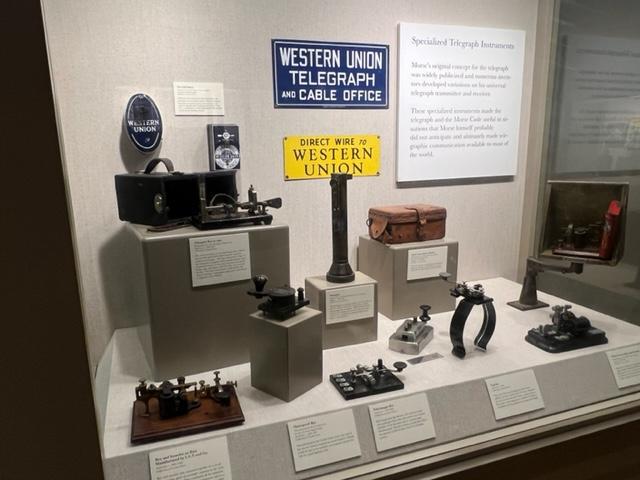
Also, don’t miss visiting the small museum of Samuel Morris’s paintings and his development of the telegraph system, where the patents is where most of the family fortune came from. Mr. Morse was an artist, educator and inventor and his life’s work is displayed in the galleries.

The Morse Family

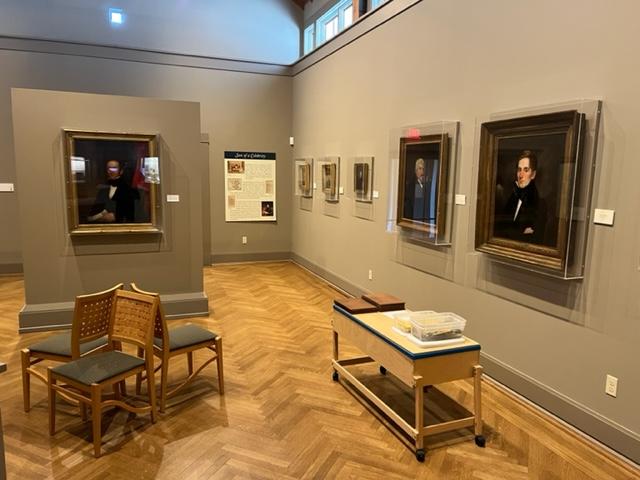
Morse Museum: Samuel Morse family in the early Colonies

Samuel Morse with his career in portrait painting

Samuel Morse’s Portraits

Samuel Morse’s inventions and innovations with the telegraph

Samuel Morse’s innovations

The History of Locust Grove:

Locust Grove has an interesting history. The estate was first owned by Henry Livingston Jr. when he purchased the property from his father in 1771. The estate was such named because of the black locust trees that grew on the property. After his death, the estate was sold to John and Isabella Montgomery who built the original cottage on the estate. Mr. Livingston’s home had been torn down by this point.

The main house at Locust Grove is a villa in the Italianate style designed in 1850. Morse had recalled the elegant villas that he had visited years earlier in the Italian countryside and he sketched towers, windows and floor plans. Construction on the villa, sited on a dramatic bluff overlooking the Hudson River began in 1851 and was completed the following year.

He continued to expand the cottage and the gardens during his time and the family continued to use the house as a summer retreat and living in the winters in their brownstone in Gramercy Park. After Mr. Morse’s death, the family used the house occasionally and then sold it to one of their renters, the Young family.

William and Martha Young added modern amenities to the house like central heat and running water and updated the bathrooms. They added the new dining room and guest bedrooms in the new North Wing of the house. They also brought with the many family heirlooms and their decorative art collection which is still on display in the house.

After their deaths, the Young’s children, Annette and Ennis worked to preserved and restore their family’s homes in here, in New Haven, New York City and Ulster County. After the death of her brother in 1953, Annette Young continued to live at Locust Grove and began donating to museums the art, land and historic houses she inherited so that they would be protected. When she died in 1975, she established a not-for-profit foundation to ensure that Locust Grove with its collections and archives would be protected. The house is now available for touring and for weddings.

(Locust Grove History and Wiki: I give both organizations full credit for this information)

Location: Locust Grove is located on Route 9 in Poughkeepsie, NY, two miles south of the Mid-Hudson Bridge or 11 miles north of Interstate 84.

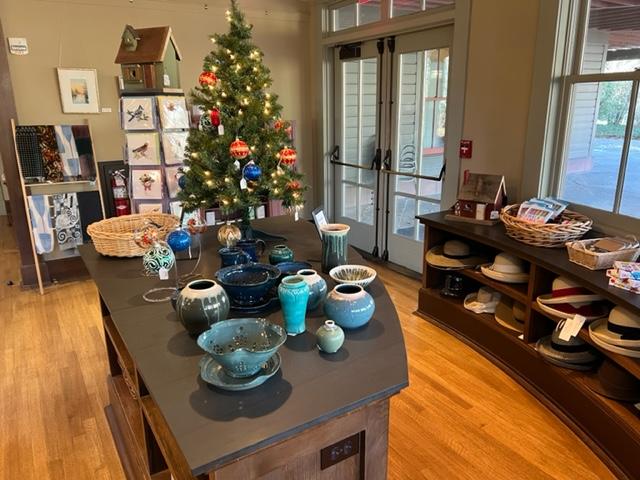
Locus Grove Gift Shop

Disclaimer: this information is taken from the Locust Grove Historic pamphlet. The site is very interesting and should be added to your list of ‘must sees’ in the area. Please call the site for more information.

Olana State Historic Site                                    5720 Route 9G                                               Hudson, NY 12534

Olana State Historic Site 5720 Route 9G Hudson, NY 12534

Olana State Historic Site

5720 Route 9G

Hudson, NY  12534

(518) 828-0135

Open: 11:00am-3:00pm (check the website for seasonality)

Directions: Located on Route 9G, five miles south of Hudson. Take NYS I-87 to Exit 21, Catskill. Take Route 23 over Rip Van Winkle Bridge. Bear right on Route 9G south. Olana is one mile on the left. Or visit our websites at http://www.Olana.org and http://www.nysparks.com.

Hours: House available by guided tour only. Call for days and hours or visit http://www.olana.org. Reservations suggested; group tours by advance reservation only. Grounds open 8:00am-sunset year around.

http://www.nyparks.com

http://www.olana.org

Admission: $10.00 Adults (Tickets depend on the type of tour you are taking)

TripAdvisor Review:

https://www.tripadvisor.com/Attraction_Review-g47931-d263717-Reviews-Olana_State_Historic_Site-Hudson_New_York.html?m=19905

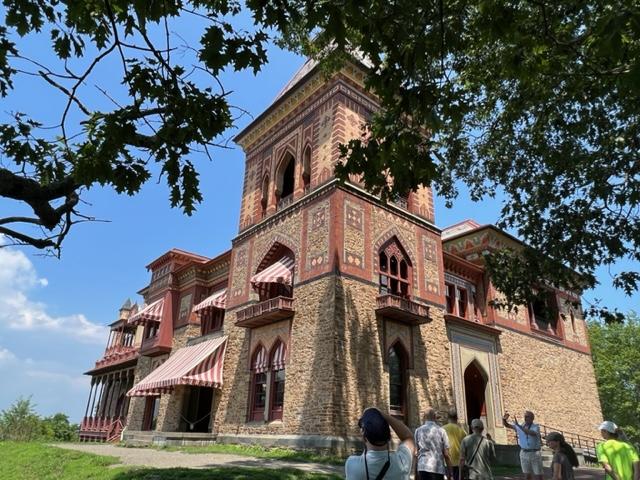
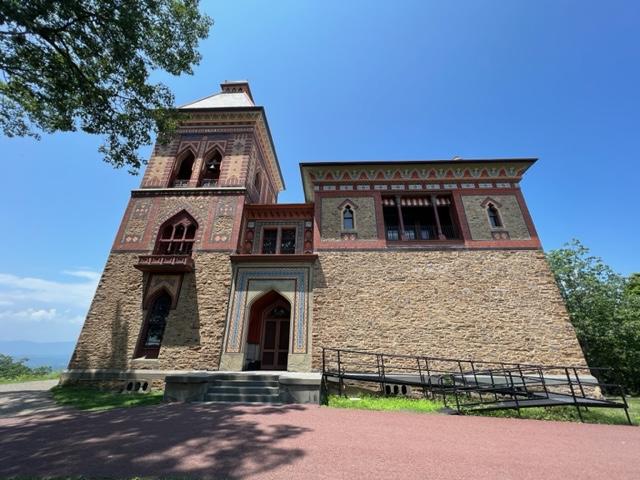
The front of Olana when we toured the house.

I had not been to the Olana Mansion since 2014 and it was finally nice to see it during the summer when everything was in bloom. The tours were every hour of the day during the warmer months with several types of tours available at different prices. There was a house and garden tour for two hours which I had just missed so I took the house tour.

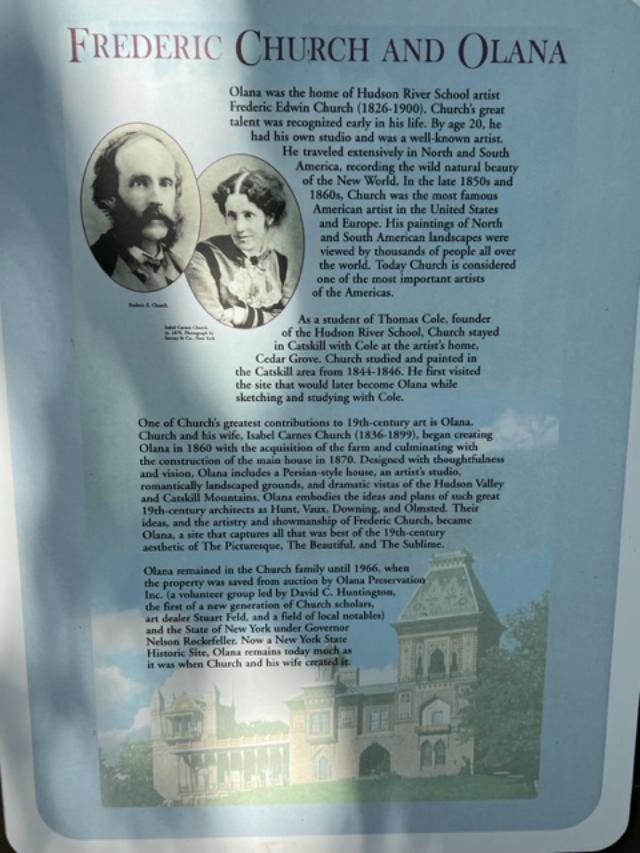
The story board of Olana pf the family

The house is filled with original family furnishings from when the house was almost sold off in the 1960’s. An industrialist saw a reason to save the house for future generations and raised the money to keep everything intact. It gave us a glimpse into the life of artist Fredrick Church and his family. The tour consists of all the bottom floors of the house and the garden. The unique part of the tour is that the man who was our tour guide partner was the last Mrs. Church’s grandnephew. So, he remembered visiting the house as a child.

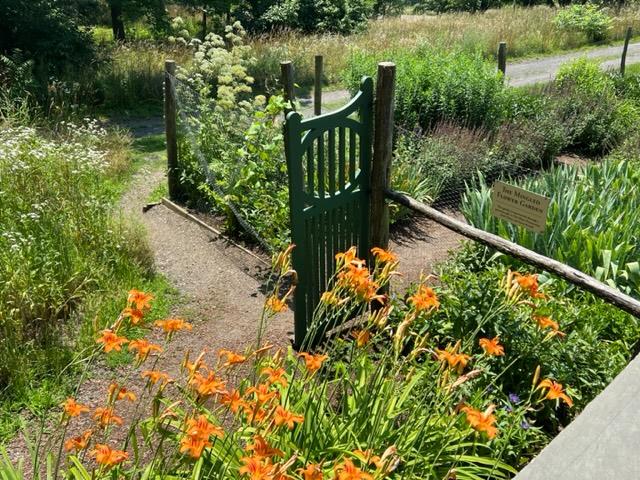
We started the tour in the formal gardens that have been replanted. They were in full bloom giving us insight to how the grounds were once landscaped. The gardens were made up of mostly local flowers that were native to the area.

The formal gardens of Olana

The Olana gardens leading to the house.

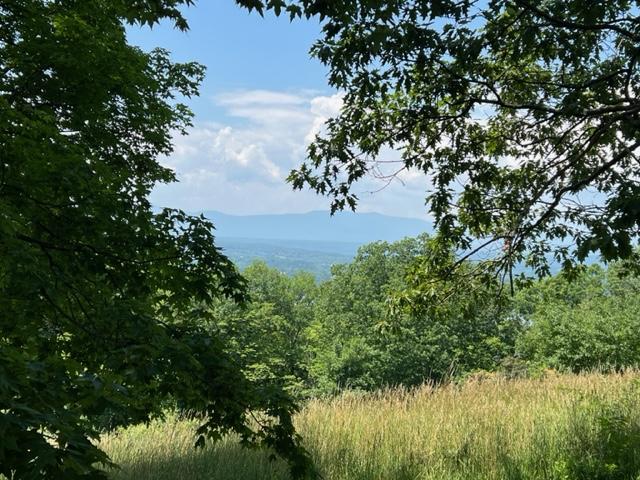
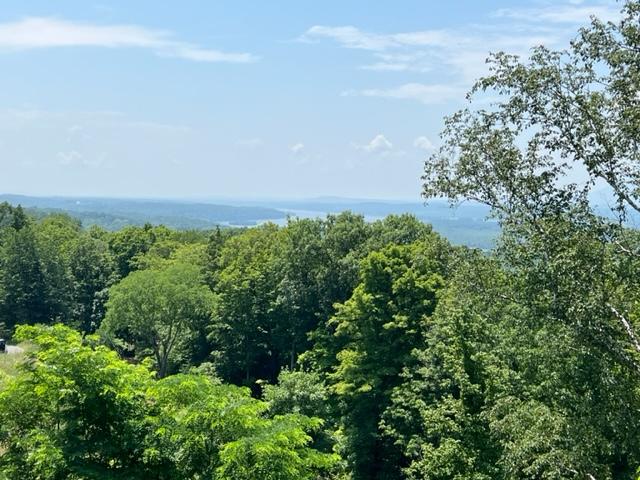
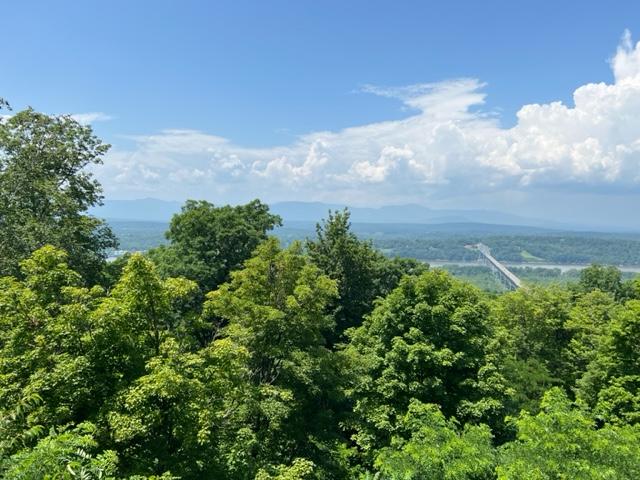
We explored the views from the porch to see what the family would have experienced when they were at the house in season. There are breathtaking views of the Hudson River and the surrounding Catskill Mountains from the porch of the house. Things have grown in since the family’s time, but it still offers amazing vistas.

The views are beautiful from the porch.

We then toured the house’s first floor where the family did their receiving of guests, their social rooms and the offices of both Mr. & Mrs. Church. Each of the rooms still contained family heirlooms and original furnishings. We started with the Receiving Room where guests would wait to be welcomed by the family or leave a calling card that they were making a visit.

The Receiving Room in the front of Olana

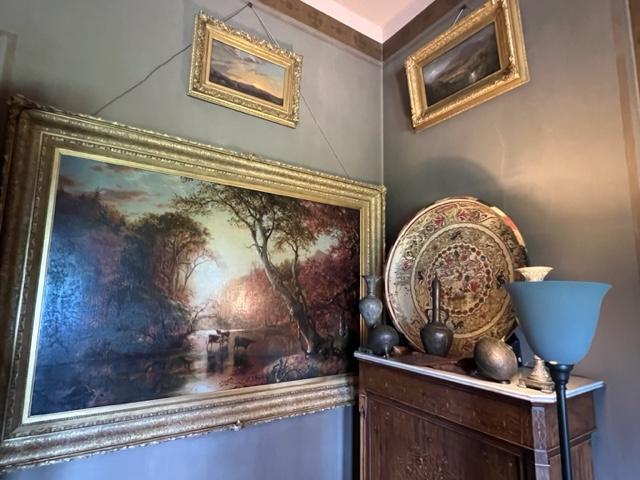
When you look at the walls of the room, it is decorated with Fredrick Church’s artwork. The tour guide told us that the house had the largest collection of Fredrick Church’s paintings in the country. I took this attribute as these were the pieces that he did not sell at the time. The works of the Hudson River School and of his travels abroad were very interesting and lively.

Fredrick Church paintings that line the house.

We toured the house room by room admiring the furnishings and all the artwork of Fredrick Church that lined the walls of the house. This included family members including his wife, Isabel Carnes Church, his partner for the rest of his life.

Isabel Carnes Church, the mistress of the house

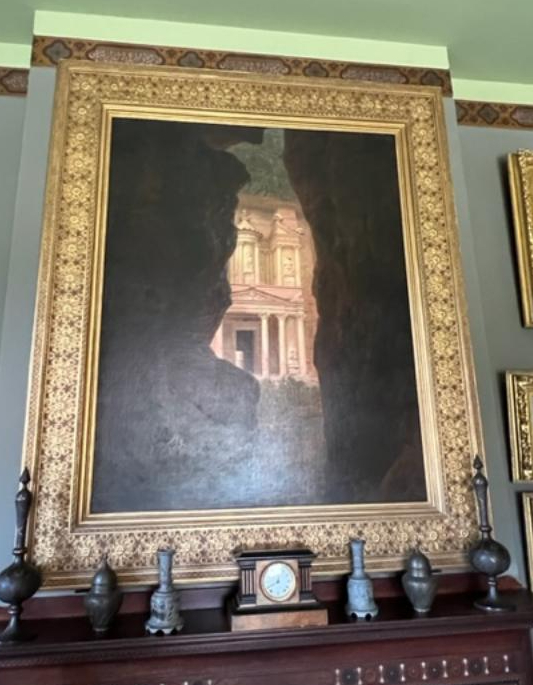
On his many trips abroad, Fredrick Church painted many of the sites he had visited that included the Far and Middle East.

Fredrick Church’s painting of “Petra” in the Middle East.

Both Mr. and Mrs. Church kept up social appearances on top of their work. They had a steady stream of guests visit the house and there was a lot of entertaining here.

The view from the porch

The view from the other side of the porch

We next visited the parlor, where the family would gather when they were staying at the house. There were many exotic furnishings from their trips on top of the personal family items. There were musical instruments to keep the family entertained when they were home.

The family piano in the Parlor

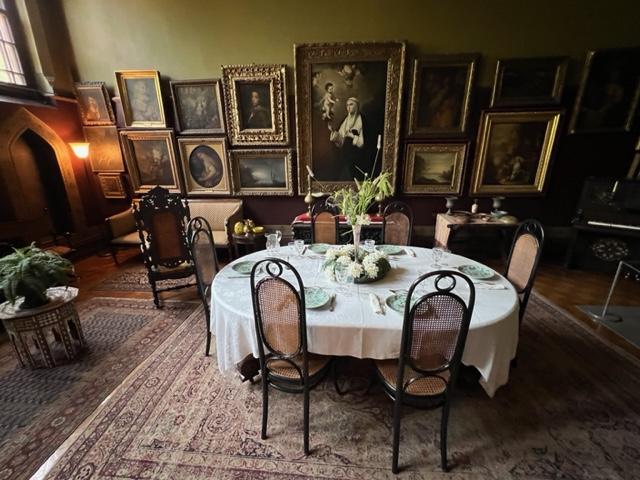
The formal Dining Room was more personal with a dining table that extended out for twenty people or open enough for the family to diner in this room.

The formal Dining Room

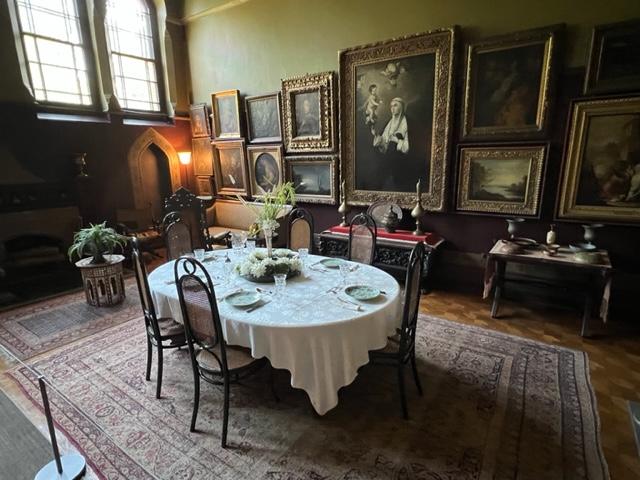
The formal Dining Room with the collection of painting that the family acquired when they were aboard.

As we finished the visit to the public rooms of the home, we toured the outside of the home as well as we exited out the side door.

The side view of Olana

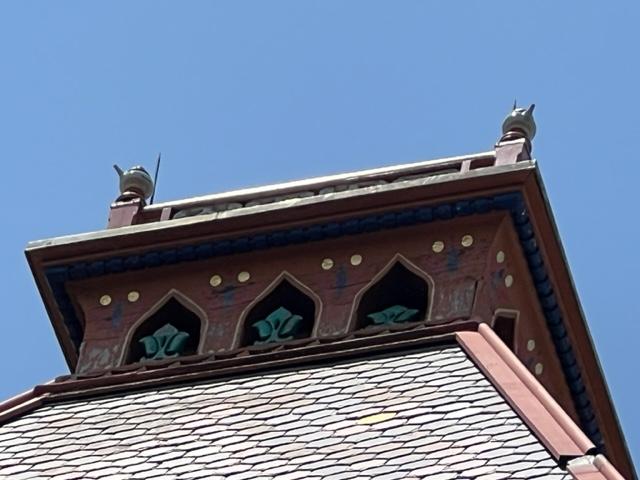
When we looked up at the home with its combination of Morrish and Arabic design we saw four teapots at the top of the tower. When asked what they meant and why they were there, no one including the tour guide knew. It was figured by a group of landscape architects that it may have something to do with longevity or renewal. This secret died with the family.

The teapots line the roof.

The tour is very interesting and gives you a view on the house and on the family who lived there and how they lived when they were in residence here. They entertained, they worked, they traveled, and they made great art. The location on the hill in the Hudson River Valley shows their investment in the location. This was all kept intact after the 1960’s for us to enjoy.

The views of the Hudson River Valley

History of Olana:

Olana, one of the most important artistic residences and planned landscapes in the United States, is the last and perhaps greatest masterpiece created by Hudson River School artist Fredrick Edwin Church (1826-1900). Church designed the landscape and his Persian style home on and around the same hilltop where, as an eighteen year old student, he sketched spectacular views of the Catskills and the river alongside his mentor Thomas Cole.

The view of the house from the back.

Even in an era defined by personal architectural statements, the home of Fredric and Isabel Church was unique. Delight in the Moorish details of the building and each room. View the original furnishings of the house and walk or jog along the paths and carriage drives of the surrounding landscape, also designed by Church. A designated National Historic Landmark, Olana State Historic Site opened to the public in 1967. The house, its contents and the landscape still look very much as they did in Church’s day.

The inside of Olana in the main rooms

The views of the Hudson River from the porch of the house

Decorations in the historic garden

The story of the grounds and the estate