Category: A Local Journey out of Manhattan

Old North Reformed Church                                120 Washington Avenue                                   Dumont, NJ 07628

Old North Reformed Church 120 Washington Avenue Dumont, NJ 07628

Old North Reformed Church

120 Washington Avenue

Dumont, NJ 07628

(201) 385-2243

https://oldnorth.church/

https://www.facebook.com/oldnorthdumont
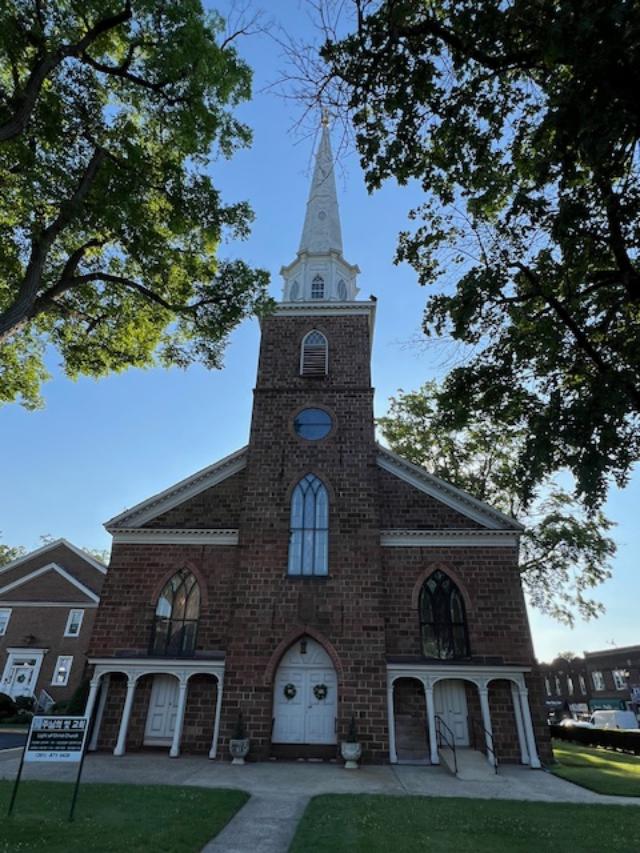
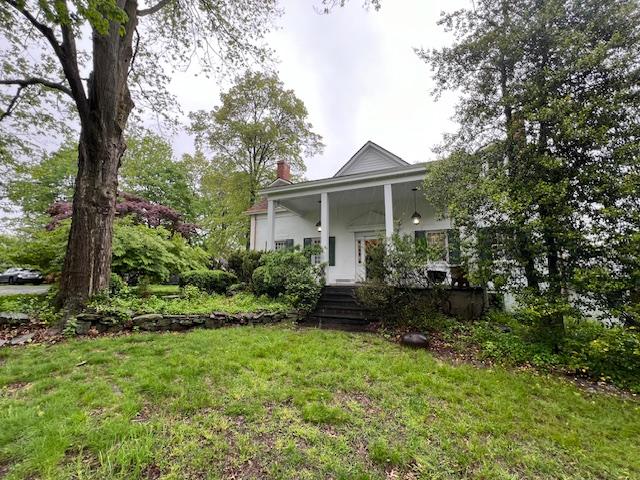
The Old North Church at 120 Washington Avenue

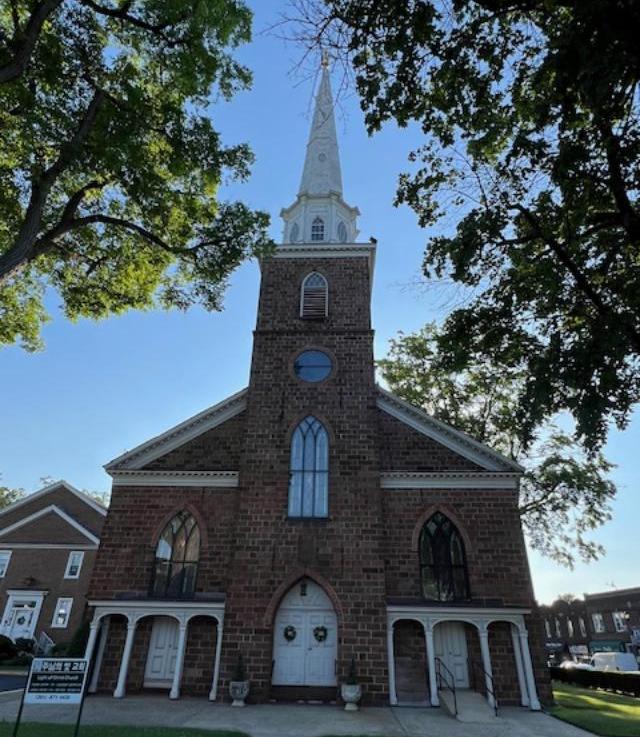
The Old North Church in Downtown Dumont, NJ is one of a series of Dutch Reformed Churches in Bergen County. This stately church still operates on a weekly basis and services are held on Sunday mornings. The cemetery to the back of the church is historic and interns some of the original families of Bergen County, NJ.

Old North is a Protestant Church affiliated with the Reformed Church in America. It is the oldest Protestant denomination with a continuous ministry in the United States and is a member of the Presbyterian/Reformed Family of Churches.

The actual Old North congregation dates back to 1724 and was organized in that year. A congregation of the settlers in what was known as Schraalenburgh (Dutch for “low ridge”) was formed at the time under the care of the “Church on the Green” in Hackensack.  In 1725, Schraalenburgh Church built – stood about a city block east of the present South Church, Bergenfield. It was octagonal in shape. The  Parsonage and minister for the church were located in Hackensack.

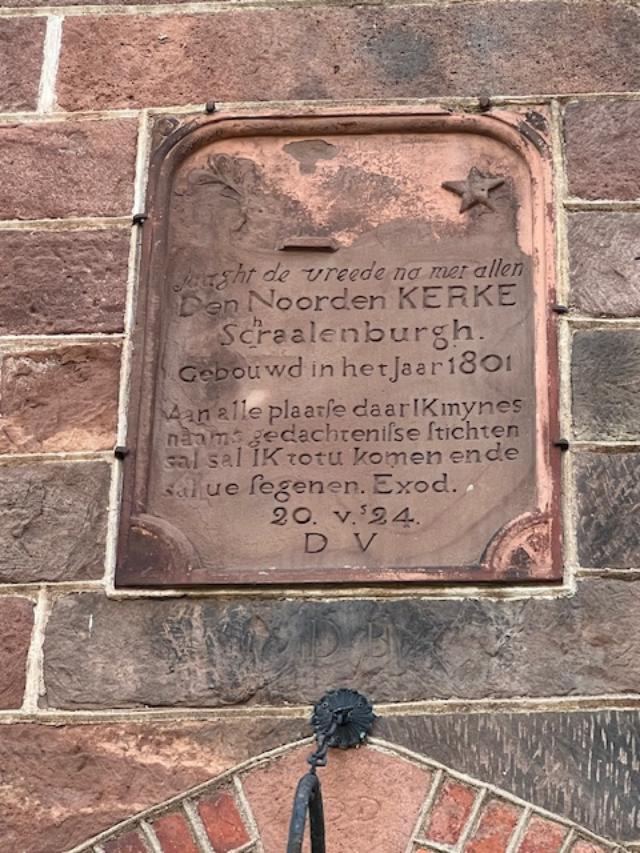
The historic sign of the church’s building

The Church Timeline:

(Taken from the Old North Church website)

1750 (Approximately) Congregation gradually divided into two – under the  leadership of two pastors both meeting in the same building.

1799 One congregation left and built the present South Church. The  second congregation continued to worship in the old church for  about two years.

1801 The second congregation built “North Reformed Protestant Dutch  Church of Schraalenburgh” on the land given by Major Isaac Kipp.  The building was erected by Peter Durie of New York, who later moved to Tenafly to be near the project

The inscription over the front door, in Dutch, reads, 

“Let peace come quickly to all. The North Church at Schraalenburgh built 1801.”

“In all places where I record my name, there shall I come to thee and bless thee.” Exodus 20:24 
1833 Services in Dutch entirely discontinued. 

1834 Parsonage (Pastor’s house) was built.

1836 Stoves were installed in four corners of Sanctuary.

1846 Sunday School is organized and met in the balcony. 

1859 Sanctuary was enlarged eighteen feet. The side walls now had four windows instead of the original three. The back west wall was reconstructed with red brick and the red sand stones that were on the west wall and are now part of the sides blending with the  original stones.

1868 The first furnace was installed in the Sanctuary.  The clear glass panes in the Sanctuary were replaced with colored stenciled glass from Germany.

1888 Organ was installed in front of Sanctuary (attributed to W.H. Davis) powered by a water motor.

1894 Town name was changed from Schraalenburgh to Dumont in honor of Old North parishioner and 1st Mayor, Dumont Clarke.

1911 Town clock installed in the steeple. 

1912 The first Church House built. 

1918 World War I, Church House used almost exclusively by soldiers from Camp Merritt.

1919  Camp Merritt Town Memorial monument placed on church property.  The flagpole (since replaced) made from artillery gun barrels was moved from Camp Merritt to church yard.  

Dr. John Spring began his ministry and served for 34 years. He was formerly Chaplain at Camp Merritt and saw the congregation through the difficult years of the Great Depression. 

During his ministry, Old North became mother church to a number of Reformed churches in  surrounding towns. Mrs. Spring served as organist & choir director.

The entrance to the church from Washington Avenue

1923  Organ rebuilt by Clark & Fenton, Nyack, NY., electrified and moved to the north wall.

1925  Old North charters Boy Scout Troop 64. 

1926  Steeple hit by lightning. The first church house burned.

1949  Old North charters Cub Scout Troop 131.

1954  Major repairs and Sanctuary redecorated.

1962  New Church House dedicated.

1969  Church steeple completely renovated and the clock was removed.

1972  New Tellers 26 rank pipe organ installed. The Choir organ division was given in honor of Mrs.       

          Spring. Sanctuary was redecorated.

1974  Old North celebrates its 250th Anniversary. New windows installed in Church House.

          Dr. Albert Van Dyke retires after 16 years of service.

1980  Complete renovation of downstairs kitchen.

1983  Reverend Richard Vander Borgh becomes 13th Pastor.

1990  The End of the Earth Church Korean Congregation shared usage of church.

1996  150th Anniversary of Sunday School.

1999   275th Anniversary Celebrated.

2000   Air conditioning installed in Sanctuary.

2001   200th Anniversary of Church building.  Church steeple painted.

2002   Cross replaces Reformed Church in America Coat of Arms in the sanctuary chancel.

2006   Light Alliance Korean Church of NJ shared usage of church.

2012   3-year major renovation of steeple and structures are complete.

2013   Installation of a state of the art Carillon–- sending forth music and hymns into the community.

2014   Reverend Richard Vander Borgh retires after 31 years.

2015   Reverend Susan E. Kerr installed as the 1st woman and14th minister of Old North Reformed     

           Church.

2017   Stair lift installed at Chapel entrance to make the Church House and the sanctuary accessible    

           for all. Handicapped bathroom and baby changing station are installed.

2018   Ye Old North Thrift Shoppe community ministry begun.          

           Community Thrift Shoppe begun in Church House ground floor.v. Richard and 

           Joan Vander Borgh. 

           Community Thrift Shoppe begun in Church House ground floor.

           The Light of Christ Church shares usage of space.

2019   Electronic LED sign installed. 

           Memorial Plaque dedicated for new Auditorium chairs.
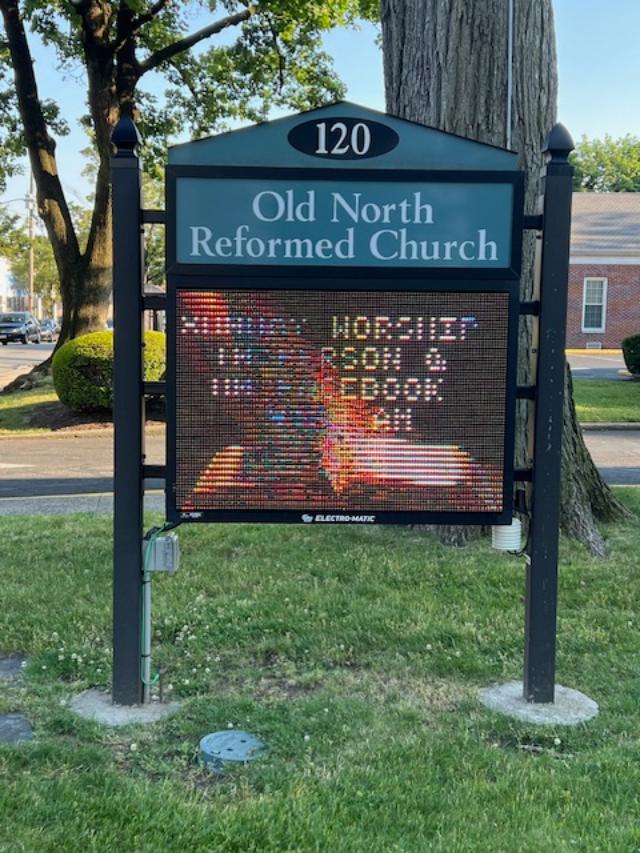
The electronic sign in the front of the church.

2021   Legacy Project Renovations.

The Old North Church Cemetery:

The church cemetery to the back of the church has some of the original families of Bergen County buried in their yard. The graves go all the way up to 1911 (Wiki).

The signage for the Old North Church Cemetery
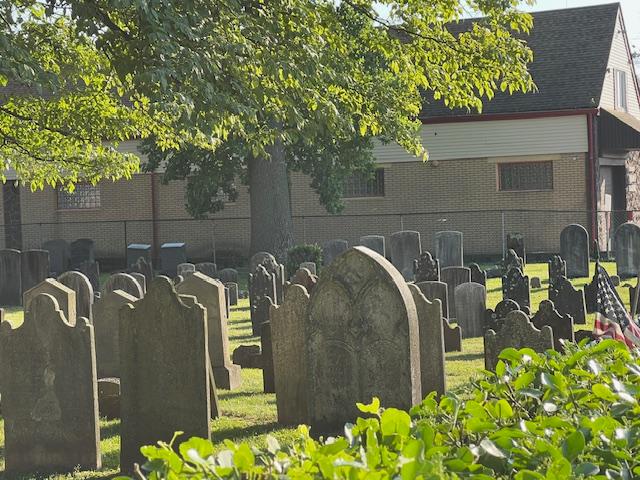
The graveyard contains some of the old families in Bergen County

Some of the oldest graves in the cemetery

Pompton Plains Railroad Station                           33 Evans Place                                             Pompton Plains, NJ 07444

Pompton Plains Railroad Station 33 Evans Place Pompton Plains, NJ 07444

Pompton Plains Railroad Station

33 Evans Place

Pompton Plains, NJ 07444

https://en.wikipedia.org/wiki/Pompton_Plains_station

Open: See website for special dates

Admission: Free but donations are suggested

My review on TripAdvisor:

https://www.tripadvisor.com/ShowUserReviews-g46748-d27729131-r949878173-Pompton_Plains_History_Station-Pompton_Plains_Morris_County_New_Jersey.html?m=19905

The Pompton Plains Railroad Station Museum at 33 Evans Place.

I was visiting Morris County for the “Pathways to History” tour, I visited the Pompton Lakes Railroad Museum. This tiny museum served once as the depot for the local railroad but now houses its history. Piled all over the building is the history of the rail service in this area. Small displays are located all around a pot belly stove that serves as the center point of the museum. The memorabilia includes a series of pictures, maps and schedules.

(From the Pathways to History tour pamphlet 2024):

Pompton Plains Station, home to the Pequannock Township Museum, was erected in 1877 by the Montclair and Greenwood Lake Railway as a replacement for an earlier structure built when passenger service began in 1872. After closing in 1966, the station remained in private hands until 2006 when it was purchased by Pequannock Township with Morris County and Township Open Space funds, as well as, funds from the Morris County Historic Preservation Trust. It was listed on the NJ and National Registers of Historic Places in 2008 and was restored to its “Turn of the 20th Century” appearance in 2010 (PPHS website).

The Historic Marker at the station.

The building’s simple wood construction is characterized by its late 19th Century American “Stick style” architecture, with its notable exterior embellishments being the distinctive “Dutch cap” trim over each window and door and its decoratively patterned slate roof. The museum supports an extensive collection of photographs and artifacts illustrating the Township’s 300 years of recorded history. Featured is a collection of over two dozen models of historic buildings, as well as, exhibits about Civil War veteran, Medal of Honor recipient, station agent and prior owner of the nearby Martin Berry House, James R. Evans (PPHS website).

The Pompton Plains Railroad Station Museum gallery.

Other exhibits cover the history of the station, and the pioneering 1940’s rocket engine factory Reaction Motors. Plans for 2023 construction, which will include restoration of the decorative 19th century slate roof and chimney, will be on display.

The Conductor’s Office is part of the display at the museum.

A video promoting the Pompton Plains Railroad Station.
Martin Berry House                                              581 Route 23 South                                     Pompton Lakes, NJ 07444

Martin Berry House 581 Route 23 South Pompton Lakes, NJ 07444

Martin Berry House

581 Route 23 South

Pompton Lakes, NJ 07444

https://www.facebook.com/MartinBerryHouse

My review on TripAdvisor:

https://www.tripadvisor.com/ShowUserReviews-g46748-d27729087-r949875094-Martin_Berry_House-Pompton_Plains_Morris_County_New_Jersey.html?m=19905

The Martin Berry House from the top of the hill at 581 Route 23 South. It is on a road hidden from the highway.

When I went to visit the Martin Berry House for the “Pathways to History” tour, I found it impossible to find. The Google Map has it in the middle of a parking lot in front of the strip mall along the highway and there is no pathway to the home from the parking lot. What you have to do is go the street behind the mall, head up the hill and make a right down a gravel road and there is the house at the end of the street.

There is not much parking here but with an isolated home like this, the Historical Society needs to put some things in place before they start having events here. The Society had bought the house not too long ago and there is still some renovation work that is being done, so the Society is in its first stages of opening the house to the public. It has some nice revolving displays and an interesting Colonial kitchen. The gardens are also beautiful when in bloom. Visiting the house in the future will offer many surprises.

(From the website of the Martin Berry House and the Pequannock Township Historical Society):

The Martin Berry House, or MBH, was built
on this spot in about 1720. The original house was
smaller than what you see here. This is the the
result of the second major enlargement or
renovation of the original construction as well as
later renovations and remodeling.

The Martin Berry House from the gardens.


The MBH is owned by the Township of
Pequannock and operated in partnership with the
Pequannock Township Historical Society (PTHS).
PTHS was formed in 2015 out of a movement that
was original called the Friends of the Martin Berry
House that had itself been initiated in 2014 to
support the Township in its efforts to acquire the
MBH.

The Martin Berry House Furniture display in May 2024.

When the Friends organized as the PTHS, it
was decided that a broader vision was needed so
that both the house and its context could be
preserved and interpreted.

The Martin Berry House Art Exhibition during the “Pathways to History” tour 2024.

The Martin Berry House Living Room.

The PTHS is an all volunteer and membership
-based organization with a mission to preserve,
interpret, and promote the history and diverse
heritage of Pequannock Township. We are working
to preserve and maintain historic buildings, sites,
and collections, and to create and present programs,
exhibitions, publications, and other activities for the
public that celebrate and interpret the history and
heritage of Pequannock Township and neighboring
communities. Our primary activities at this point,
though, are centered around the preservation,
restoration and management of the MBH as an
historic learning center and living museum (MBH website).

The Martin Berry House gardens in bloom in the Spring of 2024.

The preservation of the MBH began with
Eleanor and Charles Bogert purchased the house the
2.75 acres of land that surrounds it today in 1951.
Lovers of history and historic buildings, it was their
intent to restore the house as a Dutch Colonial
manor. Along with the slow and laborious efforts of
restoring the house, they raised three children,
briefly operated an antique shop, gave tours for local
school and scout groups and became active in
organizations such as the Highlands Historical
Society.

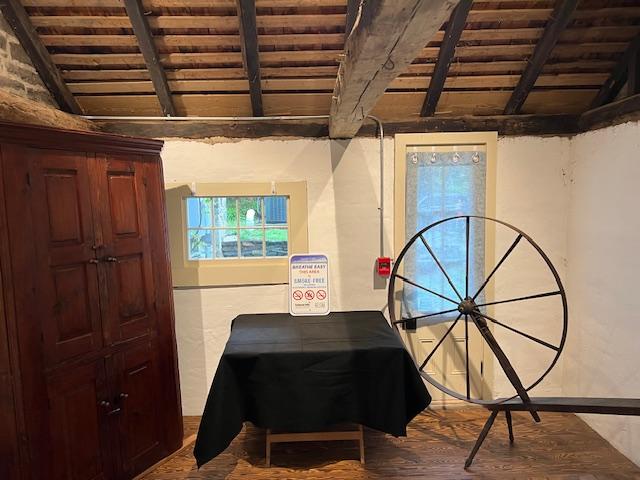
The Colonial kitchen section of the home.

Their intent was to restore the MBH and to
provide it to Pequannock Township as a museum.
In the winter of 2014 Mrs. Bogert informed
the Pequannock Town Council and Township
Historian that she was ready to begin the process for
selling the MBH to Pequannock Township. Township
Historian Ed Engelbart and the Pequannock
Township Historic District Commission began
generating support and The Friends of the Martin
Berry House emerged in June (MBH website).

Martin Berry House Colonial kitchen and displays.

The Township submitted an application to
and then received a matching grant from the Morris
County Historic Preservation Trust Fund to purchase
the home in 2015 and then contracted with HMR
Architects for a Preservation Plan.

The Colonial Kitchen display in the old Dutch Kitchen.

The Plan was received in the winter of 2016.
It recommended that the Township complete the
purchase of the MBH and provided information
regarding its renovation and interpretation. Final
negotiations began with Mrs. Bogert and the sale
was completed in January 2017. Negotiations then
began with the PTHS on a management agreement
that was adopted and signed in September 2017 in
time for the PTHS to open the MBH to visitors for
the Pathways of History Tour.

The history of the Martin Berry House and renovation.

The History of the house:

(from The Martin Berry House historical pamphlet)

In 1695 and 1696, a group led by Captain Arent Schuyler, Major Anthony Brockholst and six others including Samuel Berry, negotiated purchase of the land from both the Lenape Tribal Americans and the East Jersey Board of Proprietors. The land was later divided to eight separate owner including Samuel’s son Martin Berry born in 1693, who acquired the property and likely built his fine home sometime after his marriage to Maria Roome in 1720.

Historian Emil R. Salvini noted that Martin built his house of stone, with walls two feet thick for insulation, set into the hillside facing south, typical of the Dutch homes of the period. Its has six bedrooms, two center halls, shallow fireplaces to reflect the heat back into the rooms, servants quarters and a massively framed Gambrel room built without the benefit of a ridgepole.

Besides being a successful and prosperous farmer, Martin served in positions of community leadership, both as a deacon and later elder in the newly established Dutch Reformed Church which was built in 1736 and was accessible via “Martin’s ford” across the river from his farm. The house passed out of the Barry family in 1862 during the Civil War.

Lincoln Park Historical Museum                          141 Main Street                                              Lincoln Park, NJ 07035

Lincoln Park Historical Museum 141 Main Street Lincoln Park, NJ 07035

Lincoln Park Historical Museum

141 Main Street

Lincoln Park, NJ 07035

https://www.lincolnpark.org/373/Historical-Society

https://www.facebook.com/groups/lincolnparkhistory

My review on TripAdvisor:

https://www.tripadvisor.com/ShowUserReviews-g46872-d27729149-r949879836-Lincoln_Park_History_Museum-Towaco_Montville_Morris_County_New_Jersey.html?m=19905

Lincoln Park History Museum at 141 Main Street

The entrance of the Museum off the Main Street.

As part of the Morris County “Pathways to History” tour I visited the small Lincoln Park History Museum just off the downtown. This colorful and well lit little museum is packed with information on the development of the town. The transformation took place with the form of transportation that changed the area starting with the Morris Canal running through then the railroad system and then the advent of the automobile. This area is still quite sleepy even though its located just an hour outside of New York City.

Lincoln Park History Museum, located at the original 1922 Library building. Lincoln Park, or as once known, Beavertown, is small in geographic nature but has a rich and diverse history. The museum’s goal is to rediscover the town’s past and celebrate / preserve the history, which sadly, at times, is lost and forgotten.

The history of the town’s police and fire departments

Join us and discover our past which includes: dinosaurs, native American artifacts, revolutionary roads /houses, civil war hometown hero, part of the Morris Canal path, part of the Boonton Line Railroad branch, airport, major flood events, some Hollywood film locations and of course our townsfolks who sacrificed in war, volunteers (fire department, police, first aid, pal, scouting etc.), all who made Lincoln Park a wonderful town to grow up in and formed pride and sense of community (Pathways Tour website).

The history of the Morris Canal that ran through the town before the railroads.

The Morris Canal was an important part of the town’s development.

Learn how the town transformed from a small crossroad in the American revolution to a canal stopping point with incline plane, lock and hotel. Learn how it progressed from farming to resort area to commuting town and transform to what it is today. The town keeps growing.

The day the Railroad came to town and it changed everything! On December 14, 1870 the first passenger train stopped at Beavertown. School was closed that day so the students could witness this momentous occasion. The following year Beavertown’s name was changed to Lincoln Park. This event, started a large and long transformation of the town. Prior to this, the town was all farmland and the few businesses in town centered on support of the Morris Canal. Once the railroad came, the transformation started (Pathways Tour website).

Small industries were created which used the train system for shipping freight and the population started to grow. In the earlier 1900s advertisements were placed in New York /Brooklyn newspapers advocating the benefits of country living. City folks would come by train for the summer and enjoy river activities and many of these folks became permanent residents. During this time the Morris canal was slowly fading away, not able to compete against the railroad. Soon, it was feasible to commute daily from Lincoln Park to New York by train and the population continued to grow along with more business to support the population (Pathways of History Tour of Morris County website).

Lincoln Park’s Farming past and Business District.

Lincoln Park’s town history of schools, fire and police departments.

The museum only takes about an hour to visit but take the time to see all the displays and talk to the docents. The town really has an interesting history.