

Mount Gulian Historic Site
145 Sterling Street
Beacon, NY 12508
(845) 831-8172
Home
Open: May 5th-October 27th Tours are every hour 1:00pm-5:00pm on Sundays, Wednesdays, Thursdays and Fridays. Special Wedding tours are by appointment.
Fee: Adults $8.00/Seniors $6.00/Children (6-18) $4.00/Members are free
My review on TripAdvisor:
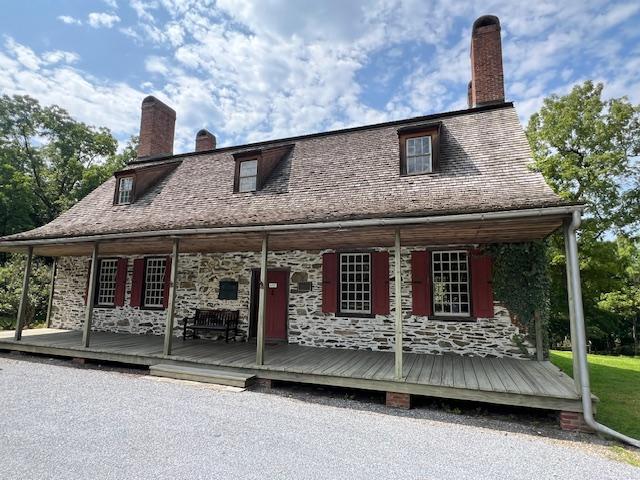
The outside of the Mount Gulian Homestead at 145 Sterling Street in the Summer of 2024
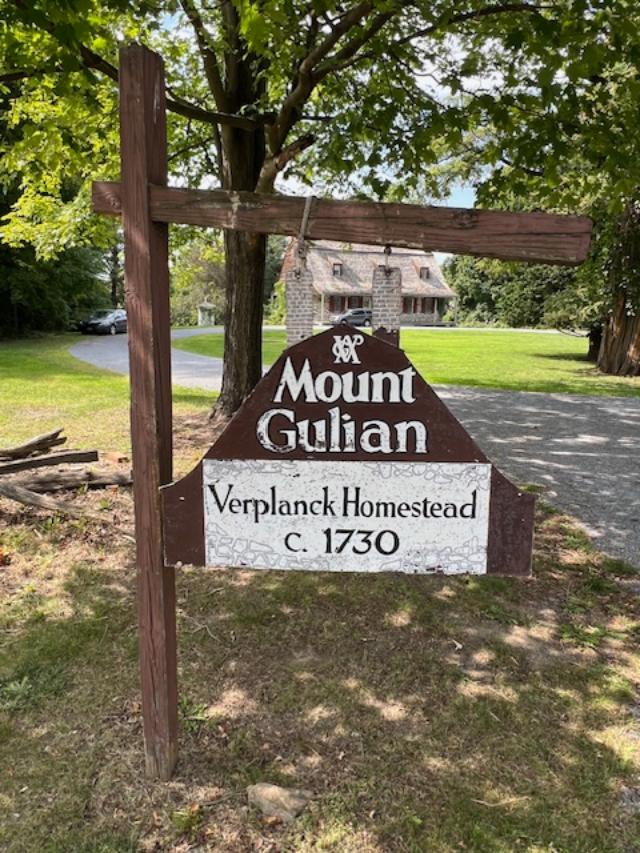
The sign that welcomes you
On my last trip to the Hudson River Valley to visit the great houses of the Hudson, I came across Mount Gulian, a Dutch manor that I never heard of in all my visits. This smaller Dutch manor house is actually a reconstruction of an 18th century home that burned to the ground by arson in 1931. The original house had been built between 1730 and 1740 and added onto over the next two centuries.
Christmas Time at Mount Gulian in the three weekends in December:
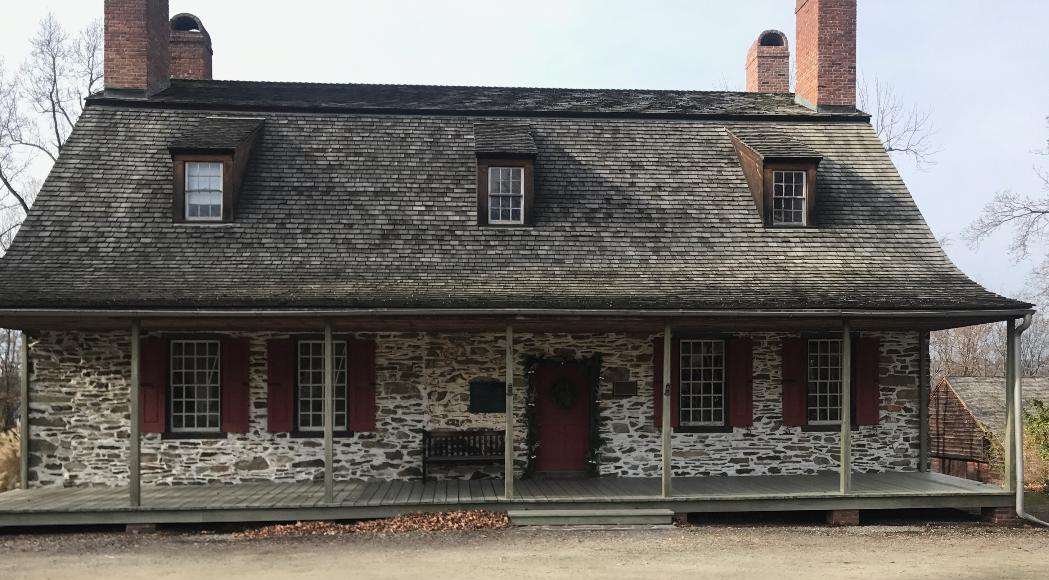
Mount Gulian at Christmas in December of 2021
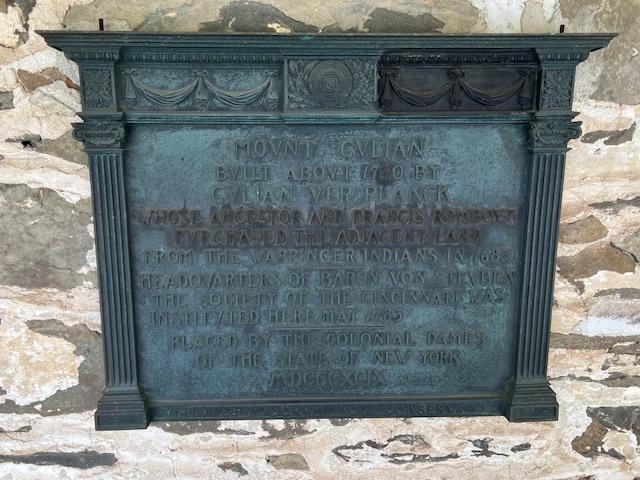
The historic plaque in front of the house
The house officially had closed for the season at the end of October and was decorated for the holidays for the weekend between December 14-16th to represent the Dutch celebrations. There had been a Children’s tea the Monday before the New Year, so the house was closing down for the season. I came back to revisit the site in December of 2024 and took another full tour of the house so I could see it fully decorated before all the seasonal events started through December.
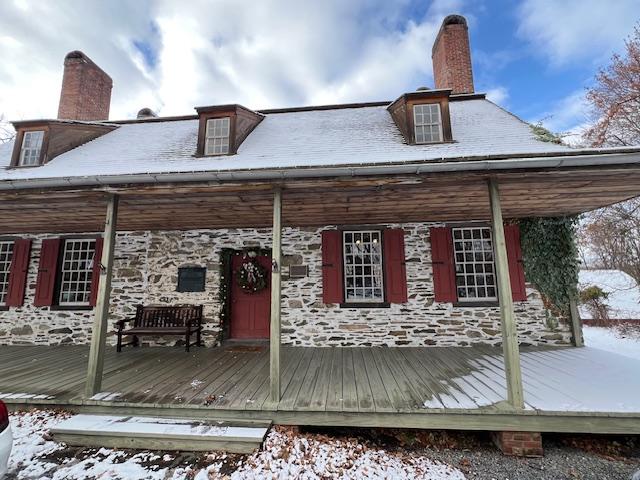
The beautiful garland and lights adorn the house at Christmas time
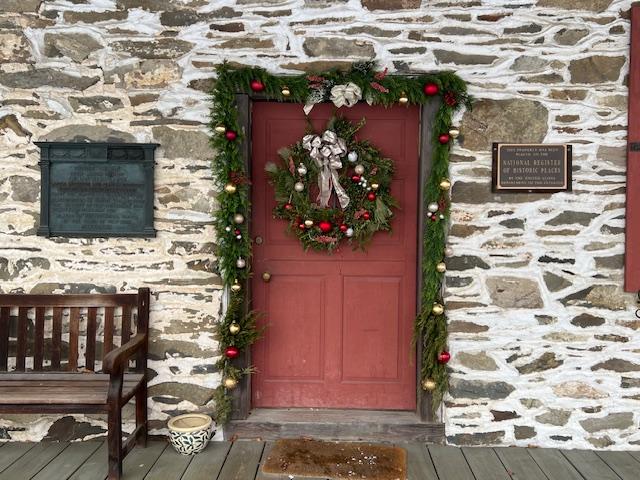
The front door is very welcoming for the holidays

The front door was beautifully decorated for the Christmas season
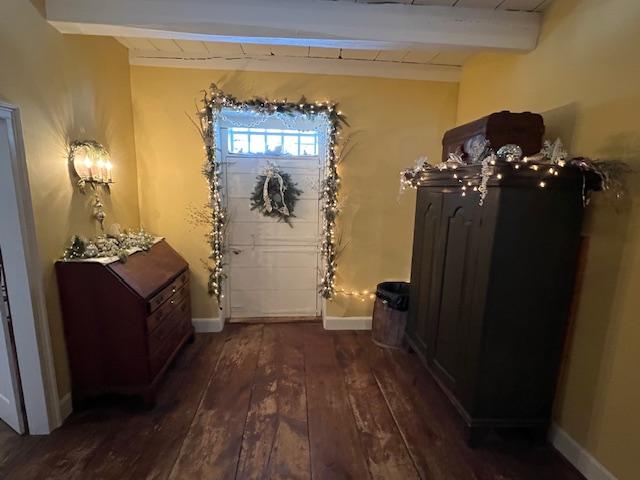
The house as you enter through the front door
The house is very unique. You would have never known it was a reconstruction. The house really looked its age. The funny part of the house is that is at the very back of an old estate that had been developed with townhouses from the main road to almost the border of the house’s property, so it was strange to drive through to find the house. Once in the semicircular driveway, you plunge back into time.
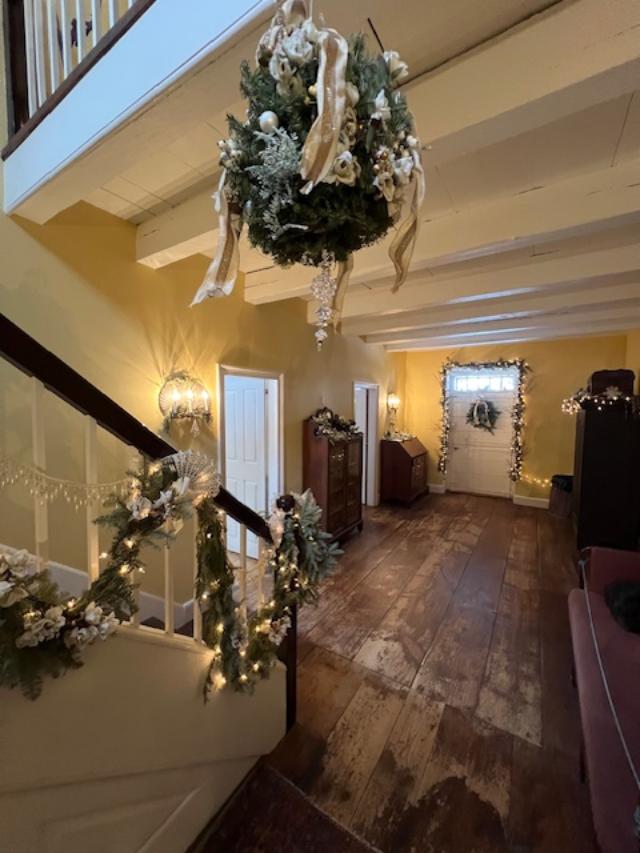
The Hallway decorated for Christmas
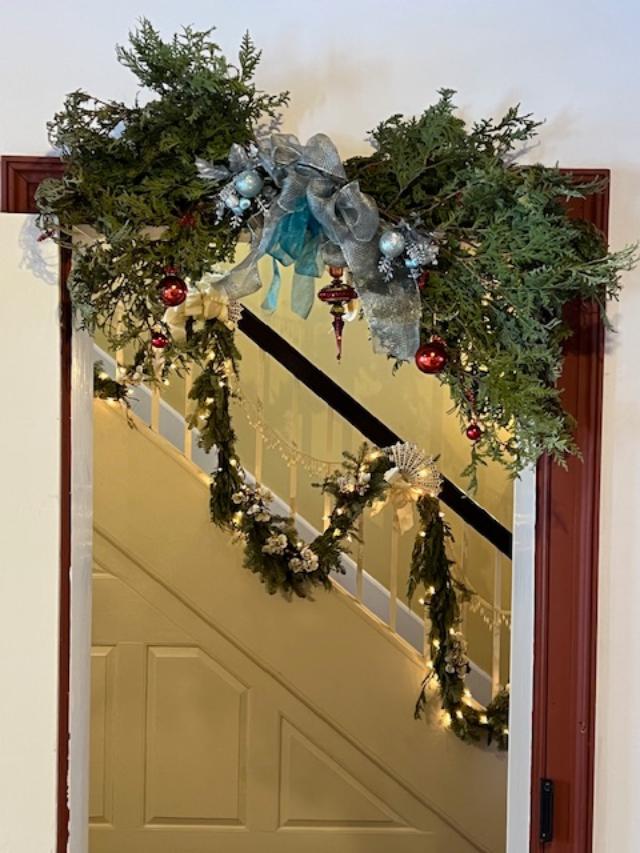
The Hallway decorations in more detail
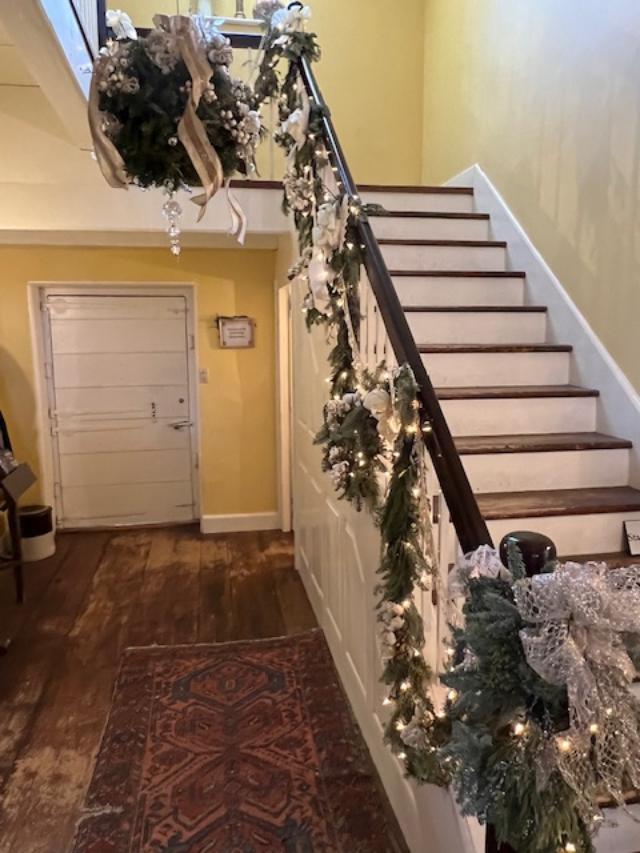
The Staircase to the Second Floor (Closed) was beautifully decorated for the holidays
The large porch in the front of the house looks over what’s left of the lawn and the housing developments. Once inside you enter the foyer and long hallway with rooms on each side. Each room was or had been decorated for the holidays with garland, mistletoe, fruits and a Christmas tree in one room, a kind of mixture of old Dutch meets Victorian Christmas. Still the effects were nice and it was very festive.
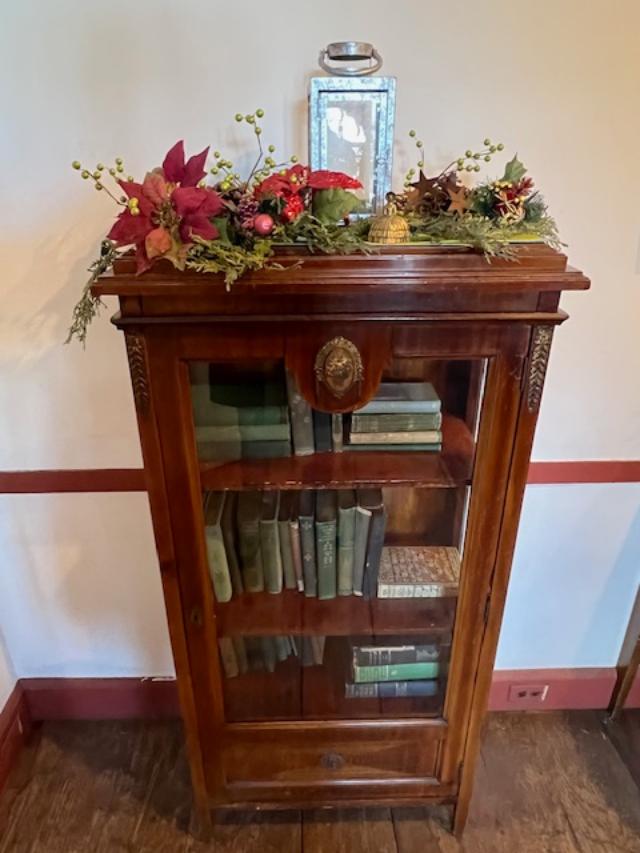
The furniture in the hallway decorated for Christmas in 2024
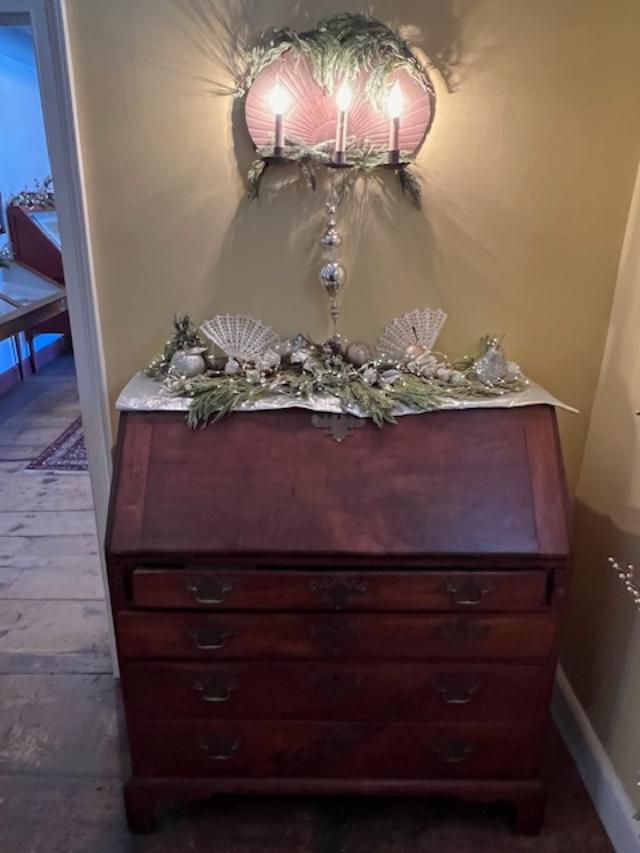
The furniture in the Hallway was nicely decorated for the holidays
What I enjoyed is that in each room, there were stories of the Verplanck family and the role that they played in the formation of the community and in the nation as well. In real life though, this much decorating would not have been done. This is a more elaborate look on how the Victorians would have decorated the house. The Dining Room would have been one of the most elaborate for entertaining during the holiday season for dining and entertaining.
Until the Victorian Age, things had been kept very simple. You would have decorated the house before Christmas Eve and then on Christmas Day, there would have been an afternoon church service and a nice lunch. Gift giving did not come into play until after the Civil War.
The Dining Room set for Christmas dinner in 2024
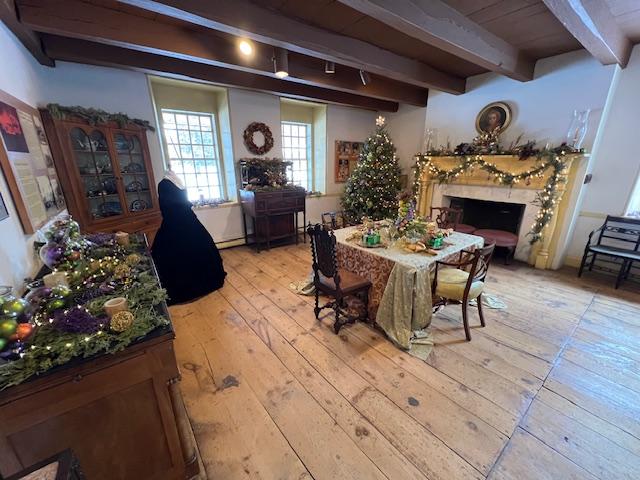
The full view of the Dining Room
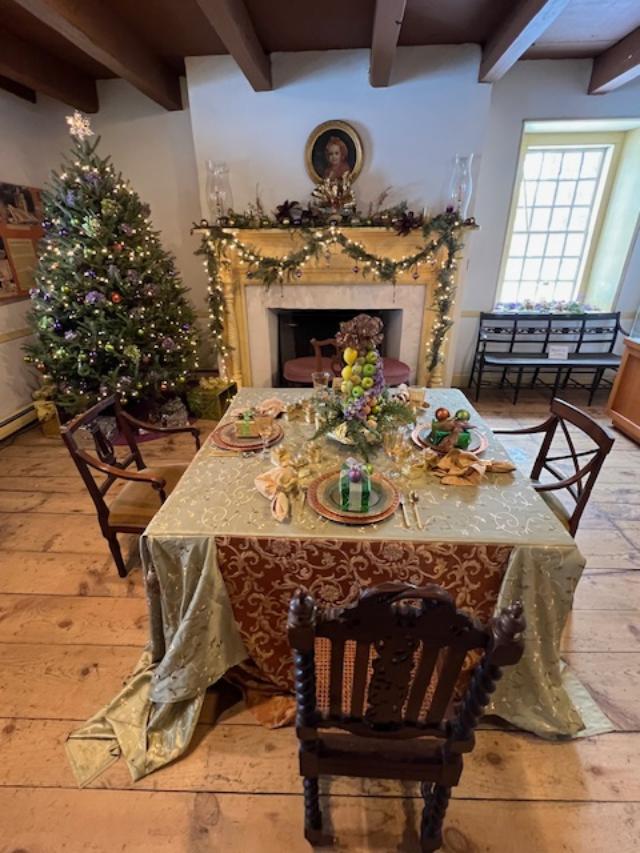
The Dining Room Table and the fireplace mantle
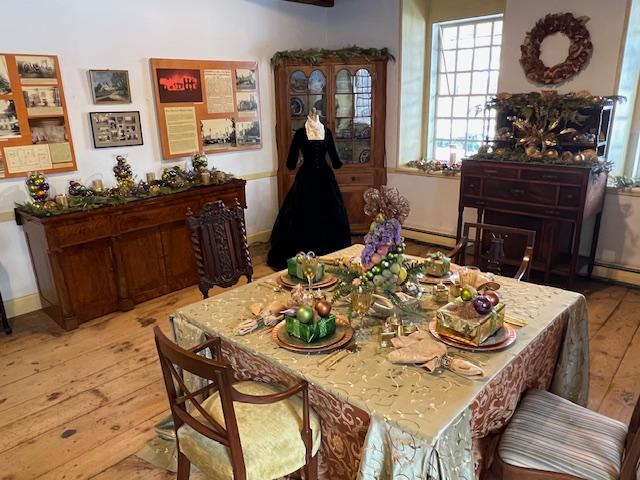
The back part of the Dining Room
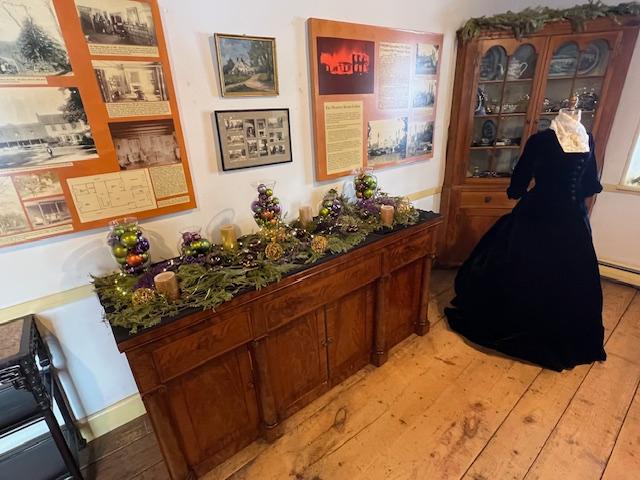
The Dining Room sideboard decorated for the holidays

The Historic Documents in the Dining Room with a funeral dress (why this was here I was not too sure)
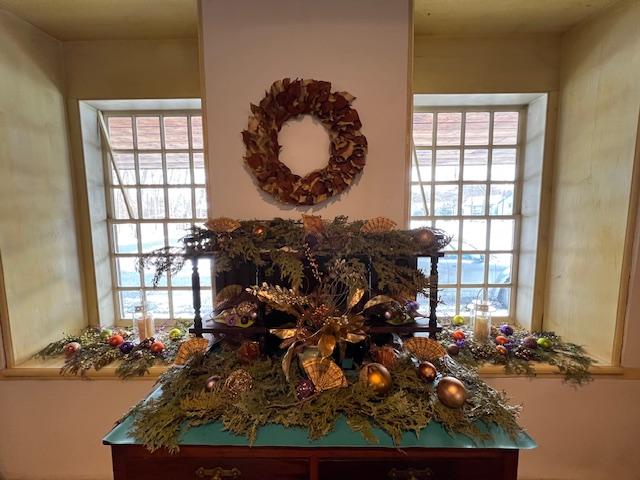
The elaborate decorations between the windows in the Dining Room
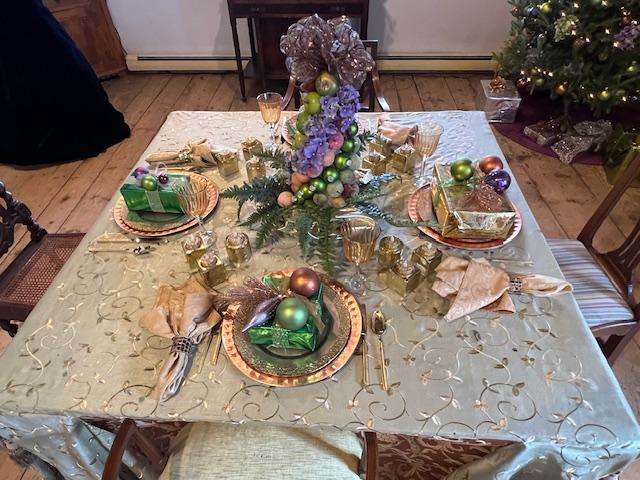
The detailed decorations on the Dining Room table ready for a wonderful Christmas dinner
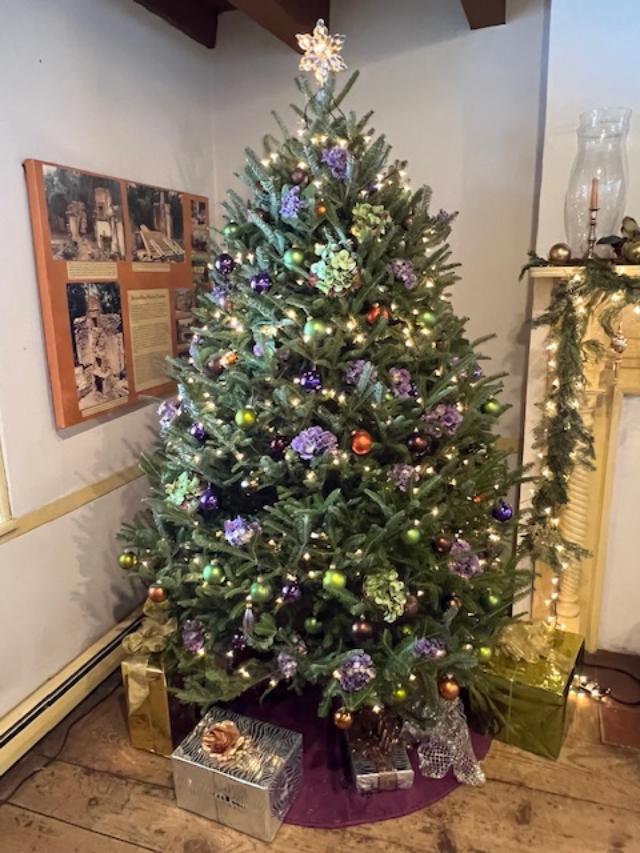
The beautiful fresh Christmas tree in the corner of the Dining Room in 2024
All of the rooms had artifacts that the family keeps donating the house as most of the original furnishings were destroyed in the 1931 fire. Still the furnishings are vintage to the time period. Here and there are stories of the house, the people that lived here and about the family in their daily lives. There were also stories of the Revolutionary War and its headquarters of Major General Friedrich Wilhelm von Steuben. There was also a display on the founding of the Society of the Cincinnati, a Veterans group.

The Order of Cincinnati at Mount Gulian
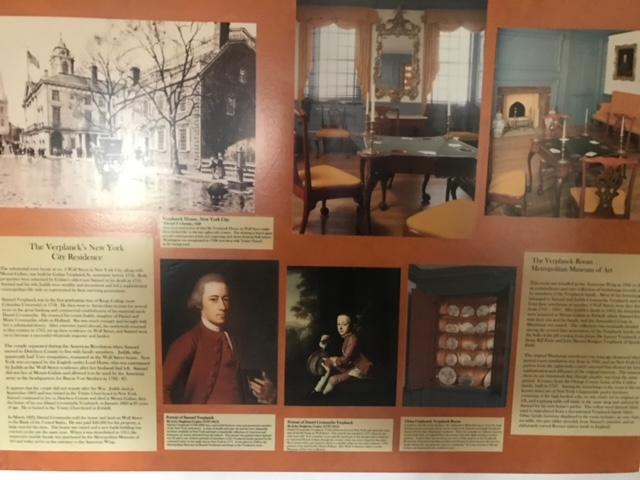
The history of Mount Gulian and the surrounding area
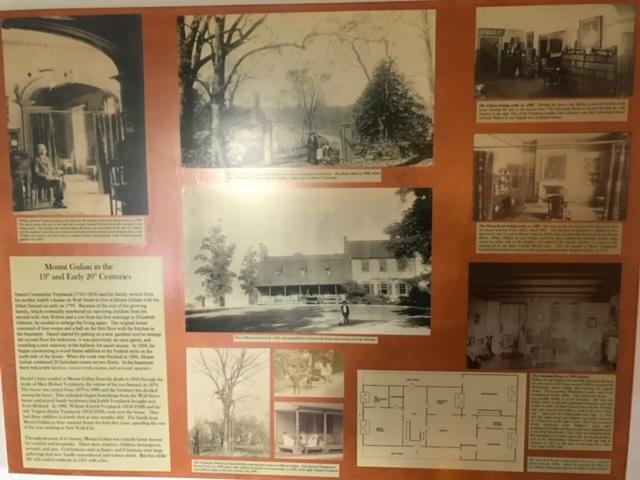
The history of Mount Gulian and the surrounding area
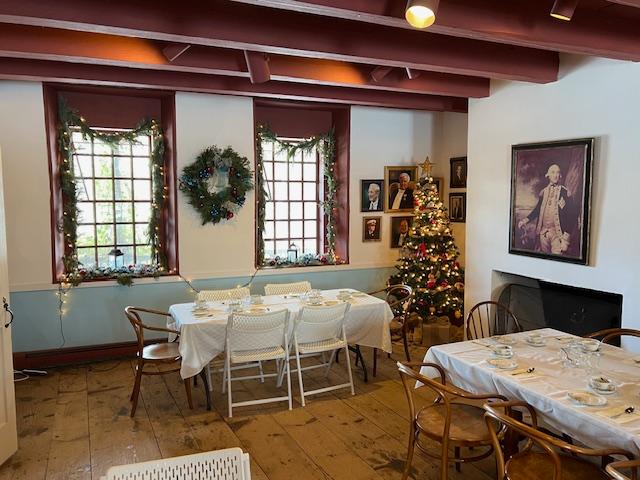
The main room decorated for the Children’s Tea in the room of the Order of Cincinatti information
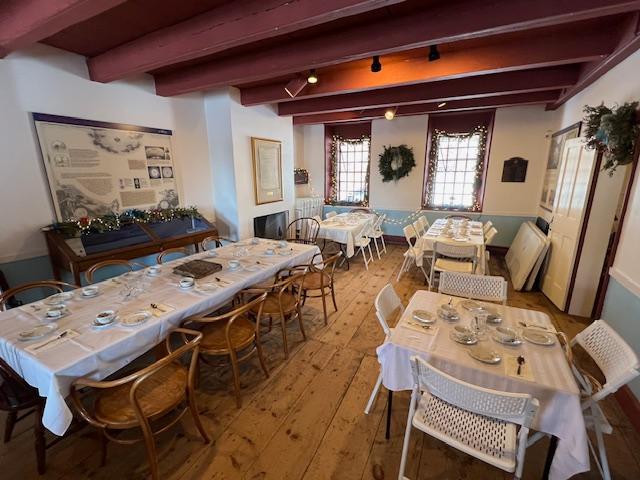
The Main Room set up for the tea
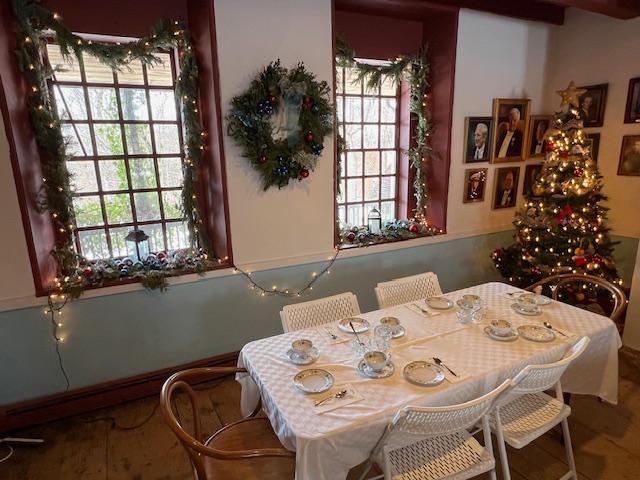
The back part of the room with its elaborate details
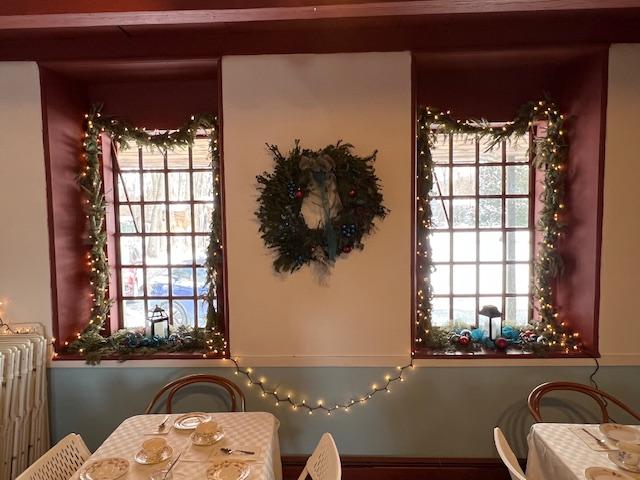
The beautiful window decorations in the main room
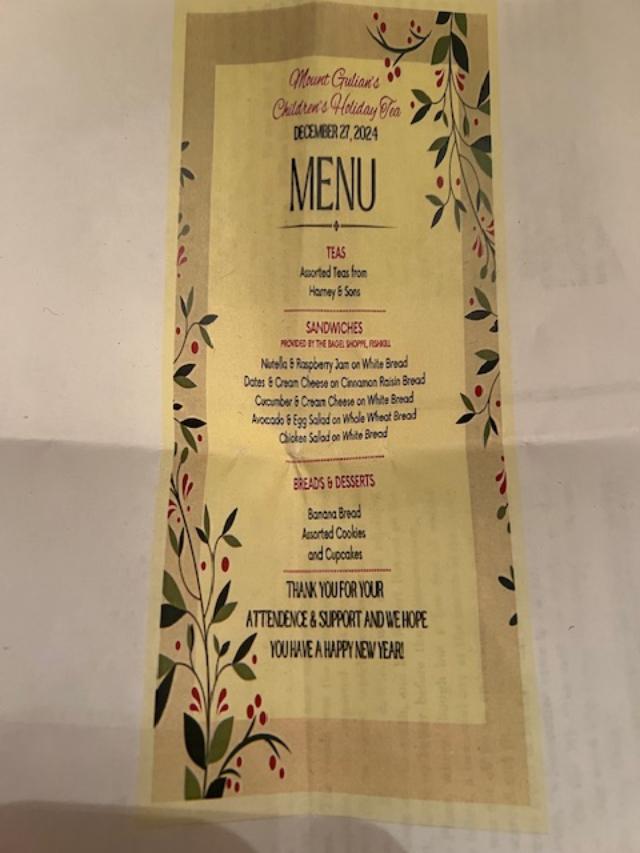
The Children’s Christmas Tea menu at Mount Gulian for the late December event
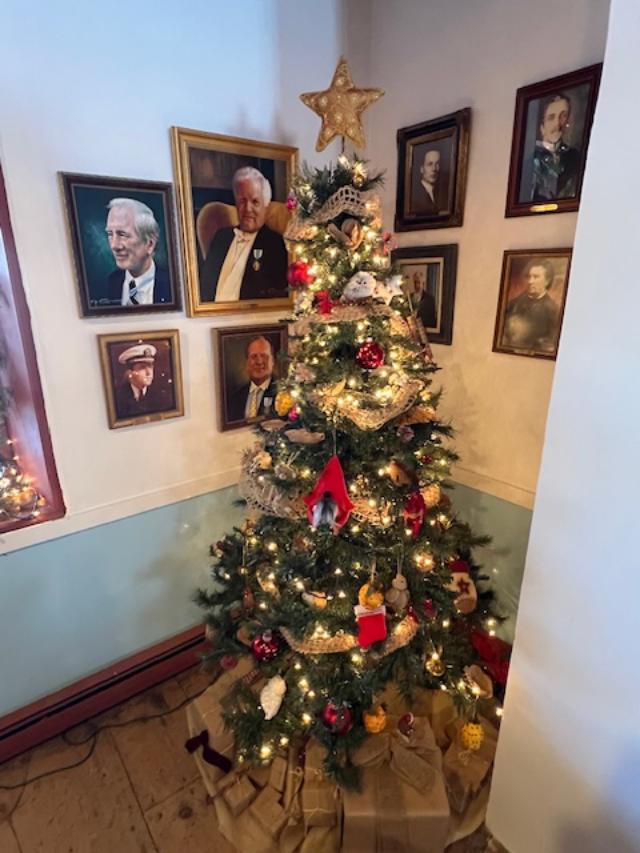
The Christmas tree in the corner of the room by all the portraits and photos of the members
The Kitchen in the basement area is one of the areas of the home that survived the 1932 fire when the house burnt to the ground. It would not have been used in modern times as a more modern kitchen was built in the newer area of the house. Still, this was decorated for the holidays to show the bounty of the Fall harvest and the items that would have been served for the Christmas holidays.
The kitchen decorated for Christmas in 2024
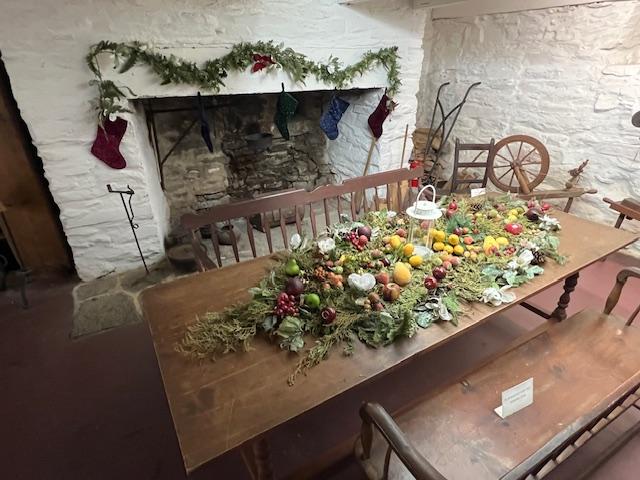
More detail on the Kitchen decorations
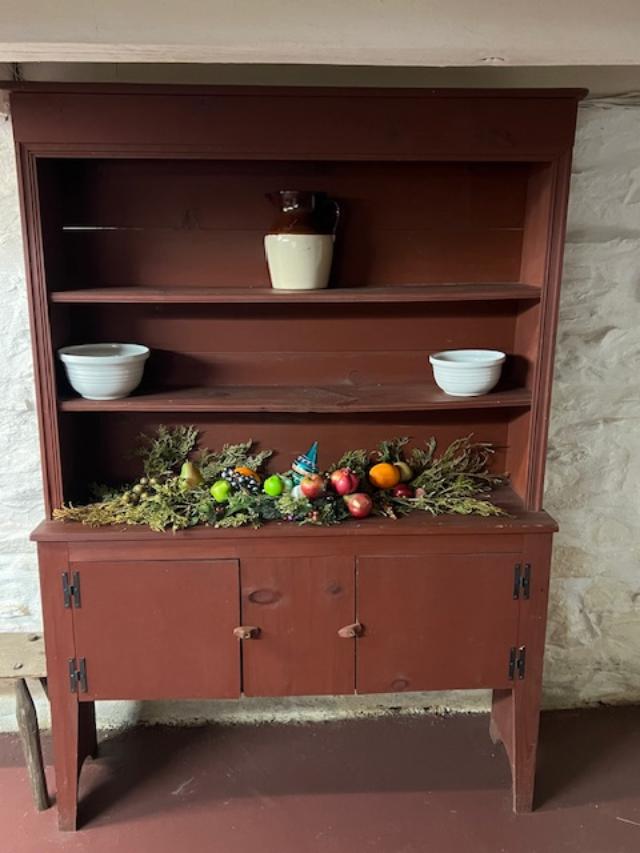
The Kitchen cabinets decorated for the holidays
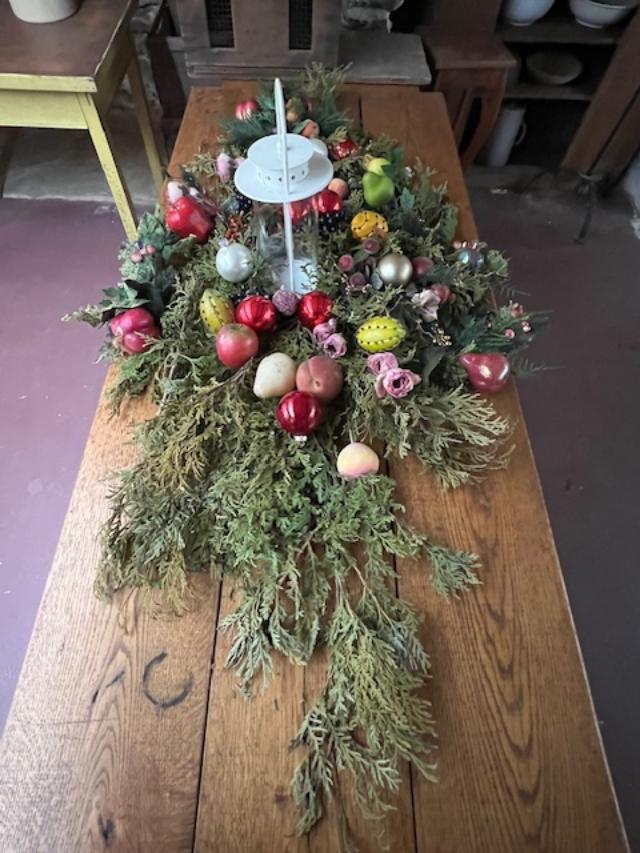
The decorations on the Kitchen table in the basement area
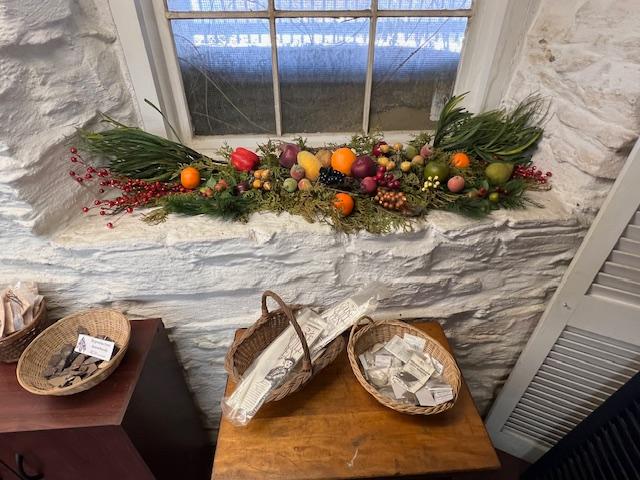
The windows in the basement were decorated as well in the Gift Shop
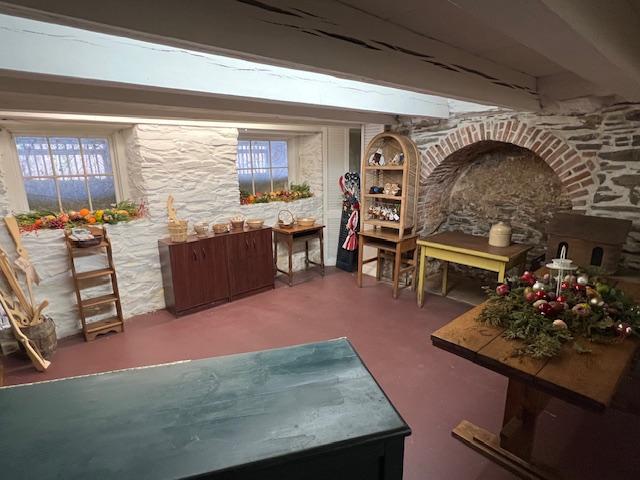
The Gift Shop in the Basement area just off the Kitchen area
When I went back upstairs, we toured the Library and the Sitting Room just off the hallway and the Dining Room.
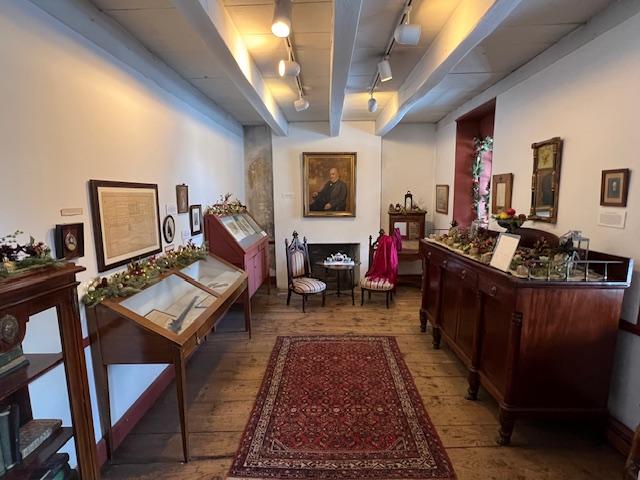
The Library decorated for the holidays
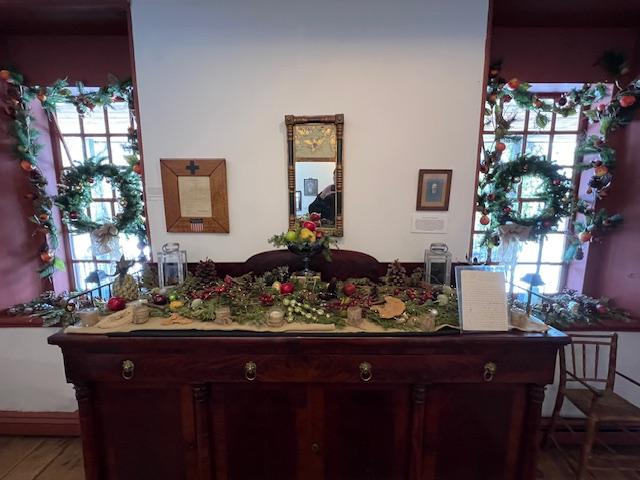
The Library decorations
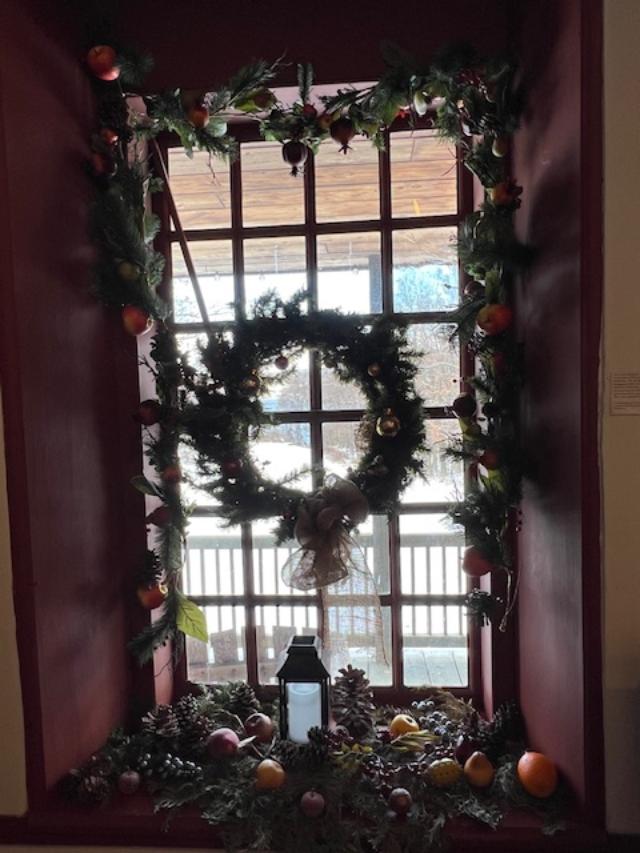
The beautiful details of the window decorations
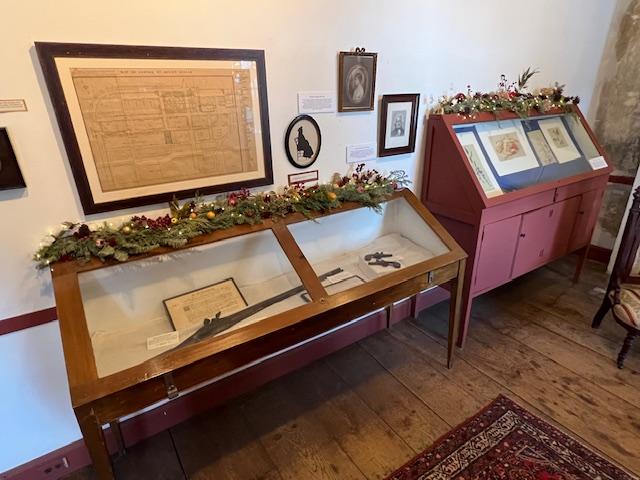
The cases of artifacts with the Christmas garlands decorating the top of the furniture
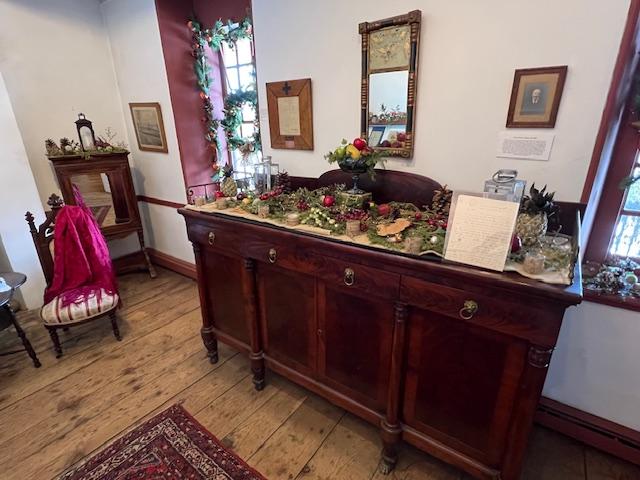
The other side of the Library cases and displays
According to family records, Christmas was a big holiday in the house with many members of the Ver Planck family enjoying the holidays together. The Drawing Room (where the Tea was taking place) was ‘decorated with pine over the doors and windows with wreaths of laurel and the berries of the bittersweet in various places and the room was aglow with a bright wood fire and candlelight and it was all adorned for Christmas. When the Drawing Room door was opened Christmas morning, the Christmas tree burst on our sight. It was lighted with little wax candles as the modern trees were but there were none of the stereotyped ornaments of tinsel and glitter. There were Lady Apples on the tree and oranges, cornucopias and toys and the sugar plums. The tree was always of laurel, reaching nearly to the ceiling and yet it looked small in that great room’ (William Samuel ‘Ver Planck Family History’). The current curators have done a nice job keeping this tradition alive in the decorations.
When I left the house, I visited the grounds over-looking the Hudson River. On the property behind the house was a ‘A frame’ Dutch barn. The barn was closed for the season but fit very well into the landscape of the estate. The view of the Hudson River was beautiful.
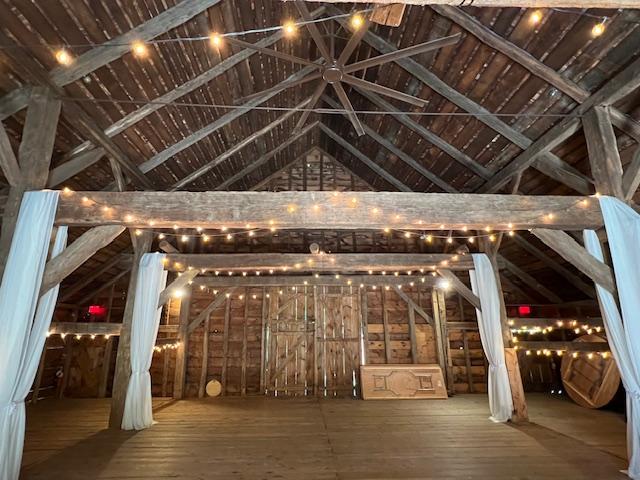
The Dutch Barn at Mount Gulian set up for a party
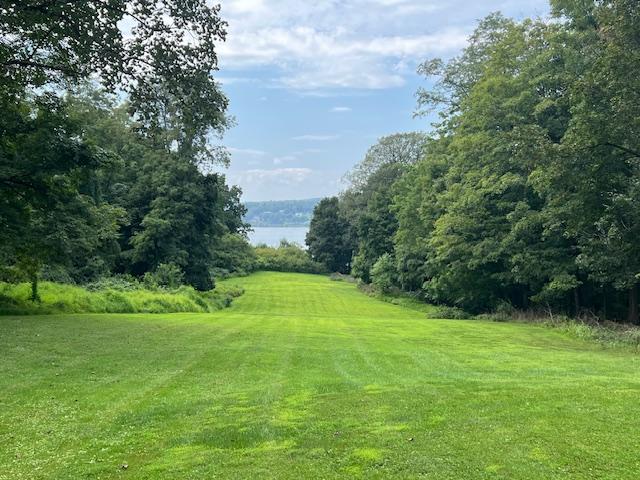
The view to the Hudson River from the house in the Summer
Don’t miss visiting the downtowns of Beacon and Wappinger Falls while visiting the area. Taking Route 9D is an interesting and scenic way to tour the area.
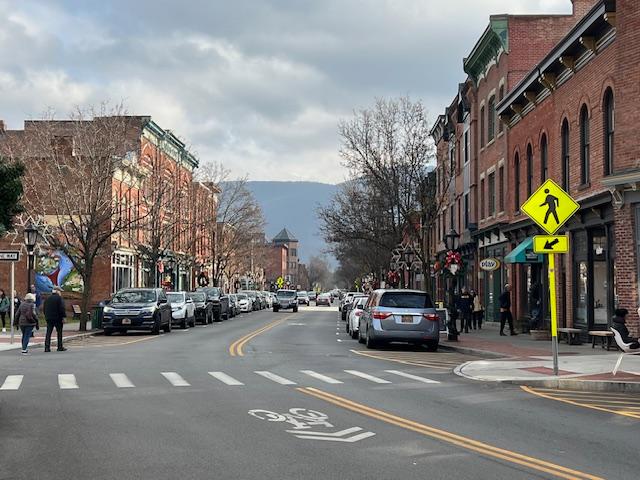
Downtown Beacon, NY at Christmas in 2021
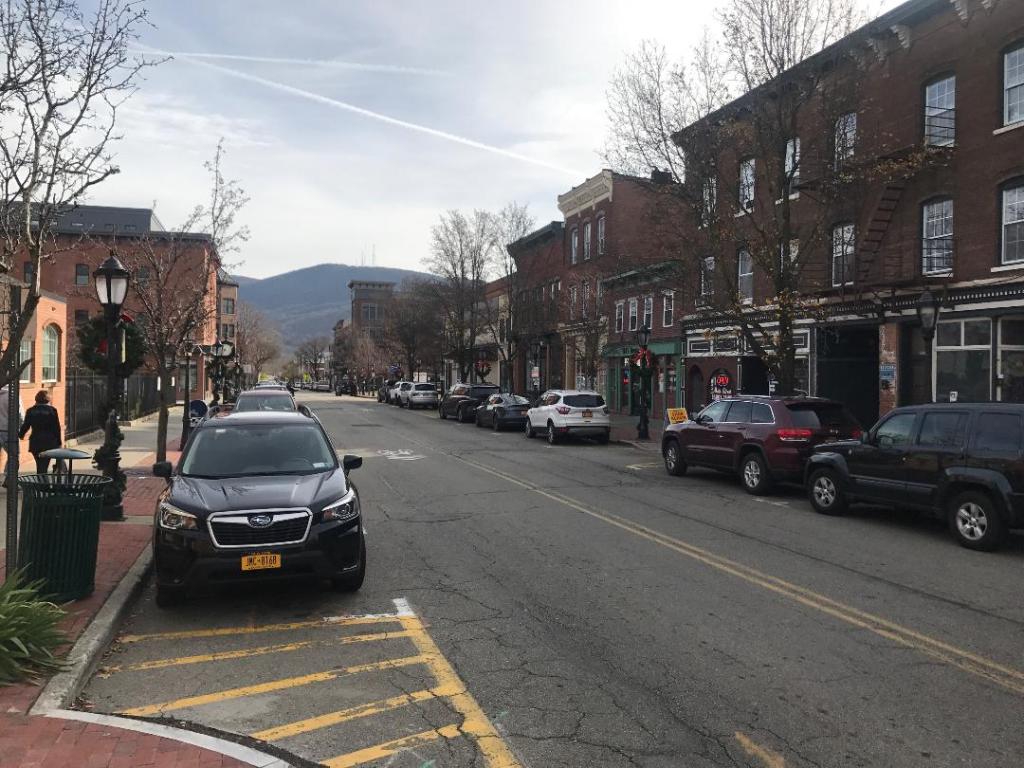
Downtown Beacon, NY at Christmas time

Downtown Beacon at Christmas time
Mount Gulian in the Summer:
In the Summer of 2024, I returned to Mount Gulian to take a full tour of the estate in the summer when everything was in bloom. The same house but a different feeling than the Christmas holiday season. On the Summer tour, you are able to walk the gardens, the barn and the grounds around the house. Plus the gardens were in bloom so it was a more complete tour.
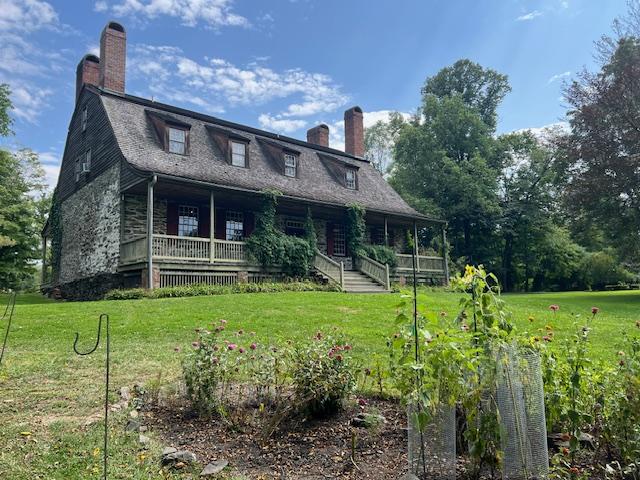
The back of Mount Gulian in the Summer of 2024
The back lawn on the Mount Gulian Homestead estate
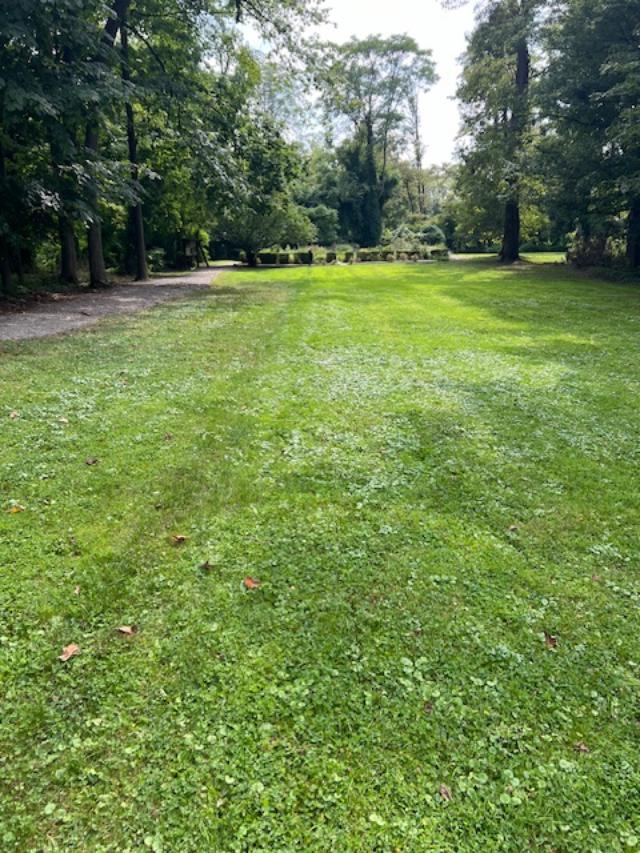
The lawn to the gardens from the house
I started the tour of the property while I waited for my tour at 2:00pm. I walked the lawns and walked around the gardens. The property looked so much nicer than in the winter months. You can see the vibrance of the gardens and the beauty of the lawn and woods against the house. The gardens were well maintained and the flowers were still in bloom in the late summer months.
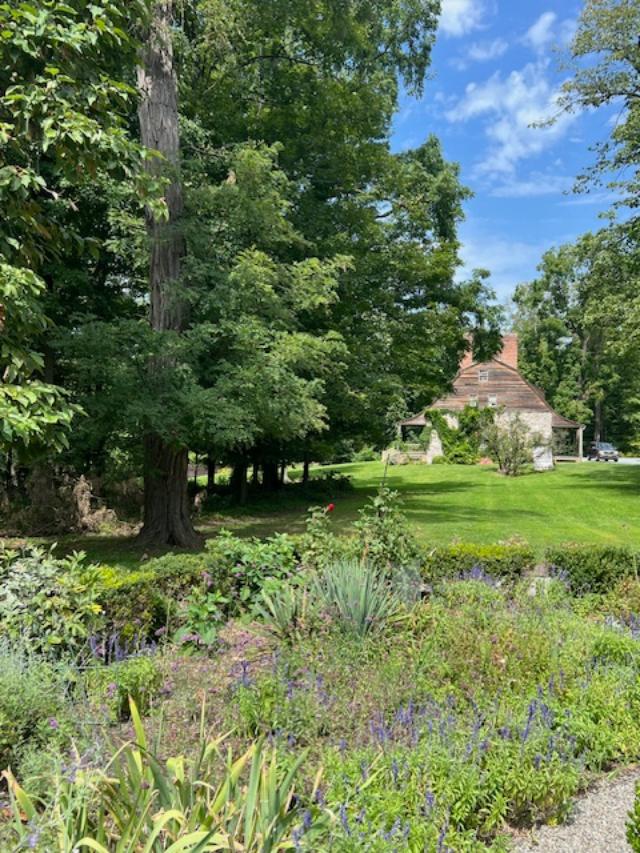
The gardens with the house in the distance
When I started the tour of the house in the Summer of 2024, it was similar to the December tour in the description of the house but the tour guide discussed the house from the perspective of the family living here full time when they moved from their New York City home to the Hudson River Valley permanently.
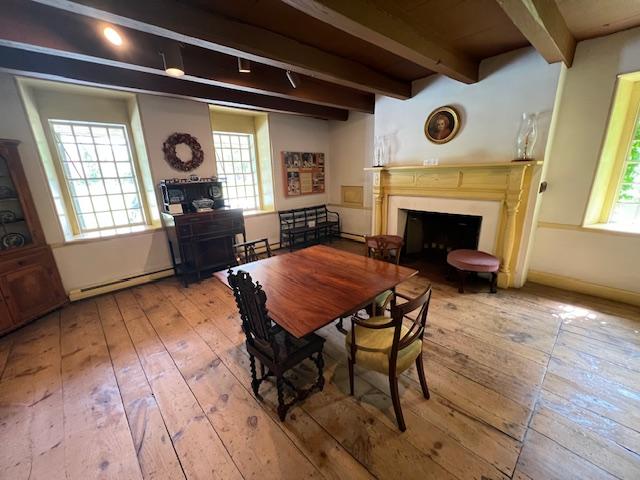
The Living Room with original furniture from the Verplanck family
Our first stop was in the Living Room where original family furnishings decorate the room. The family would gather in this room for specials occasions and holidays. The tour guide explained that the room contained some items that used to be in the original house including the portrait of the last resident of the house, Virginia Verplanck before the house burned down in the 1930’s.
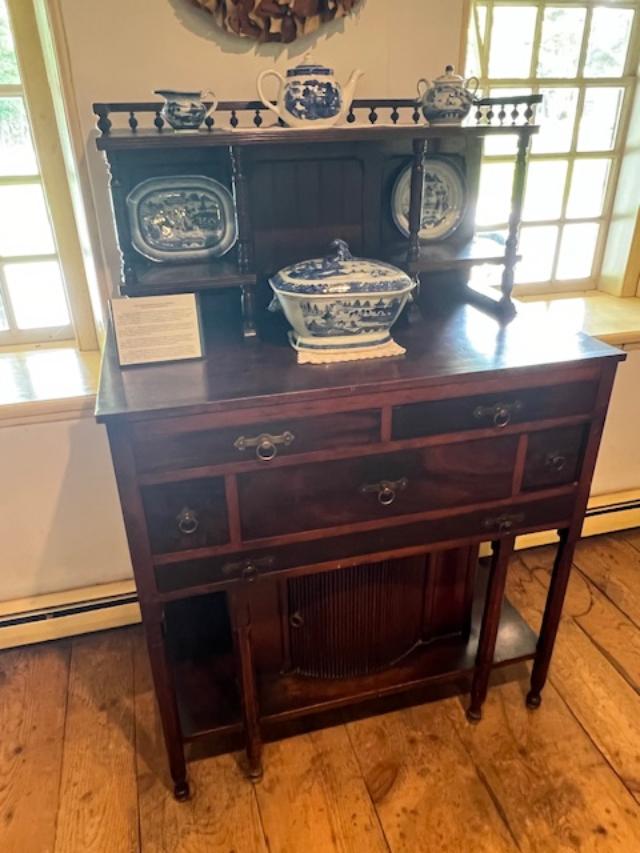
The Verplanck Family china
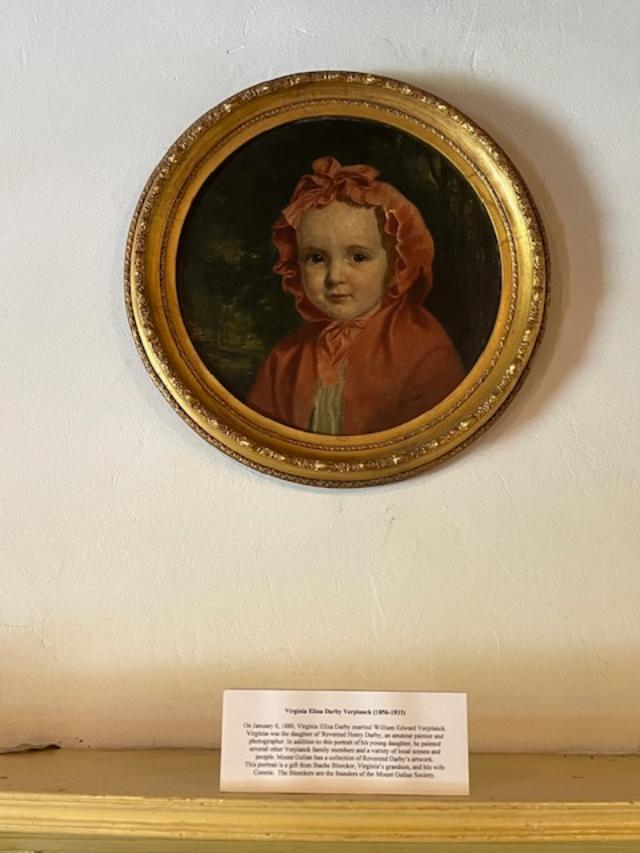
Portrait of Virginia Verplanck as a child. She was the last Verplanck to live in the house

The Library
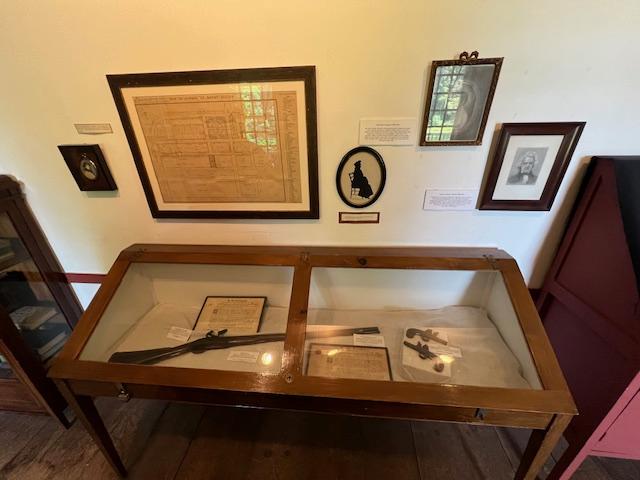
Revolutionary War artifacts in the house
The house was used by General Washington and his troops during the Revolutionary War and Baron von Steuben used the house during the war as well. The proximity both Washington’s Headquarters and the City made it an ideal location.
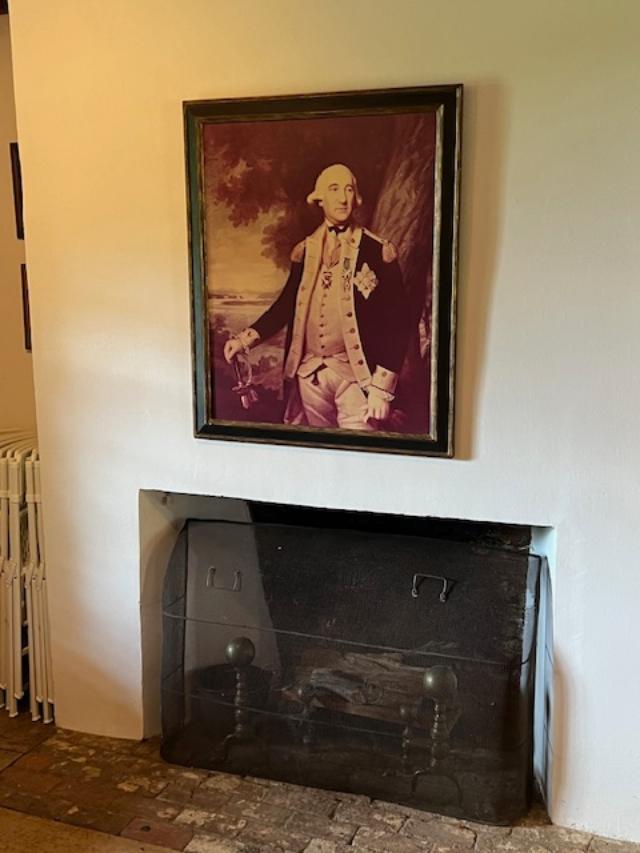
The portrait of the Baron Van Steuben
We next toured the kitchen, which had been decorated for a Dutch Christmas the last time I had visited. The hearth was from the original house and you could see how things were cooked in the open fire and then in the beehive oven where breads and cakes were cooked.
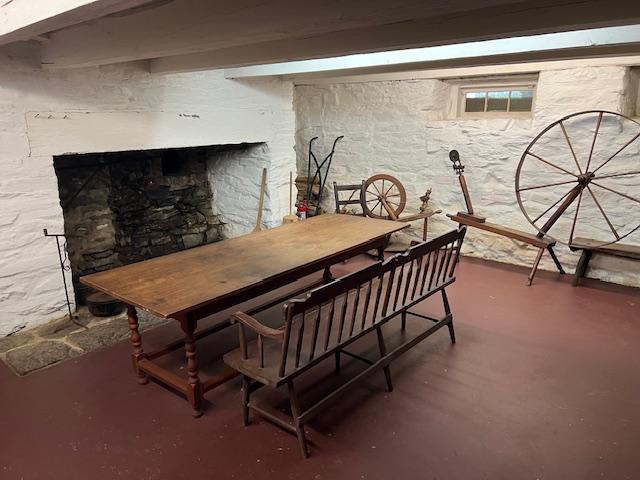
The kitchen in the basement
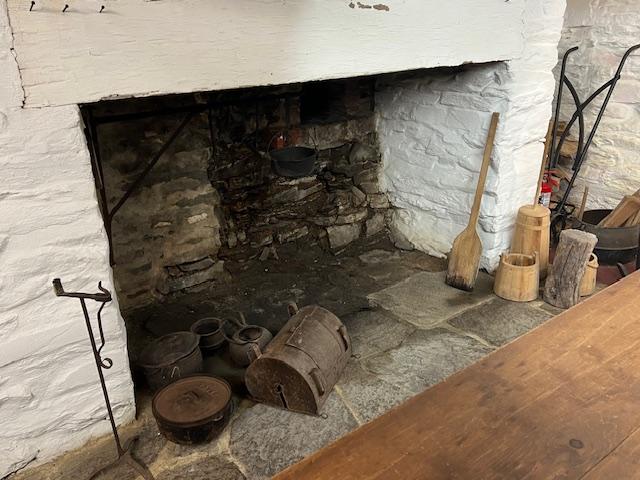
The cooking hearth and heat of the house
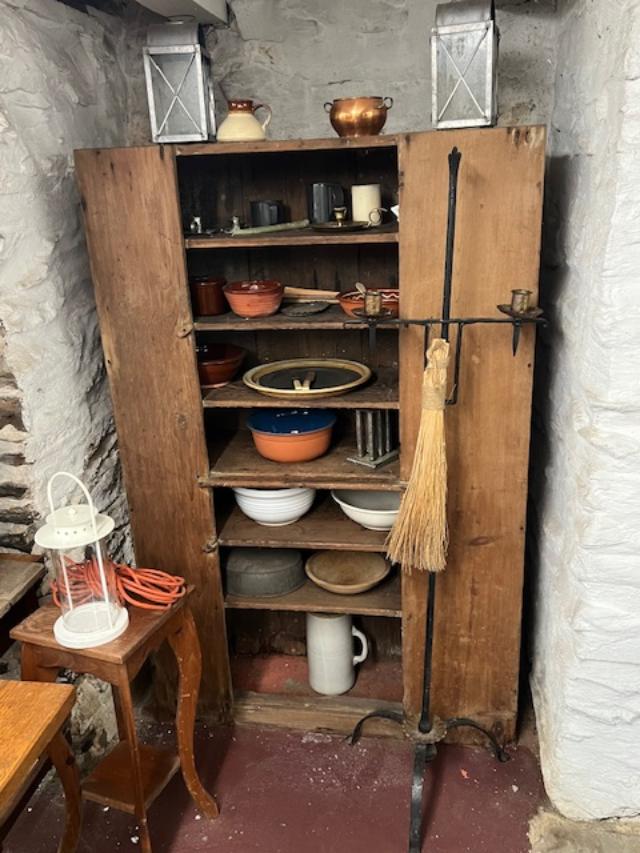
Cooking and Kitchen equipment
The items a cook would need to prepare meals in a Dutch kitchen.
The Grounds part of the tour:
After the full house tour, we went out to the grounds to see the barn and the gardens. The barn was the American Dutch style barn which was specific to this area. It was large and airy, enough to hold the crops and the animals in case of bad weather.
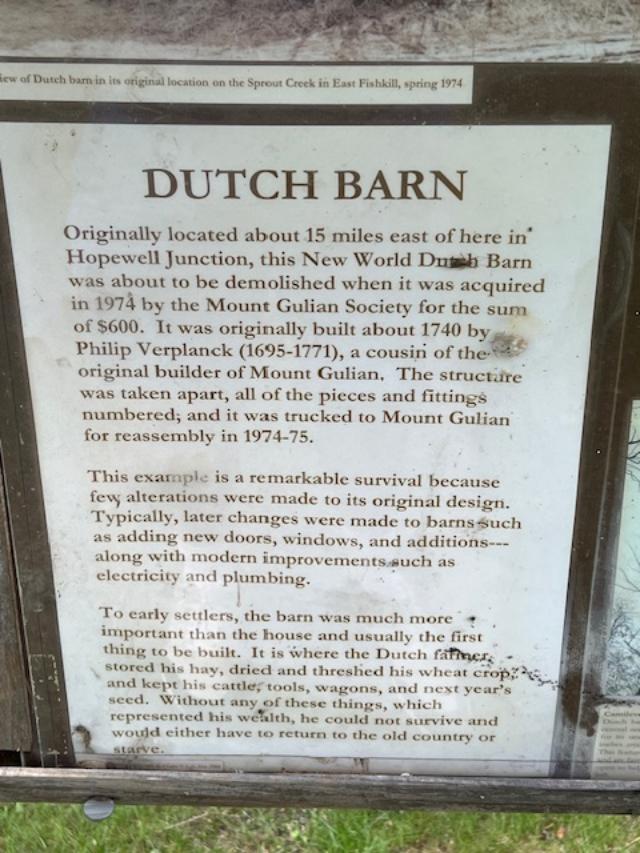
The Dutch Barn sign

The outside of the Dutch Barn
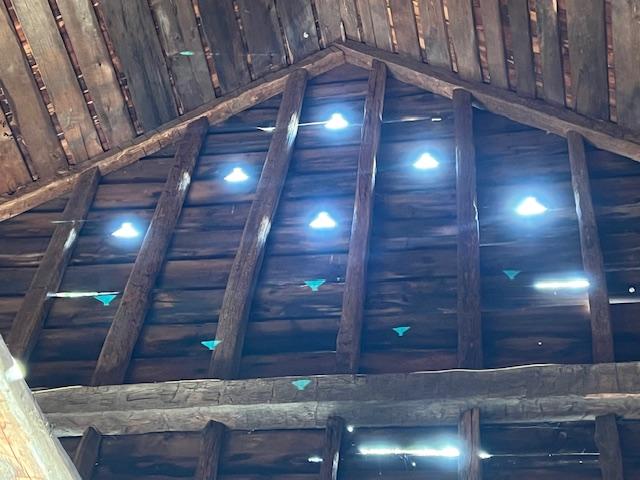
The Maitland bird holes in the barn to eat bugs on the hay and vegetables
My tour guide told me the unusual holes were that of the Maitland bird the could enter the barn to eat the bugs and insects on the crops and hay.
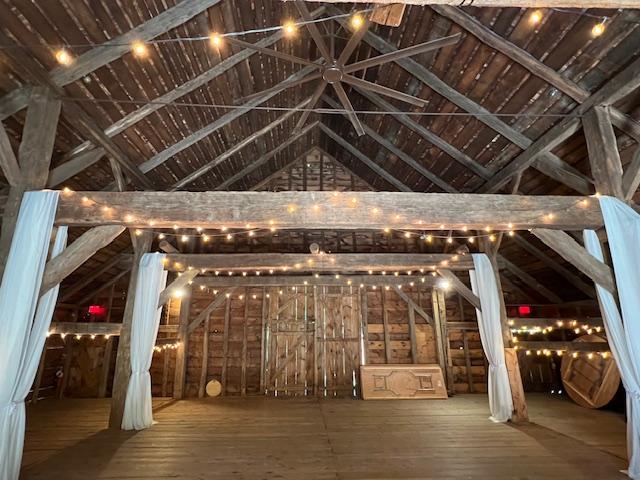
The inside of the barn set up for a future wedding
We next toured the gardens, which have been partly restored to their original design. They were in bloom with late summer flowers and decorative bushes and the layout was taken from early designs from the house.
The formal Gardens and Lawns tour:
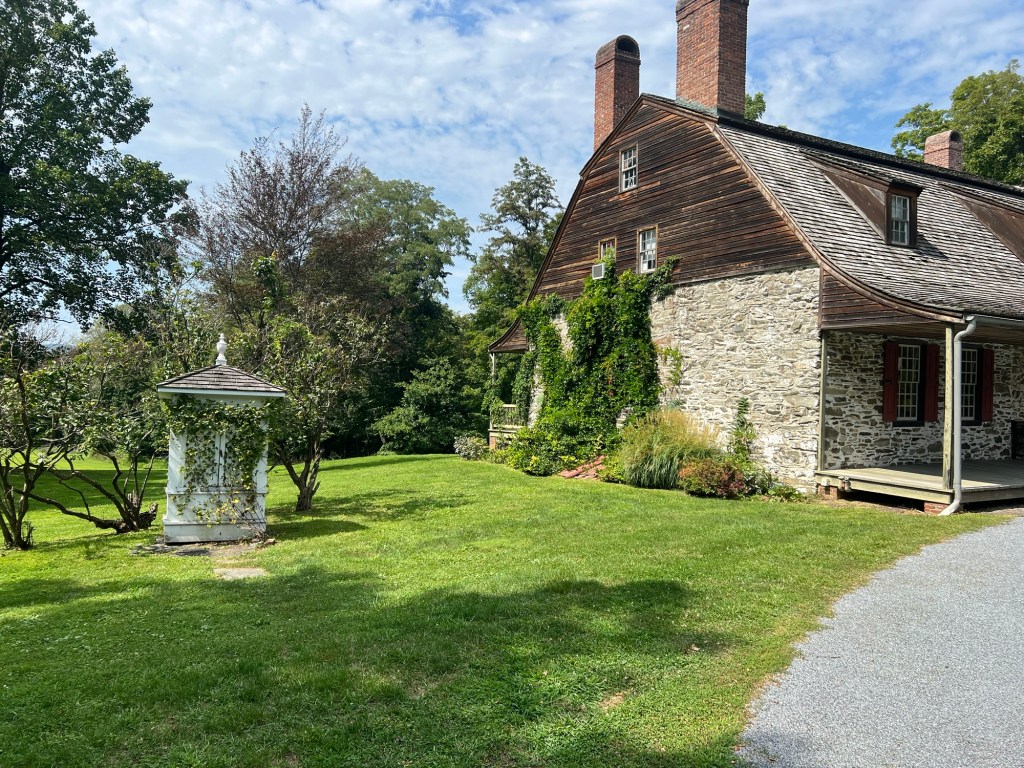
The side of the house leading to the gardens
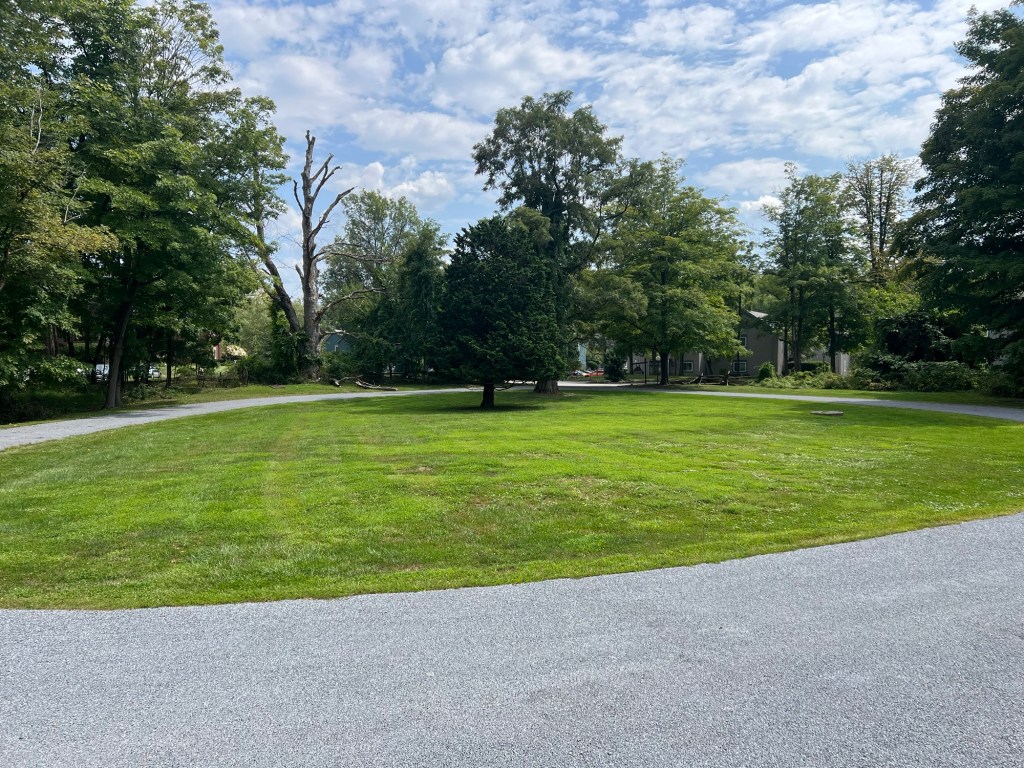
The semi circle in front of the house
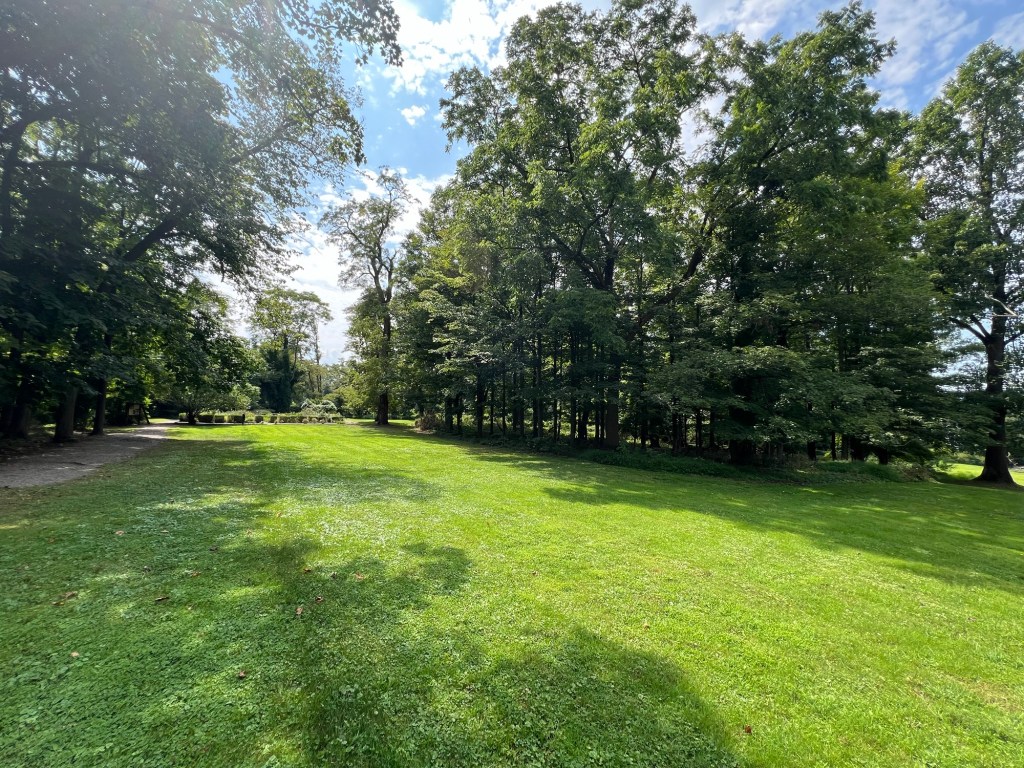
The lawn between the house and the formal gardens used to be vegetable and fruit garden
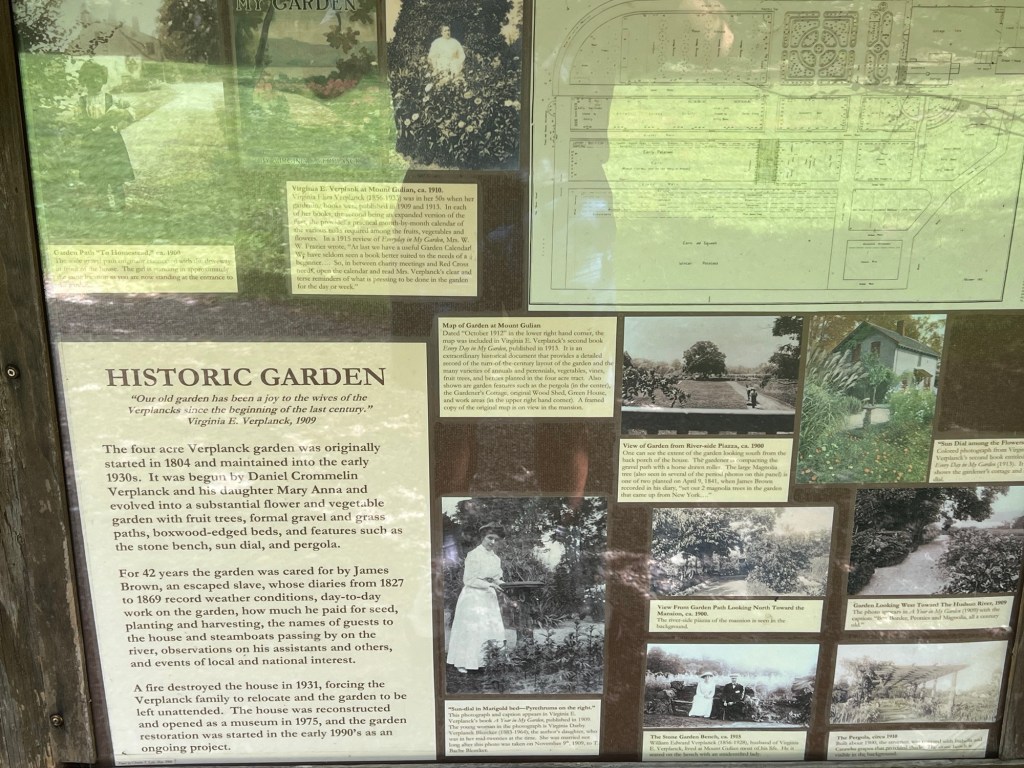
The sign for the formal gardens
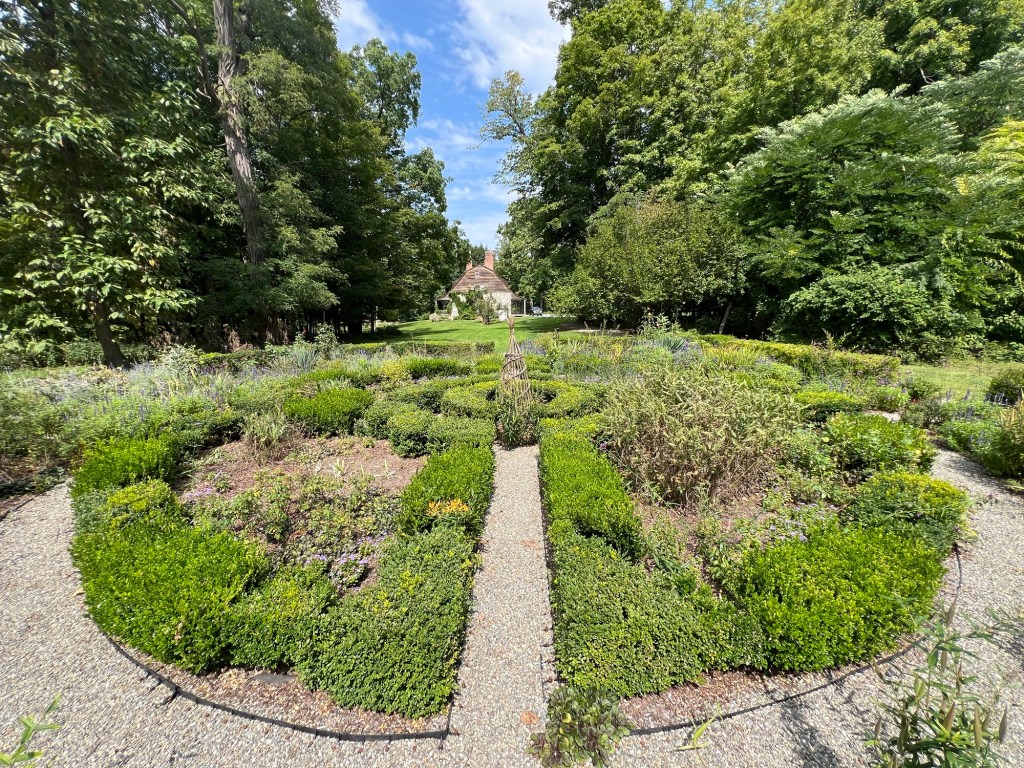
The formal flower gardens followed the original design the Virginia Venplanck had when she lived here
The beautiful gardens had been over grown in the years since the house burned down so volunteers and landscape architects had to cut down the woods and flow pictures and diagrams of the gardens to recreate them.
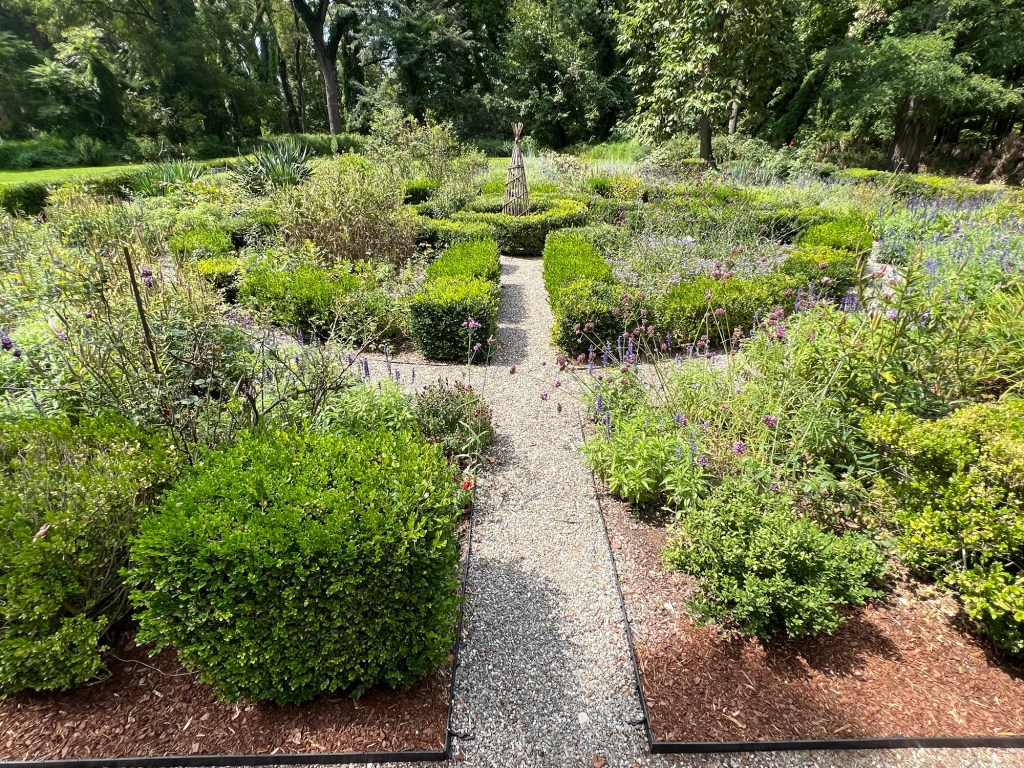
Entering the formal gardens
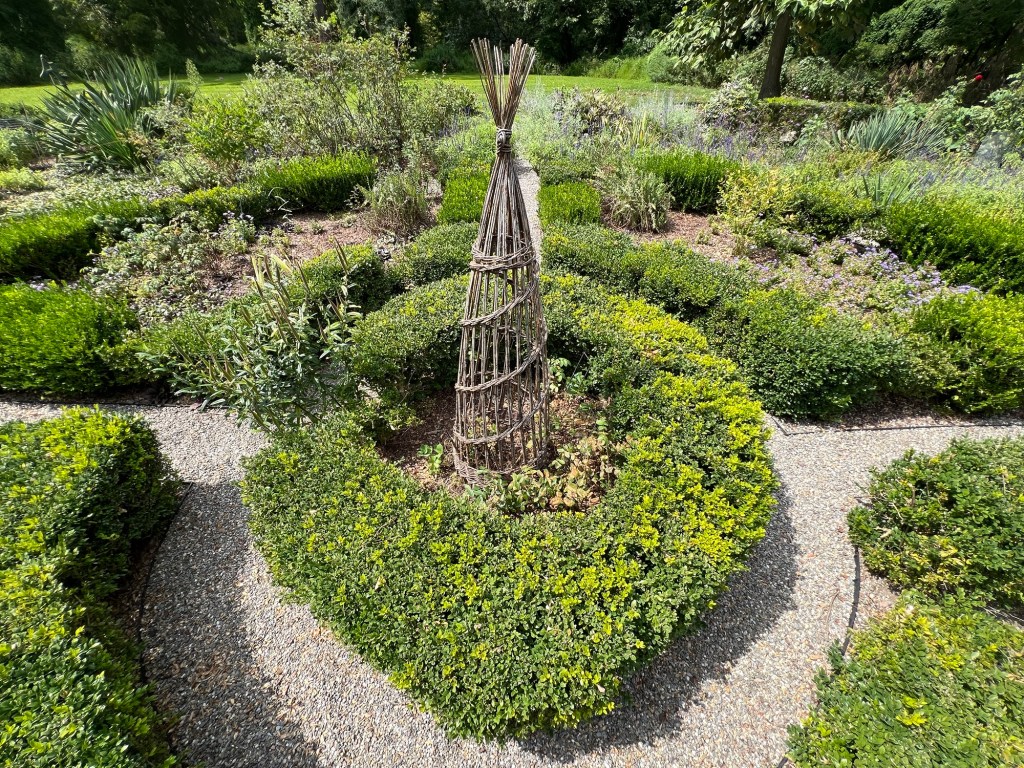
The middle of the gardens
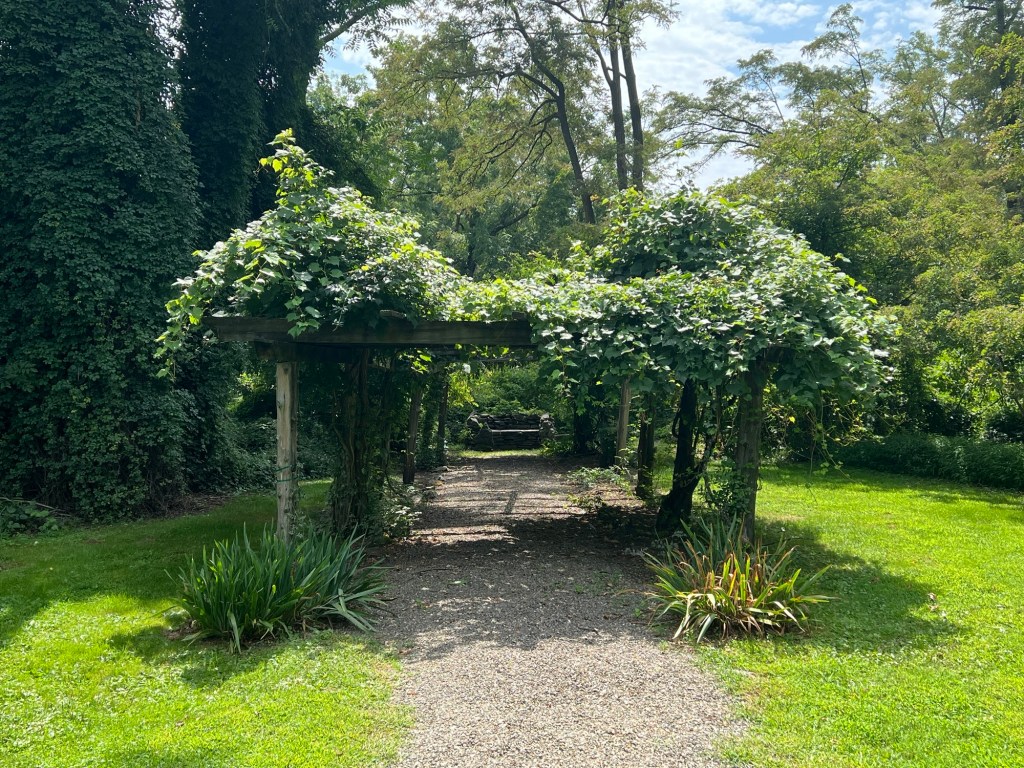
The original trellis was still standing in the woods and it was rebuilt on its original spot
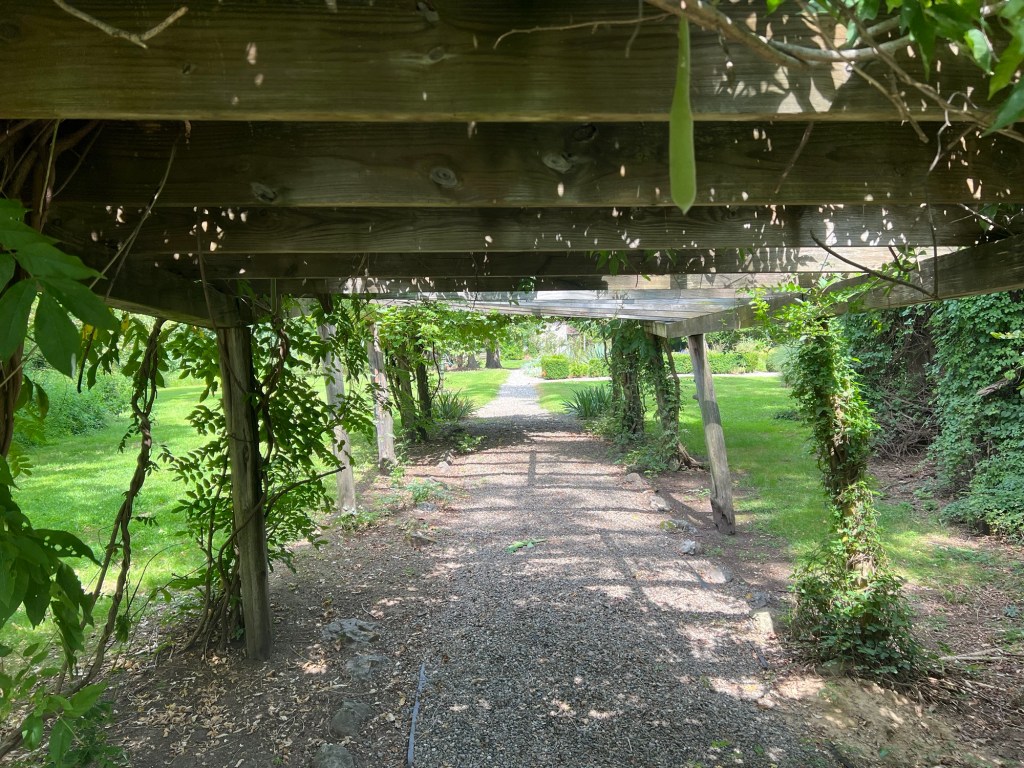
Walking through the trellis
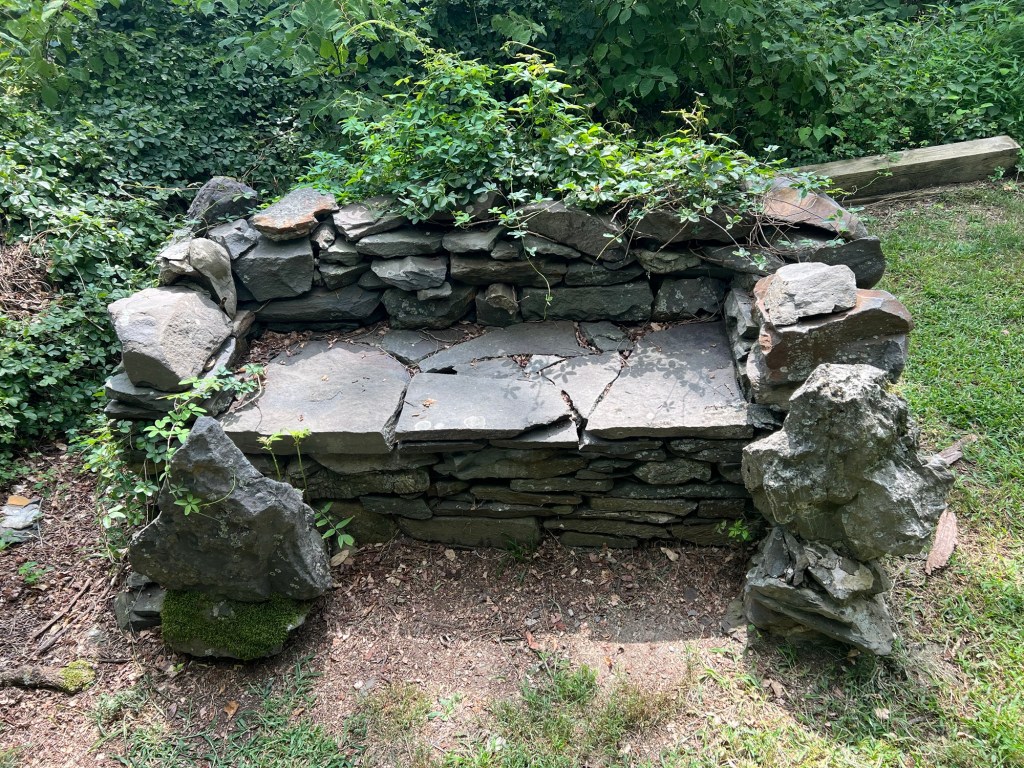
The stone bench at the edge of the gardens
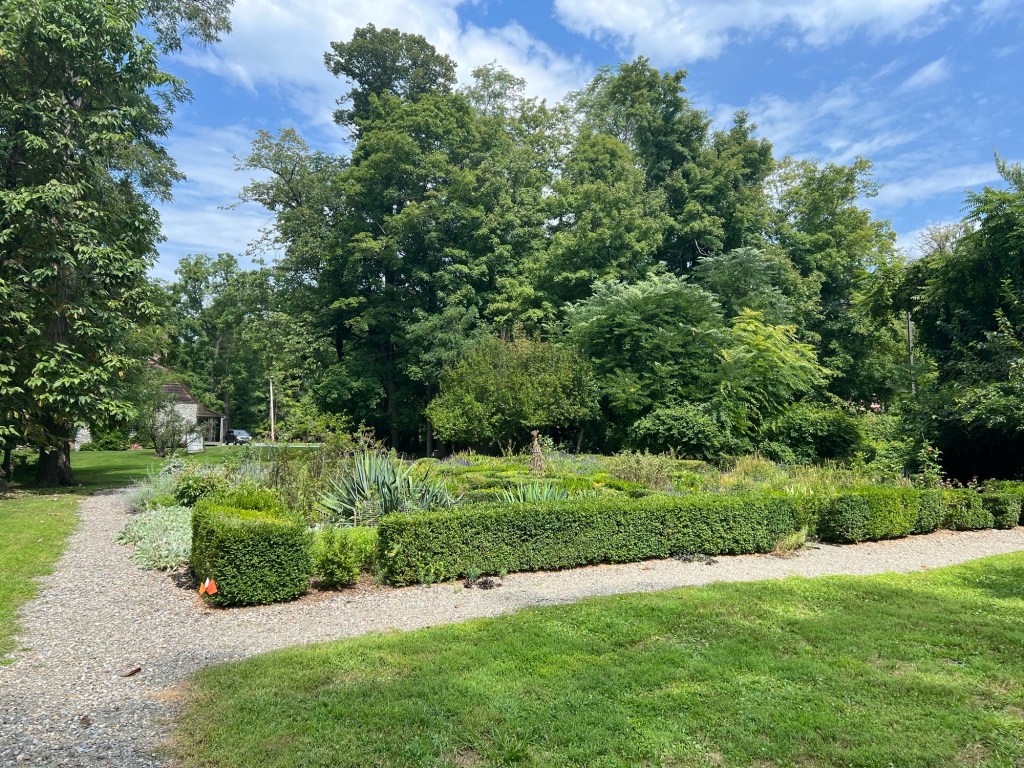
The back of the formal gardens
We ended the tour on the back lawn facing the Hudson River. The tour guide explained that the are thinking of trimming back the the woods near the river to better open up the view. This was probably true of the time of the house to pick up boats when moving around the river.
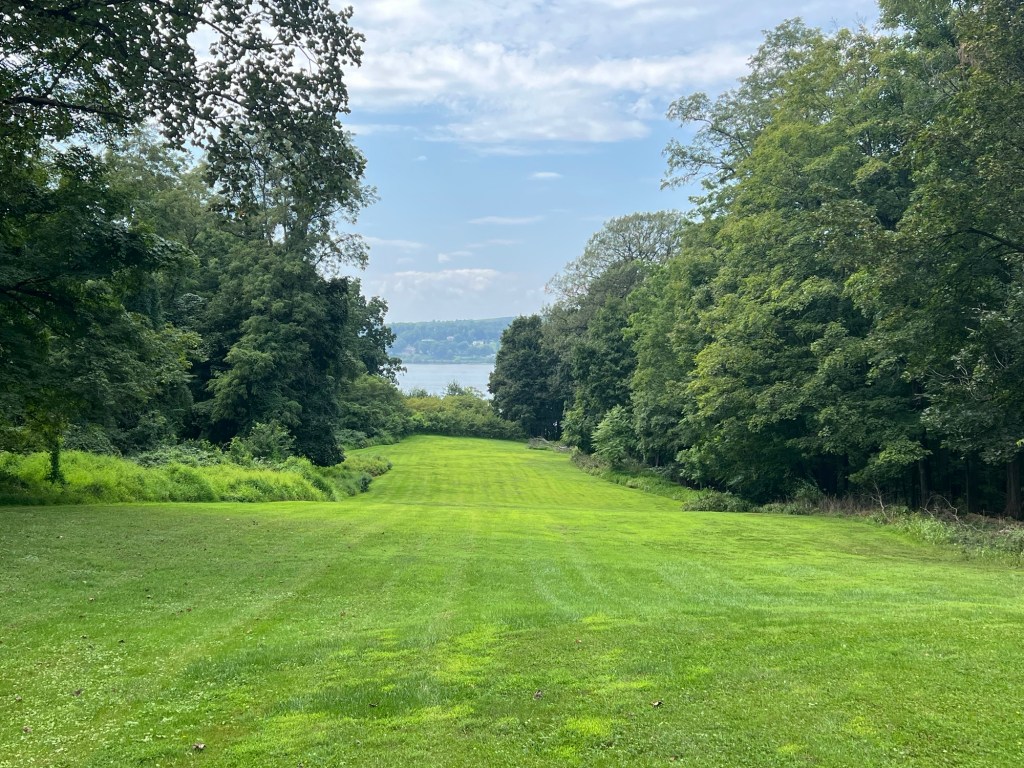
The views are spectacular now
The tour of the house and garden gives it a different perspective than at the holidays. It shows a working farm and an estate of a very prominent Hudson River family.
History of Mount Gulian:
The land where the house stands was purchased by two fur traders Francis Rombout and Gulian Verplanck on August 8, 1683. In exchange for 85,000 acres of land, they paid about $1,250 in goods. The Rombout Patent which formally granted the land to Francis Rombout and Gulian Verplanck was issued by King James II of England on October 17, 1685. After Gulian Verplanck’s death, his estate was eventually divided among divided among his heirs. Julian Verplanck II, a merchant from New York City, received 2880 acres, 400 of which were on a slope overlooking the Hudson River.
He named his estate Mount Gulian, in honor of his grandfather and had the first house on the site built between 1730 and 1740. The building was a small structure with an a-roof. Archaeological evidence suggests it was probably enlarged around 1767 and the characteristic gambrel roof as well as two porches were added between this year and the American Revolutionary War.
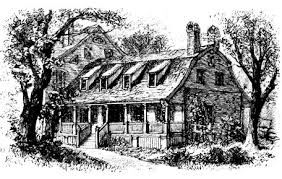
Mount Gulian in an early picture
The Revolutionary War years:
During the war, Gulian Verplanck’s son Samuel stayed at the house, while his wife, Judith Commerlin remained at the family mansion at 3 Wall Street in Manhattan. In early 1783, Major General Friedrich Wilhelm von Steuben made Mount Gulian his headquarters. At the same time, George Washington had his headquarters in Hasbrouck House, Newburgh on the opposite side of the Hudson River.
On the morning of May 13, 1783, a group of officers of the Continental Army met at Mount Gulian to found the Society of the Cincinnati. Mount Gulian is headquarters of the Society’s New York State branch. The building was extended by in 1804 by Daniel Crommelin Verplanck, the grandson of Gulian Verplanck II, who also laid out the garden. When Marquis de Lafayette visited the house on his return to America in 1824, he stayed in the new addition.
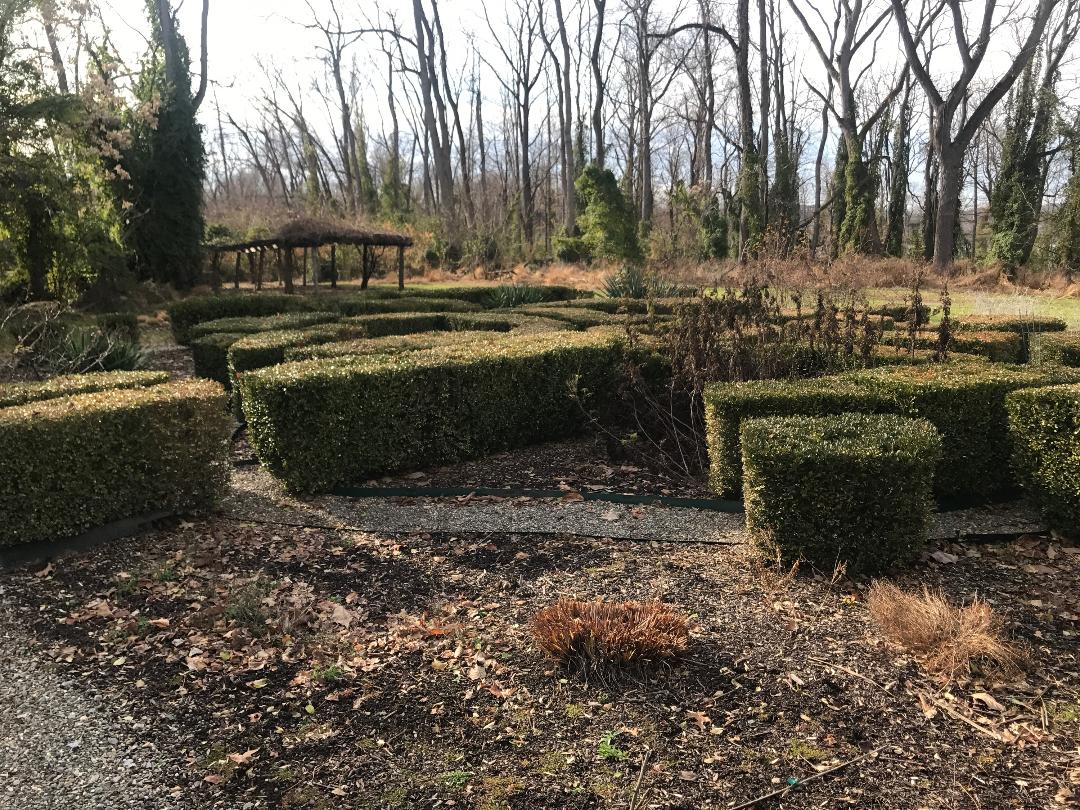
The Gardens of Mount Gulian at Christmas in 2021
In 1803, upon the death of Judith Commerlin Verplanck, the family mansion at 3 Wall Street was closed and much of its furnishings moved to Mount Gulian. In 1849, construction of the Hudson River Railroad cut off access to the Verplanck boat and bathhouse at the end of the property at the shoreline.

The view to Hudson River from Mount Gulian
The Restoration of the House:
The original mansion was destroyed in a fire laid by an arsonist in 1931. After this, the house laid in ruin and was left unattended until 1966, when Bache Bleecker, a descendant of the Verplanck family and his wife, Connie, founded the Mount Gulian Society, as a nonprofit private organization. The goal reconstructed the house to the state it was when it served as von Steuben’s headquarters. The interior contains artifacts related to the Verplanck family. The 18 century Dutch barn was moved here as well.
(This information came from Wiki and I give them full credit for the information)
History of the Verplanck Family:
Mount Gulian is the Hudson Valley colonial homestead of the Verplanck family. Between 1633 and 1638, a Dutch entrepreneur named Abraham Isaac Verplanck arrived in New Netherlands Colony (now New York and New Jersey) from Holland. He originally came to purchase land for a farming settlement and trading post.
The trading post would enable him to trade Dutch goods with the local Native Americans in exchange for beaver and other furs, Indian tobacco and trade goods that were rare in Europe. New Amsterdam was a thriving port and frontier town, filled with Dutch settlers, Indians and traders from all over Europe, Africans, both freemen and slaves, as well as French Huguenots seeking to escape from religious persecution in Europe and Jews fleeing the Inquisition in South American came to a relatively tolerant and busy New Amsterdam.
Abraham Issac Verplanck settled in the growing city and became a prosperous businessman. he married Maria Vigne Roos by 1635, they had Abigail and Gulian (Gulyn is Old Dutch for William), Catalyna, Isaak, Sussanna, Jacomyntje, Ariaentje, Hillegond and Isaak II moved to Albany and established the Verplanck line in that city, which exists today.
In 1664, an English nave appeared off the coast of New Amsterdam and demanded the city’s surrender. The Dutch surrendered their colony, swore loyalty to the British Crown and saw the city renamed New York. The Verplanck’s spoke Dutch but were now English citizens. By the 1680’s, Gulian Verplanck was sailing up the Hudson River looking for land to increase his wealth.
In 1683, with partners Francis Rombout and Stephanus Van Cortlandt, Gulian Verplanck bought 85,000 acres of land from the local Wappinger Indians for approximately $1200 worth of goods. About 75 miles north of Manhattan, overlooking the Hudson River for miles and going inland into rich meadows and forests, encompassing nearly one-seventh of modern Dutchess County, NY in today’s Fishkill-Beacon area, the purchase was quite a bargain. In 1685, the Deed of Sale was approved by King James II of England and is known as the Rombout Patent.
For the next forty-five years, Verplanck, Rombout and various partners and heirs sub-divided, sold off and rented portions of this huge tract of land, while logging, hunting and planting crops on the land.
During the English colonial period, the Verplanck’s became quite prosperous and built a fine home on Wall Street in Manhattan. The Verplanck’s were civic minded and participated in the development of the business and banking industry in New York City and were among the Trustees of Kings College, now known as Columbia University. Around 1730, a colonial-style fieldstone house was built in Fishkill Landing on the Rombout Patent land.
This rough frontier home was gradually surrounded by a working plantation, a dock on the Hudson that facilitated the New York-Kingston-Albany trade and many service buildings for servants and crop production. This homestead was called “Mount Gulian”, and it was used as a summer retreat for the family and a working plantation, but it is not believed that any family member lived at the site year-round until the early 1800’s. Other Verplancks at this time lived in Albany and Verplanck Point in Westchester County, NY.
The Verplancks were prominent citizens in colonial New York while maintaining correspondence with their Dutch relatives in Holland. Young Samuel Verplanck was fortunate enough to take “the grande tour” of Europe in 1761. As businessmen of that era, it must be noted that the Verplancks of Manhattan and Mount Gulian owned slaves during the mid-1700’s and into the early 1800’s, most likely house servants and skilled laborers.
Before the Revolutionary War, Samuel Verplanck became involved with anti-British groups and joined “the Committee of Safety of One -Hundred” in Manhattan. This patriot group was poised to take over the city in the event of rebellion, which occurred on April 19, 1775 at Lexington & Concord.
Later during the War for Independence, Verplanck turned over Mount Gulian to the Continental Army because of its strategic location on the Hudson near the Fishkill Barracks and across from Washington’s Headquarters at Newburgh. In late 1782, through the summer of 1783, Mount Gulian was the Continental Army headquarters of patriot General Fredrich Von Steuben. After the American victory at Yorktown, upon learning of the Treaty of Paris, General Von Steuben and other Chief American officers created at Mount Gulian on May 13, 1783, the Society of the Cincinnati, America’s first veterans’ fraternal organization.
In 1804, Daniel Crommelin Verplanck, a member of Congress moved from Manhattan to permanently occupy the home at Mount Gulian, which underwent extensive expansion with the addition of a large frame house attached to the original homestead. An ornamental “English Garden”, all the rage in Europe at the time, was laid out by him and his daughter, Mary Anna to supplement the 6 acres “kitchen garden” and the fields filled with salable crops. More permanent structures were built on the property, still thousands of acres, including barns, smokehouses, storage buildings and structures to facilitate brick making from clay taken from the Hudson.
The Verplanck family grew and eventually married into many prominent families in New York such as the Schuyler’s, the Johnsons, the Delancey’s and the Bleecker’s. Daniel’s son, Gulian C. Verplanck, also a member of Congress, ran for Mayor of New York in 1834, losing what many believe was a fixed election. Other Verplancks were judges, businessmen and wealthy farmers.
With slavery abolished in New York in 1827, the conservative Verplancks, along with many upper-class Northerners, gradually sided with the abolitionists, even hiring and assisting James Brown, an escaped slave who worked for the family for forty years. Brown’s diaries, written at Mount Gulian, provide a detailed record of daily life there.
During the Civil War, Robert Newlin Verplanck volunteered in the Union Army’s United States Colored Troops, training and fighting alongside black troops until the victory at Appomattox. His battlefield letters to his mother and sister have been preserved by Mount Gulian.
The Victorian era at Mount Gulian was a grand time, as the family associated with the local Livingstons, Roosevelts and Vanderbilts. Many Verplancks achieved fame in the professions, in arts and letters and as sportsmen. Verplanck Colvin was a topographical engineer who extensively surveyed the Adirondacks. Virginia E. Verplanck was a celebrated gardener and hostess. John Bayard Verplanck was an early seaplane flyer, racing World War I era veteran and banker.
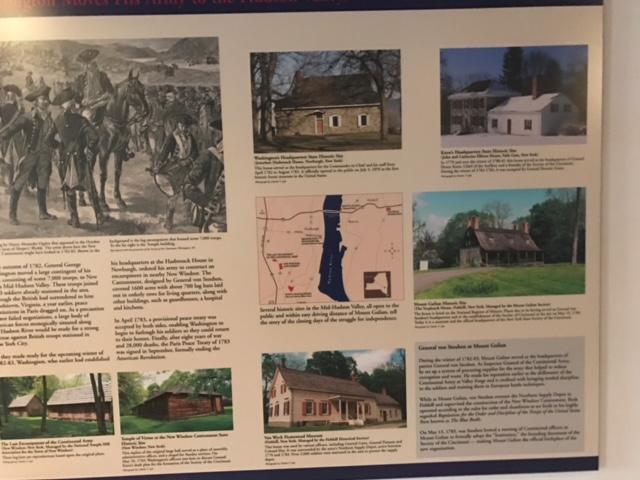
The history of the area around Mount Gulian
Mount Gulian was occupied by the Verplancks until 1931, when the house was destroyed by fire. Many of the furnishings and valuable were saved by family members, neighbors and firemen who cleared the house before it was fully engulfed.
Prior to the American Bicentennial of 1976, Mount Gulian was beautifully restored with the assistance of Verplanck descendants, local history lovers and members of the Society of the Cincinnati. In 1998, Mount Gulian sponsored a well-attended family reunion, which included an updated version of the family genealogy book originally from 1892. Today Ms. Charlotte Verplanck Willman is one of the Mount Gulian Historic Site’s Board of Trustees.
The Order of Cincinnati
(This information was taken from the Mount Gulian Society website and I give them full credit for the information.)
After the tour, it was a long walk in Downtown Beacon, NY to picture taking and window shopping.
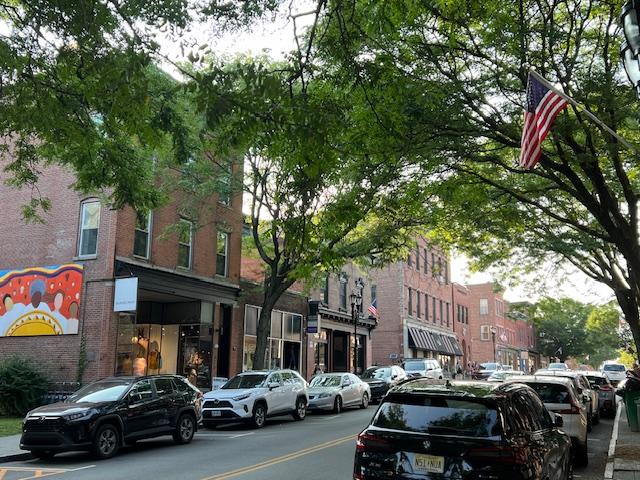
Downtown Beacon, NY in the summer of 2024
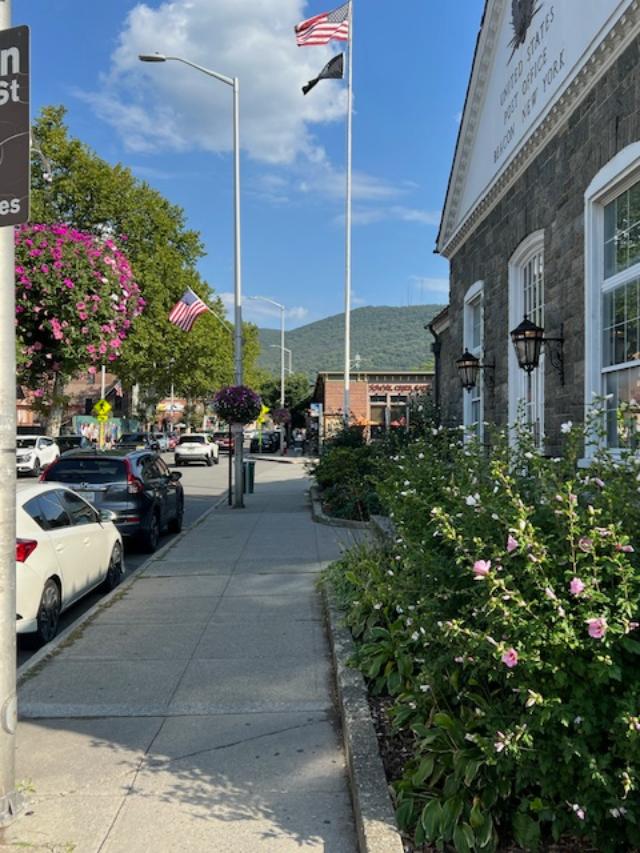
Downtown Beacon, NY in the summer of 2024
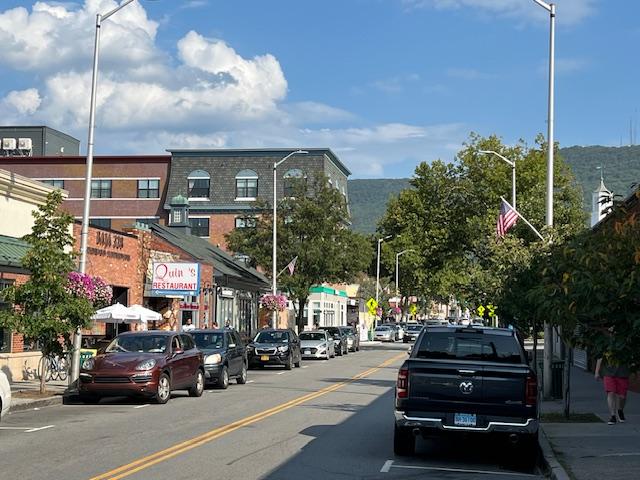
Downtown Beacon, NY in the summer of 2024
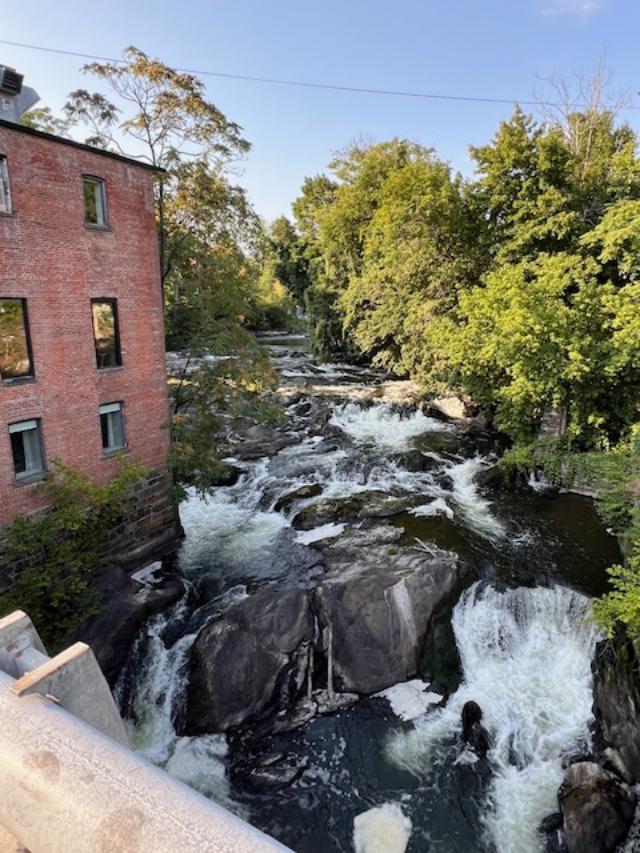
Downtown Beacon, NY falls in the summer of 2024
I also visited Downtown Beacon in December of 2024 for the pre-Christmas holiday season and the whole downtown was decked out for the holidays.
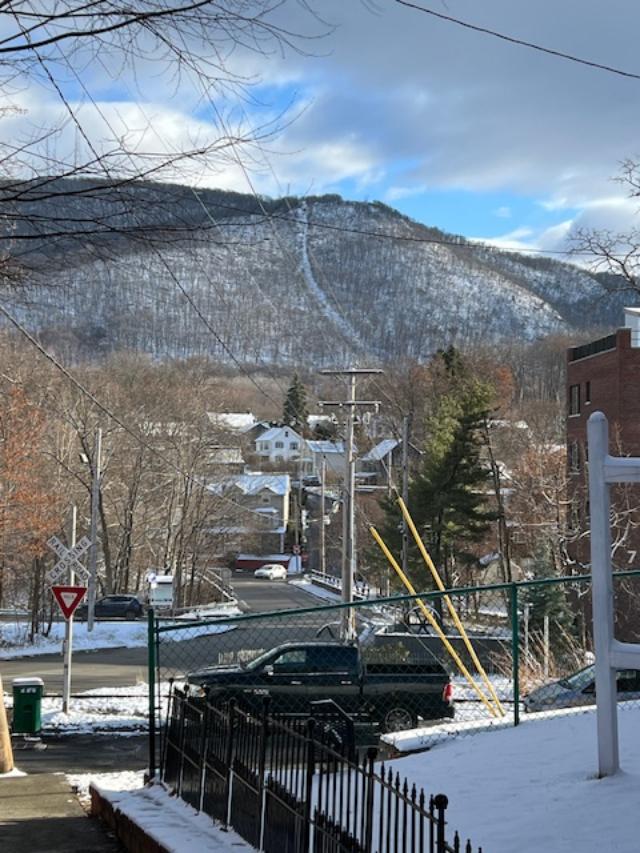
The Mountains behind the downtown glitter with the recent snowfall
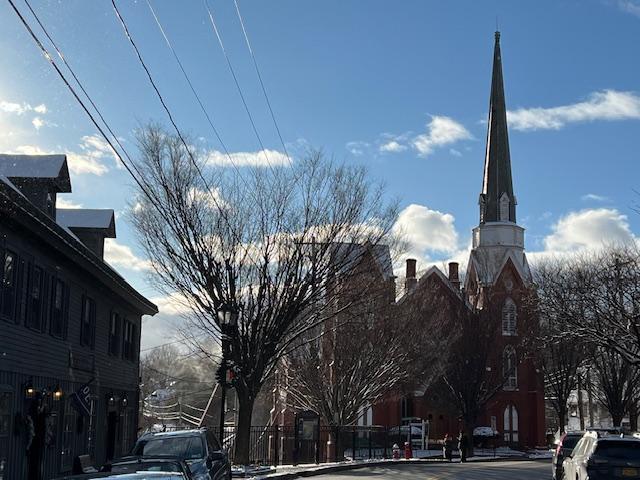
The edge of Downtown where the church is located
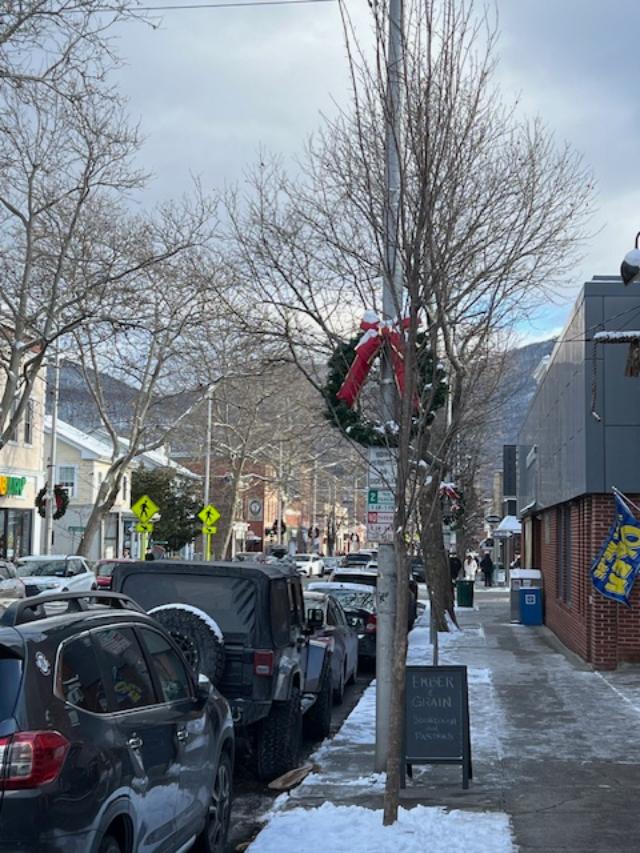
The downtown was decorated with wreaths and garland topped with fresh snow
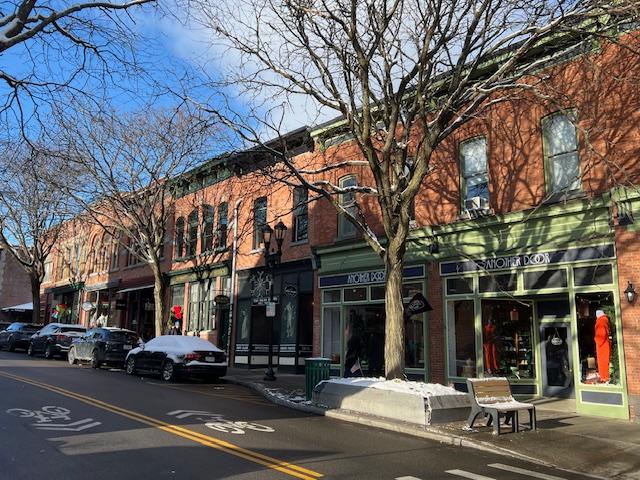
The store fronts during Christmas time in Downtown Beacon, NY

The Falls at Christmas time
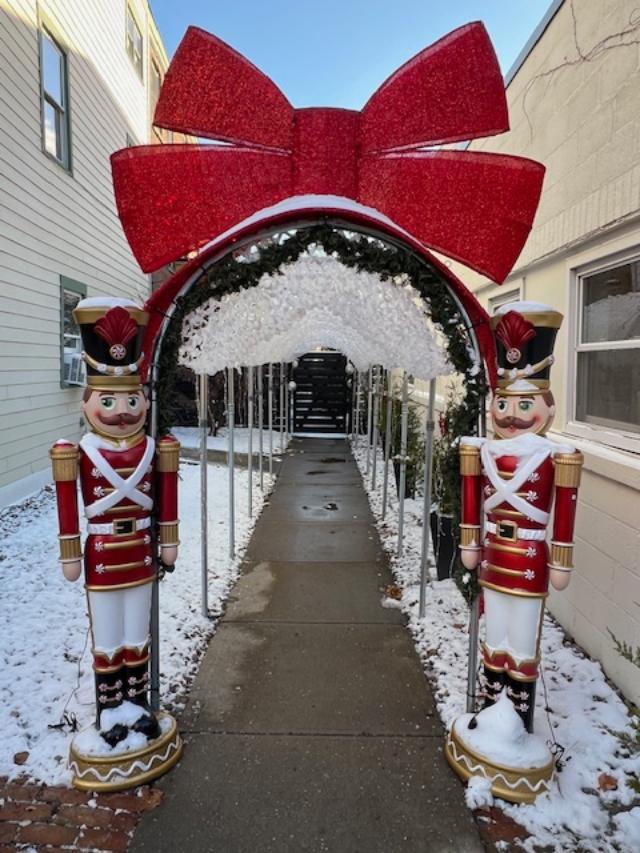
The Downtown Beacon decorations for the holidays

The festive and very creative signs of the merchants in the downtown area
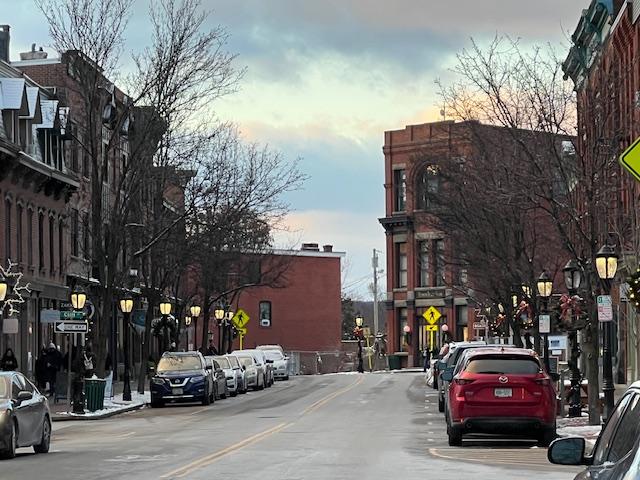
Downtown Beacon decorated for the holidays at dusk as the lights came on
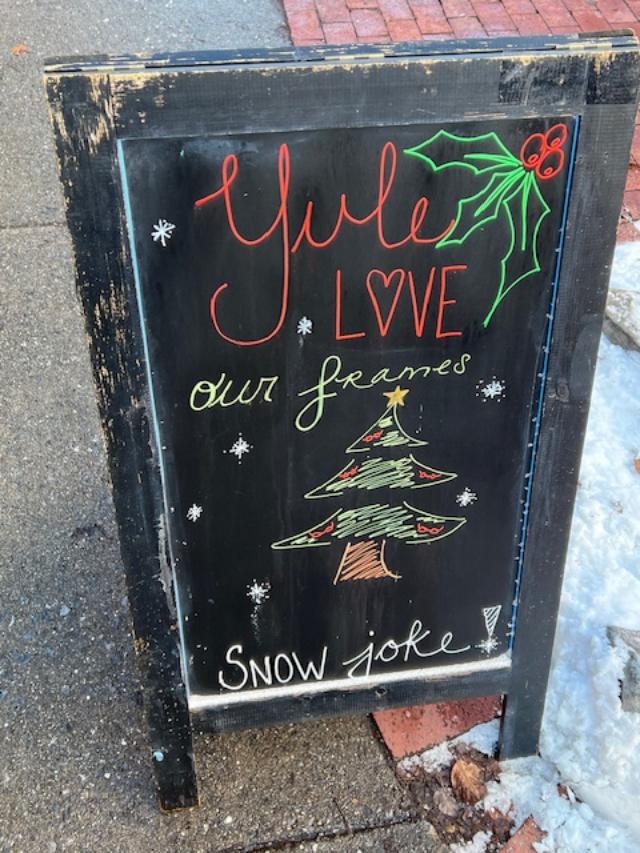
More merchant signs downtown
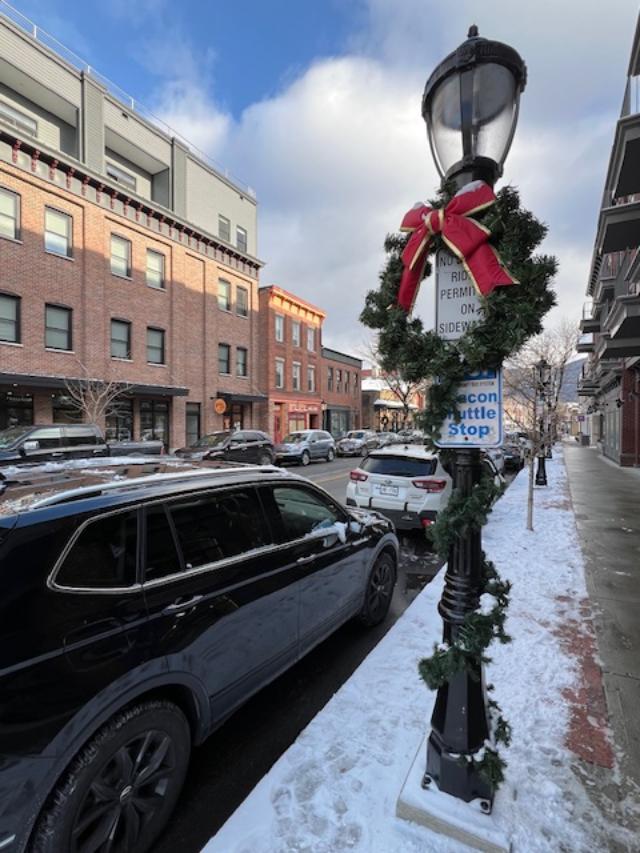
Each lamppost was festive and nicely decorated for the holidays
- A Local Journey out of Manhattan
- Decorated Homes at Christmas in the Hudson River Valley
- Dedicated to Warren Watrel
- Educational Museums
- Experiences and Tours
- Exploring Beacon NY
- Exploring Historic Dutchess County NY
- Exploring Historic Rhinebeck NY
- Exploring Manhattan Block by Block
- Exploring New York City by Foot
- Exploring the Historical Hudson River Valley
- Exploring the Hudson River Valley
- Exploring the Island of Manhattan
- Gilded Age homes of the Hudson River Valley
- Historic Homes in New York
- Historic Homes of the Hudson River Valley
- Historic Sites of New York State
- Parks and Historical Sites
- Small Historical Societies in New York State
- Small Museums and Galleries in New York State
- Uncategorized
- VisitingaMuseum.com
 Visiting a Museum: The Unique, Unusual, Obscure and Historical
Try to visit Mount Gulian when it reopens in April for touring. The house was nicely decorated for the holidays and don’t miss it in 2020.
LikeLiked by 1 person
Reblogged this on mywalkinmanhattan and commented:
Don’t miss Mount Gulian when it reopens in April. The house was beautifully decorated for the holidays and don’t miss it in 2020.
LikeLiked by 1 person
Mount Guilian was so beautifully decorated for the Christmas holidays in 2021. Don’t miss the tour of the house.
LikeLiked by 1 person
I appreciate your research and time in exploring the family history of the Verplanck ancestry. I respond to you for your information as to notify this foundation of found family oil portraits and other family photos in albums of this family. Thank you for article and a reply in the future
LikeLiked by 1 person
Dear Mr. Suarez,
You may want to reach out to Mount Gulian directly with the phone number on the blog. You are reaching the blogger but not the to the historical home society. They will be more than happy to help you.
Sincerely,
Justin Watrel, Blogger
VisitingaMuseum.com
LikeLiked by 1 person
Mount Gulian really comes to life during the holidays and was beautifully decorated for the Christmas season. Don’t miss visiting Downtown Beacon, NY when visiting the house. It is great fun and the during every season is nicely decorated as well.
LikeLiked by 1 person