Tag: Small Museums of New Jersey

Mount Tabor Historical Society              Richardson History House                                      32 Trinity Place                                                 Mount Tabor, NJ 07878

Mount Tabor Historical Society Richardson History House 32 Trinity Place Mount Tabor, NJ 07878

Mount Tabor Historical Society

Richardson History House

32 Trinity Place

Mount Tabor, NJ 07878

973-975-0001

https://www.facebook.com/mounttaborhistoricalsociety/

Open: Sundays 1:00pm-4:00pm/Monday-Saturday Closed

Admission: Free but donations accepted and recommended to help the museum operate.

My review on TripAdvisor:
https://www.tripadvisor.com/ShowUserReviews-g46652-d28537558-r971784929-Mount_Tabor_Historical_Society_Museum-Mount_Tabor_Morris_County_New_Jersey.html?m=19905

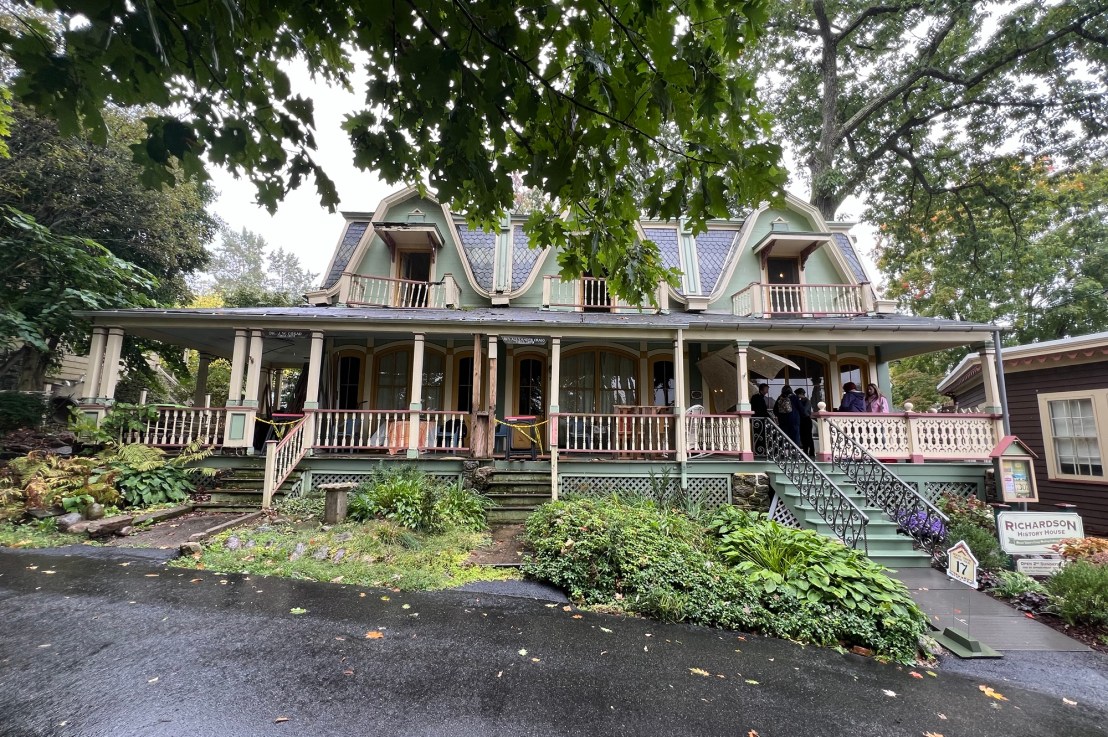
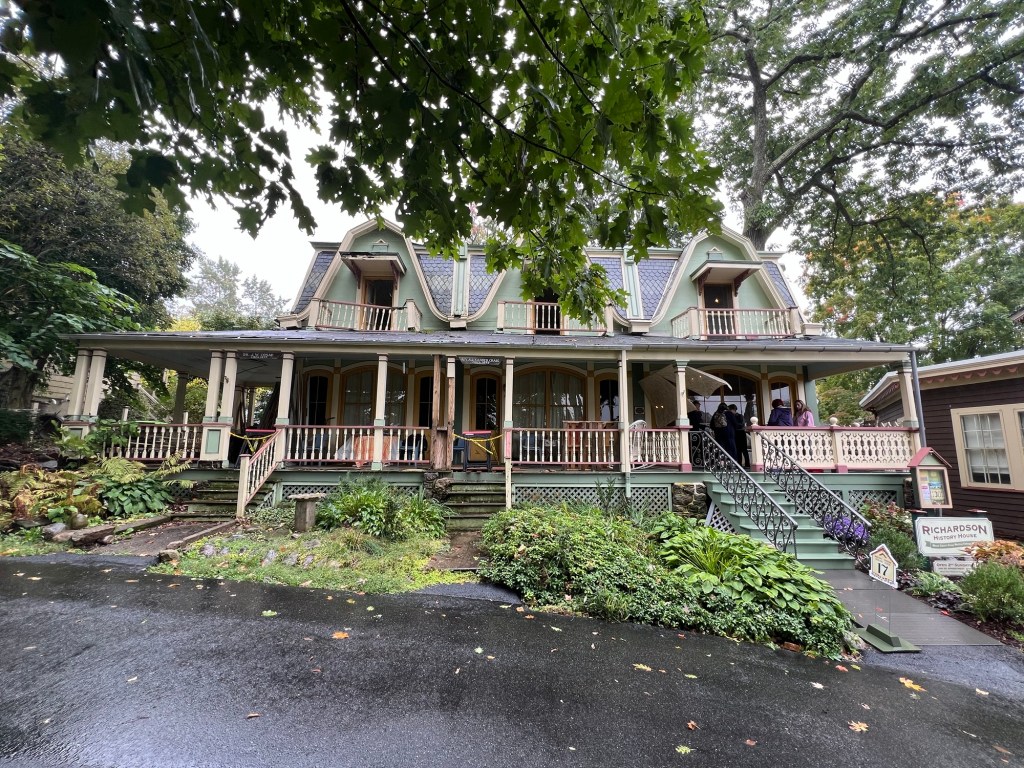
The Mount Tabor Historical Society at 32 Trinity Place
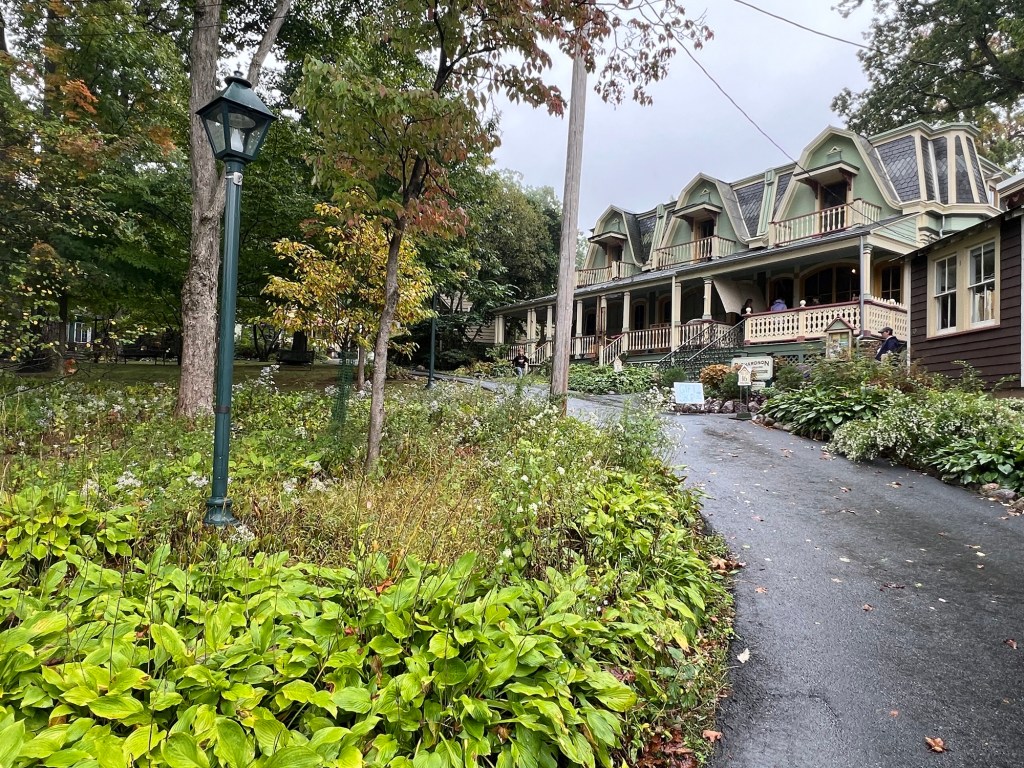
The Historical Society and the gardens

I went on the Mount Tabor House and garden walking tour in late September on a rather gloomy Saturday and I had a wonderful time. It may have been gloomy out but the museum could not have been more interesting and the people who opened their homes could not have been nicer.

The tickets were $35.00 at the door which I thought was very fair for this fundraiser. They had transportation from the elementary school to the site and back that ran on a continuous basis from 11:00am to 4:30pm when the tour was over.

The sign by the bus tour stop
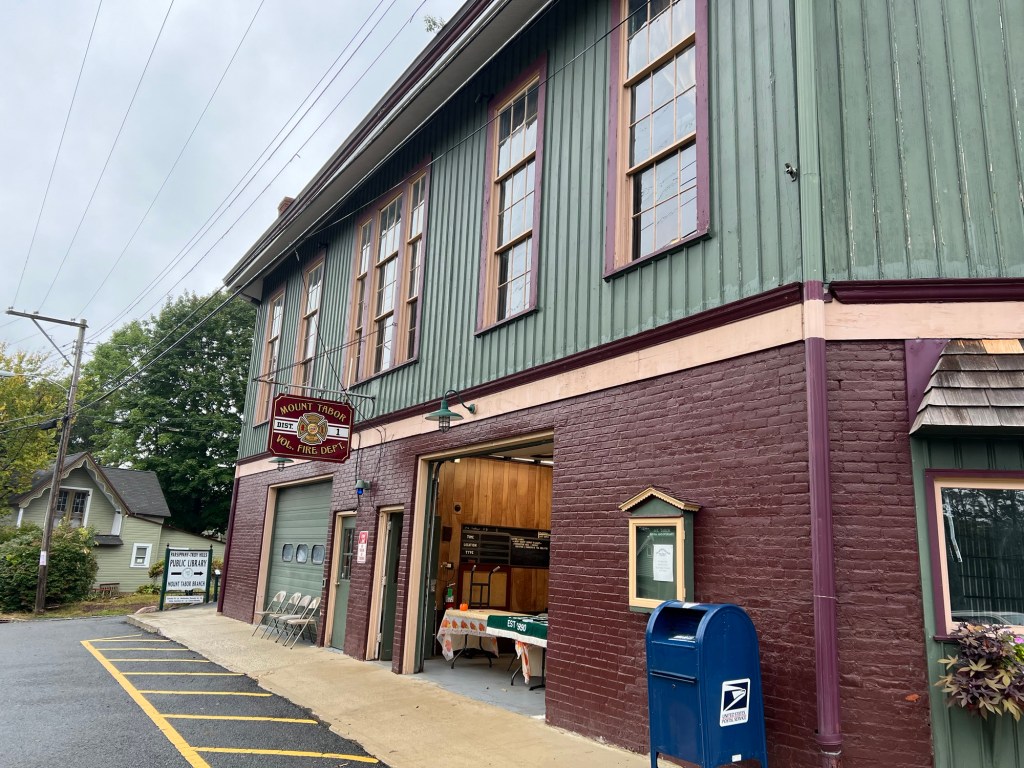
The first stop where we bought the tickets was the old Mount Tabor Fire House

When we arrived in the historic Mount Tabor neighborhood, this had once been a summer Methodist Camp. The planned community still has the original layout of the tent community and plots of land that the houses had been built on since old camp closed.

The center of the community was Trinity Park, a beautifully landscaped park

My first stop on the tour was the old Tabernacle, the original gathering place and hall where the religious services took place.
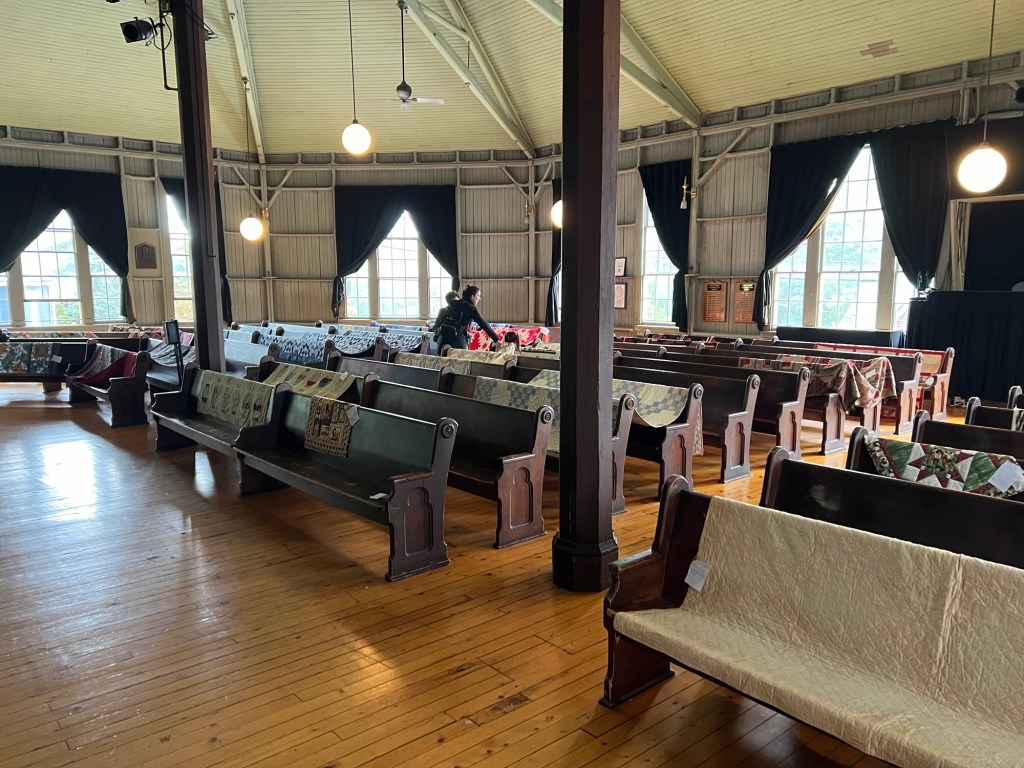
The inside of the Tabernacle, now being used for the quilt show for the tour
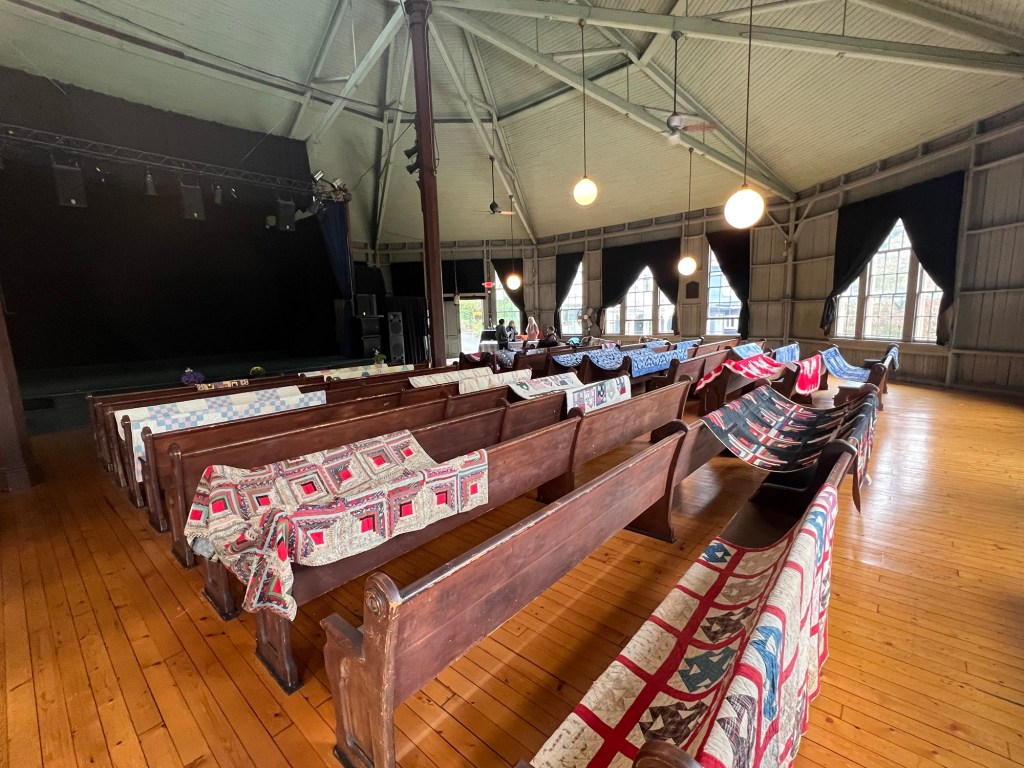
The Quilts were displayed on all the pews

The quilts were all handmade, some really colorful and beautifully stitched. It was a really impressive show of artistry.
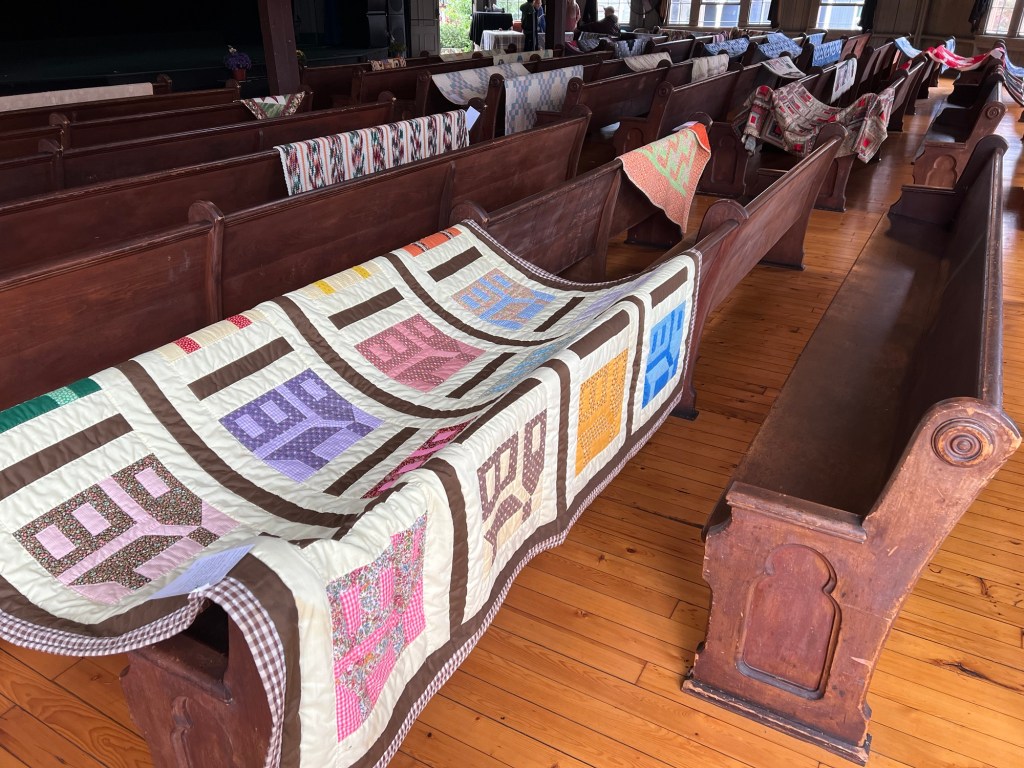
The beautiful quilts on display
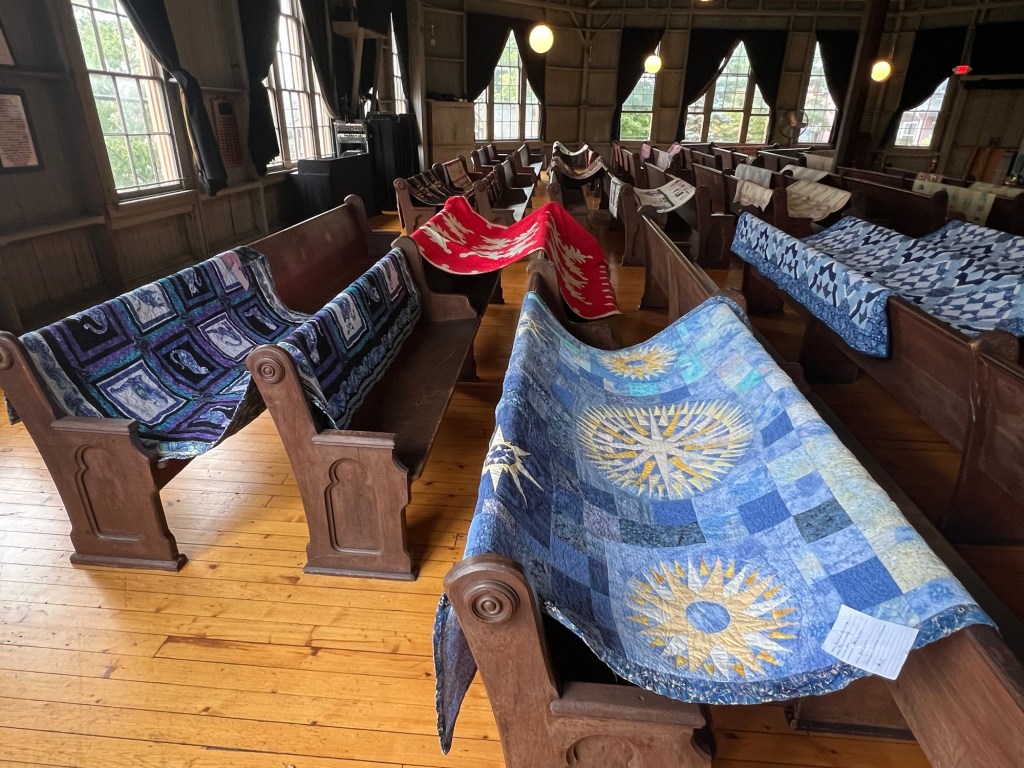
The colorful quilts on display

After I left the Tabernacle display, I headed up to the Mount Tabor Historical Society Museum for a tour of the museum and gardens. It was located on Trinity Park.

The Mount Tabor Historical Society on the eastern side of Trinity Park

The museum is part of triplex with a private home in the two other former homes. They are undergoing a renovation right now

The J. Smith Richardson History House (1873): A Camp Meeting Cottage Museum

(from the museum website)

The Mount Tabor Historical Society is privileged to share our historic community, founded as a post-Civil War permanent Camp Meeting ground, and the Richardson History House – a Camp Meeting Cottage Museum. The 1873 History House invites visitors to travel back to another era and see what it was like to spend a summer “camp meeting style” in the cottage of J. Smith and Lydia Richardson.

The parlor area in the home of Mr. Richardson

The home on the furthest to the left of the building is the museum, once home to the Richardson family, who were part of this Methodist retreat.
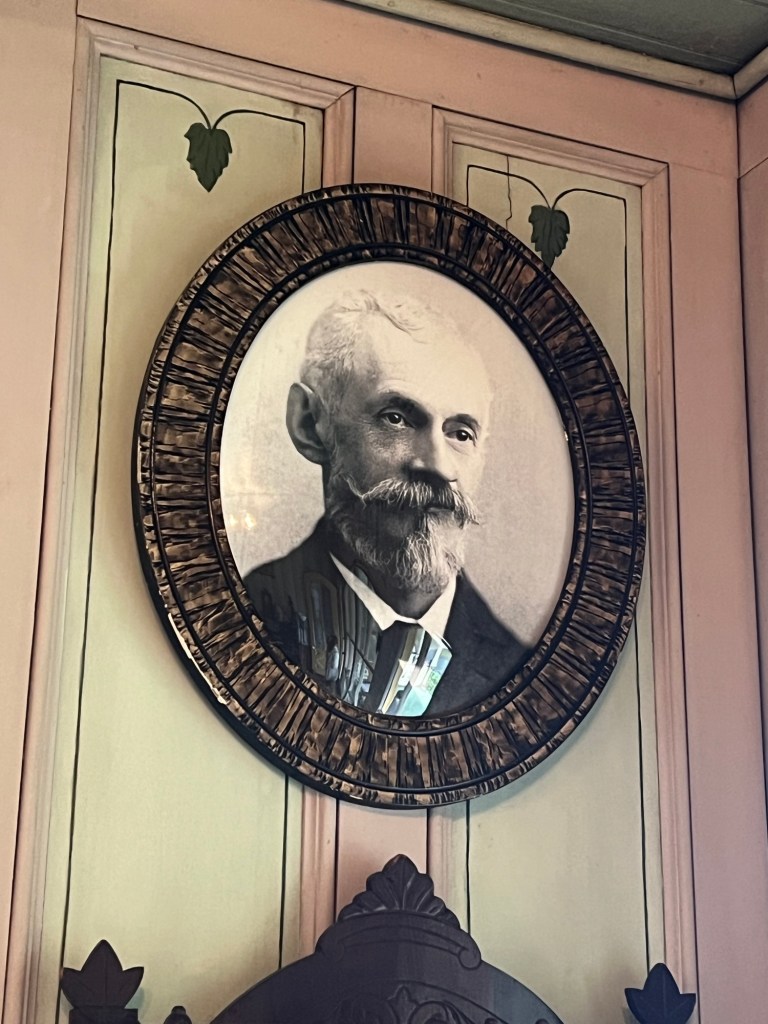
Mr. Richardson’s portrait hangs proudly on the wall overlooking the parlor of the home
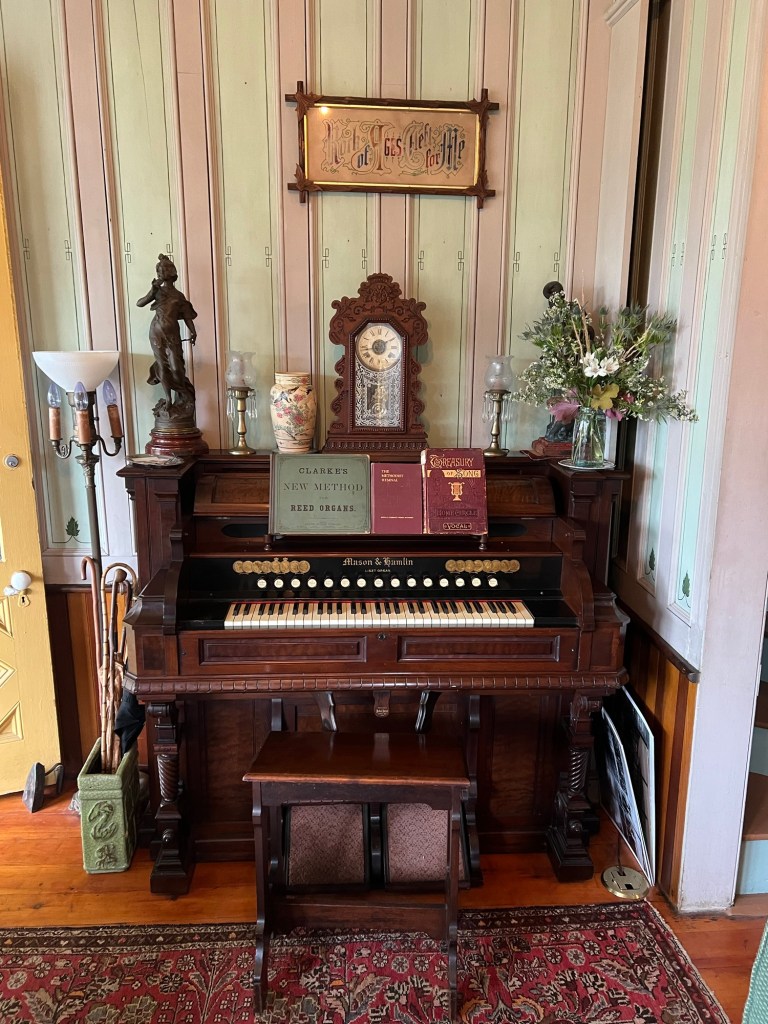
The homes pipe organ that was used to entertain the family

The table was formally set with period China in the Dining Room that was shared with the parlor area. The tour guide told me that the family kept meticulous records of everything and on the table was the wedding menu of Mr. Richardson’s daughter’s wedding.

The Dining Room table set for dinner
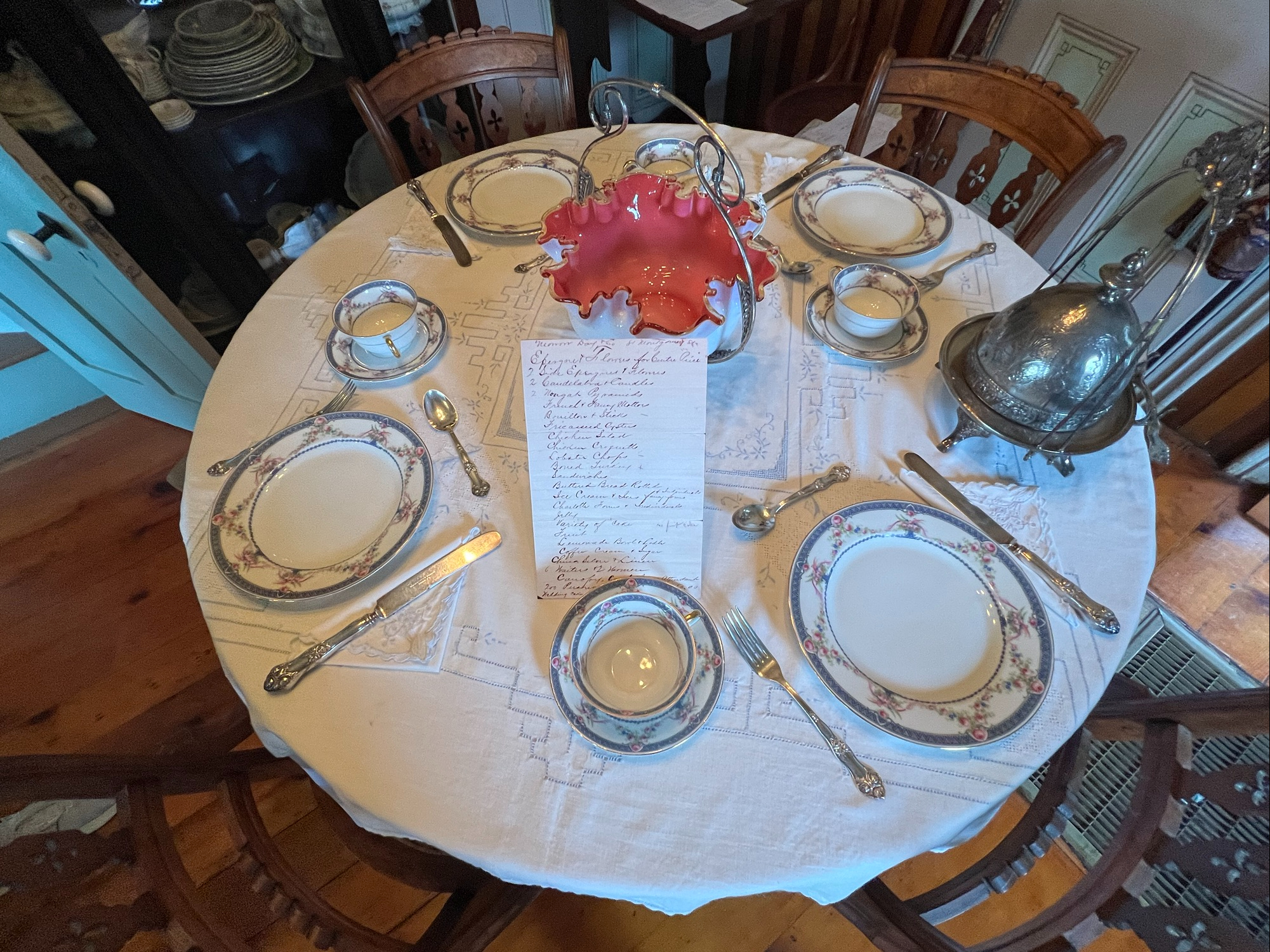
The beautiful Victorian China
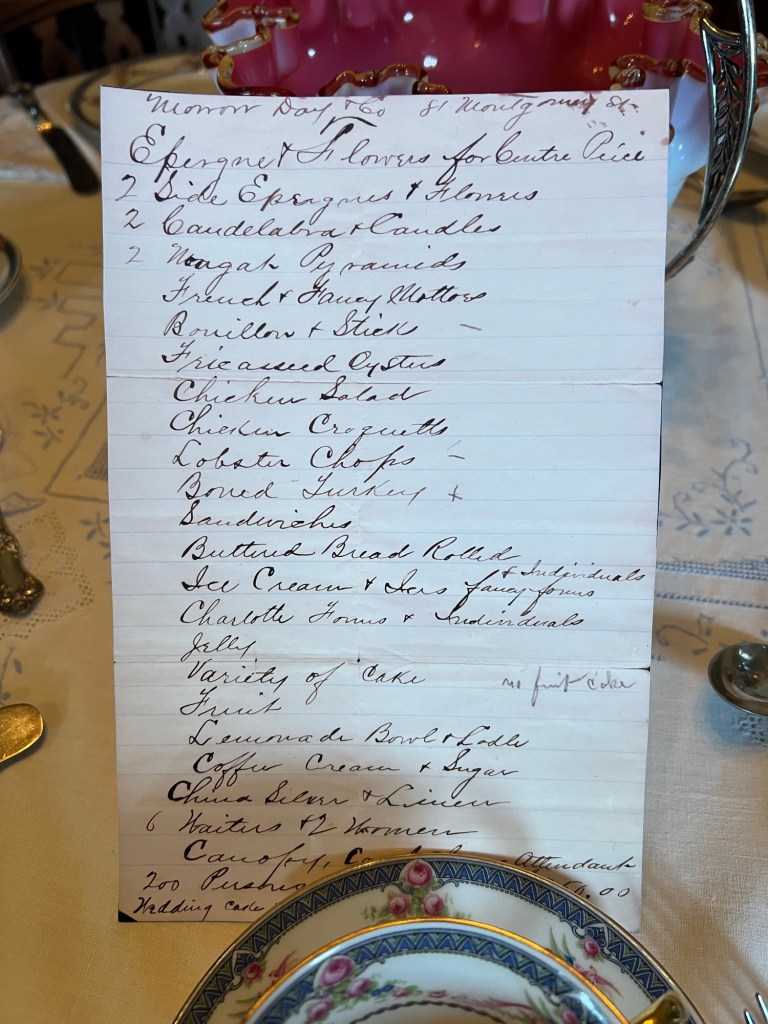
The bride’s Wedding menu. You can tell they ate well that afternoon

The brides wedding was pretty elaborate for the time and you could tell by the menu they ate pretty well that afternoon.
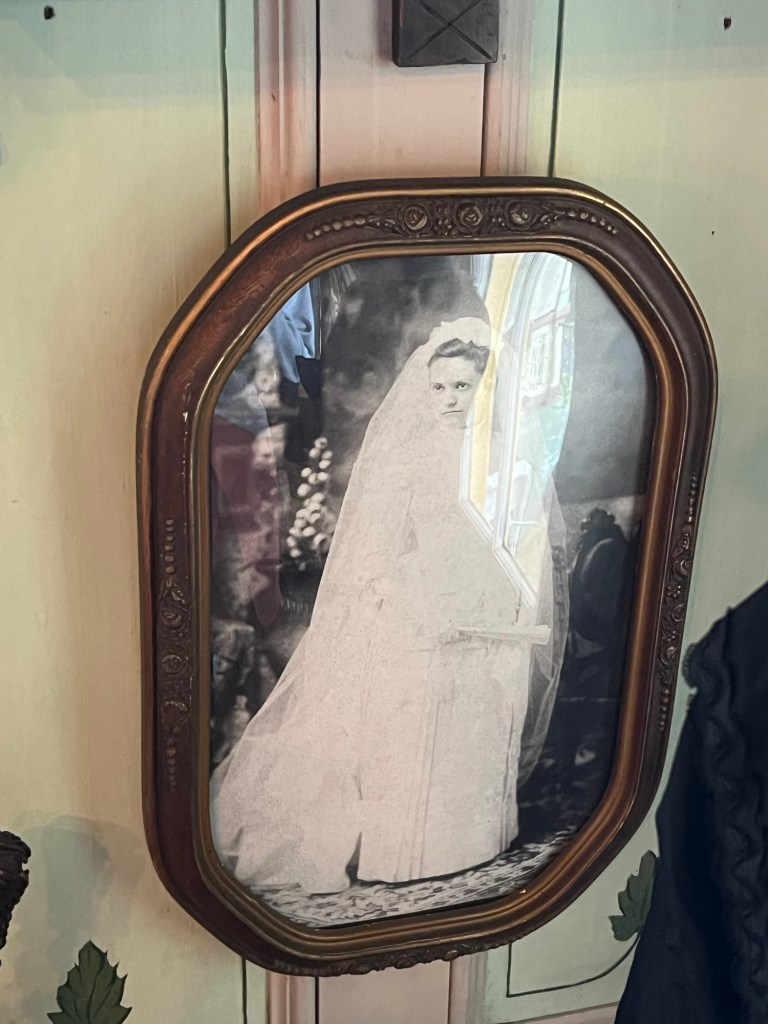
The bride’s Wedding photo hangs proudly in the parlor

The family heirloom, the bureau, sits proudly in the corner of the room

The family did not leave much behind but this bureau is the one piece of furniture that the family owned. It now holds serving pieces and dinner items. The kitchen is small but has all the modern convenes of the time including a range coal stove and an ice box, which were pretty elaborate for the time.
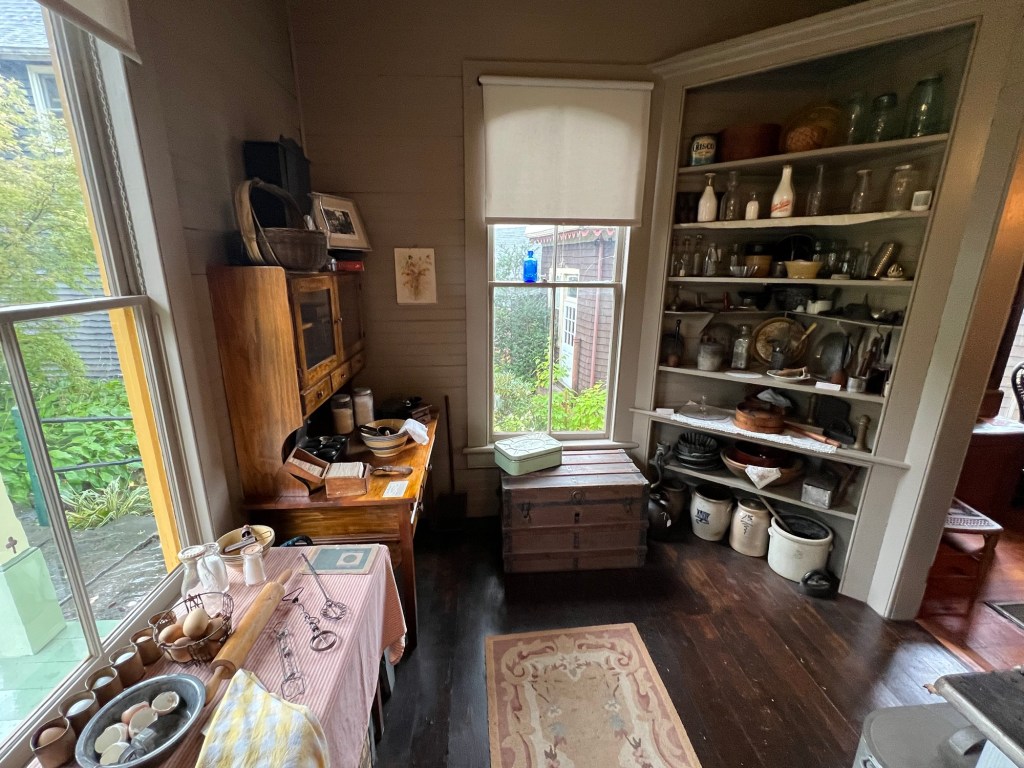
The kitchen of this small summer home

The shelves with all the cooking and storage materials

There are all sorts of baking materials, cooking utensils and items to cook full meals for the household.

Baking and measuring items

Items for baking

The historic map of the Mount Tabor Camp Ground was hung in the kitchen
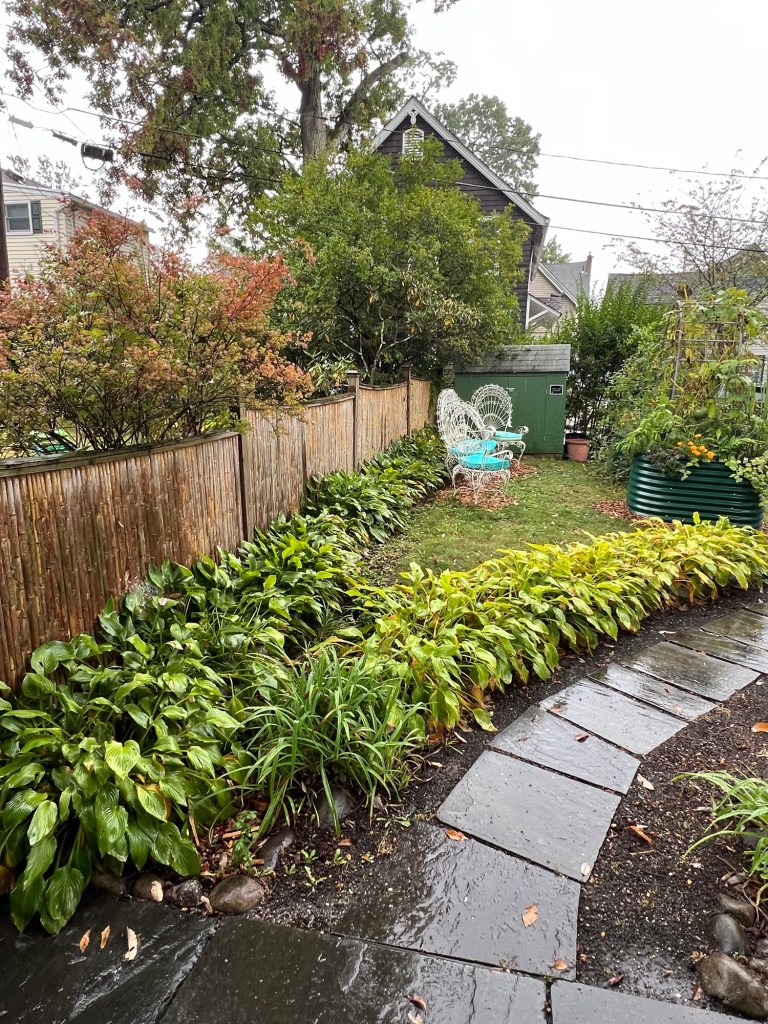
Off the kitchen door was a beautiful garden and a landscaped walkway
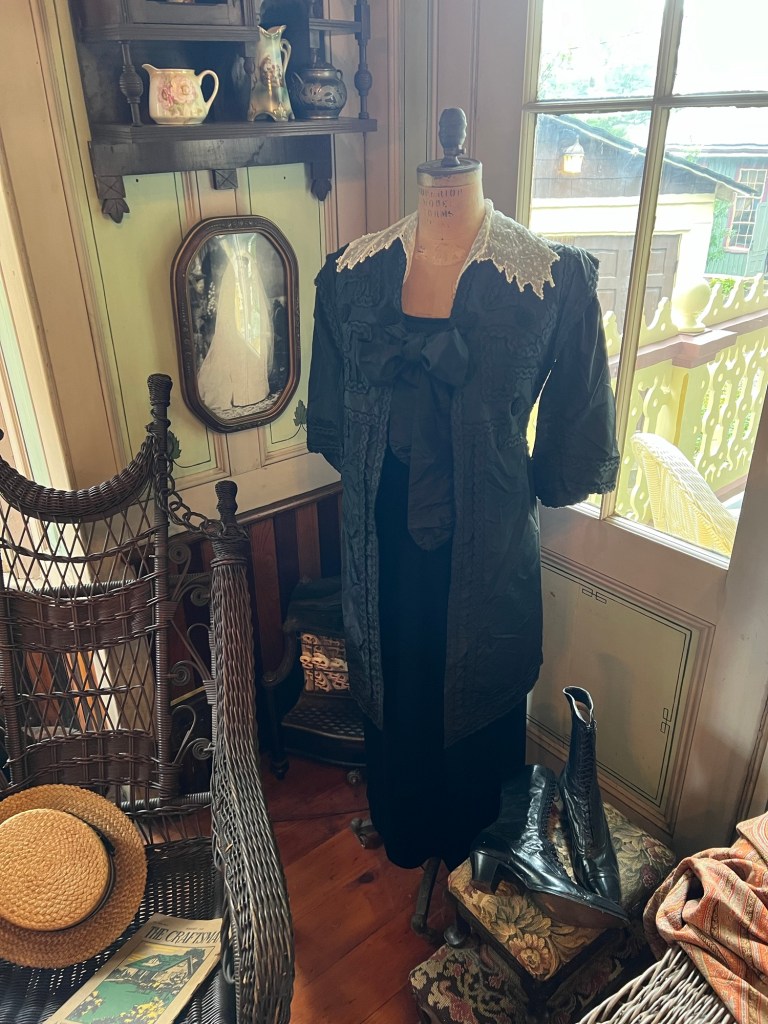
Some vintage clothing was on display in the parlor
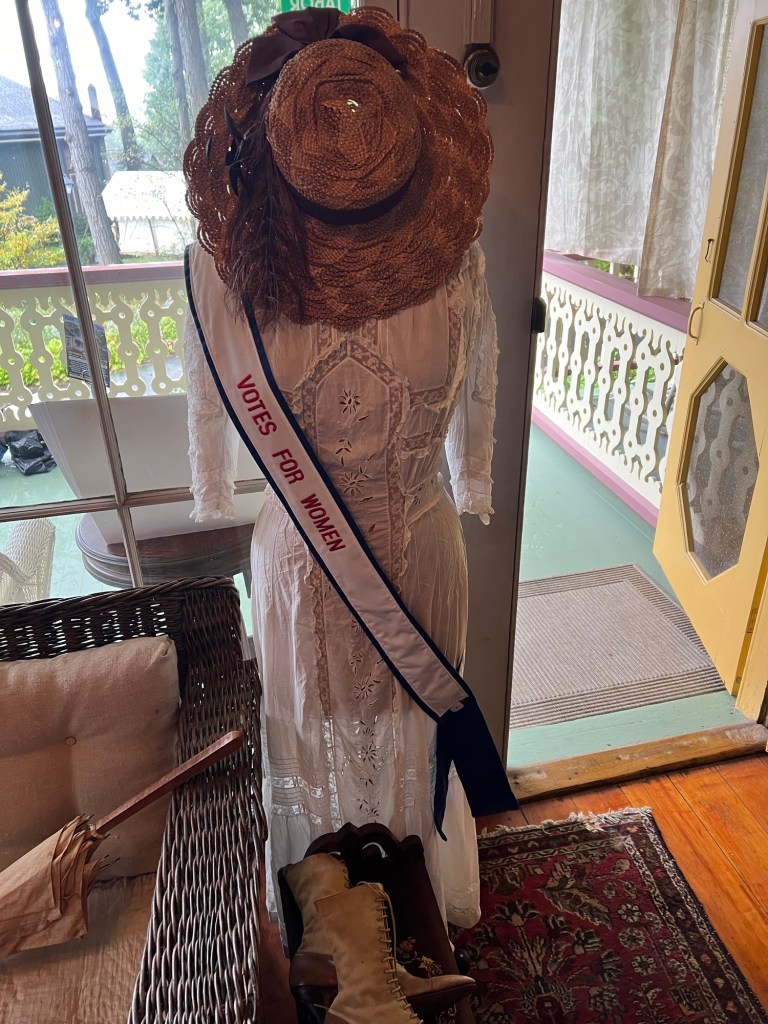
Vintage women’s clothing on display in the front parlor

I took a trip up the narrow stairs to the upstairs bedrooms and bathroom. I discovered that the house was much bigger than I thought. There was a nice size bathroom at the top of the steps.

For a small house, the bathroom was nice sized
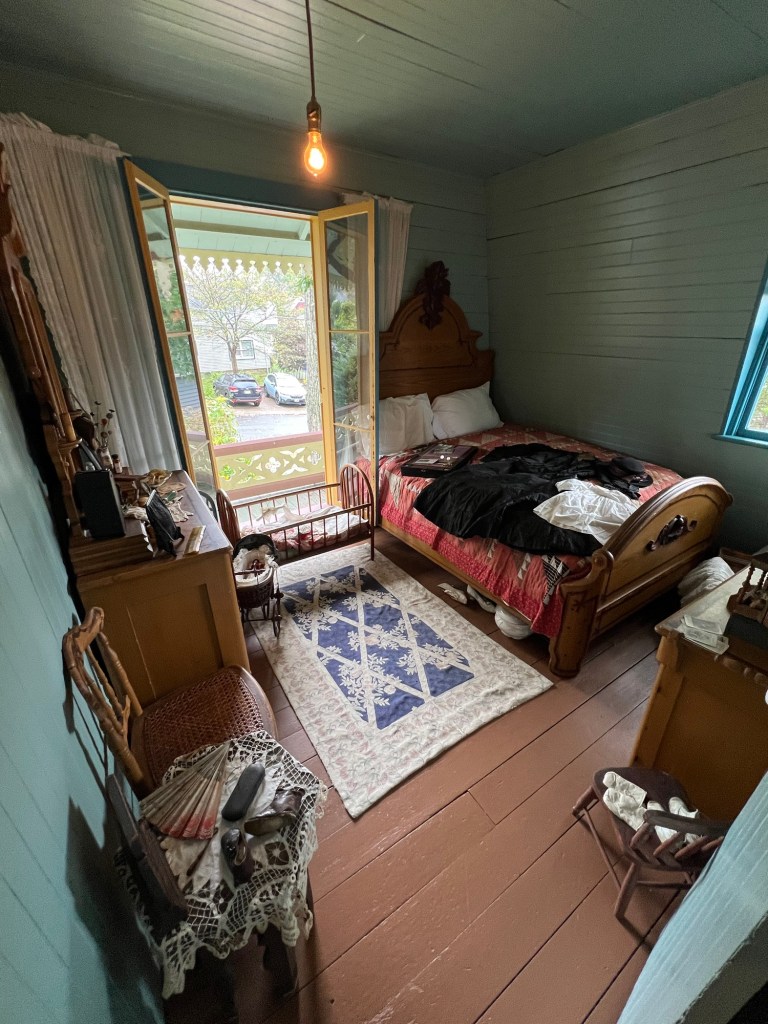
The main bedroom was nice in size and also had a nice breeze from the window

The rooms were decorated with period furniture and bric a brac of the period. On the bed, lay funeral clothing of a family member in morning.

The clothing of someone in morning
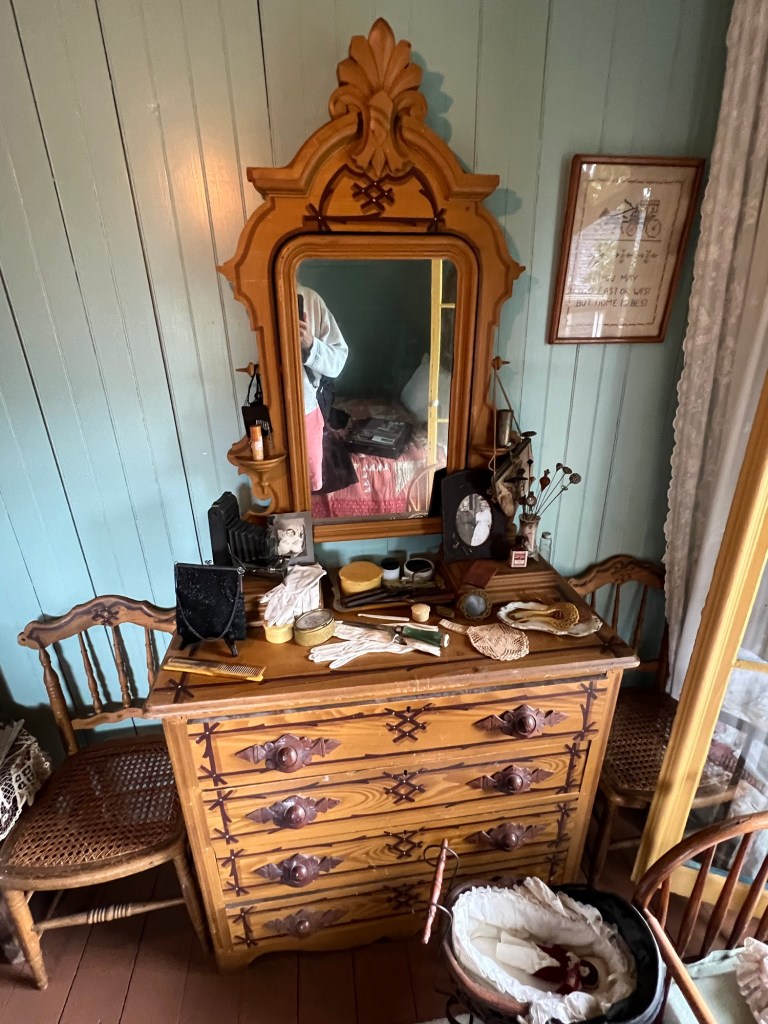
The family bedroom set also returned to the house when donated back from the Richardson family
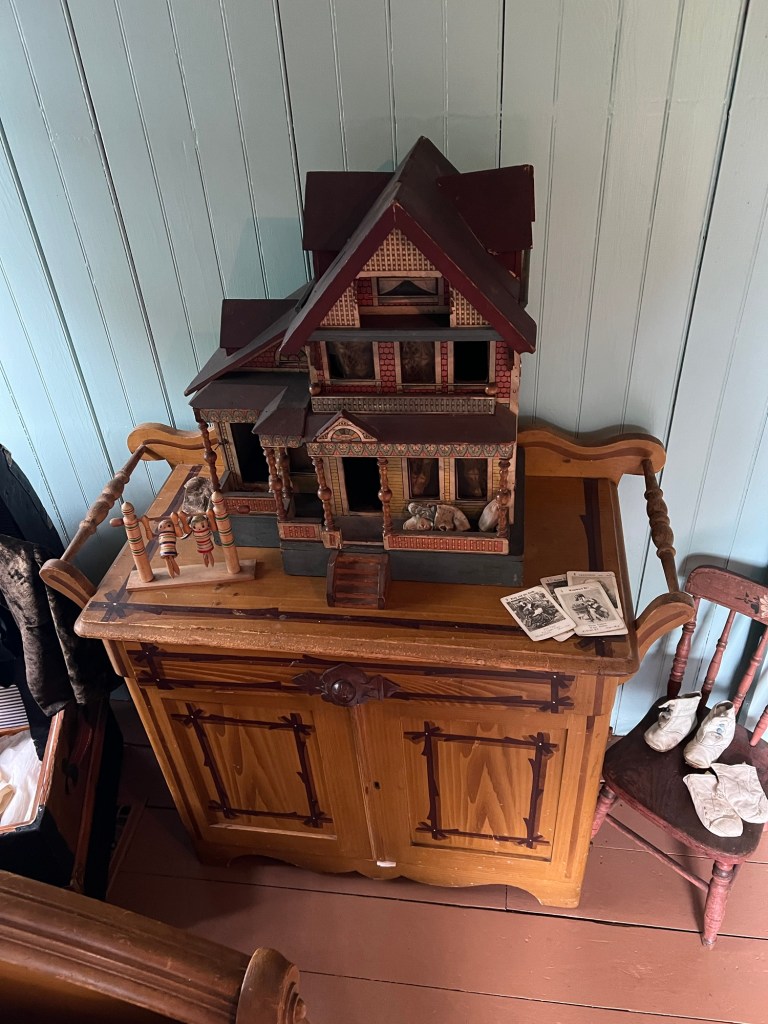
This gorgeous dollhouse was to the side of this bedroom with its tiny furniture and miniature decorations

The other bedroom was a little smaller but again was nicely furnished.

The view from the upstairs bedroom of the garden below

The second bedroom was a bit smaller and contained vintage clothes and toys

Family heirlooms, clothing and toys

The doll carriage for some lucky child

A sewing kit not too dissimilar from my grandmother’s

Baby dolls asleep on the second floor bedroom
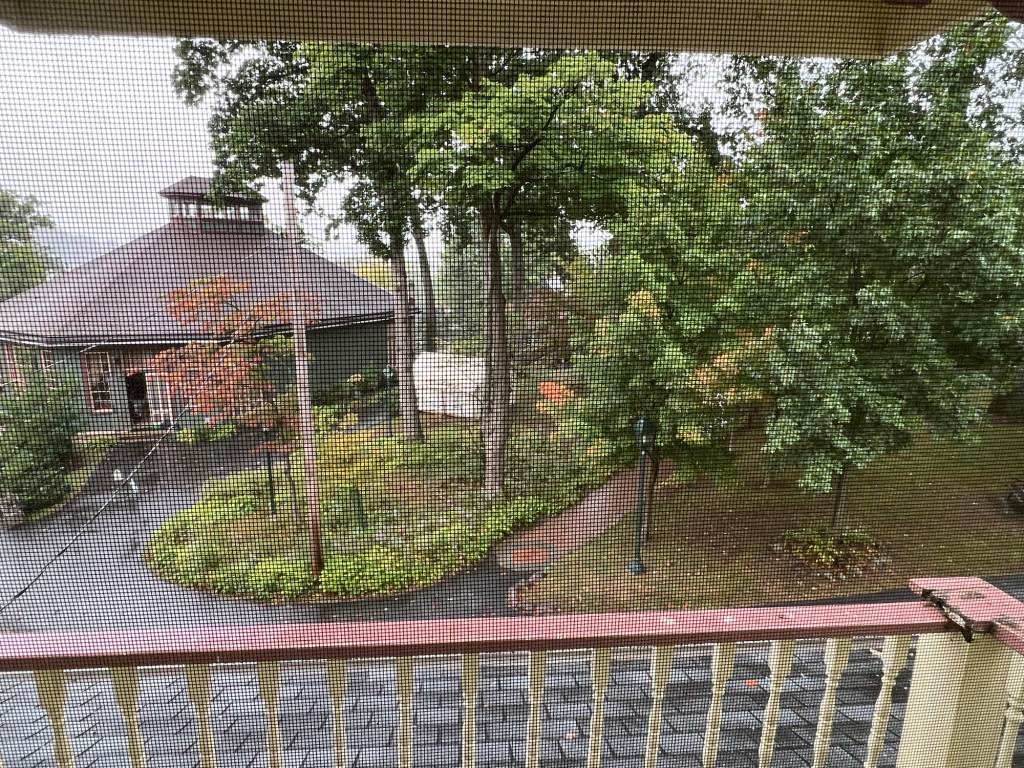
The view from the parlor overlooking the Tabernacle

The Trinity Garden in the middle of historic district

The History of the Mount Tabor Methodist Camp:

(from the Society website)

Mt. Tabor, New Jersey, is a fine example of a 19th century community. Established in 1869 as a Methodist summer camp meeting ground, Mt. Tabor is now a full-time residential community.

While walking through Mt. Tabor, one can see Victorian cottages, complete with gingerbread, and several historic community buildings. Trinity Park is still a busy and central focus of the community. In addition to residences surrounding the park are three octagon structures. The Mt. Tabor branch of the Parsippany library occupies one of them, once known as the Ebenezer Pavilion. The Bethel, a pavilion erected in 1873 and enclosed in 1886, is used as a community meeting hall. Historic displays are featured in the Bethel the day of the annual house tour. The Tabernacle, built in 1885, is used to host large community events, including concerts. The fountain in Trinity Park is a close replica of the original fountain erected in 1875.

Throughout the 1870s and 1880s, private cottages were built at a rapid rate, while some summer residents stayed in tents. By the turn of the 20th century, more than 200 cottages were built, making Mt. Tabor a lively summer resort. The Depression and World War II brought some changes to Mt. Tabor: during these times when families could no longer afford two houses, the cottages were turned into year-round dwellings.

Mt. Tabor is still a special community. Its historic heritage is being preserved and its community is full of good will and participation. There are many events each year, including Children’s Day, an annual Holiday Craft Fair, House Tour, and concerts. The many active committees in town include the Garden Club, Historical Society, and Children’s Day Committee. Mt. Tabor also has a golf course and country club.

In 2001 we celebrated the reconstruction of a decorative iron arch at the entrance to Mt. Tabor closest to Dickerson Rd. at Rt. 53. The original arch was in place around the turn of the 20th century, and the reproduction was a project of the Mount Tabor Historical Society and the Beautification Committee of the Camp Meeting Association. It was completed in June of 2001, and helps one to visualize how Mt. Tabor appeared to people arriving by train, as many did. This project was made possible by contributions from individuals, from the Camp Meeting Association, and from money the Mt. Tabor Historical Society raises from events such as the annual House Tour.

Taking the Walking tour sponsored by the Society:

After the tour of the museum, I started my tour of the houses and gardens of the historic district. In the gloomy weather, I walked all the streets in the neighborhood visiting as many stops as I could.

As the rain subsided, I was able to walk around the neighborhood without juggling an umbrella. I wanted to see the gardens and parks first while the weather nice.
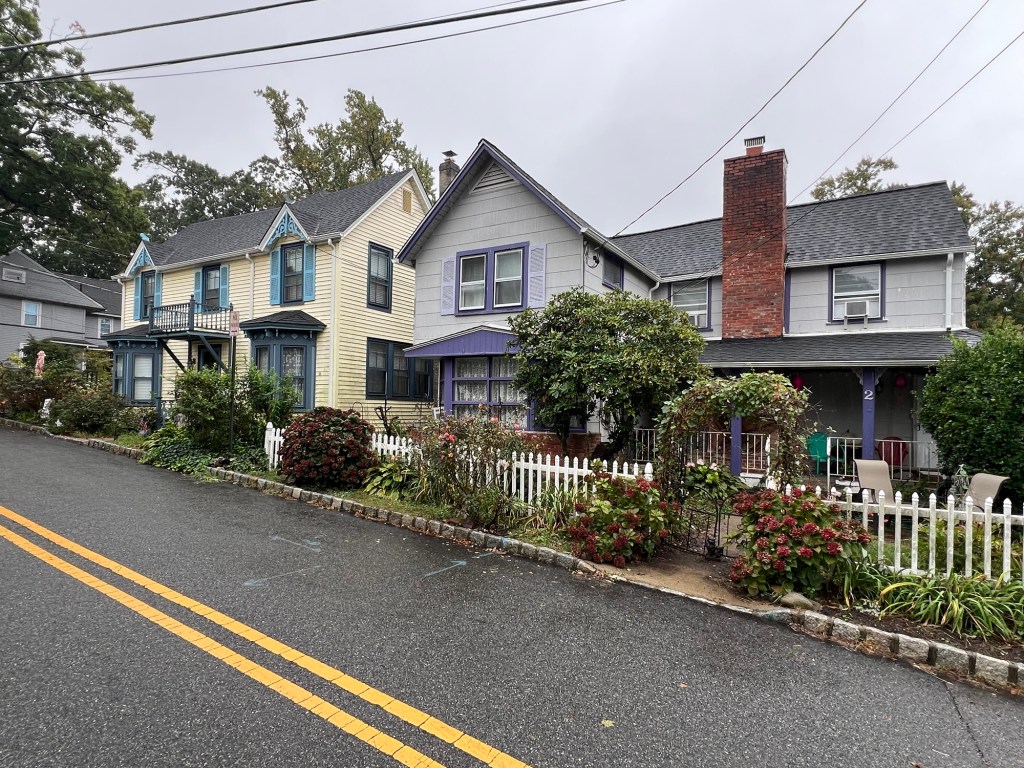
I loved walking around the neighborhood and admiring the homes

I walked up Strowbridge Avenue to make my first stop to see this whimsical front garden of this beautiful Victorian house.

The garden in front of 6 Strowbridge Avenue

The figures and small structures of this magical garden. I thought I would see ferries and elf’s walking around the yard.

The details of the front of 6 Strowbridge Avenue

The next house garden I visited 11 Sommerfield Avenue and this yard was hidden from the road to see its many surprises.
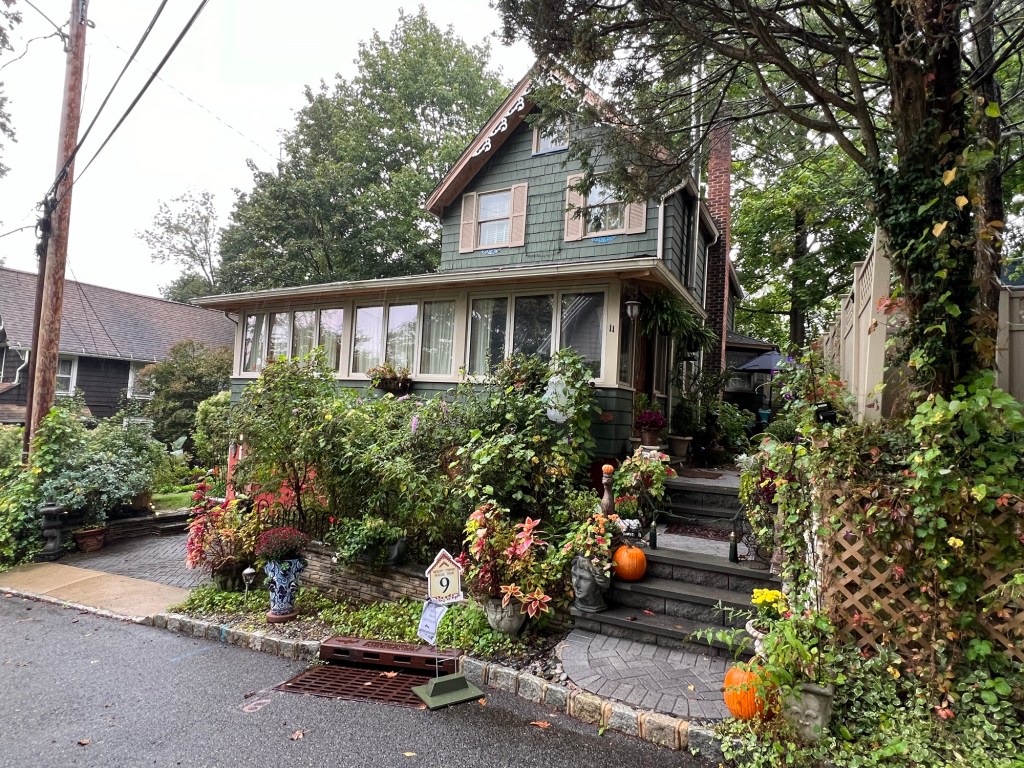
The front garden of 11 Sommerfield Avenue
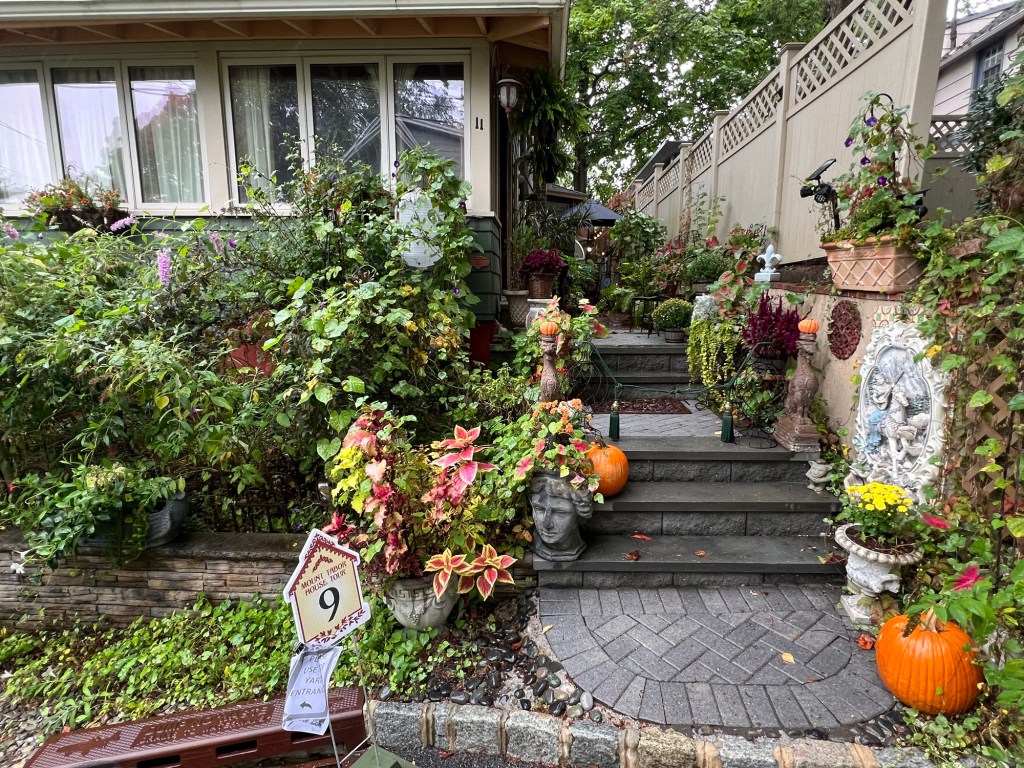
The creative detail of the on just one side of the house
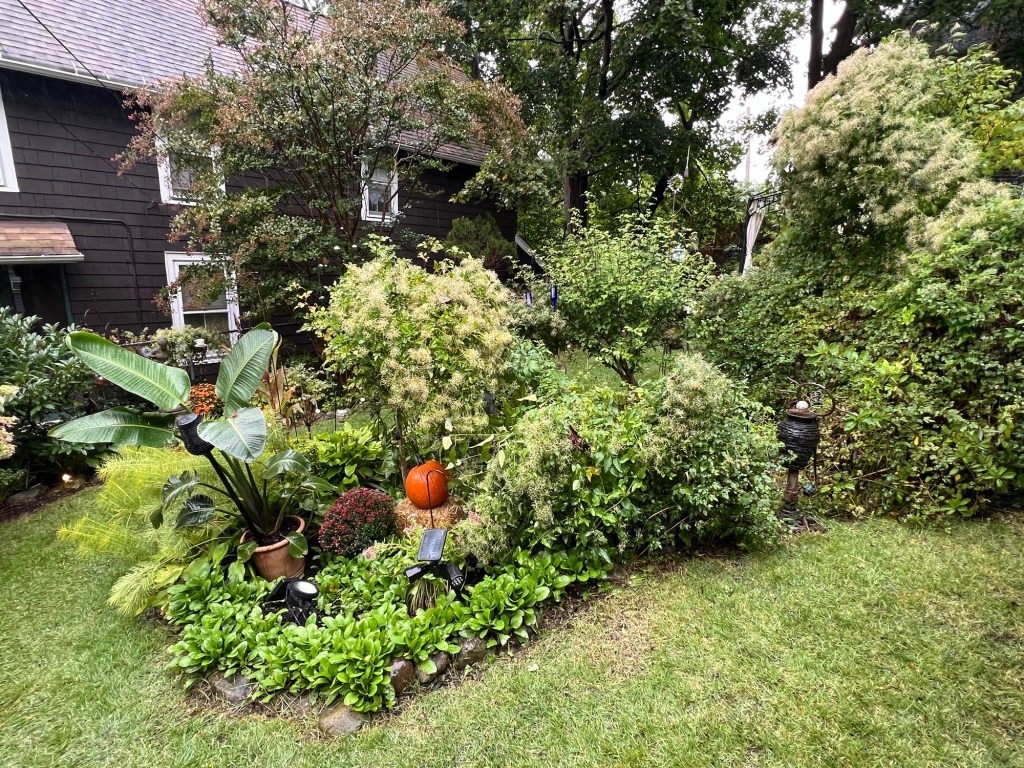
As you enter the garden, its theme was the Fall and Halloween

The water features and fountains of their background
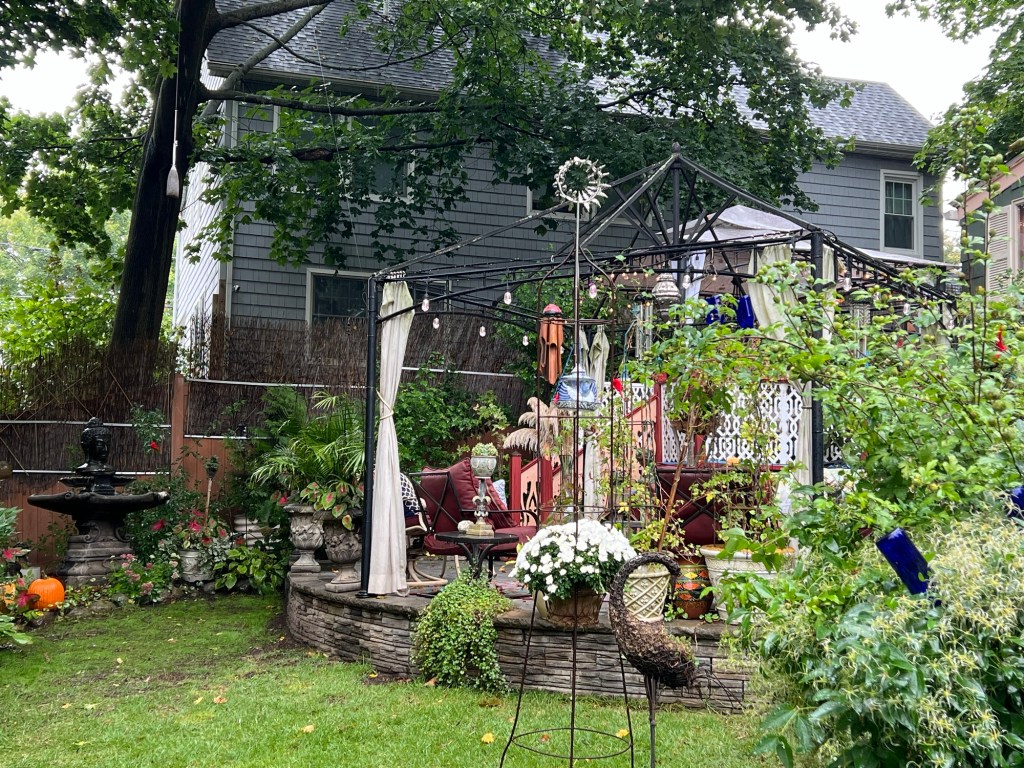
The background fountains, water features and patio that make this backyard enjoyable
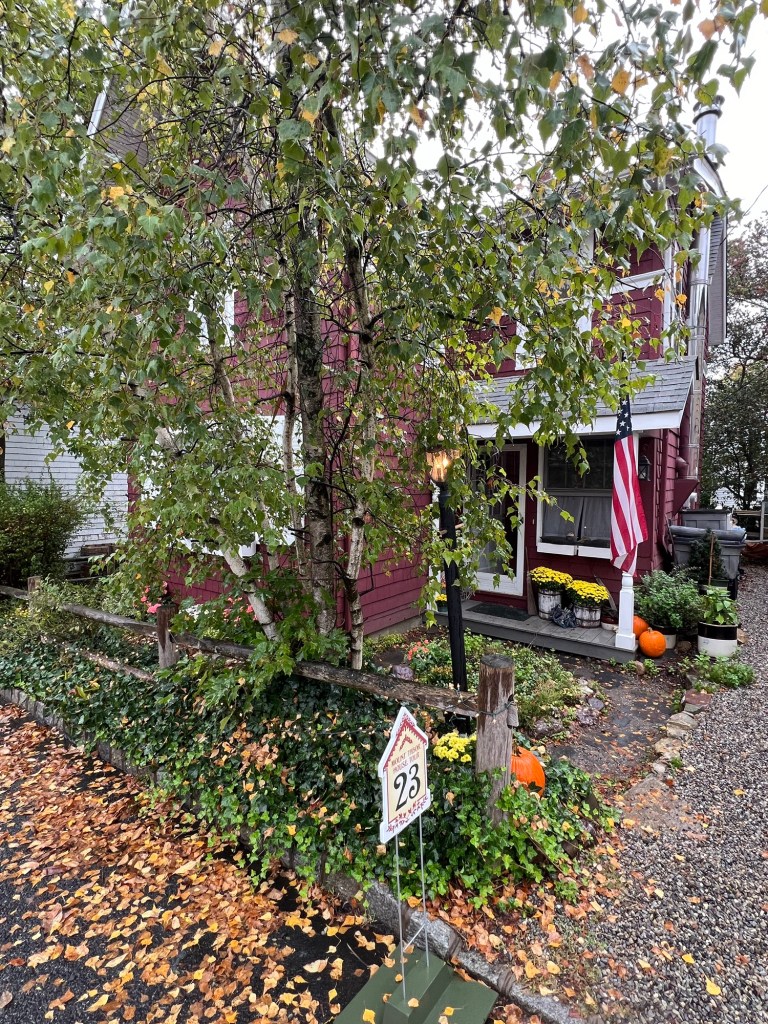
The new cottage home of 33 Embury Place

I walked down Embury Place to visit a last minute addition. I was surprised when the owner told me that six people once lived in the house. I saw the loft space and bunk beds that made this house work as a family home.
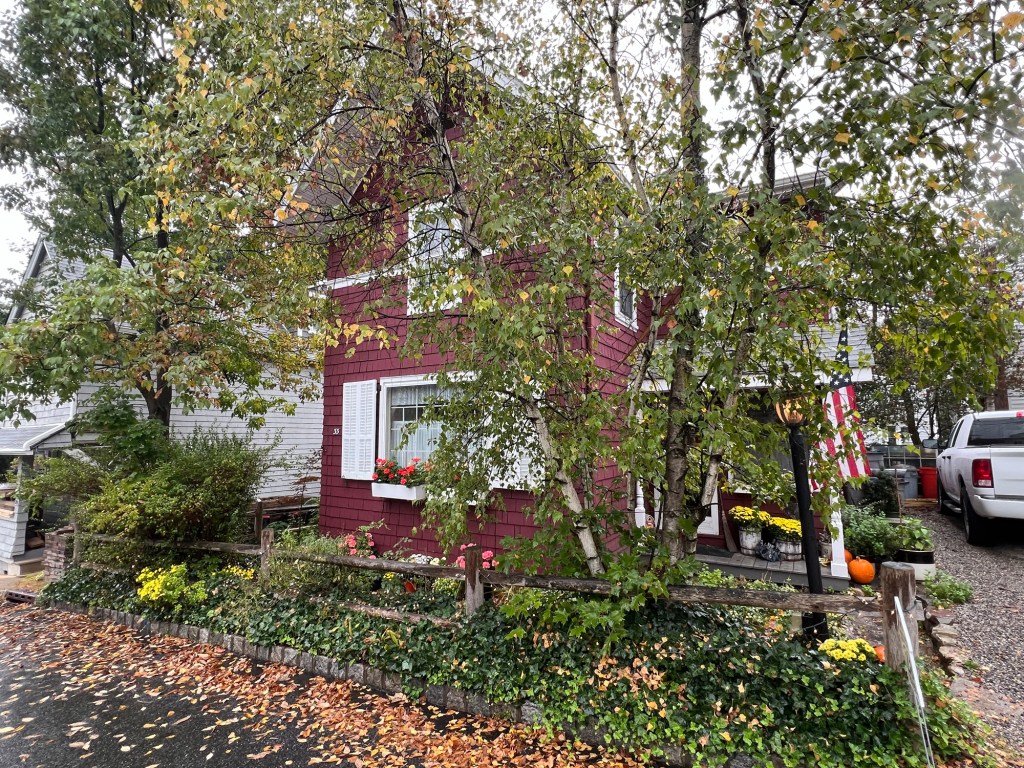
The elegance of 33 Embury Place

I walked down Morris Avenue, which is the heart of the complex and then walked up the “golden stairs” to West Park Place to next set of gardens and parks. The gardens in front of 12 West Park Place may not have been as elaborate as other homes but was nicely landscaped which complimented Mother Nature.
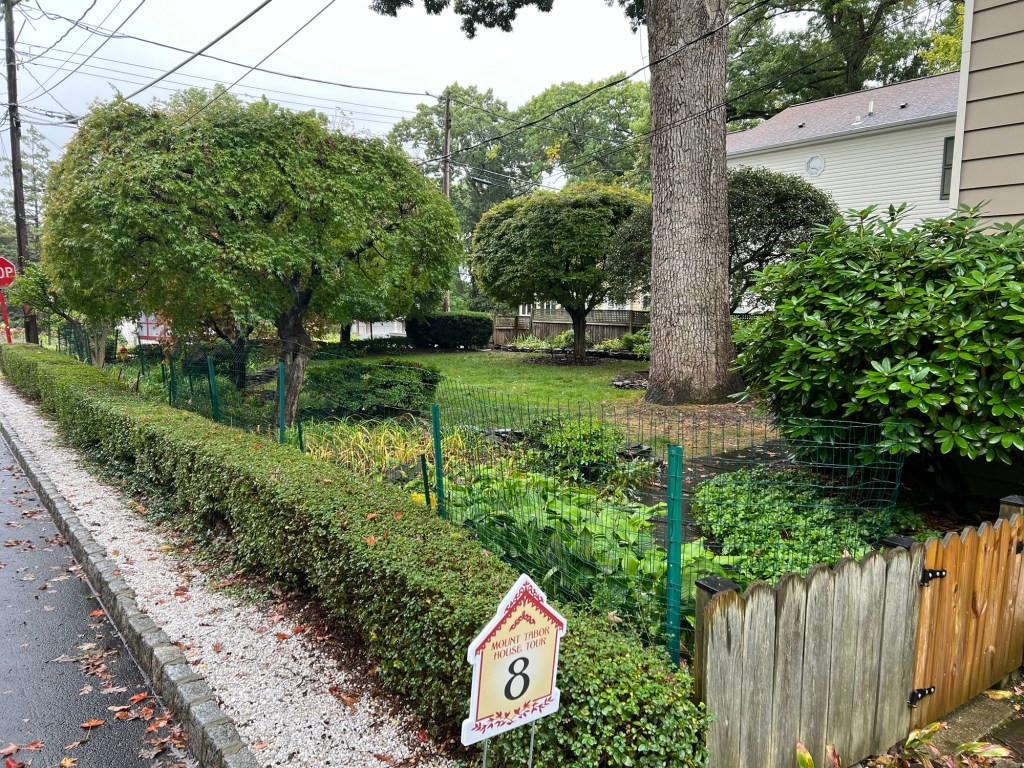
The gardens in front of 12 West Park Place
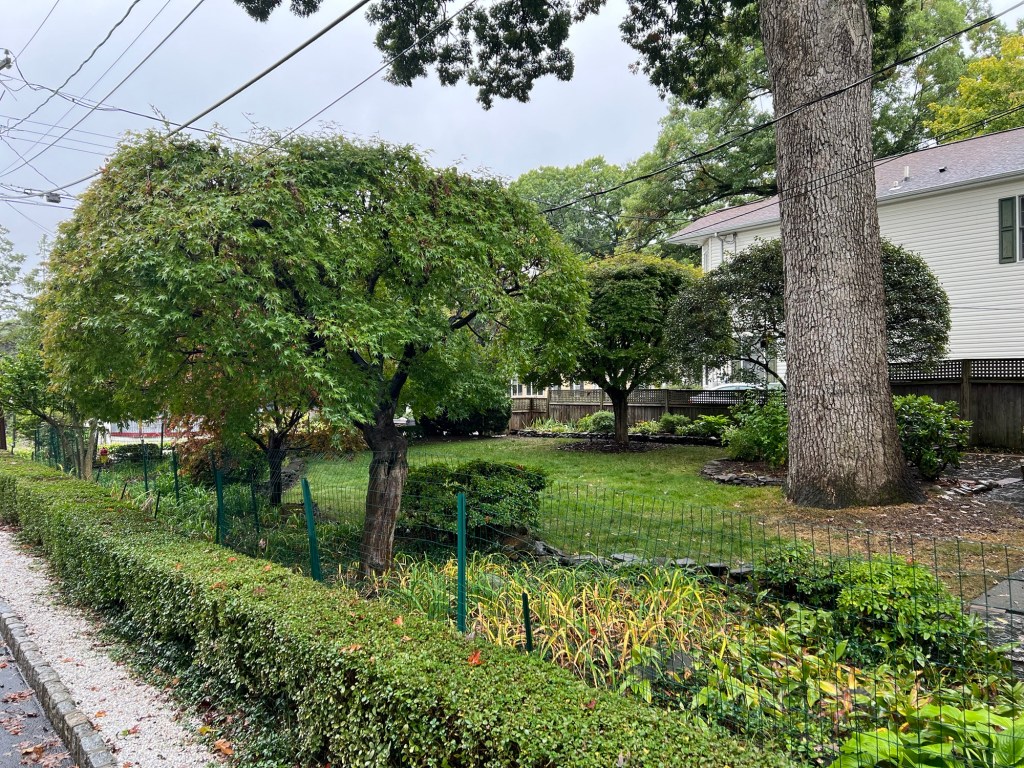
The gardens in front of 12 West Park Place

Across from these creative gardens is St. James Park, which sits in the middle of the complex. The park was gloomy with the rain drizzle so I really could not appreciate it. Still I could see how engaging the park must be in nice weather.

St. James Park
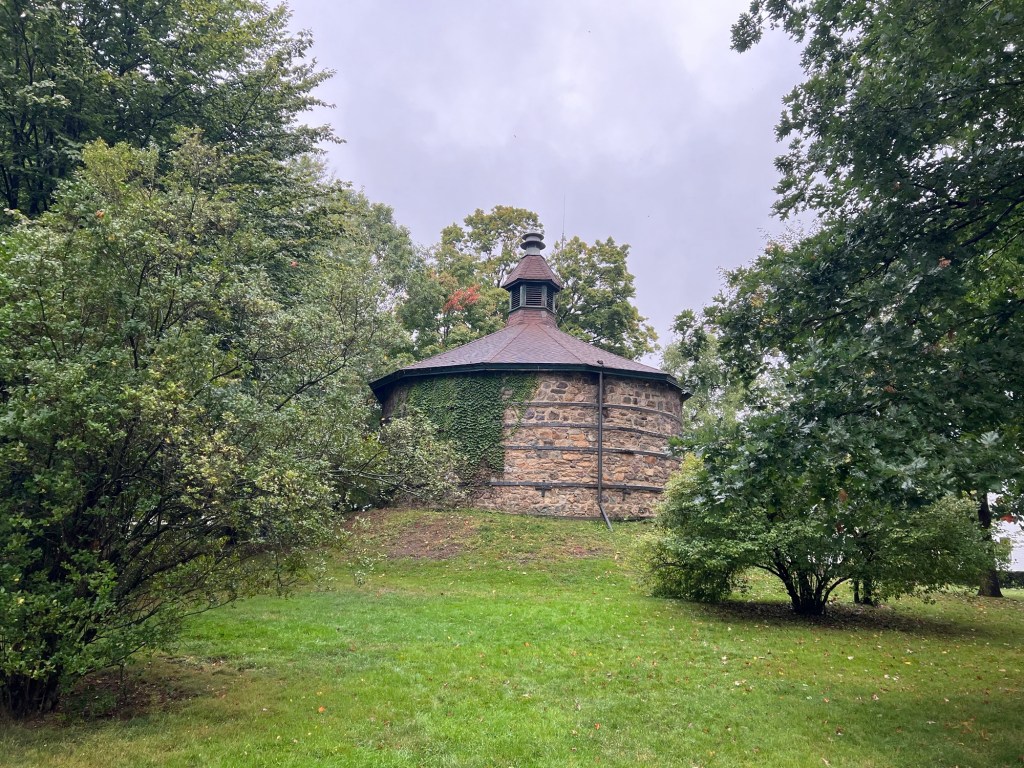
The Labyrinth in St. James Park

I made my way back down the stairs and made a walk down Morris Avenue to visit more homes. I noticed that time was running out and I only had an hour to visit this part of the neighborhood.

Trinity Park in full bloom when the rain stopped

Looking down the street down Whitfield Place during the tour of homes

A stuffed bear on display at 60 East Morris Street

The family who opened their home at 60 East Morris Street had a beautiful home. They invited us into their home, had a fire going on their patio and served us homemade cookies and apple cider which I thought was a nice touch. I saw this whimsical bear in one of the bedrooms.

71 Morris Avenue is the home of artist Gabriella D’Italia and her family

The artist’s work on the walls and her collection of puppets

The last set of gardens that I visited were at 36 Boehm Avenue. The rain had stopped and I was able to visit the gardens and not feel rushed.

The yard at 36 Boehm Avenue.
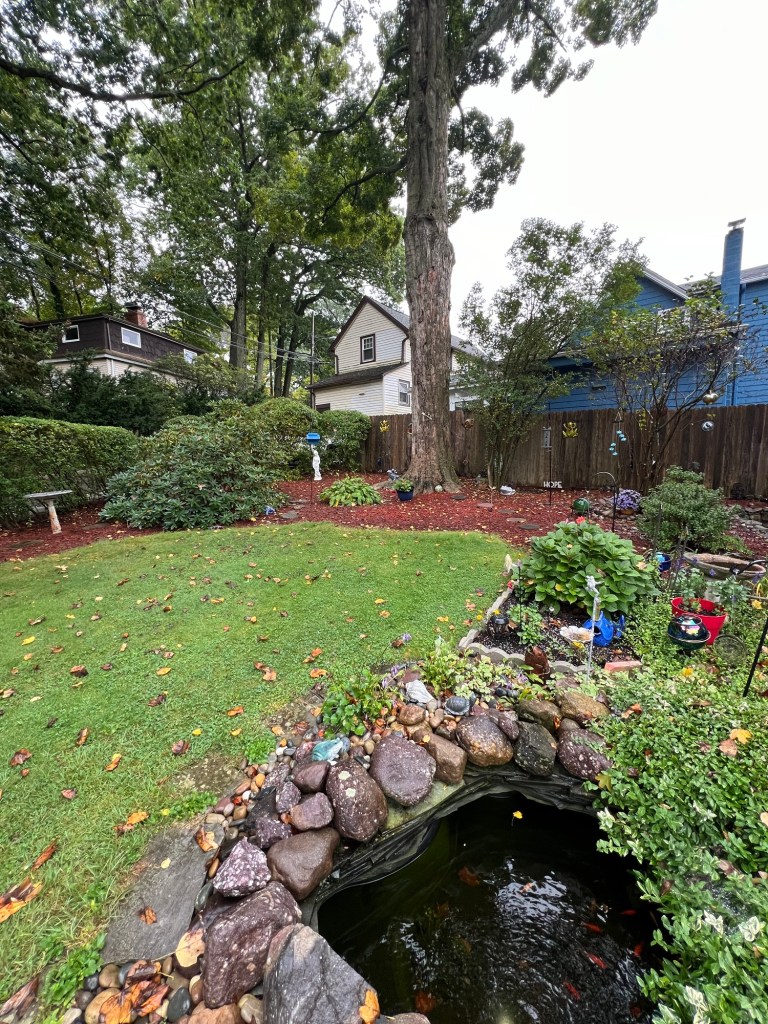
The yard at 36 Boehm Avenue where gold fish I thought were a nice touch
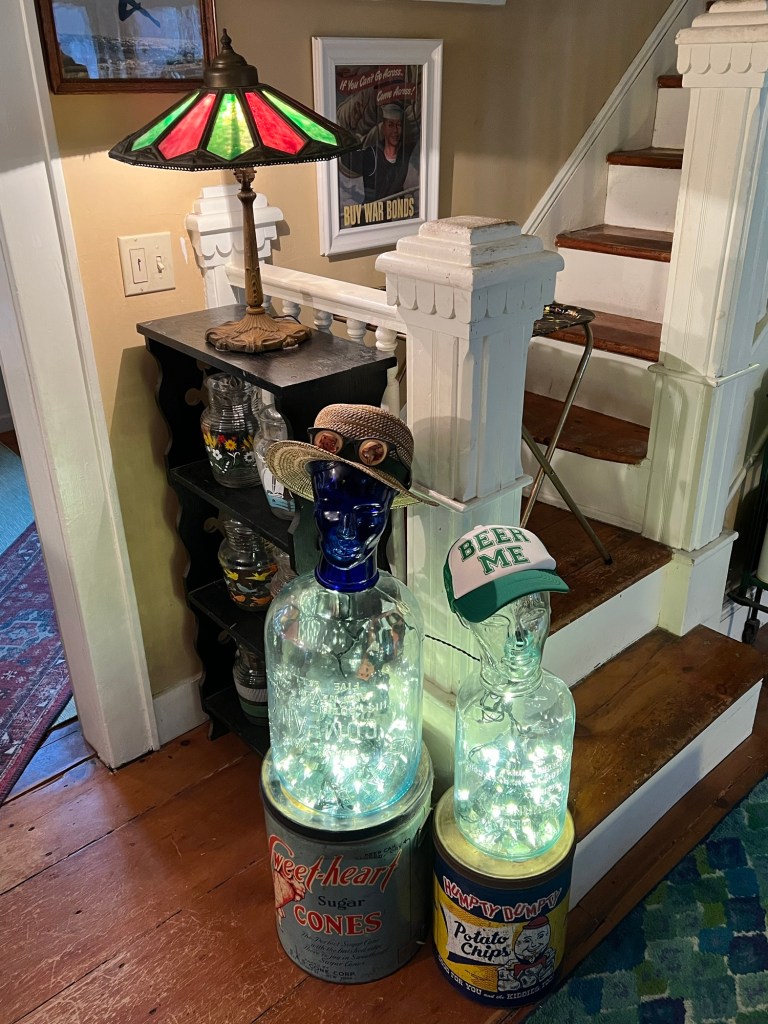
I saw this point of creativity at 26 Whitfield Place

When I finished the tour, I explored the area around Trinity Park. I walked around the park around the Pollinator Garden and admired the foliage.
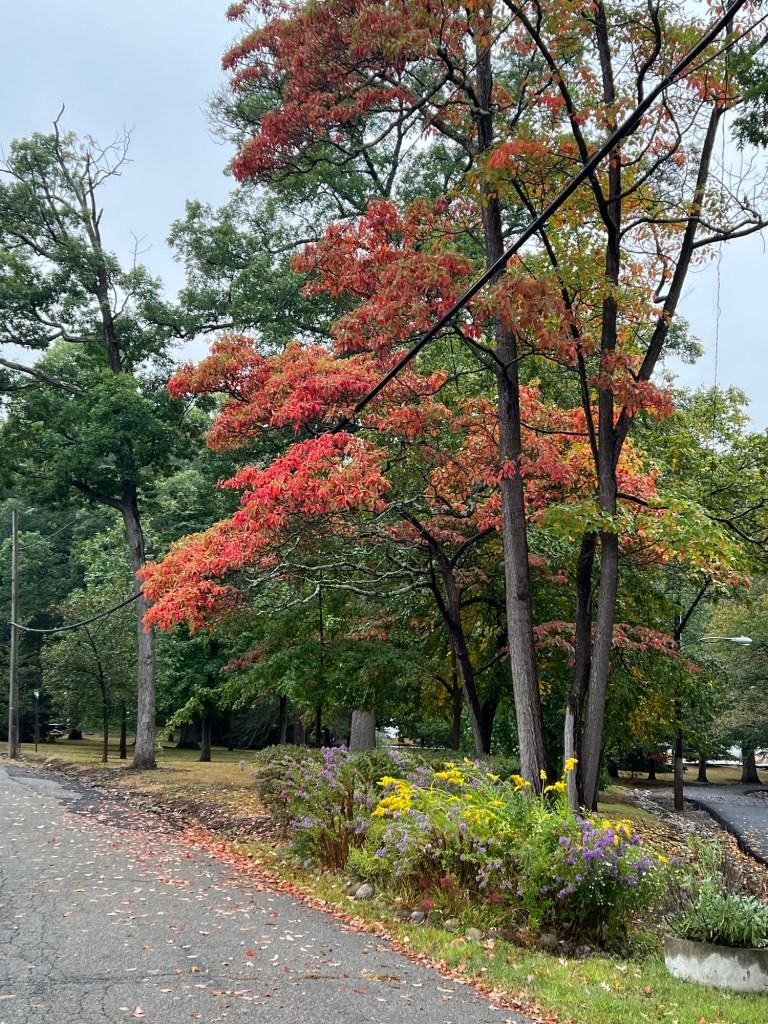
The gardens at the start of the Fall

The map of the historical sign of the complex

The historic marker of the complex

The historic buildings around Trinity Park

The Gazebo in the park

The Methodist church on Simpson Avenue
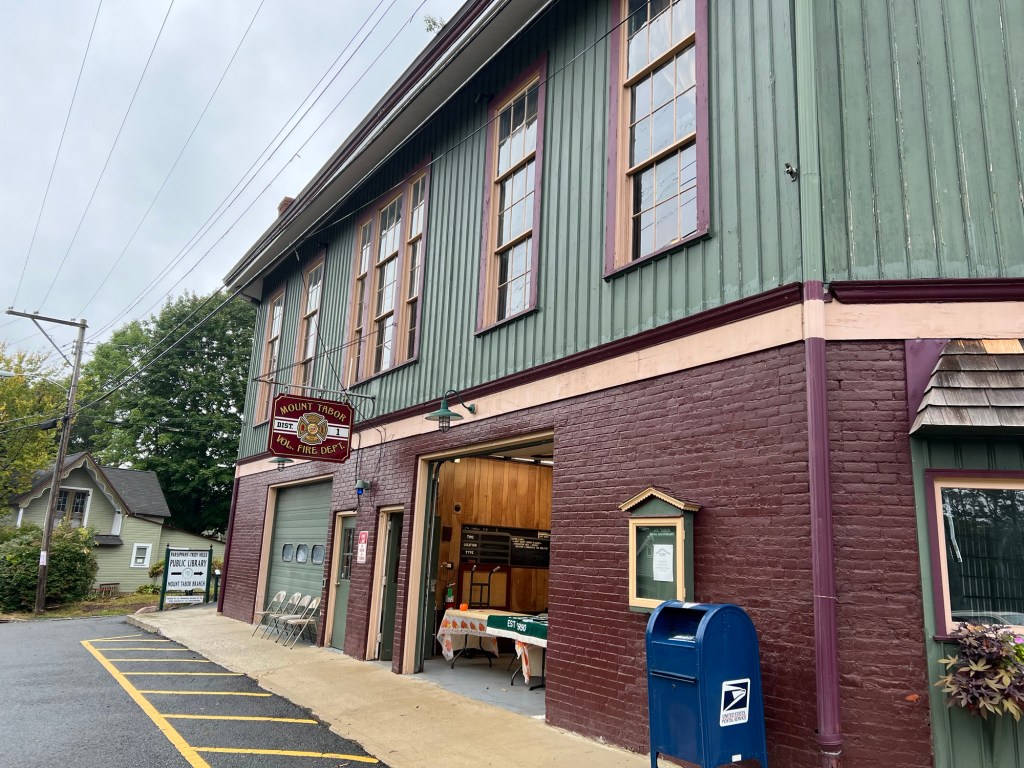
The old Firehouse where we checked in

The old Camp office

It really was a wonderful walking tour and I learned a lot about the old Mount Tabor site. This was an eye opener of how a former Methodist camp becomes a desirable historical neighborhood that everyone wants to live in. The museum was an interesting look on how people lived in the past here and the walking tour showed how modern times living here that not much has changed. People still making these small charming houses home. This walking tour in Mount Tabor, NJ is every September.

After the tour for lunch:

After the tour was over, I stopped into Downtown Denville, NJ right down the road, which is right off Route 46 and Route 80 for a late lunch. Denville has a very nice downtown with lots of restaurants and stores. Even on a gloomy afternoon, most everything was open. I checked out by Advantage Dining site and found Second Half on Main at 5 East Main Street. This contemporary bar/pub had all the TV’s going for the football game and a packed bar. I ate in the dining room section of the restaurant and was able to stretch out in one of the booths.

The Second Half of Main Street Street at 5 East Main Street in Downtown Denville, NJ

https://www.secondhalfonmain.com/

My review on TripAdvisor:

https://www.tripadvisor.com/Restaurant_Review-g46392-d2386465-Reviews-Second_Half_on_Main-Denville_Morris_County_New_Jersey.html?m=19905

The restaurant is a lively place and the bar area was busy. The menu has a nice selection of salads, burgers, pastas and large entrees with a nice beer listing. It got cold and miserable outside and it was the perfect burger day. I chose the Texas Burger with Bacon, BBQ sauce and sharp Cheddar Cheese and that hit the spot. What I liked about Second Half on Main is the prices are very fair. The burgers will run you around $15.00 and they include the French Fries, something you do not see in the Hudson River Valley or Bergen County anymore. They pull the a la Carte routine since COVID.
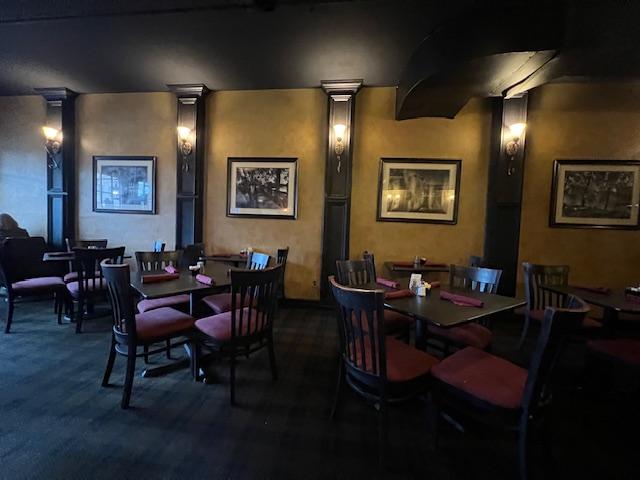
The Dining Room area at Second Half on Main

The burgers here are excellent. Perfectly cooked, stacked with ingredients and are juicy. The fries were also perfectly cooked. On a cool gloomy day, the burger hit the spot. If you are touring in the area, I highly recommend the restaurant. After lunch if the weather is nice, check out Downtown Denville.
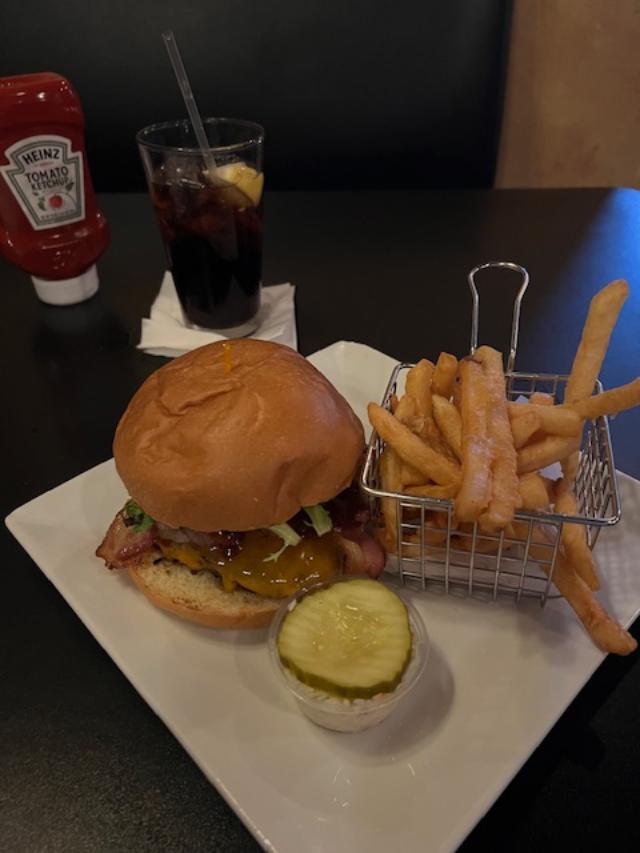
The Texas Burger and French Fries at Second Half on Main

The Texas Burger and Fries is the perfect meal on a cool day

Yum!
Forgotten Warriors Vietnam Museum                        Cape May Airport                                                                       529 Forrestal Road                                                 Rio Grande, NJ 08204

Forgotten Warriors Vietnam Museum Cape May Airport 529 Forrestal Road Rio Grande, NJ 08204

Forgotten Warriors Vietnam Museum

Cape May Airport

529 Forrestal Road

Rio Grande, NJ 08204

(609) 374-2987

https://forgottenwarriorsvietnammuseum.com/

Admission: Free but Donations are accepted

Open: Please see website as the museum is closing for the season. By Appointment

My review on TripAdvisor:

https://www.tripadvisor.com/ShowUserReviews-g46775-d1170025-r971025114-Forgotten_Warriors-Rio_Grande_Cape_May_County_New_Jersey.html?m=19905

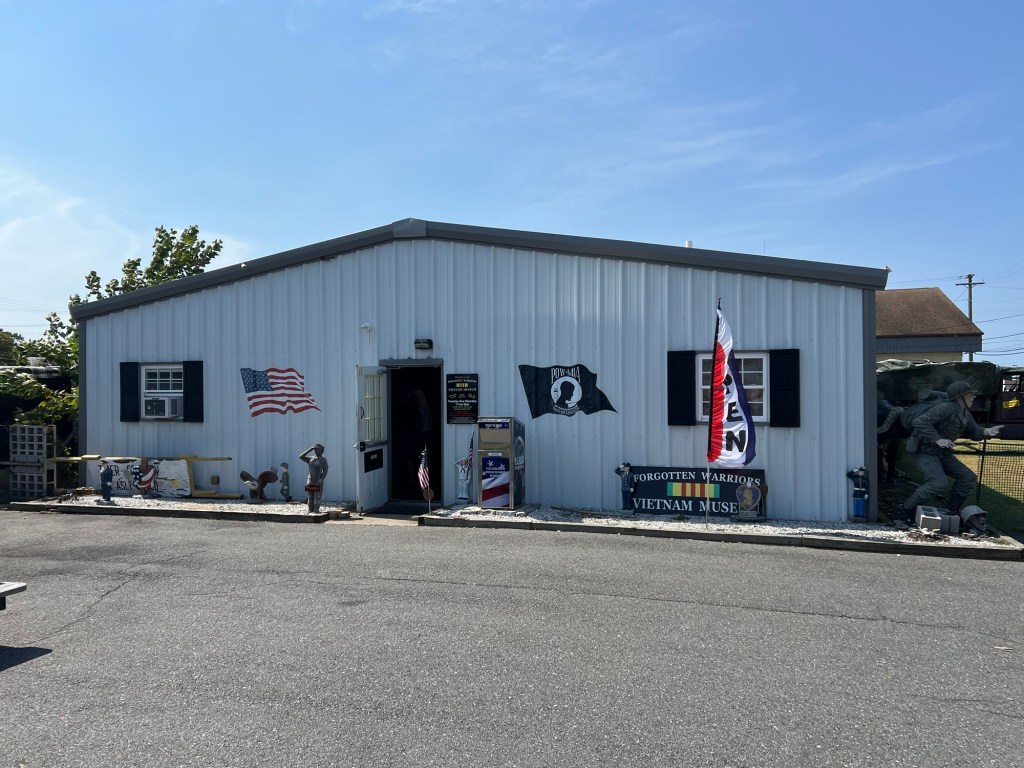
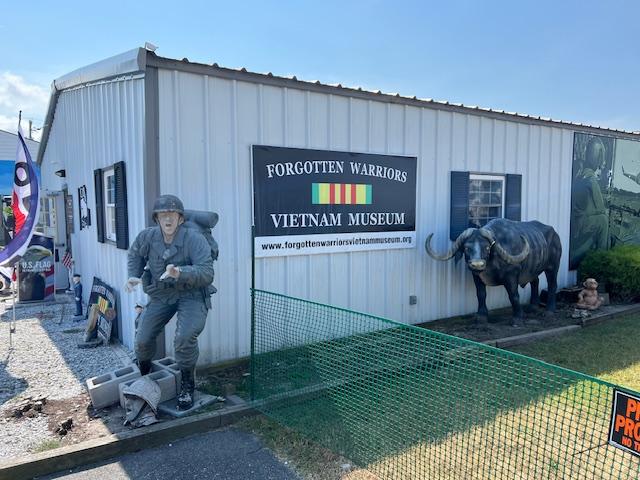
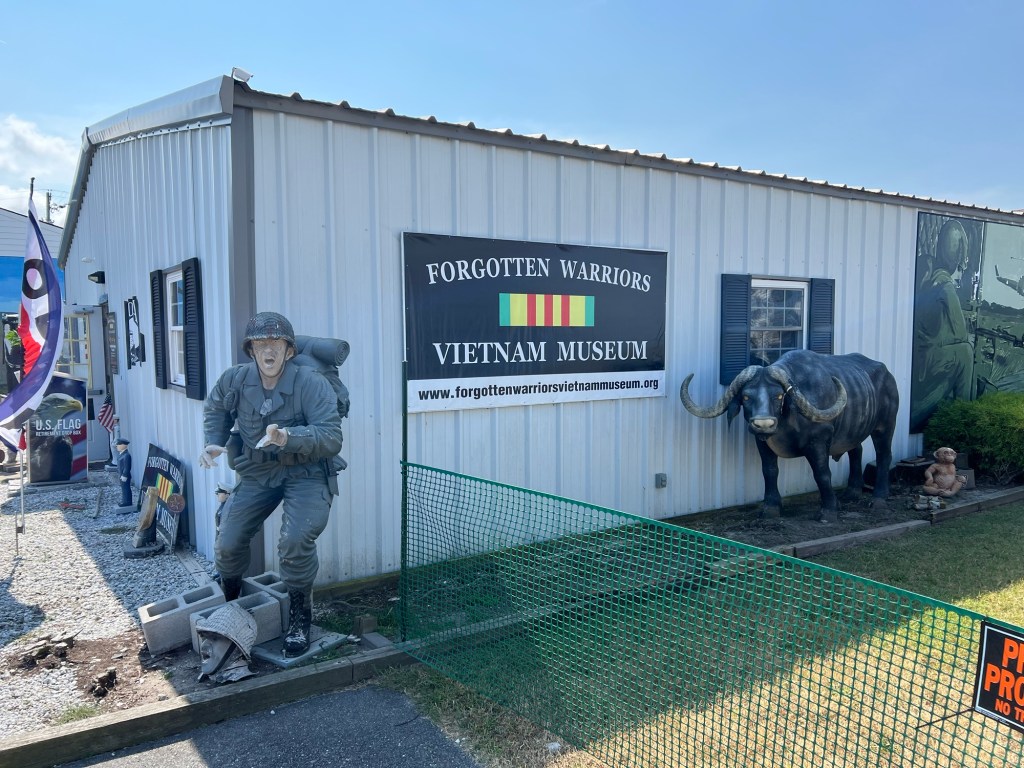
The front of the Forgotten Warriors Vietnam Museum at 529 Forrestal Road

The entrance to the museum

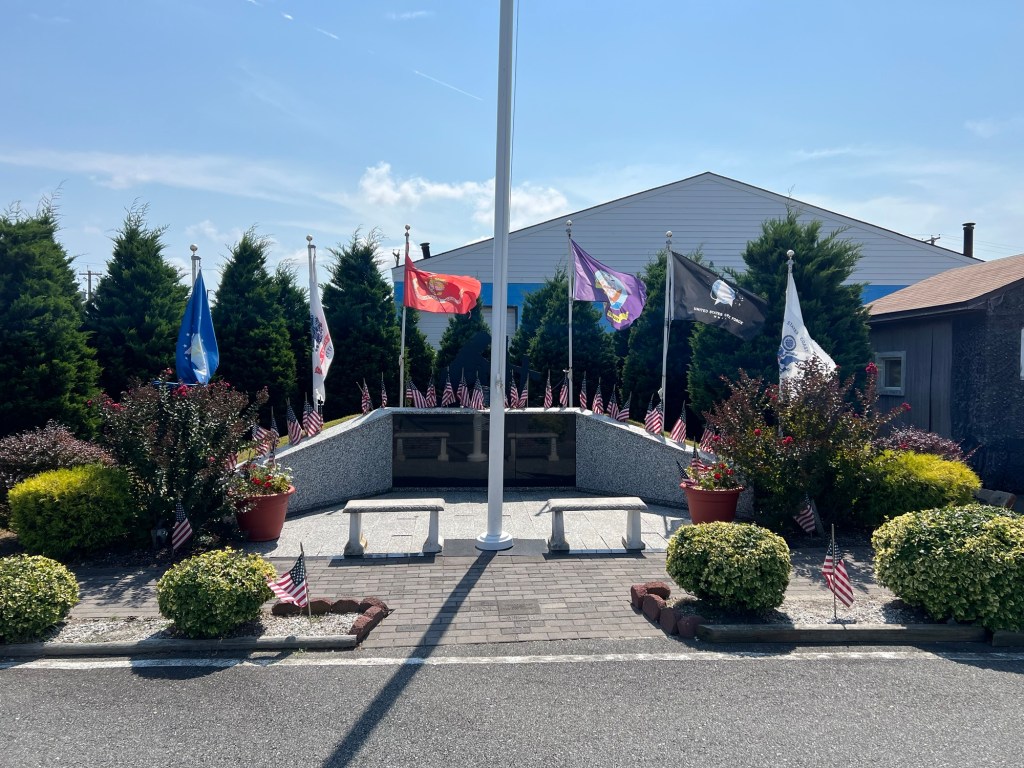
The Vietnam Veterans Memorial outside the museum has the names of those who fought in the war

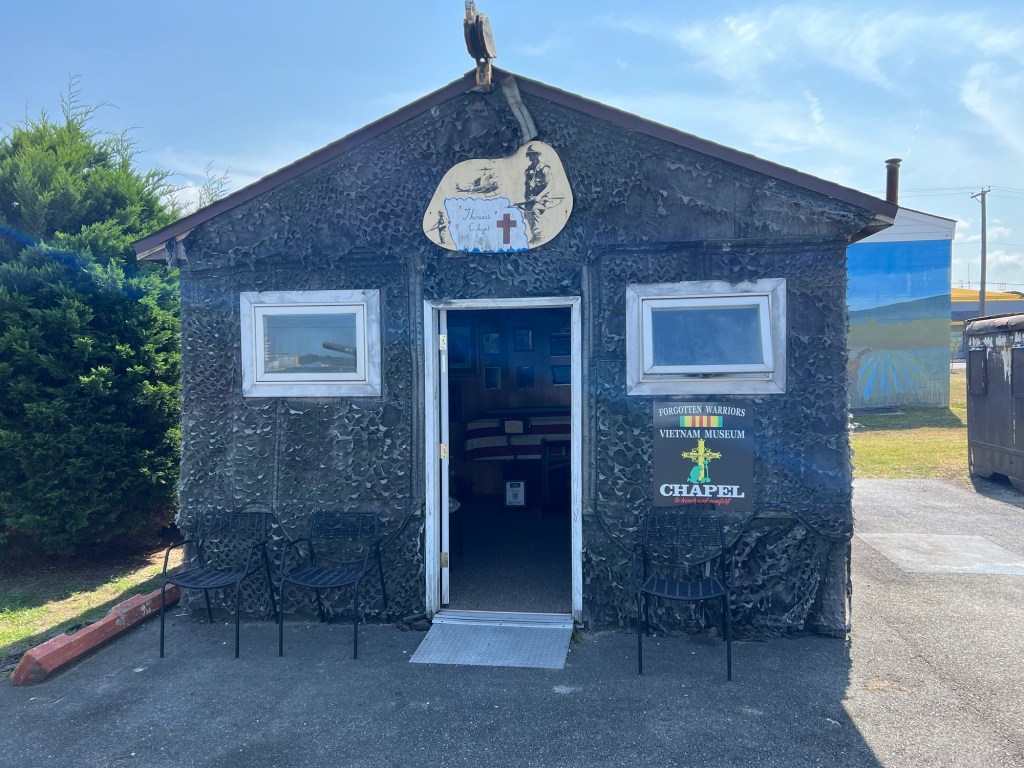
The museum’s Chapel dedicated to the Veterans

The Chapel is dedicated to those who lost their lives in the Vietnam War and is a very emotional display of the value of a soldier during the war years.

The History of the museum:

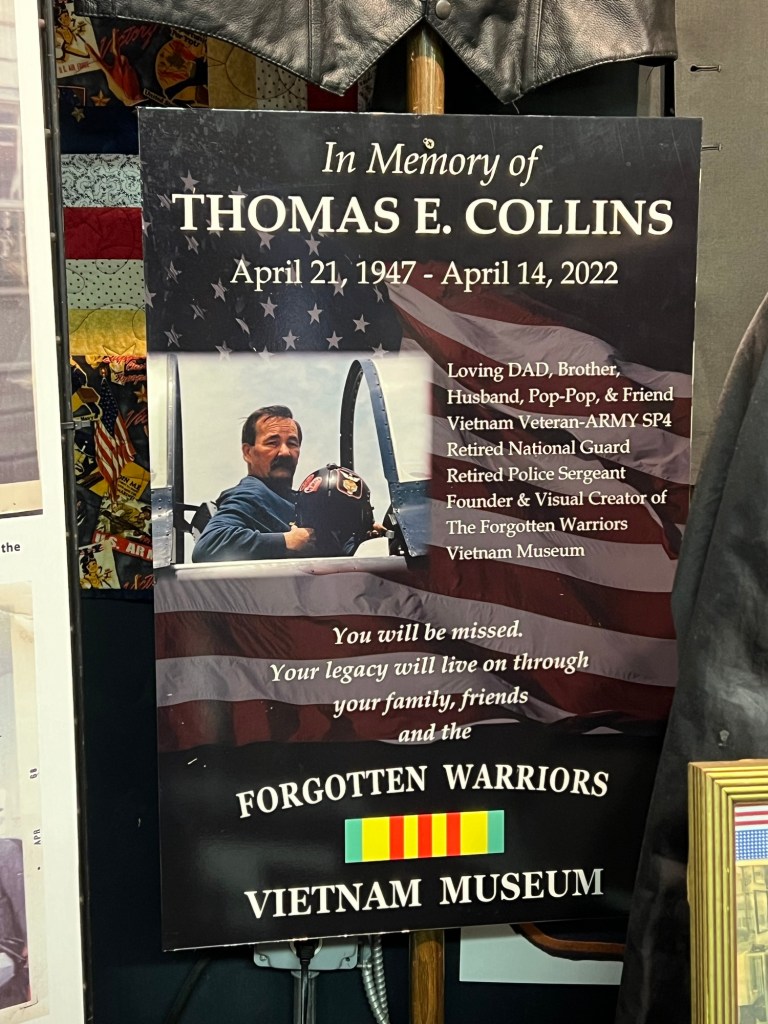
The museum was created in 2008 by the late Vietnam Veteran Thomas E. Collins. His committed passion for over 15 years to create a unique, realistic, educational experience to live on the memory of the men and women who fought in the war.

The museum honors and protects the thousands of men and women’s legacies and artifacts on the museum that will not be forgotten. The museum continues to preserve and welcome home veterans, their families and educate future generations.

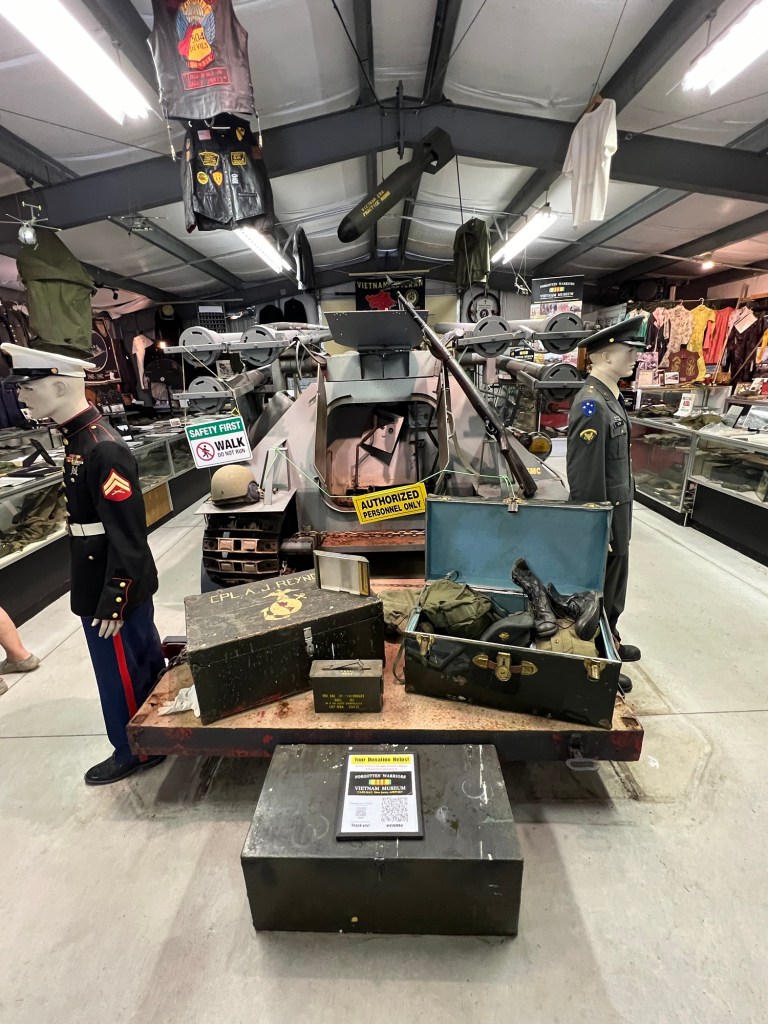
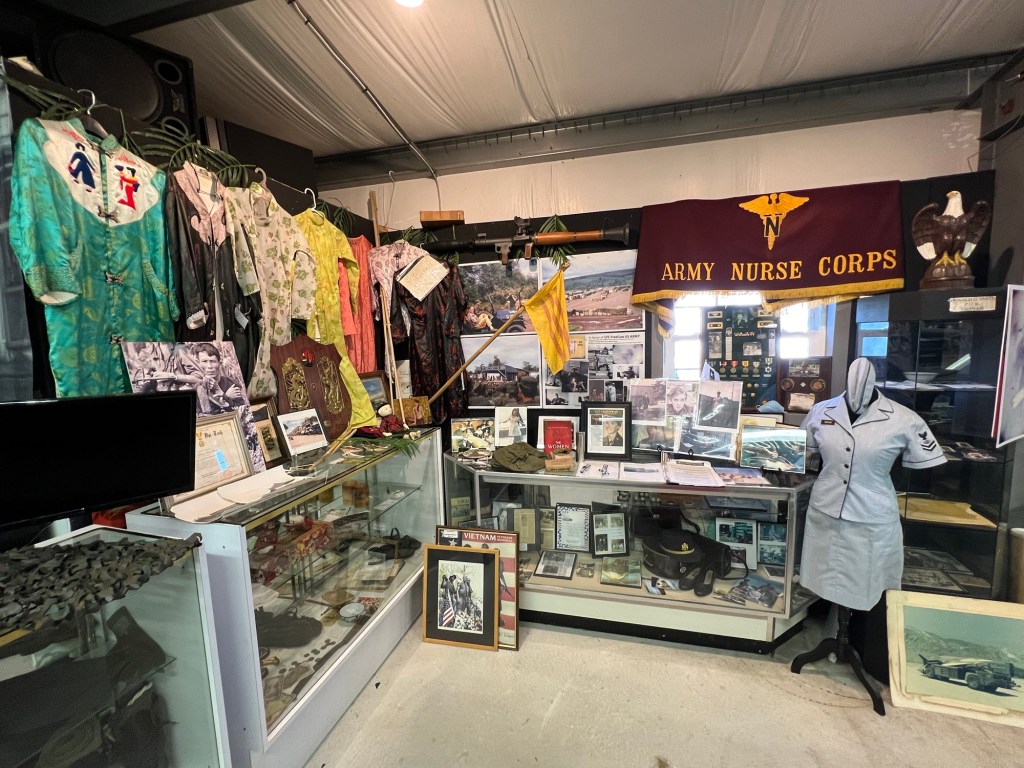
This one room museum is packed with information and memorabilia from the war years.

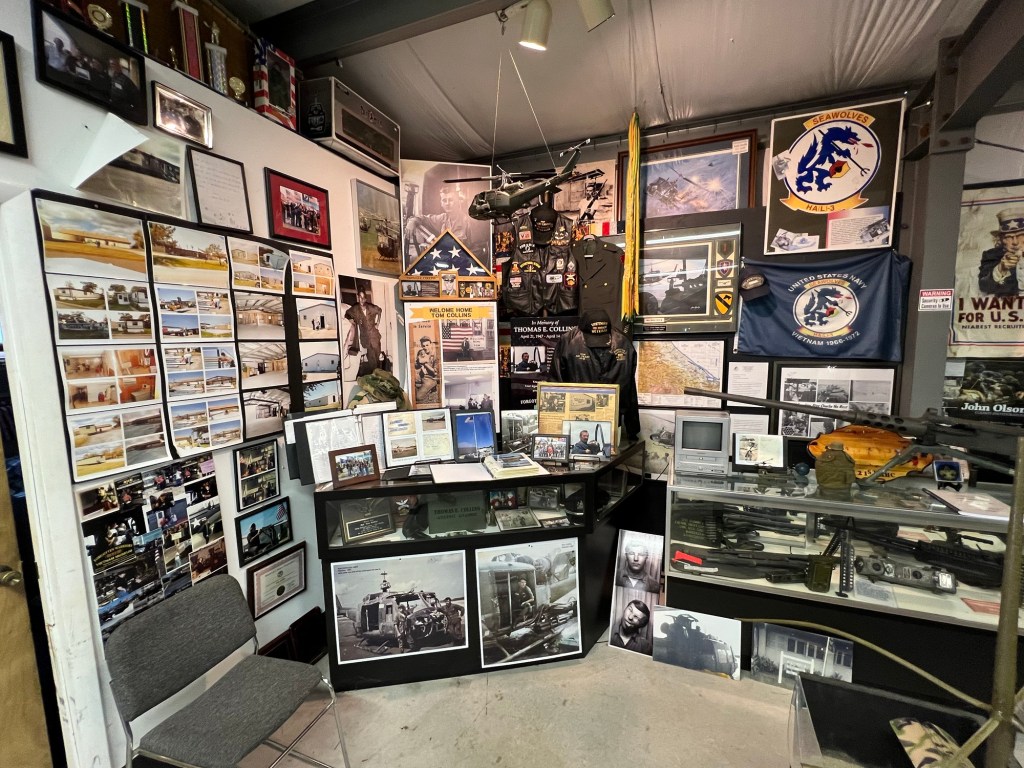
The display in honor of Thomas R. Collins

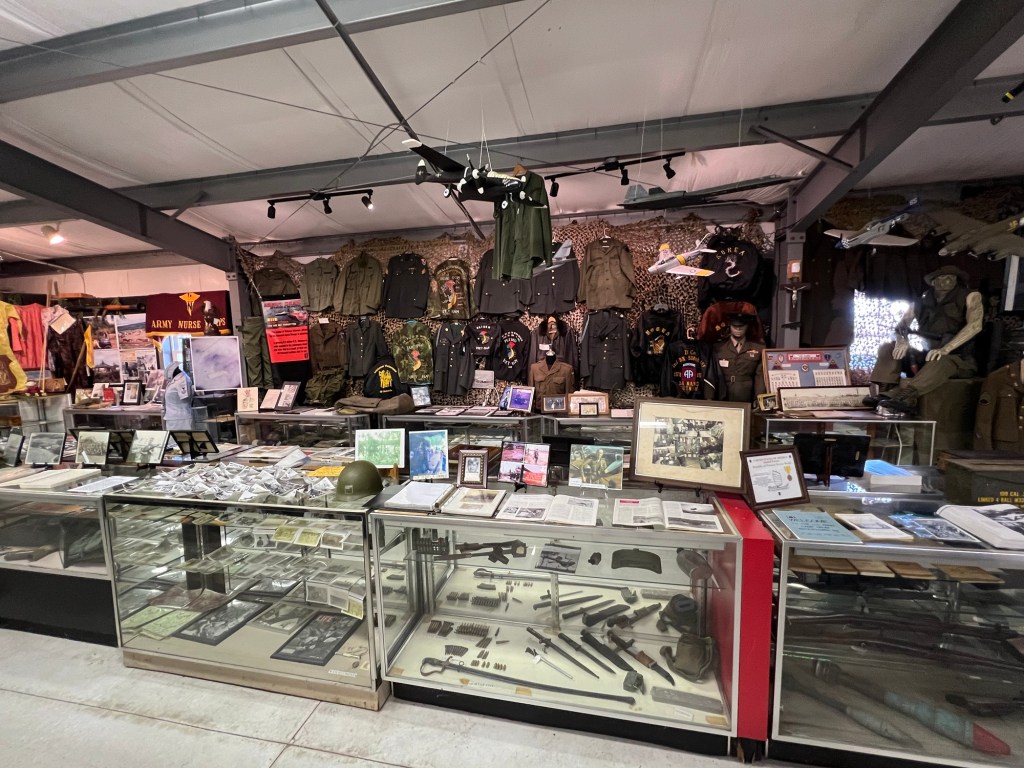
The main gallery of the museum

In Memory of Thomas E. Collins

Very touching memory to the founder of the museum, Thomas E . Collins.

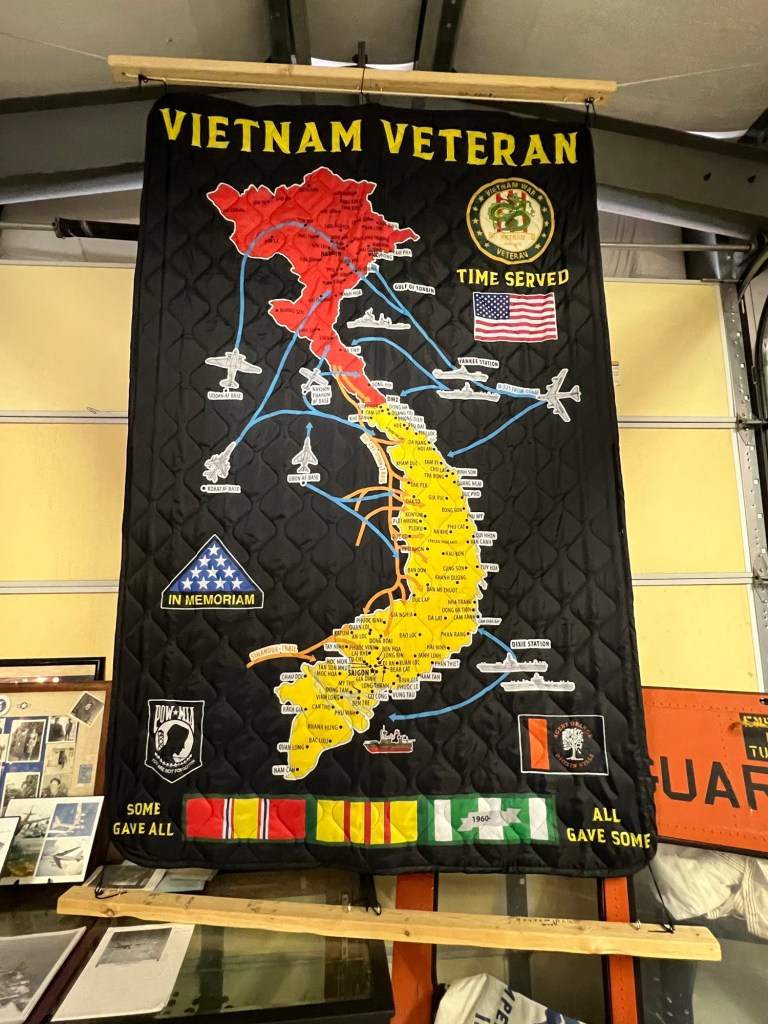
The map of North and South Vietnam at the time of the war

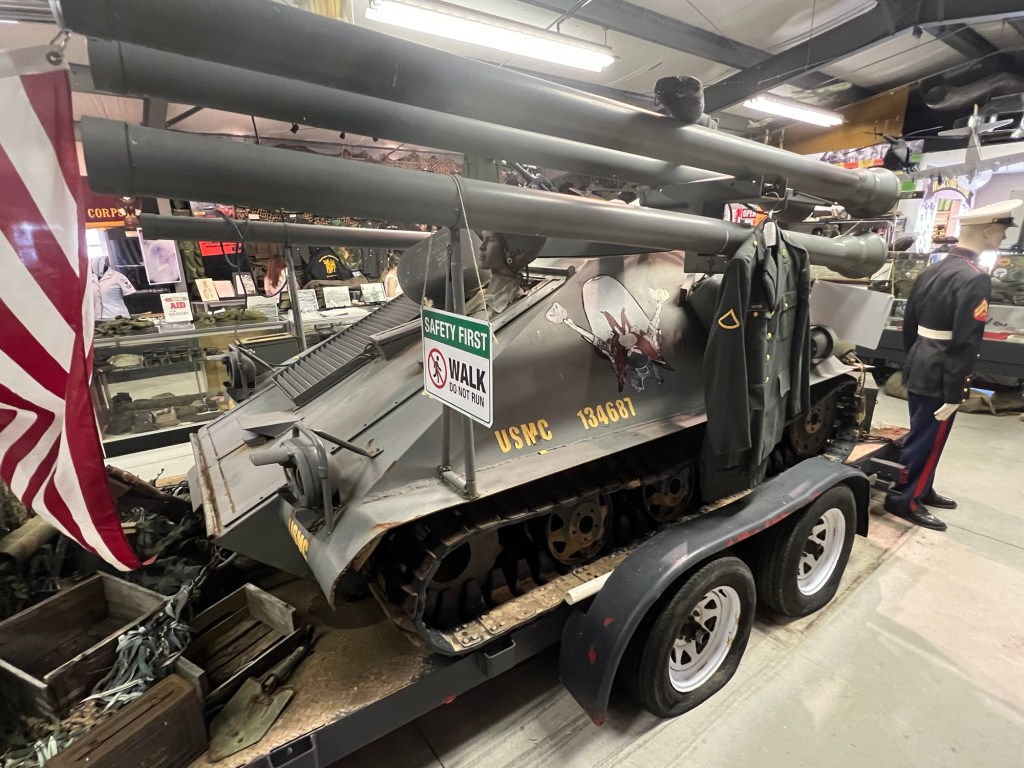
The equipment and artifacts from the Vietnam War

One of the small tanks inside the museum

The outfits warn in Vietnam during the war by the natives and the nurses

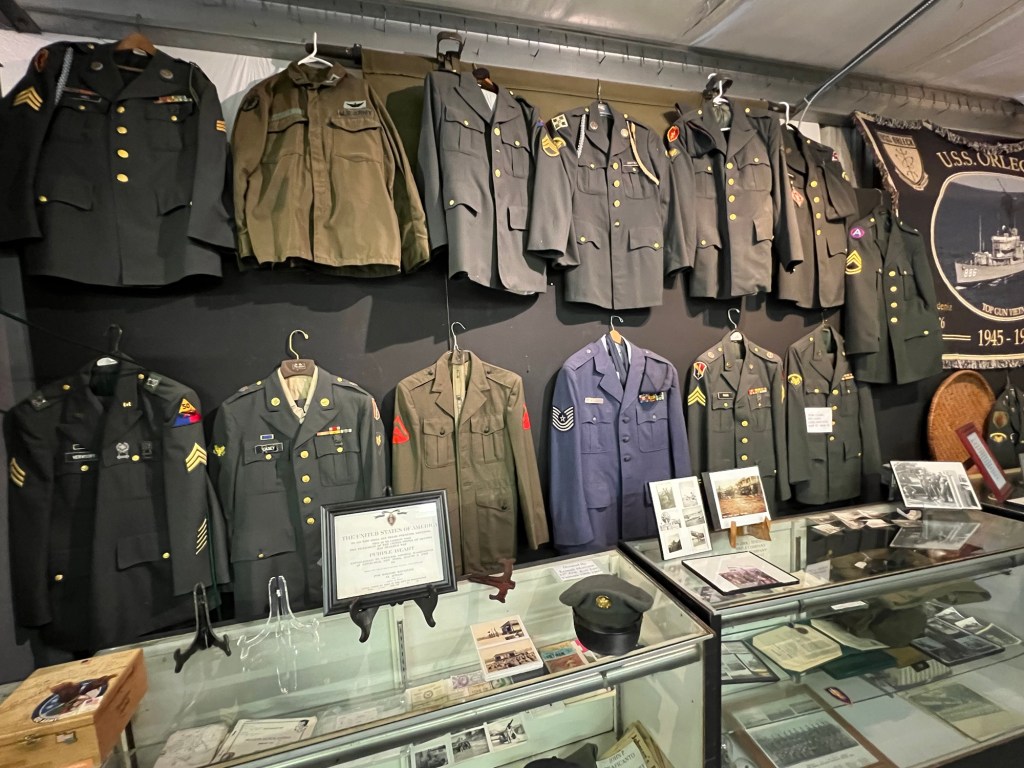
Various weapons and uniforms on display

Array of uniforms that had been used in the war

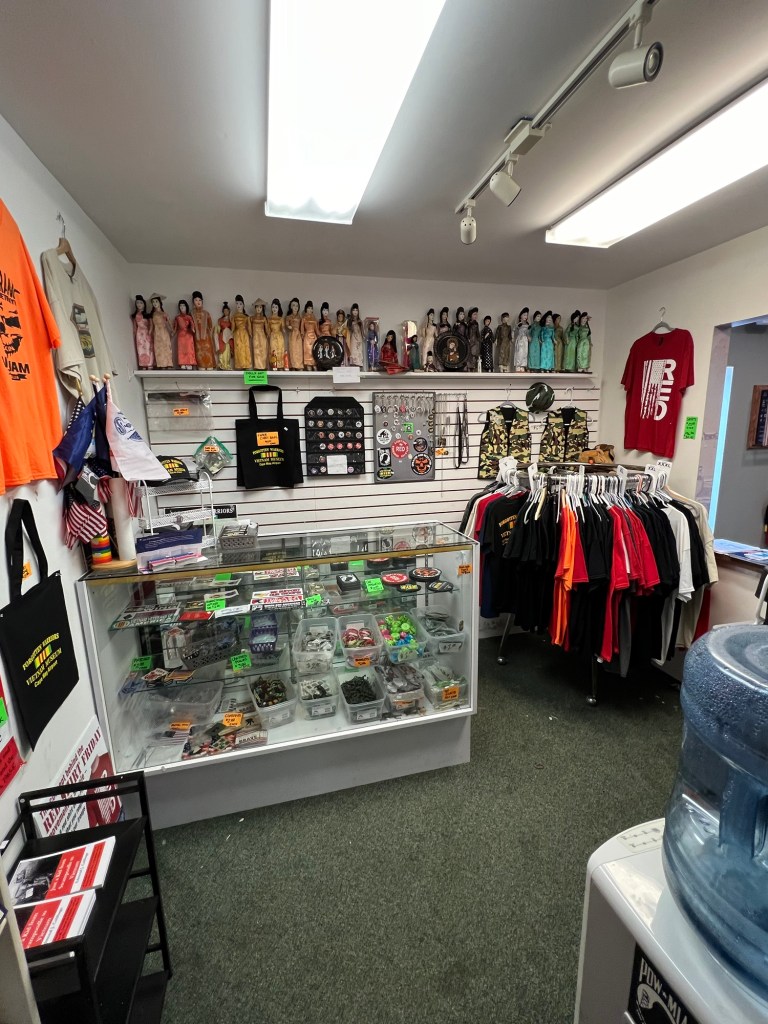
The gift shop by the entrance of the museum has some interesting gift items.

This museum is a very touching memorial to all those who have served during the war in Vietnam and some fascinating items in the collection to see and observe.

The Museum of Cape May County                      504 US. 9                                                             Cape May Court House, NJ 08210

The Museum of Cape May County 504 US. 9 Cape May Court House, NJ 08210

The Museum of Cape May County

504 US 9

Cape May Court House, NJ 08210

(609) 465-3535

https://www.cmcmuseum.org/

https://www.facebook.com/Museumofcmc/

Hours: Seasonal Hours Sunday-Monday-Tuesday/Wednesday 10:00am-2:30pm/Thursday Closed/Friday 10:00am-2:30pm/Saturday Closed. Tours are at 10:00am and 12:00pm.

Admission: Donations Accepted/ (I paid $5.00 for the hour tour)

My review on TripAdvisor:

https://www.tripadvisor.com/Attraction_Review-g46342-d286393-Reviews-The_Museum_of_Cape_May_County-Cape_May_Court_House_Middle_Township_Cape_May_County_.html

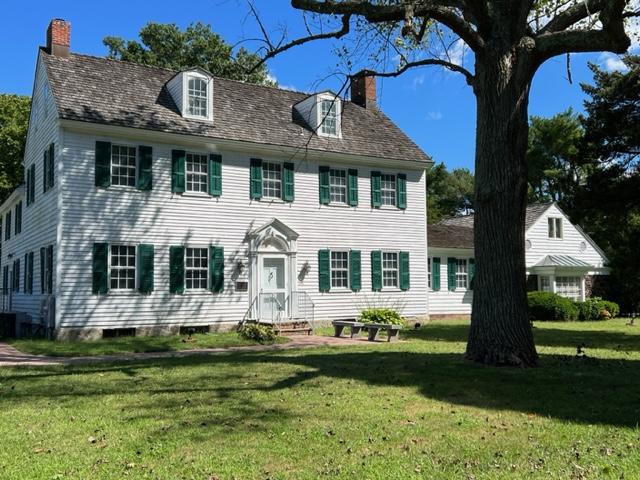
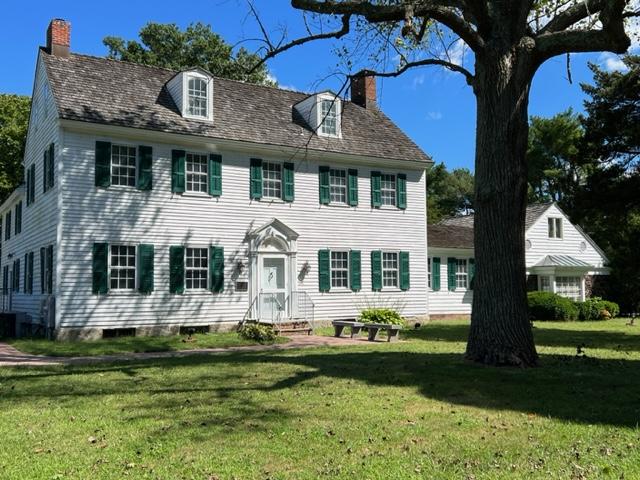
The Museum of Cape May County at 504 US 9

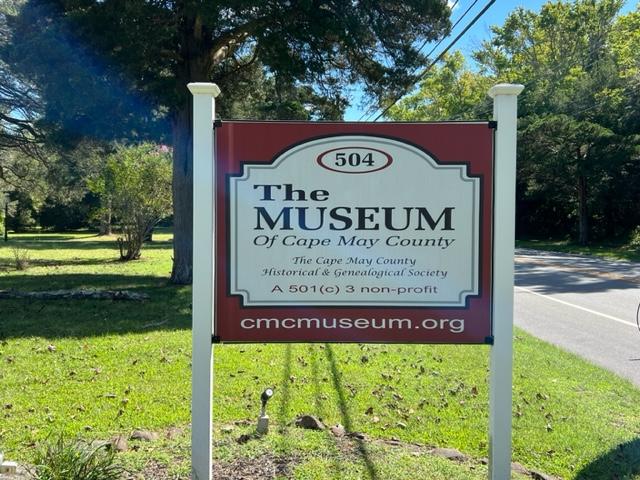
The Museum of Cape May County sign welcoming you.

The Museum of Cape May Country museum complex

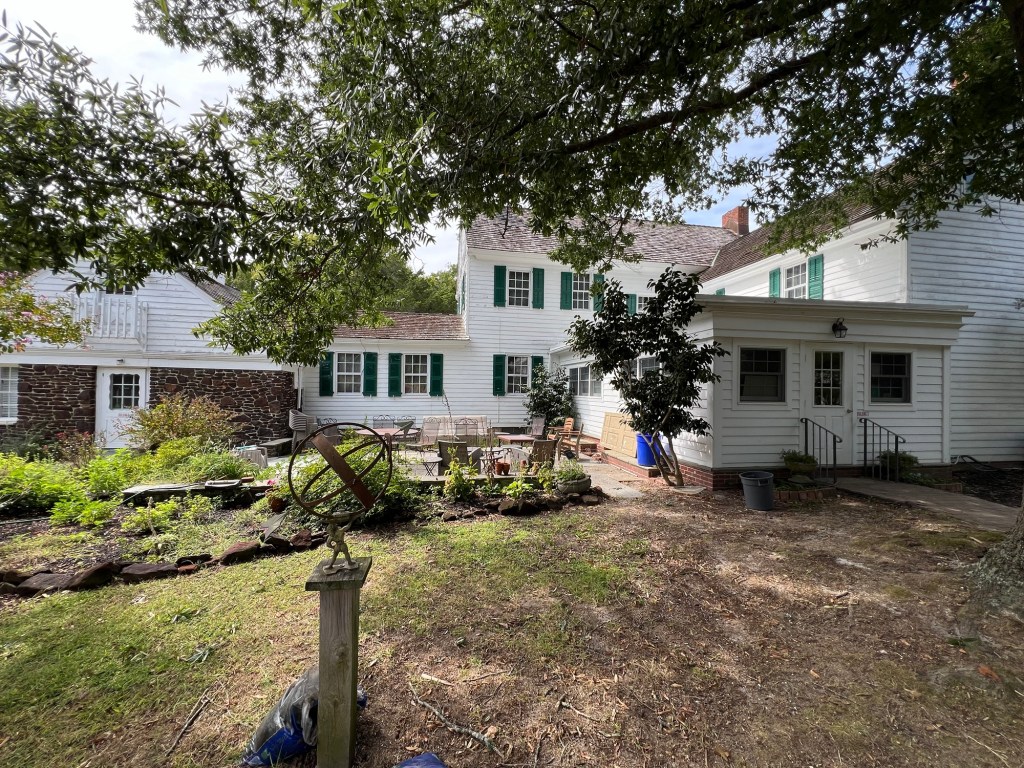
The Museum grounds in the back.

After three years of trying to visit the museum, I finally got on a last minute walking tour of the Museum of Cape May County and have to say that it was well worth the wait. What an interesting set of buildings that have a fascinating set of artifacts and so nicely displayed in a series of buildings.

The museum campus is broken up in a series of buildings on a two acre site. There is the main office which has an art exhibition, the family homestead of the family, who lived here for several generations, the carriage house which displays several carriages and stage coaches that were used in the area.

The back of the main house where you can see the three additions to the house

The barn where the Military, Native American and Farming displays are showcased

The Carriage House is to the left and the barn is to the right

The Carriage House on the property

The History of the House and of the Cape May County Museum site:

(from the museum website)

Housed in a building that dates back to 1704, the Cresse House, and its 1830 Holmes addition, as well as a historic 1780 barn and carriage house have rooms devoted to a subject or time that will hold you spellbound as you make your way through the past. The 11 room Cresse Holmes house treats you to a glimpse of life as it was in Cape May County from colonial to modern times. From the 1704 colonial kitchen and loft bedroom to the Victorian dining and sitting rooms all are decorated and furnished with period pieces. Special exhibit rooms include a children’s playroom teeming with toys, a doctor’s room with instruments, glassware and vials filled with a colorful array of pharmaceuticals and a Victorian music room with dozens of fascinating players and instruments (Cape May County Museum website).

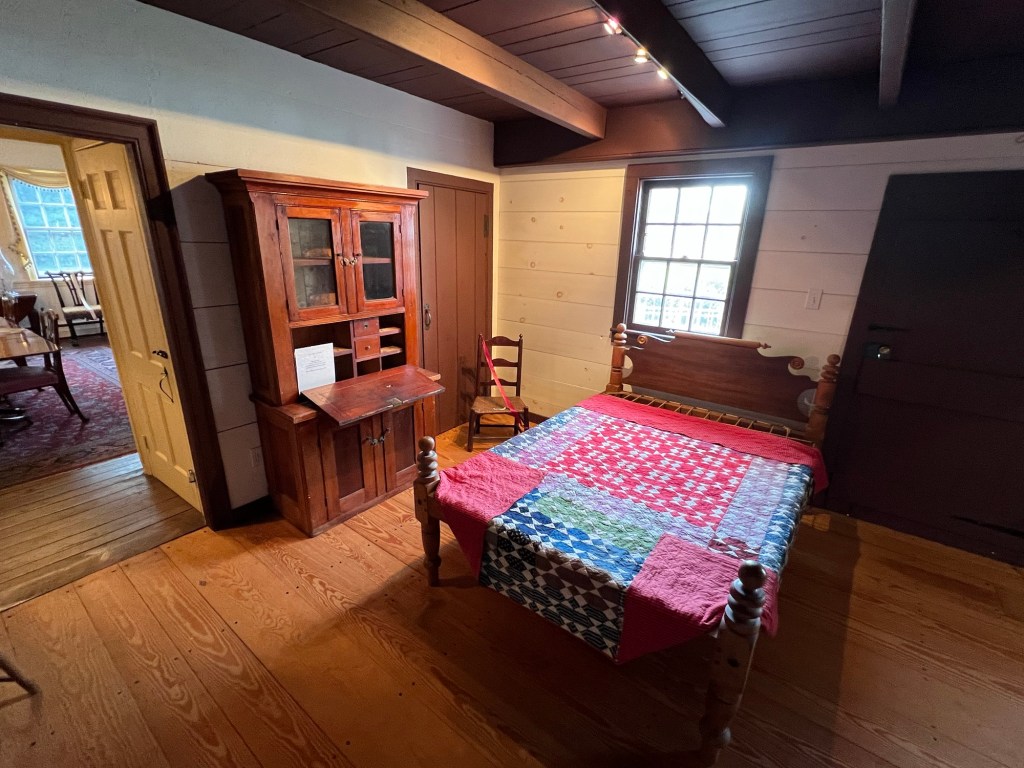
Our first part of the tour was the family home which had been lived in for generations. The first part of the house was built in 1740 and you could tell by the open hearth and the flooring.

The hearth of the original section of the Cresse home

The kitchen was set up and furnished as the main part of the house. Because of the heat, this was the main part of the house that habituated. Here the family would gather, eat and socialize.

The back bedroom shows the families affluence in the late 1700’s

Having a separate room for sleeping was considered quite extravagant. The heat would circulated through the home and warmed this room next door. The main part of the house was built in 1840 in the Federalist design.

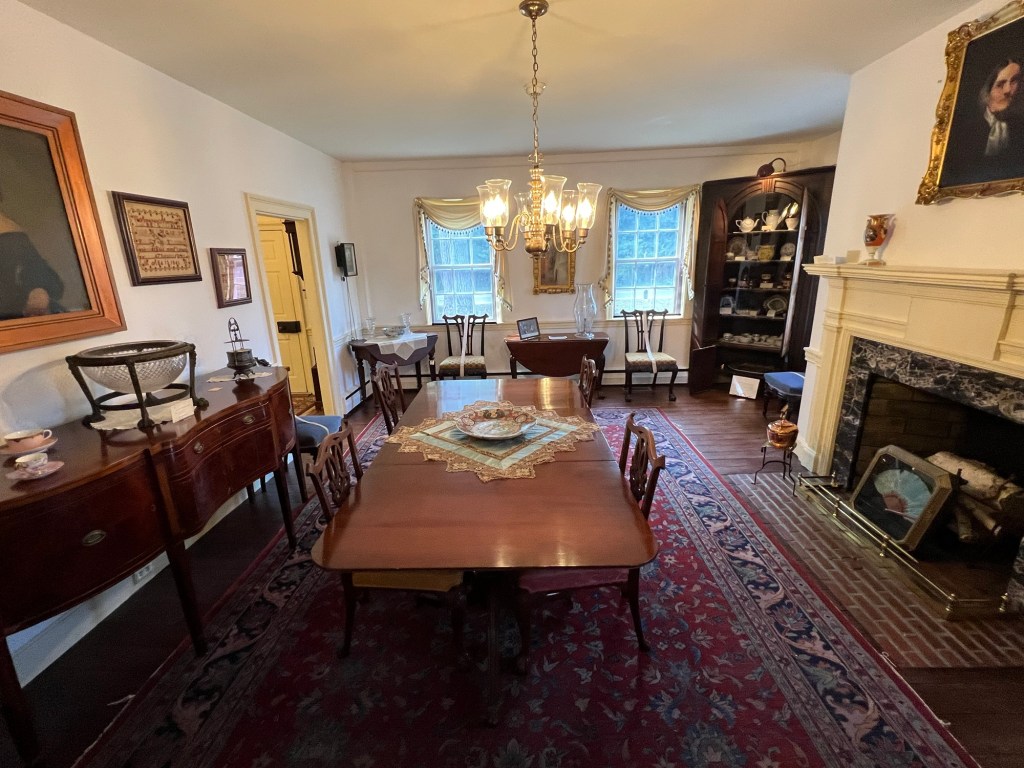
The main dining room showed the affluence of the Holmes family in the early pre-Civil war era

The main part of the house that faced the road was the 1840 Holmes family addition with the Federalist design. This part of the house was the main part house that was used for every day living and entertaining. The house was furnished in a combination of family heirlooms and donated period pieces..

The house well furnished with period pieces

The beautiful side table of the Dining Room

Both the Living Room, Dining Room and the Parlor were all tastefully furnished and what I thought were interesting parts of their collection. It was like someone had just left the room.

The Parlor of a Victorian house held its finest pieces

The furnishings in the Parlor

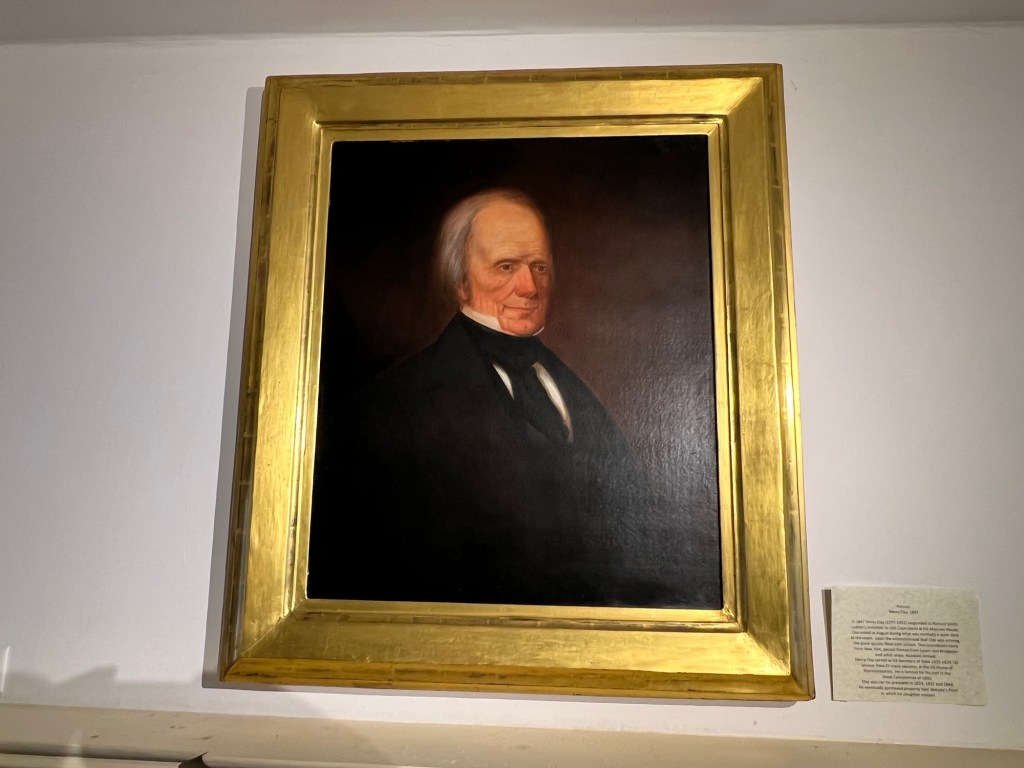
The painting of Henry Clay stood above the fireplace

Since I joined the tour late, I had seen just the first floor of the home before we continued on to see the rest of the building.

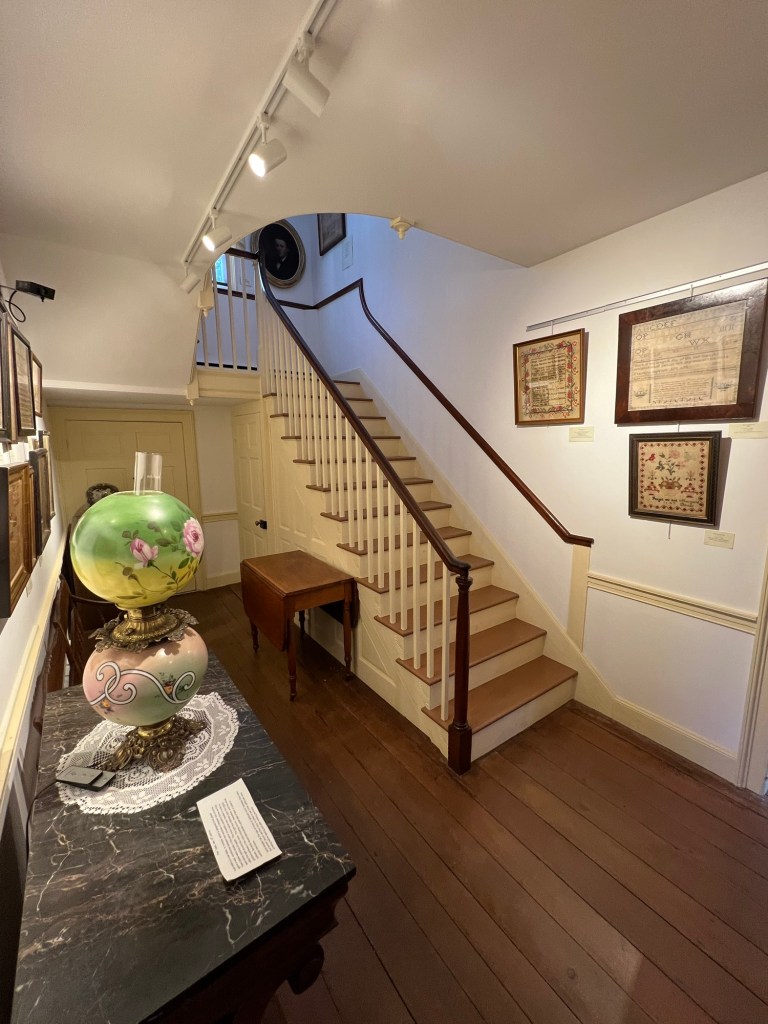
The front entrance room of the house

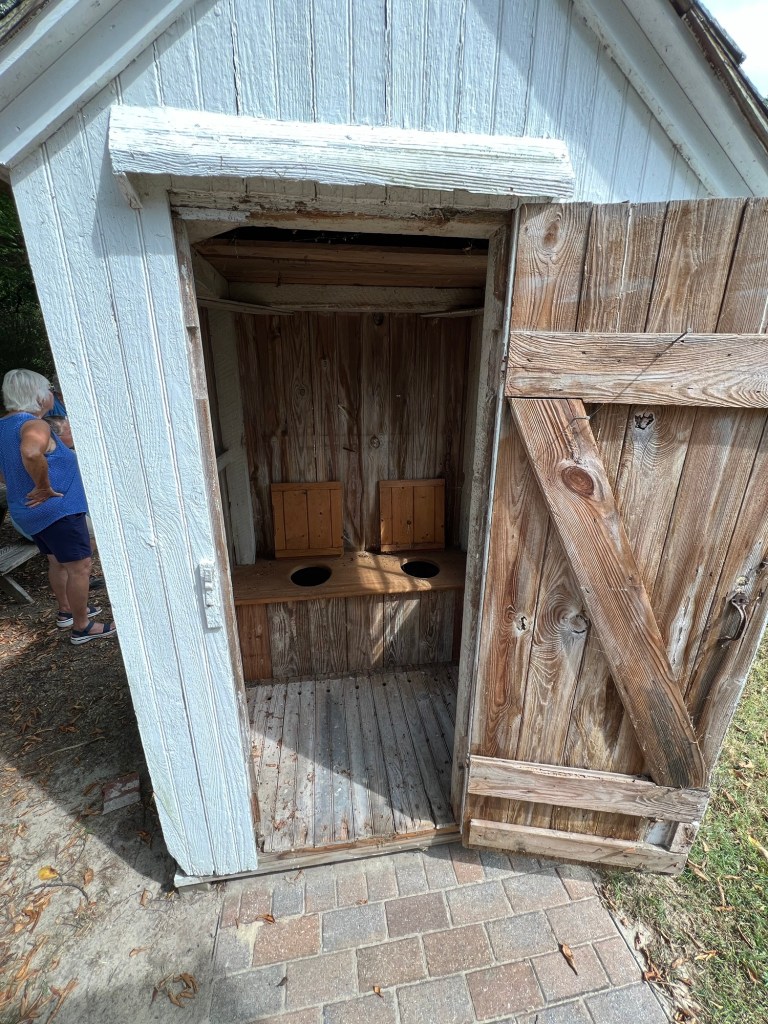
As we exited the house, we moved on to the most important room of the house, the outhouse which was located behind the main home.

The outhouse in the back of the home

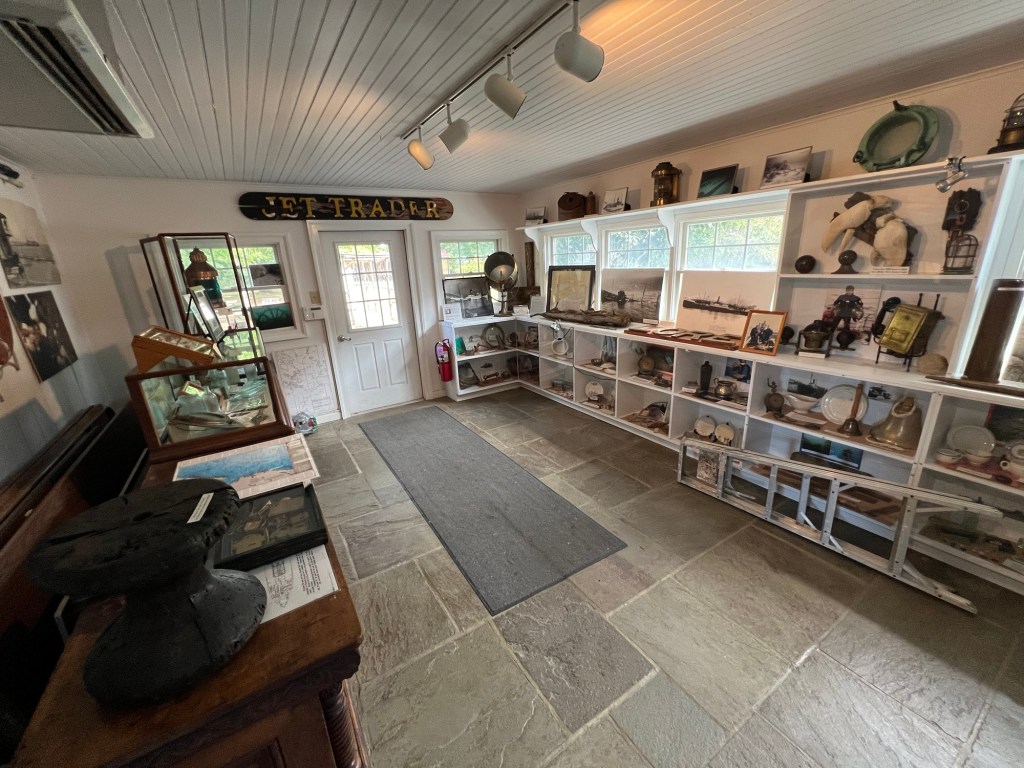
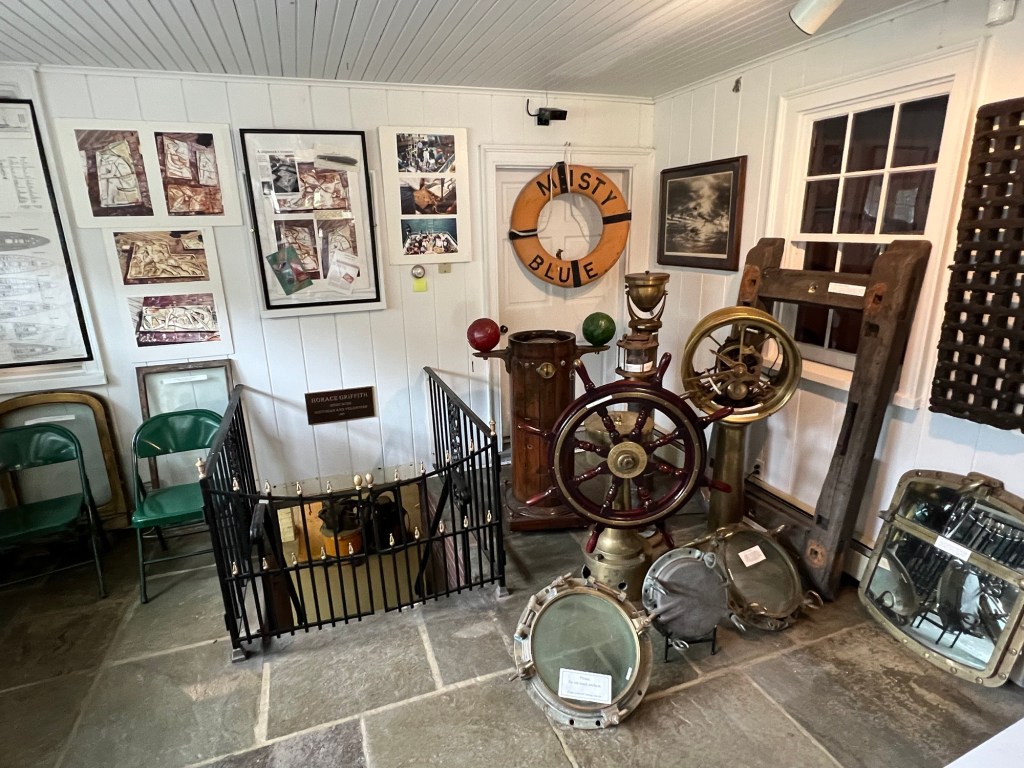
We next moved on to one of the galleries of the Nautical collections.

The collection of nautical artifacts

Mantel’s for navigation

Items from the shipping industry

What beautiful items

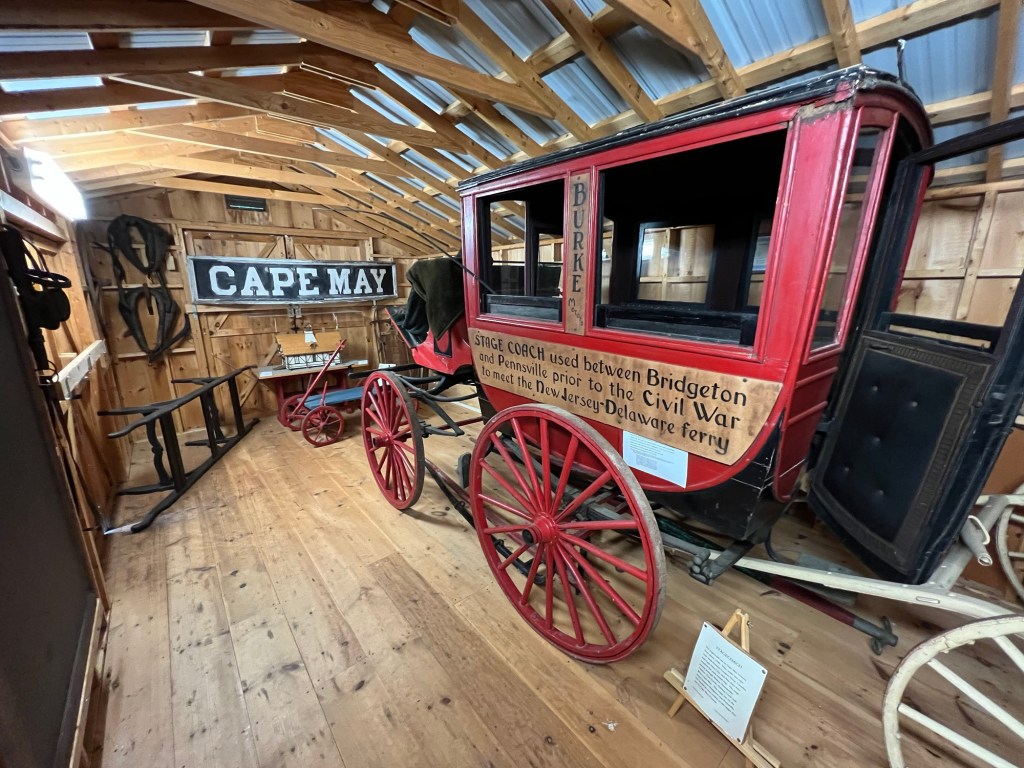
Our next part of the tour was of the Carriage House and its collection of buggies and carriages owned by by local residents.

The Barn and Carriage exhibits:

(from the Cape May County Museum website)

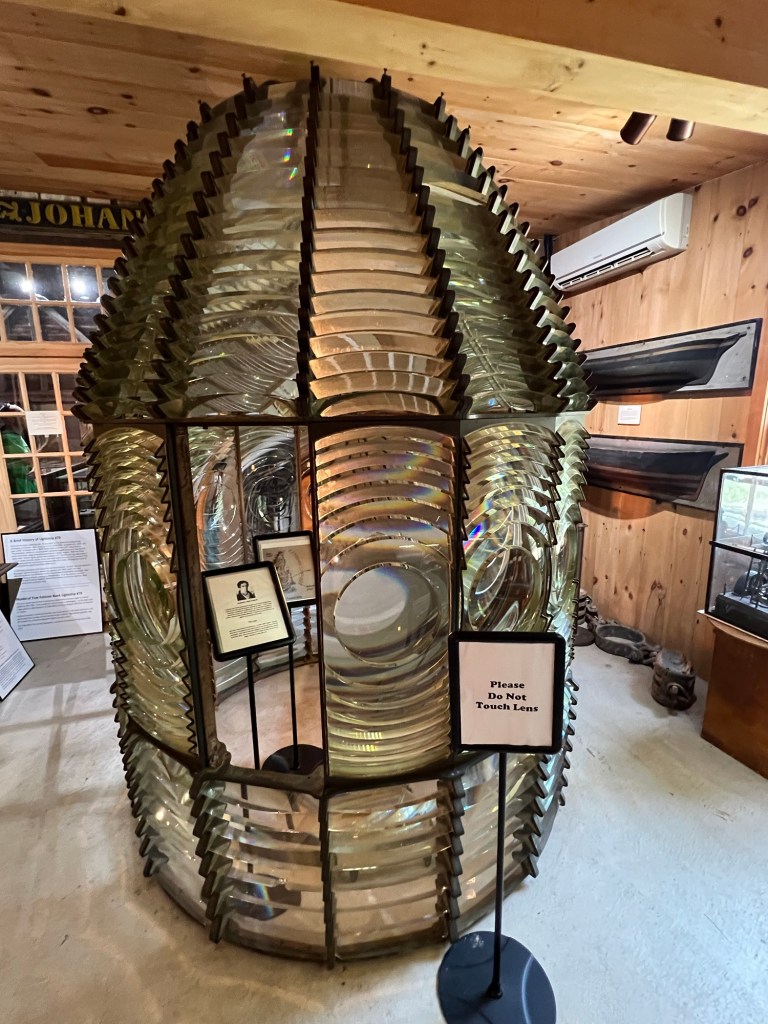
Our barn is home to a maritime exhibit including Cape May County’s crown jewel, the original first-order Fresnel lens from Cape May Light House. In addition to our collection of farm implements the barn is also the site of our recently dedicated military room that pays homage to those who served our nation in time of war.

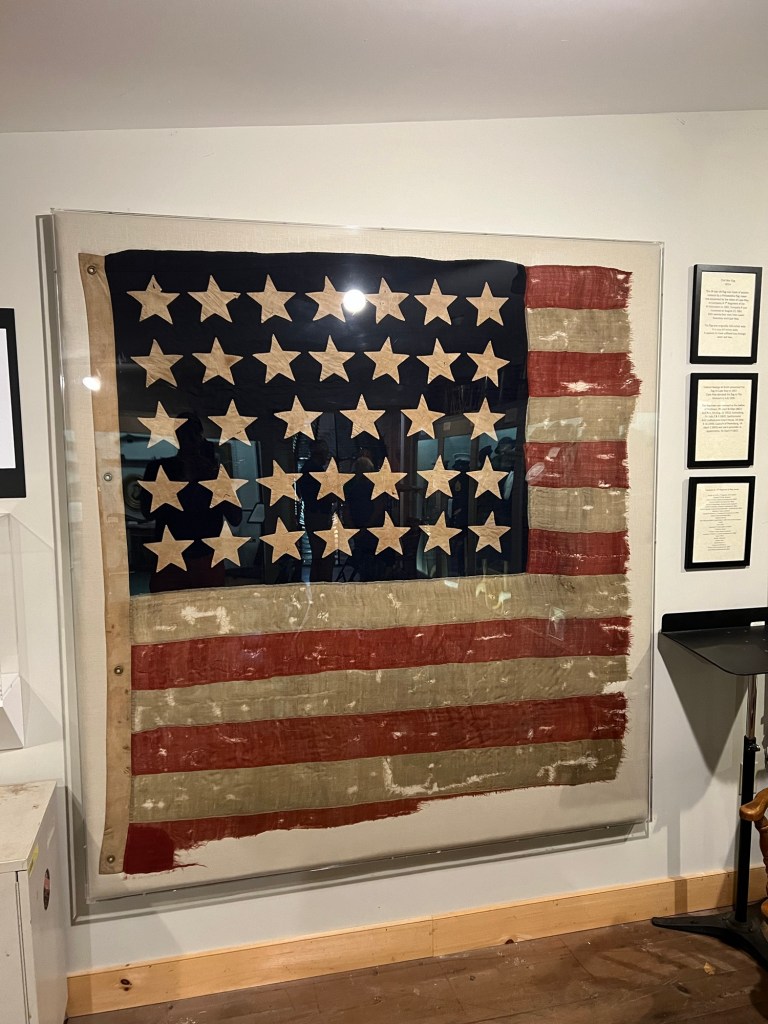
Period pieces range from the Revolutionary War to our country’s most recent involvement in Iraq and Afghanistan.  Of special interest is the American flag that was carried by soldiers who hailed from Cape May County during the Civil War. The flag survived numerous battles, including Gettysburg, Spotsylvania, Bull Run and was at Lee’s surrender at Appomattox. The Carriage Shed houses items related to transportation – a vintage horse-drawn market wagon, a doctor’s sulky and an early stagecoach that ran between Bridgeton and Pennsville (from the museum website).

The collection of carriages and buggies

A local buggy from a member of the community

The history of the Cape May Stagecoach

The Cape May Stagecoach

This stagecoach was used on the route between Bridgeton and Pennsville

The funeral cart used to transport bodies once people die to their last destination

The last building on the museum’s property housed military artifacts, farm equipment and artifacts from what would shape the local community

The Maritime History of Cape May and of the Museum:

(from the museum website)

Since its earliest days the area we now call Cape May County has been linked to the water.  With the tumultuous Atlantic Ocean on one side, the Delaware Bay on the other and lush forest and field between it served its residents well.  Early Native Americans thrived, whalers found whales in the ocean and refuge in the bay. All worked the shores and tributaries for birds and shellfish.  As the population grew, shipbuilding and coastal trade took on greater importance.  Come visit us and explore this aspect of our museum (from the museum website).

Many of the artifacts, photographs and manuscripts associated with maritime activities have found their way our museum collection.  From the original first-order Fresnel lens that sat atop the Cape May light to whaling implements, marine skeletons, ship parts and Native American exhibits there is something for everyone.  Of special interest is our recently acquired Cresse Journal, an original manuscript by Lewis Cresse detailing the life of a whaler in the mid-eighteenth century (from the museum website)

Hunting and military items from around the turn of the last century

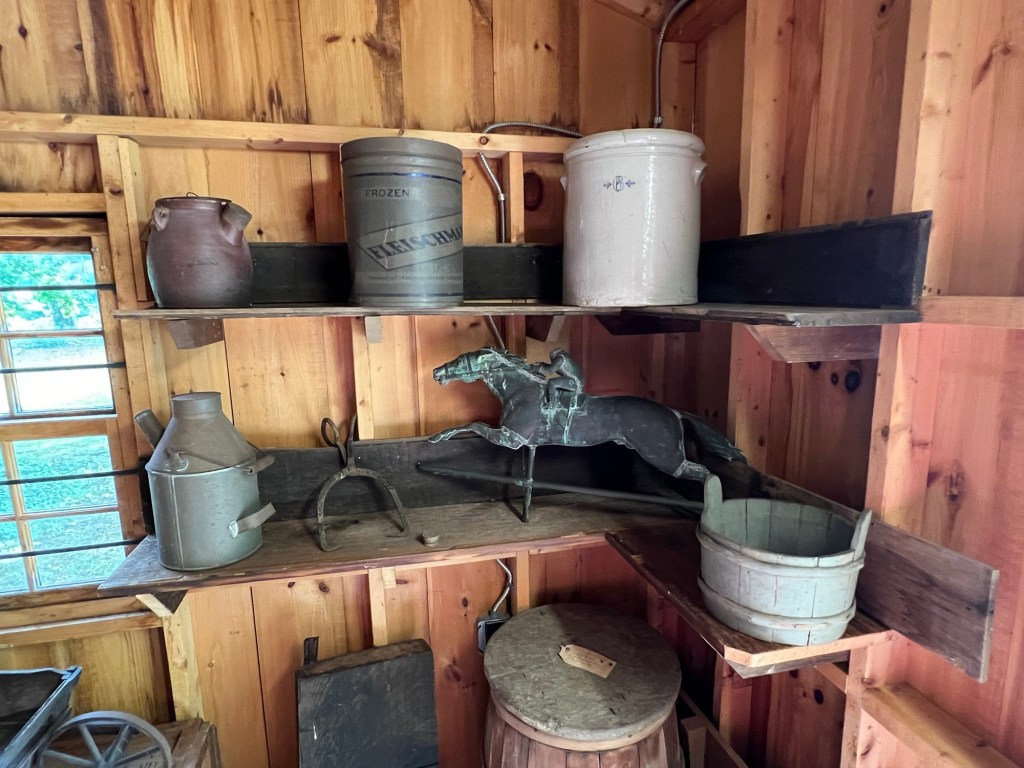
Household and farming items

Artifacts from the Shipping industry

Artifacts from the Counties Ship Building past

Items from the Whaling Industry in Cape May

The museum also houses the original Cape May Lighthouse light

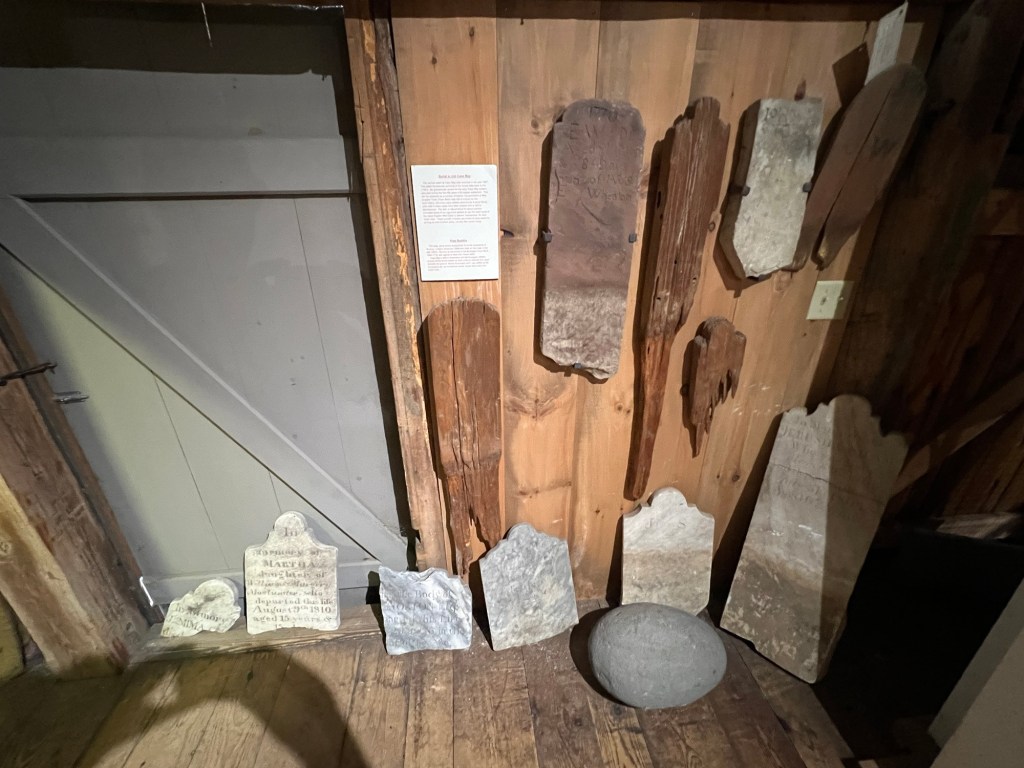
The history of burial and old cemeteries in Cape May

Old tombstones from Cape May cemeteries

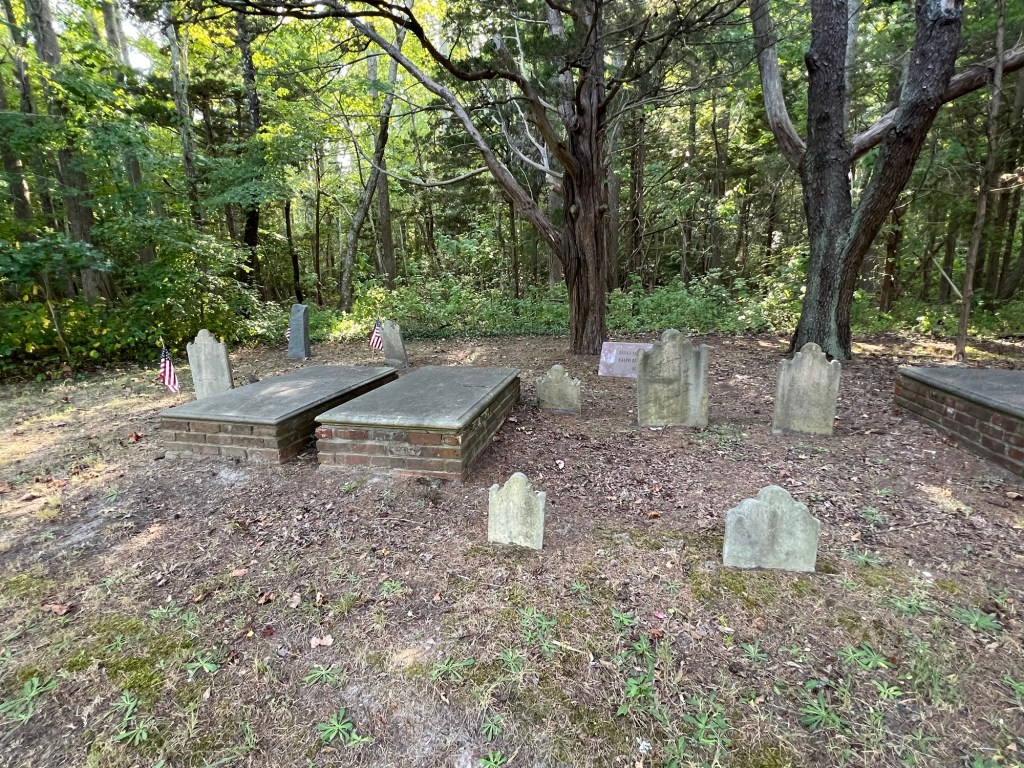
The family cemetery on what was once the family farm that now sits down the road and across the street

The family plot

The museum’s extensive collection of arrowheads and other Native American artifacts

The Cape May Civil War flag is most of the most interesting pieces in the museum’s military collection

The Cape May Civil War flag

Military artifacts from the war years

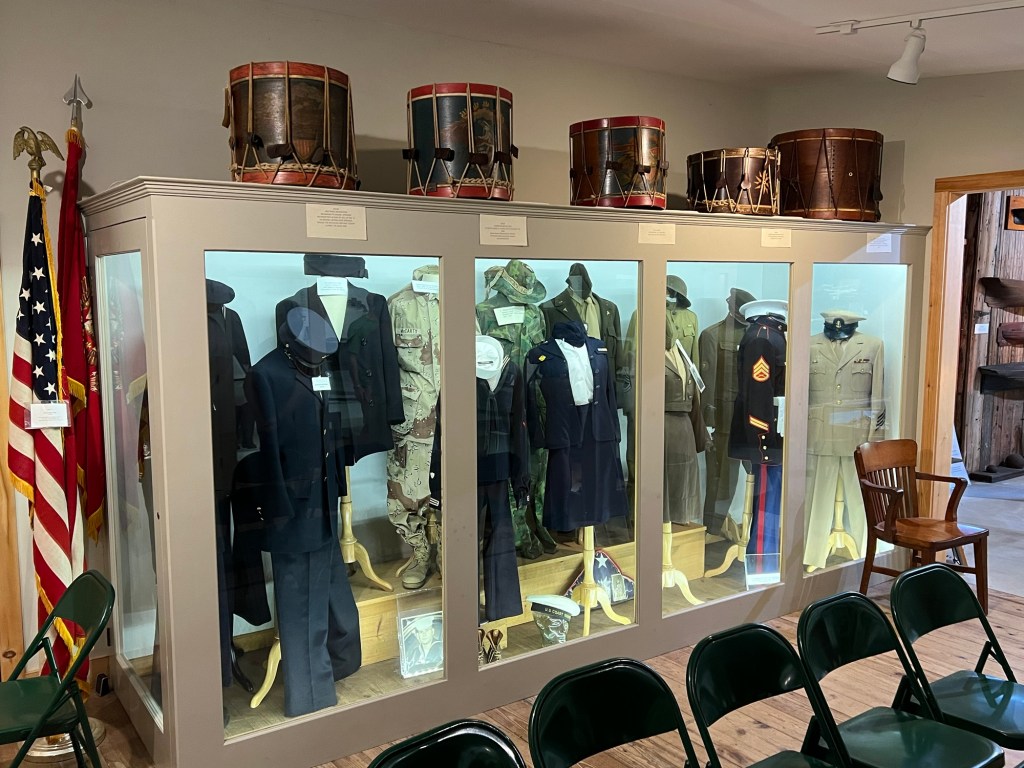
The extensive collection of military uniforms from the different wars in the museum collection with ceremonial drums on display on the top of the case

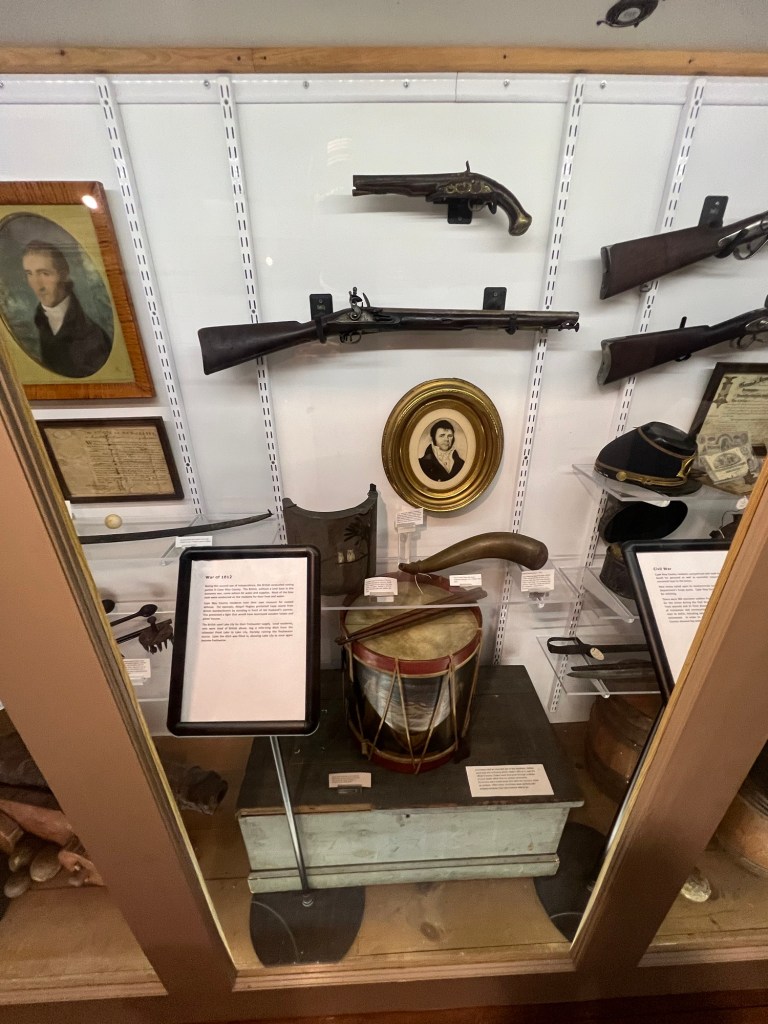
The gun and pistol collection at the museum

The Pistol collection at the museum

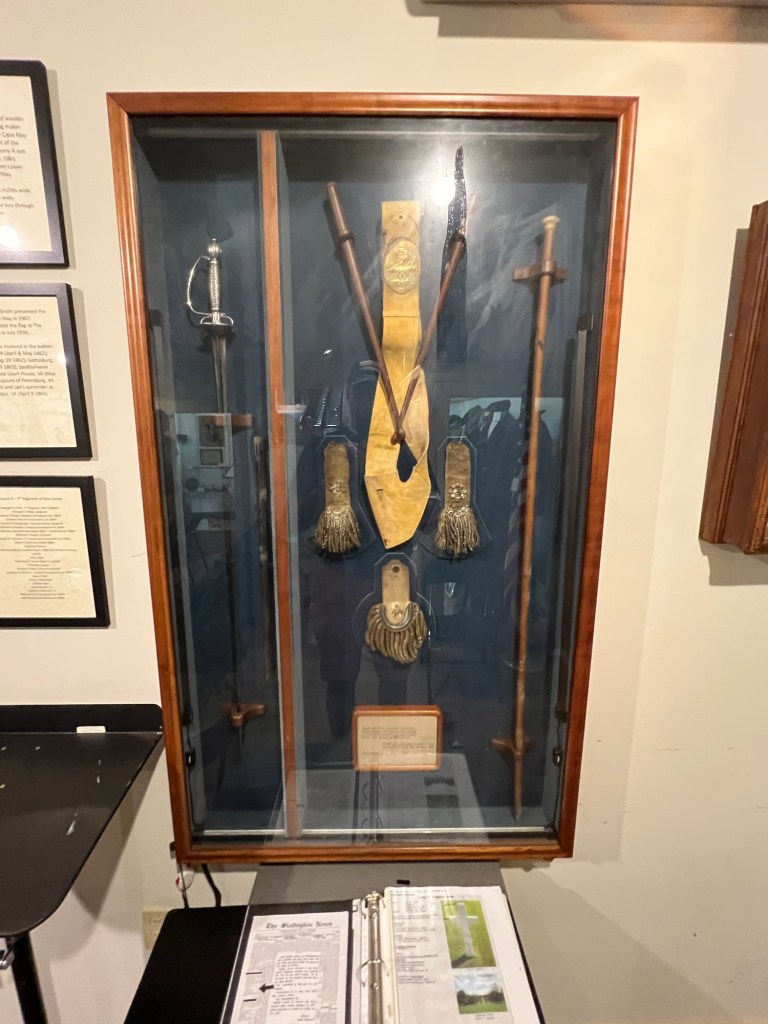
The collection of military items in the collection

The early military collection at the museum

The grounds of the museum before I left for the day

The family home that faces the Highway

The museum is not just an extensive collection of City of Cape May but the history of the County as a whole and its rich development from a farming, whaling and shipping town to a major tourist hub and recreation community.

It also shows it has never lost it nautical or farming past as well as this legacy still carries on in Cape May. The development of the community and the progress it has made over the years is showcased in the galleries and buildings on the museum property.

The Development of the Cape May County Museum:

(from the museum website)

The Cape May County Historical & Genealogical Society (CMCHGS), doing business as The Museum of Cape May County, was founded in 1927 as a private, non-profit organization by a number of local families who wanted to ensure the history of Cape May County was preserved and documented. In 1930 the CMCHGS established a museum and genealogical library which were housed in the basement of the County Court House building for 45 years.

In 1976, the current facility, the Cresse-Holmes House containing eleven rooms along with a five-room barn was purchased to accommodate the growing collection. By 1988 the construction and dedication of the genealogical library and administrative offices had taken place. In the last 90 years, thanks to the generosity of many individuals and families with a connection to Cape May County. the collections have grown to contain many thousands of Cape May County artifacts and documents.

Today the museum and library are run by full time, part time and seasonal staff members along with an enthusiastic group of active volunteers to assist with greeting visitors, guiding tours, researching, assisting with programs, and staffing events.

Chatham Township Historical Society/Red Brick Schoolhouse Museum                                                    24 Southern Boulevard                                       Chatham, NJ 07928

Chatham Township Historical Society/Red Brick Schoolhouse Museum 24 Southern Boulevard Chatham, NJ 07928

Chatham Township Historical Society/Red Brick Schoolhouse Museum

24 Southern Boulevard

Chatham, NJ 07928

(973) 635-4911

https://www.chathamtownshiphistoricalsociety.org/index.html

Open: The First Sunday of the Month from 2:00pm-4:00pm/By Appointment

My review on TripAdvisor:

https://www.tripadvisor.com/Attraction_Review-g46352-d24935947-Reviews-Red_Brick_Schoolhouse_Museum-Chatham_Morris_County_New_Jersey.html

The front of the Red Brick Schoolhouse Museum/Chatham Township Historical Society at 24 Southern Boulevard

The historical sign of the Mount Vernon School

The museum sign that welcomes you to the museum

The Mission Statement of the Museum:

(from the museum website)

The Historical Society of the Township of Chatham was established to increase the knowledge, awareness and preservation of the Township of Chatham history.

I visiting the Red Schoolhouse Museum on the first Sunday of the month and found a delightful little museum filled with artifacts that represent life in Chatham during various times in the town’s history. The museum has two floors with displays telling the history of the Township of Chatham from the beginnings with the Lenape Tribe living in the area to modern times.

The Museum gallery

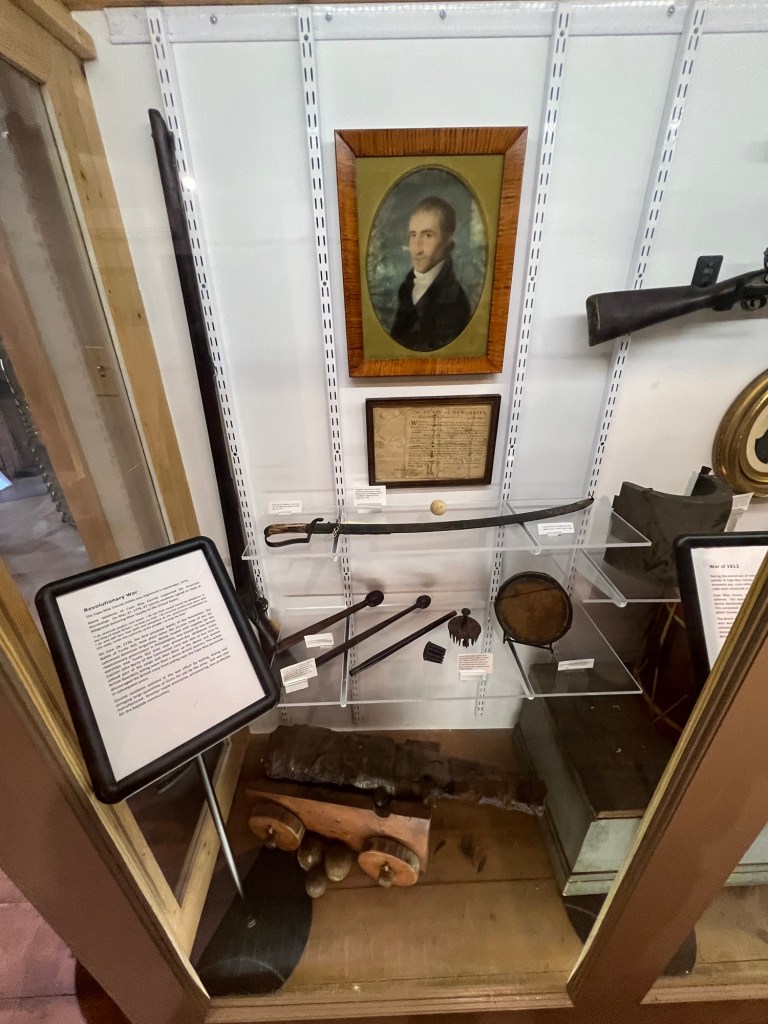
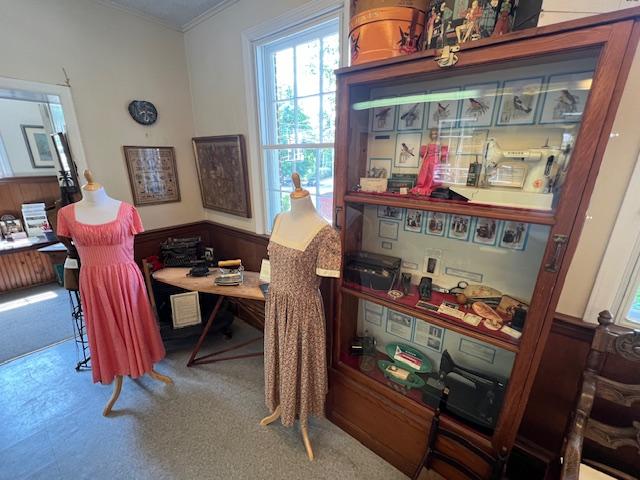
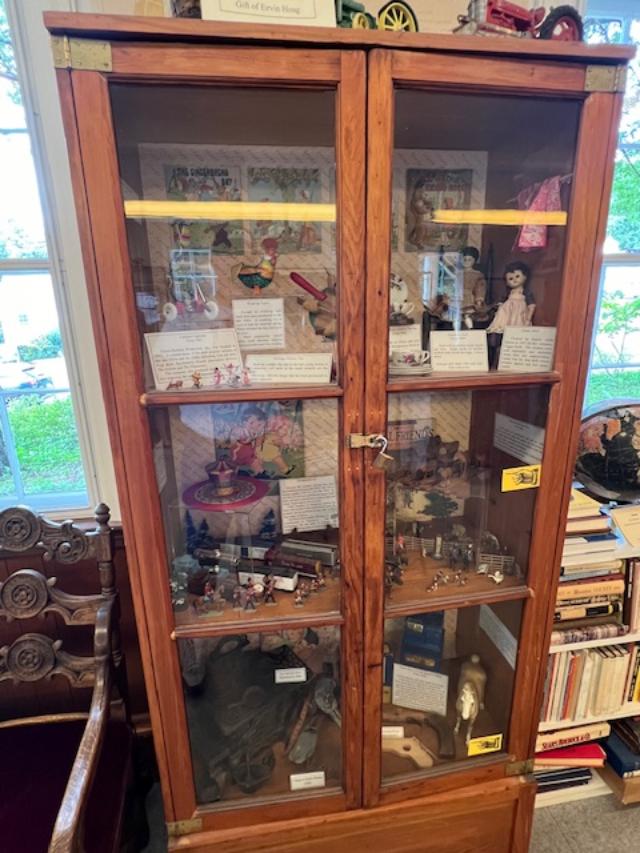
On the first floor there is the special exhibitions that rotate in the museum. Some of the themes of the exhibitions were Children’s Toys and Playthings through the ages, Wedding gowns and formal wear and Revolutionary War items. The museum also has an interesting exhibition on the Lenape Indians who lived in this region before the Dutch arrived.

Wedding Gowns and Formal Wear exhibition on the first floor

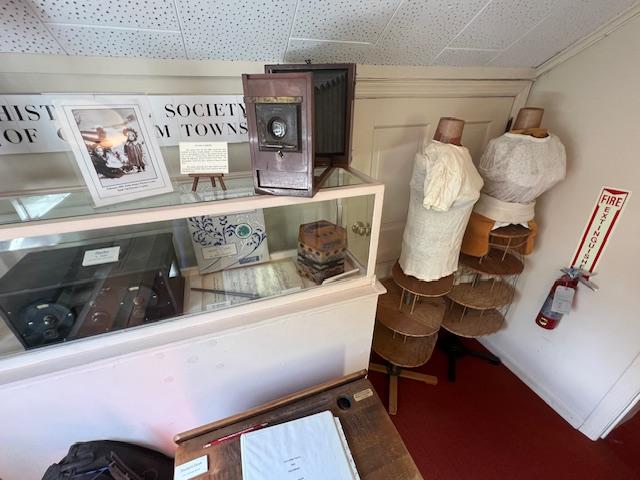
Dressmaking and Sewing in the home and in business

Children’s Toys and Playthings through the ages

Children’s dolls and stuffed animals

The Train display of electric antique items

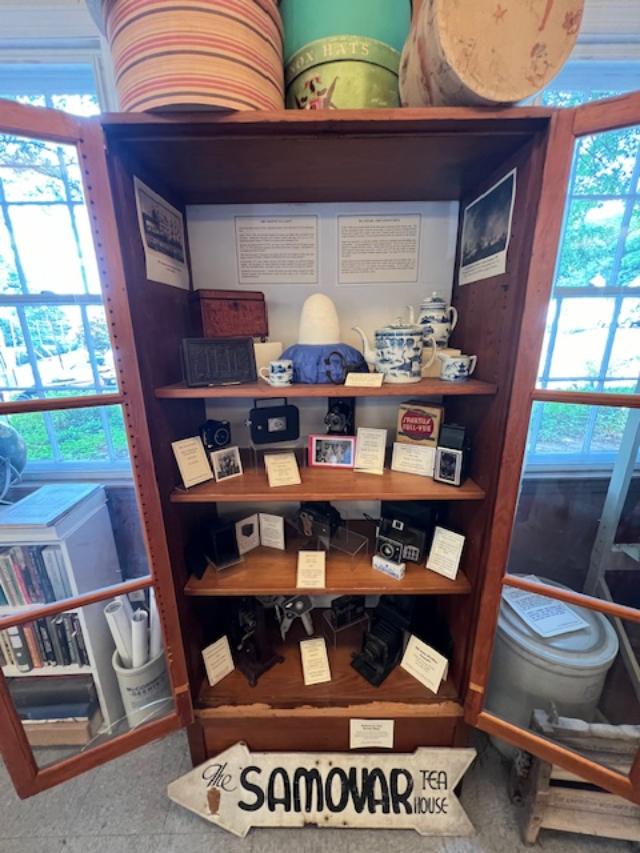
Revolutionary War and Trade items on the top shelf and historical cameras

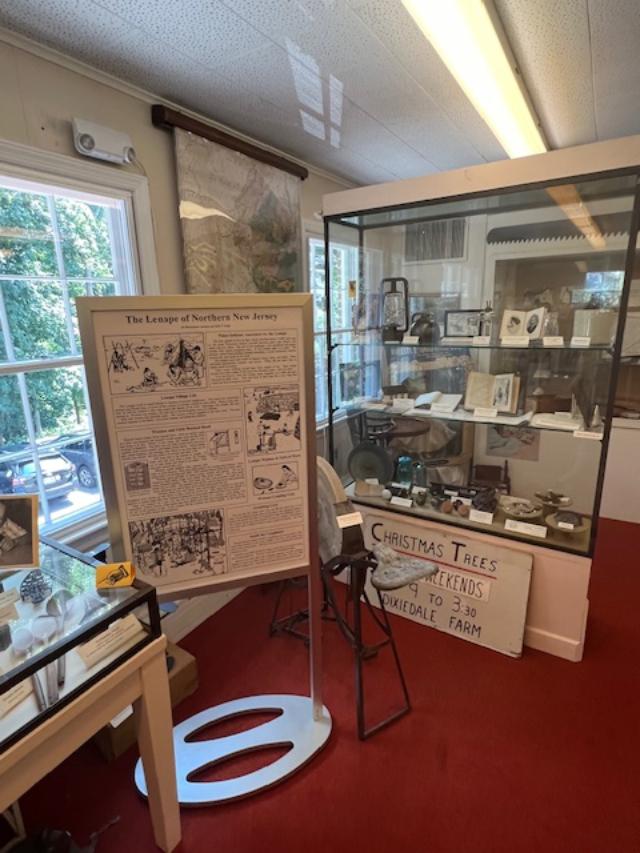
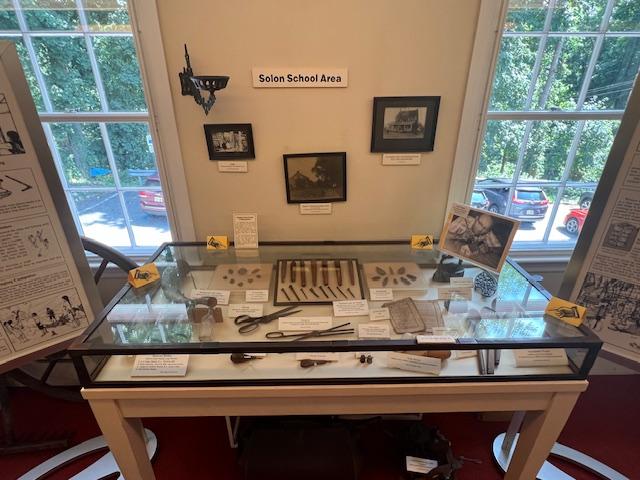
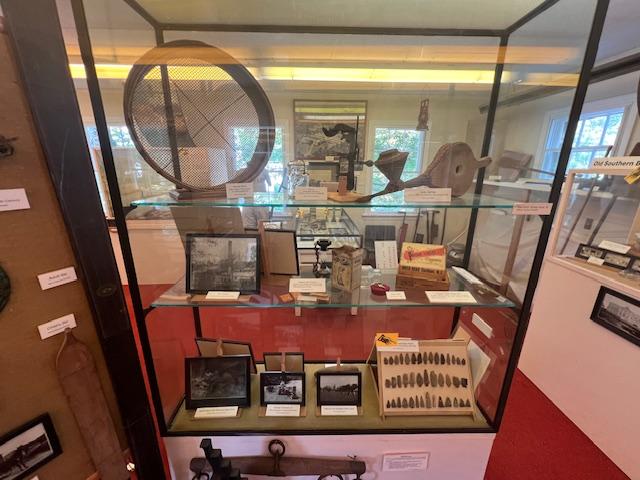
The second floor has displays that tell different stories. The display cases have Native American artifacts, farming equipment, household items, pictures of the town at different stages of development, the community changes from a farming to business with the advent of the railroad. Here you see the changes in household items as time goes on.

The Lenape Display

Native American stone objects

The Arrowhead collection

Each display tells an interesting story of the Township of Chatham. Looking over how the towns in the area developed I didn’t even know there was a Village of Chatham and a Township of Chatham. I was also impressed with their toy collection which should be a conversation piece to any group of elementary school students. I think this would be interesting to seniors as well on times have changed since they were children. The museum really has something for everyone. All different stories are being told at this museum and the collection continues to grow when residents pasts become part of the museum’s future.

The display on resident Reverend Samuel Tuttle

The Statement of Purpose:

(from the museum website)

The Historical Society of the Township of Chatham, a volunteer, not-for-profit organization founded in 1975, is dedicated to increasing knowledge, awareness and preservation of our town’s unique historical heritage.  We maintain the Red Brick Schoolhouse Museum where we coordinate our educational programs, research, and preservation advocacy as well as manage the discovery, collection, and conservation of materials that illustrate the history of the area prior to and after European settlement.

Artifacts from one of the museum’s historic digs

The audience served by the Society’s programs includes members of the Society, residents, students and visitors to the community, scholars, the public in general as well as businesses and governmental agencies in the area. 

The display of the history of the Red Brick Schoolhouse

The Schoolhouse and Native American collections

The Society carries out a broad range of activities.  It oversees the Red Brick Schoolhouse Museum and library; mounts permanent, temporary, and traveling exhibits; coordinates education programs with local schools; and sponsors a public lecture series.  In addition, the Society publishes pertinent materials related to local history; acquires, preserves and curates the Society’s collections and archival materials; and researches the history of the Township of Chatham and its environs.  Further, it allows access to the Society’s store of knowledge as far as may be feasible to all who wish to examine or study it; supports a historic marker program; cooperates with other local historical societies and organizations; and uses electronic media to awaken public interest. 

Historic artifacts at the museum

About the Museum:

(from the museum website)

The Red Brick Schoolhouse was built in 1860 and used until 1928 when the town’s  five rural schools were replaced by the Southern Boulevard School.  The schoolhouse was deeded to the town and, for many years, was used as the Town Hall.  When the town  offices were relocated in 1988, the building was put into the charge of the Historical Society for use as a museum.

The display semi professional baseball and town development

The museum has a permanent exhibit on the second floor which is arranged according to the town’s original school districts.  Each district highlights, not only that school, but also the industries, farming activities, and the people who lived in each district.

The objects reflecting different times in the town’s history

The first floor is a large meeting room where our lecture series is presented.  The room contains a number of displays as well, including antique toys, food preparation equipment, dresses, and various locally manufactured items.

The Museum Collections:

(from the museum website)

Oral Histories:  Beginning in the late 1970s, members of the Society began recording oral histories by the elder residents of the Township.  About 75 have been collected thus far in this ongoing project.

The Great Swamp display

Books:  The Society has numerous books, old and recent, concerning the history of New Jersey, Morris County, Chatham Township, and the surrounding area.  Books can be used only at the museum.

Documents:  Various town documents including poll books, road district records, tax records, among others, dating from as early as the 1840s are available upon request for study at the museum.

Artifacts from the dairy farms, the local community and pictures of the schools

Artifacts:  The museum is full of a wide spectrum of artifacts that reflect life in the Township throughout its history.

The schoolhouse and electronic display near the staircase

Photographs:  The Society has a large collection of original and scanned photographs of the activities, places, and people of the Township.  Early images provide a window into the Township’s past.  More recent images are forming the record for the next generation of history-lovers.

The Schwartz Dairy Farm pictures

Articles from the Schwartz Family Dairy Farm, one of the former businesses of town

Maps:  The Society has a number of old maps of Chatham and the immediate area, which can be viewed at the museum.

The changes in the town and its development over the years

Archeological  Artifacts:  In 1983-84, members of the Society undertook an archeological dig at the site of the Nathaniel Bonnel V House.  The house, on River Road, was built in 1756 and burned in 1940, then the land was abandoned.  When a condominium development was planned  for the area, the Society was granted permission for the dig.  Artifacts found during the archeologist-guided excavation are displayed in the museum.

The Bonnel House archeological dig

There is something for everyone to see at the museum.