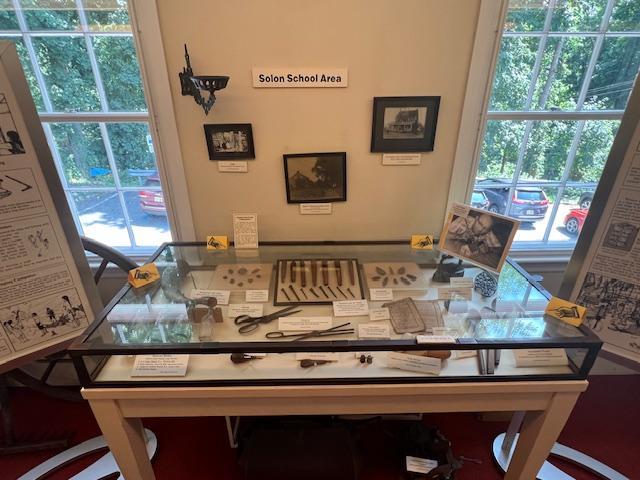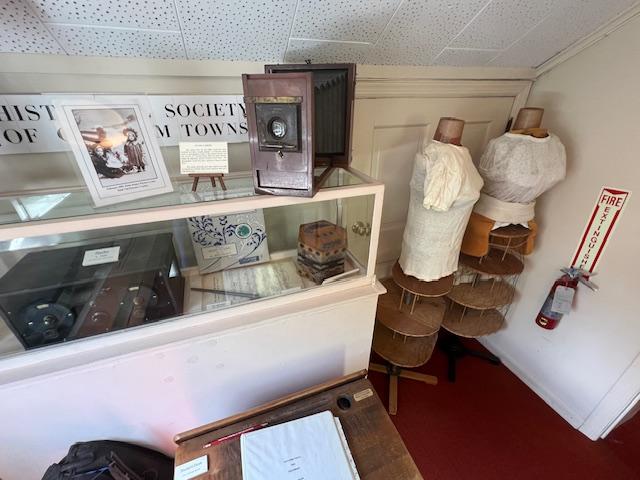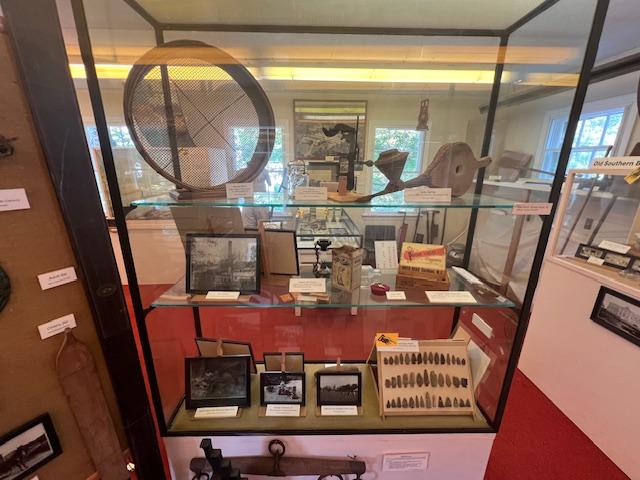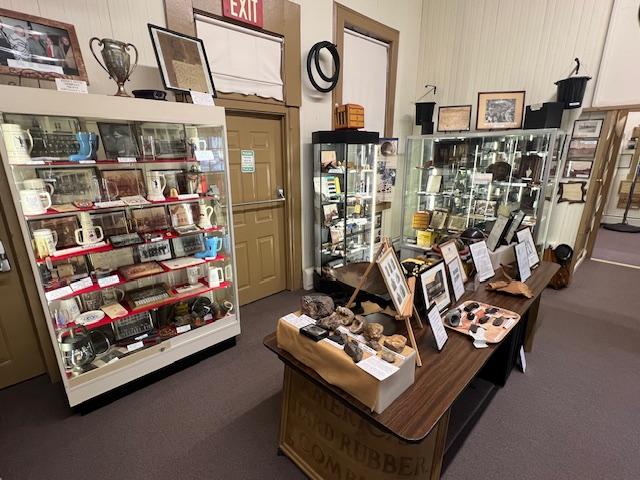
Tag: Small Museums of New Jersey

The Museum of Cape May County                      504 US. 9                                                             Cape May Court House, NJ 08210

The Museum of Cape May County 504 US. 9 Cape May Court House, NJ 08210

The Museum of Cape May County

504 US 9

Cape May Court House, NJ 08210

(609) 465-3535

https://www.cmcmuseum.org/

https://www.facebook.com/Museumofcmc/

Hours: Seasonal Hours Sunday-Monday-Tuesday/Wednesday 10:00am-2:30pm/Thursday Closed/Friday 10:00am-2:30pm/Saturday Closed. Tours are at 10:00am and 12:00pm.

Admission: Donations Accepted/ (I paid $5.00 for the hour tour)

My review on TripAdvisor:
https://www.tripadvisor.com/Attraction_Review-g46342-d286393-Reviews-The_Museum_of_Cape_May_County-Cape_May_Court_House_Middle_Township_Cape_May_County_.html

The Museum of Cape May County at 504 US 9
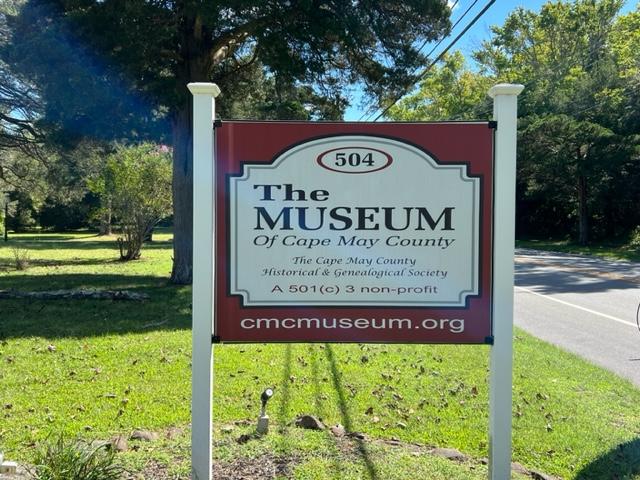
The Museum of Cape May County sign welcoming you.

The Museum of Cape May Country museum complex

The Museum grounds in the back.

After three years of trying to visit the museum, I finally got on a last minute walking tour of the Museum of Cape May County and have to say that it was well worth the wait. What an interesting set of buildings that have a fascinating set of artifacts and so nicely displayed in a series of buildings.

The museum campus is broken up in a series of buildings on a two acre site. There is the main office which has an art exhibition, the family homestead of the family, who lived here for several generations, the carriage house which displays several carriages and stage coaches that were used in the area.
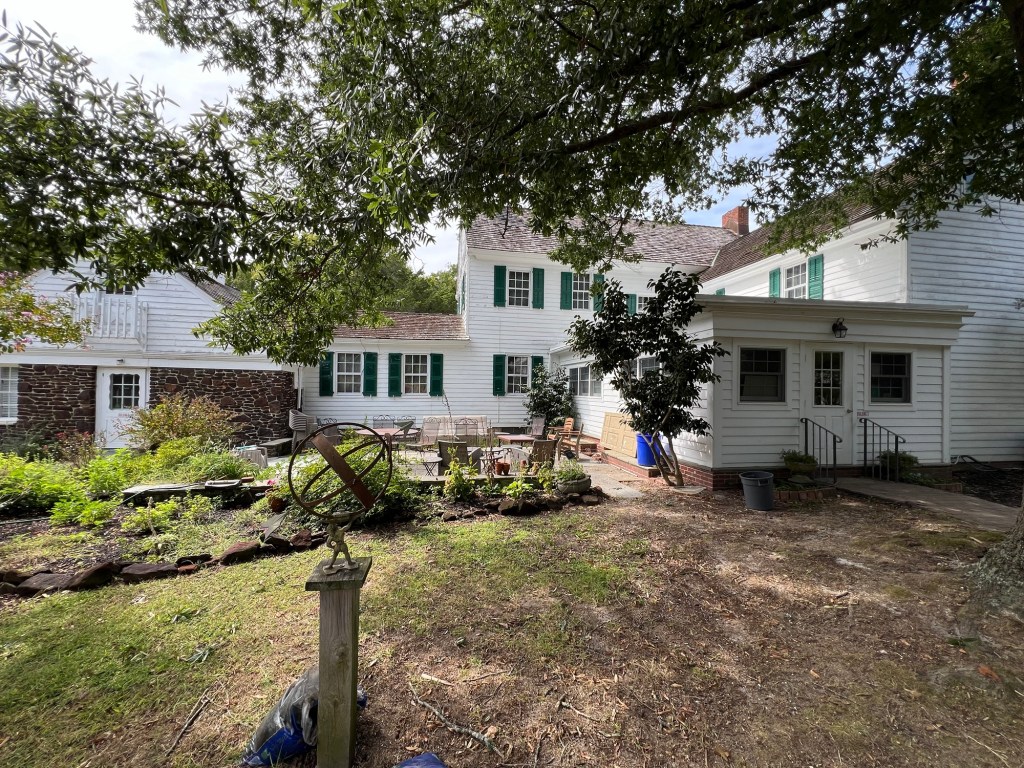
The back of the main house where you can see the three additions to the house

The barn where the Military, Native American and Farming displays are showcased

The Carriage House is to the left and the barn is to the right

The Carriage House on the property

The History of the House and of the Cape May County Museum site:

(from the museum website)

Housed in a building that dates back to 1704, the Cresse House, and its 1830 Holmes addition, as well as a historic 1780 barn and carriage house have rooms devoted to a subject or time that will hold you spellbound as you make your way through the past. The 11 room Cresse Holmes house treats you to a glimpse of life as it was in Cape May County from colonial to modern times. From the 1704 colonial kitchen and loft bedroom to the Victorian dining and sitting rooms all are decorated and furnished with period pieces. Special exhibit rooms include a children’s playroom teeming with toys, a doctor’s room with instruments, glassware and vials filled with a colorful array of pharmaceuticals and a Victorian music room with dozens of fascinating players and instruments (Cape May County Museum website).

Our first part of the tour was the family home which had been lived in for generations. The first part of the house was built in 1740 and you could tell by the open hearth and the flooring.

The hearth of the original section of the Cresse home

The kitchen was set up and furnished as the main part of the house. Because of the heat, this was the main part of the house that habituated. Here the family would gather, eat and socialize.
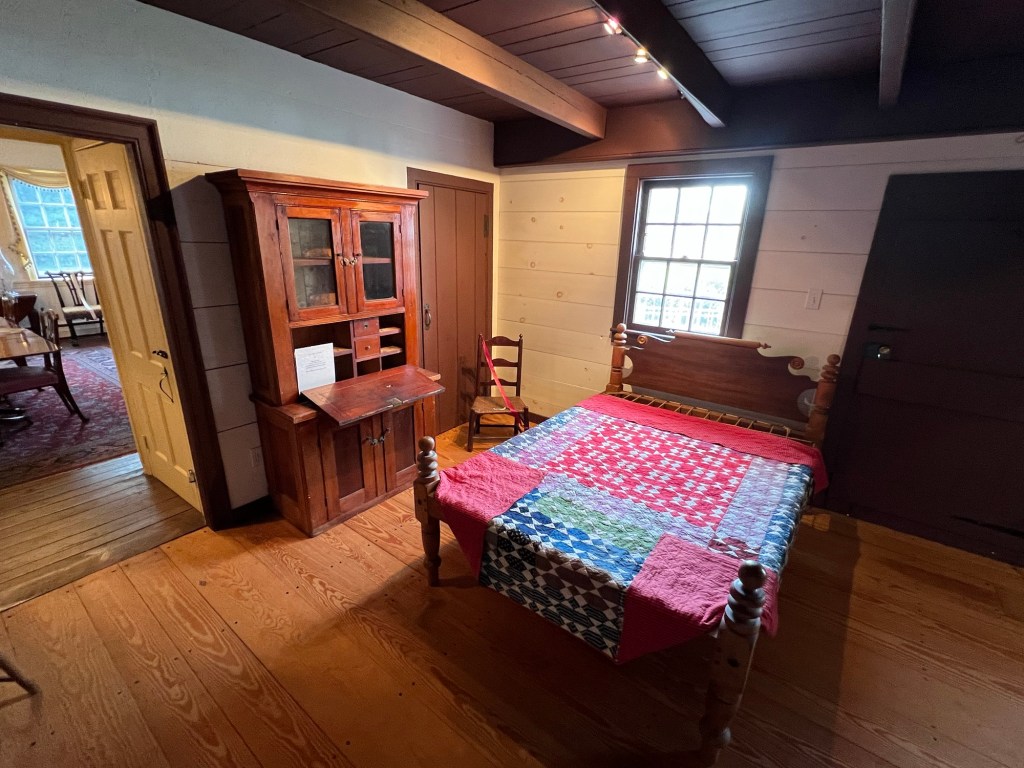
The back bedroom shows the families affluence in the late 1700’s

Having a separate room for sleeping was considered quite extravagant. The heat would circulated through the home and warmed this room next door. The main part of the house was built in 1840 in the Federalist design.
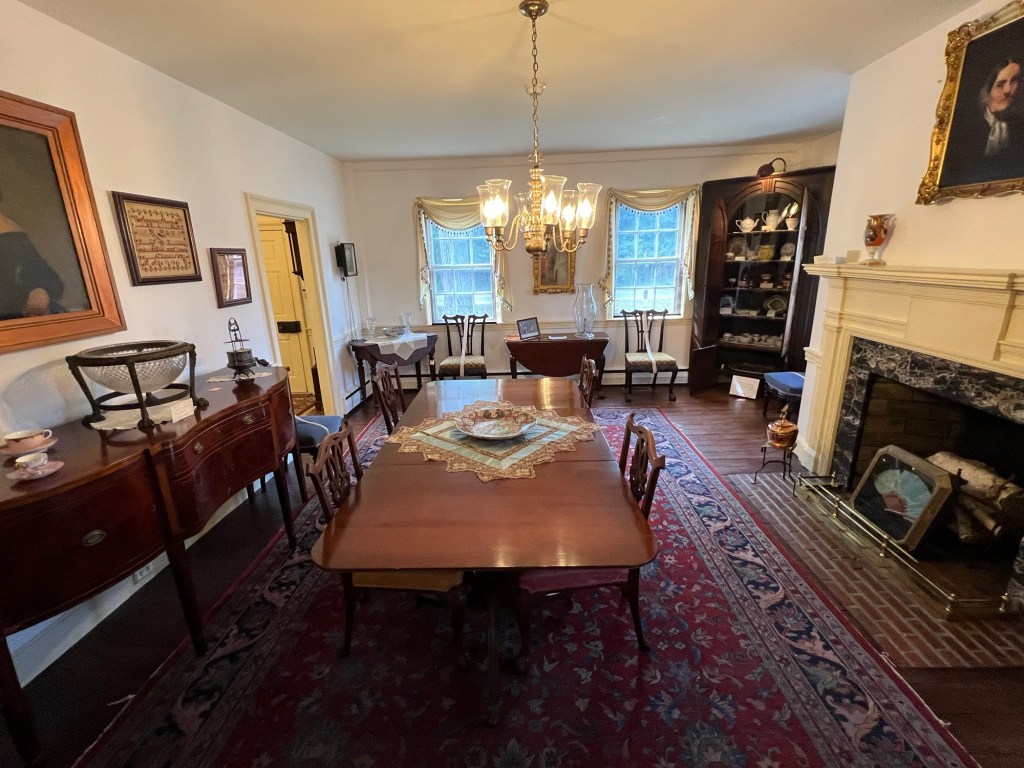
The main dining room showed the affluence of the Holmes family in the early pre-Civil war era

The main part of the house that faced the road was the 1840 Holmes family addition with the Federalist design. This part of the house was the main part house that was used for every day living and entertaining. The house was furnished in a combination of family heirlooms and donated period pieces..

The house well furnished with period pieces

The beautiful side table of the Dining Room

Both the Living Room, Dining Room and the Parlor were all tastefully furnished and what I thought were interesting parts of their collection. It was like someone had just left the room.

The Parlor of a Victorian house held its finest pieces

The furnishings in the Parlor
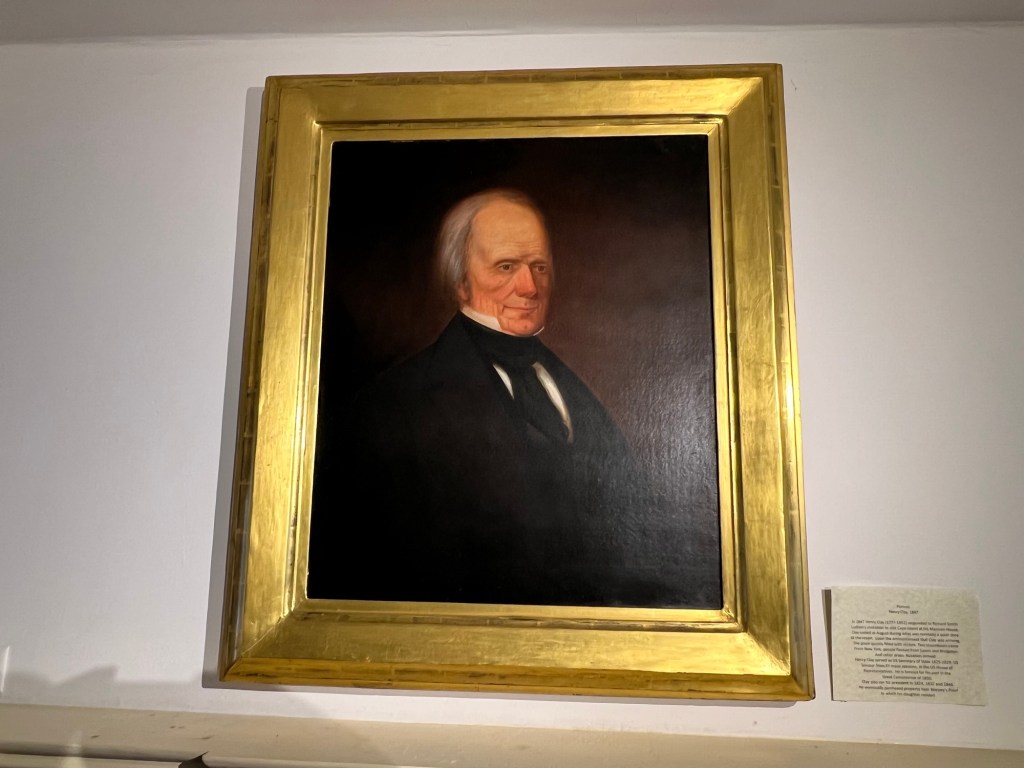
The painting of Henry Clay stood above the fireplace

Since I joined the tour late, I had seen just the first floor of the home before we continued on to see the rest of the building.
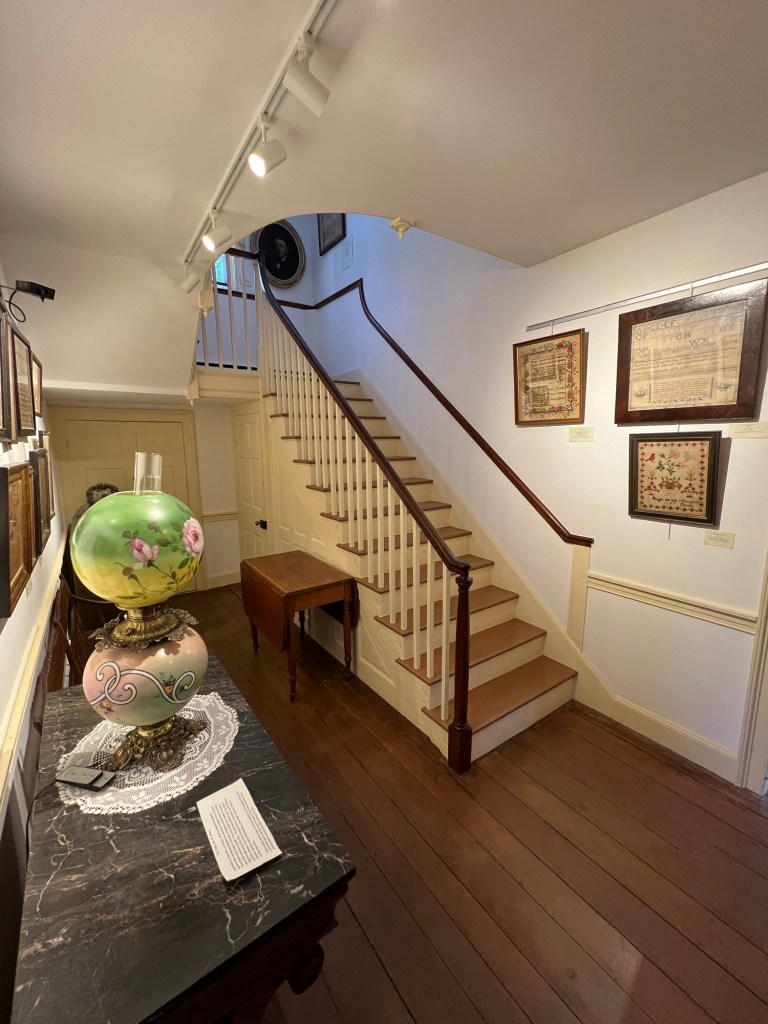
The front entrance room of the house

As we exited the house, we moved on to the most important room of the house, the outhouse which was located behind the main home.
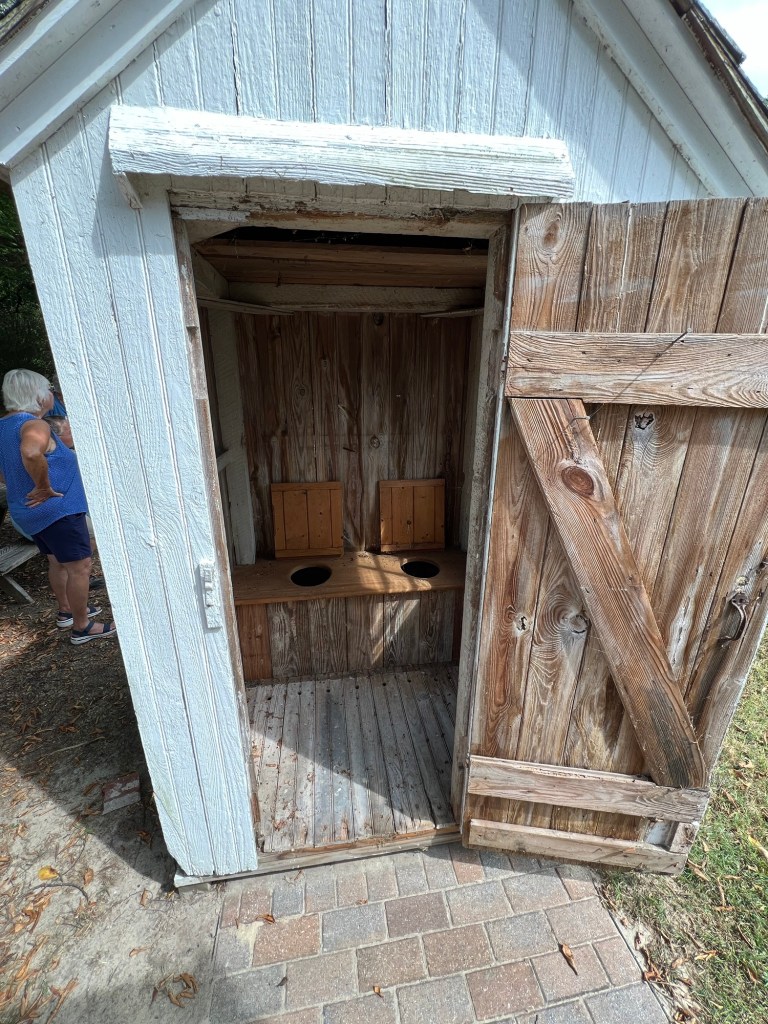
The outhouse in the back of the home

We next moved on to one of the galleries of the Nautical collections.
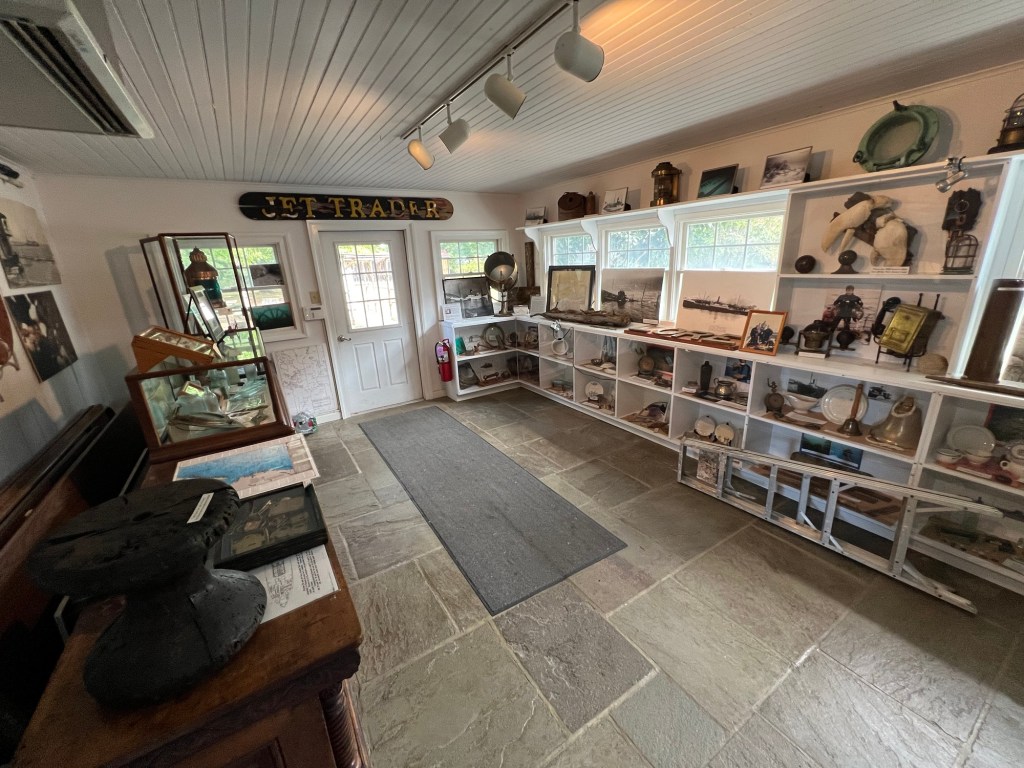
The collection of nautical artifacts

Mantel’s for navigation
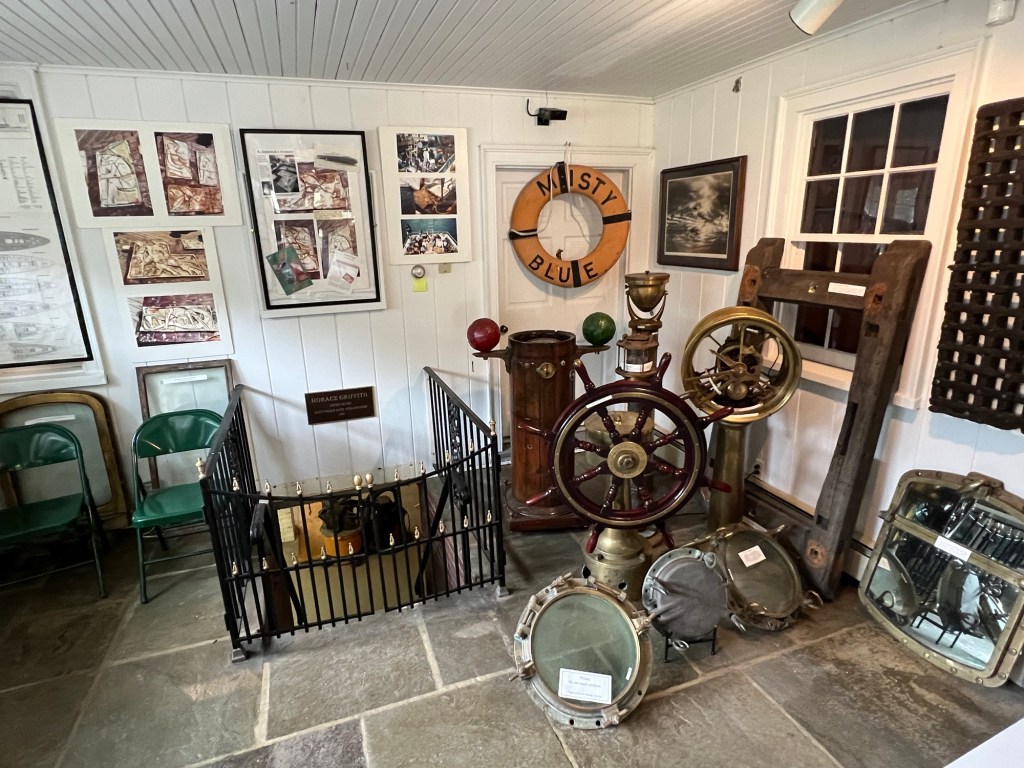
Items from the shipping industry

What beautiful items

Our next part of the tour was of the Carriage House and its collection of buggies and carriages owned by by local residents.

The Barn and Carriage exhibits:

(from the Cape May County Museum website)

Our barn is home to a maritime exhibit including Cape May County’s crown jewel, the original first-order Fresnel lens from Cape May Light House. In addition to our collection of farm implements the barn is also the site of our recently dedicated military room that pays homage to those who served our nation in time of war.

Period pieces range from the Revolutionary War to our country’s most recent involvement in Iraq and Afghanistan.  Of special interest is the American flag that was carried by soldiers who hailed from Cape May County during the Civil War. The flag survived numerous battles, including Gettysburg, Spotsylvania, Bull Run and was at Lee’s surrender at Appomattox. The Carriage Shed houses items related to transportation – a vintage horse-drawn market wagon, a doctor’s sulky and an early stagecoach that ran between Bridgeton and Pennsville (from the museum website).

The collection of carriages and buggies

A local buggy from a member of the community

The history of the Cape May Stagecoach
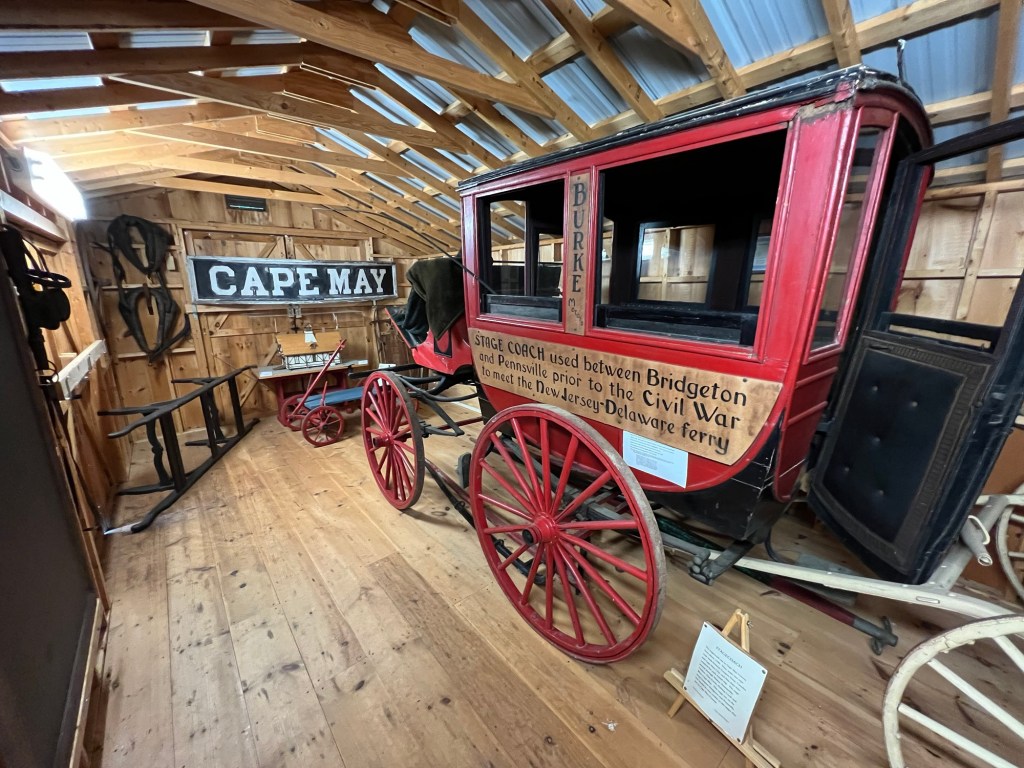
The Cape May Stagecoach

This stagecoach was used on the route between Bridgeton and Pennsville

The funeral cart used to transport bodies once people die to their last destination

The last building on the museum’s property housed military artifacts, farm equipment and artifacts from what would shape the local community

The Maritime History of Cape May and of the Museum:

(from the museum website)

Since its earliest days the area we now call Cape May County has been linked to the water.  With the tumultuous Atlantic Ocean on one side, the Delaware Bay on the other and lush forest and field between it served its residents well.  Early Native Americans thrived, whalers found whales in the ocean and refuge in the bay. All worked the shores and tributaries for birds and shellfish.  As the population grew, shipbuilding and coastal trade took on greater importance.  Come visit us and explore this aspect of our museum (from the museum website).

Many of the artifacts, photographs and manuscripts associated with maritime activities have found their way our museum collection.  From the original first-order Fresnel lens that sat atop the Cape May light to whaling implements, marine skeletons, ship parts and Native American exhibits there is something for everyone.  Of special interest is our recently acquired Cresse Journal, an original manuscript by Lewis Cresse detailing the life of a whaler in the mid-eighteenth century (from the museum website)

Hunting and military items from around the turn of the last century
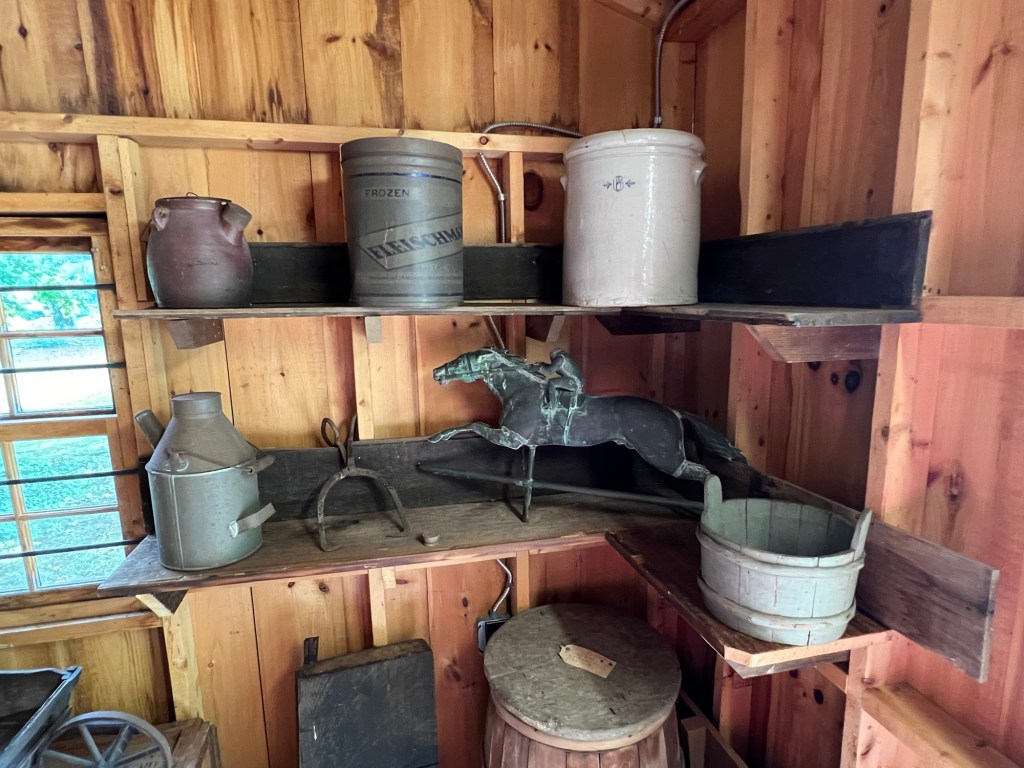
Household and farming items

Artifacts from the Shipping industry

Artifacts from the Counties Ship Building past

Items from the Whaling Industry in Cape May
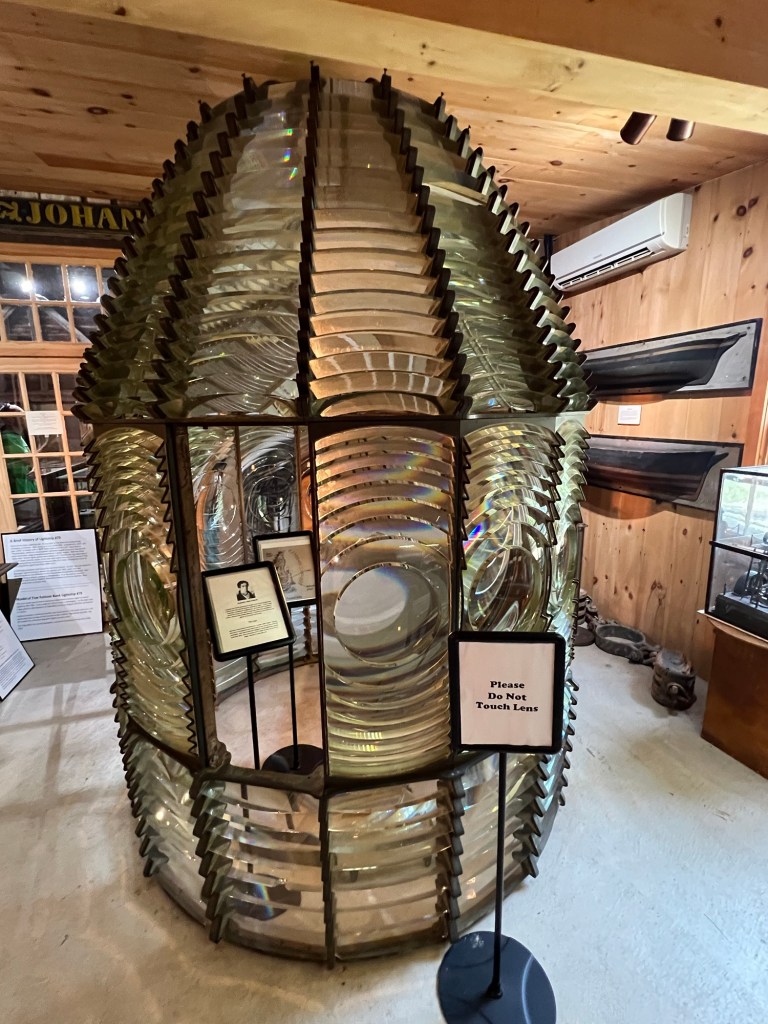
The museum also houses the original Cape May Lighthouse light

The history of burial and old cemeteries in Cape May
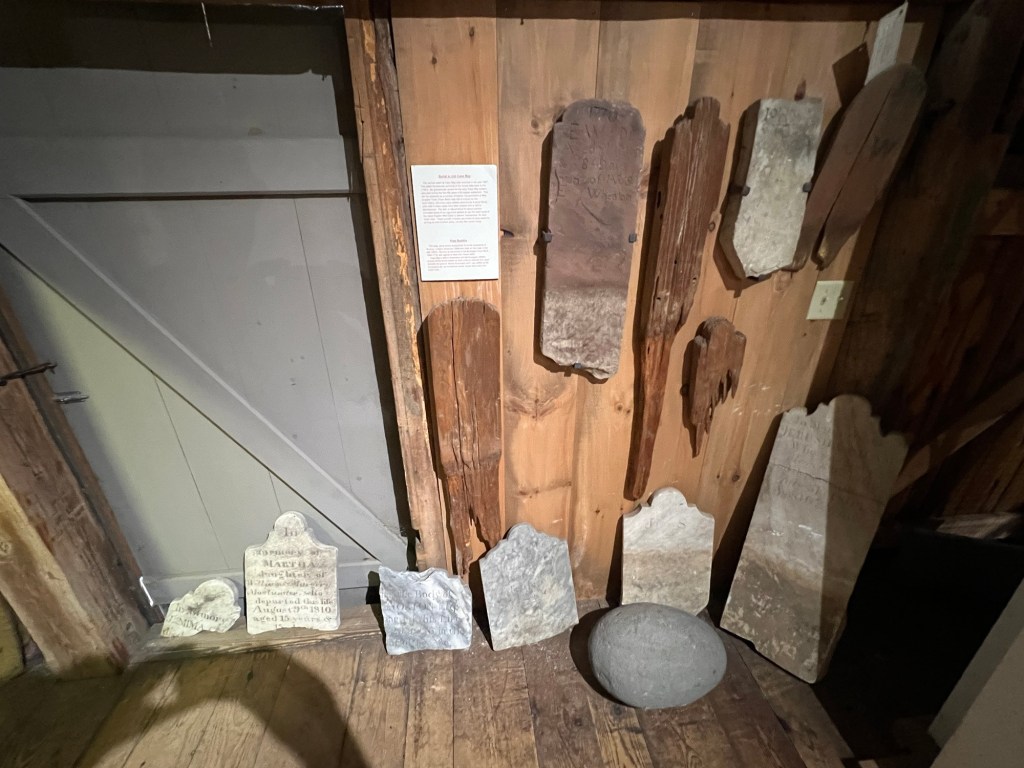
Old tombstones from Cape May cemeteries
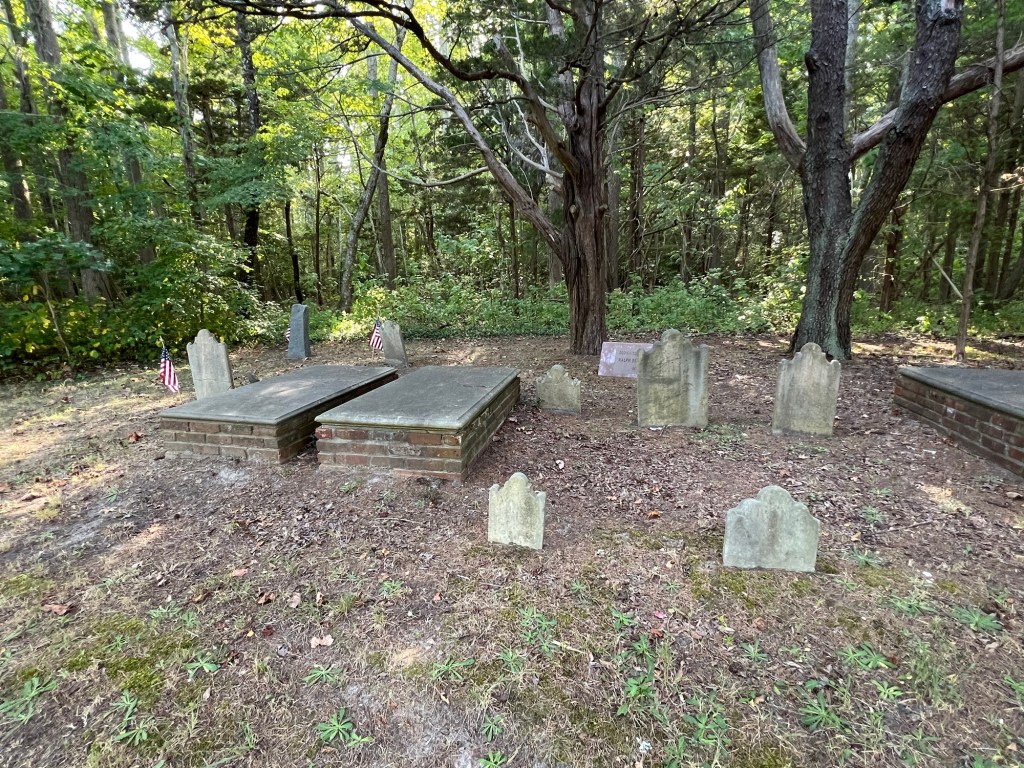
The family cemetery on what was once the family farm that now sits down the road and across the street

The family plot

The museum’s extensive collection of arrowheads and other Native American artifacts

The Cape May Civil War flag is most of the most interesting pieces in the museum’s military collection
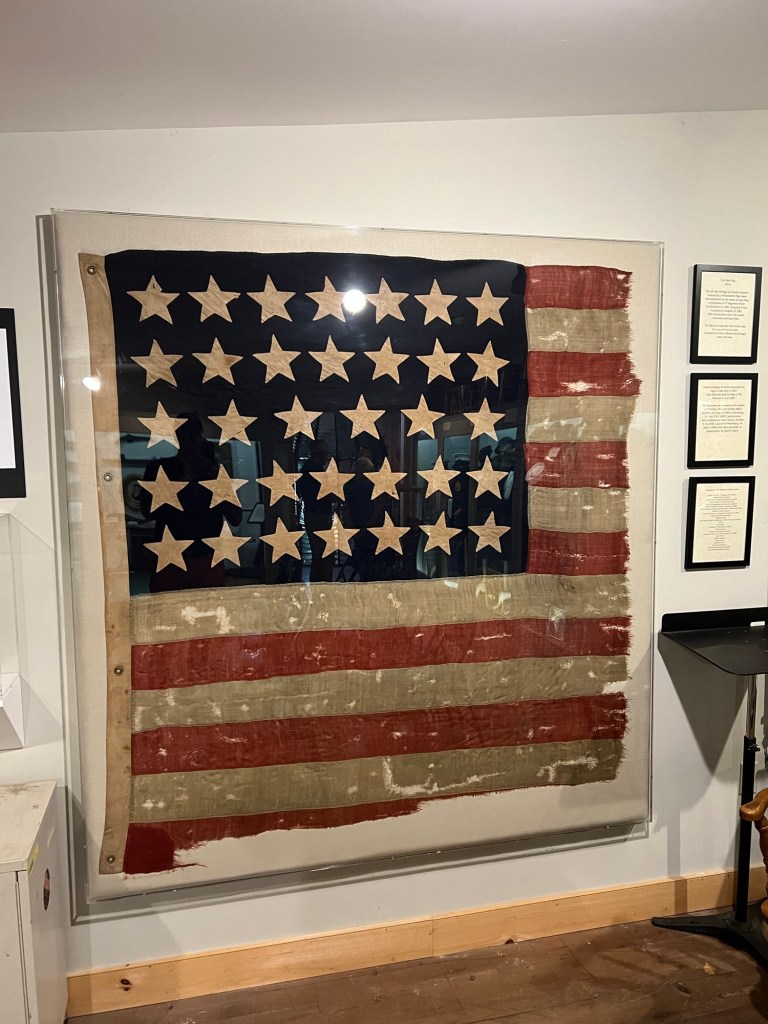
The Cape May Civil War flag
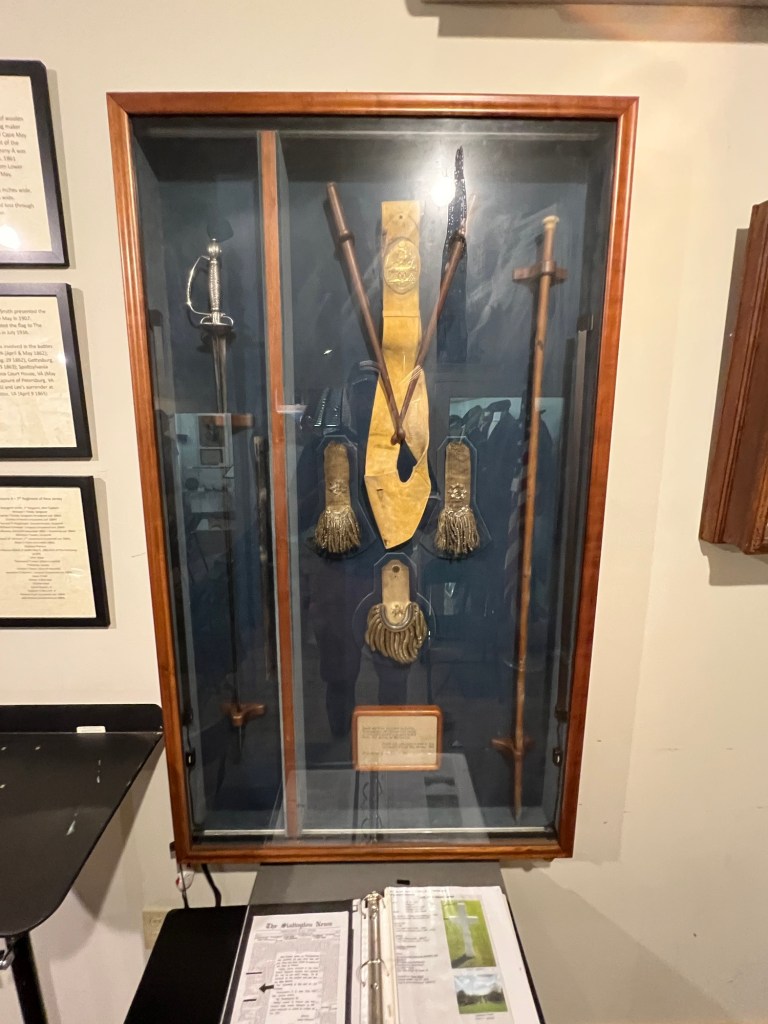
Military artifacts from the war years
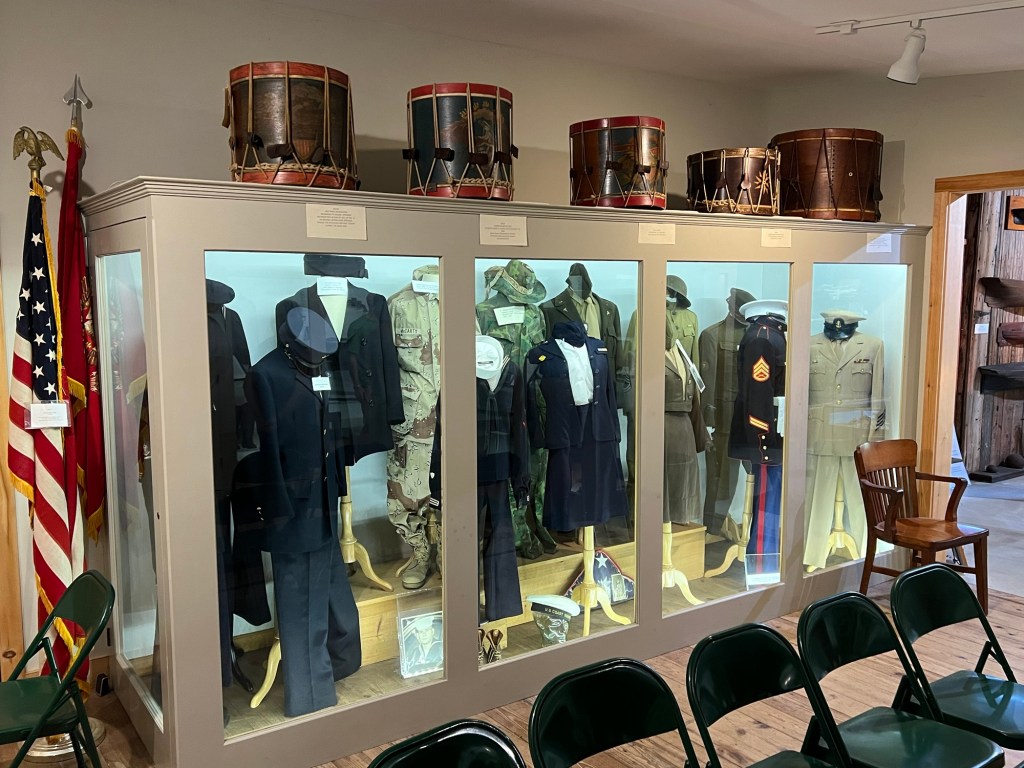
The extensive collection of military uniforms from the different wars in the museum collection with ceremonial drums on display on the top of the case

The gun and pistol collection at the museum

The Pistol collection at the museum
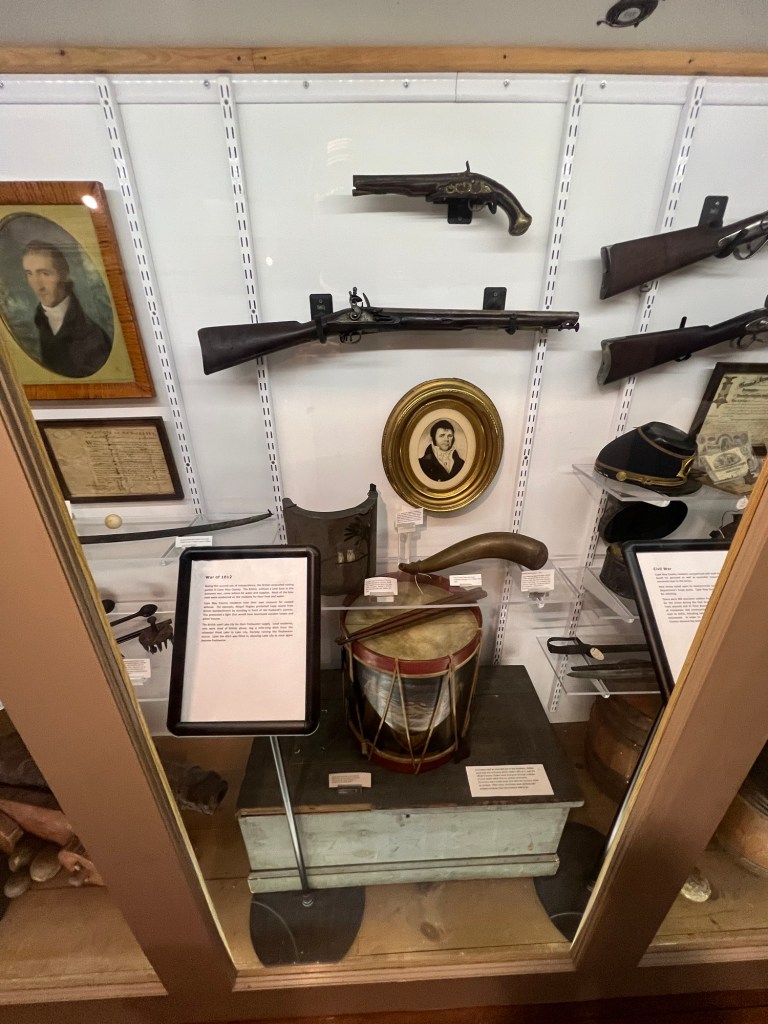
The collection of military items in the collection
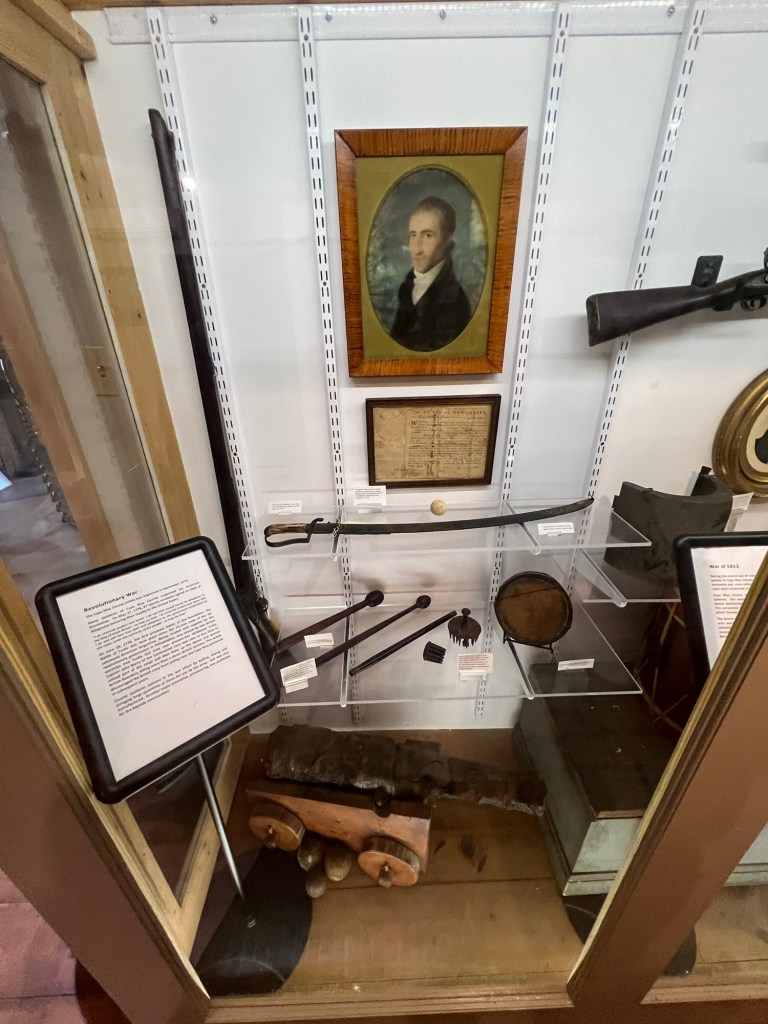
The early military collection at the museum

The grounds of the museum before I left for the day

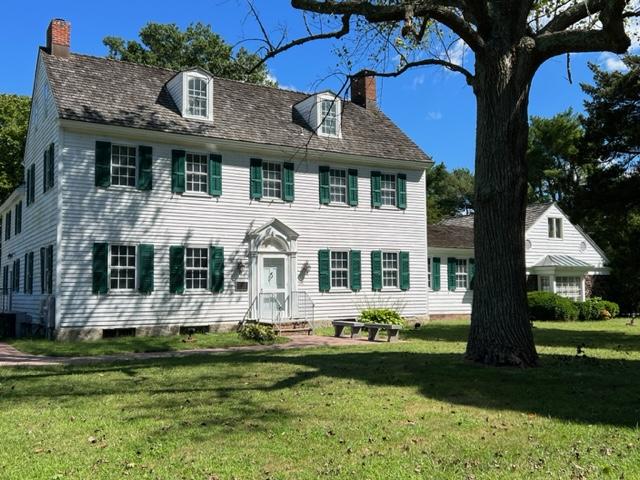
The family home that faces the Highway

The museum is not just an extensive collection of City of Cape May but the history of the County as a whole and its rich development from a farming, whaling and shipping town to a major tourist hub and recreation community.

It also shows it has never lost it nautical or farming past as well as this legacy still carries on in Cape May. The development of the community and the progress it has made over the years is showcased in the galleries and buildings on the museum property.

The Development of the Cape May County Museum:

(from the museum website)

The Cape May County Historical & Genealogical Society (CMCHGS), doing business as The Museum of Cape May County, was founded in 1927 as a private, non-profit organization by a number of local families who wanted to ensure the history of Cape May County was preserved and documented. In 1930 the CMCHGS established a museum and genealogical library which were housed in the basement of the County Court House building for 45 years.

In 1976, the current facility, the Cresse-Holmes House containing eleven rooms along with a five-room barn was purchased to accommodate the growing collection. By 1988 the construction and dedication of the genealogical library and administrative offices had taken place. In the last 90 years, thanks to the generosity of many individuals and families with a connection to Cape May County. the collections have grown to contain many thousands of Cape May County artifacts and documents.

Today the museum and library are run by full time, part time and seasonal staff members along with an enthusiastic group of active volunteers to assist with greeting visitors, guiding tours, researching, assisting with programs, and staffing events.

Chatham Township Historical Society/Red Brick Schoolhouse Museum                                                    24 Southern Boulevard                                       Chatham, NJ 07928

Chatham Township Historical Society/Red Brick Schoolhouse Museum 24 Southern Boulevard Chatham, NJ 07928

Chatham Township Historical Society/Red Brick Schoolhouse Museum

24 Southern Boulevard

Chatham, NJ 07928

(973) 635-4911

https://www.chathamtownshiphistoricalsociety.org/index.html

Open: The First Sunday of the Month from 2:00pm-4:00pm/By Appointment

My review on TripAdvisor:

https://www.tripadvisor.com/Attraction_Review-g46352-d24935947-Reviews-Red_Brick_Schoolhouse_Museum-Chatham_Morris_County_New_Jersey.html

The front of the Red Brick Schoolhouse Museum/Chatham Township Historical Society at 24 Southern Boulevard

The historical sign of the Mount Vernon School

The museum sign that welcomes you to the museum

The Mission Statement of the Museum:

(from the museum website)

The Historical Society of the Township of Chatham was established to increase the knowledge, awareness and preservation of the Township of Chatham history.

I visiting the Red Schoolhouse Museum on the first Sunday of the month and found a delightful little museum filled with artifacts that represent life in Chatham during various times in the town’s history. The museum has two floors with displays telling the history of the Township of Chatham from the beginnings with the Lenape Tribe living in the area to modern times.

The Museum gallery

On the first floor there is the special exhibitions that rotate in the museum. Some of the themes of the exhibitions were Children’s Toys and Playthings through the ages, Wedding gowns and formal wear and Revolutionary War items. The museum also has an interesting exhibition on the Lenape Indians who lived in this region before the Dutch arrived.

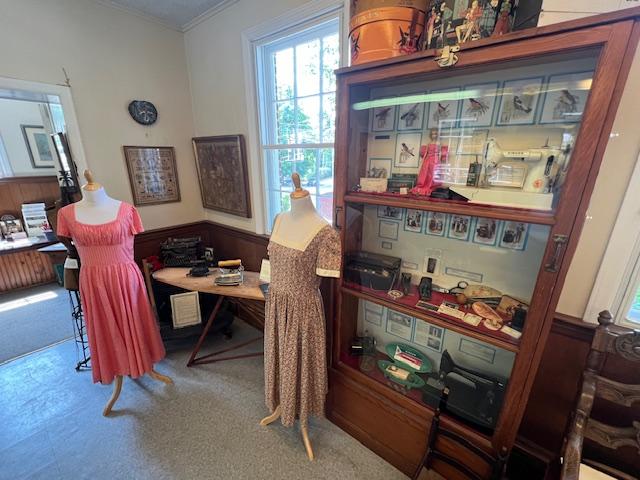
Wedding Gowns and Formal Wear exhibition on the first floor

Dressmaking and Sewing in the home and in business

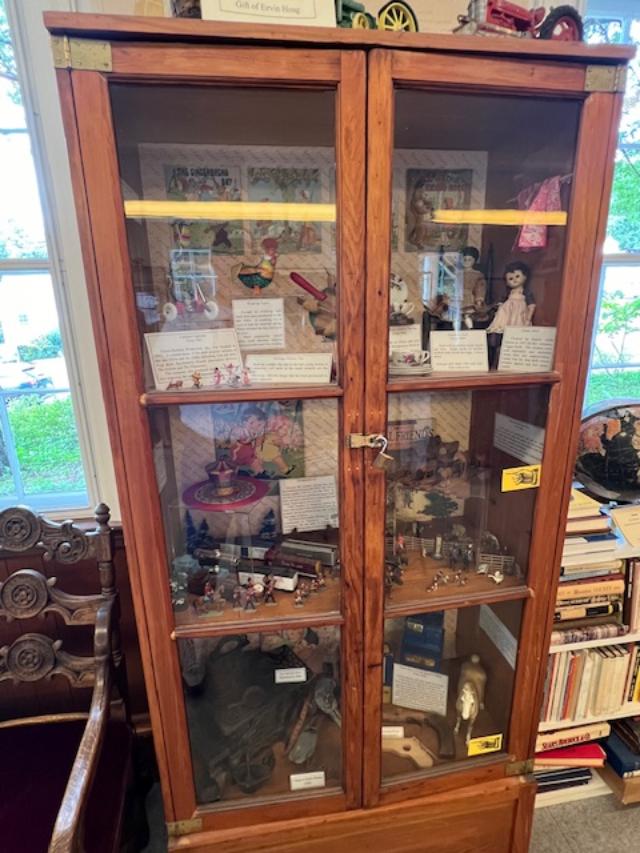
Children’s Toys and Playthings through the ages

Children’s dolls and stuffed animals

The Train display of electric antique items

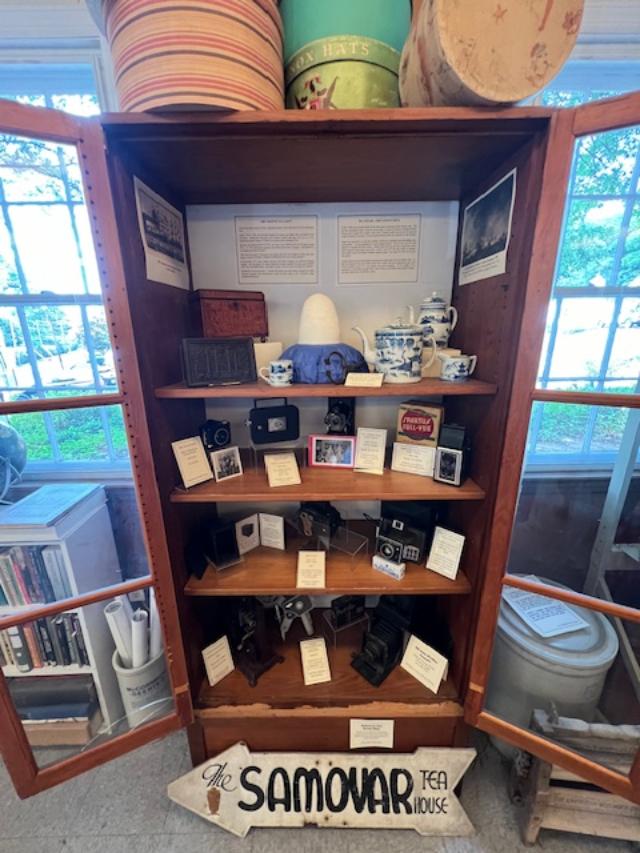
Revolutionary War and Trade items on the top shelf and historical cameras

The second floor has displays that tell different stories. The display cases have Native American artifacts, farming equipment, household items, pictures of the town at different stages of development, the community changes from a farming to business with the advent of the railroad. Here you see the changes in household items as time goes on.

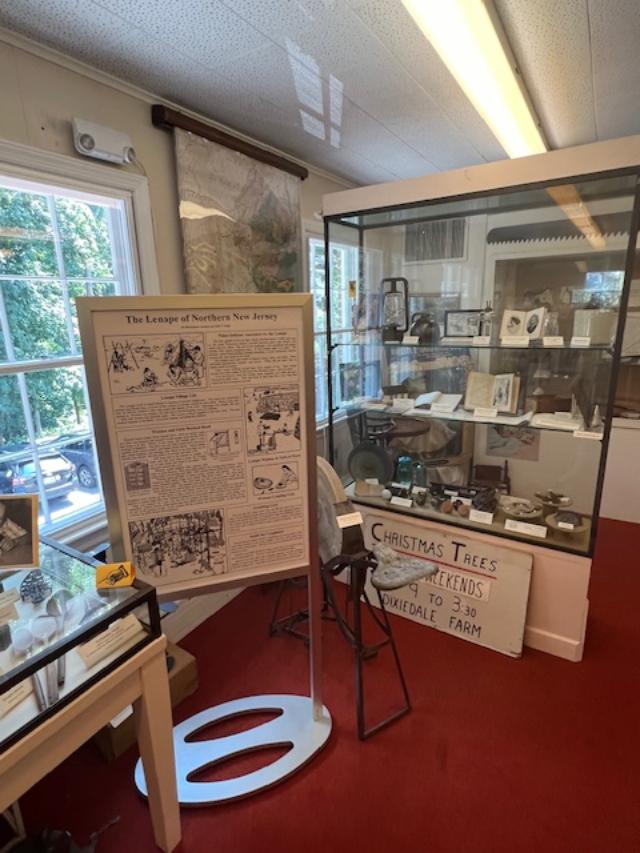
The Lenape Display

Native American stone objects

The Arrowhead collection

Each display tells an interesting story of the Township of Chatham. Looking over how the towns in the area developed I didn’t even know there was a Village of Chatham and a Township of Chatham. I was also impressed with their toy collection which should be a conversation piece to any group of elementary school students. I think this would be interesting to seniors as well on times have changed since they were children. The museum really has something for everyone. All different stories are being told at this museum and the collection continues to grow when residents pasts become part of the museum’s future.

The display on resident Reverend Samuel Tuttle

The Statement of Purpose:

(from the museum website)

The Historical Society of the Township of Chatham, a volunteer, not-for-profit organization founded in 1975, is dedicated to increasing knowledge, awareness and preservation of our town’s unique historical heritage.  We maintain the Red Brick Schoolhouse Museum where we coordinate our educational programs, research, and preservation advocacy as well as manage the discovery, collection, and conservation of materials that illustrate the history of the area prior to and after European settlement.

Artifacts from one of the museum’s historic digs

The audience served by the Society’s programs includes members of the Society, residents, students and visitors to the community, scholars, the public in general as well as businesses and governmental agencies in the area. 

The display of the history of the Red Brick Schoolhouse

The Schoolhouse and Native American collections

The Society carries out a broad range of activities.  It oversees the Red Brick Schoolhouse Museum and library; mounts permanent, temporary, and traveling exhibits; coordinates education programs with local schools; and sponsors a public lecture series.  In addition, the Society publishes pertinent materials related to local history; acquires, preserves and curates the Society’s collections and archival materials; and researches the history of the Township of Chatham and its environs.  Further, it allows access to the Society’s store of knowledge as far as may be feasible to all who wish to examine or study it; supports a historic marker program; cooperates with other local historical societies and organizations; and uses electronic media to awaken public interest. 

Historic artifacts at the museum

About the Museum:

(from the museum website)

The Red Brick Schoolhouse was built in 1860 and used until 1928 when the town’s  five rural schools were replaced by the Southern Boulevard School.  The schoolhouse was deeded to the town and, for many years, was used as the Town Hall.  When the town  offices were relocated in 1988, the building was put into the charge of the Historical Society for use as a museum.

The display semi professional baseball and town development

The museum has a permanent exhibit on the second floor which is arranged according to the town’s original school districts.  Each district highlights, not only that school, but also the industries, farming activities, and the people who lived in each district.

The objects reflecting different times in the town’s history

The first floor is a large meeting room where our lecture series is presented.  The room contains a number of displays as well, including antique toys, food preparation equipment, dresses, and various locally manufactured items.

The Museum Collections:

(from the museum website)

Oral Histories:  Beginning in the late 1970s, members of the Society began recording oral histories by the elder residents of the Township.  About 75 have been collected thus far in this ongoing project.

The Great Swamp display

Books:  The Society has numerous books, old and recent, concerning the history of New Jersey, Morris County, Chatham Township, and the surrounding area.  Books can be used only at the museum.

Documents:  Various town documents including poll books, road district records, tax records, among others, dating from as early as the 1840s are available upon request for study at the museum.

Artifacts from the dairy farms, the local community and pictures of the schools

Artifacts:  The museum is full of a wide spectrum of artifacts that reflect life in the Township throughout its history.

The schoolhouse and electronic display near the staircase

Photographs:  The Society has a large collection of original and scanned photographs of the activities, places, and people of the Township.  Early images provide a window into the Township’s past.  More recent images are forming the record for the next generation of history-lovers.

The Schwartz Dairy Farm pictures

Articles from the Schwartz Family Dairy Farm, one of the former businesses of town

Maps:  The Society has a number of old maps of Chatham and the immediate area, which can be viewed at the museum.

The changes in the town and its development over the years

Archeological  Artifacts:  In 1983-84, members of the Society undertook an archeological dig at the site of the Nathaniel Bonnel V House.  The house, on River Road, was built in 1756 and burned in 1940, then the land was abandoned.  When a condominium development was planned  for the area, the Society was granted permission for the dig.  Artifacts found during the archeologist-guided excavation are displayed in the museum.

The Bonnel House archeological dig

There is something for everyone to see at the museum.

Lincoln Park Historical Museum                          141 Main Street                                              Lincoln Park, NJ 07035

Lincoln Park Historical Museum 141 Main Street Lincoln Park, NJ 07035

Lincoln Park Historical Museum

141 Main Street

Lincoln Park, NJ 07035

https://www.lincolnpark.org/373/Historical-Society

https://www.facebook.com/groups/lincolnparkhistory

My review on TripAdvisor:

https://www.tripadvisor.com/ShowUserReviews-g46872-d27729149-r949879836-Lincoln_Park_History_Museum-Towaco_Montville_Morris_County_New_Jersey.html?m=19905

Lincoln Park History Museum at 141 Main Street

The entrance of the Museum off the Main Street.

As part of the Morris County “Pathways to History” tour I visited the small Lincoln Park History Museum just off the downtown. This colorful and well lit little museum is packed with information on the development of the town. The transformation took place with the form of transportation that changed the area starting with the Morris Canal running through then the railroad system and then the advent of the automobile. This area is still quite sleepy even though its located just an hour outside of New York City.

Lincoln Park History Museum, located at the original 1922 Library building. Lincoln Park, or as once known, Beavertown, is small in geographic nature but has a rich and diverse history. The museum’s goal is to rediscover the town’s past and celebrate / preserve the history, which sadly, at times, is lost and forgotten.

The history of the town’s police and fire departments

Join us and discover our past which includes: dinosaurs, native American artifacts, revolutionary roads /houses, civil war hometown hero, part of the Morris Canal path, part of the Boonton Line Railroad branch, airport, major flood events, some Hollywood film locations and of course our townsfolks who sacrificed in war, volunteers (fire department, police, first aid, pal, scouting etc.), all who made Lincoln Park a wonderful town to grow up in and formed pride and sense of community (Pathways Tour website).

The history of the Morris Canal that ran through the town before the railroads.

The Morris Canal was an important part of the town’s development.

Learn how the town transformed from a small crossroad in the American revolution to a canal stopping point with incline plane, lock and hotel. Learn how it progressed from farming to resort area to commuting town and transform to what it is today. The town keeps growing.

The day the Railroad came to town and it changed everything! On December 14, 1870 the first passenger train stopped at Beavertown. School was closed that day so the students could witness this momentous occasion. The following year Beavertown’s name was changed to Lincoln Park. This event, started a large and long transformation of the town. Prior to this, the town was all farmland and the few businesses in town centered on support of the Morris Canal. Once the railroad came, the transformation started (Pathways Tour website).

Small industries were created which used the train system for shipping freight and the population started to grow. In the earlier 1900s advertisements were placed in New York /Brooklyn newspapers advocating the benefits of country living. City folks would come by train for the summer and enjoy river activities and many of these folks became permanent residents. During this time the Morris canal was slowly fading away, not able to compete against the railroad. Soon, it was feasible to commute daily from Lincoln Park to New York by train and the population continued to grow along with more business to support the population (Pathways of History Tour of Morris County website).

Lincoln Park’s Farming past and Business District.

Lincoln Park’s town history of schools, fire and police departments.
The museum only takes about an hour to visit but take the time to see all the displays and talk to the docents. The town really has an interesting history.
Butler Museum                                                      221 Main Street                                                Butler, NJ 07405

Butler Museum 221 Main Street Butler, NJ 07405

Butler Museum

221 Main Street

Butler, NJ 07405

(973) 838-7222

https://www.butlerborough.com/cn/webpage.cfm?tpid=17694

https://www.facebook.com/TheButlerMuseum

My review on TripAdvisor:

https://www.tripadvisor.com/Attraction_Review-g46335-d27729077-Reviews-Butler_Museum-Butler_Morris_County_New_Jersey.html

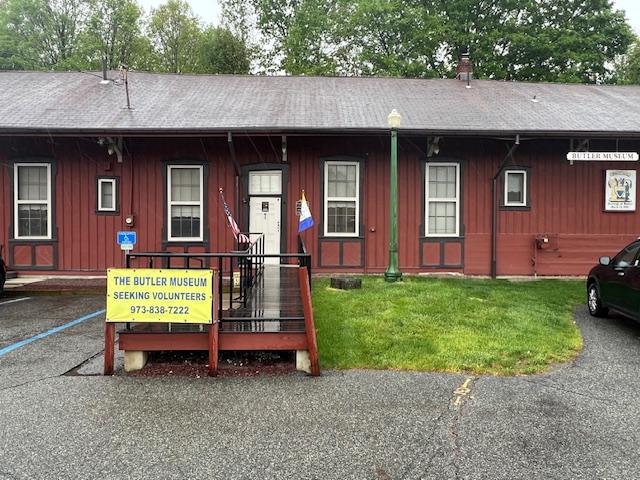
The Butler Museum 221 Main Street

The Butler Museum is housed in the former New York Susquehanna and Western Railroad station. Constructed in 1888, it was remodeled in the 1890’s and in 1907, when a freight room was added to the northwestern end of the building. A major restoration took place from 2011 to 2015. Purchased by the Borough of Butler for a museum just in time for the Bicentennial Celebration in 1976, the museum houses a large collection of artifacts of local and regional significance.

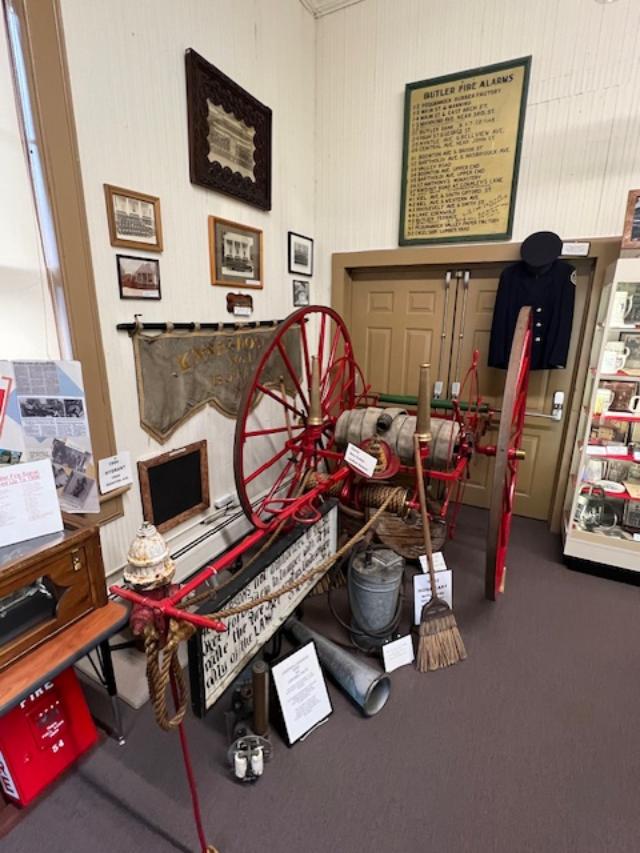
The Butler Fire and Police Department artifacts.

Exhibits highlight the social, educational, fraternal, political, and business life of the community. Unique to the Butler Museum are artifacts pertaining to the Statue of Liberty, statue designer Frederic Bartholdi, and his friend Richard Butler, for whom the town is named. Mr. Butler was an important member of the committee that raised the funds to construct the statue’s pedestal (Pathways to History of Morris County website).

The Statue of Liberty exhibition.

Displays also include products manufactured by the American Hard Rubber Company, the area’s largest employer from the 1880’s to the late 1950’s. Development of items such as Ace Bowling Balls and Ace Combs can be traced from blueprints and salesman samples to the finished products.

The Ace Company exhibit

The resource center presents the opportunity to view past copies of local newspapers, almost a century of Butler High School yearbooks, and a pictorial history of Main Street, Butler.

The Butler Museum main gallery with the Ace Rubber exhibition as well as the Butler Fire and Police departments. The displays represent years of tradition in the town.

The Butler Museum main gallery. The Ace Company exhibition.

The Butler Museum’s local town history display.

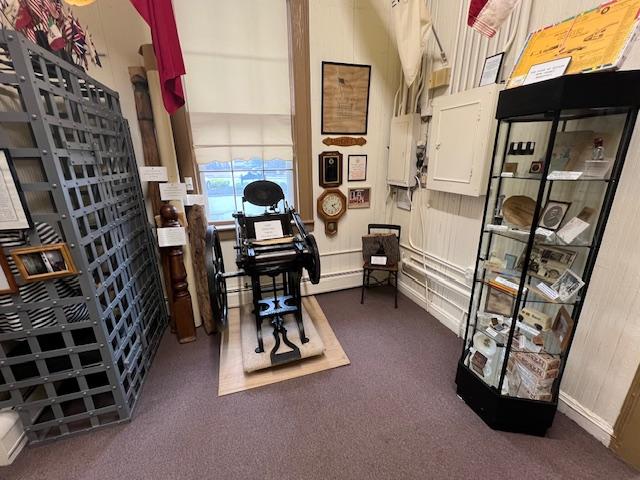
The Printing industry of the town of Butler, NJ.

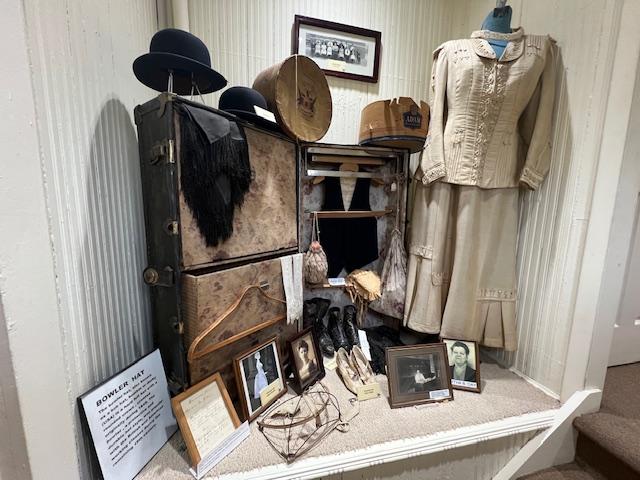
The display of vintage clothing.

The museum has a wonderful display of artifacts that tell the story of the town and show the progression of the town’s growth. The docents do a nice job of telling that story of the town they love so much. It is a very fascinating museum when you tour all the interesting things that the museum has in its collections.