Tag: Philadelphia PA

Museum of the American Revolution                                             101 South 3rd Street                                                        Philadelphia, PA 19106

Museum of the American Revolution 101 South 3rd Street Philadelphia, PA 19106

Museum of the American Revolution

101 South 3rd Street

Philadelphia, PA 19106

(215) 253-6731

https://www.amrevmuseum.org/

https://www.facebook.com/AmRevMuseum/

Open: Sunday-Saturday 10:00am-5:00pm

My review on TripAdvisor:

https://www.tripadvisor.com/Attraction_Review-g60795-d12163505-Reviews-Museum_of_the_American_Revolution-Philadelphia_Pennsylvania.html

The Museum of the American Revolution

(From the Museum’s website)

On a recent trip to Philadelphia for the Cornell versus Penn Football Game (We won!), I had on my bucket list a series of small museums that I wanted to visit. One of them was the Museum of the American Revolution at 101 South 3rd Street in Old Town Philadelphia.

What was supposed to be a two-hour visit ended up being almost four hours of fascinating artifacts, paintings, murals, flags, ammunition and cold hard facts about the Revolutionary War and its beginnings, battles and finally peace.

My first stop in the museum was the exhibition “Liberty: Don Troiani’s Paintings of the Revolutionary War” which showed the artists interpretations of the historical battles and occurrences that took place during the war from the travels of Paul Revere to the Battles of New York and New Jersey. The paintings tried to explain the happenings in the war years since photography did not exist at the time.

“Liberty: Don Troiani’s Paintings of the Revolutionary War”

The exhibit takes the viewer on a journey with the troops and each of the happenings in different parts of the new country. The Battles both North and South that people fought for their wanting freedoms from a society that they felt was not listening to them and repressing them both socially and economically.

“The Boston Massacre” as seen by an eye witness account

This led to the main exhibitions on the second floor “A Revolutionary War”, “The Darkest Hour” and “A New Nation”. Each room built on the timeline of the War starting with the Stamp and Tea Taxes that Britian imposed on the Colonists who felt they had been taxed enough and the system did not go through even the colonial government set up at the time.

Room by Room leads you from situation to situation and battle to battle and the people who fought them. It was interesting in that you see the role that men and woman both White and Black and the Native Americans played in each situation. These were things I never read in a history book. You see how ordinary people played a role in shaping this country by fighting for their freedom with very little in ways of ammunition and direction.

You also notice the changes that could have happened with some of the disastrous battles in the beginning of the war that almost led to General Washington being removed, which would have changed the trajectory of the war. There were stories of how other European powers such as the French got involved with the war and new immigrants to the country of German descent played their role in the battles.

The two artifacts that I found most interesting first was the pieces of the King George Statute that stood in the Bowling Green Park in Lower Manhattan. There were pieces of the statue that still existed and had not been melted down. Another interesting fact was that the head of the statue was smuggled back to England by Loyalists of the Crown. I had thought the whole thing had been melted down (this was on loan from the New York Historical Society).

The other artifact that caught my attention was the tent that General Washington had used on his battles as his ‘war room’. They showed us in a film program the tent he used at Valley Forge that had been saved by his wife’s granddaughter, who was General Lee’s wife. The tent and other artifacts had been held at the Lee Estate by his wife and had been protected by one of the slaves on the plantation. I thought that was an interesting story.

General Washington’s “War Room” tent was one of the highlights of the museum

The later rooms tell the story of a nation in growth and change. From the makings of La building the nation to the Women’s Suffrage, you can see the way we have evolved as a nation.

This is a museum that takes several hours to enjoy and you need about three to four hours to truly enjoy it. This is an all-day affair.

The Museum of the American Revolutionary War History:

(From the Museum’s website)

Mission & Vision:

When the museum of the American Revolution opened its doors on April 19th, 2017, it fulfilled a promise made more than a century ago to create a museum dedicated to telling the rich and complex story of our nation’s founding. Since then, we have a delivered an exceptional experience to hundreds of thousands of visitors and established ourselves as a destination that brings history to life in a unique and powerful way.

Mission:

The Museum uncovers and shares compelling stories about the diverse people.

Our Vision:

To ensure that the promise of the American Revolution endures.

History of the Museum:

The Museum of the American Revolution uncovers and shares compelling stories about the diverse people and complex events that sparked America’s ongoing experiment in liberty, equality and self-government. Through the Museum’s unmatched collection, immersive galleries, powerful theater experiences and interactive elements, visitors gain a deeper appreciation for how this nation came to be and feel inspired to consider their role in ensuring that the promise of the American Revolution endures.

Located just steps away from Independence Hall, the Museum serves as a portal to the region’s many Revolutionary sites, sparking interest, providing context and encouraging exploration. The Museum, which opened on April 19th, 2017, is a private, non-profit and non-partisan organization. For more information, visit http://www.AmRevMuseum.org or call 877-740-1776.

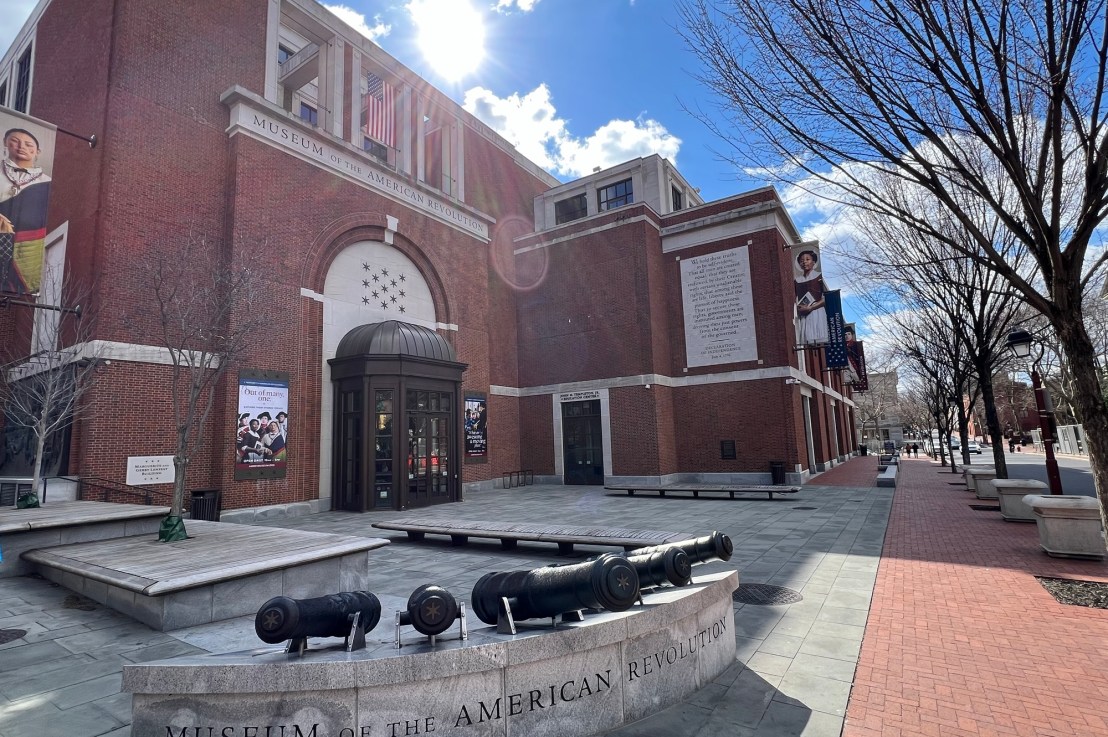
The cannons at the entrance

The entrance to the museum on the second floor

The General George Washington show

The settlement of the Colonie

Early Colonial artifacts

Various household items
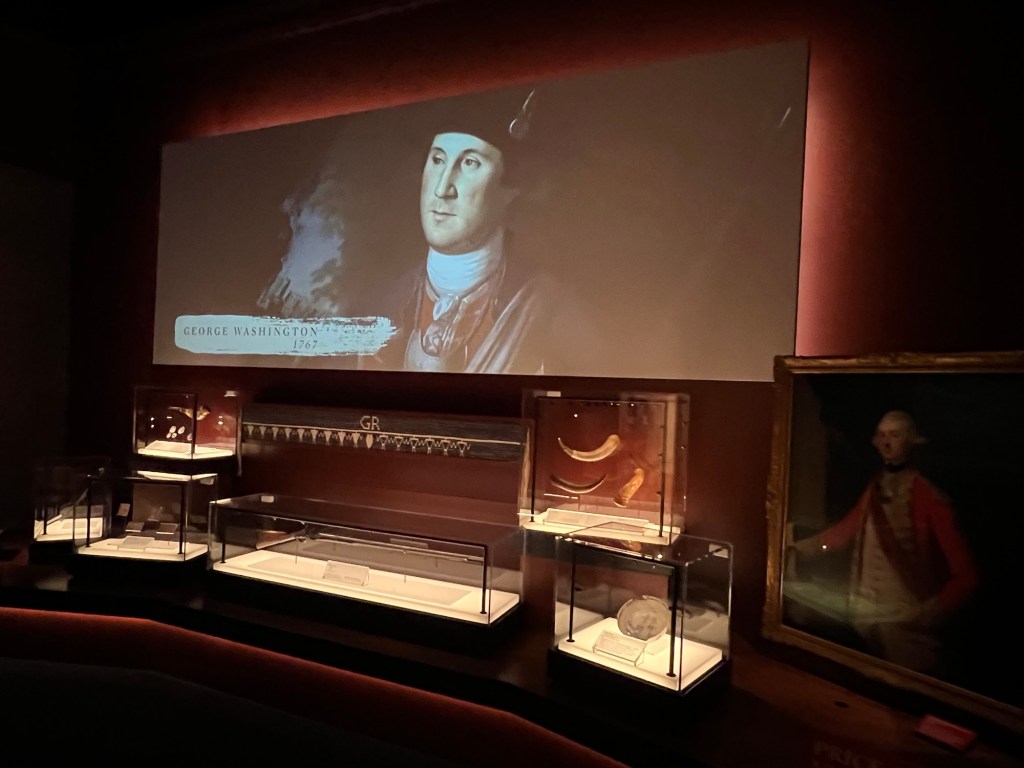
General Washington’s battle
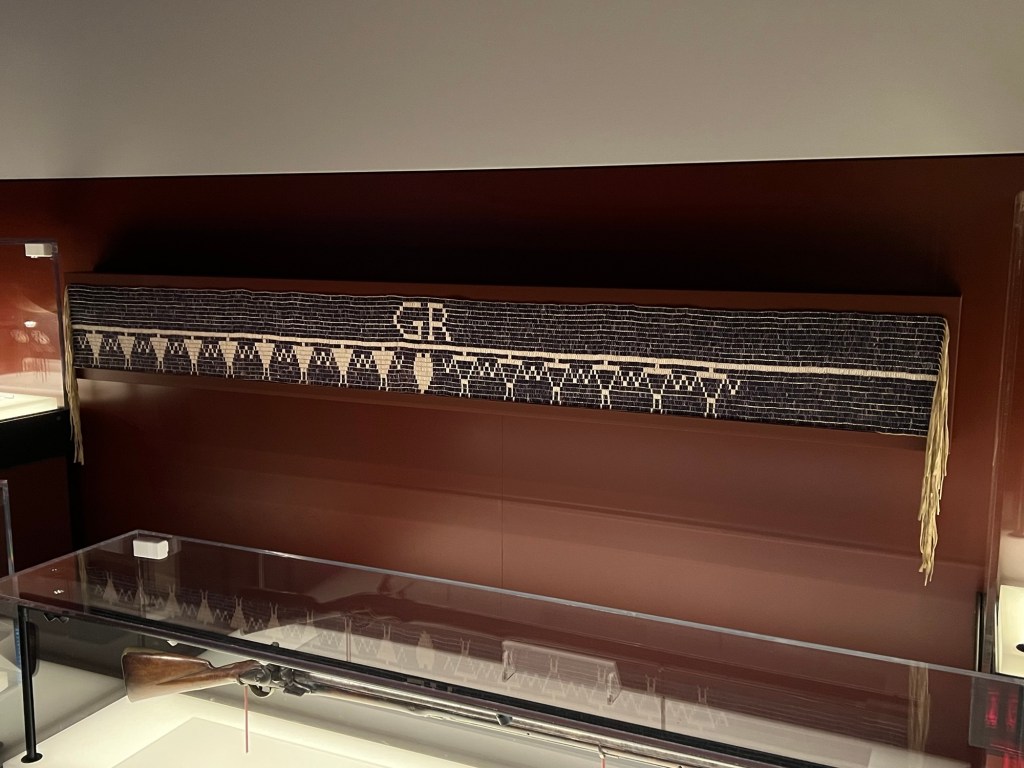
The Wampum belt of Peace

The ‘Join or Die’ symbol of unity of the colonies

The Causes of War and Taxation
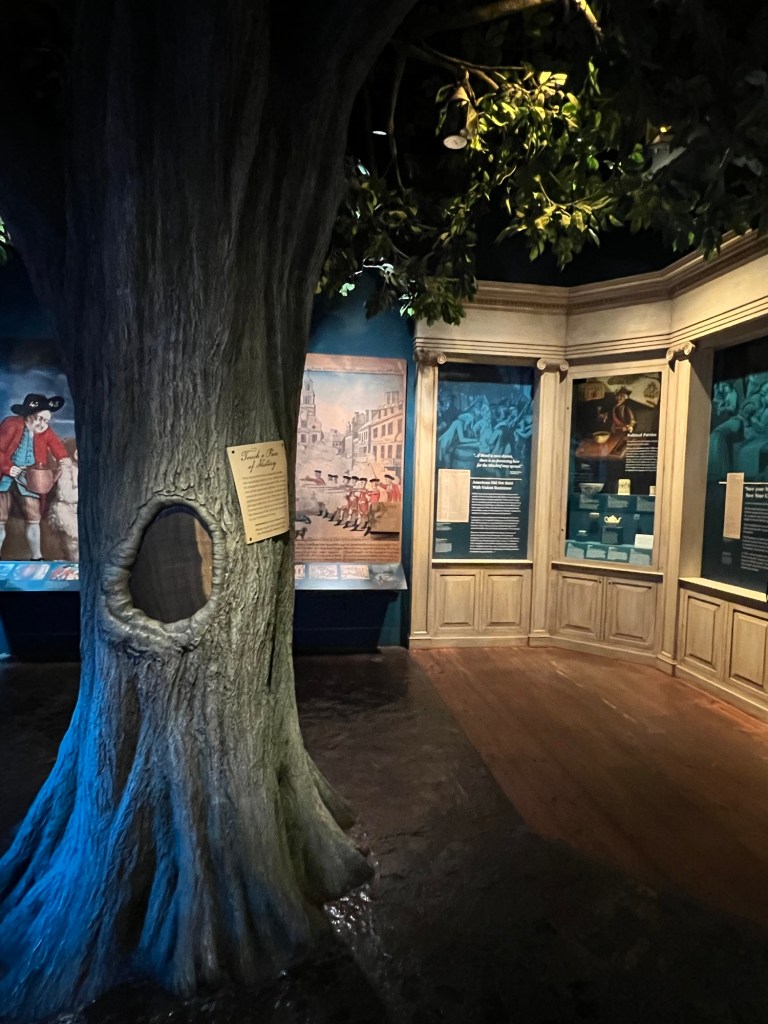
The squishes before the war

The images of the Boston Massacure

The revolt of the ‘Tea Tax’ and the ‘Boston Tea Party’
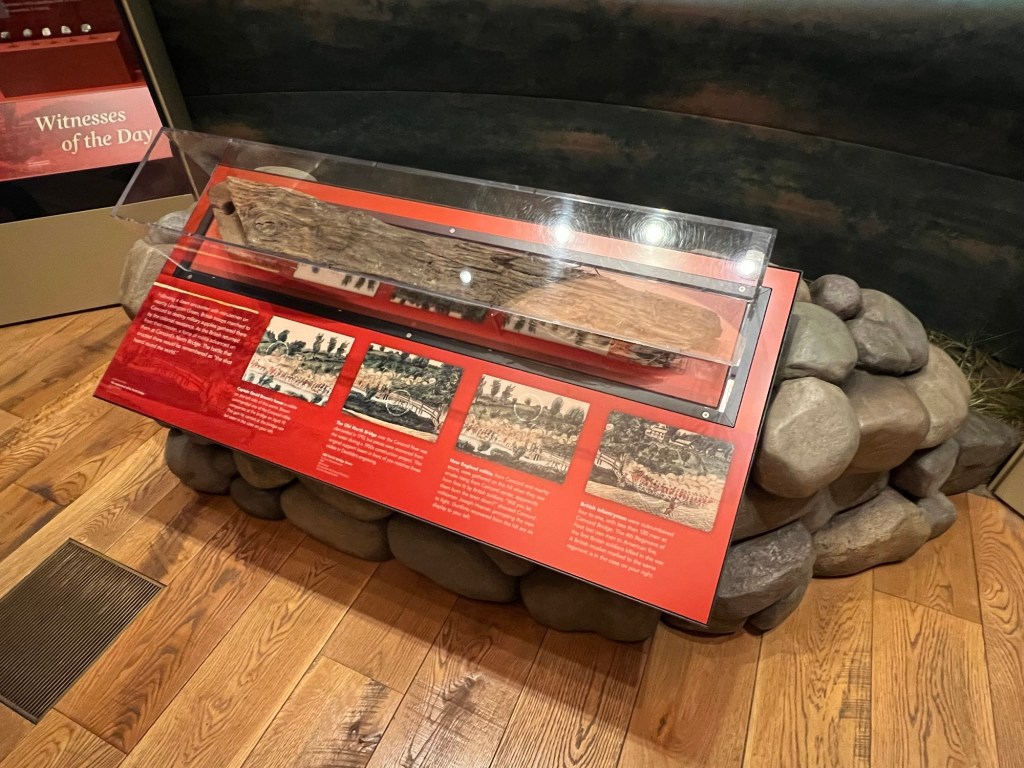
Preparing for the war

Losses on both sides

The ‘Brawl at Harvard Yard’ between Loyalists and Patriots

General Washington at the start of the War
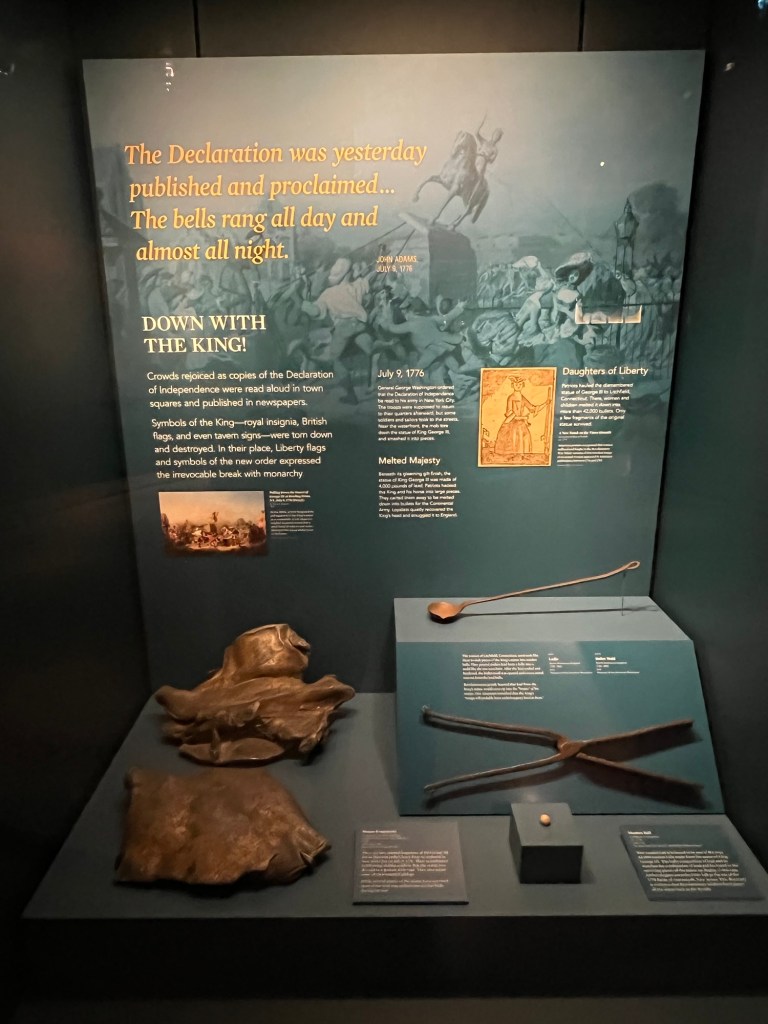
The destruction of the King George statue in the Bowling Green Park in New York City
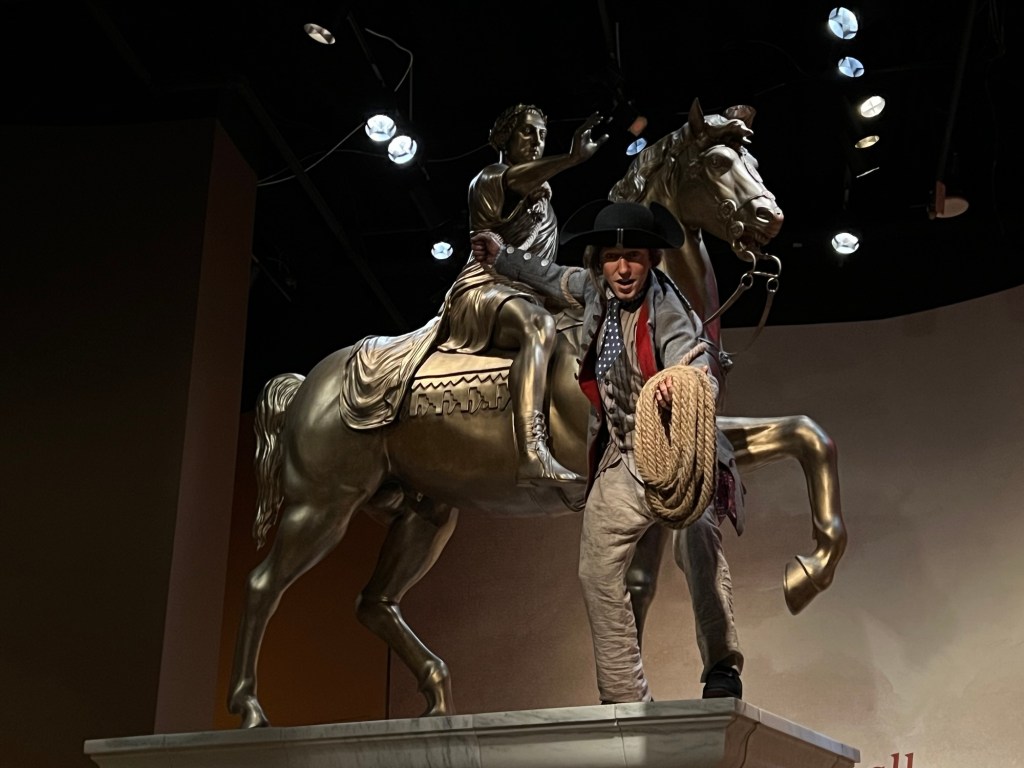
The tearing down of the statue of King George

The pieces of the statue still survive today

Most of the metal was used for munitions

The creation of the Republic

Preparing for War

The back galleries
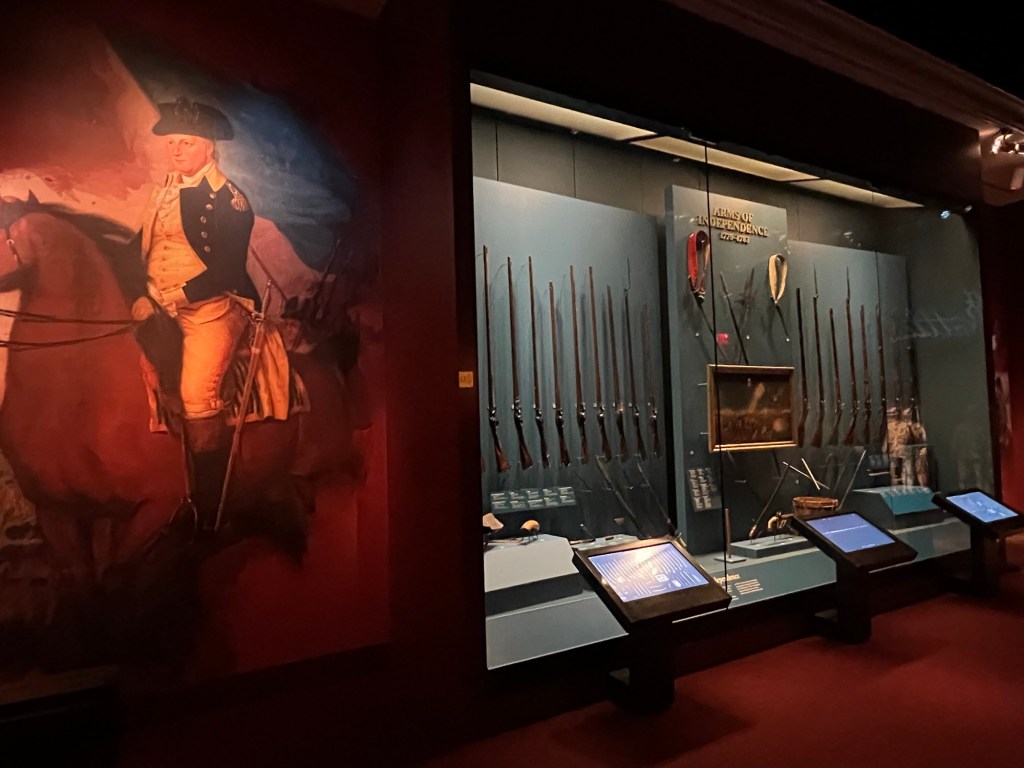
Muskets and swords

The gift shop on the first floor

The Penn Museum, The University of Pennsylvania Museum of Archaeology & Anthropology                                                      3260 South Street                                  Philadelphia, PA 19104

The Penn Museum, The University of Pennsylvania Museum of Archaeology & Anthropology 3260 South Street Philadelphia, PA 19104

The Penn Museum, The University of Pennsylvania of Archaeology & Anthropology

3260 South Street

Philadelphia, PA  19104

(215) 898-4000

https://www.penn.museum/

Phone: General Information: (215) 898-4000/Membership & Membership Events: (215) 898-5093/Public Programs: (215) 898-2680/Group Sales (adult, senior and college admission): (215) 746-6774/Education/K-12 Tours: (215) 746-6774/Museum Shop: (215) 898-4046.Facility Rentals: (215) 898-3024

Open: Sunday 10:00am-5:00pm/Monday Closed/Tuesday 10:00am-5:00pm/Wednesday 10:00am-8:00pm (first Wednesday of the month otherwise 5:00pm)/Thursday-Saturday 10:00am-5:00pm

Museum Library Hours:

Tuesday, Wednesday, Thursday: 9:00am-9:00pm/Monday, Friday, Saturday: 9:00am-5:00pm/Sunday: 1:00pm-5:00pm/Closed holidays

Pepper Mill Café Hours:

Monday: 10:00am-1:00pm/Tuesday through Friday: 8:30am-4:30pm/Saturday and Sunday: 10:00am-4:30p

Fee: Adults $18.00/Seniors $16.00 (over 65)/Children 17-5 $13.00/Military and Children under 5 and Members Free/Penn Museum Members/Penn Card Holders/HUP/CHOP Employees: Free

TripAdvisor Review:

https://www.tripadvisor.com/Attraction_Review-g60795-d138271-Reviews-Penn_Museum-Philadelphia_Pennsylvania.html?m=19905

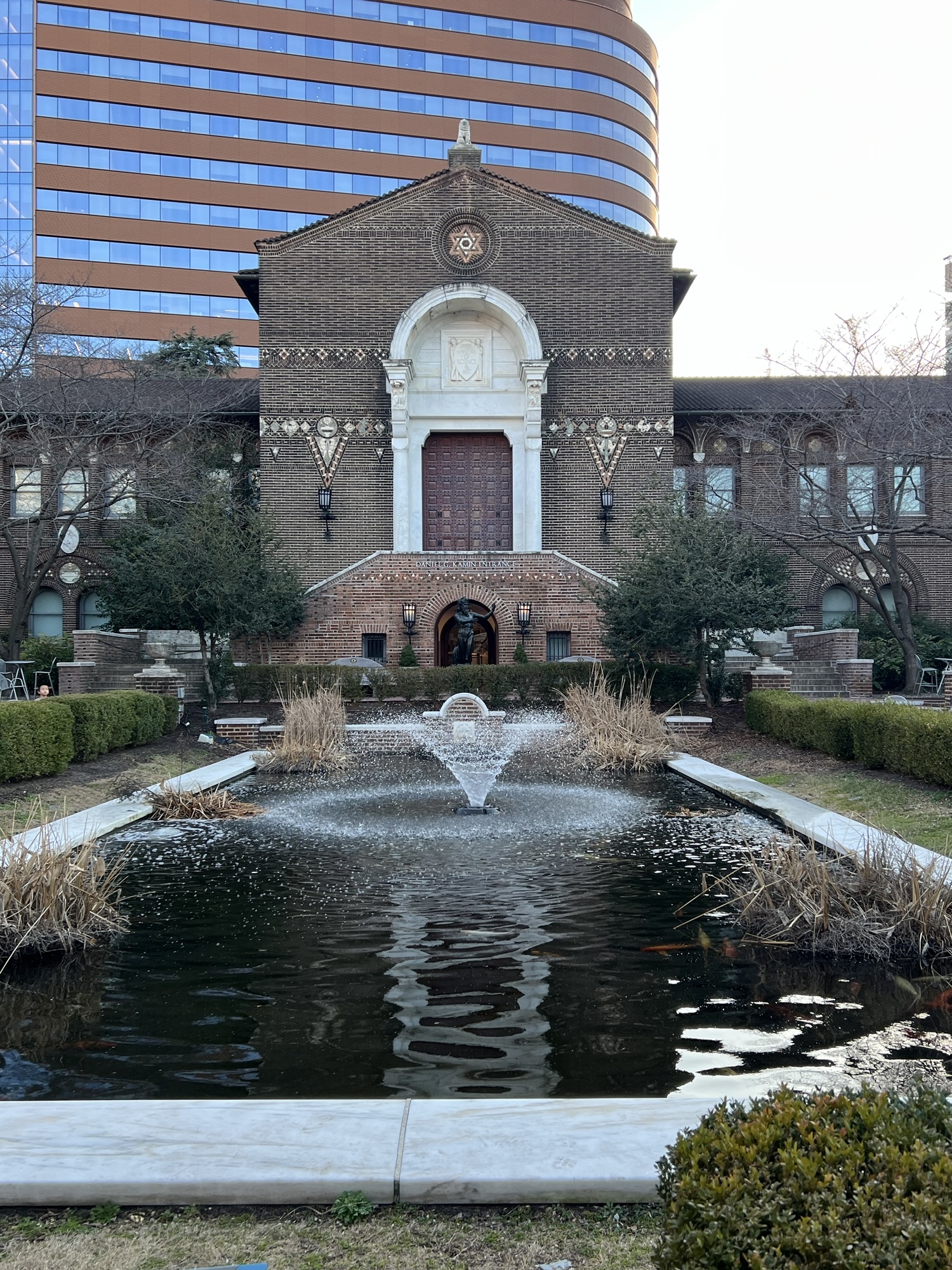
The entrance to the Penn Museum at 2360 South Street

Looking for a tranquil place to study or relax? Try the Museum’s garden’s and galleries or the Museum Library. For a bite to eat, stop by the Pepper Mill Café. Come by during Reading Days and Exams for free coffee and tea and extra study space on campus (from the Penn website).

The University of Pennsylvania Museum and Gardens

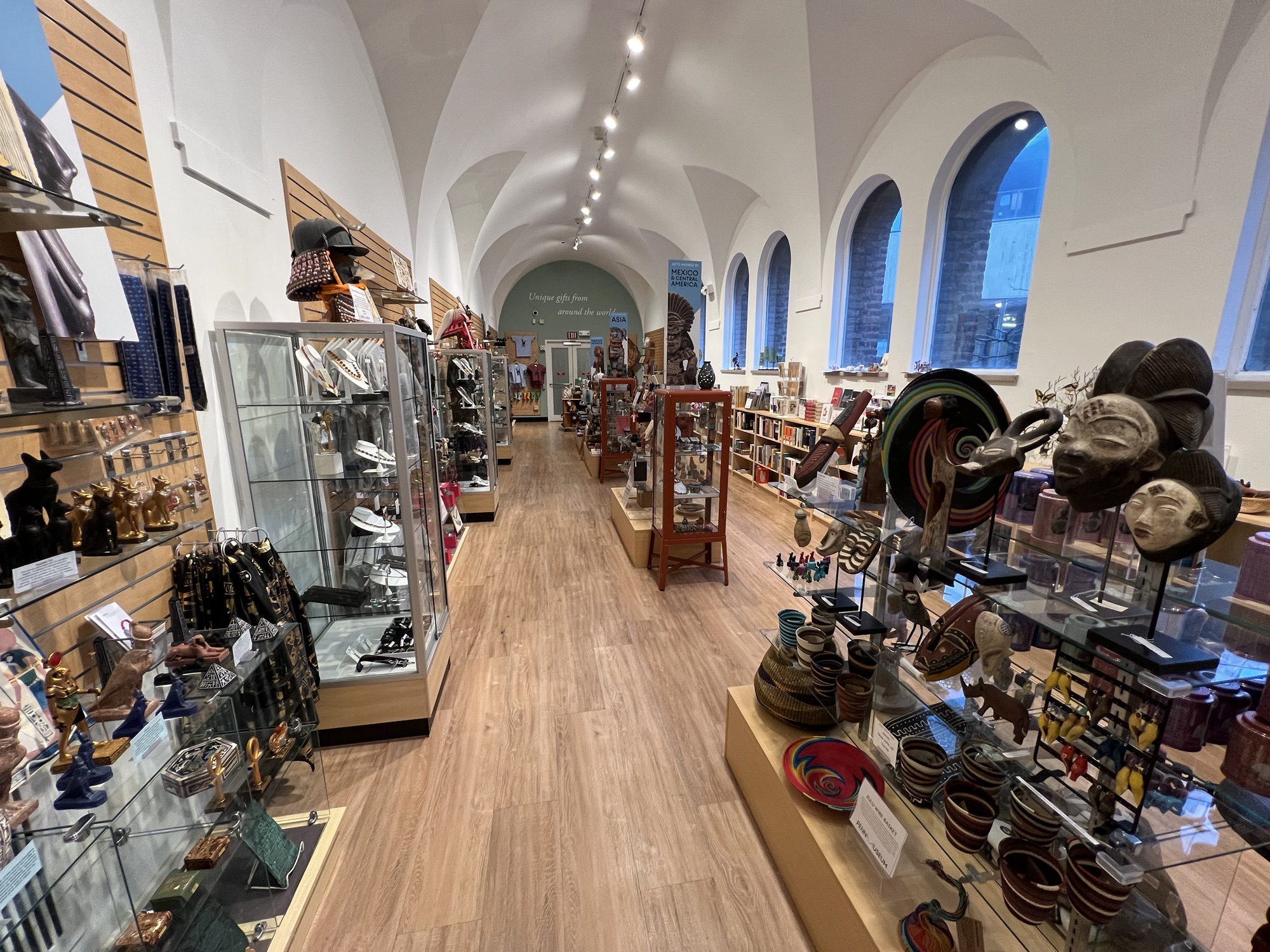
Museum Shop: A wide selection of books, games, fine jewelry and crafts from around the world can be purchased at the Museum Shop. Open during Museum hours.

The museum gift shop

I visited the Penn Museum on days I have come to Philly for the Penn versus Cornell games and for the Christmas holidays (the museum is across the street from the football stadium.

When I visited Philadelphia recently, I was able to visit the museum at more length rather before and after a football game. I really got a chance to see all the displays and look at all the artwork. It is a fascinating museum with many artifacts found on digs conducted by the university. It takes a lot of time to explore each culture.

The museum has three floors of exhibition space which is broken into different centuries. The museum has a lot of artifacts from their digs over the last two hundred years. Many of the artifacts are on display have the background of where the artifacts were found and how they researched. Each room has a different area of the world they are coming from.

On the Upper floors is the Asian, Egyptian and Roman exhibitions on artifacts, the Mid-level is the Middle Eastern, African, Egyptian, Mexican and North American/Native American Galleries.

The History of the University of Pennsylvania Museum:

(from the College website)

The Penn Museum is one of the premier international museums of archaeology and anthropology right here on the University of Pennsylvania campus. An active research and teaching center, the Penn Museum has teams engaged in more than 50 expeditions and research projects worldwide. Three floors of public galleries feature art, artifacts and remarkable stories from every inhabited continent on earth.Here is a selection of the interesting artifacts and art that I saw at the museum:

The Eastern Mediterranean Gallery:

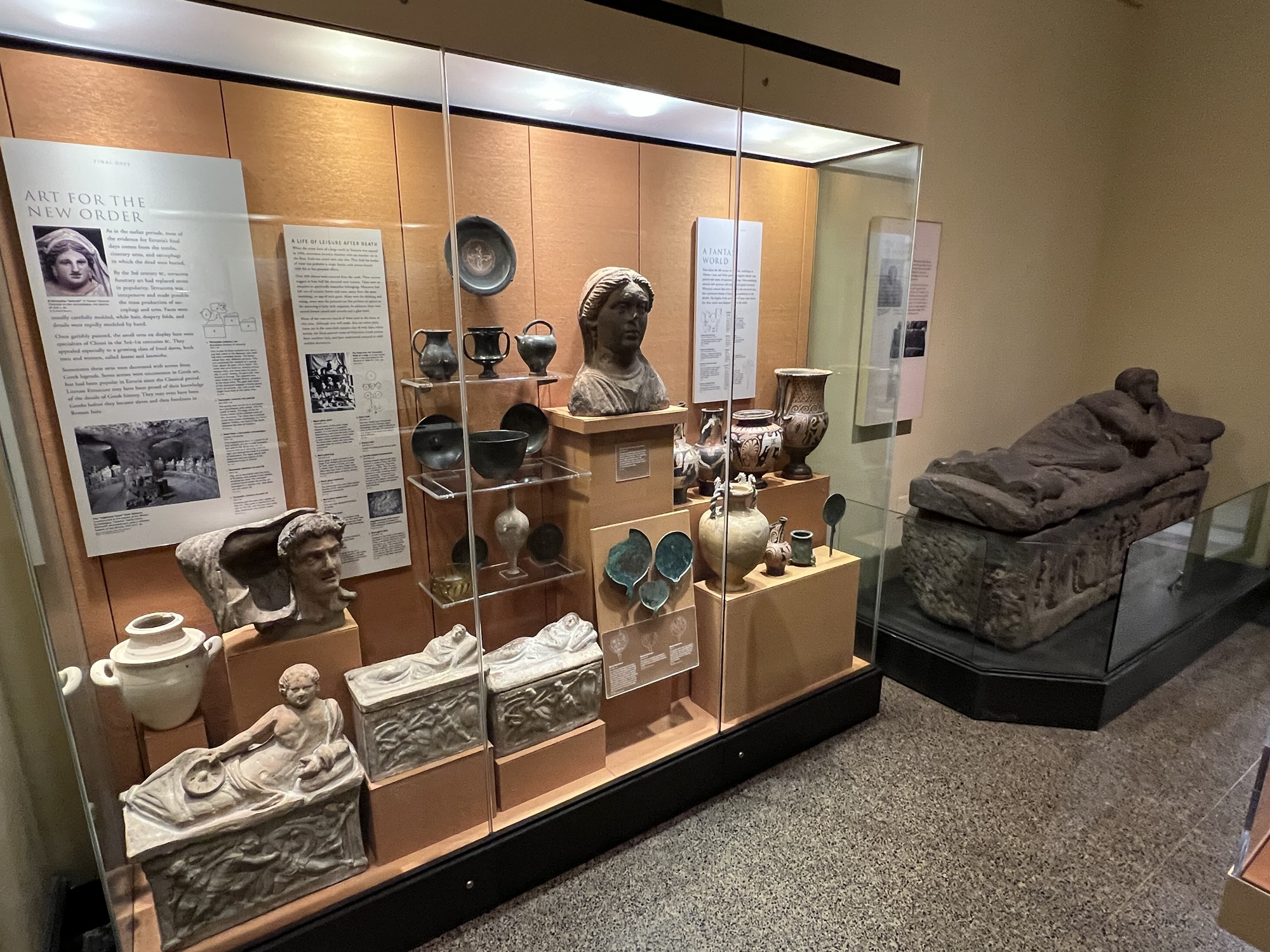
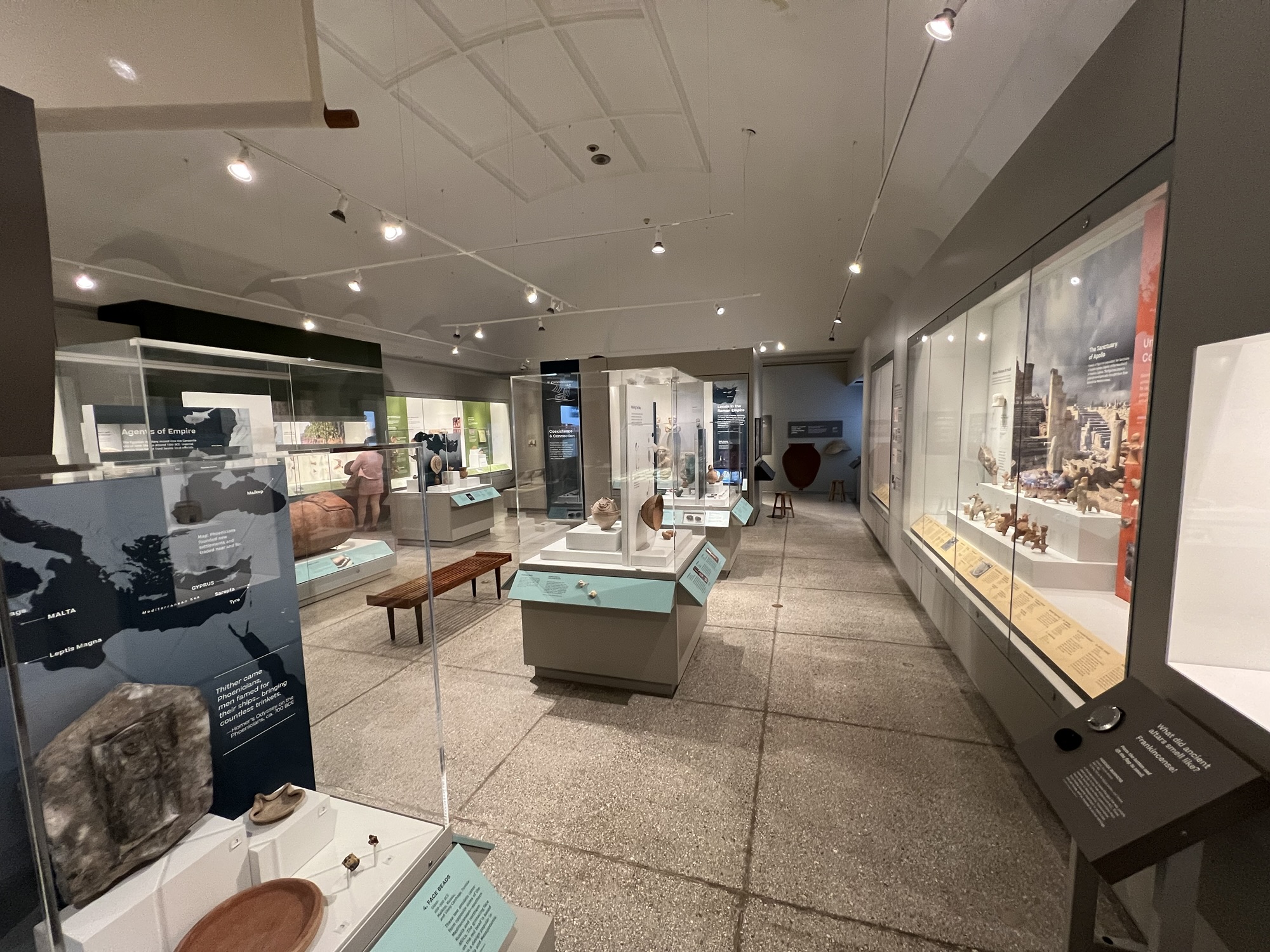
The Eastern Mediterranean Galleries of Roman and Greek art

Transforming understanding of the human experience. Home to over a million extraordinary artifacts and archaeological finds from Africa, Asia, the Americas and the Mediterranean, the Penn Museum has been uncovering our shared humanity across continents and millennia since 1887.

The Greek Galleries

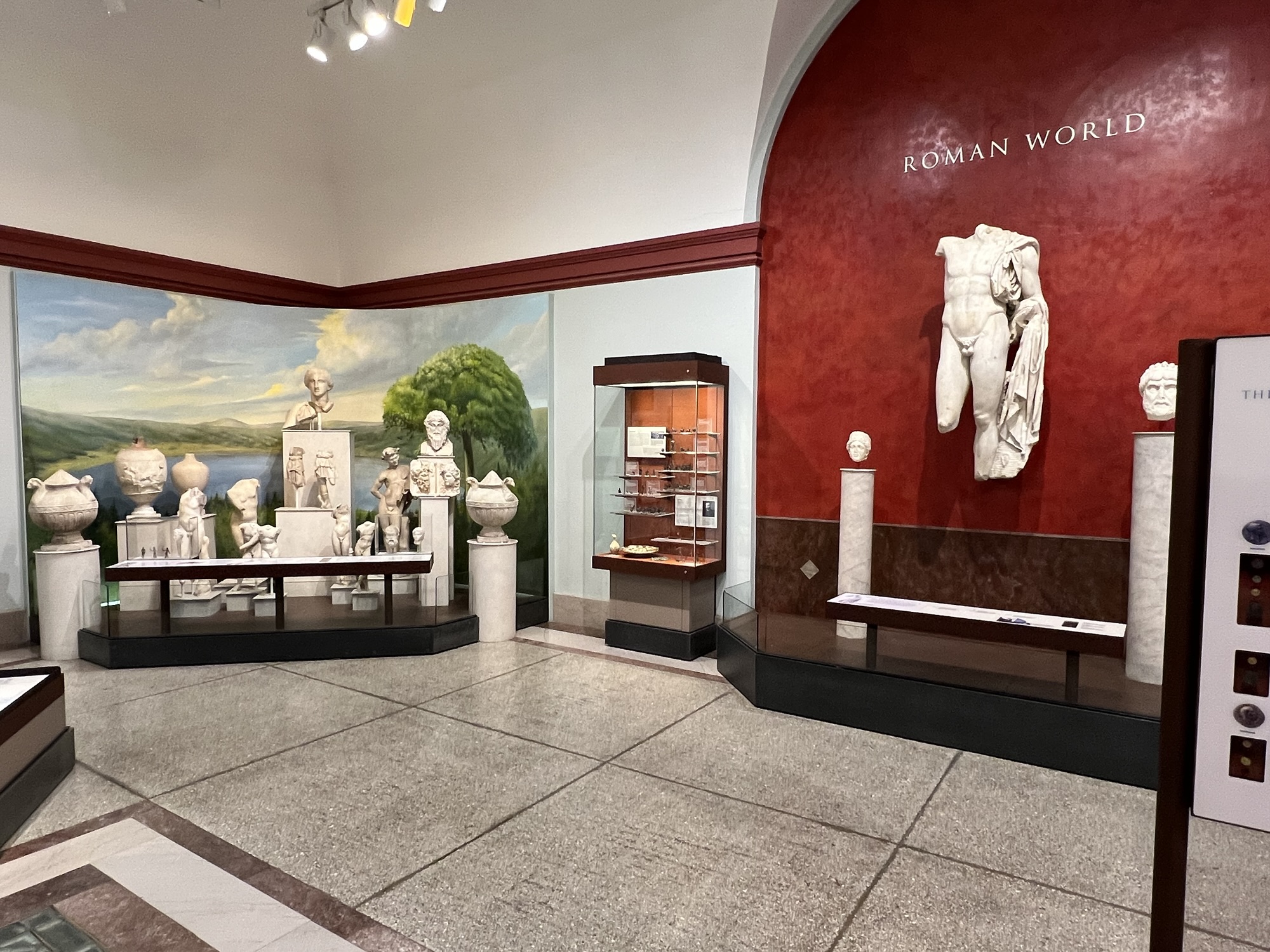
The Roman/Italian Galleries:

The entrance to The Roman Galleries

The Roman Galleries

The Roman Galleries

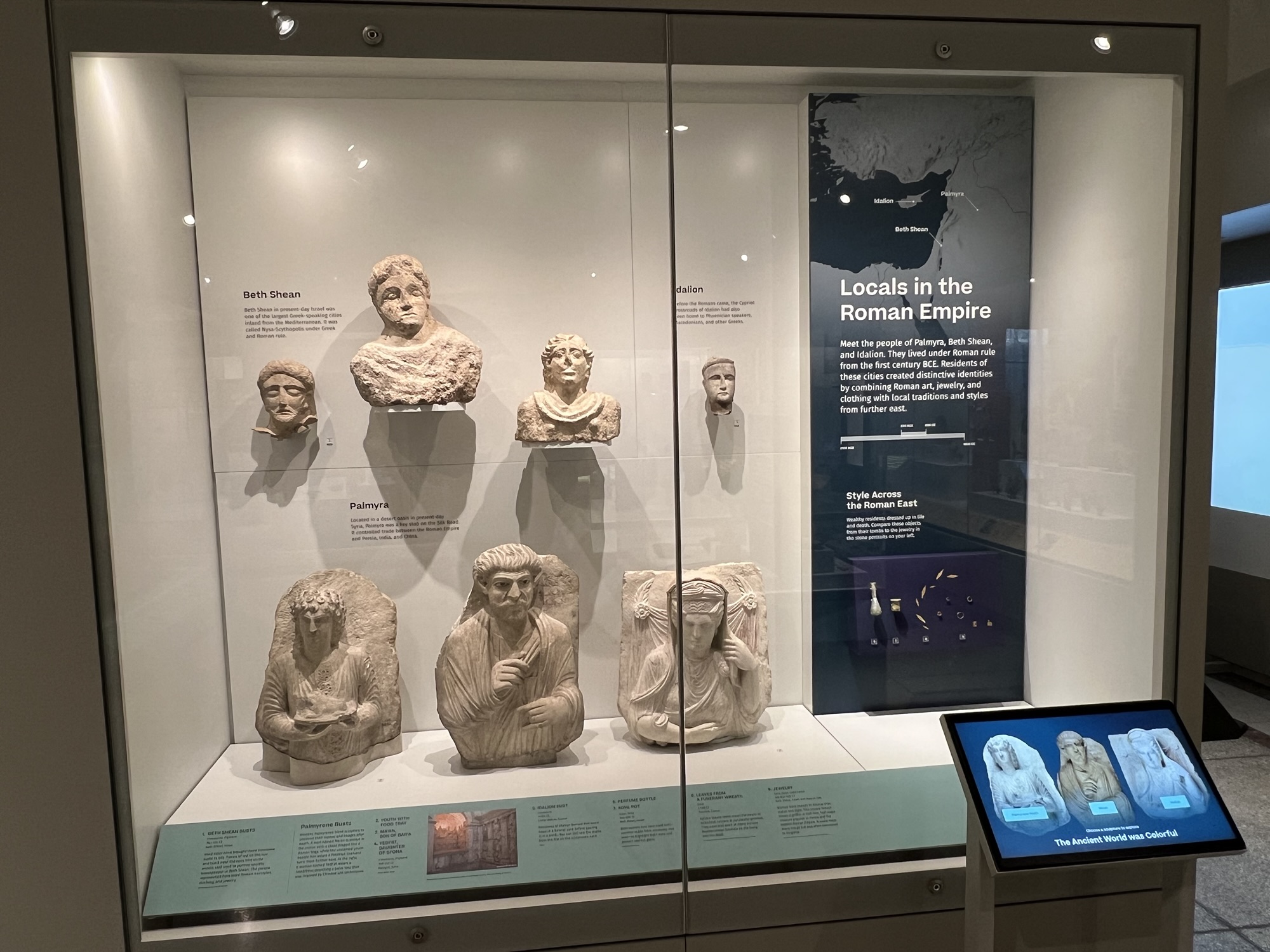
The Roman Galleries tell the story of the influence of Ancient Roman on the Mediterranean Sea. trade routes to the the Middle East and Asia and the influence of the Roman Empire on the world at the time.

The Pre-Columbian Gallery:

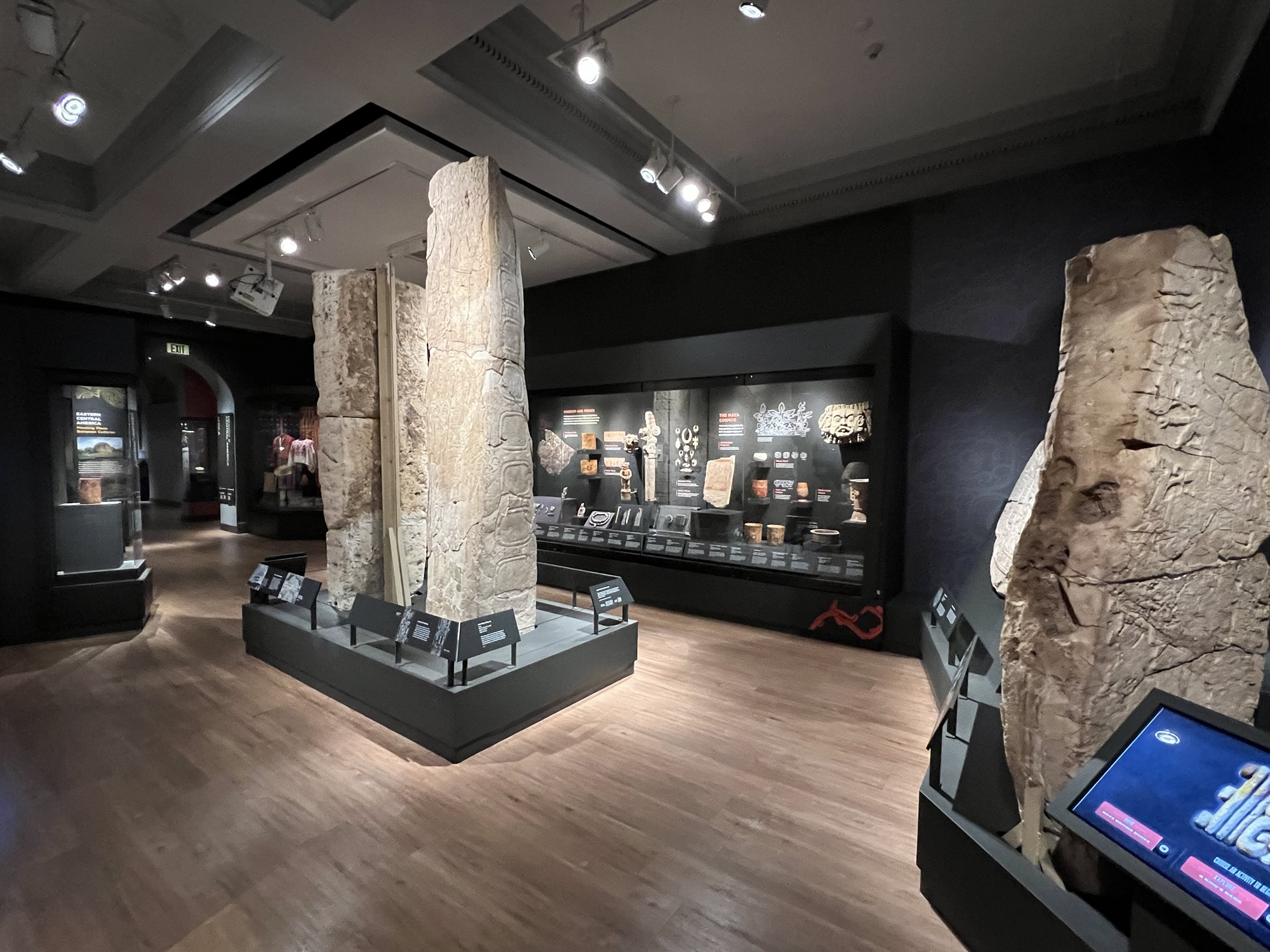
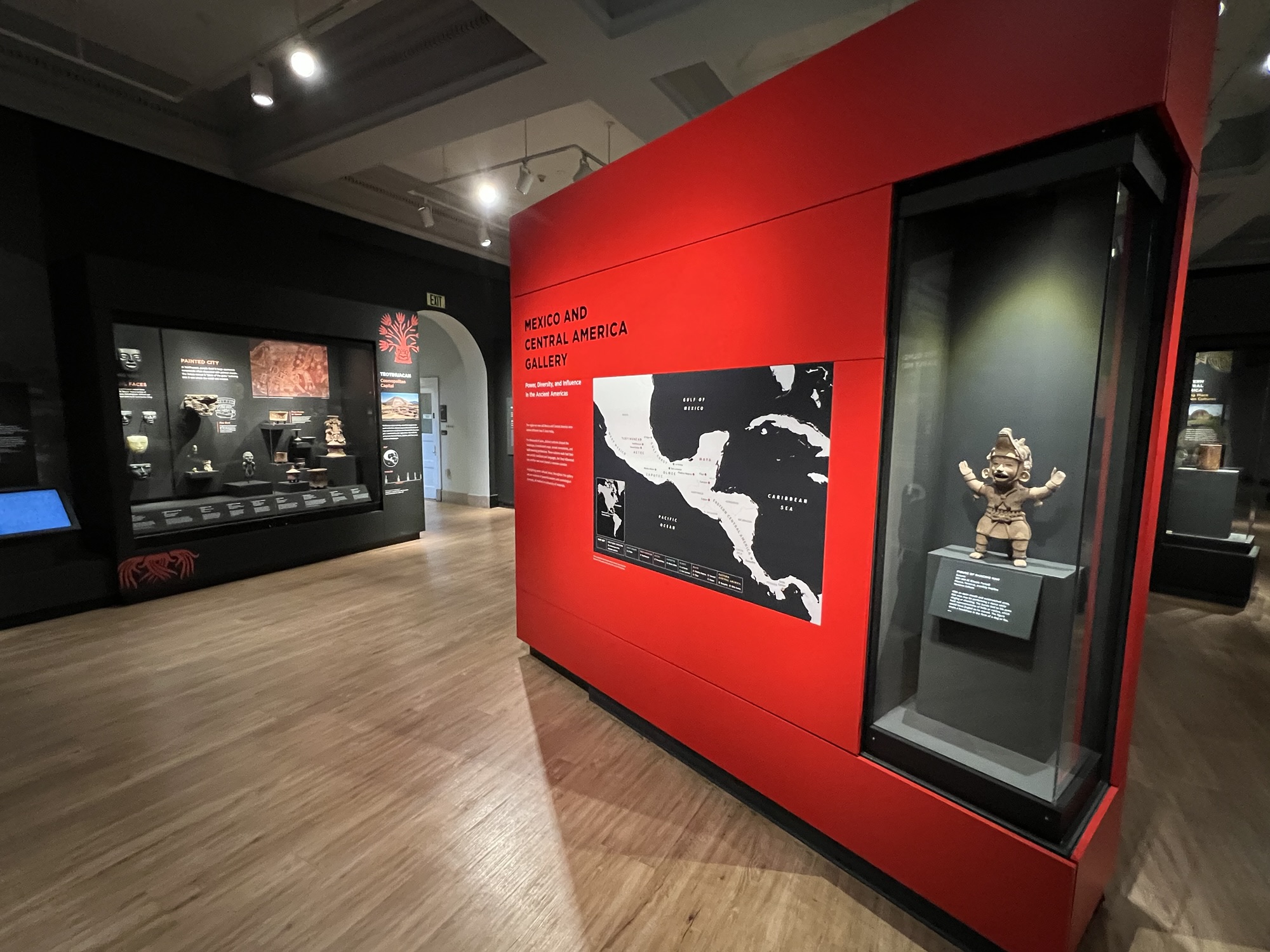
The Pre-Columbian exhibition is based on artifacts from the Mayan, Aztec and Incan civilizations. The artifacts show very advanced societies in both education, science and art.

The entrance to the Pre-Columbian galleries

The Pre-Columbia room

The Pre-Columbian galleries

The ‘Margarita’ panel

The ‘Margarita’ panel

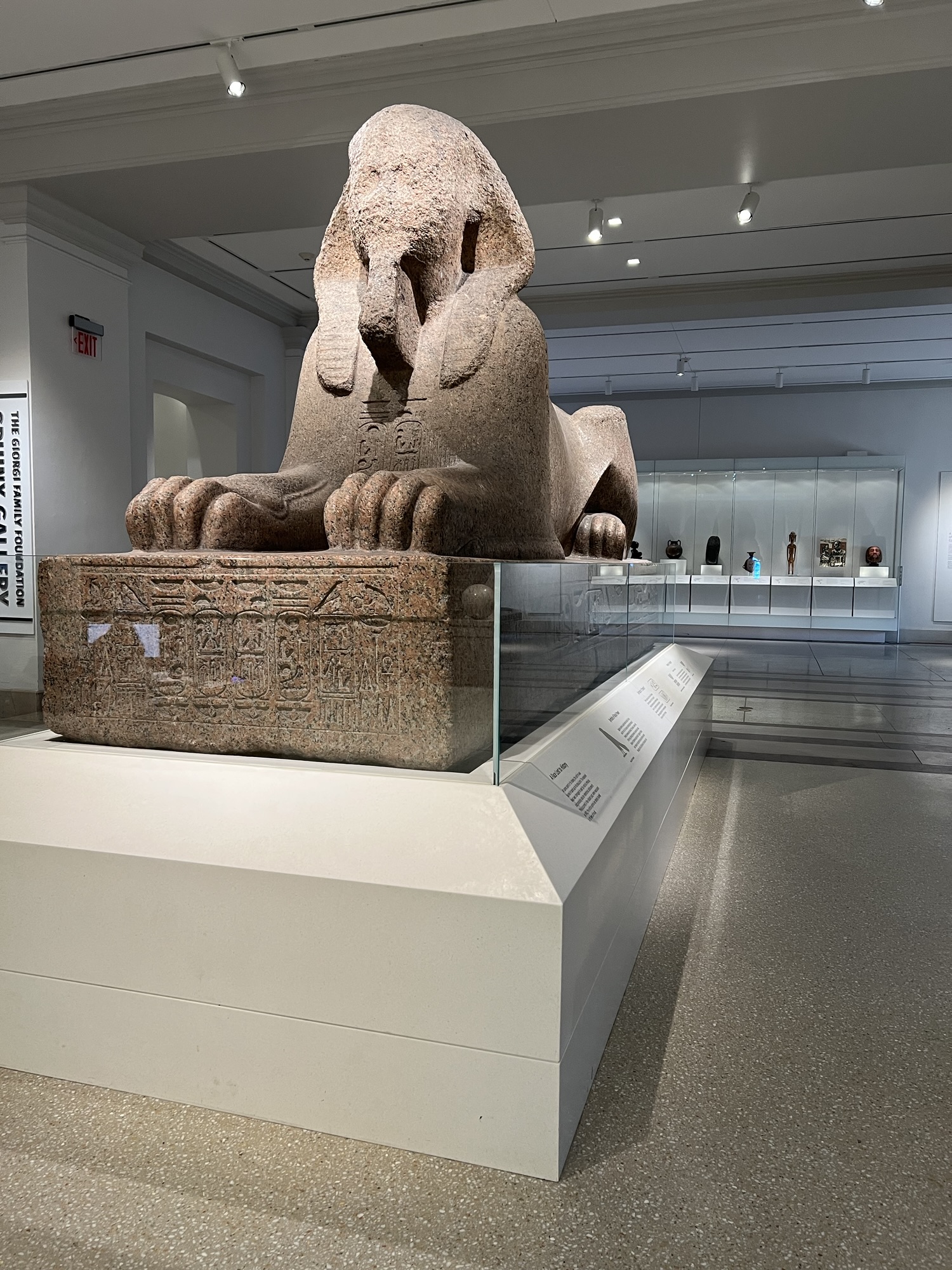
I also got a quick tour of the  Sphinx Gallery on my way out. On my most recent trip to the museum, I only had about an hour so I concentrated on the Egyptian Galleries and the special exhibition “The Stories We Wear”.

The Egyptian Galleries:

For a small museum, the Egyptian Galleries were pretty extensive. Much of the artifacts had come from Penn digs in Egypt back in the last century when museums used to sponsor and then fill their museums with artifacts. 

There is a selection of small statuary, jewelry and decorative objects. Some of the collection highlights are the Sphinx of Ramesses the Great from Memphis, Egypt 1293-1185 BC located in the Egypt (Sphinx) Gallery.

The Sphinx Gallery is very interesting

The Sphinx guards the Gallery

Egyptian Gallery artifacts

The main Egyptian Gallery

On my first trip to the museum as well as my most recent, I was able to quickly tour the Mexican Galleries with the statues of the Sun and Water gods and the stone calendars. The Standing Figure located in the Mexico and Central America Gallery from Veracruz, Mexico from 500-700 CE. The Gallery has one of the largest collections of Mayan Stone statues in the world.

In the Special Exhibition Gallery, “The Stories We Wear”:

The exhibition was based on how what we wear and change into transforms us into someone new. The exhibition featured sports uniforms, Chinese Opera gowns, Princess Grace Kelly’s formal dress, drag performers costume as well as an array of accessories that adorn people.

“The Stories We Wear” exhibition

https://www.penn.museum/on-view/galleries-exhibitions/the-stories-we-wear

More of the interesting galleries that I visited:

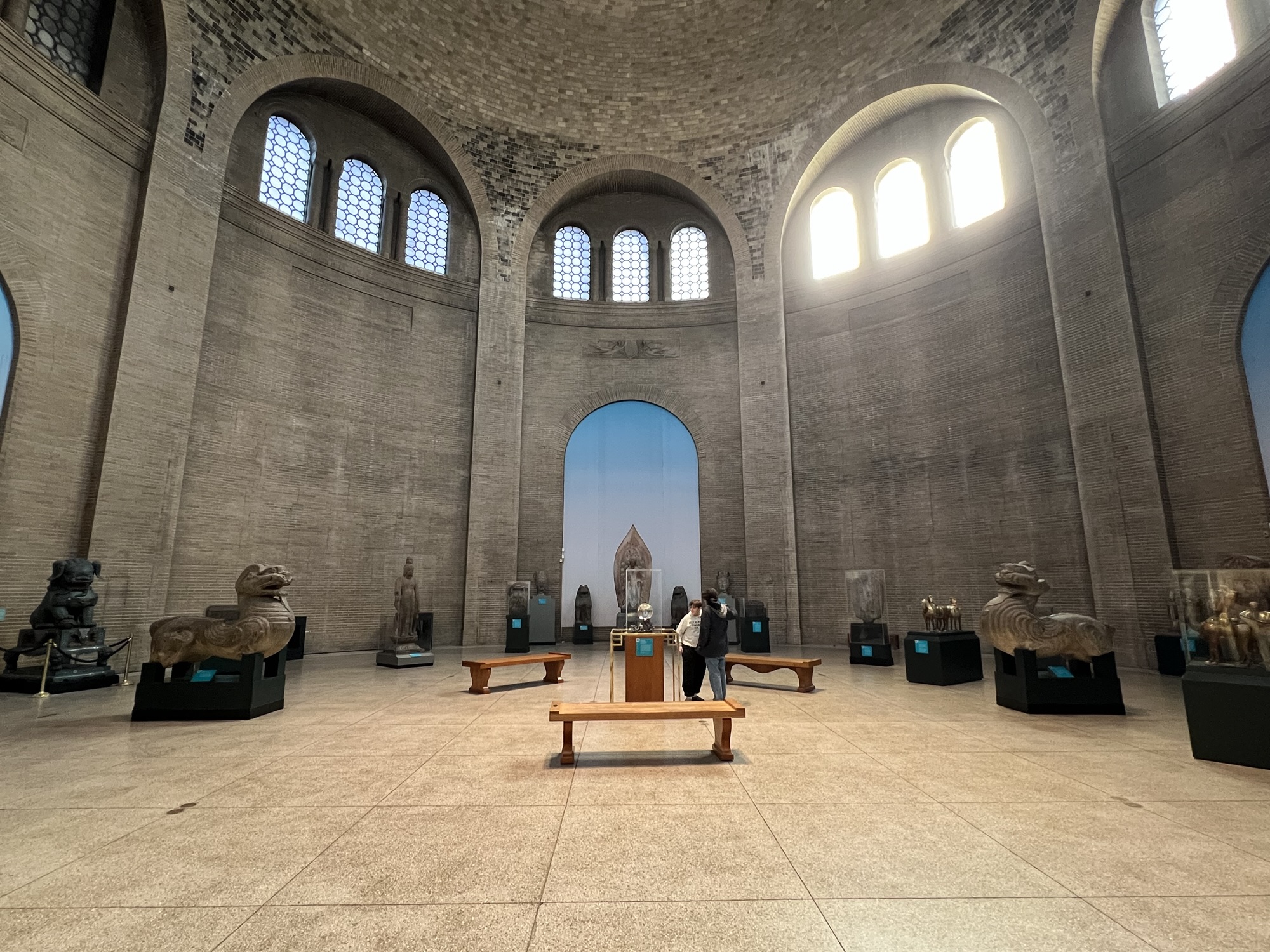
The galleries at the Penn Museum

The Middle Eastern Galleries

From Groundbreaking excavations to ongoing innovation. Our journey as an institution began with an excavation of the ancient Mesopotamian city of Nippur, the first American excavation in the Middle East and a groundbreaking undertaking in the history of archaeological research.

Ancient works of art

Since that time, over 300 field excavations and anthropological research projects around the world have set us apart as an active research and educational institution. Today, our mission is fulfilled by 22 curators, 5 teaching specialists and over 150 affiliated consulting scholars.

The Mesopotamians Galleries

We are stewards of our remarkable history and humanity. Out vast and varied collection of archaeological finds and ethnographic objects is organized in eleven curatorial sections documenting the peoples of Africa, Asia, Oceania and the Americas.

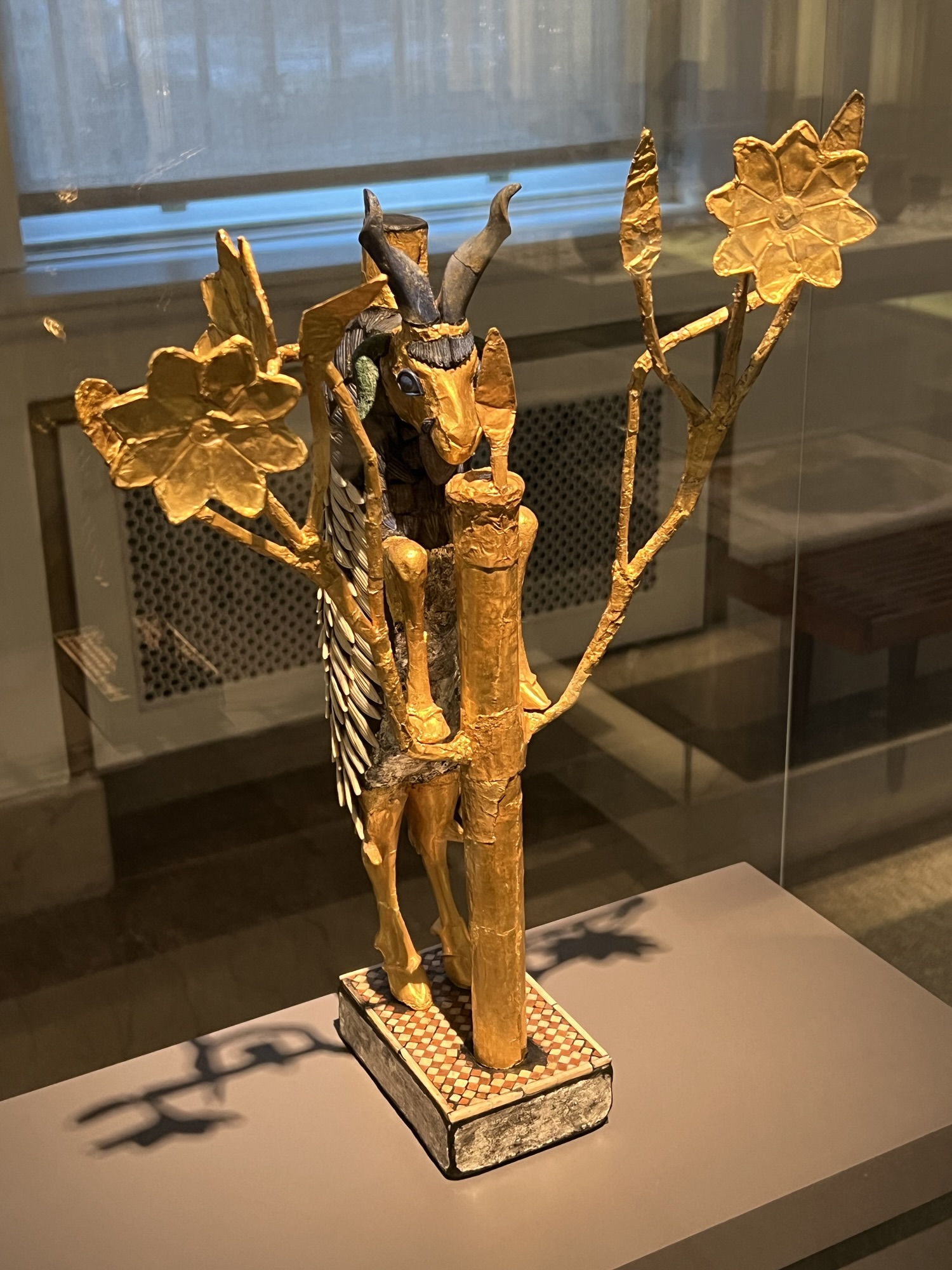
The art from Ur

Harp from the City of Ur

Ram hiding in the thicket from the City of Ur

The Queen Puabi display

These holdings as well as the Museum Archives of excavation and research projects, are used by researchers and borrowing institutions worldwide. And our curators and interpretive planners draw on these rich resources to provide compelling context to our galleries, where visitors can travel the globe in a day.

Middle Eastern works with a Roman influences

The Penn Museum Mission:

In bridging archaeology, the study of objects made by humans, with anthropology, the science of humanity, we chart a course for finding one’s own place in the arc of human history.

We are dedicated to telling powerful stories that emerge from excavations and research across the world. And nowhere else in the Western hemisphere will you be greeted by a 3000 year old, 15 ton Egyptian sphinx!

If there is one thing that 10,000 years of human history have taught us, it is that we have more in common than we think. In the canon of human existence, our past, present and future paths are inextricably intertwined.

What does the Code of Hammurabi have to do with the U.S. constitution? How can archaeology help to predict climate change? And what radical social changes accelerated by ancient plagues could be replicated in a post-COVID world?

Information about the museum:

Group Tours: Discounts are available for groups of 10 or more. Private tours and lectures are offered. Call (215) 746-8183 or email grouptickets@pennmuseum.org for information and reservations.

Public Gallery Tours: Penn Museum docents offer tours most Saturdays and Sundays at 1:30pm and Wednesdays at 6:30pm. Please check our website, http://www.penn.museum, for topics (Tour topics are subject to change; cancellation of tours may occur).

Accessibility: The Museum is wheelchair accessible and provides other accommodations. http://www.penn.museum/visit/accessibility.

Parking & Transit: Visit http://www.penn.museum/directions-and-parking for parking information. Parking meters and lots are nearby. The Museum is near SEPTA bus routes 21, 30, 40 and 42 and the SEPTA University City Station (Regional Rail trains).

Rent the Penn Museum: Hold your next special event in our beautiful historic building. http://www.penn.museum/rentals.

The Penn Museum sparks curiosity, wonder and endless exploration. We invite everyone to join our incredible journey of discovery and dig deeper. The museum is also a nice place to relax at after the games were over and walking all over the Penn Campus. The front of the museum has nice gardens and seating area right near the museum’s fountains and pool. There is a lot more I want to explore at the museum but that is for my next trip to Philadelphia.

The front of the Penn Museum on the Penn Campus