
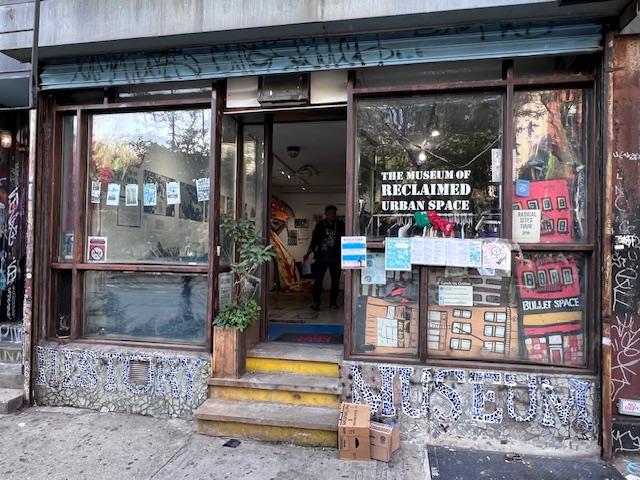
The Museum of Reclaimed Urbanspace
155 Loisaida Avenue (Avenue C)
New York, NY 10009
(917) 577-5621
Open: Sunday 12:00pm-5:00pm/Monday-Tuesday Closed/Wednesday-Saturday 12:00pm-5:00pm
Admission: Suggested donation $5.00
My review on TripAdvisor:

The Museum of Reclaimed Urbsn Space at 155 Loisaida Avenue (Avenue C)
The Mission of the museum:
(from the museum website)
The Museum of Reclaimed Urban Space preserves the history of the Lower East Side’s grassroots activism and promotes environmentally-sound, community-based urban ecologies.
We do this by:
*Archiving and documenting the history of the Lower East Side’s activism.
* Educating visitors with exhibitions and guided tours of the neighborhood.
*Empowering individuals to participate in the drive for sustainable change with workshops and events.

Information of the museum
While walking around Alphabet City for my blog, MywalkinManhattan.com, I came across the Museum of Reclaimed Urban Space on the fast gentrifying Avenue C. Alphabet City, technically part of the East Village, has been going through mass gentrification since the early 2000’s. One of the reasons why the neighborhood has not been fully gentrified as been the Public Housing in the upper parts of the neighborhood and lining Avenue D.
The predicament though is even the public housing is going through a renewal with the renovation of the grounds and the buildings with new lighting, landscaping and sidewalks. Hurricane Sandy had really damaged the infrastructure of the complex and the City has been working on this for a few years (Hurricane Sandy was in 2012).
What has been happening in the lower parts of Manhattan as well as parts of Harlem, East Harlem and Washington Heights is that these have become the ‘last frontiers’ for gentrification as New York City keeps getting more expensive. The museum captures the transition of the neighborhood from a burnt out section of the Lower East Side with the bankruptcy of the City to show the grit of the neighborhood not to let their neighborhood decline.
What I enjoyed seeing is how the neighborhood residents banded together to take empty lots and turn them into community gardens, many of them still exist today. These tiny pockets of green have made the neighborhood more desirable to live in. With the expansion of NYU and Pace into the neighborhood and boom of college students moving into the neighborhood made safer by these long term residents have been changing the makeup of Alphabet City. The museum did a wonderful job showing how they banded together and fought the City as it improved in the 1990’s and tried to ‘plow over’ these gardens. There presence today is what gives the neighborhood its character.

The founding of the museum

The history of the neighborhood

The History of the Museum:
(from the museum website)
he Museum of Reclaimed Urban Space (MoRUS) was founded in 2012 by members of Times Up! environmental organization and based in C-Squat. As a living history of urban activism, MoRUS chronicles the LES community’s history of grassroots action. It celebrates the local activists who transformed abandoned spaces and vacant lots into vibrant community spaces and gardens. Many of these innovative, sustainable concepts and designs have since spread out to the rest of the city and beyond.
The museum showcases an often untold version of New York City history through photography, videography, authentic artifacts, and documents. MoRUS is a 100% volunteer-run organization committed to open, community-based action. With this space, we invite visitors to learn, engage, and participate in grassroots activism of the past, present, and future.

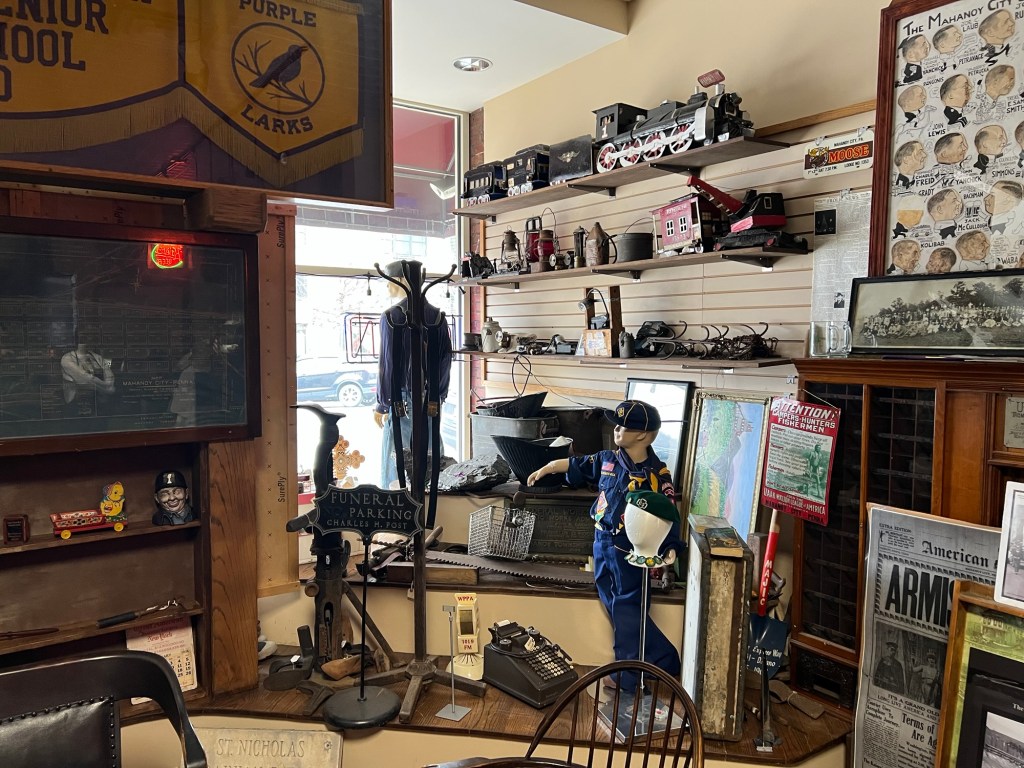
One of the interesting masks that dot the corners of the museum

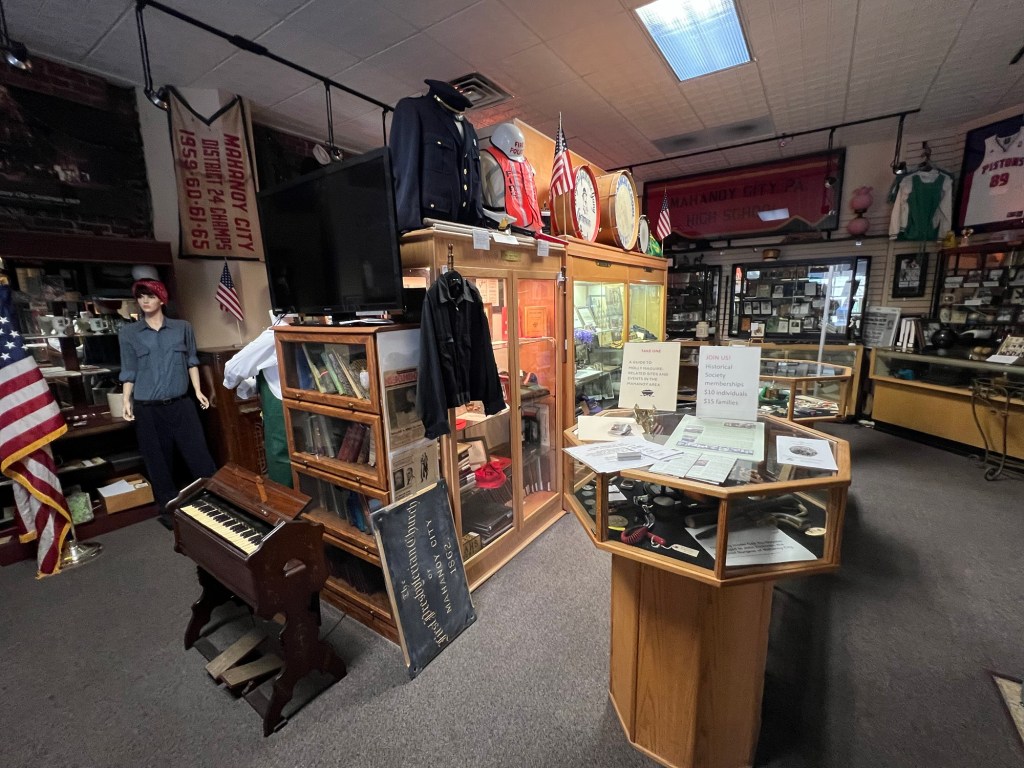
A view of the inside of the museum
The Collection and Purpose of the Museum:
(from the museum website)
MoRUS was born in the East Village out of the observation that the neighborhood and its inhabitants, undergoing rapid transformations, are beginning to forget about their own history. When New York City almost went bankrupt in the seventies, community members struggled to preserve and restore their neighborhood. These activists have become fewer, and the new residents, who reap the benefits of their predecessors’ efforts, are left unaware.
Noticing it, Bill DiPaola and Laurie Mittelmann, both long-term residents of the East Village and members of Time’s Up! Environmental Organization, were determined to provide new opportunities for long-term activists to share their story and to pass on their experience and knowledge firsthand to new generations.
Located in the historic building C-Squat, MoRUS officially opened its doors in 2012 as a non-profit organization. The museum’s storefront was renovated almost entirely by volunteers. They did electrical work and plumbing, built walls, ceilings, and floors, and constructed furnishings such as a reception desk and an elaborate mosaic sign. This process took eight months, and involved other volunteers simultaneously sourcing funds and exhibitions, designing tours, and creating structure for the volunteer collective that runs the museum, such as guidelines, by-laws and committees.
Decisions are reached, events are planned, and new volunteers are plugged in through weekly general meetings and committee meetings. Committees include marketing, fundraising, administrative, merchandise, programming, tours, and exhibition/graphic design.
The Museum has become an important fixture in the neighborhood, not only to preserve the untold story of the East Village, but also to encourage community activism and sustainable development.

 Visiting a Museum: The Unique, Unusual, Obscure and Historical