Tag: MywalkinManhattan.com

Ferromonte Historical Society of Mine Hill-Bridget Smith House                                           124 Randolph Avenue                                              Mine Hill, NJ 07803

Ferromonte Historical Society of Mine Hill-Bridget Smith House 124 Randolph Avenue Mine Hill, NJ 07803

Ferromonte Historical Society of Mine Hill-Bridgit Smith House

124 Randolph Avenue

Mine Hill, NJ 07803

(973) 989-7095

http://ferromonte.org/

Open: Sunday-Friday Closed/Saturday-Select Saturdays during the Spring and Summer Season-See website

Admission: Free but donations are accepted

My review on TripAdvisor:

The Bridget Smith House from the road

I went to visit the Bridget Smith Homestead Museum run by the local historical society and the house was an interesting step back into time when mines were located all over this region. The original house itself was built around 1855 as housing for people working in the mines and the house was bought by the namesake woman in 1879, when as a widow she moved in with her children. When she died in 1907, the house was rented to Ida and Jesse Mc Connell and Ida ended up living here for 78 years before she died in 1993 at 103. After she passed, descendants from the Smith family donated the home to the town as a historical site (Bridget Smith Home Historical website).

The Bridget Smith House

The house is an early example of mining life in the area. It was practical and cost effective to families. Being a two story/two home structure, the main two rooms were on the first floor with a heating unit on the bottom and a large room on the second floor for sleeping. My tour guide told me at one time, one family lived in one of the sides of the house with six kids. I am not sure how that all worked out.
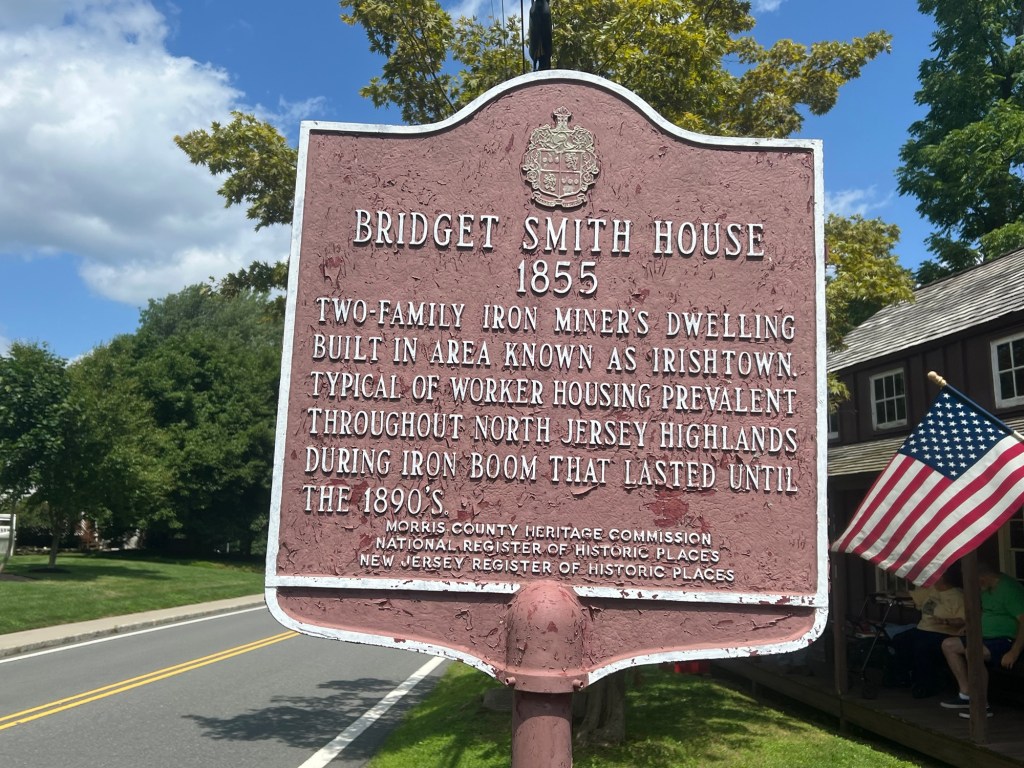
The historic sign on the property

History of the area:

From the late 1700‘s to the late 1800‘s, New Jersey was one of the major iron producers in America. The northwestern part of the state, known as the “highlands” was an important iron mining area. In the 1840‘s Irish settlers came to America for work. On August 10 1854, an Irish settler named Thomas Malona (later spelled Maloney) purchased a 30×150 lot in the “Irishtown” section of Mine Hill and built a house on it (Bridget Smith House website).

The information sign that welcomes you

Little changes have been made to the structure since the mid 1800‘s. Electricity was added in the 1940‘s and running water was added in the 1980‘s. In 1993 the great grand-children gave the house to Mine Hill for $1 to be preserved as the “Bridget Smith Homestead”. Restoration began soon afterward and work continues to this day (Bridget Smith House website).

The Dickerson family of the Dickerson Mines
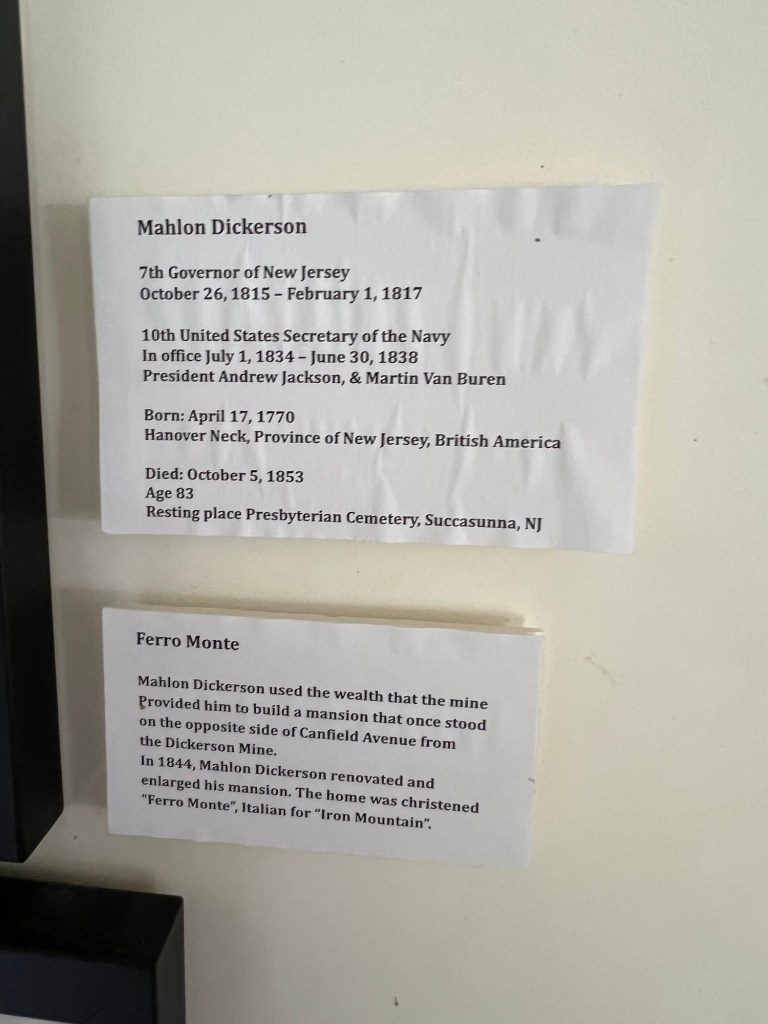
The sign on the Dickerson family

The grave of Mahlon Dickerson in the Orchard Street Cemetery
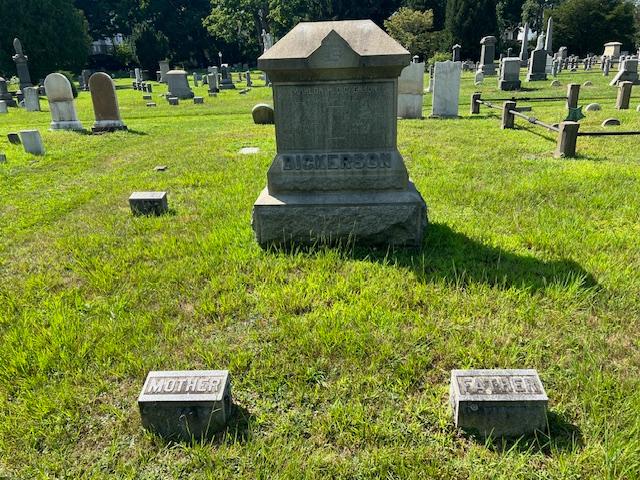
The Dickerson Family plot at the cemetery

The history of the mines in the area

This area of New Jersey was and still is rich in ore and the amount of mines in the area made this a vibrant area for industry. When it was not longer cost effective or the mines ran out of ore that could be reached, the mine was sealed off. As the industry wore off so did the area and people moved on.
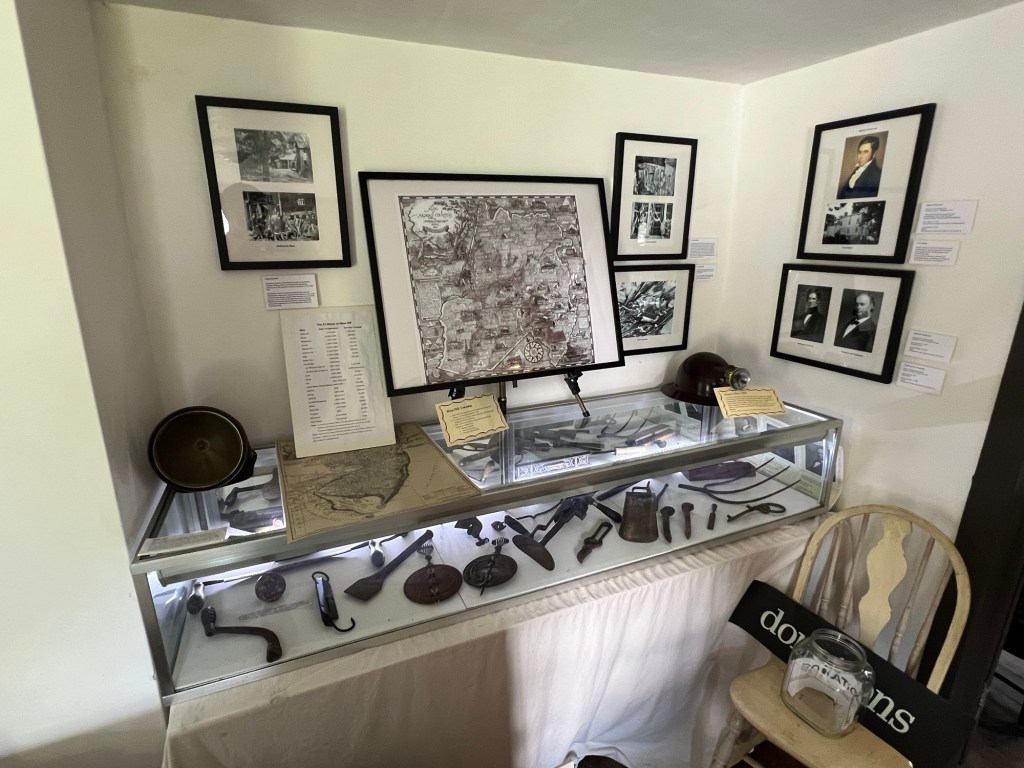
Mining and work equipment

Items inside the house and office and some iron ore samples

Miner’s lamp-examples of mining equipment
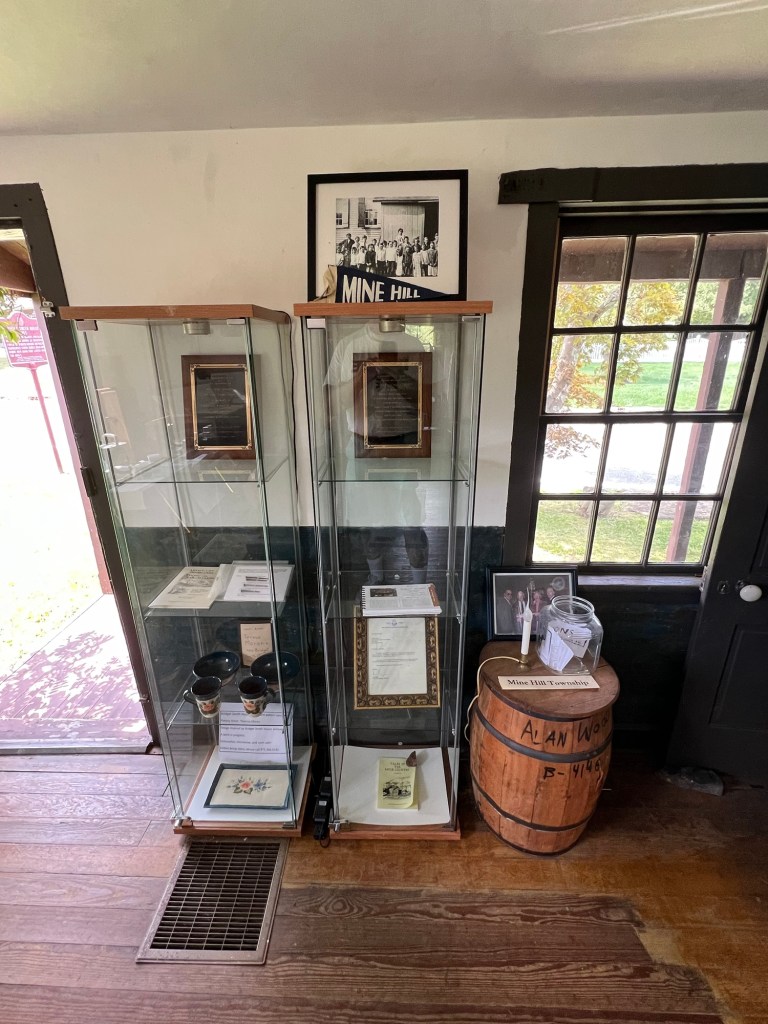
Paperwork and accolades
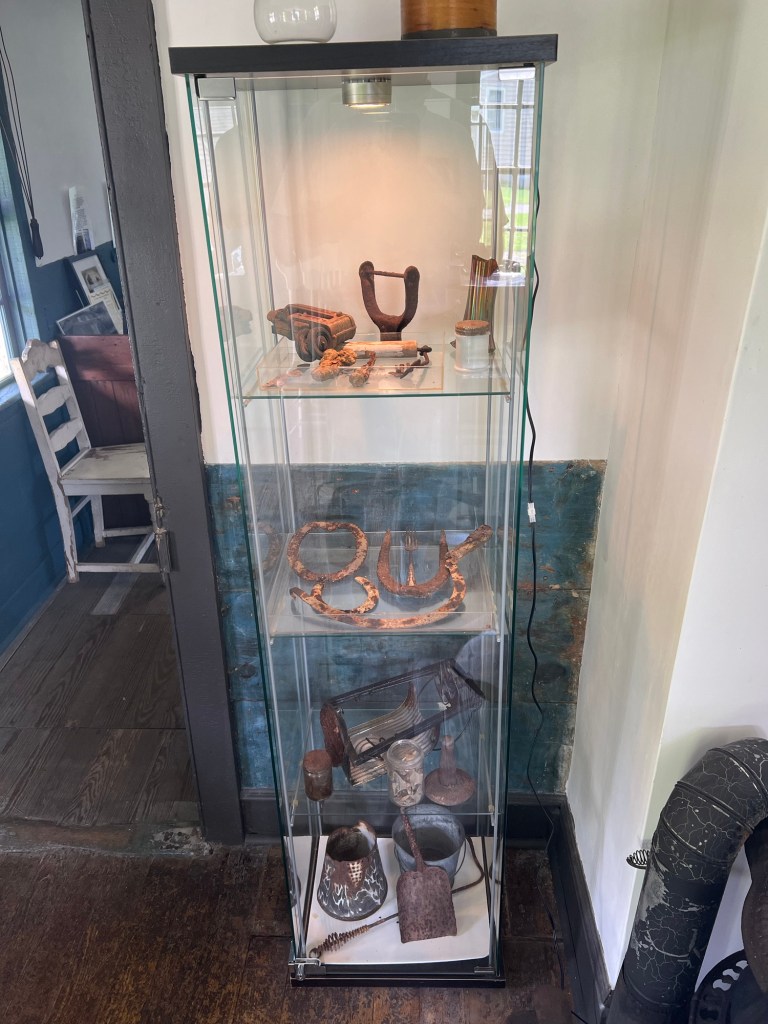
Use of horses and donkeys at the mines
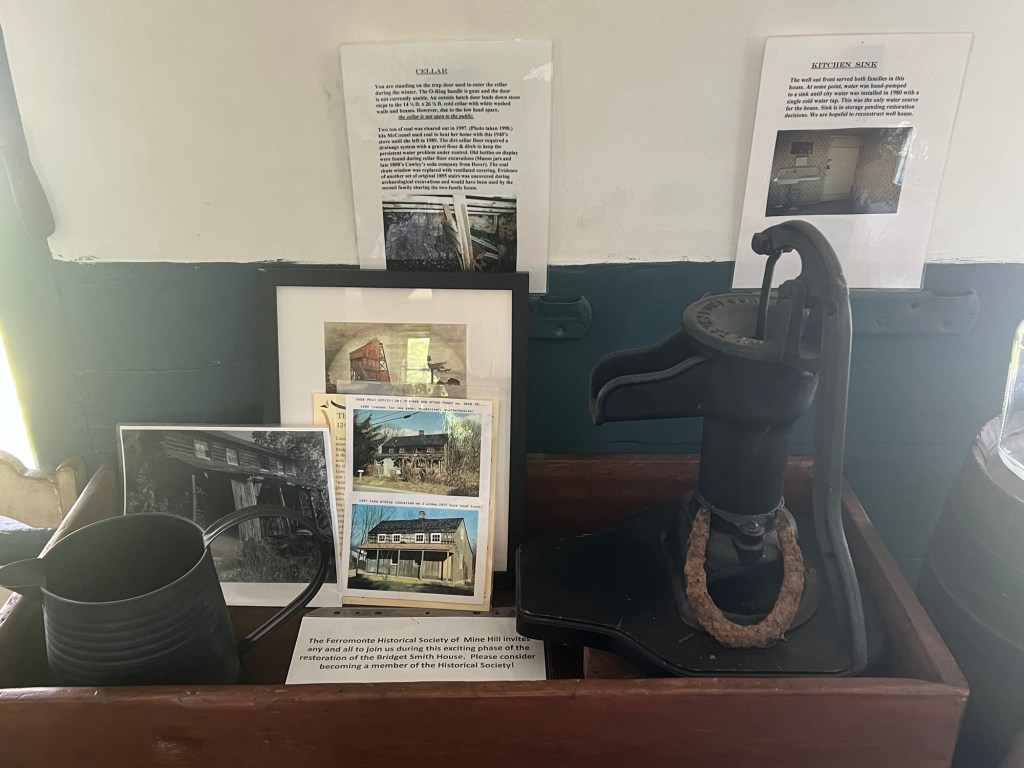
The original view of the house and its renovation as a museum
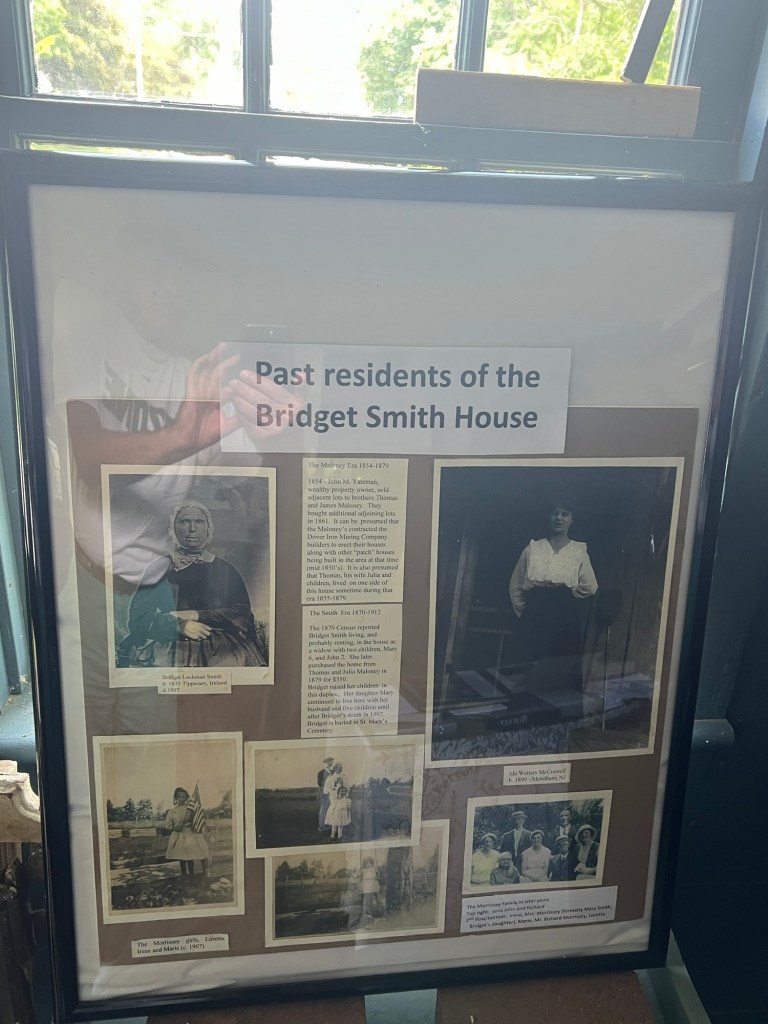
The former residents of the house and their stories

In 1879 the house was sold for $300 to Bridget Smith (1835-1907) a young widow with two children. Smith and her late husband John, who was killed in the mines, lived in Mine Hill since 1860. Bridget Smith lived in the house until her death in 1907. In 1912, the house was rented to a young couple, Jessie and Ida McConnell. Ida McConnell lived in the house for the next 78 years. She died in the late 1990’s at the age of 103 (Bridget Smith House website).

The back room on the other side of the house

Some of the equipment to make cloth

Family life at the house
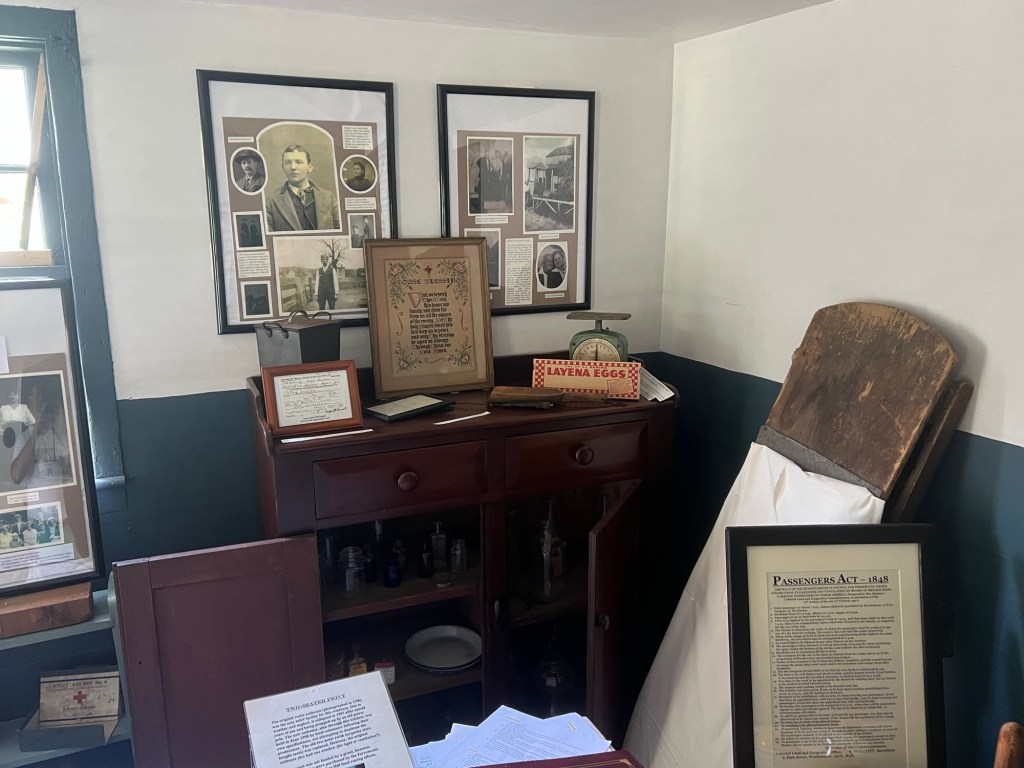
Family items
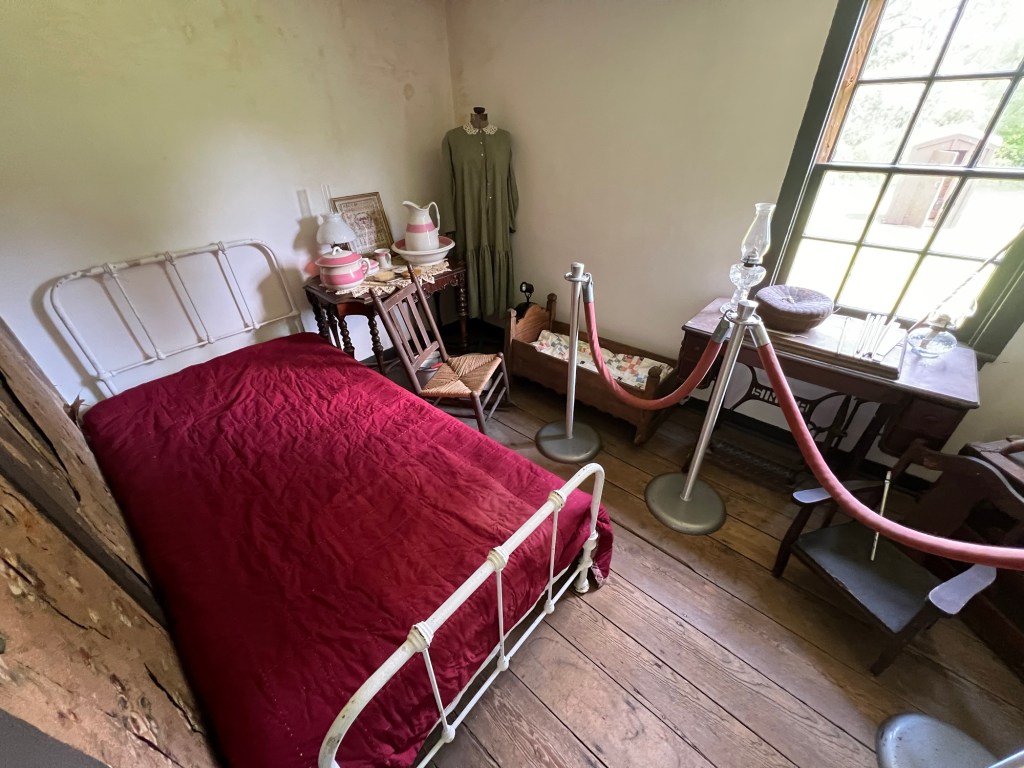
An example of a miner’s bedroom

The backyard of the Bridget Smith house with the outhouse
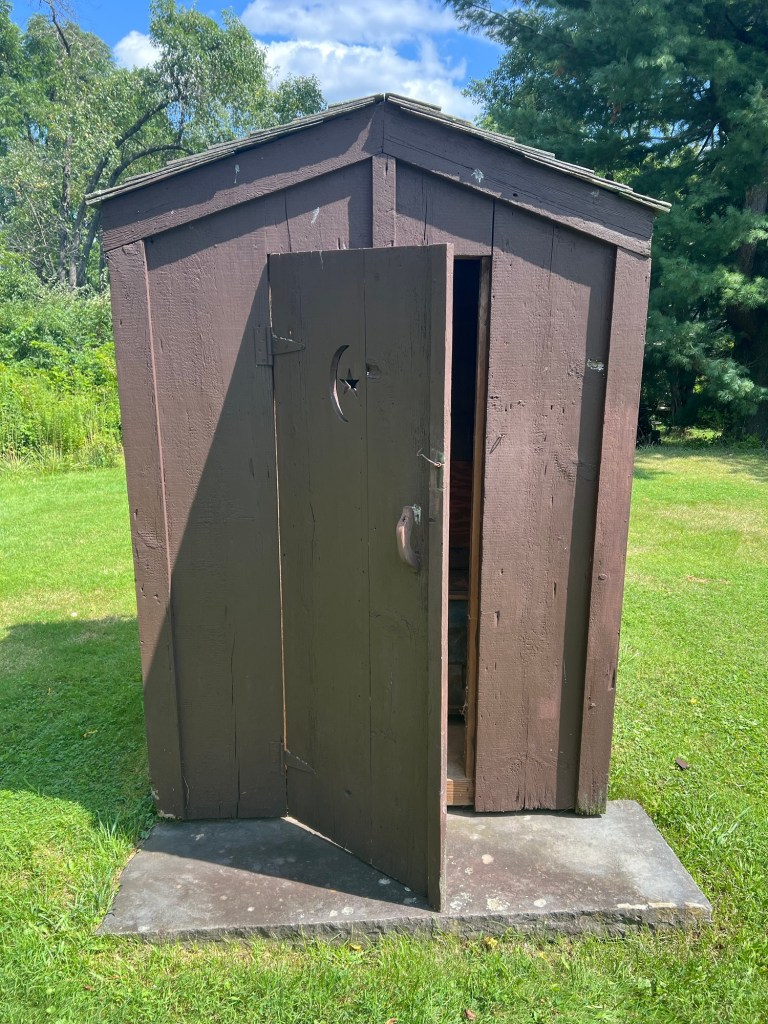
The two seat outhouse in the back of the house
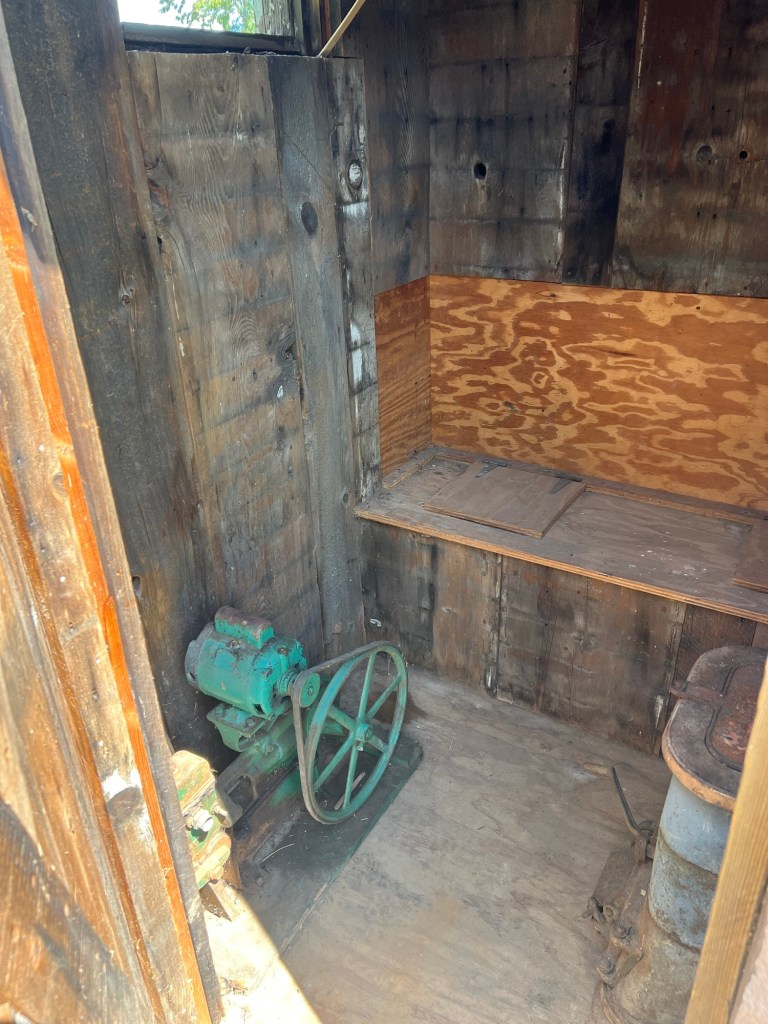
The inside of the outhouse is heated
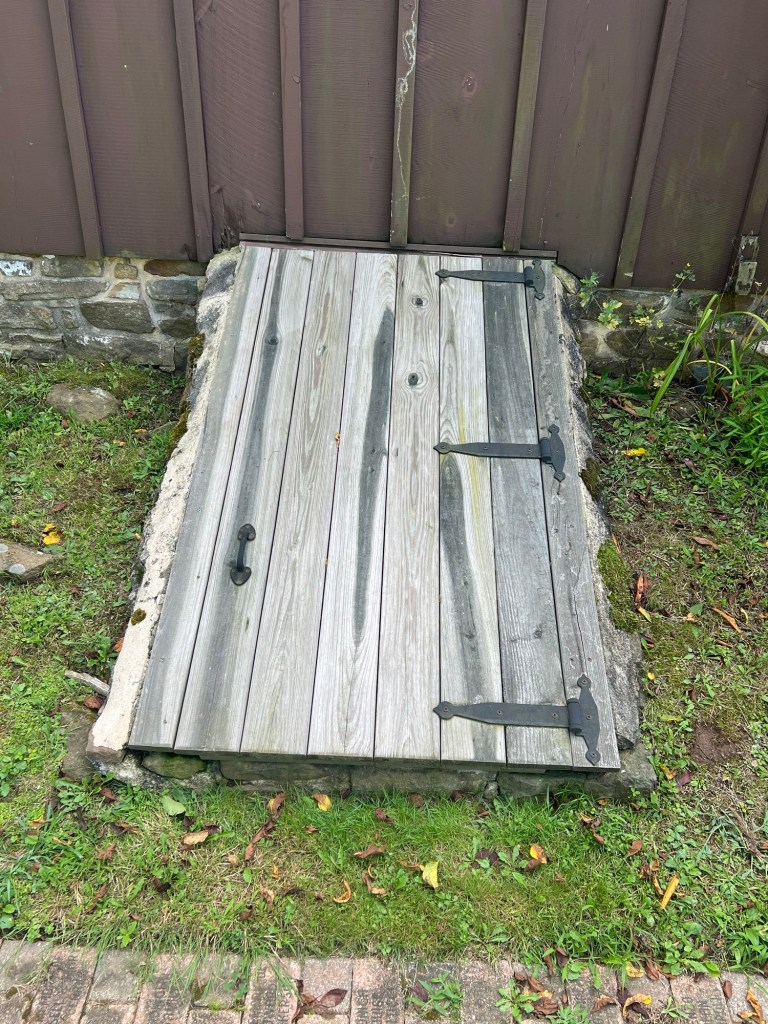
The entrance to the basement
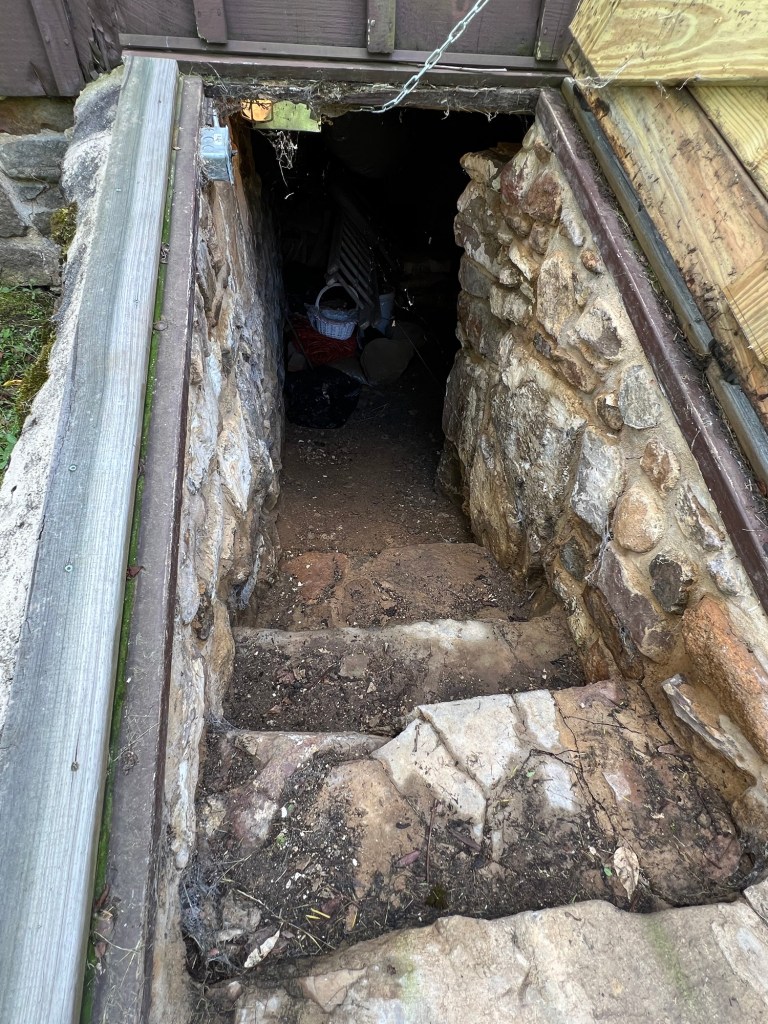
The entrance to the basement was filled with cobwebs (Don’t go down there)

The house is part of the Women’s Heritage Trail

The house is listed on the New Jersey and National Registers of Historic Places. It is also part of the New Jersey Women’s Heritage Trail. The museum is operated by the Ferromonte Historical Society (Bridget Smith House website).

The house tour when the site is open in a look into the life of a mining family before and after the Revolutionary War and how the area changed with the ups and downs of the industry. It is also a glimpse into the life of early New Jersey family and watching a community progress into the modern era.
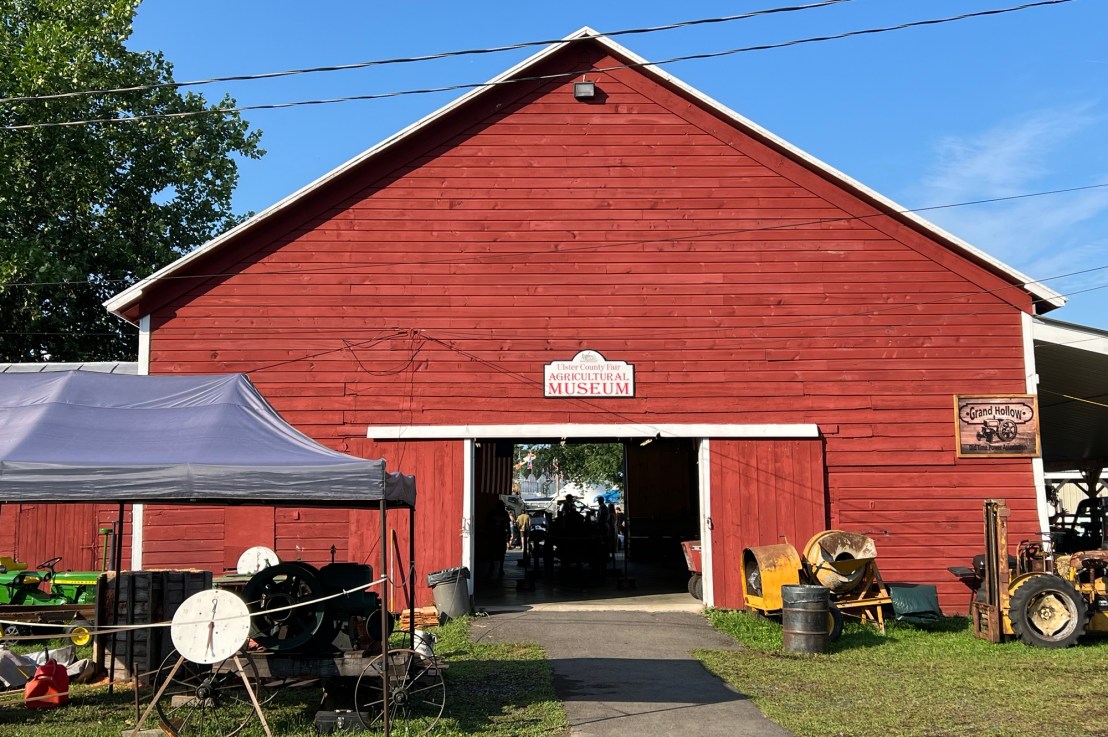
Ulster County Agricultural Museum-Ulster County Fairgrounds                                             249 Liberty Road                                                    New Paltz, NY 12561

Ulster County Agricultural Museum-Ulster County Fairgrounds 249 Liberty Road New Paltz, NY 12561

Ulster County Agriculture Museum-Ulster County Fairgrounds

249 Liberty Road

New Paltz, NY 12561

(845) 255-1380

Open: When the fairgrounds are open

Admission: Free but donations are accepted

My review on TripAdvisor:

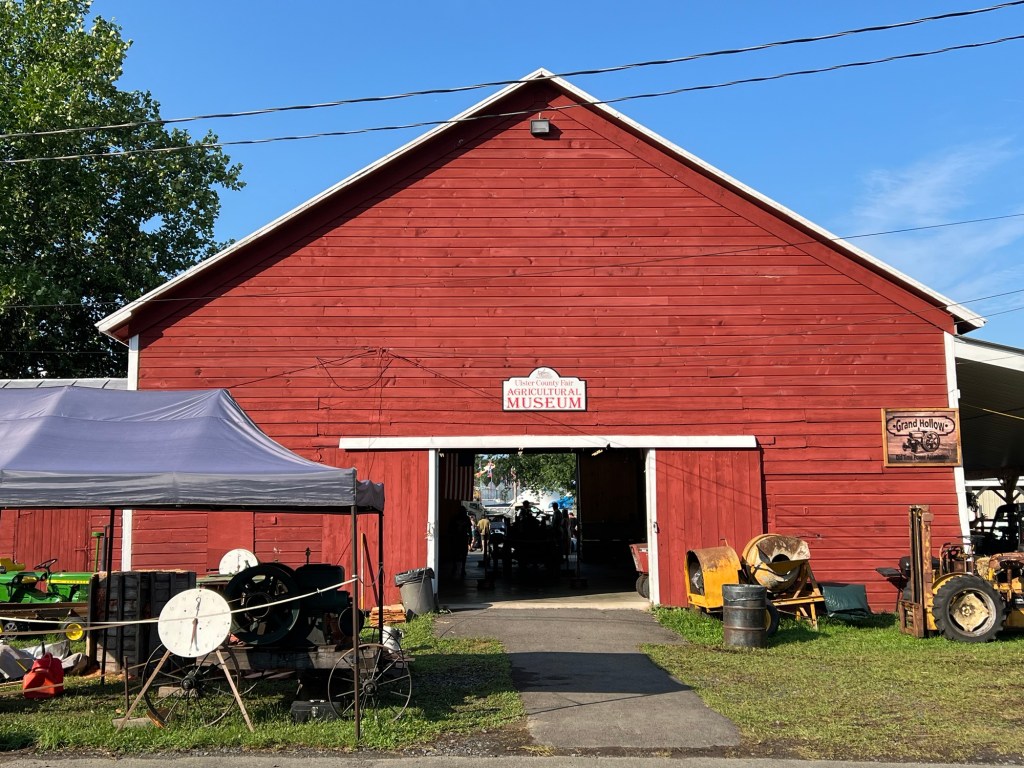
The Ulster County Fair Agricultural Museum at the Ulster County Fairgrounds

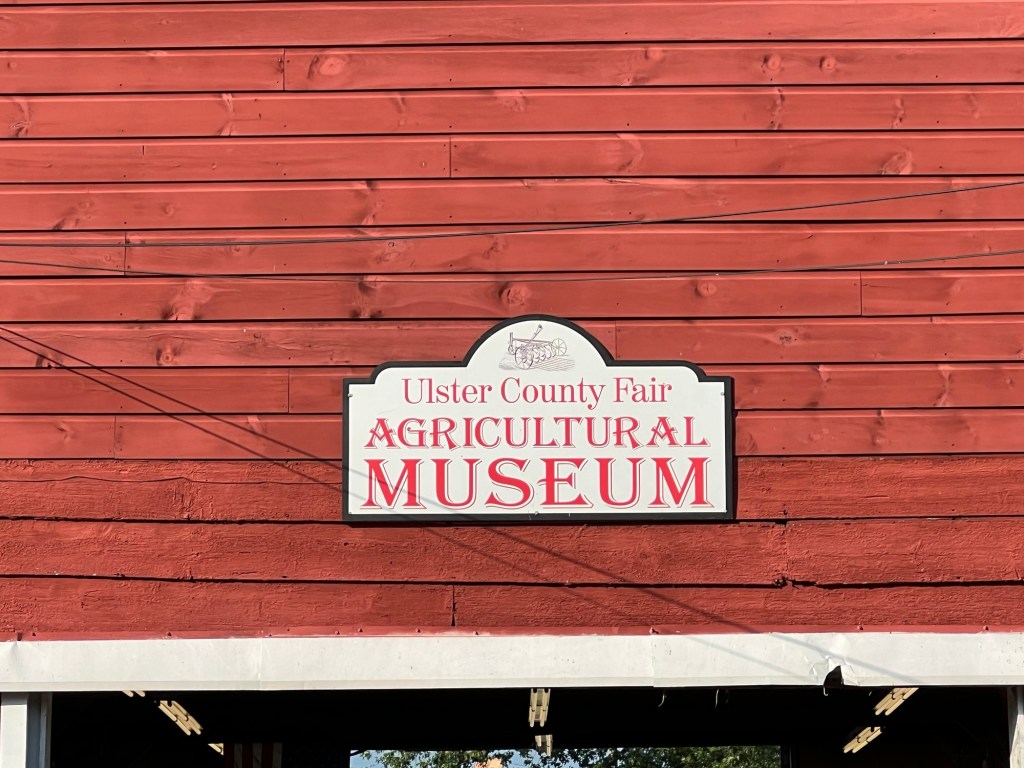
The sign at the entrance of the museum

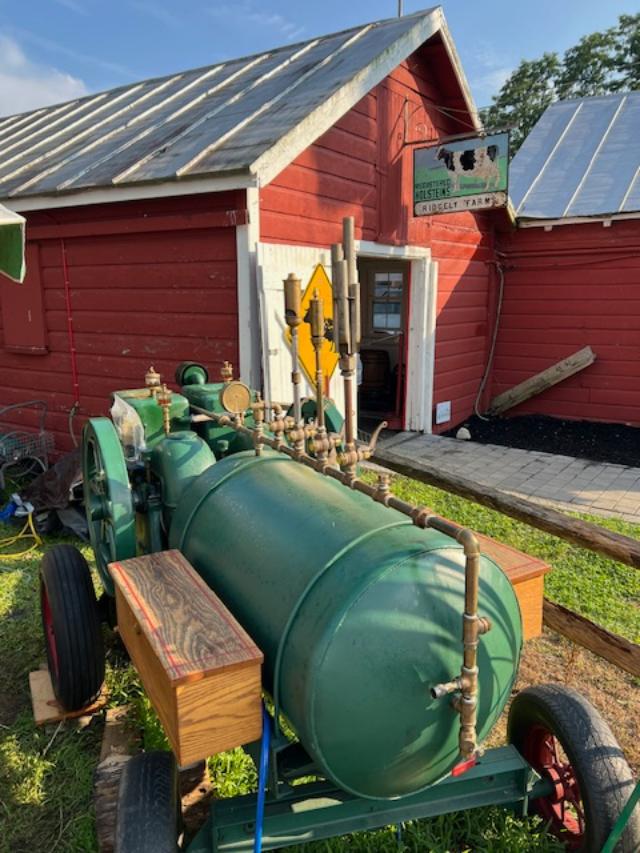
Display outside the entrance of the museum

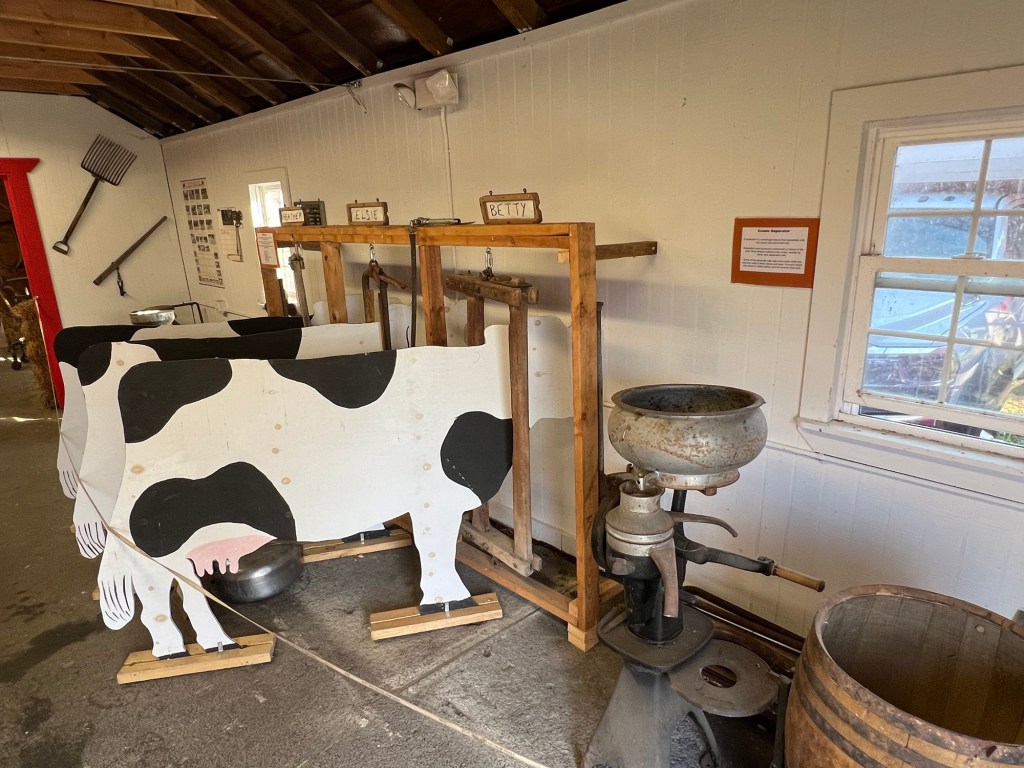
The Ulster County Fair Agricultural Museum is one of the more interesting and detailed agricultural based museums I have seen. The museum houses an extensive collection of farm equipment that includes machinery for the fields, milking equipment including how to milk a cow properly and the progress on egg hatchery and production. The museum highlights these changes especially in the last hundred years.

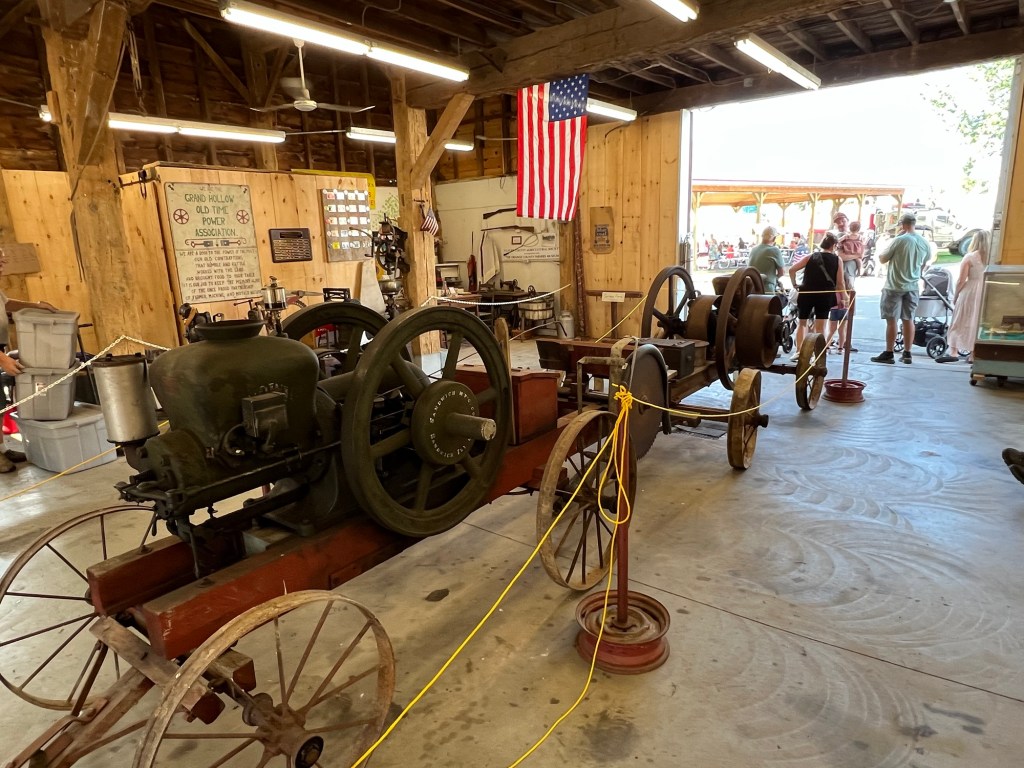
The main gallery of the museum

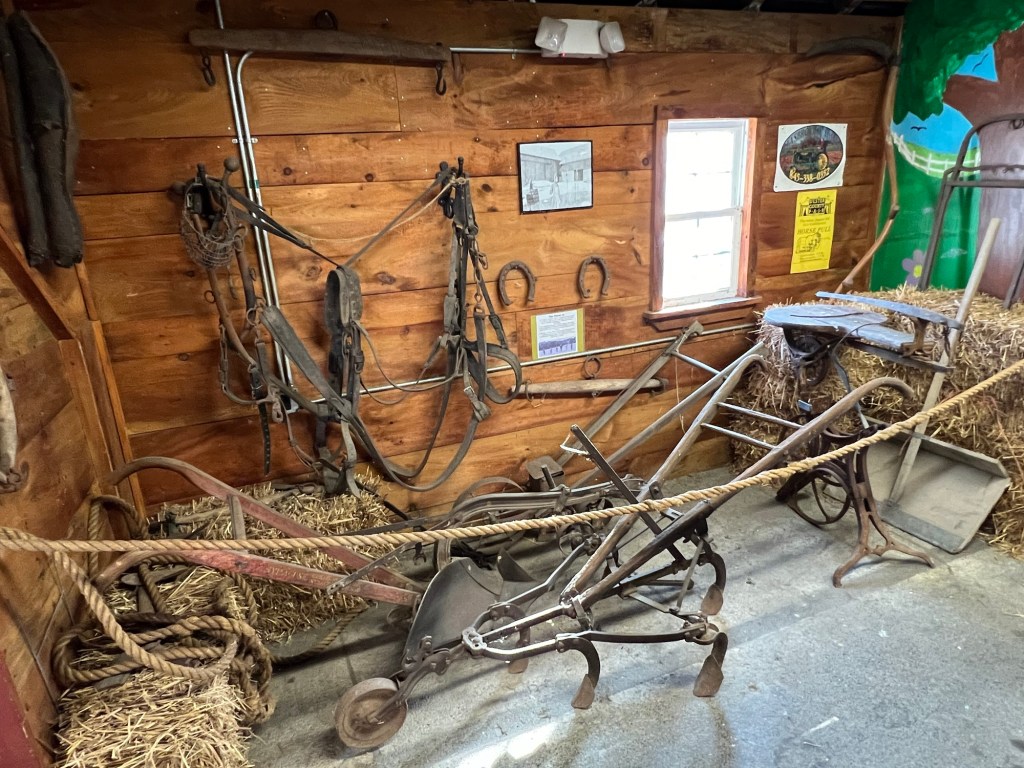
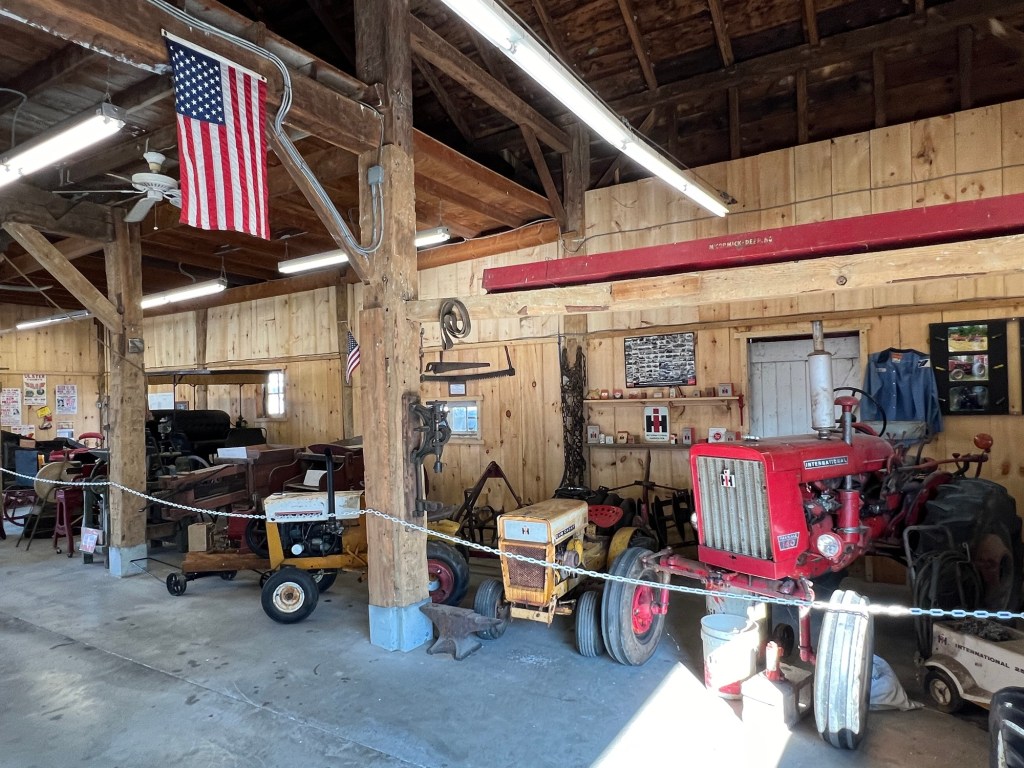
The main part of the museum was dedicated to farm equipment from the early plows and hoes to the changes in the modern day tractor.

The early hoes both hand and horse drawn

The changes in tractors for farm use over the last century

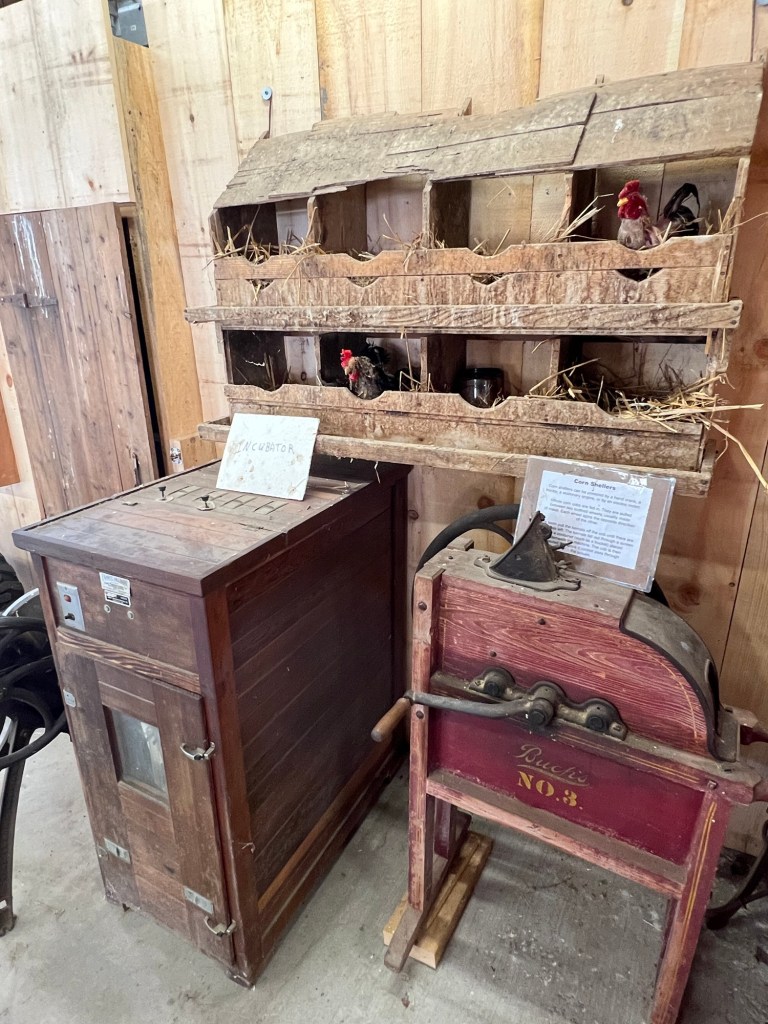
All sorts of businesses were on the farms from egg hatcheries to dairy farming were shown in their early stages at the museum.

Early dairy farming and milking cows

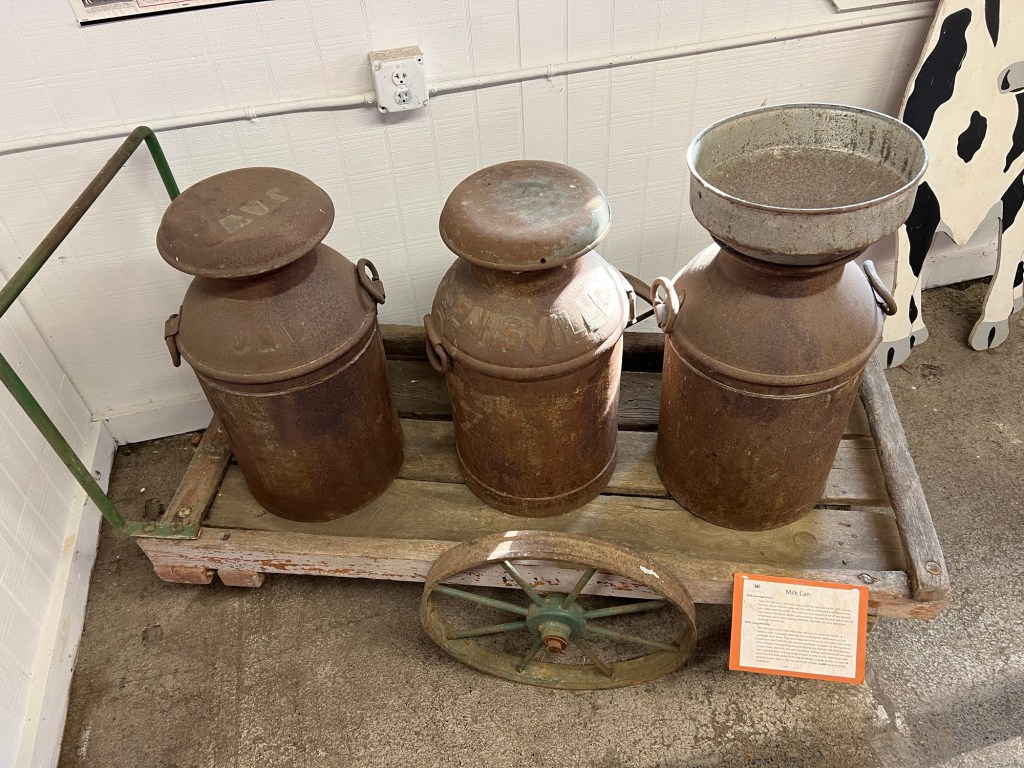
Milk jugs for fresh milk

An early egg hatchery and sorters

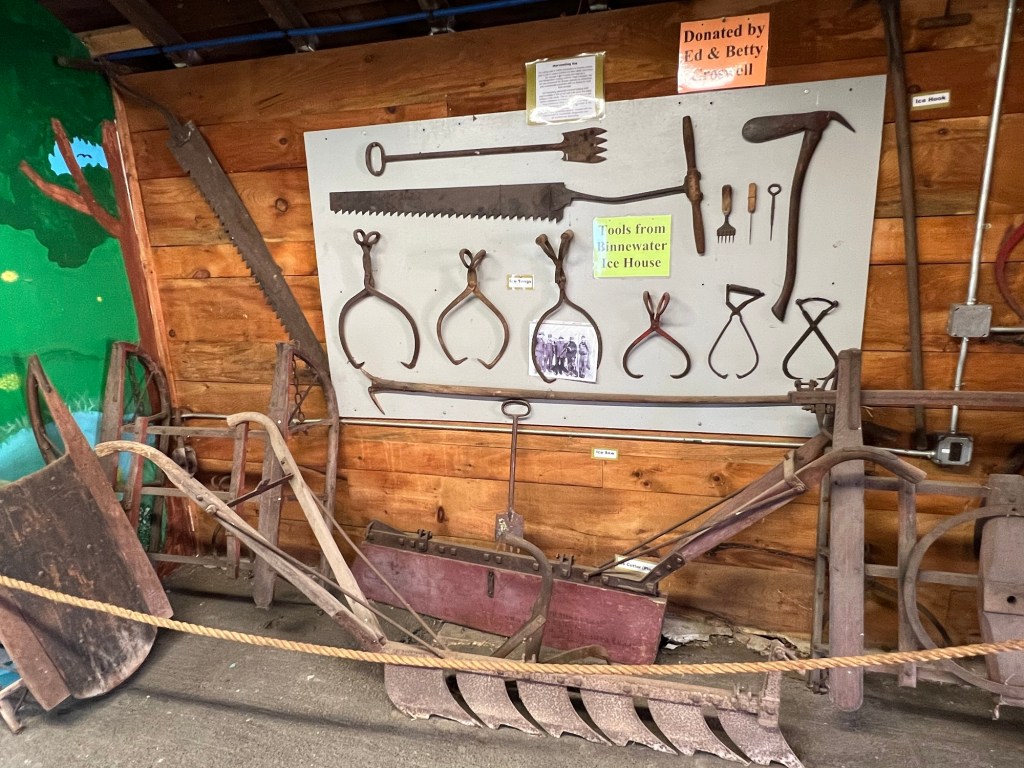
The museum also displayed other business that farmers could make money from including ice cutting for ice boxes. All sorts of equipment was on display for this early money making industry.

The ice carving industry

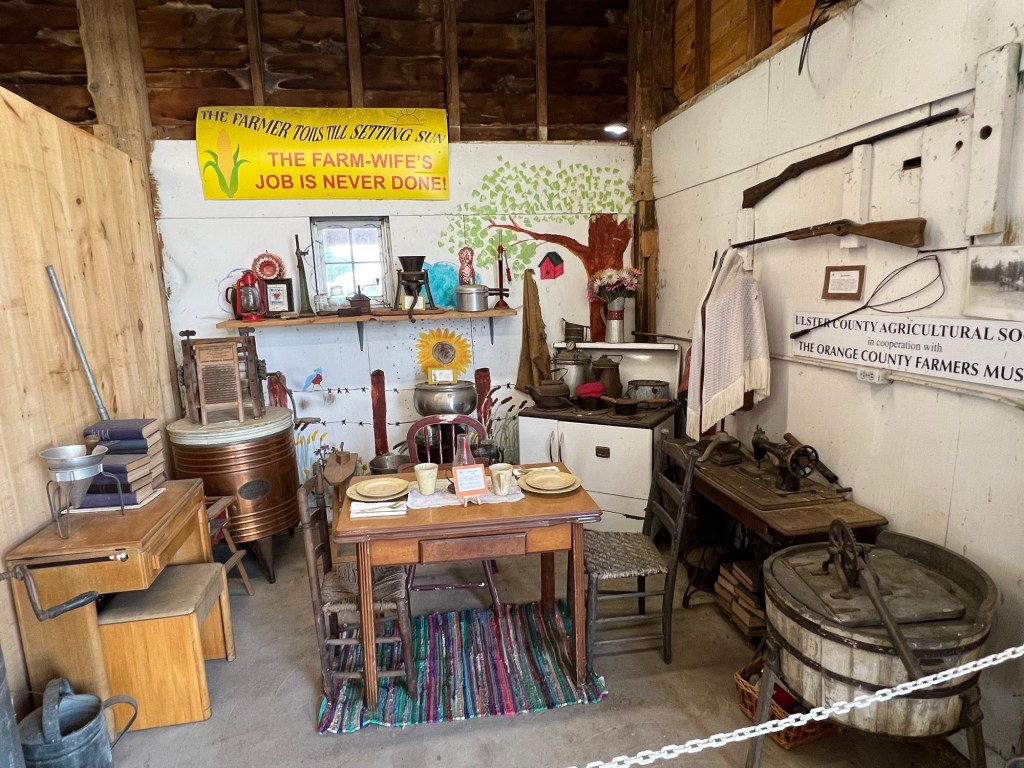
Life on the farm was not so easy for women either as cooking, washing and cleaning were all chores left to women while the men worked in the fields. All foods were made from scratch from farm produce and water for cooking, washing and bathing came from wells and springs and sometimes needed to be boiled. Work in the household was never finished and took many hands to do.

The farmhouse kitchen

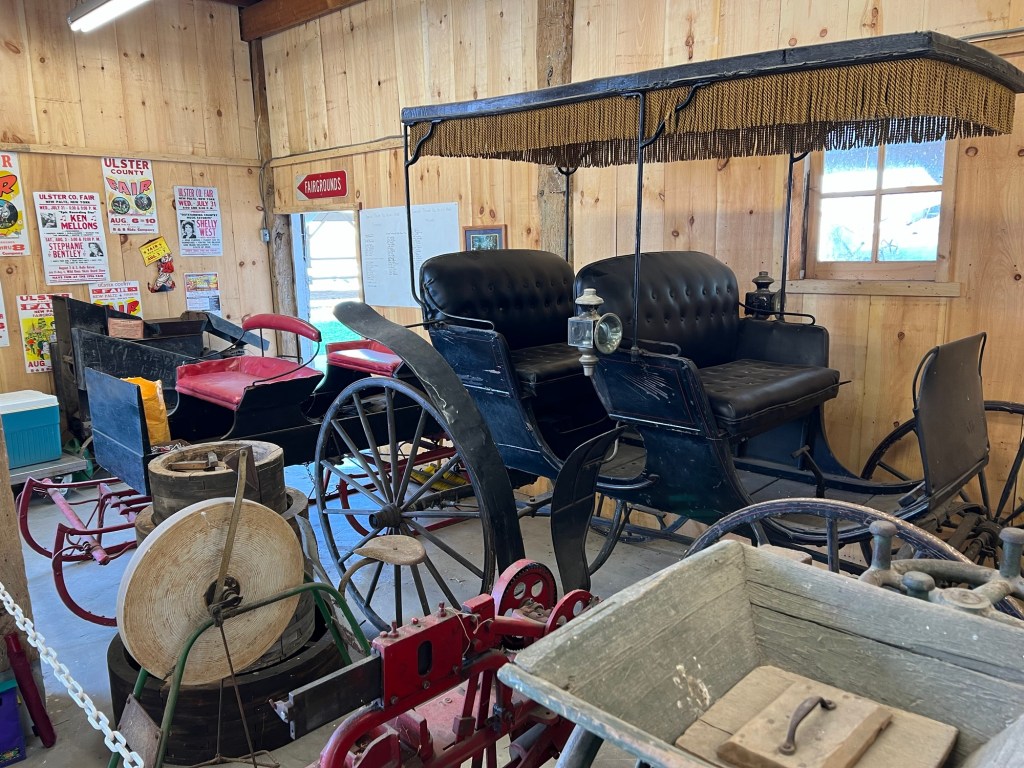
Life on the farm included travel to and from church, going to town and travel to the cities for visits to the markets. Carts and carriages were the mode of transportation back then before automobiles. Even today in some communities this is still a mode of transportation.

Carriages and wagons for transportation

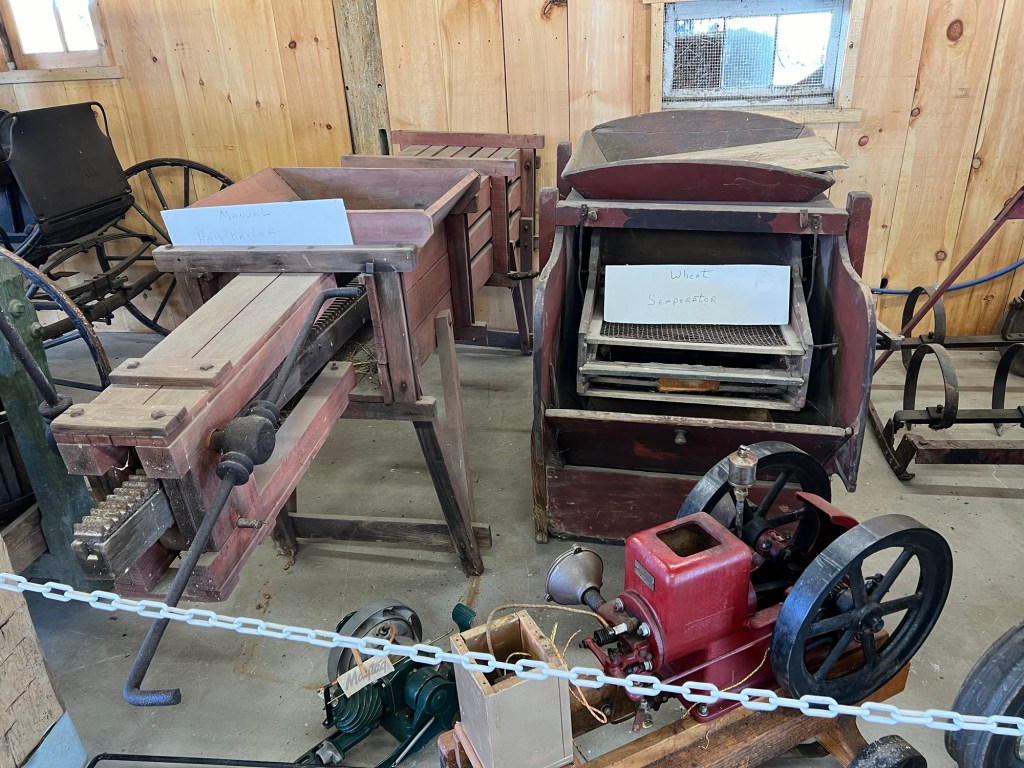
Working in the fields and the yields produced kept changing as modern equipment became part of farm life. Gas powered and electric equipment changed the way the modern farmer produced crops.

Modern sorters and weights

The gas powered saw

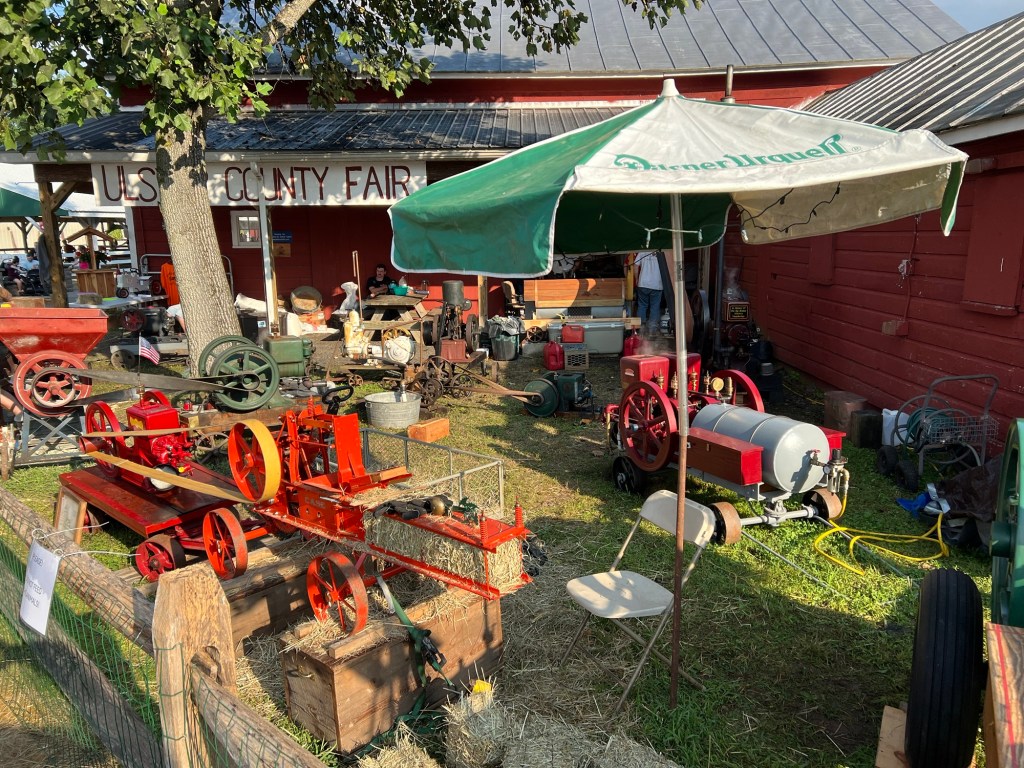
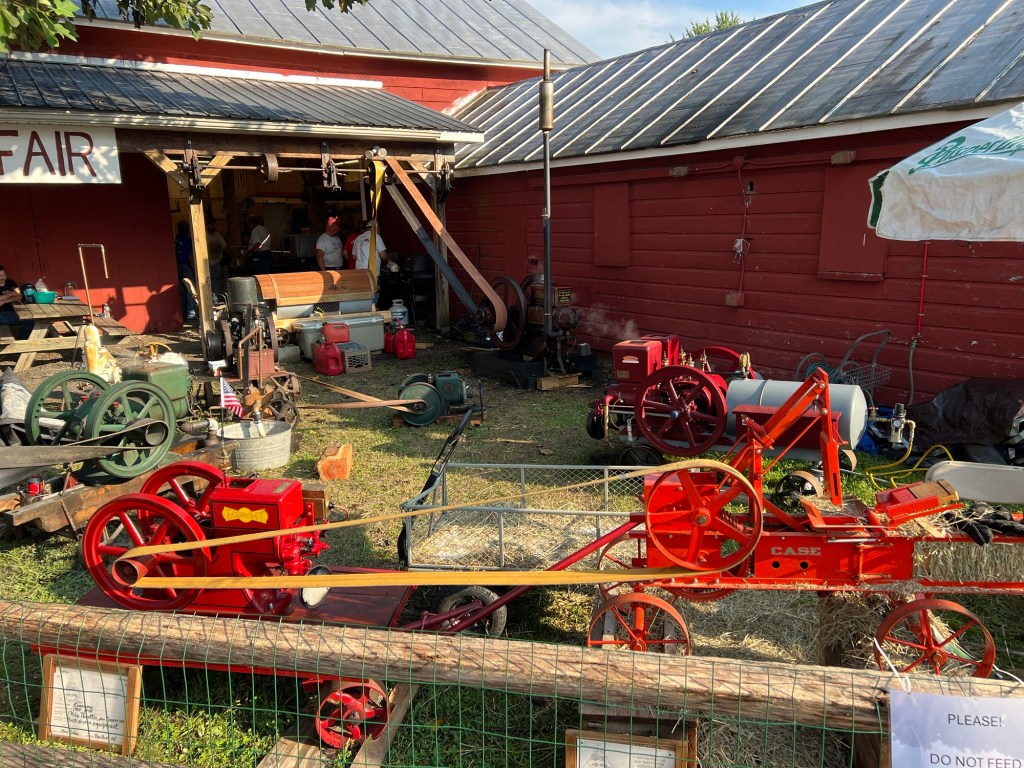
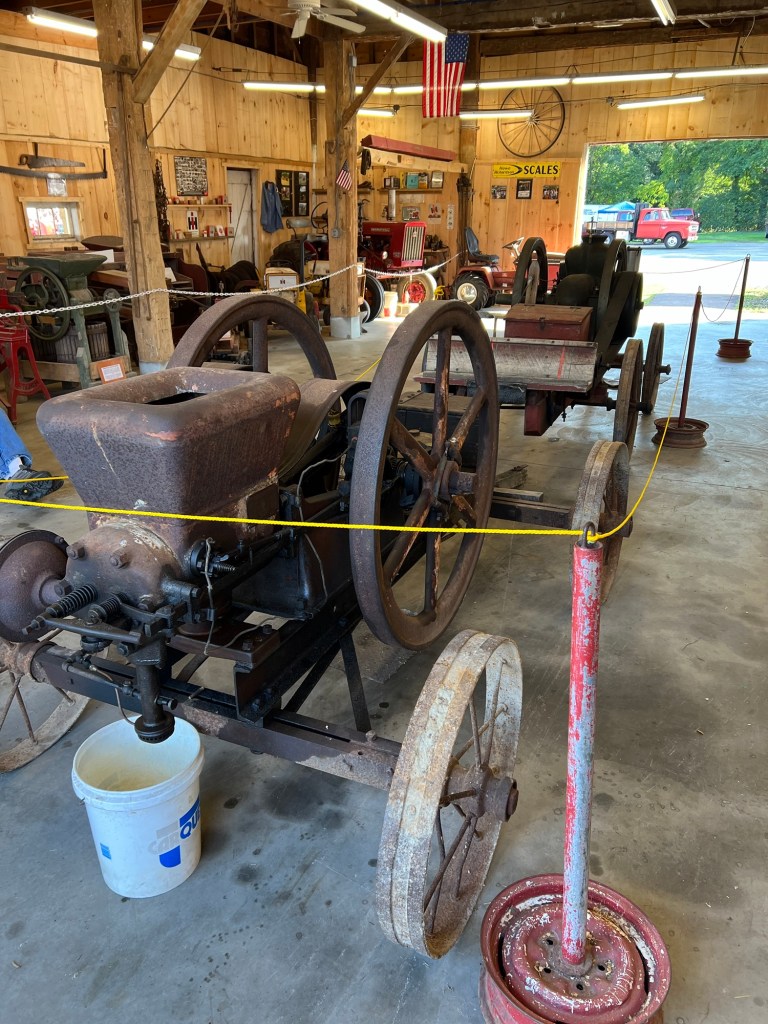
The members who run the museum were working the gas run engines and were demonstrating equipment used over the years. Members were showing visitors how these machine work and there purpose on the farm.

The outdoor gas powered equipment

The gas powered equipment

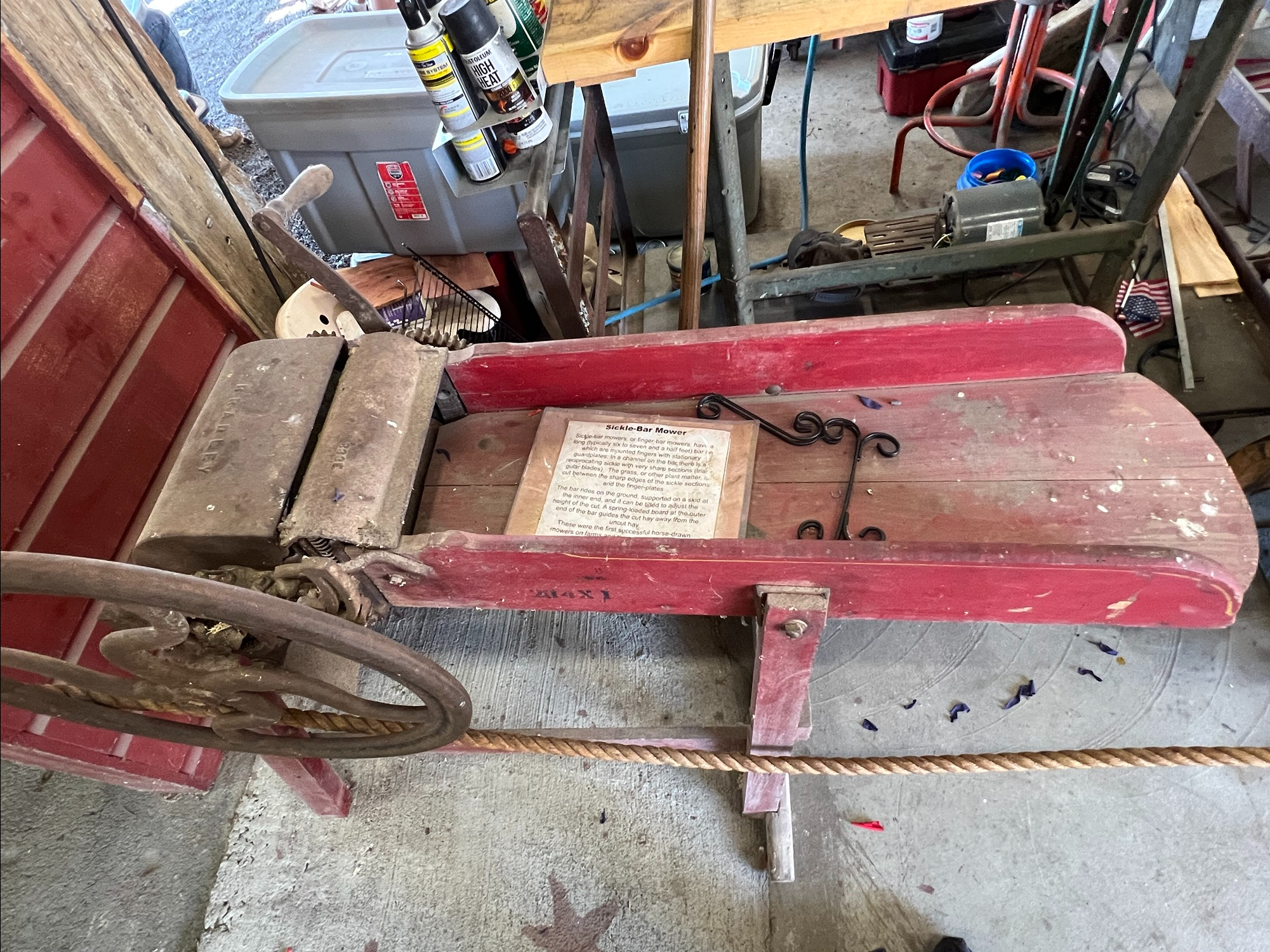
The inside of the museum had all sorts of displays on working on the farm. There was the equipment to cut the law, sort the crops and maintenance on the farm.

Sickle mower

The gas powered machines for maintaining of the farm and fields

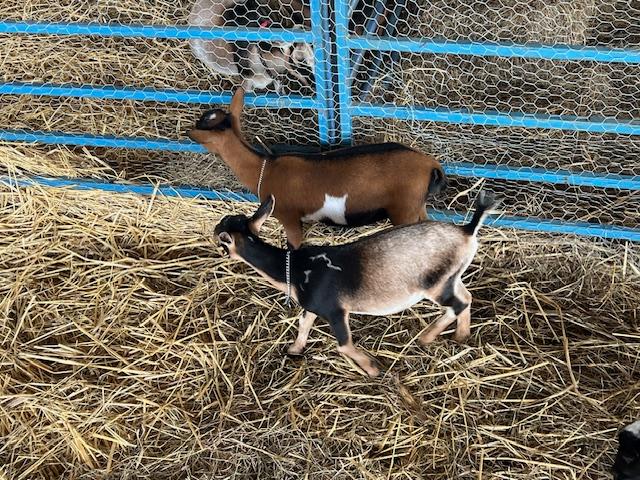
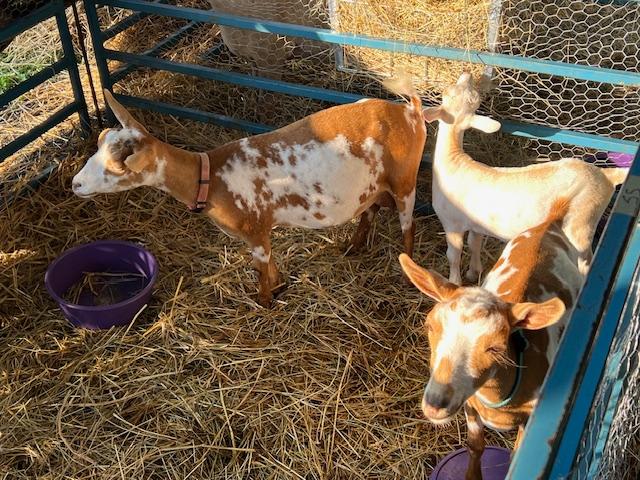
Animals from the 4 H display

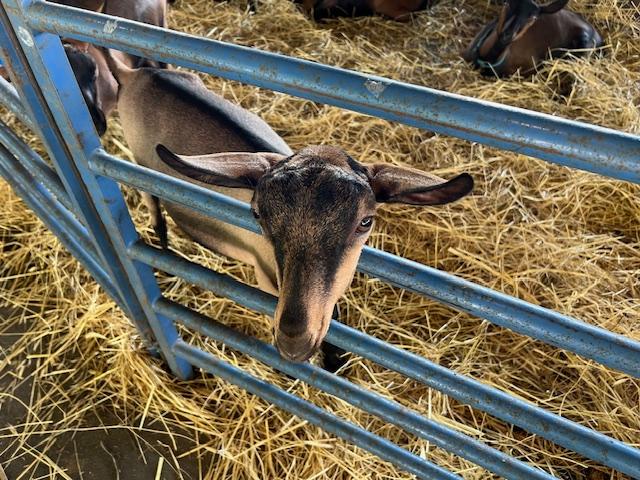
Calves from the 4 H display

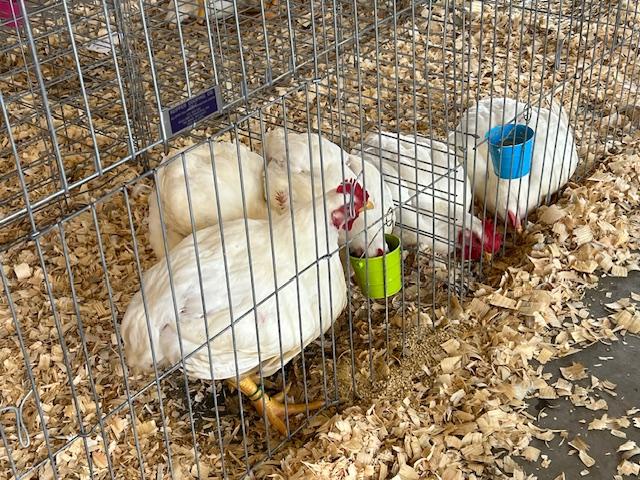
Chicken exhibit at the 4 H display

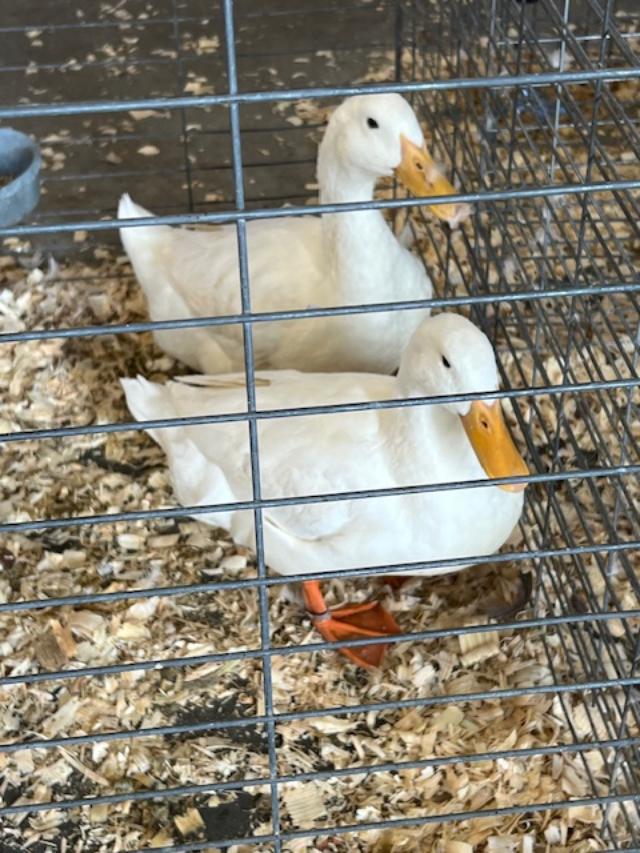
Duck pen at the 4H exhibit

The looks you get from the farm animals

Deputy William G. King Law Enforcement Museum-Ulster County Fairgrounds                            249 Liberty Road                                                 New Paltz, NY 12561

Deputy William G. King Law Enforcement Museum-Ulster County Fairgrounds 249 Liberty Road New Paltz, NY 12561

Deputy William G. King Law Enforcement Museum-Ulster County Fairgrounds

249 Liberty Road

New Paltz, NY 12561

(845) 255-1380

Open: When the fairgrounds are open

Admission: Free but donations are accepted

My review on TripAdvisor:

The Deputy William G. King Law Enforcement Museum is a small museum on the fairgrounds of Ulster County and is only open when the fairgrounds are open. The museum is manned by officers of the Sheriff’s Department. The museum houses the collection of retired Deputy William G. King law enforcement memorabilia.

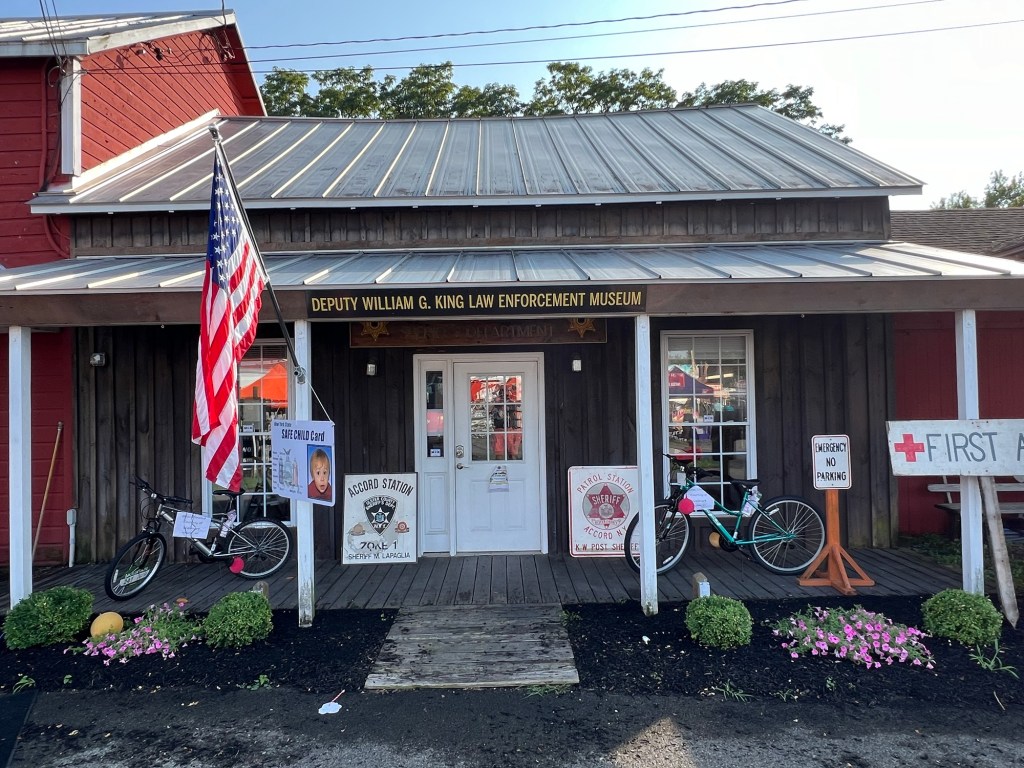
The entrance to the museum

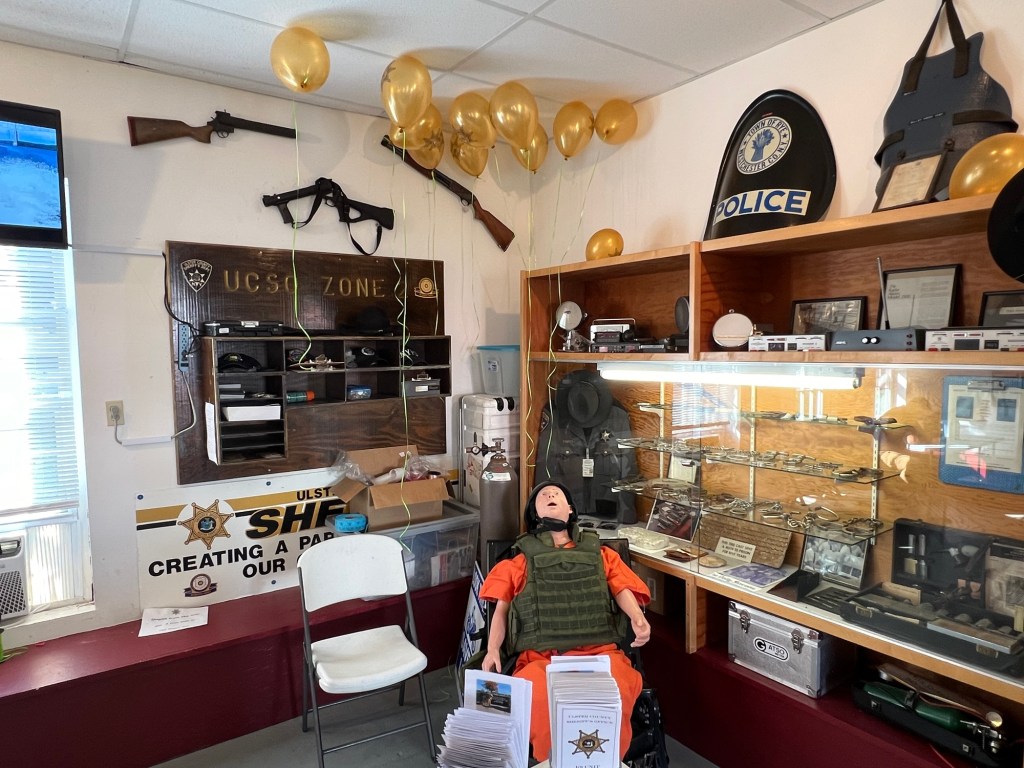
The collection includes a wide variety of guns, ammunition, equipment used on the job and riot gear.

The main gallery of the one room museum

The display cases house police department patches, pins for uniform, pictures of policemen and incidents. There is a collection of badges from various departments around the country.

A collection of awards and night sticks

What I found impressive was the collection of riot gear and equipment used on emergency calls. People do not understand the life of a police officer when duty calls and their perspective might be during a riot to protect people.

Riot gear, the gun collection and police equipment collections

The officer who manned the museum from the sheriff’s office was explaining how the equipment was used and how it has progressed in time.

Items from the Ulster County Sheriff’s Department

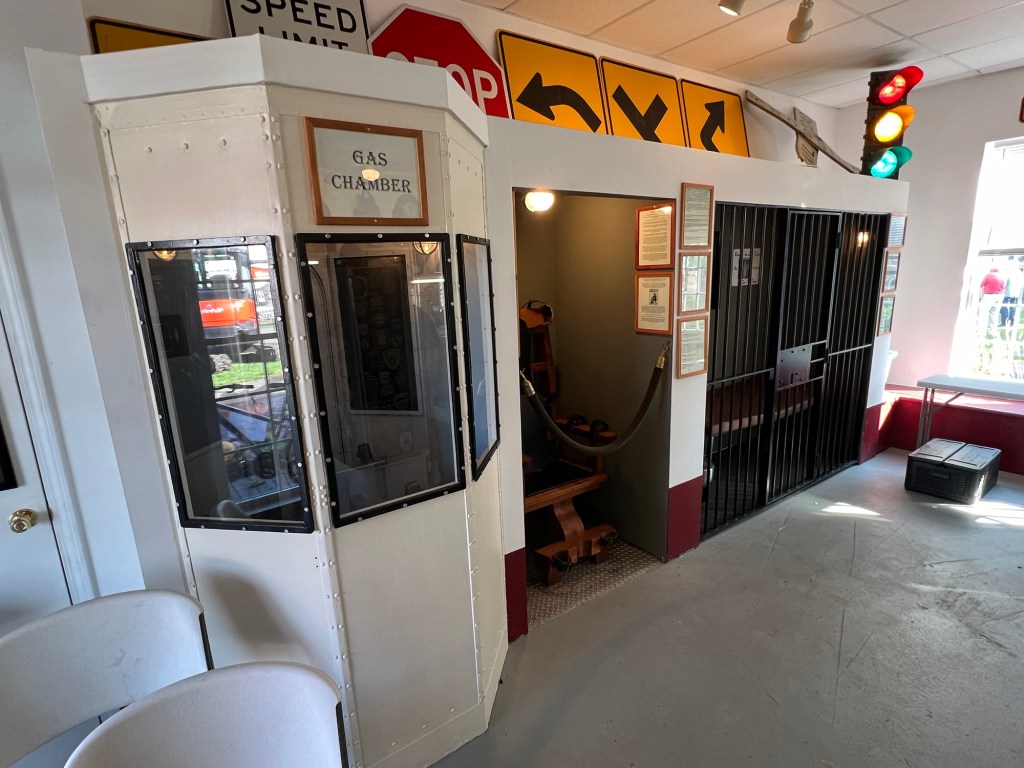
The museum also has a simulation of the New York State Gas Chamber, Electric Chair and the jails. I thought this was pretty interesting in that Capital punishment is still legal in New York State.

The display on Capital Punishment in New York State

A better view of the display

The Sheriff’s Department of Ulster County does a nice job maintaining and explaining all the items in the museum. They also make it less intimidating for children to approach a police officer when they need help. The museum is packed with information and the officers manning it could not have been nicer. Its just too bad that it is only open during the times the fairgrounds are open.

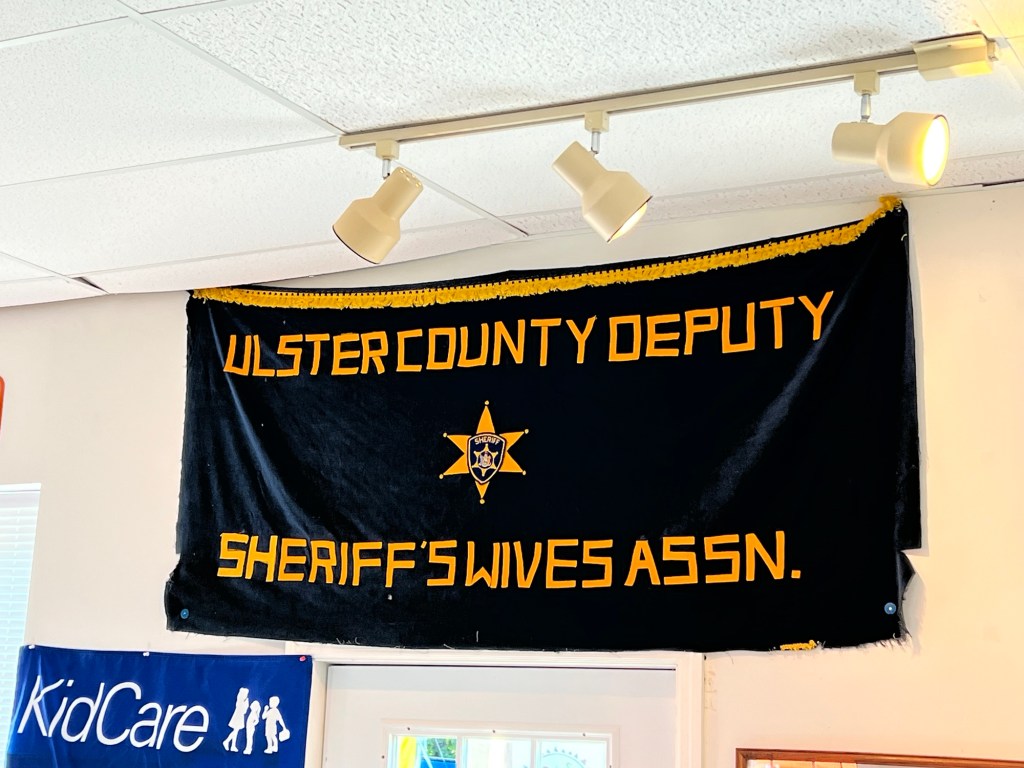
The banner from the Ulster County Deputy Sheriff’s Wives Association

Ulster County Fire Museum Ulster County Fairgrounds                                                                    249 Liberty Road                                                  New Paltz, NY 12561

Ulster County Fire Museum Ulster County Fairgrounds 249 Liberty Road New Paltz, NY 12561

Ulster County Fire Museum-Ulster County Fairgrounds

249 Liberty Road

New Paltz, NY 12561

(845) 255-1380

Open: When the fairgrounds are open for events

Admission: Free but donations are accepted

My review on TripAdvisor:

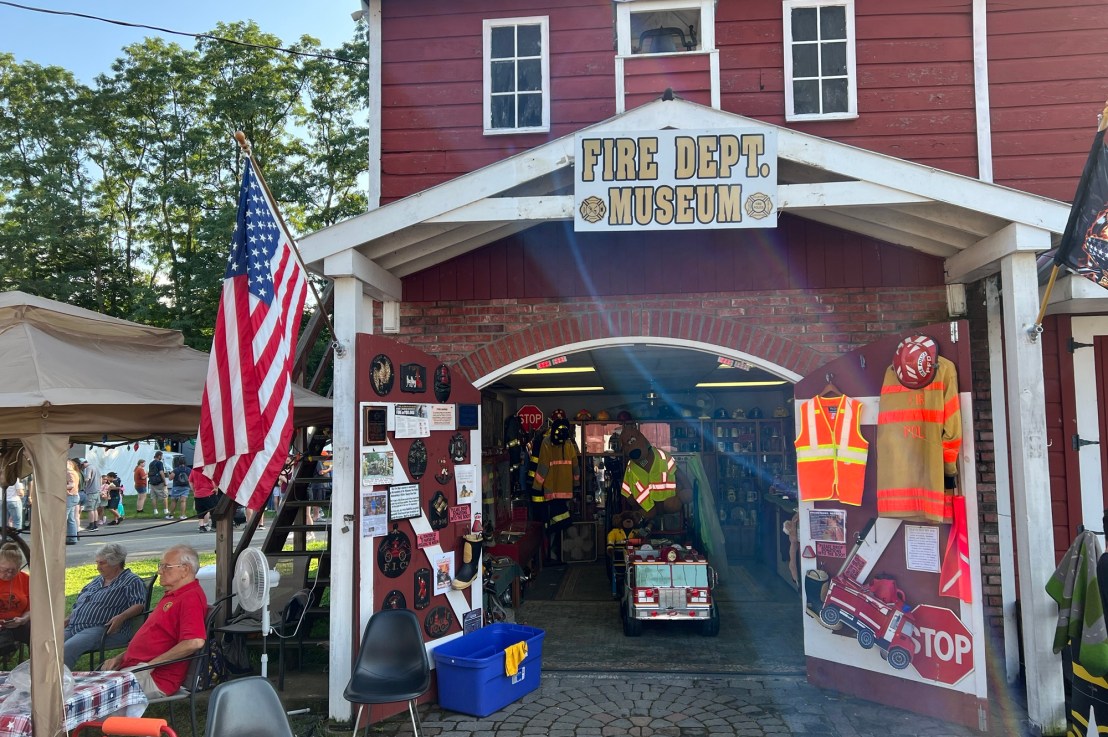
The Ulster County Fire Department Museum at the Ulster County Fairgrounds

The Ulster County Fire Department Museum is a unique little museum in that it is only open when the fairgrounds are open. It staffed by volunteers from Ulster County’s Volunteer Fire Departments. From the age of most of the volunteers, I could tell as a retired fireman, were all the guys whose firemen days at behind them. Still they are committed firefighters and have some good stories to tell.

The inside of the museum

The museum is more of an exhibition than a museum but for a small museum it packed with all sorts of artifacts, fire fighting equipment and memorabilia on the early days of fire fighting.

The old fire department medallions that showed what fire department would come to your home because of the company fire insurance you paid to them.

Some of the older artifacts they had were these fire department medallions from the various fire companies that existed that people paid into to protect their homes. Those were the days when the companies used to compete to be the best.

The collection of patches and awards

The museum contained a large collection of awards, ribbons and patches from fire departments from all over the local area and beyond. The collection included ribbons from various competitions and conventions, company emblems and events over the years.

Fire fighter mugs from various departments and events

The museum has an extensive collection of commemorative mugs. These are sold or given by fire department and companies to mark anniversaries and special events. These mugs mark the special occasions in a fire fighters career. As a fireman I have also found that these pile up quickly in your cupboards.

Department mugs from various department events and from companies

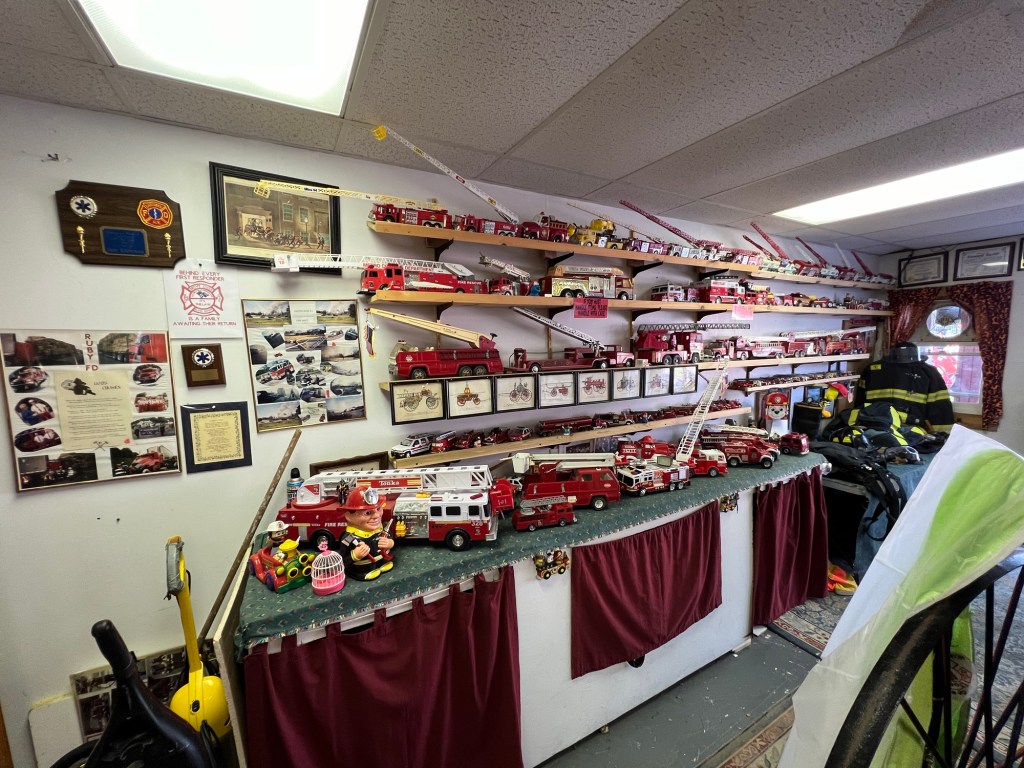
The museum had an extensive collection of toy fire trucks and games on display. There were samples of these out in front of the museum for the kids to play with that day.

The collection of fire trucks on display

The museum put the bunker gear we firefighters use on calls. This protects us in the weather conditions as well.

The fire fighter bunker gear used on calls

The emergency gear we use on calls on roadways and incidents

I got to talking with the volunteer firemen from Ulster County and like most departments around the country, they are having problems finding volunteers to man the departments. It is a tough field and people don’t want to do it for free anymore. I figure like a lot of towns around us, the departments will be paid soon. That is the wave of the future.

Firefighter Scooby Doo protecting the museum

Still the firefighters from Ulster County do a nice job maintaining this museum. For a one room museum, it is packed by information and manned by firefighters who care about the profession.