Tag: MywalkinManhattan.com

Knox Headquarters State Historic Site                  289 Old Forge Hill Road                                     Vails Gate, NY 12584

Knox Headquarters State Historic Site 289 Old Forge Hill Road Vails Gate, NY 12584

Knox Headquarters State Historic Site

289 Old Forge Hill Road

Vails Gate, NY 12584

(845) 561-5498

https://parks.ny.gov/historic-sites/5/details.aspx

https://en.wikipedia.org/wiki/Knox%27s_Headquarters_State_Historic_Site

Open: Sunday-Saturday (Seasonal-Please see the website)

Admission: Free but donations are accepted

My review on TripAdvisor:

https://www.tripadvisor.com/Attraction_Review-g48760-d1174661-Reviews-Knox_s_Headquarters_State_Historic_Site-Vails_Gate_New_York.html

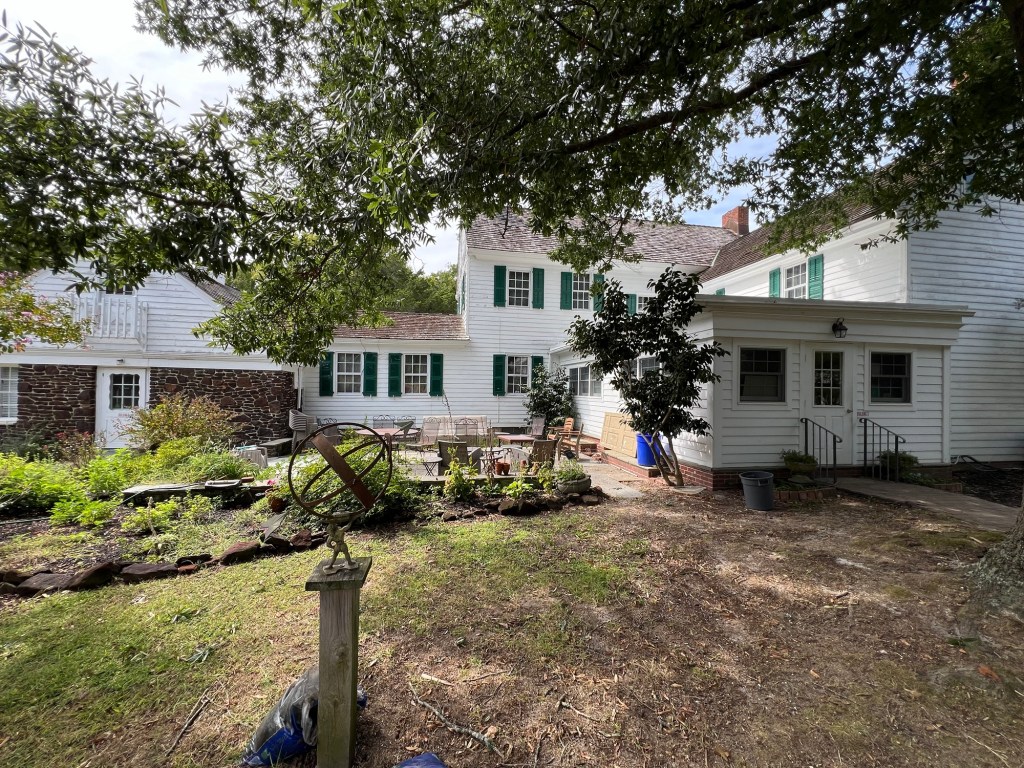
The Georgian side of the Elliott home

The Dutch style side of the home

The sign welcoming you

The estate from the road

The historic sign outside the home

The Welcome Center tells the story of both the Ellison family and their war visitors, the Knox family.

The Ellison family history sign

The Knox family history sign

The family history in the Visitor’s Center

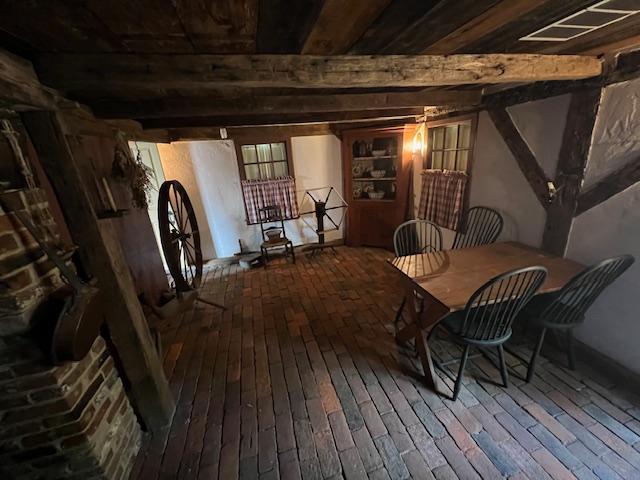
The tour of the house was very interesting. The house was built in three stages as the family grew and prospered over the generations. There was the original Dutch house which is the side of the house that faces the current road, the Georgian addition which faces the back of the house, where the original Kings Highway was located and the addition, where the Visitors Center was located.

My tour guide, Tiffany, explained there had been other additions to the home over the years but they had been removed for the historical integrity of the house.

The Georgian addition of the home featured more rooms for socializing

The Georgian addition to the back of the home was built with the family fortunes. This included a spacious formal Parlor, Dining Room both with large window to let in natural light and high ceilings for circulation and to show the families affluence.

The large windows let in the natural light in the warmer months

Much of the furniture in the house was not original to it but was of the period. Here and there though there were pieces donated back to the house and gave it its historical dignity.

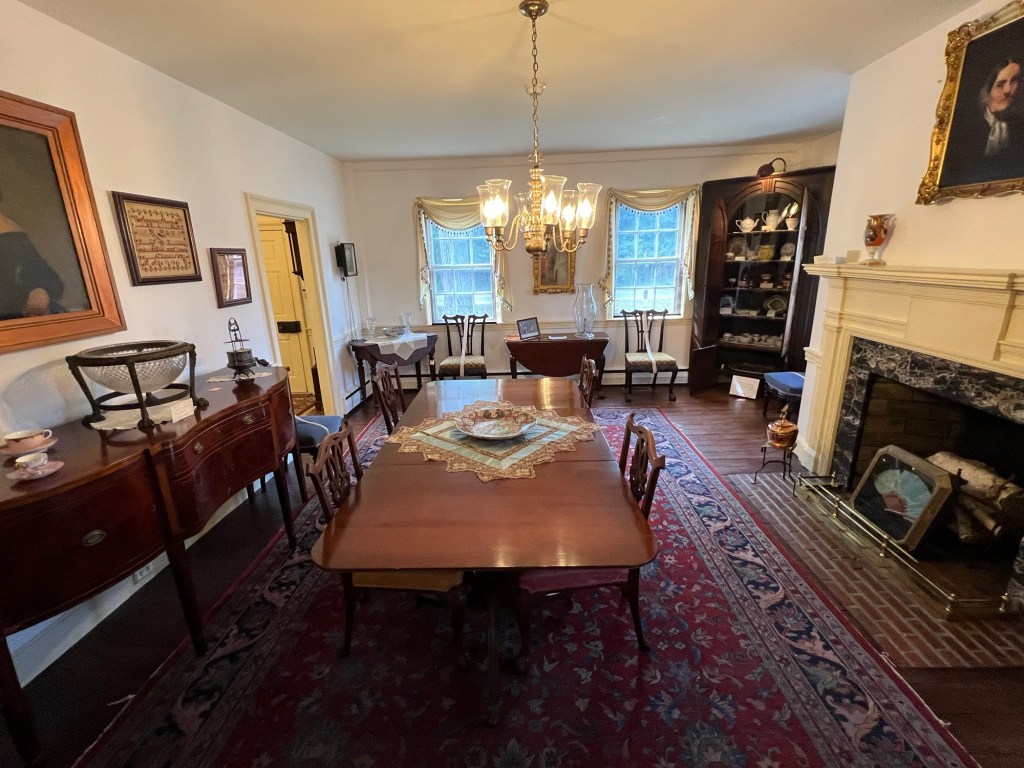
The formal dining room was used to impressi visitors with the large fireplace

The Dining Room used for meals and formal entertaining was spacious yet cozy. There was room to move around but it was still intimate for conversation.

The room had built in China cabinets

The wood work contained china cabinets, storage for silver and family serving pieces. The large metal tombstone looking item in the fireplace was a metal slab meant for retaining heat for the room once the fire went down. This is how the room was kept warm in the colder months.

The natural light was perfect for late afternoon supper

Once you left these rooms for the front hallway, this led to the Dutch front portion of the house, once the living quarters and now was were the business office and storage for the family business was attended to during working hours.

The office of Mr. Ellison was in the front part of the original Dutch portion of the house

The rooms in the front section of the original house were separated from the formal part of the current back of the house. This is where Mr. Ellison and his son attended to business calls and stored their goods for shipping.

The storage room was probably a family bedroom for the original house

The trip upstairs was part of the addition of the house and contained two spacious bedrooms with high ceilings and large windows. When the Knox family joined the Ellison family during the encampment, each family had one bedroom for use. The Ellison’s did not have any children and the Knox’s had two small children, a small girl and an infant boy. From what the tour guide explained the Ellison’s welcomed them in the home and relations were very good with both couples, who welcomed the children into their home. It brought extra life to the house.
The formal bedroom of the Ellison’s would be the bigger room and more formal

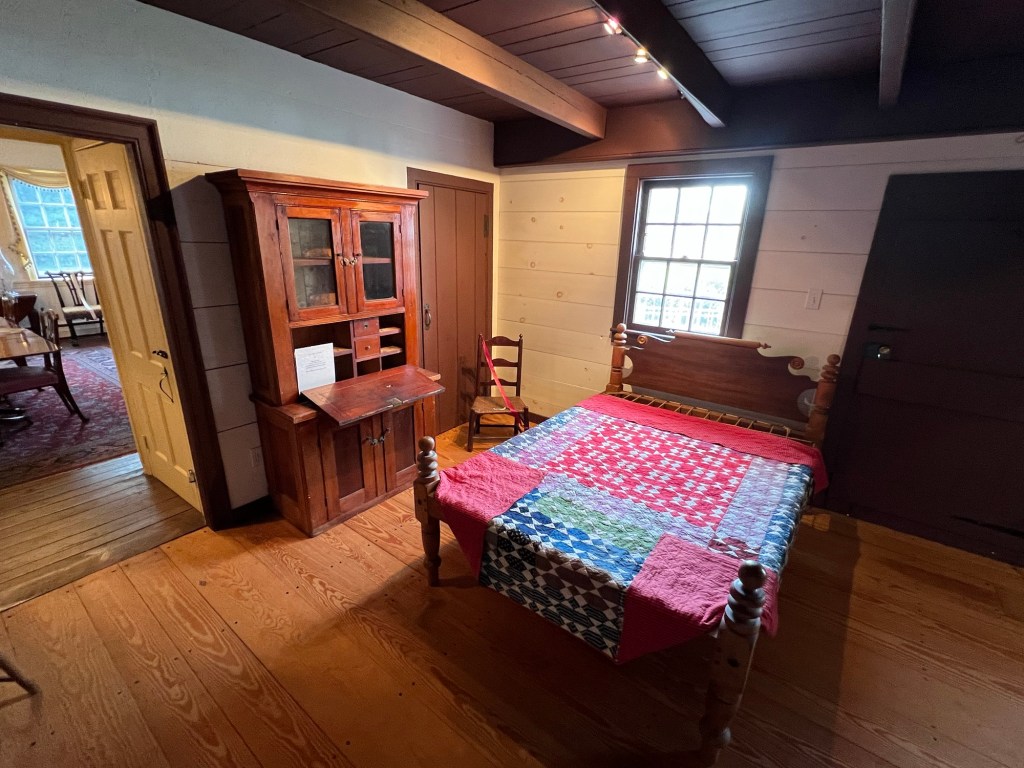
The Knox family bedroom would have been not less elaborate with a small bed and crib for the children

The Knox’s bedroom for the family during the war years

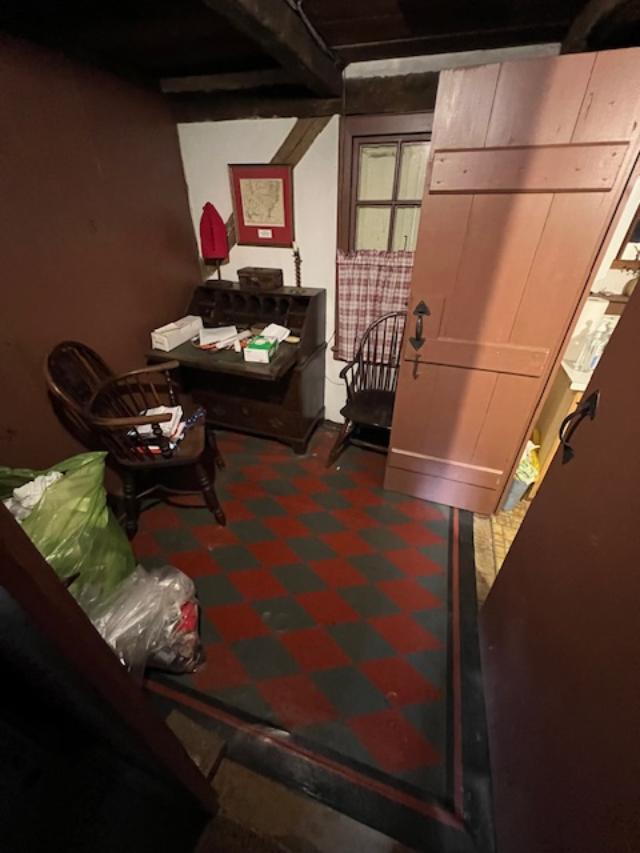
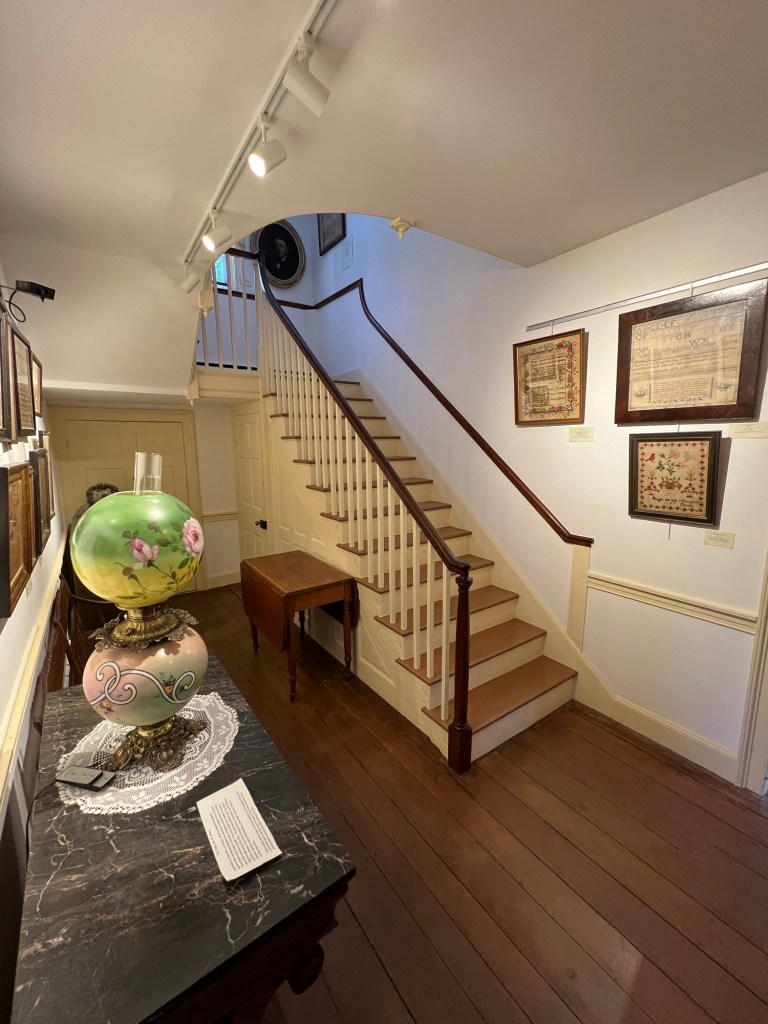
Mrs. Ellison kept her own office at the top of the stairs and this was reflective in the desk and table in the nook at the top of the stairs. The tour guide explained there had been a wall to provide privacy to Mrs. Ellison which had been removed over the years.

The office of Mrs. Ellison to run the household

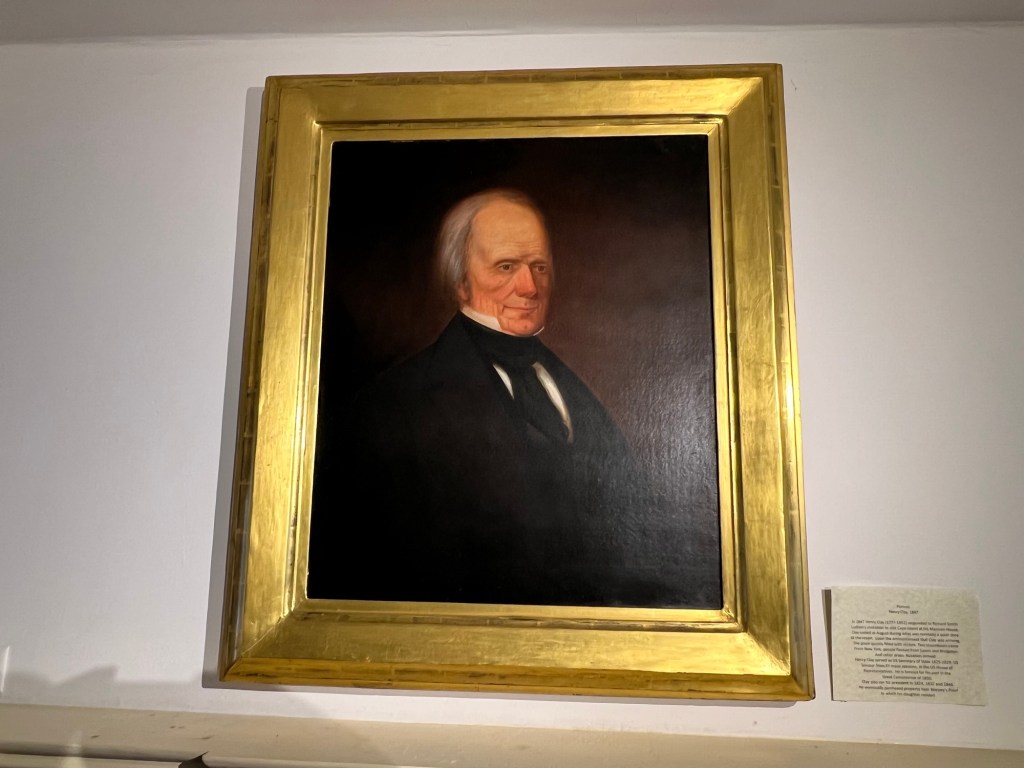
The office contained the family heirloom desk and a portrait of Mr. Ellison’s brother who was a General in the war.

The portrait of General Ellison, Mr. Ellison’s brother

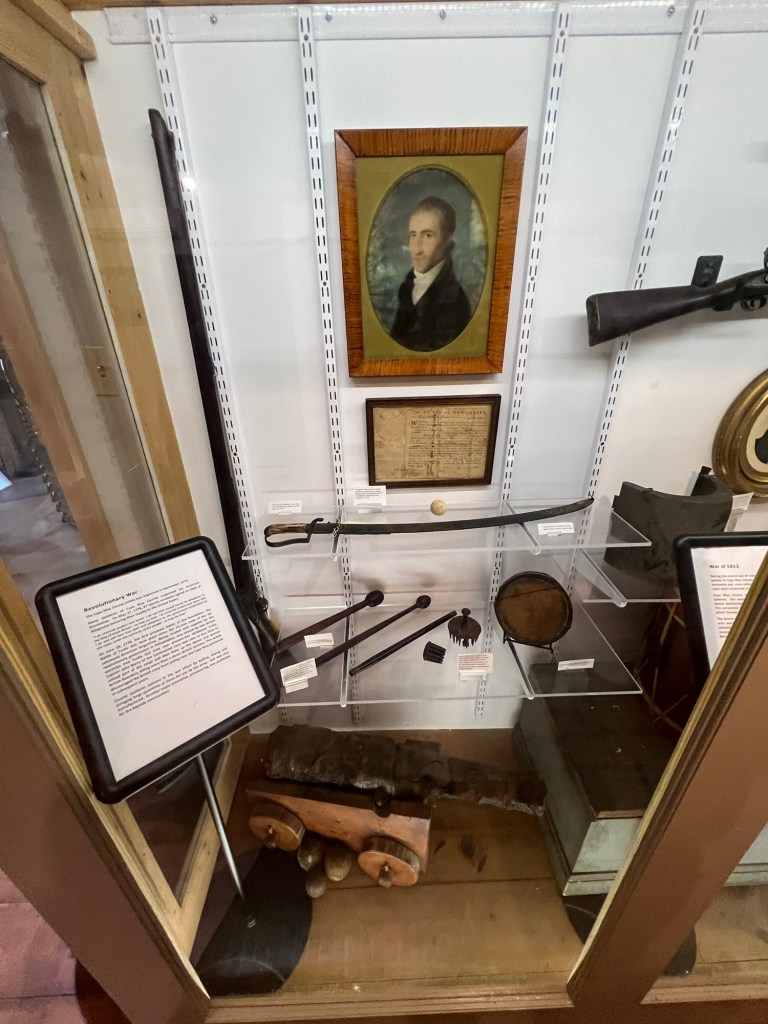
Part of the cannon

When I finished the tour of the house, my tour guide and walked around the Visitor Center room and she showed me some of the artifacts in the room including a small cannon the had been found. My tour guide suggested after we were done in the house a tour of the grounds. The King’s Highway had originally run in a different location that passed the front door of the Georgian side of the house. Also down by the stream were the ruins of the old grist mill.

The map of the original King’s Highway when it passed in front of the home

The original front door of the Ellison home where the street was once located

The stone wall is the marker of the original part of the road that passed by the home

The highway path as it passed over the stone bridge

There was not much left of the family mill by the stream but the site did a nice job preserving the path of the highway and up keeping the stone bridge and grounds.

The woods area by the stream where the ruins of the old mill were located

The stream area

The stream area by the old mill

A better view of the old stone bridge

When I returned from the stream area (unfortunately leads to someone’s property on the other side of the stream), I walked the grounds of the home. There was a small smokehouse on the property to the side of the house.

The old smokehouse on the property

What was originally the back side of the house is now the front side of the house on the Dutch side of the home with the addition to the left

The view of the homestead from what is now the front of the street

The view of the house from the entrance when I was leaving

The front of the homestead as you enter an exit from the new direction of the home

I found the tour to be very informative and an interesting look on how two families shaped our history during the Revolutionary War.

*A special note that the house is seasonal and is closed from Labor Day until Memorial Day the next year and is only open for special events at Halloween and Christmas.

The Halloween Event:

I attended the Halloween events at the Knox Headquarters when in the spirit of the 18th Century Gothic Literature, an author took us on a tour of treason and tides turning during New Windsor Cantonment and inside the Knox Headquarters. The ghosts of the past tried to find a traitor in the midst of the war.

Meeting the ghosts of the author and her characters on the site of the Knox family estate

The Knox House lit for the Halloween holidays had a eerie look to it that night

The Ghosts trying to find a traitor in the ranks

The Ghosts of the past trying to find a traitor during the war

Leaving the Continental Army camp after the performance was over that evening

We walked the estate and followed the storyline with the actors. There were people on both sides of the war who thought they were right. It was an interesting Halloween event.

The History of the Ellison/Knox Site:

(from the New York State Parks, Recreation and Historical site)

On several occasions during the Revolutionary War, Major General Henry Knox, Commander of the America artillery, established his military headquarters at John Ellison’s 1754 Georgian-style house in Vails Gate. From October 1782 until the spring of 1783, as 7,000 soldiers and 500 “camp followers” were establishing winter quarters at the New Windsor Cantonment, and General Washington was lodged at Jonathan Hasbrouck’s house in Newburgh, New York, Major General Horatio Gates occupied the elegant home from which he commanded the cantonment. Here the army awaited the end of the Revolutionary War that became effective when Washington issued the cease fire orders on April 19, 1783.

For most of the 18th and into the 19th century, the Ellison family had important commercial dealings in milling and trade. From their mill, flour was shipped down the Hudson River to New York City and the West Indies. At present, remains of the mill, with traces of the underground raceway may be visited. Explore how the Ellison’s and other families of the mid-Hudson Valley lived 200 years ago.

The Christmas Open House event:

I returned to the Knox Headquarters again for their Colonial Christmas Open House in early December and that was a festive event. The snow had just fallen giving the house a very picturesque look to it.

The Knox/Ellison Home the day of the event

The estate looked so picturesque with the snow

When I first arrived to the estate, it was still light out and they had just lit all the torches in front of the house. It really lit the pathways to the house. By the outside fire, a lone soldier stood guard, and he looked like he was freezing.

The torches that lit the paths

The snow gave the woods a festive early Christmas look

The house was decorated for a Colonial Christmas during the war years

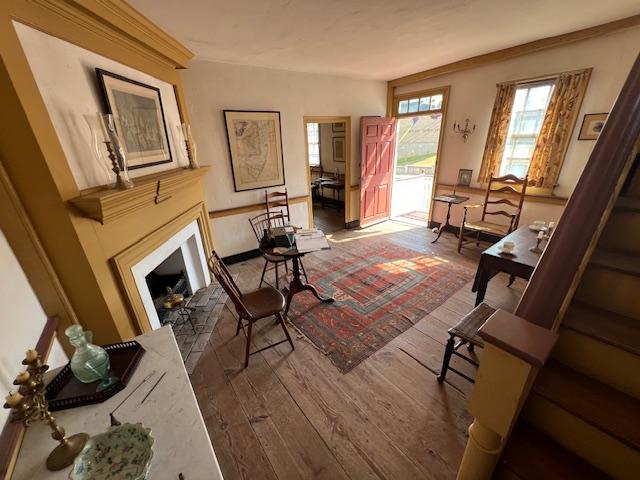
The Officers used the Living Room as an office and for entertainment

The hearth was beautifully decorated with garland and dried fruits

The mistress of the house talked and entertained me on my visit

The house had an eerie but festive feel about it that evening

The festive garland decorations in the Living Room

The decorations in both windows

I passed the foyer where garland and misotle decorated the stairs

We were then entertained by visiting officers of the home in Mr. Ellison’s office who told us their stories of General Washington’s visit.

The Officers visit to visit the Generals

The office lit for a late night visit

The holiday decorations in the Office space

Then I took a trip upstairs where we were met by another officer who described the sleeping arrangements of both the Knox and Ellison families of this time of occupation.

The officers conversation with us

The decorations as we walked up the stairs

The bedroom decorated for the visit

The opposite bedroom used by the family

The staircase decorated for the holidays

My last stop on the visit was to the Dining Room, where the last officer on the visit talked of Christmas dinner in the house during the war.

The officer explaining entertainment during the war

The Dining Room decorated for the Christmas holidays

The elaborate decorations in the room in the war years

The creativity of the Dining Room table with the creative table decor

The elaborate holiday desserts

The officer explained entertainments during the war, the use of the elaborate decorations on the table and the foods that would have been eaten at the holidays. Plus, entertainment of a major officer would have been during the war years.

The garland and fruit decorations in the Fining room

The officer finished his talk on the holidays and then I left for the evening

The outside of the house with the torches lit to full extent

The fire outside to warm up

The officer outside looked so cold. Thank God he kept going inside to warm up

The house as I left for the evening

The torches as I left the property

The house from a distance

The glow of the house at the end of the evening

The event was wonderful and the enactment was fun but it got really cold outside at the end of the evening and by 6:00pm it got to be freezing. I left the estate and headed home . The Knox/ Ellison House closed for the season after this night.

Montgomery Village Museum                             142 Clinton Street                               Montgomery, NY 12549

Montgomery Village Museum 142 Clinton Street Montgomery, NY 12549

Montgomery Village Museum

142 Clinton Street

Montgomery, NY 12549

(845) 457-7576

https://www.facebook.com/MontgomeryVillageMuseum/

https://www.villageofmontgomery.org/our-community/village-history/523-museum-hours.html

Open: Sunday 3:00pm-6:00pm/Monday-Saturday Closed

Admission: Free but donations are accepted

My review on TripAdvisor:

https://www.tripadvisor.com/ShowUserReviews-g48196-d27005812-r967710754-Montgomery_Village_Museum-Montgomery_New_York.html?m=19905

The Montgomery Village Museum at 142 Clinton Street

The Museum in the front of the museum

The museum sign welcomes you

Village memorabilia on display

The display on the local church’s

The Montgomery Village Museum in Montgomery, NY is a village run museum that tells of story of the town and its development. The museum of filled with wonderful displays of all aspects of the town. The history of the town is displayed in an organized way display by display with plenty of signage and docents to explain things to you if you want more information. You can tour the museum at your own pace.

The front gallery of the museum

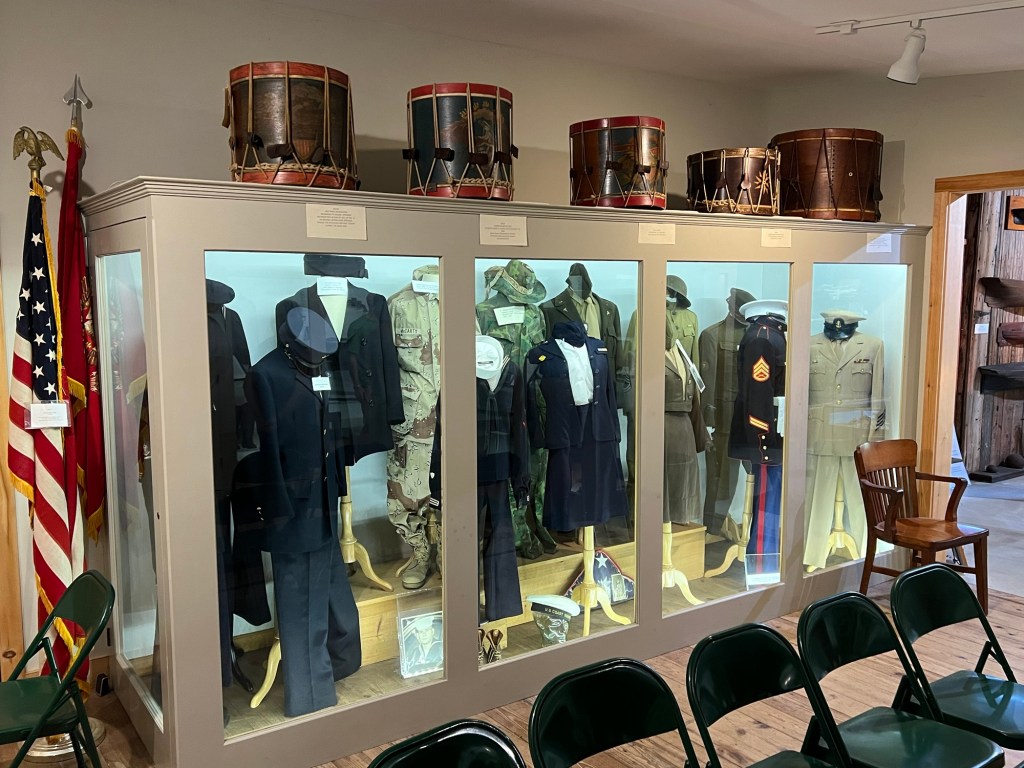
The front display of the Veterans and the VFW of the Village of Montgomery, NY

Display of Armed Forces memorabilia

The gallery of Town Council, Downtown merchants and Veterans items

The Downtown Merchant’s display

Some of the local merchants have been in town for over a hundred years

The artifacts on the Town Council and the Chamber

The 100th Anniversary of the Town of Montgomery, NY shows a diagram of the town and its historical past

Some of the items of the rural home past

What I thought was interesting about the museum was the discovery of dinosaur bones in the area. The skull of a Mastodon and other bones were found in digs between here and Newburgh.

The Mastodon skull at the museum

The skull and bones and the site

The Importance of the Mastodon story

The write up on dinosaur bones

The display on the Montgomery Fire Department

The museum has an extensive collection of items from the County Fire department telling its own story of the fire service in this community. The Orange County Firefighters Museum is right across the street with all the larger equipment and gear but here we get to see the pictures of the department over the years and some of the small artifacts.

Display on the Montgomery Fire Department

The display on the Montgomery Coronet Band display

The Textiles industry in Montgomery

The display from Montgomery High School from sports to the marching band

The museum has an extensive collection of memorabilia from Montgomery High School over the past one hundred years that include marching band and sports to the way the school teaches. It is amazing that in many ways it does not change much.

More artifacts from the schools

Displays of the schools and libraries in the county

The Montgomery High School band and sports

A old school house display

The Girl Scout and Boy Scout display

The original fire department display that sits across the street

The Montgomery Grange display

The Picture Display of old photos of the past of the Village of Montgomery, NY

The Toy and Doll Display will delight any young child

The Art display in the back part of the museum

The afternoon I was at the museum, they had an outdoor concert in the garden of the museum. It was warm night so sitting outside enjoying the music was really nice.

The museum’s well tended gardens

The gardens by the side of the museum

The gardens in bloom by the fence

The musical performance of the quartet

The video of the concert:

The large paintings above the front door as I was leaving that evening.

One last look at all the galleries at the museum gave me a glimpse of the extensive collection of artifacts at the museum and the story they tell of the community of Montgomery, NY.

The back gallery

The front gallery

The side gallery

For such a small museum, the displays really give an interesting look at the county and how it has progressed over the years. What have been new to us in the 1950’s, 60’s, 70’s , 80’s and forward has now become the past to newer generations. The Montgomery Village Museum tells that story in detail.

A visit here is a nice way to spend the afternoon. Then take a tour of Historic Montgomery, NY. There is a lot to do and see.

Exploring historic Downtown Montgomery, NY

Exploring historic Downtown Montgomery, NY

Bay Head Historical Society & Museum                             1643 Bay Avenue                                                        Point Pleasant, NJ 08742

Bay Head Historical Society & Museum 1643 Bay Avenue Point Pleasant, NJ 08742

Bay Head Historical Society

1643 Bay Avenue

Point Pleasant, NJ 08742

https://www.bayheadhistoricalsociety.com/

Open: Sunday 1:00pm-4:00pm/Monday-Friday Closed/Saturday 1:00pm-4:00pm/Seasonal

Admission: $5.00 donation

My review on TripAdvisor:

https://www.tripadvisor.com/Attraction_Review-g46744-d10596027-Reviews-Bay_Head_Historical_Society-Point_Pleasant_New_Jersey.html

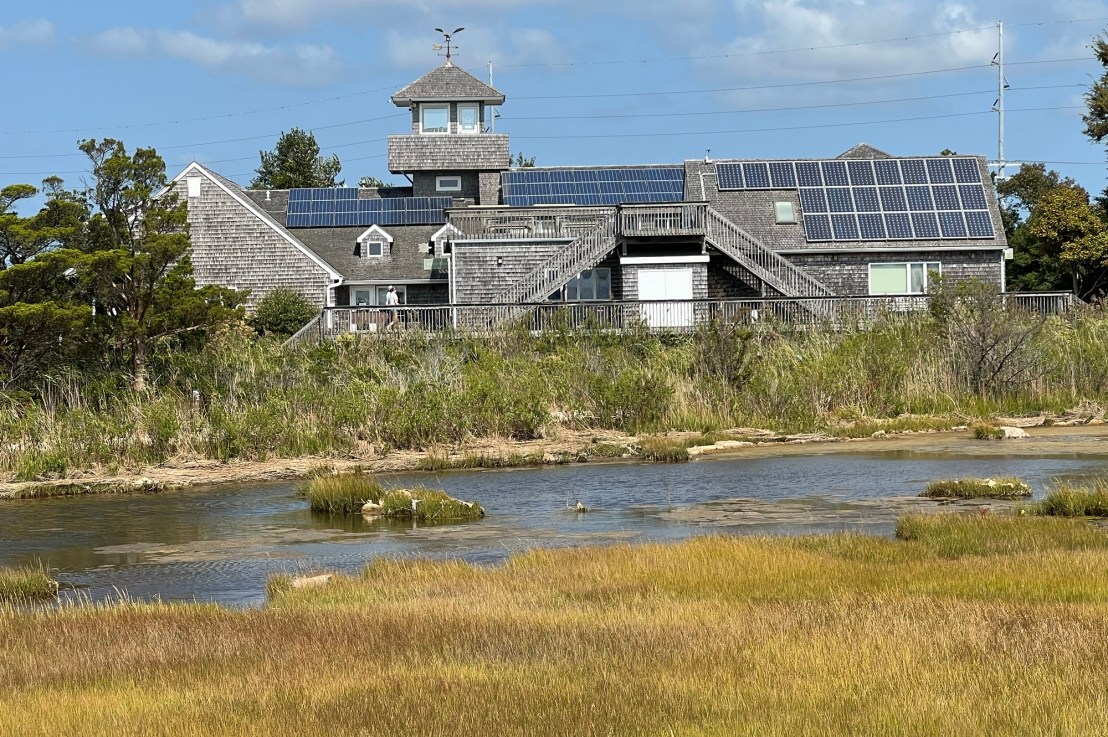
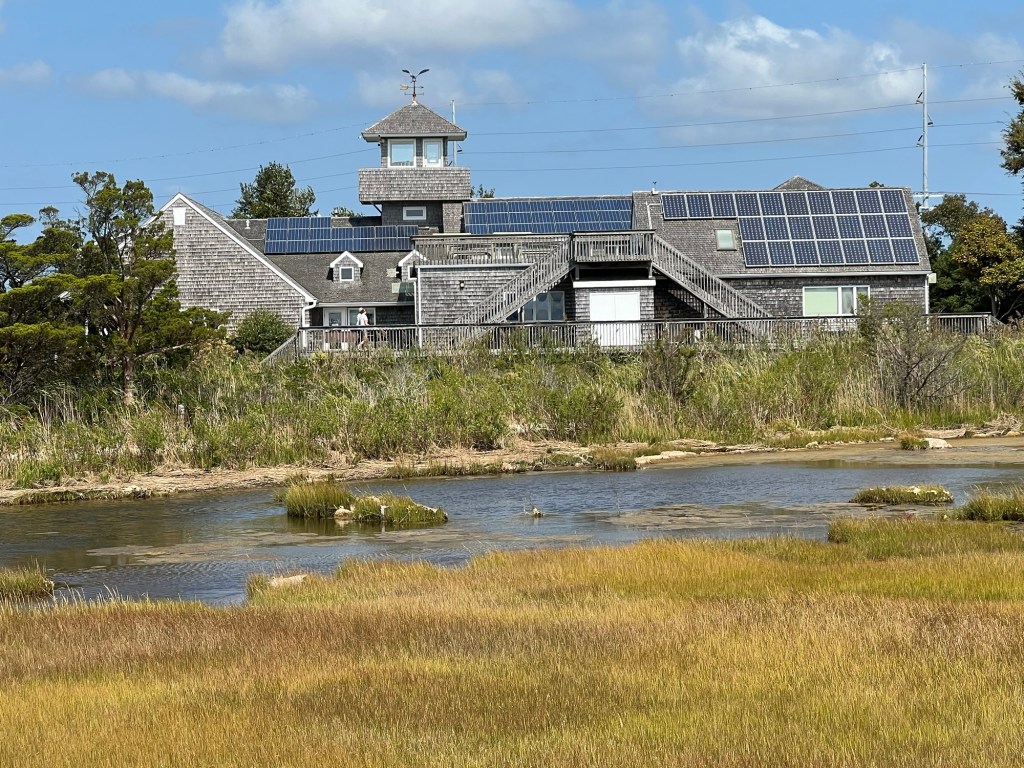
The Bay Head Historical Society & Museum at 1643 Bay Avenue in Point Pleasant, NJ during the Summer

The Museum was also decorated for the Christmas holidays

The bay at Bay Head, NJ

The lake views near the historical society

I took a detour over the weekend to Bay Head, NJ to visit their wonderful historical Society. What an interesting museum whose collection shows the town’s nautical past and present. The museum has something for everyone. For the kids, the museum has a wonderful dollhouse with interesting furnishings that any kid would want to play with everyday. across from that is a Bottle Collection of old milk and soda bottles found in the town showing its retail past.

The historical doll house on display

The Bottle Collection

The museum delves into the town’s Native American past with a small collection of artifacts found in the area when tribes used the area during the summer season for fishing, hunting and recreation. One of the members of the community contributed her experiences to the museum as well. Several items have been donated on permanent loan from other museums and the museum displays them beautifully.

The Lenape exhibition

The Native American exhibit

The Native American exhibit

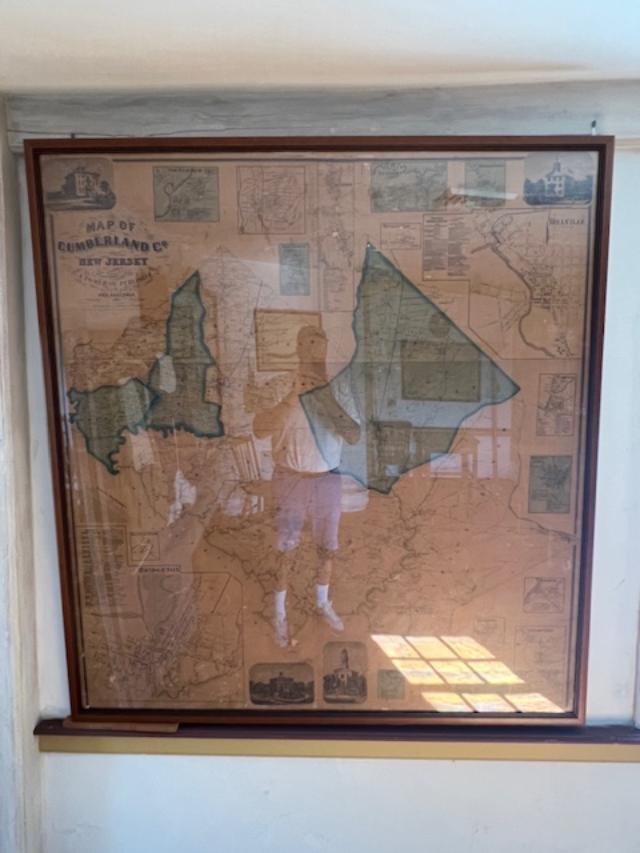
The highlight of the museum is its latest exhibition ‘Maps: A Journey Through Time’, which is an extensive collection of old maps of the State of New Jersey. This was fascinating in the the collection starts even before the creation of the state when it was under the control of Lord’s Berkeley and Carteret, two English nobles who according to the Society President never stepped foot in the state but collected money from it.

The sign for “Maps: A Journey Through Time” exhibition

The map collection shows the progression of the State of New Jersey through population growth and development. With the advent of the railroads and then through automobiles, transportation has changed the entire state of where we live and play.

The Historical Map exhibition

The Historical Map exhibition

The pictures of Lord John Berkeley and Sir George Carteret who once split the State of New Jersey East and West

History of the split of the State of New Jersey

Old maps of Bay Head, NJ

The Exhibition during the Holiday season was “Victorian Christmas” where parts of the museum was decorated for the holidays of the late 1800’s in post Civil War America. The museum had their Christmas tree up laden with antique ornaments from all eras decorating the tree.

The “Victorian Tree” decorated with antique ornaments

The museum was also decorated with vintage toys and all sorts of garland and decorations

The furniture in the museum as well as the rest of the museum was decked with all sorts of holiday decorations.

The “Victorian Christmas” display was very nice and created a very festive environment for the museum goers. The Christmas tree was a blast from the past as I saw decorations from my Grandmother’s tree on their tree. It brought a lot of memories from Christmas’s past.

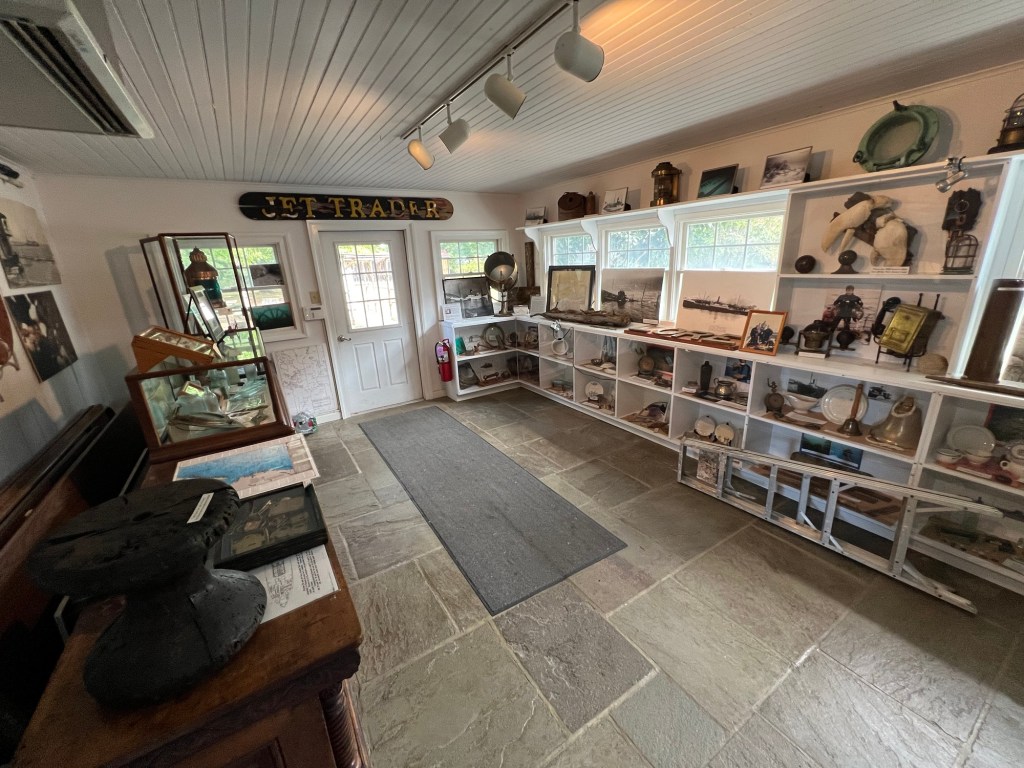
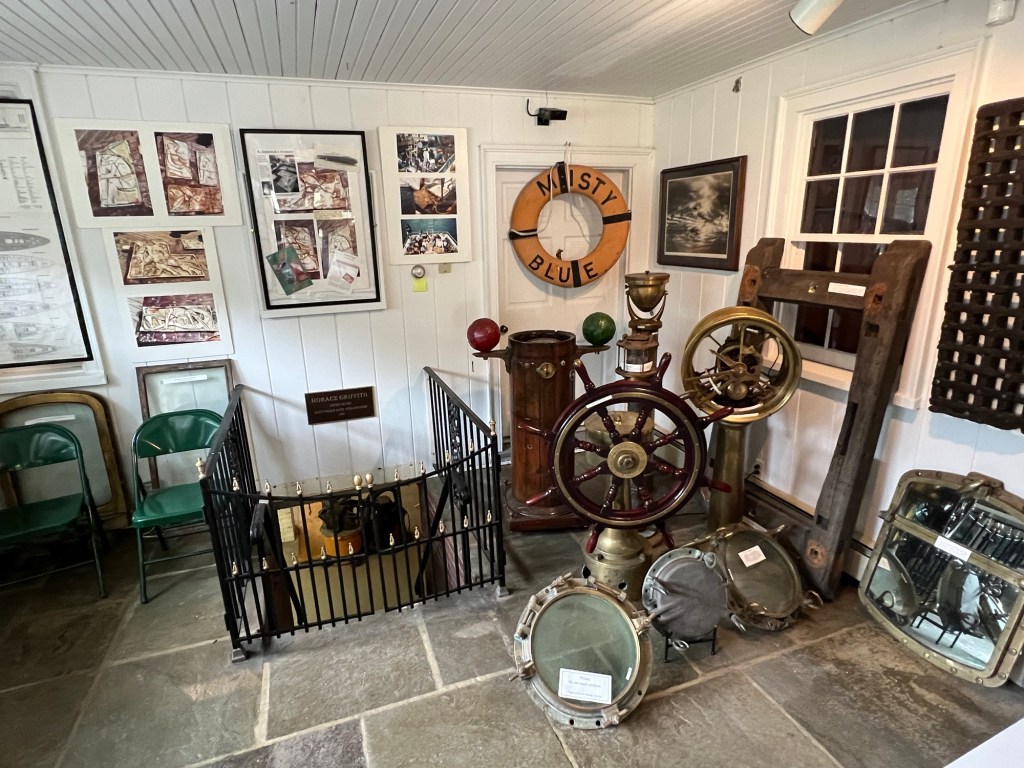
The last part of the tour I had was of the Slade Dale Nautical Cottage, a local boater and fisherman’s collection of items from his dock cottage. Here I saw an extensive collection of nautical tools and boating items including displays of sailing items. The collection shows how important the boating and pleasure sailing industry is with the town.

The museum is a wonderful place to visit on an afternoon out when you tire of the beach and you want to know more about the town of Bay Head. It also on the edge of their quaint downtown filled with interesting stores, restaurants, bakery and parks. The small historic downtown is very nice to walk around in the summer months.

The Bay Head Historic District sign

https://en.wikipedia.org/wiki/Bay_Head_Historic_District

https://www.livingplaces.com/NJ/Ocean_County/Bay_Head_Borough/Bay_Head_Historic_District.html#google_vignette

https://www.claytonandclayton.com/blog/best-historic-monuments-in-bay-head-nj.html

Downtown Bay Head, NJ

The canal downtown

It was a bit more gloomy in during the holiday season as the rains came right after Christmas. Still I liked the decorations in this festive and very active downtown.

The church decorated for Christmas on a gloomy Saturday

The downtown businesses decorated for the holidays

The bridge over the canal was beautifully decorated for the holidays

The Bay Head Fire Company One decorated for the holidays

Santa guarding the firehouse in Bayhead, NJ

Bayhead really got into the Christmas spirit during the holiday season. It put me back into the holiday spirit even though it was drizzling the whole time. It must have looked really nice on a sunny afternoon.

The Bay Head Historical Society & Museum information:

(from the Museum website)

This 1867 farm home with outstanding interior woodwork has been restored to its former glory. The museum is home to memorabilia and history of life in this part of the Jersey Shore. An exhibit of turn-of-the-century photographs of the area plus artifacts and heirlooms donated by local residents are on permanent display during the season. The front salon is a gallery for changing displays of local art and special area exhibits. The Victorian garden, the sea grass garden, and the lilac memorial garden are outstanding. Completing the complex is the Dale Cottage, which celebrates the maritime heritage of the area.

The History of the Loveland House (home of museum):

The Loveland Homestead built in 1867, addition in 1887
Slade Dale Cottage 1925:

When members of the Loveland family settled in this area around 1837, the land at the head of Barnegat Bay was sheltered from the sea by high sand dunes covered with sea grasses where bay berries and beach plum bushes grew in abundance. There were cranberry bogs, marshlands and fresh water lakes which provided a habitat for the birds and migratory fowls that later attracted gunners to the region.

The Loveland House

The Loveland Homestead historical plaque

The first purchasers of this land, which later became the hamlet known as Lovelandtown, were Judah Allen, who came here from New England in 1685, and John Hance. At the time this area was part of Shrewsbury Township, County of Monmouth, Province of East Jersey under the reign of King James II of England.

As the Loveland family grew, the family steadily increased its land holdings in the area. The members married into prominent local families from Point Pleasant and Brick and continued to develop their neighborhood throughout the late 1800’s.

Inside the old Homestead of the Loveland family

At the same time in the mid-1800’s three land developers from Princeton, Messrs. Howe, Mount and Harris arrived and bought the land eastward that was to become Bay Head. Developed from the beginning as a resort community for the upper middle class, Bay Head attracted many affluent families from both New York and Philadelphia, thanks to the developers attracting two railroad lines to the town. The Jersey Central arrived from New York in 1882 while Pennsylvania Railroad came across the bay through Trenton and Toms River. Last stop for both was Bay Head.

John W. and Samuel Loveland were the largest landholders in the area. They were joined by other early settlers, notably the Cook family and the Stout family, and were linked to these through marriage. In 1867 the Loveland Homestead, currently the home to The Historical Society Museum, was built by Charles Stout for his daughter Lorah Stout upon her marriage to Charles Cook. By 1887 the family had grown and the back part of the house was added on to accommodate their 7 children.

The Loveland family acquired the house in the early 1900’s and continued to live here until the Bay Head Historical Society purchased the property in 1997. At that time the house had fallen into disrepair and after a two year renovation (mostly exterior), the homestead opened as The Historical Society Museum in 1999. The Dale building was acquired by The Historical Society and moved to the property in 2001.

The Loveland Homestead houses artifacts, memorabilia, photographs, furniture, decoys and other treasures from the early Bay Head/ Mantoloking/Lovelandtown years. Worthy of note are the original Gerald Hardenbergh paintings and the carved Kenneth Loveland and Birdsall decoys. All three off these local artists have gained recognition in many areas outside New Jersey.

The photo collection contributed by William Schoettle is equally noteworthy for its comprehensive look at the area as it was in its heyday (mid-1880’s to about 1940). The collection is part of the museums archives and is exhibited frequently.

The Slade Dale Cottage history:

(from the museum website)

The Slade Dale cottage is, in part, a celebration of the sailors of Barnegat Bay. It is also an homage to the man who, as a young man, was a noted sailor in the area and who continued throughout his life to engage in truly memorable sea voyages and bay races. He built his dream marina, the Dale Yacht Basin, through his foresight of bringing outboard motors to the area. He then promoted boating of all kinds throughout the years from the 1940’s to mid-1960’s. For many of those years he lived in his cottage at the end of the dock at the marina.

The Slade Dale Shed

The historical plaque for the Slade Dale Cottage

The Slade Dale shed during the Summer months

The Slade Dale shed decorated for Christmas

The Slade Dale Gallery

Boating equipment in the Slade Dale exhibit

The pictures of Slade Dale

The boating exhibit at the Slade Dale exhibition

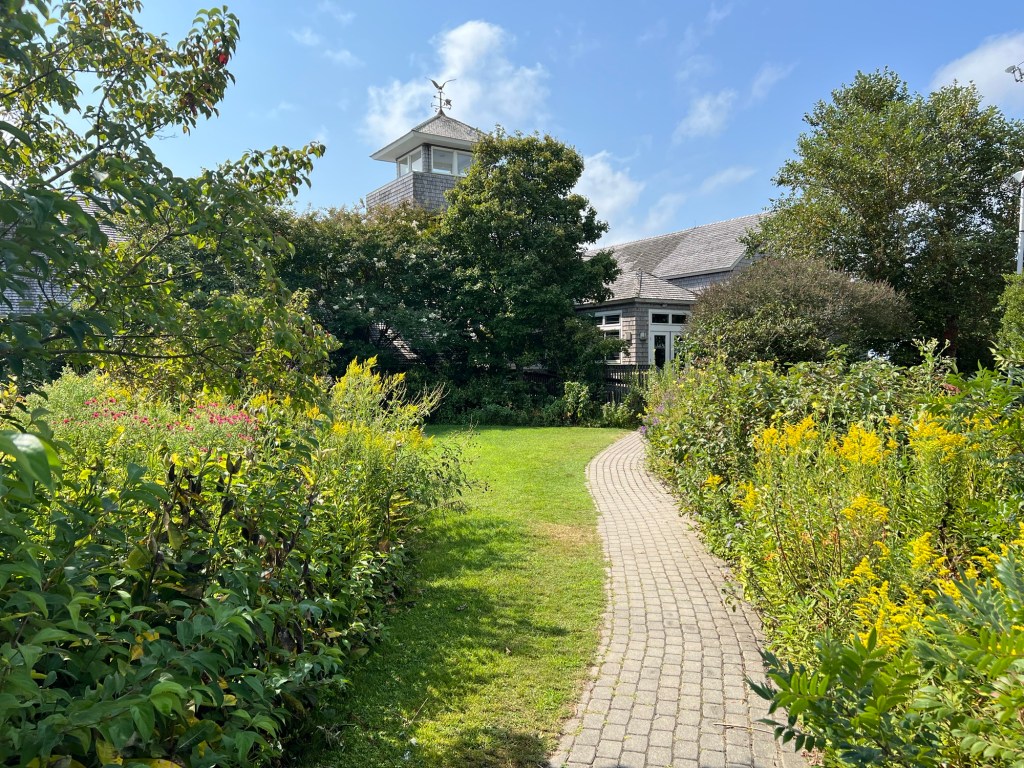
The gardens on the property represent a typical Victorian garden, a lilac memorial garden, an herb garden, a sea grass garden and a resting patio.

The gardens at the Bay Head Historical Society

The gardens at the historical society

The Bay Head Historical Society is a nice way to spend the afternoon when you really want to get to know the community.

Lake Hopatcong Historical Museum State Park Landing, New Jersey 07850

Lake Hopatcong Historical Museum State Park Landing, New Jersey 07850

Lake Hopatcong Historical Museum

State Park

Landing, New Jersey 07850

((973) 389-2616

My review on TripAdvisor:

https://www.tripadvisor.com/ShowUserReviews-g46552-d28131478-r965835617-Lake_Hopatcong_Historical_Museum-Landing_Morris_County_New_Jersey.html?m=19905

The Lake Hopatcong Historical Museum is right on the lake

The museum sign inside the park

I recently visited the Lake Hopatcong Historical Museum and learned so much from this lake community with its resort past and development from a artist colony to a hotel and amusement resort from the late 1880’s to WWII to the residential community it has become today. It really does show how transportation has shaped and developed vacation resorts not just in New Jersey but in the Metropolitan area.

The development of the railroad lines into the area bringing visitors from the large urban areas to the development of the automobile and it developed the hotel industry to modern jet travel which led to the decline of the area as a resort and becoming the lake community it is today, the museum guides you through the early history and the important visitors that became part of the community. While there are still traces of the old resort here and there, the rich history of the Lake Hopatcong shows us how time marches on in all places.

On the first floor is the Lenape Native American display and the description of the first residents of the area. There was all sorts of household and fishing items on display at the museum when Native Americans lived in this area in the warmer months.

The Lenape settlement in the Lake Hopatcong district

As the area settled and Dutch and English settlers pushed out the Native Americans, the area became settled with farmers and fisherman and with the opening of the Morris Canal as part of the lock system, a transportation head. The opening of the Morris Canal brought new business and new opportunities to the area.

The Morris Canal display at the museum and the development of the shipping industry in the area

The Morris Canal in its years of use

It was after the Civil War and the affluence of the Industrial Age transformed this area with the advent of the railroads passing through the community. Five day work weeks and weekends off for pleasure opened up this lake community first to boarding houses and then the building of luxury hotels for longer stays. Residents from the urban areas would come to the ‘country’ for fresh air, swimming and recreation.

The Hotel and Resort development of Lake Hopatcong

The development of the lake region for hotels

The hotel industry at Lake Hopatcong

The resort development signs

The advent of WWI

The aftermath of WWI

The growth of the resort community

The resort displays

With people staying at the resorts, they needed more to do than just swimming, boating and fishing. Families would arrive and from there was the development of the amusement industry. This would start with pleasure gardens, carousels and games which led to the creation of Noland’s Point and Bertrand Island Amusement parks. Noland’s would be the victim of the Depression as such a small area did not need two amusement parks and Bertrand Island would continue on until 1983 as times and tastes changed and investment was not put into the park. In its day though, it was a place of fun and merriment.

The history of Noland’s Point

Bertrand’s Island became the center of amusement and fun and the park remained a mainstay of the area for almost 100 years. With the building of bigger and more elaborate parks such as Great Adventure and the growth of shore communities, these inland smaller parks were bypassed by time. While still popular, they did not hold the attention of the Baby Boom and Gen X crowds who wanted new parks to visit. Still the memories of warm summer evenings and our first Miss America from New Jersey, Bette Cooper, the former Miss Bertrand’s Island, still hold true today.

The Bertrand Island Amusement Park display was the most interesting in the museum

Bertrand’s Island display

Prizes won at the park

Part of the rides and games at the park

Games and rides

The Miss Bertrand Island Beauty Contest

Miss Bertrand Island, Bette Cooper, Miss America 1937

The museum tells many interesting stories of the lake district and the displays are very detailed and interesting to read. There is a treasure trove of artifacts and historical items at the museum to admire and reminisce about for those who had visited in the past. The museum is a wonder book of a time between the wars before air travel changed everything that a trip to the lake region was a place for vacationing and for long days of relaxation.

Plan about two hours to really visit the museum and share in its rich history.

Mission Statement

(from the museum website)

Our mission is to collect, house and preserve artifacts and documents relating to the civil, political, social and general history of Lake Hopatcong and to encourage the education and dissemination of information about Lake Hopatcong’s history.

The historic plaque for the house

History of the Museum:

(from the museum website)

Since 1955, our organization has housed, cared for, and displayed items relating to the unique history of New Jersey’s largest lake.  With some 750 members, it is one of the largest historical groups in the State of New Jersey.  Our four major programs regularly sell out at 200 attendees and our museum has been recognized as one of the finest small museums in the state.    

The front of the museum. This is the former Lock Keepers home

The concept for a historical organization at Lake Hopatcong took shape in spring of 1955 when an article in the Lake Hopatcong Breeze  declared “It has been suggested that we have a museum at Lake Hopatcong to house the many interesting treasures pertaining to the history of our lake and vicinity….”  The July issue reported much interest in the idea of a museum and the Lake Hopatcong Businessmen’s Association asked Alice Apostolik, editor of the Lake Hopatcong Breeze newspaper, to continue investigating the concept. 

The front of the museum from the parking lot of the park

The interest fostered led to the formation of the Lake Hopatcong Historical Society on August 10, 1955.  With eight people in attendance, an organizational meeting was held at Langdon Arms (where Gatwyn’s Restaurant is now located on Route 15).  Dues were established at $2.00 per year with life membership set at $20.00.  Langdon Arms was set as the society’s official headquarters, but it was  agreed that the monthly meetings should be rotated to other areas of the lake, such as the Hopatcong House, a hotel formerly on Lakeside Boulevard in Hopatcong where The Liquor Factory’s building is now located.

Part of the lock equipment at the lake

The first regular meeting of the newly formed historical society was held in September 1955 at the Ehrlich’s “rathskeller,” which originally served as famed inventor Hudson Maxim’s observatory and ice house and is the small stone tower which still stands off Sharp’s Rock on the west shore of the lake.  From the beginning, the goal was to establish a museum for the lake.  In the late 1950’s, a group of members had dreams of buying Hudson Maxim’s house shortly before it was torn down.  Alas, the plan to purchase the property for $11,000 failed by a single vote of the officers and trustees.  In the early 1960’s, an effort was made to buy the old Landing Post Office building, an odd octagonal structure which once sat near the traffic light at Landing.  This plan also failed and while the Lake Hopatcong Historical Society was an active organization during these early years, it would take some ten years from the organization’s founding before a suitable building could be located and agreement reached. 

Artifacts and mementoes from the museum at the entrance

In the early 1960’s the State of New Jersey moved forward with plans for a new administration building at Hopatcong State Park.  The park had been founded on land which was previously owned by the Morris Canal and Banking Company.  When the canal was abandoned in the 1920’s, the 98 acres around the Lake Hopatcong dam were set aside as a state park.  The Messinger family which had long operated the Morris Canal lock at this site, lived in the stone house just above the lock and dam.  With the removal of the canal lock in 1924 and the construction of a modern dam, Rube Messinger became the first dam and park superintendent.  He and his family continued to live in the same house.  Following World War II, the park began to be more formally developed.  Cottages along the lakefront were removed, the beach was greatly expanded, and a new entrance and parking lot were added.  The old lock tender’s house was converted into an office for the state park, but as the popularity of the park grew, it became apparent that a larger and more modern building was needed for administration.  In July 1963, plans were announced for the construction of a new $125,000 administration building.

The first floor gallery of famous residents and of the resorts

At first it appeared that the old lock tender’s house would be torn down. The Lake Hopatcong Historical Society swung into action to acquire use of the building for a museum.  After a prolonged negotiation, agreement was finally reached on a lease with the State of New Jersey in the spring of 1965.  Volunteers from the Lake Hopatcong Historical Society then gave the building the tender loving care it desperately needed and set about collecting memorabilia and artifacts from the community to fill their new building.  On September 11, 1965, the dream of a museum at Lake Hopatcong was realized as the public was invited to an Open House celebration.  Over the ensuing years, the museum collection has grown through wonderful donations and acquisitions so that it now totals over 11,000 images and several thousand other items of memorabilia. 

The Bertrand Park display of the amusements on the lake

Before the museum opened, the Lake Hopatcong Historical Society held frequent meetings at local restaurants, hotels, and community rooms.  There were also outings and trips for members.  Once the museum opened, the organization began hosting many events in their new building.  As the organization grew, outside venues were once again needed.  In the early 1990’s the museum settled on four major programs per year with featured venues over the years including the Jefferson House, The Arlington, Lake Hopatcong Yacht Club, St. Jude’s Church, and the Palace Theatre.  Programs started selling out in the late 1990’s and have continued their popularity since.  One thing that has changed is the cost.  Dinner programs in the early 1970’s were $6.00 per person!

The lake homes from the park

From the eight individuals who attended the first meeting in August 1955, the society had grown to some 150 members by the time the museum opened.  Today, with some 750 members, the organization remains loyal to its mission “to collect, house and preserve artifacts and documents relating to the civil, political, social and general history of Lake Hopatcong and to encourage the education and dissemination of information about Lake Hopatcong’s history.”

Major Archival Topics

(from the museum website)

The Lake Hopatcong Historical Museum maintains collections on the following topics and individuals relating to Lake Hopatcong’s history:

  • Ans Decker & Decker Fishing Lures
  • Barnes Brothers Boats
  • Bertrand Island Park

Bertrand’s Park Amusement area

  • Bette Cooper, Miss America 1937

Miss Bette Cooper, Miss Bertrand Island and Miss America 1937

  • Breslin Park
  • Central Railroad of New Jersey
  • Cornelia Gilissen
  • Florence Morse Kingsley
  • Francis Himpler
  • Fred Jacoby & Jacoby Boat Works
  • Garret Hobart
  • George G. Green
  • Hopatcong
  • Hudson Maxim
  • Ice Houses & Harvesting
  • Joe Cook
  • Lackawanna Railroad
  • Lake Hopatcong Angler & Breeze Newspapers
  • Lake Hopatcong Yacht Club

The Lake Hopatcong Yacht Club

  • Lakeside Theatre
  • Landing
  • Lenape

The Lenape Display of life around the lake region

  • Loretta Montez
  • Lotta Crabtree (Miss Lotta)

The actress Lola Crabtree display

  • Morris Canal
  • Morris County Traction Company
  • Mount Arlington
  • Nolan’s Point
  • Nolan’s Point Amusement Park

The Noland’s Point Amusement Park

  • Northwood
  • Ogden Mine Railroad
  • Owen McGiveney
  • Palace Theatre, Netcong
  • P.J. Monahan, Illustrator
  • Rex Beach
  • River Styx
  • Sam Goodman, Lifeguard
  • Shanna Cumming
  • Shippenport
  • Skate Sailing Association of America Archives
  • Thomas Walsh
  • William J. Harris, Photographer
  • Woodport

The History of the Lake Region:

(from the Museum pamphlet)

Located in a rustic 19th century building which served as a lock tender’s house on the Morris Canal, the Lake Hopatcong Historical Society Museum offers an entertaining and enlightening look at the history of New Jersey’s largest lake.

The beach section of this lake park

Step back to a time when the lake was actually two bodies of water and the Lenape lived along the shores. Learn about the building of the famous Morris Canal and the forming of modern day Lake Hopatcong, its main source of water.

Lake Hopatcong

The Morris Canal display at the museum

Travel back to the era when the Lake was a tourist Mecca and some 40 hotels and rooming houses graced its shores.

The hotel display

Relive the days when thousands flocked to Bertrand Island Amusement Park for dancing and ‘nickel nights’.

Bertrand Island Amusement Park

In the age before jets, before air conditioning and before super highways, Lake Hopatcong was a major northeast resort. Within easy reach of large cities to the east, the Lake’s size and setting at over 900 feet above sea level made it the perfect destination. From the 1880’s through the 1930’s, the Lake welcomed thousand each year, including leaders of government, industry and entertainment.

The history of the Hotel Breslin

Low daytime temperatures and cool evenings made Lake Hopatcong a welcome respite from the urban centers to the east. Although other northwestern New Jersey towns were developed as resorts during this time, Lake Hopatcong quickly outdistanced its rivals in popularity.

The popularity of Bertrand Island

While these other resorts shared Lake Hopatcong’s proximity to the urban centers of the East, they could not match the lake’s size or the ease with which to reach it by rail. The museum is located on the grounds of Hopatcong State Park on Landing, New Jersey. The museum’s hours are seasonal so please check the website for hours.

The Morris Canal Lock right by the Museum