I went to visit the Kripplebush Schoolhouse Museum over the holiday weekend to take a glimpse at school life at the turn of the last century. I discovered that not much has changed since the 1800’s. The teacher still sits in the front of the classroom with the students contently listening (with no cell phone use).
The sides of the classroom have all the things that a teach would need with books, maps and a potbelly stove to keep the children warm. What I thought was unusual about this school house is that it was in use until 1951 when the new school system was built. It still has a piano and art supplies showing that it was used for all classes at all ages.
It is not so different from elementary school classes of today which are handled in one room. It was at a time when things were much slower in life and getting an education was a privilege that was not taken for granted. It is a very unique museum.
Downtown Kripplebush
When you are finished, take time to explore the small downtown just up the road. It has many historical homes and beautiful gardens and a few small antique shops. The Methodist church sits in the middle of the town as a symbols of its religious past. The church is still active but sits on a country lane looking majestic.
It is an interesting museum but it is rarely open. It is open for two hours on a Sunday and only until the end of October. Then you will have to wait until May. Still it is worth the trip with the town’s beautiful little downtown and its picturesque fields of wildflowers and fields as you enter and leave town.
The beautiful wildflowers as you enter town.
The beautiful fields of flowering weeds and wildflowers
The History of the Museum:
(from the museum website)
The Kripplebush Schoolhouse, an original one room schoolhouse, and the Lodge Hall located behind it are proud examples of a community’s success in preserving its historical assets. This challenging restoration has required generous public support, in dollars as well as in labor. Our organization has been assisted in its efforts by membership contributions and by volunteer activities.
The museum property
The schoolhouse has been set up the way it was in the early 1900s. We have worked with local people concerned with preservation of local history, as well as with former students. Even a professional movie set designer has helped us pay careful attention to historical details.
The original school house
The Lodge Hall displays authentic furniture and articles common to the way that daily life was then lived. Our museum offers the possibility of taking a step back in time. Visitors find it a wonderful opportunity to see and understand subtle and significant ways in which our local culture has changed and how our society has progressed.
The school room classroom
The Back of the classroom
The history of Kripplebush is a rich story that shows us how a proud past can inspire the future of an ever changing community. We would greatly appreciate any help that you could provide for us in meeting our future goals for this lovely community resource.
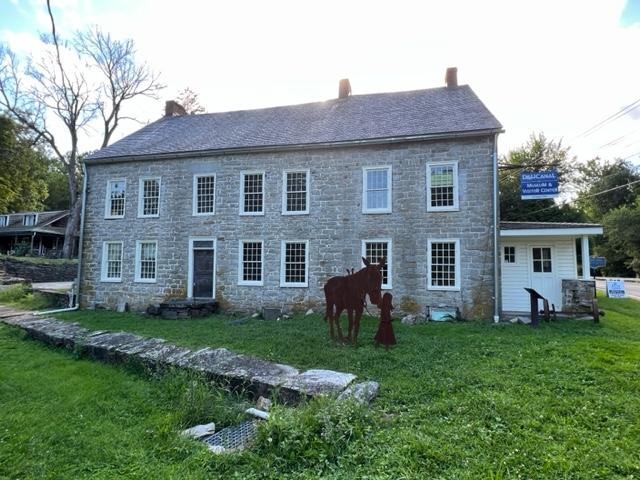
The D & H Canal Museum is an interesting mix of history of transportation, commerce and growth in this part of New York State. The museum is housed in the old DePuy Canal House at Lock 16 on the canal route (which is located just outside with weeds and over-growth hiding it), which was built in 1797 and was enlarged in 1820 to serve workers and travelers on the D & H Canal. The museum itself had gone through many transitions from tavern to canal offices to a high-end restaurant and then to the current status as a museum.
Lock 16 on the canal route sits just outside of the museum.
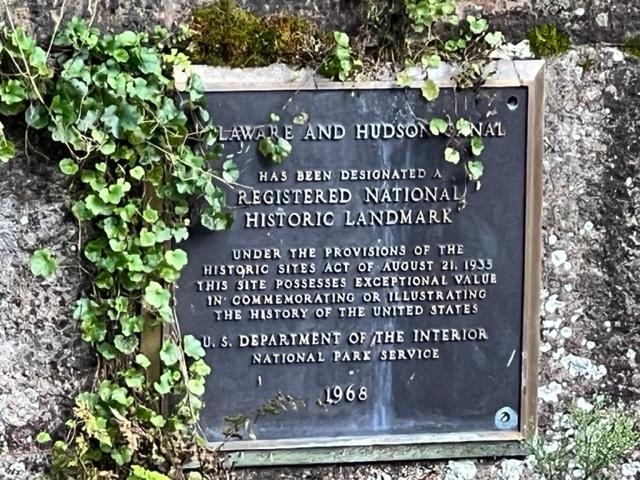
The canal historical marker.
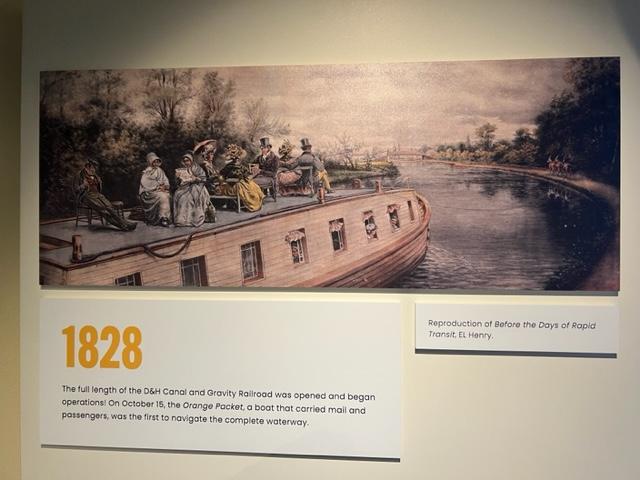
The museum is interesting in that it shows the progress of how the canal was built and how the area opened up to commerce of both people and merchandise. It also shows the importance in shipping coal from its source to its end destination in New York City and how it helped grow that city as well.
The front gallery as you enter.
The entrance of the museum gives a romanced view of the canal and transportation along the route. Artist William Rickarby’s painting “High Falls on the Rondout” is the theme of the room with the painting blown up to show life on the canal. It gives a view of how the canal’s played a part in everyday life.
The original watercolor painting “High Falls on the Rondout Creek” by artist William Rickarby.
The painting’s description
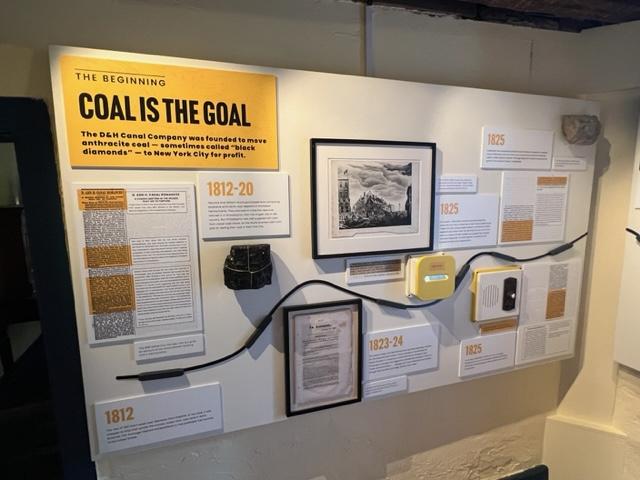
The museum is broken down into four separate galleries explaining the canal development, Transporation and shipping, the types of products being shipped along the route. Coal being mined in Pennsylvania could now be shipped to New York City more quickly than before and the connections to other lines of the canal brought in other produce.
The main gallery tells the story of the development of the cabling system that helped develop the bridges of the canal route.
The D & H Canal route for shipping.
The movement of coal from Pennsylvania to New York City.
The new Robling cable system changes everything.
Coal mining and its role in the growth and use in cities.
Before the railroads, the canals also began a source of leisure travel.
The second gallery explains coal mining manufacturing. The finding of the ore and its use in a modern society. This shows its importance at that time in our history.
The shipping of coal.
The second gallery on the development of the canal.
John Augustus Roebling and his creation of the wire rope cable.
Items for the use of mules that were used along the canal route.
Items used for canal safety while in transport.
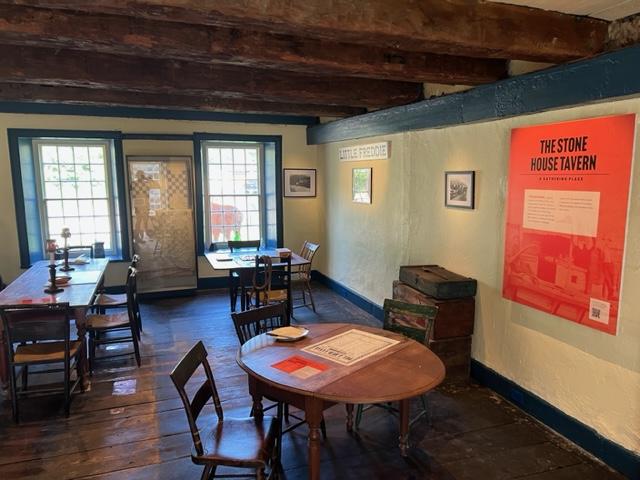
The last gallery was the part of the building that the family had used for a tavern for travelers along the canal route. This room still has that feel of a restaurant and along the tables you can see the old menus and a description of entertainment at the time.
The use of the building as a pub for travelers along the canal route.
The pub description of the DePuy family. They used this building to entertain visitors who worked and traveled along the canal route. The building was later used as a four-star restaurant until 2017 when the building was turned into the museum.
The outside of the old restaurant extension.
The old Lock 16 that is now covered with weeds, but you can still hear the water underneath.
There are still traces of the glory days of the canal covered by weeds, trees and bush. The canal is long gone but its development, growth and final demise and rebirths as an attraction are shown in different stages of the galleries. For those who have interest in the growth of New York State in both mining and farming and transport to New York City, the museum tells that story not just in story boards but by experiencing it with props and pictures.
The History of the D & H Canal (The Delaware & Hudson Canal):
(from the D & H Canal Museum pamphlet)
This 108 mile, 108 lock waterway carried anthracite coal from Pennsylvania mines to the Hudson River at Kingston, NY between 1828 and 1898. Conceived by the Wurts brothers, it served as a means to market their coal in New York City. Associated with feats of civil engineering, the D & H Canal transformed the mid-Hudson River Valley in size and economic development.
The D & H Canal Company was privately financed by investors after seeing a Wall Street demonstration of the hot burning anthracite coal in January 1825. Benjamin Wright and John B. Jervis were hired to survey the route and engineer this canal, which started in Honesdale, followed the Lackawaxen and Delaware Rivers to what is currently Port Jervis. It then headed northeastern through the valley between the Shawangunk Ridge and the Catskill Mountains and ran alongside the Roundout Creek to the Hudson River.
The canal was constructed in less than three years by an estimated 10,000 workers, using only picks, shovels, draft animals and blasting powder. Industries developed along the canal route to exploit local resources such as lumber, agricultural products and bluestone. Natural cement, which hardened well under water was discovered near High Falls in 1825 and would later be used to construct structures such as the Brooklyn Bridge, the Statue of Liberty and the Washington Monument.
Another innovation was the wire suspension bridge designed by John Roebling (of Brooklyn Bridge fame). He built four suspension aqueducts for the D & H Canal during the 1840’s.
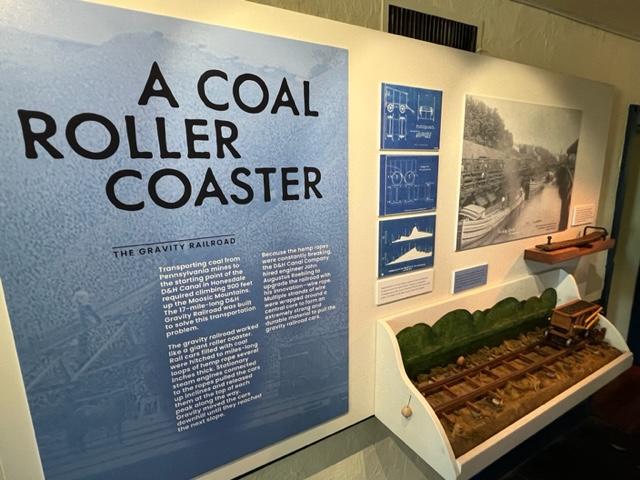
The gravity railroad was devised to transport coal from the fields near Carbondale to the canal terminals at Honesdale and Hawley. Railcars were pulled up the mountains using mules and ropes and descended by gravity. Although attempts to use steam locomotives proved unsuccessful, the trial run of the Stourbridge Lion is considered the first commercial use of a locomotive in the US.
One of the largest firms of its era, the Delaware & Hudson Canal Corporation pioneered corporate management practices and built one of the first US railroads. Railroads led to the end of the canal era and most of the D & H Canal was drained after the 1898 season.
The Washington’s Headquarters State Historic Site in Newburgh, NY
I spent an afternoon exploring the Beacon/Newburgh area with all its historical sites and homes and my last stop was the Washington’s Headquarters State Historical Site in Newburgh, NY. Surrounded by a quickly gentrifying neighborhood it really showed me the progress this area has made and how the site keeps reinventing itself. It shows this site’s resilience.
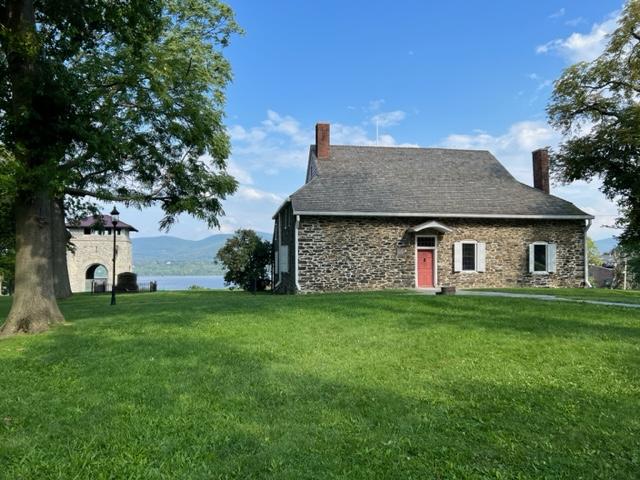
The Hasbrouck family farmhouse was General George and his wife, Martha’s home for over sixteen months.
For sixteen and a half months, the site was used by General George Washington, along with his wife Martha, his aides, guards and free and enslaved servants. They used the Hasbrouck family’s Dutch-style farmhouse as their home and headquarters. It was the longest time they spend at any military headquarters beginning in April of 1782 and ending in August of 1783 as the Revolutionary War was drawing to a close (Palisade Interstate Park Commission).
I was able to take the last tour of the day at 4:00pm and our tour guide was excellent. She really knew the history of the site and gave us a comprehensive tour of the home and the time before and after the war. We went room by room in the Hasbrouck family farmhouse and she described how the family had utilized the house and then how General Washington and his wife and staff used the home during the war years.
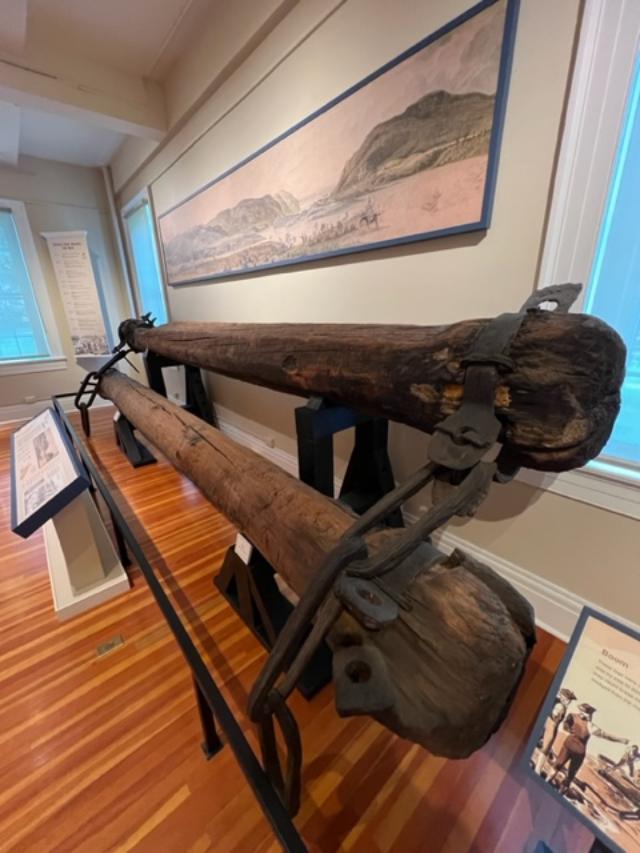
I started the tour in the Museum Building, which is a Federal style building that was erected in 1910 to house the collection of artifacts from that period. The collection includes the only surviving section of the boom that stretched across the Hudson River at West Point (Palisade Interstate Park Commission).
The main gallery housing equipment and the surviving piece of the boom.
The Boom that protected the Hudson River
The piece of the boom that survived and was dredged from the river in the late 1800’s.
The second gallery had the video history of the site and how Washington’s troops advanced in the area. It also went over the last years of the war and the progress American troops made.
The Video Gallery at the Washington Headquarters site.
The sign of the historic site.
After the tour of the museum on my own, we started the tour of the Hasbrouck family homestead. When we approached the house, you could see where the house was added onto from the original footprint. At the top of the doorway, we could see the cornerstone where the family name and year of the building of the house was built.
The cornerstone to the home with the family name and date.
Jonathan and Tryntje Hasbrouck built this Dutch style farmhouse between 1750 and 1770. They raised their family and ran their business here. The property stretched from the banks of the Hudson River to about two miles inland for a total of almost 200 acres. After his passing in 1780, his wife ran the home and the business successfully for the rest of her life (Palisades Interstate Park Commission).
The outside of the Hasbrouck family home. Notice the addition to the home.
The house itself has none of the original family furnishings but many period pieces including General George Washington’s desk from another location.
George Washington’s desk from another location that was brought here.
We started off the tour in the family kitchen and dining room which was one big room with a walk-in fireplace. The room was broken into sections as the food would be cooked in the giant fireplace and served at the family table off to the side. As more people visited the home, an area off to the side was used for plating and serving.
The Hasbrouck’s and Washington’s Dining Room
The walk-in fireplace for cooking and the dining space.
The plating area of the dining room that would be used by the Washington’s.
We next entered the battle room, where all the enlisted men would be doing all the General’s office work, correspondence and paying bills. Everything was done by hand and if multiple copies needed to be made, it was more work for the men working there.
The War Room where the enlisted men did all their work and corresponded with the troops and other officers.
General Washington’s office was off to the back. This is where all the strategic work of the war was performed and where General Washington worked with his staff.
General Washington’s office during the end of the war.
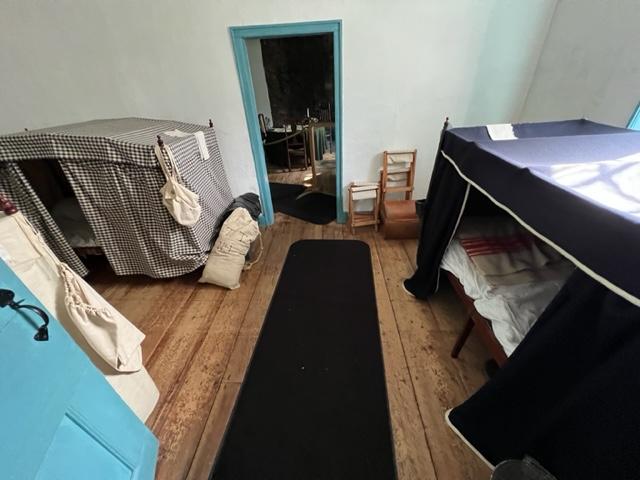
Once you passed through the front foyer again is where the enlisted men slept, two per bed which the tour guide said was uncomfortable for the men. Only in the summer months when half the staff was on leave could they sleep one per bed.
The enlisted officers sleeping chambers during the war years.
The three rooms on the other side of the house were used as the Parlor, where the Washington’s would entertain visiting dignitaries and guests. This was right off the main kitchen area.
The Parlor where the Washington’s entertained visitors and dignitaries.
The next two rooms were used as the Washington’s bedroom where we all noticed that the bed was so short. The guide informed us that even though George Washington was over six feet, people slept sitting up at that time as they considered it healthier.
The Washington’s bedroom
The next room over was the servant’s room where the free and enslaved servants would sleep and attend to the needs of the Washington’s. It looked to me that Martha contributed more than just entertaining the troops. She must have been the ear that her husband needed at wartime.
The Servant’s room
What I thought was interesting is the stairs going up did not lead to a second floor. The tour guide said that this was in the Dutch tradition of not having a second floor considering the Hasbrouck’s had ten children. She said only later on did families finish the house and construct the upstairs. Once the house tour was over and the tour guide answered all our questions, we were able to tour the grounds for the last hour before the park closed.
The property looking down the Hudson River to Bannerman Castle.
On the property was the Tower of Victory, which President Lincoln’s son built in honor of the Hundredth anniversary of the war. It was closed for touring. The details of the tower were really beautiful with the eagles adorning the sides of the building and the beautiful stonework.
The Tower of Victory sign
The “Tower of Victory”
The views of the Hudson River were breathtaking. On this beautiful sunny afternoon, you can see all the way into Beacon across the river and look as far down river as Bannerman Castle. Everything was so clear and beautiful from this site and you could see all the surrounding area. You could see why they picked this spot as the strategic headquarters for this part of the war.
The Minuteman statue on the property.
Artist Henry Hudson Kitson sculpted this statue and the Minute Man statue on the town green in Lexington, MA. These monuments commemorate the citizen-soldiers whose selfless bravery and sacrifice made this country possible (Palisades Interstate Park Commission).
Artist Henry Hudson Kitson was a British born artist who was educated at the Ecole des Beaux Arts. He was known for his military statues (Wiki).
The Madam Brett Homestead at 50 Van Nydeck Avenue in Beacon, NY.
The Brett Homestead marker
The sign that welcomes visitors
I recently visited the Madam Brett Homestead on a walking tour and discovered that the family had a lot to do with the growth of not just Dutchess County but New York State as well. The house was the homestead for five generations of family members each who added to the home.
The homestead’s historic plaque
Since the family practiced thrift in the home and decor, we get to see the house with period furniture that has been donated back to the house from the family. Also, period pieces have been donated by other members of the community to show the home at different periods of time. It gave us a look into the home life of a prosperous farming and milling family.
The entrance of the Brett Homestead
The tour starts with a short video on the family and how Madam Brett got her inheritance from her father and built on the wealth that he had created. She leased out land with water and mineral rights thus adding to her wealth and had a grist mill that was the only one on the patent, so everyone had to go through her for grain processing.
The china cabinet with family related items.
The homestead was built by Roger Brett and Catherine Rombout Brett on land inherited by her father, which was part of the Rombout Patent (which covered much of lower Dutchess County). The couple had been married in 1703 and had originally moved in with her mother in the family’s manor home in Manhattan. Upon the death of her mother, Catherine inherited the land and the manor house in Manhattan. Land rich and cash poor, she and her husband mortgaged the manor house in Manhattan and built a small home and gristmill. They moved into their Dutch style home on Christmas Day 1709. The house was expanded in 1715. The home was later added on again in the 1800’s to the present house (Brett Homestead Pamphlet).
In the hallway on display is the original Rombout Patent, which everyone on our tour thought was very impressive. It had been found and was given back to the house. It shows the land deal that the settlers made with the Native Americans.
A copy of the Rombout Patent
We next headed to the Dining Room, where the family entertained guests. The room is full of period furniture and silver both family owned and donated to the homestead. The formality of entertaining is shown in the room set up.
The Dining Room at the Brett Homestead
Hannah Brett’s (Madam Brett’s granddaughter) bridesmaid dress was on display as well. This had been worn when she danced the Minuet with Marquis de Lafayette. I thought this was interesting in that she had this altered for the occasion and that it had lasted all these years. She had worn this for the wedding of Cornelia DePeyster, whose wedding dress in the New York Historical Society (Brett Homestead pamphlet). It was donated back to the house by the family descendants for display.
Hannah Brett-Schenck’s bridesmaid dress
Period furniture and decorations adorn the Brett Homestead
The decorative pieces in the Dining Room
The Dining Room fireplace
The kitchen was very interesting because when you walk through it you will see the modern kitchen in the front of the room that was put in around the late 1950’s and early 1960’s compared to the other side of the room which has the original fireplace and kitchen equipment. It shows the contrast in cooking and entertaining over the last two centuries.
The old versus the new in the Brett Homestead kitchen.
The house was constructed in three sections. The original section of the house from 1709, the addition in 1715 and then the grander addition in the 1800’s that gives the house the look it has now. You can see how the house evolved from a small residence to a grand showplace and you can see this in the way it was designed.
The upstairs hallway shows the contrast between the old home and the additions.
Each of the rooms were decorated with period pieces and some of the rooms has themes to them such as one was a Children’s Room, another was the family office and one contained farm equipment. All the items represented a different time in the home’s history.
The Children’s Room with a collection of dolls that creeped visitors out.
The upstairs bedrooms
The period farm equipment display.
The other bedrooms showed guest rooms for visitors to the area, the office where the Brett’s would have conducted business and rooms would have housed many family members.
The Master Bedroom with canopy bed and bedwarmer
The Guest Bedroom
The home office of the family.
The house stayed in the family until the death of Alice Sutcliffe Crary at 85 in 1953. The Melzingah Chapter of the Daughters of the American Revolution purchase the homestead to save it from becoming a supermarket. They have been lovingly restoring and holding events at the homestead as well as contributing to the community at large and promoting Historic Preservation, Education and Patriotism (Madam Brett Homestead pamphlet).
I recently visited the house with a group of people on a tour and we visited the house for Christmas and the local garden club had decorated part of the house for holidays with garland on the bannisters and on some of the mantels. The outside of the house was quite festive.
The house during the holiday season.
The house adorned with wreaths and garland on the holiday tour.
The welcoming entrance to the house during the holiday season.
The docent tours are very interesting and really give you a view of what life was like in the house for the families that lived here. They only take place on the second Saturday of the month so you need to plan ahead.
















 Visiting a Museum: The Unique, Unusual, Obscure and Historical