Tag: Exploring Historical Morris County

Orchard Street Cemetery                                            44 Chestnut Street                                                    Dover, NJ 07801

Orchard Street Cemetery 44 Chestnut Street Dover, NJ 07801

Orchard Street Cemetery

44 Chestnut Street

Dover, NJ 07801

https://www.orchardstreetgatehouse.org/history

https://www.facebook.com/p/Orchard-Street-Cemetery-100057217459315/

Open: Sunday-Saturday Seasonal Check the website for the hours

My review on TripAdvisor:

https://www.tripadvisor.com/ShowUserReviews-g46397-d28113226-r964248261-Orchard_Street_Cemetery-Dover_Morris_County_New_Jersey.html?m=19905

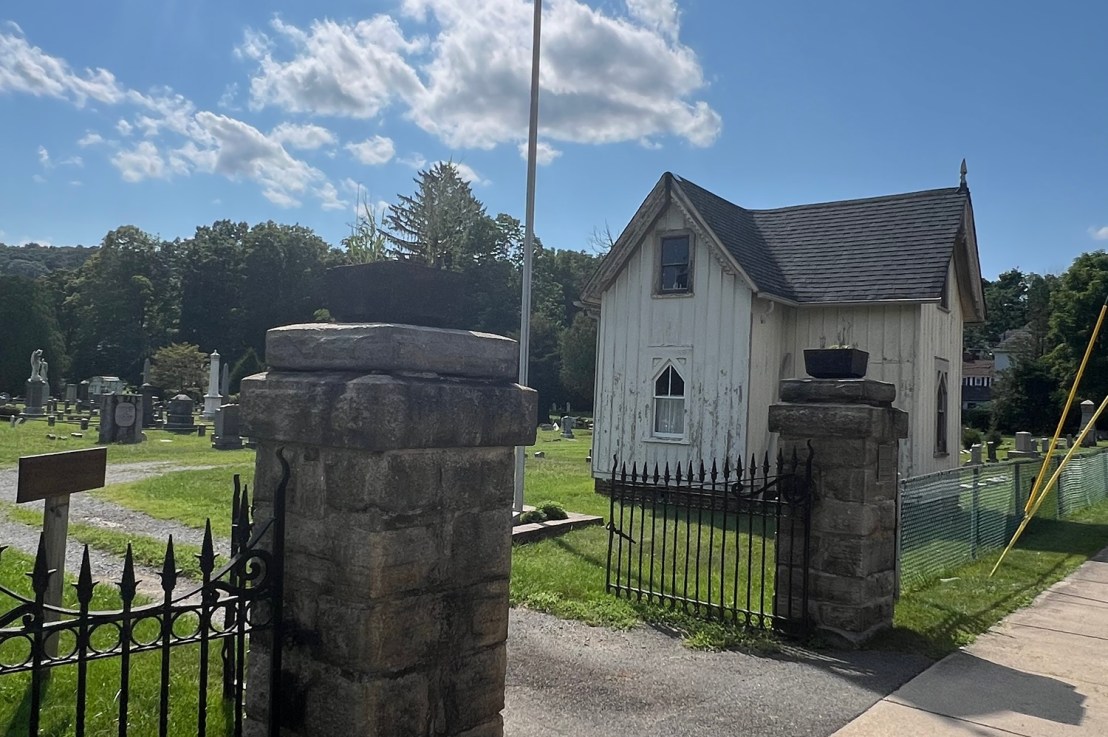
The entrance of the Orchard Street Cemetery and Gatehouse

The Orchard Street Cemetery in Dover, Morris County,  NJ was originally founded in 1851 when a group of men determined that a cemetery was needed in the Village of Dover, then part of Randolph Township.  One member of the group, William Young, the first baker in Dover who had his store on Dickerson Street traded his “garden plot” at the end of Orchard Street to this new endeavor in return for several building lots on Orchard Street.  The plot transferred from William Young to the Association was approximately one acre in size (Orchard Street Gatehouse Historical Society website).

The Gatehouse

The first thing you notice when you enter the cemetery is the Gatehouse. It needs a lot of work. Also it was not manned. Funny, the building looks like it belongs in a cemetery.
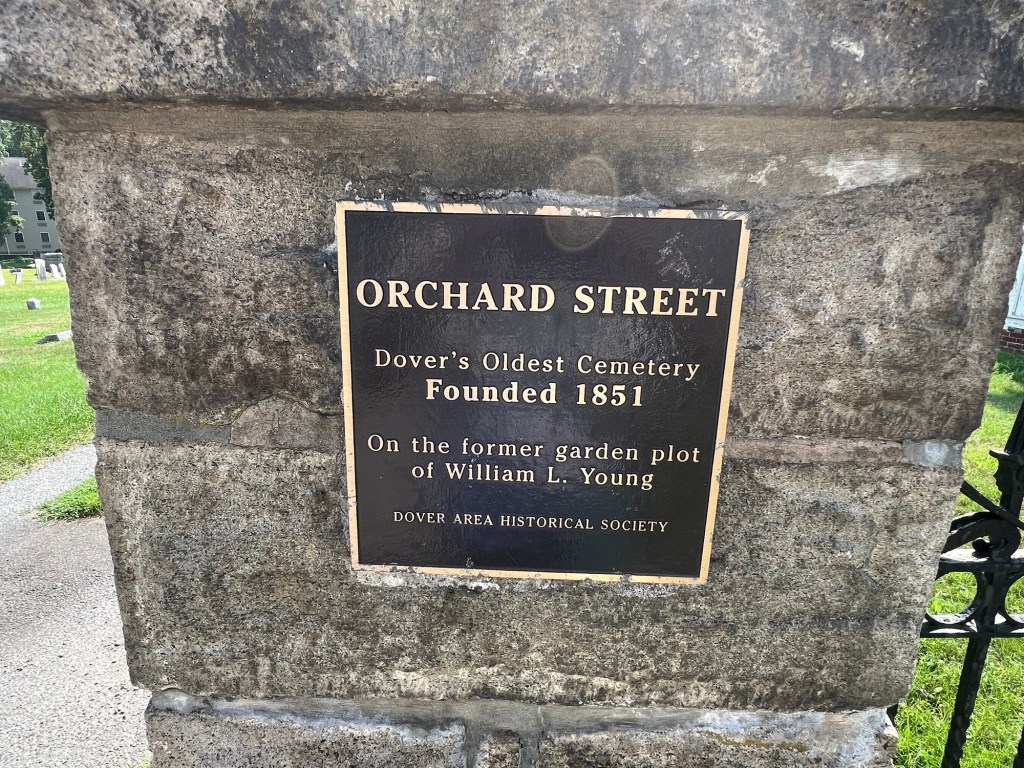
The historic plaque for the cemetery

The historic sign for the cemetery

The Cemetery is the final resting place of more than 3500 men, women, and children from the greater Dover area, primarily Dover, Randolph, Wharton, and Rockaway.  There are over 125 veterans from the War of 1812, the Civil War, The Indian Wars, the Spanish-American War, World War I, World War II, and Vietnam as well as well as peacetime veterans.  There are many of the founders of Dover, Wharton, and Rockaway, civic and industrial leaders, and ordinary citizens of the area.  Unfortunately, many burial records have been lost through the passage of time, fire, etc. so a full accounting of the burials will most likely never be realized as many people were buried without a stone memorial through choice or economic reasons (Orchard Street Gatehouse Historical Society website).

The entrance to the cemetery by the gate

When I visited the Orchard Street Cemetery, I noticed that most of the cemetery was designed into family plots, most gated or sectioned off. In each plot, you can see the generations of family members. There is a distinct change on the tombstones of family member marking the graves. Either is was prosperity of the family or just a sign of the times when people died where you see the changes in the tombstones and what they look like.

At least the families are housed together. Each of the family plots are marked by a gate or just a series of tombstones. Each of these family plots deserve respect and please remember this as you walk around the cemetery to pay your respects. There is a very positive feel to this cemetery.
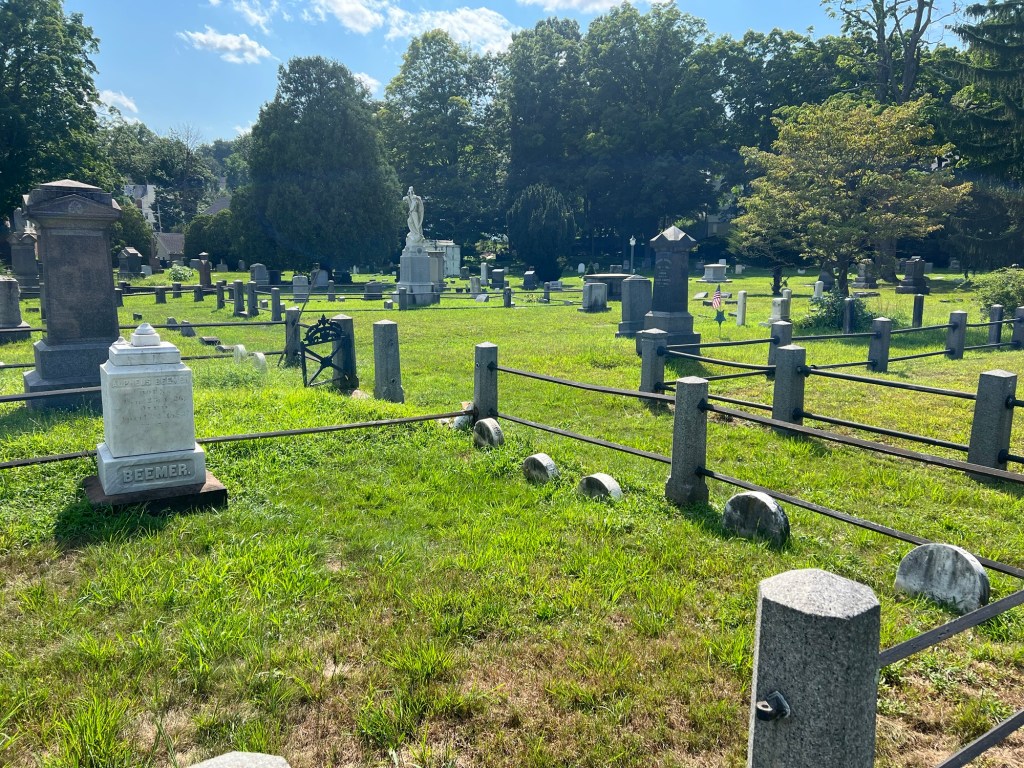
I noticed the cemetery was broken into family plots separated by fencing
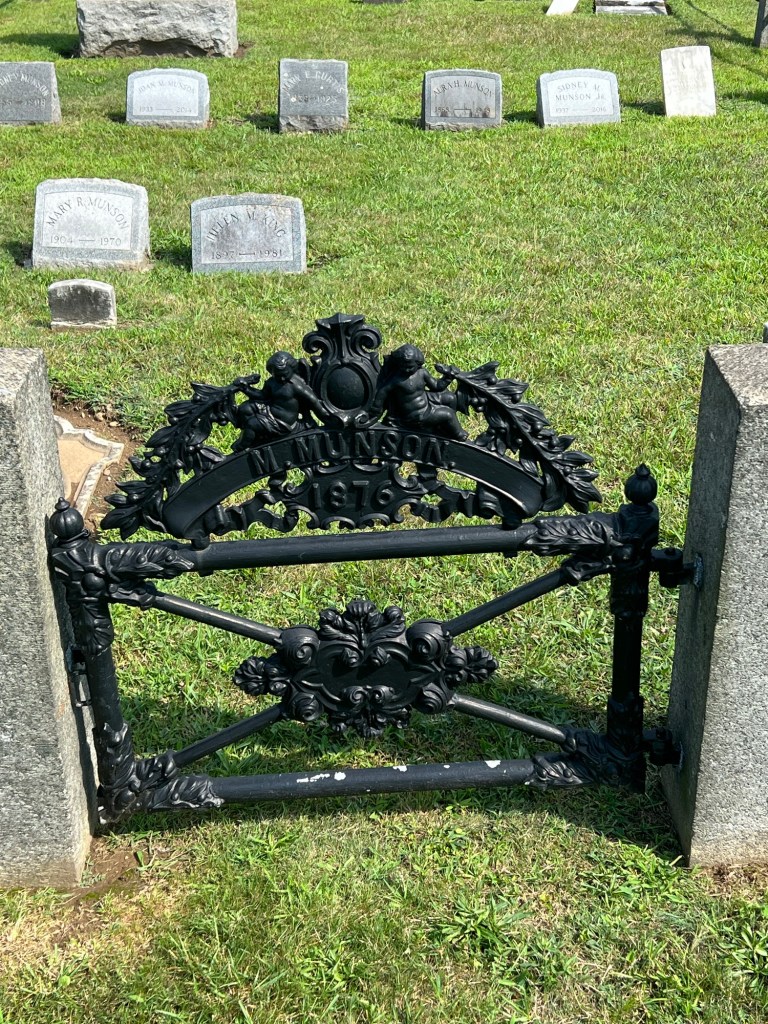
The Munson family plot

The Munson family plot

The Moller family plot
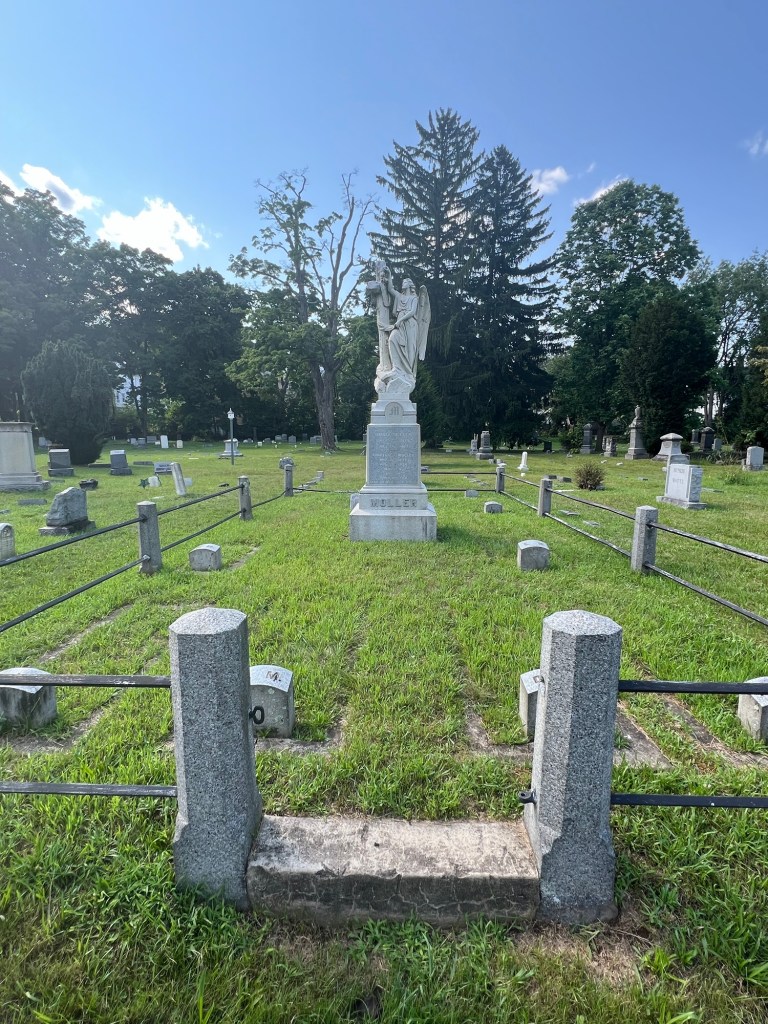
The Moller family plot
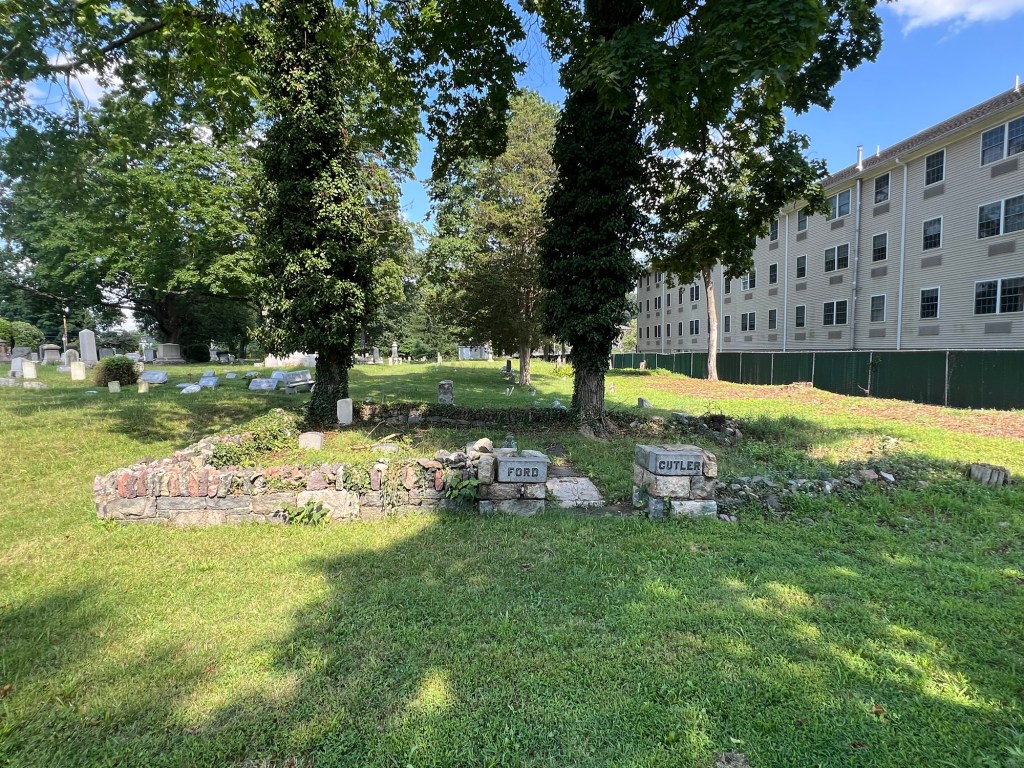
The Ford family plot
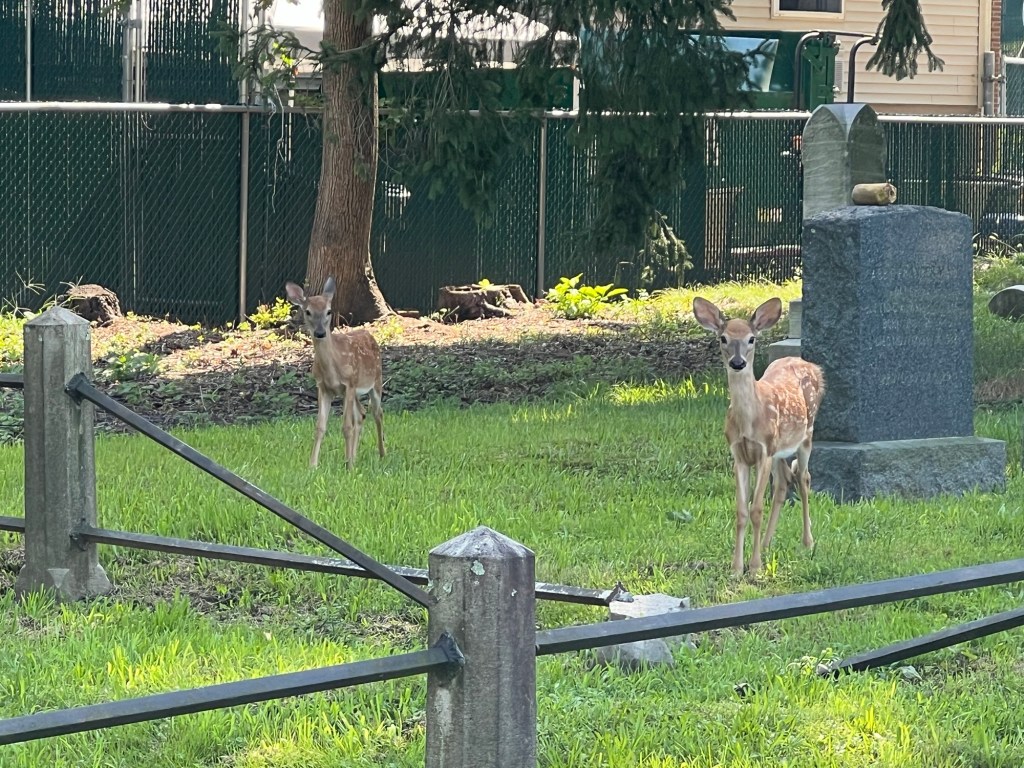
Deer watching me at the cemetery
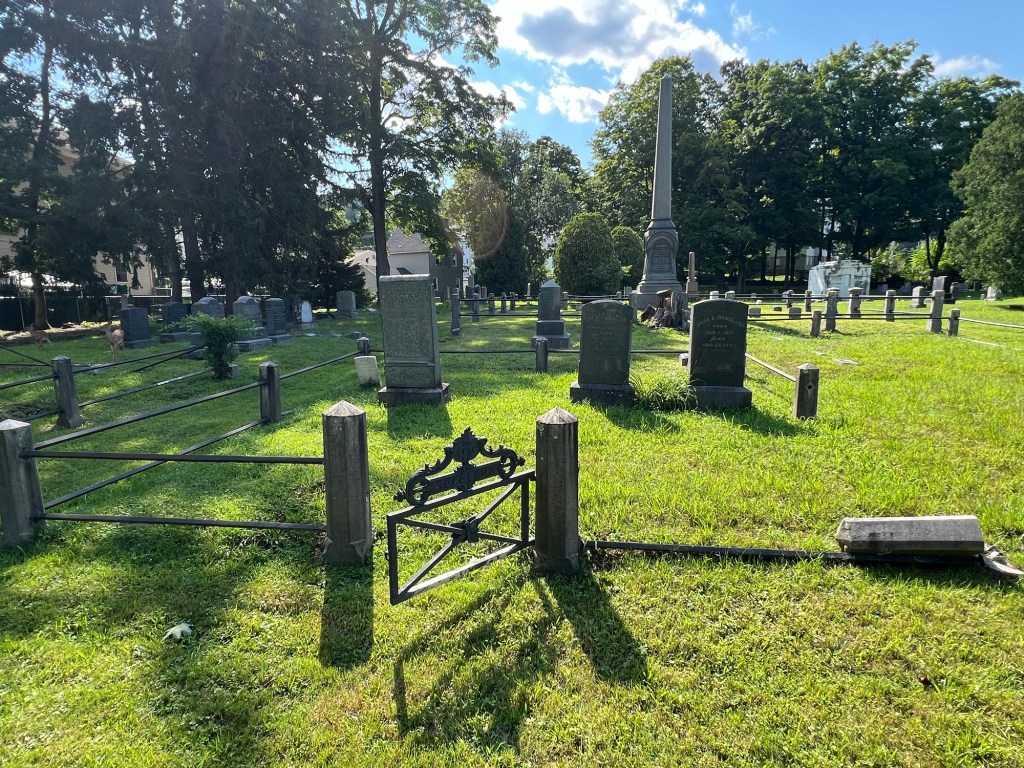
The Hoagman Family plot

The Dickerson family plot

I had just come from the Bridget Smith House in Mine Hill and discovered that the Dickerson’s were once a prominent mining family who owned a large mansion just outside of Mine Hill.

The grave of Mahlon Dickerson

I found out from a member of the Cemetery Society that this is not the grave of the former Governor of New Jersey but a distant relative.

The Orchard Street Cemetery from the back of the cemetery
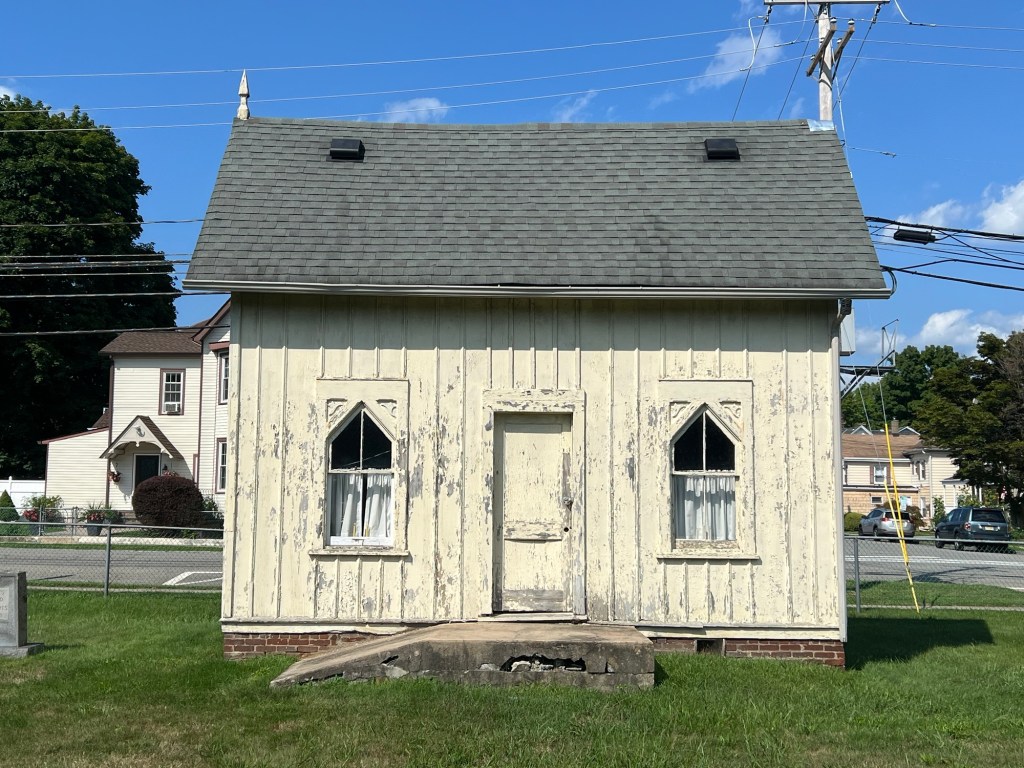
The Gatehouse at the front of the cemetery

The cemetery is an interesting look of how burying our dead has changed over the last 100 years.

The History of the Cemetery:

(this comes from the OrchardStreetCemeteryGatehouse.org website)

The Orchard Street Cemetery

The Orchard Street Cemetery in Dover, Morris County,  NJ was originally founded in 1851 when a group of men determined that a cemetery was needed in the Village of Dover, then part of Randolph Township.  One member of the group, William Young, the first baker in Dover who had his store on Dickerson Street traded his “garden plot” at the end of Orchard Street to this new endeavor in return for several building lots on Orchard Street.  The plot transferred from William Young to the Association was approximately one acre in size.

The inside of the cemetery

On September 11, 1854 following the passage of the “Rural Cemetery Act of 1854 by the New Jersey Legislature, the Dover Cemetery Association was founded during a meeting in the Village of Dover held at School House District No. 1.  The location of this school was to the east of Morris Street and to the south of the railroad tracks.  This puts it on the opposite side of the railroad tracks from the old Stone Academy.  The papers of incorporation were dated September 14, 1859 and duly registered with the County of Morris.
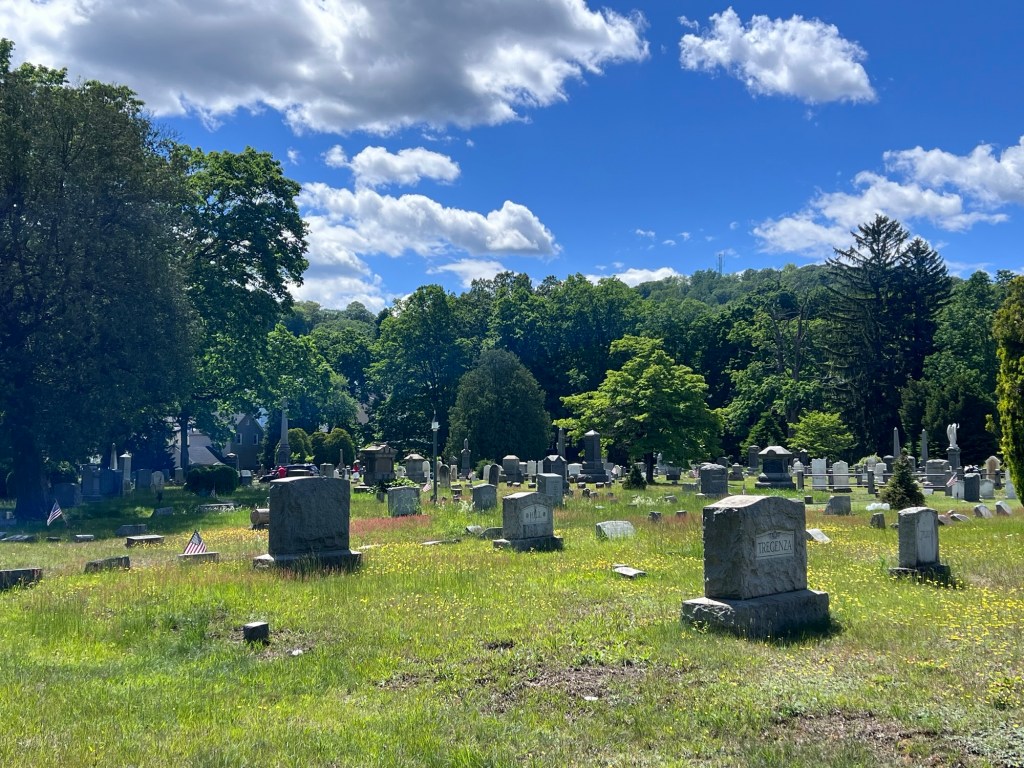
The inside of the cemetery

A deed dated February 22, 1855 was signed by Jabez Mills and his wife Hannah selling approximately 4.5 acres of their property to the Trustees of the Dover Cemetery Association.  This deed was received and recorded on February 27, 1855 by the County of Morris.  The acquisition of this property brought the cemetery to its final boundaries and size of 5.4 acres.  It is believed based on gravestones in the cemetery that the entire property was being used as a cemetery prior to the date of the recording of the deed.  Further, some sections of the cemetery property may have been used prior to 1851 due to gravestones that predate the founding of the cemetery.  It is also known that there was an earlier Dover cemetery, the Morris Street Burying Yard located south of the train tracks along Morris Street. 

The Munson family plot

It is believed that a number of the remains that were interred there were disinterred and moved to the Orchard Street Cemetery.  Many stones in Orchard Street predate the cemetery founding and it can be inferred that either there were burials in the cemetery confines before it was founded or these are reinterments from the Morris Street Burial Yard, or both.  In addition, there was later a small cemetery on Grant Street next to what was the Swedish Methodist Church.  Around the turn of the 1900’s, this cemetery was closed and again, the remains within were disinterred and many were removed to Orchard Street.

The entrance to the historic Orchard Street Cemetery

The old Gate House at the entrance of the cemetery

Chatham Township Historical Society/Red Brick Schoolhouse Museum                                                    24 Southern Boulevard                                       Chatham, NJ 07928

Chatham Township Historical Society/Red Brick Schoolhouse Museum 24 Southern Boulevard Chatham, NJ 07928

Chatham Township Historical Society/Red Brick Schoolhouse Museum

24 Southern Boulevard

Chatham, NJ 07928

(973) 635-4911

https://www.chathamtownshiphistoricalsociety.org/index.html

Open: The First Sunday of the Month from 2:00pm-4:00pm/By Appointment

My review on TripAdvisor:

https://www.tripadvisor.com/Attraction_Review-g46352-d24935947-Reviews-Red_Brick_Schoolhouse_Museum-Chatham_Morris_County_New_Jersey.html

The front of the Red Brick Schoolhouse Museum/Chatham Township Historical Society at 24 Southern Boulevard

The historical sign of the Mount Vernon School

The museum sign that welcomes you to the museum

The Mission Statement of the Museum:

(from the museum website)

The Historical Society of the Township of Chatham was established to increase the knowledge, awareness and preservation of the Township of Chatham history.

I visiting the Red Schoolhouse Museum on the first Sunday of the month and found a delightful little museum filled with artifacts that represent life in Chatham during various times in the town’s history. The museum has two floors with displays telling the history of the Township of Chatham from the beginnings with the Lenape Tribe living in the area to modern times.

The Museum gallery

On the first floor there is the special exhibitions that rotate in the museum. Some of the themes of the exhibitions were Children’s Toys and Playthings through the ages, Wedding gowns and formal wear and Revolutionary War items. The museum also has an interesting exhibition on the Lenape Indians who lived in this region before the Dutch arrived.

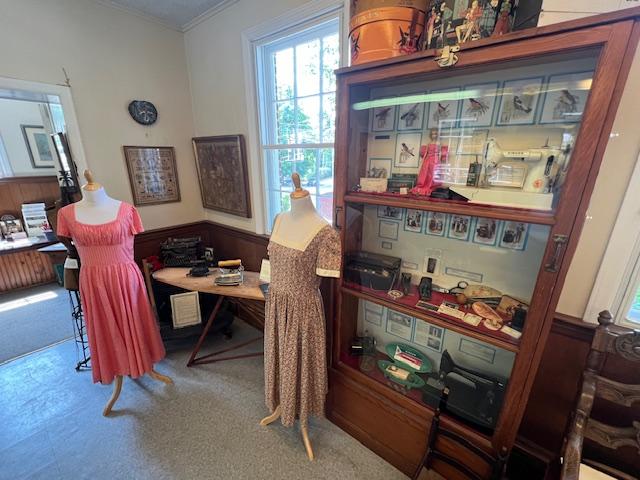
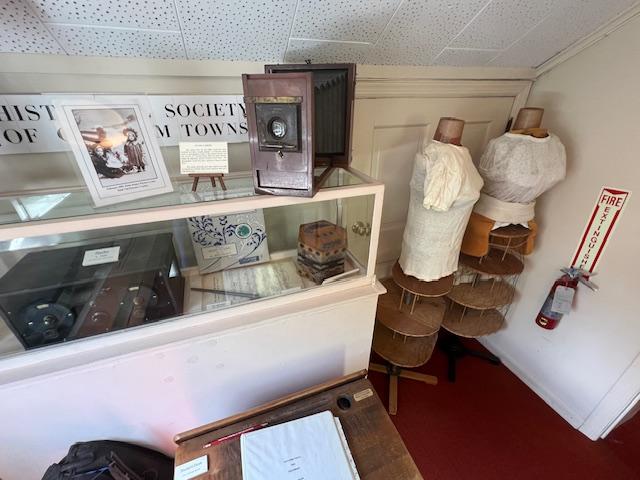
Wedding Gowns and Formal Wear exhibition on the first floor

Dressmaking and Sewing in the home and in business

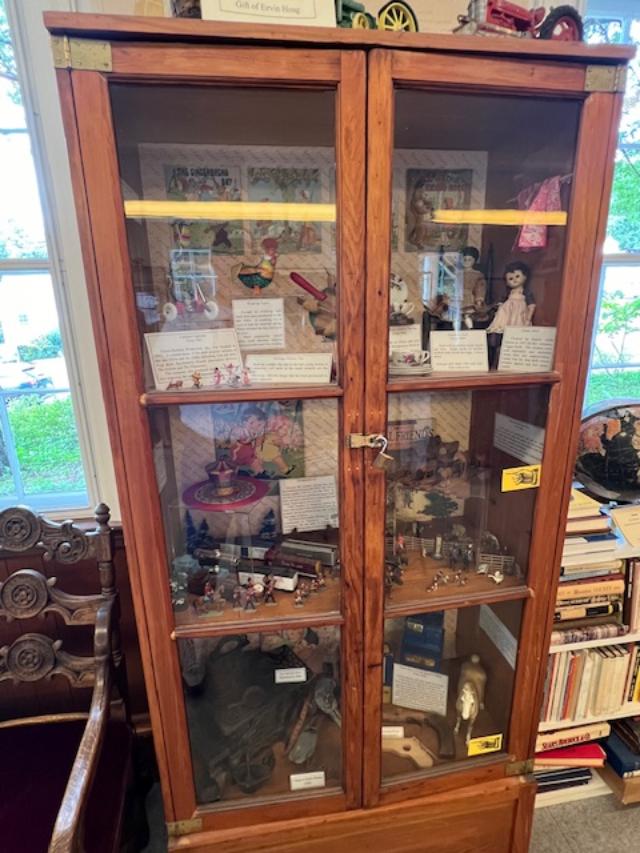
Children’s Toys and Playthings through the ages

Children’s dolls and stuffed animals

The Train display of electric antique items

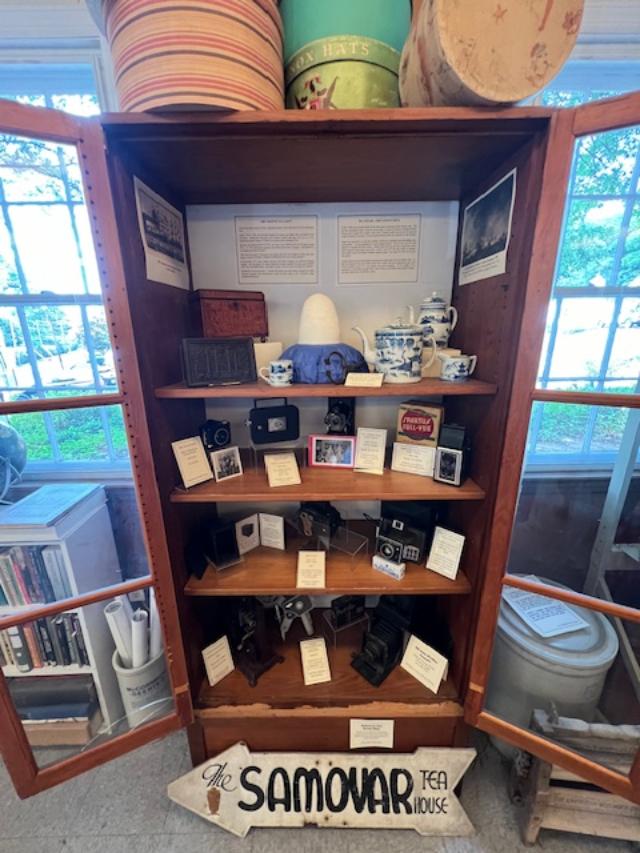
Revolutionary War and Trade items on the top shelf and historical cameras

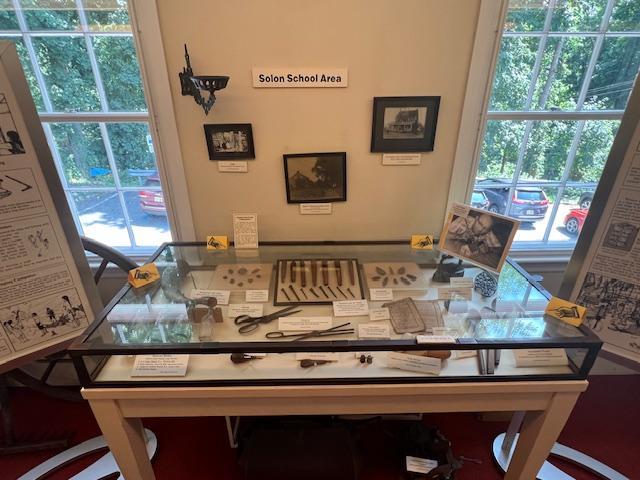
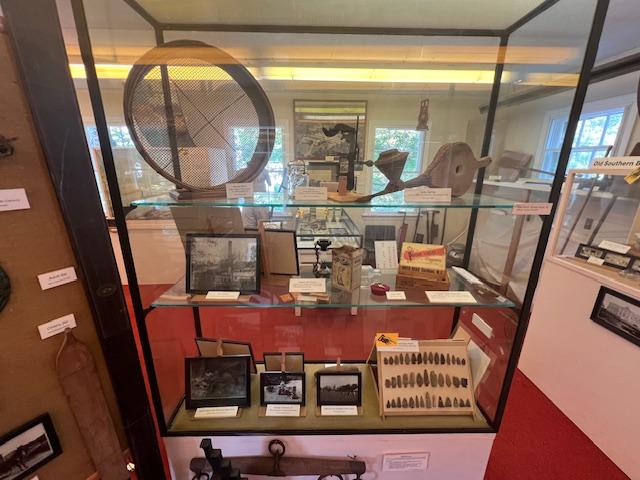
The second floor has displays that tell different stories. The display cases have Native American artifacts, farming equipment, household items, pictures of the town at different stages of development, the community changes from a farming to business with the advent of the railroad. Here you see the changes in household items as time goes on.

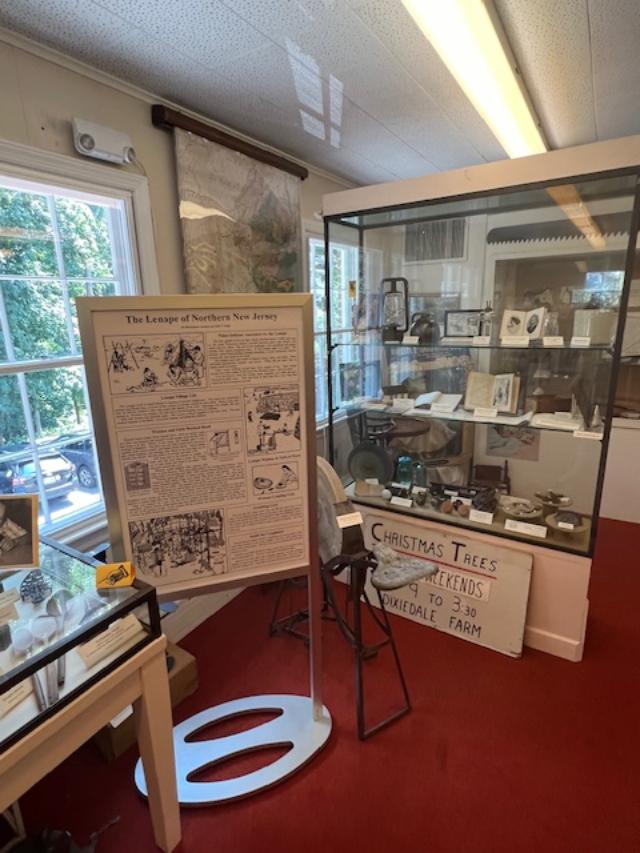
The Lenape Display

Native American stone objects

The Arrowhead collection

Each display tells an interesting story of the Township of Chatham. Looking over how the towns in the area developed I didn’t even know there was a Village of Chatham and a Township of Chatham. I was also impressed with their toy collection which should be a conversation piece to any group of elementary school students. I think this would be interesting to seniors as well on times have changed since they were children. The museum really has something for everyone. All different stories are being told at this museum and the collection continues to grow when residents pasts become part of the museum’s future.

The display on resident Reverend Samuel Tuttle

The Statement of Purpose:

(from the museum website)

The Historical Society of the Township of Chatham, a volunteer, not-for-profit organization founded in 1975, is dedicated to increasing knowledge, awareness and preservation of our town’s unique historical heritage.  We maintain the Red Brick Schoolhouse Museum where we coordinate our educational programs, research, and preservation advocacy as well as manage the discovery, collection, and conservation of materials that illustrate the history of the area prior to and after European settlement.

Artifacts from one of the museum’s historic digs

The audience served by the Society’s programs includes members of the Society, residents, students and visitors to the community, scholars, the public in general as well as businesses and governmental agencies in the area. 

The display of the history of the Red Brick Schoolhouse

The Schoolhouse and Native American collections

The Society carries out a broad range of activities.  It oversees the Red Brick Schoolhouse Museum and library; mounts permanent, temporary, and traveling exhibits; coordinates education programs with local schools; and sponsors a public lecture series.  In addition, the Society publishes pertinent materials related to local history; acquires, preserves and curates the Society’s collections and archival materials; and researches the history of the Township of Chatham and its environs.  Further, it allows access to the Society’s store of knowledge as far as may be feasible to all who wish to examine or study it; supports a historic marker program; cooperates with other local historical societies and organizations; and uses electronic media to awaken public interest. 

Historic artifacts at the museum

About the Museum:

(from the museum website)

The Red Brick Schoolhouse was built in 1860 and used until 1928 when the town’s  five rural schools were replaced by the Southern Boulevard School.  The schoolhouse was deeded to the town and, for many years, was used as the Town Hall.  When the town  offices were relocated in 1988, the building was put into the charge of the Historical Society for use as a museum.

The display semi professional baseball and town development

The museum has a permanent exhibit on the second floor which is arranged according to the town’s original school districts.  Each district highlights, not only that school, but also the industries, farming activities, and the people who lived in each district.

The objects reflecting different times in the town’s history

The first floor is a large meeting room where our lecture series is presented.  The room contains a number of displays as well, including antique toys, food preparation equipment, dresses, and various locally manufactured items.

The Museum Collections:

(from the museum website)

Oral Histories:  Beginning in the late 1970s, members of the Society began recording oral histories by the elder residents of the Township.  About 75 have been collected thus far in this ongoing project.

The Great Swamp display

Books:  The Society has numerous books, old and recent, concerning the history of New Jersey, Morris County, Chatham Township, and the surrounding area.  Books can be used only at the museum.

Documents:  Various town documents including poll books, road district records, tax records, among others, dating from as early as the 1840s are available upon request for study at the museum.

Artifacts from the dairy farms, the local community and pictures of the schools

Artifacts:  The museum is full of a wide spectrum of artifacts that reflect life in the Township throughout its history.

The schoolhouse and electronic display near the staircase

Photographs:  The Society has a large collection of original and scanned photographs of the activities, places, and people of the Township.  Early images provide a window into the Township’s past.  More recent images are forming the record for the next generation of history-lovers.

The Schwartz Dairy Farm pictures

Articles from the Schwartz Family Dairy Farm, one of the former businesses of town

Maps:  The Society has a number of old maps of Chatham and the immediate area, which can be viewed at the museum.

The changes in the town and its development over the years

Archeological  Artifacts:  In 1983-84, members of the Society undertook an archeological dig at the site of the Nathaniel Bonnel V House.  The house, on River Road, was built in 1756 and burned in 1940, then the land was abandoned.  When a condominium development was planned  for the area, the Society was granted permission for the dig.  Artifacts found during the archeologist-guided excavation are displayed in the museum.

The Bonnel House archeological dig

There is something for everyone to see at the museum.

Pompton Plains Railroad Station                           33 Evans Place                                             Pompton Plains, NJ 07444

Pompton Plains Railroad Station 33 Evans Place Pompton Plains, NJ 07444

Pompton Plains Railroad Station

33 Evans Place

Pompton Plains, NJ 07444

https://en.wikipedia.org/wiki/Pompton_Plains_station

Open: See website for special dates

Admission: Free but donations are suggested

My review on TripAdvisor:

https://www.tripadvisor.com/ShowUserReviews-g46748-d27729131-r949878173-Pompton_Plains_History_Station-Pompton_Plains_Morris_County_New_Jersey.html?m=19905

The Pompton Plains Railroad Station Museum at 33 Evans Place.

I was visiting Morris County for the “Pathways to History” tour, I visited the Pompton Lakes Railroad Museum. This tiny museum served once as the depot for the local railroad but now houses its history. Piled all over the building is the history of the rail service in this area. Small displays are located all around a pot belly stove that serves as the center point of the museum. The memorabilia includes a series of pictures, maps and schedules.

(From the Pathways to History tour pamphlet 2024):

Pompton Plains Station, home to the Pequannock Township Museum, was erected in 1877 by the Montclair and Greenwood Lake Railway as a replacement for an earlier structure built when passenger service began in 1872. After closing in 1966, the station remained in private hands until 2006 when it was purchased by Pequannock Township with Morris County and Township Open Space funds, as well as, funds from the Morris County Historic Preservation Trust. It was listed on the NJ and National Registers of Historic Places in 2008 and was restored to its “Turn of the 20th Century” appearance in 2010 (PPHS website).

The Historic Marker at the station.

The building’s simple wood construction is characterized by its late 19th Century American “Stick style” architecture, with its notable exterior embellishments being the distinctive “Dutch cap” trim over each window and door and its decoratively patterned slate roof. The museum supports an extensive collection of photographs and artifacts illustrating the Township’s 300 years of recorded history. Featured is a collection of over two dozen models of historic buildings, as well as, exhibits about Civil War veteran, Medal of Honor recipient, station agent and prior owner of the nearby Martin Berry House, James R. Evans (PPHS website).

The Pompton Plains Railroad Station Museum gallery.

Other exhibits cover the history of the station, and the pioneering 1940’s rocket engine factory Reaction Motors. Plans for 2023 construction, which will include restoration of the decorative 19th century slate roof and chimney, will be on display.

The Conductor’s Office is part of the display at the museum.

A video promoting the Pompton Plains Railroad Station.
Martin Berry House                                              581 Route 23 South                                     Pompton Lakes, NJ 07444

Martin Berry House 581 Route 23 South Pompton Lakes, NJ 07444

Martin Berry House

581 Route 23 South

Pompton Lakes, NJ 07444

https://www.facebook.com/MartinBerryHouse

My review on TripAdvisor:

https://www.tripadvisor.com/ShowUserReviews-g46748-d27729087-r949875094-Martin_Berry_House-Pompton_Plains_Morris_County_New_Jersey.html?m=19905

The Martin Berry House from the top of the hill at 581 Route 23 South. It is on a road hidden from the highway.

When I went to visit the Martin Berry House for the “Pathways to History” tour, I found it impossible to find. The Google Map has it in the middle of a parking lot in front of the strip mall along the highway and there is no pathway to the home from the parking lot. What you have to do is go the street behind the mall, head up the hill and make a right down a gravel road and there is the house at the end of the street.

There is not much parking here but with an isolated home like this, the Historical Society needs to put some things in place before they start having events here. The Society had bought the house not too long ago and there is still some renovation work that is being done, so the Society is in its first stages of opening the house to the public. It has some nice revolving displays and an interesting Colonial kitchen. The gardens are also beautiful when in bloom. Visiting the house in the future will offer many surprises.

(From the website of the Martin Berry House and the Pequannock Township Historical Society):

The Martin Berry House, or MBH, was built
on this spot in about 1720. The original house was
smaller than what you see here. This is the the
result of the second major enlargement or
renovation of the original construction as well as
later renovations and remodeling.

The Martin Berry House from the gardens.


The MBH is owned by the Township of
Pequannock and operated in partnership with the
Pequannock Township Historical Society (PTHS).
PTHS was formed in 2015 out of a movement that
was original called the Friends of the Martin Berry
House that had itself been initiated in 2014 to
support the Township in its efforts to acquire the
MBH.

The Martin Berry House Furniture display in May 2024.

When the Friends organized as the PTHS, it
was decided that a broader vision was needed so
that both the house and its context could be
preserved and interpreted.

The Martin Berry House Art Exhibition during the “Pathways to History” tour 2024.

The Martin Berry House Living Room.

The PTHS is an all volunteer and membership
-based organization with a mission to preserve,
interpret, and promote the history and diverse
heritage of Pequannock Township. We are working
to preserve and maintain historic buildings, sites,
and collections, and to create and present programs,
exhibitions, publications, and other activities for the
public that celebrate and interpret the history and
heritage of Pequannock Township and neighboring
communities. Our primary activities at this point,
though, are centered around the preservation,
restoration and management of the MBH as an
historic learning center and living museum (MBH website).

The Martin Berry House gardens in bloom in the Spring of 2024.

The preservation of the MBH began with
Eleanor and Charles Bogert purchased the house the
2.75 acres of land that surrounds it today in 1951.
Lovers of history and historic buildings, it was their
intent to restore the house as a Dutch Colonial
manor. Along with the slow and laborious efforts of
restoring the house, they raised three children,
briefly operated an antique shop, gave tours for local
school and scout groups and became active in
organizations such as the Highlands Historical
Society.

The Colonial kitchen section of the home.

Their intent was to restore the MBH and to
provide it to Pequannock Township as a museum.
In the winter of 2014 Mrs. Bogert informed
the Pequannock Town Council and Township
Historian that she was ready to begin the process for
selling the MBH to Pequannock Township. Township
Historian Ed Engelbart and the Pequannock
Township Historic District Commission began
generating support and The Friends of the Martin
Berry House emerged in June (MBH website).

Martin Berry House Colonial kitchen and displays.

The Township submitted an application to
and then received a matching grant from the Morris
County Historic Preservation Trust Fund to purchase
the home in 2015 and then contracted with HMR
Architects for a Preservation Plan.

The Colonial Kitchen display in the old Dutch Kitchen.

The Plan was received in the winter of 2016.
It recommended that the Township complete the
purchase of the MBH and provided information
regarding its renovation and interpretation. Final
negotiations began with Mrs. Bogert and the sale
was completed in January 2017. Negotiations then
began with the PTHS on a management agreement
that was adopted and signed in September 2017 in
time for the PTHS to open the MBH to visitors for
the Pathways of History Tour.

The history of the Martin Berry House and renovation.

The History of the house:

(from The Martin Berry House historical pamphlet)

In 1695 and 1696, a group led by Captain Arent Schuyler, Major Anthony Brockholst and six others including Samuel Berry, negotiated purchase of the land from both the Lenape Tribal Americans and the East Jersey Board of Proprietors. The land was later divided to eight separate owner including Samuel’s son Martin Berry born in 1693, who acquired the property and likely built his fine home sometime after his marriage to Maria Roome in 1720.

Historian Emil R. Salvini noted that Martin built his house of stone, with walls two feet thick for insulation, set into the hillside facing south, typical of the Dutch homes of the period. Its has six bedrooms, two center halls, shallow fireplaces to reflect the heat back into the rooms, servants quarters and a massively framed Gambrel room built without the benefit of a ridgepole.

Besides being a successful and prosperous farmer, Martin served in positions of community leadership, both as a deacon and later elder in the newly established Dutch Reformed Church which was built in 1736 and was accessible via “Martin’s ford” across the river from his farm. The house passed out of the Barry family in 1862 during the Civil War.