The Putnam History Museum at 63 Chestnut Street in Cold Spring, NY.
Don’t underestimate the size of the this museum packed with interesting exhibitions and information. It is really a terrific local museum that tells the story of the local community. I was very impressed.
The Putnam History Museum sign on Route 9.
The Mission of the Museum:
(From the Museum website)
The mission of the Putnam History Museum is to collect, preserve, interpret, and present the history of Putnam County, Philipstown, the West Point Foundry, and the Hudson Highlands. Through exhibitions, programs, and events, the museum uses its collections to engage the community with the vibrant history of our region, and to foster greater understanding of the role it has played in the growth of our nation.
The Current Exhibitions:
December 2023:
Indigenous Peoples in Putnam County
This exhibition explores Lenape and Wappinger culture in Putnam County, with a special focus on the Woodland period when these cultures flourished in the Hudson Valley. In addition to sharing Lenape stories—past and present—the exhibition features important artifacts and replicas including stone tools, stone points, pottery sherds, and a dugout canoe.
The Indigenous Peoples Exhibition:
(Funded in part by the Community Foundations of the Hudson Valley, American Historical Association, and the Cold Spring Lions Club. Image courtesy of the Staten Island Museum).
This exhibition was interesting in that it explained the local tribe of Lenape Indians who lived in the area before the Dutch and the contribution that they made to the community and their history in the area. The day to day lives of the tribes was shown in the various displays from the way they fished and hunted in the community. The dug out canoe the museum found out recently was a reproduction of the original. For years the curator explained to me the museum thought it was the real thing. Very detailed and very interesting exhibition.
Locally found Arrowhead Collection
The history of Indigenous people in the Hudson River Valley.
History of the Lenape Indians
The reproduction of the Lenape Canoe on display.
West Point Foundry
There is a permanent Foundry exhibition on display at PHM. It includes photographs, artifacts, paintings, maps, and videos highlighting the Foundry related objects within the PHM collection, including a fully restored 10-pounder Parrott Rifle.
The Foundry Exhibition is a permanent exhibition in the museum.
The map of the former foundry’s in the area.
I never realized that the Town of Cold Springs, NY was such a productive foundry area between all the wars. Many ironworks dotted the community which is now an upscale community just outside New York City. The foundry’s created many items that helped the ‘war machine’ such as train parts and cannon balls along with many modes of transportation.
The Foundry exhibition.
The objects of the Foundry.
The various sizes of cannon balls created by the local foundry’s.
The Foundry Painting “Foundry”
The “Foundry” painting sign.
The West Point Foundry part of the exhibit.
The West Foundry sign of the exhibition.
The West Point Foundry during the war.
A Brief History of Julia Butterfield
Born in 1823, at age 18 Julia Lorillard Safford married Frederick James, a broker and banker in New York City. They lived on Fifth Avenue and in 1852 built a magnificent stone village house in Cold Spring that was named Cragside because it had been constructed on a hillside strewn with rocks. It was surrounded by elaborate gardens, lawns, orchards and fields, according to Trudie Grace, author of “Around Cold Spring”. Haldane High School now occupies the site of Cragside, and a gatehouse built in 1866 still stands at the foot of Cragside Drive as a private residence.
The Julia Butterfield Exhibition
Frederick James died in 1884. Two years later, Julia married Daniel Butterfield, a Civil War general who is credited with composing “Taps” and whose father co-founded American Express. He lived until 1901. When Julia died in 1913, her estate (was) estimated to be worth $3 million, or about $75 million today.
This permanent exhibition of a local woman who supported her community and deserves much respect and admiration for the contributions to Cold Springs showed her immense generosity. I wish there was more people like her in every community.
Bequests by Julia Butterfield in her 1913 will, with current values:
YMCA – $2.32 million ($62M) Julia L. Butterfield Memorial Hospital – $150K ($4.6M) Union College, Schenectady – $100K ($3M) Julia L. Butterfield Memorial Library – $60K ($1.85M) Home for the Relief of Respectable Aged Indigent Females – $20K ($616K) Association for the Aid of Crippled Children – $10K ($308K) St. Mary’s Episcopal Church (for parsonage) – $10K ($308K) Association of New York Day Nurseries – $5K ($154K)
The library, a Georgian Revival building, was constructed on the foundation of the old Dutch Reformed Church and dedicated in 1925. The hospital, finished the same year, was built, many believed, because one of Julia’s sons had died after a fall from a horse and she felt he might have survived if a hospital had been closer.
Open: Sunday-Monday 9:30am-5:00pm (closes 4:00pm between November and January 5th) The house is only open between April and the beginning of January.
Fee: Adults $18.00/Seniors $15.00/Children (5-18) $9.00/Children (under 5 years old) Free (This is for house and Garden/Garden tours are different and depend on the season. Please check the website)
My review on TripAdvisor:
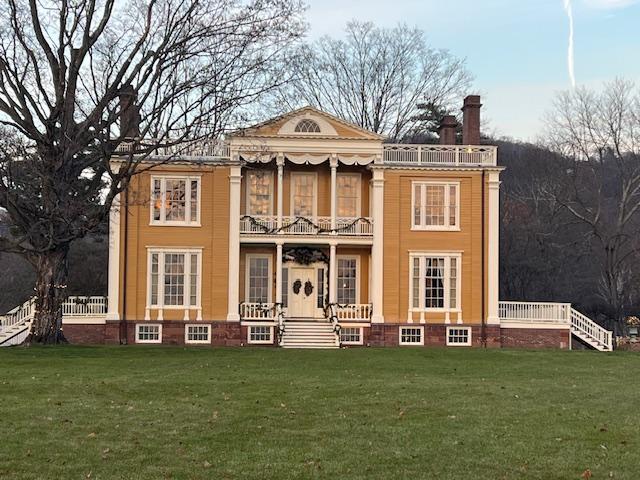
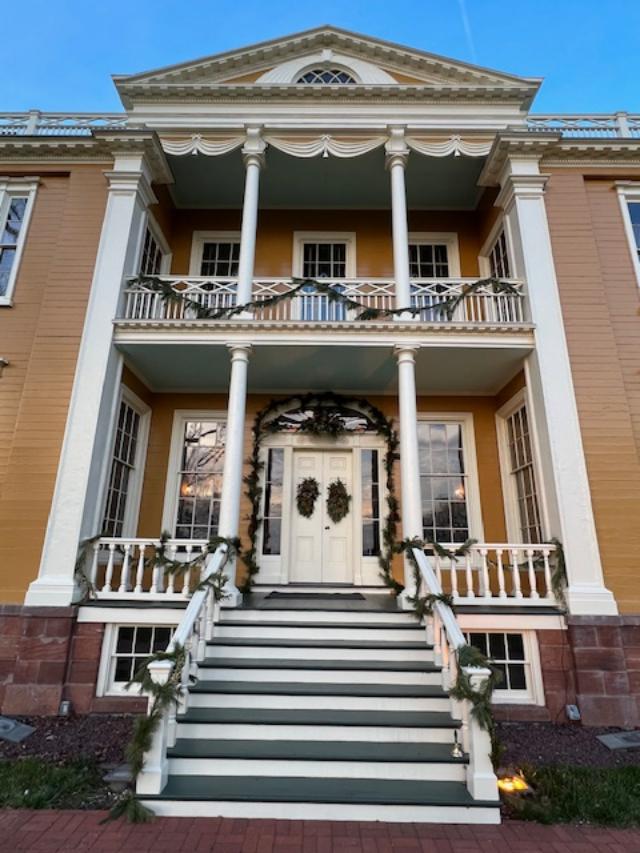
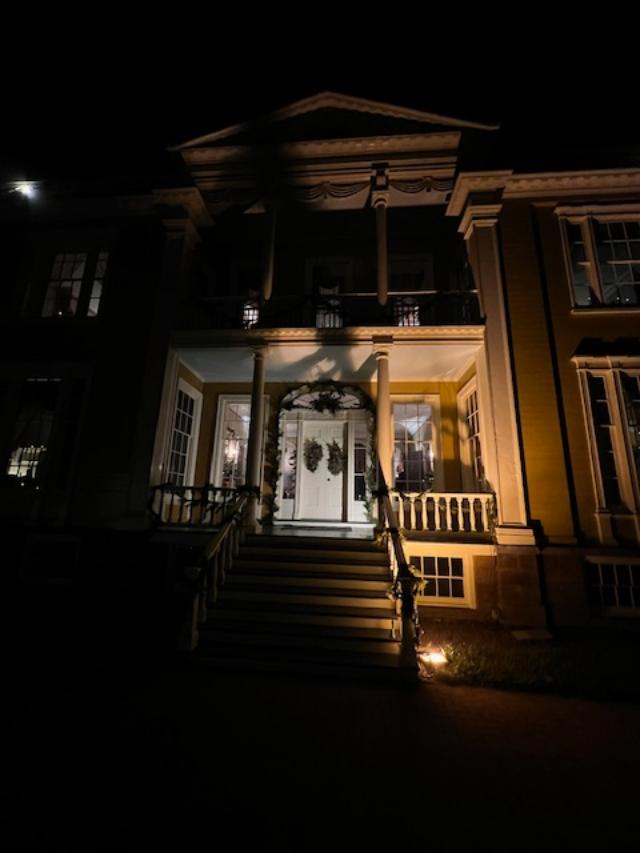
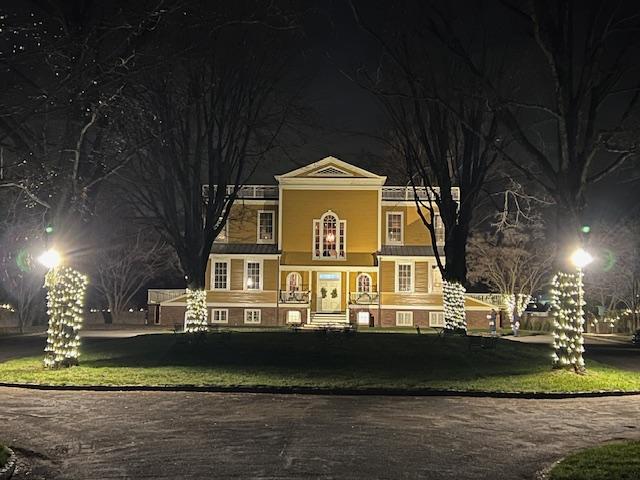
The front of Boscobel during Christmas time.
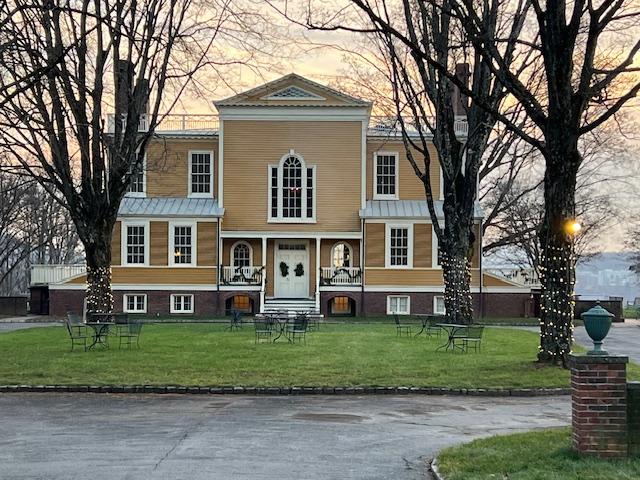
the back of the house at Christmas time.
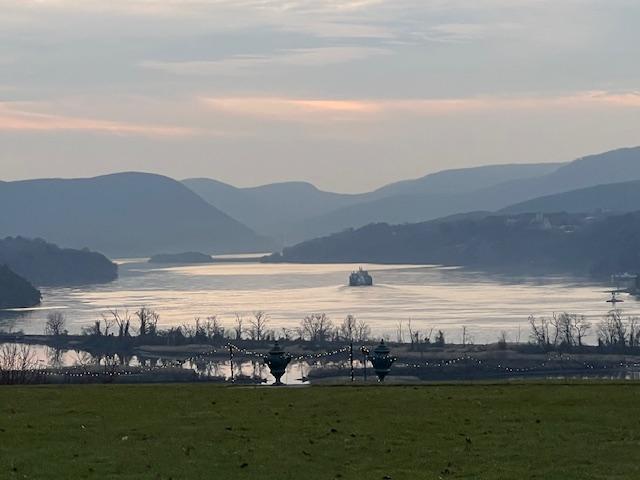
The view from the back of the house of the Hudson River.
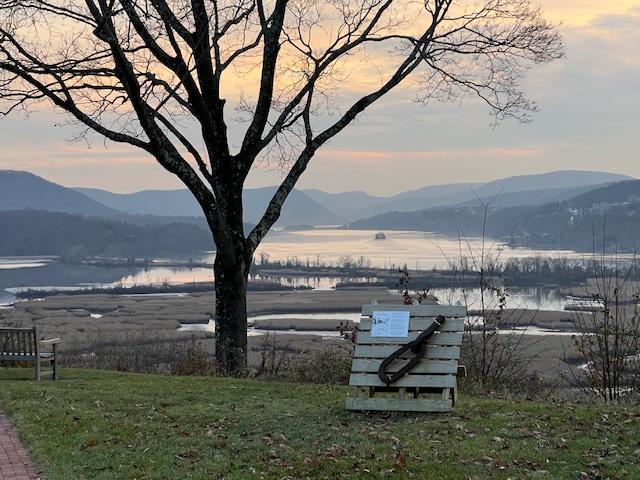
The view from the back of the house at twilight.
Entering the house for the evening “Candle Light” walking tour.
I recently visited the Boscobel House and Garden for their Christmas decorations and for a tour of the house at the holidays. Like most houses of its time period (the house was built in 1806), it was Post-Revolutionary War and the decorations would not have been that lavish as in the Victorian times. In 2023, the house had “Evening Hours” where you could take a self-guided tour and then come back to the Visitors Center for pastries, candy and hot drinks of Apple Cider and Hot Chocolate. These were the best nights to attend. For $25.00, you got to take your time in each room and talk with a docent about the history of the house.
The Grand Hallway display Boscobel
The floral displays in the Grand Hallway were amazing.
The Boscobel Grand Staircase in the Great Hall.
When you enter the house from the front entrance, you enter the Grand Hall with its winding staircase decorated in garland, flowers and lights. The Grand Hall was also once used for balls and informal dances. Decorated for the holidays, the Great Hall was dazzling for the Christmas holiday season.
The Great Hall decorated to the hilt for the holidays.
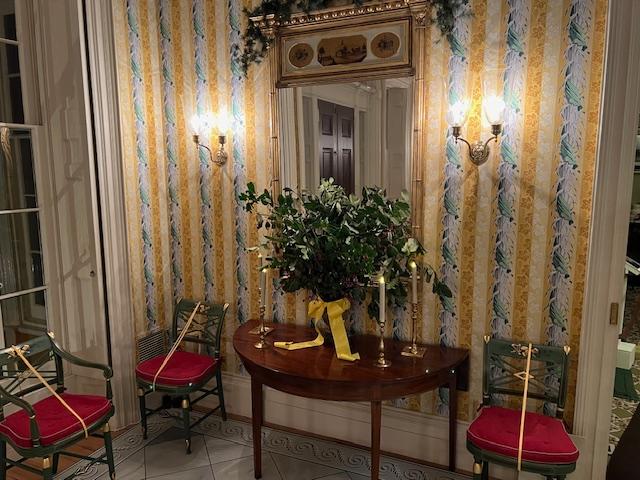
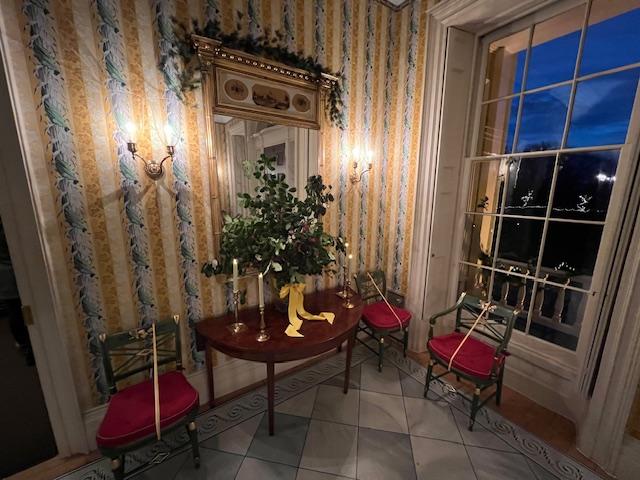
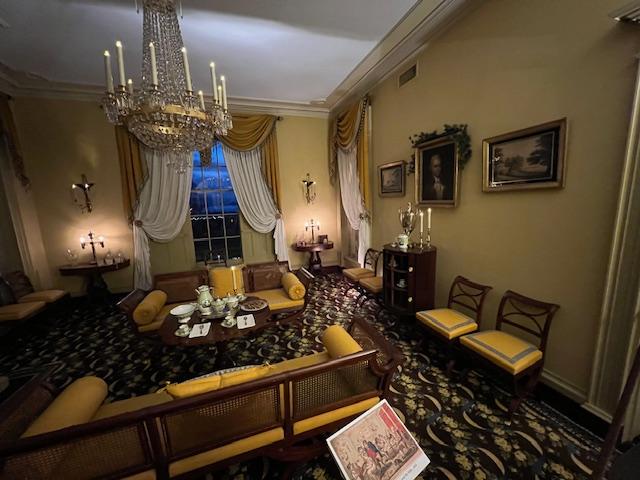
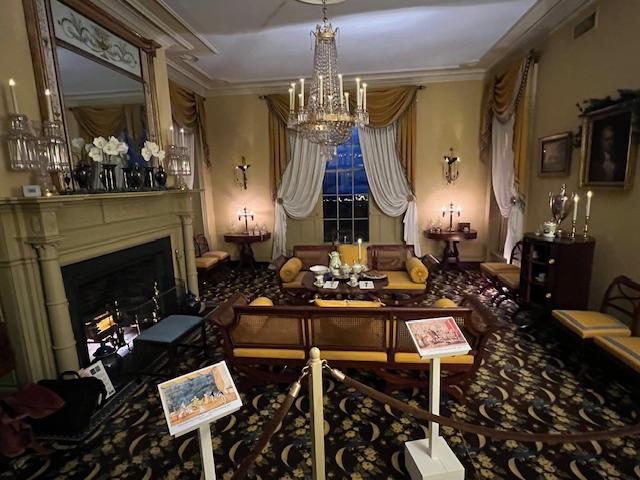
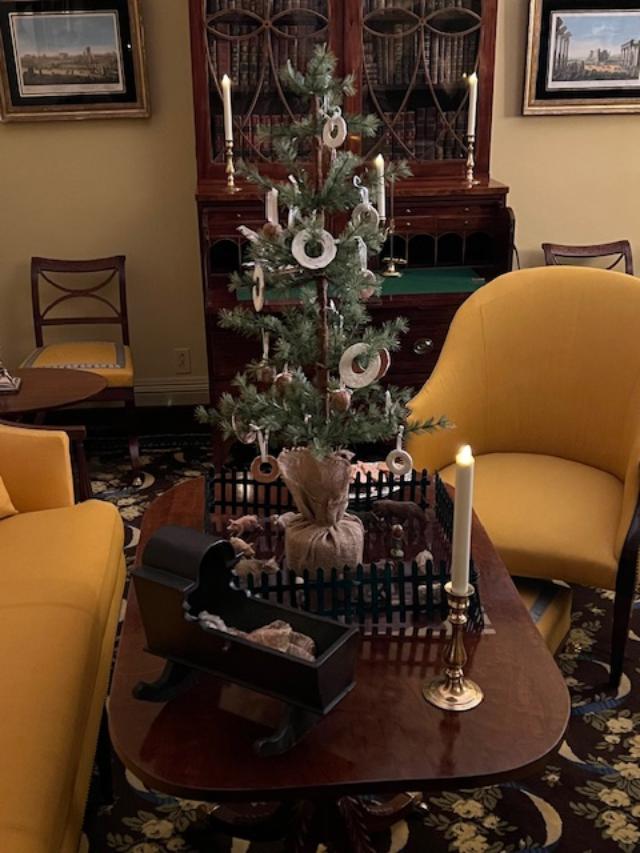
The house was tastefully decorated with garlands and mistletoe along the archways inside the foyer and with holly and mistletoe inside the house. Some of the tables were set for afternoon tea and entertaining in the Front Drawing Room and there was a small table Christmas tree which were just coming into vogue after the War of 1812. The Front Drawing Room was also set for entertaining as would be done in the holidays months in the later 1800’s.
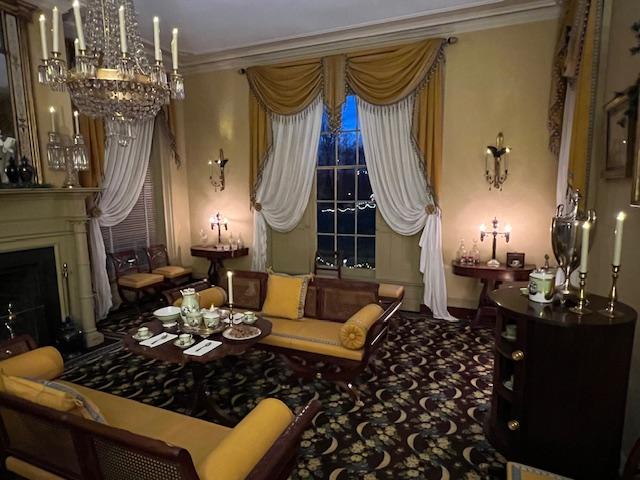
The Front Drawing Room just off the Great Hall.
The Front Drawing Room set for tea during the holidays.
The Front Drawing Room
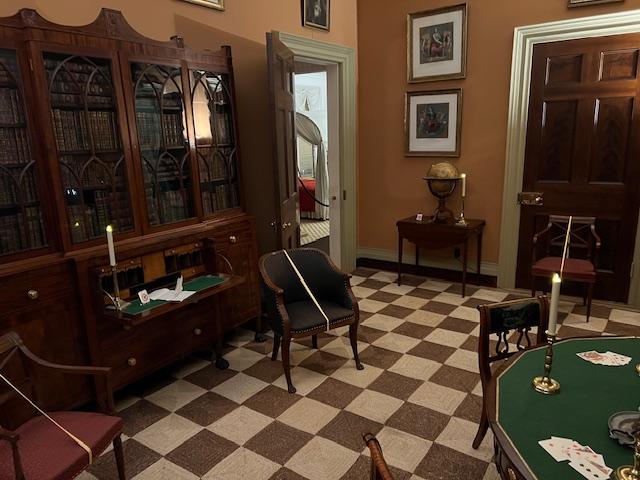
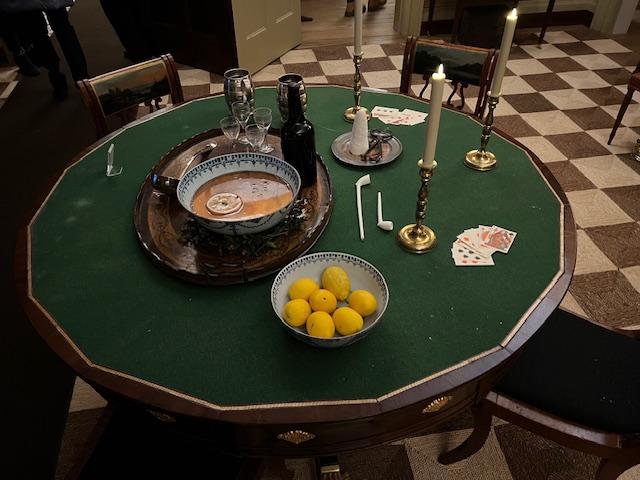
The Front Drawing Room is where guests would be received when they entered the house. They would be entertained until the Dyckman’s were ready to greet visitors. Tea and refreshments would be served here while they waited. After the guests would be received, if they were going to stay for the afternoon or evening, they would move to the Back Drawing Room for games, entertainment and conversation before moving on to the Dining Room for the main meal.
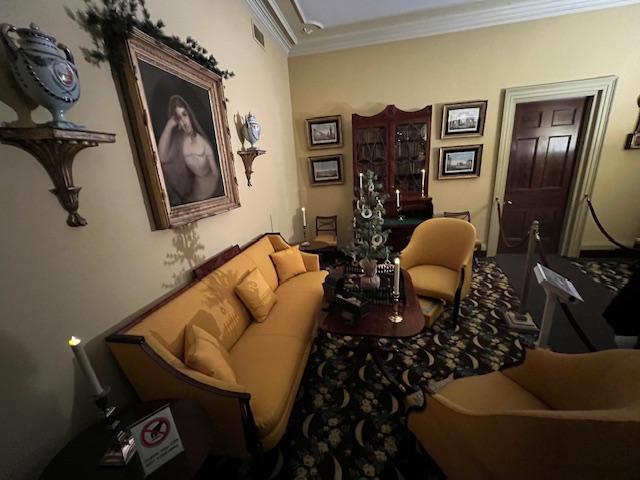
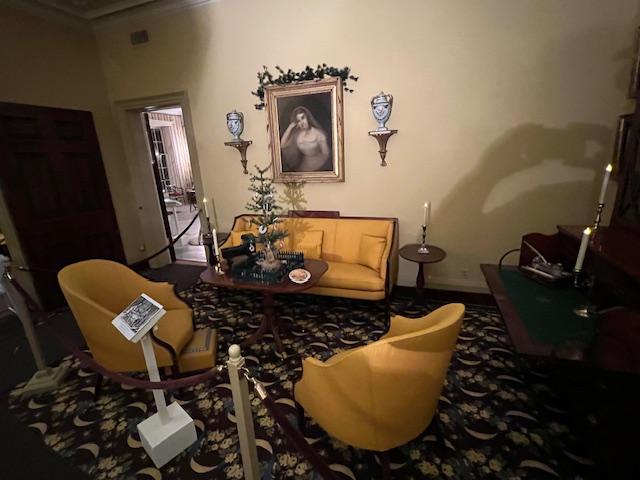
The Drawing/Music Room is where Mrs. Dyckman would have received guests and where informal entertaining would have happened. There was also musical instruments and player music boxes on display.
The Back Drawing Room with the Table tree.
The Back Drawing Room with the portrait of Mrs. Dyckman.
The Table Top tree in the Back Drawing Room.
Our tour guide, Sam, was fantastic and I hope when you tour the house he is your guide. I was impressed with his knowledge of the house and of the Dyckman family. I had not realized that they were related to the Dyckman Farmhouse family in Inwood (See my review and write ups on the Dyckman Farmhouse here on VisitingaMuseum.com and MywalkinManhattan.com: https://wordpress.com/post/visitingamuseum.com/771)
He told the story of Mr. Dyckman, who had the house built, how he made his fortune, how he died young without ever living in the house and then his son and his wife dying around the same time. The son-in-law then squandered the fortune with a series of bad investments and the house was foreclosed. It sat empty and was falling apart until a group of local citizens saved it. The house is now back in its full beauty and furnished in period furnishings to reflect the time that the house was built. The tour then guides you from the Front and Back Drawing Rooms to the Main Dining Room, where the real entertaining would take place.
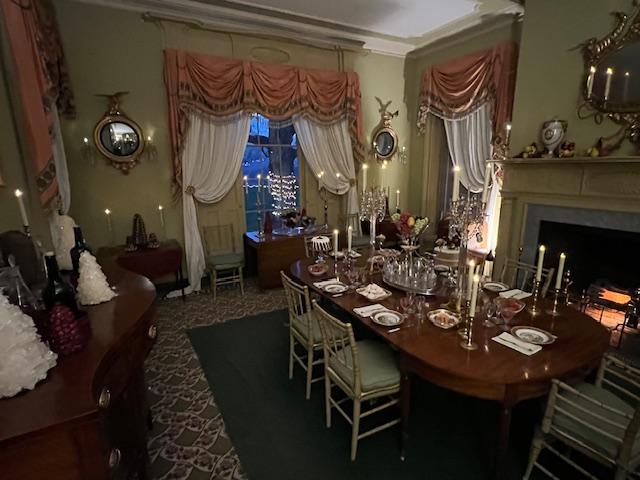
The Main Dining Room was set for a Christmas dinner circa 1830’s and 40’s with the elaborate dishes, crystal and silver and laded with the foods of the holiday season. Meals would take several hours and many courses and would be accompanied by good conversation and maybe some music.
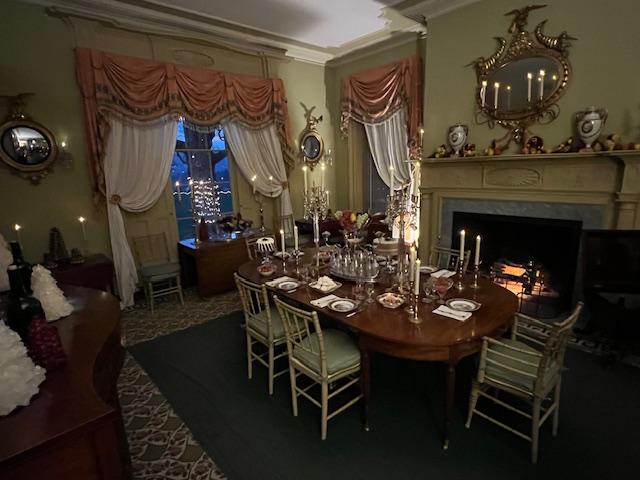
The Formal Dining Room’s table was set for a holiday dinner. The candles had been lit (they were electric) and the room had a warm glow to it. The windows must have let in natural light so earlier meals must have been quite nice when in the summer months the sun shined inside the room. There was custom made china set on the places and there was family silver next to it. The side boards were made by Sheraton and the cut glass had been imported from England.
The formal Dining Room set for Christmas dinner.
Another view of the Dining Room.
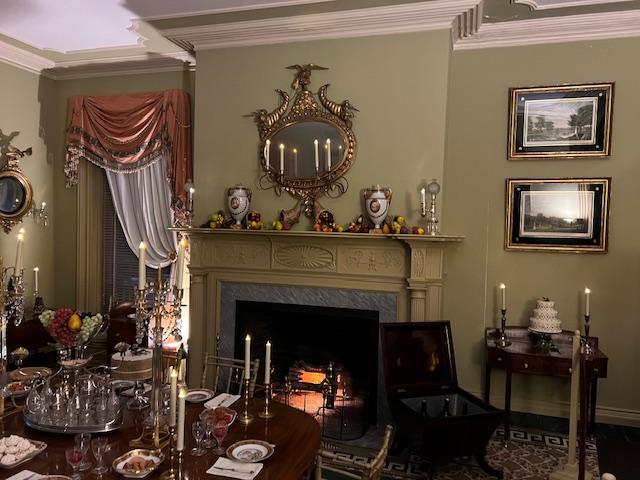
The fireplace in the Dining Room decorated for the holidays.
The Christmas desserts for dinner in the Dining Room at Boscobel.
In the back of the Dining Room was the dumbwaiter and the service area, The Warming Room, where items would be finished once they came up from the basement kitchen. They would be plated, decorated and served from this area and the timing would have had to be precise so the food did not arrive cold into the Dining Room.
The Warming Room where meals would be finished before serving.
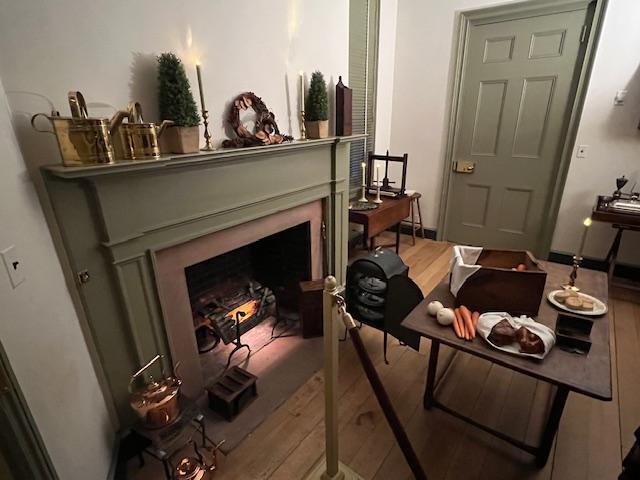
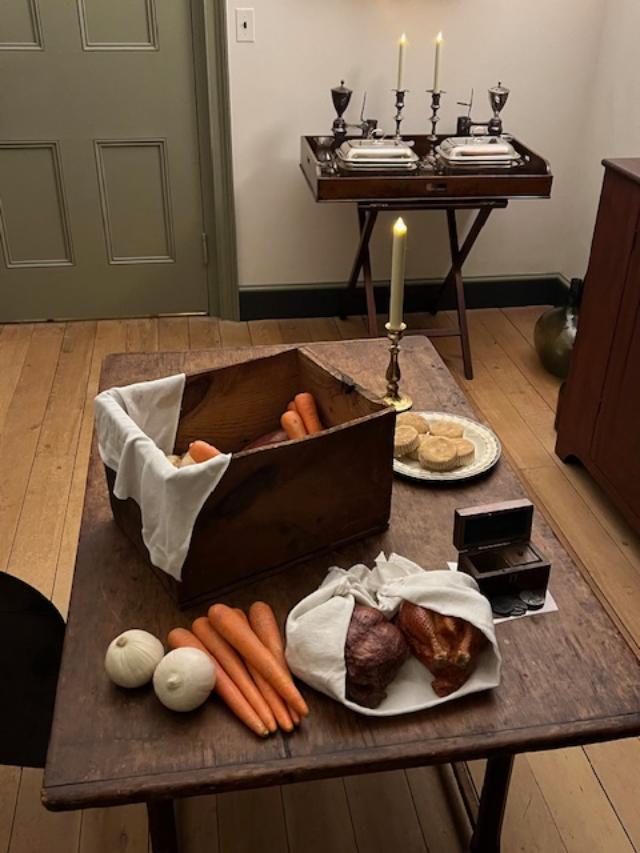
Items to be served at meals in the Warming Room.
We then toured the back areas of the Warming Room, where all the food would have finished and plated. The room had all sorts of gadgets to keep the plates warm and where all the silver and china would have been kept. After the tour of the downstairs was finished, it was time to climb the Grand Staircase to the rooms in the second floor of the home.
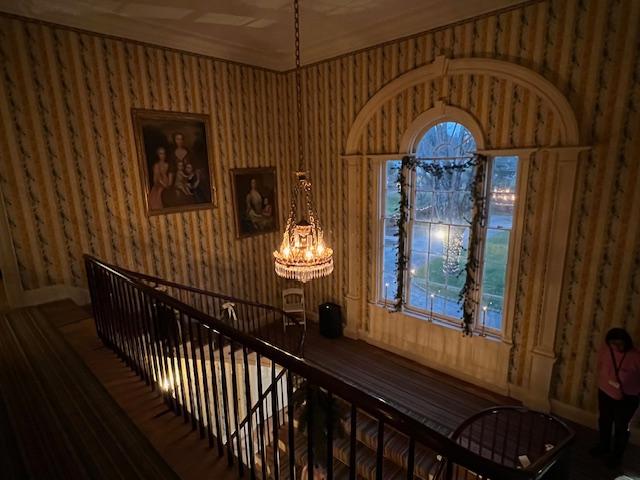
The Grand Staircase to the second floor bedrooms.
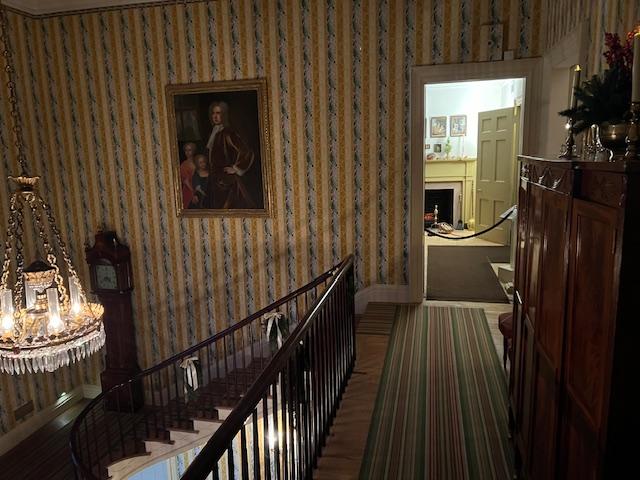
The other side of the Grand Staircase.
The second floor Landing at the top of the steps is where all the bedrooms were concentrated.
The Card Table at the top of the Landing in Boscobel.
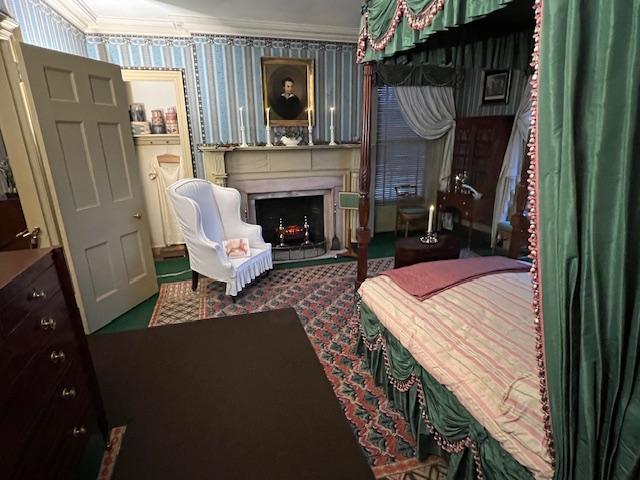
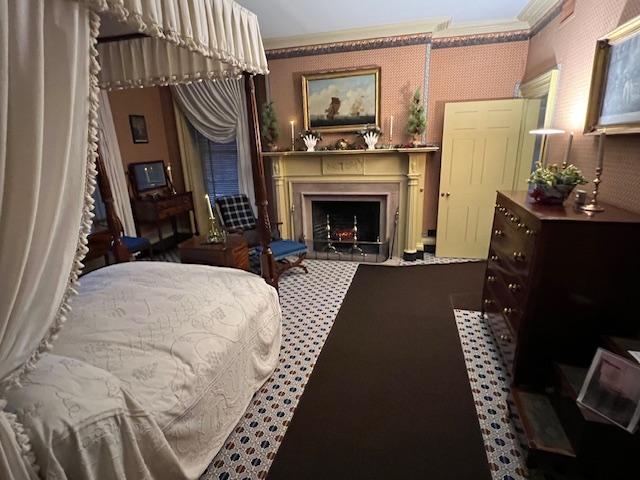
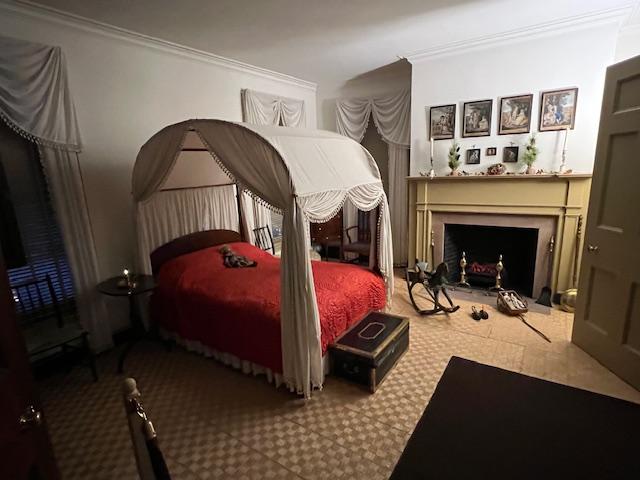
We then toured the upstairs bedrooms, where we learned the family would have ‘camped out’ in for the cold winter months. I was surprised to learn that the whole front of the house was closed off and the upstairs bedrooms would have been sealed off with fireplaces to keep them warm and the cloth hangings around the bed to keep out the drafts. Both mother and son’s bedrooms were nicely furnished with period furniture.
The Mrs. Dyckman’s bedroom at Boscobel.
Peter Dyckman’s Room on the second floor
Peter Dyckman’s Room at Christmas time.
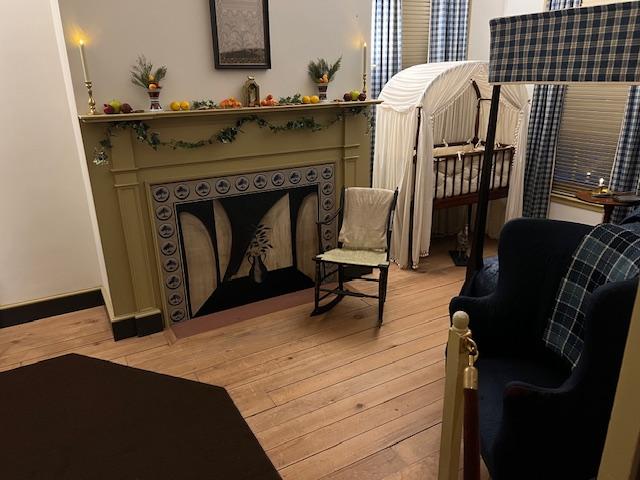
Sills Dyckman’s Room with the nursery.
Sill’s Dyckman’s Room at Christmas time.
The guest room
The Guest Room at Christmas time.
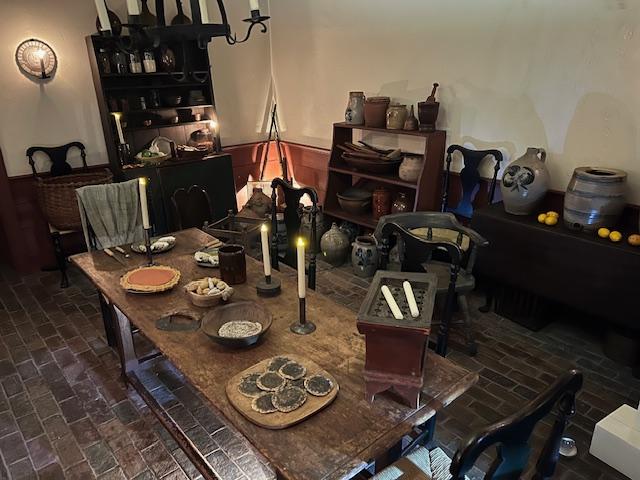
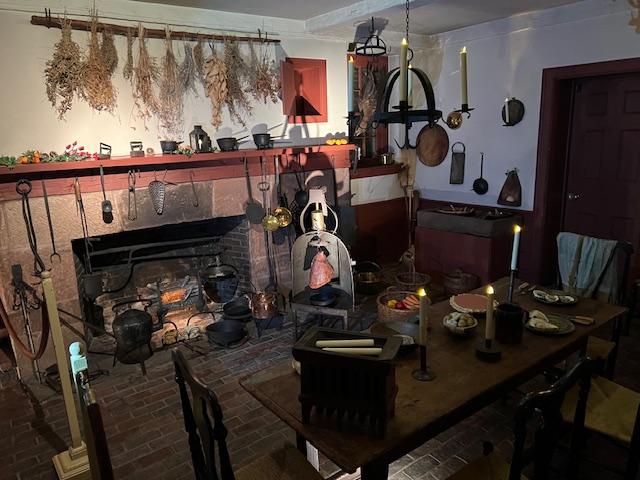
Our last stop was the kitchen in the basement back area of the house where all the food would have been prepared and brought up to the Butler’s Pantry. There were all sorts of kitchen equipment for roasting, baking and boiling. You could tell that it was not easy work cooking these elaborate meals without the modern conveniences that we take for granted today. These cooks had a tougher time with the stoves and fireplaces as a source of cooking.
The Dyckman kitchen preparing Christmas dinner.
The Dyckman basement kitchen during the holidays.
The kitchen during the Christmas
The Dyckman Kitchen where the servants were preparing a holiday dinner.
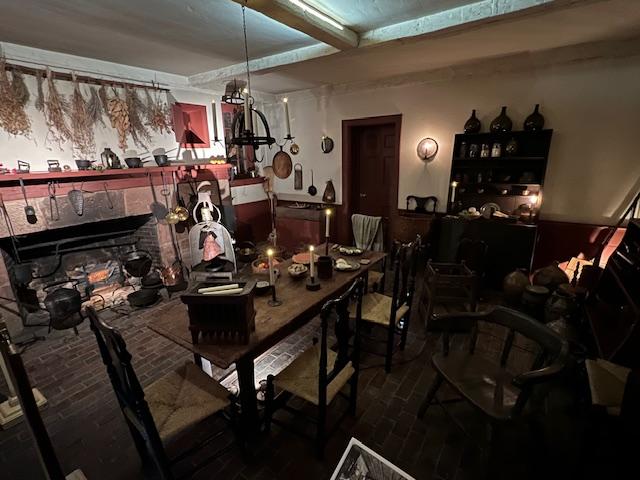
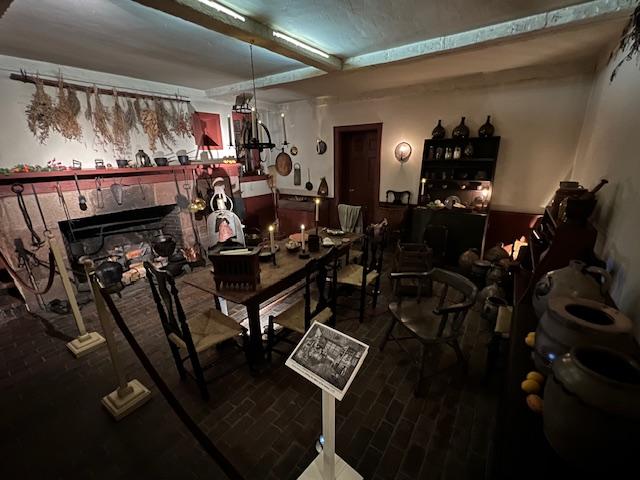
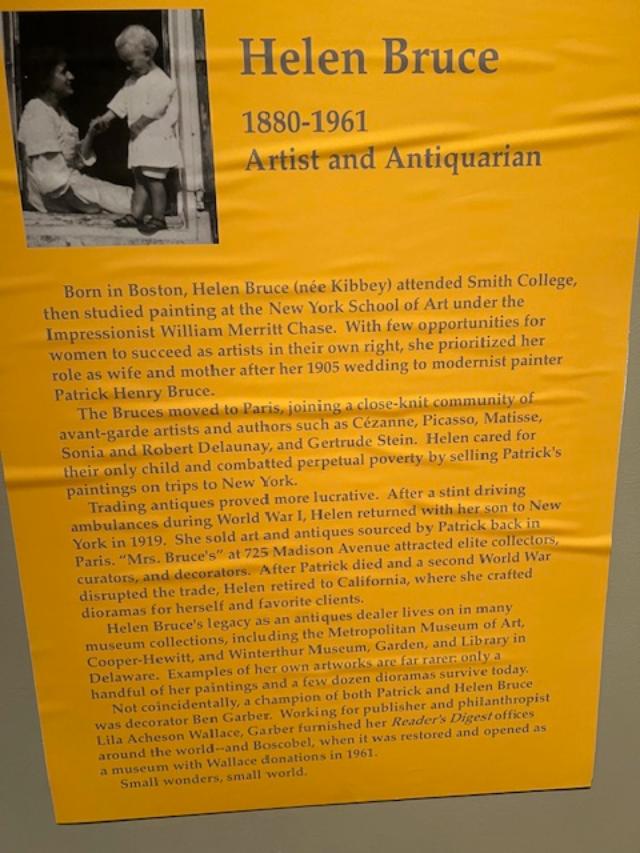
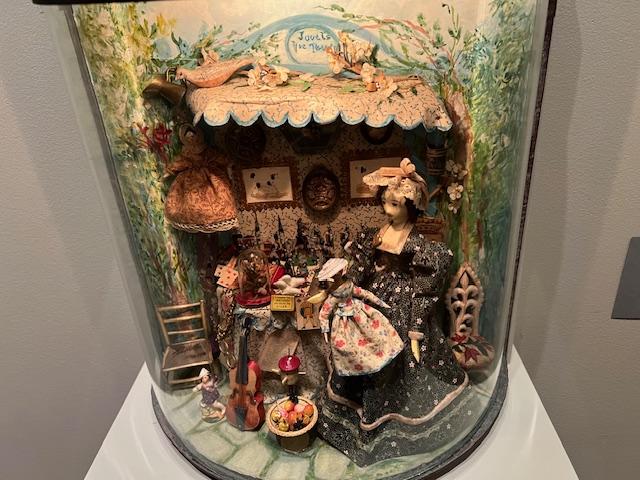
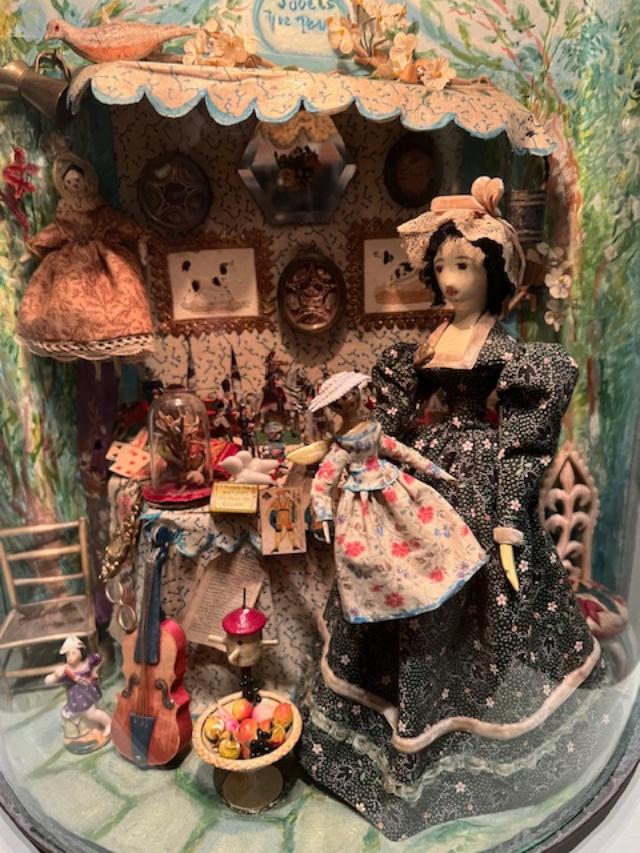
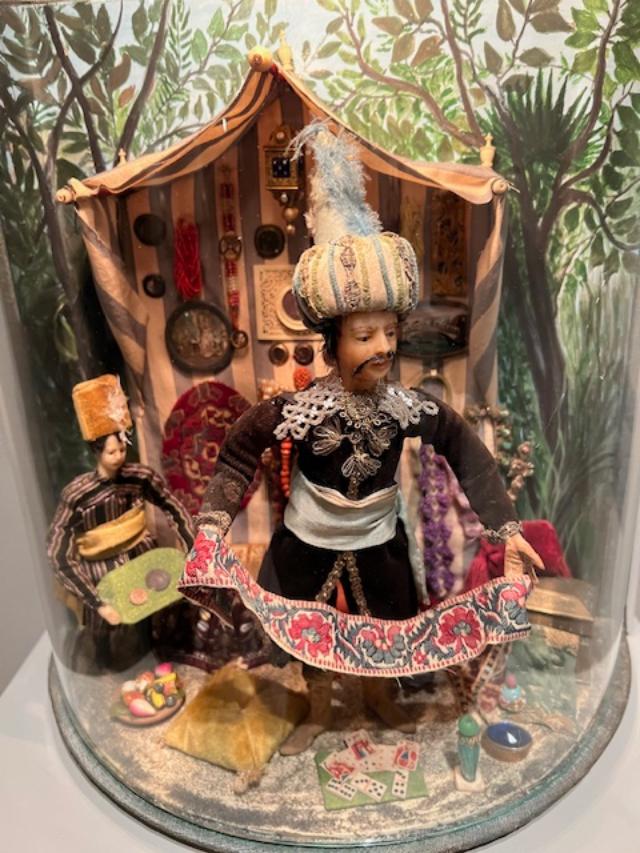
In the lower level gallery, there was an exhibition of miniature displays by artist Helen Bruce. She created these tiny diorama’s that are on display. She was quite clever in the details.
Bio on Artist Helen Bruce
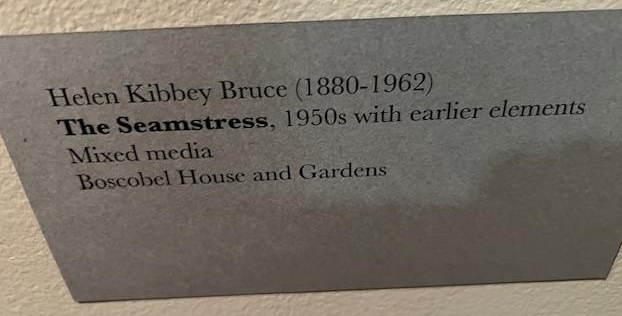
‘The Seamstress’ by Helen Bruce
‘The Seamstress’ by Helen Bruce
‘The Toy Shop’ by Helen Bruce
“The Toy Shop” by artist Helen Bruce.
“The Rug Merchant” Artist Helen Bruce.
“Seamstress” by artist Helen Bruce.
The gallery was lined with a series of these diorama’s and each was very detailed in their appearance.
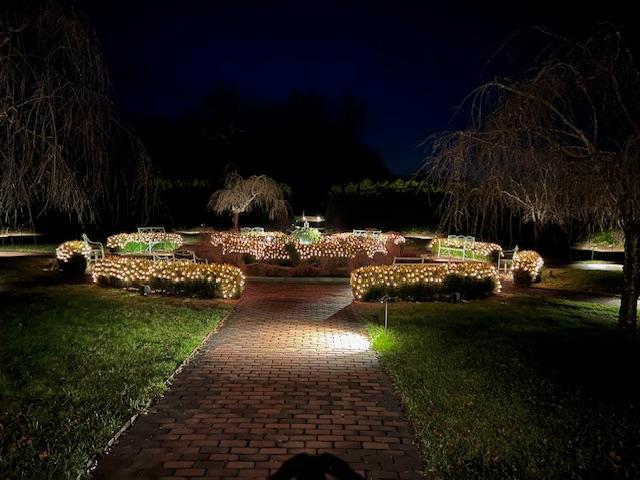
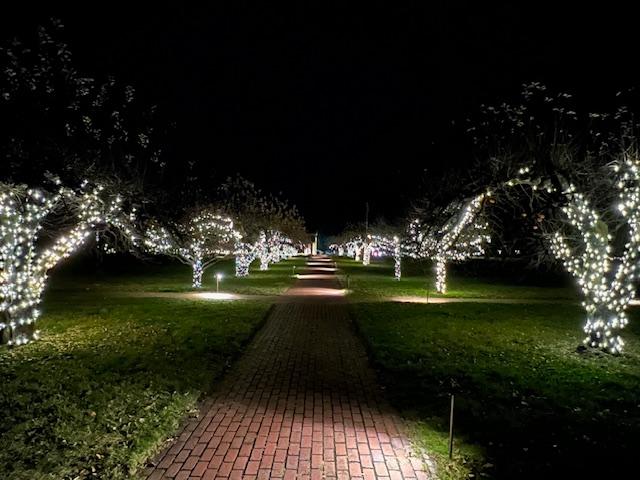
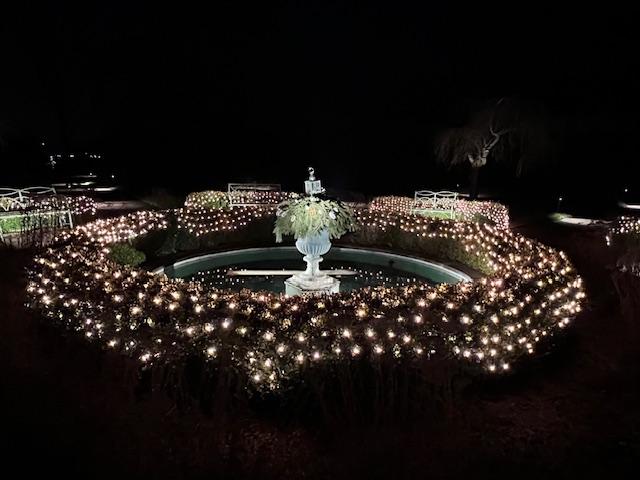
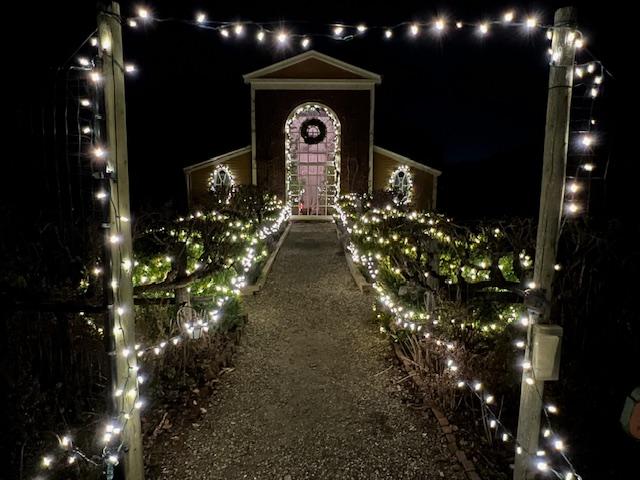
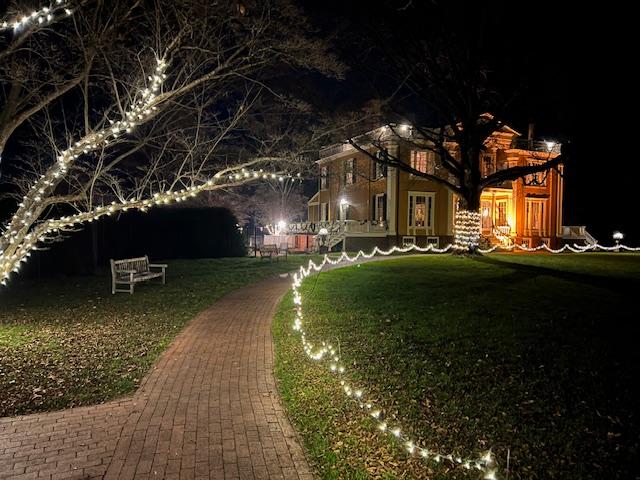
After the self-guided tour was over, I was able to walk around the property and see the gardens. At night the gardens were all lit with Christmas lights and the trellises were done with garland.
Boscobel’s Gardens at night during Christmas.
The walkway through the gardens.
The fountain at Boscobel is decorated to the hilt.
The Herb Garden at night.
The Front of Boscobel at night.
The front of Boscobel at night when I left the house.
The back of the house on the way back to the Gift Shop.
When I toured the house in 2019, what I thought was a nice touch at the end of the tour in the kitchen area was that Sam served us cold apple cider and small gingerbread men which I thought was special keeping with the house’s tradition of a place of entertainment. I thought it was gracious and very much welcome.
When I went to the evening Open House in 2023, the gift shop was serving refreshments when we returned from our self-guided tour. They were serving Hot Chocolate, Hot Apple Cider, Doughnuts, cakes, cookies and Christmas candy while we walked around the Visitors Center.
The Gift Shop at Christmas time.
The Gift Shop at Christmas time.
It really was an interesting tour and I will have to return in the summer months.
History of Boscobel House & Gardens:
States Morris Dyckman was a descendant of a German-Dutch family whose roots in New York stretched back to 1662. During the American Revolution, he was a Loyalist serving as a clerk in the British army’s Quartermaster Department. In 1779, he accompanied his quartermaster superiors to England and for the next decade he rebutted the government allegations that the quartermasters had engaged in profiteering. (As the keeper of the department’s ledgers, he well knew how they had fattened their purses, assets Dyckman’s biographer James Thomas Flexner). The officers were eventually cleared, largely because of Dyckman’s testimony. They rewarded him with an annuity.
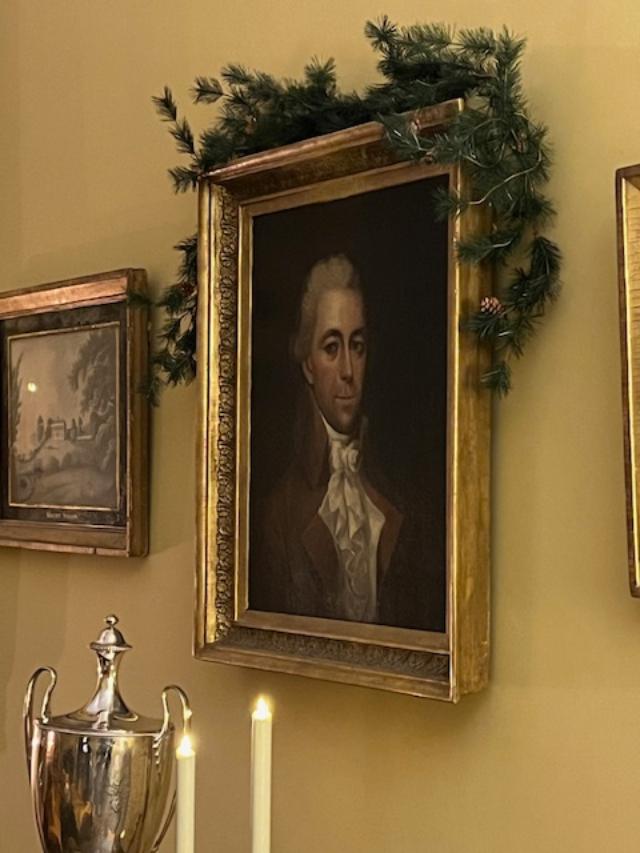
The portrait of States Dyckman in the Front Drawing Room.
Dyckman returned to America in 1789 after a general amnesty of Loyalists had been declared. Five years later, he married Elizabeth Corne, a member of a distinguished New York family and 21 years his junior. Dyckman returned along to England in 1800 to settle problems with the payment of his annuity. The trip lasted nearly four years but was a success. He returned a rich man worth more than seven million dollars today. Before he left England, he bought many items for the house including silver, china, glass and books for his library.
The architect for the house was unknown but records show that Mr. Dyckman had some influence in the design of the house. Mr. Dyckman died in 1806 at age 51 and the house had only had the foundation finished at time. His 30 year old wife, Elizabeth finished the house in 1808 with the help of her husband’s cousin, William Vermilyea. She furnished the house and added to its inventory. She and her son, Peter lived in the house upon finishing it. She lived in the house until her death in 1823 and her son, Peter died the following year in 1824 at age 27. The house stayed in the family until about 1899 and then was foreclosed on. According to the guide, the house had not been updated at that point and was falling apart. The house had a series of absent owners over the next few years and then sat empty. It was bought by Westchester County in 1924 and the grounds were turned into a park.
Boscobel House & Gardens in winter
In 1945, the park was acquired by the Veterans Administration for a hospital and the owners took care of the exterior for a time. By 1954, the house was considered an excess on the budget and was being sold for $35.00 for demolition.
The house was saved by Historian Benjamin West Frazier and some friends of his who raised about $10,000 to have the house moved and dismantled to save ‘this treasure’. The house was stored in pieces until 1955, when Lila Acheson Wallace, the co-founder of Readers Digest became involved in the project.
She purchased the land that the house now sits on and devoted her time and money to have the house restored and worked with the curators of the Metropolitan Museum of Art, where she was a donor to help restore the house into its period design with landscaped gardens and period furniture. In 1959, she commissioned the firm of Innocenti & Webel to create the gardens that surround the house. The house opened to the public in 1961.
(This information was taken from the Boscobel Museum Booklet and I give them full credit for the information)












 Visiting a Museum: The Unique, Unusual, Obscure and Historical