Tag: addthistoyourgrocerycart@Wordpress.com

Hopewell Depot Museum                                                                                 36 Railroad Avenue                                                                 Hopewell Junction, NY 12533

Hopewell Depot Museum 36 Railroad Avenue Hopewell Junction, NY 12533

Hopewell Depot Museum

36 Railroad Avenue

Hopewell Junction, NY 12533

(845) 226-7003

Home

Open: Please check website for hours (right now every Saturday 10:00am-2:00pm)

Admission: Free but donations are accepted

My review on TripAdvisor:

https://www.tripadvisor.com/Attraction_Review-g47922-d13000900-Reviews-Hopewell_Depot-Hopewell_Junction_New_York.html

The Hopewell Depot at 36 Railroad Avenue

The Hopewell Depot and grounds

I visited the Hopewell Depot one weekend and found it to be a very interesting look at the rail service during its development in the Hudson River Valley. The rail service changed the way business was done in the valley for farmers and opened the whole area up for development.

The rival commuter lines than merged together to make a better lines of transportation and bring people not just through the area but to help build the communities and their businesses that they are today. Each section of this small museum tells the story of that development.

The front gallery of the museum

The potbelly stove that warmed riders before their rides.

The community gallery

The front section of the museum which houses the gift shop and welcome area once served as the waiting room for the train station. This had been a smaller line once serving between Poughkeepsie and Connecticut and then later on to the rest of New York State and as a line to transport agricultural products between the Valley and the growing market in New York City.

The tops of telephone poles

The middle section of the museum houses the Train Manager’s office and an office for communication to outside communities. Here the train depot manager would run the day in day out services of the trains and their functions with the bigger lines and the Western Union communications area would service the community with messages and services to the outside.

The Train Station Manager’s office

The Western Union/Communications office

The back section is where you could buy your tickets and converse with other people taking the railroad. Here are displays on the railroad lines, the products that were serviced through the rails like the big Borden Foods display, whose factory was located right next to the train station and had serviced all the dairy farmers in the community bringing fresh milk to New York City and beyond.
The back gallery of the museum

The back gallery

The Train Lamp display

The Borden Milk display in honor of the dairy industry locally owned Borden plant.
The museum also has displays on the workings of the railroads and how they functioned, how the community was formed and grew around the railroads and all sorts of equipment and items that made the operation work. The museum volunteers have done an excellent job telling the story of how Hopewell Junction and the surrounding towns developed and grew.

The Community Development display

The “Working” display of the growth of trains

Outside the building, the museum volunteers are working on renovating a donated caboose that was once used on another line. Here I saw the Train conductors operation area, the sleeping quarters and a small kitchen. I thought that was fascinating because I never knew what this car contained and never knew it was living quarters for the conductor. I can see the potential of kids wanted to climb all over this and want to know what life was like on the trains.

The Caboose on the back of the property

The inside sleeping quarters of the caboose

The overall sleeping area

The kitchen area

History of the Hopewell Depot:

The Hopewell Depot was built in 1873 by a Millbrook-led rail investment group that changed names several times between 1869 and 1873. Originally, the Dutchess & Columbia RR established a north-south short-haul coal route to Connecticut also serving the communities in the center of the country. The Hopewell community grew up around the Depot.

The grounds of the museum

In 1888, after Poughkeepsie’s great railroad bridge (now the “Walkway Over the Hudson) was built, the Dutchess County RR pushed southeastward and arrived in Hopewell Junction in 1892, creating a 4 way hub. In the next decade, the lines through Hopewell became part of the Central New England Railway system. In 1927, they came under full control of the New Haven RR until it failed in 1968. The Poughkeepsie RR Bridge burned in 1974 and the local rail service ended here in 1982.

The Hopewell Depot Mission:

Privately owned and operated since 1996, Hopewell Depot has progressed entirely through the work of volunteers from all walks of life.

The old baggage cart

The Visitor Center offers a variety of information on the local area and items for sale. The interior museum rooms present a host of interactive displays and artifacts about the region and the great era of railroads in general. The grounds contain the Interlocking Signal Tower with a special exhibit loft and public restrooms and the Rudberg Pavilion is open to visitor as a rest area.

Hopewell Depot Museum is on the National Register of Historic Places and is a fully chartered NYS museum. Its mission is to present the complex as a historical and educational experience for the regional community and provide an informative, recreational venue the public can enjoy with pride.

The Depot in the summer months.

The tiny caboose

Getting to know the museum on YouTube

Klyne Esopus Museum                                         764 Route 9 West                                             Ulster Park, NY 12487

Klyne Esopus Museum 764 Route 9 West Ulster Park, NY 12487

Klyne Esopus Museum

764 Route 9 West

Ulster Park, NY 12487

(845) 338-8109

https://www.esopushistorymuseum.org/

https://www.facebook.com/EsopusHistoryMuseum/

Open: Sunday-Monday 11:00am-4:00pm/Tuesday-Thursday Closed/Friday-Saturday 11:00am-4:00pm

Admission: Free but donations are taken to offset costs

My review on TripAdvisor:

https://www.tripadvisor.com/ShowUserReviews-g48749-d26495761-r908410891-Klyne_Esopus_Museum-Ulster_Park_Catskill_Region_New_York.html?m=19905

The Klyne Esopus Museum is the home of the Town of Esopus Historical Society and is a treasure trove of information of early life in the Hudson River Valley and the role this small town played in the shaping of American society in this region. There are all sorts of displays on early American life, cottage industries that made the community grow and its role in the modern age.

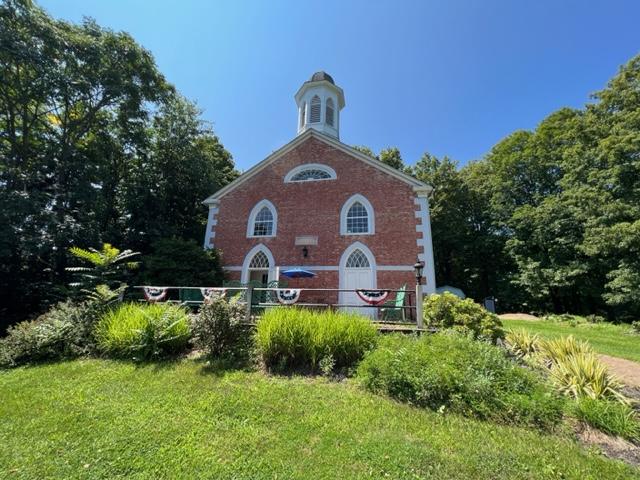
The Klyne Esopus Museum at 764 Route 9 West

The sign welcoming visitors to the museum.

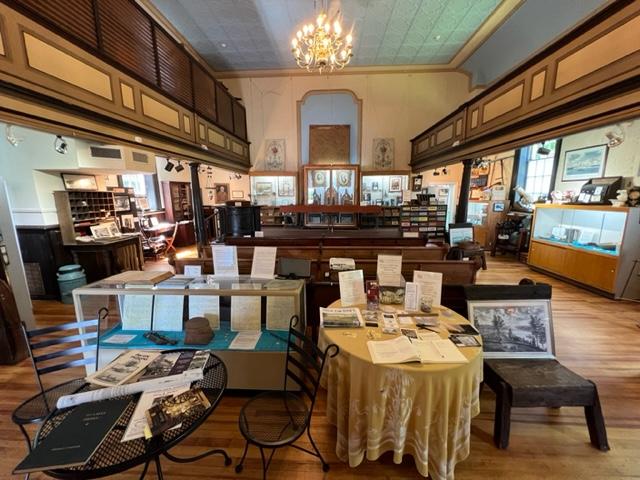
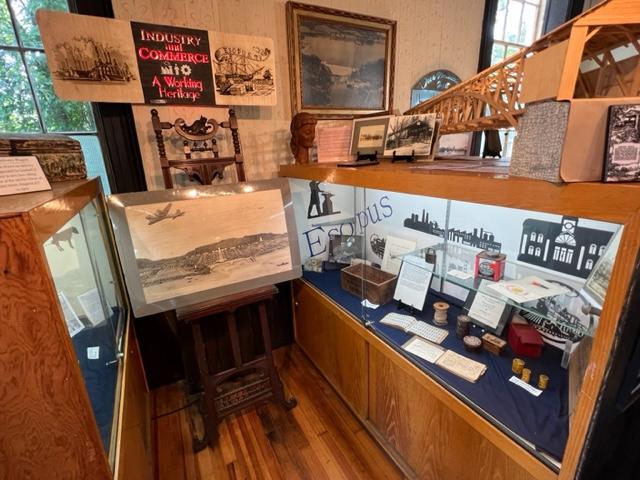
The Main Gallery at the Museum

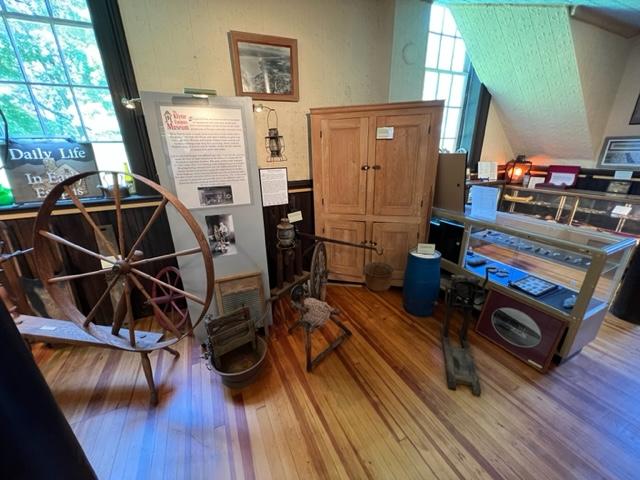
The museum’s main gallery is surrounded by cases displaying the story of the area depicting the various aspects of industry, commerce, agriculture and domestic activities of the town’s residents. Former residents of note that are featured are Sojourner Truth, John Burroughs and Alton Parker to name a few. year a curated exhibition focusing on a special theme is centrally featured. These are some of the exhibits that are showcased at the museum:

The Native American exhibit:

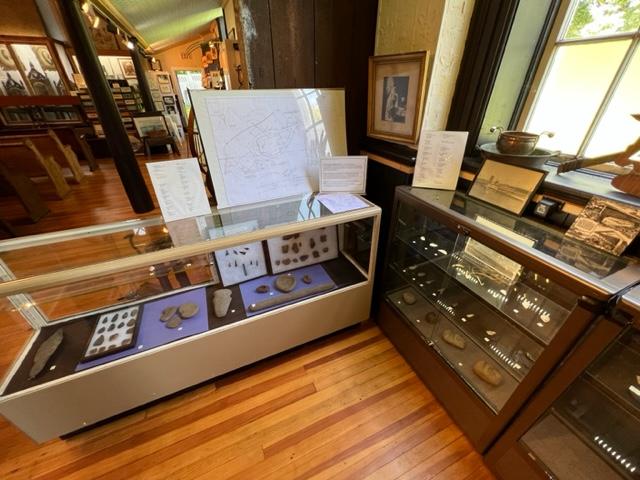
The exhibit has an interesting collection of arrowheads, fishing and household items that were used by the local tribes who once lived in the area.

The display of arrowheads and fishing items

The extensive display of Native American fishing and household items.

The Apple industry:

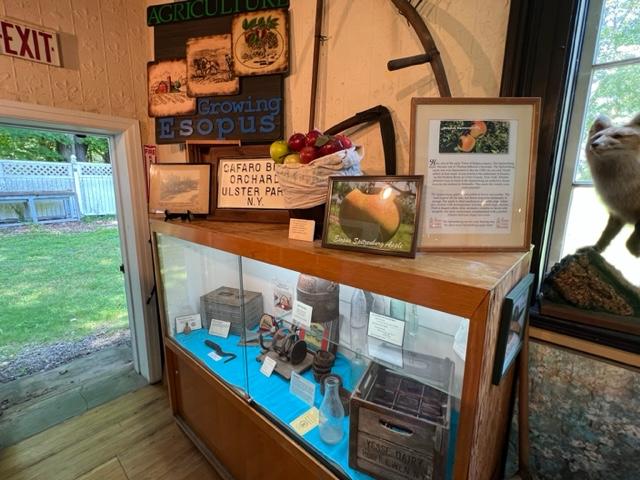
The local Apple industry was a major part of the economy in the late 1800’s and early 1900’s. The apple, the “Esopus Spitzenburg” was developed in Esopus. The Dutch had developed the agricultural industry of the area that supplied New York City with seasonal fruits and vegetables.

The Dutch Farming Industry and the development of local harvests

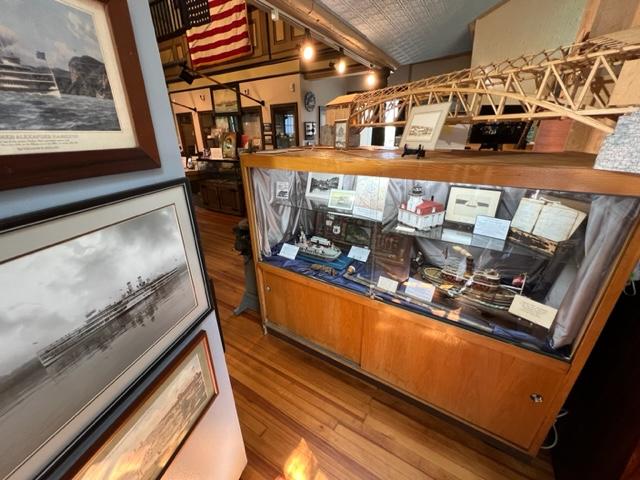
With the community based by the Hudson River and transportation being such a big part of the local economy, the displays on shipping and the local lighthouses were prominent at the museum. The display has all sorts of pictures and artifacts from the era of steamboat transportation down the Hudson River.

The Lighthouse and Shipping Industry

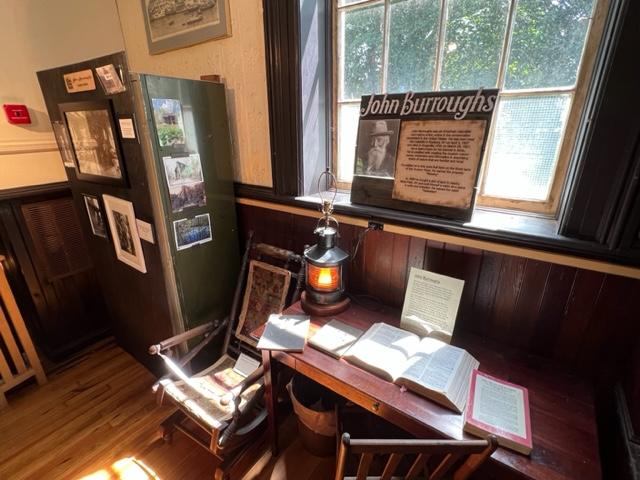
There were displays on famous residents such as Sojourner Truth and John Burroughs and their role in the community.

The artifacts and display on Sojourner Truth

https://en.wikipedia.org/wiki/Sojourner_Truth

The artifacts and display on John Burroughs

https://en.wikipedia.org/wiki/John_Burroughs

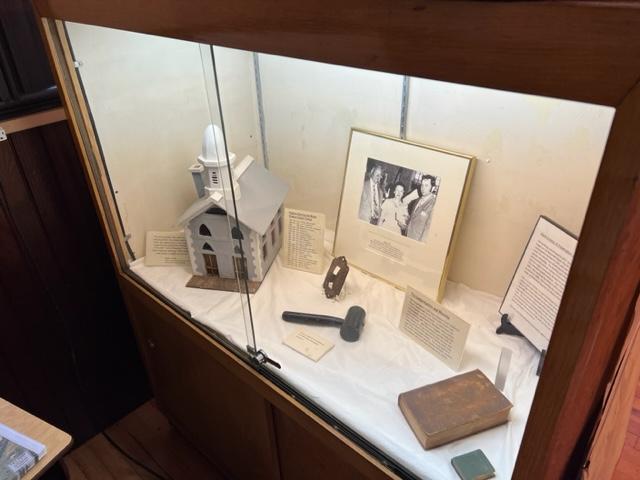
The church is also featured pictures of clergy and their families, the history of the church and the decor of items that used to adorn the church when it was a place of worship. There is a large display on church history in the back of the museum.

The Church display of its history

The local veterans are prominently displayed at the museum as was showing the spirit and support of the wars and battle. It also shows the townspeople participation and dedication in the war effort.

The World War II exhibition

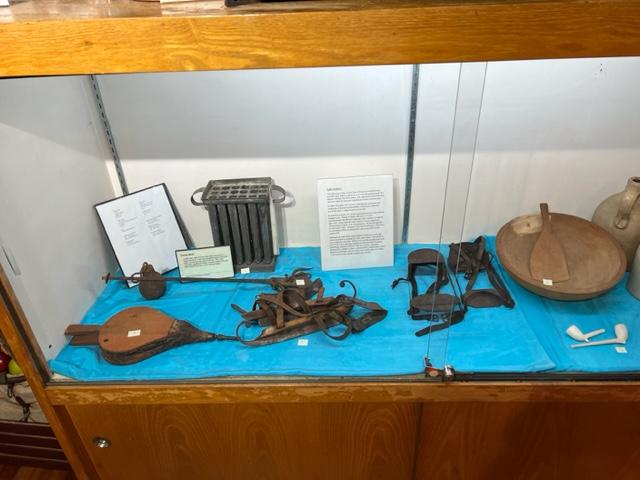
Recreation and leisure are a big part of the Hudson River Valley society and items such as ice skates, swimming and boating show how people enjoyed their free time. This still plays out today. Household items were also displayed as well showing life at that time.

Household and Recreation items on display

The History of the museum:

(From the website and pamphlet)

The Klyne Esopus Museum that is located in Ulster Park, NY is housed in the former Dutch Reformed Church, which is a charming country church built in 1827. It served the community for over 175 years and replaced a smaller building built in 1792 originally located 1000 ft. to the north.  The church closed in 1965. The governing body of the church scheduled the building for demolition.

Faced with this reality, the former members of the congregation and the larger community rallied to preserve the building.  In 1969, a group known as the Klyne Esopus Historic Preservation Committee formed. Formal incorporation of the group took place in 1970.  After 17 years of fundraisers, repairs to the building, preserving and collecting, the museum finally opened to the public. In 2002, the building became designated a State and National Historic Landmark. 

The historical society museum opened to the public in 1984, offering a variety of exhibits about the culture, commerce and history of the Town of Esopus. The town is typical of rural America but it unique in many ways. Its geographic location and topography have spawned a variety of industries, resulting in a rich history and a diverse population.

The Klyn Esopus Museum is the Historical Society of the Town of Esopus. Its goal is to preserve, interpret and disseminate the history of the town. By fostering an awareness of the past and providing a repository for the artifacts and memorabilia of its former residents, it enables present and future generations to identify and appreciate times gone by. Today, a small, committed group of volunteers is working to make history meaningful and relevant to visitors of all ages. 

Museum of Illusions                                                77 Eighth Avenue                                                New York, NY 10014

Museum of Illusions 77 Eighth Avenue New York, NY 10014

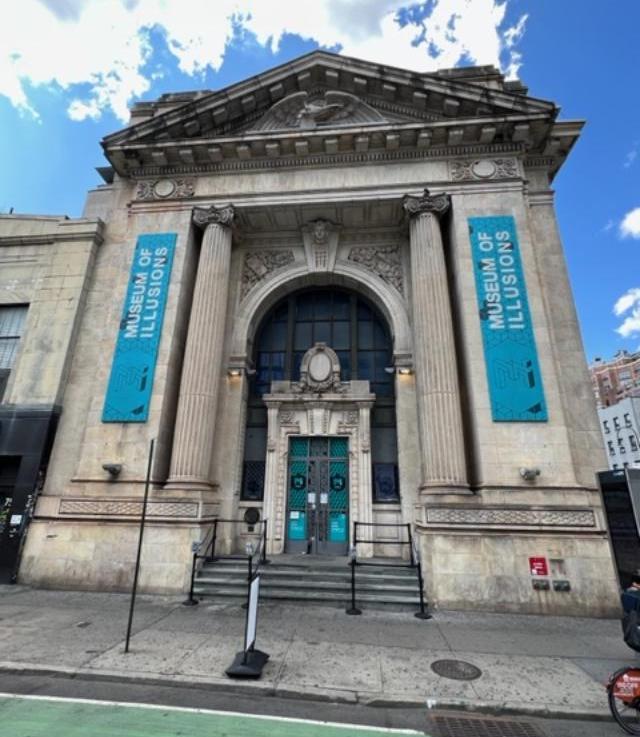
Museum of Illusions

77 Eighth Avenue

New York, NY 10014

(212) 645-3230

https://www.facebook.com/moi.newyork/

Admission: Adults $24.00/Students-Seniors-Essential Workers $22.00/Children Under Six Free/Family Fee (Two Adults and Two Children $75.00)

Open: Sunday 10:00am-12:00am/Monday-Thursday 10:00am-11:00pm/Friday-Saturday 10:00am-12:00am

https://www.tripadvisor.com/Attraction_Review-g60763-d14203837-Reviews-Museum_of_Illusions-New_York_City_New_York.html

Video on the “Museum of Illusions”

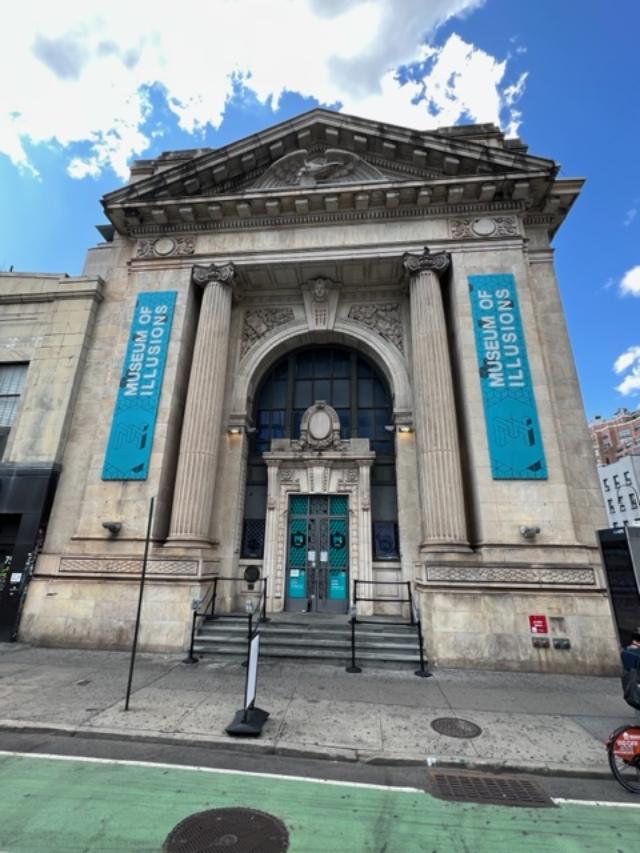
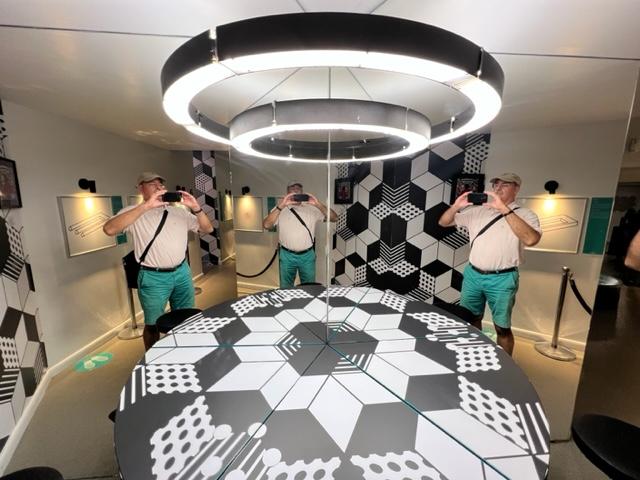
The Museum of Illusions is a interesting museum in that it is a small museum packed with various exhibitions and hands on displays that are interactive for the visitor. Each one is an experience in itself. The visitor participates in what the display has to offer and it plays with both your mind and with your personality and how you react to it.

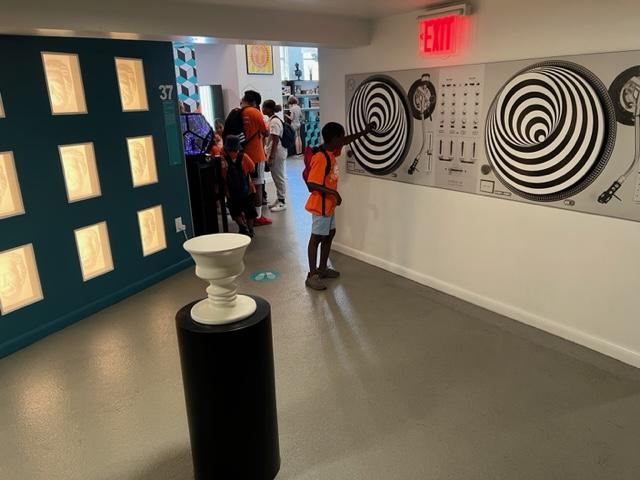
The main gallery at the Museum of Illusions

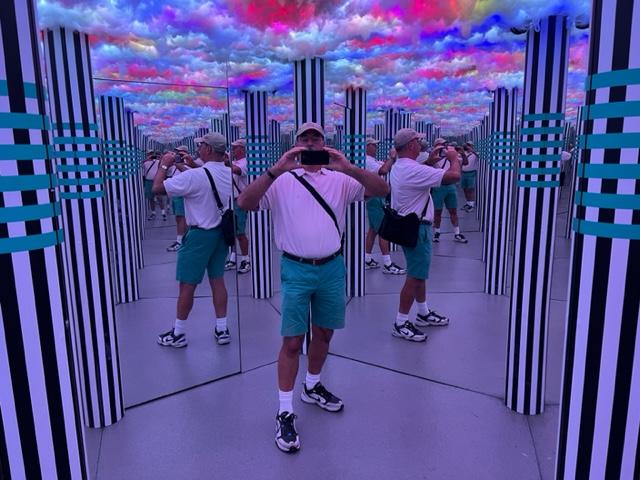
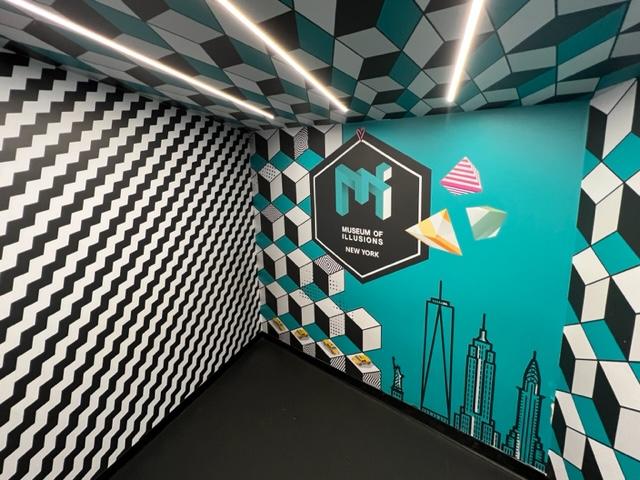
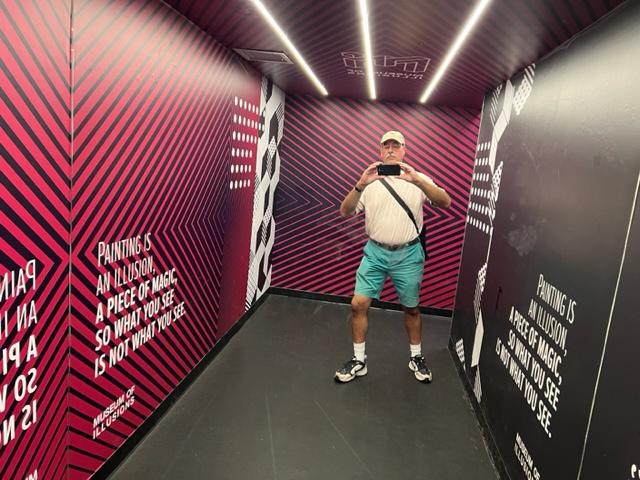
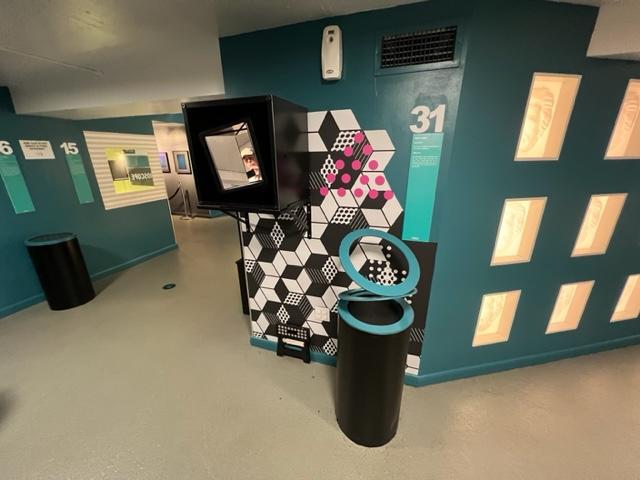
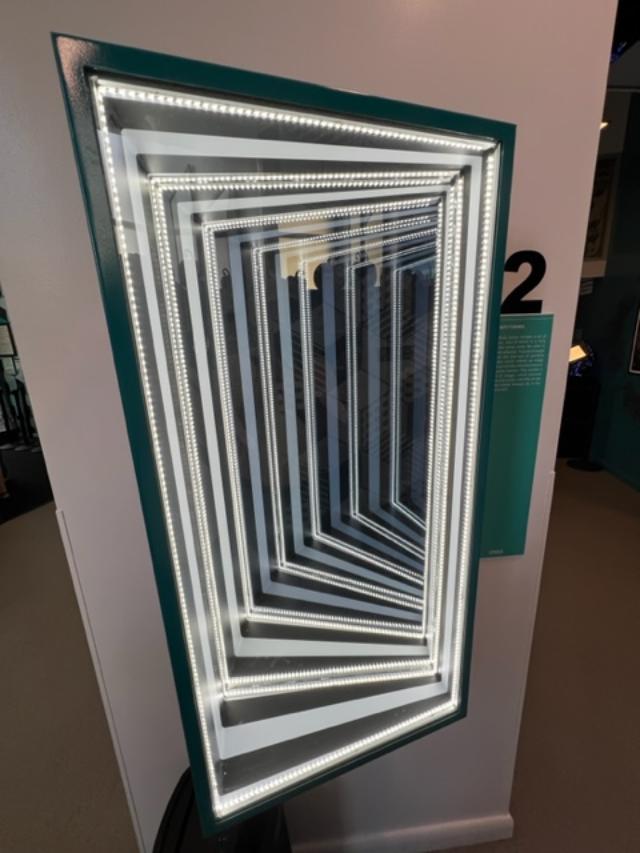
There are a lot of brain teasers and mirrors to throw you off or add to the display to entertain you. The optical illusions will test your mind and your senses. There are titled rooms to test your balance and your sense of sight, mirrored rooms to show location and reaction and small displays to show size and distance.

Admittingly it is a very small museum of the steep price of admission ($24.00 for an adult) and you will only be in the museum for about an hour. The problem with this museum is that once you experience it and if they do not change the displays, there is no reason to go back. The small displays can be experienced on two floors.

The Tilted Room display

The afternoon I was here, the museum was packed with summer campers and school aged kids who dominated the place and it is so small that it was hard to maneuver around the museum. Still it was a very interesting museum to experience once as it will test the power of and exercise your brain.

The Clone Table

Me in the Vertical Room

The Illusions Gallery

History of the Museum of Illusions:

(From the Museum Website)

Enter the fascinating world of illusions which will test your confidence in your senses yet amaze you by doing it. It is world that will confuse you completely, educating you in the process. Visit us and you will be thrilled because nothing is what it seems-especially in the Museum of Illusions!

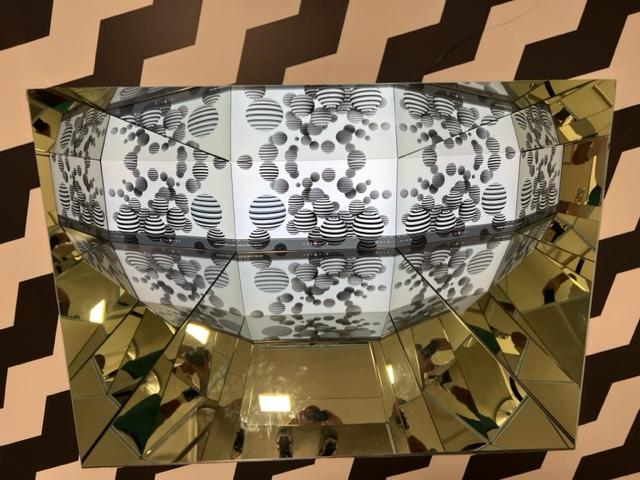
The Infinity Tunnel

Are you ready for a fascinating adventure? We offer an intriguing visual, sensory and educational experience with a handful of new, unexplored illusions.

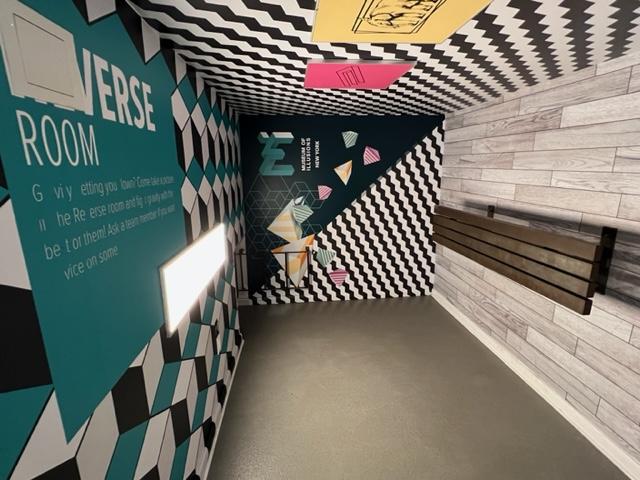
The Reverse Room

New York, place to experience illusions!

The Museum of Illusions in New York brings you a space that offers wonderous and entertaining insights into the world of illusions which will delight all generations. The museum is a unique place for new experiences and fun with family and friends. Not only is it an exciting place for children, who adore coming, but it’s also a great place for parents, couples and grandparents!

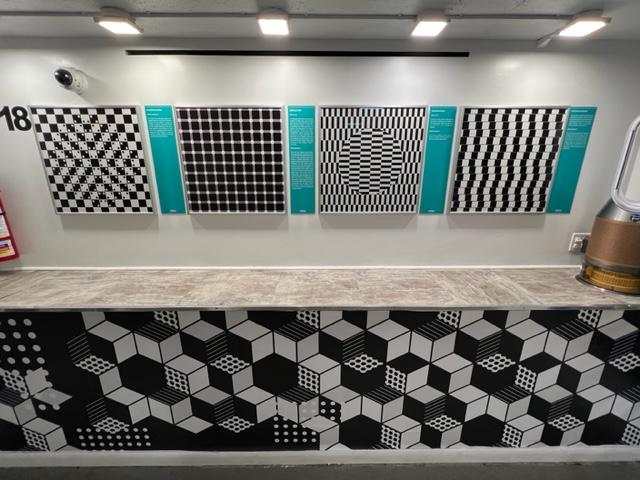
The Optical Illusions of the museum

Enjoy our collection of holograms, look closely at every optical illusion and observe each installation thoroughly. Our exhibits are a brilliant, playful reminder that our assumptions about the world we perceive are often nothing but a shadow of illusions. Our genuine collection of showpieces will most certainly make your jaw drop!

The Museum of Illusions Master of Numbers

The Museum of Illusions amusing, and awesome features will teach you about how the human brain perceives reality. You will come to understand why your eyes see things which your mind cannot initially comprehend. Make sure you visit our playroom with its intriguing and educational games and puzzles. These brain mashers are great fun but also delightfully tricky!

The Magic Prism

FASNY Museum of Firefighting                          117 Harry Howard Avenue                           Hudson, NY 12534

FASNY Museum of Firefighting 117 Harry Howard Avenue Hudson, NY 12534

FASNY Museum of Firefighting

117 Harry Howard Avenue

Hudson, NY 12534

(518) 822-1875/1-877-347-3687

Admission: Adults (18 and above) $12.00/Children under 18 $8.00/FASNY Members Free

Open: Sunday 10:00am-4:30pm/Monday & Tuesday Closed/Wednesday-Saturday 10:00am-4:30pm

My review on TripAdvisor:

https://www.tripadvisor.com/Attraction_Review-g47931-d263732-Reviews-FASNY_Museum_of_Firefighting-Hudson_New_York.html

The FASNY Museum of Firefighting at 117 Harry Howard Avenue

The FASNY Museum of Fire Fighting is America’s interactive museum of firefighting. It is also the home of the premiere collection of American firefighting objects in the world.

When I visited the museum recently, I found that the museum is not just a treasure trove of information and artifacts but an extensive study on modern firefighting from its creation in the time of the Romans and Greeks, the beginnings of the fire service in America lead by people like Peter Stuyvesant and Benjamin Franklin. These men brought their ideas and innovations by working alongside people doing the work and the modernization of equipment that makes the modern firefighter both safer and smarter.

The progression of the equipment and the way it is used has not changed much but the way we use it, and its design has changed from the days of the bucket brigades to the horse drawn carriages to the modern automobile. The job has not changed as we put the fire out and try to save lives and property.

There is so much to see and do at the museum and for a firefighter, a very humbling experience in that we continue to learn on the job and learn the changes in the fire service around us. This is one of the most extensive museums of firefighting that I have ever seen. The exhibitions are very detailed and easy to follow with lots of interesting artifacts. It is a perfect place for a family to visit.

A ladder truck from the early 20th Century

Ladder Truck from Rye, NY that was part of the Bush family history.

The massive museum has over 60 fire engines on exhibit, as well as numerous examples of firefighting gear, equipment and art depicting the heroic history of firefighting in America.

Early 20th Century Steam Engine

The main equipment room with all sorts of trucks and engines spanning over 100 years

Activities for families include the popular bucket brigade activity, the amazing Jr. Firefighter Challenge course, the incredible first responder virtual ride to the fire experience and the Cabot/McCadam Fire Safety Discovery Room (FASNY Website).

Turn of the Century Bucket Truck

Whether you are a family, a firefighter, an apparatus buff or a student of history, you will be amazed at the depth and variety of the Museum’s vast collection.

Turn of the Century hose beds.

An early steam engine

The 9/11 Exhibit: Remembering the 20th Anniversary:

In partnership with the New York State Museum in Albany, the FASNY Museum of Firefighting is honored to present the exhibit: Touchstone: Remembering the 20th Anniversary of 9-11. The majority of the objects in this exhibit are on loan from the NY State Museum. They were found during the recovery efforts that took place at Fresh Kills Landfill on Staten Island, when hundreds of NYPD and FBI forensic experts sifted through the debris from the World Trade Center tragedy site, between September 2001 and July 2002 (FASNY website).

The 20th Anniversary of 9/11 on September 11th, 2021

We encourage visitors to compare how they feel today, 20 years after this touchstone moment in our nation’s history, to how they felt on September 11, 2001. We also invite the visitor to remember that not every action taken after 9-11 was heroic.

After 9-11, there were many cases of violence against those who were, or who were perceived to be, Muslims, Sikhs or persons of Arab or South-Asian descent. Through an interactive, we ask visitors to consider this racism and why it occurred (FASNY Museum Website).

The 20th Anniversary of 9/11 on September 11th, 2021

The 9/11 Exhibit will be very emotional for any firefighter and their family whether they experienced it or not. It could be the twist equipment, the pictures depicting that morning and the rescue plans and the artifacts that were used during that time, take your time to really study and appreciate the heroism of that morning.

Then, Now & Always: Firefighting from the Cradle of Rome Through the 1900s

Trace the evolution and development of firefighting from its ancient origins to the modern era of mechanization.

The Dutch Bucket Brigade system of early America

This informative and fascinating exhibit uses objects in the Museum’s collection as historical touchstones. Complemented by interpretive graphic panels and object cards, the exhibit chronicles the progression of organized firefighting and its social and technological implications. Here, you will discover some of the oldest and rarest objects in the Museum’s collection. Adjacent to the exhibit cases are the Museum’s earliest examples of fire apparatus dating as far back as 1731 (FASNY website).

The change of equipment in the early 1900’s to the modern era

Before radio communication became available, we sounded the trumpets.

The museum showed the progression of firefighting and how many aspects of it have changed over the years and how it modernized old ideas. The concept of ‘putting water on the fire’ has progressed in knowing why we should do it, when we should do it and what the effects of it will be when we do it. The equipment being used was the latest technology of the that time.

Forged by Fire: The Life and Legacy of Harry Howard

Who was Harry Howard and why do we consider him the GOAT? This exhibit explores Chief Howard’s life and many accomplishments and explains why we are still talking about him today, 200 years after his birth! (FASNY website).

The “Forged by Fire” exhibition on Harry Howard

Harry Howard was one of the most celebrated firemen of the 19th century.  He rose from very humble beginnings to Chief Engineer of the Volunteer Fire Department.  His association with the fire department began while a young teen, as a runner for the Peterson Engine Company No.15, located on Christie Street.  In 1841 he became a full-fledged member of the company. Later, in 1850, Howard joined Atlantic Hose 14.  The following year he was elected Assistant Engineer.  He reached the top in 1857 serving as Chief Engineer for three years, with a salary of five thousand dollars a year.  Chief Engineer was the highest rank in the NYC’s Volunteer Department in 1857 with many of the same duties as today’s Fire Commissioner.  The Chief and his 18 assistants were elected by ballet by the members of the department (NYFD.com website). 

At the time of Howard’s leadership this comprised of about 4000 men.  One of his major acts as Chief was to establish bunk rooms in all the firehouses in the city.  Chief engineer Harry Howard suffered an attack of paralysis on a way to a fire in July 1857.  The attack left him permanently disabled and somewhat embittered.  It was officially deemed the consequence of severe fire duty.  After his retirement from the Volunteer Fire Department, he held an office in the Department of Public Works (NYFD.com website).

I cannot begin to explain how innovative Chief Engineer Howard was in the fire service. Bringing about many safety measures, analyzing the fire service the way he did and work to better the lives of firefighters not just in New York but set a standard in the industry. He brought his experience that he learned on the job and worked to better it so that other firefighters could learn to be better at their jobs.

Ready, Willing & Able: FASNY’s First 150 Years

Did you know that over 90% of all firefighters in New York State are VOLUNTEERS! Did you know that FASNY (the Firefighters Association of New York State) has been the leading voice for volunteer firefighters for over 150 years? Discover more facts about FASNY and the brave firefighters who protect our communities in this fascinating exhibit (FASNY website).

Firefighting in the modern age

The Firefighting Patch Wall display

The experience of exploring this museum is a must for any firefighter or firefighting family.