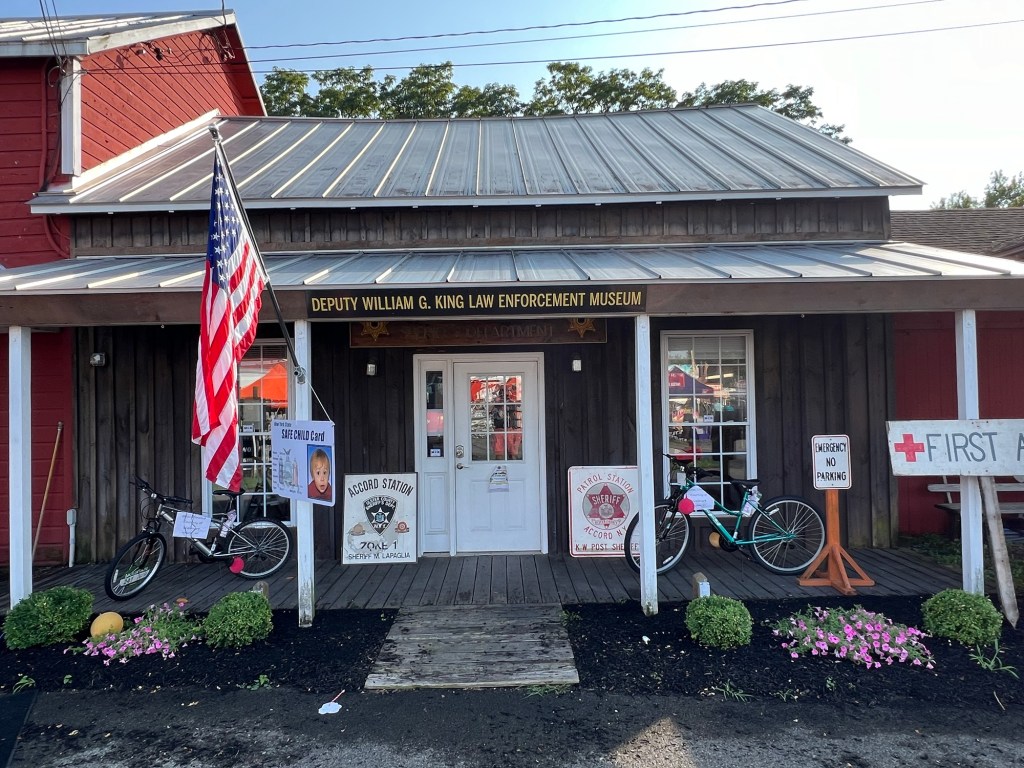
The Deputy William G. King Law Enforcement Museum is a small museum on the fairgrounds of Ulster County and is only open when the fairgrounds are open. The museum is manned by officers of the Sheriff’s Department. The museum houses the collection of retired Deputy William G. King law enforcement memorabilia.
The entrance to the museum
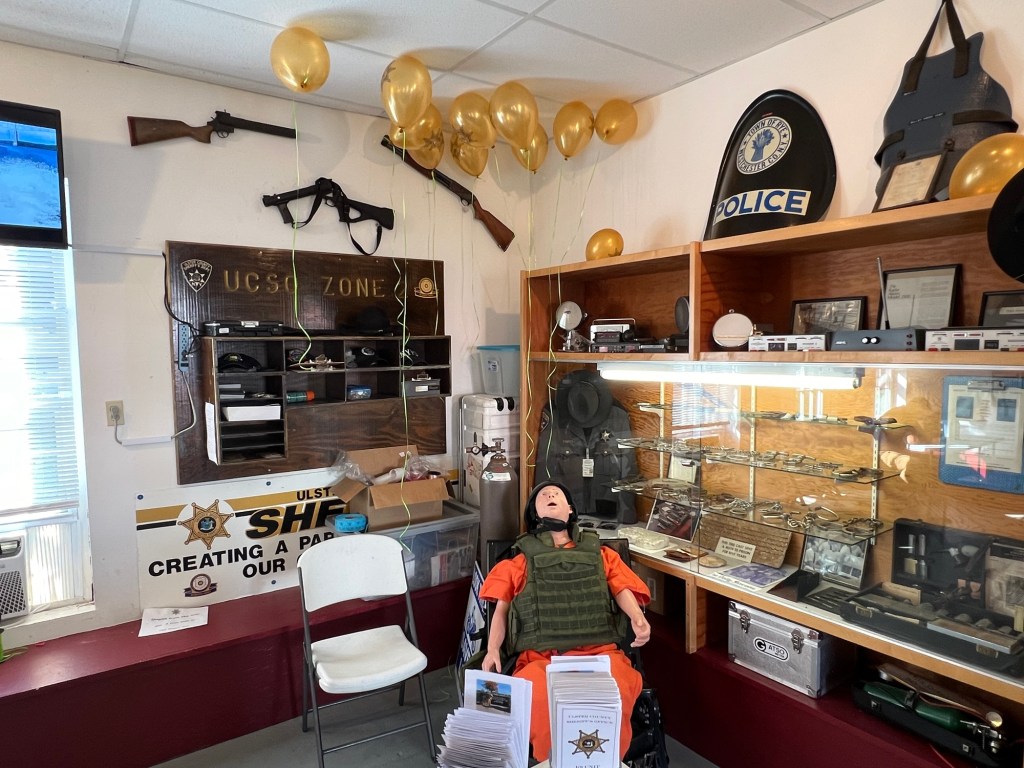
The collection includes a wide variety of guns, ammunition, equipment used on the job and riot gear.
The main gallery of the one room museum
The display cases house police department patches, pins for uniform, pictures of policemen and incidents. There is a collection of badges from various departments around the country.
A collection of awards and night sticks
What I found impressive was the collection of riot gear and equipment used on emergency calls. People do not understand the life of a police officer when duty calls and their perspective might be during a riot to protect people.
Riot gear, the gun collection and police equipment collections
The officer who manned the museum from the sheriff’s office was explaining how the equipment was used and how it has progressed in time.
Items from the Ulster County Sheriff’s Department
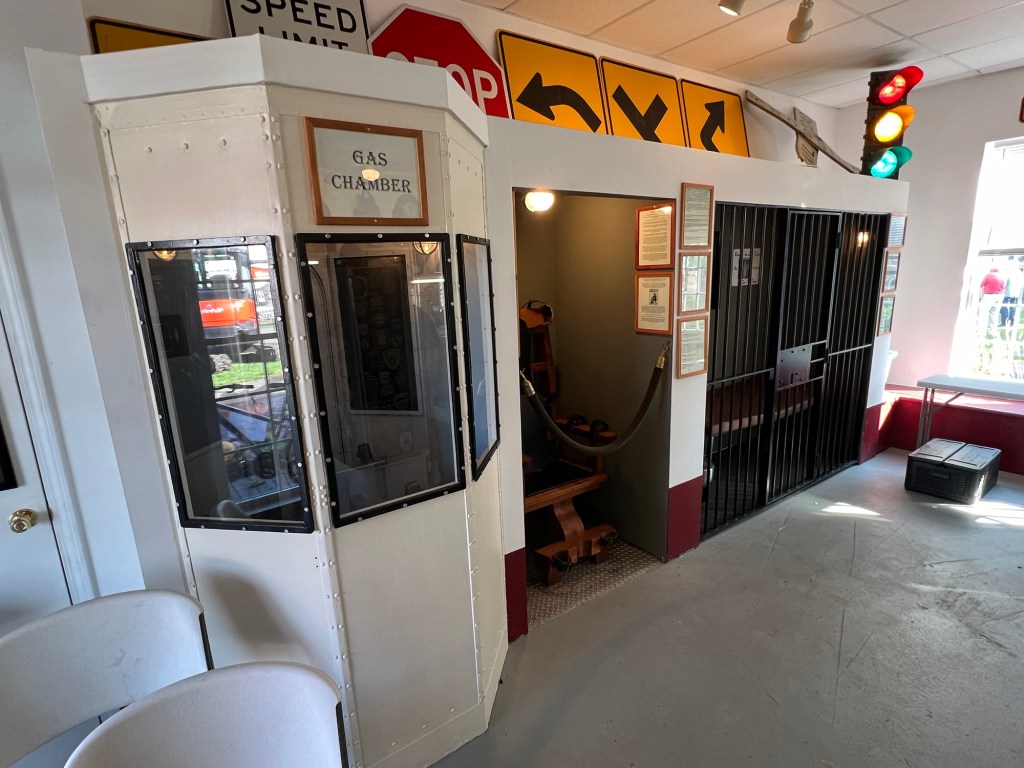
The museum also has a simulation of the New York State Gas Chamber, Electric Chair and the jails. I thought this was pretty interesting in that Capital punishment is still legal in New York State.
The display on Capital Punishment in New York State
A better view of the display
The Sheriff’s Department of Ulster County does a nice job maintaining and explaining all the items in the museum. They also make it less intimidating for children to approach a police officer when they need help. The museum is packed with information and the officers manning it could not have been nicer. Its just too bad that it is only open during the times the fairgrounds are open.
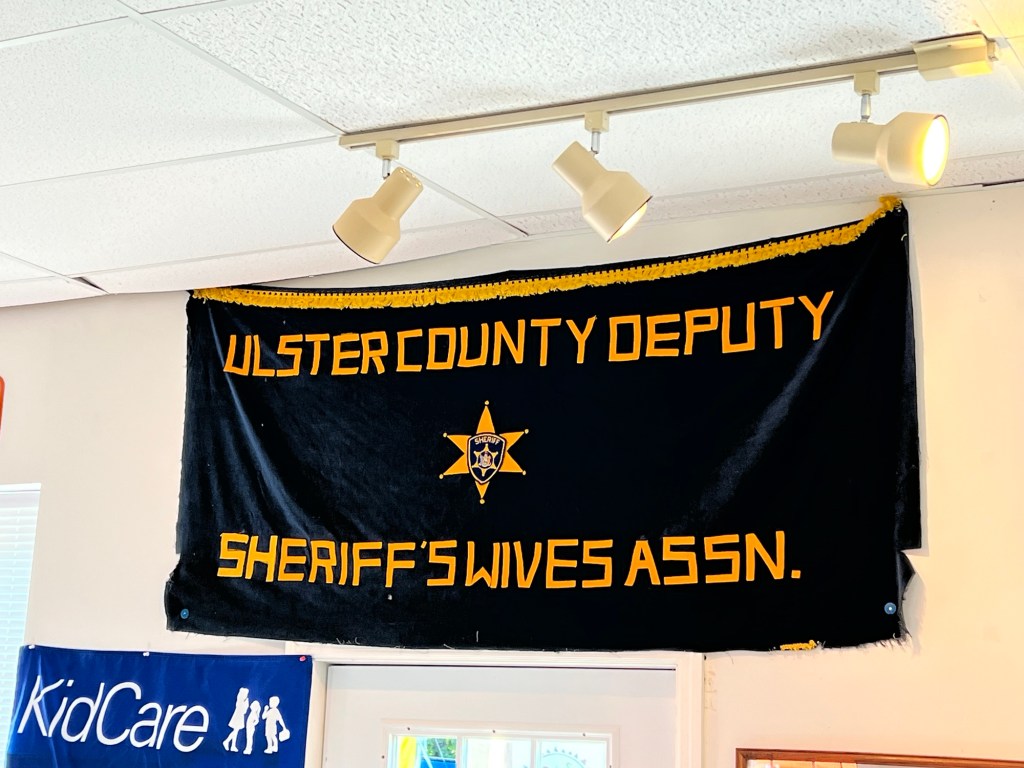
The banner from the Ulster County Deputy Sheriff’s Wives Association
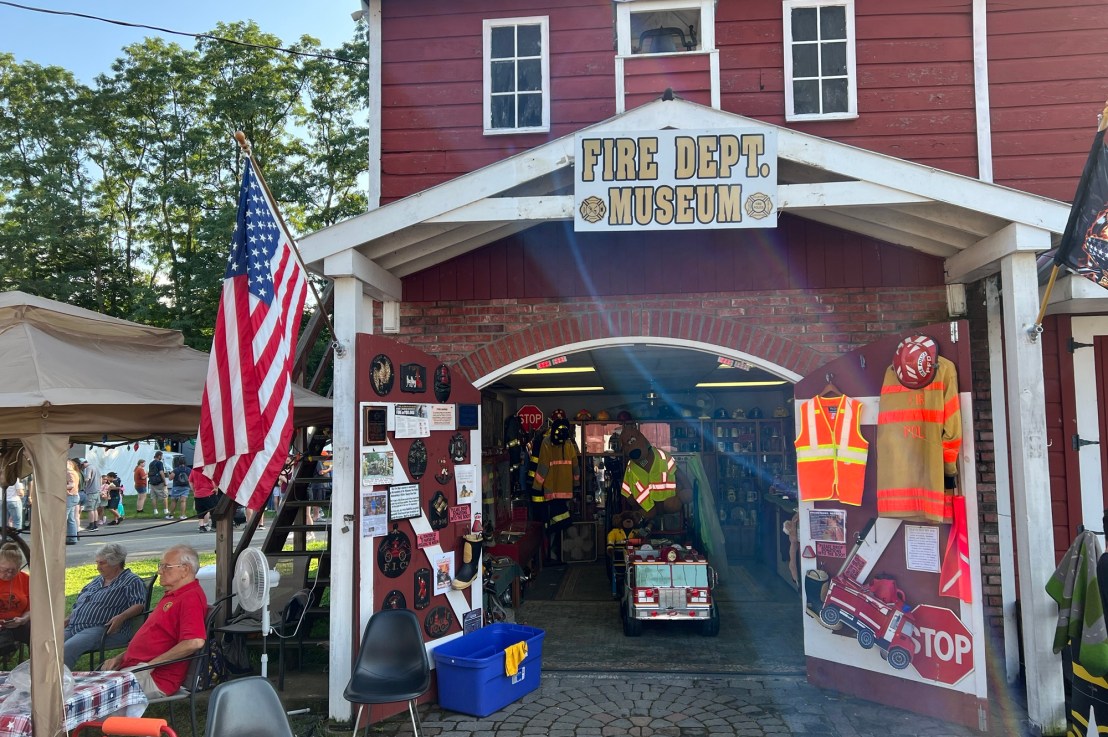
The Ulster County Fire Department Museum at the Ulster County Fairgrounds
The Ulster County Fire Department Museum is a unique little museum in that it is only open when the fairgrounds are open. It staffed by volunteers from Ulster County’s Volunteer Fire Departments. From the age of most of the volunteers, I could tell as a retired fireman, were all the guys whose firemen days at behind them. Still they are committed firefighters and have some good stories to tell.
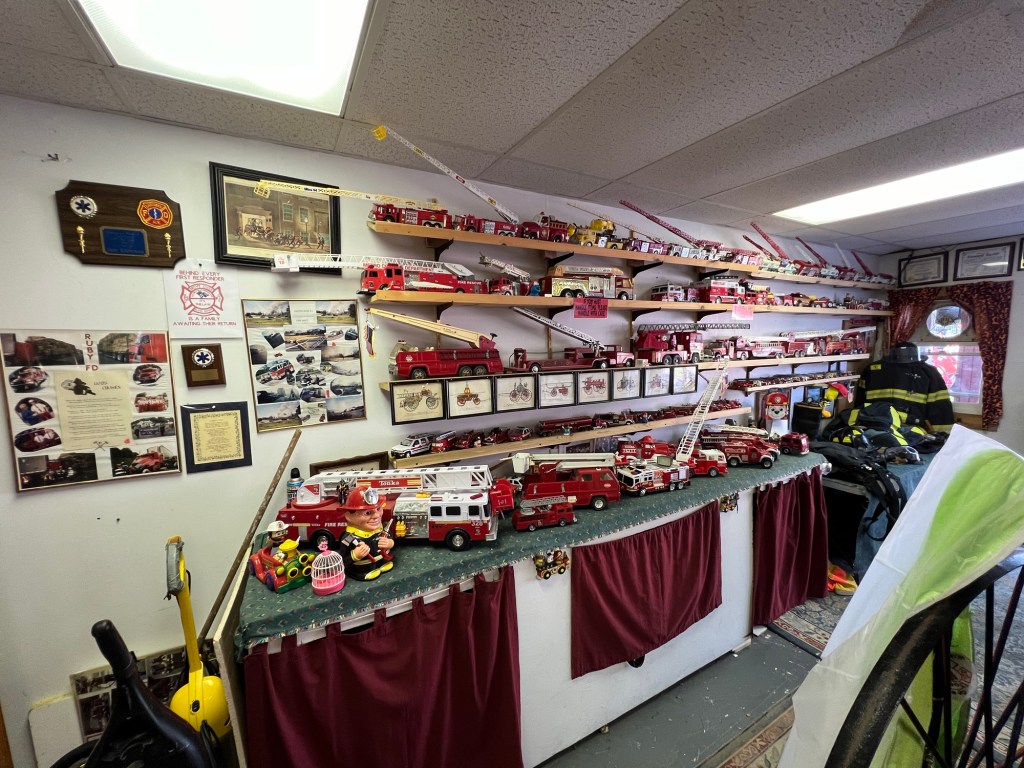
The inside of the museum
The museum is more of an exhibition than a museum but for a small museum it packed with all sorts of artifacts, fire fighting equipment and memorabilia on the early days of fire fighting.
The old fire department medallions that showed what fire department would come to your home because of the company fire insurance you paid to them.
Some of the older artifacts they had were these fire department medallions from the various fire companies that existed that people paid into to protect their homes. Those were the days when the companies used to compete to be the best.
The collection of patches and awards
The museum contained a large collection of awards, ribbons and patches from fire departments from all over the local area and beyond. The collection included ribbons from various competitions and conventions, company emblems and events over the years.
Fire fighter mugs from various departments and events
The museum has an extensive collection of commemorative mugs. These are sold or given by fire department and companies to mark anniversaries and special events. These mugs mark the special occasions in a fire fighters career. As a fireman I have also found that these pile up quickly in your cupboards.
Department mugs from various department events and from companies
The museum had an extensive collection of toy fire trucks and games on display. There were samples of these out in front of the museum for the kids to play with that day.
The collection of fire trucks on display
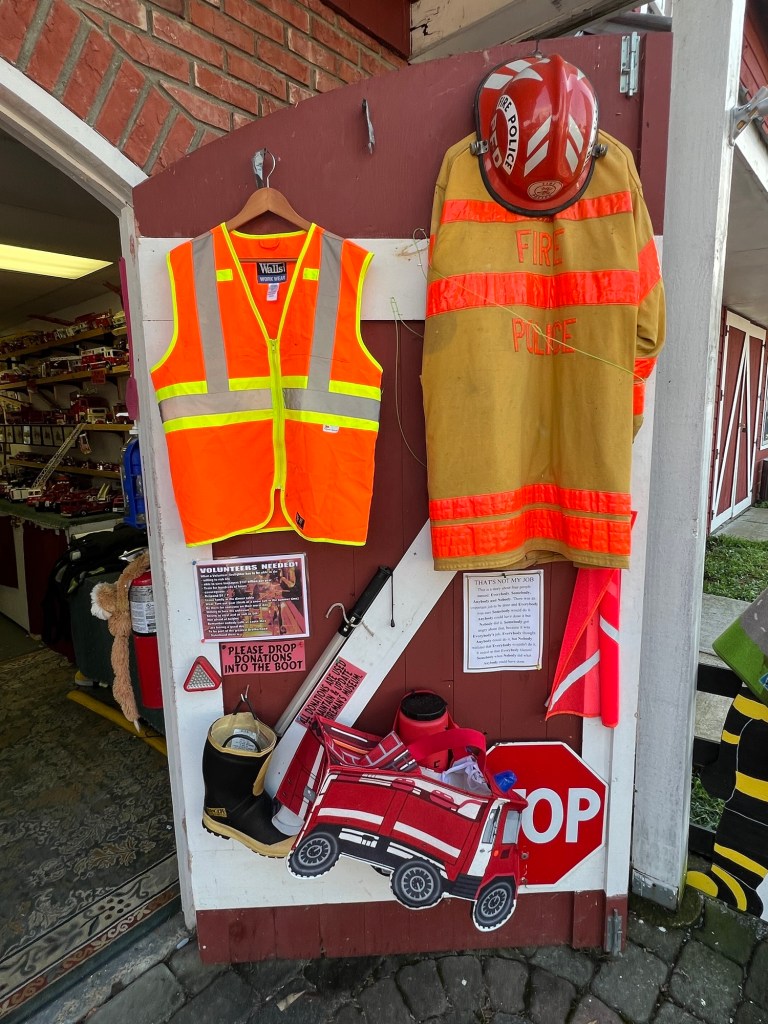
The museum put the bunker gear we firefighters use on calls. This protects us in the weather conditions as well.
The fire fighter bunker gear used on calls
The emergency gear we use on calls on roadways and incidents
I got to talking with the volunteer firemen from Ulster County and like most departments around the country, they are having problems finding volunteers to man the departments. It is a tough field and people don’t want to do it for free anymore. I figure like a lot of towns around us, the departments will be paid soon. That is the wave of the future.
Firefighter Scooby Doo protecting the museum
Still the firefighters from Ulster County do a nice job maintaining this museum. For a one room museum, it is packed by information and manned by firefighters who care about the profession.
The Putnam History Museum at 63 Chestnut Street in Cold Spring, NY.
Don’t underestimate the size of the this museum packed with interesting exhibitions and information. It is really a terrific local museum that tells the story of the local community. I was very impressed.
The Putnam History Museum sign on Route 9.
The Mission of the Museum:
(From the Museum website)
The mission of the Putnam History Museum is to collect, preserve, interpret, and present the history of Putnam County, Philipstown, the West Point Foundry, and the Hudson Highlands. Through exhibitions, programs, and events, the museum uses its collections to engage the community with the vibrant history of our region, and to foster greater understanding of the role it has played in the growth of our nation.
The Current Exhibitions:
December 2023:
Indigenous Peoples in Putnam County
This exhibition explores Lenape and Wappinger culture in Putnam County, with a special focus on the Woodland period when these cultures flourished in the Hudson Valley. In addition to sharing Lenape stories—past and present—the exhibition features important artifacts and replicas including stone tools, stone points, pottery sherds, and a dugout canoe.
The Indigenous Peoples Exhibition:
(Funded in part by the Community Foundations of the Hudson Valley, American Historical Association, and the Cold Spring Lions Club. Image courtesy of the Staten Island Museum).
This exhibition was interesting in that it explained the local tribe of Lenape Indians who lived in the area before the Dutch and the contribution that they made to the community and their history in the area. The day to day lives of the tribes was shown in the various displays from the way they fished and hunted in the community. The dug out canoe the museum found out recently was a reproduction of the original. For years the curator explained to me the museum thought it was the real thing. Very detailed and very interesting exhibition.
Locally found Arrowhead Collection
The history of Indigenous people in the Hudson River Valley.
History of the Lenape Indians
The reproduction of the Lenape Canoe on display.
West Point Foundry
There is a permanent Foundry exhibition on display at PHM. It includes photographs, artifacts, paintings, maps, and videos highlighting the Foundry related objects within the PHM collection, including a fully restored 10-pounder Parrott Rifle.
The Foundry Exhibition is a permanent exhibition in the museum.
The map of the former foundry’s in the area.
I never realized that the Town of Cold Springs, NY was such a productive foundry area between all the wars. Many ironworks dotted the community which is now an upscale community just outside New York City. The foundry’s created many items that helped the ‘war machine’ such as train parts and cannon balls along with many modes of transportation.
The Foundry exhibition.
The objects of the Foundry.
The various sizes of cannon balls created by the local foundry’s.
The Foundry Painting “Foundry”
The “Foundry” painting sign.
The West Point Foundry part of the exhibit.
The West Foundry sign of the exhibition.
The West Point Foundry during the war.
A Brief History of Julia Butterfield
Born in 1823, at age 18 Julia Lorillard Safford married Frederick James, a broker and banker in New York City. They lived on Fifth Avenue and in 1852 built a magnificent stone village house in Cold Spring that was named Cragside because it had been constructed on a hillside strewn with rocks. It was surrounded by elaborate gardens, lawns, orchards and fields, according to Trudie Grace, author of “Around Cold Spring”. Haldane High School now occupies the site of Cragside, and a gatehouse built in 1866 still stands at the foot of Cragside Drive as a private residence.
The Julia Butterfield Exhibition
Frederick James died in 1884. Two years later, Julia married Daniel Butterfield, a Civil War general who is credited with composing “Taps” and whose father co-founded American Express. He lived until 1901. When Julia died in 1913, her estate (was) estimated to be worth $3 million, or about $75 million today.
This permanent exhibition of a local woman who supported her community and deserves much respect and admiration for the contributions to Cold Springs showed her immense generosity. I wish there was more people like her in every community.
Bequests by Julia Butterfield in her 1913 will, with current values:
YMCA – $2.32 million ($62M) Julia L. Butterfield Memorial Hospital – $150K ($4.6M) Union College, Schenectady – $100K ($3M) Julia L. Butterfield Memorial Library – $60K ($1.85M) Home for the Relief of Respectable Aged Indigent Females – $20K ($616K) Association for the Aid of Crippled Children – $10K ($308K) St. Mary’s Episcopal Church (for parsonage) – $10K ($308K) Association of New York Day Nurseries – $5K ($154K)
The library, a Georgian Revival building, was constructed on the foundation of the old Dutch Reformed Church and dedicated in 1925. The hospital, finished the same year, was built, many believed, because one of Julia’s sons had died after a fall from a horse and she felt he might have survived if a hospital had been closer.
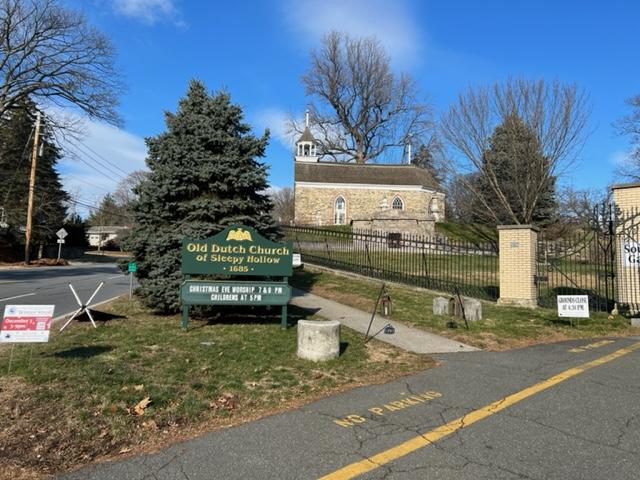
I love visiting the Old Dutch Reformed Church of Sleepy Hollow and its cemetery. The church itself is steeped in history but made famous by “The Legend of Sleepy Hollow” by Washington Erving, a local resident. The church was the inspiration for the book and to this day it is still celebrated during the Halloween season with Open Houses and storytelling. I have visited the church to hear storyteller Jonathan Kurk tell the story of Ichabod Crane and then at Christmas to hear “A Christmas Carol” by Charles Dickens. These are musts when you are visiting the church.
The Old Dutch Reformed Church of Sleepy Hollow
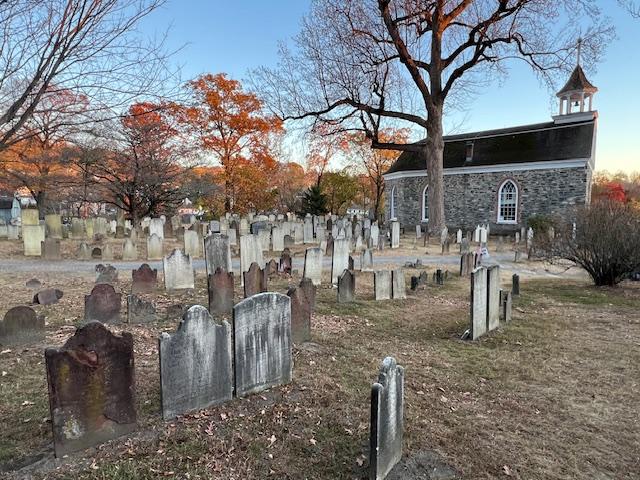
Though the cemetery stretches for miles it is the part by the church that is the most interesting. The tombstones are over 300 years old and some weather beaten to wear the tombstones are unknown. Still it has that classic look with faded cracked tombstones and large shade trees where you might think a ghost or ghoul would pop out. It is a classic Dutch Church cemetery of the Hudson Valley and I highly recommend the cemetery walking tour where you can visit the graves of many famous resident of the cemetery including Washington Irving. Whether the fall or the spring, it is fascinating to walking among the graves and just pay your respects to these people.
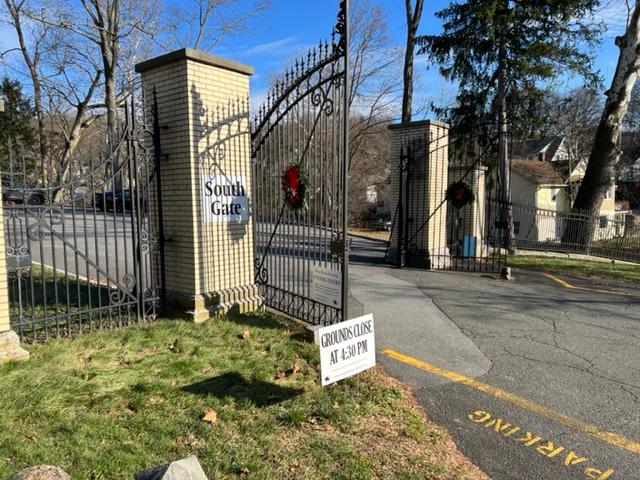
The gates leading to the cemetery
The Church that inspired a legend:
(From the Reformed Church website)
When Washington Irving set his ghost story about the Headless Horseman at the Old Dutch Church of Sleepy Hollow, he made the church world-famous. Ever since the publication of The Legend of Sleepy Hollow in 1819-20, visitors have come to see where Ichabod Crane led the choir and courted Katrina Van Tassel among the old gravestones in the churchyard and looked for the grave of the Headless Horseman in the Old Burying Ground.
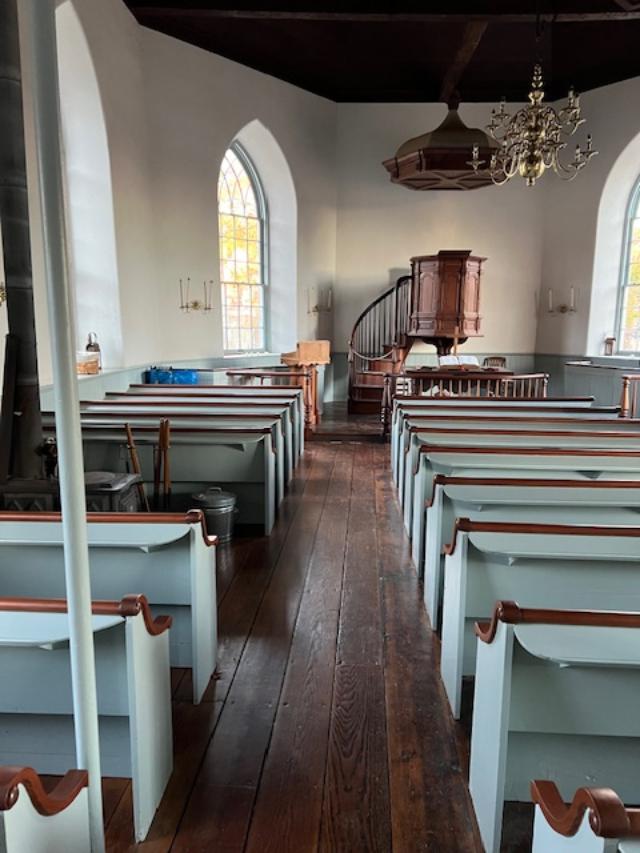
The inside pew of the church
The church was already old when Irving first saw it, when he was a teenager. It was built in 1685 and formally organized as Dutch Reformed in 1697. It served as the congregation’s home for more than 150 years, until a new building was constructed. Even then, it was retained for worship on summer Sundays and special holidays. This custom continues today.
The pews and pulpit inside the Old Dutch Reformed Church
This inscription on the bell that hangs in the belfry of the Old Dutch Church of Sleepy Hollow has been a comfort to the congregation through war and peace, personal joys and tragedies, since it was commissioned in Holland and installed in the belfry. Most historians date the church’s construction to 1685, the year engraved on the bell.
The back part of the pees
The church is recognized as the oldest extant church in New York and a National Historic Landmark. The Old Dutch Burying Ground, which surrounds it on three acres, is believed to predate the church. Washington Irving is buried just up the hill, in the Sleepy Hollow Cemetery adjacent.
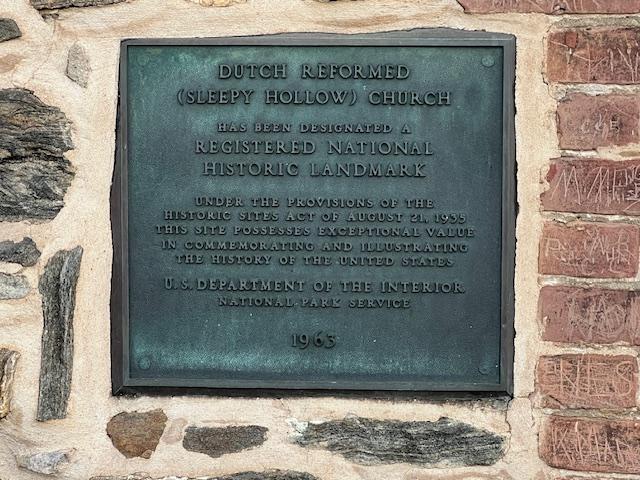
The historic marker
During Holy Week and Easter, the Reformed Church holds Good Friday services and an Easter Sunrise service at the Old Dutch Church. Summer worship services at Old Dutch feature “Seven Sundays of Worship and Music,” with guest musicians each Sunday morning during the season.
The Church’s historic marker
The History of the Church:
(from the church website)
The Reformed Church of the Tarrytowns in Tarrytown. NY , serves both Tarrytown and Sleepy Hollow, NY. It was constructed in 1837 as an extension of the Old Dutch Church of Sleepy Hollow to serve the Tarrytown community.
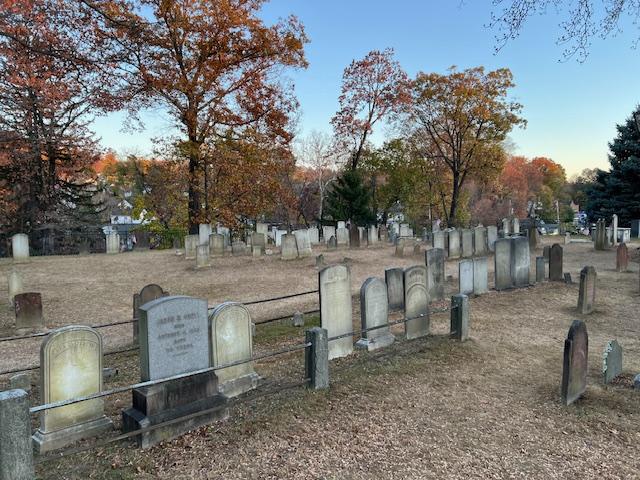
The graveyard by the church in the Fall of 2024
The new community of Dutch Reformed would have had its own Elders and and Deacons shared a minister with the Old Dutch Church of Sleepy Hollow. That church has a similar arrangement with the Dutch Reformed at Cortlandt Manor dating from 1697 when the Sleepy Hollow community was first recorded as established, though the structure had been completed in 1685 and the community had been there for long before. The Cortlandt Manor community had its own Elders and Deacons but recognized the community at Sleepy Hollow as its head, and regularly went down to the village for services and to record their births and marriages.
The oldest part of the graveyard near the church
The community at Tarrytown became independent from Sleepy Hollow in the 1850s and soon after dropped the “Dutch” association from its name. As the Sleepy Hollow community diminished and the Old Dutch Church of Sleepy Hollow became less used, the Tarrytown community adopted the name for their landmark church the Reformed Church of the Tarrytowns, adding that it was a “continuation of the Old Dutch Church of Sleepy Hollow.”
The family plots in the oldest part of the graveyard
Presenting an impressive façade on North Broadway, the structure’s steeple remains the highest point on North Broadway and the tallest physical structure in Tarrytown, despite not being built on the heights of the city. The church’s porch of four columns supporting an extended pediment offers a refined architectural addition to the business district of historic Tarrytown.
The Historic church and cemetery
The Church’s cemetery
The tree is so old that the tombstone is inside of the trunk
During my many visits to the church, I have heard Master Storyteller Johnathan Kruk perform and tell his stories of “The Headless Horseman” during Halloween and of “Scrooge” during Christmas time. Here are some of his videos of his performances.
Storyteller Jonathan Kruk singing the story of the ‘Headless Horseman”
The Church Marker
The famous bridge was once here
Master Storyteller Jonathan Kurk telling the story of the ‘Headless Horseman”. He is excellent!















 Visiting a Museum: The Unique, Unusual, Obscure and Historical