Category: Small Museums and Galleries in New Jersey

Old Broad Street Presbyterian Church & Cemetery                                                                 54 West Avenue                                                                              South Bridgeton, NJ 08302

Old Broad Street Presbyterian Church & Cemetery 54 West Avenue South Bridgeton, NJ 08302

Old Broad Street Presbyterian Church & Cemetery

54 West Avenue

South Bridgeton, NJ 08302

Check website

https://en.wikipedia.org/wiki/Old_Broad_Street_Presbyterian_Church_and_Cemetery

http://cumberlandnjart.org/cumberland-historic-sites/broad-st-presbyterian-church/

Open: From Dawn to Dusk every day

Admission: Free

My review on TripAdvisor:

https://www.tripadvisor.com/ShowUserReviews-g46324-d24140698-r844174571-Old_Broad_Street_Presbyterian_Church_Cemetery-Bridgeton_New_Jersey.html?m=19905

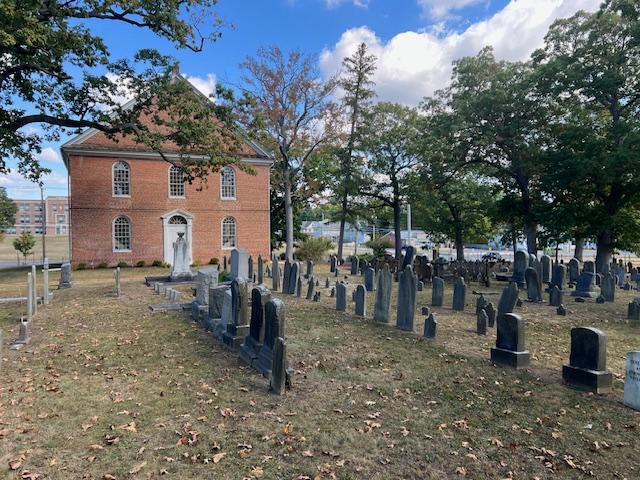
The Old Broad Street Presbyterian Church in its glory in the entrance to the historic cemetery

The Church and its historic cemetery.

When I was traveling to Salem and Cumberland Counties to visit historical sites, this was the last one on my list the first day of exploring. The Old Broad Street Presbyterian Church sits in the middle of a declining downtown in Bridgeton, NJ like a ghost of its former self. This graceful and elegant church is not used much anymore and sits like a majestic building overlooking a city that has passed it by.

The Church and its historic cemetery.

The church was built in 1792 for the growing Presbyterian congregation who was living in Bridgetown as it was called at the time. The brick walls and roof were completed but it would take another three years for the interior to be finished (Cumberland History.org).

The historic family cemetery

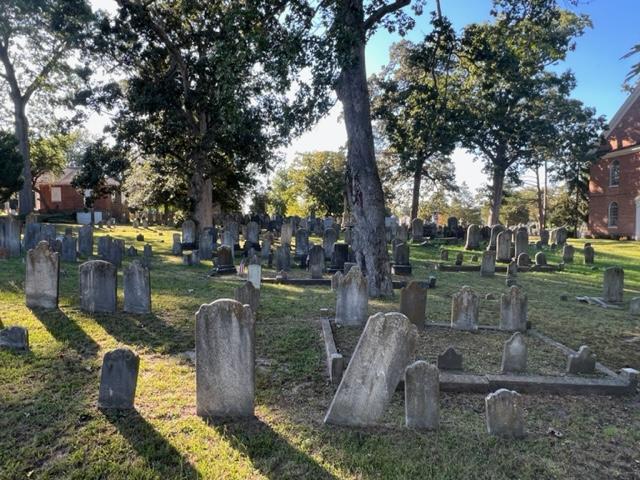
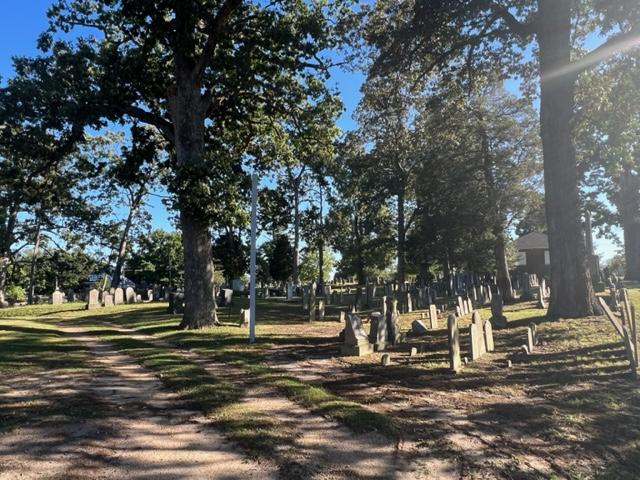
The cemetery is extremely interesting as you visit the historic tombstones and the family plots and try to figure out the connections. The biggest problem with the cemetery is that is has gotten very overgrown in parts of it. It needs a good mowing and the gravestones need to be cleaned as they are wearing away with the elements. It was hard to follow the historical listing but many famous residents and leaders of the community are buried here as well as members of the armed forces from the Revolutionary and Civil Wars and earlier.

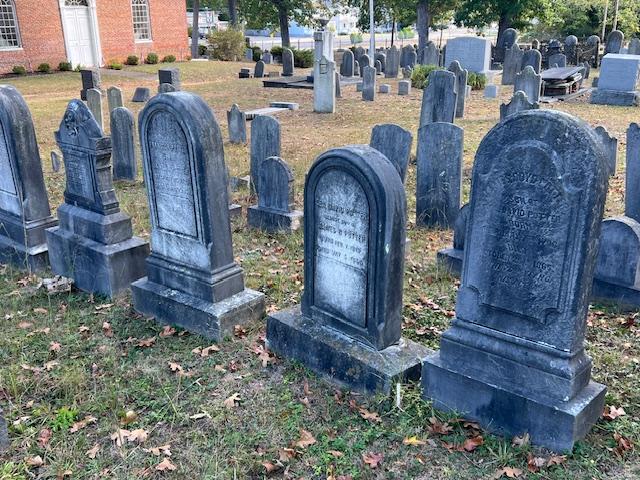
The family plots at the cemetery

In some cases, when the families were buried together, it almost told the story of what happened within the family. I saw grave sites where the son or daughter either died in child birth or a disease or in battle and then the devastated parents followed a few years later which was a sad narrative. I saw this many times in the family plots. How many children died of diseases that today are solved by a pill.

The family plots

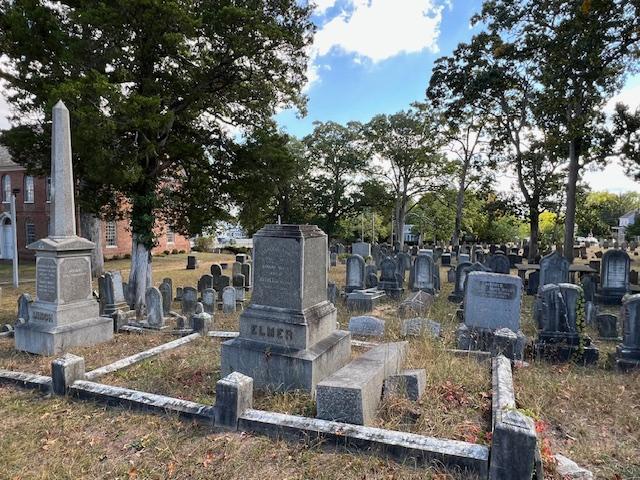
Some of the notable people buried in the cemetery are Ebenezer Elmer, who represented New Jersey in the United States House of Representatives from 1801-1807 and Jonathan Elmer, who represented New Jersey in the United States Senate from 1789-1791. Lucius Elmer, who represented New Jersey’s First congressional district from 1843-1845. Eilas Seeley, who was the Eleventh Governor of New Jersey serving in 1833. William G. Whiteley, who represented Delaware in the United States House of Representative from 1857 to 1861. Joseph Archibald Clark and Clement Waters Shoemaker, who were two of the founders of Cumberland Glass Manufacturing Company (Wiki).

The David Potter tomb

The history of the Broad Street Presbyterian Church and its cemetery:

(From Cumberland NJ Art.org)

For much of the 18th century in Bridgetown, which will eventually change its name to Bridgeton, there existed no church for Presbyterians, who were a large and growing segment of the local population. For church services, they were forced to conduct services in the Courthouse or travel to churches in Greenwich, Fairfield or Deerfield several miles away.

Family plots and crips

In 1792, about two acres of land were donated along King’s Highway, which was the main road from Bridgeton to Greenwich and ran along the south end of the church construction site. In 1800, this main route was relocated to the north and is today Broad Street (Route 49).

The cemetery grounds on a late summer afternoon.

The basic design of the Broad Street Presbyterian Church was set by it congregation and organizers who requested a masonry building with dimensions of at least forty by fifty feet. By December 1792, the brick walls and roof has been completed but it would take another three years for the interior to be finished.

The church in the early Fall of 2024

The design of the Broad Street Presbyterian Church is that of a meeting house, almost square in proportion. In the 17th and early 18th centuries, many American houses of worship were built in the meeting house form. This design was in contrast to the more formal churches of the period, which were more rectangular than square with an alter and/or communion table and pulpit approached by a long nave and often divided from the congregation by a railing. Broad Street Presbyterian Church has a tall pulpit, accessed by a winding stair and surrounded on three sides by pews so as many congregations as possible could attend and sit as close as possible to the preacher.

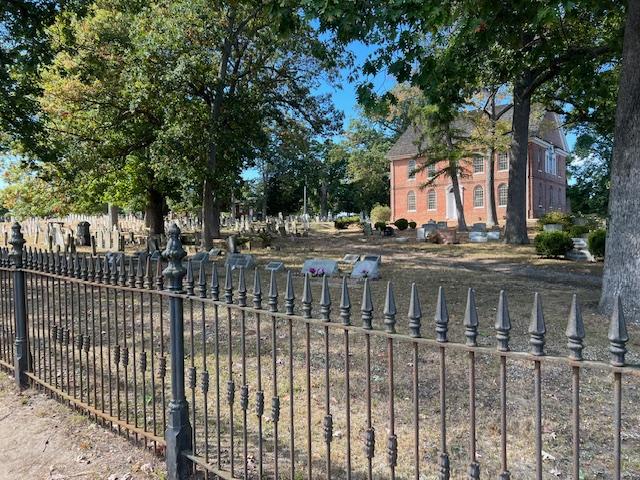
The beautifully designed church behind the fence

Above the pulpit is one of the most significant architectural features of the church, the Palladian window with its central window and semicircular arch flanked on each side by smaller windows and all unified by an entablature supported by columns. The name “Palladian” comes from the Venetian architect who originated the design, Andrea Palladio, who worked in 16th century.

The Elmer Family plot

Architects in the 17th and 18th centuries would travel from other parts of Europe to Italy to study architecture and they brought the Palladian style back to England and the American Colonies. Thomas Jefferson acquired an intense appreciation of Palladian architecture and used it extensively in his design for Monticello.

By 1835, the congregation had erected a new church but because the Broad Street church was surrounded by the cemetery, the congregation did not abandon or sell it but rather maintained it exactly as they left it, which is why today it is identified as one of the most pristine and unaltered examples of 18th century church architecture in the United States.

Today the Broad Street Presbyterian Church is used for special services and opened to the pubic by appointment. It is carefully maintained by the Presbyterian congregation of First Presbyterian Church located on Commerce Street in Bridgeton, NJ.

The graveyard is fascinating

Alan E. Carman Museum of Prehistory                                        1461 Bridgeton Road                               Greenwich, NJ 08323

Alan E. Carman Museum of Prehistory 1461 Bridgeton Road Greenwich, NJ 08323

Alan E. Carman Museum of Prehistory

1461 Bridgeton Road

Greenwich, NJ 08323

(856) 455-8141

Click to access prehistorical.pdf

Admission: Free

Open: Sunday 12:00pm-4:00pm/Monday-Friday Closed/Saturday 12:00pm-4:00pm/Seasonal April-mid-December/Closed on holidays.

My review on TripAdvisor:

https://www.tripadvisor.com/ShowUserReviews-g46477-d24137081-r844512521-Alan_E_Carman_Museum_Of_Prehistory-Greenwich_New_Jersey.html?m=19905

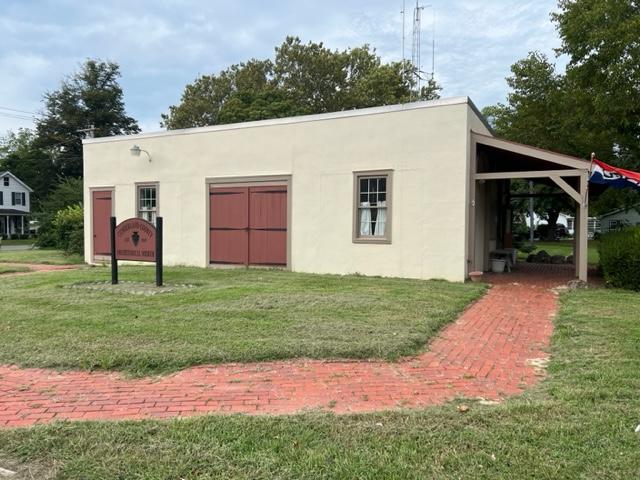
The front of the museum

I stopped in at the Museum of Prehistory after a tour of several other historical sites in the area and this little museum is packed with interesting artifacts.

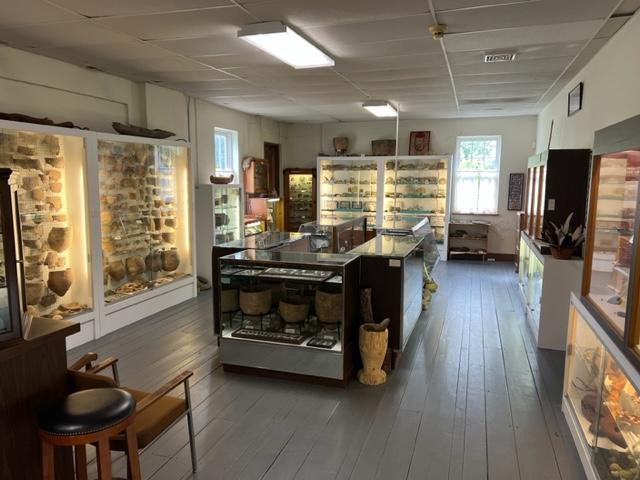
The main gallery

One section was dedicated to the Lenape Indians who lived in the area. There were many artifacts such as arrow heads, spears, pottery and an assortment of fishing and cooking materials. The Native Americans had an interesting system of living that adapted to nature. They developed a sophisticated system of living that was mobile and came with them as they moved around during the seasons.

There is an extensive fossil collection that includes trilobites, shark teeth, crabs, lobsters and they even had a footprint of a dinosaur. What I thought was interesting was the dinosaur eggs (they were not found locally).

Each case is dedicated to subject matter and the whole museum can be seen in less than an hour.

History of the Alan E. Carman Museum of Prehistory:

The Museum was dedicated in 1997, the museum was established to house the Native American artifacts and prehistoric fossils collected by Alan Ewing Carman. Carman was an avocational archaeologist who spent 58 plus years collecting, excavating and researching Native American artifacts from southern New Jersey.

The Alan E. Carman biography

Since Carmen’s original gift to the Society, the museum has acquired a variety of artifacts and specimens from different donors that have enhanced the collection’s research and educational potential. The museum has been and continues to be a valuable resource for archaeologists, paleontologists, students, tour groups and the general public. Come visit our collections to learn more about southern New Jersey’s storied past or to use our extensive research materials.

The Dinosaur bones

Dinosaur bones and eggs at the museum.

To enter the museum is to enter the world of the Native American ancestors that lived in the lower Delaware Valley. The Museum of Prehistory displays an incredible assortment of ancient artifacts and even older fossils that speak to this region’s fascinating prehistory.

The wonderful pottery collection of Native Americans.

Pottery and cooking items of Native Americans.

Our Mission:

(from the museum pamphlet)

The mission of the Cumberland County Historical Society is to preserve and promote the history and heritage of the county through acquisitions, collections, exhibits, research, educational programs and publications for the benefit of current and future generations.

Arrowheads and fishing artifacts.

The Alan Ewing Carman Museum of Prehistory supports this mission through the collection, preservation, interpretation and exhibition of pre-Contact period Native American artifacts from southern New Jersey. The museum serves as an institute for public education and a resource for archaeological research.

About the Collections:

(from the museum pamphlet)

The Native American artifacts were primarily acquired and donated by avocational archaeologist Alan Ewing Carman. Later donations have helped bolster this incredible collection of artifacts that all came from Southern New Jersey. To this day, the collection serves as an excellent resource for public education and academic research.

Six-Hundred-year-old dog bones.

The museum features a recreated burial of a mother dog and her two puppies that were lovingly interred about 800 years ago (museum website).

This video was on the history of Prehistory of the Lenape Indians:

The History of the Museum:

(From the museum pamphlet):

To visit the museum is to enter the world of the Indians who inhabited the lower Delaware Valley. At the end of the last Ice Age, the Paleo (Clovis) Indians were the first primitive people to penetrate this region. Many subsequent Indian cultures followed in their wake, leaving physical evidence of their passing in the earth’s archives. This salvaged evidence exhibited in the form of stone and bone artifacts, pottery and native crafts. When combined, they illustrate the evolution of the Indian societies who occupied southern New Jersey.

A major attraction to the Indians in this sector of the state was fossiliferious stone named “Cohansey Quartzite”. It was mined in the Vinicius of Greenwich, NJ. Other stone materials such as flint, jasper, thyolite and argillite were imported into the area and their mining locations are identified.

The Indians Fire making kits, manufacturing of pottery, use of gourds and flaking techniques, all make an interesting study of native crafts. Bone and shell remains salvaged from refuse pits depict their food sources. Of special interest, is the 800 year old mother dog and her two puppies which were unearthed near Swainton, NJ.

The Indians who inhabited Southern New Jersey at the time of the European contact were the Lenape, pronounced “Len-bop-pay”. Today they are known as the Delaware. Anthropologists have identified over 44 sub-divisions of the Lenape people who inhabited their ancestral homeland (Lenapehoking).

In the southern part of New Jersey, the little Siconese occupied the land along the Cohansey River; the Sewapose, the Maurice River and the Alloways, the Salem Creek and its tributaries. As a visitor enters the Museum, a map of Cumberland County pinpoints 115 areas of occupation which define population levels in Prehistoric times.

Of special interest to the children are over 1000 fossils from four time periods of the earth’s geological development. Extinct trilobites, whale and porpoise vertebrae, crabs, lobsters, squid, mollusks, sting rays and giant shark teeth fill the special display case. Also a foot print in the stone of a bird like dinosaur call a “ Grallator”.

All of these were found in New Jersey, Delaware, Maryland and Virginia. They illustrate a fascinating array of land and marine life which once roamed the earth’s primordial landscape. In addition, a cluster of 87 million year old Dinosaur eggs, a fossilized Snake egg and Turtle egg were donated in 2005. Ribs and remains of extinct reptiles fascinate and delight children on school tours. A wide assortment of publications are available to the public regarding the Indian’s culture and the study of fossils.

Hancock House State Historic Site                                              3 Front Street                                                                 Hancocks Bridge, NJ 08038

Hancock House State Historic Site 3 Front Street Hancocks Bridge, NJ 08038

Hancock House State Historic Site

3 Front Street

Hancocks Bridge, NJ 08038

(856) 935-4373

https://nj.gov/dep/parksandforests/historic/hancockhouse.html

https://www.facebook.com/FOHHNJ/

https://en.wikipedia.org/wiki/Hancock_House_(Lower_Alloways_Creek_Township,_New_Jersey)

Open: Sunday 1:00pm-4:00pm/Monday-Tuesday Closed/Wednesday-Saturday 10:00am-12:00pm/1:00pm-4:00pm

Admission: Free but donation suggested

My review on TripAdvisor:

https://www.tripadvisor.com/Attraction_Review-g46491-d14113448-Reviews-Hancock_House-Hancocks_Bridge_New_Jersey.html

The Hancock House

I took an extensive tour one weekend of historical sites of southern New Jersey to see how the lower part of the state was impacted by the Revolutionary War and one of the most important sites was the Hancock House. The family was extremely prominent not just in Salem, NJ but in New Jersey politics as well.

The Hancock House and grounds during the early Fall 2022

The house once stood on an very busy road between Salem and Bridgeton and where most commerce passed by. When I was taking the tour, you could see that the house was built in two parts. When I was listening to the lecture I found that the side of the house that faced the road had once been a leased space for a tavern.

The tavern section of the house that faces the road

This commercial enterprise brought in income for the family. Later on when the Hancock family sold the house in the early 1800’s, they sold it to the tavern keeper. After he and his family sold the house, it went on to various owners before the State of New Jersey bought it in the 1930’s.

Recreation of the Tavern section of the house

A copy of the old menu at the Tavern

There are no family heirlooms in the house and while some of the rooms have period pieces and are decorated to show how the family might have lived at the time as well as how the tavern functioned, many rooms in the house needed some direction on what they wanted to say about living at the time. There needed to be more artifacts to complete the look of the room.

The Downstairs at the Hancock House:

The example of the main bedroom downstairs was used for business as well. The room was furnished with period furniture.

The downstairs bedroom at the Hancock House. The built in shelves are the only thing from the Hancock family

The Kitchen area was set for dinner and functioned as the Dining Room as well,

The kitchen set for lunch

The kitchen area for entertaining

The old kitchen at the Hancock House

The Dining Room at the Hancock House:

The Living Room

The Living Room at the Hancock House

The Gallery at the Hancock House with artifacts from the era.

The Gallery at the Hancock House

The Upstairs at the Hancock House:

The upstairs bedrooms were an example of that. One of the rooms was fully furnished to look like a period bedroom while the other had a mish-mosh of decorations and furniture. There needed to be more to capture the time period of the house.

The upstairs bedroom is the only one furnished upstairs

Still, the house was steeped in history and it was fascinating to hear what the tour guide said about the goings on during the war years to the family. Many of the rooms also could have used a good plastering and painting to bring them back to life.

When I visited the Hancock House in October of 2022, they were having a Halloween festival with pumpkin patches, face painting, watching the film “The Legend of Sleepy Hallow” by Disney films. The kids were engaged with all sorts of activities and there would be Trick or Treating on Halloween day.

Halloween festivities at the Hancock House

The pumpkin patch at the Hancock House for Halloween

Halloween festivities at the Hancock House

History of The Hancock House:

(from The Hancock House Pamphlet)

The story of the Hancock House begins in 1675 when John Fenwick, a lawyer and Quaker from England, arrived in West Jersey (now Salem Country), With land purchased two years earlier, he established the first permanent English Settlement here, called “Fenwick’s Colony,” and founded the town of Salem. Eager to populate the area with skilled, industrious individuals, he advertised the area’s assets by stating, “if there be any terrestrial “Canaan” ’tis surely here, where the Land floweth with Milk and Honey.”

The Hancock House sits on property that was purchased from John Fenwick in 1675 by William Hancock, an English showmaker. Upon his death, the property passed to his wife and then to his nephew, John Hancock.

John’s inheritance of approximately 500 acres made him a major landholder in Fenwick’s Colony. he contributed to the development of the area by building a bridge across Alloways Creek in 1708. Now known as “Hancocks Bridge,” it permitted passage on an important highway between Salem and Greenwich and gave the settlement its name.

The site of the Hancock Bridge

When John Hancock died in 1709, he left his property to his son William. William became a Justice of the Peace for Salem County and served in the Colonial Assembly for 20 years.

The site of the historic Hancock Bridge

In 1734, William and his wife, Sarah built the Hancock House. Their initials (WHS) and the construction date (1734) can be seen in the brickwork on the house’s west elevation.

Upon his death in 1762, William left his house to his son, William who succeeded him in the Assembly and became His Majesty’s Judge of the County Court for the County of Salem. It was this William who figured in the massacre of March 1778.

The Hancock House remained in the family until 1931, although the extent to which the house was used as a private residence and the property farmed is uncertain. There is evidence to suggest a section of the house was leased for a tavern during the 18th & 19th centuries.

A recreation of the old Tavern section of the home

The State of New Jersey acquired the Hancock House for $4,000 in 1931 and opened it as a museum in 1932.

The Smoke House at the Hancock House property:

The Historic Significance of the house:

Historic Marker at the Hancock House

The Architectural Significance:

The Hancock House earned a place in history on the fateful day in March 1778.

The Hancock House

Yet the story of its architecture also is important. With its distinctive patterned and wall brickwork, simple lines and little ornamentation, it reflects the building traditions of the Quaker’s English Homeland.

The land around the Hancock House

Other elements of this architectural style include Flemish bond brickwork; a pent-roof that wraps around the front and back of the house; simple entrance steps; interior paneling and the use of such local materials as Wistarburg glass.

The Hancock House

The Hancock House property:

Day Forty-Three: Touring the historic homes and museums of Bergen County during ‘The Sixth Annual Northwest Bergen History Coalition’ History Day                                                          May 14, 2016

Day Forty-Three: Touring the historic homes and museums of Bergen County during ‘The Sixth Annual Northwest Bergen History Coalition’ History Day May 14, 2016

Exploring Historic Bergen County is very interesting.

Don’t miss this event when it comes up every two years.

jwatrel's avatarmywalkinmanhattan

The Northwest Bergen History Coalition
6th Annual History Day
Theme: ‘Spreading the News: Rail, Mail & the Press in Days Gone By’

BC History Coalition

Special Exhibitions at each Museum

Come discover how we communicated when letter were left at the local inn, when postcards were our ‘twitter feed’ and the operator listened to all our calls on the party line. See how mail was delivered by train and what our local newspapers were like in 1900.

I took a day out of touring in the city to tour my own county, Bergen County, New Jersey is rich in Revolutionary, Civil and WWI &II history yet we still have a big link to our Colonial past in each town in Bergen County.

The unfortunate part of this tour is that it only covers a small portion of the county and it was hard to get to all of the sites in one day…

View original post 3,476 more words