Category: Small Museums and Galleries in New Jersey

The Museum of Cape May County                      504 US. 9                                                             Cape May Court House, NJ 08210

The Museum of Cape May County 504 US. 9 Cape May Court House, NJ 08210

The Museum of Cape May County

504 US 9

Cape May Court House, NJ 08210

(609) 465-3535

https://www.cmcmuseum.org/

https://www.facebook.com/Museumofcmc/

Hours: Seasonal Hours Sunday-Monday-Tuesday/Wednesday 10:00am-2:30pm/Thursday Closed/Friday 10:00am-2:30pm/Saturday Closed. Tours are at 10:00am and 12:00pm.

Admission: Donations Accepted/ (I paid $5.00 for the hour tour)

My review on TripAdvisor:

https://www.tripadvisor.com/Attraction_Review-g46342-d286393-Reviews-The_Museum_of_Cape_May_County-Cape_May_Court_House_Middle_Township_Cape_May_County_.html

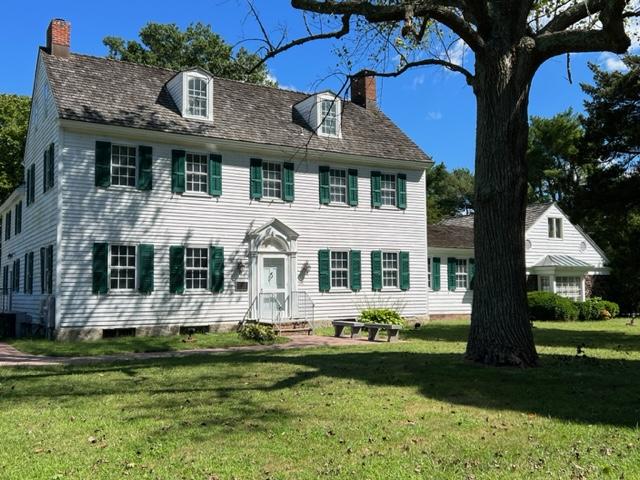
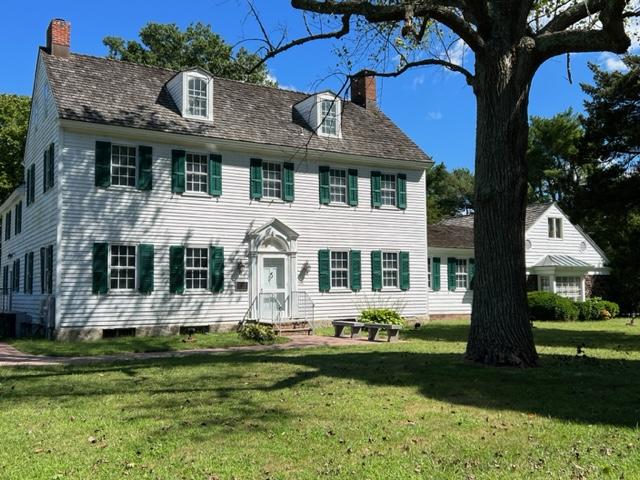
The Museum of Cape May County at 504 US 9

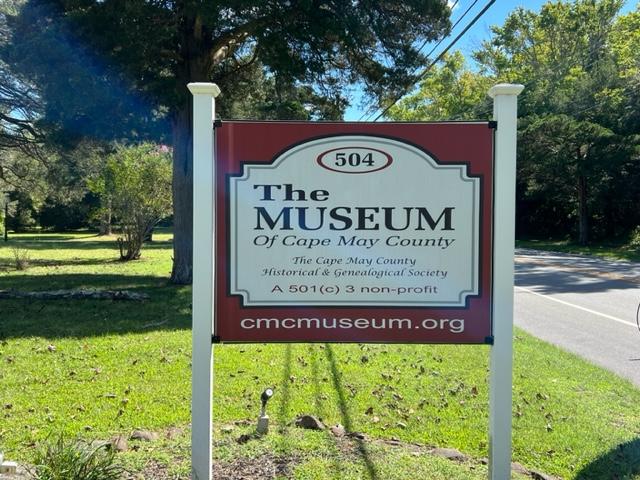
The Museum of Cape May County sign welcoming you.

The Museum of Cape May Country museum complex

The Museum grounds in the back.

After three years of trying to visit the museum, I finally got on a last minute walking tour of the Museum of Cape May County and have to say that it was well worth the wait. What an interesting set of buildings that have a fascinating set of artifacts and so nicely displayed in a series of buildings.

The museum campus is broken up in a series of buildings on a two acre site. There is the main office which has an art exhibition, the family homestead of the family, who lived here for several generations, the carriage house which displays several carriages and stage coaches that were used in the area.

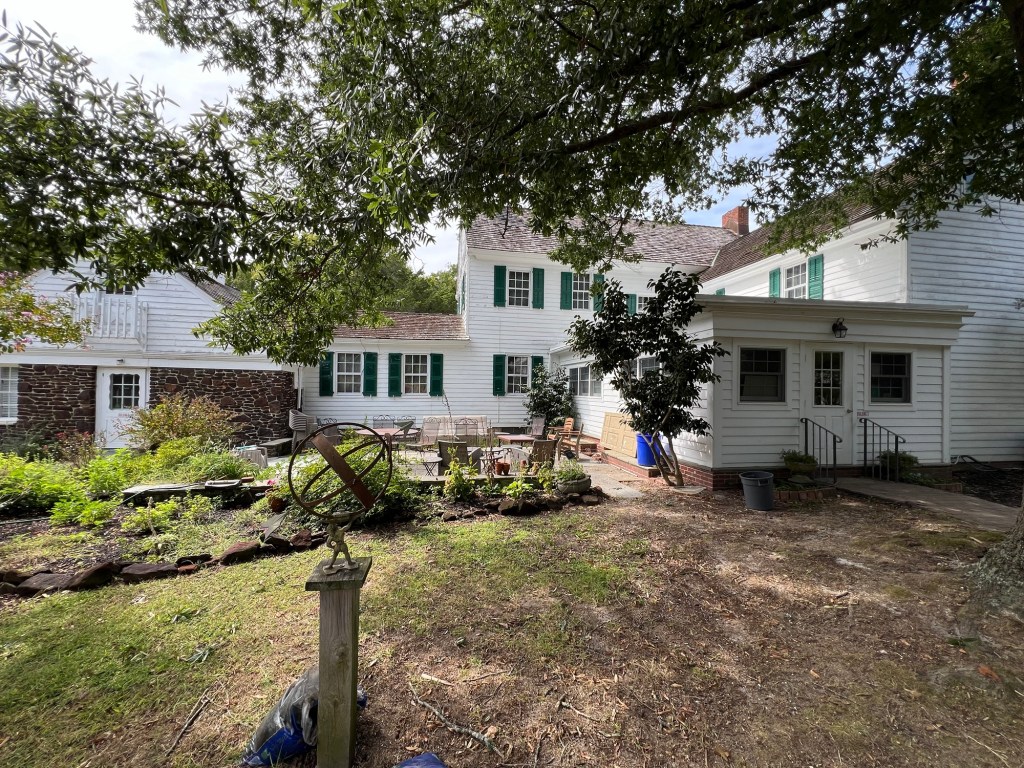
The back of the main house where you can see the three additions to the house

The barn where the Military, Native American and Farming displays are showcased

The Carriage House is to the left and the barn is to the right

The Carriage House on the property

The History of the House and of the Cape May County Museum site:

(from the museum website)

Housed in a building that dates back to 1704, the Cresse House, and its 1830 Holmes addition, as well as a historic 1780 barn and carriage house have rooms devoted to a subject or time that will hold you spellbound as you make your way through the past. The 11 room Cresse Holmes house treats you to a glimpse of life as it was in Cape May County from colonial to modern times. From the 1704 colonial kitchen and loft bedroom to the Victorian dining and sitting rooms all are decorated and furnished with period pieces. Special exhibit rooms include a children’s playroom teeming with toys, a doctor’s room with instruments, glassware and vials filled with a colorful array of pharmaceuticals and a Victorian music room with dozens of fascinating players and instruments (Cape May County Museum website).

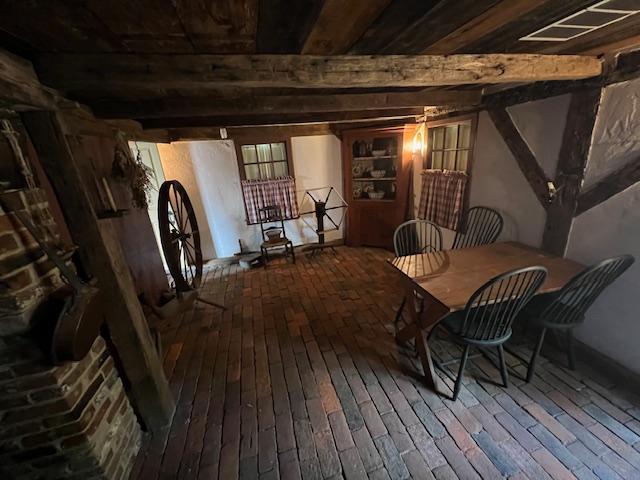
Our first part of the tour was the family home which had been lived in for generations. The first part of the house was built in 1740 and you could tell by the open hearth and the flooring.

The hearth of the original section of the Cresse home

The kitchen was set up and furnished as the main part of the house. Because of the heat, this was the main part of the house that habituated. Here the family would gather, eat and socialize.

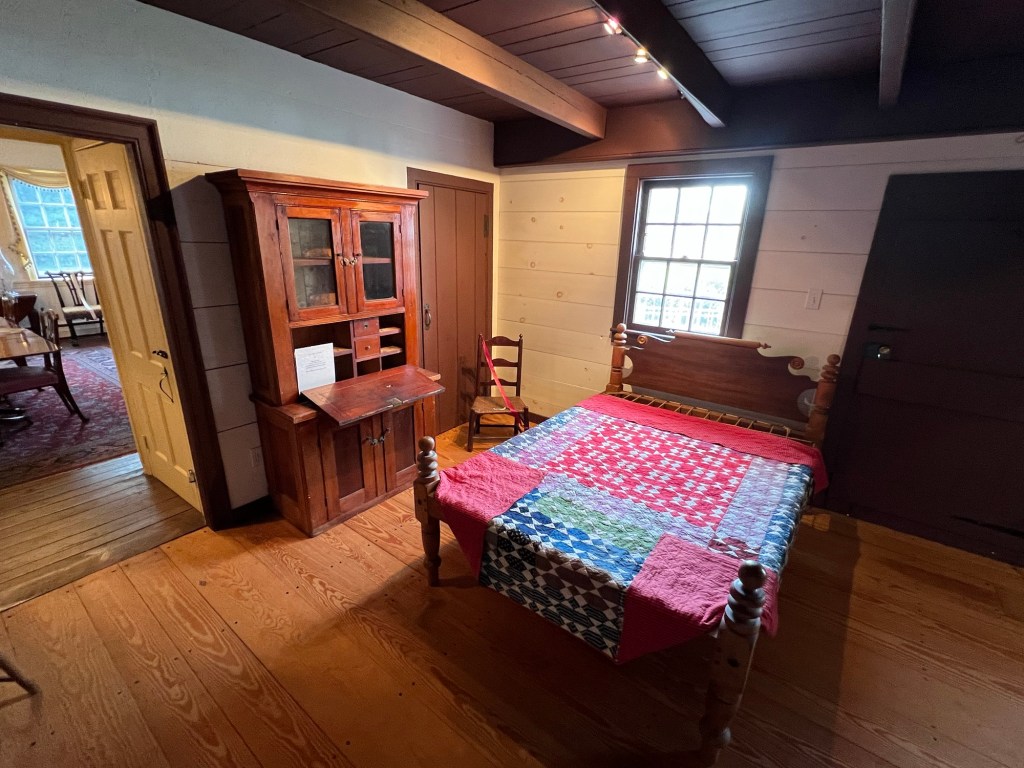
The back bedroom shows the families affluence in the late 1700’s

Having a separate room for sleeping was considered quite extravagant. The heat would circulated through the home and warmed this room next door. The main part of the house was built in 1840 in the Federalist design.

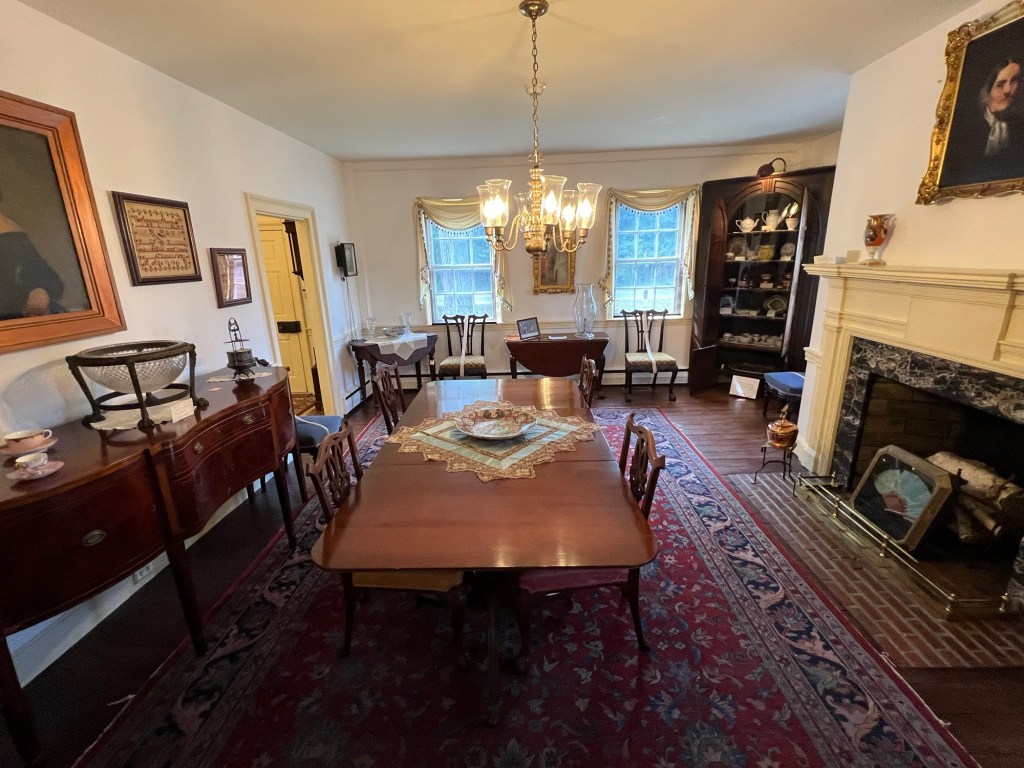
The main dining room showed the affluence of the Holmes family in the early pre-Civil war era

The main part of the house that faced the road was the 1840 Holmes family addition with the Federalist design. This part of the house was the main part house that was used for every day living and entertaining. The house was furnished in a combination of family heirlooms and donated period pieces..

The house well furnished with period pieces

The beautiful side table of the Dining Room

Both the Living Room, Dining Room and the Parlor were all tastefully furnished and what I thought were interesting parts of their collection. It was like someone had just left the room.

The Parlor of a Victorian house held its finest pieces

The furnishings in the Parlor

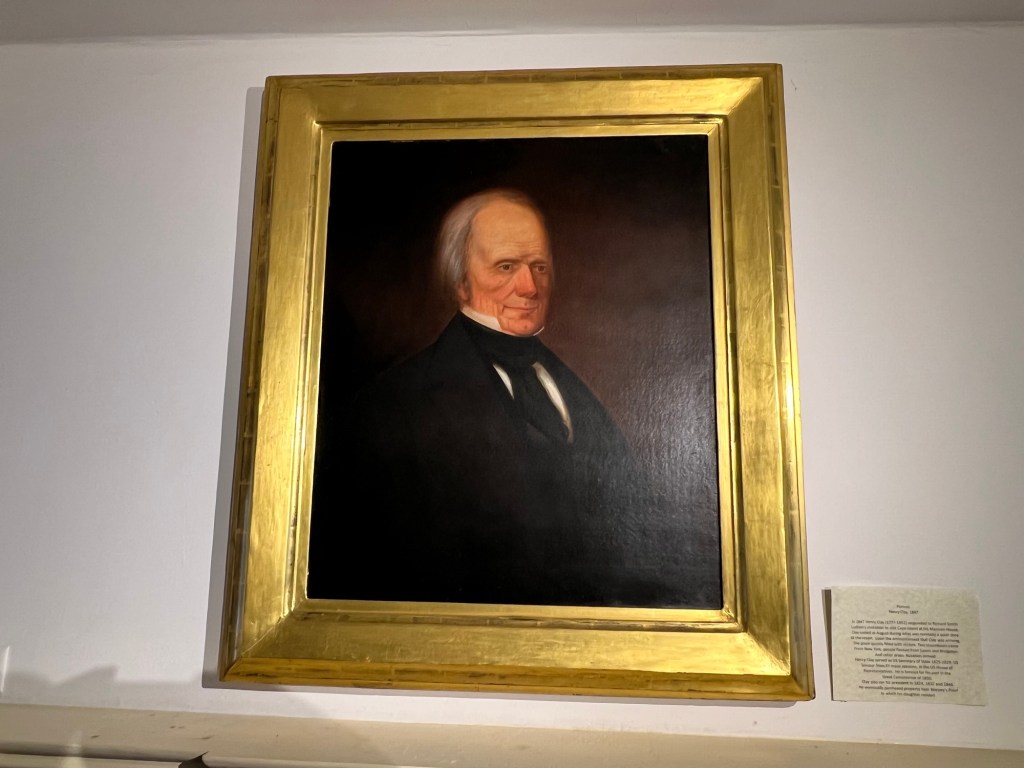
The painting of Henry Clay stood above the fireplace

Since I joined the tour late, I had seen just the first floor of the home before we continued on to see the rest of the building.

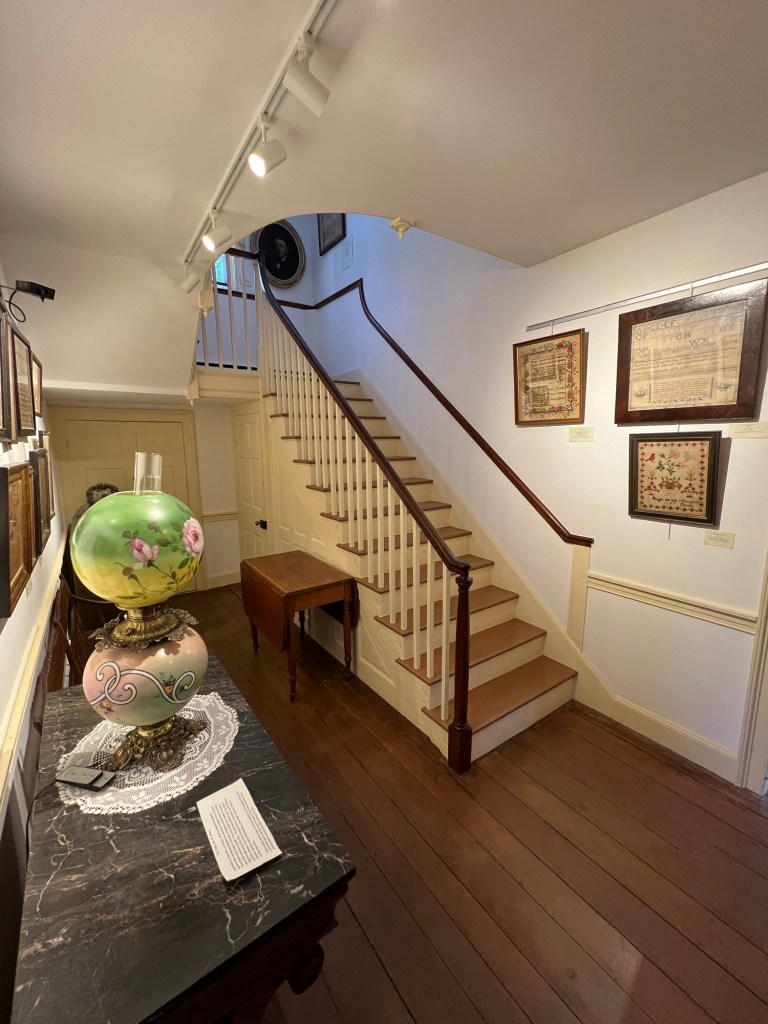
The front entrance room of the house

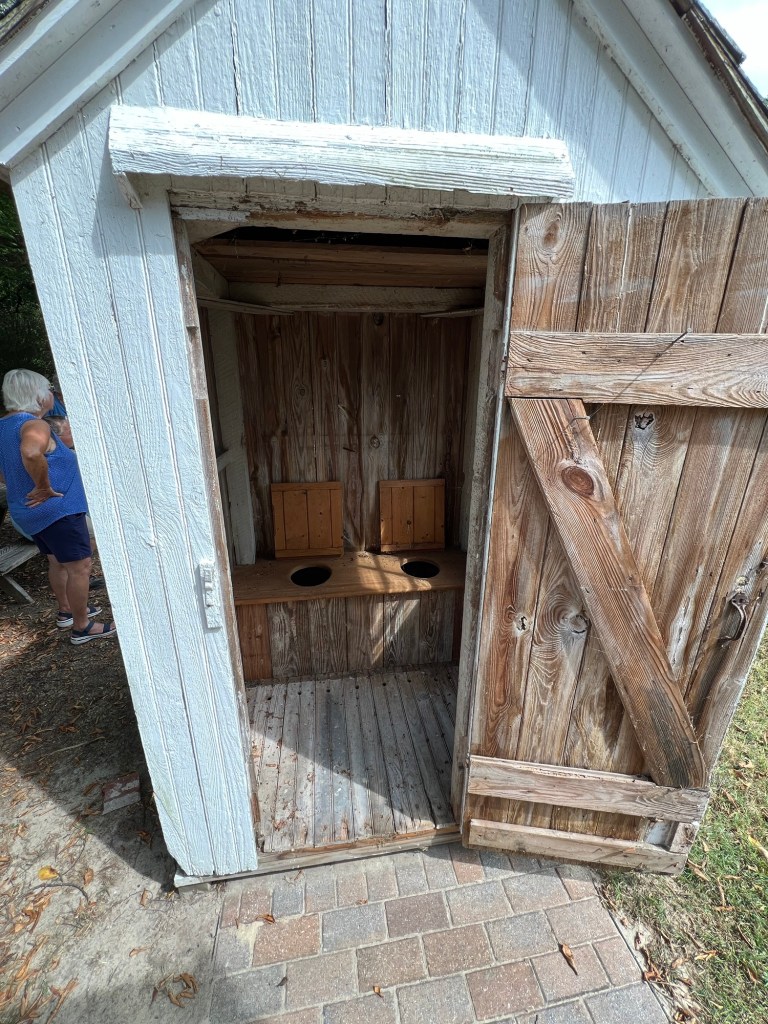
As we exited the house, we moved on to the most important room of the house, the outhouse which was located behind the main home.

The outhouse in the back of the home

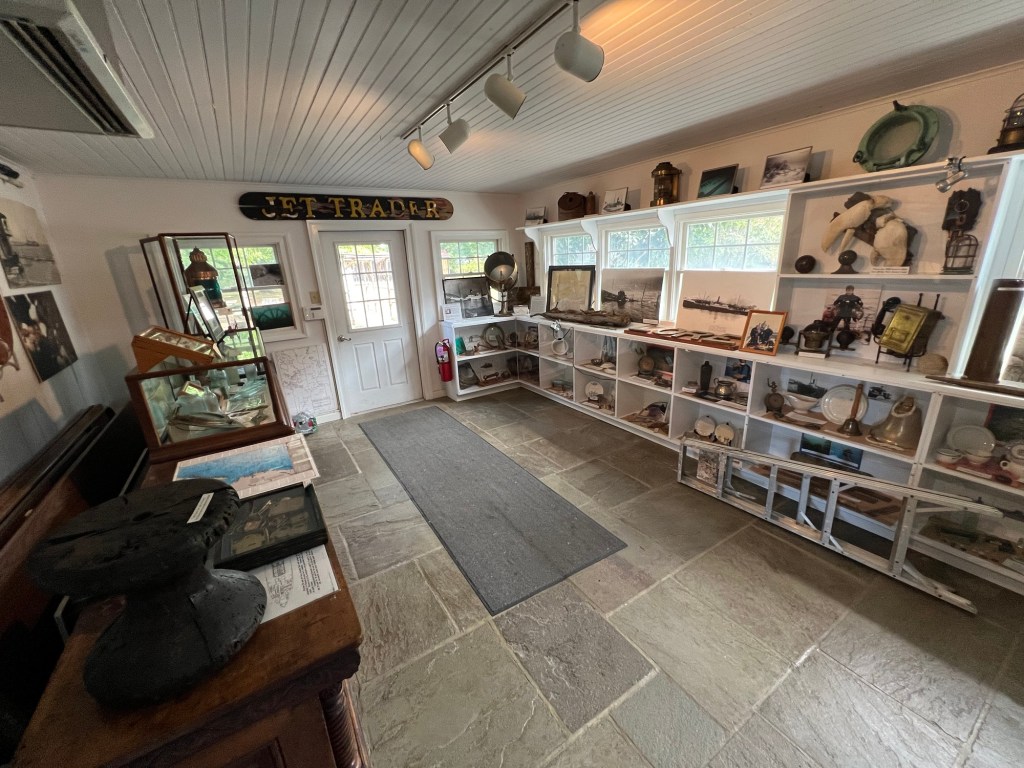
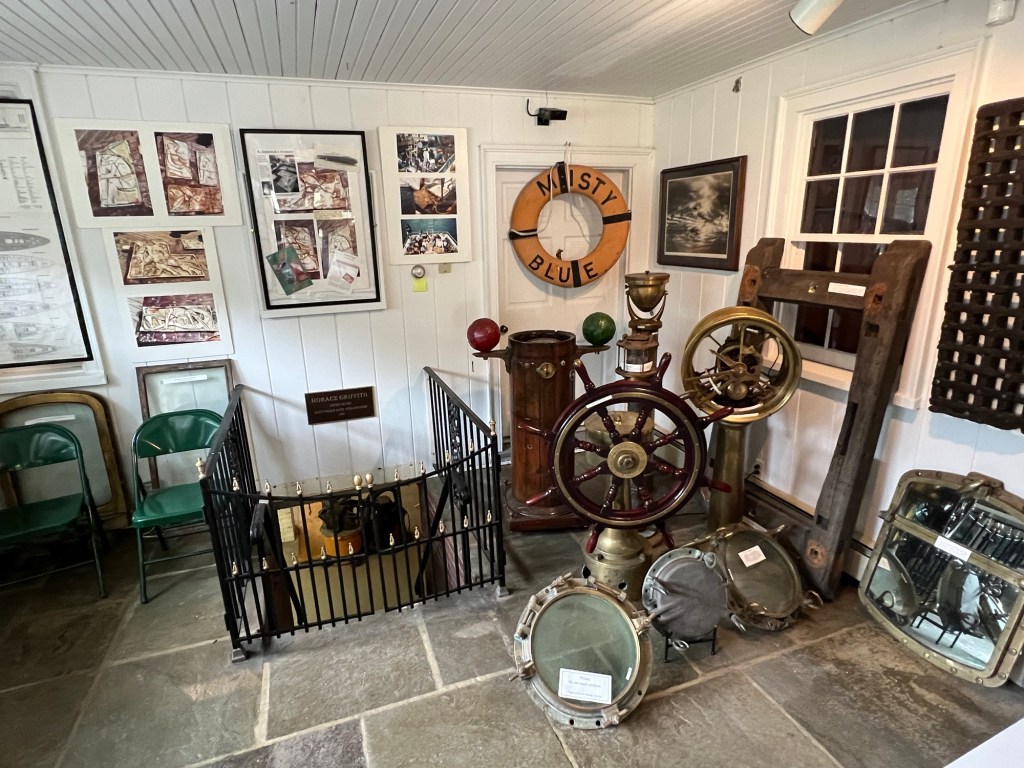
We next moved on to one of the galleries of the Nautical collections.

The collection of nautical artifacts

Mantel’s for navigation

Items from the shipping industry

What beautiful items

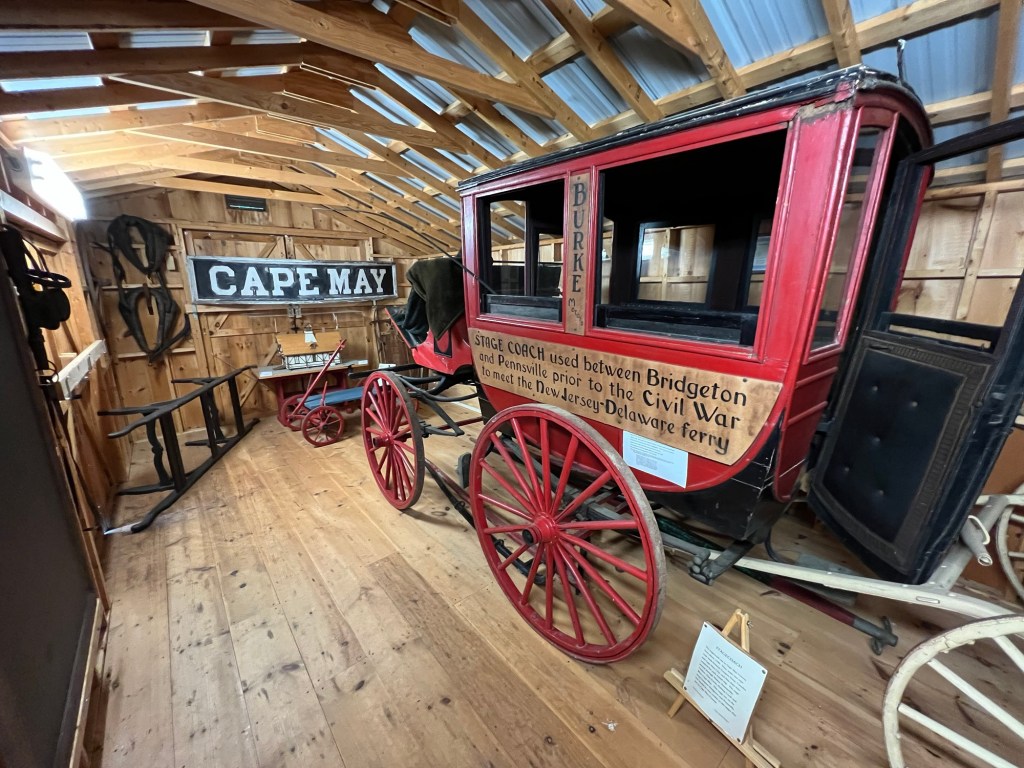
Our next part of the tour was of the Carriage House and its collection of buggies and carriages owned by by local residents.

The Barn and Carriage exhibits:

(from the Cape May County Museum website)

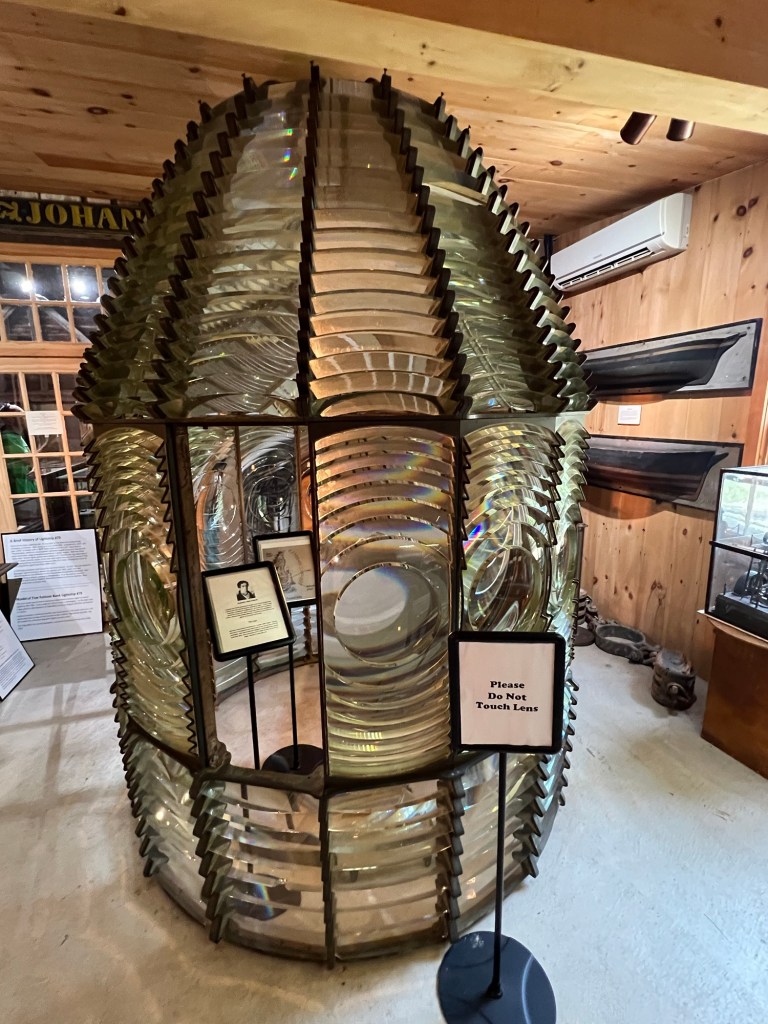
Our barn is home to a maritime exhibit including Cape May County’s crown jewel, the original first-order Fresnel lens from Cape May Light House. In addition to our collection of farm implements the barn is also the site of our recently dedicated military room that pays homage to those who served our nation in time of war.

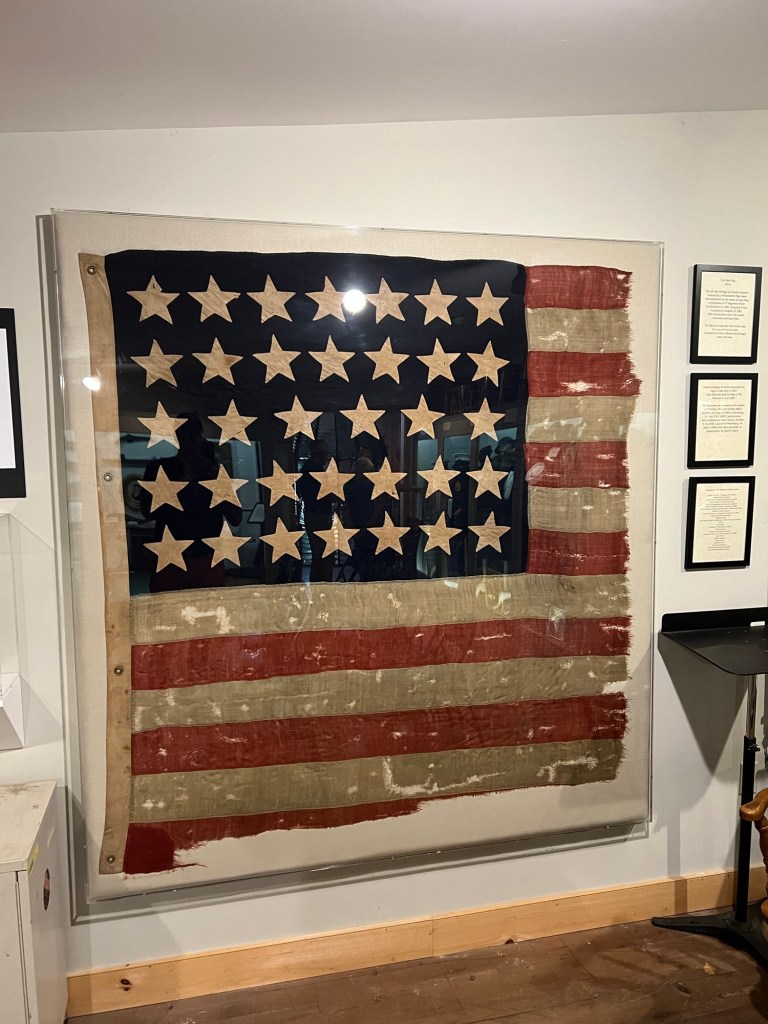
Period pieces range from the Revolutionary War to our country’s most recent involvement in Iraq and Afghanistan.  Of special interest is the American flag that was carried by soldiers who hailed from Cape May County during the Civil War. The flag survived numerous battles, including Gettysburg, Spotsylvania, Bull Run and was at Lee’s surrender at Appomattox. The Carriage Shed houses items related to transportation – a vintage horse-drawn market wagon, a doctor’s sulky and an early stagecoach that ran between Bridgeton and Pennsville (from the museum website).

The collection of carriages and buggies

A local buggy from a member of the community

The history of the Cape May Stagecoach

The Cape May Stagecoach

This stagecoach was used on the route between Bridgeton and Pennsville

The funeral cart used to transport bodies once people die to their last destination

The last building on the museum’s property housed military artifacts, farm equipment and artifacts from what would shape the local community

The Maritime History of Cape May and of the Museum:

(from the museum website)

Since its earliest days the area we now call Cape May County has been linked to the water.  With the tumultuous Atlantic Ocean on one side, the Delaware Bay on the other and lush forest and field between it served its residents well.  Early Native Americans thrived, whalers found whales in the ocean and refuge in the bay. All worked the shores and tributaries for birds and shellfish.  As the population grew, shipbuilding and coastal trade took on greater importance.  Come visit us and explore this aspect of our museum (from the museum website).

Many of the artifacts, photographs and manuscripts associated with maritime activities have found their way our museum collection.  From the original first-order Fresnel lens that sat atop the Cape May light to whaling implements, marine skeletons, ship parts and Native American exhibits there is something for everyone.  Of special interest is our recently acquired Cresse Journal, an original manuscript by Lewis Cresse detailing the life of a whaler in the mid-eighteenth century (from the museum website)

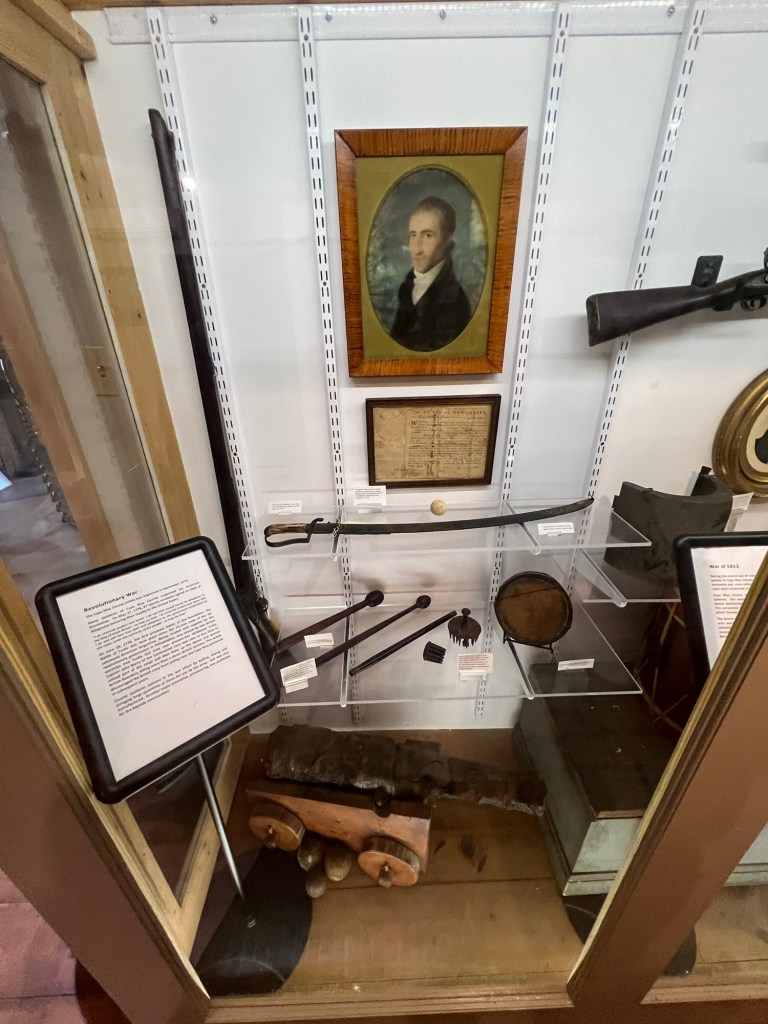
Hunting and military items from around the turn of the last century

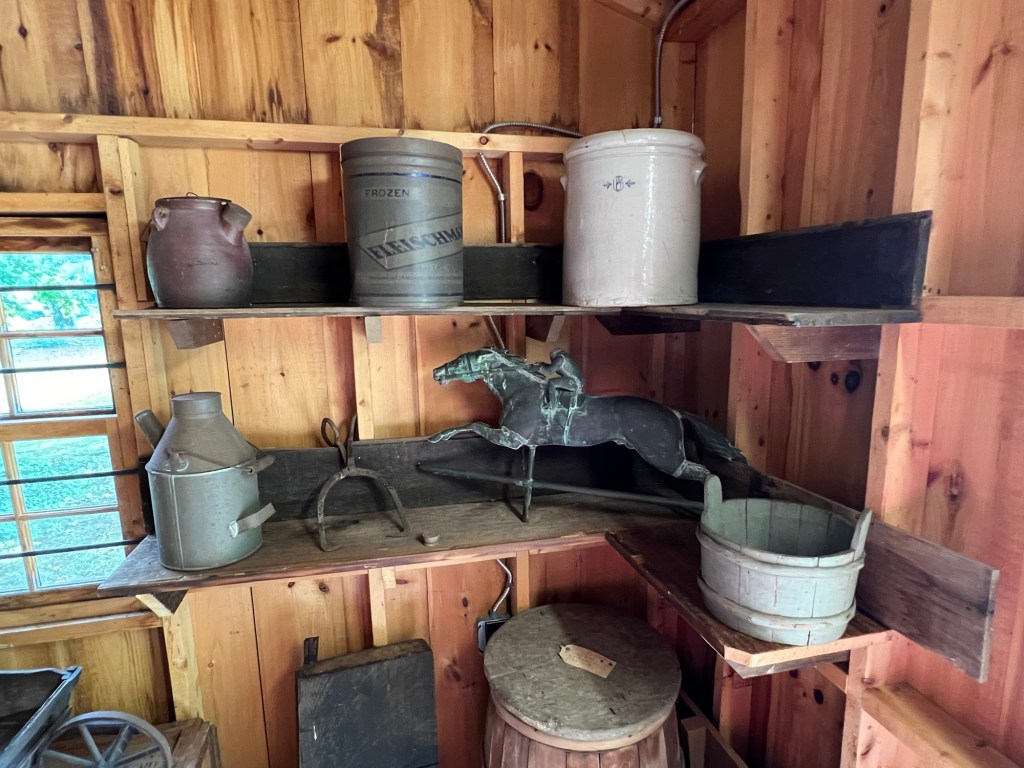
Household and farming items

Artifacts from the Shipping industry

Artifacts from the Counties Ship Building past

Items from the Whaling Industry in Cape May

The museum also houses the original Cape May Lighthouse light

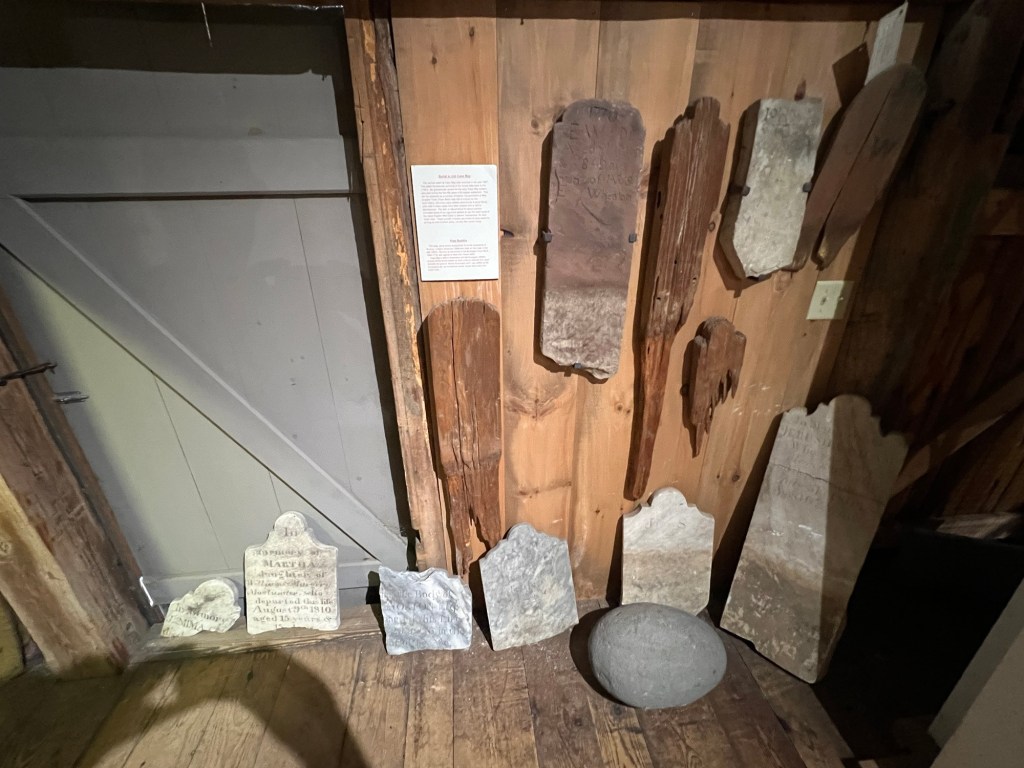
The history of burial and old cemeteries in Cape May

Old tombstones from Cape May cemeteries

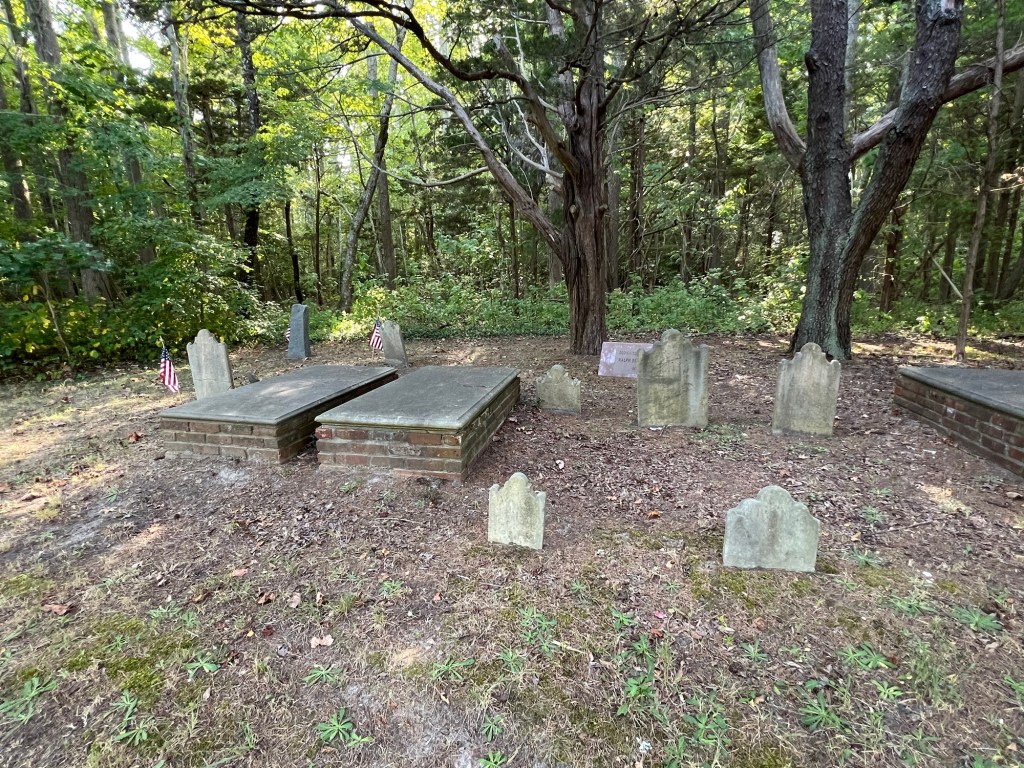
The family cemetery on what was once the family farm that now sits down the road and across the street

The family plot

The museum’s extensive collection of arrowheads and other Native American artifacts

The Cape May Civil War flag is most of the most interesting pieces in the museum’s military collection

The Cape May Civil War flag

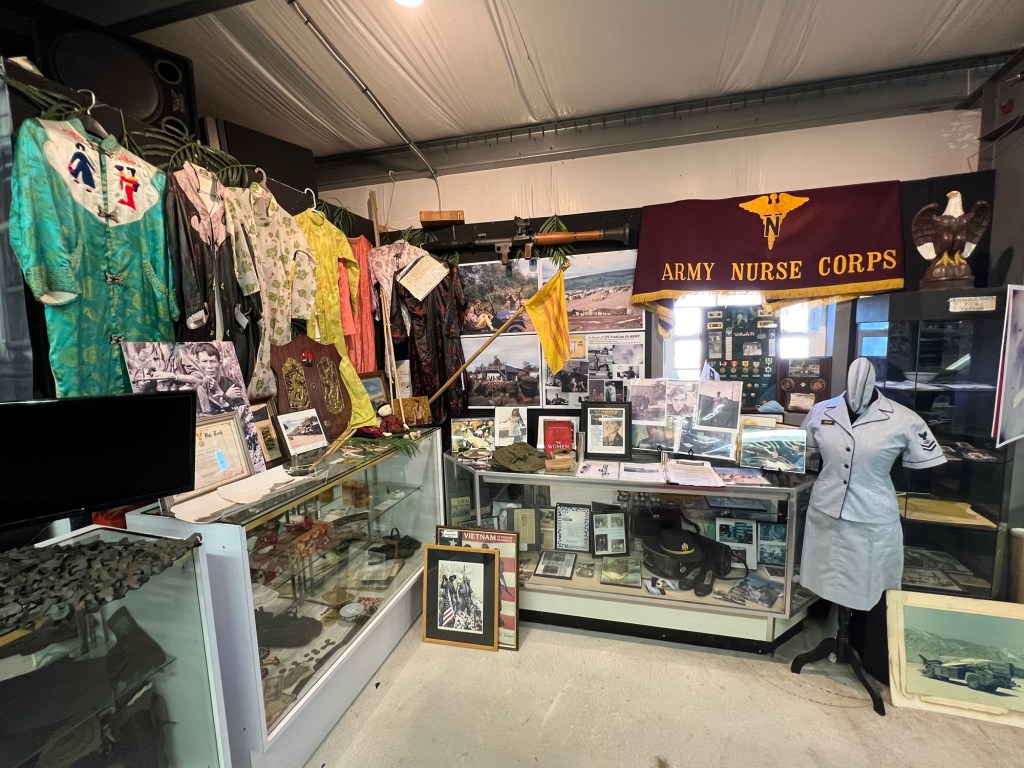
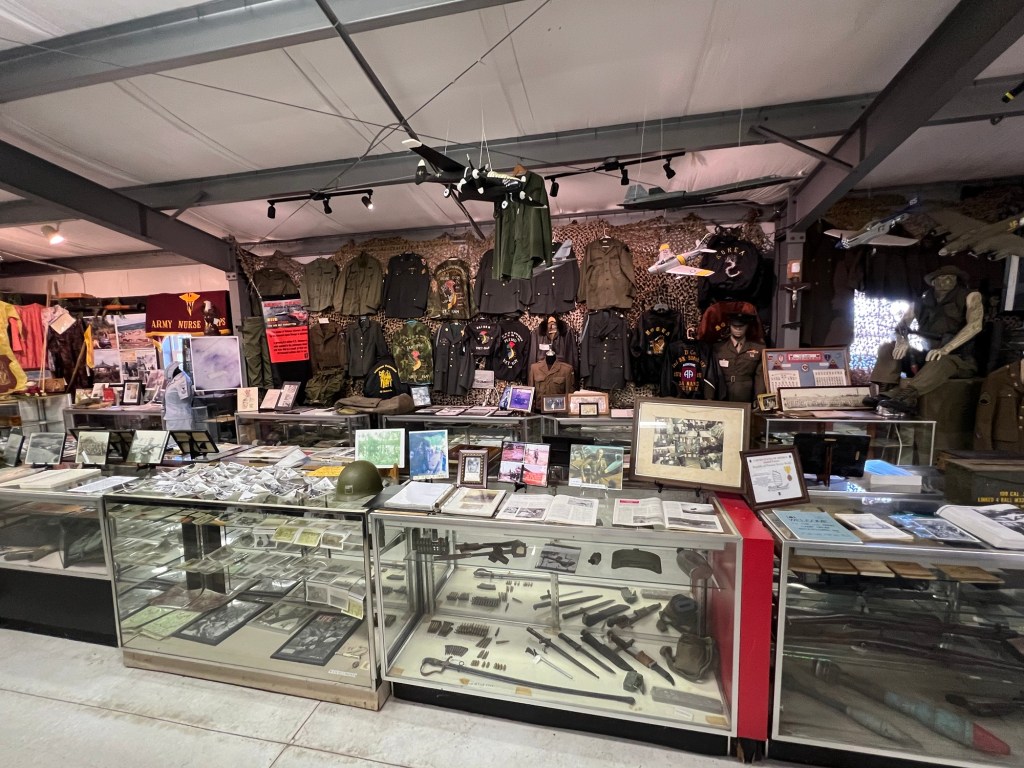
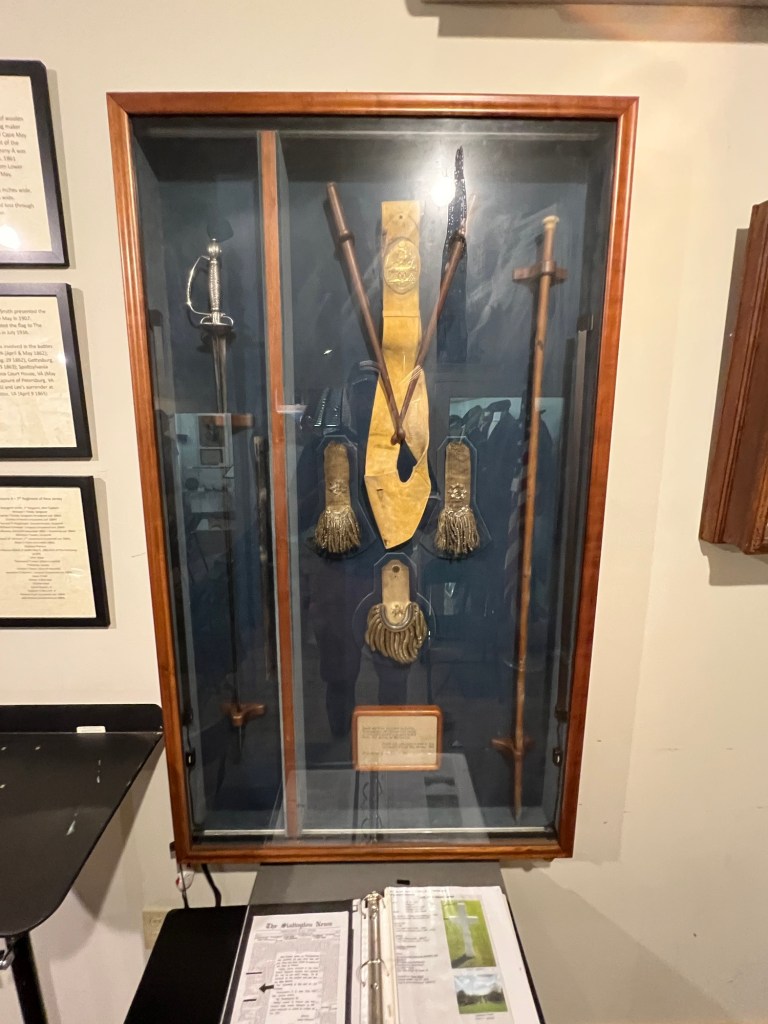
Military artifacts from the war years

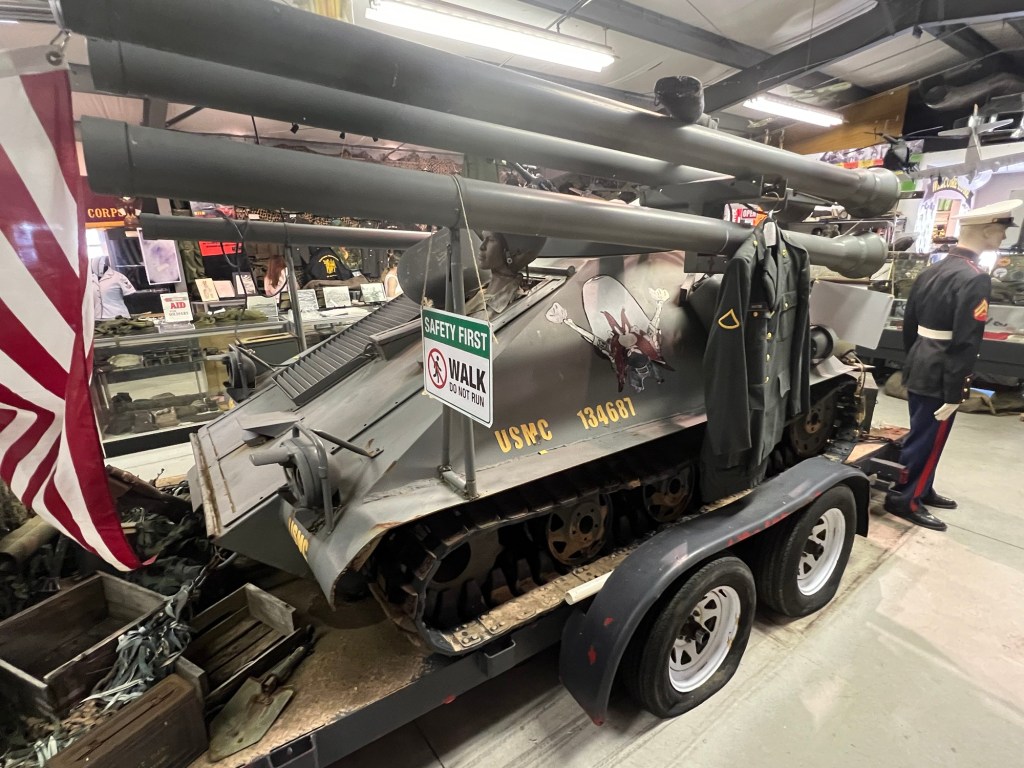
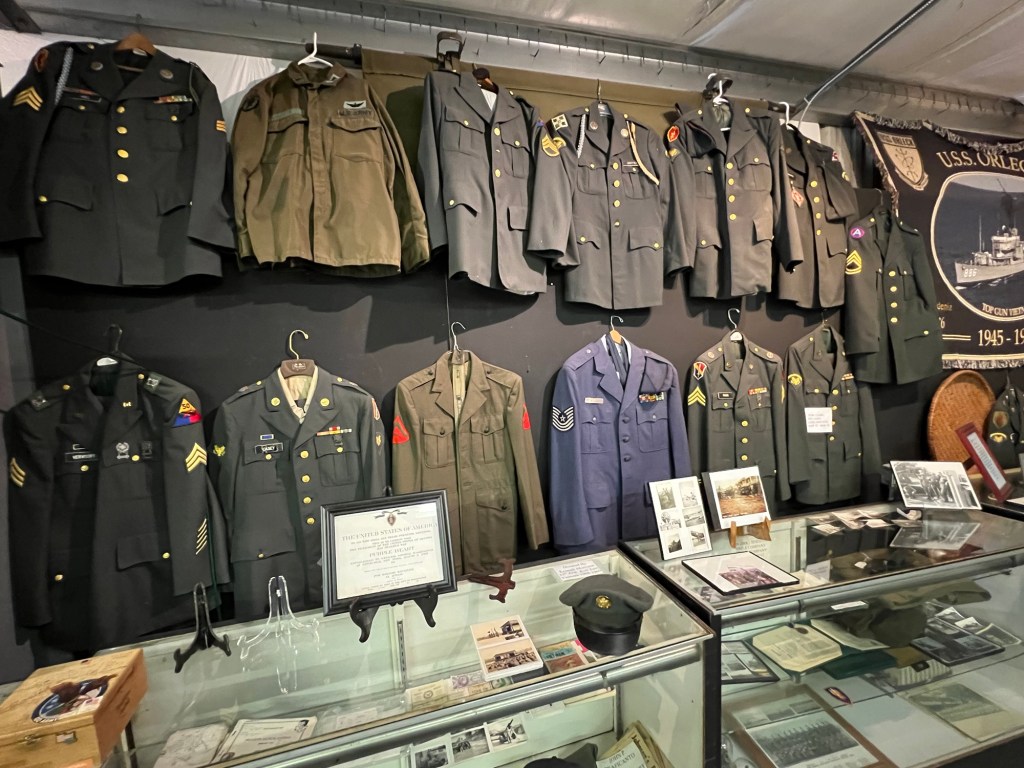
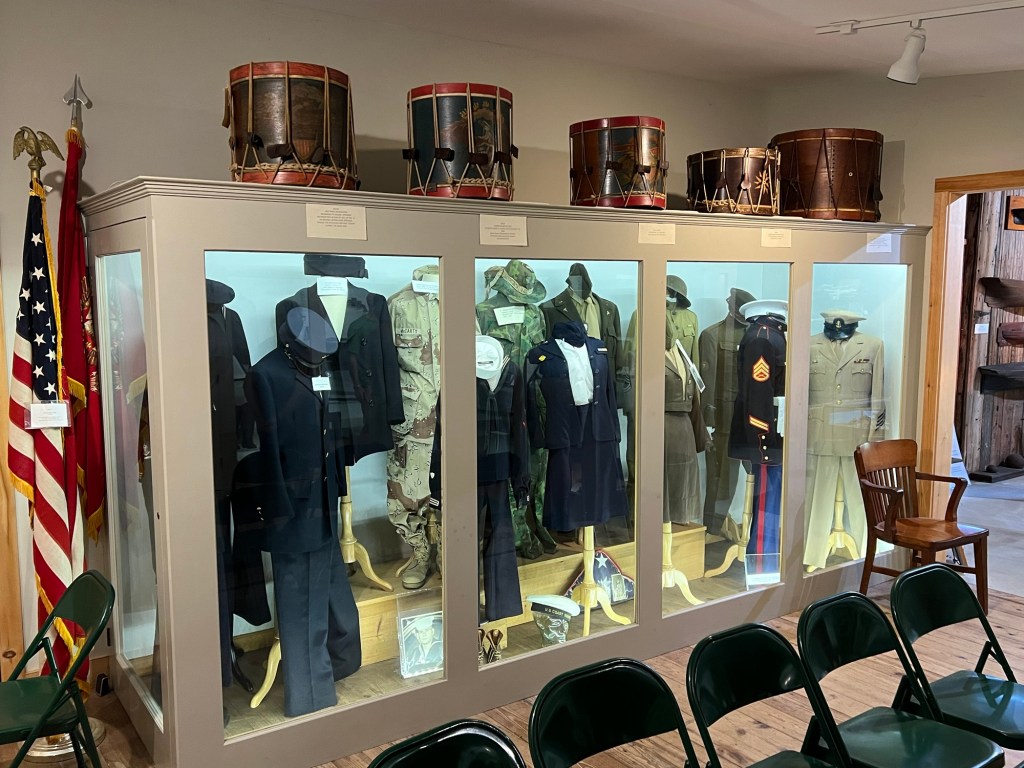
The extensive collection of military uniforms from the different wars in the museum collection with ceremonial drums on display on the top of the case

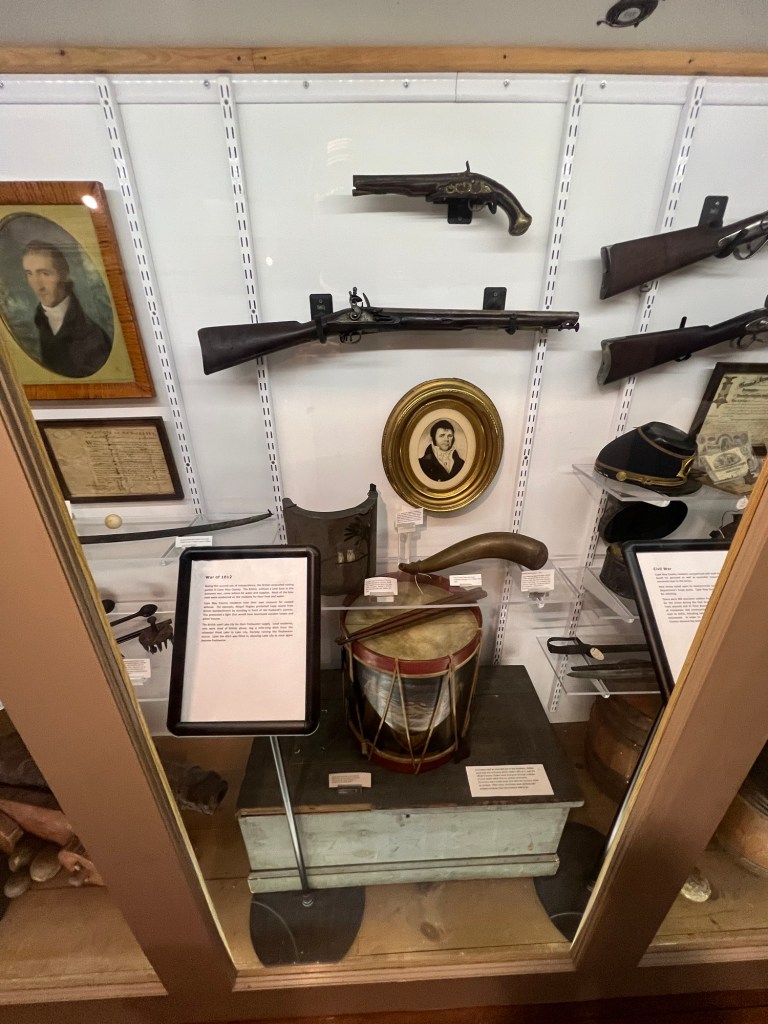
The gun and pistol collection at the museum

The Pistol collection at the museum

The collection of military items in the collection

The early military collection at the museum

The grounds of the museum before I left for the day

The family home that faces the Highway

The museum is not just an extensive collection of City of Cape May but the history of the County as a whole and its rich development from a farming, whaling and shipping town to a major tourist hub and recreation community.

It also shows it has never lost it nautical or farming past as well as this legacy still carries on in Cape May. The development of the community and the progress it has made over the years is showcased in the galleries and buildings on the museum property.

The Development of the Cape May County Museum:

(from the museum website)

The Cape May County Historical & Genealogical Society (CMCHGS), doing business as The Museum of Cape May County, was founded in 1927 as a private, non-profit organization by a number of local families who wanted to ensure the history of Cape May County was preserved and documented. In 1930 the CMCHGS established a museum and genealogical library which were housed in the basement of the County Court House building for 45 years.

In 1976, the current facility, the Cresse-Holmes House containing eleven rooms along with a five-room barn was purchased to accommodate the growing collection. By 1988 the construction and dedication of the genealogical library and administrative offices had taken place. In the last 90 years, thanks to the generosity of many individuals and families with a connection to Cape May County. the collections have grown to contain many thousands of Cape May County artifacts and documents.

Today the museum and library are run by full time, part time and seasonal staff members along with an enthusiastic group of active volunteers to assist with greeting visitors, guiding tours, researching, assisting with programs, and staffing events.

Wetlands Institute                                              1075 Stone Harbor Boulevard                                Stone Harbor, NJ 08247

Wetlands Institute 1075 Stone Harbor Boulevard Stone Harbor, NJ 08247

Wetlands Institute

1075 Stone Harbor Boulevard

Stone Harbor, NJ 08247

(609) 368-1211

Open: Sunday-Saturday 9:30am-4:30pm

Admission: Adults $12:00/Children $10.00/Military $10.00/Members and Children under 3 Free

My review on TripAdvisor:

Entering from the highway, I was surprised at this interesting place of nature and how the Institute is not just part of the community but how it integrates itself into the fabric of helping understand how Mother Nature plays a part in benefiting everyone in this shore community from cleaning the water, sustaining wildlife and preventing flooding.

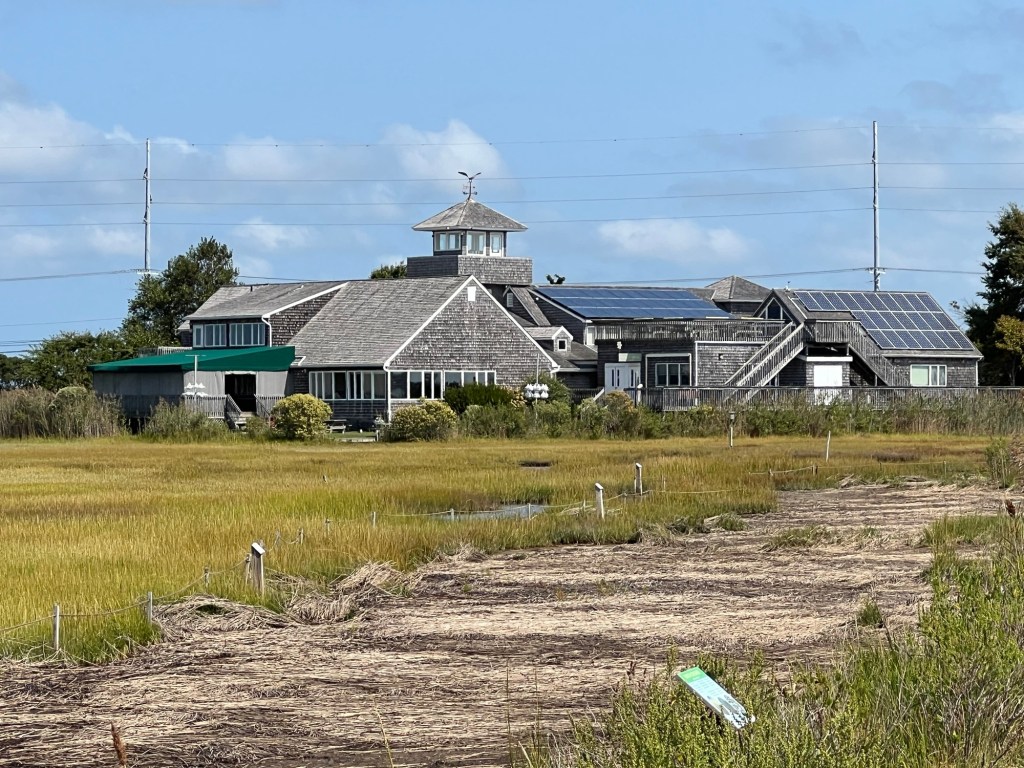
The front of the Wetlands Institute in Stone Harbor, NJ

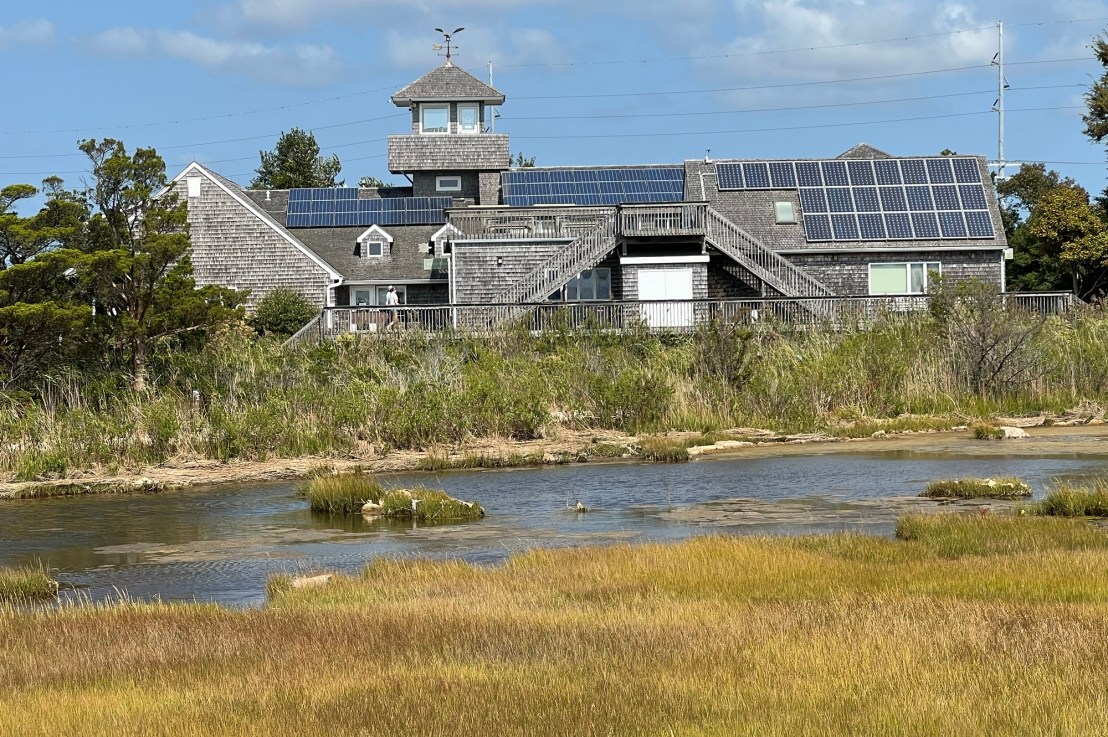
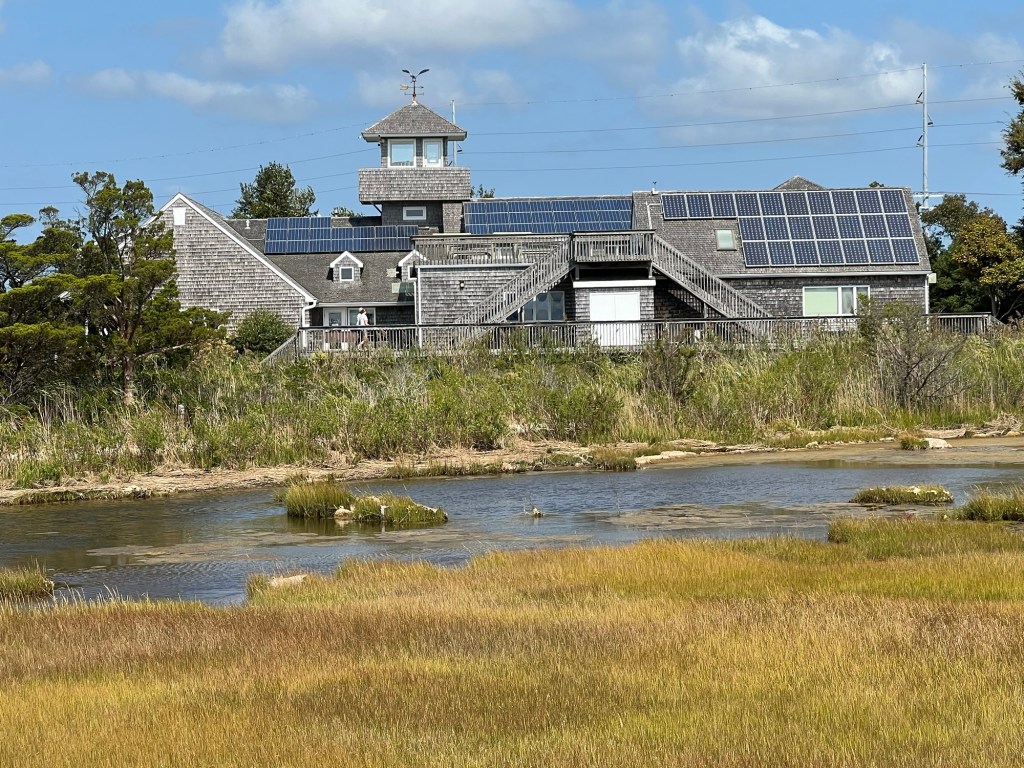
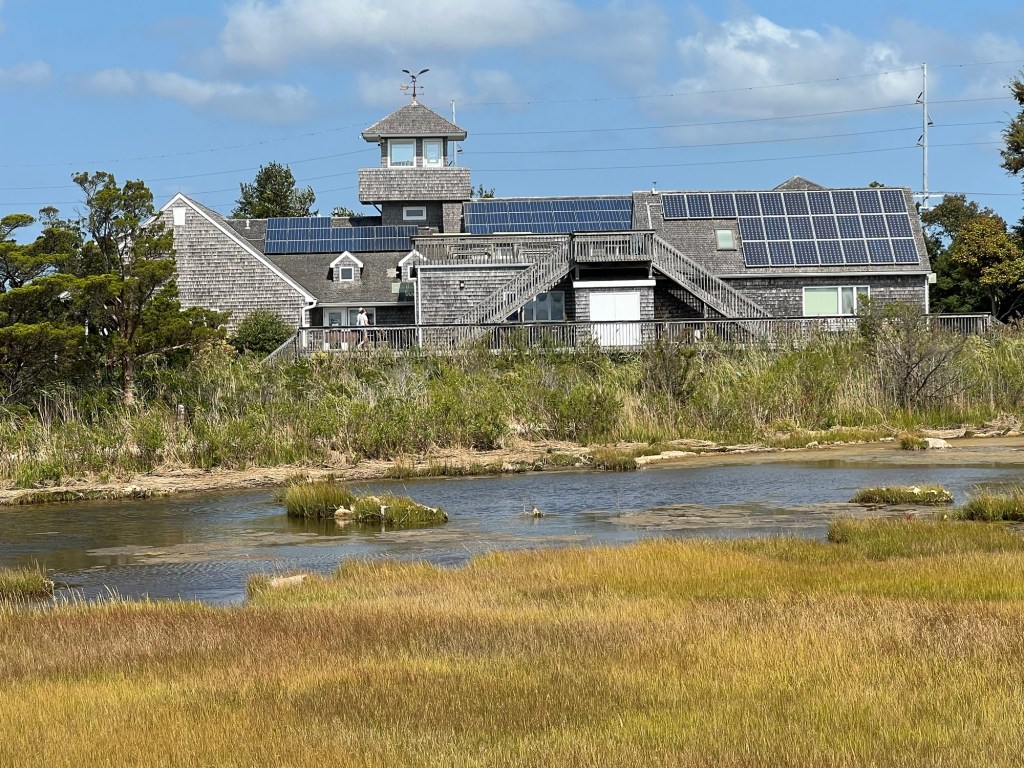
The back of the Institute from the salt marshes

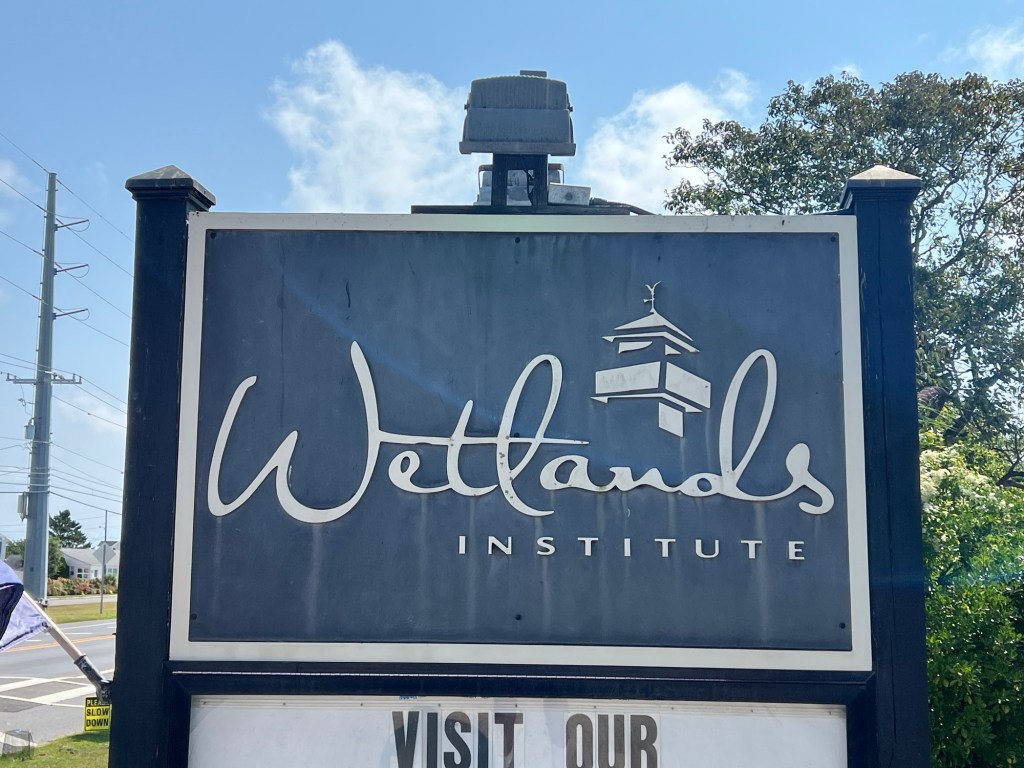
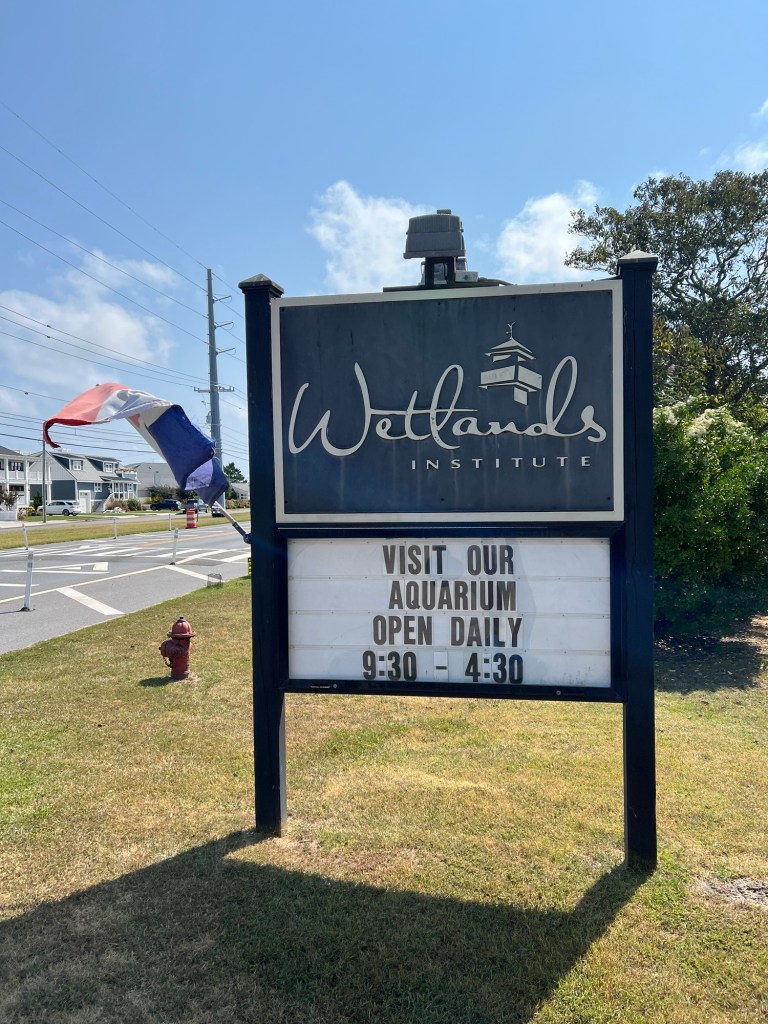
The sign that welcomes you inside

You would almost miss the Institute without the sign

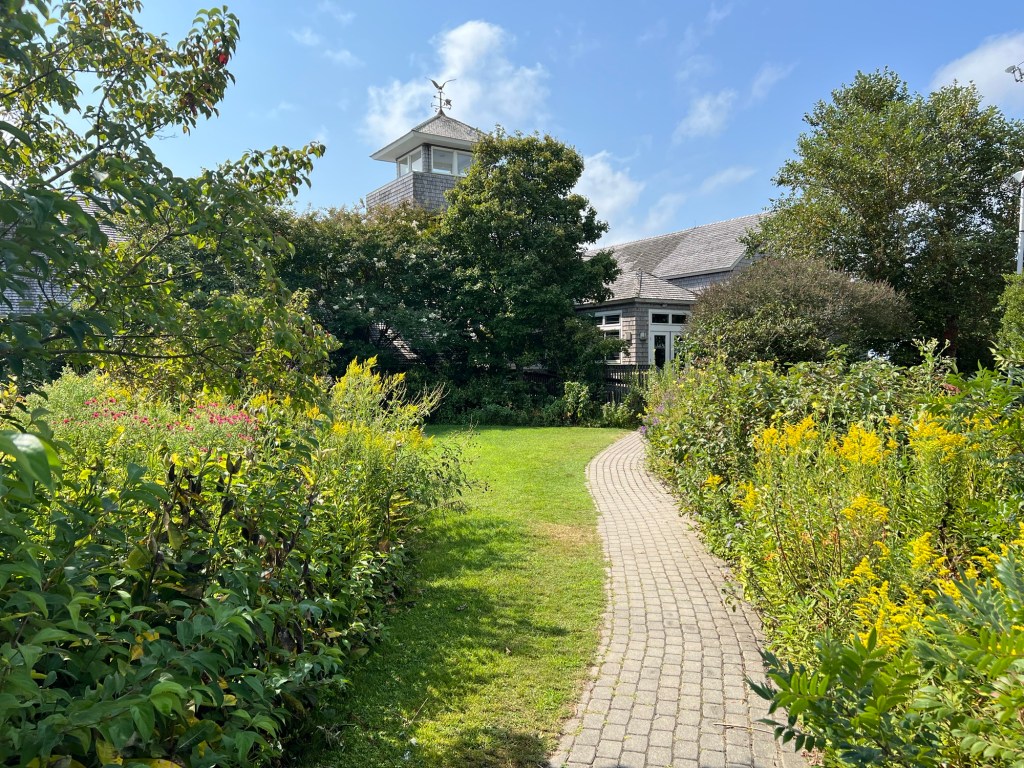
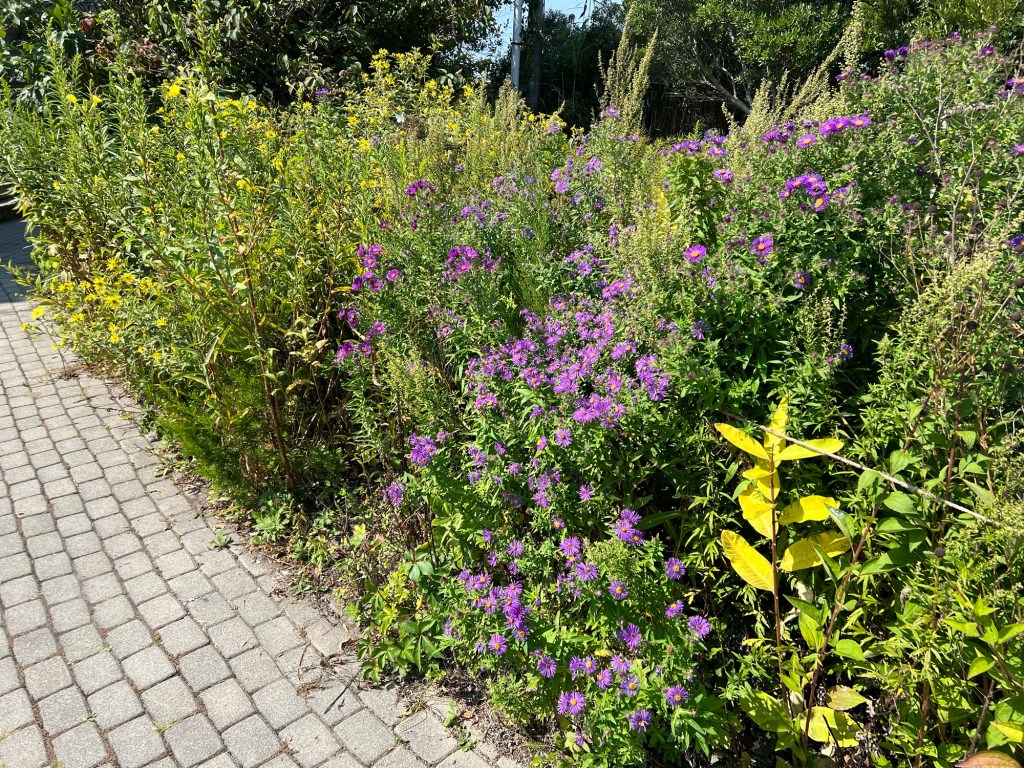
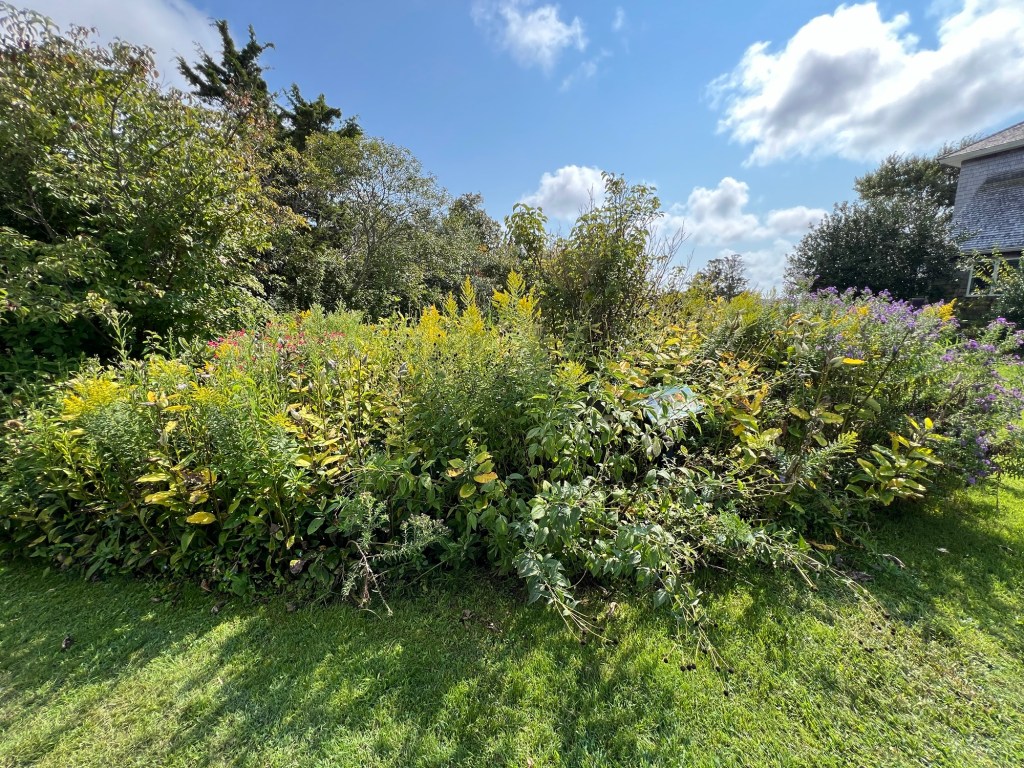
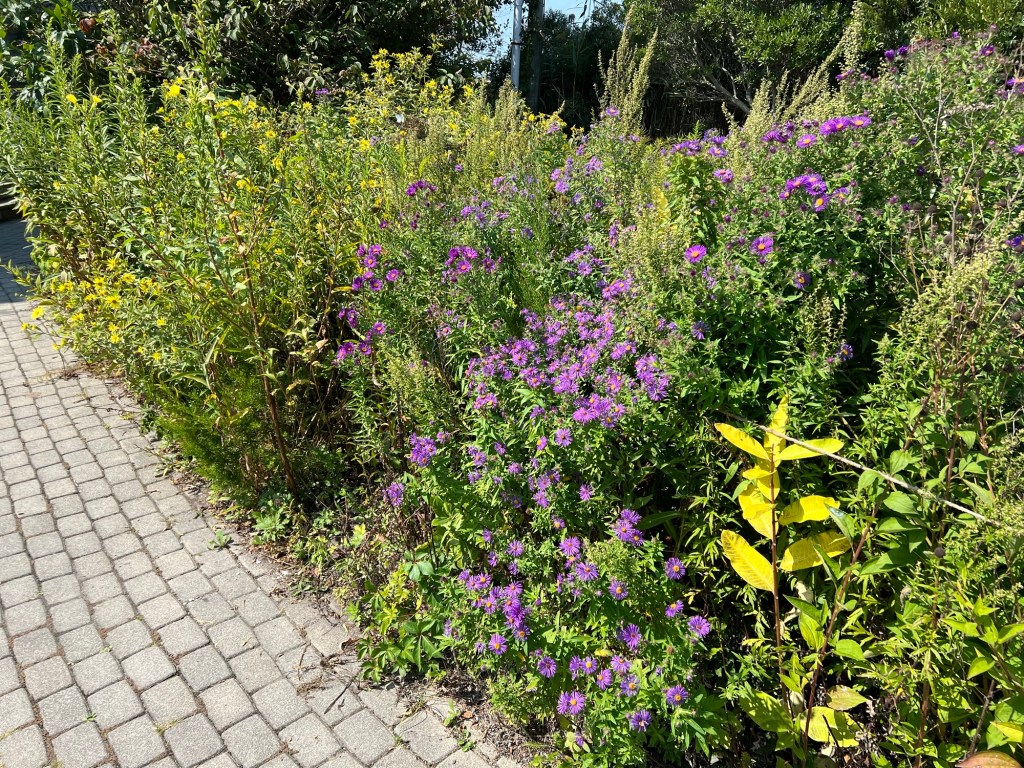
The beautiful gardens in the front during the summer months

The Institute’s gardens in the front of the building during the summer months

The History of the Wetlands Institute:

(From the Institute’s website)

The Wetlands Institute was founded by Herbert Mills in the late 1960s, thereby fulfilling his life-long vision of creating a world-class research, education and conservation center at the Jersey Shore that would educate people of all ages about the beauty and wonders of  the coastal environment, and the importance of that environment to their daily lives.  His dream was to inspire everyone to want to conserve and sustain that environment forever.

Herb loved birds and nature all his life. In fact, he joined the National Audubon Society at the age of seven.  Many of his maturing years were spent as an executive in the glass and canning industries of South Jersey.  During those years he further developed his abiding interest in conservation issues, so much so that he left the business world in 1967 to became the Executive Director of the World Wildlife Fund.  In 1969, under his leadership, the World Wildlife Fund purchased 6,000 acres of salt marsh in Middle Township.  34 of those acres  became the site of the Wetlands Institute’s facility.  The rest were held by the World Wildlife Fund until being transferred to New Jersey’s Green Acres Program. Herb also raised the funds for the design and construction of  our main building which was designed by Malcolm Wells, a world-renowned and environmentally-oriented architect.

Our building was officially dedicated on September 16, 1972.  Herb Mills’ friend and the international president of  the World Wildlife Fund, Prince Bernhard of The Netherlands was the keynote speaker (the Institute website).

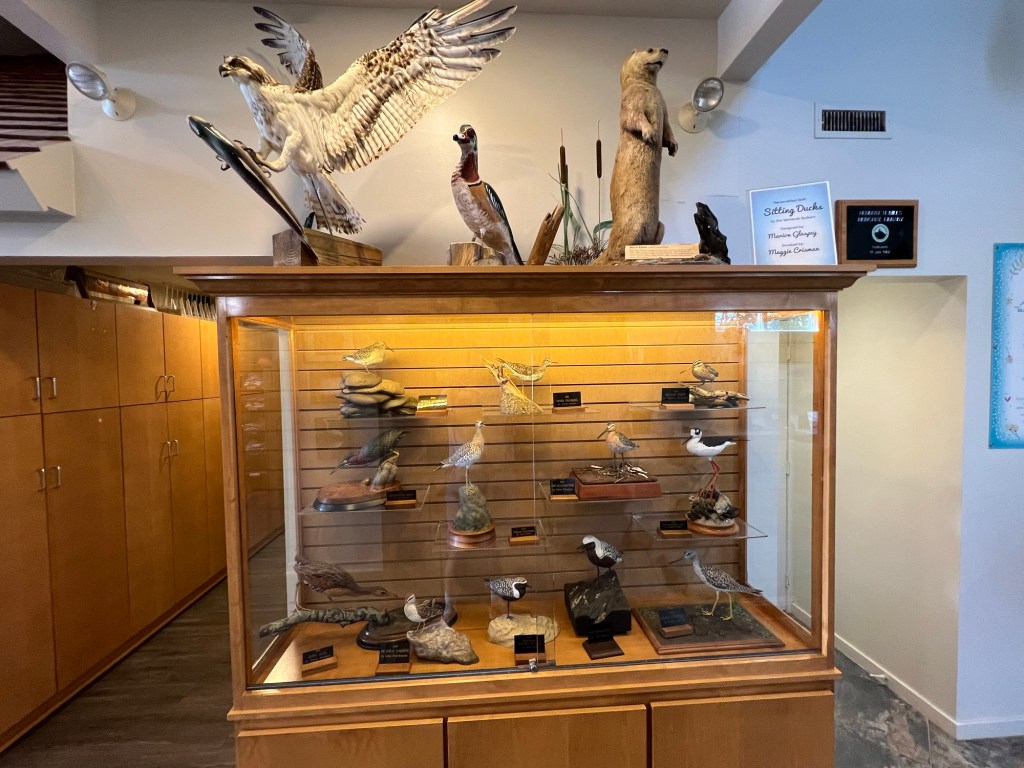
The bird exhibition at the entrance of the Institute

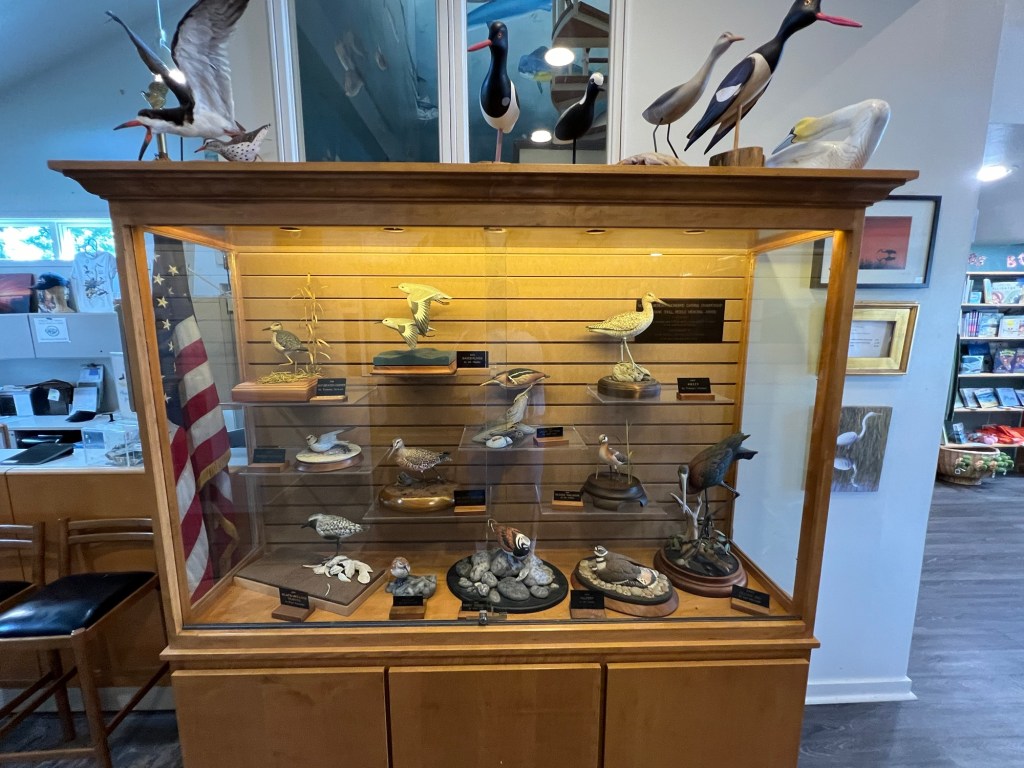
The other bird exhibition in the hallway

Later History:

(from the Institute Website)

In its earliest years the Institute was run by Lehigh University under a dollar-a-year lease.  That relationship continued beyond Herb Mills’ untimely death at the age of 62 on October 21, 1972 while addressing an ornithology meeting at Cornell University, barely a month after the Institute’s dedication ceremony.

After a few years, however, the Institute and Lehigh parted company amicably. The late Marion Glaspey, a shy but very determined woman, succeeded Herb Mills as Chairman of the Board and guided the Institute for several difficult years as the Institute struggled to become a self-sustaining, independent entity, and garner and maintain the kind of financial support that is vital to any nonprofit organization.  In addition to being totally dedicated to the Institute, Marion was a talented artist and photographer, teaching classes in both subjects, and–most significantly–she was a passionate gardener (she’s the  “Marion” for whom our Marion’s Garden is named). She remained on our Board of Trustees until her death in 2000.

Through Marion’s leadership and that of her successors, the Institute has evolved to become a leader in coastal environmental education, research, and conservation. At present the Institute is supported almost entirely by funds from private sources, receiving only an occasional government grant for a special project.

My visit to the Institute in the Summer of 2024:

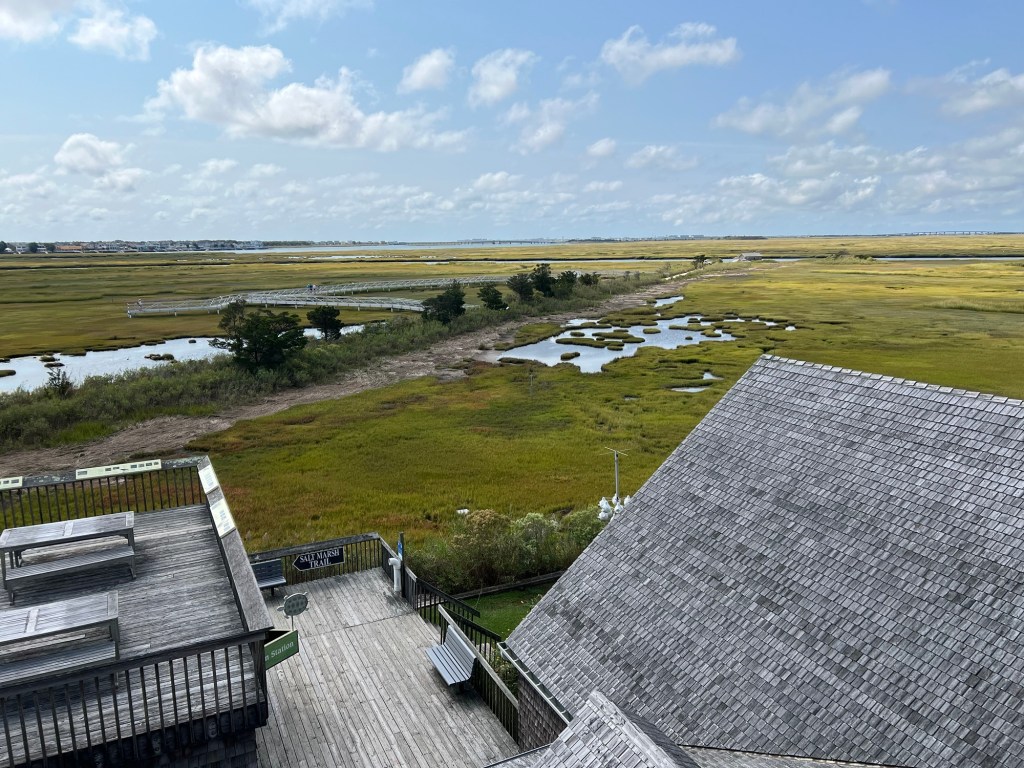
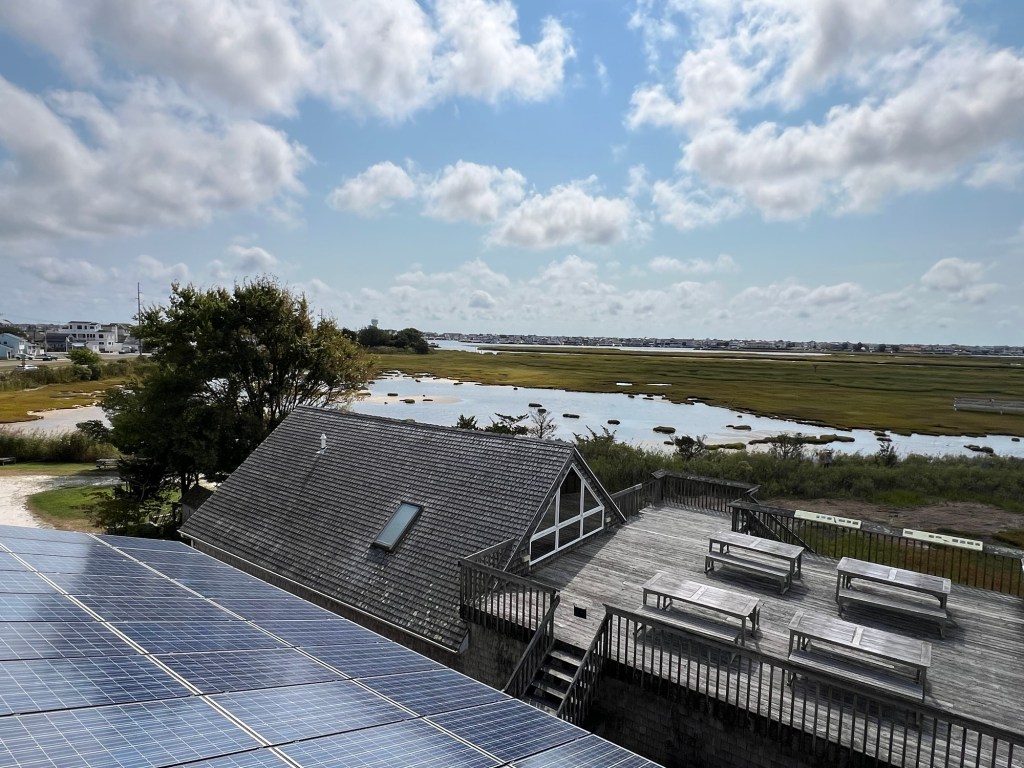
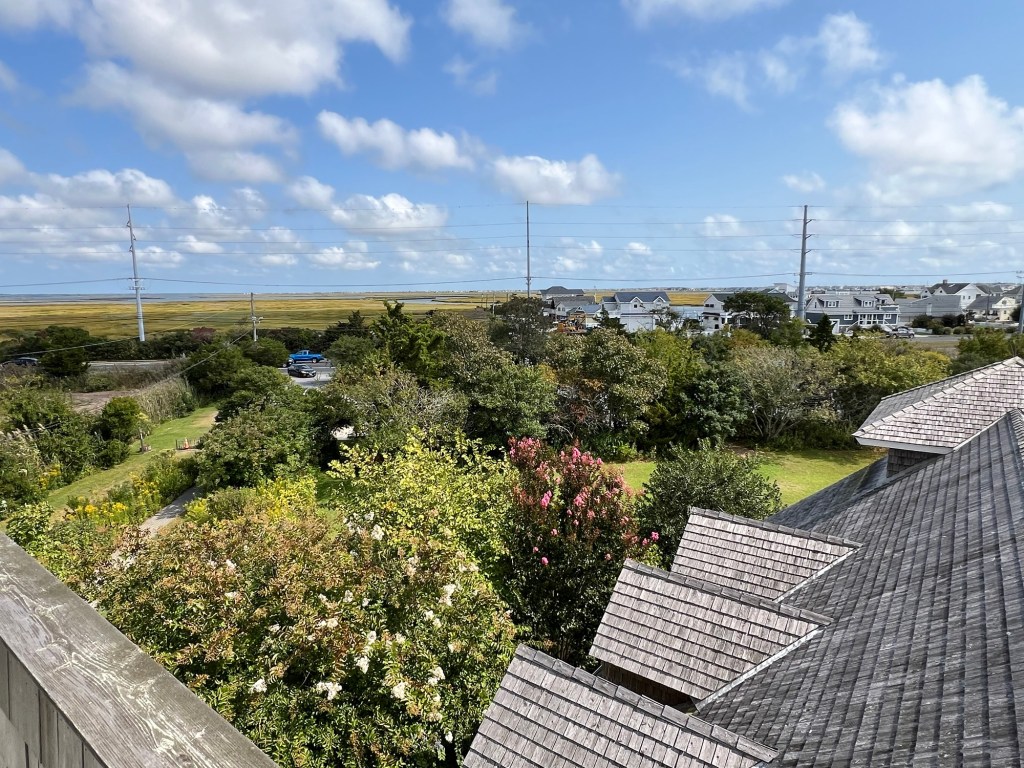
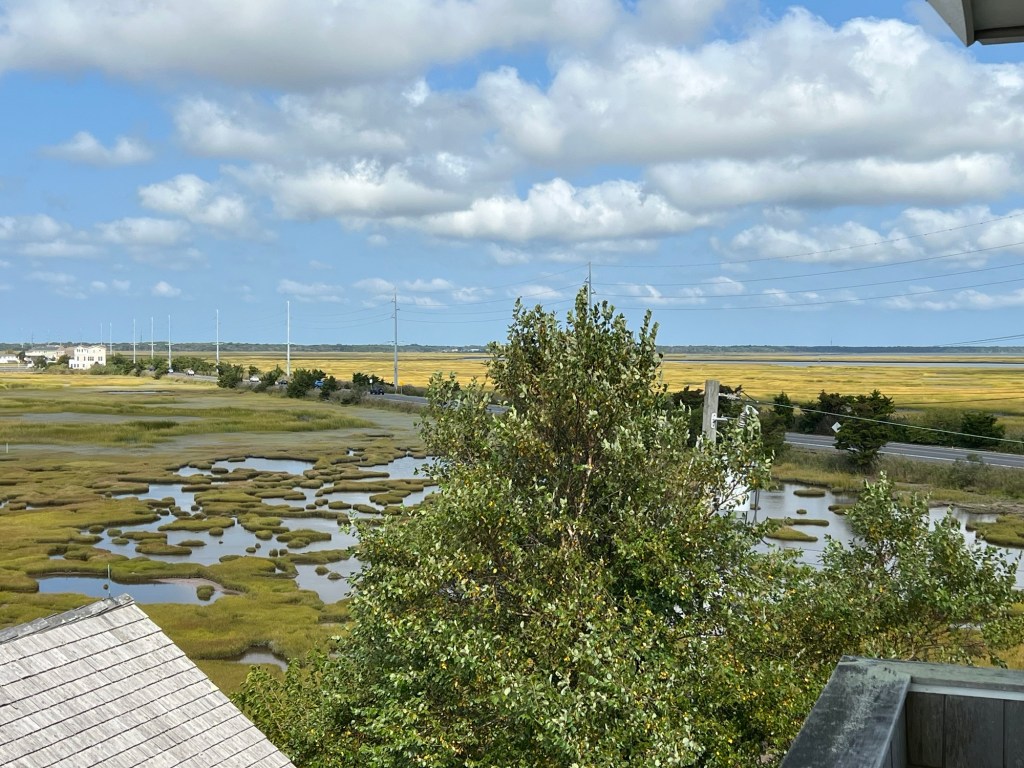
The first stop on the tour of the facility was walking up to the observation deck at the top of the building to view the salt marshes below. It gave an overview of the area that the Institute is trying to protect. The top floor observation gives a clear view of the marshes that surround the town of Stone Harbor and how these acres of area help both the natural population as well as the human population both residing in this beach community.

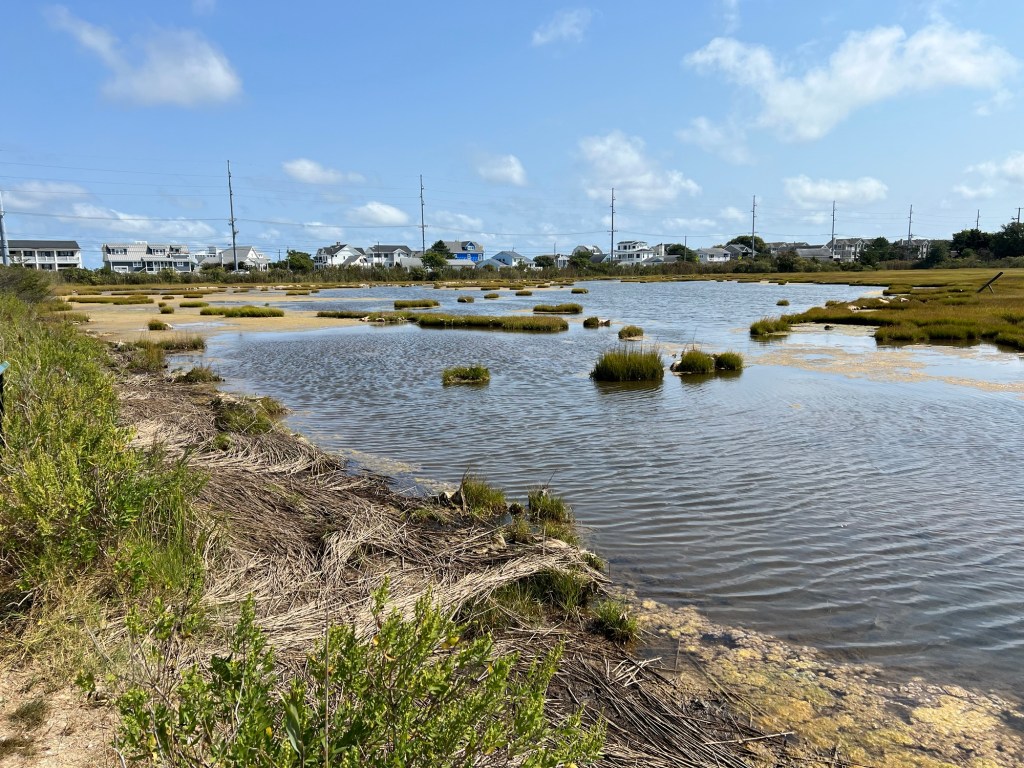
The view of the Wetlands between the barrier islands and the mainland

The Wetlands closer to the main road

The view of the front of the building and its colorful gardens

The Wetlands that line the highway out of Stone Harbor

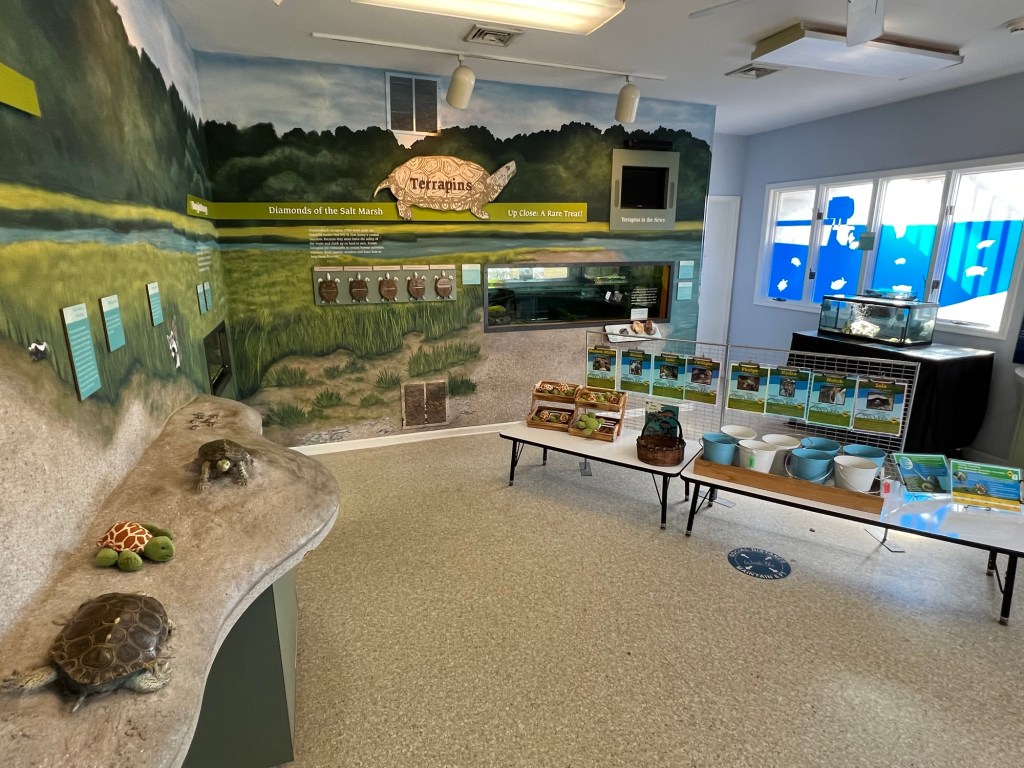
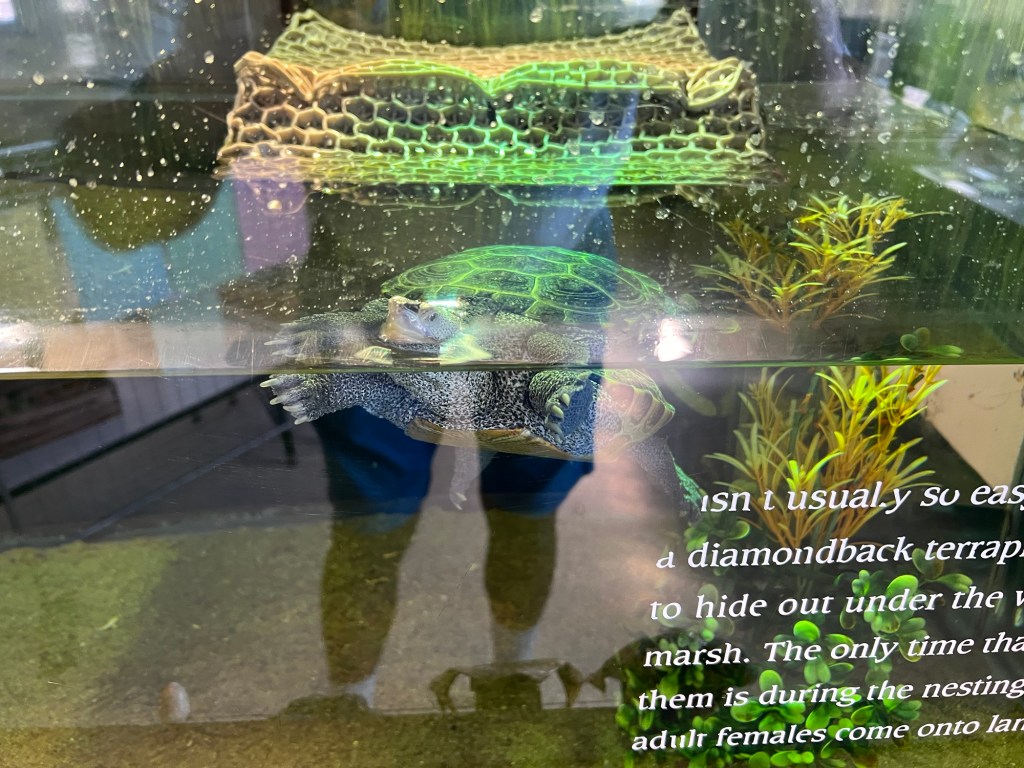
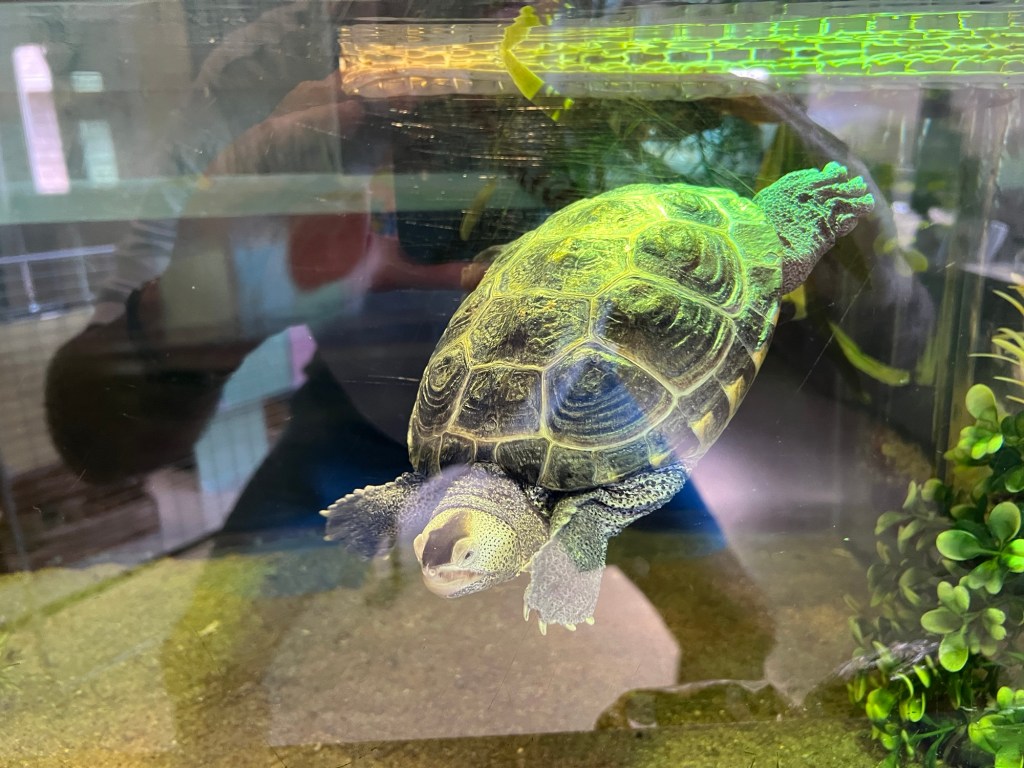
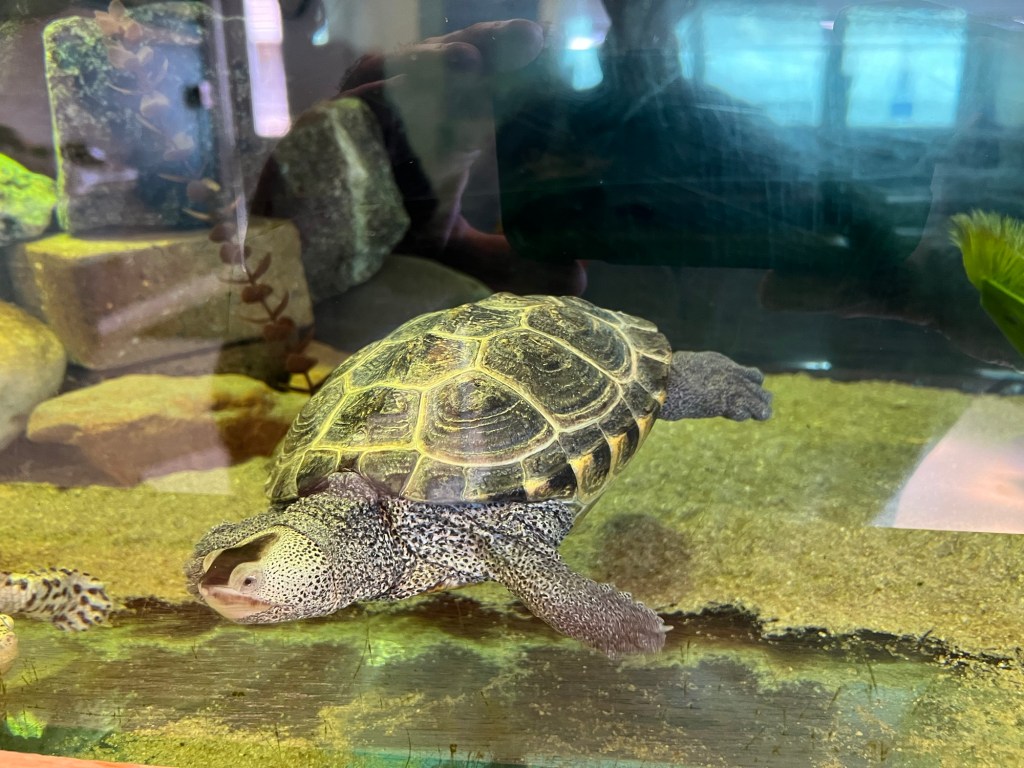
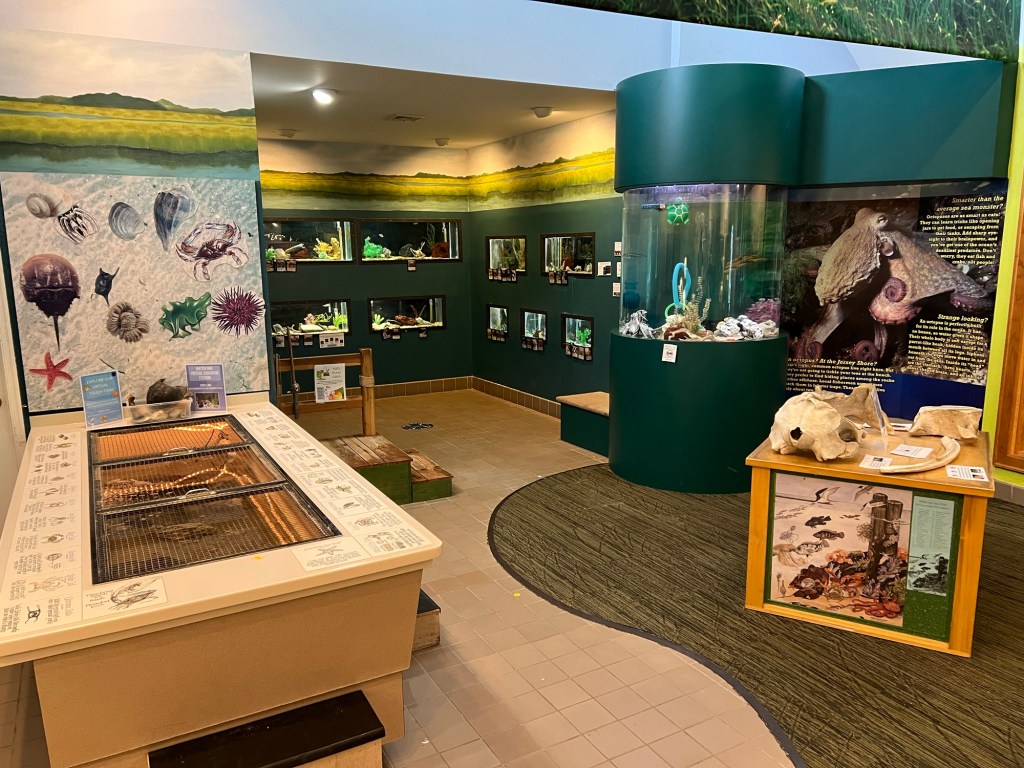
When you leave the deck area and head back downstairs, there is wonderful little aquarium that houses the background of the local fish, crabs and wildlife that are part of the ecosystem that make the salt marshes such an important part of this shore community. One side of the aquarium is dedicated to the local Terrapin turtle whose habitat has long been affected by human encroachment. This conservation effort is ongoing.

The first room in the complex of rooms is the Terrapin Turtle exhibit showing the habitat of this local creature and its importance in the ecosystem.

Conservation Programs at The Wetlands Institute

(from the Institute website)

Concerns about the local terrapin population led Dr. Roger Wood, former Director of Research at The Wetlands Institute, to establish the Terrapin Conservation Project in 1989. The project has grown and broadened in scope to become the Coastal Conservation Research Program (CCRP), where undergraduate interns work closely with research scientists at The Wetlands Institute on a wide variety of research and conservation projects, including terrapin conservation. Since 1989, over 200 college and university students from more than 100 academic institutions have participated in the program.

The turtles will just stare at you as walk their display

The turtles swimming around

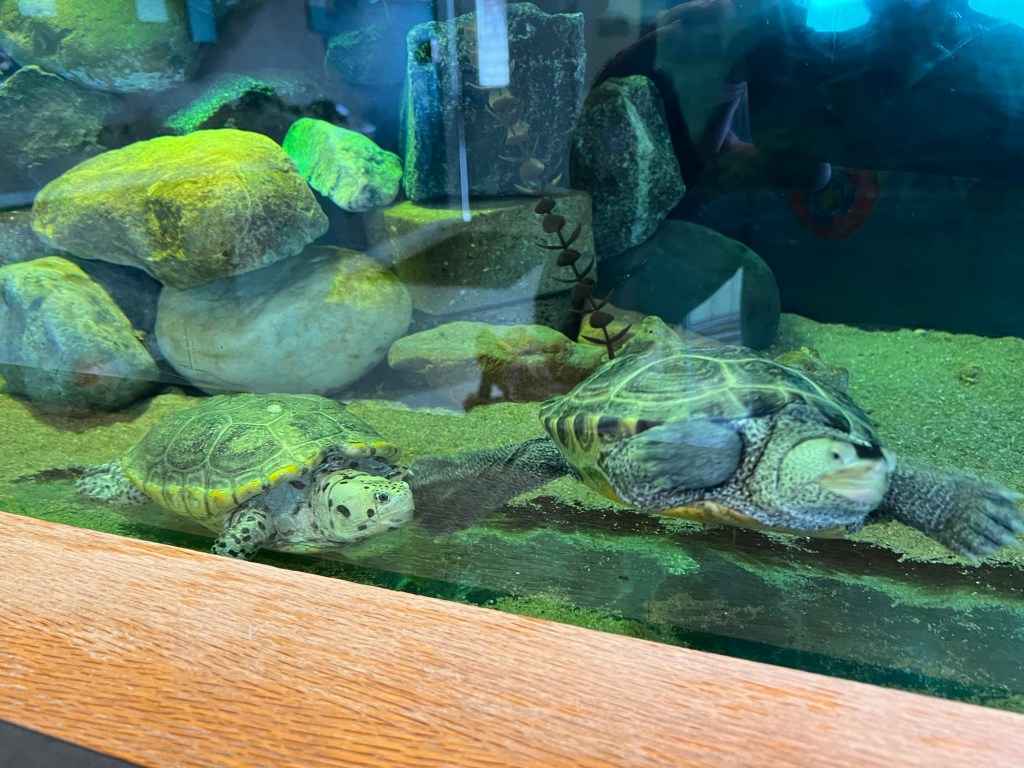
The turtles in a recreation of their habitat

The turtles in captivity interacting with one another in the tanks

These playful turtles are just part of the chain of ocean animals under study and conservation at the Institute and it is interesting to see to their interaction with each other and then watch us from the other side of the tank to see the human observation.

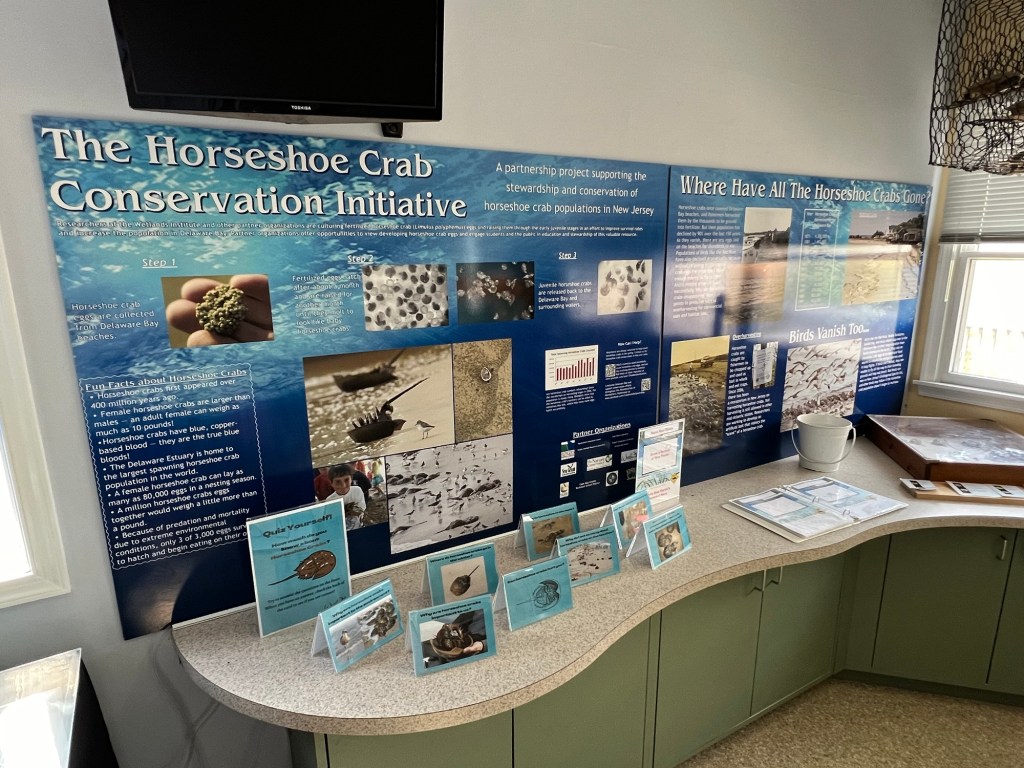
The next exhibition was the Horseshoe Crab conservation tank. The Horseshoe Crab holds a very important role in the ecology of the shore.

The Efforts with Horseshoe Crab Conservation:

(from the Institute website)

In an effort to address the Delaware Bay Horseshoe Crab situation, The Wetlands Institute has embarked on a statewide partnership project to support the stewardship and conservation of Horseshoe Crab populations in New Jersey. As part of this partnership, The Wetlands Institute collects fertilized Horseshoe Crab eggs with the proper permits from spawning beaches along the Delaware Bay and rears the eggs under controlled conditions in our aquarium. After about a month, eggs hatch and newly born Horseshoe Crabs are maintained in their culture tanks. Enclosed in this cultured environment and free of predation, aquaculture dramatically increases Horseshoe Crab survival both before and after the first molts. These small crabs are kept in culture tanks until they are ready to begin feeding, and then are released at their respective egg collection locations.

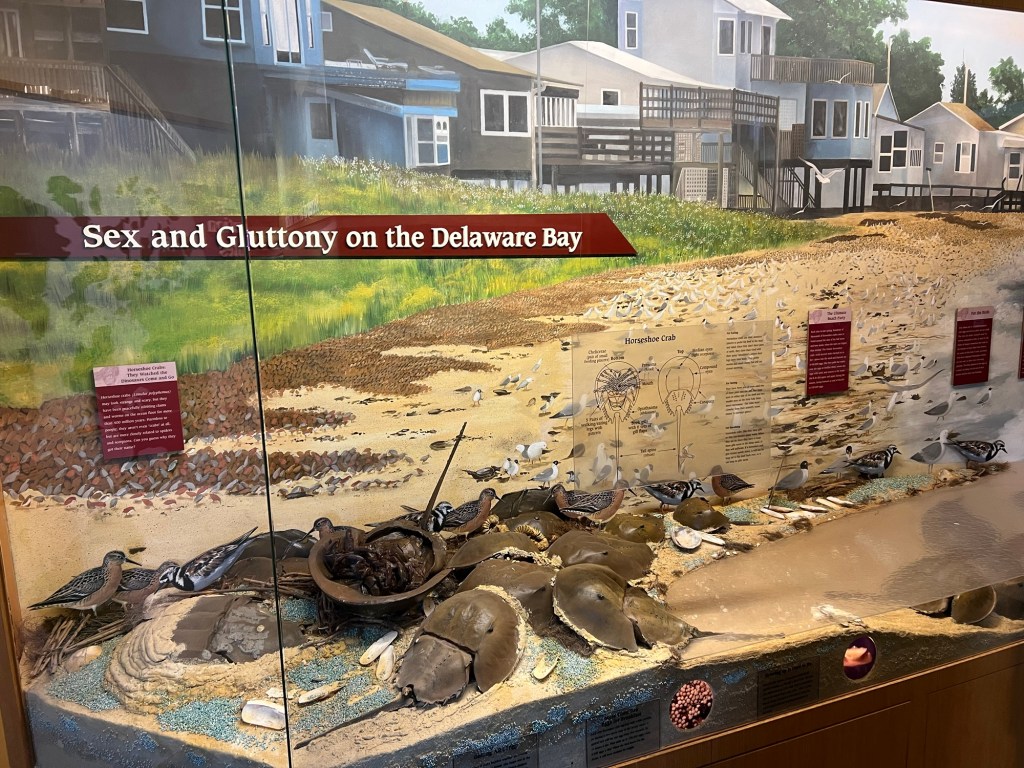
The Horseshoe Crab exhibit

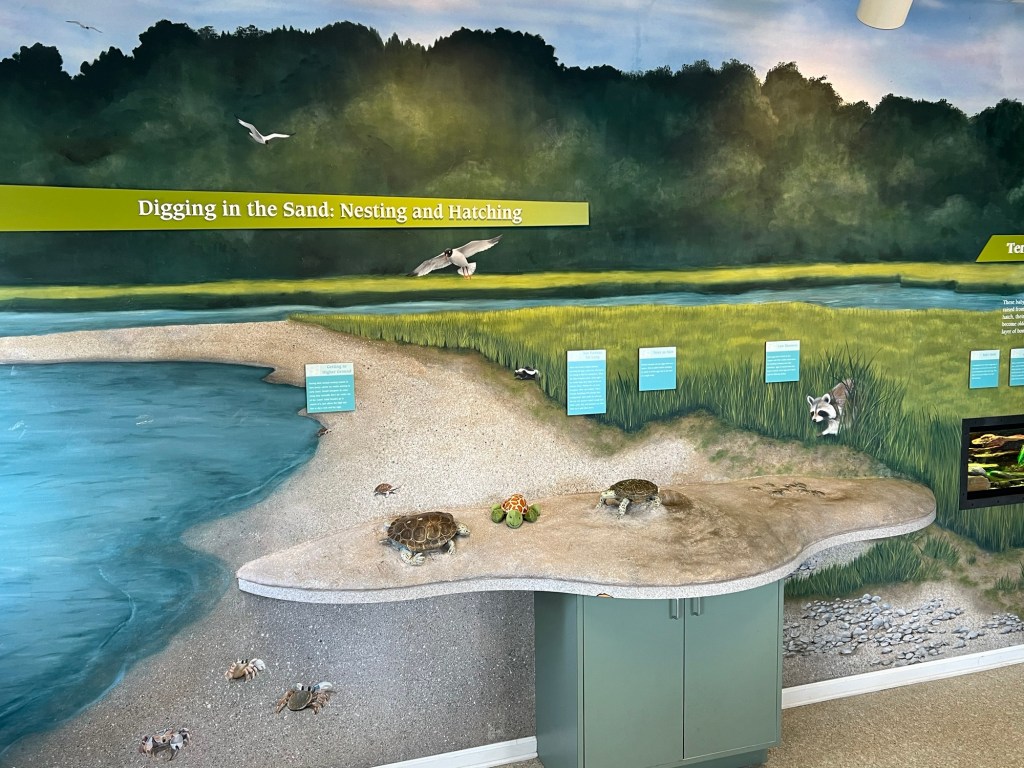
The Nesting exhibition

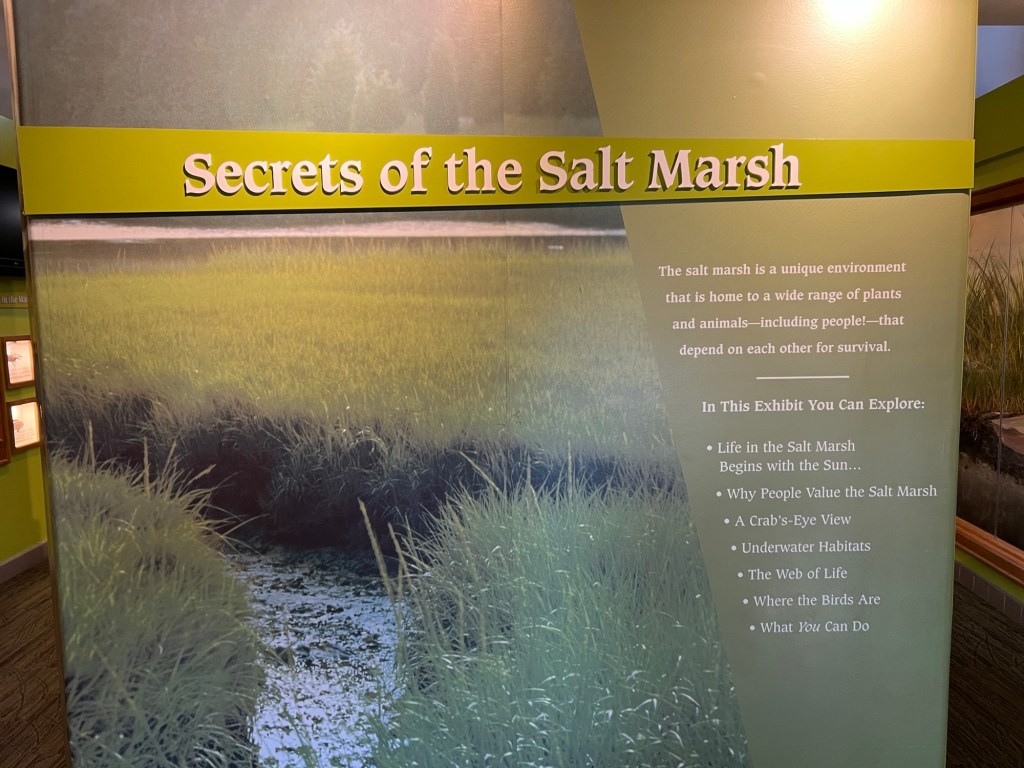
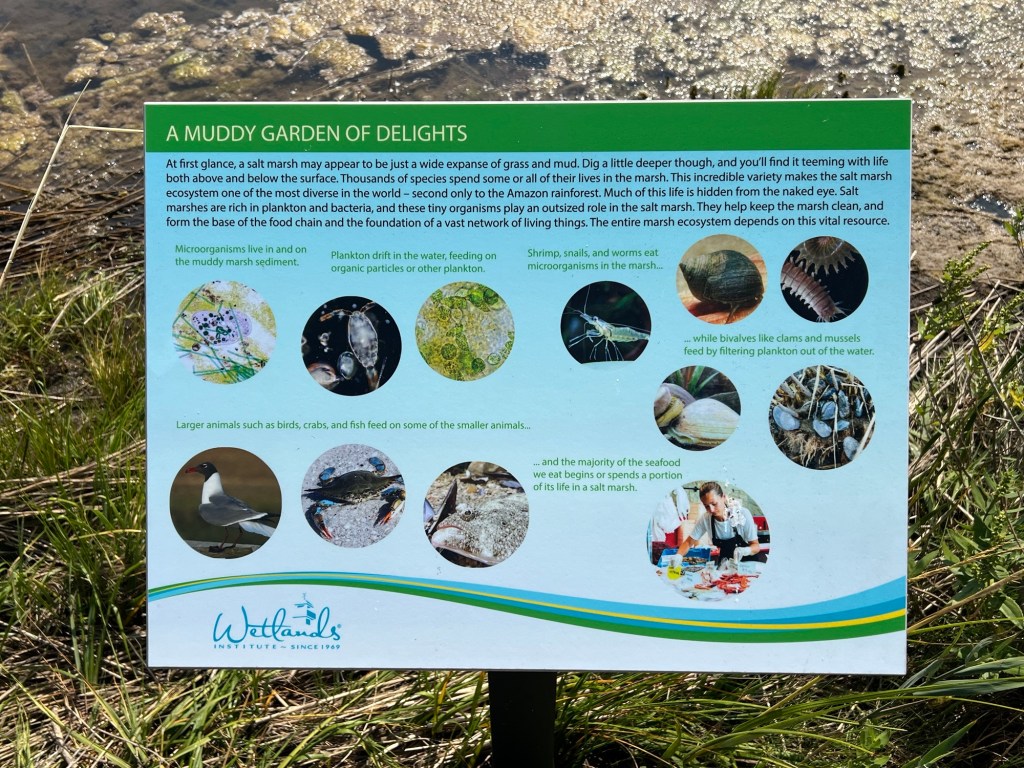
The Salt Marsh exhibition

The exhibit on how shore development is affecting wildlife and the ecosystem

The aquarium was very interesting as the exhibits were not there for amusement but to show the wildlife that lives in our oceans and how they interact with one another.

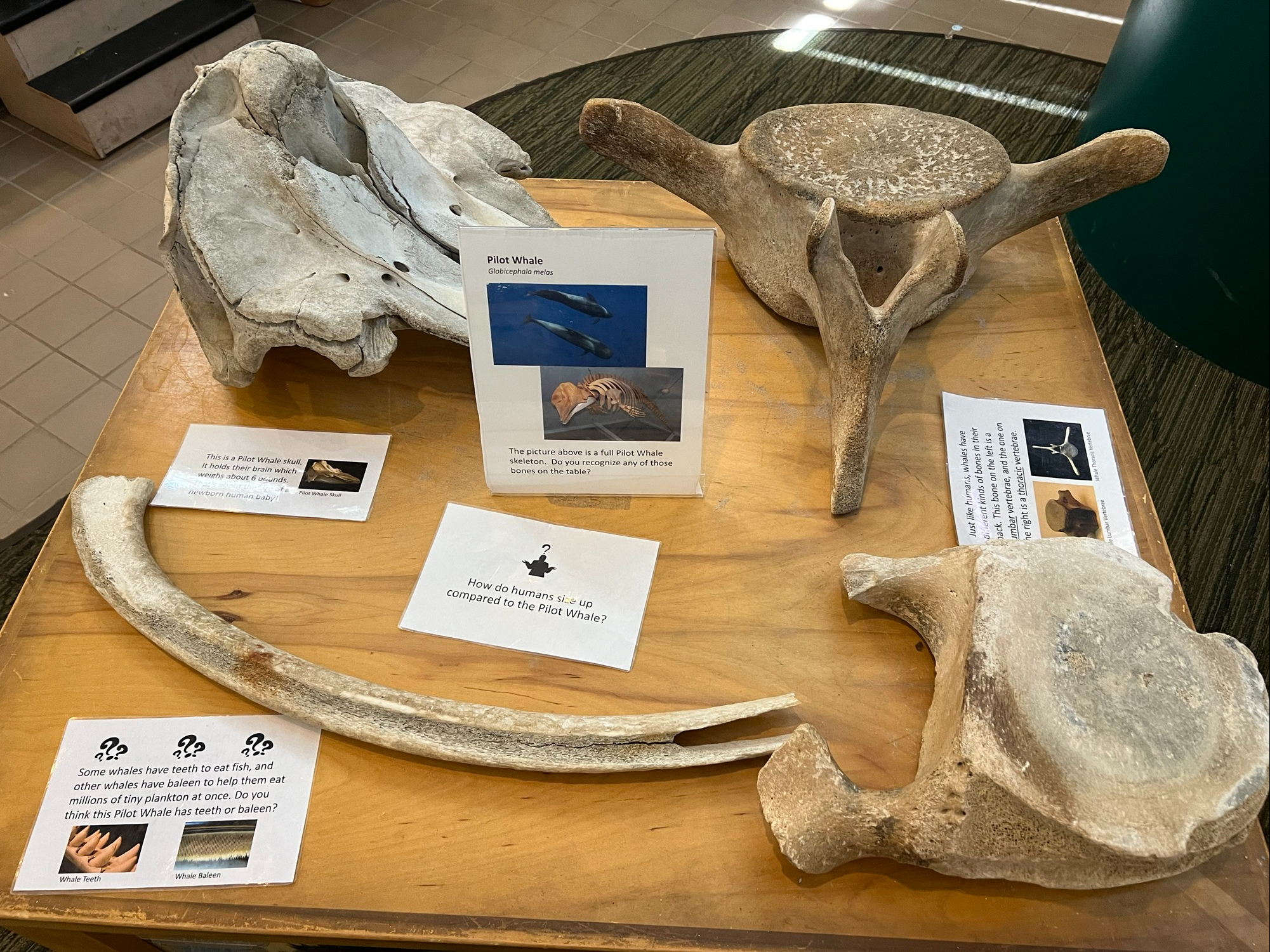
The Whale bone exhibition

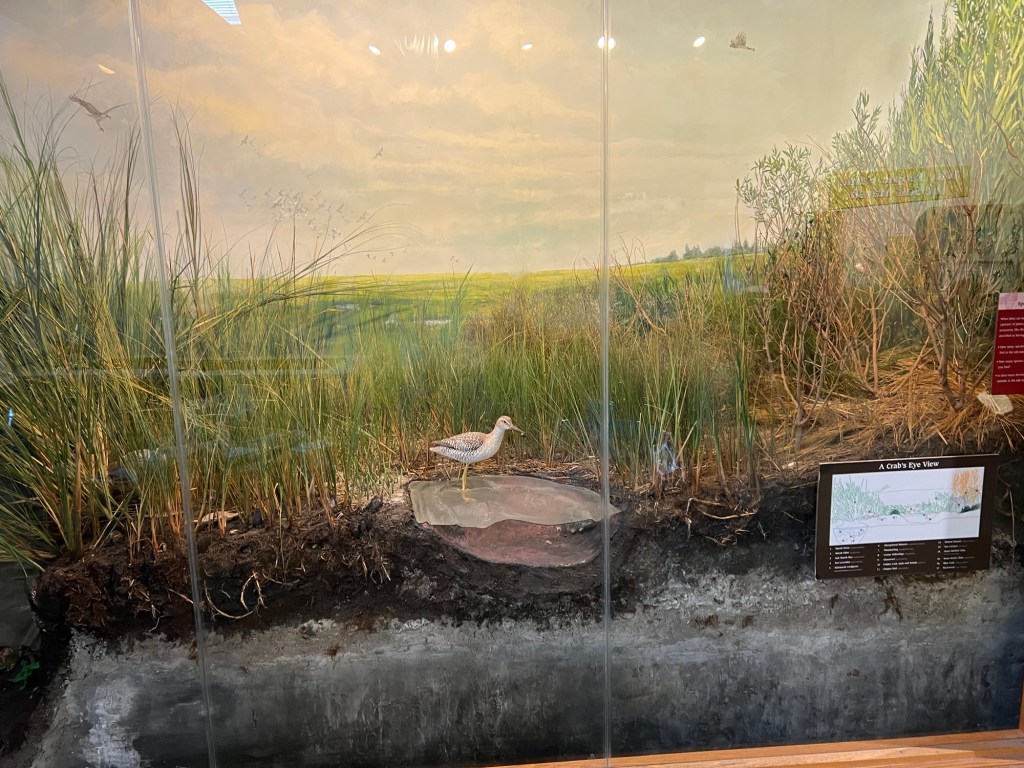
The exhibit on Shore birds and their home at the shore

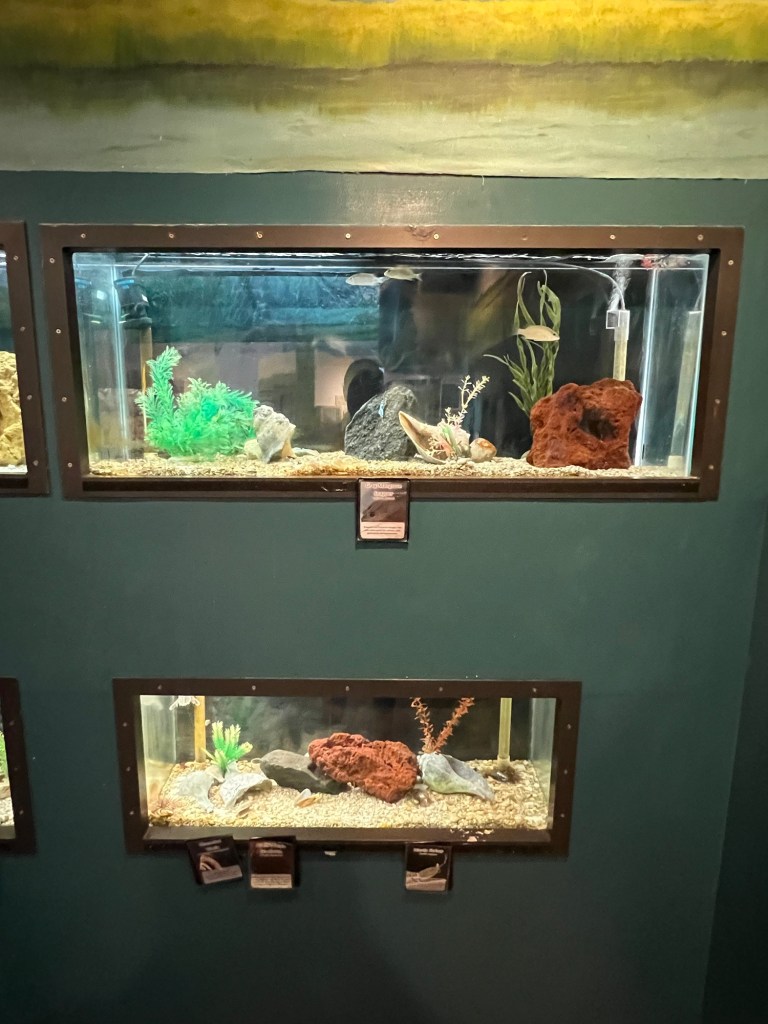
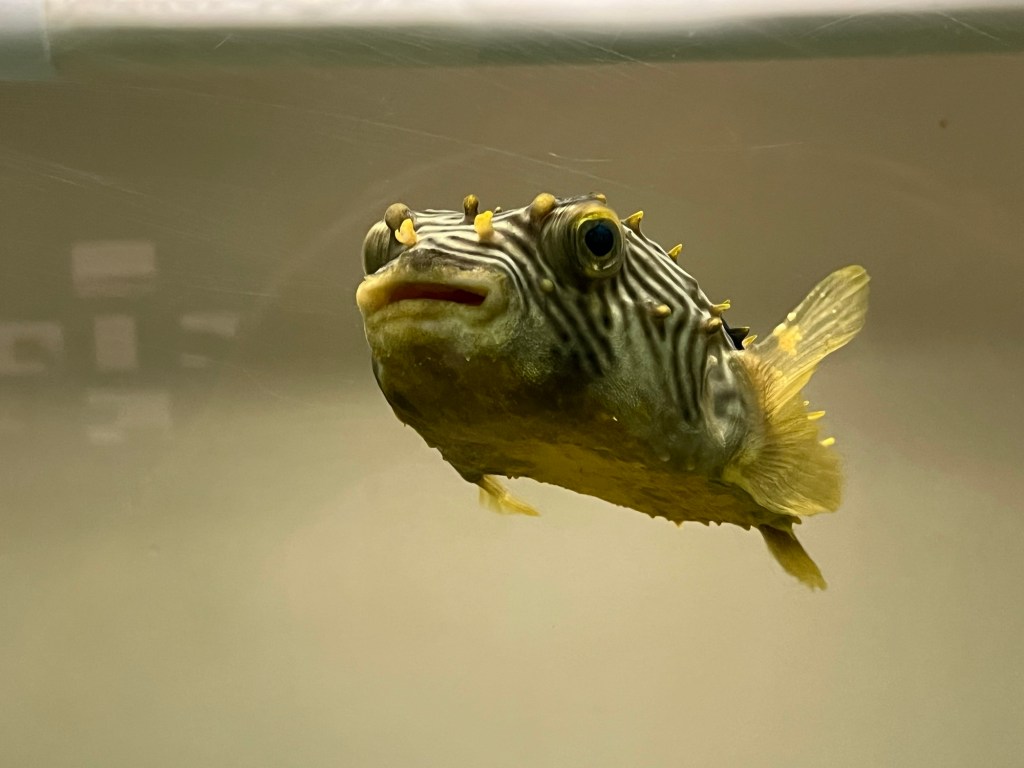
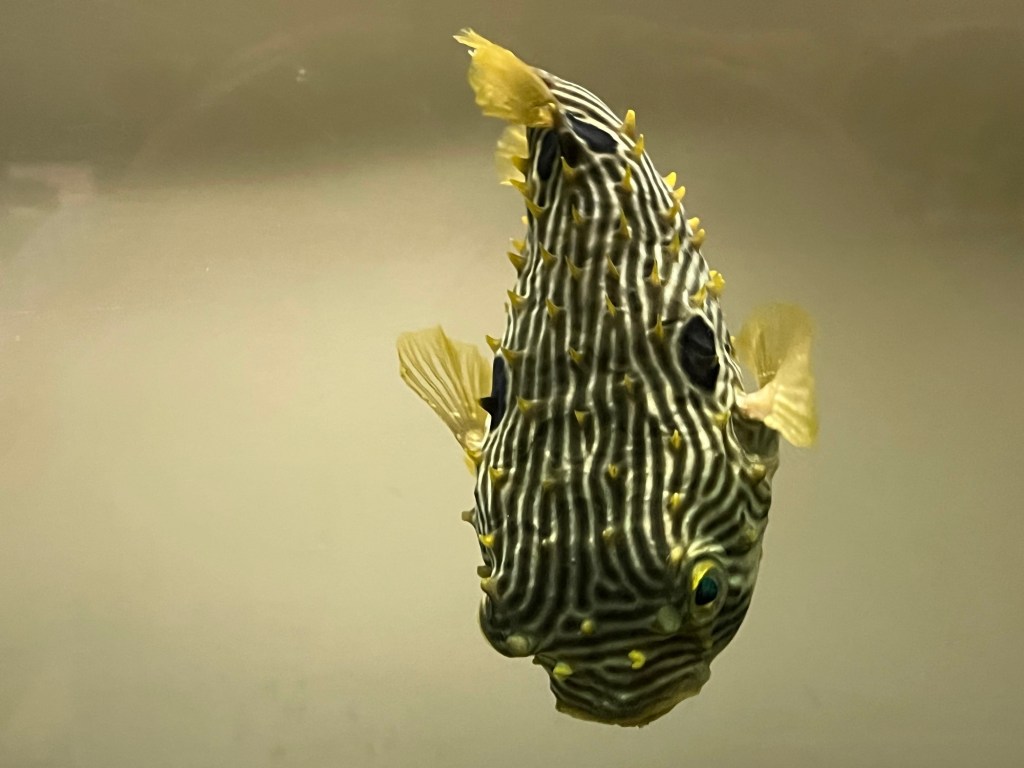
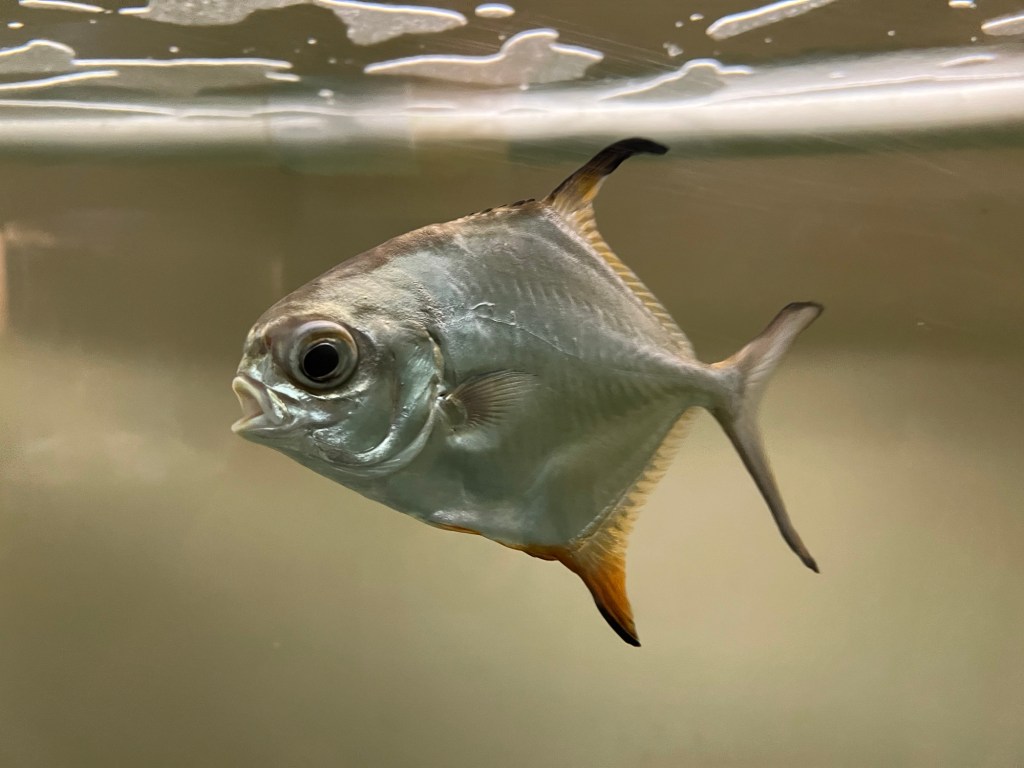
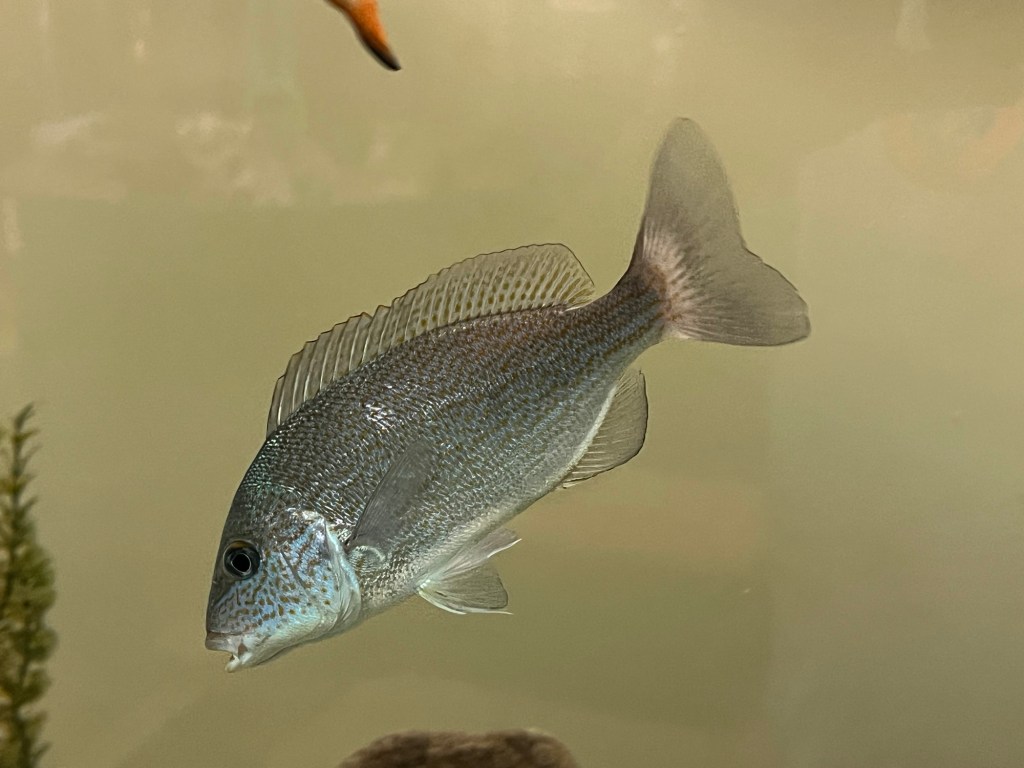
The Aquatic tanks are the interaction we have to the aquatic population. I am sure many of the fish in the exhibition are not native to New Jersey or the Atlantic still it was fun observing them.

The tanks showed the importance of marine life in our beaches and oceans

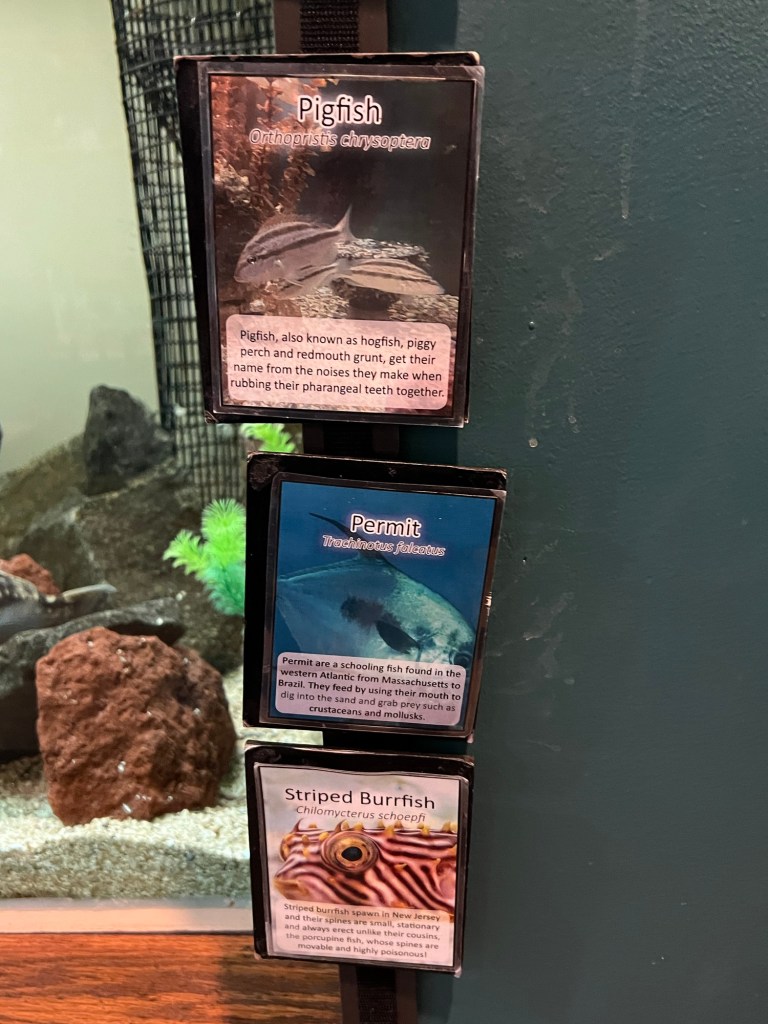
Some of the types of fish in our oceans: the Striped Burrfish, Permit, and Pigfish

The Striped Burrfish

The Stripped Burrfish

The Permit fish

The Pigfish

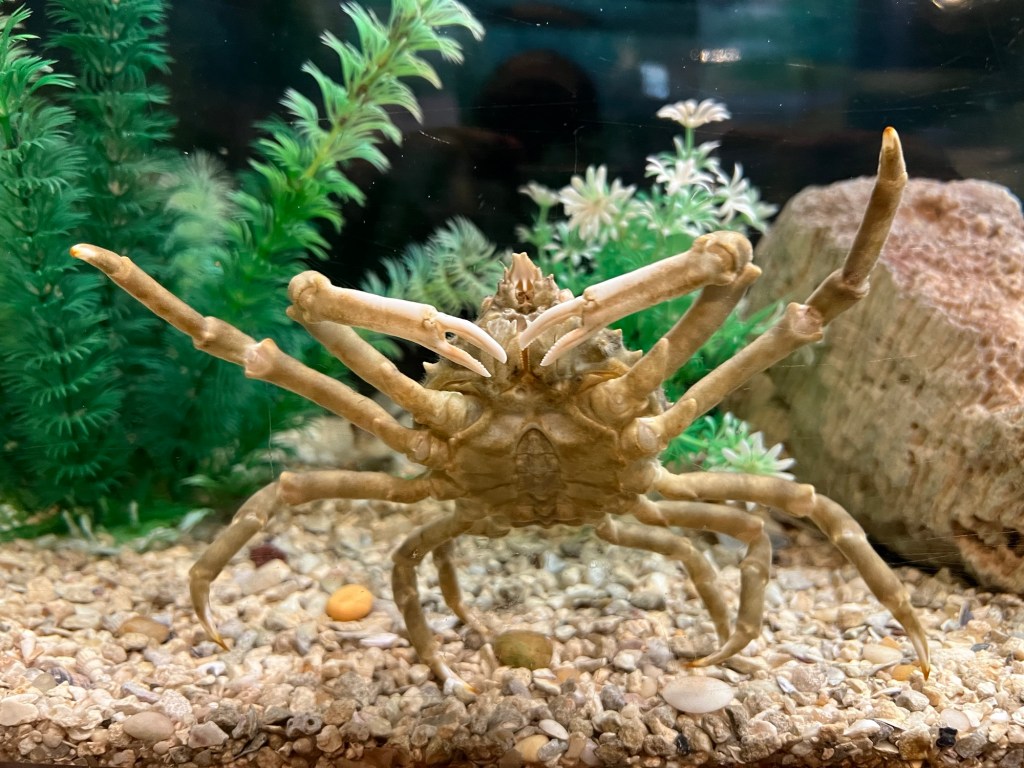
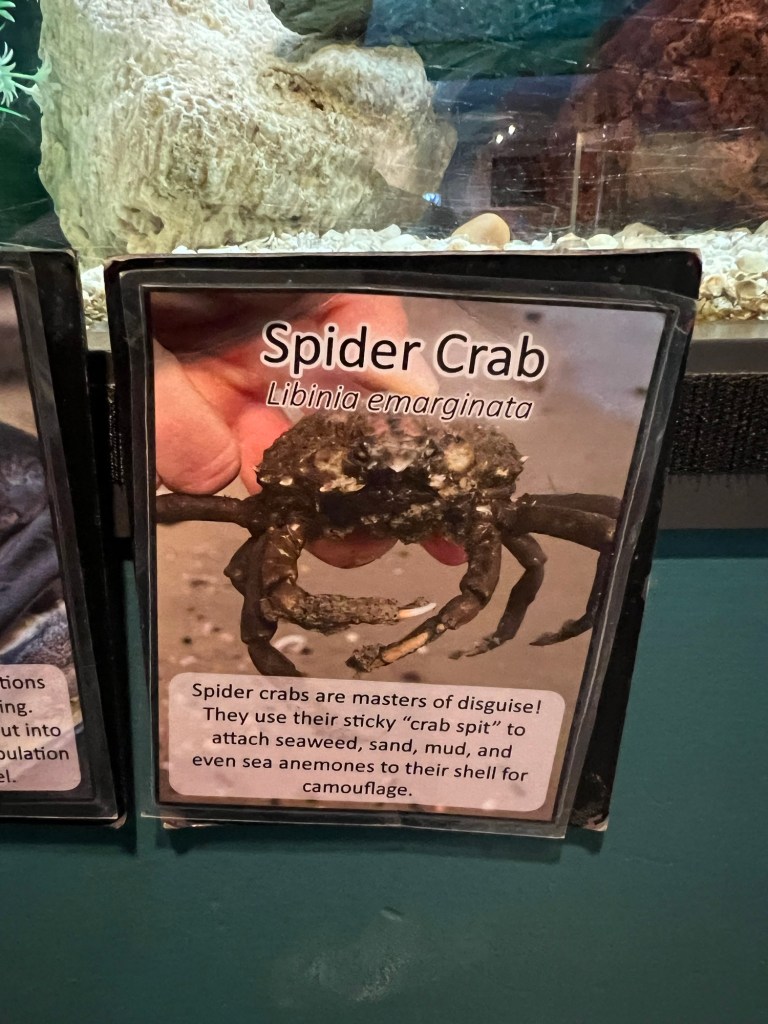
The next tank over held the very active Spider Crab, who seemed to follow my every move.

The sign at the tank of this very playful crab

This guy was following me around the tank

The aquarium was interesting because the fish seemed to be very jaded of being around humans. They seemed so used to seeing us it does not faze them.

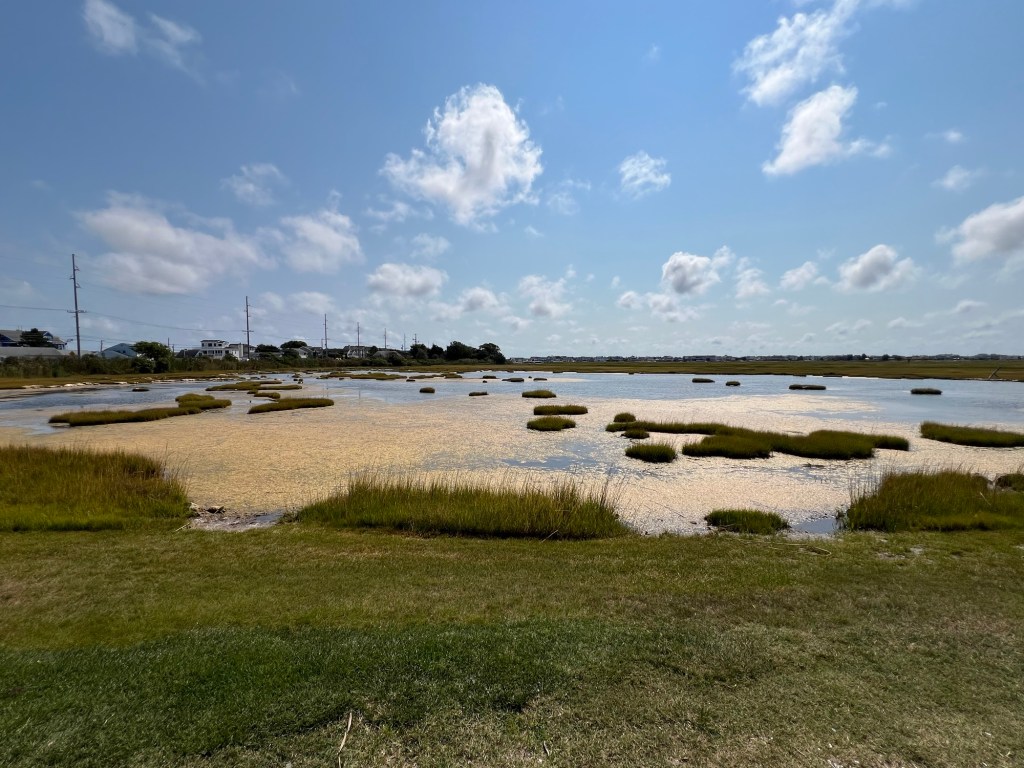
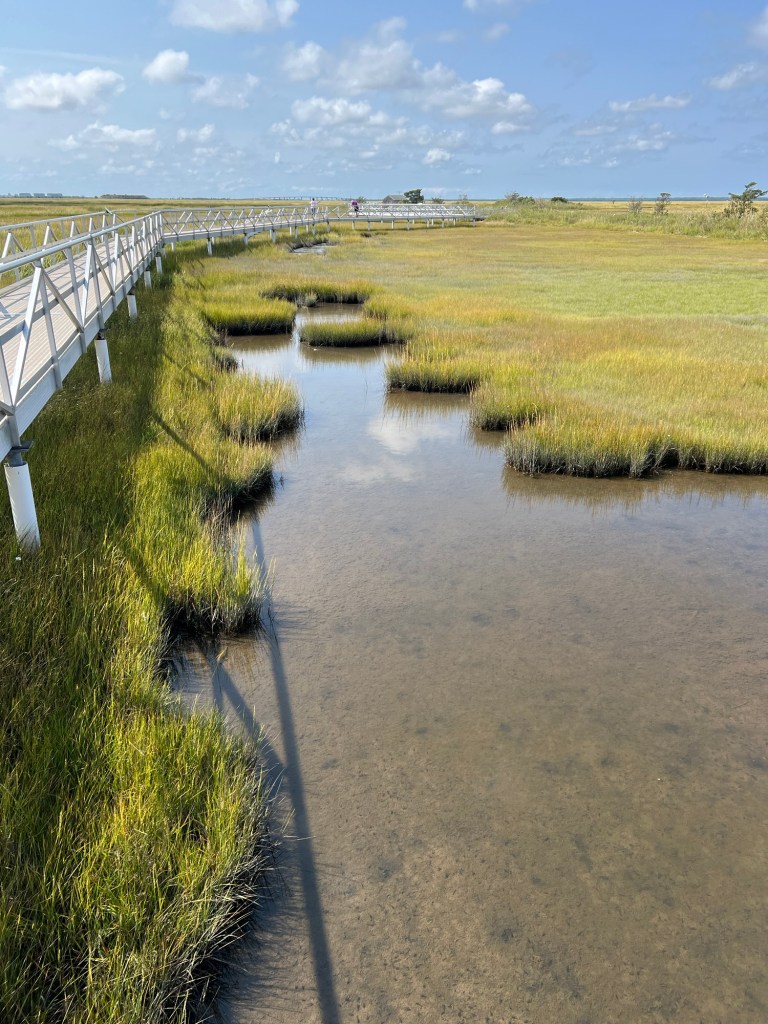
I then toured the salt marshes outside. The Institute has a series of paths and walkways where you can view the marshes and see the cause and effects these natural areas. It was a beautiful warm sunny day when I visited and it was relaxing to just walk along the paths and just take it all in.

The view of the salt marshes from the back of the Institute

A closer view of the marshes from the paths

Coastal Sustainability and Wetland Health

(from the Institute Website)

The Coastal Sustainability and Wetland Health program began with efforts to document the impact of sea level rise on marshes and marsh-dependent species. The health of coastal bird and diamondback terrapin populations is intricately linked to the condition of coastal marsh systems; as a result, monitoring changes in the local population size, behavior, and breeding success of these animals can help us perceive changes within the salt marsh itself. Our work is also increasingly focused on the monitoring of marsh restoration and habitat creation projects. Through beneficial reuse of dredged sediments, we aim to protect the marsh platform from conversion or drowning, and to create elevated coastal bird and terrapin nesting habitat. In order to understand the response of wildlife to these projects, and to document how sea-level rise and coastal flooding are impacting local populations, we are carrying out surveys of marsh-dependent species on The Wetlands Institute property and other restoration sites (Institute website).

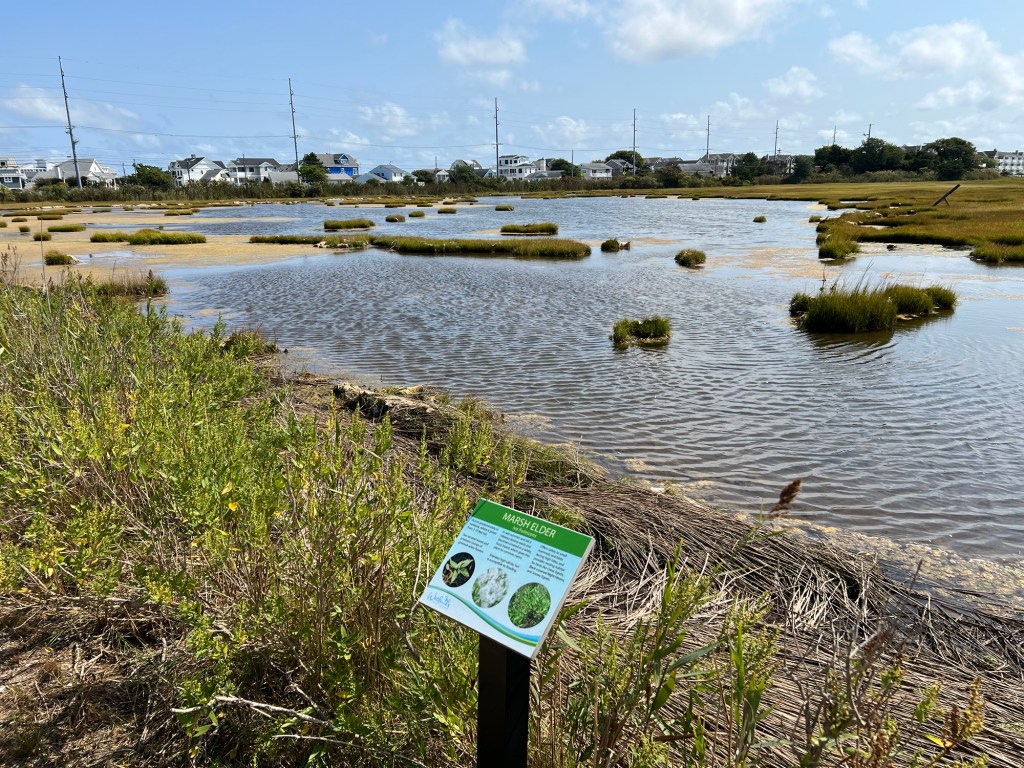
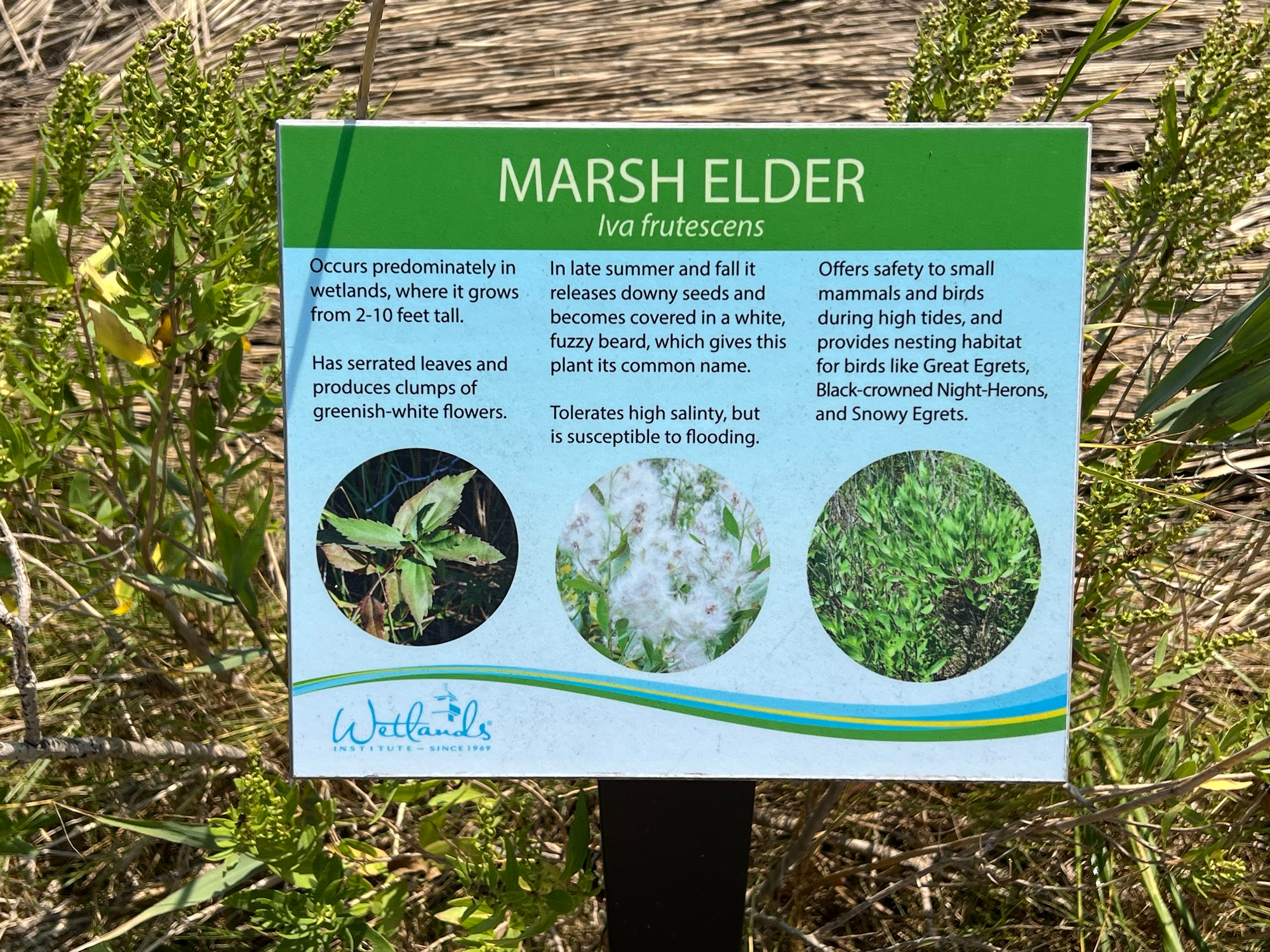
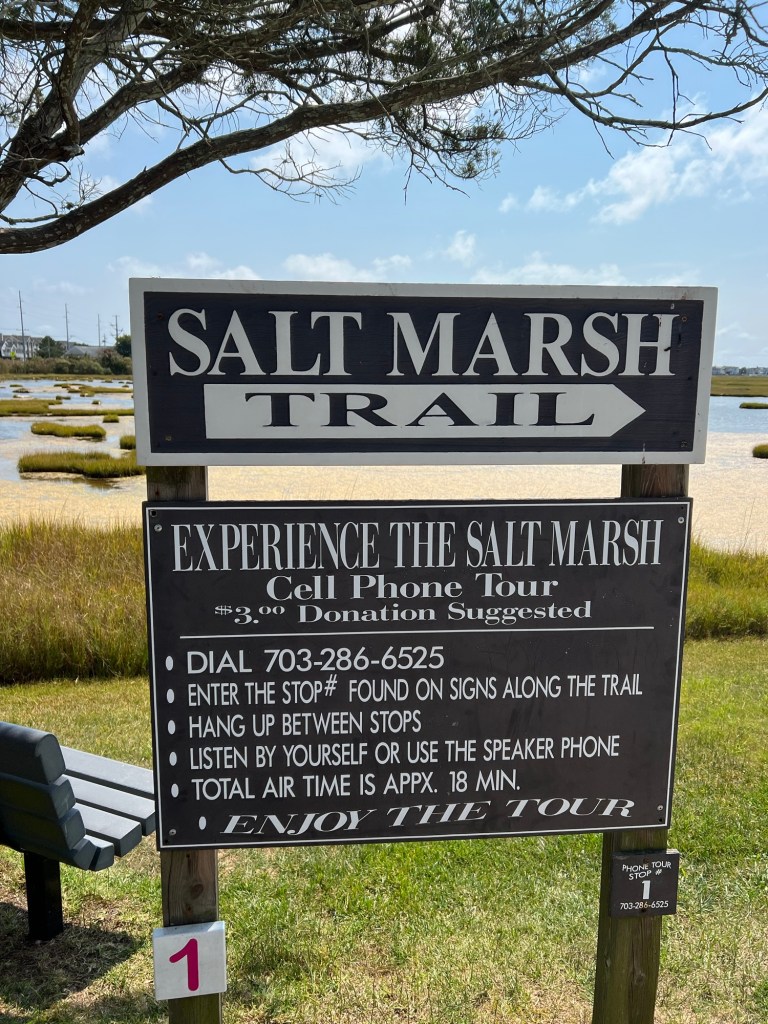
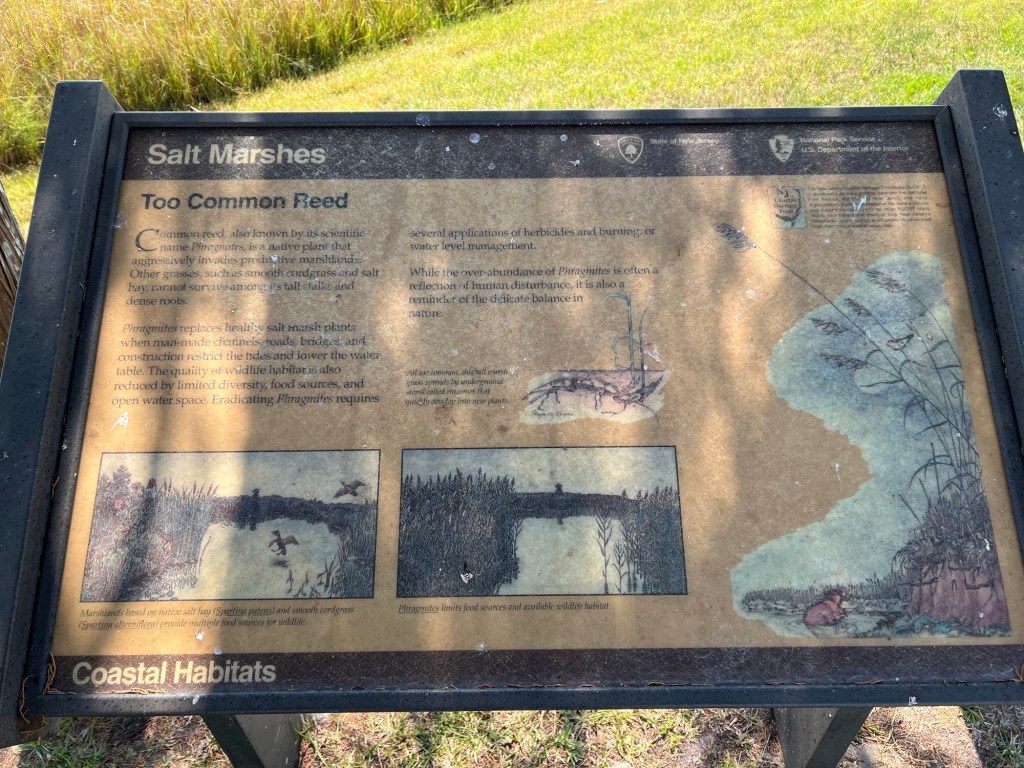
The Marsh Field sign

The Salt Marshes

The back of the Institute from the Salt Marshes

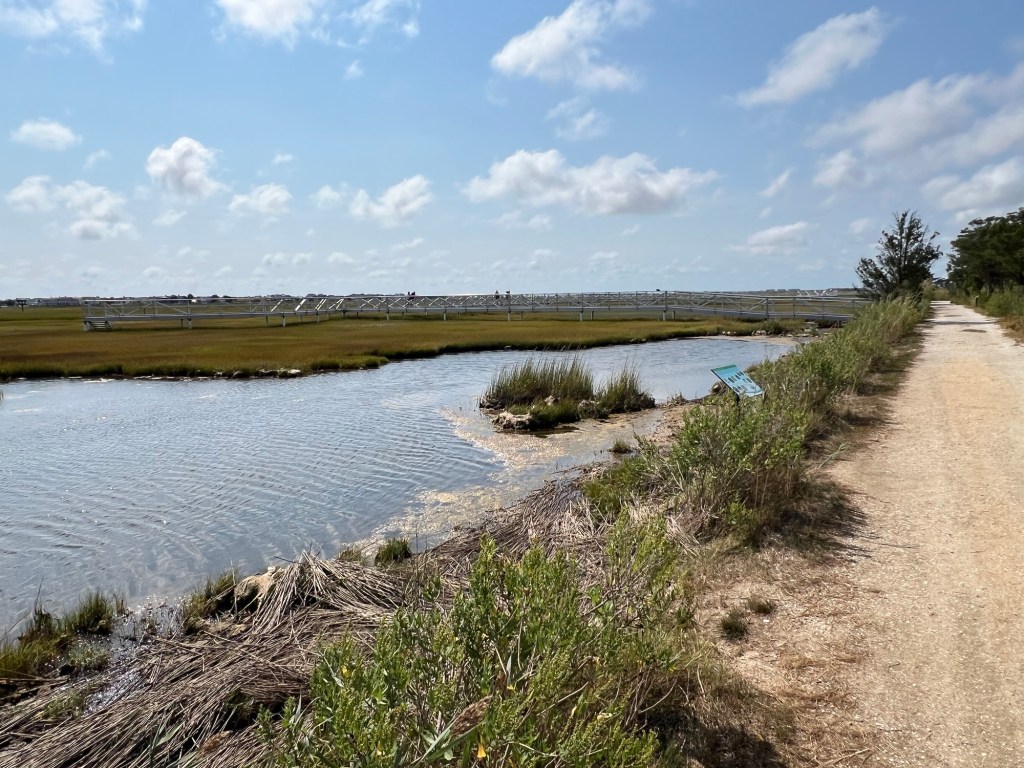
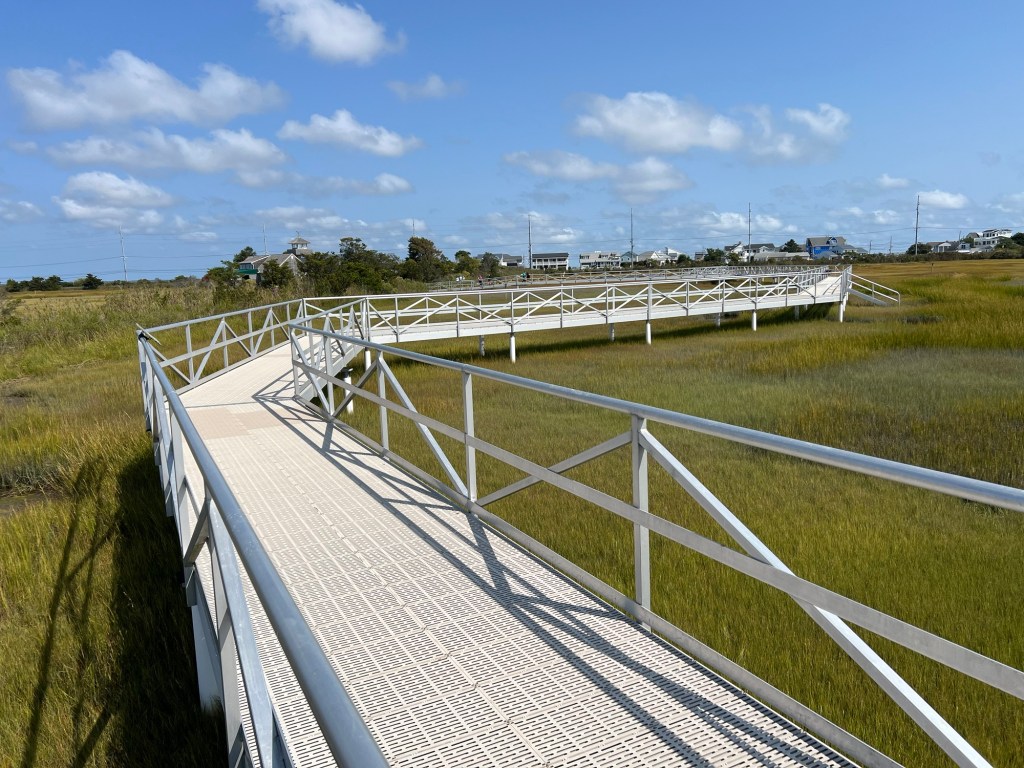
The Institute has a complete elevated walkway where you can walk through the marshes and observe the area.

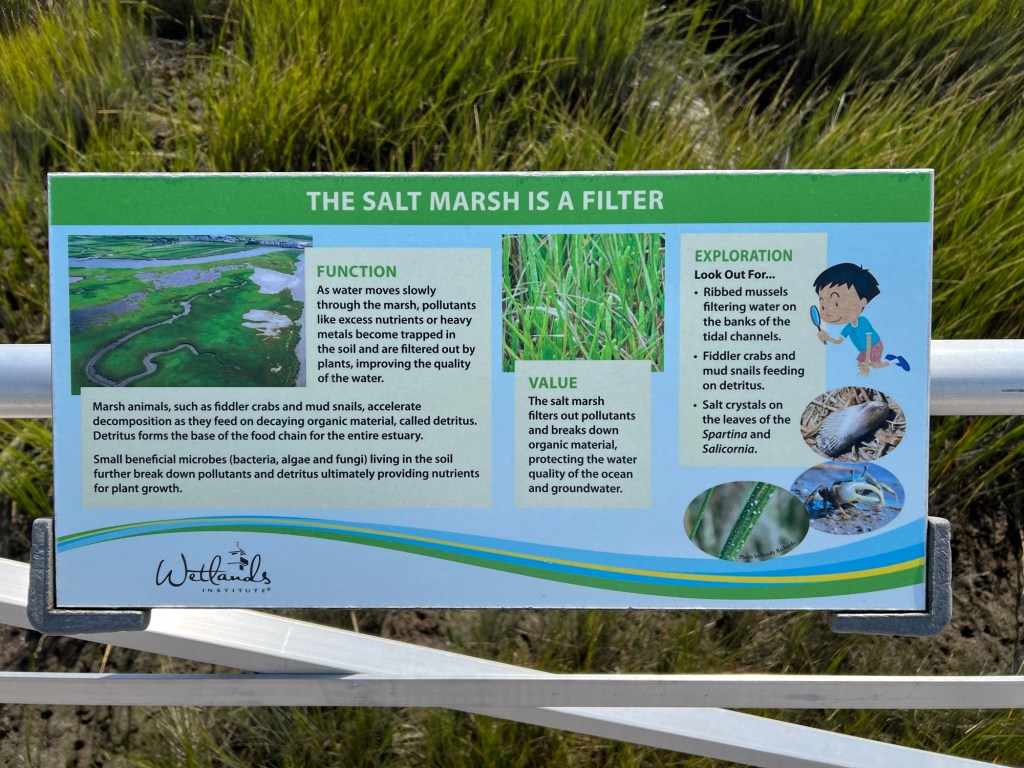
The sign explaining your walk through the marshes

The possible animals and fish you will see on the walk

Plan to take the time to walk through the pathways on a nice day and observe the salt marshes. You will not see many animals or fish but you know they are there. It is interesting to see the town of Stone Harbor in the distance and realize how much these marshes help the human population without them knowing it. Not just are they beautiful to look at but how what an important role in the environment they play.

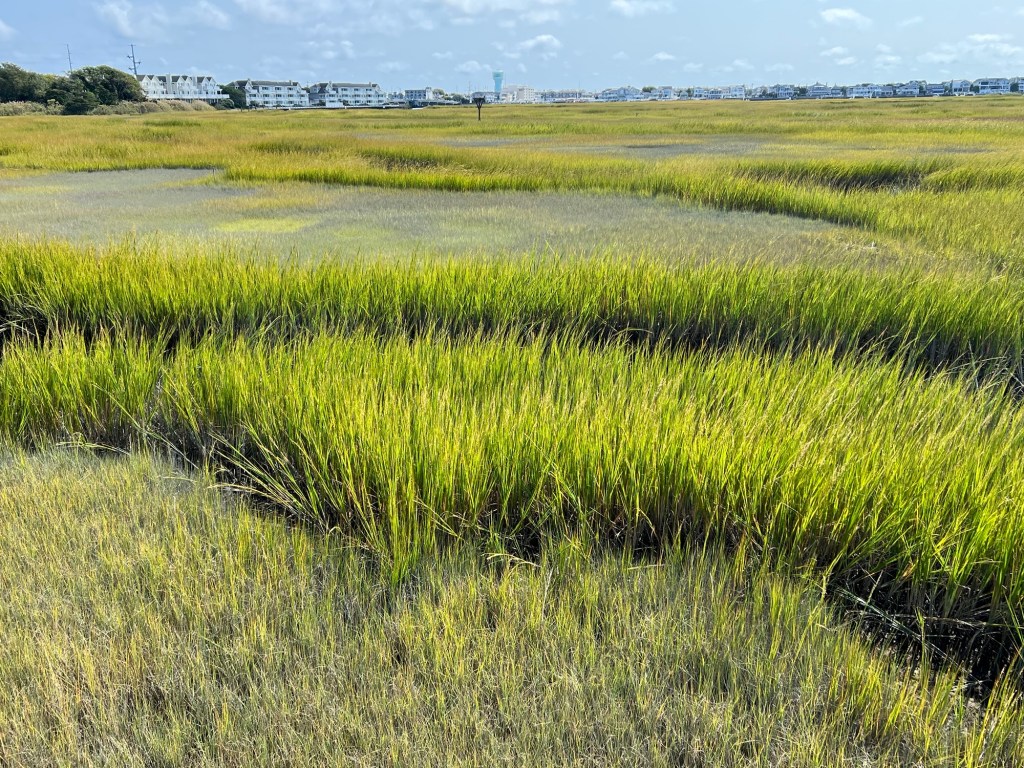
The beautiful view of the marshes

The elevated walkway goes through the marshes and offers excellent views

The marshes from the walkway

The effects of a healthy marsh

The breathtaking views of the marshes

When you finish the walk of the pathways and the elevated walkway, this leads you back to the Institute.

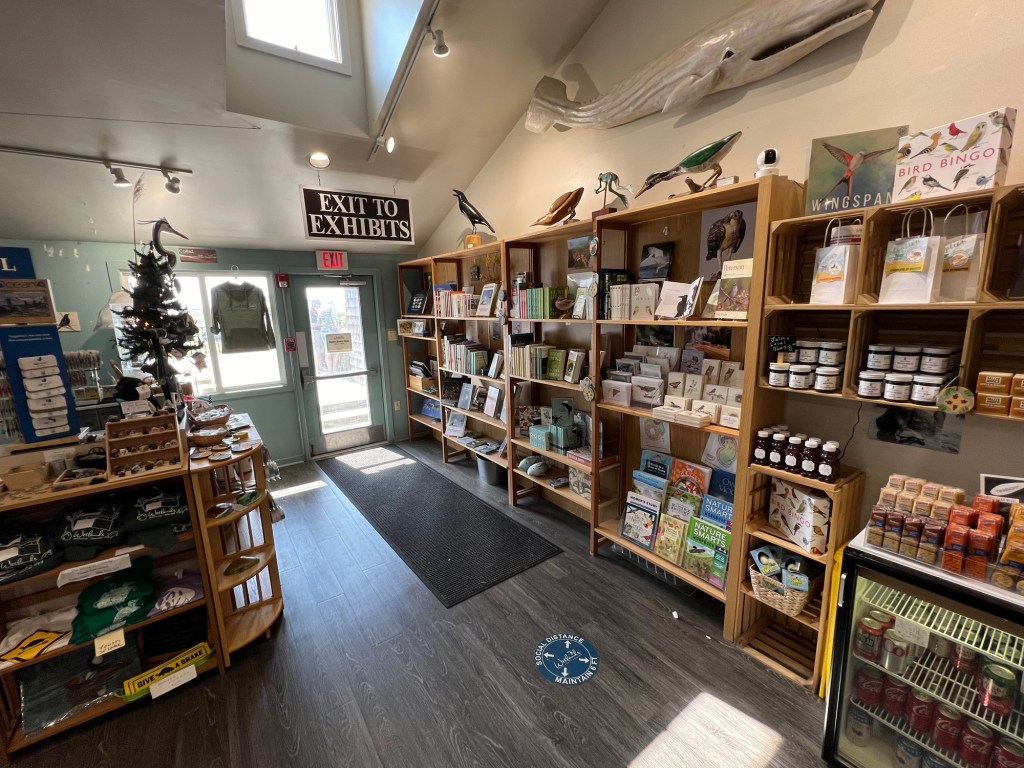
Don’t miss a trip to their terrific gift shop with all sorts of fun items and nautical gifts. I bought a delicious jar of the local beach plum jelly. That was a treat. There are all sorts of interesting gift items in the store from gifts from local farms to items dealing with conservation and nature to children’s items. This benefits the Institute and its mission.

Don’t miss one last stroll through their gardens on the way out the door.

What I liked about the Wetlands Institute was that it was engaging, entertaining and educational all at the same time. You walk out with a lesson learned of the positive efforts being made to save the environment in a way that does preach but first shows the cause and the effect and with simple efforts made can benefit everyone.

Swedesboro-Woolwich Historical Society Museum-Swedesboro City Hall                          1500 Kings Highway                                    Swedesboro, NJ 08085

Swedesboro-Woolwich Historical Society Museum-Swedesboro City Hall 1500 Kings Highway Swedesboro, NJ 08085

Swedesboro-Woolwich Historical Society Museum

Swedesboro City Hall

1500 Kings Highway/ Second Floor

Swedesboro, NJ 08085

(856) 467-0202

https://www.historicswedesboro.com/boards-commissions-departments/swedesboro-woolwich-historical-society/

Open: Sunday: third Sunday of the month 1:00pm-4:00pm Monday- Saturday By Appointment only-please call ahead

Admission: Free but donations are accepted

My review on TripAdvisor:

https://www.tripadvisor.com/Attraction_Review-g46860-d28393747-Reviews-Swedesboro_Woolwich_Historical_Society_And_Museum-Swedesboro_New_Jersey.html

Swedesboro City Hall at 1500 Kings Highway in Swedesboro, NJ

Mission Statement of the Museum:

(from the Museum website)

The mission of the Swedesboro-Woolwich Historical Society shall be to collect and preserve the architectural, cultural, commercial and farming history of the Borough of Swedesboro and the Township of Woolwich through records, documents, photographs, artifacts, and other means with the purpose to promote and provide access to this history for current and future generations, encourage preservation and restoration of historic landmarks located both in the borough and township and provide educational programs, guided historical tours and exhibitions to a diverse population.

The historic marker in front of City Hall

The front gallery of town artifacts

I recently visited the Swedesboro Historical Society located in a gallery on the second floor of City Hall in Downtown Swedesboro. It is an interesting little museum with several small galleries each dedicated to a different theme of the history of the town.

The gallery of Swedesboro High School memorabilia

The large gallery to the back of the museum houses an extensive collection of artifact on the school system especially to Swedesboro High School. This includes yearbooks, pictures, trophies and other spirit related items that show the rich history of the town’s school system.

Class picture over the last 90 years

Composites from trips to Washington DC from the high school. Some were taken in front of the Capital and some from Mount Vernon. It depended on the year.

The Cantoria Friezes from the old high school

The Cantoria Friezes from the old Swedesboro High School (now the elementary school)

These paster friezes once lined the Swedesboro High School and were taken down during the school’s renovation. The theme was Education and you can see this with each characters look in the pursuit of a higher education. These are the highlight of the High School gallery.

These were original reproductions by artist Pietro Caproni of the ‘Cantoria Friezes’ and are based on masterpieces from museums all over Europe. These friezes were purchased by the school system as part of the furnishings for its opening in 1923. These were cast and housed in his Boston studio (Historical Society website).

The former police department lockers make perfect props for high school artifacts

The museum is housed in what was once the old Swedesboro Police headquarters and the old lockers are the perfect backdrop for the museum’s extensive collection of school artifacts displayed in a classroom setting.

The Swedesboro High School China from the dining room

The Sports Department display

Trophies from the high school spanning 70 years

The next gallery is dedicated to town history and the business district. Many of the businesses have been long closed their memory lives on.

Memories and artifacts on businesses from the past

The museum has a large collection of items from the past from the business district showing how the town has changed and progressed from a farming community to a bedroom community of Philadelphia and New York City.

Pictures of businesses from the past and artifacts from a glass manufacturer whose business was in Swedesboro

Artifacts of businesses from the past

Commemorative plates from churches historic pieces of the town’s past

The back gallery hallway leading to the Swedish Room and the Everything room

Family China from one of the member’s of the Society’s family and era dress

The Indian arrowheads found in town

The town being so close to the water and hunting grounds was a place many local tribes settled in the summer months this there was a large collection of arrowheads and other Native American artifacts. This shows the area influence of the Lenape tribes before the Revolutionary War in this area as a hunting and fishing ground.

The ‘Everything Room’ where everything gets stored which does not have a home or display yet

The next display room was the ‘Swedish Room’ dedicated to the Swedish citizens who settled in the Delaware Bay along with Dutch. Swedish immigrants populated this area along with the Dutch in the late 1600’s and were an influence in the Delaware Bay area. “New Sweden” was established and thrived through the Revolutionary War.

The Swedish Gallery with the theme of “New Sweden” colony

Some of the cultural items from the Swedish population that used to live here including a photo of the Swedish royal family

A recreation of a home of a Swedish family in that time period

Books, maps and artifacts from the Swedish cultural the once dominated this community.

The last small gallery at the museum displayed the town’s Military contributions during the wars and artifacts on the town’s governing body.

The history of the different fraternal orders that were once and still are part of the town of Swedesboro.

More of the awards and accolades of the organizations in town.

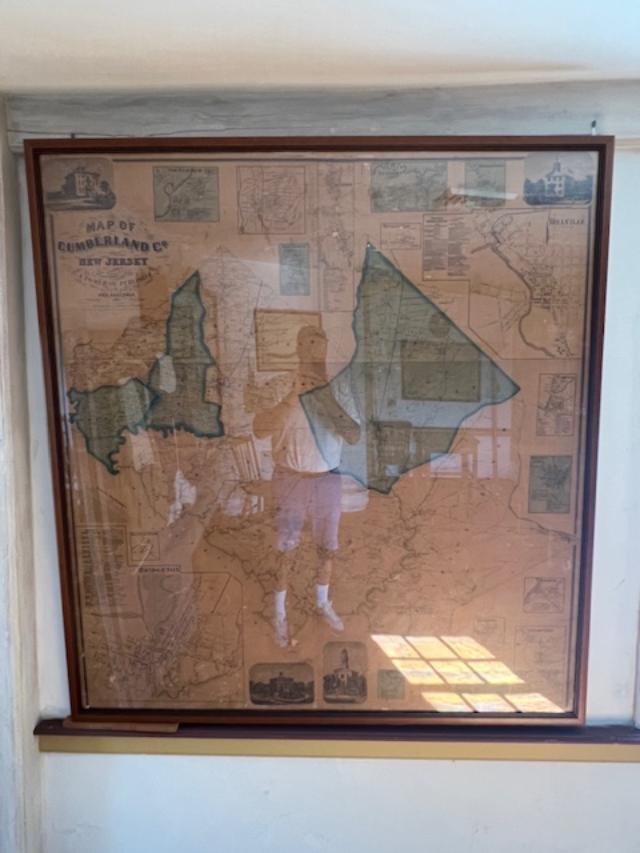
The map of the town around the turn of the last century

Members of the Swedesboro community

The Military Gallery with uniforms, pictures and artifacts including medals from the town’s citizens that fought in the wars

What was nice about this gallery is that it shows the contribution of a small town and what they did for the war effort. The collection of uniforms is quite extensive.

The uniform and picture of a soldier from WWI

In the entrance to the museum, there are more displays on the town’s farming past and the people who helped shape this community to what is today.

Artifacts that are part of the town’s agricultural past in farming strawberries

Pictures of the architect and first Mayor of the town that helped shape the town

For such a small museum, the galleries are packed with interesting information of the Town of Swedesboro, its past, its present and its future. The museum tells the story of where the community has been and how it will shape its future.

Take your time to stroll the three galleries and look at the fascinating past of this small New Jersey town. Then head outside and walk its downtown to stroll the present. There are a lot of wonderful stores and restaurant to visit there as well. This is what makes the town of Swedesboro so special.
The History of the Swedesboro Museum:

(from the Museum website)

The Swedesboro-Woolwich Historical Society provides cultural and educational events throughout the year for area residents. Its goal is to obtain and preserve the history of the Borough and surrounding Woolwich Township. To meet this end, the society collects and archives artifacts, documents, books, photos, family histories and items which help to keep Swedesboro’s rich history alive. To add to our collection, volunteer with exhibits, or to give an oral history, click here to contact the Swedesboro-Woolwich Historical Society. To become a member, click here to download a membership application.

Visit our booth on Swedesboro-Woolwich Day in September.  Learn about local history, purchase books and other items to support the historical society.  Civil War re-enactors also attend town events to educate people about Swedesboro’s rich history and memorialize fallen Swedesboro & Woolwich Township soldiers.

In addition to our presence at local events, the Historical Society participates in programs to excite the community about Swedesboro’s rich history. Twice a year, we visit Fourth Grade classrooms within the Swedesboro-Woolwich School District to encourage interest in the history and culture of our community among students and teachers alike. Our meetings, held on the third Wednesday of every month (except July & August) at 7:00 PM and open to the public, also feature special interest speakers, authors, re-enactors, traveling exhibits from the Gloucester County Historical Society, and special programs throughout the year.

To learn more about our organization and local history, please stop by our booth at town events, strike up a conversation with a re-enactor you meet on the street, or join us at our new location (on the second floor of Borough Hall at 1500 Kings Highway in Swedesboro) for a meeting. To support the Historical Society, click here to purchase Historic Swedesboro Merchandise. New publications are researched, written and printed each year!

Video at the Swedesboro Historical Society-A Special Visit

This visit showcases the pictures that I took all over the museum. This gives a more detailed description of all the artifacts in the museum.

Tour of Historic Swedesboro, NJ-A Video tour

Bay Head Historical Society & Museum                             1643 Bay Avenue                                                        Point Pleasant, NJ 08742

Bay Head Historical Society & Museum 1643 Bay Avenue Point Pleasant, NJ 08742

Bay Head Historical Society

1643 Bay Avenue

Point Pleasant, NJ 08742

https://www.bayheadhistoricalsociety.com/

Open: Sunday 1:00pm-4:00pm/Monday-Friday Closed/Saturday 1:00pm-4:00pm/Seasonal

Admission: $5.00 donation

My review on TripAdvisor:

https://www.tripadvisor.com/Attraction_Review-g46744-d10596027-Reviews-Bay_Head_Historical_Society-Point_Pleasant_New_Jersey.html

The Bay Head Historical Society & Museum at 1643 Bay Avenue in Point Pleasant, NJ during the Summer

The Museum was also decorated for the Christmas holidays

The bay at Bay Head, NJ

The lake views near the historical society

I took a detour over the weekend to Bay Head, NJ to visit their wonderful historical Society. What an interesting museum whose collection shows the town’s nautical past and present. The museum has something for everyone. For the kids, the museum has a wonderful dollhouse with interesting furnishings that any kid would want to play with everyday. across from that is a Bottle Collection of old milk and soda bottles found in the town showing its retail past.

The historical doll house on display

The Bottle Collection

The museum delves into the town’s Native American past with a small collection of artifacts found in the area when tribes used the area during the summer season for fishing, hunting and recreation. One of the members of the community contributed her experiences to the museum as well. Several items have been donated on permanent loan from other museums and the museum displays them beautifully.
The Lenape exhibition

The Native American exhibit

The Native American exhibit

The highlight of the museum is its latest exhibition ‘Maps: A Journey Through Time’, which is an extensive collection of old maps of the State of New Jersey. This was fascinating in the the collection starts even before the creation of the state when it was under the control of Lord’s Berkeley and Carteret, two English nobles who according to the Society President never stepped foot in the state but collected money from it.

The sign for “Maps: A Journey Through Time” exhibition

The map collection shows the progression of the State of New Jersey through population growth and development. With the advent of the railroads and then through automobiles, transportation has changed the entire state of where we live and play.

The Historical Map exhibition

The Historical Map exhibition

The pictures of Lord John Berkeley and Sir George Carteret who once split the State of New Jersey East and West

History of the split of the State of New Jersey

Old maps of Bay Head, NJ

The Exhibition during the Holiday season was “Victorian Christmas” where parts of the museum was decorated for the holidays of the late 1800’s in post Civil War America. The museum had their Christmas tree up laden with antique ornaments from all eras decorating the tree.

The “Victorian Tree” decorated with antique ornaments

The museum was also decorated with vintage toys and all sorts of garland and decorations

The furniture in the museum as well as the rest of the museum was decked with all sorts of holiday decorations.

The “Victorian Christmas” display was very nice and created a very festive environment for the museum goers. The Christmas tree was a blast from the past as I saw decorations from my Grandmother’s tree on their tree. It brought a lot of memories from Christmas’s past.

The last part of the tour I had was of the Slade Dale Nautical Cottage, a local boater and fisherman’s collection of items from his dock cottage. Here I saw an extensive collection of nautical tools and boating items including displays of sailing items. The collection shows how important the boating and pleasure sailing industry is with the town.

The museum is a wonderful place to visit on an afternoon out when you tire of the beach and you want to know more about the town of Bay Head. It also on the edge of their quaint downtown filled with interesting stores, restaurants, bakery and parks. The small historic downtown is very nice to walk around in the summer months.

The Bay Head Historic District sign

https://en.wikipedia.org/wiki/Bay_Head_Historic_District

https://www.livingplaces.com/NJ/Ocean_County/Bay_Head_Borough/Bay_Head_Historic_District.html#google_vignette

https://www.claytonandclayton.com/blog/best-historic-monuments-in-bay-head-nj.html

Downtown Bay Head, NJ

The canal downtown

It was a bit more gloomy in during the holiday season as the rains came right after Christmas. Still I liked the decorations in this festive and very active downtown.

The church decorated for Christmas on a gloomy Saturday

The downtown businesses decorated for the holidays

The bridge over the canal was beautifully decorated for the holidays

The Bay Head Fire Company One decorated for the holidays

Santa guarding the firehouse in Bayhead, NJ

Bayhead really got into the Christmas spirit during the holiday season. It put me back into the holiday spirit even though it was drizzling the whole time. It must have looked really nice on a sunny afternoon.

The Bay Head Historical Society & Museum information:

(from the Museum website)

This 1867 farm home with outstanding interior woodwork has been restored to its former glory. The museum is home to memorabilia and history of life in this part of the Jersey Shore. An exhibit of turn-of-the-century photographs of the area plus artifacts and heirlooms donated by local residents are on permanent display during the season. The front salon is a gallery for changing displays of local art and special area exhibits. The Victorian garden, the sea grass garden, and the lilac memorial garden are outstanding. Completing the complex is the Dale Cottage, which celebrates the maritime heritage of the area.

The History of the Loveland House (home of museum):

The Loveland Homestead built in 1867, addition in 1887
Slade Dale Cottage 1925:

When members of the Loveland family settled in this area around 1837, the land at the head of Barnegat Bay was sheltered from the sea by high sand dunes covered with sea grasses where bay berries and beach plum bushes grew in abundance. There were cranberry bogs, marshlands and fresh water lakes which provided a habitat for the birds and migratory fowls that later attracted gunners to the region.

The Loveland House

The Loveland Homestead historical plaque

The first purchasers of this land, which later became the hamlet known as Lovelandtown, were Judah Allen, who came here from New England in 1685, and John Hance. At the time this area was part of Shrewsbury Township, County of Monmouth, Province of East Jersey under the reign of King James II of England.

As the Loveland family grew, the family steadily increased its land holdings in the area. The members married into prominent local families from Point Pleasant and Brick and continued to develop their neighborhood throughout the late 1800’s.

Inside the old Homestead of the Loveland family

At the same time in the mid-1800’s three land developers from Princeton, Messrs. Howe, Mount and Harris arrived and bought the land eastward that was to become Bay Head. Developed from the beginning as a resort community for the upper middle class, Bay Head attracted many affluent families from both New York and Philadelphia, thanks to the developers attracting two railroad lines to the town. The Jersey Central arrived from New York in 1882 while Pennsylvania Railroad came across the bay through Trenton and Toms River. Last stop for both was Bay Head.

John W. and Samuel Loveland were the largest landholders in the area. They were joined by other early settlers, notably the Cook family and the Stout family, and were linked to these through marriage. In 1867 the Loveland Homestead, currently the home to The Historical Society Museum, was built by Charles Stout for his daughter Lorah Stout upon her marriage to Charles Cook. By 1887 the family had grown and the back part of the house was added on to accommodate their 7 children.

The Loveland family acquired the house in the early 1900’s and continued to live here until the Bay Head Historical Society purchased the property in 1997. At that time the house had fallen into disrepair and after a two year renovation (mostly exterior), the homestead opened as The Historical Society Museum in 1999. The Dale building was acquired by The Historical Society and moved to the property in 2001.

The Loveland Homestead houses artifacts, memorabilia, photographs, furniture, decoys and other treasures from the early Bay Head/ Mantoloking/Lovelandtown years. Worthy of note are the original Gerald Hardenbergh paintings and the carved Kenneth Loveland and Birdsall decoys. All three off these local artists have gained recognition in many areas outside New Jersey.

The photo collection contributed by William Schoettle is equally noteworthy for its comprehensive look at the area as it was in its heyday (mid-1880’s to about 1940). The collection is part of the museums archives and is exhibited frequently.

The Slade Dale Cottage history:

(from the museum website)

The Slade Dale cottage is, in part, a celebration of the sailors of Barnegat Bay. It is also an homage to the man who, as a young man, was a noted sailor in the area and who continued throughout his life to engage in truly memorable sea voyages and bay races. He built his dream marina, the Dale Yacht Basin, through his foresight of bringing outboard motors to the area. He then promoted boating of all kinds throughout the years from the 1940’s to mid-1960’s. For many of those years he lived in his cottage at the end of the dock at the marina.

The Slade Dale Shed

The historical plaque for the Slade Dale Cottage

The Slade Dale shed during the Summer months

The Slade Dale shed decorated for Christmas

The Slade Dale Gallery

Boating equipment in the Slade Dale exhibit

The pictures of Slade Dale

The boating exhibit at the Slade Dale exhibition

The gardens on the property represent a typical Victorian garden, a lilac memorial garden, an herb garden, a sea grass garden and a resting patio.

The gardens at the Bay Head Historical Society

The gardens at the historical society

The Bay Head Historical Society is a nice way to spend the afternoon when you really want to get to know the community.