I am taking a class in Trends in Tourism for my graduation program in Global Hospitality Management and this included a recent trip to the Fotografiska Museum at 281 Park Avenue South. We had a meeting with a member of the Marketing Team at the museum and he explained how the museum functioned and the direction that they want to go to promote the museum.
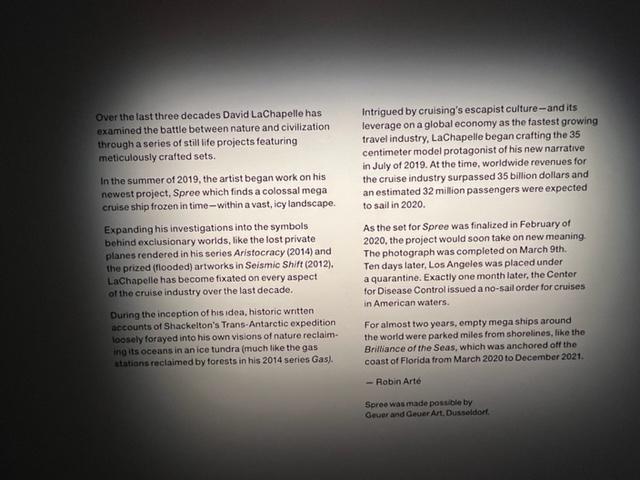
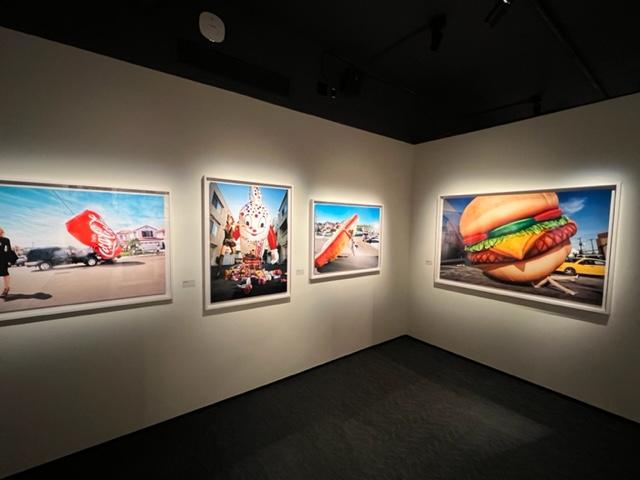
After the talk, we were able to tour the museum. The exhibition that we saw as a class at NYU for my graduate program was the David LaChapelle exhibition. This was a unique blend of art with works in many different forms and ideas. The artist was influenced by his association with his friend and collaborator, Andy Warhol. I saw this in many pieces in the exhibition.
What I liked about the museum is that you had three floors of artwork that showcased the artist’s work and gave his perspective as a living artist.The artist even had input on how the exhibition was mounted, the works that would be shown and use of music or lack of in the exhibition.
On the bottom level of the museum is an engaging coffee shop and gift shop that are open, airy and very inviting. You can access these by walking in the front door and you do not have to enter the museum to enjoy these services. The museum created these as spaced where people can gather, relax and socialize.
The Fotografiska Museum is giving us a new perspective on what the modern museum can be and its engagement with its patrons.
The entrance of the Fotografiska Museum for the David LaChapelle exhibition
The exhibition sign
The fascinating paintings of the artist
I admire the work of the artist
The galleries were full of interesting works by artist David LaChapelle
ABOUT THE ARTIST
(from the museum website)
David LaChapelle was born in Connecticut in 1963 and attended high school at North Carolina School of The Arts. Originally enrolled as a painter, he developed an analogue technique by hand-painting his own negatives to achieve a sublime spectrum of color before processing his film.
At age 17, LaChapelle moved to New York City. Following his first photography show at Gallery 303, he was hired by Andy Warhol to work at Interview Magazine.
The artist is giving a nod to her friend Andy Warhol with these two takes on his famous “Portrait Work”
The last piece of art on Andy Warhol was done by LaChapelle right before he died.
Through his mastery of color, unique composition, and imaginative narratives, LaChapelle began to expand the genre of photography. His staged tableau, portrait and still life works challenged devices of traditional photography and his work quickly gained international interest. By 1991, The New York Times predicted, “LaChapelle is certain to influence the work of a new generation…in the same way that Mr. Avedon pioneered so much of what is familiar today.”
In the decades since, LaChapelle has become one of the most published photographers throughout the world with an anthology of books including LaChapelle Land (1996), Hotel LaChapelle (1999), Heaven to Hell (2006), Lost & Found, and Good News (2017). Simultaneously, his work has expanded into music video, film and stage projects. His 2005 feature film Rize was released theatrically in 17 countries. Many of his still and film works have become iconic archetypes of America in the 21st Century.
The History of the Fotografiska Museum:
(from the museum website)
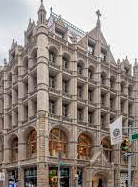
Fotografiska New York is the NYC location of the renowned Stockholm-based destination for the world’s best photography. Founded in 2010, Fotografiska was built on the foundation of photography as a haven for inclusivity and free expression.
The Fotografiska Museum in Manhattan
Our goal is to inspire a more conscious world through the art of photography. We showcase the greatest photographers, whether they’re emerging artists or already established internationally.
The building is a registered landmark built in 1894 and originally named “The Church Mission House”. We’ve renovated this iconic jewel to be a new experience of world-class art, cultural events, retail, and epicurean dining, in an awe-inspiring space.
This was the first time I had been to City Island since 2008 when I visited the island for research for my third book “Dinner at Midnight” in which one of the main characters is a witch that moves to City Island. I had walked every street on the island trying to get a feel for what it might be like to live on the island and what the character may experience. There is a very important scene in the book where her boss comes to the island to search for her and notes to close proximity to Hart Island, New York City’s ‘Potters Field’.
He comes searching for the truth about his unusual employee and finds out too much. I will just leave this as a spoiler as I have not…
The City Island Nautical Museum at 190 Fordham Street
The City Island Nautical Museum
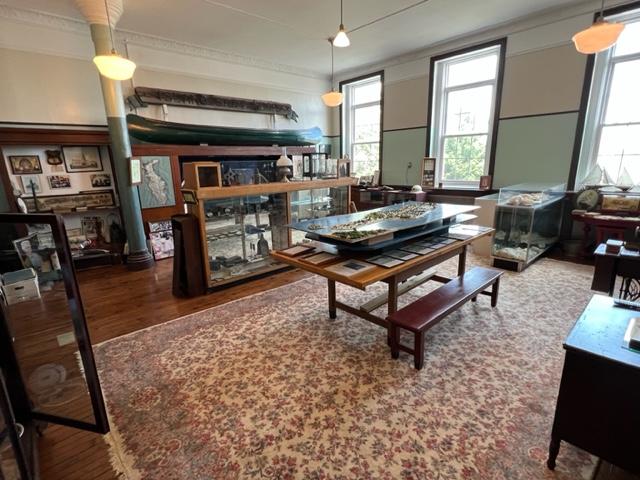
I recently took a trip to City Island, a small community just off the coast off the mainland of The Bronx (which is part of The Bronx) to visit the City Island Nautical Museum. This tiny museum located in the heart of the island is noted for its collection of ship building artifacts and items that are native to a community that once built the vessels for the America’s Cup.
The main hallway at the City Island Nautical Museum dedicated to the America’s Cup
City Island has a rich history in ship building, sail making and fishing it is reflected in the collection of materials in the museum and its archives. The museum really details the growth and history of the boating industry on the island and its importance in the local economy. What I found interesting was the rich history of the creation of the sailing ships for the America’s Cup tournament and how all the winning boats up until the 1980’s were built on the island and the one that lost the cup for us against Australia was the first one not built on the island.
The Nautical Room Gallery
Even Ted Turner’s boat “Courageous” was built on the island. There was a picture of the reunion of the boat winning twice at the museum with the crew’s signatures (The tour guide even said how he ‘freaked out’ members of the New York Yacht Club who did not consider him one of their own). All the sailing vessels lined the walls of the hallway of the museum.
The America’s Cup Race winners
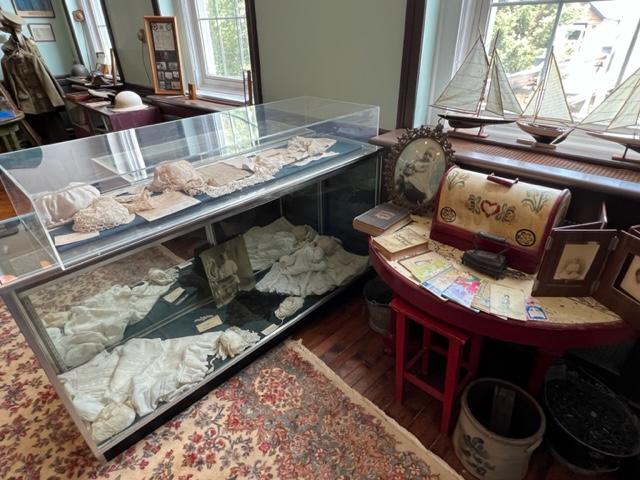
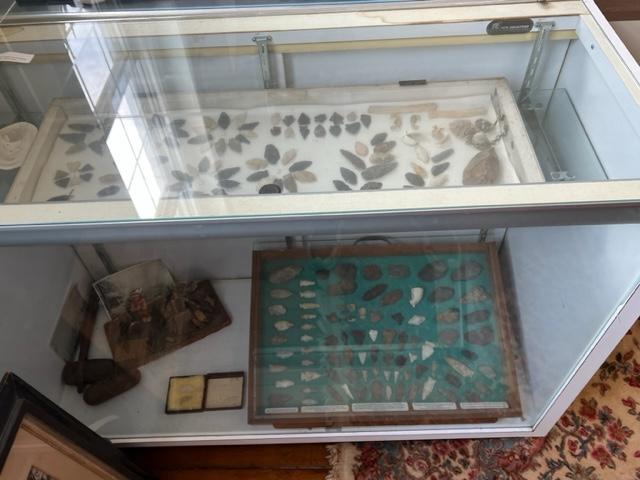
Each room of the museum was dedicated to a different theme. When I toured the Community Room in the back of the museum, it held the records of a lot of old businesses of City Island with pictures and items that were once part of the businesses. There was a small FDNY display, a small WWII display about local residents who fought in the war, wedding garments, maps of the island and a small display of arrowheads.
The Community Room Gallery
The Community Room-Map of City Island
The Community Rom-Items from businesses and homes.
The Community Room-Arrowheads and Native American objects
Baby clothes and household items
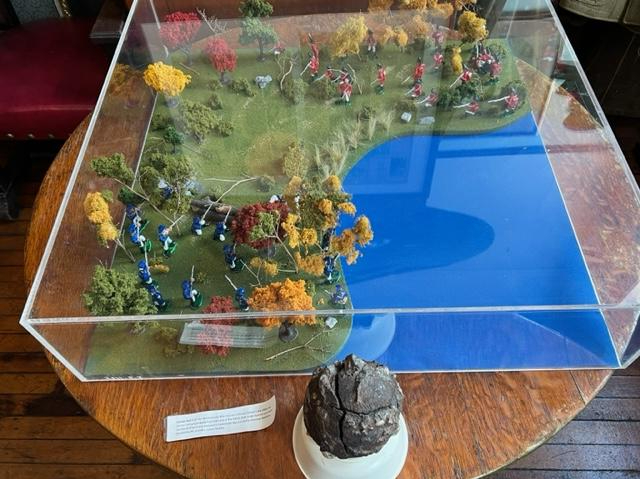
A cannonball from the Revolutionary War battle
Church Chairs in the Community Room
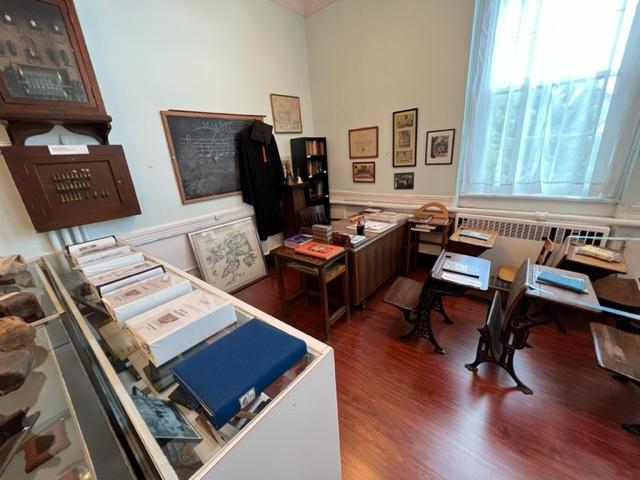
In the School Room, the concentration was on PS 17, which the museum is now housed in and its history with all the classroom group shot pictures, graduation pictures and a small classroom set up. There were more records and event items of the current PS 175, which is the K-8 school that the residents attend. There were also records and pictures of St. Mary, Star of the Sea School, the former Catholic school that used to be on the island as well.
The Schoolroom Gallery
The Schoolroom Gallery
The Nautical Room needed an overall as there was too much going on in the room with pictures all over the walls, equipment for navigation and for fishing and records of the ship building companies that used to dot the island. There were boats in various shapes and sizes on display and the companies that built them like Wood Yacht, Nevins Yacht and Minneford Yacht. There was also the history of shipbuilding and sail making on the island. The tour guide told me there were no more ship builders on the island, but one sail maker left.
The Shipping making equipment
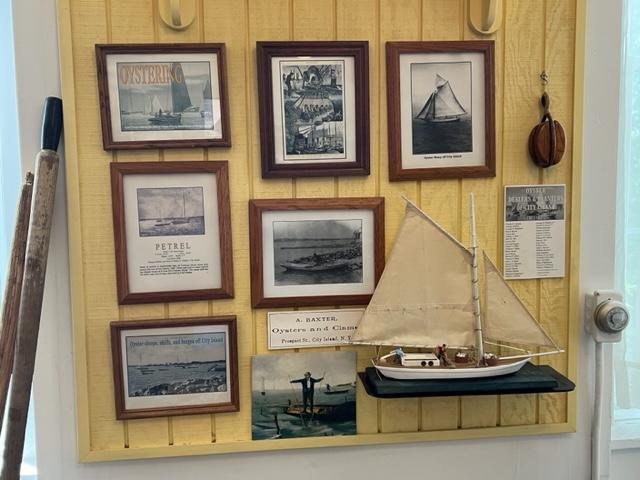
Locally made boats on City Island
The Library where all the research is done on the island and on the families and businesses that were once here was dominated by yachting pictures and nautical photography. It held all the City Island records and even the ship building plans.
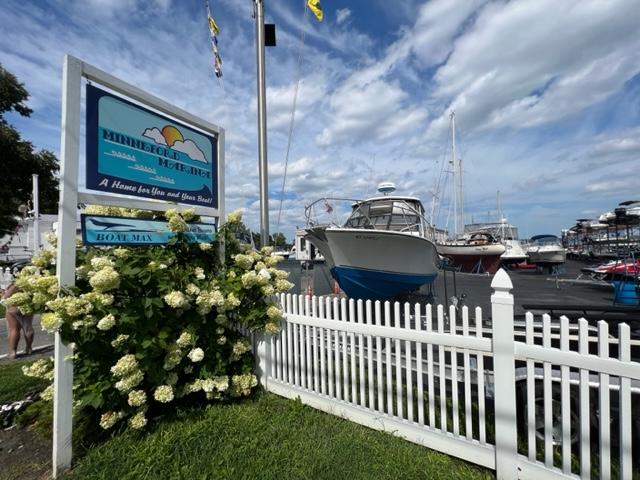
The Minneford Boatyard down the road from the museum is still operation today.
The City Island Nautical Museum Library
The museum has a lot to see but it needs to be a bit more organized to really showcase the collections properly. Still, it is one of the best museums I have seen with a nautical history theme. The best part is that you can see the whole museum in about an hour and this leaves you time to tour the island and see how the museum better explains why the island is the way it is right now.
The Ship display in the City Island Nautical Museum Library.
The History and set up of the City Island Nautical Museum:
(From the Museum pamphlet)
History of the Museum:
(From the Museum Pamphlet)
The City Island Nautical Museum is located in one of the island’s most picturesque and historic buildings, the former Public School 17, built in 1897 on one of the highest points on the island. When the residents of City Island voted in 1895 to separate from the town of Pelham in Westchester County and to become part of New York City, the City administration built the school, which continued in use until 1975. When the building was sold in 1986, the City reserved space for use by the City Island Historical Society and the Community Center and several old classrooms now serve as galleries for the museum.
The front main gallery is reserved for revolving exhibits. This exhibit that was being featured in the summer of 2023 was by local artist Liz Alderman.
The Liz Alderman Exhibit in the Front Gallery:
Local City Island Artist Liz Alderman at the City Island Nautical Museum in 2023.
The Liz Alderman Exhibit in 2023 at the museum
The Liz Alderman Exhibit of the local artist’s work.
The Liz Alderman Exhibit at the museum
The Main Hall and Gallery:
The Main Hall is lined with photographic essays featuring maps, the America’s Cup, City Island’s most beautiful boats, the City Island Bridges and historic buildings as well as a history timeline, models of a minesweeper and several rum runners, built during Prohibition and a handsome wooden kayak built in the 1930’s. The foyer contains the museum’s gift shop, featuring articles for sale such as books, t-shirts, photographs, postcards and nautical gifts and the desk where the docents greet visitors.
The Gallery features display cases with antique shipbuilding and sailmaking tools and the walls are covered with photographs of yachts built or serviced here and portraits of legendary City Islanders who contributed so much to the life and work on the island.
The Main hallway at the City Island Nautical Museum
The Walsh Library:
The recently refurbished library features a collection of books devoted to maritime history and many binders and scrapbooks featuring newspaper clippings, postcards and articles about City Island, Pelham Bay Park and Hart Island. There is an extensive selection of nautical magazines, including Yachting, Rudder, Wooden Boat and Classic Yacht, a data base of all boats built on City Island since 1848 and an impressive display of ship models. Special exhibitions regularly mounted in the library feature the work of local artists and photographs documenting aspects of City Island history.
The Library at the City Island Nautical Museum
The Nautical Room:
Shipyards, sail lofts, yachts and the people behind them are all honored here. Historical photographs, memorabilia and artifacts fill the room and tell the story of City Island’s rich nautical past. Also on display are tools used by sailmakers and shipbuilders, several ship models and some vintage outboard motors. Of particular interest in the room are several skiffs, a partially completed boat and a Buchman sailing canoe from the early 1930’s (all built on City Island).
Ship building display on City Island
The Community Room:
Celebrating City Island from its earliest days, the Community Room displays photographs, maps and memorabilia, including Native American arrowheads found in the area. The walls are covered with images of street scenes, stores, restaurants, private houses, and the waterfront then and now. Displays include a large relief map of City Island in about 1867, a diorama of the Battle of Pell’s Point that took place in October 1776, a niche devoted to City Island’s religious institutions and many antique home furnishings, including sewing machines, an ice box, and a 100-year-old typewriter. A large counter from Gilbert’s Pharmacy serves as a display case in the center of the room.
The Community Room at the City Island Nautical Museum
The Native American Collection in the Community Room
The School Room:
Student registers, graduation pictures, autograph books, report cards, the old school bell, and the other artifacts tell the story of City Island’s schools from the first schoolhouse built in 1838 to the present school, P.S. 175, built in 1975 and St. Mary, Star of the Sea RC School, which served the island for over 75 years. A section of the room is set up like a traditional school room, and a unique map of the naval training station that was located in Pelham Bay Park from 1917 to 1918 hangs on the wall.
The Museum of the City of New York at 1220 Fifth Avenue
I have been a member of the Museum of the City of New York for almost twenty years and what I love about the museum is that its concentration is to be everything about New York City and what makes the City so great. Its development from a Dutch Colony to the Modern Metropolis that it is today. It covers the history so well that they created a permanent display entitled “New York at its Core”, an extensive history of the City from its start as being colonized by the Lenape Indians as a fishing and hunting set of villages on the island.
The “New York at its Core” exhibition (MCNY)
Each display takes you through a different point in the history of the development of the City and how each era brought dramatic changes to the fabric of the City from immigration over the years to the fires that leveled the original City and the raise of Wall Street and the Arts to make New York City the Capital of the World. The almost bankruptcy of the City in 1975 to the attacks on 9/11 have really shaped the direction and change in the City to the COVID-19 pandemic reshaping it again. We see how New York City continues to survive. The exhibition is now updated to add the COVID pandemic to the fabric of what is happening in New York City now. This exhibition will continue to evolve over the coming years.
The entrance to “Timescapes”
The film “Timescapes” in the basement theater again tackles the issues of a changing City since its development and the City continues to morph over time. The movie narrated by Stanley Tucci tells the story of New York from the time of the Dutch settlement to the attacks of 9/11 and like “New York at its Core” the issues that come about after every event. The film is shown five times a day and do take the time to see it when visiting the museum.
A tiny clip of “Timescapes” from the Museum of the City of New York
Evening Talk and Film with the Talking Heads and the film “Stop Making Sense”
Just recently I attended a special event at the Museum to honor the Founding Members of the “Talking Heads” Chris Frantz and Tina Weymouth and their groundbreaking film “Stop Making Sense”. I was lucky to get tickets because the second I saw this on the museum listing I bought the tickets immediately. The event sold out quickly.
‘Talking Heads’ founders Chris Frantz and Tina Weymouth
The event was discussion with the creators of the group and how the Talking Heads emerged as a popular group through the 1980’s and 90’s. I have to admit that the two of them have not changed much but looking a bit older. They enchanted the audience with their time with the group and some new things they have in the works. After a quick Q & A, we watched their popular concert film “Stop Making Sense”.
We had such a good time at the event, the I wrote about it for my blog, “MywalkinManhattan.com”:
Day Two Hundred and Eight: Private Members nights at the New York Museums:
On another recent trip, I visited the exhibition “New York New Music 1980-1986” which was an exhibition on the development of the music scene after the Disco era was over and the rise of MTV. You had a combination of Club Music, Hip Hop, New Wave and the English Wave from Australia and New Zealand coming into the United States plus a resurgence of Rock and Roll after years of the “Disco Duck”. The exhibition highlighted the music of Debbie Harry and Blondie, Run DMC, Cyndi Lauper and Madonna and the rise of music videos. The exhibition brought me back to my last years of high school and my college years as I remembered all these groups.
The “New York-New Music 1980-1986” exhibition
Over the years I have seen exhibitions on everything from the Bankruptcy exhibition of New York City and the rise of crime, the Gilded Era with Alice Claypoole Vanderbilt’s “Electric Light” dress that she wore to Alva Vanderbilt’s famous ball and the wonderful toy exhibitions of early playthings. I have also been to many lectures at the museum with guests such as former Brooklyn President Marky Markowitz.
In 2023, I visited the museum for the first time in months and was able to see the “Gingerbread House Bakeoff” exhibition of well-known and amateur bakers in New York City. The exhibition was a hold over from Christmas and it was interesting to see the detailed gingerbread houses that were on display.
There two that I really liked. One was of Madison Square Park at Christmas time and looked like the pictures I had just taken of the park.
Bryant Park at Christmas time in gingerbread
Christmas scene in New York City
The next exhibition I wanted to see before it closed was the “Food in New York” exhibition. It could have been a little more detailed than what I saw. I thought it was going to have more of the development and history of food in New York and how it pertains to today. It was more artwork related to modern food industry trends. It was interesting but not what I thought it was going to be.
‘Food in New York’ exhibition
Some of the artwork really stood out on the display. I like the Hispanic Ice Carts which you see all over Washington Heights and East Harlem during the warmer months.
Ice Cart “Pimp My Piragua” byt artist Miguel Luciano
Artist Miguel Luciano
“Twilight” by artist Suzanne Anker
The effects of pollination of crops and the loss of bees shown here.
Artist Suzanne Anker
The latest exhibition that I visited on a Members walking tour was the “New York Now: Home” exhibition that opened in the Spring of 2023. The exhibition is based on what the photographers perspective of what a ‘home’ is and how you live through it. There were photos of family events, life outside the home, what a family is, is it your birth family or friends that have become family? There were also some great shots of people taken during the COVID lockdown and how the home became the center point of their lives and sanity. Each photographer gave a different way of looking at these points.
‘New York Now: Home: A Photography Triennial’
The exhibition write up
There were many terrific artists displayed in the exhibition but these are the five that I thought stood out the most:
Photographer and Artist Anders Jones work on the loss of bodegas in his neighborhood due to gentrification.
Artist Anders Jones work at the Museum of the City of New York
I think the museum was looking for a more political and environmental view of food in New York City as opposed to the history and development. It still was an important issue. It also showed all the urban, community and roof gardens that are becoming part of the urban landscape. It is interesting how people are using space to grow food for the benefit of everyone. It was an interesting perspective.
Evening with Walt Stillman for the anniversary of the film, “Last Days of Disco”:
The museum also has a series of talks in movies shot around or about New York City. On a recent trip to the museum I attended the retrospect of director Walt Stillman and his 1998 film “The Last Days of Disco”, which had been a huge hit when it came out. The director talked about the change in times from the 1970’s to the 1980’s and the shift in behavior of the population. There was a moment of time when “Disco was King” and going out was all the rage after years of Vietnam era. Studio 54 led this charge and when it closed in 1980, the party was over.
In conversation with director Walt Stillman the night of the retrospect.
The original trailer for the film.
The Q & A at Lincoln Center for the 20th anniversary of the film.
The series of films deal with the subject matter of New York City and what makes it a special place.
I recently went to see the new Art Deco City-New York exhibition on a private tour. The curator for the show toured us through the era after WWI and during the Depression. Things got more simplistic and cleaner.
You had a youth revolution that wanted to get away from Victorian values and with the lack of resources and money during the Depression, everything became more clean lines, less embellishment and more modern looking.
The exhibit ‘Art Deco City New York’
The bulk of the exhibition came from the collection of Cosmetic owner, Ronald Lauder, who contributed his Art Deco post card collection. Years of collecting showed all of us the changes not just in architecture but attitudes in travel and living. Gone were the bulky and elaborate in was simplistic and clean designs with a fresh approach.
The main gallery with Art Deco post cards
This perspective was shown in the 1939 World’s Fair, where a look to the future showed optimism and a look at new possibilities.
The 1939 World’s Fair
The outfits of that era also represented women and their freedoms from the Victorian era and the excesses. Gone were the days of corsets and bustles and in was the freedom of movement to the modern working woman who have to work to support her family. This reflected in the social life too.
Dresses from the 1930’s
Rockefeller Center and the Empire State Building were the big projects of that era. It showed the optimism and show of the possibilities of the modern era during the Depression and kept people working.
Models of Rockefeller Center
The exhibition was very interesting and informative and shows up in the modern era today.
The latest exhibition I attended was “Songs of New York”, a tribute to the rich music scene of the five boroughs through the ages.
The Exhibition sign for “Songs of New York”
The exhibition delves into the rich history of everything from New Wave to Hip Hop to Rock and Jazz. The interactive exhibition has you stepping on a Borough symbol and you hear its rich history of music.
The interactive display on the third floor
The opening remarks from the curator at the opening night
The reception with drinks and snacks for members
Pictures from ‘Look Magazine’ from the collection
Photographs from Allan Tannenbaum
The career of Allan Tannenbaum
The photos of Janette Beckmann of the ‘Hip Hop’ scene with the start of the careers of LL Cool J and Run DMC
The exhibition packs a lot of information into a small space where the members were able to enjoy the music of New York City.
I went to an Educator’s Night for the new ‘Above Ground’ exhibition on the street art collection of Artist Matin Wong. The artist collected the street art of the 1980’s after the Crash of 1987 slowed the demand for this art.
The ‘Above Ground’ exhibition
The sign from the exhibition
The works in the exhibition
The work ‘Futura’
The sign for ‘Futura’
The works by artist Keith Haring
The works in the galleries were creative and colorful. These artists sending a message with their works.
The art of the exhibition
The art of the exhibition
The gallery displaying the works
The exhibition works were from the period of the mid to late 1980’s and these works Martin Wong bought after the Crash of 1987 to help sustain his artist friends whose sales dried for street art. The collection was donated to the museum after the artist’s passing in 1994 (Museum pamphlet).
Evening with Photographer, Ebet Roberts:
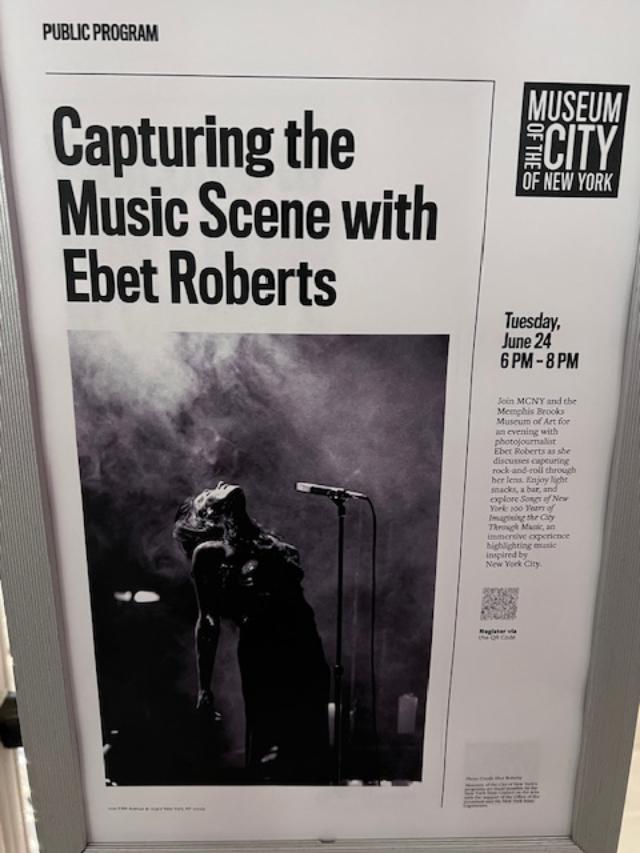
I recently returned to the museum for a special evening event for photographer Ebet Roberts
The special event for music photographer Ebet Roberts: The photographer, Ebet Roberts with the museum curator
The evening was a discussion of the artist’s works from the 1970’s and 80’s. What I thought was interesting is how she seemed to fall into it as an artist with newspapers interested in seeing her photographs.
The photographer’s poster for the event
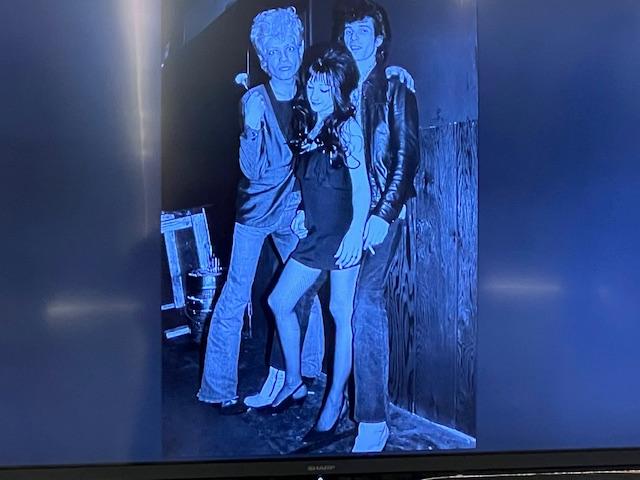
One of her well known works of a musician couple from the 1970’s
The talk was very interesting as she fell into the profession of just taking pictures of bands while attending the events as reporting. Then the papers wanted to see what pictures she had taken. Liking how she captured the groups in a more human fashion, she continued to take more pictures. This led to private sessions and behind the scenes works, capturing the events before and after a concert. It was a very interesting talk.
Special Members Mornings:
I recently attending a Private Members Morning for the opening of the “Alice in New York” exhibition and to see “He Built this City”, the diorama of New York City. These mornings allow us special time to see all the exhibitions, take tours and for the kids, there are all sorts of activities.
‘Another Wonderland’ exhibition
(From the Museum website)
The Museum of the City of New York, in collaboration with New York City Health + Hospitals Arts in Medicine and the Laurie M. Tisch Illumination Fund, presents ‘Another Wonderland: Abram Champanier’s Alice Mural’ (MCNY.com)
The exhibition celebrates the rescue and decades-long restoration of Alice of Wonderland Visiting New York, a major New Deal–era mural cycle created for the children’s ward at Gouverneur Hospital between 1938 and 1940. Commissioned through the Works Progress Administration’s Federal Art Project, the sixteen-panel series reimagined Lewis Carroll’s beloved characters exploring 1930s New York City—from the subway and Brooklyn Bridge to Coney Island and Central Park—bringing color, fantasy, and joy to a space dedicated to healing (MCNY.com).
After decades of painstaking restoration, and along with two faithfully reproduced panels and a selection of archival photographs, the mural panels will be on view together for the first time in nearly fifty years. The exhibition also situates the mural within the broader story of the WPA and its role in transforming public spaces across New York City (MCNY.com).
The entrance to the exhibition
The description of the exhibition
Alice and her friends leave the novel and arrive in the ‘Big Apple’
Alice and her friends on New York Harbor
They next visited that Statue of Liberty
Alice next took a trip in the subway. At least it wasn’t the 1970’s!
The next flew by the Empire State Building. All I could think about was the airplane scene in the movie ‘Flying Down to Rio’
The clip from “Flying Down to Rio”
They next took a trip on the Staten Island Ferry
Alice visits Coney Island
Taking a plane ride around New York City
Everyone gathering
Alice at the New York Public Library
The end of the exhibition when everyone returns to their books
Queens-born artist Joe Macken began the project in 2004. Over the next 21 years, working first in Middle Village, Queens and later in Clifton Park, New York, he devoted himself to crafting a vast architectural portrait of the city he calls home. Built entirely by hand using everyday materials—including balsa wood, cardboard, and glue—the model spans 50 by 27 feet and comprises over 340 individual sections. It renders the city’s skyline, neighborhoods, and landmarks with remarkable precision, character, and imagination. Macken started with the Comcast Building at 30 Rockefeller Plaza, infusing its familiar form with details that signal his personal artistic vision (MCNY.com).
The model is on view in the Museum’s Dinan Miller Gallery, presented in an installation that balances close looking with an appreciation of the full scale of the model. In the gallery, we encourage you to use the provided binoculars to see the model in greater detail and to watch the video highlighting Macken’s hand-carved buildings. Weather permitting, access to view the north side of the model will be available through the North Terrace (MCNY.com).
The model of New York City
These are the types of events that make the museum unique and special.
Video on the Model by the Artist
The History of the Museum of the City of New York:
(From the Museum of the City of New York website/Wiki):
The Museum of the City of New York is a history and art museum that was founded in 1923 by Henry Collins Brown. The red brick building with marble trim was built between 1929-30 and was designed by architect Joseph H. Freedlander in the neo-Georgian style with statues of Alexander Hamilton and DeWitt Clinton by sculptor Adolph Alexander Weinman, which face Central Park from niches in the facade (Wiki).
The museum was originally located in Gracie Mansion, where available space was limited. One of the first exhibitions was “Old New York” in 1926. This took place in the Fine Arts Building on West 57th Street. The success of the project led to a search for a new, permanent headquarters for the museum (Wiki).
A design competition was held between five invited architects and the Colonial Revival design by Joseph H. Freelander was chosen. The City donated the site on Fifth Avenue and the funds for the construction of the museum was raised by public subscription. The original plans for the museum’s building were scaled back as a result of the Wall Street Crash of 1929. The building was finished and dedicated in 1932.
In 2000, there was talk by then Mayor Rudy Giuliani to move the museum to the historic Tweed Courthouse near City Hall but that was over-turned by the incoming Mayor, Michael Bloomberg. In protect the museum director, Robert R. McDonald resigned.
In coming new museum director, Susan Henshaw Jones, planned an extension to the museum and it was completed in 2008. The extension including renovating the existing gallery spaces and adding a new pavilion. New displays and a remounting of valuable artifacts were done to give the museum a refreshed look. In 2011, the Museum of the City of New York temporarily took over operation of the South Street Seaport Museum which itself reopened in 2012 (Wiki).
The museum has a collection of over 1.5 million objects including many items from the 19th and early 20th centuries including paintings, prints, costumes, decorative objects, furniture and an extensive collection of toys. There are also extensive collections of police and fire items as well as shop models, rare books and manuscripts (Wiki).
The Museum of the City of New York in the early Spring