Category: Historic Sites of New York State

Klyne Esopus Museum                                         764 Route 9 West                                             Ulster Park, NY 12487

Klyne Esopus Museum 764 Route 9 West Ulster Park, NY 12487

Klyne Esopus Museum

764 Route 9 West

Ulster Park, NY 12487

(845) 338-8109

https://www.esopushistorymuseum.org/

https://www.facebook.com/EsopusHistoryMuseum/

Open: Sunday-Monday 11:00am-4:00pm/Tuesday-Thursday Closed/Friday-Saturday 11:00am-4:00pm

Admission: Free but donations are taken to offset costs

My review on TripAdvisor:

https://www.tripadvisor.com/ShowUserReviews-g48749-d26495761-r908410891-Klyne_Esopus_Museum-Ulster_Park_Catskill_Region_New_York.html?m=19905

The Klyne Esopus Museum is the home of the Town of Esopus Historical Society and is a treasure trove of information of early life in the Hudson River Valley and the role this small town played in the shaping of American society in this region. There are all sorts of displays on early American life, cottage industries that made the community grow and its role in the modern age.
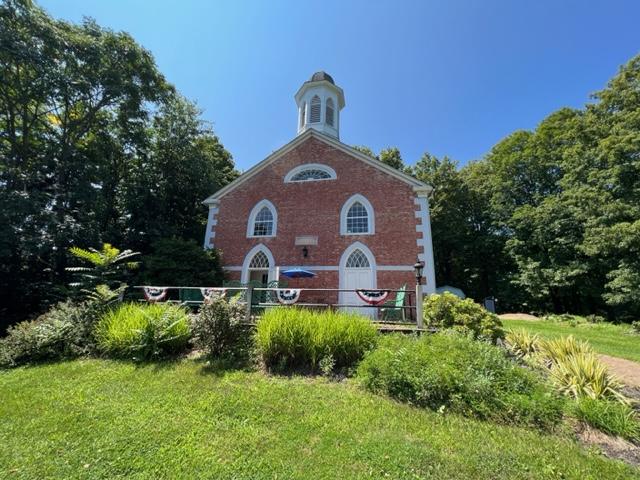
The Klyne Esopus Museum at 764 Route 9 West

The sign welcoming visitors to the museum.
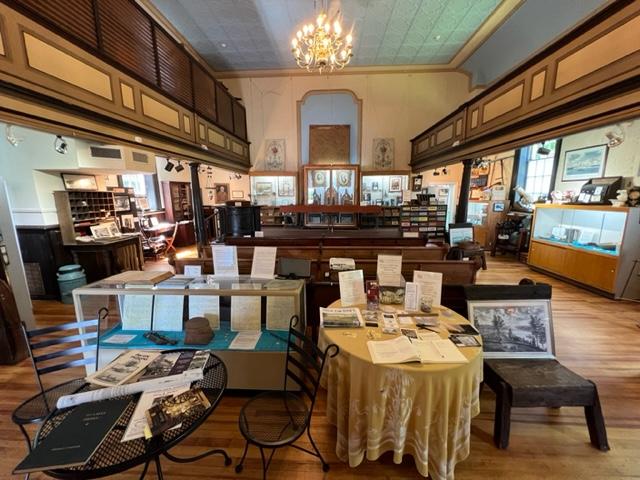
The Main Gallery at the Museum

The museum’s main gallery is surrounded by cases displaying the story of the area depicting the various aspects of industry, commerce, agriculture and domestic activities of the town’s residents. Former residents of note that are featured are Sojourner Truth, John Burroughs and Alton Parker to name a few. year a curated exhibition focusing on a special theme is centrally featured. These are some of the exhibits that are showcased at the museum:

The Native American exhibit:

The exhibit has an interesting collection of arrowheads, fishing and household items that were used by the local tribes who once lived in the area.

The display of arrowheads and fishing items
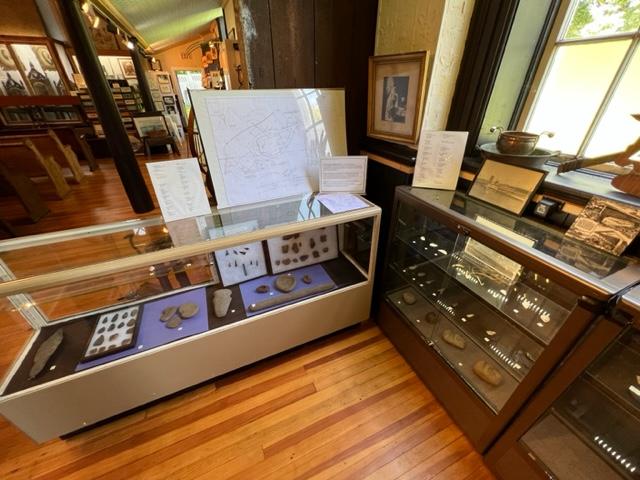
The extensive display of Native American fishing and household items.

The Apple industry:
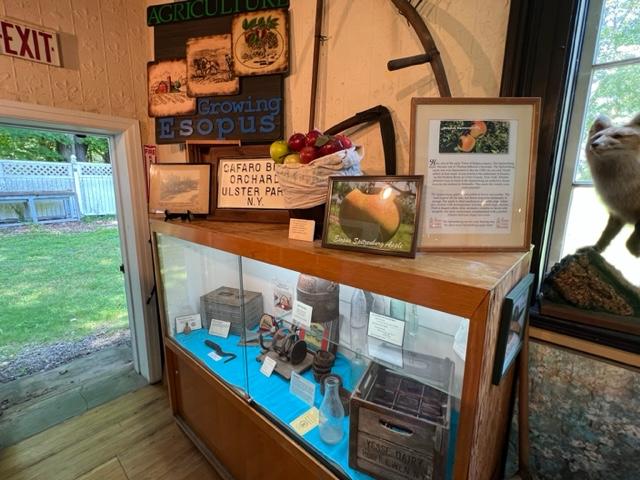
The local Apple industry was a major part of the economy in the late 1800’s and early 1900’s. The apple, the “Esopus Spitzenburg” was developed in Esopus. The Dutch had developed the agricultural industry of the area that supplied New York City with seasonal fruits and vegetables.
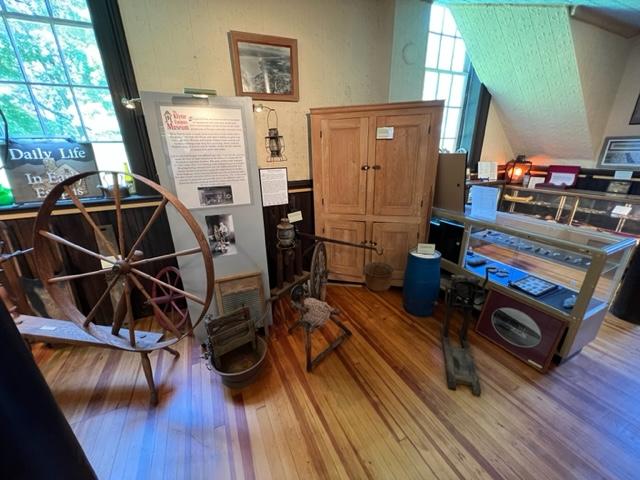
The Dutch Farming Industry and the development of local harvests

With the community based by the Hudson River and transportation being such a big part of the local economy, the displays on shipping and the local lighthouses were prominent at the museum. The display has all sorts of pictures and artifacts from the era of steamboat transportation down the Hudson River.
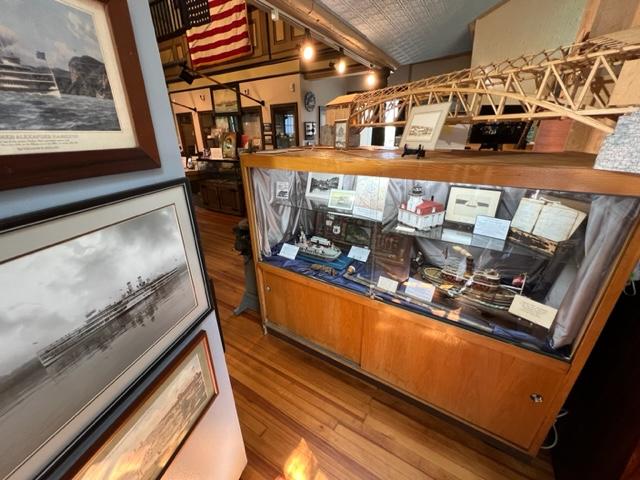
The Lighthouse and Shipping Industry

There were displays on famous residents such as Sojourner Truth and John Burroughs and their role in the community.

The artifacts and display on Sojourner Truth

https://en.wikipedia.org/wiki/Sojourner_Truth
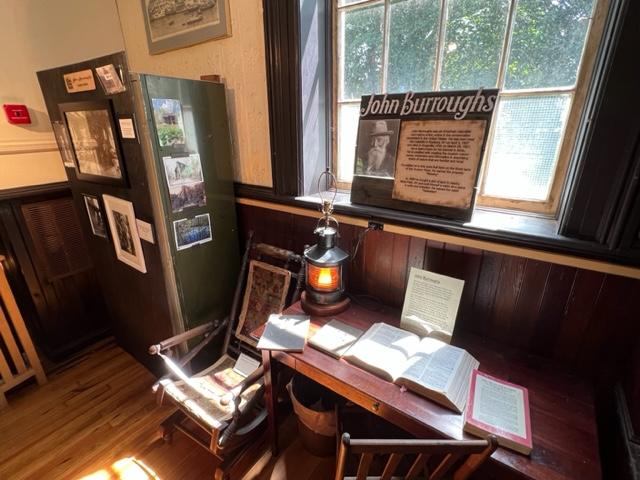
The artifacts and display on John Burroughs

https://en.wikipedia.org/wiki/John_Burroughs

The church is also featured pictures of clergy and their families, the history of the church and the decor of items that used to adorn the church when it was a place of worship. There is a large display on church history in the back of the museum.
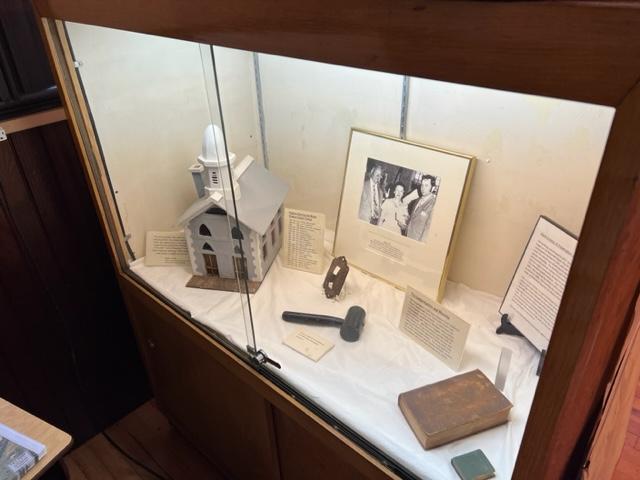
The Church display of its history

The local veterans are prominently displayed at the museum as was showing the spirit and support of the wars and battle. It also shows the townspeople participation and dedication in the war effort.
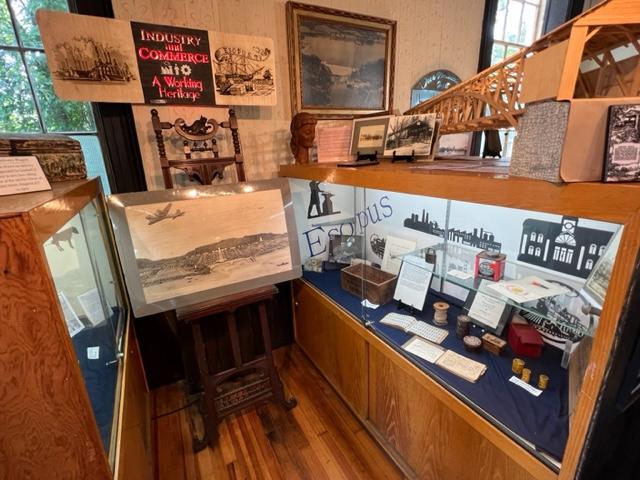
The World War II exhibition

Recreation and leisure are a big part of the Hudson River Valley society and items such as ice skates, swimming and boating show how people enjoyed their free time. This still plays out today. Household items were also displayed as well showing life at that time.
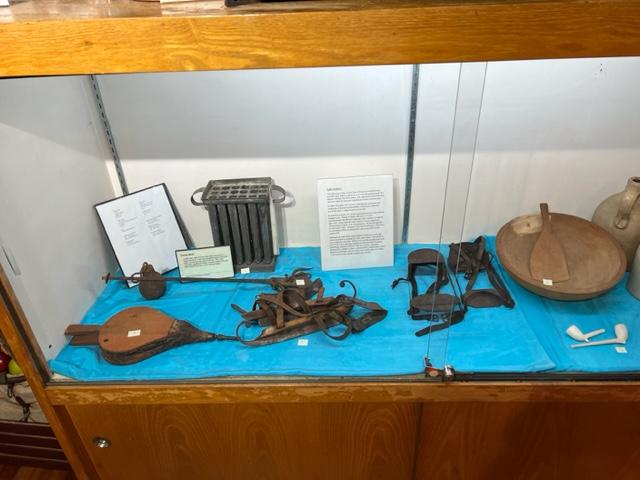
Household and Recreation items on display

The History of the museum:

(From the website and pamphlet)

The Klyne Esopus Museum that is located in Ulster Park, NY is housed in the former Dutch Reformed Church, which is a charming country church built in 1827. It served the community for over 175 years and replaced a smaller building built in 1792 originally located 1000 ft. to the north.  The church closed in 1965. The governing body of the church scheduled the building for demolition.

Faced with this reality, the former members of the congregation and the larger community rallied to preserve the building.  In 1969, a group known as the Klyne Esopus Historic Preservation Committee formed. Formal incorporation of the group took place in 1970.  After 17 years of fundraisers, repairs to the building, preserving and collecting, the museum finally opened to the public. In 2002, the building became designated a State and National Historic Landmark. 

The historical society museum opened to the public in 1984, offering a variety of exhibits about the culture, commerce and history of the Town of Esopus. The town is typical of rural America but it unique in many ways. Its geographic location and topography have spawned a variety of industries, resulting in a rich history and a diverse population.

The Klyn Esopus Museum is the Historical Society of the Town of Esopus. Its goal is to preserve, interpret and disseminate the history of the town. By fostering an awareness of the past and providing a repository for the artifacts and memorabilia of its former residents, it enables present and future generations to identify and appreciate times gone by. Today, a small, committed group of volunteers is working to make history meaningful and relevant to visitors of all ages. 
FASNY Museum of Firefighting                          117 Harry Howard Avenue                           Hudson, NY 12534

FASNY Museum of Firefighting 117 Harry Howard Avenue Hudson, NY 12534

FASNY Museum of Firefighting

117 Harry Howard Avenue

Hudson, NY 12534

(518) 822-1875/1-877-347-3687

Admission: Adults (18 and above) $12.00/Children under 18 $8.00/FASNY Members Free

Open: Sunday 10:00am-4:30pm/Monday & Tuesday Closed/Wednesday-Saturday 10:00am-4:30pm

My review on TripAdvisor:

https://www.tripadvisor.com/Attraction_Review-g47931-d263732-Reviews-FASNY_Museum_of_Firefighting-Hudson_New_York.html

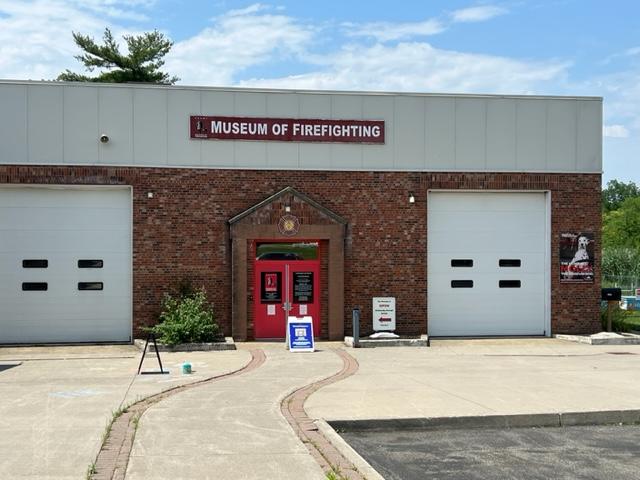
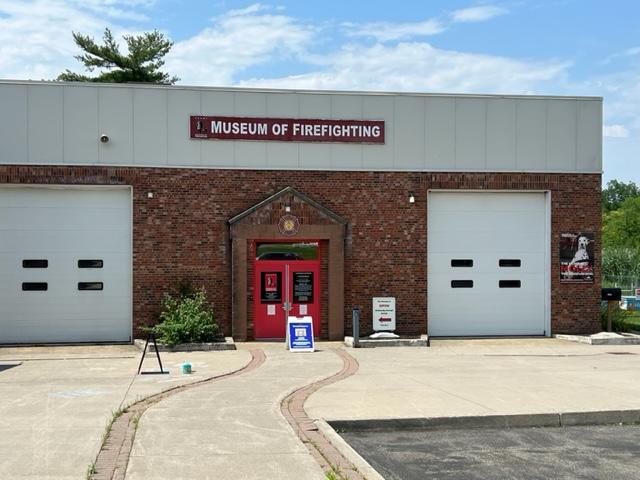
The FASNY Museum of Firefighting at 117 Harry Howard Avenue

The FASNY Museum of Fire Fighting is America’s interactive museum of firefighting. It is also the home of the premiere collection of American firefighting objects in the world.

When I visited the museum recently, I found that the museum is not just a treasure trove of information and artifacts but an extensive study on modern firefighting from its creation in the time of the Romans and Greeks, the beginnings of the fire service in America lead by people like Peter Stuyvesant and Benjamin Franklin. These men brought their ideas and innovations by working alongside people doing the work and the modernization of equipment that makes the modern firefighter both safer and smarter.

The progression of the equipment and the way it is used has not changed much but the way we use it, and its design has changed from the days of the bucket brigades to the horse drawn carriages to the modern automobile. The job has not changed as we put the fire out and try to save lives and property.

There is so much to see and do at the museum and for a firefighter, a very humbling experience in that we continue to learn on the job and learn the changes in the fire service around us. This is one of the most extensive museums of firefighting that I have ever seen. The exhibitions are very detailed and easy to follow with lots of interesting artifacts. It is a perfect place for a family to visit.

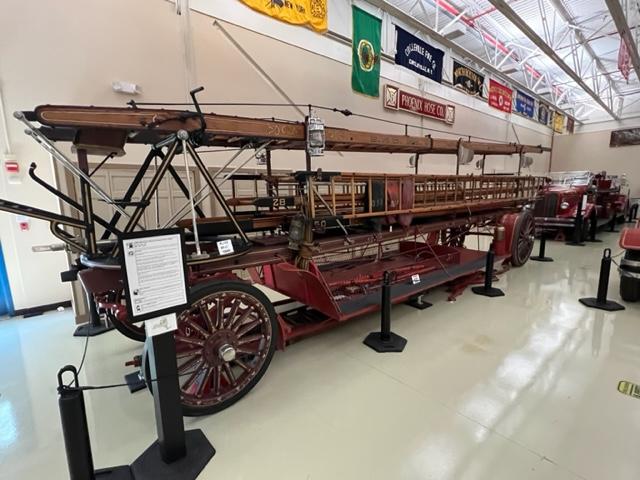
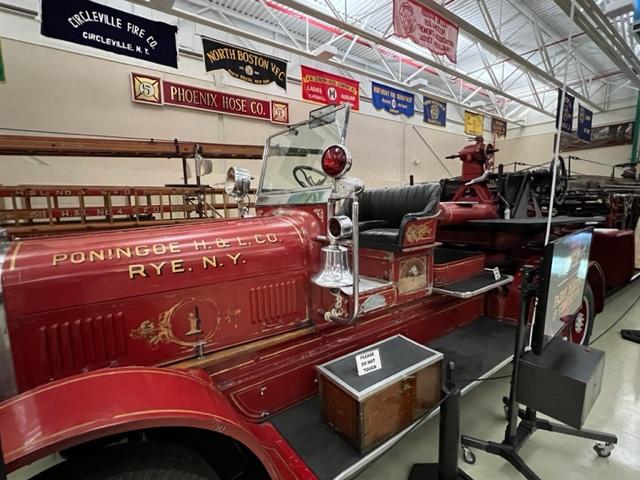
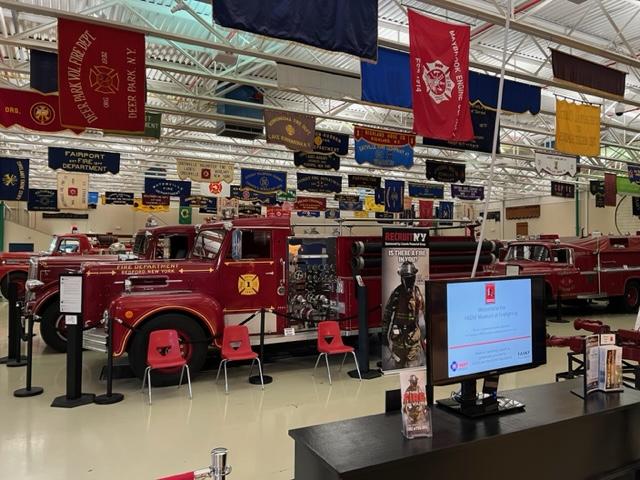
A ladder truck from the early 20th Century

Ladder Truck from Rye, NY that was part of the Bush family history.

The massive museum has over 60 fire engines on exhibit, as well as numerous examples of firefighting gear, equipment and art depicting the heroic history of firefighting in America.

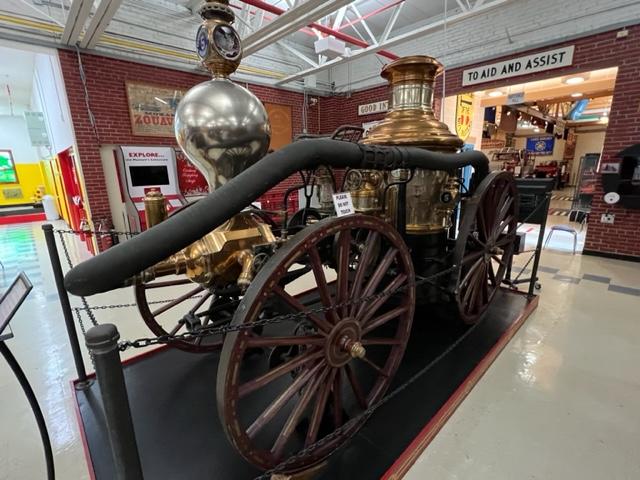
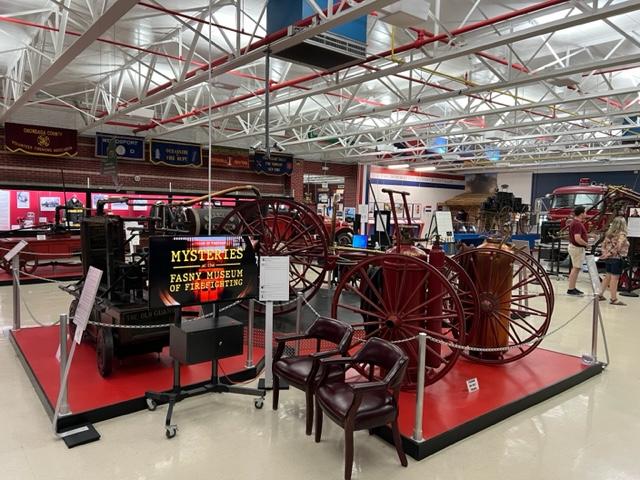
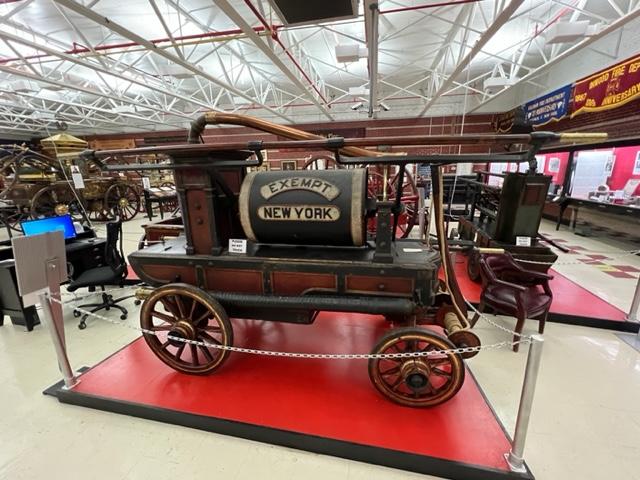
Early 20th Century Steam Engine

The main equipment room with all sorts of trucks and engines spanning over 100 years

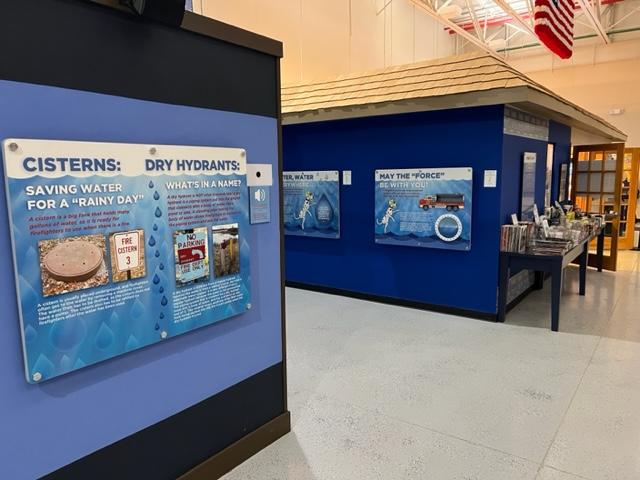
Activities for families include the popular bucket brigade activity, the amazing Jr. Firefighter Challenge course, the incredible first responder virtual ride to the fire experience and the Cabot/McCadam Fire Safety Discovery Room (FASNY Website).

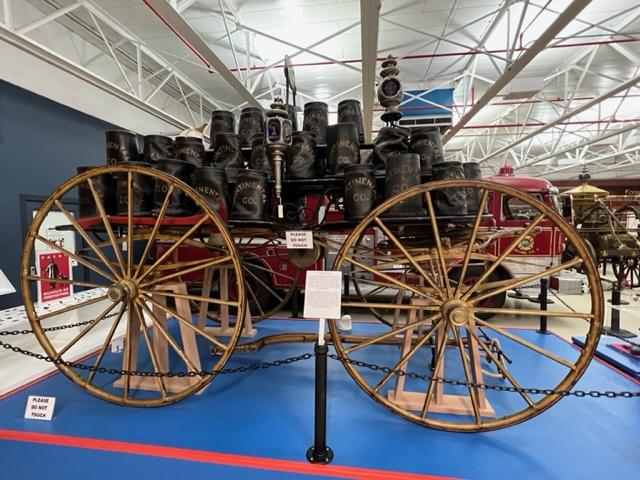
Turn of the Century Bucket Truck

Whether you are a family, a firefighter, an apparatus buff or a student of history, you will be amazed at the depth and variety of the Museum’s vast collection.

Turn of the Century hose beds.

An early steam engine

The 9/11 Exhibit: Remembering the 20th Anniversary:

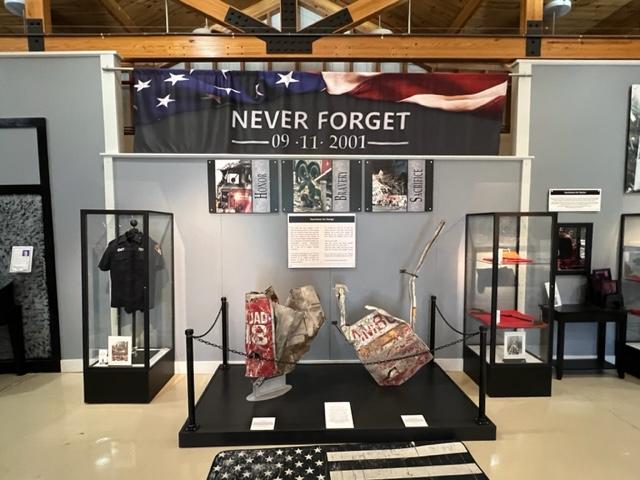
In partnership with the New York State Museum in Albany, the FASNY Museum of Firefighting is honored to present the exhibit: Touchstone: Remembering the 20th Anniversary of 9-11. The majority of the objects in this exhibit are on loan from the NY State Museum. They were found during the recovery efforts that took place at Fresh Kills Landfill on Staten Island, when hundreds of NYPD and FBI forensic experts sifted through the debris from the World Trade Center tragedy site, between September 2001 and July 2002 (FASNY website).

The 20th Anniversary of 9/11 on September 11th, 2021

We encourage visitors to compare how they feel today, 20 years after this touchstone moment in our nation’s history, to how they felt on September 11, 2001. We also invite the visitor to remember that not every action taken after 9-11 was heroic.

After 9-11, there were many cases of violence against those who were, or who were perceived to be, Muslims, Sikhs or persons of Arab or South-Asian descent. Through an interactive, we ask visitors to consider this racism and why it occurred (FASNY Museum Website).

The 20th Anniversary of 9/11 on September 11th, 2021

The 9/11 Exhibit will be very emotional for any firefighter and their family whether they experienced it or not. It could be the twist equipment, the pictures depicting that morning and the rescue plans and the artifacts that were used during that time, take your time to really study and appreciate the heroism of that morning.

Then, Now & Always: Firefighting from the Cradle of Rome Through the 1900s

Trace the evolution and development of firefighting from its ancient origins to the modern era of mechanization.

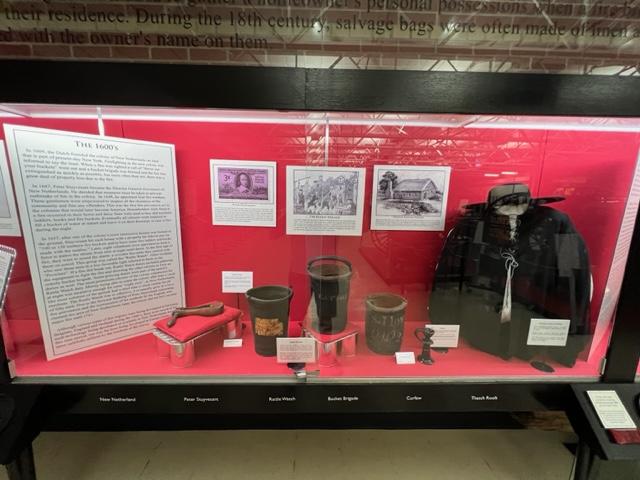
The Dutch Bucket Brigade system of early America

This informative and fascinating exhibit uses objects in the Museum’s collection as historical touchstones. Complemented by interpretive graphic panels and object cards, the exhibit chronicles the progression of organized firefighting and its social and technological implications. Here, you will discover some of the oldest and rarest objects in the Museum’s collection. Adjacent to the exhibit cases are the Museum’s earliest examples of fire apparatus dating as far back as 1731 (FASNY website).

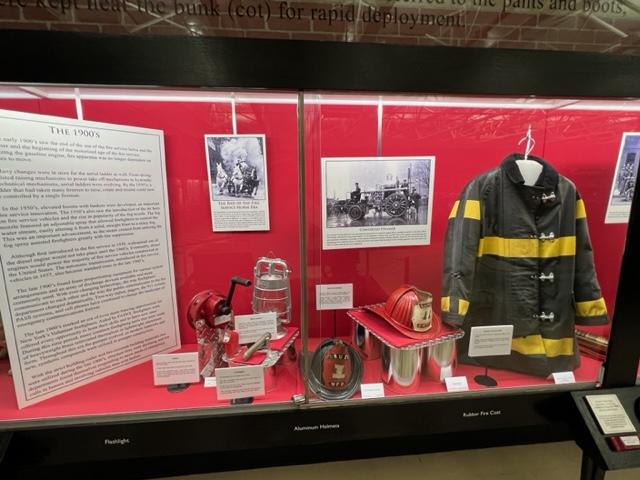
The change of equipment in the early 1900’s to the modern era

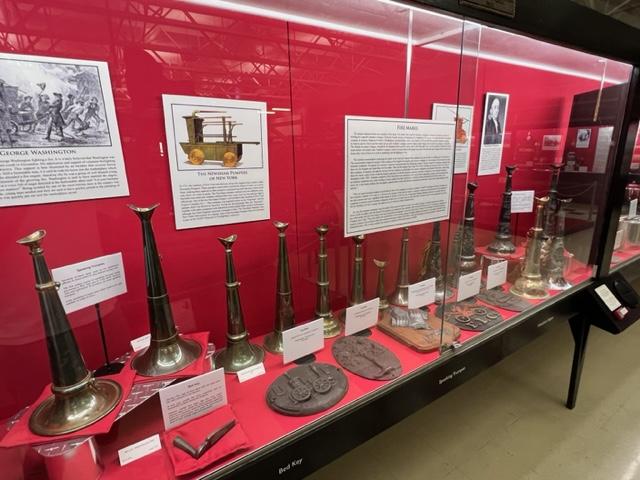
Before radio communication became available, we sounded the trumpets.

The museum showed the progression of firefighting and how many aspects of it have changed over the years and how it modernized old ideas. The concept of ‘putting water on the fire’ has progressed in knowing why we should do it, when we should do it and what the effects of it will be when we do it. The equipment being used was the latest technology of the that time.

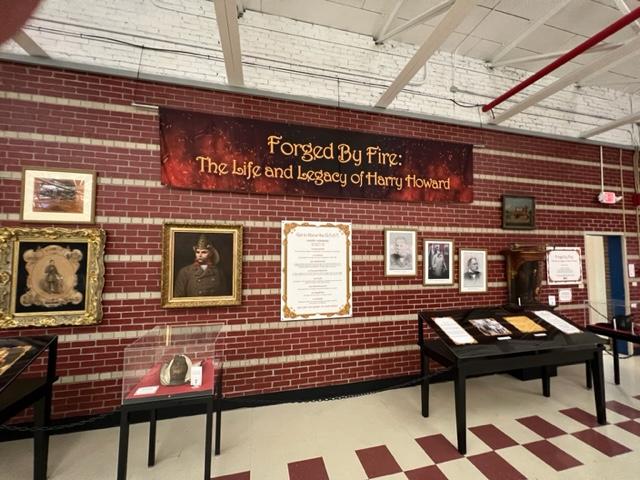
Forged by Fire: The Life and Legacy of Harry Howard

Who was Harry Howard and why do we consider him the GOAT? This exhibit explores Chief Howard’s life and many accomplishments and explains why we are still talking about him today, 200 years after his birth! (FASNY website).

The “Forged by Fire” exhibition on Harry Howard

Harry Howard was one of the most celebrated firemen of the 19th century.  He rose from very humble beginnings to Chief Engineer of the Volunteer Fire Department.  His association with the fire department began while a young teen, as a runner for the Peterson Engine Company No.15, located on Christie Street.  In 1841 he became a full-fledged member of the company. Later, in 1850, Howard joined Atlantic Hose 14.  The following year he was elected Assistant Engineer.  He reached the top in 1857 serving as Chief Engineer for three years, with a salary of five thousand dollars a year.  Chief Engineer was the highest rank in the NYC’s Volunteer Department in 1857 with many of the same duties as today’s Fire Commissioner.  The Chief and his 18 assistants were elected by ballet by the members of the department (NYFD.com website). 

At the time of Howard’s leadership this comprised of about 4000 men.  One of his major acts as Chief was to establish bunk rooms in all the firehouses in the city.  Chief engineer Harry Howard suffered an attack of paralysis on a way to a fire in July 1857.  The attack left him permanently disabled and somewhat embittered.  It was officially deemed the consequence of severe fire duty.  After his retirement from the Volunteer Fire Department, he held an office in the Department of Public Works (NYFD.com website).

I cannot begin to explain how innovative Chief Engineer Howard was in the fire service. Bringing about many safety measures, analyzing the fire service the way he did and work to better the lives of firefighters not just in New York but set a standard in the industry. He brought his experience that he learned on the job and worked to better it so that other firefighters could learn to be better at their jobs.

Ready, Willing & Able: FASNY’s First 150 Years

Did you know that over 90% of all firefighters in New York State are VOLUNTEERS! Did you know that FASNY (the Firefighters Association of New York State) has been the leading voice for volunteer firefighters for over 150 years? Discover more facts about FASNY and the brave firefighters who protect our communities in this fascinating exhibit (FASNY website).

Firefighting in the modern age

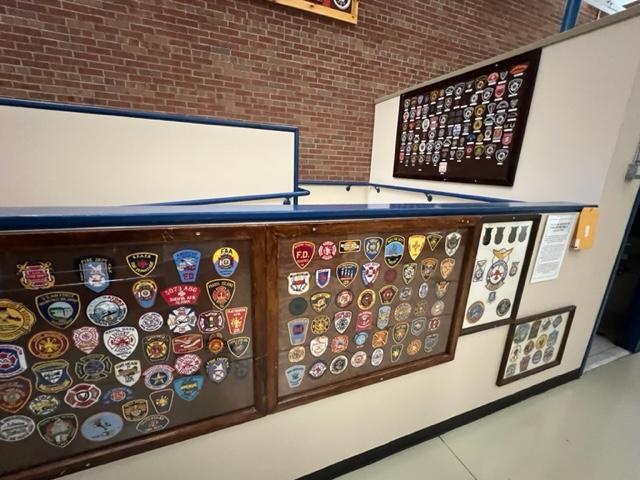
The Firefighting Patch Wall display

The experience of exploring this museum is a must for any firefighter or firefighting family.

Fred J. Johnson House/The Friends of Historic Kingston Gallery                                                      63 Main Street                                               Kingston, NY 12402

Fred J. Johnson House/The Friends of Historic Kingston Gallery 63 Main Street Kingston, NY 12402

Fred J. Johnson House/The Friends of Historic Kingston Gallery

63 Main Street

Kingston, NY 12402

(845) 339-0720

My review on TripAdvisor:

https://www.tripadvisor.com/Attraction_Review-g48003-d8546539-Reviews-The_Fred_J_Johnston_Museum-Kingston_Catskill_Region_New_York.html

Admission: $10.00/Members are free

Hours: Sunday-Thursday Closed/Friday-Saturday 11:00am-4:00pm (May-October)

The Fredrick J. Johnson Museum and the Friends of Kingston

About Friends of Historic Kingston

We are a not-for-profit organization founded in 1965 whose members share a common mission: preserving and promoting the local history and landmarks of Kingston, New York.

Our Mission

The Friends of Historic Kingston champions our unique architectural, historical and cultural legacy and shares it with residents of all ages of the Kingston community and with visitors to the Hudson Valley.

What We Do

The exhibition at the Fredrick J. Johnson Museum and at the Friends of Kingston Gallery was “Still Standing”. How the Friends have saved many historical buildings in Kingston, NY from destruction. This contribution from the members of the Friends organization have saved many historical sites in the city that make up the character of the City of Kingston. These contributions have helped developed the historical sections of the city and made them the desirable destination they are today (FOHK website).

“Still Standing”

The Louw-Borgardus Ruins that have been saved and preserved by the Friends that are located on the edge of Downtown Kingston in the Stockade section of the city. This is an example of the Friends efforts to restore these treasures that would have otherwise disappeared.

The rest of the exhibition can be seen in the Friends of Kingston Gallery. The walls were lined with homes and businesses that were served by the conservation efforts of the Friends organization.

The Friends of Kingston Gallery to the right and the Fred Johnson Museum is to the left. These are open seasonally.

House & Gallery

The Friends offers changing exhibits, house tours, guided walk tours of the Stockade and Rondout Historic Districts, special events and publications related to the stories of the city of Kingston (FOHK website).

The “Still Standing” exhibition:

“Still Standing” exhibition: The Sharp Burying Ground

“Still Standing” exhibition: The Office of Simeon and William B. Fitch

“Still Standing” exhibition: The Pieter Cornelise Louw House

After walking through the “Still Standing” exhibit and noting the structures that had been saved.

The Fred J. Johnston House

A Treasury of American Decorative Arts

Fred J. Johnston (1911-1993)
Antiquarian and Preservationist

The Fred J. Johnston House located in the heart of the Stockade District, Kingston, New York is a classic Federal style clapboard house. It was built circa 1812 as the residence for John Sudam (1782-1835) and his family. Sudam was a prominent attorney, New York State Senator and New York State Regent. In the 1880’s, the house was acquired by the Van Leuven family. In 1938, the site was to be sold, the building razed and a gas station constructed. Although the home was in a deteriorated condition, Fred J. Johnston, a local antiques dealer bought the house to save it from demolition.

 The front room gallery of the Fredrick J. Johnson Museum

Johnston devoted the remainder of his life to restoring the property for use as his home and antiques shop. Under his care, the house became a visual landmark of uptown Kingston which was listed on the Stockade National Historic District Register in 1975. When Johnston died in 1993, he left the property to the Friends of Historic Kingston.

The Reception Room of the Johnson Museum

In fulfilling our mission, Friends of Historic Kingston maintains the integrity of the property and continues this unique preservation story by displaying the house and its contents as they were left by Fred J. Johnston. A visit to the Johnston House today is very much like the singular experience his clients enjoyed while shopping for antiques. The tour of the house is an immersion in the taste and connoisseurship of antiquarian Fred J. Johnston who celebrated America’s material past (FOHK Website).

Portraits of Mr. and Mrs. Perry who were local residents.

I was lucky enough to get a private tour of the house with a seasoned docent who I toured the house with that afternoon. We went room by room and she told me the story of how the museum came about. Fred Johnson had been an antiques dealer who filled the house with furniture and objects of art for sale and the rooms became his showroom. Both his unmarried sister and his mother moved into the house and helped entertain and run the household. So, the business became a family affair. Both his mother and sister lived with him until they died.

The Johnson Living Room

What I thought was unique about the museum was the whole house was for sale. The docent told me that one day his sister came home and found that her bed had been sold. As we toured the house, I could still see tags on all the furniture. The contents were still marked for sale.

The Johnson family kitchen

The stairs to the upstairs bedrooms

The house still holds much of the Johnson Collection of antiques and upon the death of his sister, the home became a museum to maintain this very unique collection of objects.

Mr. Johnson’s mother’s bedroom

Mr. Johnson’s sister’s bedroom

The Guest Bedroom

Mr. Johnson’s bedroom

After we toured the very tasteful and stylish upstairs, we went back downstairs to tour the outside gardens. The docents did a very nice job with the landscaping of the house and the gardens were beautifully maintained. It was a nice way to get some fresh air and sunshine while admiring the beds.

The back of the Johnson House Museum and the back gardens.

The Johnson Museum Gardens

The back of the Johnson House from the gardens

After the touring the whole house, we were able to take one last look at the first floor and all the beautiful antiques that filled the rooms. The museum gives you the perspective of not just how the Johnson family must have lived but how people had lived in past centuries.

The house is also beautifully decorated and maintained by the staff of docents and members of the Friends and is a wonderful view of the past.

Columbia County Historical Society                       5 Albany Avenue                                   Kinderhook, NY 12106

Columbia County Historical Society 5 Albany Avenue Kinderhook, NY 12106

Columbia County Historical Society

5 Albany Avenue

Kinderhook, NY 12106

(518) 758-9265

Open: Sunday 11:00am-4:00pm/Monday-Friday Closed/Saturday 11:00am-4:00pm

My review on TripAdvisor:

https://www.tripadvisor.com/Attraction_Review-g60899-d12000596-Reviews-Columbia_County_Historical_Society_Museum_Library-Kinderhook_New_York.html

The Columbia County Historical Society Museum

The main building of the Historical Society contains an exhibition on farming. It also contains the society’s library and genealogy center.

The James Vanderpoel House Museum

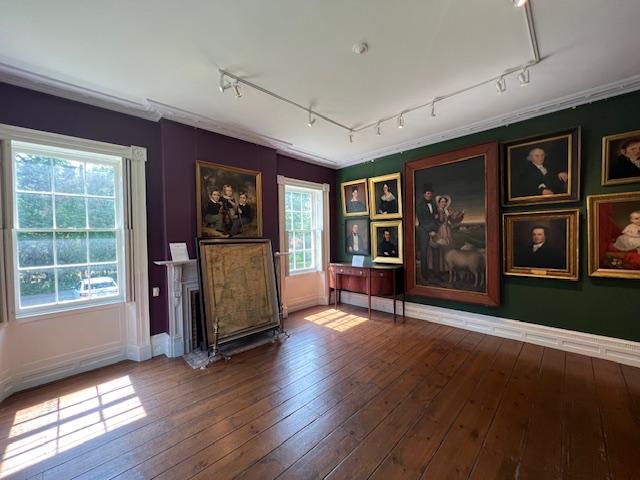
The afternoon I visited the society, the Vanderpoel House was the only building open but it was interesting to visit. I saw the early American portraits.

History of the House:

One of the finest examples of Federal architecture in Columbia County, the James Vanderpoel House was constructed circa 1819–1820 for prominent Kinderhook lawyer and judge James Vanderpoel. 

Trimmed with marble and built with local brick, the side-gabled structure has two stories, five bays, and rests on a fieldstone foundation. Symmetry and graceful architectural details are found throughout the home. Purchased by the Columbia County Historical Society in 1925, the property is now preserved as an exhibition space showcasing paintings and decorative arts from the CCHS permanent collection and is home to the CCHS Museum Store & Bookshop (CCHS website).

There are two exhibitions going on right now:

New York Portraits from the permanent collection:

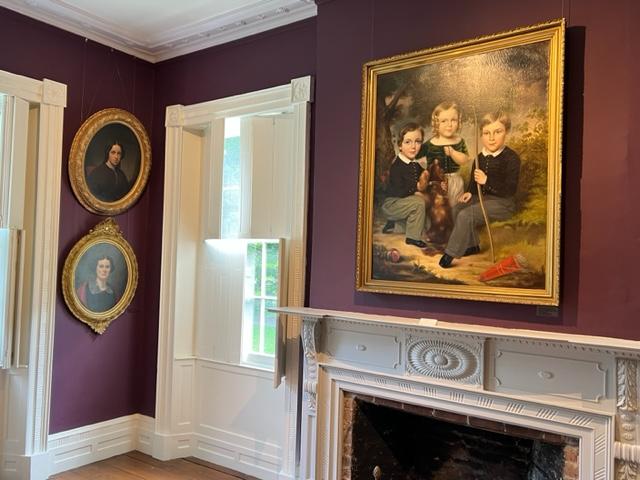
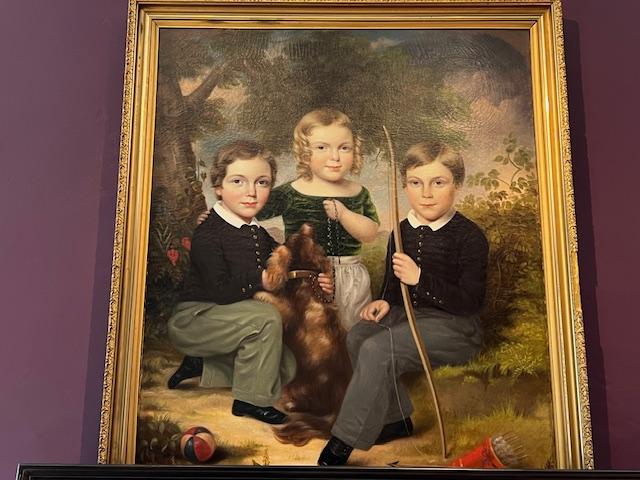
Columbia County’s painted portraiture legacy spans more than three centuries of historically significant or artistically important works by self-taught, naïve and itinerant painters, as well as important artists of the time, and including some of the earliest works in America.

In the Portraits of the Permanent Collection shows us how the middle to upper middle class in the early years before photography was created to be remembered. Portraits were the best way to show the families wealth and prestige in the community plus keep families legacies alive. Today many of these families descendants don’t know what to do with them. This is our benefit that we can enjoy these private works of art.

Portraits from the Permanent Collection sign

The Gallery

The Gallery

The New York portraits in the collection

The New York Portrait Collection exhibition

The Portrait Collection-Children’s Portrait

Part of the Portrait and Federal Style exhibitions

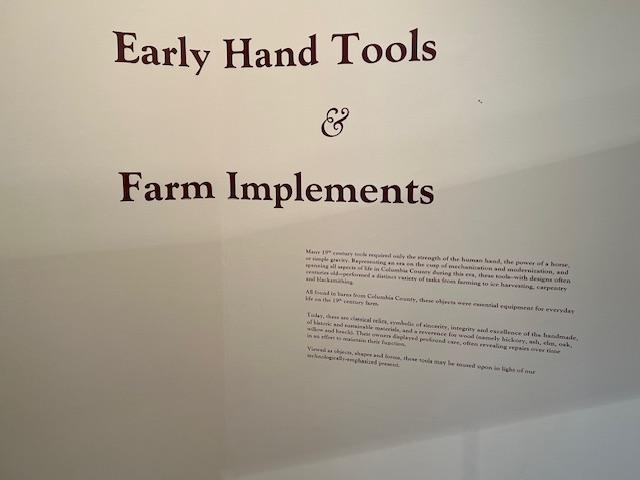
Early Hand Tools & Farm Implements: the permanent collection

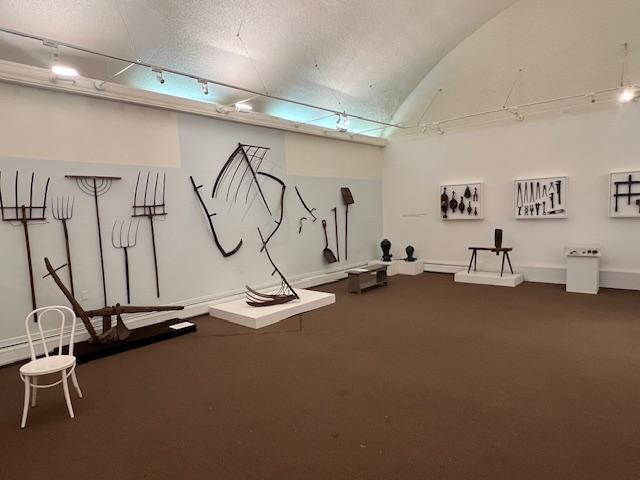
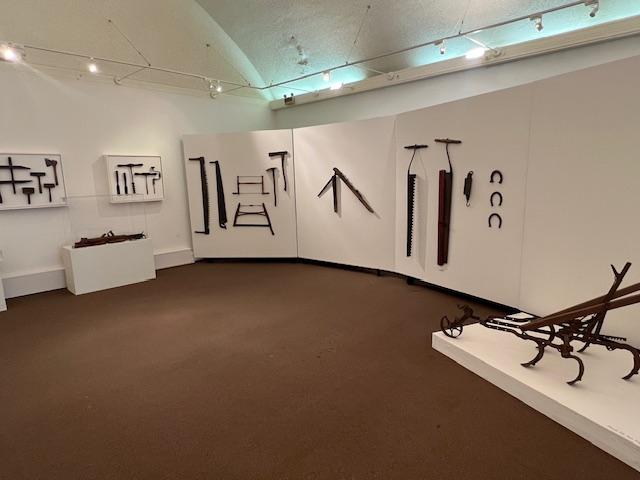
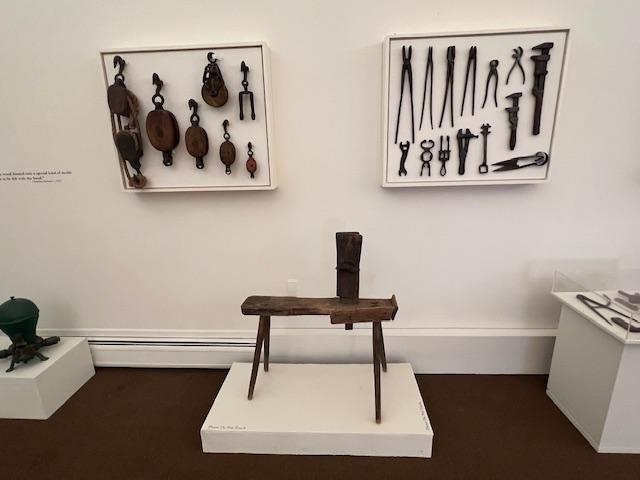
In the main building, there is also a permanent collection of farming equipment and the development of family farms in New York State. It shows how the agricultural profession has changed from doing everything by hand when farms catered solely to the family to the commercial farms that developed after the Civil War that found new markets for their products. Automation grew the industry but its start with equipment shows how much the process really hasn’t changed that much. It is a very thought provoking exhibit on how industries progress.

The “Early Hand Tools & Farm Implements” exhibitions

The farming equipment galleries

The farming equipment galleries

The farm equipment at the turn of last century that has not changed much to today.

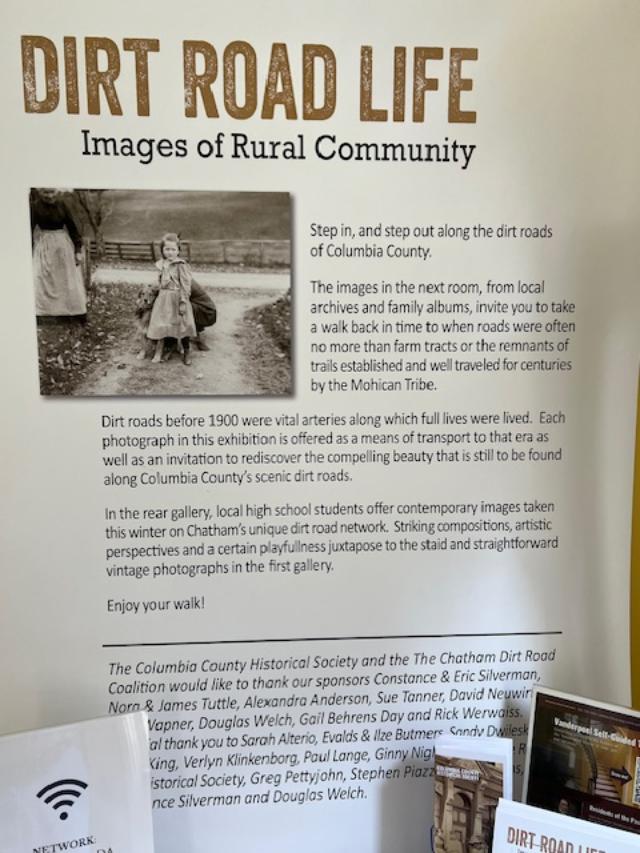
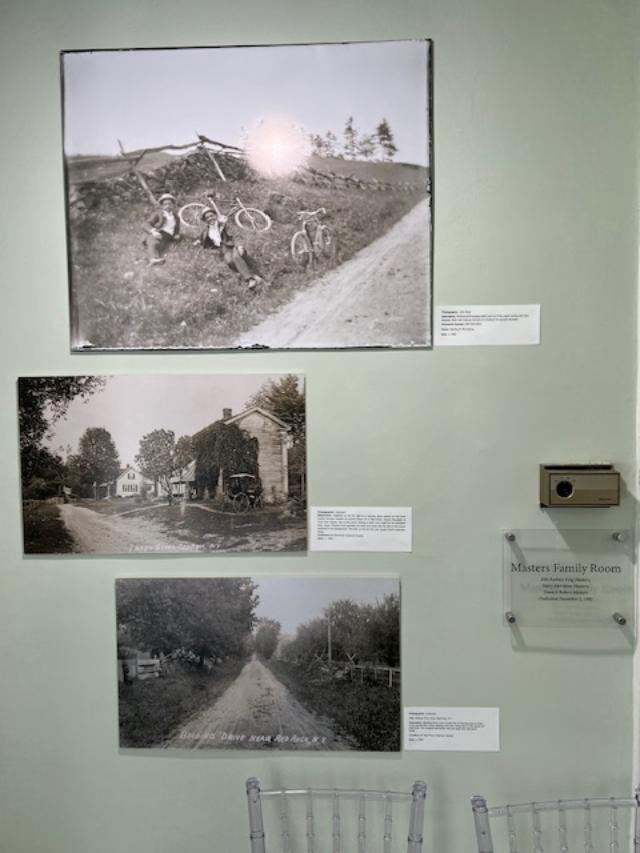
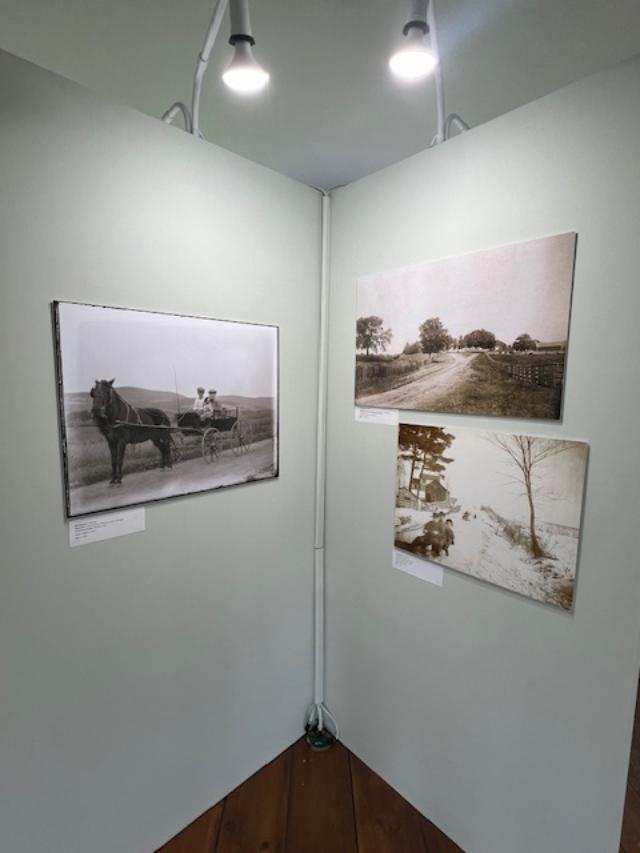
The new exhibition “Dirt Road Life: Images of Rural Community” again shows how life has progressed in this country.

The description of the exhibition and collection of the artwork:

(From the museum website):

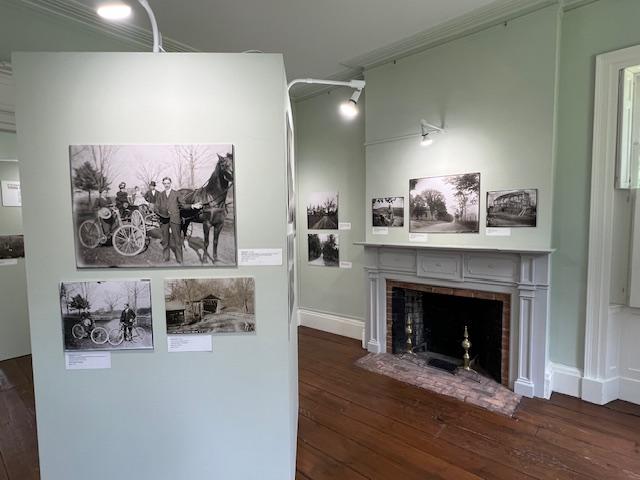
In this exhibit an extensive collection of vintage photographs provided by CCHS and Red Rock Historical Society that document what life was like along these dirt roads a century ago are complemented and contrasted with local high school students’ photos of contemporary winter scenes along Chatham’s unpaved network of roads.   The students’ photographs, curated by nationally celebrated photographer Paul Lange, are drawn from a body of work that is the brainchild of Ichabod Crane art teacher Sandy Dwileski.  Dwileski saw an artistic opportunity—winter road scapes rich in subtle hues, shadow contrasts and complex compositions—and set about organizing an outing with her advanced photography class to follow the system of roads mapped by the Chatham Dirt Road Coalition and photograph the journey.

The new exhibition “Dirt Road Life: Images of Rural Community”

The gallery exhibition on “Dirt Road Life”

Pictures from the exhibition

Pictures from the exhibition

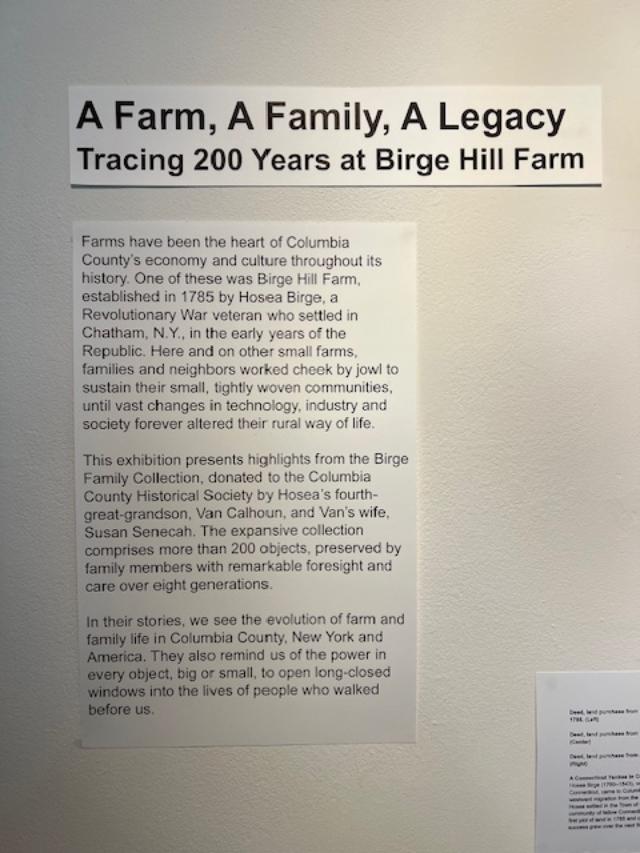
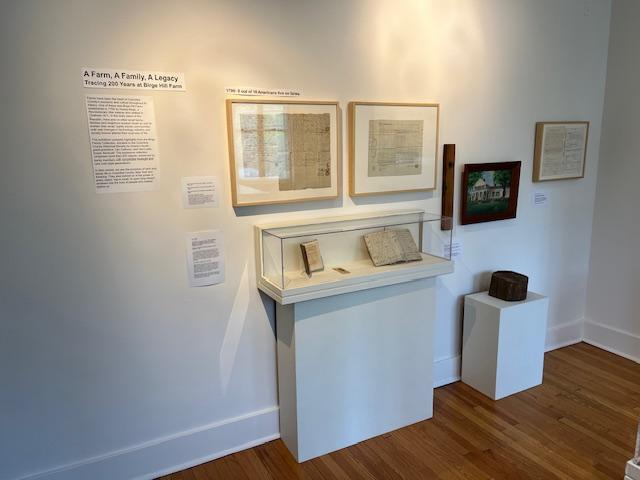
The next special exhibition at the museum was the “A Farm, a Family and a Legacy”:

(from the museum website)

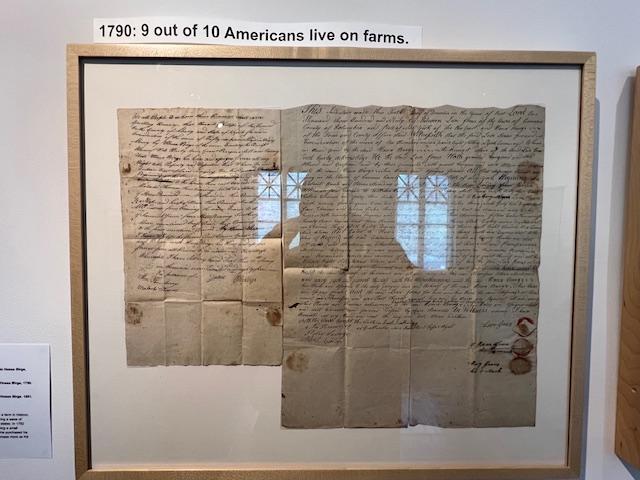
Farms have been the heart of Columbia County’s economy and culture throughout its history. One of these was Birge Hill Farm, established in 1785 by Hosea Birge, a Revolutionary War veteran who settled in Chatham, N.Y., in the early years of the republic.

The write up on the exhibition

The deed to the original farm

Here and on other small farms, families and neighbors worked cheek by jowl to sustain their small, tightly woven communities, until vast changes in technology, industry and society forever altered their rural way of life. 

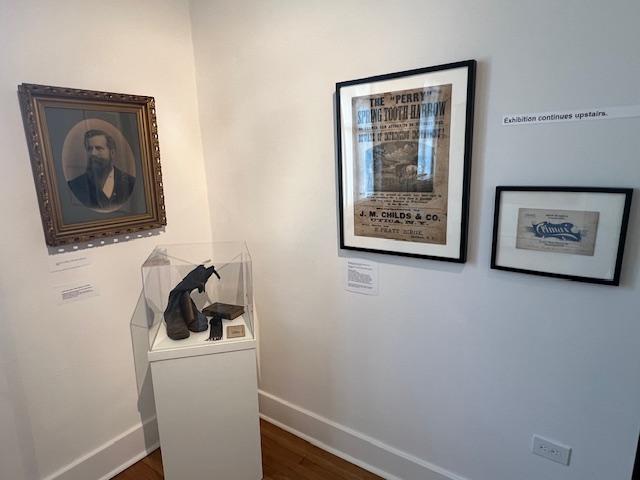
The Birge Family artifacts in this interesting exhibition of family life on a multi generational farm

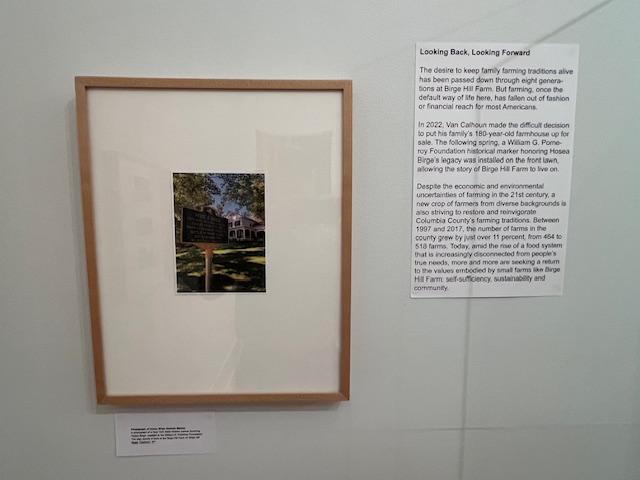
The farm is currently for sale

This exhibition presents highlights from the Birge Family Collection, donated to the Columbia County Historical Society by Hosea’s fourth great-grandson, Van Calhoun, and Van’s wife, Susan Senecah. The expansive collection comprises more than 200 objects, preserved by family members with remarkable foresight and care over eight generations. In their stories, we see the evolution of farm and family life in Columbia

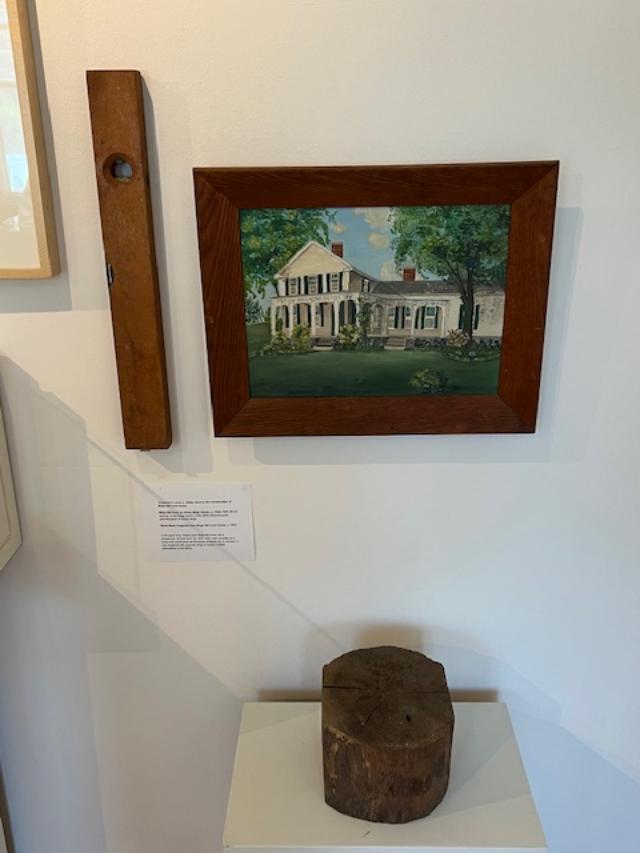
The family heirloms

The current farmhouse of the family’s

The exhibition was interesting in that it must be hard for a family giving up a way of life and a home that has been in the family for 200 years. It was nice of the family to let us in and see their life in this exhibition.

Federal Style: Refinement, Grace and Symmetry:

America’s newly founded nation beamed with patriotism following its victory in the Revolutionary War. The original foundations of the United States government and culture immediately following its independence is known as the Federal Era (1780–1830).

George Washington and other American icons looked toward the Classical ages of Greece and Rome in forging an identity for the young American Republic through architecture, furniture, textiles, ceramics and works of art. Neoclassical designs and motifs are distinguished through simple lines, a satisfying balance of symmetry and overall elegance that signals strength and democracy. In celebrating 200 years of the James Vanderpoel House, we present its Federal architectural excellence along with diverse material culture representing characteristics of the Federal Style and era in Columbia County and America (CCHS website).

The other buildings that are part of the Society’s museum:

Signage at the Historical Houses

The Crane Schoolhouse

This authentic, circa-1850 one-room schoolhouse served as a public school for the Town of Kinderhook into the 1940s. It replaced an earlier “log cabin-style” single-room school where a man named Jesse Merwin served as school master. Merwin, who was a longtime friend of the writer Washington Irving, is said to have been the “pattern” for Irving’s character of Ichabod Crane in “The Legend of Sleepy Hollow.”

A “Legends & Lore” historic marker, awarded by the New York Folklore Society and William G. Pomeroy Foundation, stands a few yards from the school and commemorates this literary connection. Today, the Ichabod Crane Schoolhouse is a seasonal museum. See exhibitions, period school desks and other objects relating to one-room schoolhouse education in Columbia County.

During the 1950s and ’60s, it was saved from disrepair by a group of local women who retrofitted the space to function as an ad hoc community center. In 1952, former first lady Eleanor Roosevelt visited the schoolhouse to deliver a radio address praising “the work of women” and recognizing their efforts to preserve the historic school.

In 1974, the schoolhouse was moved 200 yards down the road to the Luykas Van Alen House site. That same decade, it was restored to its 1930s appearance. It remains an excellent and intact example of a rural, one-room schoolhouse with a gable roof, clapboard siding and a single pent-roofed entrance. The interior consists of a large classroom with two adjacent cloakrooms — one for boys and one for girls. The building was never modified to have heat or hot water and still retains its original 1929 wood-burning stove, wood flooring, chalkboards and double-hung sash windows(CCHS website).

Luykas Van Alen House

Built circa 1737 and designated a National Historic Landmark in 1967, the Luykas Van Alen house is recognized as one of the best examples of fewer than a dozen historically intact Dutch Colonial houses in the Hudson Valley. 

Located on rural land once used by native Mohican peoples for hunting and seasonal camping, the house was the center of a prosperous farm and home to several generations of the Van Alen family. The last Van Alen descendant to live in the house, Maria Van Alen Herrick, died in 1935. The house was purchased in 1938 by William Van Alen, a descendant of Luykas’ brother, Johannes. In 1964, unable to undertake extensive restorations himself, William generously donated the house to Columbia County Historical Society (CCHS website).

The signage by the Van Alen House