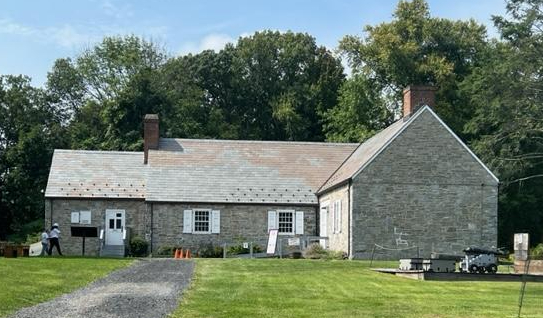
Category: Historic Sites of New York State

Stony Point Battlefield State Historic Park            44 Battlefield Road                                           Stony Point, NY 10980

Stony Point Battlefield State Historic Park 44 Battlefield Road Stony Point, NY 10980

Stony Point Battlefield State Historic Park

44 Battlefield Road

Stony Point, NY 10980

(845) 786-2521

https://parks.ny.gov/historic-sites/stonypointbattlefield/maps.aspx

https://en.wikipedia.org/wiki/Stony_Point_Battlefield

Open: Sunday (Grounds) 12:00pm-5:00pm (Museum) 12:00pm-4:30pm /Monday-Tuesday Closed/Wednesday-Saturday (Grounds) 9:00am-5:00pm/(Museum) 10:00am-4:30pm

Admission: Free but donations are accepted. Groups, Scouts and Organizations are $5.00 individuals per person and $7.00 for special events per person. Please call to make arrangements on this.

My review on TripAdvisor:

https://www.tripadvisor.com/Attraction_Review-g48694-d263715-Reviews-The_Stony_Point_Battlefield_Lighthouse-Stony_Point_New_York.html

The Stony Point Battlefield Museum

The General’s tent on the battlefield.

We visited the Stony Point Battlefield one afternoon and it is a very interesting and historical fort in the Hudson River Valley. We were able to tour the battle site and explore the grounds of this historical site. Then we toured the museum which gave us a view of the battle and what happened that night through a series of displays of the artifacts.

The Gallery

The Gallery

The gallery was filled with all sorts of weaponry and items needed by the troops for battle.

The battlefield site.

The museum has displays of the weapons used, the structure of the fort, utensils used the time that the troops were defending this area and what life was like on a day-to-day basis. The museum also offers a glimpse of artifacts of both the fort and of the battle with docents assisting you in telling the story of what happened at that time and after the battle and the war were over.

The Stoney Point Battlefield tent set up.

Outside the fort, there was a set-up of tents to show what the troops life was like in battle as well as General Wallace’s tent that he lived in and used during the battle. At the end of the day, the park does a demonstration of lighting the cannon that would have been used in battle. That was interesting. It was a lot more work than people think.

The cannon set up.

There is lot to do and see along the pathways of the fort and its grounds with amazing views of the Hudson River.

The story of the battle.

The History of the park and battlegrounds:

(from the NYS Parks Division website)

Visit the site of the Battle of Stony Point, one of the last Revolutionary War battles in the northeastern colonies. This is where Brigadier General Anthony Wayne led his corps of Continental Light Infantry in a daring midnight attack on the British, seizing the site’s fortifications and taking the soldiers and camp followers at the British garrison as prisoners on July 16, 1779.

The map of the fort at Stony Point, NY.

By May 1779 the war had been raging for four years and both sides were eager for a conclusion. Sir Henry Clinton, Commander-In-Chief of the British forces in America, attempted to coerce General George Washington into one decisive battle to control the Hudson River. As part of his strategy, Clinton fortified Stony Point. Washington devised a plan for Wayne to lead an attack on the garrison. Armed with bayonets only, the infantry captured the fort in short order, ending British control of the river.

The weapons of battle on display at the museum.

The Stony Point Lighthouse, built in 1826, is the oldest lighthouse on the Hudson River. De-commissioned in 1925, it now stands as a historical reminder of the importance of lighthouses to commerce on the Hudson River. The opening of the Erie Canal in 1825 unleashed a surge of commercial navigation along the Hudson River, by linking New York city to America’s heartland.

Within a year, the first of the Hudson’s fourteen lights shone at Stony Point and others soon followed, designed to safely guide maritime travel along the river. Many light keepers, including several remarkable women such as Nancy and Melinda Rose at Stony Point, made their homes in the lighthouse complexes, and ensured that these important navigational signals never failed to shine.
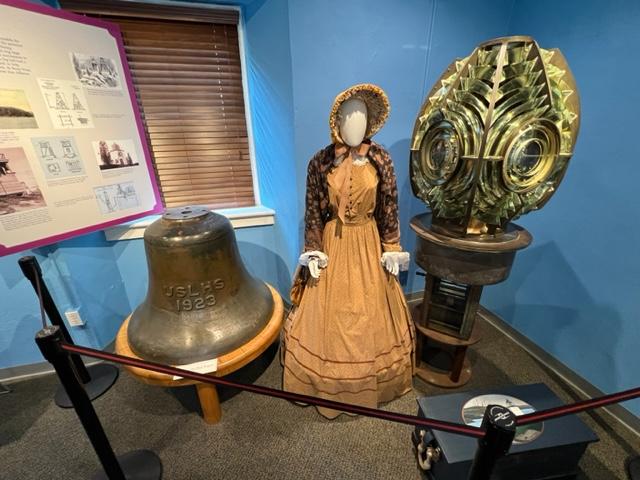
The lighthouse light on display at the museum.

The site features a museum, which offers exhibits on the battle and the Stony Point Lighthouse, as well as interpretive programs, such as reenactments highlighting 18th century military life, cannon and musket firings, cooking demonstrations, and children’s activities and blacksmith demonstrations.

The cannon demonstration that we saw at the end of our visit to the battlefields.

Wawarsing Historical Society and Knife Museum  3 Irish Cape Road                                      Napanoch, NY 12458

Wawarsing Historical Society and Knife Museum 3 Irish Cape Road Napanoch, NY 12458

Wawarsing Historical Society and Knife Museum

3 Irish Cape Road

Napanoch, NY 12458

(845) 626-5028

https://www.facebook.com/theknifemuseum/

Open: Sunday 12:00pm-4:00pm/Monday-Friday Closed/Saturday 10:00am-4:00pm (Seasonal)

Admission: Free but donations are accepted

My review on TripAdvisor

I visited the Wawarsing Historical Society and Knife Museum on a whim the other week when I was visiting museums in the region. What I found was a very interesting local museum dedicated to history and marketing of the former Knife industry of the region. I had never realized that this was the major industry of the region.

The Mission Statement of the Museum:

Our mission is to develop a museum to serve as both a repository of artifacts and informational conservatory as well as a place where memorabilia and examples may be accessed so that this rich heritage and a viable segment of American History will not be lost.

The front of the museum.

The History of the Museum

The Founder of the museum

The Den of Marbletown-The Teddy Bear Museum One Basten Lane                                         Kingston, NY 12401

The Den of Marbletown-The Teddy Bear Museum One Basten Lane Kingston, NY 12401

The Den of Marbletown-The Teddy Bear Museum

One Basten Lane

Kingston, NY 12401

(845) 687-6441

https://thedenofmarbletown.com/

Open: Sunday11:00am-5:00pm/Monday-Wednesday Closed/Thursday-Saturday 11:00am-5:00pm

My review on TripAdvisor:

https://www.tripadvisor.com/Attraction_Review-g48003-d7252463-Reviews-The_Den_of_Marbletown-Kingston_Catskill_Region_New_York.html

Den of Marbletown-The Teddy Bear Museum at One Basten Lane

The sign that greets you in the front of the business.

When you enter the museum, you will walk through an extensive collection of Steiff animals for sale in the museum gift shop. The owner of the museum and gift shop is a licensed Steiff store. After you pass the gift shop you get to experience all the beautiful stuffed toys which I would consider art.

The Steiff Teddy Bear Shop that sells all these beautiful works of art.

All the beautiful Steiff animals for sale in the Steiff Store.

The tour of the museum starts at the register where the museum has a small drink menu. You can get soft drinks like soda, homemade Lemonade and Bubble Tea or hot drinks like Coffee or Tea before or after your tour. A more extensive menu is being worked on the owner of the museum promised.

The drink menu at the Teddy Bear Museum.

Then you move room to room admiring all the beautiful graceful animals. The rooms are filled with all sorts of bears of all shapes, sizes and colors. There is every animal that was on Noah’s Arc and probably more. You can admire the bears from a distance but get to see them up close in the gift shop that offers such an extensive collection to choose from.

The extensive collection of wooden toys on the way up the stairs.

You can see an original “Teddy Bear” like the one created for Theodore Roosevelt. You can see a collectible “Rod Bear” one of the original bears created by the company.

The “Teddy Bear” in the collection.

On the second floor, the collection continues with an extensive collection of wooden toys. They also come in every shape and color. There is also an extensive set of collectables as well.

The Wooden Animals in the collection.

The museum creator’s mother in law continues to collect bears and other animals today so the collection keeps growing. There is an extensive amount of ‘collectable’ items on display as well.

Some of the smaller ‘collectables’.

More ‘collectables’.

The owner of the museum also has a special section for his friend, Sandy Sherman with a portrait of her as a girl with her Steiff toy and then a picture of her as an adult with the same toy years later. It was a very touching piece in the collection.

The Sandy Sherman exhibition

The portrait of Sandy Sherman and the photo of her holding the same bear as in the painting.

When you have had enough of everything stuffed animals, there is a place for parents to relax while their kids play with some toys provided by the museum in the “Mama Bear” room. The lounge is for parents to relax and kids to continue to play.

The Mama Bear Lounge

The “Mama Bear” Lounge is a place of comfort and relaxation. It is set up perfectly for those who want o play and for those who want to relax.

The Children’s Room in the ‘Mama Bear’ Lounge

The entrance to the gardens and the pond.

The path with the gardens.

The pond at the end of the path.

When you finish exploring the inside of the museum, the grounds outside offer much more as well. There is lush green lawns to relax on and a path with a garden to a pond in the woods that is just as relaxing. it is a nice way to spend the day exploring the paths and relaxing under the trees.

The beautiful grounds outside the museum.

The museum is a perfect way to capture the inner child in each of us and a place to relax and just enjoy a nice day. The museum owner also added he is working on a new café menu so there will be a place to eat as well at the museum. Then you can really spend the day there.

It was a wonderful afternoon tour.

The History of the Museum:

(from the museum’s website)

The Den of Marbletown is a teddy bear museum in Kingston, New York. We have a large collection of original Steiff teddy bears on display, and we sell rare Steiff collectibles in our gift shop. We also feature an on-site café, where you can enjoy scratch-made food and homemade baked goods.

The sign that greets you in the front of the museum.

The Teddy Bear Museum features more than 5,000 Steiff teddy bears and animals, Madame Alexander dolls, Barbie dolls, and hand-carved wooden toys. Steiff is the German company that invented the Teddy Bear, as we know it, more than 100 years ago. Today Steiff is considered the world’s premier manufacturer of high-end toys and collectibles. Indeed, Steiff is the only “luxury” toy brand in the marketplace today.

The Grace Bear Collection Room

The Collection

The Teddy Bear Collection

The core of the collection comes from “Gracebear,” a Steiff enthusiast who continues collecting to this day. Gracebear has shared this collection with her daughter and son-in-law, Nan and Steve, who are the founders of The Den. Gracebear’s other collections rotate throughout the museum as temporary exhibits, including Madame Alexander dolls, Barbie dolls, Schuco toys and bears, and hand-carved wooden toys.

Dioramas

The Steiff Circus exhibit

Local artists share their talents through the creation of charming dioramas that rotate throughout the year.

The Steiff History Room

The “Teddy Bear” exhibit

The history of the Teddy Bear (and Teddy Roosevelt); the poignant story Margarete Steiff, the founder of the luxury toy company; and the design evolution of the Teddy Bear are some of the displays featured in this section of the museum.

The Rod Bear

The “Original Rod Bear”

On Loan from the collection of the late Mary Couke is the exquisite and rare 1904 Rod Bear, considered by many as “The Holy Grail” of Steiff Collectors. This bear features an early design attempt at movable joints through three metal rods in the body – horizontal ones for legs and arms, and a vertical one for the head.

The Teddy Bear Café:

The Teddy Bear Café

After you spend the day in our teddy bear museum, stop by our café for a quick pick-me-up. The Den of Marbletown serves a variety of menu items at our coffee shop in Kingston, Ulster County, Hudson Valley, NY.. You can create your dream drink, including flavored lemonade or 40 plus flavors of bubble tea at the den. Need to get some work done? Take advantage of our free Wi-Fi. Need a place for your kids to unwind? We have indoor and outdoor play spaces.

The drink menu is extensive and the beverages are homemade.

The Teddy Bear Gift Shop:

The gift shop offers everything Steiff

When you step into The Den of Marbletown’s souvenir shop in Kingston, Ulster County, Hudson Valley, NY, it’s like stepping back in time. Experience the joys of a classic toy shop when you browse our selection of Steiff teddy bears and stuffed animals. We’re one of the few shops in the area that sells Steiff toys, and we sell a wide variety of rare collectibles.

The gift shop has an extensive collection of bears and other animals for sale.

The Basten House

The Basten Homestead houses the collection.

The museum exists in a very special space – a marvelous 1860 farmhouse, in which houses seven generations of “The Basten” family. The museum experience is enhanced by this context – the old wall paper, the slopping floors, the secret passage ways, the antique door knobs, the original shutters, and the stone wall of “the keeping room.”

The Basten House history.

The Borscht Belt Museum                                     90 Canal Street                                                 Ellenville, NY 12428

The Borscht Belt Museum 90 Canal Street Ellenville, NY 12428

The Borscht Belt Museum

90 Canal Street

Ellenville, NY 12428

https://www.borschtbeltmuseum.org/history

https://www.facebook.com/borschtbeltmuseum/

Open: Sunday 12:00pm-5:00pm/Monday-Wednesday Closed/Thursday-Saturday 12:00pm-5:00pm

Admission: Free but donations are being accepted

My review on TripAdvisor:

https://www.tripadvisor.com/ShowUserReviews-g47676-d26587886-r914784651-Catskills_Borscht_Belt_Museum-Ellenville_Catskill_Region_New_York.html?m=19905

The Catskill Borscht Belt Museum at 90 Canal Street.

The museum sign

This museum will be the talk of the Hospitality Industry. The Catskill Borscht Belt Museum is in its beginning stages with the building bought and the renovations going on. The museum has not opened fully to the public yet as it is still in development and will not open until 2025.

The temporary main gallery

The museum is opened now with a pop-up exhibition on the resorts of the Catskill region “Vacationland: Catskill Resort Culture 1900-1980” with the rise of these resorts that catered to the thriving Jewish, Italian, Irish and Black middle classes who were barred from the resorts of the WASP elite. These were all inclusive hotels that catered to families who would spend summers together until a new generation of travelers developed with air travel, air conditioning developed and assimilation of the population by the 1980’s.

The main gallery of the pop up exhibition.

The exhibition shows how the Depression era generation spent their hard earned dollars and created an enclave where they thrived and enjoyed themselves. It was the type of vacation that we only see today at all inclusive resorts like Sandals and Club Med and on cruise ships.

The Main Gallery pop up exhibition “Vacationland”

The era of travel with the family ended in the 1980’s with women going to work, different educational standards and more people going to college and the change in the work schedule. This on top of the blatant discrimination of that era being ‘smoothed over’ time. People had more options and it was obvious from the timeline that the younger generation wanted different vacations from their parents.

The food service at the hotels

This will be a very interesting museum when it is completed and opened. For now, we get a teaser of what is to come. I am looking forward to it.

History of the Borscht Belt and of the Museum:

(from the museum website)

Curatorial Mission

The Borscht Belt Museum will not solely focus on entertainment, glamour and design. Its curatorial mission will include weightier themes and narratives embodied by the era; the antisemitism that spurred the creation of a Jewish vacationland, the refuge the Catskills provided to African-Americans, Irish-Americans, L.G.B.T.Q. and other communities, and the forces of assimilation and tolerance that eventually helped fuel the grand resort era’s decline.

The Hotel Exhibit on the places of that era.

In addition to its permanent core exhibition, the museum will have space for temporary and visiting shows, ensuring the institution delivers fresh interest to audiences and remains culturally relevant over time. The Catskills continues to serve as a refuge for all  – an ethos that will find voice in the museum’s curatorial mission.

A Home with History

Beginning with a pop-up exhibit in July 2023, the Borscht Belt Museum will make its home at 90 Canal Street, in Ellenville, N.Y. The museum building is a glorious Neo-Georgian gem built in 1928 for the Home National Bank. For more than a half century the bank helped nurture hundreds of local hoteliers and bungalow colony owners whose ambitions, grit and self-sacrifice defined the resort era.

The Borscht Belt Museum will illuminate and celebrate the golden age of the Catskills resort era, when millions of urban dwellers sought refuge in the mountains of upstate New York, leaving deep imprints on mainstream American culture, from stand-up comedy and comfort food to mid-century modern design and popular concepts of leisure. 

The permanent museum will open in 2025. A pop-up exhibit, Vacationland! Catskills Resort Culture 1900-1980, will welcome visitors beginning in early July 2023 through the end of the summer.

The hotels of the “Vacationland” exhibition.

History of the Borscht Belt:

(from the museum website)

No Hebrews Entertained”

The Borscht Belt was born out of bigotry. At the turn of the 20th century, hotel advertisements in the region often used phrases like “No Hebrews Allowed” and “Gentiles Only” to keep out Jewish patrons. This 1902 advertisement from the Brooklyn Daily Eagle features The Nichols in Liberty, N.Y.

In a delicious twist of history, a Jewish family by the name of Grossinger would later purchase the hotel and absorb it into the sprawling and iconic resort complex that bore their name.

The Borscht Belt

The region came to be called the Jewish Alps, Solomon County or more often, simply The Mountains. But another expression, the Borscht Belt, so-named for the hearty beet soup born in Eastern Europe, has had more staying power. What began as a patchwork of Jewish-owned farms whose proprietors took in summertime boarders to make ends meet grew into a sprawling constellation of all-inclusive resorts, hotels and more modest bungalow colonies and kuchalayns – establishments with shared kitchens.

The larger, more successful establishments like Kutsher’s, The Concord and The Nevele had thousands of rooms, nightclubs, indoor pools and ski slopes – and in the case of Grossinger’s, its own airstrip and post office.

The Dress Code and pool standards of the era at the hotels.

End of the Resort Era

Then, seemingly out of nowhere, many of the hotels began to falter, and by the 1980s, all but a handful were gone. It’s hard to pinpoint a single factor in the resort era’s demise, but cheap airfares, air conditioning and an easing of the antisemitism that spurred the Borscht Belt’s creation all conspired against establishments that were barely profitable in the best of times. Assimilation also played a role. Younger Jews simply craved more “modern” forms of leisure that did not remind them of their immigrant parents and grandparents. As the flow of guests began to ebb, the cost of drawing top-notch entertainment, keeping lobbies up to date and guest rooms looking fresh became prohibitive.  

Changing tastes

Today, most of the big hotels have been demolished or swallowed by nature. A few have found new life among the expanding communities of Hasidic Jews. But the legacy of the Borscht Belt era lives on in the all-you-can eat buffet of a Carnival Cruise, the barbed quip of a stand-up comic and the very notion of the American vacation. 

The Catskills Borscht Belt Museum will preserve and honor that legacy so sit back, savor that plate of chopped liver and stay tuned for more about this quintessential American story.

The final scene from the movie “Dirty Dancing” based on that era.