Category: Historic Sites of New York State

Irvington Historical Society                                           131 Main Street                                                            Irvington, NY 10533

Irvington Historical Society 131 Main Street Irvington, NY 10533

Irvington Historical Society

131 Main Street

Irvington, NY 10533

(914) 591-1020

https://www.instagram.com/irvingtonhistoricalsociety/

https://www.facebook.com/IrvingtonHistoricalSociety/

Open: Sunday-Wednesday Closed/Thursday 1:00pm-4:00pm/Friday Closed/Saturday 1:00pm-4:00pm

Admission: Free but donations are accepted

My review on TripAdvisor:
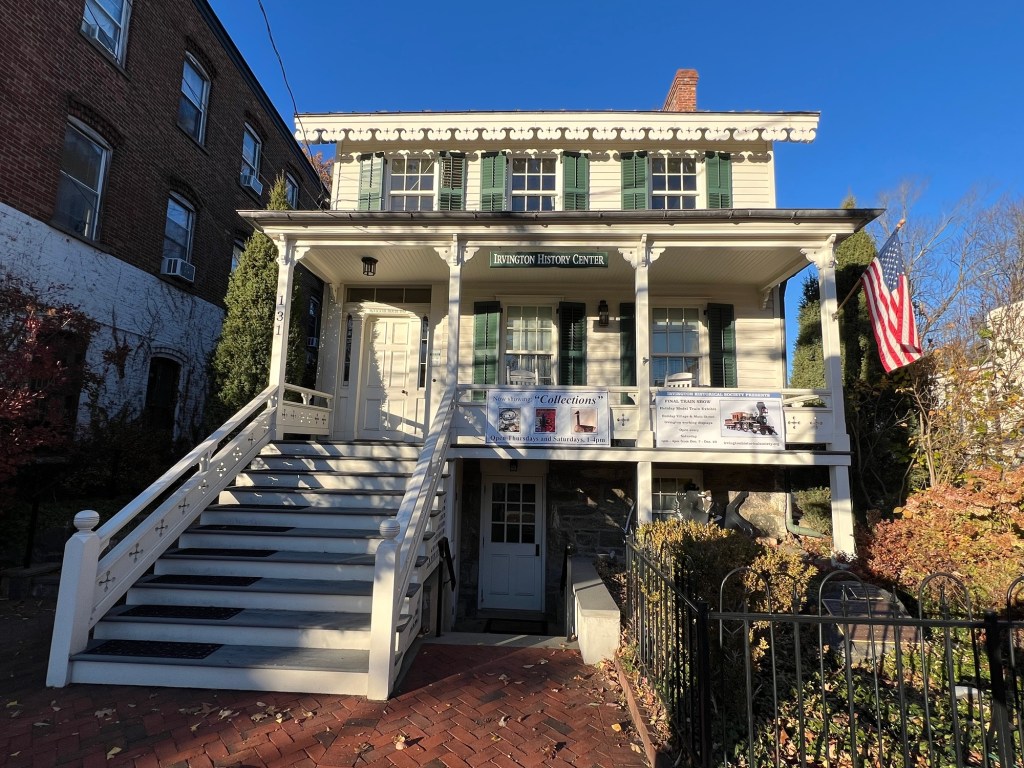
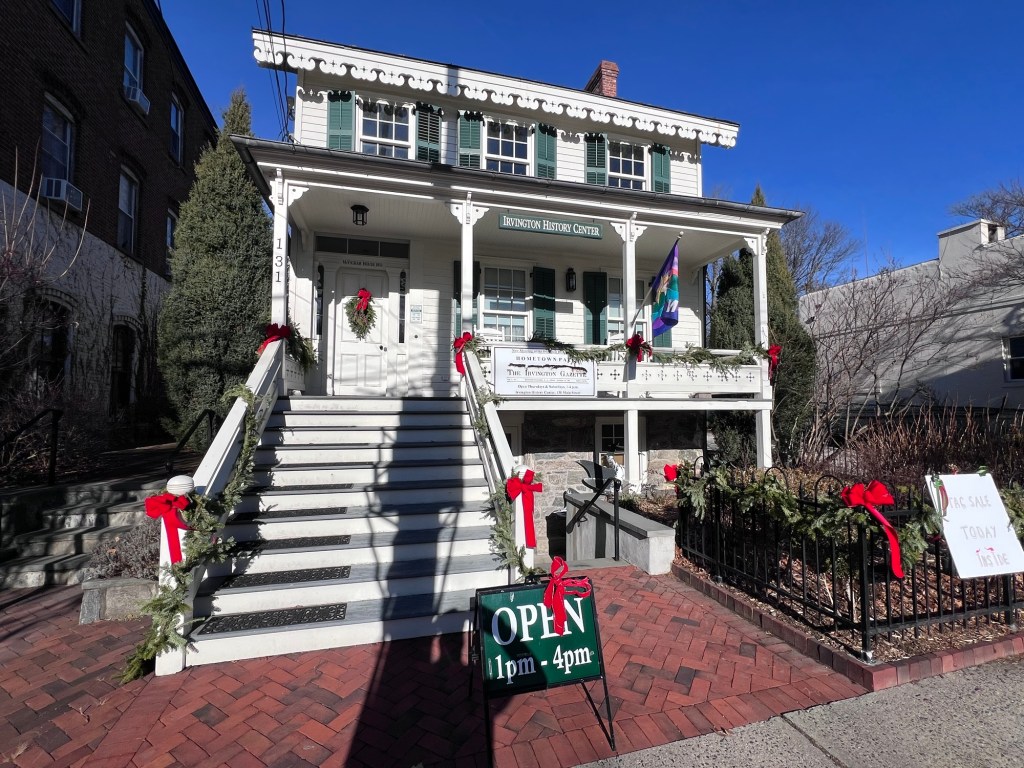
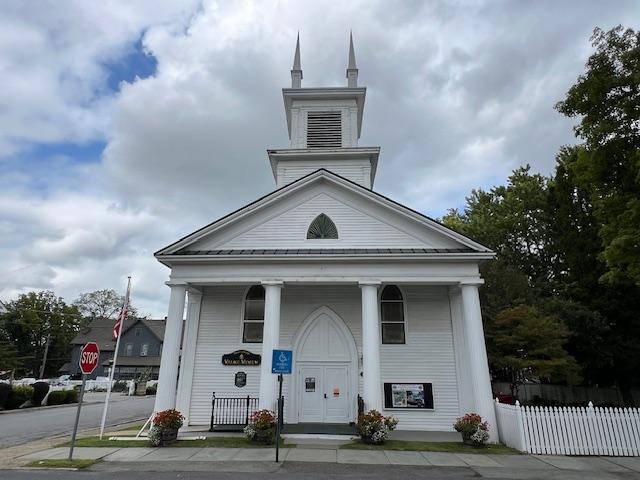
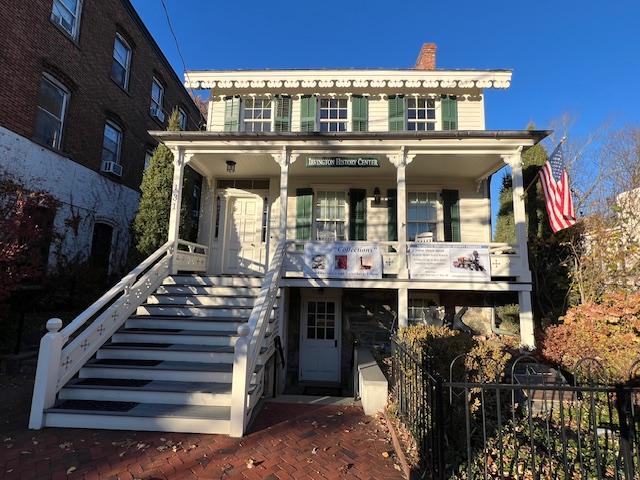
The Irvington Historical Society at 131 Main Street
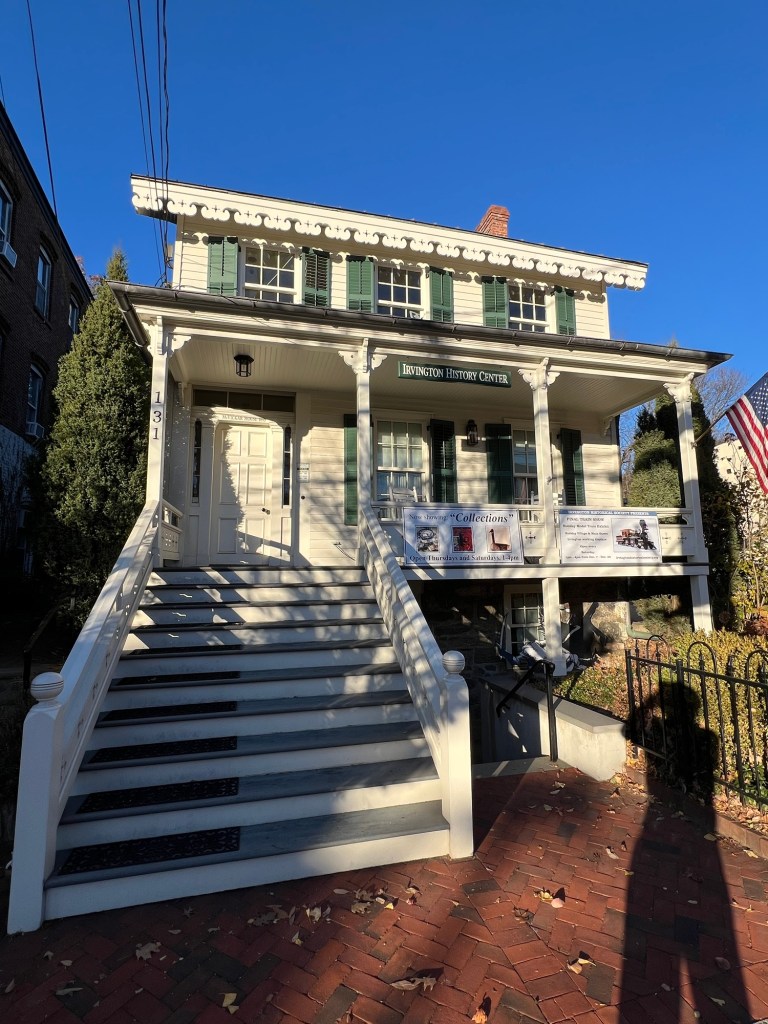
The Society building in the Fall

The Mission Statement of the Irvington Historical Society:

(From the Society website)

The Irvington Historical Society was founded in 1972 as a direct result of renewed interest in the history of our village during the Irvington Centennial Celebration. The mission of the society is to discover, collect, organize, preserve and make accessible all variety of material which serves to illustrate and explain the history of the village and its people. Through lectures, programs, publications, and exhibits, we attempt to share that history with residents and friends. The Society is also dedicated to the preservation of the historical, architectural, and cultural heritage of the Village.
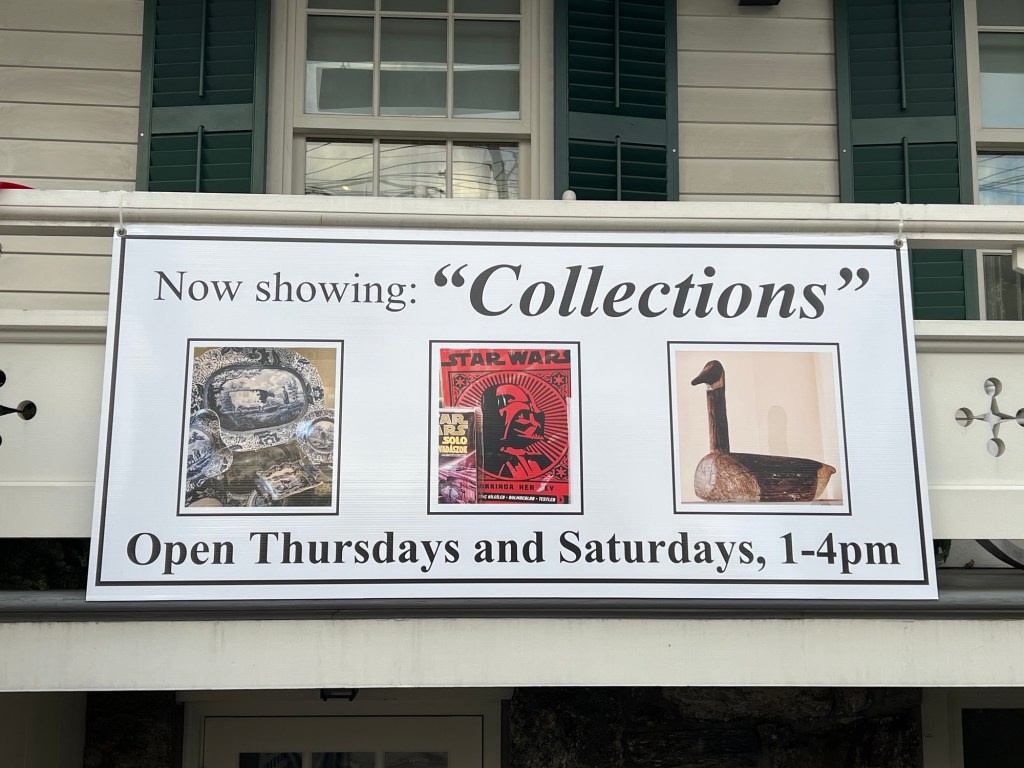
The ‘Collections’ exhibition on residents of Irvington, NY personal collections shown at the museum
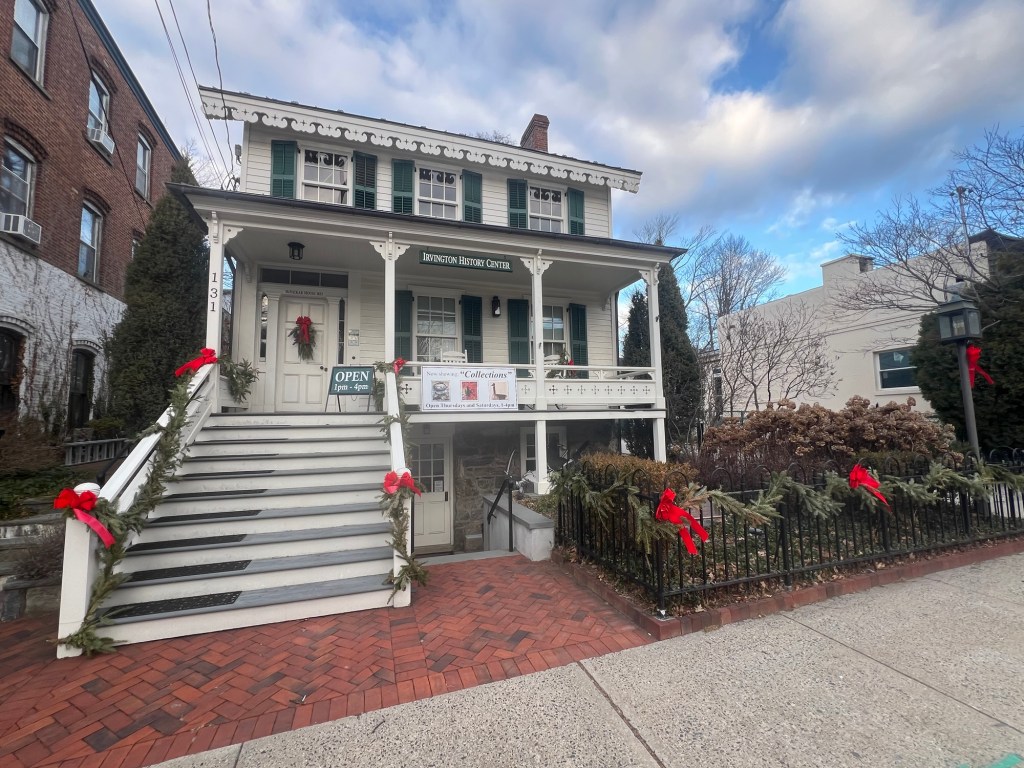
The museum decorated for the holidays

The History of the Museum’s McVickar House headquarters:

(from the Society website)

The McVickar House, a Greek Revival frame house, stands on land that was originally part of the farm of William Dutcher.  In 1812, Justus Dearman, a New York City merchant, purchased the southern half of the Dutcher farm, 144 acres extending eastward from the Hudson River.  In 1849, Dearman sold his property to Gustavis Sacchi for $26,000.  Sacchi immediately resold the property to Franklin C. Field, a partner in the firm Jay and Field in New York City. Field had the property sub-divided into individual building lots establishing the village of Dearman.  On April 25, 1850, these lots were publicly auctioned at the Merchant’s Exchange in New York City. 
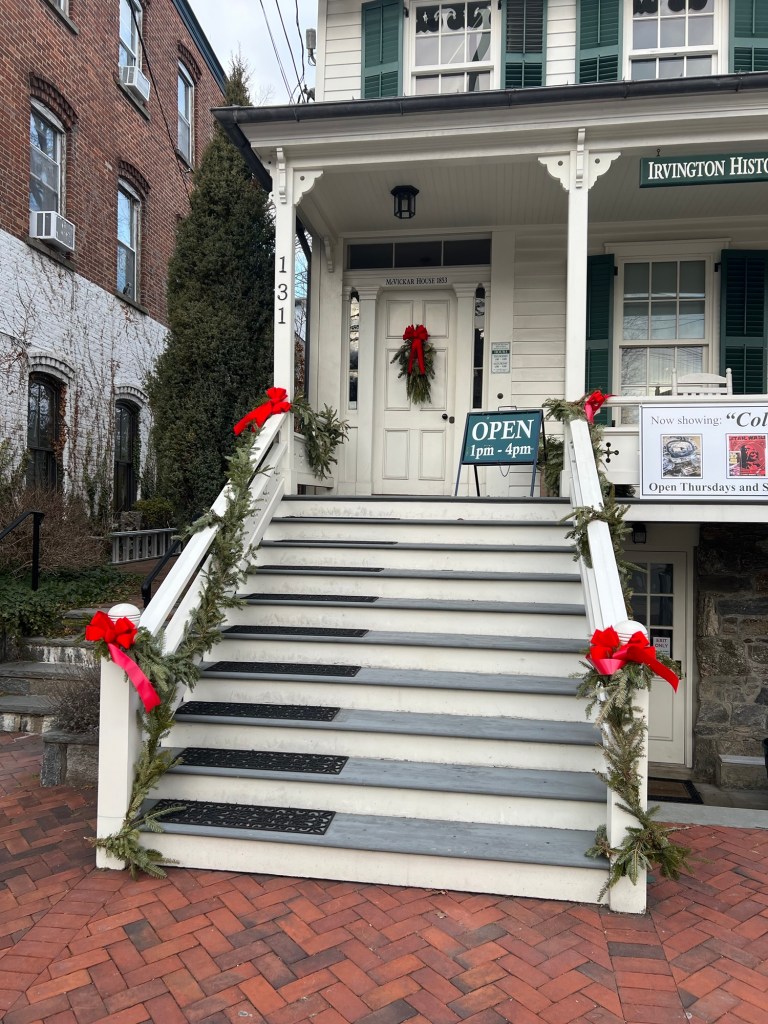
The museum decorated for the holidays

(From the Society website)

Building Lot #246, along with several others, was ultimately sold to the Rev. John McVickar.  McVickar was born in New York City on August 10, 1787, into a wealthy merchant family.  He was considered a brilliant student, graduating from King’s College (now Columbia) at the age of 17 in 1804. 

In 1811, he took orders in the Protestant Episcopal Church and became a dynamic leader in the Episcopal Diocese of New York for over fifty years.  He married Eliza Bard in 1809, and they had nine children, only three of whom survived McVickar’s death in 1868.

In 1817, McVickar was appointed professor of moral philosophy, rhetoric and belles-lettres at Columbia.  He was superintendent of the Society for Promoting Religion and Learning in New York, served twice as acting president of Columbia, authored several books, and served as chaplain to the United States forces at Fort Columbus, Governor’s Island from 1844 to 1862.  McVickar moved to Irvington in 1852 becoming a neighbor to his good friend Washington Irving.

Two of the lots McVickar purchased, along with several lots donated by McVickar’s cousin, John Jay, were to serve as the site of a chapel school, later to become St. Barnabas Episcopal Church.  McVickar’s son, William Augustus McVickar, was appointed Missionary to Dearman in August of 1852, and on the August 17, 1852, the cornerstone was laid for the chapel school. 

The Church of St. Barnabas was incorporated in 1858, and Reverend William A. McVickar served as the Rector of the Church until 1867.  In 1870, William A. McVickar, who had inherited Building Lot #246 after the death of his father, sold the property to John Dinkel, a local merchant.

Dinkel was a grocer who in the 1870’s had a store on the corner of Main Street and Broadway.  Dinkel sold the McVickar property in 1872 to Patrick Cannon whose daughter Mary later owned the property.  Mary married Chester R. Doremus who owned Doremus Carriage Factory located next door to the McVickar house.  In 1935, Mary sold the McVickar House property to John Fallon who in turn sold the property to Con Edison in 1957 so that they could build a small substation behind the house.  The house was rented until 1992, but after the last tenant moved out, it fell into disrepair. 

In 2002, the Village of Irvington acquired the property for the home of the Irvington Historical Society.  A major fundraising effort was undertaken by the Society to support the renovation and restoration project.  The Irvington History Center at the McVickar House opened in November 2005, and the McVickar House is listed on the National Register of Historic Places.
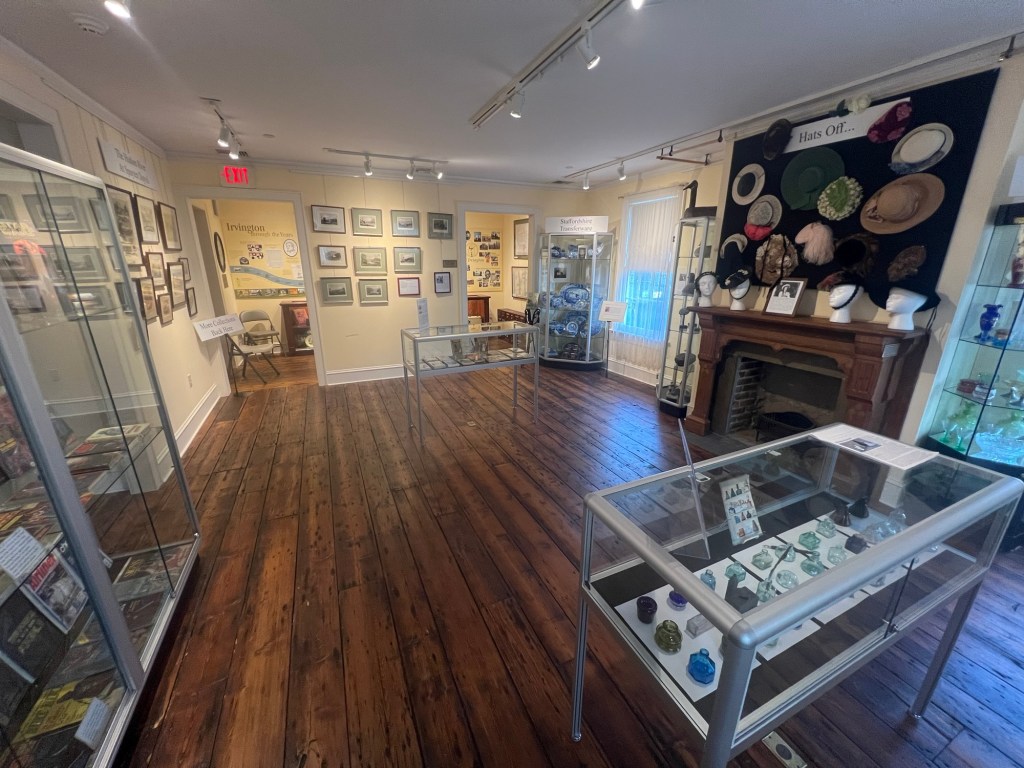
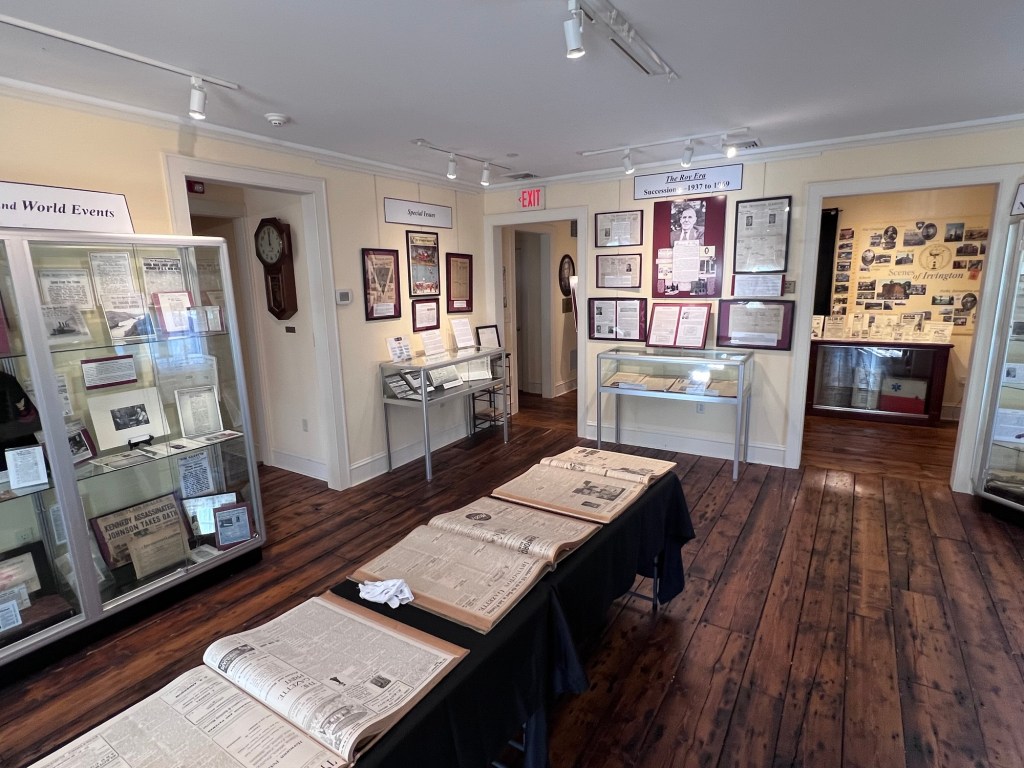
The main gallery of the Irvington Historical Society . The ‘Collections ‘ exhibition is to the front and the small permanent collection is towards the back.

The “Collections” exhibition was very interesting exhibition. Each display is unique to each of the residents who donated their collections for the exhibition. There was sets of china, artwork from the Hudson River Valley, items like duck decoys, a collection of hats, a collection of minerals and a selection of books. There was even a collection of Star Wars items. It was a nice exhibition of unique items. The exhibition will be rotating with other collections.
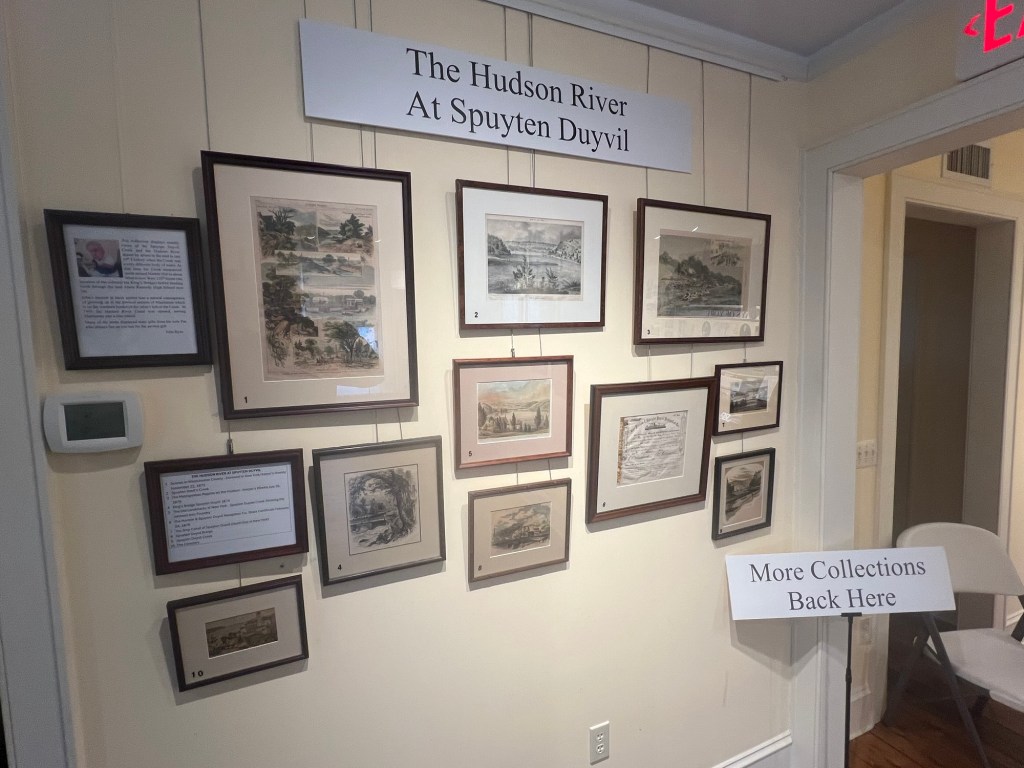
The collection of Hudson River art by a local resident gives a glimpse of the romantic side of the Hudson River Valley before development
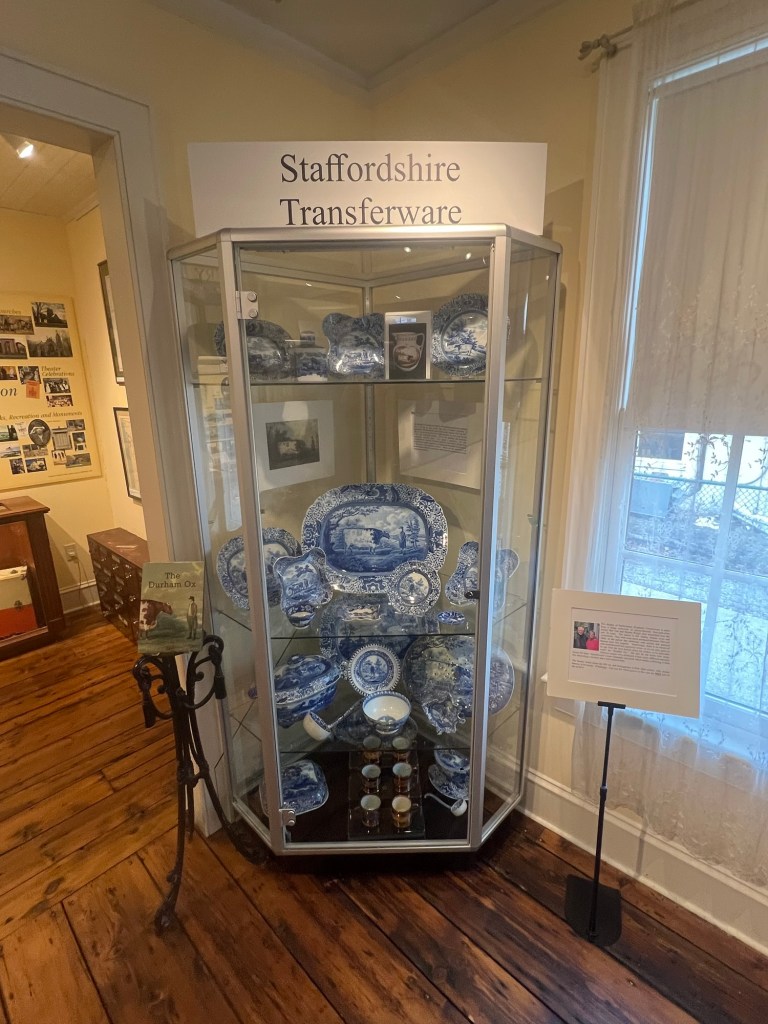
A collection of English Staffordshire China
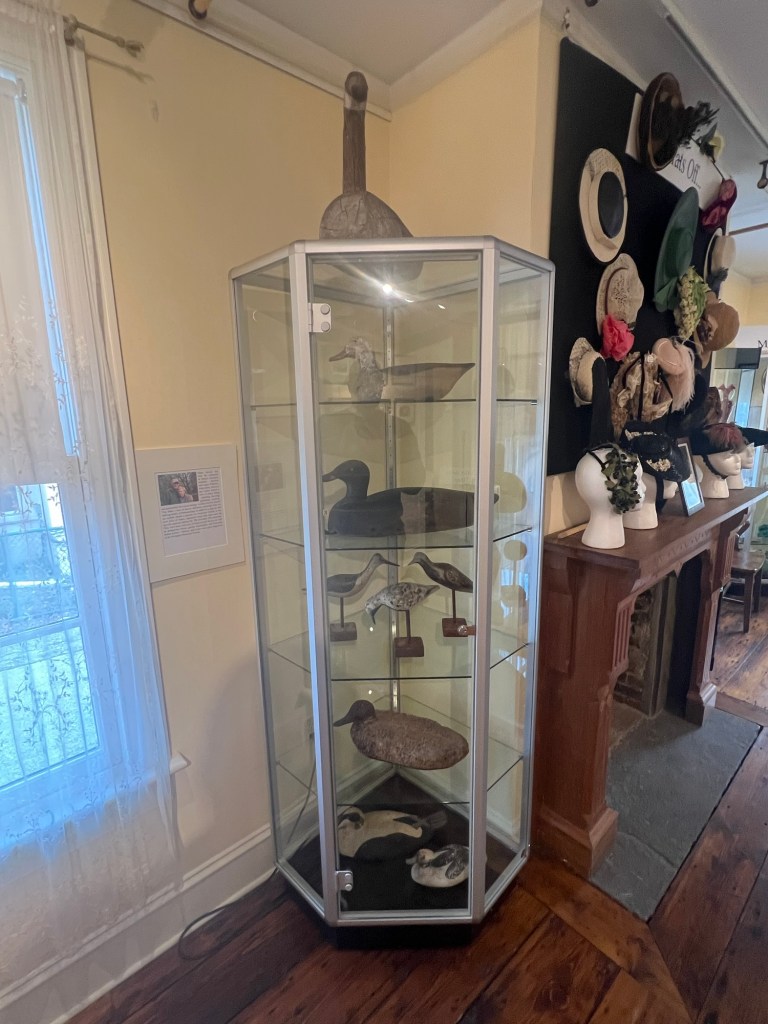
A collection of Duck Decoys
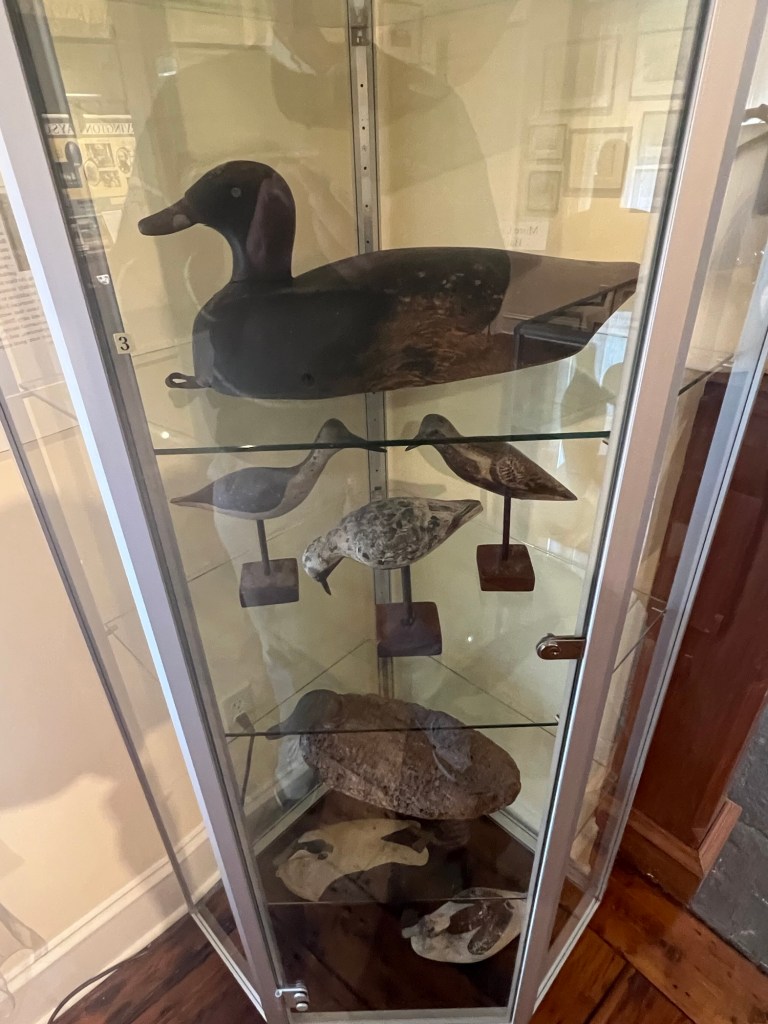
The Duck Decoys are from all eras
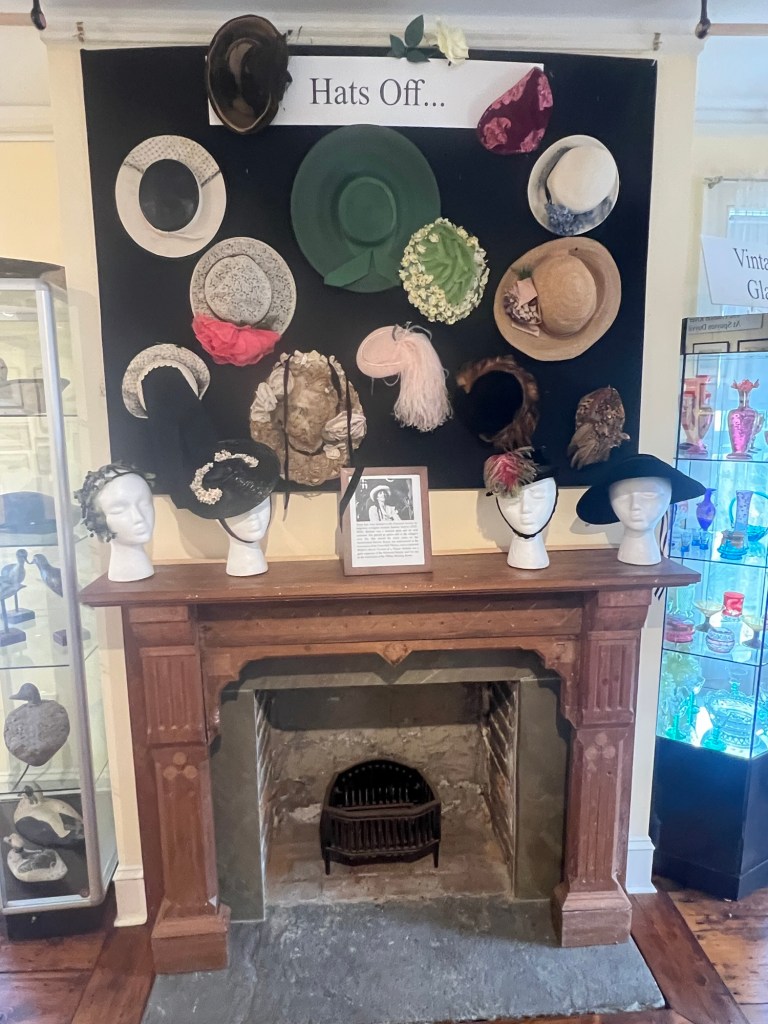
One resident’s Hat Collection which represents many different eras of style and change of function
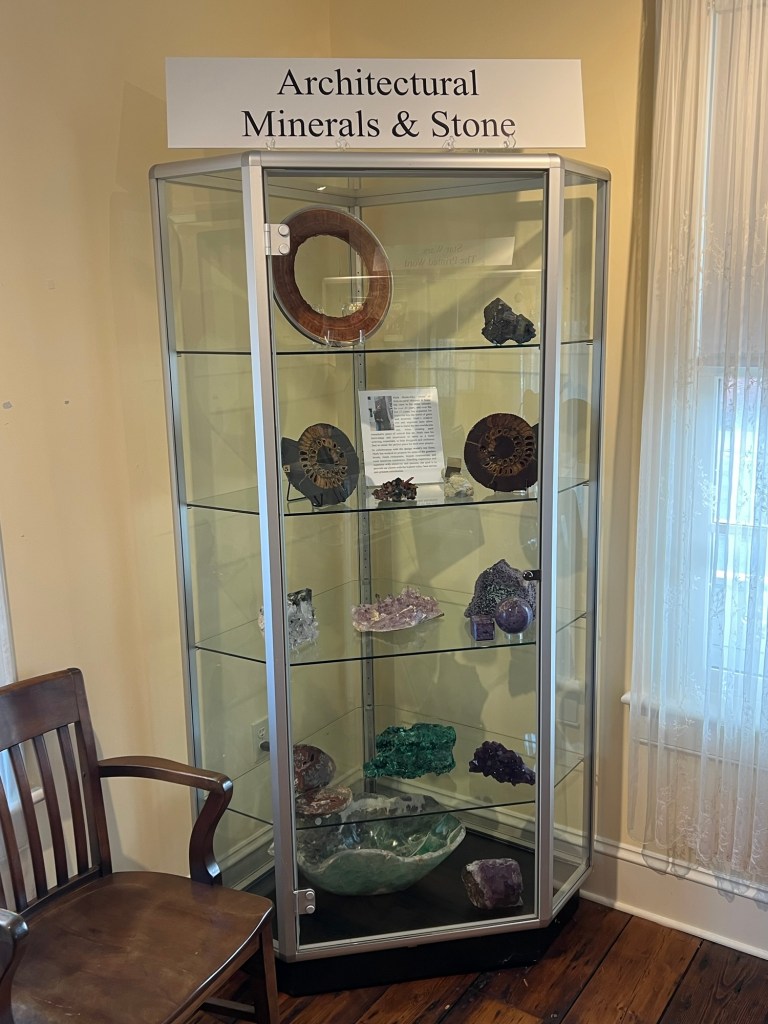
One resident’s collection of Minerals and Stones
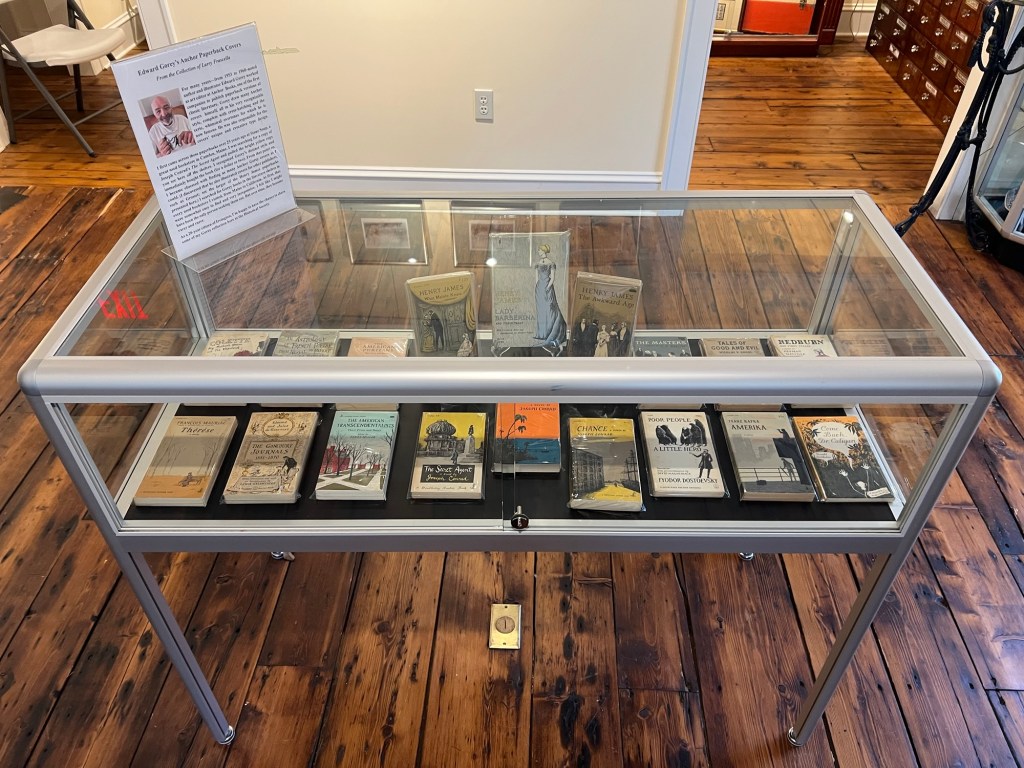
One resident’s collection of Anchor paperback covers
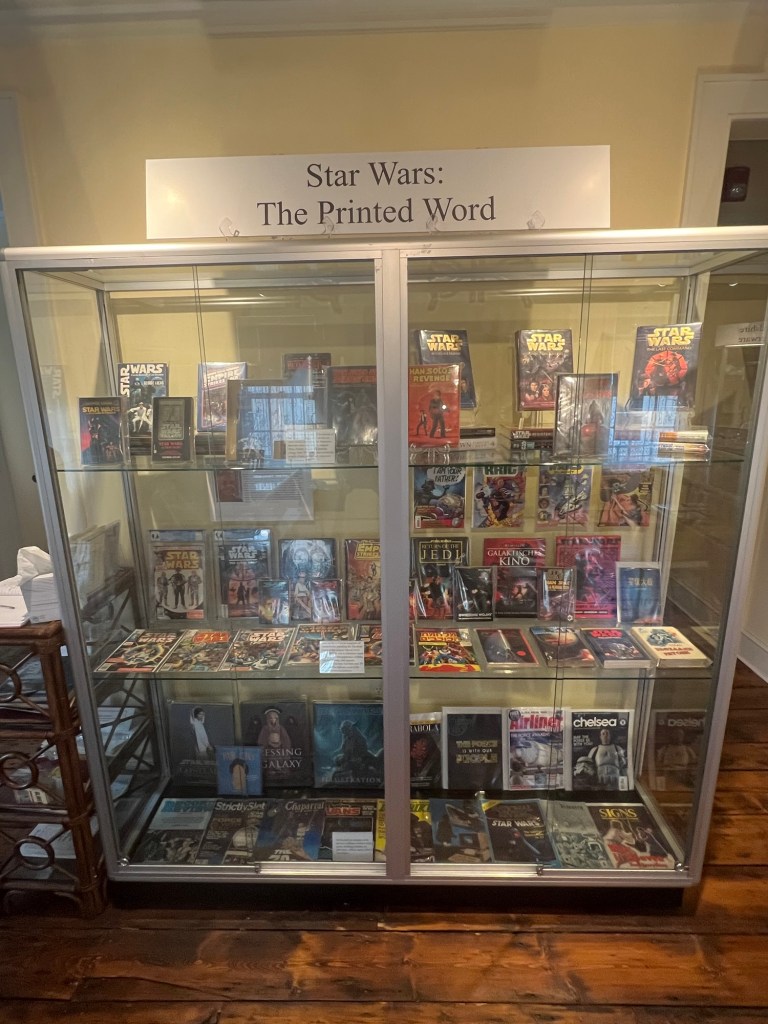
An extensive collection of ‘StarWars’ memorabilia
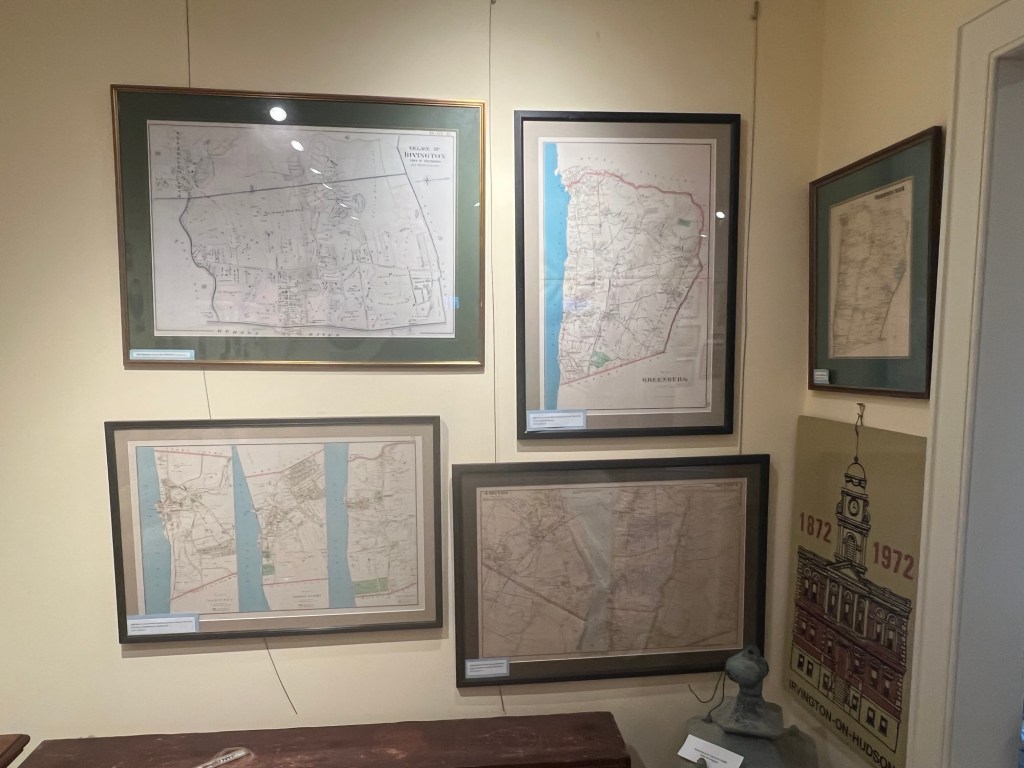
A collection of area Maps
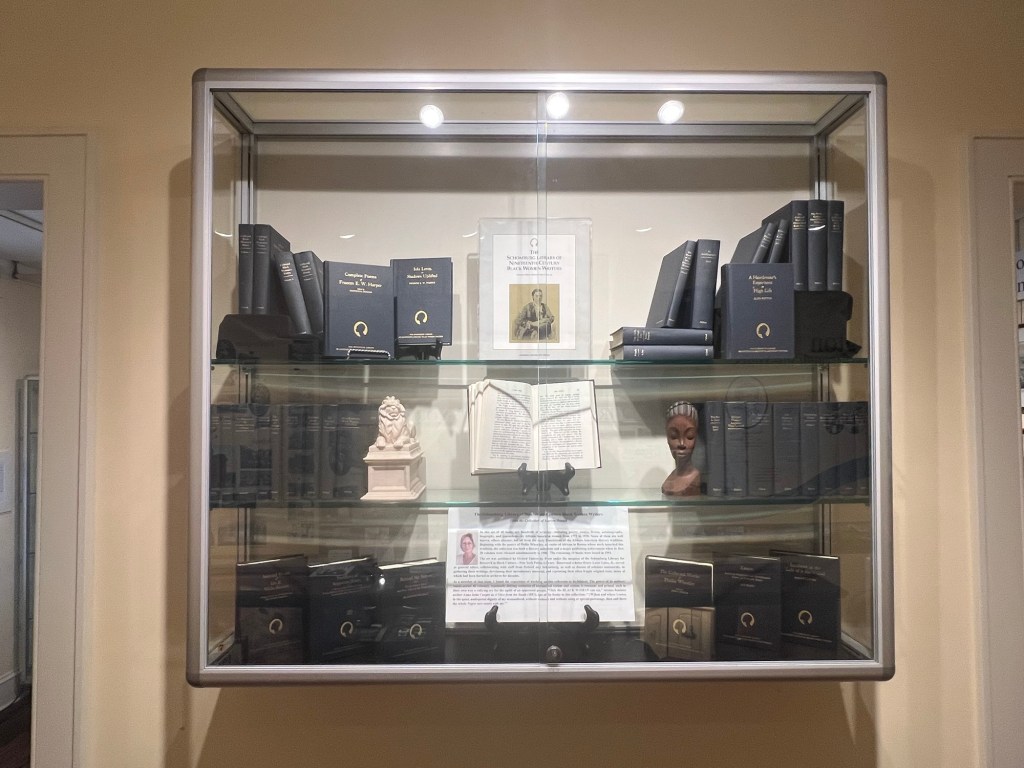
A collection of the works of Black Women Writers

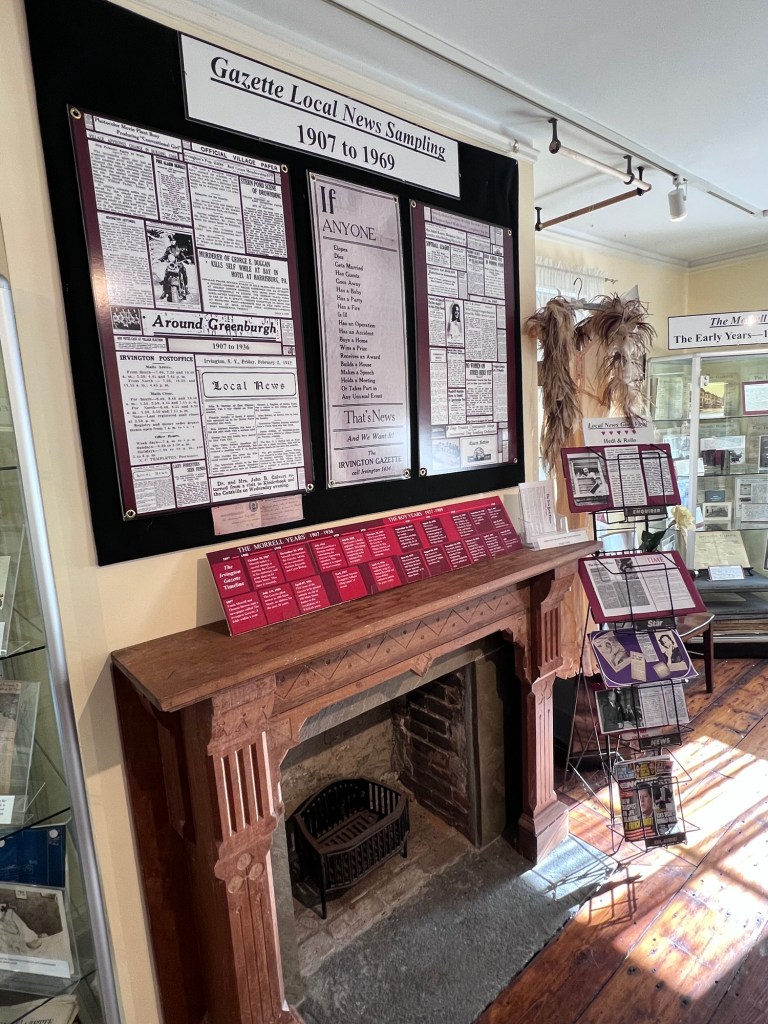
The back part of the Gallery holds the Permanent collection of artifacts on display. This is a road map of the development and the colonialization of Irvington. It has from its place as home to the Lenape Indians to the Dutch trade settlements and then the prominent residents who have lived in the area. It is a fascinating look at the community and how it is evolving.
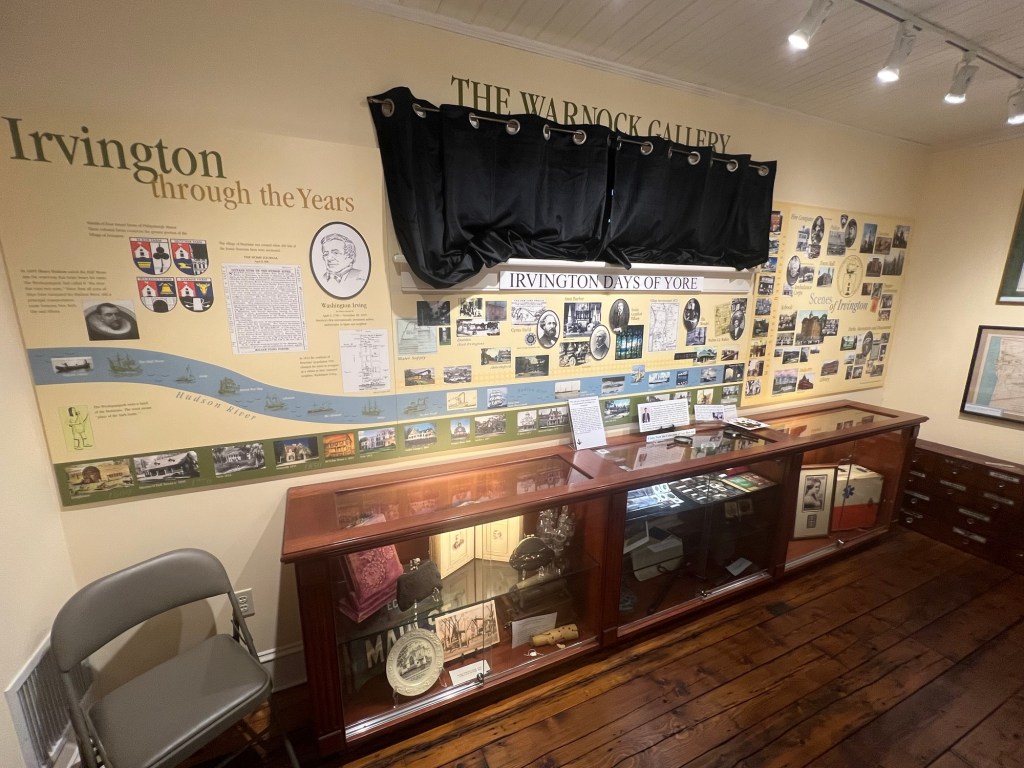
The Permanent Collection of the Irving Historical Society

The History of the Town of Irvington, NY:

(from the Society website)

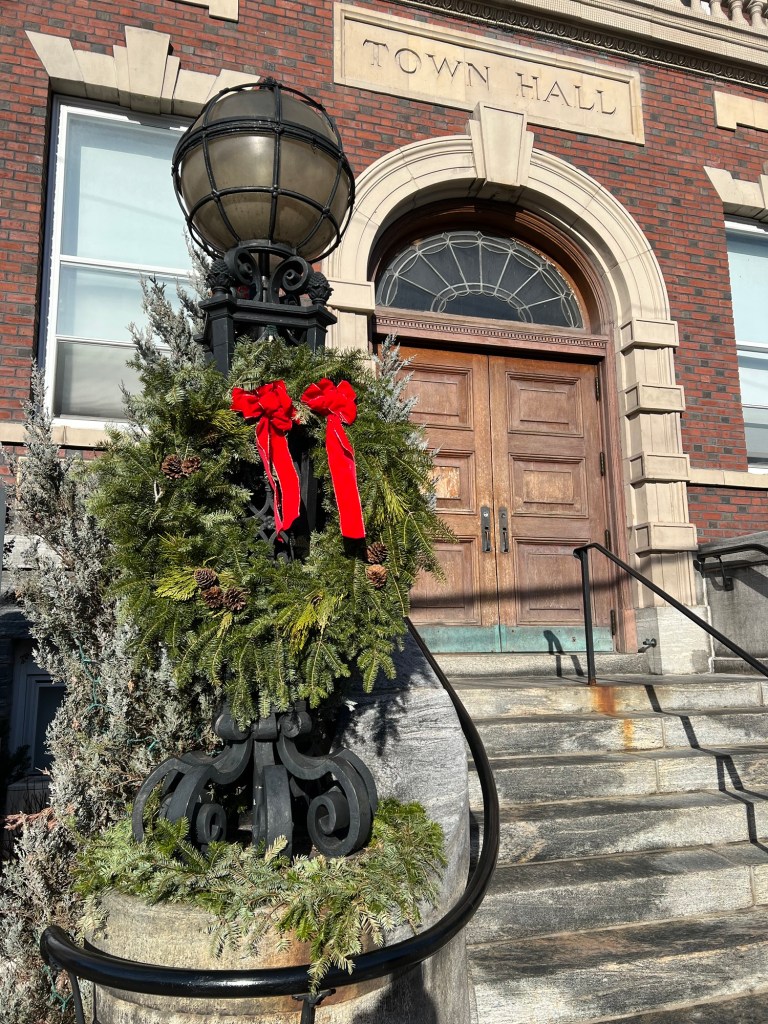
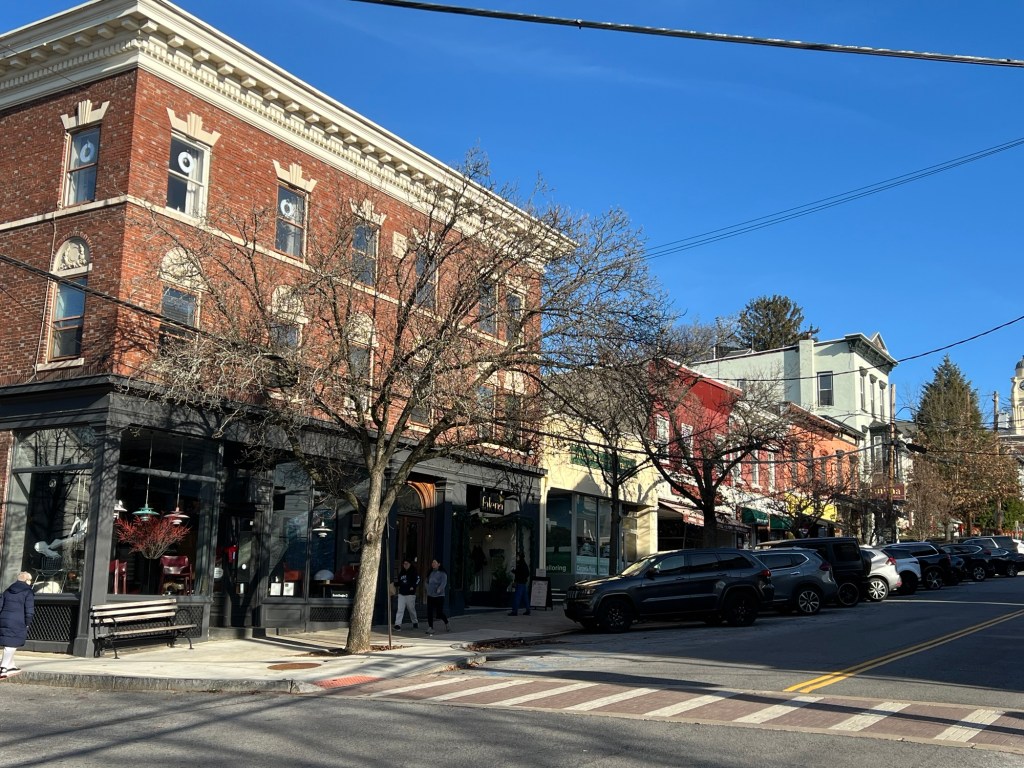
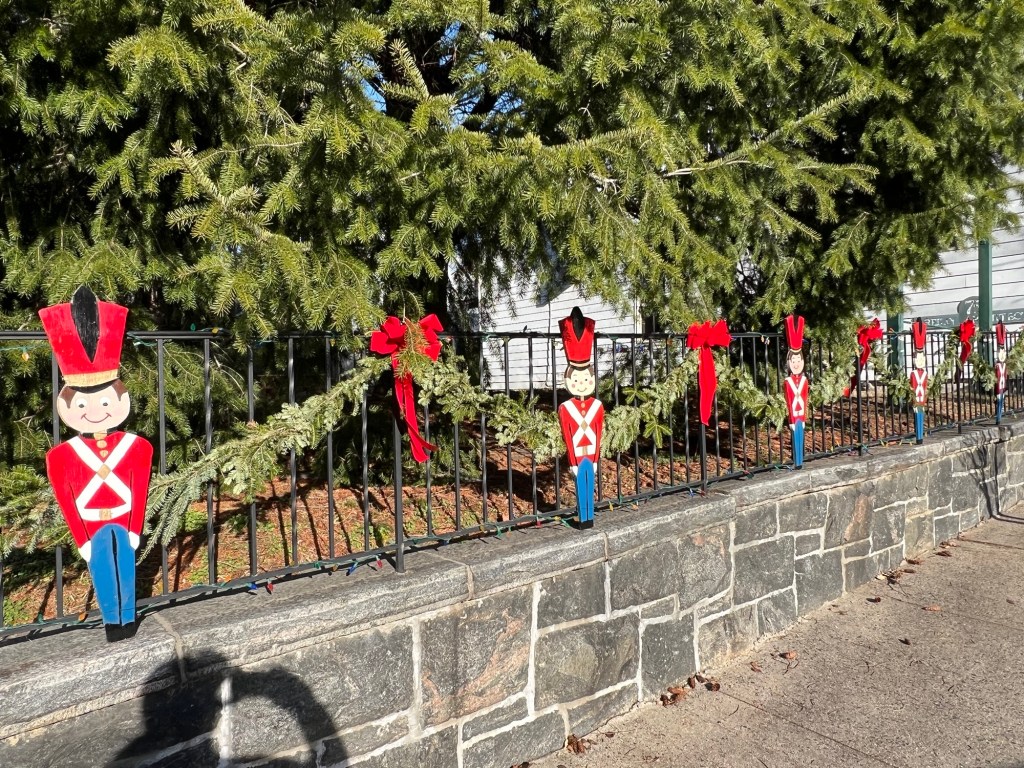
I took these pictures of the Irvington when I visited around both Halloween and Christmas. People in the downtown area love to decorate for the holidays.
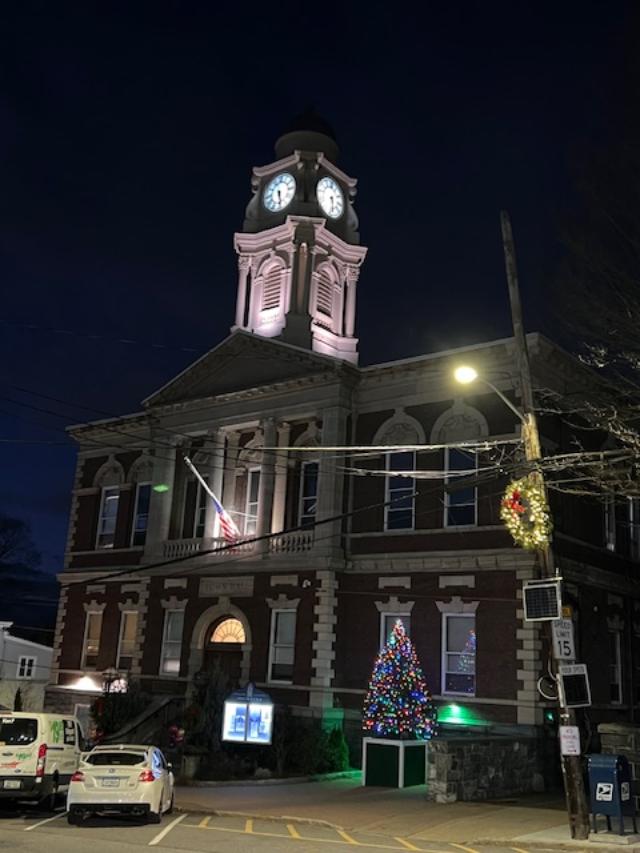
The Town of Irvington, NY during the Christmas holiday season
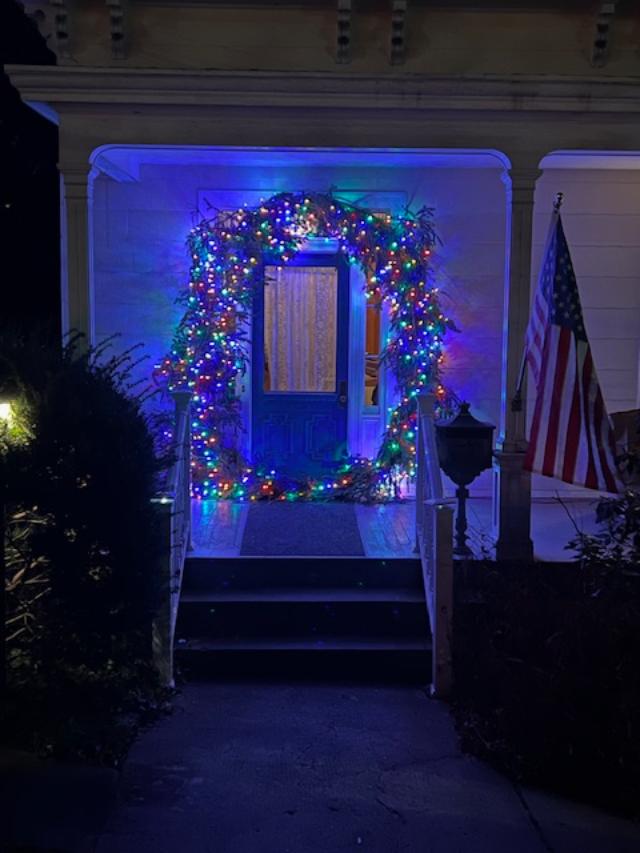
The beautiful decorations of the residents of the Downtown in Irvington, NY
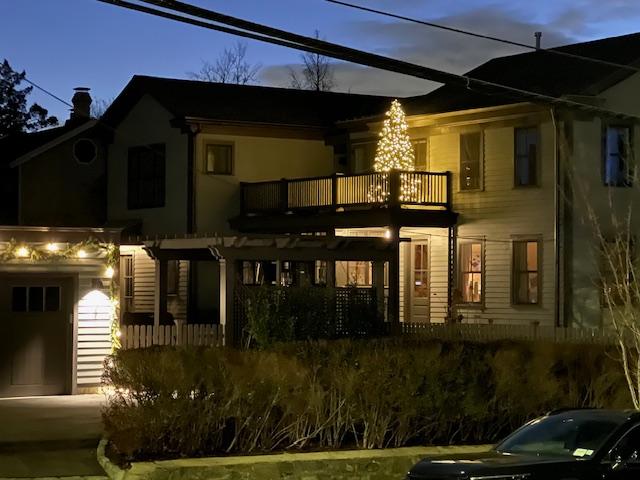
Downtown Irvington NY during Christmas
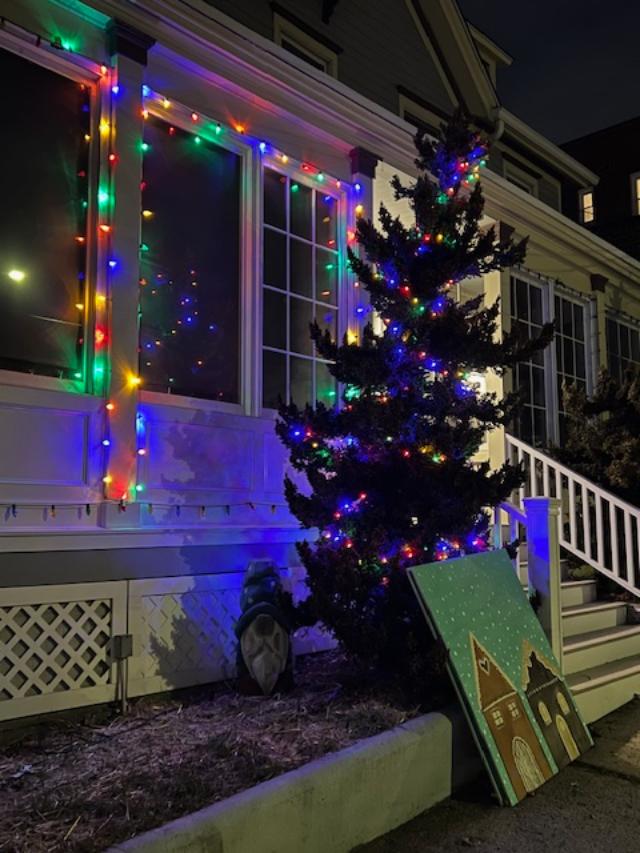
The houses decorated for the Christmas holidays
The Village of Irvington, resting on the Eastern Shore of the Hudson River twenty-two miles north of New York City, has a rich history. Originally the home of the Wecquaesgeek, an Indigenous people of the Wappinger Tribes, it later became farmland during periods of Dutch and English control. Irvington and its local residents played a critical role in the Revolutionary War as part of the Neutral Grounds between English and Colonial forces.
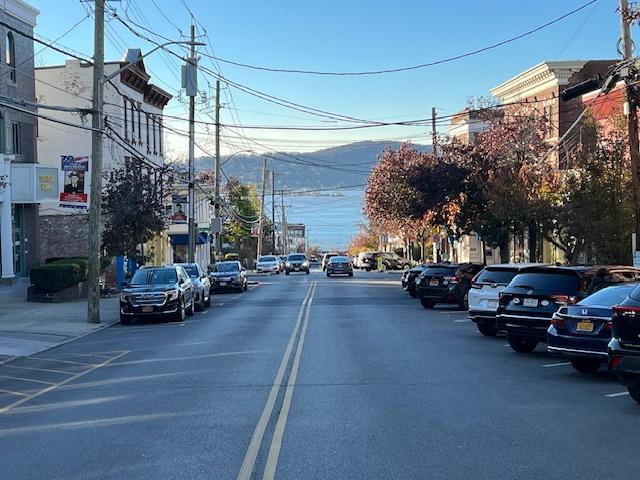
The beauty of Downtown Irvington, NY during the Fall
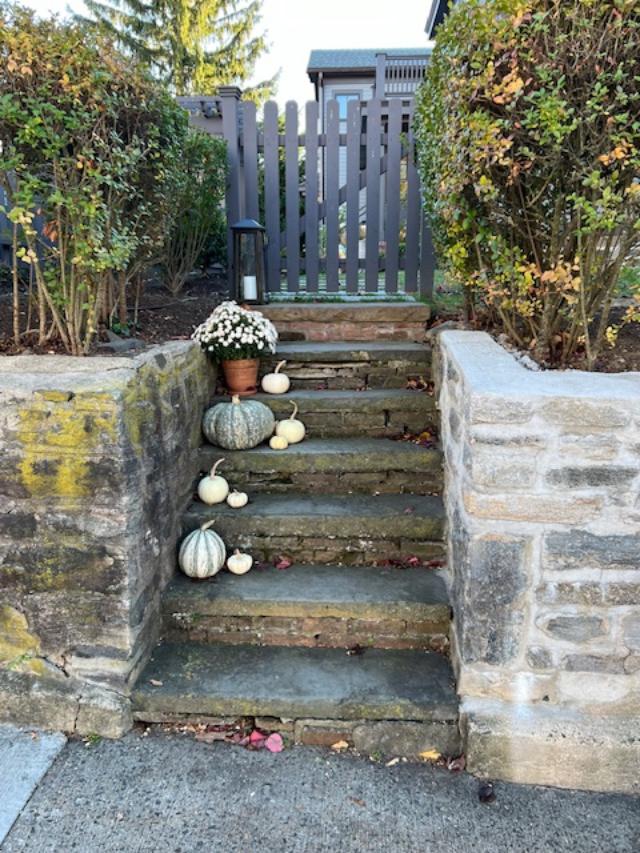
The decorations for the Halloween holidays

The arrival of the Hudson River Rail Road in 1847 led to the founding of the Village, the breakup of the traditional tenant farms, and a growing population. Because of its physical beauty and proximity to New York City, Irvington became a favored place for country estates in the latter half of the 19th Century and the beginning of the 20th Century. As those estates began to be sold off for development before World War II, Irvington evolved into the scenic, beautiful, and vibrant residential community it remains today.
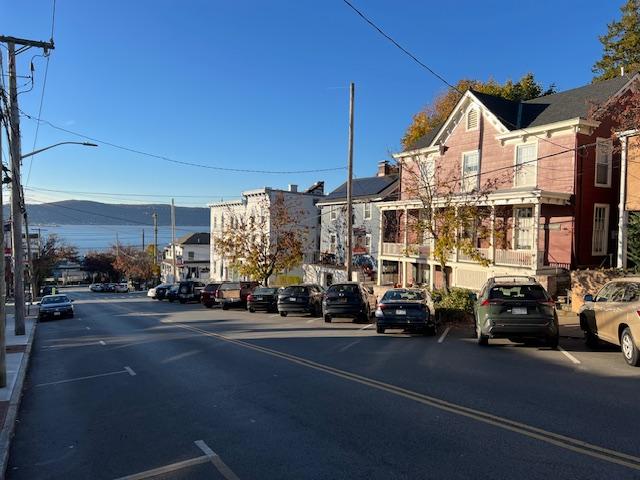
Downtown Irvington, NY in the Fall looking over the Hudson River
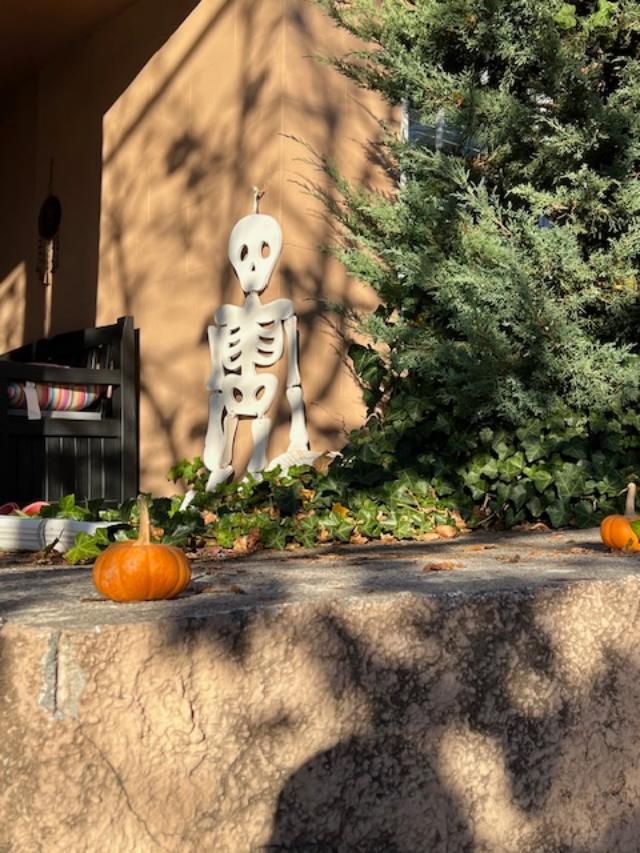
Downtown Irvington, NY during Halloween
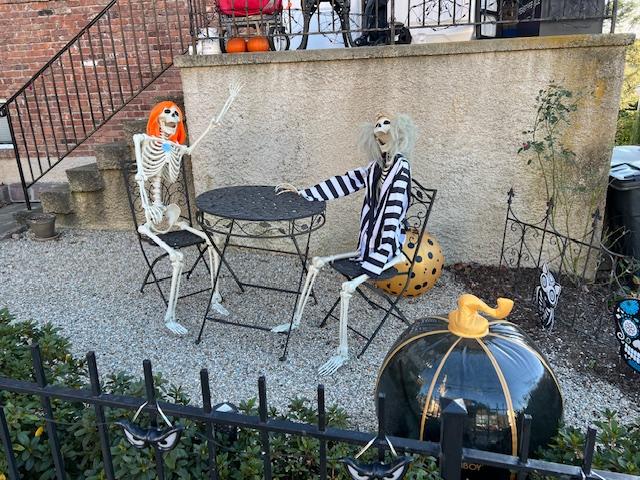
Halloween decorations in Downtown Irvington, NY

Knox Headquarters State Historic Site                  289 Old Forge Hill Road                                     Vails Gate, NY 12584

Knox Headquarters State Historic Site 289 Old Forge Hill Road Vails Gate, NY 12584

Knox Headquarters State Historic Site

289 Old Forge Hill Road

Vails Gate, NY 12584

(845) 561-5498

https://parks.ny.gov/historic-sites/5/details.aspx

https://en.wikipedia.org/wiki/Knox%27s_Headquarters_State_Historic_Site

Open: Sunday-Saturday (Seasonal-Please see the website)

Admission: Free but donations are accepted

My review on TripAdvisor:

https://www.tripadvisor.com/Attraction_Review-g48760-d1174661-Reviews-Knox_s_Headquarters_State_Historic_Site-Vails_Gate_New_York.html

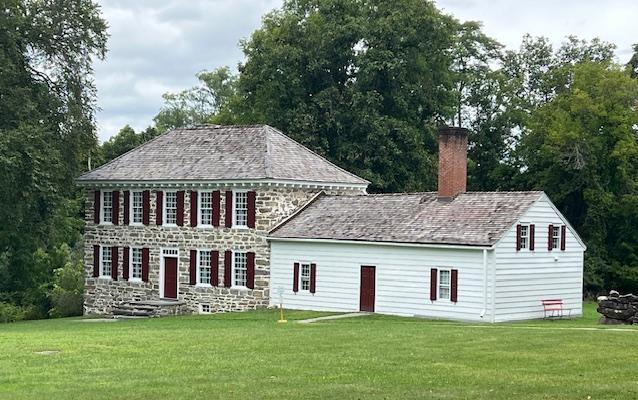
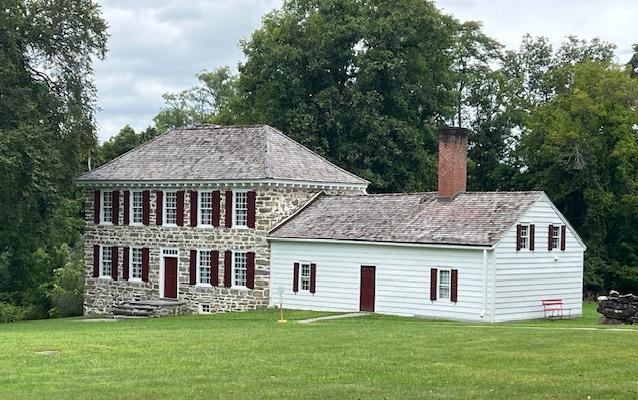
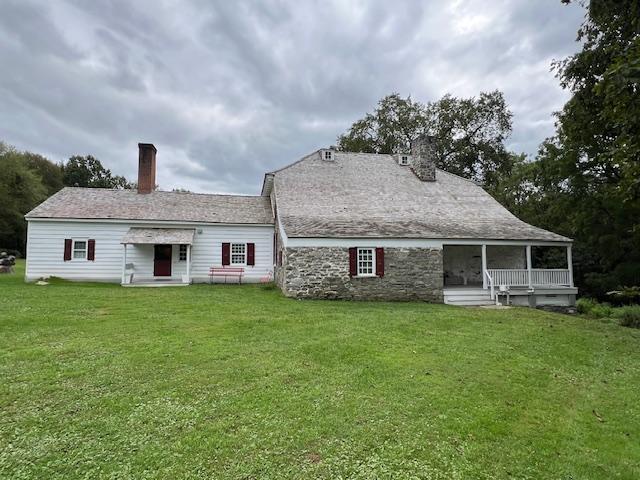
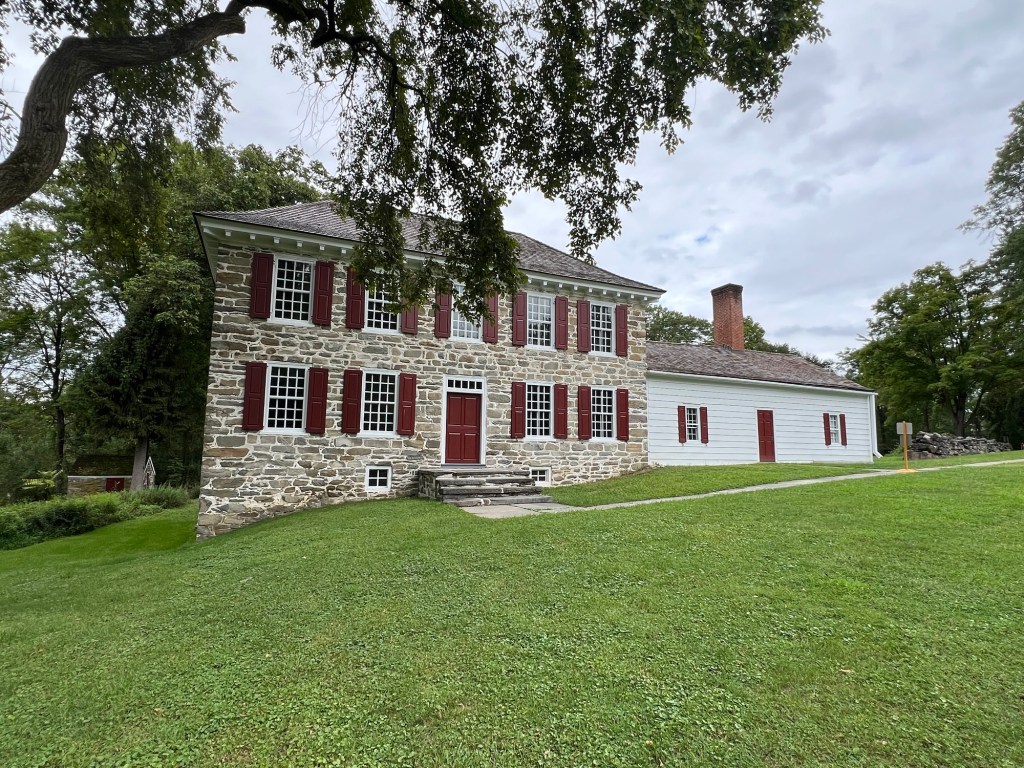
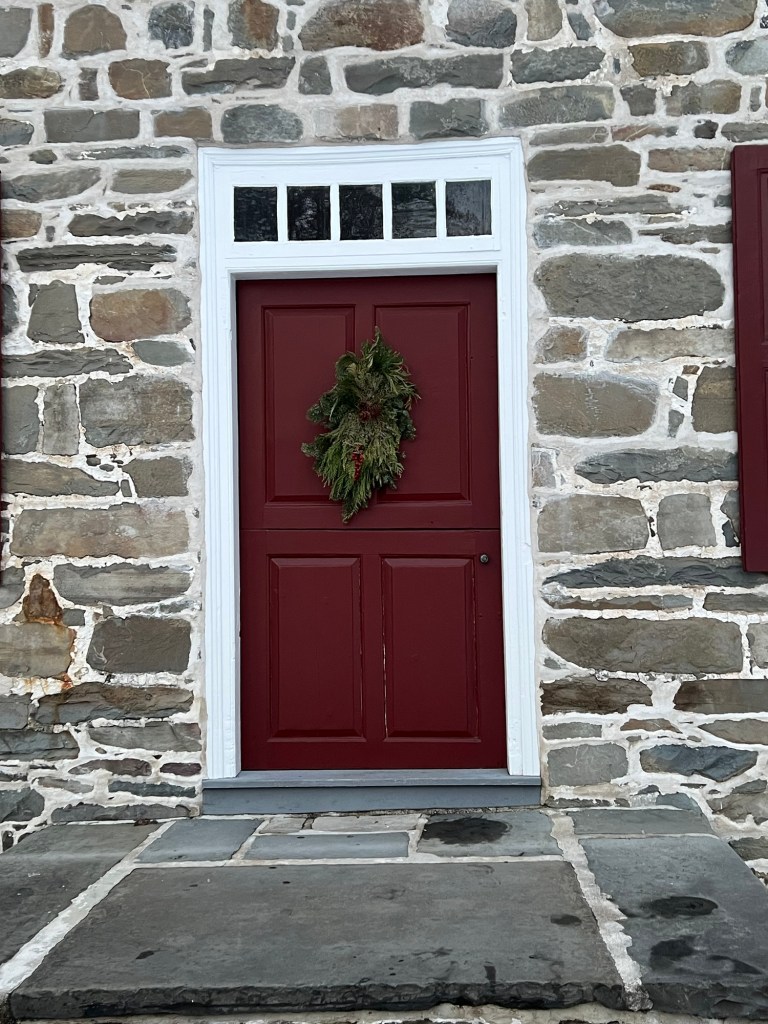
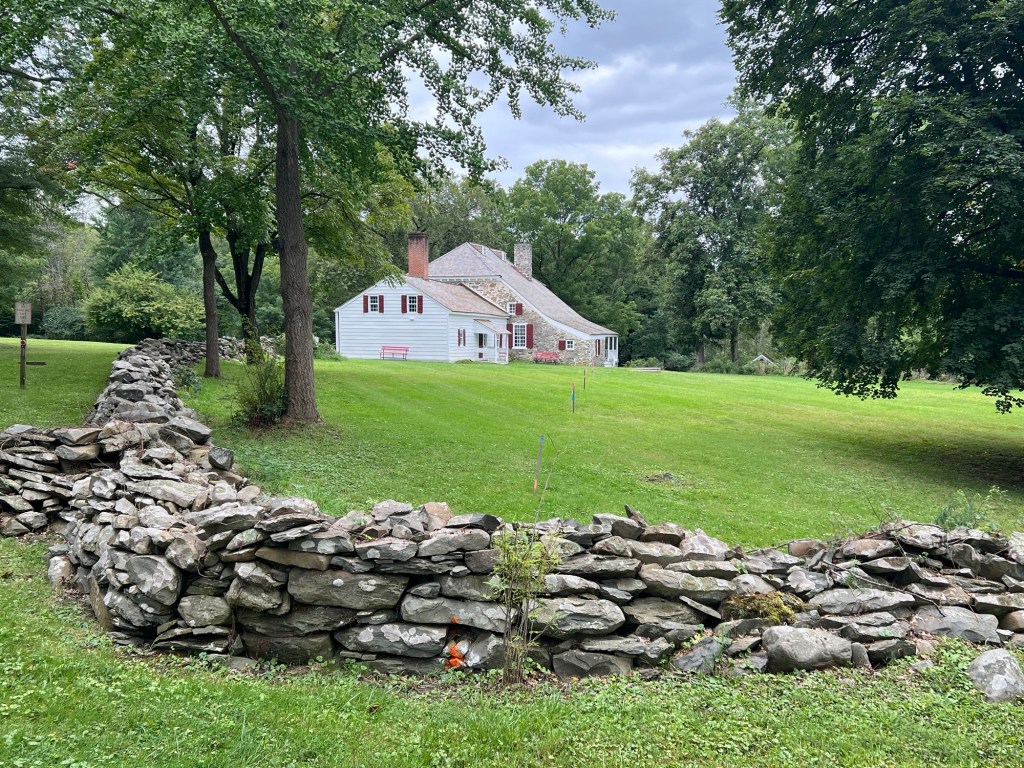
The Georgian side of the Elliott home

The Dutch style side of the home

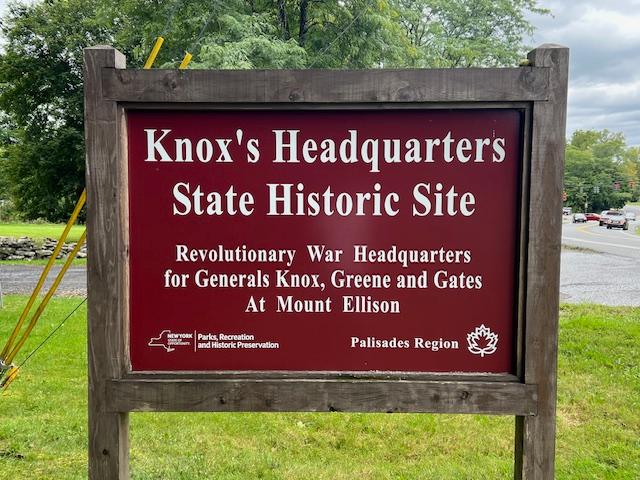
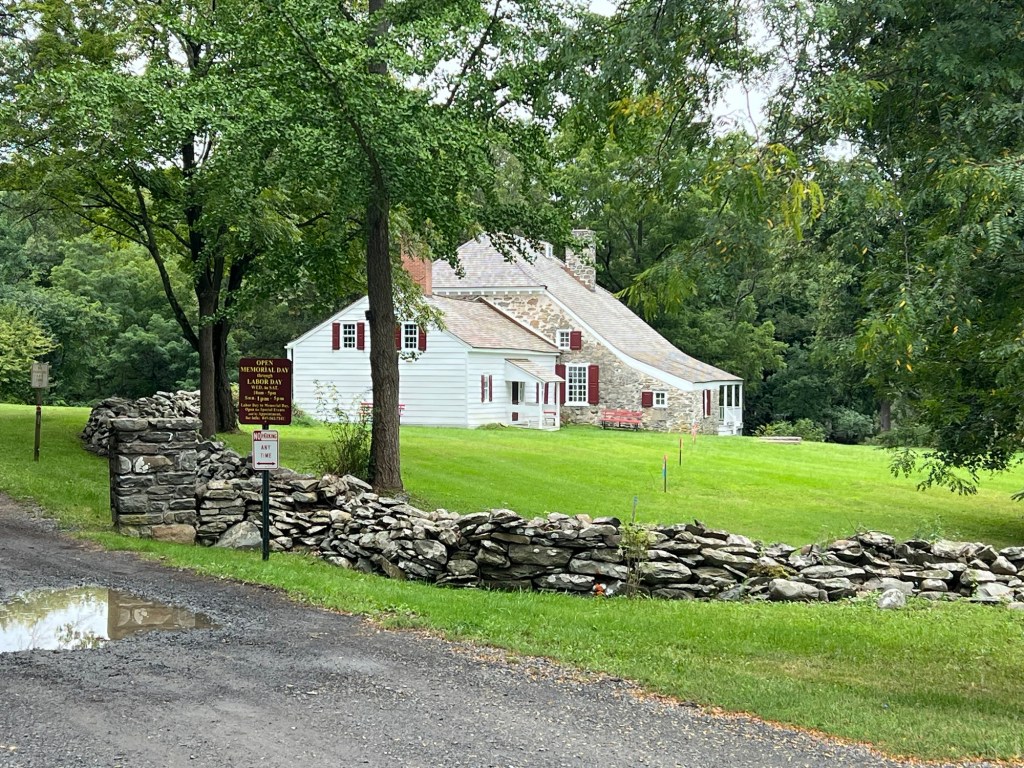
The sign welcoming you

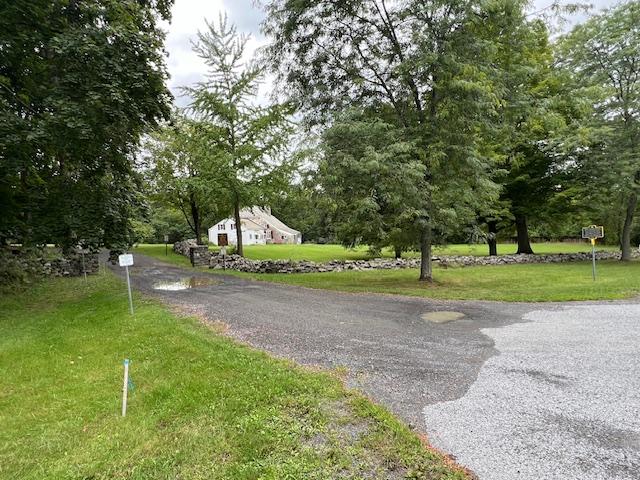
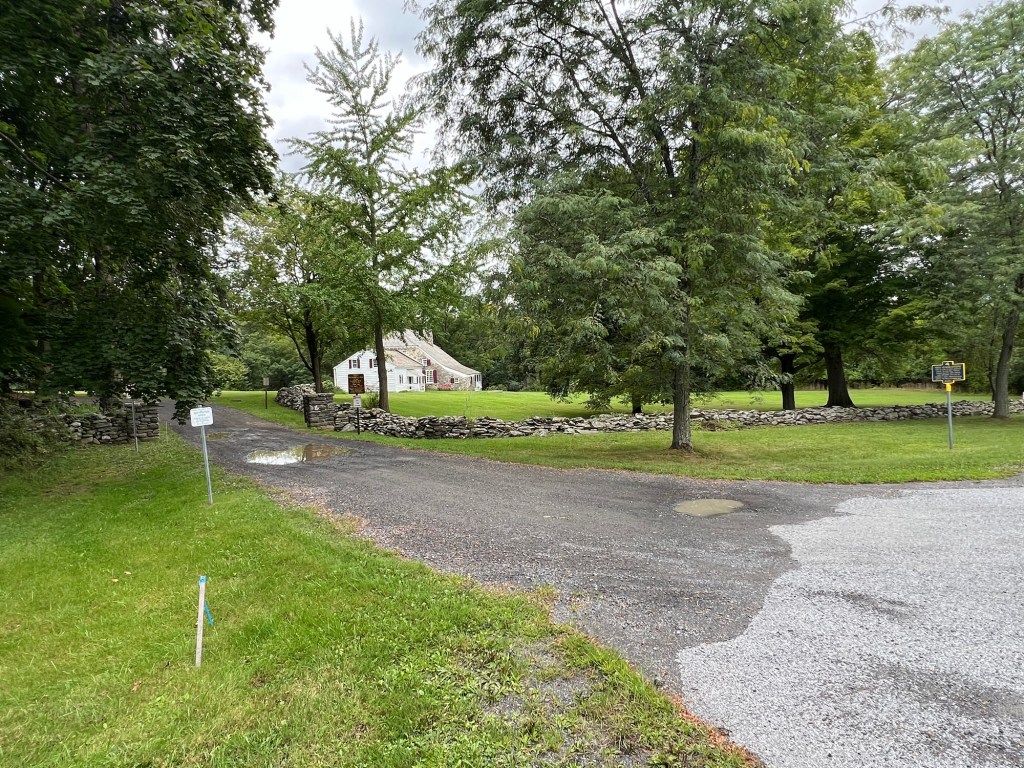
The estate from the road

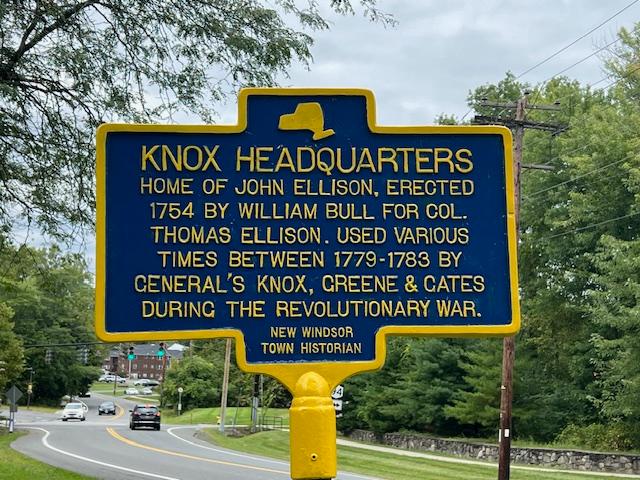
The historic sign outside the home

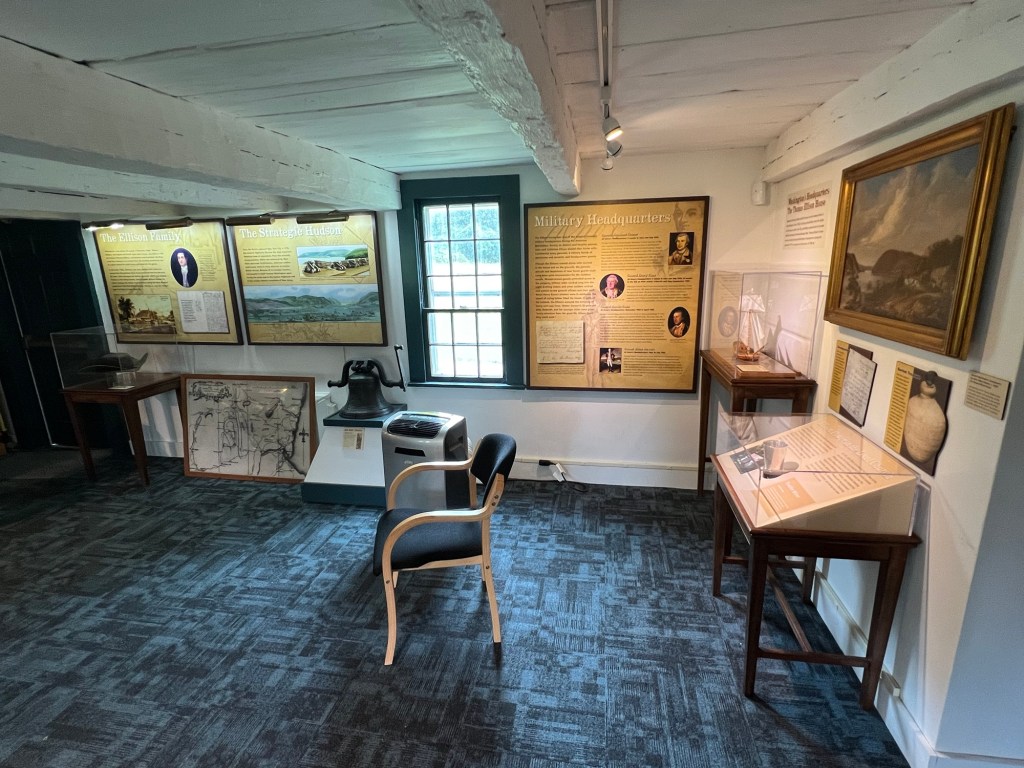
The Welcome Center tells the story of both the Ellison family and their war visitors, the Knox family.

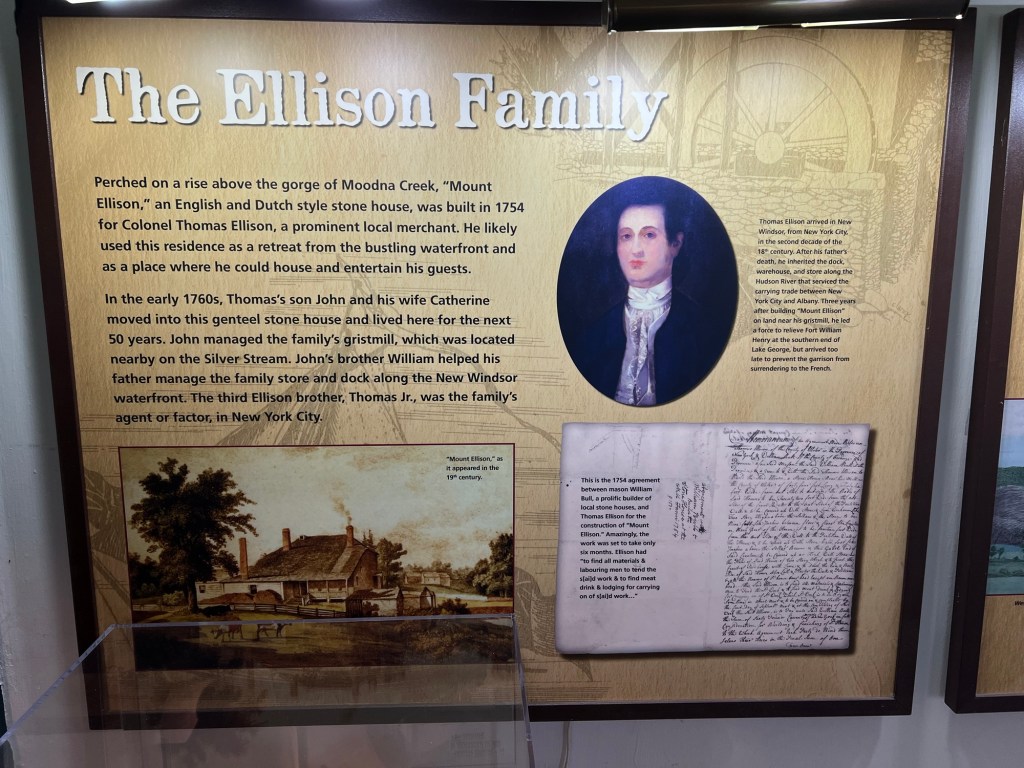
The Ellison family history sign

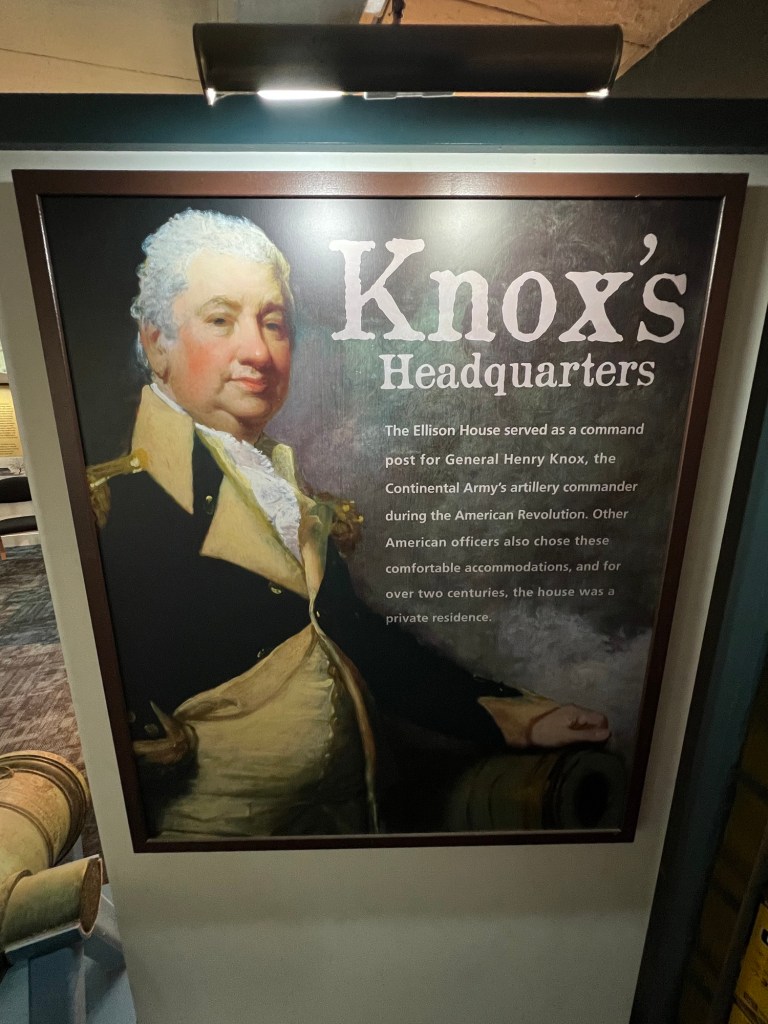
The Knox family history sign

The family history in the Visitor’s Center

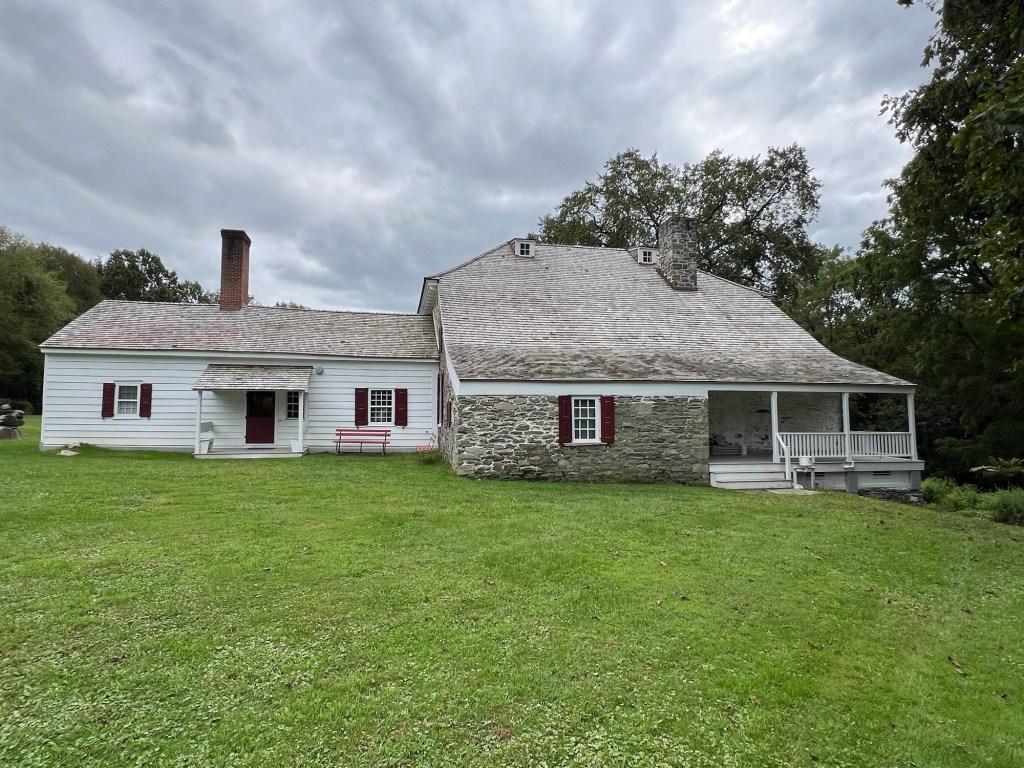
The tour of the house was very interesting. The house was built in three stages as the family grew and prospered over the generations. There was the original Dutch house which is the side of the house that faces the current road, the Georgian addition which faces the back of the house, where the original Kings Highway was located and the addition, where the Visitors Center was located.

My tour guide, Tiffany, explained there had been other additions to the home over the years but they had been removed for the historical integrity of the house.

The Georgian addition of the home featured more rooms for socializing

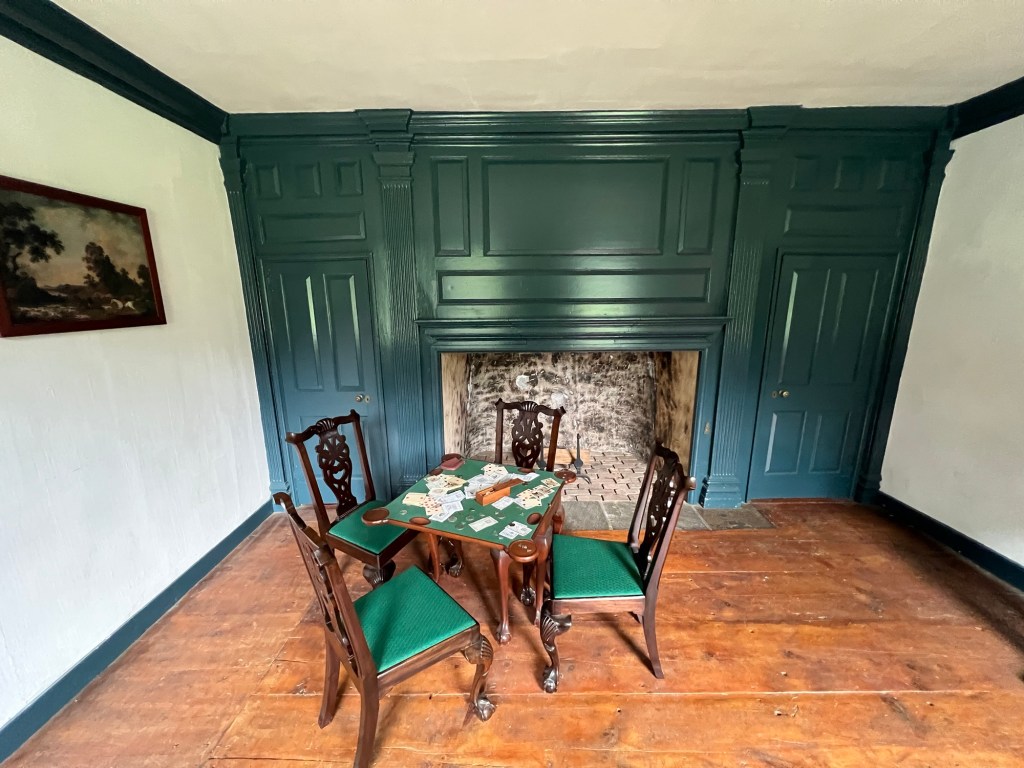
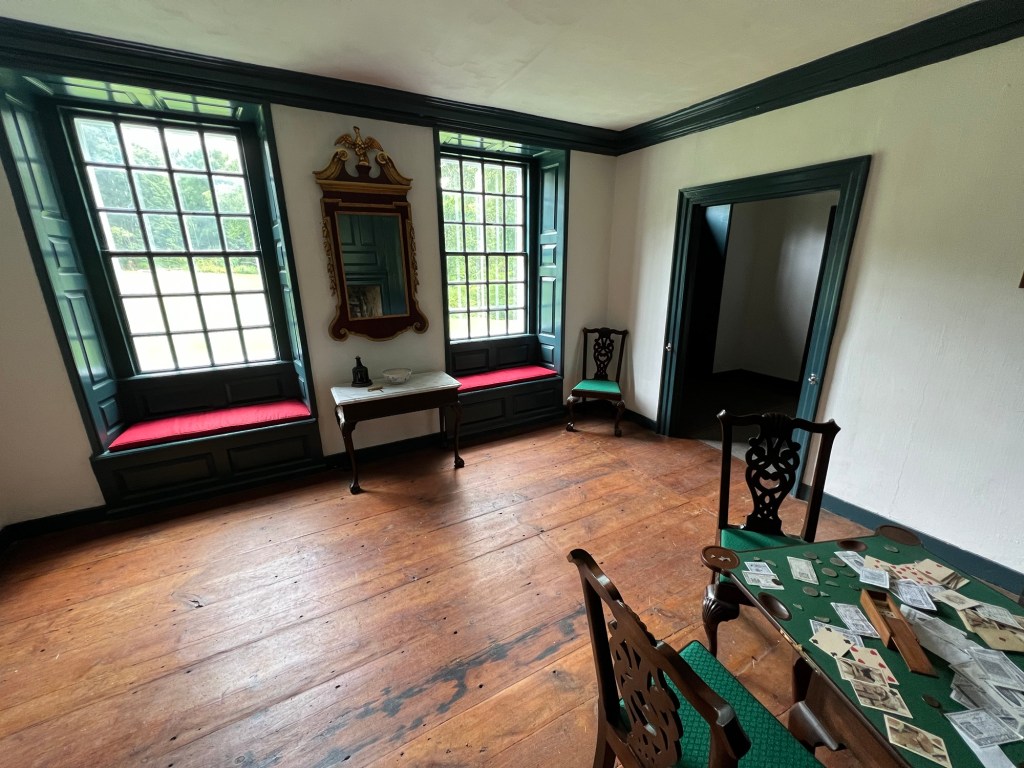
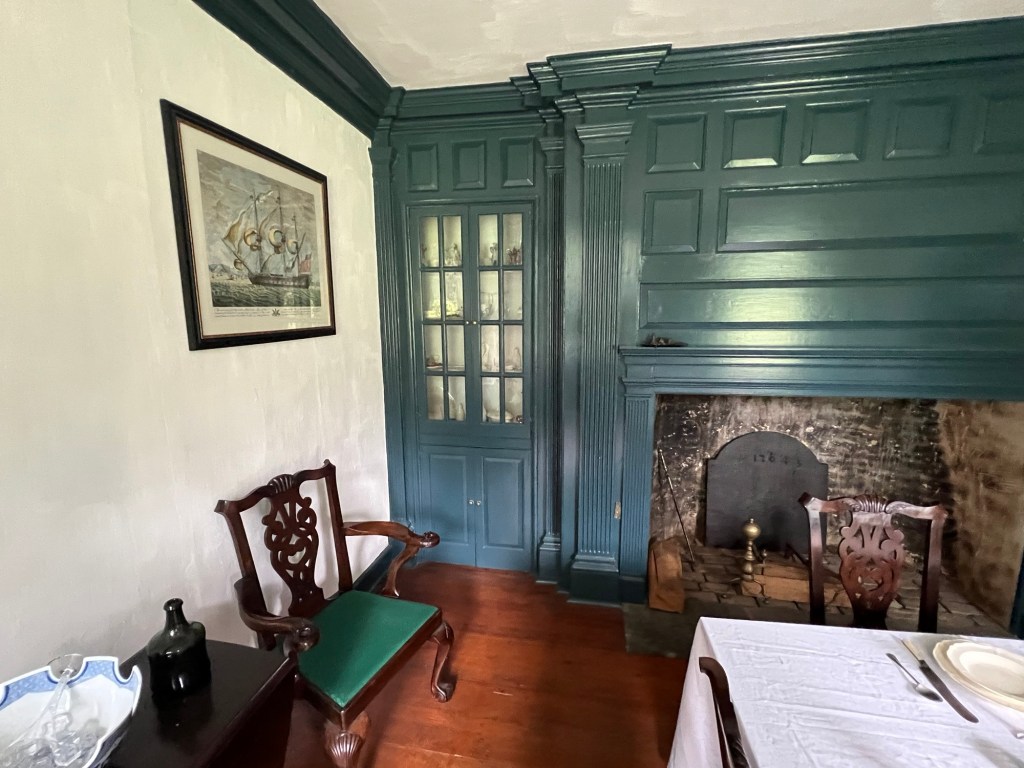
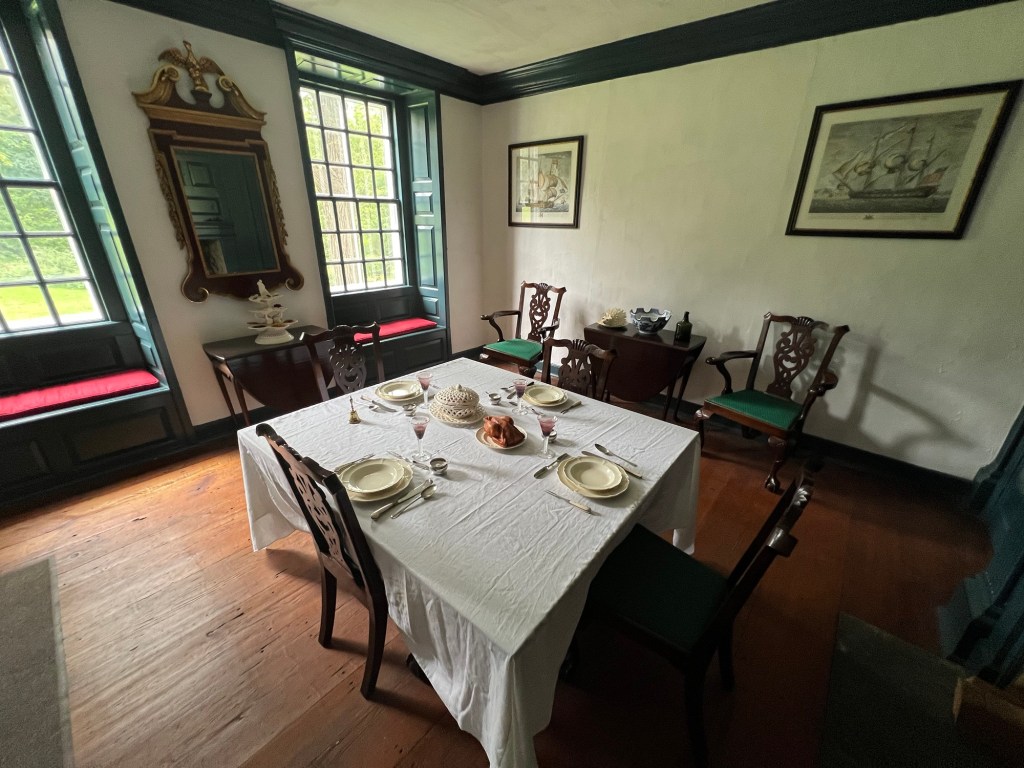
The Georgian addition to the back of the home was built with the family fortunes. This included a spacious formal Parlor, Dining Room both with large window to let in natural light and high ceilings for circulation and to show the families affluence.

The large windows let in the natural light in the warmer months

Much of the furniture in the house was not original to it but was of the period. Here and there though there were pieces donated back to the house and gave it its historical dignity.

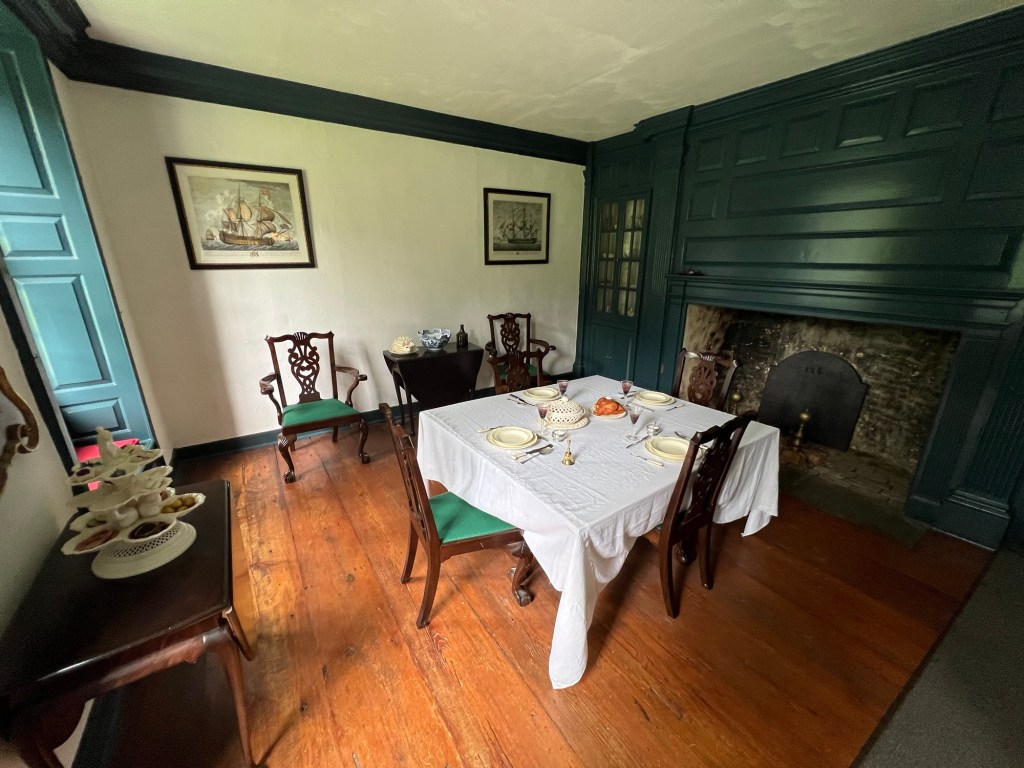
The formal dining room was used to impressi visitors with the large fireplace

The Dining Room used for meals and formal entertaining was spacious yet cozy. There was room to move around but it was still intimate for conversation.

The room had built in China cabinets

The wood work contained china cabinets, storage for silver and family serving pieces. The large metal tombstone looking item in the fireplace was a metal slab meant for retaining heat for the room once the fire went down. This is how the room was kept warm in the colder months.

The natural light was perfect for late afternoon supper

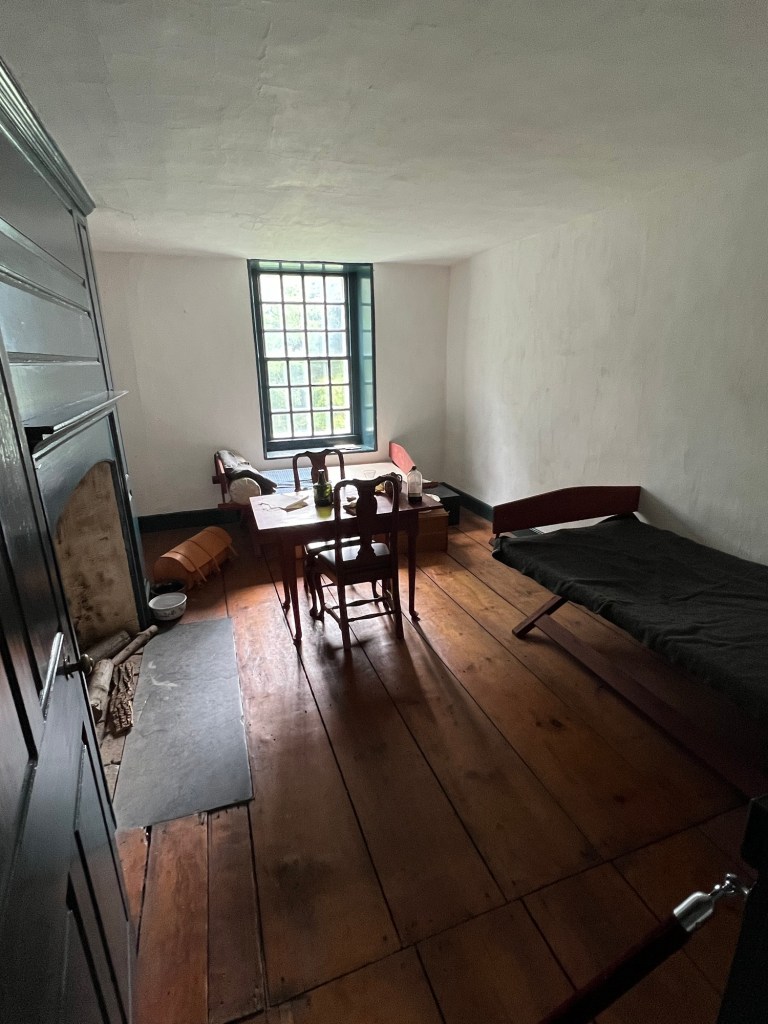
Once you left these rooms for the front hallway, this led to the Dutch front portion of the house, once the living quarters and now was were the business office and storage for the family business was attended to during working hours.

The office of Mr. Ellison was in the front part of the original Dutch portion of the house

The rooms in the front section of the original house were separated from the formal part of the current back of the house. This is where Mr. Ellison and his son attended to business calls and stored their goods for shipping.

The storage room was probably a family bedroom for the original house

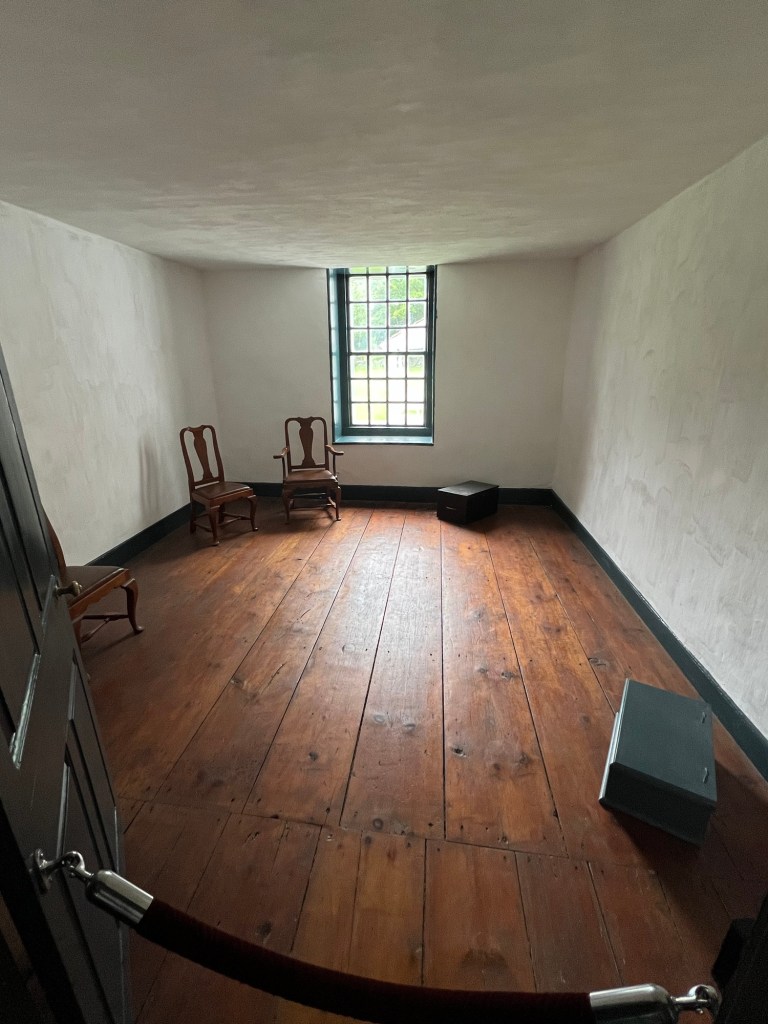
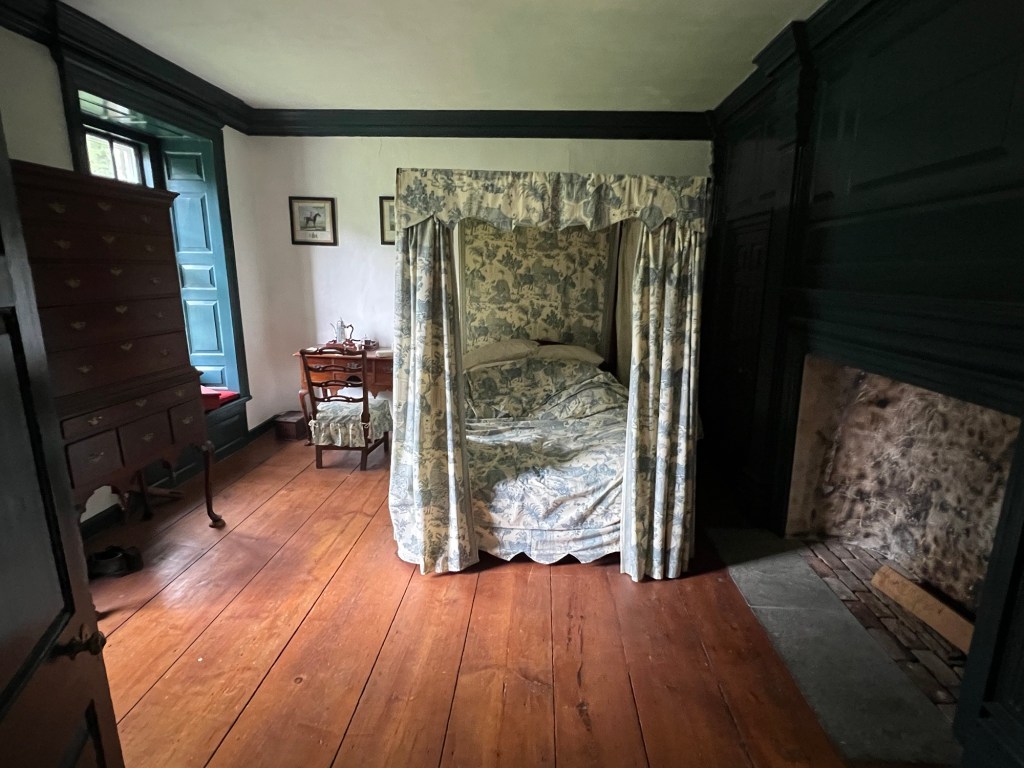
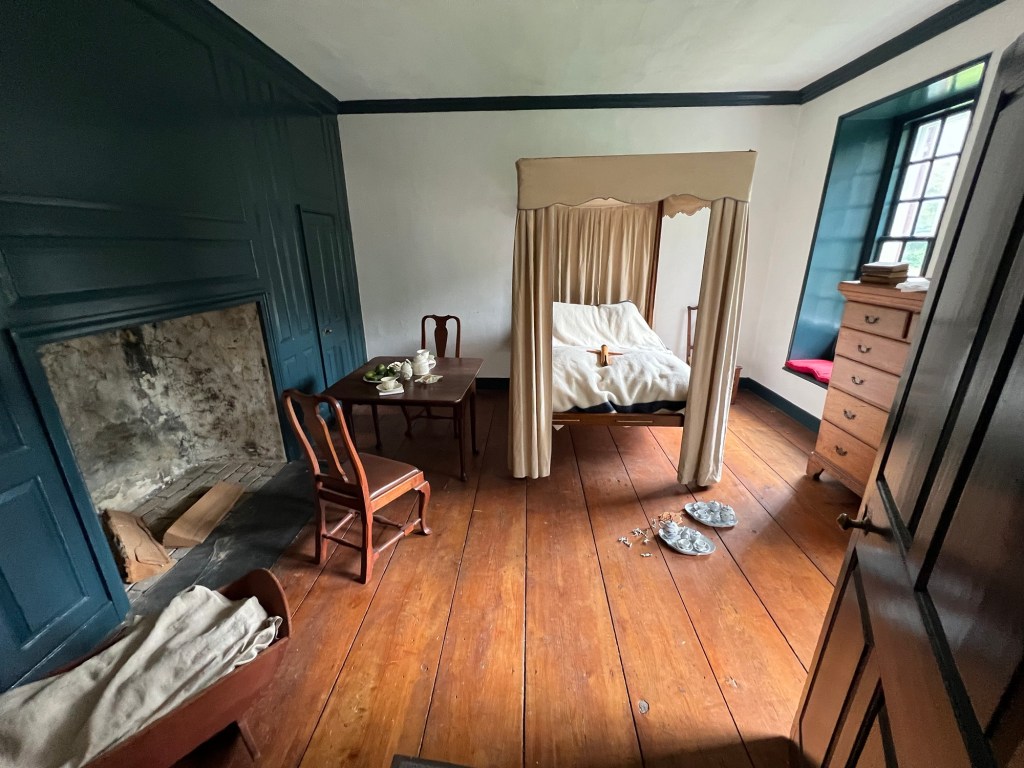
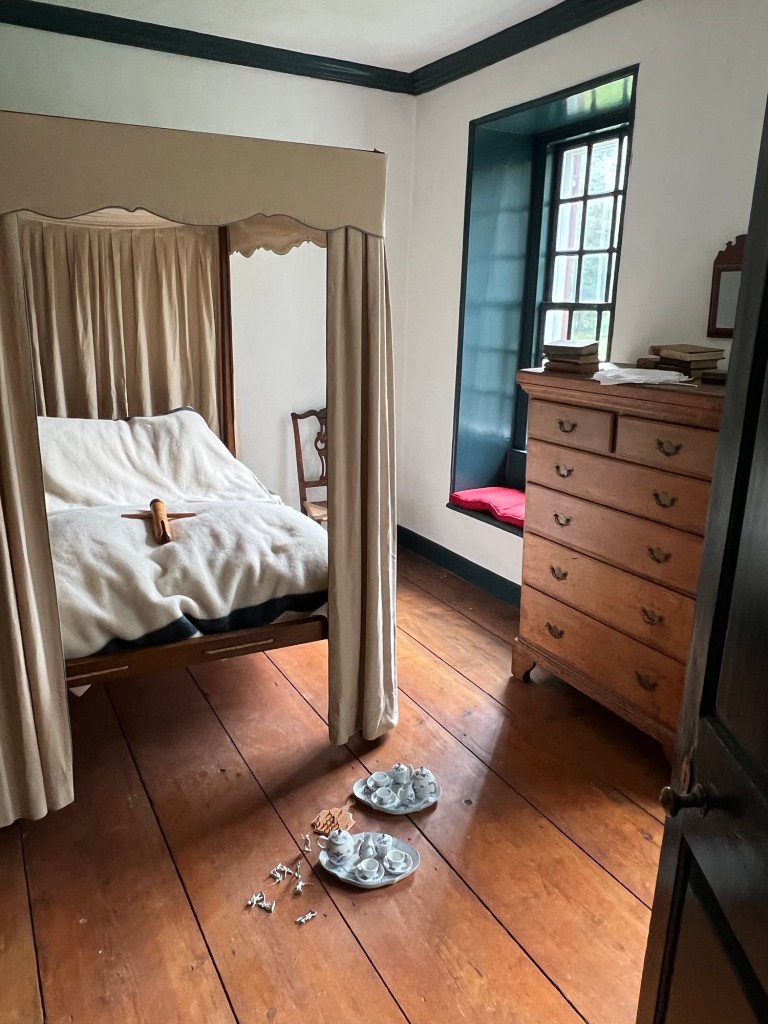
The trip upstairs was part of the addition of the house and contained two spacious bedrooms with high ceilings and large windows. When the Knox family joined the Ellison family during the encampment, each family had one bedroom for use. The Ellison’s did not have any children and the Knox’s had two small children, a small girl and an infant boy. From what the tour guide explained the Ellison’s welcomed them in the home and relations were very good with both couples, who welcomed the children into their home. It brought extra life to the house.

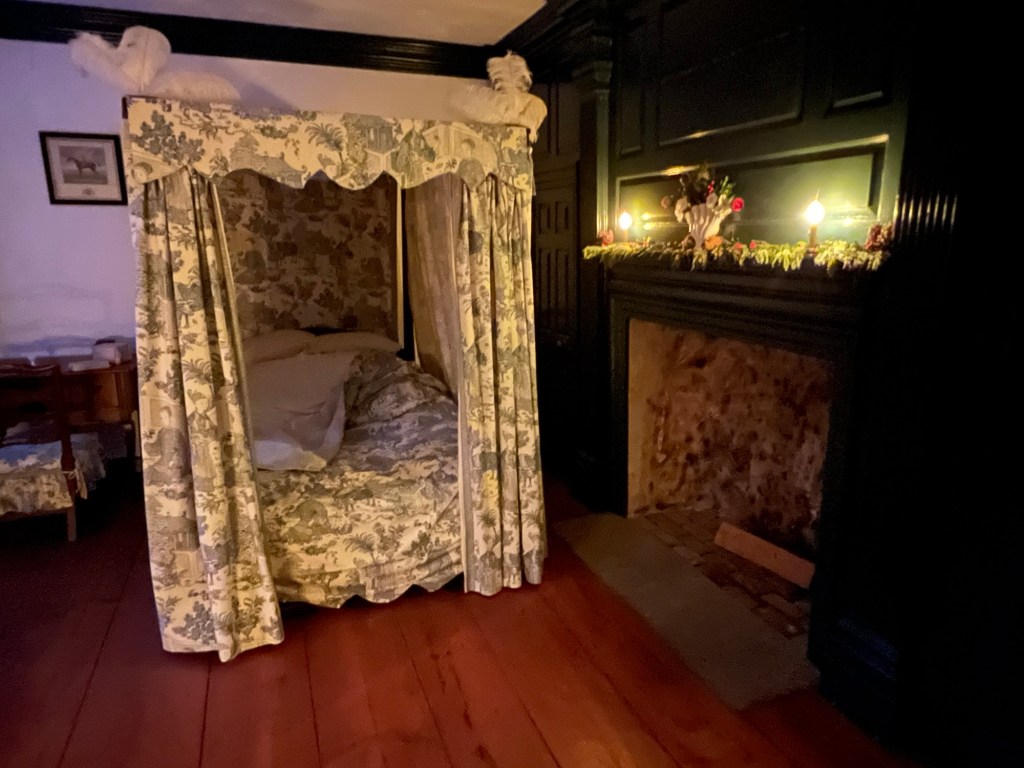
The formal bedroom of the Ellison’s would be the bigger room and more formal

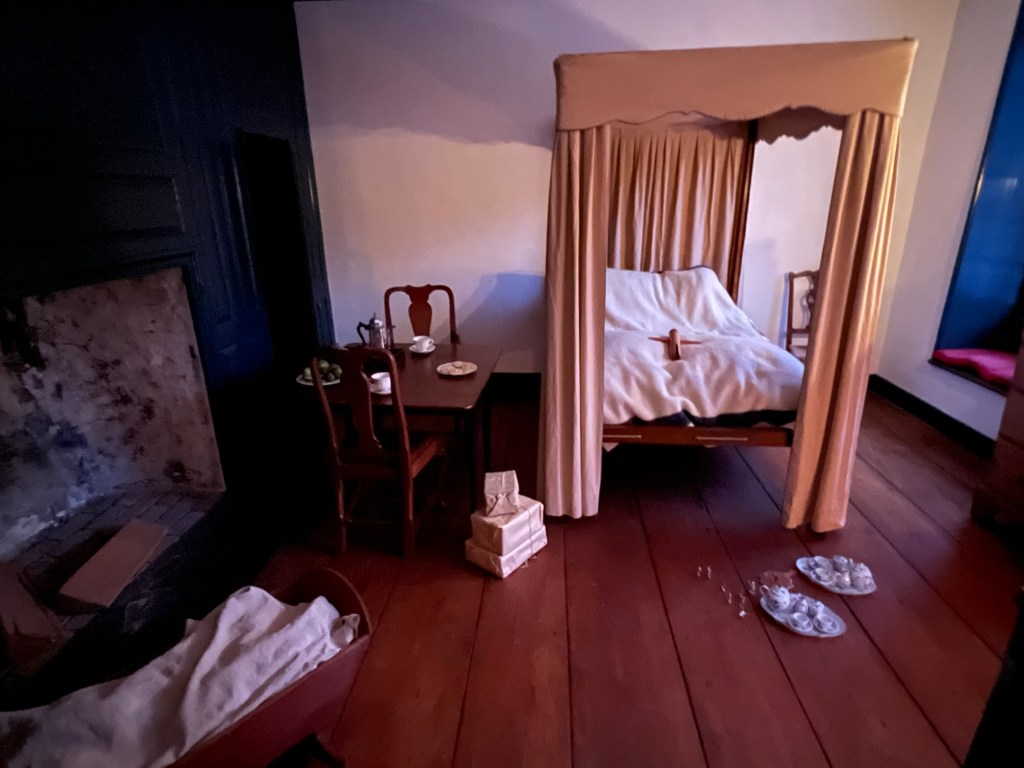
The Knox family bedroom would have been not less elaborate with a small bed and crib for the children

The Knox’s bedroom for the family during the war years

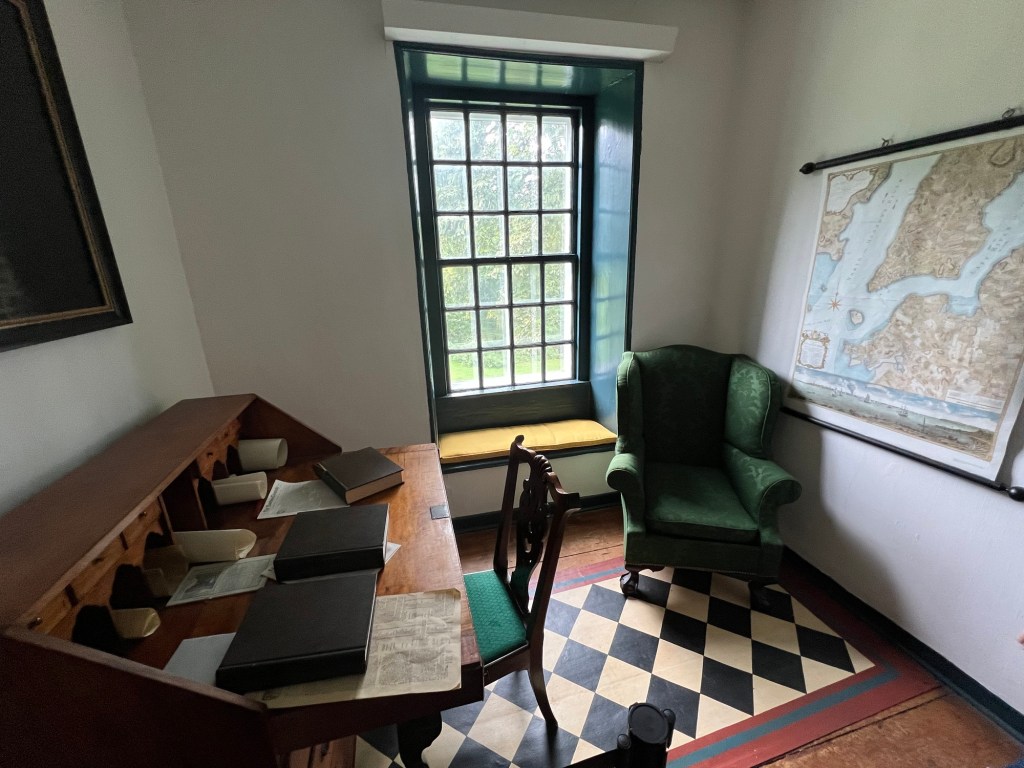
Mrs. Ellison kept her own office at the top of the stairs and this was reflective in the desk and table in the nook at the top of the stairs. The tour guide explained there had been a wall to provide privacy to Mrs. Ellison which had been removed over the years.

The office of Mrs. Ellison to run the household

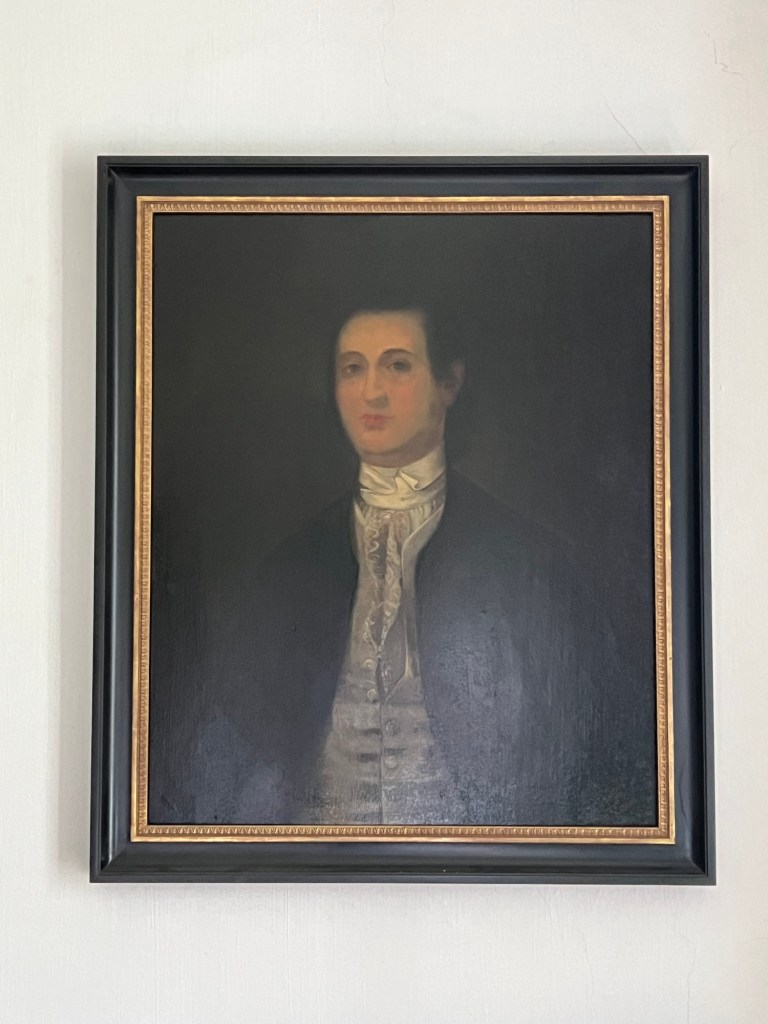
The office contained the family heirloom desk and a portrait of Mr. Ellison’s brother who was a General in the war.

The portrait of General Ellison, Mr. Ellison’s brother

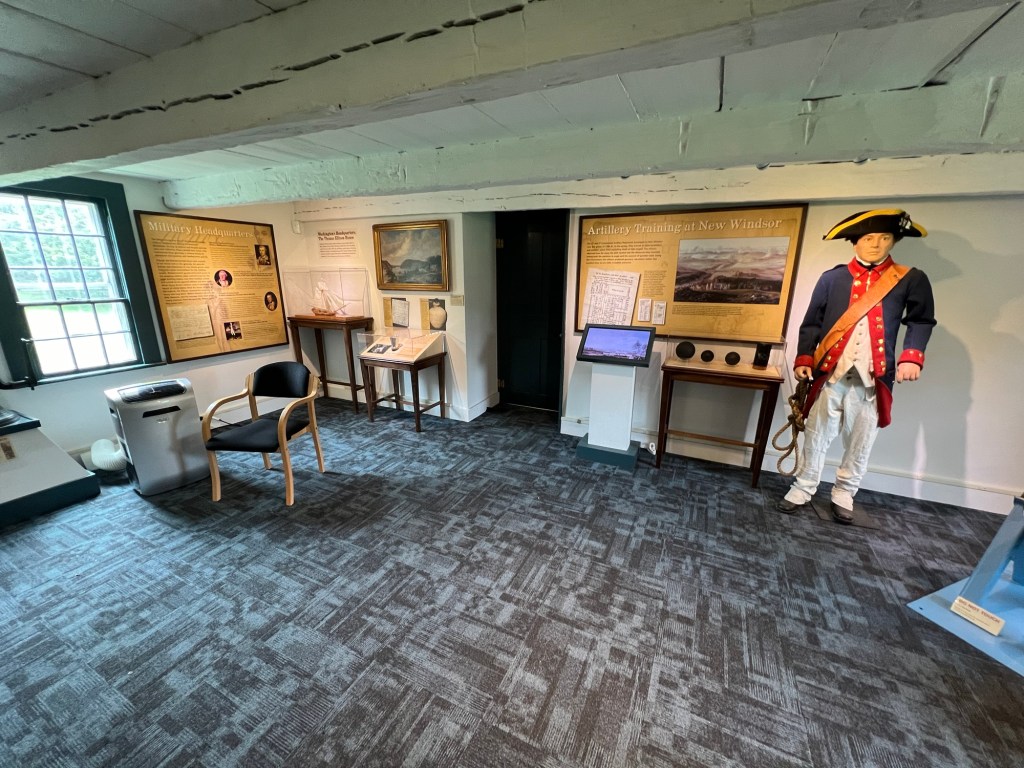
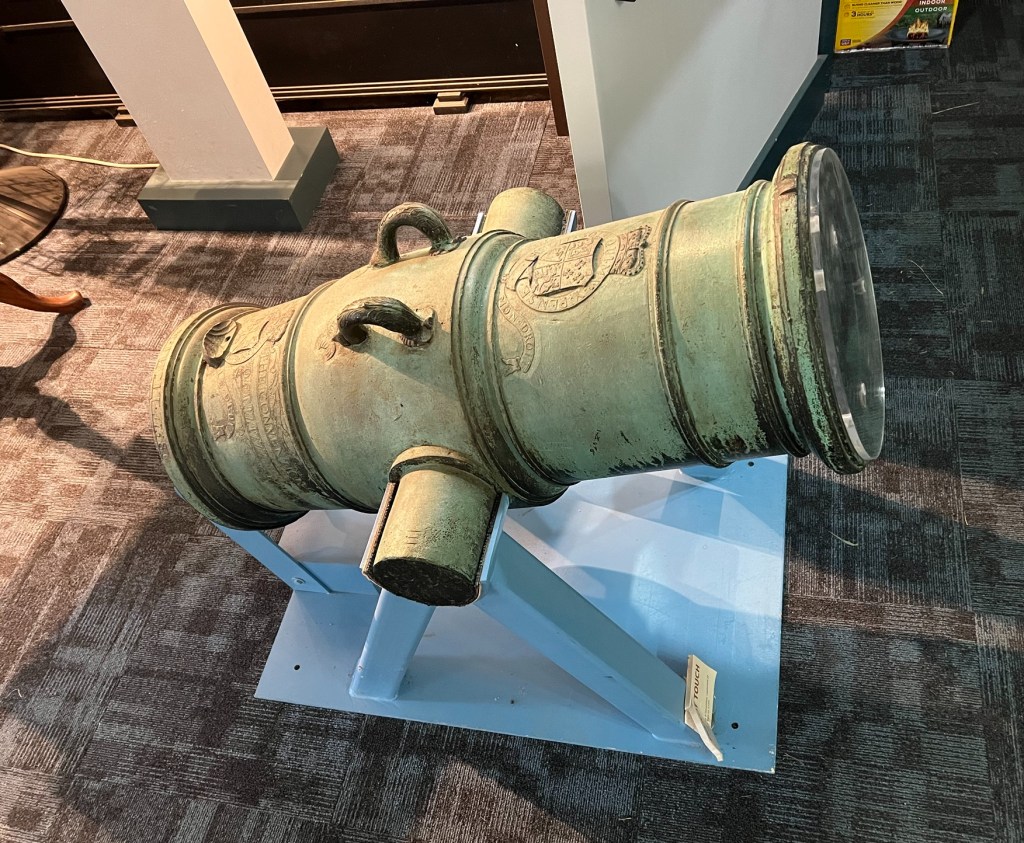
Part of the cannon

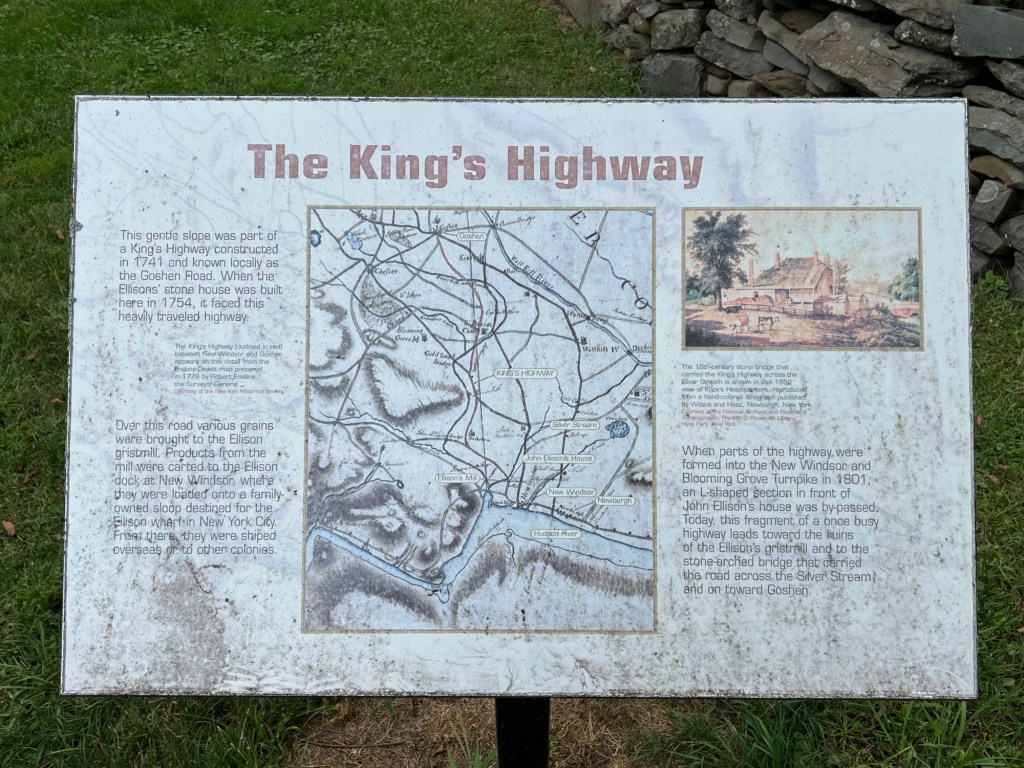
When I finished the tour of the house, my tour guide and walked around the Visitor Center room and she showed me some of the artifacts in the room including a small cannon the had been found. My tour guide suggested after we were done in the house a tour of the grounds. The King’s Highway had originally run in a different location that passed the front door of the Georgian side of the house. Also down by the stream were the ruins of the old grist mill.

The map of the original King’s Highway when it passed in front of the home

The original front door of the Ellison home where the street was once located

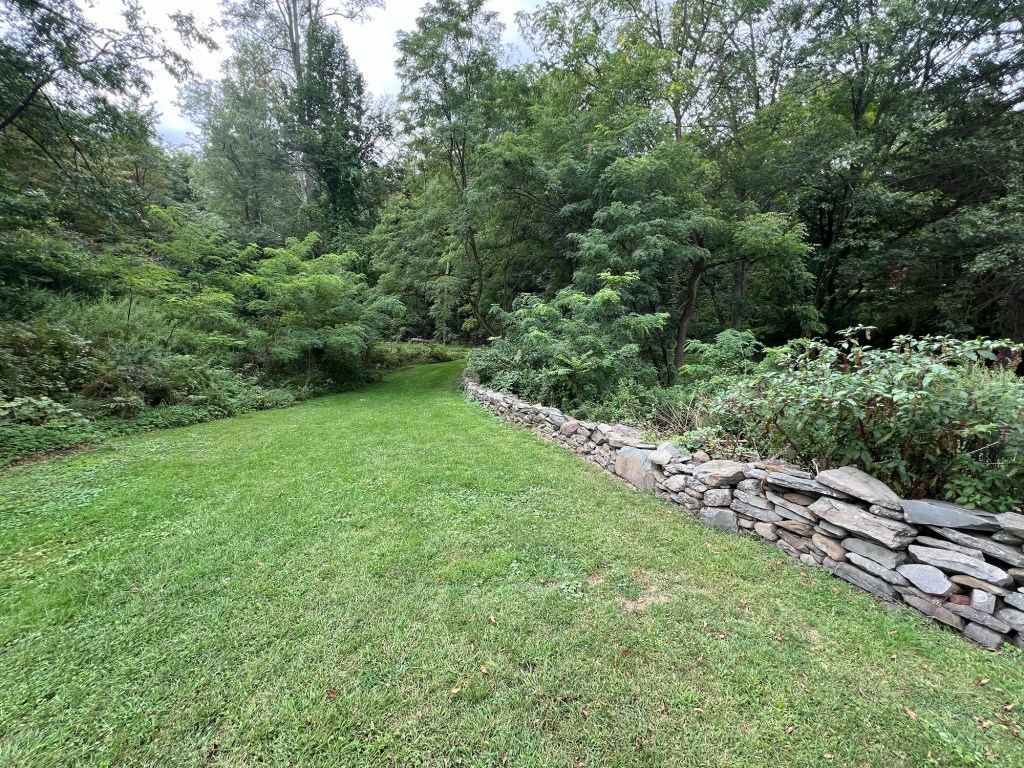
The stone wall is the marker of the original part of the road that passed by the home

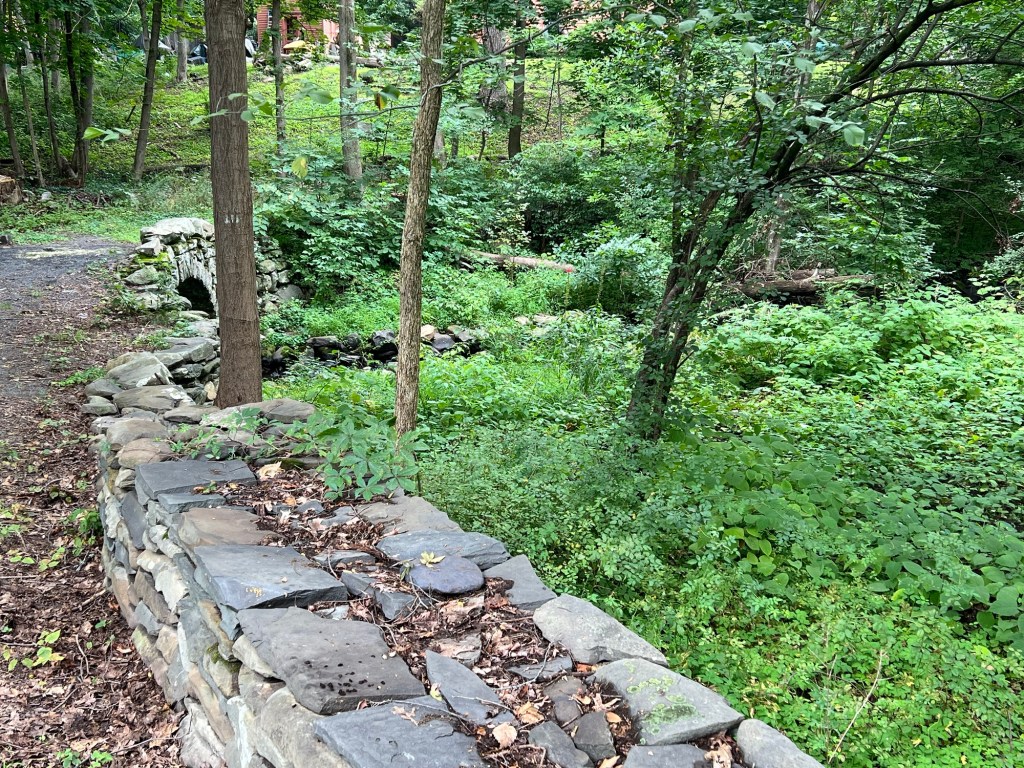
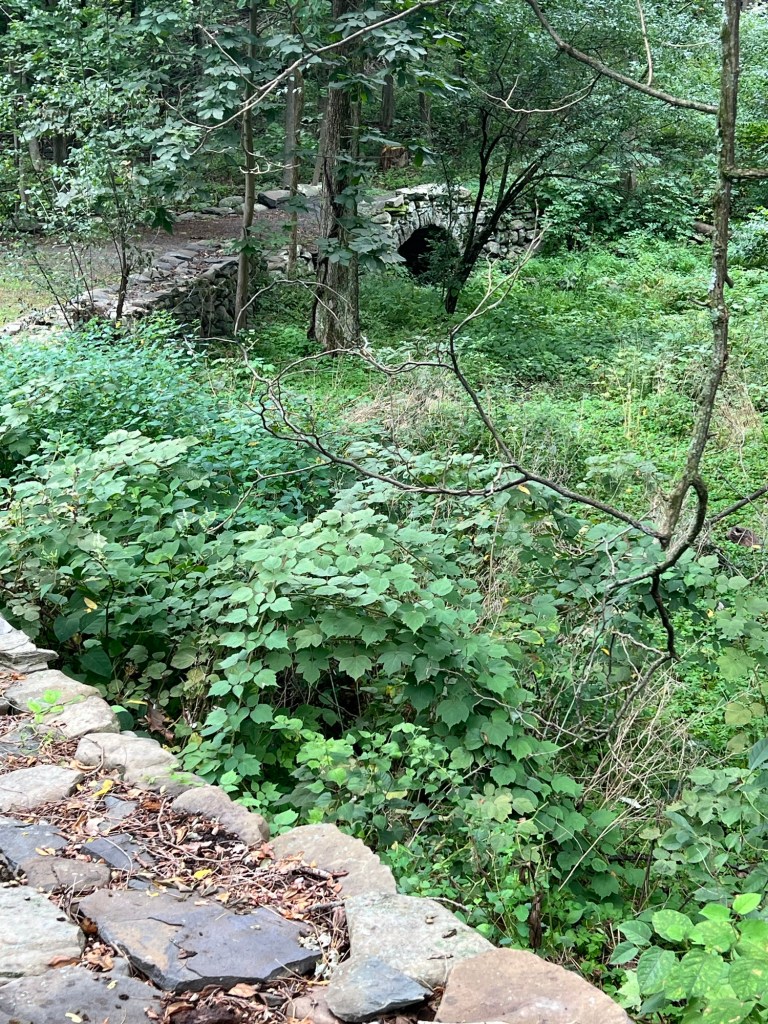
The highway path as it passed over the stone bridge

There was not much left of the family mill by the stream but the site did a nice job preserving the path of the highway and up keeping the stone bridge and grounds.

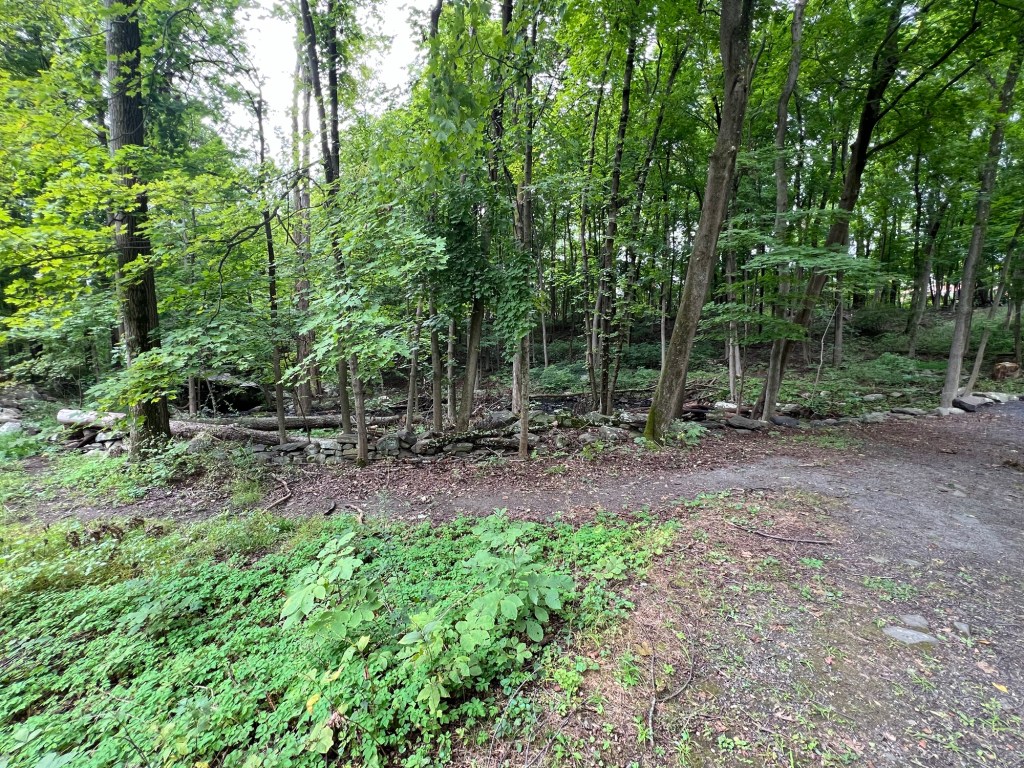
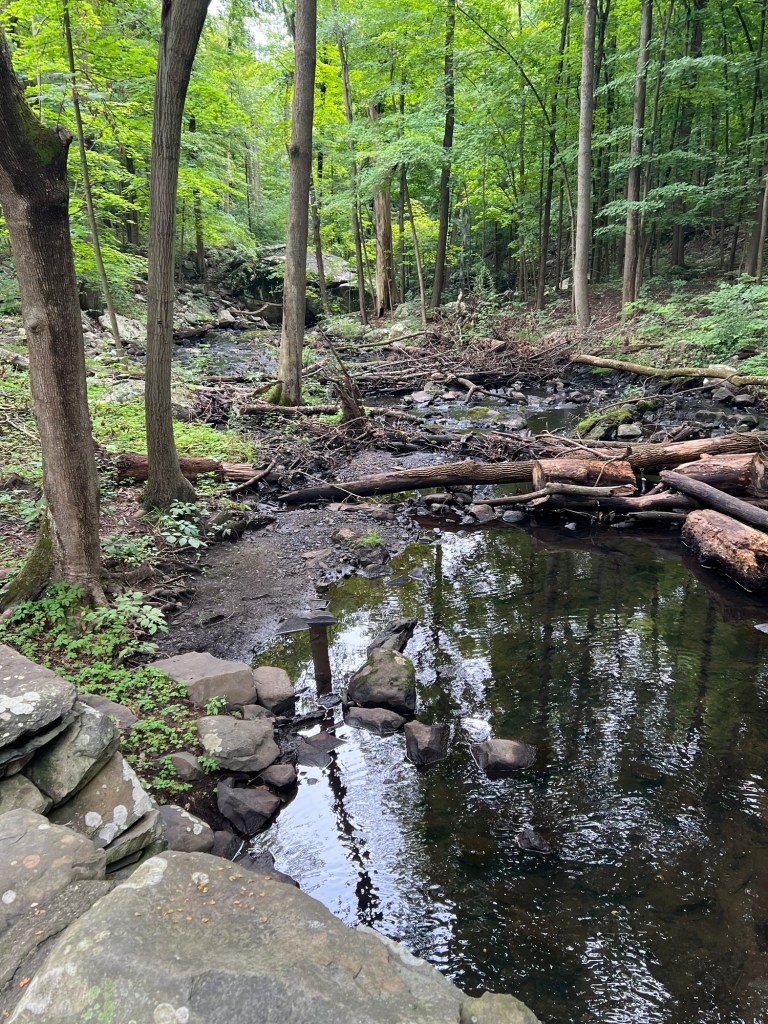
The woods area by the stream where the ruins of the old mill were located

The stream area

The stream area by the old mill

A better view of the old stone bridge

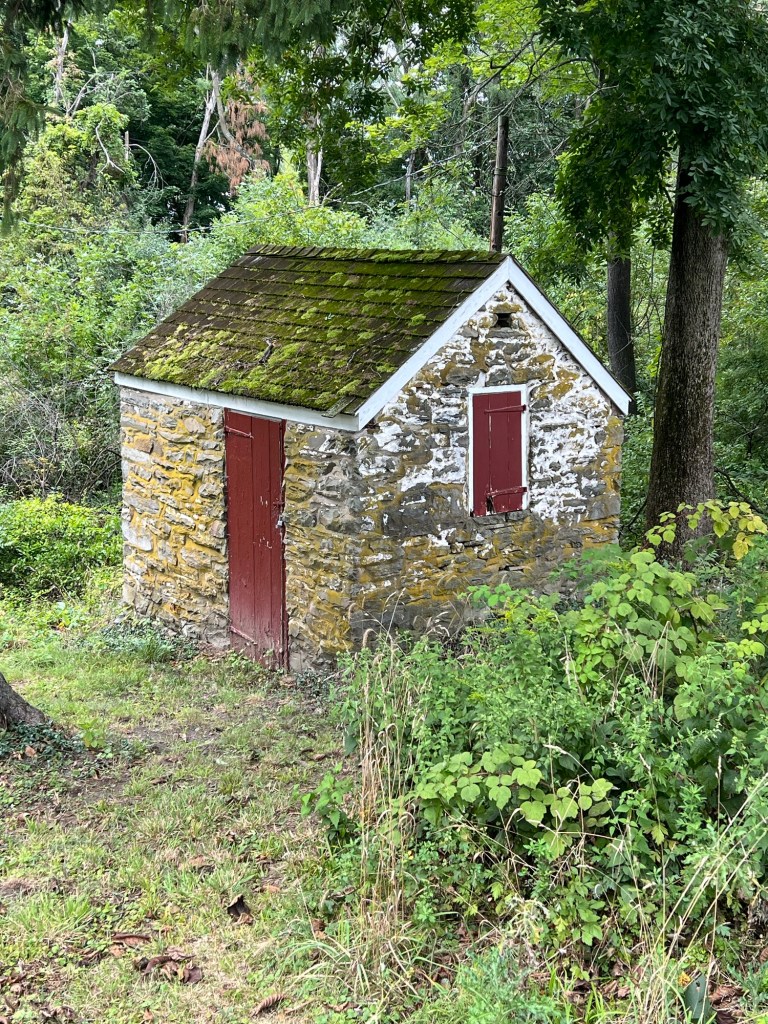
When I returned from the stream area (unfortunately leads to someone’s property on the other side of the stream), I walked the grounds of the home. There was a small smokehouse on the property to the side of the house.

The old smokehouse on the property

What was originally the back side of the house is now the front side of the house on the Dutch side of the home with the addition to the left

The view of the homestead from what is now the front of the street

The view of the house from the entrance when I was leaving

The front of the homestead as you enter an exit from the new direction of the home

I found the tour to be very informative and an interesting look on how two families shaped our history during the Revolutionary War.

*A special note that the house is seasonal and is closed from Labor Day until Memorial Day the next year and is only open for special events at Halloween and Christmas.

The Halloween Event:

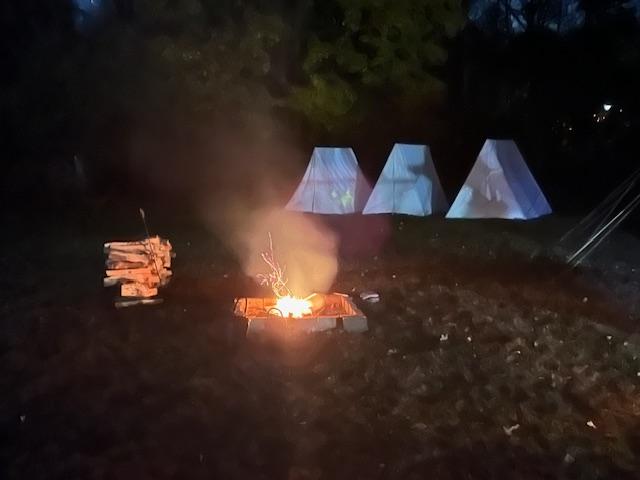
I attended the Halloween events at the Knox Headquarters when in the spirit of the 18th Century Gothic Literature, an author took us on a tour of treason and tides turning during New Windsor Cantonment and inside the Knox Headquarters. The ghosts of the past tried to find a traitor in the midst of the war.

Meeting the ghosts of the author and her characters on the site of the Knox family estate

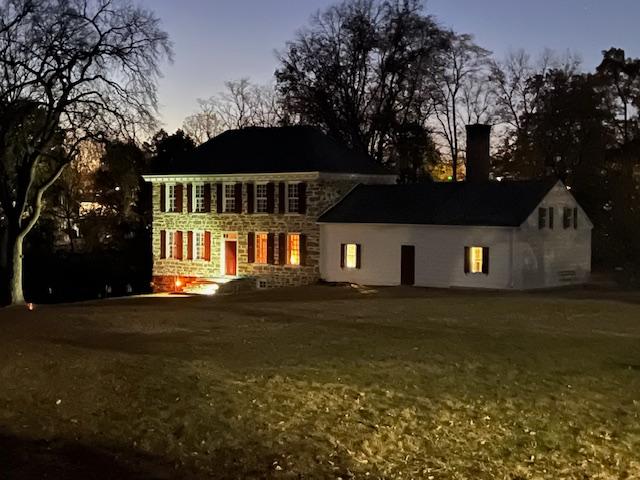
The Knox House lit for the Halloween holidays had a eerie look to it that night

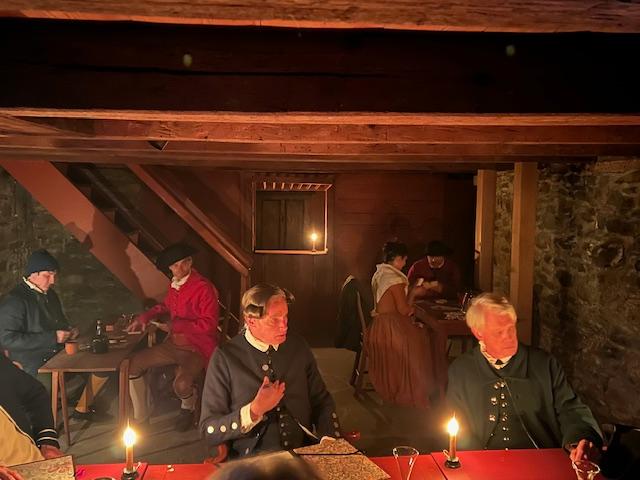
The Ghosts trying to find a traitor in the ranks

The Ghosts of the past trying to find a traitor during the war

Leaving the Continental Army camp after the performance was over that evening

We walked the estate and followed the storyline with the actors. There were people on both sides of the war who thought they were right. It was an interesting Halloween event.

The History of the Ellison/Knox Site:

(from the New York State Parks, Recreation and Historical site)

On several occasions during the Revolutionary War, Major General Henry Knox, Commander of the America artillery, established his military headquarters at John Ellison’s 1754 Georgian-style house in Vails Gate. From October 1782 until the spring of 1783, as 7,000 soldiers and 500 “camp followers” were establishing winter quarters at the New Windsor Cantonment, and General Washington was lodged at Jonathan Hasbrouck’s house in Newburgh, New York, Major General Horatio Gates occupied the elegant home from which he commanded the cantonment. Here the army awaited the end of the Revolutionary War that became effective when Washington issued the cease fire orders on April 19, 1783.

For most of the 18th and into the 19th century, the Ellison family had important commercial dealings in milling and trade. From their mill, flour was shipped down the Hudson River to New York City and the West Indies. At present, remains of the mill, with traces of the underground raceway may be visited. Explore how the Ellison’s and other families of the mid-Hudson Valley lived 200 years ago.

The Christmas Open House event:
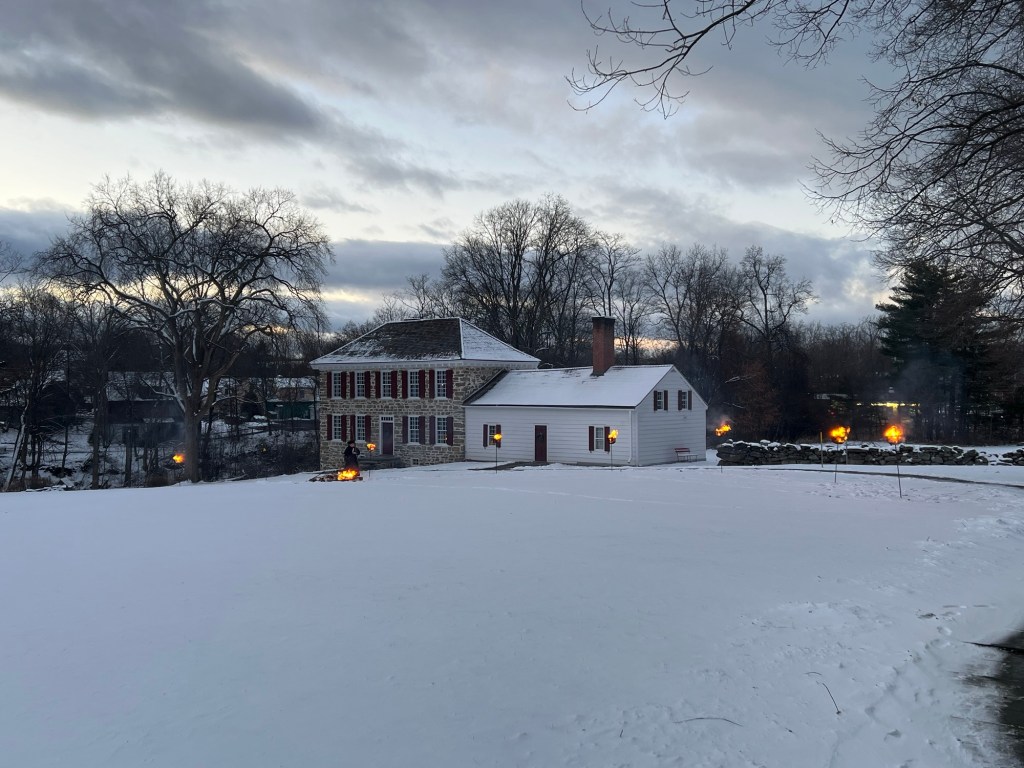
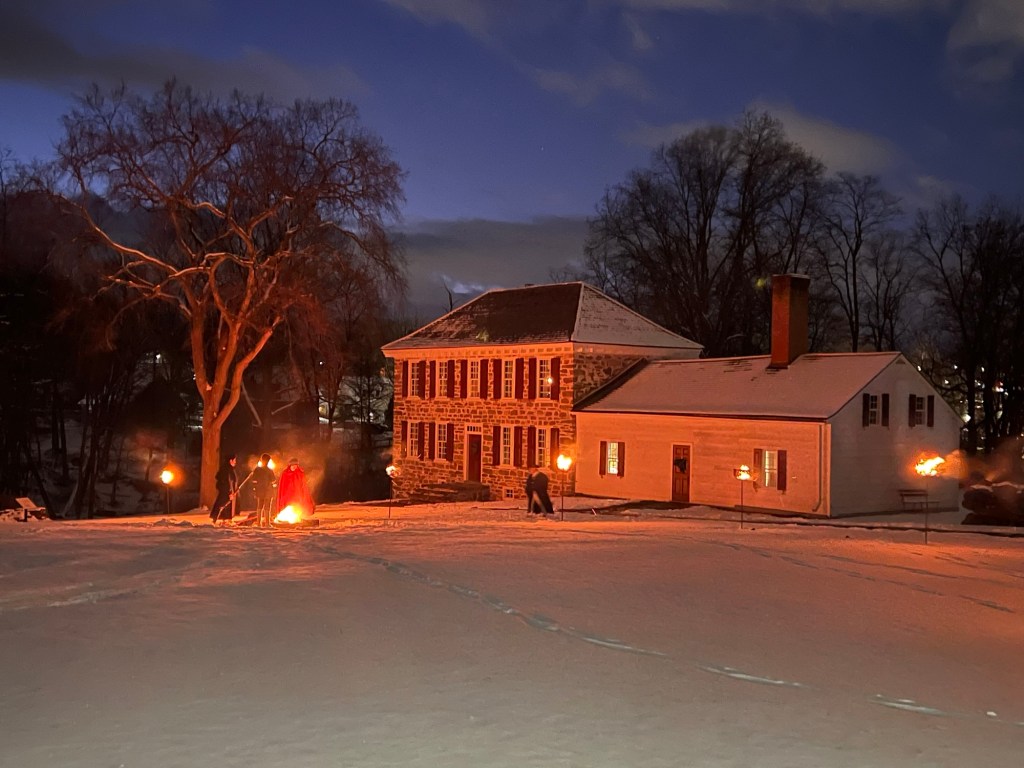
I returned to the Knox Headquarters again for their Colonial Christmas Open House in early December and that was a festive event. The snow had just fallen giving the house a very picturesque look to it.
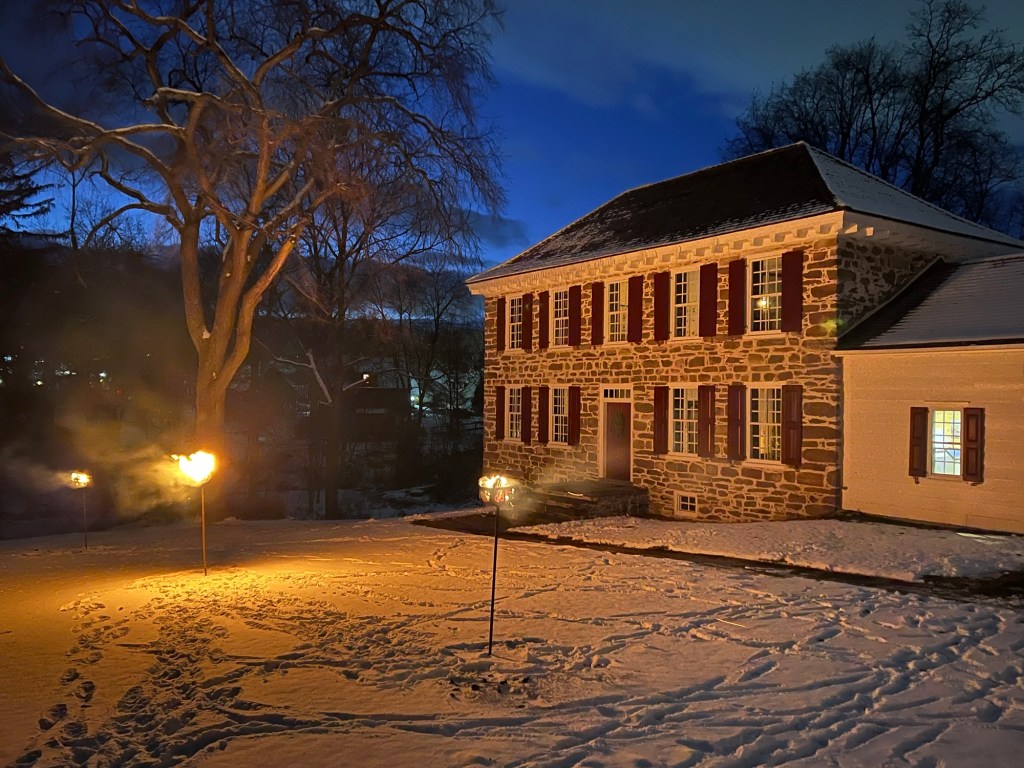
The Knox/Ellison Home the day of the event

The estate looked so picturesque with the snow

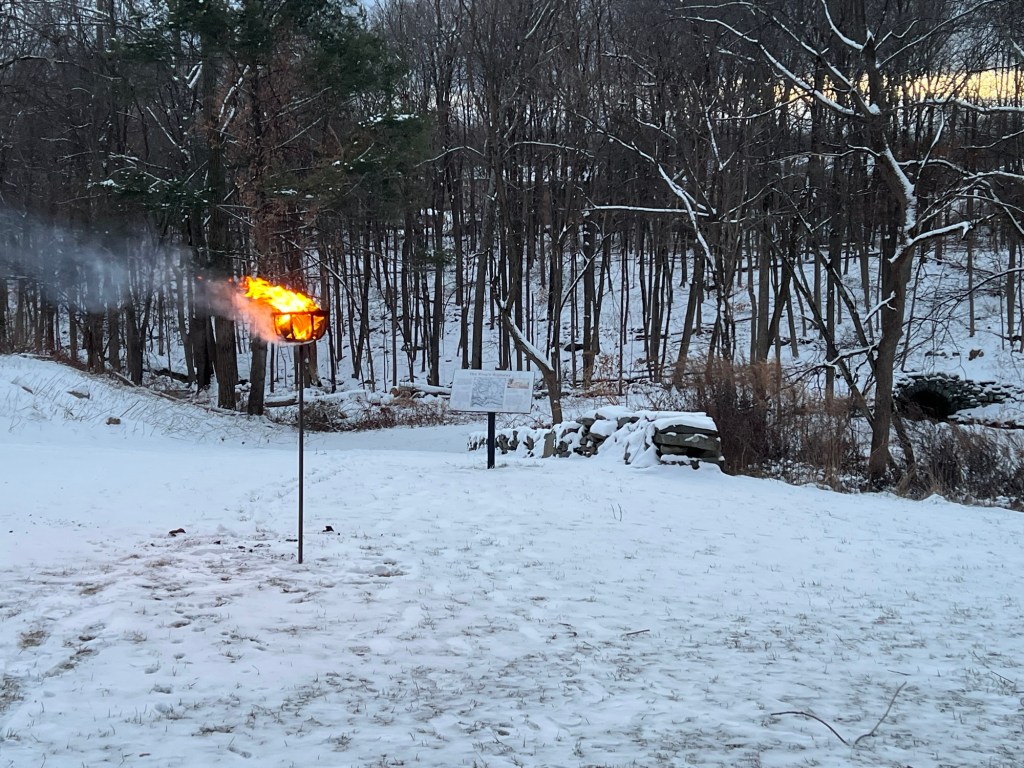
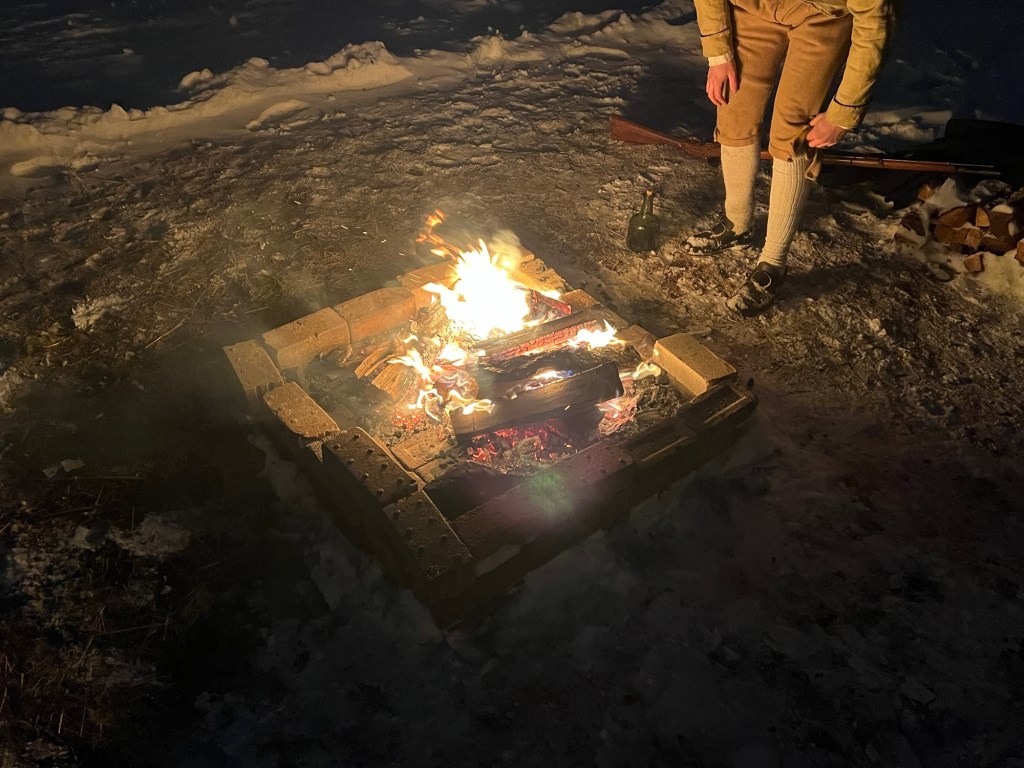
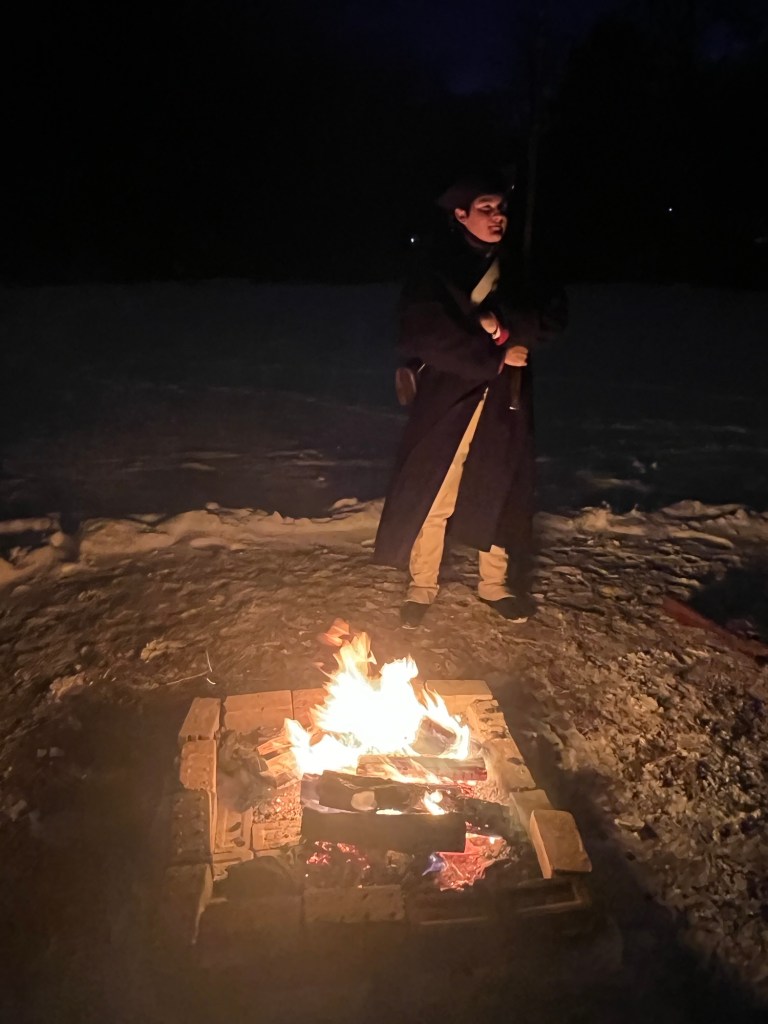
When I first arrived to the estate, it was still light out and they had just lit all the torches in front of the house. It really lit the pathways to the house. By the outside fire, a lone soldier stood guard, and he looked like he was freezing.

The torches that lit the paths

The snow gave the woods a festive early Christmas look
The house was decorated for a Colonial Christmas during the war years
The Officers used the Living Room as an office and for entertainment

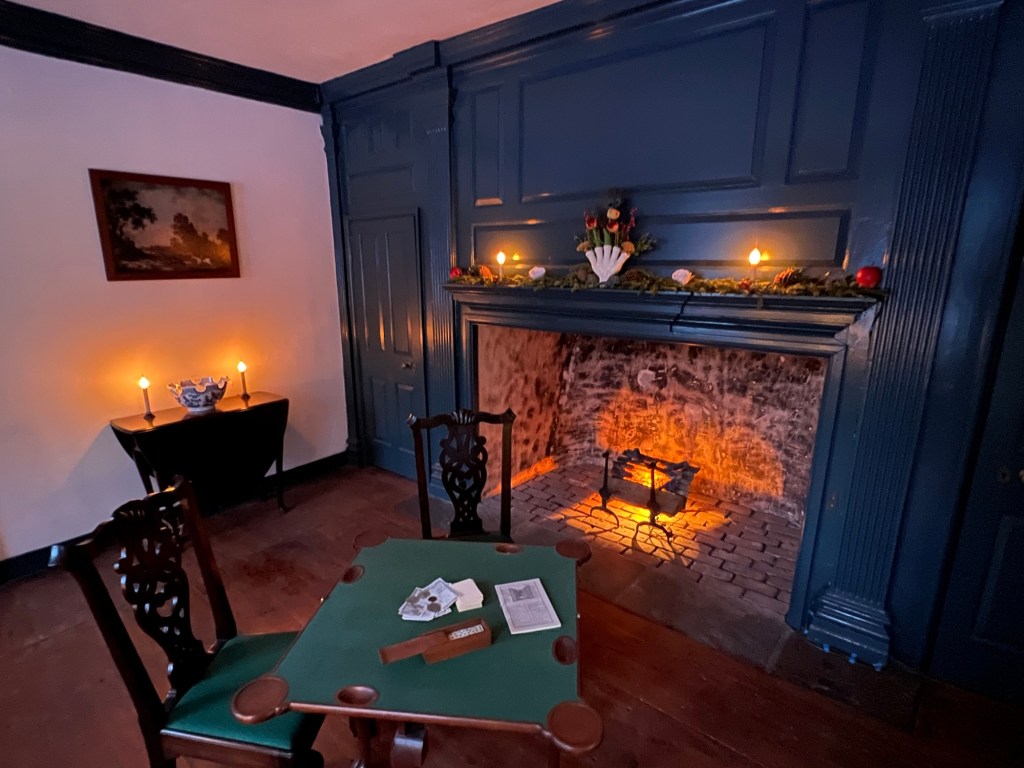
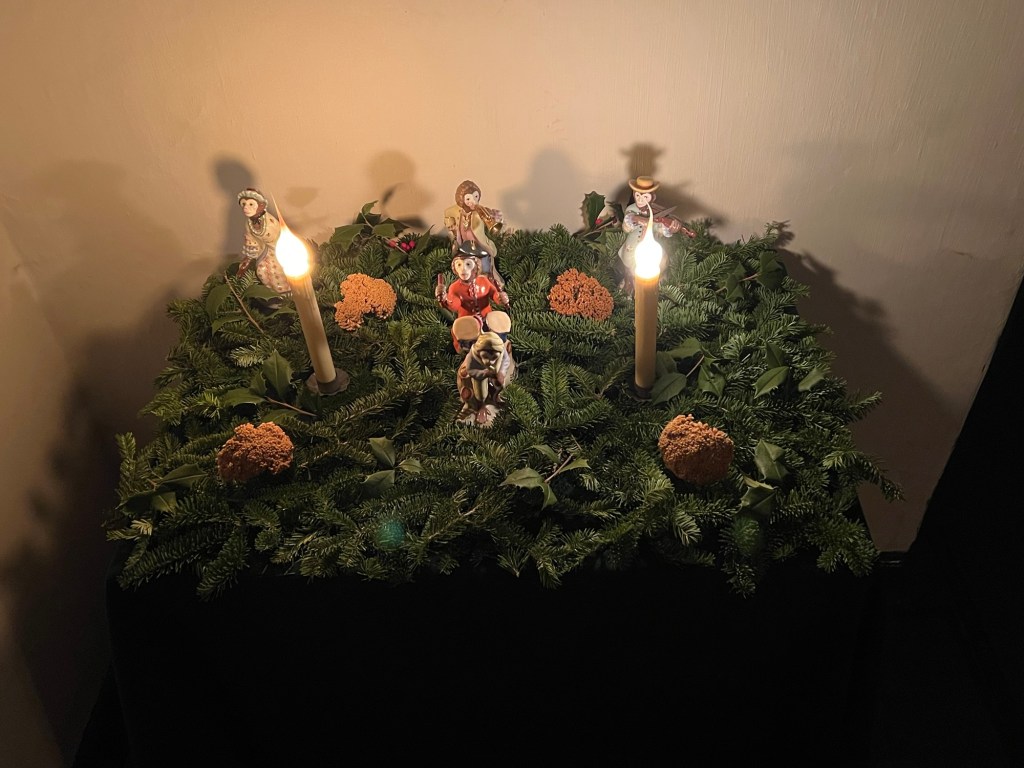
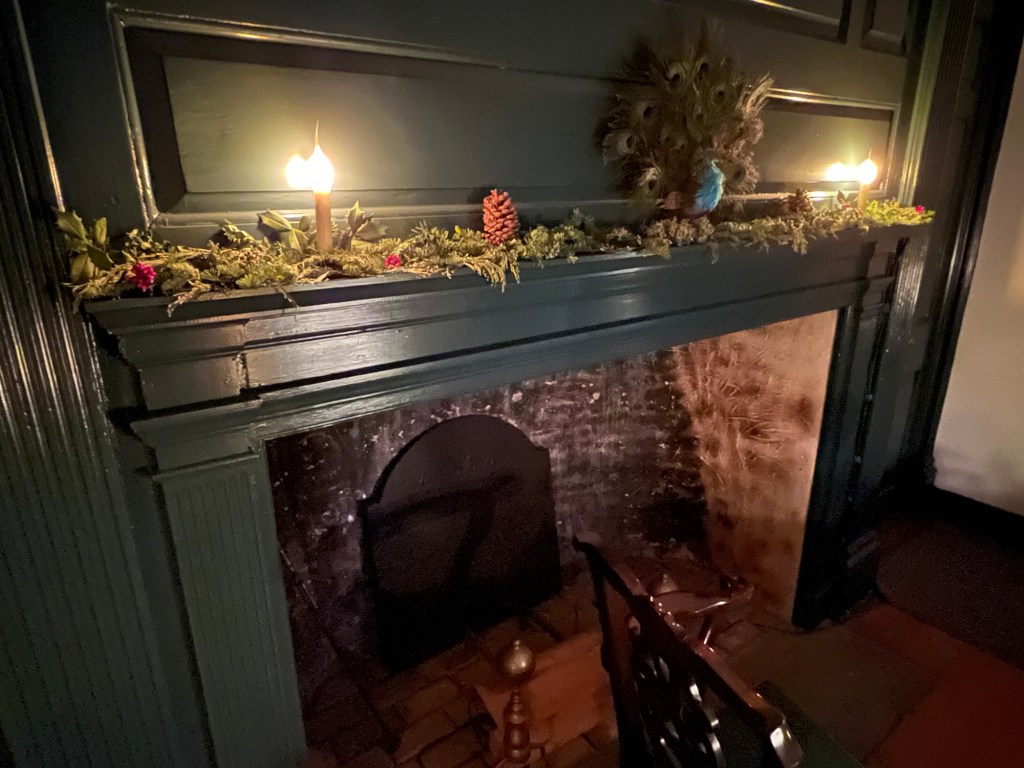
The hearth was beautifully decorated with garland and dried fruits

The mistress of the house talked and entertained me on my visit

The house had an eerie but festive feel about it that evening

The festive garland decorations in the Living Room

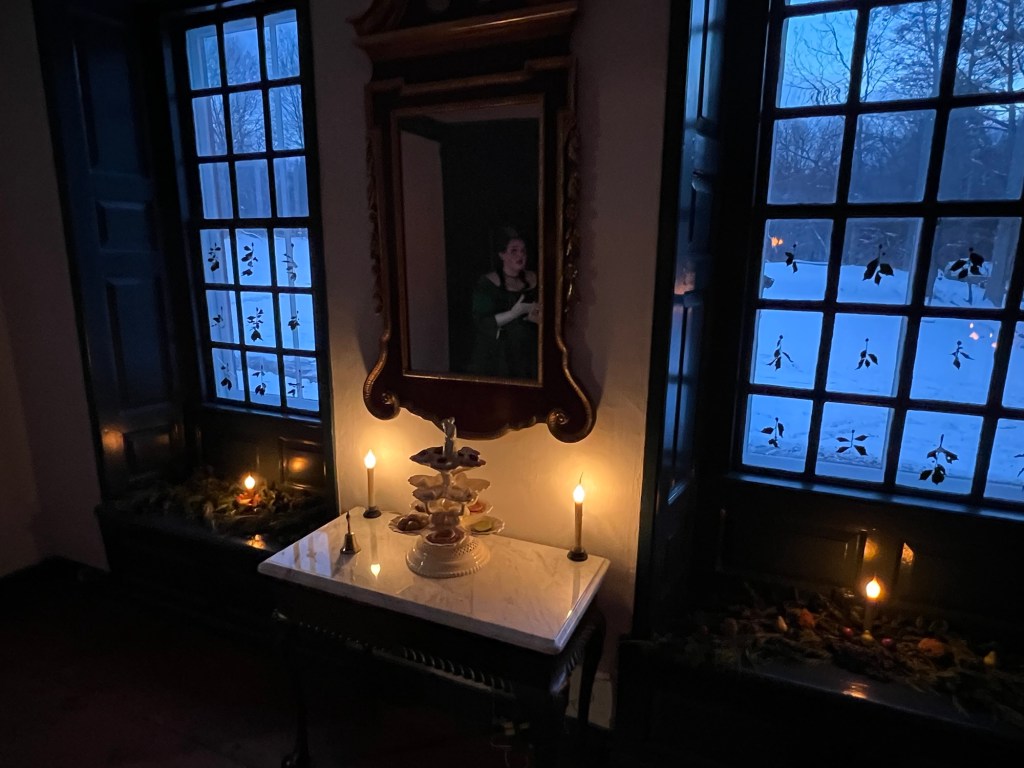
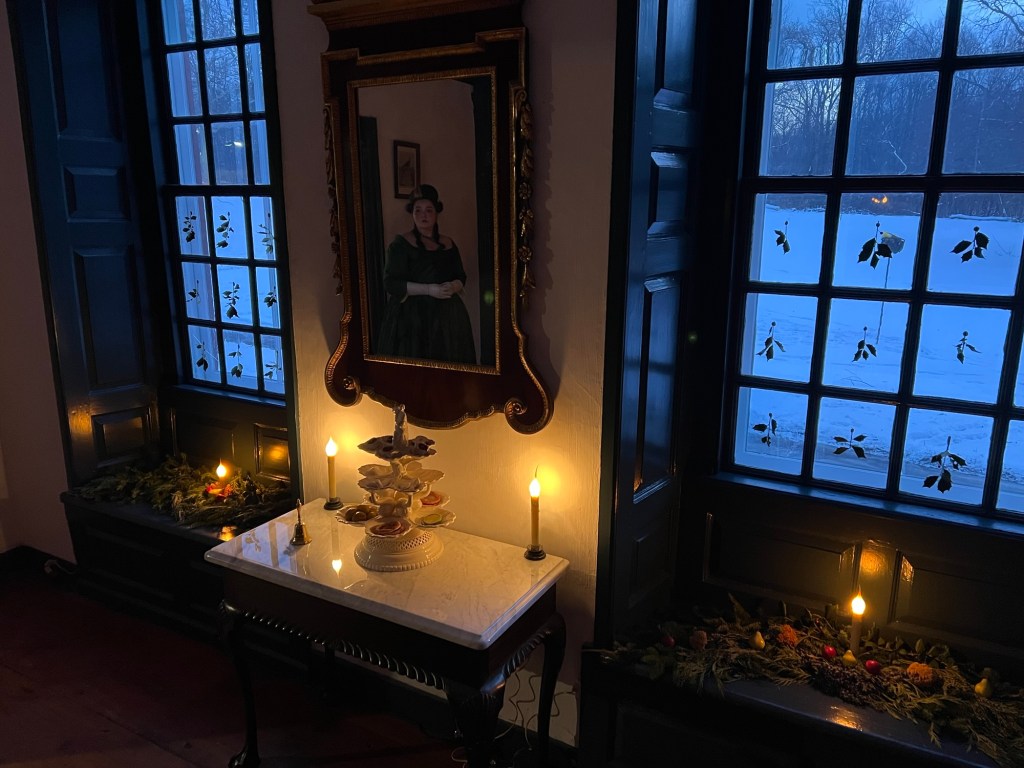
The decorations in both windows

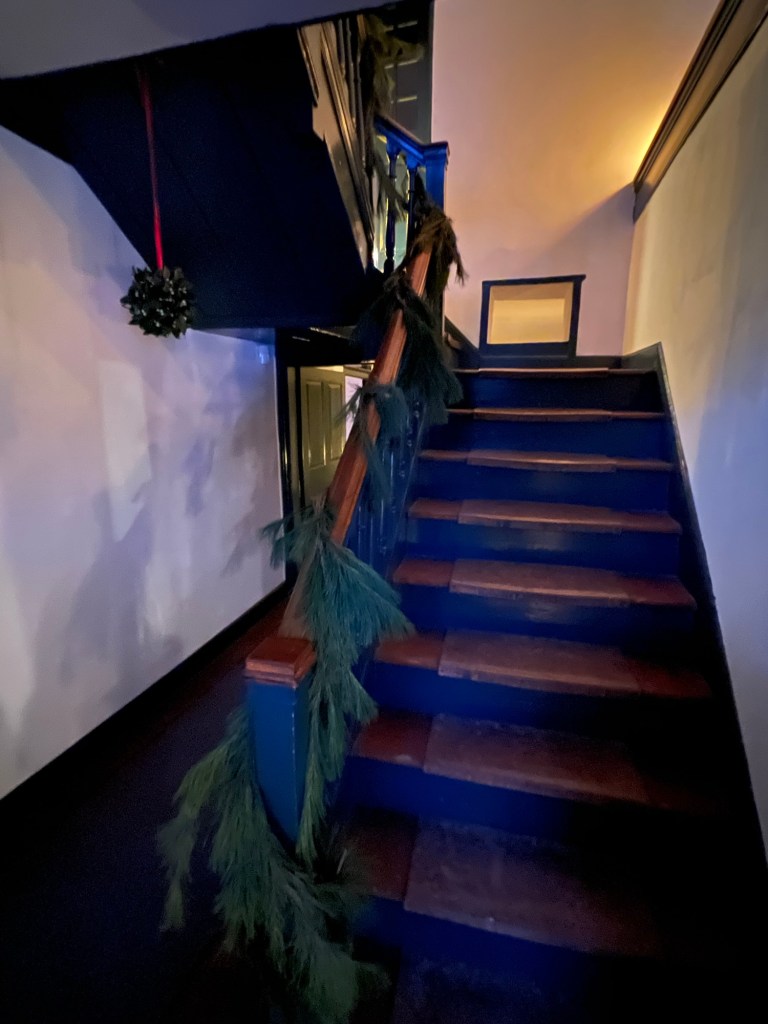
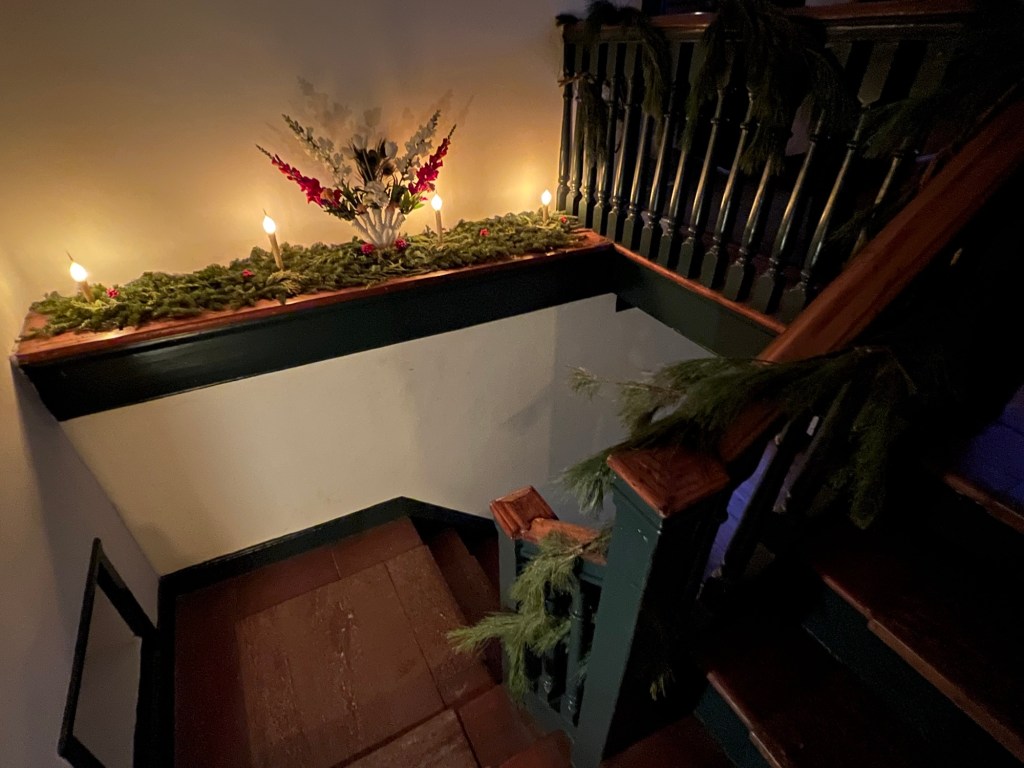
I passed the foyer where garland and misotle decorated the stairs

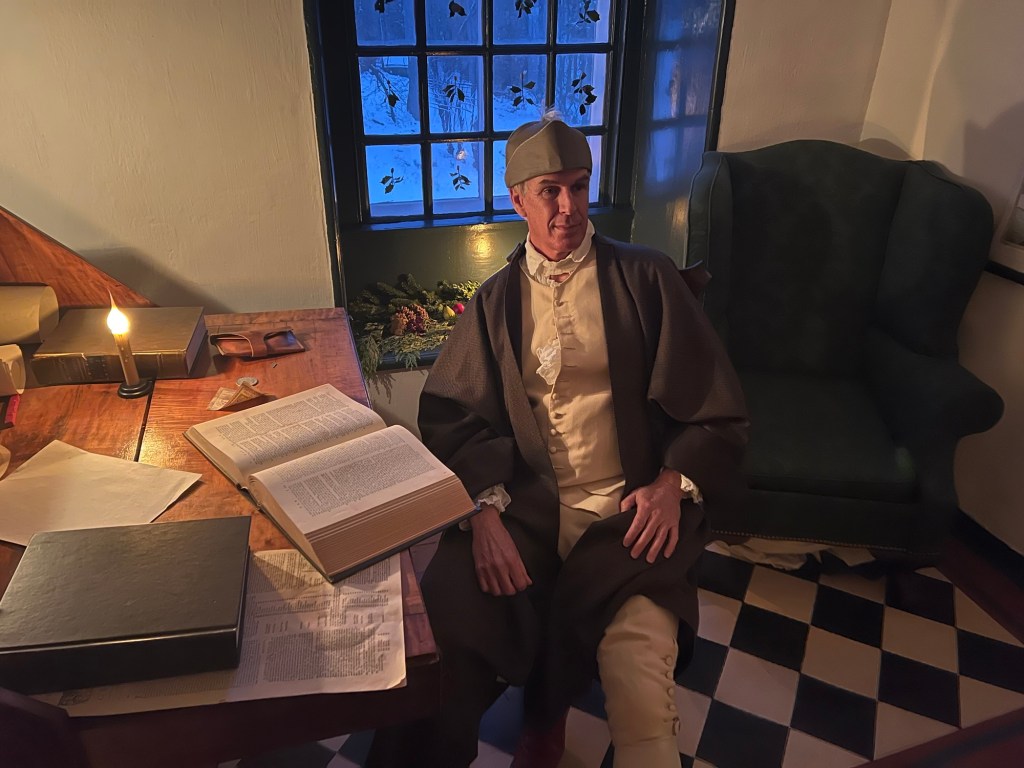
We were then entertained by visiting officers of the home in Mr. Ellison’s office who told us their stories of General Washington’s visit.

The Officers visit to visit the Generals

The office lit for a late night visit

The holiday decorations in the Office space

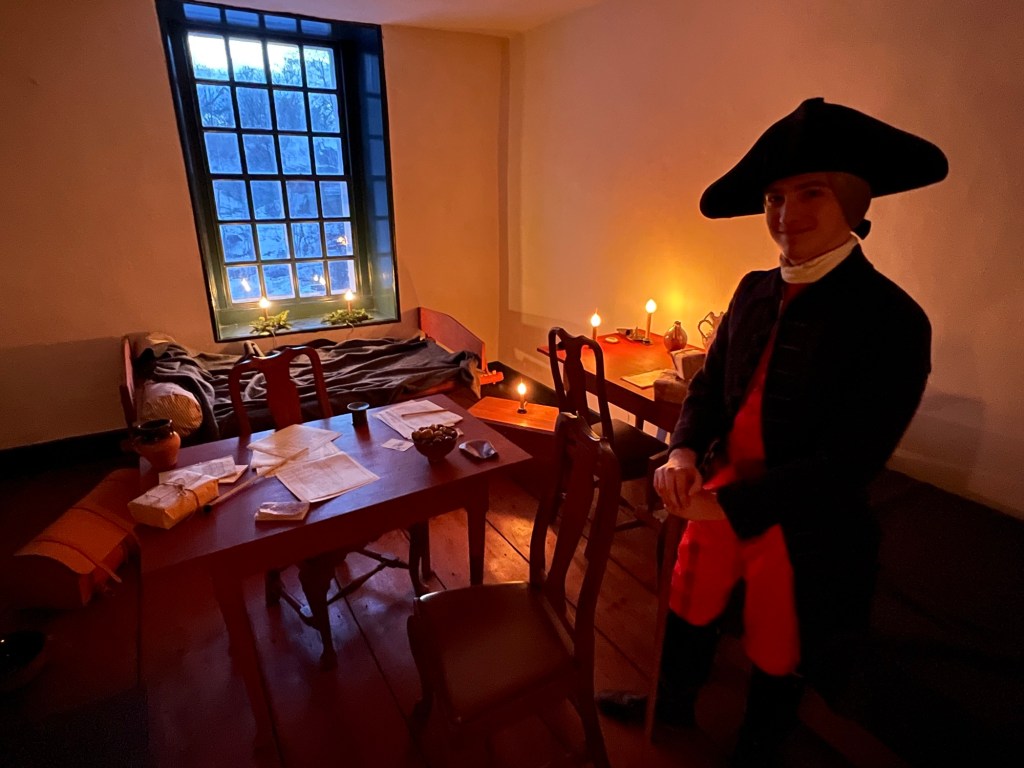
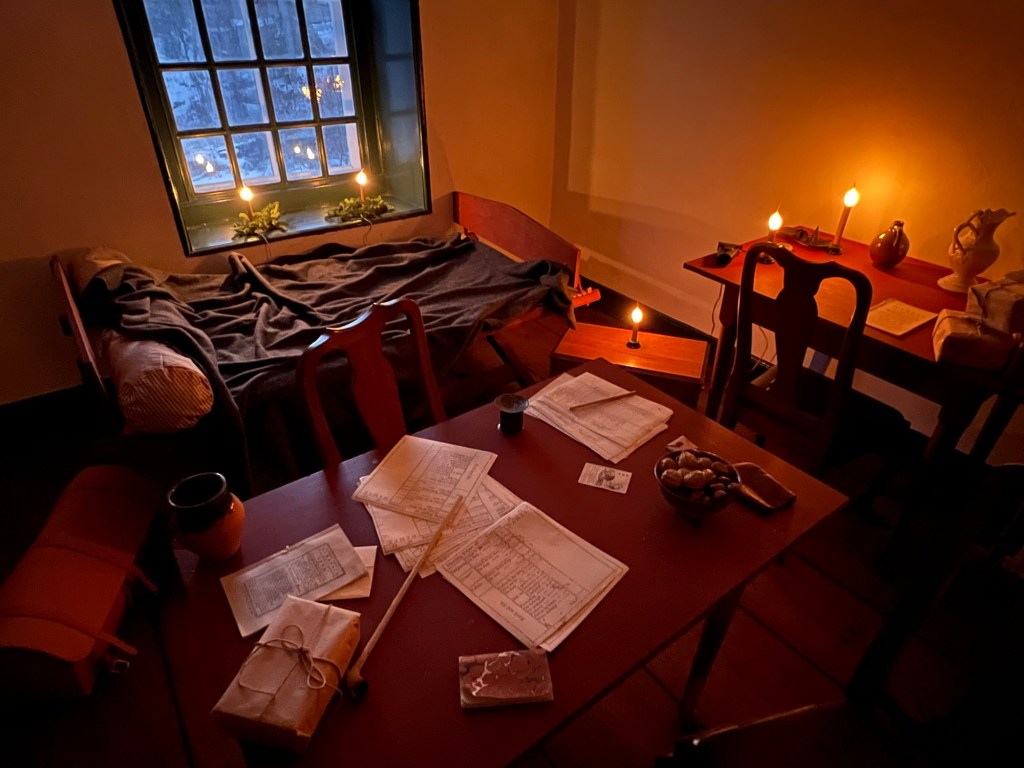
Then I took a trip upstairs where we were met by another officer who described the sleeping arrangements of both the Knox and Ellison families of this time of occupation.

The officers conversation with us

The decorations as we walked up the stairs

The bedroom decorated for the visit

The opposite bedroom used by the family

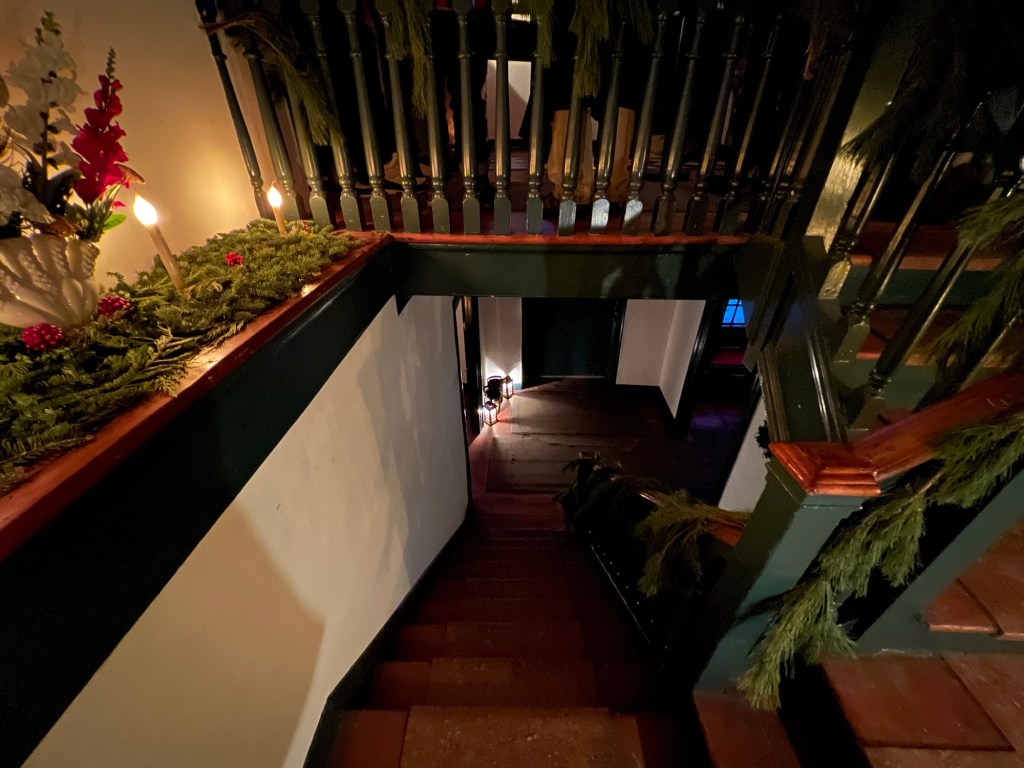
The staircase decorated for the holidays

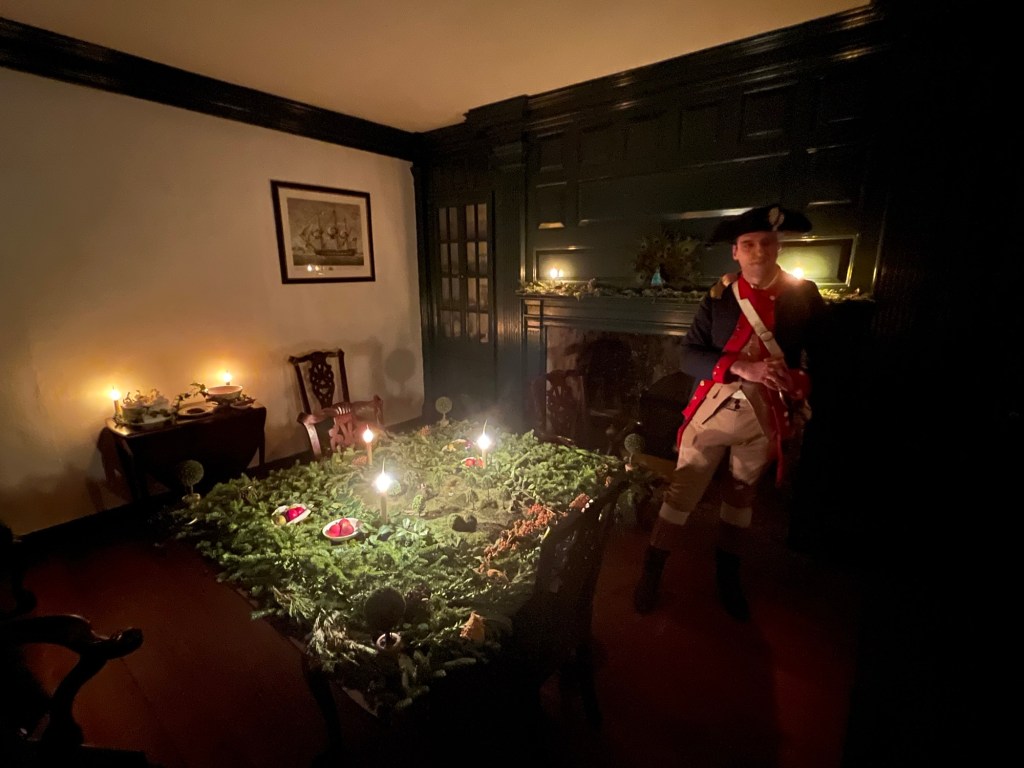
My last stop on the visit was to the Dining Room, where the last officer on the visit talked of Christmas dinner in the house during the war.
The officer explaining entertainment during the war

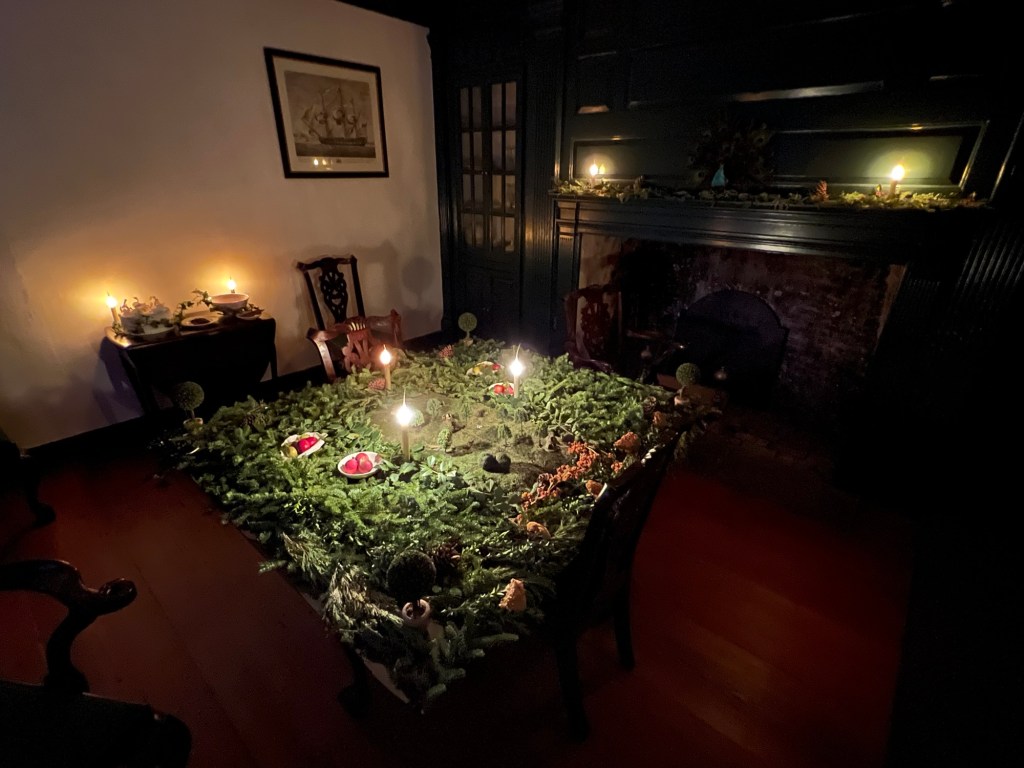
The Dining Room decorated for the Christmas holidays
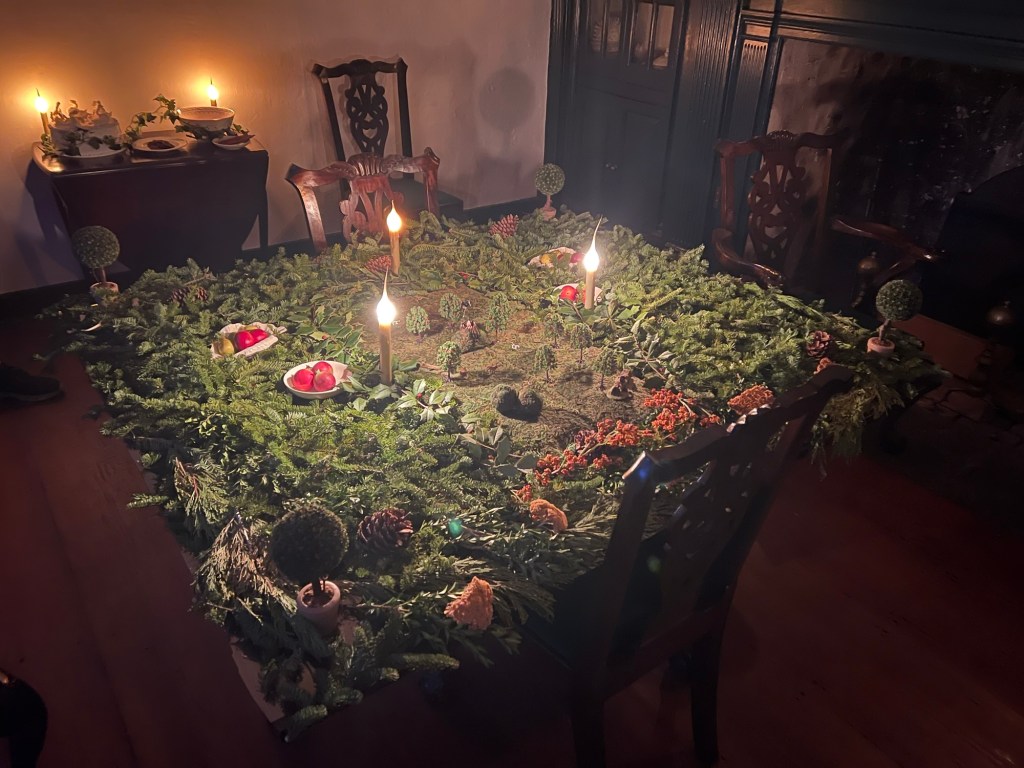
The elaborate decorations in the room in the war years

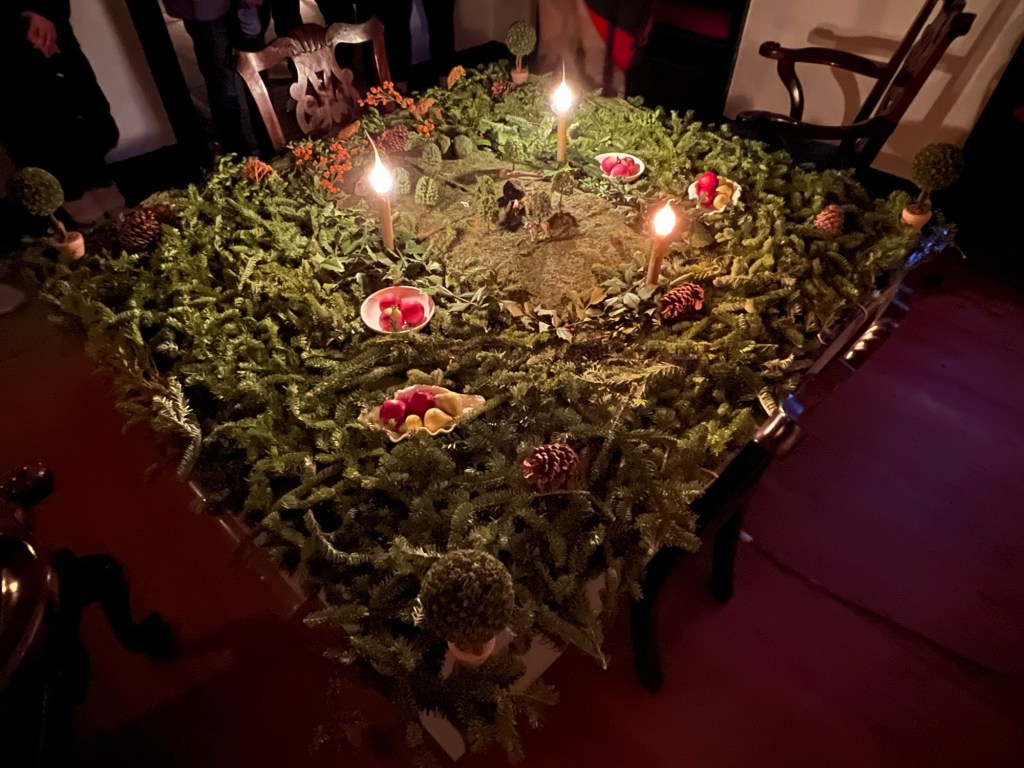
The creativity of the Dining Room table with the creative table decor

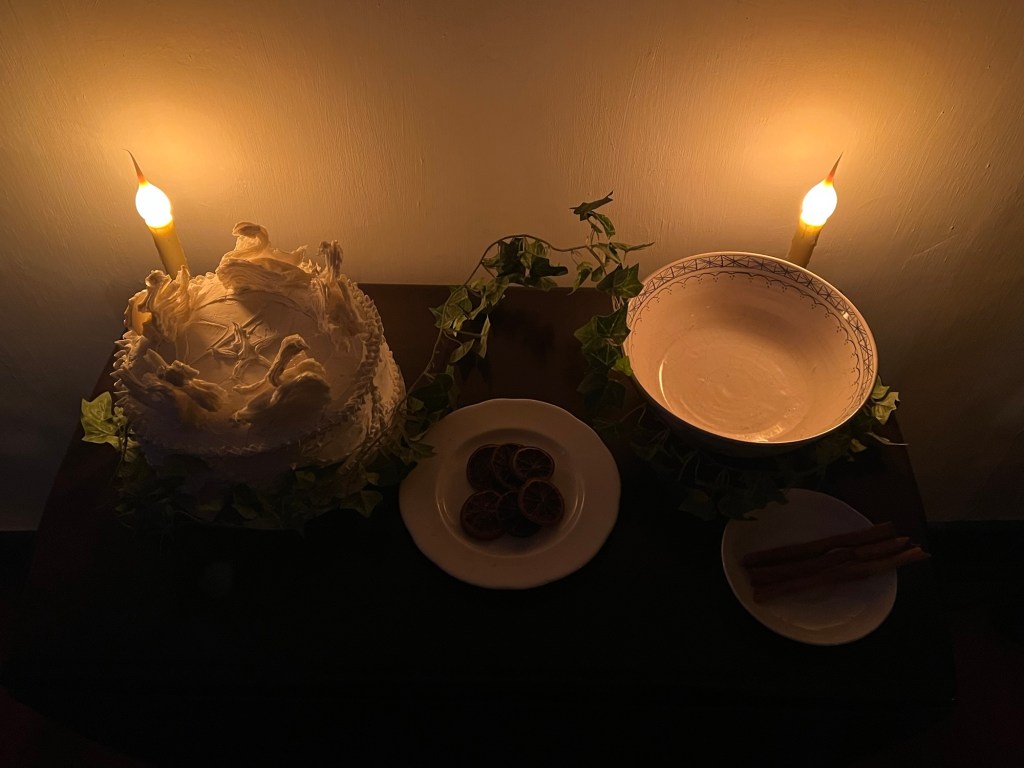
The elaborate holiday desserts

The officer explained entertainments during the war, the use of the elaborate decorations on the table and the foods that would have been eaten at the holidays. Plus, entertainment of a major officer would have been during the war years.

The garland and fruit decorations in the Fining room

The officer finished his talk on the holidays and then I left for the evening

The outside of the house with the torches lit to full extent

The fire outside to warm up

The officer outside looked so cold. Thank God he kept going inside to warm up

The house as I left for the evening
The torches as I left the property
The house from a distance

The glow of the house at the end of the evening

The event was wonderful and the enactment was fun but it got really cold outside at the end of the evening and by 6:00pm it got to be freezing. I left the estate and headed home . The Knox/ Ellison House closed for the season after this night.
Montgomery Village Museum                             142 Clinton Street                               Montgomery, NY 12549

Montgomery Village Museum 142 Clinton Street Montgomery, NY 12549

Montgomery Village Museum

142 Clinton Street

Montgomery, NY 12549

(845) 457-7576

https://www.facebook.com/MontgomeryVillageMuseum/

https://www.villageofmontgomery.org/our-community/village-history/523-museum-hours.html

Open: Sunday 3:00pm-6:00pm/Monday-Saturday Closed

Admission: Free but donations are accepted

My review on TripAdvisor:

https://www.tripadvisor.com/ShowUserReviews-g48196-d27005812-r967710754-Montgomery_Village_Museum-Montgomery_New_York.html?m=19905

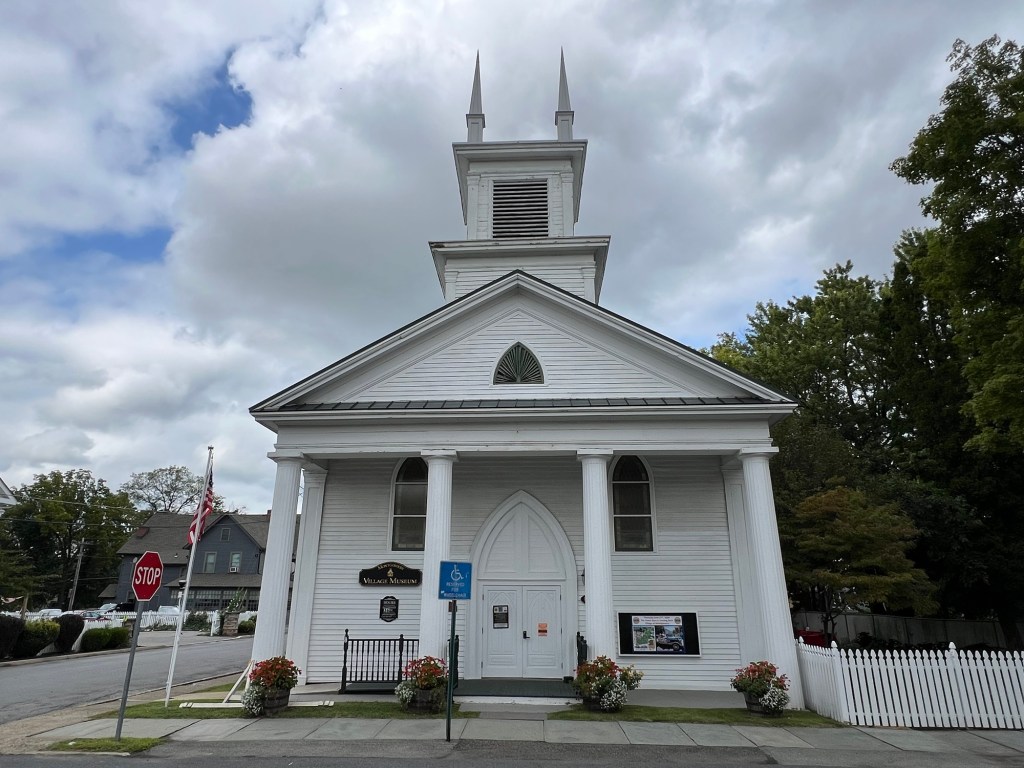
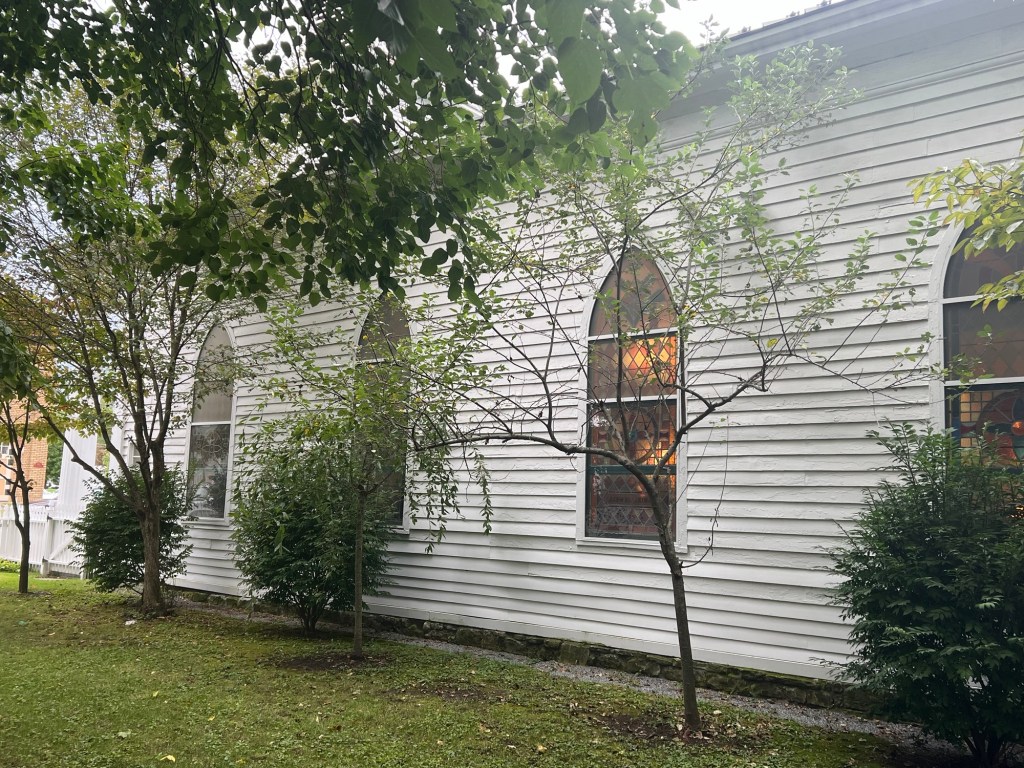
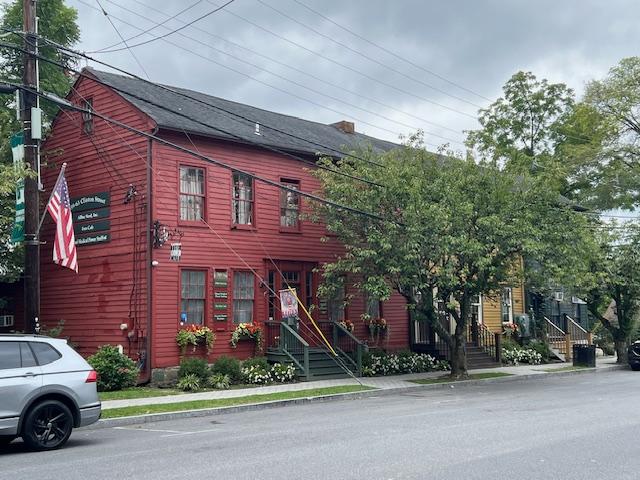
The Montgomery Village Museum at 142 Clinton Street

The Museum in the front of the museum

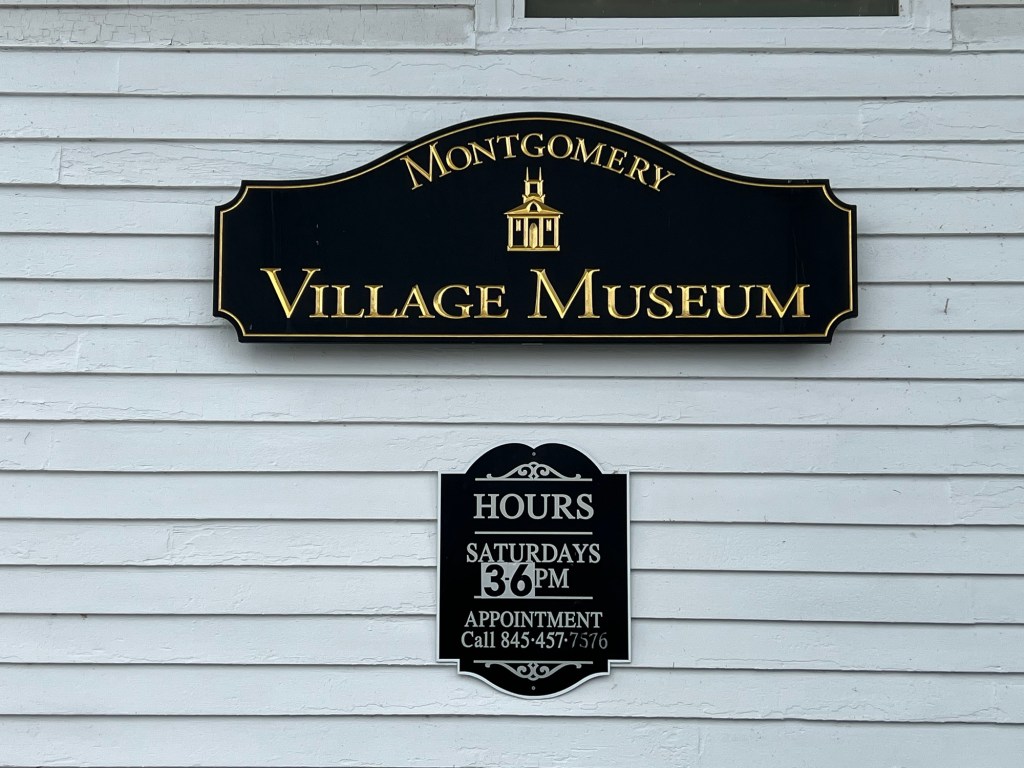
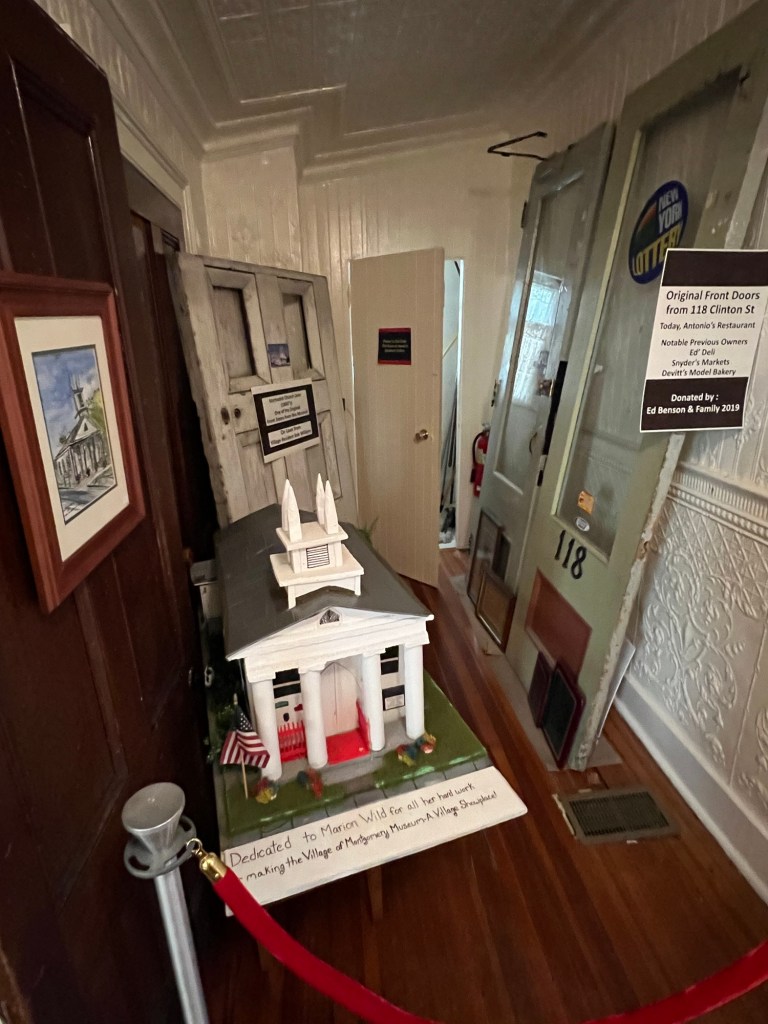
The museum sign welcomes you

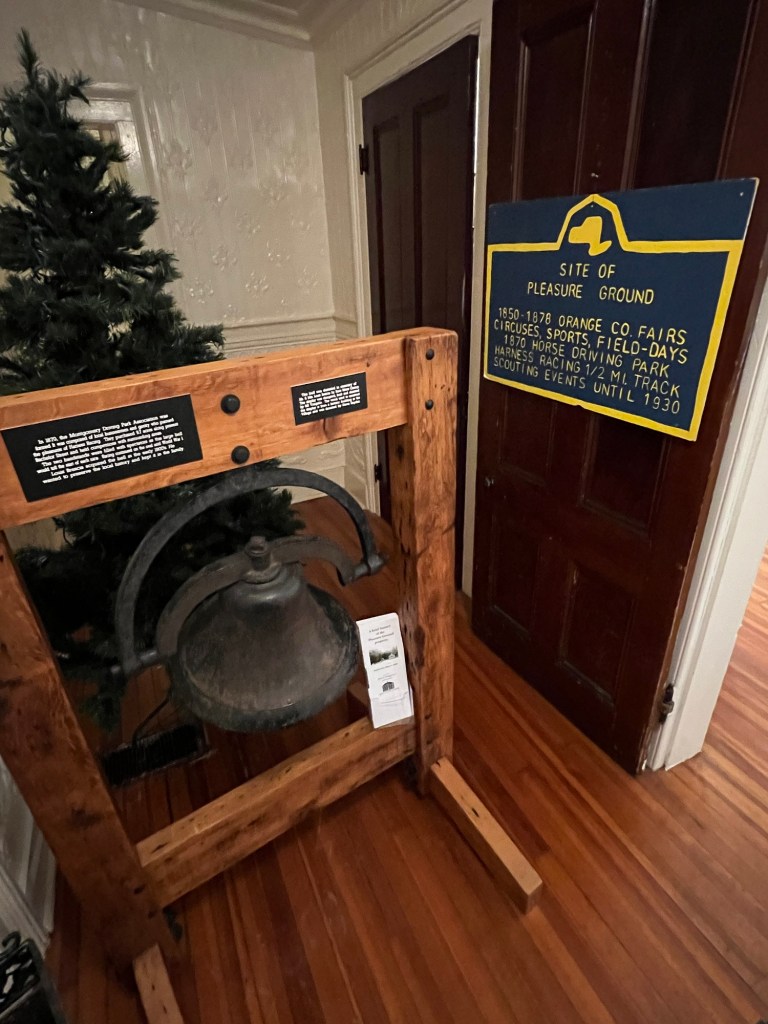
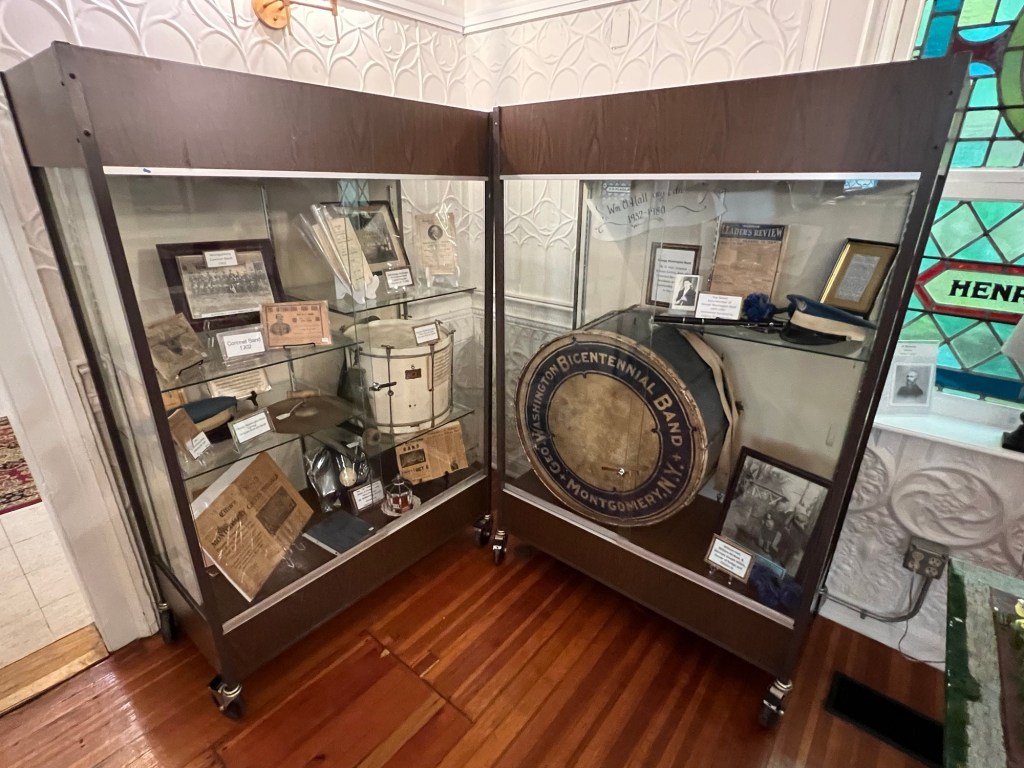
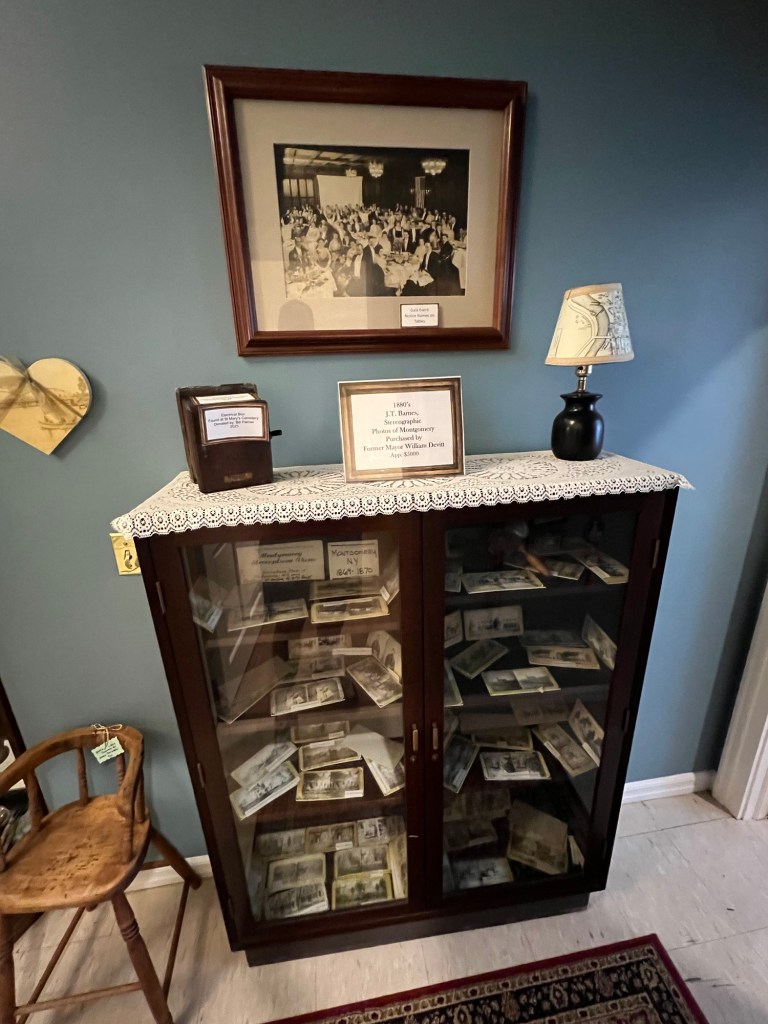
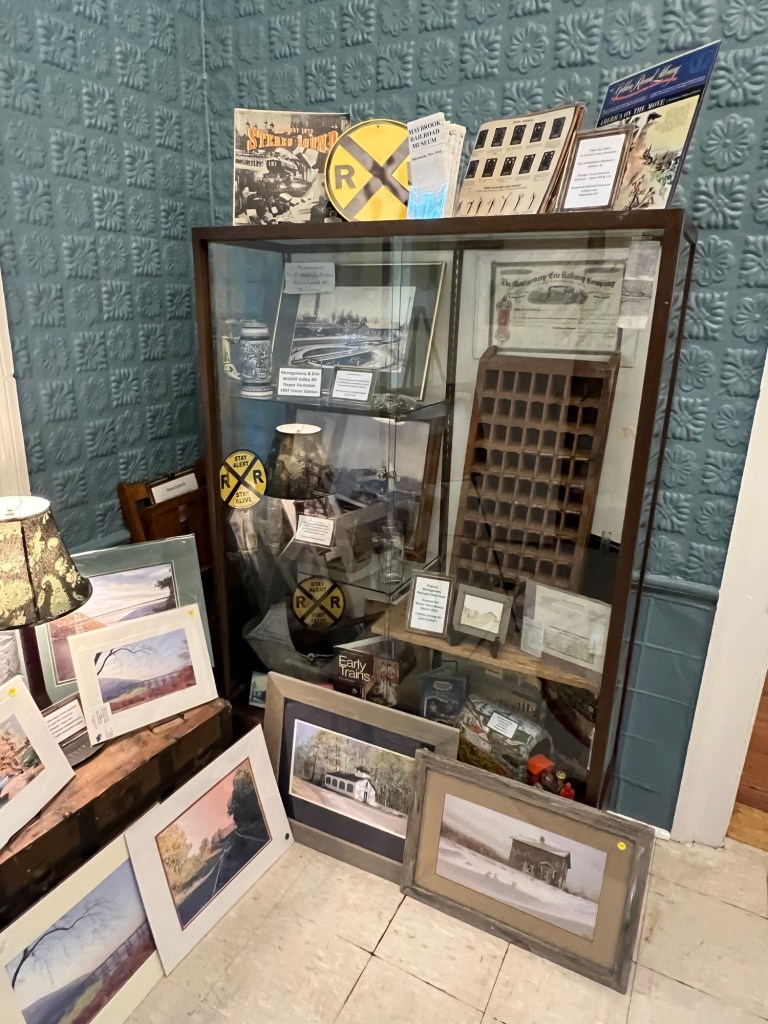
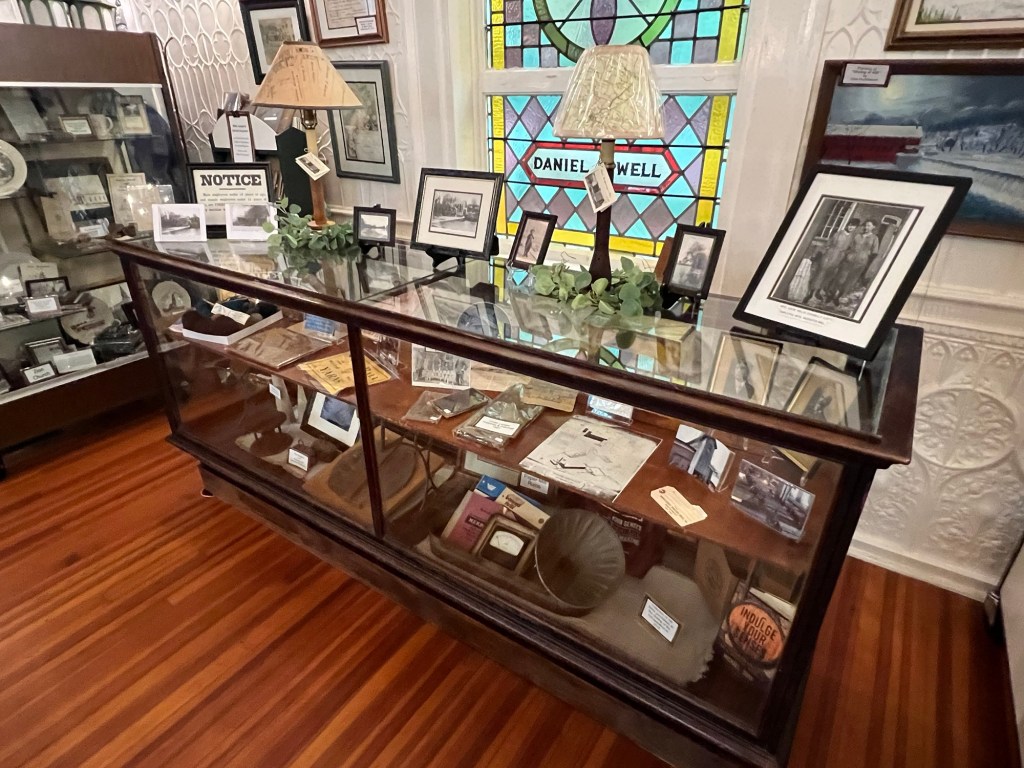
Village memorabilia on display

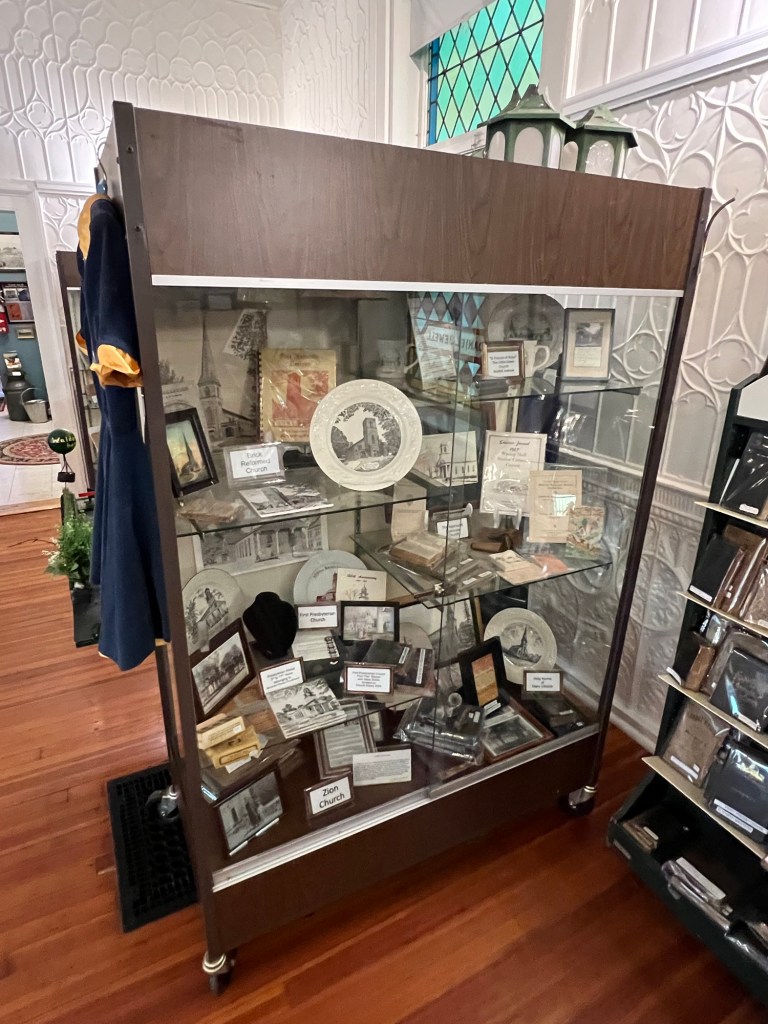
The display on the local church’s

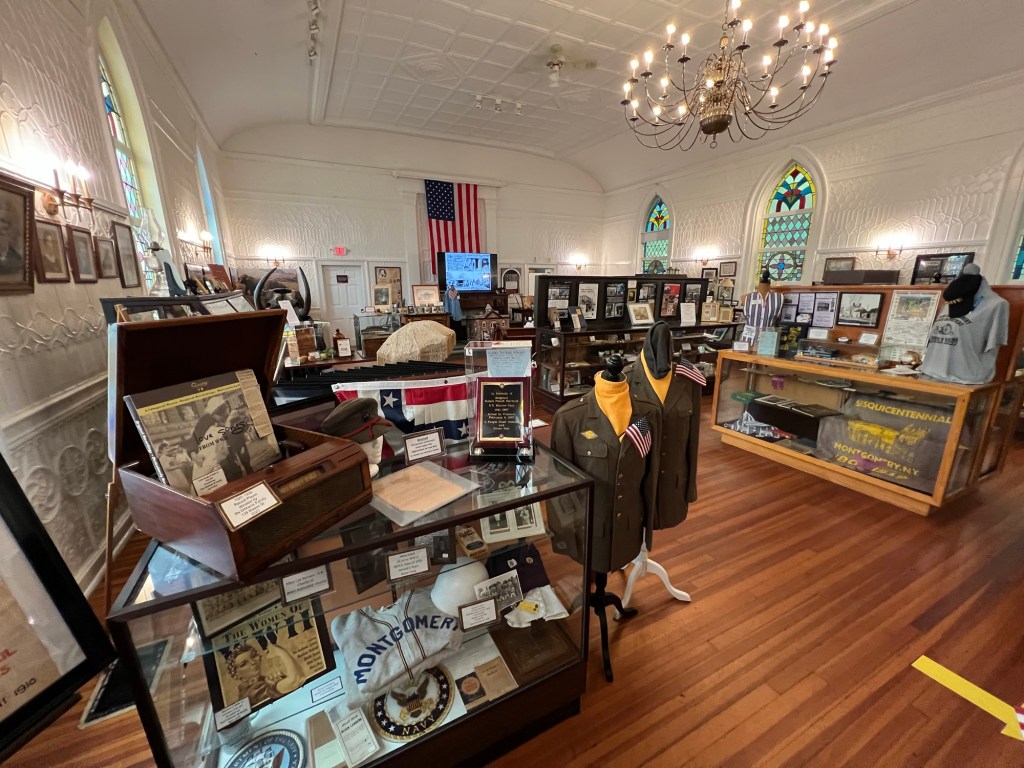
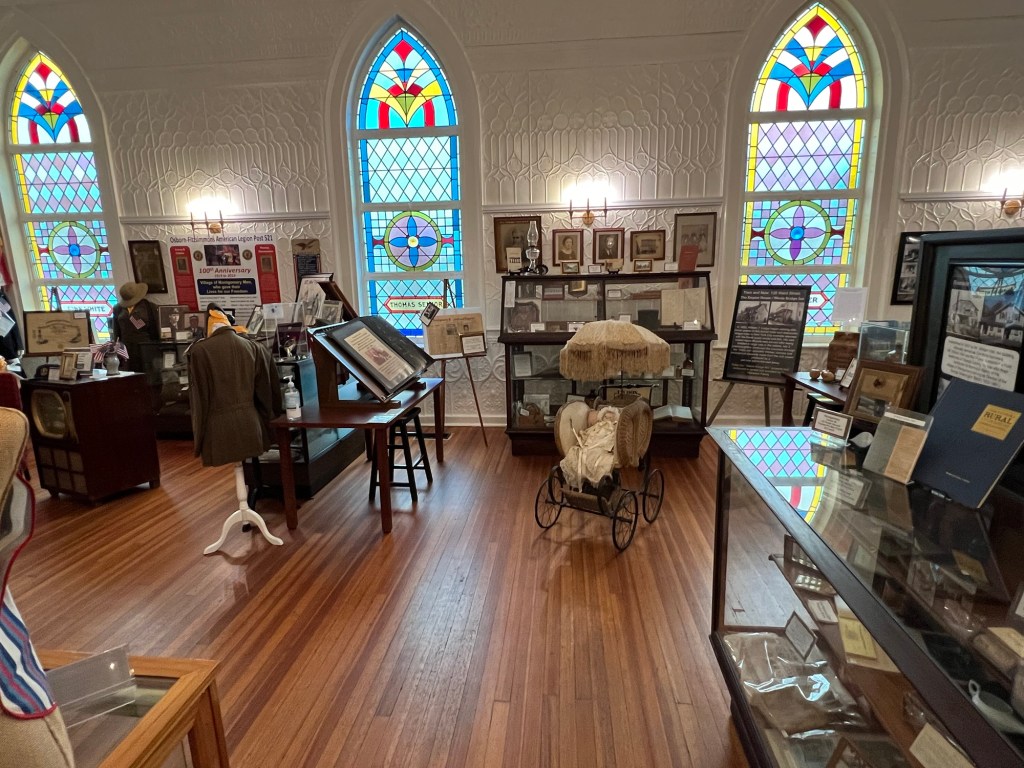
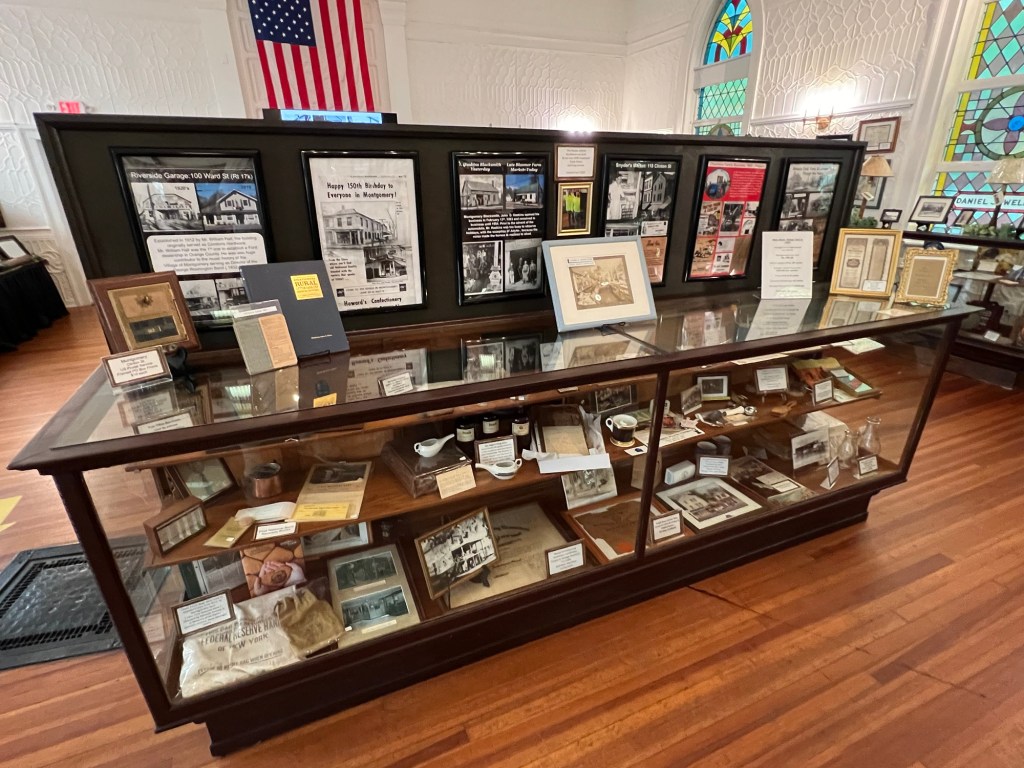
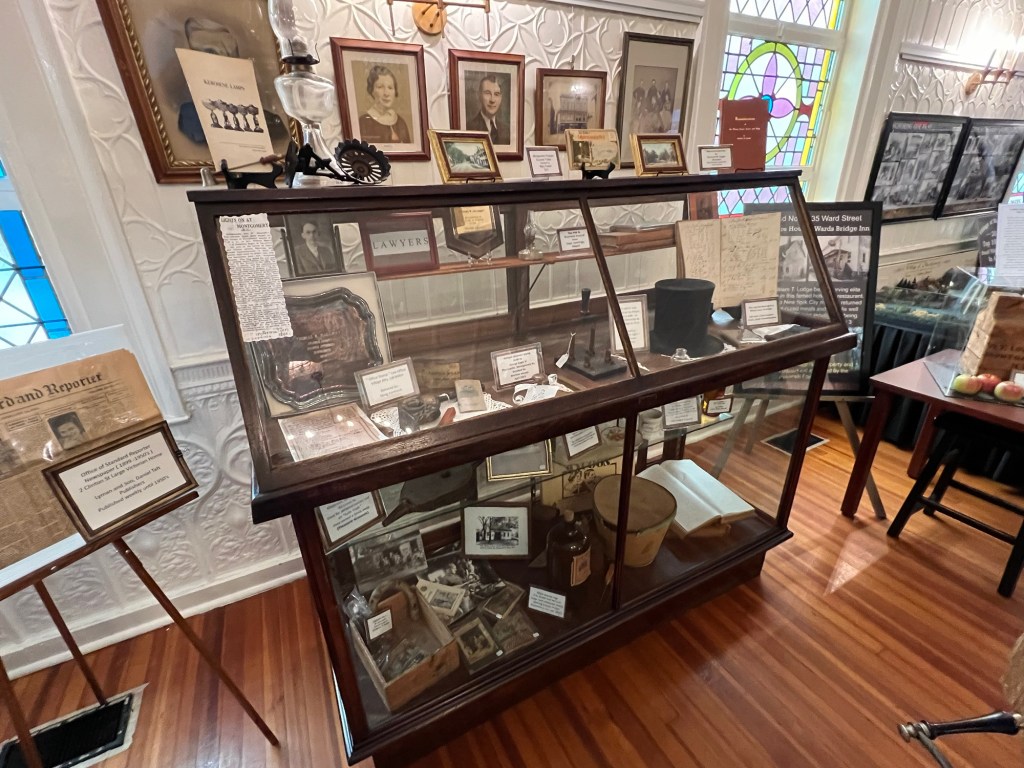
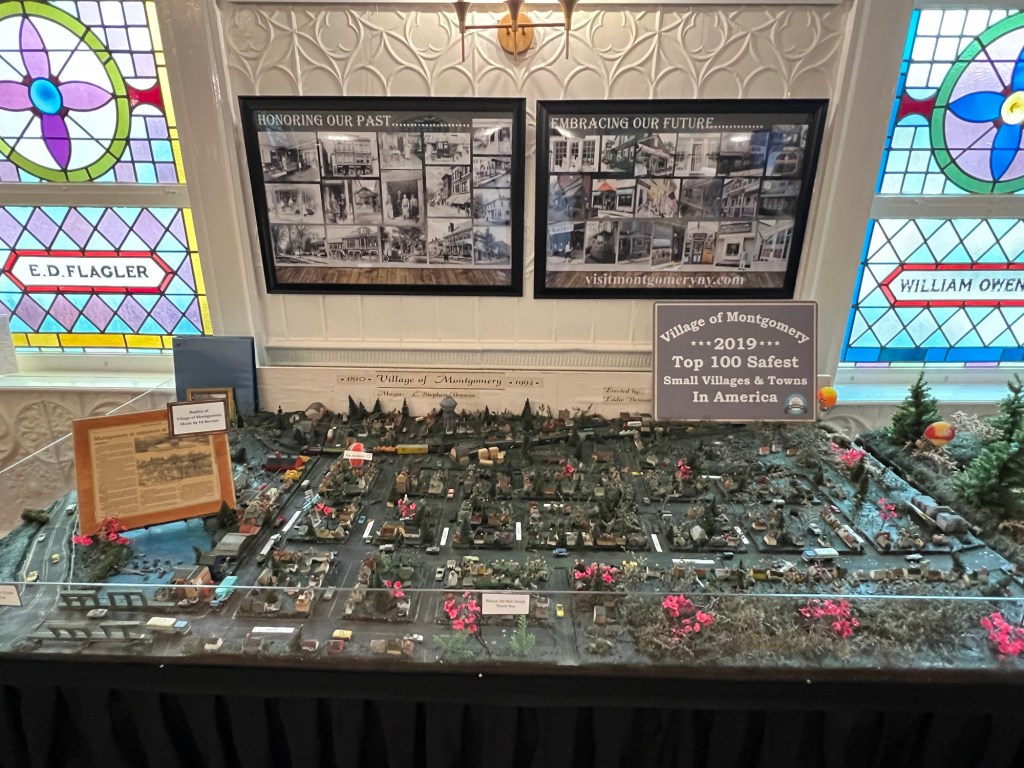
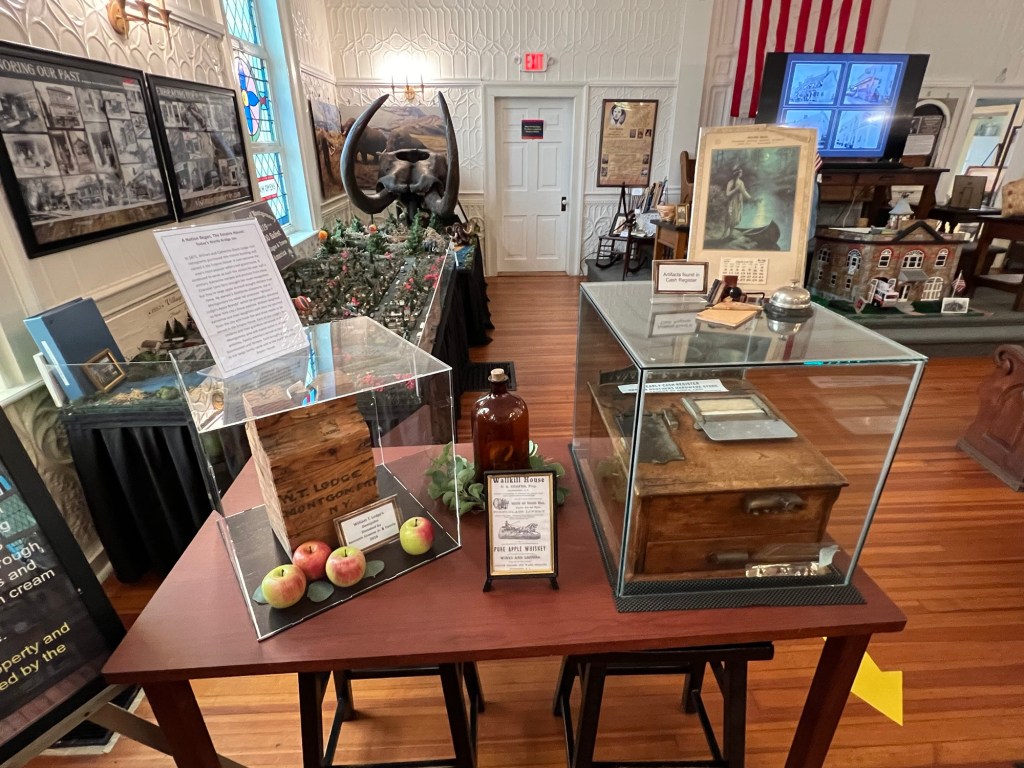
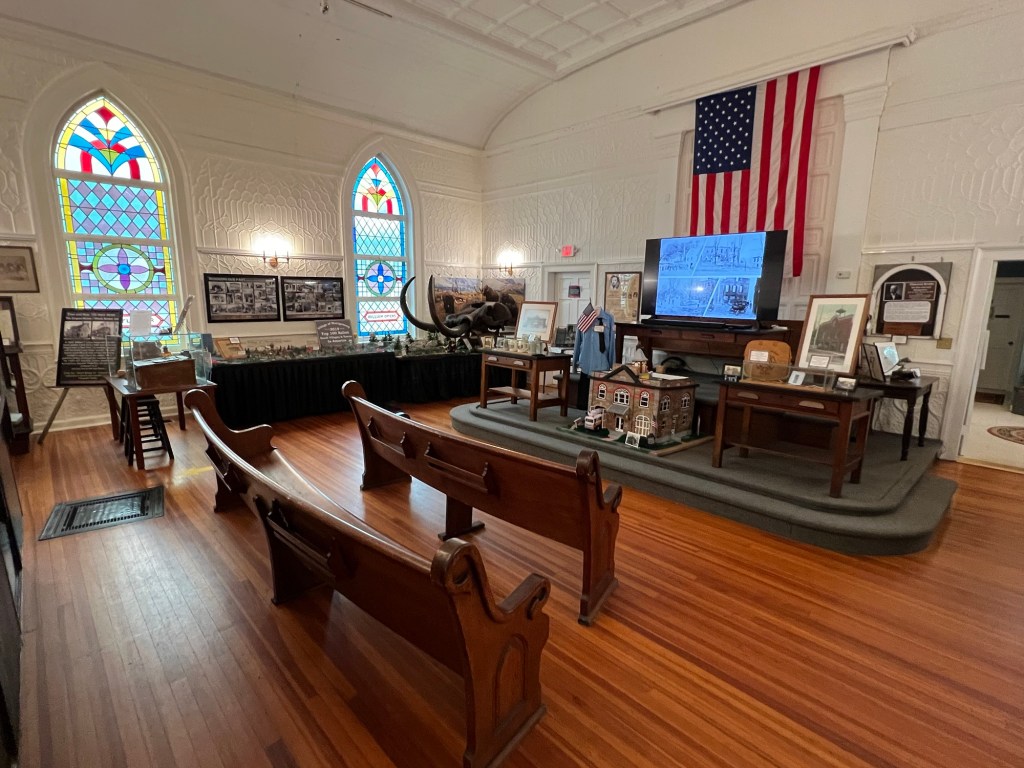
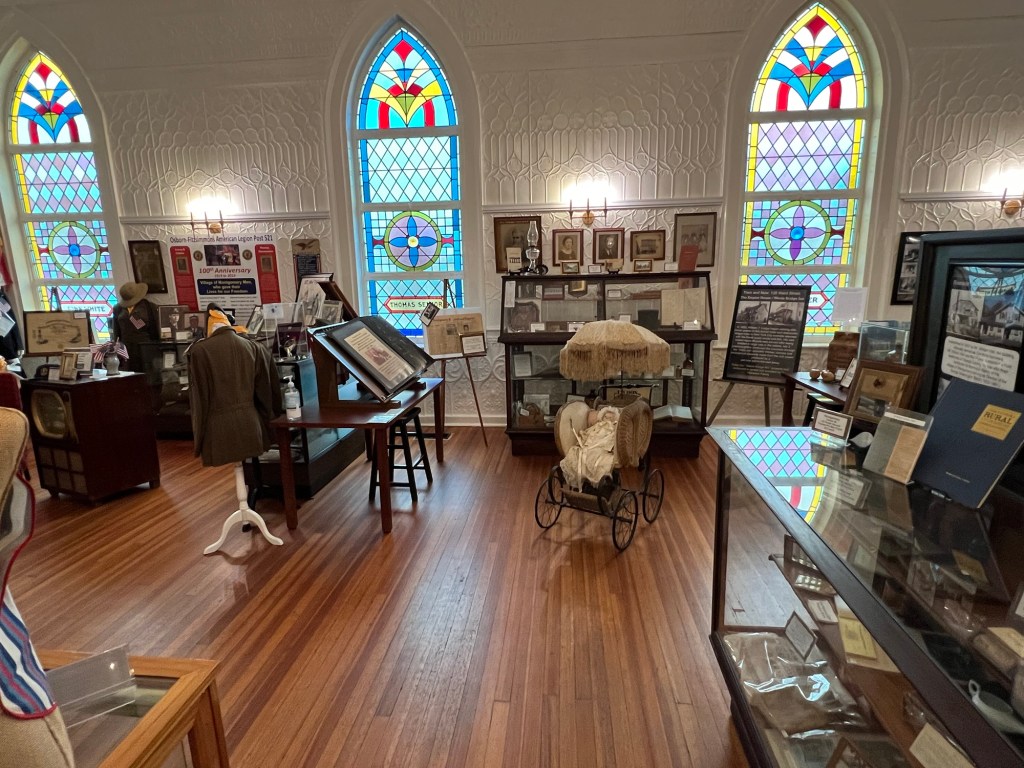
The Montgomery Village Museum in Montgomery, NY is a village run museum that tells of story of the town and its development. The museum of filled with wonderful displays of all aspects of the town. The history of the town is displayed in an organized way display by display with plenty of signage and docents to explain things to you if you want more information. You can tour the museum at your own pace.

The front gallery of the museum

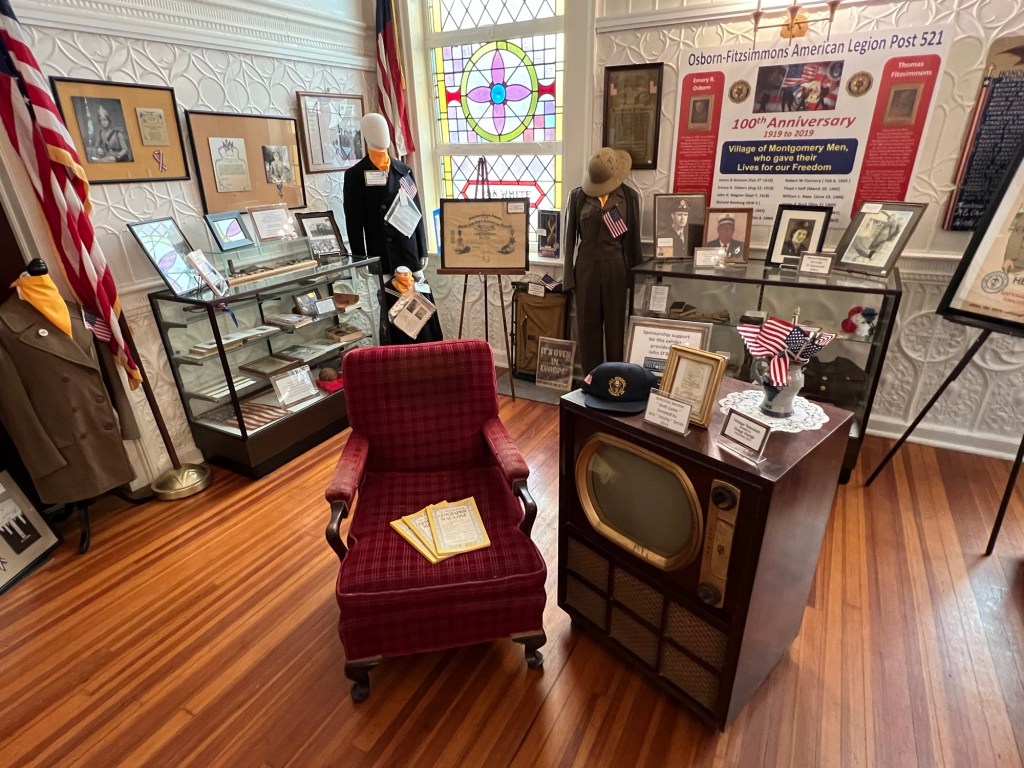
The front display of the Veterans and the VFW of the Village of Montgomery, NY

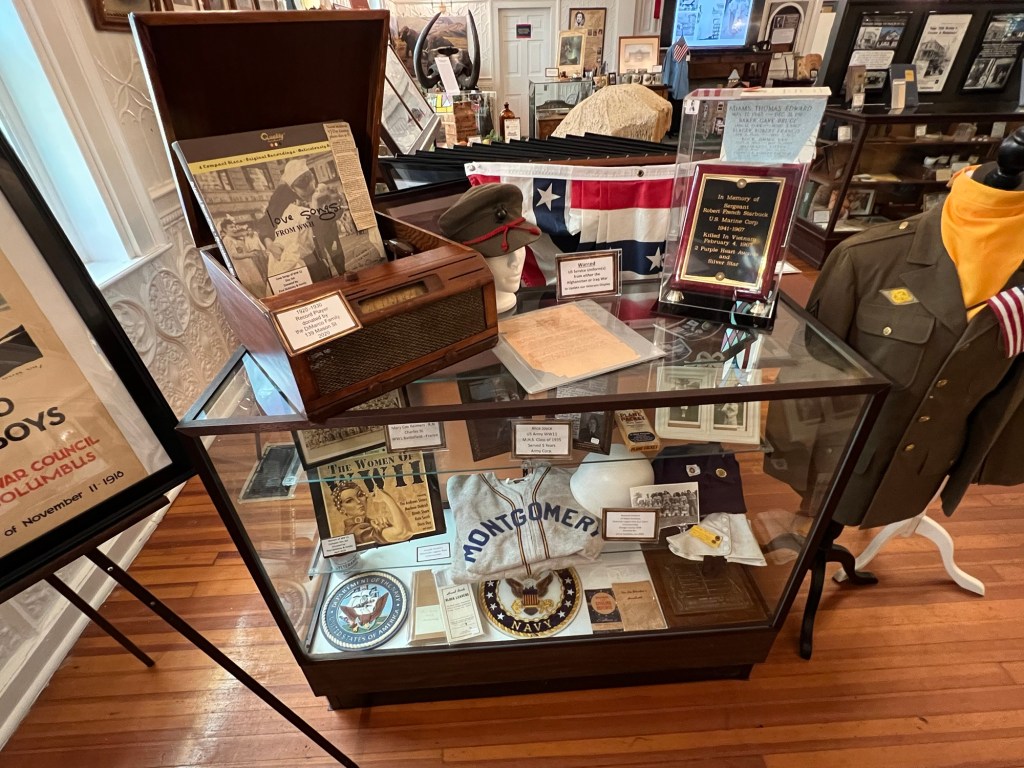
Display of Armed Forces memorabilia

The gallery of Town Council, Downtown merchants and Veterans items

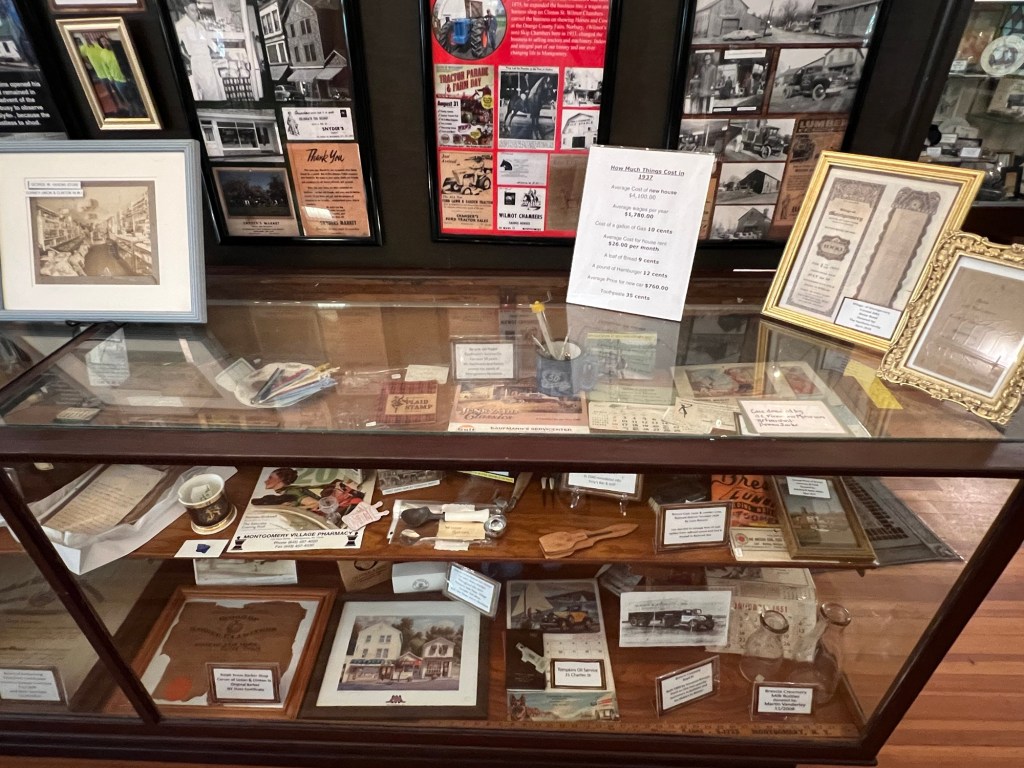
The Downtown Merchant’s display

Some of the local merchants have been in town for over a hundred years

The artifacts on the Town Council and the Chamber

The 100th Anniversary of the Town of Montgomery, NY shows a diagram of the town and its historical past

Some of the items of the rural home past

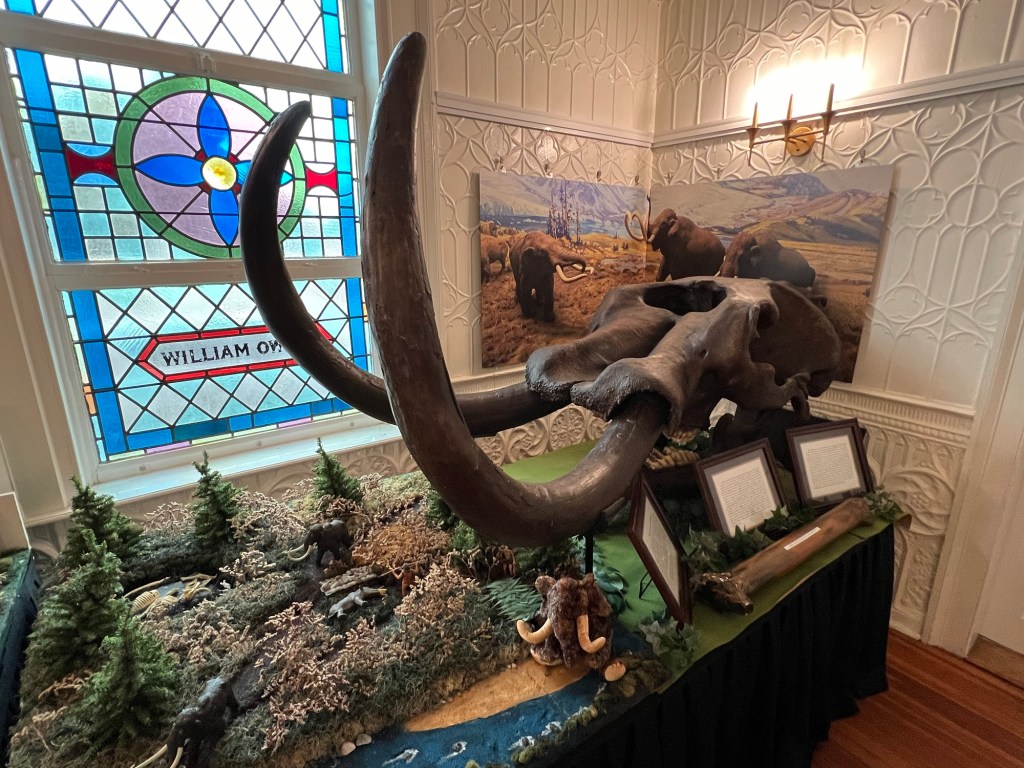
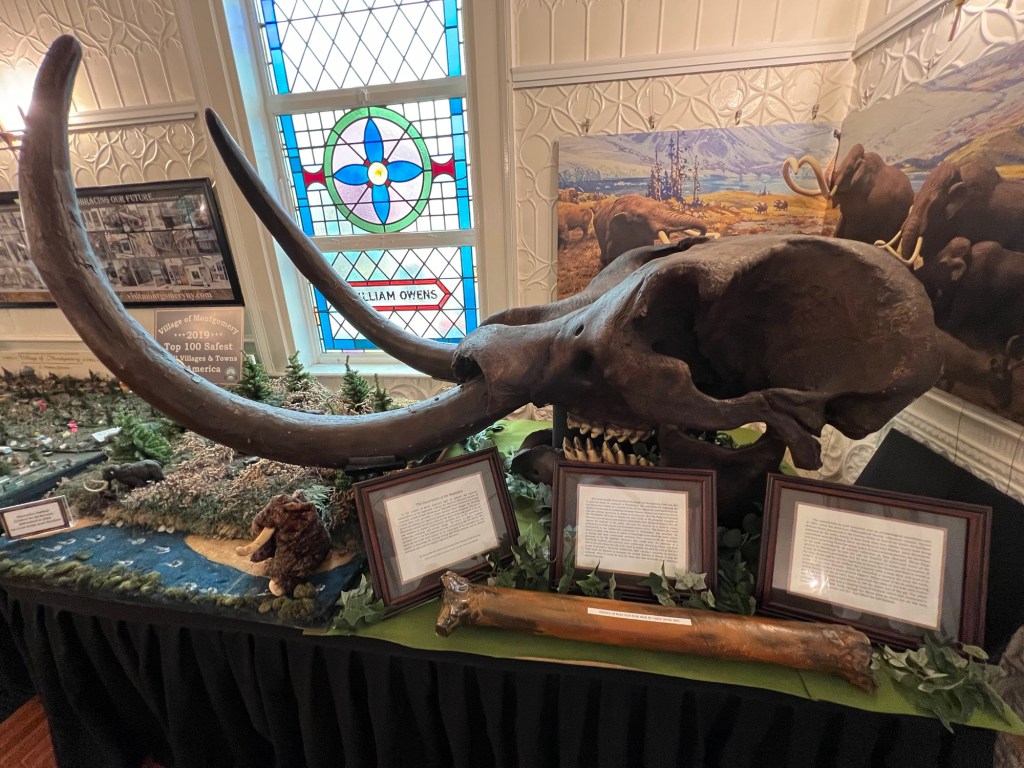
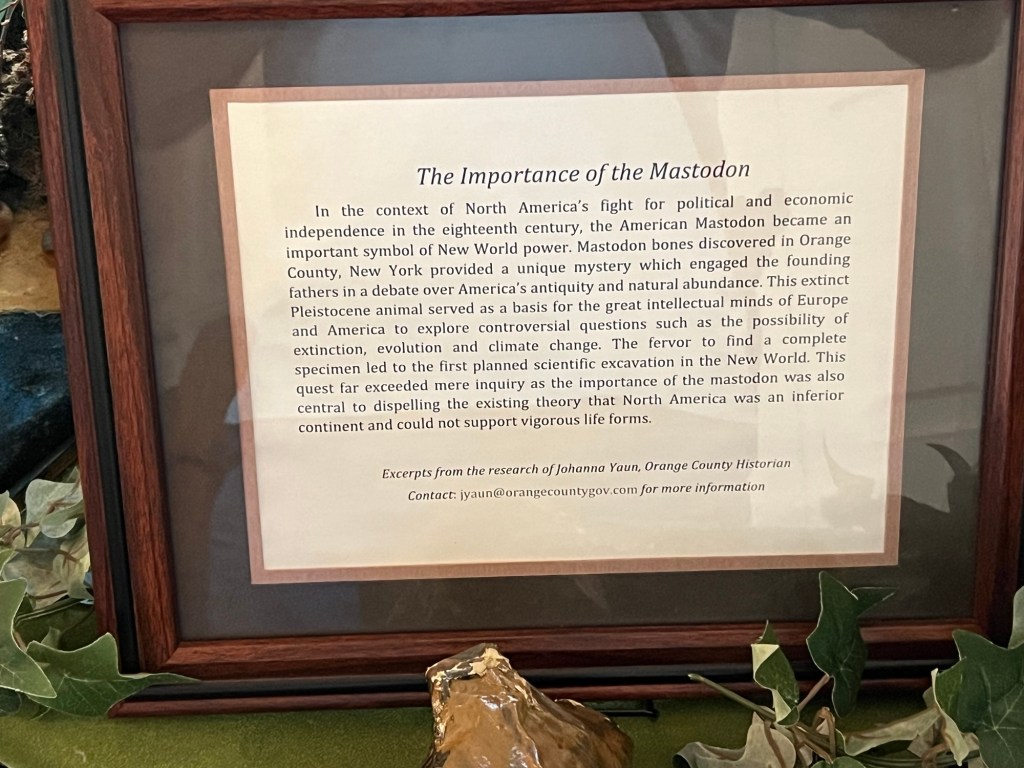
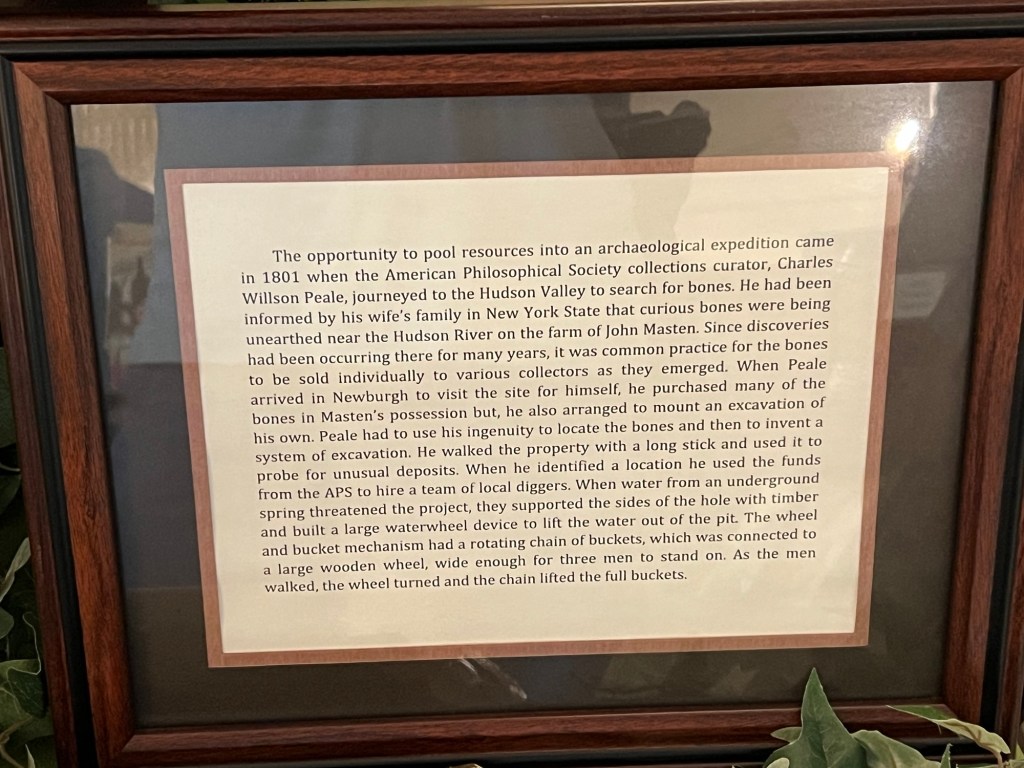
What I thought was interesting about the museum was the discovery of dinosaur bones in the area. The skull of a Mastodon and other bones were found in digs between here and Newburgh.

The Mastodon skull at the museum

The skull and bones and the site

The Importance of the Mastodon story

The write up on dinosaur bones

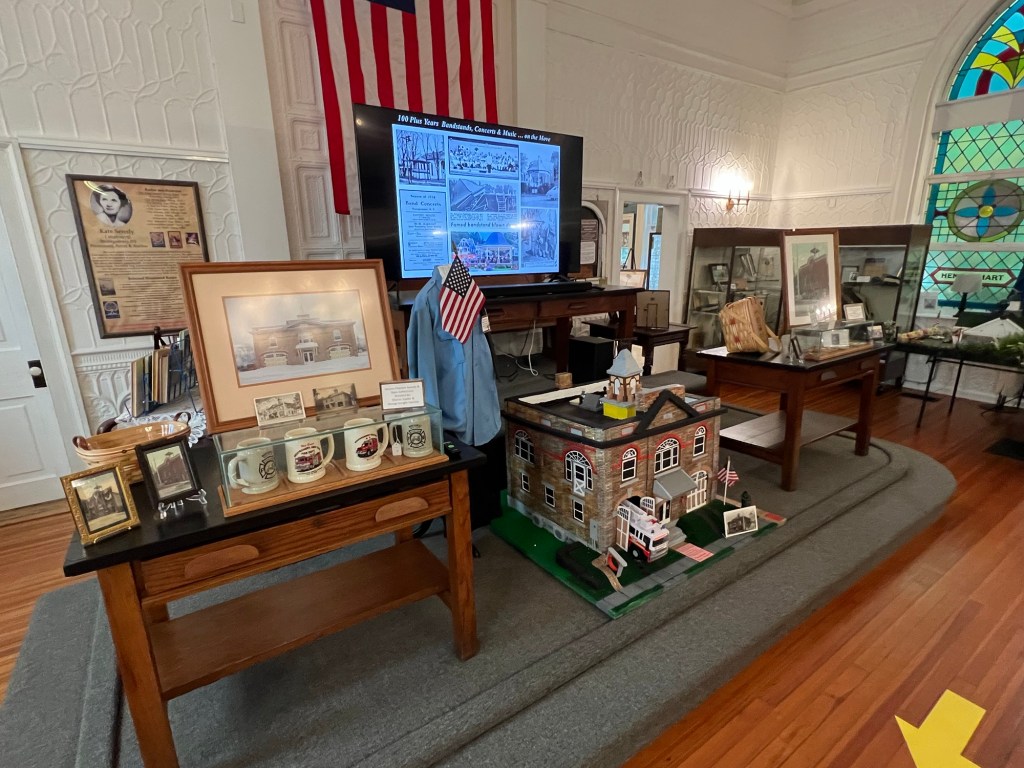
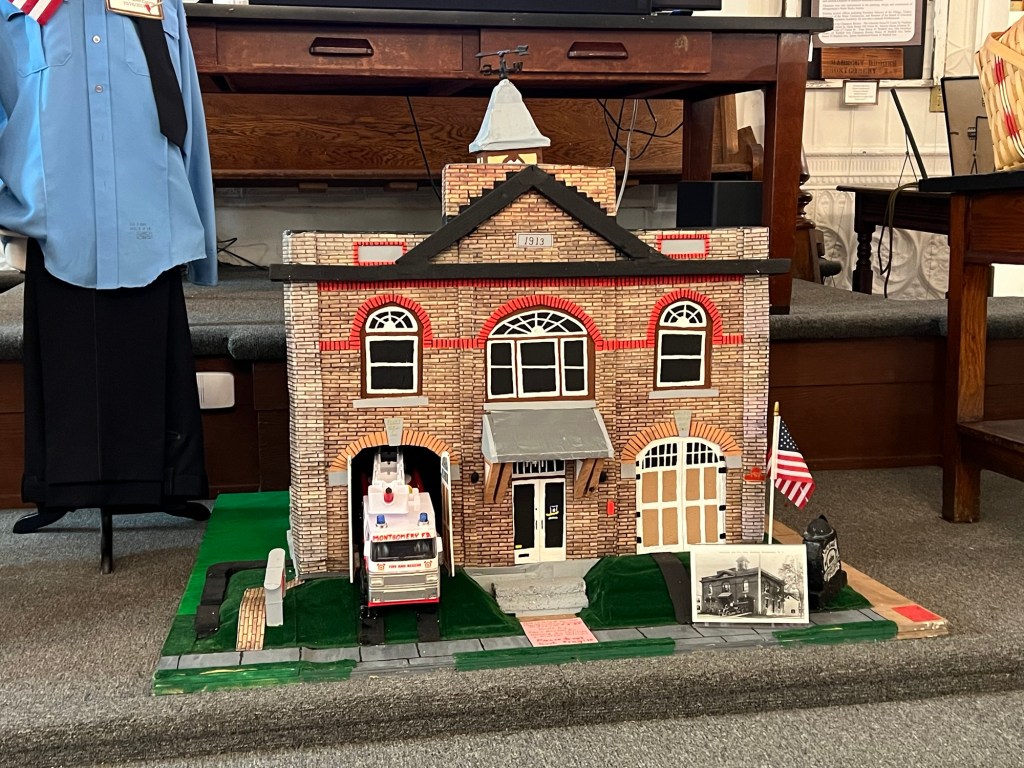
The display on the Montgomery Fire Department

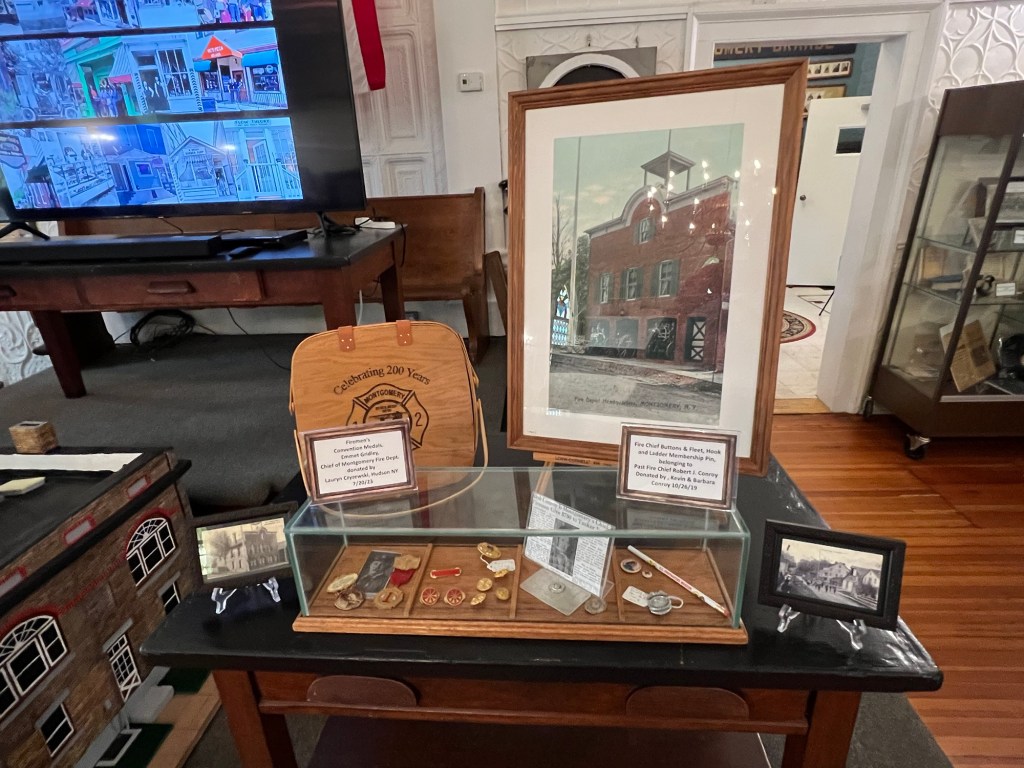
The museum has an extensive collection of items from the County Fire department telling its own story of the fire service in this community. The Orange County Firefighters Museum is right across the street with all the larger equipment and gear but here we get to see the pictures of the department over the years and some of the small artifacts.

Display on the Montgomery Fire Department

The display on the Montgomery Coronet Band display

The Textiles industry in Montgomery

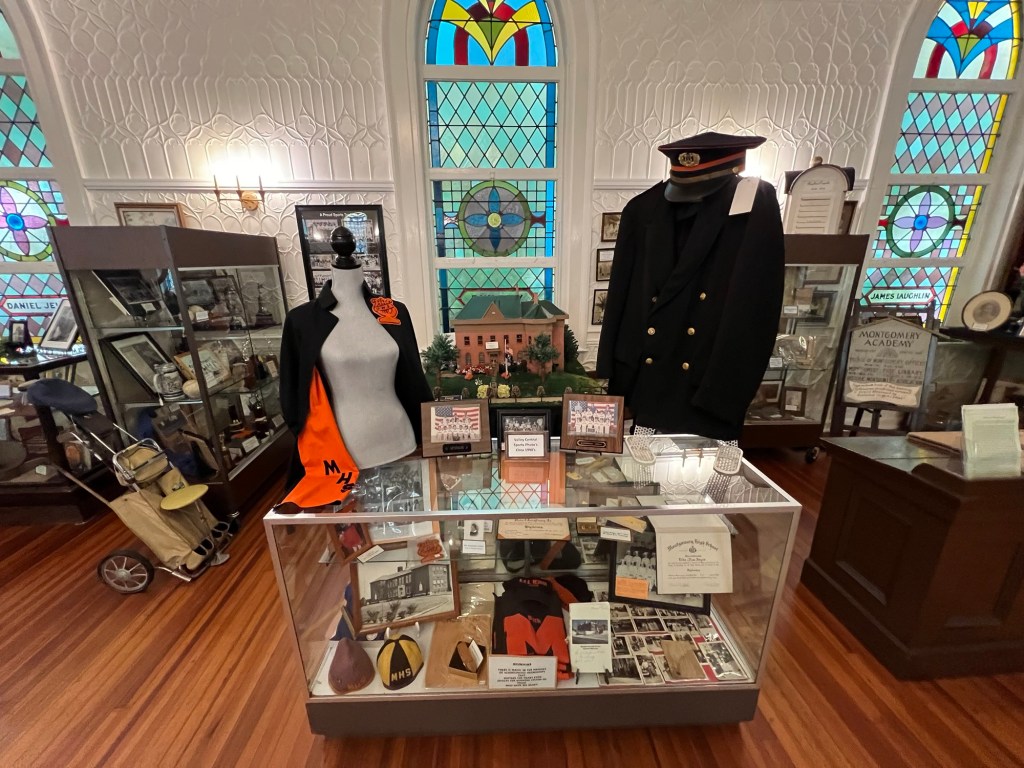
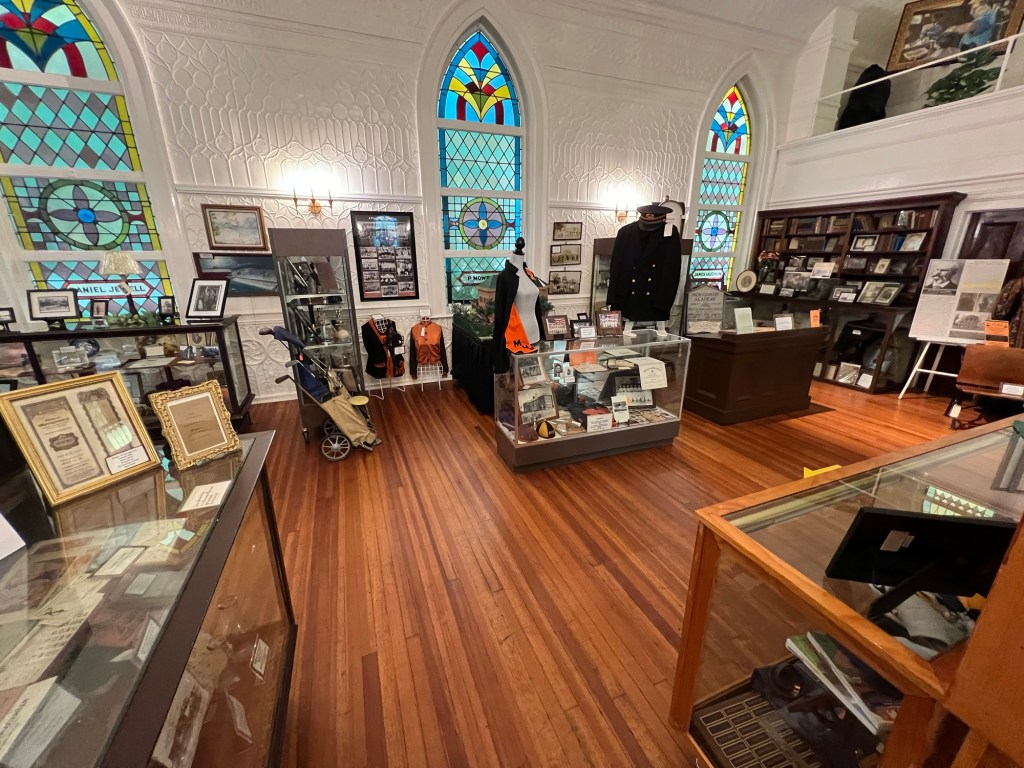
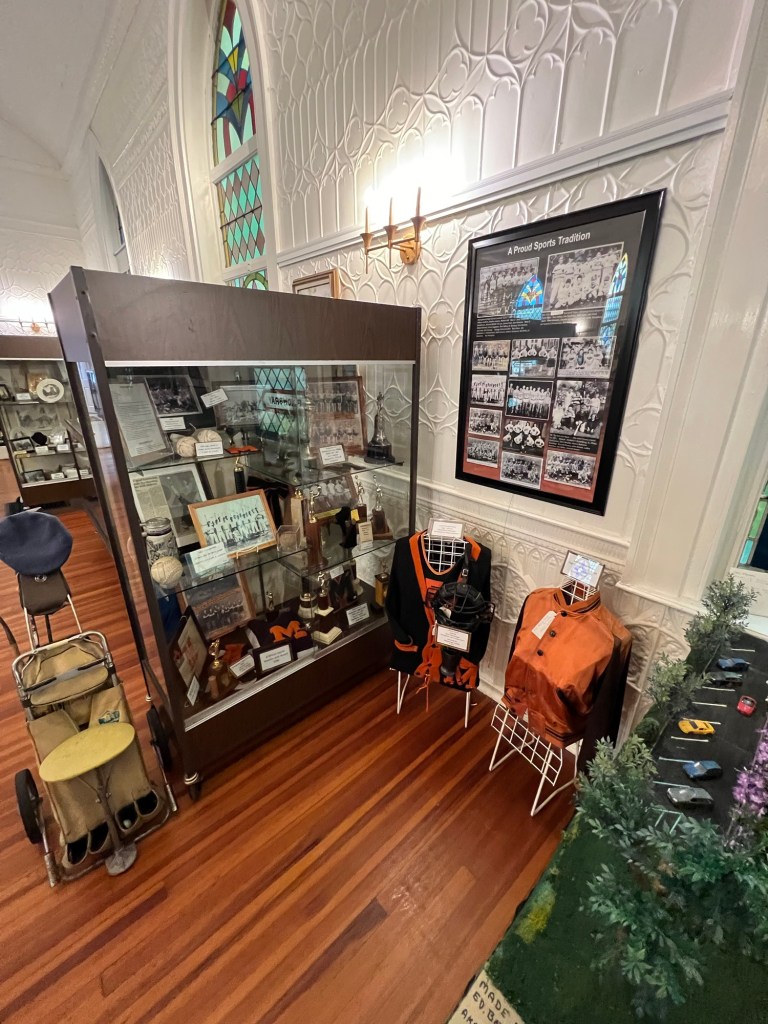
The display from Montgomery High School from sports to the marching band

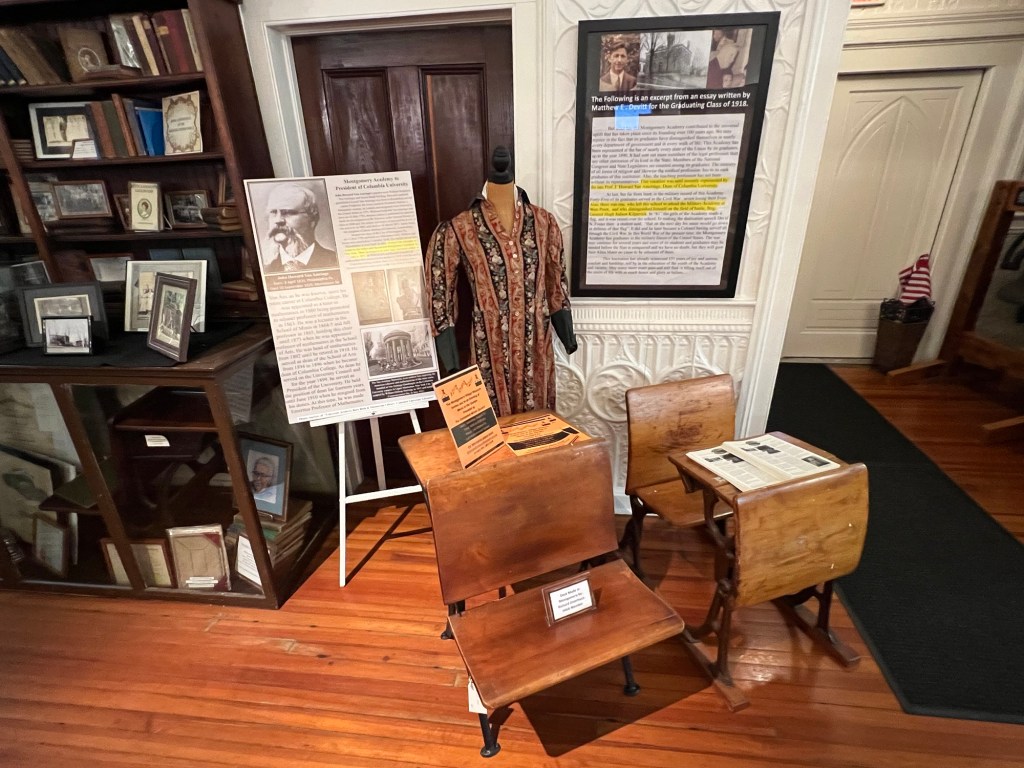
The museum has an extensive collection of memorabilia from Montgomery High School over the past one hundred years that include marching band and sports to the way the school teaches. It is amazing that in many ways it does not change much.

More artifacts from the schools

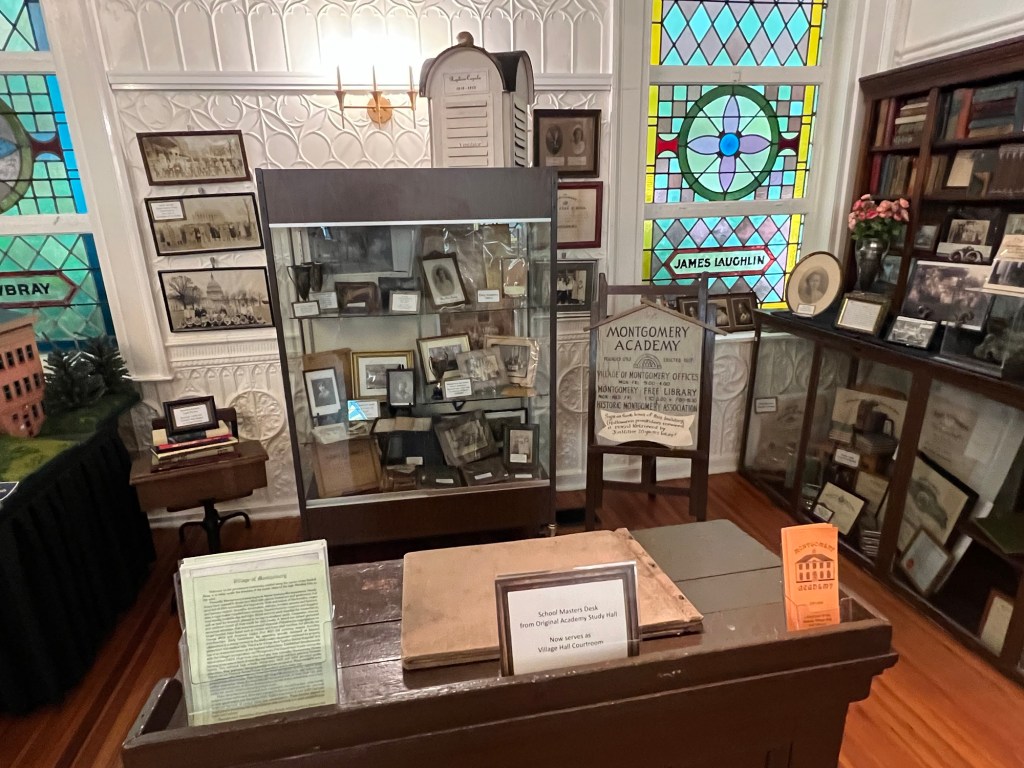
Displays of the schools and libraries in the county

The Montgomery High School band and sports

A old school house display

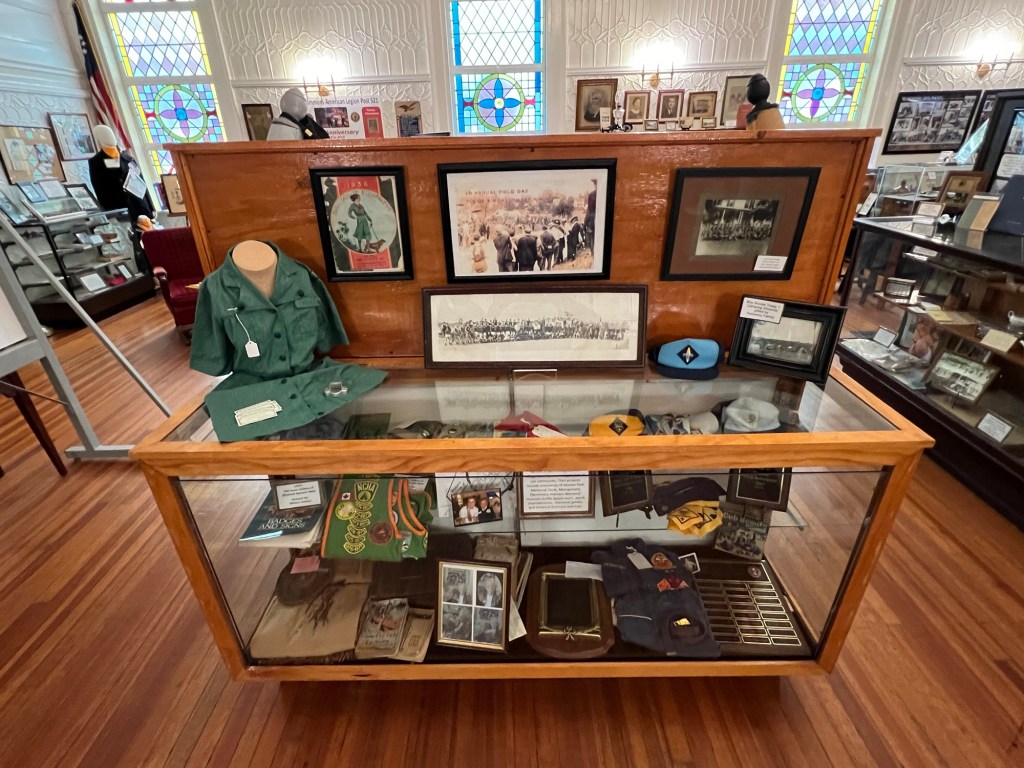
The Girl Scout and Boy Scout display

The original fire department display that sits across the street

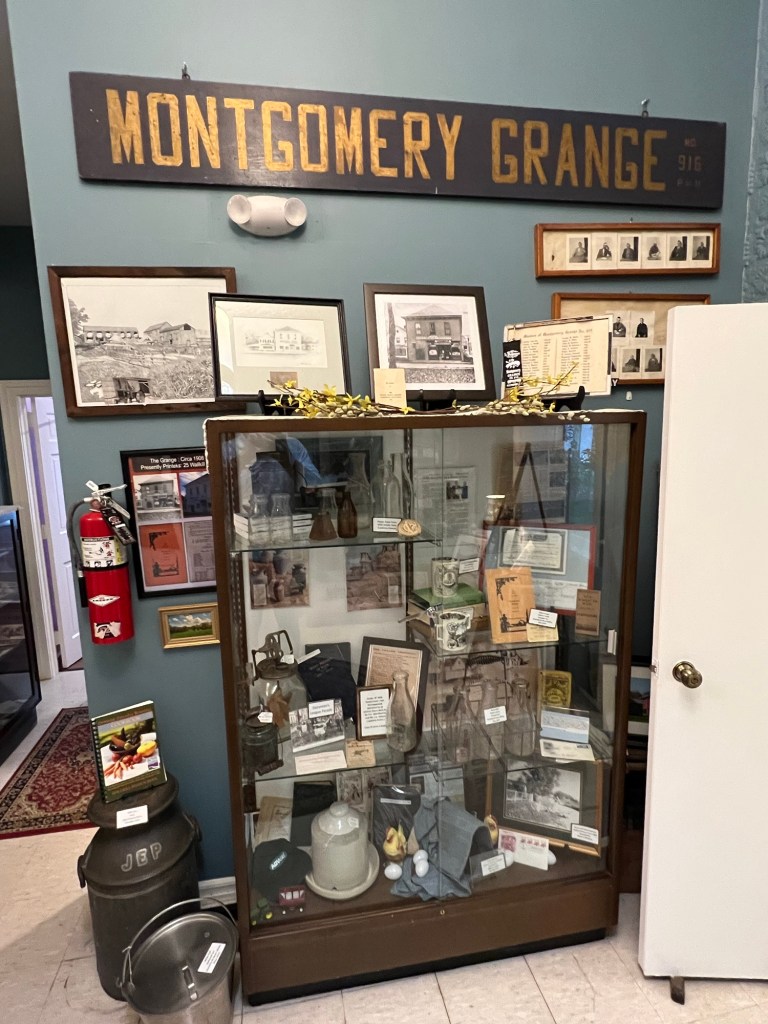
The Montgomery Grange display

The Picture Display of old photos of the past of the Village of Montgomery, NY

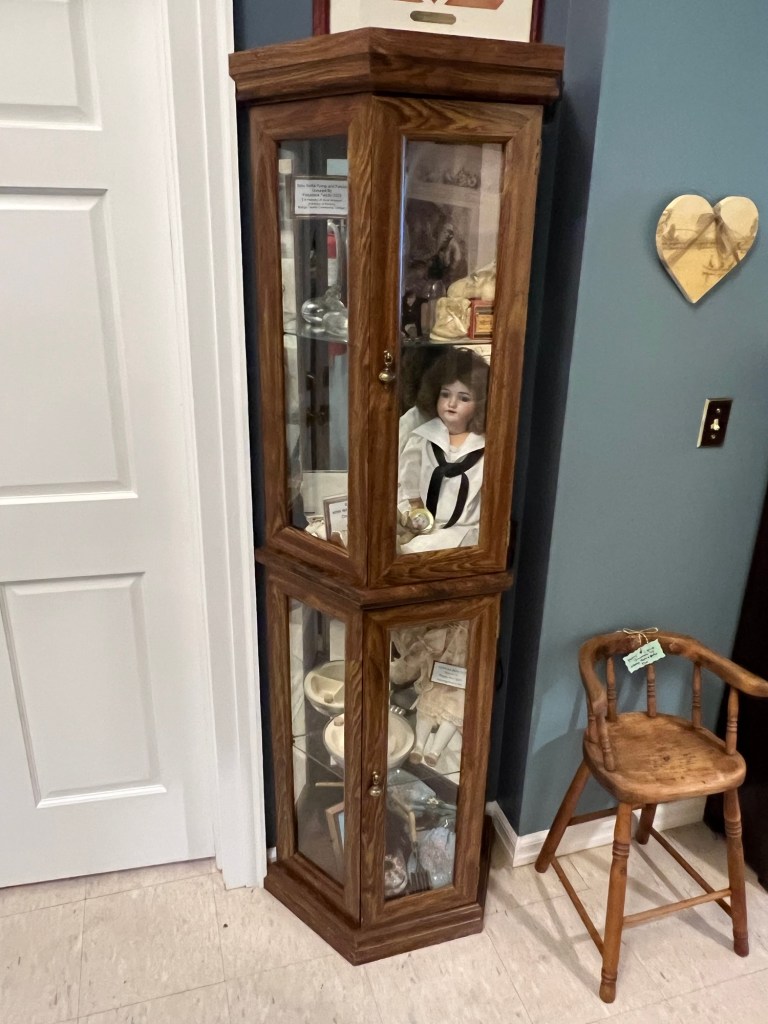
The Toy and Doll Display will delight any young child

The Art display in the back part of the museum

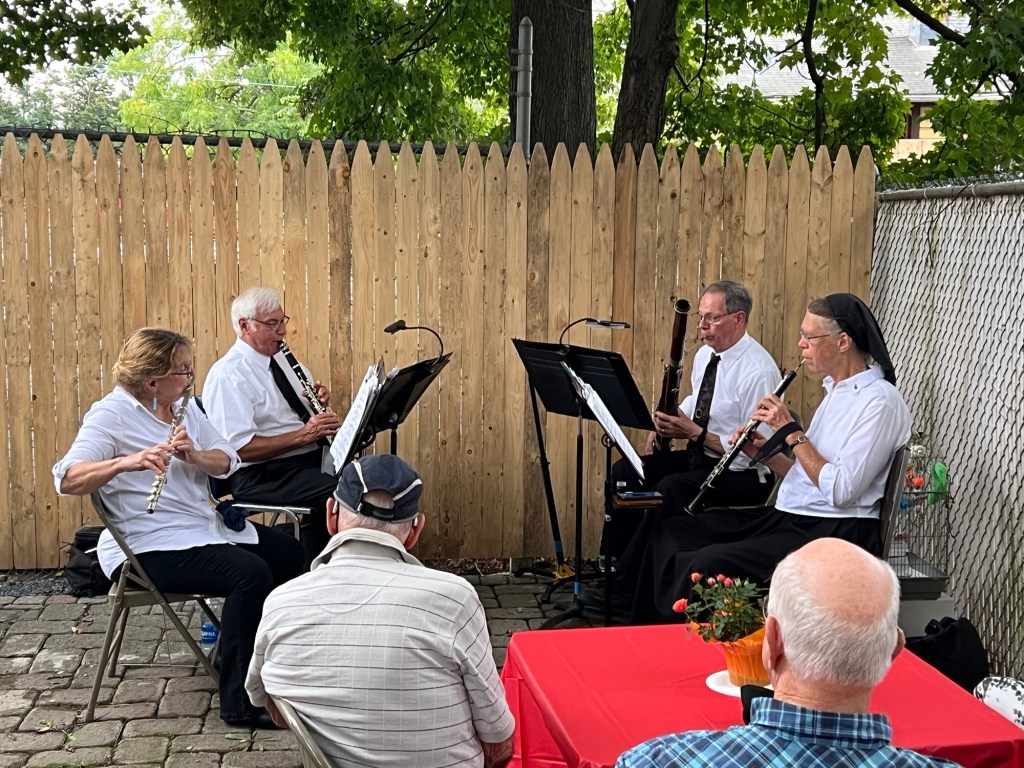
The afternoon I was at the museum, they had an outdoor concert in the garden of the museum. It was warm night so sitting outside enjoying the music was really nice.

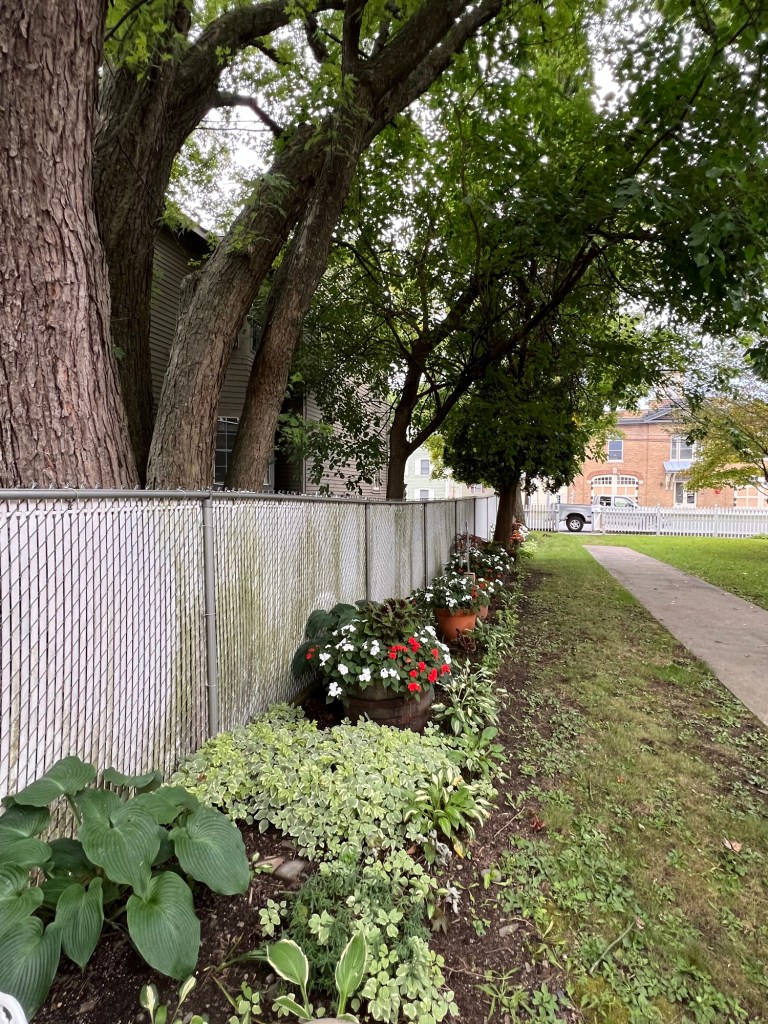
The museum’s well tended gardens

The gardens by the side of the museum

The gardens in bloom by the fence

The musical performance of the quartet

The video of the concert:

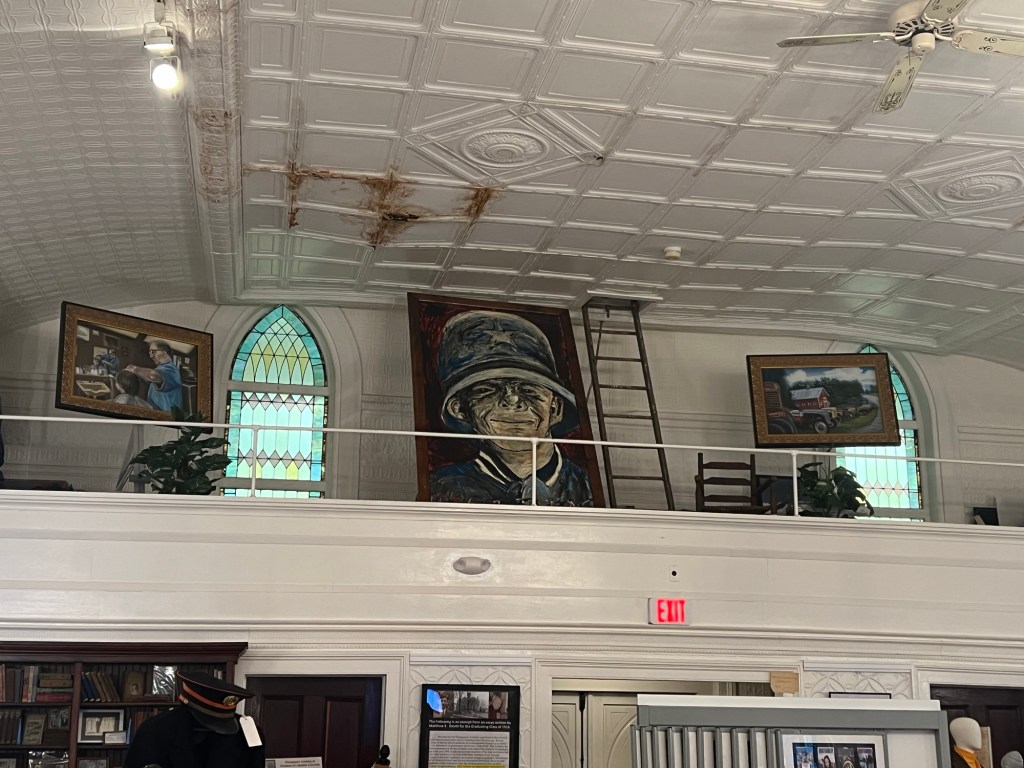
The large paintings above the front door as I was leaving that evening.

One last look at all the galleries at the museum gave me a glimpse of the extensive collection of artifacts at the museum and the story they tell of the community of Montgomery, NY.

The back gallery

The front gallery

The side gallery

For such a small museum, the displays really give an interesting look at the county and how it has progressed over the years. What have been new to us in the 1950’s, 60’s, 70’s , 80’s and forward has now become the past to newer generations. The Montgomery Village Museum tells that story in detail.

A visit here is a nice way to spend the afternoon. Then take a tour of Historic Montgomery, NY. There is a lot to do and see.

Exploring historic Downtown Montgomery, NY

Exploring historic Downtown Montgomery, NY

Dutchess County Historical Society                  6282 Route US 9                                                             Rhinebeck, NY 12572

Dutchess County Historical Society 6282 Route US 9 Rhinebeck, NY 12572

Dutchess County Historical Society

6282 US-Route 9

Rhinebeck, NY 12572

(845) 471-1630

https://www.facebook.com/DCHSNY/

Open: Sunday-Monday Closed/Tuesday-Thursday 10:00am-3:00pm/Friday-Saturday Closed

Admission: Free but donations are accepted

My review on TripAdvisor:

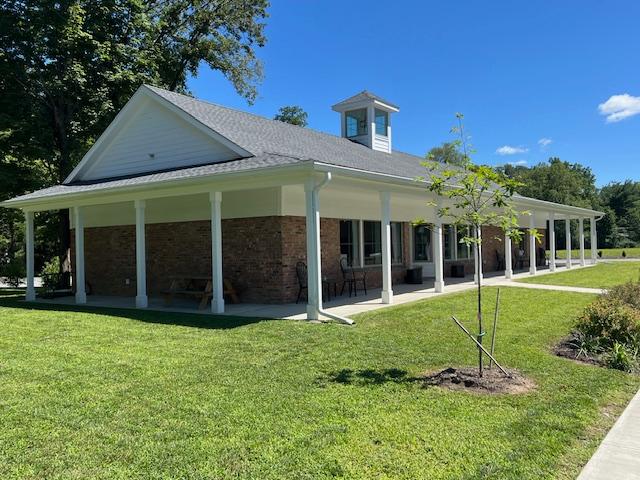
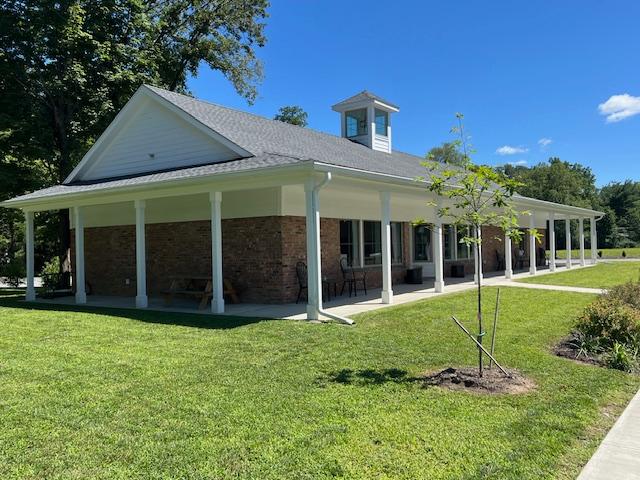
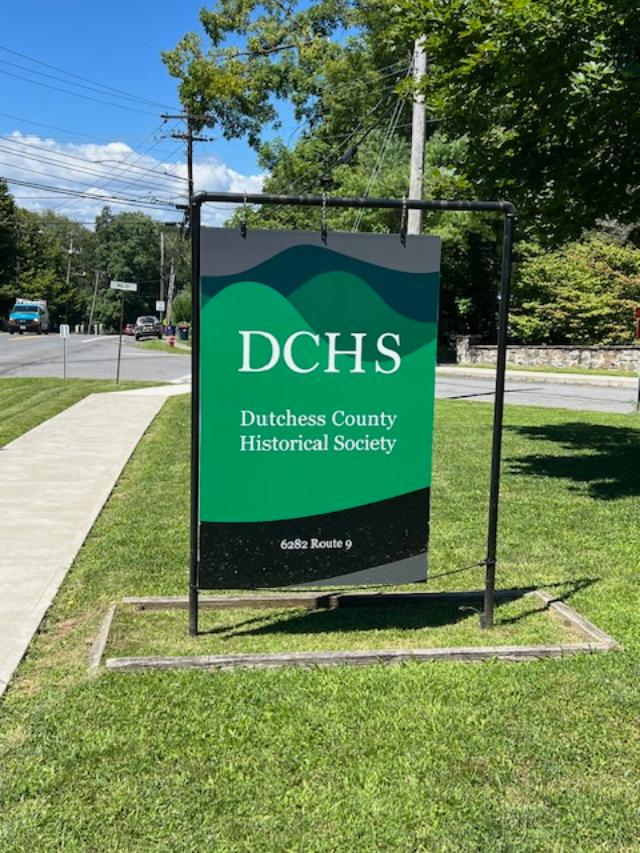
The Dutchess County Historical Society at 6282 Route US 9 in Rhinebeck, NY

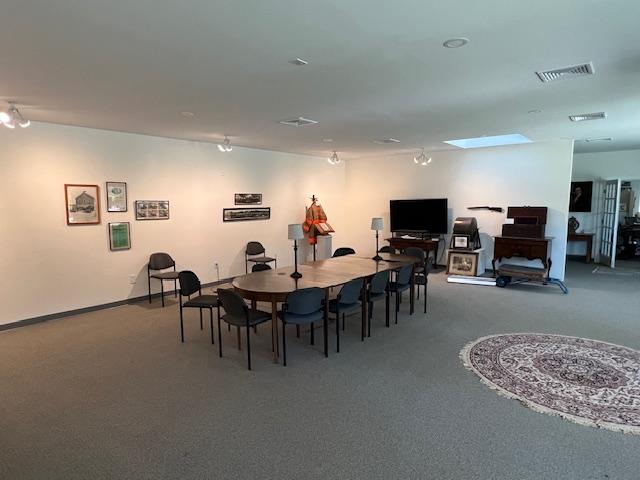
I recently visited the new Dutchess County Historical Society in Rhinebeck from its old home in Downtown Poughkeepsie. The new museum has a light and airy feel about it with new exhibitions being mounted and a new library being set up for research. The museum just opened for viewing so it is still in its early stages for displaying artifacts.

The Dutchess County Historical Society

The Main Gallery at the museum

The Mission of the Dutchess County Historical Society:

The Dutchess County Historical Society is committed to being the most meaningful source of Dutchess County history, a commitment in place since its 1914 founding.

We do this through the responsible archival stewardship of tangible objects and the energetic interpretation and presentation of local history to the public.

We are proud to be known for our community outreach through a wide range of publications, awards, exhibits, programs, talks, writings, videos and oral histories.

Online and traditional exhibitions, lectures, awards, conferences and special presentations round out Dutchess County Historical Society programming for members and our local communities.

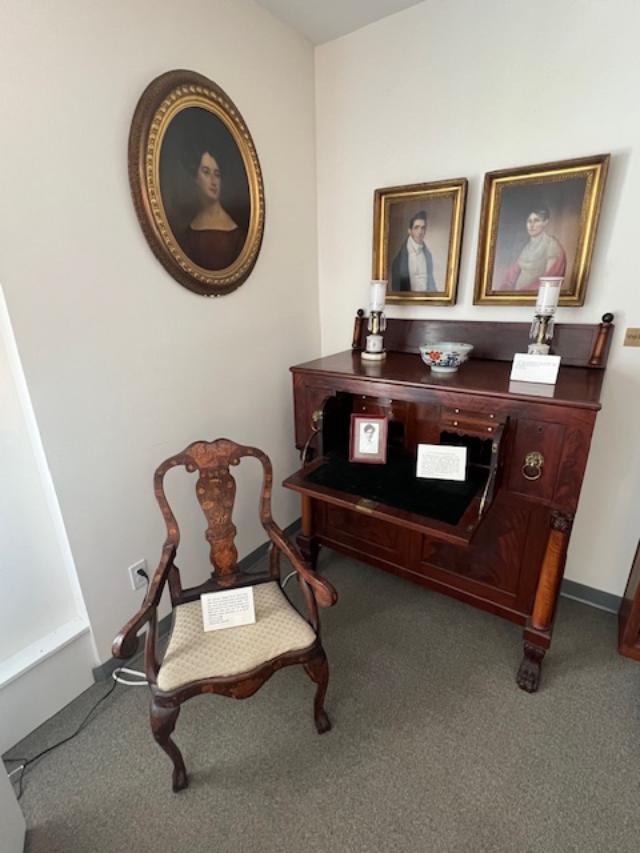
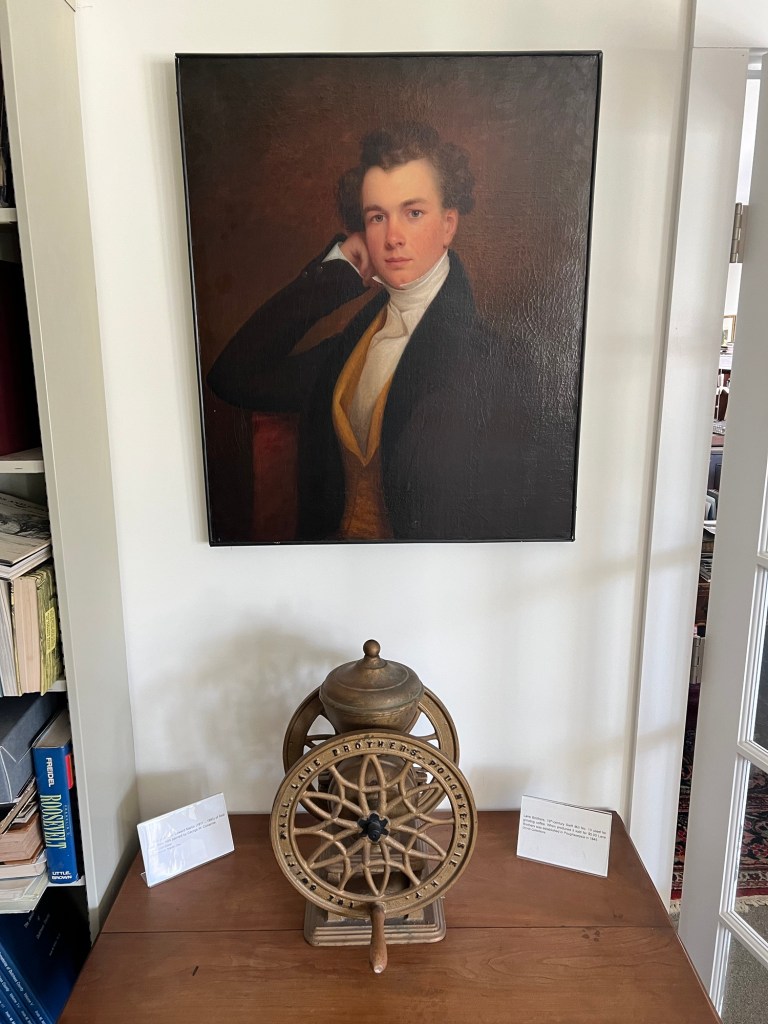
Portraits of local residents and antique furniture

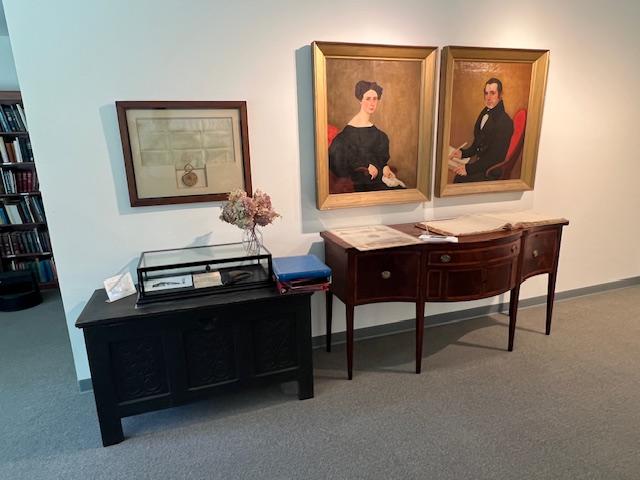
Some of the new permanent collection on display are family portraits, antique furniture, historic documents and local artifacts from towns all over Dutchess County. Much of these items were donated by the families that live in the area.

The portraits of local residents and historical documents in the collection

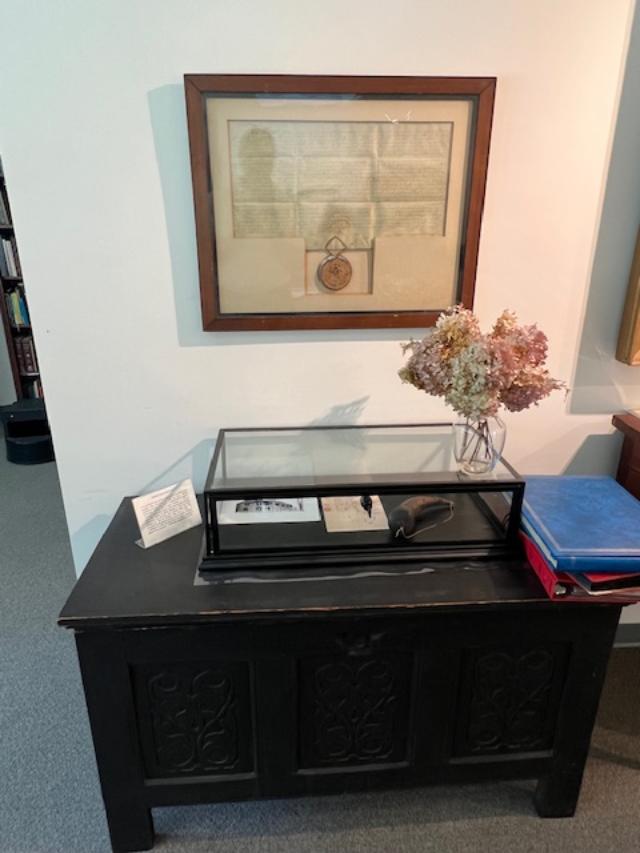
Historical Documents of Dutchess County with the original seals

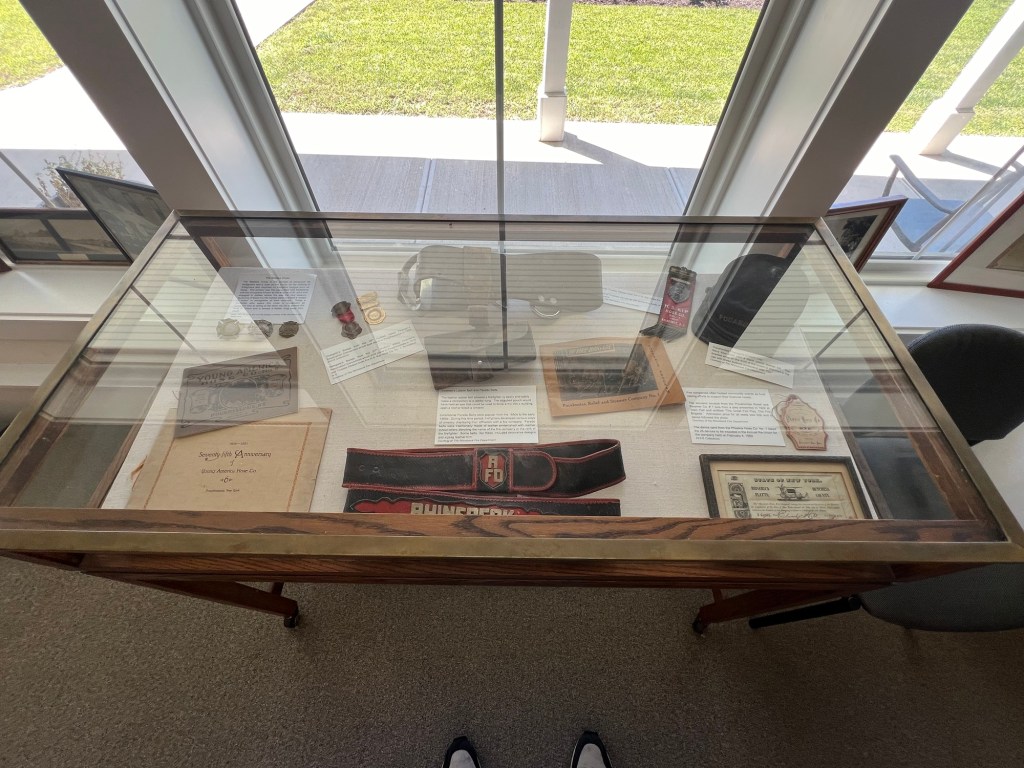
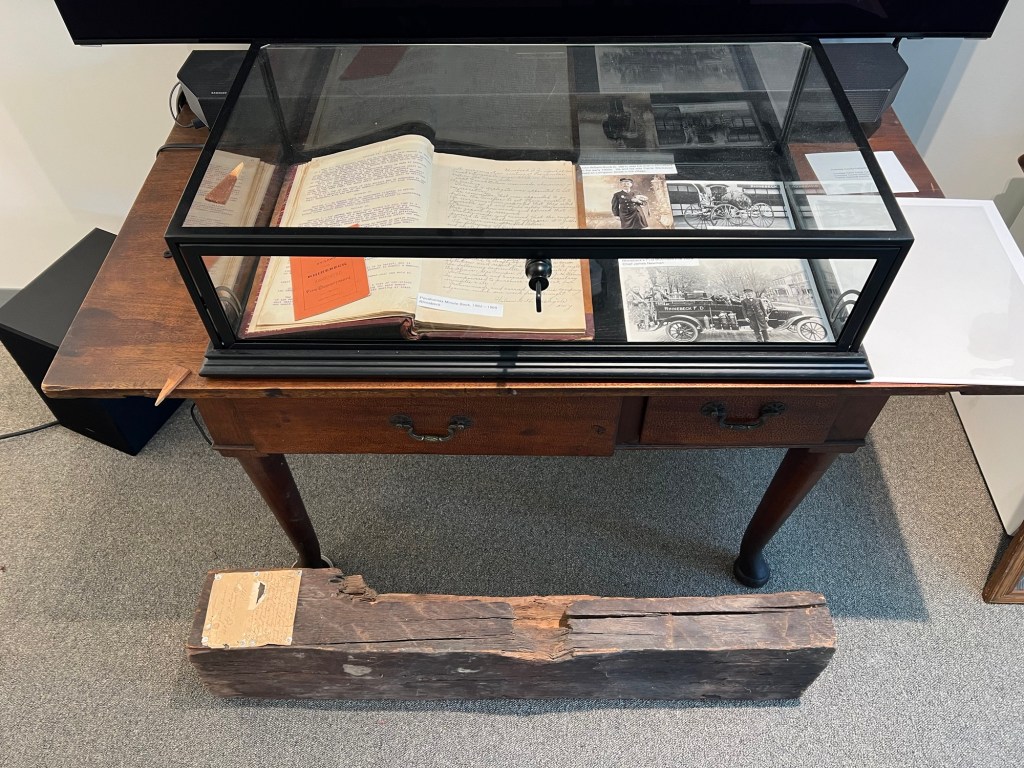
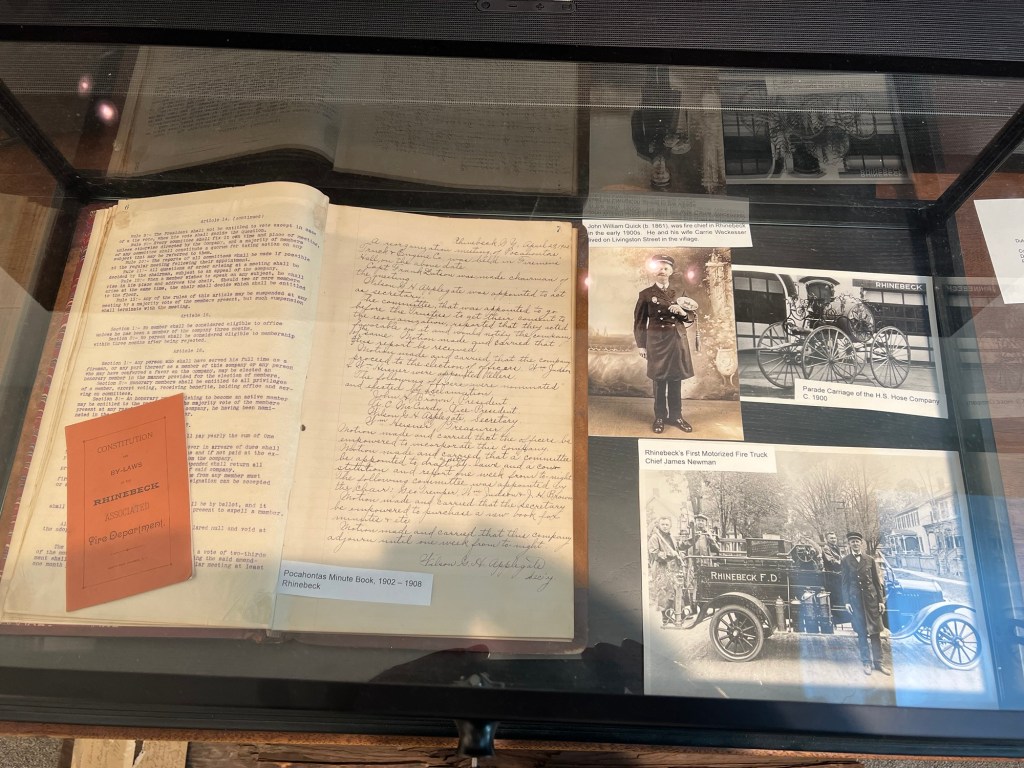
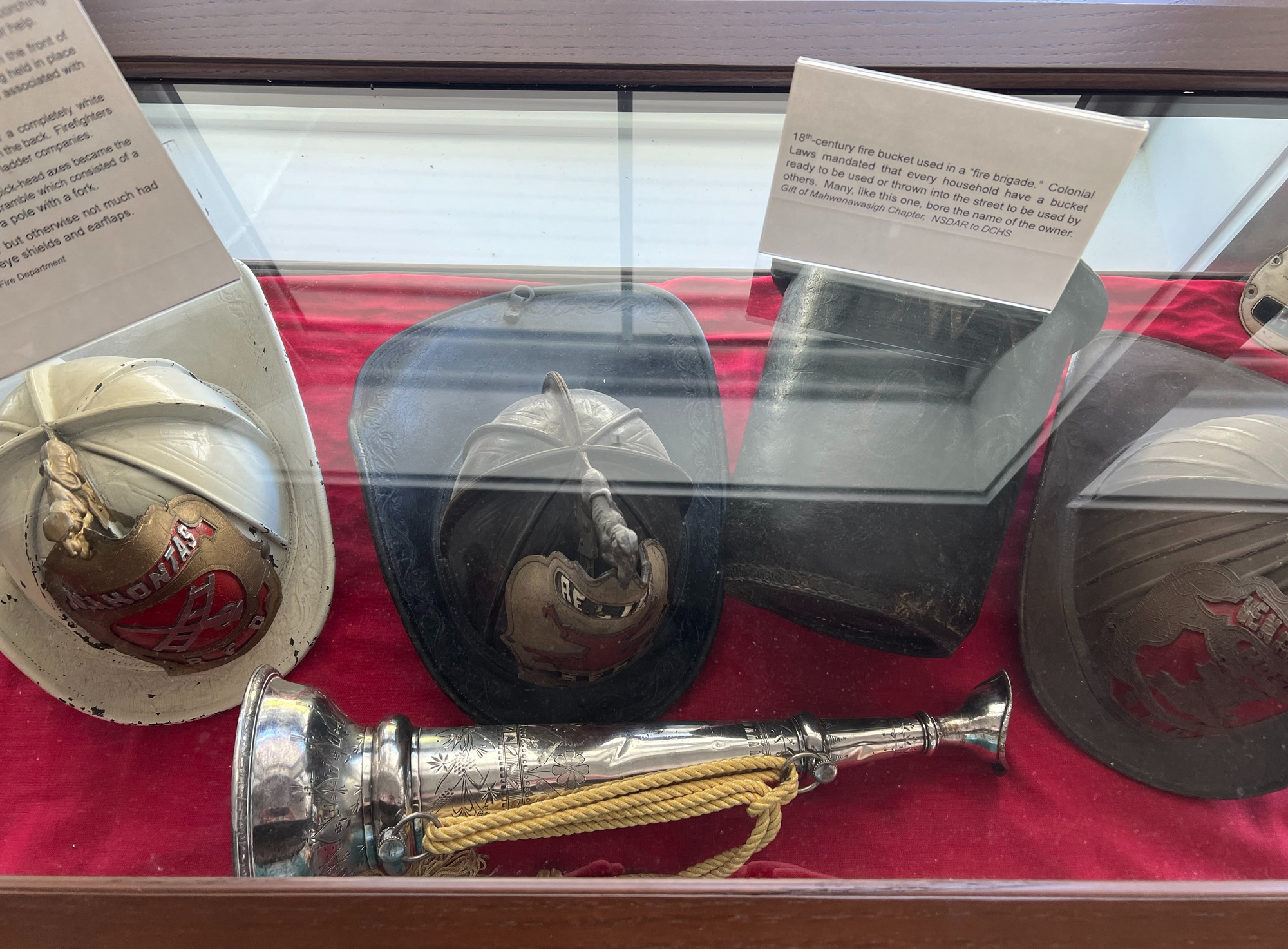
The first exhibition that is being mounted in partnership with the Rhinebeck Fire Department is the history of the fire service in Dutchess County. Since part of the exhibition was being moved to the new fire museum at the Dutchess County Fair Grounds for the upcoming Dutchess County Fair, I got to see only a portion of it at the museum.

The exhibition “The History of the Dutchess County Fire Service”:

The exhibition shows the progression and growth of the fire service in Dutchess County since the time the Dutch lived in this region. The collection reflects the direction of these departments since the end of the Civil War and how much and how little the equipment has changed.

Fire department artifacts including documents and equipment

Fire service pictures and documents and a beam from Henry Livingston’s mansion that got shelled by the British (this sits below the display case)
The pictures and documents on display

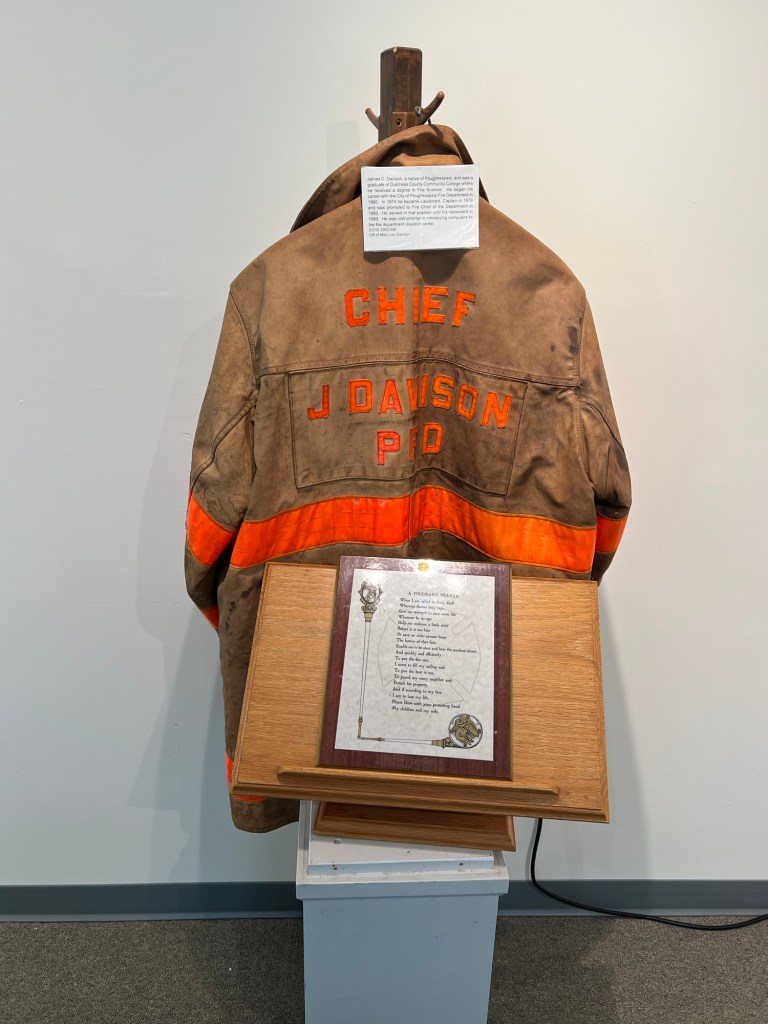
Fire Department jacket

Helmets and trumpets used by fire departments in the past

What was interesting about the exhibit was the depth of items of the past that each firefighting and the story they tell.

The Permanent Collection:

The remaining displays along the walls of the museum as set up continues tell the story of Dutchess Counties past and the families that lived here.

Family heirlooms

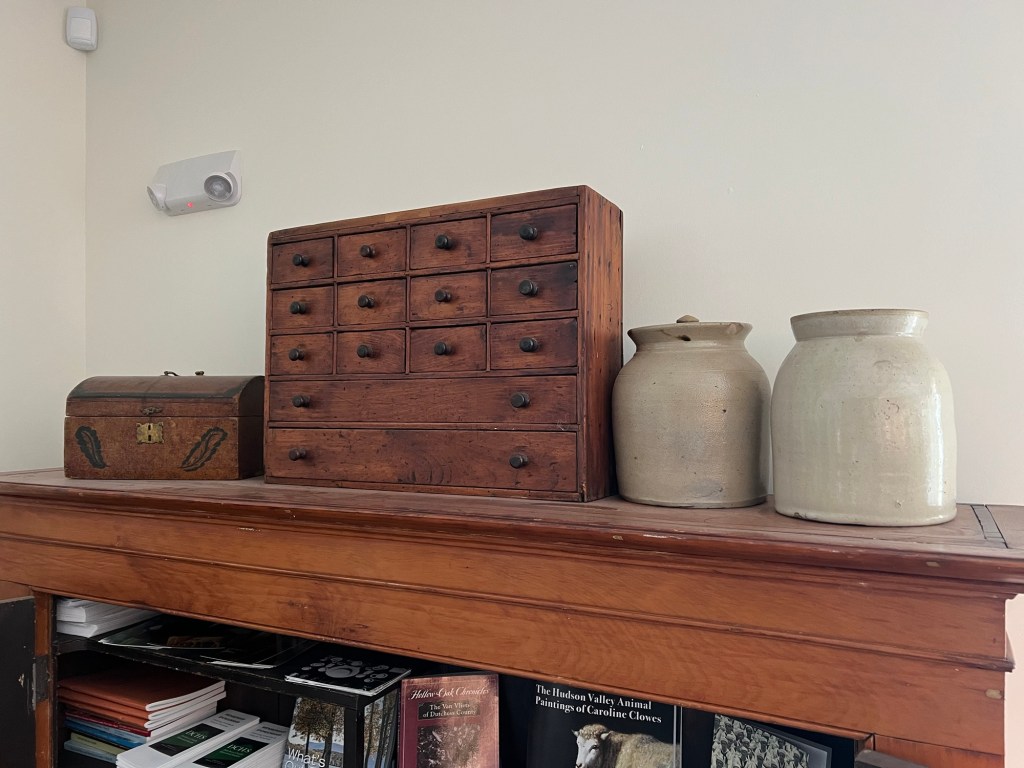
Household and Business items

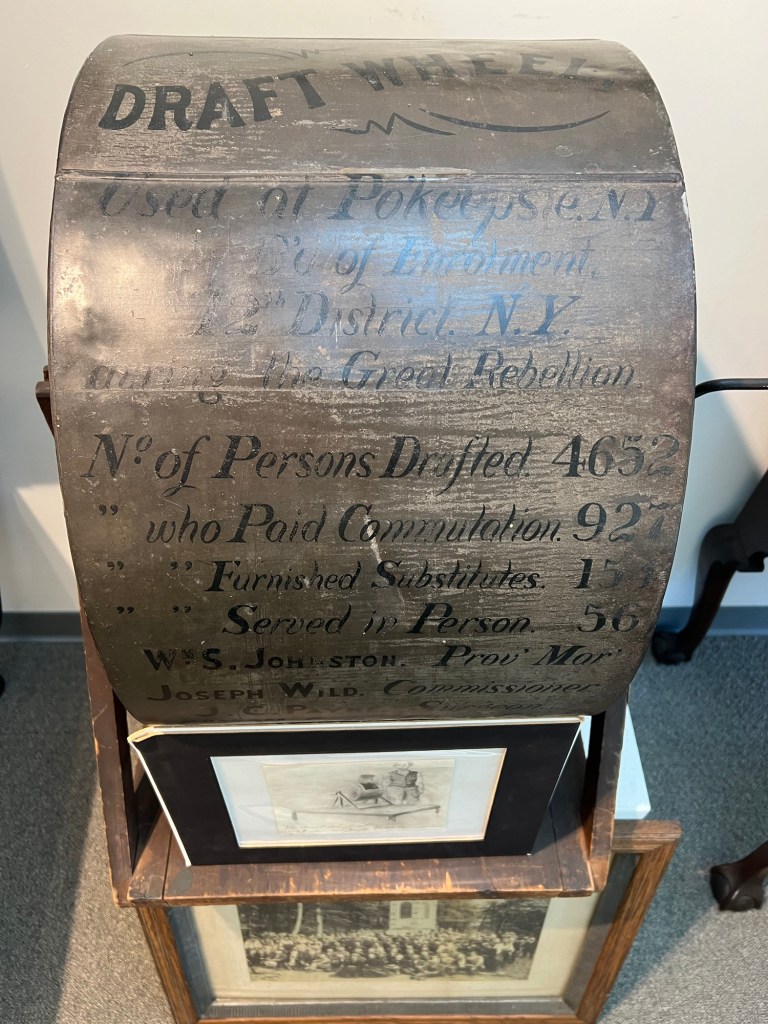
An old Draft card machine

There will be more displayed of the treasure trove of items in the museum’s collection, so it gives people a chance to see the past of the County on display and how it differs from current life to playing its part in the County’s future. There will be a lot more to do and see in the museum going forward.