This was the first time I had been to City Island since 2008 when I visited the island for research for my third book “Dinner at Midnight” in which one of the main characters is a witch that moves to City Island. I had walked every street on the island trying to get a feel for what it might be like to live on the island and what the character may experience. There is a very important scene in the book where her boss comes to the island to search for her and notes to close proximity to Hart Island, New York City’s ‘Potters Field’.
He comes searching for the truth about his unusual employee and finds out too much. I will just leave this as a spoiler as I have not…
The Blackwell House on Roosevelt Island finally opened for tours after a major renovation of the house. When I had visited Roosevelt Island the last time in 2017, the house was corded off and was not open for touring. It had looked like it was falling apart from the inside out.
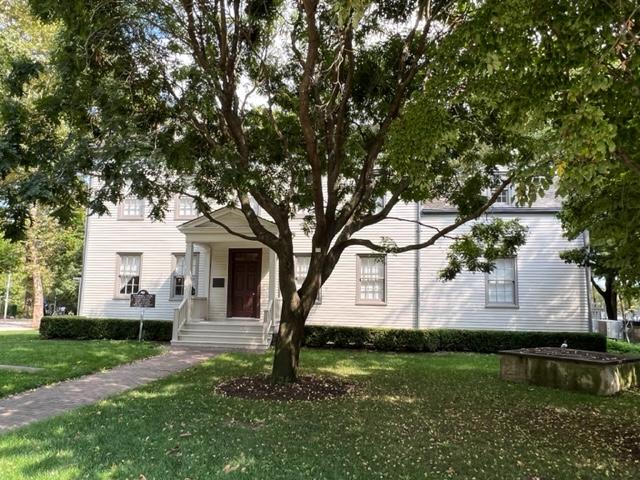
Historical Landmark sign
The home has now gone through a major renovation. The grounds outside were beautifully landscaped and gave the house a very warm and welcoming entrance to the property. In the middle of the summer, the flowers and trees were all in bloom and it was a nice view from the street. The house is conveniently located in the middle of the island, so it is not far from the tram and the subway.
The historical plaque in front of the house
I have to say that I was a little disappointed with the tour of the house what there was of it. The house had gone through a renovation but not a historic restoration, so the house is not a period piece with historic displays of furniture and art objects. It was like touring a modern home. I felt like I was walking through a 1980’s McMansion.
The new Living Room at the Blackwell House is not very historical.
When you enter the front hall, there is a reproduction of a portrait of Captain Blackwell, who was a Captain in the Revolutionary War. The house was built in 1796 for James Blackwell and added to in 1804, when the family fortunes had improved after the war.
The portrait of General Blackwell
The island had been ‘patented’ to Captain John Manning by British Governor Nicolls in 1668. Before the Dutch had arrived, the island had been used by the Native Americans for hunting and fishing. The island had been inherited by the captain’s stepdaughter, Mary Manningham Blackwell and her husband, Jacob Blackwell, thus named Blackwell’s Island, upon his death. The island passed to her children, James and Jacob. The island was sold to the City of New York in 1823 (Roosevelt Island history).
The historical pictures in the hallway of Roosevelt Island
All around the first floor, which is the only floor you can visit, there are all sorts of reproductions of historical maps and pictures of the island. The tour guide who had lived on the island his whole life, told me that the house had always been in disrepair and the local kids had thought it was haunted.
Now you can walk the grounds around the house and admire the beauty of the home from the outside. The only thing historical that I saw inside is when the tour guide opened the door to the cellar and showed me the stones that made up the foundation of the home. They had been quarried locally and still had the look of that time period.
The grounds of the Blackwell House
The home is nice for a quick tour but do not expect much from the history side of the house.
The City Island Nautical Museum at 190 Fordham Street
The City Island Nautical Museum
I recently took a trip to City Island, a small community just off the coast off the mainland of The Bronx (which is part of The Bronx) to visit the City Island Nautical Museum. This tiny museum located in the heart of the island is noted for its collection of ship building artifacts and items that are native to a community that once built the vessels for the America’s Cup.
The main hallway at the City Island Nautical Museum dedicated to the America’s Cup
City Island has a rich history in ship building, sail making and fishing it is reflected in the collection of materials in the museum and its archives. The museum really details the growth and history of the boating industry on the island and its importance in the local economy. What I found interesting was the rich history of the creation of the sailing ships for the America’s Cup tournament and how all the winning boats up until the 1980’s were built on the island and the one that lost the cup for us against Australia was the first one not built on the island.
The Nautical Room Gallery
Even Ted Turner’s boat “Courageous” was built on the island. There was a picture of the reunion of the boat winning twice at the museum with the crew’s signatures (The tour guide even said how he ‘freaked out’ members of the New York Yacht Club who did not consider him one of their own). All the sailing vessels lined the walls of the hallway of the museum.
The America’s Cup Race winners
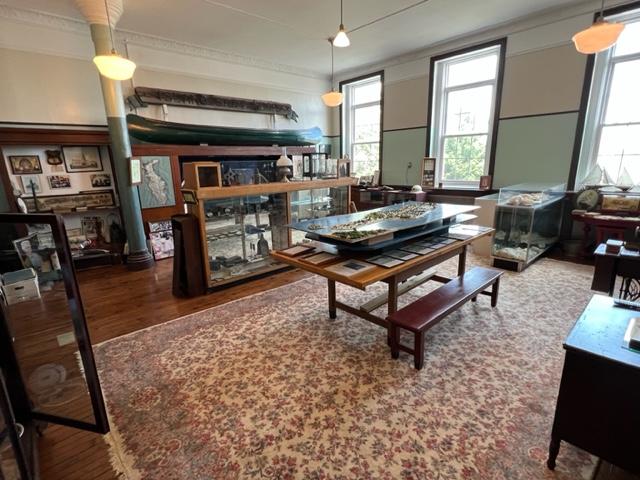
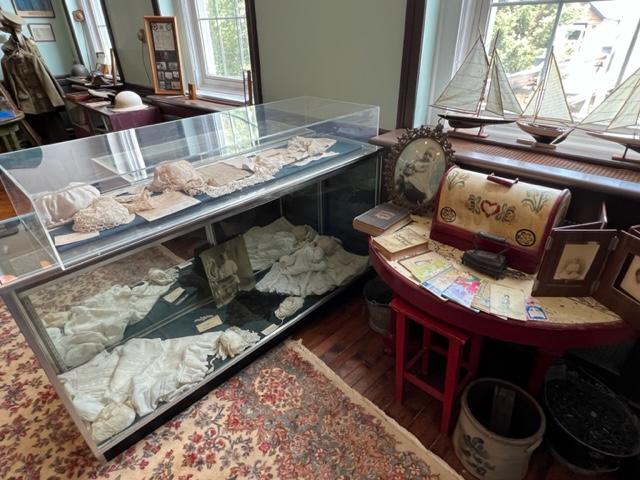
Each room of the museum was dedicated to a different theme. When I toured the Community Room in the back of the museum, it held the records of a lot of old businesses of City Island with pictures and items that were once part of the businesses. There was a small FDNY display, a small WWII display about local residents who fought in the war, wedding garments, maps of the island and a small display of arrowheads.
The Community Room Gallery
The Community Room-Map of City Island
The Community Rom-Items from businesses and homes.
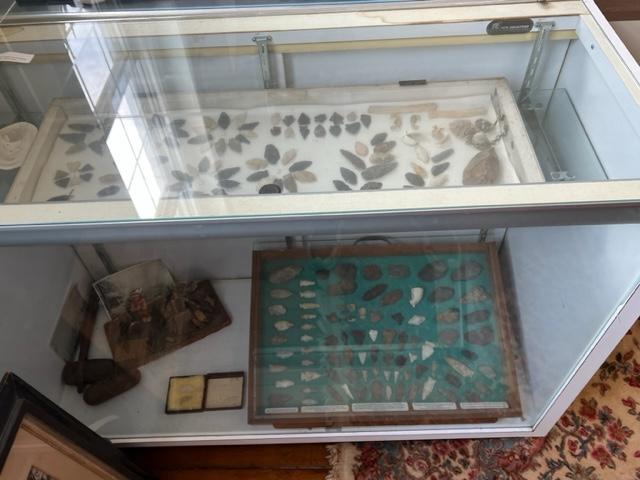
The Community Room-Arrowheads and Native American objects
Baby clothes and household items
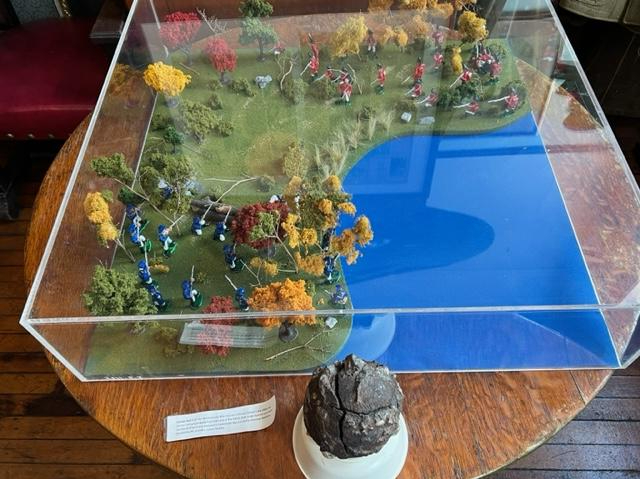
A cannonball from the Revolutionary War battle
Church Chairs in the Community Room
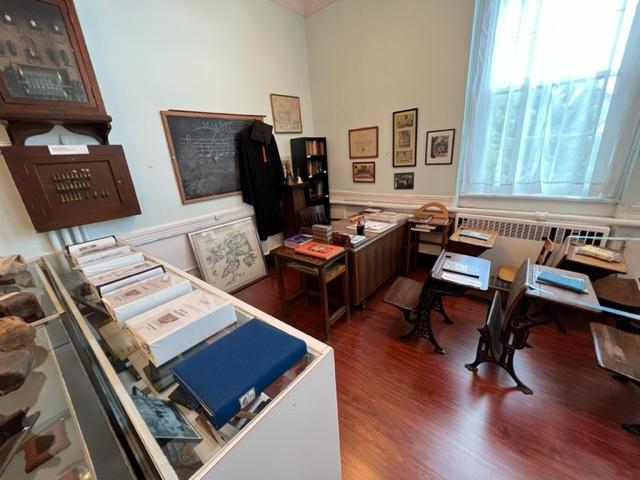
In the School Room, the concentration was on PS 17, which the museum is now housed in and its history with all the classroom group shot pictures, graduation pictures and a small classroom set up. There were more records and event items of the current PS 175, which is the K-8 school that the residents attend. There were also records and pictures of St. Mary, Star of the Sea School, the former Catholic school that used to be on the island as well.
The Schoolroom Gallery
The Schoolroom Gallery
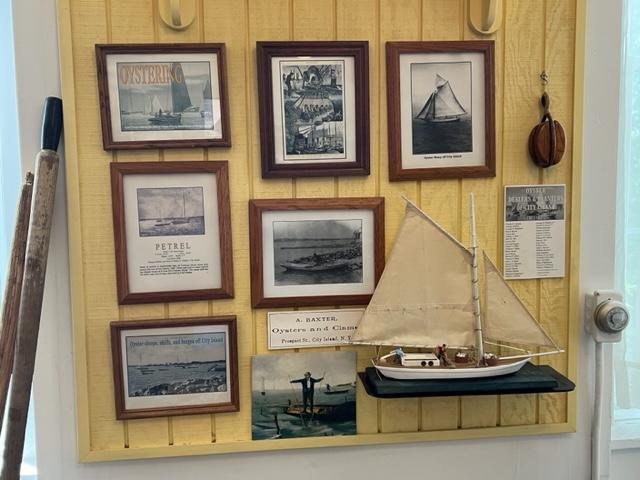
The Nautical Room needed an overall as there was too much going on in the room with pictures all over the walls, equipment for navigation and for fishing and records of the ship building companies that used to dot the island. There were boats in various shapes and sizes on display and the companies that built them like Wood Yacht, Nevins Yacht and Minneford Yacht. There was also the history of shipbuilding and sail making on the island. The tour guide told me there were no more ship builders on the island, but one sail maker left.
The Shipping making equipment
Locally made boats on City Island
The Library where all the research is done on the island and on the families and businesses that were once here was dominated by yachting pictures and nautical photography. It held all the City Island records and even the ship building plans.
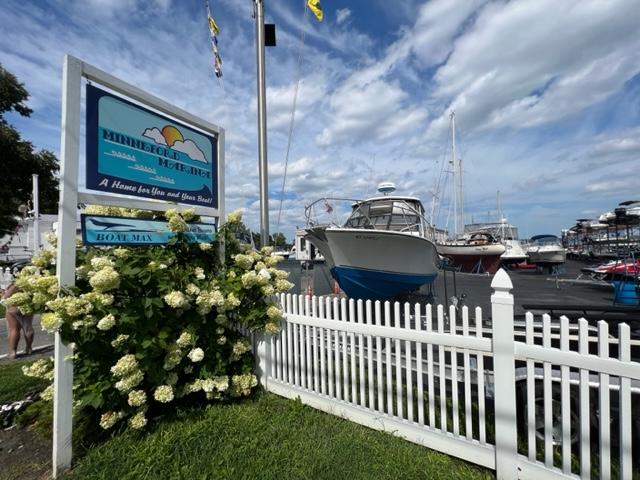
The Minneford Boatyard down the road from the museum is still operation today.
The City Island Nautical Museum Library
The museum has a lot to see but it needs to be a bit more organized to really showcase the collections properly. Still, it is one of the best museums I have seen with a nautical history theme. The best part is that you can see the whole museum in about an hour and this leaves you time to tour the island and see how the museum better explains why the island is the way it is right now.
The Ship display in the City Island Nautical Museum Library.
The History and set up of the City Island Nautical Museum:
(From the Museum pamphlet)
History of the Museum:
(From the Museum Pamphlet)
The City Island Nautical Museum is located in one of the island’s most picturesque and historic buildings, the former Public School 17, built in 1897 on one of the highest points on the island. When the residents of City Island voted in 1895 to separate from the town of Pelham in Westchester County and to become part of New York City, the City administration built the school, which continued in use until 1975. When the building was sold in 1986, the City reserved space for use by the City Island Historical Society and the Community Center and several old classrooms now serve as galleries for the museum.
The front main gallery is reserved for revolving exhibits. This exhibit that was being featured in the summer of 2023 was by local artist Liz Alderman.
The Liz Alderman Exhibit in the Front Gallery:
Local City Island Artist Liz Alderman at the City Island Nautical Museum in 2023.
The Liz Alderman Exhibit in 2023 at the museum
The Liz Alderman Exhibit of the local artist’s work.
The Liz Alderman Exhibit at the museum
The Main Hall and Gallery:
The Main Hall is lined with photographic essays featuring maps, the America’s Cup, City Island’s most beautiful boats, the City Island Bridges and historic buildings as well as a history timeline, models of a minesweeper and several rum runners, built during Prohibition and a handsome wooden kayak built in the 1930’s. The foyer contains the museum’s gift shop, featuring articles for sale such as books, t-shirts, photographs, postcards and nautical gifts and the desk where the docents greet visitors.
The Gallery features display cases with antique shipbuilding and sailmaking tools and the walls are covered with photographs of yachts built or serviced here and portraits of legendary City Islanders who contributed so much to the life and work on the island.
The Main hallway at the City Island Nautical Museum
The Walsh Library:
The recently refurbished library features a collection of books devoted to maritime history and many binders and scrapbooks featuring newspaper clippings, postcards and articles about City Island, Pelham Bay Park and Hart Island. There is an extensive selection of nautical magazines, including Yachting, Rudder, Wooden Boat and Classic Yacht, a data base of all boats built on City Island since 1848 and an impressive display of ship models. Special exhibitions regularly mounted in the library feature the work of local artists and photographs documenting aspects of City Island history.
The Library at the City Island Nautical Museum
The Nautical Room:
Shipyards, sail lofts, yachts and the people behind them are all honored here. Historical photographs, memorabilia and artifacts fill the room and tell the story of City Island’s rich nautical past. Also on display are tools used by sailmakers and shipbuilders, several ship models and some vintage outboard motors. Of particular interest in the room are several skiffs, a partially completed boat and a Buchman sailing canoe from the early 1930’s (all built on City Island).
Ship building display on City Island
The Community Room:
Celebrating City Island from its earliest days, the Community Room displays photographs, maps and memorabilia, including Native American arrowheads found in the area. The walls are covered with images of street scenes, stores, restaurants, private houses, and the waterfront then and now. Displays include a large relief map of City Island in about 1867, a diorama of the Battle of Pell’s Point that took place in October 1776, a niche devoted to City Island’s religious institutions and many antique home furnishings, including sewing machines, an ice box, and a 100-year-old typewriter. A large counter from Gilbert’s Pharmacy serves as a display case in the center of the room.
The Community Room at the City Island Nautical Museum
The Native American Collection in the Community Room
The School Room:
Student registers, graduation pictures, autograph books, report cards, the old school bell, and the other artifacts tell the story of City Island’s schools from the first schoolhouse built in 1838 to the present school, P.S. 175, built in 1975 and St. Mary, Star of the Sea RC School, which served the island for over 75 years. A section of the room is set up like a traditional school room, and a unique map of the naval training station that was located in Pelham Bay Park from 1917 to 1918 hangs on the wall.
Admission: Adults $12.00/Children Over 18/People with Disabilities/Students & Educators/Veterans $8.00. Children under 18 and Members are free (please check website for changes)
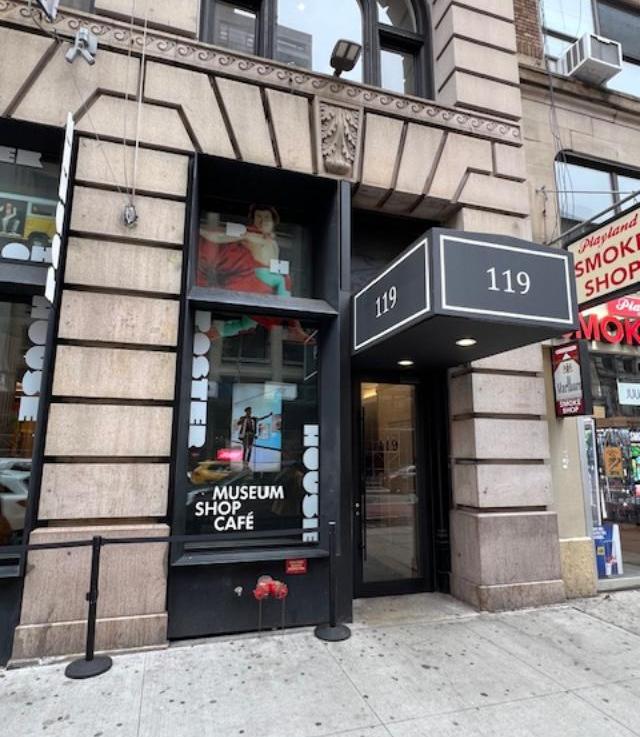
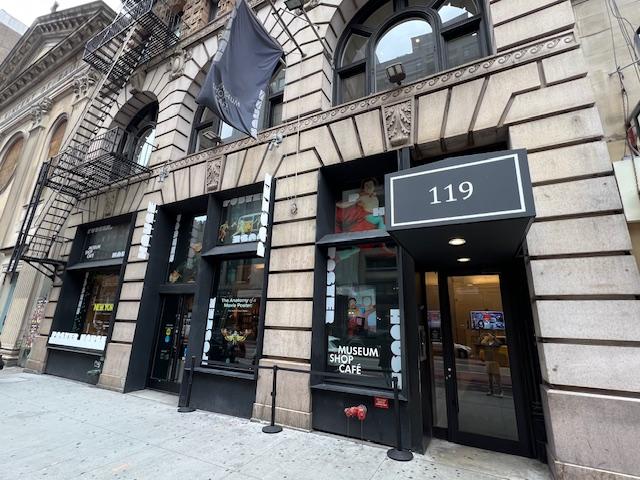
The Poster House is a little gem of a museum that I must have passed many times and never knew it was a museum. I had never heard of this museum before. The Poster House is dedicated to the history and art of posters and how they impact our lives as a way of communication. I got a chance to see the whole museum in about two hours.
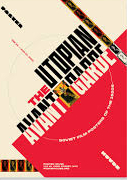
The first exhibition on the first floor of the museum was “Utopian Avant-Guard: Soviet Film Posters of the 1920’s”, a retrospect on the film industry during the Silent Era. It was a time with the fall of the Czar and the coming of Communism where artists tried to shape the new face of Communism before the rigidity of the party controlled the whole film industry from the end of Silents until the Fall of Communism in the early 1990’s.
“The Utopian Avant-Guard: Soviet Film Posters of the 1920’s” exhibition
During the early years of the Communism, the country was going through radical changes that were not facing the rigid standards of the future Communist Party. Artists and film makers were getting their creativity from the West from countries in Europe and the United States. The creative class got to experiment with film and adapted what they saw to their own markets. This did not last long as Communism took hold and then started to control the content that was shown in the country. This continued from the Silent Era until the mid 1990’s when Communism fell.
Movie Poster from the 1920’s: ‘Six Girls Seeking Shelter’ from 1928
There were two interesting exhibitions on the lower level on artist and poster maker Ethel Reed. The exhibition was a collection of her work for magazines, books and film. She handled all sorts of mediums and was prominent for many years in the industry until her work fell out of fashion and her behavior became erratic with addiction.
“Ethel Reed: I am my own Woman”
The last exhibition that I toured was “Experimental Marriage: Women in Early Hollywood”, women whose role in in the film industry included writers, directors and producers. It showed how the influential women were in the industry before it became corporate. It also showed how actors had a lot of say in their films and the themes of the films were more female based. As things got concentrated in California and became more unionized, it became more of ‘Good Old Boys’ network as the industry became more streamlined.
“Experimental Marriage: Women in Early Hollywood” exhibition
What I liked about the museum is that it showed the politics from all angles and explained its progression and future in these industries.
The museum also has a nice gift shop and bookstore and a small restaurant, Café des Affiches.
History & Mission of the Poster House:
(From the Museum website)
The Poster House is dedicated to presenting the impact, culture and design of posters, both as historical documents and contemporary visual communication.
Through temporary exhibitions, a growing permanent collection and educational events, Poster House explores the enormous impact of posters on society and culture and how they have been adapted to contemporary use. As the first poster museum in the United States, The Poster House provides a space for inquiry for all those interested in design, advertising and public interventions with an aim to improve design literacy among the general public.
Posters explore:
*Mass communication and persuasion
*the intersection of art and commerce
*control of the public domain
Poster House was founded in 2015 with an eye towards filling a long-acknowledged gap in the New York cultural landscape for accessible art and design. After several years of planning and construction, Poster House opened its doors on June 20th, 2019.
Poster House is proud to receive support from the New York State Council of the Arts. Poster House is an affiliate member of the International Vintage Poster Dealers Association.















 Visiting a Museum: The Unique, Unusual, Obscure and Historical