Category: Historic Homes of the Hudson River Valley

The Armour-Stiner Octagon House                                   45 West Clinton Avenue                                         Irvington, NY 10533

The Armour-Stiner Octagon House 45 West Clinton Avenue Irvington, NY 10533

The Armour-Stiner Octagon House

45 West Clinton Avenue

Irvington, NY 10533

(914) 817-5763

https://en.wikipedia.org/wiki/Armour%E2%80%93Stiner_House

Hours: Sunday-Saturday Seasonal please check their website

Admission: Depends on the Tour/Times of the year-Please check the website

My review on TripAdvisor:
https://www.tripadvisor.com/Attraction_Review-g47953-d15523741-Reviews-The_Armour_stiner_Octagon_House-Irvington_New_York.html

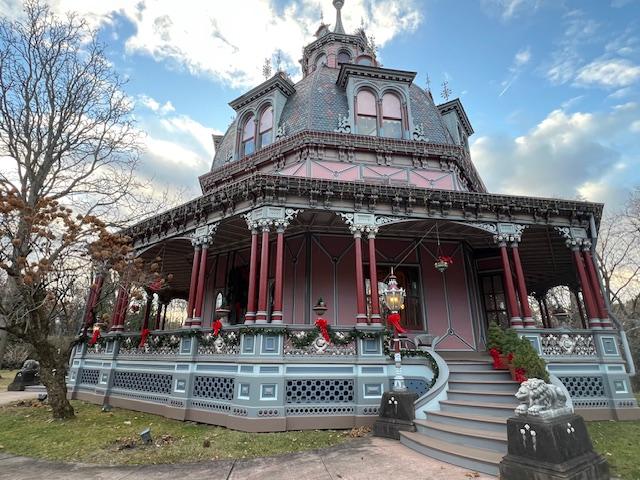
The outside of the house during the Christmas holidays
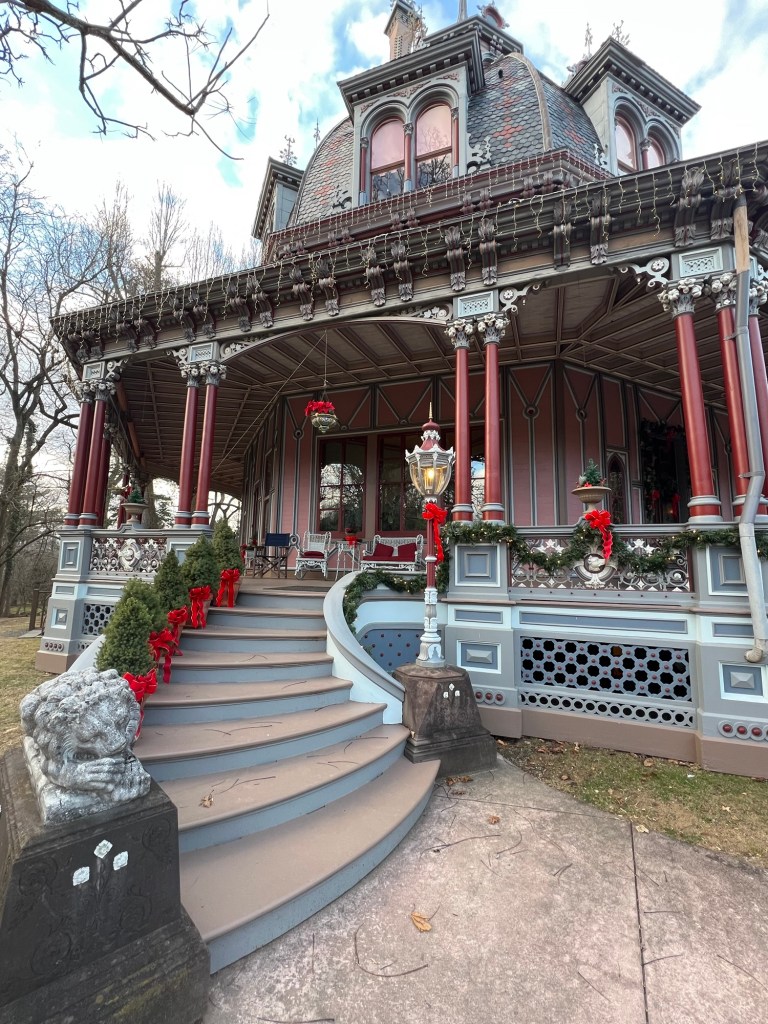
The outside of the house decorated for Christmas

The tour of the Amour-Stiner Octagon House was so amazing. The house was decorated to the hilt for the Christmas holidays but done tastefully and not over the top. All the decorations enhanced the house and its beauty.
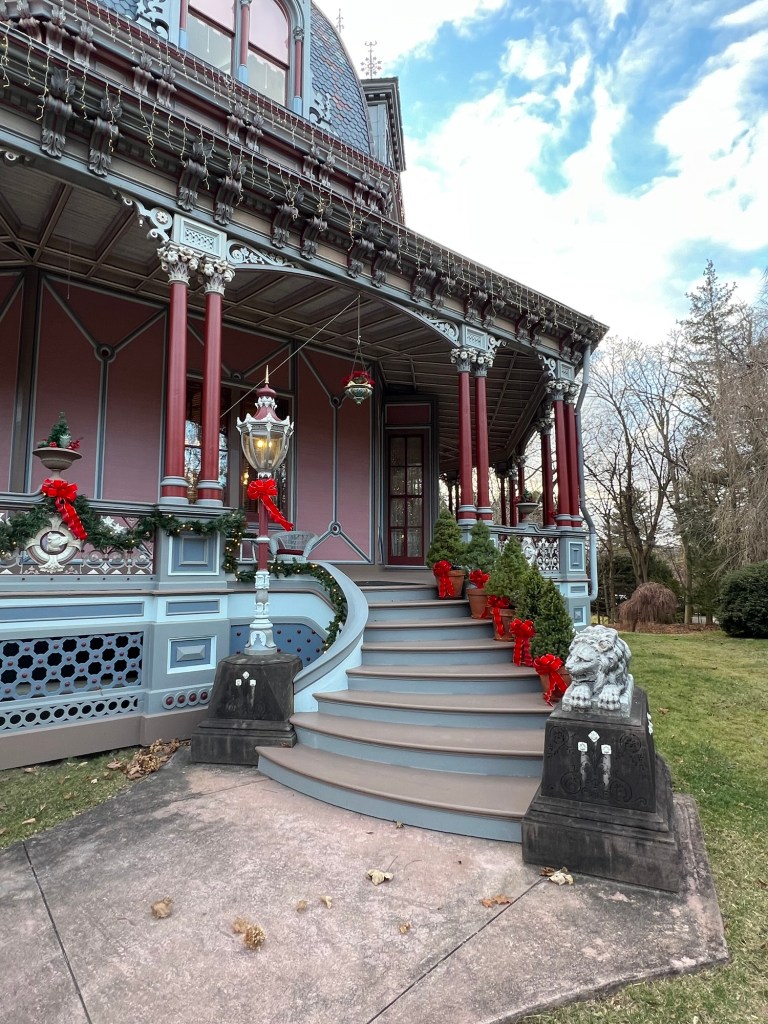
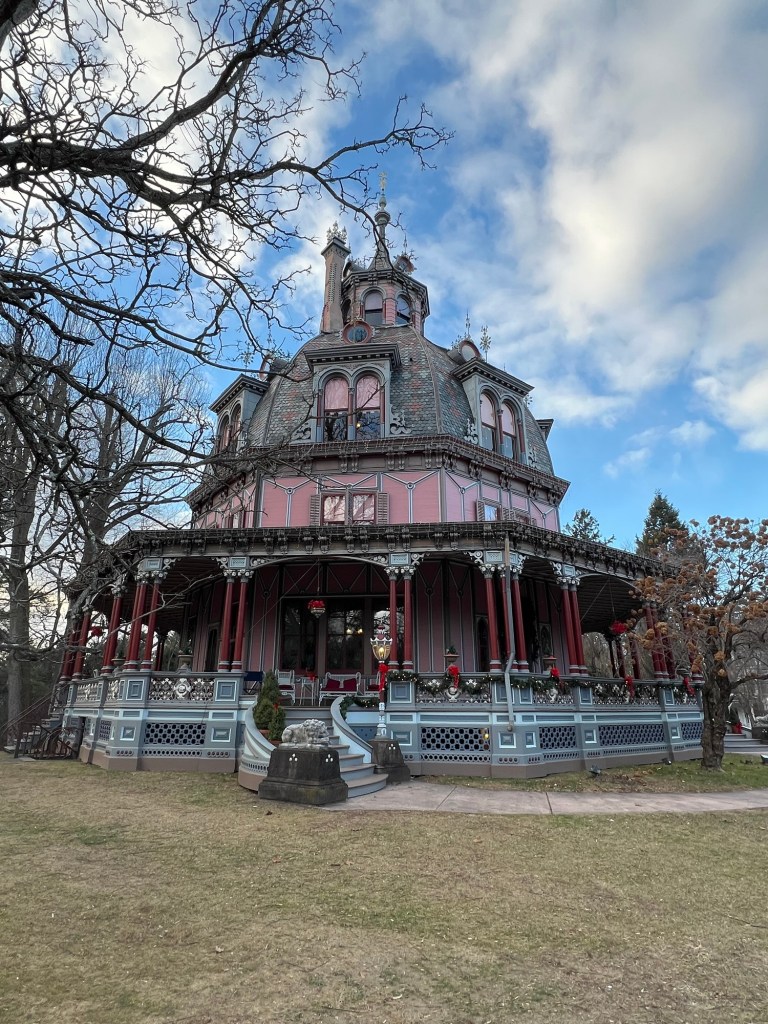
The other side of the porch decorated for Christmas

History of the House:

(From the Visit Westchester County blog):

The Armour-Stiner Octagon House is one of the most visually unique homes in the world. It is the only known residence constructed in the eight-sided, domed colonnaded shape of a classic Roman temple. The Octagon House was originally built in the 1860s following the precepts of Orson Squire Fowler, a phrenologist, sexologist, amateur architect and author of The Octagon House, a Home for All. Fowler advocated octagonal instead of rectangular houses on the supposition that the shape enclosed more space, created rooms which received more sunlight and had greater accessibility to each other (Visit Westchester blog).
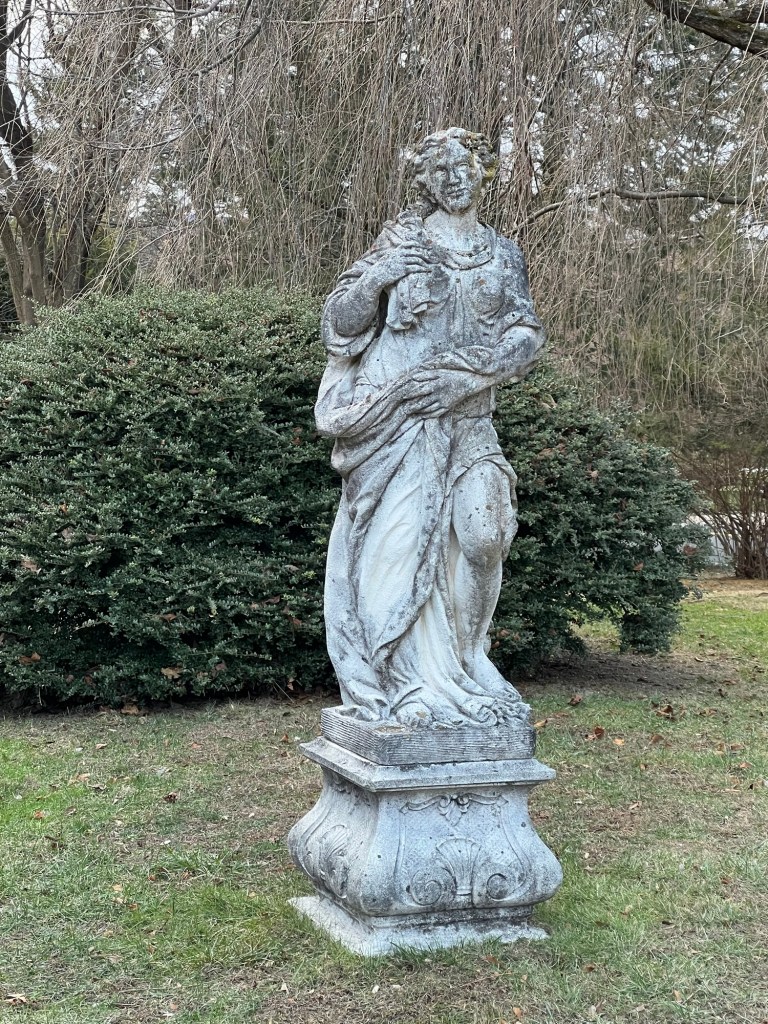
The statuary in the yard
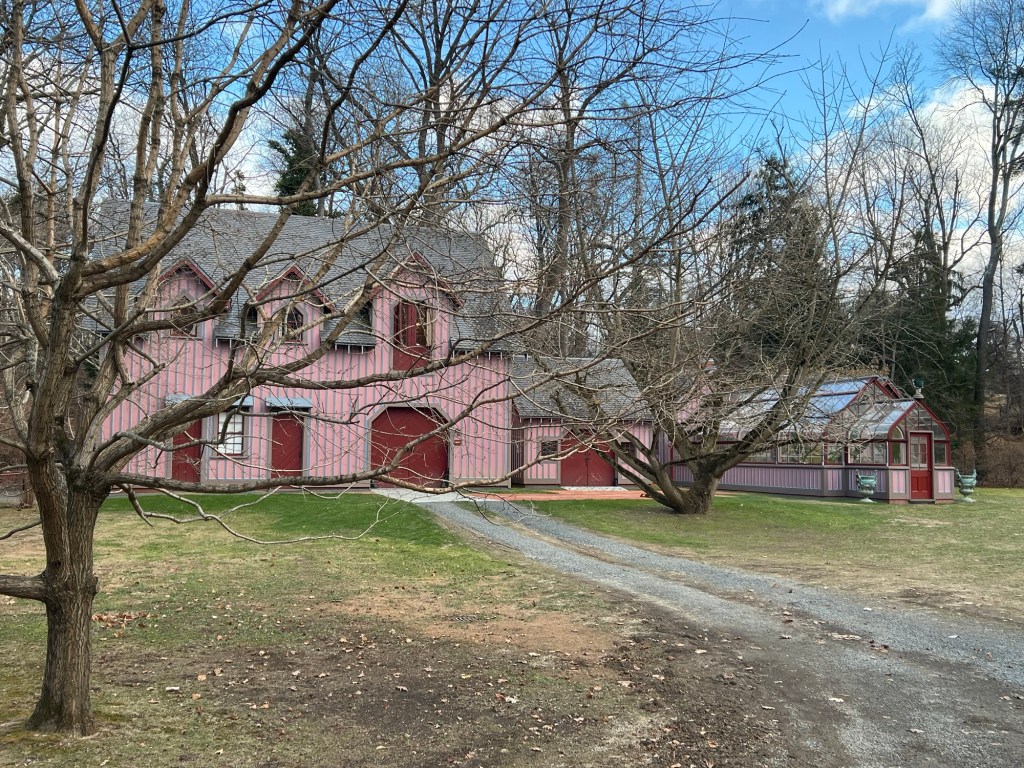
The carriage and greenhouse on the yard

The family currently live in the Carriage House and use the Greenhouse so these were not in the tour.
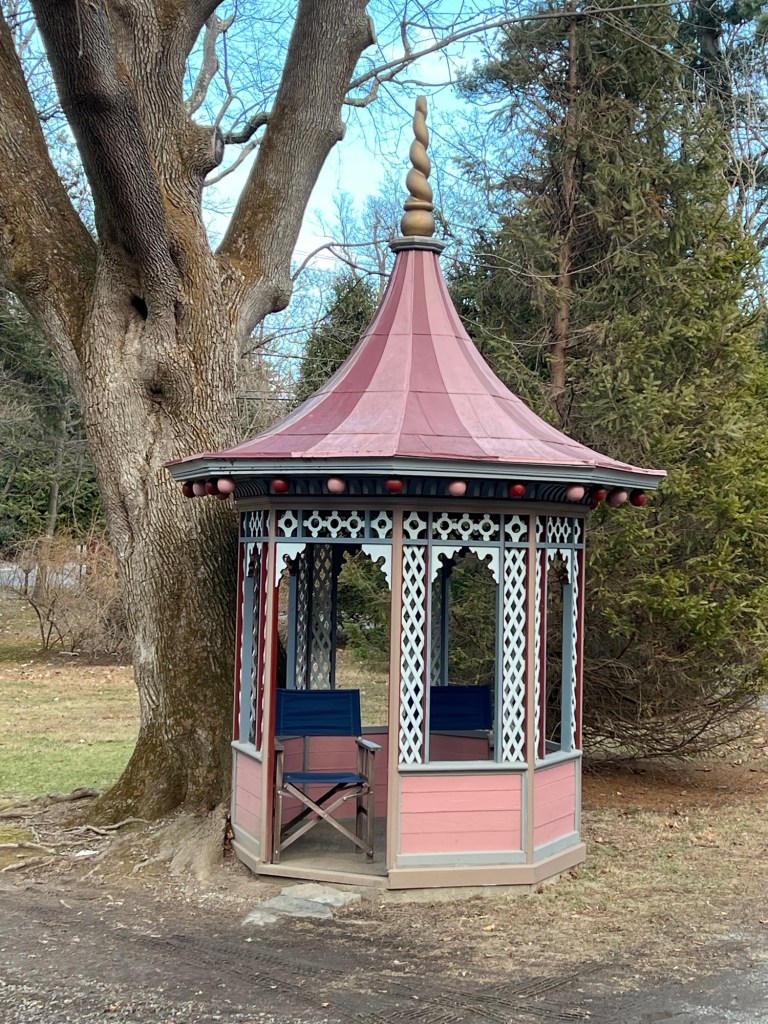
The Gazebo in the front yard
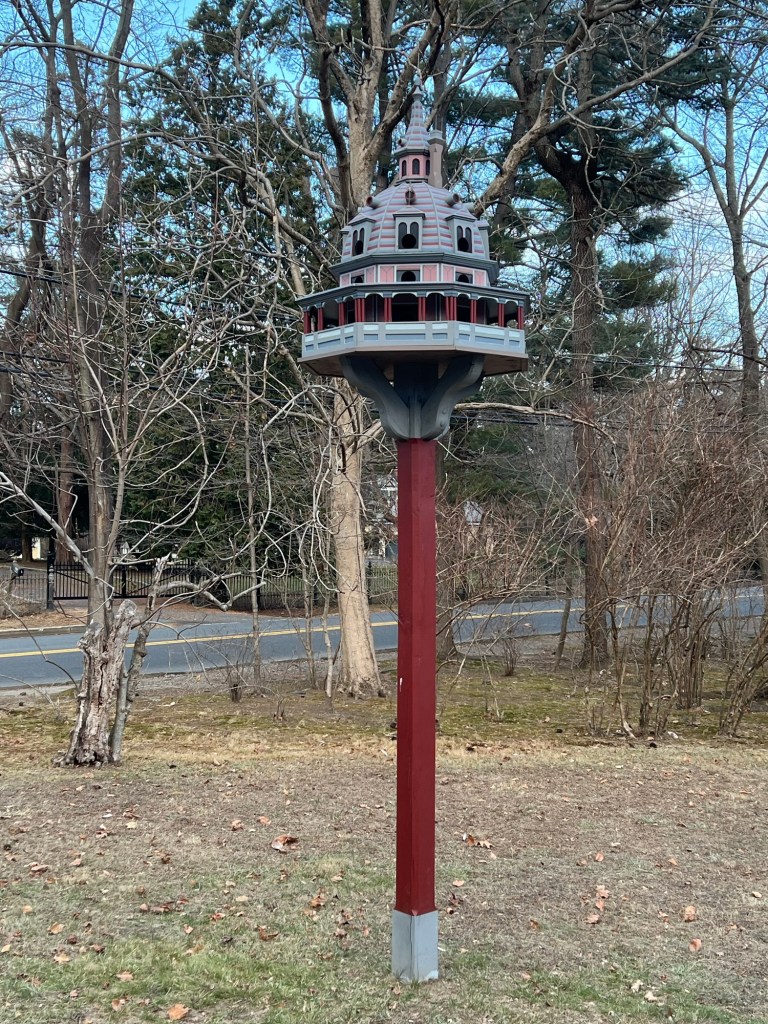
The Birdhouse that looks like the house
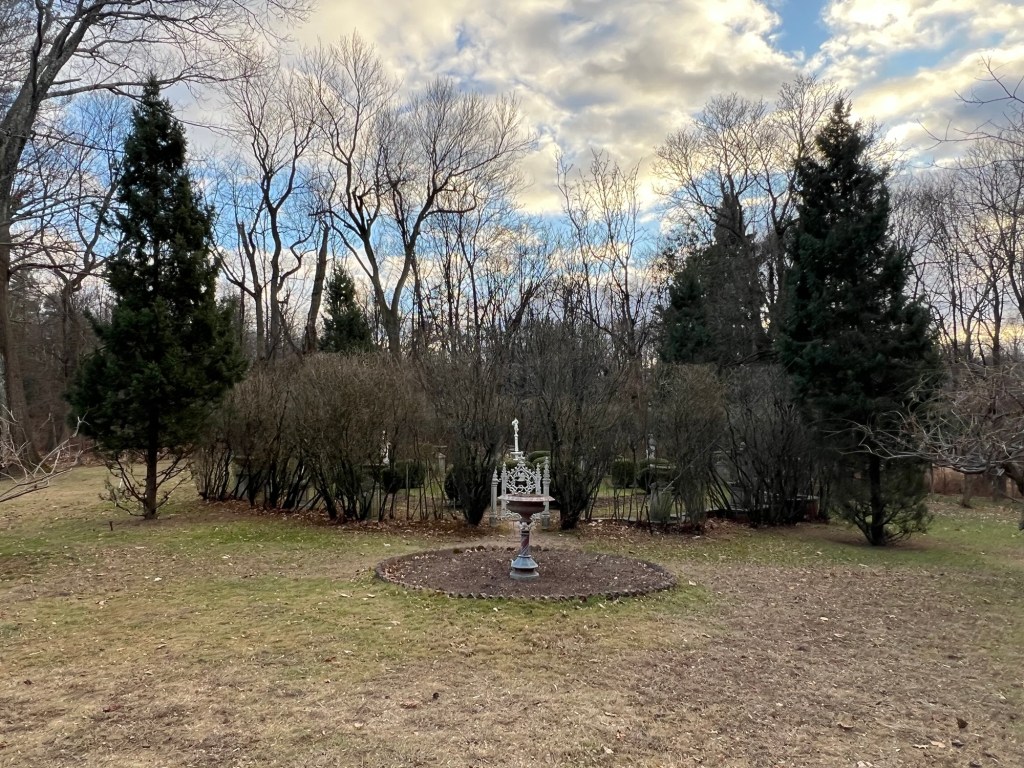
The formal gardens that are dormant this time of year

The grounds will be amazing when the Spring comes and everything is in bloom.
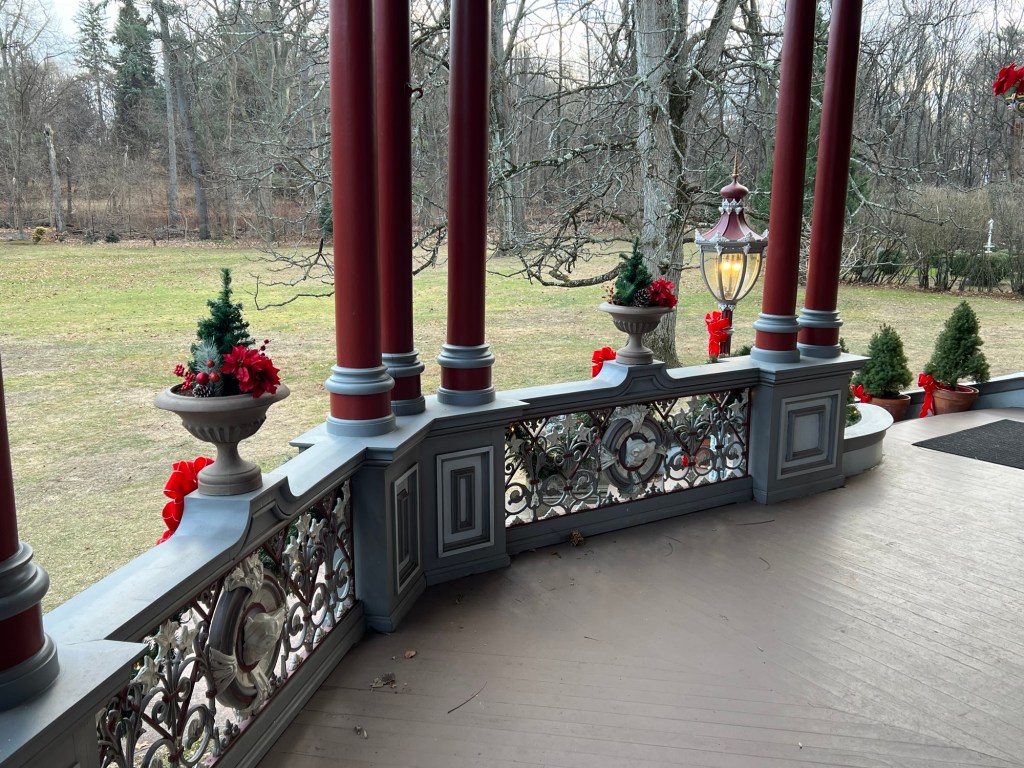
The porch was so beautifully decorated for the holidays
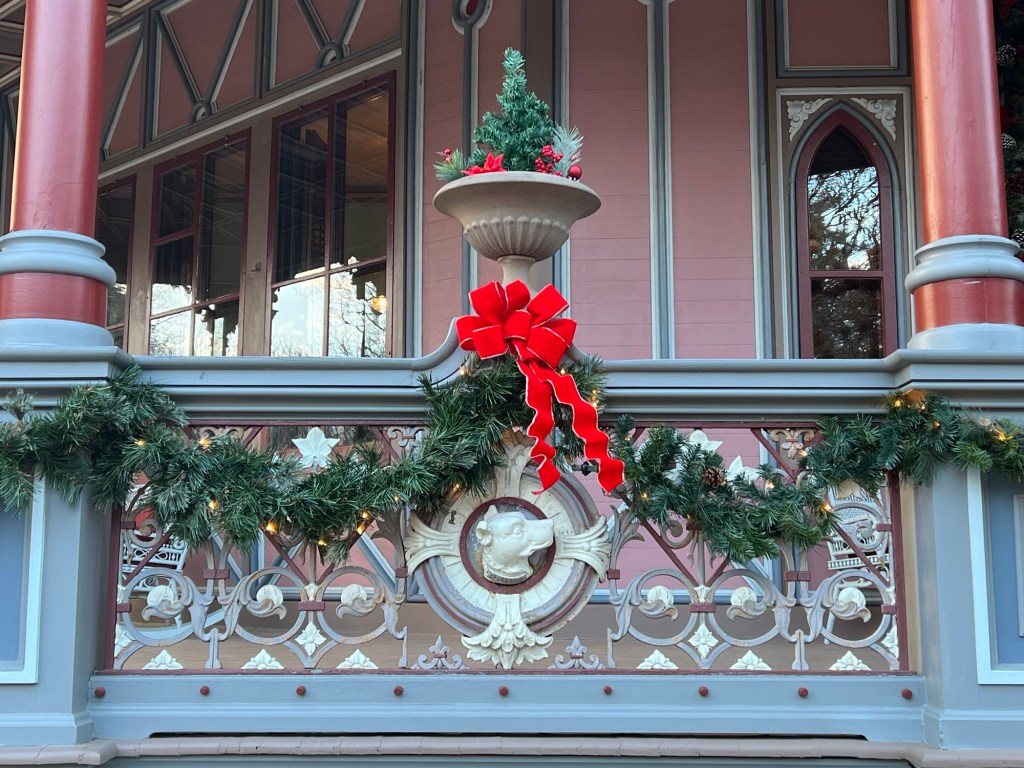
The railing for the porch
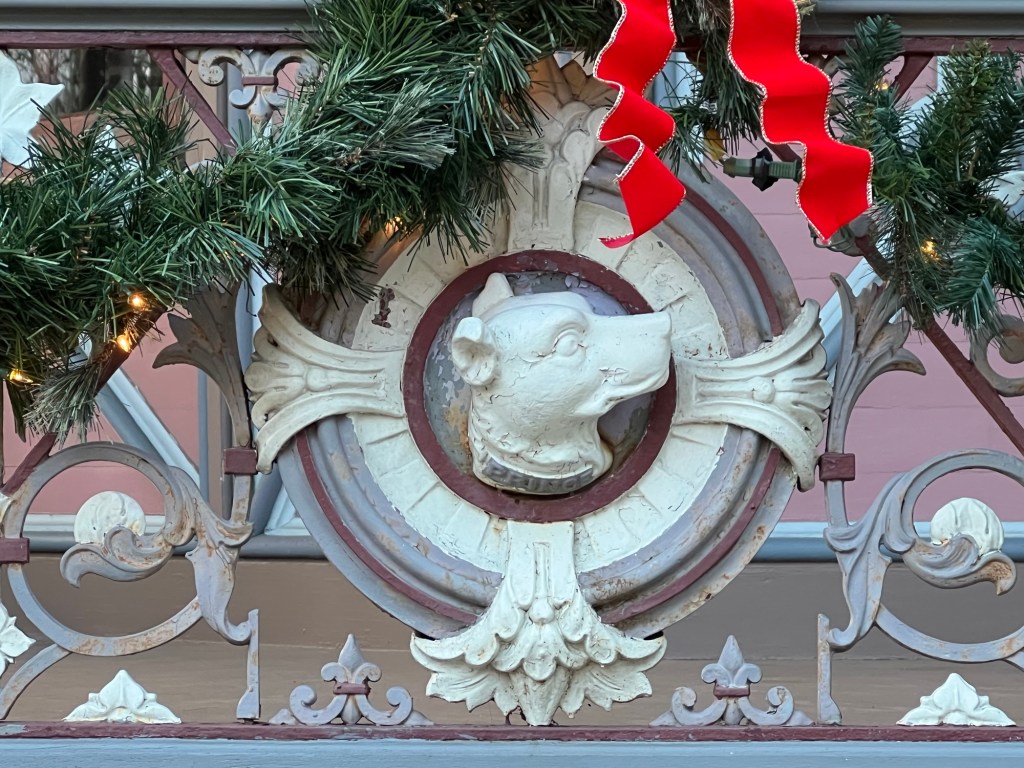
The insignia of the porch
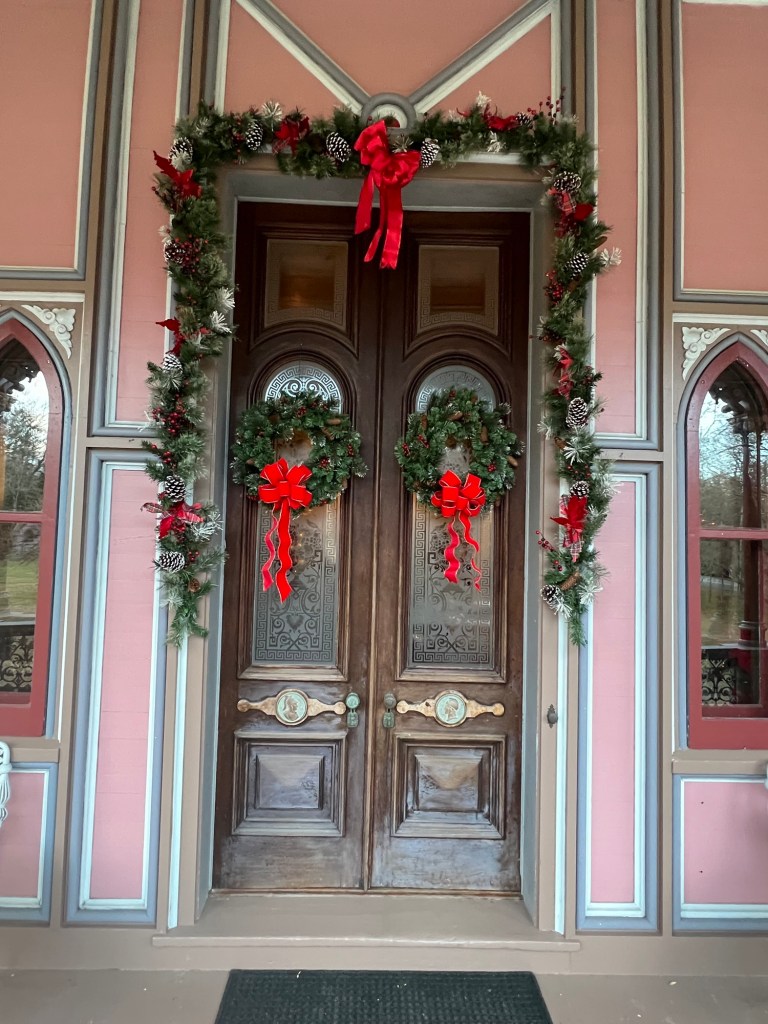
The front door so beautifully decorated for the holidays
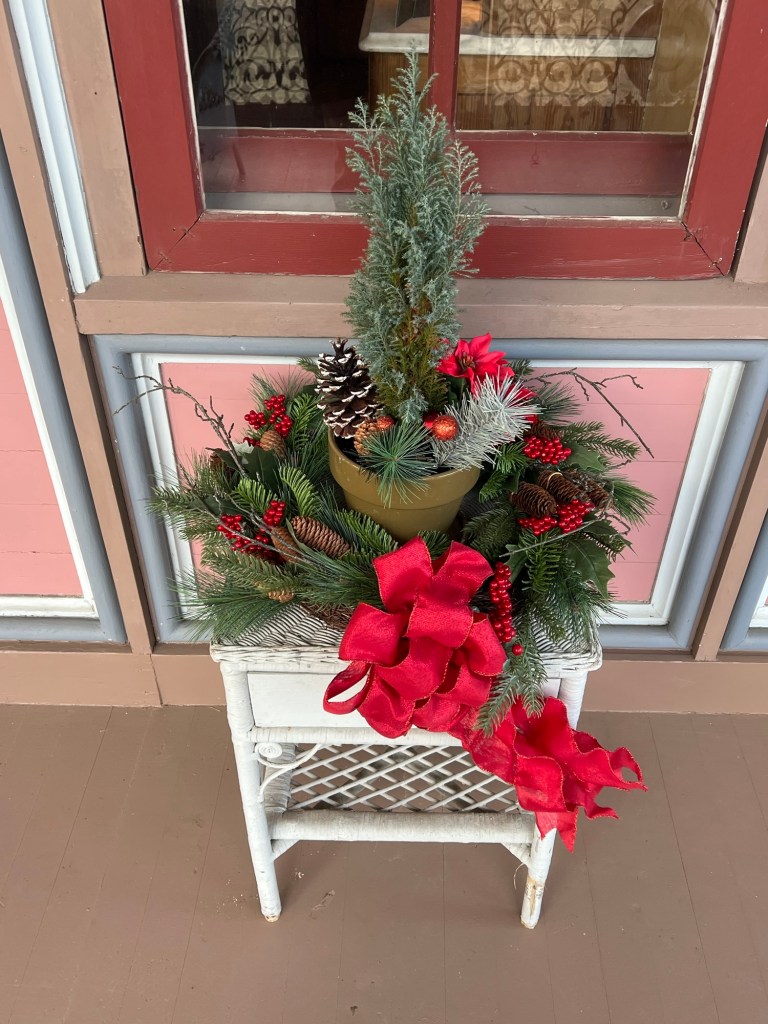
The planter decorations around the porch
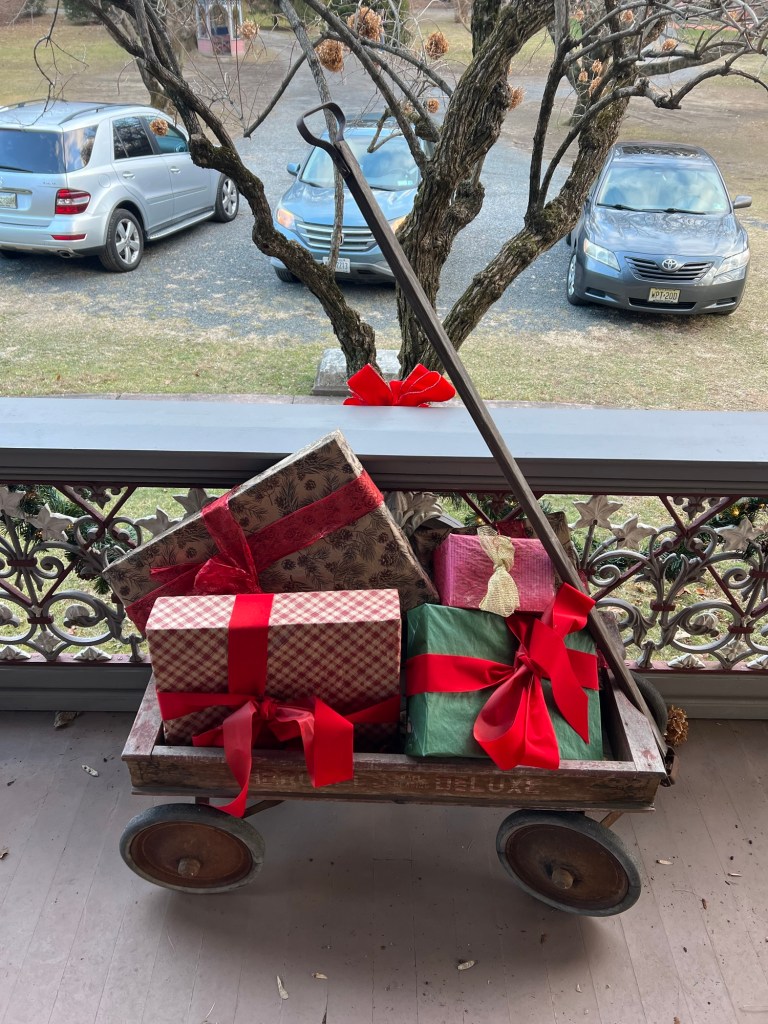
The decorations around the porch were really whimsical

History of the House:

(From the Visiting Westchester blog)

In 1872, the house was purchased by Joseph Stiner, a prominent New York City tea merchant. His alterations created the present lyrical structure. The exterior embellishments are extraordinarily festive with floral detailing in the cast iron cresting and railings and elaborately carved wood scrollwork and capitals – all painted in shades of rose, blue, violet and red. The interiors are equally decorative with painted and stenciled ceilings, trim with gold, silver and bronze leaf and unique eight-sided motifs in the plasterwork, woodwork and etched glass (Visiting Westchester blog).
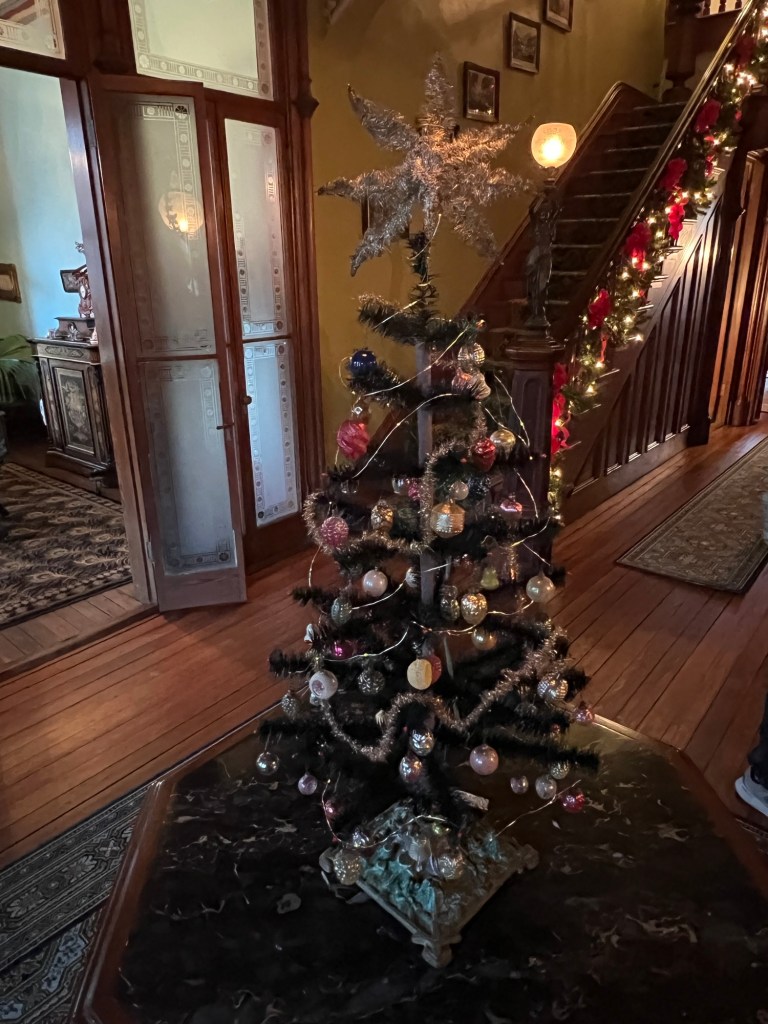
Walking into the entrance foyer to see the Table Tree of the early German period

Each floor was decorated with lights, garland and a series of large and small Christmas trees. The ornaments were all of the period included glass ball, homemade paper ornaments and some flowers and other plantings.
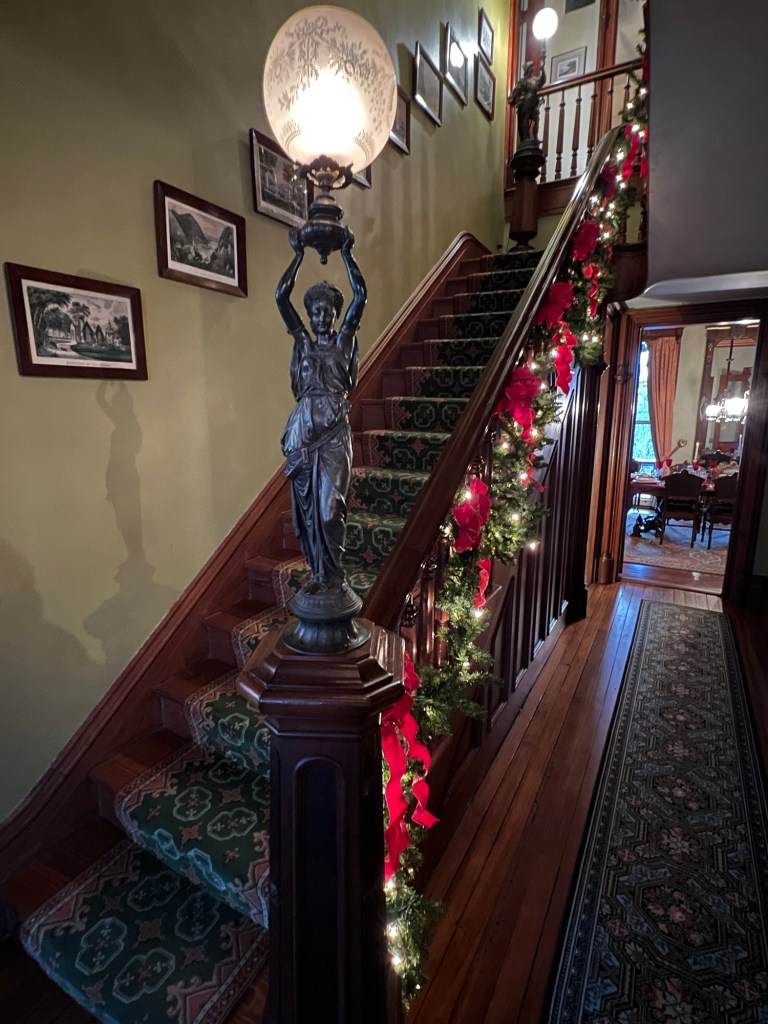
The staircase in the main foyer was decked out either garland and lights
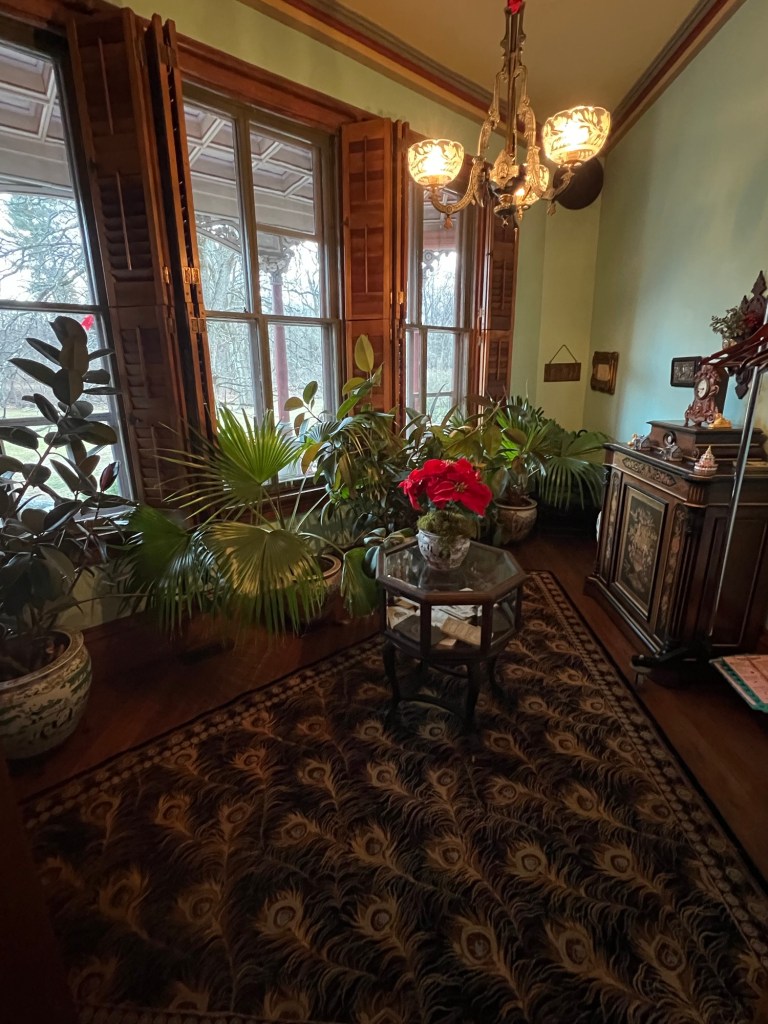
The Arbotorium in one side of the hallway

Normally even in Victorian times a house would not be this decorated but the volunteers did a wonderful job accenting each room.
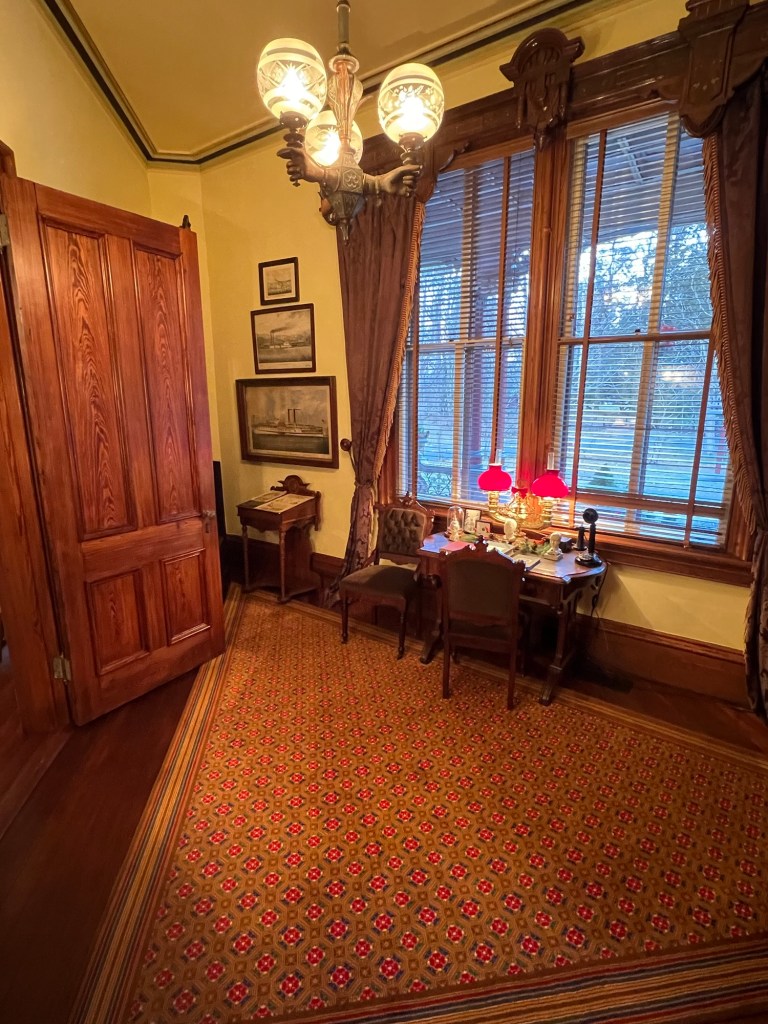
The small office to the other side of the main foyer
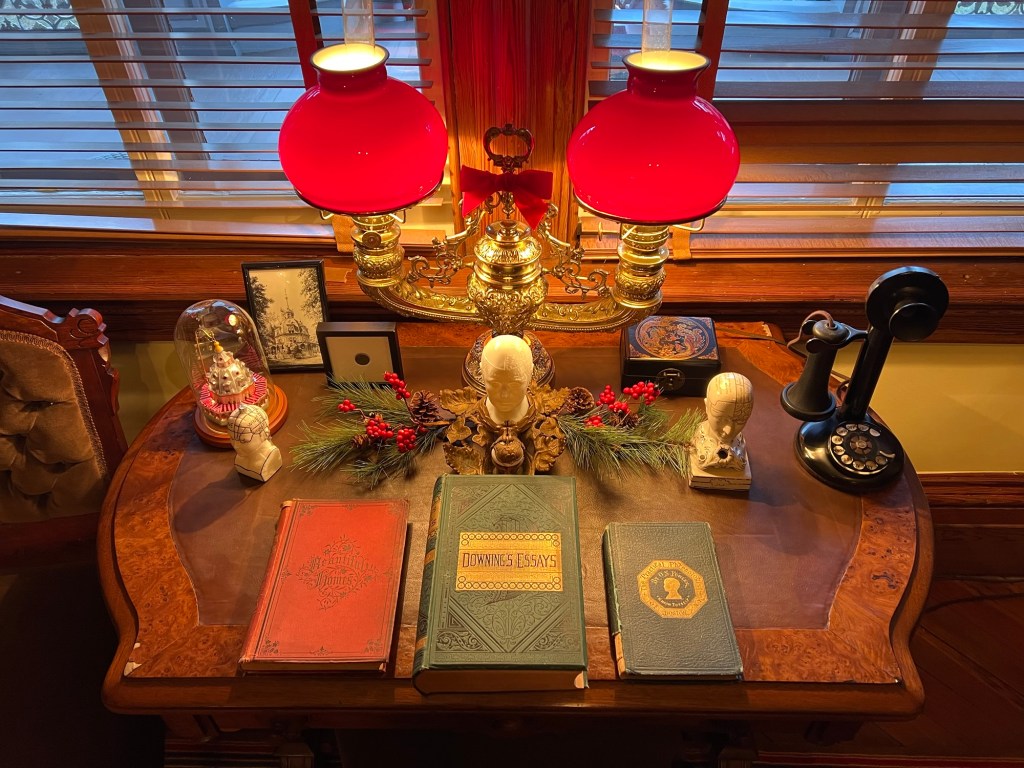
The beautiful details of the office on the first floor

We then moved into the formal parlor where the family would have entertained everyone before dinner. The room was decorated with a beautiful tree and garlands.
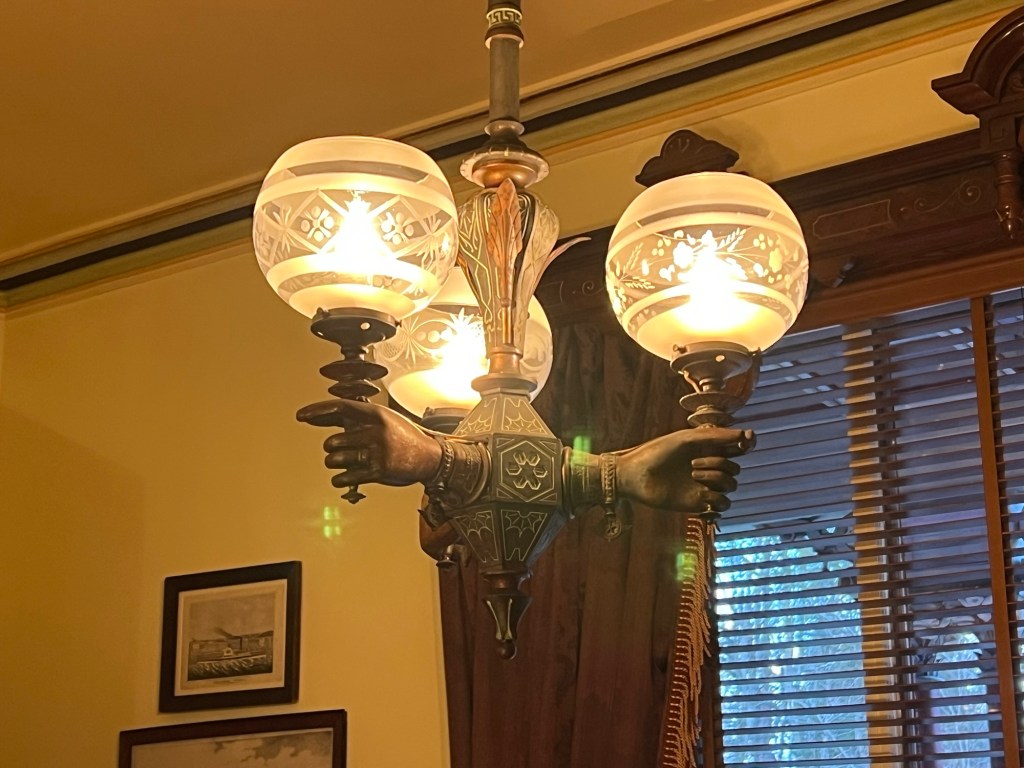
The hand chandelier in the study
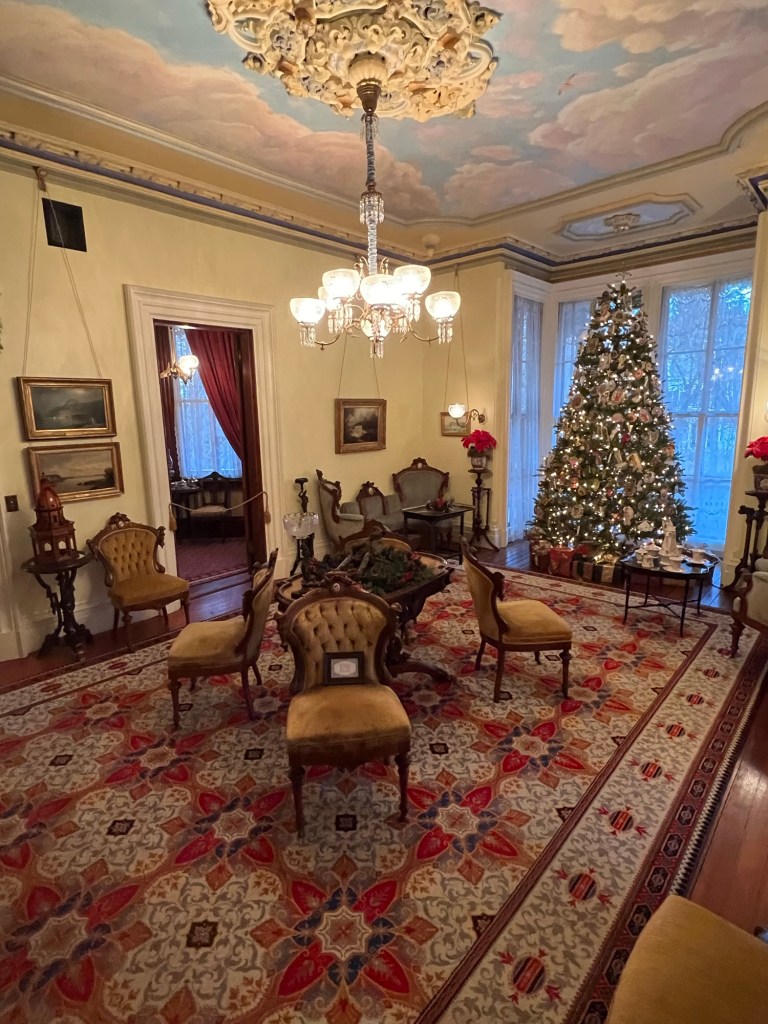
The formal Parlor
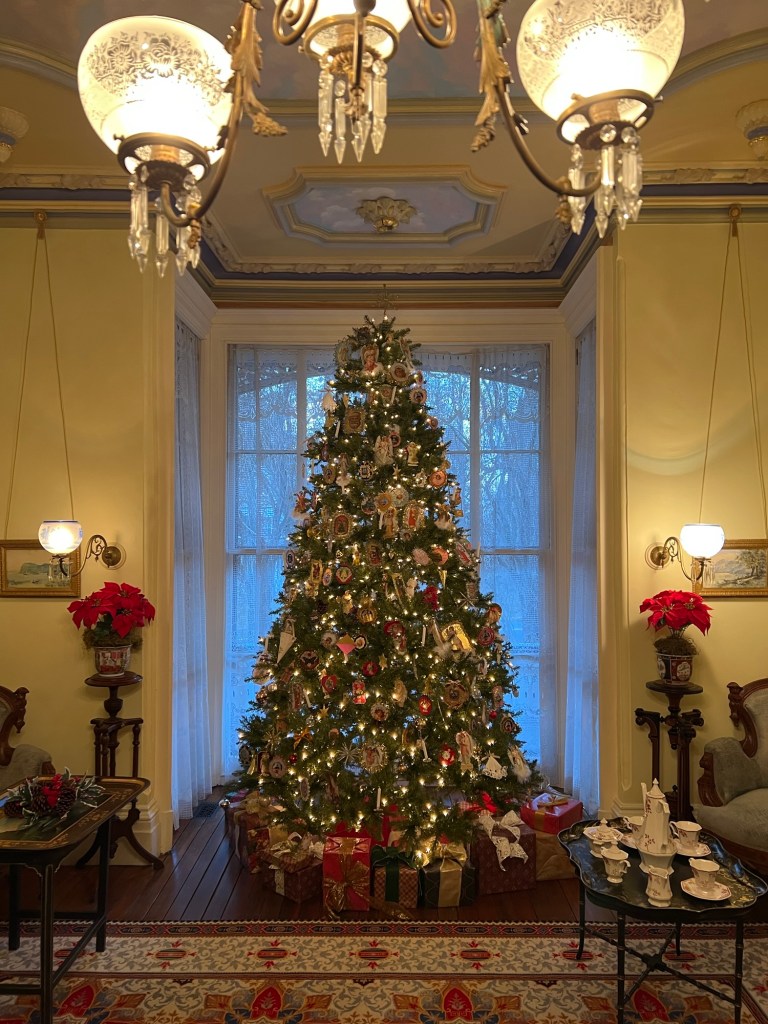
The Christmas tree in the formal parlor
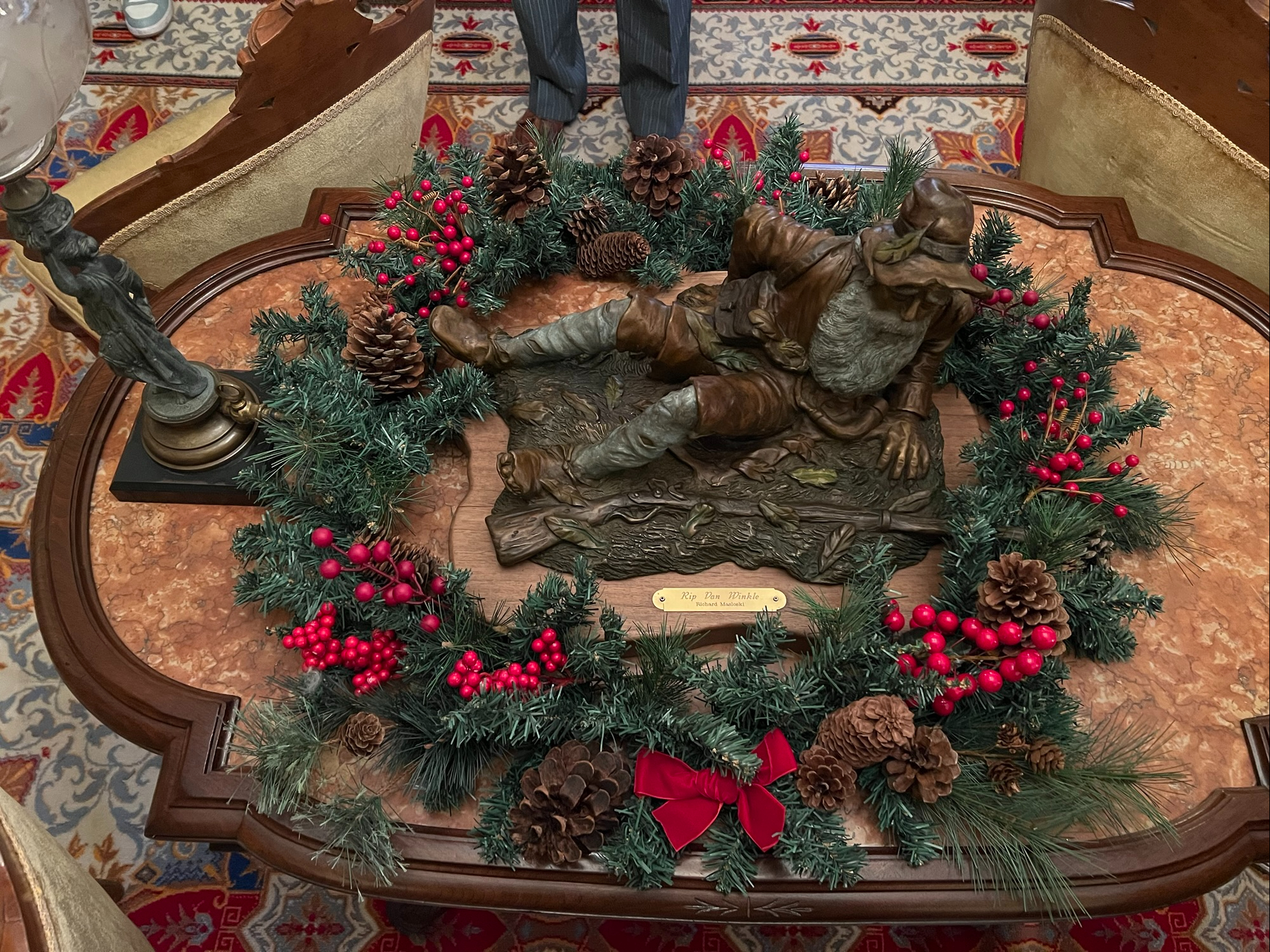
The formal table decorations of the Parlor
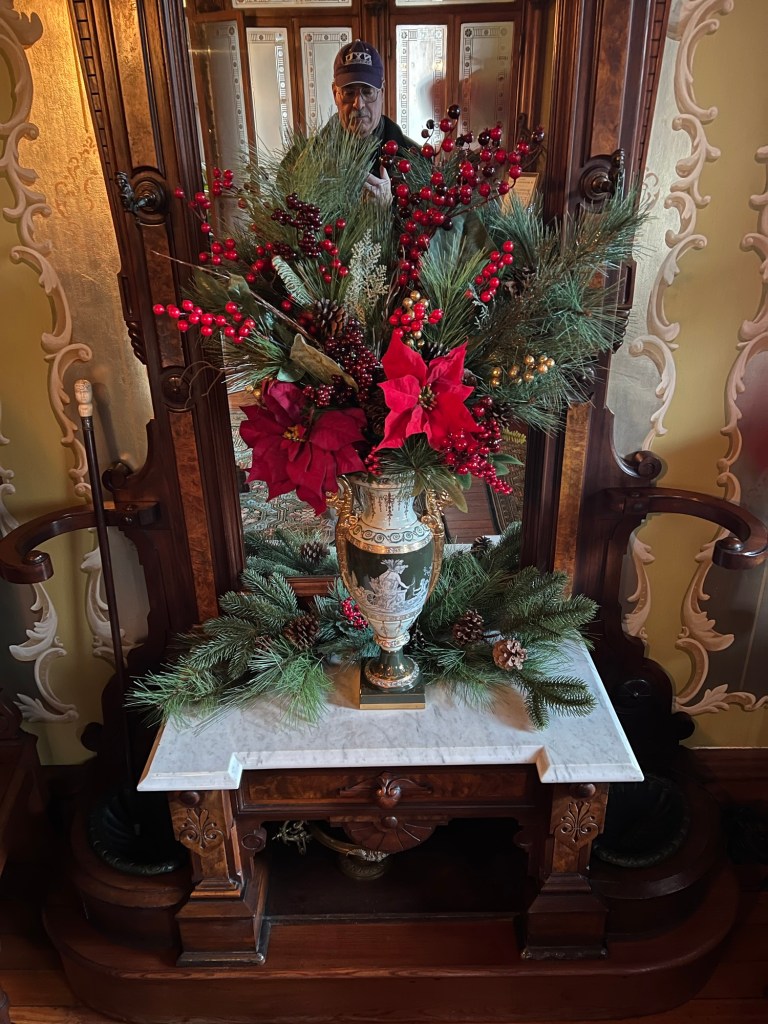
The elaborate decorations on the side table
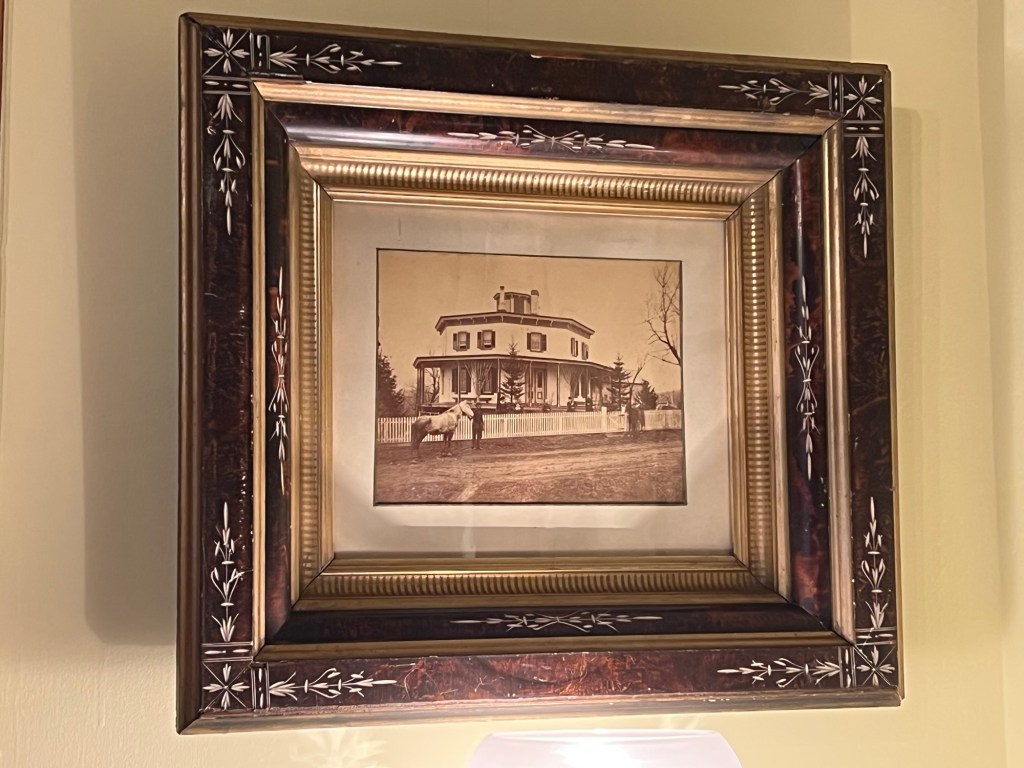
The picture of the original house when it was completed
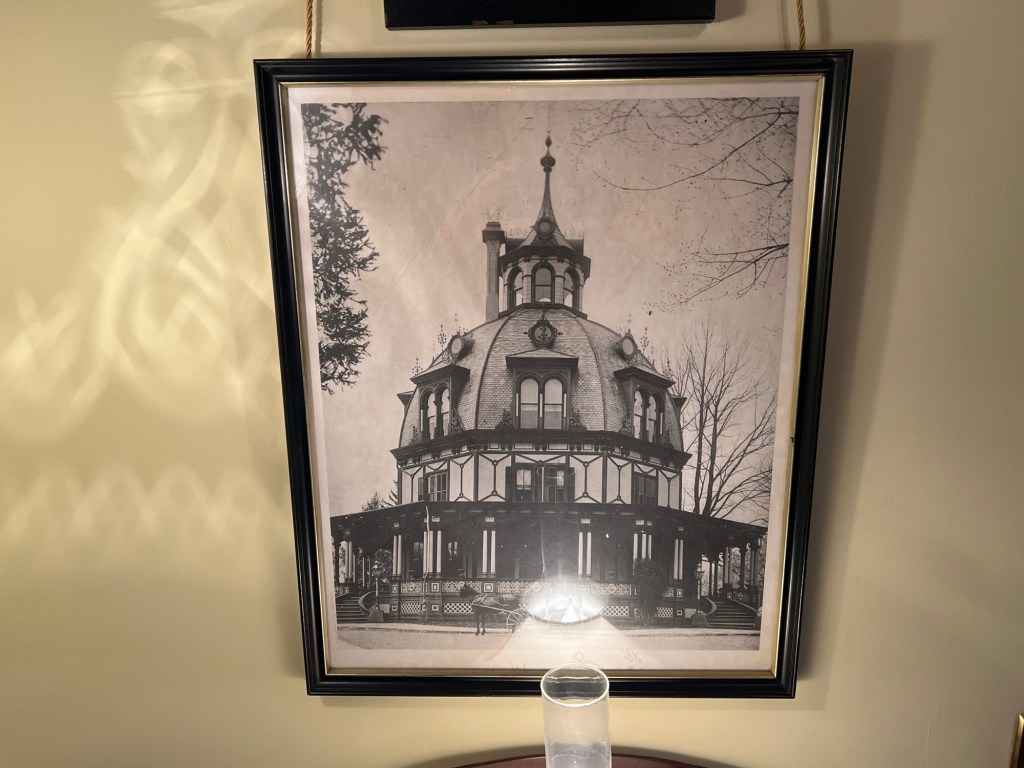
The house when Mr. Stiner bought it and added the dome

We next moved into the formal Dining Room that was set for Christmas lunch. The Victorians followed a lot of the English traditions of multi-courses and Christmas poppers at the table.
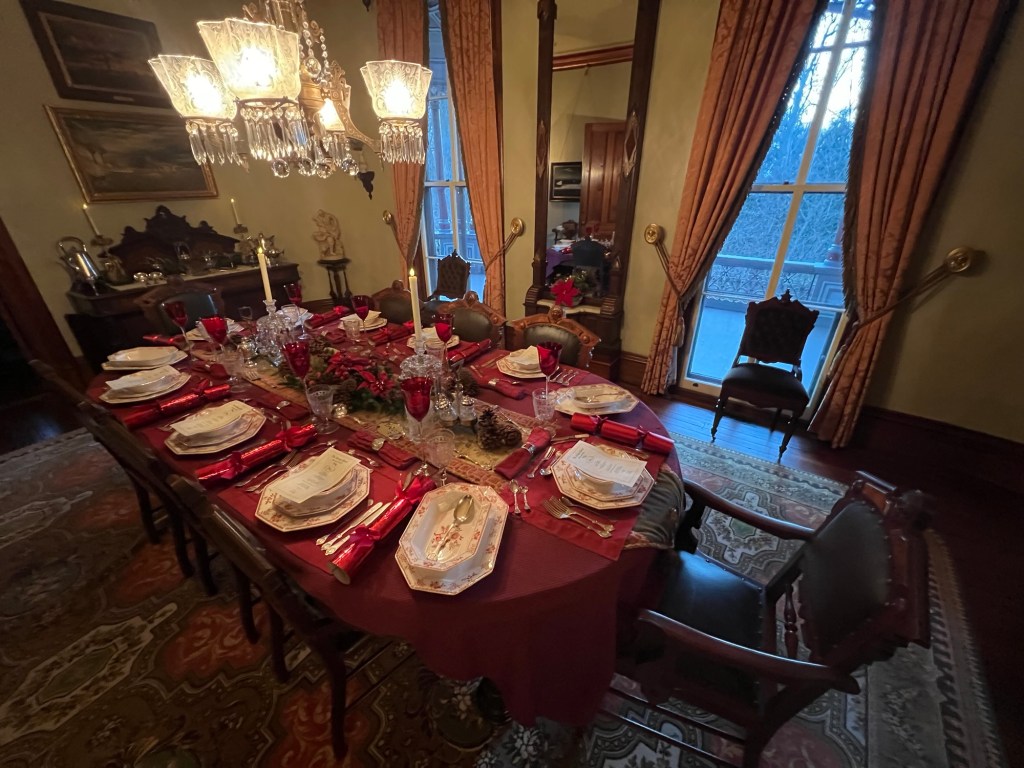
The Dining Room set for Christmas luncheon
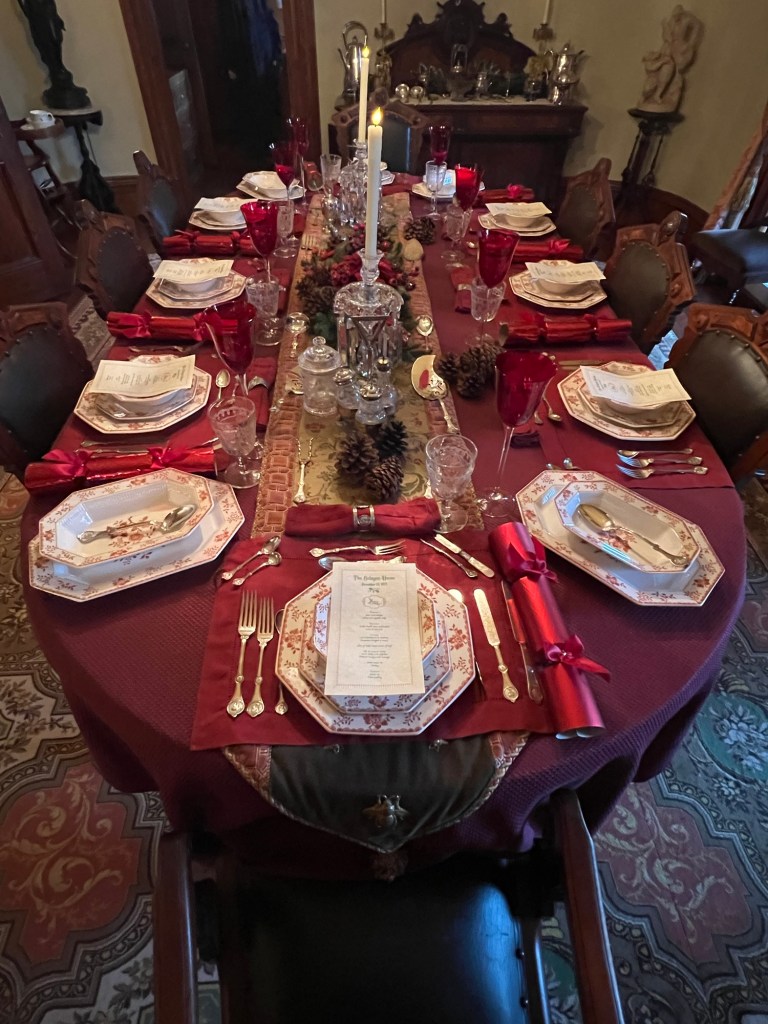
The table beautifully set for the holidays
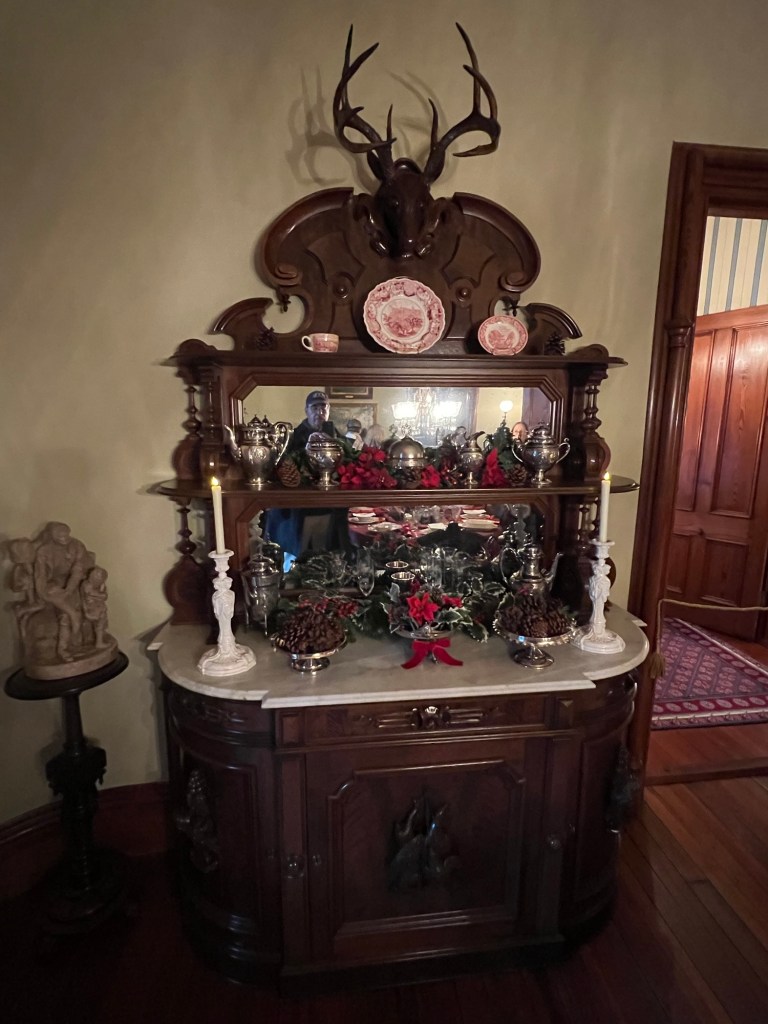
The sideboards decorated and stocked for the holidays
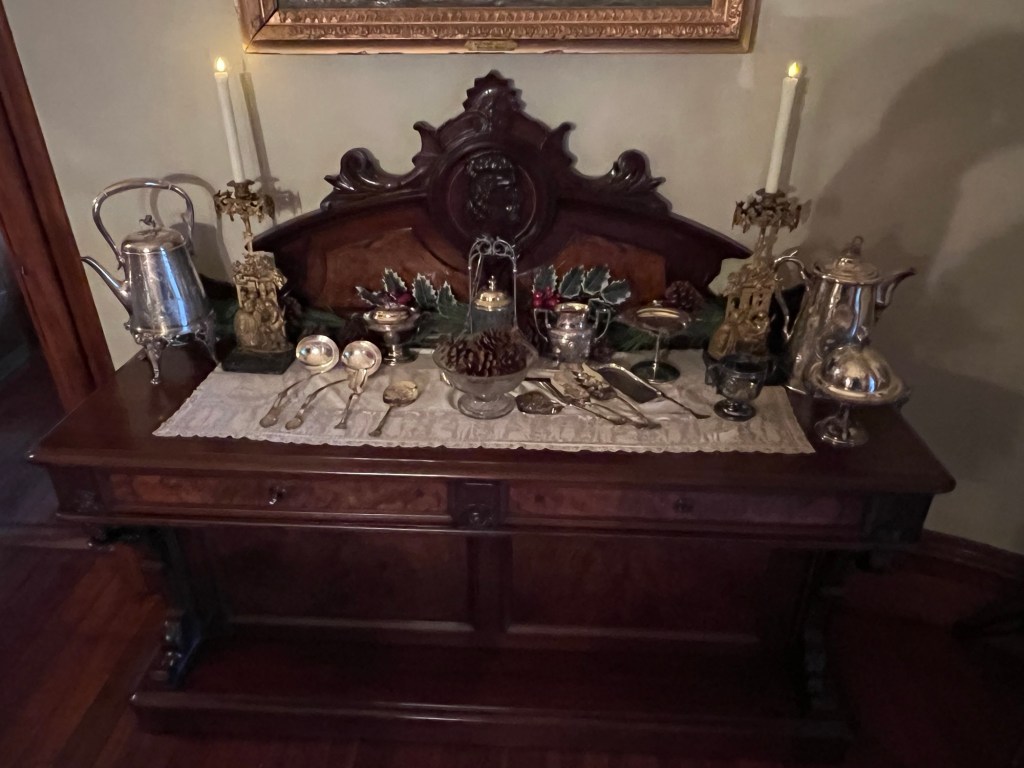
The service silverware ready for use for the Christmas meal
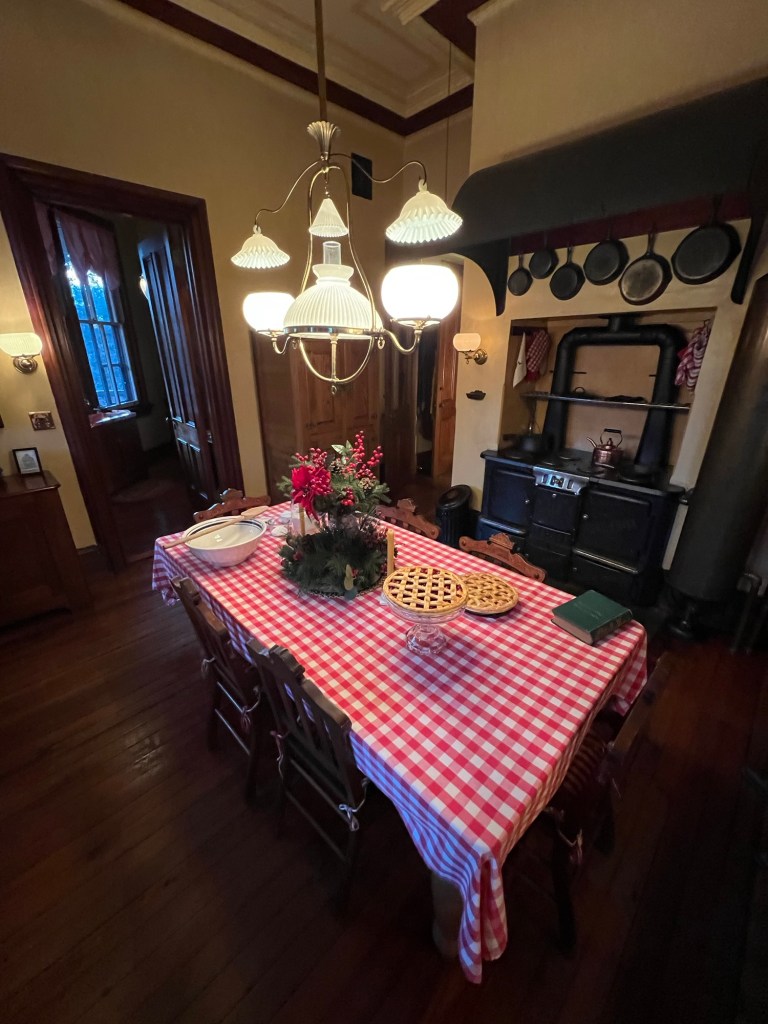
We then moved onto the kitchen where the feast would be prepared
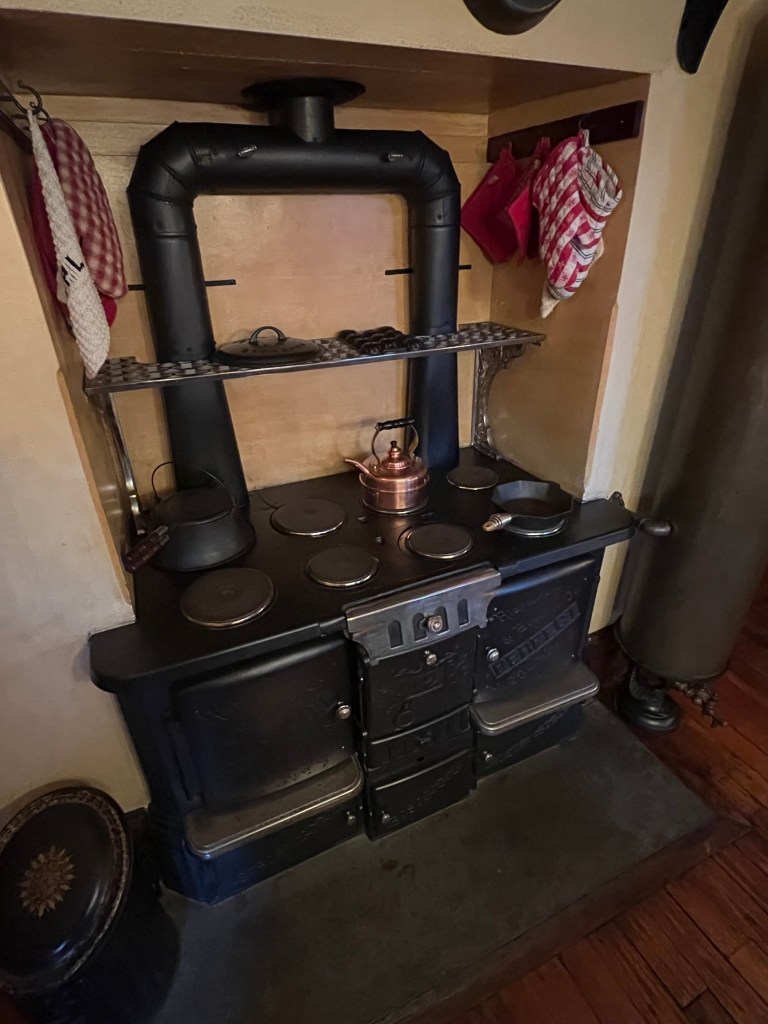
The working stove from the original house
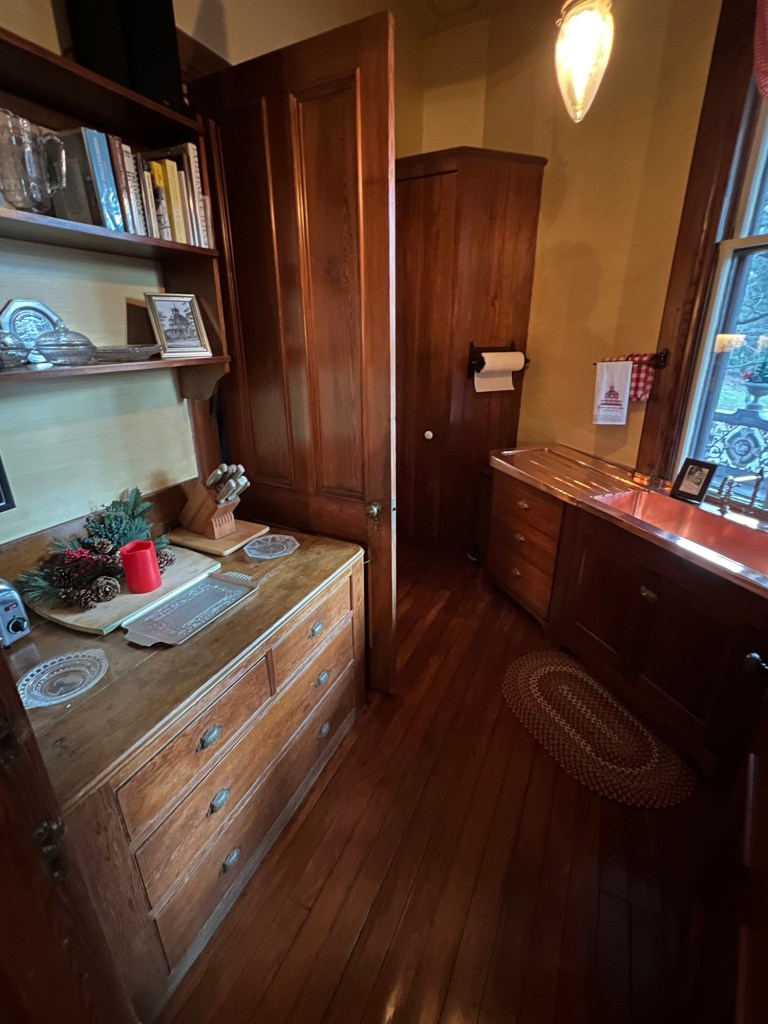
The sink and toilet prep areas
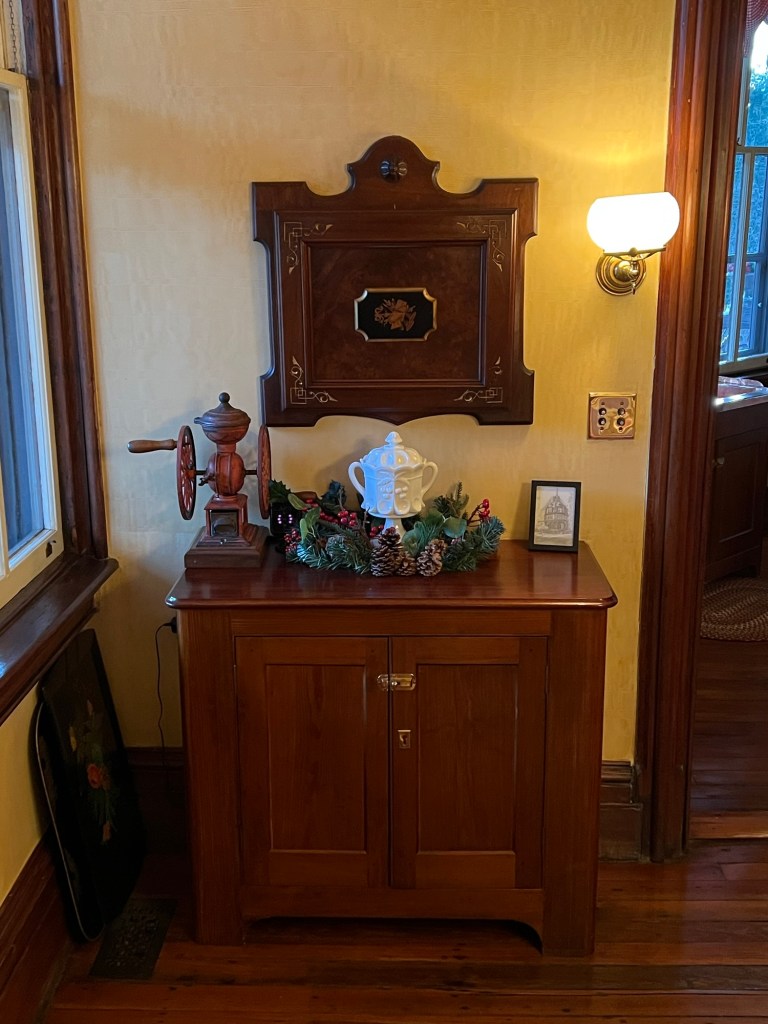
The side board with the coffee grinder
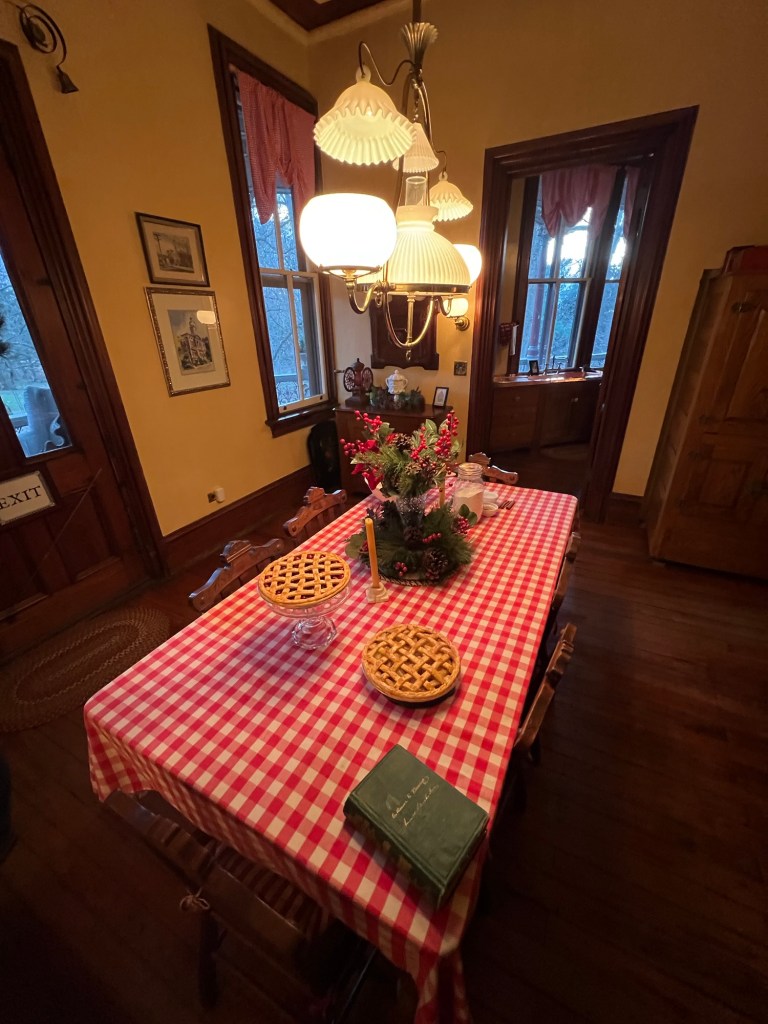
The Kitchen area with cookbook and desserts

We then left the more public areas of the house to the family’s living quarters. This was the experience extreme and not the exception in Victorian times to have this much room.
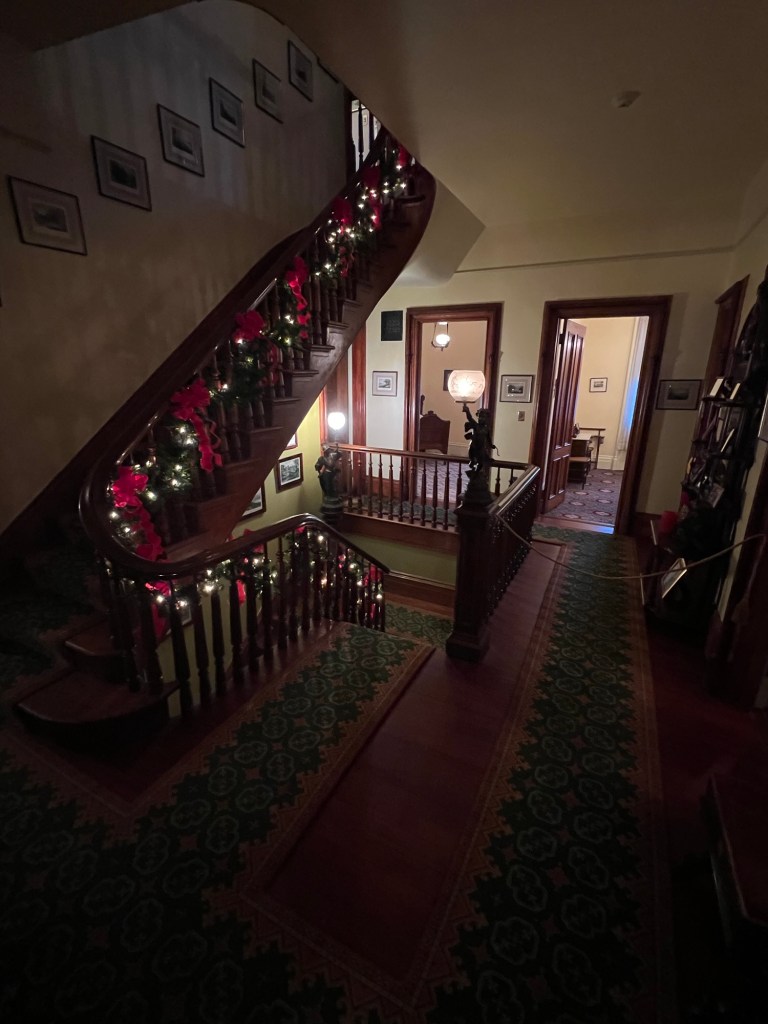
The second floor Reception Room where the family would have gathered for more casual events
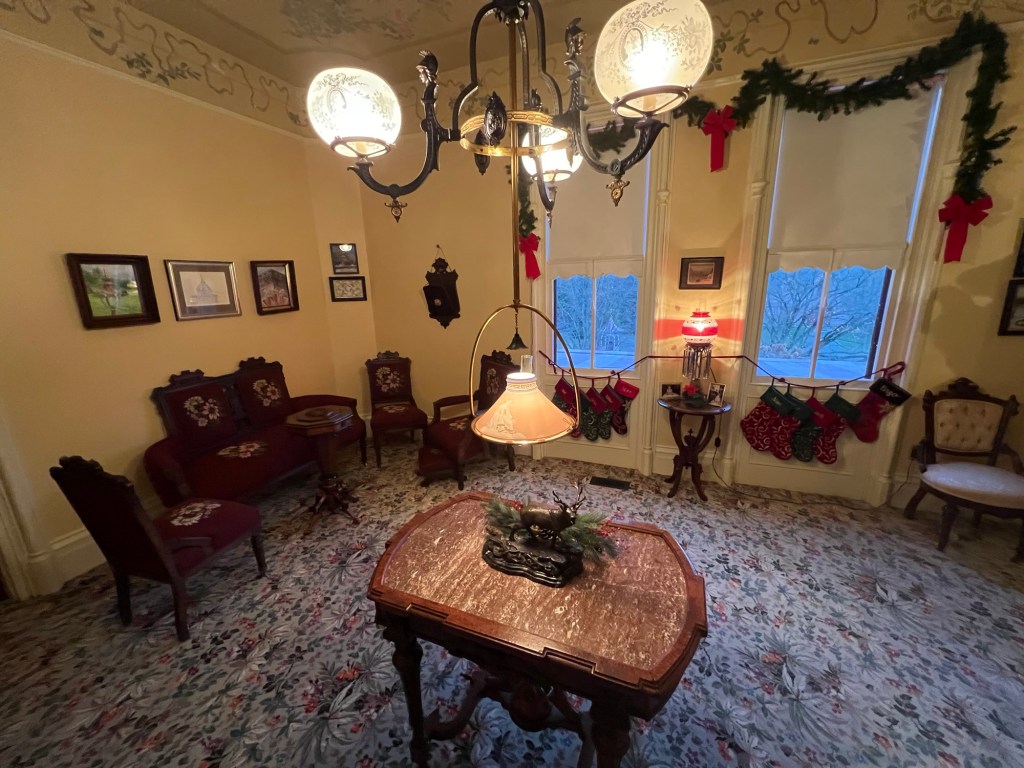
The Second Floor Reception Room
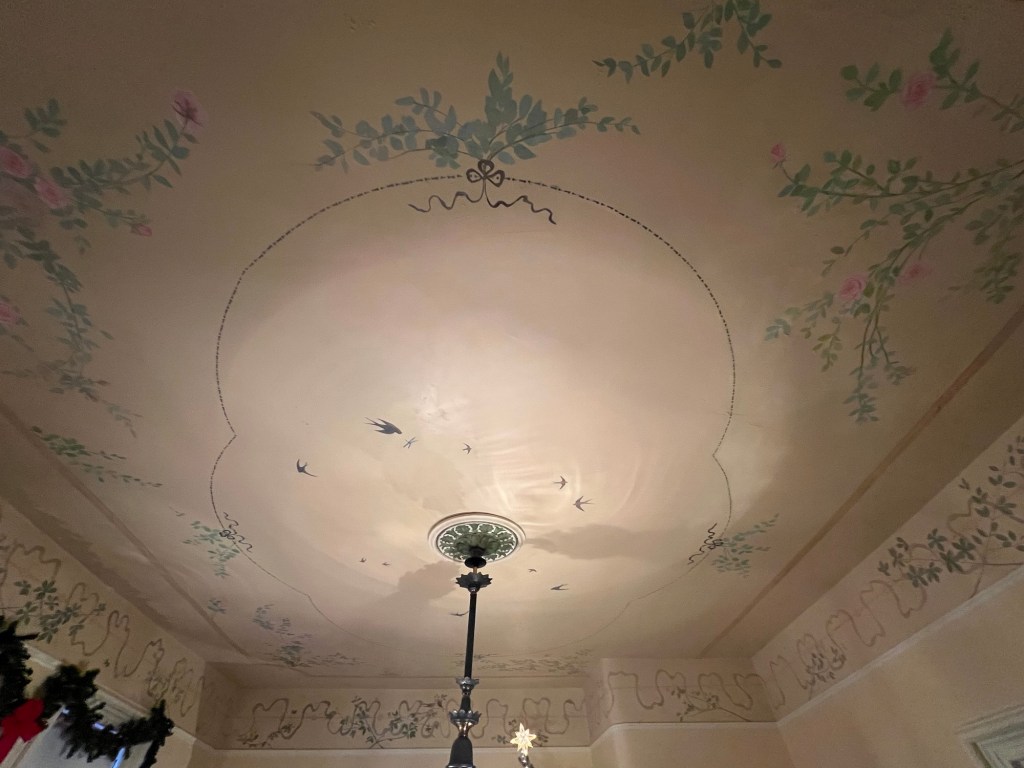
The ceiling is the only original part of the house left intact by each owner. It has been cleaned and restored to its original beauty.
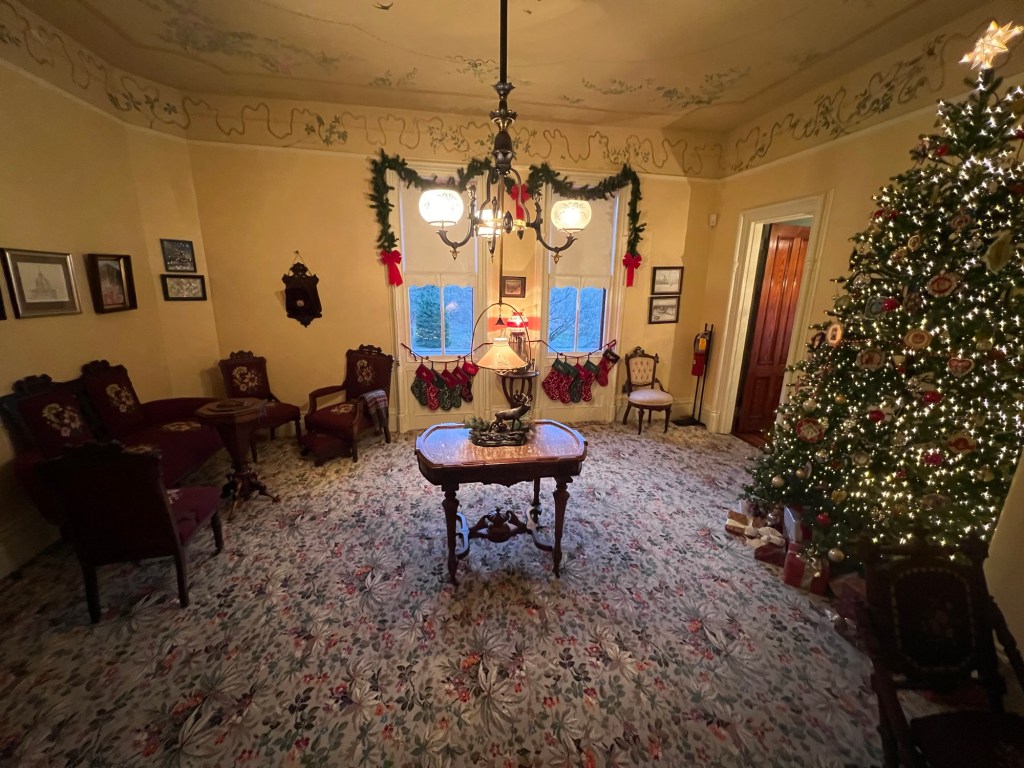
The room beautifully decorated for the holidays
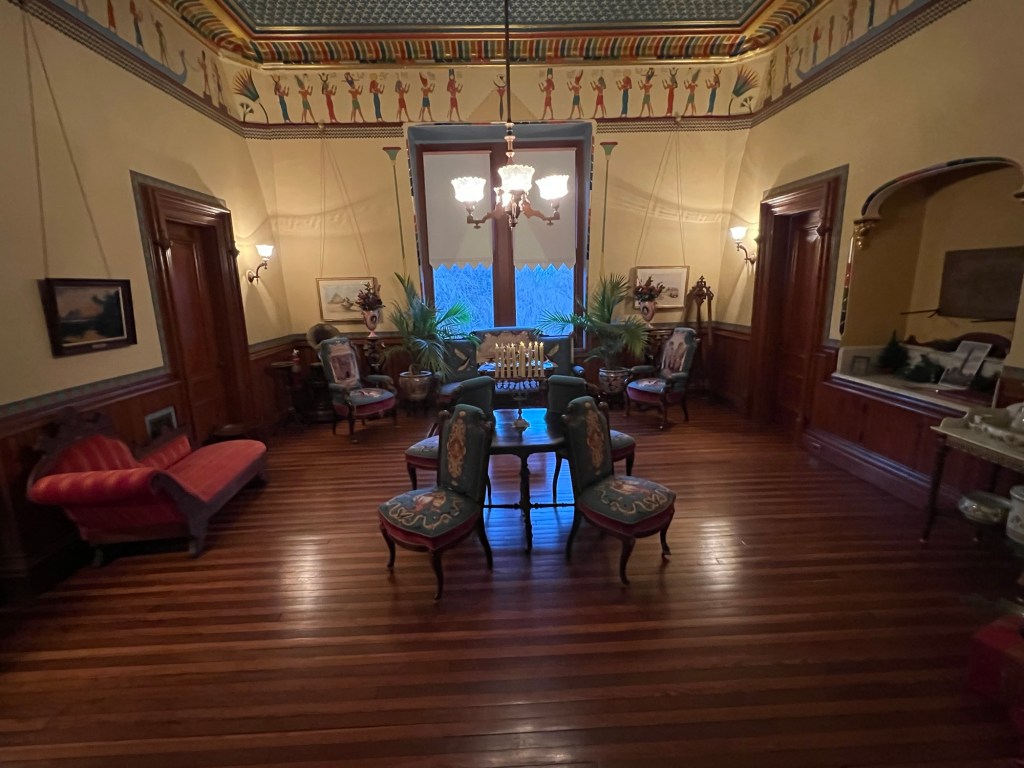
The Egyptian Room which was once a wellness
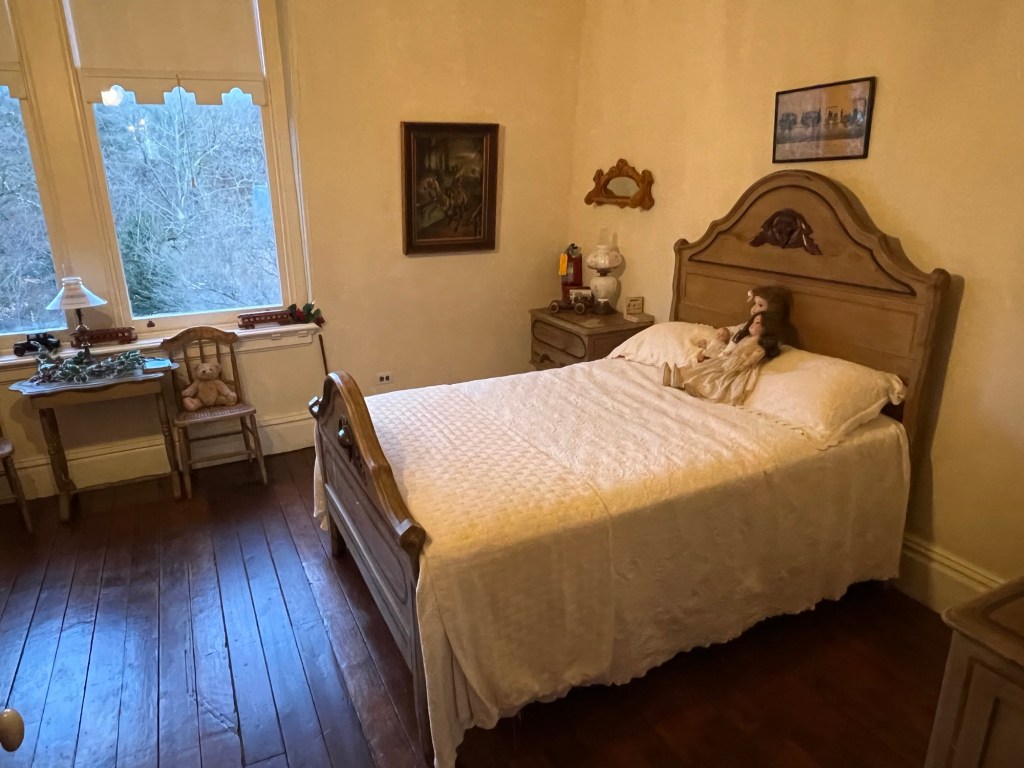
One of the upstairs bedrooms ready for guests
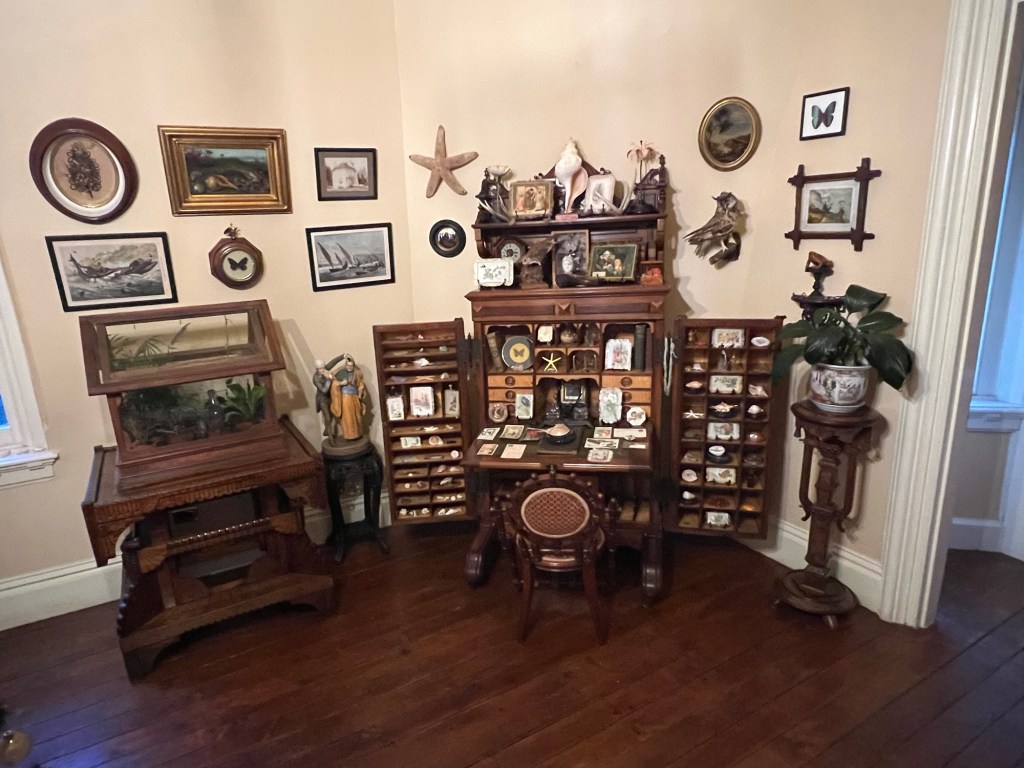
The Curio Room was a place where Victorians showed off their collections from their travels. These small items were displayed to show off the places they had been and some of the collections they were forming along the way.

The Table tree in the Curio room
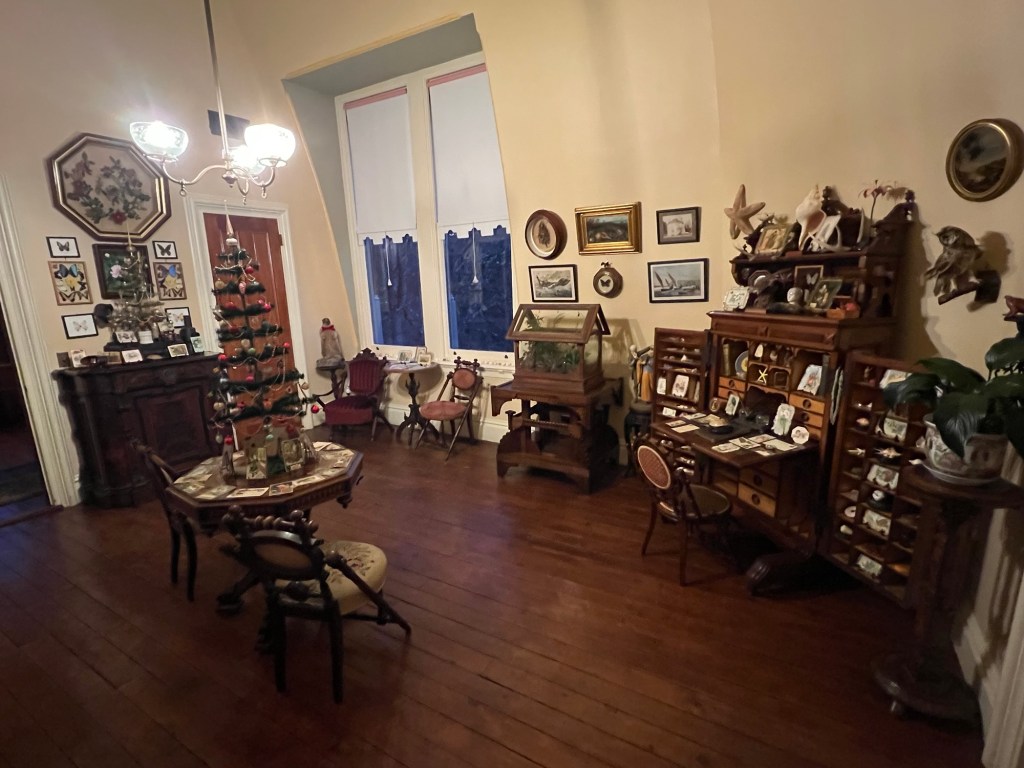
All the interesting collections in the Curio Room
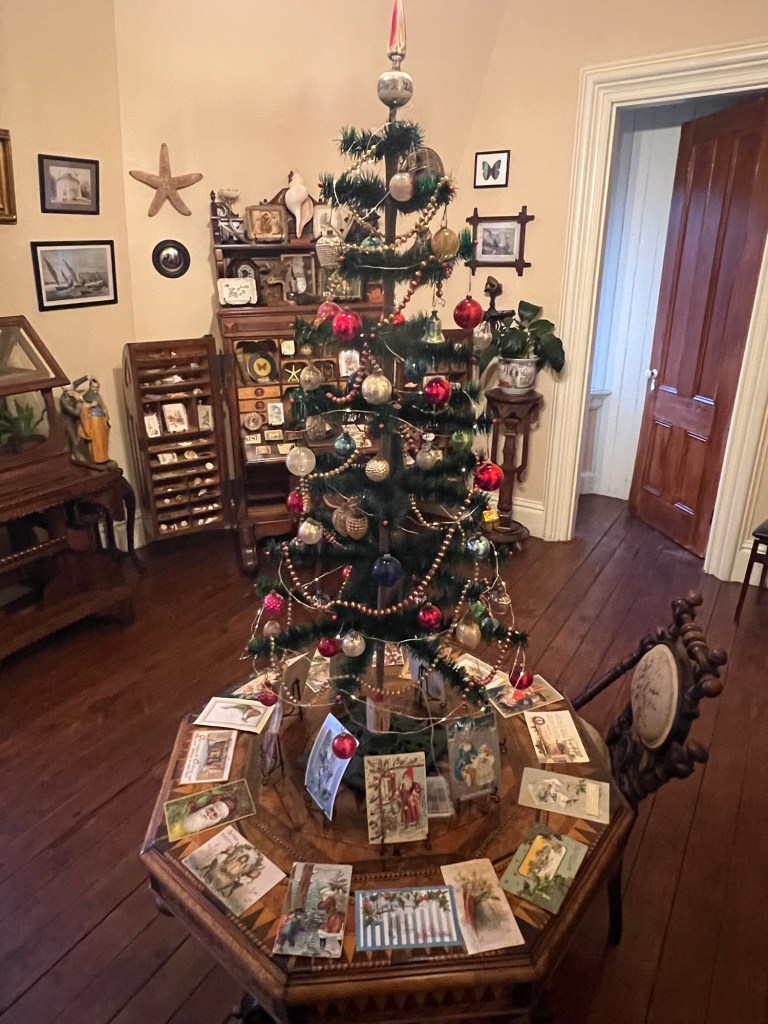
Even the small tree is covered with antique ornaments and old Christmas cards
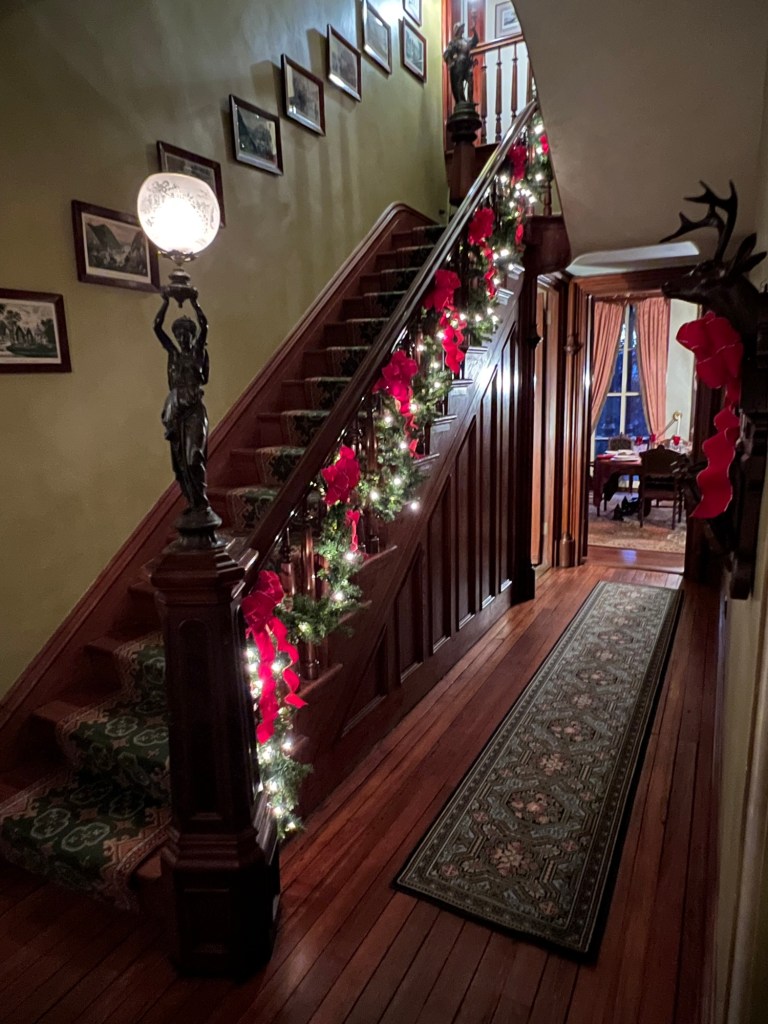
The third floor landing
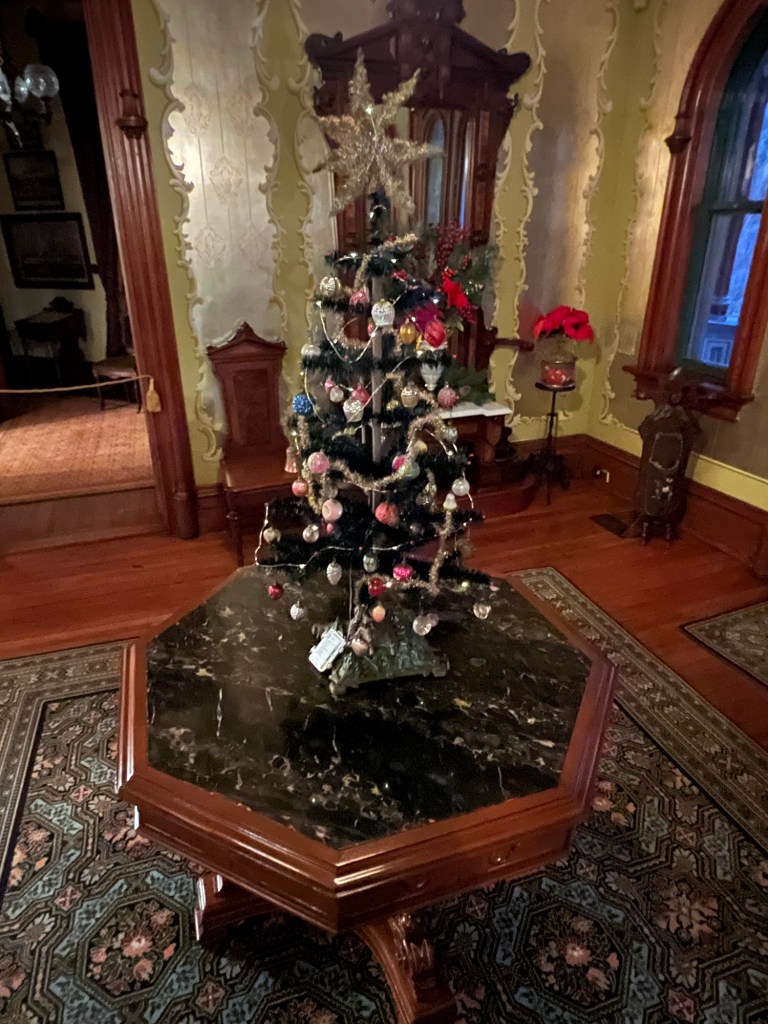
The Table tree in the landing
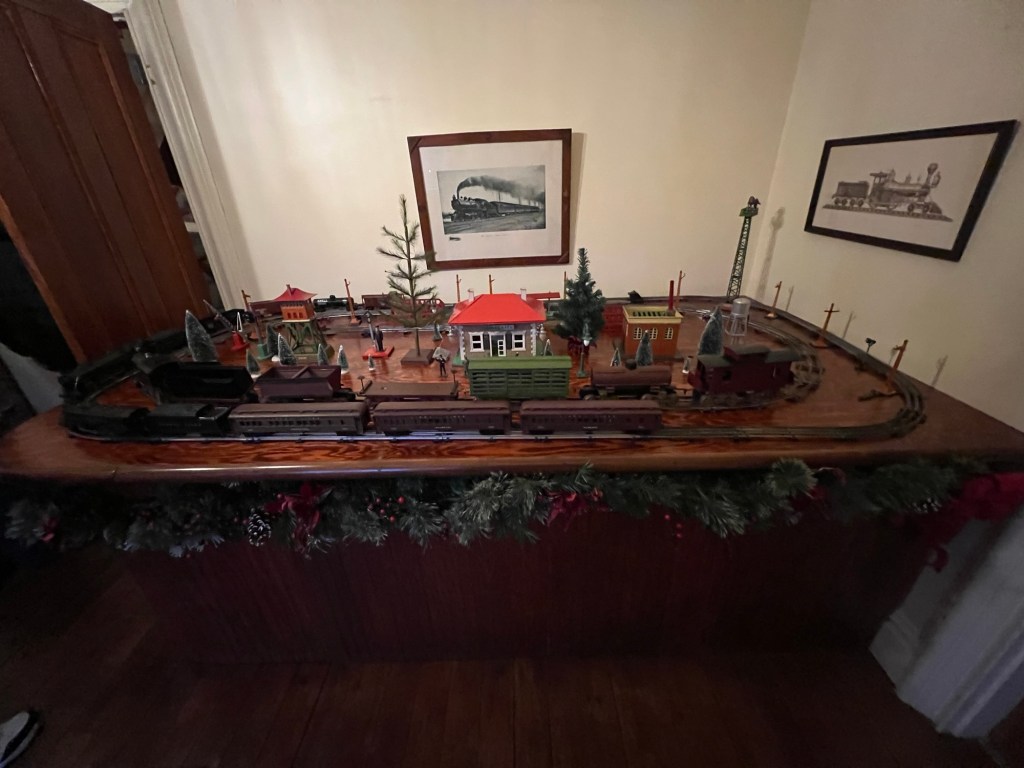
The antique train set
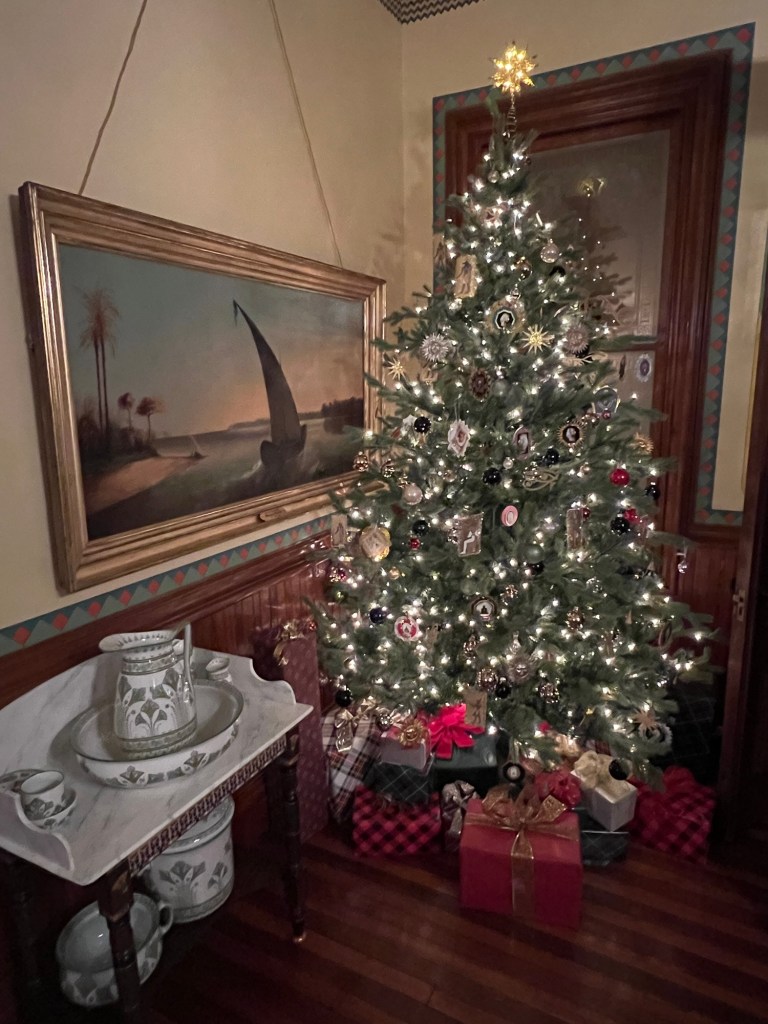
The Christmas tree on the third floor

Above is on the third floor, we could peek upstairs and see the bottom of the dome that had been added by Mr. Stiner. The was interesting. We made our way back downstairs to finish the tour and wrap up our discussion.
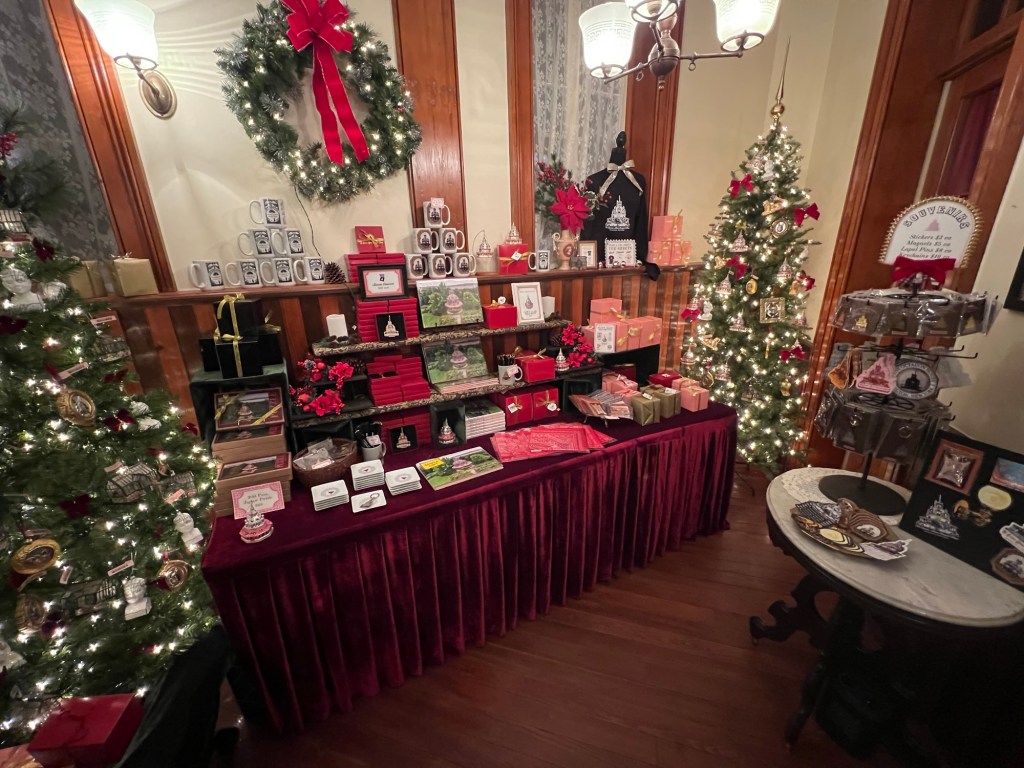
The Gift Shop

As you exit the house, there is an interesting Gift shop stocked with ornaments, toiletries, stationary and other gift items. This is where we concluded our tour.

The house and grounds were lit when we left and everything was so nicely decorated for the holidays.
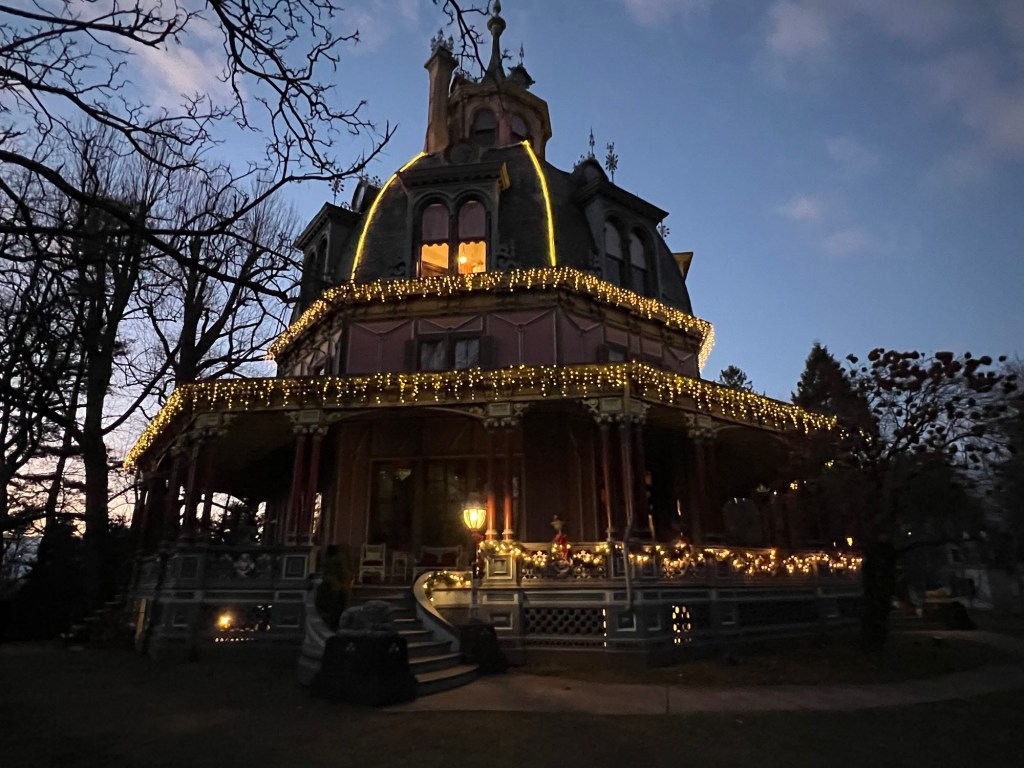
The house fully lit at twilight
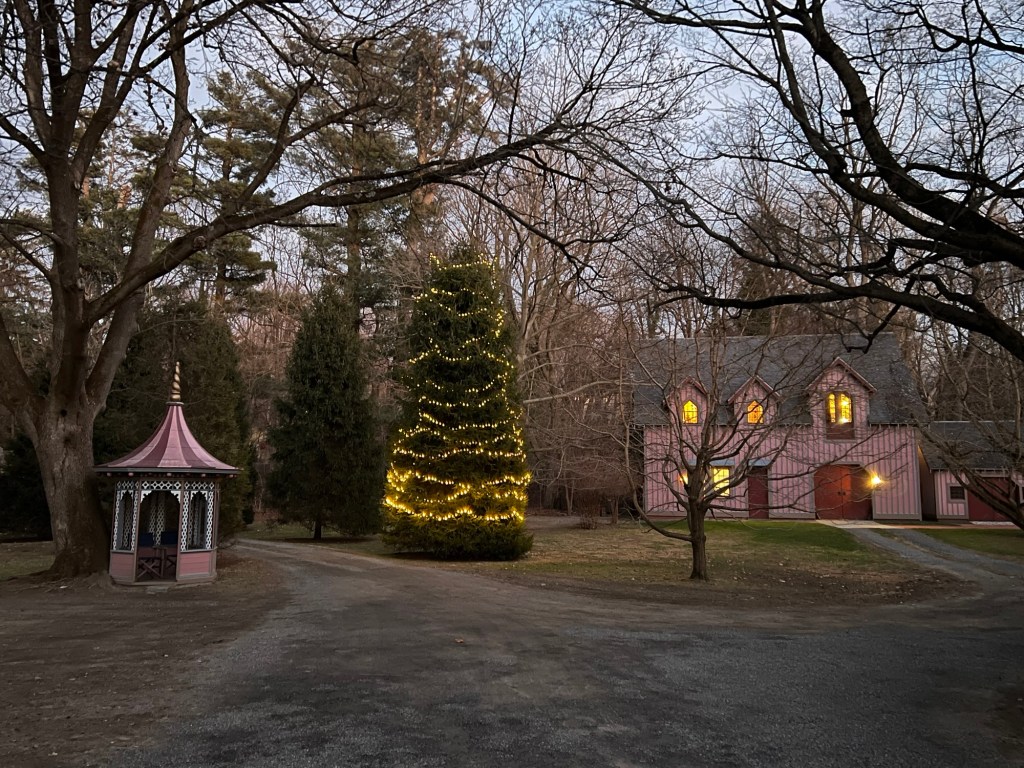
The Carriage House and grounds at twilight
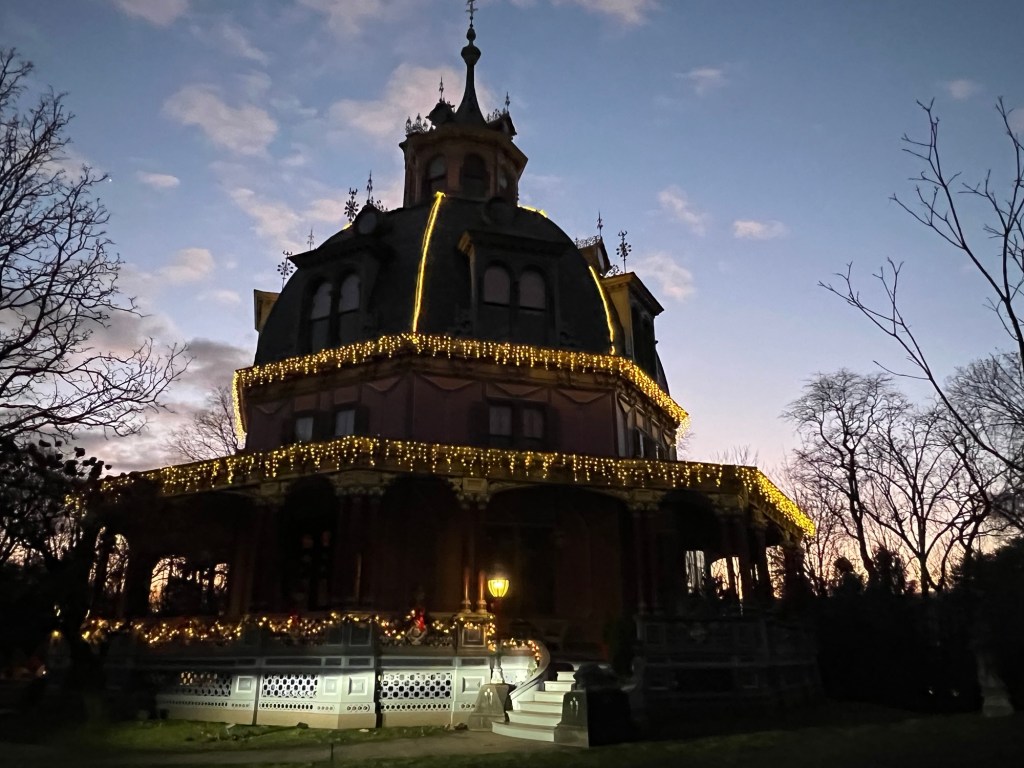
The house at closing time was picturesque

Touring the Amour- Stiner Octagon House is a step back in time to when society was slower and life a bit more gentle. you relished life and slowed down to enjoy it.

The Irvington Historical Society presentation on the Armour-Stiner Octagon House
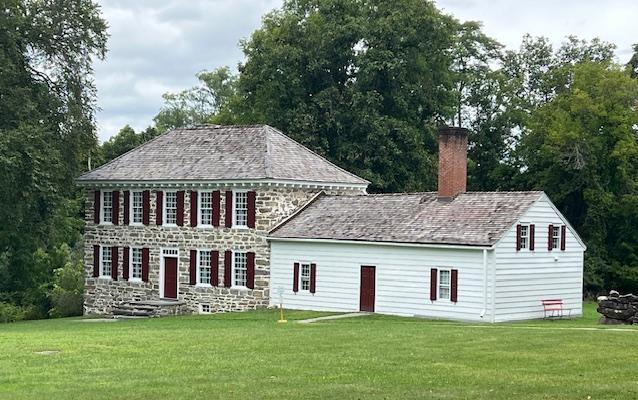
Knox Headquarters State Historic Site                  289 Old Forge Hill Road                                     Vails Gate, NY 12584

Knox Headquarters State Historic Site 289 Old Forge Hill Road Vails Gate, NY 12584

Knox Headquarters State Historic Site

289 Old Forge Hill Road

Vails Gate, NY 12584

(845) 561-5498

https://parks.ny.gov/historic-sites/5/details.aspx

https://en.wikipedia.org/wiki/Knox%27s_Headquarters_State_Historic_Site

Open: Sunday-Saturday (Seasonal-Please see the website)

Admission: Free but donations are accepted

My review on TripAdvisor:

https://www.tripadvisor.com/Attraction_Review-g48760-d1174661-Reviews-Knox_s_Headquarters_State_Historic_Site-Vails_Gate_New_York.html

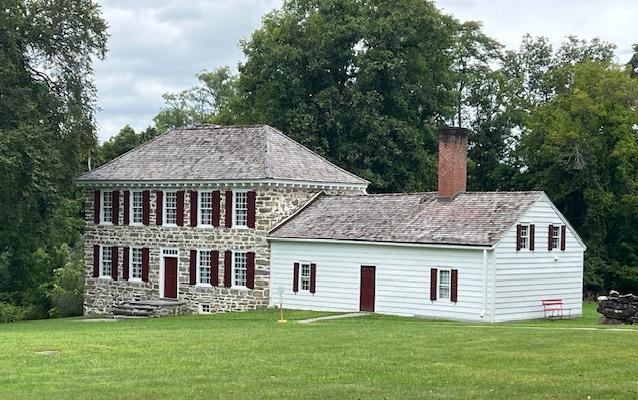
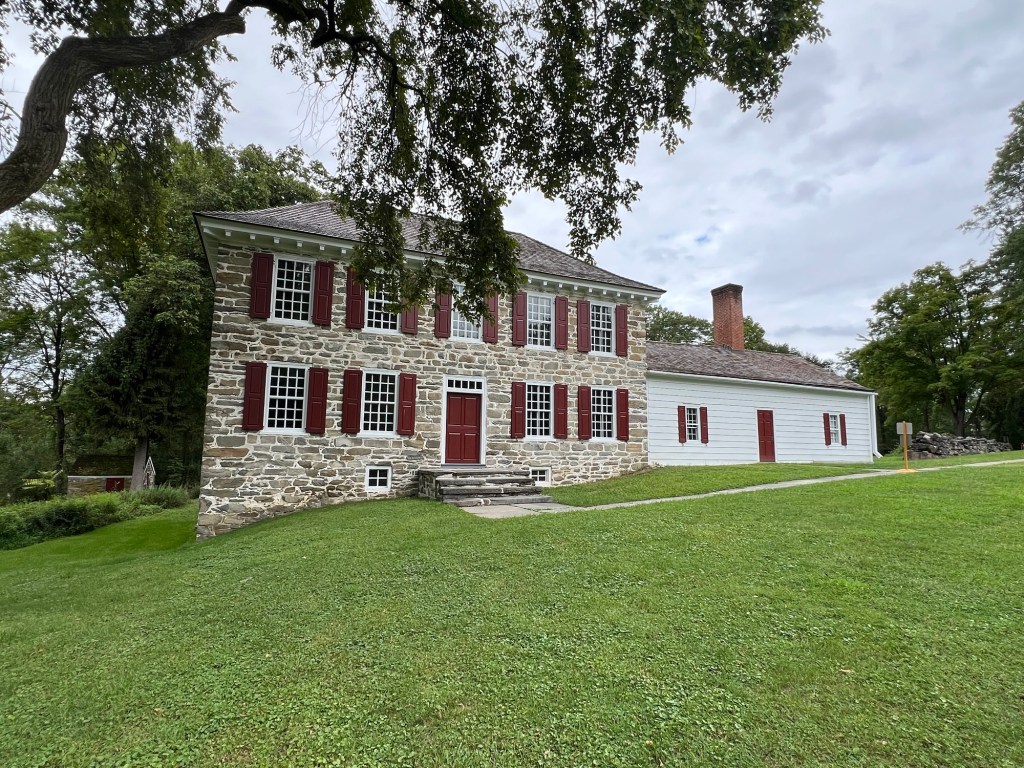
The Georgian side of the Elliott home

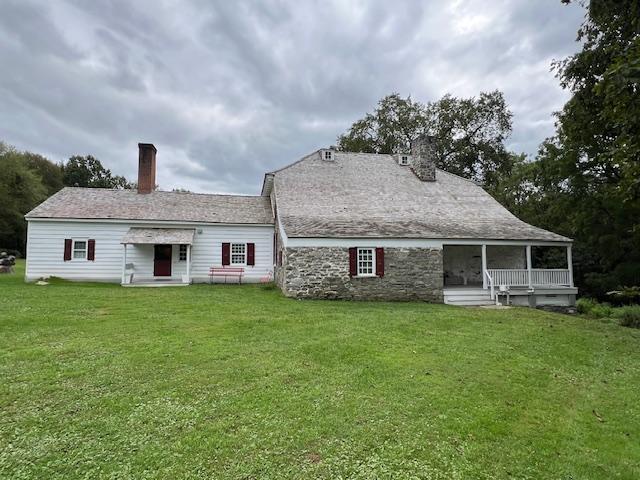
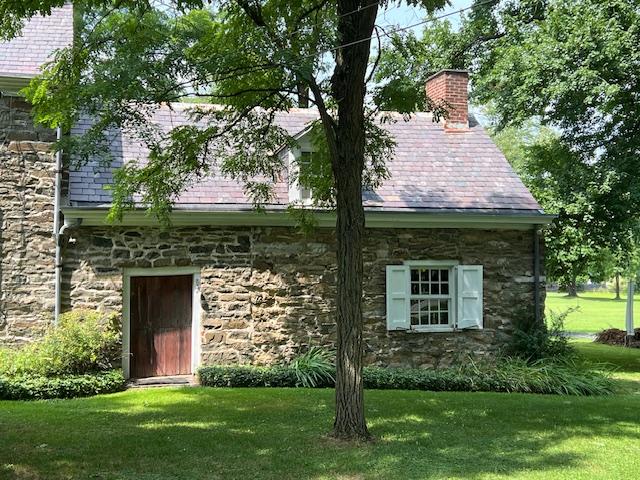
The Dutch style side of the home

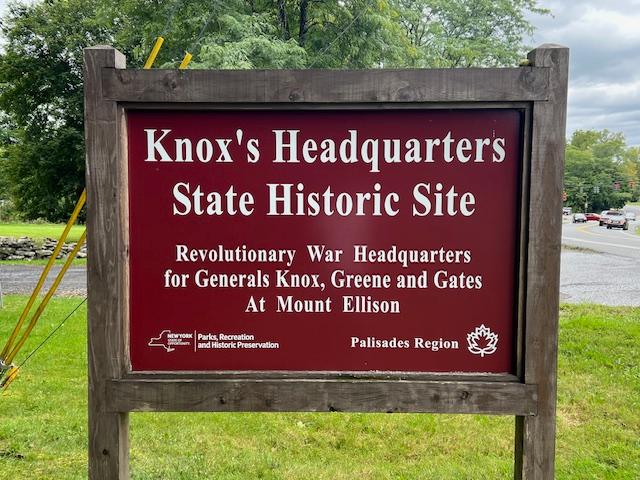
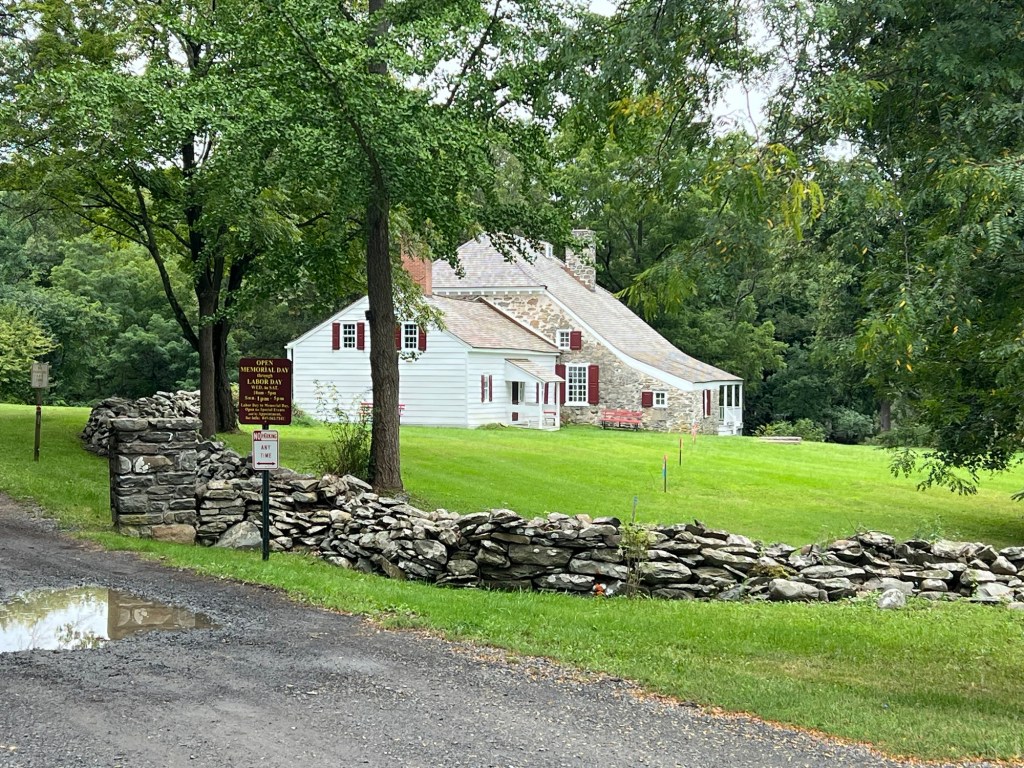
The sign welcoming you

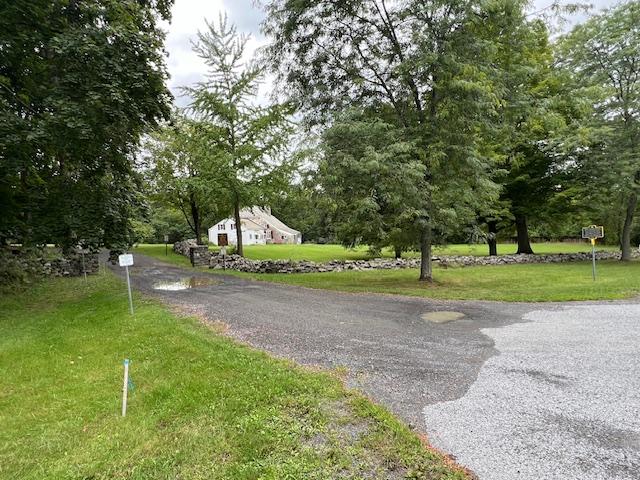
The estate from the road

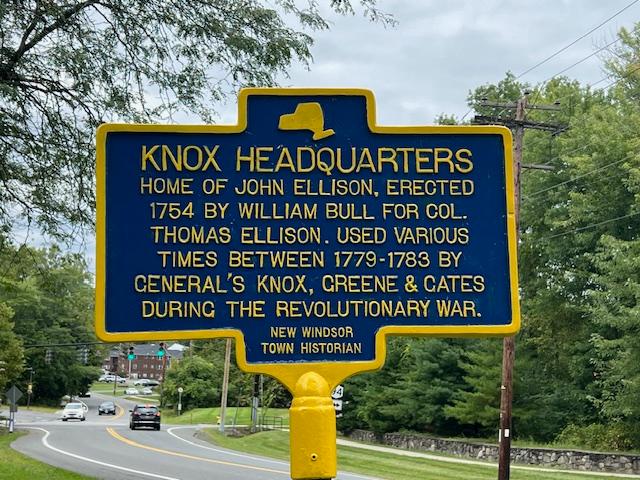
The historic sign outside the home

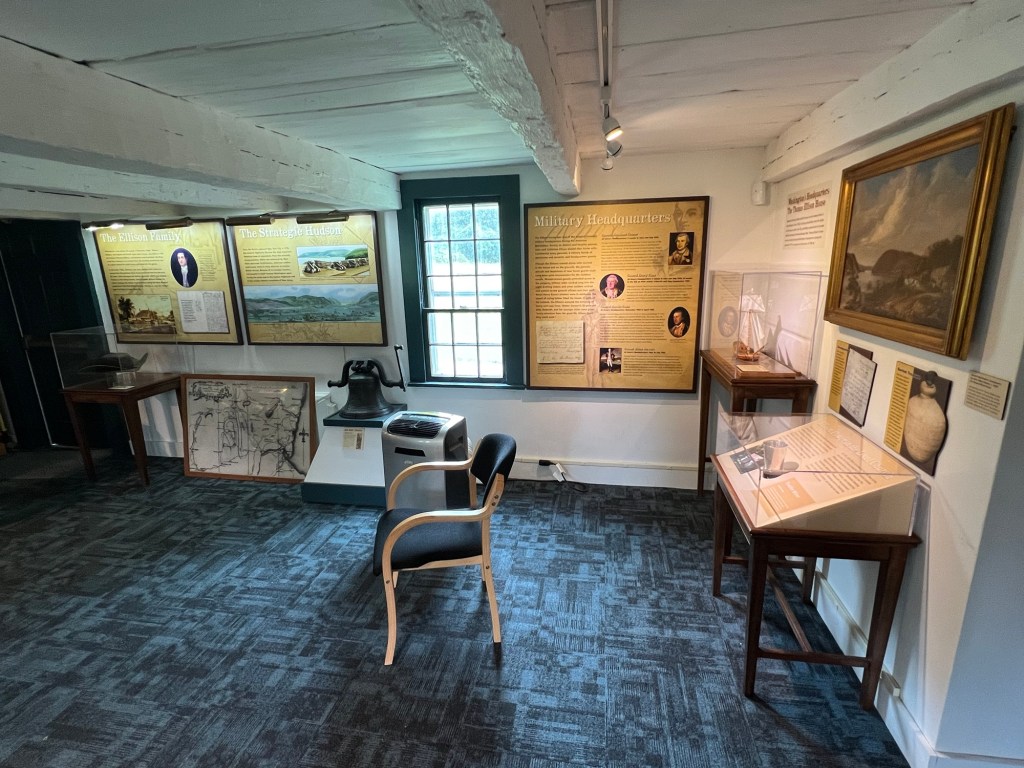
The Welcome Center tells the story of both the Ellison family and their war visitors, the Knox family.

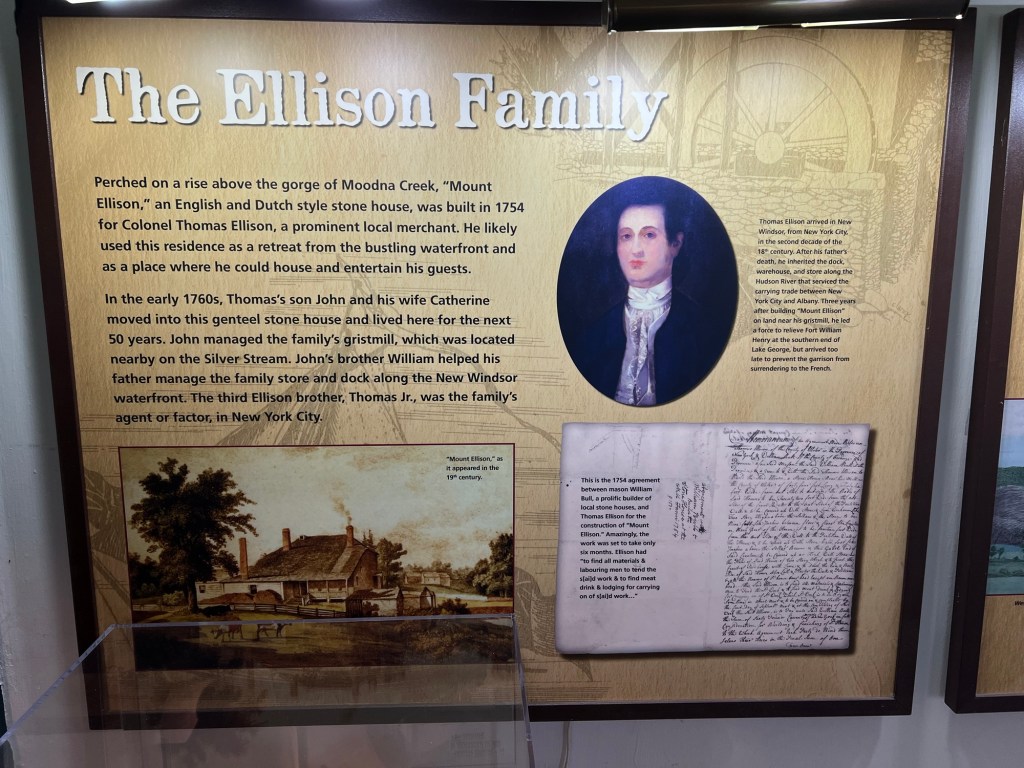
The Ellison family history sign

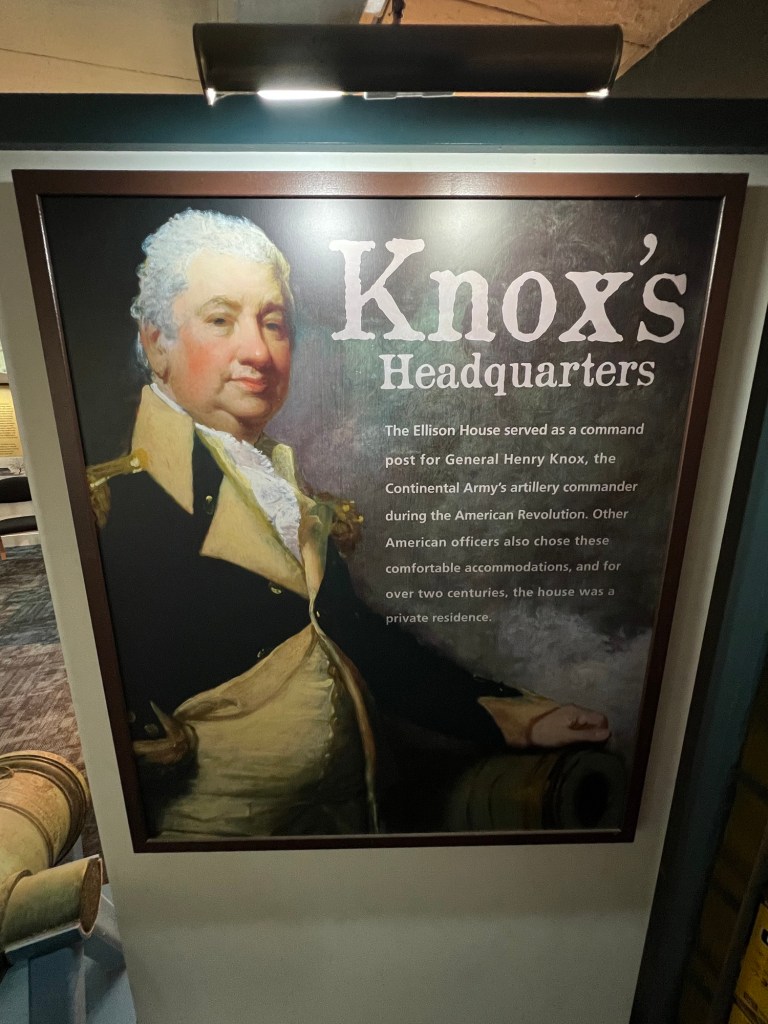
The Knox family history sign

The family history in the Visitor’s Center

The tour of the house was very interesting. The house was built in three stages as the family grew and prospered over the generations. There was the original Dutch house which is the side of the house that faces the current road, the Georgian addition which faces the back of the house, where the original Kings Highway was located and the addition, where the Visitors Center was located.

My tour guide, Tiffany, explained there had been other additions to the home over the years but they had been removed for the historical integrity of the house.

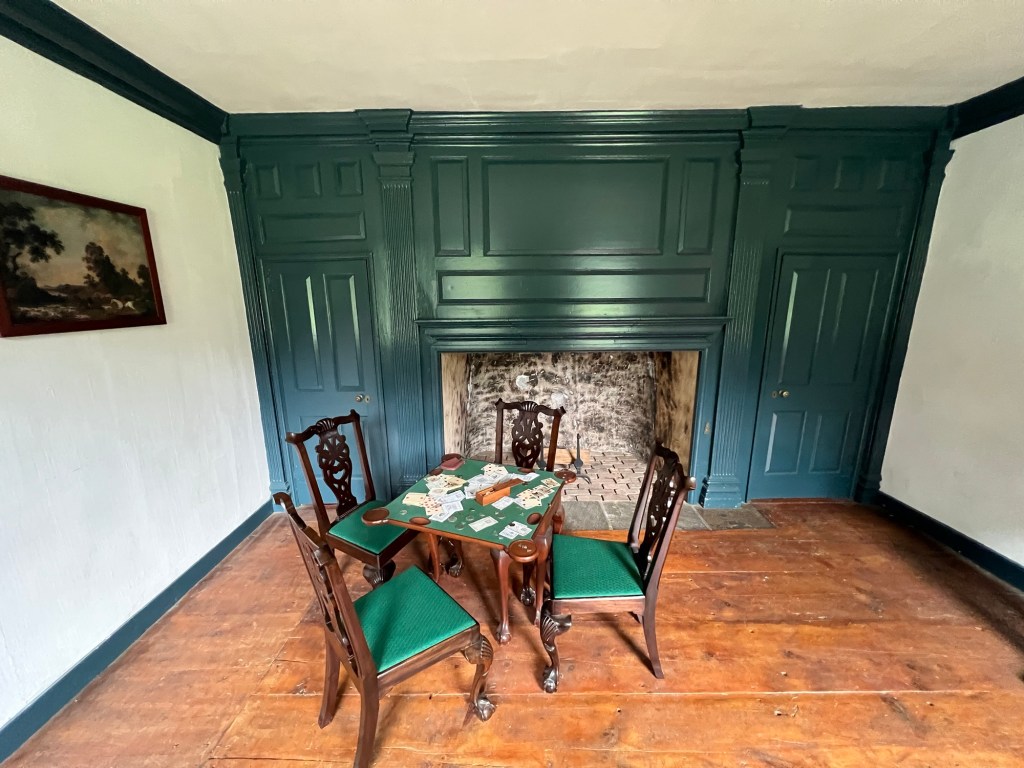
The Georgian addition of the home featured more rooms for socializing

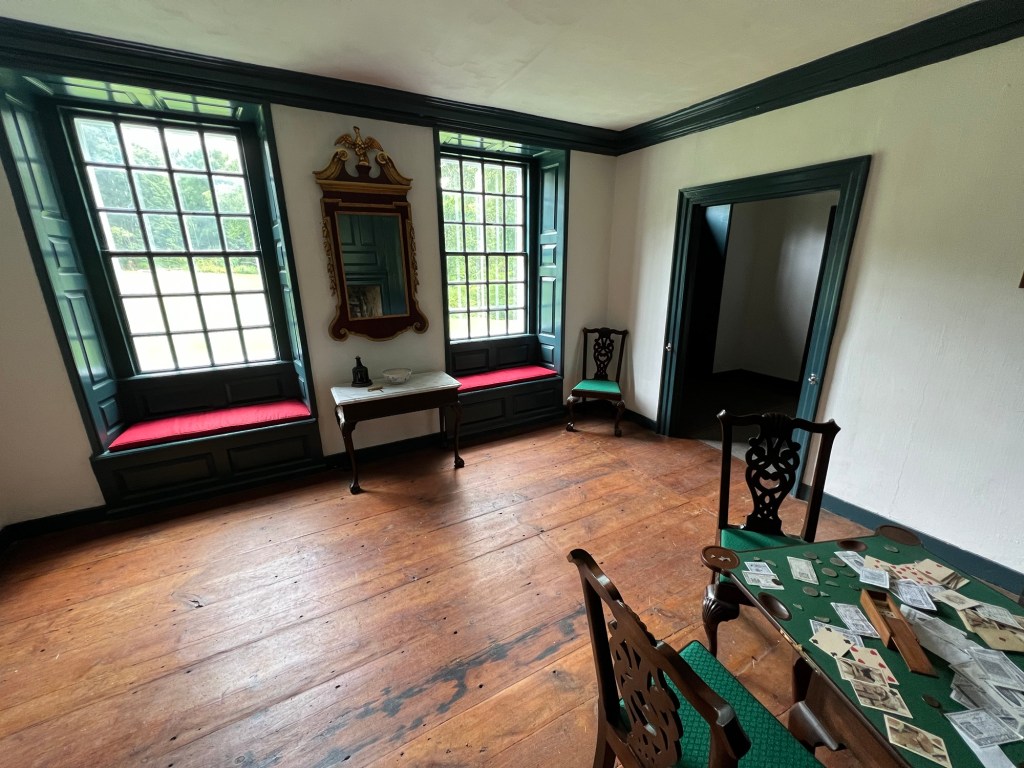
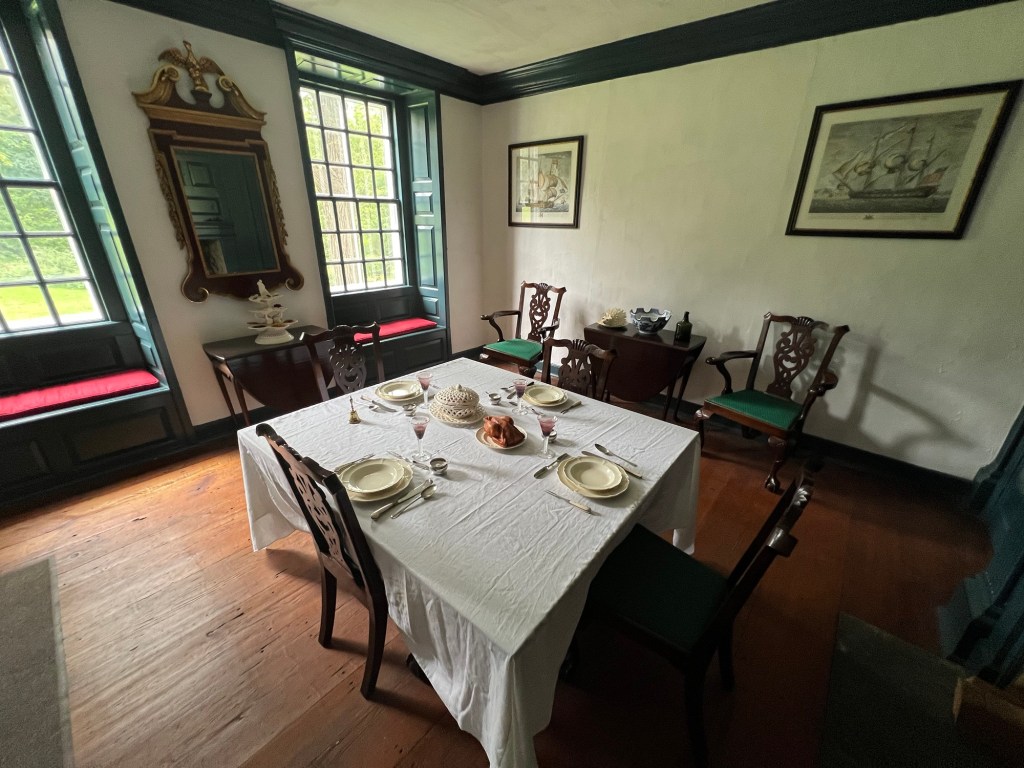
The Georgian addition to the back of the home was built with the family fortunes. This included a spacious formal Parlor, Dining Room both with large window to let in natural light and high ceilings for circulation and to show the families affluence.

The large windows let in the natural light in the warmer months

Much of the furniture in the house was not original to it but was of the period. Here and there though there were pieces donated back to the house and gave it its historical dignity.

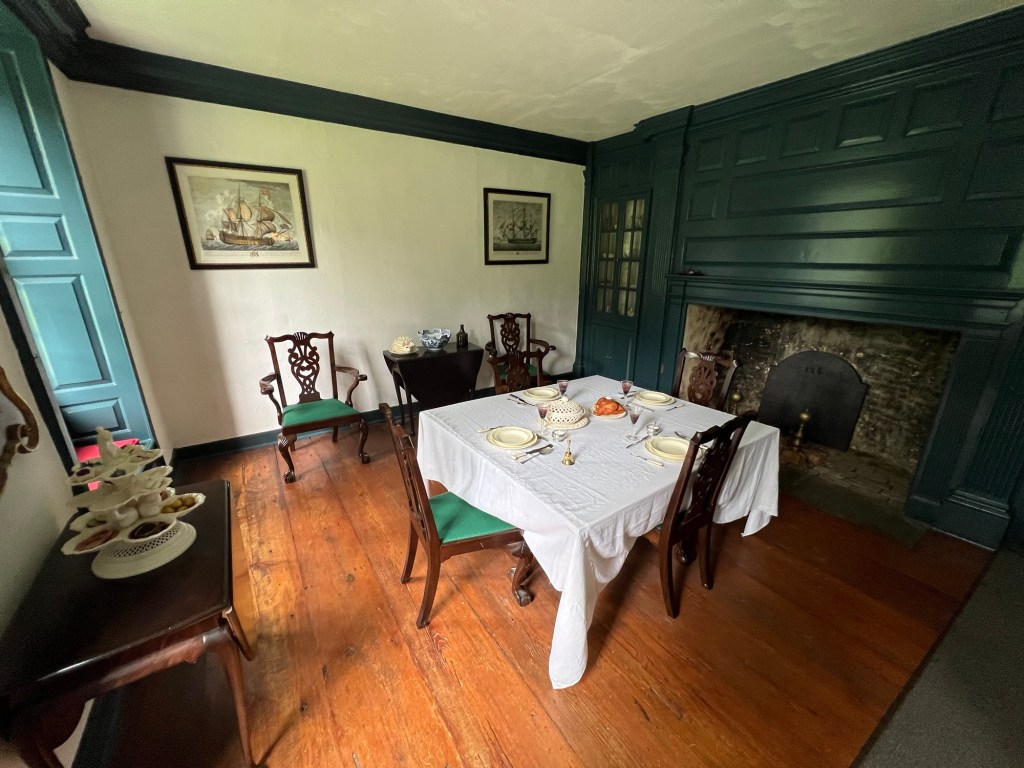
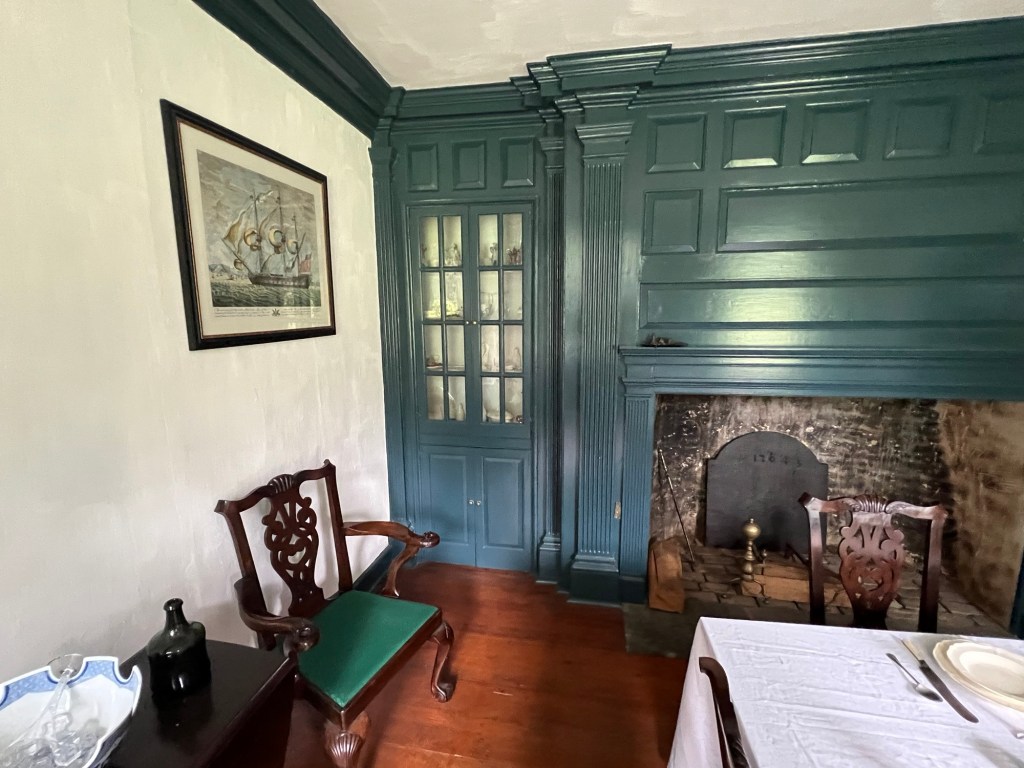
The formal dining room was used to impressi visitors with the large fireplace

The Dining Room used for meals and formal entertaining was spacious yet cozy. There was room to move around but it was still intimate for conversation.

The room had built in China cabinets

The wood work contained china cabinets, storage for silver and family serving pieces. The large metal tombstone looking item in the fireplace was a metal slab meant for retaining heat for the room once the fire went down. This is how the room was kept warm in the colder months.

The natural light was perfect for late afternoon supper

Once you left these rooms for the front hallway, this led to the Dutch front portion of the house, once the living quarters and now was were the business office and storage for the family business was attended to during working hours.

The office of Mr. Ellison was in the front part of the original Dutch portion of the house

The rooms in the front section of the original house were separated from the formal part of the current back of the house. This is where Mr. Ellison and his son attended to business calls and stored their goods for shipping.

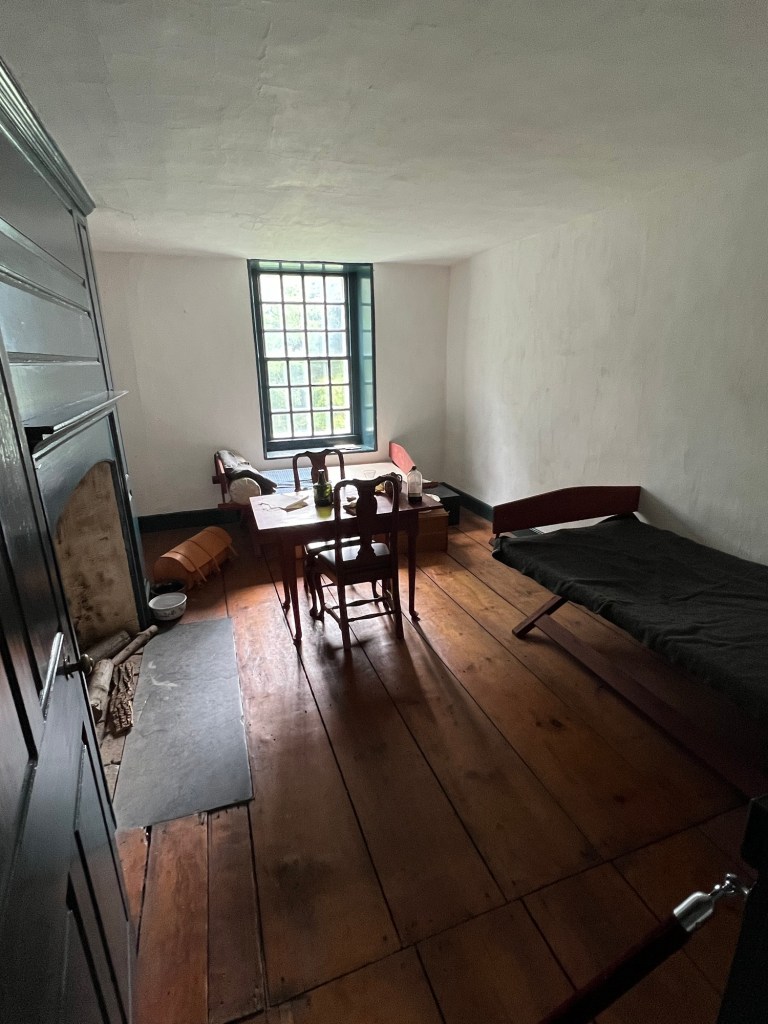
The storage room was probably a family bedroom for the original house

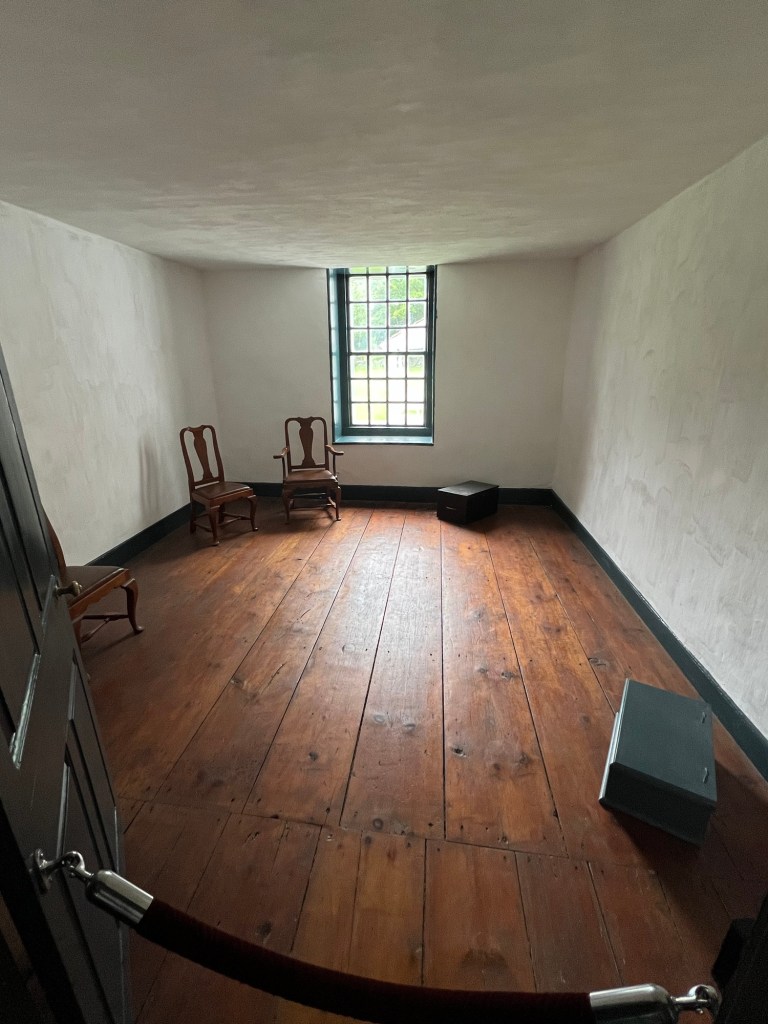
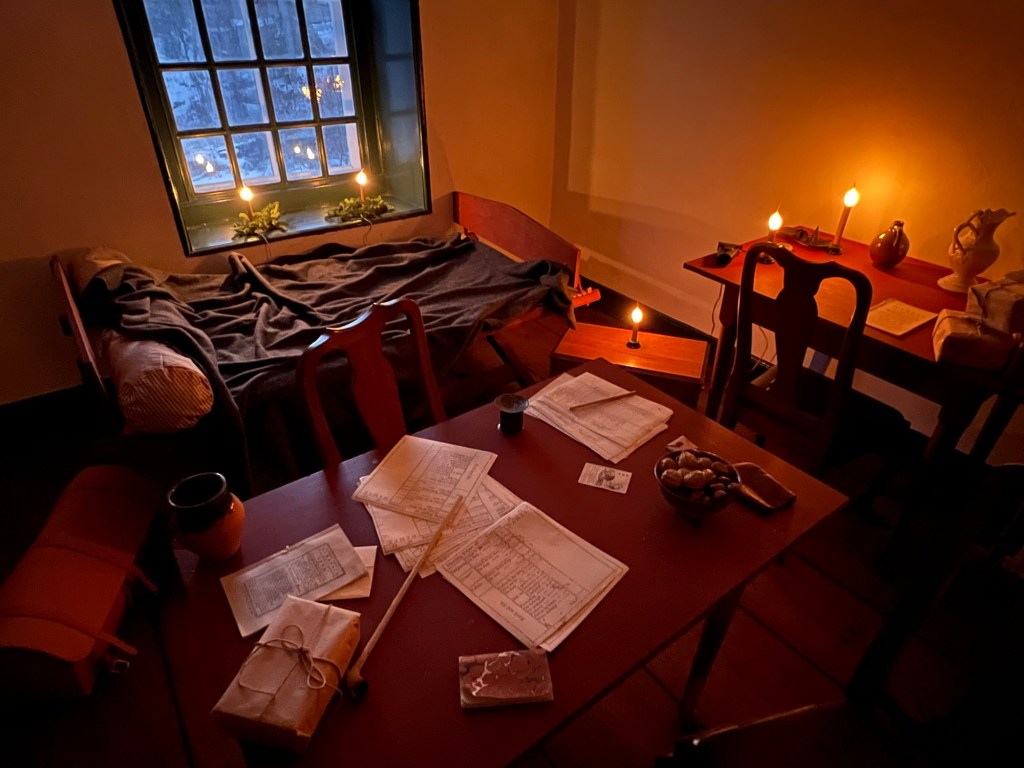
The trip upstairs was part of the addition of the house and contained two spacious bedrooms with high ceilings and large windows. When the Knox family joined the Ellison family during the encampment, each family had one bedroom for use. The Ellison’s did not have any children and the Knox’s had two small children, a small girl and an infant boy. From what the tour guide explained the Ellison’s welcomed them in the home and relations were very good with both couples, who welcomed the children into their home. It brought extra life to the house.

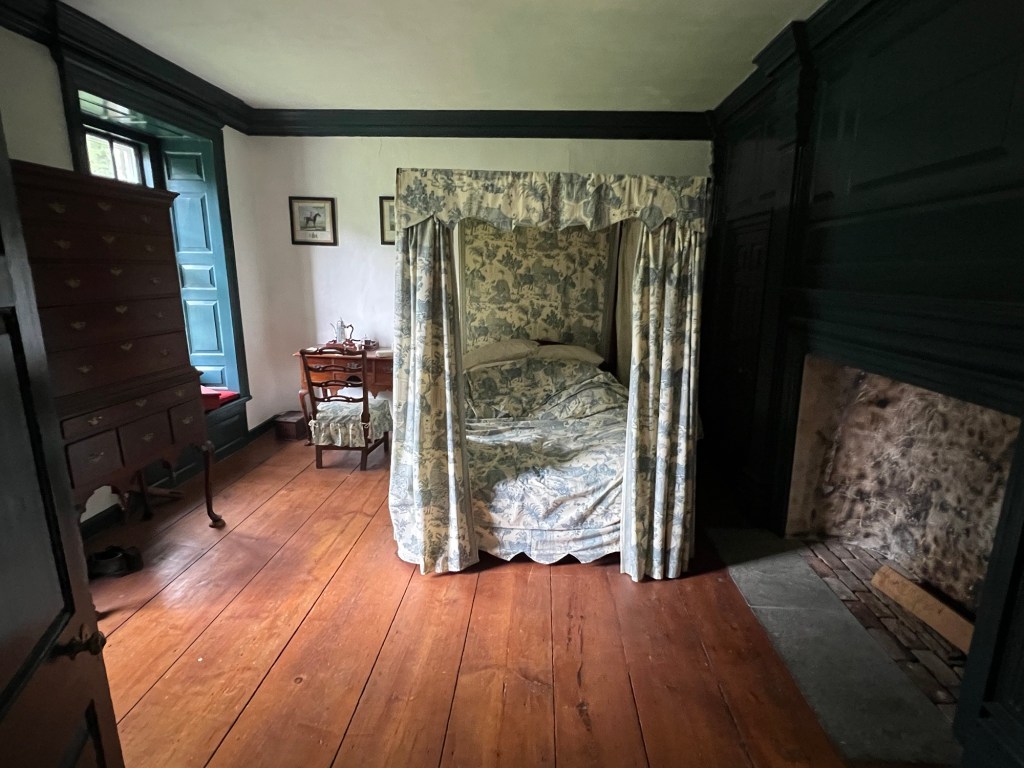
The formal bedroom of the Ellison’s would be the bigger room and more formal

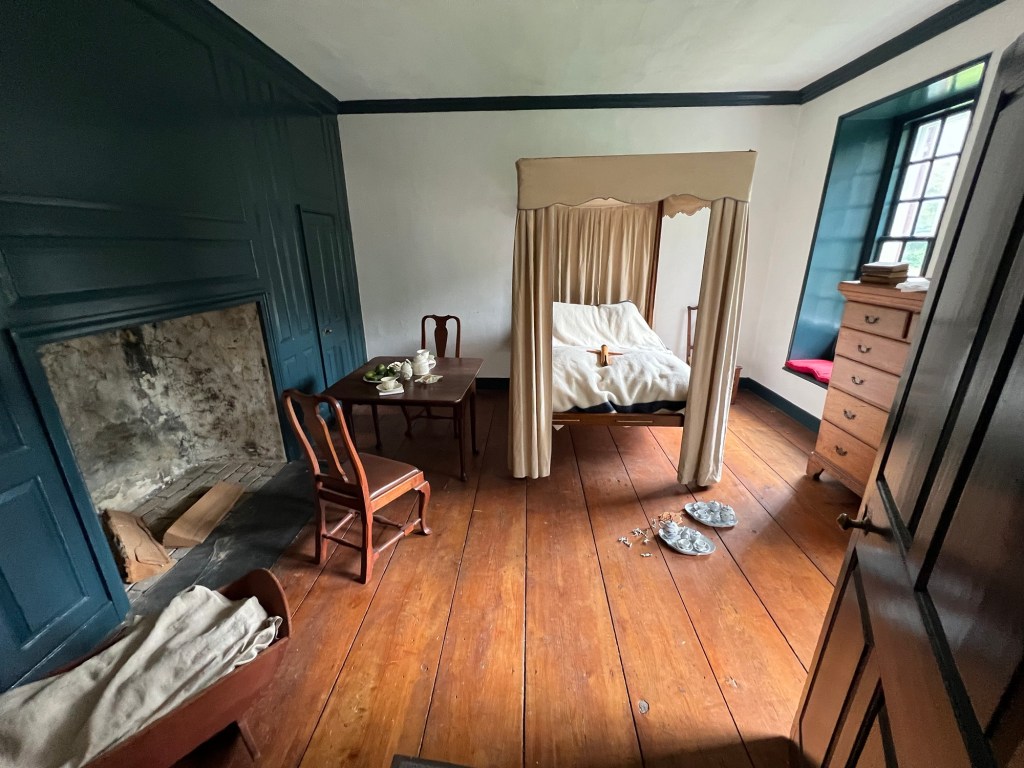
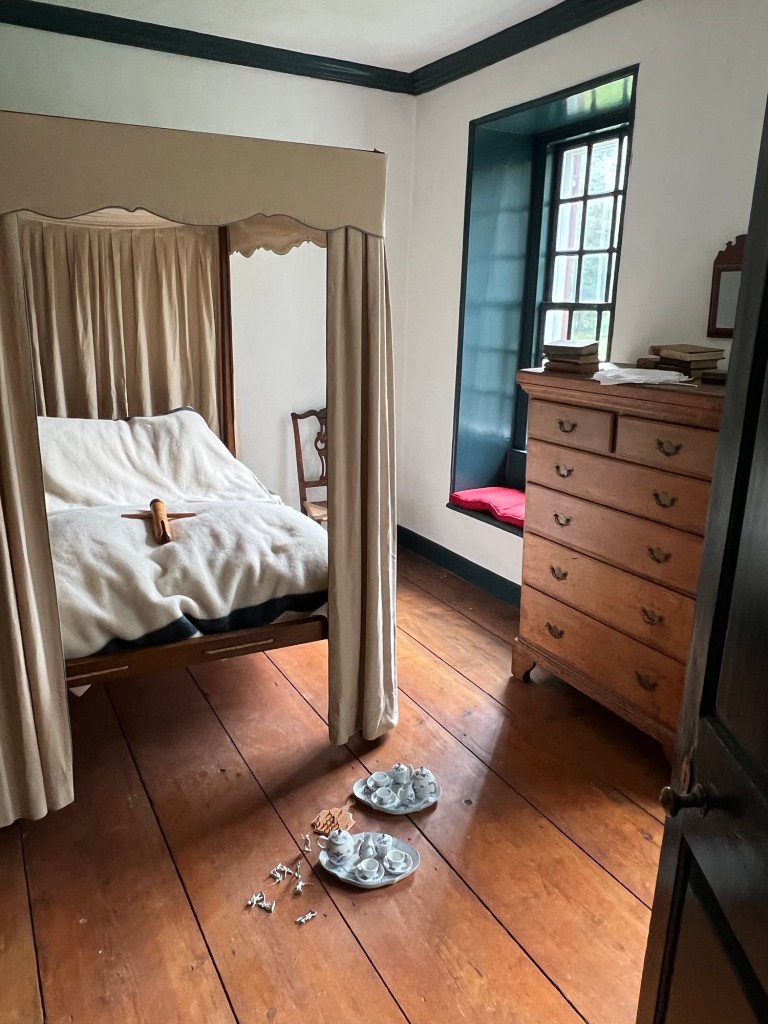
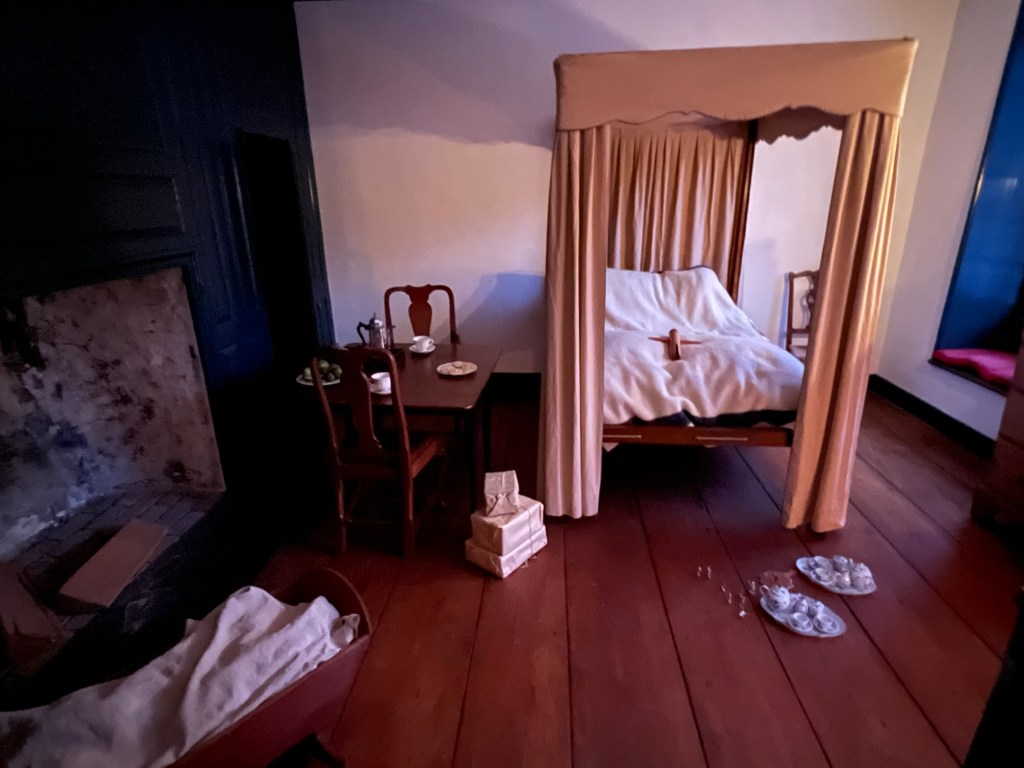
The Knox family bedroom would have been not less elaborate with a small bed and crib for the children

The Knox’s bedroom for the family during the war years

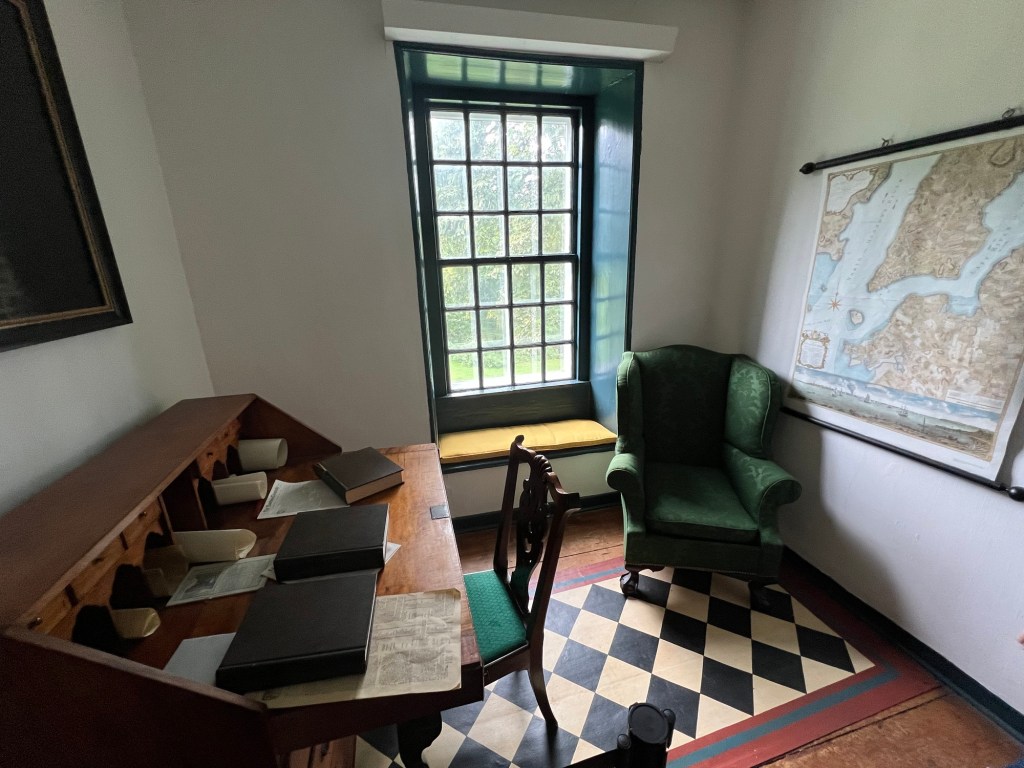
Mrs. Ellison kept her own office at the top of the stairs and this was reflective in the desk and table in the nook at the top of the stairs. The tour guide explained there had been a wall to provide privacy to Mrs. Ellison which had been removed over the years.

The office of Mrs. Ellison to run the household

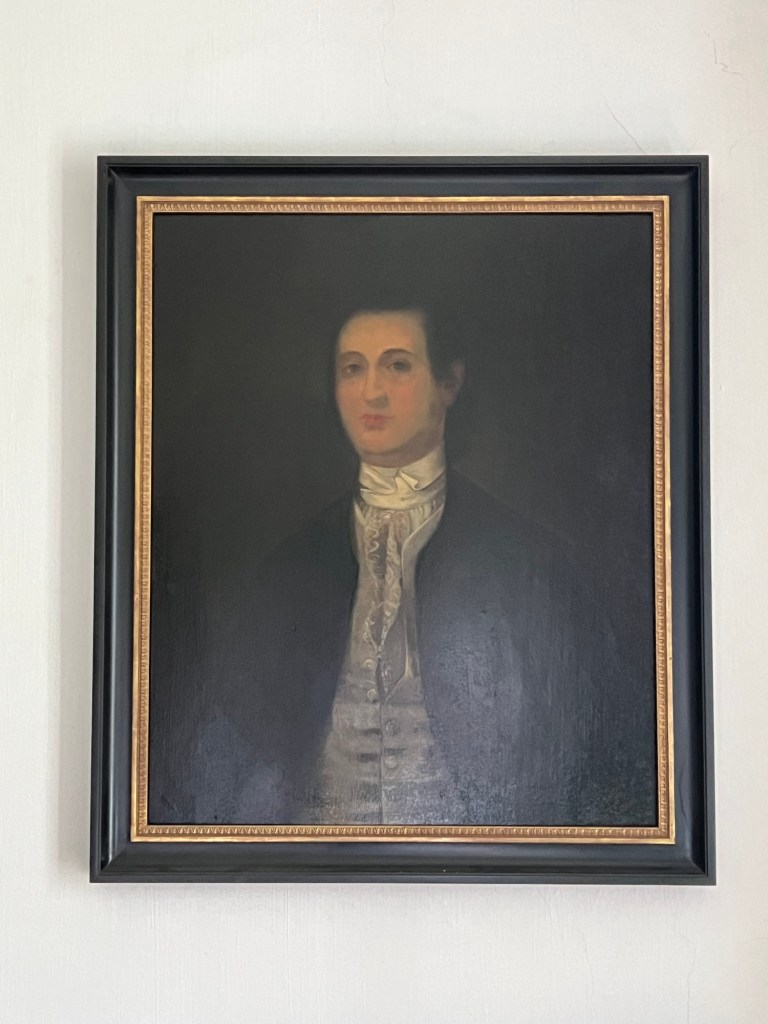
The office contained the family heirloom desk and a portrait of Mr. Ellison’s brother who was a General in the war.

The portrait of General Ellison, Mr. Ellison’s brother

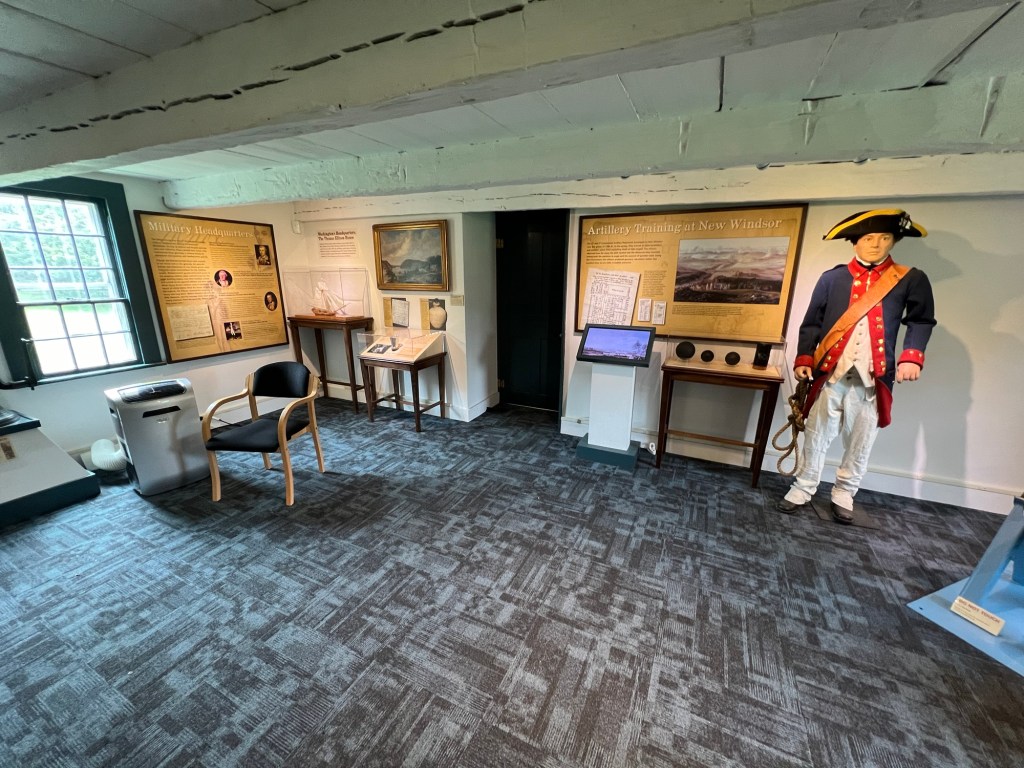
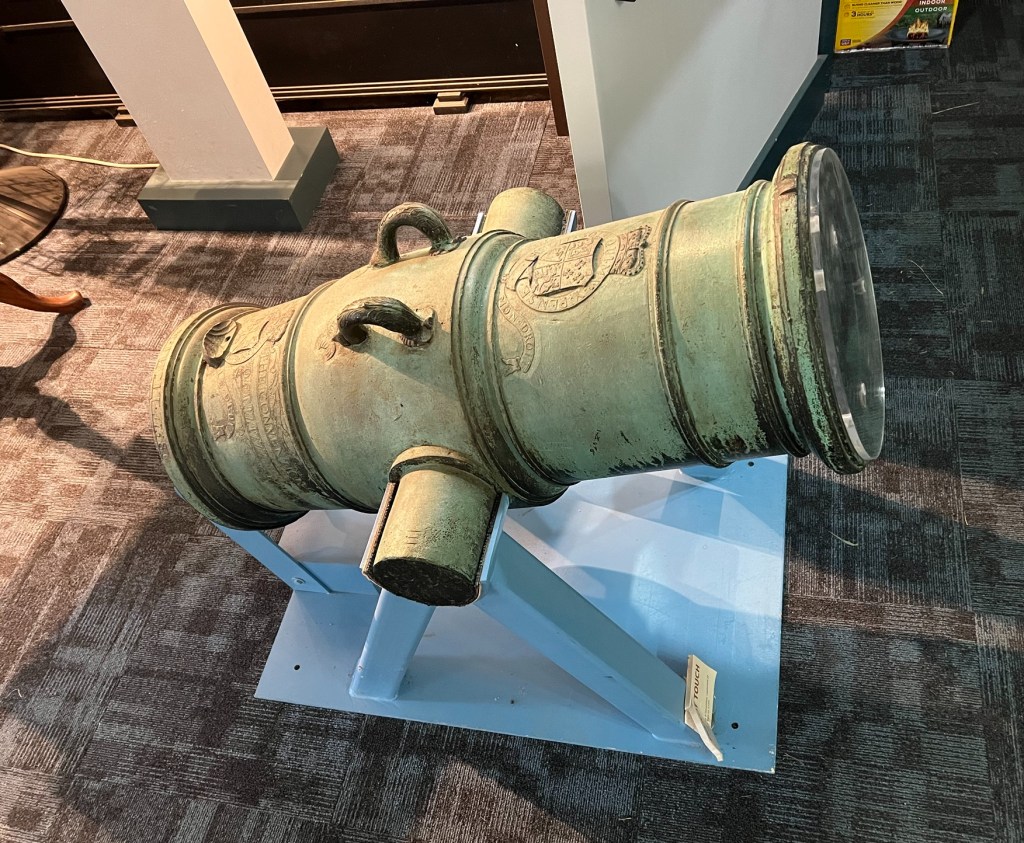
Part of the cannon

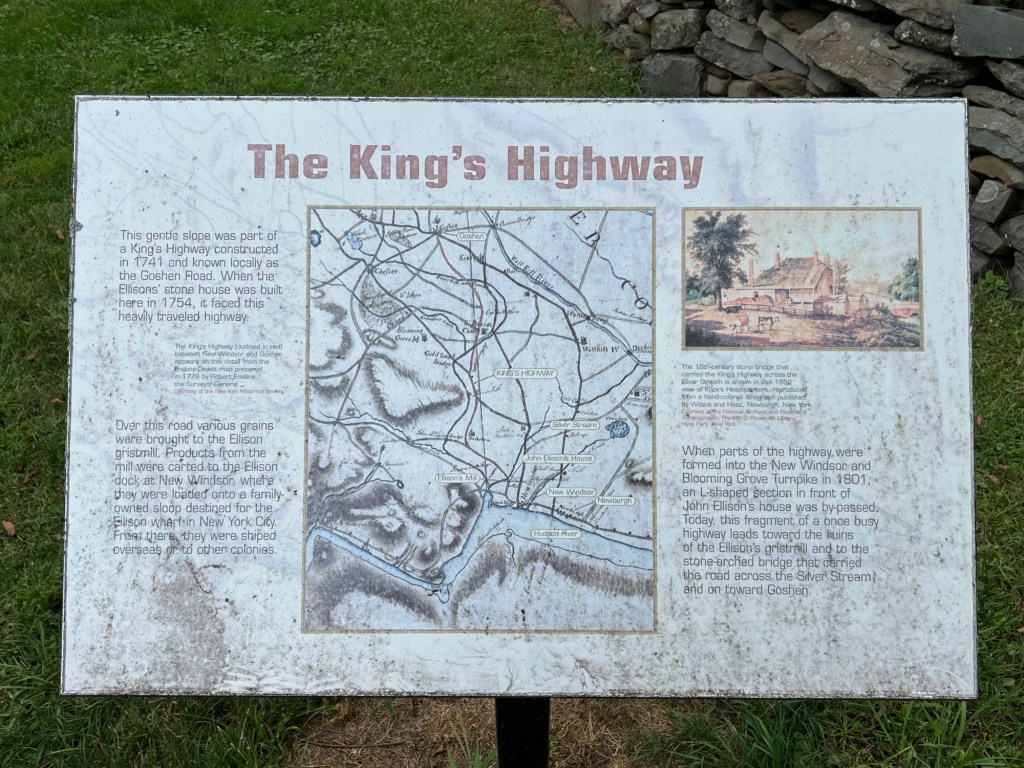
When I finished the tour of the house, my tour guide and walked around the Visitor Center room and she showed me some of the artifacts in the room including a small cannon the had been found. My tour guide suggested after we were done in the house a tour of the grounds. The King’s Highway had originally run in a different location that passed the front door of the Georgian side of the house. Also down by the stream were the ruins of the old grist mill.

The map of the original King’s Highway when it passed in front of the home

The original front door of the Ellison home where the street was once located

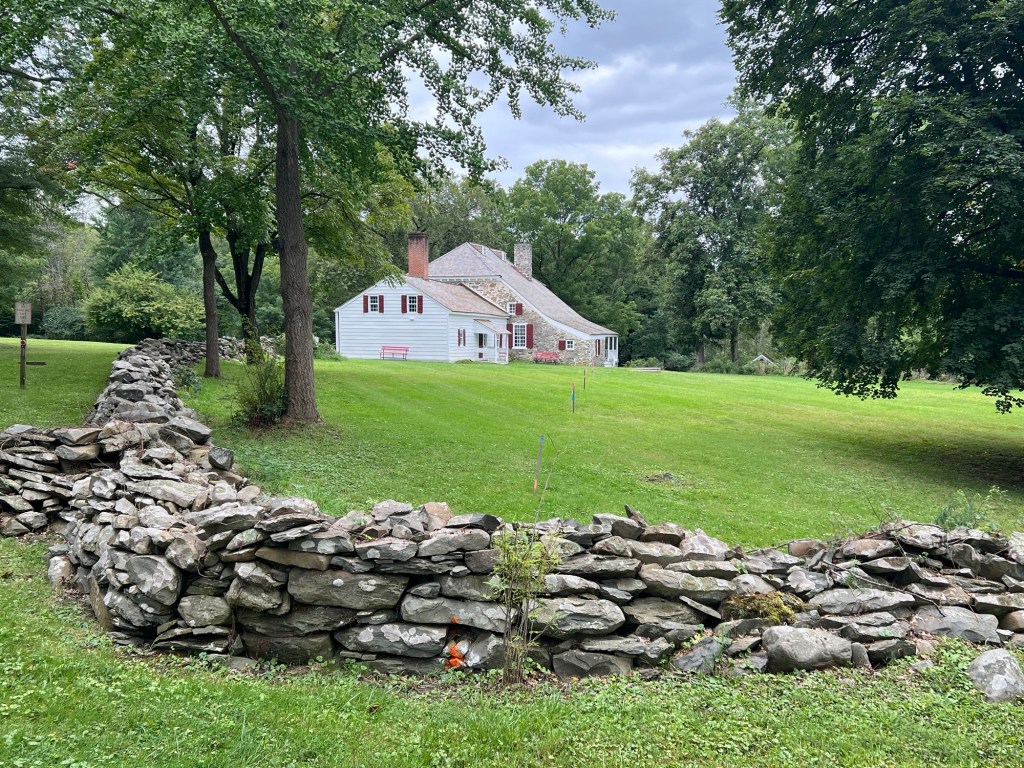
The stone wall is the marker of the original part of the road that passed by the home

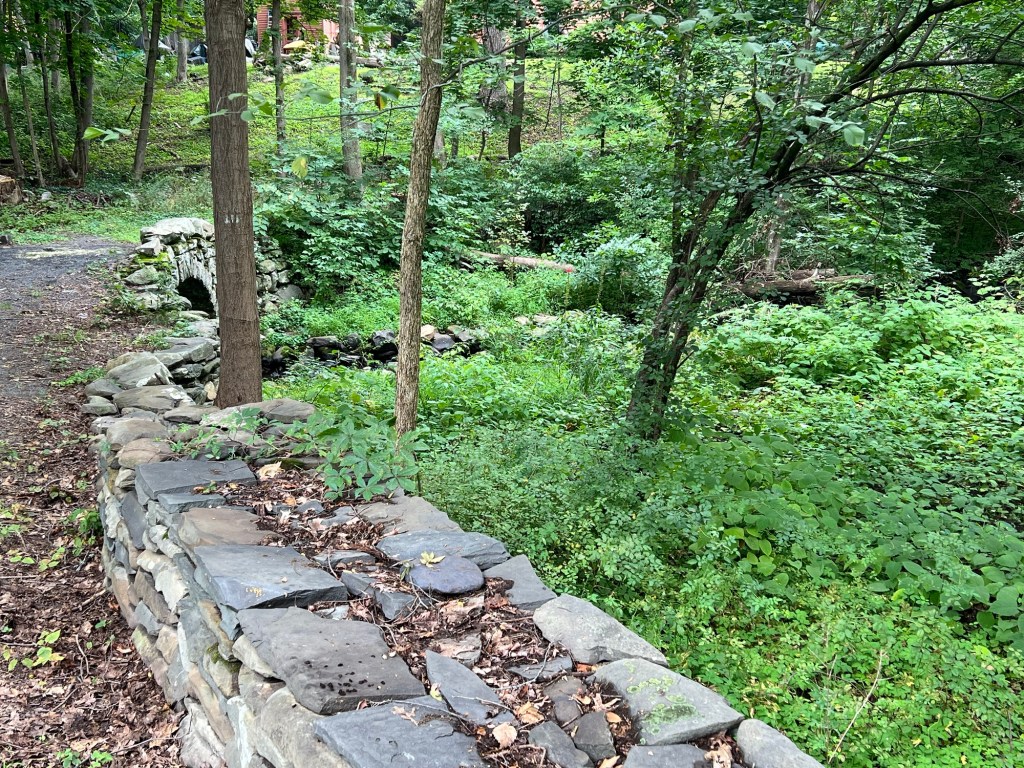
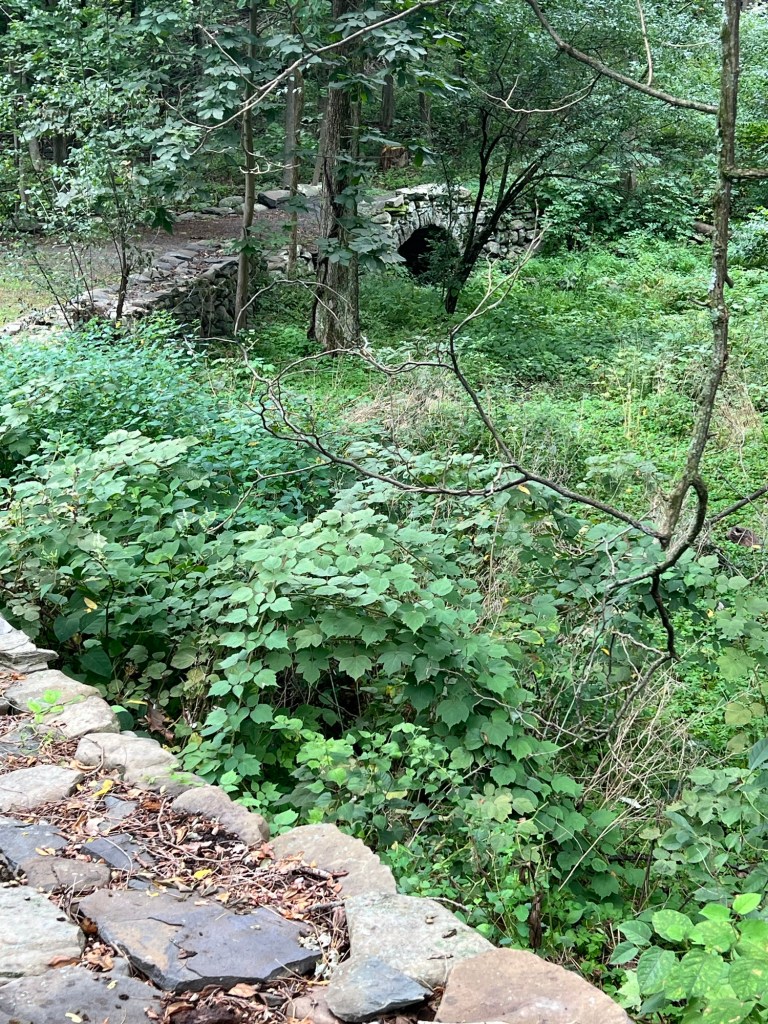
The highway path as it passed over the stone bridge

There was not much left of the family mill by the stream but the site did a nice job preserving the path of the highway and up keeping the stone bridge and grounds.

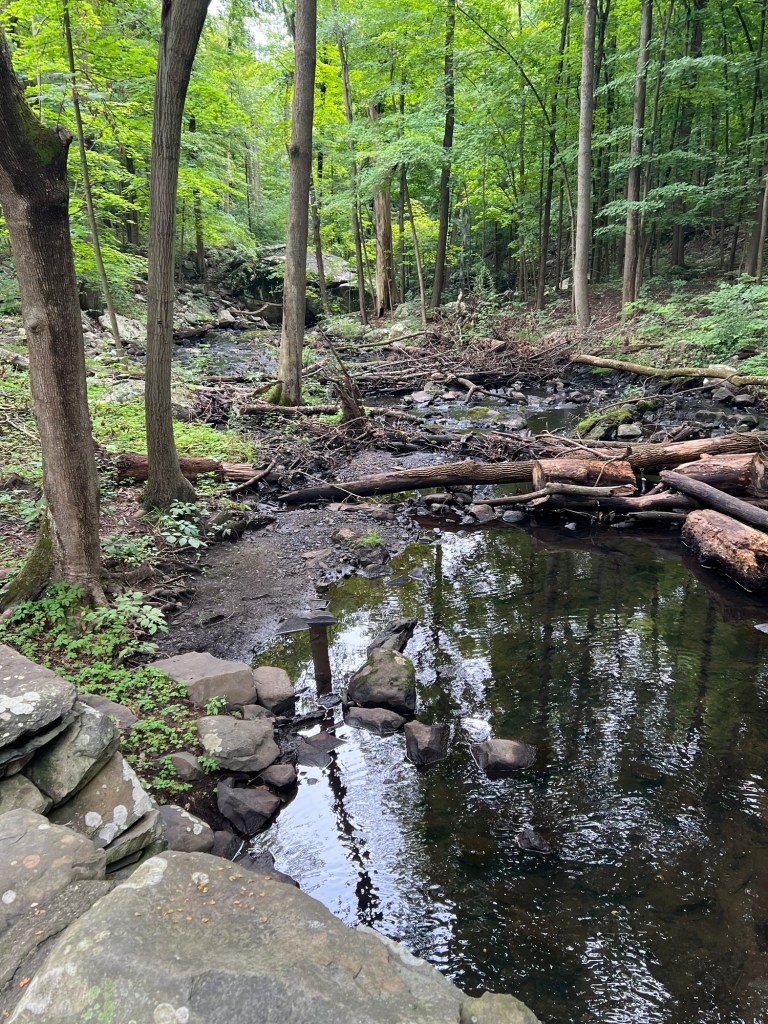
The woods area by the stream where the ruins of the old mill were located

The stream area

The stream area by the old mill

A better view of the old stone bridge

When I returned from the stream area (unfortunately leads to someone’s property on the other side of the stream), I walked the grounds of the home. There was a small smokehouse on the property to the side of the house.

The old smokehouse on the property

What was originally the back side of the house is now the front side of the house on the Dutch side of the home with the addition to the left

The view of the homestead from what is now the front of the street

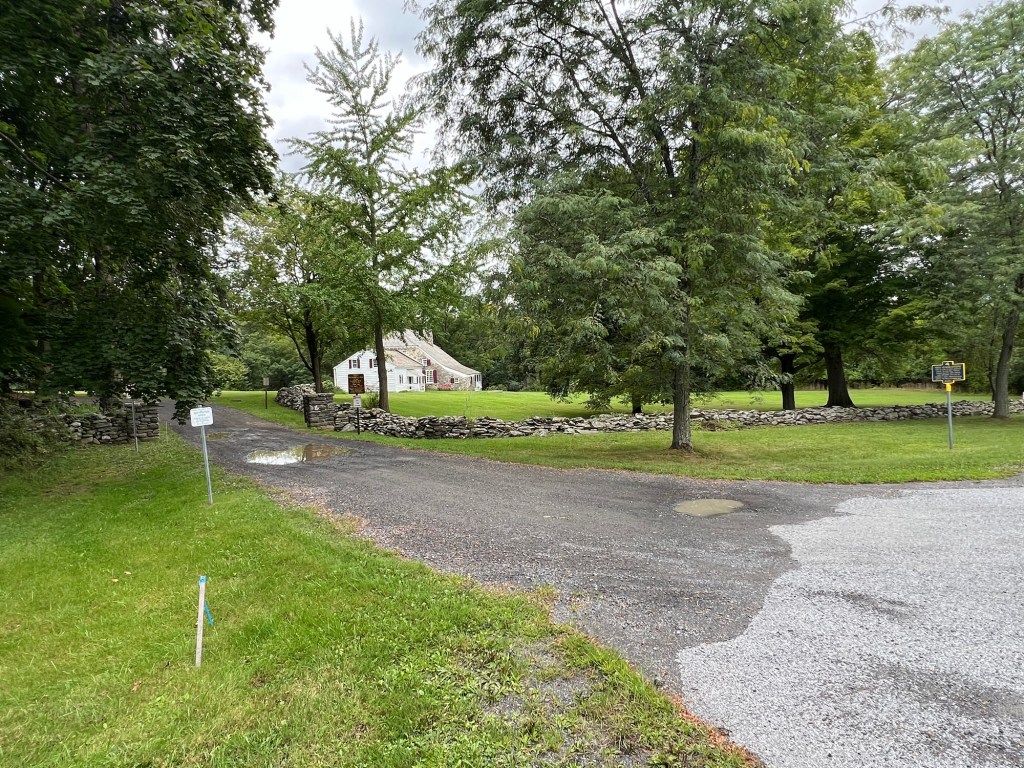
The view of the house from the entrance when I was leaving

The front of the homestead as you enter an exit from the new direction of the home

I found the tour to be very informative and an interesting look on how two families shaped our history during the Revolutionary War.

*A special note that the house is seasonal and is closed from Labor Day until Memorial Day the next year and is only open for special events at Halloween and Christmas.

The Halloween Event:

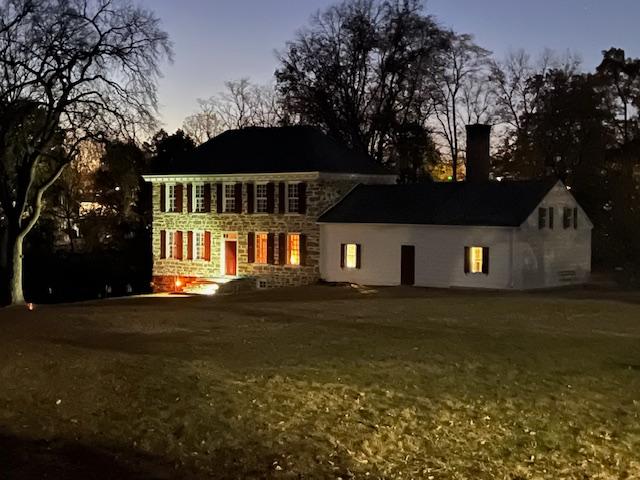
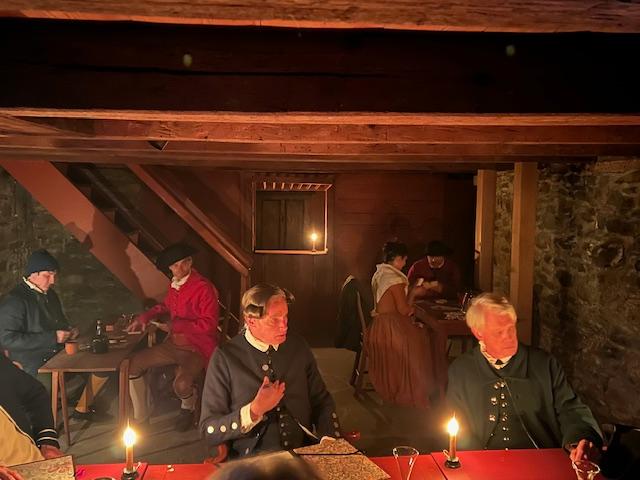
I attended the Halloween events at the Knox Headquarters when in the spirit of the 18th Century Gothic Literature, an author took us on a tour of treason and tides turning during New Windsor Cantonment and inside the Knox Headquarters. The ghosts of the past tried to find a traitor in the midst of the war.

Meeting the ghosts of the author and her characters on the site of the Knox family estate

The Knox House lit for the Halloween holidays had a eerie look to it that night

The Ghosts trying to find a traitor in the ranks

The Ghosts of the past trying to find a traitor during the war

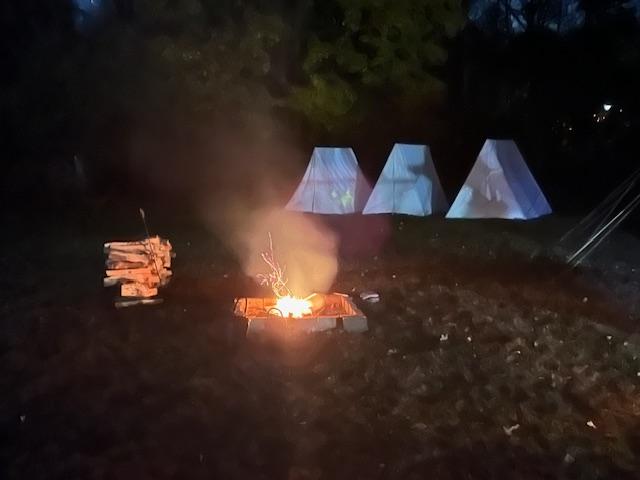
Leaving the Continental Army camp after the performance was over that evening

We walked the estate and followed the storyline with the actors. There were people on both sides of the war who thought they were right. It was an interesting Halloween event.

The History of the Ellison/Knox Site:

(from the New York State Parks, Recreation and Historical site)

On several occasions during the Revolutionary War, Major General Henry Knox, Commander of the America artillery, established his military headquarters at John Ellison’s 1754 Georgian-style house in Vails Gate. From October 1782 until the spring of 1783, as 7,000 soldiers and 500 “camp followers” were establishing winter quarters at the New Windsor Cantonment, and General Washington was lodged at Jonathan Hasbrouck’s house in Newburgh, New York, Major General Horatio Gates occupied the elegant home from which he commanded the cantonment. Here the army awaited the end of the Revolutionary War that became effective when Washington issued the cease fire orders on April 19, 1783.

For most of the 18th and into the 19th century, the Ellison family had important commercial dealings in milling and trade. From their mill, flour was shipped down the Hudson River to New York City and the West Indies. At present, remains of the mill, with traces of the underground raceway may be visited. Explore how the Ellison’s and other families of the mid-Hudson Valley lived 200 years ago.

The Christmas Open House event:

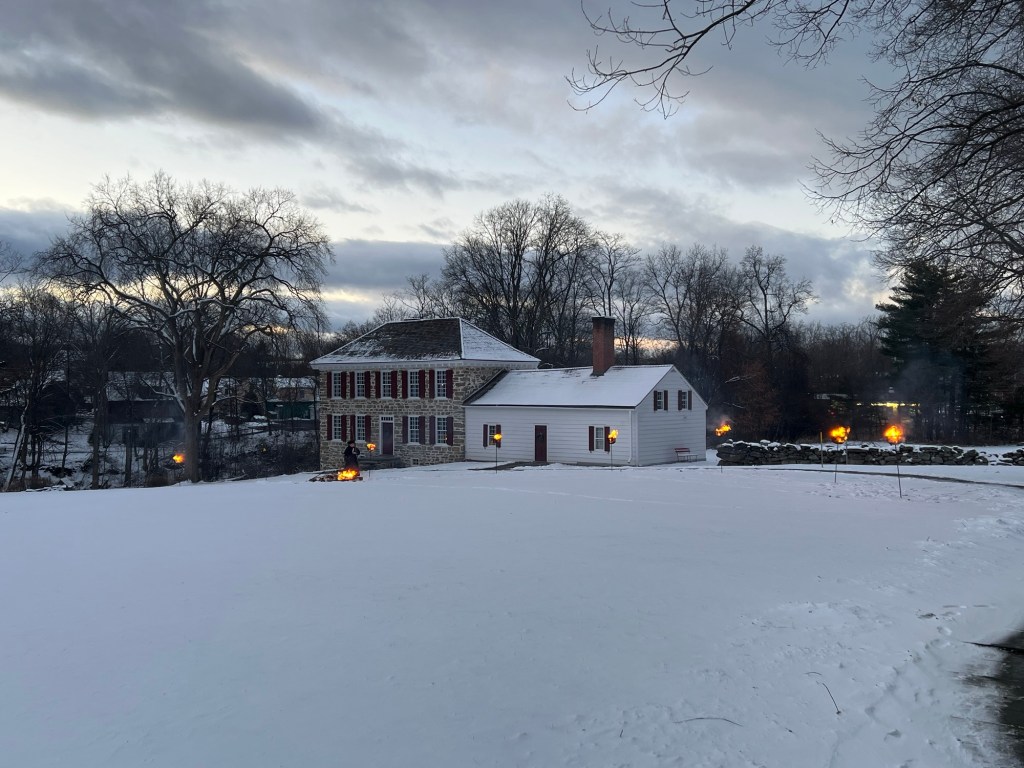
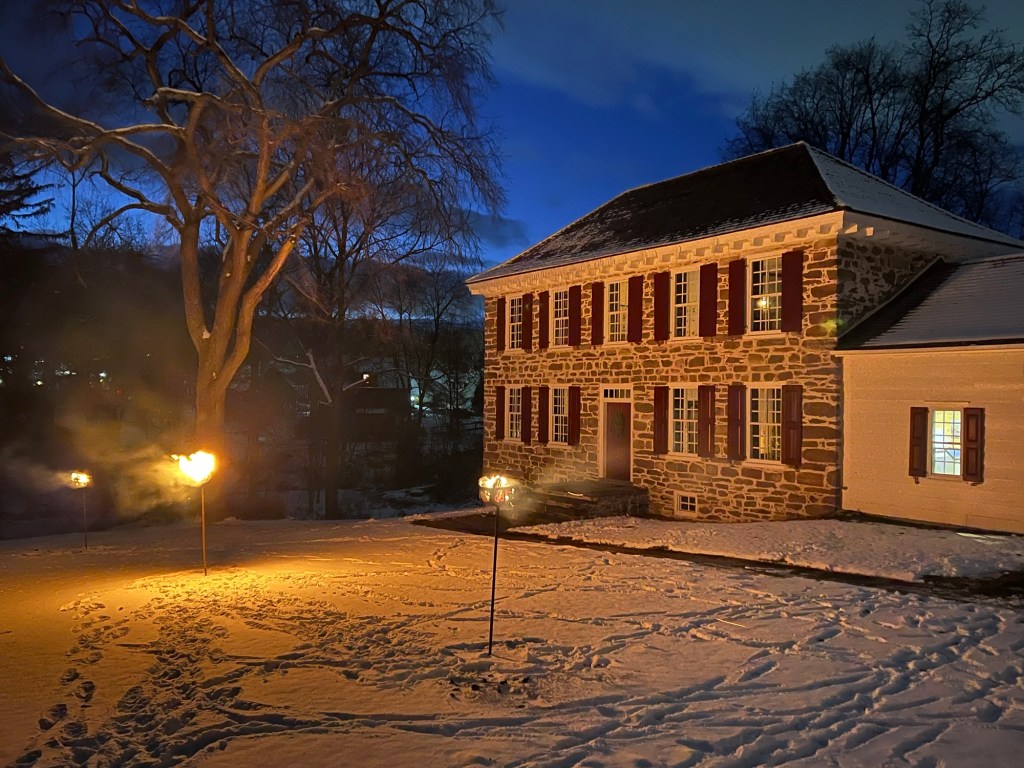
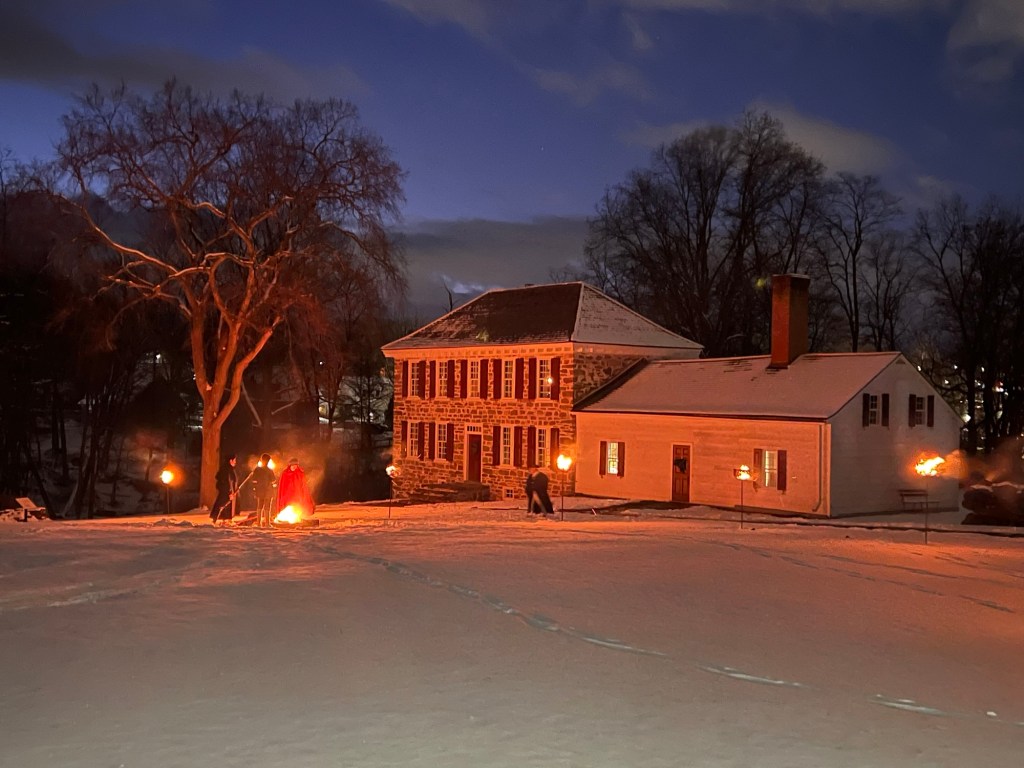
I returned to the Knox Headquarters again for their Colonial Christmas Open House in early December and that was a festive event. The snow had just fallen giving the house a very picturesque look to it.

The Knox/Ellison Home the day of the event

The estate looked so picturesque with the snow

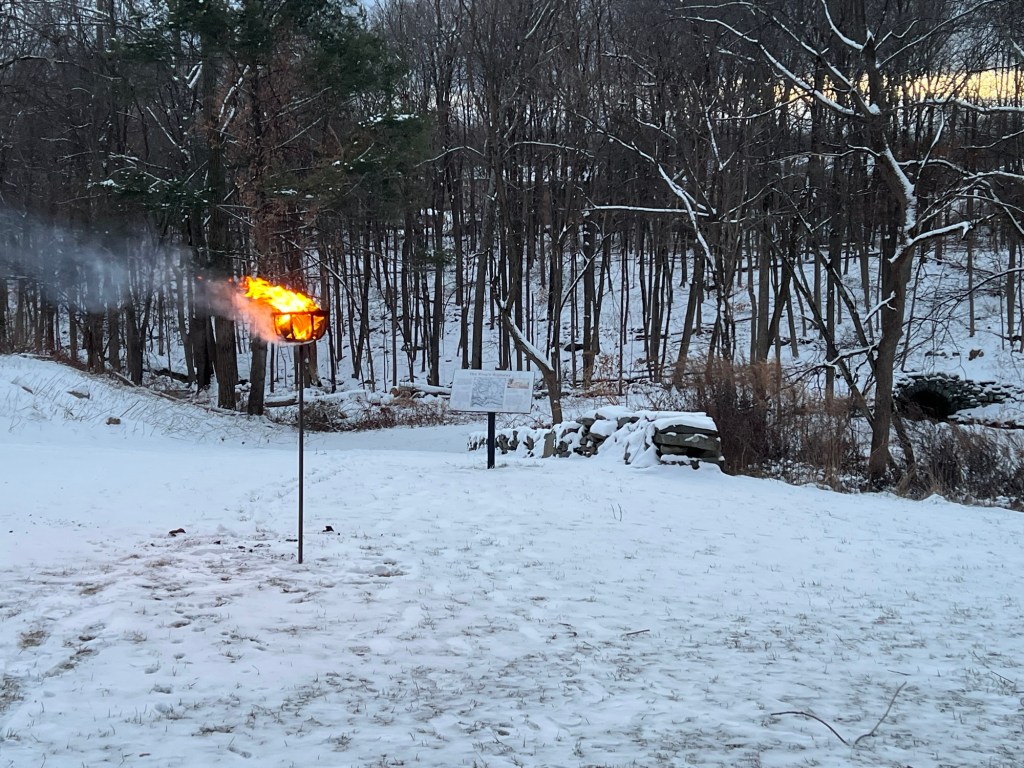
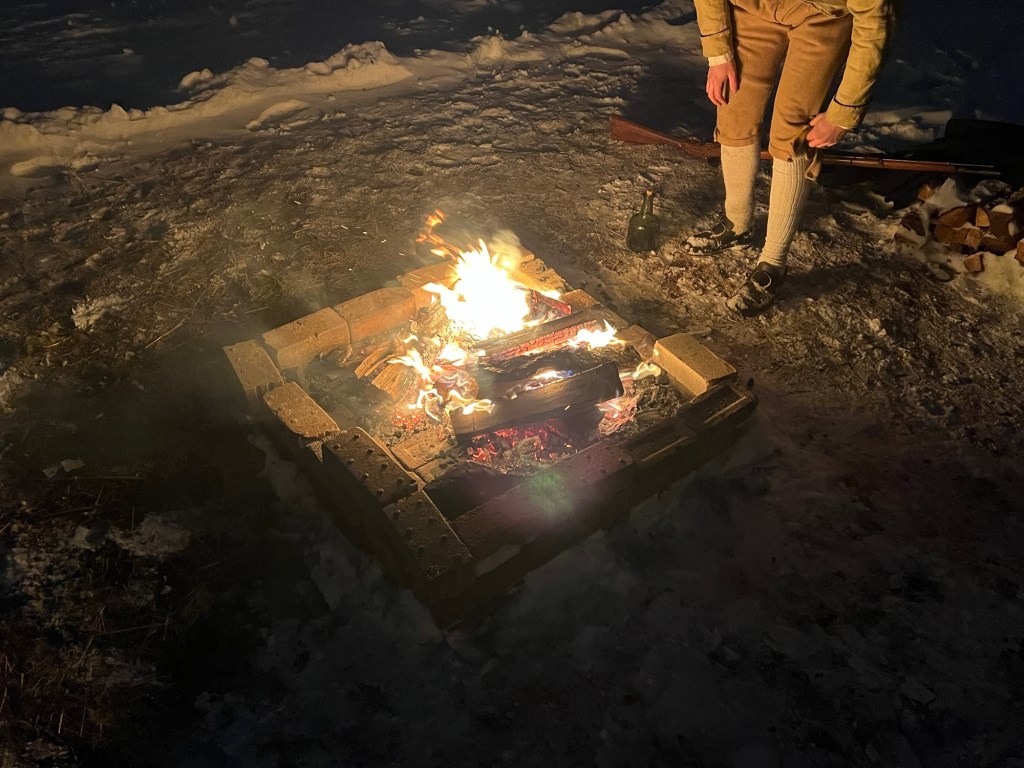
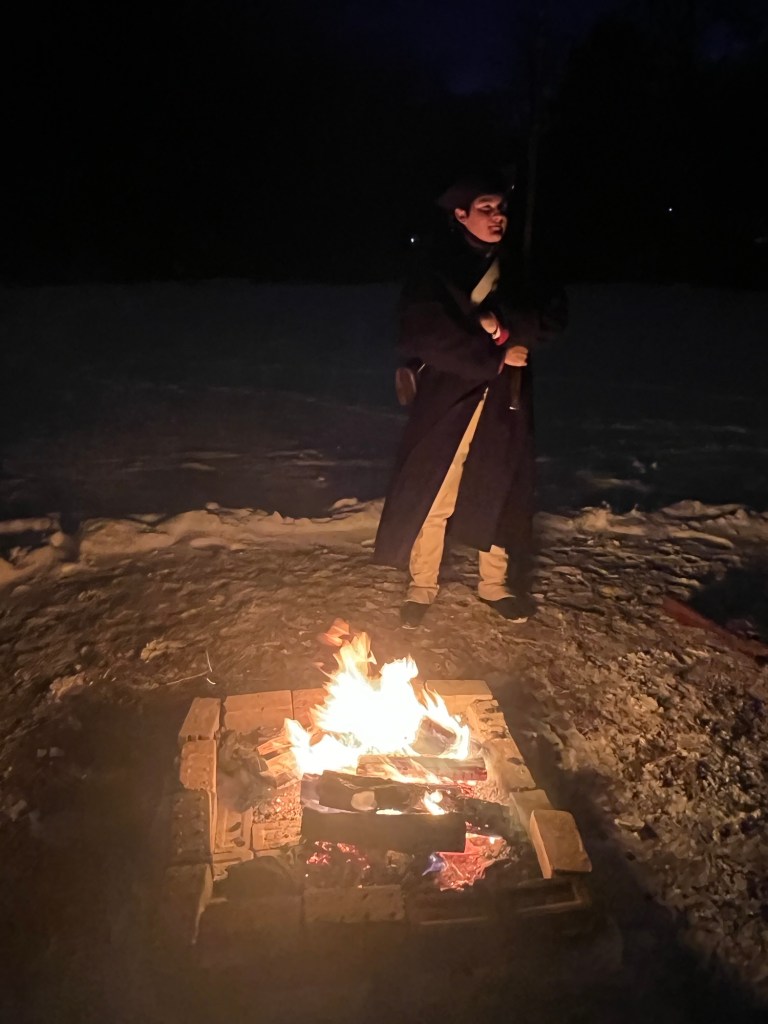
When I first arrived to the estate, it was still light out and they had just lit all the torches in front of the house. It really lit the pathways to the house. By the outside fire, a lone soldier stood guard, and he looked like he was freezing.

The torches that lit the paths

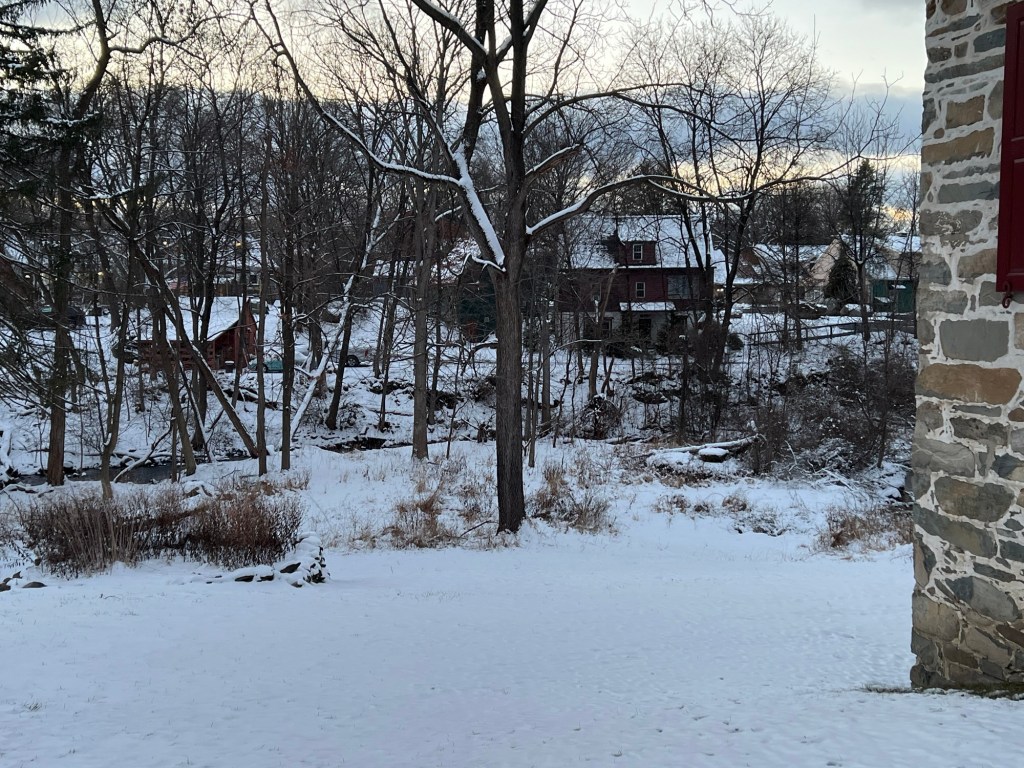
The snow gave the woods a festive early Christmas look

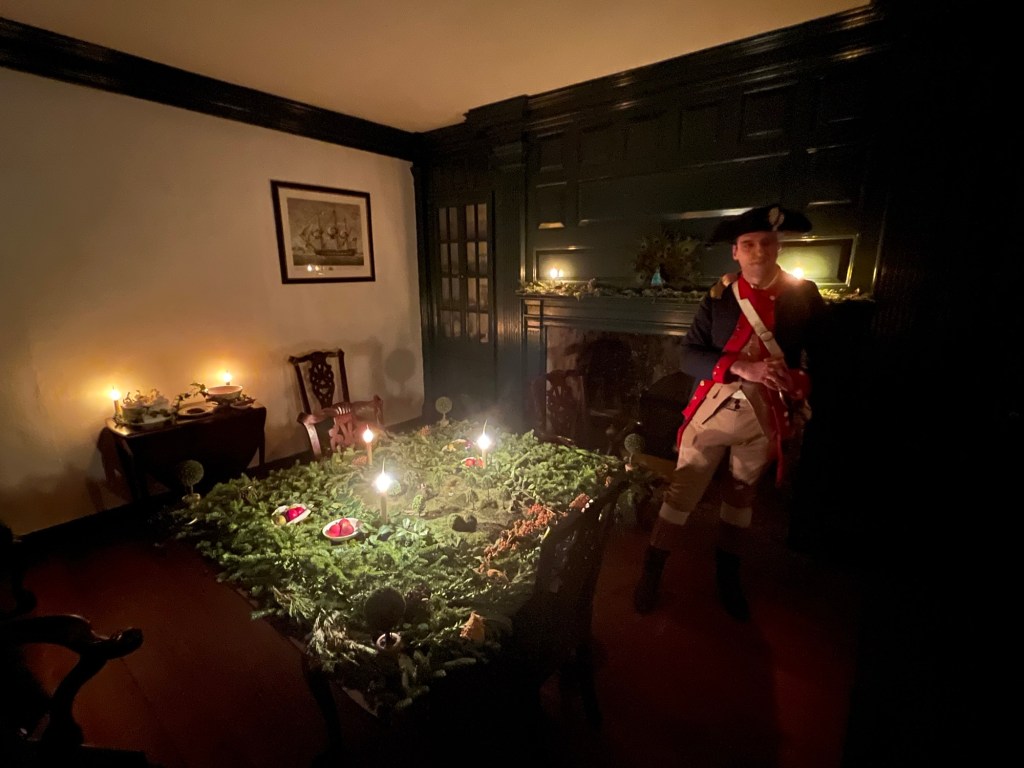
The house was decorated for a Colonial Christmas during the war years

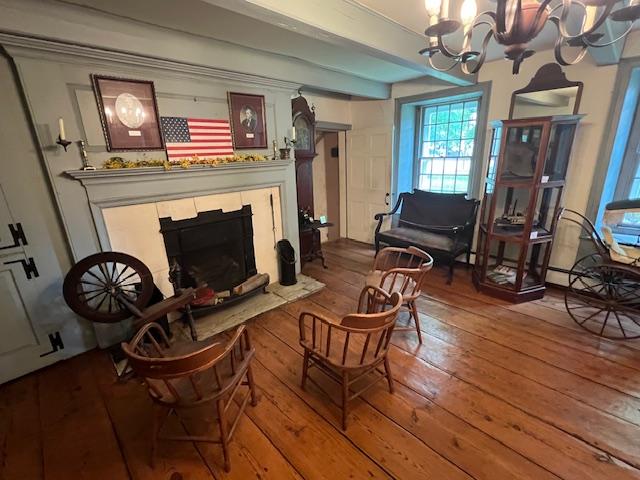
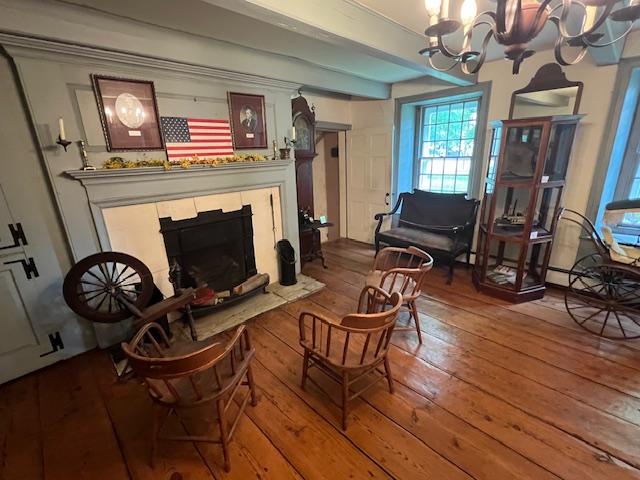
The Officers used the Living Room as an office and for entertainment

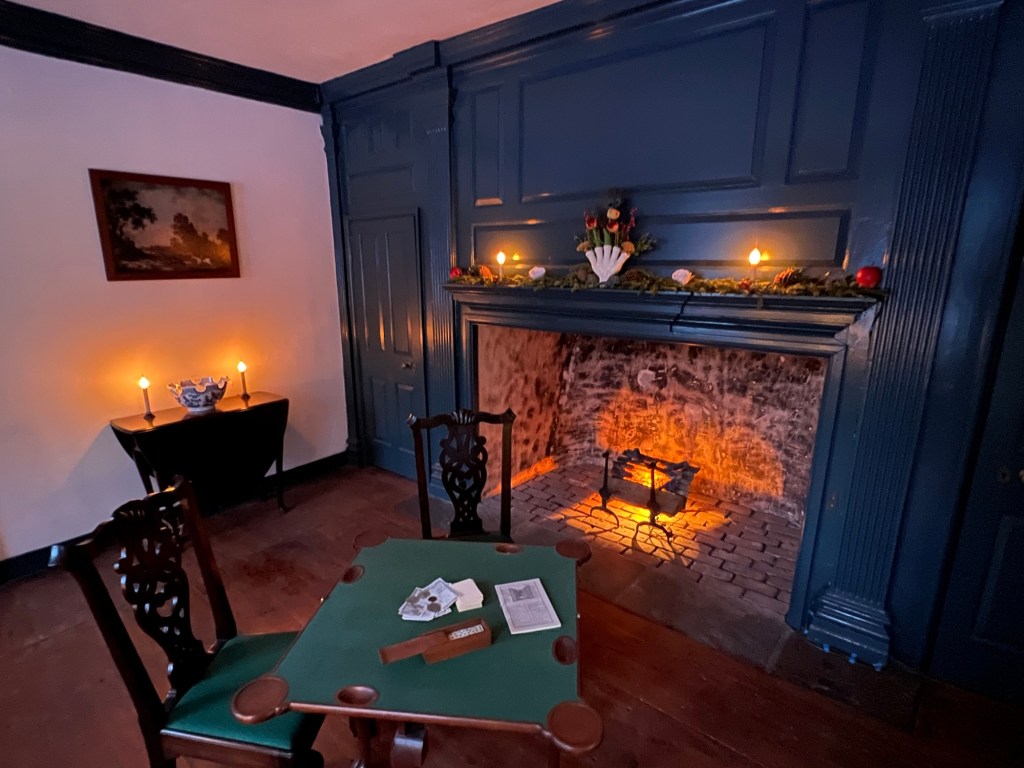
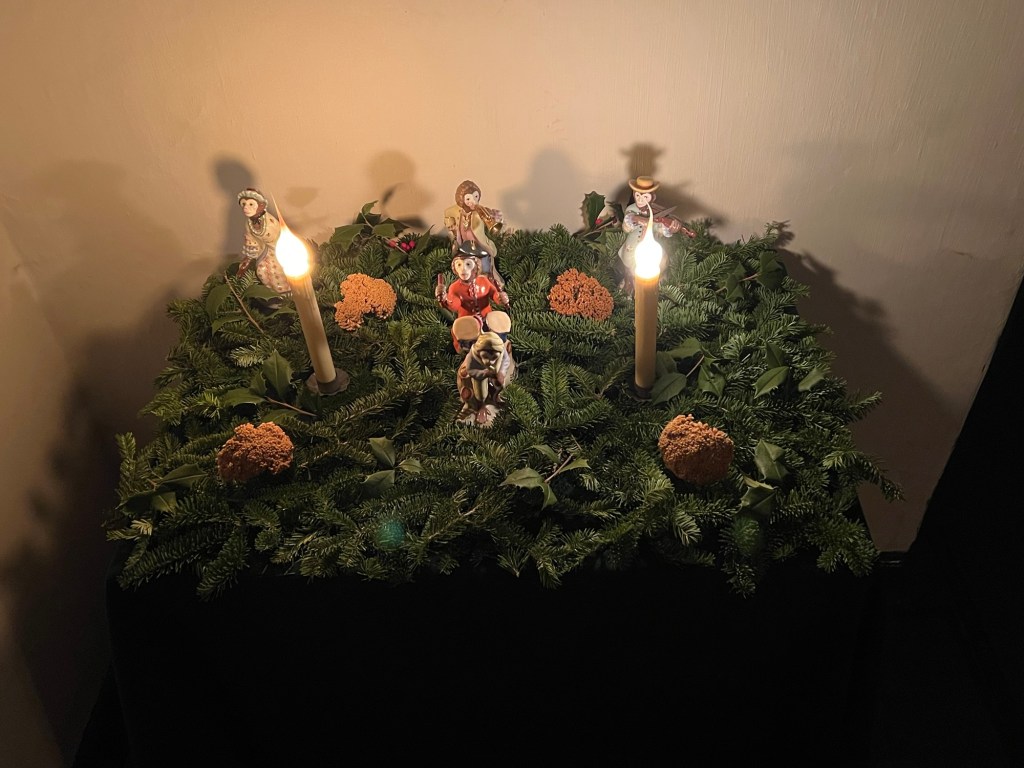
The hearth was beautifully decorated with garland and dried fruits

The mistress of the house talked and entertained me on my visit

The house had an eerie but festive feel about it that evening

The festive garland decorations in the Living Room

The decorations in both windows

I passed the foyer where garland and misotle decorated the stairs

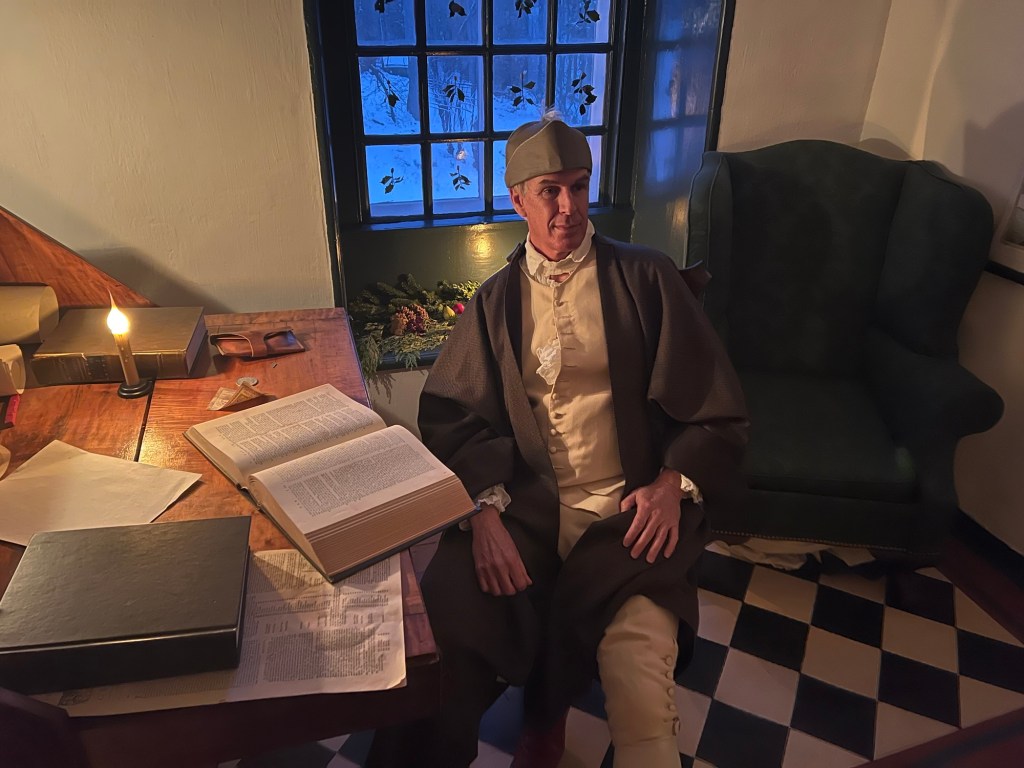
We were then entertained by visiting officers of the home in Mr. Ellison’s office who told us their stories of General Washington’s visit.

The Officers visit to visit the Generals

The office lit for a late night visit

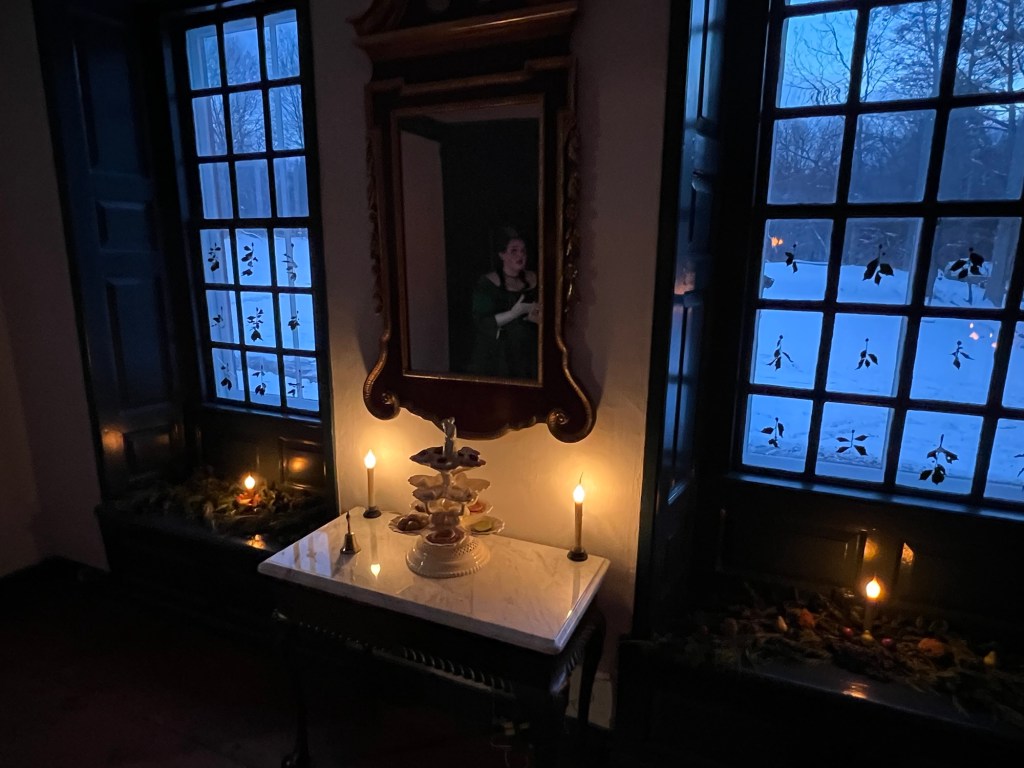
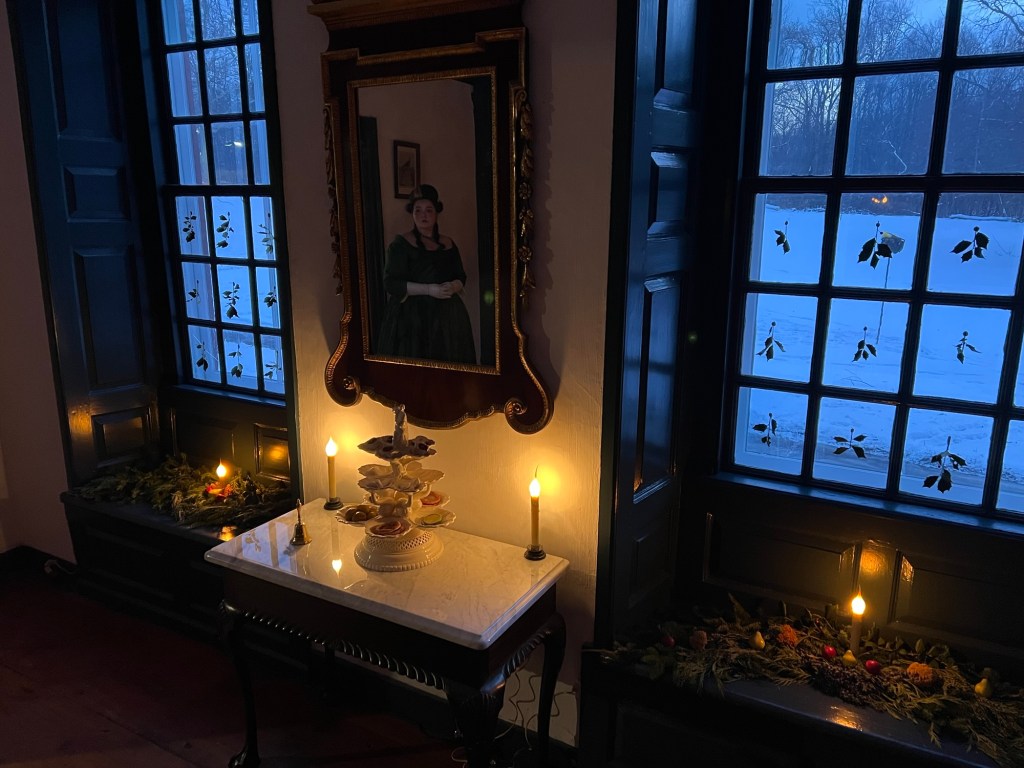
The holiday decorations in the Office space

Then I took a trip upstairs where we were met by another officer who described the sleeping arrangements of both the Knox and Ellison families of this time of occupation.

The officers conversation with us

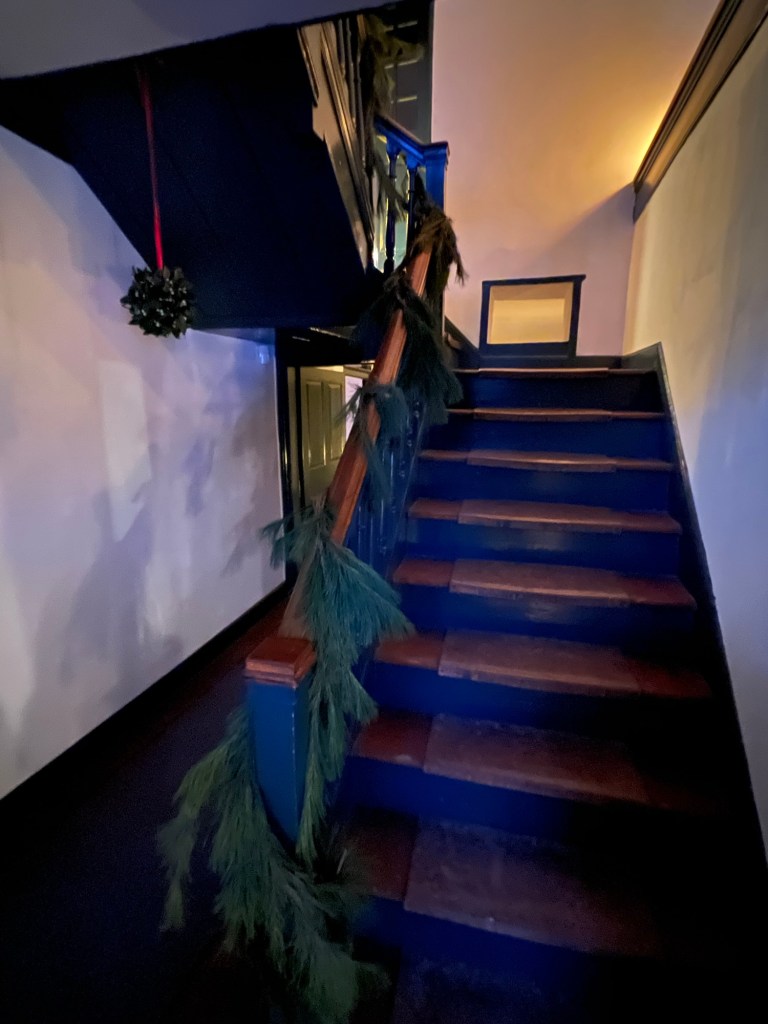
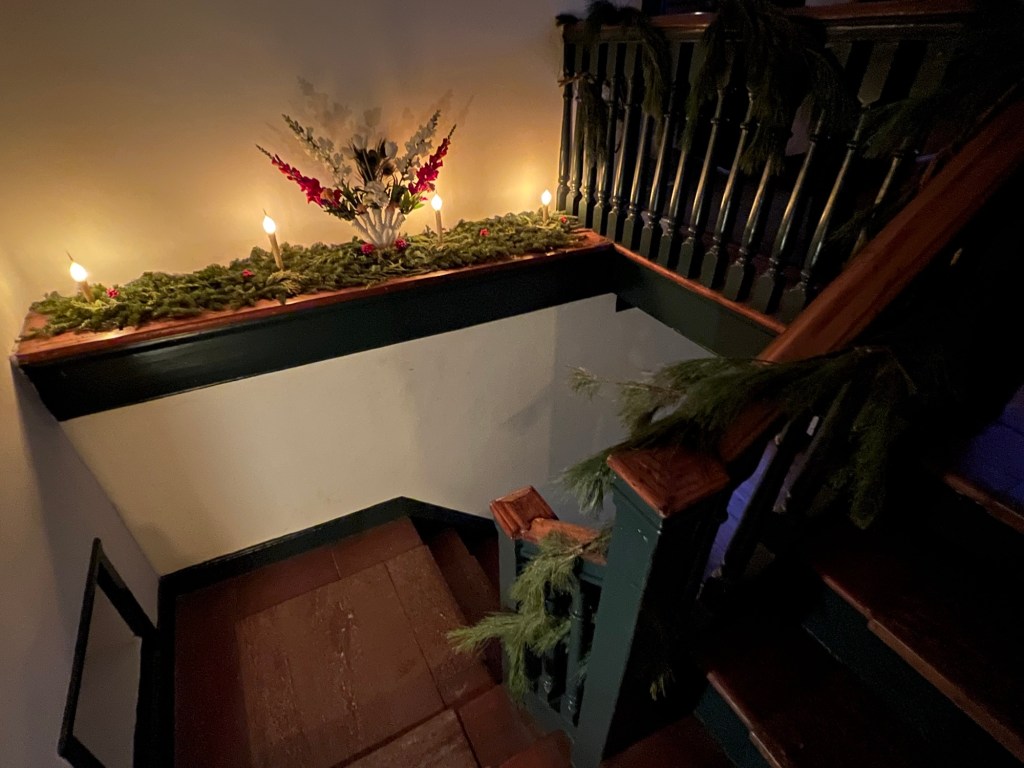
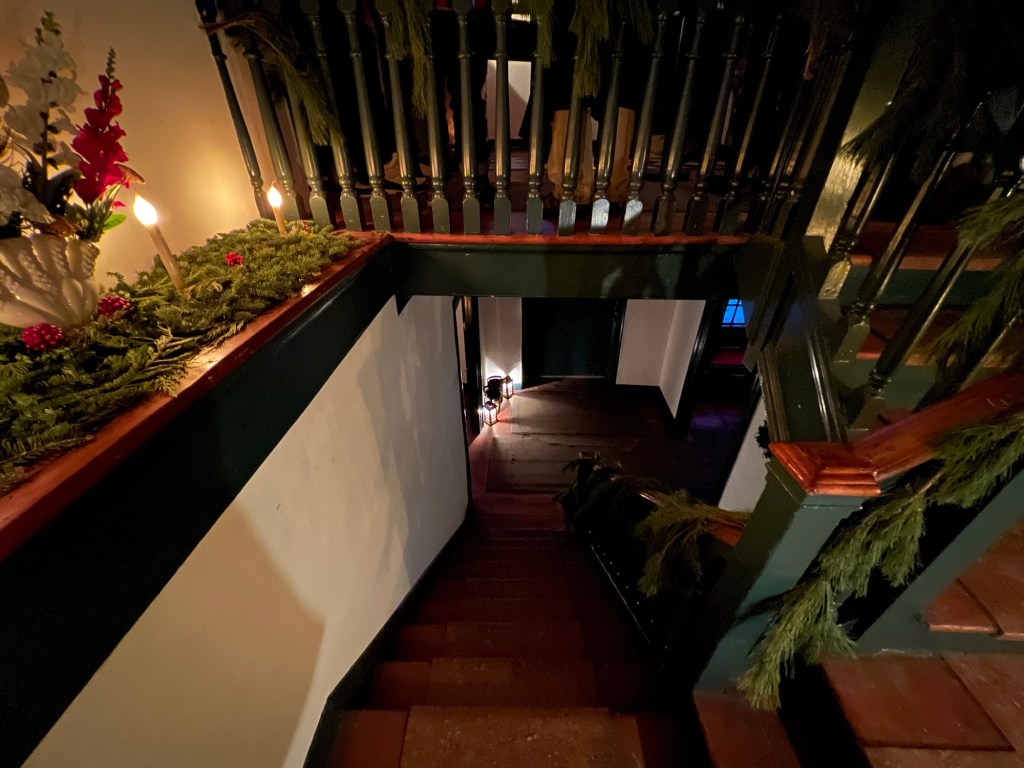
The decorations as we walked up the stairs

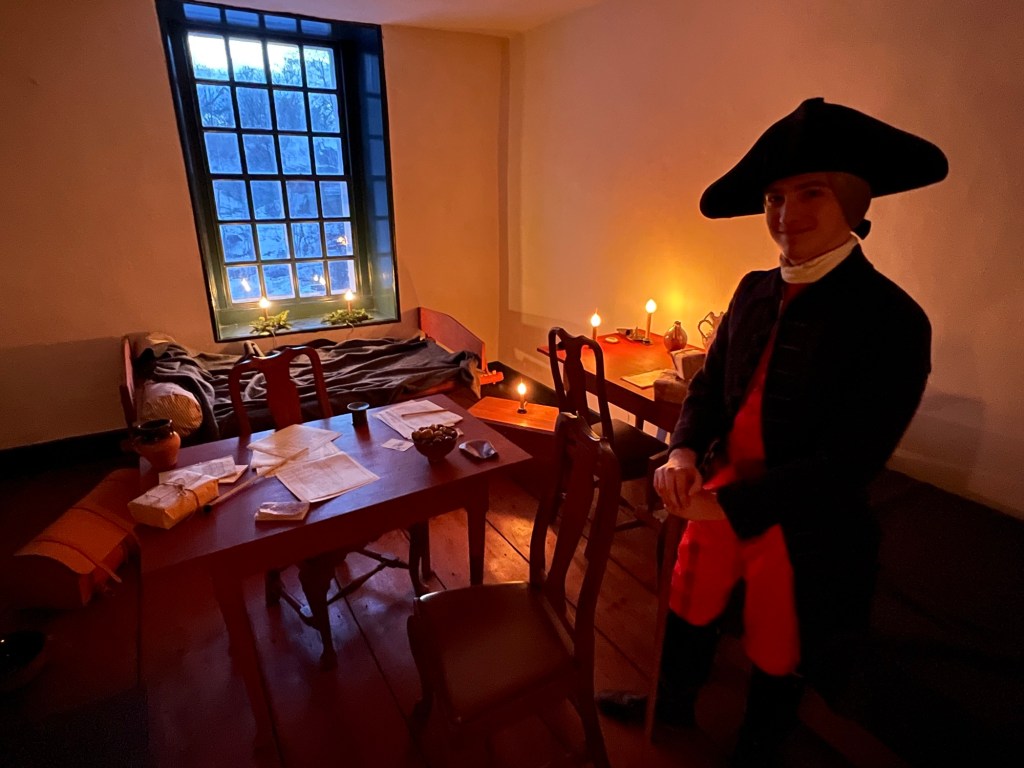
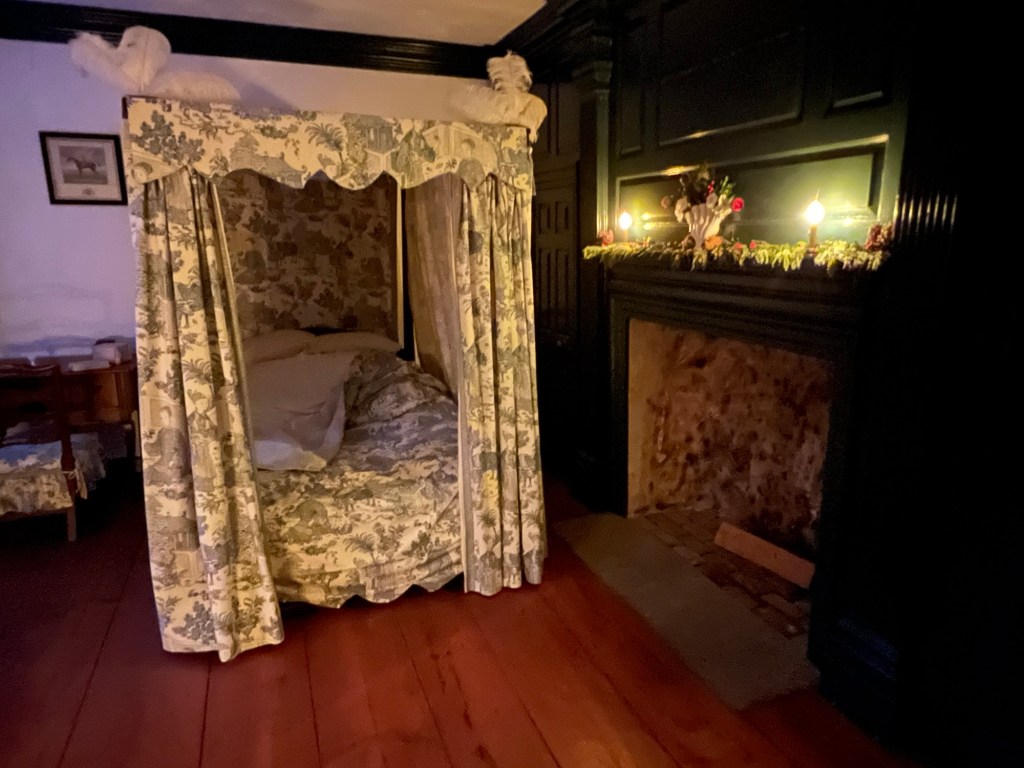
The bedroom decorated for the visit

The opposite bedroom used by the family

The staircase decorated for the holidays

My last stop on the visit was to the Dining Room, where the last officer on the visit talked of Christmas dinner in the house during the war.

The officer explaining entertainment during the war

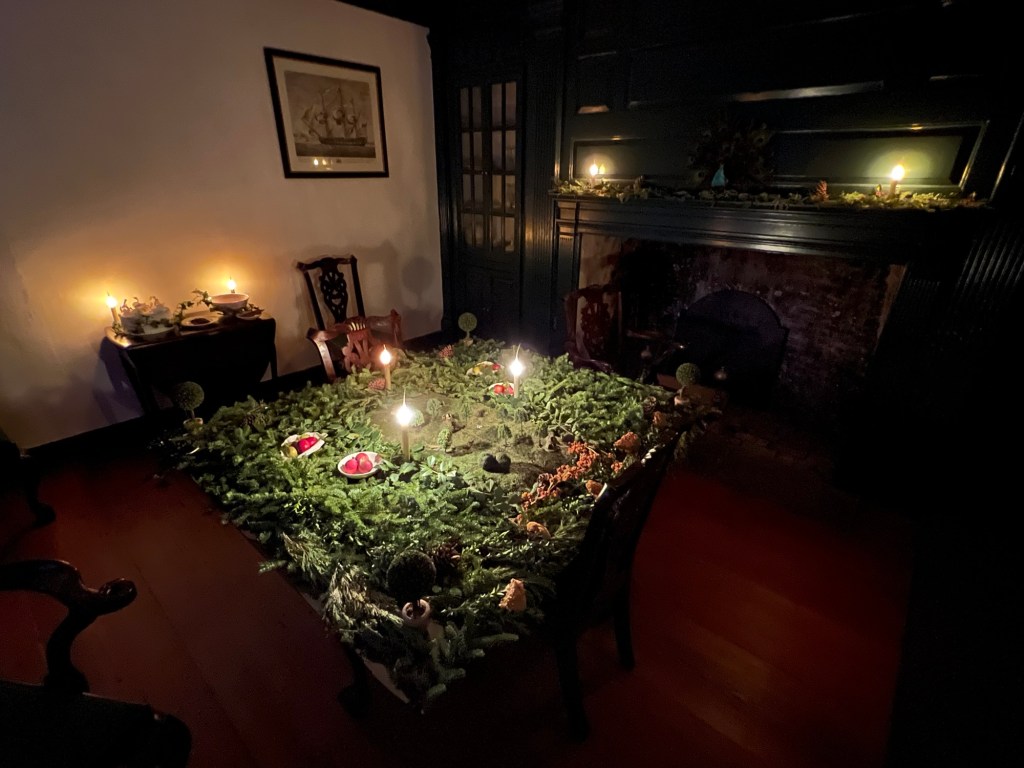
The Dining Room decorated for the Christmas holidays

The elaborate decorations in the room in the war years

The creativity of the Dining Room table with the creative table decor

The elaborate holiday desserts

The officer explained entertainments during the war, the use of the elaborate decorations on the table and the foods that would have been eaten at the holidays. Plus, entertainment of a major officer would have been during the war years.

The garland and fruit decorations in the Fining room

The officer finished his talk on the holidays and then I left for the evening

The outside of the house with the torches lit to full extent

The fire outside to warm up

The officer outside looked so cold. Thank God he kept going inside to warm up

The house as I left for the evening

The torches as I left the property

The house from a distance

The glow of the house at the end of the evening

The event was wonderful and the enactment was fun but it got really cold outside at the end of the evening and by 6:00pm it got to be freezing. I left the estate and headed home . The Knox/ Ellison House closed for the season after this night.
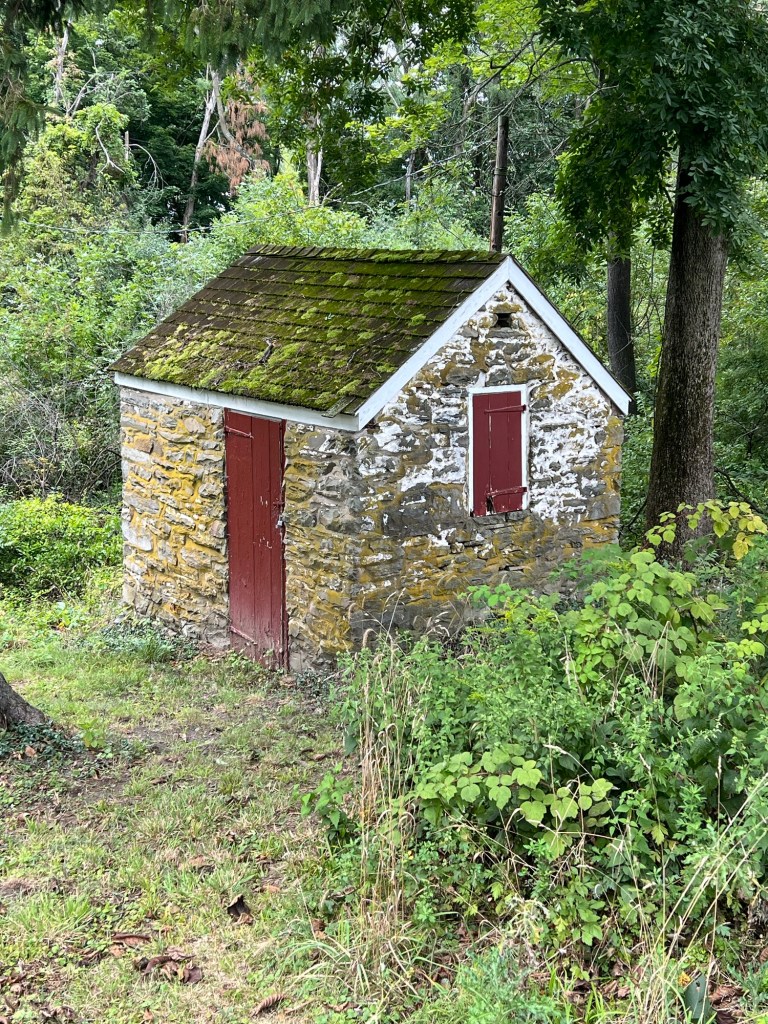
Saugerties Historical Society                                119 Main Street                                        Saugerties, NY 12477

Saugerties Historical Society 119 Main Street Saugerties, NY 12477

Saugerties Historical Society

119 Main Street

Saugerties, NY 12477

(845) 246-9529

https://www.saugertieshistoricalsociety.com/

Open: (May – October) Sundays 1:00pm – 4:00pm/Monday-Friday Closed/Saturdays 11:00am – 2:00pm,

Admission: Free

My review on TripAdvisor:

https://www.tripadvisor.com/ShowUserReviews-g48564-d27065896-r960657174-Saugerties_Historical_Society-Saugerties_Catskill_Region_New_York.html?m=19905

I finally got a chance to visit the Saugerties Historical Society and see the inside of this historical home. The Society has done a nice job displaying their historical artifacts and carefully decorating the house to reflex the period.

The Living Room of the Kierstad Homestead

In the first room in the main part of the house, there is a display of family China from descendants of the original family who owned the house, local business artifacts and family heirlooms. In the original sections of the house, summer kitchen had has been displayed. This is a depiction of how a Dutch farming family may live in the 1700’s.

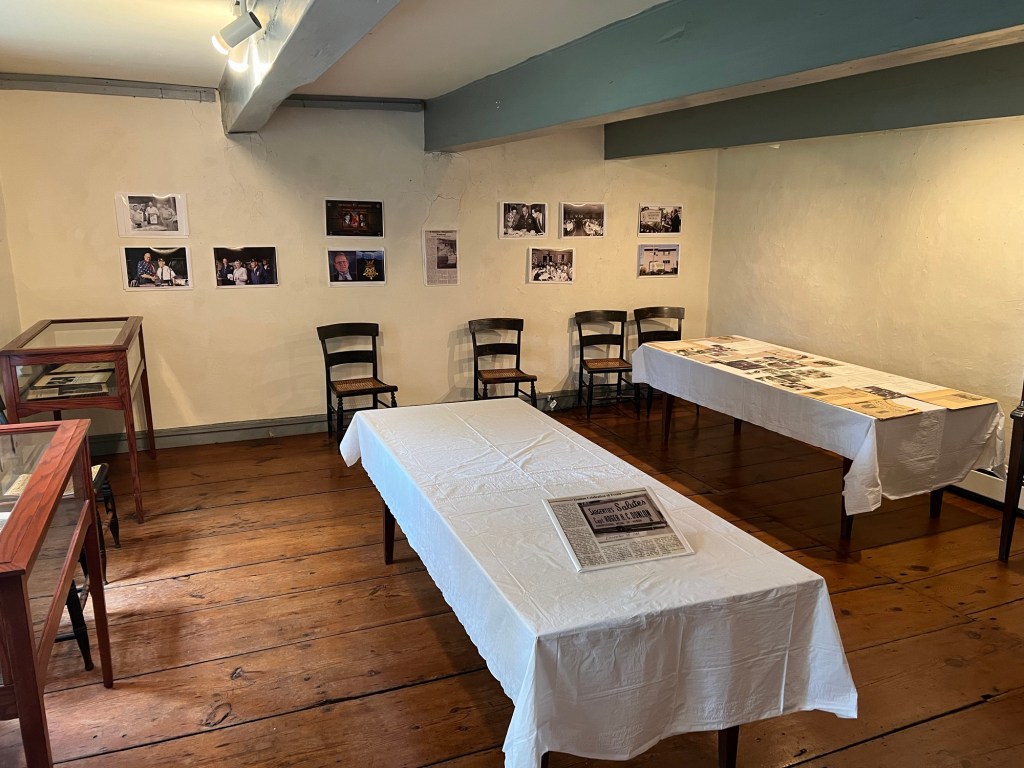
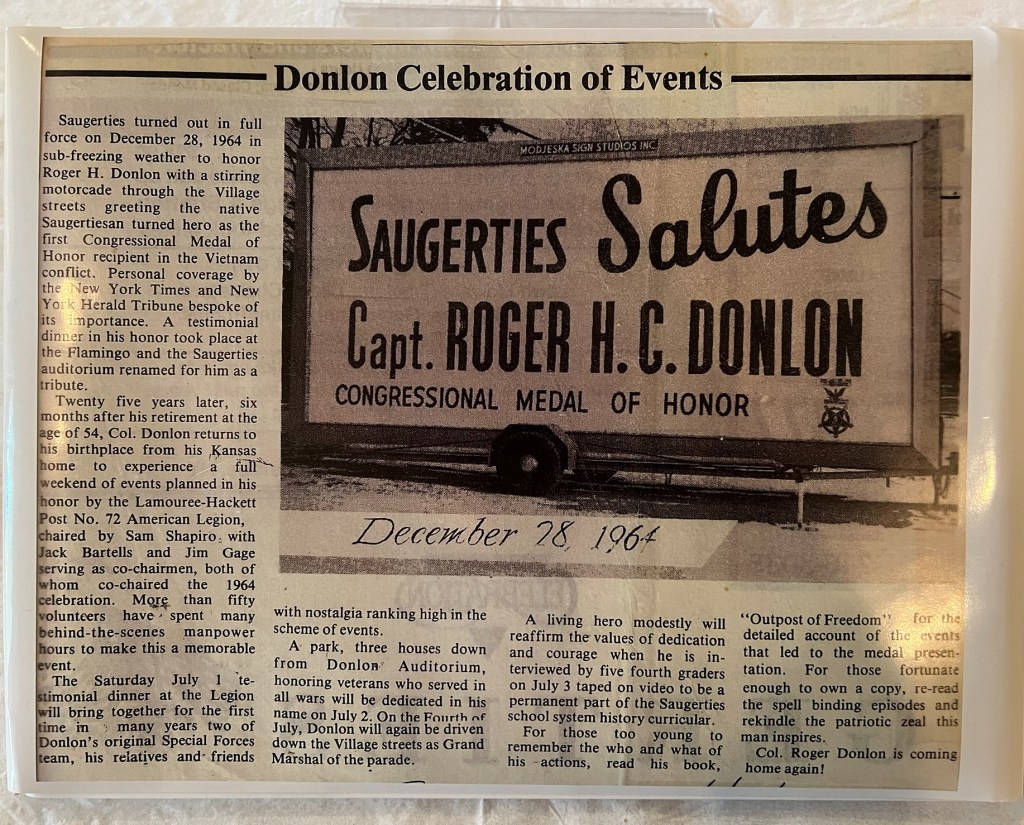
In the other room in the main part of the house was an exhibition of local hero, Captain Roger Donlon, who was a decorated officer in the Vietnam War. The exhibition had all the news clipping from the award ceremony and his hometown welcome. One of the volunteers told me that this exhibition will be taken down soon so that they can mount the thirtieth anniversary of Woodstock.

The rest of the house is used for archives space. The house is in two sections, the original section which contains the Summer Kitchen and loft space above (that is closed to the public) and the addition to the house in the late 1700’s. Descendants of the home lived in the house until the 1950’s. The grounds are nice to walk around on and take in the cool shade on a hot day.

The museum is an interesting look at early life in Saugerties, NY.

The Mission Statement:

The mission of the Saugerties Historical Society shall be to provide coordination of all things historical in Saugerties; to be involved in the research, collection, preservation, dissemination of information about, and productive re-use of the historical archives and material culture of the community; to make the historical resources of the community available to the public through education, exhibition and interpretation; and to secure the safe management and protection of such resources that may come under its jurisdiction.

The welcome sign in front of the house.

History of the Society:

(from the Historical Society website/pamphlet)

The Saugerties Historical Society is a source of local information, art, and memorabilia. Exhibitions of colonial and recent history include Saugerties themes as well as those of regional interest such as History Day each October and authentic Hudson Valley colonial militia reenactment.

The Saugerties Historical Society partners with local schools in the education of American and local history. Hands-on activities such as scrubbing clothes on a washboard, spinning wool and writing with a quill pen encourage students to experience colonial life. The Saugerties Historical Society aims to bring pride and knowledge of community through education and preservation.

The earliest recorded owner of the stone house was Hiskia Dubois (c 1727) and Dr. Kiersted purchased the house from Hiskia’s son, Daniel. The Kiersted House was saved from demolition in 1955 by Charles and Inez Steele. Through the generous efforts of volunteers in cooperation with the Town and Village of Saugerties the Saugerties Historical Society acquired the house in 1998.

The Kiersted House is a community center. Each summer, concerts, such as those with the Saugerties Community Band are presented on the beautiful lawn and gardens of the house. The Saugerties Historical Society regularly hosts various community clubs and organizations. The Kiersted House and grounds are available to suitable organizations for special events. The Saugerties Historical Society welcomes all to experience history while visiting the Kiersted House. The Kiersted-DuBois House is listed on the National and New York State Register of Historic Places.

The inside of the Historical Society

History of the Building:

(from the Historical Society website)

The Kiersted House was saved from demolition in 1955 by Charles and Inez Steele. Through the generous efforts of volunteers in cooperation with the Town and Village of Saugerties, the Saugerties Historical Society acquired the house in 1998.

The Historical Marker

The earliest recorded owner of the stone house was Hiskia DuBois, c. 1727. The home which was originally located on  approximately 40 acres was sold upon his death by his son David DuBois to Dr. Christopher Kiersted who was married to Leah DuBois.

The stone house was built in sections with the east wing being the earliest, c. 1727. Subsequent additions to the west end included the parlor and the joining of a stone outbuilding to the main house in 1800. Preservation of the interior of the Kiersted House is evident in the original wide plank floors, 18th century glass-paned windows (some bearing family inscriptions), much original iron hardware and century old concrete floors with inlaid design. 

The original section of the home from the early 1700’s with the Summer kitchen

The later addition to the house

In early 2003, during a planned restoration the house was spruced up with great care to respect the historic elements. The wooden doors and frames were carefully cleaned to expose their original grain and features. The floor planks were also cleaned and patched aesthetically. The stone work in the fireplace required additional care and some of the original stones had to be replaced. An antique pro carpet cleaning NYC service was enlisted to clean and restore the rugs and carpets, many of which were the originals and some of the more worn items were moved away from highly trafficked areas. The drapery and linen items were also restored or replaced with replicas.

The Saugerties Historical Society in the summer of 2023.

The Society has given visitors a chance to see what life was like for early Dutch and English settlers from a prestigious family from the area. It shows that life was understated and productive. It was not an idle existence but one from hard work and determination to build on something. The house is a window for us to look at the families who lived here and how their families grew and progressed.

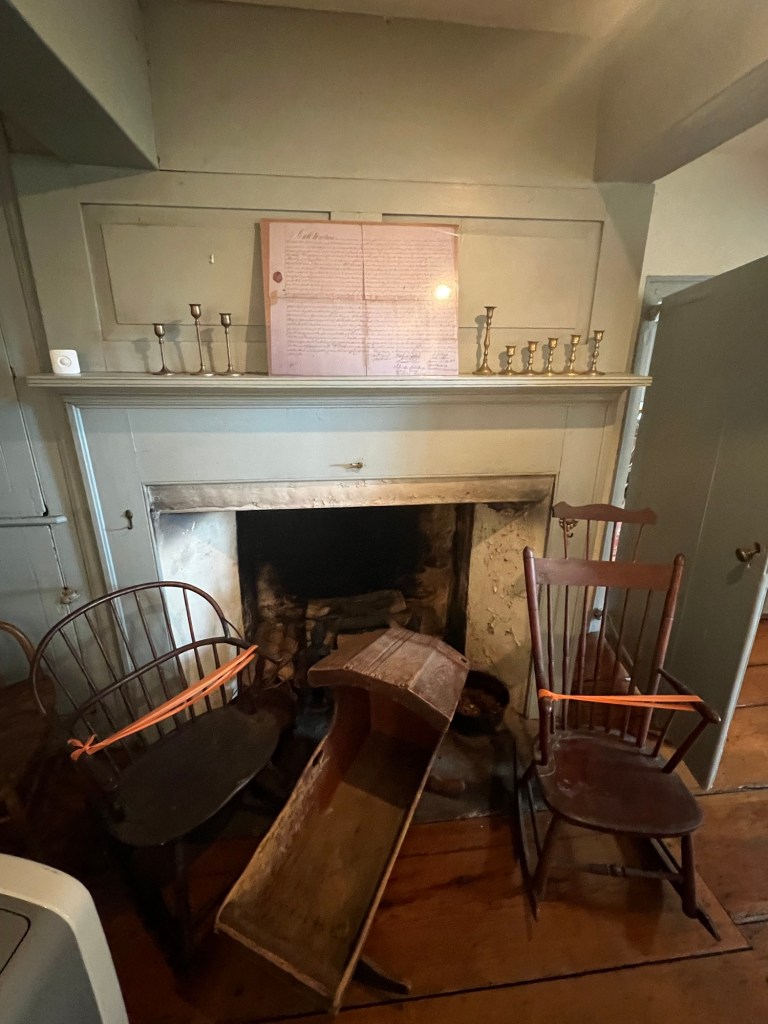
The fireplace and family crib of the Kiersten’s family

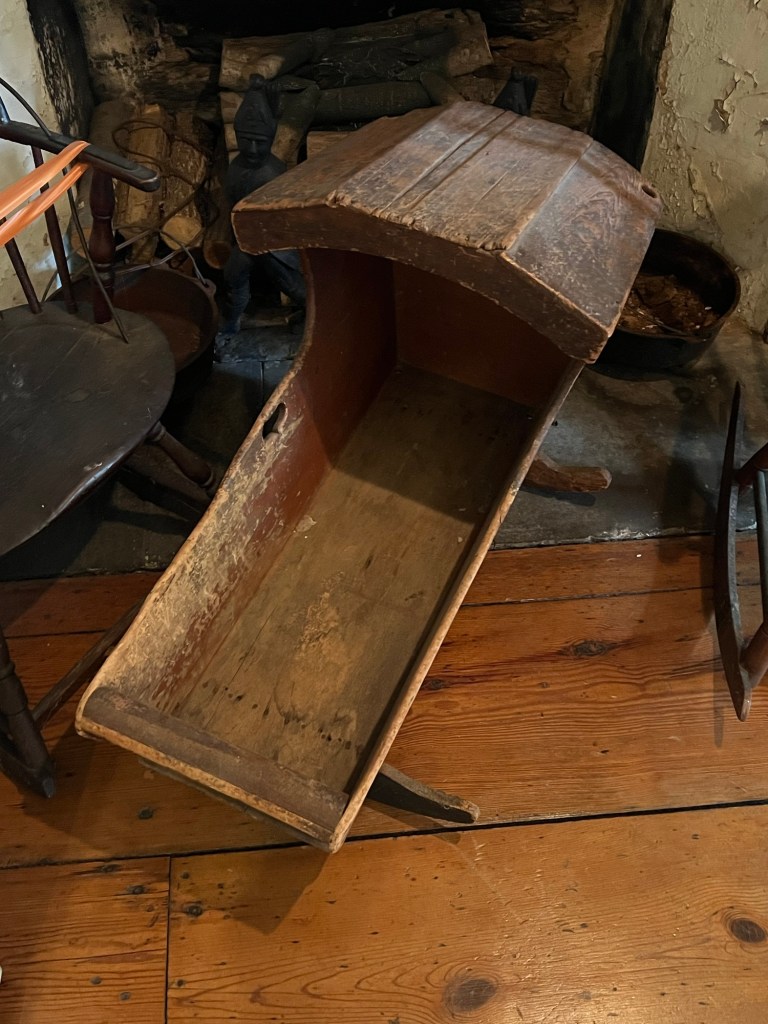
The Kierstad family crib from Dutch times

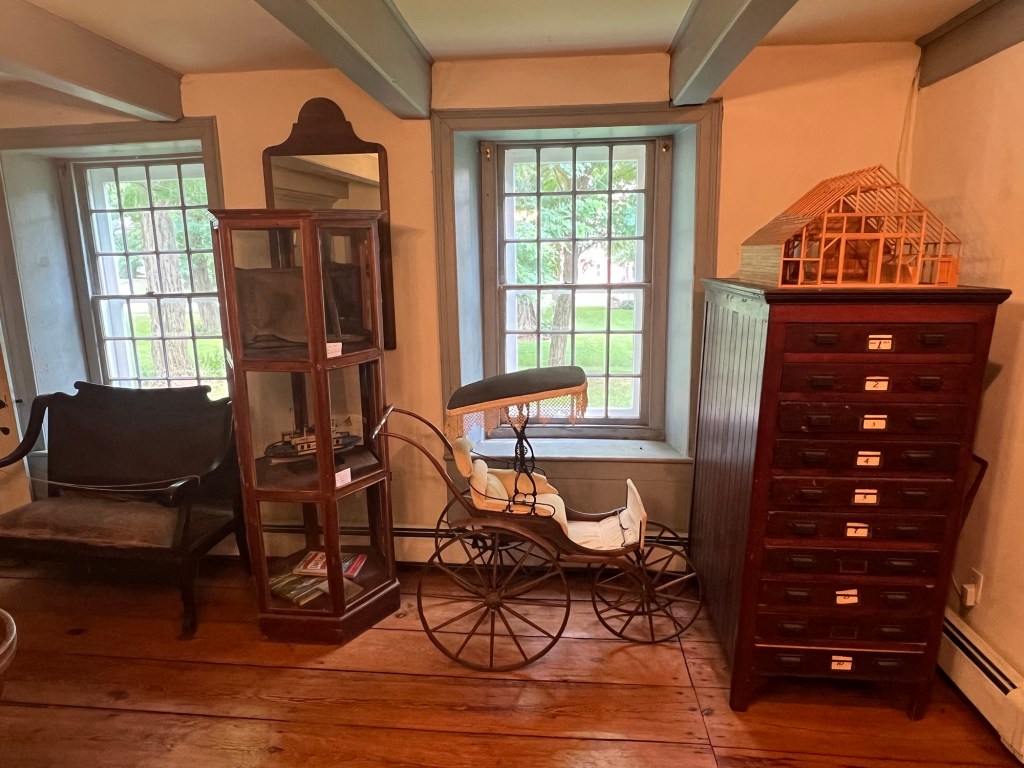
The Living Room set up

Artifacts in the Living Room including antique furniture and a stroller from the Civil War

The ‘Old Summer Kitchen’

The Summer Kitchen was the original part of the house

The table lined with items from harvest and for cooking the main meal

The kitchen being the focal point of the house was always warm so children and babies could be watched

In the main room were many of the artifacts in the collection:

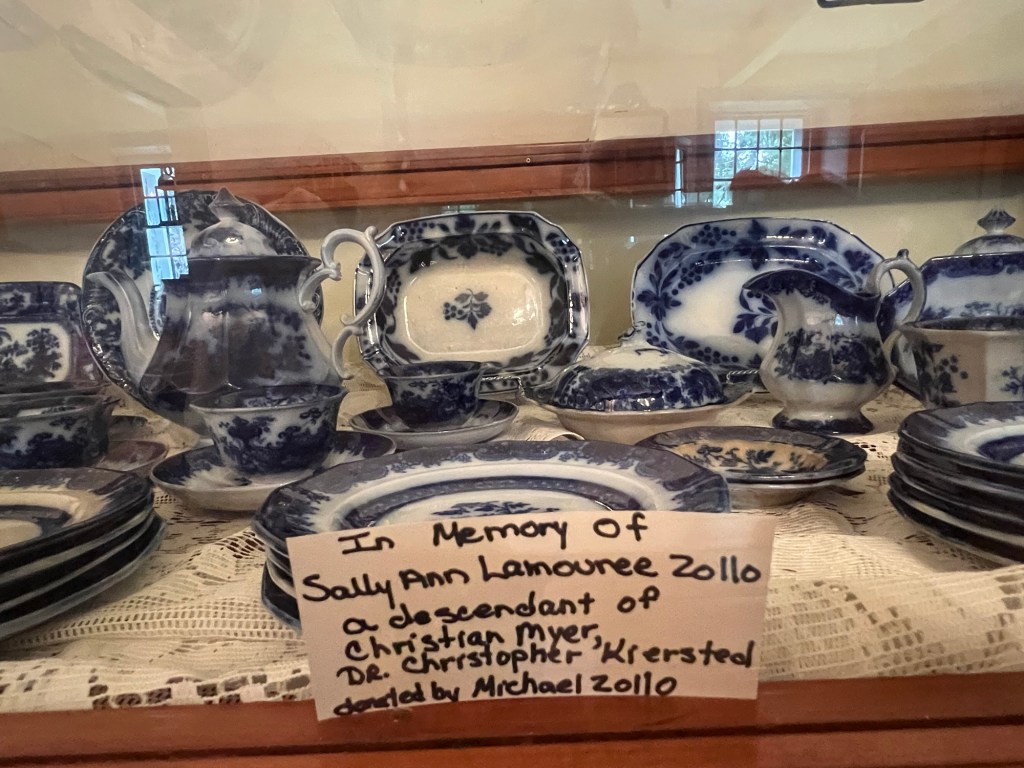
The family China of Sally Ann Lamouree Zillow, a descendent of the Kierstad family

From the Town of Saugerties, the award of a commode

The Captain Roger Dobson exhibition:

In the other part of the house was exhibit of Captain Roger Dobson, a local hero of the Vietnam War. The decorated Captain’s store was a local boy makes good. The exhibition contains all sorts of clippings and articles from the event and of the Captain’s accomplishments.

The entrance to the Roger Donlon exhibition

The Roger Donlon exhibition on his career in the armed forces during the Vietnam War

The display of Captain Donlon’s accomplishment

The last artifact I saw at the museum was a replica of the original map of Saugerties. This map shows the farms and estates of the original families of the Town of Saugerties.

The replica of the map of Saugerties, NY

The Outside Gardens:

After my tour of the museum, I walked around the grounds of the property and enjoyed the sunny day.

The gardens outside the entrance to the Kierstad Homestead and Gardens

The lawn outside the museum

The Den of Marbletown-The Teddy Bear Museum One Basten Lane                                         Kingston, NY 12401

The Den of Marbletown-The Teddy Bear Museum One Basten Lane Kingston, NY 12401

The Den of Marbletown-The Teddy Bear Museum

One Basten Lane

Kingston, NY 12401

(845) 687-6441

https://thedenofmarbletown.com/

Open: Sunday11:00am-5:00pm/Monday-Wednesday Closed/Thursday-Saturday 11:00am-5:00pm

My review on TripAdvisor:

https://www.tripadvisor.com/Attraction_Review-g48003-d7252463-Reviews-The_Den_of_Marbletown-Kingston_Catskill_Region_New_York.html

Den of Marbletown-The Teddy Bear Museum at One Basten Lane

The sign that greets you in the front of the business.

When you enter the museum, you will walk through an extensive collection of Steiff animals for sale in the museum gift shop. The owner of the museum and gift shop is a licensed Steiff store. After you pass the gift shop you get to experience all the beautiful stuffed toys which I would consider art.

The Steiff Teddy Bear Shop that sells all these beautiful works of art.

All the beautiful Steiff animals for sale in the Steiff Store.

The tour of the museum starts at the register where the museum has a small drink menu. You can get soft drinks like soda, homemade Lemonade and Bubble Tea or hot drinks like Coffee or Tea before or after your tour. A more extensive menu is being worked on the owner of the museum promised.

The drink menu at the Teddy Bear Museum.

Then you move room to room admiring all the beautiful graceful animals. The rooms are filled with all sorts of bears of all shapes, sizes and colors. There is every animal that was on Noah’s Arc and probably more. You can admire the bears from a distance but get to see them up close in the gift shop that offers such an extensive collection to choose from.

The extensive collection of wooden toys on the way up the stairs.

You can see an original “Teddy Bear” like the one created for Theodore Roosevelt. You can see a collectible “Rod Bear” one of the original bears created by the company.

The “Teddy Bear” in the collection.

On the second floor, the collection continues with an extensive collection of wooden toys. They also come in every shape and color. There is also an extensive set of collectables as well.

The Wooden Animals in the collection.

The museum creator’s mother in law continues to collect bears and other animals today so the collection keeps growing. There is an extensive amount of ‘collectable’ items on display as well.

Some of the smaller ‘collectables’.

More ‘collectables’.

The owner of the museum also has a special section for his friend, Sandy Sherman with a portrait of her as a girl with her Steiff toy and then a picture of her as an adult with the same toy years later. It was a very touching piece in the collection.

The Sandy Sherman exhibition

The portrait of Sandy Sherman and the photo of her holding the same bear as in the painting.

When you have had enough of everything stuffed animals, there is a place for parents to relax while their kids play with some toys provided by the museum in the “Mama Bear” room. The lounge is for parents to relax and kids to continue to play.

The Mama Bear Lounge

The “Mama Bear” Lounge is a place of comfort and relaxation. It is set up perfectly for those who want o play and for those who want to relax.

The Children’s Room in the ‘Mama Bear’ Lounge

The entrance to the gardens and the pond.

The path with the gardens.

The pond at the end of the path.

When you finish exploring the inside of the museum, the grounds outside offer much more as well. There is lush green lawns to relax on and a path with a garden to a pond in the woods that is just as relaxing. it is a nice way to spend the day exploring the paths and relaxing under the trees.

The beautiful grounds outside the museum.

The museum is a perfect way to capture the inner child in each of us and a place to relax and just enjoy a nice day. The museum owner also added he is working on a new café menu so there will be a place to eat as well at the museum. Then you can really spend the day there.

It was a wonderful afternoon tour.

The History of the Museum:

(from the museum’s website)

The Den of Marbletown is a teddy bear museum in Kingston, New York. We have a large collection of original Steiff teddy bears on display, and we sell rare Steiff collectibles in our gift shop. We also feature an on-site café, where you can enjoy scratch-made food and homemade baked goods.

The sign that greets you in the front of the museum.

The Teddy Bear Museum features more than 5,000 Steiff teddy bears and animals, Madame Alexander dolls, Barbie dolls, and hand-carved wooden toys. Steiff is the German company that invented the Teddy Bear, as we know it, more than 100 years ago. Today Steiff is considered the world’s premier manufacturer of high-end toys and collectibles. Indeed, Steiff is the only “luxury” toy brand in the marketplace today.

The Grace Bear Collection Room

The Collection

The Teddy Bear Collection

The core of the collection comes from “Gracebear,” a Steiff enthusiast who continues collecting to this day. Gracebear has shared this collection with her daughter and son-in-law, Nan and Steve, who are the founders of The Den. Gracebear’s other collections rotate throughout the museum as temporary exhibits, including Madame Alexander dolls, Barbie dolls, Schuco toys and bears, and hand-carved wooden toys.

Dioramas

The Steiff Circus exhibit

Local artists share their talents through the creation of charming dioramas that rotate throughout the year.

The Steiff History Room

The “Teddy Bear” exhibit

The history of the Teddy Bear (and Teddy Roosevelt); the poignant story Margarete Steiff, the founder of the luxury toy company; and the design evolution of the Teddy Bear are some of the displays featured in this section of the museum.

The Rod Bear

The “Original Rod Bear”

On Loan from the collection of the late Mary Couke is the exquisite and rare 1904 Rod Bear, considered by many as “The Holy Grail” of Steiff Collectors. This bear features an early design attempt at movable joints through three metal rods in the body – horizontal ones for legs and arms, and a vertical one for the head.

The Teddy Bear Café:

The Teddy Bear Café

After you spend the day in our teddy bear museum, stop by our café for a quick pick-me-up. The Den of Marbletown serves a variety of menu items at our coffee shop in Kingston, Ulster County, Hudson Valley, NY.. You can create your dream drink, including flavored lemonade or 40 plus flavors of bubble tea at the den. Need to get some work done? Take advantage of our free Wi-Fi. Need a place for your kids to unwind? We have indoor and outdoor play spaces.

The drink menu is extensive and the beverages are homemade.

The Teddy Bear Gift Shop:

The gift shop offers everything Steiff

When you step into The Den of Marbletown’s souvenir shop in Kingston, Ulster County, Hudson Valley, NY, it’s like stepping back in time. Experience the joys of a classic toy shop when you browse our selection of Steiff teddy bears and stuffed animals. We’re one of the few shops in the area that sells Steiff toys, and we sell a wide variety of rare collectibles.

The gift shop has an extensive collection of bears and other animals for sale.

The Basten House
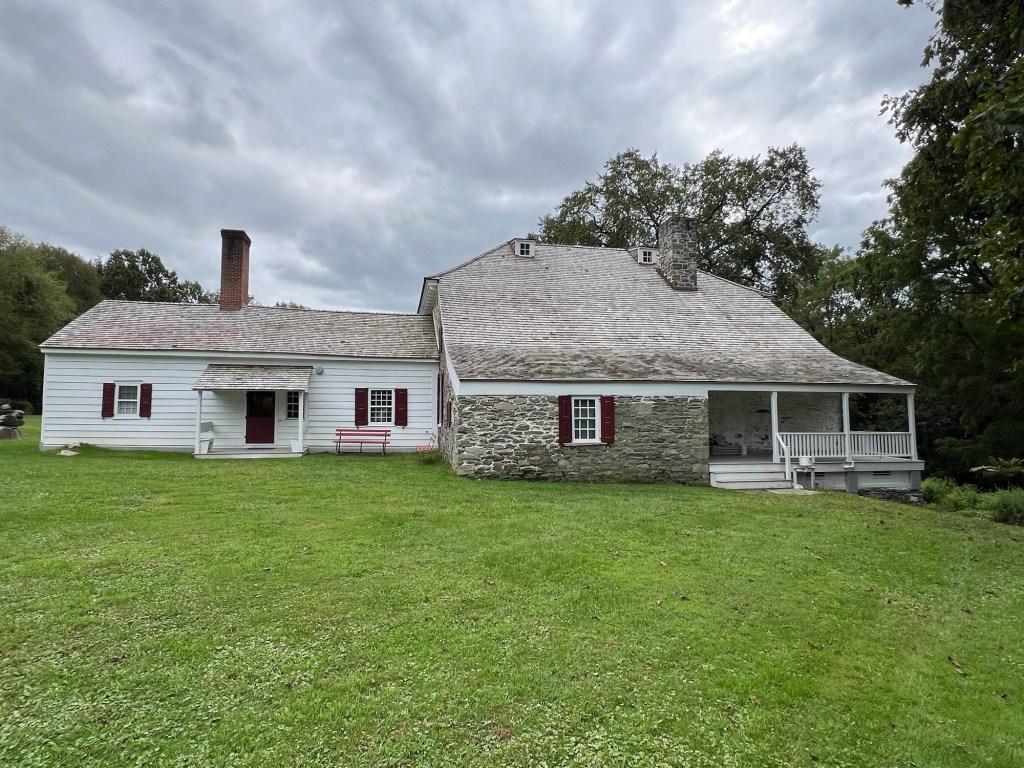
The Basten Homestead houses the collection.

The museum exists in a very special space – a marvelous 1860 farmhouse, in which houses seven generations of “The Basten” family. The museum experience is enhanced by this context – the old wall paper, the slopping floors, the secret passage ways, the antique door knobs, the original shutters, and the stone wall of “the keeping room.”

The Basten House history.