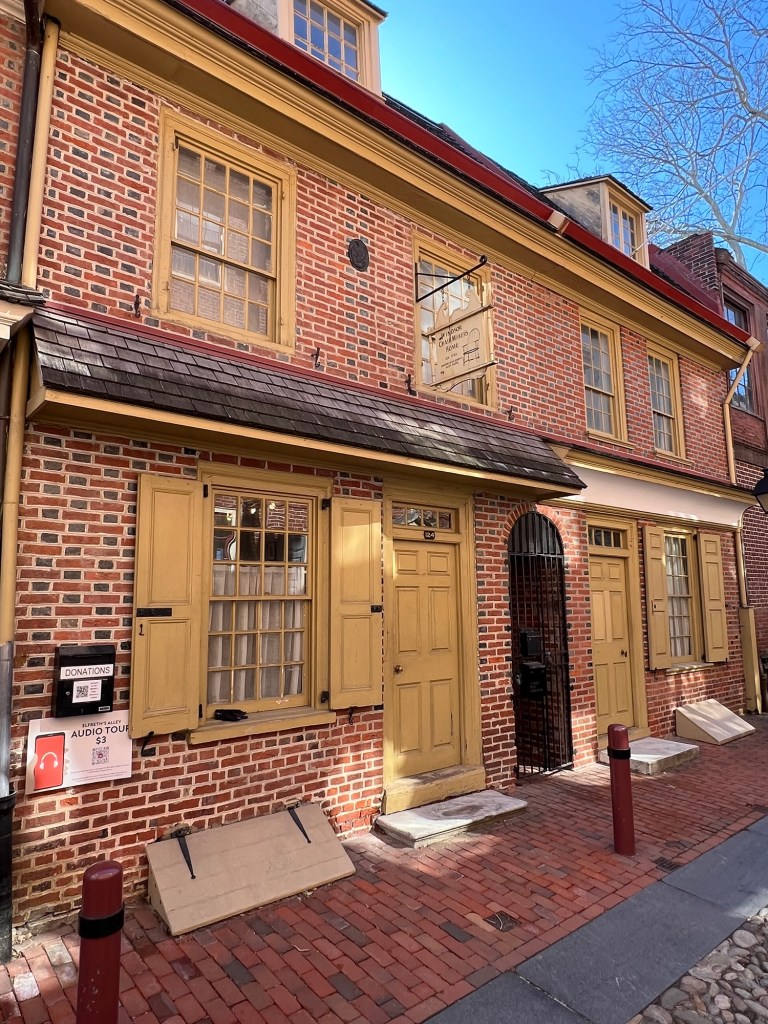
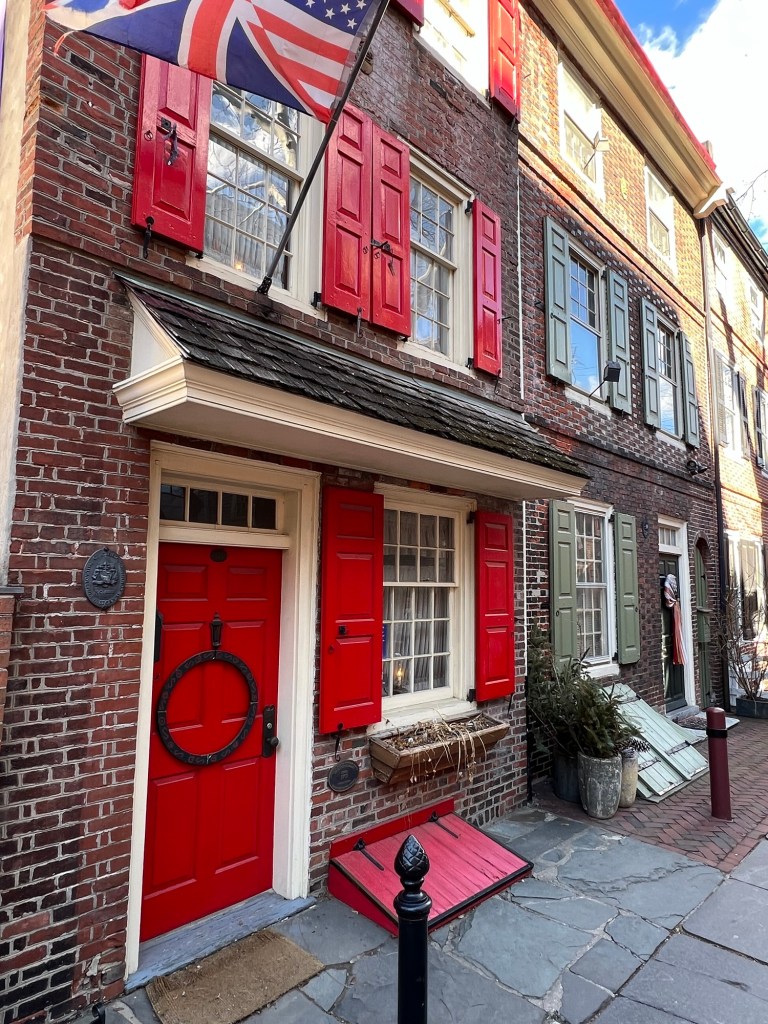
I came across this interesting little historical museum when I was touring Elfreth’s Alley in Old Town, Philadelphia. What an interesting look back at the merchant trade class of the 18th century. It really showed how the average worker used both their home as a business and as a home.
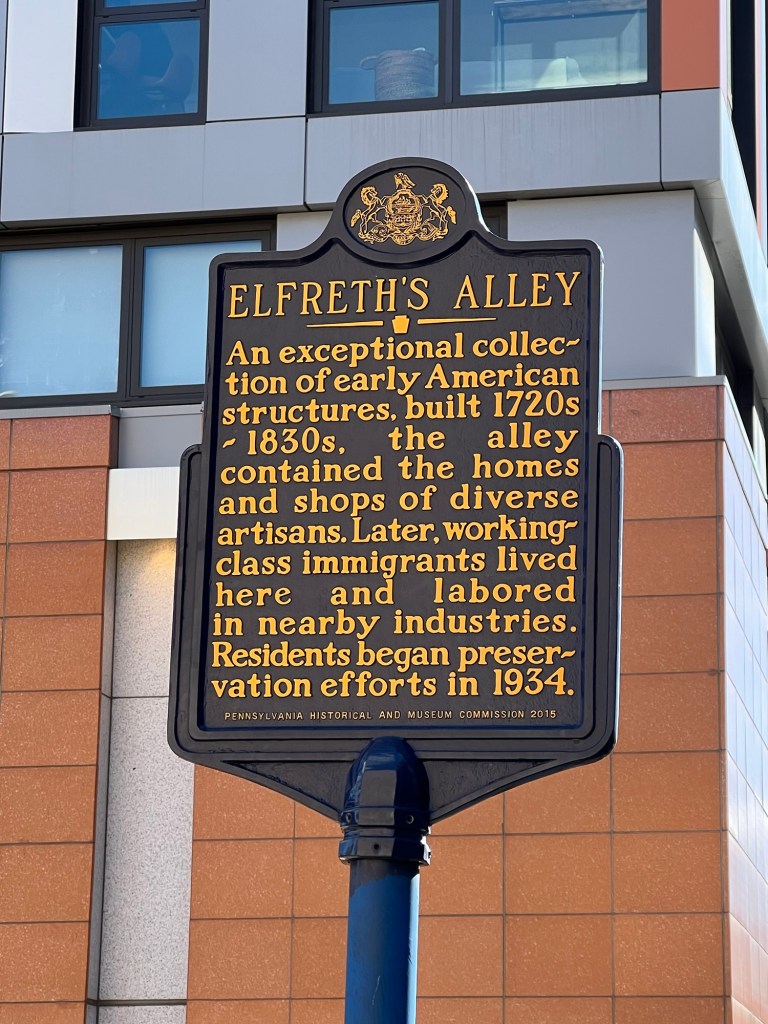
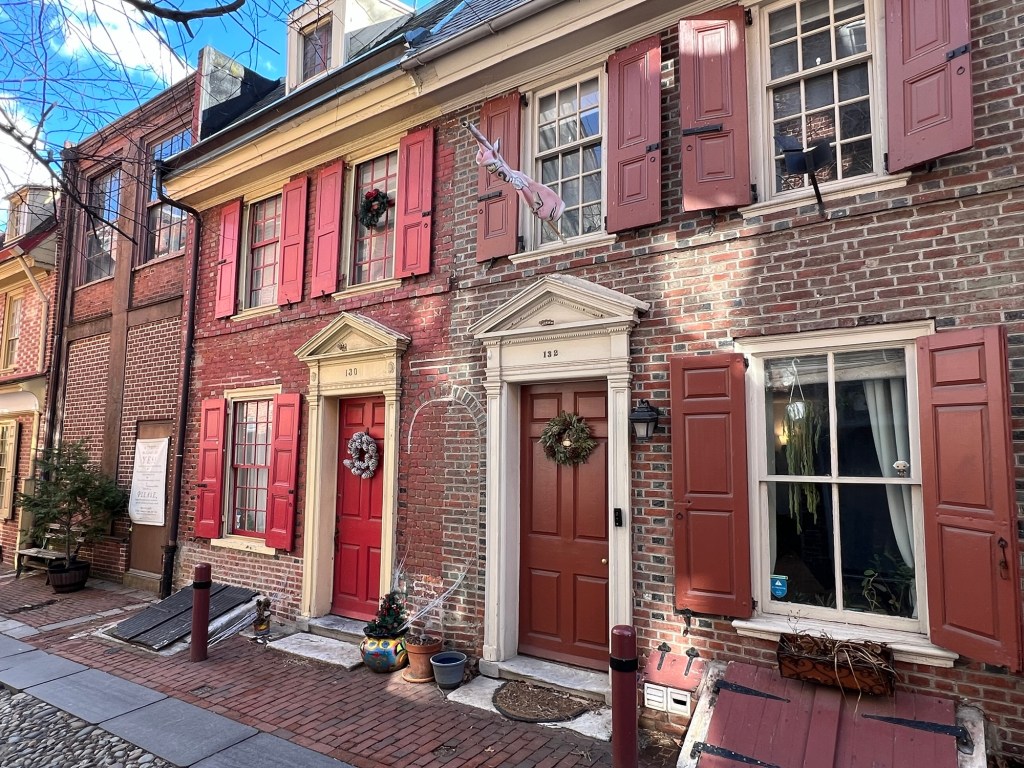
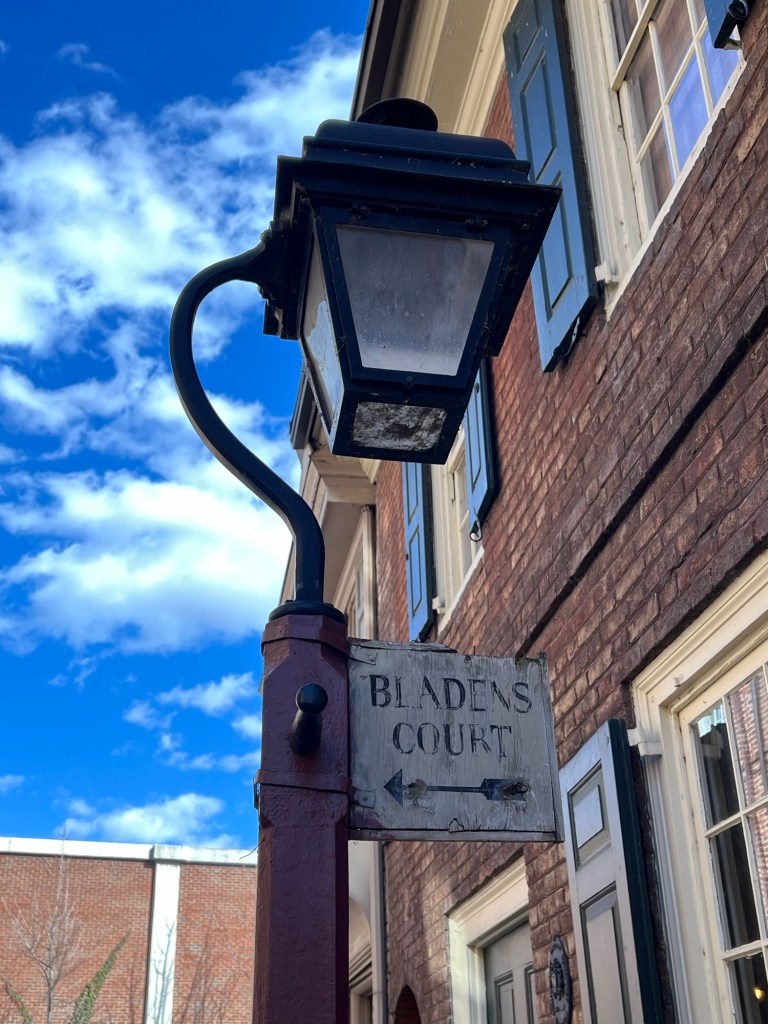
The historic sign for Elfreth’s Alley
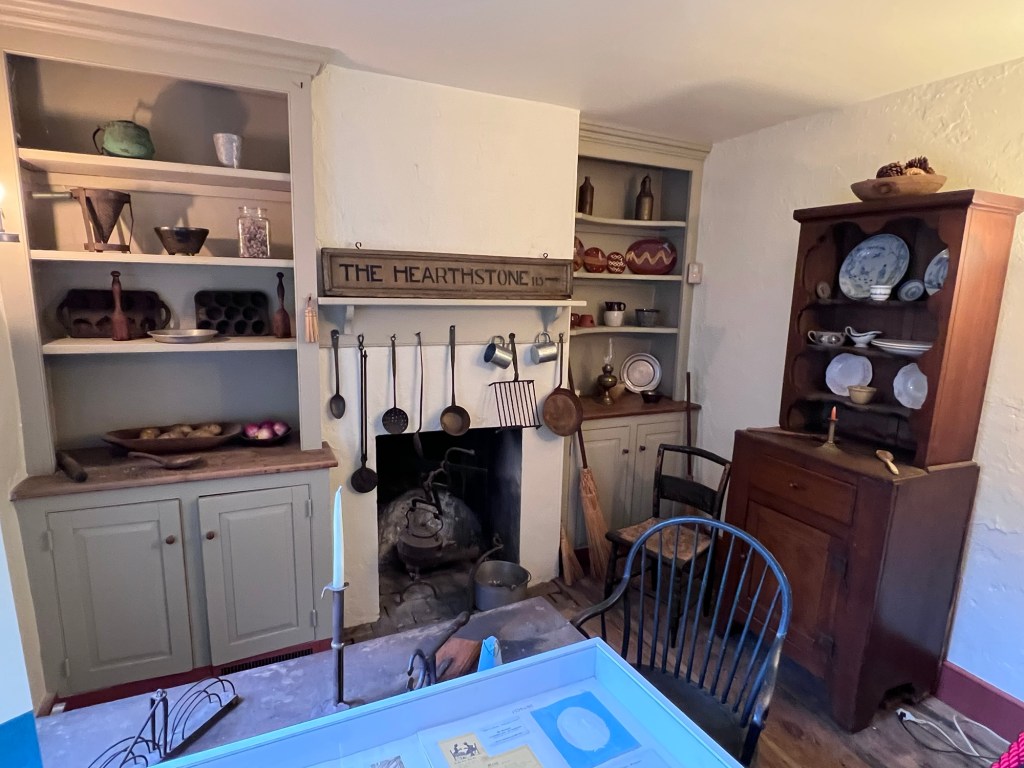
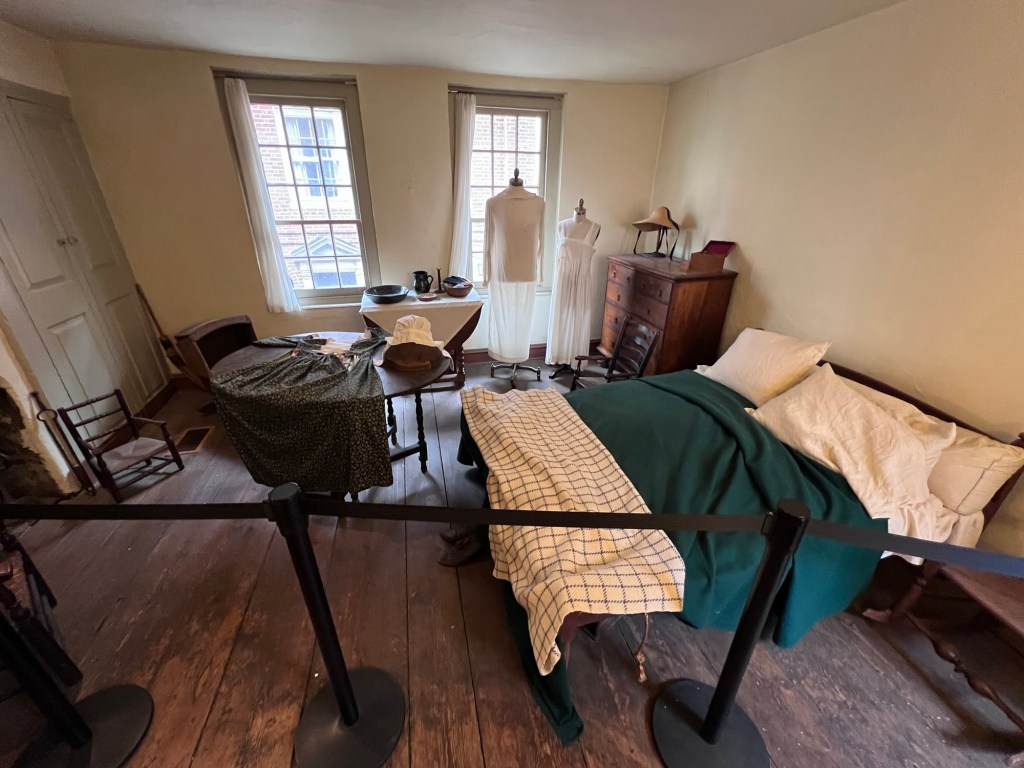
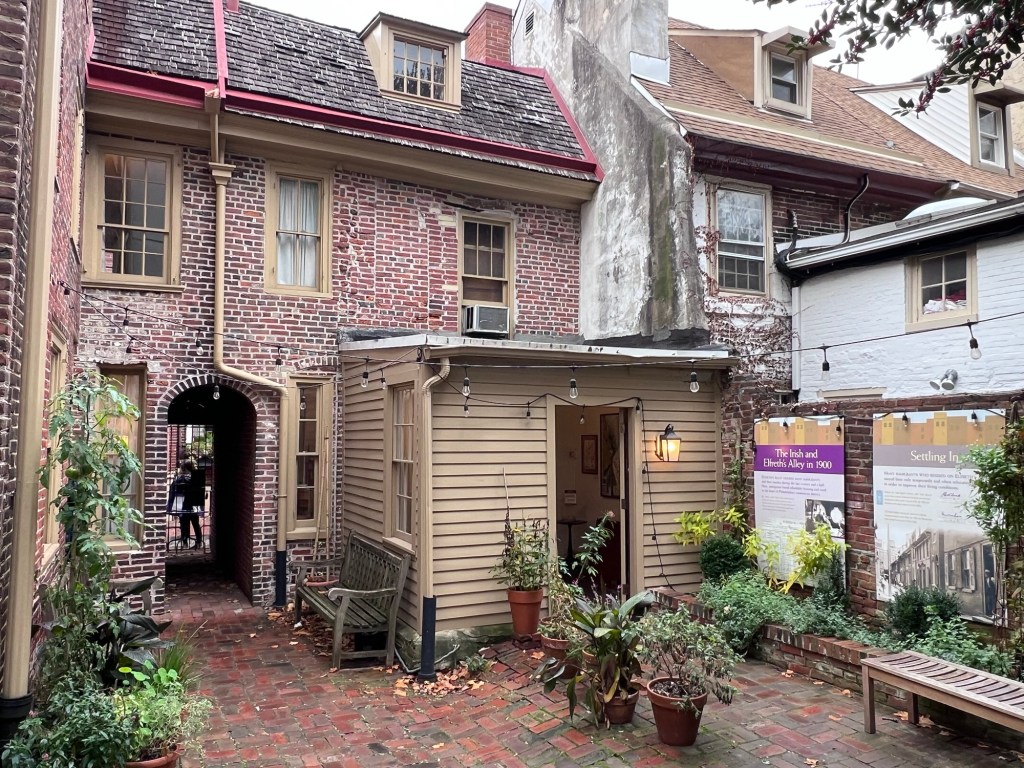
The home had been former business of a pair of dressmakers who used the front parlor as their store and showroom, the side room used as the kitchen, the upstairs room was the living quarters for a very large family (I believe that the family had eight children according to the tour guide) and a nice sized garden in the back of the home.
The front work and show room
The inside display of the museum shows the dress making profession of the first two owners of the house and their work with the Philadelphia clients they catered to in the Upper Middle and Upper Classes.
The story of the dress business
The type of commissions the ladies would get from the Upper Middle Class to Wealthy women from the City
The front rooms were used as the workplace showroom where the merchants would greet their customers, decide on the patterns and make and then conduct their business. When they were done for the day, they just closed up shop. What I thought was interesting about the two business owners is that they took most of their meals out at the local pub. Time as dressmakers left them little time to cook so meals had to be eaten out.
Later on in the home’s history, a kitchen would be added on later by a German businessman who owned the house
The upstairs bedrooms
When you climb the narrow stairs to the second floor, it leads to the loft living space. When I heard how many people lived at the house, I could not imagine that today. Children today pretty much have their own rooms but these people lived on top of one another.
It was such a small space for a family of ten. Then you had to walk down another narrow staircase to come back to the first floor.
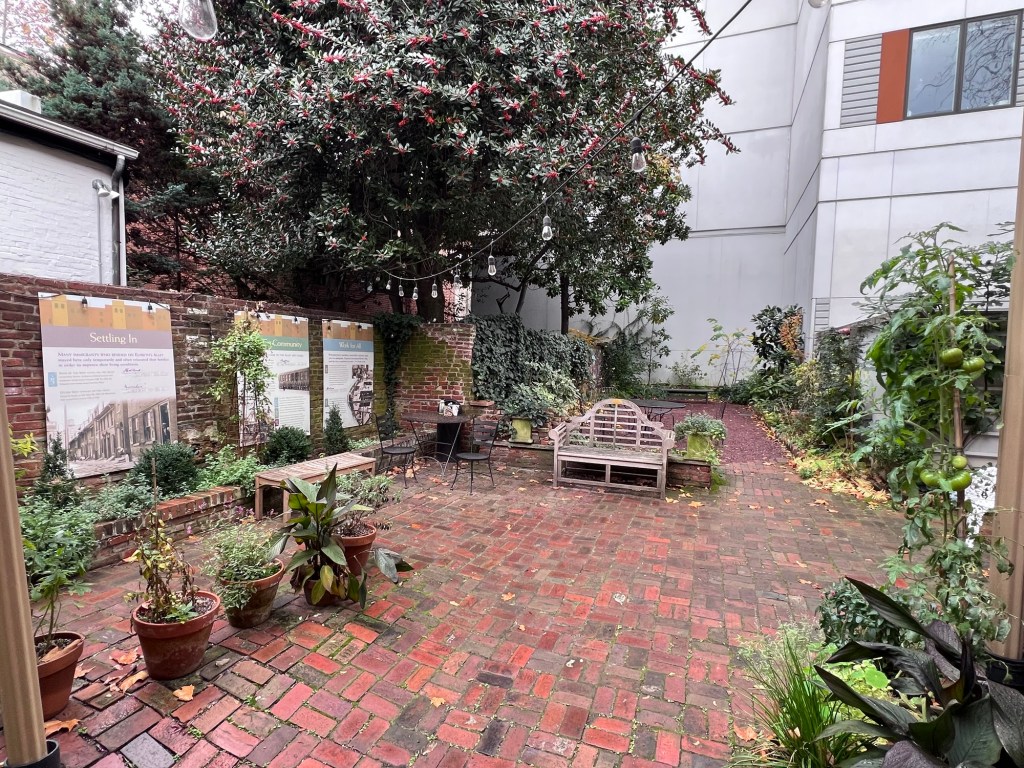
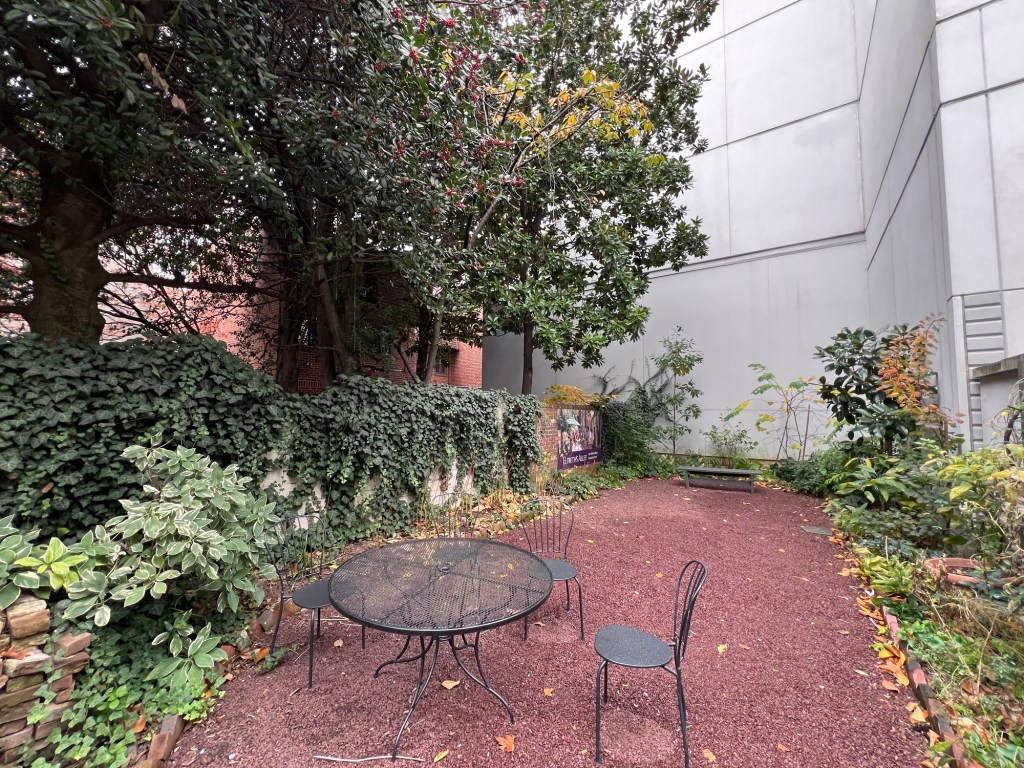
The backyard garden was really nice with interesting plantings, a nice sized garden of flowers and benches to cool under on a hot day. Much of the backyard was still in bloom when I visited in November of 2025.
The backyard plantings
The seating area in the courtyard
The gardens behind the home
The plants in bloom in the fall
I am not sure if the gardens were historically accurate but it was a nice place to relax on a hot day. It is worth it to visit this small home to see how another generation worked and lived under very different conditions (Elfreth’s Alley Museum self-guided tour).
The back gardens
Don’t miss the Gift Shop on the way out
The History of Elfreth’s Alley Museum:
Elfreth’s Alley Museum is located at 124-126 Elfreth’s Alley, preserves the 18th Century home of a pair of dressmakers. Restored to its appearance in the Colonial era, exhibits the house and tour guides interpret the life of the house and alley’s residents in that era. There are 32 houses on the street that were built between 1703 to 1836 (Wiki/Museum site).
The History of Elfreth’s Alley:
Elfreth’s Alley is named after Jeremiah Elfreth, an 18th century blacksmith and property owner. Among the alley’s residents were tradesmen and their families. Their trades included shipwrights, silver and pewter smiths, glassblowers and furniture builders. In the 1770’s, one third of the households were headed by women (Wiki).
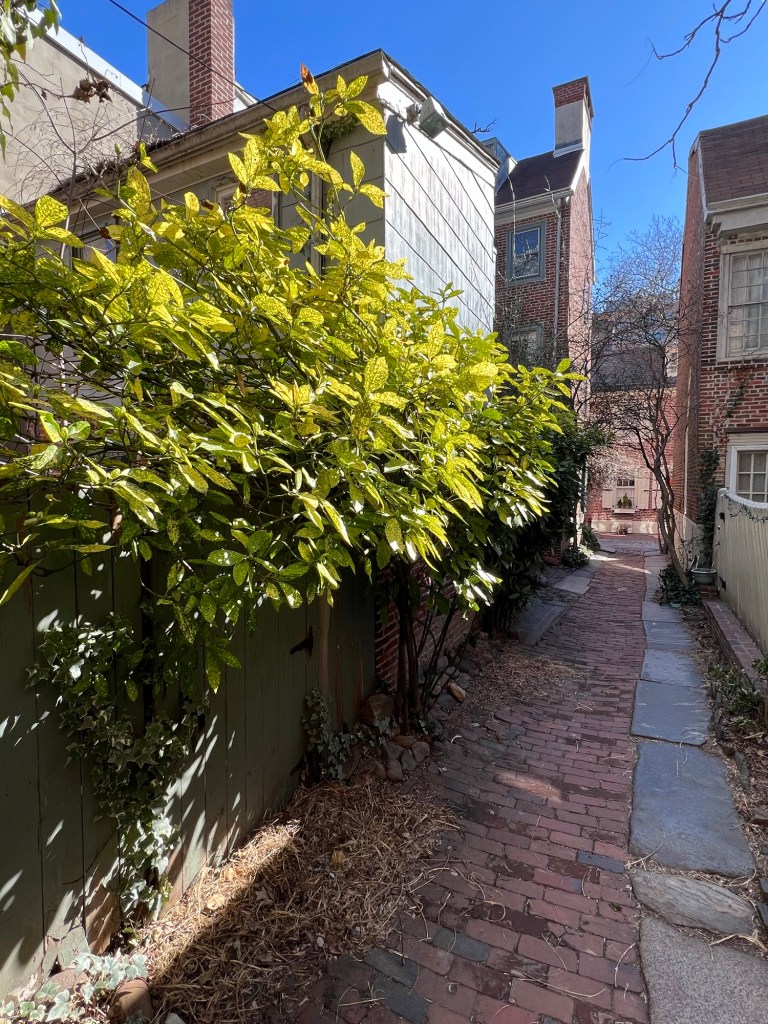
The Georgian and Federal style houses and cobblestone pavement of the alley were common in Philadelphia during this time. The houses are typically small and many are uniquely Philadelphian Trinity houses. In the late 19th and early 20th centuries, industry began to change the street with a stove factory being built in 1868. Soon it was followed by more factories that surrounded the area (Wiki).
Elfreth’s Alley Museum site and homes
In 1934, the Elfreth’s Ally Association (EAA) was founded to preserve the alley’s historic structures while interpreting the streets history. The EAA helped save the street from demolition and also lobbied the City to restore the alley’s name to Elfreth’s Alley. The area is an example of urban 18th and 19th century architecture and is part of the “Old Town” neighborhood of Philadelphia (Wiki).
The neighborhood hosts many events so please check their website for the dates and events.
Monday: 10:00am-1:00pm/Tuesday through Friday: 8:30am-4:30pm/Saturday and Sunday: 10:00am-4:30p
Fee: Adults $18.00/Seniors $16.00 (over 65)/Children 17-5 $13.00/Military and Children under 5 and Members Free/Penn Museum Members/Penn Card Holders/HUP/CHOP Employees: Free
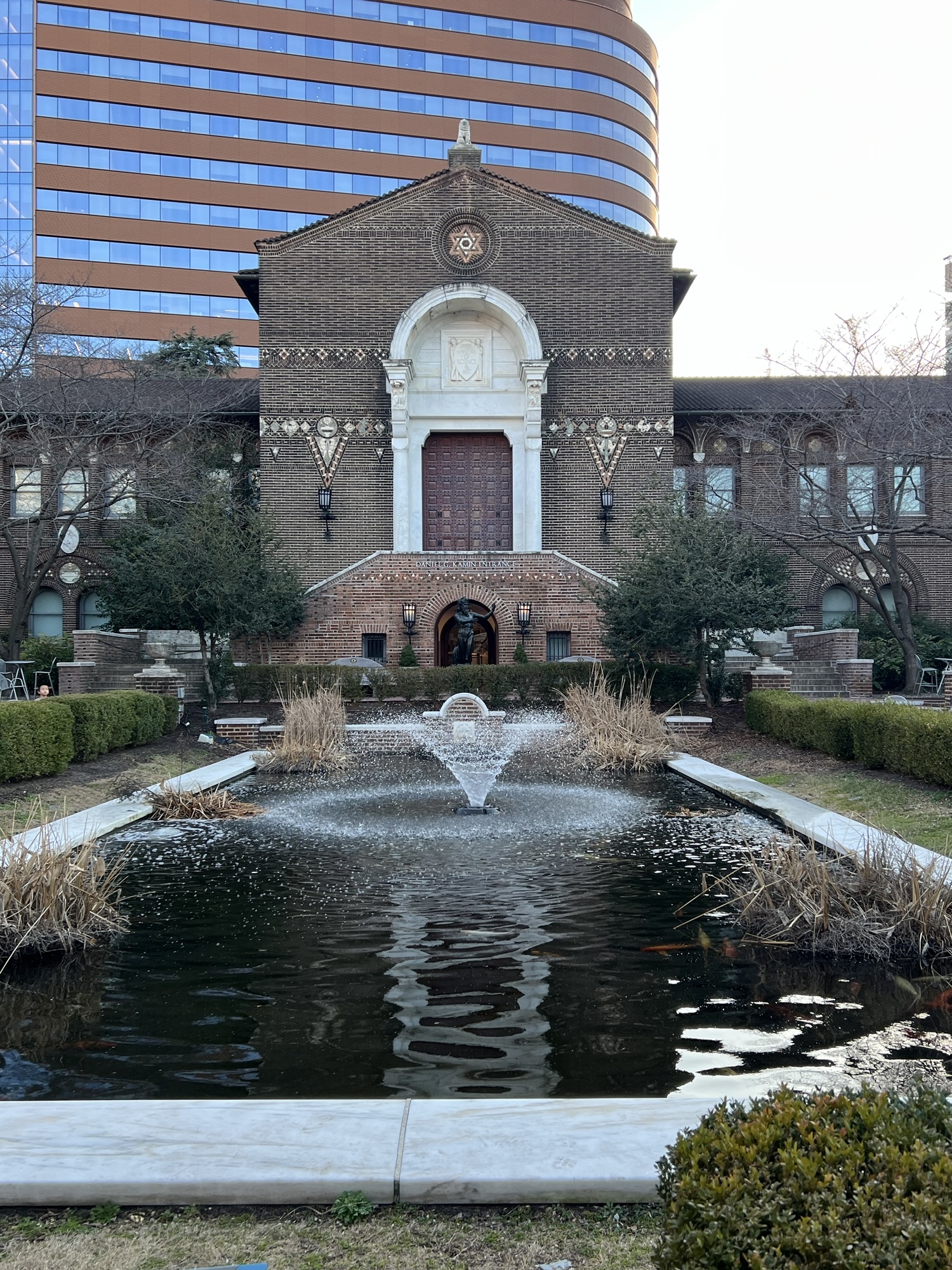
The entrance to the Penn Museum at 2360 South Street
Looking for a tranquil place to study or relax? Try the Museum’s garden’s and galleries or the Museum Library. For a bite to eat, stop by the Pepper Mill Café. Come by during Reading Days and Exams for free coffee and tea and extra study space on campus (from the Penn website).
The University of Pennsylvania Museum and Gardens
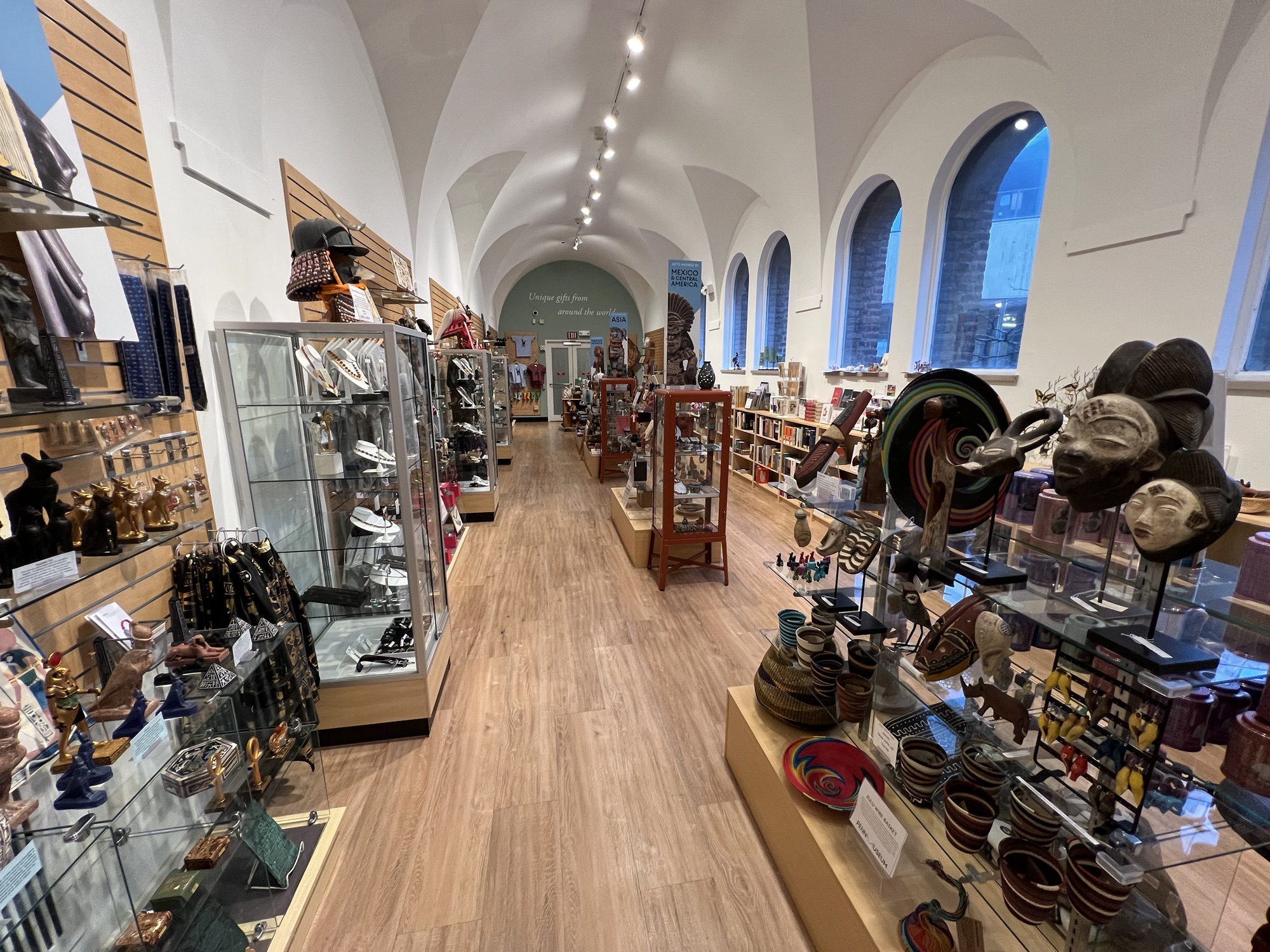
Museum Shop: A wide selection of books, games, fine jewelry and crafts from around the world can be purchased at the Museum Shop. Open during Museum hours.
The museum gift shop
I visited the Penn Museum on days I have come to Philly for the Penn versus Cornell games and for the Christmas holidays (the museum is across the street from the football stadium.
When I visited Philadelphia recently, I was able to visit the museum at more length rather before and after a football game. I really got a chance to see all the displays and look at all the artwork. It is a fascinating museum with many artifacts found on digs conducted by the university. It takes a lot of time to explore each culture.
The museum has three floors of exhibition space which is broken into different centuries. The museum has a lot of artifacts from their digs over the last two hundred years. Many of the artifacts are on display have the background of where the artifacts were found and how they researched. Each room has a different area of the world they are coming from.
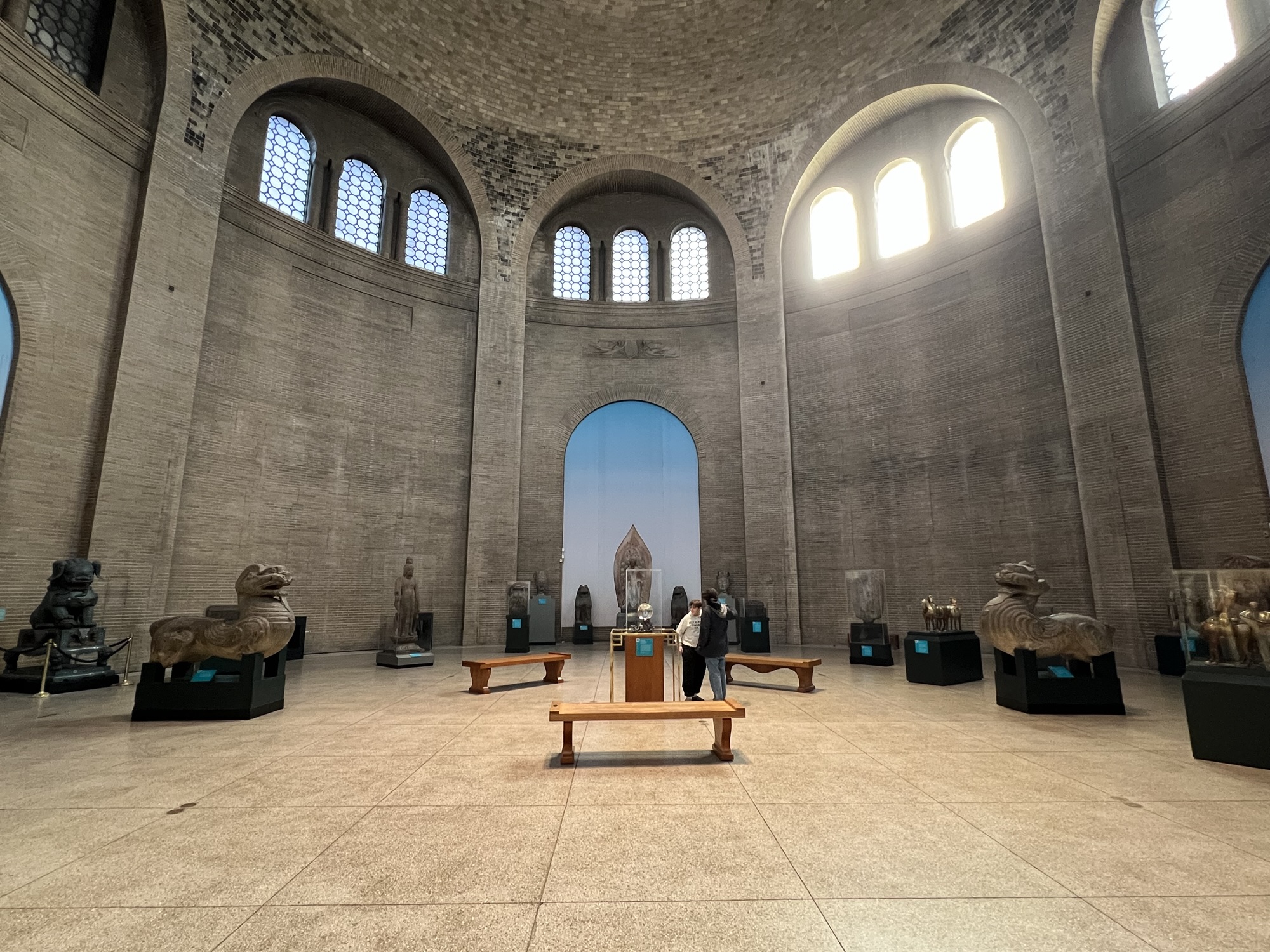
On the Upper floors is the Asian, Egyptian and Roman exhibitions on artifacts, the Mid-level is the Middle Eastern, African, Egyptian, Mexican and North American/Native American Galleries.
The History of the University of Pennsylvania Museum:
(from the College website)
The Penn Museum is one of the premier international museums of archaeology and anthropology right here on the University of Pennsylvania campus. An active research and teaching center, the Penn Museum has teams engaged in more than 50 expeditions and research projects worldwide. Three floors of public galleries feature art, artifacts and remarkable stories from every inhabited continent on earth.Here is a selection of the interesting artifacts and art that I saw at the museum:
The Eastern Mediterranean Gallery:
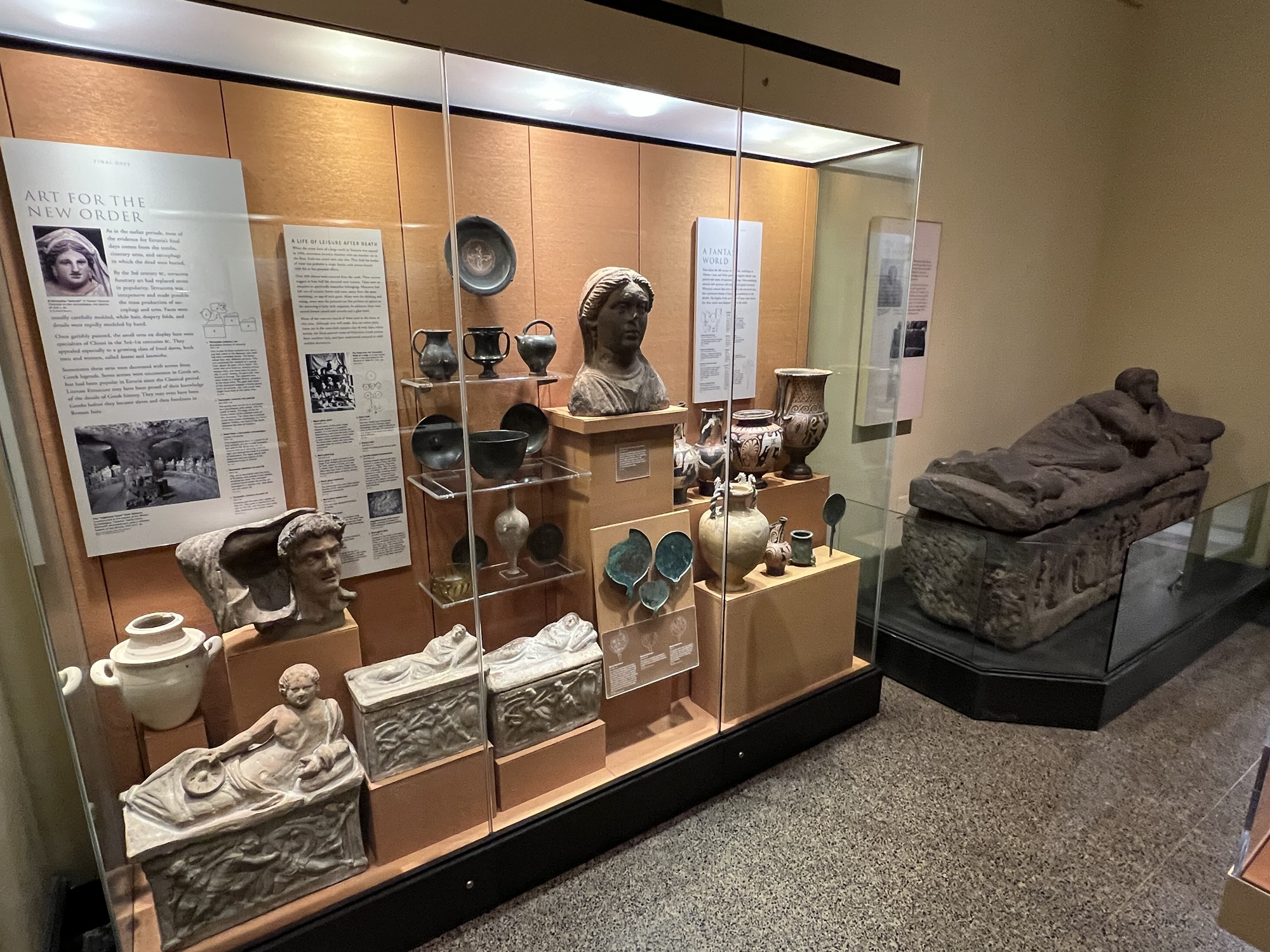
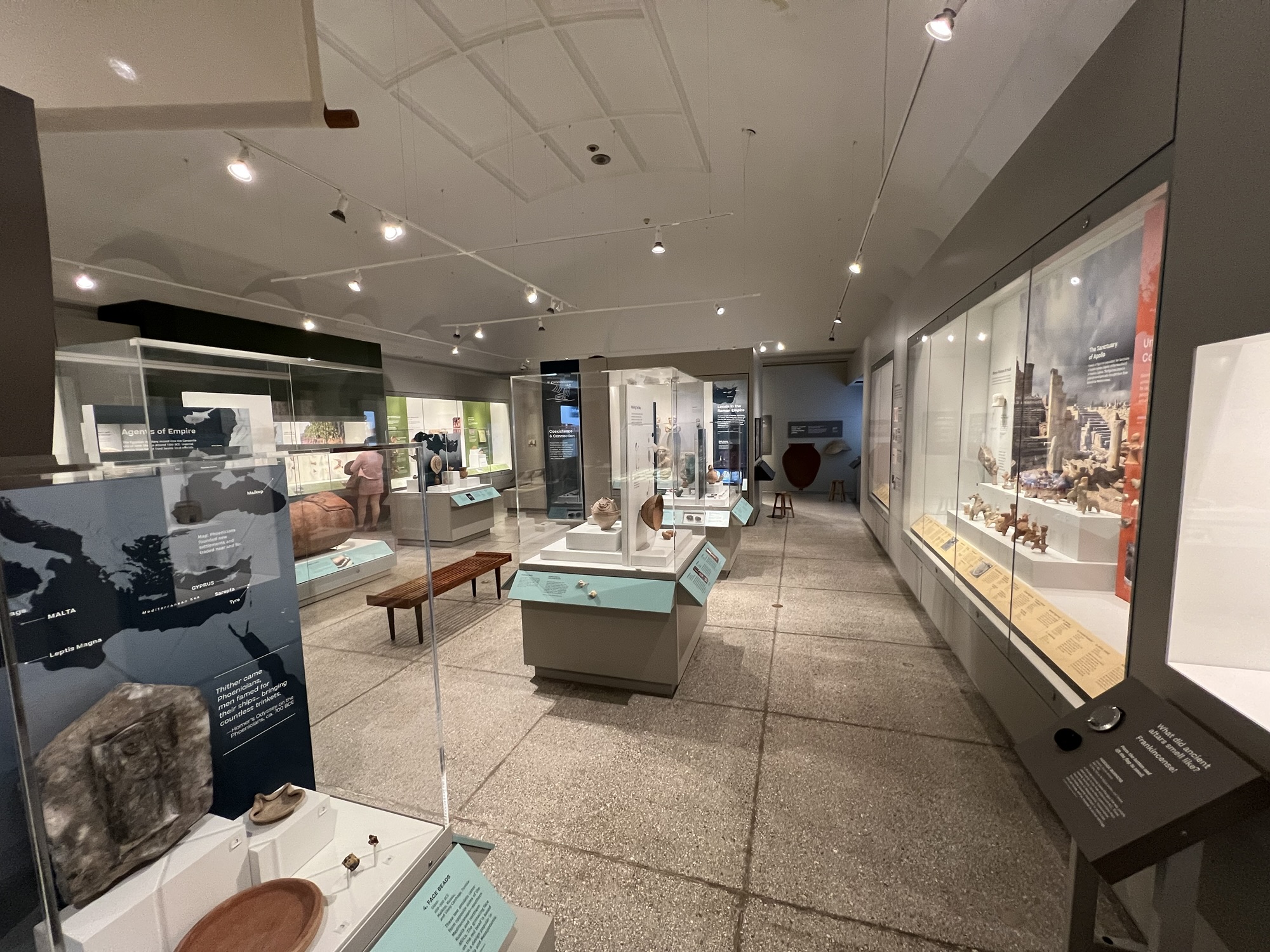
The Eastern Mediterranean Galleries of Roman and Greek art
Transforming understanding of the human experience. Home to over a million extraordinary artifacts and archaeological finds from Africa, Asia, the Americas and the Mediterranean, the Penn Museum has been uncovering our shared humanity across continents and millennia since 1887.
The Greek Galleries
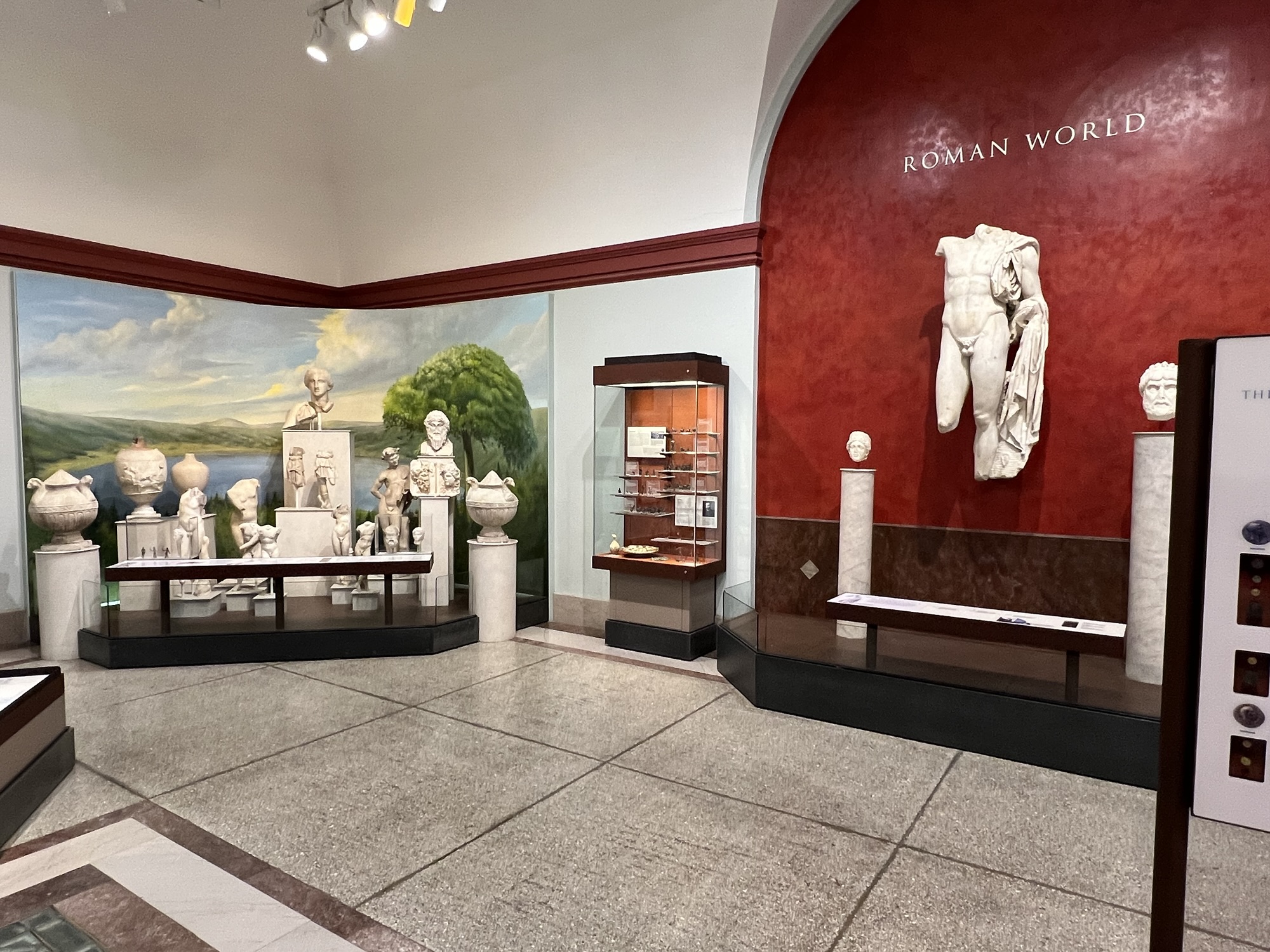
The Roman/Italian Galleries:
The entrance to The Roman Galleries
The Roman Galleries
The Roman Galleries
The Roman Galleries tell the story of the influence of Ancient Roman on the Mediterranean Sea. trade routes to the the Middle East and Asia and the influence of the Roman Empire on the world at the time.
The Pre-Columbian Gallery:
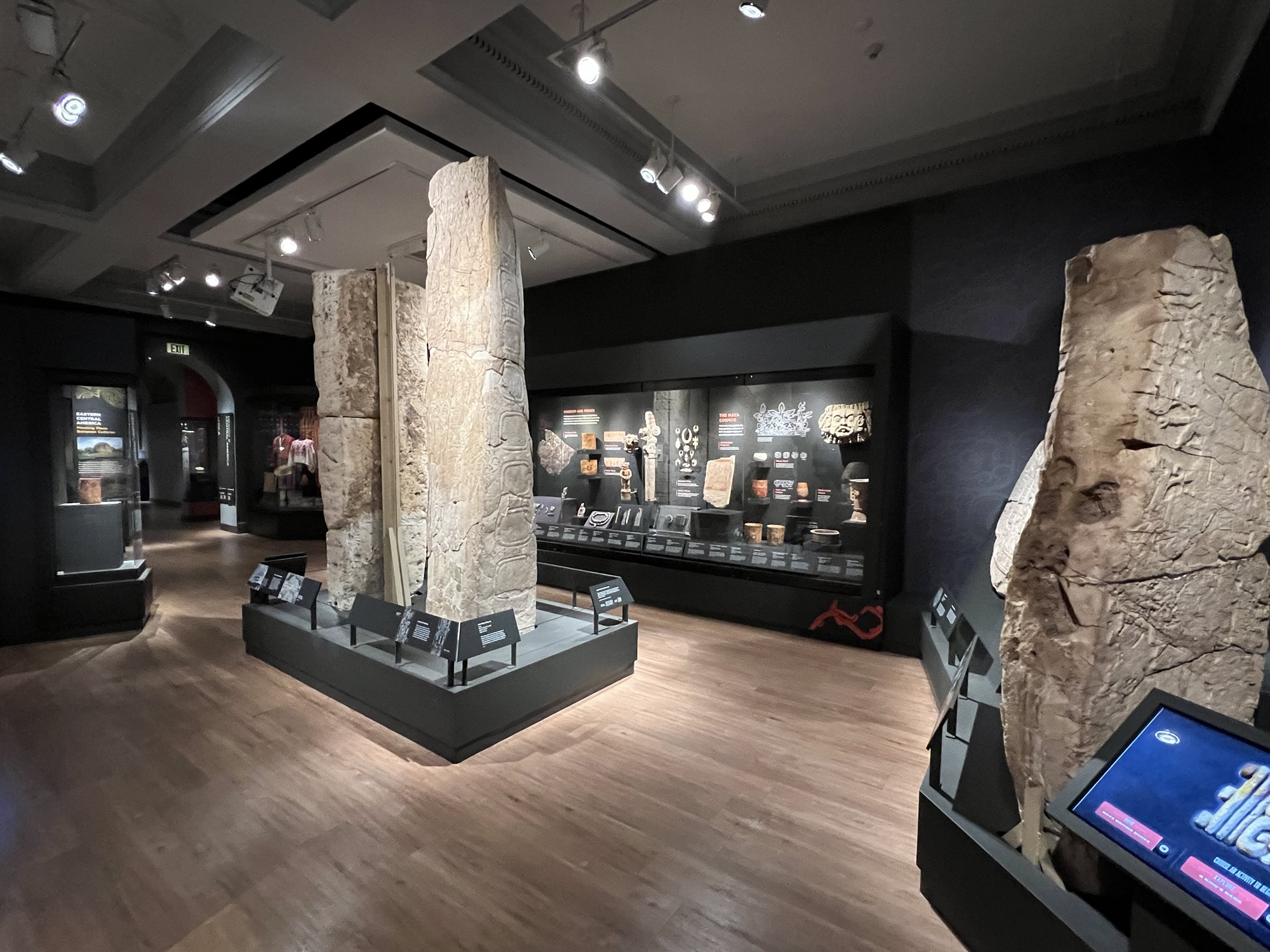
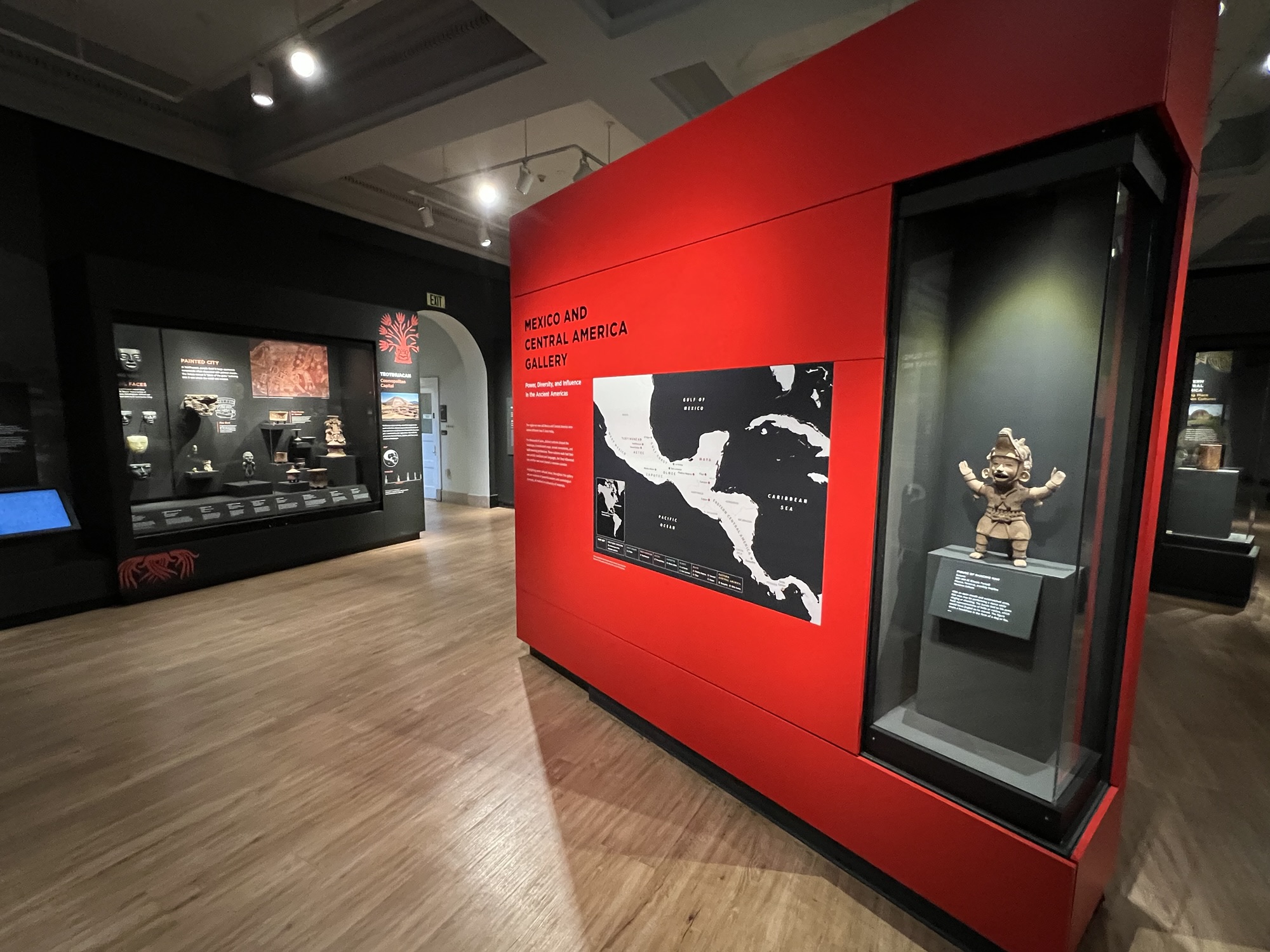
The Pre-Columbian exhibition is based on artifacts from the Mayan, Aztec and Incan civilizations. The artifacts show very advanced societies in both education, science and art.
The entrance to the Pre-Columbian galleries
The Pre-Columbia room
The Pre-Columbian galleries
The ‘Margarita’ panel
The ‘Margarita’ panel
I also got a quick tour of the Sphinx Gallery on my way out. On my most recent trip to the museum, I only had about an hour so I concentrated on the Egyptian Galleries and the special exhibition “The Stories We Wear”.
The Egyptian Galleries:
For a small museum, the Egyptian Galleries were pretty extensive. Much of the artifacts had come from Penn digs in Egypt back in the last century when museums used to sponsor and then fill their museums with artifacts.
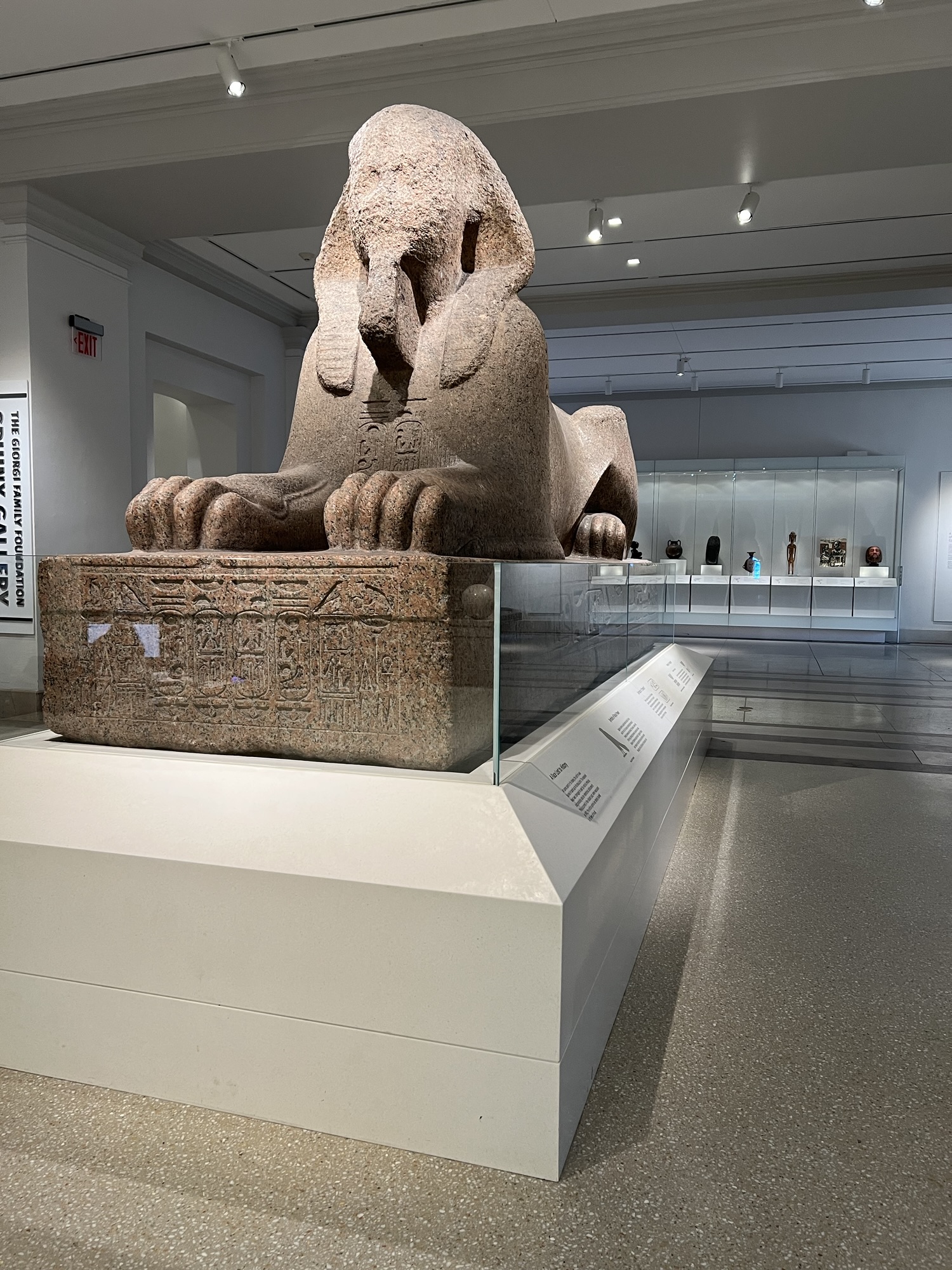
There is a selection of small statuary, jewelry and decorative objects. Some of the collection highlights are the Sphinx of Ramesses the Great from Memphis, Egypt 1293-1185 BC located in the Egypt (Sphinx) Gallery.
The Sphinx Gallery is very interesting
The Sphinx guards the Gallery
Egyptian Gallery artifacts
The main Egyptian Gallery
On my first trip to the museum as well as my most recent, I was able to quickly tour the Mexican Galleries with the statues of the Sun and Water gods and the stone calendars. The Standing Figure located in the Mexico and Central America Gallery from Veracruz, Mexico from 500-700 CE. The Gallery has one of the largest collections of Mayan Stone statues in the world.
In the Special Exhibition Gallery, “The Stories We Wear”:
The exhibition was based on how what we wear and change into transforms us into someone new. The exhibition featured sports uniforms, Chinese Opera gowns, Princess Grace Kelly’s formal dress, drag performers costume as well as an array of accessories that adorn people.
From Groundbreaking excavations to ongoing innovation. Our journey as an institution began with an excavation of the ancient Mesopotamian city of Nippur, the first American excavation in the Middle East and a groundbreaking undertaking in the history of archaeological research.
Ancient works of art
Since that time, over 300 field excavations and anthropological research projects around the world have set us apart as an active research and educational institution. Today, our mission is fulfilled by 22 curators, 5 teaching specialists and over 150 affiliated consulting scholars.
The Mesopotamians Galleries
We are stewards of our remarkable history and humanity. Out vast and varied collection of archaeological finds and ethnographic objects is organized in eleven curatorial sections documenting the peoples of Africa, Asia, Oceania and the Americas.
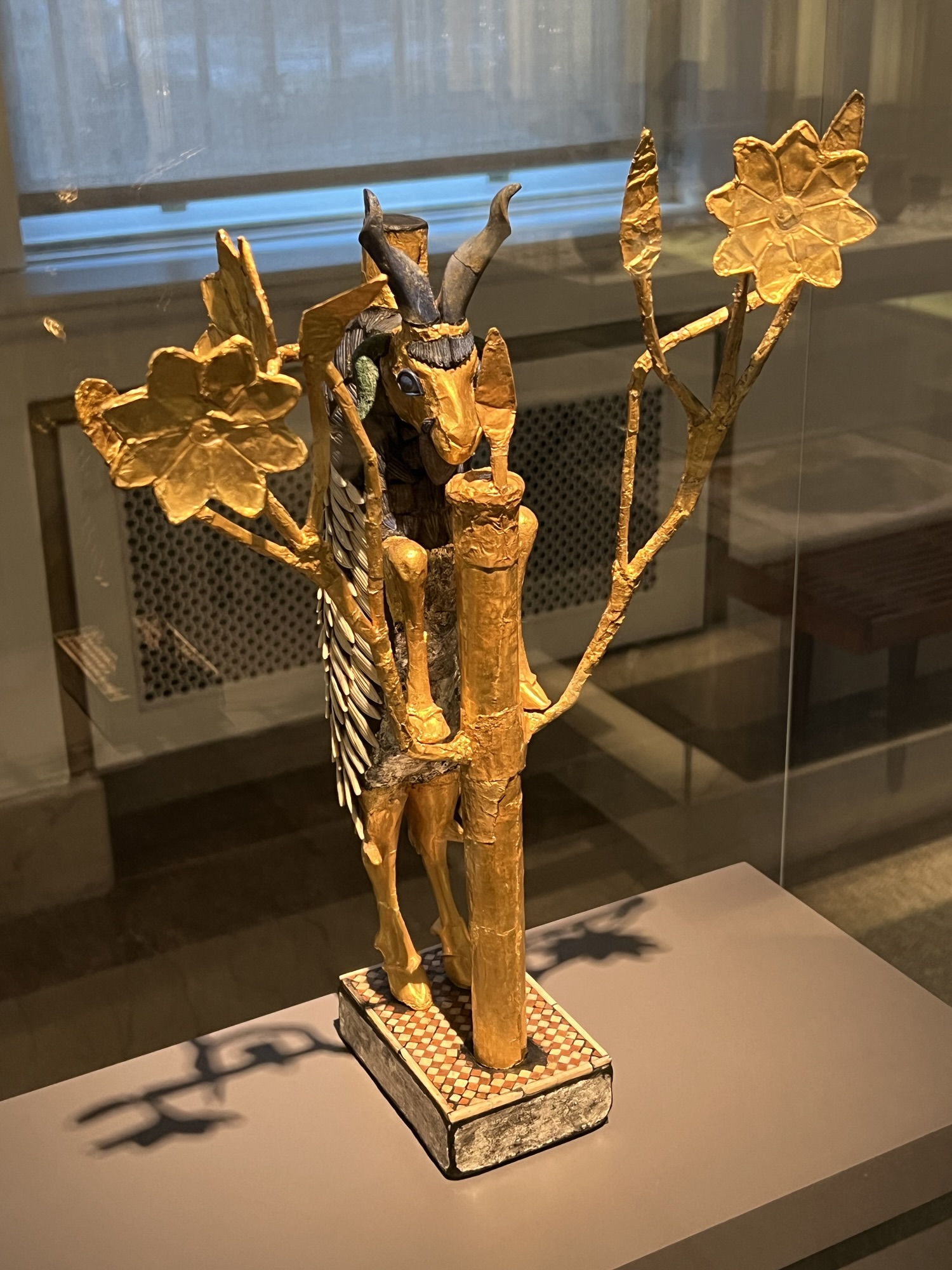
The art from Ur
Harp from the City of Ur
Ram hiding in the thicket from the City of Ur
The Queen Puabi display
These holdings as well as the Museum Archives of excavation and research projects, are used by researchers and borrowing institutions worldwide. And our curators and interpretive planners draw on these rich resources to provide compelling context to our galleries, where visitors can travel the globe in a day.
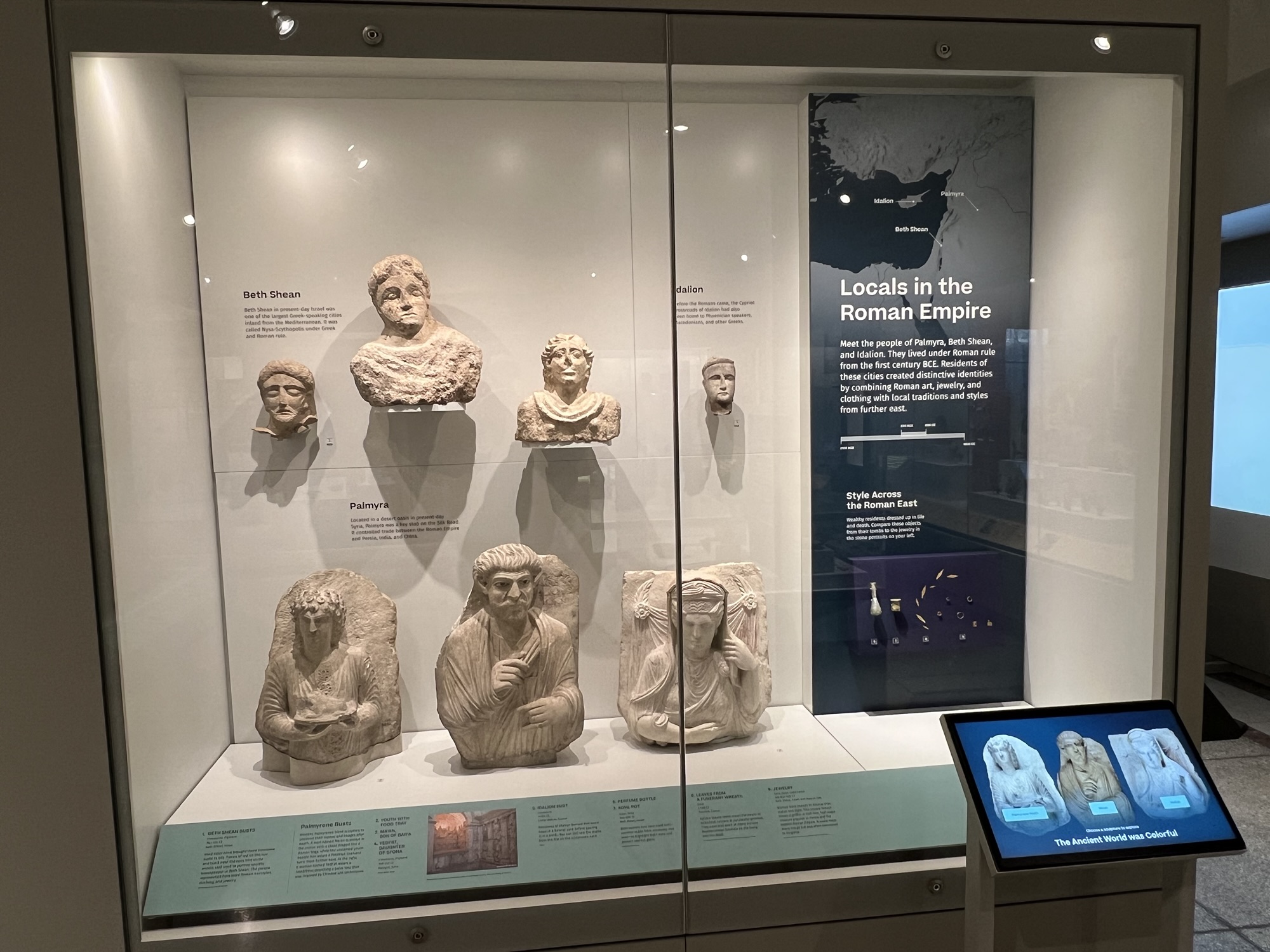
Middle Eastern works with a Roman influences
The Penn Museum Mission:
In bridging archaeology, the study of objects made by humans, with anthropology, the science of humanity, we chart a course for finding one’s own place in the arc of human history.
We are dedicated to telling powerful stories that emerge from excavations and research across the world. And nowhere else in the Western hemisphere will you be greeted by a 3000 year old, 15 ton Egyptian sphinx!
If there is one thing that 10,000 years of human history have taught us, it is that we have more in common than we think. In the canon of human existence, our past, present and future paths are inextricably intertwined.
What does the Code of Hammurabi have to do with the U.S. constitution? How can archaeology help to predict climate change? And what radical social changes accelerated by ancient plagues could be replicated in a post-COVID world?
Information about the museum:
Group Tours: Discounts are available for groups of 10 or more. Private tours and lectures are offered. Call (215) 746-8183 or email grouptickets@pennmuseum.org for information and reservations.
Public Gallery Tours: Penn Museum docents offer tours most Saturdays and Sundays at 1:30pm and Wednesdays at 6:30pm. Please check our website, http://www.penn.museum, for topics (Tour topics are subject to change; cancellation of tours may occur).
Parking & Transit: Visit http://www.penn.museum/directions-and-parking for parking information. Parking meters and lots are nearby. The Museum is near SEPTA bus routes 21, 30, 40 and 42 and the SEPTA University City Station (Regional Rail trains).
The Penn Museum sparks curiosity, wonder and endless exploration. We invite everyone to join our incredible journey of discovery and dig deeper. The museum is also a nice place to relax at after the games were over and walking all over the Penn Campus. The front of the museum has nice gardens and seating area right near the museum’s fountains and pool. There is a lot more I want to explore at the museum but that is for my next trip to Philadelphia.

























 Visiting a Museum: The Unique, Unusual, Obscure and Historical