Category: Historic Farms of New Jersey

The Museum of Cape May County                      504 US. 9                                                             Cape May Court House, NJ 08210

The Museum of Cape May County 504 US. 9 Cape May Court House, NJ 08210

The Museum of Cape May County

504 US 9

Cape May Court House, NJ 08210

(609) 465-3535

https://www.cmcmuseum.org/

https://www.facebook.com/Museumofcmc/

Hours: Seasonal Hours Sunday-Monday-Tuesday/Wednesday 10:00am-2:30pm/Thursday Closed/Friday 10:00am-2:30pm/Saturday Closed. Tours are at 10:00am and 12:00pm.

Admission: Donations Accepted/ (I paid $5.00 for the hour tour)

My review on TripAdvisor:
https://www.tripadvisor.com/Attraction_Review-g46342-d286393-Reviews-The_Museum_of_Cape_May_County-Cape_May_Court_House_Middle_Township_Cape_May_County_.html

The Museum of Cape May County at 504 US 9
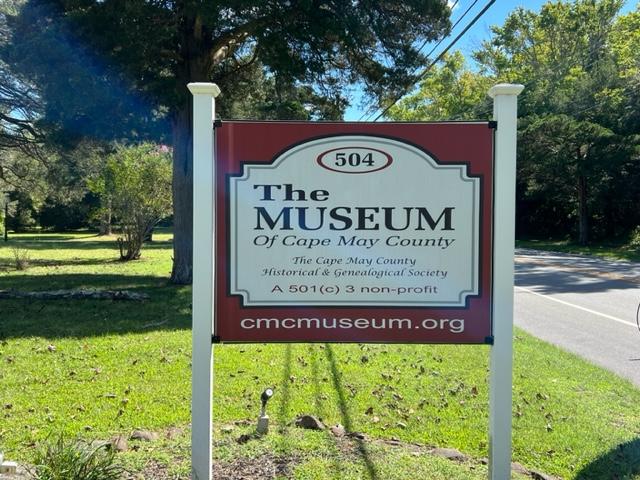
The Museum of Cape May County sign welcoming you.

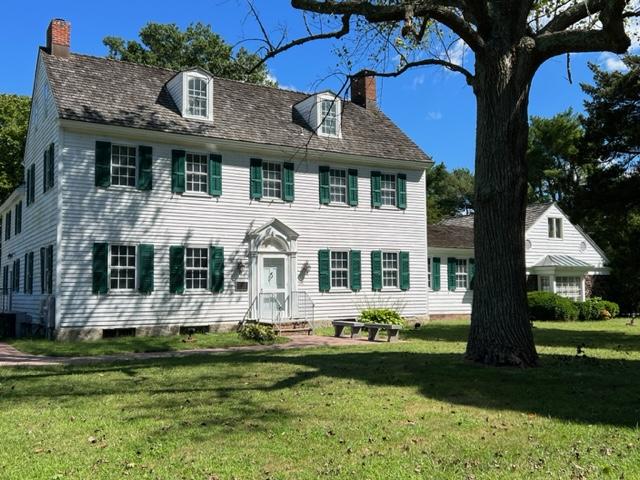
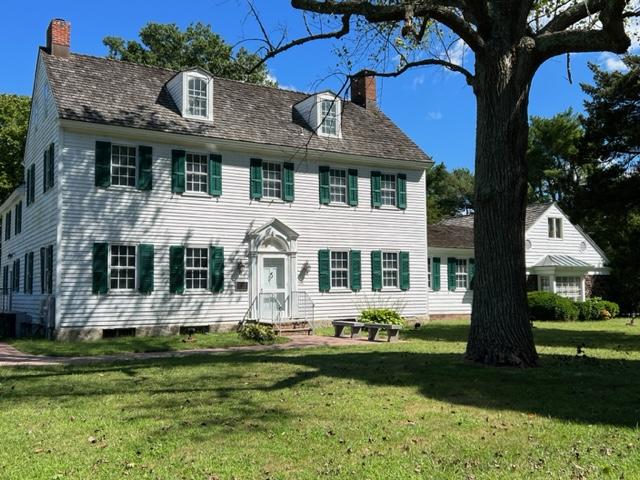
The Museum of Cape May Country museum complex

The Museum grounds in the back.

After three years of trying to visit the museum, I finally got on a last minute walking tour of the Museum of Cape May County and have to say that it was well worth the wait. What an interesting set of buildings that have a fascinating set of artifacts and so nicely displayed in a series of buildings.

The museum campus is broken up in a series of buildings on a two acre site. There is the main office which has an art exhibition, the family homestead of the family, who lived here for several generations, the carriage house which displays several carriages and stage coaches that were used in the area.
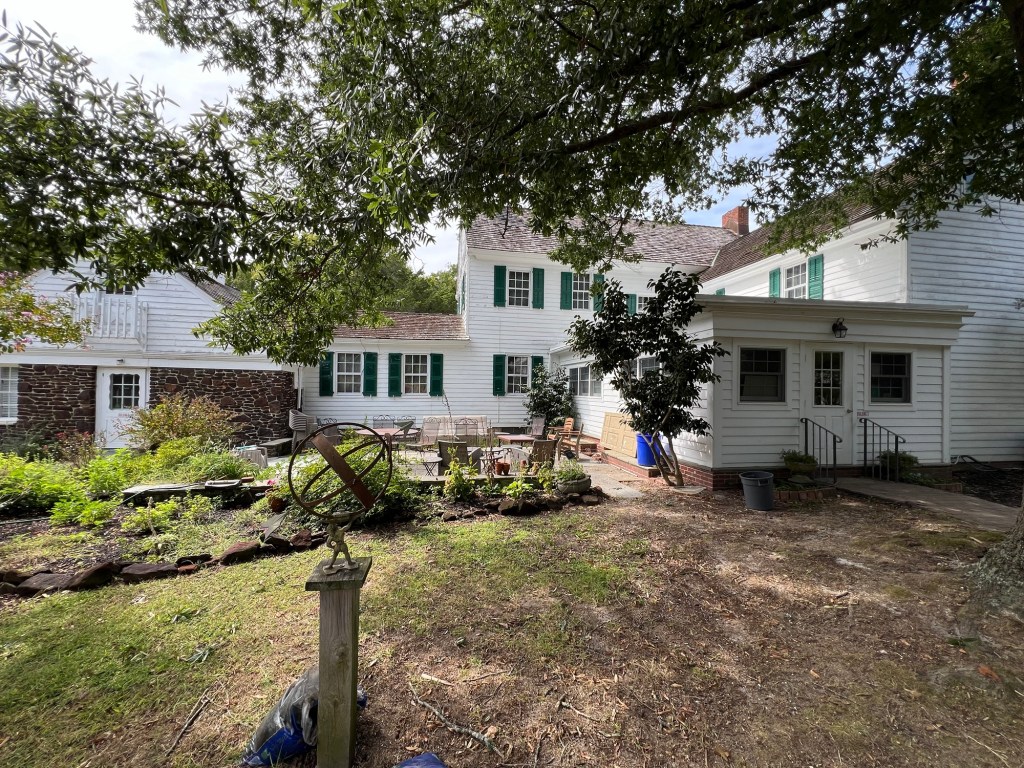
The back of the main house where you can see the three additions to the house

The barn where the Military, Native American and Farming displays are showcased

The Carriage House is to the left and the barn is to the right

The Carriage House on the property

The History of the House and of the Cape May County Museum site:

(from the museum website)

Housed in a building that dates back to 1704, the Cresse House, and its 1830 Holmes addition, as well as a historic 1780 barn and carriage house have rooms devoted to a subject or time that will hold you spellbound as you make your way through the past. The 11 room Cresse Holmes house treats you to a glimpse of life as it was in Cape May County from colonial to modern times. From the 1704 colonial kitchen and loft bedroom to the Victorian dining and sitting rooms all are decorated and furnished with period pieces. Special exhibit rooms include a children’s playroom teeming with toys, a doctor’s room with instruments, glassware and vials filled with a colorful array of pharmaceuticals and a Victorian music room with dozens of fascinating players and instruments (Cape May County Museum website).

Our first part of the tour was the family home which had been lived in for generations. The first part of the house was built in 1740 and you could tell by the open hearth and the flooring.

The hearth of the original section of the Cresse home

The kitchen was set up and furnished as the main part of the house. Because of the heat, this was the main part of the house that habituated. Here the family would gather, eat and socialize.
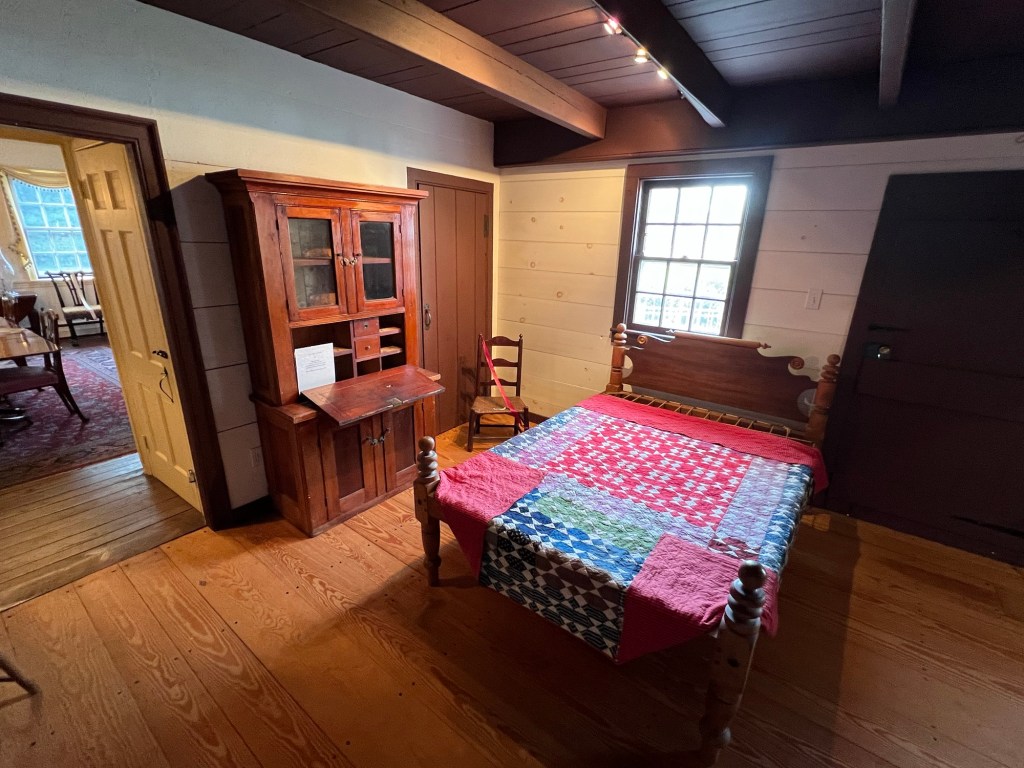
The back bedroom shows the families affluence in the late 1700’s

Having a separate room for sleeping was considered quite extravagant. The heat would circulated through the home and warmed this room next door. The main part of the house was built in 1840 in the Federalist design.
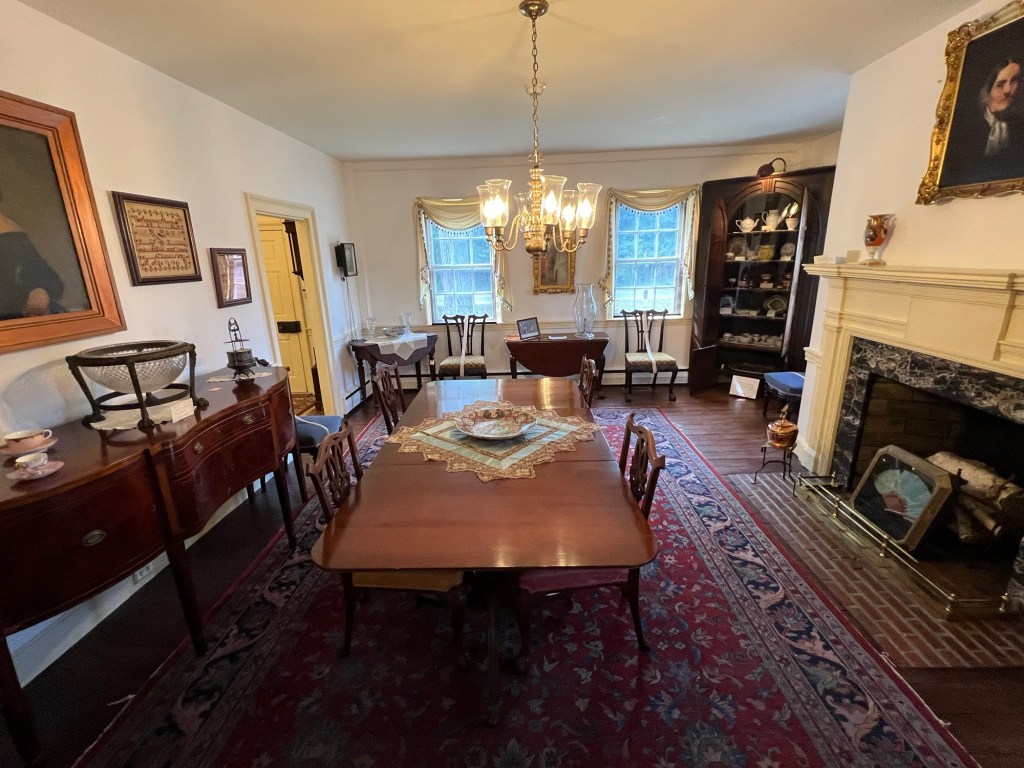
The main dining room showed the affluence of the Holmes family in the early pre-Civil war era

The main part of the house that faced the road was the 1840 Holmes family addition with the Federalist design. This part of the house was the main part house that was used for every day living and entertaining. The house was furnished in a combination of family heirlooms and donated period pieces..

The house well furnished with period pieces

The beautiful side table of the Dining Room

Both the Living Room, Dining Room and the Parlor were all tastefully furnished and what I thought were interesting parts of their collection. It was like someone had just left the room.

The Parlor of a Victorian house held its finest pieces

The furnishings in the Parlor
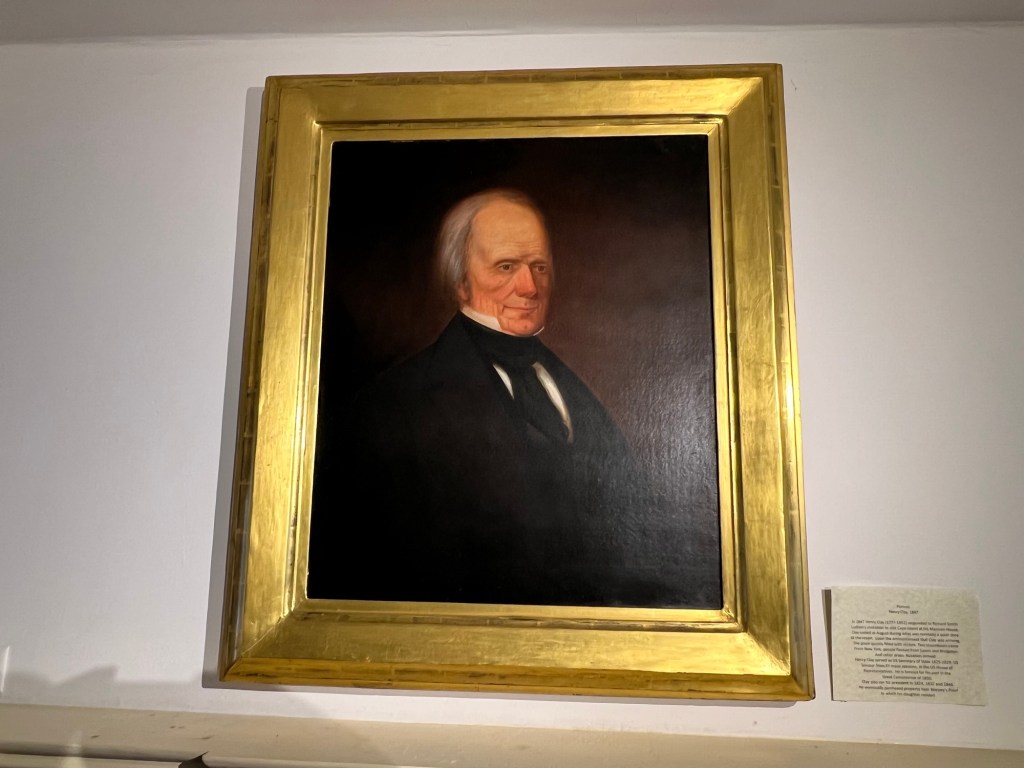
The painting of Henry Clay stood above the fireplace

Since I joined the tour late, I had seen just the first floor of the home before we continued on to see the rest of the building.
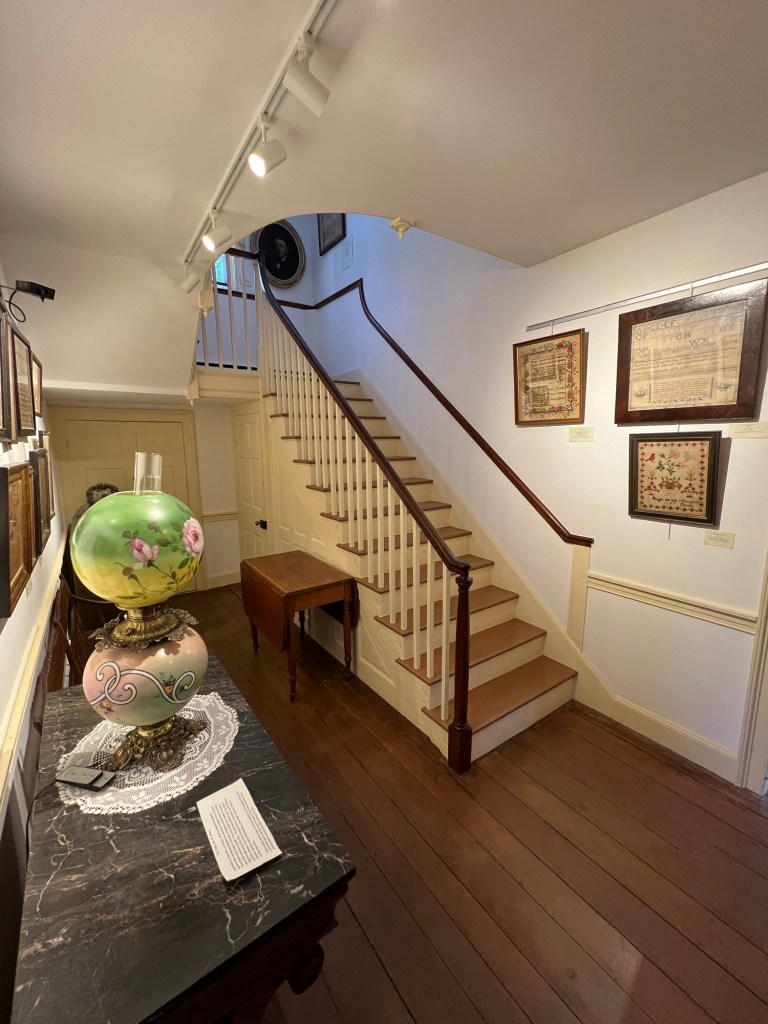
The front entrance room of the house

As we exited the house, we moved on to the most important room of the house, the outhouse which was located behind the main home.
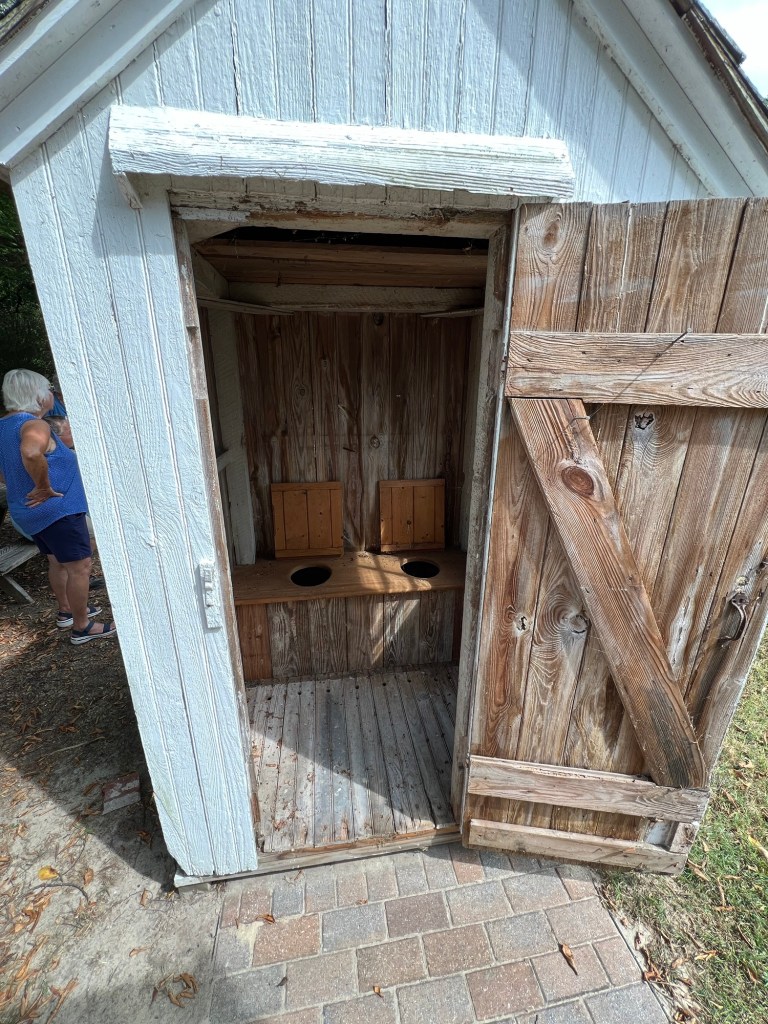
The outhouse in the back of the home

We next moved on to one of the galleries of the Nautical collections.
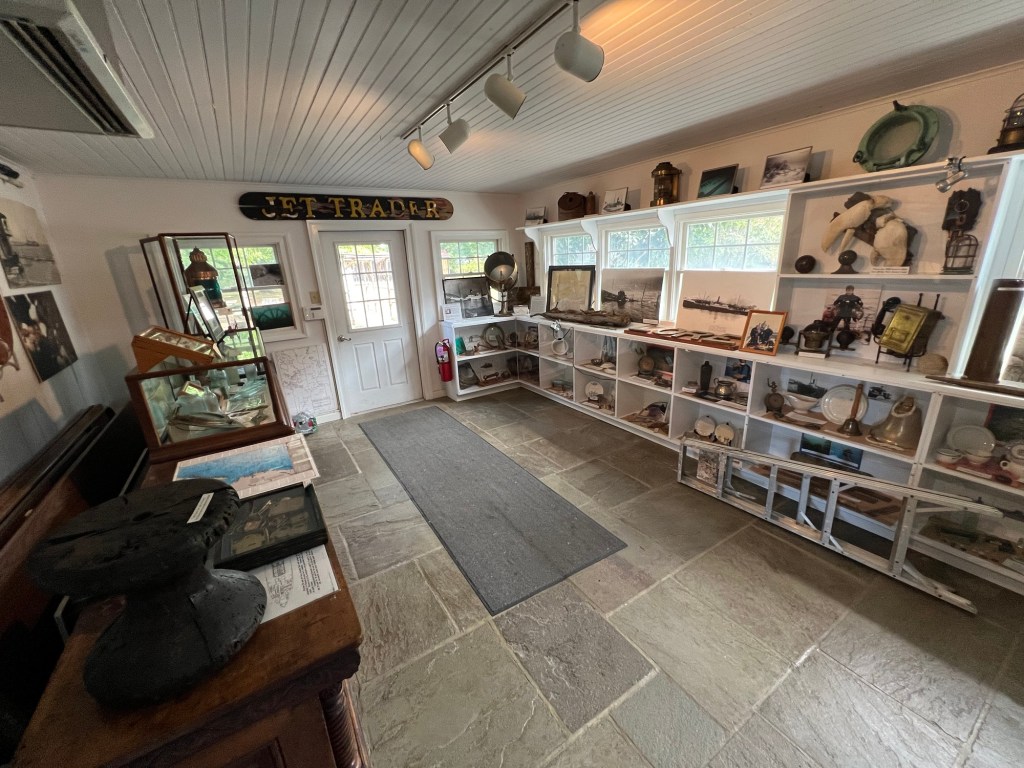
The collection of nautical artifacts

Mantel’s for navigation
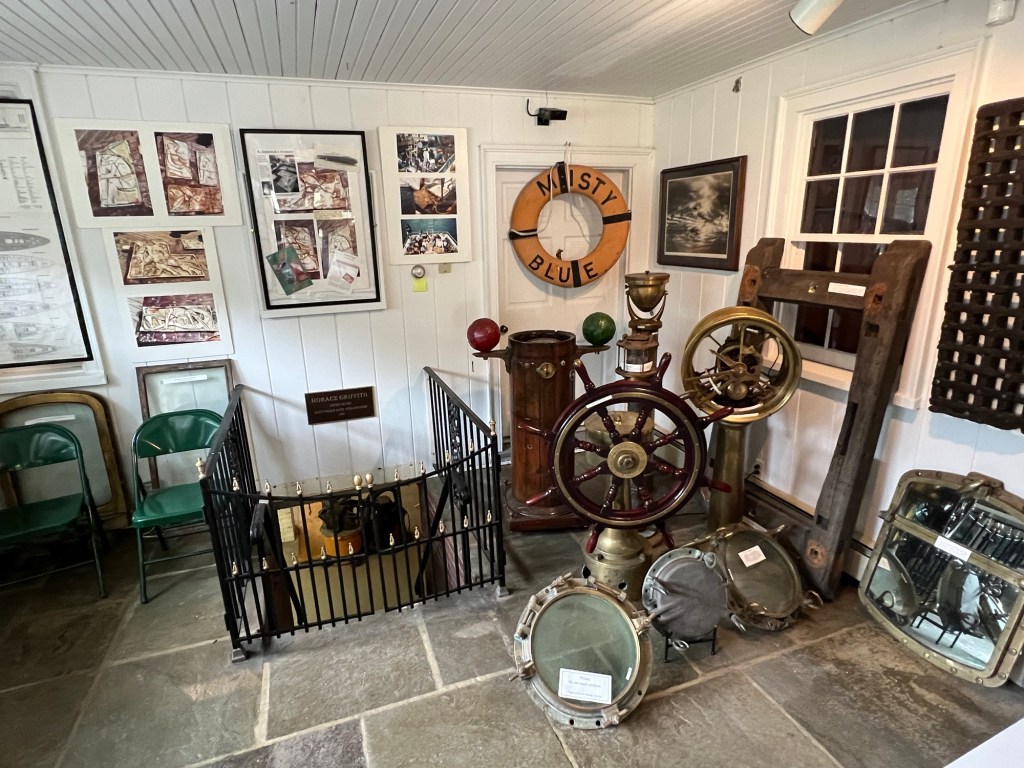
Items from the shipping industry

What beautiful items

Our next part of the tour was of the Carriage House and its collection of buggies and carriages owned by by local residents.

The Barn and Carriage exhibits:

(from the Cape May County Museum website)

Our barn is home to a maritime exhibit including Cape May County’s crown jewel, the original first-order Fresnel lens from Cape May Light House. In addition to our collection of farm implements the barn is also the site of our recently dedicated military room that pays homage to those who served our nation in time of war.

Period pieces range from the Revolutionary War to our country’s most recent involvement in Iraq and Afghanistan.  Of special interest is the American flag that was carried by soldiers who hailed from Cape May County during the Civil War. The flag survived numerous battles, including Gettysburg, Spotsylvania, Bull Run and was at Lee’s surrender at Appomattox. The Carriage Shed houses items related to transportation – a vintage horse-drawn market wagon, a doctor’s sulky and an early stagecoach that ran between Bridgeton and Pennsville (from the museum website).

The collection of carriages and buggies

A local buggy from a member of the community

The history of the Cape May Stagecoach
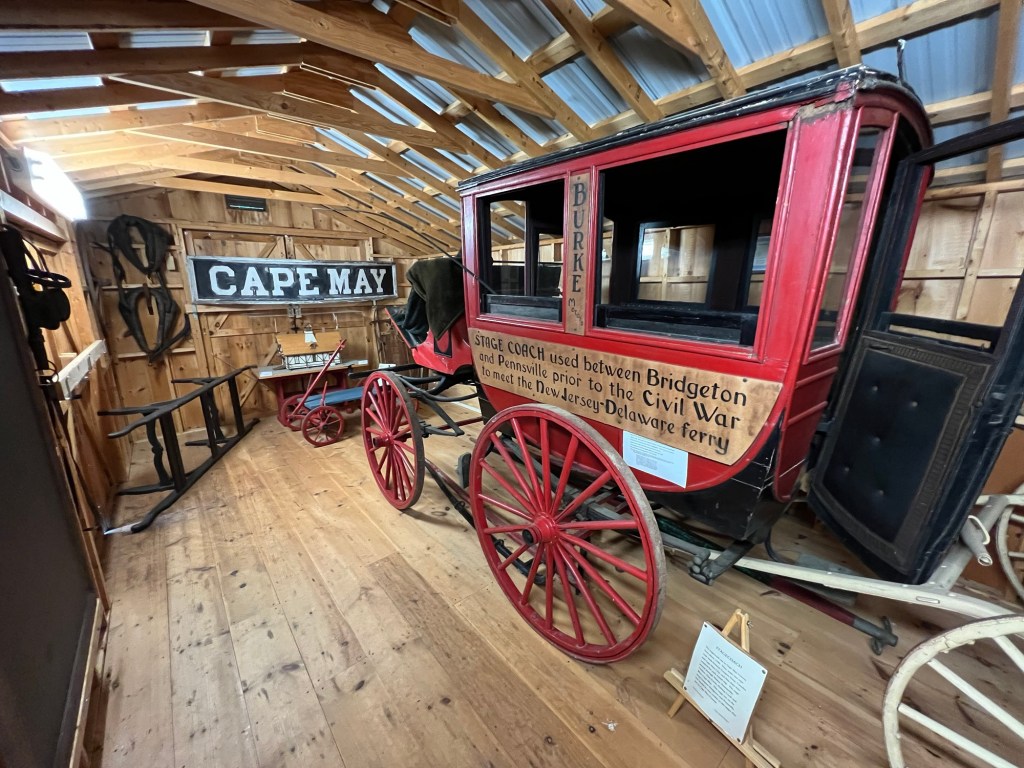
The Cape May Stagecoach

This stagecoach was used on the route between Bridgeton and Pennsville

The funeral cart used to transport bodies once people die to their last destination

The last building on the museum’s property housed military artifacts, farm equipment and artifacts from what would shape the local community

The Maritime History of Cape May and of the Museum:

(from the museum website)

Since its earliest days the area we now call Cape May County has been linked to the water.  With the tumultuous Atlantic Ocean on one side, the Delaware Bay on the other and lush forest and field between it served its residents well.  Early Native Americans thrived, whalers found whales in the ocean and refuge in the bay. All worked the shores and tributaries for birds and shellfish.  As the population grew, shipbuilding and coastal trade took on greater importance.  Come visit us and explore this aspect of our museum (from the museum website).

Many of the artifacts, photographs and manuscripts associated with maritime activities have found their way our museum collection.  From the original first-order Fresnel lens that sat atop the Cape May light to whaling implements, marine skeletons, ship parts and Native American exhibits there is something for everyone.  Of special interest is our recently acquired Cresse Journal, an original manuscript by Lewis Cresse detailing the life of a whaler in the mid-eighteenth century (from the museum website)

Hunting and military items from around the turn of the last century
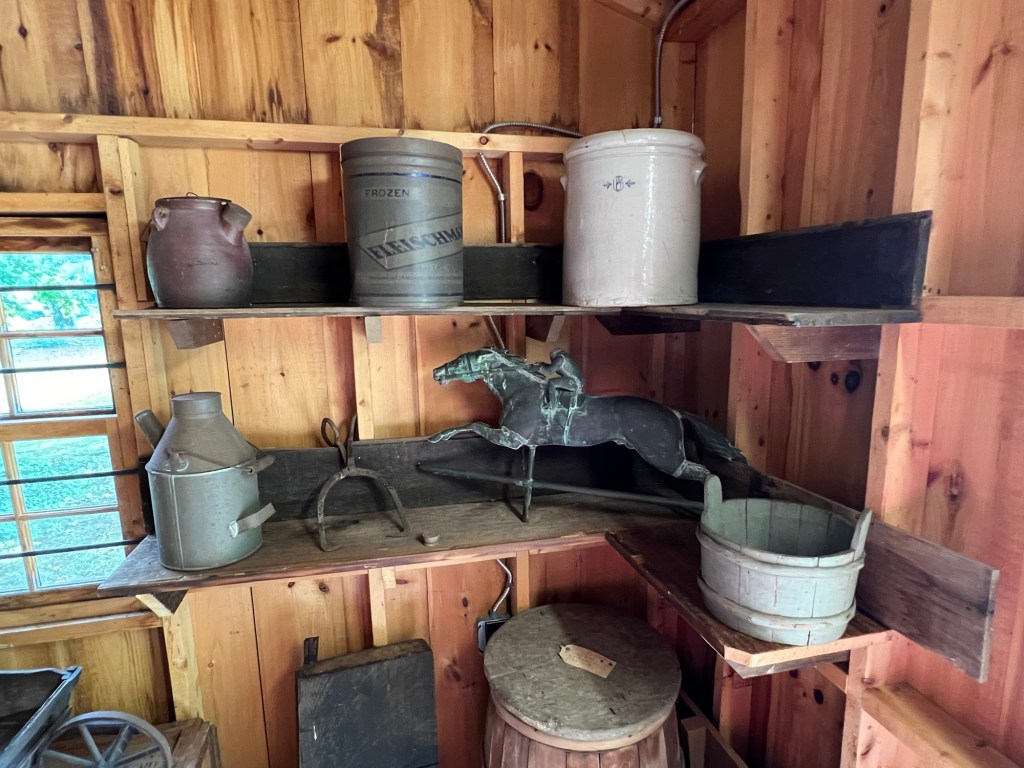
Household and farming items

Artifacts from the Shipping industry

Artifacts from the Counties Ship Building past

Items from the Whaling Industry in Cape May
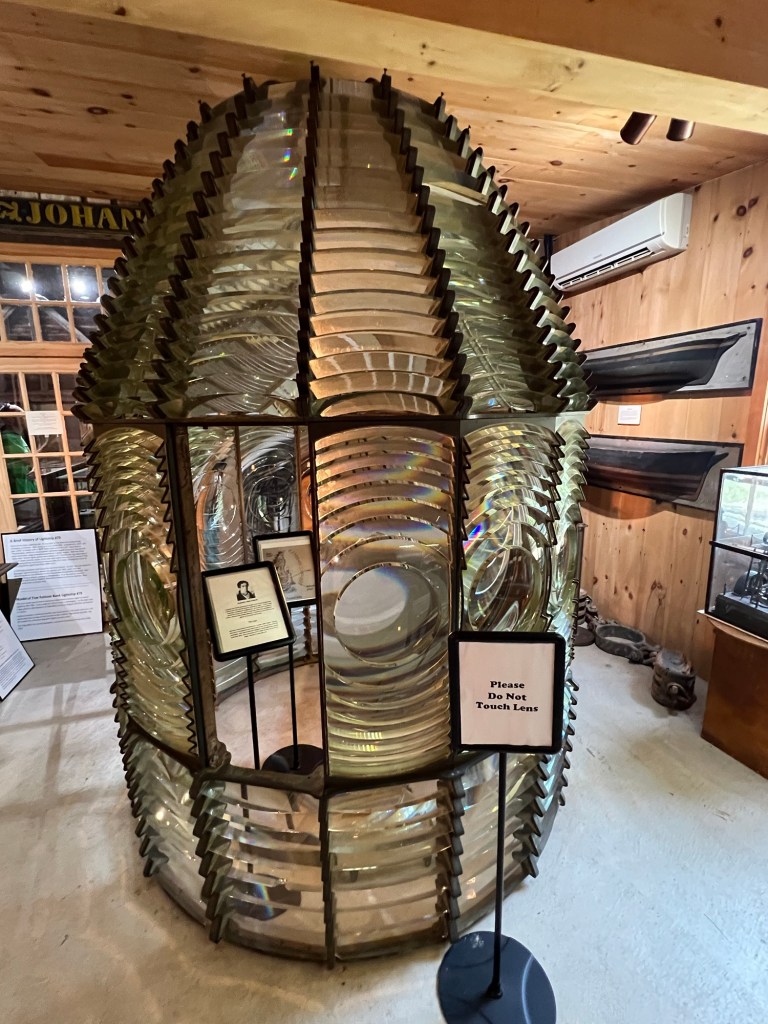
The museum also houses the original Cape May Lighthouse light

The history of burial and old cemeteries in Cape May
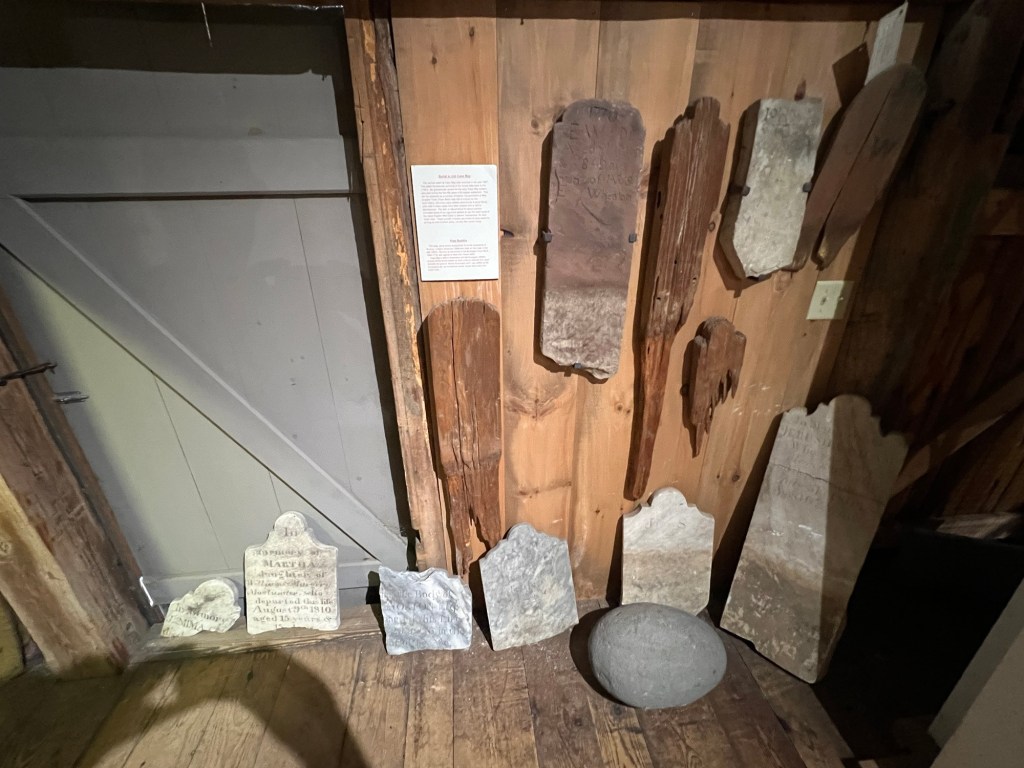
Old tombstones from Cape May cemeteries
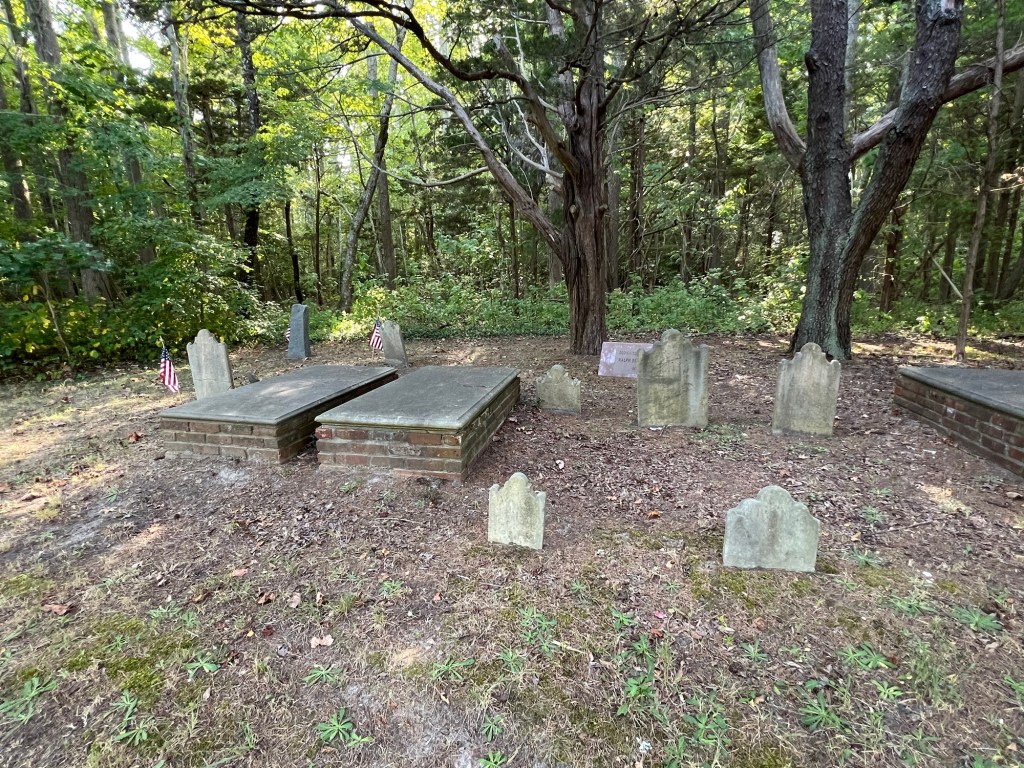
The family cemetery on what was once the family farm that now sits down the road and across the street

The family plot

The museum’s extensive collection of arrowheads and other Native American artifacts

The Cape May Civil War flag is most of the most interesting pieces in the museum’s military collection
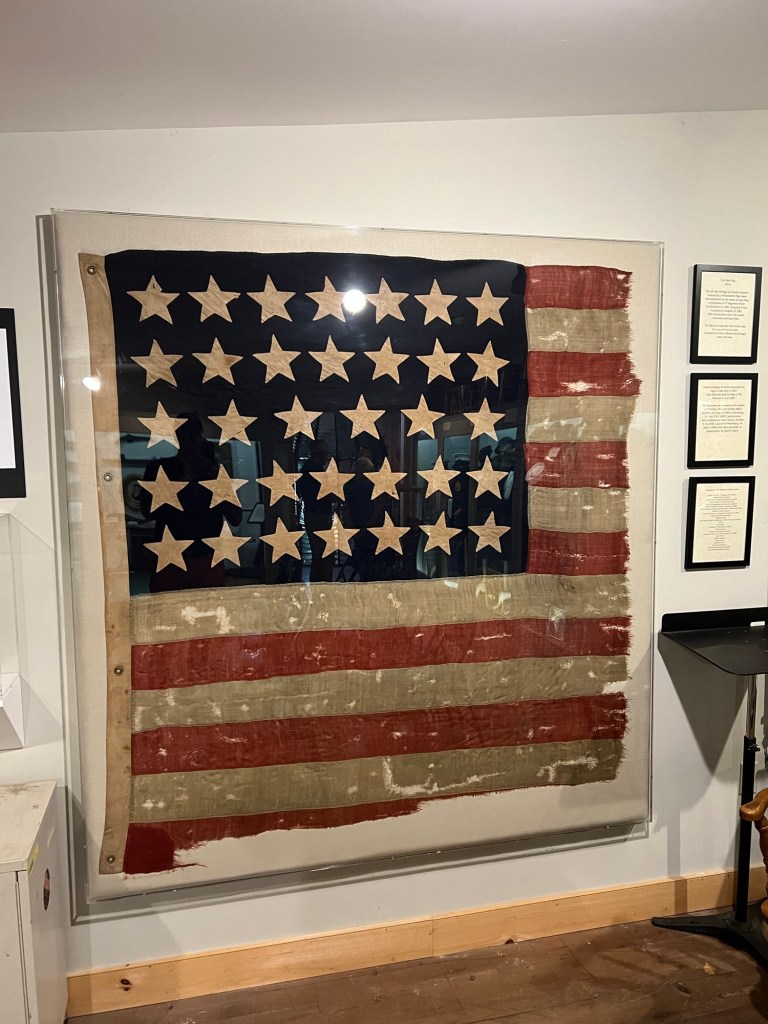
The Cape May Civil War flag
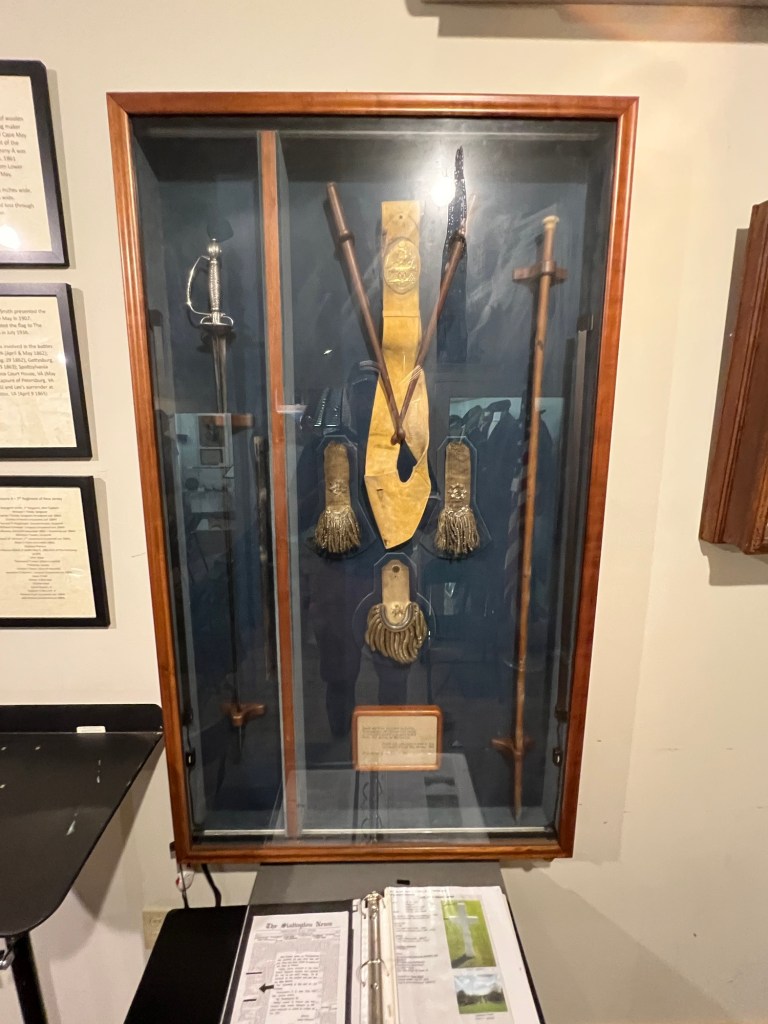
Military artifacts from the war years
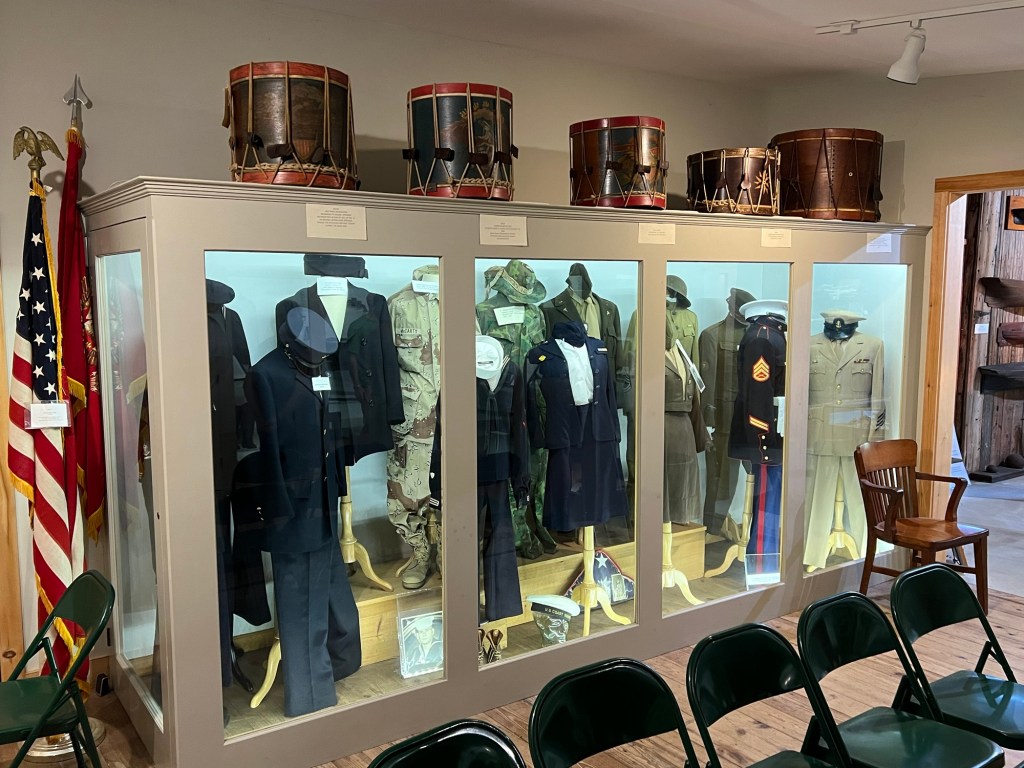
The extensive collection of military uniforms from the different wars in the museum collection with ceremonial drums on display on the top of the case

The gun and pistol collection at the museum

The Pistol collection at the museum
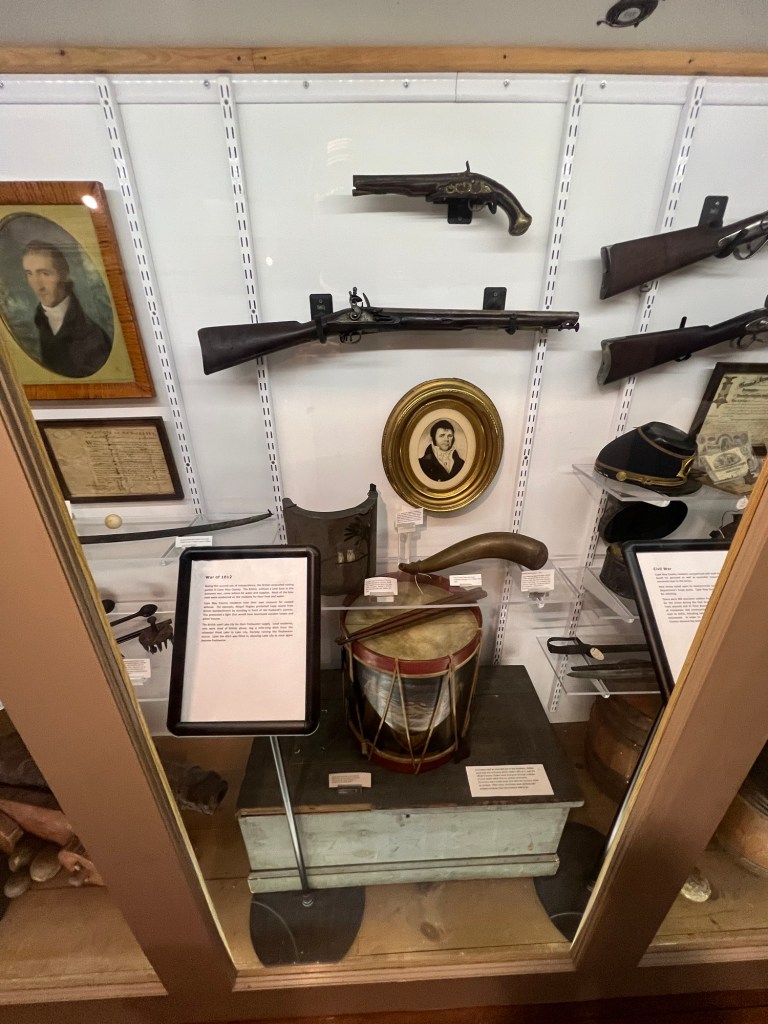
The collection of military items in the collection
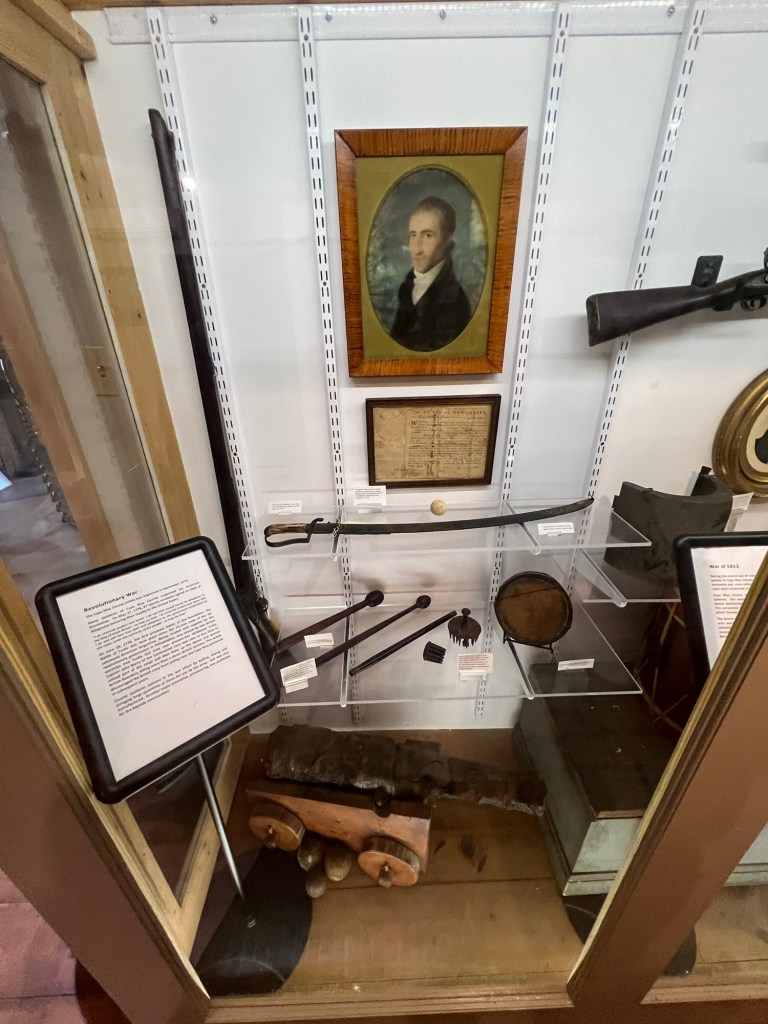
The early military collection at the museum

The grounds of the museum before I left for the day

The family home that faces the Highway

The museum is not just an extensive collection of City of Cape May but the history of the County as a whole and its rich development from a farming, whaling and shipping town to a major tourist hub and recreation community.

It also shows it has never lost it nautical or farming past as well as this legacy still carries on in Cape May. The development of the community and the progress it has made over the years is showcased in the galleries and buildings on the museum property.

The Development of the Cape May County Museum:

(from the museum website)

The Cape May County Historical & Genealogical Society (CMCHGS), doing business as The Museum of Cape May County, was founded in 1927 as a private, non-profit organization by a number of local families who wanted to ensure the history of Cape May County was preserved and documented. In 1930 the CMCHGS established a museum and genealogical library which were housed in the basement of the County Court House building for 45 years.

In 1976, the current facility, the Cresse-Holmes House containing eleven rooms along with a five-room barn was purchased to accommodate the growing collection. By 1988 the construction and dedication of the genealogical library and administrative offices had taken place. In the last 90 years, thanks to the generosity of many individuals and families with a connection to Cape May County. the collections have grown to contain many thousands of Cape May County artifacts and documents.

Today the museum and library are run by full time, part time and seasonal staff members along with an enthusiastic group of active volunteers to assist with greeting visitors, guiding tours, researching, assisting with programs, and staffing events.
Historical Society of Old Randolph                     630 Millbrook Avenue                                    Randolph, NJ 07869

Historical Society of Old Randolph 630 Millbrook Avenue Randolph, NJ 07869

Historical Society of Old Randolph

630 Millbrook Avenue

Randolph, NJ 07869

(973) 989-7095

https://www.randolphnj.org/499/Randolph-Museum

https://www.facebook.com/RandolphMuseumNJ/?_rdr

Open: Sunday 1:00pm-4:00pm/Monday-Saturday Closed

Admission: Free but donations accepted

My review on TripAdvisor:

https://www.tripadvisor.com/ShowUserReviews-g46764-d27020831-r965541611-Randolph_Museum-Randolph_Morris_County_New_Jersey.html?m=19905

The museum and the grounds of the Randolph Museum, home to the Randolph Historical Society in Randolph, NJ

The sign that welcomes you to the park

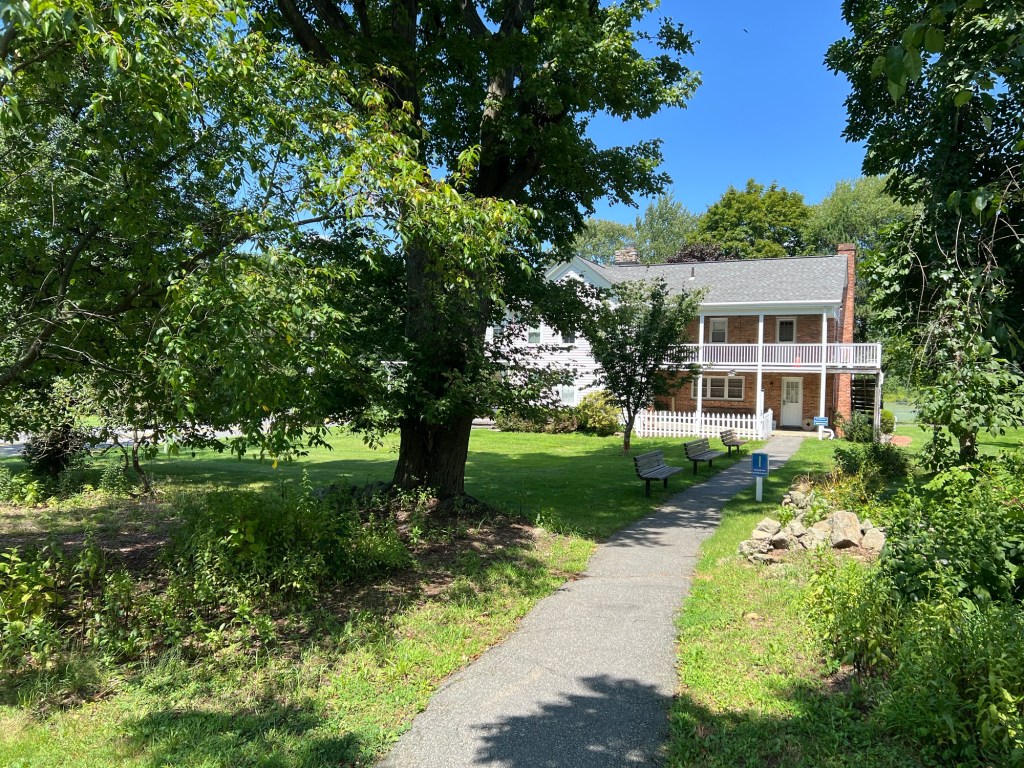
The Randolph Museum is the old farmhouse of this once hundred acre farm

The museum’s gardens just outside the door

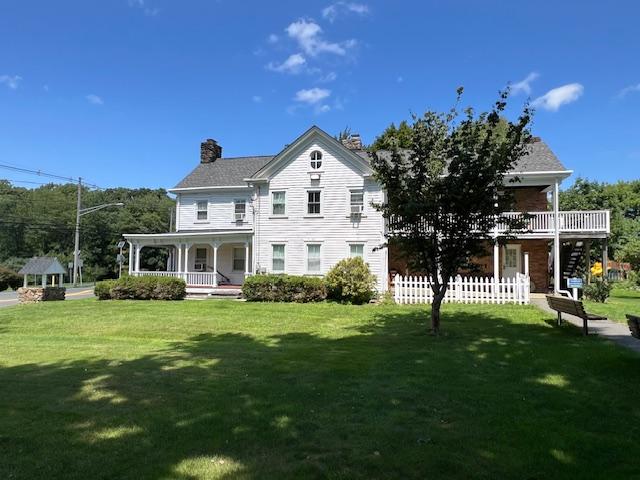
The side view of the museum from the street

I visited the Randolph Museum for the museum’s ‘Peach Festival’, where they had a very nice Open House and a series of tours around the house. We were greeted with a dish of fresh Jersey peaches, peach ice cream and pound cake. They also had peach punch for us as well with a warm welcome. The clouds broke and the sun came out so it started a very nice day at the museum.

The delicious Peach Shortcake we were served when we walked into the museum for the “Peach Festival”

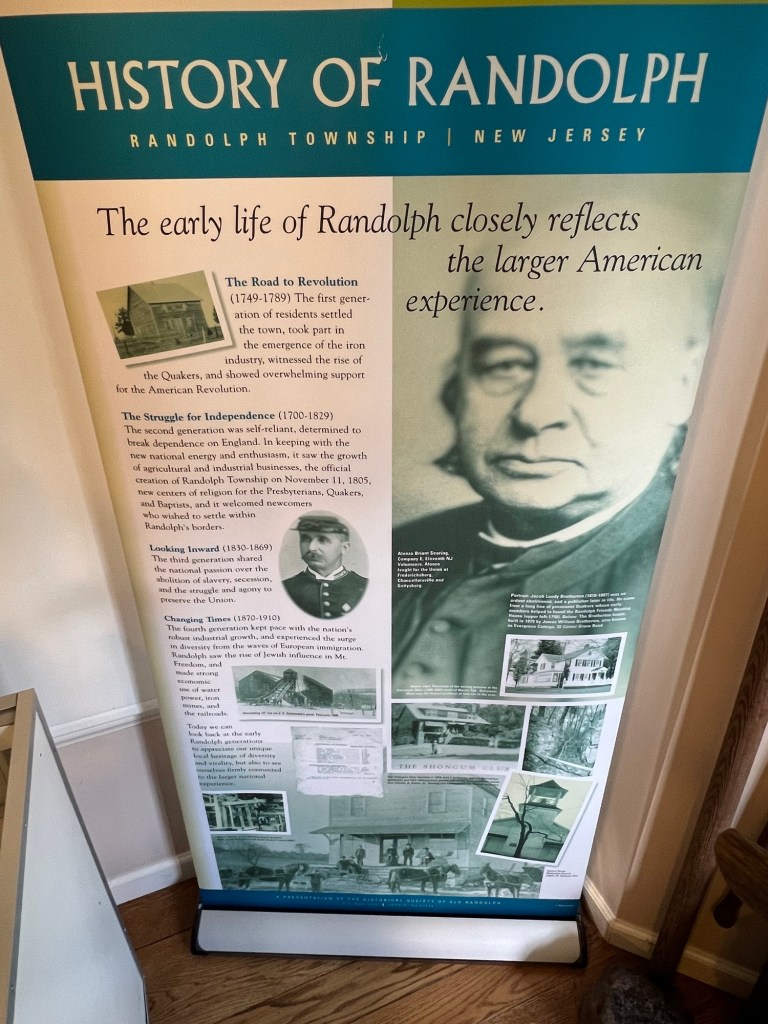
Each room in the museum tells a story of rural life in Randolph, New Jersey from the era of the Dutch and English farmers through the era of farms developing into resorts and the growth of rural towns in New Jersey after WWII, automobile transportation and the rise of middle class suburban living.

This description of life in Randolph, New Jersey is a reflection of life all over the rural United States

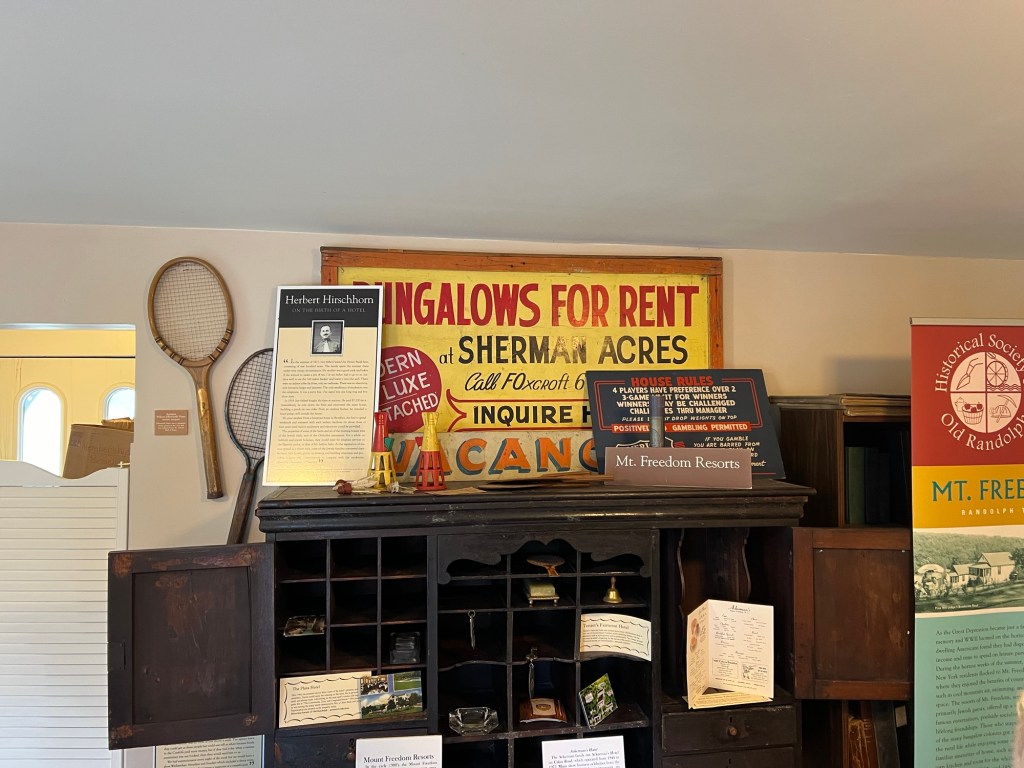
The museum is broken down in different themed rooms. When you first enter the house, you can see the history of Randolph as a resort town. The growth of the farms as boarding houses developed in resorts catering to Jewish patrons who were banned from the Catskills and Hamptons. These resorts continued until after the war until transportation and religious laws changed after WWII.

The resort artifacts from the old hotels

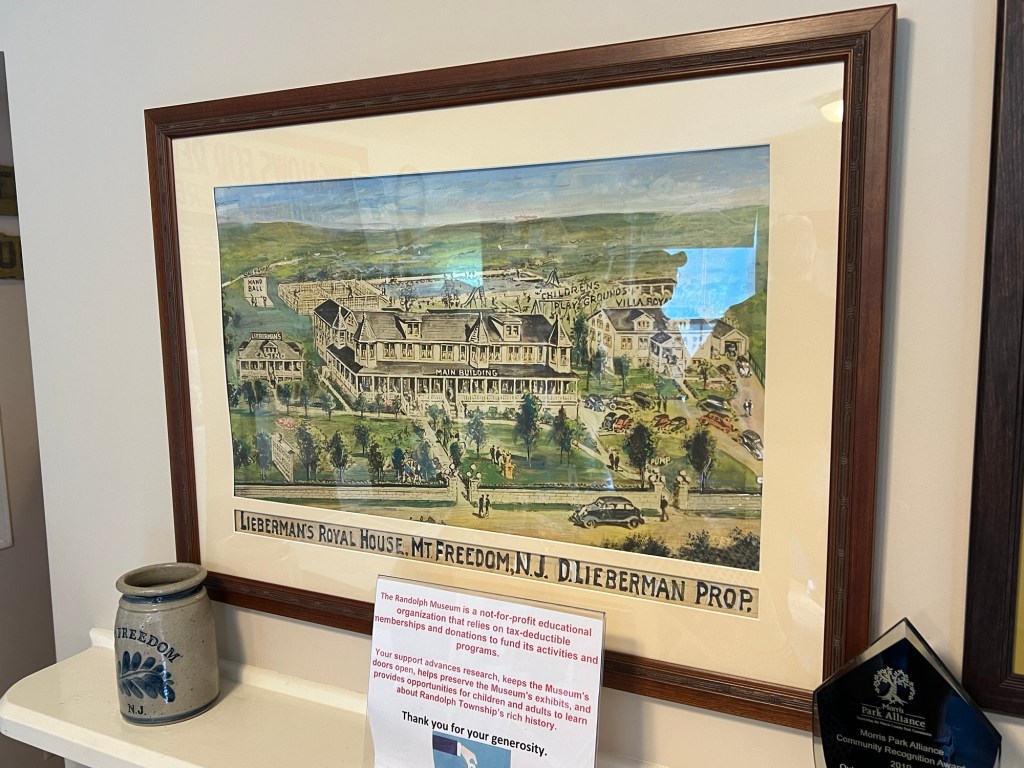
The old Lieberman’s Hotel once catered to a large Jewish crowd from Newark, Jersey City and New York City

Items from the old hotels

The hotel industry flourished here until just after WWII when air travel opened other options and racial and religious barriers broke down after the war. All of these hotels have since been torn down and have now been replaced by other town buildings. The town is more suburban with the opening of the Garden State Parkway and Route 287.

The Brundage House history

The museum’s history in the Brundage Farmhouse started in the late 1700’s when the Trowbridge moved to this area from England and started farming here. Generations farmed this land and the house stayed in the family until the 1920’s. The museum moved here in 2005 when the last member of the family moved out and the farmland was donated to the town. The farmhouse became home to the Historical Society.

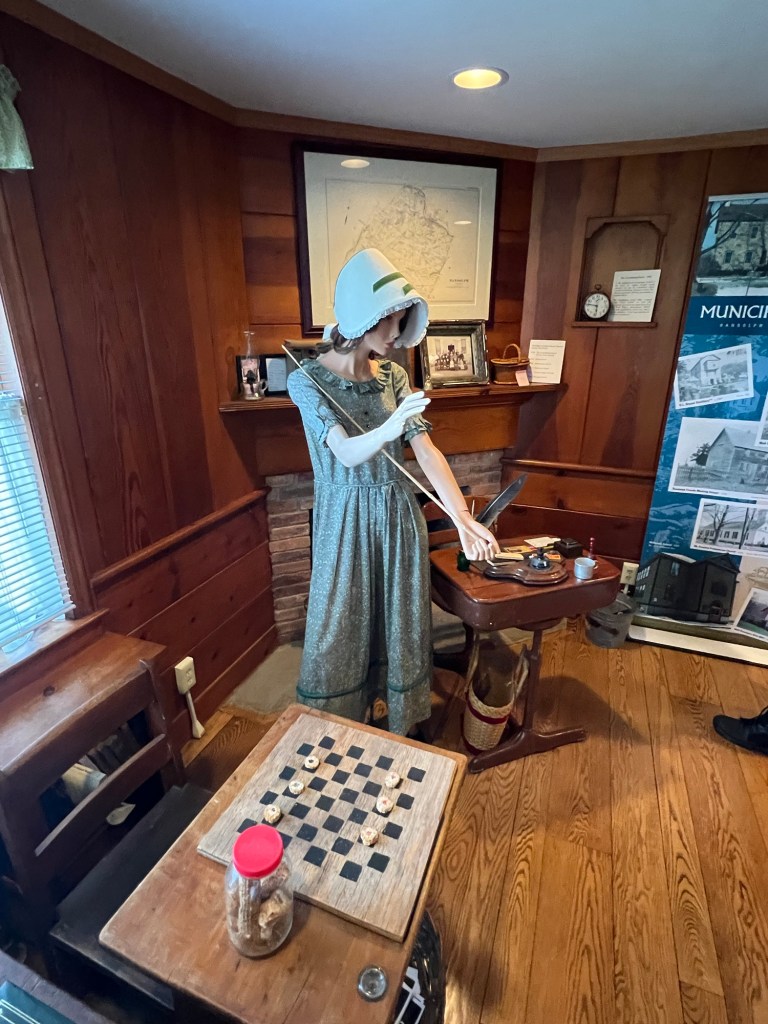
The museum’s rooms in the old farmhouse have different aspects of life in Randolph and New Jersey in general and each tells a story of the town’s history. The first room was dedicated to education and the growth of the school system in this part of Randolph.

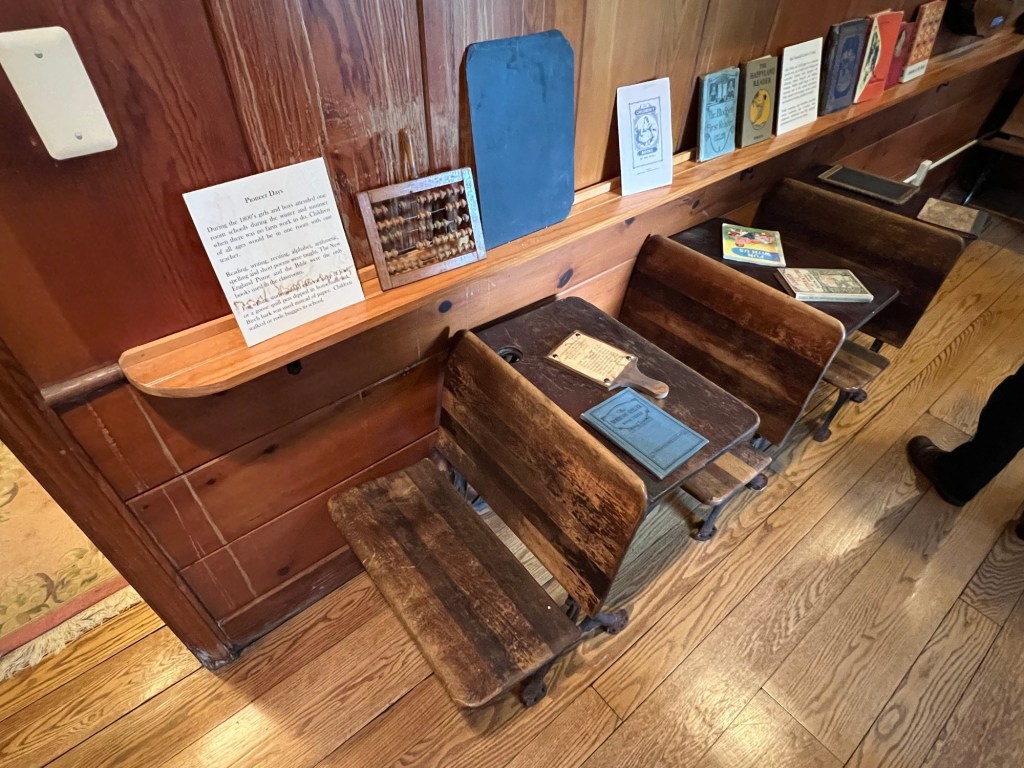
The displays show how a classroom was set up and how the one room school houses of that period of time operated.

The old schoolrooms have not changed much from today’s classrooms

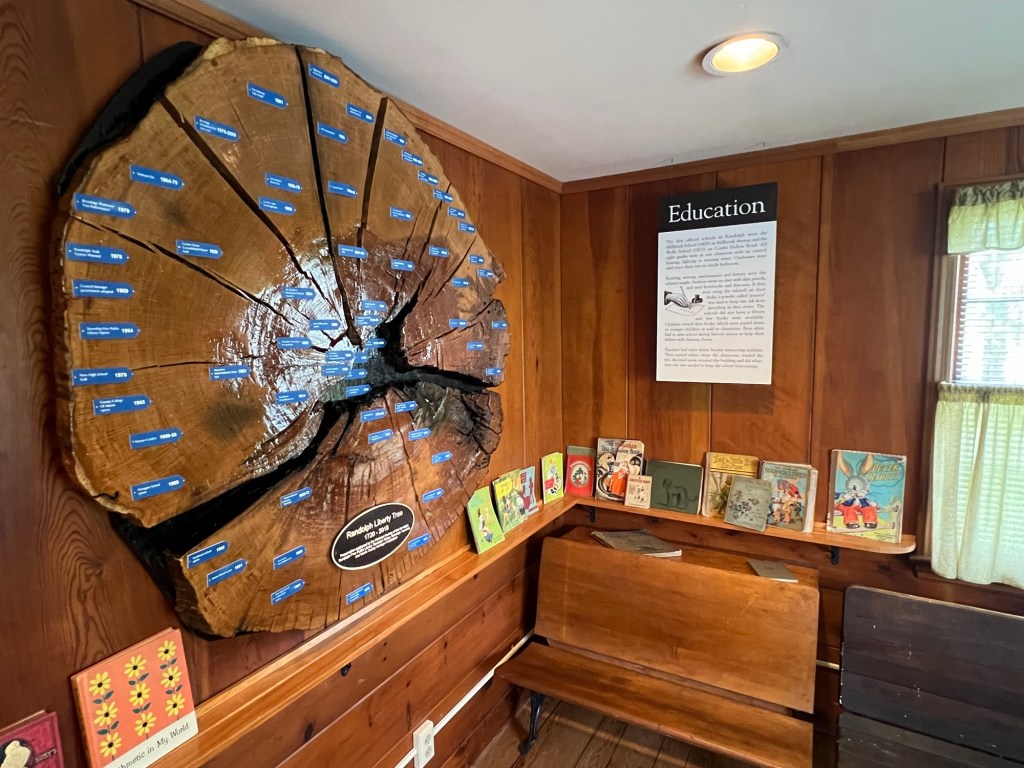
The exhibition showed that education in New Jersey has not changed that much from the years as a farming community. From the classroom set up to the way summer break works, which was created because of the crops being attended to in the summer and fall months. Children of all ages were expected to work on the farm and education did not go as far as it does today.

The timeline tree of important dates in the town is in the schoolroom exhibit

In the next room was the history of the farming community in Randolph, New Jersey. From fruits to dairy everything was farmed in Randolph and the farms were sustainable communities.

The Apple industry in this part of the State’s crops and still is today but not like back then

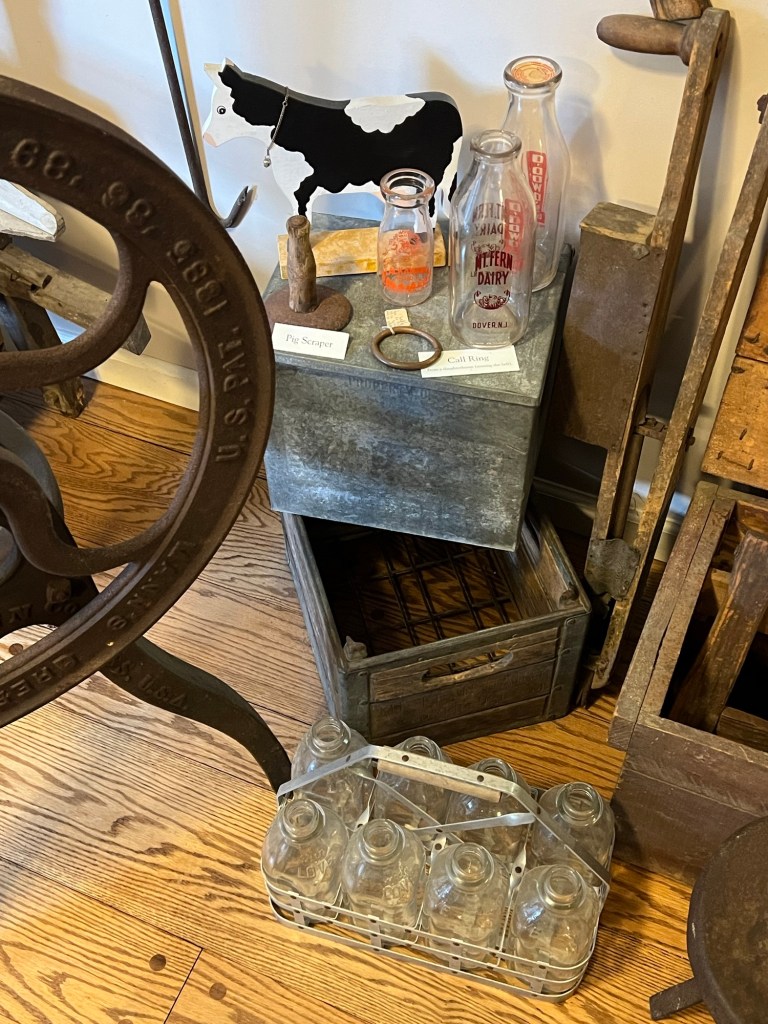
The Dairy industry flourished in rural New Jersey as it does today. Milking cows and creating butter, cream and milk were the whole family’s responsibility.

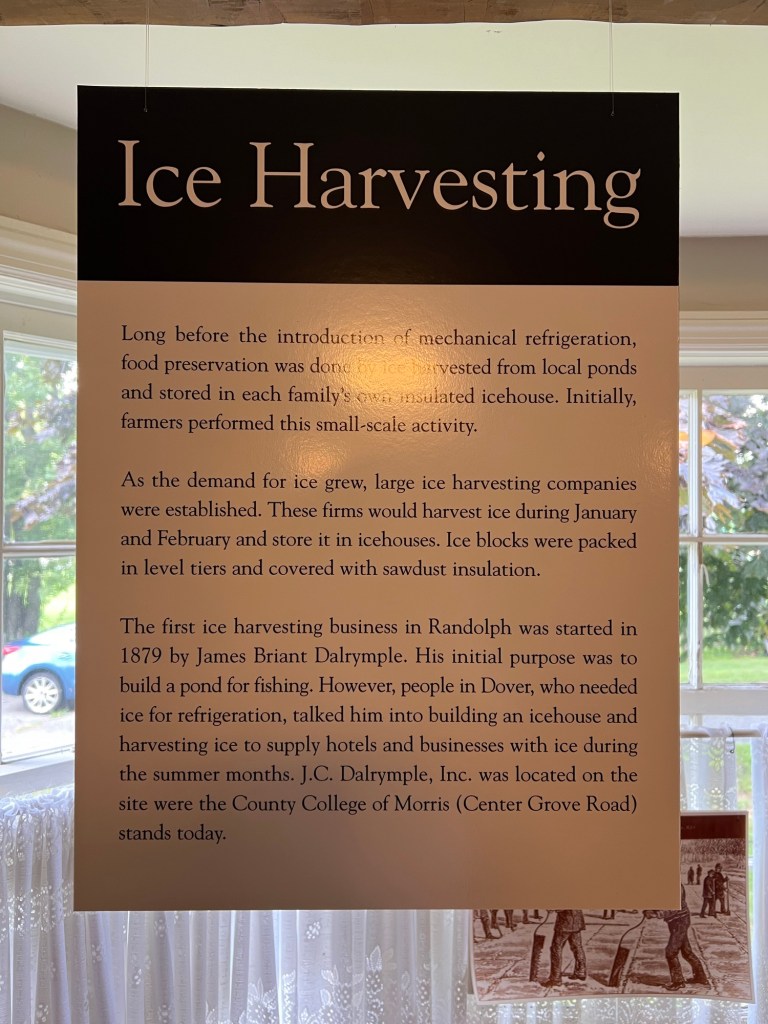
The Ice Industry flourished because of the lakes in the area

The Ice Industry was also very important in the area. Ice from the lakes was tested for thickness and then measured and cut for use of ice boxes. The ice would have to be planned for smoothness and then covered and stored for sale. The advent of modern electric refrigeration after WWII made this obsolete.

The Ice Industry and the equipment used for the business

The equipment used on the farm

Farm equipment in the early years was used by hand until more updated equipment with horses as crop processes went from supplying just the family to selling it on the open market and more production was needed. These crops were sold in Newark, NJ and New York City.

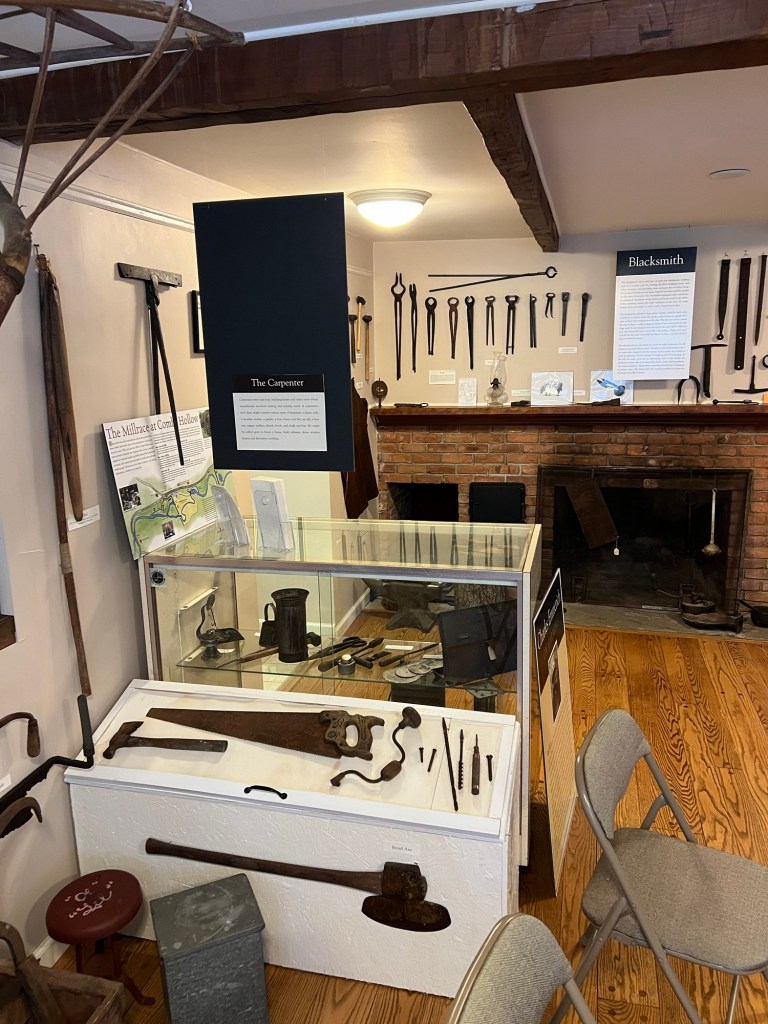
The Blacksmith shop equipment

The Blacksmiths role was from everything from shoeing horses and donkeys to producing equipment for the farms. To this day some form of this is still being done.

The Blacksmith shop

This exhibition was on the Blacksmith shop and the making of early farm equipment.

Early farm and Blacksmith equipment

Early equipment for the mines

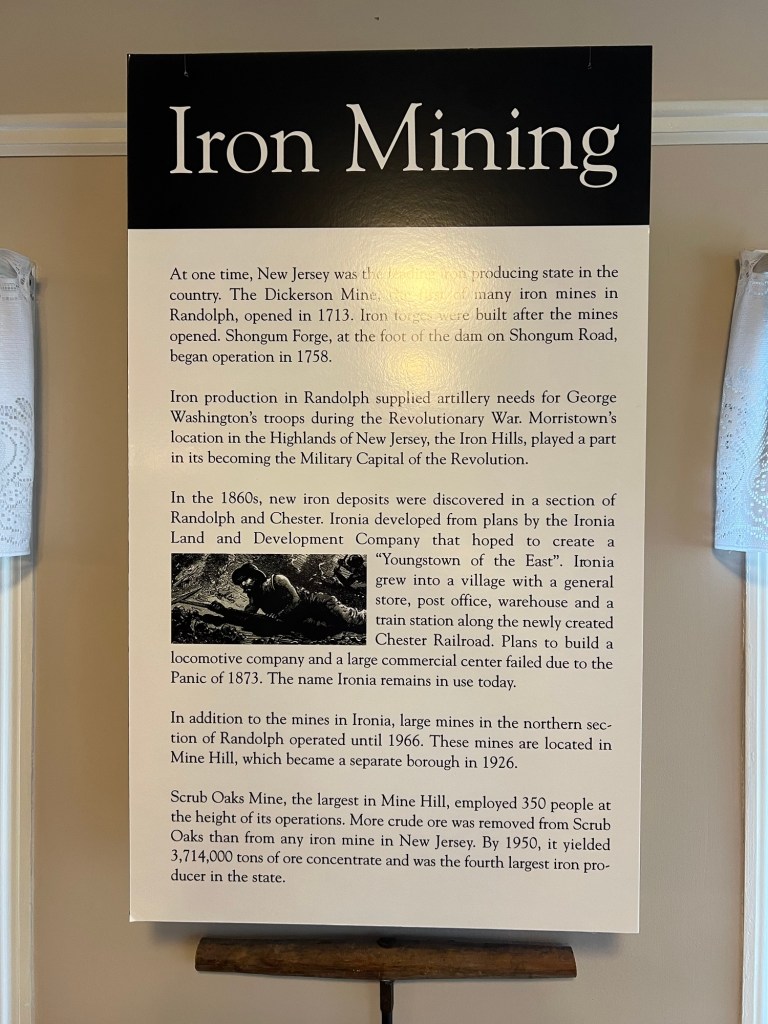
The Iron Mining industry was also part of the development of this area

Large deposits of iron ore and coal were discovered in this area. This led to the development of New Jersey’s place in the Mining industry. This supplied our war efforts and the manufacturing industries in New Jersey. As the mines emptied of ore, it became cost prohibited to continue and the last of the mines closed after WWI.

The equipment from the blacksmiths operation used in the mines

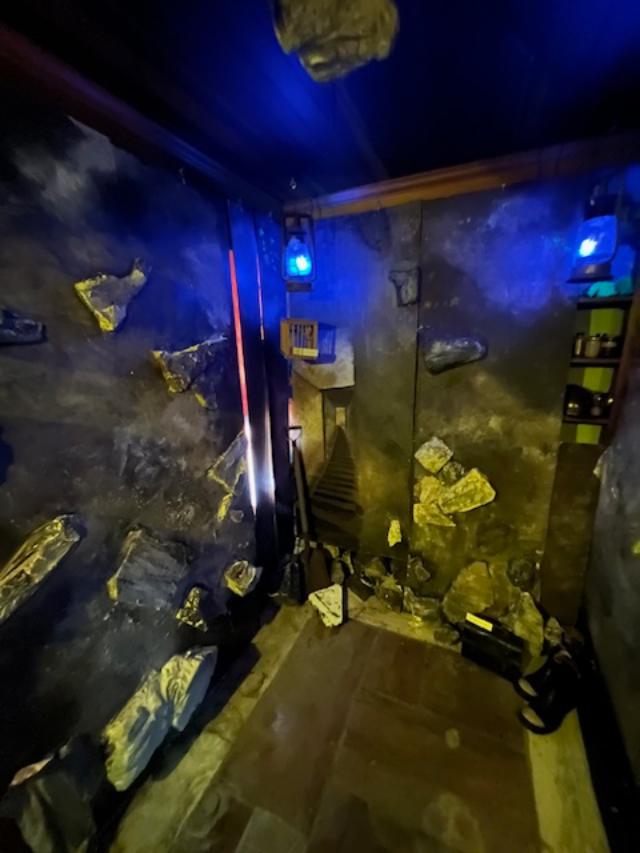
The Mining Display in the museum you can enter by way of a curtain

Home life for families in New Jersey between the mines and the farms was hard as well. The farms needed tending to which was everyone’s job including children aged five and up. All hands were needed and this is how the modern summer vacation from school was developed. It coordinated with the tending of the crops.

The main gallery of the museum and the former Living Room of the farmhouse:

The former Living Room of the old farmhouse shows life on the farm

Home life in rural New Jersey was not easy before Industrialization

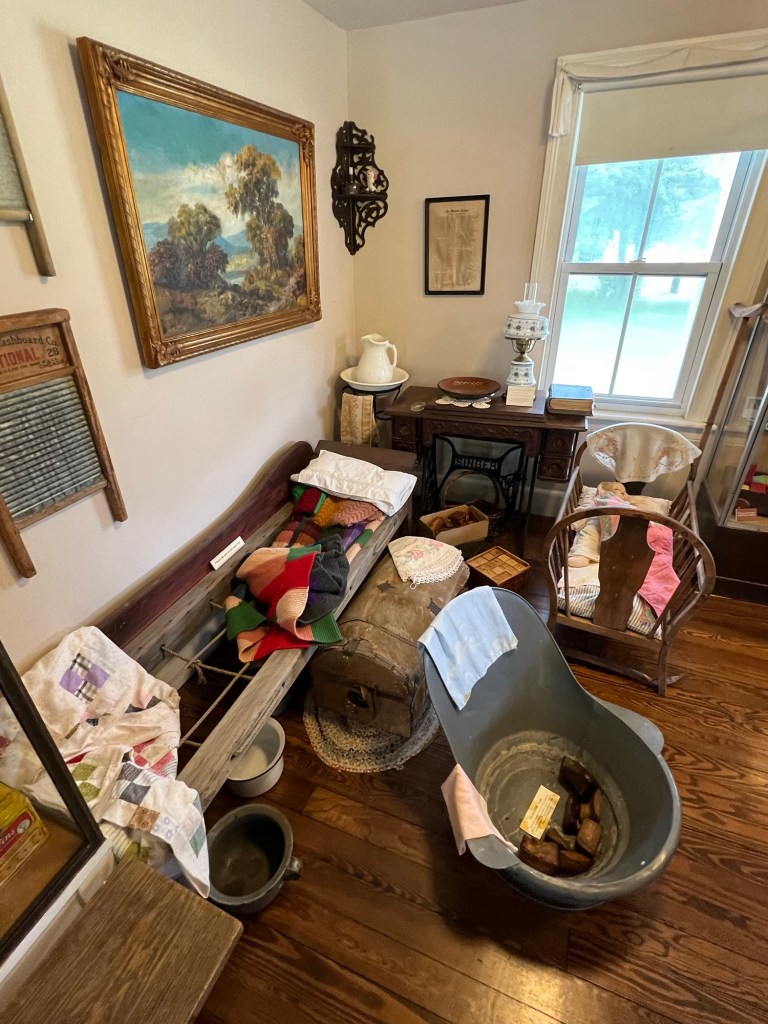
Household items and furnishings

Beds, sewing machines and bathing items in the farm home

Items used in the home to everything from making clothes and shoes to home remedies

The kitchen was the center of family life as it was the warmest room in the house during cooler months

The kitchen and household equipment on the farm

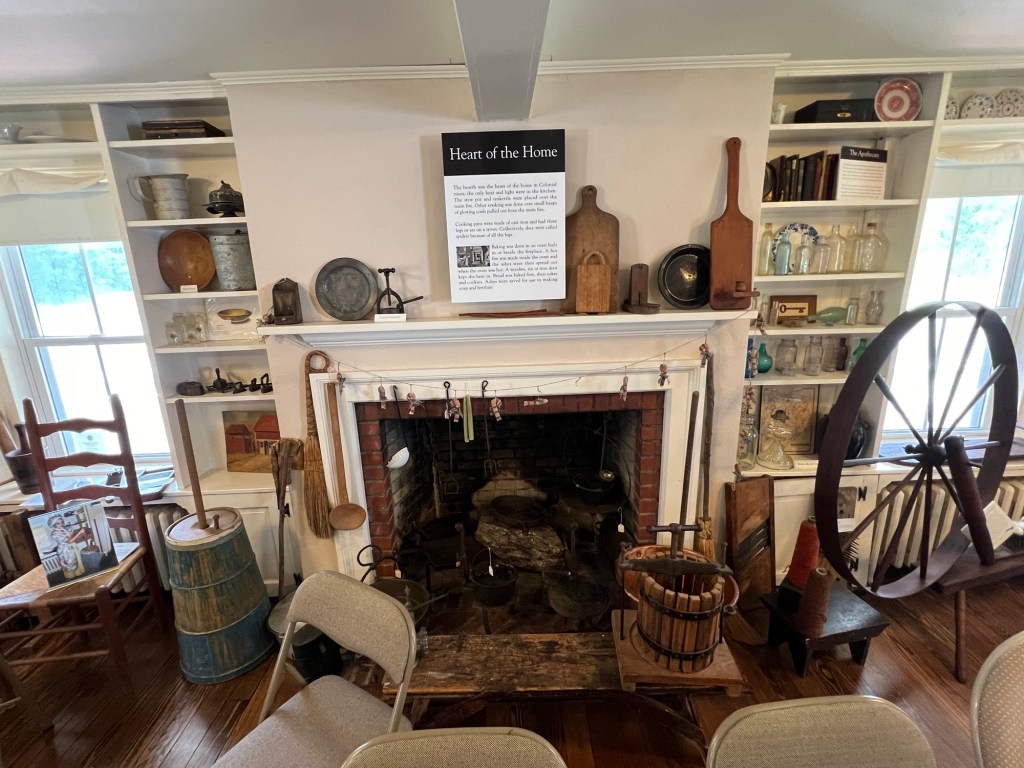
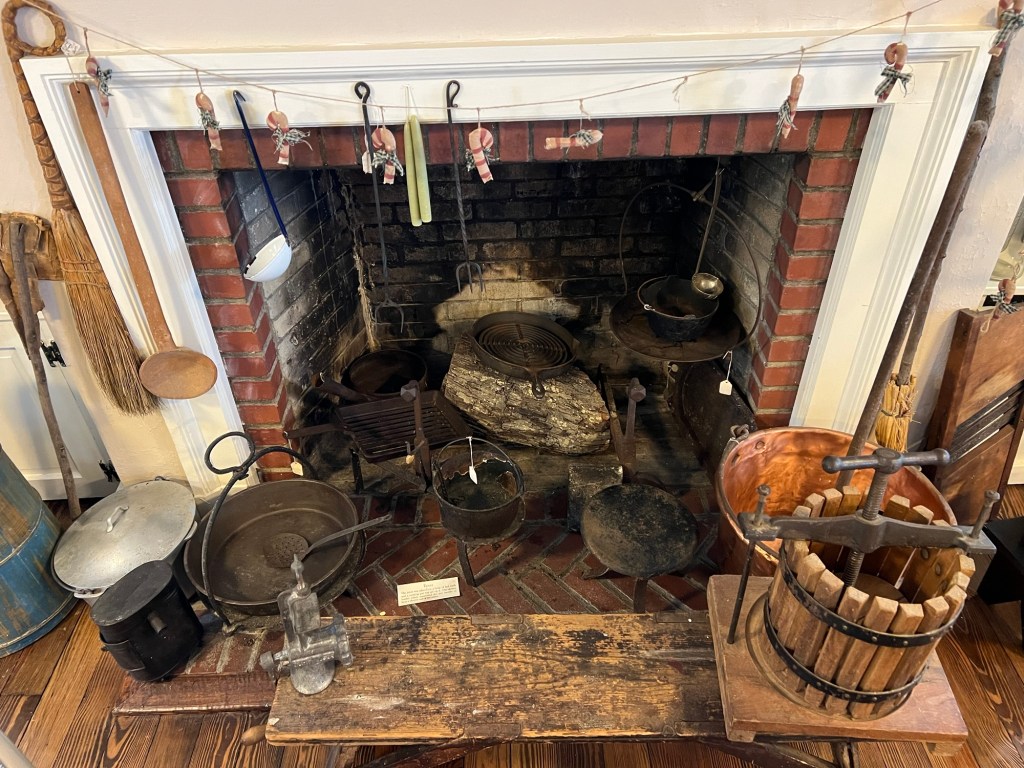
The hearth was the center of cooking and socialization on the farm

Life on the farm was not all work as there was down time for parents to socialize and children to play. Since transportation was limited and time was of the essence with everything that needed to be done on the farm things like trips to the general store, church services and town meetings were the biggest part of socialization. Meals were eaten as a family and family conversation was at the dinner table.

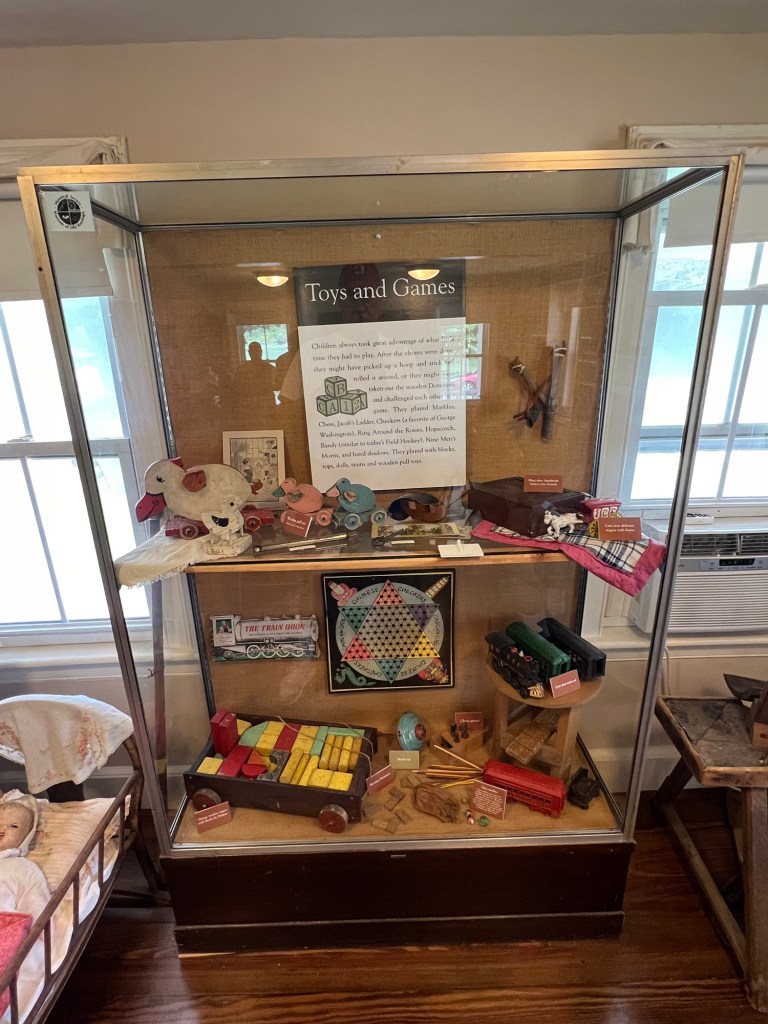
Toys and games used in rural New Jersey

Toys of this era have not changed much to today except they are not made of wood or handmade

A trip to the General Store was a chance to shop, pick up mail and socialize with your neighbors

Church was an important part of rural life before WWI

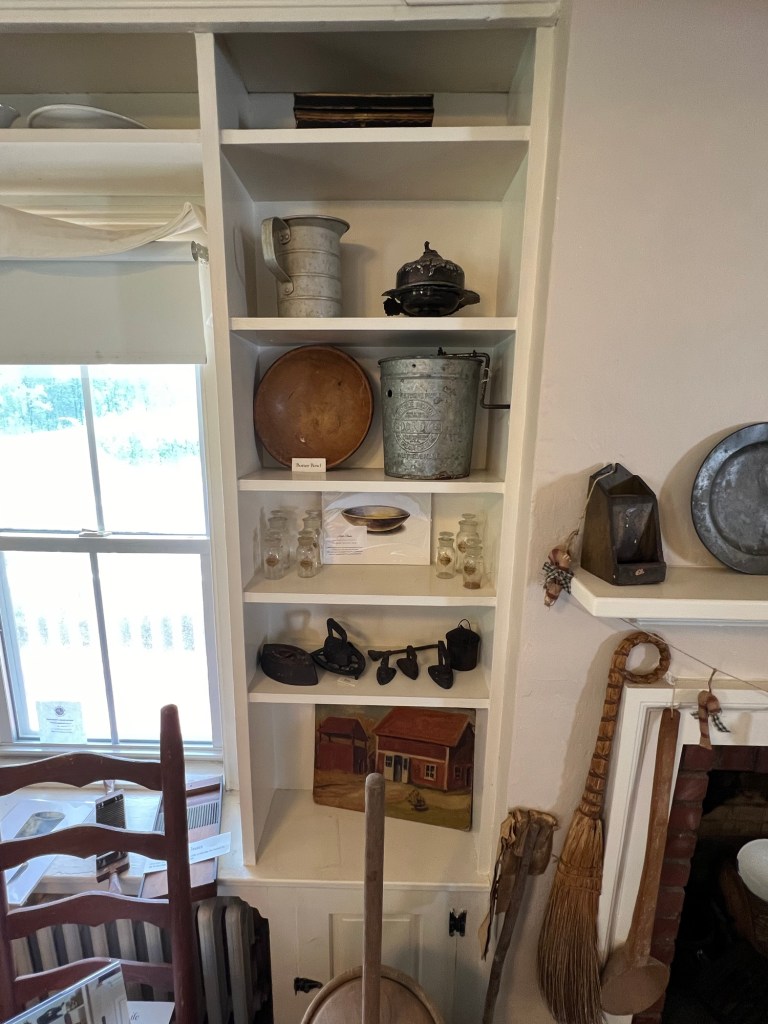
Kitchen items for tending the home

The museum did a nice job not just explaining the development of the Town of Randolph, NJ but society as a whole and how the American lifestyle was developed. In our modern times, we still refer back to references of these times with habits, quotes and sayings like ‘sleep tight and don’t let the bedbugs bite’ and ‘pop goes the weasel’ and ‘throwing the baby out with the bathwater’. These hark back to our rural past.

In someway, we have progressed with modern equipment and machines (think of how our I Phones have changed everything in the last sixteen years) to others where we still bake and preserve food, cook ‘farm to table’ meals and attend our gardens. The museum shows us how life has progressed but habits and methods that worked then still work now. We have not changed that much but more adapted to modern times. This wonderful little museum gives us this glimpse into our past.

Bergecco-Parc Consulting Inc. presents: “The Bergen 250: Visiting the Garretson Forge & Farm in Fairlawn, NJ-A Historical Walking Tour”

Bergecco-Parc Consulting Inc. presents: “The Bergen 250: Visiting the Garretson Forge & Farm in Fairlawn, NJ-A Historical Walking Tour”

The Bergecco-Parc Consulting Inc. Paramus Team: “Bergen 250: Visiting the Garretson Forge & Farm” 2024.

The Garretson Forge & Farm at 4-02 River Road in Fair Lawn, NJ.

https://www.facebook.com/GarretsonFarm

Every semester I challenge my Business 101-Introduction to Business students to a project. This year we promoted the Garretson Forge & Farm for the “Bergen 250”, the 250th Anniversary of the Revolutionary War in Bergen County, NJ. Our concentration was on the historical Garretson Forge & Farm in Fair Lawn, NJ. The students had to create a series of events to promote the site and they did an excellent job with the project!

“Friday the 13th” in both Blairstown, NJ and Hope, NJ-Visiting Historic Sites and Museums related to this iconic film from 1980-A Local Journey                                                                  October 13th, 2023.

“Friday the 13th” in both Blairstown, NJ and Hope, NJ-Visiting Historic Sites and Museums related to this iconic film from 1980-A Local Journey October 13th, 2023.

The famous sign at the Moravian cemetery in Hope, NJ where Annie gets dropped off.