The Theodore Roosevelt Birthplace National Historic Site at 28 East 20th Street
History of the Theodore Roosevelt Birthplace National Historic Site:
From Wiki/National Park Service Pamphlet):
The house is a replica of the birthplace and childhood home of the 26th President of the United States. The house originally stood on the site was built in 1848 and was bought by the Roosevelts in 1854. Theodore Roosevelt was born there on October 27th, 1858 and lived in the house with his family until 1872, when the neighborhood began to become more commercial, and the family moved uptown to 57th Street.
The plaque of the original house
The original home was demolished in 1916 to make way for retail space but upon the death of the President in 1919, the lot was purchased, and the house rebuilt by the Women’s Roosevelt Memorial Association, which eventually merged with the Roosevelt Memorial Association in 1953 to form the Theodore Roosevelt Association. Noted female American architect Theodate Pope Riddle was given the task of reconstructing a replica of the house, as well as designing the museum, situated next door, that serves to complete the site.
Theodore Roosevelt Sr.
Mrs.Alice Roosevelt, Theodore’s mother
The row house next door at number 26, which was the twin to the Roosevelts, was used as a model and some architectural elements from it were incorporated into the replica. The twin house was demolished to make space for the museum. The restoration recreated the house as it was in 1865.
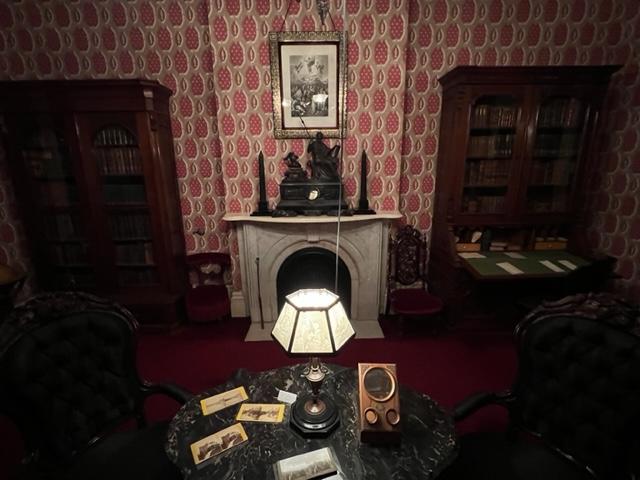
The house is furnished in a mixture of period pieces that would have decorated the house at that time period along with Roosevelt family heirlooms. The was decorated as best as the family at that time could remember. This includes the Living Room, Dining Room, Parlor, the two bedrooms along with the children’s wing. The house had changed over the years so things are not exactly the way they would have been.
The recreation of the Roosevelt Living Room
The Roosevelt Parlor Room
The Roosevelt Dining Room
The Roosevelt Bedroom
The Roosevelt Library/Office in the bedroom area
The Roosevelt Bedroom
The house was rededicated in 1923 and was subsequently refurbished with many furnishings from the original house by the President’s widow, Edith and his two sisters. The widow and sisters also supplied information about the interior’s appearance during Roosevelt’s residency. The Theodore Roosevelt Association donated the birthplace to the National Park Service in 1963.
The lower level of the house is where the gift shop is located and the gallery room with pictures of President Roosevelt and his family and in government events. They also have the original “Teddy Bear” created for the President and the shirt that the President wore when there was an attempt on his life. There is also a series of family portraits as well.
The “Teddy Bear” is located in the display gallery in the first floor
The shirt the President was wearing when there was an attempt on his life
Try to get to the site during one of the tours and the rangers will give you a detailed talk both on the house and on the family. It is also self-guided so you can take your time to walk the house before it closes for the evening.
I am taking a class in Trends in Tourism for my graduation program in Global Hospitality Management and this included a recent trip to the Fotografiska Museum at 281 Park Avenue South. We had a meeting with a member of the Marketing Team at the museum and he explained how the museum functioned and the direction that they want to go to promote the museum.
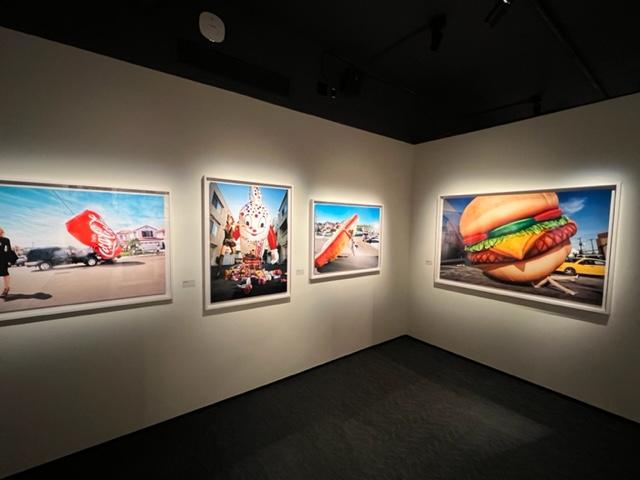
After the talk, we were able to tour the museum. The exhibition that we saw as a class at NYU for my graduate program was the David LaChapelle exhibition. This was a unique blend of art with works in many different forms and ideas. The artist was influenced by his association with his friend and collaborator, Andy Warhol. I saw this in many pieces in the exhibition.
What I liked about the museum is that you had three floors of artwork that showcased the artist’s work and gave his perspective as a living artist.The artist even had input on how the exhibition was mounted, the works that would be shown and use of music or lack of in the exhibition.
On the bottom level of the museum is an engaging coffee shop and gift shop that are open, airy and very inviting. You can access these by walking in the front door and you do not have to enter the museum to enjoy these services. The museum created these as spaced where people can gather, relax and socialize.
The Fotografiska Museum is giving us a new perspective on what the modern museum can be and its engagement with its patrons.
The entrance of the Fotografiska Museum for the David LaChapelle exhibition
The exhibition sign
The fascinating paintings of the artist
I admire the work of the artist
The galleries were full of interesting works by artist David LaChapelle
ABOUT THE ARTIST
(from the museum website)
David LaChapelle was born in Connecticut in 1963 and attended high school at North Carolina School of The Arts. Originally enrolled as a painter, he developed an analogue technique by hand-painting his own negatives to achieve a sublime spectrum of color before processing his film.
At age 17, LaChapelle moved to New York City. Following his first photography show at Gallery 303, he was hired by Andy Warhol to work at Interview Magazine.
The artist is giving a nod to her friend Andy Warhol with these two takes on his famous “Portrait Work”
The last piece of art on Andy Warhol was done by LaChapelle right before he died.
Through his mastery of color, unique composition, and imaginative narratives, LaChapelle began to expand the genre of photography. His staged tableau, portrait and still life works challenged devices of traditional photography and his work quickly gained international interest. By 1991, The New York Times predicted, “LaChapelle is certain to influence the work of a new generation…in the same way that Mr. Avedon pioneered so much of what is familiar today.”
In the decades since, LaChapelle has become one of the most published photographers throughout the world with an anthology of books including LaChapelle Land (1996), Hotel LaChapelle (1999), Heaven to Hell (2006), Lost & Found, and Good News (2017). Simultaneously, his work has expanded into music video, film and stage projects. His 2005 feature film Rize was released theatrically in 17 countries. Many of his still and film works have become iconic archetypes of America in the 21st Century.
The History of the Fotografiska Museum:
(from the museum website)
Fotografiska New York is the NYC location of the renowned Stockholm-based destination for the world’s best photography. Founded in 2010, Fotografiska was built on the foundation of photography as a haven for inclusivity and free expression.
The Fotografiska Museum in Manhattan
Our goal is to inspire a more conscious world through the art of photography. We showcase the greatest photographers, whether they’re emerging artists or already established internationally.
The building is a registered landmark built in 1894 and originally named “The Church Mission House”. We’ve renovated this iconic jewel to be a new experience of world-class art, cultural events, retail, and epicurean dining, in an awe-inspiring space.
I had a busy Halloween weekend with the Michigan State versus Michigan game and a Gotham City Ghost tour in the afternoon. Halloween searching for ghosts.
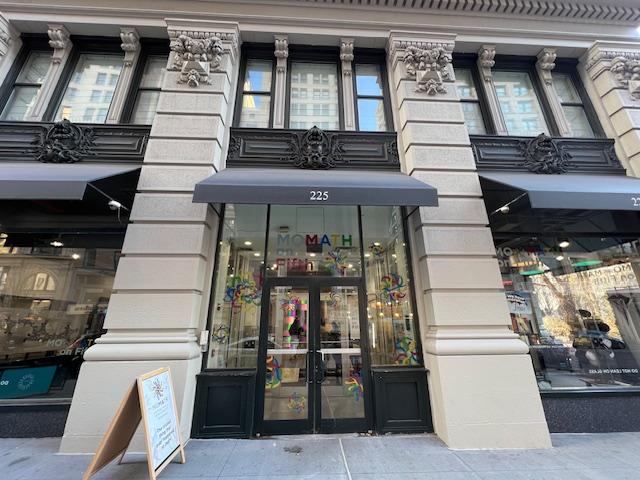
In 2020, COVID had closed this unique little family orientated museum when I visited the NoMAD neighborhood earlier last year and it finally reopened for business right before the holidays. I could see the reasons why in that the museum is very interactive and there are a lot of activities and displays that warrant families touching objects and getting involved with the exhibitions.
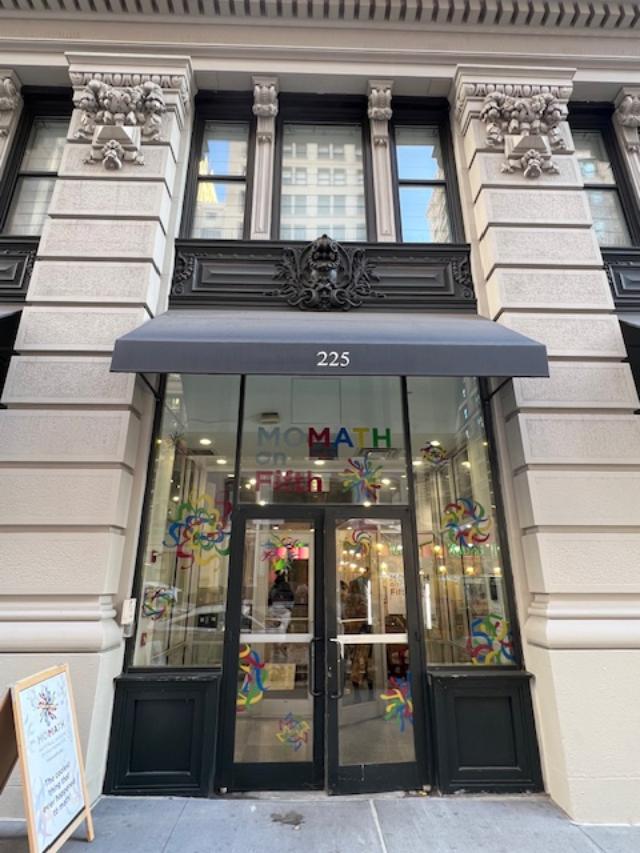
The entrance to the new museum at 225 Fifth Avenue
Like most museums in Manhattan, the MoMATH or the Museum of Mathematics is quite pricey at $25.00 ($26.00) for an adult and for students, children over 12 and seniors over 60 it is $20.00. While it may be lot for an average family, a trip there is an eye-opening experience at least to me it was that day.
The sign welcoming you on Fifth Avenue
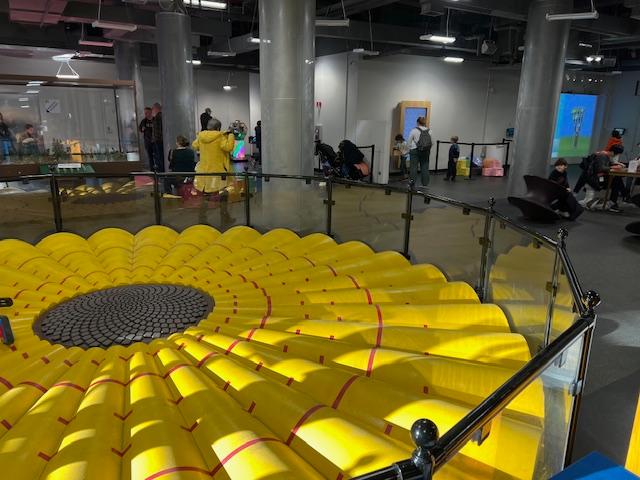
In 2021 when it reopened, the museum was two full floors of exhibitions with a spiral staircase separating the floors and a gift shop at the entrance. On the main floor there are interesting interactive exhibitions such as the Shapes of Space that show how different shapes fit together on a curved surface. I was not too sure what the point of it was, but the kids seemed to enjoy it and it was interesting to see how they connected. The Square wheeled Trike was interesting as you rode a square wheeled type of bike on a bumpy surface to check velocity. The kids and young parents really liked this.
The “Shapes of Space” exhibition
In 2024, the museum was moved around the corner until the permanent location could be finished. The museum was on one floor with a art gallery in the front of the museum and the back of the museum was all the interactive activities.
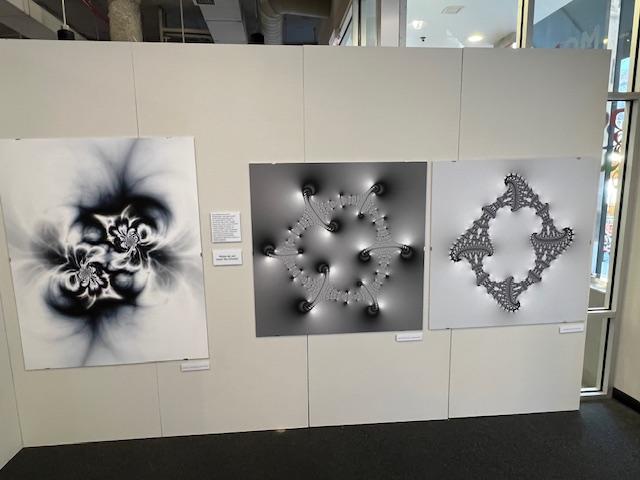
The Math “Fractorals” Gallery Exhibit at the Museum of Math
The “Fluids and Fractals” exhibition of artist Karl Sims
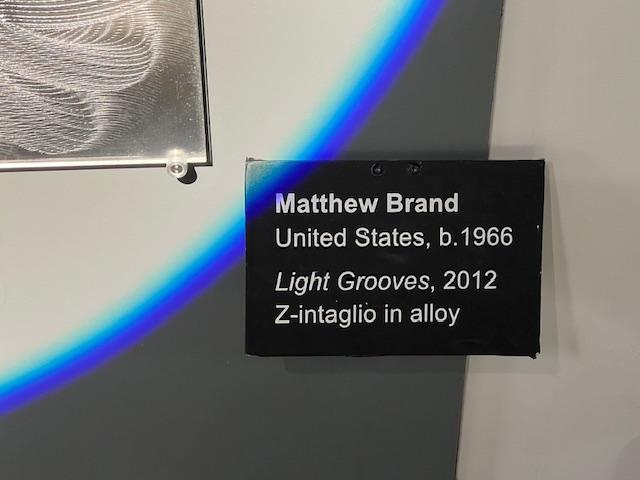
Matthew Brandt is an American born artist. Matthew Brandt received his BFA from Cooper Union and MFA from UCLA. Brandt has been the subject of institutional solo shows at the Newark Museum, the Columbus Museum of Art, Virginia Museum of Contemporary Art and SCAD Museum of Art, Savannah (Artist bio).
“Light Grooves”
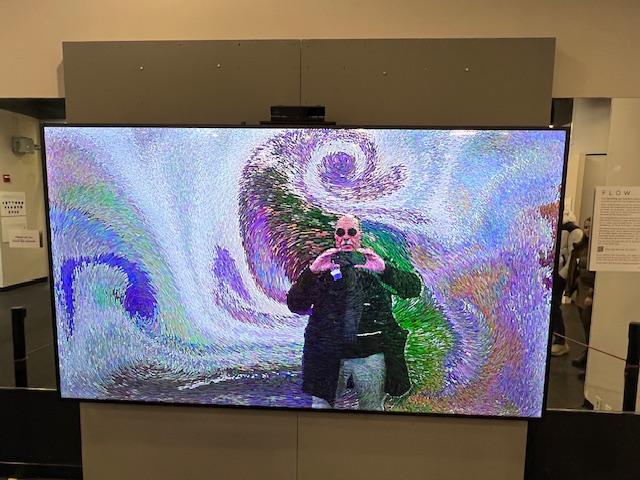
The interactive display
The interactive display
The displays I enjoyed in the old museum were Motionscape, where you had to walk as fast as you could on the track to check the relationship between velocity, your position and acceleration. It was interesting to see how your body movements when walking affects the way you react. The other display that was really popular was Hoop Curves which was always busy. The exhibit used statistics and a robot arm to shoot the basketball. The kids got a real kick out of this when trying to make a basket.
In 2021, the museum was two stories but in 2024, the museum moved to the new Fifth Avenue location and all the interactive displays were on the first floor, along with an explanation of the math along with the creators of the theory. I found that interesting because you could see who all the mathematicians were who the projects were based on or who had contributed to them.
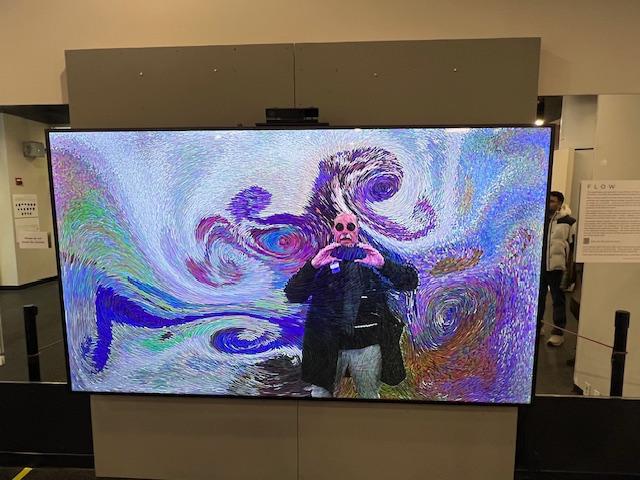
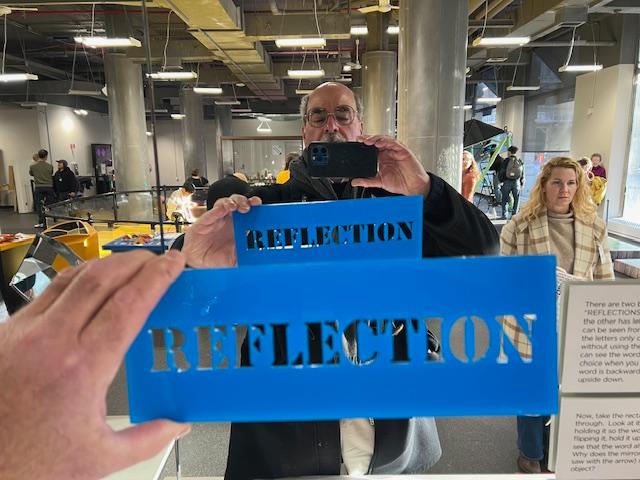
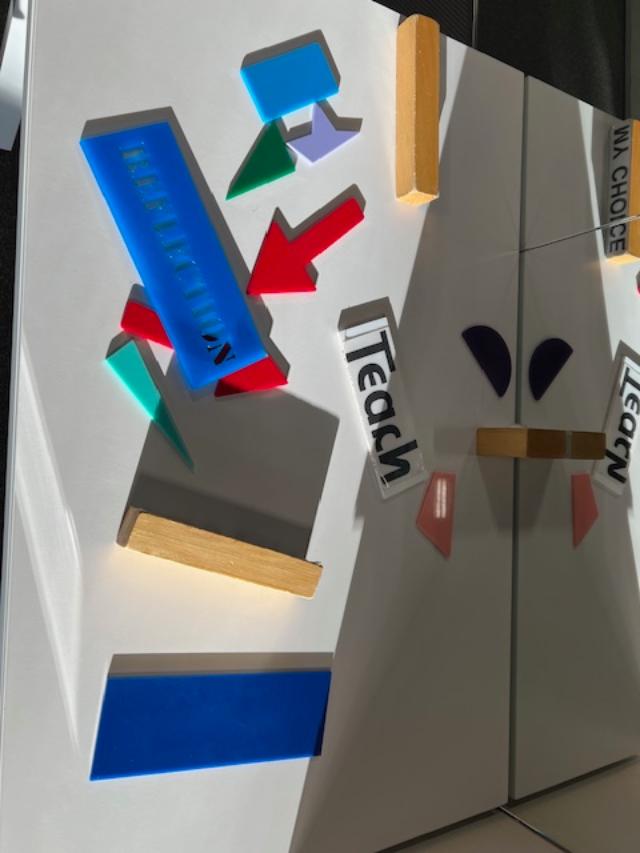
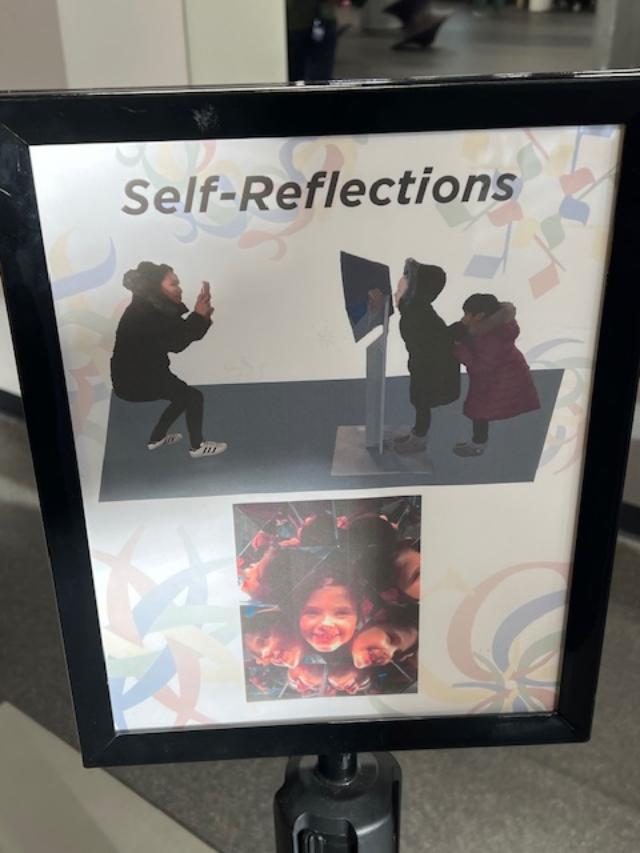
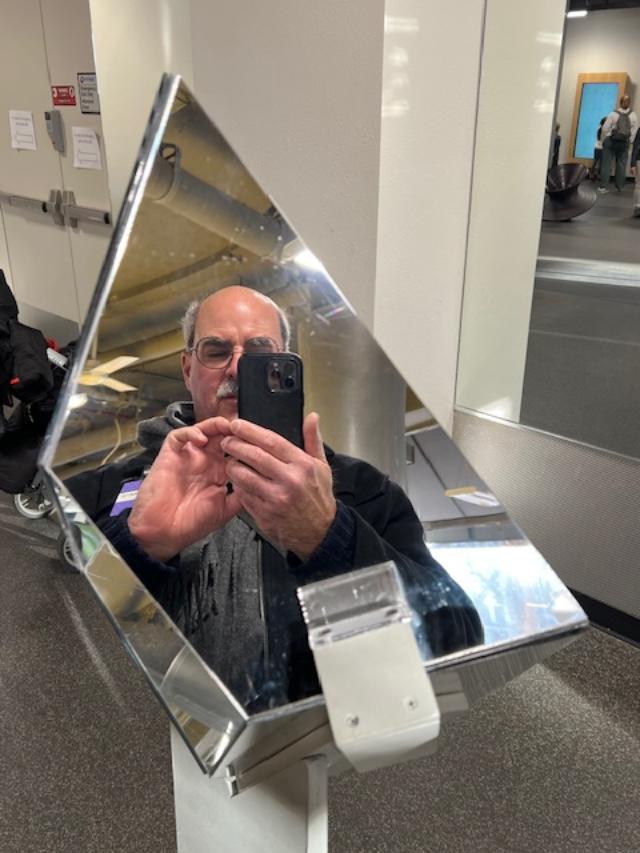
I started with the “Self-Reflections” exhibit where shapes and sizes mattered, and the use of symmetrical patterns shaped our faces and observations. I got to see how the shapes altered my reflection in the mirrors.
The use of mirrors and shapes
The use of shapes and colors in the experiment
The signage
How we look at ourselves in the mirror
Taking pictures in the ‘mirror’
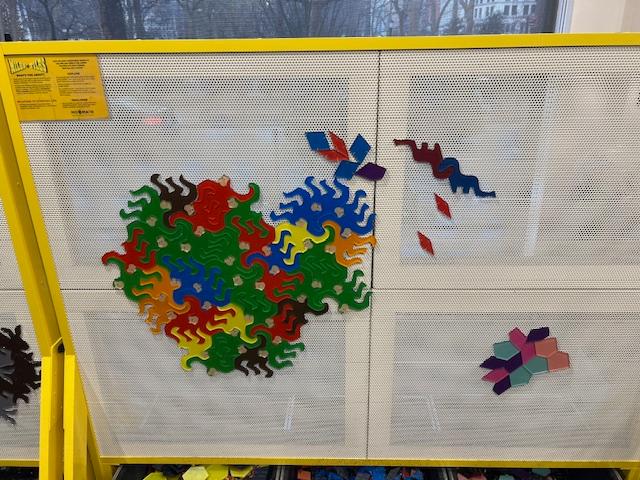
One of the first interactive displays that I enjoyed was the Tessellation Station, where you could create displays with magnetic tiles on a large board. Later I learned about Tessellation as a form of making shapes fit together in a pattern and then the theory behind that. It was a fun way to use your creativity. This exhibition was very popular in the old museum as well but had been a much bigger interactive display.
The “Tessellation Station” exhibition is a lot of fun
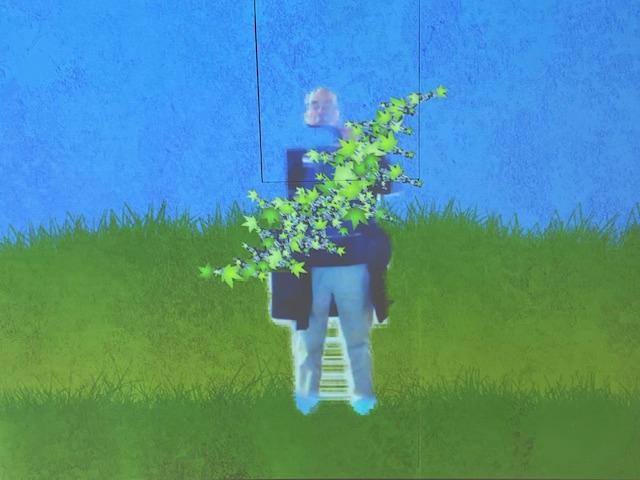
Another was the Tree of Life, where the computer copied the movements of myself and then used them to show the how I moved my arms and legs in a pattern. It was funny to see myself repeated over and over again like a tree with branches. It really did measure the movement of my body. This was a lot of fun because you got to see smaller versions of yourself attached to you.
Me playing with the Tree of Life
Me having fun by the Tree of Life exhibition
The Twist and Roll display showed how to put different shapes and sizes together and show their movement on the board.
The Twist and Roll hands on display
The one display that all the kids got a kick out of was the Math Board, where the colors and shapes of the section of the floor lit up when you walked on them and was controlled by the way you walked on them.
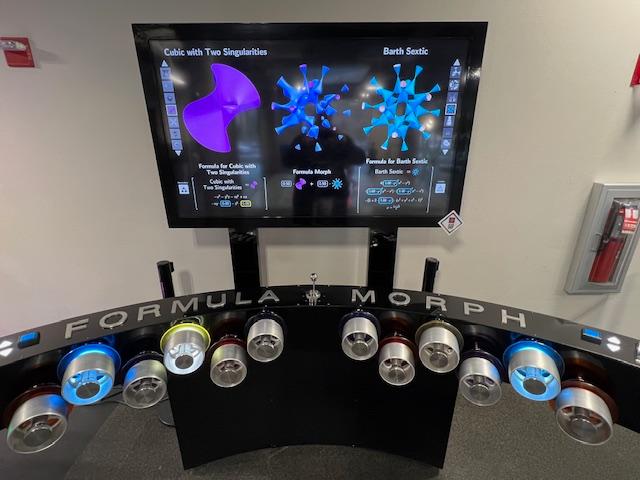
The “Math Morphing-Formula Morph” replaced the “Math Board”
The Museum of Mathematics is a great museum for younger children who want to get physical and have a good time and like the interaction. I learned a few things too about the fundamentals of math and some of its background theories.
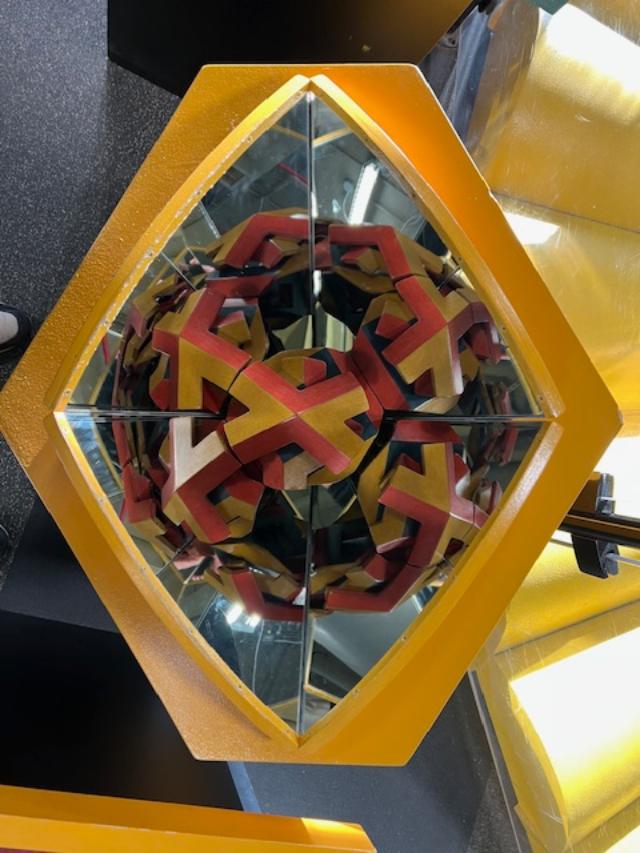
The geometrics of the Museum of Mathematics
Still, it is a great museum for kids under the age of twelve and their younger parents. I think anything over that age would warrant a trip to the American Museum of Natural History or the Liberty Science Center with more exhibits that are age appropriate. It is a museum you should visit once or twice with small children who are at the learning stage and just want to have fun.
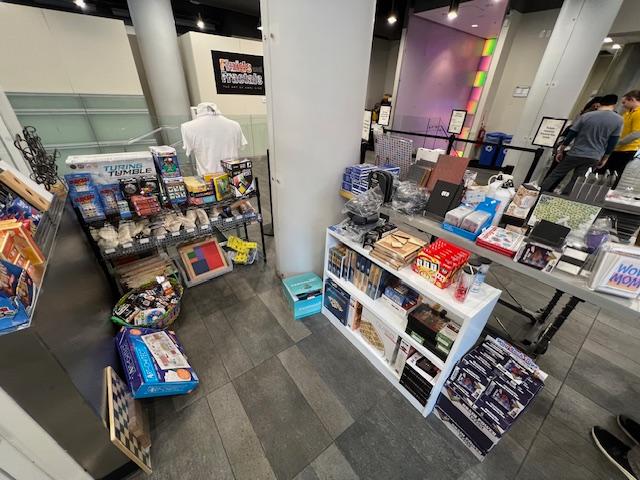
The Gift Shop
The Museum Gift Shop
The History of the National Museum of Mathematics:
(From the museum website)
The National Museum of Mathematics began in response to the closing of a small museum of mathematics on Long Island, the Goudreau Museum. A group of interested parties (the “working group”) met in August 2008 to explore the creation of a new museum of mathematics-one that would go well beyond the Goudreau in both its scope and methodology. The group quickly discovered that there was no museum of mathematics in the United States, and yet there was a incredible demand for hands0n math programming.
Interactive objects at the Museum of Mathematics
Accomplishments to date include: opening Manhattan’s only hands-on science center, welcoming more than one million visitors; creating the popular Math Midway exhibition, which has delighted millions of visitors at museums throughout the United States and internationally; leading math tours in various U.S. cities; running dozens of Math Encounters and Family Fridays events; delivering a broad array of diverse and engaging programs for students, teachers, and the public to increase appreciation of mathematics and creating the largest public outdoor demonstration of the Pythagorean Theorem ever.
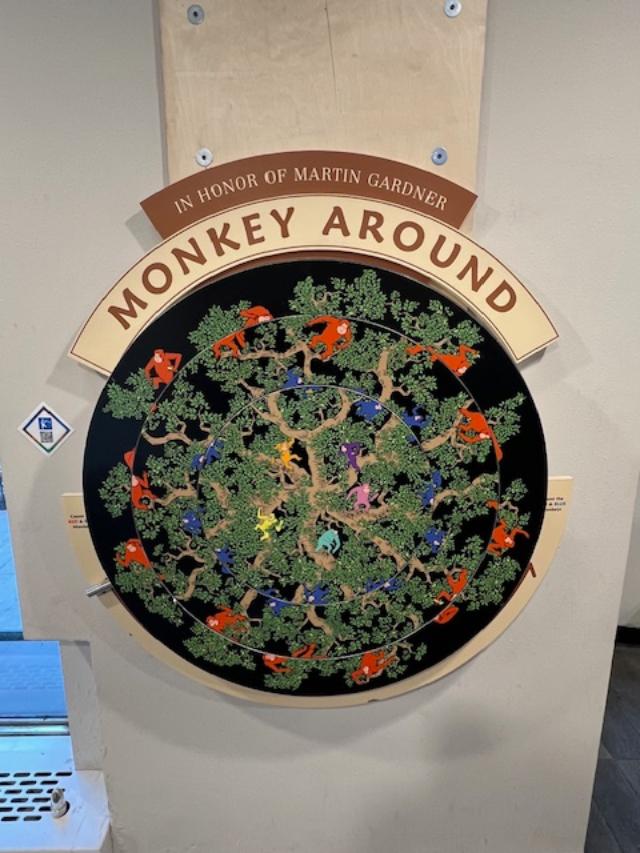
The “Monkeying Around” exhibition at the museum
The Museum Mission:
(From the Museum website)
Mathematics illuminates the patterns that abound in our world. The National Museum of Mathematics strives to enhance public understanding and perception of mathematics. Its dynamic exhibits and programs stimulate inquiry, spark curiosity and reveal the wonders of mathematics. The Museum’s activities lead a broad and diverse audience to understand the evolving, creative, human and aesthetic nature of mathematics.
The “Weights and Balances” exhibition at the museum
























 Visiting a Museum: The Unique, Unusual, Obscure and Historical