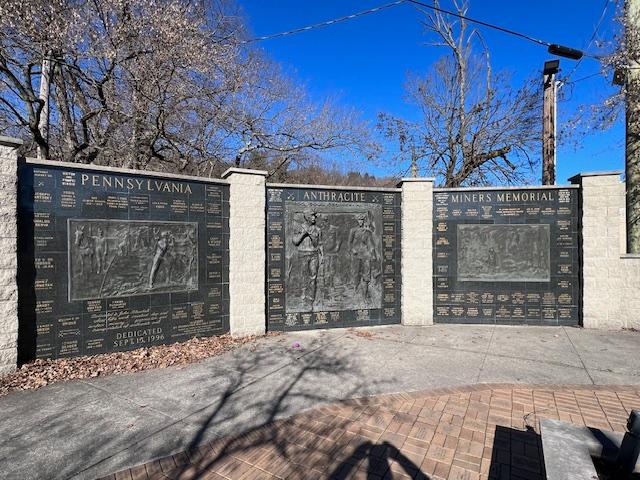
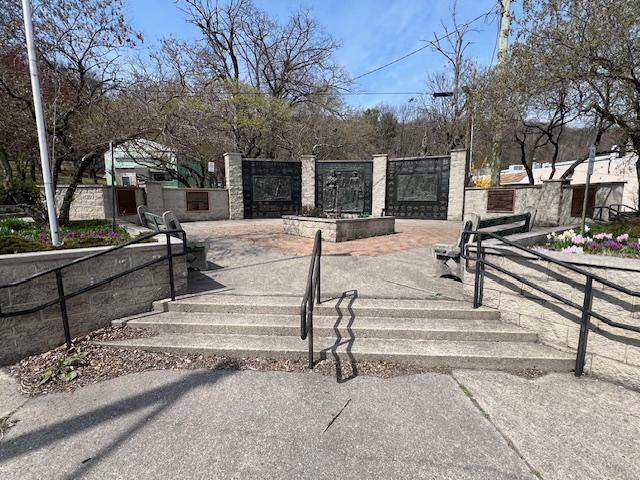
The memorial in Girard Park in Shenandoah, PA just off the edge of downtown.
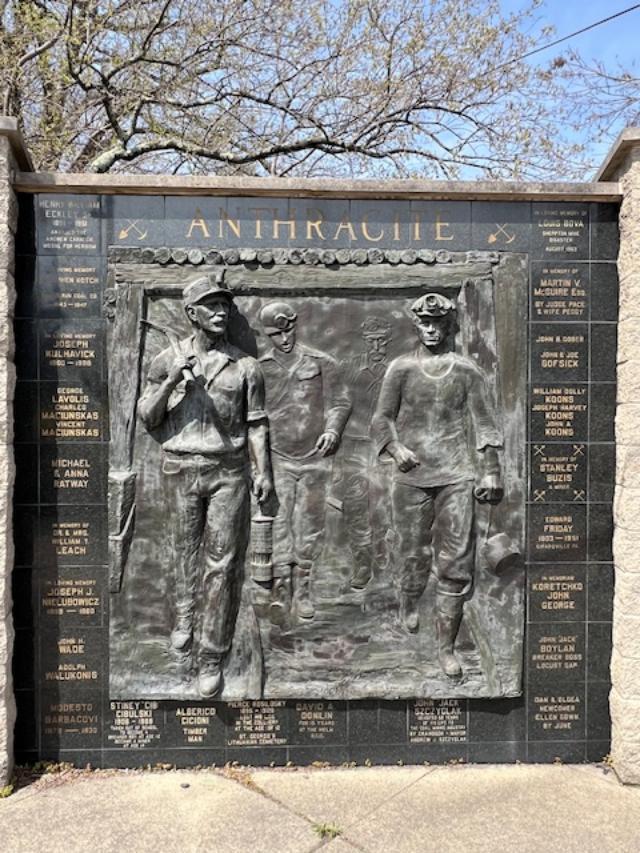
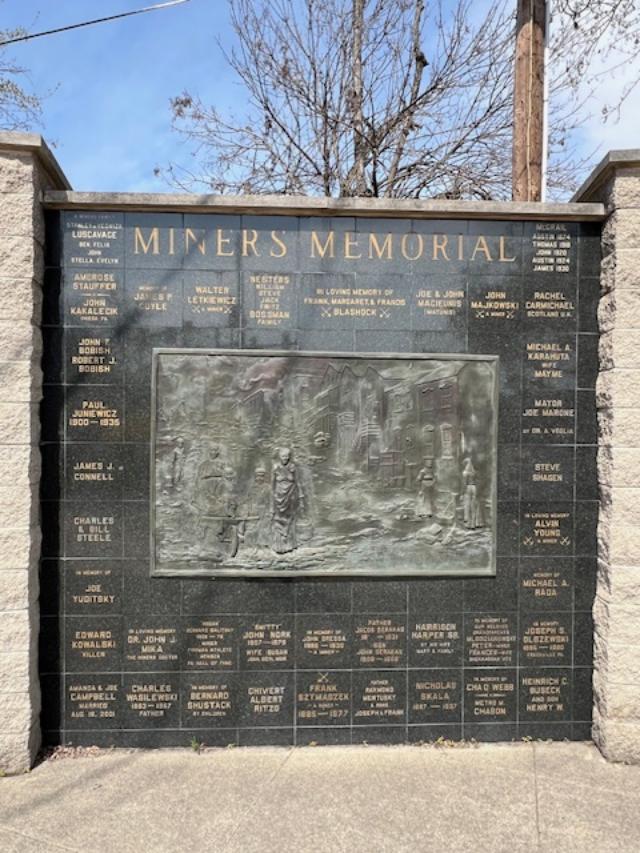
Plaque One
Plaque Two
Plaque Three
When I was visiting Downtown Shenandoah, PA I had read about this memorial dedicated to miners in the area and to stop by to see it. It is a very touching memorial dedicated to the hard working men and women who work in the mines in the area and the sacrifices they have made so that we could have heat and energy over the last 150 years. This is dangerous work and they do not get enough credit for it.
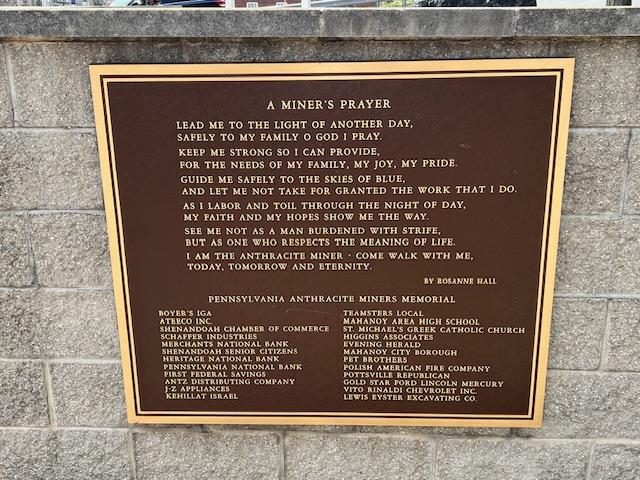
The Miner’s Prayer plaque
The memorial sits on the very edge of the northern part of downtown Shenandoah and the sad part is the condition of the both the park and the memorial like forgotten souls. Downtown Shenandoah has seen better days and with the mines not in production they way they once were, it is almost like a forgotten relic of the past. Still it is very touching to see this dedication to that hard work and determination of people who have performed this hard job and not given the credit for it.
Take time to read the names and see the inscriptions. It is a very moving place.
A piece of coal donated and dedicated to the monument
History of the Memorial (Zenos Frudakis website):
Pennsylvania Anthracite Miners Memorial relief bronze by Zenos Frudakis honors the thousands of hardworking and courageous coal miners who lived and worked in the anthracite region of Pennsylvania.
Comprised of three large bronze plaques, the monument’s left panel, titled “Life Underground,” tells the story of deep miners at work in coal pits. “The Passageway,” largest and central panel, illustrates four miners exiting a mine shaft. “Life Above Ground,” the right panel, shows row homes in Shenandoah in 1891. The monument is surrounded by bricks featuring the names of many of the miners, and benches where visitors can rest and reflect on the hardworking residents of the Upper Schuylkill Region who helped to build America.
The inscription on the Memorial (HBdg.org):
Their coal oil lamps dimly lighted the dismal tunnels while silhouetting their blackened faces that portrayed their exhausting labors and dedication to their families from sunrise to sunset. Only God knew their fate. As you walk this brick pathway toward the Pennsylvania Anthracite Miners Memorial. You will become a part of the miners’ world and the history they so painstakingly created with picks and shovels. Do not shed tears for them, but carry on the pride they chiseled with the sweat from their brows and each beat of their hearts. By Roseann Hall. Pennsylvania Anthracite Miners Memorial-Steven Souchuck, Joseph Baronowsky, Edward S. Kramer, Neil Delance, Albert James Sands Sr., John Lauritis, Bartholemew “Patsy” Swies, Stanley Rakowsky Sr., George Luscavage, David J. Roberts, Frank M. Twardzik, Gulden-Thompson Family, John J. “Jada” Grutza, John Bisco, Stanley Glinski, Christopher F. Casula, Thomas and Blanche Dower, John S. and Pauline G. Karlavage, Robert K. Ramsey, Adam Morris, Dyszel-Andrew, Barbara and Sons, Procuda-Steve, Nick, Russel, Albert Ritzo, B. Lewis and Shustack Family.
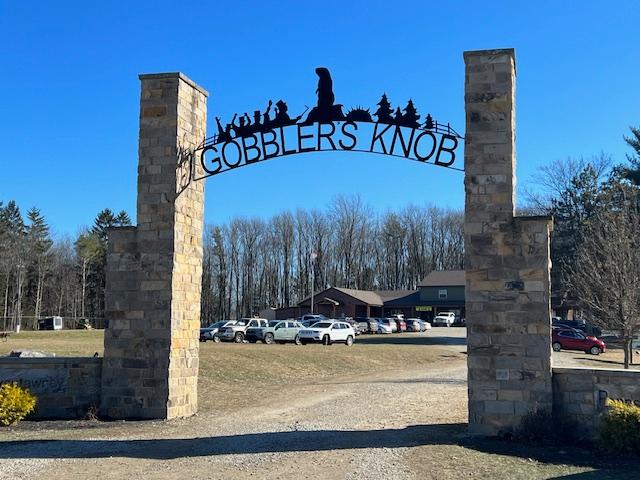
The entrance to Gobbler’s Knob when you arrive in the morning.
“Are you off to see the Groundhog?” is a famous line in the movie “Groundhog’s Day”. The one thing is that the scene in the movie was shot in the square of Woodstock, ID. The real Gobbler’s Knob is located in Punxsutawney, PA, the real home of Phil.
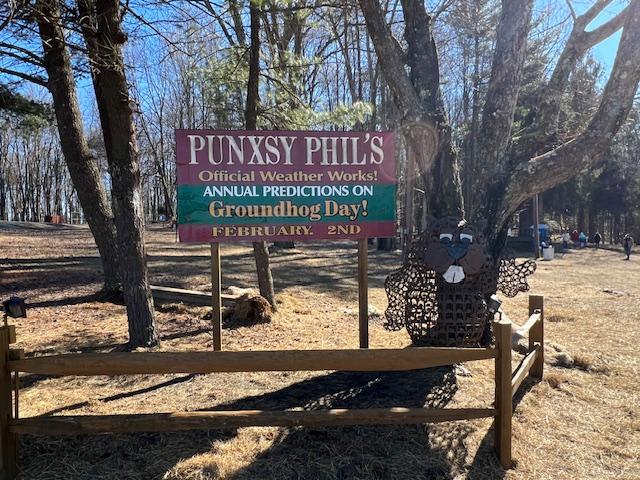
The welcome sign to Gobblers Knob.
Located just outside the downtown (ironically behind a Walmart; talk about progress), Gobblers Knob is located in what was once woods in the back of town has become an open field with a stage, Visitors Center and gift shop. Every years thousands of people flock to this small town literally in the middle of Pennsylvania to see the Groundhog’s Day Festival.
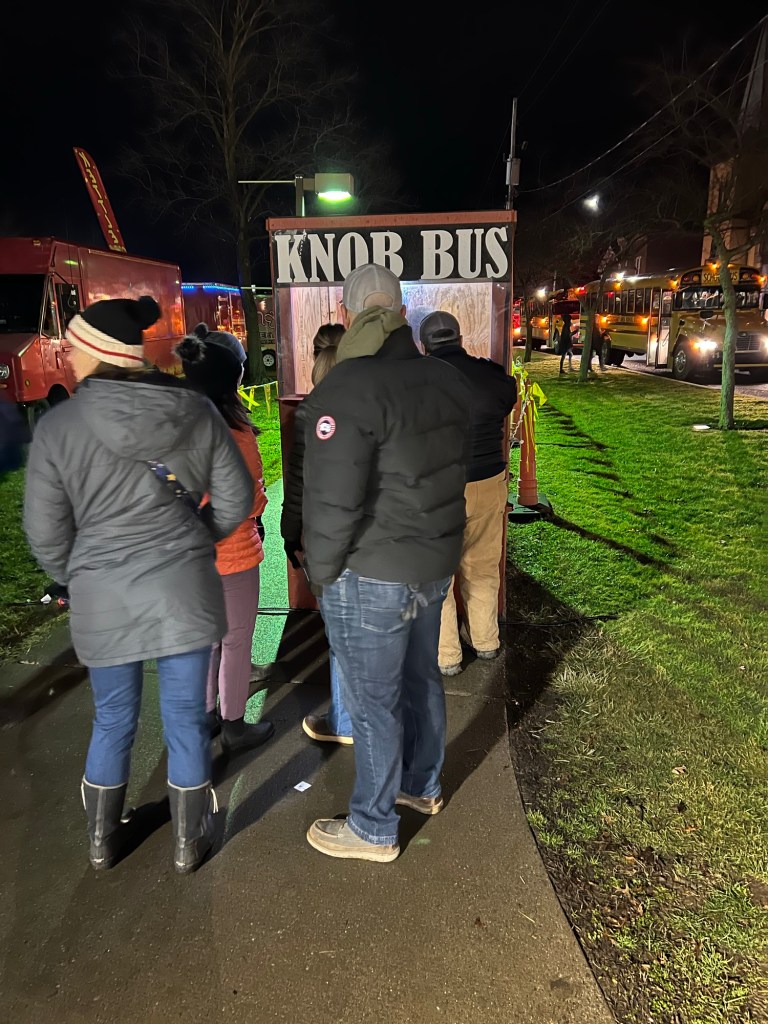
Taking the bus to Gobblers Knob on Groundhog’s Day morning.
Gobbler’ Knob is the famous home of the “Groundhogs Day” festival and swells into a crowd of more than thirty thousand people from all over the world. It is an incredible event to join in.
I attended the festivities here twice. Once in 2016 and again in 2024 and I have to say that it is something you have to do once in your life just to experience the excitement of the morning that Phil sees his shadow.
Arriving in the morning for the prediction.
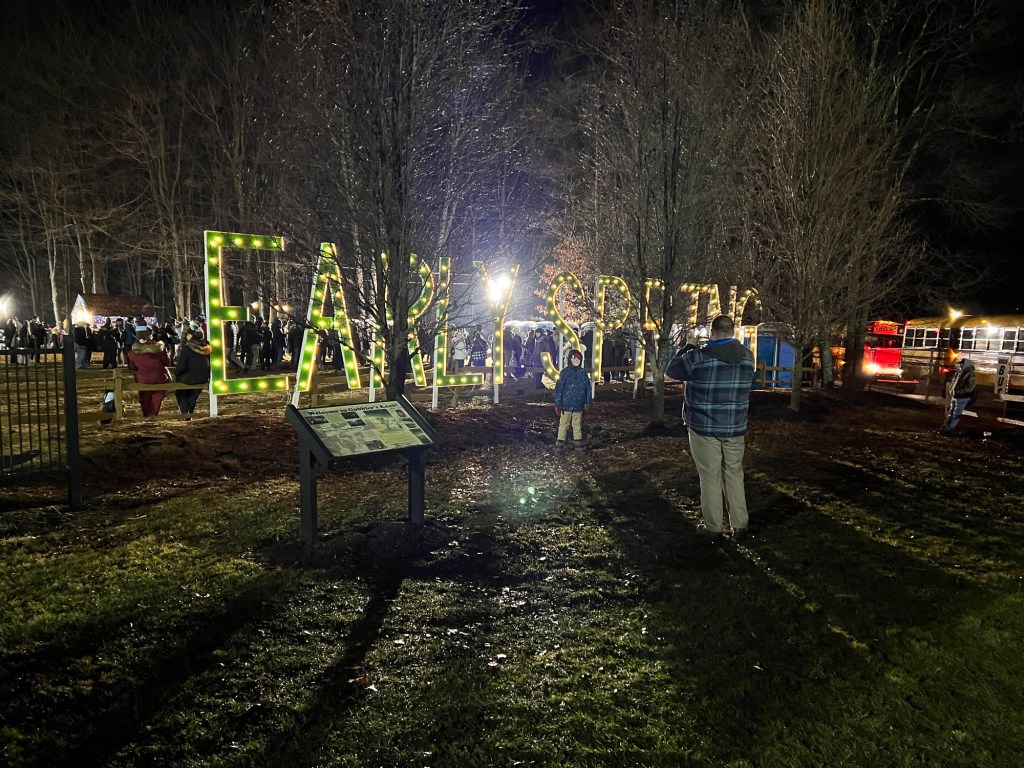
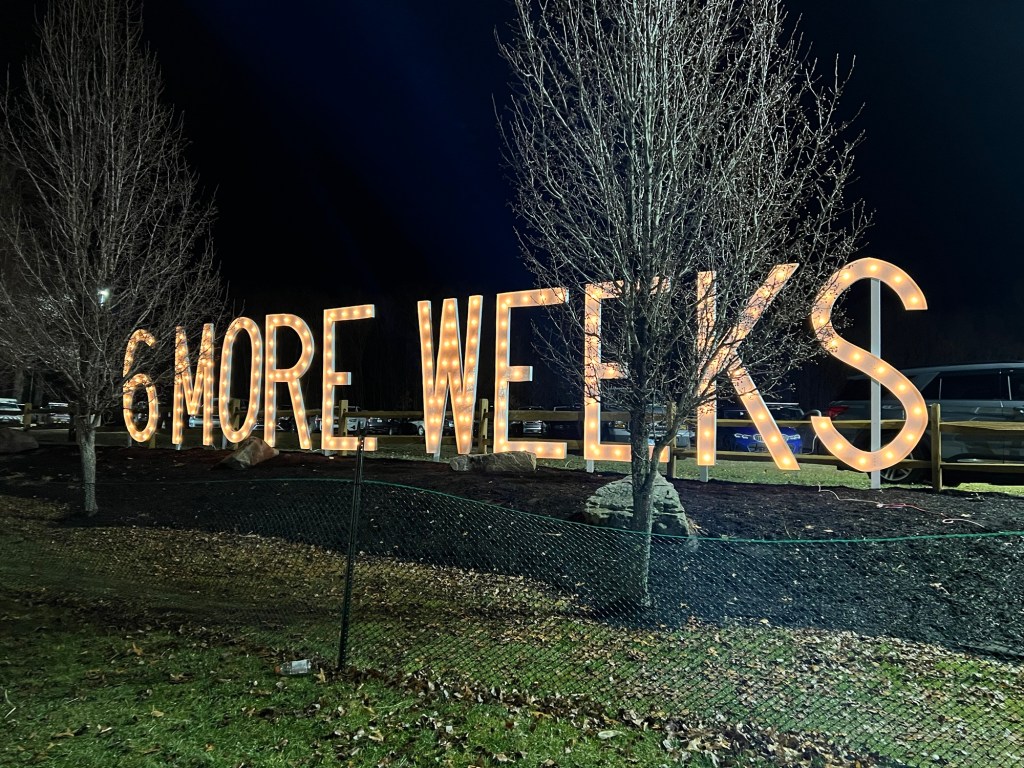
The signs were out and lit for the prediction. No one knew how Phil would react. Would he see his shadow or not?
They emphasize both predictions.
The History of Groundhog’s Day (From the Groundhog’s Club website):
The Christian religious holiday of Candlemas Day has become most commonly associated with the current celebration, but it’s roots are older than that. The celebration started in Christianity as the day, (February 2nd), when Christians would take their candles to the church to have them blessed. This, they felt, would bring blessings to their household for the remaining winter.
As time rolled on the day evolved into another form. The following English folk song highlights the transition to weather prognostication.
If Candlemas be fair and bright, Come, Winter, have another flight; If Candlemas brings clouds and rain, Go Winter, and come not again.
This “interpretation” of Candlemas Day became the norm for most of Europe. As you can read, there is no mention of an animal of any kind in the preceding song. It wasn’t until this traditional belief was introduced to Germany that an animal was introduced into the lore, hence another evolution of February 2nd. If, according to German lore, the hedgehog saw his shadow on Candlemas Day there would be a “Second Winter” or 6 more weeks of bad weather. As German settlers came to what is now the United States, so too came their traditions and folklore. With the absence of hedgehogs in the United States, a similar hibernating animal was chosen. This leads us to yet another evolution in the legend and to present day Punxsutawney.
In Punxsutawney, 1886 marked the first time that Groundhog Day appeared in the local newspaper. The following year brought the first official trek to Gobbler’s Knob. Each year since then has seen a steady increase in participation of the celebration from people all over the world.
When the knob is full that morning you can feel the excitement of the crowd. From three in the morning until Phil comes out to make his prediction, there are all sorts of bands, comedians and singers to entertain the crowds all morning.
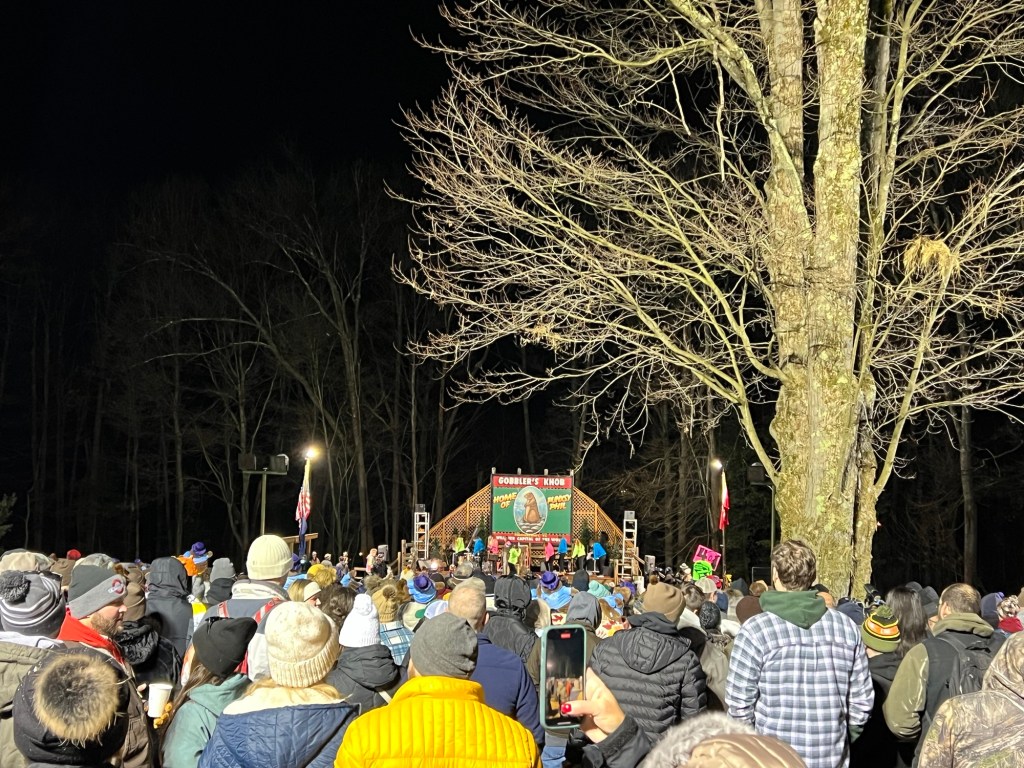
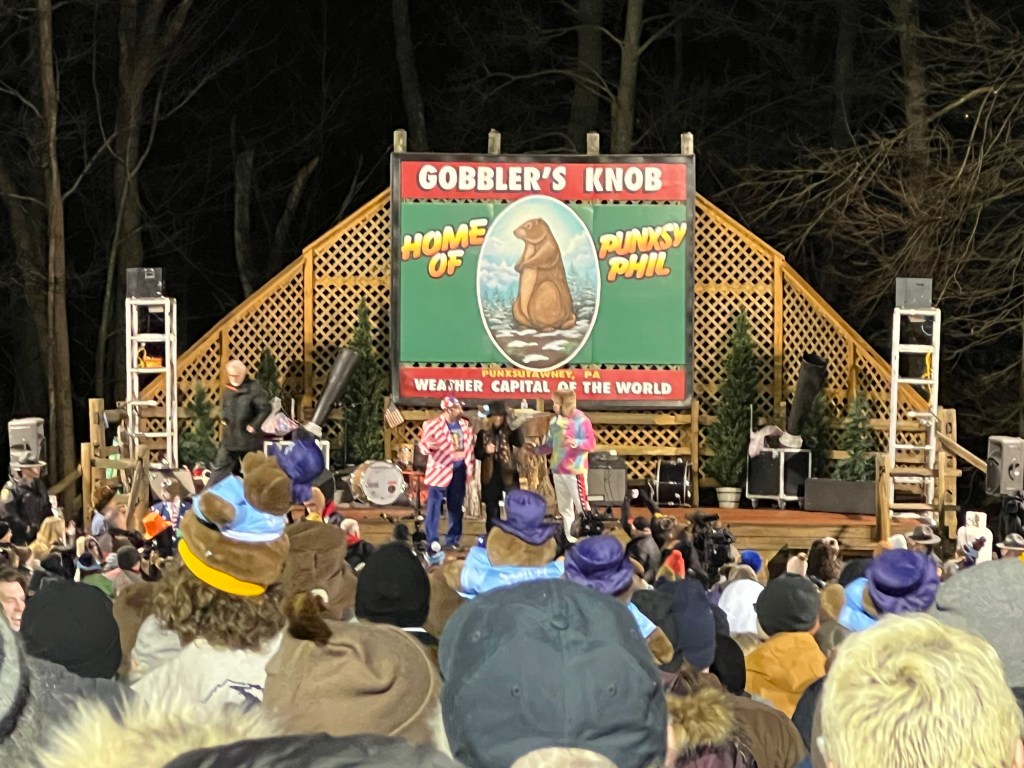
The main stage in the distance.
The crowds get bigger as the morning gets later, most arriving before 6:00am.
The singers entertaining the crowds.
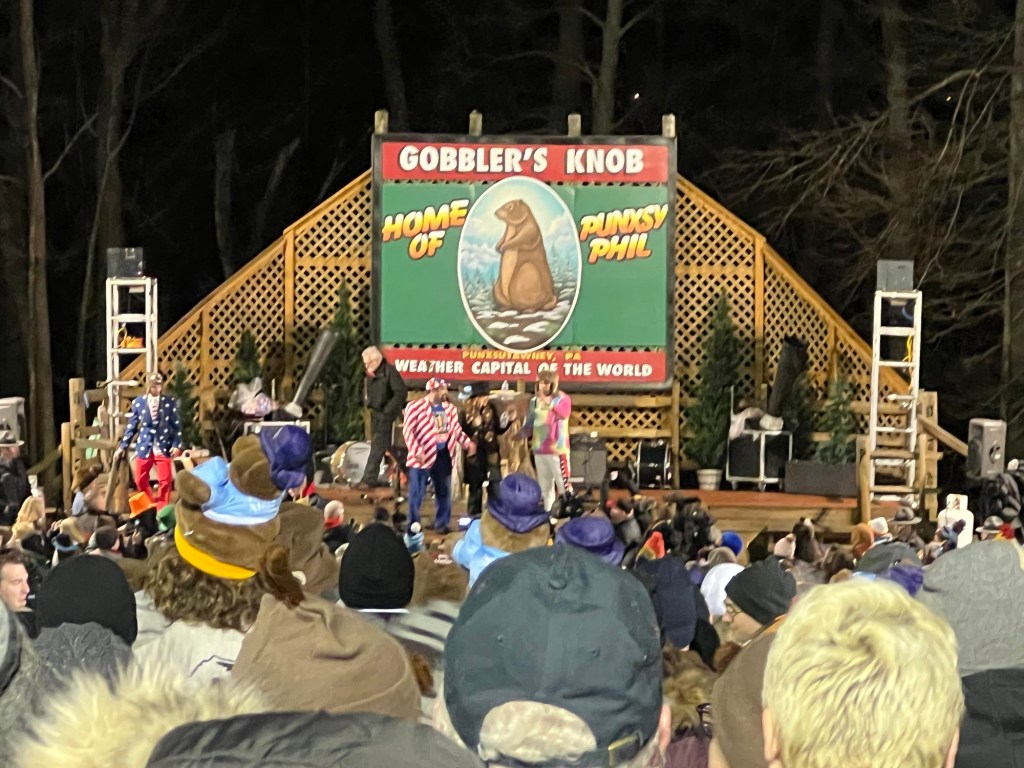
The stage was always filled with entertainment acts.
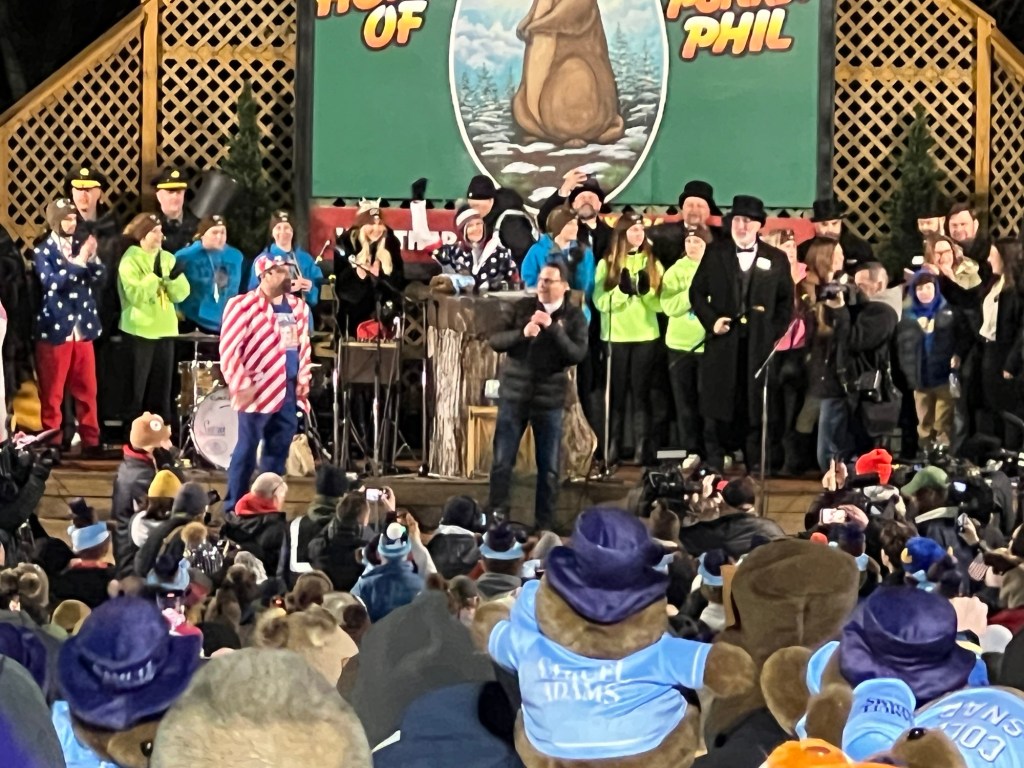
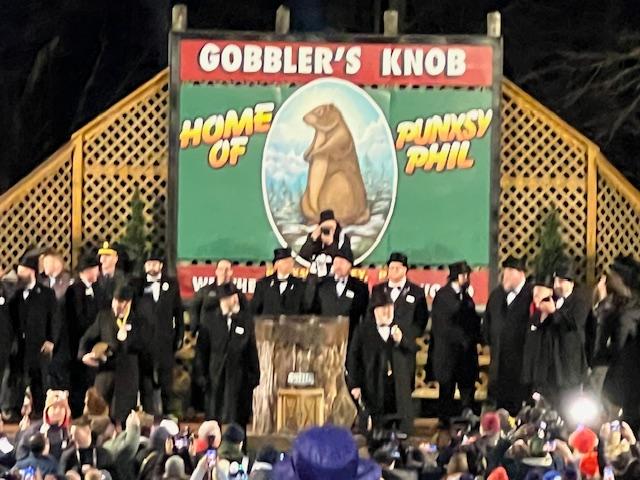
The entertainment for the evening until the top hats arrive and the fun begins. First they are the introductions of the VIPs, like the Governor of Pennsylvania showed up as well as all the other politicians to follow him.
The governor of Pennsylvania talking to the crowd.
Then the camera’s arrive and it time for the prediction. Will it be an early Spring or will Winter keep going.
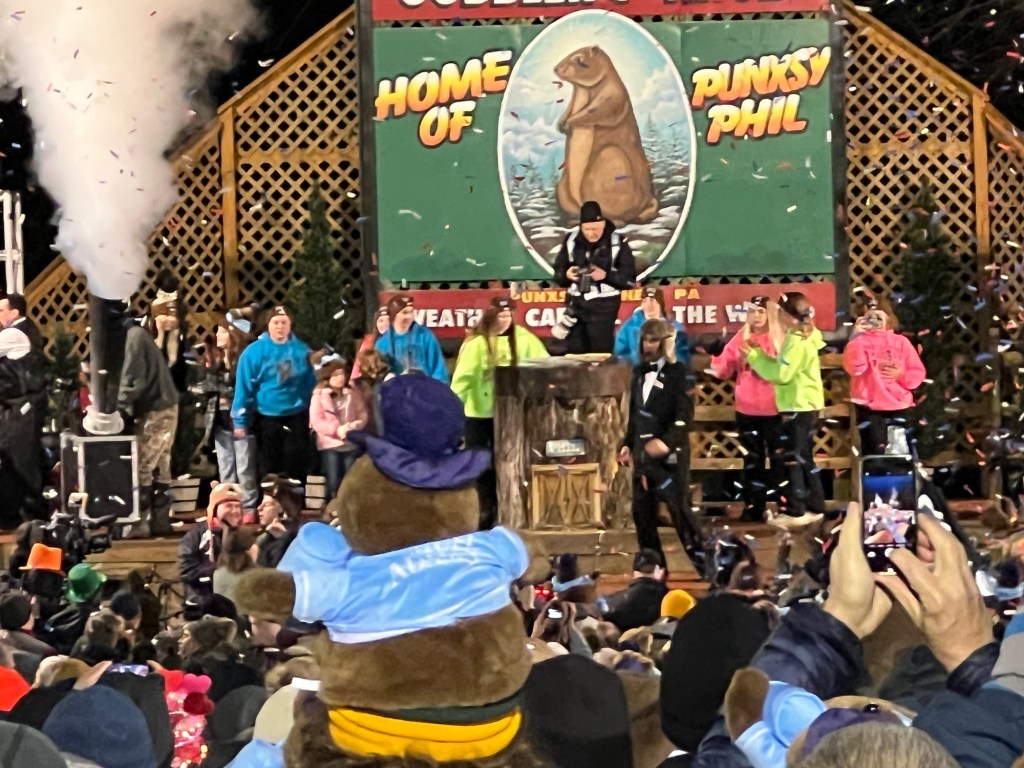
It’s time to start the show.
The arrival of the Punxsutawney Groundhog’s Club starts the program.
Phil did not see his shadow in 2024. Spring is on its way!
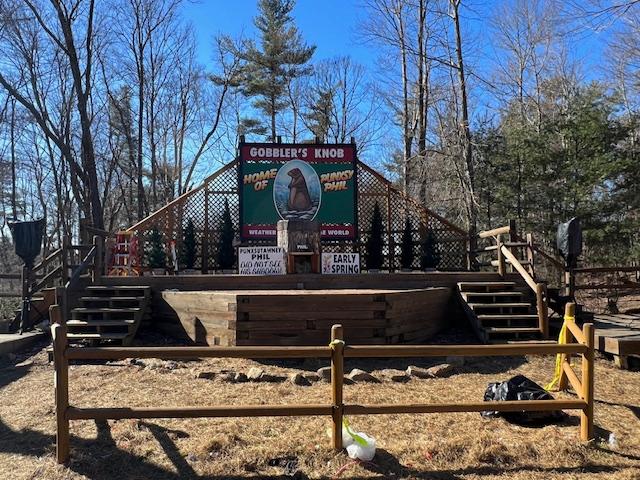
On the day after Groundhog’s Day, I went back to Gobblers Knob to visit it when it wasn’t so chaotic and crowded. It can magical in its own way in that you see the field and knob empty and realize that people all over the world watch the activities here every February 2nd. It is fascinating to just think about.
The entrance to Gobblers Knob the Saturday after Groundhog’s Day 2024.
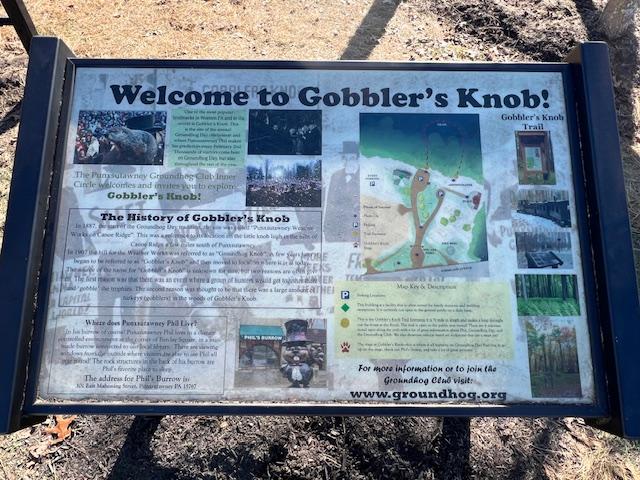
The history of the site.
The historical marker of the site.
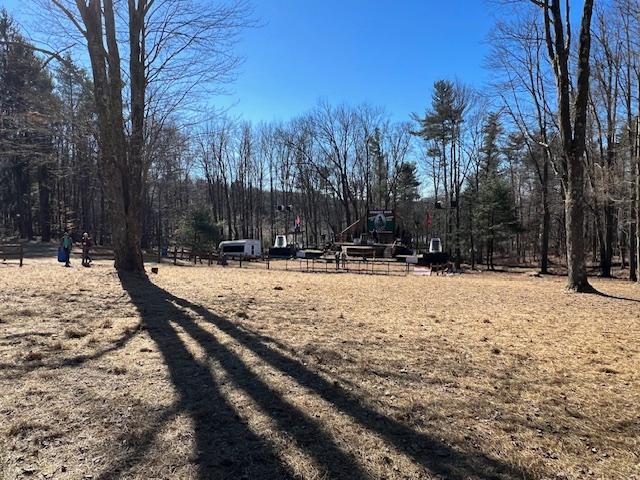
The stage area when it is quiet.
The end of the ceremony on Groundhog’s Day people were still milling around.
Gobbler’s Knob from the stage area.
The entrance display to the field.
The field when things were quiet after the event the next day.
Groundhogs Day in Punxsutawney, PA is a real experience that you should experience once. To sit out in the field with thousands of others to celebrate the day is a lot of fun. Until next year.
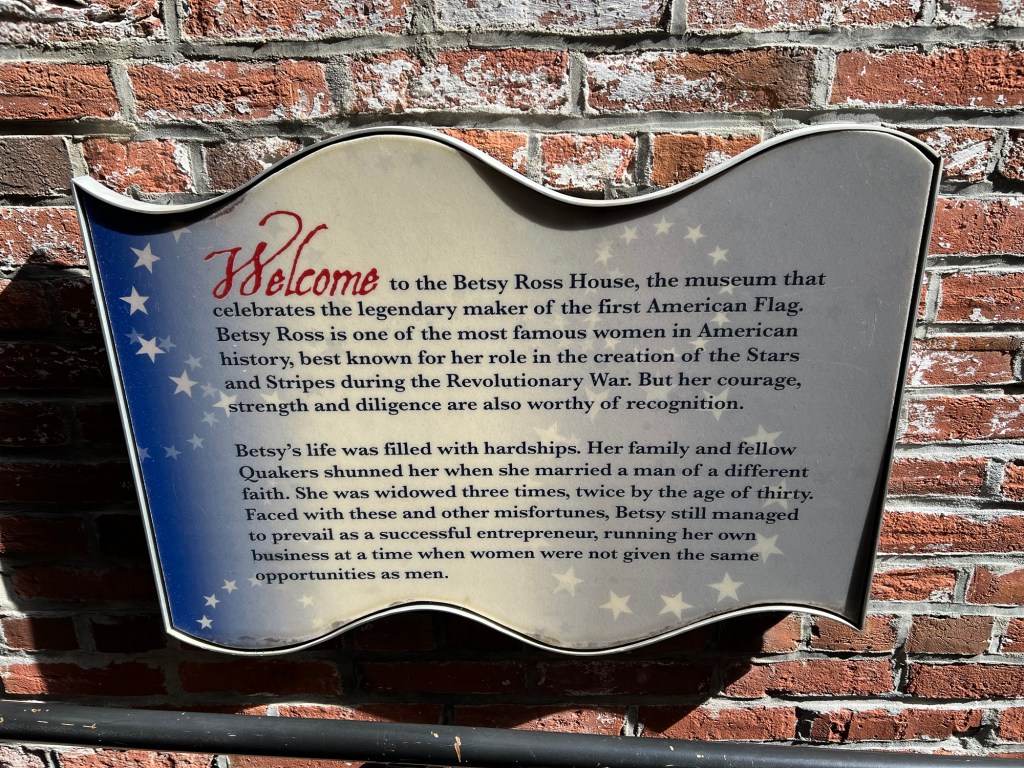
I visited the Betsy Ross House Museum when touring the small museums of Old Town Philadelphia. What an interesting historical site. You felt like you were invited into Betsy Ross’s house by Betsy Ross herself.
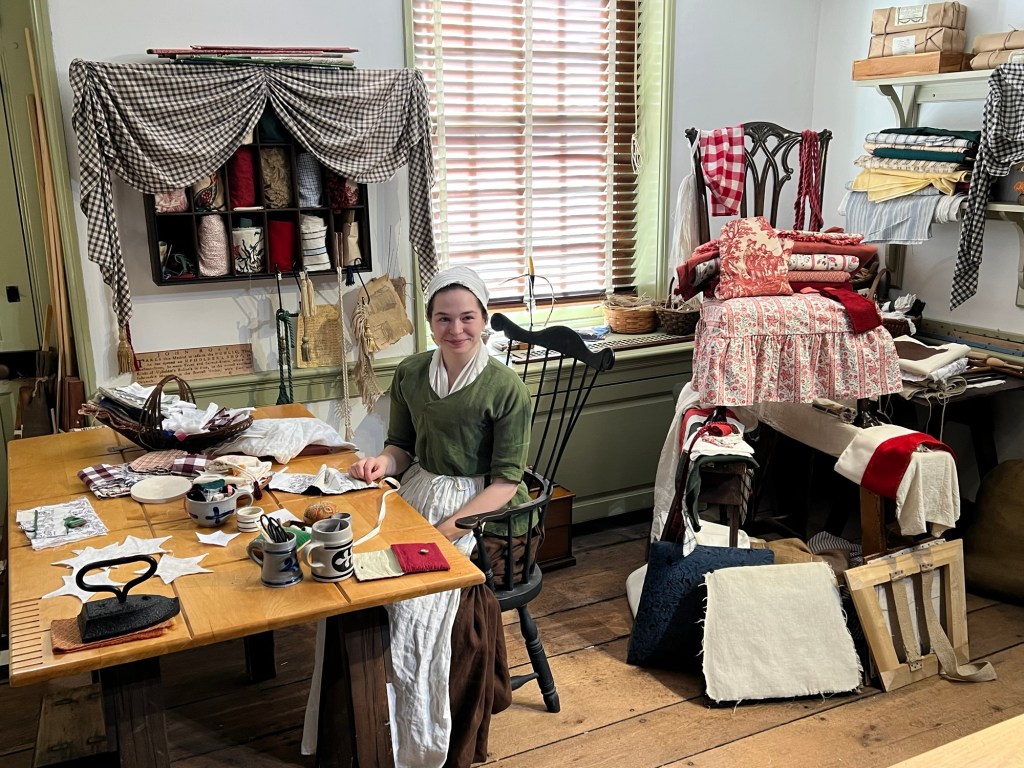
Betsy Ross was an upholsterer and ran her business dealings from the front of the house where her small showroom and workroom were located to the street level. Many people in Philadelphia had this work arrangement where the business was in the front of the home and then living quarters were in the back or up above.
In the showroom area, an actress playing Betsy Ross, was there answering all our questions and she was very interesting. When she had been approached to design and create the flag, she had never made a flag before. The actress explained that she had to keep making flags ‘under the wraps’ so that Loyalist would not shut the business down during the war. Her business pretty much was shut down during the War years as people did not have the money or time for her work. I really felt like I was talking to the real person in that time.
The tour will only take about an hour but you will learn so much about business and living arrangements in homes at that time and of the family who lived there. I never knew much about Betsy Ross herself and her husbands and children from different marriages. So you will learn a lot about the family themselves and the lives that she lived with each of them.
It is an interesting tour if you have interest in the American Flag origins and the Revolutionary War.
The History of the Betsy Ross House Museum:
The building at 239 Arch Street, now known as the Betsy Ross House, was built over 250 years ago. The front portion of the house was built around 1740 with the stair hall (or piazza) and the rear section added 10 to 20 years later. The structure is a variation of a ‘bandbox’ or ‘trinity’ style home, with one room on each floor and a winding staircase stretching from the cellar to the upper floors.
The building’s front façade, with a large window on the first floor to display merchandise and it proximity to the Delaware River, made it an ideal location for a business. The house served as both a business and a residence for many different shopkeepers and artisans for more than 150 years. The first floor front room was used as the workshop and showroom. The business owner and his or her family lived in the rest of the home.
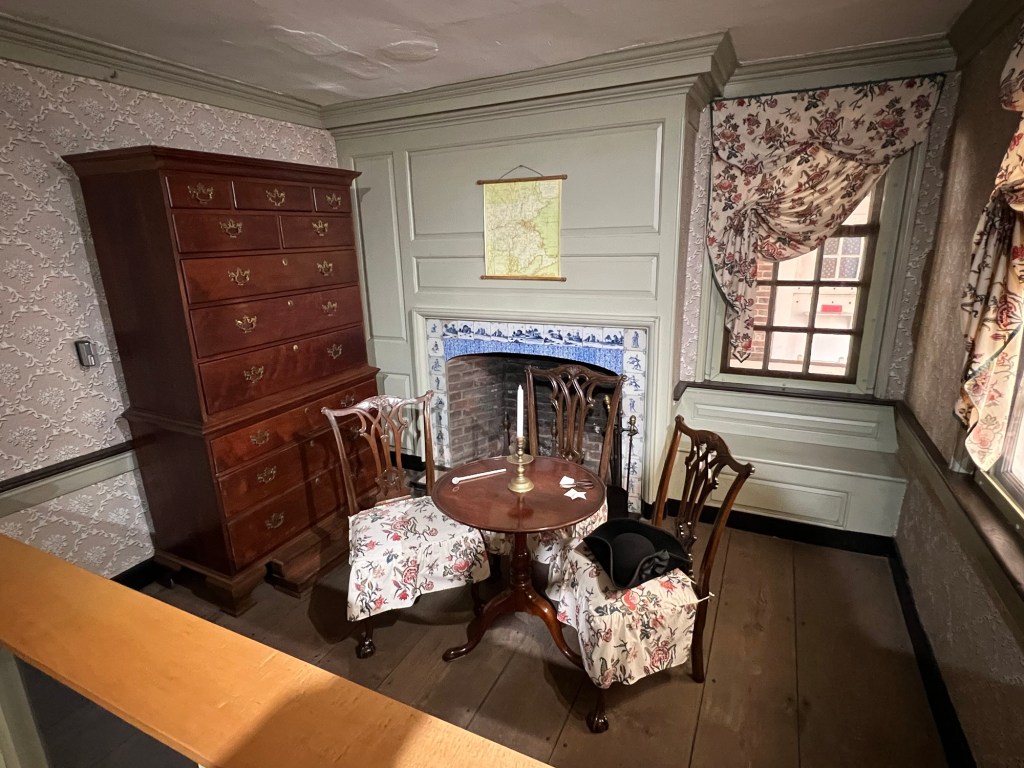
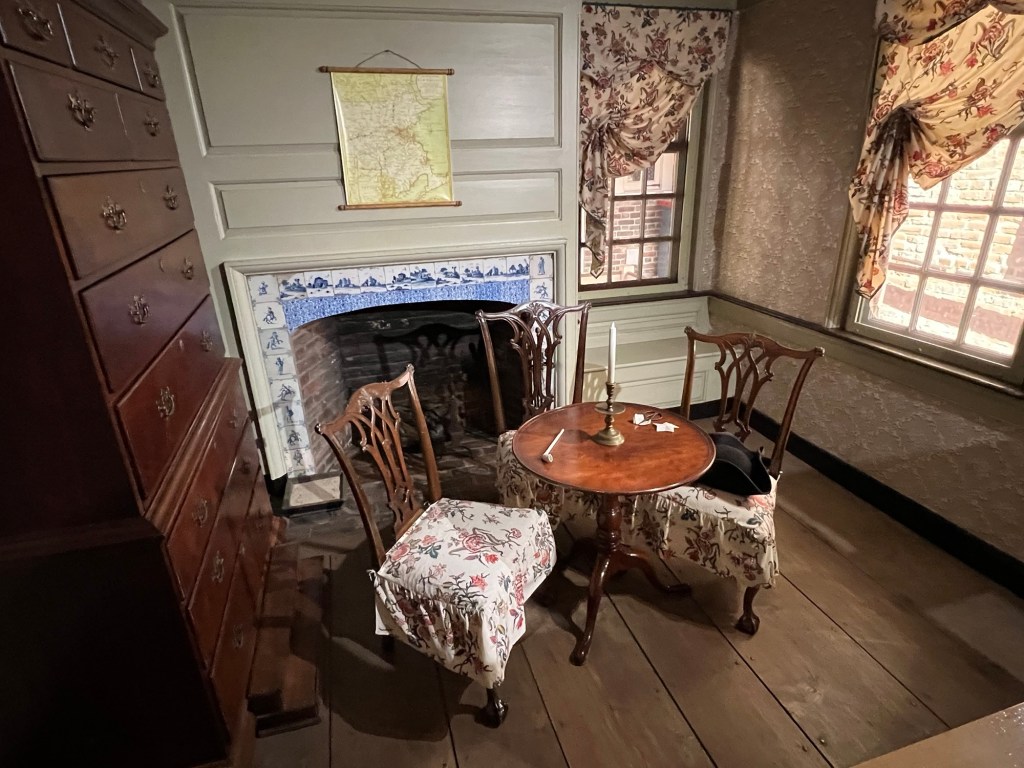
The sitting room recreation
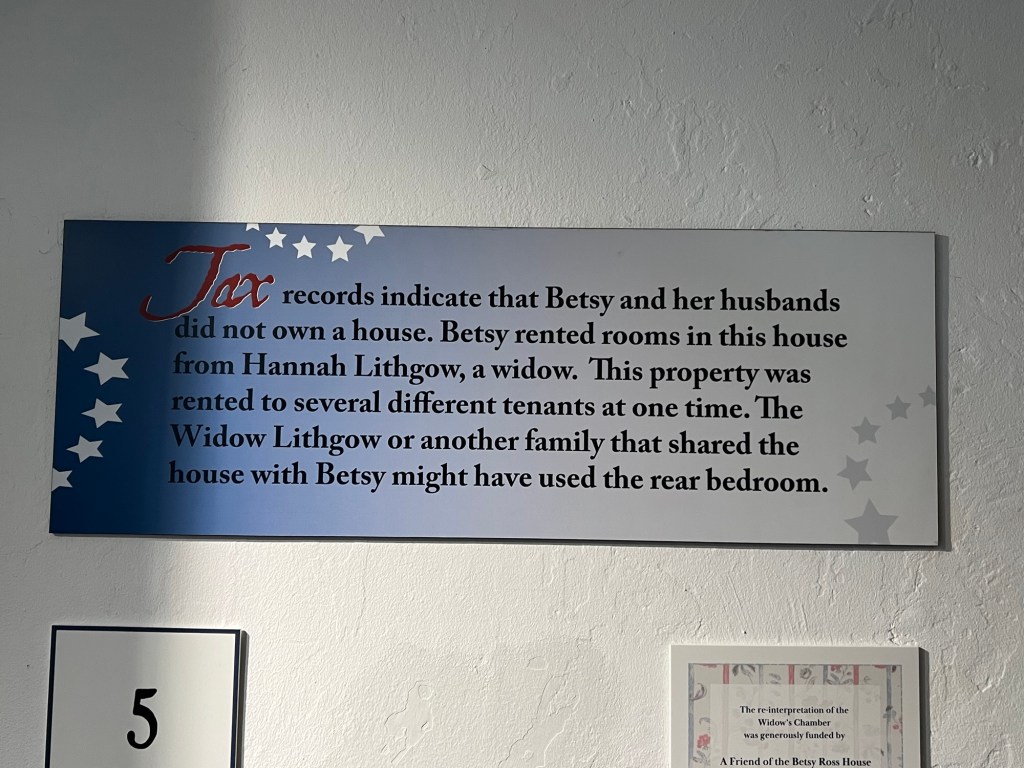
When you enter the house, you will be able to visit all the rooms of the house and the kitchen area on the lower level. The interesting part of this self guided tour is that you learn that the house was not owned by Betsy Ross or any of her three husbands. They rented the rooms out from a widow who owned the house at the time and that there had been other people living at the home at the time. Each of the rooms were rented and lived in by other family members.
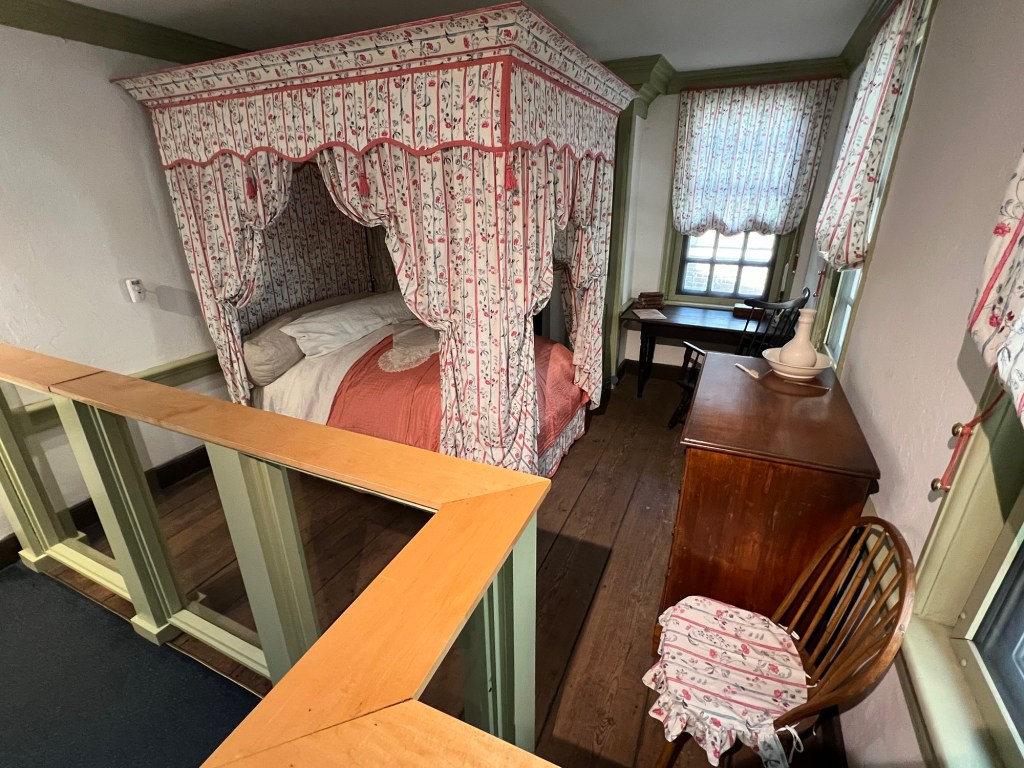
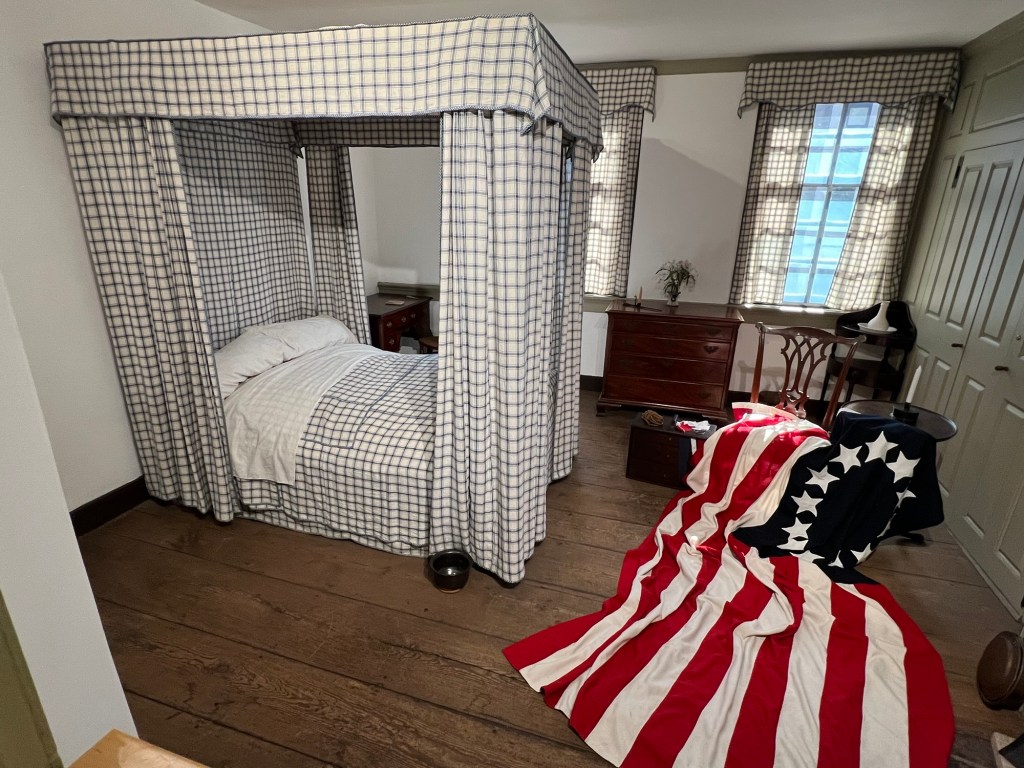
In each of the upstairs rooms, there are recreations of what the family living arrangements were and how they were decorated. The bedrooms were furnished with vintage furniture of the time and items used in every day life.
A period bedroom in the house
The house and museum is broken up into different sections. When you walk into the museum complex, you will get to visit a very patriotic gift shop stocked with Revolutionary War memorabilia. Out side the gift shop is the formal gardens and the courtyard which is a nice place to relax and enjoy the weather.
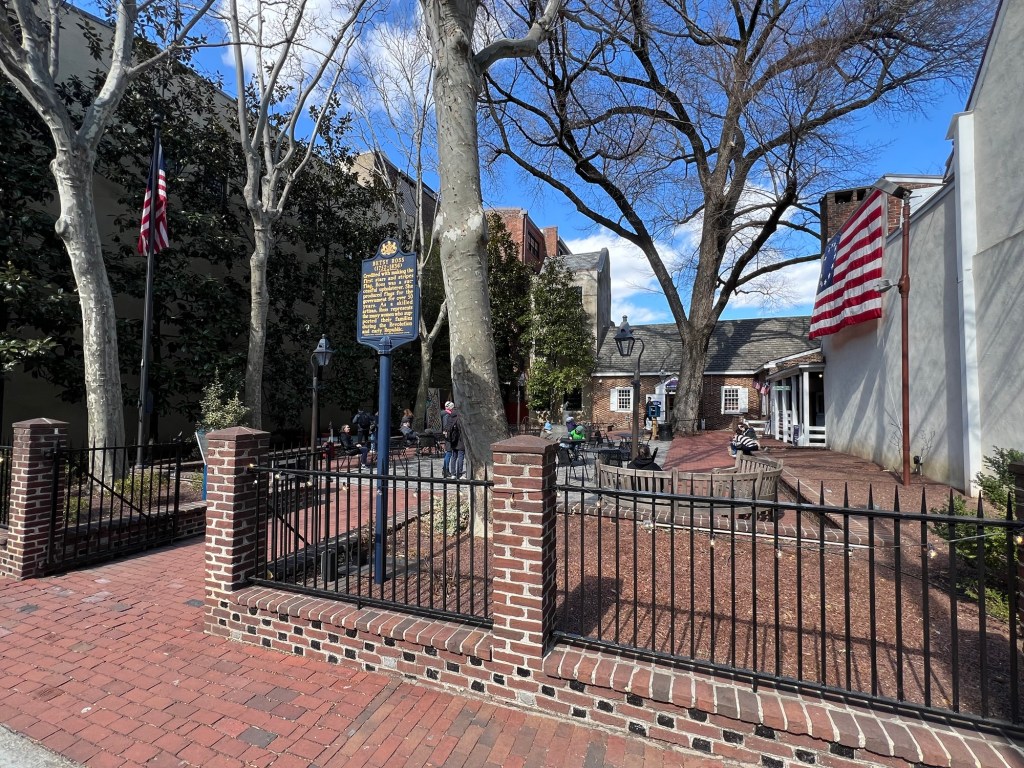
The courtyard of the house
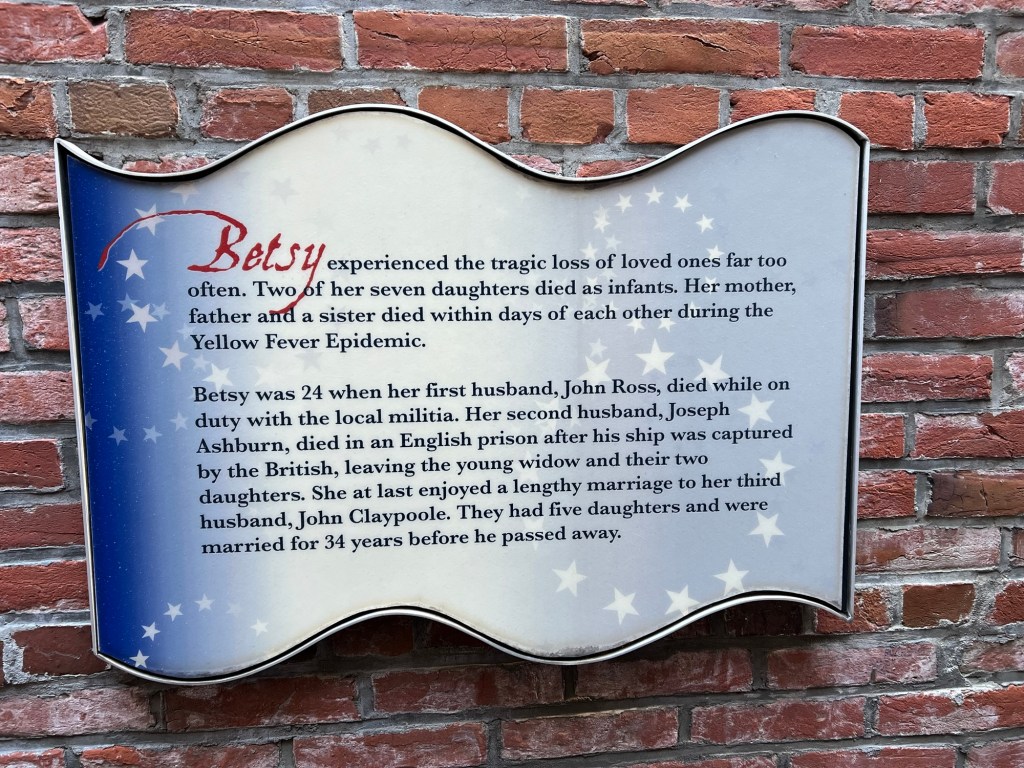
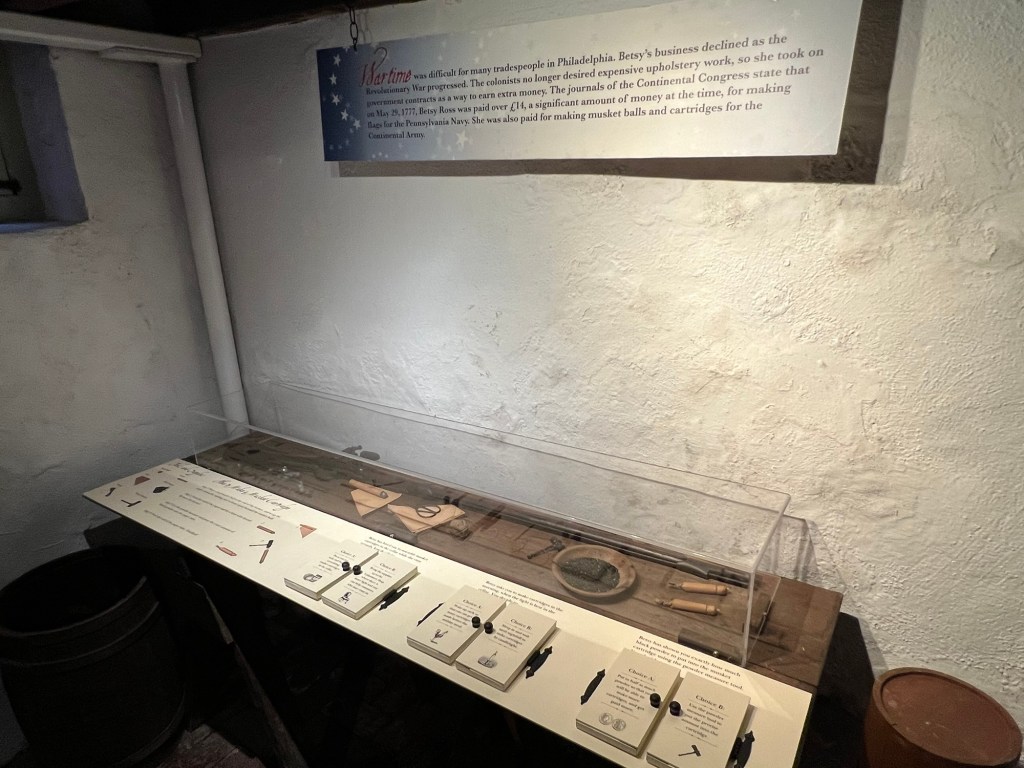
The role of Betsy Ross during the Revolutionary War
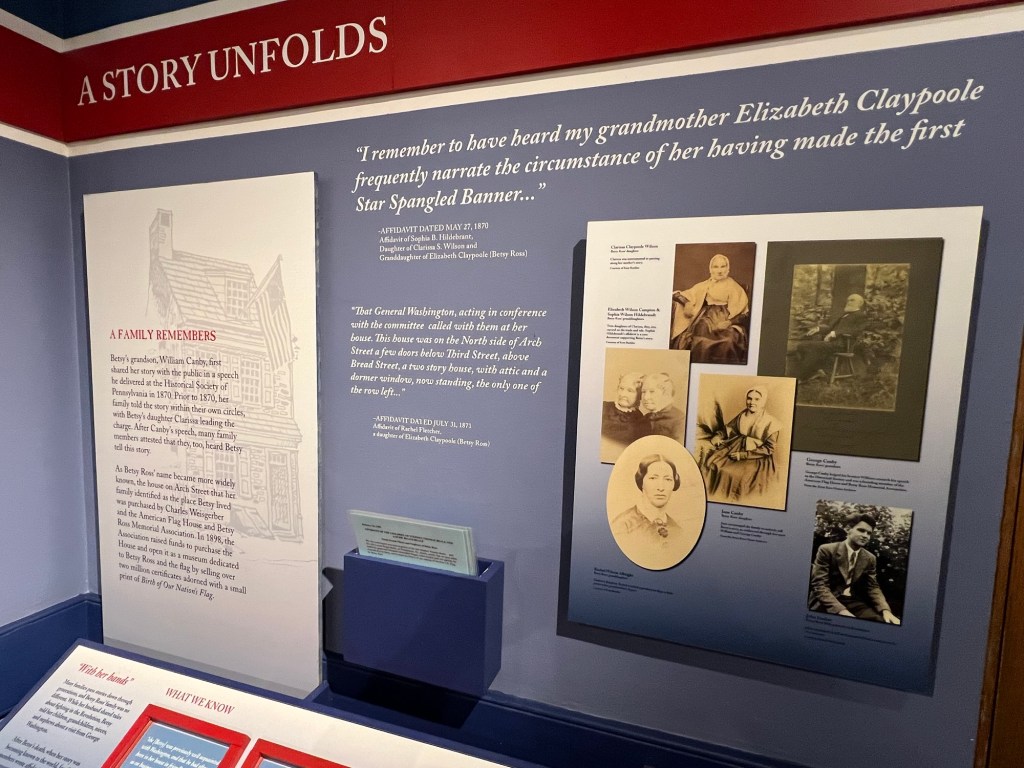
The story of the flags creation
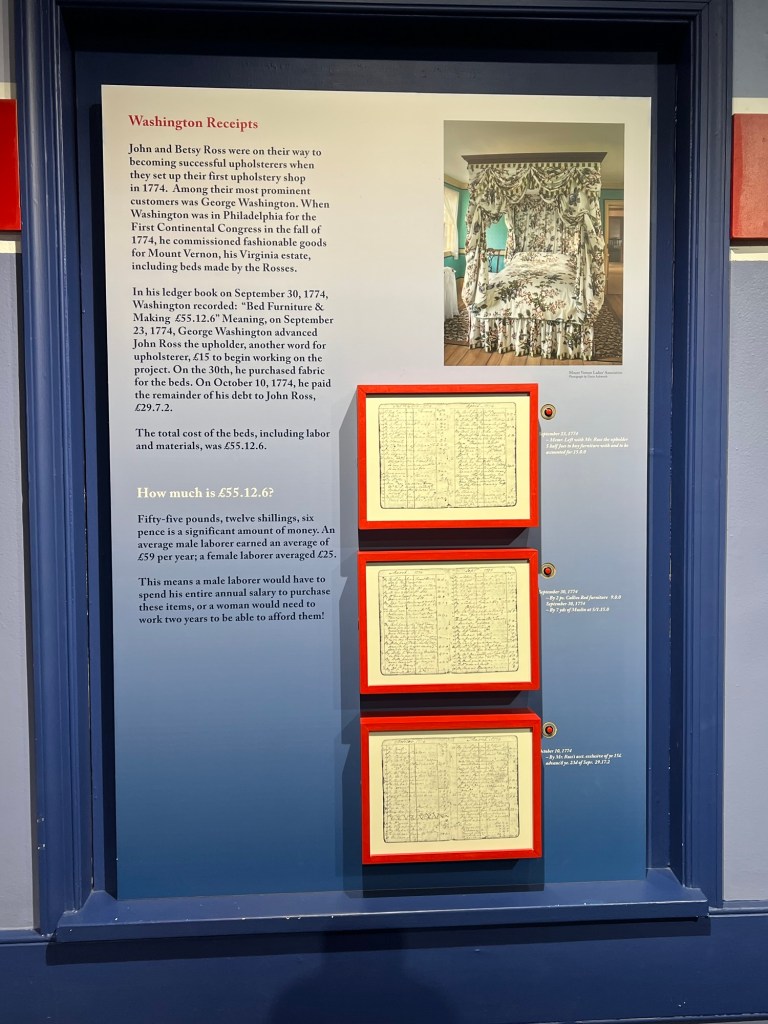
George Washington had done personal work with the Ross’s before the war
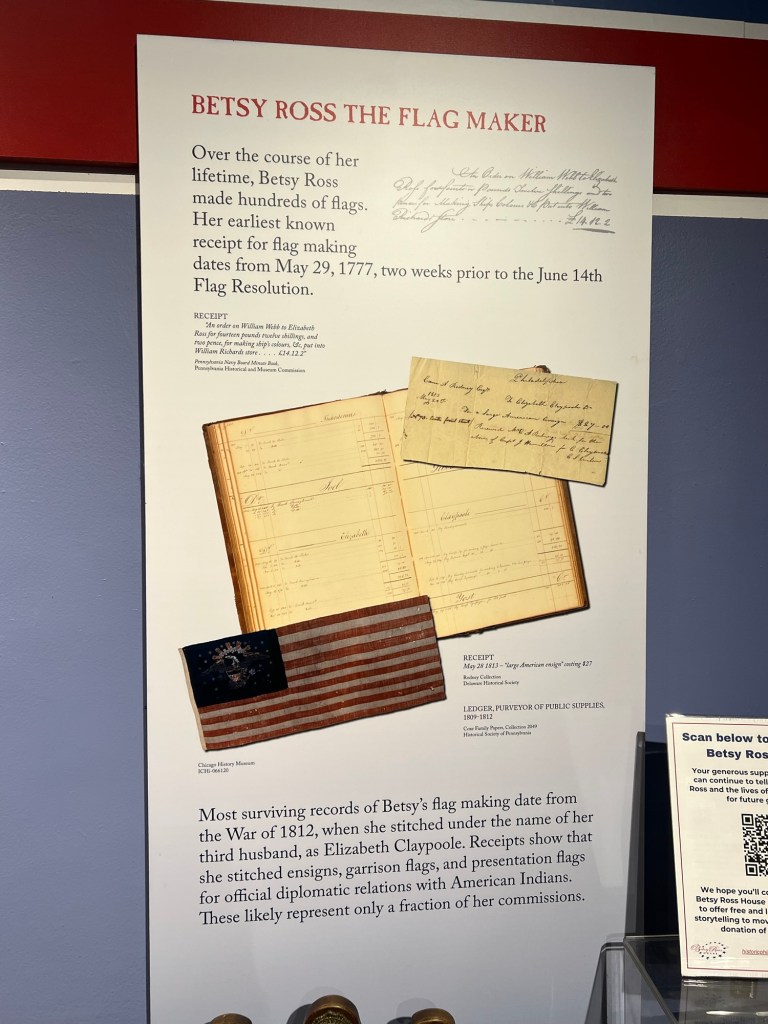
When she became a flag maker
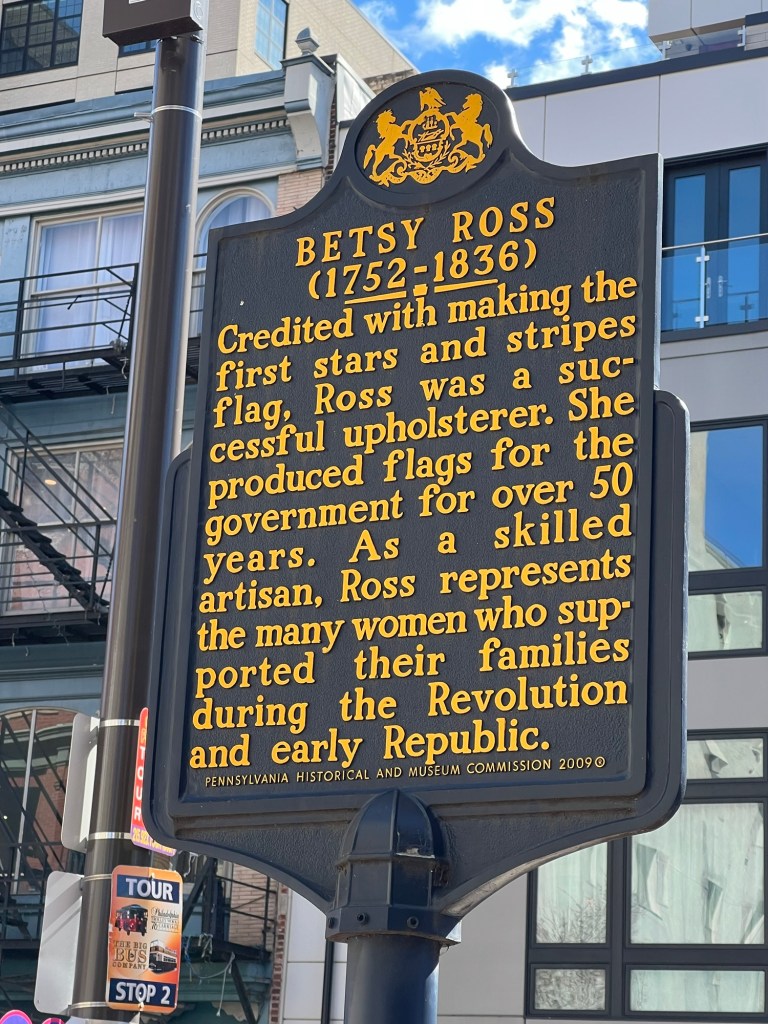
The historic marker on the house
The courtyard of the home
Historic Marker One
Historic Marker Two
Historic Marker Three
The Parlor area where Betsy Ross would have met her clients
The recreation of the parlor area
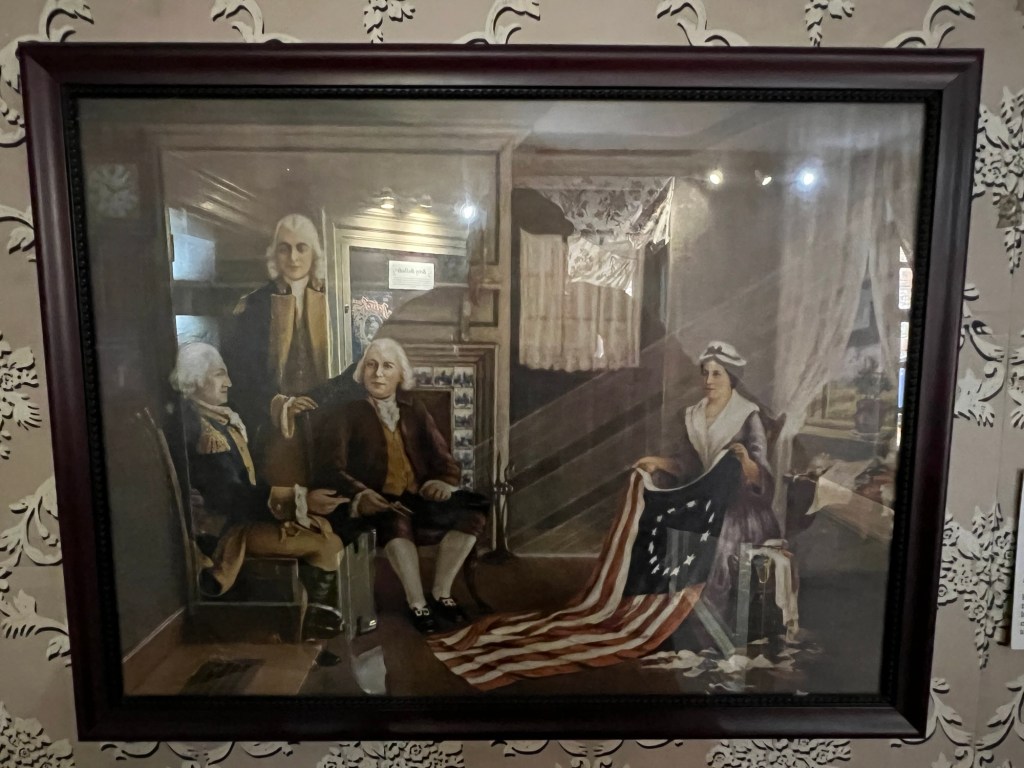
What the meeting would have looked like
Another look at the parlor
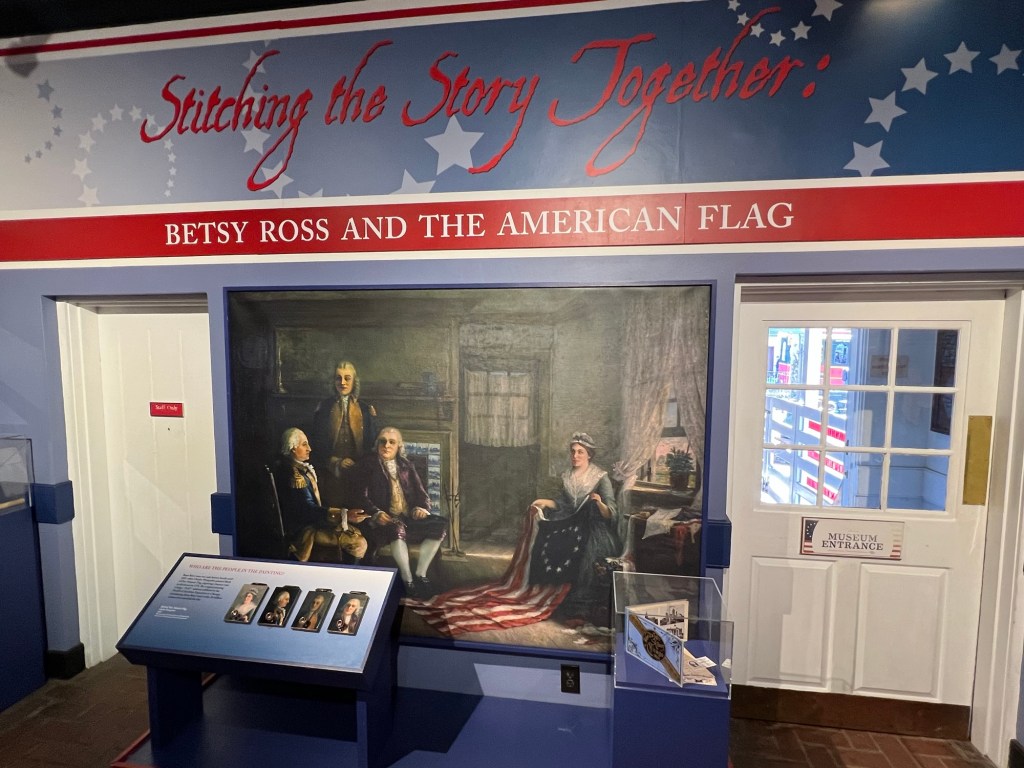
The story of the creation of the flag
A view of the upstairs bedrooms
The house was a rented space for the Ross family
A better view of the upstairs bedroom
The Betsy Ross bedroom with a recreation of the flag
The bedroom where the flag was created
At the end of the tour we could talk to Betsy Ross herself and ask her questions about her life and her business. The actress who played Betsy asked all our questions in historic terms and to contemporary living. She was able to talk to us on her career and family and her visit from General Washington. She continued working until she was 76 years old.
Meeting Betsy herself while she talked about her life
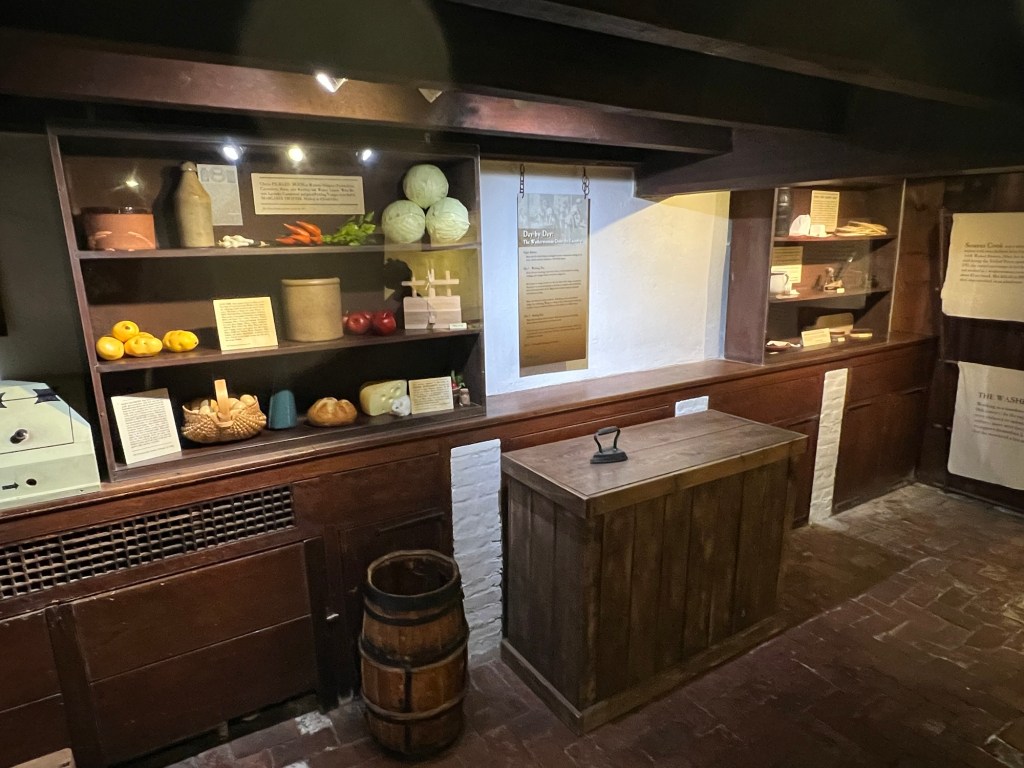
The Kitchen and Laundry area of the house:
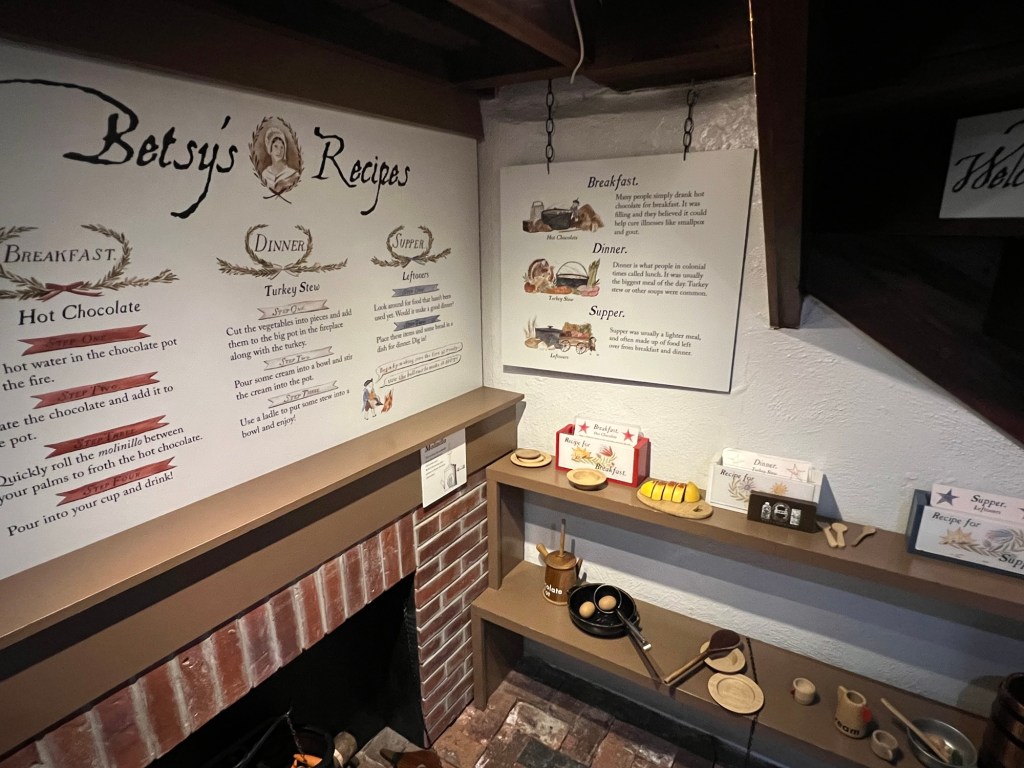
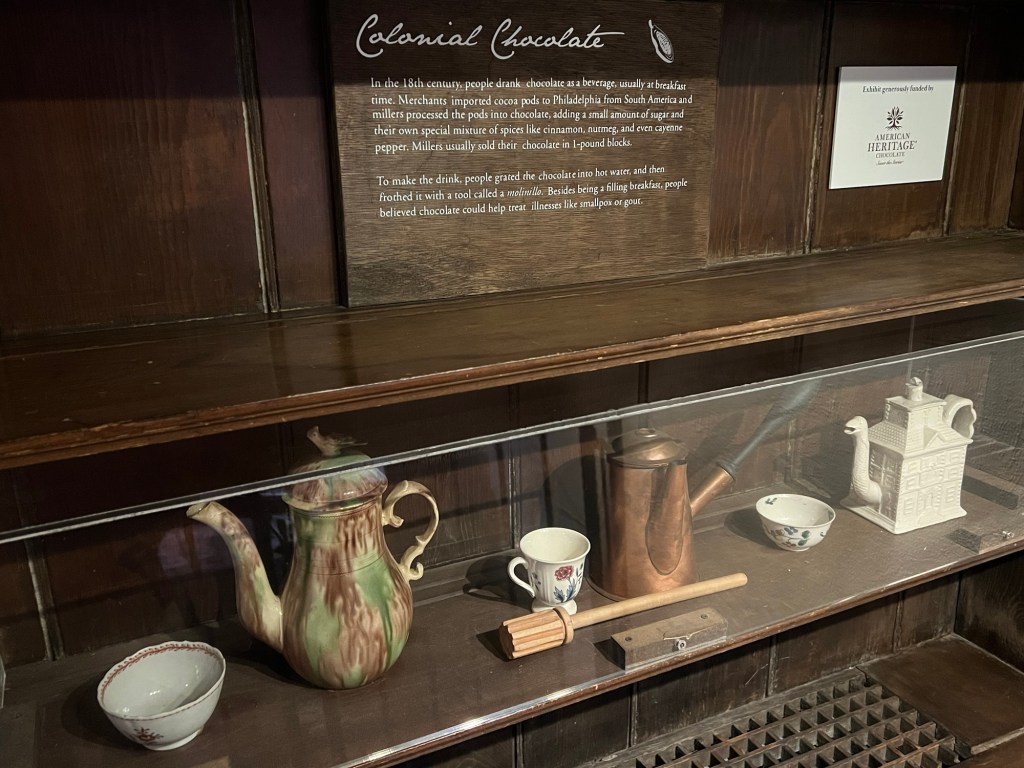
The kitchen area was for family cooking and was stocked with items that would have been in day to day process of preparing meals.
The Kitchen tour
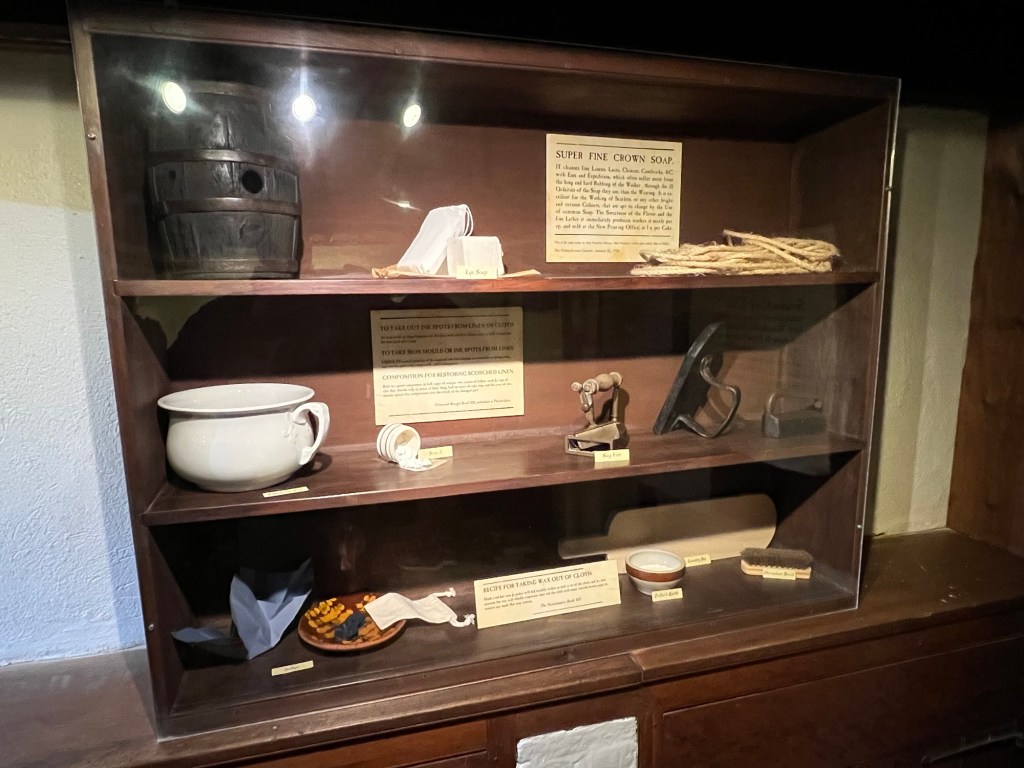
Kitchen and bath equipment
The job of a Laundress
The role of the household
Cooking in the household
Betsy Ross’s life in business
The kitchen equipment
The kitchen area of the house
By the late 19th century, most of the other colonial era buildings that once stood on this block of Arch Street, had been torn down and replaced with large industrial buildings and warehouses. Many people feared that Betsy’s home would meet the same fate.
In 1898, a group of concerned citizens established the American Flag House and Betsy Ross Memorial Association to raise money to purchase the house from the Munds, the people who resided there, to restore it and open it as a public museum in honor of Betsy Ross and the first American Flag.
Charles Weisgerber was one of the founding members of the Memorial Association. In 1892, he painted Birth of Out Nation’s Flag, a 9′ x 12′ painting that depicts Betsy Ross presenting the first American flog to George Washington, Robert Morris and George Ross.
To raise money to purchase the house, members of the American Flag House and Betsy Ross Memorial Association sold lifetime memberships to the organization for 10 cents. Each donor received a membership certification imprinted with an image of Birth of Our Nation’s Flag. Individuals were encouraged to form ‘clubs’ of thirty members. The person who formed the club would receive a ten-color chromolithograph of the Weisgerber painting, suitable for framing, in addition to certificates for each club member.
Weisgerber moved his family into the upstairs floor of the home in 1898 and immediately opened two rooms to the public. The first floor front room was a souvenir shop and the room in the back of the house where the meeting between Betsy Ross and the Flag Committee was said to have occurred, was open for visitors to view.
The courtyard of the home when you leave the house
The grave of Betsy Ross
The historic marker outside the home
The Restoration of the Betsy Ross House:
The American Flag Hose and the Betsy Ross Memorial Association wanted to protect the house from fire and other dangers. They purchased the two properties on the west side of the house in 1929, in hopes of creating a civil garden. When the Great Depression hit, tourism and donations to the house slowed and much of the work on house and courtyard were delayed.
In 1937, structural changes and general wear and tear on the house led to the dire need for restoration work. A. Atwater Kent, a Philadelphia radio mogul, offered to pay up to $25,000 for the restoration of the house. Historical architect, Richardson Brognard Okie was commissioned to do the work.
Under Okie, the house’s original architectural elements were spared wherever possible. When the original components could not be reused, materials were obtained from demolished homes from the same period. A small structure containing a boiler room and a restroom was constructed in back of the original house with Revolutionary War era bricks.
In the historic house, three hidden fireplaces were uncovered, the front stairway and dormer were replaced and the door leading from the kitchen to the back of the house was restored. The most notable change, however, was to the front of the house. The doorway in the front of the building was moved from the western to the eastern corner and a new window was installed. Construction was completed and all eight rooms of the house were open to the public on Flag Day, June 14th, 1937.
By the 1940’s, the Betsy Ross House began to look like the place we recognize today but the Association’s work was not complete. A. Atwater Kent worked with the Association to pay off its final debts on the property. The entire property, including the historic house and courtyard was given to the City of Philadelphia in 1941.
In 1965, an annex building was added to the property and in 1974, the courtyard was renovated and the fountain was added. Two years later, the remains of Betsy Ross and her third husband, John Claypoole were moved from Mount Moriah Cemetery in Yeadon, PA to the garden on the west side of the Betsy Ross House courtyard.
In 1965, a private non-profit organization, Historic Philadelphia Inc. began leasing the property from the City of Philadelphia and continues to manage the site. The Betsy Ross House remains dedicated to its mission of preserving the historic site and interpreting the life of Betsy Ross, a working class, 18th Century tradeswoman. Visitors can view six period rooms, including the only interpretation of an 18th century upholstery shop in the country. The rooms are furnished with period antiques, 18th century reproductions and objects that belonged to Betsy Ross and her family. Highlights of the collection include Betsy Ross’s walnut chest on chest, her Chippendale chair, her eyeglasses and her bible.
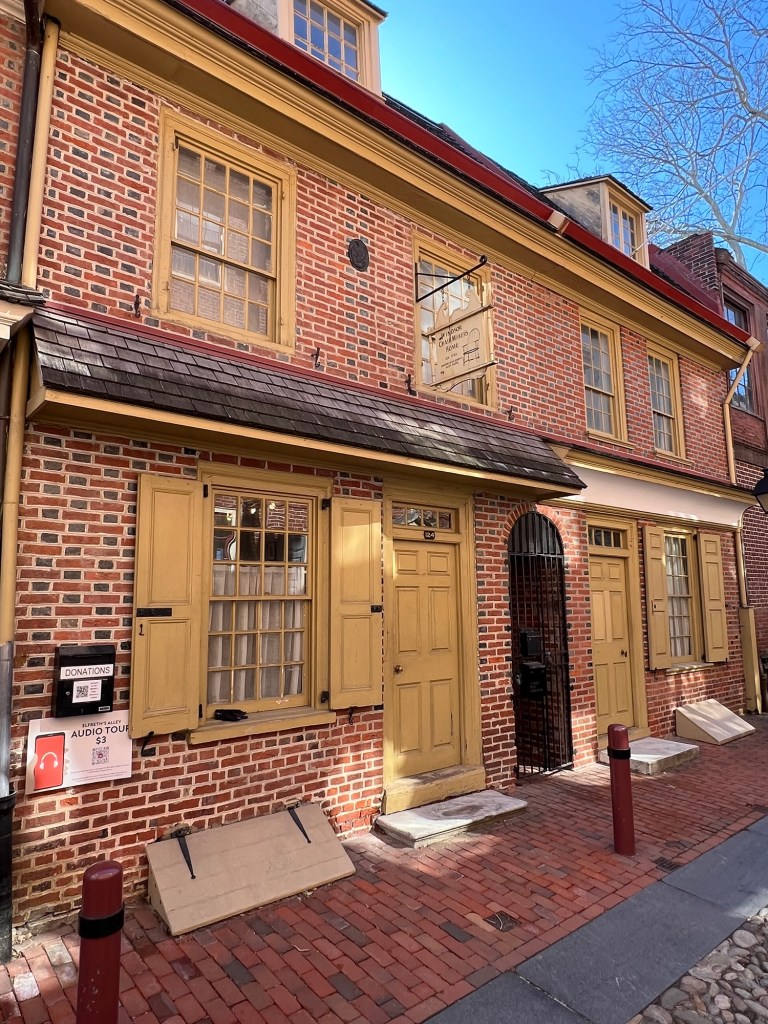
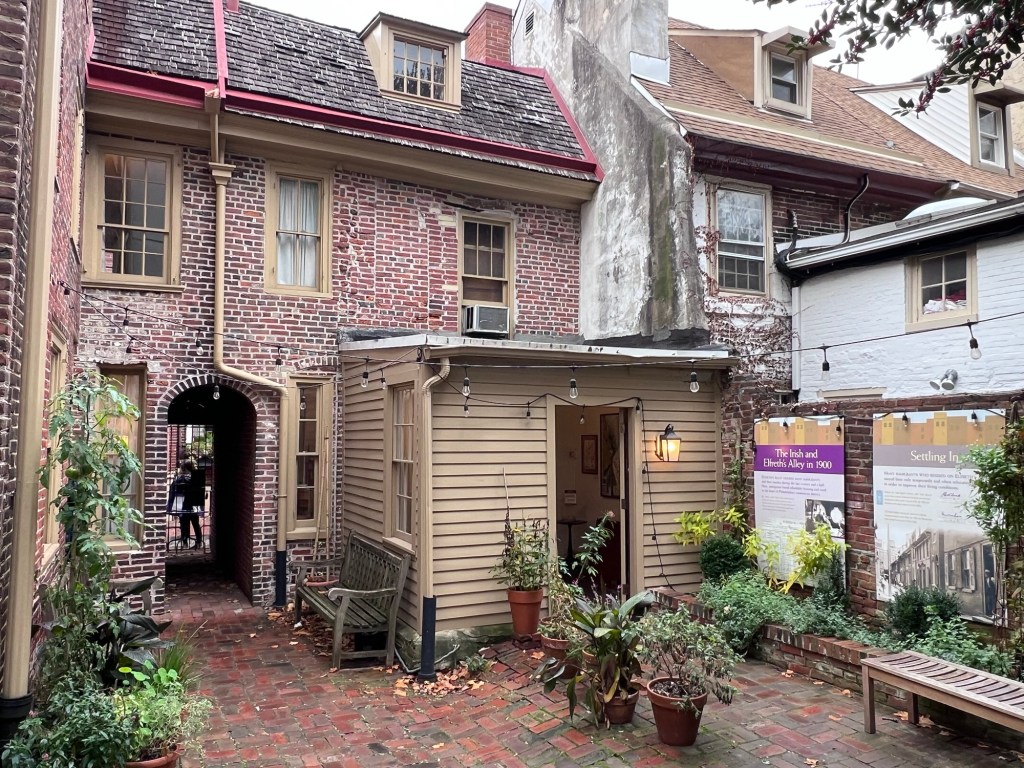
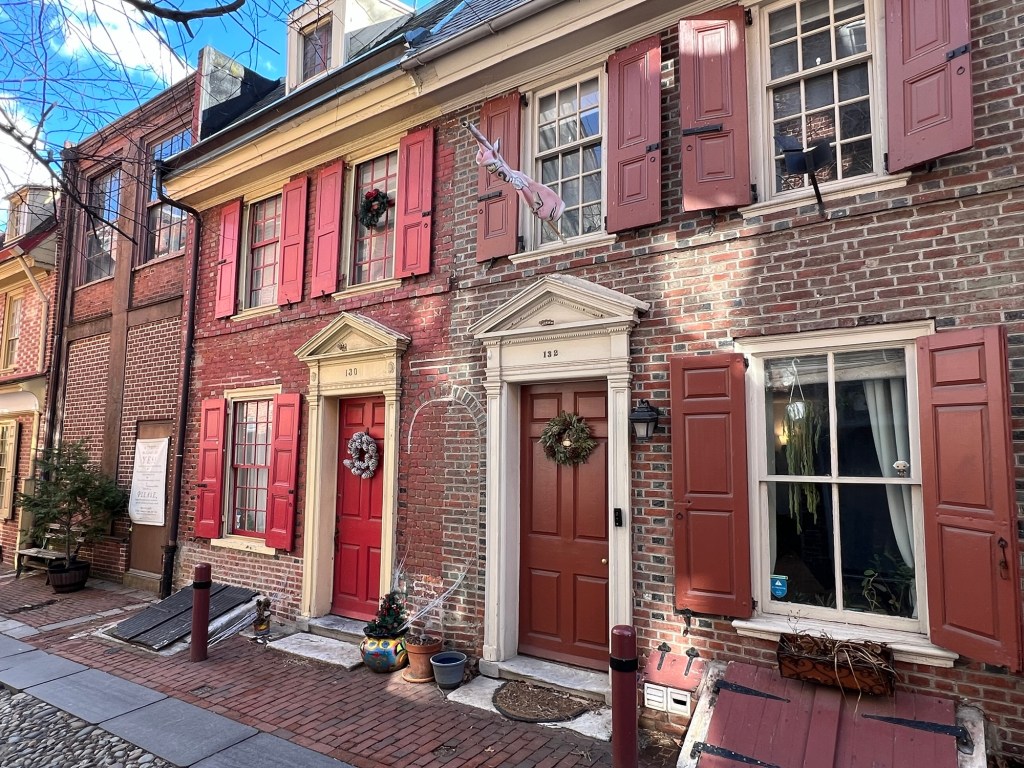
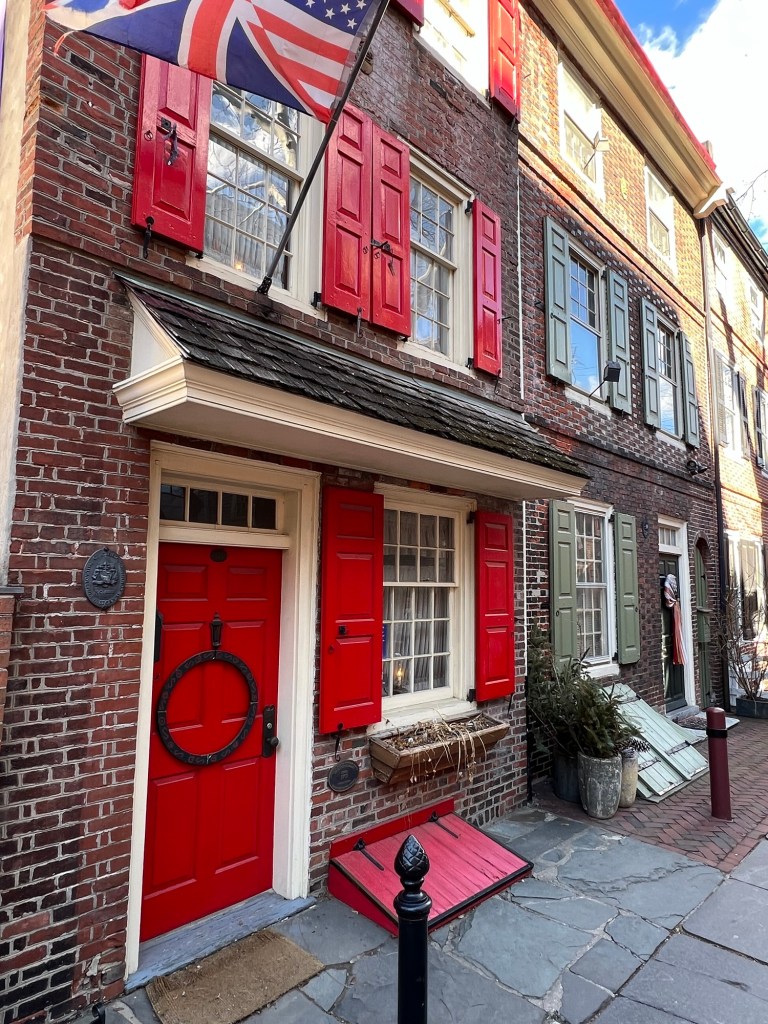
I came across this interesting little historical museum when I was touring Elfreth’s Alley in Old Town, Philadelphia. What an interesting look back at the merchant trade class of the 18th century. It really showed how the average worker used both their home as a business and as a home.
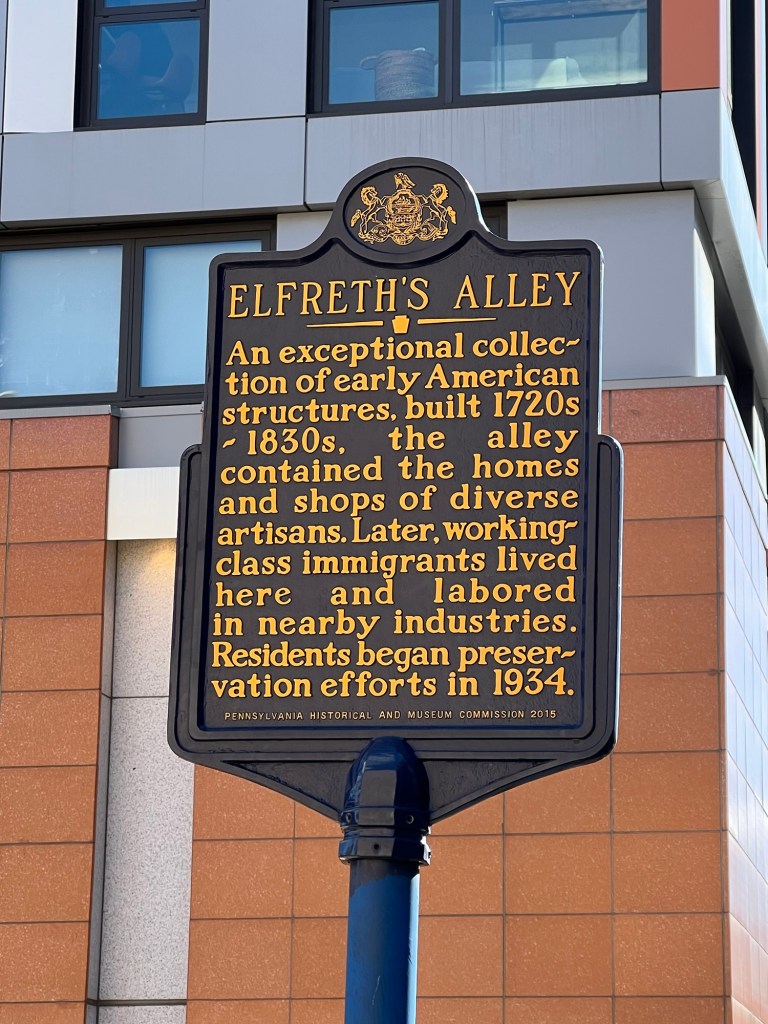
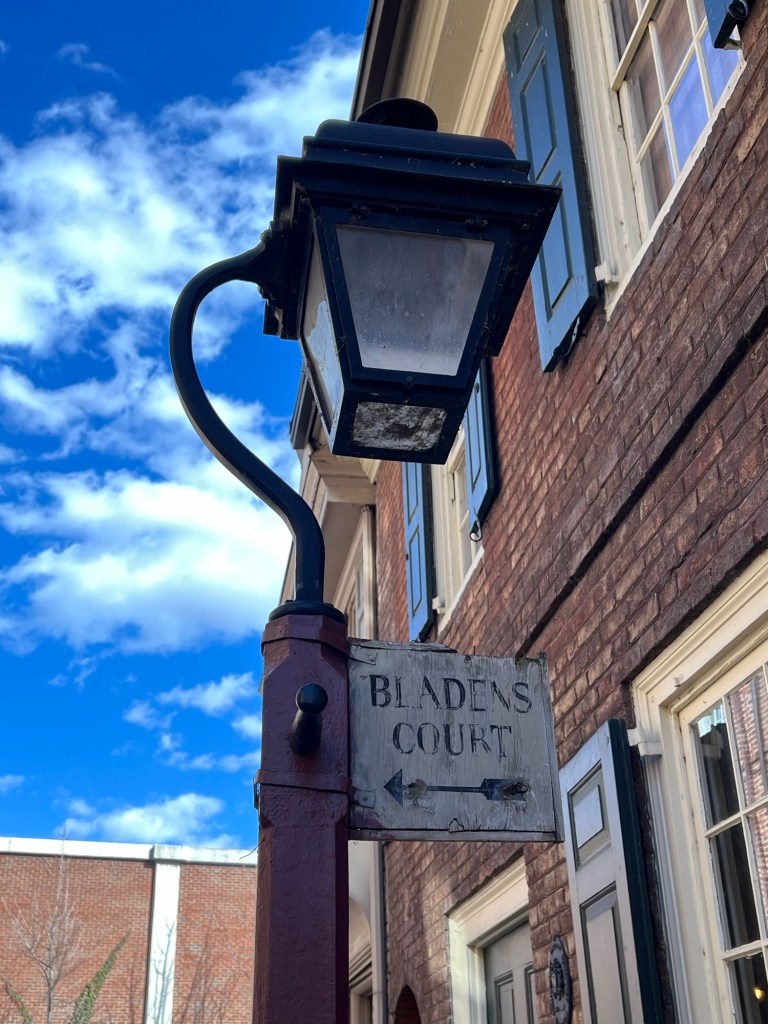
The historic sign for Elfreth’s Alley
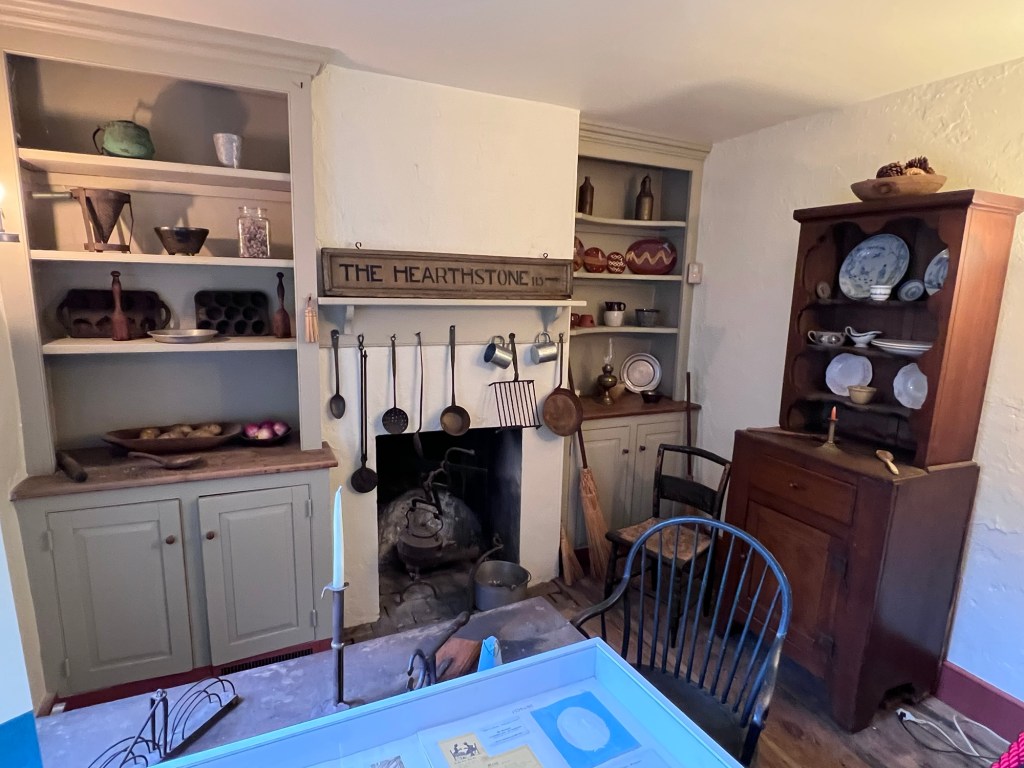
The home had been former business of a pair of dressmakers who used the front parlor as their store and showroom, the side room used as the kitchen, the upstairs room was the living quarters for a very large family (I believe that the family had eight children according to the tour guide) and a nice sized garden in the back of the home.
The front work and show room
The inside display of the museum shows the dress making profession of the first two owners of the house and their work with the Philadelphia clients they catered to in the Upper Middle and Upper Classes.
The story of the dress business
The type of commissions the ladies would get from the Upper Middle Class to Wealthy women from the City
The front rooms were used as the workplace showroom where the merchants would greet their customers, decide on the patterns and make and then conduct their business. When they were done for the day, they just closed up shop. What I thought was interesting about the two business owners is that they took most of their meals out at the local pub. Time as dressmakers left them little time to cook so meals had to be eaten out.
Later on in the home’s history, a kitchen would be added on later by a German businessman who owned the house
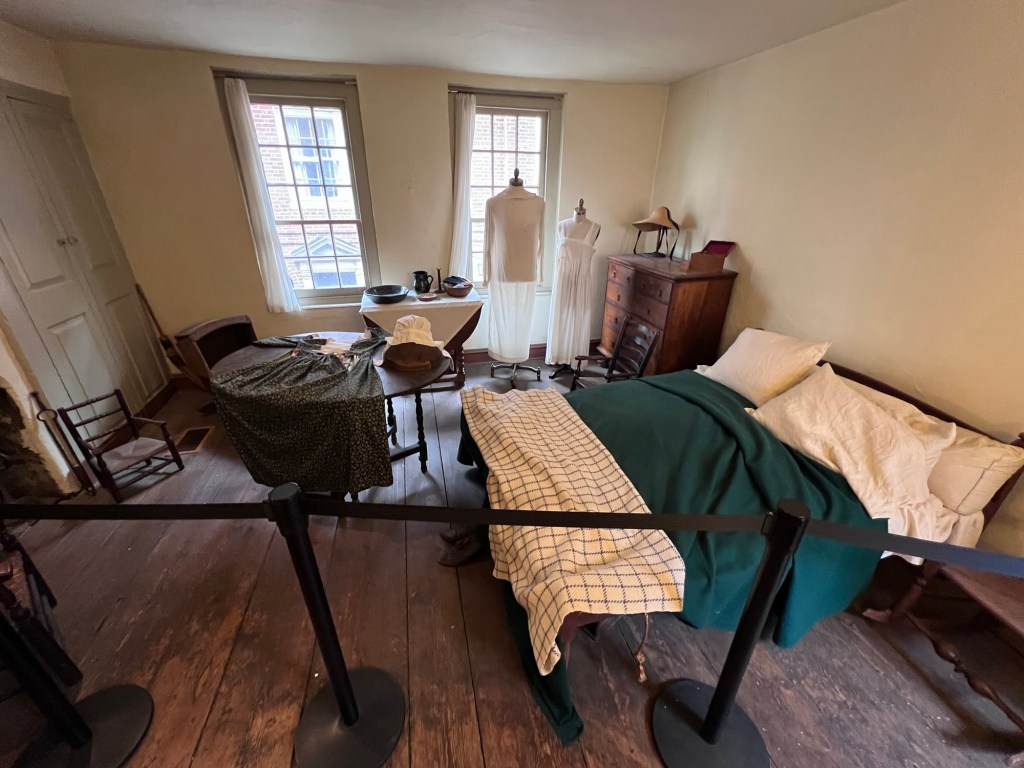
The upstairs bedrooms
When you climb the narrow stairs to the second floor, it leads to the loft living space. When I heard how many people lived at the house, I could not imagine that today. Children today pretty much have their own rooms but these people lived on top of one another.
It was such a small space for a family of ten. Then you had to walk down another narrow staircase to come back to the first floor.
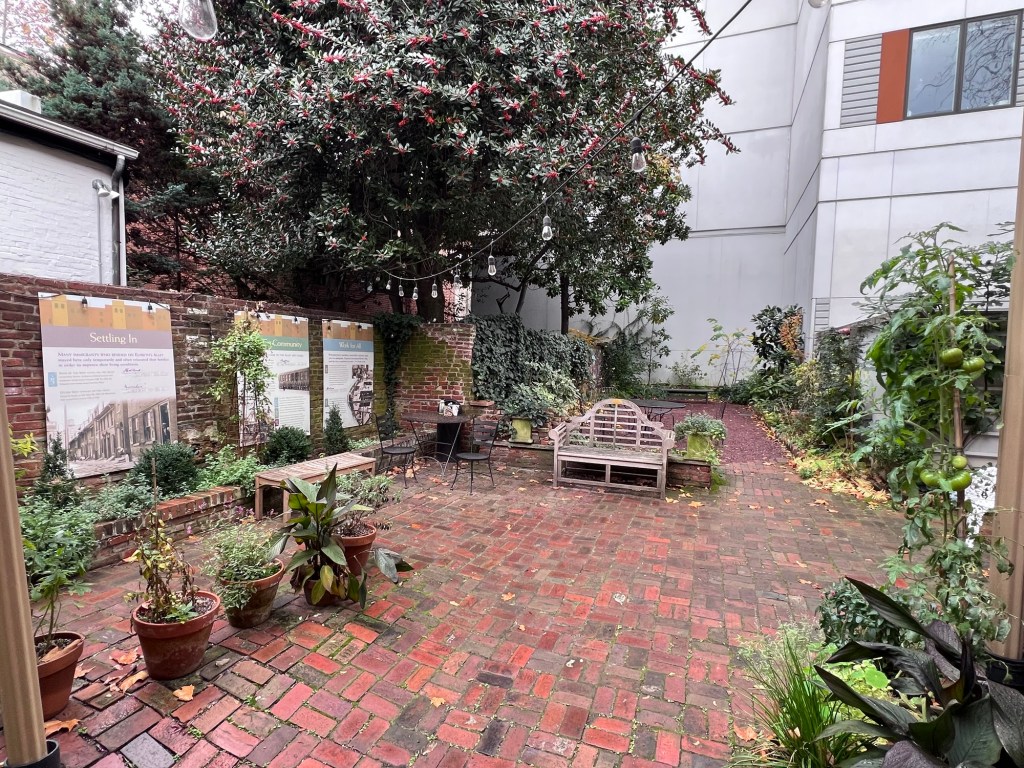
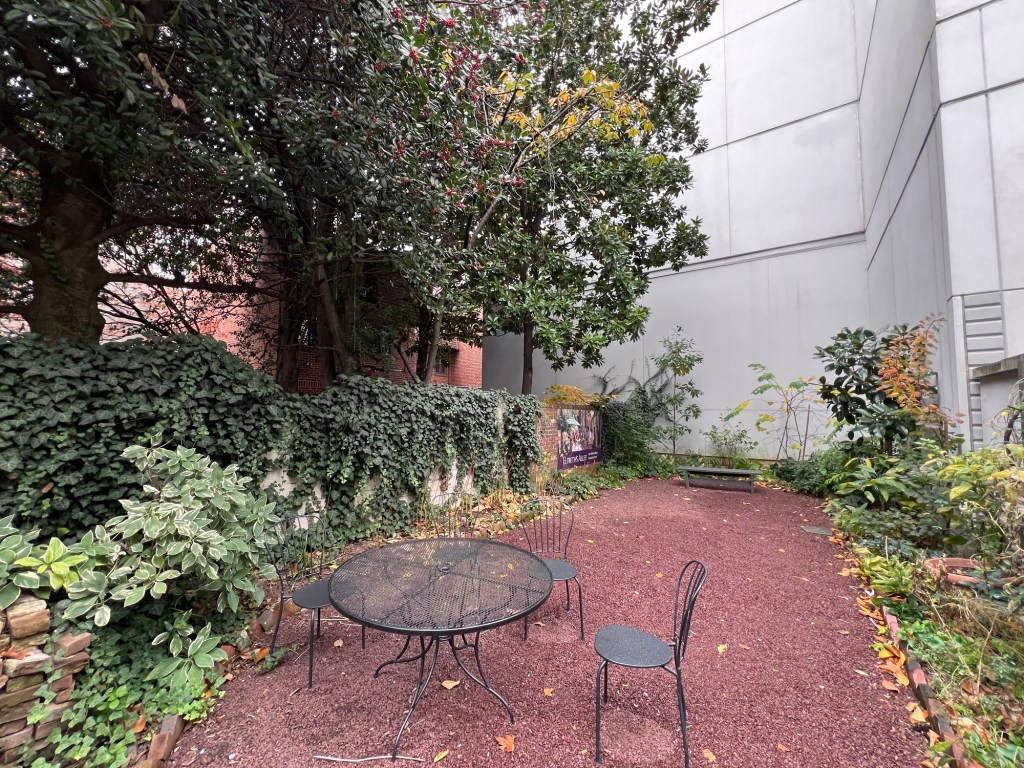
The backyard garden was really nice with interesting plantings, a nice sized garden of flowers and benches to cool under on a hot day. Much of the backyard was still in bloom when I visited in November of 2025.
The backyard plantings
The seating area in the courtyard
The gardens behind the home
The plants in bloom in the fall
I am not sure if the gardens were historically accurate but it was a nice place to relax on a hot day. It is worth it to visit this small home to see how another generation worked and lived under very different conditions (Elfreth’s Alley Museum self-guided tour).
The back gardens
Don’t miss the Gift Shop on the way out
The History of Elfreth’s Alley Museum:
Elfreth’s Alley Museum is located at 124-126 Elfreth’s Alley, preserves the 18th Century home of a pair of dressmakers. Restored to its appearance in the Colonial era, exhibits the house and tour guides interpret the life of the house and alley’s residents in that era. There are 32 houses on the street that were built between 1703 to 1836 (Wiki/Museum site).
The History of Elfreth’s Alley:
Elfreth’s Alley is named after Jeremiah Elfreth, an 18th century blacksmith and property owner. Among the alley’s residents were tradesmen and their families. Their trades included shipwrights, silver and pewter smiths, glassblowers and furniture builders. In the 1770’s, one third of the households were headed by women (Wiki).
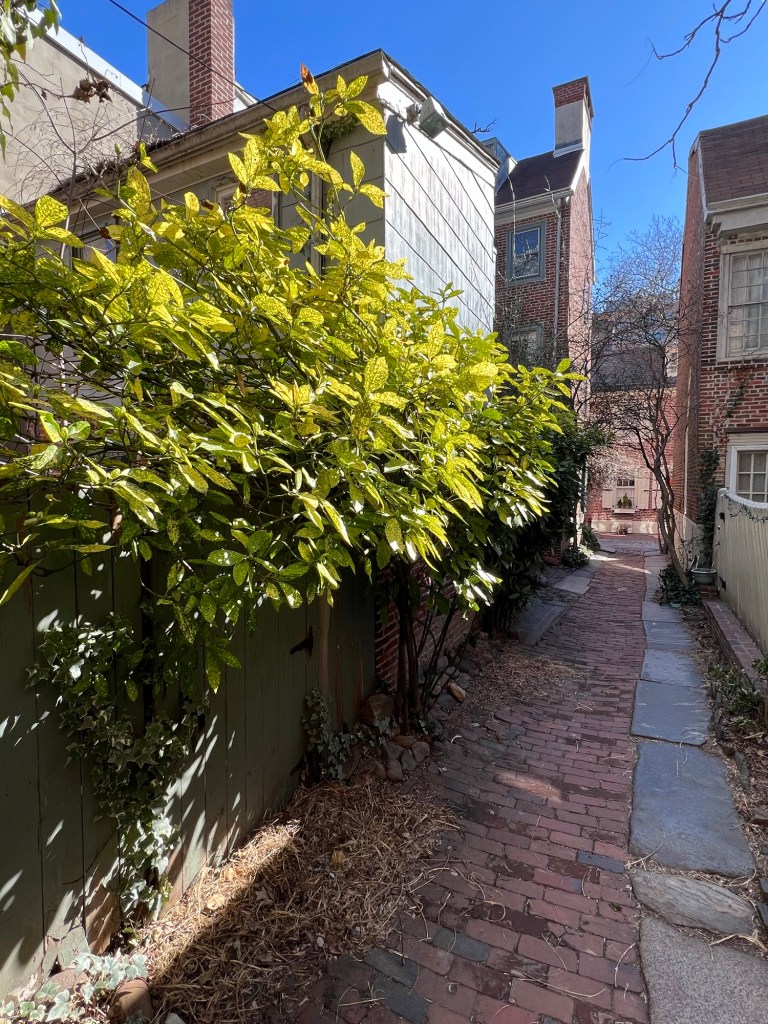
The Georgian and Federal style houses and cobblestone pavement of the alley were common in Philadelphia during this time. The houses are typically small and many are uniquely Philadelphian Trinity houses. In the late 19th and early 20th centuries, industry began to change the street with a stove factory being built in 1868. Soon it was followed by more factories that surrounded the area (Wiki).
Elfreth’s Alley Museum site and homes
In 1934, the Elfreth’s Ally Association (EAA) was founded to preserve the alley’s historic structures while interpreting the streets history. The EAA helped save the street from demolition and also lobbied the City to restore the alley’s name to Elfreth’s Alley. The area is an example of urban 18th and 19th century architecture and is part of the “Old Town” neighborhood of Philadelphia (Wiki).
The neighborhood hosts many events so please check their website for the dates and events.





































 Visiting a Museum: The Unique, Unusual, Obscure and Historical