

Punxsutawney Historical Society & Genealogical Society
401 West Mahoning Street
Punxsutawney, PA 15767
(814) 938-2555
https://www.facebook.com/Punxsyhistory
Open: Sunday-Wednesday Closed/Thursday-Saturday 1:00pm-4:00pm
My review on TripAdvisor:
https://www.tripadvisor.com/Profile/R4960NKjustinw/mediabatch/12467166?m=19905
My blog on Exploring Punxsutawney, PA for Groundhog’s Day:
https://mywalkinmanhattan.com/category/exploring-punxsutawney-pa


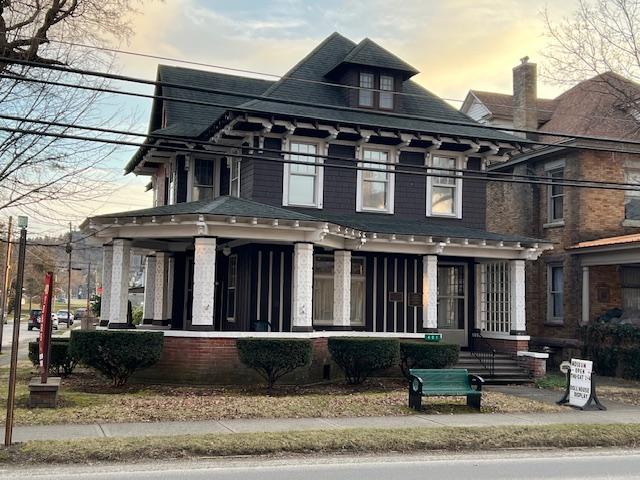
The Bennis Mansion across the street at 404 West Mahoning Street houses the furnishings, household items and dollhouse displays.
It had been eight years since I had visited the historical society and the organization has created a lot of interesting displays. The museum was busy during the Groundhog’s Day celebrations and there was a lot to see and do. They have an interesting display on the history of the movie “Groundhog’s Day” including a original script from the film. Since the film is being shown in establishments all over town, it is fascinating what the society was able to collect from the filmmakers over the years. They also have the history of the Groundhog’s Club as well and their development over the years.
The Native American and Coal Mining displays show the development of the area along the old Indian trails and how it gained it population and wealth due to the mines. When the mines closed after the war, the fortunes of the area changed. The Groundhogs Festivities have really brought this back.
The Bennis Mansion across the street shows life in Victorian times to a once wealthy and prominent family in Punxsutawney. Each room is decorated with period furnishings and decorations. There is also a Dollhouse Exhibit going on from December 2023 through February 2024.
The Founding of the Museum (from the Society website):
The Society was begun in 1978 with the primary purpose of preserving the history of the Punxsutawney Area.
The Mission of the Society (from the Society website):
The purpose of the Society shall be to receive, collect and preserve the historical and genealogical records and artifacts of the area; to maintain a library and museum for their perpetuation and care; to encourage the preservation and restoration of material things and places that are of historical significance to the area; to exhibit artifacts of historical, genealogical and cultural value; to educate persons about subjects of historical, genealogical and cultural significance.
The Main Gallery:


The main gallery entrance of the museum.

The Front Gallery Groundhog Club history.
History of the Historical Society (The HGSP website):
The Punxsutawney Area Historical and Genealogical Society has an extensive museum complex. There are many rooms full of historical artifacts from the area which include displays of:
- Native American history and artifacts
- early settler tools and utensils
- regional lumbering history
- area coal mining and coke production history
- local railroading history
- quilts, clothing and decorative arts from Punxsutawney’s “Early Days” through the “Boomtown” era to our recent past
- uniforms and artifacts documenting military, public and community service history
- radios and early televisions
- photographic documentation of the region’s history
- Punxsutawney Groundhog Day history
- old photographs
- old postcards
Exhibits in the Griffiths’ Galleries of the Lattimer House include: “Punxsutawney Area Legacy of Artists & Artisans” which tells the history of the region through the eyes of past photographers, painters and illustrators, sculptors and crafters.

The founding of the Groundhog’s Club.
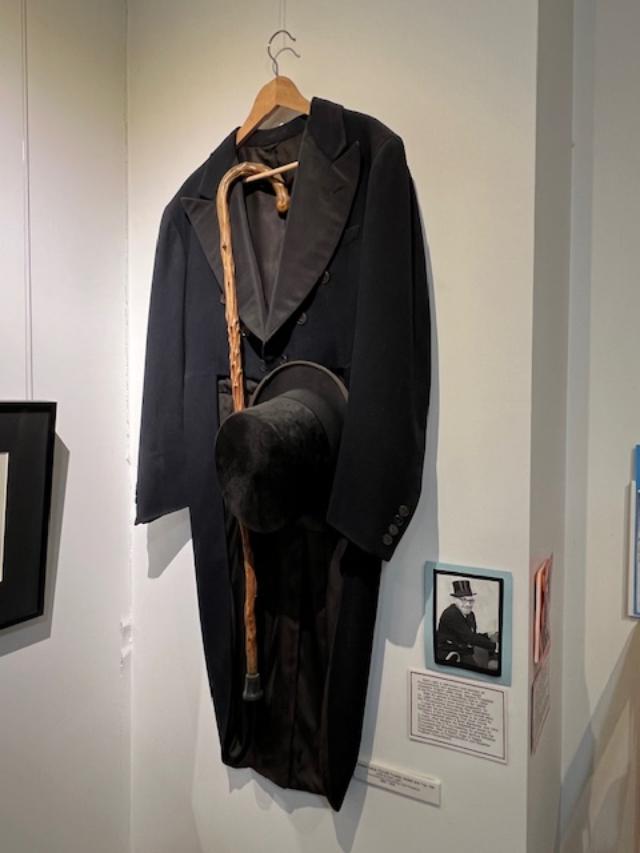
Groundhogs Day uniform for its members.
Displays in the Bennis House highlight other area artists, past and present, as well as the varied ethnic background which helped form our community.

The Bennis House Living Room display
The founding of the town displays.

The Founders Display

The Founding of the town.
Snyder Hill Schoolhouse
The Snyder Hill Schoolhouse is located on Snyder Hill just south of town. It is a restored country schoolhouse.
The Snyder School was typical of the one- or two-room country schools used years ago. From 1886 to 1959 (73 years) the school provided education for hundreds of children, many of them living today. It was the sole means of education for most of our rural population.
A one-room school consisted of eight grades and one teacher willing to accept hard and trying work. Usually overworked, the teacher undertook to teach as many thirty or more pupils in the eight grades. Younger children learned from older children, as in a large family.
The Snyder Hill Schoolhouse has been restored with old desks, books and other materials that were used during the time this type of school existed. Snyder Hill Schoolhouse is surrounded by woods and rolling farm land. Your first steps inside are on hardwood floors. The only source of heat was a large pot-bellied stove that was once covered in the winter with little mittens being dried by the fire. The boys and girls each had their own separate cloakroom on either side of the main entrance. Chalk boards with the day’s lessons lined the front wall behind the teacher’s desk; all of this can be experienced during your visit. The school is open by appointment for individuals or tours.
The history of the movie “Groundhog’s Day”:
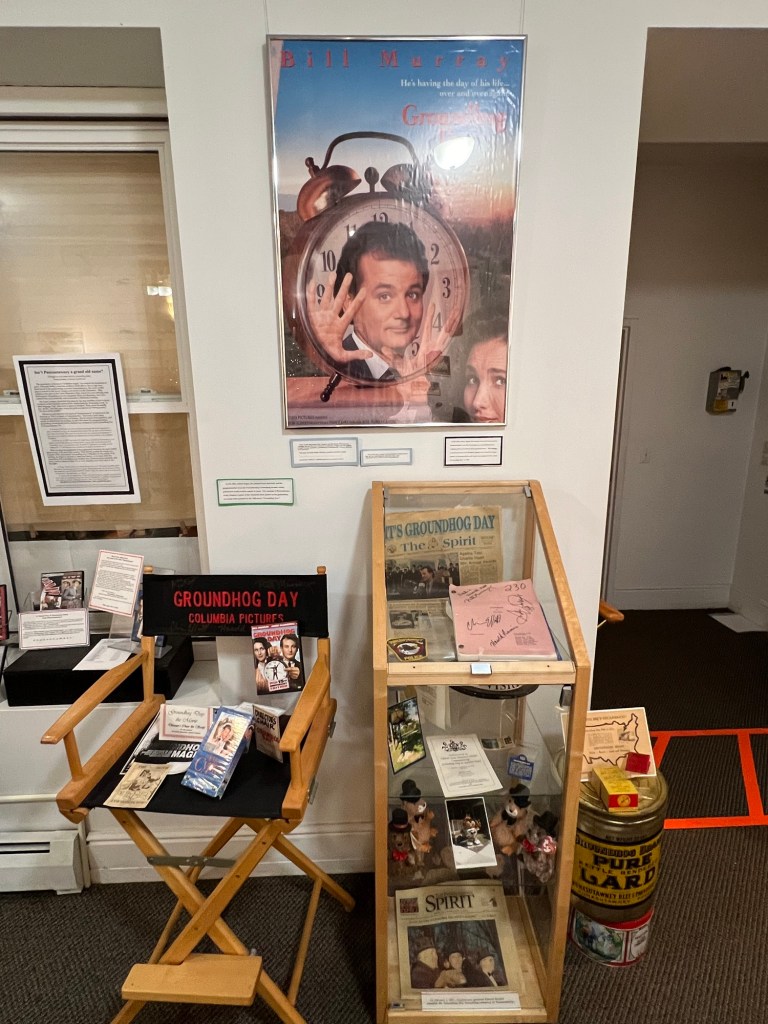

The script from the film.
The film was not shot here but in Woodstock, IN. Only some of the travel shots as you are entering town made the film.
The town history:

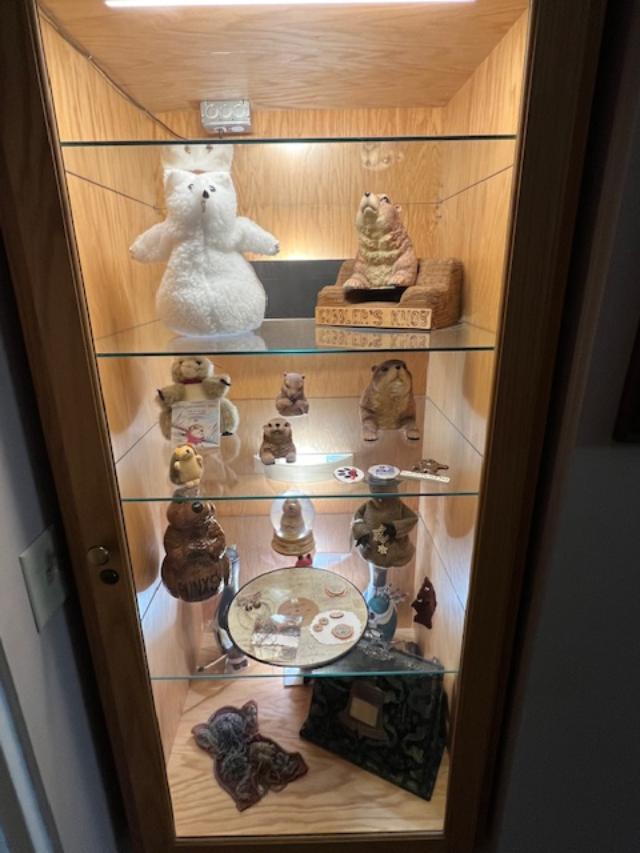
The Groundhog Display.
History of the Native Americans in the area (Society website):
Punxsutawney’s Groundhog legend pre-dates the area’s first white settlers. The first inhabitants of the area, the Delaware Indians, shared in the Punxsutawney “Groundhog” roots with their own Indian version of “legend and lore.”
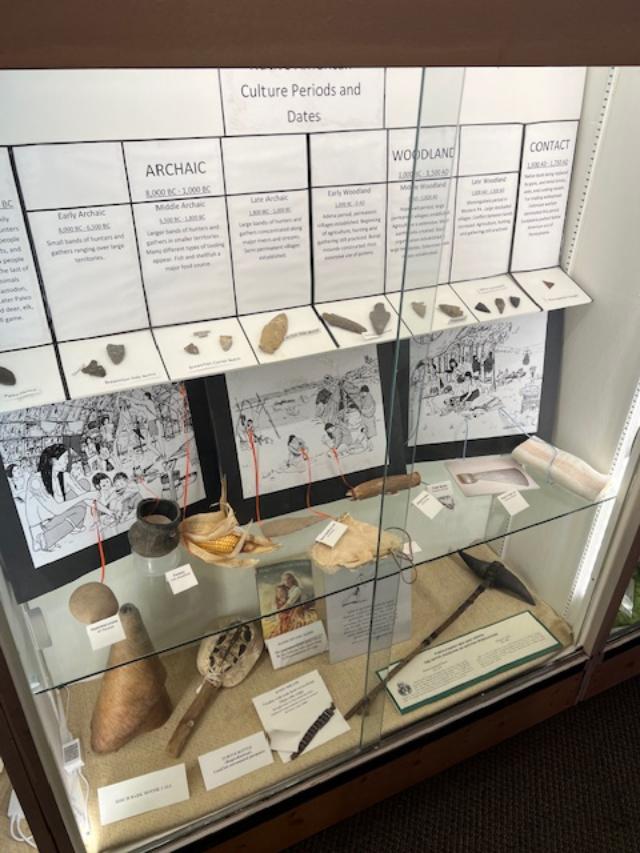
The Native American display at the museum.
Punxsutawney was originally a campsite halfway between the Allegheny and Susquehanna rivers. It is located on the earliest known trail to the East, the Shamokin path. The area was, at times, occupied by Shawnee or Delaware Indians and, sometimes, by Senecas or Iroquois.
According to the original “Creation” Story of the Delaware Indians, the “Lenni Lenape” (or original people), who were their forebears, began life as animals in “mother earth” and emerged centuries later to hunt and live as men. Thus it was that Oijik (Wejak), or Wojak, which was carried over to us as “‘Woodchuck”, came to be recognized as the “grandfather” of the earliest known inhabitants of this area.

The Native American display at the museum.
Although the area previously served as a “border” between Indian nations, the displaced Delawares settled in large numbers about 1723 because of the pressures from white men in the East and Iroquois intrigue. The main move toward the west followed between l740 and l760 as the result of further pressure.
It was during this period that an lndian sorcerer first appeared in various forms and attacked travelers from the East. He was hunted and killed in combat by a young chief. His body was burned to destroy the “evil medicine” but miraculously turned to searing sandflies, or “ponksad,” which plagued the area and the Indians. From that time the Indians called the location, ” Ponksaduteney,” which meant the “town of the sandflies.” The sandflies are now gone, but the “ghost of the spelling” is with us to stay.

The Native American display at the museum is quite extensive. There are many interesting artifacts.
The displays at the Museum:
As part of the Christmas celebration in 2023 and held over for Groundhog’s Day is the Native American Christmas tree display. The theme was dedicated to the Native Americans from the area.
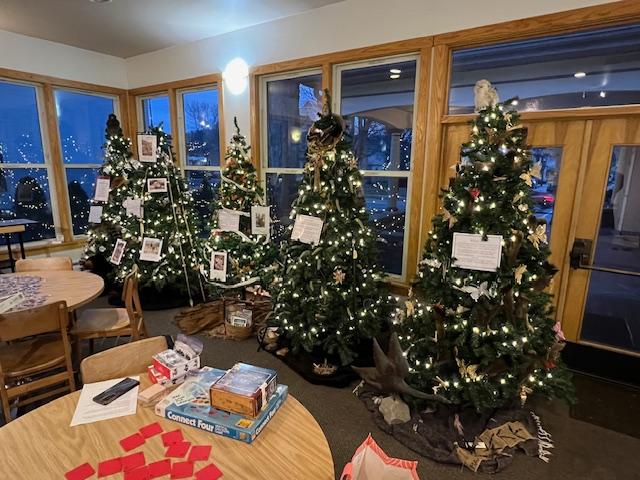
The Christmas tree display dedicated to the Native Americans.
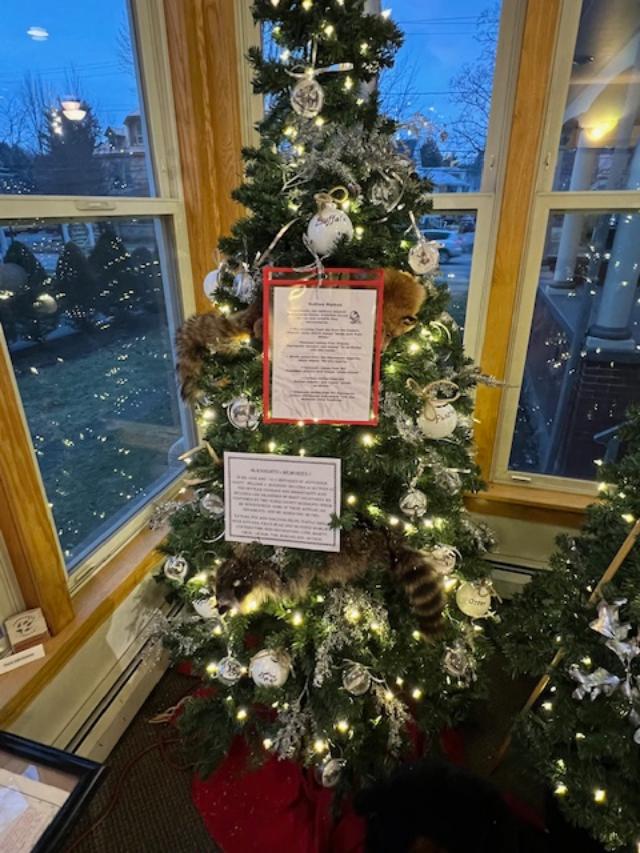
The beautiful decorations on the tree.

The sign describing the tree and its decorations.
Across the street at the Bennis House, the museum had a display of Dollhouses and the different houses that had been donated over the years to the museum.
The history of the Bennis House (from the Society pamphlet on the Bennis House history):
Edward C. McKibbon, secretary of the Punxsutawany Iron Works, purchased this town lot from the James E. Mitchell estate in 1901. T.E. Bennis purchased the McKibben property located on the corner of West Mahoning Street and Morrison Avenue in 1918. Members of the T.E. Bennis family occupied the house until 1982. In 1902, Mr. McKibbon contracted with E.J. Lawrence to build the house, which he first occupied in 1903.

The Bennis House display of the Log Cabin made with Lincoln Logs. In the cases are collections of china patterns over the years. In the Parlor are a portrait of Jefferson County Judge William P. Jenks, son Punxsutawney’s of first settlers, John and Mary Barclay Jenks. The dress from 1866 was worn by Mary Rebecca Jenks, the daughter of Judge William P. and Sarah C. Jenks.

The family china in the displays.

The Gingerbread House in the Parlor on the first floor.
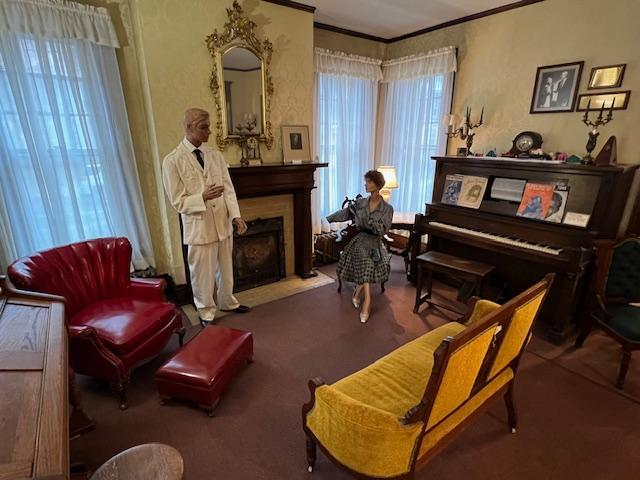
The Bennis House Living Room on the first floor.
Dorothy Bennis Cooney, the youngest daughter, donated the house and property to the Punxsutawney Area Historical & Genealogical Society in 1982. The house has served as a place to display artifacts of Punxsutawney’s history since that time. The house is designed in a “Craftsman Style” with a Swiss influnence. When the Society received the house, the previous owner advised that it had been designed by a “Famous New York Architect”. (PHS Society)
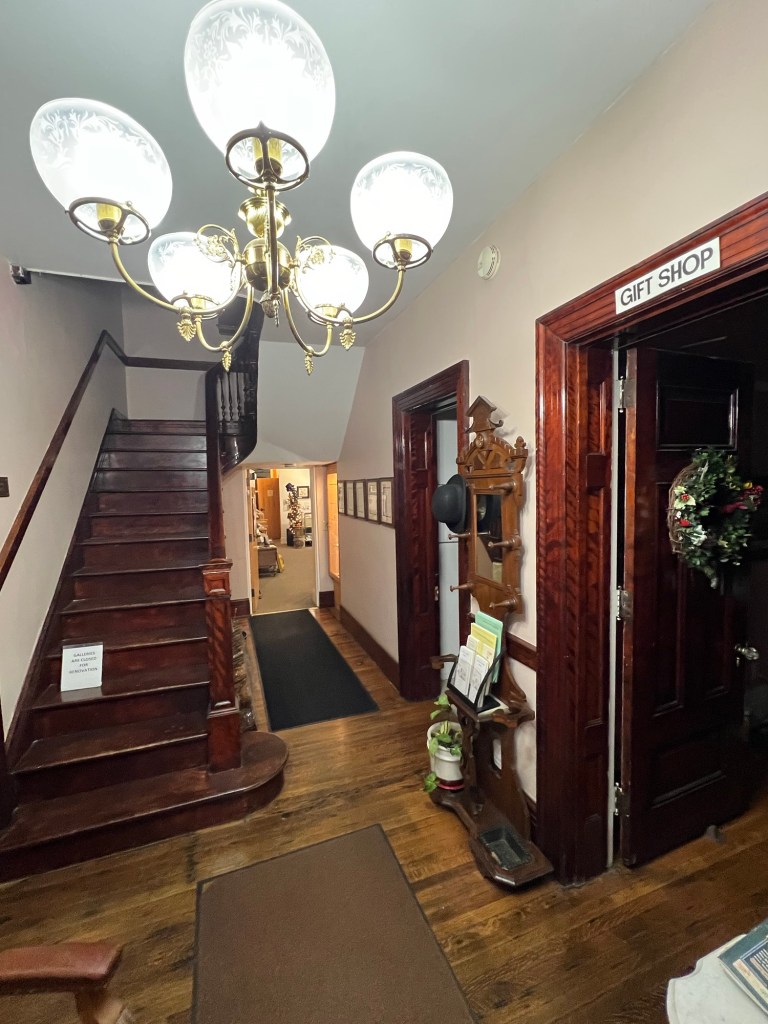
On display in the entry-way is a unique piece of furniture which accommodated the need of visitors for a place to hang hats and coats and to store items.

The Second floor of the Bennis House has a wonderful display of Children’s Toys.
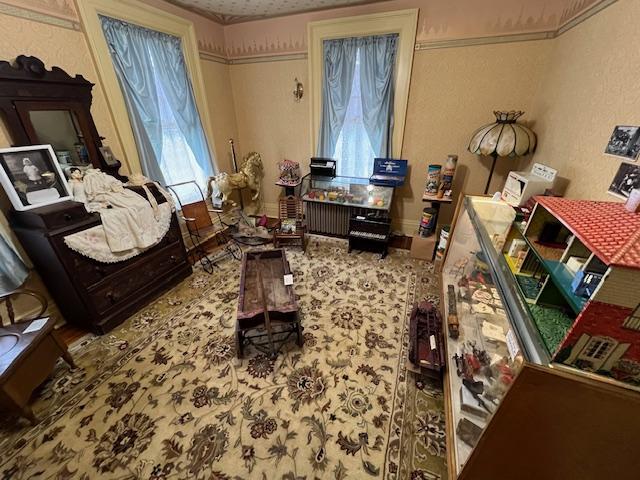
The Children’s Room with the display of the Fisher Price Doll House. The toys range from the 1850’s through the 1960’s.

The Toy display on the second floor.
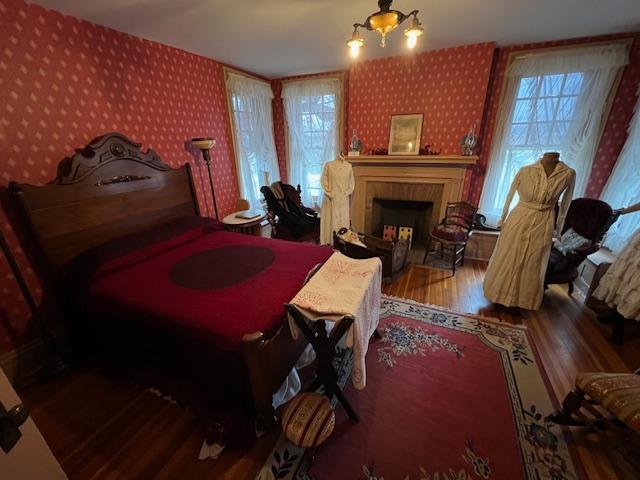
The Bennis House second floor bedroom.

The Military Room on the second floor has all sorts of interesting uniforms on display.

The upstairs room dedicated to religious artifacts and furnishings.
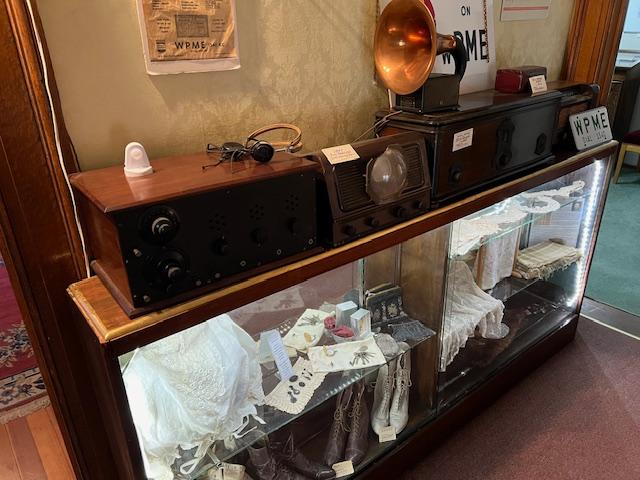
The clothing and Electronics display on the second floor. These items range from the 1850’s to 1930.
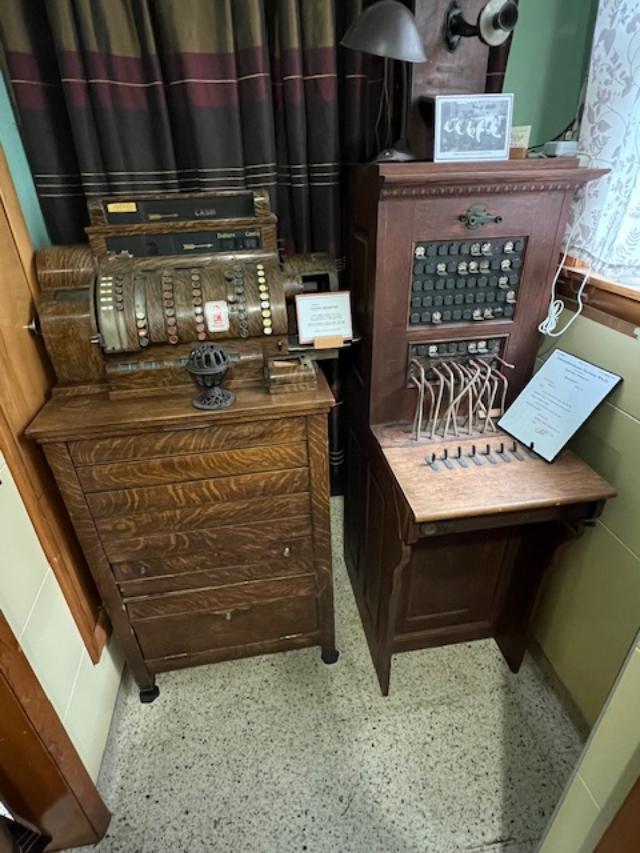
The Cash Register and switchboard machine on the second floor. The cash register was originally used in Loeb’s Store and last used in Harl’s Shoe Store. The switchboard operation was from Punxsutawney.

After the tour is over, you have to visit their gift shop in the Lattimer House.
The two homes house an interesting display of life in Punxsutawney over the years and the artifacts represent life from the early 1800’s to the 1960’s. If you are interested in more than the history of Groundhog’s Day, the society offers that and so much more.









 Visiting a Museum: The Unique, Unusual, Obscure and Historical