Category: Exploring Greenwich, NJ

The Greenwich Tea Burning Monument               Ye Greate Street and Market Lane          Greenwich, NJ 08323

The Greenwich Tea Burning Monument Ye Greate Street and Market Lane Greenwich, NJ 08323

The Greenwich Tea Burning Monument

Ye Greate Street and Market Lane

Greenwich, NJ 08323

http://www.co.cumberland.nj.us/greenwich-tea-burning

Open: 24 Hours/Outdoor Monument

Admission: Free

My review on TripAdvisor:
https://www.tripadvisor.com/ShowUserReviews-g46477-d24137215-r844112153-The_Greenwich_Tea_Burning_Monument-Greenwich_New_Jersey.html?m=19905

The Greenwich Tea Burning Monument in Greenwich, NJ

I am a firm believer in that you learn something new everyday and on a recent trip to visit historical sites of Southern New Jersey I came across this one in a guide book. I never even knew this monument existed let alone that we had our own version of the Boston Tea Party right here in New Jersey. It really showed me the significance of the Revolutionary War and how people from the past fought for the freedoms that we have today.
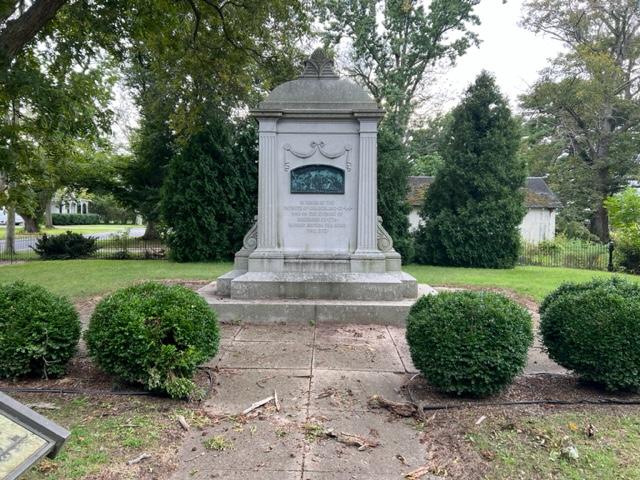
The monument in its glory.

On the night of December 22nd, 1774 forty people from the community took possession of tea chests and piling them together burnt them in protest of the Tea Tax that had been imposed on the residents of New Jersey. This act of defiance was a reaction to the actions of the British Rule.
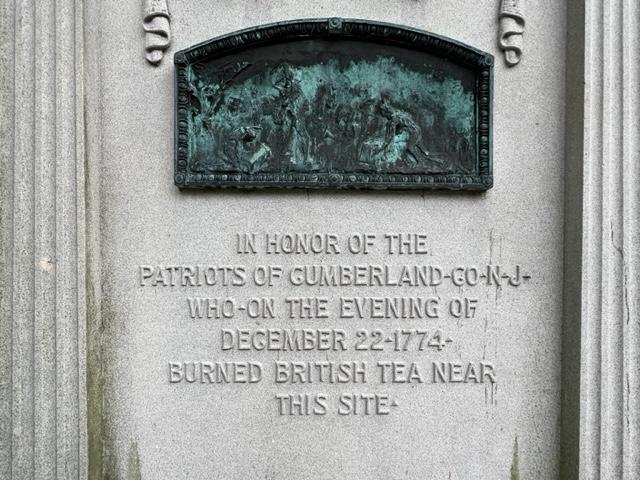
The monument honorarium.

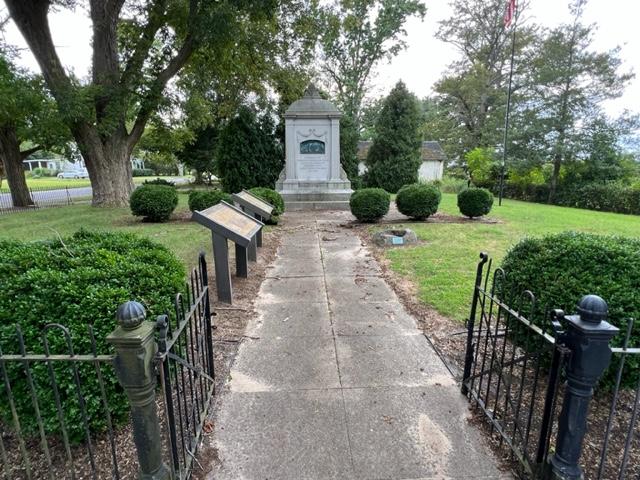
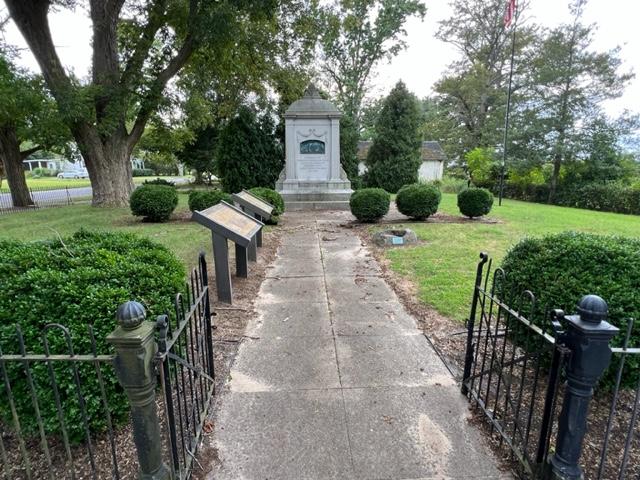
This beautiful and graceful monument lies now at the end of a sleepy country road in Greenwich, NJ which is still surrounded by farmland. It is hard to miss the monument in its location in the middle of a small park surrounded by a small fence. The monument was dedicated in 1908 and then again in 2008 there was a second ceremony to honor the 100th anniversary of the monument (Wiki).

The moument sits down the road from the Museum of Prehistoric History and from the Gibbon House so there are many things to see in Greenwich, NJ on this quiet country road.

The History of the Greenwich Tea Burning in 1774:

(From the Cumberland County, NJ website):

Liberty was not cradled in Philadelphia alone. The spirit was also alive in the inhabitants of Cumberland County when they destroyed a cargo of tea in 1774.

On the evening of Thursday, December 22nd, 1774, a company of about forty young Whigs, disguised as Indians, entered the cellar of Bowen’s house. They took possession of the whole cargo, conveyed the tea chests from the cellar into an adjoining field and piling them together, burnt them in one general conflagration. Forty miles from Philadelphia, was (and still is) the little town of Greenwich, the principal settlement of Cumberland County in 1774.
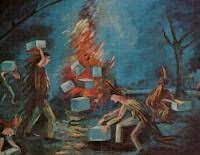
The Greenwich Tea Burning of 1774 (NJ Historical Society)

It was founded in 1675 by John Fenwick and is older than Philadelphia, which was not founded until 1682. The hand of time has hardly touched Greenwich. It is much the same today as it was three hundred years ago, when the British flag flew high over it. Today you will still find a wide street, which they still call “Ye Greate Street.” It was laid out in 1684 and its course has never been changed.
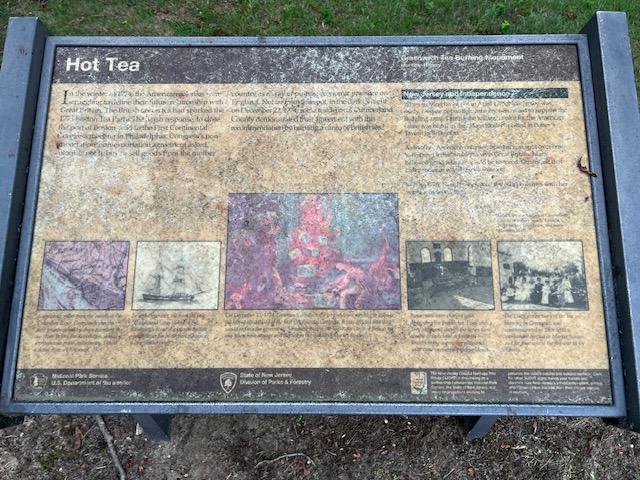
The storyboard on the event.

The Cohansey Creek is a navigable stream of some size running through the county of Cumberland and emptying into the Delaware Bay. In the autumn of 1774, the quiet inhabitants along the banks of the creek were startled by the appearance of a British brig called called the “Greyhound.” Sailing about four miles up the Cohansey, the brig stopped at the village of Greenwich, which was the first landing from its mouth.

She was laden with a cargo of tea sent out by the East India Tea Company, which was undoubtedly under the impression that the conservative feelings and principals of the people of New Jersey would induce them to submit quietly to a small tax. The result showed that the temper of the people was little understood by the East India Tea Company (Similar to the Toilet Paper Tax of the Governor Florio in the 1990’s).
The storyboard on the event.

Having found an English sympathizer, a Tory, as they were called, one Daniel Bowen, the Greyhound’s crew secretly stored the cargo of tea in the cellar of his house. However, this unusual procedure was noted by the citizens who immediately appointed a temporary committee of five to look after the matter until a county committee might be appointed.

A general committee of thirty-five was later appointed with representatives from Greenwich, Deerfield, Jericho, Shiloh, Bridgeton, Fairfield and perhaps other places.

Greenwich Tea Burning Monument News of the Boston Tea Party had already reached Greenwich and the defiant example was regarded by many of the local settlers as worthy of their own contempt for the British. Fate now presented them with a ready-made opportunity to duplicate the act.

On the evening of Thursday, December 22nd, 1774, a company of about forty young Whigs, disguised as Indians, entered the cellar of Bowen’s house. They took possession of the whole cargo, conveyed the tea chests from the cellar into an adjoining field and piling them together, burnt them in one general conflagration.

Thus, the patriots of Cumberland County living in Greenwich expressed their discontent by reacting to oppressive governmental measures. They had clearly taken a stand for independence and democracy.

Greenwich has been granted the distinction of being one of the five tea-party towns in America, the others being Charlestown, Annapolis, Princeton and Boston. In 1908, the monument seen above was erected in the old market place on Ye Greate Street to commorate the burning of a cargo of British tea on December 22nd, 1774.
Alan E. Carman Museum of Prehistory                                        1461 Bridgeton Road                               Greenwich, NJ 08323

Alan E. Carman Museum of Prehistory 1461 Bridgeton Road Greenwich, NJ 08323

Alan E. Carman Museum of Prehistory

1461 Bridgeton Road

Greenwich, NJ 08323

(856) 455-8141

Click to access prehistorical.pdf

Admission: Free

Open: Sunday 12:00pm-4:00pm/Monday-Friday Closed/Saturday 12:00pm-4:00pm/Seasonal April-mid-December/Closed on holidays.

My review on TripAdvisor:

https://www.tripadvisor.com/ShowUserReviews-g46477-d24137081-r844512521-Alan_E_Carman_Museum_Of_Prehistory-Greenwich_New_Jersey.html?m=19905

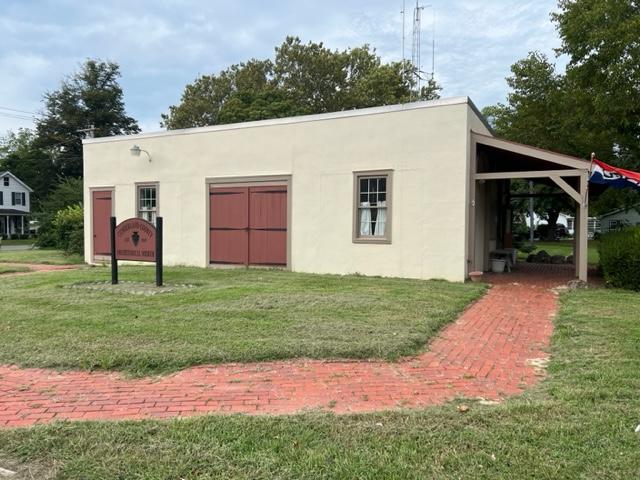
The front of the museum

I stopped in at the Museum of Prehistory after a tour of several other historical sites in the area and this little museum is packed with interesting artifacts.

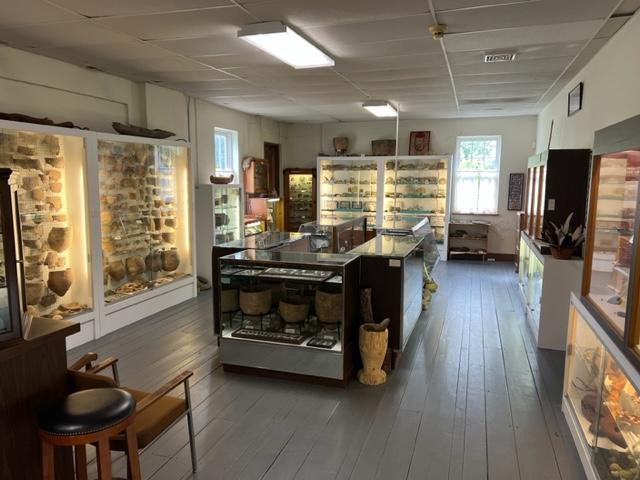
The main gallery

One section was dedicated to the Lenape Indians who lived in the area. There were many artifacts such as arrow heads, spears, pottery and an assortment of fishing and cooking materials. The Native Americans had an interesting system of living that adapted to nature. They developed a sophisticated system of living that was mobile and came with them as they moved around during the seasons.

There is an extensive fossil collection that includes trilobites, shark teeth, crabs, lobsters and they even had a footprint of a dinosaur. What I thought was interesting was the dinosaur eggs (they were not found locally).

Each case is dedicated to subject matter and the whole museum can be seen in less than an hour.

History of the Alan E. Carman Museum of Prehistory:

The Museum was dedicated in 1997, the museum was established to house the Native American artifacts and prehistoric fossils collected by Alan Ewing Carman. Carman was an avocational archaeologist who spent 58 plus years collecting, excavating and researching Native American artifacts from southern New Jersey.

The Alan E. Carman biography

Since Carmen’s original gift to the Society, the museum has acquired a variety of artifacts and specimens from different donors that have enhanced the collection’s research and educational potential. The museum has been and continues to be a valuable resource for archaeologists, paleontologists, students, tour groups and the general public. Come visit our collections to learn more about southern New Jersey’s storied past or to use our extensive research materials.

The Dinosaur bones

Dinosaur bones and eggs at the museum.

To enter the museum is to enter the world of the Native American ancestors that lived in the lower Delaware Valley. The Museum of Prehistory displays an incredible assortment of ancient artifacts and even older fossils that speak to this region’s fascinating prehistory.

The wonderful pottery collection of Native Americans.

Pottery and cooking items of Native Americans.

Our Mission:

(from the museum pamphlet)

The mission of the Cumberland County Historical Society is to preserve and promote the history and heritage of the county through acquisitions, collections, exhibits, research, educational programs and publications for the benefit of current and future generations.

Arrowheads and fishing artifacts.

The Alan Ewing Carman Museum of Prehistory supports this mission through the collection, preservation, interpretation and exhibition of pre-Contact period Native American artifacts from southern New Jersey. The museum serves as an institute for public education and a resource for archaeological research.

About the Collections:

(from the museum pamphlet)

The Native American artifacts were primarily acquired and donated by avocational archaeologist Alan Ewing Carman. Later donations have helped bolster this incredible collection of artifacts that all came from Southern New Jersey. To this day, the collection serves as an excellent resource for public education and academic research.

Six-Hundred-year-old dog bones.

The museum features a recreated burial of a mother dog and her two puppies that were lovingly interred about 800 years ago (museum website).

This video was on the history of Prehistory of the Lenape Indians:

The History of the Museum:

(From the museum pamphlet):

To visit the museum is to enter the world of the Indians who inhabited the lower Delaware Valley. At the end of the last Ice Age, the Paleo (Clovis) Indians were the first primitive people to penetrate this region. Many subsequent Indian cultures followed in their wake, leaving physical evidence of their passing in the earth’s archives. This salvaged evidence exhibited in the form of stone and bone artifacts, pottery and native crafts. When combined, they illustrate the evolution of the Indian societies who occupied southern New Jersey.

A major attraction to the Indians in this sector of the state was fossiliferious stone named “Cohansey Quartzite”. It was mined in the Vinicius of Greenwich, NJ. Other stone materials such as flint, jasper, thyolite and argillite were imported into the area and their mining locations are identified.

The Indians Fire making kits, manufacturing of pottery, use of gourds and flaking techniques, all make an interesting study of native crafts. Bone and shell remains salvaged from refuse pits depict their food sources. Of special interest, is the 800 year old mother dog and her two puppies which were unearthed near Swainton, NJ.

The Indians who inhabited Southern New Jersey at the time of the European contact were the Lenape, pronounced “Len-bop-pay”. Today they are known as the Delaware. Anthropologists have identified over 44 sub-divisions of the Lenape people who inhabited their ancestral homeland (Lenapehoking).

In the southern part of New Jersey, the little Siconese occupied the land along the Cohansey River; the Sewapose, the Maurice River and the Alloways, the Salem Creek and its tributaries. As a visitor enters the Museum, a map of Cumberland County pinpoints 115 areas of occupation which define population levels in Prehistoric times.

Of special interest to the children are over 1000 fossils from four time periods of the earth’s geological development. Extinct trilobites, whale and porpoise vertebrae, crabs, lobsters, squid, mollusks, sting rays and giant shark teeth fill the special display case. Also a foot print in the stone of a bird like dinosaur call a “ Grallator”.

All of these were found in New Jersey, Delaware, Maryland and Virginia. They illustrate a fascinating array of land and marine life which once roamed the earth’s primordial landscape. In addition, a cluster of 87 million year old Dinosaur eggs, a fossilized Snake egg and Turtle egg were donated in 2005. Ribs and remains of extinct reptiles fascinate and delight children on school tours. A wide assortment of publications are available to the public regarding the Indian’s culture and the study of fossils.