Category: Exploring Cape May County, NJ

Harriet Tubman Museum of New Jersey            632 Lafayette Street                                                       Cape May, NJ 08204

Harriet Tubman Museum of New Jersey 632 Lafayette Street Cape May, NJ 08204

Harriet Tubman Museum of New Jersey

632 Lafayette Street

Cape May, NJ 08204

Open: Sunday 2:00pm-4:00pm/Monday-Tuesday Closed/Wednesday-Saturday 11:00am-4:00pm (Check the website for the seasons)

My Review on TripAdvisor:

https://www.tripadvisor.com/Attraction_Review-g46341-d23550005-Reviews-Harriet_Tubman_Museum-Cape_May_Cape_May_County_New_Jersey.html

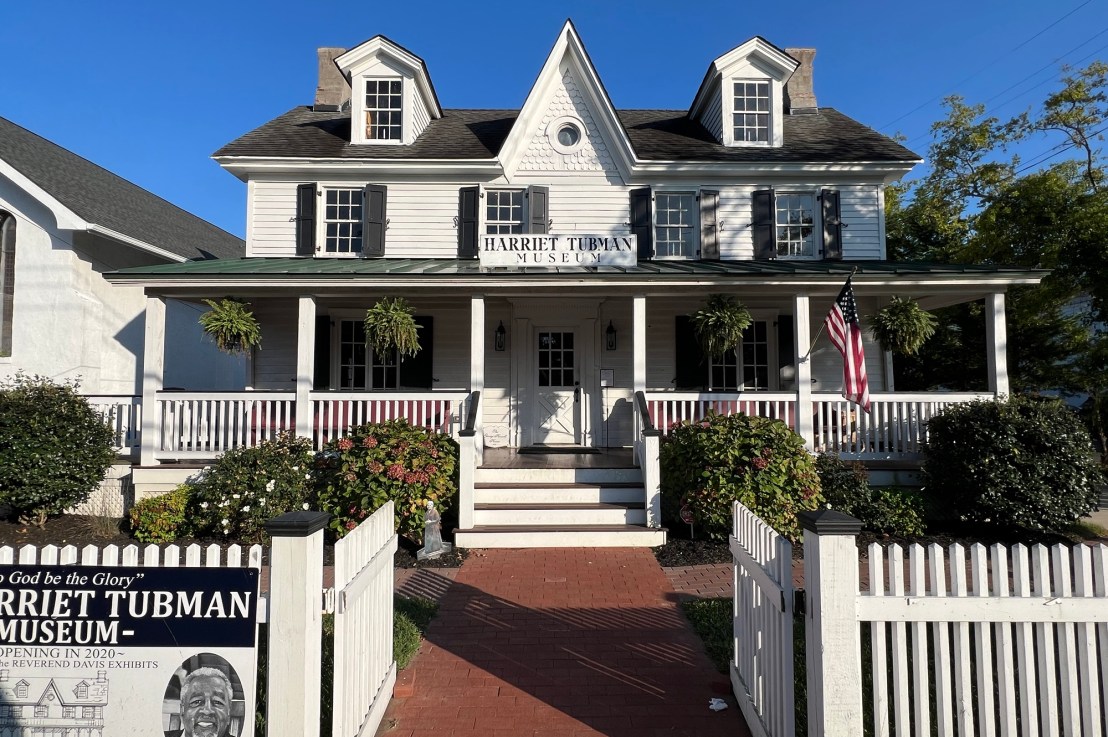
The entrance to the Harriet Tubman Museum of New Jersey

The History of the Museum and House it is located in:

(From the Museum website):

Lafayette street and Franklin Street: the center of abolitionist activism in Cape May

The Harriet Tubman Museum building is located on a block that anti-slavery activists called home in Cape May. Lafayette Street and Franklin Street became a center of abolitionist activity centered around three important buildings developed in 1846.

The Stephen Smith House stands at 645 Lafayette Street, across from the site of the Harriet Tubman Museum, where Stephen Smith built his summer home in 1846. Smith was a founder of the Pennsylvania Anti-Slavery Society.

The Banneker House was next to the Stephen Smith House. The Banneker House became a first-class hotel and one of the only summer resorts for free Black people in the country and was developed by James Harding, a friend of Stephen Smith.

The white Baptist Church was located directly across the street from the Stephen Smith House and Joseph Leach frequently preached there. Leach was a political leader and editor of the Ocean Wave newspaper, where he often wrote accounts of enslaved people that fled to Cape May. The congregation of the church issued a strong condemnation of slavery.
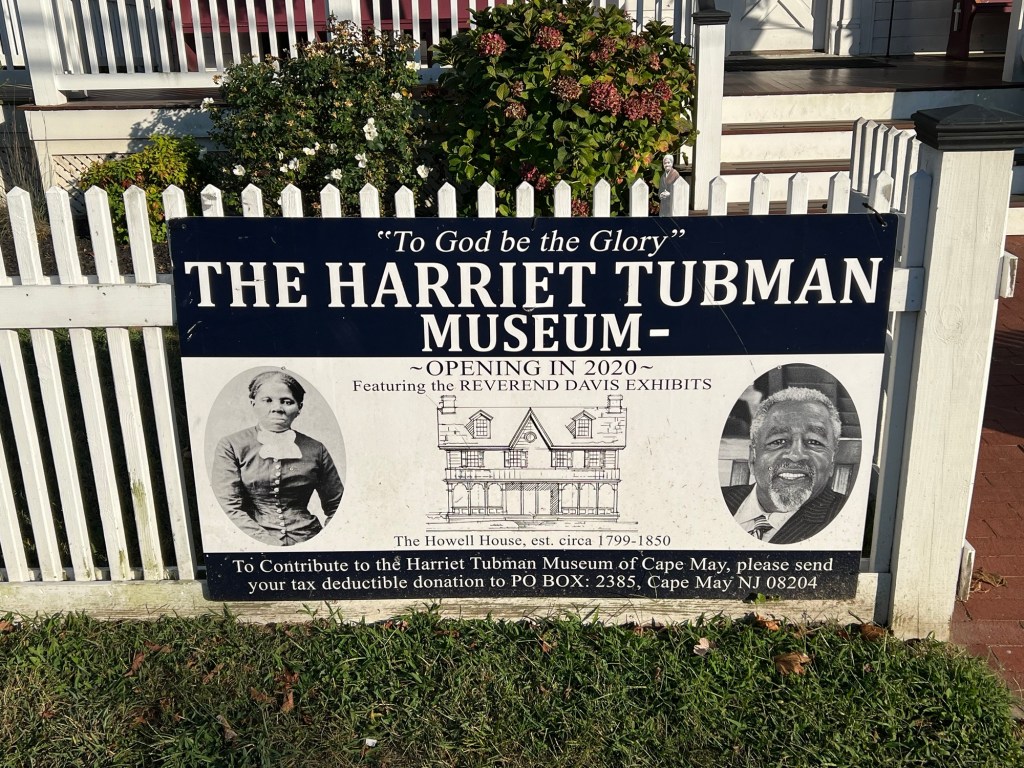
The sign that welcomes you
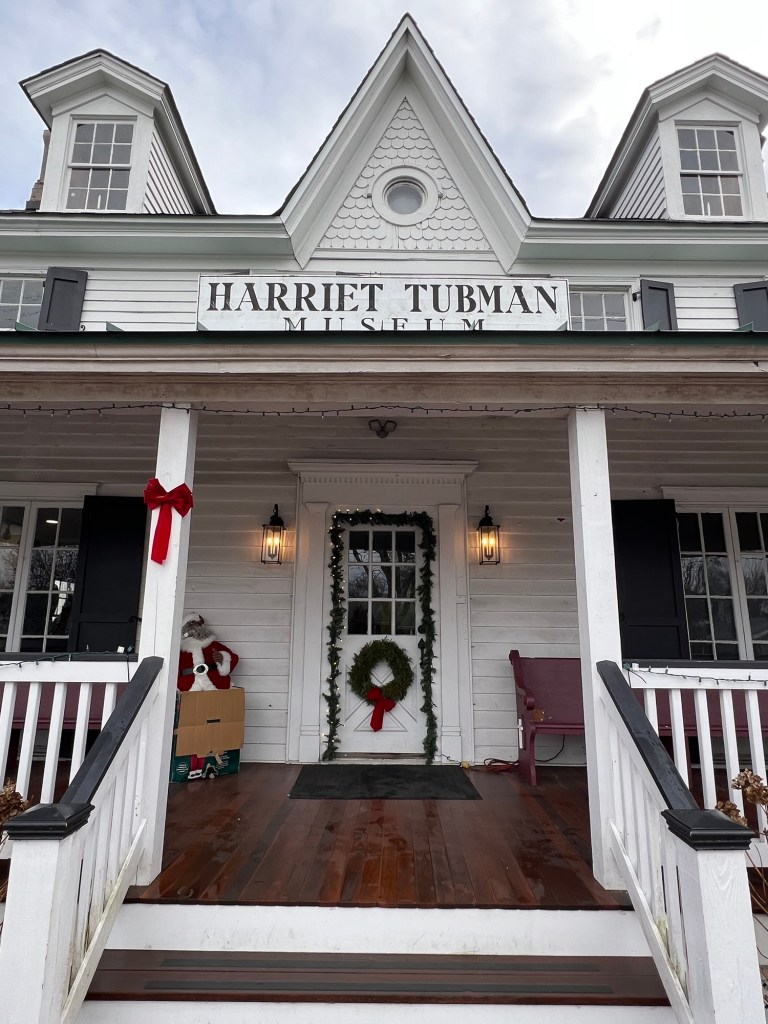
The Museum at Christmas time

Santa greets you at the door

Cape May: A nexus between North and South

(from the museum website):

Cape May played a pivotal role in the fight to end slavery. Several historic figures critical to the fight against slavery spent their summers in Cape May.

The children’s dolls at the entrance

I visited the Harriet Tubman Museum when I was in Cape May and this small museum tells two different stories. It tells of Harriet Tubman’s time living in Cape May as a cook before her return down South and about the Free Black community in Cape May that built their own Society within the community. Their businesses catered to both Black and White residents of Cape May.

The museum tackles several different topics including the life of Harriet Tubman in Cape May when she lived here as a cook, earning money and probably developing a strategy for helping enslaved people reach their freedom through the Underground Railroad. It discusses the success many Black residents found as business owners in Cape May and the surrounding towns.

The last topic the museum discusses in the affects of Integration and Segregation on society in general and its causes and results. There is no one solution to this as we as a society cause this by our own actions.

The History of Business’s owned by Blacks in that era of Cape May

The freed black population settled in the Cape May area and opened many businesses that contributed to the whole population. This developed into many successfully run businesses by Free Slaves and residents of New Jersey.
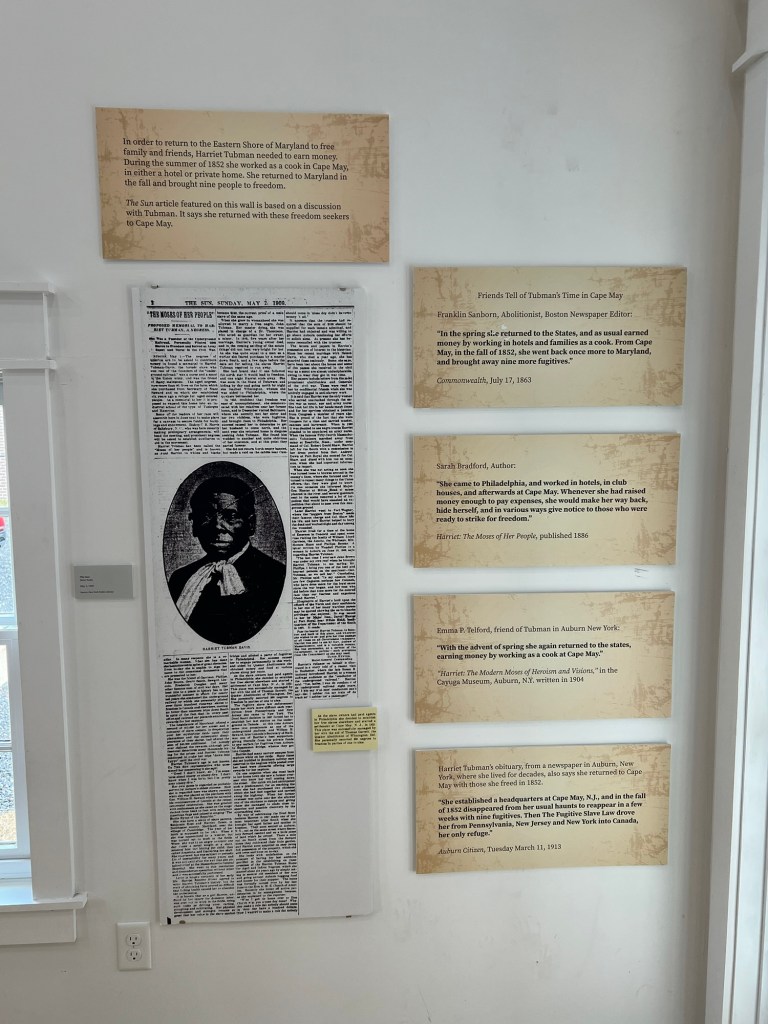
The history of Harriet Tubman in Cape May

(From the museum website):

Harriet Tubman’s life and work in Cape May

Harriet Tubman lived in Cape May in the early 1850s, working to help fund her missions to guide enslaved people to freedom. After her initial journeys conducting freedom seekers to Canada, her friend and abolitionist leader Franklin Sanborn wrote, “She returned to the states, and as usual earned money by working in hotels and families as a cook. From Cape May, in the fall of 1852, she went back once more to Maryland, and brought away nine more fugitives.” The New Jersey Historical Commission says she spent two other summers in Cape May.

Life of Charles Sumner in Cape May, NJ

https://en.wikipedia.org/wiki/Charles_Sumner

https://www.britannica.com/biography/Charles-Sumner

The history of Abolitionists in Cape May and in New Jersey. Being so close to the border, New Jersey was a big part of the Slavery Underground. Even during the Civil War, Delaware was a more neutral state of the South.
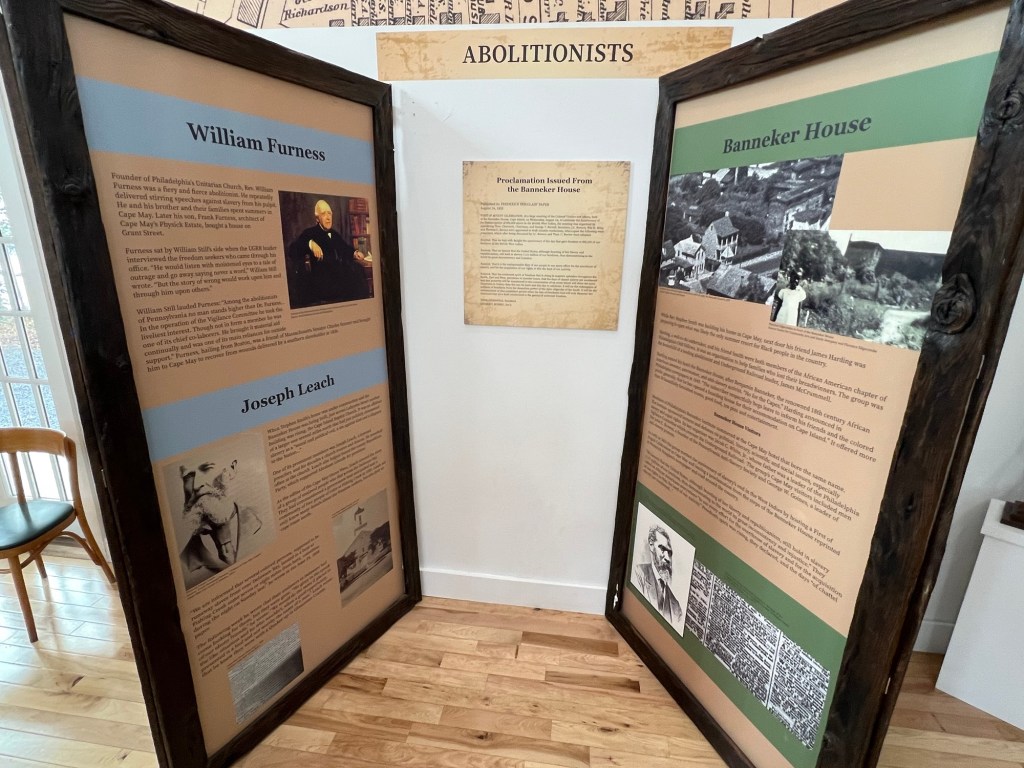
The story of the Abolitionist Movement and William Furness

https://en.wikipedia.org/wiki/William_Henry_Furness

History of the war years and the people who shaped it
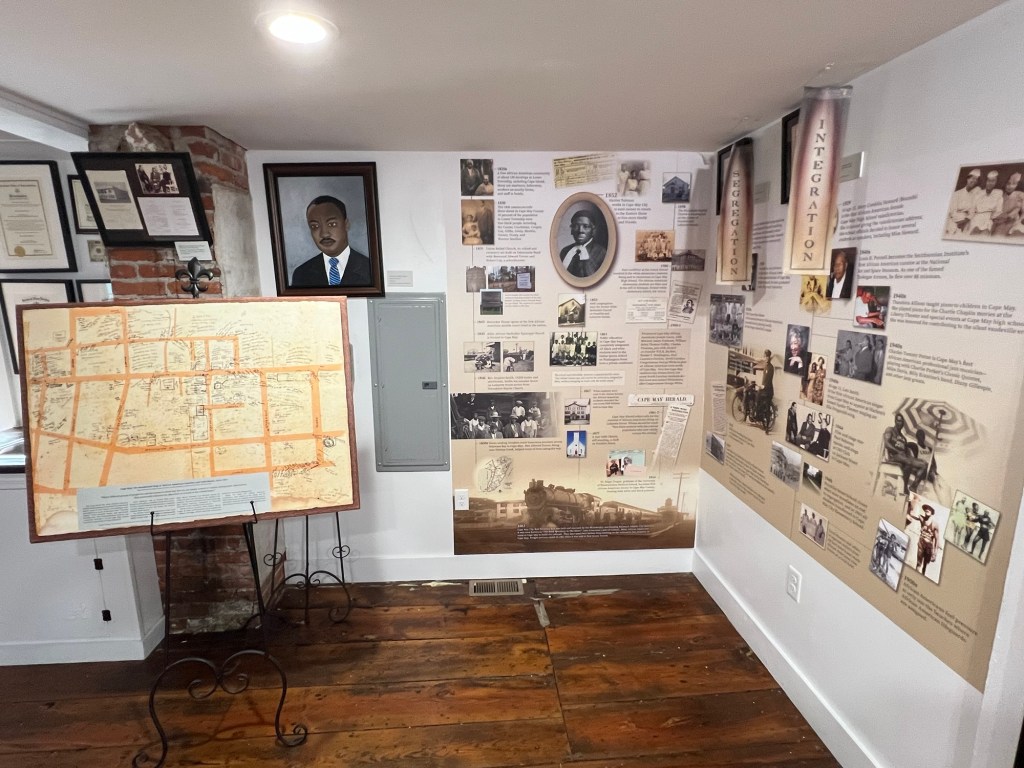
The progressions of Blacks in that era

The affects of Segregation and Integration in a society that does not always see eye to eye. This attitude unfortunately still survives into today. There is the history of Harriet Tubman’s life as a child into adulthood.

The stories of Integration and Segregation in that era

Harriet Tubman, Activist and Transporter

https://en.wikipedia.org/wiki/Harriet_Tubman

Many voices told at the museum

The museum offers many voices and stories about life before, during and after slavery and its part in the shaping of New Jersey. Since New Jersey was the last Northern state to abolish slavery on January 23rd, 1866.

The History and End of Slavery in New Jersey:

(From the website of the New Jersey Department of State-Historical Commission website)

New Jersey, The Last Northern State to End Slavery
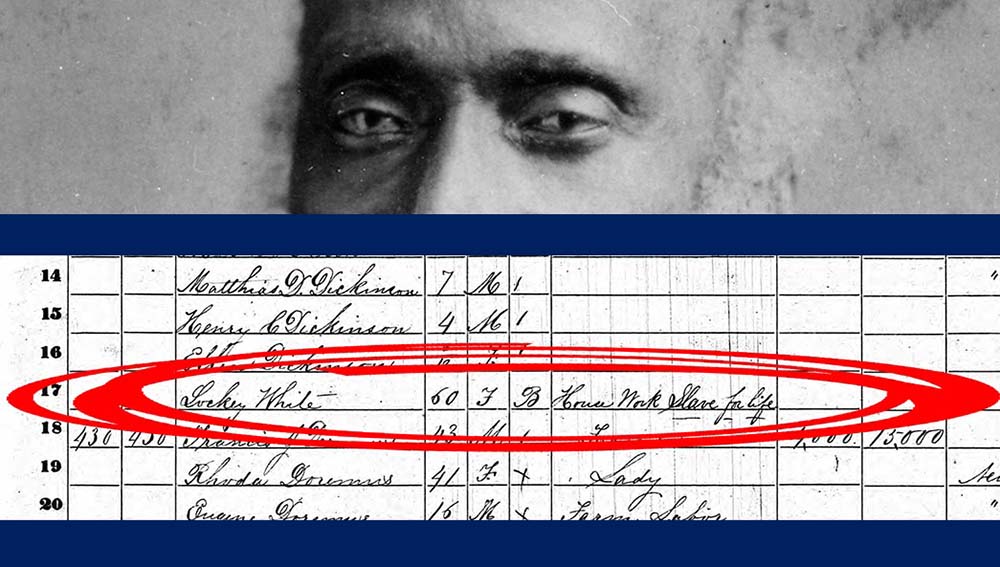
Image collage: Peter Lee who may have been illegally enslaved as a young man by the Stevens Family in Hoboken, NJ, and Lockey White’s 1860 census entry indicating that she was a 'slave for life'.
Image collage: Peter Lee who may have been illegally enslaved as a young man by the Stevens Family in Hoboken, NJ, and Lockey White’s 1860 census entry indicating that she was a “slave for life.”

By Noelle Lorraine Williams,
Director, African American History Program
The New Jersey Historical Commission

This year forty-seven states including New Jersey will observe Juneteenth (also known as Freedom Day or Emancipation Day) as a state holiday—a holiday that commemorates when enslaved Blacks in Galveston, Texas learned that they were, in fact, freed by President Abraham Lincoln’s Emancipation Proclamation two and half years earlier. The date was June 19, 1865. Juneteenth then is a holiday of celebration and a mournful remembrance of deep injustice and loss. It reveals the injustice of slavery and the legal repression of African American freedom, extending beyond the nineteenth century.

But we must remember that there were still enslaved Black men and women in New Jersey even after Juneteenth. Imagine, New Jersey’s death grip on slavery meant that until December 1865, six months after enslaved men, women, and children in Texas found out they were cheated of their freedom, approximately 16 African Americans were still technically enslaved in New Jersey.

But Why and How?

While there were many Black, mixed-race, and white people in New Jersey who fought against slavery, most legislators refused to condemn the institution. Profits from slaveholding organizations had built and maintained the state’s major cities and regional centers like Newark and those in Bergen County.

Lincoln’s 1863 Emancipation Proclamation did not free enslaved African Americans in the Northern States; it freed only those in the mostly southern “rebellious states.” Two years later, New Jersey bitterly refused to ratify the Thirteenth Amendment, the United States Constitutional Amendment that abolished slavery and involuntary servitude across the country.

Slavery’s final legal death in New Jersey occurred on January 23, 1866, when in his first official act as governor, Marcus L. Ward of Newark signed a state Constitutional Amendment that brought about an absolute end to slavery in the state. In other words, the institution of slavery in New Jersey survived for months following the declaration of freedom in Texas.

To understand this historical development, one needs to take a step back to 1804 when New Jersey passed its Gradual Abolition of Slavery law—an act that delayed the end of slavery in the state for decades. It allowed for the children of enslaved Blacks born after July 4, 1804 to be free, only after they attained the age of 21 years for women and 25 for men. Their family and everyone else near and dear to them, however, remained enslaved until they died or attained freedom by running away or waiting to be freed.

In a period when the average life expectancy was 40 years old, the 1804 law essentially took more than half of these people’s lives to satisfy the economic and political demands of New Jersey enslavers.

In essence, Juneteenth, not only marks the day African Americans in Texas realized that they had been robbed of two years of their freedom, following the Emancipation Proclamation. It also commemorates all of our ancestors here in New Jersey who were the last Blacks in the North to be ensnared in that bloody institution.


The New Jersey Historical Commission (NJHC), a division of the New Jersey Department of State, is a state agency dedicated to the advancement of public knowledge and preservation of New Jersey history.

The creation of the Harriet Tubman Museum
Forgotten Warriors Vietnam Museum                        Cape May Airport                                                                       529 Forrestal Road                                                 Rio Grande, NJ 08204
Forgotten Warriors Vietnam Museum Cape May Airport 529 Forrestal Road Rio Grande, NJ 08204
Forgotten Warriors Vietnam Museum
Cape May Airport

529 Forrestal Road

Rio Grande, NJ 08204

(609) 374-2987

https://forgottenwarriorsvietnammuseum.com/

Admission: Free but Donations are accepted

Open: Please see website as the museum is closing for the season. By Appointment

My review on TripAdvisor:

https://www.tripadvisor.com/ShowUserReviews-g46775-d1170025-r971025114-Forgotten_Warriors-Rio_Grande_Cape_May_County_New_Jersey.html?m=19905

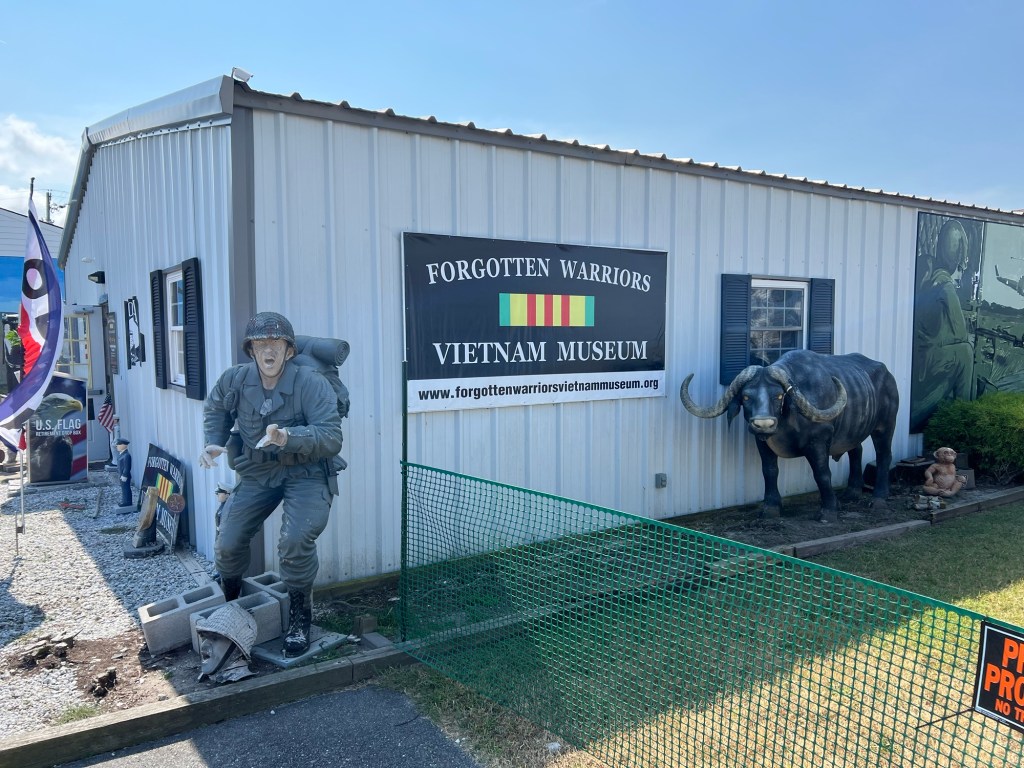
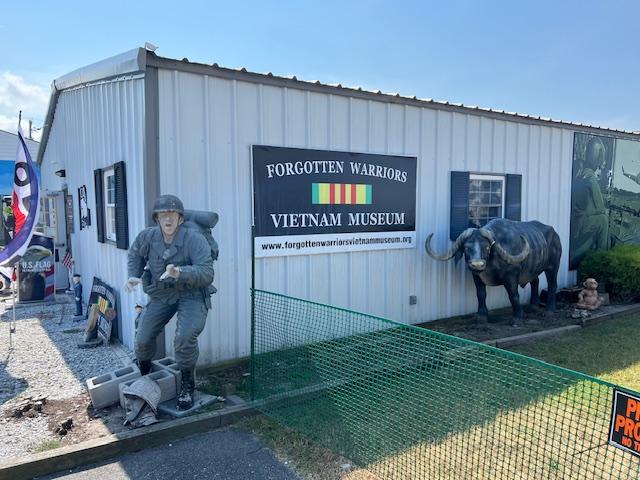
The front of the Forgotten Warriors Vietnam Museum at 529 Forrestal Road
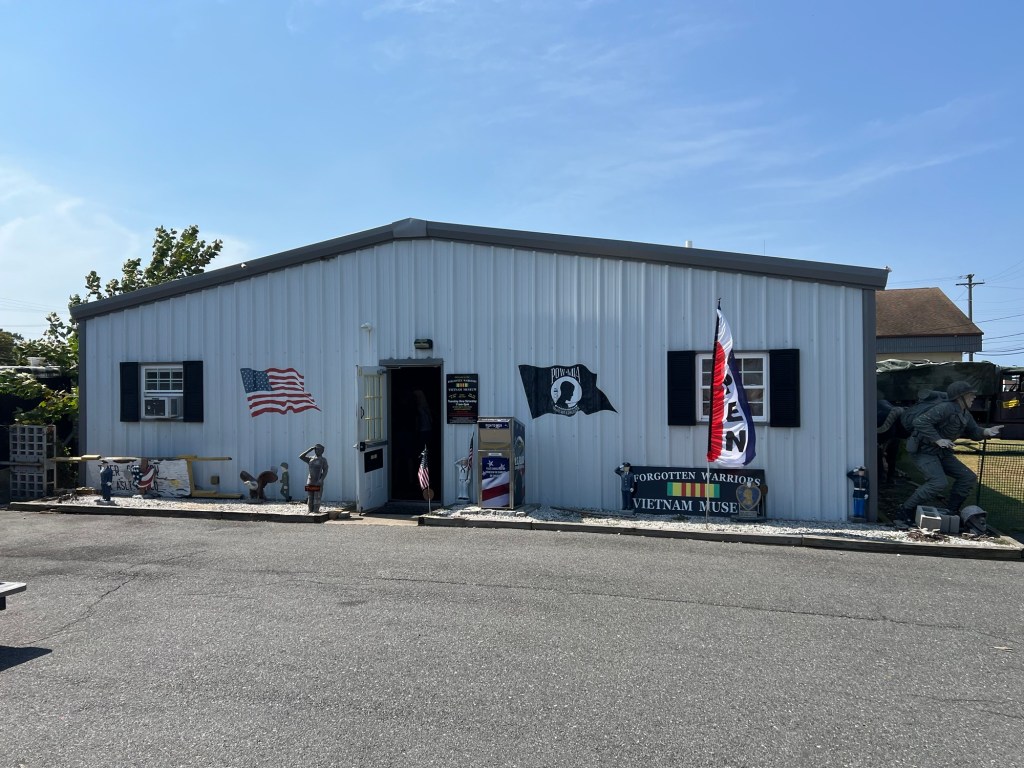
The entrance to the museum

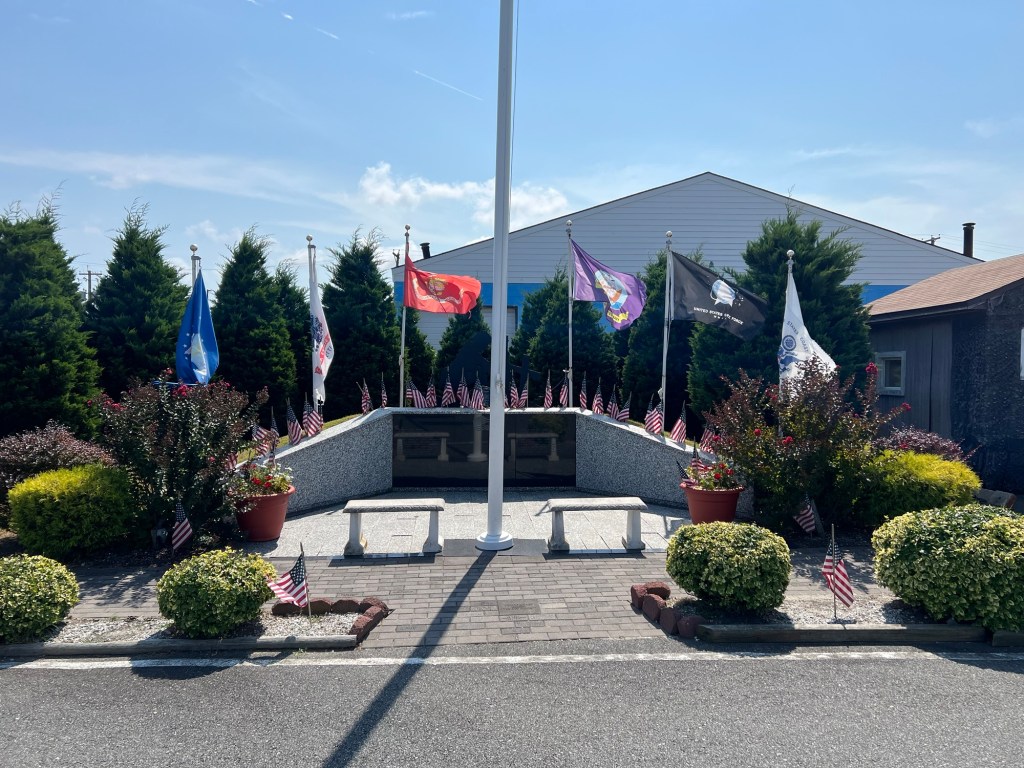
The Vietnam Veterans Memorial outside the museum has the names of those who fought in the war

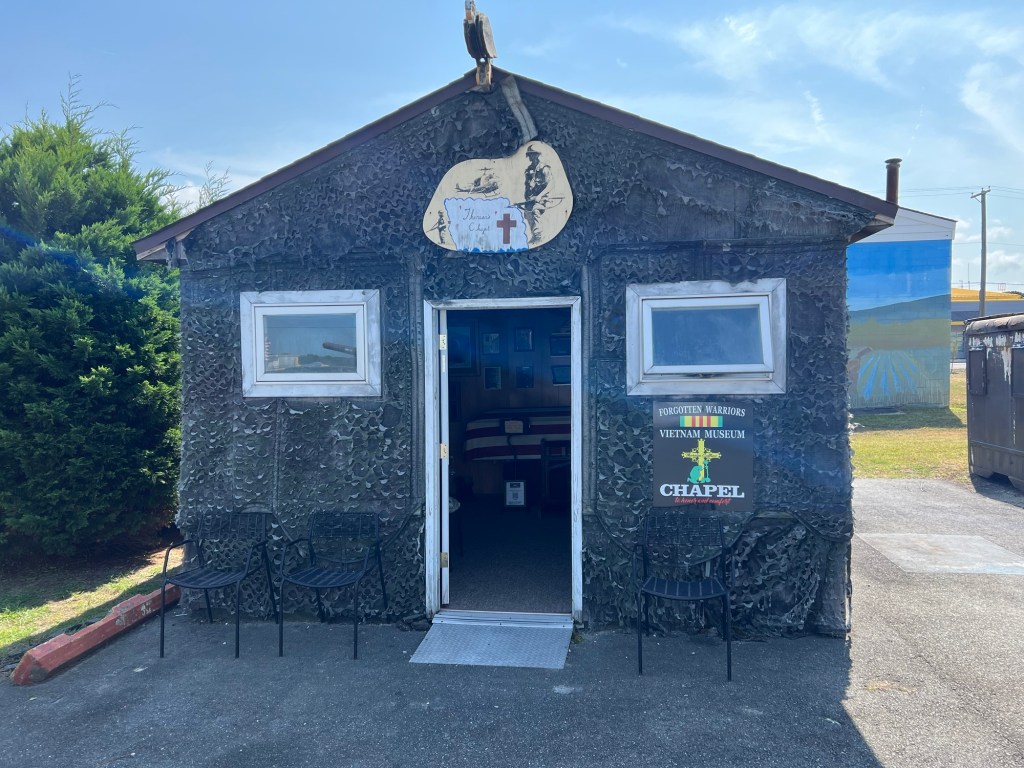
The museum’s Chapel dedicated to the Veterans

The Chapel is dedicated to those who lost their lives in the Vietnam War and is a very emotional display of the value of a soldier during the war years.

The History of the museum:

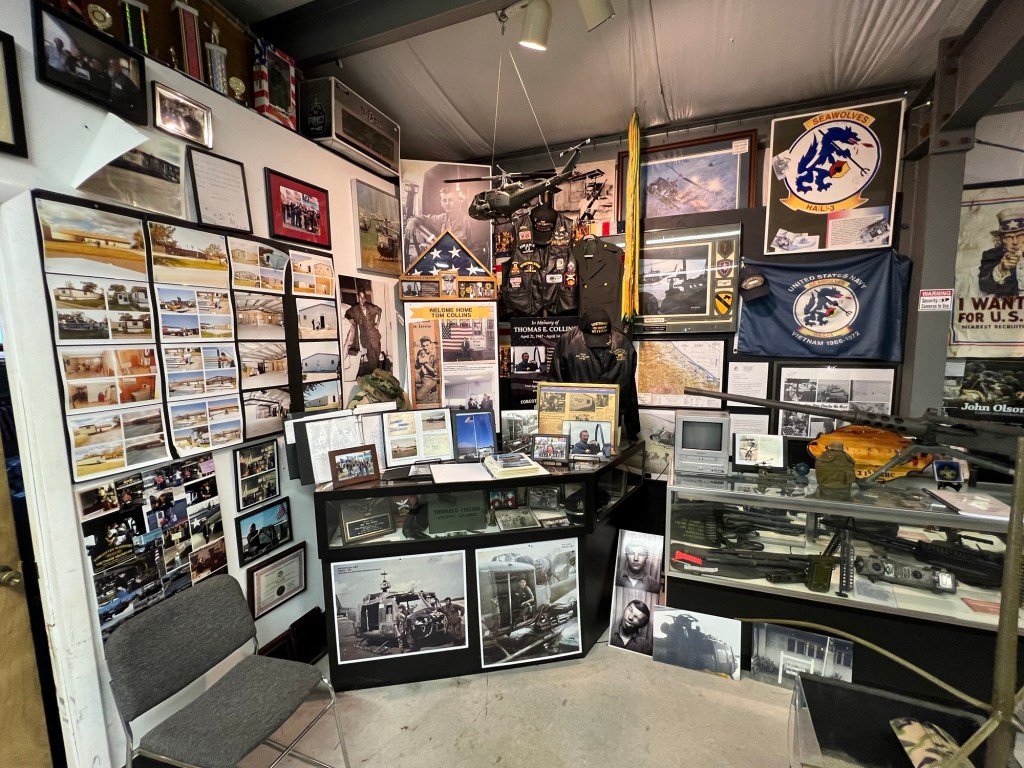
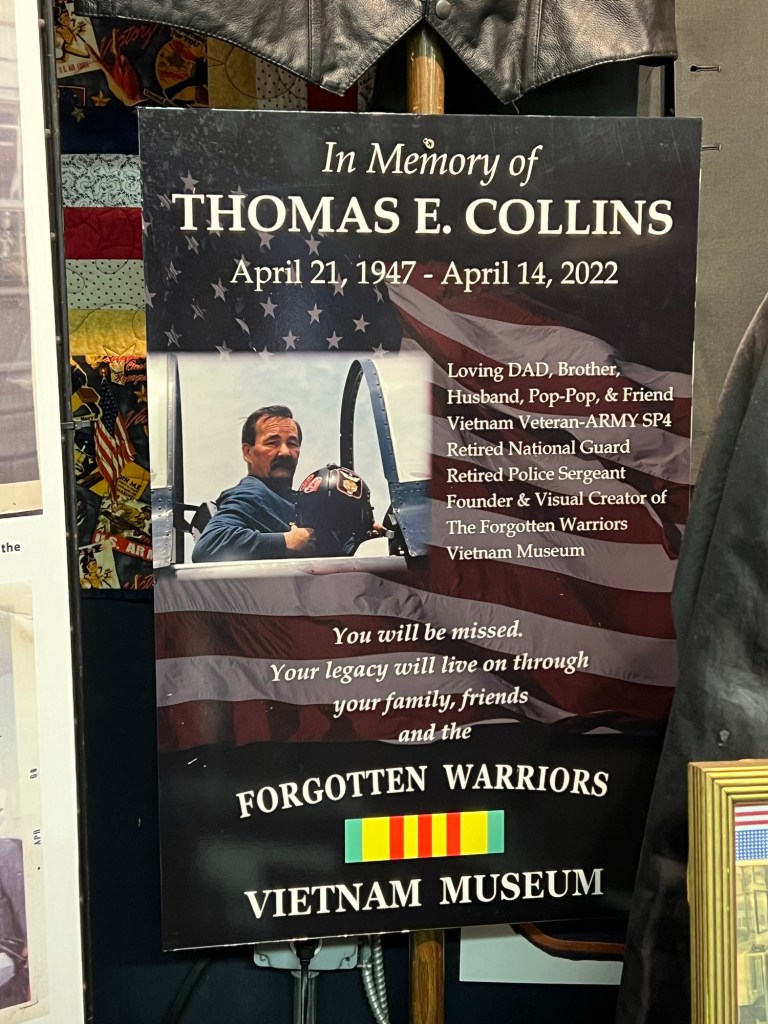
The museum was created in 2008 by the late Vietnam Veteran Thomas E. Collins. His committed passion for over 15 years to create a unique, realistic, educational experience to live on the memory of the men and women who fought in the war.

The museum honors and protects the thousands of men and women’s legacies and artifacts on the museum that will not be forgotten. The museum continues to preserve and welcome home veterans, their families and educate future generations.

This one room museum is packed with information and memorabilia from the war years.

The display in honor of Thomas R. Collins

The main gallery of the museum

In Memory of Thomas E. Collins

Very touching memory to the founder of the museum, Thomas E . Collins.

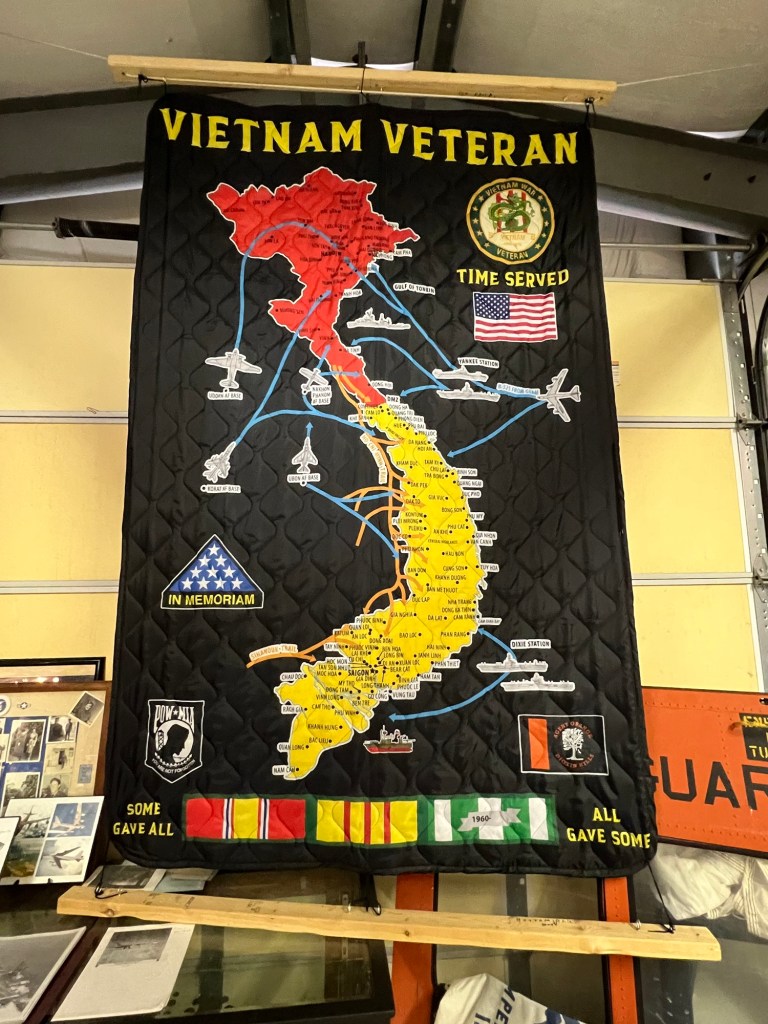
The map of North and South Vietnam at the time of the war

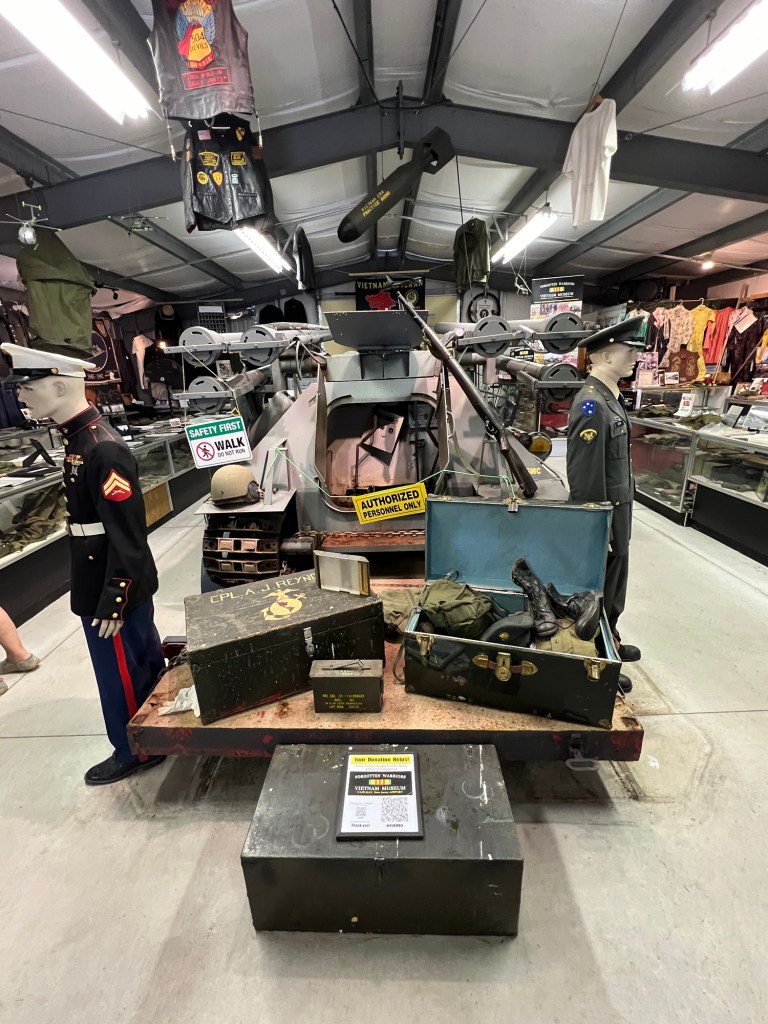
The equipment and artifacts from the Vietnam War

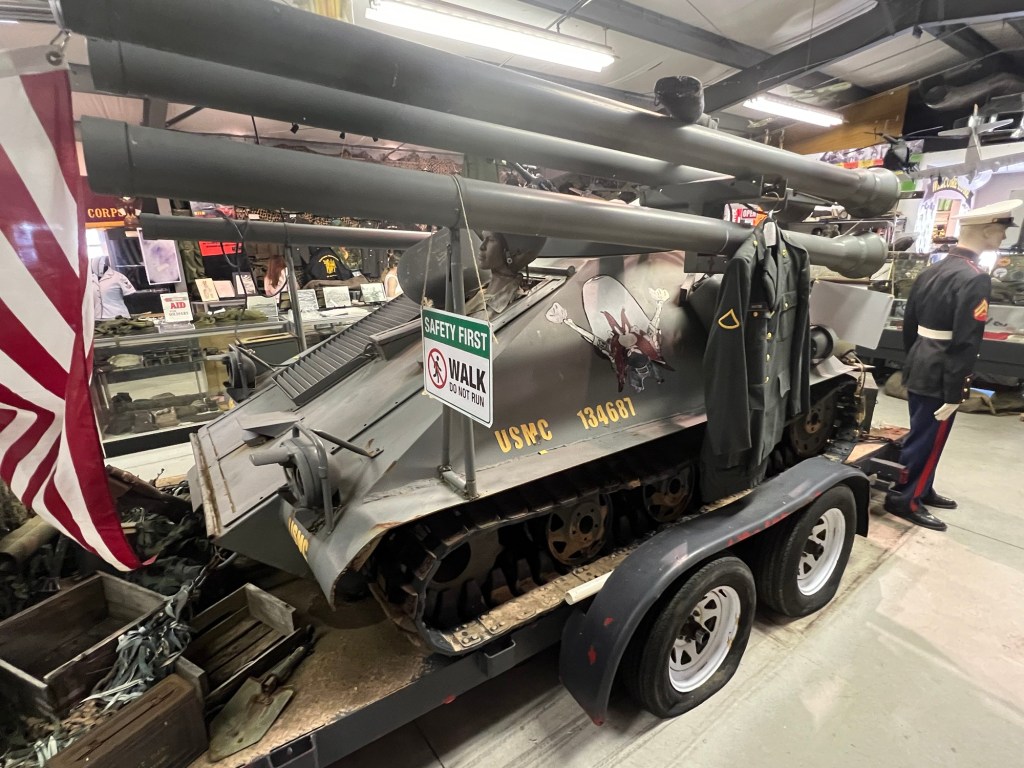
One of the small tanks inside the museum

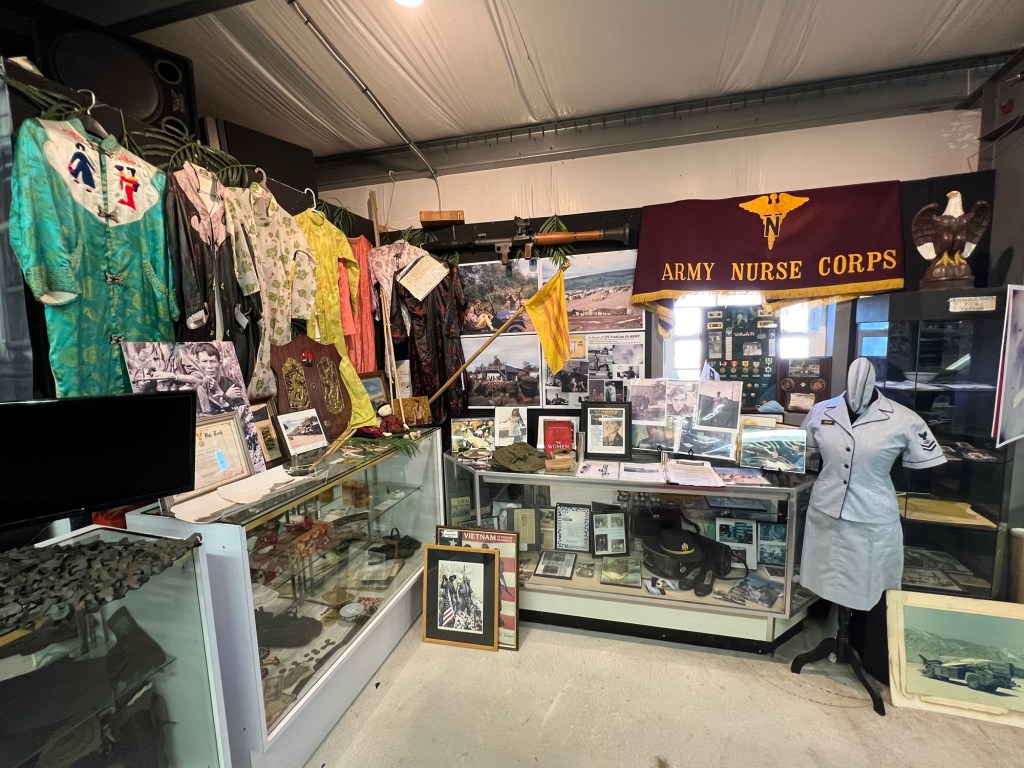
The outfits warn in Vietnam during the war by the natives and the nurses

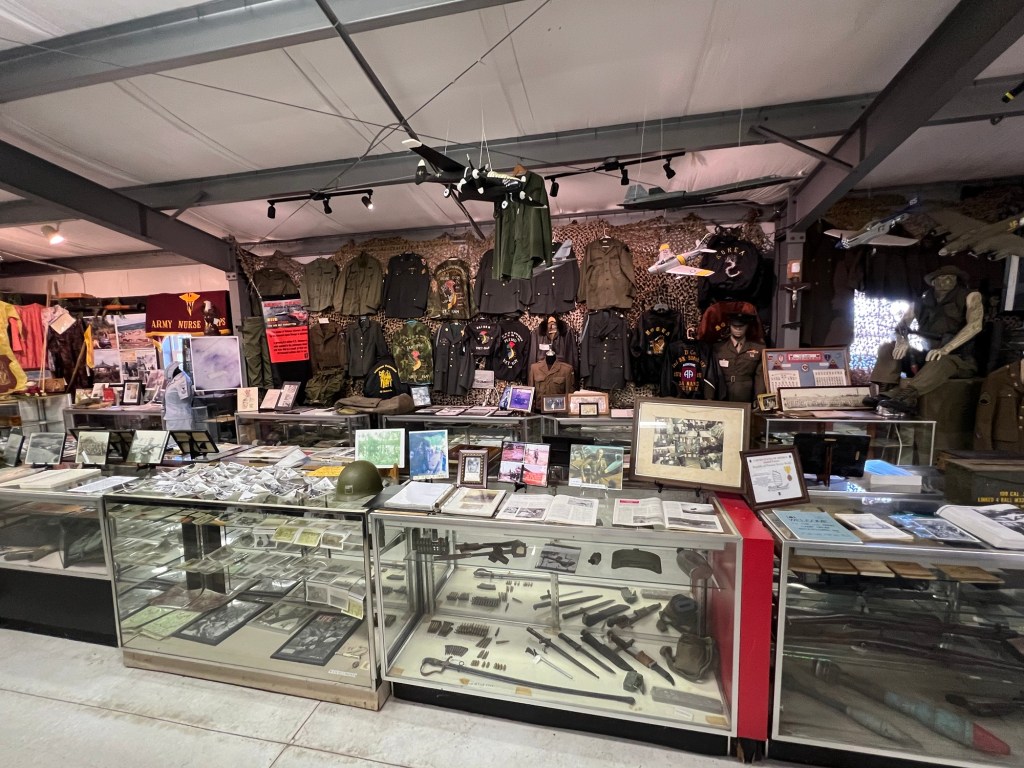
Various weapons and uniforms on display

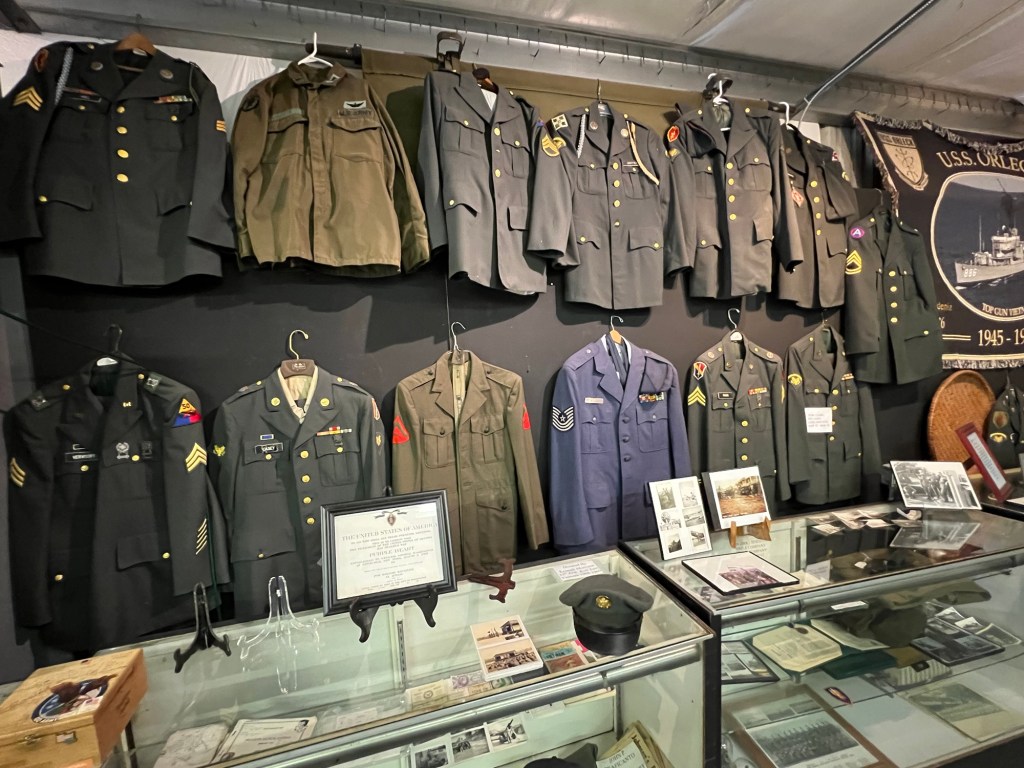
Array of uniforms that had been used in the war

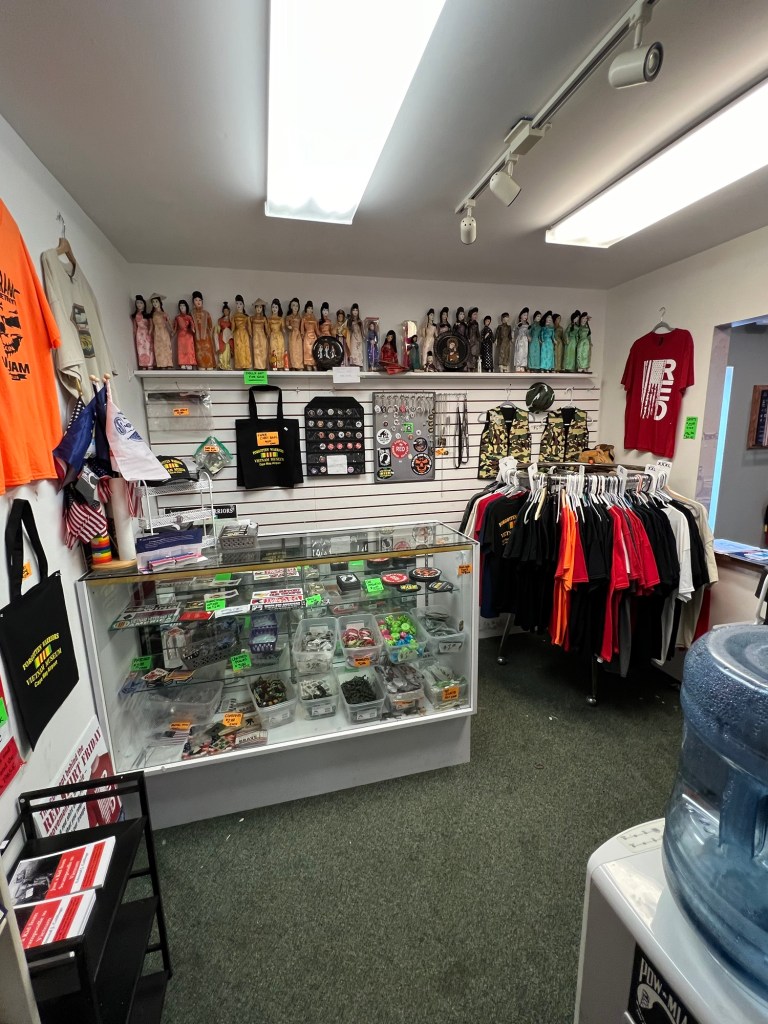
The gift shop by the entrance of the museum has some interesting gift items.

This museum is a very touching memorial to all those who have served during the war in Vietnam and some fascinating items in the collection to see and observe.

The Museum of Cape May County                      504 US. 9                                                             Cape May Court House, NJ 08210
The Museum of Cape May County 504 US. 9 Cape May Court House, NJ 08210
The Museum of Cape May County

504 US 9

Cape May Court House, NJ 08210

(609) 465-3535

https://www.cmcmuseum.org/

https://www.facebook.com/Museumofcmc/

Hours: Seasonal Hours Sunday-Monday-Tuesday/Wednesday 10:00am-2:30pm/Thursday Closed/Friday 10:00am-2:30pm/Saturday Closed. Tours are at 10:00am and 12:00pm.

Admission: Donations Accepted/ (I paid $5.00 for the hour tour)

My review on TripAdvisor:

https://www.tripadvisor.com/Attraction_Review-g46342-d286393-Reviews-The_Museum_of_Cape_May_County-Cape_May_Court_House_Middle_Township_Cape_May_County_.html

The Museum of Cape May County at 504 US 9

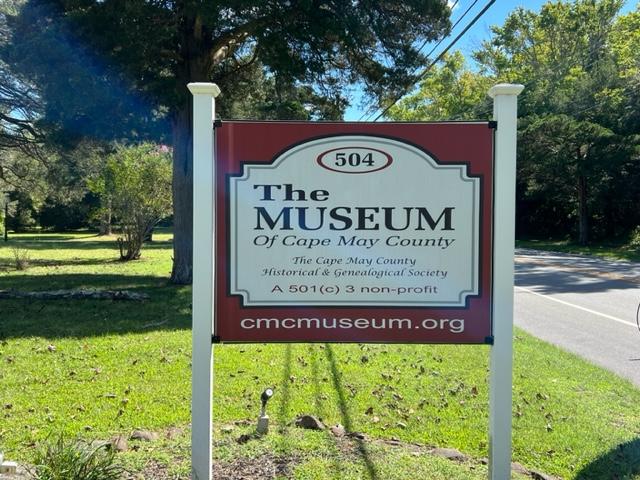
The Museum of Cape May County sign welcoming you.

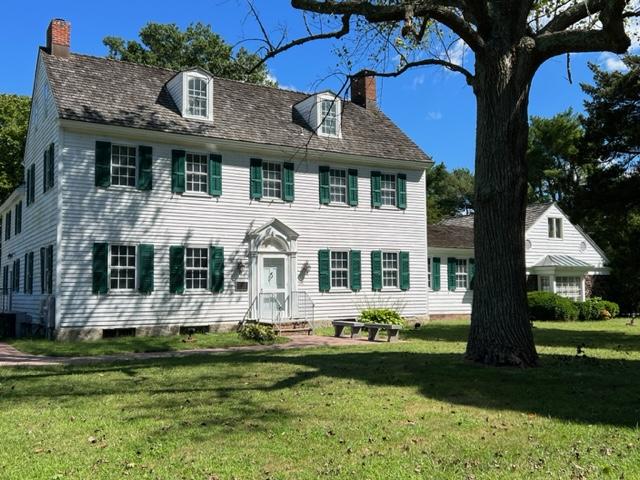
The Museum of Cape May Country museum complex

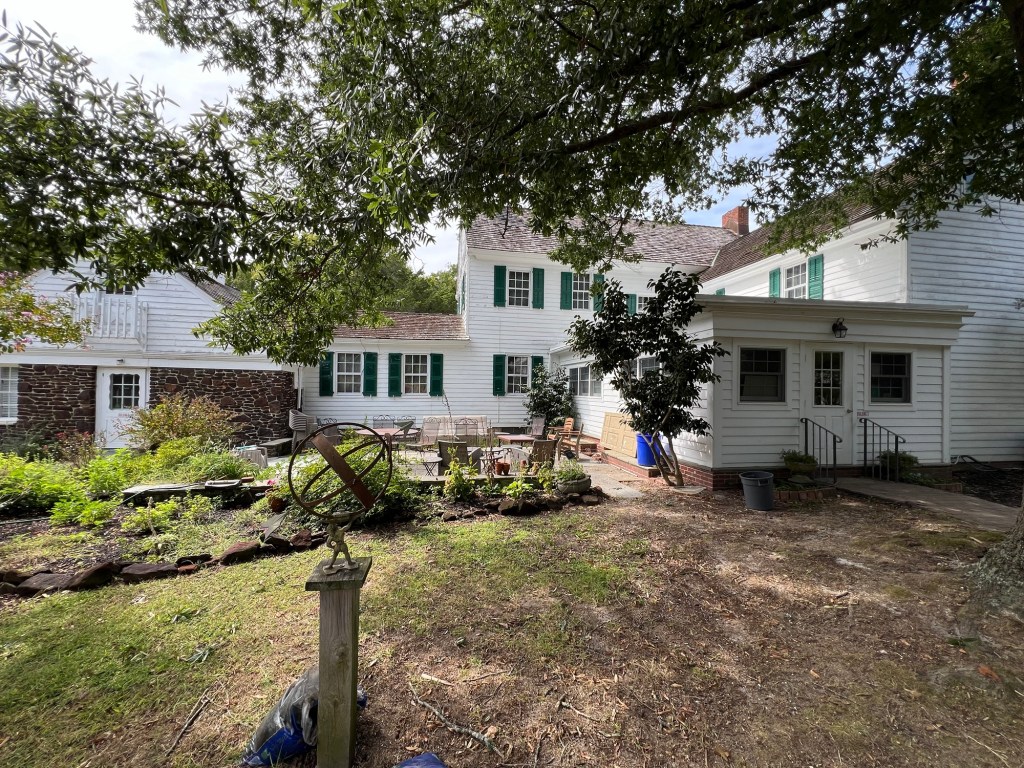
The Museum grounds in the back.

After three years of trying to visit the museum, I finally got on a last minute walking tour of the Museum of Cape May County and have to say that it was well worth the wait. What an interesting set of buildings that have a fascinating set of artifacts and so nicely displayed in a series of buildings.

The museum campus is broken up in a series of buildings on a two acre site. There is the main office which has an art exhibition, the family homestead of the family, who lived here for several generations, the carriage house which displays several carriages and stage coaches that were used in the area.

The back of the main house where you can see the three additions to the house

The barn where the Military, Native American and Farming displays are showcased

The Carriage House is to the left and the barn is to the right

The Carriage House on the property

The History of the House and of the Cape May County Museum site:

(from the museum website)

Housed in a building that dates back to 1704, the Cresse House, and its 1830 Holmes addition, as well as a historic 1780 barn and carriage house have rooms devoted to a subject or time that will hold you spellbound as you make your way through the past. The 11 room Cresse Holmes house treats you to a glimpse of life as it was in Cape May County from colonial to modern times. From the 1704 colonial kitchen and loft bedroom to the Victorian dining and sitting rooms all are decorated and furnished with period pieces. Special exhibit rooms include a children’s playroom teeming with toys, a doctor’s room with instruments, glassware and vials filled with a colorful array of pharmaceuticals and a Victorian music room with dozens of fascinating players and instruments (Cape May County Museum website).

Our first part of the tour was the family home which had been lived in for generations. The first part of the house was built in 1740 and you could tell by the open hearth and the flooring.

The hearth of the original section of the Cresse home

The kitchen was set up and furnished as the main part of the house. Because of the heat, this was the main part of the house that habituated. Here the family would gather, eat and socialize.

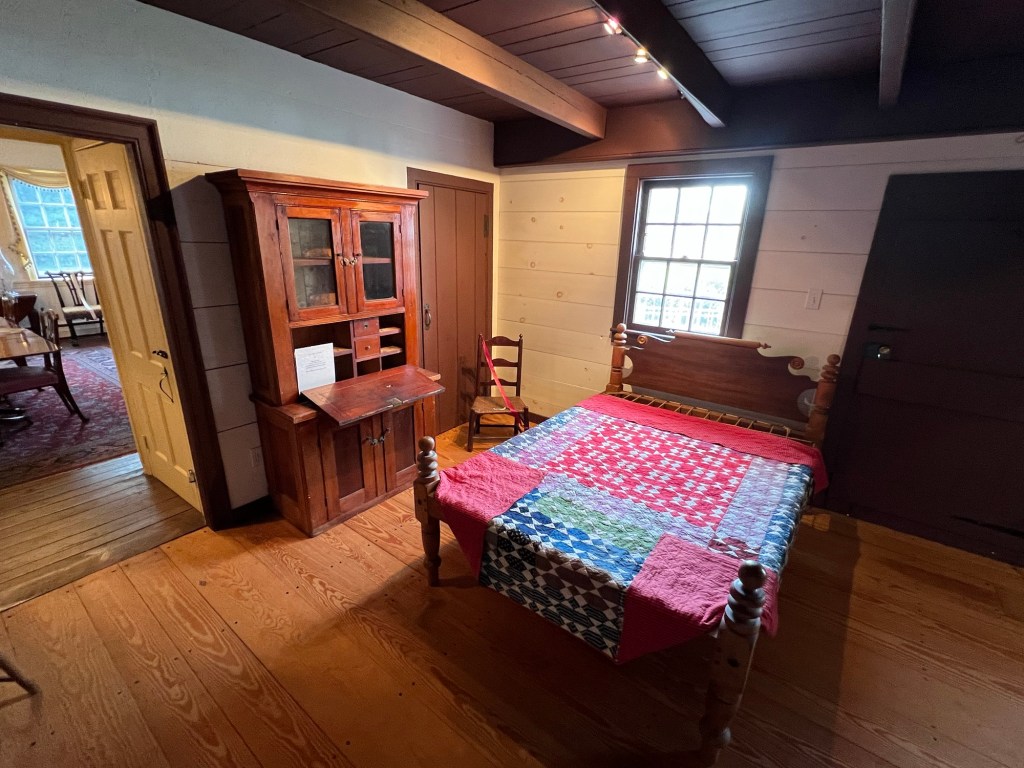
The back bedroom shows the families affluence in the late 1700’s

Having a separate room for sleeping was considered quite extravagant. The heat would circulated through the home and warmed this room next door. The main part of the house was built in 1840 in the Federalist design.

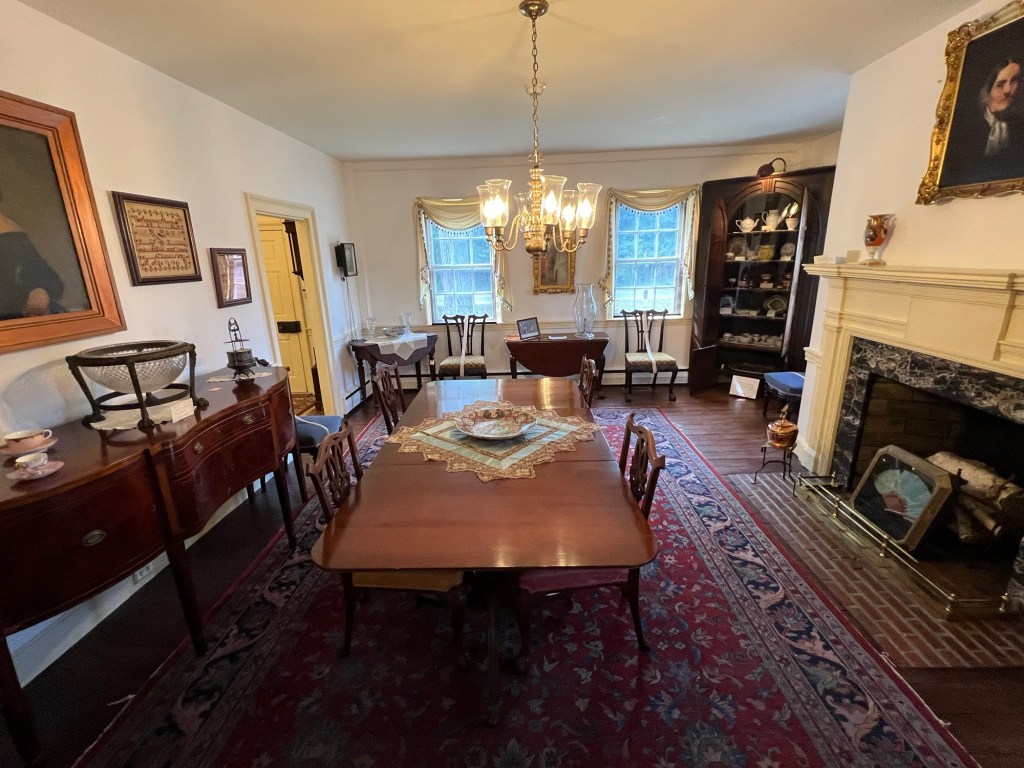
The main dining room showed the affluence of the Holmes family in the early pre-Civil war era

The main part of the house that faced the road was the 1840 Holmes family addition with the Federalist design. This part of the house was the main part house that was used for every day living and entertaining. The house was furnished in a combination of family heirlooms and donated period pieces..

The house well furnished with period pieces

The beautiful side table of the Dining Room

Both the Living Room, Dining Room and the Parlor were all tastefully furnished and what I thought were interesting parts of their collection. It was like someone had just left the room.

The Parlor of a Victorian house held its finest pieces

The furnishings in the Parlor

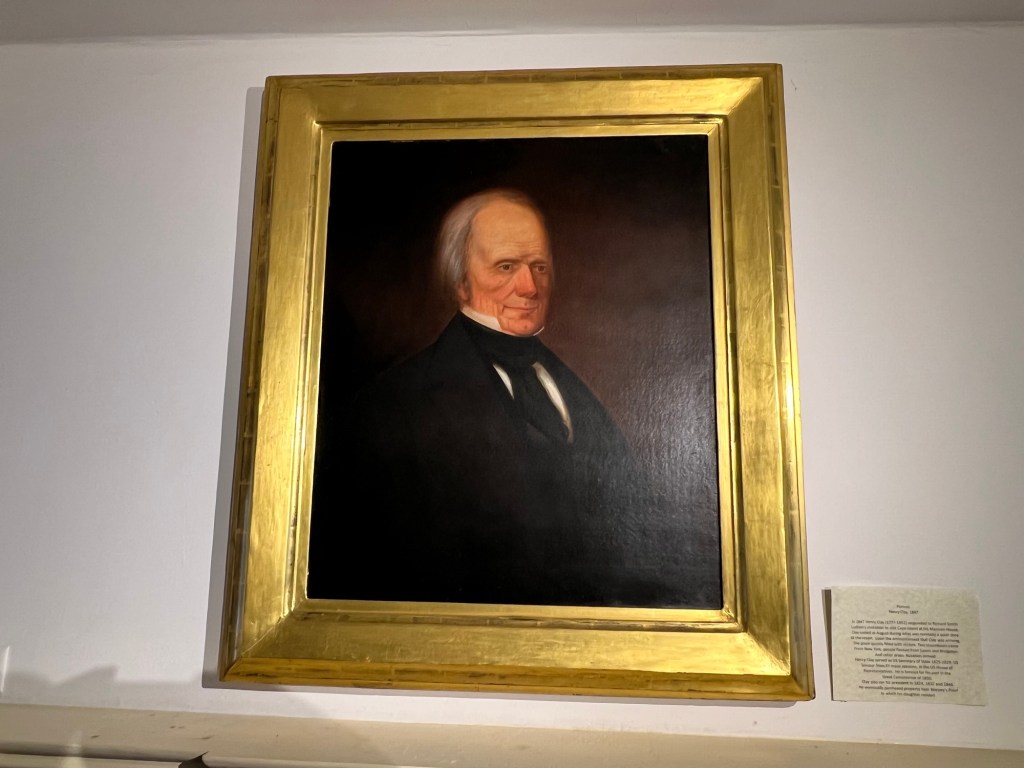
The painting of Henry Clay stood above the fireplace

Since I joined the tour late, I had seen just the first floor of the home before we continued on to see the rest of the building.

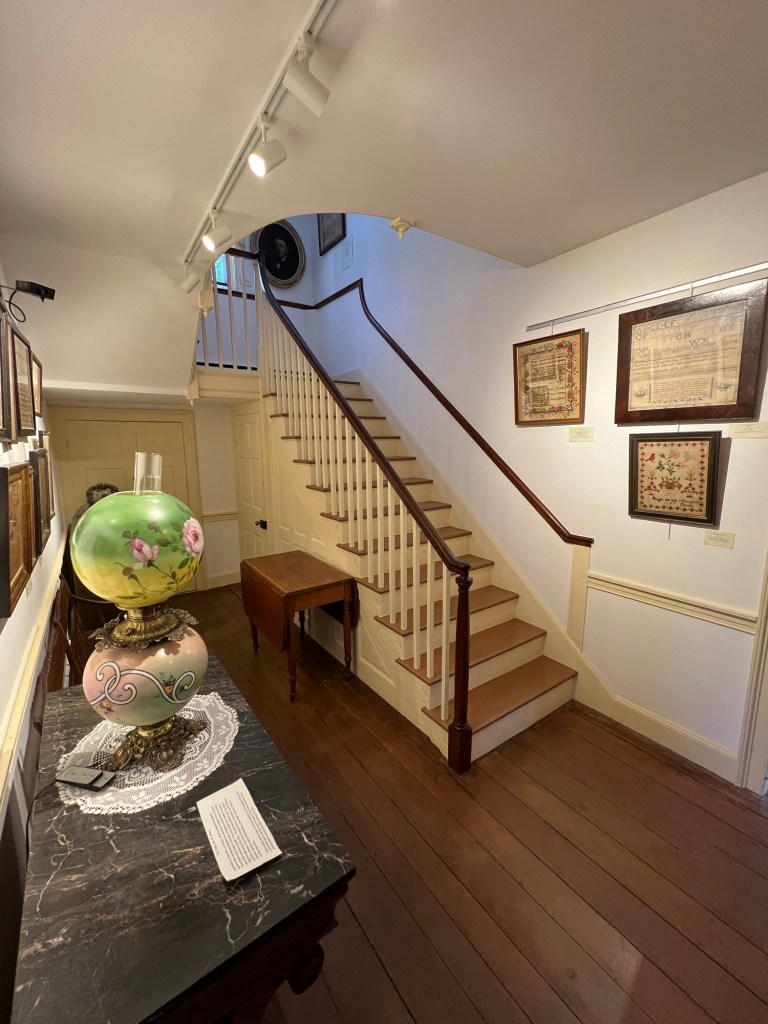
The front entrance room of the house

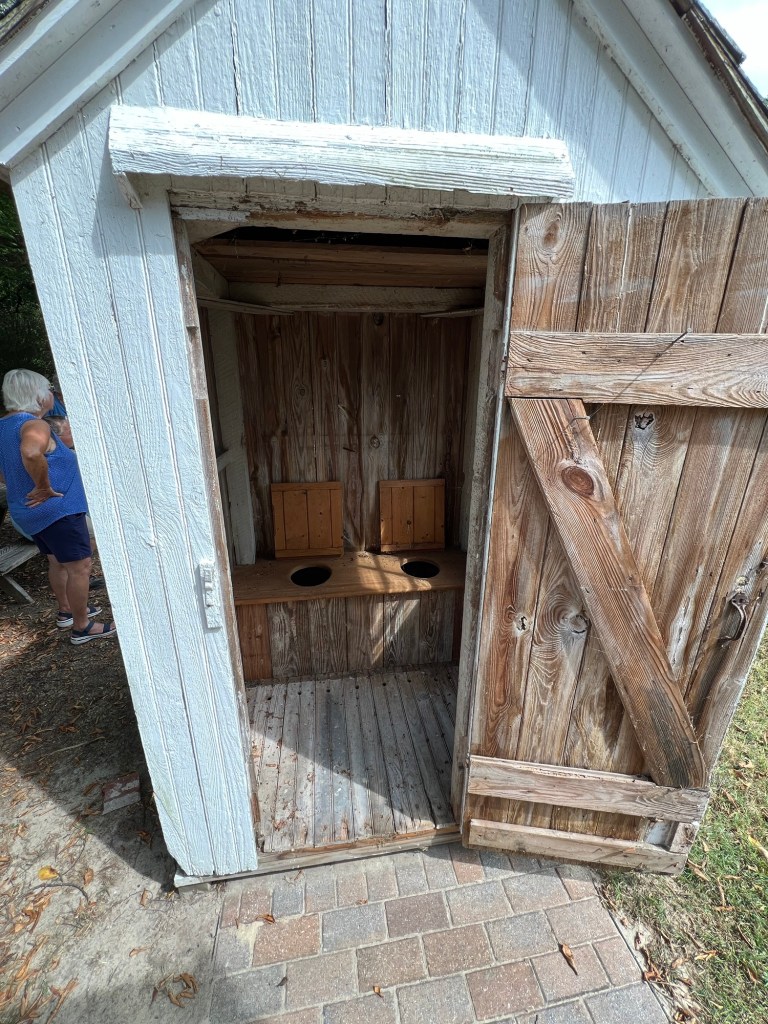
As we exited the house, we moved on to the most important room of the house, the outhouse which was located behind the main home.

The outhouse in the back of the home

We next moved on to one of the galleries of the Nautical collections.

The collection of nautical artifacts

Mantel’s for navigation

Items from the shipping industry

What beautiful items

Our next part of the tour was of the Carriage House and its collection of buggies and carriages owned by by local residents.

The Barn and Carriage exhibits:

(from the Cape May County Museum website)

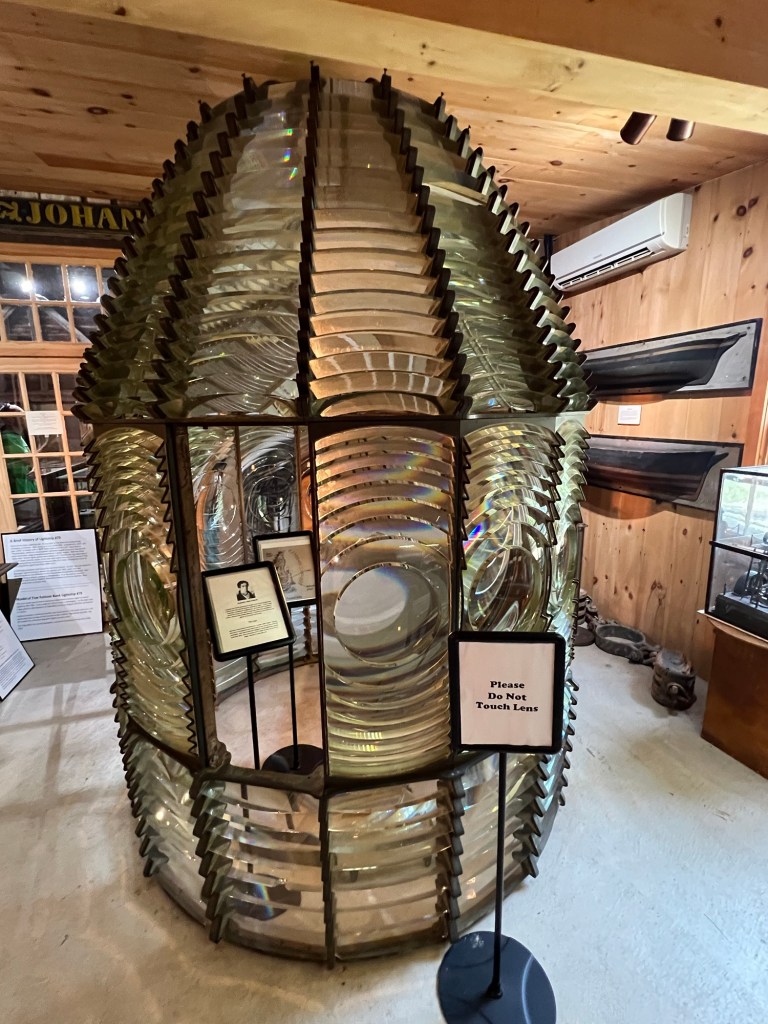
Our barn is home to a maritime exhibit including Cape May County’s crown jewel, the original first-order Fresnel lens from Cape May Light House. In addition to our collection of farm implements the barn is also the site of our recently dedicated military room that pays homage to those who served our nation in time of war.

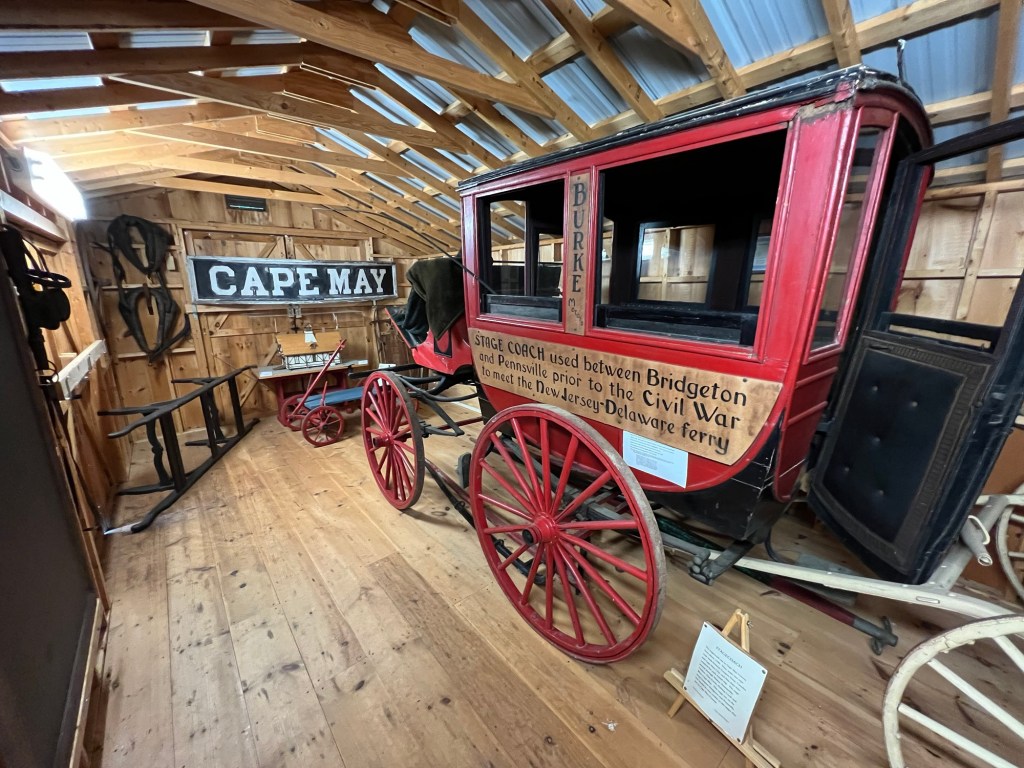
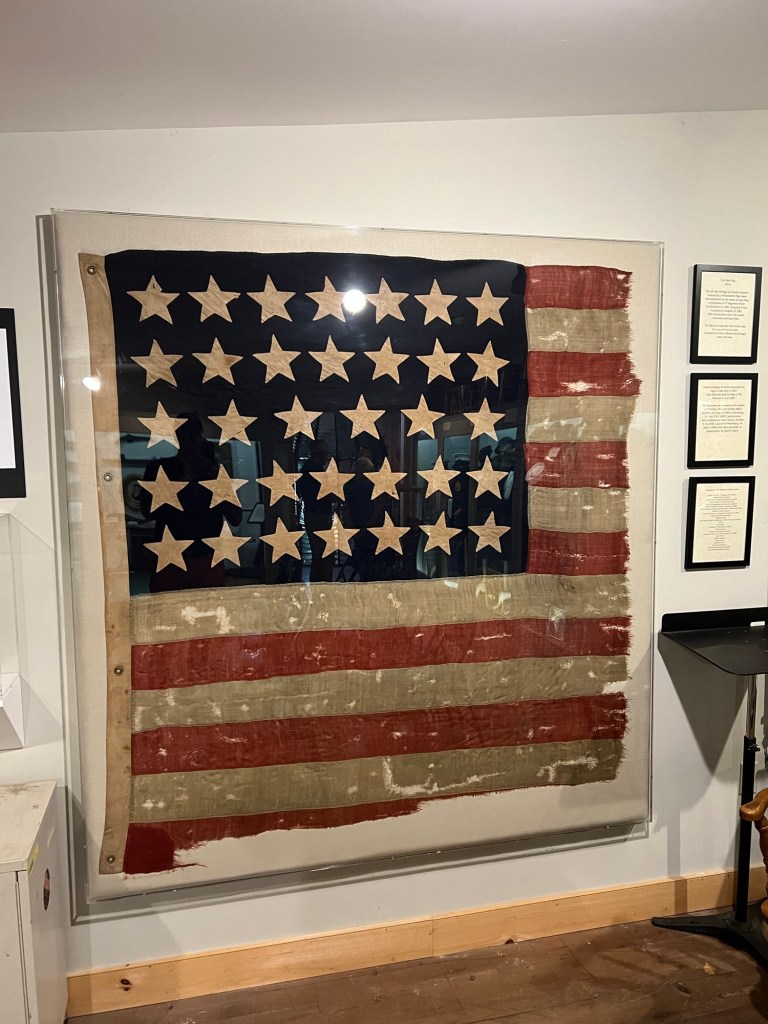
Period pieces range from the Revolutionary War to our country’s most recent involvement in Iraq and Afghanistan.  Of special interest is the American flag that was carried by soldiers who hailed from Cape May County during the Civil War. The flag survived numerous battles, including Gettysburg, Spotsylvania, Bull Run and was at Lee’s surrender at Appomattox. The Carriage Shed houses items related to transportation – a vintage horse-drawn market wagon, a doctor’s sulky and an early stagecoach that ran between Bridgeton and Pennsville (from the museum website).

The collection of carriages and buggies

A local buggy from a member of the community

The history of the Cape May Stagecoach

The Cape May Stagecoach

This stagecoach was used on the route between Bridgeton and Pennsville

The funeral cart used to transport bodies once people die to their last destination

The last building on the museum’s property housed military artifacts, farm equipment and artifacts from what would shape the local community

The Maritime History of Cape May and of the Museum:

(from the museum website)

Since its earliest days the area we now call Cape May County has been linked to the water.  With the tumultuous Atlantic Ocean on one side, the Delaware Bay on the other and lush forest and field between it served its residents well.  Early Native Americans thrived, whalers found whales in the ocean and refuge in the bay. All worked the shores and tributaries for birds and shellfish.  As the population grew, shipbuilding and coastal trade took on greater importance.  Come visit us and explore this aspect of our museum (from the museum website).

Many of the artifacts, photographs and manuscripts associated with maritime activities have found their way our museum collection.  From the original first-order Fresnel lens that sat atop the Cape May light to whaling implements, marine skeletons, ship parts and Native American exhibits there is something for everyone.  Of special interest is our recently acquired Cresse Journal, an original manuscript by Lewis Cresse detailing the life of a whaler in the mid-eighteenth century (from the museum website)

Hunting and military items from around the turn of the last century

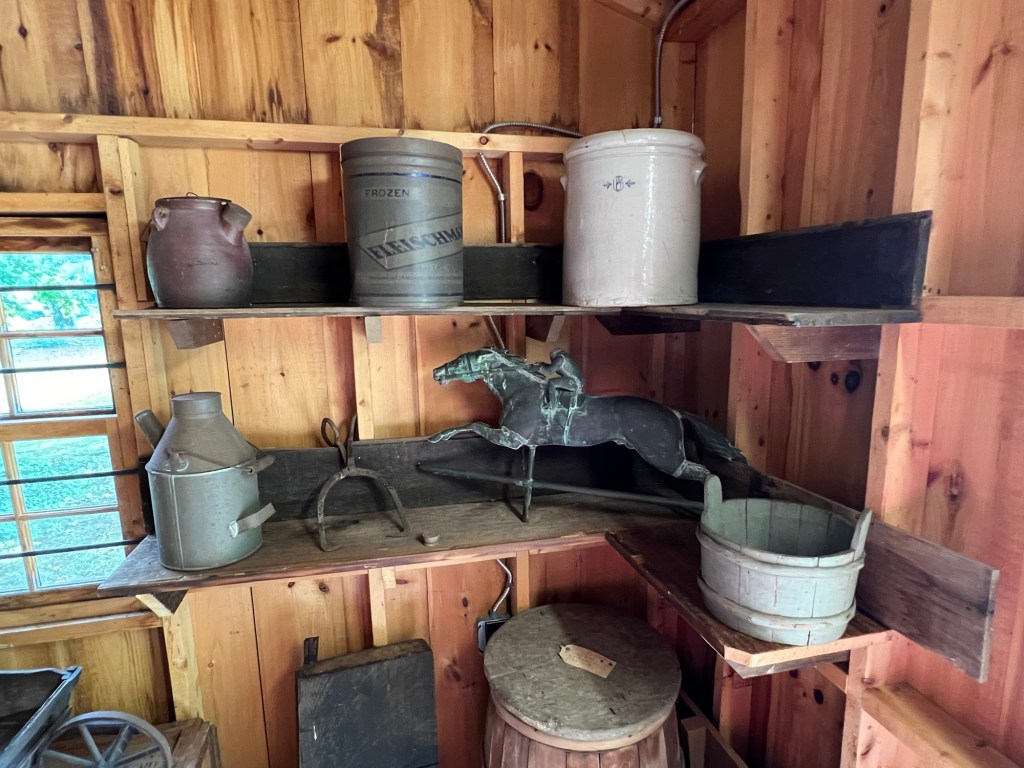
Household and farming items

Artifacts from the Shipping industry

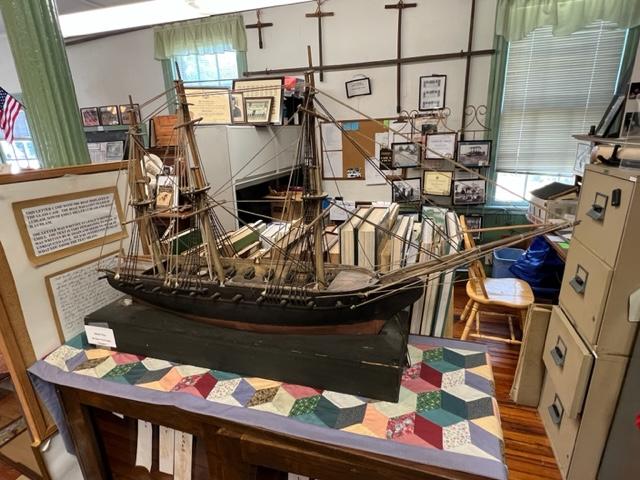
Artifacts from the Counties Ship Building past

Items from the Whaling Industry in Cape May

The museum also houses the original Cape May Lighthouse light

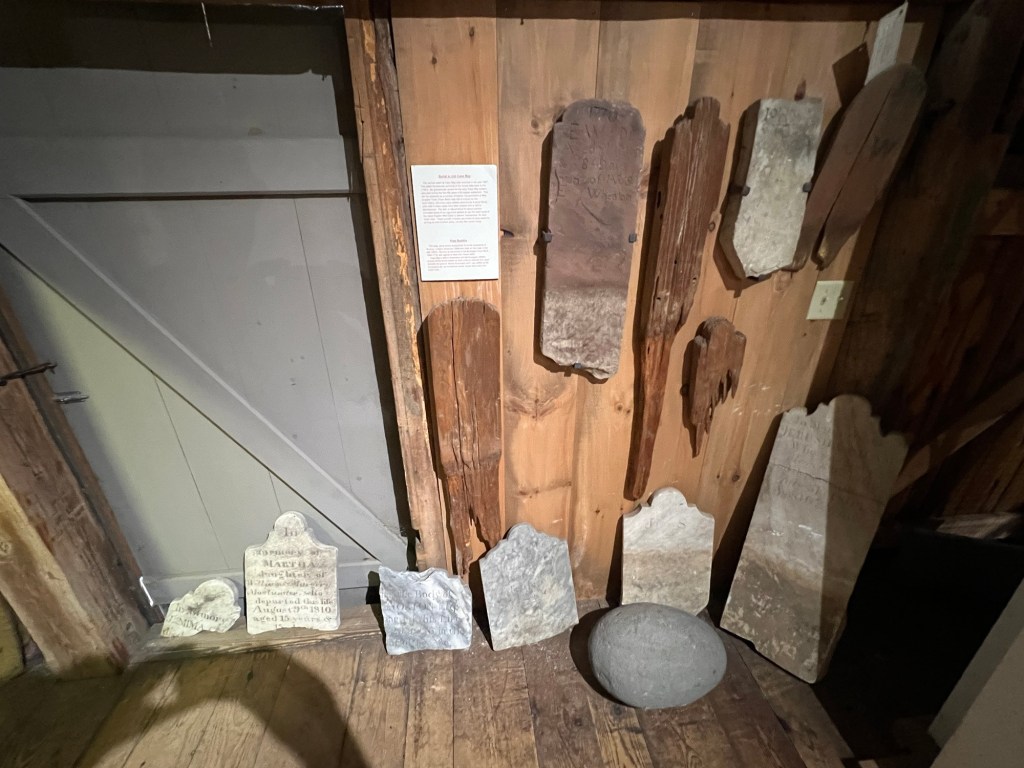
The history of burial and old cemeteries in Cape May

Old tombstones from Cape May cemeteries

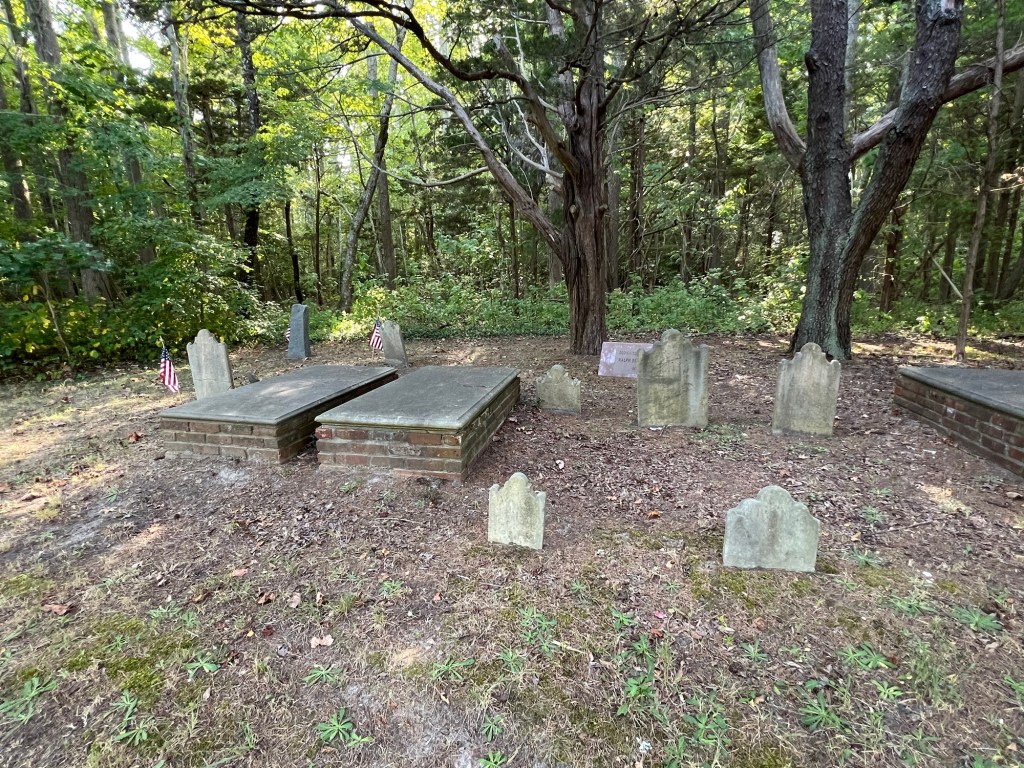
The family cemetery on what was once the family farm that now sits down the road and across the street

The family plot

The museum’s extensive collection of arrowheads and other Native American artifacts

The Cape May Civil War flag is most of the most interesting pieces in the museum’s military collection

The Cape May Civil War flag

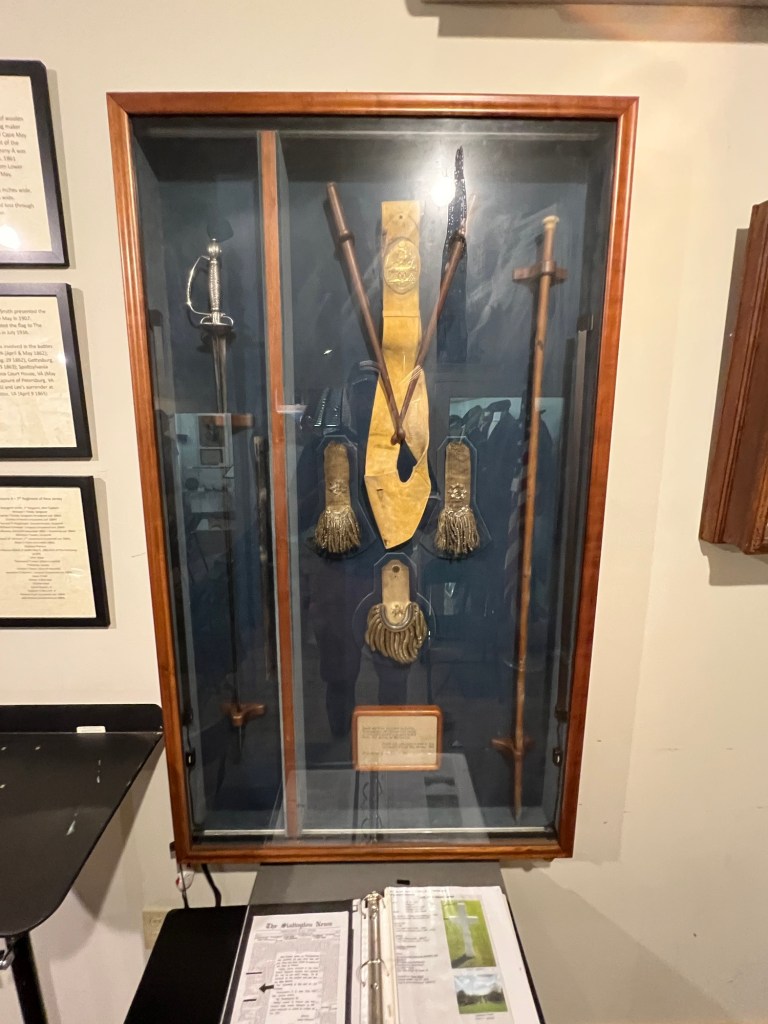
Military artifacts from the war years

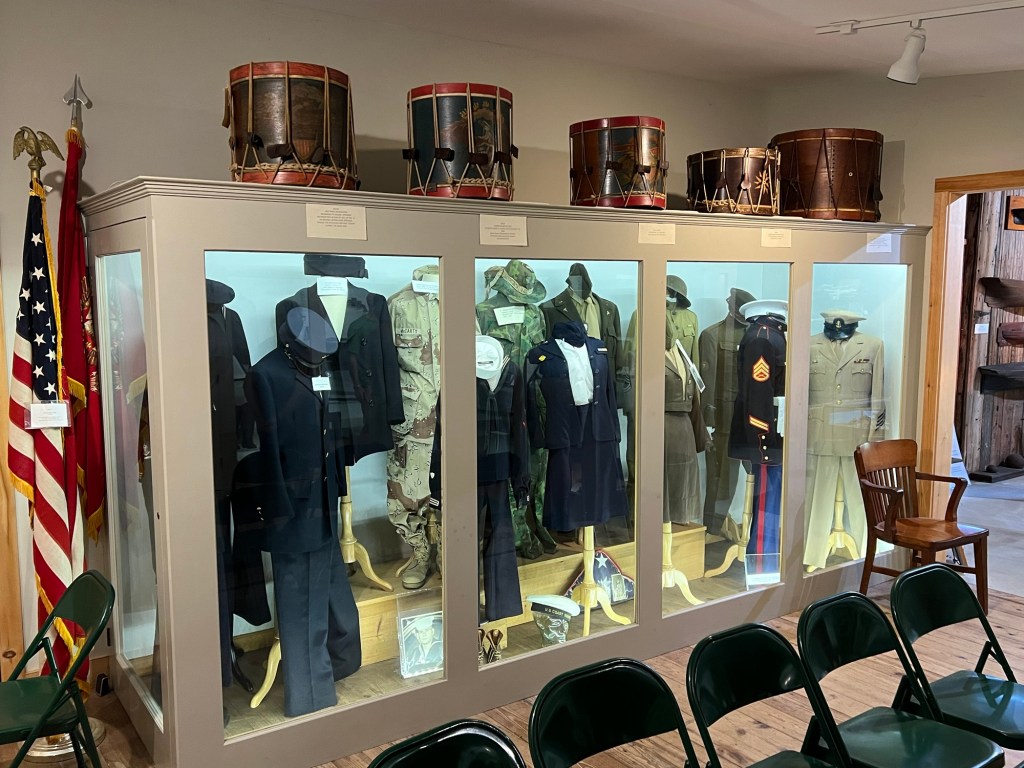
The extensive collection of military uniforms from the different wars in the museum collection with ceremonial drums on display on the top of the case

The gun and pistol collection at the museum

The Pistol collection at the museum

The collection of military items in the collection

The early military collection at the museum

The grounds of the museum before I left for the day

The family home that faces the Highway

The museum is not just an extensive collection of City of Cape May but the history of the County as a whole and its rich development from a farming, whaling and shipping town to a major tourist hub and recreation community.

It also shows it has never lost it nautical or farming past as well as this legacy still carries on in Cape May. The development of the community and the progress it has made over the years is showcased in the galleries and buildings on the museum property.

The Development of the Cape May County Museum:

(from the museum website)

The Cape May County Historical & Genealogical Society (CMCHGS), doing business as The Museum of Cape May County, was founded in 1927 as a private, non-profit organization by a number of local families who wanted to ensure the history of Cape May County was preserved and documented. In 1930 the CMCHGS established a museum and genealogical library which were housed in the basement of the County Court House building for 45 years.

In 1976, the current facility, the Cresse-Holmes House containing eleven rooms along with a five-room barn was purchased to accommodate the growing collection. By 1988 the construction and dedication of the genealogical library and administrative offices had taken place. In the last 90 years, thanks to the generosity of many individuals and families with a connection to Cape May County. the collections have grown to contain many thousands of Cape May County artifacts and documents.

Today the museum and library are run by full time, part time and seasonal staff members along with an enthusiastic group of active volunteers to assist with greeting visitors, guiding tours, researching, assisting with programs, and staffing events.

Dennis Township Old School House Museum                   681 Petersburg Road                                Woodbine, NJ 08270

Dennis Township Old School House Museum 681 Petersburg Road Woodbine, NJ 08270

Dennis Township Old School House Museum

681 Petersburg Road

Woodbine, NJ 08270

(609) 861-1899

http://www.dennismuseumfriends.org/

https://www.facebook.com/people/Friends-of-dennis-township-old-school-house-museum/100066513017935/

Open: Every First and Third Saturday of the Month (Please check with the website on weather conditions)

Admission: Free but donations accepted

My review on TripAdvisor:

https://www.tripadvisor.com/ShowUserReviews-g35374-d25030718-r862673797-Dennis_Township_Old_School_House_Museum-Woodbine_Georgia.html?m=19905

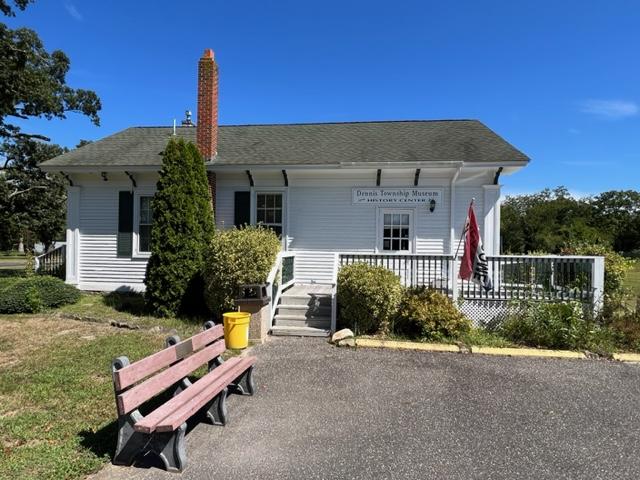
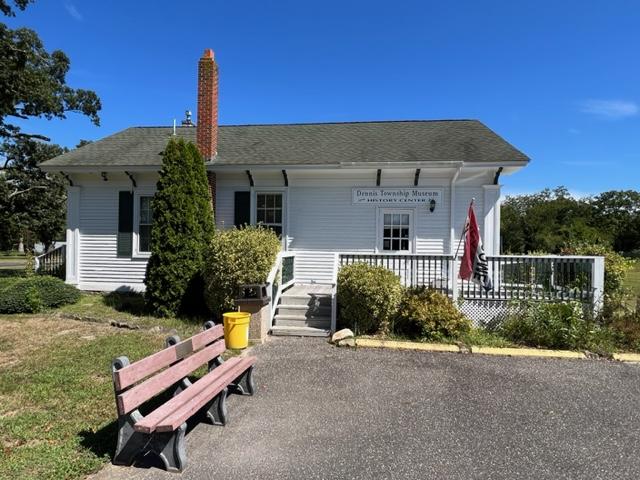
The Dennisville Historical Society at 681 Petersburg Road

I have been wanting to see this charming little museum for several months. This is one of the featured historical museums in Southern New Jersey. The museum is representing the local farming and manufacturing industries as well as life in a farming community at the turn of the last century.

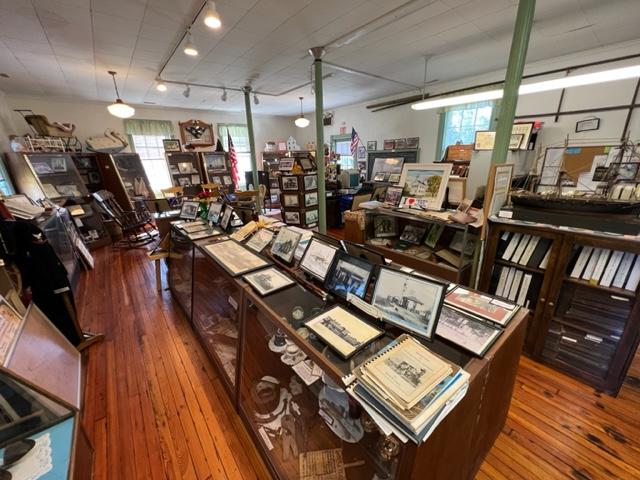
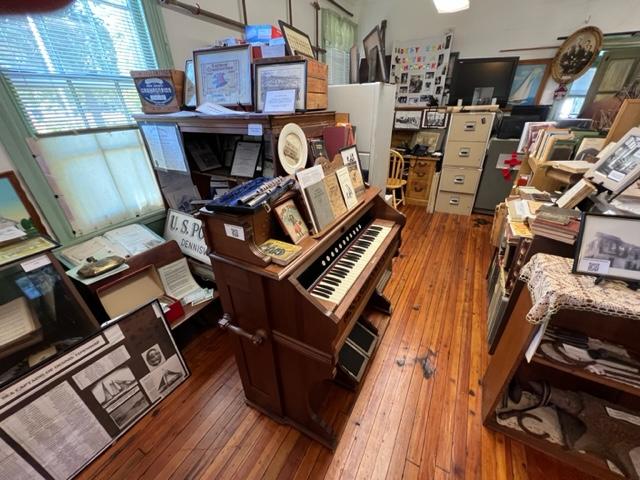
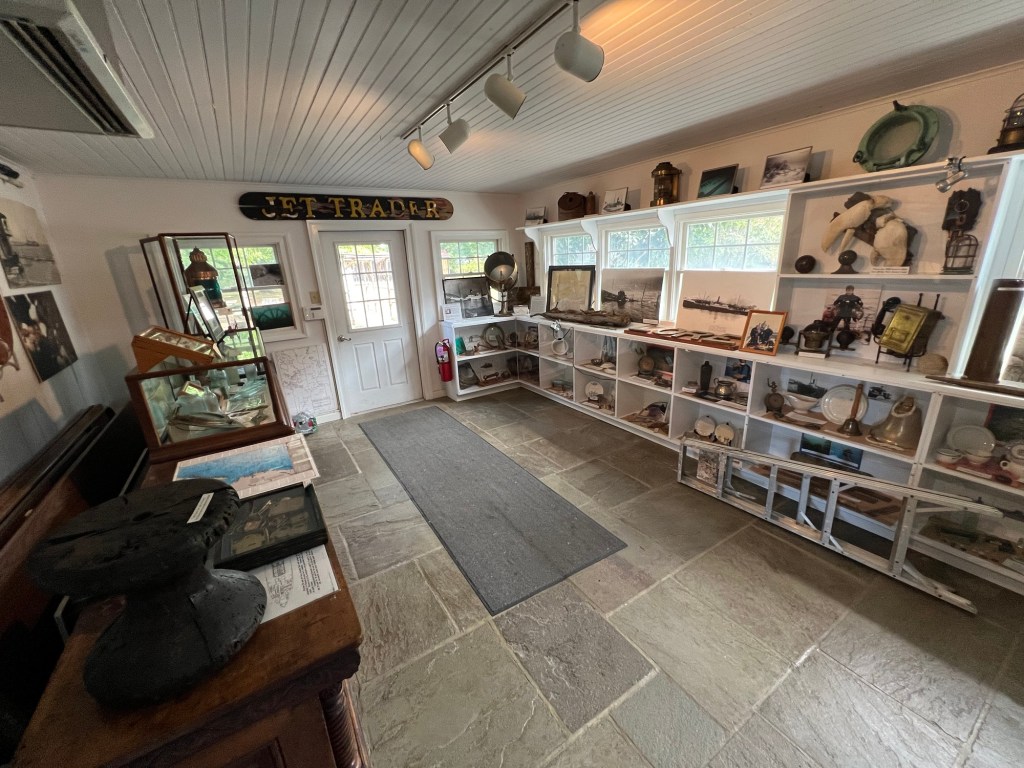
The Main Gallery at the Dennisville Historical Society.

The museum was started in 1994 in a partnership with the town of Woodbine, NJ and houses the history of Dennis Township. It is an all-volunteer museum, and the docents were really helpful describing all the displays that surround this small former schoolhouse. Their Friends of the Dennis Township Museum group does a nice job walking you around the museum and describing the displays.

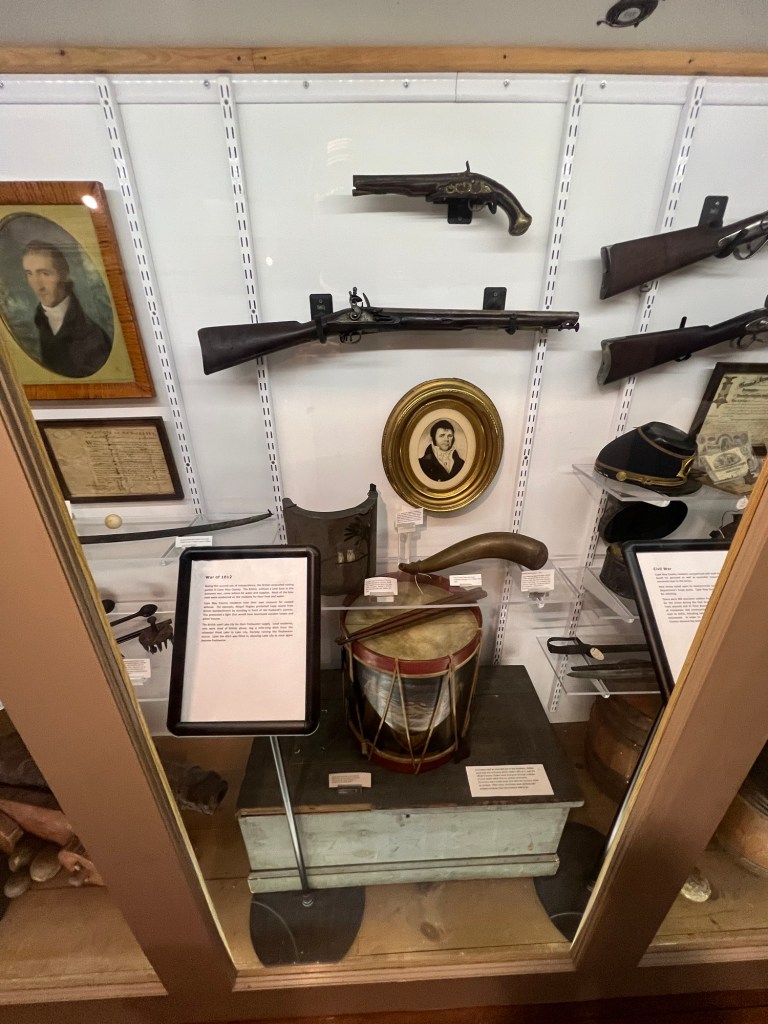
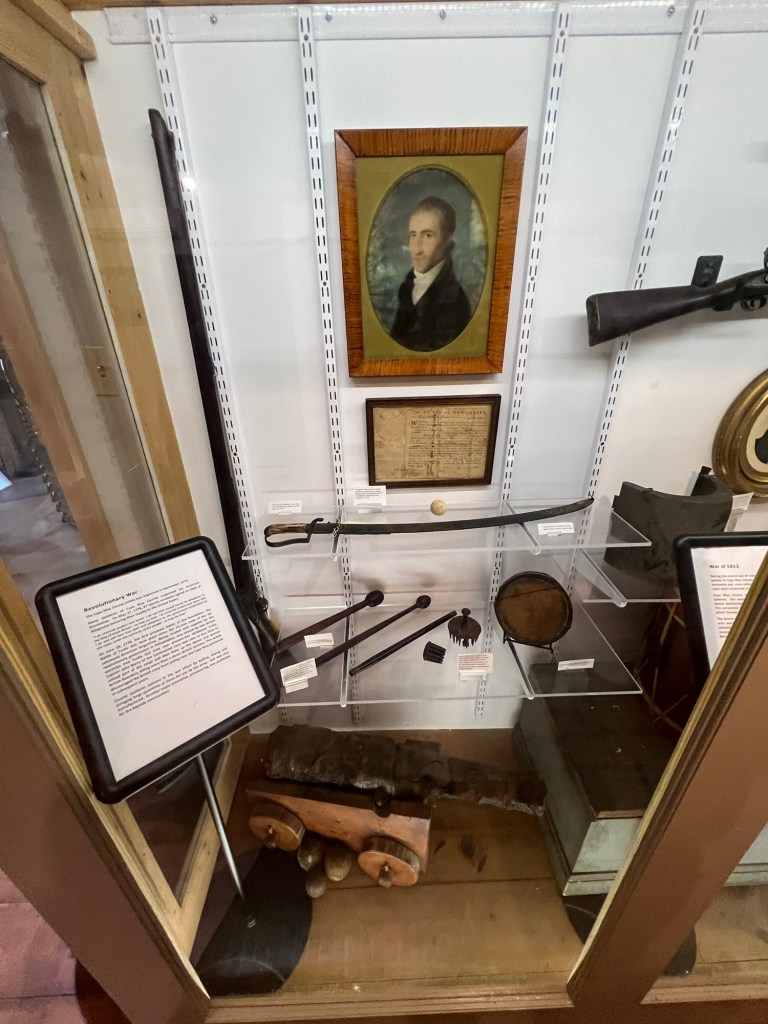
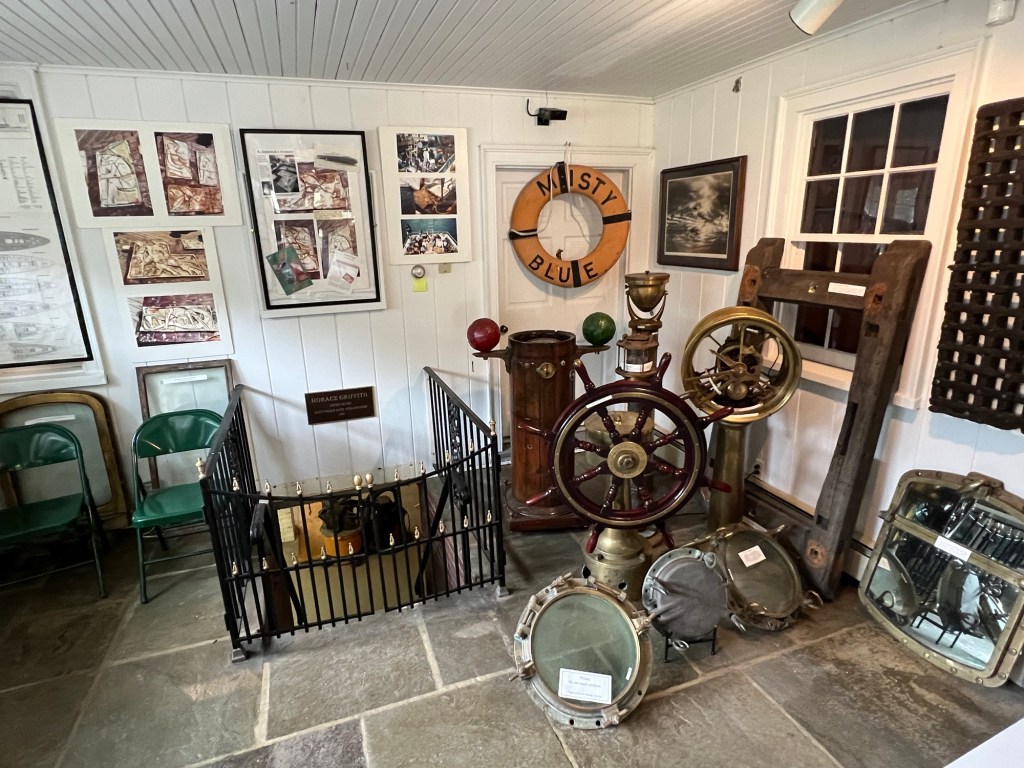
The artifacts that are on display at the museum.

The museum tells the story of a small-town farming community with a history of different local businesses, the Dennisville School district from 1874-1948 and the Methodist colony that was a big part of the community in the early 1800’s. The shipping industry was very important to any small town that used to supply its fruits, vegetables and fish to Philadelphia.

The Farming display at the museum.

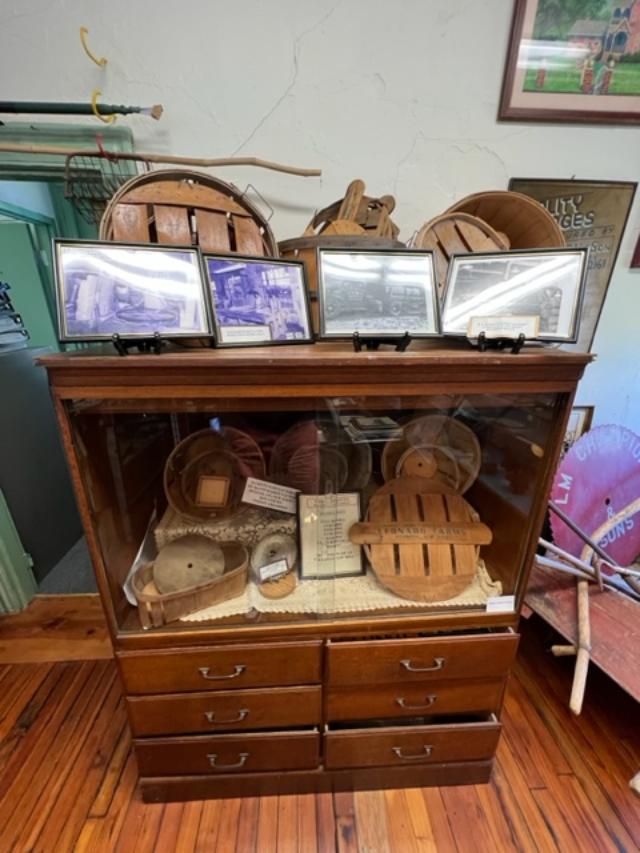
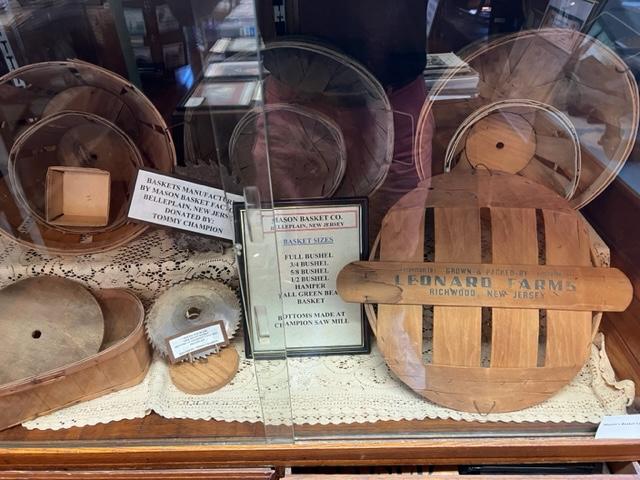
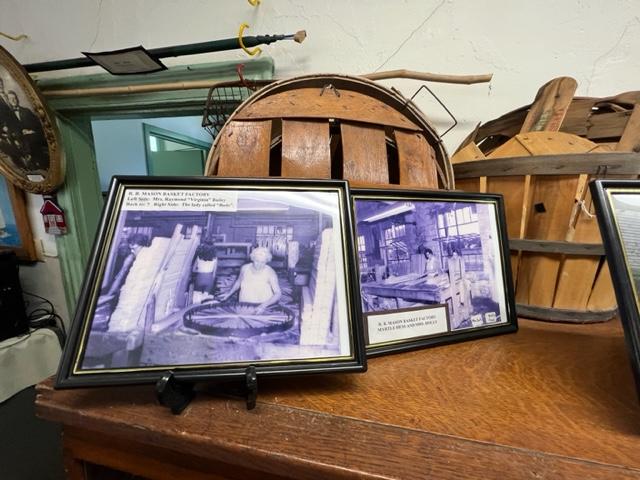
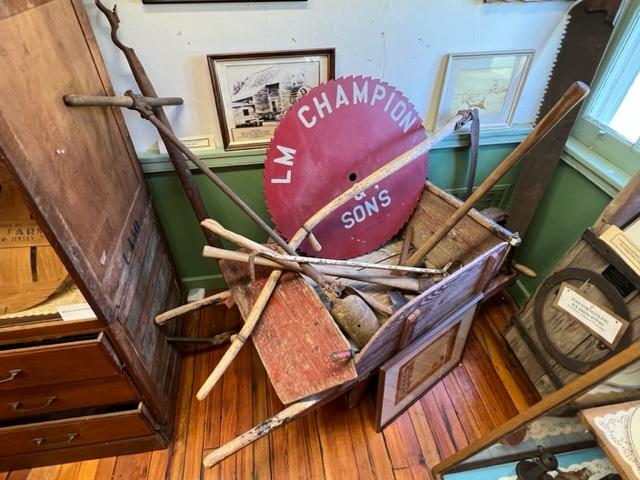
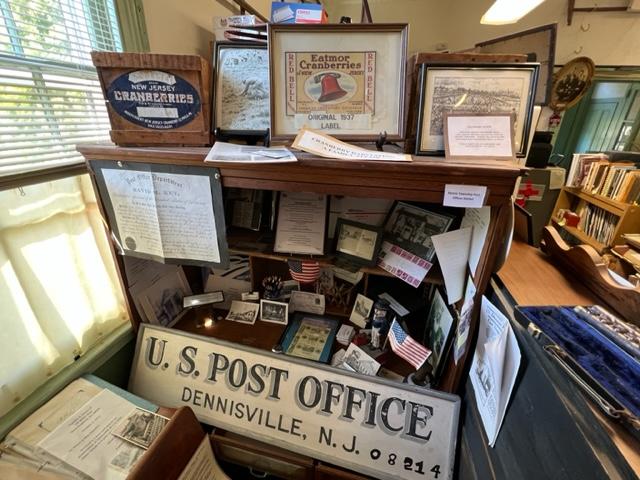
Some of the displays were dedicated to the local family businesses with the small cranberry industry that used to be in the area with equipment and packaging. The Mason Basket Company used to make the small and large wooden baskets for fruits and vegetables used to ship these items to both New York City and Philadelphia. These baskets are a staple at any farmers marker today.

The Basket making business for fruits and vegetables was a big business.

The other big business in town was the shingle making business that prided itself on supplying the shingles for Independence Hall in Philadelphia.

The history of the Basket making business in Dennisville.

The basket and shingle businesses in Dennisville.

The building had been the local one room schoolhouse for the surrounding community from 1874-1948 until the new schools were built in the 1950’s. There was a display on the school’s history as well as lots of pictures of the students at the turn of the last century with their period clothing and proper manners taking pictures with their schoolteachers. There were displays of desks, clothing and items that would have been in the school room.

The school display

The school display.

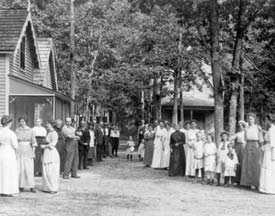
The town had once been a Methodist community with a large meeting house and surrounding homes for parishioners to stay. They showed the meetings and how the group would spend their summers in the area.

The summer community in Dennisville, NJ (from their archives)

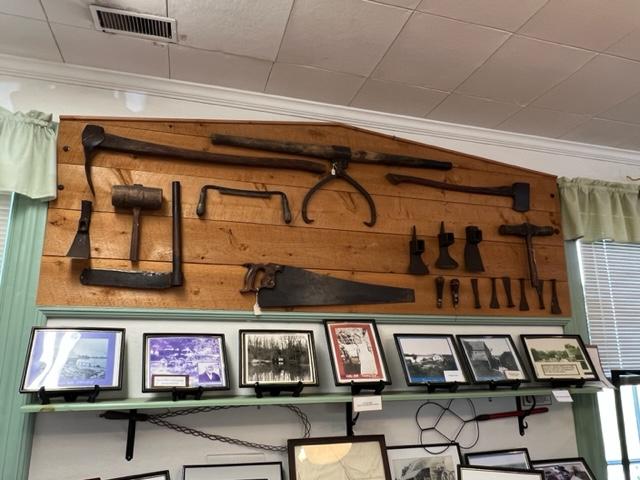
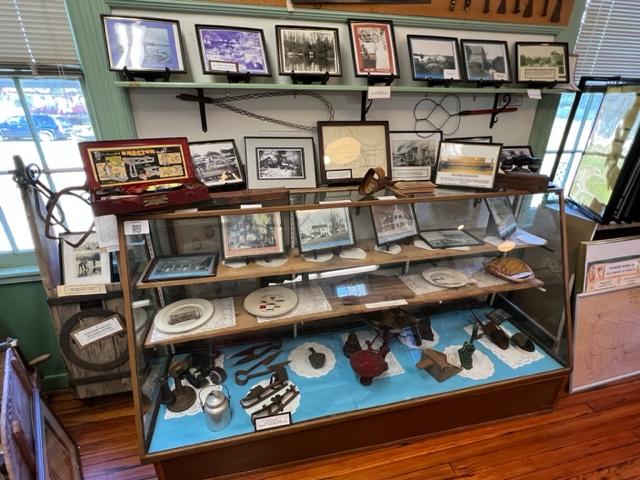
The museum showcased live in a small-town farming community with all sorts of farm and farmhouse equipment. There were all sorts of home making items like cooking utensils to make meals from scratch, baking and serving in homes where being a housewife took a lot of strength. The farm equipment included hoes, racks and seeders that kept the farms going.

The Post Office display

There were pictures of the renovations of the Ludlam family cemetery that had gone through a renovation by the Boy Scouts and showcased it beauty. The members did a nice job renovating the tombstones and landscaping.

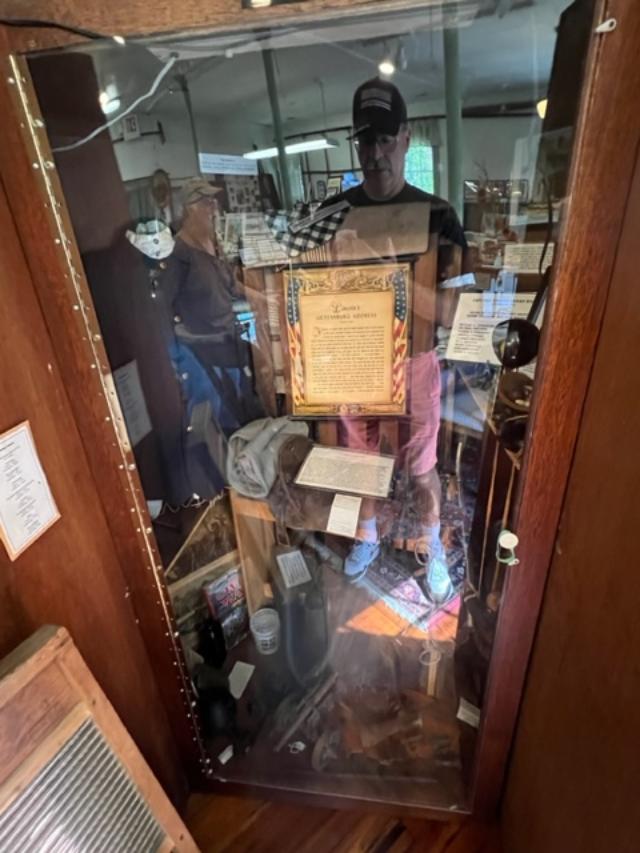
The Civil War display

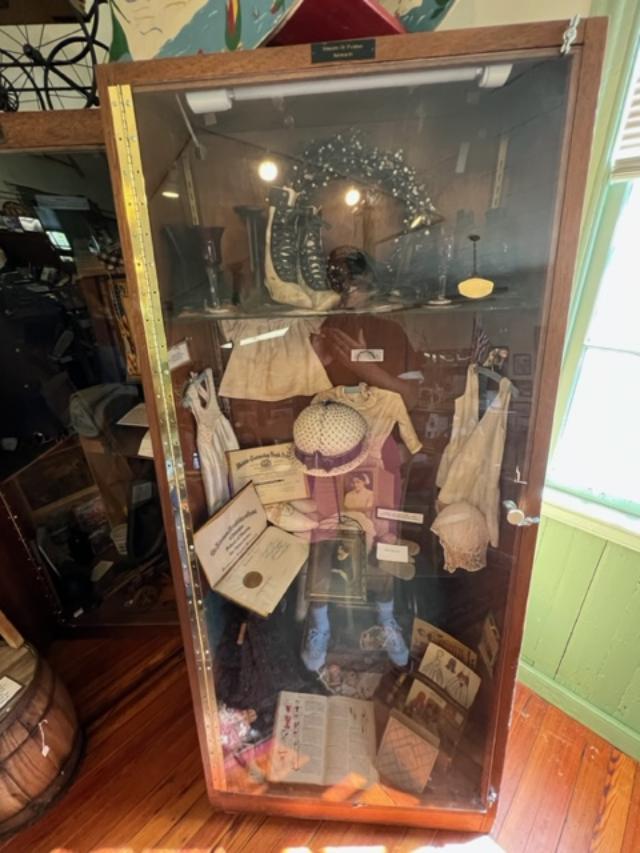
The Clothing display

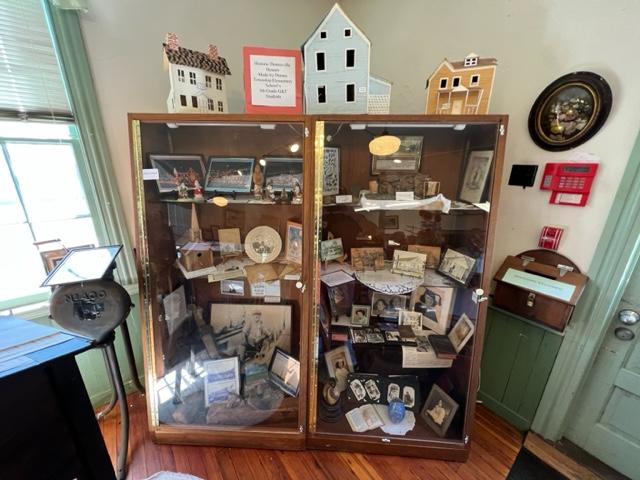
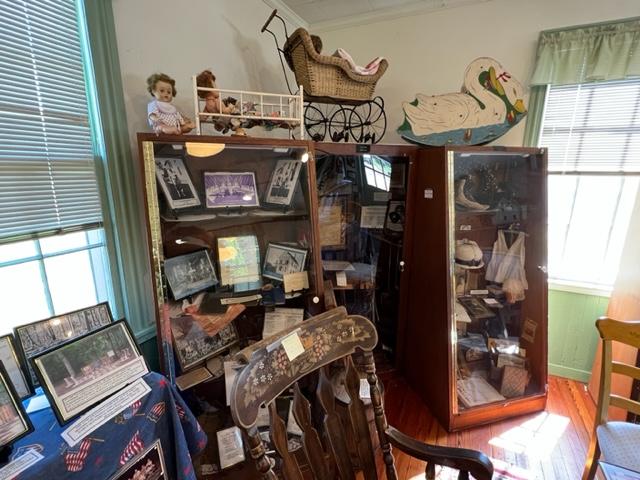
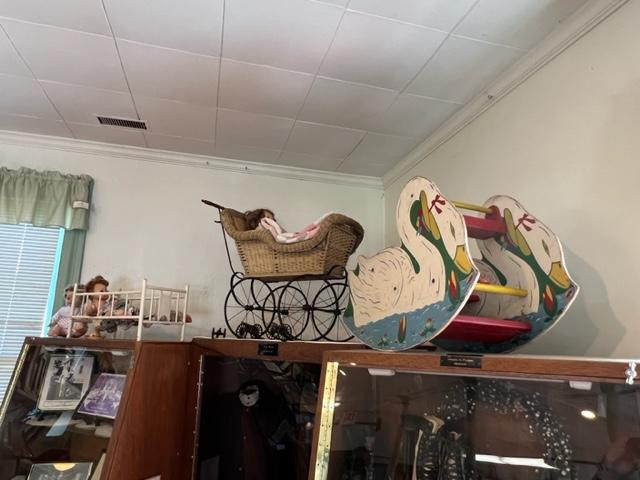
The Children’s display

There were lots of interesting items to see in the Children’s display.

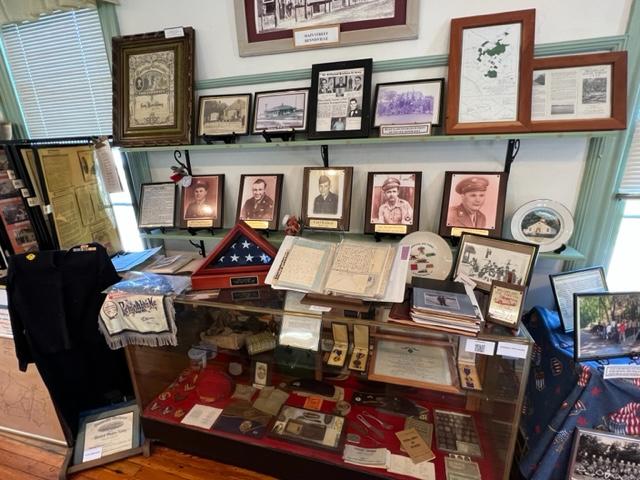
In the corners of the museum, there is period clothing from the Civil War to the 1930’s with hats, gloves and dressing plus accessories. There is a small display to the local veterans of war. Near the entrance there is a working pipe organ and more information about the town from the early 1900’s.

The Household items at the museum.

The docents told me that they have the old town records and that people come to the museum to research their families that used to live in the area. They have had people come from all over the country to find their family roots.

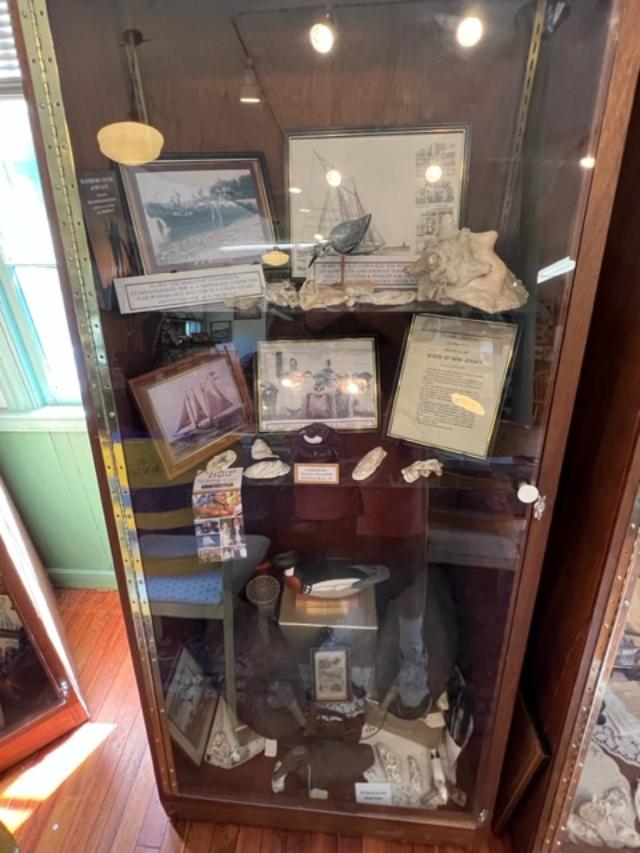
The Shipping Industry

The Ship Building industry

For a small museum, it is chock full of small displays offering a glimpse into a community of time past and how it has grown over the future and changed.

The Military display

Take time also to drive around this small town loaded with historical homes that have been beautifully maintained and labeled with the year that they were built. Some looked like they had the family names on them. All of the homes are painted bright colors and each has been brought back to life. I was amazed in how in one year how many of these homes had been bought and repaired and painted. The whole town was brought back to life.

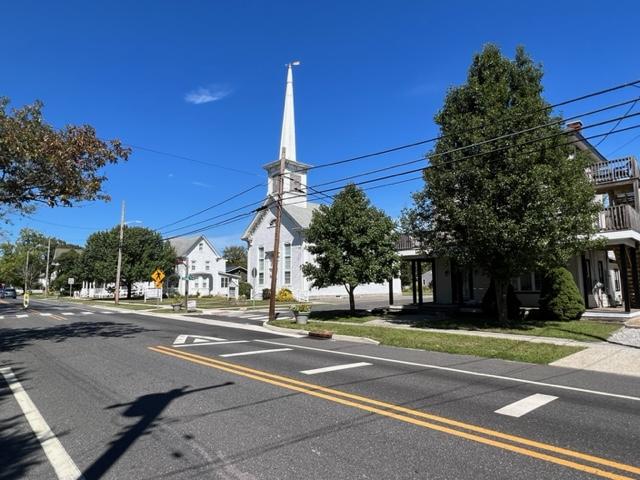
Downtown Dennisville has a quaintness to it.

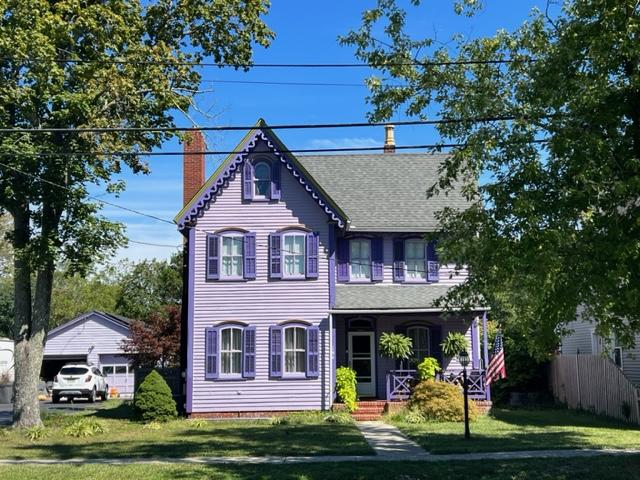
The Purple House in Downtown Dennisville, NJ.

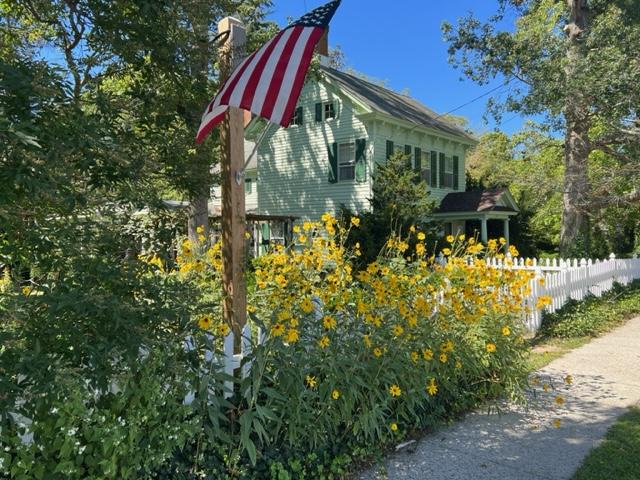
The light Green House in Dennisville, NJ

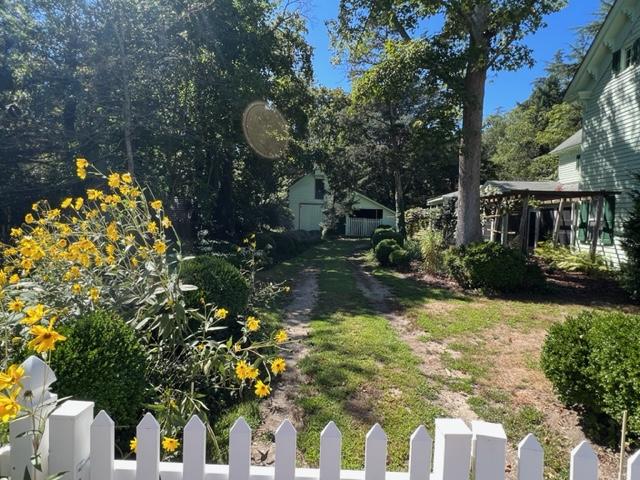
The gardens of the Green House

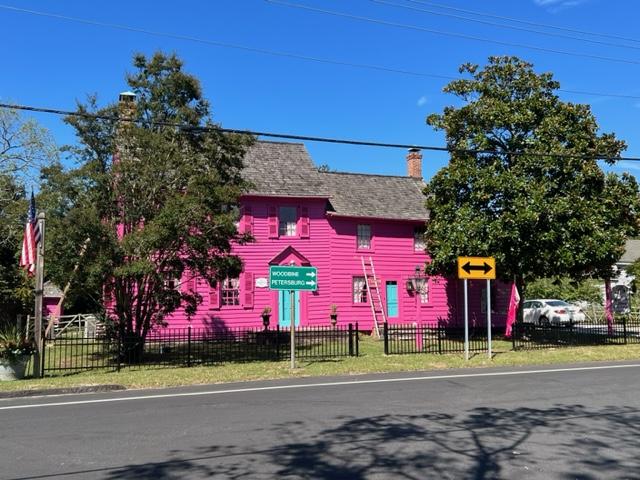
The Pink House is a known landmark to local law enforcement as a marker in the town.

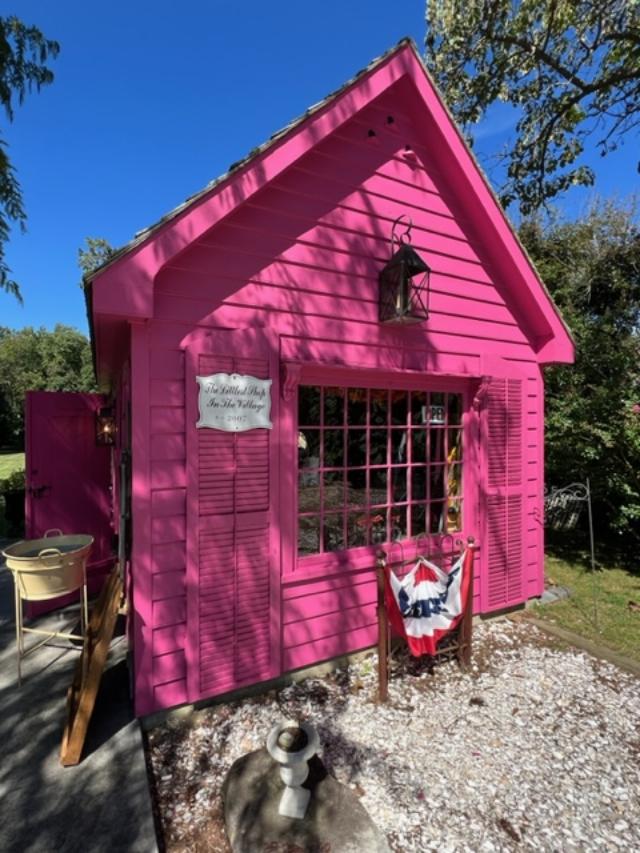
There is a tiny gift shop selling jewelry behind the house which just opened. I thought it would make a nice Tea House.

The Town of Dennisville has it charms to it and it totally being redone. Too bad the only restaurant in the area is a Wawa. Still it is a nice place to visit and drive around in.