The Ulster County Fire Department Museum at the Ulster County Fairgrounds
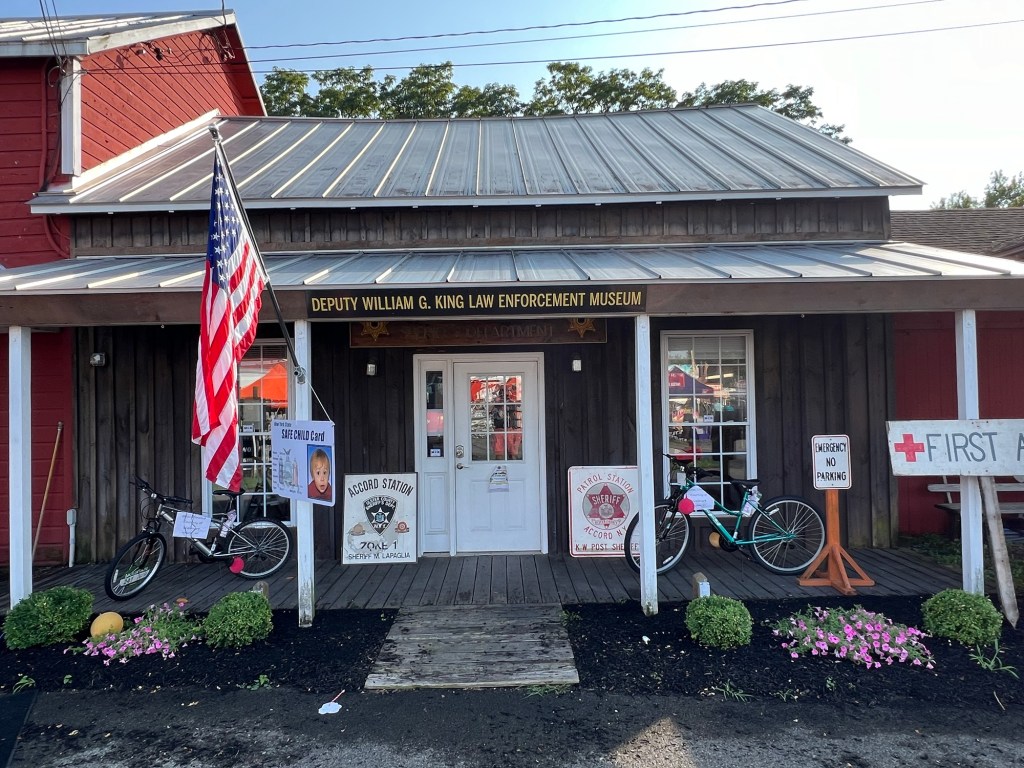
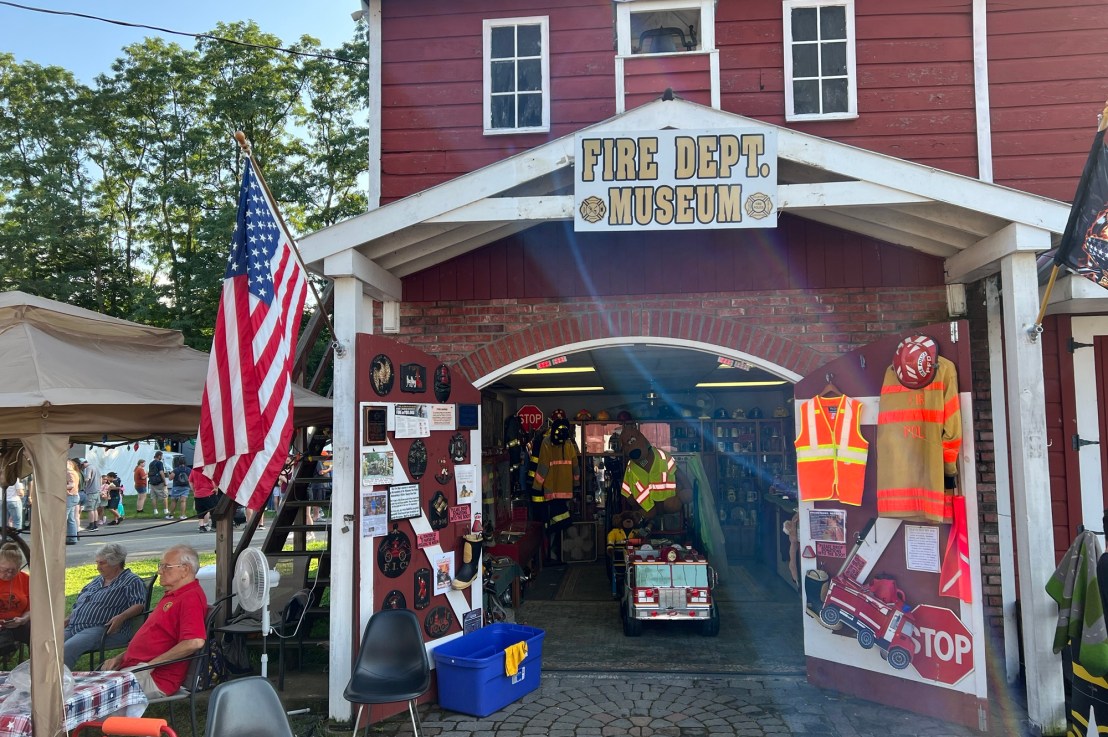
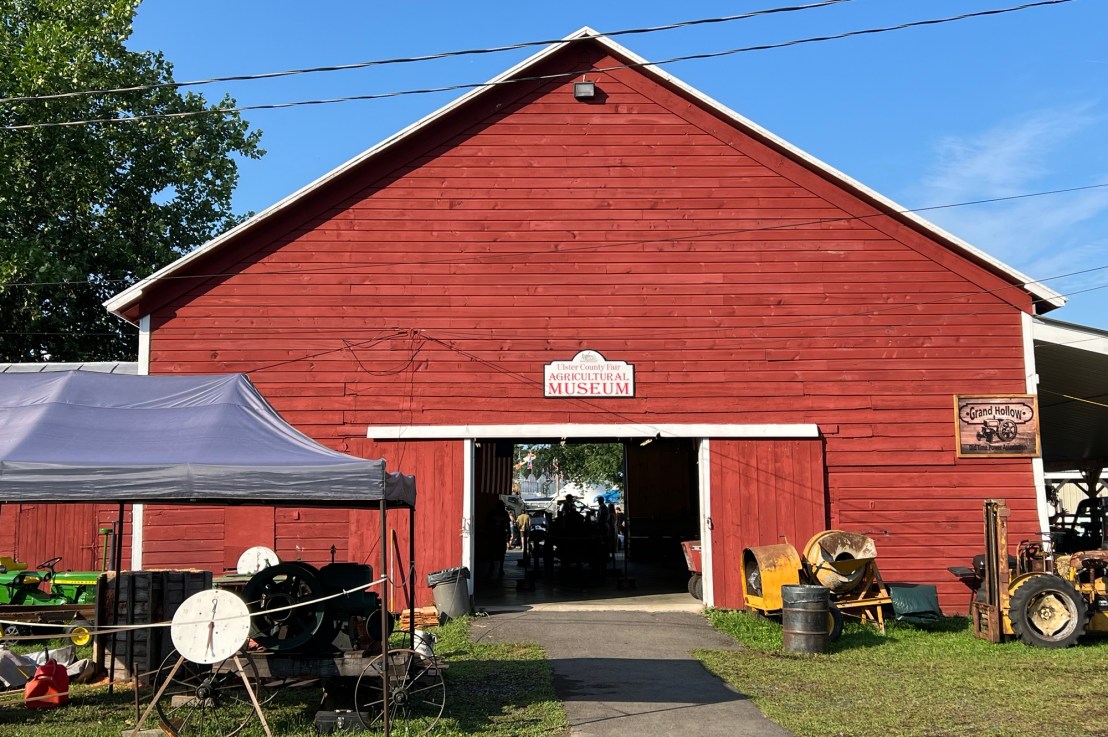
The Ulster County Fire Department Museum is a unique little museum in that it is only open when the fairgrounds are open. It staffed by volunteers from Ulster County’s Volunteer Fire Departments. From the age of most of the volunteers, I could tell as a retired fireman, were all the guys whose firemen days at behind them. Still they are committed firefighters and have some good stories to tell.
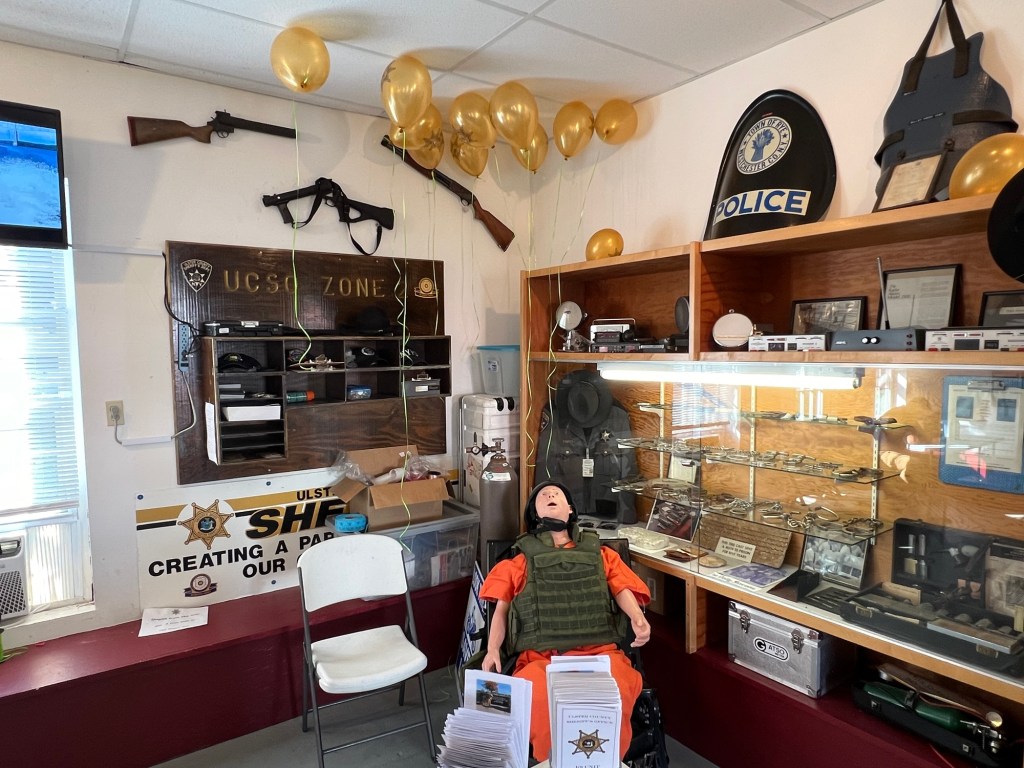
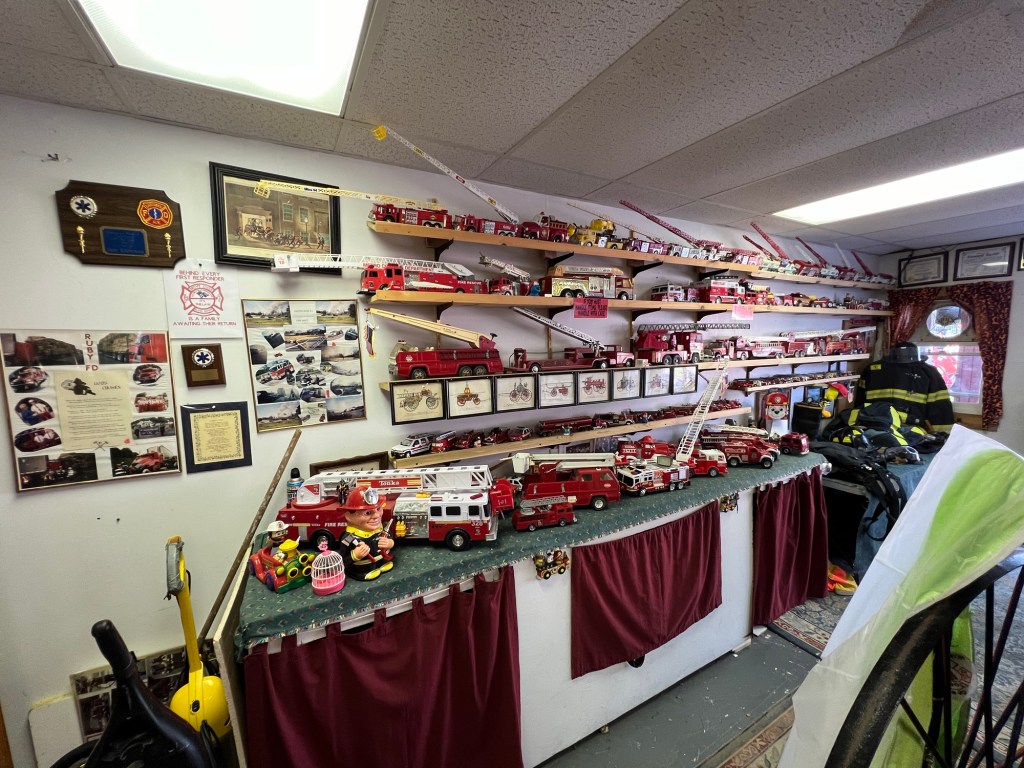
The inside of the museum
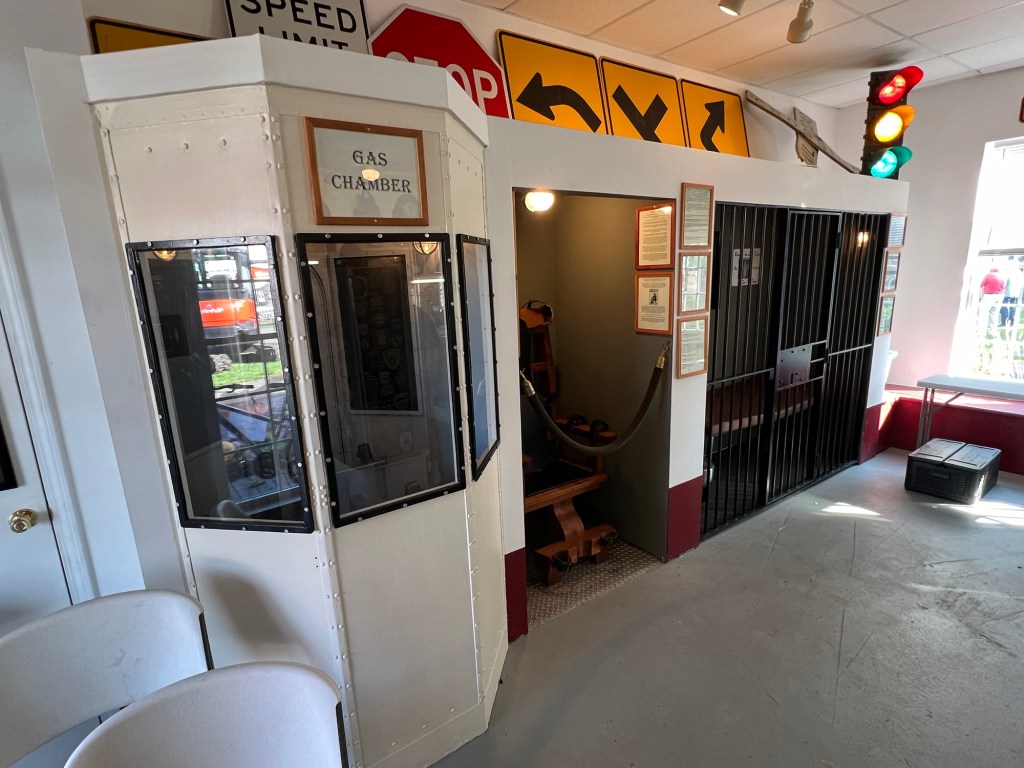
The museum is more of an exhibition than a museum but for a small museum it packed with all sorts of artifacts, fire fighting equipment and memorabilia on the early days of fire fighting.
The old fire department medallions that showed what fire department would come to your home because of the company fire insurance you paid to them.
Some of the older artifacts they had were these fire department medallions from the various fire companies that existed that people paid into to protect their homes. Those were the days when the companies used to compete to be the best.
The collection of patches and awards
The museum contained a large collection of awards, ribbons and patches from fire departments from all over the local area and beyond. The collection included ribbons from various competitions and conventions, company emblems and events over the years.
Fire fighter mugs from various departments and events
The museum has an extensive collection of commemorative mugs. These are sold or given by fire department and companies to mark anniversaries and special events. These mugs mark the special occasions in a fire fighters career. As a fireman I have also found that these pile up quickly in your cupboards.
Department mugs from various department events and from companies
The museum had an extensive collection of toy fire trucks and games on display. There were samples of these out in front of the museum for the kids to play with that day.
The collection of fire trucks on display
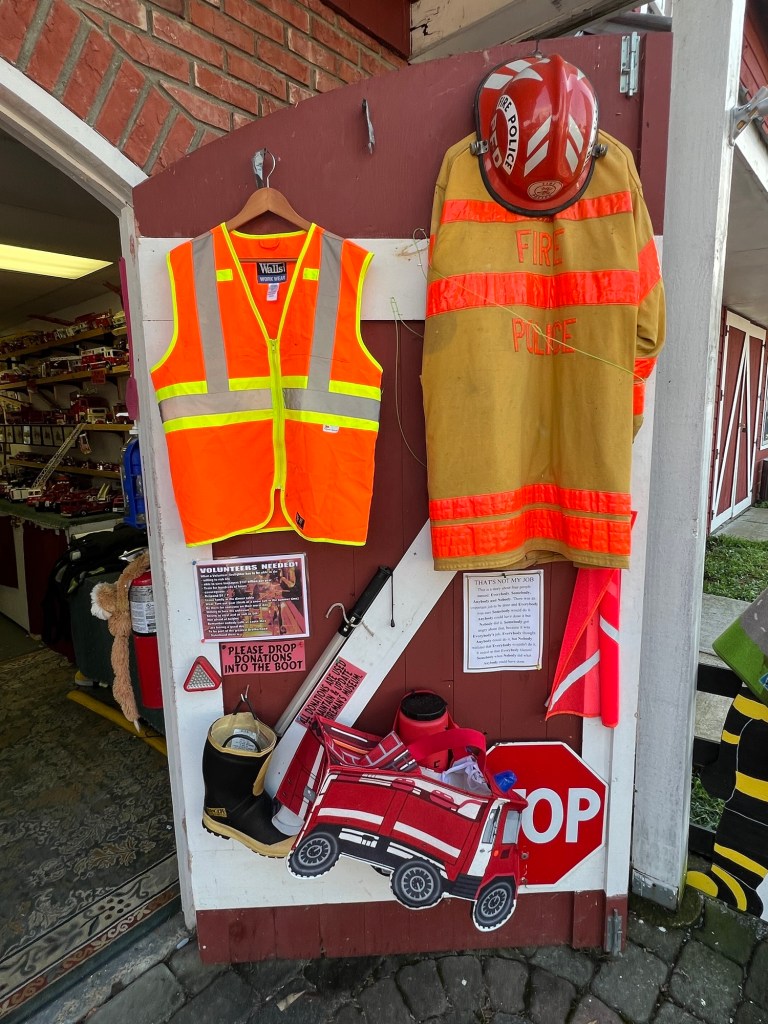
The museum put the bunker gear we firefighters use on calls. This protects us in the weather conditions as well.
The fire fighter bunker gear used on calls
The emergency gear we use on calls on roadways and incidents
I got to talking with the volunteer firemen from Ulster County and like most departments around the country, they are having problems finding volunteers to man the departments. It is a tough field and people don’t want to do it for free anymore. I figure like a lot of towns around us, the departments will be paid soon. That is the wave of the future.
Firefighter Scooby Doo protecting the museum
Still the firefighters from Ulster County do a nice job maintaining this museum. For a one room museum, it is packed by information and manned by firefighters who care about the profession.
I got to go to the Vintage Auto Museum of New Jersey on a return trip to Point Pleasant. Both the Vintage Car Museum and the New Jersey Museum of Boating share the same building and are both open on Friday afternoon. So viewing their collections is a little easier.
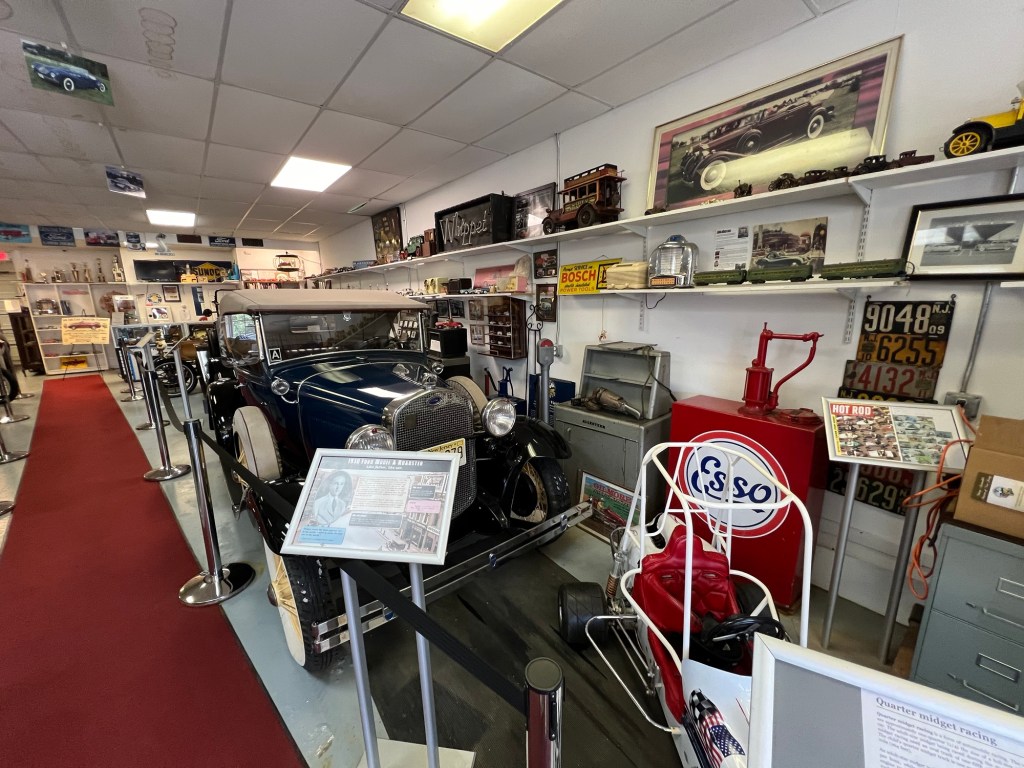
What I like about the Vintage Car Museum is the selection of cars that they have on display. These are the cars of the early silent films and the beginning of ‘sound pictures’. Most of the cars date from the late 1880’s to show the development of the automobile through its early years. From the early automation of steam engines to gas powered cars, I could see Victorian men and women driving these early cars to the flappers and underworld bosses driving the get away cars of the past. These are cars that you will see in the movies.
The cars on display are in pristine condition with accompanying signs so you will have a full description of the make and model of each automobile. There is a small selection of cars so the collection is easy to see in one afternoon.
On the side walls there are secondary collections of driving accessories, pictures of cars and a small collection of toy cars in one of the cases. It is the perfect museum for car buffs or for visitors interested in the history of automobiles. It is perfect for those who love the silent films and early American engineering. These pristine cars are lined like jewels on a carpet that are meant to impress.
The Mission Statement:
(From the museum pamphlet)
Our mission is to provide an educational and entertaining family attraction, preserving, sharing and taking pride in an automobile heritage that truly encouraged and shaped the growth of New Jersey and our country and its impact on our society.
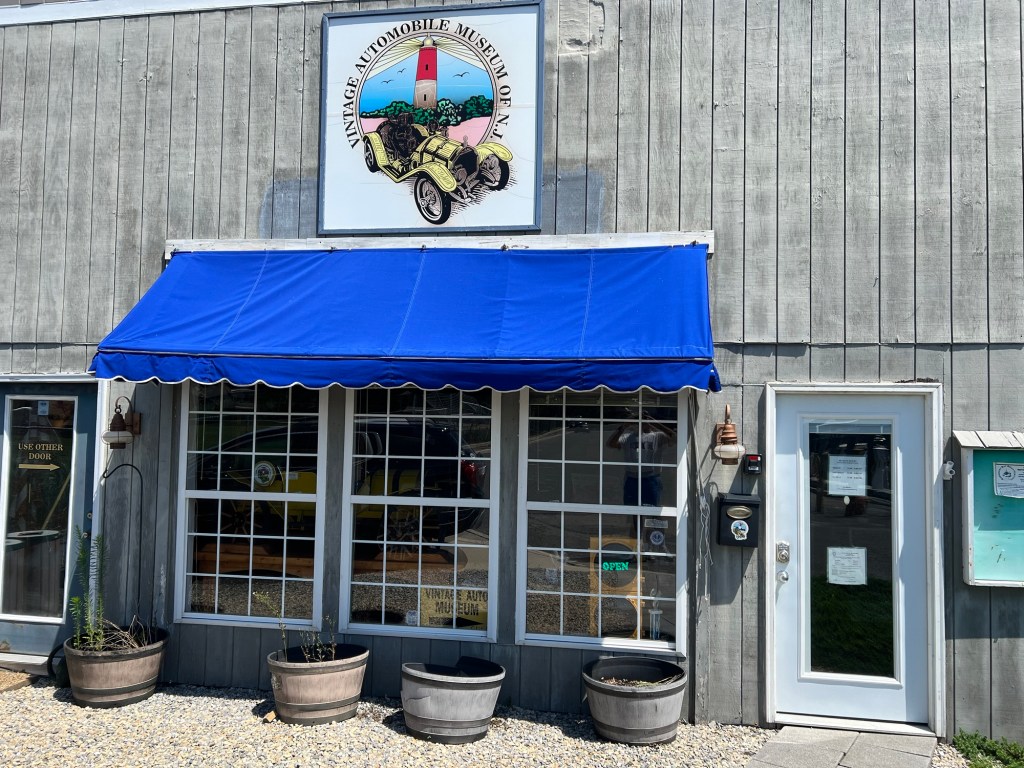
The front of the Vintage Automobile Museum of New Jersey in Point Pleasant, NJ
The front of the gallery
The front gallery of the museum
The history of the Museum:
(From the museum pamphlet)
The automobile has been a part of our culture for well over 100 years. Above all other inventions, the automobile is responsible for our development as a society. The automobile allowed people to leave their farms for the first time to visit the big cities and it allowed city dwellers to visit farms to see their first cow. There is no doubt that the automobile represents freedom, affluence, power and art.
In 2000, members of the Vintage Automobile Club of Ocean County, NJ having hosted many car shows, wanted to bring antique cars to a central viewing place. The result was the founding of the Vintage Automobile Museum of New Jersey, a venue suitable for displaying the many cars built around the world for the past 125 years. In addition to having vehicles on display, we have other artifacts. Photos, tools, signs, gas pumps and even a barber’s chair are all there for everyone to enjoy.
The some of the cars on display that enjoyed are the:
The 1896 Ford Quadricycle
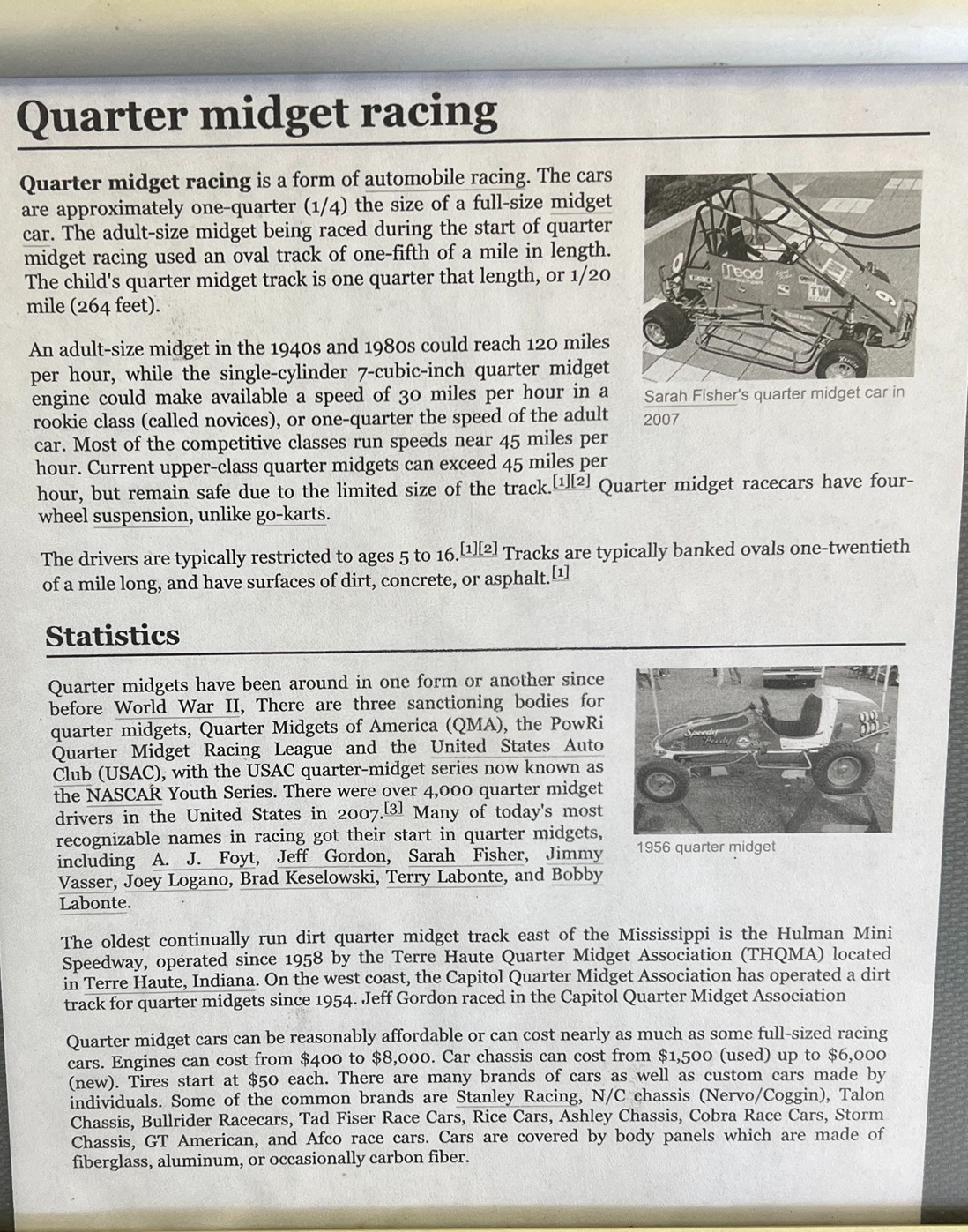
The Quarter Midget Racing sign
The Quarter Midget Racer on display
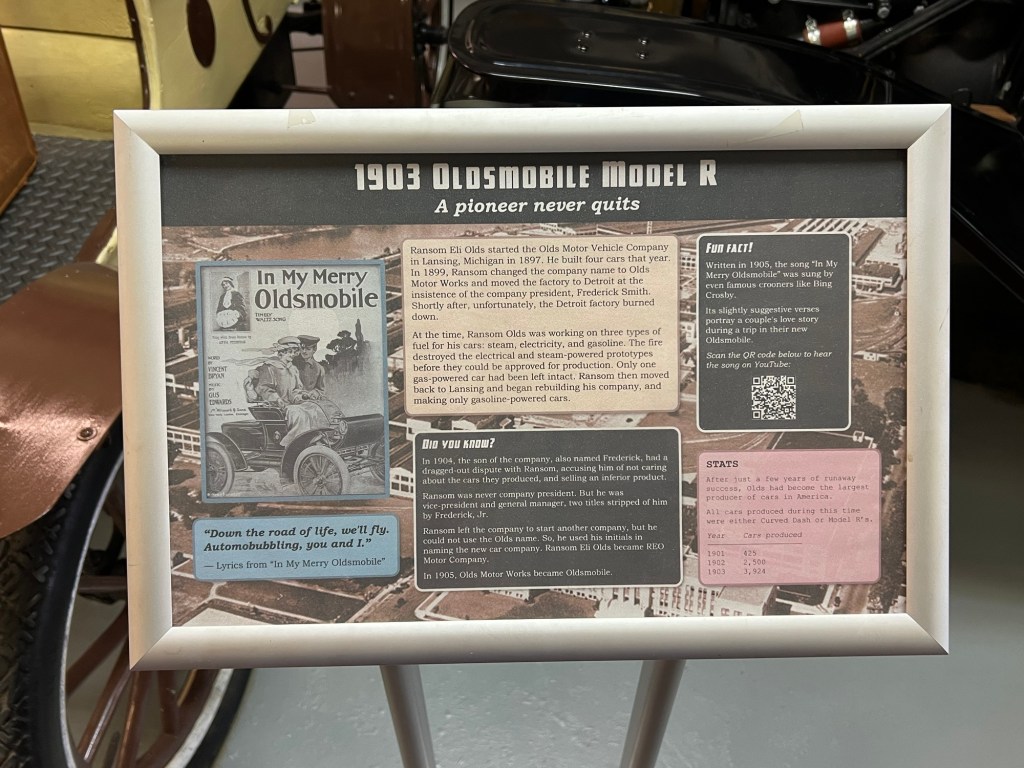
The 1903 Oldsmobile Model R sign
The 1903 Oldsmobile Model R car on display
The 1915 Ford Model T sign
The 1915 Ford Model T car on display
The 1923 Packard Phaeton
The 1923 Packard Phaeton on display
The mini Doyle sign
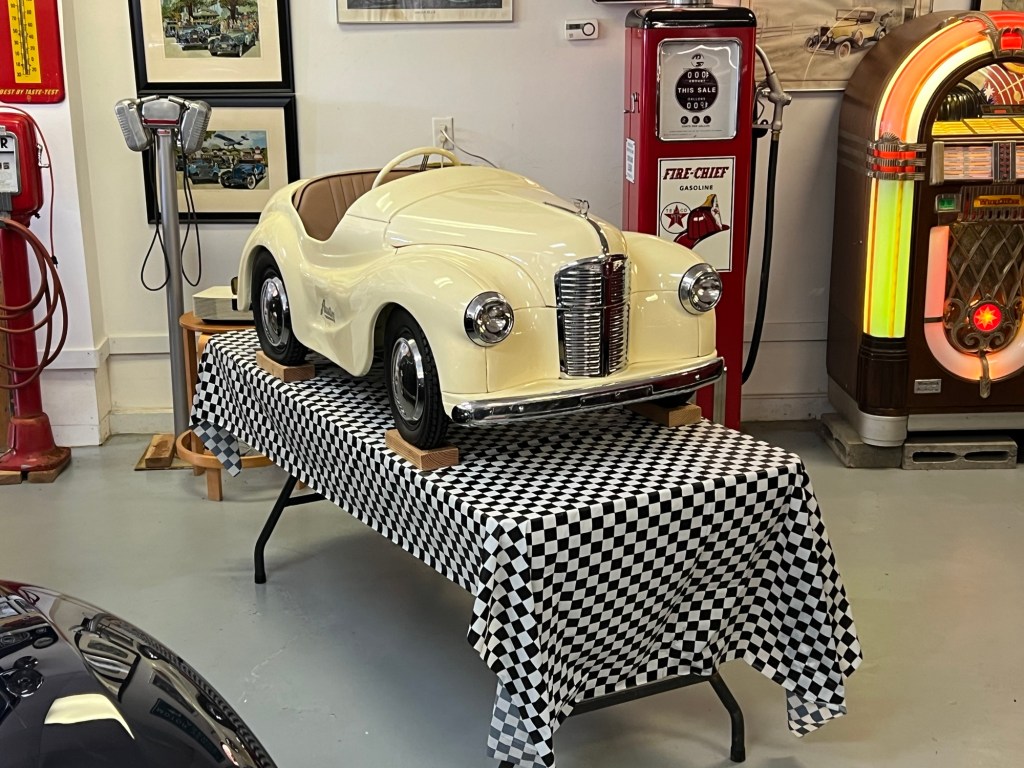
The Mini Doyle on display
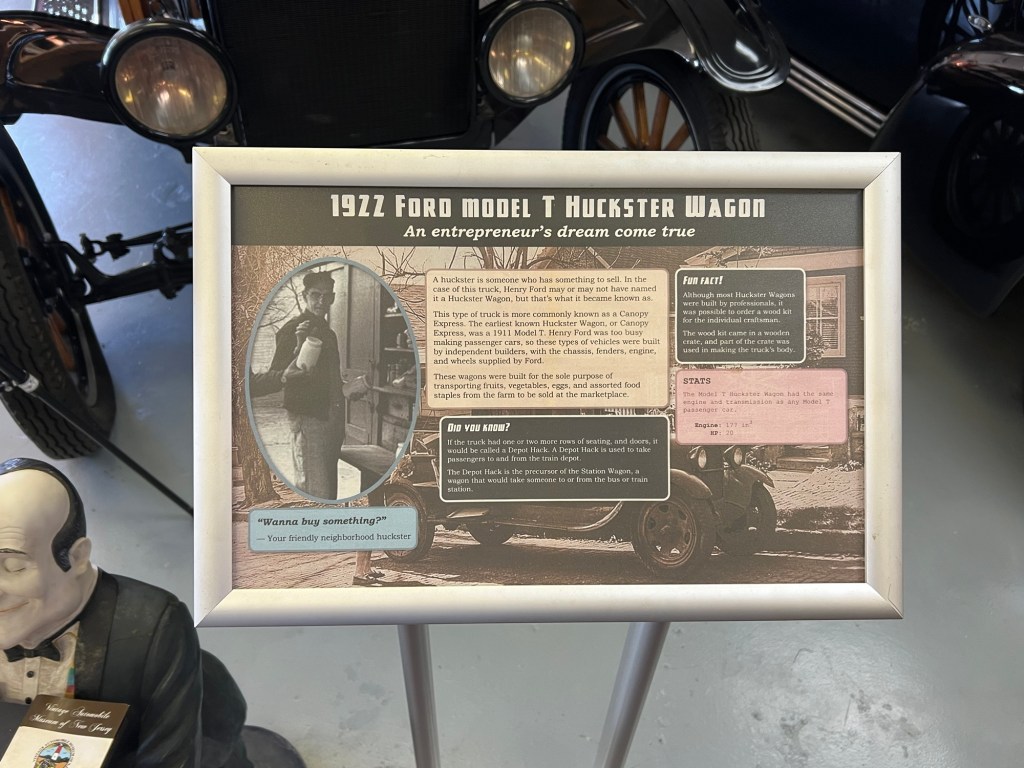
The 1922 Ford Model T Huckster Wagon sign
The 1922 Ford Model T HucksterWagon on display
What I loved about these cars was the beauty of them and the rarity of their make and style. These cars look like they are ‘showroom ready’ to drive out of the building. I love the care that their owners give them and the look of their design. It is also the history and the age of these cars of the collection that make them impressive to look at and admire.
The collection of toy vintage cars that are in the collection.
The Johnson Boat Yards just outside the museum where you can see all the private pleasure boats
The Museum’s Mission:
(From the museum’s pamphlet)
The mission of the New Jersey Museum of Boating is to celebrate our state’s rich maritime history. We are committed to educating, preserving, interpreting and presenting the boats built in New Jersey and the related marine equipment and materials traditionally used in the process.
‘Boats N’ Kids’ is part of the charter we are endeavoring to educate today’s youth on the history of boating in New Jersey. We offer several programs for children which include basic boating safety and intern programs during the spring and summer. Visit the website or call our number for more details.
The boat display outside the museum
In 2002, the museum became the newest destination on the New Jersey Coastal Heritage Trail, achieving recognition by the National Park Service for the historic value of its collection and location.
The display of marine vessels outside of the museum
As part of our Charter, we are committed to the education of today’s youth on the history of boating in New Jersey. In that regard, the museum has developed a multi-faceted program to invite students from New Jersey’s elementary and high schools for information tours of the museum.
The display of boats just outside of the museum
My visit to the Museum:
While I admired all the boats outside the museum and the Johnson family Boat Works Marina and all the pleasure boats, all the nautical displays were in the inside of the museum.
The inside of the museum offers a gift shop and an introduction to the museum’s mission on the history of Boating
One of the first displays describes the famous shark attacks at the Jersey shore in 1916 as summer beach bathing was becoming popular. These were noted in the film ‘Jaws’.
The New Jersey Shark Attacks of 1916
The next display I visited was the World War II display to our veterans and their contributions from the State of New Jersey. There had been many sightings of enemy submarines on the Jersey shore.
The detailed display on our State’s contribution to the ‘Great War’
War propaganda poster that would be considered racist today but effective back then.
The next display was on the history of the fishing in the state. We have had and still have some of the best fishing on the East Coast both for pleasure and commercially.
Some of the contributions of our fishermen in New Jersey
There was also a big contribution to the steam engines from New Jersey as well.
The ‘Steamboats’ exhibition
The Sneakbox sign
On display as well was the ‘Frisky’. The ‘Frisky’ is the first ‘Beaton Built’ sneakbox. It was built in 1941 by David Beaton & Sons which won numerous championships in the 1940’s and 1950’s (museum pamphlet).
The ‘Frisky’ sneakbox
In the back of the museum, there was a display of vintage outdoor motors which powered boats over the years.
The exhibition sign for the Vintage Motor exhibition
The sign for the “Vintage Motor” exhibition
The Vintage Outdoor Motor display
The outdoor motors from times past
In the front of the museum you will see the ‘Frame’ exhibition and all the tools to build a boat.
The ‘Frames’ sign
The ‘Frames’ display
A closer look at all the tools for the construction of a boat
There were also smaller displays around the museum such as the NJ Coast Guard display and the NJ State Rowing Championship’s to show the nautical activities that are going on in the State of New Jersey.
The Coast Guard station display
The NJ State Rowing Championship display
The New Jersey Museum of Boating offers a wealth of information on New Jersey’s nautical past, present and future place in history.
I finally got a chance to visit the Saugerties Historical Society and see the inside of this historical home. The Society has done a nice job displaying their historical artifacts and carefully decorating the house to reflex the period.
The Living Room of the Kierstad Homestead
In the first room in the main part of the house, there is a display of family China from descendants of the original family who owned the house, local business artifacts and family heirlooms. In the original sections of the house, summer kitchen had has been displayed. This is a depiction of how a Dutch farming family may live in the 1700’s.
In the other room in the main part of the house was an exhibition of local hero, Captain Roger Donlon, who was a decorated officer in the Vietnam War. The exhibition had all the news clipping from the award ceremony and his hometown welcome. One of the volunteers told me that this exhibition will be taken down soon so that they can mount the thirtieth anniversary of Woodstock.
The rest of the house is used for archives space. The house is in two sections, the original section which contains the Summer Kitchen and loft space above (that is closed to the public) and the addition to the house in the late 1700’s. Descendants of the home lived in the house until the 1950’s. The grounds are nice to walk around on and take in the cool shade on a hot day.
The museum is an interesting look at early life in Saugerties, NY.
The Mission Statement:
The mission of the Saugerties Historical Society shall be to provide coordination of all things historical in Saugerties; to be involved in the research, collection, preservation, dissemination of information about, and productive re-use of the historical archives and material culture of the community; to make the historical resources of the community available to the public through education, exhibition and interpretation; and to secure the safe management and protection of such resources that may come under its jurisdiction.
The welcome sign in front of the house.
History of the Society:
(from the Historical Society website/pamphlet)
The Saugerties Historical Society is a source of local information, art, and memorabilia. Exhibitions of colonial and recent history include Saugerties themes as well as those of regional interest such as History Day each October and authentic Hudson Valley colonial militia reenactment.
The Saugerties Historical Society partners with local schools in the education of American and local history. Hands-on activities such as scrubbing clothes on a washboard, spinning wool and writing with a quill pen encourage students to experience colonial life. The Saugerties Historical Society aims to bring pride and knowledge of community through education and preservation.
The earliest recorded owner of the stone house was Hiskia Dubois (c 1727) and Dr. Kiersted purchased the house from Hiskia’s son, Daniel. The Kiersted House was saved from demolition in 1955 by Charles and Inez Steele. Through the generous efforts of volunteers in cooperation with the Town and Village of Saugerties the Saugerties Historical Society acquired the house in 1998.
The Kiersted House is a community center. Each summer, concerts, such as those with the Saugerties Community Band are presented on the beautiful lawn and gardens of the house. The Saugerties Historical Society regularly hosts various community clubs and organizations. The Kiersted House and grounds are available to suitable organizations for special events. The Saugerties Historical Society welcomes all to experience history while visiting the Kiersted House. The Kiersted-DuBois House is listed on the National and New York State Register of Historic Places.
The inside of the Historical Society
History of the Building:
(from the Historical Society website)
The Kiersted House was saved from demolition in 1955 by Charles and Inez Steele. Through the generous efforts of volunteers in cooperation with the Town and Village of Saugerties, the Saugerties Historical Society acquired the house in 1998.
The Historical Marker
The earliest recorded owner of the stone house was Hiskia DuBois, c. 1727. The home which was originally located on approximately 40 acres was sold upon his death by his son David DuBois to Dr. Christopher Kiersted who was married to Leah DuBois.
The stone house was built in sections with the east wing being the earliest, c. 1727. Subsequent additions to the west end included the parlor and the joining of a stone outbuilding to the main house in 1800. Preservation of the interior of the Kiersted House is evident in the original wide plank floors, 18th century glass-paned windows (some bearing family inscriptions), much original iron hardware and century old concrete floors with inlaid design.
The original section of the home from the early 1700’s with the Summer kitchen
The later addition to the house
In early 2003, during a planned restoration the house was spruced up with great care to respect the historic elements. The wooden doors and frames were carefully cleaned to expose their original grain and features. The floor planks were also cleaned and patched aesthetically. The stone work in the fireplace required additional care and some of the original stones had to be replaced. An antique pro carpet cleaning NYC service was enlisted to clean and restore the rugs and carpets, many of which were the originals and some of the more worn items were moved away from highly trafficked areas. The drapery and linen items were also restored or replaced with replicas.
The Saugerties Historical Society in the summer of 2023.
The Society has given visitors a chance to see what life was like for early Dutch and English settlers from a prestigious family from the area. It shows that life was understated and productive. It was not an idle existence but one from hard work and determination to build on something. The house is a window for us to look at the families who lived here and how their families grew and progressed.
The fireplace and family crib of the Kiersten’s family
The Kierstad family crib from Dutch times
The Living Room set up
Artifacts in the Living Room including antique furniture and a stroller from the Civil War
The ‘Old Summer Kitchen’
The Summer Kitchen was the original part of the house
The table lined with items from harvest and for cooking the main meal
The kitchen being the focal point of the house was always warm so children and babies could be watched
In the main room were many of the artifacts in the collection:
The family China of Sally Ann Lamouree Zillow, a descendent of the Kierstad family
From the Town of Saugerties, the award of a commode
The Captain Roger Dobson exhibition:
In the other part of the house was exhibit of Captain Roger Dobson, a local hero of the Vietnam War. The decorated Captain’s store was a local boy makes good. The exhibition contains all sorts of clippings and articles from the event and of the Captain’s accomplishments.
The entrance to the Roger Donlon exhibition
The Roger Donlon exhibition on his career in the armed forces during the Vietnam War
The display of Captain Donlon’s accomplishment
The last artifact I saw at the museum was a replica of the original map of Saugerties. This map shows the farms and estates of the original families of the Town of Saugerties.
The replica of the map of Saugerties, NY
The Outside Gardens:
After my tour of the museum, I walked around the grounds of the property and enjoyed the sunny day.
The gardens outside the entrance to the Kierstad Homestead and Gardens