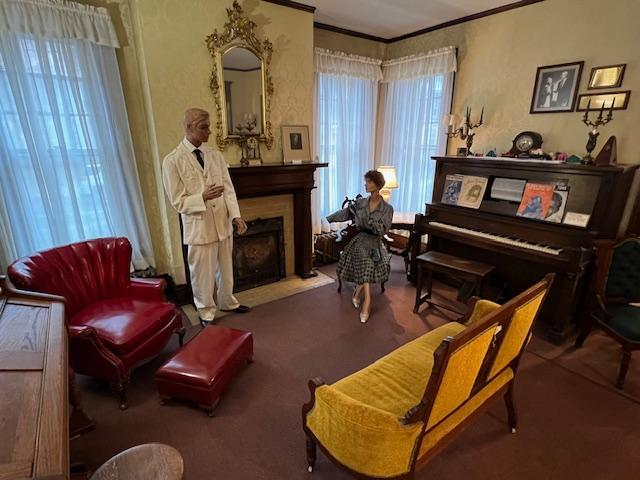
The Klyne Esopus Museum is the home of the Town of Esopus Historical Society and is a treasure trove of information of early life in the Hudson River Valley and the role this small town played in the shaping of American society in this region. There are all sorts of displays on early American life, cottage industries that made the community grow and its role in the modern age.
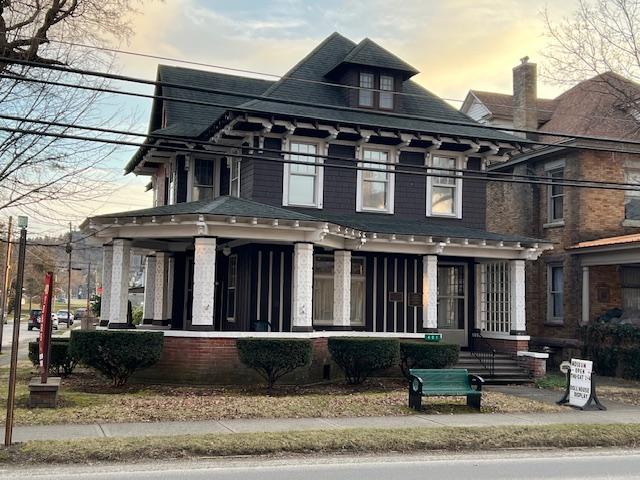
The Klyne Esopus Museum at 764 Route 9 West
The sign welcoming visitors to the museum.
The Main Gallery at the Museum
The museum’s main gallery is surrounded by cases displaying the story of the area depicting the various aspects of industry, commerce, agriculture and domestic activities of the town’s residents. Former residents of note that are featured are Sojourner Truth, John Burroughs and Alton Parker to name a few. year a curated exhibition focusing on a special theme is centrally featured. These are some of the exhibits that are showcased at the museum:
The Native American exhibit:
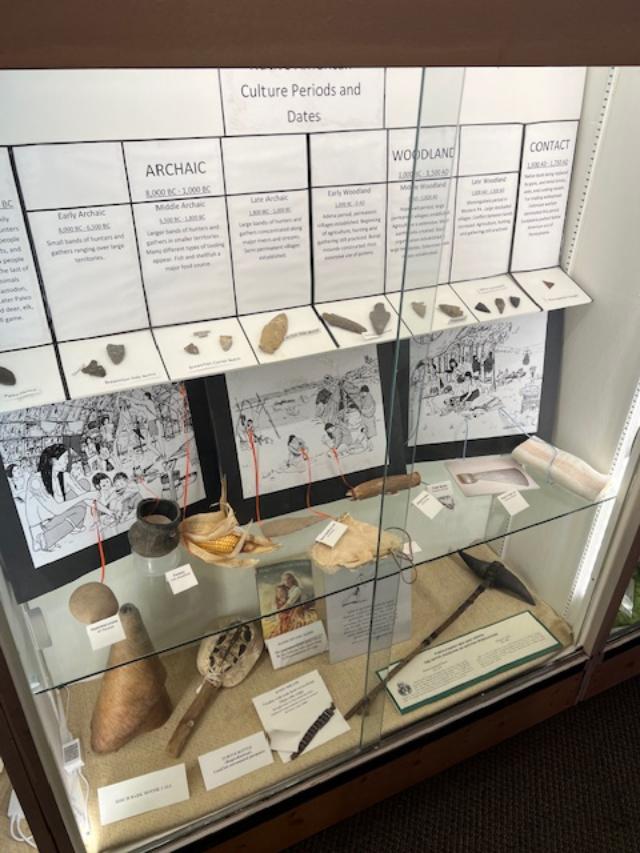
The exhibit has an interesting collection of arrowheads, fishing and household items that were used by the local tribes who once lived in the area.
The display of arrowheads and fishing items
The extensive display of Native American fishing and household items.
The Apple industry:
The local Apple industry was a major part of the economy in the late 1800’s and early 1900’s. The apple, the “Esopus Spitzenburg” was developed in Esopus. The Dutch had developed the agricultural industry of the area that supplied New York City with seasonal fruits and vegetables.
The Dutch Farming Industry and the development of local harvests
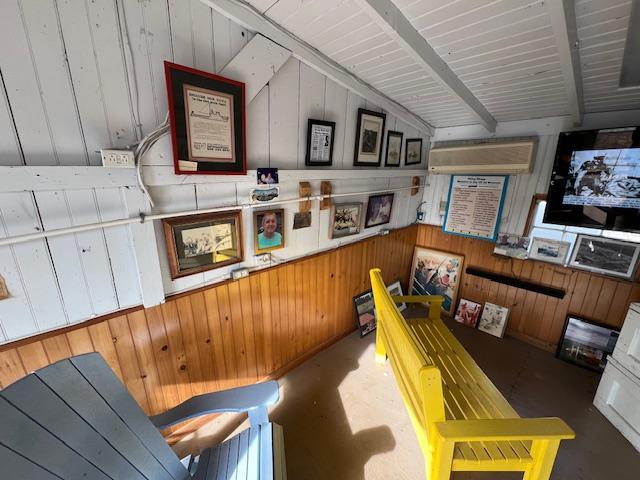
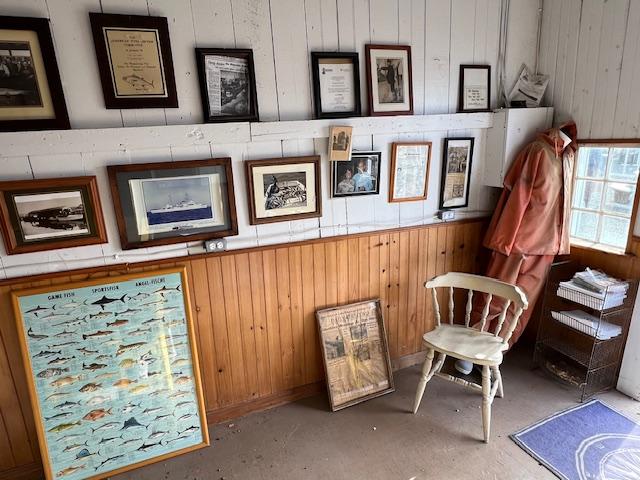
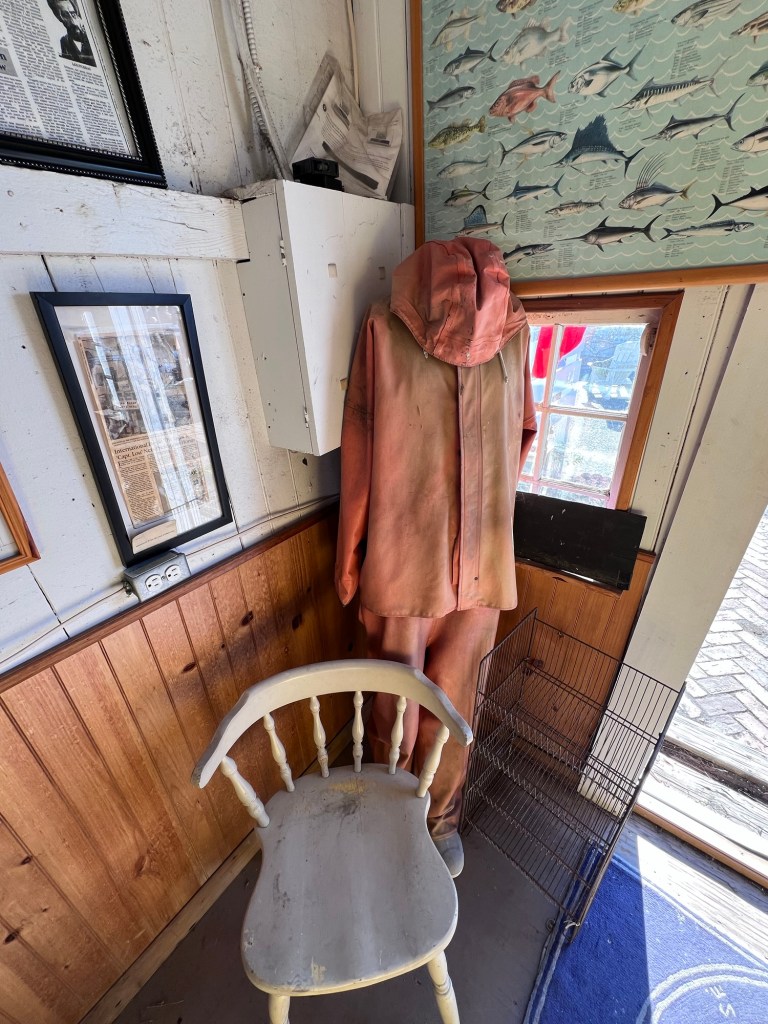
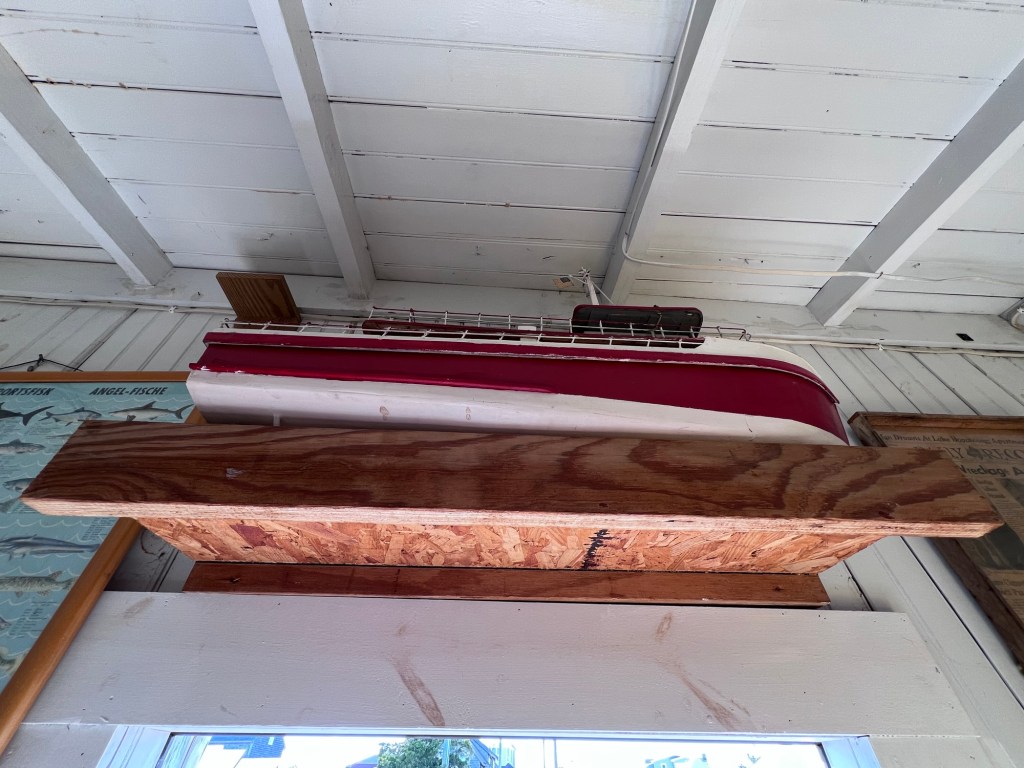
With the community based by the Hudson River and transportation being such a big part of the local economy, the displays on shipping and the local lighthouses were prominent at the museum. The display has all sorts of pictures and artifacts from the era of steamboat transportation down the Hudson River.
The Lighthouse and Shipping Industry
There were displays on famous residents such as Sojourner Truth and John Burroughs and their role in the community.
The church is also featured pictures of clergy and their families, the history of the church and the decor of items that used to adorn the church when it was a place of worship. There is a large display on church history in the back of the museum.
The Church display of its history
The local veterans are prominently displayed at the museum as was showing the spirit and support of the wars and battle. It also shows the townspeople participation and dedication in the war effort.
The World War II exhibition
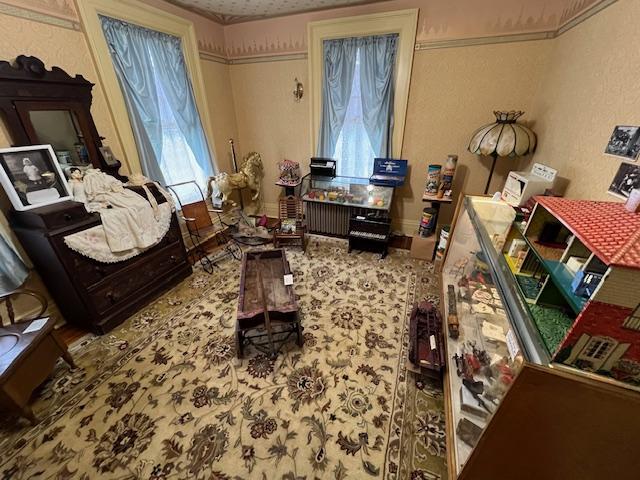
Recreation and leisure are a big part of the Hudson River Valley society and items such as ice skates, swimming and boating show how people enjoyed their free time. This still plays out today. Household items were also displayed as well showing life at that time.
Household and Recreation items on display
The History of the museum:
(From the website and pamphlet)
The Klyne Esopus Museum that is located in Ulster Park, NY is housed in the former Dutch Reformed Church, which is a charming country church built in 1827. It served the community for over 175 years and replaced a smaller building built in 1792 originally located 1000 ft. to the north. The church closed in 1965. The governing body of the church scheduled the building for demolition.
Faced with this reality, the former members of the congregation and the larger community rallied to preserve the building. In 1969, a group known as the Klyne Esopus Historic Preservation Committee formed. Formal incorporation of the group took place in 1970. After 17 years of fundraisers, repairs to the building, preserving and collecting, the museum finally opened to the public. In 2002, the building became designated a State and National Historic Landmark.
The historical society museum opened to the public in 1984, offering a variety of exhibits about the culture, commerce and history of the Town of Esopus. The town is typical of rural America but it unique in many ways. Its geographic location and topography have spawned a variety of industries, resulting in a rich history and a diverse population.
The Klyn Esopus Museum is the Historical Society of the Town of Esopus. Its goal is to preserve, interpret and disseminate the history of the town. By fostering an awareness of the past and providing a repository for the artifacts and memorabilia of its former residents, it enables present and future generations to identify and appreciate times gone by. Today, a small, committed group of volunteers is working to make history meaningful and relevant to visitors of all ages.
The main building of the Historical Society contains an exhibition on farming. It also contains the society’s library and genealogy center.
The James Vanderpoel House Museum
The afternoon I visited the society, the Vanderpoel House was the only building open but it was interesting to visit. I saw the early American portraits.
History of the House:
One of the finest examples of Federal architecture in Columbia County, the James Vanderpoel House was constructed circa 1819–1820 for prominent Kinderhook lawyer and judge James Vanderpoel.
Trimmed with marble and built with local brick, the side-gabled structure has two stories, five bays, and rests on a fieldstone foundation. Symmetry and graceful architectural details are found throughout the home. Purchased by the Columbia County Historical Society in 1925, the property is now preserved as an exhibition space showcasing paintings and decorative arts from the CCHS permanent collection and is home to the CCHS Museum Store & Bookshop (CCHS website).
There are two exhibitions going on right now:
New York Portraits from the permanent collection:
Columbia County’s painted portraiture legacy spans more than three centuries of historically significant or artistically important works by self-taught, naïve and itinerant painters, as well as important artists of the time, and including some of the earliest works in America.
In the Portraits of the Permanent Collection shows us how the middle to upper middle class in the early years before photography was created to be remembered. Portraits were the best way to show the families wealth and prestige in the community plus keep families legacies alive. Today many of these families descendants don’t know what to do with them. This is our benefit that we can enjoy these private works of art.
Portraits from the Permanent Collection sign
The Gallery
The Gallery
The New York portraits in the collection
The New York Portrait Collection exhibition
The Portrait Collection-Children’s Portrait
Part of the Portrait and Federal Style exhibitions
Early Hand Tools & Farm Implements:the permanent collection
In the main building, there is also a permanent collection of farming equipment and the development of family farms in New York State. It shows how the agricultural profession has changed from doing everything by hand when farms catered solely to the family to the commercial farms that developed after the Civil War that found new markets for their products. Automation grew the industry but its start with equipment shows how much the process really hasn’t changed that much. It is a very thought provoking exhibit on how industries progress.
The “Early Hand Tools & Farm Implements” exhibitions
The farming equipment galleries
The farm equipment at the turn of last century that has not changed much to today.
The new exhibition “Dirt Road Life: Images of Rural Community” again shows how life has progressed in this country.
The description of the exhibition and collection of the artwork:
(From the museum website):
In this exhibit an extensive collection of vintage photographs provided by CCHS and Red Rock Historical Society that document what life was like along these dirt roads a century ago are complemented and contrasted with local high school students’ photos of contemporary winter scenes along Chatham’s unpaved network of roads. The students’ photographs, curated by nationally celebrated photographer Paul Lange, are drawn from a body of work that is the brainchild of Ichabod Crane art teacher Sandy Dwileski. Dwileski saw an artistic opportunity—winter road scapes rich in subtle hues, shadow contrasts and complex compositions—and set about organizing an outing with her advanced photography class to follow the system of roads mapped by the Chatham Dirt Road Coalition and photograph the journey.
The new exhibition “Dirt Road Life: Images of Rural Community”
The gallery exhibition on “Dirt Road Life”
Pictures from the exhibition
The next special exhibition at the museum was the “A Farm, a Family and a Legacy”:
(from the museum website)
Farms have been the heart of Columbia County’s economy and culture throughout its history. One of these was Birge Hill Farm, established in 1785 by Hosea Birge, a Revolutionary War veteran who settled in Chatham, N.Y., in the early years of the republic.
The write up on the exhibition
The deed to the original farm
Here and on other small farms, families and neighbors worked cheek by jowl to sustain their small, tightly woven communities, until vast changes in technology, industry and society forever altered their rural way of life.
The Birge Family artifacts in this interesting exhibition of family life on a multi generational farm
The farm is currently for sale
This exhibition presents highlights from the Birge Family Collection, donated to the Columbia County Historical Society by Hosea’s fourth great-grandson, Van Calhoun, and Van’s wife, Susan Senecah. The expansive collection comprises more than 200 objects, preserved by family members with remarkable foresight and care over eight generations. In their stories, we see the evolution of farm and family life in Columbia
The family heirloms
The current farmhouse of the family’s
The exhibition was interesting in that it must be hard for a family giving up a way of life and a home that has been in the family for 200 years. It was nice of the family to let us in and see their life in this exhibition.
Federal Style: Refinement, Grace and Symmetry:
America’s newly founded nation beamed with patriotism following its victory in the Revolutionary War. The original foundations of the United States government and culture immediately following its independence is known as the Federal Era (1780–1830).
George Washington and other American icons looked toward the Classical ages of Greece and Rome in forging an identity for the young American Republic through architecture, furniture, textiles, ceramics and works of art. Neoclassical designs and motifs are distinguished through simple lines, a satisfying balance of symmetry and overall elegance that signals strength and democracy. In celebrating 200 years of the James Vanderpoel House, we present its Federal architectural excellence along with diverse material culture representing characteristics of the Federal Style and era in Columbia County and America (CCHS website).
The other buildings that are part of the Society’s museum:
Signage at the Historical Houses
The Crane Schoolhouse
This authentic, circa-1850 one-room schoolhouse served as a public school for the Town of Kinderhook into the 1940s. It replaced an earlier “log cabin-style” single-room school where a man named Jesse Merwin served as school master. Merwin, who was a longtime friend of the writer Washington Irving, is said to have been the “pattern” for Irving’s character of Ichabod Crane in “The Legend of Sleepy Hollow.”
A “Legends & Lore” historic marker, awarded by the New York Folklore Society and William G. Pomeroy Foundation, stands a few yards from the school and commemorates this literary connection. Today, the Ichabod Crane Schoolhouse is a seasonal museum. See exhibitions, period school desks and other objects relating to one-room schoolhouse education in Columbia County.
During the 1950s and ’60s, it was saved from disrepair by a group of local women who retrofitted the space to function as an ad hoc community center. In 1952, former first lady Eleanor Roosevelt visited the schoolhouse to deliver a radio address praising “the work of women” and recognizing their efforts to preserve the historic school.
In 1974, the schoolhouse was moved 200 yards down the road to the Luykas Van Alen House site. That same decade, it was restored to its 1930s appearance. It remains an excellent and intact example of a rural, one-room schoolhouse with a gable roof, clapboard siding and a single pent-roofed entrance. The interior consists of a large classroom with two adjacent cloakrooms — one for boys and one for girls. The building was never modified to have heat or hot water and still retains its original 1929 wood-burning stove, wood flooring, chalkboards and double-hung sash windows(CCHS website).
Luykas Van Alen House
Built circa 1737 and designated a National Historic Landmark in 1967, the Luykas Van Alen house is recognized as one of the best examples of fewer than a dozen historically intact Dutch Colonial houses in the Hudson Valley.
Located on rural land once used by native Mohican peoples for hunting and seasonal camping, the house was the center of a prosperous farm and home to several generations of the Van Alen family. The last Van Alen descendant to live in the house, Maria Van Alen Herrick, died in 1935. The house was purchased in 1938 by William Van Alen, a descendant of Luykas’ brother, Johannes. In 1964, unable to undertake extensive restorations himself, William generously donated the house to Columbia County Historical Society (CCHS website).
The Lewes Maritime Museum at the Cannonball House at 118 Front Street
The Lewes Historical Society promotes and advocates the preservation, interpretation, and cultural enrichment of the Lewes region, through museum exhibits, educational programs, historical research, and publications.
About The Lewes Maritime Museum at the Cannonball House
The Cannonball House was built c. 1765 and was once the home of Gilbert McCracken and David Rowland, pilots for the Bay & River Delaware. The Cannonball House has come to symbolize not only the Society, but the town of Lewes as well; previous uses included a restaurant, a laundry store, and, for a time, the mayor’s office. Harkening back to the town’s rich nautical heritage, the Cannonball House is the home of The Lewes Historical Society’s Maritime Museum. Nationally important pieces of maritime art and memorabilia are displayed in the house, including the Fresnel Lens of Fourteen Foot Bank Light. The exhibition of Breaking Britannia’s Grasp is also housed in the museum and is included in your admission.
Featured in many works on Delaware, the Cannonball House is a rare example of a Lewes house remaining on one site its entire existence. The Cannonball House was featured on the 2003 Lewes Business Directory (Lewes Historical Society website).
The front of the museum
Historic Marker
The Cannonball at the house (recreation)
On April 5, 2003, the Cannonball House was honored by the State of Delaware for its close association with the Bombardment of Lewes by the British on April 6th and 7th, 1813 and as the home of two heroes of those fateful days, Gilbert McCraken and his son Henry, both Pilots of the Bay & River Delaware.
The Gilber and Henry McCraken burial site in downtown Lewes
The tip of the anchor that Henry McCraken was buried with in the Episcopal Church cemetery.
The War of 1812 Park, across Front Street from the house and site of one of the two forts that defended Lewes during the bombardment, was also recognized. Gilbert & Henry McCracken served in a volunteer militia composed primarily of Delaware Pilots that defended Lewes until the end of the war in 1815 (Lewes Historical Society website).
Perhaps the two most famous landmarks in Lewes are the Zwaanendael Museum and the Cannonball House. Many visitors come to town seeking the famous house with a cannonball still in its side, yet many are unaware of how close the house was to being lost. During the summer of 1961, several Lewes citizens expressed concern that the town was losing its character as its old homes were slowly being lost. They were especially concerned about the plight of what they knew as the Capt. David Rowland House – an ancient one with a distinguished history; built prior to the revolution, it had been the home of generations of river and bay pilots and had been scarred by cannon fire during the War of 1812 (Lewes Historical Society website).
The inside of the Lewes Maritime Museum at the Cannonball House has many exhibitions to view.
the Pilots display inside the Cannonball Museum
The Philadelphia exhibition
Display at the museum
The lighthouse display
The lighthouse light
The lighthouse display
The Shipping Display
Object from the Shipping Display
The museum had a display about life at sea. This included the bunking of sailors in the hull at that time. This was interesting look at life at that time.
The signs
The signs
Life on the ship
Still the most famous pieces in the museum is the cannonballs.
The Cannonball that hit the house
Cannonballs dredged from the canal.
The second floor ‘Henry Edmonds’ artifacts
Wreckage artifacts on the second floor
Downtown Lewes map
Ship attacks
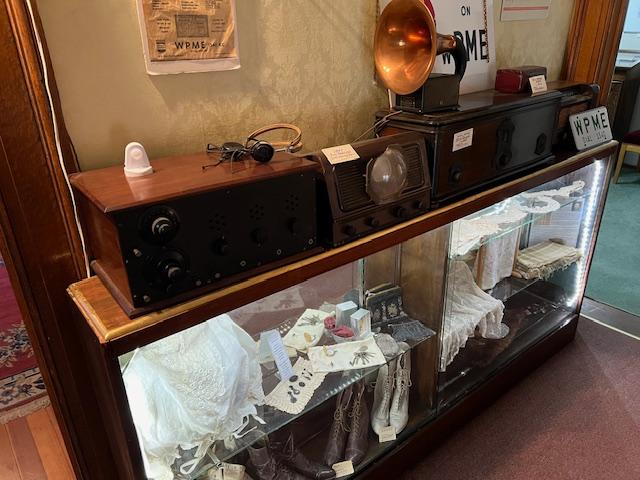
The New “Wireless Age” exhibition
The ‘Wireless Age’ exhibition
The Children’s exhibition for the ‘Wireless Age’
The Grounds of the Lewes Maritime Museum at the Cannonball House have all sorts of artifacts on the outside of the property include bells, boats and buildings. Take time during the season to walk the grounds and look over all the items in the garden.
The museum courtyard
The bell
The ice house in the courtyard
The Rescue Boat
One night they met on Pilottown Road and decided something needed to be done right then and there – at that moment The Lewes Historical Society was formed. Members were sought, funds raised, and the property was acquired – the historic Burton-Ingram House on Second Street. Two years later in 1963, the young historical society had raised the money to purchase the Rowland House, also commonly called the Cannonball House in honor of its scars from the infamous Bombardment of Lewes (Lewes Historical Society website).
If you want to see some of the most beautiful sites in New York City during the Spring months when Mother Nature truly works her magic then I would suggest going to the Brooklyn Botanic Garden to see Daffodil Hill and Magnolia Plaza.
The sign when entering Daffodil Hill in the Brooklyn Botanic Gardens
This is when everything is in full bloom during the early Spring. There is nothing like it and it is so breathtaking with a quiet elegance. On this clear and sunny Thursday afternoon, the gardens were quiet so I had plenty of time to take pictures and enjoy the beautiful views.
I finally got the gardens in the early Spring to see the crocuses, the Snowdrops and the Ironweed flowers that come in the early Spring just as the Daffodils were just coming out. These sensitive flowers are only in bloom a short time and I wanted to see them. They are just beautiful when you see them up close.
The Garden was ablaze with the colors of almost a thousand purple crocuses that lined the hills on the Prospect Park side of the lawns in 2024. Beautiful purple and while colors were in full bloom and Mother Nature shined in the COVID era with all of us socially distanced but still enjoying the park.
Crocus Hills ablaze in purple in 2024
The purple crocuses in full bloom in 2024.
The beautiful purple crocuses in full bloom.
While I was taking pictures of the crocuses, I walked around the gardens and came across the Snowdrops and the Ironweed flowers were also in bloom. These sensitive flowers are only in bloom for just about two weeks. To see them in the gardens in the late Winter is a real treat. They sometimes are in bloom in early and you have to see them quickly before they disappear in the ground.
The Snowdrops in full bloom in the gardens in 2024.
The Snowdrops up close.
The Ironweed just as beautiful. To see these graceful flowers in bloom are a real treat.
The Ironweed flowers in bloom right by the stream.
The Ironweed flowers in full bloom.
An Azalea that was early blooming in the garden in 2024.
Daffodil Hill at the Brooklyn Botanic Garden
Hundreds of Trumpet Daffodils are in bloom on a hill just off the Japanese Gardens flanked by hundred-year-old trees and it just plays into the backdrop of the greens and browns of the trees and lawns. I can’t tell you on a beautiful sunny day how breathtaking it is just to sit and admire these elegant flowers. It really is a site to see.
Daffodil Hill in full bloom
I love the way these hundreds of flowers make such a beautiful statement and there is such a burst of colors between the yellows and oranges of the daffodil flowers. This only lasts for about two weeks and then the flowers hibernate again.
The side view of Daffodil Hill from the walkway
Daffodil Hill just off the Japanese Gardens
Daffodil Hill in the Spring
Daffodil Hill in full bloom
Daffodil Hill at its peak
The video tour of Daffodil Hill at its peak
Daffodil Hill in full bloom
Daffodil Hill is right next to the Magnolia Plaza that was also in peak bloom when I was at the gardens. The trees of the Magnolia Plaza bloom the last week of March and these delicate trees petals do not last more than a week. When I got close enough to them to take pictures, I noticed that some of them were starting to curl already.
The area between Magnolia Plaza and Daffodil Hill
Not all the trees were in bloom yet but these delicate trees are very sensitive to the weather and I have noticed that the petals don’t last as long. Most of the trees were in full bloom but there was not much a smell to the trees. Still everyone was taking pictures in every direction between the Magnolia trees and Daffodil flowers.
The Magnolia Plaza in full bloom
The sign in the Magnolia Plaza
The edge of the Magnolia Plaza
The pathways in the afternoon
The Magnolia trees make such a bold and colorful statement
The array of colors in the Magnolia Plaza
The Magnolia Plaza facing Daffodil Hill in the distance
The Sundial in the middle of the Magnolia Plaza
After taking dozens of pictures of the Magnolia Plaza and Daffodil Hill, I walked over to the Rock Garden. There were not many flowers in bloom there yet as they come out later in the month. There was still an array of daffodils and a few crocuses still in bloom. The Rock Garden was quiet and perfect to walk around in as I had this part of the garden to myself.
The Rock Garden in the early Spring
The Rock Garden in the early afternoon
I headed to the northern part of the garden and visited the Japanese Gardens, where the cherry blooms started to bloom. These graciously landscaped gardens were created in the traditional Japanese form with a combination of trees and shrubs to balance the garden.
Entering the Japanese gardens from the path
The Japanese Gardens pool with traditional buildings
The Japanese Gardens in the early Spring
Returning at the height of the Cherry Blooms was just breathtaking. This view only rivals the beauty of Newark, NJ and Washington DC.
The magnificent Cherry Blossom lawn in April 2024.
People relaxing and enjoying the beautiful afternoon under the Cherry trees.
The beauty of the trees.
The Cherry Blossom at peak form.
I came back after the Cherry Blossoms had fully bloomed and were now gone and the Bluebells were in full bloom. It had been a cold and rainy Spring and it had been miserable to be outside. Not on the May weekend in 2025. The weather was spectacular and sunny. The Gardens were packed on Mother’s Day weekend and these beautiful blue flowers were the star of the day.
The sign welcoming you to the gardens
The flowers were just amazing
The seas of purple and green
They have really expanded their space over the years
The flowers put on quite a show that day
There is a real beauty to the gardens
The flowers were at the peak of bloom
The Cranford Rose Garden was in full bloom two and a weeks before the Annual “Rose Night” that celebrates the blooms of the roses in the gardens. By the time the event would happen, most of the blossoms would be gone. So I visited the gardens again in late May after college had ended and I was in between classes. The roses were glorious to say the least and the colors, smells and the way they grew all over the trellises and fences made quite the effect. I was lucky that I went during a week day and the gardens were quiet.
There is nothing like the Cranford Rose Garden when it is in full bloom. The smells and colors are fantastic and the beauty is something timed by Mother Nature. The roses grow at different stages and it looks so gorgeous during the late Spring.
Entering the Rose Gardens in the Spring of 2024
The front of the gardens in bloom
The front beds of the Rose Garden
The front of the Cranford Rose Garden in full bloom
The trellises in full bloom
The trellis in full bloom
Walking along the paths to the back part of the gardens.
The back part of the gardens
Roses along the trellises
Exiting the back of the gardens into the Cherry Blossom Lawn
The back entrance to the Cranford Rose Garden.
If you can get to the gardens in early June, I would suggest a special trip to see the roses. This special time of the year only lasts about three weeks and then like the rest of the flower displays in the gardens are gone until the next year. The gardens are now maturing for the summer months with lots of greenery and are still a nice place to relax and walk around or just sit and enjoy the views.
The Cherry Blossom Lawn after the cherry blooms are gone.
The flowers of the garden’s Marsh area.
I came to the gardens in late July to see the Lotuses in the Lotus Pools when they were in bloom and when they are at their peak, they are so colorful and elegant. I now know why the Egyptians worshipped them.
The Lion Fountain greets you as you enter the pools
Before I left the gardens for the afternoon, I stopped in the gift shop and looked around. They have some wonderful things to buy including a section of Brooklyn made products. There is also an array of plants, books and decorative products to buy.
The Gift Shop at the Brooklyn Botanic Gardens
The Brooklyn made products and book selection at the Brooklyn Botanic Gardens
After my visit to the gardens, I stopped at Bahn Mi Place at 824 Washington Avenue for lunch. I had one of their classic Bahn Mi sandwiches with ham and pate on a chewy hard roll. The food here is consistently good and their sandwiches are excellent.
You have to order the sandwich with a Medium spicy sauce. It adds to the complexity
The sandwiches are excellent. The flavors of the fresh vegetables and meats with the spicy sauce makes complex flavor. The bread is fresh and chewy and don’t be fooled by the size of the sandwich. It is larger than I thought and very filling. See my review on both TripAdvisor and DiningonaShoeStringinNYC@Wordpress.com.
I took my lunch and ate on the steps near the Brooklyn Museum and just enjoyed the afternoon. I people watched and enjoyed the cool, sunny weather. It was nice to escape from classes for a couple of hours and just relax and not think about school or work. It has again become a bit stressful between the two but I will handle everything.
I look forward to this time in the gardens and is one of the reasons why I keep my membership. I love to look at the hundreds of daffodils in bloom and watching as they sway in the wind and just want to look beautiful. It is the most amazing site every Spring.
You do have to time your visits so that you see all these beautiful flowers at each time.